
God Forbid
ABC Australia
0
God Forbid is a podcast from ABC Australia that explores the role of religion in world affairs. It tackles profound questions about existence, death, and the relevance of God. The show seeks answers to these timeless inquiries through thoughtful discussion.
Епизоди
-
 Secular Australia's identity crisis 11.09.2026 53минWhat is the place of religion in a pluralist society? Australia calls itself a secular country, yet it has never been more religiously diverse. Whether you're religious or secular, whether you support multi or mono-culturalism, it seems we all claim the authentic mantle of modern Australian identity. Yet none of us agree on what it is, much less who owns it. How should we grapple with our identity as a secular nation in a diverse and ever-changing world? GUESTS: Renae Barker, Senior Lecturer, UWA Law School, author of State and Religion: The Australian Story. Greg Melleuish, Professorial Fellow, Robert Menzies Institute; Fellow, Campion College. Co-author of Understanding Piety and Theology in the Culture of the West: The Poetic Life. See him in conversation at the Berry Writer's Festival in November. Enqi Weng, Research Fellow, Alfred Deakin Institute for Citizenship and Globalisation, Deakin University. Author of Media Perceptions of Religious Changes in Australia: Of Dominance and Diversity. This program was made on the lands of the Gadigal People of the Eora Nation
 -
 Does owning property make you more moral? 04.09.2026 54минGeneration Z is the first generation since the war to start out with less claim on the country than their parents. You might believe this story is just all about economics. Negative gearing, property investment, supply and demand... But there's an older, even ancient, argument that says that says a country where people own nothing will eventually become a country where people are nothing. That owning property doesn't just confer wealth. It's moral training. When you own, you own up. This was the vision of Prime Minister Menzies who spoke of responsibility for "homes material, homes human, and homes spiritual". So was Menzies right? Does owning things make you more responsible, even a better person? Or is that the convenient story owners tell themselves, while the rest of us try to find this weeks rent? GUESTS: James Vitali is a political theorist from Cambridge University, now a Conservative Party councillor in Dorset in the UK - His new book The Ownership Society: How Bourgeois values can save Britain. Max Jeganathan is Senior Research Fellow at the Centre for Public Christianity. On the Labor side - He advised the Rudd and Gillard governments. This program was made on the lands of the Gadigal People of the Eora Nation
 -
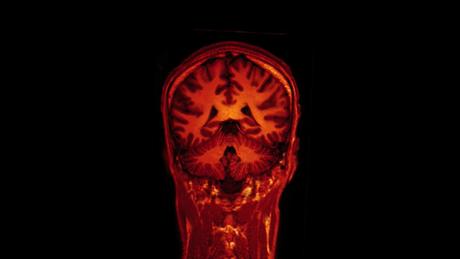 Will science ever explain the self? 28.08.2026 54минNeuroscience is now spectacularly good at explaining how brains work. But there’s one thing it still can’t explain: why having a brain feels like something. Like anything at all! Philosophers call this the Hard Problem of consciousness. Is this gap in our knowledge something that science can never fully understand? Something intangible, even unknowable? Some say it's a life force, an essence, a soul. What, if anything, can religion offer this intangible? GUESTS: Rev Antonios Caldas Coptic Orthodox priest and lecturer at St Cyril’s Coptic Orthodox Theological College Prof Neil Levy philosopher at Macquarie University and Oxford University
 -
 Voluntary assisted dying: more than a matter of life and death 21.08.2026 54минThe Northern Territory is set to become the final Australian jurisdiction to legalise voluntary assisted dying (VAD). While thirty years of arguing comes to an end, God Forbid examines the wider conversations that are essential, but so often overlooked when it comes to voluntary assisted dying. GUESTS: Christoper Dudfield, Spiritual Care Practitioner, clinical leader and researcher. Jodie Clarkson, retired teacher and community worker, palliative care outpatient in Mparntwe (Alice Springs). Professor Charlie Corke, Senior Intensive Care Specialist, Barwon Health. Further reading: Christopher Dudfield reflects on our obligations to the dying, even when we cannot endorse their choices, on ABC Religion and Ethics (18 August 2026). WARNING: This episode of contains discussion of suicide, death and dying. Further information Help and support is always available. Helplines (24 hours/7 days a week): Lifeline on 13 11 14 or 13YARN on 13 92 76. For bereavement support visit Compassionate Friends or call their National Grief Hotline on 1300 064 068. This program was recorded on the lands of the Gadigal People of the Eora Nation.
 -
The Good Mother standard: Can anyone live up to it? 14.08.2026 54минMother Earth. Mother Mary. The "good mother." Is there a more impossible standard than motherhood itself? Every culture seems to believe in a mother who is endless. Endlessly patient, endlessly giving, endlessly present. In Christianity she's Mary, the sinless virgin, the giving and eternal mother of the church. In psychology she's the "Good Mother", always available and calm, never faltering. In real life, she's the woman who looks like she's got motherhood handled, but who, if you asked her, would tell you she falls short like everyone else. Where does that ideal come from? What does it cost the women who try to live up to it? And what does it cost the women who, by choice or by circumstance, never become the good mother at all? GUESTS: Cristina Lledo Gomez Senior Lecturer in Catholic Systematic Theology at BBI – The Australian Institute of Theological Education. Author The Church as Woman and Mother Dr Bronwyn Harman Senior Lecturer in Psychology, Edith Cowan University where she researches Australian motherhood and the "Good Mother Syndrome" Sheree Joseph Sydney writer, Author of the new memoir Juicy
-
 The History of Time 07.08.2026 54минYour phone will tell you the time, and that number has an extraordinary history. And hasn't always been there. Time used to be whatever the church bell said it was. Time was rung, sung and prayed. It belonged to God. Then we put time in a box on the wall. Then on our wrist. Now in our pocket and on our satellites. Yet – there’s no expert consensus on whether time even flows from past present to future. GUESTS: Kristie Miller is Professor of Philosophy at the University of Sydney and co-director of the Centre for Time, and author of Out of Time and Does Tomorrow Exist? Matthew Champion is Associate Professor of History at the University of Melbourne and author of The Fullness of Time: Temporalities of the Fifteenth-Century Low Countries This program was recorded on the lands of the Gadigal People of the Eora Nation Its the third in our History Of... series History of Emotions and History of Reality
 -
 The History of Reality: What is real and is God behind it all? 31.07.2026 54минEvery civilisation that's ever existed has asked the same question: what's actually real? Plato made the point that it's more than we can see with our own eyes. Then came Newton, and reality became a clock with time. Then came Einstein, and time started to bend. Then came quantum mechanics — and reality gets stranger still! Two astrophysicists go back to the beginning of humanity to ask "what did humans even mean by "real", before anyone had the maths to check?" And is there a creator behind it all? GUESTS: Geraint Lewis, Professor of astrophysics at the University of Sydney, has spent his career hunting dark energy and dark matter — and doesn't believe in a God at the end of it. His new book is The Shortest History of Reality. His old friend and former student – now astrophysicist himself at Western Sydney University is Dr Luke Barnes, who works on the very same equations — and continues to believe it points to a creator.
 -
 The History of Emotion: Were feelings always felt this way? 24.07.2026 54минIf you hit your finger with a hammer, would you feel it the same way a medieval carpenter did, doing exactly the same thing? Well, apparently not. We think of our feelings as the most private and immediate things we own. Hit your thumb, and YOU know pain when YOU feel it. But historians of emotion say that's a modern conceit. Pain, grief, love, loneliness — none of them are fixed. They're made, by religion, by culture and science, and most of all by the stories we tell each other about what a feeling is supposed to be. Lets look into the history of feeling itself. Were the emotions of the past even the same species of experience as ours? GUESTS: Professor Katie Barclay is a Future Fellow in the Department of History and Archaeology, and author of Loneliness in World History and Caritas: Neighbourly Love & the Early Modern Self Professor Stephanie Trigg, a Redmond Barry Distinguished Professor of English Literature at Melbourne University. Among her near a dozen books is "Weeping Like a Beaten Child: Figurative Language and the Emotions in Chaucer and Malory." A/Prof Rob Boddice a historian of science, medicine and the emotions, based at Freie Universitaet Berlin and McGill University, Montreal, is author of Knowing Pain: A History of Sensation, Emotion, and Experience, and Research Fellow at the Uni of Helsinki in Finland.
 -
 Is racism about skin colour, colonialism or wealth? 17.07.2026 54минIs racism about the colour of your skin, the history of colonialism, or the size of your bank account?
 -
What does God expect of fathers? 10.07.2026 54минThe White House has a cage fight on the Whitehouse front lawn while, somewhere, a father rose at 3am to feed a crying baby. In 2026, what does it mean to be a good father, or a good man? Does God, or any religious tradition, see men as something distinct? Or is “be a good man” just “be a good person”? The manosphere claims religious sanction. Is that a corruption of these traditions, or an expression of them? Three fathers, three frameworks. What do you or can you actually hand onto your son? GUESTS: Rev Dr Michael Jensen is an Anglican minister, an Oxford theologian, and a father of four. He’ll tell you God has a design for men — but hear him out, because I reckon it’s not what you’re expecting. A/Prof Adis Duderija is a scholar of Islam and gender at Griffith University — an expert on how his own tradition understands the rights and responsibilities of manhood. That too is more nuanced than its given credit for. And a father to two teenagers. Zac Seidler is a psychologist who studies what young men actually watch online. He’s professor at Orygen, Australia's Centre of Excellence in Youth Mental Health. And, as of this year, a brand-new dad.
-
Why do animals matter? 03.07.2026 54минDo to a dog what we do to a factory-farmed pig, and you’d be arrested. Do it to ten thousand pigs in a shed, and it’s breakfast. Most of us say cruelty to animals is wrong. And then most of us are happy to have them killed and eat them. Both our panellists think the way we treat animals is a moral catastrophe. But they get there by opposite roads. One says animals matter because they suffer. The other says they matter because they’re God’s creatures. GUESTS: Peter Singer Emeritus Professor of Bioethics, Princeton University. Host of the podcast Lives Well Lived. 50 years ago exactly, his book Animal Liberation launched the modern animal liberation movement as we know it. David Clough Professor of Theology and Applied Sciences, University of Aberdeen. Author of the two-volume work On Animals. He’s a Methodist Preacher and Co-founder of CreatureKind which aims to transform Christian attitudes and practices toward animals.
-
 How old do you feel? 26.06.2026 53минWe are, it turns out, a species that refuses to believe its own birth certificate. Australia is ageing, fast. This is not new here, or in Europe and North America where the trend has existed for decades. But even in China and now India, the fertility rate has dropped below replacement levels – even the two most populous nations on earth are getting older. Yet we’ve built a world — our economies, our cities, our pension systems, our cultures — around the young and the productive. So, what happens when that's no longer who we are? GUESTS: Prof Paul Komesaroff is a philosopher at Monash University. And a practising endocrinologist. And Director of the Centre for Ethics in Medicine and Society. Dr Lee-Fay Low is Professor in Ageing and Health at University of Sydney. She’s also a registered psychologist and chairs the Sydney Dementia Network.
 -
The pleasure we take in others' misfortune and what it says about us 19.06.2026 54минYou heard that someone had come unstuck. A rival. A bully. Someone overconfident, or two-faced, or just a bit too pleased with themselves. And something in you was glad. You won't say it out loud. You might barely admit it to yourself. But the Germans have a word for it. And it turns out, so did the ancient Greeks. Schadenfreude. The pleasure we take in others' misfortune. Is it a moral failing? A sign of deficient character? Or is it a window into what we actually believe about justice, equality — and each other? GUESTS: Tiffany Watt-Smith is a cultural historian and author of Schadenfreude: The Joy of Another's Misfortune. She joins us from London. Nick Haslam is Professor of Psychology at the University of Melbourne, and the man who's been thinking hard about Australia's national variant — tall poppy syndrome.
-
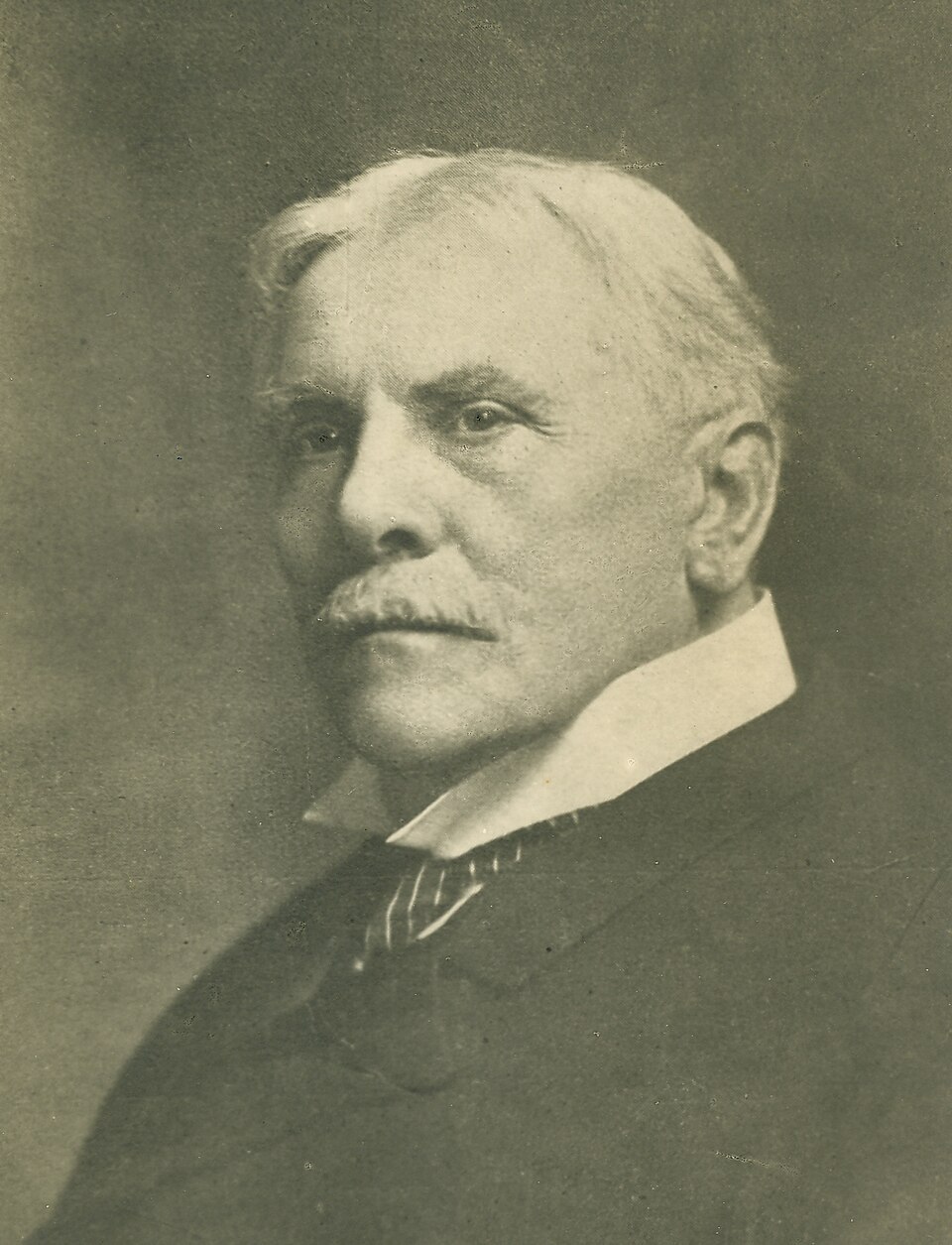 The ideas that inspired American Christian Zionism 12.06.2026 54минWhether or not you believe in - or even know about "the Rapture", "the Tribulation", "the End Times", and "Armageddon", your life is influenced by the idea that Jesus Christ will not only return, he’ll go to Jerusalem, and from there, for exactly one thousand years, he’ll rule the world. Yet, this concept is not in the Bible...at least not directly. But a bible, published in America in 1909, and written by an American made it the most influential concepts in American Christian fundamentalism. The story of the Scofield Reference Bible is an extraordinary one. Not least because it lies at the heart of Christian Zionism which is more consequential today than ever. GUESTS: Professor Donald Akenson is from Queen's University in Ontario, his latest book The Americanization of the Apocalypse: Creating America's Own Bible. Dr Robyn Whitaker is Associate Professor of New Testament at Melbourne’s University of Divinity – among her titles Revelation for Normal People.
 -
How should we view our relationship to work? 05.06.2026 54минMost of us spend most of our waking hours working, paid and unpaid. From housework to paid work, most of our lives are dominated by work. It's so ingrained that losing our true selves in work can feel unavoidable. Yet, many also find purpose, value, and joy in work – even if it's not their dream job. Work is less a place and more a concept, the line between work and home can be blurred. And younger Gen-Z workers are repelled by the hustle culture and burnout that comes from increased casualisation, unpaid overtime and labour shortages. It’s why for Millennials, nearly 2 in 3 say work is a part of who they are. But for Gen Z, half say their job is not even a central part of their identity. So how, when and why do we work? GUESTS: Valerie Ling founded The Centre for Effective Serving, a psychology practice dedicated to alleviating burnout and other workplace problems. Kara Martin is Adjunct Professor at Boston's Gordon-Conwell Theological Seminary. She's also the author of Workship: How to Use your Work to Worship God. Rabbi Zalman Kastel is founder of Together For Humanity which teaches intercultural understanding in schools and the community.
-
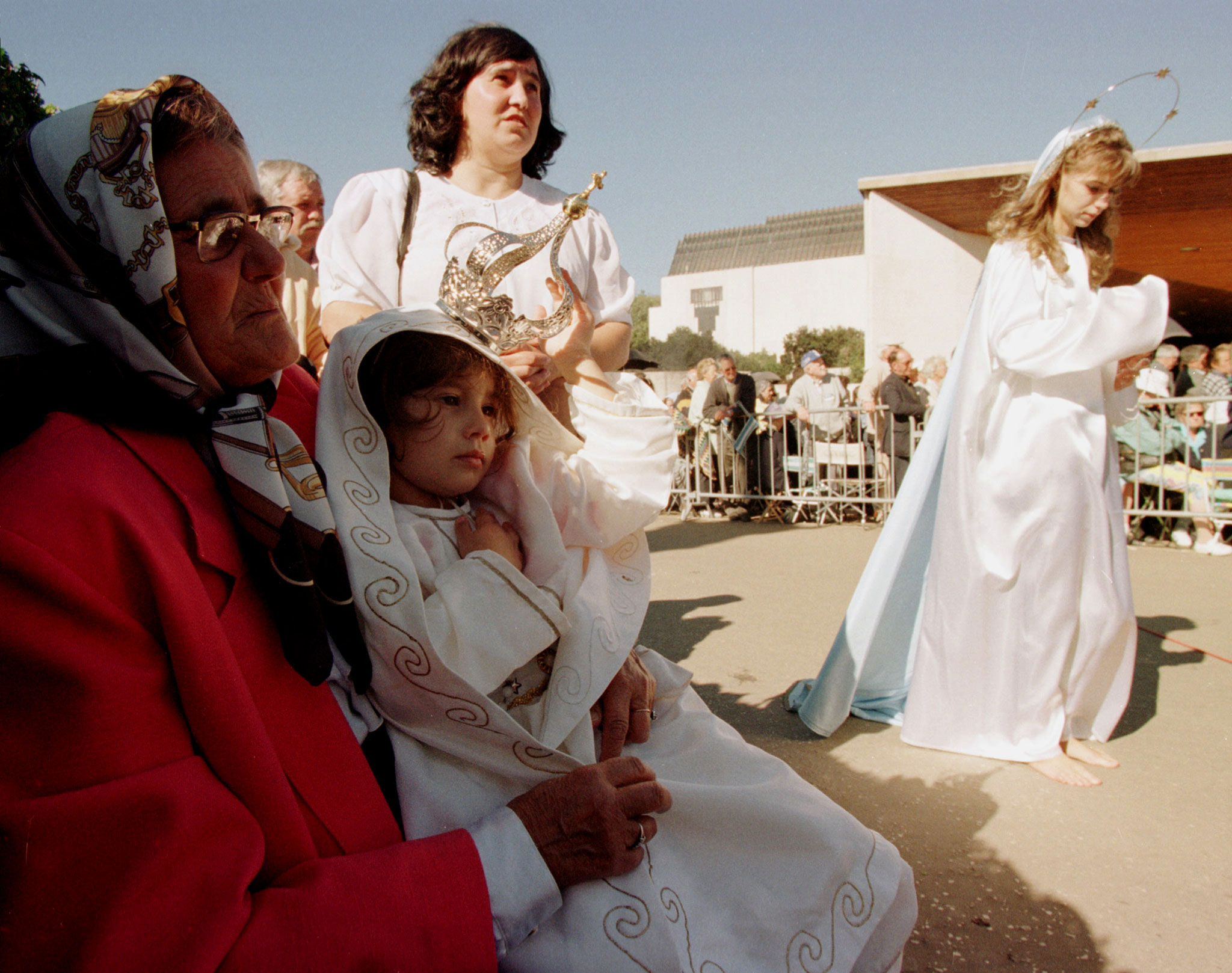 The seen and unseen: Belief in Jinns, Marian apparitions and Japanese yokai 29.05.2026 53минHalloween, in the western Christian tradition, remembers the dead – saints, martyrs, and all the faithful departed. But why do so many believe the departed return? Regardless of the place on earth, or time in history, people say they see strange apparitions and ghostly figures. And as for things unseen, even more profess a belief in genies, spirits, angels and supernatural entities. All these ideas and feelings are traditionally laid bare in this realm of the supernatural, the boundaries of dark and light, good and evil, in our human imagination. That’s why God Forbid panellist Ali A. Olomi studies genies – or jinn as they’re known in the Muslim world. He's a popular podcaster and Assistant Professor of History at Loyola Marymount University in Los Angeles. Kristy Nabhan-Warren is Professor and Chair in Catholic Studies at the University of Iowa. She is an expert on Marian apparitions – the supernatural appearance of Mary, mother of Jesus. And in Seattle Washington, Zack Davisson is an award winning author, lecturer, and Japanese language translator – and expert in yokai, the supernatural creatures of Japanese folklore.
 -
 Home economics: waking up from the Australian dream 22.05.2026 54минThe government has removed favourable tax settings for investors to make home ownership just a bit more achievable for Millennials and Gen Z’s priced out of the market. The Prime Minister has spoken about the importance of giving young people access to housing so they have “a stake in the economy” Is tinkering with, or even an overhaul, of the housing market really the only answer to growing wealth gaps in Australia? What if we can move towards a totally different economic structure that serves everyone? And what do some of Australia's faith communities say about what that model might look like? GUESTS: Dr Julie Macken Research and Project Officer of the Catholic Archdiocese of Sydney’s Justice and Peace Office, and author of Australia’s Schism in the soul: colonization, asylum seekers, and a nation’s failure to mourn Asad Ansari, a specialist in Islamic finance, with 25 years of experience across Australia, Southeast Asia, and the Middle East, and Co-founder of Amanah Islamic Finance Dr Jonathon Cornford runs Manna Gum, an independent Christian non-profit thinktank, and podcast host of Mannacast
 -
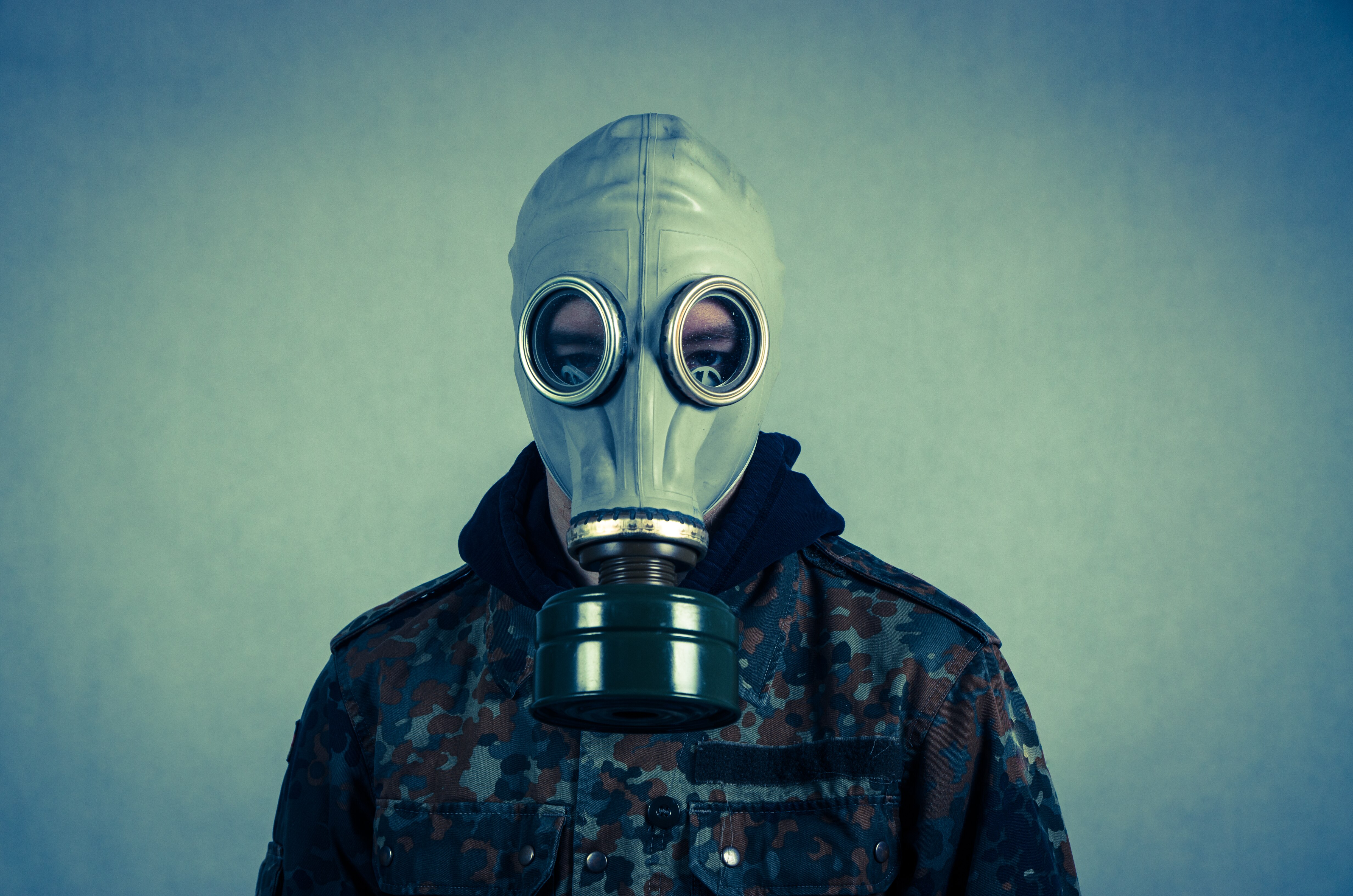 Doomsday or just good planning? The ethics of prepping 15.05.2026 54минFrom climate disasters to economic collapse, pandemics to political unrest — some people prepare for the worst long before it happens. But is prepping a sign of prudent foresight or a loss of faith in society? And how do ethics and religion shape ideas of survival? In this episode we explore the growing culture of preppers and survivalists, from community resilience to billionaire bunkers. Are preppers visionaries, doomsayers, or just realists? And in a crisis, what do we owe each other? GUESTS: Dr. Bradley Garrett – Social geographer and author of Bunker: What It Takes to Survive the Apocalypse. Dr. Tom Doig – Journalist and author of the upcoming book We Are All Preppers Now. John Scarinci – Secretary General of the Australian Peoples Survival League. Tracy Simmons – Journalist, religion reporter, and executive director of FāVS News, a religion news website in the Pacific Northwest. This episode of God Forbid was made on Gadigal land and in Meanjin. And was first broadcast March 2025.
 -
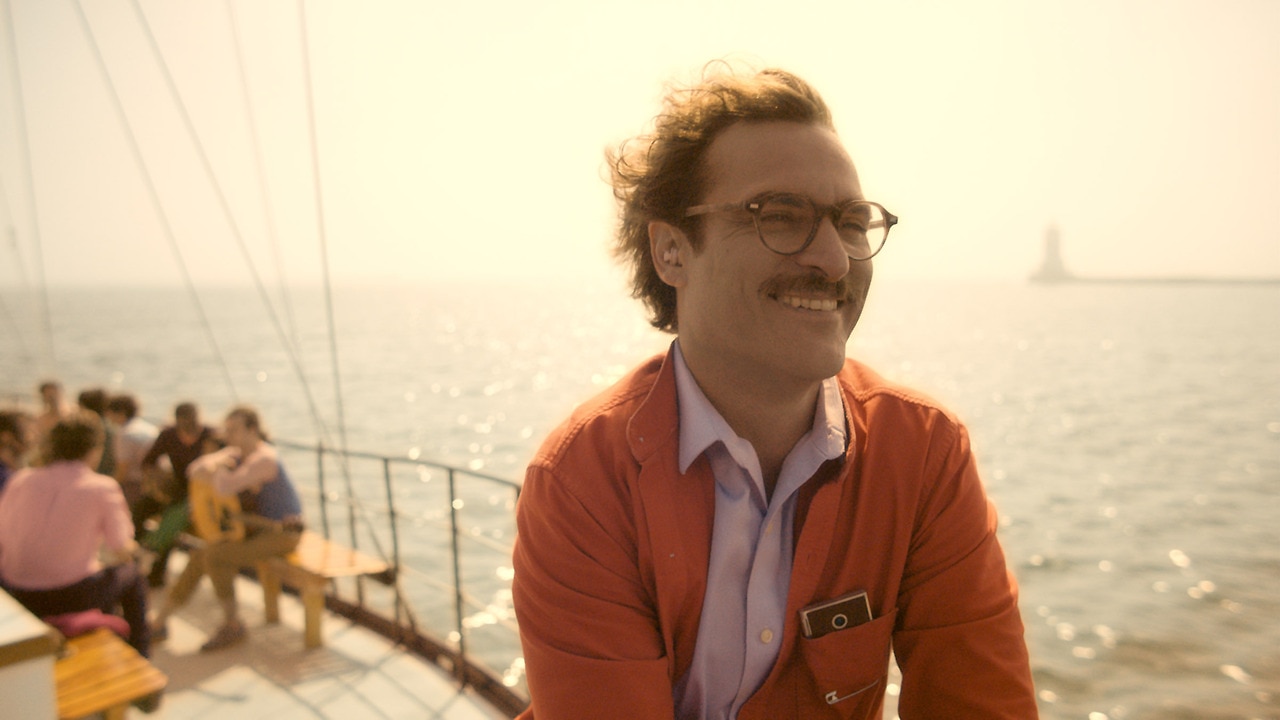 Can we truly love AI? And can it love us back? 06.05.2026 54минFalling in love with a machine is supposed to be the stuff of science-fiction. About a decade ago, Spike Jonze made the film Her, about a lonely man Theodore, played by Joaquin Phoenix, falling in love with his operating system, Samantha. And the world renowned psychoanalyst Esther Perel recently counselled a man and his romantic partner, a chat bot! Is romantic love just in our hearts and heads, or does it require another human to be real? If an AI lover is always patient, understanding, never challenges you, and you never have to pick up after them, how could a human ever compete? Is AI the ultimate cure for human loneliness? Can AI fill the God-shaped hole in us? GUESTS: Professor Meghan Sullivan, Wilsey Family College Professor of Philosophy at the University of Notre Dame. Also, the Founding Director of Notre Dame’s Institute for Ethics and the Common Good Caragh OBrien, author of AnnieBot (written under the pen name Sierra Greer) a novel told from the perspective of a robot girlfriend for a man called Doug. AnnieBot won the 2025 Arthur C. Clarke award for UK science fiction book of the year. Professor Uri Gal, Professor of Business Information Systems at the University of Sydney Business School, whose research focuses on the organisational and ethical aspects of digital technologies - his recent article for the ABC is here.
 -
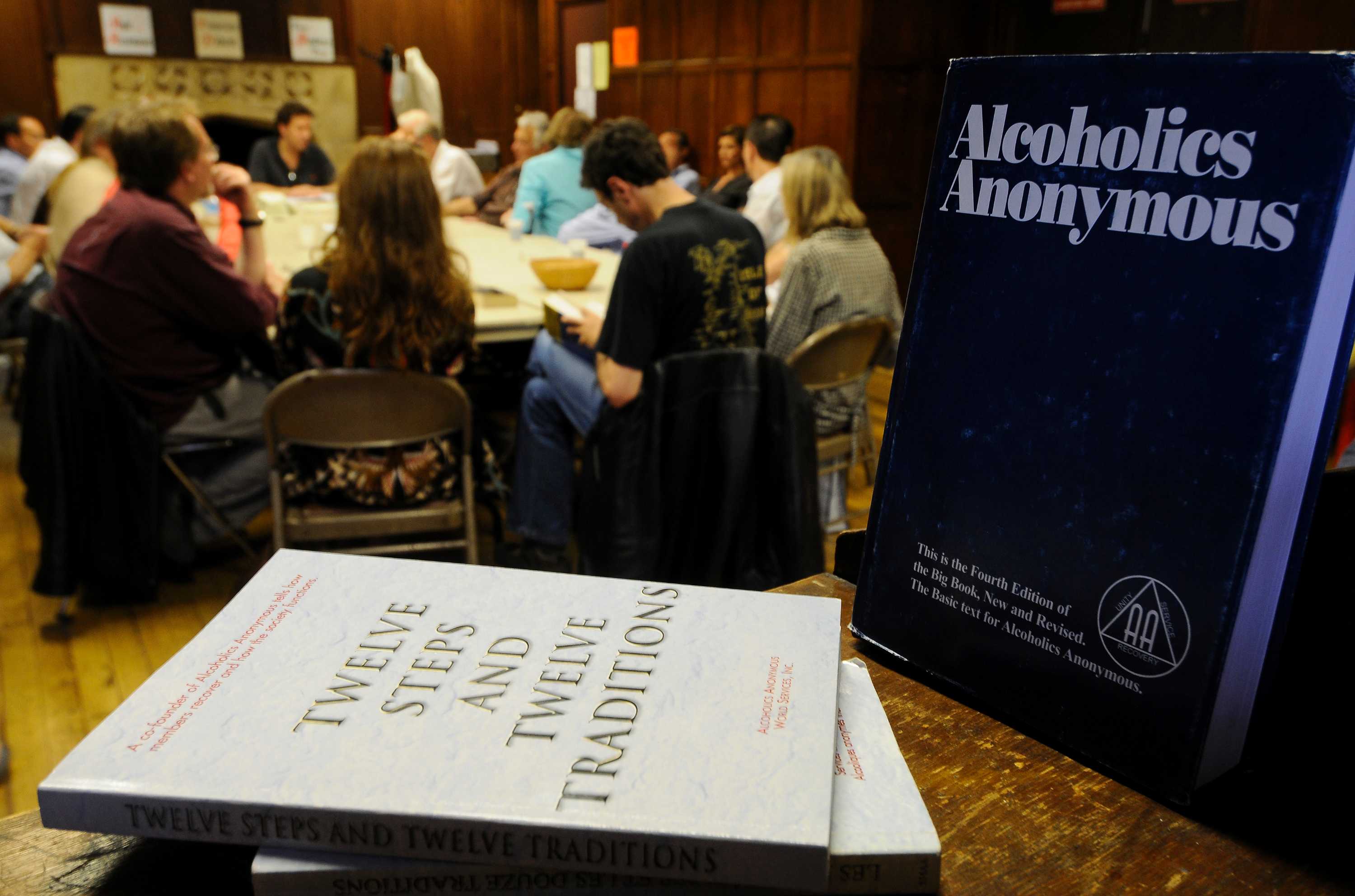 Addiction, God, and the origin of the twelve steps 01.05.2026 54минSince the Stone Age we’ve used, and abused, drugs and alcohol. And some cultures believed their mood-altering effects brought you closer to God. But if you go to an Alcoholics Anonymous or AA meeting today, you’ll be told that getting closer to God means getting away from the drink. AA also welcomes atheists, of course, as the only requirement for membership is a desire to stop drinking. But as part of the program, surrendering to a higher power is essential. Not necessarily God, but something outside of the bondage of self. But why does the twelve step program work brilliantly for some — and fail miserably for others? And what are the spiritual roots of the program? And it's not just alcoholism, there are twelve step programs for gamblers, social media and sex addicts, also overeaters and clutterers anonymous. GUESTS: Joanna Thyer, Multi-Faith Chaplaincy Coordinator at the University of Technology Sydney. She's also author of 12 Steps to Spiritual Freedom - Understanding the Christian Roots of Twelve Step Programs, and Steps to Life. Melinda Lake, psychologist and co-founder & CEO of Australian Recovery Centres in Northern NSW. She's also worked with AABCAP on Addiction in Buddhism and Psychotherapy. Amber Rules, Clinical psychotherapist and Director of Sydney Addictions Recovery in Sydney's inner west.
Радиостанция

Подобни подкасти


Популярен в
Този подкаст се появява и в подкаст класациите на тези държави.
