
LSE IQ podcast
LSE
0
LSE IQ is a monthly podcast from the London School of Economics and Political Science that asks social scientists and other experts to answer intelligent questions about economics, politics, or society. Each episode tackles a specific question, drawing on research and insights from LSE academics and beyond. The podcast aims to make complex social science ideas accessible to a broad audience.
Епизоди
-
 Should we still care about net zero? 08.09.2026 32минIn 2019, the UK became the first major economy to commit in law to reaching net zero greenhouse gas emissions by 2050. But seven years later, the world looks very different. Since then, we've experienced a global pandemic, Russia’s invasion of Ukraine, energy price shocks, US attacks on Iran, more energy price shocks, and growing political opposition to climate policies.As governments face competing priorities around economic growth, energy security and the cost of living, some are questioning whether net zero is still achievable, affordable or even necessary.In this episode of LSE iQ, Anna Bevan asks: Should we still care about net zero? She speaks to Professor Anna Valero, from LSE’s Centre for Economic Performance and the Global School of Sustainability, about her surprising findings on the UK’s transition to net zero.Bloomberg journalist Akshat Rathi explores how investment, technology and public policy can accelerate the move towards a low-carbon economy.Professor Riccardo Crescenzi and Oliver Harman, from LSE’s Department of Geography and Environment, discuss what an exploding toaster reveals about the manufacturing slogan “Made in Britain”, and what green global value chains mean for net zero. Contributors: Anna Valero Akshat Rathi Riccardo Crescenzi Oliver Harman
 -
 Should we take hypnotherapy more seriously? 09.06.2026 33минFrom stage-show stereotypes to life-changing treatment, this episode explores the science - and the myths - behind hypnosis and hypnotherapy. We uncover extraordinary stories of addiction recovery, pain relief, and everyday healing from a form of talking therapy that remains widely misunderstood.Asking whether we should take hypnotherapy more seriously, Joanna Bale talks to LSE anthropologist Dr Nick Long, who spent 18 months researching hypnosis and hypnotherapy in Indonesia. There, hypnotic practices are woven into everyday life - used in classrooms, homes and communities to calm, encourage and connect. In the UK, by contrast, hypnotherapy remains marginalised and constrained by cultural suspicion, despite recognition from the NHS.Joanna also speaks to Amanda Joy, who left the NHS to retrain as a hypnotherapist after witnessing hypnosis succeed in relieving pain where conventional medicine had failed. And Sarah Ibrahim shares a moving personal account of how hypnotherapy helped her break free from a cocaine addiction that had gripped her for two decades.These powerful first-hand testimonies help to illuminate what hypnosis really is, what it might be capable of, and why we may be too quick to dismiss it.ContributorsNick LongAmanda JoySarah IbrahimResearchSuggestions of power: searching for efficacy in Indonesia’s hypnosis boom by Nick LongTherapeutic aQompaniments: Walking together in hypnotherapy—and ethnography by Nick Long
 -
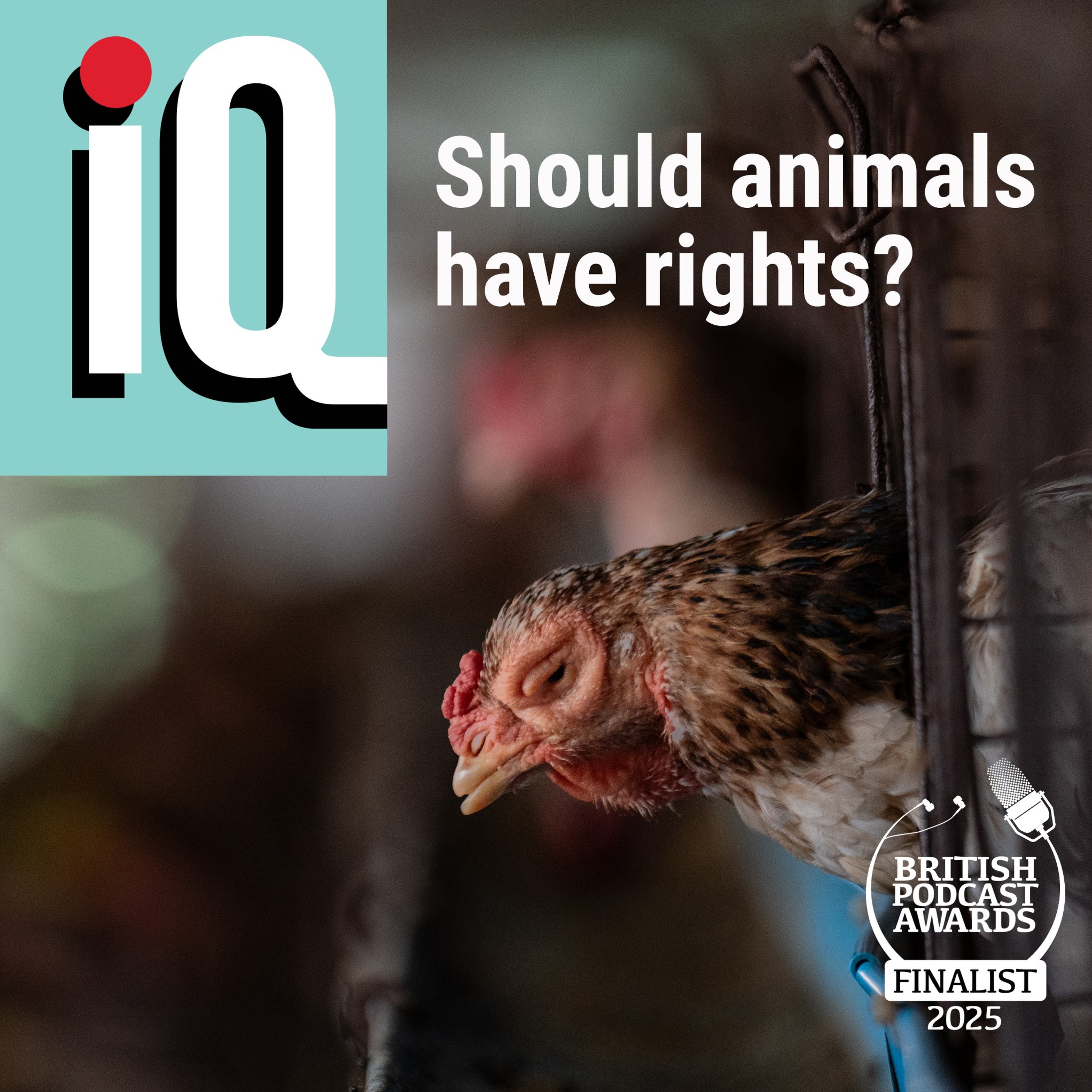 Should animals have rights? 12.05.2026 30минFrom the pets we love to the animals we rarely see, our relationship with non-human life is full of contradictions. In this episode, we explore what it really means to protect animals and whether welfare is enough, or if rights are the way forward.Beginning with a simple question inspired by my own dog, Pip, this episode moves from the personal to the global. Through conversations with experts including Jeff Sebo, Jonathan Birch, Jo-Anne McArthur and Carrie Friese, we examine how ideas about sentience, law, and ethics are shaping the future of animal protection.In this episode of LSE iQ, Mike Wilkerson asks: Should animals have rights?This year’s #LSEFestival, taking place from Monday 15 to Saturday 20 June 2026, will explore the impact of these global challenges, and how individuals, communities, organisations, corporations, and those with political power should be tackling them to save the planet!Find out more info and browse the programme here: https://www.lse.ac.uk/Events/LSE-Festival/2026
 -
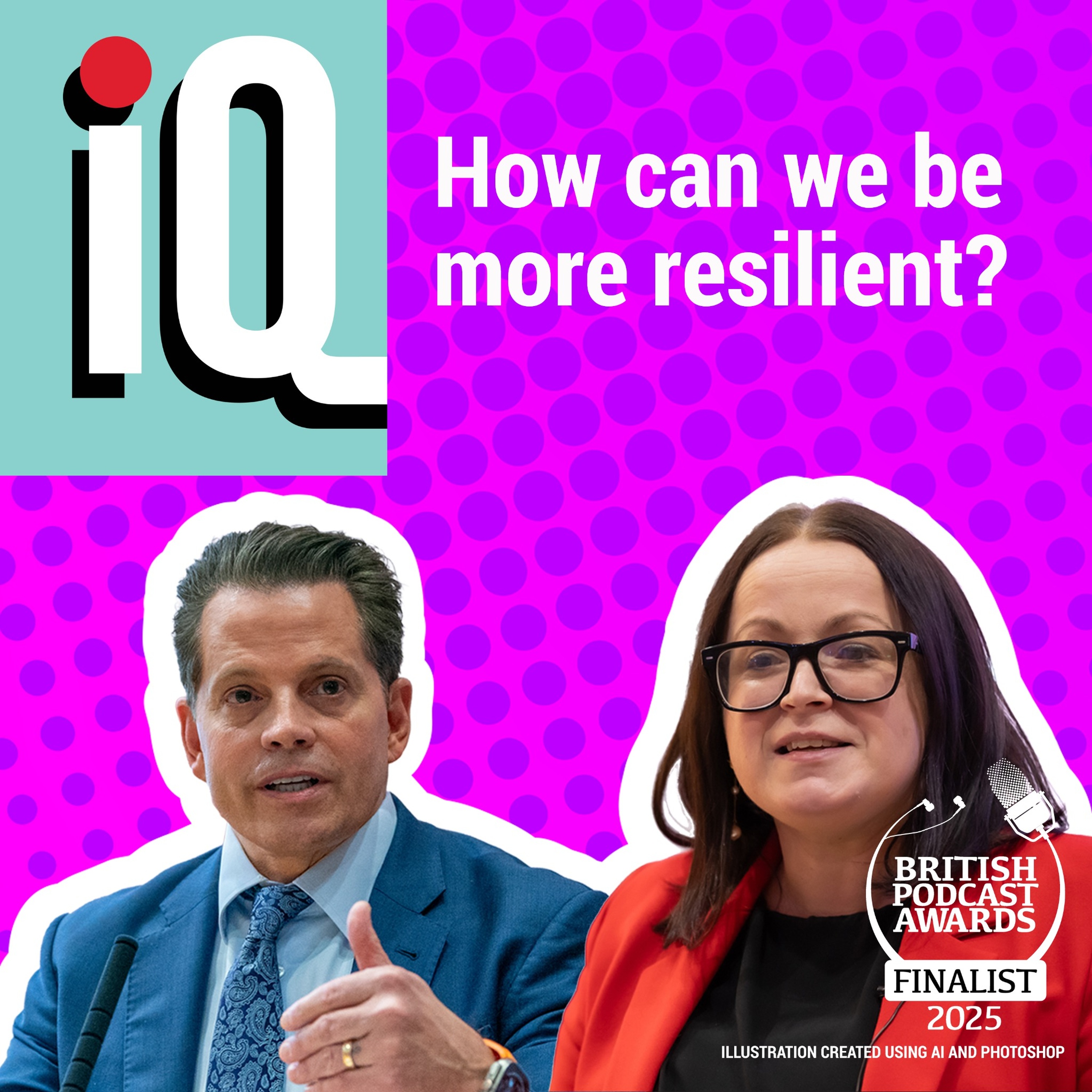 How can we be more resilient? 14.04.2026 29минWe’ve all had rough days at work. But none of us have been fired by a sitting President after just 11 days in the job. That’s what happened to American financier and LSE alumnus Anthony Scaramucci, whose brief and explosive stint as White House Communications Director in 2017 became global news.But instead of letting the experience define him, Anthony rebuilt his career, returned to his investment firm SkyBridge Capital, and has since become a prominent political commentator — including co‑hosting The Rest Is Politics: US podcast with the BBC’s Katty Kay.How do we keep going when life delivers an unexpected blow? How do we protect our mental health, rebuild after setbacks, and strengthen our resilience reserves?In this episode of LSE iQ, Sue Windebank asks: How can we be more resilient? She speaks to Anthony Scaramucci about what it takes to ‘bounce back’ after public failure. She also speaks to Dr Grace Lordan, economist and founding director of the Inclusion Initiative at LSE, and hears about key behavioural insights that can help build resilience — from managing our inner critic to taking practical steps that boost our capacity to recover and thrive.ContributorsGrace LordanAnthony ScaramucciResearchThink Big, Take small steps and build the future you want by Grace Lordan.From Wall Street to the White House and back, The Scaramucci guide to unbreakable resilience by Anthony Scaramucci.
 -
 Why are we having fewer children? 03.03.2026 28минFertility rates are at record lows around the world, reshaping communities and even forcing some schools to close. In 1950, the global average was around five live births per woman. Today, that number has more than halved to 2.2, and in England and Wales, it’s closer to 1.4. The UK’s falling birth rate reflects what the United Nations has described as ‘a global fertility slump’.In this episode of LSE iQ, Anna Bevan asks: Why are we having fewer children?From a closed down primary school in South London to demographic shifts unfolding across the globe, this episode explores the profound social, economic and personal forces behind declining fertility.Professor Berkay Ozcan explains how countries from Turkey to Chile have experienced some of the steepest drops in modern history, and why the timing of relationships, women’s careers, the economy and uncertainty about the future all play a role.Professor Emily Jackson, an expert in law and reproductive rights, examines the limits of governmental policies - from baby bonuses to China’s new tax on condoms - and explains why restrictive reproductive laws often have unintended consequences.Zoe Noble, the founder of We Are Childfree, discusses the growing global community of people choosing not to have children. She shares how one intrusive taxi ride helped spark a movement, and why blaming childfree women for falling birth rates misses the real issues.Is a shrinking population a problem or simply part of the natural ebb and flow of society? And what would it take to create a world people want to bring children into?Join us as we dig into the data, the politics and the personal choices behind one of the most important demographic stories of our time.Contributors:Berkay Ozcan, Emily Jackson and Zoe NobleAssociated researchThe effects of unemployment on fertility (2021)
 -
 Are jobs getting better? 03.02.2026 30минWhat does the future of work really look like?
 -
Will the next World War be a cyberwar? 02.12.2025 30минIt seems every week we hear a new report of a cyber-attack. What if those attacks were on our critical infrastructure? Our national grid? Our water supply? Is the UK prepared?
-
Will AI free us from work? 04.11.2025 21минWhat does artificial intelligence really mean for the future of work?
-
Do we need to pay our debts? 07.10.2025 28минAmid rising interest rates and inflation, we ask whether debts must always be paid—exploring causes of debt, bankruptcy’s role, and fresh perspectives on repayment.
-
How is the far right shaping our future? 05.08.2025 32минFar-right ideas once on the fringe now dominate feeds and headlines, reshaping politics and threatening democracy worldwide.
-
Is AI destroying the planet? 06.05.2025 31минThis episode explores the AI sustainability paradox: can AI be both a climate solution and a climate problem?
-
How do we avoid falling for online scams? 08.04.2025 32минWhat type of person falls for an online scam? Who are the fraudsters and how does colonialism motivate them? And what’s the connection between criminality and pop music?
-
Are we in danger of losing our communities? 04.03.2025 29минWith the cost-of-living crisis leading to the closure of community spaces around the UK, and the pressures on urban development projects, this episode of LSE iQ asks, are we in danger of losing our communities?
-
Do we need to drive? 04.02.2025 29минThis episode of LSE iQ looks at whether we should still be driving.
-
Why are our rivers and seas polluted by sewage? 15.12.2024 33минThis episode of LSE iQ explores a national scandal: widespread illegal sewage dumping by our privatised water companies, and why they are all under criminal investigation.
-
Who owns outer space? 20.11.2024 29минWith companies, like SpaceX or Blue Origin, getting into space exploration and the cost of launching rockets dropping, could we see a lot more people heading into space in the future?
-
What’s it like to win a Nobel Prize? 01.10.2024 30минIn this episode of LSE iQ, we explore what it’s like to win the prestigious Nobel Prize and how it changes your life.
-
How can we solve the gender pay gap? 03.09.2024 28минThis episode of LSE iQ explores whether gender pay gap reporting, pay transparency and tackling gender norms can reduce the gender pay gap.
-
Will the US remain the world’s superpower? 21.05.2024 35минThe idea of an America in decline has gained traction in recent years and has, of course, been capitalized on by President Trump. Is America’s ‘greatness’ under threat?
-
China, war and the civilizational state 09.04.2024 18минWhy do some countries, such as China and Russia, stand outside of the liberal international order and oppose values that the West takes for granted – values such as liberty and democracy?
Подобни подкасти


Популярен в
Този подкаст се появява и в подкаст класациите на тези държави.


