
Climate One
Climate One from The Commonwealth Club
0
Climate One is a podcast that explores the climate emergency through empowering conversations. Co-hosts Greg Dalton, Ariana Brocious, and Kousha Navidar discuss all aspects of the challenge, from the scary to the exciting, and from individual actions to systemic changes. The podcast aims to address the crisis by starting conversations about it.
Епизоди
-
 How Can Cities Be Green and Affordable? Live from NY Climate Week 02.10.2026 56минNew York set some of the country's most ambitious climate goals, from slashing emissions to bracing for rising seas. But living in the city is freaking expensive. So what does it take for NYC to be affordable and climate-conscious? In collaboration with Grist, we put that question to the city’s chief climate officer, a Grist reporter, and a grassroots leader during New York Climate Week. Listen as we discuss the places where climate, decarbonization, and affordability collide – and the ways people are working to make life better for New Yorkers while keeping both costs and carbon down. Guests: Daphany Rose Sanchez, Executive Director, Kinetic Communities Consulting Jake Bittle, Staff Writer, Grist Louise Yeung, NYC Chief Climate Officer Jonathan Gilmour, Co-Executive Director, The Impact Project Highlights: 00:00:00 Introduction 00:02:10 Jake Bittle on New York delaying climate goals 00:03:53 Daphany Rose Sanchez on the impact of delaying climate goals 00:05:31 Daphany Rose Sanchez on what’s missing in the affordability conversation 00:08:12 Jake Bittle on the affordability and climate connection 00:11:13 Daphany Rose Sanchez on the projects she’s excited about 00:14:37 Louise Yeung on the ability to address climate and affordability 00:18:25 Louise Yeung on the role of a public utility advocate 00:21:57 Louise Yeung on the battery powered food card pilot program 00:29:50 Louise Yeung on the challenge of implementing policy citywide 00:34:32 Louise Yeung on the headwinds facing climate work 00:37:23 Jonathan Gilmour on what motivated him to host community climate gatherings 00:40:34 Jonathan Gilmour on what people talked about at the community gatherings 00:43:21 Jonathan Gilmour on preserving climate data 00:48:38 Jonathan Gilmour improving the climate data that was preserved For show notes, transcripts, and related links, visit ClimateOne.org. *** Join us, on October 14 at 6 p.m. for a conversation with PG&E CEO Patti Poppe on energy affordability, outages, and public outrage. Tickets available at climateone.org/events On October 20 at 6 p.m. join us, in partnership with The Redford Center, for a screening of the short film In Earth We Trust, followed by a conversation with the filmmaker, the film’s central figure, and other faith leaders. Tickets available at climateone.org/events Support Climate One by going ad-free! By subscribing to Climate One on Patreon, you’ll receive exclusive access to all future episodes free of ads, opportunities to connect with fellow Climate One listeners, and access to the Climate One Discord. Sign up today. Ad sales by Multitude. Contact them for ad inquiries at multitude.productions/ads Learn more about your ad choices. Visit megaphone.fm/adchoices
 -
 Sen. Sheldon Whitehouse Won't Stop Talking About Climate 25.09.2026 1ч 3минHow should Democrats campaign on climate? Some are quietly shelving climate-specific language ahead of the midterms in favor of terms like “energy crisis” and “affordability.” But Sen. Sheldon Whitehouse of Rhode Island has been talking about climate change on the Senate floor for more than a decade, and he has no plans to stop now. “The most important thing that can be accomplished on the climate front is to end the pollute-for-free business model of the fossil fuel industry. It is morally wrong, it is economically wrong, it is an environmental sin, and there's literally no merit to it, which is why the fossil fuel industry has to prop it up with all this dark money and lies,” he says. Plus, geothermal energy is having a moment – getting interest from data center developers and support from the Trump administration at a time when other renewable energy sources are getting the ax. What should we expect from the industry in the next five years? Guests: Sheldon Whitehouse, U.S. Senator (D-RI) Jamie Beard, Founder and Executive Director, Project Innerspace Highlights: 00:00 – Introduction 02:00 – Sen. Whitehouse on his “Time to Wake Up” speeches 05:40 – Influence of the Citizens United decision on bipartisan climate action 07:45 – Progress on permitting reform bill 12:50 – Climate hushing and its impact on the midtems 14:00 – People want to hear more about climate change 18:00 – Off-shore wind projects getting on the grid in Rhode Island 23:00 – Sen. Whitehouse on data centers and their impacts 27:30 – What’s possible if Democrats win big at midterms 34:40 – Jamie Beard gives update on the state of the geothermal energy industry 43:30 – The odd and complicated politics of Trump administration supporting geothermal 46:00 – Potential impact of Geothermal Energy Advancement Act 51:00 – Geothermal’s bigger price is heat, not electricity 58:00 – Climate One More Thing For transcripts, show notes, and related links, visit our episode page. *** Join Climate One for a town hall event on September 28 at 6 p.m. on navigating AI, climate, and the future of democracy. How do we ensure that AI and data centers serve the public good? How does a democracy function when AI is distorting our sense of shared truths? Tickets available at climateone.org/events Also: We’ll be having an electric conversation on October 14 at 6 p.m. between PG&E CEO Patti Poppe and California State Senator Scott Wiener about energy affordability, outages, and whether cities like San Francisco are ready to break up with the investor-owned utility model. Tickets available at climateone.org/events On October 20th at 6 p.m. join us, in partnership with The Redford Center, for a screening of the short film In Earth We Trust, followed by a conversation with the filmmaker, the film’s central figure, and other faith leaders. Tickets available at climateone.org/events Support Climate One by going ad-free! By subscribing to Climate One on Patreon, you’ll receive exclusive access to all future episodes free of ads, opportunities to connect with fellow Climate One listeners, and access to the Climate One Discord. Sign up today. Ad sales by Multitude. Contact them for ad inquiries at multitude.productions/ads Learn more about your ad choices. Visit megaphone.fm/adchoices
 -
 As the Midterms Approach, What’s Electrifying the Electorate? 18.09.2026 55минAs the 2026 midterms approach, voters are contending with concerns around affordability, the AI boom, and climate disruption in their daily lives. AI data centers have become the wild card in energy politics, driving up energy demand and utility bills, and playing a large role in a battleground House primary. A year after the One Big Beautiful Bill Act rolled back key parts of the Inflation Reduction Act, many climate advocates assumed the energy transition was stalled out, but new research suggests otherwise. How will climate and energy shape the ballot box this year? And what's it like to campaign on those issues in a swing state? William Lawrence, Candidate, US Congress MI-07; Co-founder, Sunrise Movement Leah Stokes, Associate Professor, UC Santa Barbara; Author, “The Carbon Wave” Lily Bermel, Visiting Fellow, Columbia Center on Global Energy Policy. For show notes, related links, and episode transcript, visit our episode page at ClimateOne.org Highlights: 00:00:00 Intro 00:03:25 William Lawrence on campaign messaging 00:05:48 William Lawrence on climate and data centers 00:08:05 William Lawrence on giving people more agency 00:13:21 William Lawrence on addressing decarbonization and affordability 00:16:41 Leah Stokes on rewriting narratives about having children in a climate crisis 00:18:55 Leah Stokes on what's driving climate hushing 00:26:36 Leah Stokes on working on climate policy and a high risk pregnancy 00:31:30 Leah Stokes on the trials and joys of working with others 00:36:17 Leah Stokes on what the future could hold after the midterms 00:39:42 Lily Bermel on the methodology of “Glass Half Full” 00:46:01 Lily Bermel on the other factors affecting solar and wind deployment 00:48:55 Lily Bermel on how energy could play into the midterm elections *** Join Climate One for a town hall event on September 28 at 6 p.m. on navigating AI, climate, and the future of democracy. How do we ensure that AI and data centers serve the public good? How does a democracy function when AI is distorting our sense of shared truths? Tickets available at climateone.org/events *** Also: We’ll be having an electric conversation on October 14 at 6 p.m. between PG&E CEO Patti Poppe and California State Senator Scott Wiener about energy affordability, outages, and whether cities like San Francisco are ready to break up with the investor-owned utility model. Tickets available at climateone.org/events *** Support Climate One by going ad-free! By subscribing to Climate One on Patreon, you’ll receive exclusive access to all future episodes free of ads, opportunities to connect with fellow Climate One listeners, and access to the Climate One Discord. Sign up today. *** Ad sales by Multitude. Contact them for ad inquiries at multitude.productions/ads Learn more about your ad choices. Visit megaphone.fm/adchoices
 -
 New Nuclear, Old Challenges. What Now? 11.09.2026 1ч 2минGrowing power demands – coupled with increasingly frequent climate-driven disasters – have led even staunch environmentalists like NRDC head Manish Bapna to rethink their past opposition to nuclear power. Three Mile Island didn't kill anyone or cause major public harm, but it fundamentally changed U.S. nuclear policy for 40 years. Why did an accident with a relatively contained consequence have such a chilling effect – and what’s really different today? With dozens of new, purportedly safer designs at various stages of development and construction around the world, is it time for all of us to give nuclear energy a fresh look? Guests: Manish Bapna, President and CEO, NRDC Denia Djokić, Assistant Research Scientist, University of Michigan Josh Freed, Senior Vice President for Climate and Energy, Third Way Edwin Lyman, Director of Nuclear Power Safety, Union of Concerned Scientists Highlights: 00:00 – Introduction 02:30 – Manish Bapna explains shift in posture on nuclear power 07:45 – Why permitting and transmission reforms are necessary 12:00 – Ed Lyman and Josh Freed share concerns about climate change but differ on the role of nuclear energy 16:15 – Ongoing risks of nuclear energy 20:30 – Supply chain concerns 25:00 – Discussion of radioactive waste handling 31:30 – Role of the Nuclear Regulatory Commission and its independence under the current administration 40:00 – Where nuclear fits into carbon-free future 43:00 – Denia Djokić on how new advanced designs differ from older reactor designs 49:30 – SMRs are not plug-and-play 53:30 – New nuclear can’t meet the speed demands of AI 55:30 – Additional considerations around nuclear energy 57:30 – Climate One More Thing For show notes, related links, and episode transcript, visit our episode page at ClimateOne.org *** Join Climate One for a town hall event on September 28 at 6 p.m. on navigating AI, climate, and the future of democracy. How do we ensure that AI and data centers serve the public good? How does a democracy function when AI is distorting our sense of shared truths? Tickets available at climateone.org/events *** Also: We’ll be having an electric conversation on October 14 at 6 p.m. between PG&E CEO Patti Poppe and California State Senator Scott Wiener about energy affordability, outages, and whether cities like San Francisco are ready to break up with the investor owned utility model. Tickets available at climateone.org/events *** Support Climate One by going ad-free! By subscribing to Climate One on Patreon, you’ll receive exclusive access to all future episodes free of ads, opportunities to connect with fellow Climate One listeners, and access to the Climate One Discord. Sign up today. *** Ad sales by Multitude. Contact them for ad inquiries at multitude.productions/ads Learn more about your ad choices. Visit megaphone.fm/adchoices
 -
 The Little EVs That Could Displace Big Oil 04.09.2026 58минWhile most Americans think of a truck or a sedan when they hear “electric vehicle,” a quiet revolution is happening in other countries on two and three wheels. In China and India, the electric vehicles doing the most to push out oil aren't cars – they're scooters, mopeds, motorcycles and the three-wheeled rickshaws and tuk-tuks that move people and packages through some of the world's busiest cities. According to BloombergNEF’s EV Outlook report, 46% of global sales of two- and three-wheelers were electric last year. Collectively, they’re displacing more oil than cars. Electric delivery vehicles are also starting to show up in bigger U.S. cities. How might even greater adoption of “other” EV types benefit decarbonization? Guests: Aleksandra O'Donovan, Head of Electrified Transport, BloombergNEF Samhita Shiledar, Principal, RMI David Zipper, Contributing Writer, Bloomberg; Co-host, Look Both Ways Highlights: 00:00 Introduction 02:37 Aleksandra O'Donovan on the BNEF 2026 EV Outlook 03:54 Aleksandra O'Donovan on adoption of electric two and three wheelers 08:40 Aleksandra O'Donovan on oil displacement from two and three wheelers 13:23 Aleksandra O'Donovan on what electric vehicle adoption means for emissions 18:36 Samhita Shiledar on the difference between US and Indian transportation 20:47 Samhita Shiledar on the reality of switching to electric vehicles for drivers 26:25 Samhita Shiledar on how the transition to EVs affects riders and consumers 33:04 Samhita Shiledar on the future of electric two and three wheelers 35:50 David Zipper on “car bloat” 41:37 David Zipper on what e-bike adoption rates in the US say about demand 47:47 David Zipper on golf cart adoption For show notes, transcripts and related links, visit our episode page at ClimateOne.org Join Climate One for a town hall event on September 28 at 6 p.m. on navigating AI, climate, and the future of democracy. How do we ensure that AI and data centers serve the public good? How does a democracy function when AI is distorting our sense of shared truths? Tickets available at climateone.org/events *** Support Climate One by going ad-free! By subscribing to Climate One on Patreon, you’ll receive exclusive access to all future episodes free of ads, opportunities to connect with fellow Climate One listeners, and access to the Climate One Discord. Sign up today. *** Ad sales by Multitude. Contact them for ad inquiries at multitude.productions/ads Learn more about your ad choices. Visit megaphone.fm/adchoices
 -
 ENCORE: Protest and Beyond: Annie Leonard On What You Can Do 28.08.2026 53минProtest is the ultimate in equal-opportunity political action. As Annie Leonard, former executive director of Greenpeace USA says, “Making change is like laying a stone path across the garden. Peaceful protest may be every 4th or 8th or 200th stone; it helps us get where we want to go but also we need a lot of other stones too.” Leonard explores the history of protests in her book “Protest: Respect It. Defend It. Use It.” And while protest is the loudest and most visible tool, it’s only one of many ways to take action. Through community building, civic engagement, elected office, corporate boardrooms, churches and nonprofit agencies, there are countless paths to exercising power and promoting positive change. In this episode we hear from three leaders working in three different arenas, all toward the same goal. Guests: Annie Leonard, Environmental Activist, Author of “Protest: Respect It, Defend It, Use It” Danielle Lee, Founder, Climate Action Club James Coleman, City Councilor, South San Francisco Highlights: 00:00 – Introduction 03:55 – Annie Leonard shares the story of the Section 504 sit-ins protest in San Francisco 06:30 – Different ways protest can be effective 08:30 – Leonard on why she puts her body on the line (gets arrested) during protests 16:00 – Leonard on the lawsuit Energy Transfer brought against Greenpeace USA over Standing Rock protests 22:00 – Protecting, defending, and using the right to protest 26:00 – Danielle Lee on organizing younger people around climate and environment 30:30 – Systemic versus personal action 37:00 – James Coleman on the decision to run for office as a tool for effective change 41:00 – Impact of local government 46:30 – How change actually happens For show notes and related links, visit our episode page at ClimateOne.org Join Climate One for a town hall event on September 28 at 6 p.m. on navigating AI, climate, and the future of democracy. How do we ensure that AI and data centers serve the public good? How does a democracy function when AI is distorting our sense of shared truths? Tickets available at climateone.org/events *** Also: We’ll be having an electric conversation on October 14 at 6 p.m. between PG&E CEO Patti Poppe and California State Senator Scott Wiener about energy affordability, outages, and whether cities like San Francisco are ready to break up with the investor owned utility model. Tickets available at climateone.org/events *** Support Climate One by going ad-free! By subscribing to Climate One on Patreon, you’ll receive exclusive access to all future episodes free of ads, opportunities to connect with fellow Climate One listeners, and access to the Climate One Discord. Sign up today. *** Ad sales by Multitude. Contact them for ad inquiries at multitude.productions/ads Learn more about your ad choices. Visit megaphone.fm/adchoices
 -
 It’s Too Damn Hot… So What Can We Do? 21.08.2026 1ч 5минWe all complain about the heat, yet it's a climate threat we routinely underestimate. In the U.S., extreme heat kills more people each year than floods, fires and hurricanes combined. About 16,000 excess deaths were recorded during Europe's June heatwave – a striking and tragic number. What does extreme heat do to our bodies, our wallets and our cities, and what can we actually do about it? From creating insurance programs that pay out before the disaster to protecting workers who labor in the heat, many people are working on solutions. Cities are finding ways to prepare for temperatures they historically have never experienced. Plus, we hear about one woman’s “Grammy Ride” for the climate: a 3,000 mile bike journey raising climate awareness and funds for climate action. Guests: Donna Minter, Former forensic and neuropsychologist Kathy Baughman McLeod, Founder and CEO of HERA Juanita Constible, Senior Advocate, NRDC 00:00 - Introduction 03:14 - Donna Minter on coming up with the idea for the “Grammy Ride” 05:21 - Donna Minter on how friends and family reacted 11:54 - Donna Minter on reflecting on her faith 15:15 - Donna Minter on her Texas stay 21:50 - Kathy Baughman McLeod on what extreme heat does to the body 28:34 - Kathy Baughman McLeod on the effect of naming heatwaves 30:57 - Kathy Baughman McLeod on the first heat related insurance for pregnancies 38:16 - Kathy Baughman McLeod on a heat policy success story 43:21 - Juanita Constible on what it takes to keep workers safe 46:34 - Juanita Constible on where worker heat deaths happen 52:49 - Juanita Constible on OSHA heat protections 57:47 - Juanita Constible on state adoption of heat protections For show notes, transcripts, and related links, visit our episode page at ClimateOne.org *** Join Climate One for a town hall event on September 28 at 6 p.m. on navigating AI, climate, and the future of democracy. How do we ensure that AI and data centers serve the public good? How does a democracy function when AI is distorting our sense of shared truths? Tickets available at climateone.org/events *** Support Climate One by going ad-free! By subscribing to Climate One on Patreon, you’ll receive exclusive access to all future episodes free of ads, opportunities to connect with fellow Climate One listeners, and access to the Climate One Discord. Sign up today. *** Ad sales by Multitude. Contact them for ad inquiries at multitude.productions/ads Learn more about your ad choices. Visit megaphone.fm/adchoices
 -
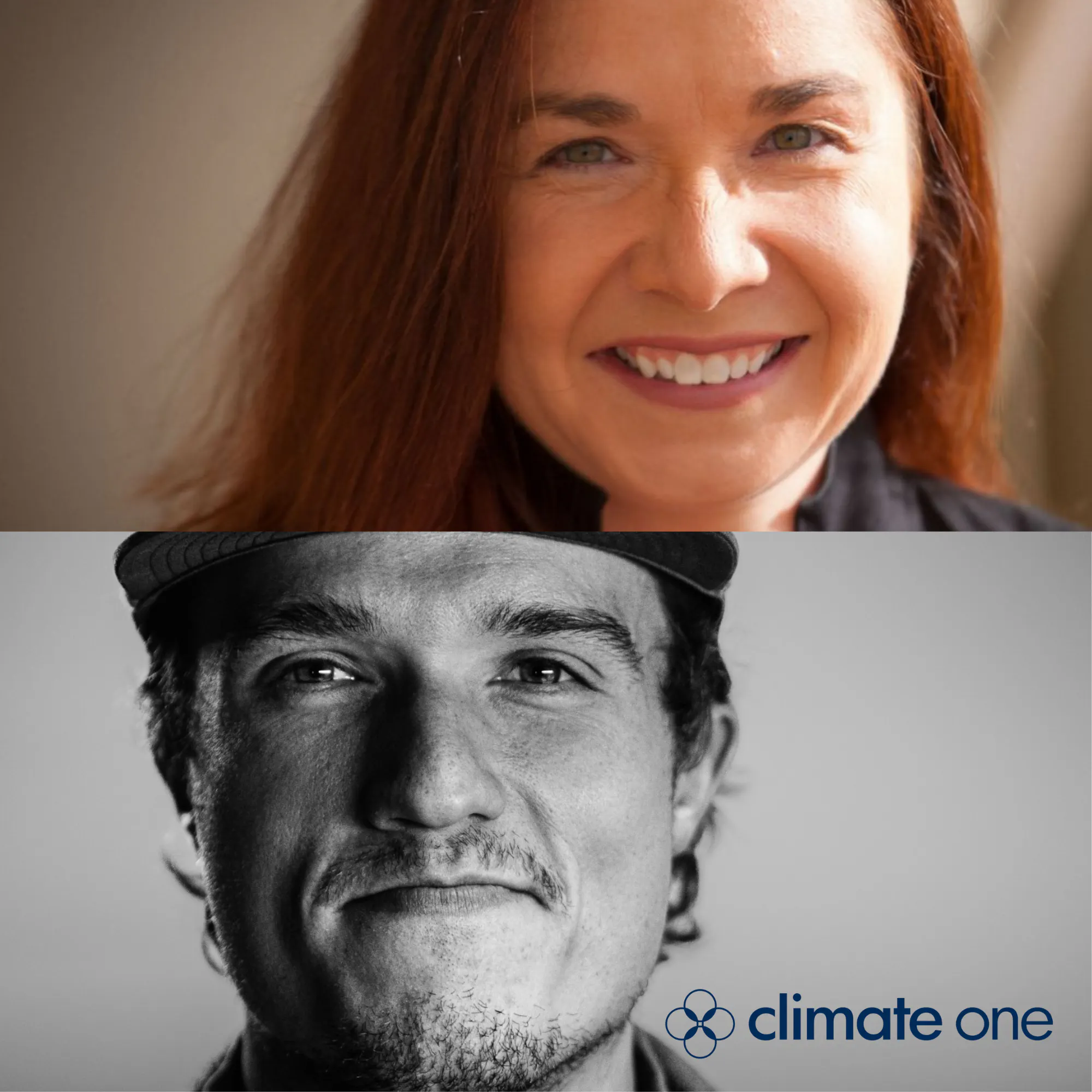 ENCORE: Benji Backer and Katharine Hayhoe on Finding Common Ground 14.08.2026 1ч 2минAt a time when nearly everything feels polarized, Benji Backer is trying to carve out a different path, one where caring about the natural world isn’t a partisan issue. As the founder of Nature Is Nonpartisan, he’s bringing together voices from across the political spectrum who might disagree on climate policy, but still share a desire to preserve public lands, wildlife, and the outdoors. Similarly, climate scientist Katharine Hayhoe firmly believes conversation – even with people you disagree with – can be one of the most powerful tools for climate action. And it starts from a place of respect. “If we begin a conversation by esteeming the other person rather than implicitly judging them, that conversation starts off with so much potential and can end in an incredibly surprising place,” Hayhoe says. Can conservation still serve as common ground in a divided country? What does it take to make environmentalism resonate beyond traditional audiences? Is a bipartisan movement possible in today’s political climate? Guests: Benji Backer, Founder and CEO, Nature is Nonpartisan Katharine Hayhoe, Climate scientist; Chief Scientist, The Nature Conservancy; Distinguished Professor, Texas Tech University For show notes and related links, visit ClimateOne.org. Highlights: 00:00 – Introduction 05:50 – Benji Backer on the origin of Nature is Nonpartisan 09:30 – Making an organization that’s culturally relevant 13:24 – Backer’s work on the Make America Beautiful Again Conservation Commission 21:00 – Working to undo polarization in conversations around climate and environment 24:50 – Backer on avoiding the word “climate” in certain conversations 32:00 – How Katharine Hayhoe deals with hateful messages online 33:30 – How Hayhoe talked about climate change to a Rotary Club in Texas 40:00 – Should scientists be more emotionally open when discussing climate? 45:00 – Hayhoe on what Bible teachings say about caring for the environment 48:15 – Hayhoe on how her Christian faith intersects with her climate research 54:45 – The power of taking action and starting conversations about climate change For show notes, transcripts, and related links, visit our episode page at ClimateOne.org Join Climate One for an electric conversation on October 14 at 6 p.m. between PG&E CEO Patti Poppe and California State Senator Scott Wiener about energy affordability, outages, and whether cities like San Francisco are ready to break up with the investor owned utility model. Tickets available at climateone.org/events *** Support Climate One by going ad-free! By subscribing to Climate One on Patreon, you’ll receive exclusive access to all future episodes free of ads, opportunities to connect with fellow Climate One listeners, and access to the Climate One Discord. Sign up today. *** Ad sales by Multitude. Contact them for ad inquiries at multitude.productions/ads Learn more about your ad choices. Visit megaphone.fm/adchoices
 -
 A Cancer Diagnosis Reframed How Ben Santer Thinks About Climate Science 07.08.2026 1чAtmospheric scientist Ben Santer pioneered the research that connects human activity to specific climate events. Now, pursuing treatment for a rare type of lymphoma, he sees his own diagnosis and his climate science as the same kind of detective work: using essential and basic science to conduct tests, read complex markers, and rule out every other cause. Even while ill, he's calling out efforts by the Trump administration to reject, defund and ignore the science we all depend on. “If we leave basic science behind because the administration doesn't like the results of the science, then as Americans, we're not gonna thrive, and the planet isn't gonna thrive either,” Santer says. Guests: Ben Santer, Atmospheric Scientist, University of East Anglia Rachel Rothschild, Assistant Professor, University of Michigan Law School Highlights: 00:00 – Introduction 2:24 – Ben Santer on how he’s doing amidst his health issues 6:43 – Ben Santer on having the motivation to keep going 11:21 – Ben Santer on what it means to find human fingerprints on climate disruption 16:52 – Ben Santer on the importance of climate measuring 20:23 – Ben Santer on persevering through personal attacks and credible death threats 31:01 – Ben Santer on the effect of Trump administration funding cuts 33:43 – Ben Santer dealing with grief 38:54 – Rachel Rothschild on how state superfund laws work 42:26 – Rachel Rothschild on having her personal communication targeted 47:40 – Rachel Rothschild on the personal tax of doing her work 51:45 – Rachel Rothschild on what surprised her For show notes and related links, visit our episode page at ClimateOne.org *** Support Climate One by going ad-free! By subscribing to Climate One on Patreon, you’ll receive exclusive access to all future episodes free of ads, opportunities to connect with fellow Climate One listeners, and access to the Climate One Discord. Sign up today. *** Ad sales by Multitude. Contact them for ad inquiries at multitude.productions/ads Learn more about your ad choices. Visit megaphone.fm/adchoices
 -
 Hollywood, Baseball, Cage Fights, and… Climate 31.07.2026 1ч 3минWhen it comes to climate, we have the facts, but we aren’t moving fast enough. So we need to get climate education and solutions into the places where people already spend their time. Pop culture offers endless opportunities to influence audiences – your favorite movie or TV character can feel like a friend whose views on climate might affect your own. In this episode, we connect moments like this to the broader media environment shaping how we understand the world. Can you be masculine and care about the climate? Can watching a character take charge of the future onscreen actually change what people believe they can do in real life? And can the stories we consume ultimately shape public attitudes and even policy outcomes? Guests: Allison Begalman, Co-founder & Chief Strategy Officer, Context Collaborative; Co-founder, Hollywood Climate Summit Michael P. Haselhuhn, Associate Professor of Management, University of California, Riverside Brent Suter, Baseball player, Los Angeles Angels; EcoAthletes Climate Champion Highlights: 00:00 – Introduction 5:00 – Allison Begalman on why it’s important for climate to show up in popular culture 8:45 – Unpacking a climate-themed scene from the show “Hacks” 13:00 – Unpacking a climate-themed scene from “The Morning Show” 16:30 – Bringing new people in at the Hollywood Climate Summit 23:15 – Michael P. Haselhuhn on how men’s views on masculinity and climate change are linked 33:25 – Masculinity is multifaceted 34:30 – Kousha goes to an MMA cage fight to ask guys about their views on masculinity 40:15 – Brent Suter on where he got his nickname, “The Raptor” 42:00 – His reaction to seeing “An Inconvenient Truth” as a young person 44:00 – Speaking out against fossil fuel endorsements for pro sports 49:20 – Suter on how his faith drives his climate activism 54:30 – How Suter talks to his teammates about climate and the environment 57:40 – Climate One More ThingFor show notes and related links, visit our episode page at ClimateOne.org *** Join Climate One for an electric conversation on September 1 at 6 p.m. between PG&E CEO Patti Poppe and California State Senator Scott Wiener about energy affordability, outages, and whether cities like San Francisco are ready to break up with the investor owned utility model. Tickets available at climateone.org/events *** Support Climate One by going ad-free! By subscribing to Climate One on Patreon, you’ll receive exclusive access to all future episodes free of ads, opportunities to connect with fellow Climate One listeners, and access to the Climate One Discord. Sign up today. *** Ad sales by Multitude. Contact them for ad inquiries at multitude.productions/ads Learn more about your ad choices. Visit megaphone.fm/adchoices
 -
 How Do I Say This… 24.07.2026 54минIt’s becoming increasingly clear that how we talk about climate change matters as much as the science or policy itself. The words we use carry weight, and climate communicator Susan Joy Hassol says specific word choices, like “heat-trapping pollution” rather than “greenhouse gases,” can cut through polarization and help messages resonate with a wider range of people. Equally important is listening to what people and communities need to better handle the impacts from climate disruption. And different audiences need different approaches. For example: adults can help children process climate fear and grief without overwhelming them by offering age-appropriate honesty paired with validation of their emotions. Good communication can be one of the most effective forms of climate action. Guests: Robin Cooper, Co-Founder and President, Climate Psychiatry Alliance Elizabeth Yeampierre, Attorney; Executive Director, UPROSE Susan Joy Hassol, Director, Climate Communication Highlights: 00:00 Introduction 2:14 Robin Cooper on climate related mental health issues young people have 5:16 Robin Cooper on how adults can help young people in their lives 12:22 Robin Cooper on having multiple conversations with young people about climate 15:57 Robin Cooper on next steps after identifying climate anxieties in young people 19:46 Elizabeth Yeampierre on what it took to get Sunset Park Solar going 29:33 Elizabeth Yeampierre on building community trust and listening 31:40 Elizabeth Yeampierre on working with other communities 36:11 Susan Joy Hassol on not using the phrase “climate change” 39:52 Susan Joy Hassol on the phrase “natural disasters” 46:11 Susan Joy Hassol on dealing with hostility when discussing climate For show notes, related links, and episode transcript, visit our episode page at climateone.org *** Join Climate One for an electric conversation on September 1 at 6 p.m. between PG&E CEO Patti Poppe and California State Senator Scott Wiener about energy affordability, outages, and whether cities like San Francisco are ready to break up with the investor owned utility model. Tickets available at climateone.org/events *** Support Climate One by going ad-free! By subscribing to Climate One on Patreon, you’ll receive exclusive access to all future episodes free of ads, opportunities to connect with fellow Climate One listeners, and access to the Climate One Discord. Sign up today. *** Ad sales by Multitude. Contact them for ad inquiries at multitude.productions/ads Learn more about your ad choices. Visit megaphone.fm/adchoices
 -
 Cleaner Steel is Coming. Will the Communities That Built the Industry Benefit? 17.07.2026 56минMaking steel accounts for around 11% of global greenhouse gas emissions. But the industry could reduce that number by removing coal from the steel-making process entirely. Three of the U.S.’s last seven coal-based steel mills are situated along Lake Michigan. Together, these facilities produce nearly half of the steel made in the U.S., supplying skyscraper beams, car doors, and appliances across the country. And right now, in Northwest Indiana, a once-in-a-generation decision is on the table. Nippon Steel, the owners of the Gary Works steel mill, can either extend the life of their aging blast furnaces for another 20 years and continuing coal-based production, or invest in cleaner, next-generation steelmaking. Other steelmakers have already moved towards decarbonization. Will Nippon switch to cleaner steelmaking for the next generation, or double-down on coal? Guests: Terry Steagall, Retired Steelworker, United Steelworker Union activist Hilary Lewis, Steel Director, Industrious Labs Roger Smith, Asia Lead, SteelWatch Highlights: 00:00 – Introduction 1:55 Terry Steagall on the importance of the steel industry in northwest Indiana 4:31 Terry Steagall on relining blast furnaces 11:16 Terry Steagall on cleaner steel for the next generation 14:27 Hilary Lewis on steel industry emissions 19:36 Hilary Lewis on the realistic path to decarbonizing the steel industry 23:03 Hilary Lewis on the pressure facing the industry to make cleaner steel 27:57 Hilary Lewis on the industry’s move to southern states 34:01 Roger Smith on the scale of US Steel’s acquisition by Nippon Steel 36:58 Roger Smith on the “golden share” the Trump administration received 46:33 Roger Smith on the viable technology for cleaner steel For show notes, related links, and episode transcript, visit our episode page at climateone.org *** Join Climate One for an induction cooking demonstration night on July 21, at 6 p.m. at the Commonwealth Club in San Francisco. Come enjoy delicious food and wine, and learn about why cooking with magnets beats cooking with gas. Tickets available at climateone.org/events *** Support Climate One by going ad-free! By subscribing to Climate One on Patreon, you’ll receive exclusive access to all future episodes free of ads, opportunities to connect with fellow Climate One listeners, and access to the Climate One Discord. Sign up today. *** Ad sales by Multitude. Contact them for ad inquiries at multitude.productions/ads Learn more about your ad choices. Visit megaphone.fm/adchoices
 -
 Beyond the Rights of Nature: Land that Owns Itself 10.07.2026 1ч 3минThe “rights of nature” is the idea that if a corporation can have legal standing as a person, why can’t a river or a mountain? Thomas Linzey, one of the early architects of a legal framework for granting rights to nature, now believes that structure doesn’t go far enough: Even when ecosystems are granted rights, the land is still owned by someone or some entity, even if that is a land trust or conservancy. Through Linzey’s work in collaboration with the Sacred Contract Coalition, a 30-acre mountain in Colorado was recognized in June 2025 as the first mountain to own itself. What could this mean for protecting other places? Guests: Thomas Linzey, Senior Legal Counsel, Center for Democratic and Environmental Rights Crystal Wolfchild, Guardian of The Mountain Kumu Ramsay Taum, Cultural Advisor Highlights: 00:00 – Introduction 02:30 – Thomas Linzey on his career fighting projects on behalf of communities 05:40 – Linzey on why federal environmental laws don’t protect air, water, or communities 11:00 – Linzey explains rights of nature legal framework 16:30 – Successful rights of nature cases in other parts of the world 19:15 – Rights of nature is Western law catching up with Indigenous cosmovisions 21:45 – Going beyond the rights of nature to land that owns itself 35:00 – Crystal Wolfchild on what it means to be a guardian of the Mountain 40:30 – Wolfchild on what this case could mean for other places 44:00 – Ramsay Taum on incorporating Hawaiian sense of environmental responsibility with Western worldviews 50:45 – Taum on the connection between restoring sovereignty and the rights of nature 56:00 – How to respond to climate changes like rising sea levels 58:00 – Climate One More Thing For show notes, related links, and episode transcript, visit our episode page at climateone.org *** Join Climate One for an induction cooking demonstration night on July 21, at 6 p.m. at the Commonwealth Club in San Francisco. Come enjoy delicious food and wine, and learn about why cooking with magnets beats cooking with gas. Tickets available at climateone.org/events *** Support Climate One by going ad-free! By subscribing to Climate One on Patreon, you’ll receive exclusive access to all future episodes free of ads, opportunities to connect with fellow Climate One listeners, and access to the Climate One Discord. Sign up today. *** Ad sales by Multitude. Contact them for ad inquiries at multitude.productions/ads Learn more about your ad choices. Visit megaphone.fm/adchoices
 -
 ENCORE Dead Heat: The Danger Of Home Power Shutoffs 03.07.2026 59минSummer is here, temperatures are rising — and so are electric bills. That also means many people are facing a severely overlooked issue: power shutoffs. According to a report by the U.S. Energy Information Administration, in 2024 utility companies disconnected U.S. households from electricity more than 13.4 million times due to a customer’s inability to pay. When that happens, people can’t turn on their lights, keep food refrigerated, or cool down the home. And regulations preventing shutoffs during extreme heat events are woefully inadequate. But when utilities help pay the upfront costs of efficiency upgrades, the customers and utilities can both save energy — and money. How do we protect the most vulnerable people from the dangers of home power shutoffs? Guests: Jean Su, Energy Justice Director, Center for Biological Diversity Sanya Carley, Co-Director, Energy Justice Lab, University of Pennsylvania Tamara Jones, Co-Executive Director, Clean Energy Works Highlights: 00:00 Introduction 4:15 Jean Su on topline takeaways from nationwide data 10:04 Jean Su on why utilities don’t cover the cost of non-payment 12:55 Jean Su on polices to prevent shutoffs 16:16 Jean Su on the reality of underreported shutoffs 22:17 Sanya Carley on what happens to a household when a shutoff occurs 25:15 Sanya Carley on seeking help after a shutoff 27:44 Sanya Carley on federal impact on shutoffs 29:56 Sanya Carley on what state legislatures can do 35:25 Tamara Jones on working for justice 38:09 Tamara Jones on who is impacted by energy injustice 46:14 Tamara Jones on examples of where policy gets it right 50:56 Tamara Jones on what work needs to be done in policy and regulation For show notes, related links, and episode transcript, visit our episode page at climateone.org Join Climate One for an induction cooking demonstration night on July 21, at 6 p.m. at the Commonwealth Club in San Francisco. Come enjoy delicious food and wine, and learn about why cooking with magnets beats cooking with gas. Tickets available at climateone.org/events *** Support Climate One by going ad-free! By subscribing to Climate One on Patreon, you’ll receive exclusive access to all future episodes free of ads, opportunities to connect with fellow Climate One listeners, and access to the Climate One Discord. Sign up today. *** Ad sales by Multitude. Contact them for ad inquiries at multitude.productions/ads Learn more about your ad choices. Visit megaphone.fm/adchoices
 -
 When Your New Neighbor Is… a Data Center 26.06.2026 1ч 1минAcross the country, developers are racing to build huge new buildings to house computers to fuel the AI boom, creating an explosive demand for new energy. While some hyperscalers seek renewable energy, others are turning to fossil fuels. But concerns around high electric bills, air and noise pollution and water depletion have generated widespread community pushback against these giant facilities, and it seems opposing data centers is a bipartisan issue. Many cities and states are working to rapidly update zoning and other local regulations to respond to the dual pressures of developer interest and constituent backlash. Since data center development isn’t slowing down, what policies or creative strategies can lessen the impacts for local communities and ratepayers? Guests: KeShaun Pearson, Executive Director, Memphis Community Against Pollution Rebecca Egan McCarthy, Freelance Journalist Jason Plautz, Reporter, E&E News and Politico Astrid Atkinson, CEO, Camus Highlights: 00:00 Introduction 3:15 KeShaun Pearson on updates to the Colossus data center pollution 6:18 KeShaun Pearson on state regulators allowing an expansion of gas turbines 8:08 KeShaun Pearson on the effect of the pollution on the community 16:24 KeShaun Pearson on what he hopes the lawsuits can achieve 19:38 Rebecca Egan McCarthy on Archbald and data center development 22:26 Rebecca Egan McCarthy on who has the power to regulate data center projects 28:16 Rebecca Egan McCarthy on data center development outside of Archbald 30:21 Jason Plautz on changing attitudes toward data centers 34:32 Jason Plautz on where there is meaningful regulation happening 39:27 Jason Plautz on state level regulatory changes 41:26 Jason Plautz on the pace of data center development 44:45 Astrid Atkinson on the effects of data center energy load on the grid 46:19 Astrid Atkinson on what flexibility means in the energy world 50:39 Astrid Atkinson on hyperscalers paying for their energy 55:22 Astrid Atkinson on how some policy changes can help communities For show notes and related links, visit our episode page at climateone.org --- Join Climate One for an induction cooking demonstration night on July 21, at 6 p.m. at the Commonwealth Club in San Francisco. Come enjoy delicious food and wine, and learn about why cooking with magnets beats cooking with gas. Tickets available at climateone.org/events Learn more about your ad choices. Visit megaphone.fm/adchoices
 -
 Making Solar Great Again 19.06.2026 1ч 4минMore and more, conservative voices are making the case that the U.S. can’t achieve energy dominance without solar power. Even the leading industry trade group is changing its strategy. Earlier this year, Politico reported that the American Clean Power Association launched the “American Energy First” campaign to engage Kellyanne Conway and conservative influencers like Katie Miller “to amplify the benefits of solar energy” and “note the harm that could result from reckless trade policy.” Meanwhile, conservative groups at the state and federal level are advocating for building out solar power in service of private property rights, economic development and national security. Episode Guests: Kelsey Brugger, Congressional policy reporter, Politico Skyler Zunk, Executive Director, Energy Right; Executive Director, America First Energy Lillian Floutsis, Indiana Senior Field Representative, Indiana Land and Liberty, Conservative Energy Network This episode also features a reported piece from David Condos of KUER. Episode Highlights: 00:00 – Intro 03:00 – Kelsey Brugger explains American Clean Power memo about reaching out to conservative influencers 06:30 – Does this indicate an ideological shift on the right? 09:40 – How much can this effort shift views within the administration 14:00 – Kelsey Brugger on what this story says about how the clean energy industry is positioning itself 19:00 – Skylar Zunk shares rationale behind his “Make Solar Great Again” hats 23:40 – How America First Energy frames solar energy 32:00 – How approach to solar energy conversation differ in D.C. and Louisiana 36:50 – KUER’s David Condos reports on Utah communities moving toward renewable energy 43:00 – Lillian Floutsis shares story from Allen County, Indiana, about local debate around setbacks for solar energy development 48:00 – Floutsis on framing solar conversations in Indiana around property rights, economic development and national security 53:00 – Climate is usually not a part of these conversations 54:20 – Floutsis share solar success stories 57:50 – Climate One More Thing For show notes and related links, visit our episode page at climateone.org --- Join us for our induction cooking demonstration night on July 21, at 6 p.m. at the Commonwealth Club in San Francisco. Come enjoy delicious food and wine, and learn about why cooking with magnets beats cooking with gas. Tickets available at climateone.org/events *** Support Climate One by going ad-free! By subscribing to Climate One on Patreon, you’ll receive exclusive access to all future episodes free of ads, opportunities to connect with fellow Climate One listeners, and access to the Climate One Discord. Sign up today. *** Ad sales by Multitude. Contact them for ad inquiries at multitude.productions/ads Learn more about your ad choices. Visit megaphone.fm/adchoices
 -
 Medium Rare: What’s Next For Meat? 12.06.2026 1ч 5минIndustrial agriculture accounts for a significant share of global emissions, but meat alternatives face real hurdles in becoming a mainstay of consumer diets. The hype around plant-based meat has cooled: hurt by price gaps, ultra-processed rhetoric, and culture-war politics around masculinity and food identity. Yet feeding a growing planet will require eating less beef, wasting less food, and producing more food with less land. Cultivated meat – made from animal cells and grown in a lab – could offer a different path forward, especially in hybrid form combining plant and cultivated proteins. What might the future of meat look like? Guests: Robbie Lockie, CEO, Founder, foodfacts.org Michael Grunwald, Journalist and author, “We Are Eating the Earth” Claire Bomkamp, Senior Lead Scientist, Cultivated Meat & Seafood, Good Food Institute Highlights: 00:00 - Introduction 4:30 Robbie Lockie on changing his diet 11:54 Robbie Lockie on who is choosing plant based meat 17:55 Robbie Lockie on how plant based meat competes on taste 20:40 Robbie Lockie on the future of plant based meat 26:54 Michael Grunwald making more food with less land 30:16 Michael Grunwald on the efficiency of industrial agriculture 33:30 Michael Grunwald on rotational grazing 38:00 Ariana Brocious’ cultivated salmon tasting 45:05 Claire Bomkamp on the state of cultivated meat 47:16 Claire Bomkamp on energy use of cultivated meat 52:23 Claire Bomkamp on what cuts cultivated meat can create 56:22 Claire Bomkamp on the price of cultivated meat For show notes and related links, visit ClimateOne.org. Join us for our induction cooking demonstration night on July 21, at 6 p.m. at the Commonwealth Club in San Francisco. Come enjoy delicious food and wine, and learn about why cooking with magnets beats cooking with gas. Tickets available at climateone.org/events Learn more about your ad choices. Visit megaphone.fm/adchoices
 -
 ENCORE: Cities Leading the Way 05.06.2026 1ч 4минWhile the federal government has all but abandoned trying to address the climate crisis, cities around the world are stepping up. C40 is an international network of 97 cities representing 920 million people and 23% of the world’s economy. Seventy-three percent of these cities have already peaked their emissions. Here in the US, Climate Mayors is a bipartisan network of nearly 350 U.S. mayors, representing 48 states and over 70 million Americans. How are cities innovating on reducing emissions, adapting to increasing climate risks, and — perhaps most importantly — sharing their knowledge? Guests: Eric Garcetti, C40 Ambassador for Global Climate Diplomacy; Former Mayor, Los Angeles Kate Gallego, Mayor of Phoenix; Former Chair, Climate Mayors Highlights: 00:00 Intro 2:46 Eric Garcetti on his time as mayor of LA 9:45 Eric Garcetti on where cities are moving the needle 17:47 Eric Garcetti on cities on the world stage 22:11 Eric Garcetti on the work of C40 26:20 Eric Garcetti on knowledge sharing 32:17 Eric Garcetti on co-leading 40:11 Kate Gallego on dealing with the heat in Phoenix 43:46 Kate Gallego on affordability 48:10 Kate Gallego on regulating data centers 52:35 Kate Gallego on working with other mayors Learn more about your ad choices. Visit megaphone.fm/adchoices
 -
 Healing Ourselves and the Planet with Katharine Wilkinson and Uncle Pappy 29.05.2026 1чWhen real and internal maps come up short, and the path ahead is uncertain, how do we find our way? In her new book “Climate Wayfinding," Dr. Katharine Wilkinson (co-founder of the All We Can Save Project) offers a compassionate and empowering guide for navigating through ache to action, doubt to possibility. Whether we’re steeped in climate or newly curious, we can look inward with care, outward with curiosity, and forward with courage to shape our unique contributions to healing the planet we call home. In Florida, social media star Uncle Pappy blends his unique mix of philosophy, humor, and love of nature into his own brand of inspirational messages. “I feel a moral imperative to nature to try to remind people of how incredible it is, and at the same time, I feel a moral imperative to people to remind them of how incredible nature is.” Guests: Katharine Wilkinson, Author, “Climate Wayfinding;” Co-founder & Executive Director, The All We Can Save Project Blair Carlyle (aka Uncle Pappy), Instagram influencer; Law student For show notes, transcript, and related links, visit https://www.climateone.org/podcasts Highlights: 00:00 – Intro 04:15 – Katharine Wilkinson’s climate journey 10:45 – Climate is big, global, multifaceted, yet impacts are close and intimate 17:45 – How to transform overwhelming grief into power, joy, and meaning 21:00 – Answering the question, “What can I do?” 29:15 – Reading of the poem “Equinox" by Tamiko Byer 33:00 – How Blair Carlyle, aka Uncle Pappy, pivoted to environmental subjects 36:15 – Carlyle’s Connection to the outdoors 40:00 – “Pappy is the realest version of me, the version I aspire to be” 45:00 – Carlyle on reaching people of all political beliefs, regardless of their climate views 53:30 – Climate One More Thing ********** Support Climate One by going ad-free! By subscribing to Climate One on Patreon, you’ll receive exclusive access to all future episodes free of ads, opportunities to connect with fellow Climate One listeners, and access to the Climate One Discord. Sign up today at patreon.com/ClimateOne. Ad sales by Multitude. Contact them for ad inquiries at multitude.productions/ads Learn more about your ad choices. Visit megaphone.fm/adchoices
 -
 Fighting Fire with Fiery Passion: 2026 Goldman Prize Winners 22.05.2026 54минThe Goldman Environmental Prize is known as the Nobel for grassroots environmental champions, for good reason. Award-winners are earth defenders, often bucking entrenched systems and powerful interests in order to protect and restore the natural environments we all depend on. This week we feature conversations with two of the 2026 Goldman Prize winners: Iroro Tanshi, a tropical conservationist and bat ecologist who rediscovered a species that hadn't been seen in half a century. When climate-amplified wildfire threatened to destroy her new find, she built a community movement to virtually eliminate the wildfire risk. Sarah Finch, a tireless environmental advocate who spent years in English courts using planning law as a defense against the fossil fuel industry. She won a major UK Supreme Court ruling, a ruling that is already constraining oil, gas, and coal development across the country. What can we learn about passion, persistence, and collaboration from these two advocates? Guests: Iroro Tanshi, Tropical Conservationist Sarah Finch, Environmental Campaigner For show notes, related links, and episode transcript, visit https://climateone.org/podcasts Highlights: 00:00 Intro 03:01 Iroro Tanshi on Warri, Nigeria and the oil industry 05:37 Iroro Tanshi on becoming interested in bats and the forest 09:24 Iroro Tanshi on finding a bat species once thought extinct 14:03 Iroro Tanshi on when a wildfire tore through the research site 19:20 Iroro Tanshi on the wildfire risks of forests in equatorial Africa 20:50 Iroro Tanshi on working with the community to address the wildfires 23:01 Iroro Tanshi how to scale what she’s learned world-wide 24:40 Iroro Tanshi on what bats can teach people about being human 27:17 Sarah Finch on realizing the far reaching implication of her work 30:49 Sarah Finch on why the legal argument finally worked 34:42 Sarah Finch on getting the confidence to go after big oil 44:43 Sarah Finch on how a group of people can make a real difference ********** Support Climate One by going ad-free! By subscribing to Climate One on Patreon, you’ll receive exclusive access to all future episodes free of ads, opportunities to connect with fellow Climate One listeners, and access to the Climate One Discord. Sign up today at patreon.com/ClimateOne. Ad sales by Multitude. Contact them for ad inquiries at multitude.productions/ads Learn more about your ad choices. Visit megaphone.fm/adchoices
Подобни подкасти


Популярен в
Този подкаст се появява и в подкаст класациите на тези държави.


