
Eye on AI Weekly Research Watch
Craig Spencer Smith
0
Eye on AI Weekly Research Watch provides weekly, digestible podcast explainers of significant research papers in the field of artificial intelligence. Each episode breaks down complex AI research into accessible summaries for a broad audience. The podcast aims to keep listeners informed about the latest developments and breakthroughs in AI research.
Епизоди
-
 Anchoring Clinical Events in Time: UID-Preserving Multimodal Reconstruction and Source-Grounded Adjudication 16.09.2026 2минHospital discharge summaries often blur when things happened. This framework tags every event in the note with an ID and ties it back to timestamped rows in the patient's records. On 40 critical-care summaries, it recovered 43% more events and came close to clinician annotations. The team also built GAVEL, a model that judges competing timelines, and human reviewers upheld most of its calls. Authors: Sayantan Kumar, Nicolas Grimaldi, Jack Cummins, Jeremy C. Weiss Paper: https://arxiv.org/abs/2609.13062v1
 -
 Embodied-BenchForge: A Closed-Loop Agentic Workflow for Embodied Benchmark Construction 16.09.2026 2минBuilding benchmarks for robots and other embodied AI is slow, and an early mistake can quietly spoil the result. Embodied-BenchForge has agents build the benchmark, check each intermediate piece, and redo only the parts that fail. It produced six question-answering benchmarks and one interactive benchmark with 220 tasks. Authors: Baoyang Jiang, Fengchun Zhang, Leyuan Wang, Haotian Li, Yida Wang, Zhe Ji, Jinshan Lai, Xi Ren, Danyang Li, Zheng Yang, Jianwei Hu, Qiang Ma Paper: https://arxiv.org/abs/2609.13082v1
 -
 Dynin-Robotics: Omnimodal Unified Diffusion Vision-Language-Action Model 16.09.2026 2минOne diffusion model treats language, camera views, goals and robot actions as the same kind of token. That lets it predict actions, the next view and the end state with a single model. Pretrained on about 1.33 million robot trajectories, it averaged 78.4% success on a real Franka arm across four conditions. A faster implementation cut action decoding time by up to 29 times. Authors: Hoeun Lee, Jaeik Kim, Jusang Oh, Jinhyeok Kim, Geon Choi, Hyeonggeun Kim, Jaeyoung Do Paper: https://arxiv.org/abs/2609.13053v1
 -
 Attention Quantization for Tabular Foundation Models 16.09.2026 2минTabular foundation models are served differently from chatbots, so the usual speedups don't carry over. Here the bottleneck is the attention calculation. Converting queries, keys and values to FP8 gave up to 1.7 times the speed with no meaningful accuracy loss on TabPFN-v3 and TabICLv2. The catch: quantization error on test rows has to match the training rows, or accuracy drops sharply. Authors: Jonas M. Kübler, Benjamin Jäger, Klemens Flöge, Noah Hollmann, Frank Hutter Paper: https://arxiv.org/abs/2609.13031v1
 -
 Comfort by Construction: Adaptive, Comfort-Bounded Action Spaces for Learned Driving Policies 16.09.2026 2минDriving policies trained in simulators can inflate their safety scores with sudden, jerky moves no passenger would accept. This paper redraws the set of allowed controls at every step so they stay inside comfort limits, which tighten as speed rises. On Waymo driving data, comfort violations stayed under 1% and the policy still navigated better than the baselines. Authors: Anna Rothenhäusler, Daniel Jost, Raghu Rajan, Faris Janjos, Oliver Scheel, Andreas Look, Joschka Boedecker Paper: https://arxiv.org/abs/2609.13011v1
 -
 MAxBench: A Multinomial Concept Recovery Benchmark 16.09.2026 2минResearch on steering language models mostly deals with yes-or-no concepts such as refusal. MAxBench tests concepts with many categories, such as animals or countries. Across 10 methods, 6 concepts and 4 models, affine subspaces worked best, largely because of better offsets. No method beat plain prompting. Authors: Divya Appapogu, Freya Behrens, Yonatan Belinkov, Aaron Mueller Paper: https://arxiv.org/abs/2609.13072v1
 -
 MP-Bench: Evaluating Voice Agents as a Multiparty Conversation Participant 16.09.2026 2минVoice agents are mostly tested in one-on-one conversation. MP-Bench tests them in groups. Across 12 agents, real-time systems scored 22% or less on comprehension and did no better than chance at knowing when to speak. Authors: Yi-Jen Shih, Shih-Yun Shan Kuan, Guan-Ting Lin, Kai-Wei Chang, Siddhant Arora, Shu-wen Yang, Abdelrahman Mohamed, Shinji Watanabe, Hung-yi Lee, David Harwath Paper: https://arxiv.org/abs/2609.13076v1
 -
 Autonomous Research for Open-Ended Problems: A Case Study on Telecom Ticket Retrieval 16.09.2026 2минCan AI research agents handle a messy, open-ended industry problem? This study put them on telecom ticket retrieval. With little supervision they reached 90% of the best human result in 10 weeks instead of 10 months, at up to $200 a run. They were good at tuning but short on intuition, and the authors recommend pairing them with human researchers. Authors: Junghyun Min, Huseyin Uzunalioglu, Mohamed Trabelsi Paper: https://arxiv.org/abs/2609.13073v1
 -
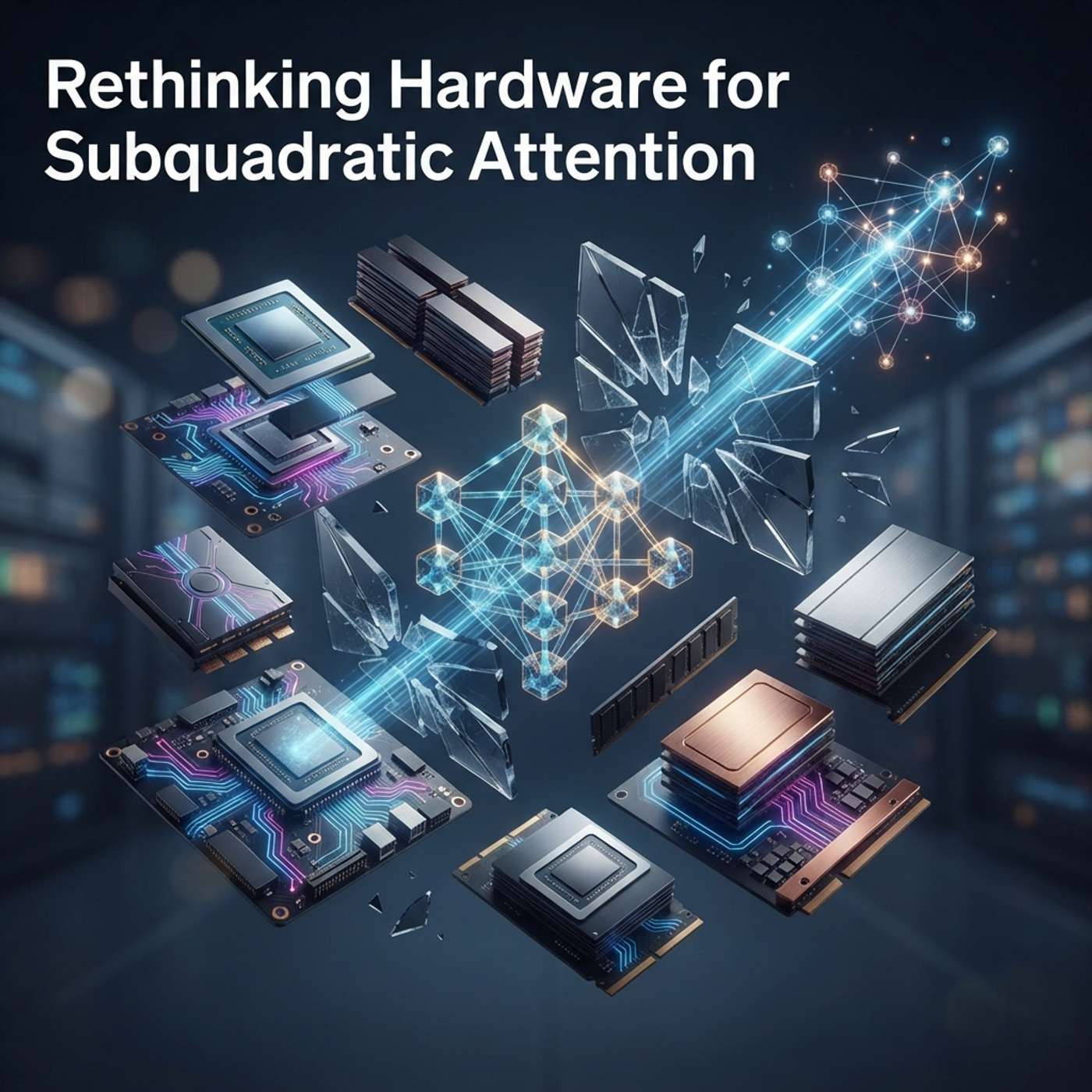 Rethinking Heterogeneous System Disaggregation for Subquadratic Attention 16.09.2026 2минMany frontier models now use cheaper, subquadratic attention. This paper argues inference hardware should be split around that. SQD runs the parts of decoding that grow with context on different chips from the parts that don't. On an 8xB200 test setup it raised tokens per joule by 31% to 56% on GLM 5.2, Nemotron 3 Ultra and Gemma 4 31B. A modeled Rubin plus LPX system showed up to 3.6 times the throughput. Authors: Arya Tschand, Yaosheng Fu, Vikram Sharma Mailthody, Nicolai Oswald, Po-An Tsai, Ritchie Zhao, Oreste Villa, Vijay Janapa Reddi, Karu Sankaralingam Paper: https://arxiv.org/abs/2609.13134v1
 -
 How Good Are Frontier Models at Physics? Expert Re-Grading Reveals Broken Evaluations and Near-Saturation of Leading Benchmarks 16.09.2026 2минPhysics faculty and graduate students re-graded frontier model answers on six physics benchmarks. Most answers marked wrong turned out to reflect bad reference solutions, grading errors or unclear questions. After fixes, GPT-5.6-Sol rose from 47.3% to 78.7% on HLE-Physics and from 61.0% to 87.2% on CMT-Benchmark. The authors say these benchmarks understate what the models can do. Authors: Ali Ansari, Haoran Sun, Andy Zeyi Liu, Mark Jabbour, Yongshan Ding, et al., Lucas Baker, Arman Cohan, John Sous (51 authors) Paper: https://arxiv.org/abs/2609.13009v1
 -
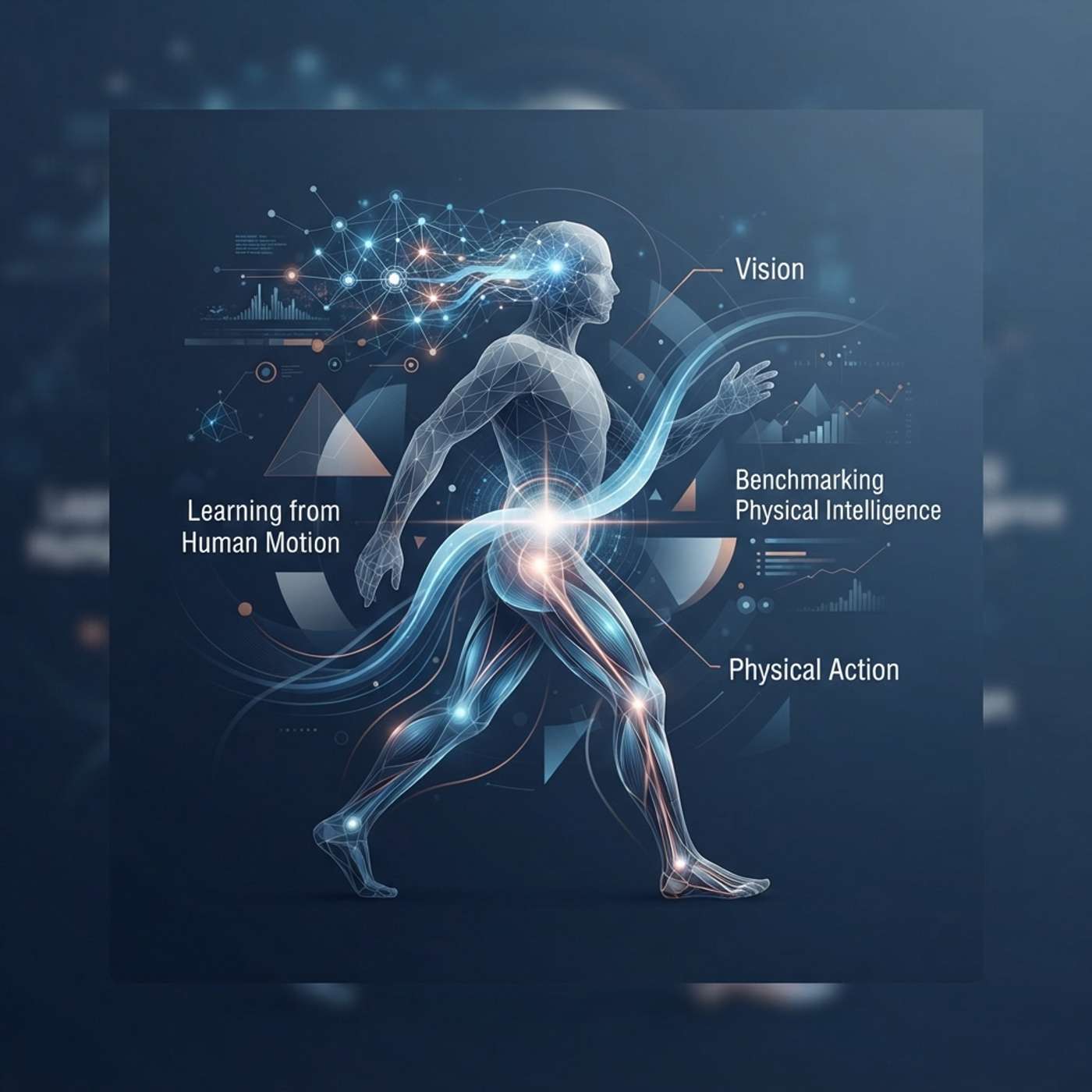 PhysBrain 1.5: From Vision-Language Models to Physical Foundation Models 16.09.2026 2минAn open 8B model that understands physical scenes, generates robot motion and predicts what happens next, all in one system. Authors: DeepCybo Team, Yu Bin, Haipeng Cao, Zheng Chang, Kai Chen, et al., Zubin Zheng, Zishen Zhuang (54 authors) Paper: https://arxiv.org/abs/2609.14973v1
 -
 Vidu S2: Real-Time Interactive, Editable, and Spatial Video Generation 16.09.2026 2минLive video generation you can steer as it plays: interactive avatars and real-time editing of a video stream. Authors: Jintao Zhang, Kai Jiang, Jintao Chen, Xu Wang, Deyuan Liu, et al., Fan Bao, Jianfei Chen, Jun Zhu (35 authors) Paper: https://arxiv.org/abs/2609.11638v1
 -
 Dream-RSI: Recursive Self-Improvement through Evolving Worlds 16.09.2026 2минCoding agents improve their own search strategies by replaying past discovery history instead of running costly new trials. Authors: Tong Zheng, Xidong Wu, Zheng Zhang, Zhankui He, Chaoyi Zhang, Benjamin Coleman, Ruoqiao Wei, Di Bai, Haolin Liu, Rui Liu, Xue Wang, Yue Zhuan, Wang-Cheng Kang, Renkai Xiang, Heng Huang, Xinwu Cheng, Yunsong Guo Paper: https://arxiv.org/abs/2609.14858v1
 -
 ZGCM-1: A Fully Open and Extremely Efficient Foundation Model for Math and Agentic Search 16.09.2026 2минA fully open 7B model that pairs reasoning with tool use and claims results close to models many times its size on math and search tasks. Authors: Jiyan He, Guang Liang, Hao Liu, Haoxiang Guan, Jinbo Sun, Junyi Guo, Wenjun Feng, Yantai Xie, Yifei Shen, Bin Shao, Chuyang Wei, Kai Chen, Kexin Zhou, Minghang Zhu, Shuxin Zheng, Tie-Yan Liu, Taine Zhao, Wenhui Zhu, Xueyin Xu, Xiaoqing Zhang, Yatao Li, Yuxuan Ren Paper: https://arxiv.org/abs/2609.13356v1
 -
 Atria Dawn: The Dawn of Agentic Superintelligence 16.09.2026 2минShanghai AI Lab releases an open agent model for research and engineering work, plus a study of how 56 people worked with it while building it. Authors: Honglin Guo, Tao Gui, Yicheng Chen, Guanting Dong, Qiming Ge, et al., Xuanjing Huang, Yu-Gang Jiang, Bowen Zhou (143 authors) Paper: https://arxiv.org/abs/2609.15818v1
 -
 Why Fake Names Break AI Testing 29.08.2026 2минNo PUN Intended: Plausible Unknown Names for Person-Centred LLM Evaluation arXiv: 2608.21206v1 — https://arxiv.org/abs/2608.21206v1 From Eye on AI Weekly Research Watch.
 -
 Fixing the Gaps in Health Data 29.08.2026 2минCurriculum-Aware Interpolate-then-Refine: Learned Physiological Time-Series Imputation under Realistic Missingness arXiv: 2608.21207v1 — https://arxiv.org/abs/2608.21207v1 From Eye on AI Weekly Research Watch.
 -
 When AI Software Agents Misunderstand Specifications 29.08.2026 2минSpecification Portability Across LLM Development Agents: Cross-Agent Compatibility in Specification-Driven Software Migration arXiv: 2608.21208v1 — https://arxiv.org/abs/2608.21208v1 From Eye on AI Weekly Research Watch.
 -
 Teaching AI to Keep Your Personal Secrets 29.08.2026 1минPersonalized Privacy Control in LLMs via Attention Head Intervention arXiv: 2608.21209v1 — https://arxiv.org/abs/2608.21209v1 From Eye on AI Weekly Research Watch.
 -
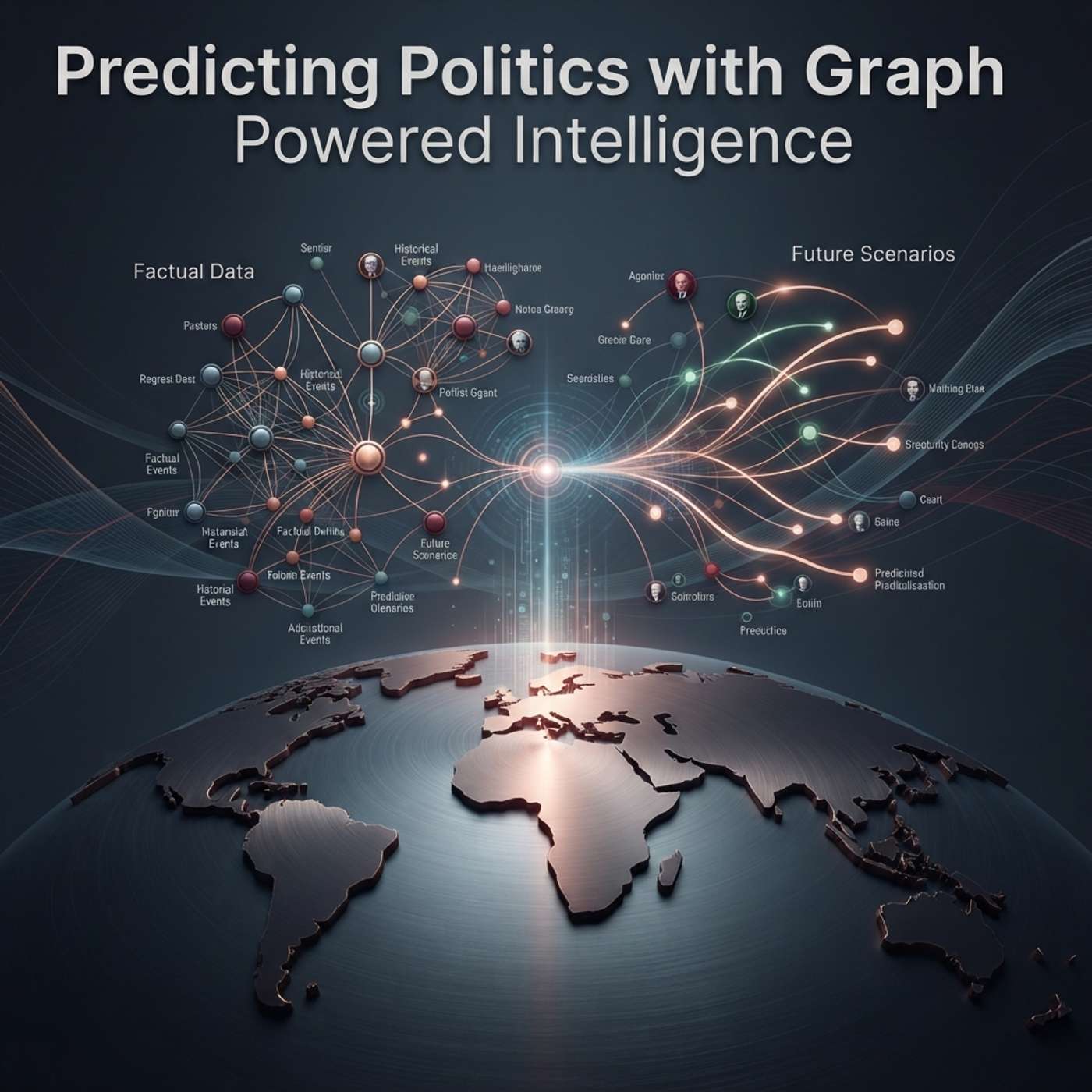 Predicting Politics with Graph Powered Intelligence 29.08.2026 2минEnhancing LLMs in Predictive Political QA with Semi-Structured Data arXiv: 2608.21218v1 — https://arxiv.org/abs/2608.21218v1 From Eye on AI Weekly Research Watch.
Подобни подкасти


Популярен в
Този подкаст се появява и в подкаст класациите на тези държави.
