
Rethinking Education
Dr James Mannion
0
Hosted by Dr James Mannion and David Cameron, this podcast features long-form conversations with guests about creating a more diverse, intelligent, and responsive educational ecosystem for all young people. It explores how education can keep pace with the challenges of civilization, drawing on H.G. Wells' idea that civilization is a race between education and catastrophe.
Епизоди
-
 10 EDUCATION BOMBSHELLS FOR 2026/7 | #REPOD SEASON 6 (!) TRAILER 05.09.2026 30минJames and David provide a quick preview of the year ahead. Like and subscribe here and on your fave pod player: https://pod.link/1546512828
 -
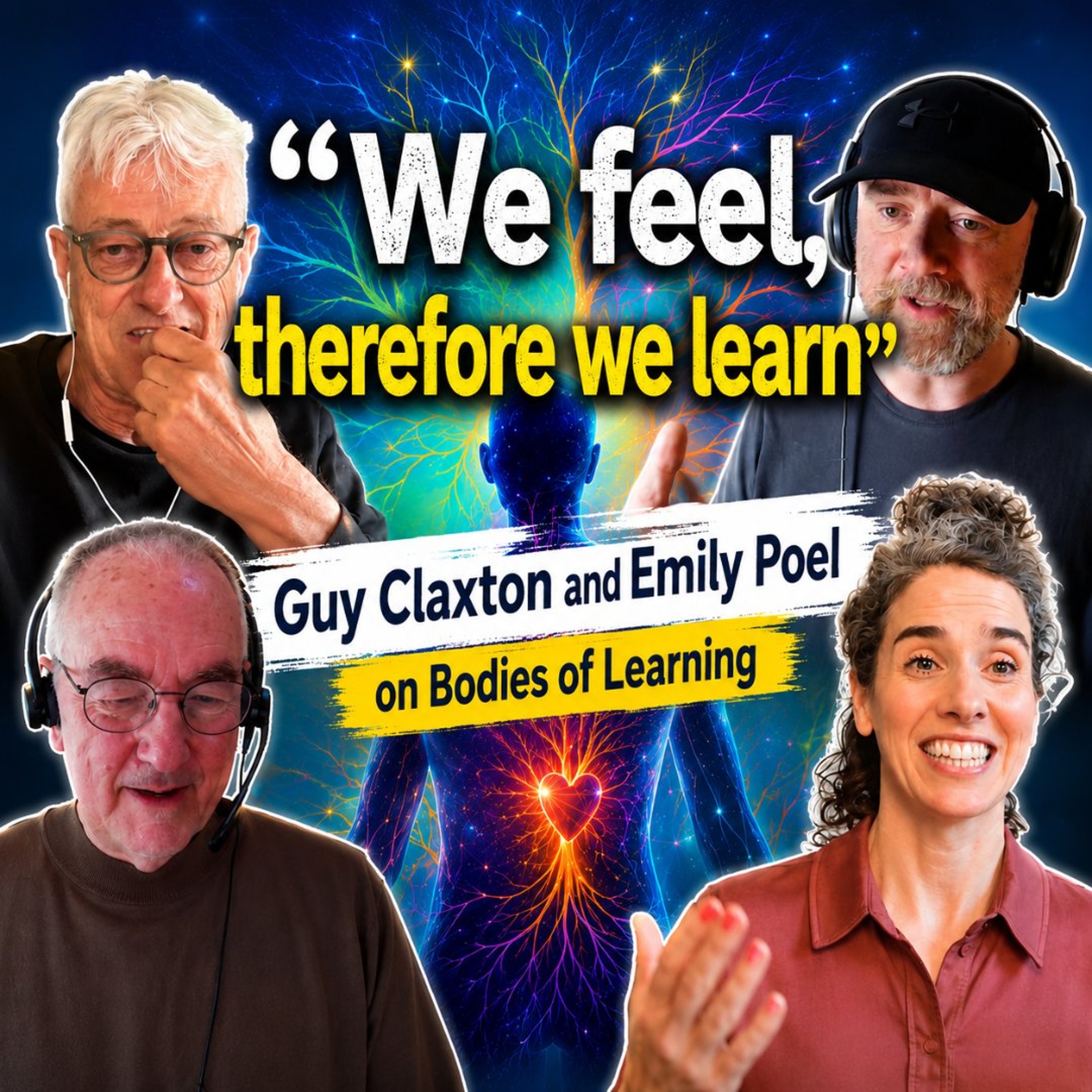 “We feel, therefore we learn!” Why education needs to get embodied - with Guy Claxton and Emily Poel 12.08.2026 2ч 26минWhat if one of the biggest assumptions underpinning modern education is simply wrong? We tend to think of the mind as the place where the important stuff happens – thinking, reasoning, remembering and learning – while the body is something we carry around with us. But what if there is no meaningful separation between the two? In this episode, James and David are joined by Guy Claxton and Emily Poel, authors of Bodies of Learning: How Embodiment Science Transforms Education, to explore what happens when we take the body seriously as part of intelligence and learning. The conversation begins with the historical roots of the mind-body split and its influence on education. Guy argues that the hierarchy of subjects in schools – with mathematics and other highly abstract subjects traditionally occupying the top of the pecking order, while PE, dance, drama and practical subjects are given lower status – reflects a much deeper cultural assumption that intelligence belongs primarily to the mind. We then explore the emerging field of embodiment science and the idea of 4E cognition – embodied, enactive, embedded and extended. Rather than seeing the brain as a detached command centre controlling the body, this perspective sees intelligent behaviour as emerging from the constant interaction between brain, body, environment and other people. Guy explains why predictive processing provides such a powerful way of thinking about learning. We are constantly making predictions about the world, and learning happens when those predictions are disrupted – when we are surprised, confused, frustrated or uncertain. Learning, in this sense, is much more than committing information to memory. We also discuss: Why the language of “bodymind” feels so strange at first – and why we should persevere with this term. How our emotions, bodily states and sense of salience influence what we learn. Why the brain may be better understood as a “chat room” than a command centre. What embodiment science tells us about the limitations of purely cognitive explanations of children's behaviour and learning. Why progressive approaches such as inquiry, experiential, project-based and hands-on learning may have more in common than we realise. Whether schools should deliberately cultivate learning dispositions such as curiosity, persistence, empathy and collaboration – rather than focusing primarily on examination performance. Why promising approaches to education have often remained isolated rather than being scaled. The 87 practical things to try in Bodies of Learning, from increasing body awareness to using movement, physical space, play and imagination as part of learning. What an embodied approach might actually look like in different subjects, classrooms and schools. And, finally, Guy's suggestion for the poster that should hang in every teacher training institution and staffroom. This is a wide-ranging conversation about neuroscience, psychology, philosophy, education and human development. But ultimately it comes back to a deceptively simple question: What are schools actually for? If education is partly about helping young people become more capable, curious, resilient, empathetic and intelligent human beings, perhaps we need a much richer conception of what intelligence and learning actually are. About our guests Guy Claxton is Emeritus Professor of the Learning Sciences at the University of Winchester Centre for Real-World Learning, UK, and author of The Future of Teaching and Intelligence in the Flesh: Why Your Mind Needs Your Body Much More Than It Thinks. Emily Poel is a Berlin-based embodiment practitioner and trainer with a background in somatic practices, contemporary dance and history. She develops approaches that show how movement and physical awareness shape learning, thinking and creativity, and has taught internationally for over 15 years.
 -
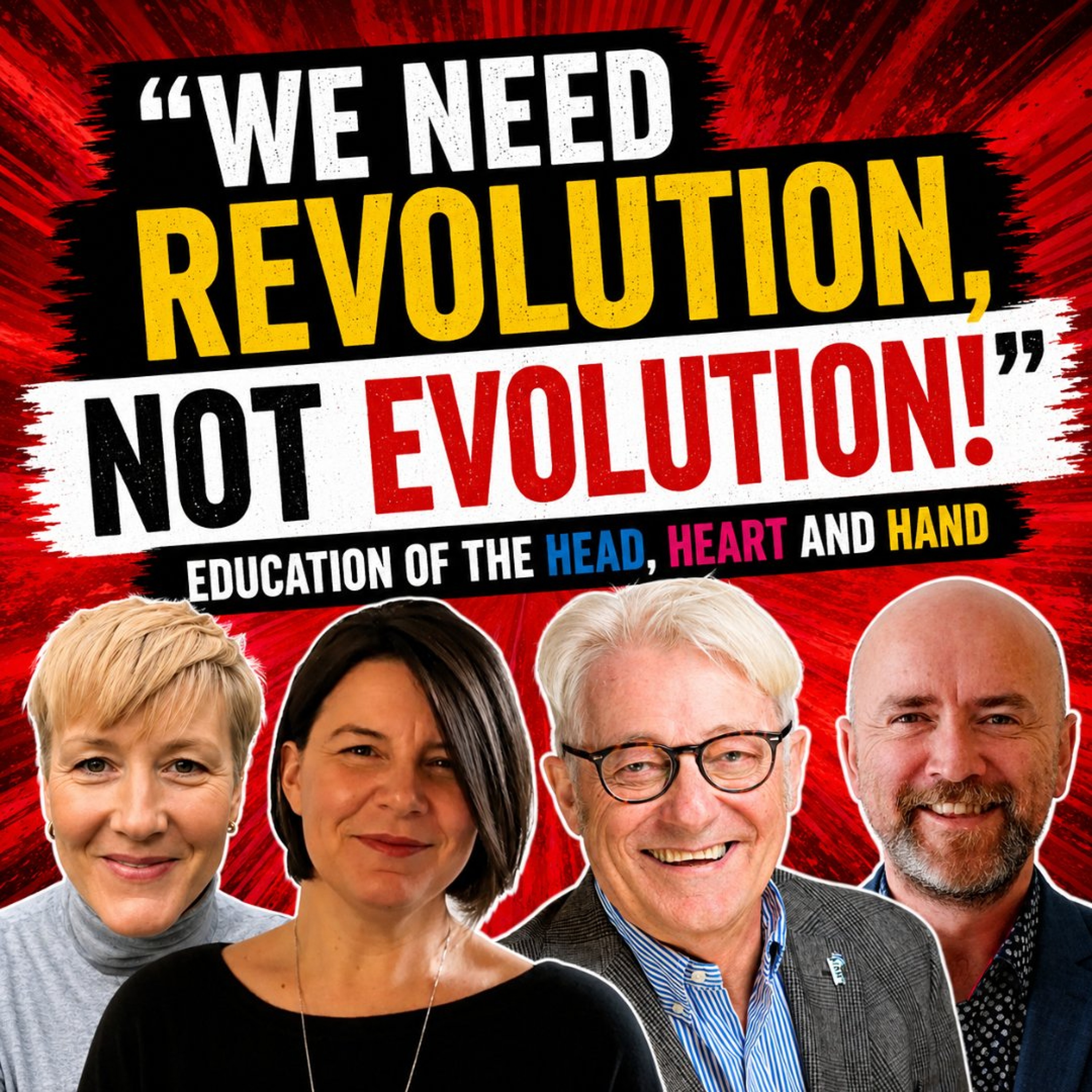 "We need revolution, not evolution!" - Education of the Head, Heart and Hand, with Sarah Seleznyov and Liz Robinson 20.07.2026 1ч 34минToo many young people are getting a "desiccated" education – narrow, information-transfer schooling optimised for exams. In this episode, James and David are joined by Liz Robinson and Sarah Seleznyov of Big Education – the "feisty little multi-academy trust" behind School 21, School 360 and Surrey Square – to make the case for something bigger: an education of the head (academic learning), heart (wellbeing and relationships) and hand (creativity and skills). The conversation centres on the new book from the Rethinking School project, A Practical Guide to a Big Education: Balancing Head, Heart and Hand, edited by Sarah Seleznyov and Robert Lobatto – a collection of chapters written by school leaders and teachers who are actually doing this work, each paired with a vignette from another school and reflective questions to help you find your own way in. Not a recipe book, but an invitation to be a little bit braver. In this episode we explore: -Why pedagogy was written out of the Curriculum and Assessment Review – and why curriculum, pedagogy and assessment have to change together ("if you only pull one string in the marionette, it jerks") -England's uniquely narrow definition of curriculum and learning – and how it compares with models from around the world -What Big Education is, and what an education of the head, heart and hand actually means -The Milburn report on youth unemployment – and why the problems start in Year 1, not at upper secondary -Liz's "soapbox rant": Every Child Matters, extended schools, co-located services – and what was lost when it was all set on fire -Think systemically, act systematically: systems thinking, design thinking and vertical slice change teams Authentic leadership: vulnerability, ego, the kelp metaphor – and why Liz is learning to bring "Lizzie" to work -Being evidence-informed: why data is richer than numbers, the trouble with RCTs and the EEF toolkit, and engaging with research and in research -Interdisciplinary project-based learning – and the jaw-dropping story of the Ofsted inspector who withheld 'outstanding' because children didn't know their learning was called history -Can we teach and assess transferable competencies? And do we have to trade exam results for a broader education? (Spoiler: no) -Lessons from curriculum reform in Scotland, Wales and British Columbia – why transforming practice takes time, investment and serious professional development -Why we need revolution, not evolution About the guests Liz Robinson is co-founder and CEO of Big Education. She became a headteacher at 29, leading Surrey Square Primary in south London for many years, and created the Big Leadership Adventure. She advocates for – and models – an authentic, reflective and relational approach to leadership. Sarah Seleznyov is Strategic Project Lead at Big Education and leads the Rethinking School project. She has worked in London schools for over 25 years as a deputy head, school improvement consultant and teaching school director, and previously led research-informed leadership programmes at the UCL Institute of Education. Her research specialism is Japanese lesson study. Links Get the book: A Practical Guide to a Big Education: Balancing Head, Heart and Hand – https://www.bloomsbury.com/uk/practical-guide-to-a-big-education-9781801997928/ Big Education: https://bigeducation.org The Rethinking School project (subsidised places available – get in touch!): https://bigeducation.org/rethinking-school/ Rethinking Assessment: https://rethinkingassessment.com Support the show This podcast is brought to you by Crown House Publishing. Get 20% off all titles at https://www.crownhouse.co.uk with the promo code REPOD20 (excludes bundles and existing promotions). Become a patron at https://www.patreon.com/repod or make a one-off donation at https://www.buymeacoffee.com/repod – and help us keep these conversations coming.
 -
 The missing science of how we learn - and the “barefoot unschool” that’s already LIVING it 25.06.2026 2ч 3минThis might be the most important conversation we've had on this podcast. There's a science of how human beings actually learn – and much of what happens in schools runs against the grain of it. In this episode, James is joined by affective neuroscience specialist Mike Goves and returning guest Kate McAllister, founder of the Hive in the Dominican Republic, to make that case from two directions at once: the research that explains it, and a school already living it. The core idea is deceptively simple: we learn what we care about, not what we're told. Mike makes the scientific case that affect – the felt sense of how good or bad something is – is biologically primary to all learning and memory. Kate offers the living proof: an environment she built, long before she had the vocabulary for it, around children's genuine curiosity and a daily practice of checking in on how they feel. When the science and the lived practice line up this precisely, it's hard to look at a normal classroom the same way again. Along the way we get into: - Why memory prioritises emotional salience over semantic accuracy – and why we reconstruct memories rather than retrieve them - The 'seesaw' model of attention: task focus (the executive control network) at one end, reflection and daydreaming (the default mode network) at the other, with the salience network as the pivot - The research suggesting that keeping young people permanently in task-focus mode may inhibit their development – linked to brain growth, wellbeing and life satisfaction well into their twenties - How narratives bind learning into identity, and why 'a person, a place, a problem' makes kids care about electrolysis - What this looks like in practice, from the freedom of the Hive to the real constraints of a 2,000-pupil urban secondary - A rich, wide-ranging conversation about emotion, meaning and what education could be if we took the biology seriously. Guests Mike Goves – psychology and neuroscience graduate turned teacher and school leader, now working at a multi-academy trust in Oxfordshire, with a growing focus on affect and affective neuroscience. He runs the Affective Learning Lab and has authored a white paper, The affective foundations of human learning, on the science discussed in this episode. Kate McAllister – founder of the Hive in the Dominican Republic and a long-time intuitive practitioner of affect-led, unschooling-inspired education. She returns to the podcast around five years after her first appearance. Links The Affective Learning Lab - https://affectivelearninglab.com White paper: The affective foundations of learning: https://drive.google.com/file/d/1bCQYKfm5xbYmlrqG68sPlbbcyVjHrOSg/view Support #repod The Rethinking Education podcast is brought to you by Crown House Publishing. It is hosted by Dr James Mannion and David Cameron, and produced by Sophie Dean. This podcast is a labour of love, with the emphasis on both the labour and the love. If you’d like to support the podcast and convey your appreciation for these conversations, you can: Become a patron: https://www.patreon.com/repod Buy us a coffee: https://www.buymeacoffee.com/repod
 -
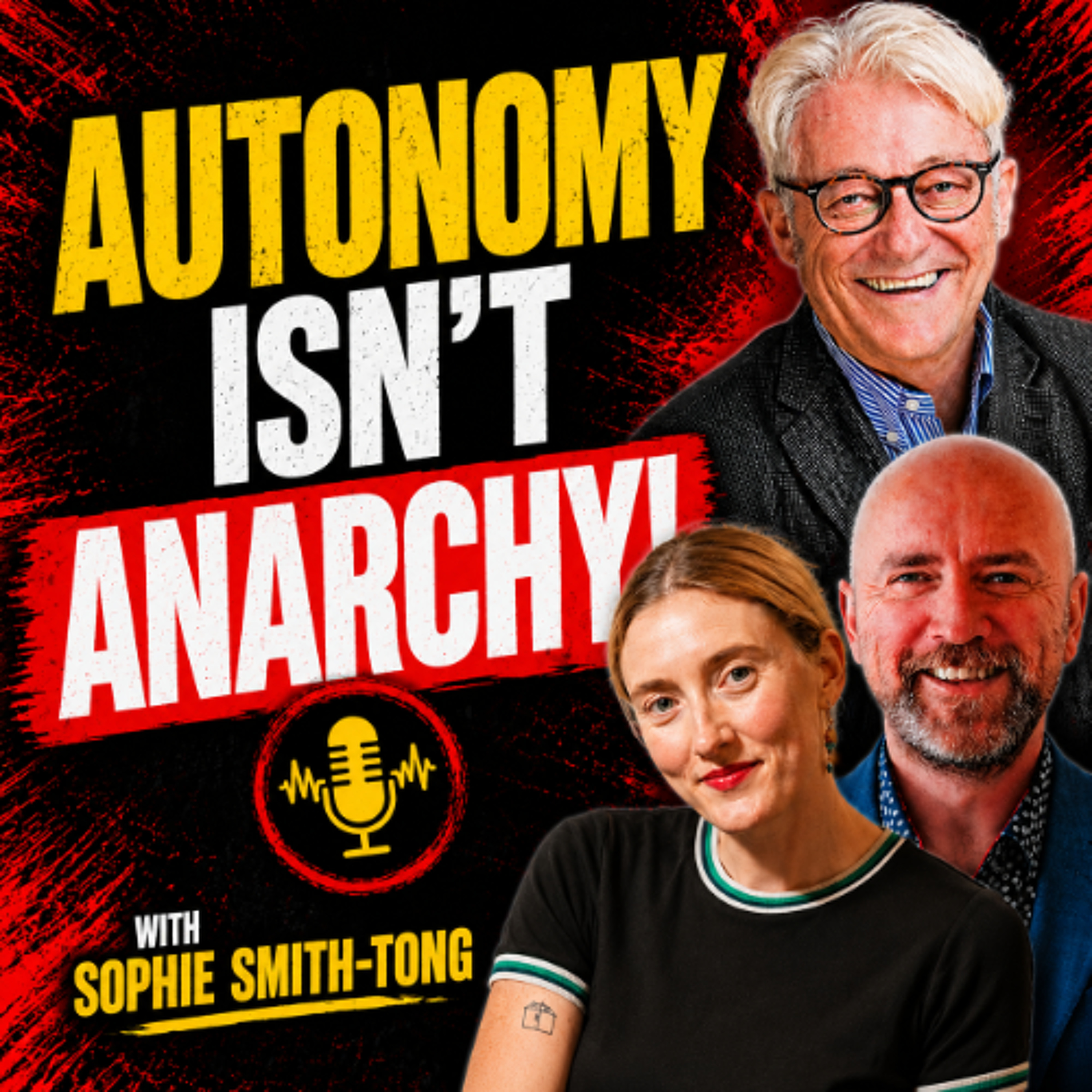 “Autonomy isn't ANARCHY!”: A conversation with Sophie Smith-Tong 06.06.2026 1ч 26минSophie Smith-Tong joins James and David to discuss her book Teacher Autonomy: Where Has It Gone and Why We Need It Back – and the conversation is as rich, funny, and urgent as the title suggests. Sophie is a teacher of 16 years and mental health and wellbeing lead, who came to the question of autonomy through noticing the human cost of a system built on fear. In this episode, she makes the case that the loss of teacher autonomy isn't just a professional grievance – it's a structural wound that affects children's learning, teachers' wellbeing, and the long-term health of the profession. In this episode we explore: - Why only 18% of teachers strongly agree they have freedom over how they do their work – and why Sophie thinks fear is at the root of it - James Callaghan's 'secret garden' speech and the long arc of tightening control since the 1970s - The 'fidelity' culture: from scripted lessons to approved emails to clocks as cognitive overload - Why wellbeing training is a sticking plaster – and what addressing the actual disease might look like - David's 'good tired vs bad tired' distinction, and why autonomy determines which one you get - Sophie's definition of autonomy: not self-rule without support, but self-governance within a collective direction - 'Aligned autonomy', 'connected autonomy', and the difference between tight purpose and loose practice - The curriculum and assessment review: evolution when revolution was needed? - Child autonomy in early years – and why it gets educated out of children by year one - Peter Gray's five educative instincts: curiosity, playfulness, sociability, willfulness, and planfulness - Practical starting points for leaders and teachers: noticing, getting curious, making small changes -The inner work required of controlling leaders – and why self-compassion is the first step Find Sophie: teacherautonomy.com mindfulnessforlearning.com Instagram: https://www.instagram.com/mforlearning/ Linked In: https://www.linkedin.com/in/sophie-smith-tong-7b3891207/ Get the book: Teacher Autonomy: Where Has It Gone and Why We Need It Back by Sophie Smith-Tong https://www.amazon.co.uk/dp/1032874589 Support #repod The Rethinking Education podcast is brought to you by Crown House Publishing. It is hosted by Dr James Mannion and David Cameron, and produced by Sophie Dean. This podcast is a labour of love, with the emphasis on both the labour and the love. If you’d like to support the podcast and convey your appreciation for these conversations, you can: Become a patron: https://www.patreon.com/repod Buy us a coffee: https://www.buymeacoffee.com/repod
 -
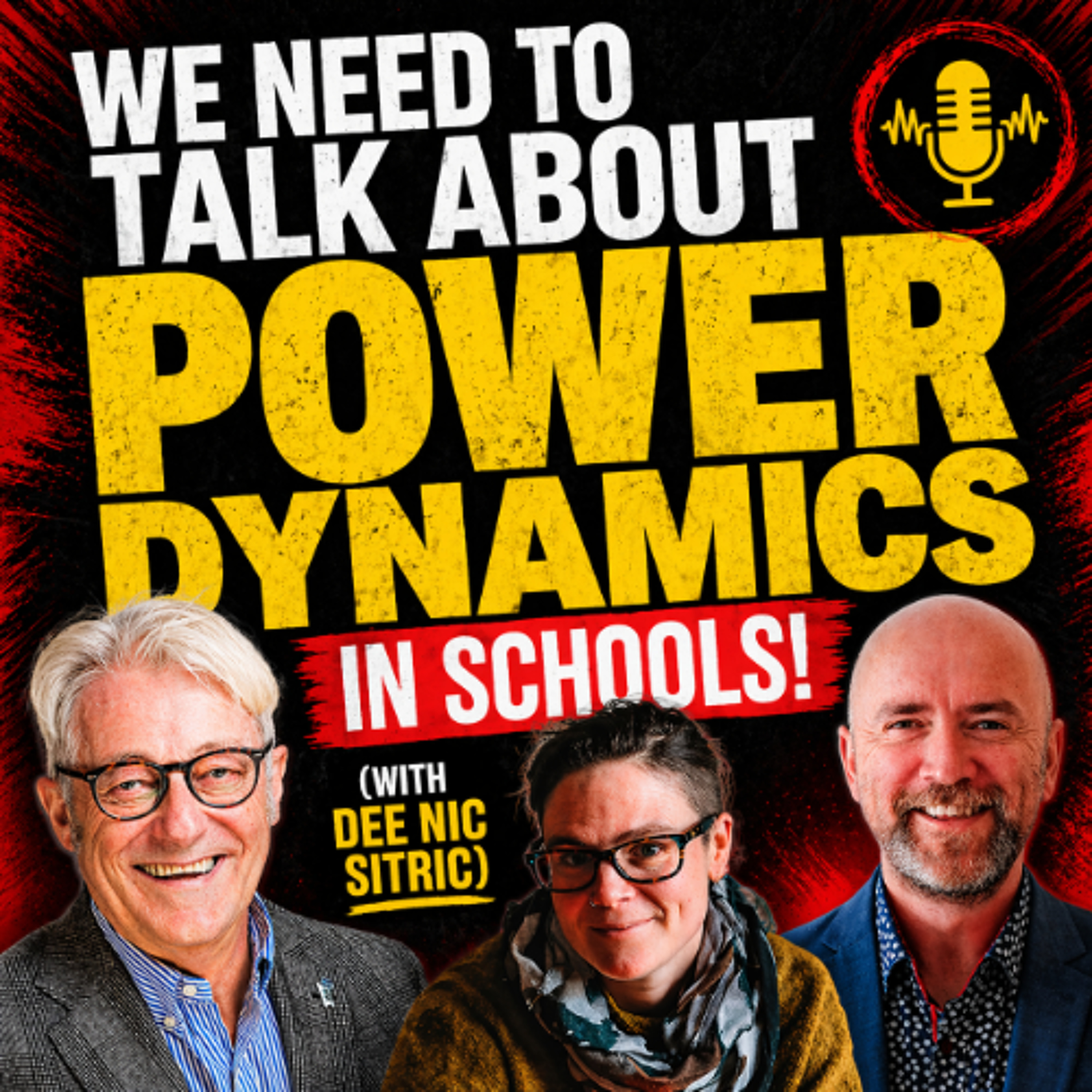 "We NEED to talk about power dynamics in schools! " - with Dee Nic Sitric 26.04.2026 1ч 42минPower is everywhere in schools – in classrooms, staffrooms, policies, and conversations. Yet it is rarely named, examined, or understood. In this episode, James Mannion and David Cameron are joined by Dee Nic Sitric to explore how power operates – often invisibly – and what becomes possible when schools begin to surface it. Drawing on systemic thinking, neurodivergent perspectives, and real-world examples, this conversation examines how power shapes behaviour, relationships, decision-making, and ultimately outcomes for children and young people. Key ideas explored -Why power dynamics are largely invisible but highly influential in schools -The distinction between control and genuine systemic thinking -How slice teams redistribute power and improve decision-making -The role of psychological safety in enabling challenge and curiosity -Why ‘voice’ without influence is not real participation How power shows up in: behaviour systems classroom talk and oracy staff relationships policy and consultation processes The link between mattering (feeling valued + adding value) and power Why reflection – not compliance – is the engine of improvement Standout moments ‘Power isn’t static – it moves, shifts, and often sits where we least expect it.’ ‘Who is allowed to ask questions? That’s where the power lies.’ ‘We cannot be curious and judgemental at the same time.’ A vivid example of how a single interaction in an assembly can redistribute (or remove) power in seconds Practical implications Create structures where multiple perspectives genuinely shape decisions Build psychological safety so staff and students can question and contribute Move from ‘consultation’ to co-production Use reflection routines to examine: ‘Why did we act that way?’ ‘Whose voice was missing?’ Reframe behaviour and classroom talk as questions of power, not just technique About Dee Nic Sitric Dee is the founding director of Autism Champions, a neurodivergent-led organisation supporting schools and systems to better understand and respond to neurodivergent experiences. Her work focuses on systemic thinking, relational practice, and the lived realities of children, families, and staff navigating education systems. Call to action Reflect on your own setting: Who has the most power? Who feels able to speak? Whose perspectives are shaping decisions? Links Autism Champions - https://www.autismchampions.co.uk Follow Dee on LinkedIn - https://www.linkedin.com/in/dee-nic-sitric/ Support #repod The Rethinking Education podcast is brought to you by Crown House Publishing. It is hosted by Dr James Mannion and David Cameron, and produced by Sophie Dean. This podcast is a labour of love, with the emphasis on both the labour and the love. If you’d like to support the podcast and convey your appreciation for these conversations, you can: Become a patron: https://www.patreon.com/repod Buy us a coffee: https://www.buymeacoffee.com/repod
 -
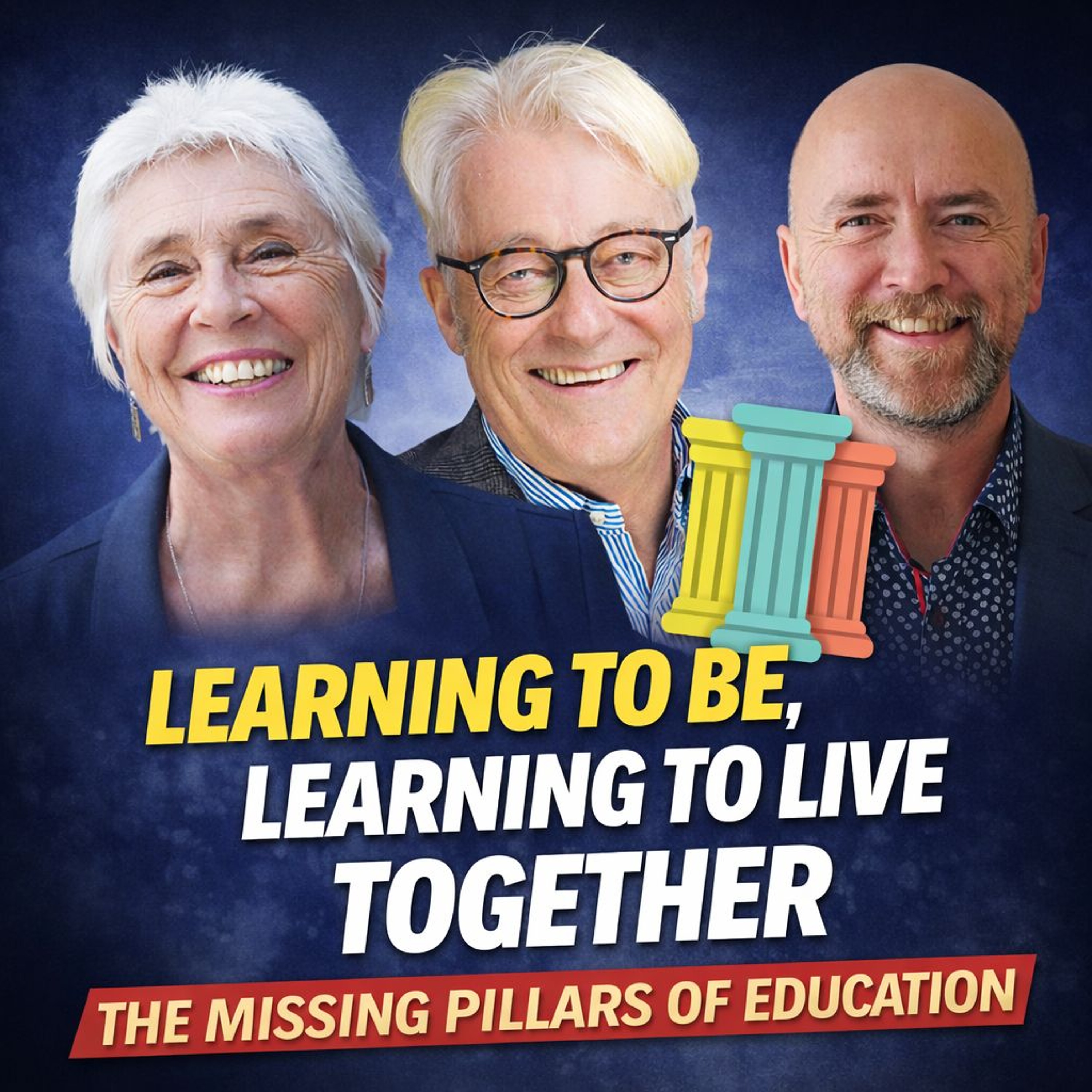 Learning to be, learning to live together: The missing pillars of education with Sue Roffey 31.03.2026 1ч 16минIn this episode, James and David are joined by Sue Roffey – educational psychologist, researcher, and leading voice on wellbeing, social justice, and relational approaches to education. Sue traces her journey from working with young people facing emotional and behavioural challenges, through educational psychology and academia, to her current work developing the ASPIRE principles – a framework for reimagining education through agency, safety, positivity, inclusion, respect and equity. The conversation explores why wellbeing and learning are not competing priorities but deeply intertwined, and why many current approaches to behaviour and school improvement miss this fundamental point. Key themes include: - Why focusing on problems can limit progress – and the importance of vision-led change - The distinction between individual wellbeing and collective flourishing - The concept of ‘mattering’ – feeling valued and adding value - Why agency is essential for both students and teachers - How schools can create cultures of safety where mistakes support learning - The dangers of ‘exclusive belonging’ and the importance of inclusive communities - Practical examples from schools restoring pupils’ love of learning - The enduring relevance of UNESCO’s four pillars: learning to know, learning to do, learning to be, and learning to live together Sue also shares insights from her recent Love of Learning project, involving deep dives into schools across the UK that are successfully building cultures of connection, curiosity and care. This episode offers both a critique of current systems and a hopeful vision of what education could become when relationships, agency and shared humanity are placed at the centre. Links Sue’s website - Growing Great Schools Worldwide - https://www.growinggreatschoolsworldwide.com/who-we-are/sue-roffey/ The primary school where every day starts with dancing - https://www.bbc.co.uk/newsround/videos/cgqe0pv8vepo Support #repod This podcast is a labour of love, with the emphasis on both the labour and the love. If you’d like to support the podcast and convey your appreciation for these conversations, you can: Become a patron: https://www.patreon.com/repod Buy us a coffee: https://www.buymeacoffee.com/repod The Rethinking Education podcast is sponsored by Crown House Publishing. It is hosted by Dr James Mannion and David Cameron, and produced by Sophie Dean.
 -
 Education as expanding dialogue – Rethinking learning with Professor Rupert Wegerif 07.03.2026 1ч 17мин“It’s not about teacher-centred or student-centred. I would argue it’s dialogue-centred.” In this episode of the Rethinking Education podcast, Dr James Mannion and The Read David Cameron explore these questions with Professor Rupert Wegerif, author of Rethinking Educational Theory: Education as Expanding Dialogue. Rupert has spent decades researching how dialogue shapes thinking and learning. Drawing on work with Neil Mercer and the Thinking Together programme, he shows how teaching children to reason and talk together can improve thinking, deepen understanding across subjects, and even transform classroom culture. But this conversation goes far beyond classroom strategies. Rupert argues that dialogue is not just a teaching technique – it is a fundamental way of understanding knowledge, identity, and even reality itself. In this wide-ranging discussion we explore: - Why teaching children how to talk together can dramatically improve learning outcomes - The origins of the Thinking Together programme and what the research found in classrooms - Why group work often fails – and how simple ground rules for dialogue can transform it - The relationship between oracy, dialogue and thinking - The idea of culture as a “living tradition” that students must learn to participate in - How dialogue can bridge the long-running divide between traditional and progressive education - Rupert’s concept of “double dialogue” – learning through conversation with both peers and disciplinary traditions - Why education should be dialogue-centred, rather than teacher-centred or student-centred - The deeper philosophical idea that knowledge and meaning emerge through dialogic space - What generative AI means for education – and why dialogic thinking may matter more than ever Along the way, the conversation ranges from classroom practice to philosophy, drawing on thinkers such as Vygotsky, Bakhtin, Paulo Freire, Michael Oakeshott and Merleau-Ponty. The result is a fascinating exploration of education as something far richer than the transmission of information – a process of entering, expanding and contributing to the ongoing dialogue of human culture. About Rupert Wegerif Professor Rupert Wegerif is Professor of Education at the University of Cambridge. His work focuses on dialogic education, thinking and learning, and the role of dialogue in human development. He has worked extensively with Neil Mercer and others on the Thinking Together programme, exploring how structured dialogue can improve reasoning, understanding and collaboration in classrooms. Links Rupert’s Substack - https://rupertwegerif.substack.com Rupert’s website - https://www.rupertwegerif.com Support #repod The Rethinking Education podcast is brought to you by Crown House Publishing. It is hosted by Dr James Mannion and David Cameron, and produced by Sophie Dean. This podcast is a labour of love, with the emphasis on both the labour and the love. If you’d like to support the podcast and convey your appreciation for these conversations, you can: Become a patron: https://www.patreon.com/repod Buy us a coffee: https://www.buymeacoffee.com/repod
 -
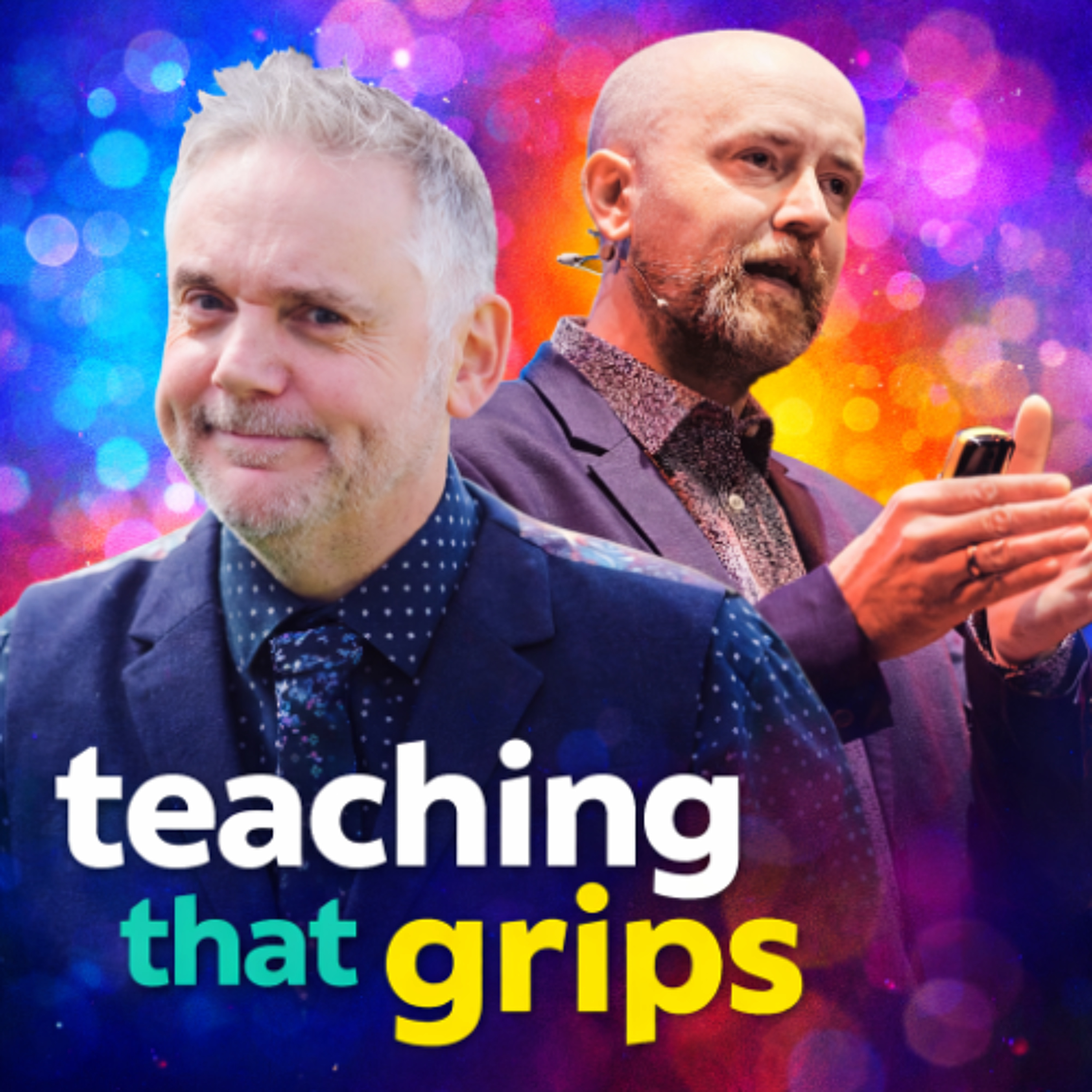 Teaching that grips: Hywel Roberts on the Pedagogy of Botheredness 06.03.2026 50минWhy do so many lessons feel disconnected to students – even when the content is genuinely fascinating? In this episode, Dr James Mannion is joined by teacher and author Hywel Roberts to explore 'botheredness' – a way of teaching that draws students into learning through narrative, curiosity and shared imagination. They discuss why pupils often struggle to see the relevance of what they are learning, and how small shifts in pedagogy can transform a lesson from something students comply with into something they actively care about. As Hywel explains, the key is not entertainment or gimmicks, but creating context, tension and meaning around knowledge. The conversation explores practical techniques such as ‘let’s say’ narratives, teacher-in-role, and the use of story structures built around people, place and problem. These approaches help teachers bring abstract knowledge to life and ‘protect students into learning’ by making them feel safe, curious and invested in the lesson. James also reflects on the challenge many teachers face: delivering a knowledge-rich curriculum that can sometimes feel like a sequence of disconnected topics. Together they explore how storytelling and implementation thinking can help embed this approach into everyday classroom practice. They also introduce a new professional learning programme combining the pedagogy of botheredness with implementation science, designed to help teachers move from one-off inspiration to sustained classroom change. In this episode: - Why students often ask ‘Why are we learning this?’ - The difference between engagement and investment in learning - How stories create curiosity, tension and motivation - The power of ‘let’s say…’ as an invitation into learning - What it means to ‘protect children into learning’ - Using narrative as retrieval and assessment - The barriers that stop imaginative pedagogy becoming routine practice - How implementation thinking can help make botheredness stick Links and resources Hywel's website: https://botheredness.co.uk Implementing Botheredness 2026: https://www.makingchangestick.co/implementing-botheredness-2026 Book a free 20-minute call: https://calendly.com/rethinkingjames/implementing-botheredness-chat-with-james-hywel
 -
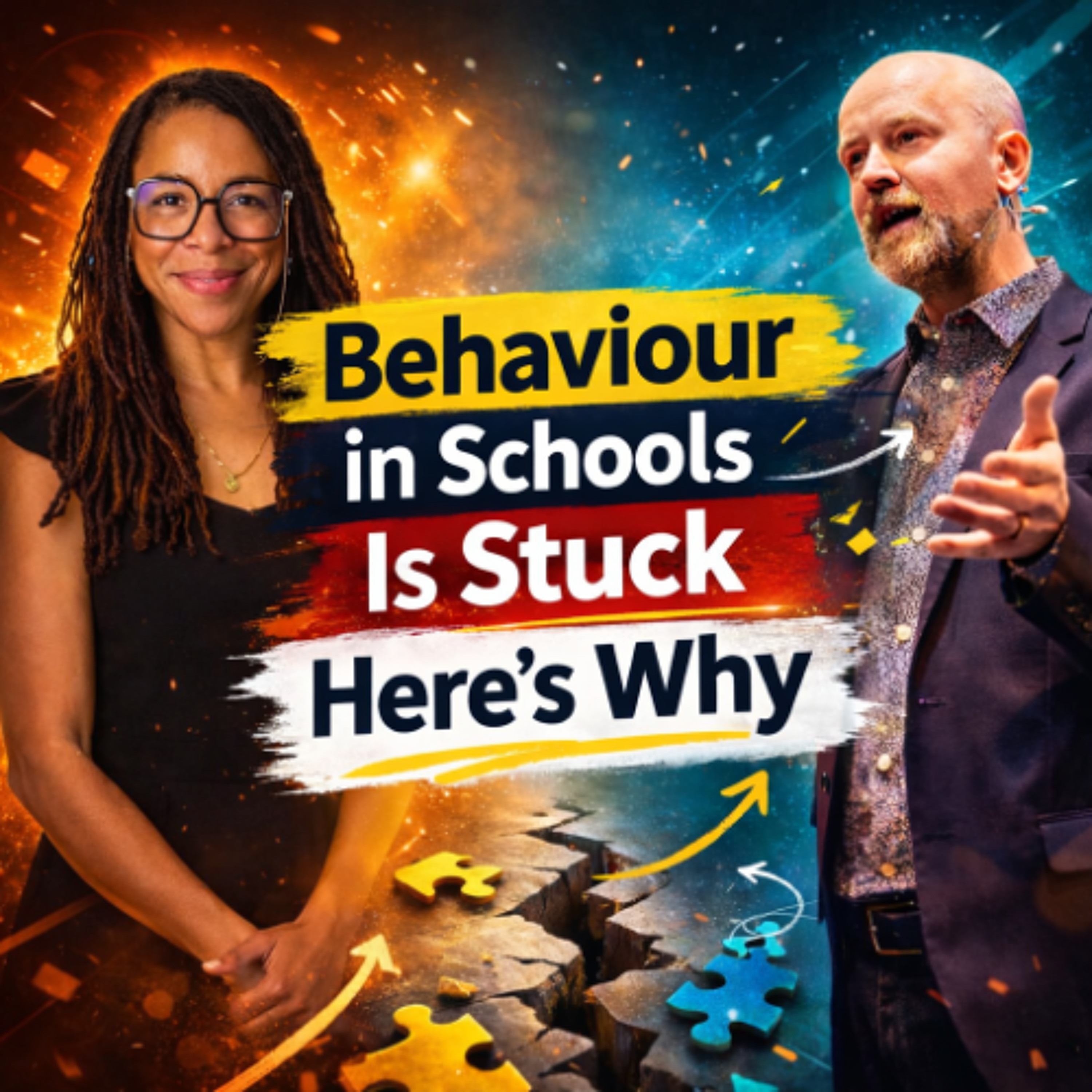 Seven minutes out of every thirty are lost to low-level disruption. But why? 01.03.2026 1ч 2минIn this episode, featuring a webinar we ran this week, Tara Elie and Dr James Mannion explore a question that many school leaders are quietly wrestling with: Why do so many behaviour initiatives fail to deliver sustained change? Across the system, the signals are hard to ignore – rising suspensions, internal removals, persistent absence, staff exhaustion, and a growing sense that behaviour reform is absorbing huge energy without always shifting underlying patterns. In this conversation, we argue that two critical ideas are largely missing from the behaviour debate: - The psychology of mattering - Implementation and improvement science When combined, these lenses offer a more systemic, more hopeful way forward. Part 1: The psychology of mattering Tara introduces the concept of mattering, drawing on the work of Morris Rosenberg and contemporary positive psychology. Mattering has two components: feeling valued, and adding value. We explore: - The difference between mattering and self-esteem - What staff mattering looks like in practice - What “anti-mattering” feels like in schools - The emotional and behavioural consequences of quiet disengagement - Why belonging is an outcome of mattering – not the target itself We discuss how staff who feel unseen, unheard or replaceable may withdraw effort, reduce collaboration, and disengage in subtle but powerful ways. Conversely, when staff feel significant and influential, resilience, agency and motivation follow. The same applies to students. Part 2: Why behaviour reform so often stalls James explores a sobering question: What proportion of school improvement initiatives actually improve outcomes in a sustained way? We examine two core reasons change efforts frequently falter: - Teachers and leaders are rarely taught how to implement change effectively - Schools default to top-down, “black box” leadership models We unpack the risks of: - Compliance cultures - Groupthink - ‘Us and them’ dynamics - Initiative fatigue And we introduce a more transparent alternative: the slice team – a representative cross-section of the school community that improves decision-making and strengthens buy-in. Root cause analysis: looking beneath the surface We then turn to a practical example. A widely cited statistic suggests that seven minutes out of every thirty are lost to low-level disruption. Rather than treating this as a behaviour problem alone, we demonstrate how to conduct a root cause analysis: - Identifying the trunk (the presenting issue) - Mapping the consequences - Investigating the roots across physical, emotional, relational, cognitive, behavioural and navigational domains The key insight: the same visible behaviour can arise from very different root systems. Behaviour reform without diagnosis is guesswork. Key ideas explored: - Mattering as a driver of culture - Anti-mattering and quiet withdrawal - Why belonging runs downstream of mattering - Black box vs glass box leadership - Slice teams as a mechanism for distributed ownership - Root cause analysis in school improvement - Why policy launch is not implementation - Habit change and “tight but loose” planning If behaviour is live in your context We are currently offering 20-minute Behaviour Strategy Calls for school leaders who would value a structured diagnostic conversation about behaviour, mattering and implementation. You can book here: https://calendly.com/rethinkingjames/chat-with-tara-james Further resources Download the Rethinking Behaviour guide - https://www.makingchangestick.co/rethinking-behaviour-free-guide Explore implementation science tools from Making Change Stick - https://www.makingchangestick.co
 -
 Generation to generation: Holocaust education in a changing world 24.01.2026 1ч 29минAs the number of living Holocaust survivors declines, a profound question emerges: who carries these stories next – and how do we ensure they are heard, understood, and acted upon? In this episode, timed to mark Holocaust Memorial Day on January 27th, James and David are joined by Hannah Wilson, Outreach Officer at the charity Generation to Generation, alongside two G2G speakers, Vivienne Cato and and Calum Isaacs, who share their own family histories as descendants of Holocaust survivors. (You can read about their stories here https://www.generation2generation.org.uk/the-story-of-mirjam-finkelstein and here https://www.generation2generation.org.uk/holocaust-survivor-eva-cato). Together, they explore how Holocaust education remains as important, powerful and relevant for young people today – not as mere knowledge of the history, but as lived experience passed from one generation to the next. Vivienne shares the story of her mother Eva, a Slovak Jewish survivor who spent years in hiding under a false identity, and reflects on her experience of growing up in the shadow of survival, luck, and loss. Calum tells the story of his grandmother Mirjam, who survived Nazi persecution through a series of extraordinary events – including a last-minute prisoner exchange – and considers how those near-misses shape identity, values, and responsibility across generations. The conversation also examines: Why Holocaust education matters more than ever How personal testimony cuts through misinformation, distortion, and online extremism The role of ordinary people, bystanders, and complicity – not just dictators – in enabling atrocities Why students often respond with quiet focus, empathy, and deep moral questioning How Holocaust education connects to wider conversations about racism, antisemitism, democracy, and civic responsibility today Hannah reflects on what good Holocaust education looks like in practice, the challenges teachers face, and why grounding learning in real human stories helps young people develop critical thinking, empathy, and historical understanding – without reducing education to moral instruction or political indoctrination. This episode is about remembrance with purpose: how bearing witness is not only about preserving the past, but about shaping the kind of future we want to live in – and the small actions that can make a decisive difference. Support #repod The Rethinking Education podcast is brought to you by Crown House Publishing. It is hosted by Dr James Mannion and David Cameron, and produced by Sophie Dean. This podcast is a labour of love, with the emphasis on both the labour and the love. If you’d like to support the podcast and convey your appreciation for these conversations, you can: Become a patron: https://www.patreon.com/repod Buy us a coffee: https://www.buymeacoffee.com/repod
 -
 Why ‘consistency’ isn’t enough: the implementation blind spot in school behaviour 23.01.2026 54минIn this second episode of a two-part mini-series, Tara Elie turns the tables and interviews Dr James Mannion about the thinking behind Making Change Stick – and why so many school behaviour initiatives fail, even when the policy itself is sound. Following on from the previous episode on the psychology of mattering, this conversation explores what happens after the policy launch: how change is (or isn’t) implemented in real schools, and why top-down, ‘black box’ approaches so often lead to inconsistency, frustration, and drift. James traces jis 12-year journey into implementation science, drawing on lessons from healthcare, engineering and systems change – including a powerful case study from Cincinnati Children’s Hospital – to show how schools can dramatically improve uptake, consistency and outcomes by changing how decisions are made. Together, they explore: - Why behaviour is often led by a single senior leader – and why this rarely works in practice - The importance of slice teams: representative groups that bring together staff from across a school (and sometimes students and families) to design, test and refine change - How slice teams improve both decision-making and buy-in by redistributing power without undermining leadership - Why implementation is a process, not an event – and why policies need ongoing review, feedback and adaptation - The role of mattering in behaviour systems: how staff feeling heard, trusted and involved leads to greater consistency for pupils - Practical tools schools rarely use – but should – including root cause analysis, communications plans, pre-mortems and ‘tight but loose’ implementation - How understanding the root causes of behaviour issues can lead to unexpected but powerful solutions (including links to oracy, wellbeing and relationships) - Why fear-based compliance may look like ‘good behaviour’ on the surface, but often masks deeper problems This episode is for school leaders, behaviour leads, teachers and system leaders who are tired of rolling out initiatives that never quite stick – and who want a more humane, effective and sustainable way to improve behaviour, relationships and attendance. Support #repod The Rethinking Education podcast is brought to you by Crown House Publishing. It is hosted by Dr James Mannion and David Cameron, and produced by Sophie Dean. This podcast is a labour of love, with the emphasis on both the labour and the love. If you’d like to support the podcast and convey your appreciation for these conversations, you can: Become a patron: https://www.patreon.com/repod Buy us a coffee: https://www.buymeacoffee.com/repod
 -
 Rebooting behaviour: the two missing pieces of the puzzle (with Tara Elie) 15.01.2026 53минIn this second episode of a two-part mini-series, Tara Elie turns the tables and interviews yours truly about the thinking behind Making Change Stick – and why so many school behaviour initiatives fail, even when the policy itself is sound. Following on from the previous episode on the psychology of mattering, this conversation explores what happens after the policy launch: how change is (or isn’t) implemented in real schools, and why top-down, ‘black box’ approaches so often lead to inconsistency, frustration, and drift. I trace my 12-year journey into implementation science, drawing on lessons from healthcare, engineering and systems change – including a powerful case study from Cincinnati Children’s Hospital – to show how schools can dramatically improve uptake, consistency and outcomes by changing how decisions are made. Together, we explore: - Why behaviour is often led by a single senior leader – and why this rarely works in practice - The importance of slice teams: representative groups that bring together staff from across a school (and sometimes students and families) to design, test and refine change - How slice teams improve both decision-making and buy-in by redistributing power without undermining leadership - Why implementation is a process, not an event – and why policies need ongoing review, feedback and adaptation - The role of mattering in behaviour systems: how staff feeling heard, trusted and involved leads to greater consistency for pupils - Practical tools schools rarely use – but should – including root cause analysis, communications plans, pre-mortems and ‘tight but loose’ implementation - How understanding the root causes of behaviour issues can lead to unexpected but powerful solutions (including links to oracy, wellbeing and relationships) - Why fear-based compliance may look like ‘good behaviour’ on the surface, but often masks deeper problems This episode is for school leaders, behaviour leads, teachers and system leaders who are tired of rolling out initiatives that never quite stick – and who want a more humane, effective and sustainable way to improve behaviour, relationships and attendance. Support #repod The Rethinking Education podcast is brought to you by Crown House Publishing. It is hosted by Dr James Mannion and David Cameron, and produced by Sophie Dean. This podcast is a labour of love, with the emphasis on both the labour and the love. If you’d like to support the podcast and convey your appreciation for these conversations, you can: Become a patron: https://www.patreon.com/repod Buy us a coffee: https://www.buymeacoffee.com/repod
 -
 Why ‘belonging’ isn’t enough: The missing piece in behaviour, attendance and staff burnout (w/ Tara Elie) 09.01.2026 41минWhat if the real driver of behaviour, attendance, engagement – and staff retention – isn’t rules, rewards, or even belonging… but mattering? In this deep, reflective conversation, James is joined by Tara Elie – former teacher, behaviour specialist, and positive psychology practitioner – to explore the powerful but often overlooked psychology of mattering: the feeling that you are valued and that you add value. Drawing on Tara’s Master’s research, coaching work with schools, and lived experience as a teacher, the conversation reframes some of education’s biggest challenges through a radically human lens. Together, James and Tara explore: Why belonging is not the starting point, but an outcome of something deeper How low staff and student mattering shows up as disengagement, burnout, behaviour issues and poor attendance The two-part psychology of mattering – feeling valued and adding value – and why imbalance leads to compromised wellbeing Why many behaviour systems unintentionally communicate ‘you don’t add value’ How mattering connects to agency, resilience, engagement, meaning and purpose What psychologically safe schools do differently – for adults and young people Practical ways leaders can audit mattering in their schools without adding workload This episode is especially relevant for: Senior leaders responsible for behaviour, relationships or attendance School leaders concerned about staff wellbeing and retention Anyone frustrated by surface-level fixes to deep, systemic issues If you’ve ever felt that schools are chasing the wrong outcomes – or that something vital is missing from the behaviour conversation – this episode offers a language, a framework, and a hopeful way forward. ‘Belonging isn’t something you can chase. It’s what happens when people genuinely matter.’ The Rethinking Education podcast is brought to you by Crown House Publishing. It is hosted by Dr James Mannion and David Cameron, and produced by Sophie Dean. This podcast is a labour of love, with the emphasis on both the labour and the love. If you’d like to support the podcast and convey your appreciation for these conversations, you can: Become a patron: https://www.patreon.com/repod Buy us a coffee: https://www.buymeacoffee.com/repod
 -
 "It’s choppy out there – but hope is happening...": Strap in for the 2025 end of year review! 24.12.2025 49минAs 2025 draws to a close, James and David come together for a wide-ranging Christmas conversation that reflects on a turbulent year in education – and looks ahead to where hope, change, and renewal might yet be found. Kicking off with a powerful metaphor drawn from winter sea swimming, the discussion explores why schools currently feel so ‘choppy’, from behaviour and attendance to widening inequality and system-level pressures. Along the way, we reflect on what really matters in education – relationships, belonging, and being known – and why these often get squeezed out by accountability and assessment. The episode revisits key debates sparked by the Curriculum and Assessment Review, including the future of GCSEs, the limits of ‘manageable change’, and the uneasy separation of curriculum, assessment, and pedagogy. A detour into restorative justice, inspired by Punch and the story of Jacob Dunne, deepens the conversation about connection, responsibility, and what happens when people are truly seen. The parallels with schooling – and with how society treats its most vulnerable young people – are stark. The episode closes on a hopeful note, spotlighting examples of schools doing brave, relational, and imaginative work within the current system, and outlining plans for the podcast in 2026: fewer trench wars, more light-shining on practice that actually helps children and young people thrive. James also shares upcoming programmes and projects focused on oracy, behaviour, botheredness, and learning beyond subjects – all grounded in the belief that meaningful change is possible when we start with relationships and implementation. In this episode, we explore: - Why education feels ‘choppy’ – and what the winter swim metaphor reveals - Behaviour, discipline, and the limits of coercive models - Restorative justice, Punch, and the power of being known - What the Curriculum and Assessment Review did – and didn’t – make possible - GCSEs, adolescent development, and the problem of high-stakes exams at 16 - Why relationships matter more than systems – and what the evidence says - Examples of hopeful practice already happening in schools - What’s next for the podcast in 2026 Support #repod The Rethinking Education podcast is brought to you by Crown House Publishing. It is hosted by Dr James Mannion and David Cameron, and produced by Sophie Dean. This podcast is a labour of love, with the emphasis on both the labour and the love. If you’d like to support the podcast and convey your appreciation for these conversations, you can: Become a patron: https://www.patreon.com/repod Buy us a coffee: https://www.buymeacoffee.com/repod
 -
Inside the Curriculum & Assessment Review: What Changed, What Didn’t – And Why 22.12.2025 1ч 56минWhat really happens inside a national curriculum review? In this episode, James and David go beyond headlines to explore the thinking, tensions and trade-offs behind England’s Curriculum and Assessment Review - with two people who helped shape it. They’re joined by Lisa O’Loughlin, Principal and CEO of Nelson and Colne College Group, and Jon Hutchinson, Director of Curriculum and Teacher Development at the Reach Foundation - both panel members of the Curriculum & Assessment Review - who offer rare, first-hand insight into how the review was shaped and why its recommendations landed where they did. This is an honest, wide-ranging discussion about ambition, constraints, evidence, politics, and what ‘high standards for all’ actually means in practice. In this conversation, we explore: What it was like to sit on the Curriculum & Assessment Review panel - workload, process, and pressures Why the review focused on evolution rather than revolution The hidden constraints baked into the review - political, practical, and systemic Why post-16 recommendations matter more than many people realise The case for broadening pathways beyond a narrow academic route How oracy and the arts emerged as quiet winners in the final report The limits of assessment reform - and why GCSEs remain so hard to shift How evidence, professional judgement and lived experience were balanced What the review does not do - and why that has frustrated many critics This episode is essential listening for: School and college leaders Teachers and curriculum leads Policy-curious educators Anyone trying to make sense of what the review really changes - and what it doesn’t Links Curriculum and Assessment Review - Final Report: https://www.gov.uk/government/publications/curriculum-and-assessment-review-final-report Follow Jon - https://www.linkedin.com/in/jon-hutchinson-b3bbb568/ Follow Lisa - https://www.linkedin.com/in/lisa-o-loughlin-0637b553/ Follow David - https://www.linkedin.com/in/david-cameron-72061a15/ Follow James - https://www.linkedin.com/in/drjamesmannion Support #repod The Rethinking Education podcast is brought to you by Crown House Publishing. It is hosted by Dr James Mannion and David Cameron, and produced by Sophie Dean. This podcast is a labour of love, with the emphasis on both the labour and the love. If you’d like to support the podcast and convey your appreciation for these conversations, you can: Become a patron: https://www.patreon.com/repod Buy us a coffee: https://www.buymeacoffee.com/repod
-
Dave Whitaker on relational practice, inclusive culture, and “battering them with kindness” 06.12.2025 1ч 32минIn this energising and wide-ranging conversation, Dave Whitaker joins James and David to explore behaviour, belonging, learner effectiveness, and the courageous cultural work needed to create schools in which every child can thrive. Dave Whitaker is the Chief Education Officer at the Wellspring Academy Trust, working across 33 schools and alternative provisions in the north of England and Lincolnshire. A former geography teacher who moved through the pastoral route into leadership, Dave is known nationally for The Kindness Principle, his advocacy for relational practice, and his unwavering belief that children flourish when adults lead with compassion, consistency, and high expectations rooted in humanity. His Guardian-featured work on creating exclusion-free, restorative, relational schools challenged the national narrative on behaviour and ignited a conversation that still reverberates today. Across Wellspring’s mainstream, AP, SEMH and special schools, Dave supports leaders to build cultures of unconditional positive regard, trauma-informed practice, context-specific autonomy, and a strong collective commitment to inclusion. His work demonstrates that it is possible to run high-functioning, high-expectation schools without relying on zero-tolerance, punitive systems - but only if leaders invest in the three-to-five-year cultural journey required to get there. James and David share insights from the Education Policy Alliance and the urgent need to reconfigure systems that default to behaviourism, high-stakes testing, and top-down reform. They connect these ideas to the recent Everybody Thriving unconference and Wellspring’s Next Decade conference, examining how genuine change happens — and why it so often doesn’t. Together, they explore: Why kindness is not a soft option — and why it’s astonishing that this still needs saying How relational practice sits on a spectrum from zero-tolerance to “batter them with kindness” Why cultural transformation in schools takes 3-5 years, not weeks How Wellspring has never had a permanent exclusion Why some behaviour approaches become “selective by culture” The misconceptions that plague relational, restorative and trauma-informed practice The problem with national top-down reform, and why place-based change matters Why we need a more expansive definition of human development — beyond subjects How strong cultures give staff autonomy while holding shared values at the core Why bravery from leaders and trusts is essential in an Ofsted-driven system This is a hopeful, deeply practical conversation about culture, compassion, courage and what it really takes to build inclusive schools that work for ALL children. Links The Kindness Principle (Dave’s book): https://www.crownhouse.co.uk/the-kindness-principle Wellspring Academy Trust: https://wellspringacademytrust.co.uk Dave on Twitter/X: https://x.com/davewhitaker246 Guardian article - ‘We batter them with kindness’: schools that reject super-strict values- https://www.theguardian.com/education/2018/feb/27/schools-discipline-unconditional-positive-regard School isolation rooms are damaging pupil wellbeing, new study warns - https://www.manchester.ac.uk/about/news/school-isolation-rooms-are-damaging-pupil-wellbeing Wellspring’s Next Decade conference: https://thenextdecade.co.uk/ Support the pod The Rethinking Education podcast is brought to you by Crown House Publishing. It is hosted by Dr James Mannion and David Cameron, and produced by Sophie Dean. This podcast is a labour of love, and we love doing it. If you’d like to support the podcast and convey your appreciation for these conversations, you can: Become a patron: https://www.patreon.com/repod Buy us a coffee: https://www.buymeacoffee.com/repod
-
 Boarding school trauma and "the myth of privilege” - a conversation with Chris Braitch 19.11.2025 1ч 41минIn this rich crossover conversation, Chris Braitch and Dr James Mannion interview one another about trauma, healing, and the deep structural shifts needed in education. Chris Braitch is a father of three whose mission is to move himself and others towards connection and compassion. He works as an emotional health coach, a leadership coach with Compassionate Leaders Global, and is the founding director of Seen & Heard, a not-for-profit supporting the wellbeing of past and present pupils of the private school system - many of whom have experienced institutional neglect, emotional harm or abuse. After two decades in global sales and marketing, Chris realised that his life had been shaped by powerful, unexamined forces: early separation, boarding school culture, unresolved childhood experiences, and profound personal grief. Through coaching, men’s groups, the Emotional Freedom Technique, and a life-changing spiritual awakening, he discovered a new sense of purpose rooted in authenticity, service, and compassion. This journey transformed his parenting, his perspective, and the work he now offers to others. James shares the origins of the Rethinking Education Podcast, his work with the Learner Effectiveness Programme, slice teams, implementation science, and the Education Policy Alliance, and explores why so many top-down reforms fail to shift what actually happens in classrooms. Together, they explore: - The “myth of privilege” and why suffering in elite institutions is so often minimised - How early separation and boarding school cultures shape adult hypervigilance, self-protection, and leadership - The emotional and spiritual turning points that redirected Chris’s life - How Seen & Heard supports former pupils, works with schools, and campaigns for safer legislation - Why spoken language (oracy) is an overlooked equity issue - Why the system keeps “locating the problem in the child” - How learner-effectiveness, self-regulation, and holistic education can transform outcomes - The cultural assumptions baked into British schooling and politics - Why compassion-centred leadership matters now more than ever This is a deeply human, hopeful conversation about trauma, awareness, systemic change, and learning to live - and lead - with compassion. LINKS - Chris’s not for profit supporting the wellbeing of past pupils of boarding and independent day schools and their families – https://seenheard.org.uk - Chris’s not for profit supporting the wellbeing of present pupils of boarding and independent day schools and their families – https://seenheardschools.org.uk - Chris’s coaching business where I support men and women through 1-2-1’s and groups – https://growthwave.uk The Compassionate Leader Pathway Course - designed to help people lead with purpose, perform with clarity and live with integrity. https://compassionateleadersglobal.com CREDITS - The Rethinking Education podcast is brought to you by Crown House Publishing. It is hosted by Dr James Mannion and David Cameron, and produced by Sophie Dean. - Outro track: How it is and how it should be by Grit Control SUPPORT THE PODCAST: This podcast is a labour of love, with the emphasis on both the labour and the love. If you’d like to support the podcast or convey your appreciation for these conversations, you can: Become a patron: https://patreon.com/repod Buy us a coffee: https://buymeacoffee.com/repod
 -
 Nick Covington and Kate McAllister on Restoring Humanity to Education 07.11.2025 2ч 1минNick Covington and Kate McAllister on Restoring Humanity to Education What does it mean to restore humanity to education? In this rich and wide-ranging three-way conversation, James is joined by Kate McAllister – co-founder of The Human Hive and lead educator at The Hive in the Dominican Republic – and Nick Covington, co-founder of the Human Restoration Project in the US. Together, we explore: The dehumanising effects of traditional schooling models What human-centred education looks like in practice – both inside and outside the mainstream Self-regulation, executive function and building trust with students The role of flow in learning, and why it's missing from most education policy discussions The Third Coast Learning Collaborative – a US-wide, government-funded project using project-based learning, portfolio assessment, and student-led exhibition The power of authentic audience and interdisciplinary learning How progressive educators can embrace data to strengthen their case for change The importance of courageous school leaders and communities of practice We also talk about Ozzy Osbourne's funeral procession, mangled chicken coops, flow states, poetry circles, grant funding, and catapults launching frisbees across middle school campuses. Education doesn’t have to be this way. Across the world, a quiet revolution is taking place – one built on trust, flow, curiosity and care. This episode offers a glimpse of what’s possible when we restore humanity to learning. LINKS Follow Nick - https://www.linkedin.com/in/nick-covington/ Follow Kate - https://www.linkedin.com/in/misskatemcallister/ Follow James - https://www.linkedin.com/in/james-mannion/ Human Restoration Project - https://www.humanrestorationproject.org/ The Hive – Dominican Republic - https://www.thehiveadventure.com/ The Third Coast Learning Collaborative - https://www.thirdcoastlearning.org/ Ron Berger on 20 years of 'An ethic of excellence' - and ending the trad-prog debate! - https://www.rethinking-ed.org/ron-berger Gallup Student Poll data on engagement, hope and belonging: https://msnpro1.gallup.com/report-generator/GSP/1.3/En-US?districtId=229403046&schoolId=229403048&cohortId=231774178 Outro track: ‘How it is and how it should be’ by Grit Control: https://open.spotify.com/artist/1ud69RIV1eOV9poMR7AORI DON'T BE A STRANGER The Rethinking Education podcast is brought to you by Crown House Publishing. It is hosted by Dr James Mannion and David Cameron, and produced by Sophie Dean. Drop us a line at https://www.rethinking-ed.org/contact. CONVEY YOUR APPRECIATION FOR THE POD :) Become a patron: https://www.patreon.com/repod Buy us a coffee: https://www.buymeacoffee.com/repod
 -
"There is more to human development than learning about subjects" Repod Season 6 launch! 18.10.2025 1ч 14минWe’re back for Season 6! In this reflective episode, James and David catch up after the summer and explore the “big idea” that’s been emerging across recent blogs and conversations: there is more to human development than learning about subjects. They discuss the need for schools to make space for personal growth, wellbeing, and learner effectiveness alongside subject learning – and why our current focus on a purely knowledge-rich curriculum isn’t enough to prepare young people for life beyond school. Along the way, they talk about theatre, conferences, politics, art, and the Everybody Thriving unconference in Manchester. ⏱️ Highlights Catching up after summer: Edinburgh Fringe, Fringe Review, and the Lost Lear play at the Traverse Theatre (00:01:00) James’s trip to the EARLI Conference in Austria and the international focus on learner effectiveness (00:07:00) Hundertwasser’s art and architecture in Vienna (00:09:00) Reflections on feedback from recent Rethinking Education episodes (00:11:00) The Supervision in Education Conference at St Mary’s University, Twickenham (00:12:00) The Everybody Thriving unconference in Manchester (00:19:00) Audrey Tang, the Taiwanese civic hacker and politician, and her ideas on digital democracy (Plurality, GovZero, Pol.is, and presidential hackathons) (00:24:00) The Education Policy Alliance and “slice politics” – bridging the gap between grassroots innovation and executive power (00:28:00) The “big idea”: more to human development than subjects – learner effectiveness, self-knowledge, wellbeing, and systems thinking (00:36:00) Why subject knowledge alone isn’t working: phones, attention, and the post-literate world (00:44:00) The Learning Skills Curriculum and Who Am I? project (00:47:00) The Welsh Government’s Learner Effectiveness Programme (00:49:00) The purpose of education: human development vs. transactional outcomes (00:57:00) Future guests: Dave Whitaker and Rupert Wegerith (01:05:00) DON'T BE A STRANGER The Rethinking Education podcast is brought to you by Crown House Publishing. It is hosted by Dr James Mannion and David Cameron, and produced by Sophie Dean. Drop us a line at https://www.rethinking-ed.org/contact. SUPPORT THE RETHINKING ED PODCAST: Become a patron: https://www.patreon.com/repod Buy us a coffee: https://www.buymeacoffee.com/repod
Подобни подкасти


Популярен в
Този подкаст се появява и в подкаст класациите на тези държави.
