
Ideas in Development
Ideas in Development
0
Conversations on the forces shaping economic development.
Епизоди
-
 S4 Ep5: How BRAC partners with governments to fight poverty 08.09.2026 49минThe ultra-poor graduation approach has one of the strongest evidence bases in development. Almost all of that evidence comes from NGO delivery – but true scale typically requires government delivery.Stephanie Brockerhoff, Director for Programme Design and Impact at BRAC's Ultra-Poor Graduation Initiative, joins Oliver Hanney to explain why anti-poverty pilots often fall apart at handover, how BRAC partners with governments, and the bottlenecks to scale that remain.Ideas in Development is a VoxDev podcast on economic policy and research. Find us wherever you get your podcasts, and read the full write-up on our Substack: https://ideasindevelopment.substack.com/
 -
 How to start an export boom 18.08.2026 30минThis interview was conducted by Exporters Without Borders (ESF), which incubates entrepreneurs to start new export industries in low and middle income countries. The video version of this podcast, an accompanying article, and their ongoing research are at exporterswithoutborders.comThomas Kehler started his career teaching at a New England prep school, before he landed in Uganda, where he started guiding fishing tours of Lake Albert. Here he came to know a young Joseph Nye – later a key architect of US foreign policy – who got Thomas thinking about development economics, and how to have impact with his career.In the decades to follow, Thomas would go on to start two export industries from close to nothing. Between them, Colombian cut flowers and Chilean farmed salmon are now worth ~$9 billion a year and employ over 300,000 people. On a combination of willpower and luck, he managed to solve one of the biggest open questions in development economics – how countries enter new industries, and capture the jobs that come with them – twice.Read more on Substack: https://exporterswithoutborders.substack.com/p/how-to-start-an-export-boom
 -
 S4 Ep4: Has development economics lost its way? 07.07.2026 52минWhat should development economists be working on – and how does their work actually reach the people making decisions?Rachel Glennerster, President of the Center for Global Development, whose career spans the research and policy sides of development, joins Oliver Hanney to discuss her proposal for a radical simplification of aid, why she feels the micro-macro debate is largely a false one, the messy but vital process of building consensus, and what impactful careers look like in economics.In this wide-ranging conversation, we cover the Smart Buys evidence panels in education and how cross-disciplinary consensus gets built, her three-box framework for evidence-based policymaking, why AI tools move too fast for RCT-based procurement, and what it would take to fix development economics' concentration problem.Read the full show notes on the Ideas in Development Substack: https://ideasindevelopment.substack.com/
 -
 How global supply chains are built – and how to actually attract investment 30.06.2026 1ч 3минBill McRaith spent his career building supply chains – from 1980s Britain, to a factory in Panyu, China in 1990, to Ethiopia three decades later. He joins Oliver Hanney to explain what really attracts manufacturing investment to a developing economy, and why the model most countries are targeting no longer exists.In this wide-ranging conversation we cover why China’s industry grew; why responsive local governments beat tax holidays; the collapse of the wage gap; how Ethiopia was chosen as a beachhead; and why apparel remains the right first-mover industry for countries not yet on the industrialisation road.Ideas in Development is a VoxDev podcast on economic policy and research. Find us wherever you get your podcasts, and read the full write-up on our Substack: https://ideasindevelopment.substack.com/
 -
 Stefan Dercon on elite bargains and kickstarting economic growth (via the AUL Podcast) 23.06.2026 1ч 25минSlightly different episode today. This is a repost of a recent episode on the Africa Urban Lab's podcast, in which Kurtis Lockhart (who co-hosted our Cities series) interviews Stefan Dercon - very much an episode I wish I'd recorded!You can watch this episode on the AUL's YouTube: https://www.youtube.com/watch?v=PGamGT2Z-RM&list=PL7c-FEmFCyL7z395iWUMlKNFzRyQTnLHHStefan Dercon, Professor of Economic Policy at Oxford and former Chief Economist at the UK’s Department for International Development (now FCDO), joins Kurtis Lockhart to discuss what it takes for cities and countries to kickstart economic growth, exploring in particular Stefan’s recent work operationalizing elite bargains in the real world. It’s a grounded conversation on why growth and development depend not only on planning and policy, but on the politics that make growth possible.All AUL Podcast episodes available here: https://www.youtube.com/playlist?list=PL7c-FEmFCyL7z395iWUMlKNFzRyQTnLHHWe will resume our usual schedule next week!
 -
 S4 Ep3: Moving billions towards evidence 16.06.2026 50минIn 2022, Dean Karlan became Chief Economist at USAID, tasked with steering the world's largest bilateral aid agency towards evidence-backed approaches. He left in 2025, as the agency was being dismantled, having moved roughly $1.7 billion of funding in the process.In this episode of Ideas in Development, Dean joins Oliver Hanney to discuss what evidence-based policy actually looks like inside a government institution; how his team picked their battles; why collaboration beat prescription; and where the limits of taking goals as given lie. They also cover the rise of embedded evidence labs in countries like Rwanda and Peru, the synthesis and implementation gaps between academia and policy, and whether there are questions in development economics, like the impacts of cash transfers, on which we now have enough evidence.Dean Karlan is Professor of Economics and Finance at Northwestern University, founder of Innovations for Poverty Action, and former Chief Economist of USAID.Read the show notes on our Substack: https://ideasindevelopment.substack.com/
 -
 S1 Ep5: How Ethiopia reformed its economy 09.06.2026 51минEthiopia is one of Africa's most ambitious bets on export-led manufacturing. It’s also the site of one of the continent's boldest recent macroeconomic reform programmes.In this episode of the Ideas in Development series on growth, Oliver Hanney and Kartik Akileswaran speak with Mamo Mihretu, the tenth Governor of the National Bank of Ethiopia and a former senior economic advisor to the prime minister. Having viewed Ethiopia’s economic change through various lenses, Mamo explains why Ethiopia's industrial parks succeeded where others stalled, what it took to attract anchor investors, and how the central bank prepared, sequenced and executed reform under acute economic pressure.Our conversation ranges across the limits of debt-financed, public-investment-led growth; the institutions behind the industrial-parks programme; why the most credible, not the cheapest, wins investment; the macroeconomic foundations for a thriving economy; and the lessons for any government embarking on an ambitious growth agenda – diagnostics, sequencing, communication, and ownership.Read the show notes on our Substack: https://ideasindevelopment.substack.com/
 -
 S4 Ep2: Aggregating evidence 02.06.2026 46минThe conversation about evidence-based policy usually asks why good evidence isn't shaping decisions. But we should also be asking, is the evidence base itself actually worthy of shaping policy?In this episode of Ideas in Development, Rafe Meager – Associate Professor at the University of New South Wales and one of the leading meta-analysts in economics – explains why a single paper is not a proof, why we should learn to respect statistical noise, and why a result that holds in Kenya may or may not hold in Ghana.We walk through Rafe’s work aggregating microcredit RCTs, and their research with Noam Angrist and Youth Impact showing that how well a programme is implemented predicts how well it works. Often, the right question for policymakers is not ‘does this work?’ but ‘can my system actually deliver this?’We also discuss the research process in social sciences, some rules of thumb for interpreting a single causal claim, and why the public should be empowered to understand that evidence comes in different qualities.Read the show notes on our Substack: https://ideasindevelopment.substack.com/Check out Rafe’s research: https://sites.google.com/view/rachaelmeager/home
 -
 S4 Ep1: The evidence gap on evidence use 26.05.2026 37минDevelopment economics has built a large empirical evidence base across a range of topics and policies – but how, when and where is it being used? We often assume that evidence will have an impact, but have surprisingly few answers to these key questions.Michelle Rao, a fellow at the Center for Global Development, joins us for the first episode of our new Ideas in Development series on evidence. We discuss her own research on these questions, which looks at whether evaluations of conditional cash transfers in Latin American and Caribbean countries influenced government spending. Then we cover what we currently know about the routes from research to impact, why the political economy of evidence use has been so under-studied, and what a research agenda on evidence use should look like.Read the show notes on our Substack: https://ideasindevelopment.substack.com/Check out Michelle’s research: https://www.michellerao.com/research
 -
 Why Dani Rodrik changed his mind on manufacturing 21.05.2026 57минThis episode might sound a little different to normal, as it was recorded live.For decades, the standard prescription for growth in developing countries was clear: industrialise. Dani Rodrik used to argue that manufacturing was the escalator that could lift workers out of low productivity, and economies out of poverty. So what happens when the escalator stops working?Dani Rodrik, Ford Foundation Professor of International Political Economy at Harvard Kennedy School, joins Ideas in Development to explain why he has become a manufacturing skeptic, what the evidence from Ethiopia, India and beyond tells us about where growth is actually coming from, and what an industrial policy fit for a services-led future should look like.Read the full show notes on our Substack: https://ideasindevelopment.substack.com/
 -
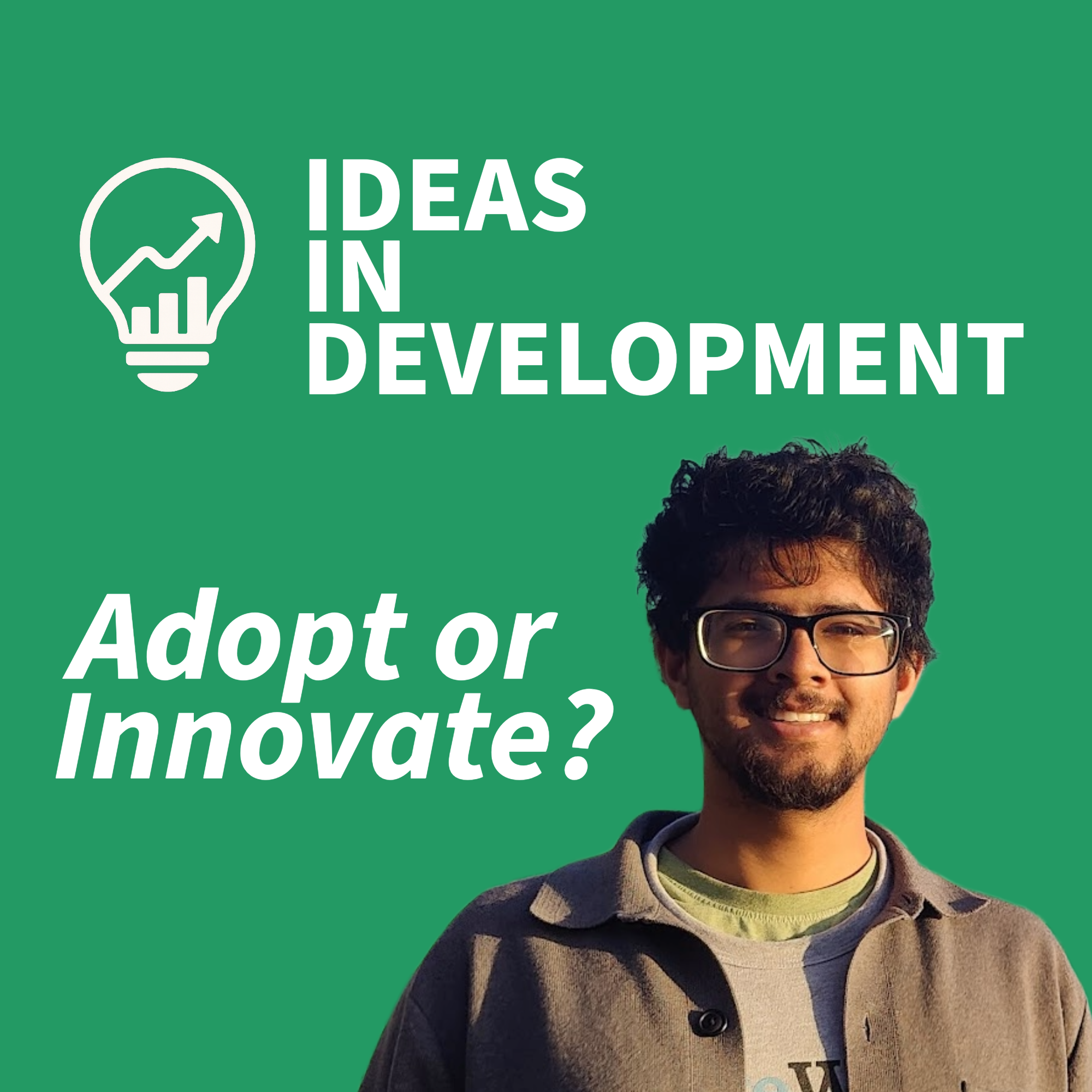 Adopt AND innovate: How Brazil and Taiwan did both 19.05.2026 34минHow can developing countries catch up with the technology frontier? The standard debate frames it as a choice between adopting technology from abroad and innovating at home. Karthik Tadepalli argues that this dichotomy is false – and that two of the twentieth century's most striking development stories show why.In this episode of Ideas in Development, Karthik takes us from Taiwan's Industrial Technology Research Institute (ITRI), which licensed chip technology in the 1970s and went on to spin out UMC and TSMC, to Brazil's Embrapa, which unlocked an area three times the size of Texas for farming and helped to turn a food-importing country into the world's largest agricultural exporter.We discuss why human capital came before results in both stories, how the spin-off model worked at ITRI, the concept of ‘induced innovation’ that shaped Embrapa's research priorities, and why surviving the politics mattered as much as getting the science right.Karthik's articles on Taiwan (in the Asterisk magazine) and Brazil (on his Substack) are both linked in the show notes on our Substack: https://ideasindevelopment.substack.com/
 -
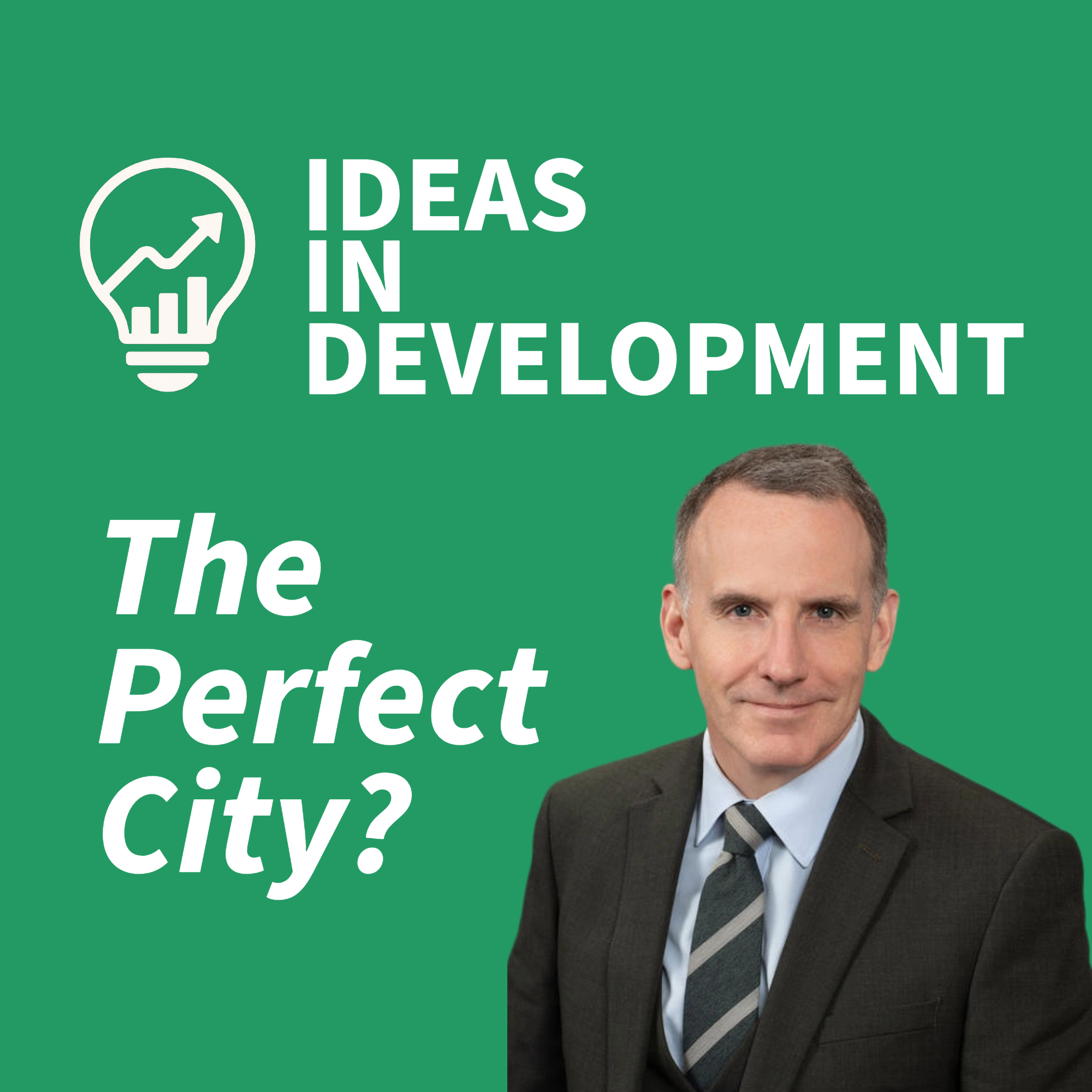 S3 Ep7: The perfect city? 12.05.2026 36минWhat does a perfect city look like in a low- or middle-income country – and how do you get there?In the closing episode of our cities series, Ed Glaeser joins Kurtis Lockhart and Oliver Hanney for a wide-ranging conversation on what makes cities work. He sets out the three foundations every city needs (safety, mobility, education), why infrastructure without the right incentives and institutions fails, what 19th-century New York's cholera outbreaks teach Lusaka about water, why “bus good, train bad” still holds, and what the medieval European city has to offer sub-Saharan Africa's fastest-growing urban regions.We also discuss the political art of being a great mayor, why "capacity eats policy as a light afternoon snack," and his three priorities for African cities over the next decade.Read the show notes on our Substack: https://ideasindevelopment.substack.com/Check out the Africa Urban Lab: https://www.aul.city/
 -
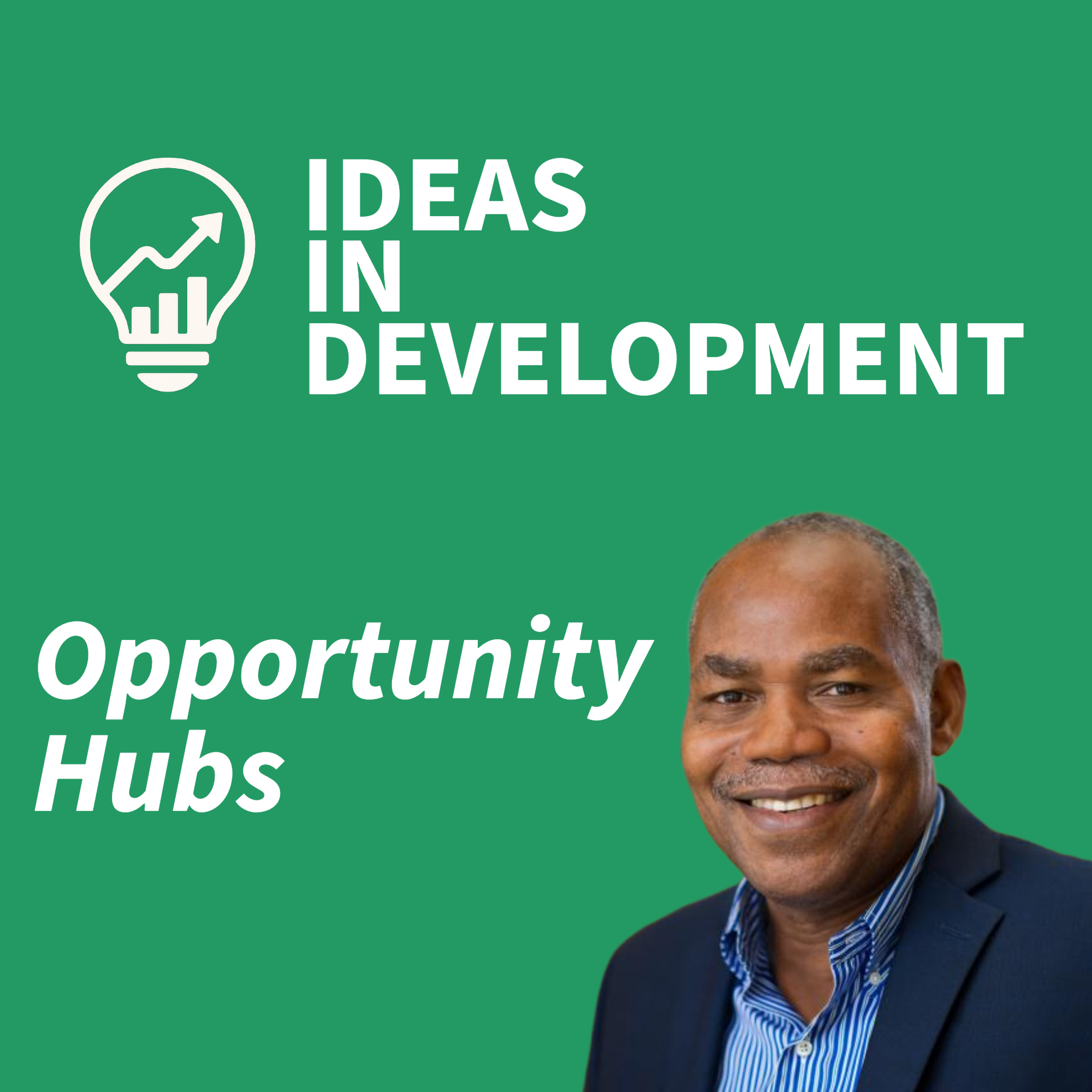 S3 Ep6: Cities of opportunity, not powder kegs 05.05.2026 55минAre African cities a powder keg of restless youth – or the most promising place to build prosperity, peaceful politics and shared civic life?Leonard Wantchekon joins Ideas in Development to argue that African cities should be seen as a youth opportunity, not a youth problem.We discuss recent unrest in Kenya and Tanzania, his work showing that clientelism is overwhelmingly a rural phenomenon, and that deliberation and decentralisation are the institutional minimums African cities should be reaching for. Leonard then lays out what deliberation, decentralisation and a renewed urban culture could do for the next generation of African city dwellers.Read the show notes on our Substack: https://ideasindevelopment.substack.com/Check out the Africa Urban Lab: https://www.aul.city/
 -
 S3 Ep5: How crime takes over cities 28.04.2026 50минHow does organised crime take over a city – and can mayors act before it does?Chris Blattman, economist and political scientist at the University of Chicago, joins Oliver Hanney and Kurtis Lockhart on the Ideas in Development cities series to explain how street gangs evolve into powerful criminal confederations, why cities like Medellín can have low homicide rates and still be almost completely captured, and what the "terrible trade-off" between violence, criminal power and political corruption means for policymakers.We then discuss the perils faced by fast-growing African cities, where the conditions for organised crime to take root are quietly assembling.Read the show notes on our Substack: https://ideasindevelopment.substack.com/Check out the Africa Urban Lab: https://www.aul.city/
 -
 S3 Ep4: Why was Rwanda’s land reform so successful? 21.04.2026 1ч 3минBroken land markets are holding back cities across Africa. But not in Rwanda, which was able to register over 10 million land parcels, and issue over 7 million title deeds, in under five years. How did they do it, and what can other countries learn?Thierry Hoza Ngoga, one of this monumental programme's leading implementers, joins the Ideas in Development series on cities to walk through Rwanda's land reform journey, from consultation to rollout, and discuss why dysfunctional land markets may be the single biggest bottleneck to urban growth in Africa.Read the shownotes on our Substack: https://ideasindevelopment.substack.com/Check out the Africa Urban Lab: https://www.aul.city/
 -
 S3 Ep3: YIMBY goes global? How to build more houses in Africa 14.04.2026 46минAfrica needs to house nearly a billion new urban residents by 2050. Who's going to build it – and how will it be paid for?Kecia Rust joins the Ideas in Development series on cities to discuss the full housing delivery chain in Africa, the untapped potential of informal builders and rental markets, what micro-mortgages could unlock, and what it would actually take for African governments to go pro-housing.Read the show notes on our Substack: https://ideasindevelopment.substack.com/Check out the Africa Urban Lab: https://www.aul.city/ Check out the Centre for Affordable Housing Finance in Africa: https://housingfinanceafrica.org/
 -
 S3 Ep2: How can African cities pay for stuff? 07.04.2026 35минThere is a paradox at the heart of governing cities in Africa. Mayors are responsible for building the infrastructure their fast-growing cities need. But most don't control the money that this requires. In this episode, we ask how can that change?Astrid Haas joins the Ideas in Development series on cities to discuss why African cities are so fiscally constrained, what reforms in Mexico, the Philippines, and Freetown can teach us, and what national and city governments should prioritise to raise revenue and unlock finance.Note: The following question was accidentally cut at 16:41 “Thankfully, there are countries we can look to that found themselves in a similar spot, and managed to find their way out with effective reforms, such as Mexico which stabilised and leveraged fiscal transfers. What did Mexico do that mattered?” Read the shownotes on our Substack: Ideas in Development | Oliver Hanney | SubstackCheck out the Africa Urban Lab: Home
 -
 S3 Ep1: Why cities matter 31.03.2026 28мин900 million people will be added to African cities by 2050. Getting this unprecedented urban transition right is one of the defining development challenges of our time.In this opening episode of our new Ideas in Development series on cities, Kurtis Lockhart, founder of the Africa Urban Lab, joins us to set the scene. We discuss why the link between urbanisation and prosperity is breaking down in Africa, what that means for the continent's future, and what the series ahead will explore.Read the show notes on our Substack: https://ideasindevelopment.substack.com/Check out Africa Urban Lab: https://www.aul.city/
 -
 S2 Ep9: The development economics of AI: Lessons and questions 24.03.2026 27минWhat actually changes when AI meets institutions, infrastructure, and the people inside them?Oliver Hanney and Deena Mousa recap the Ideas in Development series on AI, drawing on conversations with Raghuram Rajan, Umar Saif, Rose Mutiso, Josh Lerner, Anton Korinek, Bruno Caprettini, Niriksha Shetty, Claire Cullen and Utkarsh Saxena.They cover the key takeaways: why the binding constraint question matters more than the model question; what the data desert problem means for national AI strategies; why access and value capture are not the same thing; and what AI is doing to the growth escalators lower-income countries depend on. And conclude with the most important questions this series did not resolve.
 -
 S2 Ep8: What tech ministers get wrong about AI 17.03.2026 52минWhat should a technology minister in a developing country actually focus on when it comes to AI?Umar Saif, computer scientist, former minister of Science and Technology, and IT, in Pakistan, and AI company founder, joins the Ideas in Development series on AI to discuss why data and politics, not technology, are the real bottlenecks to AI in developing countries.In this wide-ranging episode we discuss what he learned from his time in government, why the rush towards sovereign AI capacity may be a costly distraction, his worries for the future, and where he is optimistic.Read the full show notes on our Substack: https://ideasindevelopment.substack.com/
Подобни подкасти


Популярен в
Този подкаст се появява и в подкаст класациите на тези държави.


