
Good VR Podcast
Ian Hamilton
0
Audio from people building toward good VR. The podcast explores the concept of Good Virtual Reality and features discussions with individuals working on positive VR experiences. It aims to support independent journalism and provides additional context on its website.
Епизоди
-
 Meta VR Glasses Hands-On Demo Impressions From Scott Stein, Norman Chan & Alex Coulombe 25.09.2026 1ч 12минThree experts joined the Good VR Podcast to discuss their time demoing Meta VR Glasses.Be sure to read and watch Scott Stein at CNET and Norman Chan at Tested for their unique perspectives going hands-on with Meta VR Glasses drawing from decades of experience with consumer technology. The third guest, Alex Coulombe, runs Agile Lens where they work at the intersection of architecture and theatre. You can listen to a previous conversation with Coulombe discussing his focus, as well as episodes with Stein covering the conversation around “pervert glasses” and with Chan for a podcast recorded in a pair of Steam Frames.During the conversation, which is edited down to 1 hour and 12 minutes from a recording in Riverside, we talked about their favorite moments so far from their time in Meta VR Glasses with segments discussing the prospect of protective lens caps, holograms, live sports, games, stereoscopic video, the future of Apple Vision Pro, and the broader future of virtual reality.It’s been a busy couple of weeks with slimmer and lighter devices kicking off a new era for virtual reality. Typically I pull out a couple of notable quotes from my podcast for people who don’t have time to listen to the whole conversation but I feel like this is one you really need to listen to in its full context with the nuance each of these guests brings to the conversation from a limited time testing the hardware.For more from recent Good Virtual Reality:* Steam Frame Review* Meta VR Glasses Change The Conversation* Seniors Socialize In VRChat* Andrew Eiche On AI & The Path To 1 Billion In VR* Tipatat Chennavasin Invests In The Dream Of VR* Steam Frame Arcturus Vision CameraYou can donate any amount via Stripe to support my work at Good Virtual Reality. Thank you to my paid Substack subscribers for supporting independent journalism.https://buy.stripe.com/7sY8wPeTAcnG3eD1vZao800 This is a public episode. If you'd like to discuss this with other subscribers or get access to bonus episodes, visit www.goodvirtualreality.com/subscribe
 -
 Seniors Socialize And Hop Worlds In VRChat As Part Of Thrive Pavilion (Linda Fisher) 22.09.2026 26минA private group operating mainly in VRChat sees hundreds of senior citizens socializing in virtual reality.I spoke with Linda Fisher, one of the organizers of Thrive Pavilion, for a discussion about how older adults are using social VR. We chatted about her experience from Bulletin Board Systems in the 1980s to Oculus Go in 2018 to AltSpace and Horizon Worlds and finally to VRChat today. “I bought five Oculus Gos. And my mother was like 90 at the time. She was in a nursing home. And I would bring the Go to her and put it on her head and we would go into Wander,” Fisher said. “I would take her to places we went to on vacation where she used to go with her company in Florida and to me that was the most mind-blowing thing about VR and the Go was Wander.”There’s a full schedule of activities listed on the Thrive website and anyone age 50+ can join for free.“There’s a lot of challenges for older adults in terms of being out in the world and doing stuff. And we have members who are caregivers for spouses that have immune system issues or are in a long-term care facility. They’re not getting out that much either,” Fisher explained. “But these people have a whole lifetime of experiences. A lot of them are into photography or pottery or crafting. And so our average user has something to offer the group, and the group has something to offer them — intelligent people who have had positions where they were in authority, they ran things, so now they organize. We have these event coordinators who are really spot on…and they can organize people and the average participant is somebody who just wants to have fun. We just get together and play like kids. Like we did when we were twelve. You don’t have to worry about you’re too fat or you’ve got diabetes or you’re in a wheelchair. You’re just enjoying yourself.”You can donate any amount via Stripe to support my work at Good Virtual Reality and thank you to my paid Substack subscribers for supporting independent journalism.https://buy.stripe.com/7sY8wPeTAcnG3eD1vZao800 This is a public episode. If you'd like to discuss this with other subscribers or get access to bonus episodes, visit www.goodvirtualreality.com/subscribe
 -
 Norman Chan Tested VR From DK1 To Steam Frame 16.09.2026 41минNorman Chan, better known as Norm from Tested, is perhaps the most trusted expert with his videos covering modern consumer hardware. He’s also among a handful of journalists who believed in VR before Mark Zuckerberg showed up to buy Oculus.On Tuesday, we connected from my Steam Frame in New York to his in California using Riverside for a conversation about the latest in virtual reality.Norm has had the Steam Frame since late August while mine arrived on Friday and we’ve each dropped our initial thoughts out onto our respective audiences with Tested’s one-hour-plus video being the most thorough breakdown of the hardware available right now. As Valve readies to ship out the Frame to buyers and Arcturus Industries prepares to give it color passthrough, Meta is preparing what should be the announcement of its next-generation VR glasses. It’s a big time for technological change with some folks likely to experience whiplash as they realize VR is rising from the ashes of 2026 like a phoenix with more comfortable eyewear than ever before transporting people into simulated spaces.Listen now to the conversation with Norm as we cover his first VR experience, his favorite moment of presence, and the persistent belief in this medium. “It still feels like such a frontier,” he said. “But there’s so much technology and so much research and so much effort that’s put into even the experiences that we have that make what we see possible, and feel comfortable and natural. And we take some of that for granted … we’re just discovering these formats and … these trillion-dollar companies are still putting money into it.”September is turning into an incredibly busy month for VR & AR, but I’ve extended an open invitation to Norm as well as CNET’s Scott Stein for a conversation after Meta Connect as we try to digest everything that’s changing in technology. You can donate any amount via Stripe to support my work at Good Virtual Reality and thank you to my paid Substack subscribers for supporting independent journalism.https://buy.stripe.com/7sY8wPeTAcnG3eD1vZao800 This is a public episode. If you'd like to discuss this with other subscribers or get access to bonus episodes, visit www.goodvirtualreality.com/subscribe
 -
 Owlchemy’s Andrew Eiche On Steam Frame, AI, Voice Interaction & The Future Of Virtual Reality 14.09.2026 49минOne of the first articles on Good Virtual Reality checked in with Owlchemy Labs head Andrew Eiche about the path to 1 billion people in VR headsets.VR glasses are incoming from Meta and the most comfortable VR headset I’ve ever worn is shipping from Valve, but prices are increasing for headsets from hundreds to thousands of dollars. It’s looking increasingly like VR’s path to sitting on 1 billion heads might happen sometime in the 2030s.Owlchemy made Job Simulator and its most recent project Dimensional Double Shift launched in early access in 2024 with a bold statement about the importance of both multiplayer and hand tracking to spending extended time in virtual reality. On both Android XR and Meta Quest devices, the game could only be played with other people and your hands in the open air. From today, though, controller support is being added to coincide with the launch of Steam Frame from Valve and minutes before connecting with Eiche for our podcast I tested out an intriguing demo of multiplayer without the other human players.“The goal was to create an uncompromising version of multiplayer where you as the single player-player feel very similar to the way that you felt when you were playing multiplayer in, like, a safe synthetic environment,” Eiche said. “A lot of this came from thinking back to playing Unreal Tournament back in the day and being able to set up bot matches with whatever rules I wanted and not having to worry about other people complaining. And then you get to go in the multiplayer match and really test your skills or really like flex that muscle. And so I wanted a similar thing for VR and, especially with VR still in the earlier days, getting people’s schedules together, getting people to play at the same time and getting everybody in that environment can be difficult and playing with randos can be scary. So single player stands as like a third pillar.”Read The Good Virtual Reality Steam Frame ReviewTo fulfill customer orders, I was able to ask the bots for ingredients using my voice and they’d hand them over to me. The feature was far from perfect but there’s still a long way to go in the development of this single-player mode, which is planned for release sometime next year as Owlchemy works to “tame this thing.”I encourage you to listen to my earlier conversation with Devin Reimer at AstroBeam who licensed some of the tech he built from when he was at Owlchemy to make Stellar Cafe. That game has some similarities to Dimensional Double Shift — both are now working at the cutting edge of voice interaction with bots - but the two titles also play very differently. With the context that the founding of Good Virtual Reality has some relationship to a disagreement over the use of A.I. and with accelerating experimental modding of classic games into VR with assistance from agents, my conversation with Eiche ends up revealing an incredibly nuanced take from him over the value of game designers and the future of game development.“AI is never going to be able to tune a game without a human in the loop because games are built for humans,” Eiche said. “You’ll even hear like the super prompter people … eventually just stop telling the machine to adjust it and tell it to give you a bunch of knobs. So you can adjust it and get the game feel. So my recommendation is two things that are gonna win the day. It’s knowing game design and it’s building things that are fundamentally very difficult to write up in a single prompt.”You can donate any amount via Stripe to support my work at Good Virtual Reality and thank you to my paid Substack subscribers for supporting independent journalism.https://buy.stripe.com/7sY8wPeTAcnG3eD1vZao800 This is a public episode. If you'd like to discuss this with other subscribers or get access to bonus episodes, visit www.goodvirtualreality.com/subscribe
 -
 Tipatat Chennavasin Invests In The Dream Of VR 14.09.2026 30минYou can easily find Tipatat Chennavasin at events where new VR technology is being featured because he’s usually wearing a bright Pokémon shirt that makes him easy to spot in the crowd.As co-founder and general partner at The Venture Reality Fund he invests in technologies he believes may become key pieces of the slowly maturing virtual reality industry, like Gracia’s volumetric captures. Across a 35-minute conversation recorded from Steam Frame at my home in New York connected to Chennavasin’s place in California we discussed the path to 1 billion people in headsets and the value of both teleportation and virtual assistants.“Once we have the experiences that can live up to the hype, then I think we’ll get to the billion people,” Chennavasin said. “And given what we’re seeing with the technology and where AI is headed — I think at least with the super assistant — probably within you know three-ish years, maybe sooner. And I think for the holodeck for it to run real time, not just be something that’s a proof of concept in a lab, but something that that actually like you know people could have access to at a relatively affordable price. I think that’s probably maybe five to eight years.”The conversation touched on similar discussions covered with Andrew Eiche at Owlchemy Labs and Devin Reimer at AstroBeam, two conversations I encourage you to pair with this one. I also brought up the words of Meta top researcher Michael Abrash as we face the era of VR glasses beginning in 2027.Notably, my conversation with Chennavasin was the very first thing I tested in the standalone Steam Frame headset from Valve. I recorded it using Riverside connecting our video call in the Chrome browser which I downloaded in Linux. I used an external microphone connected to the headset through a USB hub; there was no separate PC involved. The setup allowed me to put the microphone closer to my face because I was able to position the virtual window for managing settings in a spot behind the microphone that would have been impossible if I was trying to keep an eye on a physical monitor. I also edited the recording to 30 minutes using the Steam Frame controller as a mouse and working standalone in Chrome.This podcast was exclusively published first to paid Good Virtual Reality subscribers during a huge day of VR news coinciding with the official launch of Valve’s Steam Frame. Thank you tremendously for your support as we enter a new era.This post has bonus content for paid subscribers. Upgrade to get full access.You can donate any amount via Stripe to support my work at Good Virtual Reality and thank you to my paid Substack subscribers for supporting independent journalism.https://buy.stripe.com/7sY8wPeTAcnG3eD1vZao800Read The Good Virtual Reality Steam Frame Review This is a public episode. If you'd like to discuss this with other subscribers or get access to bonus episodes, visit www.goodvirtualreality.com/subscribe
 -
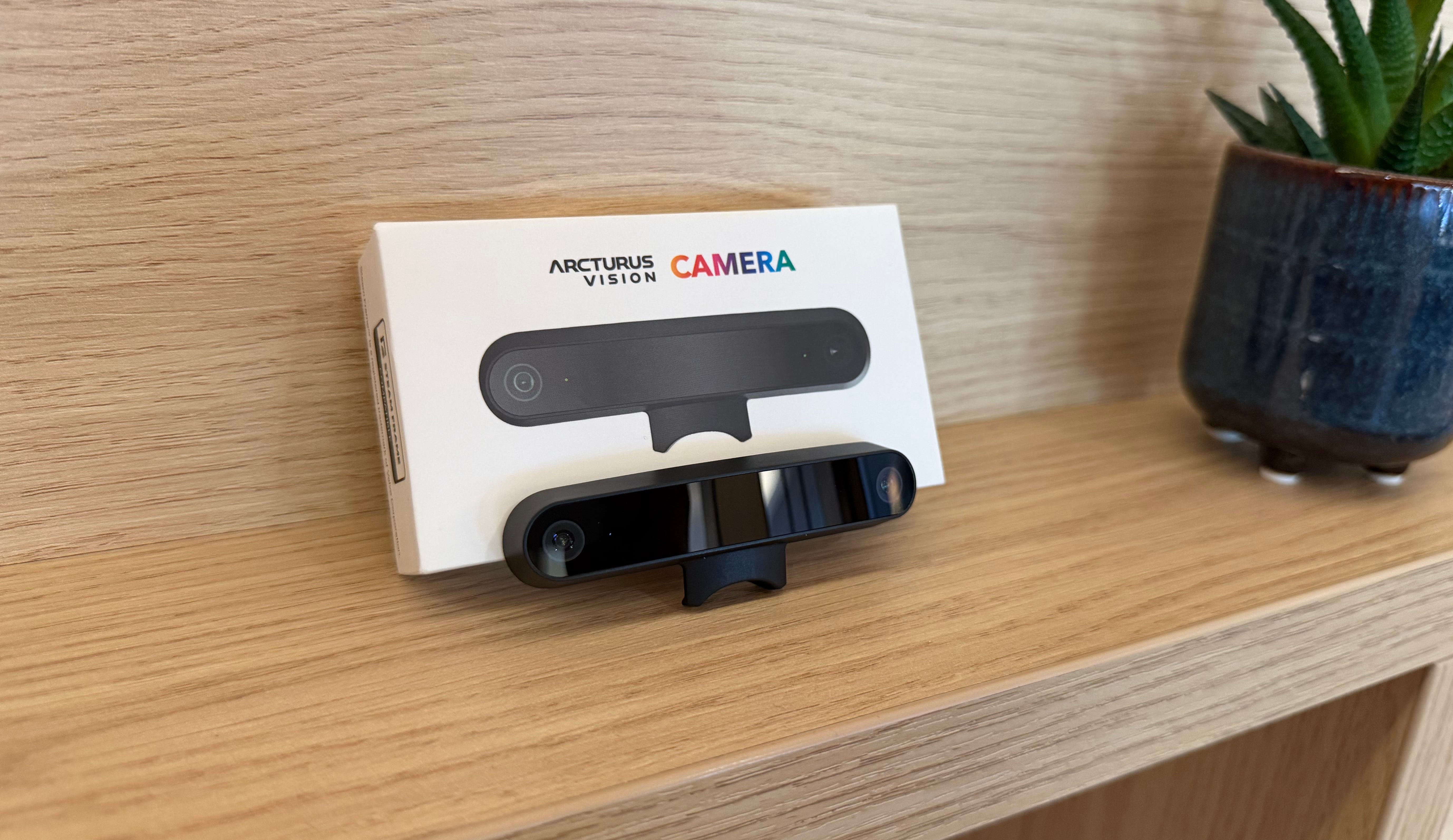 Steam Frame Color Passthrough Accessory From Arcturus Shoots 5K 60FPS Spatial Video (Jeffrey Powers) 14.09.2026 21минSteam Frame passthrough quality can be dramatically upgraded with an accessory from Arcturus built over the course of a lengthy partnership with Valve. The add-on also captures higher quality spatial video than Apple Vision Pro. The Arcturus Vision Camera sells for $149 and snaps into the port in the nose area of Steam Frame to immediately upgrade the headset’s passthrough with high-resolution stereo color. Good Virtual Reality spoke with Arcturus CEO Jeffrey Powers for a 21-minute podcast covering the launch features and long-term potential for the device.Read The Good Virtual Reality Steam Frame ReviewSpatial Video Capture & 3D Gaussian Splatting From Steam FrameThe company offers companion software on PCs for processing captured content into 3D Gaussian Splatting, effectively pulling reconstructions from recorded video. A pair of apps in Steam Frame enable spatial capture as well as viewing the Gaussian splats. Arcturus Vision Camera can also record pose information as a kind of stabilization system during playback for more comfortable viewing of spatial captures.Powers talks about how increasingly efficient on-device algorithms can do depth estimation, leading us to discuss whether there’s value in headsets including an additional depth sensor. The conversation ends up being a valuable introduction to the state of the art in spatial video and computer vision. Apple Vision Pro, for instance, captures spatial video at just 30 frames per second while the Arcturus add-on can record stereo video to internal storage or the removable microSD card at 60 frames per second in 5K resolution as well as even higher frame rates at reduced resolutions. The accessory’s debut alongside Steam Frame suggests Valve made a shrewd design decision to reduce cost and weight in the headset by including camera sensors tuned specifically for positional tracking. Simultaneously, Valve partnered with Arcturus to extend the headset’s capabilities substantially for the subset of buyers interested in these features. The Arcturus Vision Camera weighs under 10 grams.“It should be one of the best devices in the world for recording spatial memories,” Powers says on the Good VR Podcast. “We just went through a house remodel and it took a really long time and one of the things that I was luckily able to do with early versions of our camera was shoot footage and stills of the interior just by walking around. I just walked around and I’m just recording all these frames and then processing that into a 3D reconstruction…I now have these 3D replicas of my house while it was under construction. And so I can go back and see what was in the walls.”I viewed and captured some stereo video with the Arcturus Vision Camera in headset and I was very impressed by the scale of arms in the scene matching my own arms held out in front of me. The stabilized viewing mode that moves stereo video around you using the pose information during capture is also extremely impressive and now my preferred way to view this type of media. The IPD of the camera’s lenses is very near the average distance between the eyes of adult humans. Below is video from Cubism, a game that utilizes passthrough on Steam Frame and also shows how the add-on switches from monochrome to color on the fly.You can watch the video version of this podcast on YouTube with some clips provided by Arcturus showing the passthrough quality and video player.Below is a 60 FPS test video I shot in Central Park at dusk my first day with Steam Frame. I converted it on Mac using Arcturus’ Vision Sync into various formats for playback.* Good Virtual Reality Arcturus Test Quest Format* Good Virtual Reality Arcturus Test Vision Pro Format* Good Virtual Reality Arcturus Test Side By Side FormatYou can donate any amount via Stripe to support my work at Good Virtual Reality and thank you to my paid Substack subscribers for supporting independent journalism.https://buy.stripe.com/7sY8wPeTAcnG3eD1vZao800Read The Good Virtual Reality Steam Frame Review This is a public episode. If you'd like to discuss this with other subscribers or get access to bonus episodes, visit www.goodvirtualreality.com/subscribe
 -
 Agile Lens Develops Stage Presence Where Theatre And Architecture Intersect (Alex Coulombe) 09.09.2026 37минTheatre and architecture share a lot in common and Alex Coulombe can be found wherever they intersect.Coulombe is the head of New York-based team Agile Lens and he recently joined the Good VR Podcast for a discussion about the space. After discussions with groups Ferryman Collective and Tender Claws, each of which has done some pioneering work in VR theatre, it was time to check in with Coulombe to understand the things holding back these kinds of experiences as well as the path ahead.“I’d like to imagine you could have a show, let’s say kind of like in a black box theater style — something a little bit more minimal — that is happening on a stage. And if you don’t want to put on any devices, that’s fine. You’re gonna watch some very talented performers tell you a good story,” Coulombe explains. “Now, on site, if you put on a device, whether they’re glasses or a full mixed reality headset, you then get this extra world, this extra spectacle, these extra characters that can show up.”A previous episode of the podcast with Coulombe joined by Steve Lukas covered the fundamental problem of colocating media with people in VR headsets. Agile Lens software Floor Tour and Stage Presence include solutions so that people can walk around a blueprint on the floor or host a performance. Coulombe encourages people interested in exploring these apps to email [email protected].“I still find it incredibly fun and nothing brings me more pleasure than getting access to some new VR hardware or software and just getting to play in that sandbox and figure out what are the new affordances that we can do,” Coulombe says. “What are some of the improvements that have been made, what are the new capabilities that are possible to further immerse myself in a world that doesn’t actually exist?”You can donate any amount via Stripe to support my work at Good Virtual Reality and thank you to my paid Substack subscribers for supporting independent journalism.https://buy.stripe.com/7sY8wPeTAcnG3eD1vZao800 This is a public episode. If you'd like to discuss this with other subscribers or get access to bonus episodes, visit www.goodvirtualreality.com/subscribe
 -
 Gracia Captures Realistic Volumetric Scenes With Gaussian Splats (Logan Lemmon And Kazii Botashev) 07.09.2026 23минThe most impressive demo I tried at Augmented World Expo in Long Beach earlier this year was a set of scenes captured by Gracia.The scenes use Gaussian splatting to deliver volumetric video that far surpasses anything else I’ve seen in the space. The scenes ran on Apple Vision Pro in passthrough mode so I was looking around at the bustling convention center show floor with a musical performer inserted at 1:1 scale anchored to the floor. Vision Pro’s leading display resolution combined with Gracia’s impressive representation made it hard for my brain to discern who in front of me was physically present and who was being teleported in as the moving Gaussian splat.Lead Gracia researcher Kazii Botashev joined from Kazakhstan with the U.S.-based head of partnerships Logan Lemmon in Venice to speak on the Good VR Podcast covering the rise of Gaussian splatting. It’s currently the leading technology for representing a scene volumetrically and our conversation covers their popularization from around 2023 to the question of how they might reduce the technical overhead of using a hundred or more cameras in making these scenes.“The main rule is that [the] bigger [the] number of cameras is, [the] better quality that you can achieve,” Botashev said. “So the general direction that all the research currently working on is decreasing number of cameras.”Lemmon suggested that the first impacts of 4DGS, the shorthand term for Gaussian splats that move over time, are likely to be felt across visual effects. Gracia recently worked with Muse and lead singer Matt Bellamy to capture him and represent him using the tech for a music video. “The VFX world is just now starting to understand Gaussian splatting,” Lemmon said. “You can capture a 4D sequence and you can process it with us, and then you can slice that sequence into PLYs, which are very, very large point cloud files that you can have interpreted by Nuke or Maya or any sort of 3D software. We just recently worked with the band Muse and the lead singer Matt Bellamy… our partners over at Radiant Images and us, we produced this music video alongside some really wonderful people out of Kazakhstan. The result was a 2D render of Matt Bellamy in a music video, but creators had full three-dimensional control over where the camera was placed, the animation of each of the points of his point cloud. They could explode him, they could zoom into his head, they could place him anywhere in the scene at a very high quality in this very stylized look. So we’re seeing more and more use cases for VFX, and we’re going to start seeing virtual production as well become a major vertical for 4DGS utilization.”You can donate any amount via Stripe to support the work of Good Virtual Reality and thank you to my paid Substack subscribers for supporting independent journalism.https://buy.stripe.com/7sY8wPeTAcnG3eD1vZao800 This is a public episode. If you'd like to discuss this with other subscribers or get access to bonus episodes, visit www.goodvirtualreality.com/subscribe
 -
 Supernatural Health Makes Fitness ‘Taste Like Ice Cream And Work Like Broccoli’ (Leanne Pedante) 04.09.2026 26минSupernatural’s original head of fitness Leanne Pedante is one of VR’s first stars.Her face greets athletes who find themselves in virtual reality and her voice accompanies them on a fitness journey through the sweaty ups and downs of rigorous movement. Many members of the Supernatural service credit her and fellow coaches with helping them make behavioral and even identity shifts leading to dramatically different lives. Their hearts broke in January this year when Meta laid her off along with most of the staff at Supernatural, a studio it acquired just a few years earlier, causing a reset of the VR industry from pioneers in video like Felix & Paul to game studios like Schell Games.Supernatural Health launches this fall on the Quest store as an independent entity again and Pedante, her fellow coaches, and the original founders of the company are set to restart anew their path into VR fitness. While technically they compete with the likes of Sam Cole at FitXR, the two services along with other fitness-focused experiences offered in VR see more ground to gain together reaching people worldwide who aren’t going to the physical gym anytime soon.“When I initially beta tested it, I was like, my god, this is amazing. But I really didn’t predict that it was gonna reach the demographics of the people that it reached,” Pedante said on the Good VR Podcast. “I didn’t think that it would kind of have this incredible [adoption] by older folks which was a total shock to me.”As January 1 approaches, another year over, a whole wave of people will be donning new VR headsets with resolutions in mind to start the year building new habits. It’s a bit of a mantra at Supernatural, Pedante explained, that the aim of their service is to make something that “tastes like ice cream and works like broccoli.” “We wanna be the best at delivering this distinct thing that we have had person after person after person tell us for the past six years, which is I have never enjoyed working out as much as I do doing this thing,” Pedante explained. “When we talk about building a fitness habit, it’s easy to diminish it to be like any other habit. But the reality is like if I get myself to floss my teeth every day, which I’m still working on, but like if I’ve managed to master the habit of flossing every day, it doesn’t really change my self-perception. I don’t have some like revelatory identity experience of like ‘I’m now a person who flosses their teeth.’ But when you go from feeling like someone who has never been able to exercise, never enjoyed movement, never felt your body as the source of power, and then you shift into being a person who looks forward to the movement, who doesn’t cower from a physical challenge. That is a major identity shift. And Supernatural consistently delivers that to people.”You can donate any amount via Stripe to support the work of Good Virtual Reality and thank you to my paid Substack subscribers for supporting independent journalism.https://buy.stripe.com/7sY8wPeTAcnG3eD1vZao800 This is a public episode. If you'd like to discuss this with other subscribers or get access to bonus episodes, visit www.goodvirtualreality.com/subscribe
 -
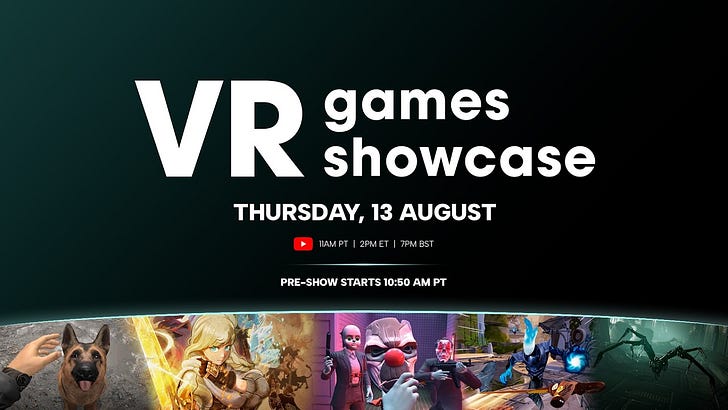 Jamie Feltham Focuses On The Best Immersive Gaming With The VR Games Showcase 02.09.2026 32минThe latest VR Games Showcase came and went with a series of announcements including two big projects from Flat2VR Studios, System Shock 2 and High On Life, alongside other eye-catching work like Spirit Ritual.The show was put together by Jamie Feltham and Zeena Al-Obaidi, the latest in a series they put together spotlighting immersive VR gaming in the style of Nintendo Direct.I’ve worked with both of them in the past and catching up with Jamie gave us a space to talk about the path from the DK1 in 2013 to Quest 3 in 2023 and now to Steam Frame in 2026 and next to VR glasses and the potential of a Quest 4, perhaps, in 2028.“My major hope would be that Meta compares notes with Valve…and then when we’re finally talking, hopefully, about the Quest 4, likely 2028,” Feltham said. “It all comes down to platform holders continuing to show the faith and keep producing hardware and keep supporting, to some degree, content. I think we’re gonna end up with something, hopefully in the early 2030s, where we’re all looking at something that is like a healthy ecosystem.”You can donate any amount via Stripe to support my work at Good Virtual Reality and thank you to my paid Substack subscribers for supporting independent journalism.https://buy.stripe.com/7sY8wPeTAcnG3eD1vZao800 This is a public episode. If you'd like to discuss this with other subscribers or get access to bonus episodes, visit www.goodvirtualreality.com/subscribe
 -
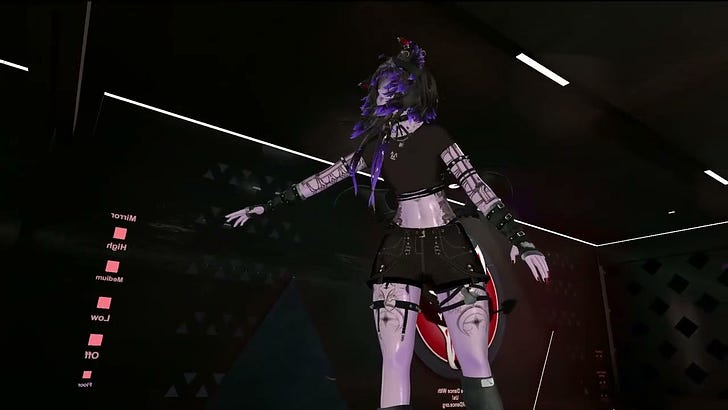 MuhMow Roller Skates And Swings From The Ceiling In VRChat 30.08.2026 19минA skateboarder who suffered a painful injury found a new activity to keep himself active — roller skating through VRChat.During a year of layoffs or closure for many of the content companies that provided many their first VR experiences, VRChat is seeing record numbers and people like MuhMow are discovering its vibe. He converted a second floor office into a mini roller rink he glides around wearing a Meta Quest Pro and Vive Ultimate Trackers. Years after he forced himself to stop skateboarding he’s recaptured the feeling of being out at the skate park and doing tricks in front of a small crowd.“If you set your mind to something you can do it,” he says on the Good VR Podcast. “One thing that people are afraid of is failing. And with skateboarding or roller skating, part of the sport is you need to fall to progress. What matters is getting back up and trying again…. You just gotta keep progressing. People are scared of dancing because you might look dumb. Everyone’s gonna look dumb, you’re just starting out. It took me forever to make myself look cool in my videos.”He’s found an avatar he feels at home inside and he works with collaborators to add roller skates to the feet. He moved everything he could out of the office to avoid collisions and wears battery packs to go the distance. His longest session in VR lasted around eight hours.“If I’m in a lobby and I have below 20 FPS, I cannot skate because I’m moving too much,” he says. “I think the most I get is 40-50.”You can donate any amount via Stripe to support the work of Good Virtual Reality and thank you to my paid Substack subscribers for supporting independent journalism.https://buy.stripe.com/7sY8wPeTAcnG3eD1vZao800 This is a public episode. If you'd like to discuss this with other subscribers or get access to bonus episodes, visit www.goodvirtualreality.com/subscribe
 -
 Tens Of Thousands Use Meta Glasses For Vision Assistance, With Be My Eyes Founder Hans Jørgen Wiberg 28.08.2026 26минMeta finds itself in its latest media firestorm with reports of people harassing others while capturing videos with AI glasses. In response, Meta says it’ll effectively de-platform its own hardware product from people tampering with the device to remove the white recording notification light. Reportedly, the company sent out cease-and-desist letters to groups offering that modification as a service.The founder of Be My Eyes, Hans Jørgen Wiberg, expresses both anger and sadness about people using the glasses this way because he’s a member of a group with a very different use for Meta’s glasses. Tens of thousands of people who are blind or have low vision use the Meta glasses to make video calls to sighted volunteers around the world. The volunteers look through the camera on the glasses and answer questions about what they see.“Even my wife said, don’t wear those glasses if you don’t use them. And I was like, ‘Okay.’ Two weeks ago I would never think about not wearing them,” Wiberg said. “Now I put them in my pocket and then when I need them, I take them out and put them on…I should not have to do that. That is simply wrong.”I connected with Wiberg in Denmark using the podcasting platform Riverside to record a conversation about Be My Eyes. I recommend pairing this conversation with the recent one talking with CNET gadget expert Scott Stein in which he advised not accusing strangers of being perverts for simply wearing the glasses. The two conversations make for a deep dive into the way social norms are being changed by Meta’s glasses.I personally stopped wearing Meta glasses in public due to their ability to make others uncomfortable. During the conversation with Wiberg I shared the fact that, when I did wear them, I very quickly started practicing a new bit of social etiquette by placing them on the top of my head when entering a public restroom. Wiberg suggests similar etiquette would apply to blind people facing the need for a public restroom. Simply asking someone there for assistance or feeling the way around the room should be the standard, he says.The example highlights a difficult reality about computerized glasses. There’s a future where a locally running AI assistant can successfully answer the request “help me find the restroom” with zero Internet access. In such a scenario would a white light be needed at all when locally analyzing what’s seen by the glasses’ sensors against the device’s training, successfully directing a person step by step to a urinal or toilet without the Internet? Such an automated use would be very similar to the simple sensors already present in the bathroom for identifying when someone puts their hands under a faucet or automatically flushing a toilet when they leave the stall.What I’m highlighting here is one of the reasons I lost interest in Meta’s glasses. Meta changed the entire product category from being centered on the cameras to being centered on artificial intelligence. Instead of personally taking photos and videos of my walks through Central Park, I had the feeling of capturing imagery to train Meta’s AI. Once AI is trained properly, there may be a future where these kinds of camera glasses don’t allow users to capture videos and photos at all to avoid any misuse by individuals, while simultaneously allowing uses like the path to the bathroom provided through offline automation.In this hypothetical future, when automation takes the place of an interaction between two people grounded in empathy, what do humans lose?“I have never done anything wrong and I have no intentions of doing something wrong. Of course, also blind people can do stupid stuff,” Wiberg says. “That’s not what I’m saying. But at least we have a very good reason to use those glasses to understand our surroundings and we should never think twice about putting those glasses on. But I totally understand why people don’t want to be approached by people who maybe don’t even know what a white cane is, or anything like that, and just see the glasses and say, hey, ‘what are you doing?’”You can donate any amount via Stripe to support my work at Good Virtual Reality and thank you to my paid Substack subscribers for supporting independent journalism.https://buy.stripe.com/7sY8wPeTAcnG3eD1vZao800 This is a public episode. If you'd like to discuss this with other subscribers or get access to bonus episodes, visit www.goodvirtualreality.com/subscribe
 -
 Grabbing Mario From A Nintendo 64 Cartridge And Other Experiments With Lucas Martinic 21.08.2026 18минI grabbed my Super Mario 64 cartridge off the shelf, backed up the game to my Mac and stuck the file in a folder on Meta Quest 3. Then I opened the APK sent to me by Lucas Martinic of studio Present Futures.Voila. Mario was controllable by the analog stick on my right controller and, with my left hand, I could reach into the virtual world I first visited around 30 years ago. Mario could stand on my hand, I could lift him up by raising my arm, and I could even pinch him by the hat and pull him forward into the physical room with me. Essentially, the Master Hand from Super Smash Bros was now reality. There Mario was, for the first time in my life, standing there on my dining room table. I pushed the stick to the right and he fell off the edge of the table and started running around on my floor.I put Mario back inside his virtual world and then used the stick to send him into the castle. That’s where the magic ended. I found the limit of Martinic’s work to bridge Super Mario 64 to physical reality. To understand how this remarkable interaction came to be, I invited Martinic on the Good VR Podcast. “That’s the idea, to just inspire other developers and maybe non-XR developers to jump into XR,” Martinic said.During the recording he shared that he worked with an AI agent to make Mario’s transition across mixed reality possible. He said he spends around $600 per month total for three Claude Max plans as part of his ongoing exploratory work with VR headsets. Another project Martinic is working on called Inkphony won $100,000 from a Meta hackathon. The app uses the Logitech MX Ink stylus to draw musical notes directly onto a physical surface and the app promises the ability to pluck sounds from objects in the environment.“We are still…redesigning some stuff because the premise, or the vision, that we presented for that hackathon is not feasible to do,” Martinic explained during the podcast. “It’s possible, but it’s not sustainable. Because the way we set up the vision AI models that we use to manage to do this will surpass what people pay for the app.”The podcast with Martinic is around 18 minutes long and covers the odd economies of eye-catching AI-driven development.You can donate any amount via Stripe to support my work at Good Virtual Reality and thank you to my paid Substack subscribers for supporting independent journalism.https://buy.stripe.com/7sY8wPeTAcnG3eD1vZao800 This is a public episode. If you'd like to discuss this with other subscribers or get access to bonus episodes, visit www.goodvirtualreality.com/subscribe
 -
 AltSpace's Third Chance With SideQuest's Shane Harris 22.08.2026 45минThe head of SideQuest is looking to resurrect AltSpace again.The well-loved social platform Altspace closed down twice before. First, the startup behind the service was to close in 2017 during the start of modern VR’s first winter. It was rescued, however, in a last-minute buyout from Microsoft. Then Microsoft pulled the plug in 2023 in a sign of what was yet to come for Horizon Worlds and Rec Room.Now SideQuest CEO Shane Harris is looking to re-launch the service yet again.“Altspace was kind of like a safe space,” Harris said on the Good VR Podcast. “It was a place where people and organizations, groups, even brands could associate with it because they were, a lot more careful about how they presented it, how the avatars were presented, how the worlds, how their policies and how they worked with the community was always different in there.”One of the core questions I had for Harris is whether his approach will be built in such a way that users might have some protection for the permanence of their worlds if SideQuest should be unable to continue it sometime in the future. It’s still early days, so there’s no clear answer to that question, but Harris did make it clear he’s thinking about it.“We are building services behind the scenes to power this new AltSpace that will also be services that we offer out generally to other developers, like live networking, voice and data services, other parts of the platform,” Harris said. “We’ve built browser integrations, we’ve got creation tools and SDKs, we’ve got character systems and avatar systems. And actually what we’ve done is to build all of these out as modular pieces so that we can make those available to other developers as well.”Harris connected to me from Dubai using the podcast recording platform Riverside and I edited the conversation down to around 45 minutes.You can donate any amount via Stripe to support my work at Good Virtual Reality and thank you to my paid Substack subscribers for supporting independent journalism.https://buy.stripe.com/7sY8wPeTAcnG3eD1vZao800 This is a public episode. If you'd like to discuss this with other subscribers or get access to bonus episodes, visit www.goodvirtualreality.com/subscribe
 -
 Apple Vision Pro In An Operating Room Points To The Cost Of Doctors Turning Their Heads 20.08.2026 19минA recent paper authored by Dr. Bobby Korn at the University of California, San Diego made some intriguing conclusions from 16 operations completed with physicians wearing Apple Vision Pro to view cameras inside the human body.Here are the listed highlights from the paper, bolding added: * Spatial computing improves ergonomic comfort in endoscopic surgery.* Apple Vision Pro enables immersive, hands-free surgical visualization.* Operative time shortened without increased cognitive workload.* Low cost and small footprint make spatial computing feasible for operating room integration.The paper suggests that, on average, operations could be performed over eight minutes faster because the doctors didn’t keep turning their heads to look at a physical monitor showing the live view from a camera inside the body.“When you’re actually looking at a monitor, you’re actually oftentimes using one monitor that is shared by everyone in the entire room,” Dr. Korn said on the Good VR Podcast. “So it’s not naturally the most ergonomic thing that you’re using. So you’re turning your head, you’re turning your hips, and you’re doing this hundreds of times throughout the case. And that creates a significant amount of fatigue for the surgeon themselves. What ends up happening is that when I’m doing work in the nose, taking instruments in and out, I’m actually doing this hundreds of times during the case. And as I look down and I look up, my eyes are constantly looking for the image on the screen. With the Vision Pro, the image is always in front of us. We always see it.”From the paper’s conclusion:“…contemporary operating room costs approximate $51 per minute. Applying the observed 8.3 min reduction yields an estimated saving of roughly $420 per case, and for a practice performing 100 to 200 endoscopic DCR procedures annually this would correspond to an estimated $42,000 to $85,000 per year.”I encourage you to pair this conversation with my earlier talk with Jamie Lockwood at HMDmd for an overview of the types of procedures that might feature paired cameras providing 3D stereoscopic imagery to doctors looking inside the body. In some situations, doctors might also want an open periphery from their head-mounted display to occasionally look down at their hands directly. Overall, the two conversations paint a picture of the research frontier at the very cutting edge of medical technology.While the scale of the study is small, if its takeaways can be replicated elsewhere, there might be profound implications for healthcare savings provided by VR headsets.“The things that really drew me to Apple’s device was that the resolution is just so high and so crisp,” Dr. Korn said. “The refresh rate is good. But in addition to that, though, is the pass through. So you mentioned that other system where you actually place it over your eye and you’re able to look in the periphery. Every time you do that, your eye has to undergo a process called accommodation where you actually change the shape of your eye…And that just adds to the fatigue and exhaustion to a surgeon if they’re, say, doing an operation for several hours at a time….You want a surgeon who’s comfortable, who can see exceedingly well with the images presented into them, really to give you the best outcome.”You can donate any amount via Stripe to support my work at Good Virtual Reality and thank you to my paid Substack subscribers for supporting independent journalism.https://buy.stripe.com/7sY8wPeTAcnG3eD1vZao800 This is a public episode. If you'd like to discuss this with other subscribers or get access to bonus episodes, visit www.goodvirtualreality.com/subscribe
 -
 FitXR CEO Sam Cole On Glasses & Bundling Exercise Subscriptions With Hardware Sales 19.08.2026 26минVR’s ability to instantly embody a person in simulated space turns out to be an incredible match for fitness. The idea that you can forget the pressure of the physical world and get into the rhythmic flow of a workout is one of the ways VR is transforming lives all over the world. I captured some of those stories in a recent writeup about Supernatural’s return to independence, but now I’ve had the CEO of FitXR Sam Cole on the Good VR Podcast to discuss their 10-year story building active fitness applications for VR. If there are any FitXR fans reading this, or listening to the podcast, feel free to send an email to [email protected] to tell me about how the service has affected your life for potential coverage in a future article. Please include how you want to be identified in the article and as many details as you can about your fitness journey.“Something like only 4% of Americans have a gym membership and actively use that gym membership. It just shows you that the vast majority of the population aren’t engaging regularly with exercise,” Cole says on the podcast. “The fitness industry looks at people who haven’t formed a habit with exercise — they won’t ever publicly say this — but they’ll generally feel like it’s a problem with the customer. And those customers are fickle and can’t form a habit and therefore [are] a low value to try and serve. But the opposite is true. It’s a problem with the product. The more that you’re able to build a product to serve this audience, the more that you’re able to serve a truly mass market audience.”The conversation with Cole goes full circle from their initial interest in building for an augmented reality headset from Magic Leap to being encouraged to build for VR headsets and finally to the coming wave of glasses-sized VR eyewear that can transform people’s perception about what the devices are for.“We will have headsets soon that feel a lot more like glasses in terms of form factor. That’s going to be really significant for overall adoption … we’ve done a bunch of things with Meta over the years where we’ve tried to sell headsets to our target demographic and really market headsets as pieces of fitness equipment rather than a gaming console. When we talk to customers in that kind of sales process, you really understand their skepticism,” Cole said. “Let’s just zero in on the Quest, for example, when they look at that device, they think gaming console for kids. They can’t envision themselves wearing that. For us it’s a piece of fitness equipment. They can’t see themselves wearing that to do fitness, but they also can’t see themselves wearing that to watch a movie. They can’t see themselves to do that to take a video call, for example. When you put the Quest 3 on them, none of them go, yeah, I mean it’s great, but if it was just a little bit less heavy, I would buy it. It’s all of this preconceived ideas about what it is and isn’t going to be. So I think it’s so much tied to how the device looks in marketing materials and therefore that driving the adoption … more people need to look at the device and answer yes to the question of ‘can I see myself wearing that?’ Even if wearing that only means wearing it in my own home. I’m very supportive of the approach the hardware manufacturers take here trying to drive more use cases of people wearing the devices out in public as well, watching movies on a plane or on a train … But also I get it from a productivity use case as well, whereas if you walked around more cafes, right, and you saw people working with these headsets on, I think that that would be beneficial as well. Those are all secondary to this fundamental question of can I see myself wearing that device? The new devices that are coming, the answer to that is gonna be yes for a lot more people than it has been for the historical devices.”You can donate any amount via Stripe to support my work at Good Virtual Reality and thank you to my paid Substack subscribers for supporting truly independent journalism.https://buy.stripe.com/7sY8wPeTAcnG3eD1vZao800 This is a public episode. If you'd like to discuss this with other subscribers or get access to bonus episodes, visit www.goodvirtualreality.com/subscribe
 -
 Flat2VR Studios Developing System Shock And High On Life VR Games For 2027 15.08.2026 25минA pair of newly announced VR games are scheduled for release in 2027 from Flat2VR Studios — System Shock and High On Life.System Shock was the influential precursor to BioShock, first released in 1994 and re-released in 2023 by Nightdive. The remake is getting the full Flat2VR treatment alongside the VR version of humor-shooter High On Life from Squanch Games, where the gun you hold is a live alien commentating as you shoot your way through the world.The two games were announced during the latest VR Games Showcase put together by Jamie Feltham, with a Trombone Champ DLC partnered with Disney joining the announcements from Flat2VR. I scheduled a call with Eric Masher, COO at Flat2VR, for a full rundown of the announcements and to get his view on the state of the VR market. He called in from the airport as he’s heading out to Gamescom where he’ll be taking meetings that might lead to VR games for release in 2029 and beyond.“I tried a DK1,” Masher recalls of his introduction to the medium. “It literally changed things for me at that point. It rekindled what I think gaming could be as an immersive platform. I remember getting out of the headset and talking to my wife and I’m like, this is a life changing moment for me. And it sounds cliche, but I remember and she even remembers like me saying … I need to figure out how I do something in this medium.”Be sure to pair the conversation with the previous episode chatting with Flat2VR Studios CEO Jasmine Uniza for a fuller picture of the efforts at the studio. The discussion with Masher covers the difficulty facing VR developers building for a niche within a niche as several manufacturers ship headsets tuned for hand tracking, often selling controllers as separate accessories. Flat2VR is focused on controllers and the studio’s latest announcements join a slowly growing list of gaming projects for VR headsets that require tracked controllers.“Every game that we have focused on for 2027, 2028, and even beyond stuff that we’re preparing to get started for 2029 and beyond are going to be controller focused,” Masher said. “I would not be doing that if I didn’t believe that most of the gaming headsets would be in some way controller focused. The games that we make and what we focus on as Flat2VR Studios cannot be done hand-tracked.”We spoke for just over 30 minutes on the podcast platform Riverside and I edited the conversation down to under 25 minutes.You can donate any amount via Stripe to support my work at Good Virtual Reality and thank you to my paid Substack subscribers for supporting independent journalism.https://buy.stripe.com/7sY8wPeTAcnG3eD1vZao800 This is a public episode. If you'd like to discuss this with other subscribers or get access to bonus episodes, visit www.goodvirtualreality.com/subscribe
 -
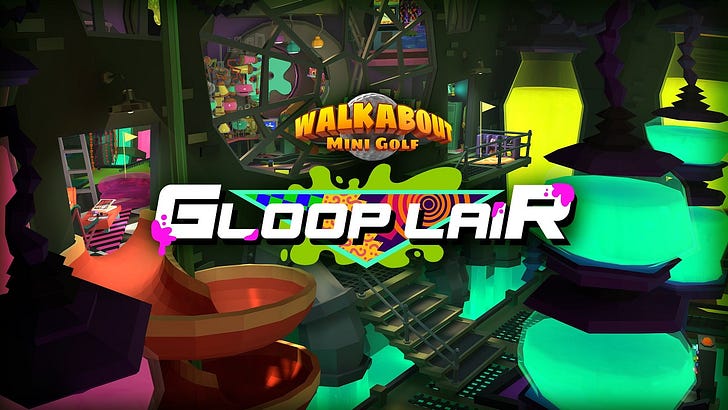 Walkabout From Mini Golf To Dungeon Golfer With Mighty Coconut's Lucas Martell 12.08.2026 26минWalkabout Mini Golf development studio Mighty Coconut is taking everything it learned from developing the best way to spend time with family and friends in VR and starting fresh with a new game.Walkabout Dungeon Golfer is in active development as something of a spin-off or sequel to Walkabout Mini Golf and being developed alongside new courses for the original. The new game is still centered on golfing but the gameplay loop around that activity is completely different, Lucas Martell explains on the Good VR Podcast. He cautions that they’re still prototyping, so things can change, but he offered some details about how they’re approaching its design.“What we have settled on is essentially that you’ve got sort of a small-ish dungeon that’s maybe like the size of three or four different holes kind of combined, but you’re able to freely kind of putt around it,” Martell explains. “And you do have enemies that have hit points and you do damage by putting into them. There’s an exploration element where you’re trying to putt around, you actually get power-ups by putting into cups that give you … health or attack. So very, very basic stat points. But ultimately it’s kind of a roguelite where you are playing through each of these different runs. So a run is not unlike a course. It probably takes twenty to thirty minutes or so. The thing that we have loved the most is that even in the prototypes we started building in multiplayer. So where it really gets interesting is when you do have multiple people in there and you’re able to strategize, you putt into this area which will lure this enemy out, and then I will be able to hit him from the back and use various different power-ups and abilities and in a cool way.”Good Virtual Reality is a reader-supported publication. To receive new posts and support my work, consider becoming a free or paid subscriber.The discussion with Martell is edited to just under 27 minutes with the podcasting platform Riverside and covers the full Walkabout path from inception to investment offers to layoffs earlier this year as well as the continuing independent spirit there grounded in creative artistry. It all started last decade with the founding of the studio on an island in Belize with artists gathered around the production of a short animated film called The OceanMaker. If you haven’t listened to the conversation with Shawn Whiting, who led community development at Rec Room for many years, the path that startup took over roughly the same period as Mighty Coconut makes for a useful companion conversation for understanding what it means to take outside investment in your company versus staying fully independent. “I’ve also seen so many companies kind of get yanked around. And we’ve seen this with all of the different studio closures that have happened where a company gets bought, and even if they are profitable,” Martell said. “There is this push to make 10x what they’re spending on stuff. And it just seems like it’s a very unsustainable model. And it also means that there’s a lot of times where you could have a game that, yeah, sure, it is making a profit, but it’s not enough. And you still end up getting shut down or something happens at the larger owner level where there’s a restructuring. And all of a sudden your mandate changes. I’ve done that dance before, especially in the film industry, and I just don’t like it. Yes, the more money is nice, but the more money comes with so many strings and so many concessions that it means that you can’t run things the way that makes sense. And currently we’re entirely player supported, which just means that what people are spending on the DLCs and the base game, that’s what’s going into development. That’s what allows us to keep making courses. I won’t say that it’s easy and it’s definitely gotten a lot harder this last year or two, just with everything going on in the industry, but we’re still able to make it work.”We also discuss the end of the Walkabout Mini Golf Pocket Edition’s development and how that relates to their strategy building a version of Walkabout Dungeon Golfer that runs on Steam and possibly for consoles with full cross-play to VR. Our conversation was recorded in August 2026 just before the release of the 1990s-inspired Gloop Lair, Walkabout Mini Golf’s 41st course and work is already underway on courses the studio is planning to release in 2028. You can watch the latest design tour with 3D artist Shane Rhodes the moment the course releases.You can donate any amount via Stripe to support my work at Good Virtual Reality and thank you to my paid Substack subscribers for supporting independent journalism.https://buy.stripe.com/7sY8wPeTAcnG3eD1vZao800 This is a public episode. If you'd like to discuss this with other subscribers or get access to bonus episodes, visit www.goodvirtualreality.com/subscribe
 -
 Ferryman Collective Plays In VR With Deirdre V. Lyons & Stephen Butchko 14.08.2026 43минWhat does it mean to play in VR?It seems a straightforward question. Meta, Valve, Sony, Google, and even Apple all sell games that substitute your reality for a simulated one with rules to learn governing your interactions. These storefronts, however, do little to sell the unique benefits VR offers in embodiment and transportation.“We’re all given this kind of carnival license in this sort of anonymous space to play,” said Ferryman Collective co-founder Deirdre V. Lyons. “We often as adults forget how important it is. How it re-energizes our lives and how it informs our lives and how it allows us to create bonds and special moments that we often don’t allow ourselves time to do.”The Ferryman Collective is a kind of theatre troupe that travels from place to place inside virtual reality to host intimate interactive performances. Most often they perform in VRChat and these days they’re hosting performances of their Emmy-nominated production Uncanny Alley: A New Day. At AWE in Long Beach, California earlier this year I attended one of their other productions alongside Scott Stein, working together with him to make music guided by a performer physically located in Utah.Before the Ferryman Collective formed Lyons was one of the performers who breathed life into Tender Claws acting in The Under Presents and The Tempest. I find live theatre to be one of the most inspiring uses of VR technology, but from Tender Claws to VRChat the productions Ferryman undertakes strain the platforms that host them. And still, some of the most emotionally impactful experiences you might have in VR can happen during one of these performances.“Our work in VR comes to life at the intersection of motion pictures, live theater, and interactive video games,” Ferryman co-founder Stephen Butchko said on the Good VR Podcast. “We pull from all three of those modalities to bring this work to life…this sense of play is for me a release. It is an expression of vulnerability and it’s a sharing of story and emotions with my fellow thespians and audience participants that join us in these performances.”I spoke with Lyons and Butchko about VR theatre for around an hour and trimmed the conversation down to around 43 minutes using the podcasting platform Riverside. You can donate any amount via Stripe to help me with my work at Good Virtual Reality and thank you to my paid Substack subscribers for supporting independent journalism.https://buy.stripe.com/7sY8wPeTAcnG3eD1vZao800 This is a public episode. If you'd like to discuss this with other subscribers or get access to bonus episodes, visit www.goodvirtualreality.com/subscribe
 -
 Specialized Firefighter Training In VR With Evan Sitler-Bates 10.08.2026 23минXpertVR CEO Evan Sitler-Bates joined the Good VR Podcast to discuss work offering firefighters extra training in VR.We spoke for just over 30 minutes and I cut it down to under 24 minutes using the podcasting platform Riverside. “This isn’t about…physical training and we’re not replacing live burns. We’re giving you the sets and reps that you can do on a daily or weekly basis between live burns and other live training,” Sitler-Bates said. “It very quickly changes people’s perception. I would say that going to fire departments and training with thousands or tens of thousands of firefighters at this point, by the time people get into headsets, it’s like a point zero zero one percent of people that are still pushing back on it. The vast, vast majority of people get into a headset and they’re like, okay, I see how realistic the visuals are, I see how the communication and tactics need to work, and I can see how this fits into training between our live training.”VR could affect firefighting in a number of ways in the coming years as the same type of sensors that map your environment in a headset like Quest 3 or Vision Pro could potentially help emergency response personnel essentially see through smoke and flame in video passthrough. We discuss that possibility a little bit during the end of the podcast.“When a firefighter’s putting on their gear, normally it’s about eighty pounds of gear with their turnout, jackets, pants, overalls, with their helmet, their SCBA (Self-Contained Breathing Apparatus) tank, etc. So to add even more weight on top of that, and especially onto somebody’s head, is going to wear people down when they’re trying to fight a fire and run throughout a building and move with the hose,” he said. “It just obviously needs the hardware to get slimmer and [that] price come down.”You can find more information about XpertVR on their website. You can donate any amount via Stripe to support my work at Good Virtual Reality and thank you to my paid Substack subscribers for supporting independent journalism.https://buy.stripe.com/7sY8wPeTAcnG3eD1vZao800 This is a public episode. If you'd like to discuss this with other subscribers or get access to bonus episodes, visit www.goodvirtualreality.com/subscribe
Подобни подкасти


Популярен в
Този подкаст се появява и в подкаст класациите на тези държави.
