
Ralph Nader Radio Hour
Ralph Nader
0
Ralph Nader talks about what’s happening in America, what’s happening around the world, and most importantly what’s happening underneath it all.
Епизоди
-
 American Doctor 03.10.2026 1ч 27минRalph speaks to Dr. Feroze Sidhwa for an update on the death toll in Gaza as well as the new documentary film “American Doctor.” Then Ralph and economic William Lazonick discuss Nvidia’s planned $235 billion stock buyback.Dr. Feroze Sidhwa is a general, trauma, and critical care surgeon in California. He is also a humanitarian surgeon who has worked in Palestine, Ukraine, Haiti, Zimbabwe, and Burkina Faso. He most recently volunteered at Nasser Medical Complex in Khan Younis, Gaza. He was blocked from entering Gaza by Israel’s Shin Bet intelligence service in November 2025. His work in Gaza is featured in the new documentary film American Doctor.If I’m remembering the exact time right, March of 2016 was the deadliest month for children that [Airwars] had ever studied anywhere—so that’s the 31 days of March of 2016. In the first 25 days of the US-Israeli assault on Gaza, the rate of killing of children was 71 to 142 times higher than in the deadliest month they had ever studied for children anywhere else. And just to put these numbers in a little bit of perspective…If you look at Russia’s invasion of Ukraine versus Israel’s invasion of Gaza, Russian forces killed the same percentage of children in Ukraine in 10 months as the US and Israel kill in Gaza every 18 to 37 hours.Dr. Feroze SidhwaI want to emphasize to people that [American Doctor] is not a gory movie. This movie is nothing— Saving Private Ryan is a much bloodier movie than this. But nevertheless, this movie is a tough watch sometimes because the things you see (like what [Dr. Mark Perlmutter] shows at the very beginning) are difficult. They are scenes of dead bodies—not bodies that have been ripped to shreds, but bodies that are just dead. And it forces you to realize what our bombs do to people. You know, our bombs are not made of magic and pixie dust. They cause pressure waves, they cause blast injuries, they cause all sorts of death and destruction. And in that opening scene that’s what Mark is trying to get the director [Poh Si Teng] to understand—that if she blurs these images, if she pixelates them, if she refuses to show people what it looks like to kill children and what dead children actually look like and force people to look (to really just look), that she’ll be doing people a disservice. And you hear it at the end of the trailer when he’s saying “People have a right to know the truth.” Well, the truth is pretty uncomfortable.Dr. Feroze SidhwaThe most effective medical care that human beings provide to each other is provided to small children so that they can reach the age of five (at that point they become a bit more robust and they can survive the challenges that the world throws at them) and to pregnant women. Those are the two groups that benefit most from medical care. When you destroy a medical system…This is literally every hospital in Gaza, and not just the hospitals. Most of the clinics have been destroyed. Most of the pharmaceutical warehouses have been destroyed. Most of the veterinary medicine spots have been destroyed. So when you attack a health care system like this, you’re basically condemning women and children to die. There’s no other effect that it could even be expected to have. The same goes with the destruction of Gaza’s sewage system, it’s the destruction of its educational system, the destruction of the water treatment facilities, the destruction of almost all of the housing in Gaza, the destruction of the entire arable land and food distribution system, the destruction of almost every bakery in Gaza, the destruction of every chicken farm, it just goes on and on and on. Everything that sustains life, especially for an urbanized population, has been destroyed. And that’s why the vast majority of international experts consider this to be genocidal.Dr. Feroze SidhwaWilliam Lazonick is a professor emeritus of economics at the University of Massachusetts Lowell and co-founder and president of the Academic-Industry Research Network, a non-profit research organization . His recent work includes Predatory Value Extraction: How the Looting of the Business Corporation Became the US Norm and How Sustainable Prosperity Can Be Restored, and Investing in Innovation: Confronting Predatory Value Extraction in the U.S. Corporation.’When [Nvidia] issued this press release a couple days ago about the [$235 billion] buyback, one of the things it says is that it’s “returning capital to shareholders”. I mean, Jensen Huang (who’s a founder and CEO of Nvidia) knows that’s nonsense. The only time they ever raised money from shareholders on the stock market was in their IPO in 1999 (January 1999). And that was $40 million. One of his three co-founders, Curtis Priem, sold all his stock in 2006 for about $30 million. It’s estimated that if he had held the stock to the present, it would be worth $70 billion. So if those people who originally bought the stock at the IPO had held on to it, you don’t need to return anything else to them. They’ve got plenty and plenty of money for holding on. So this is just a manipulation of the stock market.William LazonickNews 10/2/26* Our first story this week comes to us from Florida, where Democratic U.S. Senate candidate Angie Nixon made news by saying in an interview with Newsweek that she thinks “there needs to be a moratorium [on the construction of data centers] until more research is done,” but that “if people want to build a data center, they should put it on Mar-a-Lago.” Nixon is careful to explain that she is open to data center construction given the appropriate safety guidelines and under the correct circumstances, such as “requiring or creating a mechanism for communities affected by data centers to receive some form of financial benefit.” While the invitation to build a data center on Mar-a-Lago is obviously incendiary, Nixon rejects the notion that her campaign is primarily about Trump, saying “I’m not pushing an anti-Trump message,” in the president’s adoptive home state, instead arguing that she is “pushing a message about how people should decide what their economies and communities look like.”* Meanwhile the Hill reports Senate Democrats, led by Senators Mark Warner, Brian Schatz and Andy Kim, sought to pass a package of AI guardrails via unanimous consent this week, but were blocked by Ted Cruz. According to this report, the Artificial Intelligence Risk Management and Security Act of 2026 sought to “establish a permanent AI safety board within the Commerce Department,” which “would develop standards for evaluating frontier models and securing their testing environments, with developers required to give the panel access to models at least 45 days before they go public.” Cruz blocked the unanimous consent resolution on the basis that it would “give the executive branch too much power over private AI companies.”* For our final tech story for the week, the Huffington Post reports that shortly after the Congressional Hispanic Caucus Institute fiasco which saw the group accept, then reject major donations from Palantir, the controversial high-tech surveillance firm was apparently “acknowledged as a supporter of the annual gala” for the Congressional Black Caucus Foundation, the CBC’s “charitable arm,” in Washington. Many remarked on the perverse symbolism of “one digital banner…[upon which] the firm was listed among the conference’s ‘top supporters…’...[while] The background featured a faded portrait of Shirley Chisholm, the first Black woman elected to Congress, whose campaign motto ‘unbought and unbossed’ symbolized resistance to corporate influence.” This piece observes that Palantir has “long sought to curry favor with Democratic-aligned institutions,” while simultaneously cultivating close ties with ICE and the military and the firm’s founders, notably Peter Thiel, publicly espouse far-right ideas. In a statement, Palantir wrote that they are “proud and honored to support the CBC Foundation’s mission of creating pathways for promising young people to enter public service who may not have the networks or financial means to do so without support.”* Turning to local news, the first corruption trial for DC councilmember Trayon White has ended in a mistrial, according to WTOP. White represents Ward 8, Washington’s most heavily African-American and historically most impoverished district. United States Attorney for the District of Columbia and former Fox News host Jenine Pirro said in a statement that “We have video showing piles of cash being given to a D.C. councilmember as part of a $156,000 bribe. Rest assured that we will retry this case and every corruption case to verdict.” However, White maintains that “The prosecutors knew, and the FBI knew that they didn’t have a strong case…[because] there was never a quid pro quo.” White further posted on social media that the jury split was nine-to-three in favor of a not guilty verdict. White, who was reelected to the council last year after being unanimously expelled added that his “focus remains on serving our residents, and [his] office remains open to help with constituent concerns.”* In New York City, the legal battle over Mayor Zohran Mamdani’s pied-à-terre tax grinds on. This week, CNN reports Judge Wayne M. Ozzi of Staten Island ruled in favor of the plaintiffs, who “did not challenge the legality of the tax itself, but…alleged the city had incorrectly ‘identified their homes as potentially subject to the surcharge,’ despite being their primary residences.” The tax was intended to impose a “surcharge on non-primary residences in New York City valued over $5 million, as well as co-ops valued at $1 million.” In effect, this ruling cancels the 17,000 notices sent out to residents notifying them that they either had to file for exemption or submit to the tax. Judge Ozzi allowed that new notices can be sent out only if they comply with a particular list of rules. In a statement, Mamdani spokesperson Matt Rauschenbach said “The pied-à-terre surcharge is about a basic principle of fairness: if you can afford a luxury second home in New York City, you can afford to pay your fair share for the schools, streets and parks that make this city work…Our Administration is fighting every day to deliver for working New Yorkers. The ultra-wealthy are fighting in court to avoid paying their fair share. They have filed lawsuit after lawsuit to protect their privilege, and we will not back down.” The Mamdani administration has already filed to appeal the ruling.* Our final local story of the week takes us to Los Angeles, where mayoral hopeful Nithya Raman is in the news this week for sticking to her guns and defending her use of the term genocide to describe Israel’s murderous campaign in Gaza during a Jewish Federation forum at the Skirball Cultural Center. The LA Times reports Raman was questioned about her relationship with DSA, as well as with streamer Hasan Piker – recently described by the Financial Times as the Republican Party’s bogeyman – and finally about her use of the term genocide, which moderator Alex Cohen called a “highly inflammatory term.” Raman reportedly said that she deferred to international experts, including within Israel, adding that she used it because she “felt compelled to speak out about…the targeting of hospitals, the deaths of children.” Incumbent Mayor Karen Bass indicated that she does not think the term genocide is appropriate because it engenders “divisiveness.” Pressed further on her views on the Boycott, Divestment and Sanctions (BDS) movement, Raman called it “a legitimate form of peaceful protest” and vowed to “fight for that right” whether or not she agrees with the protesters. Bass said she would block a BDS bill even if it made it through the LA City Council.* Elsewhere in California, the incoming class of left-wing House freshman, including Melat Kiros, Adam Hamawy, Chris Rabb, Darializa Avila Chevalier, Claire Valdez, and Donavan McKinney – a group some have begun to dub “the Bloc” – are moving in force to support the campaign of Mai Vang in the Golden State’s 7th Congressional District. The Bloc will “collectively endorse” Vang in her insurgent challenge against incumbent Democratic Congresswoman Doris Matsui and travel out to the district, which includes Sacramento, to bolster her campaign. This from POLITICO. Matsui is 82 years old and running for her 12th term in the House; Vang is four decades her junior. Vang finished first in the June primary, winning 31.2% to Matsui’s 29.1%,* POLITICO is also reporting that Bernie Sanders is “cracking open his war chest” on behalf of campaigns he is backing, including the Senate campaign of Peggy Flanagan, and Attorney General reelection campaign of Keith Ellison, both in Minnesota, and the Angie Nixon Senate campaign in Florida. In addition to direct transfers of funds to these campaigns, Sanders is “also spending to hire more full-time organizers in Michigan, Minnesota and Florida…and is planning get-out-the-vote text campaigns for federal candidates he’s endorsed,” as well as planning a California swing where he will campaign with Aisha Wahab and Randy Villegas, in the state’s 14th and 22nd Congressional Districts. This piece also indicates he may rally with Rebecca Cooke, running to oust a Republican incumbent in Wisconsin. Cooke has openly said she does not want to campaign with Kamala Harris, but said Sanders speaks to many of the same voters who backed Trump, and emphasized that his “sincerity about standing up for people who are getting screwed resonates a lot with families like mine.”* Turning to foreign affairs, this week British Prime Minister Andy Burnham delivered a blockbuster speech at the Labour Party conference, which included calls to bring back public control of public services, most notably water, and reform the voting system toward a proportional representation model. Yet, what garnered the most attention in international news was his hinting that the United Kingdom could go “all the way” towards rejoining the European Union. Reuters reports Burnham saying Brexit has “done more harm than good” and that the country should explore all options for a future relationship with Europe, including options short of full membership, such as “rejoining the EU’s single market and/or a customs union.” However, while Burnham may want to split the baby as it were, others within the EU are more skeptical of these half measures. French President Emmanuel Macron is quoted saying “when [Great Britain] wants to re-engage with us…you cannot pick and choose among the Union’s freedoms, nor can you decide to take only what suits you while rejecting the rest.” Support for rejoining the EU has skyrocketed in the UK, now standing at 55% support among voters and only 34% opposed, though individual aspects such as adoption of the Euro or reentry into the Schengen Area may prove more politically unpopular. Burnham is set to participate in a summit with EU leaders next month.* Our final story this week is a dark and stunning expose published on the After-Action Report Substack, titled “The CIA Killed Him. The Navy Blamed My Friend.” In this story, journalist Seth Hettena recounts the story of Dan Cerrillo, a Navy SEAL prosecuted for the barbarous abuse of Iraqi prisoner Manadel al-Jamadi at the Abu Ghraib prison in 2003. Cerrillo, who died at age 50 in 2023, went to his grave denying this and maintaining that instead, he was set up to take the fall for the CIA. Now, a declassified report by the CIA Office of the Inspector General confirms this quite directly, with damning excerpts reading “OIG determined that…officers contributed to the death of Al-Jamaidi by failing to abide by Agency interrogation policies and displaying a reckless disregard for his welfare while in their custody,” and “Agency officers took steps that impeded the subsequent investigations…into Al-Jamaidi’s death,” including withholding evidence from investigators, removing key evidence from the death scene, and even destroying evidence while the OIG investigation was ongoing. The full report is worth reading, as it traces the full story, including the author’s battle to pry information from the CIA using FOIA over the course of 20 years. In an era when conspiracy theories, often centering on the CIA, are everywhere, it is worth examining a genuine case of a CIA crime and coverup, and how even just one person can expose the truth.This has been Francesco DeSantis, with In Case You Haven’t Heard.Leave a comment about how you are a smart voter. We will collect these and discuss them on our next program. Get full access to Ralph Nader Radio Hour at www.ralphnaderradiohour.com/subscribe
 -
 The Legacy of Wendell Berry 26.09.2026 1ч 51минRalph welcomes Mary Berry the daughter of the late American novelist, poet, essayist, environmental activist, cultural critic, and farmer, Wendell Berry. Ms. Berry runs the non-profit Berry Center in New Castle, Kentucky, which serves as a repository for the study of small farm agriculture and preserves the legacy of her family’s work. Then, with the midterms on the horizon, Ralph and the team talk about how to be a smart voter. Plus, Ralph has some choice words for the U.S. Chamber of Commerce’s so-called “Free Enterprise Express.”Leave a comment about how you are a smart voter. We will collect these and discuss them on our next program.Click the button below to get Professor Laura Nader’s book Controlling Processes.Mary Berry is Executive Director of the Berry Center, a nonprofit organization dedicated to bringing focus, knowledge and cohesion to the work of changing our ruinous industrial agricultural system into a system and culture that uses nature as the standard, accepts no permanent damage to the ecosphere, and takes into consideration human health in local communities.[Wendell Berry] lived the way he thought one should live. He used to say to people when they kind of congratulated him for coming home to Kentucky to live and to farm (as if that was some kind of sacrifice), he would say, “I just did what I wanted to do.” So he was an exceptional person, an extraordinary person, and he’s left an absence that is going to be keenly felt for quite some time.Mary BerryWe have (since the end of the tobacco program) lost 15,000 farms in Kentucky. And we’ve lost the rural culture. And we’ve lost the rural culture that sustained good life here and good land use… Without an economic backstop, people begin to fall apart. It takes a lot to hold culture together. It takes a lot to hold people together. So I took a list to my father and said we’ve got to work on these things—the miseducation of farmers, access to capital, terrible land use, we’ve got to study the tobacco program (this is not about tobacco, this is about the principles of a program that protected farmers). And he said: well, it sounds like you’re starting a center.Mary BerryOne of the reasons I started the Berry Center is because I saw the local food movement as a failure. And I began to understand that we could not just have entrepreneurial farming or industrial farming, with nothing in the middle. We were going to have to try to put something in the middle that would take care of marketing and pricing and so on for farmers, so they didn’t have to do it all.Mary BerryI think one of the things that makes my father’s work singular is that he never talked about the land without talking about the people— talking about the people, talking about the land, the two never separated.Mary BerryNews 9/25/26* Our first two stories this week have to do with the Senate race in the state of Michigan. First up, Dropsite is out with an expose of “Michigan Jews Against Extremism,” a group that emerged in August which sought to astroturf opposition to Democratic Senate candidate Abdul El-Sayed among Jewish voters. Yet, while the avowed members of this group purport to be “Democrats and Independents” Dropsite finds that in fact, “many of the Jewish community leaders involved have deep ties to the GOP, as well as to pro-Israel activist groups such as AIPAC.” Among the signatories, “Nearly 50 were involved in a nearly identical gambit in 2012 that went by the name ‘Jews for Mitt.’...[arguing that] Then-President Barack Obama…was so “anti-Israel” that their consciences drove them to abandon the Democratic Party to support Republican nominee Mitt Romney.” All in all, Dropsite finds that “nearly 90% of the first 430 signatories are either connected to pro-Israel activist groups, GOP aligned, Jews for Mitt voters, or may not live in Michigan,” at all. This piece notes that Jewish voters typically go for Democrats by a ratio of about 2:1, making them a key part of the Democratic coalition.* Helping to counter the narrative pushed by this group and others, this week Michigan Attorney General Dana Nessel formally endorsed El-Sayed, the Detroit News reports. In an interview conducted side by side with him, Nessel said she “can’t be true to my values if I even consider voting for Mike Rogers,” adding that he is the “one candidate that I know is going to fight against the Trump administration…to protect…our physical security, our safety, our health and our futures.” Nessel has been critical of El-Sayed in the past; in August, she gave a private speech to Jewish Democrats in which she implied that Democrats critical of Israel, like El-Sayed, “have thrown us,” referring to Jewish Democrats, “under the bus, despite our lifelong contributions to our party.” Many Democrats worried that her disagreements with El-Sayed over Israel would undermine his candidacy. By coming around on the candidate, she immediately becomes one of his strongest surrogates in the Michigan Jewish community and helps to unite the often fractious Democratic coalition behind him. Recent polling has favored El-Sayed over Rogers by an increasing margin. While a Detroit News/WDIV-TV poll conducted in late August and early September found Rogers leading by one point, a Suffolk University poll conducted in mid-to-late September found El-Sayed ahead by seven.* In more Senate race news, this week saw the publication of a bombshell report of corruption on the part of longtime Maine Senator Susan Collins – and how Trump helped to cover it up. According to ProPublica Martin Kao, CEO of defense contractor Navatek, funneled hundreds of thousands of dollars to a Collins Super PAC through a shell company in exchange for her intervening on behalf of his company to secure lucrative military contracts, part of a “sweeping pay-to-play” scheme. When the feds caught onto Kao, leaving him staring down the barrel of a lengthy prison sentence, he told-all. This piece notes that while the Supreme Court has “narrowed what counts as bribery” to require “extraordinary proof of a quid pro quo arrangement,” the FBI “had enough evidence to pursue a sweeping bribery probe that could ensnare top lawmakers of both political parties,” by late 2024. After the election however, Trump “stacked the Department of Justice with his personal lawyers” and “eviscerated” the “specialized FBI and DOJ teams handling public corruption investigations,” because they had been involved in cases deemed lawfare against him specifically. The investigation based upon Kao’s story, substantiated by reams of evidence, is now regarded as dead in the water. In light of all of this, whether or not Collins faces accountability for this brazen corruption falls to the voters of Maine.* In our last Senate story of the week, the Texas Tribune reports the Senate Leadership Fund (SLF), the “main outside group affiliated with Senate Majority Leader John Thune,” will “book an additional $30 million in ads,” on behalf of Republican Senate candidate Ken Paxton through its connected entity, Texas PAC. Piled on top of SLF’s previous spending of nearly $70 million, this “will to bring its total spend to the $100 million mark.” This spending confirms that the GOP considers this race highly competitive and tracks with past predictions by SLF, which estimated that “a Paxton candidacy would cost $200 million to $250 million in order to keep the seat in Republican hands.” On top of the SLF’s $100 million spend, other groups have poured around $40 million into this race. Some wondered whether the Republicans, defending a broad array of seats, would be willing to bail out Paxton’s flailing candidacy. This new monetary commitment seems to confirm that they will throw as much money as they deem necessary to prevent the victory of James Talarico. While Talarico has raised and spent colossal amounts of money as well, this new infusion of Republican cash has swamped his spending thus far – with the Tribune reporting that in the “month of September, Texas PAC alone has spent nearly $66 million to Talarico’s approximately $22 million, with other Republican groups bringing the GOP’s spending total to about $103 million this month.” For now, Talarico maintains a slim but consistent lead in the polls, with even Republican polling firm Trafalgar Group finding him ahead by one point.* Turning to House races, the national Democratic Socialists of America have endorsed Angela Gonzales-Torres, who is challenging incumbent Congressman Jimmy Gomez in California’s 34th congressional district. In their announcement, DSA stated that it is “proud” to endorse Gonzales-Torres, touting her agenda which foregrounds “an arms embargo on Israel, labor protections, Medicare for All and abolishing ICE.” DSA also highlights Gonzales-Torres’ life story, having been “Born and raised in Highland Park…the daughter of a deportee and grew up with a single mother who relied on SNAP and Medicaid,” adding that “Her organizing work includes helping people move from prison into higher education.” Gonzales-Torres thanked DSA for backing her campaign, and took the opportunity to attack Gomez for being “complicit in genocide, endorsed by Leading the Future—the AI super PAC of Palantir and OpenAI co-founders—and…under investigation for sexual misconduct.” If Gonzales-Torres and Mai Vang, another DSA candidate in California’s seventh district, emerge victorious in November, they will be the eighth and ninth DSA members of the next Congress, a stunning number not rivaled ever before in American history.* Also in Los Angeles, new polling seems to show DSA-endorsed mayoral candidate Nithya Raman leading incumbent Mayor Karen Bass, according to the LA Times. The poll, conducted by the UC Berkeley Institute of Governmental Studies found Raman at 39%, over 10 points ahead of Bass at 28%. While this is certainly an encouraging result for Raman – who finished second against Bass in the June primary and has so far largely trailed the incumbent Mayor in the polls – Raman is still far off from 50% + 1 and 33% of voters in the poll responded that they were undecided about whom they would ultimately back in November. However, numbers besides the raw support tallies are encouraging for Raman as well. This poll found Bass far underwater, with 63% unfavorable ratings, compared to just 28% favorable and 9% having no opinion. Raman’s favorables, 40%, outweigh her unfavorables, 39%, if just barely, while 21% registered no opinion. In short, this race is far from over but as Mark DiCamillo, the director of the Berkeley IGS Poll says in this piece, “Raman clearly has the advantage. Her task is…less onerous than Bass’.”* Meanwhile, in New York City, Mayor Zohran Mamdani announced this week that DoorDash will pay an enormous settlement of $131.5 million, including more than $115 million directly to delivery workers and more than $16 million in civil penalties and costs, for the widespread underpayment of 260,000 workers including “workers who were not paid at all or were paid late for work they had already performed.” The Mayor’s office notes that this is the “largest worker settlement in New York City history and the largest settlement involving food delivery workers in the United States.” Samuel A.A. Levine, Commissioner of the city’s Department of Consumer and Worker Protection (DCWP), is quoted saying “New York City’s delivery workers are showing that opaque algorithms will not have the final word when it comes to how much they are paid for the hard work they do…With this record-breaking settlement and innovative compliance monitoring strategy, the Mamdani administration is demonstrating what it looks like to build an economy that puts working people first.” Moreover, the agency announced they will be partnering with the “Workers Justice Project and the Workers’ Algorithm Observatory to develop software that will allow workers to share their DoorDash trip and earnings data directly with the agency.” This “new worker-driven compliance system will give DCWP an independent way to identify underpayment and other violations rather than waiting for workers to discover problems after they have occurred.”* In some local news from abroad, the city of Berlin held elections this week, resulting in Die Linke – literally ‘The Left’ – winning the plurality of the vote, “more than doubling its score in the previous contest in 2023.” Die Linke rode to victory on a platform focused on the cost of living, namely doing something to arrest skyrocketing rents, with Jacobin noting that “the sell-off of the public housing stock to private profiteers in the 1990s–2000s, plus a lack of new builds, has pushed up costs.” As the top vote-getter, Die Linke’s mayoral candidate – Elif Eralp, whom the media has christened Berlin’s Zohran Mamdani – is poised to assume the chief executive job as part of a “red-red-green” coalition with the German Green Party and the Social Democrats (SPD). Perhaps surprisingly given Berlin’s modern reputation as a bastion of progressivism, these three parties combined won a mere 52% of the vote, while the far-right Alternative für Deutschland (AfD) won 16% of the vote, an increase of seven points since 2023. Eralp herself is the daughter of Turkish “trade unionists and socialists from Istanbul who were imprisoned after a military coup for their political beliefs…[and] only allowed out of jail because [her mother] was heavily pregnant with Eralp.” Eralp became a human rights lawyer and joined Die Linke after the AfD entered the Bundestag in 2017, per the Guardian.* Turning back to the U.S., this week the Democratic State Attorneys General, after talking a big game, caved and allowed the Paramount acquisition of Warner Bros. to proceed. Bloomberg reports the terms of the settlement reached between Paramount and the states will “include a financial penalty if the company fails to make good on a promise to distribute 30 films per year in theaters,” with this financial penalty said to be “$30 million for each film that falls short of that goal.” Bloomberg also notes that “If the final terms are approved, the agreement would spare Paramount from having to pay late fees to Warner Bros. of $7 million a day, which were to begin on Oct. 1.” Even with these concessions, it is hard to see how the deal will avoid the concerns raised in the lawsuit, brought by 12 state attorneys general and the Writers Guild, who argued it would “stifle competition for film and cable-TV distribution, raise prices for consumers and in the writers’ case, lower their wages.” This settlement was reached despite a heroic last stand by some of the more progressive state AGs, including Minnesota’s Keith Ellison as well as those of Massachusetts, New York and Connecticut – who argued that the terms of the settlement were “too lenient to Paramount.” However, this gang of four were undercut by California AG Rob Bonta, who was under immense pressure to settle the case after Paramount announced they would leave California, Deadline reports. In addition to acquiring the vast intellectual property catalogue of Warner Bros., including Batman, Harry Potter and Lord of the Rings, Paramount will now add CNN to its portfolio, in addition to CBS which it has already purchased and put under the editorial guidance of arch-zionist Bari Weiss. According to these reports, the gang of four did secure a concession on this point, with Paramount agreeing to establish “independent editorial boards for CBS and CNN” – though what this will mean in practice remains unclear.* For our final story this week, let us consider a new poll from the Center for Strategic Politics which shows Democrats support removing Trump by almost any means necessary. The vast preponderance of Democrats favor impeachment, with 86% positive and only 7% negative. The second most popular option is removal via the 25th amendment, which is favored by 84% of Democrats with, again, only 7% negative on the idea. President Trump dying in his sleep registers at +40% net sentiment, and even a hypothetical officers coup, framed as “a group of U.S. military leaders” removing President Trump from power and assuming “control of the United States” in order to “safeguard the Constitution,” wins 59% positive ratings compared to just 28% negative. In fact, the only option under water is an assassination attempt, which still scores 31% positive, though outweighed by the 43% negative response. This and many more insights are available from Liberal Currents.This has been Francesco DeSantis, with In Case You Haven’t Heard. Get full access to Ralph Nader Radio Hour at www.ralphnaderradiohour.com/subscribe
 -
 Coding Kids 19.09.2026 1ч 36минRalph welcomes “New York Times” reporter Natasha Singer to discuss her new book, “Coding Kids: Big Tech’s Battle to Remake Public Schools.” Then, Ralph talks about Donald Trump’s midterm convention speeches and the latest impeachment drive with Constitutional law expert Bruce Fein.Natasha Singer is a New York Times reporter covering the intersection of technology, business and education. She has covered tech industry influence in schools for the New York Times for more than a decade, and her school tech reporting helped prompt California to enact a landmark student online data protection law. In 2019, she was part of a Times team whose tech coverage won a George Polk Award and was a Pulitzer Prize finalist for National Reporting. She is also the author of the book Coding Kids: Big Tech’s Battle to Remake Public Schools.It’s not about the companies immediately making money off schools. It’s about influencing kids, getting customers early and for life. But I think more importantly, it’s about imprinting Silicon Valley worldviews and values on young people. So that you get docile consumers who maybe aren’t worried about wholesale surveillance and data gathering, and docile employees who are not going to push back against being surveilled by their employer or using AI tools or having AI replace them. And so I think this story about tech companies capturing the classroom is not just about how they’re shaping learning. It’s about how some of the most powerful, wealthiest corporations on the planet are able to influence school systems.Natasha SingerSince the time of Steve Jobs, Silicon Valley has attached this fancy word “literacy” to whatever product they have, and then told schools they needed to teach it. So in the era of Steve Jobs, there was suddenly this fervor that we had to teach “computer literacy” because Japan was ahead and if we wanted our country to compete, we needed computer literacy. And then the internet came and we got “internet literacy” and “smartphone literacy” and then “digital literacy”... And now we’re in this moment where Silicon Valley and tech-funded nonprofit groups are pushing “AI literacy”, except we don’t know what AI literacy is and we don’t know how to teach AI. And so it makes it sound really fancy: “AI literacy”. But oftentimes the companies are really just talking about: “Learn how to use our chatbot.” And now you have asked: When are we going to stop listening to these people? When are we going to stop rushing to teach whatever product “literacy” Silicon Valley is pushing us to do this week, and then pivot with whiplash to whatever they’re pushing next week? And I think that’s the question of the hour.Natasha SingerBruce Fein is a Constitutional scholar and an expert on international law. Mr. Fein was Associate Deputy Attorney General under Ronald Reagan and he is the author of Constitutional Peril: The Life and Death Struggle for Our Constitution and Democracy, and American Empire: Before the Fall.They’re playing to dodge accountability by saying, “We’re neither for nor against this,” like someone who’s claiming they’re agnostic. Now, how you could be agnostic on Donald Trump, whose impeachable offenses are proven out of his own mouth? All these statements that he’s made are open and notorious. And so it’s almost implausible to suggest that these people don’t know that he has committed impeachable offenses and are deciding to duck for political, partisan purposes (their calculation as to what would help them politically). Now, that, of course, is directly contrary to their oaths of office. Hakeem Jeffries, like his colleagues, has taken an oath (without mental reservation or purpose of evasion) to support and defend the Constitution of the United States. At present, the Constitution is in flames under Donald Trump. And to sit and do nothing—to declare neutrality between the firefighter and the fire—is itself an impeachable offense for which they should be impeached and be prosecuted for perjury when they were sworn into office.Bruce FeinNews 9/18/26* Our first stories this week are about impeachment. On the Democratic side, outgoing Congressman Al Green, long a champion of impeachment, introduced a resolution which “sought to impeach Mr. Trump over the conduct of Immigration and Customs Enforcement and Customs and Border Protection…[citing] the killings of Renee Good, Alex Pretti, Lorenzo Salgado Araujo and Johan Sebastian Duran Guerrero by federal immigration agents this year,” per CBS. House Democratic Leadership punted, announcing that they would neither whip votes for nor oppose the resolution, opting instead to simply vote “present” on the motion to table Green’s resolution. Ultimately 47 members voted present and 147 voted against tabling, but even put together it would not have been enough to overcome the 232 votes in favor of setting the resolution aside. Impeachment has resurfaced as a major question for Democrats as they appear poised to retake the House and perhaps even the Senate. Jamie Raskin, who would become Chair of the House Judiciary Committee if Democrats retake the majority, said earlier this month that Democrats “will not hesitate” to use the tool if needed and that Mr. Trump has “undoubtedly” committed impeachable offenses. However, House Democratic Caucus Chairman Pete Aguilar said this week that impeachment is “not anything that is top of the agenda for House Democrats.”* On the other side of the aisle, outgoing Congressman Thomas Massie also introduced articles of impeachment, with these singling out Defense Secretary Pete Hegseth for frustrating “Congress’s ability to exercise its most solemn constitutional responsibility” and allowing an “unlawful war” to continue in Iran. Axios notes that this resolution also includes articles concerning “U.S. military operations in Venezuela and Yemen, including accusing [Hegseth] of illegally directing the operation to capture Venezuelan President Nicolás Maduro without congressional authorization.” Massie lost his re-election primary earlier this year to a Trump-backed opponent; he has since made noises about pursuing the creation of a third party in conjunction with other dissident right-wing figures like Tucker Carlson and Marjorie Taylor Greene. It remains to be seen what he will do once he is out of office come January.* Speaking of bucking one’s party, this week POLITICO reported that conservative House Democrats Jared Golden and Marie Glusenkamp-Perez again broke with leadership to “advance a slate of GOP bills in a procedural vote that was otherwise on track to fail.” The rules in question set up votes to grant yet more power to President Trump, including “new authorities to sanction Russia’s trading partners…[and] rolling back…EPA regulations.” This same duo voted with the GOP several weeks ago, after which House Minority Leader Hakeem Jeffries promised a “serious response.” However, he “later indicated that there would be no public consequences.” It is impossible to imagine a progressive being given this kind of long leash by leadership. For his part, Golden is not seeking re-election, but Gluesenkamp-Perez is and if she wins – no guarantee as her district went for Trump in 2024 – she will certainly come into the next Congress with a substantial amount of enmity built up from the rest of the Democratic caucus.* In more news from the Hill, the Congressional Hispanic Caucus Institute (CHCI) went into crisis mode earlier this week when some of the high-profile progressives in the caucus, namely AOC and Nydia Velázquez, found out that the institute’s Annual Awards Gala – at which Velázquez, who is not seeking re-election is to be presented with a lifetime achievement award – had agreed to be sponsored by Palantir. Apparently, the deal was brokered by CEO and President of the CHCI Marco Davis and Velázquez went “ballistic” upon hearing the news. Congressman Darren Soto, the Chair of the CHCI claims to have been “unaware of the donation” and that as soon as he learned of it, Soto “ordered Davis to return the money.” CHCI “has not said publicly what tier Palantir bought, what it paid, or…whether CHCI has any written policy governing which corporations may sponsor its events.” Palantir is the corporation responsible for the “ImmigrationOS platform used to target immigrants for arrest and deportation.” This from Migrant Insider.* In a final story from the nation’s capital, AP reports the celebrated John F. Kennedy Center for the Performing Arts will close, following a vote from the Trump-controlled board which came on the heels of a ruling blocking the president from returning his name to the building without the approval of Congress. According to this story, “Trump said the closure was needed for safety repairs. But he said the repairs, which Congress has allocated $257 million to cover, would only happen if the board was allowed to move forward with plans to add his name to the building.” All involved agree that the building is in need of major repairs. The administration however is hinting that if they do not move ahead with the plan to inscribe Trump’s name in multiple locations in the complex, “the building may need to be demolished,” a threat with added gravity in the wake of his demolition of the East Wing of the White House.* Turning to the campaign trail, this week former West Virginia Senator Joe Manchin, Democrat-turned-Independent, endorsed his former colleague, Maine Republican Susan Collins. In a statement, he said “[if you] lose the Susan Collinses of the Senate, you’re losing the soul of the Senate.” Whether that “soul” is worth preserving is not something Manchin addresses. Manchin has also expressed support for Mike Rogers, the Republican nominee for Senate in Michigan, and Alaska Republican Lisa Murkowski. Collins for her part said she was “honored” to have Manchin’s support, calling him “a dear friend and trusted colleague,” though many have noted she never broke ranks to endorse her “dear friend” from across the aisle. In July, Manchin launched the Independent Leadership Council, a group dedicated to building up a centrist political base outside of the major parties. This from CNN.* In Michigan, the Detroit News reports the Democratic Party has, at long last, added progressive climate activist and Democratic nominee in the state’s 7th Congressional District to its heralded “Red to Blue” list. Lawrence, celebrating being added to the list, called it a “validation of all the hard work we’ve been doing and the movement we’ve built,” adding “I’m just proud of all the volunteers and the whole team. This shows this is one of the most critical races in the whole country that will determine control of the U.S. House in November.” This week, Lawrence also scored the endorsement of the Human Rights Campaign, which called Lawrence a “Pro-Equality Champion.” The News highlights that Lawrence has “raised about $1.2 million from July 2025 through July 2026, and had about $383,000 on hand as of July 15…[he has also] organized a large grassroots movement to support his campaign and knocked over 100,000 doors ahead of his primary.”* In Los Angeles, new polling shows progressive challenger Angela Gonzales-Torres edging out embattled incumbent Congressman Jimmy Gomez. The new poll in question, conducted by Upswing Research and Strategy and commissioned by “Guardrails Alliance…[which] was formed this year to counter the influence of pro-AI groups like the Leading the Future super PAC network,” shows Gonzales-Torres at 41% and Gomez at 38%, with 20% undecided. The margin of error is calculated to be just under 5%. Guardrails Alliance is “keeping a close eye on the race,” because Gomez is considered among the most progressive Democrats who is close with the AI industry, being endorsed by Leading the Future, a Super PAC funded by and opposed to most government regulation of the AI industry. According to the same poll, “Gonzales-Torres leads 63% to Gomez’s 22% after voters are told he is backed by Leading the Future.” This from Semafor.* Meanwhile, in the final primaries in the nation, Spotlight Delaware is reporting a progressive sweep in state house races throughout the “First State.” According to this piece, the Working Families Party won eight out of the 13 races in which it endorsed candidates, including “five new House members, one incumbent House member, [and] one new State Senator,” as well as a new council member in New Castle County. This piece also highlights the victory of Tyeisha “Tye” Grier, who defeated Rep. Bill “Lumpy” Carson, a “nearly 20-year incumbent who represents the Smyrna-area 28th House District.” Another highlight is the victory of Delaware DSA-backed candidate Shay Frisby, who defeated incumbent State Senator Ray Seigfried. While centrist incumbents higher up the ballot, namely Senator Chris Coons, sailed to re-election, these down ballot victories will help build up a bench of progressive candidates for the future. Now, with the primary season officially over, we begin the final countdown to election day 2026.* Our final story this week takes us “across the pond,” where the unity of the United Kingdom is at a breaking point. On Monday, the political leadership of the three semi-autonomous regions of the U.K. – Scotland, Northern Ireland and Wales – signed a pact affirming that “Scotland, Wales and Ireland have distinct histories, identities and political traditions…[including] the right to self-determination.” Elsewhere in this document, the parties agree that “the future of [their] nations [belong] in the European Union,” and “Westminster’s time is coming to an end.” ABC notes that this is “the first time the leaders of all three countries are either from pro-independence parties,” referring to the Scottish National Party and the Welsh Plaid Cymru or pro-unification in the case of Northern Ireland, which is led by Sinn Féin for the first time in its history. The pact ends with a demand for the “British Government to prepare for, plan and facilitate constitutional change in each jurisdiction,” such that the “voices of [their] nations are heard, that [their] people have the opportunity to thrive, and that cooperation between Scotland, Wales and Ireland can be strengthened.” This stunning declaration surely presents a crisis to the Labour government of Andy Burnham, who only took control from former Prime Minister Keir Starmer at the end of July. Where things go from here is anyone’s guess.This has been Francesco DeSantis, with In Case You Haven’t Heard. Get full access to Ralph Nader Radio Hour at www.ralphnaderradiohour.com/subscribe
 -
 Citizens Impeachment/Stopping Corporate Abuse 12.09.2026 1ч 47минRalph welcomes Keira Havens a United States Air Force veteran and the executive director of Citizens’ Impeachment a grassroots organization that lobbies Congress and supports candidates who are willing to impeach and convict Donald Trump for a myriad of Constitutional violations. Then Michael Marx, founder of the group CorpEthics that conducts marketing campaigns that apply public pressure to corporations to change their behavior, joins us to discuss his new book “Reining in the Bulls: How to Stop Corporate Abuse in an Age of Unbridled Greed.”Keira Havens is a United States Air Force veteran, a former scientist, and a longtime political activist. She is the executive director of Citizens’ Impeachment.I am a veteran. I was in the United States Air Force. My job was to launch nuclear missiles. I was an ICBM crew commander for four years. And that entire system, that entire weapons system is based on trust that the person at the top has a handle on what needs to be done and has good faith and good leadership to navigate this country. That is not the case right now. That cornerstone is beyond weakened—it has just crumbled straight into dust. The trust and faith in the American President as a capable leader, capable of effective leadership, is an assumption we can no longer make.Keira HavensHis entire cabinet, everybody that gets appointed to the judicial system under his people, everybody that is building out the roadmap for what the economy looks like, all of these failures of leadership—yes, they roll upward to the President. But it is an entire administration of people that do not respect the Constitution, and are not planning on upholding it, and require impeachment, removal and conviction at the bare minimum. Because these folks have had a taste of power now, and they will be back for more. And impeachment is the only way to insist that they never be allowed to hold power again.Keira Havens[Democrats] will talk about how bad things are (and they will fundraise off it repeatedly over and over again), but they will not take the additional step and say: “And that is why I will impose consequences.” Our recommended consequence is: impeachment, conviction, removal. But there is more that can be done. There is their making a more plain-spoken assessment of the current situation. And people are hungry to hear it. You don’t have to pretend that this is business as usual. You can actually identify this as a crisis for the Constitution and for this democracy and outline the steps that you will take in your own legislative power.Keira HavensMichael Marx is one of the world’s premier environmental corporate campaigners. He served as campaign director for both Rainforest Action Network and Sierra Club. He was the co-founder and executive director of ForestEthics (now Stand.earth) and founder of CorpEthics. He is the author of Reining in the Bulls: How to Stop Corporate Abuse in an Age of Unbridled Greed.I think we’re a corporatocracy. I think we have the illusion of being a democracy, but really we’re controlled by corporations. Because from the beginning, they control the way we think with their advertising, with the kind of programs they put on, with their investments in local and state and federal political campaigns. And then, they own the government. I mean…not only can they literally get away with murder (particularly not just in the U.S., but worldwide) but the government protects them from liability.Michael MarxIf you want to fight these companies—right now we’re on the defense, and particularly on the defense in the government. And the only thing saving us right now is legal cases in the courts by Earth Justice and NRDC and Sierra Club and groups like that. And we need to go on offense even stronger in the marketplace because companies don’t own civil society. They can’t buy the advocacy wing, the more ethical wing of civil society. And they don’t know how to play that game as well as they know how to play the government game.Michael MarxNews 9/11/26* Our first story this week comes to us from New York City, where Mayor Zohran Mamdani used the occasion of Labor Day to launch the Mayor’s Office of Worker Power (MOWP). According to the city’s website, the MOWP is the “first office of its kind in the nation, [designed] to use the resources and convening power of City Hall to help workers get informed, connected and organized.” The MOWP will be led by Tony Perlstein, a former longshoreman and United Auto Workers (UAW) organizing director. Mayor Mamdani is quoted saying, “Every day, working New Yorkers show up, do their jobs, and keep this city running. Too often, they have no say in the conditions they work under…The Mayor’s Office of Worker Power will make sure workers have a seat at the table before exploitation becomes a crisis and violations become routine. We’re connecting workers to their rights, to each other and to the organizations ready to stand with them. Because when workers have power, this city works better for everyone.” Deputy Mayor for Economic Justice and former Acting Secretary of Labor Julie Su added “This office allows us to get ahead of exploitation instead of simply responding to it…By building relationships with workers, unions and worker centers, we can understand what is happening on the ground and act before problems become crises. That is how we build an economy that delivers for working people.”* On the other end of the spectrum, ProPublica is out with a new report on the abject capitulation of the Trump administration to corporate interests in the field of consumer protection. This piece explains how Russell Vought – Director of the Office of Management and Budget (OMB) and Acting Director of the Consumer Financial Protection Bureau (CFPB) until August of this year – previously “boasted” that he’d “refashioned” the CFPB’s approach to pursuing banks and other financial companies accused of exploiting Americans, focusing instead on deregulation, embracing “humility” and adopting a “collaborative approach” to its dealings with companies that harm consumers. This article highlights the example of Bilt, which “fumbled a critical transition” earlier in the year, and instead of using the tools the CFPB might have in the past, such as investigating Bilt’s technology platforms for potential flaws, questioning its third-party contractors or issuing subpoenas, Vought’s hollowed out shell of a CFPB instead bragged that they were able to solve the issue “before it got to the adversarial part of the process.” Lo and behold, just two weeks later “Bilt cardholders received mistaken debt collection notices and saw their credit scores go down as a result, sparking more embarrassing news stories and angry complaints.” This story just goes to show that whatever issues the CFPB might have had in the past, companies simply will not change their bad behavior if there is no proverbial stick in the incentive structure. This piece characterizes Vought’s plan as turning the Bureau from a watchdog into a golden retriever; the problem here is that the retriever has no bite.* Meanwhile, at least one Democrat is courting a key faction of Trump’s base: POLITICO reports Alexandria Ocasio-Cortez is seeking inroads into the Make America Healthy Again (MAHA) world. According to this story, AOC’s team has undertaken a monthslong effort behind the scenes to find common ground with this slice of the MAGA base on “pesticides, corporate power and access to safe food,” among other issues. AOC’s team argue that pesticides and chemicals are issues “the traditional left has cared about for decades.” Additionally, influential figures in this world are coming to the realization that these issues transcend partisan politics, something Ralph Nader has preached for his entire career. Zen Honeycutt of Moms Across America is quoted saying “I don’t agree with socialism…but…do believe in corporate responsibility…Even if somebody is intosocialism or a conservative, I think we should agree that everyone should have access tonontoxic food.” Even Alex Clark of Turning Point USA is quoted saying “MAHA voters are not Republican…They’re so focused on health issues. They don’t care who it is that is saying they’re going to get it done.”* In more democratic socialist news, the LA Times reports DSA LA has voted to endorse mayoral candidate Nithya Raman in her race against incumbent Mayor Karen Bass. DSA LA requires a 60% yes vote in order to endorse a candidate; Raman came in just over that threshold, with 937 yes votes out of almost 1,500 cast. Raman’s relationship with DSA LA has been rocky in the past. She was a member before she ever ran for city council in 2020, becoming the first DSA member on the council following her victory, but was formally censured by DSA in 2024 for seeking the endorsement of the liberal zionist group Democrats for Israel-Los Angeles. This complicated relationship led many to wonder whether or not DSA LA would ultimately vote to endorse Raman in this election. However, Tal Levy a member of DSA-LA’s electoral politics committee, which voted 3 to 2 to recommend the endorsement of Raman, is quoted saying that “socialists are fed up with the status quo and really want to see a significant change in how the city is run,” and while acknowledging Raman’s imperfections, maintained that “there is near-unanimity that she is the better candidate in the race in the general election.” Bass and Raman finished first and second respectively in the June primary, meaning they will face each other head-to-head in November; Republican candidate and former reality TV star Spencer Pratt failed to advance to the general election.* DSA LA endorsed other candidates as well, most notably Angela Gonzales-Torres, who is running for Congress against incumbent Jimmy Gomez in California 34th congressional district. Gomez has come under intense scrutiny by progressives for his ties to AIPAC – which spent heavily on his behalf last cycle to help him fend off a primary challenge from his left – as well as the cryptocurrency industry and his previously close relationship with fellow California Democrat Eric Swalwell. In August, NPR reported that Gomez was under investigation by the House Ethics Committee over “allegations of sexual misconduct” including “inappropriate sexual contact with a House staffer.” As for his AIPAC connections, Track AIPAC estimates Gomez has received over $2.6 million from pro-Israel PACs. The LA Times, in a piece about Justice Democrats also endorsing Gonzales-Torres, notes that Gomez fended off a challenge from his left by David Kim in the last three cycles. Kim has now endorsed Gonzales-Torres.* In more local democratic socialist news, state legislator David Morales emerged victorious from this week’s mayoral primary in Providence, Rhode Island, defeating incumbent Mayor Brett Smiley by approximately five percentage points. A POLITICO article published shortly before the election, which framed Morales as the Mamdani of Providence, drew attention to the fact that Providence is considered the least affordable rental market in the country, with the “average cost of an apartment topping $2,000 per month while the median income for renters was roughly $50,000.” Morales ran on “establishing a rent-regulation system that would cap annual increases at 4 percent,” to be enacted within his first 100 days; Mayor Smiley “vetoed a similar proposal passed by the Council earlier this year.” Smiley also drew the ire of progressives for his support of Flock camera deployment. The Rhode Island primaries were also notable because they saw the first successful primary challenge against a sitting governor since 2018, with Dan McKee losing nearly two-to-one against Helena Foulkes, scion of the Dodd political dynasty. The final primary elections for this cycle will be held in Delaware next week. Then, it is on to November.* Yet, despite – or perhaps because – of the Left’s success, the Democratic Party refuses to provide the support infrastructure for these progressive candidates the way they would others. This is manifesting very clearly in the case of Will Lawrence, the climate activist who won the Democratic nomination in Michigan’s seventh congressional district. CNN reports that progressives are “fuming that…The Democratic Congressional Campaign Committee [DCCC] has so far declined to add Lawrence to a coveted list of their priority House candidates,” called 2026 Red to Blue – widely seen as effectively a “stamp of approval” from party leaders. According to CNN’s sources, this reluctance to promote Lawrence is being driven by the Congressional Black Caucus over Lawrence’s past comments about moderate Black Democrats’ “defang[ing] the White left.” Lawrence has apologized for his “choice of words.” Ironically, this blacklisting of Lawrence would seem to support that very hypothesis. This article also notes that, for as much as the left is a thorn in the side of the establishment party leadership, it was the “centrist bloc that humiliated leadership last week when some of its members showed they were willing to defy the party line on key priorities — even if it meant helping Republicans…[triggering] a messy internal feud” and prompting House Minority Leader Hakeem Jeffries and his team to discuss “ways to crack down on any of their members voting for procedural motions that hurt the party – a proposal that has infuriated the left and centrists alike.” Jeffries, who took over the top spot in the House Democratic Caucus in 2023, has never had to lead the caucus while they held a majority in the chamber. He will no doubt face a trial by fire from multiple sides if the Democrats do successfully retake the House, as they seem poised to do.* Turning to foreign affairs, Bloomberg reports, “The European Union and Canada are working toward a new, all-encompassing relationship that will range from trade to security, as the transatlantic partners seek to build a new alliance to offset the global power politics dominated by the U.S. and China.” This new relationship, which could include “everything short of actual membership,” in the EU is particularly focused on areas of cooperation in defense, space exploration and scientific research. This piece notes that “Canada is the first country outside of the EU to join the EU’s…$174 billion…military procurement fund last year.” More details are set to be announced at European Commission President Ursula von der Leyen’s state of the union address in Strasbourg, France set for September 16th. Canadian Prime Minister Mark Carney will “attend the speech then address European lawmakers the following day.” The two parties are also scheduled to hold a summit in Canada in October.* In addition to strengthening trade and security relationships, Canada also seems to be willing to throw their diplomatic weight behind EU priorities. Le Monde reports that this week, Canada and a large group of European nations – including France, Spain, Ireland, the Scandinavian countries, and more – agreed to impose “sanctions against products originating from Israeli settlements in the West Bank.” This piece notes this group is taking their own independent actions, still to be defined, because the 27 EU member states could not agree on a joint action plan. However, as Le Monde puts it, this move “signals a shift toward sanctioning all settlements – not just a handful of violent actors and organizations – while rejecting the gradual normalization on which Israel had long relied.” Joining Canada and the EU member states in this agreement is the United Kingdom, where Foreign Secretary and former Labour Party Leader Ed Miliband – himself the Jewish grandson of a Holocaust survivor – is promising a “broad reset” of the UK’s relations with Israel, centering a more active approach by the Labour government of Andy Burnham in supporting the Palestinian cause, the Guardian reports. Le Monde also emphasized Miliband’s speech to the British Parliament, wherein he used far stronger language than previous administrations, including words like “Ethnic cleansing,” “war crimes,” “violations” of “international humanitarian law,”and “settler terrorists.” In Israel, the Guardian adds, the country’s far-right finance minister, Bezalel Smotrich, appeared to respond to the reports by saying: “Expel the British ambassador tonight!”* Finally, in more Israel news, Haaretz is out with a bombshell report showing that United Arab Emirates President Sheikh Mohamed bin Zayed explicitly warned Israeli Prime Minister Benjamin Netanyahu about the Hamas attacks planned for October 7th before they occurred. According to this piece, bin Zayed – commonly called MBZ – called Netanyahu from the Presidential Palace in Abu Dhabi a week and a half before October 7th and spoke with him for 45 minutes. In that conversation, MBZ “warned that Hamas’ leader in Gaza, Yahya Sinwar, was planning a major operation against Israel,” and “expressed concern that the event in question would not only lead to bloodshed but also destabilize the entire region and undermine the Abraham Accords,” an impressively accurate and far-sighted prediction. MBZ, who signed the Abraham Accords in 2020, urged Netanyahu to “find an economic solution for the Strip and calming the West Bank to prevent escalation.” Netanyahu apparently brushed off not only this but the warning itself, saying “Hamas intended to operate in the West Bank area,” and assuring bin Zayed that Israel was “prepared for any scenario.” This article goes on to detail meetings between UAE mediators and Sinwar, who told them in no uncertain terms: “Convey a message to [Israel] that I am preparing the mother of all surprises. A terrifying operation. Something extraordinary…[a] zilzal [an earthquake]...Please convey to the Israelis what I am saying word for word.” This reporting has sent shockwaves through the Israeli political class, but it remains to be seen whether even such a clear example of Netanyahu’s malevolent cynicism will be enough to dislodge him politically – either due to domestic resistance or a withdrawal of support from the United States.This has been Francesco DeSantis, with In Case You Haven’t Heard. Get full access to Ralph Nader Radio Hour at www.ralphnaderradiohour.com/subscribe
 -
 The People's Historian / Galvanizing Labor Day 05.09.2026 1ч 32минRalph welcomes sportswriter Dave Zirin to talk about his new book, "The People's Historian: The Outsized Life of Howard Zinn." Then Ralph speaks to labor activist Gene Bruskin about their upcoming Labor Day event at Busboys and Poets in DC, "Galvanizing Labor Day for a Workers’ Compact."Dave Zirin is the sports editor for The Nation, a columnist for the Progressive, and the author of eight books on the politics of sports, including What’s My Name, Fool?: Sports and Resistance in the United States and A People’s History of Sports in the United States. His new book is The People’s Historian: The Outsized Life of Howard Zinn.There’s a despondency that exists now, I believe, among people who are also very angry about the state of our politics. And the thing that Howard always insisted upon—he was an activist who happened to be a historian, not a historian who was an activist. And that doesn’t denigrate his incredible skills as a historian, it just says where his priorities were in his time on this planet. And one of the things that Howard believed so strongly is that the movements themselves needed to have a strong sense of history. The movements needed to know that we live in a time of great ups and downs.Dave ZirinPeople did step up to create the Zinn Education Project. And every book event I’m doing, I’m showing up with copies of their materials and they usually have somebody on the ground doing the organizing at the event. And at the very least, we’re helping it be a little bit sticky. You know what I’m saying? Like, it’s not just a book event. It’s not just celebrating Howard. But it’s also something that allows us to be able to make it matter in a way that it otherwise would not—because it’s not just about selling books, it really is about building a movement.Dave ZirinGene Bruskin is a veteran of the labor movement as a local union president, an organizer, and campaign coordinator for numerous local and national unions. He has done extensive international labor solidarity work, including with Iraqi workers and unions, and is a founder of US Labor Against the War.What we’re breaking through here now (and partly this has been the definition of this resistance movement) it’s workers versus billionaires. And I think the labor movement in general coming out of World War II has been captured by this mythology that “What’s good for General Electric is good for the nation.” And the more the economy “prospers,” the more it’s good for everybody. And it turns out that that’s not really the case, because we don’t have that kind of equality. And also what’s in the national interest in terms of our foreign policy is not in the interest of the average working class person. A lot of that stuff is being challenged and reversed—not enough, but it’s forcing some of the more moderate forces to the left, just as we’re seeing in some of these Senate and House elections.Gene BruskinI think this is a really important moment for Labor Day because Labor Day, among other things, is generally the kickoff for whatever elections are happening in November. And it’s going to be that on steroids this year. But I think the important thing is that, of course, we want to throw out a bunch of these Neanderthal Republicans in the House and Senate. But it’s not just a matter of restoring a Democratic majority in the House and Senate. The question is: to what end? And what is on the agenda of a Democratic-majority Congress at this minute? What is the vision that we have for our future that we have to be fighting for? … We have to change this whole climate so that people have some kind of hope, some kind of vision for what we want and what we deserve. And the same old, same old, whether it’s a Democratic Congress or not, is not acceptable anymore.Gene BruskinGalvanizing Labor Day for a Workers’ Compact (Sep 7, 2026 2:00 pm ET): Busboys and Poets and Ralph Nader present Galvanizing Labor Day for a Workers’ Compact, a discussion of how unions can maximize the impact of Labor Day to mobilize workers and voters ahead of the 2026 midterm elections and afterwards. (Event is in-person @ Busboys and Poets 14th & V + Livestreamed. Free and open to all, but registration is required.)News 9/4/26* Our top story this week is the neo-colonial oil extraction deal that has been struck between the Trump administration and the government of Delcy Rodríguez in Venezuela. This government has been running the country under the barrel of a gun since Trump sent Delta Force to kidnap President Nicolás Maduro from his home in the Bolivarian Republic in January. According to the BBC, the new deal “grants a US-led company 100-year concessions over 17 oilfields in Venezuela, amounting to a staggering 65 billion barrels of crude,” or over one-fifth of the country’s proven oil reserves. The White House has released a fact sheet, stating that much of the new extraction will be conducted by North American Blue Energy Partners (Nabep), and that the U.S. government will have “veto power over the appointment of any member of the board of directors, and a majority of Nabep’s board of directors must be US citizens.” The announcement of this deal drew scorn from a wide variety of sources. These range from Trump’s former special representative on Venezuela and Iran, Elliott Abrams who called the deal “terrible” and sees it as Rodríguez “simply complying with the demands she’s getting from Washington,” to Rafael Ramírez, who served as the head of the state-run energy firm, PDVSA, and as the oil minister under former President Hugo Chávez, who is quoted saying the deal “hands over [the oil] and opens the doors to a new colonialism of the United States.”* In more outrageous foreign policy news, Reuters reports the Trump administration has designated the United Kingdom-based pro-Palestine activist group Palestine Action a ”terrorist organization,” part of the administration’s “campaign to crack down on left-wing groups” using post-9/11 anti-terrorism laws. The United Nations has decried this move, with the UN’s human rights office chief Volker Turk calling it a “disproportionate and unnecessary restriction on the rights to freedom of expression, peaceful assembly and association as well as the right to participate in public affairs,” adding that the “expansive use of the term ‘terrorism’ has been documented to have a chilling effect on civic space.” The UK has sought to bring the legal hammer down on Palestine Action, though these efforts have been somewhat stymied by the courts. Sarah McLaughlin, senior scholar of global expression at free speech group Foundation for Individual Rights and Free Expression (FIRE), said that the US “must reject that censorship - not import it.” Reuters notes that “Israel’s foreign ministry welcomed the designation.”* This is not the only case wherein the Trump administration has gone to extreme lengths to punish pro-Palestine activism. California District Judge Noel Wise highlighted this in her recent decision, excoriating the State Department and Department of Homeland Security (DHS) for their attempts to deport noncitizens over protected speech. This ruling, stemming from a lawsuit filed by FIRE, “centred on how the second Trump administration revoked visas and detained international students studying in the US after they engaged in pro-Palestinian advocacy.” Judge Wise stated in her decision that “in the United States, freedom of speech belongs to the people..It is not the government’s to take.” She added that the strength of our democracy is “diminished when members of our society — citizens and noncitizens alike — must self-censor and ‘behave’ or suffer the government’s retaliation.” Mahmoud Khalil, the most prominent victim of the administration’s policy of seeking to deport activists they want to silence, applauded the decision, saying “No one should fear speaking up for Palestine.” This from Al Jazeera.* Our final Palestine-related story for this week takes us to Hollywood, where prominent actor and activist Mark Ruffalo’s recent comments in opposition to the Paramount Skydance-Warner Bros. merger, related to Paramount Skydance CEO David Ellison’s ties to his father’s software company Oracle, have been cynically branded as “antisemitic tropes.” According to the LA Times, Ruffalo shared a clip of Safra Catz, Oracle’s former CEO and a current Paramount board member speaking at an Israeli-American Council National Summit conference, where she said that “she couldn’t discuss Oracle’s work with Israel’s military, but ‘we have some profoundly scary technology at Oracle and we wanted to make sure that it was available’ to Israel,” after October 7th. Paramount’s lawyers quickly sought to smear Ruffalo with the charge of antisemitism, including by deploying their allies in pro-Israel groups like the Simon Wiesenthal Center and the Anti-Defamation League. In response, over 150 Jewish filmmakers, academics, writers and even rabbis, signed an open letter which reads, in part, “Pointing out the crucial connections between what is happening in Gaza and what is happening in Hollywood is the exact opposite of antisemitism. It is, for us, the very essence of Jewish ethical duty.”* In other news, NBC reports the United States Court of Appeals for the Ninth Circuit ruled Friday that “federal commodities-trading law does not preempt Nevada’s gambling law as to the regulation of placing wagers on sports.” This piece notes that the 3-0 ruling marks the prediction markets industry’s most significant legal setback yet and sets up a showdown at the Supreme Court, since the Third Circuit has already ruled that New Jersey cannot regulate Kalshi. The Trump administration has sought to keep regulation of betting markets under the jurisdiction of the federal body known as the Commodities Futures Trading Commission (CFTC). Notably, the commission, usually composed of five appointees, currently boasts only one single member: Michael S. Selig. Selig is extremely friendly to the prediction market industry and has sought to stave off state-level regulation by arguing for federal preemption.* Kalshi has been in the news for other reasons as well, namely for its attempts to self-regulate. For one, the Wall Street Journal reports that Kalshi issued its first ever lifetime ban this week, to none other than former Congressman and notorious grifter George Santos. This ban was precipitated by Santos’ making over $17,000 by “placing bets on his attendance at President Trump’s State of the Union address.” Kalshi adds that they issued a $71,356 fine to Santos. For his part, Santos tweeted “Hey @Kalshi thanks for the lifetime ban from your gambling platform…Let’s see how much longer you guys are around for.” Newsweek reports that at the same time, Kalshi fined and suspended North Carolina Republican congressional candidate Laurie Buckhout for betting on her own race. Buckhout dismissed her bet as a “dumb mistake” and joked that her “career as a Kalshi trader was short-lived.” Buckhout is running against incumbent Congressman Don Davis in a newly-redrawn district engineered to favor Republicans, but polling shows a tight race. If Buckhout narrowly loses, many will point to this “dumb mistake” as a key reason why.* Another legal battle is unfolding in New York City, where landlords are challenging Mayor Zohran Mamdani’s rent freeze for rent-stabilized tenants. PIX11 reports that the suit, originally filed in Staten Island but now moved to Manhattan, centers on complaints from landlords that the decision by the rent guidelines board (RGB) to keep rents flat on one and two-year lease renewals for NYC’s million rent-stabilized apartments was “predetermined and illegal.” They argue that the board “cherry-picked data and was packed with supporters of Mayor…Mamdani’s campaign promise to freeze rents,” while the Mamdani administration maintains that the board is an “independent body and considers both tenant and landlord concerns.” The mayoral administration will defend the decision in court, while the Legal Aid Society and Legal Services NYC have filed a request for the court to dismiss the suit entirely. An article in POLITICO from earlier this month reports that the plaintiffs in this suit hope to bring this case all the way to the US Supreme Court.* Our final stories this week take us back to the campaign trail. First up, Alaska Public Media is out with a report about a “chain of political maneuvers in the governor’s race,” kicked off by former Anchorage mayor Tom Begich’s “decision to step down to give fellow Democrat Jonathan Kreiss-Tomkins a better shot at winning.” Kreiss-Tomkins finished first in the August primary, followed by Begich in second place and two Republicans in third and fourth respectively. Under Alaska election law, the top four finishers advance to the general election. This piece recounts how Begich’s withdrawal sent shockwaves through the Republican candidate field. With Begich out, “Republican Treg Taylor moved into the fourth spot. But on Sunday, Taylor called for [fellow Republicans Bernadette] Wilson and [Dave] Bronson to consolidate their campaigns and pledged to endorse a combined Republican ticket. In a statement, Taylor urged Republicans to unite behind a single candidate, to counter Kreiss-Tompkins.” While fascinating for political junkies, many have observed that the maneuvers on display here and in Alaska’s Senate race seem to undercut many of the arguments in favor of ranked-choice voting, with more effort being put into confusing voters or seeking to induce so-called “ballot exhaustion” rather than facilitating a more enlightened civil discourse.* Our final two stories cover the Massachusetts primaries held this Tuesday. The topline, as Semafor reports, is that incumbents swept their primaries in a stark reversal of the insurgent trend in Democratic primaries this cycle. The most notable of these was the crushing victory of 80-year-old incumbent Senator Ed Markey over his 47-year-old challenger, Congressman Seth Moulton. Markey won with approximately two-thirds of the vote. This piece notes that Moulton, younger but running to Markey’s right, was never able to establish the “generational change” dynamic he wanted in this race, as “progressives and LGBTQ rights groups rallied behind…[Senator Markey].” On this latter point, Moulton was roundly criticized by Democratic voters, even in his own district, for “scapegoating” transgender people in the wake of the 2024 election. Reporter Dave Weigel adds a coda to this piece: “The subtext of Markey ‘26 was that he would be a reliable progressive vote for whatever the movement wanted for six more years, and then Ayanna Pressley could come in and replace him. Pressley campaigned [with] Markey, starred in ads; [and] at rallies he gushed about how she was the ‘north star’ and if you wanted to know what the right side of an issue was, it was the side she was on.”* Finally, with all of that said, the pro-incumbent wave in Massachusetts did cut both ways. Progressive challengers to moderate Democrat incumbents fell short in the state’s eighth congressional district – reelecting Congressman Stephen Lynch for a 14th term over progressive voting rights advocate Patrick Roath. Meanwhile, in the first district, WAMC reports Congressman Richie Neal, a longtime scourge of progressives, fended off a primary challenge from teacher Jeromie Whalen in his bid for a 20th term in the House – though Whalen, a political newcomer, won an impressive 46% of the vote. Neal will however face the formidable independent candidate Nadia Milleron in the general election. Milleron won nearly 40% of the vote against Neal in 2024; perhaps, if she wins over enough of Whalen’s primary supporters, she can pull out a victory in November.This has been Francesco DeSantis, with In Case You Haven’t Heard. Get full access to Ralph Nader Radio Hour at www.ralphnaderradiohour.com/subscribe
 -
 Shooting Wars & Trade Wars 29.08.2026 2ч 2минRalph speaks with Colonel Lawrence Wilkerson, former Chief of Staff for Colin Powell, about the fall of the American Empire and self-proclaimed Secretary of War, Pete Hegseth. Then we welcome the CEO and co-founder of the Canadian-based organization Corporate Knights, Toby Heap, to break down Trump’s unprecedented trade war with our closest ally. Plus, Ralph has some choice words for Hakeem Jeffries and his meeting with Jared Kushner and for Hillary Clinton and her take on the war with Iran.Lawrence Wilkerson is a retired U.S. Army colonel. Over his 31 years of service, Colonel Wilkerson served as Secretary of State Colin Powell’s Chief of Staff from 2002 to 2005, and Special Assistant to General Powell when he was Chairman of the Joint Chiefs of Staff from 1989 to 1993. Colonel Wilkerson also served as Deputy Director and Director of the U.S. Marine Corps War College at Quantico, Virginia, and for fifteen years he was the Distinguished Visiting Professor of Government and Public Policy at the College of William and Mary. He is currently a Senior Fellow at the Eisenhower Media Network, senior advisor to the Quincy Institute for Responsible Statecraft, and co-founder of the All-Volunteer Force Forum.Two-thirds of the world now thinks that we are an enemy of their state. Two-thirds of the world. And it happens to be the two-thirds that has the greatest amount of the GDP in the world.Colonel Lawrence WilkersonI’ve lived for 81 years, almost 82, and I’ve watched my country go to hell right in front of my face… And the billionaires who want all of this to happen, they do not want a democracy. A democracy is fallible. A democracy can’t beat China. A democracy can’t beat Russia. A democracy can’t even beat Iran. They want a technocracy that is run by them, armed by them, technical revolution by them. They want all of this, and oh by the way they want to live to 150 while they’re doing it too.Colonel Lawrence WilkersonEvery freaking hour they create a series of war crimes in Iran. Every freaking hour they perpetrate war crimes in the Persian Gulf. Every freaking hour they perpetrate war crimes in Lebanon with Israel. “What’s new?,” I want to say. We are a criminal state. There is no other way to describe it. We are a criminal state. We pay no attention whatsoever to domestic or international law. Only when it benefits the person who is doing the deed do we pay any attention at all.Colonel Lawrence WilkersonToby Heaps is the CEO and co-founder of Corporate Knights, and Editor-in-Chief of Corporate Knights magazine. He spearheaded the first global ranking of the world’s 100 most sustainable corporations in 2005, and in 2007 coined the term “clean capitalism.”What we’re seeing is a sort of political physics—for every action is an equal and opposite reaction. Canada has in many ways benefited and rallied around our nationhood. We’re often not the most boisterous or loudest type of folks. But this continued disrespect for our statehood and the continued attacks and the unreasonableness and the unfair play, our prime minister said something to the effect of: when the United States signs something, it’s in pencil. It’s really denigrating the United States’ reputation globally and in Canadians’ minds.Toby HeapsNews 8/28/26* This week, the left-wing insurgency in the Democratic Party scored several new victories. First, NBC reports that in Oklahoma, N’Kiyla Jasmine Thomas won the Democratic nomination for the U.S. Senate seat vacated by Markwayne Mullin, who Trump selected to lead the Department of Homeland Security following the resignation of Secretary Kristi Noem. Thomas will go up against Republican Congressman Kevin Hern in November. Unfortunately, Thomas stands little chance of winning the state, which has not elected a Democratic Senator since 1990. Thomas is a member of the Chickasaw Nation and identifies as a Democratic Socialist, but is “not yet” a member of DSA.* Next, in California, Democracy Now! reports progressive state lawmaker Aisha Wahab has prevailed in the special election to fill the seat vacated by disgraced former Congressman Eric Swalwell. This piece notes that Wahab “overcame a flood of attack ads from pro-Israel groups,” which sought to bolster her Democratic primary rival, Melissa Hernandez. In an interview, Wahab said that she “appreciates” voters in her district for “seeing through” the “lies that were spread by AIPAC.” Wahab will make history as the first Afghan American in Congress and has called for the United States to engage with the Taliban government and attempt to “[steer] them in the right direction” on human rights.* In Georgia, the Hill reports another progressive – Everton Blair – won the special election to fill the seat of Congressman David Scott, who passed away in April during his 12th term in the seat. Blair, the former chair of the Gwinnett County School Board, defeated Scott’s daughter Marcye Scott. However, Blair will only represent this seat until the end of the year. Beginning in January, State Rep. Jasmine Clark, who won the May primary, will fill the seat for the 120th Congress.* Meanwhile, in the Cornhusker State, the Nebraska Examiner reports that the “Legal Marijuana NOW U.S. Senate candidate Mike Marvin announced he can’t put more ‘energy’ into the Senate race because of health issues and endorsed nonpartisan U.S. Senate candidate Dan Osborn.” Marvin will remain on the ballot, but is “urging all who supported [him] to now support…Osborn.” This piece notes that this announcement comes on heels of reporting by Flatwater Free Press showing that two staffers from Osborn’s 2024 independent Senate campaign joined the Legal Marijuana NOW executive board and sought to dissolve the party from the inside. This, combined with the fact that former Democratic Senate nominee Cindy Burbank paid Mike Marvin’s $1,740 candidate filing fee and dropped out of the race one day after the secretary of state verified Osborn’s signatures to be on the fall ballot has fueled speculation that these were coordinated efforts to clear the field for Osborn. Marvin for his part disputes this and says he never planned to leave the race. Osborn is quoted saying “We hope to earn the support of the LMN voters and hope that we can represent their concerns well in the US Senate.”* In more third party news, Trump has launched new broadsides against the emerging ex-MAGA clique – consisting of Tucker Carlson, Congressman Thomas Massie, and former Congresswoman Marjorie Taylor Greene. According to the Hill, Trump attacked the group, said to be exploring the possibility of founding a new right-wing party, calling Carlson “a loser,” Greene “a highly neurotic woman” and Massie a “real JERK” on Truth Social. The president added, “What a team this would be, THREE LOSERS, and a pocketful of change!...The only chance they have is to join the Radical Left Dumocrats, and try breaking into the Primary System. To all of them I say, PRAISE BE TO ALLAH!” The proximate cause of this latest flare-up between the camps is Trump’s decision to allow in 300,000 metric tons of ground beef to be imported in the next 90 days, a move Massie called “worse than socialism.” Greene, who has been perhaps the most vocal defector from the MAGA camp, said “He attacks us with such vitriol because we actually are everything he claimed to be…he has proven as President that he is nothing more than a neocon puppet for Israel, corporations, big donors with special interests, and his dear friends in the Epstein class…We never changed, Trump did.”* Another story from this side of the aisle comes to us from NOTUS, which reports that an “unknown actor” has stolen over $16,000 from the National Republican Congressional Committee (NRCC). This incident, alternatively characterized as a “theft” from a “foreign country” or simply a “fraud,” occurred in early July, when the NRCC “attempted to pay a bill from Ranger Wi-Fi Consulting, a Texas-based firm that specializes in helping clients ‘optimize their wireless networks while ensuring healthy security measures are in place.’” Seeking to assuage the fears of donors, NRCC spokesman Will Kiley told the press that “Protecting donor funds is a top priority for the NRCC,” and vowed that the committee is “working to recover the funds, and…taken steps to ensure it can’t happen again.” Listeners might remember that in July, the DNC admitted that they had fallen prey to a scammer, losing almost $30,000 in the process. It would seem that these committees do not have functional safeguards against such schemes.* Our final stories this week all deal with the Middle East. First up, Axios reports that while AIPAC was gearing up for a major ad blitz in Michigan against Democratic nominee Abdul El-Sayed and on behalf of Republican Senate nominee Mike Rogers, those plans have apparently been iced at the behest of the Rogers campaign. According to this story, Rogers believes that AIPAC spending in the Democratic primary – over $30 million on behalf of El-Syed’s rival Haley Stevens – actually helped boost El-Sayed’s candidacy, making his opposition to AIPAC a “centerpiece of his…campaign, using the group’s spending against him to portray Democratic opponent Haley Stevens as beholden to the pro-Israel lobby.” Rogers fears the same fate, so he has sought to keep his distance from AIPAC while his allies are urging AIPAC to “get involved without putting the group’s name front and center.” However, Rogers’ attempts to put some daylight between his campaign and AIPAC has resulted in the latter turning cold towards the Republican candidate. Republicans now worry that AIPAC will “sit out the general election entirely.” As for the perception of AIPAC in Michigan, a recent poll found that “55% of Michigan voters oppose continued U.S. aid to Israel.”* On the other end of the Michigan political spectrum, Congresswoman Rashida Tlaib has sent a letter to Secretary of State Marco Rubio demanding that he “ensure the immediateand permanent release of U.S. citizen Sama Safi, a 20-year-old university student with a severe complex chronic health condition, who the Israeli military has arbitrarily and wrongfully detained since June 2nd.” This letter goes on to describe how “armed Israeli soldiers raided her family’s home in the occupied West Bank in the middle of the night and tore her from her family,” and that since then, she has “suffered under appalling conditions in Israeli military detention including “frequent physical assault, shackling, and the throwing of gas and stun grenades into already overcrowded and poorly ventilated cells,” among other horrors. 40 more members of Congress signed this letter, including six senators, Bernie Sanders, Elizabeth Warren, Ed Markey and Chris Van Hollen among them. 85 civic groups also signed onto this demand, ranging from faith-based groups to human rights organizations and beyond.* In the region itself, a broad coalition of Muslim states – including Saudi Arabia, Qatar, Jordan, Indonesia, Pakistan, Turkey, Egypt and, perhaps most notably, the United Arab Emirates – have issued a categorical condemnation of Israel’s new “E1” settlement plan. This plan relates to new settlement activities east of occupied East Jerusalem and the signatories decry the plan as constituting “a dangerous escalation that further advances settlement expansion and annexation and undermines the geographical contiguity of the Occupied Palestinian Territory…thereby threatening the viability and realization of an independent, contiguous Palestinian State based on the 1967 lines with East Jerusalem as its capital.” The UAE was the most significant state in the region to sign onto the Trump-brokered Abraham Accords in 2020, which sought to normalize relations between Israel and its neighbors at the expense of the Palestinians. Saudi Arabia was said to be on the verge of signing the accords prior to October 7th and Israel’s subsequent genocidal military campaign in Gaza. The UAE taking a new stand against Israel on behalf of the Palestinian cause is widely seen as the final death knell of the Abraham Accords and the beginning of a new era of relations in the Middle East.* Finally, the Economist reports that a group of seven top officials within the elite Islamic Revolutionary Guard Corps (IRGC) is consolidating power in Iran. The man rumored to be leading this junta is Mohsen Rezaei, the new national-security adviser, former presidential candidate and the longest-serving chief of the IRGC, having led the corps though the Iran-Iraq War of the 1980s. Others include the head of the navy, currently overseeing Iran’s blockade of the Strait of Hormuz, as well as the IRGC’s commander-in-chief and founder of the Quds Force. Notably absent from this group is Mojtaba Khamenei, the new Supreme Leader of the Islamic Republic. This piece judiciously avoids making any definite predictions about whether this new clique will rule as hardliners or pragmatists, but emphasizes that the late Ali Khamenei expertly “balanced the competing interests of his realm” while these military men favor action.This has been Francesco DeSantis, with In Case You Haven’t Heard. Get full access to Ralph Nader Radio Hour at www.ralphnaderradiohour.com/subscribe
 -
 Quadcopters and Rolling Coups 22.08.2026 2ч 3минRalph welcomes Dr. Mimi Syed to discuss the recent report from Brown University’s Costs of War Project: “Lethal Precision Without Accountability: Israeli Government ‘Quadcopter’ Use in Gaza.” Then, Ralph speaks to Joel McCleary (former Deputy Assistant to President Jimmy Carter and international consultant) about his “Dancing in the Dark” essay series on the strategies that Trump is using to hold onto power at almost any cost.Dr. Mimi Syed is an emergency medicine physician and assistant clinical professor at University of Washington and Washington State University, and a fellow of the American College of Emergency Physicians. Dr. Syed served in Gaza at both al-Aqsa Hospital and Nasser Hospital, where she documented severe injuries from drone strikes and she has firsthand experience treating civilians targeted by the IDF. She is co-author of the Costs of War Project’s new report: Lethal Precision Without Accountability: Israeli Government “Quadcopter” Use in Gaza.A lot of the attention has essentially fallen off from Gaza because of this so-called ceasefire…And the media (Western media) unfortunately is complicit in this—has no interest in covering Gaza, has no interest in covering the ongoing slaughter that’s happening in Gaza.Dr. Mimi SyedThe irony of all of this is that the drones and the capabilities that these drones have to shoot and to distinguish between a civilian and a combatant—the whole purpose of this is to mitigate civilian harm. And instead, perversely, they’re being used for the opposite. They’re being used to target civilians and children. And in the U.N. report, they specifically talk about a soldier describing the experience, saying that it’s like a video game. He can be sitting somewhere far away, away from the dangers of a military zone, away from the dangers of combatants, and essentially target whoever he wants, and shoot. And these drones have the capability of distinguishing between a child, an adult, a combatant. And most of these cases that I documented, the child was by themselves. There was no other adult harmed.Dr. Mimi SyedJoel McCleary served as Deputy Assistant to the President during the Carter Administration. As president of the Sawyer-Miller Group he oversaw international strategic advisory work for fourteen prime ministers and presidents. Currently, he is Managing Partner of Four Seasons Ventures, which has conducted in-depth studies for the Department of Defense and Department of Homeland Security on biodefense. These studies reviewed the emergency powers of the President in the event of a pandemic or major biological weapons attack. He is co-founder of the nonpartisan nonprofit Keep Our Republic.November 3rd is just the prelude to January 3rd—the game (so to speak) is who controls the Speakership. And that is determined by the certified members who are certified by the current House—they will determine who meets on January 3rd. So obviously what Trump does not want (or any President does not want) is there to be an opposing party’s Speaker.Joel McClearyWe’re not saying that anything is inevitable. We’re just saying what is possible if you look at what they’re saying and if you look at where they might go if they feel compelled to do so. So NSPM-7 is probably the most frightening aspect of this whole thing. And what’s most frightening is how few people have focused on it. All of us need to read these documents at the ACLU (the Brennan Center has done fantastic work). And Mark Medish and I just are appalled that still, in Democratic circles or other circles, we are not yet comprehending the meaning of NSPM-7 and how it threatens each one of us in reality.Joel McClearyNews 8/21/26* This week, another round of primaries were held, most notably in Florida. For progressives, the biggest victory is that of Angie Nixon, a DSA-backed member of the Florida House of Representatives, representing Jacksonville. Nixon trounced her opponent – Alex Vindman, who testified against Trump during the 2019 impeachment effort – winning 56% of the vote to his 44% despite being outspent by a margin of 16 to 1. Forbes reports that in her victory speech, Nixon said “We have proved that everyday people are more powerful than corporations and billionaires…We went up against the political establishment, against millions of dollars of outside spending…and we won. This win was for the little guys and girls…We, the hardworking everyday people of Florida, sent a shock wave to the Washington, D.C., establishment.” Unfortunately, Nixon’s candidacy, like that of any statewide Democratic campaign in the Sunshine State, remains a long shot. The last Democrat to win a U.S. Senate seat in Florida was former astronaut Bill Nelson in 2012.* More disappointing were the down-ballot results in these primaries. In the 20th congressional district, a majority-minority district centered on Broward County, Debbie Wasserman Schultz won with 45% of the vote, according to NBC. She defeated four Black candidates, including young progressive Elijah Manley. Wasserman Schultz previously represented the 25th district, but following the Republican-led mid-decade redistricting program carried out in Florida, she opted to seek reelection in this heavily Democratic seat. The Black candidates had tried and failed to consolidate behind a single choice.* And in Florida’s 25th congressional district, ultra-zionist incumbent Congressman Jared Moskowitz “warded off” a challenge from his left in the form of Oliver Larkin, a DSA-backed union organizer. Larkin drew substantial media attention, first when he appeared on Fox and, asked about immigration and crime, he demanded accountability for “this pedophile president Donald Trump” and others implicated in the Jeffrey Epstein scandal and again during an interview with WPLG Local 10 when Larkin was “faced with genocide denial.” According to the Middle East Eye, Larkin “raised the topic of Israel’s genocide in Gaza, pointing to statements and findings from institutions such as the United Nations, Amnesty International and Israeli human rights organisation B’Tselem,” which the interviewer, Glenna Milberg incorrectly dismissed as “factually incorrect.” Larkin “outlined Israel’s deliberate targeting of civilians, restrictions on humanitarian aid and attacks on churches, schools and other places of worship,” and Milberg again “interrupted and said his account was ‘factually not correct.’” The Middle East Eye writes that the exchange was then “cut short when Milberg said she was being told they had to wrap up the interview.”* Turning to Texas, NOTUS reports Democratic Senate nominee James Talarico – capitalizing on the acrimonious primary battle between sitting Republican Senator John Cornyn and his victorious primary opponent Texas AG Ken Paxton – has taken the extraordinary step of bringing a Cornyn aide onto his campaign. According to this piece, “Jacob Smith, who worked for Cornyn for five years as a deputy legislative director and policy adviser, is taking on the role of deputy policy director for Talarico’s campaign.” In a statement, Smith said that he is “proud” to join Talarico’s campaign and that “Instead of playing partisan politics, Talarico speaks to the needs of everyday people who day in and day out work too hard for too little.” Smith also laid into Paxton, calling him “the most corrupt, self-dealing politician in Texas who would sell their futures to the highest contributor just to hold onto power,” and urging “fellow Republicans who know Ken Paxton is unfit to serve in the Senate to finally hold him accountable at the ballot box.” This piece quotes an anonymous “Republican operative” who characterized this kind of “cross-party hire” as “unheard of.” He added that Talarico has a “better chance than any Democrat has had in the state in a very long time.”* In more primary news, last week we discussed the victory of former Hartford, Connecticut Mayor Luke Bronin over 14-term incumbent Congressman John Larson. That same day, the Lever published an exposé of Stephen Mandel, a Connecticut-based billionaire hedge fund manager and Democratic mega-donor who is the “largest bankroller of a nascent political machine promising to ‘redefine’ the Democratic Party.” Via two organizations – Majority Democrats and the Bench – Mandel and his wife have funneled tens of millions of dollars to candidates of their choosing in an attempt to form a “new [political] center.” According to this report, Bronin amassed a “sizable war chest,” during his primary challenge against Larson, much of which traces back to Mandel. Not only that, apparently, Bronin “used to be on the payroll of a nonprofit funded by the billionaire,” and his campaign’s policy stances reflect the network’s preferences and priorities. The Lever notes that, perhaps unsurprisingly, the Mandels did not return their requests for comment.* In more Connecticut news, in the wake of Larson’s defeat, local media is beginning to question whether Senator Richard Blumenthal should run for another term in 2028, with WTNH noting that he will be 82 at the end of his current term. While Blumenthal has not formally announced that he will run for a fourth senate term, he did confirm that he has a campaign committee and it is raising money. This piece notes that Blumenthal is the second oldest member of Connecticut’s congressional delegation, behind only Congresswoman Rosa DeLauro, 83, who represents the state’s third congressional district. With the increased scrutiny on aging Democrats, and donors like Stephen Mandel bankrolling primary challenges by younger candidates, Blumenthal’s decision of whether or not to run or anoint a successor could prove critical. For his part, Blumenthal is quoted saying “Age is a state of mind…and I am very, very happy doing my job right now, as energetically as I feel is appropriate.”* Senator Blumenthal features prominently in another story this week from a different part of Washington. NOTUS reports that on K Street, lobbyists for the defense industry – literally the military industrial complex – are “girding for aggressive investigations of President Donald Trump’s Pentagon and the companies that do business with it,” if the Democrats retake one or both houses of Congress in the midterm elections. This piece emphasizes that Democrats have “spent two years seething that the Trump administration shut Congress out of decisions about the Pentagon, from the Iran war to politically connected contractors and a defense budget that’s ballooned to $1.5 trillion.” Lobbyists are reported to be particularly wary of their clients being caught between outraged congressional Democrats and an uncooperative White House for the next two years. Blumenthal, the top Democrat on the Senate Investigations Subcommittee, is already zeroing in on 1789 Capital, where Donald Trump Jr. is an investor, and American Ventures, where Eric Trump is an investor, both of which received billions of dollars in government awards. He is quoted saying “We need to look into whether Trump’s sons are profiting from investments in defense contractors that involve insider information or contracts awarded in ways that compromise defense interests.” Other investigations he signaled they might pursue include a probe of “the administration’s growing reliance on single-source contracts and whether the administration has given preferential treatment to companies with political ties, particularly those that donated to Trump’s White House ballroom project.” In the House, Democrats on the Armed Services Committee will likely focus on “military strategy, acquisition decisions and the Pentagon’s rapidly growing budget,” while the Oversight Committee, is more focused on “corruption, conflicts of interest, companies connected to Trump allies such as SpaceX and other ethics issues.” When Republicans won control of the House, Senate, and presidency in 2024, many lobbying firms axed their Democratic staff. It seems they are beginning to regret that decision.* Our next two stories have to do with the AI boom. First, in Wisconsin, the politics of AI data centers have come to in large part define the ongoing race to succeed Democrat Tony Evers as Governor. DSA-backed candidate Francesca Hong rode her vow of a moratorium on new data center construction to front-runner status in the primary, only to lose by a hair to Evers’ last minute chosen successor, David Crowley. Since becoming the nominee, Crowley has refused to adopt Hong’s signature issue and his opponent, Republican Congressman Tom Tiffany is taking full advantage. According to Wisconsin Public Radio, Tiffany’s campaign has released a new TV ad labeling his opponent “data center David Crowley.” In the ad, Crowley is “seen saying Wisconsin has the opportunity to be ‘an AI and a data hub not only for the entire country, but for the entire globe.’” Ironically, Tiffany himself has cast “pro-data center votes in Congress” and Crowley’s campaign argues that Tiffany “wouldn’t be as hard on developers as his campaign claims,” though he is now campaigning on “ending state subsidies for data centers and creating additional protections for ratepayers and the state’s farmland and water.”* Next, a stunning feat of reporting by 404 Media exposed how “Amazon is buying massive quantities of books, scanning them for AI training data, and destroying them in the process.“ To investigate this, the outlet placed a tracking device in a rare book that they suspected would be acquired by an AI company for training data. Then, when indeed it was, they followed the book around the country to its final destination – an Amazon warehouse in Las Vegas, Nevada – where employees say that “all [they] do is scan books..Some are assigned to cut books, and others go to receive where they get books and scan the bar codes.” The printed book is destroyed in the process. The logo of the Amazon team that works at this warehouse, called VGT3, is a dinosaur, brandishing its teeth and with a book in its hands. The piece notes that the AI company Anthropic has previously been sued for engaging in the practice of destroying rare books in order to feed them into their large language models, or LLMs, on copyright grounds, but the “judge in the lawsuit ruled it was fair use and not a copyright violation for Anthropic to scan a book for training data in part because it destroyed the original, printed copy.” The author of this piece notes that these rare books are not necessarily monetarily valuable – they could be rare because “not many copies of them were ever printed,” or “they are in a foreign language not many people speak.” Still, as one bookseller said “There are different types of value…[besides monetary value] There’s historical value, intellectual value, sentimental value. All sorts of things, and all of those the AI companies don’t care about. They just want the content as a bunch of words strung together.”* Finally, we turn to the Vatican, where, Drop Site reports, Pope Leo XIV is using his pulpit to call for the opening of humanitarian corridors for civilians in Sudan. In his weekly Angelus address, the first American Pope highlighted “the plight of civilians in the besieged city of el-Obeid.” In addition to his call for humanitarian corridors, the pontiff called for both sides to “cease attacks on civilian targets.” Drop Site explains that El-Obeid, the largest city in Kordofan – the region comprising central Sudan – has faced intense drone attacks as the rebels of the Rapid Support Forces (RSF) battle the Sudanese army for supremacy in the region. An RSF siege has “left over 500,000 people in famine conditions for months and without supplies.” The United Nations warns that if El-Obeid falls, it could follow in the mold of el-Fasher, which fell to the RSF last year and resulted in “mass ethnic cleansing massacres by the RSF that killed an estimated 60,000 people.” We can only hope that the world will heed the Pope’s plea for peace and humanitarian assistance to the civilian population of Sudan.This has been Francesco DeSantis, with In Case You Haven’t Heard. Get full access to Ralph Nader Radio Hour at www.ralphnaderradiohour.com/subscribe
 -
 Big Tech Using Your Children 15.08.2026 1ч 25минRalph speaks to Baroness Beeban Kidron, a member of the UK House of Lords and a leading voice on children’s rights in the digital environment, whose book is “Users: How Big Tech Took Control and How to Fight Back.” Then we welcome back whistleblower Becky McClain a biotech scientist injured in an unsafe lab and author of “Exposed: A Pfizer Scientist Battles Corruption, Lies, and Betrayal, and Becomes a Biohazard Whistleblower.”Baroness Beeban Kidron is a member of the UK’s House of Lords and a former film director. She is a leading voice on children’s rights in the digital environment and a global authority on digital regulation. She has played a central role in establishing standards for online safety and privacy across the world. She is the author of Users: How Big Tech Took Control and How to Fight Back.The things that children experience online are deliberately designed to distract them. Now, they are there to distract them because those companies want the attention so they can advertise. They want their data so that they can perfect their commercial terms,their product. And they even want their attention to compete against the other people who are competing for their attention. So here we have an absolute arms race for a child’s attention.Baroness Beeban KidronI do want to say very clearly to anyone listening: This is a battle you shouldn’t be fighting on your own. And there is a responsibility for politicians—for both local politicians and federal politicians (national in our case, here in the UK) —to actually put these companies under the same sort of strictures that all other corporate companies do… One of the things I’m looking at is whether we can recategorize apps as products. And then they’ll have all the product liability, the product safety, consumer rights—all the things that we expect of everything else in our life from our food to our cars to our toys. That they would actually have to think before they roll them out: Are they safe? And when they’ve proven unsafe, we would have a very clear set of legal approaches to address that.Baroness Beeban KidronBecky McClain is a retired biotech worker and research scientist. She is known as the first successful biotech whistleblower who spoke and reported on biolab safety issues of public concern. On April 1, 2010, Ms. McClain won a federal court whistleblower trial against Pfizer, Inc., which centered on free speech rights concerning biosafety and public health. She is the author of Exposed: A Pfizer Scientist Battles Corruption, Lies, and Betrayal, and Becomes a Biohazard Whistleblower.The public wants transparency to ensure that biolabs are run ethically, safely, responsibly, and with accountability. Transparency into these matters builds public trust with science and with government. But without free-speech protections for scientists and also medical physicians, transparency fails, accountability is dismissed, and the public trust hits rock bottom.Becky McClainNews 8/14/26* This week, a new round of primaries was held in the upper midwest and New England. The biggest shock of the night was the defeat of Francesca Hong in the Wisconsin Democratic gubernatorial primary. Hong, a Wisconsin State Assemblywoman and member of Madison DSA, went into election night leading in the polls and while she won an astonishing 311,000 votes, her opponent – Milwaukee County Executive David Crowley, with the endorsement of sitting Democratic Governor Tony Evers – maintained a lead of approximately one-half of one percentage point throughout the night. As the final margin will be under 1 percent, Hong is entitled to request a recount, according to the Milwaukee Journal Sentinel, but WKOW reports she has conceded the race. Hong was seen as the best chance for the insurgent, DSA-aligned left to capture a gubernatorial nomination this cycle, particularly in a crucial swing state, but her campaign was dogged by electability concerns and unpopular past statements made by the candidate. Crowley will face Republican Congressman Tom Tiffany, who cruised to an easy victory in the GOP gubernatorial primary, in November.* The Minnesota primaries delivered more encouraging results for the left. In the high-profile Senate primary to replace retiring Senator Tina Smith, Lieutenant Governor Peggy Flanagan emerged victorious over her opponent, Congresswoman Angie Craig. Flanagan was backed by a broad, progressive coalition – including Senators Bernie Sanders, Elizabeth Warren, Ed Markey, and outgoing Senator Tina Smith herself – while Craig was backed by more centrist Democrats like House Minority Leader Hakeem Jeffries and ultrazionist Democratic Congressman Josh Gottheimer. If elected, Flanagan, a citizen of the White Earth Nation, would be the first Native American woman to serve in the U.S. Senate, per the Minnesota Reformer. Flanagan has also gone on record saying that Chuck Schumer, who would be poised to lead the Senate Democrats as Majority Leader if the party retakes that chamber, needs to be replaced with a “progressive champion” though she has not gone as far as Abdul El-Sayed in Michigan who explicitly called for Schumer to be replaced by Maryland Senator Chris Van Hollen, as reported by Semafor.* In more Minnesota news, Congresswoman Craig’s decision to vacate her old seat in the state’s second congressional district “created a crowded primary for her seat,” according to the Minnesota Star Tribune. On Tuesday, progressive candidate Matt Little triumphed. Little is a strong proponent of Medicare for All and does not blanch at describing Israel’s campaign in Gaza as a genocide. Little overwhelmingly won the endorsement of the Minnesota Democratic-Farmer-Labor Party and of congressional progressives like Reps. Pramila Jayapal and Greg Casar, as well as the Progressive Caucus PAC. If Little wins in what the Star Tribune describes as a swing district historically, it will send a strong signal that progressives can win even in tough districts.* In New England, the results tell a somewhat different story. Specifically, in Connecticut’s first congressional district, 14-term incumbent Congressman John Larson lost his primary to former Hartford Mayor Luke Bronin, over 30 years Larson’s junior, by over 20 points. However, Bronin is far from a progressive challenger. Whereas Larson enjoyed the backing of the Working Families Party and Congressman Jamie Raskin – though he also had the backing of AIPAC – Bronin’s only major national endorsement was from former Transportation Secretary Pete Buttigieg. In short, this would best be described as a non-ideological, but rather age-based primary challenge. This will surely set off major alarm bells for another aged incumbent in New England facing a much younger primary challenger: Senator Ed Markey of Massachusetts. Additionally, as Ryan Grim notes, “John Larson was/is the champion of the bill to expand Social Security, which was up to…200+ cosponsors but [former Speaker Nancy] Pelosi would never allow it to get to the floor. There’s now an extremely popular bill that could actually pass that needs a lead sponsor.”* Another recent primary loss is worth examining: that of Kshama Sawant in Seattle. Sawant, a former Seattle City Councilmember aligned with the Trotskyist Socialist Alternative party, resigned her council seat and sought to unseat her local Democratic Congressman Adam Smith, running as an independent in Washington’s ninth congressional district. The state of Washington has a top two primary system, so Sawant would have only had to get the second most votes to secure a head-to-head matchup against Smith in November. Yet, instead Sawant finished a distant third behind Smith and the Republican candidate Doug Basler. Perhaps that doesn’t seem surprising – independent and third party candidates are often outspent by huge margins. Yet, the facts belie that explanation. In fact, a new piece on the Joe Wrote substack finds that “Sawant’s campaign wasn’t the rag-tag, bootstrapped operation that we typically see from insurgent socialists. Sawant reported $607,493 in campaign spending, meaning she outspent Republican Doug Basler by over six-to-one and still lost to him.” Wrote goes on to state that “The Sawant campaign spent $25.33 per vote, the highest for any candidate in the race…The only registered PAC that spent on the race was Sawant’s Revolutionary Change PAC, which raised $5,600 through ActBlue and spent it on billboards.” If nothing else, this test case demonstrates that money is not enough for the left to break through the two-party duopoly. A candidate also needs institutional, organizational support – like that of DSA – and, perhaps most importantly, broadbase solidarity with the other component parts of the movement. Going it alone simply will not get the job done.* In more independent and third party news, we have an update to a previous story about the race for Congress in Pennsylvania’s seventh congressional district. Last week, we discussed Andrew Tupone, a candidate running in this race on the Green Party ballot line, despite the GP of Pennsylvania distancing themselves from him – and spokesman Chris Robinson even calling him a “a nice Republican.” According to Lehigh Valley Public Media, the Green Party is now going a step further, formally requesting the Pennsylvania courts “either kick Tupone off the ballot or require him to identify himself as a member of another party.” In their petition to the court, the Green Party argues that “Candidate Tupone and his agents or affiliates who circulated his nomination papers misled voters into signing the nomination papers on the mistaken belief that they were helping to place a candidate supported by the Green Party onto the ballot.” This piece also notes that three Lehigh Valley residents are challenging the petitions Tupone presented to get on the ballot, arguing that technical errors would disqualify thousands of these signatures. For his part, Tupone “has denied having any ulterior motive to enter the race or accepting financial assistance from any outside groups.”* At the same time, in Nebraska, it seems there are two, dueling faux third parties seeking to siphon off votes from the other side. The Nebraska Examiner reports that both the “Nebraska Democratic Party and the national Working Families Party have sued Nebraska’s Working People Party to block it from the fall ballot.” The Democrats and WFP are seeking to block Nebraska Secretary of State Bob Evnen from officially recognizing the party, and to “declare that the party’s name is breaking state law because it is meant to confuse voters.” Apparently, Nebraska election law includes a provision allowing the secretary of state to “reject a candidate’s filing if…that someone is not a ‘good-faith candidate’ or is trying to cause confusion for voters,” and that “objections to party names can be considered.” The kicker is that last week, the Nebraska Republican Party filed a lawsuit alleging that the “America First Party” is a similarly bad-faith attempt to confuse and deceive voters and thereby undercut the fortunes of Nebraska Republicans. A Nebraska judge has issued an emergency injunction stopping certification of both the Nebraska Working People Party and America First Party through August 20th.* Turning to local news, Los Angeles Mayor Karen Bass appears to be moving against Councilmember Nithya Raman, her Democratic rival for the mayoralty in the general election. LAist reports that while Raman has chaired the Council’s powerful Housing and Homeless Committee since 2023, Bass’ close ally, Council President Marqueece Harris-Dawson is “planning to announce…that the city will split the committee into two parts — one on housing, the other on homelessness — neither of which will be led by Raman.” In a campaign video, Raman alleged that the move constituted political retaliation, saying “I called for an audit of our homelessness programs…and now I’ve been removed…I might be getting punished for running against Mayor Bass, but Angelenos are the ones paying the price for these political games.” Mayor Bass and Councilmember Raman finished first and second respectively in the June primary, meaning they will face off in November with no Republican on the ballot.* In New York, Mayor Zohran Mamdani announced this week that he will throw his weight behind a new bill in the city council seeking to curb Amazon’s practice of utilizing subcontractors instead of directly employing delivery workers. The Wall Street Journal explains that although these subcontractors “aren’t direct employees of…Amazon [or other companies], they often wear branded uniforms or vests and drive corporate-branded vans or trucks,” but are not entitled to the same workplace protections and are excluded from collective bargaining. In a statement, Mamdani highlighted how “Corporations like Amazon build billion-dollar business models by insulating themselves from accountability through a system of exploitative subcontracting.” The Journal reports the bill would also “require warehouse operators to obtain licenses from the city,” and in order to get a license, ”operators would have to adhere to new safety, training and employment requirements, including hiring thousands of the city’s contract couriers.” In response, Amazon is, as usual, threatening to move its business out of the city, but also deploying its secret, New York-specific weapon: their chief lobbyist, Jessica Schumer, daughter of Senate Minority Leader Chuck Schumer, according to the American Prospect. This sets up a major clash between an array of titanic forces in New York politics and whether or not Mayor Mamdani emerges triumphant will be a huge test of his political clout.* Finally, AP reports the parliament of Lebanon voted this week to abolish the death penalty, making it the first nation in the Arab world to do so. This piece notes that the country has maintained an unofficial moratorium on capital punishment for over 20 years; while death sentences have been issued since then, they have all been suspended or commuted. The official sentence of capital punishment will be replaced with “life imprisonment with aggravated hard labor,” a somewhat vague legal concept that will have to be defined and refined as time goes on. AP adds that this vote comes amidst the Lebanese parliamentary debate over a proposed general amnesty law, that could “reduce sentences or even release convicted militants,” from the country’s various civil wars, as well as others convicted of drug-related crimes. The parliamentary bloc of Hezbollah voted against the law. Lebanon banning capital punishment stands in stark contrast to the Israeli Knesset, which voted in May to adopt a new death penalty statute described by the United Nations Office of the High Commissioner for Human Rights as perpetuating “racial discrimination against Palestinians” and amounting to “a grave erosion of human rights.”This has been Francesco DeSantis, with In case You Haven’t Heard. Get full access to Ralph Nader Radio Hour at www.ralphnaderradiohour.com/subscribe
 -
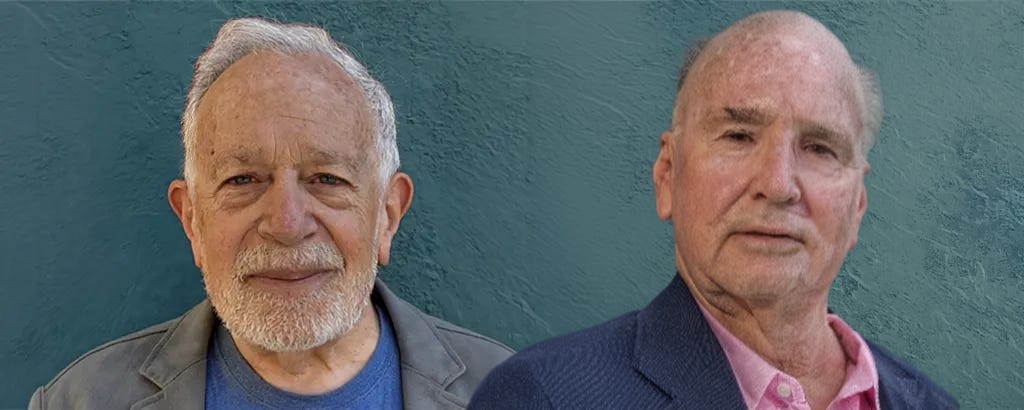 Bold Plans for a More Affordable America 08.08.2026 1ч 44минRalph welcomes Robert Reich (professor of Public Policy and former Secretary of Labor) to discuss his "Pledge to Make America Affordable Again." Then, Ralph speaks to Derek Shearer (former economic policy adviser and US Ambassador to Finland) about his recent work, "A Bold Economic Program for America."Robert Reich is Emeritus Professor of Public Policy at UC Berkeley. He has served in three national administrations, including as secretary of labor under President Bill Clinton. Mr Reich has written eighteen books, including The System: Who Rigged It, How We Fix It, The Common Good, Supercapitalism, and Coming up Short: A Memoir of My America. He is co-founder of Inequality Media, co-founder of the Economic Policy Institute, and co-founding editor of The American Prospect.Democrats have an opportunity now to talk to the working class about—and not just the working class, the middle class too—about prices, about affordability in ways that are terribly important and meaningful and that really could get prices down or at least stop the onslaught of inflation. And also that are very, very consistent with what we believe as Democrats, as progressives, as people who want to see the nation move back toward its pursuit of social justice.Robert ReichYou can bet that the right, the apologists for wealth in this country are going to say, “Oh, no, no, no, don’t do that because wealthy people will leave the country!” I mean, what they always do reflexively is say, “If you do that, we’ll leave.” And I say in California the same thing I would say about a national wealth tax—if they want to leave, let them leave. But they’re not going to leave because there are so many advantages to staying in California in terms of: this is where a lot of the high tech talent actually is. This is where the infrastructure for high tech is already. The climate, as I talk to you, I’m looking at a beautiful day out here. You know, who wants to leave California? And if you are a billionaire, and you are just so intent on leaving California because of this one very, very minor tax, then frankly, goodbye.Robert ReichI am a believer, though, in the common sense of the American people. Now, if that makes me naive, if that makes me gullible, so be it. But I think at the end of the line, the bottom line here is that the American people will make a decision starting with the midterm elections coming up in just 96 days (something like that). And those elections are going to be critical in terms of trying to constrain Trump and the people, the sycophants and lapdogs behind him and Hegseth and Robert F. Kennedy Jr. and all these people who are ripping the social contract to shreds. And I think that the one way that (this brings us back to my pledge, my affordability pledge for Democrats), I think one way the Democrats can be sure to get the House back and maybe even possibly the Senate in 96, 97 days, is to pledge to make America affordable again. And using these 10 particular steps that are widely, widely supported.Robert ReichDerek Shearer served as the US Ambassador to Finland from 1994 to 1997. Previously, he worked in government at the national, state, and local levels, including the founding board of directors of the National Consumer Cooperative Bank in 1978 and Deputy Under Secretary of Commerce for Economic Affairs in 1993. He is emeritus Chevalier Professor of Diplomacy and World Affairs at Occidental College and Diplomat in Residence at Occidental for 2025-26. During the 1992 presidential campaign, Ambassador Shearer was a senior policy adviser to Bill Clinton and helped to write the campaign’s economic program, Putting People First. He has continued this policy work by co-authoring the comprehensive proposal A Bold Economic Program for America and exploring its political path forward in his recent article, Planning for the Day After Trump.The point of our program is not that it should be endorsed in its entirety. It’s almost meant to be a discussion document to show what is possible—that this can be done. It doesn’t require some dramatic change in the way the government operates. It just demands a change in priorities and some new lawsDerek ShearerYou can’t get to those issues until you are actually in the government. And if we don’t win back the House and at least have a shot at winning back the Senate, talking about these issues while Trump and the MAGA Republican Party controls the government (and might continue to control it), makes us feel good, but it doesn’t change anything. What I’ve learned about the so-called leaders of the party is you don’t really expect them to lead. They will follow when they see where the voters are going. And they’ll also follow when they see if there is a Presidential candidate who takes off on these kinds of issues…I don’t expect the leadership to lead on these issues. So I don’t rail against them. Because what I’m doing (and I’m doing it with a lot of different people out there, including a lot of young people) is trying to find good candidates, provide them with economic ideas to run on, and then hope that we win back the House and that these kinds of then-elected officials who share our viewpoint become the Democratic Party. I mean, that’s how you do these things. If we don’t win these elections, then we’re just kind of crying in the wilderness.Derek ShearerLet’s Start the RevolutionTools for Displacing the Corporate State and Building a Country that Works for the PeopleIn his latest eye-opening exploration, political maverick Ralph Nader dissects the astonishing twists and turns of the 2020 presidential election, a race that left the nation on the edge of its seat. Although Joe Biden clinched victory with a substantial popular vote lead, Nader unveils the precarious nature of the outcome, where a mere 100,000 votes in key swing states could have catapulted Donald Trump back to the presidency. Get your copy here.News 8/7/26* This week, a new wave of Democratic primaries were held, most notably in the state of Michigan. In the closely watched Senate primary, which came down to a two-way race, Bernie Sanders-backed progressive Dr. Abdul El-Sayed emerged triumphant. Some have played up the fact that his opponent, Congresswoman Haley Stevens, overperformed relative to her polling in an attempt to downplay the significance of El-Sayed’s victory. Yet, this narrative ignores the fact that Stevens enjoyed the backing of the Democratic Establishment and AIPAC, which gave her an 12-to-1 spending advantage according to Axios, and that she ran misleading ads that made it seem as though former President Barack Obama had endorsed her campaign. Viewed in this light, it is clear just how impressive El-Sayed’s victory – statewide, in a must-win swing state for Democrats – is. El-Sayed will now face off against former Republican Congressman Mike Rogers in the general election.* In Detroit, the left scored another major win with the victory of Donavan McKinney. McKinney, a DSA member and Michigan state representative, won his primary race against incumbent Congressman Shri Thanedar in Michigan’s 13th congressional district, the Detroit Free Press reports. Thanedar, a millionaire businessman, was a DSA member but left over disagreements over Israel. Thanedar fought hard to keep this seat, which he won in 2022, and was supported by Minority Leader Hakeem Jeffries despite many members of the Congressional Black Caucus supporting McKinney. Given that this is a heavily Democratic district, McKinney is essentially guaranteed a seat in the next Congress, bringing the number of DSA-backed House Members to an unprecedented high of seven. Moreover, between McKinney and Congresswoman Rashida Tlaib, the city of Detroit will now enjoy all DSA representation in Congress.* In Michigan’s seventh congressional district, progressive climate activist and co-founder of the Sunrise Movement William Lawrence pulled out a win in his primary as well. NBC notes that Lawrence defeated his two more moderate opponents, retired Navy SEAL Matt Maasdam and former Ambassador to Slovakia Bridget Brink, in part by aggressively criticizing the construction of new AI data centers. Some have alleged that Lawrence received support from Republicans using dark money to boost his campaign because they believe him to be an easier candidate to defeat in the general election. However, the Hillary Clinton campaign’s “pied piper” strategy to boost Donald Trump in 2016 proves that this is ever a risky strategy. Michigan’s seventh district is seen as a critical battleground seat. Donald Trump won the district by just one single percentage point in 2024.* In more data center news from the Midwest, Hell Gate reports former New York City Mayor Eric Adams was in “Wisconsin Rapids—population 18,654—trying to convince residents that they should allow a real estate developer to build a data center in the heart of their town.” In a video of his pitch, the townspeople can be seen heckling, booing and shouting down the former Mayor, with attendees saying “You belong in prison!” and “You’re here to steal our water!” Community activist Kaitlyn Federwitz is quoted in this piece saying “Our whole town does not want him here at all,” adding “We want our resources to be properly safeguarded, our farmers to be protected, our waterways protected.” The Wisconsin Rapids economy had been largely dependent on a local mill, which closed its doors in 2020; Federwitz spoke to this, arguing that “When the mill closed, we lost 900 jobs. We’re aware we need jobs and industry in our city.” However, she added that the people of Wisconsin Rapids are “not willing to accept that a data center is the answer to that problem.”* In more news from the midwest, United Auto Workers President Shawn Fain has published a new op-ed in Newsweek contending that “Democrats Must Pick a Side: Billionaires or Working-Class.” Fain cited numerous examples of Democrats in powers betraying their working class supporters, from NAFTA to modern governors like Abigail Spanberger of Virginia vetoing collective bargaining rights for public-sector workers. He criticized Michigan Governor Gretchen Whitmer in particular for vetoing “nine bills restoring pensions, lowering health care costs, and restoring bargaining rights for public-sector workers,” after “Michigan Democrats fought an 18-month legal battle to force the bills to the governor’s desk.” He claims that “When the courts finally ordered [the bills] delivered, Whitmer vetoed all nine the same day—without so much as a phone call to legislative leaders or the unions that helped elect her.” He ends this piece with a call for “every elected official and candidate to…[reject] corporate PAC money,” and “adopt a platform that addresses the needs of working-class people.” This clear-eyed, laser focus on the working class is what has put Fain into conversation for a 2028 presidential run by some on the populist left, particularly if Alexandria Ocasio-Cortez ultimately declines to run. A recent article in POLITICO quotes Bhaskar Sunkara, the 2020 Sanders surrogate and former vice chair of the Democratic Socialists of America, saying “If he’s willing to run, [Fain] might be the best candidate for the left…Since he’s progressive but very much says his egalitarian value system comes from his Christianity, [he] can speak in a moral language that can reach more independents than other candidates, and I think it would set a good precedent for labor.”* For the DSA left, all eyes now turn to Wisconsin, where Francesca Hong’s campaign for the gubernatorial nomination continues to pick up steam. Just this week, per Wis Politics, Hong picked up the endorsement of the SEIU Wisconsin Healthcare and Service Workers. In their endorsement statement, SEIU Wisconsin called Hong “a longtime advocate and fighter for the working class,” who is “committed to building back strong labor protections by overturning Act 10 and so-called ‘Right-to-Work’ laws, expanding Badgercare, and abolishing poverty wages in Wisconsin.” The union added that Hong’s “support for a $20 minimum wage, adopting family-centered policies such as paid family leave and affordable child care, and enacting much-needed regulations on corporate monopolies make her the clear choice for all Wisconsinites, not just the wealthy.” Hong currently leads in the polls, despite the sitting Democratic Governor’s attempts to boost her primary rival, David Crowley. Both Hong and Crowley have racked up labor support, though Crowley decidedly leads among the building trades and firefighter unions.* In St. Louis, the left experienced its biggest setback this cycle, with former Congresswoman Cori Bush losing her comeback bid against Congressman Wesley Bell by a large margin. Bush was ousted in 2024 as part of “a broader strategy by AIPAC to unseat Israel’s sharpest critics in Congress, including the ‘Squad,’ which Bush was a part of,” per the Missouri Independent. This piece notes that AIPAC spent over $8 million to oust Bush in that cycle and outside groups spent $7.2 million on Bell’s behalf this year. Bell’s official campaign outspent Bush’s by a margin well over 10 to 1. Bush is the first candidate backed by National DSA to lose their race in 2026, which, while disappointing in this case, is a stunning testament to the track record of the group.* In a totally different part of the country, this week Julian Beaudion, the Democratic nominee for Senate in South Dakota, dropped out of the race. Beaudion cited personal hardships for himself and his family in his statement of withdrawal citing a recent house fire. However, many see this as an acknowledgement that the independent candidate in this race, veteran and former park ranger Brian Bengs, has a better chance of defeating incumbent Republican Senator Mike Rounds in a head-to-head matchup. This dynamic has been playing out in other states; Democratic Senate candidates have dropped out to clear the way for independents in Nebraska and Idaho already and there is immense pressure on the Democratic nominee in Montana to do the same. For his part, Beaudion will not endorse either candidate in South Dakota, according to KELOLAND News, but South Dakota Searchlight reports the South Dakota Democratic Party will not replace Beaudion on the ballot, giving the greenlight for Democrats to coalesce around Bengs in the general election.* In another primary election story, Lehigh Valley Public Media is out with a story on the strange dynamic emerging in Pennsylvania’s 7th congressional district. According to this story, this race – between incumbent Republican Ryan Mackenzie and his Democratic challenger Bob Brooks, who seems to have done the impossible by getting Bernie Sanders and Josh Shapiro on the same side in a primary – has been upended by the entry of one Andrew Tupone. Mr. Tupone, a former Republican candidate, is running on the Green Party ballot line and claims to have “joined the Green Party this spring, drawn by its environmental policies on water conservancy and opposition to data centers, after growing disillusioned with both major parties.” Yet, apparently, “Green Party leaders warned in a statement this month that a wave of candidates may be posing as party members across the state.” Chris Robinson, a Green party spokesman, claims that “The party hasn’t endorsed any congressional candidates in Pennsylvania and has never heard from Tupone.” Robinson adds that he “looked at [Tupone’s] Facebook page, and he seems like he’s a nice Republican.” According to LVPM, “a third-party candidate wouldn’t need to move the needle much,” to influence the outcome of the election, noting that the current Congressman defeated the Democratic incumbent, Rep. Susan Wild by just 1 percentage point, in 2024, while “Tim Silfies, the last third-party congressional candidate to appear on a Lehigh Valley ballot, earned 8,011 votes, or 3 percent of the vote, in 2018.”* Finally, in more third party news, POLITICO reports several leading figures on the anti-MAGA right – including Congressman Thomas Massie, former Congresswoman Marjorie Taylor Greene, and commentator Tucker Carlson – convened last weekend to “[sow] the seeds for a future third-party political organization…aimed at undercutting the Republican establishment.” This gang of three, joined by former Trump national security official Joe Kent, are particularly incensed by the president’s intervention in Iran, with Greene writing “We said no more foreign wars and we meant it and supported Donald Trump because he made that promise. But he’s betrayed us all.” This group is reportedly mulling a right-wing, third-party presidential campaign in 2028. While Carlson has declined to launch a presidential bid in the past, despite urging from within his circle, a sprawling new “10-point vision for America” he debuted during a recent stream implies that he is increasingly interested in articulating an alternative vision of right-wing politics from those espoused by Trump. This manifesto, as reported by Axios, includes everything from declassifying records on the JFK assasination and 9/11 to enforcing universal sobriety to “halting immigration until the effects of AI become clearer.” We will be watching closely to see if this effort moves forward or peters out as has been the pattern with other recent third party attempts.This has been Francesco DeSantis, with In Case You Haven’t Heard. Get full access to Ralph Nader Radio Hour at www.ralphnaderradiohour.com/subscribe
 -
 Impeachment Symposium 01.08.2026 1ч 54минLast week, Ralph, along with our constitutional law expert, Bruce Fein, organized another symposium in Washington DC on impeaching Donald Trump. On today’s program, we play you highlights from that symposium with eight of the participants, each of whom are going to give listeners their perspective on why Donald Trump should be impeached even before the midterm elections.The rhetoric from many Democratic leaders has not kept up with the horror and the urgency of what [Donald Trump] is inflicting on America and the American people. He has moved very, very quickly to develop a fascist dictatorship embodying a kleptocratic corporate state that is marked by non-regulation, tax cuts for the wealthy, and tax escapes for the wealthy and major corporations, as well as expanded corporate welfare in the midst of personal and institutional two-way bribery and extortion. It’s very important to punctuate the seriousness of what he’s already done.Ralph NaderCelinda Lake is a political strategist and president of Lake Research Partners.What I love about polling is: conventional wisdom is wrong about 90% of the time, plus or minus 5%. Beltway conventional wisdom is wrong about 100% of the time, plus or minus 5%. So, “Everybody knows impeachment is unpopular.” No, it’s not. It’s very popular. A majority of people support it. “Everyone knows that it’ll energize the other side.” No. The other side, to the extent they’re going to be energized, they’re already energized. We need to energize our side. We need to get our people out to vote… “Everyone knows it’s very volatile.” No, it’s not. Attitudes about impeachment track with job performance… And finally, “Everybody knows that nobody understands impeachment.” Well, frankly, voters understand it better than a lot of elected officials.Celinda LakeSuparna Reddy is the Senior Counsel for Free Speech For People.Let us be clear: Congress should impeach and remove Trump for each and every one of these hundreds of offenses. And we have a duty to record his every abuse of power. But in the process, we should not miss the forest for the trees— Trump is intentionally and systematically dismantling our democratic institutions to consolidate his own power and line his own pockets.Suparna ReddyRichard Painter is the S. Walter Richey professor of corporate law at the University of Minnesota Law School and was the chief White House ethics lawyer from 2005 to 2007.We have seen serious, indeed, tragic financial conflicts of interest in the executive branch never before seen in the history of our country—unless we look at our very early Presidents who held vast plantations with slave labor, a clear economic conflict of interest with their official duties. A conflict of interest shared by many Senators and Representatives and Justices of the Supreme Court, and indeed a tragic conflict of interest for the first eighty years of our history that ended only with a bloody civil war. But since then, we have not had at least a President who is embroiled in financial conflicts of interest with his official duties.Richard PainterDoug Bandow is a senior fellow at the Cato Institute, specializing in foreign policy and civil liberties.We need to make a persuasive argument for people, whether they like Donald Trump or not, to understand the Constitution transcends this President. The Constitution transcends future Presidents and future crises. We need to convince Americans across the political spectrum to stand with the rule of law, to stand with accountable government, to stand with an accountable executive, responsible legislatures. History tells us that one person making these decisions is not good. Plenty of authoritarians in the past have made these decisions and brought their countries to disaster.Douglas BandowErwin Chemerinsky is the Dean and Jesse H. Choper Distinguished Professor of Law at the University of California, Berkeley School of Law.We’re now at a moment when the federal government is a threat to our rights. The actions of the Trump administration are unprecedented in the violations of the Constitution. And so I think it’s crucial that state and local governments step in so as to protect rights. It’s interesting that through American history, Federalism has always been equated, states’ rights have always been equated with regressive policies… But now it’s time for progressives to use states’ rights and look for the opportunities for states to safeguard our constitutionErwin ChemerinskyKeira Havens is a United States Air Force veteran, a former scientist, and a longtime political activist. She is the executive director of Citizens’ Impeachment.Everybody has agency. Everybody has a role that they can play. Everybody can take action. As a private citizen, I can say, “Man, there are a lot of things wrong with what’s happening.” In fact, I wrote several articles of impeachment: tyranny, treason, obstruction of justice, and of course, corruption, right? Members of Congress have more power than that. They need to do more than say things. They have to take action. Courage is an action. It’s what you do after you say the words that really matters. And every single member of Congress is able to take action. They are able to introduce articles of impeachment, and they are refusing.Keira HavensJessica Denson is a former Trump staffer and founder of the Removal Coalition.The American people (and particularly Democratic primary voters) are looking for fighters. For God’s sake, what could you do better than to exert the power that you have—this one privilege in the House, Rule 9, that gives any member of the Congress, including the minority, the ability to force a vote any time. Why would you sit on that? Why would you wait? Instead, in my activism, I’ve had to resort to relying on literally one Congressman. This is so pathetic. He is a dear friend, and I am so grateful for him. But to this day, I think it is pathetic that I have to rely on one Congressman to bring forth articles of impeachment and force votes, and that’s Representative Green.Jessica DensonNews 7/31/26* Our top stories this week have to do with the Democratic National Committee. Several stories have recently come out about DNC Chair Ken Martin, ranging from interpersonal issues to his utter failure to raise money for the Democratic Party. The most stunning example of this comes from NOTUS, which reports that Martin “put [the DNC’s] physical headquarters up for collateral last year in order to obtain a $15 million line of credit to help invest in off-year elections.” While the party has used this mechanism before, it underlines the gaping disparity between the DNC, which is currently over $2 million in debt compared to the Republican National Committee (RNC), which can boast $128.5 million cash on-hand.* Compounding the issues of the already cash-strapped DNC, the New Republic reports the Democratic National Committee was scammed out of nearly $29,000 by an email from someone pretending to be Chair Ken Martin last year. DNC spokesperson Mia Ehrenberg is quoted saying “The DNC takes seriously our duty to protect the funds provided to us by millions of patriotic Americans chipping in to fund our mission…this was a one-off mistake that was promptly caught and addressed, and no similar issues have occurred since.” That said, only $7,000 worth of this money has been recovered. As TNR puts it, “This has all been very embarrassing. Martin can’t raise money, can’t keep money, and can’t unite the base under the big tent’ he likes to talk about.” Martin may also be facing an outright rebellion led by party insiders.* One surprising proposal to this effect is coming from a very unlikely source. The Hill reports veteran Democratic strategist James Carville, while tearing into Martin, opened the door to former DNC Vice-Chair David Hogg taking the reins. Carville said the DNC appears “dysfunctional” and that the committee needs to “figure out a way maybe they could be somewhat relevant,” adding that “If David Hogg wants to take it over, I ain’t stopping you…Go ahead, man, I don’t really care.” This is a stark turnabout from Carville’s position on Hogg when the latter was in DNC leadership; back then, Carville dismissed him as “a contemptible little twerp.” In an interview, Hogg highlighted this exact reversal, while simultaneously saying that he did not want to lead the crumbling Democratic Party organization. Ben Wikler, the former Wisconsin Democratic Party Chair who challenged Ken Martin in 2025 has also resisted calls to take over the DNC, with rumors circulating that he is gearing up to run for Senate in the Badger State next cycle. While pressure continues to mount on Martin, alternative leadership remains elusive.* Speaking of lackluster leadership, Sources Say News reports Capitol CNCT has launched The Scoop which they describe as “a confidential rating system that lets current and former Hill staffers weigh in on the members and offices they have worked for.” As one might imagine, some reviews are extremely scathing. This piece cites one that reads, “Leadership is abusive. Lies about promotions and bonuses…This place will leach at your mental health like a vampire…Beware.” Sources Say highlights the fact that “Unlike most workplaces, Congress has no HR department, which means bad behavior by members and senior staff can go unreported and unchecked for years.” The new site verifies that the posters are or were real employees of these offices, but keeps their names anonymous to protect them from retaliation.* In more news from Congress, POLITICO reports Maryland Representative and House Judiciary Committee ranking member Jamie Raskin is launching a new investigation into Jeffrey Epstein, this time focusing on whether the deceased sex offender and financier acted as an unregistered foreign agent. In a letter to Acting Attorney General Todd Blanche, Secretary of State Marco Rubio, and Director of National Intelligence Jay Clayton, Raskin writes that “Jeffrey Epstein never registered as a foreign agent…Yet numerous recently released documents now show he acted aggressively on behalf of multiple foreign governments, including several with interests adverse to the United States, in order to influence policies of the first Trump Administration.” The declassified files reveal that Epstein “offered to serve as a conduit between Saudi Arabia and members of the Trump administration, consulted with Russian officials on engaging with the president and advised former Israeli Prime Minister Ehud Barak.” This inquiry is likely to raise fresh questions about not only Epstein’s role working on behalf of foreign governments, but his possible connections with intelligence and espionage organizations including the CIA and Mossad.* Other progressive members of Congress, led by Congresswoman Ilhan Omar, have issued a formal response to a new Trump administration report on Cuba. These members interpret this report – which claims that the tiny Caribbean nation of 10 million people has “waged a sustained campaign” to “conquer” the United States and is backing “left-wing terrorism on American soil” – is in fact an instrument the administration plans to use to persecute “Trump’s perceived political enemies.” Omar, joined by Representatives Jim McGovern, Delia Ramirez, Rashida Tlaib, AOC and more, contend that Trump is “hell-bent on taking America back 70 years to the height of Cold War McCarthyism, when hawkish foreign policy was paired with unsubstantiated accusations of communist subversion and political repression against dissidents at home.” The administration report singled out several organizations and activists, including the National Lawyers Guild, Hasan Piker, and campus activist Isra Hirsi, daughter of Congresswoman Omar. This from Common Dreams.* In more news from the left, POLITICO reports Donavan McKinney – who is challenging incumbent Congressman Shri Thanedar in Detroit – picked up a major batch of endorsements this week from members of the Congressional Black Caucus. These new endorsers include Representatives Steven Horsford, the former chair of the CBC, along with Lateefah Simon and Ayanna Pressley. These endorsements, particularly that of Congressman Horsford, are notable because Thanedar retains the support of House Minority Leader Hakeem Jeffries and his deputies, Representatives Pete Aguilar and Katherine Clark. McKinney said he was “honored” by these endorsements, adding that he “[looks] forward to working alongside these incredible leaders to pass critical legislation to protect voting rights, get big money out of our politics, and ensure all families have access to the resources they need to not just survive, but to truly thrive.” McKinney’s primary will be held on August 4th, along with the more closely watched Senate primary between progressive Abdul El-Sayed and his moderate, establishment-backed opponent Haley Stevens.* Meanwhile, in New York City, Mayor Zohran Mamdani continues to fulfill campaign promises at an astonishing rate. First, Forbes reports that Mamdani has officially introduced a $124.7 billion city budget which includes funding for five city-run grocery stores which will sell staple foods at a 30% discount compared to private grocery stores. These staples are set to include produce, dairy, bread, select meat and seafood, and approximately 20 other products. Being city-owned, these stores will not have to pay rent or property taxes, ensuring they can operate more cheaply than their competitors in the private sector. This piece notes that similar experiments in smaller cities like Baldwin, Florida, and Erie, Kansas proved unsustainable financially, while proposals in Chicago and Kansas City struggled to get off the ground. There is reason to believe New York will prove a different matter entirely, but that remains to be seen. At the same time, Jacobin reports Mamdani is launching a new initiative called “Talk to Tenants,” which will “send volunteers door-to-door in buildings with chronic housing code violations, connecting renters with organizing resources, neighborhood organizations, and training on tenants’ rights and how to build tenant associations.” This effort will be led by the Office of Mass Engagement in partnership with the Office to Protect Tenants. It is extremely encouraging to see Mamdani utilizing a varied array of tools at his disposal – including both direct action by the city as on grocery stores or using city resources to promote the formation of non-governmental organizing efforts – in order to achieve his vision of a just and affordable American metropolis.* In more troubling, if not surprising, news, the Wall Street Journal is out with a new report finding that the Department of Justice is giving a green light to corporate criminals. The Journal cites examples ranging from Alibaba to Boeing and EagleBank to Abbott Laboratories where the Trump DOJ “declined to charge companies even when prosecutors thought executives or managers were involved in the wrongdoing.” This follows from directives given by Acting Attorney General Todd Blanche, who has “said prosecutors shouldn’t view prosecuting companies as their goal and should instead focus on holding individual wrongdoers accountable.” This piece cites a December speech by Blanche in which he stated that “Companies don’t go to jail, people do.” Yet, it seems that under the Trump Justice Department, neither do.* Finally, in more corporate news, the antitrust lawsuit filed by over a dozen state attorneys general has at least temporarily succeeded in halting the mega-merger between Warner Bros. Discovery and the Ellisons’ media conglomerate, Paramount Skydance. After the lawsuit was filed, a federal judge in Oakland ordered a pause on the deal, and since then, the Ellisons themselves have agreed to put the merger “on ice” pending the outcome of the trial, Variety reports. This piece also highlights the private sentiments of anonymous Warner Bros. executives who apparently hope that the deal hits a “legal landmine” and is ultimately “nixed.” However, in an internal memo, David Ellison maintained that “the facts and the law are on our side, and a full hearing will demonstrate why the plaintiffs’ arguments should not prevail.”This has been Francesco DeSantis, with In Case You Haven’t Heard. Get full access to Ralph Nader Radio Hour at www.ralphnaderradiohour.com/subscribe
 -
 Judge Napolitano/ Listener Feedback 25.07.2026 58минRalph speaks to Judge Andrew Napolitano about two of Ralph’s abiding concerns: the death undercount in Gaza and the impeachment of Donald Trump. Then, Ralph responds to some of your listener feedback.Judge Andrew Napolitano is a former Superior Court Judge, a syndicated columnist, and host of the Judging Freedom podcast. Judge Napolitano has taught constitutional law and jurisprudence at Delaware Law School and Seton Hall Law School, and he was Fox News’ Senior Judicial Analyst from 1997 to 2021. He is the author of several books on the U.S. Constitution, including Freedom’s Anchor: An Introduction to Natural Law Jurisprudence in American Constitutional History.Amongst the mainstream media, with respect to the Netanyahu regime and what it has been doing, there is no intellectual honesty. The mainstream media in the United States is controlled by the lobby. And the lobby, of course, is the Israeli and American donors who control the media and control the government. Our friend Pat Buchanan famously referred to the Congress as “Israeli-occupied territory”. The same may be said about the mainstream media… Don’t expect intellectual honesty from the mainstream media, because anybody who tries it will be looking for a job.Judge Andrew Napolitano[Donald Trump’s] behavior has simply been tyrannical to the nth degree. Look, he’s been impeached twice—both times for, compared to what he’s done in the second term, a pittance. What he’s done in the second term is absolutely and utterly profound. He has failed to take care that the laws be enforced. He has failed to abide due process. He has failed to protect the right to free speech. He has failed to protect the right to privacy. He has failed to seek Congressional approval before starting wars. He has ordered murders on the high seas. This is a long litany.Judge Andrew Napolitano Get full access to Ralph Nader Radio Hour at www.ralphnaderradiohour.com/subscribe
 -
 Hemp: The New Green Revolution 18.07.2026 1ч 45минRalph welcomes back his old running mate, Native American activist, Winona LaDuke, who has devoted her life to advocating for Indigenous control of their homelands, natural resources, and cultural practices to talk about her latest incarnation: hemp farmer. Then, we’ll speak to Hal Weitzman, from the University of Chicago’s Booth School of Business, about how Elon Musk’s feud with Delaware may transform corporate America. Plus, we tick off Robert Reich’s ten policy prescriptions the Democratic Party should fight for to beat the GOP in the upcoming midterms.Winona LaDuke is an activist, economist, and author, who has devoted her life to advocating for Indigenous control of their homelands, natural resources, and cultural practices. She is also a two-time vice-presidential candidate with Ralph Nader. Ms. LaDuke lives and works on the White Earth Ojibwe reservation in northern Minnesota, where she runs Winona’s Hemp & Heritage Farm. She is also a member of the Indigenous Hemp & Cannabis Farmer’s Cooperative.I’m looking first at seed sovereignty. We’re growing [European hemp] varieties and then we’re growing these feral hemp varieties. They’re called feral varieties (which of course, that’s something that I love) which means that when they eradicated hemp in the 1930s with the Marijuana Prohibition Act—well, they missed some spots. And those guys kept growing. And so 80 years of being illegal—isn’t that great? Something that’s illegal for 80 years is still with us, rocking out. And so I figure if you grew illegally for 80 years, you are really a tough hemp plant…And so we are growing out these hemp varieties and built a cooperative because we want to own the seeds and we want to own the technology (the value-added processing), and we want to use this hemp as a part of our future as tribes.Winona LaDukeMy grandsons are farming. I don’t know who else can say their grandchildren are farming—let me know. My grandchildren are farming. They’re running the horses. They’re running the farms. You know, that’s a retirement plan. My 401k will be worth nothing, but my grandchildren will feed me. This is my strategy.Winona LaDukeHal Weitzman is Executive Director for Intellectual Capital at the University of Chicago Booth School of Business, editor-in-chief of Chicago Booth Review, and host of The Chicago Booth Review podcast. A former Financial Times editor and foreign correspondent, he is the author of Latin Lessons: How South America Stopped Listening to the United States and Started Prospering and What’s the Matter with Delaware?: How the First State Has Favored the Rich, Powerful, and Criminal—and How It Costs Us All.There is a race to the bottom. There’s been a race to the bottom for many decades. That’s not new. I think it’s accelerated somewhat. Delaware has joined that race from having been something of a “premium product” in terms of incorporating companies—Delaware has become a bit more “cut-price” I would say, and in that sense has followed Texas and Nevada. So the conclusion that we have a race to the bottom and it may be worse than Delaware—actually I think Delaware’s already there. So it’s not that it’s getting worse outside of Delaware, it’s getting worse including Delaware.Hal WeitzmanThe trend I think we’re seeing is the exclusion of small shareholders completely—regardless of the status of your shares, this is about how big you are. And if you’re a small shareholder there is no corporate democracy for you… It was practice in the past for activist groups, campaigning groups, to buy one share of a company and then to go to the shareholder meeting so they could make the point that they wanted to make. Now that kind of shareholder democracy is being encroached on. And the extent now is to say: unless you have a large position (regardless of the size of the company and the cost of the shares), you will not be allowed to bring suits against the executives for the correct running of the company.Hal WeitzmanNews 7/17/26* Our top story this week is New York Governor Kathy Hochul’s decision to impose a one-year “pause” on the construction of AI data centers across the state. ABC7 reports that this is the first such moratorium in the nation, despite similar attempts in several states, most notably Maine where Governor Janet Mills vetoed a bill to this effect. Hochul argues that the pause is necessary so lawmakers and regulators can formulate “Guardrails to reduce the risk to our energy grid, minimize land disruption, noise pollution, and protect our natural resources, especially our water supply.” Hochul’s move comes amidst a broader push against AI data centers from the left. Semafor reports Senator Bernie Sanders proposed a nationwide ban in March and many progressives running for state and local office in the midterms have made this a cornerstone of their campaigns. According to this piece, “In February, polling from Marquette Law School found 70% of all Wisconsinites agreeing that ‘the costs of the data centers outweigh the benefits.’ Among Democrats, the number was 85%.”* Another progressive Member of Congress quite literally stepped into another hot-button political issue this week. While visiting a Palestinian village in the occupied West Bank Wednesday, Al Jazeera reports armed settlers stopped the van of Representative Ro Khanna and were “later joined by Israeli soldiers who continued to block the road.” In a video, Khanna points out, settlers can be seen “brandishing M4s [rifles], kicking the tyres of our van, laughing at us, mocking at us, videotaping us.” This continued for over an hour and was only resolved when he reached out to the American Embassy, according to Khanna. Israel has responded to this fiasco by blaming Khanna, accusing the congressman of failing to coordinate his trip with the Israeli government; Khanna retorted that “The [Israeli military] is lying” and called for the arrest of the violent settlers. Conservative political commentator Tucker Carlson excoriated U.S. Ambassador to Israel Mike Huckabee, writing “An American member of congress is threatened by foreign terrorists carrying American rifles, backed by a foreign military paid for by American taxpayers, and the US ambassador to that country says not a word in defense of his own countryman…It’s too much, too insulting and humiliating to America.”* Following his return from occupied Palestine, Khanna again teamed up with Republican Congressman Thomas Massie of Kentucky to sponsor an amendment to the National Defense Authorization Act (NDAA) which would have removed the “United States-Israel Defense Technology Cooperation Initiative” from the must-pass legislation. Responsible Statecraft describes the initiative as “an unprecedented integration of the U.S. and Israeli military industrial complexes,” by creating “an executive agent within the Department of Defense whose sole responsibility is furthering U.S. and Israeli military tech integration across nearly every facet of the defense process.” This article also notes that “Israeli Prime Minister Benjamin Netanyahu has described this shift in the U.S.-Israel relationship as ‘my plan.’” However, House leadership is not backing this commonsense, bipartisan amendment. In a letter, Minority Leader Hakeem Jeffries said he would vote against the amendment, calling it “overly broad” and claiming the amendment would “restrict our country’s ability to confront Hamas, Hezbollah and other terrorist organizations in the region who are sworn enemies of both the United States and Israel,” per the Times of Israel. However, Jeffries pledged not to whip votes against the amendment and indeed the House Minority Whip, Congresswoman Katherine Clark, voted for the amendment as did Speaker Emerita Nancy Pelosi, despite the opposition of Jeffries and House Democratic Caucus Chair Pete Aguilar. The Congressional Progressive Caucus reportedly whipped votes in favor of the amendment.* In more Israel-related news, this week Marco Rubio – who serves as Secretary of State as well as the acting National Security Advisor – announced that the State Department will launch a “sweeping campaign to dismantle…the International Criminal Court.” CNN observes that “The administration’s ire against the ICC goes back to President Donald Trump’s first term, when it targeted the ICC for seeking to investigate alleged war crimes committed by US forces in Afghanistan,” and that since taking office for the second time, the Trump administration has “imposed a slew of sanctions against ICC officials for their attempts to investigate the US and Israel.” CNN also quotes a State Department official who said that top officials, including Secretary Rubio and US ambassadors, “are calling countries as part of a campaign to diplomatically isolate the International Criminal Court.” It is worth noting that “all American presidents since the ICC’s ratification have maintained that the ICC does not have jurisdiction over Americans,” and that Congress even passed a law calling for an invasion and occupation of the Hague if any American serviceman was ever prosecuted by the ICC, implying that this crackdown on the court is not about American sovereignty at all but rather the prosecution of Israeli officials for their war crimes in Gaza.* In another stunning story starring Marco Rubio, the New York Times reports the Secretary of State is functionally “running Venezuela from afar.” The Times story characterizes Rubio’s position as the “de facto viceroy of Venezuela,” effectively controlling the country’s “finances, the distribution of its natural resources and its government.” This story makes clear that while Delcy Rodríguez, the former Vice President of Venezuela under Nicolás Maduro, nominally occupies the presidency, Rubio is the one really calling the shots, with Rubio setting the conditions on what Venezuela’s export revenue “can be spent on, and by whom,” and having the authority to approve or deny key governmental appointments in the country, such as the minister of defense. In short, the United States has established a shocking explicitly neo-colonial regime in the country, fulfilling the gravest prognostications of anti-imperialist critics of American intervention in the Bolivarian Republic.* Closer to home, Bloomberg reports the federal government has officially launched a grand jury investigation into the United Auto Workers and the union’s outspoken president, Shawn Fain. The investigation stems from accusations made by the union’s Vice President, Rich Boyer, who alleged that Fain used his position to secure benefits for his fiancée and her sister – and when Boyer refused to approve the benefits, Fain retaliated by stripping Boyer of his duties as chief negotiator with Stellantis NV. Fain has called the allegations “false” and is accusing Boyer of seeking to influence the upcoming UAW leadership election. Fain also claims that Boyer is the one retaliating after Fain “refused the vice president’s request to hire family members to positions in the union.” Fain has long maintained that the Justice Department, and specifically the DOJ-appointed monitor, Neil Barofsky, has a political grudge against him because “the UAW took an anti-war stance about what was happening in Gaza.” According to Bloomberg, “Both Fain and Boyer have slates running and each is accusing the other of attempting to abuse their positions to benefit family.”* This week, another victim of harassment by the federal government, student activist Mahmoud Khalil, filed a landmark civil rights suit alleging that the government conspired with a number of private groups – including the Heritage Foundation, Betar, and Canary Mission – to “suppress criticism of Israel through a coordinated campaign to dox, jail and ultimately deport student activists.” According to the lawsuit, said activists were “nearly automatically targeted by the Federal Defendants for arrest and removal.” Khalil’s lawyers argue that this “public-private partnership” could violate the “Ku Klux Klan Act, a Reconstruction-era law that sought to restrict government coordination with vigilante groups.” The suit is led by the Center for Constitutional Rights. The AP reports “Soon after his arrest, both Canary Mission and Betar boasted of their role in flagging Khalil’s noncitizen status to the government.” Since Khalil’s arrest, Betar has agreed to “dissolve its nonprofit status,” following a lawsuit filed by New York Attorney General Letitia James accusing Betar’s members of harassing Palestinians.* Turning to the state level, this week 12 state attorneys general, led by California’s Rob Bonta, filed an antitrust lawsuit seeking to block the acquisition of Warner Bros. Discovery by Paramount Skydance, controlled by the Trump-aligned David Ellison. The proposed, $110 billion merger was approved by the Antitrust Division of the Justice Department last month, which reached the dubious conclusion that the merger is “not likely to result in harm to competition or American consumers.” In the filing, Bonta and the state AGs for Arizona, Colorado, Connecticut, Massachusetts, Minnesota, Nevada, New Jersey, New Mexico, New York, Oregon, and Washington allege that the merger “would extinguish competition between Paramount and Warner Bros. and inflict substantial harm on movie theatres, basic cable distributors, and, ultimately, audiences nationwide.” This from Reason.* In the world of philanthropy, CNBC reports Warren Buffett, the billionaire chairman of Berkshire Hathaway, has “excluded the Gates Foundation from his sizable annual charitable donations.” As this report notes, the Gates Foundation has been among the top recipients of his annual Berkshire donations, totaling $47 billion worth of Berkshire stock since 2006. The reason for the exclusion of the Gates Foundation has been much speculated upon, in particular, whether it was due to the recent revelations about Gates’ relationship with Jeffrey Epstein. Asked about this, Buffett said that he had “read a great deal…in terms of what happened, with Bill and Epstein,” calling their relationship “distasteful,” but also saying that he “found nothing in there that was beyond what [he] could picture [himself] doing.” Instead of the Gates Foundation, all of this year’s donations will go to foundations linked to the Buffett family.* Finally, British multinational diamond conglomerate De Beers, famous for coining the “A Diamond is Forever” tagline in 1947, reported this week that they plan to halt work at their “flagship” Venetia mine in South Africa as demand for the stones wanes. The BBC highlights both slackening consumer demand as well as competition from lab-grown diamonds, particularly those produced in China. That said, the closing of the Venetia mine – the biggest in South Africa, accounting for over 40% of the country’s diamond production – will send shockwaves through that country’s already shaky economy. That mine alone employs more than 4,000 people, while the mining sector employs nearly half a million. De Beers said they plan to reopen the mine in two years; in the meantime, they are looking to expand copper mining to keep up with demand from AI data centers.This has been Francesco DeSantis, with In Case You Haven’t Heard. Get full access to Ralph Nader Radio Hour at www.ralphnaderradiohour.com/subscribe
 -
 Israel: What Went Wrong? 11.07.2026 1ч 33минRalph speaks to historian Omer Bartov about his new book “Israel: What Went Wrong?” with special guest, international law expert Bruce FeinBruce Fein is a Constitutional scholar and an expert on international law. Mr. Fein was Associate Deputy Attorney General under Ronald Reagan and he is the author of Constitutional Peril: The Life and Death Struggle for Our Constitution and Democracy, and American Empire: Before the Fall.Many of the things that you describe in Israel apply in spades in the United States. We also have an administration that says we’re being invaded militarily by Venezuela gangs, so we have to go kidnap their president and annex Venezuela. We’ve stated that Iran is an existential threat to the United States because at some future time, it’s conceivable they may get one nuclear weapon. We have 5,000, Israel probably has 300 or 400. Or make the argument that we are being invaded by defenseless immigrants across the southern border. And it does seem to me that all countries—I don’t think it’s unique anyway to the United States or Israel, but it’s generally true those in power are there to manufacture fear, to inflate fleas into elephants and say “My gosh, tomorrow the sky is falling down. We need to have national emergencies, rule by decree.” Everything is “an imminent danger”, the Communist domino theory. It’s a very challenging issue. I say what you’ve described in Israel is not unique to Israel. We confront it every day right in the United States. And it works.Bruce FeinOmer Bartov is the Dean’s Professor of Holocaust and Genocide Studies at Brown University. A historian, Professor Bartov was born on a kibbutz, grew up in Tel Aviv, and served in the Israel Defense Forces during the Yom Kippur War. He went on to become a leading scholar of the German army and the Holocaust, before turning his attention to his native country. His early research concerned the Nazi indoctrination of the Wehrmacht and the crimes it committed in World War II. He then turned to the links between total war and genocide and interethnic relations in the borderlands of Eastern Europe. His current interest is reflected in his recent books, Genocide, the Holocaust and Israel-Palestine: First-Person History in Times of Crisis, Israel: What Went Wrong?, and the forthcoming The Broken Promise: A Personal Political History of Israel and Palestine. The whole idea of creating a Jewish state (and it says so in the Proclamation of the State from May 1948) is that it would be a state for Jews—that it would be both Jewish and democratic. And that has proven to be not possible. A Jewish state can be both Jewish and democratic only if the overwhelming majority (if not all) of its citizens are Jews.Omer Bartov[Zionist zealots] believe that history is on their side—so in that sense, they are similar to Communists they’re similar to Fascists they’re similar to Nazis in that they believe that they can see the way forward, they know the logic of history, and the logic of history as they see it is on their side.Omer BartovIn Israel, since the 1980s (really since after the War of 1973, with the rise of the right wing in Israel in particular) the Holocaust has come to serve a particular purpose. Instead of being commemorated as an event that happened in the past that we should remember and commemorate and research, it’s become a kind of image of an imminent danger to Israel. And the farther Israel has moved from the actual event of the Holocaust, and the more the Israeli army has become the military hegemon in its region, the more this alleged threat of an “Auschwitz around the corner” has been used by Israeli governments. Why has it been used? Because Israel actually needs to explain to itself and to its citizens: Why is it bossing it over millions of Palestinians? Half of the population under Israeli control are Palestinians. Two million are citizens, but they don’t have equal rights, and the others have no rights at all (they’re simply under arbitrary military rule). So how do you explain that? You explain that by telling your population and the rest of the world that those Palestinians—who have no power, who can never pose a threat to you—are an existential threat. And in Israel, that has worked quite well.Omer BartovBecause of the focus on Hebrew—to create Hebrew as a mother tongue for children whose mothers didn’t speak Hebrew—because of that, there was a great antagonism towards speaking any other language. And the notion of having bilingual schools (that is, of having schools in Palestine where people would learn both Hebrew and Arabic, the language of the place) is not entertained by the vast majority of educators. Now, if you think about what would have been the result of having bilingual schools already in the 1920s and 30s, that children could speak each other’s language and recognize each other’s culture—that could have had a huge effect on how Zionism developed and how the state would have developed. But in today’s Israel, the only bilingual population are the Palestinians. Palestinian citizens of Israel speak Arabic and Hebrew. Most Israelis don’t speak Arabic. And most Israelis who trace themselves (quite large numbers) not to Europe, but to North Africa and the Middle East, where their parents and grandparents spoke Arabic (this was their language) have forgotten that language and were ashamed of their parents speaking it because it associated them with the Arabs. So the loss in this kind of creation of a nation around one language was the ability to imagine yourself as sharing the space with another group.Omer Bartov * Our top story concerns a progressive insurgent running in a must-win Senate race – and not the one you’re thinking of. Late last week, Senate candidate Abdul El-Sayed won the endorsement of Congresswoman Alexandria Ocasio-Cortez. The New York Times notes that this is AOC’s first Senate endorsement of this cycle, coming just about a month ahead of the August 4th Michigan primary. El-Sayed is quoted saying that he is “honored for what her support says about what this campaign is building and what we’re fighting for,” adding that he thinks that “too many establishment Democrats are…afraid that I will win.” He pointedly attacked Senator Chuck Schumer, charging that the Minority Leader “doesn’t want to see me on the inside of the U.S. Senate,” because El-Sayed would “call out the kind of politics where we take money from corporations and AIPAC to run milquetoast campaigns and don’t say anything about the problems that everyday people are facing.” El-Sayed has announced that he will campaign with AOC and Senator Bernie Sanders in Detroit, Lansing and Grand Rapids on July 18th and 19th, per MLive.* Another earthquake occurred in the Michigan Senate race on July 5th, when State Senator Mallory McMorrow announced that she would be withdrawing from the race – turning what was a competitive three-way race into a head-to-head between El-Sayed and the Democratic establishment pick, Congresswoman Haley Stevens. The Detroit Free Press notes that this announcement “comes after absentee ballots have already been mailed out to some voters and too late to remove her name from the primary ballot,” though voters are able to rescind their absentee votes and submit new ones up through Friday, July 24th. In a video statement, McMorrow maintained that “People are crying out for change and we need to listen.” McMorrow once led her opponents in this race but saw her support collapse and was trailing in a distant third place in recent polls. Rumor also had it that outgoing Senator Gary Peters was privately calling for her to exit the race so centrists could consolidate around Stevens. While many of her supporters are expected to go to Stevens, El-Sayed is energetically courting McMorrow’s voters as well. The Detroit News reports McMorrow herself has announced that she will remain neutral in the remaining days of the primary, leaving her voters to vote their own consciences.* In more Michigan news, DSA-backed congressional candidate Donavan McKinney is running strong in his primary campaign against incumbent Congressman Shri Thanedar, whom McKinney has labeled “Detroit’s own Elon Musk,” according to the New York Post. If McKinney pulls it off, he will join the growing group of DSA members in the House, along with Claire Valdez, Darializa Avila Chevalier and AOC from New York, Chris Rabb and Melat Kiros from Pennsylvania and Colorado respectively, and Rashida Tlaib from Michigan. Another candidate endorsed by his local DSA chapter, Kyle Blomquist, is running for Congress in Michigan but even if he wins his primary he is not expected to flip the deep red 1st congressional district.* In Missouri, Cori Bush has also won the support of DSA for her comeback congressional run against Wesley Bell, who defeated her in the 2024 primary, Andrew Solender reports. Bush had already won the support of her local DSA chapter, along with many other progressive organizations, and has been endorsed by Senator Bernie Sanders, Congresswoman Rashida Tlaib, and former Congressman Jamaal Bowman. This week though, she won the support of the national DSA. In a statement, Bush wrote “I am honored to be once again endorsed by the Democratic [Socialists] of America as I campaign to return to Congress and keep building our movement to fight for economic justice, Medicare for All, abolishing ICE, and a world where everyday people have a real voice in our workplace’s neighborhoods and society.” Bush also praised DSA for its “decades of organizing…[mobilizing] thousands of people across the country to demand an economy that works for all of us…[and] take on war profiteers, the for-profit healthcare industry, and the billionaire funded lobbies that subvert our democracy.” There has been little polling of this race, but what there has been appears to show the race in a statistical dead heat. One sign that Bush is being taken seriously is the new $865,000 ad buy taken out by the United Democracy Project, an AIPAC cutout.* Ironically, it would seem that American Jews have a more favorable view of the progressive left than Israel. According to the Forward, a new AP poll found that “44% of American Jews hold a favorable opinion of Zohran Mamdani, compared with 39% who view him unfavorably.” This is in contrast to the 32% of respondents who said they have a favorable opinion of Netanyahu and 59% who said they have a negative view of the Israeli PM. Perhaps more surprisingly, Pennsylvania Governor Josh Shapiro, a “staunch supporter of Israel,” garnered only a 41% favorability rating, though far more respondents said they don’t know enough about him to have an opinion than said they have a negative view.* Turning back to the Senate, the other major story this week of course is the fall of Graham Platner. Accusations of sexual assault, detailed in a POLITICO article, resulted in a deluge of opprobrium that cascaded upwards culminating in Platner’s earliest and highest profile supporter, Senator Bernie Sanders, calling on him to drop out of the Senate race in Maine. In a video message released Wednesday, Platner stated that he would be suspending his campaign effective immediately, later telling staff that he plans to wait until Monday, the final possible day, to formally withdraw from the race, Axios reports. In the same video, Platner categorically denied the accusations calling them “all false,” and maintaining that the “things that have been claimed did not happen.” He implied that the scandal was orchestrated by “those in power“ who would “rather see Susan Collins win than have me be the next Senator from Maine.”* Platner’s impending, late-stage withdrawal from the race has set off a chaotic blitz primary to replace him as the Democratic nominee. Numerous candidates have announced they are running including former Maine Senate president Troy Jackson, former Director of Maine’s Center for Disease, Control and Prevention Nirav Shah, co-founder of Maine beer company Dan Kleban, Maine Secretary of State Shenna Bellows and state lawmaker Valli Geiger, along with Jordan Wood and Paige Loud, both of whom ran in the Maine second congressional district Democratic primary. The actual process for selecting a nominee has been the subject of debate – with many progressives arguing for caucuses – but POLITICO reports that by July 27th, “600 delegates must be selected,” including 500 from the state’s 16 county parties, and these delegates will decide on a candidate to replace Platner via “an unprecedented nominating convention,” wherein all delegates come in unpledged to any candidate setting the stage for “what could be a raucous and unpredictable free-for-all.” It remains to be seen how this will all shake out, but it is notable that almost all of these candidates poll very strongly against Senator Susan Collins, with many polling higher than Platner ever did, while the Democratic Party’s handpicked primary candidate, sitting Governor Janet Mills, still polls lower than Platner even since the scandal broke.* For our final Senate story, we turn to the senior Senator from Kentucky, Mitch McConnell. McConnell was recently found unconscious in his Washington, DC home and has been hospitalized since, and while Republican Senators and media figures like Scott Jennings claim to have spoken with him directly, his being sequestered away from the public has fueled rampant speculation about the severity of his condition and why it is being kept so secretive. Forbes reports that some figures on the right, including Steve Bannon, are “suggesting the Republican establishment is shielding the state of McConnell’s health from the public to allow him to remain in office long enough to avoid [Kentucky Congressman Thomas] Massie running for his seat.” Former Congresswoman Marjorie Taylor Greene told TMZ, “Thomas Massie would make a great senator.” The Hill reports that Andy Beshear, the Democratic Governor of Kentucky, sent a letter to McConnell’s Senate office strongly requesting an update on the Senator’s health, noting that “Over the last several weeks, Kentuckians have grown increasingly concerned about the health and well-being of Sen. McConnell,” and that “Allowing speculation to continue in the media is not fair to the Senator or to Kentuckians, and my hope is that this provides him the opportunity to share the information in a transparent manner, direct from the source.”* In more positive news, AP reports former Wisconsin judge Hannah Dugan, who helped an immigrant escape ICE by ushering him through her jury room door was spared prison time in her sentencing this week. After the incident in her court room, Dugan was convicted of felony obstruction in what was widely seen as a political trial designed to exact retribution on behalf of the Trump administration. Dugan resigned her circuit judgeship under this assault; in her resignation letter, she warned that this prosecution threatened “the independence of our judiciary.” Dugan was fined $5,000.* Finally, in spiritual news, a story in the National Catholic Reporter recounts how Pope Leo XIV excommunicated thousands of clergy and followers of the far right, schismatic group, the Society of St. Pius X. While bishops and priests are judged prima facie schismatic for their consecration in the Society, lay followers of the sect will be judged schismatic if they consciously choose “adherence to the society over obedience to the pope,” and “exclusive participation in Lefebvrian ‘ecclesial’ acts, without taking part in the acts of the Catholic Church,” a reference to the group’s founder, Archbishop Marcel Lefebvre. The proximate cause of this excommunication was the Society creating four new bishops in open defiance of Pope Leo, essentially daring the Church to act. This piece notes that the Society “has long been a thorn in the side of Rome,” and notes that the new papal decree rolls back privileges granted to the sect under Pope Francis, including administering the sacrament of penance and solemnizing marriages.This has been Francesco DeSantis, with In Case You Haven’t Heard. Get full access to Ralph Nader Radio Hour at www.ralphnaderradiohour.com/subscribe
 -
 MAGA Inc. 04.07.2026 1ч 31минPratap Chatterjee, executive director of CorpWatch, joins us to discuss their latest report, MAGA Inc., which identifies the Crypto Czars, the Tech Titans and the Prison Profiteers who have bankrolled and benefited the most from Donald Trump’s corrupt regime. Then, Ralph welcomes Elliot Negin, executive editor of Money Trail to talk about how Donald Trump is trying to turn Washington DC into a monument to himself.Pratap Chatterjee is an investigative journalist, producer and executive director of CorpWatch, an organization that works to promote environmental, social and human rights by holding multinational corporations accountable for their actions. He is the author of several books, including Verax: The True History of Whistleblowers, Drone Warfare, and Mass Surveillance, Halliburton’s Army, and Iraq Inc.: A Profitable Occupation.Palantir is really critical to understanding how the surveillance state works, especially in identifying people to deport and locations and people to kill in Trump’s new wars overseas, such as in Iran…Palantir’s data analytical capabilities are actually extremely simplistic and terrible. But when it comes to looking for an easy solution, that’s what Palantir offers. And they’ve been able to offer this to the Trump administration—to have them speed up their political plans such as deportation, such as waging war against Iran by giving them easy answers.Pratap ChatterjeeThe biggest company behind the cryptocurrency used by criminals and drug dealers and gun traffickers has come out of the shadows, into the light, thanks specifically to the credibility offered by the Trump administration. And so this is really a sea change.Pratap ChatterjeeElliott Negin, executive editor of the Substack newsletter Money Trail, is an award-winning writer, illustrator and publication designer. Prior to co-founding Money Trail in February 2025, he was the managing editor of American Journalism Review, editor and art director of Public Citizen and Nuclear Times magazines, a news editor at NPR, and a regular contributor to HuffPost and the Union of Concerned Scientists’ Equation. His freelance articles have appeared in The Atlantic, Common Dreams, The Hill, L.A. Progressive, The Nation, Scientific American, the Washington Post and other publications.It turns out that there is a government-owned ballroom less than a mile from the White House that would serve the purposes of a state dinner, which is one of the only events that you would need a ballroom for. If Trump builds a ballroom, it will not be used probably 360 days out of the year… To have a building that big that’s going to be sitting empty for all that time makes no sense whatsoever.Elliott NeginRight now, the cost of this ballroom has been escalating… And half of it’s supposed to be covered by taxpayers. Give credit to Public Citizen. It did a report that found out that more than half the donors that were identified as donating to the project when it was pegged at $400 million (including Amazon, Lockheed Martin, Palantir) have gained contracts with the federal government worth more than $50 billion in the last six months. That’s a hell of a return on investment.Elliott NeginNews 7/3/26* Our top stories this week are the Colorado primaries. First, DSA-backed insurgent Melat Kiros successfully ousted 29-year incumbent Democratic Congresswoman Diana DeGette in the state’s first congressional district, winning in a surprise blowout of over 13 points. Kiros, a 29-year old Tigrayan-American lawyer and PhD student, was fired from Sidley Austin – a “biglaw” firm in 2023, after she “posted an open letter defending students protesting Israel’s war in Gaza from charges of antisemitism,” per Colorado Newsline. Axios reports many House Democrats, speaking anonymously, have bemoaned DeGette’s loss, with one accusing Kiros of trafficking in “performative politics,” but Usamah Andrabi, spokesperson for Justice Democrats, one of the main groups that backed Kiros, put it simply when he said “If DeGette didn’t deserve a primary, Denverites wouldn’t have elected Melat” by double digits.* Also in Colorado, state Attorney General Phil Weiser easily defeated Senator Michael Bennet in the primary to succeed Jared Polis as Governor. While Weiser did run to Bennet’s left, the real victory for progressives is that Bennet finishing out his own term means the Colorado Democratic establishment won’t be able to appoint someone – likely a centrist member of the House – to replace him, per Axios. Meanwhile, John Hickenlooper, a Colorado Democratic institution won his primary as well, fending off a challenge from his left by state Senator Julie Gonzales. However, Gonzales came within 6 points of Hickenlooper, according to Colorado Public Radio, a tantalizingly close margin. Moreover, not only has Hickenlooper vowed that this would be his final Senate term, many are speculating that Bennet himself won’t run when his term ends in 2028. That is all to say, it is possible we have not seen the last of Ms. Gonzales.* Speaking of Gonzales, much has been made of the fact that she “softly” distanced herself from DSA as she launched her primary campaign, per Colorado Pols. Perhaps maintaining that organizational relationship would not have resulted in her victory, but the stunning successes of DSA-backed candidates – including Melat Kiros in Colorado – speaks to the group’s impressive organizational muscle. In fact, the group can boast of winning yet another seat in the New York State Assembly, with Maurice “Mo” Brown declaring victory against longtime incumbent Assemblyman Bill Magnarelli in the 129th Assembly District. Magnarelli held the seat for 30 years. Brown won by just over 100 votes after all the absentee and affidavit votes were tallied, according to Syracuse.com. With Brown’s victory, DSA will send 16 members to Albany next session, nearly doubling its presence across both chambers of the state legislature.* More impressive than the electoral victories however is the fact that DSA members in office are delivering on their campaign promises. Most notably, in New York City, Mayor Zohran Mamdani has successfully forced a vote through the Rent Guidelines Board to enact a rent freeze for the Big Apple’s 1 million rent-stabilized apartments, Time reports. These units make up a whopping 27% of the city’s housing stock and house around 2 million people. Mamdani’s predecessor, the corporate-friendly Democrat Eric Adams, pushed through rent hikes via the guidelines board, raising the rent by 12.6% over the course of his term in office. Mamdani called this the “relief that working people across our city deserve.” This move has, predictably, drawn the ire of landlords and their industry representatives, but there is no denying that the people of New York City voted for Mamdani in large part for this exact policy and he delivered.* In Congress, another socialist – Alexandria Ocasio-Cortez – is fighting for key amendments to the must-pass National Defense Authorization Act. These run the gamut from prohibiting the transfer of weapons to countries hampering the delivery of humanitarian aid, such as Israel, to demanding that the Secretary of Defense conduct declassification reviews or release unclassified reports on American assistance to the dictatorship in Brazil and the coup in Chile, barring Pentagon funds from being used to enforce sanctions on Cuba, and many more. As the scope of national legislation has narrowed in recent decades, amendments to massive flagship funding bills like the NDAA have become a primary means of getting legislation through the gridlock. It is very encouraging to see AOC take advantage of this mechanism to force votes on these issues.* Of course, the centrists will not simply cede power to the left without a fight. Yahoo reports 13 Democratic House members and candidates have signed onto what they are calling the “Promise to America,” consisting mainly of vague commitments to principles like “Growth, Competition, and Broad Prosperity,” or “Safety, Security, and Human Dignity.” They have also stepped up their rhetoric, saying “there’s going to be a war” between themselves and the new crop of progressive and DSA lawmakers, per Fox News. Of course, this all makes one wonder whether the Democrats would be in this position at all if they were this confrontational with the Republicans instead of their own voter base.* Another emerging theater of combat between the center and the left is the Congressional Hispanic Caucus. The CHC is led by the lame duck New York Congressman Adriano Espaillat, who was defeated in his primary by Darializa Avila Chevalier. Both Espaillat and Avila Chevalier – or DAC as she has come to be known – are Dominican, despite Espaillat’s last-minute smear campaign calling her Haitian, and she plans to join the CHC once she takes her seat in the House. Yet, POLITICO reports the CHC is divided about admitting DAC. While no member is going so far as to say outright that she should not be admitted, many, such as CHC Whip Sylvia Garcia of Texas, are saying things like if DAC is “aligned with all our priorities and all our legislative programs, we would welcome her.” Of course this raises the question of if she is not, would they still welcome her. The all-Democratic CHC has previously barred the entry of Republican Hispanic Congressman Carlos Curbelo of Florida and the Congressional Black Caucus barred Espaillat himself from joining after a feud between him and former Congressman Charles Rangel. In addition to DAC’s accession, the CHC will also have to decide on a new leader with Espaillat gone. The Vice-Chair, Darren Soto of Florida, may lose reelection due to redistricting in Florida, leaving the seat up for grabs.* In more Florida-related news, on June 25th Florida Governor Ron DeSantis formally announced the closure of “Alligator Alcatraz” the immigrant detention facility much hyped in the early days of the second Trump administration. While DeSantis claims that the facility had simply “fulfilled the role it was designed to serve,” there is an alternate story being told in the native community. Native News Online has published a statement by Judith LeBlanc (Caddo), executive director of Native Organizers Alliance, which highlights that the facility was constructed and operated “in violation of the sovereign rights of the Miccosukee Tribe, who took the government to court for illegally constructing the center without their consultation or consent,” and hailed the closure as “a victory for human rights and Tribal Sovereignty.” The statement further decried “The administration’s violent crackdown on migrant communities” as “an affront to all we stand for as Native peoples.”* Turning further south, the Guardian is out with a chilling story concerning the death of Monika Silva Koniuszek, a Polish anti-corruption activist, who was supposedly investigating self-dealing within the ruling Noboa family of Ecuador. According to her colleagues, Silva Koniuszek was investigating “Noboa Trading, the fruit conglomerate belonging to the family of the rightwing president, Daniel Noboa.” Specifically, they said she had been pursuing allegations that “several tonnes of cocaine had been seized in Noboa Trading banana containers,” and that “high-ranking Ecuadorian judicial officials were stalling the investigations.” Additionally, “Shortly before she was killed, she told friends that she had delivered a dossier of allegations to the US embassy in Quito.” Koniuszek was found dead with a noose around her neck, and Ecuador’s interior minister announced that she had died by suicide even before the autopsy results were released. Once those results came out, they contradicted this claim, finding that her cause of death was “a blow to the head and strangulation.”* Finally, in neighboring Colombia, leftist candidate Ivan Cepeda, who lost the recent presidential election, has called on the people of that country to engage in mass civil disobedience, according to Jorge Bastidas, a Colombian Congressman and member of Cepeda’s party. Specifically, Cepeda is demanding that the Colombian people not recognize the presidency of Abelardo de la Espriella unless and until he meets certain demands, including renouncing his U.S. nationality, disproving claims that he is a CIA collaborator, and vowing not to persecute and extradite his political opponents including outgoing President Gustavo Petro. Cepeda has stressed that this mass action, if pursued, will be peaceful.This has been Francesco DeSantis, with In Case You Haven’t Heard. Get full access to Ralph Nader Radio Hour at www.ralphnaderradiohour.com/subscribe
 -
 KELP! 27.06.2026 1ч 51минRalph speaks to economist Dean Baker about the hypocrisies behind the supposed Social Security shortfall and Republicans' "waste, fraud, and abuse" panic. Then, Ralph talks to journalist and ocean activist David Helvarg about his new book: Forest of the Sea: The Remarkable Life and Imperiled Future of Kelp.Offer for Ralph Nader Radio Hour Listeners— Armistice Day and the Empire by Matthew HohDean Baker is a Senior Economist at the Center for Economic and Policy Research, where he authors “Beat the Press,” his regular commentary on economic reporting. He has written several books, including Getting Back to Full Employment: A Better Bargain for Working People, The End of Loser Liberalism: Making Markets Progressive, False Profits: Recovering from the Bubble Economy, and The Conservative Nanny State: How the Wealthy Use the Government to Stay Rich and Get Richer.People will hear big numbers. They’ll hear “$300 billion” and they’ll go “Oh my God, that’s a lot of money. That’s money out of my pocket. It’s causing the government deficit,” whatever. That’s because they haven’t given it any context…If we could, in any conceivable world, afford to pay $500 billion to increase the military budget, surely we can afford to pay $300 billion to ensure that everyone gets their Social Security benefits. It’s just a case of: put it in context. I’m not going to say it’s a small number. It isn’t. But it’s smaller— $300 billion is smaller than $500 billion, and that’s really not a disputable point.Dean BakerWhere [DOGE] had the biggest consequences is with foreign aid. [Musk] just got a big kick out of that— USAID, he just shut it down. He boasted about that. He goes, “Last weekend I fed USAID into the wood chipper.” That’s almost verbatim what he said. Now, what this meant was that you have people— and you could find waste in that program just like any other program, but this is a program that provided millions of people with medicine, with nutrition, with healthcare. And suddenly they couldn’t get it…And Elon Musk was boasting that he killed that program. That’s great. But millions of people, I mean, thankfully, I don’t think it’s millions yet, but if that program doesn’t get restarted or funded somewhere else, you’re going to see millions of people lose their lives.Dean BakerSo we’re saying we have people on Medicaid that are committing fraud? No one gets a check from Medicaid. What would that even mean? Like, you signed up for Medicaid and you weren’t eligible, so that would mean that they might be making a payment to a doctor or hospital that they don’t actually have to make because you didn’t qualify? I’m sure that happens sometimes but it’s not like someone’s living high on the hog because they were able to get Medicaid to pay for their doctor’s visit when it actually shouldn’t have.Dean BakerDavid Helvarg is a journalist and ocean activist. He is the founder and executive director of Blue Frontier, an ocean policy and media group, and producer of Rising Tide: The Ocean Podcast. He has produced more than 40 documentaries for media outlets, including PBS and the Discovery Channel. And he has written several books, including Blue Frontier, The War Against the Greens, and Forest of the Sea: The Remarkable Life and Imperiled Future of Kelp.I’ve been pushing with my colleagues in journalism the idea of the “blue beat.” The only resource in the ocean not fully exploited at this point is good investigative reporting and narrative storytelling. Because people don’t connect with it, a lot of people think the environment ends at the shoreline. And that’s really where 95% of the living space on the planet begins.David HelvargPeople at least know that corals are in trouble and they have some sense of what a coral reef is. People don’t know that the planet has this other forest crisis—that kelp forests cover an area larger than the Amazon basin, and they’re also being impacted by these marine heat waves that are growing every year. And as you add more heat to the system, it gets more energetic, which is why we have more and more extreme storms. I covered Katrina in 2005. I thought that would be a turning point (we had 1,800 people killed and a million environmental refugees). But the propaganda by the oil and gas industry is such that we keep having these disasters from a warming ocean planet, we see the melting of the Arctic ice, and instead of an alarm bell, it became a dinner bell for all the shipping industries and people who want to exploit the oil and gas in the increasingly open Arctic waters. So we’re in this crisis point. I’m more frustrated than despairing because we know what the solutions are. It’s creating the political will to enact them.David HelvargWhen I started Blue Frontier 20 years ago, the main threats were overfishing and pollution—oil, chemical, plastic, nutrient pollution. Today, that’s being overwhelmed by these marine heat waves.David HelvargNews 6/26/26* Our top story this week comes to us from New York City, where democratic socialist mayor Zohran Mamdani has pulled off a stunning hat trick, with all three candidates for Congress endorsed by the Mayor winning their primaries on Tuesday. The most surprising victory is that of Darializa Avila Chevalier, who ousted the powerful incumbent Congressman Adriano Espaillat, head of the Congressional Hispanic Caucus, in New York’s 13th congressional district. This primary had turned ugly, with Espaillat’s campaign seeking to weaponize anti-Haitian racism in the Dominican community against Avila Chevalier, per the Haitian Times, despite the fact that she is not in fact Haitian. Impressive in another way is the victory of UAW organizer and New York State Assemblywoman Claire Valdez in New York’s 7th district. Much has been made of this race being a proxy battle between Mamdani and his onetime supporter, retiring Congresswoman Nydia Velazquez, who backed her protégé, Brooklyn Borough President Antonio Reynoso to succeed her in this seat. Reynoso enjoyed the support of a broad range of New York elected officials – including Velazquez along with New York Attorney General Letitia James, Congressman Jerrold Nadler, Public Advocate Jumaane Williams, and a broad range of unions and civil society groups, most notably the Working Families Party – but was absolutely trounced by Valdez, who won by over 20 points with the support of Mamdani and NYC-DSA. Meanwhile, in the 10th district, Brad Lander won by an even greater margin, outrunning incumbent Congressman Dan Goldman by over 30 points while running on a pro-Palestine platform in the most Jewish congressional district in America. These victories send a clear signal to the sclerotic, ossified leadership of the Democratic Party. The only question now is will they listen.* Beyond the congressional races, DSA won a remarkable number of races at the state level. According to Democratic Left, DSA will send as many as seven new legislators to Albany this cycle, for a total of “four state senators and 11 or 12 members of the state assembly.” As the magazine notes, this means that the “2027-2028 socialist bloc in Albany will be the second largest in a state legislature in U.S. history…behind 20 members in Wisconsin in 1919 and ahead of 14 members in Wisconsin in 1911.” Within New York City, DSA endorsed candidates won seven out of eight races for seats in the state legislature, per NYC-DSA. All told, it was a thunderous victory for the left in New York and raises the clout of Zohran and his compatriots to dizzying heights.* Meanwhile, in Washington DC, NOTUS reports the local DSA has exploded in membership, adding nearly 1,000 new members since this time last year. This growing bloc flexed its political muscle in the recent Democratic primaries, electing DSA members Janeese Lewis George for Mayor and Aparna Raj for the Ward 1 seat on the DC Council, as well as Oye Owolewa for an at-large seat. Axios notes that they are already eying, “two more openings — to fill Lewis George’s Ward 4 seat and the at-large seat of Congress-bound Robert White.” If these votes go in DSA’s favor, Lewis George could assume the mayoralty with a progressive majority of seven out of 13 members on the Council. Since her victory last Tuesday, Lewis George has emphasized her plan to lower utility costs through “expanding government solar,” and “balcony solar” for apartment tenants, optimizing efficiency at local government agencies and maximizing federal housing grants.* In Maryland, the results for DSA and progressives more generally were not quite so decisive but the left notched key victories nonetheless. DSA endorsed candidate McKayla Wilkes won her primary for the Charles County Commission and incumbent State Delegate Gabriel Acevero won reelection to his seat. Senators Dalya Attar and Nancy King, both centrist incumbents, lost to progressive challengers, per Maryland Matters. Will Jawando in Montgomery County won the County Executive position with broad support from the Maryland political establishment and progressives, while Maryland Senate Majority Leader Bill Ferguson fended off his first real challenge in years only after a last minute pledge to reverse his position on Maryland congressional redistricting. However, in the 5th congressional district, Steny Hoyer protégé and “AIPAC-backed” Adrian Boafo won the primary to succeed his mentor in Congress. According to the Jerusalem Post, “AIPAC poured $5.7 million into his campaign through its super PAC.” Former Capitol Police Officer Harry Dunn came in a distant third place, despite scoring the endorsement of Nancy Pelosi. In short, the left has more work to do in order to build a political machine in Maryland as they have in New York and DC.* The next major contest between the factions of the party will occur next week in Colorado, where Melat Kiros, a DSA-backed progressive challenger born in 1997, is taking on Congresswoman Diana DeGette, who first took office that same year, per Zeteo. According to a poll conducted on behalf of the Kiros-aligned Justice Democrats, she leads DeGette by five points and she has now won the endorsement of Senator Bernie Sanders. Senator and former Governor John Hickenlooper is also facing a progressive primary challenge from State Senator Julie Gonzales and, according to the polls, he holds but a single digit lead, the Coloradan reports. We will be watching both of these races closely.* Meanwhile in Congress, the Senate has passed a new resolution on Iran, this time directing Trump to “remove U.S. armed forces from hostilities against Iran unless explicitly authorized by Congress, other than to defend America, an ally or partner from ‘imminent attack,’” according to the Wall Street Journal. The Journal notes that while the resolution is nonbinding, it was previously passed by the House, marking “the first time both chambers of Congress have passed the same measure to curb” presidential power to wage war on the Islamic Republic. The resolution passed 50-48, with the support of Republican Senators Bill Cassidy, Susan Collins, Lisa Murkowski and Rand Paul. Senators Mitch McConnell and Dave McCormick were absent, and Senator John Fetterman again broke ranks with the Democrats to vote no.* Turning from the Senate floor to the shop floor, the United Auto Workers (UAW) concluded their 39th Constitutional Convention last week, with a momentous vote to divest the union’s investments from Israel bonds. UAW’s divestment decision is the latest victory in the campaign to disentangle the finances of American organized labor from the state of Israel, following the United Electrical Workers (UE) in 2015 and the American Federation of Teachers (AFT) in 2023. UAW members also heard from Abdul El-Sayed, the candidate the union has endorsed in the Michigan Senate race. This contentious campaign will not be over until August, but El-Sayed, occupying the progressive lane, has moved into the lead and appears to be consolidating his lead, winning the endorsement of Maryland Senator Chris Van Hollen just this week, per the Traverse City Record-Eagle. Van Hollen himself has recently begun hinting that he may seek higher office, recently telling NOTUS that he is “kicking the tires” on a 2028 presidential bid.* Turning to foreign affairs, this week saw the fall of British Prime Minister Keir Starmer. Starmer, a centrist who was elected Labour Party leader in 2020 following the ouster of leftist Jeremy Corbyn, has held the post of Prime Minister since 2024 when Labour won an historic landslide. Since then however, his personal approval rating and that of the party has cratered, creating space for the rise of the far-right Reform UK party. The BBC reports Starmer will remain in his post until a new leader is chosen from within the party, with the presumptive successor being MP Andy Burnham who recently beat back a challenge in his own seat by a Reform candidate by a large margin. Starmer is now set to be the shortest serving Labour PM in British history, while Burnham is set to become the UK’s seventh Prime Minister in the last ten years, both indications of the precariousness of the post-Brexit British political order.* Our final two stories come to us from Latin America. First, in Bolivia, the country’s union confederation has maintained a general strike against the right-wing government of Rodrigo Paz for nearly two months over his administration’s initiatives to privatize government services and rescind the land reform program instituted over the last several decades of rule by the Movimiento al Socialismo (MAS). On June 19th, journalist Ollie Vargas reported that the government had blinked and signed an agreement to withdraw these plans in exchange for the unions ending the general strike. However, Vargas notes that “most affiliated unions state that they want to maintain strike until [the Paz government] resigns.”* Finally, in Colombia, the right-wing candidate Abelardo de la Espriella emerged victorious from Sunday’s runoff presidential election, defeating leftist Ivan Cepeda, the handpicked successor of sitting President Gustavo Petro, by less than one percentage point. In the immediate wake of the election, President Petro “alleged that Israel interfered” in the election, citing “irregularities in the country’s vote counting process and calling for a full audit and recount,” per Drop Site News. However, by Wednesday, Cepeda himself formally conceded, framing his decision to do so as “an act of democratic responsibility, to contribute to harmony, peace and dialogue among Colombians,” Al Jazeera reports. As one of his first acts, Abelardo de la Espriella has committed to reestablishing diplomatic relations with Israel, which had been severed under President Petro.This has been Francesco DeSantis, with In Case You Haven’t Heard. Get full access to Ralph Nader Radio Hour at www.ralphnaderradiohour.com/subscribe
 -
 A Progressive Compact for America 20.06.2026 1ч 43минRalph welcomes political consultant and pollster, Celinda Lake, to outline a ten-point Progressive Contract for America that she and Ralph believe – if adopted by Democratic candidates— will ensure they landslide the Republicans in the midterms. Then, Ben Cohen stops by to fill us in on his “Free Ben & Jerry!” campaign to take back the brand from the conglomerate that no longer retains the social justice values of their original company. Plus, Marine Corp veteran, Matthew Hoh, tells us about the provocative speech he made on Veterans Day entitled “Armistice Day and the Empire.”Celinda Lake is a political strategist and president of Lake Research Partners. She and her firm are known for cutting-edge research on issues including the economy, health care, the environment and education, and have worked for a number of institutions including the Democratic National Committee, the Democratic Governor’s Association, AFL-CIO, SEIU, CWA, Sierra Club, NARAL, Human Rights Campaign, Planned Parenthood, VoteVets Action Fund, and the Kaiser Family Foundation. Her international work has included work in Liberia, Kyrgyzstan, Belarus Ukraine, South Africa, and Central America.I think [a Compact for America] is a really, really, really important idea, and it’s absolutely essential to winning…And it should include concrete economic proposals. And it is noticeable that the two people who won governorships in 2025—Abigail Spanberger and Mikie Sherrill—both had contracts with their voters.Celinda LakeDemocrats need to lay out ten concrete proposals and run on them. We have the critique of what’s going on. We understand what’s happening in real people’s lives. The third leg of the stool is offering our alternative—and a concrete alternative that people can pass on to their friends and family, that people can hold us accountable for. And the last of the ten proposals in the contract needs to be something about campaign finance reform. We have to get corporate money out of politics, or our system will continue to be rigged against us and rotting from the middle.Celinda LakeBen Cohen is an entrepreneur, philanthropist, and longtime anti-war activist. He is a co-founder of the ice cream company Ben & Jerry’s and a prominent supporter of progressive causes. He is co-founder of Up In Arms, a public education and advocacy campaign pushing for a common-sense approach to military budgeting.What’s happened is that the company recently got owned by the Magnum Corporation, and the Magnum Corporation has disbanded that independent board of directors. I mean, it’s kind of a crazy, stupid move because it’s under that independent board (which has legal authority over the social mission and the quality of the product and the use of the trademark) it’s under that independent board that the company has grown and done so well. But they’ve gotten rid of the independent board.Ben CohenWhen Ben & Jerry’s was in the midst of trying to fend off this acquisition, there were some new laws that were passed in Vermont that allowed a consideration of the benefit of the community with regard to a potential sale. And after the sale happened, B Corporation started. And I’ve talked with the founder of B Corp, and he was saying that one of the inspirations for starting B Corporations was what happened to Ben & Jerry’s. So B Corporations are a different legal structure for corporations which requires them to take into account the social benefit to the community and legally makes it easier to resist these efforts to have the company taken over.Ben CohenMatthew Hoh is a disabled Marine Corps veteran of the Iraq War and former Afghan War State Department Officer. In 2009, after being appointed to the Foreign Service, Hoh resigned his post in Afghanistan over the Obama administration’s escalation of the Afghan War. He is now an analyst and commentator on foreign and military policy issues as a senior fellow with the Eisenhower Media Network. He serves on the advisory boards of many peace organizations, including Veterans for Peace and World Beyond War, and is an associate member of Veteran Intelligence Professionals for Sanity.The United States recognized Armistice Day as a holiday until after the Second World War. And then in the height of the Cold War in the early 1950s, this idea of a holiday dedicated to peace, a holiday dedicated to the abrogation of warfare, a holiday that exposed just how false the motives for war are—oh that was incredibly troublesome. That was very problematic for the American empire (again, at the height of the Cold War). So there was this campaign to rename Armistice Day to Veterans Day. And this way, it became not a remembrance of the horrors of war, of what war entailed, of who profited from war. But rather a celebration of American veterans, that they have won freedoms, they have protected us from overseas enemies—and utilizing veterans, then, as a tool to crush dissent, to silence opposition.Matthew HohClick here to sign up to get a copy of Matthew Hoh's "Armistice Day and the Empire”News 6/19/26* Our top stories this week are about major local progressive victories. Here in Washington, DC Ward 4 Councilmember Janeese Lewis George – endorsed by a broad coalition of groups including the Metro DC DSA, the AFL-CIO, the Sierra Club and many more – has triumphed in the Mayoral primary. Lewis George trounced her centrist opponent, Councilmember Kenyan McDuffie, who was backed both by major local corporate interests, such as the realtor lobby and even the Washington Parking Association, but also Democratic Party power brokers, including two former DNC Chairs. Lewis George, hailed as DC’s answer to Zohran Mamdani, won over 50% of the vote in the first round, meaning that while this is DC’s first mayoral election under ranked-choice voting, this race will not trigger this mechanism. McDuffie, for his part, won around 36% of the vote, coming ahead of Lewis George only in Ward 3, the wealthiest in the District. While votes remain to be counted, McDuffie has conceded.* Another DSA-backed candidate is poised to win a seat on the DC council. In Ward 1, Aparna Raj appears to have come up just short of 50% but while this means the race will go to a second round of ranked-choice reallocation, given that Raj is more than 25 points ahead of her nearest opponent, her victory is all but guaranteed. This is based upon data from the DC Board of Elections. Raj’s impending victory, paired with that of Janeese Lewis George and others like Oye Owolewa demonstrates that the DC DSA is an electoral force to be reckoned with.* In more progressive electoral news, Semafor reports Bernie Sanders has endorsed former Congresswoman Cori Bush in her “comeback” bid for her old seat. Bush, a nurse and Black Lives Matter activist, was a member of the “Squad” in the House before she was defeated by a primary challenge from the right, backed in large part by AIPAC money. With the Republican redistricting in her home state of Missouri, this seat is now the sole remaining safe Democratic seat in the Show-Me State. In a statement, Bush said she was “honored to be endorsed” by Sanders, whom she called a “true leader in our movement to guarantee healthcare, housing, and childcare for all.”* Another much-publicized Bernie endorsement was announced this week: that of Tennessee state Rep. Justin J. Pearson. Pearson was originally running as a primary challenger against longtime incumbent Congressman Steve Cohen in Tennessee’s 9th congressional district, but since the state Republicans redrew the districts Cohen has decided to retire, leaving the Democratic nomination to Pearson for the taking. While this district has been drawn in such a way to make it difficult for a Democrat to win, Pearson argues that “You’ve got a number of disaffected Republican voters, you’ve got a number of distraught MAGA voters, and you’ve got fired-up Democrats, which is a perfect recipe for success for us…Because our tent is big enough for everybody who is feeling that this status quo was rigged and broken against working-class folk, and want to see a future that is more just,” per the Intercept.* Elsewhere in the South, the race in Florida’s 20th congressional district is descending into chaos. Debbie Wasserman Schultz, the powerful centrist Democratic congresswoman who was drawn out of her traditional seat by the recent Republican-led redistricting is now officially running in this district, a move that “disappointed” Florida Democratic Party Chairwoman Nikki Fried, according to the Miami Herald. Fried further stated that Wasserman Schultz “[refused] to engage in meaningful dialogue about her decision.” Elijah Manley, the progressive candidate in this race, had harsher words for DWS. In a quote reported by Florida Politics, Manley stated “I’m not surprised that Debbie Wasserman Schultz is carpetbagging to FL-20, a black opportunity district, abandoning her own district and constituents…She is no different than the Republicans that are eviscerating black representation across the South. She is everything that’s wrong with the broken unpopular Democratic establishment…I look forward to retiring her from public office permanently.”* Facing down the barrel of this decision, several of the Black candidates running in the 20th convened to discuss a plan to consolidate in order to ensure the district would continue to be represented by a Black member of Congress, as it has been for the past 34 years. However, CBS reports that plan has “fallen apart” as the filing deadline passed with none of the major Black candidates bowing out. This report includes statements from Sheila Cherfilus-McCormick, who, the piece notes, resigned from this very seat in disgrace earlier this year amid a congressional ethics investigation, saying she is “excited to campaign in the district I have represented for the last 5 years.” Dale Holness, the former Mayor of Broward County, said, “It has to be about policies that produce prosperity for the people.” Elijah Manley, said “I think it’s going to come down to who works the hardest, and I think I’m going to work the hardest.” To this end, Manley has recently racked up major progressive endorsements in Florida, including Armando Grundy-Gomes, President of the Democratic Black Caucus of Florida, the Democratic Progressive Caucus of Florida, through President Matthew Grocholske, and Black Voters Matter lead Florida organizer Jamil Davis. According to the most recent polling, Manley lags behind Wasserman Schultz 21% to 39% in initial ballot testing, but blitzes into the lead 36% to 27% after voters receive candidate biographical information, per Florida Politics.* Another major political story from Florida is the comeback bid of former Congressman Alan Grayson. Grayson, who won a House seat in 2008, lost it in the Tea Party wave of 2010, won another seat, ran unsuccessfully for Senate, and then sought a comeback in 2018 is running in Florida’s 7th congressional district, AOL reports. Grayson, known during his time in Congress for his “combative style and frequent clashes with Republicans,” is seeking to unseat scandal-plagued incumbent Republican Congressman Cory Mills. As this piece notes, Mills has “faced allegations ranging from sextortion claims made by a former girlfriend to accusations that he embellished aspects of his military record,” as well as what appears to be clear instances of corruption, such as driving government contracts to entities he owned. However, before these two have any chance of facing off against one another, both will have to get through his own party’s primary.* Looking to Latin America, the outgoing President of Colombia Gustavo Petro, has published a fascinating op-ed in the Washington Post. In this piece, President Petro emphasizes how his government – considered one of the most opposed to American intervention in the region – has cooperated with the United States on shared objectives including stopping the “deadly flow of drug trafficking and transnational criminal violence.” Throughout the op-ed, Petro goes to great lengths to talk up Trump and how they have collaborated on mutual goals, even ending the piece by writing that “with continued U.S.-Colombia partnership, we can truly make the Americas great again.” This apparent about face from Petro, culminating in an obsequious appeal to Trump’s favor, has led many to speculate about Petro’s motivations here, including fear for his own safety, possible persecution within the American legal system or intervention in Colombia if his designated successor Ivan Cepeda ultimately wins the Colombian runoff presidential election this month. Whether or not this stratagem will work remains to be seen, but with Trump, flattery can get you everywhere.* In neighboring Peru, votes continue to be counted in the razor’s edge race between Keiko Fujimori and Roberto Sánchez. The votes for the election, held on June 7th, are almost completely counted now – the tally stands at 99.38% – and at the moment Fujimori leads by around 39,000 votes. However, around 140,000 votes have been formally challenged, with 60% of those coming from Fujimori strongholds like Lima as well as Peruvians abroad. This from Reuters. Peru’s political system has been wracked by instability, with the country going through nine presidents in the last ten years. Another painstakingly close election is unlikely to restore stability no matter who comes out on top.* Finally, we turn to the Middle East, where it seems the numerous parties involved in the latest round of peace talks may have finally reached a deal. According to Al Jazeera, in addition to the US-Iran agreement, rooted in a Memorandum of Understanding (MOU) which includes financial concessions to the Islamic Republic, Israel and Hezbollah are pursuing a ceasefire in Lebanon. However, Israel’s notoriously loose interpretation of ceasefire agreements jeopardizes both this deal and MOU. Journalist and expert Rania Khalek states simply that “From Iran’s perspective, continued Israeli strikes would be a violation of that understanding.” Vice President JD Vance, who has been intimately involved in these negotiations, expressed a sharp warning to Israel not to jeopardize the deal and risk alienating Trump, their “only ally” left. Trump for his part is already hedging, saying “If it works out, I’m going to take the credit…If it doesn’t work out, I’m blaming JD,” per CNN. A report in the Hill indicates that Republican Senators would largely oppose the deal if it were submitted for their approval, but given the increasing concentration of foreign policy powers in the executive branch, it is unlikely the Senate will even be consulted.This has been Francesco DeSantis, with In Case You Haven’t Heard. Get full access to Ralph Nader Radio Hour at www.ralphnaderradiohour.com/subscribe
 -
 Leo XIV on AI / SOS C.S.B. 13.06.2026 1ч 32минRalph talks to journalist and M.Div. Chris Hedges about Pope Leo XIV's encyclical on artificial intelligence. Then, Ralph speaks with Rick Engler (former member of the US Chemical Safety and Hazards Investigation Board) about Trump's proposed closing of that agency. Finally, Ralph pays tribute to some recently departed friends.Chris Hedges is a Pulitzer Prize-winning journalist, who spent nearly two decades as a foreign correspondent in Central America, the Middle East, Africa and the Balkans. He is the host of The Chris Hedges Report, and he is a prolific author— his latest book is A Genocide Foretold: Reporting on Survival and Resistance in Occupied Palestine.I think that Pope Leo kind of missed the point of AI. In that he describes that it could be a positive force for Catholic education (these are his words), compassionate health care, creative platforms that tell the Christian story with truth and beauty. I think those were all indications to me that he didn’t quite understand what AI is about. It’s not about education, it’s not about compassion, it’s not about truth, and it’s not about beauty. It is a very pernicious force that will go beyond, of course, replacing all sorts of labor, but creating a world where fact and fiction are blurred together.Chris HedgesI think that mass organization is kind of all we have left as we barrel towards an authoritarian state. Congress doesn’t function, certainly doesn’t function as Congress was designed to function. They have surrendered their traditional constitutional authority, including, of course, the call for Congress to declare war. And this kind of unitary executive branch—this was put into place, by the way, before Trump. He’s just taken advantage of it…And I think that it’s absolutely fundamental that we recapture that kind of militancy, that kind of organized workforce that has traditionally throughout our history been such an important corrective to democracy—along with, of course, journalism.Chris HedgesRick Engler is a former U.S. Chemical Safety and Hazard Investigation Board member and labor advocate who founded the New Jersey Work Environment Council. He has advocated for successful landmark state and national public policies that ensure workers and the public’s “right to know” about potential chemical dangers, and that promote safer processes, chemical incident prevention, and whistleblower protection.The CSB is unique. I mean, nobody would think of abolishing the National Transportation Safety Board. And no one should think about abolishing the Chemical Safety Board, which does the same thing. It’s not about issuing, in this case, fines or violations. It’s about trying to understand the underlying causes of what led to these incidents.Rick Engler[Trump’s allies] have a certain religious fervor about this. When I talk to plant managers, the plant managers of the corporations are much more careful and nuanced in most cases. They don’t want their own plants to explode. But somewhere at the higher corporate levels, I think they’re just willing to take the risks that the tradeoff for them is: Trump is supporting them in so many ways, why interfere? Why become part of some nuanced opposition to the most extreme EPA attacks? But I do think the elimination of the CSB is driven by the Trump administration in a way that wouldn’t be happening if it was just left to the chemical industry trade associations alone. I’m not sure that’s an adequate answer. I’m actually kind of puzzled by it. Because it’s also really clear that if there was any one major incident, it would cost so much money—not only in the human tragedy of the lives lost and neighbors harmed and evacuations and shelter-in-place and property damage, but these incidents destroy facilities.Rick EnglerNews 6/12/26* Our top stories this week come to us from California, where, after an excruciatingly protracted wait, authorities have finally called some of the most high-profile races. In Los Angeles, Democratic Socialist City Councilwoman Nithya Raman has secured the second slot in the mayoral race, beating out reactionary former reality television star Spencer Pratt, PBS reports. Pratt garnered significant attention from conservative media for his slick AI-generated ads and his false claims about living in an airstream trailer after his LA home burned down in the recent fires. In actuality, he was living in the posh Bel Air hotel, billed as a campaign expense, per TMZ. Now the question becomes whether or not Raman will be able to expand her coalition to unseat incumbent Mayor Karen Bass in November.* If Raman’s victory is the good news however, the bad news is that Trump-endorsed Republican Steve Hilton will advance in the gubernatorial race. He will face off against former California Attorney General and Secretary of Health and Human Services Xavier Becerra, who has accepted large campaign contributions from the California Association of Realtors, the California Medical Association and even Chevron, per CalMatters. This outcome means progressive billionaire Tom Steyer will not advance. Many are placing the blame for this on former Congresswoman Katie Porter, who remained in the race despite clearly failing to achieve any real viability throughout the race. This has drawn comparisons to Elizabeth Warren’s perceived role as a spoiler candidate vis-a-vis Bernie Sanders in the 2020 Democratic Primary, particularly since Porter is a highly visible protégé of Senator Warren. In his concession speech, Steyer closed by telling his supporters “Pay attention. Know what you deserve, and know who is on your side. Understand who the villains are, and say their names out loud. Continue to demand more from your leaders and your government, until they give you the California – and the country – you know you deserve. I will be with you all the way.”* Elsewhere in California however, progressives scored major victories. In California’s 22nd congressional district, Bernie Sanders-backed Randy Villegas secured a spot in the top two, beating out his opponent Jasmine Bains, who enjoyed the backing of AIPAC and 53 corporate donors, according to the American Prospect. He will face Republican incumbent Congressman David Valadao in November. Even more impressive is the victory of progressive challenger Mai Vang in California’s 7th district primary, where she actually emerged as the top vote getter, beating out longtime incumbent Congresswoman Doris Matsui. However, because Matsui, who is 81 years old, won the second-most votes, she will still advance to the general election.* Another much-anticipated primary was held this week on the exact other end of the country. In Maine, Graham Platner trounced his opponents in the Democratic Senate race, winning over 70% of the vote despite a concerted campaign against him in the national press. In his victory speech, CNN reports Platner wrote off the smears, saying “They don’t know Maine.” Furthermore, he said “If you believe, as I do, that we can change our politics, and change our country, then you must also believe that people can change…To all those who feel let down, disappointed, or disillusioned. It is my job to earn your trust, your faith, and your support. And I will spend every day of this campaign, and if I have the privilege, every day in the United States Senate, doing exactly that.” Platner will face off against five-term incumbent Senator Susan Collins in a race that will be decisive if Democrats are to have any chance of retaking the Senate in the 2026 midterms.* Turning towards the plains, two candidates are starting to show a surprising level of viability in heavily Republican, rural states. First, in Idaho, Todd Achilles is running as an independent against Republican incumbent Senator Jim Risch. Achilles served as a tank commander and armor officer in the Army before a varied career in the corporate world, education and now politics, according to Independent Voter News. The most striking development in this race is a new poll showing that while “Achilles starts out…behind by 14 points at 48-34…once voters hear biographical information about him and negative messaging about Senator Risch, he gains a full 17 points…[leading] Risch, 41% to 38%.” If accurate, this would be a stunningly close race in a state where registered Republicans outnumber registered Democrats by a margin greater than 5-to-1.* In South Dakota, Brian Bengs, another veteran turned educator – turned, in this case, National Park Ranger – is running shockingly close to incumbent Republican Senator Mike Rounds in a head-to-head matchup. According to the South Dakota Standard, the latest polling shows Rounds leading Bengs 44% to 40%, with 16% undecided. Moreover, like the Achilles poll, when voters are given biographical information about Bengs and negative messaging about Senator Rounds, that margin flips to 44% in favor of Bengs, compared to just 42% for Rounds. If these polls are accurate and independent candidates – not just Achilles and Bengs but also Dan Osborn in Nebraska and Seth Bodnar in Montana – prove viable, perhaps even victorious, in states long seen as out of reach for non-Republicans, there will have to be a serious reckoning with the toxicity of the Democratic Party brand in the American heartland.* In Michigan, progressive candidate Abdul El-Sayed has picked up perhaps the most critical possible endorsement in the state: that of the United Auto Workers. In a statement, the union wrote that “UAW members in Michigan want a fighter in Washington, D.C. who isn’t afraid to push forward a strong working-class agenda with moral clarity…From Medicare for All to banning stock buybacks, Dr. Abdul El-Sayed is ready, eager, and well-equipped to move our core issues in the U.S. Senate.” Whether because of this endorsement or not, El-Sayed now seems to be in the driver’s seat in this primary. This endorsement dovetails with UAW President Shawn Fain’s rumored frustration with the mainstream labor movement for not doing more to back labor candidates, such as Clare Valdez in New York, who was a UAW organizer before entering the State Assembly.* On the House floor meanwhile, lame-duck dissident Republican Congressman Thomas Massie delivered a barn-burner of a speech this week, demanding that the government reopen the investigation into the 1967 Israeli attack on the USS Liberty, Al Jazeera reports. The attack on the Liberty, a US Navy vessel, killed 34 service members and injured 171 others. For decades, Israel has claimed that this was nothing more than an accidental incident of friendly fire, but the surviving veterans have long disputed this explanation, contending that it was a deliberate attack, either as a “false flag operation or because they simply didn’t want anybody observing what they were doing that day.” Massie called on the House to “give them closure…It’s long overdue. And then they can have their justice.”* Looking to Latin America, the presidential election in Peru is, predictably, coming down to a razor thin margin, WLRN reports. This race, between left-wing Senator Roberto Sánchez and Keiko Fujimori, perennial presidential candidate and daughter of former dictator Alberto Fujimori, currently stands at 50.004% for Fujimori and 49.996% for Sánchez, with 98.258% of the votes tabulated. Sánchez was favored to win after the in-country votes were counted, then Fujimori pulled ahead when the votes from Miami came in, other absentee votes eroded that margin and gave Sánchez the edge once again but Fujimori has yet again pulled ahead by a hair. This is Fujimori’s fourth presidential campaign, making it to the runoff each time but ultimately losing by the narrowest of margins.* Finally, in Colombia, Progressive International reports that while Colombian President Gustavo Petro presides at the United Nations Security Council, “conservative forces in the country’s legislature have conspired against the constitution to ‘SUSPEND’ his presidency — just 11 days from the run-off presidential election.” While Reuters adds that the proposal must be “debated and approved by all 16 members of the [legislative Commission of Investigation and Accusation] and subsequently by the Senate before it can take effect,” it is hard to see this as anything besides an opportunistic grab for power while the proverbial cat is away. Petro’s four-year term ends in August; the runoff in the presidential election, between leftist Ivan Cepeda and right-wing lawyer Abelardo De La Espriella, will be held on June 21st.This has been Francesco DeSantis, with In Case You Haven’t Heard. Get full access to Ralph Nader Radio Hour at www.ralphnaderradiohour.com/subscribe
 -
 AI Backlash 06.06.2026 1ч 33минIn a program devoted to the topic of AI, Ralph welcomes first, Tyson Slocum, director of the energy group at Public Citizen, who tells us about the local backlash against the construction of data centers. Then New York Times climate writer, David Wallace-Wells, explains how the Big Tech CEOs did not count on human beings possibly rising up against them and their machines.Tyson Slocum is director of Public Citizen’s Energy Program, covering the regulation of petroleum, natural gas and power markets. He serves on the U.S. Commodity Futures Trading Commission’s “Energy & Environmental Markets Advisory Committee,” and frequently intervenes before the Federal Energy Regulatory Commission (FERC) representing the interests of household consumers.The basic question is they (Big Tech companies) are developing essentially governmental powers— governmental powers— not market powers or corporate powers. They’ve reached a level now where they are our government, the corporate government. And we have to escalate our urgencies to that level. It’s more than just the hour is late. The hour is over. So we have to go back and respond with a completely unprecedented level of public interest, standards, etc., including whether this technology (AI) should be allowed at all.Ralph NaderI definitely see that we are in a speculative bubble. That bubble will burst. And folks within the AI industry, like Sam Altman, have been very clear where they have publicly said, when the bubble breaks, we expect to get a financial bailout because our AI applications are so important to the national interest.Tyson SlocumAnd the backlash to data centers isn’t just about, oh, I’m concerned about my power rates going up or I’m concerned about the noise or the water usage. It’s also a civil rights and human rights issue where people are saying, I don’t like this vision that Big Tech is laying out for us that is going to be produced in this building down the street from our community.Tyson SlocumDavid Wallace-Wells is a columnist and staff writer at the New York Times, where he writes a weekly newsletter on climate change, technology, and the future of the planet. He is the author of the book, The Uninhabitable Earth: Life After Warming. His recent feature in the New York Times Magazine is “AI Populism is Here. And No One is Ready.”Just over the last six months, there’s been a huge surge in anti-AI and in particular anti-data center organizing and activism in the U.S. And you can see that on the ground where you see huge crowds coming to town halls to protest new data centers that are being proposed. You see some towns that have approved those data centers literally having their entire city council voted out of office as a result. And you see it in these surveys where within the span of just a few months. Huge sentiment flips among the American public from being basically agnostic about AI with some misgivings and some optimism to pretty striking majority opposition to the technology and the infrastructure build out that it requires.David Wallace-WellsThis (AI) is a technological revolution that has been designed and is being built by an extremely small number of people with very particular idiosyncratic, in certain ways, I think, somewhat sociopathic worldviews.David Wallace-WellsNews 6/5/26* Our top story this week comes from Congress, where the House has, at long last, successfully pushed through a War Powers Resolution on Iran. As NPR notes “The resolution had originally been set for a vote two weeks ago, but Republican leaders sent House members home early for a May recess when it appeared the largely Democratic-backed measure had enough Republican votes for passage.” However, this did not substantially erode Republican support and the resolution passed by a margin of 215 to 208, with four Republicans, led by Thomas Massie, voting for a cessation of hostilities. The measure now heads to the Senate, where Democrats have been pressing the matter as well but face an uphill battle, and even if it passes through the upper chamber, President Trump is likely to veto the measure if it arrives on his desk. Moreover, House progressives are now pushing a new War Powers Resolution, this one focusing on Lebanon. POLITICO reports Congresswoman Rashida Tlaib forced a vote this Thursday on a resolution calling for the removal of U.S. troops from Lebanon in seven days, despite opposition from the leadership of her own party. The resolution failed by a wide margin, but still garnered a respectable 92 votes, including support from Congressman Massie. Symbolic though they may be, these votes show a growing backlash to Trump’s military adventurism abroad, particularly in the Middle East. With oil prices continuing to rise, this discontent shows no sign of abating.* The main news this week however were the primaires. Tuesday saw a wave of major Democratic primaries across the country. Faiz Shakir, longtime advisor to Bernie Sanders and Executive Director of More Perfect Union, reports that election night was a “clean sweep for Bernie’s endorsements” with five out of five of these candidates set to win the Democratic nomination in their respective races. One race Shakir highlighted was Sam Forstag’s bid for Congress in Montana’s 1st congressional district. Forstag, a firefighter – technically a “smokejumper,” who parachutes into remote areas to extinguish wildfires – earned the endorsements of AOC, Jamie Raskin, Pramila Jayapal and others, as well as many unions, in addition to that of Senator Sanders. Meanwhile in the Montana Senate race, Alani Bankhead has triumphed in the Democratic primary. According to Semafor, “Republicans suspect Bankhead will essentially cede the race to [independent candidate Seth] Bodnar (despite her denials), which would make the general election more competitive.” Bodnar is the former president of the University of Montana and his campaign is backed by former Democratic Senator Jon Tester. One recent poll of a head-to-head match up of Bodnar against Republican nominee Kurt Alme shows the candidates in a dead heat.* In New Jersey, two more Sanders-endorsed candidates have emerged victorious: Analilia Mejia and Dr. Adam Hamawy. Mejia won the special election to replace now-Governor Mikie Sherill in April, beating out former Congressman Tom Malinowksi, the heavy favorite in that race. Mejia is very likely to win this seat again in November, as she already defeated the Republican nominee, Joe Hathaway, in the special election. This from MorristownGreen. Perhaps more surprisingly is the victory of Dr. Adam Hamawy. Now a plastic surgeon, he has distinguished himself for his heroism: saving the life of now-Illinois Senator Tammy Duckworth when her Blackhawk helicopter was shot down in Iraq, serving as a first responder to the 9/11 attacks, and most recently, for his work in Gaza. As the Intercept puts it, “In 2024, [Hamawy]...went to Gaza to provide medical aid to Palestinians wounded by Israeli forces and was temporarily trapped there after Israel closed the Rafah border crossing. When the crossing was reopened, Hamawy was among a small group who refused to leave on demands that more medical workers be let in.” Hamawy’s progressive policy platform includes support for Medicare for All, abolishing ICE, and opposing military aid to Israel. He is almost guaranteed to win this D+13 seat, succeeding Congresswoman Bonnie Watson Coleman.* The candidates Bernie endorsed in California also prevailed, with Randy Villegas poised to win his primary in the state’s 22nd congressional district and Jane Kim winning her race for California Insurance Commissioner, but the results from the state overall are more mixed. As of now, Republican Gubernatorial candidate Steve Hilton leads in the count, with centrist Democrat and former Secretary of Health and Human Services Xavier Becerra in a close second and progressive billionaire Tom Steyer in third. However, as the count continues, Steyer’s margin continues to improve while Hilton’s ebbs away – meaning the runoff could end up being Becerra vs. Steyer, though it is still too early to say. A similar dynamic is unfolding in Los Angeles, where incumbent Mayor Karen Bass is ensured a slot in the general election while her opponents – Councilwoman Nithya Raman to her left and former reality TV star Spencer Pratt to her right – continue to duke it out for the second slot. With California’s notoriously glacial counting pace and the LA Times reporting that millions of ballots remain to be counted, all we can do is watch and wait.* However, up in Minnesota, another Bernie-backed candidate is on the road to victory. On Tuesday, Peggy Flanagan, the Lieutenant Governor seeking the Senate seat being vacated by Amy Klobuchar, overwhelmingly won the endorsement of the Minnesota Democratic-Farmer-Labor Party. Her closest rival, Congresswoman Angie Craig, did not even bother to attend the party convention. While Craig decried the supposed anti-democratic nature of a party convention endorsement, Flanagan posted a video telling Craig “If you can’t show up and face your own party, then you’re not ready to face Republicans,” per the Nation. Flanagan can boast the endorsement of many high-profile progressives in addition to Sanders, such as Senators Elizabeth Warren, Ed Markey, and Minnesota’s own Tina Smith, among many others. If elected, she would be the first ever Native American woman to serve as Governor of an American state.* More much-publicized endorsements came this week from AOC and New York City Mayor Zohran Mamdani, who both endorsed DSA-aligned legislative candidates, but as City and State NY notes, not the same ones. Mamdani gave his blessing to Darializa Avila Chevalier, a DSA-backed candidate running to unseat powerful Rep. Adriano Espaillat who is seeking his sixth term in Congress. Polling shows Avila Chevalier runs ahead of Espaillat when voters learn about her platform, but lags behind due to low name recognition – something the Zohran endorsement is sure to help remedy. Meanwhile AOC issued her endorsement of four DSA candidates for the state legislature. This all suggests that the two titans of the New York City Democratic Socialist movement are coordinating – with Zohran seeking to boost DSA’s prospects without alienating the New York state establishment and vice versa for AOC – but that is nothing more than a hunch.* Looking southward, lame duck Republican Senator John Cornyn this week posted an article on his official Twitter page titled “Libertarian Ted Brown courts disaffected conservative voters in Texas’ U.S. Senate race,” from Houston Public Media. Senator Cornyn’s comment – “Ruh roh” – set off a firestorm of speculation that this was a subtle endorsement of the Libertarian’s campaign and intended to undermine the campaign of his erstwhile opponent and victor of the Republican Senate primary, Ken Paxton. While Cornyn has furiously denied that this is in any way an endorsement of Brown, calling even the “characterization” that he is “promoting” this candidate “fake news,” there is little doubt that posting about Brown from his official account constitutes a promotion of the campaign, albeit not an endorsement. It will be interesting to see whether Cornyn takes other subtle, or not so subtle, digs at Paxton over the course of the campaign, given that he seems to hold a substantial degree of antipathy towards the Texas Attorney General.* Our next two stories come to us from Florida. First, in Florida’s 24th congressional district, the National Journal reports longtime Congresswoman Frederica Wilson will not seek reelection. We recently discussed Congresswoman Wilson on this segment when it was revealed that she had been MIA from the House for weeks following an undisclosed eye surgery. Wilson is 82 years old. The National Journal couches this story in the context of aged members of Congress accepting, or more often refusing, to pass the torch. In its gerontocracy tracker, it highlights members like Doris Matsui, John Garamendi, Jim Clyburn and Maxine Waters, all of whom are 80 years old or older, who are actively seeking reelection this cycle.* Meanwhile, in Florida’s 20th district, the Sunshine State’s redistricting initiative has put the historically Black district in jeopardy. Under the newly drawn lines, the frontrunner in this seat is Congresswoman Debbie Wasserman Schultz and though she claims the Congressional Black Caucus and House Minority Leader Hakeem Jeffries told her that “they know I know our community” the CBC has not endorsed her and Rep. Yvette Clarke, the CBC’s chairwoman, said the caucus did not encourage Wasserman Schultz to run in the district. However, there are currently four Black candidates vying for the seat previously held by Congresswoman Sheila Cherfilus-McCormick, including Cherfilus-McCormick herself as well as progressive challenger Elijah Manley, former Mayor of Broward County Dale Holness and Luther Campbell the former rapper more famously known as Uncle Luke. Now, according to the Miami Herald, all four of these candidates are meeting to “discuss coalescing behind one candidate.” Manley is quoted in this piece saying that while they have not reached an agreement, they “did agree that we needed to consolidate,” and he said the “conversations are going on. They have been very constructive and fruitful.” It is encouraging that in the wake of Callais decision we are beginning to see a more strategic approach to Black political representation, which has been too long monopolized by powerful longtime incumbents intent on nothing so much as preserving their own fiefdoms.* Finally, in a story shocking to exactly no one, Axios is out with a new report showing that the National Guard occupation of Washington D.C. has done little to reduce crime in the District. Per a new study by the centrist Niskansen Center, while the security theater of the deployment seems to have deterred “opportunistic” property crime, violent crime remained on the same downward trajectory it had been on since before the deployment. Moreover, the promised co-benefit – that the presence of the Guard would free up the Metropolitan Police Department to focus on high-crime areas – did not materialize at all. Despite these lackluster results, President Trump plans to double the National Guard presence in Washington – which already costs $1.5 million a day – ahead of the 250th anniversary events this summer. This is an outrageous waste of taxpayer money especially now that we know for sure how little impact this hostile occupation is actually having on driving down violent crime.This has been Francesco DeSantis, with In Case You Haven’t Heard. Get full access to Ralph Nader Radio Hour at www.ralphnaderradiohour.com/subscribe
 -
 The Assault on Lebanon 30.05.2026 1ч 21минRalph speaks to independent investigative journalist Lylla Younes to discuss her reporting on Israel's assault on southern Lebanon. Then, Ralph and media studies professor Robin Andersen discuss her new book "The Complicit Lens: US Media Coverage of the Genocide in Gaza."Lylla Younes is a Beirut-based journalist. She is an editor at The Public Source, and a frequent contributor to Drop Site News.What we’ve seen in the past several days is really an escalation of what’s been happening since March 2nd (when the US-Israeli assault on Iran took off) and then obviously the ceasefire… What we see is a campaign of ethnic cleansing from the Israeli military in Lebanon. And that has looked like the Gaza playbook sped up, you could say, in southern Lebanon. It’s looked like invading and bulldozing homes; tearing up roads; destroying, booby-trapping, and detonating entire villages and cultural sites. It’s looked like targeting medical personnel—killing, at this point, over 100 since March 2nd (this is in addition to the 130 or so who were killed in the last round of fighting in 2024). In addition to that, the targeting and killing of journalists who are reporting near the border. I think it’s important to note there’s practically no one left in the border region. Having a press vest on and a microphone and a camera is basically like having a target on your back at this point.Lylla YounesThe pager attack was, I think it’s fair to say, one of the darker days of Lebanese history. I think regardless of people’s feelings about Hezbollah, the fact that you are setting men alight literally in the streets in cities all across the country, killing children, maiming children—the mark of the pager attack was that these pagers that Hezbollah members were carrying exploded in their faces and blinded them. So you have thousands of blinded people, people missing fingers. And again, some of these are relatives of Hezbollah members. It was a massive event that overwhelmed hospitals across the country. And it also marked the beginning of that 66 day [period] of escalated fighting. And it showed how deeply infiltrated Hezbollah was in an intelligence capacity. This was quite a feat by the Israeli Mossad.Lylla YounesRobin Andersen is professor emerita of media studies at Fordham University and an award-winning author of a dozen single- and co-authored books. She serves as a Project Censored Judge, and contributes to the annual State of the Free Press. She is on the Board of Directors of Fairness and Accuracy in Reporting (FAIR), where she also writes regularly, and is an Izzy Award Judge for the Park Center for Independent Media. Her latest book is The Complicit Lens: US Media Coverage of Israel’s Genocide in Gaza.In my book, I look at the directives of the New York Times and CNN, and then I compare it to media coverage. And I found that, in fact, these were the ways [the directives that were passed down] in which the media was presenting the genocide in Gaza…But in terms of the Israeli directives, CNN was putting their copy through their Jerusalem bureau and the IDF was looking at it. The New York Times was simply going along with Israeli talking points. So we did find that. And the real telling part was when they finally did say that Israel dropped the bomb, it was only when Israel had admitted—or put their propaganda to the next level, which was to claim that they had killed a Hamas commander or a fighter or somebody involved in Hamas. And we found that also in the BBC. So those were direct things that came from Israel. And abandoning their journalistic mission, the US media was basically following the dictates of a foreign government.Robin AndersenTheir form of censorship was basically murder. They knew that as the genocide wore on (and Israel controlled the narrative for a very long time, and then it started to collapse) as over time we saw on the internet, we saw on our handheld devices the documentation of what was happening [they’d lose control of the narrative]. And so in a total propaganda environment, what we have to have is no noise, no opposition, no alternative information. And Israel really was trying to achieve a total propaganda environment. It wasn’t enough that they had establishment in legacy media and those media were allowing outside influences to direct their editorial decisions. That wasn’t quite enough.Robin AndersenNews 5/29/26* This week, Democratic Socialist Mayor of New York City Zohran Mamdani unveiled his plan to construct 200,000 new rent-stabilized homes in the city over the next decade, PIX 11 reports, making good on a campaign promise that many supposedly savvy political observers doubted. In addition to the new construction, Mamdani vowed to “preserve and stabilize” an additional 200,000 via New York City Housing Authority (NYCHA) repairs, increased housing code enforcement, and a special focus on development in the Bronx. In his announcement, Mamdani said “We are the largest city in the nation. We have the resources, the talent, and the will to achieve this.”* In the federal government, one of the most controversial members of the Trump administration – former Democratic Congresswoman and presidential candidate Tulsi Gabbard – has resigned her position as Director of National Intelligence (DNI). The BBC reports Gabbard is citing her husband’s recent bone cancer diagnosis as the reason for her departure, but also notes that Gabbard “has largely been out of public view even as the US took military action against Iran, put pressure on Cuba, and…removed Venezuela’s president.” In theory, these would all require a substantial degree of participation from and coordination with the DNI, but Gabbard seemed pointedly out of the loop. The actions of the administration have also been diametrically opposed to Gabbard’s past foreign policy positions, defined by her 2020 slogan “no more regime change wars.” Others have noted that Gabbard now joins former Attorney General Pam Bondi, Labor Secretary Lori Chavez-DeRemer and DHS Secretary Kristi Noem as high-profile women ousted from the Trump administration while glaringly incompetent men like Pete Hegseth remain in their posts.* Turning to Texas, this week saw a political bloodbath in the runoffs for the primaries held back in March. The topline of course is that scandal-plagued Texas Attorney General Ken Paxton, backed by Trump, triumphed over powerful longtime incumbent Senator John Cornyn. With the backing of the president, Paxton wiped the floor with Cornyn, winning around two-thirds of the vote. Yet Paxton goes into the general election against James Talarico very weak. 35% of those polled “Disapprove Strongly” of Paxton with only 15% saying they “Strongly Approve” according to the Texas Politics Project and even the National Republican Senatorial Committee (NRSC) condemned Paxton’s “lies” “incompetence” personal scandals and corruption in now-deleted press releases. Further down the ballot, incumbent Democratic Members of Congress Al Green and Julie Johnson have been defeated in their primary run-offs, after being forced into Member-on-Member races by the Texas redistricting scheme.* Meanwhile in Michigan, NOTUS reports the Working Families Party (WFP) has endorsed progressive Senate hopeful Abdul El-Sayed. This primary campaign, with El-Sayed running against moderate Congresswoman Haley Stevens and liberal state Sen. Mallory McMorrow, has become a bruising tripartite affair pitting the three major factions within the Democratic Party against one another. Recently, El-Sayed has taken the lead in this race, which WFP hopes to help consolidate, saying it is prepared to go “all in” on this race. WFP is feeling confident following their role in helping to ensure victory for Chris Rabb in Pennsylvania and Analilia Mejia in New Jersey.* In the Garden State, Senator Andy Kim was caught in a cloud of pepper spray this week as he joined protestors outside of a privately-run ICE detention facility, NJ.com reports. The protests began as a result of an ongoing hunger strike inside of the facility, which has led many high-profile New Jersey Democrats – including Governor Mikie Sherill and Congressman Robert Menendez Jr. in addition to Senator Kim – to call for the facility’s closure. Following the confrontation, Kim stated that “What we saw here is unfortunately just what we see all over the country…It’s sad…sad day.” At another point, Kim said “The cruelty that you see behind me, this is the point…Right now, I’m trying to have them not point guns at us.”* In another case of outrageous overreach by the Trump administration, Fox reports the Treasury Department has served subpoenas to CodePink activist Medea Benjamin and political streamer and influencer Hasan Piker seeking “financial, logistical and communications information” regarding their recent humanitarian voyage to Cuba. According to this story, the Treasury probe – handled through their Office of Foreign Assets Control – is primarily concerned with whether the convoy “violated U.S. sanctions laws through the financing, coordination or delivery of goods to Cuba, including potential contacts with Cuban government personnel or entities on the island.” The Council on American-Islamic Relations (CAIR) has condemned the probe, writing that “Weaponizing the Treasury Department to target Americans for exercising their constitutional right to support human rights is unacceptable.” CAIR went on to call the investigation “performative and politically-motivated,” contending that “Every American who believes in the rule of law and human rights should stand in solidarity with Medea and demand that the Treasury Department drop its McCarthyite witch hunt.”* The Democrats meanwhile are once again conspiring against one another. The Bulwark reports the campaign to unseat Democratic National Committee Chair Ken Martin is back on – and now includes viable alternatives. Previously, discontent was mounting but there did not appear to be any other options. Presently though, the list circulating in Democratic circles consists of New Mexico Gov. Michelle Lujan Grisham, former EMILY’s List president Stephanie Schriock, former president of the Service Employees International Union Mary Kay Henry, former Texas Rep. Beto O’Rourke, former Secretary of Housing and Urban Development Julián Castro, former chair of the Michigan Democratic Party Lavora Barnes, and former Wisconsin party chair Ben Wikler. Wikler, who revitalized the Beaver State party and placed second against Martin in the DNC Chair election, has “rebuffed discussions about leading the DNC, saying he wants nothing to do with effort to remove Martin and isn’t interested in replacing him.” Yet even with no obvious alternative, calls are mounting for Martin to step aside. This piece cites statements by progressive Wisconsin Rep. Mark Pocan, as well as a new initiative by the Progressive Change Campaign Committee on one side, alongside statements by more moderate Reps. Marc Veasey and Seth Moulton to the same effect. Still, many state parties and an equally ideologically diverse coalition is standing by Martin, so he will likely remain in place, at least for the time being.* Looking southward, this week Mexican President Claudia Sheinbaum announced that her country will host the Iranian team ahead of the FIFA World Cup. Per Al Jazeera, the United States, which is hosting many of the matches, including all three the Iranian team was scheduled to play in, expressed that they did not think it “appropriate” for Iranian team members to be in the country, “for their own life and safety.” FIFA approached Mexico as an alternative. In her daily press conference, Sheinbaum stated that “We have no reason to deny them the possibility of staying in Mexico.” The Iranian team has also announced they will be moving their training base from Tucson to Tijuana, but still plan to enter the United States to play their games – with Trump saying they will be “welcome,” despite the fact American authorities have yet to issue the necessary visas.* Our final two stories involve the Pope. First, AP reports that this week Pope Leo XIV made an historic apology not only for the Catholic Church’s role in legitimizing slavery, but its failure to condemn the practice for centuries afterwards. Pope Leo called this a “wound in Christian memory.” Leo, the first American Pope, can point to both enslaved people and slave owners in his familial lineage, a remarkable vantage point from which to issue this statement in his first ever encyclical ”Magnifica Humanitas.”* Yet, for how historic this section of the encyclical is, it is not the portion of it that drew the most attention. That would be the section on Artificial Intelligence. Pope Leo writes “Humanity, created by God in all its grandeur, is today facing a pivotal choice: either to construct a new Tower of Babel or to build the city in which God and humanity dwell together.” Leo goes on to make the critical point that “technology is never neutral, because it takes on the characteristics of those who devise, finance, regulate, and use it.” He further goes on to state that “the pressure of new ideologies or certain highly powerful interests” can reduce the human person to “a resource to be used and exploited” or evaluated “on what they achieve or produce,” whereas God creates each individual person in His image and imbues them with inherent dignity. It is impossible to say whether the Pontiff’s words will move the titans of the tech industry to change their ways, but his moving rhetoric is sure to significantly influence the world’s view of AI, both today and for students of history.This has been Francesco DeSantis, with In Case You Haven’t Heard. Get full access to Ralph Nader Radio Hour at www.ralphnaderradiohour.com/subscribe
 -
 Unions Hiding/A Solution to Gerrymandering 23.05.2026 1ч 51минRalph welcomes back union organizer, Chris Townsend, to discuss the reasons why the AFL-CIO shrinks from effectively fighting for its members and expanding the power of workers. Then, political scientist Lee Drutman lays out a system of proportional representation that would take away the incentive to gerrymander congressional districts. Plus, Ralph gives some quick takes on Thomas Massie’s primary loss, fish hopped up on cocaine, and the situations in Lebanon and Ukraine.Chris Townsend has been a union member and labor leader for more than 45 years. He was most recently the Amalgamated Transit Union (ATU) International Union Organizing Director. Previously, he was an International Representative and Political Action Director for the United Electrical Workers Union (UE), and he has held local positions in both the SEIU and UFCW.[The upcoming AFL-CIO] convention is deliberately kept secret. It’s what I describe as sort of a hideout strategy. It enables the leadership to not have to discuss or take positions that for them are difficult, such as: What is the labor movement going to do to confront the rampant lawlessness and criminality of the Trump regime? What is the labor movement going to do to address the rampaging inflation that is eating up living standards? There’s no wage policy. There’s no bargaining policy of the Federation. What are they going to do to address the ongoing national health care crisis and disaster?... And what are they doing about the crisis of the unorganized?Chris TownsendThe labor movement finds itself (I would submit) with the leadership disinterested in going out and organizing the unorganized. But even for those who do (and there are some), the laws—Taft-Hartley primary among them—provide such a minefield that we have to run through, that our ability to organize on any scale for decades has been stopped. And therefore, we are condemned to a perpetual shrinking size, resources, and whatnot. [And what] might help for folks to figure out how or why this is happening is that the labor movement is systematically being converted from trade union fighting organizations, membership-driven fighting organizations, to harmless not-for-profit organizations. And this is today’s administrative layer of trade union leaders that don’t see anything wrong with that. But that doesn’t help anyone in the shop, in the office, in the workplace. And it doesn’t help anyone looking to the labor movement for something better—better treatment, better wages, better benefits, better conditions, better health and safety in the workplace.Chris TownsendLee Drutman is a senior fellow in the Political Reform program at New America, where he focuses on electoral reform, Congress, and democratic health. He writes the newsletter Undercurrent Events and co-hosts the podcast Politics in Question. And he is the author of The Business of America is Lobbying and Breaking the Two-Party Doom Loop: The Case for Multiparty Democracy in America.The whole issue of gerrymandering is really just an outgrowth of this way that we use single-winner districts with winner-take-all votes. It’s also what entrenches the two-party system in the US, which limits the choice of voters. So there’s this one weird voting mechanism that we have that most countries have gotten rid of, that is an antiquated voting system, that preserves the two-party system and makes gerrymandering just inevitable—and that’s the use of single-member districts. Now, in a proportional system, you take away the districts, and you do this statewide, you can carve up larger states into a few multi-member districts. And then seats get allocated proportionally by party share. That takes away the entire incentive of gerrymandering, it gives voters everywhere meaningful choices, meaningful votes, and it is just a superior system of representing the pluralism and diversity of our pluralistic and diverse society.Lee DrutmanPeople like the idea of proportional representation as basic fairness—that people think that parties should get seats in proportion to the share of votes they get. I did some polling on it a few years ago, and I’m hoping to do a little bit more… But I think that one of the challenges is people don’t entirely understand how it works. And so it’s a challenge to poll people on a concept that they don’t know about. But I think more and more people understand it. And from the polling I’ve seen, at a principles-based level, people get the idea that proportionality is a form of fairness, and people like fairness.Lee DrutmanKaty O’Donnell is the editorial director at Haymarket Books, a radical, independent, nonprofit book publisher based in Chicago.News 5/22/26* Our first story this week has to do with what appears to be the impending downfall of ultrazionist media personality, Bari Weiss. Weiss, who resigned from the New York Times to found the Free Press and then sold that venture to become “Editor-in-Chief” for CBS News under the Ellison regime, is reportedly facing down the barrel of her role being scaled back substantially. Puck reports “As Paramount closes in on its acquisition of Warner Bros. Discovery…members of the senior leadership team have had informal discussions about changing Bari’s mandate at CBS News—and, eventually, CNN—in ways that would give her less control over the linear product.” This piece cites her missteps stewarding CBS News, including her inability to improve the ratings for Evening News, even failing to secure new anchor Tony Dokoupil a travel visa to China in time for President Trump’s recent visit to the People’s Republic. While a total dismissal of Weiss seems unlikely in the near future, such a dramatic reduction in her clout would constitute a tremendous, humbling blow.* Moving to state-level news, last week, Colorado Democratic Governor Jared Polis announced he would be commuting the sentence of former Mesa County Clerk Tina Peters, who was sentenced to nine years in prison for tampering with voting systems to overturn Joe Biden’s victory in the Centennial State. Peters will now be eligible for parole June 1st. This move has been widely condemned, most notably by the Colorado Democratic Party which voted by a margin of over 90% to officially censure Polis. In a statement, the CDP wrote, “Reducing [Peters’] sentence now, under pressure from Donald Trump, is not justice…It sends a message to future bad actors that election tampering has consequences, unless you’re friends with the president.” According to NBC, the CDP also banned Polis from being able to “participate as an honored guest, speaker or officially recognized representative of the Colorado Democratic Party at party-sponsored functions.”* In more positive state-level news, NPR reports Minnesota Governor Tim Walz has signed a bill banning prediction market sites like Polymarket and Kalshi – which allow consumers to “place…wager[s] on…future outcome[s], like sports, elections, live entertainment” – from operating in the North Star State. This makes Minnesota the first state in the nation to ban the prediction betting platforms. As this story notes, the Trump administration is pursuing legal action on behalf of the platforms, ensuring a legal battle over whether states can act to protect their own consumers from these predatory betting services. Minnesota Rep. Emma Greenman, who introduced the measure, is quoted as saying, “We as a state should decide how best and what regulations we think should attach to gambling, to protect public safety, to protect our kids.” The administration, meanwhile, specifically the Commodity Futures Trading Commission (CFTC) is arguing in court that prediction market industry regulation should be the sole preserve of the federal government.* Looking toward Congress, this week saw a number of high-profile primaries, including in the state of Pennsylvania. Leading up to that primary, the Pennsylvania machine went all out against the congressional campaign of State Representative Chris Rabb. Rabb, who had won the endorsements of everyone from AOC and Rashida Tlaib to Jamie Raskin and Philly DSA to the Philadelphia Inquirer, was targeted by a barrage of anonymous text messages to Philadelphia voters accusing him of “spreading conspiracy theories and holding extremist views,” per the Inquirer. What is remarkable about this smear campaign, however, is that it was organized by Philadelphia’s Democratic City Committee and that it violated federal election law by failing to disclose that fact. In another troubling portend of things to come, one of the texts featured an “AI-generated image of Rabb acknowledging his supposed lack of legislative accomplishments in Harrisburg.” Rumors have long circulated that Governor Josh Shapiro wanted Rabb to lose, and worked the backrooms to this end while avoiding public statements.* Yet, despite all of that, Rabb prevailed – winning over his two establishment-backed opponents with around 45% of the vote compared to his opponents, who each won approximately 30% and 24% respectively. The Pennsylvania primaries turned out to be a good night for progressives more generally, with Bob Brooks – a firefighter’s union chief and former state rep. who successfully united the Democratic Party behind him, winning the endorsements of both Governor Josh Shapiro and Senator Bernie Sanders. Brooks will face off against freshman Republican Congressman Ryan Mackenzie in November in the R+1 seventh district of Pennsylvania, while Rabb’s general election campaign is seen as little more than a formality in the D+40 PA-03.* Yet, if it was a good streak for Democratic progressives, it was a very bad one for Trump critics within the GOP. This week, Thomas Massie lost his primary in Kentucky’s fourth congressional district, buckling under the war chest deployed against him in what amounted to the most expensive House primary on record. Massie joked that “My vote was never for sale, so they bought a congressional seat. They found out what it cost.” Massie, perhaps Trump’s most formidable intra-party opponent in the House during his second term, worked with Democratic Congressman Ro Khanna on bills ranging from the Epstein Files Transparency Act to War Powers Resolutions related to the administration’s actions in Venezuela and Iran. In retaliation, Trump made it clear that he would go to any lengths to ensure Massie would not be reelected. That said, Massie will remain in the House until January and has indicated that he will make that time as painful for Trump and Speaker Mike Johnson as he possibly can. Moreover, during his concession speech, Massie’s supporters chanted for him to run for president in 2028, the Cincinnati Enquirer reports. Whether he is even entertaining that thought is unclear, but if he did run as a right-wing independent candidate, one could easily imagine him capturing a large enough share of the vote to deny certain states to the Republican nominee. Meanwhile, his ally across the aisle, Democratic Congressman Ro Khanna, said in a statement that Massie “lost because he had the guts to stand up to the Epstein class and against the war…He won voters under 45 by 30 points…Tonight, I say to [his] voters who feel rejected by Trump. We welcome you. Join our coalition to take on a rotten system and stand for the working class over the Epstein class.”* Massie isn’t the only Republican targeted in the latest round of Trump purges. Downballot, Trump loyalists have ousted the Indiana Republicans who resisted Trump’s pressure to implement mid-decade redistricting, but the real scalps he is claiming are in the Senate. Last weekend, Republican Senator Bill Cassidy of Louisiana lost his primary runoff. Fox reports this makes Cassidy the “first elected Republican senator to lose renomination since Sen. Richard Lugar of Indiana in 2012.” Trump wasted no time in dancing on Cassidy’s political grave, writing on Truth Social, “His disloyalty to the man who got him elected is now a part of a legend, and it’s nice to see that his political career is OVER!” His supposed disloyalty, of course, refers to Cassidy’s vote to convict Trump in the Senate trial for his second impeachment following January 6th. Former Senator Mitt Romney, who also voted to convict, is quoted in this article saying that Cassidy is a “person of character,” and that his “departure is a loss for the country.” Cassidy, however, is likely soon to be joined by longtime Texas Republican Senator John Cornyn. Cornyn is currently making his last stand against scandal-ridden Texas Attorney General Ken Paxton in that runoff election. Trump has long prevaricated regarding whether and whom he would endorse in this race, at times leaning towards either candidate but remaining neutral up until this week, when he formally gave the nod to Paxton, per the Texas Tribune. This move has caused great consternation amongst Senate Republicans and cautious optimism among Democrats, who see Paxton as the weaker opponent to go up against Democratic nominee James Talarico in November – giving Democrats their best chance in years to flip a Senate seat in Texas.* What Cornyn’s next move will be is a mystery, especially as he has not yet officially lost the Texas primary. Cassidy, however, appears to have chosen the Massie route of going down fighting. This week, Cassidy flipped his position to become the deciding vote in favor of the Senate War Powers Resolution on Iran – successfully pushing it through along with support from fellow Republican Senators Susan Collins, Lisa Murkowski, and Rand Paul, despite disloyal opposition from Democratic Senator John Fetterman. The measure was then sent back to the House, but fearful it might actually pass – Democratic holdout Jared Golden had vowed to vote yes, and war-weary House Republicans Thomas Massie, Warren Davidson, Brian Fitzpatrick and Tom Barrett were all signaling their support – leadership abruptly canceled the vote, per MSN.* One factor cited in the Republicans’ calculus around this latest War Powers push was the absences of Members of Congress. In their view, the absences would have given Democrats the votes they needed to win. Two of these absences have garnered substantial attention in the media: those of Republican Congressman Tom Kean Jr. of New Jersey and Democratic Congresswoman Frederica Wilson of Florida. The 83-year-old Wilson, who was missing for a month with little public acknowledgment or explanation, has finally resurfaced, saying that she was undergoing a major eye surgery but still plans to seek reelection. In a remarkably tone-deaf comment, a source close to the Congresswoman was quoted in Axios saying “missing votes is not a sign she’s sick or retiring…She shows up when she wants to.” Still, at least her absence has been explained and she has now returned to her duties in the House. Congressman Kean’s disappearance is more mysterious. As of May 21st, Kean has not “been seen in Washington for more than 75 days,” NOTUS reports. When his absence first began to gain media traction, his Chief of Staff added fuel to the fire with the cryptic remark “there are no cameras where Tom is.” Now it is being reported that his neighbors back in New Jersey haven’t seen hide nor hair either. There has been some indication that Kean is dealing with a personal or medical issue, but Speaker Mike Johnson claims to have no knowledge of the particulars. It is not controversial to say that being an American Member of Congress is too important to simply be AWOL for long periods of time, especially without deigning to explain why to one’s constituents. Something must be done.* Finally, we turn to Latin America, where former president Evo Morales has leveled claims that the government of his native Bolivia, in coordination with the DEA and the U.S. Southern Command (SOUTHCOM) is plotting to “detain or kill” him, TeleSUR reports. According to this report, “Morales detailed specific military units allegedly involved, including the Army’s Ninth Division in the tropical region under Colonel Franz Andrade Loza, whom he said the government promised to promote to general and appoint as armed forces commander ‘if he finishes off Evo.’” Morales also “cited an F-10 unit under Lieutenant Colonel Carlos Giménez Ortuño,” a former aide to the defense minister in the government of the unelected U.S.-backed regime of Jeanine Áñez. These allegations sound somewhat outlandish, but in a moment when the U.S. has recently kidnapped Venezuelan President Nicolás Maduro, worked to undermine the governments of Mexico and Colombia via the Hondurasgate scheme, and just recently moved to indict 94 year old Raúl Castro for his role in an incident three decades ago when the Cuban government downed a civilian aircraft that entered their sovereign airspace, it does not seem so far fetched.This has been Francesco DeSantis, with In Case You Haven’t Heard. Get full access to Ralph Nader Radio Hour at www.ralphnaderradiohour.com/subscribe
Подобни подкасти


Популярен в
Този подкаст се появява и в подкаст класациите на тези държави.

