
Nepal Diaspora Digest
Your weekly dose of curated news, stories, and insights from Nepal and the global Nepali community—keeping you informed, inspired, and connected.
0
The Nepali Diaspora Digest is a weekly podcast that curates news, stories, and insights from Nepal and the global Nepali community. Hosted by AI agents, it covers topics like news, sports, lifestyle, and diaspora achievements in a 15-20 minute format. The podcast is accompanied by a written newsletter, aiming to keep listeners connected and informed wherever they are.
Епизоди
-
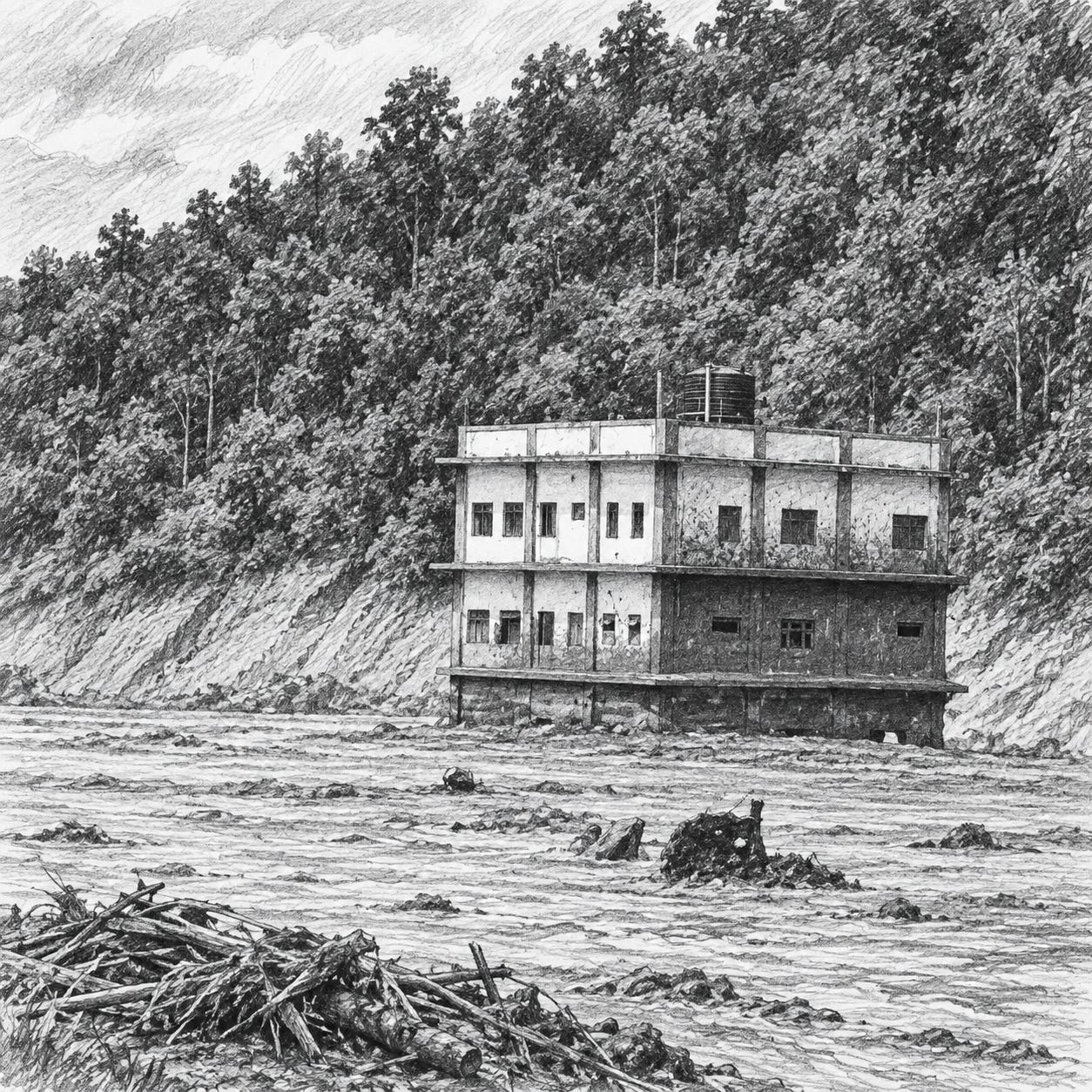 The Search Ends, Himlung Takes Fifteen & Out Without Losing a Game 02.10.2026 27минNamaste, diaspora family. On Wednesday the government formally stopped looking for survivors of the Bhotekoshi flood. Then more rain killed about 35 people, and an avalanche on Himlung killed fifteen Nepali expedition workers. In Japan, the weather put our cricketers out of the Asian Games without their losing a match. Dashain is nine days away. Two corrections to last week appear below.Where Things Stand* Rescue is over. On 30 September the disaster authority (NDRRMA) moved to “search and recovery”, which continues at two tunnel sites. Families of the missing can now get relief without the usual 12-year wait; it starts at the ward office (Radio Nepal).* The count (30 Sep): 1,454 dead, 112 identified, 5,285 missing, down from 5,786 mostly because duplicate names were removed. One missing Malaysian traveller turned up alive after 37 days (myRepublica).* Correction: we said the Rs 15,000 rent allowance was being paid. The Kathmandu Post found on 30 September that no family had received it (The Kathmandu Post).* Relief funds: Rs 16.155 billion given, still Rs 1 billion released (Khabarhub).* Second rain (24 to 27 Sep): 35 dead, 12 of them in Baglung; the Narayani hit a record 11.94m (Nepal News).🌍 Diaspora & GlobalisationMalaysia: Twenty-Five Agencies and a Locked DoorNew hiring for Malaysia has been frozen for six weeks, and this week Kathmandu made its objection formal. Nepal asked Malaysia to drop the 25 Nepali agencies its new system named “principal” recruiters, with 250 more working under them. Nepal’s position is that every licensed agency is equal under Nepali law. The 25 firms have asked to withdraw. While the Department of Foreign Employment investigates them, pre-approvals stay on hold. “We are trying to resolve the complexities in Nepal-Malaysia labour relations at the highest level,” said Labour Ministry spokesperson Mira Acharya (OnlineKhabar). Nepal Press estimates that 300,000 jobs over two years ride on the outcome. For the 400,000 Nepalis already there, Malaysia is weighing a rise in the minimum wage from RM1,700 to RM2,000 a month, and foreign workers are covered (The Kathmandu Post).The Gulf NarrowsSince the Iran–Israel war began on 28 February, new labour approvals for the Gulf are down 52 percent on last year, from 228,165 to 109,249. The UAE fell 59 percent and Saudi Arabia 57; only Oman rose, by 24 percent. With about 60 percent of Nepal’s 1.9 million overseas workers in the Gulf, the effects reach far beyond the people who never left. Arun Rai of Dharan was sent home from Abu Dhabi on unpaid leave. Shankar Lal Shrestha, 55, lost his gratuity when his Qatari employer closed. Remittances still hit a record Rs 2.363 trillion last year, partly because workers sent their savings home when the war started, but fewer departures now will show up later (The Kathmandu Post). If you’re owed wages, get it in writing and go to your embassy’s labour desk before flying home.In Brief:* US: still waiting. There’s no decision on Temporary Protected Status (TPS) ahead of Congress’s 9 October reply date. The State Department says it is “a decision for the Department of Homeland Security”. USCIS fees rise from 16 October (NepYork).* Passports stalled. The passport system’s biometric server went down on Thursday after the government withheld Rs 1.22 billion from its German suppliers. We found no fix announced by Friday. If you’re renewing abroad, check with your embassy before booking travel (Nepal News).🏛️ Politics & GovernanceOne Party, Two ConventionsRain pushed the Nepali Congress’s 15th General Convention back to Sunday 4 October at Khula Manch, with voting on the 7th and 8th. On Thursday, Sher Bahadur Deuba’s faction started its own process, with ward conventions leading up to a central convention on 7 to 9 December. Deuba, Purna Bahadur Khadka and Shashank Koirala are staying away from Sunday’s event. “We had wanted a convention of unity,” said Koirala. Gagan Thapa’s side says it went ahead because no deal could be reached with Deuba. The Supreme Court’s review of its April ruling recognising Thapa’s leadership is still unheard, so each side calls the other illegitimate (Nepal News). The two sides now disagree about ideas too: the establishment’s draft drops BP Koirala’s “democratic socialism” for “social democracy” (The Kathmandu Post).A Knock at Three in the MorningBefore dawn on Sunday, police took former Chief Justice Cholendra Shumsher Rana from his home without a warrant and held him for about twelve hours. The government says he was “taken to a secure location for his safety” after a threat. The Human Rights Commission called it “an illegal violation of constitutional rights”. myRepublica, citing unnamed sources, reported that the order came from the top; the government has not confirmed this (Nepal News, myRepublica). The opposition protested, and two RSP MPs objected online. On Monday, Durga Prasai was arrested for the eleventh time over remarks about an MP whose son died in the Gen Z protests, and the Supreme Court gave police 48 hours to justify it (Khabarhub). Together, the two cases are the sharpest test yet of whether a reform government will keep to the rules itself.In Brief:* Session closed. Parliament was prorogued from midnight on Friday after passing 12 bills. “A majority can form a government, but it cannot retain public trust,” said the Congress leader Bhishma Raj Angdembe (Nepal News).* Home quietly. PM Balendra Shah returned from the UN on Saturday with no new pledges. A visit to India is expected after mid-November (The Kathmandu Post).💸 Economy & DevelopmentWho Pays, Week TwoIn Doha, Nepal was elected vice-chair of the Asian Infrastructure Investment Bank’s Board of Governors. Finance Minister Swarnim Wagle asked the bank for reconstruction money and got grants to prepare projects plus cheaper loans, but no pledged figure (The Kathmandu Post). Correction: his next stop is the IMF/World Bank meetings in Bangkok (12 to 18 October), not Washington. The International Labour Organization says 21,400 workers have lost their jobs or income, and puts reconstruction at about $4.78 billion (The Kathmandu Post). Insurers have received Rs 20.98 billion in flood claims and paid out Rs 6.74 million. Claims under Rs 500,000 no longer need a surveyor, so if a family vehicle or shop was insured, chase the claim (myRepublica).Dashain on a Broken Supply LineEvery road to China is now shut. Rasuwagadhi has been closed since the flood, Tatopani is shut for a month, and the rain cut the Korala road in 46 places. More than 700 containers holding about Rs 5 billion of goods are stuck, and cars booked for Dashain can’t be delivered (The Kathmandu Post). Indian Oil raised its prices by about Rs 20 a litre, but the state oil company is holding pump prices until after the festival, at a loss of Rs 3.2 billion a fortnight, so expect a rise after Tihar (Peoples’ Review). The rain also knocked 358MW of power offline, and Nepal now plans to import up to 1,154MW from India this winter (The Kathmandu Post).In Brief:* Tourists up 12%. September brought 88,248 visitors, with Chinese arrivals more than doubling. But UK arrivals fell 25 percent and US arrivals 14 percent (Nepal News).* A bridge for Rasuwa. A Bailey bridge is going up at Betrawati, with the road to Syaphrubesi due to reopen by mid-October. The rupee is at about Rs 153 to the dollar (OnlineKhabar).⭐ Social & CulturalFifteen at Base CampThe climbers hadn’t arrived yet. Early on Sunday, an avalanche buried the base camp of Himlung Himal (7,126m) in Manang. Fourteen kitchen staff and two guides were there, setting up for their clients. Rescuers dug through four metres of snow. “We recovered four bodies, making it clear that no one survived,” said Mingma G, who led the unpaid volunteer recovery team (The Himalayan Times). By Thursday the dead numbered fifteen, from Sankhuwasabha, Khotang, Gorkha and Rukum, and one worker is still missing (AP). No compensation has been announced. These are the lowest-paid people on any expedition, and it is fair to ask the companies, and the government that collects the permit fees, what they will do for the families.Out Without Losing a GameAgainst Japan on Saturday, Nepal made 149 for 4 in 15 overs, with Sundeep Jora on 57 not out and Lokesh Bam on 52 not out. Then the rain came and the match ended as a no-result, which sent Nepal through as group winners. Tuesday’s quarter-final against Sri Lanka was abandoned without a toss, and with no reserve day the higher-ranked side went through (The Kathmandu Post). “Associate cricket spends forever qualifying for the main event,” said coach Stuart Law, “and if higher ranked teams get past in these kinds of situations, it is brutal.” Nepal’s Games end with two bronzes. Next up are seven para athletes training for the Asian Para Games (from 18 October) with no state funding (The Kathmandu Post).In Brief:* Getting home. Two million people will leave the Kathmandu Valley for Dashain, and the Department of Roads promises repairs “by Dashain”. Ghatasthapana is 11 October and Tika 21 October (The Kathmandu Post).* A month on. At least 33 pregnant women have had to travel to Kathmandu to give birth. A bank turned one survivor away because his 1986 citizenship photo no longer matches his face (The Kathmandu Post).How to Help* Give through the PM’s Disaster Relief Fund, Nepal Red Cross or your NRNA committee.* The rent allowance hasn’t arrived yet, so for many families a direct transfer from abroad is the only cash before winter.* Families of the missing must register them with the ward office to get relief.Our sponsor, belayat.uk, the UK Nepali noticeboard, carries jobs, housing and events. Holding a Dashain gathering, or collecting for Himlung’s families? Post it there.Next week: the Congress convention opens on Sunday, the US TPS date is the 9th, and Ghatasthapana is the 11th.Until next week, stay connected.— The Nepali Diaspora Digest Teamnepalidiaspora.net This is a public episode. If you would like to discuss this with other subscribers or get access to bonus episodes, visit www.nepalidiaspora.net
 -
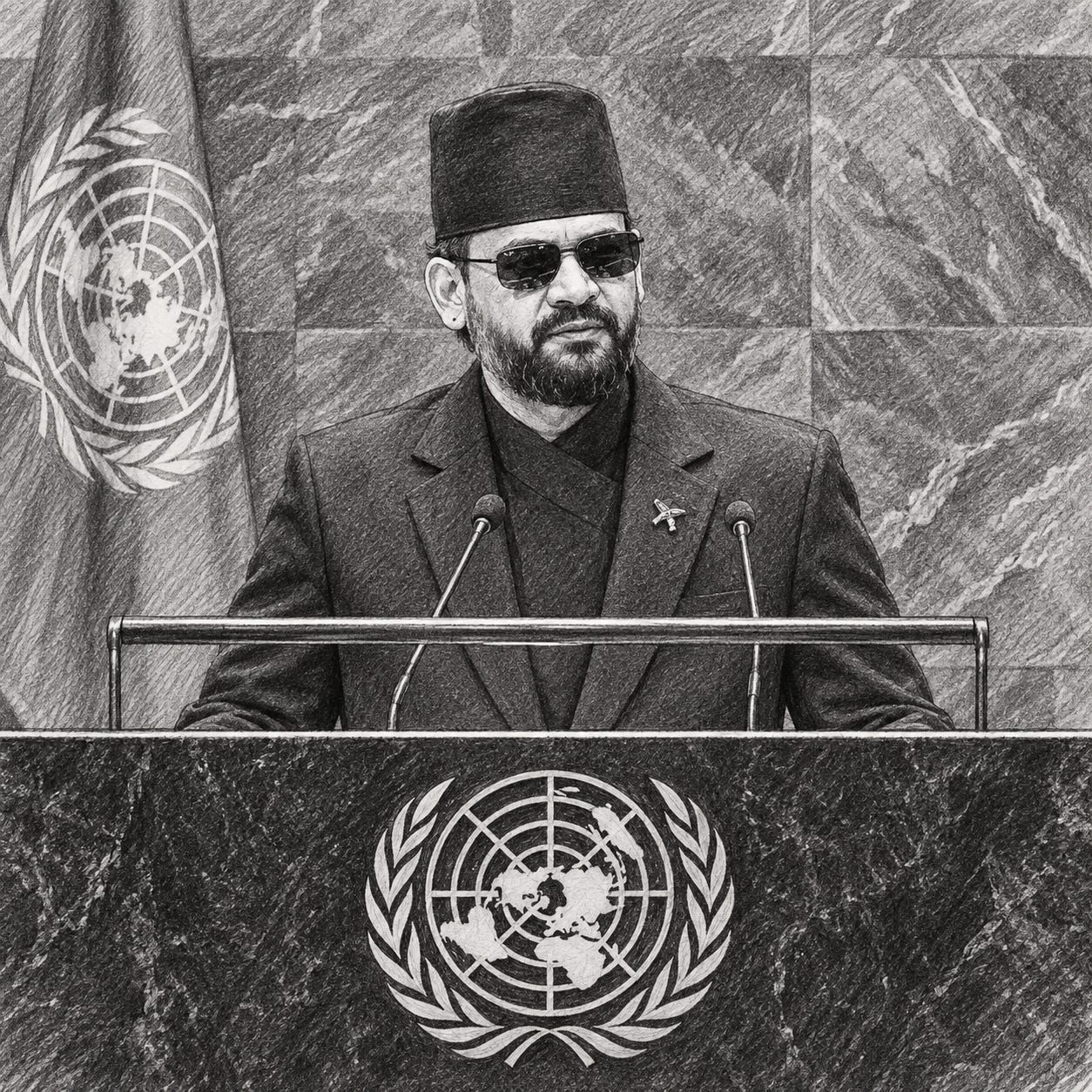 No Visa for a Glacier, a Win over Afghanistan & Dubai Lands in Pokhara 25.09.2026 22минNamaste, diaspora family. A month ago the mountain came down on the Bhotekoshi. On Thursday afternoon in New York, which was the small hours of Friday at home, the Prime Minister stood at the green marble podium of the General Assembly and told the world about it. “Climate change does not recognize borders,” Balendra Shah said. “Glaciers and floods do not travel with a visa stamped on passports.” In the fourth-floor gallery, a good number of the people listening were Nepali, and they clapped.It was the kind of week where the news kept arriving from abroad. Fifty-seven members of the US Congress asked the White House to let Nepalis stay while the country rebuilds. A Boeing from Dubai landed in Pokhara on a scheduled flight for the first time. In Aichi, Japan, a young karateka from a rented room in Boudha won Nepal’s first medal of the Asian Games, the women’s kabaddi team won a second, and on Friday morning Nepal beat Afghanistan at cricket for the first time since 2014.At home, the missing count went down, and we explain below why that is not the good news it looks like. And as we publish, the rain has come back: flights are grounded, buses out of Kathmandu have stopped, and the Koshi barrage has all 31 gates open. We start, as we have for five weeks, with the count.Where Things StandFigures from the National Disaster Risk Reduction and Management Authority as of Monday 21 September, unless stated:* Dead: 1,451. Chitwan 367, Rasuwa 236, Nawalparasi East 232, Nawalparasi West 222, Nuwakot 203, Gorkha 79, Dhading 72, Tanahu 38. By Friday, AP’s count was 1,453 (The Tribune, WTOP/AP).* Missing: 5,786, including 636 foreign nationals from 35 countries, down from 6,145 last Friday. AP put it at about 5,550 by Friday. This is not people being found alive. On Monday the authority began removing duplicate names: families had registered the same missing person in their home district and in Rasuwa or Nuwakot. Joint Secretary Balaram Niraula has told every district administration to check its list and enter only confirmed names in the Setu App. Expect the number to keep moving, in both directions (Nepal News, Ratopati).* At the dams: more than 800 workers at hydropower sites are still unaccounted for, Energy Minister Biraj Bhakta Shrestha told the House on Wednesday. At Upper Trishuli-1 alone, 439 of 1,433 workers are missing (The Kathmandu Post).* Identified: about 111 bodies returned to families. About 1,292 have been buried after DNA samples were taken, to be exhumed and handed over as matches come through. Police hold 3,283 samples (Nepal News).* Shelter: the Rs 15,000 monthly rent allowance is now being paid, and people are leaving the camps. Holding centres are down from 37 to 20, with 1,661 people: 786 in Rasuwa, 324 in Nuwakot, 121 in Dhading (Ratopati).* Land: a government committee has identified 277 plots, about 3,279 ropani (roughly 168 hectares), on which to resettle families who cannot go back: 177 plots in Rasuwa, 94 in Nuwakot, six in Dhading. The criterion is safety first, closeness to the old village second (Nepal Press).* Counting the cost properly: more than 250 officials with tablets began the full post-disaster needs assessment on Sunday. The House has set up a 15-member special committee on the flood and Himalayan climate change (Nepal News, HimalPress).* The rain, again: heavy to extremely heavy rain is forecast until Sunday. On Friday domestic flights were halted nationwide, public buses in and out of Kathmandu were stopped, all 31 gates of the Saptakoshi barrage were opened, and schools were closed in Chitwan, Butwal, Biratnagar and elsewhere. Flash-flood forecasts now run 48 hours ahead, up from 24. If your family is on the road, tell them to stop at night (Nepal News, The Kathmandu Post).🌍 Diaspora & Globalisation“Glaciers and Floods Do Not Travel with a Visa”Balendra Shah had been Prime Minister for six months and had never left the country in the job. His first trip abroad was to the United Nations, and his first sentence there was this: “I come before you from Nepal, a distant country in the Himalayas, carrying a close warning for humanity.” In English, he walked the General Assembly through what he called a “Himalayan Tsunami”: at least 1,400 dead, more than 6,000 missing, recovery needs of about 10 percent of GDP, from a country that produces “less than 0.1 percent of global greenhouse-gas emissions.” “We did not create this crisis,” he said. “Yet we are paying a colossal price for it.” The asks were specific. Money should come as grants, not loans: “When the house is burning, we do not ask the family to complete fifty forms. We act.” And he proposed a Himalayan Climate Resilience Mechanism in which Nepal, India and China share satellite data, monitor glacial lakes together and join up their early warnings: “Let the Himalayas become a laboratory of international cooperation, rather than a frontier of fragmented information.” The sharpest passage was about something else: the gas and fertiliser shortages that wars elsewhere have caused at home. Nepal, he said, had been “hit by the climate we did not warm, and again hit by the wars we did not start.” Then: “We have built a world with flawless logistics for war and broken logistics for food.” He ended in Nepali, asking Pashupatinath’s blessing on the world (The Kathmandu Post).Back home, the reviews were almost unanimous, which in Nepali politics is itself news. “The Prime Minister did not go representing any one party,” said Nepali Congress spokesperson Devraj Chalise. “He went representing the country and spoke the country’s language.” The UML’s Gokul Baskota called it “firm, meaningful, and strong,” and Baburam Bhattarai said the content was “correct!” (Ratopati). The dissent came from the analysts. In Nepal News, Binod Dhakal praised the Himalayan mechanism as genuinely new but noted that it has no secretariat, no funding formula and no sign yet that Delhi or Beijing have agreed to it. He also pointed out that the speech named no dollar figure. His verdict: “rhetoric is not a strategy and eloquence alone cannot finance a recovery” (Nepal News). Writing from New York, Ujjwal Prasai said the stronger message was solidarity rather than accusation, but “a powerful speech at the UN does not, by itself, produce a major achievement for Nepal” (OnlineKhabar). Shah’s only scheduled meeting was with António Guterres, who offered “deep sympathy,” recalled visiting Nepal as a tourist in 1978, and discussed the country’s graduation from least-developed status. Australia’s Anthony Albanese met him on the sidelines. He skipped the dinners. Foreign Minister Shisir Khanal did the rest: about forty engagements, and diplomatic relations with Grenada and Namibia, taking Nepal’s count to 187 countries. Earlier in the week, outside the building, Nepali activists had joined a climate-reparations rally. “The floods swept away our homes and lands but not our identity,” said Anisha Buda Magar of the National Indigenous Women Forum. Inside, from the fourth-floor gallery, the diaspora supplied the applause. The New York Times, for its part, wrote about his sunglasses (myRepublica, NepYork, NepYork, The Kathmandu Post, Ratopati).Fifty-Seven Signatures and a DeadlineTwo weeks ago one congressman wrote to Homeland Security asking for protection for Nepalis in the US. This week it was fifty-seven. Representatives Judy Chu, Grace Meng and Raja Krishnamoorthi led a letter to President Trump and Secretary Markwayne Mullin, co-signed by 54 colleagues including Republicans Brian Fitzpatrick and Maria Elvira Salazar, asking for Nepal to be designated for Temporary Protected Status under the environmental-disaster provision. Failing that, they ask for Deferred Enforced Departure and a pause on removals to the flood districts, with a reply by 9 October. More than 200 organisations have endorsed it, Adhikaar and the National TPS Alliance among them (NepYork, Quiver Quantitative). There is a gap in the campaign, and diaspora groups spotted it: as far as anyone has reported, Kathmandu has not formally asked. On Monday United for TPS Nepal and Asian Americans Advancing Justice Southern California wrote to Foreign Minister Khanal, who was in New York that week, urging the government to back the request. They estimate 30,000 to 50,000 people could qualify, about 25,000 of them students on F-1 visas. No reply has been reported (NepYork). Aid moved faster than immigration. After Khanal met Under Secretary of State Allison Hooker on Tuesday, Washington announced $31 million more, taking the total past $36 million: $10 million for permanent bridges, $8 million for shelter, water and winter supplies, and $13 million for US-made drones. “After I pressed officials before the Appropriations Committee, $36 million in aid and rescue support is finally being delivered,” said Meng, who says the first offer was one adviser and $500,000 (The Kathmandu Post, NepYork). The State Department’s version is that Nepal at first said it did not need much help. “Initially, the government of Nepal informed us that they believed that their own capacity was enough,” said spokesman Tommy Pigott. “We did see that change.” About 70 Americans are still unaccounted for (NepYork). The TPS that followed the 2015 earthquake ended last year, and this administration has not been generous with new designations. But a bipartisan letter with a date on it is harder to ignore than a single one.In Brief: Kuala Lumpur, the Gulf, and the ballot box.* “We do not like syndicates.” On Tuesday, Shah spoke by phone with Malaysia’s Anwar Ibrahim about the 25-agency recruitment list that has frozen new hiring from Nepal, where the Nepali workforce is already about 400,000 strong. “We do not like syndicates and the middleman system, and this is not acceptable under any circumstances,” Shah said. Anwar promised to “immediately instruct our labour minister.” By Thursday, Malaysia’s R. Ramanan and Nepal’s Ramji Yadav had agreed on a recruitment system that would “close off any room for exploitation and abuse,” and the two countries’ human rights commissions had renewed their migrant-rights pact. The list and Nepal’s freeze are both still in place (The Kathmandu Post, The Star, The Kathmandu Post).* 60,042. That is how many labour permits were issued in the fiscal year’s second month, 68 percent of them for the Gulf, with the UAE alone taking 18,477. Dhanusha sent the most people and Manang the fewest. myRepublica’s editorial read the figures against the government’s promise to keep young people at home: “The permit data show how far that promise remains from everyday reality” (myRepublica).* On the ballot. Four Nepali Americans are running for state legislatures in November: Delegate Harry Bhandari and newcomer Satish Chapagain in Maryland, Bishwa Bahadur Shah in New Hampshire, and Assemblymember Sarahana Shrestha in New York. In Jackson Heights, Governor Kathy Hochul visited Cafe Catmandoo and Kasthamandap and heard about relatives missing in the flood and neighbours afraid to go to court. “No one should ever be afraid of walking in that door and fearing that someone from ICE is going to wait when they walk outside,” she said (NepYork, NepYork).🏛️ Politics & GovernanceSix Thousand Wards, Two ConventionsLast weekend the Nepali Congress held the first round of its 15th General Convention, and more than 6,000 wards showed up. The central election committee counts ward conventions completed in 6,132 wards across 73 districts over Saturday and Sunday. They brought 43,353 women onto ward committees and 10,270 people under thirty, and at least 6,743 Dalit representatives. Party president Gagan Thapa got himself elected a regional representative from Ward 30 of Kathmandu, like any other member. “This time, a small group, including the former president, is outside the process,” said General Secretary Gururaj Ghimire. “Given those difficulties, the turnout and enthusiasm are encouraging” (The Kathmandu Post). The former president is Sher Bahadur Deuba, and his small group is building a party of its own. This week it named central representatives in 76 of 77 districts, coordinated by Shashank Koirala, for a rival convention with ward rounds from 1 October and a central session on 7 to 9 December (OnlineKhabar). Purna Bahadur Khadka, once Deuba’s acting president, put it most bluntly on Sunday: “If no miracle happens, the party’s split is certain. Even so, we are making a final effort to prevent it.” He wants the Supreme Court to hurry up with its review of the April ruling that recognised Thapa’s January special convention, and he says his side will accept whatever it decides. (A correction: last week we counted Khadka among the Deuba loyalists crossing to Thapa. He is in fact boycotting Thapa’s convention, which he calls unconstitutional.) (Nepal News). Shekhar Koirala is telling his people to stay away from both. The rain has now got involved: constituency conventions due on Saturday may slip by three days, and Surkhet and Kailali have postponed. Spokesperson Devraj Chalise says the inauguration at Khula Manch on 2 October will happen “at any cost” (Ratopati, Peoples’ Review). Deuba’s side says the whole process is illegal until the court rules. Thapa’s side says the court has already ruled. Both are, for now, correct about something.Oli Stays, Bhandari ReturnsThe UML also spent the week deciding what to do about its leader, and decided to keep him. On Sunday the party’s election-review task force, which had been expected to ask KP Sharma Oli to take responsibility for March’s defeat, dropped its demand for his resignation. Member Damodar Bhandari said they still thought he was responsible; they just weren’t going to force him out (OnlineKhabar). Then came four days of central committee meetings at Rambagh Mahal in Lalitpur, mobile phones banned. Oli presented a political report that said “party reorganisation is not a matter of desire or impulse,” and on Thursday it passed unanimously. The push for change had come from Vice-Chair Bishnu Paudel and General Secretary Shankar Pokhrel, both former loyalists, and the party’s own statute makes it very hard to remove a chair between conventions (The Kathmandu Post). What the meeting produced instead was a promotion. Former President Bidya Devi Bhandari, whose name was floated as a unity figure in last week’s edition, was made “senior leader,” second in the hierarchy, and 33 new central committee members were nominated, 13 of them from other parties. Deputy General Secretary Yogesh Bhattarai tabled a proposal that Oli step down, and it was deferred to “future meetings.” “If Oli gives space to Bidya gradually in the party and moves forward, it may not be polarized,” said analyst Jhalak Subedi. The party also condemned what it called “political retaliation” against its leaders, criticised the government’s flood response and promised protests after Dashain and Tihar (Ratopati, Nepal News). Oli’s week included one more thing. Leaving the Chyasal meeting on Sunday, he told reporters that the “standard convention in journalism worldwide is to first ask whether a question can be posed.” Few reporters anywhere would recognise the convention (OnlineKhabar).In Brief: A piece of paper, thirteen envoys and a habeas corpus.* “A piece of paper.” The Constitution turned eleven on Saturday. “However good a constitution may be, it becomes a piece of paper if those entrusted with implementing it are not honest and continuously active,” said Prime Minister Shah. President Ramchandra Paudel asked for “a political culture that respects dissent, learns from criticism and makes the state accountable to citizens.” The leaders split along a familiar line: Rabi Lamichhane and Gagan Thapa are open to amendments, and Baburam Bhattarai warned against amending “in anger or haste” (The Kathmandu Post, The Kathmandu Post).* Thirteen from 4,400. In Nepal’s first open competition for ambassadorships, the cabinet picked 13 envoys from more than 4,400 applicants, among them posts in the UK, the US, Japan, Malaysia, South Korea, Saudi Arabia and Oman, which are most of the places this newsletter’s readers live. Chiran Jung Thapa goes to Washington and Nishchal Nath Pandey to Delhi. The RPP’s Gyanendra Shahi says six of the nominees break the government’s own rules against recent foreign-funded employment. They now face parliamentary hearings (The Kathmandu Post, Nepal News).* Courts and bills. The Supreme Court ordered the release of analyst Bharat Dahal, arrested under the Electronic Transactions Act for claiming the Gen Z movement was foreign-backed. His comments, the justices said, were “a peaceful exercise of the right to freedom of thought and expression.” The House passed the Free Legal Aid and National Service Corps bills. And the families of those killed or critically injured in last September’s protests will get free education up to bachelor’s level (OnlineKhabar, Nepal News, OnlineKhabar).💸 Economy & DevelopmentDubai Lands in PokharaAt 6:18pm on Wednesday, a flydubai Boeing 737 MAX 8 landed, taxied through a water-cannon arch and became the first scheduled international passenger flight Pokhara International Airport has ever received. The airport opened on 1 January 2023, cost $216 million in China Exim Bank loans, and has spent almost three years being called a white elephant. More than a hundred passengers got off the first flight, among them workers home from the Gulf, and about 150 got on for the return. On the second day it was 135 in and 146 out. “Flying directly to Pokhara was far more convenient than first landing in Kathmandu and then travelling overland,” said Sita Gharti of Myagdi, home after ten years in Dubai. The government made it worth flydubai’s while. Landing, parking, navigation, passenger-service and tourism fees are all waived until September 2028, ground handling is half price, and jet fuel costs about a quarter less than in Kathmandu. Fares from Pokhara are Rs 3,000 to 7,000 cheaper than from the capital on major routes, and an Emirates codeshare connects on to more than 250 cities. Around fifty hotels are giving passengers 25 percent off for three months. “If we make this successful, we are confident that other airlines will also start services,” said Mukesh Dangol, director general of the Civil Aviation Authority (The Kathmandu Post, The Kathmandu Post, Nepal News). The Post’s editorial was cautious. Pokhara’s last international route, Himalaya Airlines to Lhasa, was suspended in March 2025. And a first-time migrant worker still has to go to Kathmandu for the medical and the paperwork, at which point “they find it feasible to fly from the capital.” The service is approved to 24 October for now. If your family is in Kaski, Syangja, Parbat or Myagdi, this is the route home, and every full flight makes the next one more likely (The Kathmandu Post).Grants, Not Loans: Who Pays for the FloodThe Prime Minister’s line in New York was about money as much as climate: “When a climate-driven disaster destroys infrastructure of a poor country, the answer cannot simply be another mega loan or a patchwork of small grants” (Business Recorder/Reuters). This week showed what he is up against. The World Bank made up to $170 million available in emergency financing (Business Recorder/Reuters). The Asian Development Bank cut its growth forecast for this fiscal year to 4.1 percent from 4.5, “largely because of the August 26 floods,” raised its inflation forecast to 5.3 percent and now expects a fiscal deficit of 4.7 percent of GDP, up from 3.4 (The Kathmandu Post). Unlike after the 2015 earthquake, there will be no donor conference. The Finance Ministry will negotiate one lender at a time for a bill of $4.7 to $5 billion over three to five years (The Kathmandu Post). Swarnim Wagle came back from Delhi without an Indian package. Nirmala Sitharaman told him India would decide once the needs assessment is done, which is four or five weeks away. He goes to the Asian Infrastructure Investment Bank in Doha on 28 and 29 September and then to Washington, and he wants to talk about “debt-for-recovery swaps” (The Kathmandu Post, Peoples’ Review). The fund the Prime Minister criticised at the UN is the one Carbon Brief looked at. Nepal has asked the UN Loss and Damage Fund for $20 million, which is 0.7 percent of the damage and losses. The fund has 176 applications worth $2.8 billion against $822 million pledged, has paid nothing out, and next meets in December. Spent on reconstruction, said Nepal’s negotiator Raju Pandit Chhetri, it would be “a peanut” (Carbon Brief). One more number explains why the government is allergic to new loans. In the first two months of the year it spent Rs 85 billion servicing debt and Rs 7.66 billion on capital projects. Public debt stands at Rs 2.97 trillion, about 45 percent of GDP (myRepublica).In Brief: A hacked exchange, a closed border and a warm winter promise.* NEPSE goes dark. The stock exchange stopped trading on Monday after ransomware hit Data Hub, the data centre used by 72 brokers. It is the third technical failure this year, after two false crashes in February and July. The securities board wants a report by 28 September. “Investors and brokers are always the ones who suffer,” said Narendra Raj Sijapati, a former head of the brokers’ association. Separately, the central bank cut the minimum period banks must hold shares they buy to 45 days (The Kathmandu Post, Nepal News).* The northern border. On Friday, Infrastructure Minister Sunil Lamsal asked Chinese Ambassador Zhang Maoming for help rebuilding the road to Rasuwagadhi; he says about 600,000 Nepalis depend on the northern crossings. China is “ready to provide all possible support” if Nepal submits a specific proposal. Tatopani has been shut for nearly two months, and the customs chief says China “had not yet provided a clear response.” Meanwhile Korala in Mustang has now cleared 1,090 electric vehicles, up from 641 last week (Khabarhub, Peoples’ Review, Nepal News).* Power, a loan and gold. The Electricity Authority promises “no load-shedding this winter,” and the 40MW Rahughat plant in Myagdi joined the grid on Friday. Whether VAT on electricity will be scrapped is unclear: the energy minister says it is being discussed, and the finance minister’s office calls reports of a deal “baseless.” For readers abroad, Prabhu Bank has launched a diaspora home loan of up to Rs 30 million over 25 years. Gold fell back below Rs 300,000 a tola, to Rs 298,600 on Friday (The Kathmandu Post, The Kathmandu Post, Nepal News).⭐ Social & CulturalNisshin Feels Like HomeAfghanistan beat Nepal by eight runs in the 2014 Asian Games quarter-final, and Nepal had not beaten them at T20 since the World Cup in Bangladesh that same year. On Friday morning at Korogi Sports Park in Nisshin, Nepal won with room to spare. Kushal Bhurtel, who opens the batting and bowls a bit of spin when asked, took 4 for 21; Lalit Rajbanshi took the top three in the powerplay and finished with 3 for 13; Afghanistan finished on 102 for 7. Nepal lost Bhurtel for a duck and Aasif Sheikh for two, and then Sundeep Jora (34 off 35, three sixes) and Rohit Paudel (33 not out) steadied it. Gulsan Jha hit the winning run with 16 balls to spare. Nepal moved up to 14th in the T20 rankings. The stands were full of Nepalis from across Japan, and the players went round afterwards to wave and applaud them. If Nepal beat Japan on Saturday at 9am local time (5:45am in Kathmandu, 1am in London), they should be into the quarter-finals (The Kathmandu Post, Nepal News, Free Press Journal). The medals had already started. On Wednesday in Toyohashi, Tenzing Sherpa, 23, won bronze in the men’s +84kg kumite, beating Laos’s Xayasan Vatthana 9-1. It was the only medal from Nepal’s eight karatekas. He grew up in a rented room in Boudha with a single mother, Nir Kumari Shrestha Sherpa, who worked several jobs; his two sisters work in Dubai. She found out from his coach’s phone call, because she could not get the stream. “I have no guilt for the sacrifices I made,” she said, “because my children are giving me great reasons to be happy” (The Kathmandu Post). On Thursday, Manamati Bista’s women’s kabaddi team beat Sri Lanka 34-24 to guarantee a medal, then lost the semi-final to India, as they did in Hangzhou, and took a second bronze (Nepal News). There were disappointments. Erika Gurung, the silver medallist in Hangzhou and the team’s best hope of a first-ever gold, lost her bronze bout 8-7. The contingent is 135, about half of last time. At the opening ceremony a week ago, though, when the Nepali team walked in wearing black jackets, the Japanese crowd cheered them loudly, in solidarity after the flood (Asia News Network).The Children of RasuwaRasuwa’s private schools have published a count of their own. Thirty-eight students are missing: 19 from Gosaikunda Boarding School, ten from Modern Trinity and nine from Highland Residential. Modern Trinity’s founding principal, Suroj Dangol, is missing with them. And 201 parents are out of contact, and about two hundred children in these schools now have a mother, a father or both on the missing list: 46 at Gosaikunda, 42 at Highland, 41 at Namuna Evergreen, 33 at Modern Trinity. Five of the district’s seven private schools have reopened, and the children with no one to go home to are living in the hostels, where the schools have arranged food and free tuition (Nepal News). The government’s damage assessment is worse: 285 students unaccounted for in Rasuwa, and 224 students and eleven teachers in Nuwakot. Twelve schools are gone entirely. Neelkantha Secondary in Rasuwa now houses 80 flood-hit students, with counsellors. “Students have started staying in hostels and continuing their studies,” said Durga Silwal, the district’s education chief (OnlineKhabar). UNICEF says more than 14,000 children have had their schooling disrupted, and 48 temporary learning centres have brought 1,400 of them back into a classroom. “Returning to learning provides children with a sense of stability, routine and hope,” said its representative, Alice Akunga (UNICEF). For the adults, the problem is still getting across the river. With the bridges gone, people in Nuwakot and upper Rasuwa cross the Trishuli in a tuin, a basket slung from a steel cable, and wait their turn to haul the rope. Gokarna Adhikari waited five hours to take his father’s heart medicine across (The Kathmandu Post). One piece of good news to end on. Kabir Maharjan, who spent ten days trapped in the Upper Trishuli 3A tunnel before he was pulled out alive, was discharged from hospital on Friday and went home to Lalitpur, where the neighbours garlanded him (OnlineKhabar).In Brief: A chariot in the rain, a mountain closed, and a premiere in London.* Indra Jatra, and Dashain’s dates. The lingo pole went up at Hanuman Dhoka on Wednesday, hundreds of small girls were worshipped as Kumari in Basantapur on Thursday, and on Friday the Kumari’s chariot was pulled through old Kathmandu as the rain threatened, with the President watching. Locals played the traditional Muali music for the first time in about twenty-five years. Dashain is late this year: the calendars put Ghatasthapana on 11 October and Tika on 21 October. Bus bookings will open only after the transport department has assessed the roads and the weather (WTOP/AP, Rising Nepal, Khabarhub).* Manaslu closes. On Saturday night, an avalanche buried the Camp 3 tent of Indian-German climber Dhruba Jyoti Guha and his guide, Phursemba Sherpa of the Makalu region, under two metres of snow. That makes four deaths this season. After two weeks of snow, the big operators cancelled the season on Tuesday, with 493 climbers holding permits. “In the mountains, nature always has the final word,” said Chhang Dawa Sherpa of Seven Summit Treks (The Himalayan Times, Explorersweb).* Screens and needles. UK readers: Elephants in the Fog, Nepal’s Oscar entry, has its UK premiere at the BFI London Film Festival on 17 October (Vue West End, 12:30pm) and 18 October (BFI Southbank, 6:40pm), and tickets are on sale now. In Trento, Rasuwa-born filmmaker Avash Rijal’s The Witness of Yara won best short documentary, and he dedicated it to the flood’s dead. In Jhapa, 21,746 people had the Japanese encephalitis jab on the first day of the campaign; none of the seven people the disease has killed there had been vaccinated (The Future of the Force, The Kathmandu Post, Radio Nepal).How to HelpThe verified list from four weeks ago still holds: the Prime Minister’s Disaster Relief Fund via opmcm.gov.np and nowhere else, Nepal Red Cross, and your NRNA national committee’s own channel rather than a forwarded link. This week’s additions:* Ask where the money went. The Prime Minister’s relief funds held Rs 15.53 billion by Thursday, including $25.4 million in foreign currency, much of it from you. About Rs 1 billion has been released. If your association gave, it is a fair question to ask what it paid for (Nepal News).* The allowance has a gap. The Rs 15,000 rent allowance goes to families who owned a home. People who rented a shop or a room get nothing, and more than 2,000 small traders were hit in Nuwakot alone. Januka Mijar sold madals in Bidur for 22 years: “Everything I had built over 22 years was washed away.” A small grant to a named trader through a group you trust goes a long way (The Kathmandu Post).* The orphaned students. PABSON Rasuwa is coordinating free schooling and hostel places for the 200-plus children whose parents are missing. Shesh Ghale’s MIT Foundation has pledged Rs 578.5 million for children orphaned by the flood. If your organisation wants to fund something specific, a hostel year is specific.* In the US: the TPS letter asks for a reply by 9 October. If you are a constituent of one of the 57 signatories, thank them; if your representative did not sign, ask why. Advice on eligibility: Adhikaar.* If someone is missing: khozi.facetagr.com with a clear photograph, and a DNA sample from a close relative at a district hospital. District offices are now merging duplicate entries; if you registered the same person in two places, it is worth telling the district administration office.Our sponsor, belayat.uk, the UK Nepali community noticeboard, carries jobs, housing and events alongside relief appeals. If your group is organising a Dashain gathering or a trip to the Elephants in the Fog screening in October, post it there.Next week: Nepal against Japan in Nisshin on Saturday morning, and a cricket quarter-final if that goes our way. The rain warning until Sunday. The stock exchange’s report on the 28th and Parliament back the same day. Wagle in Doha on the 28th and 29th. The Nepali Congress convention opening at Khula Manch on Friday 2 October, with or without Sher Bahadur Deuba. We will keep the count, and we will correct anything here that turns out to be wrong.Until next week, stay connected.— The Nepali Diaspora Digest Teamnepalidiaspora.netAll figures in this edition are as reported by Friday 25 September 2026 and are expected to change. This is a public episode. If you would like to discuss this with other subscribers or get access to bonus episodes, visit www.nepalidiaspora.net
 -
 A Thousand More Missing, the Road Comes Back & a Cup from Kuala Lumpur 18.09.2026 24минNamaste, diaspora family. Four weeks since the Bhotekoshi came down, and this was the week the numbers moved in opposite directions. On Wednesday the disaster authority added nearly a thousand names to the missing list after checking the district registers, and the count now stands at 6,145. On Thursday morning, at six o’clock, the first car in eighteen days drove through Krishnabhir and the Prithvi Highway was a highway again. A cooking-gas cylinder in Kathmandu got cheaper by lunchtime.In between, a panel of climate scientists said there is “no doubt” what loosened the mountain; forty of Sher Bahadur Deuba’s own people walked across to Gagan Thapa; Malaysia and Nepal fell out over who is allowed to send 400,000 workers; and Kent gave the Brigade of Gurkhas the Freedom of the County. On Saturday morning in Kuala Lumpur, Aasif Sheikh scored a hundred and Nepal beat the UAE by 44 runs. Bangladesh, 2027. We are going to the Asia Cup.Tomorrow is Constitution Day and the Asian Games open in Nagoya. On Tuesday the Prime Minister flies to New York. We start, as we have for a month, with the count.Where Things StandFigures from the National Disaster Risk Reduction and Management Authority as of 7pm on Thursday 17 September, unless stated:* Dead: 1,410. Of those, 549 are men, 336 are women and 525 are remains that have not been identified. Chitwan 364, Nawalparasi East 232, Nawalparasi West 222, Nuwakot 203, Rasuwa 199 (Nepal News, webindia123).* Missing: 6,145, of whom 587 are foreign nationals. On Wednesday the authority raised the figure from 5,179 to 6,150 in one step. “We have been collecting details on the missing people from the district offices and revised the data after verification,” said spokesperson Shanti Mahat. The two-definition problem we flagged last week has been resolved in the direction of the larger number (Courthouse News).* Identified: 110 bodies returned to families. DNA samples: 1,286 from the dead, 1,944 from relatives. The relatives’ samples now outnumber the bodies, which is the right way round and was not the case a fortnight ago.* The bill: the rapid damage assessment puts it at $4.7 billion, 65 percent of it infrastructure. Thirteen hydropower plants and five solar plants are out, 783 megawatts, a fifth of what the country could generate before 26 August (Nepali Times).* Housing: the cabinet has approved Rs 15,000 a month for every displaced family of up to four, plus Rs 2,000 for each additional member, until permanent homes are built. Forms have gone to ward offices. Those who would rather have a temporary shelter than cash can choose that instead (Nepal News).* Shelter: 27 holding centres remain, with 832 people in Nuwakot, 817 in Rasuwa and 94 in Dhading. An Acrow bridge is open at Devighat.* Solukhumbu: the Hunga Khola dam we reported on Friday began overtopping about three hours after it formed and the immediate danger eased, though police have kept the downstream warning in place (The Kathmandu Post).🌍 Diaspora & GlobalisationFour Hundred Thousand Jobs, Twenty-Five AgenciesThere are about 400,000 Nepalis working in Malaysia, the third-largest foreign workforce there after Bangladesh and Indonesia, and since 22 August Nepal has not cleared a single new demand letter for more. The reason is a list. On 21 August, Malaysia’s Foreign Worker Centralised Management System named 25 Nepali recruitment agencies as “principal recruitment agencies,” each allowed up to ten affiliates, and told Nepal about it a week later. Nepal’s Labour Ministry objected the next day, ordered the embassy in Kuala Lumpur to stop certifying demand letters from the chosen 25, and had the Department of Foreign Employment halt prior approvals. There are roughly 1,100 licensed agencies in Nepal. “Equal opportunity, fair competition and business rights must be guaranteed,” said Dik Bahadur Chhetri of the recruiters’ association, which is a fair point and also a self-interested one. This week the ministry escalated: spokesperson Mira Acharya said Nepal “disagrees with the way recruitment agencies have been selected” and asked Malaysia to convene the two countries’ joint technical committee and hand over the selection criteria in writing. Malaysia says the system is about transparency and worker protection. Meanwhile the first month of the fiscal year shows what is at stake. Remittances rose 21.2 percent to Rs 215 billion, but new labour approvals fell to 42,693 from 44,466, and re-entry approvals, workers going back to jobs they already had, rose 17 percent. Fewer first-timers, more returners. That is what a corridor narrowing looks like (The Kathmandu Post, The Kathmandu Post, Nepal News).For those already there, a note. Malaysian immigration checked about 2,500 foreigners at Kotaraya in Kuala Lumpur on Sunday and detained 472, eight of them Nepali. “Hundreds of undocumented workers are being arrested daily,” said Binod Thapa, the former NRNA president in Malaysia. The voluntary Migrant Repatriation Programme, which lets an undocumented worker pay a fine of RM500 and go home without a detention record, has been extended to 31 May 2027. If you have a relative in Malaysia whose papers have lapsed, that programme is a better route out than a raid (The Kathmandu Post).Seventy Americans, a Letter to DHS, and Tuesday’s FlightAbout 70 American citizens remain unaccounted for in the flood zone, three weeks on. Eighteen who had been on the list reached safety by Monday. “The safety of Americans in the affected area remains our highest priority,” the State Department said, adding that the number could still change either way. The United States has now sent a cargo drone to the Armed Police, 5,000 victim-recovery kits, 500 first-aid kits, a four-member military civil-affairs team and FBI forensic specialists to work with Nepal Police on identification, and has put an additional $1 million into that forensic work, taking its aid past $5 million (NepYork). In Washington, Congressman Thomas Suozzi, four of whose constituents are among the missing, has written to Homeland Security Secretary Markwayne Mullin asking for a fresh Temporary Protected Status designation for Nepal “so that eligible Nepali nationals currently in the United States are not forced to return while their country confronts this disaster.” The previous TPS, granted after the 2015 earthquake, was terminated in June last year, and the Ninth Circuit upheld the termination in February. The campaign is being run by attorney Keshab Raj Seadie, whose GoFundMe we mentioned last week; Senator Schumer’s office is said to be looking at it. A letter is not a designation, and this administration has not been in a designating mood. But the request is on the record (NepYork). The Prime Minister leaves for New York on Tuesday, arrives Wednesday, meets António Guterres, is invited to President Trump’s reception that evening, speaks to the General Assembly on Thursday the 24th and is back in Kathmandu on the 26th. Foreign Minister Shisir Khanal goes ahead on Sunday. No diaspora event is on the published schedule, and the Nepali American Business and Investment Summit that was to have coincided has moved to 20 to 22 November because of the floods (Nepal News, NepYork).In Brief: Kent, Riyadh and Pokhara.* The Freedom of Kent. On Thursday, Kent County Council voted 69 in favour with two abstentions and none against to grant the Brigade of Gurkhas the Freedom of the County, only the second time the honour has been given. The motion came from the council’s Reform UK leader Linden Kemkaran and passed with every party’s support; the 2nd Royal Gurkha Rifles are at Shorncliffe in Folkestone and the Queen’s Gurkha Engineers at Maidstone. “Kent should be really proud of providing a home for many of the Gurkhas,” said Liberal Democrat Richard Streatfeild. Three days earlier, ten veterans’ organisations had met Veterans Minister Calvin Bailey for the first time and given the government until 31 December on pension parity for those who served before 1993 and settlement rights for adult children. “I will try my best from my side,” Bailey told them (Nepal News, KentOnline, South Asia Time).* A lawyer in Saudi Arabia. Among Wednesday’s cabinet decisions: a power of attorney for a Saudi lawyer to pursue insurance and compensation claims on behalf of Nepalis killed or injured there. Families who have given up on a claim from Nepal now have somewhere to send it (OnlineKhabar).* Dubai to Pokhara, daily, from Wednesday. flydubai’s FZ1165 leaves Dubai at noon and lands at Pokhara at 6:15pm from 23 September, the first scheduled service from the UAE into the airport, with an Emirates codeshare. If your parents are in Kaski, the Kathmandu transfer just went away (flydubai).🏛️ Politics & GovernanceHow Deuba Lost His Own Inner CircleThree weeks ago we wrote that the Nepali Congress had split in two. This week it split in a way nobody had drawn on the whiteboard: down the middle of Sher Bahadur Deuba’s faction. On Sunday, Gagan Thapa’s central working committee agreed to take in all 31 members of the central committee elected under Deuba at the 14th convention, on condition they join the convention process starting this weekend, and to find room for the 111 office-bearers and members left out after the January special convention. By Wednesday, the Post counted around 40 of Deuba’s people heading for the party headquarters in Sanepa: Mahalaxmi Upadhyay Dina, Gandaki chief minister Surendra Pandey, former Bagmati chief minister Indra Bahadur Baniya and, the one that matters, Purna Bahadur Khadka, the man Deuba had made acting president, who stopped coming to faction meetings in early September and refused to lead a breakaway. “When the whole house has collapsed and turned to ashes,” said Deepak Kuikel, one of the crossers, “there is little point in arguing over which room is bigger.” Deuba’s answer, on Tuesday, was a statement telling leaders and cadres to boycott what he called an “illegal” process, and a separate convention of his own on 7 to 9 December, announced by Shashank Koirala. Shekhar Koirala has declared himself neutral. On Thursday Thapa made the appeal that tells you who holds the cards: “My respected leader and former party president Sher Bahadur Deuba, I would like to make an appeal to you. If the former party president inaugurates the convention on the day it begins, it would be a matter of honour for us.” Ward conventions run in 6,743 wards this weekend, and the 15th General Convention opens at Khula Manch on 2 October. The Supreme Court, which recognised Thapa’s convention in April and agreed in August to review that ruling, has not said when it will. The party has split before, in 1953 and 2002, and come back both times; the difference now is that it is fighting over itself from the opposition benches, facing a government with 182 seats (The Kathmandu Post, The Kathmandu Post, The Kathmandu Post, myRepublica, OnlineKhabar).A Photograph at the VivantaWhile the Congress was subtracting, the left was thinking about adding. On Wednesday, UML secretary Sherdhan Rai posted a photograph of himself with Barshaman Pun of Pushpa Kamal Dahal’s Nepali Communist Party at the Hotel Vivanta in Lalitpur, and two weeks of quiet conversation became public. “The top leaders on both sides appear ready for unity or cooperation,” Pun said afterwards. “At the middle level, we still need to discuss how to move forward and what more needs to be done.” The options on the table run from an electoral alliance to a full merger through a joint convention, and one senior leader told OnlineKhabar that former President Bidya Devi Bhandari is being discussed as the figure who could lead a combined party in place of KP Sharma Oli. Anyone with a memory will recall the last time UML and the Maoists did this, in May 2018, when they merged into the Nepal Communist Party on the back of a near two-thirds majority and lasted three years before the Supreme Court dissolved it and the two chairmen went back to loathing each other. Between them the two parties still run five of seven provinces: UML in Koshi, Bagmati and Lumbini, the NCP in Karnali and Sudurpaschim. Oli, for his part, spent the weekend telling the Federation of Nepali Journalists that the Balen Shah government is “oppressive” and “anti-media” for cutting public-welfare advertising, which is the sort of thing you say when you are looking for allies (OnlineKhabar, Nepal News).In Brief: Maps, rules and a Monday sitting.* “Not baggage.” Asked in the House on Tuesday by Congress MP Sita Thapaliya whether the “old baggage” he had spoken of in India meant the 2020 constitutional amendment that put Lipulekh, Kalapani and Limpiyadhura on Nepal’s map, Foreign Minister Shisir Khanal said the map “represents a shared national commitment” and “cannot be regarded as a burden under any circumstances.” It passed Parliament unanimously; he was not going to be the one to reopen it (The Kathmandu Post).* Two cabinets. Wednesday’s approved rules to digitise the government’s own decision-making, set advance tax on share gains at 3.5 percent for holdings over a year and 5 percent under, and adopted a procedure for a revolving relief fund. Friday’s moved the Department of Hydrology and Meteorology out of the Agriculture and Environment ministry and into Energy, a week after Energy Minister Biraj Bhakta Shrestha said he wants to start draining the most dangerous glacial lakes (OnlineKhabar, Nepal News).* Dates. The House sits again at 1pm on Monday 21 September. Army chief Ashok Raj Sigdel is in Beijing until Saturday for the Xiangshan Forum. And tomorrow, 19 September, is Constitution Day, the eleventh, which will be marked with a government that got there by winning under the document rather than by rewriting it (Nepal News).💸 Economy & DevelopmentThe Road Comes Back. The Border Does Not.At 6am on Thursday, all traffic was allowed through Krishnabhir in both directions, 18 days after the hillside took the Prithvi Highway into the Trishuli. What they are driving on is a 270-metre gravel track cut into the slope above the collapse by about fifty workers from the Malekhu-Mugling Road Project on 12- to 16-hour shifts, opened to gas tankers on trial from Sunday and to everyone else once the last gravel went down on Wednesday evening. “Krishnabhir has always been a difficult landslide zone,” said roads director-general Bijaya Jaishi. “The new track is not a long-term solution.” It gets two weeks of monitoring before blacktopping; the 12-kilometre road on the far bank between Benighat and Fisling has 1.5 kilometres left and a four-month target; a tunnel or a bypass bridge will be decided within six months. The effect was immediate: the Oil Corporation dropped the transport surcharge and a Kathmandu cylinder went from Rs 2,165 back to Rs 2,060 the same day. The Post’s editorial, published while the track was still being gravelled, made the point that will outlast it: the diversion had meant ten hours for the hundred kilometres from Hetauda, and the Army’s Kathmandu-Tarai expressway, begun in 2017, is less than half built. Then there is the other road. Forty kilometres of the Galchhi-Rasuwagadhi highway and 41 bridges are gone; the Department of Roads puts the damage at Rs 30 billion and rebuilding at Rs 50 billion, and wants a temporary track to the Chinese border before Dashain. It will not get the border. Tatopani, the other crossing, has been shut by China since 29 August on landslide grounds and traders say it will not reopen before the festivals. Everything is coming over the 4,650-metre Korala pass in Mustang instead: 641 electric vehicles and 434 containers in fifteen days, Rs 1.78 billion in customs revenue, and a queue of more than 200 vehicles at a border post with no proper customs yard, four to five days to Kathmandu against four to five hours from Tatopani. The Dashain EVs, electronics and apples are somewhere on that road (The Kathmandu Post, The Kathmandu Post, The Kathmandu Post, The Kathmandu Post, myRepublica, Nepal News).“No Doubt”: The Case Nepal Takes to New YorkThe Prime Minister will stand up in the General Assembly on Thursday with a number, $4.78 billion, and, since Wednesday, with a finding. World Weather Attribution, the consortium that works out how much climate change contributed to a given disaster, published its analysis of Langtang Lirung this week. Its answer, in Friederike Otto’s words: “There is no doubt that climate change is one of the drivers.” The mechanism is what Nepali scientists have been saying for a month, now with figures. July and August were the warmest on local record, about 5°C above normal. The freezing line on the high Himalaya has been climbing roughly 100 metres a decade, exposing permafrost that had held the rock together for tens of thousands of years. Unusually heavy snow last winter added meltwater; the 2015 earthquake had probably already cracked the face. “When you combine high-elevation permafrost degradation with glacier retreat and record summer heat,” said Utrecht’s Walter Immerzeel, “the structural integrity of these mountain walls is compromised.” What came off was 116 million cubic metres, moving at up to 100 miles an hour and cresting 300 feet, five times the size of India’s Chamoli disaster of 2021. The study’s recommendations are practical and cheap by comparison: radar and satellite scans of every river corridor with infrastructure in it, rock-movement sensors, seismometers, cameras. Nepal’s own preparation for New York happened in Jomsom, where 431 local governments met on Monday and Tuesday and issued the Gharapjhong Declaration from the bank of the Kali Gandaki, asking that climate finance be called what they think it is, compensation for loss and damage, not aid. “Nepal will not only ask for assistance at international forums,” said Environment Minister Gita Chaudhary. The Loss and Damage Fund has about $350 million available against $800 million pledged, which is less than a tenth of this one flood. That is the argument. Finance Minister Swarnim Wagle is making a version of it in Delhi this weekend, where he saw Nirmala Sitharaman on Thursday and S. Jaishankar on Friday and is asking about concessional loans on the 2015 model, when India put up a billion dollars (Al Jazeera, Inside Climate News, The Kathmandu Post, The Kathmandu Post).In Brief: The first month’s numbers, the winter’s electricity, and a new fifty.* Rs 215 billion in, prices up. The central bank’s first-month report is a mixed sheet. Remittances up 21.2 percent to Rs 215.05 billion ($1.4 billion). Exports up 61.7 percent, with shipments to China nearly quadrupling. Reserves at $25.84 billion, enough for 21.8 months of imports. But inflation has jumped to 5.96 percent from 1.68 percent a year ago, with cooking oil and ghee up 15.6 percent and transport up 13.2 percent, and the trade deficit is up a quarter. If you are sending money home this Dashain, it is buying less than it did last Dashain (Nepal News).* 654 megawatts from India. New Delhi has approved exports of up to 654MW to Nepal for 18 hours a day from 13 September to the end of December, most of it on the Dhalkebar line, to cover a dry-season shortfall the Electricity Authority puts at 350 to 400MW after the flood. Some of what still works cannot get out: the destroyed Nuwakot substation has stranded 176MW. The Authority’s board has also voted Rs 50,000 immediately and half-salary for six months to the families of its 47 staff and workers still missing. “This money cannot heal such a deep wound,” said Energy Minister Shrestha, “but I hope it provides some relief” (The Kathmandu Post, The Kathmandu Post, The Kathmandu Post).* Land, and a note. Real estate transactions grew 4.74 percent last fiscal year after a contraction the year before, and the value changed hands nearly doubled to Rs 721 billion; in Kathmandu Metropolitan City the number of deals rose 156 percent. The central bank also put a new Rs 50 note into circulation on Friday, with Everest on it, a rhododendron watermark and a snow leopard, and gold went back over Rs 300,000 a tola (The Kathmandu Post, Nepal News).⭐ Social & CulturalPotatoes in GreTwenty-four days after the flood, three wards of Amachhodingmo Rural Municipality in upper Rasuwa are eating potatoes. Wards 1, 2 and 3, around Gre village, roughly 960 households, lost their suspension bridges on 26 August and have been reachable since only by the smallest helicopters, which carry fifteen sacks of rice a trip. The larger World Food Programme aircraft go to wards 4 and 5. “Only after repeated appeals did some relief reach wards 4 and 5,” said the municipality chair, Buchung Tamang. Wards 1 to 3 have had between 30 and 70 sacks each. The rice people had is gone or has rotted. “We have been surviving on potatoes in the morning, during the day and at night,” said Jandra Tamang, whose husband Tashi Wangden died in the flood. Lakpa Kami Tamang, the ward 2 chair, who lost eight members of his family: “We are now starving.” The school hostel, which housed more than 200 children, has closed because it cannot feed them, and residents have started asking to be moved down to the displacement camps, which is not a thing people say about their own village unless they mean it. Lower down, the problem is the opposite: as Bidur’s schools reopened, families who had been sleeping in classrooms were asked to leave, and the collective shelters now hold twenty or more to a room. Sabitri Tamang of Aangitar, who lost eight relatives and has one son left, remembers “a black plume of muddy water” coming from the sky. The land they were promised for resettlement has not been identified, and the cash allowance announced this week is for rent in places where there is nothing to rent. The Nepali Times counted the other losses: of more than 80 temples, shrines and ghats the Nepal Heritage Documentation Project had recorded along the river, 21 are gone entirely, the cremation ghats among them. “Heritage in this part of the world is also a method of caring for people in trauma,” said the project’s Rajan Khatiwoda. In Gre, they would settle for rice (The Kathmandu Post, The Kathmandu Post, Nepali Times).313, a Century, and Bangladesh Next YearIt rained in Kuala Lumpur, as forecast, and it did not matter. Nepal batted first at Bayuemas Oval on Saturday and made 313 for 9, the kind of total that last week’s edition doubted this batting order had in it. Aasif Sheikh made 102 off 106 balls, eight fours and four sixes, his second one-day century; Gulsan Jha hit 52 off 38 at the end; Arjun Kumal 43 and Rohit Paudel 40 did the middle. Rahul Chopra’s unbeaten hundred kept the UAE in it until Karan KC, with three wickets, and Lalit Rajbanshi, with two, finished them for 269 in the last over. Nepal won by 44 runs, took the ACC Premier Cup for the second time, and with it the only place on offer at the 2027 Asia Cup in Bangladesh, where the full members will be waiting. Somewhere in the middle of it, captain Sandeep Lamichhane took his 300th international wicket, the first Nepali to get there, 158 in one-day cricket and 142 in T20s, and was named player of the series for the second Premier Cup running. The team landed in Kathmandu on Sunday night to a crowd at the airport and Paras Khadka, who used to do this for a living and now does it as CAN secretary: winning abroad, he said, proves the standard. Most of the same squad, with Dipendra Singh Airee as captain, is now in Japan, where the Asian Games open in Nagoya on Saturday; Nepal’s men play Afghanistan on the 25th and Japan on the 26th at Nisshin. The women’s volleyball team, at its second Games, has already lost in straight sets to Japan and Indonesia and goes into the classification round, though the 21-25 and 20-25 sets against Indonesia were closer than the scoreline (CricTracker, Gulf News, Nepal News, Radio Nepal, OnlineKhabar).In Brief: An Oscar entry, a birth on a pavement, and a needle in Jhapa.* Elephants in the Fog goes to the Academy. Nepal’s selection committee chose Abinash Bikram Shah’s Cannes prize-winner over Gauthali as the country’s entry for Best International Feature at the 99th Academy Awards. A shortlist is a long way off; the entry is the first step Nepal has usually stumbled on. Meanwhile the Post surveyed a year of Gen Z art: Swoopna Suman’s farewell song “Yaad Haru Ma,” Neetesh Jung Kunwar’s “Speechless,” Katha Ghera’s playback theatre on 8 September, and a year-long exhibition, “के”, at Kaalo.101 in Lalitpur, open Wednesday to Sunday, 4 to 6pm, until next 8 September (Nepal News, The Kathmandu Post).* Rs 3,200. Babita Kumari Paswan, 30, arrived in labour at the government hospital in Rajbiraj at 1am. Staff asked for Rs 3,200 for tests; her husband had Rs 2,000. She gave birth to a boy on the pavement outside, over a drain, at about 4:30am. Six staff have been suspended and the Health Minister has been to the House about it. Delivery has been free in Nepal since 2009; laboratory tests are not, and that gap is where she fell (The Kathmandu Post).* Jhapa, Manaslu, Palpa. Japanese encephalitis has killed seven of 13 confirmed cases in Jhapa, and from Monday more than 500,000 people over 30 will be vaccinated at 900 centres; if your parents are there, tell them to go. On Manaslu, 466 foreign climbers hold autumn permits and the ropes are fixed to Camp 3. And the 237 inmates of Palpa prison have sent Rs 83,000 to the Prime Minister’s relief fund, earned from handicrafts, sewing and weaving (Nepal News, Nepal News).How to HelpThe verified list from three weeks ago still holds: the Prime Minister’s Disaster Relief Fund via opmcm.gov.np and nowhere else, Nepal Red Cross, and your NRNA national committee’s own channel rather than a forwarded link. This week’s additions are things to tell people rather than places to send money:* The housing allowance exists. Rs 15,000 a month per displaced family, plus Rs 2,000 per extra member, with forms at the ward office. If your relatives are in a shelter or with family in another district, make sure someone has filled one in.* If a relative worked for the Electricity Authority at any of the 13 damaged projects and is missing, the family is owed Rs 50,000 now and half-salary for six months. That covers daily-wage and contract workers, not only permanent staff.* If someone is missing: khozi.facetagr.com with a clear photograph, and a DNA sample from a close relative at a district hospital. Nepal Tourism Board hotline 1234 (toll-free in Nepal) or 1144.* Upper Rasuwa needs rice, not blankets. If your organisation is deciding what to fund, Amachhodingmo wards 1 to 3 are the most specific unmet need published this week, and the constraint is helicopter capacity. Ask the Red Cross or WFP Nepal what they can lift.Our sponsor, belayat.uk, the UK Nepali community noticeboard, carries relief appeals and vigil notices alongside its jobs, housing and events listings. If your group is marking Constitution Day or Dashain, post it there.Next week: Constitution Day and the Asian Games opening on Saturday, the Congress ward conventions this weekend, the Prime Minister’s speech in New York on Thursday, Indra Jatra from Wednesday, and Nepal against Afghanistan in Nisshin on Friday. We will keep the count, and we will correct anything here that turns out to be wrong.Until next week, stay connected.— The Nepali Diaspora Digest Teamnepalidiaspora.netAll figures in this edition are as reported by Friday 18 September 2026 and are expected to change. This is a public episode. If you would like to discuss this with other subscribers or get access to bonus episodes, visit www.nepalidiaspora.net
 -
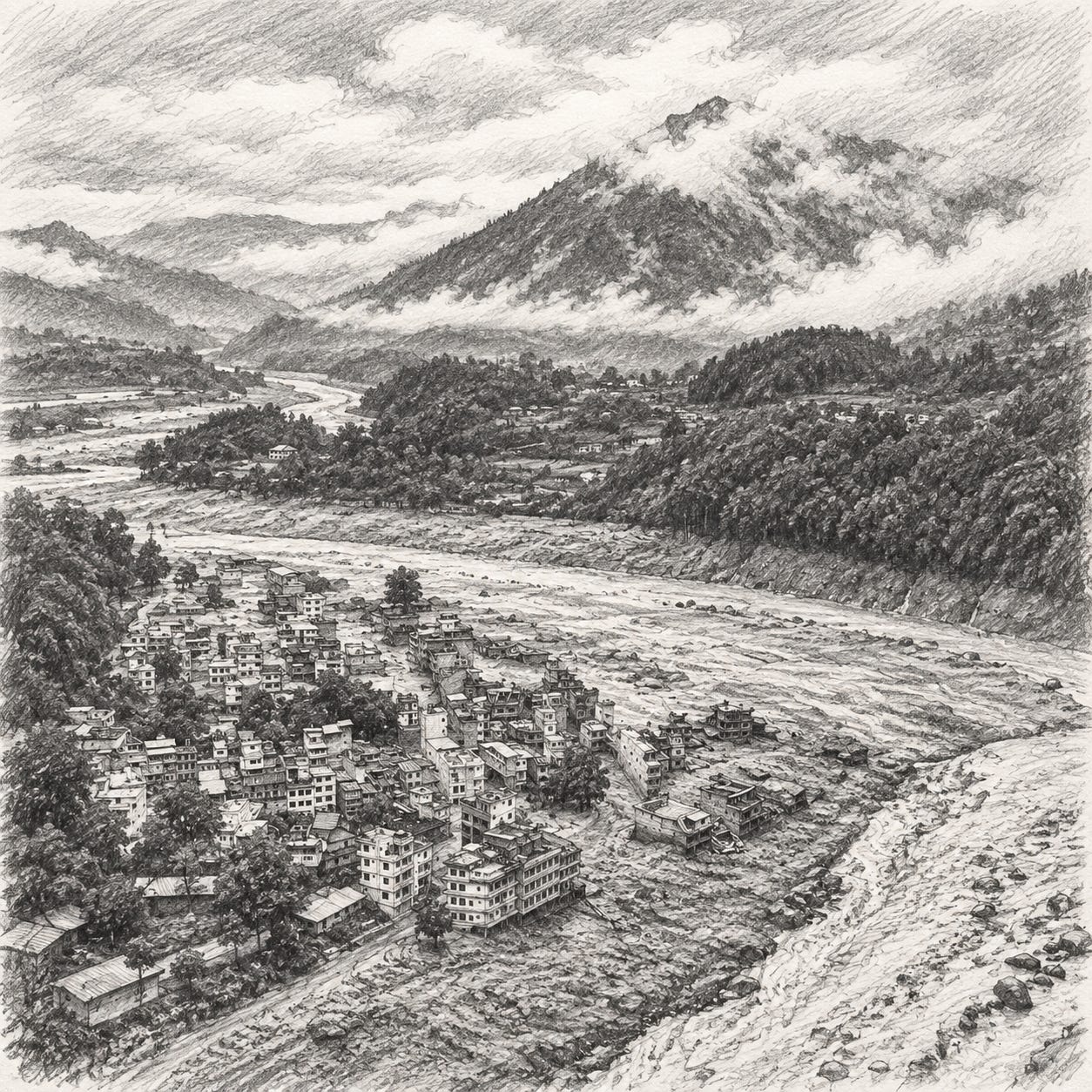 Martyrs' Day, Empty Cylinders & Ten Million Dollars in Transit 11.09.2026 23минNamaste, diaspora family. This is the third week since the Bhotekoshi came down, and the first in which the digest returns to its usual four sections. The flood is still in all of them.On Tuesday, Nepal marked one year since the police opened fire on students outside Parliament in Baneshwar. It was a public holiday. The families came to the old Parliament building; the Prime Minister did not. Meanwhile the diaspora has raised more than $10 million on GoFundMe alone, and a grandmother in Trisuli Bazar told a reporter she cannot afford milk for the child in her arms. A minister resigned over gas cylinders. Sauraha’s hotels are running at five percent. And on Saturday morning, Nepal play the UAE for the only place in the 2027 Asia Cup.The count, as of Friday morning: 1,385 dead and 5,130 missing.Where Things StandFigures from the National Disaster Risk Reduction and Management Authority as of 11am on Friday 11 September, unless stated:* Dead: 1,385. Chitwan 364, Nawalparasi East 228, Nawalparasi West 222, Nuwakot 199, Rasuwa 185, Gorkha 77, Dhading 70, Tanahun 38, and two who died in treatment in Kathmandu (The Tribune).* Missing: 5,130 on the authority’s wider count. The government’s narrower figure remains 3,916.* Identified and returned to families: 102 of 1,367 bodies and partial remains recovered by Wednesday (The Kathmandu Post).* Trishuli 3A: the search of the main tunnel was called off on 4 September, hours after last week’s edition went out. A seven-member team reached every section and found one more body and nobody else (The Kathmandu Post).* Power: 83 percent of supply restored in Rasuwa, 95 percent in Nuwakot; a 60-metre temporary bridge over the Tadi at Devighat (The Kathmandu Post).* A new warning, Friday: a landslide has dammed the Hunga Khola at Gudel in Solukhumbu. The river is now overtopping it toward the Dudhkoshi, and police have told people downstream to stay off the banks in case the blockage gives way (The Kathmandu Post).🌍 Diaspora & GlobalisationTen Million Dollars, and No Milk in Trisuli BazarNepYork went through 111 GoFundMe campaigns for the flood this week and found more than $10 million raised on that platform alone. Bhutanese Americans in Columbus, Ohio, had passed $105,000; a family appeal in Waratah, Australia, was near $70,000; campaigns in Edmond, Oklahoma, and Lexington, Massachusetts, stood at $59,000 and $51,000; Keshab Raj Seadie’s drive in New York was over $64,000 and going to the Prime Minister’s fund. Nepali Samaj Fort Wayne sent $22,000. A football club in Austin sent $2,000. The government’s two relief funds had taken in about $80 million by Monday. Of that, about $6.5 million had been released to the disaster authority. Which is how you get to Lila Devi Joshi, 60, in Trisuli Bazar, who lost her home, her shops and most of her family, and is now raising a sixteen-month-old grandson: “I don’t even have money to buy milk for the child.” Or Inam Tamang in Mailung, a heart patient whose wife has diabetes, whose road to a pharmacy no longer exists: “We cannot live by eating relief food alone. Tomorrow, the children have to go to school.” The money is not the problem. Getting it from a bank account in Kathmandu to a tent in Nuwakot is. If your community is deciding where its next collection goes, that is the question to put to whoever receives it (NepYork).A footnote on the newest channel. Cryptocurrency is still illegal to trade in Nepal, so a group including former US ambassador Scott DeLisi’s Engage Nepal, Polygon and Cross River Bank built a route around it: coins donated to NepalRelief.org are converted to dollars in the United States and wired to the Prime Minister’s fund by SWIFT, so no crypto ever crosses the border. Ripple has pledged $300,000 and the Solana ecosystem has raised about $167,000. As of Monday, $500 had actually arrived (The Kathmandu Post).New York, in Two WeeksThe cabinet confirmed on Thursday that Balendra Shah will be in New York from 22 to 26 September and will address the General Assembly on the 24th, his first trip abroad since taking office in March. He goes with a number. The Foreign Ministry put the cost of reconstruction at $4.78 billion on Friday: $57.67 million needed in the next six months, $4.71 billion after that, against a UN estimate of $158 million for buildings alone. “The total estimated requirement for reconstruction is approximately $4.78 billion,” said spokesman Lok Bahadur Chhetri. The Prime Minister also goes with a first result. The UN’s Loss and Damage fund has confirmed $20 million for Nepal under its start-up window, on proposals filed before the flood; the separate emergency appeal filed on 31 August is still waiting on the fund’s 26-member board, and small-island and African members have been pressing the developed-country members to convene. The Foreign Ministry is talking about a climate ambassador and a year-round negotiating unit, language that would have sounded ambitious a month ago. For readers in the New York area, the timing is deliberate: the Nepali American Business and Investment Summit runs at the JFK Marriott from 25 to 27 September with Foreign Minister Shisir Khanal as chief guest, so the government will be in the room with the diaspora that has just funded much of its relief effort (Business Standard, The Express Tribune, The Kathmandu Post, NepYork).In Brief: Two notes for readers in the United States, and one for New York.* The immigrant visa pause is over. We covered the January suspension of immigrant visas for nationals of 75 countries, Nepal included, when it happened. On 21 August, Judge Jeannette Vargas of the Southern District of New York struck it down, ruling that Secretary of State Marco Rubio had exceeded his authority, and the State Department confirmed on 1 September that the pause “is no longer in effect.” Cases refused under it go back to consular officers for a fresh look. That is not an approval, and other grounds for refusal still apply, but if your family’s case was frozen, it is moving again (NepYork).* The citizenship test may change. DHS has listed a proposed rule, “Protecting the Integrity of Naturalization through Enhanced Educational Standards,” on its regulatory agenda, with a draft pencilled in for December. It talks about clearer English and civics standards, possibly outsourcing the test to third parties, and “proper assimilation.” Nothing changes until a final rule is published, and that is a year away at least (NepYork).* Jackson Heights, and a book sale. Nepali businesses on Roosevelt Avenue ran a two-day fair last weekend in the car park of Gorkhali restaurant, with every dollar going to the Prime Minister’s fund; the organiser waived stall fees for vendors who gave away all their takings. Nepali authors in New York hold a relief book sale on 13 September (NepYork, NepYork).🏛️ Politics & GovernanceOne Year Since Baneshwar, Two Versions of ItTuesday was the first Gen Z Martyrs’ Day, a public holiday. Families of the dead gathered at the burned-out old Parliament in Baneshwar, where the shooting began on 8 September last year. Twenty-seven people died that day, 76 across the two days. Home Minister Sudan Gurung attended. Prime Minister Balendra Shah did not. Activist Pawan Khadka was taken into police custody after criticising the government’s record from the stage. Ganesh Chaulagain, whose son Shreeyam was a Grade 12 student, said an elected government “has no room left for excuses.” The government has declared 45 of the 76 dead martyrs: 42 protesters and three police officers. Who the other 31 were, and who answers for them, is where the two versions begin. KP Sharma Oli, in a video message, said 9 September was a day of “terrifying destruction” in which “criminal groups infiltrated the peaceful demonstration.” Pushpa Kamal Dahal called the whole thing “mysterious.” Congress president Gagan Thapa was the only party leader to ask for both days to be investigated equally, and to admit his own party’s part in what caused them. The Human Rights Commission and the Karki Commission both documented abuses on both days; neither set of recommendations has been fully acted on. Al Jazeera counts more than 900 people still jailed for the arson, unofficially 1,600. Gen Z activist Aayush Basyal notes that 25 of 29 activists invited to a constitutional amendment meeting in May stayed away, and warns of “a second wave of public disenchantment.” Liza Adhikari, 21, shot outside Parliament that day and still recovering from surgery in India: “Maybe, if I had listened to my parents that day, this wouldn’t have happened” (The Kathmandu Post, Al Jazeera, The Rising Nepal, Global Voices).If you read one long piece this week, make it the Kathmandu Post’s reconstruction of the five days when the Army’s Jangi Adda headquarters became the country’s political centre: the cabinet that met on the evening of 8 September and made no decision about 21 dead, the curfew that was not reissued until 8:30 the next morning, the Army deploying at 9pm without a formal order, the prime minister chosen by a Discord vote, and the midnight meeting at which the Army chief floated the former king as a “stakeholder” (The Kathmandu Post).A Minister Falls Over a Gas CylinderOn Wednesday, Industry, Commerce and Supplies Minister Gauri Kumari Yadav told the House Industry Committee that Kathmandu’s cooking-gas shortage would not end “until the industrialists are brought to heel,” proposed revoking the licences of all 58 gas bottling companies (”in a country like ours, we don’t need more than two”), and asked a fair question badly: “We sent 48,000 cylinders to Kathmandu the other day, but no one here has received more than 19,000 or 20,000. Where did the rest go?” The Federation of Nepalese Chambers of Commerce called the remarks “highly objectionable, irresponsible and unfortunate.” On Thursday she resigned, citing personal reasons, the third minister to leave Balendra Shah’s cabinet since it was formed in March. The shortage she was describing is real. Imports fell by more than a third between March and May when the Iran war tightened supply, and had only just recovered when the Prithvi Highway fell into the Trishuli at Krishnabhir on 30 August. The Oil Corporation says 63,383 cylinders reached the Valley over two days last week; the queues at the depots say otherwise. Commercial supply to restaurants and canteens has been suspended, a transport surcharge has taken a cylinder to Rs 2,165, and a “command post” of district officers, the corporation, the bottlers and the police now tracks trucks from dispatch to depot. The Post’s editorial on Friday asked the government to investigate the supply chain properly rather than blame the landslide, and to subsidise induction cookers. Yadav’s successor will inherit the same numbers (The Kathmandu Post, IANS, The Tribune, The Kathmandu Post, The Kathmandu Post).In Brief: Elsewhere in Singha Durbar.* Lamichhane wants a committee, and some manners. RSP chair Rabi Lamichhane asked the House on Wednesday to declare the flood a national climate disaster and to set up an all-party parliamentary committee to oversee recovery. He also asked for action against people abusing survivors online for criticising the state: “When people are in deep pain and facing an unexpected loss, they may even question God. How, then, can we expect them not to question the government?” (The Kathmandu Post).* Congress pushes its calendar. The ward-level conventions that were to open on 9 September now begin on the 19th, municipal rounds on the 23rd, regional on the 26th, with the 15th general convention itself still set for 2 to 4 October (Radio Nepal).* An adviser, and a bill. Finance Minister Swarnim Wagle has brought in Bishwo Parajuli, a veteran of the UN system with a disaster-management background, as honorary humanitarian adviser until mid-December. The House passed the Law Commission amendment bill without opposition on Friday and sits again on 15 September (myRepublica, Nepal News).💸 Economy & DevelopmentSauraha at Five PercentNothing happened to Chitwan’s jungle. Something happened to its bookings. Hotel occupancy in Sauraha, which has 125 hotels and beds for 8,000 people a night, is below five percent in what should be the start of the season. The 65-room Royal Tulip has had 80 percent of its reservations cancelled; the Soaltee Westend at Patihani has lost 40 percent through November. “Tourism has been hit because reports have spread internationally portraying the situation in Nepal as disastrous,” said Suman Ghimire of Jungle Safari Lodge. Pokhara’s hotels report up to 30 percent cancellations, and the Mustang Chowk bus park, which normally sends 24 coaches a day to Kathmandu, is sending none because the highway is cut. Lumbini’s Indian package market has gone quiet. September to November brings 40 percent of Nepal’s annual arrivals; the Post’s editorial reckons a 10 to 15 percent hit to the year’s receipts if the perception holds, on top of 207 hotels and restaurants damaged in the four flood districts, 199 of them destroyed. The perception is the part readers abroad can do something about. Kathmandu, Pokhara, Chitwan, Lumbini, the Annapurna and Everest regions are open and undamaged. Langtang, Gosaikunda, Helambu and the Rasuwa road are not. If someone asks you whether Nepal is safe to visit this autumn, that is the accurate answer (The Kathmandu Post, The Kathmandu Post, NepYork).Rs 723 Billion, and the First Rs 3 BillionThe rapid damage assessment by the Planning Commission and the disaster authority has landed at Rs 723 billion, about $4.7 billion, which is what the Foreign Ministry’s $4.78 billion figure is built on. Against it, the first international money with the word “climate” attached is the Loss and Damage fund’s $20 million, roughly Rs 3 billion. The education slice shows how the total is built: Rs 2.34 billion to replace 18 schools, 11 of them gone entirely, for more than 9,000 children, with Rs 105 million needed at once and the rest over years; five private-school associations have promised Rs 1 billion for a thousand scholarships through Grade 12 for children who lost parents. The Post asked the harder question this week, which is how a country that has to rebuild every few years is supposed to afford to build better. “Higher disaster risks mean increased cost of development,” said ICIMOD economist Mani Nepal, arguing that money spent on adaptation now is cheaper than the same money spent on reconstruction later. Hydrologist Anil Aryal made the point that infrastructure built this year will stand for 50 to 80 years in a climate nobody has modelled. And Geeta Pandey of KIRDARC described “a painful distance between an impressive legal framework and the reality faced by communities.” None of that is new. What is new is that the numbers are now large enough that someone in New York might listen (The Express Tribune, The Kathmandu Post, The Kathmandu Post).In Brief: The road, and two numbers from before the flood.* Krishnabhir, before Dashain. The Prithvi Highway has now been shut for two weeks at the slip. A 250-metre track cut into the hillside above the collapse is being gravelled, but Infrastructure Minister Sunil Lamsal admits “it is not a long-term solution.” The real plan is a 12-kilometre road on the far bank of the Trishuli between the surviving bridges at Benighat and Fishling, which the ministry wants open before Dashain in mid-October, and a tunnel study once the monsoon ends. Krishnabhir slid in 1999 and 2000 too (The Kathmandu Post).* IT is where the foreign money wants to go. Of 1,116 projects that received foreign investment commitments in the fiscal year to July, 727 were in information technology, worth Rs 5.8 billion; tourism was a distant second at 227, manufacturing had 63, energy four. If you are a Nepali abroad thinking about putting money into the country, that is where your peers already are (OnlineKhabar).* One exporter in 25. That is how many Nepali firms sell abroad through e-commerce, according to SAWTEE, which reckons garment exports alone could grow 25 to 35 percent if they did. The blockers are the usual ones: freight costs, no way to take a card payment from abroad, and no logistics partner to handle returns (The Kathmandu Post).⭐ Social & CulturalA Portal for the MissingBy Wednesday, 1,367 bodies and partial remains had been recovered and 102 had been given a name and returned to a family. That gap is now being worked from two directions. Nepal Police have taken 2,570 DNA samples, half from remains and half from relatives, with forensic teams from India, China, Singapore and South Korea helping to process them; spokesperson Abi Narayan Kafle says DNA “remains the only reliable option for badly damaged remains.” The other direction is a website. Samir Panthi of the Kathmandu firm Nowtrkit, with two engineers from the Indian face-recognition company FaceTagr, has built khozi.facetagr.com, where a family uploads a photograph of the missing person with their name, age, sex, last known location and any distinguishing marks. The system compares it against photographs of the recovered and returns five to ten candidates for a human to check. About 500 missing people have been registered and 90 bodies have been matched so far; the algorithm is 99 percent accurate on the living and considerably less so on the dead, for reasons that need no explaining. The 335 unidentified bodies buried at Devghat on 29 August were photographed and sampled first, so a match there can still bring someone home. This is one of the few things a relative abroad can do directly: the portal takes uploads from anywhere, and a DNA reference sample can be given by any close relative at a district hospital in Nepal (The Kathmandu Post).Oman for 60, UAE on Saturday, Nagoya Next WeekNepal’s cricketers bowled Oman out for 60 in Thursday’s ACC Premier Cup semi-final at Bayuemas Oval in Kuala Lumpur, defending 147 with 87 runs to spare and finishing the job inside 29 overs. That puts them into Saturday’s final against the UAE at 7:15am Nepal time, and the prize is bigger than the trophy: the winner takes the tournament’s only place at the 2027 Asia Cup. Nepal have won four of five matches here, losing only to Hong Kong, and hold an 18-14 edge over the UAE across formats, including both ODIs in Kirtipur earlier this year. Rohit Paudel’s anchoring and Dipendra Singh Airee’s record against the UAE in tight games are the reasons for optimism; a batting order that left its bowlers to defend 147 in a semi-final is the reason for caution. Rain is forecast. A week later the same core, with Airee as captain, flies to Japan for the Asian Games, where Nepal’s cricket group contains Afghanistan on 25 September and Japan on the 26th. The full contingent of 135 athletes in 21 sports, 57 of them women, was farewelled by Sports Minister Sasmit Pokharel on Thursday; kabaddi sends 24 and wushu 10. The Games open in Aichi-Nagoya on 19 September (myRepublica, OnlineKhabar, OnlineKhabar).In Brief: Schools, a screen, and a hospital bill.* Bidur went back to school. Sixty-five of Bidur Municipality’s 79 schools reopened on Wednesday, two weeks after the flood; five are destroyed and nine are still sheltering displaced families. “The children from flood-affected areas can attend whichever school is most convenient for them,” said Deputy Mayor Prabha Bogati. “They should not worry if they do not have a school uniform.” Around 600 children across Rasuwa and Nuwakot are still unaccounted for (The Kathmandu Post).* Elephants in the Fog, on a Kathmandu screen. The Licchavi Cinema Festival runs from 11 to 15 September at Licchavi House in Boudha, with Abinash Bikram Shah’s Cannes prize-winner alongside Wenders, Tarkovsky, Payal Kapadia and Deepak Rauniyar. “Nepal has produced films screened at Cannes and Berlin,” said curator Abishek Budhathoki. “Yet access to serious cinema on proper screens remains limited here” (Nepali Times).* No co-pay, no ID. The Health Insurance Board has waived co-payments and identification requirements for anyone seeking treatment in Rasuwa, Nuwakot and Dhading for the 90 days the three districts remain disaster crisis zones. Tell your relatives there (The Kathmandu Post).How to HelpThe verified list from two weeks ago still holds: the Prime Minister’s Disaster Relief Fund via opmcm.gov.np and nowhere else, Nepal Red Cross, and your NRNA national committee’s own channel rather than a forwarded link. Three additions this week:* Ask where it went. Roughly $80 million has been given to the government funds and roughly $6.5 million has reached the disaster authority. If your community gave, it is reasonable to ask your embassy or your NRNA committee what has been disbursed and to whom.* If someone is missing: register them at khozi.facetagr.com with a clear photograph, and arrange for a close relative in Nepal to give a DNA sample at a district hospital. Nepal Tourism Board hotline 1234 (toll-free in Nepal) or 1144.* Give to the school fund if you want something specific. The Rs 2.34 billion education bill and the Scholarship Bank for children who lost parents are the most clearly costed needs published so far.Our sponsor, belayat.uk, the UK Nepali community noticeboard, is still carrying relief appeals alongside its jobs, housing and events listings. If your group is organising a collection or a vigil, post it there.Next week: the cricket final, the Asian Games from the 19th, Indra Jatra from the 23rd, and the Prime Minister’s week in New York. We will keep the count, and we will correct anything here that turns out to be wrong.Until next week, stay connected.— The Nepali Diaspora Digest Teamnepalidiaspora.netAll figures in this edition are as reported by Friday 11 September 2026 and are expected to change. This is a public episode. If you would like to discuss this with other subscribers or get access to bonus episodes, visit www.nepalidiaspora.net
 -
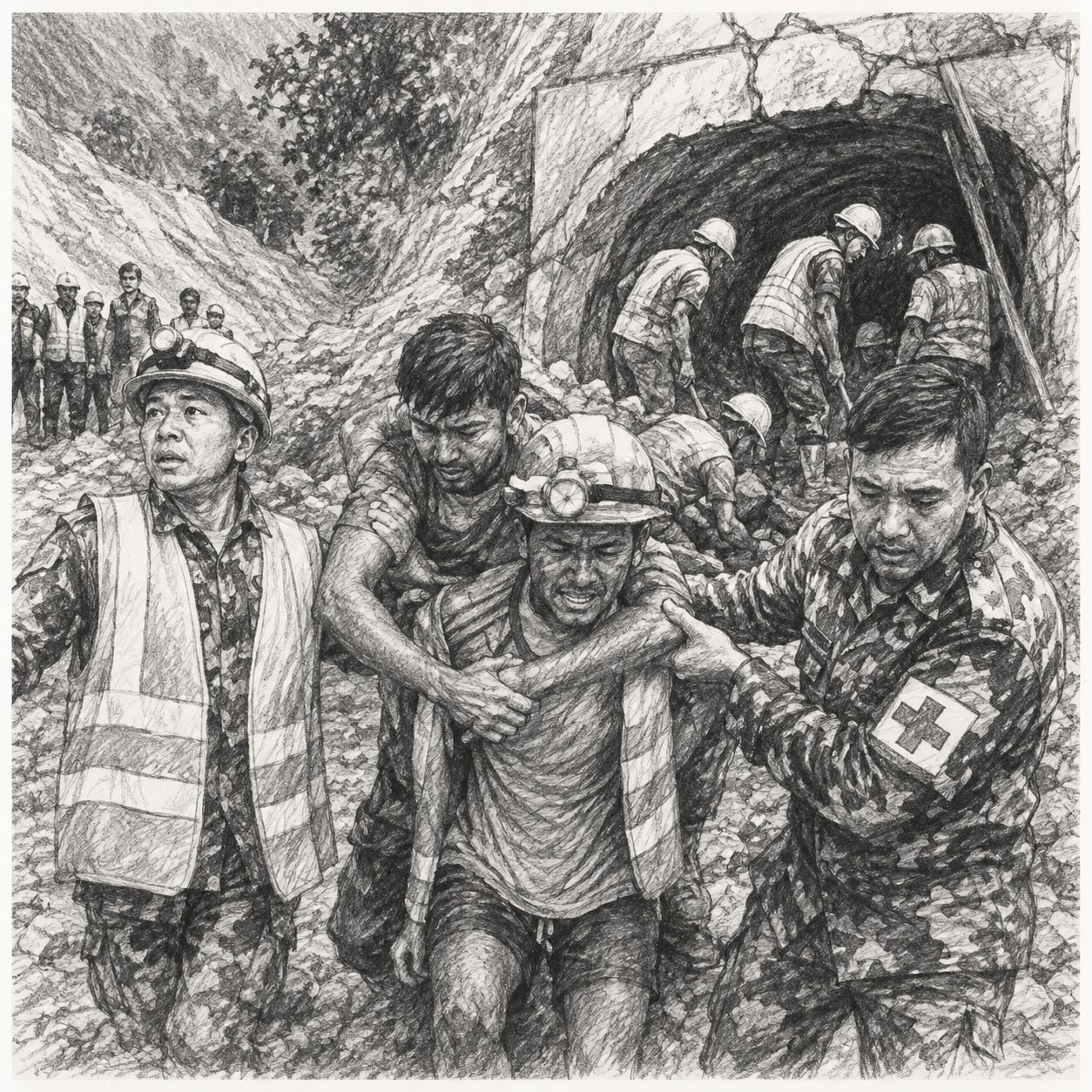 Nine Days Underground 04.09.2026 24минNamaste, diaspora family. This is the second week of the Bhotekoshi disaster, and the digest is still given over mostly to it.The count passed a thousand on Tuesday. By Thursday noon the national disaster authority had recorded 1,252 dead, and only 95 of those bodies had been identified and returned to a family. On Friday morning, nine days after the water came, soldiers dug through the last of the debris blocking a hydropower tunnel in Nuwakot and brought two men out alive. About 115 of their colleagues are still inside.This edition covers the search, the graves, a Parliament that turned on the government, a foreign minister who said “compensation” on Monday and stepped back from it on Friday, the first relief package for businesses, and the people carrying all of this: an 83-year-old priest in Rasuwa, a valley cut off for the second time in eleven years, and Nepalis from Leicester to Seoul who cancelled Teej and sent the money home instead.We have also let a small number of non-flood items back in as briefs, where they matter to readers abroad. Everything else waits.Where the Count StandsThe figures are still moving, and different bodies are still counting differently. This is how the week ran:* Sunday 30 August, 3pm: 788 bodies recovered; 2,502 missing (NDRRMA, via The Tribune)* Monday 31 August: 903 dead; 4,247 unaccounted for (NDRRMA, via The Kathmandu Post)* Tuesday 1 September: 1,003 dead; 3,916 missing (ABC News)* Wednesday 2 September: 1,204 dead; 1,114 bodies recovered (The Tribune; the Prime Minister to Parliament)* Thursday 3 September, noon: 1,252 dead; 4,216 unaccounted for; 95 identified (NDRRMA, via The Kathmandu Post)* Friday 4 September: 1,259 dead (ANI, via The Tribune)The “missing” figure is the one to treat with most care. The Prime Minister told Parliament on Wednesday that 3,916 people were out of contact. The disaster authority’s wider count, which includes everyone reported unreachable by a relative, has gone above 5,000. Both are honest numbers describing different things. Chitwan, more than a hundred kilometres downstream, still holds the largest share of the dead: 355 by Thursday. On the Tibetan side, Chinese authorities report 21 dead and 541 missing, figures we cannot check (The Kathmandu Post).🏔️ The SearchNine Days UndergroundAt about 7:30 on the morning of 26 August, Kabir Maharjan rang his wife from the Trishuli 3A hydropower project, where he had worked for seven years. An hour later the flood arrived. Down in the control room, Sanjay Sah, a 30-year-old mechanical foreman from Saptari, did what his job required. “I told everyone to run,” he said afterwards. “In doing that, my time was lost. In the end, I could not get out.” On Friday morning, after Nepali Army and Armed Police teams had dug through 50 to 60 metres of boulders and mud, both men walked out of the tunnel and were flown to Kathmandu in stable condition. “He has returned with a second life,” Hira Shobha Maharjan said. “We could neither eat nor sleep.” Sah believes three or four people near him may still be alive, with others deeper toward the powerhouse. Arnold Dix, the Australian tunnel engineer who led the Silkyara rescue in 2023 and is now advising in Nuwakot, has spent the week insisting that “silence is not evidence of death. It is only the absence of a signal.” About 115 workers are still thought to be in Trishuli 3A’s main tunnel, and roughly 500 across twelve projects. At Upper Trishuli 1, the largest construction site on the river, 557 of 1,433 people on site are still unaccounted for (Euronews, The Kathmandu Post).Graves With NumbersThe hardest arithmetic of this disaster is now identification. Of the 1,252 bodies recovered by Thursday, 95 had been matched to a name and given back. Nepal Police say around 400 are partial remains. The river carried people so far, and the monsoon heat is so unforgiving, that morgues in Chitwan filled within days. So the state has begun burying the unidentified in forest trenches outside Bharatpur under Red Cross protocols: each body in its own place, a tag fixed to a remaining limb, a sequential code beginning BHF-01, a concrete marker, a GPS fix, a photograph and a video record. A DNA sample is taken from every one before burial. Families of the missing can give their own sample at any district hospital, and if it matches, the body can be recovered and returned for proper rites. A 19-member Indian forensic team has been working alongside Nepal Police since Monday. Some families have objected that burial is not the Hindu way; others have performed cremation rites over kusha-grass effigies while they wait. Writing in the Kathmandu Post, geneticist Dibesh Karmacharya argued that this is the moment to build a single coordinated identification system, combining DNA with fingerprints, dental records and belongings, rather than improvising district by district (The Tribune, The Kathmandu Post).In Brief: Three things the search has taught us this week.* The satellites saw it coming. Geophysicist Manoochehr Shirzaei of Virginia Tech ran European Sentinel-1 radar data from 8 January to 18 August through the slope above Lhende Khola. The glacier and the rock beneath it were creeping at around 10 millimetres a month, and speeding up. “The acceleration is more important than the velocity,” he said. Nobody was watching that slope, because Himalayan warning systems are built for lakes bursting, not for mountains letting go (Gizmodo, ABC Australia).* The risk has not passed. Rain is continuing in the upper catchments and the Department of Hydrology and Meteorology kept the Bhotekoshi and Trishuli at high flash-flood risk on Thursday, with moderate risk on smaller rivers in 32 districts. The barrier lake that worried everyone last week drained slowly and was largely empty by 30 August (The Kathmandu Post).* Six hundred children. Education officials in Rasuwa count 280 students unaccounted for; Nuwakot counts 300 to 350. Twelve schools are gone entirely, 22 teachers and staff are missing, and in one ward of Amachhodingmo 58 parents are. “In some cases we have located surviving parents who cannot find their children,” said Bidur’s school inspector Navaraj Sapkota, “and in other instances surviving students are searching for missing parents” (The Kathmandu Post).🌍 Diaspora & GlobalisationStill Missing, and Coming HomeAround 590 foreign nationals from more than thirty countries remained unaccounted for as of Wednesday, most of them last known to be in Rasuwa on the Gosaikunda and Kailash routes; a further 300 have been rescued, 273 of them by Army helicopter. The American figure, which the State Department put at 90 last week, had come down to about 75 by Tuesday, with 14 confirmed safe and no confirmed American deaths. Thirty-three Latvians, 33 Britons, 38 Australians and 32 Canadians are still on the lists. On the Tibetan side, some 2,500 Kailash pilgrims have been flown out through Lhasa. The week’s quiet good news came at Tatopani on Thursday, when Chinese officials handed 114 Nepalis who had been stranded in Gyirong back across the border at Liping, most of them from Rasuwa, and three buses took them to Kathmandu and on to whatever is left of home. Another 33 are expected to follow. If your relative is among the missing, the Nepal Tourism Board hotline remains 1234 (toll-free in Nepal) or 1144, and your own foreign ministry is running casework (The Kathmandu Post, ABC News, The Tribune).What the Diaspora Did in Week TwoThe first week was vigils. The second has been money, and organisation. In Britain, Tamu Dhin UK has pledged more than Rs 10 million, part of it from a charity trail walk on 11 to 13 September; the Nepalese Doctors’ Association UK gave Rs 1.1 million, IME London gave Rs 1 million and waived fees on relief transfers, and Bexley Nepali Samaj raised £6,500 at a single vigil. The two rival NRNA UK committees are each raising separately, one of them describing its role as “watchdog” over the other’s money, which tells you something about the state of that organisation. In South Korea, about 60 Nepali groups are collecting; twenty migrant workers from Sudurpashchim pooled 920,000 won between them, and NRNA Korea is setting up a memorial space near Dongdaemun. “Those of us earning money abroad should help our homeland when it is going through such hardship,” one of them said. In Canada, Teej celebrations in Toronto, Brampton and Calgary were called off, and the Nepali Canadian Women’s Society of BC turned $15,000 of ticket sales into relief. Canberra cancelled its 400-person Teej on 6 September. And inside Nepal, schoolchildren in Achham, Kapilvastu, Rautahat and Kathmandu gave up their snack money, a few hundred rupees at a time (OnlineKhabar, The Korea Times, CP24, The Kathmandu Post).In Brief: Practical notes for readers abroad.* Where the money goes now. After a week of criticism, relief distribution in Rasuwa and Nuwakot was handed on 1 September from the security forces to local governments, working through six-party committees. The Prime Minister’s Disaster Relief Fund stood at about Rs 7.77 billion on Wednesday. The police warning about fake accounts and QR codes we carried last week still stands: take bank details only from the Prime Minister’s Office website (The Kathmandu Post).* The Prime Minister goes to New York. Balendra Shah will lead Nepal’s delegation to the UN General Assembly, his first foreign trip since taking office in March, to put the flood before the world as a climate case. The high-level debate opens on 22 September. Expect community events around it (The Kathmandu Post).* If you are in the United States, note the date. The new public charge rule takes effect on 18 September. From that day, immigration officers may weigh any means-tested benefit, including food or housing assistance, when deciding a green card or adjustment application, and applications postmarked on or after that date fall under the new test. If you are close to filing, talk to a lawyer this week (Federal Register).🏛️ Politics & GovernanceParliament Turns on the ResponseThe House gave Wednesday to the flood, and the government did not enjoy it. Nepali Congress parliamentary leader Bhishma Raj Angdembe accused ministers of having “got caught up in social media” while failing to reach communities in time, and said families searching for relatives had been verbally abused. Pushpa Kamal Dahal put it in a sentence: “The army was mobilised, but the people were not.” He also went after Balendra Shah’s manner in the chamber: “He comes and leaves without looking at anyone’s face; what kind of attitude is this?” UML’s Ram Bahadur Thapa proposed two task forces, one for foreign aid and one for reconstruction. The criticism had been building outside the House too. On Monday, 31 civil-society figures including Kanak Mani Dixit and former minister Bimala Rai Paudyal signed a statement attacking the “one-door” relief system for sidelining elected local governments and civil society, and asking for parliamentary oversight of the relief fund and unrestricted media access. The government had, in fact, already conceded the central point: relief distribution went to local governments the same day. The Prime Minister’s reply on Wednesday was numbers, 11,993 rescued and 1,114 bodies recovered, thanks to India and China, and one flat denial: that refusing foreign help “was never considered” (OnlineKhabar, OnlineKhabar, Swarajya).“Justice and Compensation,” Then a Step BackOn Monday, Foreign Minister Shisir Khanal told Kantipur Television that Nepal was “shifting our diplomatic framework from ‘aid’ to ‘justice and compensation’. This is not a matter of charity; it is a matter of legal and moral liability.” The Finance Ministry, he said, had written to the UN’s Fund for Responding to Loss and Damage asking for urgent release, since waiting for the fund’s board to meet in December “would be too late.” Finance Minister Swarnim Wagle has put the eventual rebuilding cost at up to Rs 762 billion, around $5 billion. Indian and international outlets read the interview as Nepal demanding money from India, China and the United States, the three largest emitters, and by Friday Khanal was clarifying: no compensation had been asked of any of the three, and “our call has been for the global community to look at this disaster from the perspective of climate change.” The retreat is understandable. India has flown in more than 70 tonnes of relief and a forensic team; China has promised 30 bridges. But the argument is not going away. Barshman Pun of the opposition communists wants the Prime Minister to “assert our rights and demand compensation” in New York, and the science published this week, showing the slope was measurably accelerating for months, will be cited on both sides (The Week, The Tribune).In Brief: Elsewhere in government.* The phones. Nepal Telecom lost 83 towers and more than 60 kilometres of fibre at Timure; Ncell lost three sites outright. For days, calls needed several attempts and dropped mid-sentence. An Integrated Disaster Communication Plan was drafted after the 2015 earthquake. It was never implemented (The Kathmandu Post).* Ten thousand megawatts, on the record. Energy Minister Biraj Bhakta Shrestha tabled the Nepal–India long-term power trade agreement in the House on Thursday, the 2024 deal that frames Nepal’s plan to export 10,000MW within a decade. Law Minister Sobita Gautam tabled the UN high-seas biodiversity treaty alongside it (Radio Nepal).* Congress, Saturday. The Nepali Congress central committee meets on 5 September to discuss the flood and preparations for the party’s 15th general convention (Nepal News).💸 Economy & DevelopmentThe First-Phase PackageThe cabinet on Friday approved what it called the first phase of a recovery package for businesses in the Bhotekoshi basin. Firms whose trucks, buses or equipment were destroyed can deregister them and import replacements duty-free within six months; goods lost in transit can be replaced the same way. The tax filing deadline for the affected is pushed to 11 November, destroyed commercial property becomes a full business deduction, individuals directly affected are exempt from income tax on their estimated returns for the year just ended, and companies’ relief donations count as CSR spending. Banks must offer a one-time restructuring to flood-hit borrowers, and loans for replacement equipment are capped for a year at base rate plus half a percentage point. Insurers are told to pay up to 50 percent on a preliminary survey. The scale of what is being insured is coming into view: claims filed with Nepali insurers reached Rs 25.87 billion across 583 policies by Monday, most of it hydropower. The Independent Power Producers’ Association puts hydropower damage at Rs 25 to 30 billion; the Electricity Authority says “hundreds of billions.” Both are guesses until someone can reach the sites (The Kathmandu Post, Insurance Business Asia, The Kathmandu Post).Power Exports Halved, Trade Over a 4,650-Metre PassNepal was exporting about 1,000MW to India and Bangladesh when the river came down. It is now sending around 650MW, and the Bangladesh line, which was fed by the Chilime and Trishuli plants, is “effectively at zero,” acting NEA chief Dirghayu Kumar Shrestha said. A further 73.75MW from three western projects cannot be sold to India because Delhi’s approvals lapsed over the summer and were not renewed, a reminder that last year’s Rs 29.32 billion export record depended on paperwork as much as water. Trade with China is in worse shape. Rasuwagadhi is a riverbed, Tatopani closed to cargo on 31 August over landslide risk, and everything now goes through Korala in Mustang, a crossing at 4,650 metres with twelve customs officers, no X-ray machine, no scanner and no yard. It cleared Rs 14.4 billion of imports last year against Rasuwagadhi’s Rs 45.73 billion. Around 375 containers are being rerouted there from Kerung and Nyalam, freight has risen from Rs 250,000 to Rs 300,000 a container, and the road to Kathmandu takes two to three days. “We don’t have basic customs infrastructure or sufficient manpower,” said Mustang customs chief Bidur Chudal. Dashain is five weeks away (The Kathmandu Post, The Kathmandu Post).In Brief: The bill keeps arriving.* Cooking gas. The Prithvi Highway caved in at Krishnabhir on Sunday, three days after the flood first cut it. Kathmandu uses 35,000 to 40,000 LPG cylinders a day and is getting about 24,500. A cylinder is expected to rise Rs 100 on transport costs alone, and the Restaurant Association says its members will start closing if supply does not improve next week. A bypass track above the collapse is planned (The Kathmandu Post).* #NepalCalling. The tourism ministry launched a campaign on Wednesday to stop autumn cancellations, after one Thamel hotel lost 20 percent of its bookings in a week. August arrivals were 85,444, down 3.65 percent on last year, and September to November normally brings 40 percent of the year’s visitors. Kathmandu, Pokhara, Chitwan, Lumbini, Annapurna and Everest are open. Langtang, Gosaikunda, Helambu and the Tamang Heritage Trail are not (The Kathmandu Post).* Where 8,317 households will live. Around 15 settlements were destroyed outright, and the National Planning Commission has begun a master plan for rebuilding them somewhere safer. “People cannot return to settlements that have been swept away,” said disaster authority chief Dharmaraj Upreti. Baburam Bhattarai and former reconstruction chief Sushil Gyewali both warned, from earthquake experience, that moving people far from their land does not work (The Kathmandu Post).⭐ Social & CulturalThe Priest of BharkhuThulo Bharkhu and Sano Bharkhu sit hundreds of metres above the Bhotekoshi in Rasuwa, high enough that the water never reached the houses. It reached the people anyway: 33 residents of the two villages were on the road, at the border, or at work below when it came. Their chief Buddhist priest, Singi Nurpu Lama, is 83. Among the dead are his eldest son, Chhelewangdi Tamang, and two daughters-in-law, Chhengku Tamang and Pratima Lama. None of their bodies have come back. Buddhist rites are performed on the seventh day, and so, without bodies, he has been going house to house performing them: a framed photograph draped in white cloth, butter lamps, incense, food set out for the dead. In the seventh week there will be a combined ceremony for all 33, “so their souls can rest in eternal peace.” Asked how the village decided to stop waiting, he said: “It was not an easy job to accept that our missing family members are no more. But how long could we wait?” For every family abroad whose relative is on a list rather than in a morgue, that is the question of the coming month (The Kathmandu Post).Langtang, Cut Off AgainThe Langtang Valley was not touched by the flood. Its river is a different one. But every road, bridge and trail that connected it to Dhunche has gone, and the valley’s 450 residents in 116 households, nearly all Tamang, are as isolated as they were after the 2015 avalanche buried the old village and killed around 300 people. It now takes two days on foot to reach Dhunche. The health post has medicines until about Dashain. Residents estimate food for a month to six weeks, and are already worried about cooking gas, salt and rice. Fifteen to twenty trekkers are still waiting for helicopter seats out. “There are no roads left,” said local MP Mohan Acharya. “It is impossible to bring supplies by vehicle.” Langtang took until 2018 to recover last time, and last year it drew 53,000 visitors. The October and November season, which pays for the year, is now in doubt not because the trail is damaged but because nobody can reach its start (The Kathmandu Post).In Brief: The wider picture, and two things that carried on.* The appeal. The government and the UN have agreed a four-month Humanitarian Flash Appeal. OCHA counts 84,270 people affected across 17 municipalities, with 10,000 households in acute need; UN Women says 43,000 women and girls need immediate help and warns of trafficking risk in the camps. WHO is watching for dengue and scrub typhus. “Disaster meets inequality,” said UN Women’s Christine Arab. “The people already left behind are often the first to be swept away” (UN News).* Cricket. Nepal beat hosts Malaysia by six wickets at Bangi on Thursday in the ACC Premier Cup, bowling them out for 103 with Karan KC taking 4 for 23 and Arjun Kumal making an unbeaten 45. It was a second straight win after Bahrain. Hong Kong is next, on Sunday (OnlineKhabar).* Asian Games. Nepal is sending 140 athletes in 23 sports to Aichi–Nagoya, which opens on 19 September. The athletics squad of six includes Santoshi Shrestha and Purnalakshmi Neupane; the aim, set before the flood, was a first gold and a double-digit medal count (OnlineKhabar).How to HelpLast week’s edition carried a full list of verified channels, and all of it still holds. Three updates:* The official fund is the Prime Minister’s Disaster Relief Fund. Bank details and QR codes are on the Office of the Prime Minister’s own page at opmcm.gov.np and nowhere else. Nepal Police are still reporting fake accounts and cloned QR codes.* Distribution on the ground is now run by local governments in Rasuwa and Nuwakot rather than the Army. If you are funding a specific village, your contact there should now be dealing with the municipality.* Diaspora channels named this week: NRNA UK’s GoFundMe (under president Rajendra Pudasaini), Tamu Dhin UK, the Nepalese Doctors’ Association UK, NRNA Korea, and the Nepalese Community Society of Vancouver Island. Give through your own community’s official page, not a forwarded link.If someone you know is missing: Nepal Tourism Board 1234 (toll-free in Nepal) or 1144; Tourist Police +977 9851289445. Families of the missing can give a DNA reference sample at any district hospital in Nepal, or through your foreign ministry’s casework team; several embassies are collecting them. This is a public episode. If you would like to discuss this with other subscribers or get access to bonus episodes, visit www.nepalidiaspora.net
 -
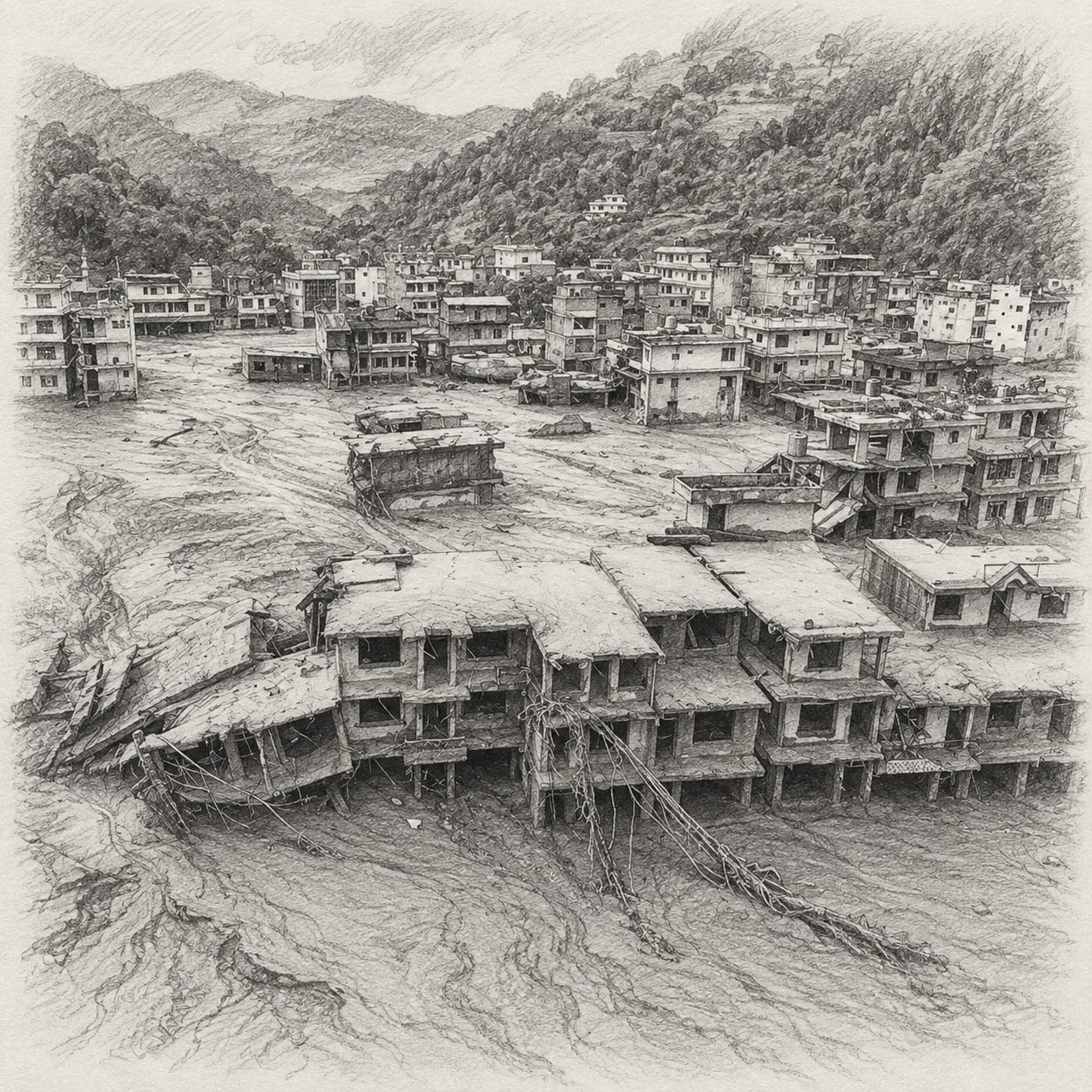 The Morning the Mountain Let Go 28.08.2026 21минNamaste, diaspora family. There is only one story this week, and it is the hardest one this digest has had to write.At about twenty to nine on Wednesday morning, a piece of glacier roughly six hundred metres wide came off the flank of Langtang Lirung and fell more than a kilometre onto the valley floor. What it set loose tore down the Bhotekoshi and Trishuli, took the border town of Timure off the map, and has killed more people than any single disaster in Nepal since the 2015 earthquake. Many of you have spent this week refreshing casualty lists and calling numbers that do not ring.This edition is given over entirely to what happened, what it has cost, what we still do not know, and how to help. We have set aside everything else.A note: this is a developing storyThe figures below are still moving, and that affects how you should read them.Search teams cannot reach much of the affected area. Bodies are being recovered up to 150 kilometres downstream, days after the event. And different agencies are counting different things, which is why totals published on the same afternoon do not match. Here is how the count has moved:The last two rows are worth pausing on. On the same Friday afternoon, Nepal Police and the national disaster authority published counts differing by 49 dead and more than 1,400 missing. Both are internally consistent — each district breakdown adds up to its own total. They are counting differently: bodies recovered and logged by police, versus deaths confirmed through the disaster authority’s reporting chain, with “missing” defined narrowly in one system and broadly in the other.Neither figure is wrong, and neither is final. Higher numbers are already circulating in international coverage, and the toll is likely to rise as access improves and the missing are reclassified.We have used the NDRRMA figures as our anchor, named the agency and the time beside each number, and flagged where sources disagree. Please do the same when you share this. And please avoid circulating unverified lists of names — families are identifying relatives from photographs this week, and a wrong name travelling fast through a WhatsApp group does real harm.🏔️ What HappenedTwelve Hundred Metres, Straight DownThe trigger was not rain. Satellite analysis indicates a section of glacier roughly 610 metres wide sheared away near Langtang Lirung and fell about 1,200 metres to the valley floor. The impact shattered the ice and mobilised rock, water and sediment into the Lhende Khola, a tributary that rises inside Tibet about 20 kilometres northeast of the Rasuwagadhi border post. The US Geological Survey has been clear that the seismic signal registered that morning, equivalent to a magnitude 5.2, was produced by the landslide itself and not by an earthquake, Nepal’s foreign minister had initially said the reverse, an early error worth remembering as more claims circulate. What arrived downstream was not a flood in any ordinary sense. Debris moved at roughly 50 metres per second, around 180 km/h. A helicopter pilot described waves of five to six metres. It reached Gyirong Port on the Chinese side seven minutes after the collapse (The Kathmandu Post, ThePrint).The River Carried the Dead a Hundred MilesThe single most important thing to understand about this disaster is where the dying happened. Timure, Syabrubesi and the border settlements were destroyed — but only 12 bodies had been recovered in Rasuwa district itself by Friday. The rest were found far downstream, along the Trishuli and the Narayani, in districts most people would not associate with a Himalayan glacier at all. Of the 538 deaths confirmed by the disaster authority at 3pm Friday, 221 were recovered in Chitwan, 134 in Nawalparasi East, 46 in Gorkha, 37 in Nuwakot, 33 in Dhading, 28 in Tanahun and 27 in Nawalparasi West. Read that carefully: these are the places bodies were found, not where people lived or died. Most were swept from the border area and carried a hundred miles and more. Seven bodies have since been recovered from rivers in Maharajganj and Kushinagar in Uttar Pradesh, across the Indian border. It is a grim measure of the force involved, and it is why the search will run for months (The Kathmandu Post, Outlook India).The People Who Went InMore than 9,000 security personnel were deployed in the first days, roughly 4,200 from the Nepali Army, with police deployment reported at 8,380 — though these counts moved as well, the disaster authority’s early updates putting the total at 7,415. By Friday they had rescued or assisted 1,473 people across Nuwakot, Rasuwa and Dhading, at least 351 of them lifted out by helicopter from valleys where the road had simply ceased to exist. Some of those closest to it never had the chance to respond at all: 45 Nepali Army personnel, 28 Nepal Police, 13 Armed Police Force officers, 15 customs staff and 4 immigration officers are themselves among the missing, most of them at their posts at the border complex when the wave came through. Downstream, hospital and morgue staff in Chitwan and Pokhara have been working past capacity for three days, and recovery teams are still walking the banks of the Trishuli and the Narayani, finding people a hundred miles from where they were swept in (The Kathmandu Post, The Kathmandu Post).In Brief: The threat that has not fully passed.* The barrier lake. The avalanche dammed the river behind it, forming a lake of roughly 2 million cubic metres at the confluence of the Chhochen Khola and Purepu Tsangpo, with another 3 million expected to drain in over three days (Al Jazeera).* And here the accounts diverge. Rasuwa Chief District Officer Narendra Pariyar said on Friday that the Nepali Army had informed him the lake had breached. The government’s spokesperson, Education Minister Sasmit Pokharel, said there was no information that the dam itself had collapsed and that China had indicated no immediate major threat. Both statements were made the same day. Treat the situation as unresolved (The Kathmandu Post).* What a breach would mean. A sudden release would send “a fast-moving debris-laden flood with very little warning for downstream communities,” warns Pawan Bhattarai of Tribhuvan University — into a valley now full of rescuers, survivors camped near the water and hydropower crews in tunnels. Helicopters are staged at Dhunche for aerial reconnaissance (Al Jazeera).🌍 Diaspora & GlobalisationWho Is MissingOf the 977 people the disaster authority listed as missing on Friday, 517 are foreign nationals and 127 are Nepali citizens living abroad who were home visiting. Rasuwagadhi is the overland gate to Kailash Manasarovar and the road toward Gosaikunda, and late August puts pilgrims, trekkers and returning families on that route in numbers.Nepal Tourism Board’s tally of missing tourists runs to 540 foreigners from 31 countries inside Nepal, plus around 260 more in Tibet’s Gyirong county — roughly 667 travellers in total. The reported breakdown includes 288 Indians, around 100 Chinese, 65 Americans, 53 Ukrainians, 51 to 55 Malaysians, 33 Britons, 25 Canadians and 25 to 34 Australians, with smaller numbers from Singapore, South Korea, Russia, Germany, Latvia, South Africa, Japan and New Zealand, and sixteen further countries reporting at least one. Note the ranges: the US figure was reported as 90 earlier in the week before the tourism board settled on 65, and Australia’s foreign minister gave 34 where the board lists 25. There has been better news too — 117 foreign tourists were rescued from Rasuwa, among them 85 Indians, 16 Chinese, 9 South Koreans, 2 Americans and 2 Italians. If someone you know was on that road, the Nepal Tourism Board lines are 1234 (toll-free) and 1144, and Tourist Police can be reached on +977 9851289445 (The Kathmandu Post, Reuters factbox).Support from AbroadAway from the rescue itself, the organised response from the diaspora moved quickly. The NRNA convened an emergency meeting and committed Rs 50 million in immediate assistance, formed a relief and rescue committee under President Dr Hemraj Sharma, and moved to deploy a medical team for primary treatment and medicines; founder president Dr Upendra Mahato pledged a specialist team of doctors with supplies. National committees in the UK, Canada, the Netherlands, Switzerland, Australia, Japan, Seychelles, Saudi Arabia, the UAE and China have all pledged funds. In Canberra, the Australia–Nepal Friendship Society held a candlelight vigil on the Parliament House lawns on Friday evening; NRNA New South Wales called one in Sydney for Saturday; and a large Nepali cultural celebration planned for September in Australia was cancelled outright, its budget redirected to relief. In the United States, the Embassy in Washington and the Consulate General in New York issued a joint appeal. Nepal’s diaspora numbers more than 2.1 million, and a good deal of the early fundraising and medical coordination this week ran through it (OnlineKhabar, The Australia Today, NepYork).In Brief: Around the response.* Help from outside. Pledges include £5 million from the UK, $5 million each from the Asian Development Bank and South Korea’s Doosan Group, €2 million from the EU, $2 million from the UN’s emergency fund, $1 million each from South Korea and Sri Lanka, $500,000 and a disaster response adviser from the United States, and CHF 1 million from the IFRC. India has delivered more than 47 tonnes of material across two consignments; Bangladesh sent tents, dry food and body bags (UN News).* Eyes from orbit. The International Charter on Space and Major Disasters and the EU’s Copernicus system have both been activated — which is how the glacier collapse was identified as the cause so quickly (Al Jazeera).🏛️ Politics & GovernanceThe Warning That Never CameNepal has a flash-flood warning system on this river. It did not fire. The reason is uncomfortable and worth understanding, because it determines whether this happens again. The network is built around water-level gauges designed for monsoon flooding — a river rising over hours, which is the hazard Nepal has historically faced. A glacier collapse produces a wall of debris moving at 180 km/h, and the upstream stations that might have caught it were swept away before they could send anything. Worse, the hazard did not begin in Nepal at all. It began roughly twenty kilometres inside Tibet, on a mountain no one had been asked to watch. After the July 2025 Rasuwa flood, also from the Chinese side, Nepal built a channel to exchange information about that river; it covered water, not mountains. As a Kathmandu Post column put it this week, Nepal is far better at tracking floods “once they enter monitored rivers than detecting the high-mountain hazards that create them,” and any serious cross-border system has to extend beyond weather to river blockages, glacial-lake instability, landslides and ice-rock avalanches. Xi Jinping has publicly called for improved warning systems. Whether that becomes a bilateral mechanism with instruments on it, or a sentence in a communiqué, is the question worth watching (The Kathmandu Post, Nature India).The State’s Response, and What Parliament Wants NextThe mobilisation has been substantial. Figures here move too — the disaster authority reported 7,415 security personnel deployed in its early updates, and later counts put the total above 9,000, including some 4,200 from the Nepali Army. By Friday, 1,473 people had been rescued or assisted across Nuwakot, Rasuwa and Dhading. The government has declared the area a disaster zone for three months, ordered free medical treatment through the health ministry, the army and government hospitals, and directed the Finance Ministry to prepare a relief and rehabilitation package for affected households and businesses. Rs 10 million each has gone to Rasuwa and Nuwakot and Rs 5 million to Dhading as immediate district grants. Prime Minister Balendra Shah and his entire council of ministers are depositing a month’s salary into the Prime Minister’s Disaster Relief Fund, and Shah travelled to Nuwakot on 27 August. A Rescue Coordination Centre is running at Tribhuvan International Airport under Law Minister Sobita Gautam. In Parliament, the Prime Minister’s scheduled question hour was set aside so the House could turn to the disaster; members on both benches pressed for faster search and recovery, clear compensation, and a real cross-border early-warning mechanism rather than another committee. The response has been creditable. The preparedness that should have preceded it is what is now under scrutiny (The Kathmandu Post, OnlineKhabar).In Brief: Context that makes this harder to file away as bad luck.* We were told. ICIMOD, headquartered in Kathmandu, published two reports in March this year warning that accelerating glacier melt across the Hindu Kush Himalaya was raising the risk of exactly this class of disaster. Glaciers in the region have lost up to 27 metres of ice thickness since 1975, and the rate of loss has doubled since 2000 (Down To Earth).* The glue is failing. “Permafrost has been the cryospheric glue that’s held the rock and the ice and the glaciers together for millennia,” says Alton C. Byers of the University of Colorado Boulder, “and now we’re getting increasing evidence that it’s being weakened by warming trends” (PBS NewsHour).* A one-sided picture. Almost everything known about the Tibetan side comes from Chinese state media, which has focused on military relief; residents’ own videos from Gyirong were removed from Chinese platforms. Around 260 travellers and 558 people in total are reported missing there — figures we cannot independently check (Al Jazeera).💸 Economy & DevelopmentFour Hundred and Thirty-One Megawatts, GoneSix weeks ago this digest reported Nepal’s best year ever in electricity: Rs 29.32 billion in exports and an Rs 18.76 billion trade surplus in power. A good portion of the machinery behind that number is now under silt. The Nepal Electricity Authority counts twelve operational projects totalling 431.1 megawatts knocked out — 406.1 MW of hydropower plus a 25 MW solar plant — with Rasuwagadhi (111 MW) the worst hit, its powerhouse and substation reported destroyed, alongside Chilime, Upper Trishuli 3A, Sanjen, Trishuli, Langtang, Mailung and Devighat. Transmission took a beating too, including the Chilime 220 kV hub tower. Counting projects under construction, the damaged total reaches 901.1 MW. The Energy Ministry puts the loss at about 8 percent of national generation capacity; the NEA’s own framing is above 12 percent of a hydro fleet of roughly 3.2 gigawatts. The timing is the problem: Nepal’s run-of-river plants generate least in the dry winter months, exactly when this capacity would have mattered most. Kul Man Ghising has warned that prolonged outages at major plants put nationwide load-shedding back on the table, and the authority is reported to be weighing additional imports from India. For households at home, and for everyone abroad paying their bills, that is a consequence of this flood that will arrive in January (OnlineKhabar, myRepublica).Rasuwagadhi Is a Riverbed, and Dashain Is Six Weeks Away“There is no infrastructure left there; everything has been reduced to a riverbed,” says Jayant Kumar Agrawal of the Nepal Overseas Exporters and Importers Association. He is describing Nepal’s principal overland trade gate to China. Somewhere between 200 and 300 containers were destroyed or swept away, along with hundreds of container trucks and vehicles from the customs yard — including more than 700 vehicles imported specifically for Dashain and Tihar. Nepal brought Rs 45.73 billion of goods through Rasuwagadhi last fiscal year, and Rs 31.74 billion came from China in Shrawan alone. Fourteen customs officials are missing. The crossing had only partly recovered from the July 2025 flood that destroyed the border bridge, and none of Nepal’s three main China trade points were fully operational even before Wednesday. Traders are rerouting through Korala in Mustang, where daily traffic has jumped from one or two containers to eight or ten — but transport costs roughly double, prices are expected to rise around 50 percent, and the customs office there is running ten staff against eighteen sanctioned posts. The sea route via Kolkata takes six weeks. If you send money home for the festival, expect it to buy less this year (OnlineKhabar, myRepublica).In Brief: The bill, so far — and every figure here is preliminary.* The headline number. The government’s initial estimate of infrastructure damage is Rs 200 billion, around $1.3 billion, explicitly described as preliminary with no full assessment yet completed. Businessman Binod Chaudhary has suggested the eventual cost could reach $5 billion (OnlineKhabar).* Roads and bridges. At least 22 concrete bridges and five Bailey bridges were washed away, and the Department of Roads says the entire 42-kilometre road from Betrawati to the Rasuwagadhi border has been destroyed at multiple points. Replacement Bailey bridges are already going in (OnlineKhabar).* The rebuild money. The World Bank has signalled up to Rs 25 billion in emergency assistance, the largest single commitment so far (Nepal News).⭐ Social & Cultural“Beautiful Timure Was Reduced to Ruins”The people who lived through it were, for the most part, at work. Raju Budhathoki, a customs agent from Manthali in Ramechhap, was asleep in Timure when the ground moved. “I was asleep when the whole hillside suddenly started shaking as if there had been an earthquake,” he said from a hospital bed in Trishuli; he ran in the clothes he was wearing and tore his hand open on a police post fence. Prakash Gautam, another customs agent, from Gokarneshwar in Kathmandu, heard the rumble and then lost the light entirely as the market went under. He ran without knowing where. Airlifted out on Thursday morning and taken to Bidur, he said simply: “The injury does not matter. At least I survived.” Tulsi Bahadur Bhandari from Dolakha was caught in the black mud and thrown sideways into the hillside by the current — “if the current had not thrown me towards the slope, I would not be alive today.” Kapil Pakhrin watched police posts, customs offices, hotels, shops and parked vehicles go past him. One agent described bodies scattered in the water and a town that no longer existed: “beautiful Timure was reduced to ruins” (The Kathmandu Post, Nepal News).The Quiet Crisis in BharatpurBecause the river carried the dead so far, the hardest logistical problem of this disaster is not rescue but identification. Morgues across the affected districts hold thirty to fifty bodies between them; Pokhara’s facilities, built for 88, were already holding 93 brought in from downstream. “By the numbers, we are already above capacity,” said Kaski Chief District Officer Kuman Singh Gurung. Authorities have converted an unused institute building on Vidhyut Road in Bharatpur-10, Chitwan into a temporary facility for around 250 bodies, cooled to 2–6°C with air conditioning and dry ice; Devghat’s electric crematorium is the fallback if that fills. Remains keep for only ten to fourteen days even refrigerated, so police are photographing, fingerprinting and taking DNA samples, recording clothing, jewellery and tattoos, and circulating photographs publicly so families can compare them against missing-person reports. DNA goes to the Nepal Academy of Science and Technology and the Police Central Forensic Science Laboratory. Where no one comes forward, bodies will be buried with a tag number so they can be matched later. For families abroad, this is the practical reality: identification may take weeks, it may require a DNA sample from a relative, and free accommodation is being arranged for families travelling to Chitwan to search (The Kathmandu Post, Outlook India).In Brief: Two last notes.* The autumn season, precisely. The Nepal Tourism Board advises postponing travel along the Galchhi–Nuwakot–Rasuwa–Syabrubesi corridor. But the geography matters: the flood came down the Bhotekoshi, while the main Langtang Valley trekking trail follows a different river, and the walking route above Syabrubesi is largely intact. The damage is on the road corridor. Langtang’s season runs October–November, which gives repair crews some weeks. The overland route to Kailash Manasarovar via Kerung is finished for this season. If you are booked, talk to your operator before cancelling — Langtang’s guides and teahouse families rebuilt once already after 2015 (operator advisories).* The programmes that were cancelled. Nepali community organisations from Sydney to Washington have called off September cultural events and redirected the money to relief. If your local society does the same, that is why (The Australia Today).How to HelpFirst, a warning worth reading before you give anything. On 27 August, Nepal Police issued an alert about scams targeting flood donations. They describe fake bank accounts set up under the Prime Minister’s Disaster Relief Fund name, counterfeit QR codes copying government formats, bogus pages and groups on Facebook, WhatsApp, TikTok, Instagram and Viber, phishing calls offering to “register” people for relief in exchange for personal details, and links built to harvest one-time passwords. Their advice is simple: take account details only from the Prime Minister’s Office official website or its verified accounts, never trust a QR code or account number that arrives in a forwarded message, never share a PIN or OTP with anyone, and if a message claims a relative urgently needs money, call that person directly before sending a rupee. Suspected scams go to the Nepal Police Cyber Bureau. Fundraising fraud clusters in the first 48 to 72 hours after a disaster, which is exactly where we are (The Kathmandu Post).With that in mind, these are the channels we were able to verify independently:* Prime Minister’s Disaster Relief Fund — the official government fund, covering rescue, treatment, relief, rehabilitation and infrastructure restoration. Bank details and QR codes are published on the Office of the Prime Minister’s own page: opmcm.gov.np. Take them from there and nowhere else.* Nepal Red Cross Society — more than 200 staff and volunteers already working in the affected districts, with a donation portal of its own. The IFRC has released emergency funding through its disaster response fund and is accepting donations too.* Direct Relief — rated A+ by CharityWatch and four stars by Charity Navigator, with 90 percent of its cash budget going to programmes and a cost of $5 to raise each $100 (EIN 95-1831116). It has a dedicated Nepal floods response (Charity Navigator).* GlobalGiving — four stars from Charity Navigator; its Nepal Flood Relief Fund passes money to vetted local partners on the ground.* Save the Children — A− from CharityWatch, four stars from Charity Navigator, and long established in Nepal.* Also accredited against all twenty BBB Standards for Charity Accountability and currently raising for Nepal: the American Red Cross, Catholic Relief Services, International Medical Corps, Oxfam America, Project HOPE, UNICEF USA and World Relief (Give.org).* NRNA — through your own national committee, using that committee’s official channels rather than a link someone forwarded you.If you would rather check something yourself before giving, both CharityWatch and the BBB’s Give.org have published guidance specific to this disaster, and the Kathmandu Post has a running list of verified channels.If someone you know is missing: Nepal Tourism Board on 1234 (toll-free) or 1144; Tourist Police on +977 9851289445. Contact your own foreign ministry as well — several are running dedicated casework for this event. If you are asked to provide a DNA reference sample, that is a normal part of the process described above, not a sign of bad news. This is a public episode. If you would like to discuss this with other subscribers or get access to bonus episodes, visit www.nepalidiaspora.net
 -
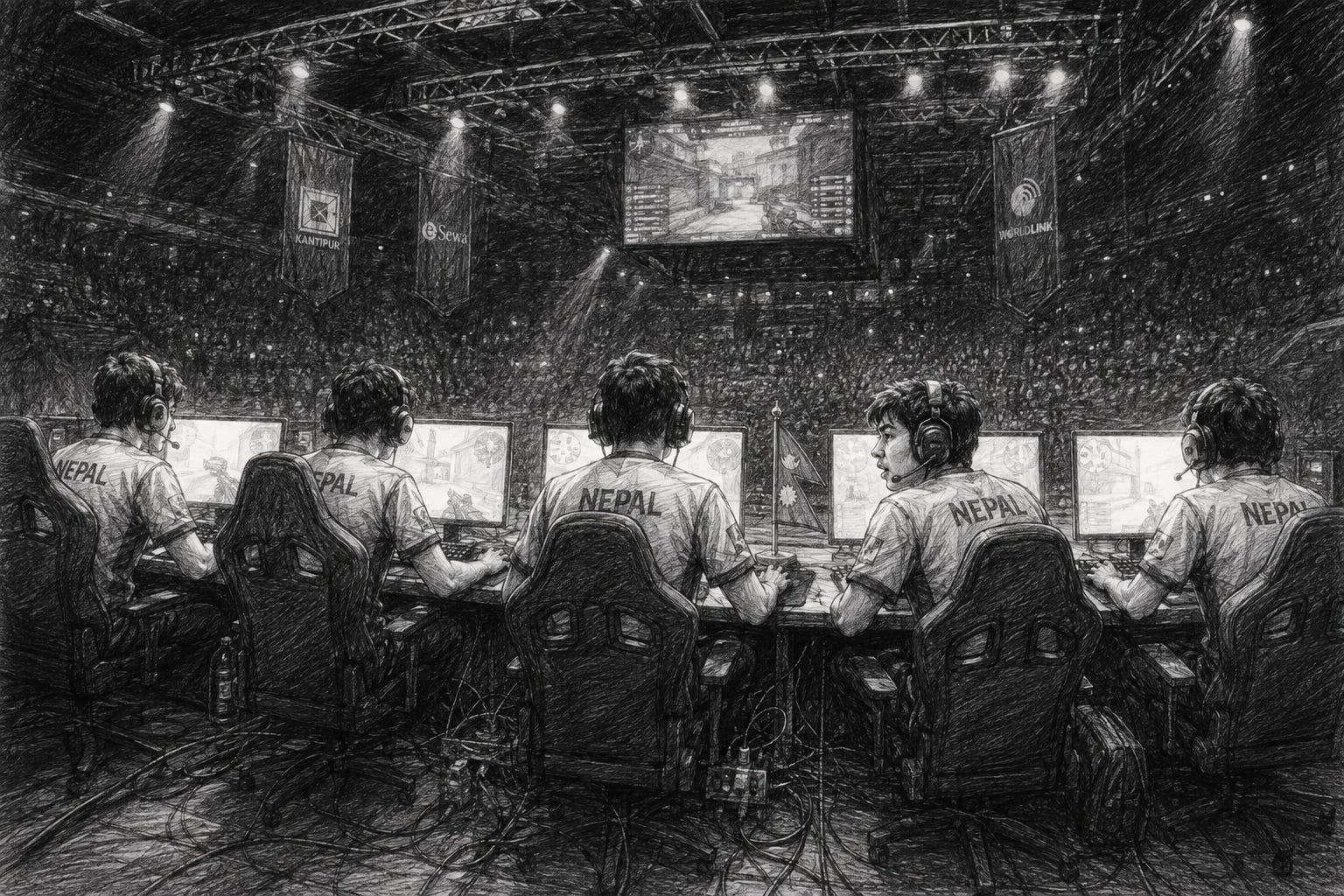 America Pulls the Rug, Gold Breaks Again & Congress Splits in Two 21.08.2026 25минNamaste, diaspora family. This was a heavy week, and the heaviest news lands squarely on our own people: Washington has formally ended Temporary Protected Status for Nepalis, leaving thousands of families who have built lives in America since the 2015 earthquake without legal footing. Closer to home, gold set yet another record, the Nepali Congress is now heading for two rival conventions, and the monsoon has claimed 85 lives. There is better news too, from Guangzhou and from a football pitch. Let’s get into it.🌍 Diaspora & GlobalisationThe US Ends TPS for NepalisIt’s official, and it is the hardest news this newsletter has carried in a while. On 15 August, the Department of Homeland Security confirmed that Temporary Protected Status for Nepal is terminated , ending a designation granted on 24 June 2015 in the aftermath of the Gorkha earthquake. Around 12,700 Nepalis held TPS before the phase-out began and roughly 5,500 have since adjusted to permanent residency , which, by simple subtraction, leaves something in the order of 7,000 people exposed. DHS has told those affected to make immediate arrangements to depart the US. Nepal is one of 13 countries named in the same action. The remaining routes , family or employment sponsorship, or asylum , all carry a far higher evidentiary bar. If this touches your family, get proper legal advice now rather than later. (The Kathmandu Post, Nepal News)Guangzhou Delivers: An 85% Rule and a Rs 1 Trillion BondBetter news from the 11th NRNA Asia-Pacific Regional Conference, held in Guangzhou from 14 to 16 August. Finance Minister Swarnim Wagle announced that the Securities Board of Nepal has drafted amended regulations letting government–NRN joint ventures raise up to 85% of paid-up capital through public offerings denominated in foreign currency. One caveat worth holding onto: the amendment has gone to the finance ministry and still awaits Cabinet approval, so nothing is in force yet. The vehicle is the NRN Nepal Development Fund, targeting a minimum of Rs 10 billion , 5% government, 10% founding promoters, 85% open to diaspora investors, with individual stakes from Rs 100,000 to Rs 100 million. More than 500 delegates also endorsed a “Diaspora Bond” worth Rs 1 trillion annually for infrastructure, and restated the two demands that never go away: NRN citizenship rights, and voting rights for Nepali citizens abroad. Years of lobbying, one Cabinet signature from becoming real. (The Kathmandu Post, Kantipur)In Brief: The recruitment freeze ends, and two quieter changes that will touch your paperwork.* The recruitment shutdown is over. Agencies called off all protest activity on 17 August after talks with the Ministry of Youth, Labour and Employment, averting a total halt to deployments that was threatened for 23 August. The ministry committed to amending the Foreign Employment Act within two months; new service fees will be set only once that law is revised. Workers currently pay Rs 150,000–500,000 for Gulf and Malaysia placements and up to Rs 1.2 million for Europe. (The Kathmandu Post, The Kathmandu Post)* A Passport Act amendment debated on 18 August would let private firms collect biometric data from Nepalis abroad , currently the preserve of embassies. The case for it is stark: Japan’s Nepali population has reached 342,000, up from 97,000 in 2021, yet the embassy has grown from three diplomatic staff at its opening 61 years ago to just four today. RSP lawmaker Rima Bishwakarma warned the bill “lacks clear standards for preventing the misuse of sensitive personal data.” (OnlineKhabar, The Kathmandu Post)* The Foreign Ministry has finalised a Rs 150 million procedure to rescue and repatriate stranded Nepalis, allowing up to Rs 1.2 million per person. It is aimed at those who travelled irregularly and therefore hold no insurance , the group most exposed in Southeast Asian scam compounds, from which around 860 Nepalis were recently rescued in Cambodia. (OnlineKhabar)🏛️ Politics & GovernanceTwo Conventions, One PartyThe Nepali Congress is now openly heading in two directions at once. Gagan Thapa’s Central Working Committee resolved on 19 August to hold the 15th general convention on 2–5 October, moved back from an earlier 9 September date, deploying 85 election officers across 77 districts with ward conventions now set for 9 September itself. The next day, the Deuba-aligned faction met at Dr Shashank Koirala’s Maharajgunj residence and resolved to petition the court to stop the whole process, arguing it cannot proceed while the Supreme Court rehears the party-legitimacy dispute it agreed on 6 August to review. Thapa’s offer was conciliatory , “If there are concerns about irregularities, bias or doubts over membership, I am ready for an open discussion” , but the machinery on both sides is now moving independently. (The Kathmandu Post, OnlineKhabar)Bagmati Flips as the Oli–Dahal Deal BitesThis is the week the Oli–Dahal power-sharing directive of 11 August stopped being a piece of paper. Bagmati Chief Minister Indra Bahadur Baniya of the Nepali Congress resigned on 17 August rather than face a floor test after UML withdrew support; on 20 August, UML’s Kiran Thapa was appointed in his place on the claimed strength of 63 lawmakers , a claim that got RPP’s provincial parliamentary leader expelled, since the party’s central leadership said it had authorised no such support. In Koshi, the Congress pulled its 29 lawmakers to the opposition benches on 19 August, forcing Chief Minister Hikmat Kumar Karki to a confidence vote. The same day, Karnali’s Mangal Bahadur Shahi survived his trust vote 21–13 with two neutral , 21 being the bare minimum in a 40-member assembly , and Sudurpaschim’s Khagaraj Bhatta won more comfortably, 31–15. One province changed hands, three more governments were put to the test, all inside a single week. (The Kathmandu Post, OnlineKhabar, The Kathmandu Post)In Brief: A religious turn, a summons, and an investigation that reaches the inner offices.* At its national gathering in Sukedhara, the Deuba faction adopted a five-point declaration promoting Sanatan religion as a national identity , replacing a draft that had described Nepal in multi-religious terms with no religious-identity clause. It is a break with the Congress’s secular line, and it drew objections from Bimalendra Nidhi and Krishna Prasad Sitaula. Deuba’s own framing was blunt: “I am a Hindu, I am a Hindu, I am a Hindu.” (The Kathmandu Post, Nepal News)* Speaker Dol Prasad Aryal has scheduled a direct question-and-answer session with Prime Minister Balendra Shah in Parliament for 26 August, resolving the standoff over his absence. Every parliamentary party gets at least one question, with up to 15 more allocated by party strength. Expect him to be pressed on his remark that Nepal had also encroached on Indian territory. (The Kathmandu Post)* The CIAA has widened its asset investigation to the personal secretaries of three former prime ministers , Rajesh Bajracharya (Oli), Bhanu Deuba (Deuba) and Ganga Dahal (Dahal) , writing to more than 20 agencies for banking, property and shareholding records. It is the first sign the accountability drive is reaching the money-handling entourages rather than only the principals. (The Kathmandu Post)💸 Economy & DevelopmentGold Breaks Its Record AgainIf you thought Rs 300,000 a tola was the ceiling, think again. Fine gold hit Rs 313,400 per tola on 20 August, up an extraordinary Rs 9,300 in a single day from Rs 304,100 the day before, according to the Federation of Nepal Gold and Silver Dealers’ Association. Silver climbed to Rs 4,855. The path was not a straight line , gold actually fell Rs 2,700 on 19 August before spiking , but the direction is unmistakable, and it is roughly Rs 5,500 above the record set only nine days earlier. International markets are driving it, with gold quoted around USD 4,512 an ounce. For families financing a wedding or remitting for jewellery ahead of the festivals, the arithmetic keeps getting worse. (Khabarhub, OnlineKhabar)The IMF’s Verdict: Stable, But Watch the CooperativesNepal has completed its first IMF-supported programme in nearly two decades, and mission chief Sarwat Jahan delivered the assessment on 20 August. The headline numbers are genuinely good: inflation down from 7.7% in FY 2022/23 to 1.7% in the first half of FY 2025/26, and international reserves up from nine months of import cover to more than twelve. She credited modernised monetary policy, stronger bank supervision, fiscal transparency and upgraded anti-money-laundering frameworks , achieved through government transitions, two earthquakes and the floods of 2024 and 2026. But she flagged savings and credit cooperatives as an ongoing vulnerability, which will not surprise anyone who has followed that story, and named private investment, job creation and governance as the unfinished work. “Macroeconomic stability,” she said, is “only a baseline rather than the ultimate destination.” (The Kathmandu Post, Nepal News)In Brief: Profits without lending, investment without capital, and one very large dam.* Nepal’s 20 commercial banks earned Rs 69.78 billion in FY 2025/26, up 32% , but almost entirely from bad-loan recoveries and lower provisioning rather than lending. Net interest income rose just 1%, the non-performing loan ratio worsened to 5.35% from 4.51%, and roughly Rs 1.5 trillion of excess liquidity sits idle while industries run at 42% capacity. As Bankers’ Association president Santosh Koirala put it, the growth is “almost entirely driven by notable recoveries of bad loans.” (The Kathmandu Post)* Foreign investment commitments collapsed 84% in the first month of FY 2026/27 , just Rs 3.77 billion approved, against Rs 24.10 billion a year earlier. The number of projects actually rose to 191 from 127, so the collapse is in ticket size, not appetite: last year’s figure was inflated by a single Rs 20.45 billion meat-processing project with no equivalent this year. IT led on volume with 128 projects. (OnlineKhabar)* The 420 MW Tila-2 project in Kalikot, Karnali reached financial closure on 17 August , Rs 70.07 billion, funded by eleven banks with Everest Bank as lead, expected to generate 2,318.79 GWh a year. Notably, 20% of shares are reserved for project-affected residents and the general public. (The Rising Nepal)⭐ Social & CulturalThe Monsoon Has Taken 85 LivesNepal Police figures released on 15 August put the monsoon death toll at 85 between mid-April and 14 August , 35 in landslides, 26 by lightning, 19 in floods, four in heavy rain and one in an avalanche , with nine missing, 196 injured and 1,735 families affected. The worst single incident was at Thabang in Rolpa, where a landslide destroyed 12 houses in Kotalbara, burying 13 people , 10 bodies recovered, three still missing. Days later a landslide in Jajarkot killed four more and cut off around 150 people, in a district still rebuilding from the November 2023 earthquake that killed 154 across Jajarkot and Rukum West. By 18 August, 691 people from more than 450 households were sheltering in camps in Bheri Municipality, where doctors treated 90 flu and fever patients in a single day. “Rainwater has contaminated almost all drinking water sources,” said public health inspector Nisha Thapa. (The Kathmandu Post, The Kathmandu Post, The Kathmandu Post)The Diaspora Paid the Medical BillsHere is what our community does when the state doesn’t. Aashish Rai, a midfielder from Itahari injured playing for Nepal, was left with a mishandled injury needing rehabilitation in Bangkok and further surgery , while ANFA sat financially paralysed by the FIFA suspension. So overseas Nepali football clubs simply organised the money themselves. Malaysia-based N Penang FC, Himalayan FC and Nepbourne FC raised about Rs 1.2 million; Nepal United FC in Australia gave Rs 81,000; Spice Purbeli FC in Japan has pledged a share of the proceeds from its tournament on 30 August. With a GoFundMe alongside, it has come to roughly Rs 2 million so far. The National Sports Council managed Rs 150,000, with another Rs 100,000 promised. Rai’s response says everything: “What should I make of Rs 150,000?” Meanwhile 19 boys at the ANFA academy hostel in Lalitpur are living on rice, lentils and plain biscuits. (The Kathmandu Post, The Kathmandu Post)In Brief: A world-stage finish, a worsening outbreak, and a farewell.* Horaa Esports finished eighth at the PUBG Mobile World Cup grand finals in Paris, taking 109 points across 18 matches with the placing undecided until the very last game. They banked USD 127,500, about Rs 19.4 million. Better still, Shital Rai , “SleepY” , was named the tournament’s second-place MVP with 31 eliminations, his second consecutive appearance on the World Cup MVP list. (OnlineKhabar, OnlineKhabar)* Japanese encephalitis has now killed at least 16 people, with 63 confirmed cases among 878 acute encephalitis cases across 22 districts, as of 17 August. Jhapa has the most deaths at five. Every one of the 16 who died was unvaccinated, and the outbreak is moving westward. If you have relatives in the Tarai, this is worth a phone call. (Radio Nepal)* Nirmal Purja will be buried in the United Kingdom, where his wife and daughter live, in a service restricted to family, friends and invited guests , expected on 26 August, though the family has not formally announced it. Elite Exped has asked that no independent programmes be organised around it. A private goodbye for a very public man. (Kantipur)Let’s connectEnjoying this issue? 📩 Share it with a friend & let’s keep Nepalis worldwide in the loop! Got thoughts? Hit reply, we’re all ears! Or let us know what you think via our Feedback form or follow us on Facebook | LinkedInP.S. Got a story or issue you’d like us to cover next week? Drop us a reply, we’re building this space together.About Nepali Diaspora Digest:The Nepali Diaspora Digest connects the global Nepali community with curated news, insights, and stories that matter most. Join us as we celebrate and explore the diverse voices and achievements of Nepalis worldwide.Partner shout outbelayat.uk: helping Nepalis connect in the UK on jobs, housing, events and finding local Nepali owned businesses This is a public episode. If you would like to discuss this with other subscribers or get access to bonus episodes, visit www.nepalidiaspora.net
 -
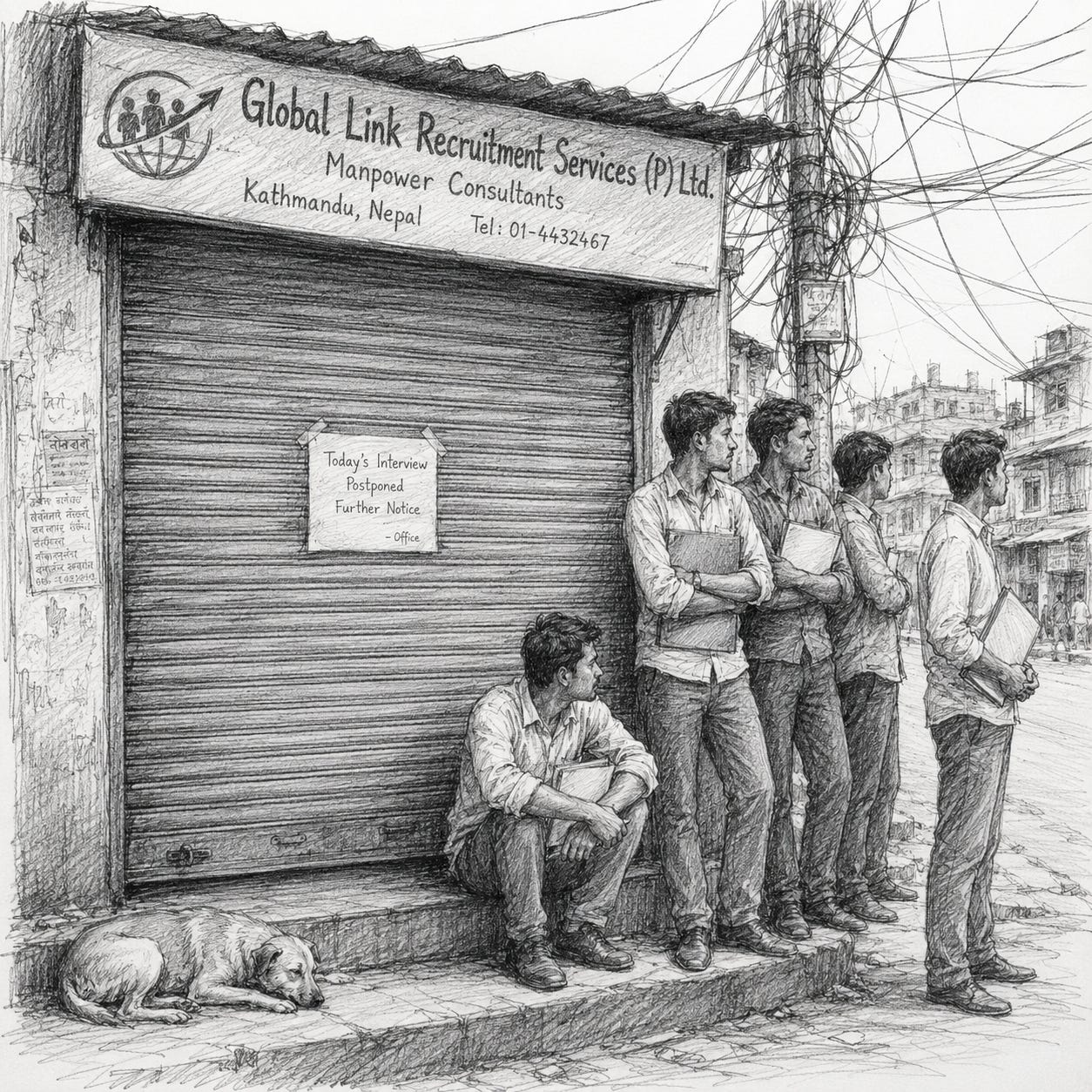 Gold Hits Rs 300,000 as Recruiters Halt All Hiring 14.08.2026 23минNamaste, diaspora family. It’s been a week of things stopping and things soaring; the agencies that send Nepalis abroad have downed tools entirely, gold has blown past Rs 300,000 a tola with festival season still weeks away, and Sher Bahadur Deuba is booked on a Thursday flight home into a money-laundering investigation he left behind in February. There’s grief in here too: the tribute runs for Broad Peak are still going. Let’s get into it.🌍 Diaspora & GlobalisationThe Recruitment Pipeline Grinds to a HaltFor the first time in years, the machinery that moves Nepalis abroad has simply stopped. The Nepal Association of Foreign Employment Agencies suspended all overseas recruitment from 7 August, after a 15-day ultimatum to the government expired without movement. Their 15-point list is long, withdraw disciplinary action against 771 manpower companies, build a “scientific” service-fee structure, amend the Foreign Employment Act 2007, replace the widely ignored “free visa, free ticket” policy, rein in airfares, and post labour attachés wherever 5,000 or more Nepalis work. The immediate trigger was blunter: Rs 50,000 fines slapped on 39 agencies on 4 August for routing workers through Indian airports. The freeze lands on an already shrinking flow, 406,404 new labour permits in FY 2025-26, down 19.7% on the previous year. (The Kathmandu Post, The Kathmandu Post)San Francisco’s Consulate Closes for GoodIf you’re on the US West Coast and have paperwork pending, this one is urgent. The Consulate General of Nepal in San Francisco issued its final public notice on 7 August: every passport, visa and consular service ends on 31 August, with permanent closure from 1 September. Anyone who filed on or before 6 July has been urged to collect their passport before the shutters come down. The closure is part of a wider Foreign Ministry decision to shut several diplomatic missions, and it leaves one of the largest concentrations of Nepalis in America i.e. California with no local post at all. At a moment when US immigration paperwork errors carry unusually high stakes, that is not a small loss. (Nepal News)In Brief: Three stories about the cost of leaving, and where Nepalis are leaving to.* A Kathmandu Post investigation from Rukum East traced two families who spent Rs 13.5 million and over Rs 10 million each paying around Rs 8.5 million in agent fees alone to route their sons to the US via Dubai and Brazil. Both young men arrived in January 2025 and were detained; both have now spent roughly 19 months inside. Agent fees for the “donkey route” have climbed from around Rs 800,000 to Rs 1 million a decade ago to nearly Rs 10 million today. (The Kathmandu Post)* Shanta Kumar Shrestha, 36, of Sindhupalchok and Nischal Tamang, 25, of Chitwan were killed by a train in Bacău, Romania in the early hours of Sunday 2 August, while crossing the tracks with colleagues to reach a 24-hour store. Two others survived. Romania is now a major European destination for Nepali workers, European permits have risen 21-fold in a decade, and the Gulf’s share of Nepali migration has fallen to 64%. (Nepal News, Nepali Times)* The NRNA European Regional Conference opened in Dublin on 10 August, gathering community leaders and national coordination council representatives from across the continent, timely, given that Europe is now where the diaspora is growing fastest. (Nepal News)🏛️ Politics & GovernanceDeuba Comes Home, and the Congress Fight ReopensSher Bahadur Deuba lands at Tribhuvan International at 12:25 on 13 August, five and a half months after leaving on 25 February. The timing was deliberately moved from a late-night slot so his supporters could fill the airport in daylight. He returns with the Department of Money Laundering Investigation still pursuing him and his wife, former foreign minister Arzu Rana Deuba, arrest warrants were issued on 7 April, Interpol declined Nepal Police’s Red Notice requests, and the Supreme Court then blocked execution of the warrants on jurisdictional grounds. Days earlier, the same court reopened the war over who actually leads the Nepali Congress, granting a review of the April ruling that recognised Gagan Thapa as president. Thapa stays in post for now, but the Deuba camp has shelved its breakay-party plan and is calling for the convention process to pause until the court rules, with ward conventions due to begin on 18 August. (The Kathmandu Post, The Kathmandu Post)Balen Shah Finally Opens the DoorSince taking office on 27 March, Prime Minister Balendra Shah had refused to meet foreign ambassadors one-to-one, an unusual, deliberate freeze that became a running question about whether an outsider could run a conventional foreign policy. On 11 August it ended. Shah received Indian Ambassador Naveen Srivastava and Chinese Ambassador Zhang Maoming in separate meetings at Singha Durbar, and both arrived carrying invitations from their prime ministers. Talks with India covered unblocking stalled Indian-funded projects, the Janakpur–Ayodhya rail link and Buddhist circuit connections; talks with China covered development partnership and Beijing’s “sensitivities.” Srivastava added a personal nudge: “Since I am retiring at the end of September, it would be a great pleasure if you visit India by then.” Shah committed to nothing beyond going “at an appropriate time.” (The Kathmandu Post)In Brief: A missing treaty, a backroom carve-up, and four names entered into the national record.* Foreign Minister Shisir Khanal told parliament on 10 August that the government has no clear information on whether Nepal even holds official copies of the 1816 Sugauli Treaty or the 1950 Treaty of Peace and Friendship. Searches of the national archives, the Department of Archaeology and the Narayanhiti Palace Museum turned up nothing. The treaty is the documentary foundation of every Nepali claim over Kalapani, Lipulekh and Limpiyadhura. (The Kathmandu Post)* KP Sharma Oli and Pushpa Kamal Dahal “Prachanda” issued a five-point directive on 11 August setting out how they will share provincial power, governments formed on assembly seat share, ministries distributed proportionally, the party without the chief ministership picking first. Under the three-point agreement reported on 7 August that sits behind it, UML leads Koshi, Bagmati and Lumbini and the CPN leads Karnali and Sudurpashchim, with Madhesh and Gandaki still unsettled. (Khabarhub, Spotlight Nepal)* The cabinet on 11 August declared four people killed in last month’s Tarai unrest as martyrs: Om Prakash Mehta, Jaya Prakash Mehta and Rabindra Kumar Mehta of Sunsari, and 15-year-old Ganesh Kumar Yadav of Siraha. A Himal Southasian investigation found the Armed Police Force discharged roughly 25 live rounds during the 26 July confrontation in Dewanganj. Curfews and restrictions remain in force in Sunsari and other towns across Madhesh. (myRepublica, Himal Southasian)💸 Economy & DevelopmentGold Blows Past Rs 300,000 a TolaIf you were planning to send money home for jewellery this festival season, brace yourself. Fine gold hit Rs 307,900 per tola on 11 August, up Rs 6,400 in a single day, and up Rs 11,000 across just three trading days. The metal climbed back above the Rs 300,000 mark on Sunday 9 August, jumping Rs 4,800 in a single session, and has kept going. Silver moved with it, reaching Rs 4,780 a tola. At Nepal Rastra Bank’s selling rate of Rs 152.79 to the dollar on 10 August, a single tola of fine gold now costs about USD 2,015. For remittance-receiving households, where gold has always been the default savings vehicle and the standard wedding and Dashain gift, this is a genuine squeeze arriving at precisely the wrong moment on the calendar. (Nepal News)The Cooperative Depositors Nobody Is CountingThe government has started paying savers back, but only at the 29 cooperatives formally declared “troubled.” The National Campaign for the Protection of Cooperative Depositors says 619 cooperatives have affected members and more than 500 have stopped returning deposits entirely without ever being classified, which means their savers have no route to a refund at all. Since May, the Problematic Cooperatives Management Committee has returned or settled Rs 710 million for around 11,000 depositors, prioritising the smallest balances. The scale of what sits behind it is sobering: a parliamentary investigation found 40 cooperatives alone carried Rs 87.89 billion in liabilities, including Rs 71.30 billion of public deposits. Police have arrested 669 people over cooperative embezzlement in a decade; 1,540 suspects remain absconding. A great deal of that trapped money is remittance money, parked by families chasing better interest than the banks offered. (The Kathmandu Post)In Brief: Where the money went, and where it isn’t going.* For the first time ever, Nepal imported more silver than gold by value, Rs 32.74 billion against Rs 29.15 billion in the fiscal year to mid-July, with silver volumes up 108% to 104.29 tonnes while gold volumes actually fell. The largest single share, roughly a third, came from Dubai, cleared through customs as “silver powder.” (The Kathmandu Post)* Nepse lost Rs 70 billion in market value over the week, sliding 35.45 points to 2,650.09 as 11 of 13 sub-indices fell. Only hydropower and trading finished up. As analyst Ajay Singh Thapa put it, “over the past three or four years, investors have not received adequate returns.” (The Kathmandu Post)* 76,172 Nepalis have applied for 7,002 jobs in South Korea under the Employment Permit System, nearly 11 applicants per position. That ratio tells you most of what you need to know about the state of the domestic labour market. (Nepal News)⭐ Social & CulturalStill Mourning Broad PeakTwo weeks on, Nepal has not stopped grieving. On Saturday 8 August, hundreds ran a 5K from Baluwakhani Community Park to Bouddhanath Stupa, organised by Nepal Marathon, in tribute to the climbers killed in the 30 July avalanche on Broad Peak in Pakistan. There was a butter-lamp vigil and a two-minute silence. Among the dead are Nirmal Purja, the most globally recognised Nepali climber of his generation, whose funeral will be held in the UK, along with Nima Sherpa, Nawang Thindu Sherpa, Pur Bahadur Gurung, Kili Pemba Sherpa and Gyalu Sherpa. “All those who died in the Broad Peak avalanche are our national heroes,” said organiser Ayush Tamang. The mountains gave up other secrets this week too: melting snow at Yalung Ri in the Rolwaling range exposed five bodies from the November 2025 avalanche, including guides Padam Tamang and Mer Karki. (Nepal News, The Kathmandu Post)Nepali Football Is Literally Going HungryThis is the story that should make every one of us wince. FIFA’s suspension of ANFA, imposed in late June over third-party interference, has cut off funding to four Goal Project academies housing more than 100 children, 21 at Satdobato, 30 in Butwal, 29 in Rautahat, 30 in Dharan. One academy employee described the result plainly: “Students who ate chickpeas and eggs before training now have only tea and biscuits.” Butwal’s acting director Shankar Malla said it had been over three months since they paid the grocer, with school fees due before Dashain. The clock is running on something bigger, too: unless the suspension lifts by 30 September, Nepal misses the SAFF Championship in Bangladesh, having played every one of the 14 editions held so far, it would be the country’s first absence. Five major football events have already been forfeited this year. The deadlock is procedural, between ANFA and the National Sports Council. The cost is not. (OnlineKhabar, The Kathmandu Post)In Brief: A comeback, a first, and a warning.* Sandeep Lamichhane is back as ODI captain, named to lead Nepal at the ACC Premier Cup in Malaysia from 30 August, his first national captaincy since 2022. He replaces Rohit Paudel, who won 31 of 63 matches in charge. Lamichhane remains Nepal’s leading ODI wicket-taker with 154 in 77 matches, though he went wicketless on the recent Netherlands tour. (The Kathmandu Post)* Horaa Esports have qualified for the PUBG Mobile World Cup grand finals in Paris, 14–16 August, finishing fourth in their group. They have already secured roughly Rs 90 million just by reaching the final 16, from a USD 3.025 million prize pool. Something to actually watch this weekend. (The Kathmandu Post)* Monsoon watch: heavy rain on 10 August blocked the BP, Mechi, Araniko and Mid-Hill highways among others, with night movement restricted on the BP. Separately, Japanese encephalitis has killed nine and infected 37 in under a month, mostly in Koshi. Vaccination campaigns in 11 high-burden districts are delayed to April 2027 by procurement problems, worth knowing if you’re travelling to the Tarai. (Radio Nepal, The Kathmandu Post)Let’s connectEnjoying this issue? 📩 Share it with a friend & let’s keep Nepalis worldwide in the loop! Got thoughts? Hit reply, we’re all ears! Or let us know what you think via our Feedback form or follow us on Facebook | LinkedInP.S. Got a story or issue you’d like us to cover next week? Drop us a reply, we’re building this space together.About Nepali Diaspora Digest:The Nepali Diaspora Digest connects the global Nepali community with curated news, insights, and stories that matter most. Join us as we celebrate and explore the diverse voices and achievements of Nepalis worldwide.Partner shout outbelayat.uk: helping Nepalis connect in the UK on jobs, housing, events and finding local Nepali owned businesses This is a public episode. If you would like to discuss this with other subscribers or get access to bonus episodes, visit www.nepalidiaspora.net
 -
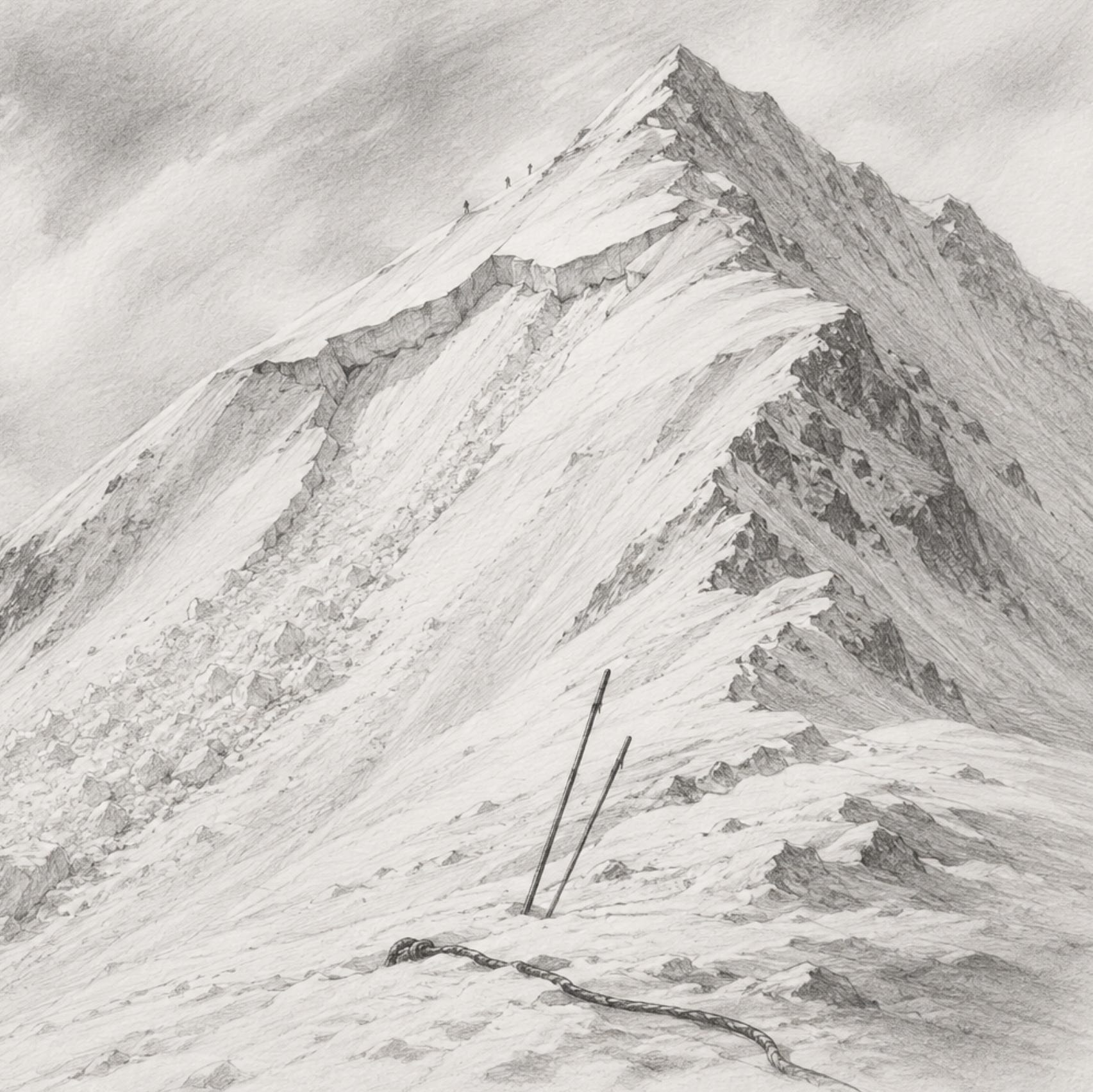 Waiting on Broad Peak, Curfew in the Tarai & the Doctors Walk Out 31.07.2026 21минNamaste, diaspora family. This was a hard week, and we will not pretend otherwise. As we write, search teams in Pakistan’s Karakoram are still looking for Nirmal “Nimsdai” Purja and several Nepali climbers swept off Broad Peak by an avalanche, and his tracker was still showing movement on Friday morning. Back home, communal violence in Sunsari spread across four Tarai districts and left three people dead, with the Prime Minister and Home Minister criticised for reaching the scene days too late. Doctors across the country shut their outpatient doors for two days. Hold your people close this week, and let’s get into it.🌍 Diaspora & GlobalisationA Missile in Kuwait, a Family in TerhathumThe war that has been showing up in our lives as a fuel price now has a Nepali name attached to it. Som Kumar Tamang, 44, from Terhathum in eastern Nepal, was killed on July 30 when an Iranian ballistic missile struck a Chinese company’s building in northern Kuwait. He had worked there as a driver since 2022. He is the second Nepali killed since the conflict across West Asia escalated, after Diwas Shrestha of Gorkha died in the UAE. Kuwait’s defence ministry said emergency procedures were launched immediately; Nepal’s embassy in Kuwait is working with Kuwaiti authorities to repatriate his body. What makes this land so heavily is the arithmetic behind it. Roughly 186,000 Nepalis work in Kuwait, about 4 percent of that country’s entire population, and most of them cannot simply leave a contract because a region has become dangerous. When we talk about remittances, this is the risk sitting quietly underneath the number (The Kathmandu Post).Saudi Arabia Shuts the Visa WindowA licensing fight in Kathmandu has become a cancelled flight for thousands of families. Saudi Arabia has stopped issuing work visas to Nepalis in five job categories, including loading and unloading, portering, cart operation and construction, after Nepal’s government sealed the Industrial Training Institute in Basundhara, ruling it had no legal authority to run the Skill Verification Programme tests the Saudis now require. Saudi Arabia took about 77,000 Nepali workers last year, so the freeze is not a small one. Recruiters say the deeper problem is the testing itself: the official Saudi fee is $50, roughly Rs 7,500, but the operator was collecting Rs 10,000, and a worker who fails has to pay again. “A private institution has created a monopoly in the name of skill testing, piling financial burden on workers,” said Mahesh Kumar Basnet of the Nepal Association of Foreign Employment Agencies. Talks with the Saudi embassy are underway. Until they land, aspirants sit at home with loans already taken (The Kathmandu Post).In Brief: Three more notes from the community abroad.* The Australian door narrows. Australia has rejected about 64 percent of offshore student visa applications from Nepal, the highest rate on record. Just 2,700 of 7,500 applicants were approved between January and May, against 7,167 of 8,028 a year earlier, after Nepal was moved to Australia’s highest-risk assessment band. The application fee, A$2,500, is not refunded when you are refused (The Kathmandu Post).* Two shifts for the passport queue. The Department of Passports is moving to two shifts to clear its delivery backlog, and the Cabinet has cleared an amendment to the Passport Act for registration in Parliament. Anyone who has waited abroad on a renewal knows why this matters (The Kathmandu Post).* A crown in Virginia. Deepika Sharma of Maryland was crowned Miss Nepal North America 2026 on July 25, with runners-up from Michigan, South Carolina and Texas. We flagged the finale last week; it landed just outside Washington, in Clifton, Virginia (Glamour Nepal).🏛️ Politics & GovernanceThree Dead, Four Districts, and a Government That Arrived LateIt began on the night of Sunday, July 26, at Kaptanganj in Dewanganj, Sunsari, where Bolbam devotees carrying holy water from the Koshi Barrage passed a mosque playing loud music, on top of an earlier quarrel over a community flag on an electricity pole. Crowds formed with sticks, stones and iron rods. Police fired warning shots and then live rounds, killing Om Prakash Mehta; Jaya Prakash Mehta, 20, died later of his injuries. By Thursday it had spread, and Ganesh Yadav, just 17, was shot dead in Siraha’s Golbazar. Curfews now cover Sunsari, Saptari, Siraha and Dhanusha, with prohibitory orders in Parsa and a curfew reimposed in Birgunj. The hardest detail is the one about the state: the Sunsari district police chief and the Koshi Province police chief were both on leave as it unfolded. Prime Minister Balendra Shah met security chiefs on day four and convened the National Security Council on day five, and Home Minister Sudan Gurung reached Sunsari on day four (The Kathmandu Post).The Bill Comes Due in ParliamentThe political reckoning arrived on July 30, when the House of Representatives sat for the first time since passing the budget. Nepali Congress, CPN-UML, the Nepali Communist Party and Shram Sanskriti Party jointly demanded that both the Prime Minister and the Home Minister resign over Sunsari. “Why did the prime minister and home minister not treat the Sunsari incident seriously from the beginning?” asked human rights advocate Mohna Ansari. A seven-point agreement signed on July 31 promised martyr status for the dead, Rs 1 million to each family, jobs, an impartial investigation and a memorial park, and the families initially refused to accept the bodies anyway. Meanwhile the House returned with almost nothing to legislate: 8 bills in lower house committees, none pending in the upper house, against a stated government target of 166 bills for the year. A government elected on the promise of a rebuilt state is now being asked, from two directions at once, where the state actually is (The Kathmandu Post).In Brief: The rest of the week in governance.* Maps on the table in Lucknow. Nepal and India will hold the 13th meeting of the Survey Officials’ Committee in Lucknow from August 12 to 14, approving the workplan and budget agreed at the last Boundary Working Group and reviewing GPS base stations. Kalapani and Susta remain outside its remit (The Kathmandu Post).* An election chief, finally. The Parliamentary Hearing Committee unanimously approved Man Bahadur Karki as Chief Election Commissioner, with Guru Prasad Wagle and Rajiv Subba as commissioners, and sent the confirmation to the President’s Office. A quiet appointment with loud consequences ahead (Nepal News).* Seventeen years later. A senior Ministry of Foreign Affairs official has been charged over the alleged misuse of travel documents in a case dating back 17 years, a reminder of how slowly accountability moves even in a crackdown era (The Kathmandu Post).💸 Economy & DevelopmentThe War Reaches the Petrol PumpThe same conflict that killed Som Kumar Tamang is now working its way through every shop in Nepal. Wholesale inflation hit 8.47 percent in the month to mid-June, a 39-month high, up from just 1.56 percent a year earlier. Energy prices alone rose 48.14 percent. Since the February 28 US and Israeli assault on Iran, petrol has gone from Rs 156 to Rs 219 a litre, diesel from Rs 139 to Rs 237, and a cylinder of LPG from Rs 1,910 to Rs 2,160. Consumer inflation is still a more modest 5.22 percent, but wholesale prices lead retail ones by two or three months, which puts the real squeeze right around Dashain. “There is a tendency to pass the entire increase in costs to consumers, and often even add extra margins,” warned Nara Bahadur Thapa, a former Nepal Rastra Bank executive director. If you are planning what to send home this festival season, plan for it to buy less (The Kathmandu Post).Nepal Now Imports Its DinnerHere is a number that should stop us all. Nepal’s food import bill reached Rs 434.26 billion in the fiscal year just ended, making food the country’s second-largest external dependency after petroleum. Crude edible oil accounted for Rs 168.26 billion, much of it re-exported to India, followed by rice and paddy at Rs 39.53 billion, seeds at Rs 38.99 billion, vegetables at Rs 38.35 billion and fruit at Rs 34.73 billion. For scale: in 2009-10 the entire food import bill was Rs 44.43 billion. A country of farmers now buys its rice abroad, in part because the hands that used to plant it are in Doha and Kuala Lumpur, and in part because farming stopped paying. “Like petroleum products, we are now almost entirely dependent on imported food,” says Nahendra Khadka of the National Peasants Coalition. India’s sugar export restrictions, in force through September, are already driving smuggling ahead of the festivals (The Kathmandu Post).In Brief: A few more entries for the ledger.* A life, priced properly. The Cabinet cleared a bill raising the compensation ceiling for victims of domestic air accidents to $100,000, a serious increase in a country where most of us take a domestic leg on every trip home (The Kathmandu Post).* Markets steady, hundi busted. NEPSE rose 12.96 points to close the week at 2,685.54, ending four straight losing sessions, while the central bank absorbed Rs 30 billion of excess liquidity. Separately, the CIB arrested a 49-year-old man on July 27 over an alleged illegal remittance network, the informal hundi channel that still competes with the banks many of us use (Nepal News).* Dal bhat goes abroad, properly this time. The Nepali restaurant chain Jimbu Thakali opened its first outlet outside Nepal, in India. A small thing, but a welcome inversion of the usual story: a Nepali brand travelling, not just Nepali workers (The Kathmandu Post).⭐ Social & CulturalBroad Peak Goes QuietAround 9am on Thursday, July 30, an avalanche swept a ten-member international team high on Broad Peak, the 8,047-metre giant beside K2 in Pakistan’s Karakoram. Among them was Nirmal “Nimsdai” Purja, 43, the Nepal-born British climber who summited all fourteen 8,000-metre peaks in 189 days in 2019 and who, more than anyone alive, changed how the world sees Nepali mountaineers. As of Friday night, three bodies had been recovered, including Nepali climber Pur Bahadur “Yukta” Gurung and Oman’s Nadhira Al Harthy, the first Omani woman to summit Everest. Drones sighted six more climbers on Friday afternoon, their condition unknown. Purja’s tracking device kept registering movement until Friday morning, and no one is willing to close the door on that. Also unaccounted for are Kili Pemba Sherpa, Nima Sherpa, Gyalu Sherpa and Nawang Thindu Sherpa. “It’s not like Everest. Communication out there is very limited,” said Changdawa Sherpa. We are publishing while the search continues, and we are hoping (The Kathmandu Post).The Day the Doctors Closed the DoorOn July 25 at Narayani Hospital in Birgunj, a 45-year-old heart patient died in the emergency ward. Relatives allegedly stormed the hospital, vandalised it and assaulted Dr Pramod Ram. What followed was unprecedented: the Nepal Medical Association shut all outpatient services nationwide, at government, private and community hospitals alike, for two days, leaving hundreds of thousands of patients turned away with only emergency care running. The strike ended on July 29 with a five-point agreement under which the Home Ministry will prosecute those responsible under the Health Workers and Health Institutions Security Act, 2009. Neither side comes out of this clean, and both are trapped in the same shortage: too few doctors and nurses, too many desperate families, meeting in an understaffed corridor at the worst moment of their lives. It is also, quietly, part of why so many Nepali medics end up staffing hospitals in our cities instead of theirs (The Kathmandu Post).In Brief: Three last notes to close a heavy week.* Winless in Utrecht. Nepal finished the ICC World Cup League 2 tri-series without a victory, losing to Namibia by 3 runs on July 27 (211/7 to 208/6) and to the Netherlands by 57 on July 29. Four matches, no wins, and a batting order that has some thinking to do before the next assignment (ESPNcricinfo).* An award for watching the hills. AFP correspondent Anup Ojha won second prize at the Asian Development Bank Institute’s Developing Asia Journalism Awards 2026, for a story on Nepal’s AI-powered landslide warning system, chosen from 79 entries across 17 countries (The Kathmandu Post).* MaHa, half of it anyway. Madan Krishna Shrestha returned to the Paleti stage after 18 years, sharing it with his son Yaman. For anyone who grew up on MaHa Jodi cassettes in a flat far from home, that sentence does a lot of work (The Kathmandu Post).Let’s connectEnjoying this issue? 📩 Share it with a friend & let’s keep Nepalis worldwide in the loop! Got thoughts? Hit reply—we’re all ears! Or let us know what you think via our Feedback form or follow us on Facebook | LinkedInP.S. Got a story or issue you’d like us to cover next week? Drop us a reply — we’re building this space together.About Nepali Diaspora Digest:The Nepali Diaspora Digest connects the global Nepali community with curated news, insights, and stories that matter most. Join us as we celebrate and explore the diverse voices and achievements of Nepalis worldwide.Partner shout outbelayat.uk: helping Nepalis connect in the UK on jobs, housing, events and finding local Nepali owned businesses This is a public episode. If you would like to discuss this with other subscribers or get access to bonus episodes, visit www.nepalidiaspora.net
 -
 Paudel Walks, the Constitution Goes on the Table & Power Finally Pays 24.07.2026 18минNamaste, diaspora family! This was a week when the big stories moved fast. The most prominent target of the anti-corruption drive, Bishnu Paudel, was formally charged and then walked out of custody on the very same day, a twist that has everyone asking what the crackdown actually has in hand. A government task force quietly delivered the most sweeping proposal to rewrite the constitution since 2015, including, for the first time, a serious push for overseas voting. And in the happier column, Nepal’s electricity trade posted its best year ever. Let’s get into it.🌍 Diaspora & GlobalisationFewer Bags at the AirportFor the first time in three years, fewer than 800,000 Nepalis took labour approvals to work abroad. The Department of Foreign Employment counted 792,187 permits in the fiscal year that ended in mid-July, down 5.6 percent from 839,266 the year before. The UAE was the top destination with 183,580 workers, followed by Malaysia (132,646), Qatar (132,051) and Saudi Arabia (124,583). Some of the dip reflects tensions across West Asia making Gulf jobs harder to get, and some reflects the slow westward shift we covered last week, as workers hold out for European routes that offer residency instead of just wages. But a cooling outflow is a real signal either way. Nepal’s economy runs on the roughly 2,200 people who leave every day; if that number keeps sliding, the remittance arithmetic that props up the reserves, the rupee and millions of households will eventually feel it. Worth watching closely over the new fiscal year (Peoples’ Review).The Recruiters Finally Face a ReckoningIf you have ever helped a relative untangle a dispute with a manpower agency, this one is for you. From July 17, the Department of Foreign Employment stopped renewing the licences of recruitment agencies that have unresolved complaints against them, effectively barring them from sending workers abroad until they settle up. The backlog is staggering: around 44,000 institutional and individual complaints are pending, some dating all the way back to 2000. These are the cases behind so many familiar stories, fees that ballooned after signing, jobs that never matched the contract, wages that arrived short or not at all. Agencies are protesting that the rule punishes the compliant along with the crooked, but worker advocates have waited decades for consequences with actual teeth. For the diaspora, the test is simple: does the next cousin who flies out get a fairer deal than the last one did (The Kathmandu Post)?In Brief: A couple of community notes from around the world.* Kathmandu on Tokyo Bay. Japan’s Nepali community, one of the fastest growing anywhere, threw its biggest party of the year as Nepal Festival 2026 filled Odaiba’s Shiokaze Park from July 18 to 20 with dal bhat, dohori and three days of free entry (iwafu).* A crown in the capital. The Miss Nepal North America 2026 finale lands in Washington, DC this Sunday, July 26, with twenty finalists from across the US and Canada competing on a platform built around scholarship and community representation (NepYork).🏛️ Politics & GovernanceCharged in the Morning, Free by EveningThe strangest day of the anti-corruption drive so far came on July 17. The Department of Money Laundering Investigation filed its long-awaited charge sheet against Bishnu Prasad Paudel, the CPN-UML vice-chair and eight-time finance minister, naming 16 defendants in total, six individuals and ten companies, over the alleged concealment of assets tied to businessman Deepak Bhatta. Hours later, the Special Court ordered Paudel released on general bail, without a deposit, after 25 days in custody, ruling that the evidence presented so far “did not establish” his involvement. He was back on a public stage within the week. UML supporters call it vindication and proof of a political vendetta; the government’s defenders note a bail order is not an acquittal, and the trial is still coming. Either way, the same question from the commission freeze two weeks ago now hangs over the marquee prosecution: is the evidence as strong as the arrests were dramatic (New Spotlight)?245 Articles on the Operating TableWith far less drama, the week’s most consequential document may have been the 500-page report a government task force handed Prime Minister Balendra Shah, proposing amendments to 245 of the constitution’s 308 articles. The headline ideas are enormous: a directly elected executive president, a smaller parliament, a restructured judiciary, a rethink of federalism, and, of particular interest to readers of this digest, voting rights for Nepalis overseas. The panel met 184 experts, from former presidents to party chiefs, over 22 formal sittings. But consensus is nowhere in sight. Three parties, including the Nepal Communist Party, walked out of the process entirely, and the RPP wants changes that go further still. Rewriting a constitution that took a decade and two Constituent Assemblies to produce is not a weekend project, and this report is a discussion paper, not a draft bill. Still, the fight it frames, over how Nepal is governed and who gets a say, including the three million of us abroad, will likely define this government’s term (The Kathmandu Post).In Brief: The rest of the week in governance.* A quiet chamber. The House of Representatives adjourned for two weeks, with the next sitting set for Shrawan 14 (July 30), giving parties time to digest the amendment report before the shouting starts (Khabarhub).* A win for the press. The Supreme Court struck down a directive that had funnelled all public-service advertising to state-owned media, restoring a revenue stream private outlets depend on and drawing a line under a quietly worrying squeeze (Khabarhub).* Coalition math continues. Prime Minister Shah sat down with RSP chair Rabi Lamichhane for talks on governance cooperation, another data point in the slow assembly of alliances around the government’s reform agenda (Khabarhub).💸 Economy & DevelopmentThe Rivers Are Paying Rent NowHere is a number to savour: Nepal earned a record Rs 29.32 billion selling electricity to India and Bangladesh in the fiscal year just ended, up 68 percent on the year before. With imports falling by nearly a third, the net electricity trade surplus hit Rs 18.76 billion, roughly quadruple last year’s Rs 4.54 billion. The monsoon rivers that flood the headlines are also, quietly, becoming an export industry. And the ceiling just lifted: at a joint meeting in Pokhara, Nepal and India agreed to raise export capacity on the Dhalkebar cross-border lines from 1,100 to 1,650 megawatts, which means less wet-season surplus wasted and more of it billed. After decades of load-shedding jokes and imported diesel, Nepal selling power at Rs 7.56 a unit to its giant neighbours is a genuine structural shift, the kind of economic story that does not depend on anyone’s remittance. More transmission lines are on the drawing board to keep it growing (The Kathmandu Post).The Money That Stayed AwayThe mirror image of that success arrived a day earlier in the foreign investment numbers. FDI commitments for the year came in at Rs 58.01 billion across 1,116 projects, down about Rs 7 billion from the year before, and officials are not mincing words about why: a year of political turbulence, from the Gen Z transition to this summer’s court battles, has investors waiting on the sidelines. The composition tells its own story. Agriculture and forestry led with Rs 23.2 billion, tourism drew Rs 14 billion, while ICT attracted the most projects (727) but only Rs 2.8 billion, mostly small bets. Remember these are commitments, not cash; actual inflows historically run at a fraction of pledges. For NRNs weighing an investment back home, the gap we flagged last week between strong macro numbers and cautious money just showed up in the official data. Confidence, it turns out, is the scarcest currency in Kathmandu (The Kathmandu Post).In Brief: A few more entries for the ledger.* A train changes the map. The first direct freight train from Kolkata port rolled into Biratnagar’s customs yard on July 20 carrying 40 containers of canola for a Nepali oil producer, opening a corridor expected to cut transit costs by 20 to 30 percent (The Kathmandu Post).* Cash-rich banks, credit-poor villages. Even with record liquidity in the banking system, reporting this week showed poor households still cannot access formal loans, the very gap that pushes families toward the loan sharks in our story below (The Kathmandu Post).* The price of an ana. New government land valuations for the fiscal year put prime Kathmandu main-road plots at about Rs 7.6 million per ana, up from Rs 7.2 million, a figure worth knowing if a family land matter is on your horizon (Nepal News).⭐ Social & CulturalThey Walked From Janakpur, and Kathmandu BlinkedNine days after setting out on foot from Tritiyagachhi in Janakpur, hundreds of loan-shark victims called off their March for Justice on July 17, when the government signed a nine-point agreement with their representatives. The commitments are substantial: loan sharking will be declared an economic crime, a dedicated Predatory Lending Crime Control Act criminalising fourteen abusive practices is to be drafted within three months, fraudulent loan documents will be invalidated, and all pending complaints are to be resolved within six months, overseen by a high-level committee in the Prime Minister’s Office. Anyone with roots in the Tarai knows the world behind this march: informal lenders charging ruinous interest, thumbprints on blank paper, families losing land over debts already repaid many times over. Remittance money too often goes straight into these pits. Victims have heard promises before and suspended, not ended, their movement. But a signed deal with deadlines is more than they have ever extracted, and they walked every kilometre of the way to get it (The Kathmandu Post).Hard Nights in Utrecht, and a Door Held OpenNepal’s cricketers are having a rough tour of the Netherlands. In their ICC World Cup League 2 tri-series opener in Utrecht on July 21, Nepal were bowled out for 157 and Namibia knocked off the runs with eight wickets and 74 balls to spare. Two days later the hosts beat them too, captain Scott Edwards steering a comfortable chase with an unbeaten 61. Two games, zero points, and matches against the same opponents on July 27 and 29 to salvage some pride. And yet the week still delivered good news from Edinburgh, where the ICC approved a revamped pathway for the 2028 T20 World Cup: Nepal earned direct entry into the 16-team Global Qualifier, skipping the regional grind, alongside the likes of the Netherlands, Namibia, Oman and the USA. That is a meaningful nod to how far the team’s standing has climbed. The route to a third straight T20 World Cup just got shorter; the batting, on current evidence, needs to catch up with the scheduling (The Himalayan Times).In Brief: A few last notes to close the week.* The rains, an update. The monsoon’s toll since mid-June now stands at 27 dead, one missing and 69 injured, with landslide debris blocking several highways including key links between Kathmandu and the Tarai. Peak season is still ahead; keep checking in on home (Business Recorder).* Pedal power in the hills. Lamjung will host the inaugural Tour de Lamjung cycling race from September 4 to 6, with around 400 riders expected on a course built to show off the district’s trails, homestays and hospitality (Nepal News).* Still looking for home. Fifteen squatter families displaced from Kathmandu’s riverbanks were moved this week from a Red Cross holding centre in Banepa to another temporary shelter at Ichangu Narayan, a reminder that the city’s cleanup drives leave long human tails (The Kathmandu Post).Let’s connectEnjoying this issue? 📩 Share it with a friend & let’s keep Nepalis worldwide in the loop! Got thoughts? Hit reply—we’re all ears! Or let us know what you think via our Feedback form or follow us on Facebook | LinkedInP.S. Got a story or issue you’d like us to cover next week? Drop us a reply — we’re building this space together.About Nepali Diaspora Digest:The Nepali Diaspora Digest connects the global Nepali community with curated news, insights, and stories that matter most. Join us as we celebrate and explore the diverse voices and achievements of Nepalis worldwide.Partner shout outbelayat.uk: helping Nepalis connect in the UK on jobs, housing, events and finding local Nepali owned businesses This is a public episode. If you would like to discuss this with other subscribers or get access to bonus episodes, visit www.nepalidiaspora.net
 -
 A Court Reins In the Cleanup, the Gulf Loses Ground & the Rains Turn Deadly 17.07.2026 19минNamaste, diaspora family! It was a heavy week back home, and a revealing one. The Supreme Court stepped in and froze the Balen Shah government’s flagship anti-corruption commission, a reminder that even a popular crackdown has to answer to the constitution. In the numbers that shape so many of our families, the map of where Nepalis go for work kept shifting west, with Europe now pulling workers the Gulf once took for granted. And at home the monsoon turned deadly while a young driver’s death put a human face on the quiet desperation of Nepal’s gig economy. Let’s get into it.🌍 Diaspora & GlobalisationThe Map Now Points to EuropeFor a generation, the answer to “where will you go” was the Gulf. This week the data made plain how fast that is changing. In the first eleven months of the fiscal year, 53,951 Nepalis took new labour approvals for 24 European nations, lifting Europe to 14.7 percent of all outbound workers, up from just 8.69 percent a year earlier. Romania is the new frontier, drawing 24,767 workers alone, with Cyprus, Portugal, Malta and Bulgaria filling in behind. The Gulf still holds the majority at 55.4 percent, but its grip is loosening as tensions across West Asia make old destinations feel less certain. What is striking is why people are choosing Europe: not just wages, but a road to permanent residency and, eventually, family. As one worker put it, “once I secure a permanent residence card, I can bring my family over.” For a diaspora built on separation, that is the sentence that matters (The Kathmandu Post).The Lifeline Hits a RecordEven as the destinations change, the money keeps setting records. Remittances reached Rs 2.12 trillion in the first eleven months of the fiscal year, up a remarkable 38.2 percent on the year before, or about $14.59 billion in dollar terms. That flood has pushed Nepal’s foreign exchange reserves to a record $24.68 billion, up more than a quarter, enough to keep the rupee steady and the shelves stocked. It is the reason the central bank feels confident forecasting 7 percent growth for the year ahead. Behind the number sits a simple, humbling arithmetic: roughly three million Nepalis abroad, about 2,230 more leaving every single day, all of them wiring home what now amounts to close to a third of the entire economy. The diaspora does not just support Nepal’s finances anymore. It largely is Nepal’s finances, and that is both a source of pride and a quiet worry (Xinhua).In Brief: A couple more notes from across the diaspora.* Who counts as one of us. The debate over the draft NRN bill and its citizenship provisions rumbles on, with critics arguing that “once a Nepali, always a Nepali” should mean something firmer in law. It is a live question for millions who carry Nepal in their hearts but another passport in their pockets (The Kathmandu Post).* A more skilled diaspora. Fresh analysis is a reminder of how the community abroad has changed: more than half of Nepali Americans now hold a college degree, and experts are pressing Kathmandu to update a diaspora policy still built for an era of only sending money home (NepYork).🏛️ Politics & GovernanceThe Court Says Not So FastThe showpiece of the government’s first hundred days ran into the wall of the courts this week. On July 11, a Supreme Court bench issued an interim order freezing the Property Investigation Commission, the five-member body the Balen Shah government set up in April to chase hidden wealth accumulated by politicians, bureaucrats and security officials going back two decades. The court told the commission to hold the status quo: it may not compel anyone to submit their asset details, nor recommend any action, until a full three-judge bench rules on whether the whole exercise is even constitutional. Petitioners argued it trampled privacy rights and stepped on the anti-graft body’s turf. It is a genuine test. The commission had already gathered 13,660 asset declarations and more than 1,500 complaints before it went dark. For a diaspora that cheered the promise of a cleaner Nepal, this is the harder, more grown-up lesson: a crackdown that ignores the constitution is not reform, it is just power by another name (The Kathmandu Post).The Cell Door, Still ShutThe most prominent target of the crackdown, meanwhile, is still behind it. The Supreme Court this week dismissed a habeas corpus petition seeking the release of Bishnu Prasad Paudel, the CPN-UML vice-chair and eight-time former finance minister arrested on June 22 in a money-laundering probe, and instead demanded the case files be produced. The Special Court has now extended his custody for a fifth time. The contrast with the story above is the whole drama of this government in miniature: one arm of the state pushing hard against alleged corruption, another arm insisting that even that push obey the rules. Which impulse wins will define whether this reckoning is remembered as a genuine cleaning of the house or a settling of political scores. From abroad, it is worth watching closely, because the answer will shape the Nepal our remittances are building (Nepal News).In Brief: The rest of the week in governance.* A hand extended to the right. Prime Minister Shah sat down with RPP chairman Rajendra Lingden, who signalled his royalist-leaning party would back the government if it moved to amend the core structure of the constitution. It is an early hint of the coalition math that may shape the term (Nepal News).* A perk quietly returns. The Cabinet restored the provision letting MPs appoint personal secretaries, reversing one of the austerity cuts made by the Gen Z-era interim government. Small on its own, it is the kind of walk-back that a public in an anti-privilege mood tends to notice (Nepal News).💸 Economy & DevelopmentThe Detour That Costs Two AirportsHere is a piece of good news wrapped in a long-overdue conversation. Nepal and India have agreed to resume talks on new air entry routes after nearly a decade of silence, with senior officials due to meet in August. The stakes are concrete: roughly 90 percent of international flights still funnel into Nepal through a single congested corridor over Simara, forcing aircraft bound for Bhairahawa to detour some 300 kilometres and Pokhara-bound flights up to 185 more. That bottleneck is why two gleaming international airports, built for over Rs 60 billion, still sit almost empty of scheduled foreign flights. Nepal wants three new gateways, at Janakpur, Bhairahawa and Nepalgunj, though India has long resisted on security grounds near its Gorakhpur air base. If the talks succeed, the payoff would ripple straight to the diaspora: cheaper fares, shorter journeys, and finally a real alternative to Kathmandu’s crush when you fly home (The Kathmandu Post).Strong Numbers, Cautious MoneyThe macro story remains a study in contrasts. The central bank is projecting 7 percent growth for the coming year, reserves are at record highs, and banks are awash in liquidity. And yet the money on the ground stays cautious. The NEPSE index has been grinding sideways, closing around 2,576 on July 14 after weeks with little conviction, and credit flow to businesses remains sluggish even with cash piled up in the banks. Inflation, too, has crept back up to 5.22 percent, nearly double where it sat a year ago. The picture is a country whose headline figures look enviable while its own investors and lenders wait to see whether the political turbulence settles. For NRNs weighing whether to bring capital home, that gap between the numbers and the nerve is exactly the thing to keep an eye on (Nepal News).In Brief: A couple of figures worth filing away.* Pokhara gets its wings. Flydubai has announced daily Pokhara-Dubai flights starting September 23, a genuine breakthrough for an airport that has struggled to attract international carriers, and a new tourist information centre has opened to greet the arrivals (Travel And Tour World).* Prices edge up. Consumer inflation rose to 5.22 percent year on year in the month to mid-June, driven by both food and services, a reminder that the cost of living at home keeps climbing even as the big reserve numbers dazzle (Nepal Rastra Bank).⭐ Social & CulturalA Driver’s Death, and a Warning About the Gig EconomyThe saddest story of the week was also one of the most revealing. Ganesh Nepali, a 25-year-old ride-sharing driver from Mugu who had bought his motorcycle on loan to support an ailing mother, set himself on fire in Kathmandu’s Tripureshwar and later died at Bir Hospital. The trigger was small and crushing at once, a Rs 1,000 traffic fine and a clamped bike, the last straw for a man whose livelihood had been quietly collapsing. Ride-share fares in Nepal have fallen roughly 60 percent in two years as apps undercut one another, while platform commissions of 10 to 15 percent and proposed new taxes eat into what little remains. His death has forced a reckoning over the tens of thousands of Nepalis who drive, deliver and freelance with no job security, no social protection, and labour laws that never imagined them. “His death reflects the suffering of the entire driving community,” said Muktinath Phuyal of the Independent Drivers Foundation. For a diaspora whose remittances helped build this app-driven urban economy, it is a hard look at who gets left unprotected inside it (The Kathmandu Post).The Rains Count Their TollThe monsoon has settled into its cruellest stretch. Over the past three months, disaster-related incidents have claimed 163 lives across the country, and this week alone brought a grim single-day tally of 73 incidents, with landslides doing the most damage across dozens of districts. Among the dead were Mandir Saud, 46, and Lal Bahadur Saud, 76, buried by a landslide in Kalikot’s Sannitriveni. Peak monsoon is only now arriving, which means the season’s ledger is far from closed. For families abroad, this is the summer worry that never quite lifts, the phone call to check that the house above the river, or below the hill, is still standing (Xinhua).In Brief: A few last notes to close the week.* Football, and the deadline that passed. The clock we have watched for a month finally ran out. With the FIFA suspension of the football association still in force past July 13, Nepal was left out when the AFC drew the U17 Women’s Asian Cup qualifiers on July 16, a squad of teenagers shut out of their tournament by a governance feud they had no part in (The Kathmandu Post).* Cricket carries the flag. On a brighter note, the men in blue keep the tricolour flying. Nepal has travelled to Utrecht for an ICC World Cup League 2 tri-series against the Netherlands and Namibia from July 21, another step on the long road toward the sport’s bigger stages (ESPNcricinfo).* Art with a national accent. In Kathmandu, the Kala Mahotsav 2083 exhibition has opened under the theme “Celebrating Nepali Nationality and Culture,” a five-day show of works drawn from the country’s heritage, landmarks and landscapes, and a welcome bit of colour in a rain-soaked month (Nepal On The Web).Let’s connectEnjoying this issue? 📩 Share it with a friend & let’s keep Nepalis worldwide in the loop! Got thoughts? Hit reply—we’re all ears! Or let us know what you think via our Feedback form or follow us on Facebook | LinkedInP.S. Got a story or issue you’d like us to cover next week? Drop us a reply — we’re building this space together.About Nepali Diaspora Digest:The Nepali Diaspora Digest connects the global Nepali community with curated news, insights, and stories that matter most. Join us as we celebrate and explore the diverse voices and achievements of Nepalis worldwide.Partner shout outbelayat.uk: helping Nepalis connect in the UK on jobs, housing, events and finding local Nepali owned businesses This is a public episode. If you would like to discuss this with other subscribers or get access to bonus episodes, visit www.nepalidiaspora.net
 -
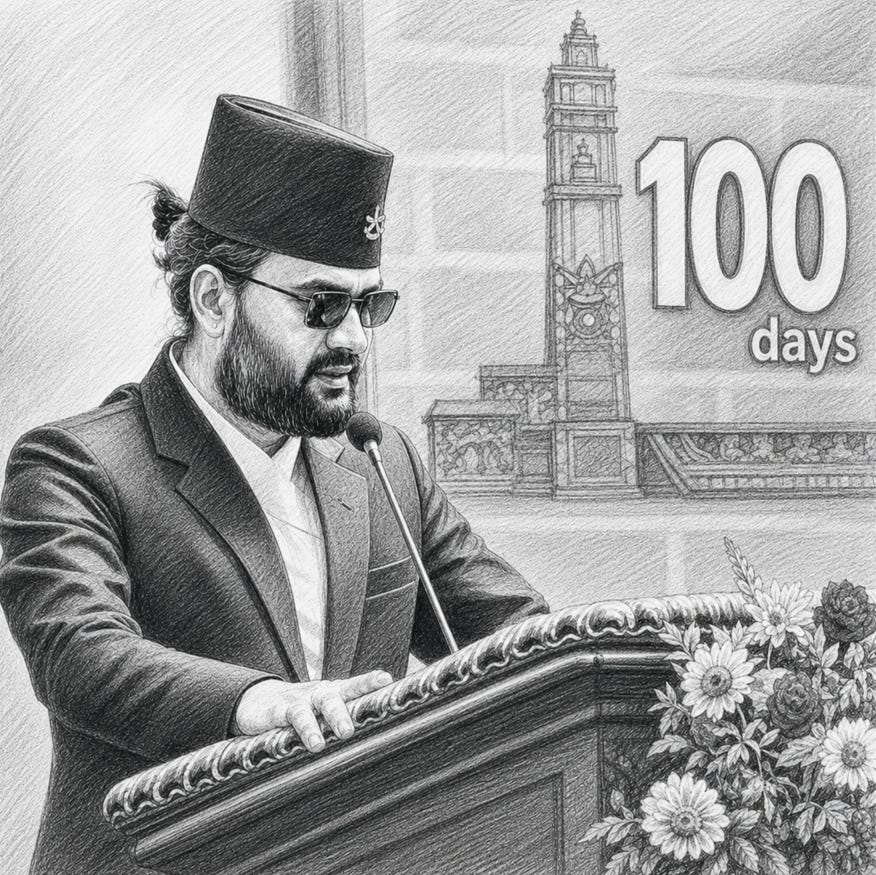 100 Days In, a Full Vault & a Market That Won't Cheer 10.07.2026 20минNamaste, diaspora family! This week Nepal marked a milestone and watched a countdown at the same time. The Balen Shah government turned 100 days old and handed itself a glowing report card, even as the opposition and a jailed former finance minister told a very different story. Down at the football federation, the clock kept running toward a FIFA deadline that could shut a generation of young players out of the game. And in the quieter background, the numbers told their own tale: reserves at a record high, a stock market that refuses to celebrate, and a monsoon already counting its dead. Let’s get into it.🌍 Diaspora & GlobalisationThe Prime Minister Who Won’t Take the MeetingNepal’s foreign policy has a new personal style, and the diaspora should watch it closely. Prime Minister Balen Shah has been quietly rewriting the etiquette of how Kathmandu deals with the world, declining the usual one-on-one audiences with resident ambassadors in favour of group meetings, passing on several visiting US officials including Trump envoy Sergio Gor, and letting a planned visit by Indian Foreign Secretary Vikram Misri slip off the calendar. The stated logic is that “institutions, not individuals” should drive Nepal’s engagement abroad. Beneath the change of manner, the substance holds steady: the careful India-China balance continues, and Foreign Minister Shisir Khanal insists diplomacy “must ultimately contribute to Nepal’s economic transformation.” For a diaspora that lobbies, invests, and often acts as Nepal’s informal ambassadors, the message is worth reading twice. This is a government that wants to be courted through systems, not handshakes, and it is still short 17 ambassadors at its own missions abroad (The Kathmandu Post).The Map of Where We Go Is Being RedrawnThe geography of Nepali migration is shifting under our feet. New labour permits fell nearly 19 percent as demand in the Gulf softened, rules tightened, and conflict across West Asia made old destinations look shaky, with the Department of Foreign Employment having frozen approvals to the region for seven weeks earlier this year. Where workers once streamed to Qatar and Saudi Arabia, the United Arab Emirates has now become the single largest destination, absorbing 137,892 permits in the first nine months of the fiscal year, while a reopened Malaysia saw its intake leap from barely a thousand to nearly 30,000, a twenty-seven-fold jump. And yet the money keeps flowing: remittances are running at a record pace even as fewer people leave. For families weighing where a son or daughter should build a life, the destinations that felt permanent a decade ago are quietly being replaced (The Kathmandu Post).In Brief: A few more notes from across the diaspora.* Roots, replanted. The second Nepali Roots Summit wrapped up in Munich, drawing 96 entrepreneurs, researchers, students and professionals from across Germany to knit the diaspora closer and steer its skills and capital toward Nepal. It is a small gathering with a big idea: that the community abroad is now a source of ideas and investment, not just money sent home (Peoples’ Review).* The lifeline swells. Even with fewer workers heading out, remittances hit Rs 1,449 billion in the eight months to mid-March, up nearly 38 percent year on year and now equal to about a third of the entire economy, up from a quarter a year earlier. It remains the number holding Nepal’s accounts together (Nepal Rastra Bank data).* Both neighbours, no favourites. Foreign Minister Khanal reaffirmed that Nepal wants “balanced” ties with all its neighbours and partners, framing his recent trips to New Delhi and Beijing as confidence-building rather than tilting one way (The Shillong Times).🏛️ Politics & GovernanceOne Hundred Days, Graded by the TeacherOn July 4, the government led by Prime Minister Balen Shah completed its first 100 days, and it marked the occasion by grading its own homework generously. Sworn in on March 27 after the Rastriya Swatantra Party swept 182 of 275 seats in the March election, the administration announced it had delivered 87.2 percent of a 100-point reform agenda, with 70 points fully implemented. The showpieces are real enough: a Property Investigation Commission to chase hidden and illegally acquired wealth, a push to digitise public administration with e-signatures tied to the National ID and file-tracking meant to strangle petty corruption, and an ambitious Civil Service Bill. The opposition, unsurprisingly, calls the whole scorecard a work of fiction. Somewhere between the two lies the truth a diaspora has learned to look for: promises are cheap in Kathmandu, and 100 days is early. Still, after years of drift, a government moving fast enough to argue about is its own kind of news (New Spotlight).The Cell Door Stays Shut, and the Questions GrowThe other half of the government’s story sits in a courtroom. This week the Special Court extended the custody of Bishnu Prasad Paudel, the CPN-UML vice-chair and former finance minister, by another five days, the latest in a string of extensions since his arrest in Surkhet on June 22 in a money-laundering probe tied to businessman Deepak Bhatta. The anti-corruption drive that holds him has already reached former Prime Minister KP Sharma Oli and former Home Minister Ramesh Lekhak, and Home Minister Sudhan Gurung frames it plainly: “No one is above the law.” But the crackdown is now drawing its own scrutiny. Opposition figures allege that officials of the anti-graft body itself were held and pressured at the Prime Minister’s Office, raising the uncomfortable question that shadows every reckoning of this kind. For the diaspora watching from afar, the line between cleaning house and settling scores has never mattered more, or been harder to draw (The Himalayan Times).In Brief: The rest of the week in governance.* The crown campaign moves east. The drive to restore the monarchy and declare Nepal a Hindu state, led by Durga Prasai and former RPP figure Dhawal Shumsher Rana, is working its way through all eight districts of Madhesh Province, from Saptari to Parsa, as the pair try to weld the scattered pro-monarchy and nationalist forces into a single party (Peoples’ Review).* Due process on trial. As the graft cases pile up, watchdogs and legal observers warn that arrests and long custody extensions are outpacing the evidence made public, and that a crackdown which cuts corners risks discrediting the very reform it claims to deliver (OCCRP).💸 Economy & DevelopmentA Record in the VaultHere is the good-news number of the week. Nepal’s gross foreign exchange reserves have climbed to a record of roughly Rs 3.5 trillion, around $24 billion, enough to cover about 18 months of imports, a cushion most economies would envy. The central bank, buoyed by the flood of remittances and steady tourism earnings, is projecting growth of around 7 percent for the coming fiscal year. For the diaspora, the reserves are more than an abstraction: they are what keeps the rupee stable, keeps imported goods on the shelves, and gives the government room to fund the projects it keeps promising. The paradox, of course, is that a country exporting so many of its young people is also awash in the cash they send back. The reserves are a monument to the diaspora’s labour, and a reminder that Nepal’s strongest export, for now, is still its people (The Himalayan Times).The Market That Refuses to CheerStrong reserves, a growing economy, and yet the country’s investors are in no mood to celebrate. The NEPSE index drifted down again this week, closing around 2,602 on July 9, off nearly three-quarters of a percent on the day, with more than 220 stocks falling and every sector index in the red. The post-election optimism that briefly lifted the market has now fully evaporated, and the reason is not hard to find. The same anti-corruption drive winning headlines has left business circles uneasy, unsure who might be summoned next, and uncertainty is the one thing markets reliably punish. It is a telling gap: the macro numbers say Nepal is doing well, while the daily verdict of its own investors says wait and see. For NRNs weighing whether to move capital home, this is the tension to watch. Confidence, unlike reserves, cannot be built up in a vault (myRepublica).In Brief: A couple more figures worth filing away.* Cheaper fuel, finally flowing. The price cut that emptied the pumps last week has settled. The Nepal Oil Corporation trimmed petrol by Rs 20 a litre, diesel and kerosene by Rs 30, and cooking gas by Rs 100 a cylinder, and after private dealers briefly hung “No Petrol” boards rather than sell older, costlier stock, fresh supplies from the Thankot depot brought the queues back to normal (Nepal News).* Half a year, six hundred thousand guests. Nepal welcomed 621,624 foreign tourists in the first half of 2026, with June alone up 19.5 percent on last year. India remains the largest source by far, sending nearly 46 percent of June’s arrivals (myRepublica).⭐ Social & CulturalFootball’s Final Whistle ApproachesThe clock that started ticking last month is nearly out of time. After FIFA suspended the All Nepal Football Association on June 24 over what it called third-party interference, Nepali football now faces a hard, close deadline: unless the suspension is lifted by July 13, three days before the July 16 draw, the country’s young women lose their place in the AFC U17 Women’s Asian Cup qualifiers, with a further cutoff on August 1 for the U20s. As of this week, the ban still stands. FIFA’s terms have not moved: fully and unconditionally revoke the National Sports Council’s March order against the ANFA executive, reinstate that committee, and let the stalled elections finish. The Kathmandu Post warns of a “lost generation” of players who may simply never get their tournament. It is a governance fight, yes, but the price is being paid in cleats and kit by teenagers who did nothing wrong (The Kathmandu Post).The Flu Recedes, but Not EverywhereThere is cautious relief on Nepal’s poultry farms this week. The H5N1 bird flu outbreak that has haunted the country since March, spreading to 11 of 77 districts, is now reported contained across most of them, with districts including Jhapa, Morang, Sunsari, Bara and Chitwan declared clear. The cost of getting here has been staggering: more than 754,500 birds culled, over 1.09 million eggs destroyed, and the country’s only zoo in Jawalakhel shut since June 19. But the danger has not fully passed. Risk still lingers in the Kathmandu Valley and is worsening in Kavrepalanchok, and scientists tracking the virus warn that each new infection is a fresh chance for it to mutate toward something that could jump more easily to people. No human cases have been recorded in Nepal. The coop is quieter now, but the watch is not over (Radio Nepal).In Brief: A couple of last notes as the monsoon deepens.* The rains keep their toll. The season’s cost is already grim. Between mid-April and July 3, disasters killed 127 people and injured 773 across more than 2,700 incidents, with landslides, lightning and even snakebite each claiming lives, and over 3,700 families affected. Peak monsoon is only now arriving (myRepublica).* Off to Utrecht. While football sits sidelined, cricket carries the flag. Nepal heads to the Netherlands for an ICC World Cup League 2 tri-series against the hosts and Namibia from July 21, another chance for the men in blue to keep chipping toward the bigger stage (ESPNcricinfo).Let’s connectEnjoying this issue? 📩 Share it with a friend & let’s keep Nepalis worldwide in the loop! Got thoughts? Hit reply—we’re all ears! Or let us know what you think via our Feedback form or follow us on Facebook | LinkedInP.S. Got a story or issue you’d like us to cover next week? Drop us a reply — we’re building this space together.About Nepali Diaspora Digest:The Nepali Diaspora Digest connects the global Nepali community with curated news, insights, and stories that matter most. Join us as we celebrate and explore the diverse voices and achievements of Nepalis worldwide.Partner shout outbelayat.uk: helping Nepalis connect in the UK on jobs, housing, events and finding local Nepali owned businesses This is a public episode. If you would like to discuss this with other subscribers or get access to bonus episodes, visit www.nepalidiaspora.net
 -
 'No Petrol' Boards, No Bail for Paudel & Half a Million Birds Gone 03.07.2026 19минNamaste, diaspora family! This was a week of things running short back home. Fuel got cheaper on paper and then vanished from the pumps overnight, an outbreak of bird flu emptied poultry sheds and shut the country’s only zoo, and the Supreme Court declined to free the opposition heavyweight the anti-corruption drive is holding. There was harder-edged news for the diaspora too, as the draft of a long-awaited NRN law quietly left a whole community out, even while the numbers show our footprint abroad growing faster than ever. And a clock is ticking on Nepali football. Let’s get into it.🌍 Diaspora & GlobalisationThe Promise With Fine PrintFor months the government’s pitch to the diaspora has been a warm one, summed up in a slogan you have probably seen: “Once a Nepali, Always a Nepali.” The Shah administration has dangled property rights, voting rights, and a headline diaspora bond worth as much as Rs 100 billion a year to pull overseas capital home, even floating the idea of recognising NRNs as a special class of investor. This week the fine print drew scrutiny. A circulating draft of the amended Non-Resident Nepali Act turns away from the roughly 140,000 Nepali-Bhutanese of the diaspora, the community pushed out of Bhutan decades ago, leaving them outside the very promise the slogan makes. The Nepal Policy Institute, a think tank run largely by diaspora professionals, is urging the government to treat this rewrite as a rare chance to define its relationship with an estimated 3 million Nepalis abroad, not narrow it. For a readership that spans continents, the lesson lands cleanly: a law is only as generous as who it decides to count (The Kathmandu Post).The Australia Chapter Gets BiggerIf you want to see where the diaspora is heading, look south. A study by the Institute for Integrated Development Studies, backed by Australia’s foreign ministry, found the Nepali-born population in Australia has jumped to about 213,580 by mid-2025, nearly doubling from 122,506 in 2021. This is not the old story of remittance and return. Some 61 percent arrived for higher education, close to half now earn between AUD 65,000 and 120,000 a year, and about a third have made formal investments. It is a young, credentialed, increasingly rooted community whose contribution is shifting from money sent home to businesses built, networks opened, and knowledge shared. Foreign Minister Shishir Khanal has called this diaspora “central” to the Nepal-Australia relationship, and the figures make the case for him. The challenge now sits with Kathmandu: whether its policies can keep pace with a community that is clearly not waiting around (The Annapurna Express).In Brief: A few more notes from across the diaspora.* Balancing both neighbours. Foreign Minister Khanal followed a visit to New Delhi with four days in Beijing, meeting Wang Yi to talk connectivity, border management, trade and technology transfer. Wang called Nepal important to China’s neighbourhood diplomacy, and the back-to-back trips signal a deliberately even-handed foreign policy from the new government (Nepal News).* The lifeline holds. Even as fewer workers leave, remittances still run near a quarter of the entire economy, with inflows for the first nine months of the fiscal year around $11.55 billion, up roughly 39 percent year on year. It remains the number that keeps Nepal’s accounts standing (NepYork).🏛️ Politics & GovernanceThe Court Keeps the Cell Door ShutThe biggest test yet of Nepal’s anti-corruption drive played out in the Supreme Court this week, and the drive held. A joint bench of Justices Binod Sharma and Nityanand Pandey dismissed the habeas corpus petition filed by Domaya Paudel on behalf of her husband, Bishnu Prasad Paudel, the CPN-UML vice-chair and eight-time former finance minister arrested on June 22 in Surkhet in a money-laundering probe. With the petition rejected, the Special Court’s order keeping him in judicial custody for further investigation stands. For a figure this senior in the main opposition, that is a heavy outcome, and the UML has not softened its line, calling the arrest politically motivated and its chair KP Sharma Oli branding it “illegal.” The government insists this is the law finally reaching the untouchable. The distinction between reform and revenge is now the argument running through Nepali politics, and this week the courts, at least, declined to hand the opposition an early exit (Nepal News).Trying to Unjam ParliamentWhile the courts moved, Parliament sat stuck. Rabi Lamichhane, freshly re-elected as chair of the Rastriya Swatantra Party, spent the week playing fixer, holding consultations with Prime Minister Balendra Shah and convening an all-party meeting to break a legislative standoff that has slowed the government’s agenda. The timing is pointed. Only days earlier, at his party’s convention, Lamichhane floated a wholesale redesign of Nepal’s system, a directly elected executive and a fully proportional electoral model, ideas the old parties treated as an attack on the parliamentary order itself. So the man questioning whether the current system works is now the one trying to make it function week to week. For a diaspora long weary of coalition churn, it is a familiar bind: the reformers need the old machine to keep running even as they argue for replacing it (OnlineKhabar).In Brief: The rest of the week in governance.* A body built for the money trail. The Council of Ministers discussed creating a separate, more powerful agency dedicated to financial crimes including money laundering, a sign the government wants permanent machinery, not just a moment, behind its graft crackdown (The Kathmandu Post).* An old idea returns. A campaign for a Hindu state and the restoration of the monarchy, fronted by former RPP figure Dhawal Shumsher Rana and activist Durga Prasai, is set to launch from Madhesh Province on July 6 (Nepal News).* The passport case grinds on. The CIAA’s Rs 10.13 billion graft case over rigged e-passport procurement continues against 18 people, even as booklet stocks run below 47,000 (The Kathmandu Post).💸 Economy & DevelopmentCheaper Fuel Nobody Would SellHere is a Nepali paradox for the week: the price of petrol fell, and petrol disappeared. On July 1, the Nepal Oil Corporation cut petrol by Rs 20 a litre and diesel and kerosene by Rs 30, the kind of relief households rarely get. Within hours, private pumps across the Kathmandu Valley hung “No Petrol” and “No Diesel” boards and simply stopped selling, unwilling to move fuel they had bought at the older, higher price without eating the loss. Only stations run by the Army, Police and Armed Police Force stayed open, drawing long, frustrated queues. The NOC dispatched three monitoring teams, insisted there was “no shortage,” and by later reports declared the disruption resolved with fresh supplies pushed out from the Thankot depot. It is a small drama with a familiar shape, the gap between a policy announced in Kathmandu and what actually reaches the consumer, and this time it played out at the pump in a single day (New Spotlight).Fixing the PlumbingAway from the pumps, the government kept working on the unglamorous machinery of the economy. The Asian Development Bank approved a $50 million policy loan to modernise Nepal’s customs and logistics, funding digital systems, risk-based inspections and streamlined procedures meant to move goods faster and cut the friction that inflates prices. In the same stretch, the House of Representatives passed the Public Procurement (Second Amendment) Bill, another piece of the reform agenda the Shah government has staked its credibility on. Neither headline will thrill anyone, but for a diaspora that has watched projects stall for years in paperwork and leakage, better customs and cleaner procurement are exactly the sort of plumbing that decides whether the bigger promises, the diaspora bonds and investment pitches, ever hold water (The Kathmandu Post).In Brief: A few more figures worth filing away.* The market drifts down. NEPSE slipped to around 2,608 on June 30, down nearly a percent, before clawing back a few points midweek on turnover above Rs 4 billion, with commercial banks leading the small rebound. The post-election glow has well and truly faded (Nepal News).* Tourists keep coming. Nepal welcomed 91,363 foreign visitors by air in June, up 19.5 percent on last year and above pre-pandemic levels. South Asia supplied more than half, with India alone sending 41,809 (ekantipur).* Money for the unfinished. The infrastructure ministry set aside Rs 2 billion for the coming fiscal year to complete stalled roads across 39 districts under the constituency road program, a nod to how many projects sit half-built (Nepal News).⭐ Social & CulturalThe Flu That Emptied the CoopA quieter crisis has been building on Nepal’s farms, and this week the scale of it came into view. Since the first cases in mid-March, an outbreak of bird flu has forced the culling of more than 596,000 poultry and the destruction of over a million eggs, and it has now closed the country’s only zoo, the Central Zoo in Jawalakhel, as a precaution. For farmers this is a livelihood emptied out overnight, and for households it means pressure on the price and supply of eggs and chicken, staples of many Nepali kitchens. Bird flu has visited before, but the numbers this year are large enough to ripple through markets and dinner tables alike. Authorities are leaning on the blunt tool that works, widespread culling, while trying to keep the outbreak from crossing into people. It is the kind of slow-moving story that rarely leads the bulletins but reaches almost every plate (NAMPA).Football’s Ticking ClockNepali football spent the week watching a calendar. After FIFA suspended the All Nepal Football Association on June 24 over what it called third-party interference, the fallout now comes with hard dates. Nepal can still contest the AFC U17 Women’s Asian Cup qualifiers if the suspension is lifted by July 13, just before the July 16 draw, and the U20 Asian Cup qualifiers if it is cleared by August 1. Miss those windows and the youth teams are simply struck from the competitions, on top of an AFC Women’s Champions League slot already lost. FIFA’s terms are specific: revoke the National Sports Council’s March order against the ANFA executive, reinstate that committee, and let the stalled elections finish. Sports Minister Sasmit Pokharel has acknowledged the federation long suffered political interference and corruption, which is part of how it landed here. The governance fight is real, but so is the cost, and right now it is measured in young players who may not get to take the field (The Kathmandu Post).In Brief: A couple of last notes as the monsoon settles in.* The rains bite early. With forecasters warning of extremely heavy rain, authorities barred night travel between 5pm and 5am on the Hetauda-Kathmandu Kanti Highway at the turn of the month, citing the risk of landslides, flash floods and rising rivers. A reminder that monsoon season is as much about roads closed as skies opened (myRepublica).* A nation watching on its phones. Nepal’s sporting life is increasingly lived on the mobile screen, with 16.6 million internet users and 32.4 million mobile connections nationwide, and cricket the common thread, as local Nepali-language broadcasts bring the big tournaments to fans far from any stadium (The Kathmandu Post).Let’s connectEnjoying this issue? 📩 Share it with a friend & let’s keep Nepalis worldwide in the loop! Got thoughts? Hit reply—we’re all ears! Or let us know what you think via our Feedback form or follow us on Facebook | LinkedInP.S. Got a story or issue you’d like us to cover next week? Drop us a reply — we’re building this space together.About Nepali Diaspora Digest:The Nepali Diaspora Digest connects the global Nepali community with curated news, insights, and stories that matter most. Join us as we celebrate and explore the diverse voices and achievements of Nepalis worldwide.Partner shout outbelayat.uk: helping Nepalis connect in the UK on jobs, housing, events and finding local Nepali owned businesses This is a public episode. If you would like to discuss this with other subscribers or get access to bonus episodes, visit www.nepalidiaspora.net
 -
 An Opposition Heavyweight Cuffed, FIFA Locks Nepal Out & Two Gods Fly Home 26.06.2026 18минNamaste, diaspora family! It was a heavy week back home. The anti-corruption drive that put establishment names on notice finally reached the main opposition, with former finance minister Bishnu Paudel arrested and his party calling protests. The war in West Asia kept tightening the Gulf job market that so many of our families depend on, and football took a blow few saw coming when FIFA locked Nepal out. But the week also handed us two reasons to smile, both shaped by the diaspora itself: a pair of stolen gods flew home from New York, and the courts moved Nepal closer to full marriage equality. Let’s get into it.🌍 Diaspora & GlobalisationThe Gulf Door NarrowsFor two decades the Gulf has been the default answer to the question every young Nepali eventually asks: where do I go to earn? This week the data showed that door swinging halfway shut. Labour-permit approvals fell 19 percent in the first ten months of the fiscal year, to 367,100 from 452,311 a year earlier, as the US-Israeli war on Iran and post-Gen Z visa tightening drained demand. The UAE, long the single biggest destination, saw its share of new permits collapse from nearly 40 percent to 25 percent. Qatar recruitment dropped from roughly 30,000 a month to a few thousand, and halted construction at Saudi Arabia’s NEOM added to the freeze. New paperwork costs are piling on too, with Saudi skills-verification and UAE police-certification fees adding close to Rs 30,000 between them. “Most hotels are not even 20 percent booked right now,” said one Nepali hotel worker in the Emirates, Suraj Sharma. For a country where roughly 1.9 million people worked the Gulf before the conflict, this is the labour map being redrawn in real time (The Kathmandu Post).A Hard Warning From JapanIf the Gulf is the old frontier, Japan is the new one, and this week brought a sobering account of its cost. Foreign Ministry figures show 67 Nepalis died in Japan in roughly ten months, between mid-July 2025 and the start of June, and 25 of those deaths were suicides. Most of the dead were student-visa holders, young people juggling classes with the part-time work that a 28-hour weekly cap is supposed to limit. Japan now hosts about 116,000 Nepali students and some 309,000 Nepalis in all, alongside an estimated 6,000 Nepali-run restaurants and hotels, so this is no longer a fringe destination. “Living costs in Japan are high, and earnings from 28 working hours a week are not enough for rent, food and tuition,” said NRNA Japan secretary Sachin Acharya. Because many students never hold formal labour permits, embassy help is harder to give, and bringing a body home can cost around Rs 1.2 million. The dream of Japan is real, but so is the pressure underneath it (The Kathmandu Post).In Brief: A few more notes from across the diaspora.* The map shifts east. As the Gulf cools, Malaysia has been Nepal’s top labour destination for four straight months, and a remarkable 61,072 Nepalis received foreign-employment permits in the single May-to-June window. Officials credit better wages, overtime and insurance under Malaysia’s revised policies (Nepal News).* A blast in Ras Laffan. An explosion and fire at the Barzan gas plant in Qatar killed 13 people and injured 66, including Nepali workers, none of them reported among the dead. QatarEnergy’s chief executive called it a “technical accident” rather than sabotage, a small reassurance for families who feared the worst (The Kathmandu Post).* Korea pulls up the ladder. South Korea cut its 2026 EPS intake to 80,000 worldwide, down 52 percent from 2024, which could push Nepali placements from around 18,000 to as few as 6,000. Selected workers already left in limbo have begun protesting, and a labour-ministry delegation is preparing for talks in Seoul (EPS Nepal).🏛️ Politics & GovernanceThe Crackdown Reaches the OppositionThe anti-corruption wave that carried Balendra Shah’s government to power has spent months working through bureaucrats and middlemen. This week it reached a heavyweight. On June 22, the Department of Money Laundering Investigation arrested CPN-UML vice-chair and former finance minister Bishnu Prasad Paudel in Surkhet, an eight-time minister and one of the most senior figures in the main opposition. Investigators allege he leaned on a businessman to sell company shares far below value, a stake worth around Rs 300 million handed over for Rs 37.5 million, to a firm tied to the controversial businessman Deepak Bhatta, in exchange for official favours. A Special Court remanded him for seven days, and on June 25 the Supreme Court declined to order his immediate release, issuing a show-cause notice instead, with a full hearing set for June 30. The UML is not taking it quietly. The party announced nationwide protests and party chair KP Sharma Oli branded the arrest “politically motivated” and “illegal.” Whether this is reform reaching the untouchable or a government settling scores is now the argument consuming Nepali politics, at home and in the diaspora (The Kathmandu Post).A Party That Wants to Rewrite the RulesWhile one party fought a courtroom battle, another used its big week to question the system itself. At its first general convention in Chitwan, the Rastriya Swatantra Party re-elected Rabi Lamichhane as chair unopposed, with PM Balendra Shah among those proposing him. More striking than the coronation was the agenda. Lamichhane tabled proposals to scrap the parliamentary system for a directly elected executive, adopt a fully proportional electoral system, and turn the National Assembly into a non-partisan house of experts chaired by the Vice President. “We support a fully proportional electoral system instead of the current, highly expensive one, to ensure the representation of all communities,” he said. The old guard pushed back fast. Nepali Congress leader Pushpa Bhusal countered that “the parliamentary system is the one that remains closest to the people,” and the UML argued stability is achievable within the existing rules. For a diaspora that has watched coalition after coalition collapse, the question of whether Nepal needs a new operating system, not just new operators, is more than academic (The Kathmandu Post).In Brief: The rest of the week in governance.* The passport case goes to court. The CIAA filed a Rs 10.13 billion graft case against 18 people over rigged e-passport procurement, naming the passport department’s former director general and executives of the German firms Muehlbauer and Veridos. Former foreign minister Arzu Rana Deuba, summoned last week, was not listed as a defendant, though the inquiry into her continues. Passport booklet stocks have meanwhile fallen below 47,000 (The Kathmandu Post).* A hundred days, graded. A near-100-day review of the Shah government found real wins on plumbing, ministries cut from 25 to 17, e-procurement rolled out, exam results published on time, betting sites shut overnight, but weak revenue, soft investment and a warning that actual corruption convictions “will take much longer” (Peoples’ Review).* An old idea stirs again. A new campaign for a Hindu state and the return of the monarchy is taking shape, with former RPP figure Dhawal Shumsher Rana and activist Durga Prasai planning to launch it from Madhesh Province on July 6 (Nepal News).💸 Economy & DevelopmentSomeone to Mind the MarketAfter years in which Nepal’s stock market has felt like a casino with no one watching the floor, the government finally named a referee. On June 19, the Cabinet appointed Dr Gopal Prasad Bhatt, a former Nepal Rastra Bank executive director and capital-market analyst, as chairman of the Securities Board of Nepal. The seat had sat vacant long enough that brokers openly called it a source of investor unease. He arrives at a low moment. The NEPSE index has slid to around 2,660, down roughly 8 percent since March after a post-election rally fizzled, and share turnover over the first eleven months of the fiscal year fell about 22 percent year on year. The stock exchange itself only just got a new chief after six weeks without one. None of this is fixed by an appointment, but the budget’s promises of capital-market reform and diaspora bonds need a functioning regulator to mean anything, and many NRNs are among the retail investors who have been waiting for one (ShareSansar).The Gap Only Remittances Can HideThe fiscal year’s near-final trade numbers tell the same story Nepal has told for years, only larger. In eleven months the trade deficit widened to Rs 1.616 trillion, up almost 16 percent. The good news is genuine, exports grew 12.28 percent to Rs 277.97 billion, the kind of figure officials like to quote. The trouble is that imports grew faster, climbing past Rs 1.89 trillion, with petroleum still the single biggest line. India accounts for the bulk of the imbalance, a deficit of close to Rs 864 billion, with China adding another Rs 381 billion. What keeps this from becoming a crisis is the one number that always rescues Nepal’s accounts: remittances, now running near a third of the entire economy. It is a precarious kind of stability, an import-hungry country kept solvent by the earnings of the people it sends abroad, and this week’s data is a reminder of how thin that cushion really is (New Spotlight).In Brief: A few more figures worth filing away.* The lifeline holds. Even as worker outflows fall, remittances hit a record Rs 1.916 trillion in ten months, up 41.2 percent year on year, with a single-month peak above Rs 257 billion. Fewer people are leaving, yet those already abroad are sending more than ever (Nepal Rastra Bank).* The off-season that wasn’t. Heat-fleeing Indian travellers turned the slow season into a boom, with Mustang drawing nearly 66,000 visitors in a month, 94 percent of them Indian, and Pokhara hotels so full that some visitors slept in tents by the lake (Nepali Times).* Industry’s wishlist. The Confederation of Nepalese Industries handed the central bank its asks ahead of the new monetary policy, calling external indicators “encouraging and strong” but the domestic economy “out of rhythm,” and pressing for cheaper credit, a startup loan facility and a modernised interest-rate system (Ratopati).⭐ Social & CulturalFIFA Locks Nepal OutThis was the week Nepali football fans dreaded and could see coming. On June 24, FIFA suspended the All Nepal Football Association until further notice, citing “third-party interference” by the government-linked National Sports Council, which had refused to recognise ANFA’s own electoral process and forced its election to be postponed. The consequences are blunt. Until the ban lifts, no Nepali team can play in any FIFA or AFC competition, the men’s side, the women’s side, the age-group squads and the domestic clubs all locked out, and the funding, coaching courses and development money that flow from world football stop with them. FIFA and the AFC had warned the Sports Council to back off in March and again in April, so the suspension is less a bolt from the blue than the end of a slow collision. The way out is equally clear: the council must withdraw and recognise ANFA’s independence, and the ban can be reversed before the next FIFA Congress. Until someone in Kathmandu blinks, a footballing nation sits on the sidelines of its own sport (The Kathmandu Post).Two Gods Fly Home, and We Brought ThemHere is the week’s reason to feel proud, and it has the diaspora’s fingerprints all over it. At the Nepali Consulate in New York on June 23, US authorities formally returned two sacred statues looted decades ago: a 13th-century bronze of Padma Pani, taken from Tham Bahil in Kathmandu sometime in the 1970s, and a 16th-century wooden figure of Nrityadevi, the goddess of dance, trafficked from a Patan courtyard and later recovered from the Metropolitan Museum of Art. Consul General Dadhiram Bhandari and Colonel Matthew Bogdanos of the Manhattan District Attorney’s antiquities unit signed the handover, but Bhandari was quick to share the credit, pointing to “the longstanding contributions of the Nepali diaspora, particularly Newa Guthi, New York.” The community group did more than lobby; it helped coordinate the journey and accompanied the gods on the flight home, where they were handed to the Department of Archaeology on June 25. For a diaspora that often worries about what its children will inherit of Nepal, here is an answer: sometimes you are the ones who carry it back (Spotlight Nepal).In Brief: A few more moments from the week.* A step toward equality. Following a Supreme Court ruling that Nepal must extend full marriage rights to same-sex couples, moving beyond the limited 2023 registration and putting Nepal among the first in Asia to do so, the Blue Diamond Society urged Parliament to update the civil code. “The Supreme Court has spoken clearly,” said executive director Manisha Dhakal (Washington Blade).* A scare in Jawalakhel. The country’s only zoo closed for at least two weeks after an H5N1 outbreak killed more than 40 animals, including a common leopard. The zoo had stayed open for five days after a positive test, and its chief was relieved of duty and placed under investigation for allegedly concealing the outbreak (Mongabay).* Medals beyond the mountains. On Olympic Day, the Nepal Olympic Committee handed out its annual awards, naming karateka Arika Gurung and wushu athlete Bijaya Sinjali the year’s best, a welcome reminder that Nepali sport runs deeper than cricket and climbing (The Kathmandu Post).Let’s connectEnjoying this issue? 📩 Share it with a friend & let’s keep Nepalis worldwide in the loop! Got thoughts? Hit reply—we’re all ears! Or let us know what you think via our Feedback form or follow us on Facebook | LinkedInP.S. Got a story or issue you’d like us to cover next week? Drop us a reply — we’re building this space together.About Nepali Diaspora Digest:The Nepali Diaspora Digest connects the global Nepali community with curated news, insights, and stories that matter most. Join us as we celebrate and explore the diverse voices and achievements of Nepalis worldwide.Partner shout outbelayat.uk: helping Nepalis connect in the UK on jobs, housing, events and finding local Nepali owned businesses This is a public episode. If you would like to discuss this with other subscribers or get access to bonus episodes, visit www.nepalidiaspora.net
 -
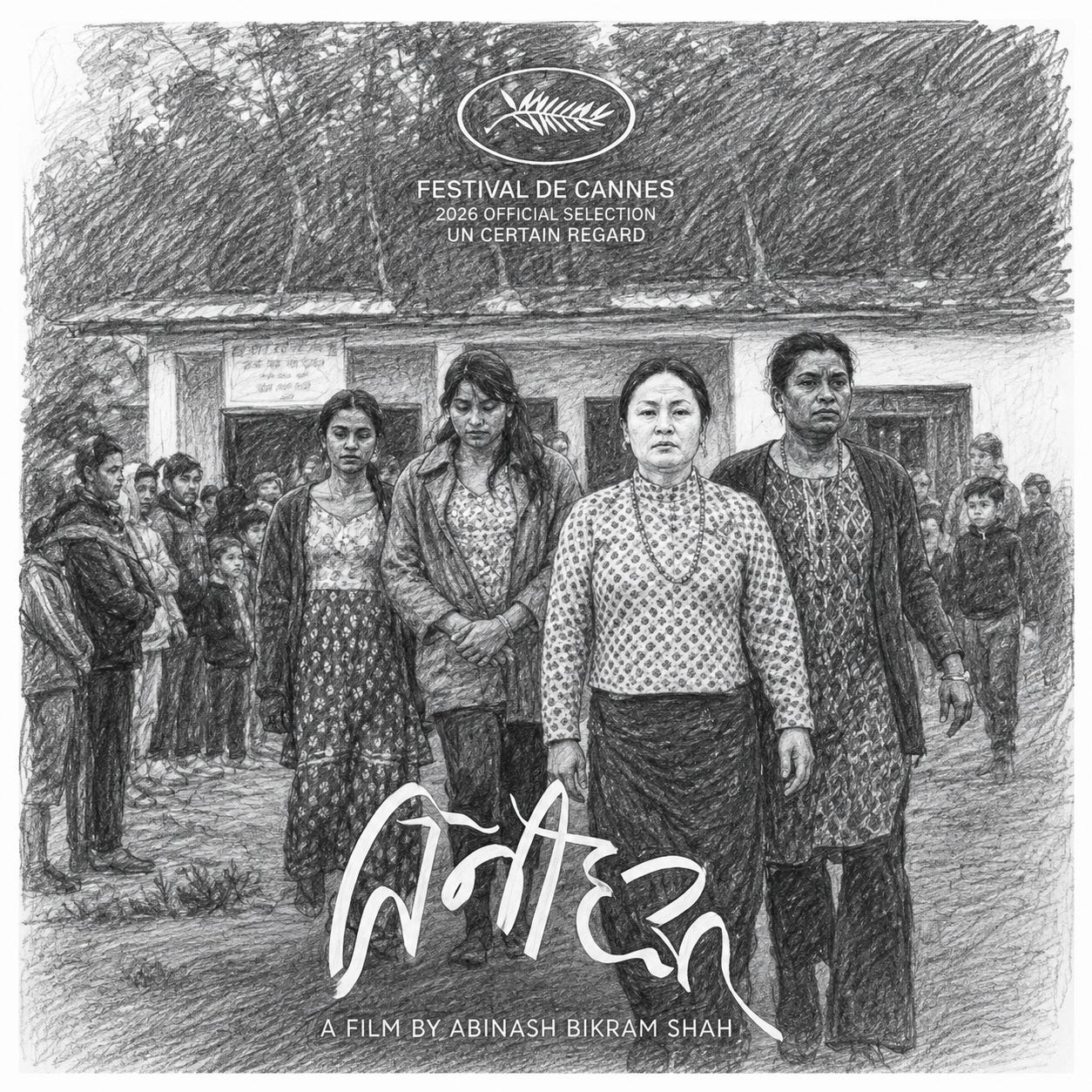 A Scandal Reaches the Deubas, New Rails for Our Money & Nepal's First Cannes Win 19.06.2026 20минNamaste, diaspora family! This week the anti-corruption story that has been simmering for months reached one of the biggest names in Nepali politics, with the CIAA summoning former Foreign Minister Arzu Rana Deuba over the e-passport contract. There was lighter news too, and some of it touches our wallets directly: India and Nepal switched on a remittance link that lets money move home in seconds, and a small Nepali film made history at Cannes. Add seven provincial budgets, a tourism charm offensive, and a quiet rise in the price of daal, and you have a week that ran from the courtroom to the red carpet. Let’s get into it.🌍 Diaspora & GlobalisationNew Rails for the Money We Send HomeFor anyone who has stood in a remittance queue or watched a transfer take three days to clear, this is the development of the week. India and Nepal have switched on a direct link between India’s UPI and Nepal’s National Payments Interface, allowing instant, person-to-person money transfers between bank accounts and digital wallets in both countries. What makes it notable is the word “person-to-person.” Earlier UPI tie-ups abroad mostly let Indian tourists pay shopkeepers; the Nepal corridor is the first to send money both ways, directly between individuals. The plumbing was built by NPCI International on the Indian side and Nepal Clearing House on ours, and it makes Nepal the ninth country wired into India’s payments network. For the millions of Nepalis whose lives straddle the open border, and for families splitting earnings across Kathmandu and Indian cities, it promises cheaper, faster transfers and one less reason to carry cash across a checkpoint. The real test, as always, will be the fees and the daily limits, but the direction of travel is clear (Asia News Network).The Gulf State That Keeps CallingIf India was the week’s big structural story, the Gulf supplied its diplomacy. On June 18, the UAE’s ambassador to Nepal, Abdulla Saeed Mubarak Jarwan Al Shamsi, called on Speaker Dol Prasad Aryal, and the agenda read like a summary of the diaspora’s whole relationship with the Emirates: employment, investment, trade, tourism, air services, even artificial intelligence. Aryal used the moment to press a very practical grievance, asking the UAE to ease the police-report requirement that slows down visas for Nepali workers, a piece of paperwork that costs time and money for people who can spare neither. He also welcomed the start of daily Pokhara to Dubai flights from September 23, a real boost for the new international airport that has struggled to fill its schedule, and floated reviving the Dubai to Bhairahawa route. The UAE is home to a large share of Nepal’s migrant workforce, so easier visas and direct flights are not abstractions. They are the difference between seeing family once a year or once every two (Nepal News).In Brief: A few more notes from across the diaspora.* The other side of the wire. As remittances break records, the workers behind them are feeling the Gulf’s downturn. Reports this month describe Nepalis sent on unpaid leave, salaries frozen and contracts canceled as regional conflict slows construction and tourism, with one group of 36 workers in Qatar left unpaid for eight months (The Kathmandu Post).* A community that keeps growing. NRNA Australia welcomed the new budget’s provisions for migrant workers, from skills recognition to social-security enrolment, as fresh figures put Australia’s Nepali-born population at 213,580, nearly double the 2021 count (Nepal News).* A new dot on the map. Himalaya Airlines began direct scheduled flights between Kathmandu and Shenzhen, opening another link to southern China for traders, students and tourists (Travel and Tour World).🏛️ Politics & GovernanceThe Passport Scandal Reaches a DeubaThe corruption case that has slowly engulfed Nepal’s passport department took its most politically charged turn yet. On June 18, the Commission for the Investigation of Abuse of Authority summoned former Foreign Minister Arzu Rana Deuba over the e-passport procurement contract, serving notice at her Budhanilkantha home and giving her three days to appear. The CIAA alleges that close to Rs 8 billion in irregularities ran through the printing and supply deal, and more than thirty-five people are now under its lens. Several are already in custody, including the passport department’s former director general Tirtharaj Aryal, a director, and the Nepali agent of the German firm Muehlbauer; the agent of a second German firm is reported to be absconding. The pressure does not stop at her. Her husband, former Prime Minister Sher Bahadur Deuba, faces a parallel money-laundering inquiry. Deuba, a senior Nepali Congress figure, replied by email that she is abroad for medical treatment and cannot meet the deadline, but pledged to cooperate. For a government that rode to power on an anti-corruption wave, watching the establishment’s biggest names answer summonses is exactly the spectacle its voters wanted (The Kathmandu Post, OnlineKhabar).Seven Provinces, One CalendarWhile the capital chased a scandal, the rest of the federation did its annual arithmetic. On June 15, the first day of Asar, all seven provincial governments tabled their budgets for the coming fiscal year, as the constitution requires them to. The numbers map the country’s uneven geography of money. Bagmati, anchored by Kathmandu, unveiled the largest at Rs 66.93 billion, with Lumbini at Rs 37.38 billion and Gandaki at Rs 32.99 billion. None of this happens in isolation: the federal budget set aside Rs 424.27 billion in transfers to sub-national governments, split between the seven provinces and the country’s 753 local units. The provincial plans lean on the familiar promises of roads, clinics, irrigation and tourism, with pledges to keep day-to-day spending in check. Ten years into federalism, these budgets are less about headline drama and more about whether the system can actually deliver closer to home, a question the diaspora, much of which left because services never reached their villages, has a personal stake in (Rising Nepal Daily).In Brief: The rest of the week in governance.* A crack on the bench. The senior-most Supreme Court justice, Sapna Pradhan Malla, stayed away from a Full Court convened by Chief Justice Manoj Kumar Sharma to finalise the judiciary’s digital plans, a public sign of friction at the top of the court (Nepal News).* The remark that lingers. Opposition parties kept disrupting parliament, demanding that PM Balendra Shah retract his earlier comment that Nepal too had encroached on Indian land, a line they say undercuts Nepal’s own border claims (The Himalayan Times).* Money for classrooms. Education and sports drew Rs 218.3 billion, or 10.28 percent of the national budget, funding skills training, school buildings, smartboards in community schools and the midday meal programme (Nepal News).💸 Economy & DevelopmentWiring a Country That Sells LightNepal’s defining economic ambition is to turn falling water into exportable power, and this year’s energy program lays out how far that dream still has to travel. The Energy Ministry’s plan for the new fiscal year aims for 15,000 MW of generation by 2030, a target that would move Nepal from chronic shortage to surplus and seasonal export. The less glamorous half is the wiring: extending 66 kV transmission lines to 7,808 circuit kilometres and 33 kV lines to 8,429, with a dozen major transmission projects slated for completion, plus modest additions of 43 MW from micro-hydro and 99 MW from solar. Transmission is where Nepal’s hydropower story has repeatedly stalled, with finished plants left unable to sell because the lines to carry their power were years behind. The big builds still in progress, Arun 3 at 900 MW and Betan Karnali among them, will only matter if the grid catches up. For a diaspora that pays the country’s bills in remittances, a Nepal that earns from electricity rather than only exporting workers is the more hopeful future (Investopaper).A Decade On, the Quake’s Last RepairsTen years after the 2015 earthquake flattened homes, clinics and temples, the rebuilding reached a milestone this month. India’s External Affairs Minister S. Jaishankar formally handed over 72 health facilities and 12 cultural heritage sites reconstructed under the post-quake programme, after talks with Foreign Minister Shishir Khanal. The same meeting launched the UPI to NPI remittance link and signed an agreement between India’s Bhashini platform and Kathmandu University to build a “voice first” Nepali-language translation tool, a small but interesting bet on technology that works in Nepali rather than only English. The handover is a reminder that earthquake recovery, so urgent in 2015, became a slow decade of paperwork and half-finished sites. Completed clinics and restored monuments are real gains, even if they arrive long after the headlines moved on. They also sit inside a wider India-Nepal agenda of hydropower, connectivity and trade that quietly shapes daily life on both sides of the border (New Spotlight).In Brief: A few more figures worth filing away.* The cost of living creeps up. Year-on-year inflation reached 5.04 percent in the tenth month of the fiscal year, up from just 2.77 percent a year earlier, a reminder that record remittances are landing in households whose grocery bills are rising too (Nepal News).* Markets hold their nerve. The NEPSE index steadied near 2,736 after an early-week dip, though banking stocks stayed soft under the weight of rising bad loans (Nepal News).* Business likes the budget. The Nepal-India Chamber of Commerce endorsed the Rs 2.124 trillion federal budget, backing a higher tax-free income ceiling, a lower top rate, and the new diaspora bonds meant to draw NRN savings into Nepal (Nepal News).⭐ Social & CulturalNepal Walks the CroisetteHere is the week’s reason to feel proud. , the debut feature by director Abinash Bikram Shah, has become the first Nepali film to win an award at the Cannes Film Festival, taking the Jury Prize in the Un Certain Regard section. On June 12, the French Ambassador to Nepal, Virginie Corteval, hosted a reception for the cast and crew at her residence, with Acting Kathmandu Mayor Sunita Dangol among the guests, turning an international honour into a hometown celebration. The film itself refuses the postcard version of Nepal. Set in the Terai plains, it follows Pirati, the leader of a marginalised Kinnar community, whose world unravels after one of her daughters disappears. A co-production spanning Nepal, France, Germany, Brazil and Norway, it carries a story that rarely reaches a screen this big. For a film industry long overshadowed by its Bollywood neighbour, and for diaspora parents who want their children to see Nepal as a place that makes art, not just news, the win lands as something close to validation (The Kathmandu Post).Selling the Mountains, AgainNepal spent the week reminding the world it is open for visitors. The Nepal Tourism Board took a delegation of eight tourism firms to ITE Hong Kong from June 11 to 14, pitching the country’s mix of heritage, adventure and wellness travel to one of Asia’s busiest source markets. At home, the sixth Himalayan Travel Mart wrapped up after drawing more than 600 delegates from 27 countries and arranging some 2,400 business meetings between Nepali operators and foreign buyers. Running underneath it all is a new Wellness Tourism Strategy for 2026 to 2035, an attempt to sell Nepal as a place to slow down and heal rather than only to climb. The pitch makes sense for a country whose biggest tourism risk is being seen as a one-trip destination for hardcore trekkers. Whether the strategy translates into hotel rooms booked and yoga retreats filled is next year’s question, but the diaspora, often the first to bring foreign friends home, is part of how that story spreads (Travel and Tour World).In Brief: A few more moments from the week.* Music without borders. The International Music Festival 2026, hosted by Tribhuvan University’s Lalitkala Campus, gathered musicians, scholars and teachers from several countries, putting Nepali classical traditions and instruments in front of a global audience (Manasukh Dhvani).* Monuments come home. Among the India-funded reconstruction handovers were 12 cultural heritage sites rebuilt after the 2015 quake, restoring temples and monuments that anchor both faith and tourism (New Spotlight).* A meal and a smartboard. The headline education number had a human edge: continued funding for community-school smartboards and the midday meal that keeps many children in class through the lean months (Nepal News).Let’s connectEnjoying this issue? 📩 Share it with a friend & let’s keep Nepalis worldwide in the loop! Got thoughts? Hit reply—we’re all ears! Or let us know what you think via our Feedback form or follow us on Facebook | LinkedInP.S. Got a story or issue you’d like us to cover next week? Drop us a reply — we’re building this space together.About Nepali Diaspora Digest:The Nepali Diaspora Digest connects the global Nepali community with curated news, insights, and stories that matter most. Join us as we celebrate and explore the diverse voices and achievements of Nepalis worldwide.Partner shout outbelayat.uk: helping Nepalis connect in the UK on jobs, housing, events and finding local Nepali owned businesses This is a public episode. If you would like to discuss this with other subscribers or get access to bonus episodes, visit www.nepalidiaspora.net
 -
 A Record Month for Our Money, a Cabinet Reshuffled & a 25-Year-Old Wound Reopened 13.06.2026 20минNamaste, diaspora family! This was a week of records and reckonings. The money we send home hit a single-month high that even Nepal Rastra Bank seemed startled by, and yet in the same breath the central bank published a paper warning that our remittances may be quietly hollowing out the economy they keep afloat. Back in Kathmandu, Sudan Gurung walked back into the Home Ministry after a seven-week absence and, within a day, ordered a fresh look at the one case that has haunted the country for a quarter century: the Narayanhiti massacre. And on a cricket field in Singapore, a young Nepali side gave us a reason to simply cheer. Let’s get into it.🌍 Diaspora & GlobalisationA Record Month, and the Hands Behind ItThe numbers landed this week and they are staggering. In the first ten months of the current fiscal year, remittances rose 41.2 percent to Rs 1.917 trillion, according to Nepal Rastra Bank’s latest macroeconomic report. In dollar terms that is 13.26 billion, up a third on the year. The headline figure is the single month of Baishakh, mid-April to mid-May, which brought in Rs 257.49 billion, the highest monthly inflow Nepal has ever recorded and far above the Rs 165 billion of a year earlier. A year ago this same flow was growing at just 13.3 percent, so the acceleration is real, not a rounding quirk. Behind the money are the people: 335,510 Nepalis took first-time labour approvals and another 326,364 renewed theirs over the same period. Analysts credit a strong US dollar, a slow shift toward Western labour markets, and more of us sending money through formal digital channels rather than carrying cash. It is, on paper, the diaspora at its most generous. The harder questions about what that generosity is doing to Nepal come later in this issue (Himalayan Tribune).The Cost of Sending That Money HomeWhile the inflows broke records, a sobering report reminded us what life can look like at the other end of the wire. Human Rights Watch, in a joint moment with Amnesty International on June 11, documented how Gulf governments have tightened surveillance and curbed free expression among migrant workers during the region’s recent conflict. Researchers interviewed 38 Indian, Nepali and Bangladeshi workers in March and 15 more in April across Bahrain, Kuwait, Oman, Qatar, Saudi Arabia and the UAE. One Nepali worker said his company ordered him to “delete all videos and pictures” from his phone before he flew home for vacation. In Kuwait, police carried out random phone searches, with fines reaching 1,000 dinar, roughly 3,200 dollars, and the threat of jail for anything deemed conflict-related. Amnesty counted more than 1,000 people arrested across the Gulf over such expression. HRW’s Michael Page warned that the crackdown is making it even harder for workers to speak up about the labour abuses many already endure. For families watching from Nepal, it is a reminder that the remittance figures are also a measure of risk (Human Rights Watch).In Brief: A few more notes from the migration economy.* Where they are going. The same NRB data showed 661,874 total labour approvals in ten months, first-time and renewed combined, a quiet measure of how many households still see the answer abroad (Himalayan Tribune).* Korea narrows the door. South Korea has set its 2026 EPS quota at 80,000, down sharply from 165,000 two years ago, tightening one of the most sought-after destinations for Nepali workers (The Kathmandu Post).* Looking to Europe. The government is studying new labour destinations and bilateral deals in Europe, with Germany and Romania named as priorities, the latter already taking close to 28,000 Nepali workers in a single year (New Business Age).🏛️ Politics & GovernanceA Familiar Face Back at Home AffairsThe first real change to Balendra Shah’s cabinet since it took office in March came on June 9, when President Ramchandra Paudel administered the oath to two new ministers at Shital Niwas. The headline was a return: Sudan Gurung, the Rastriya Swatantra Party leader who had resigned as Home Minister on April 22 over questions about share investments and his asset declaration, was reinstated after a government committee reviewed his case and found little to fault in his landholdings. Stepping in beside him was a genuinely unusual appointment, Mahabir Pun, the independent lawmaker from Myagdi best known for bringing wireless internet to remote villages, who takes the new portfolio of Science, Technology and Innovation. Pun is not an RSP member, and his arrival gives a young, tech-forward government a recognisable face for its innovation agenda. Gurung’s reinstatement is more contested, given the unresolved financial questions, but it restores a key security post that had sat vacant for nearly seven weeks. For a government elected on a promise of clean competence, the optics cut both ways (The Kathmandu Post, OnlineKhabar).Reopening NarayanhitiWithin a day of taking back the Home Ministry, Gurung reached for the case that no Nepali government has dared to truly close. He announced that the state would carry out a fresh investigation into the June 1, 2001 Narayanhiti Palace massacre, in which King Birendra, Queen Aishwarya and eight other royals were shot dead, by re-examining the original inquiry reports. The 2001 investigation, led by then-Speaker Taranath Ranabhat, concluded that Crown Prince Dipendra was the sole gunman, a finding many Nepalis have never accepted. The timing is striking: the announcement came just days after the country marked the twenty-fifth anniversary of that night, and from a minister listing it as one of four sweeping moves that also included reviewing old criminal files and weighing whether to drop charges against 2025’s Gen Z protesters. For now it is a statement of intent more than a plan. Gurung named no investigator, no timeline and no terms of reference, and analysts quickly noted the obvious hurdle: the prime suspect died within days of the killings. Still, for a diaspora that grew up under the shadow of that mystery, even the words carry weight (Nepal News, The Tribune).In Brief: The rest of the week under the dome.* The border row cools. After roughly ten days of obstruction, opposition parties lifted their blockade of the House once Foreign Minister Shishir Khanal clarified that the PM’s earlier remark about Nepal encroaching on India referred only to minor cross-border occupation (Khabarhub).* Ordinances in doubt. With seven government ordinances stalled, including one that retroactively removed 1,594 political appointees, the Law Ministry is weighing whether to reintroduce them as ordinary bills the RSP majority can pass (The Kathmandu Post).* A second look at the protests. Among Gurung’s announcements was a task force to assess withdrawing charges against participants in the 2025 Gen Z demonstrations that helped bring this government to power (Nepal News).* Unions on notice. On June 12 the Supreme Court declined to extend an earlier stay, clearing the way for the government to dissolve party-affiliated trade unions in the civil service. A constitutional bench led by Chief Justice Manoj Kumar Sharma ruled that implementation would cause no “irreparable harm,” handing the government a notable win for its civil-service reform drive (Himalayan Tribune).💸 Economy & DevelopmentWhen the Lifeline Becomes a TrapIn the same week remittances broke records, Nepal Rastra Bank published a paper saying, in effect, be careful what you celebrate. Working Paper No. 63 argues that the country’s enormous remittance inflows are quietly pushing the economy toward consumption and away from the farms and factories that create lasting jobs. Most of the money, the central bank’s own researchers found, goes to household spending and paying off debt rather than productive investment, and the result is what economists call “Dutch disease,” a creeping loss of competitiveness, alongside a premature decline in manufacturing. The paper makes an uncomfortable point: Nepal’s decade of apparent macroeconomic calm, all those healthy reserves and steady inflows, has masked weak productivity growth and a shrinking industrial base. It is a rare moment of public candour from the institution that manages the very flows it is warning about, and it lands precisely as the new budget claims it will pivot the economy toward production and exports. The question the diaspora might fairly ask is whether anyone in Kathmandu has a plan to turn our remittances into something more durable than groceries (Nepal Rastra Bank).The Gap That Will Not CloseIf you want the proof of the central bank’s worry, look at the trade numbers from the same ten-month stretch. Nepal’s trade deficit widened 14.9 percent to Rs 1.443 trillion, as imports climbed to Rs 1.692 trillion while exports, even after respectable double-digit growth, reached only Rs 248.96 billion. Put plainly, imports still make up around 87 percent of all the goods crossing Nepal’s borders. The shopping list tells the story: diesel alone cost Rs 103 billion, crude soybean oil another Rs 97 billion, then petrol and cooking gas. This is an economy that earns abroad and spends at home, sending much of that hard-won remittance straight back out to pay for fuel and food it does not produce. Exports are growing, which is genuinely good news, but from a base so small that the gap keeps widening anyway. Until Nepal makes more of what it consumes, the budget’s bold growth targets will keep running into this same wall (Nepalnews).In Brief: A few more figures worth filing away.* Markets steady. The NEPSE index clawed back to 2,737.61 by June 11 after a four-session slide, though the banking stocks stayed soft under the weight of rising bad loans (Nepalnews).* Clearing the dead wood. An Energy Ministry panel, part of the government’s reform push, recommended scrapping the licenses of 38 stalled hydropower projects worth 1,388 MW that signed power deals but never broke ground, and proposed ending Nepal’s hydropower “license raj” in favour of competitive licensing. It is a pointed move given how many big schemes, the flagship 1,063 MW Upper Arun among them, remain stuck (New Spotlight).* The outside view. The Asian Development Bank and World Bank both expect a sharp slowdown this fiscal year, to between 2.3 and 2.7 percent, before a rebound toward 5 percent in 2026/27 as the shocks of last year fade (Asian Development Bank).⭐ Social & CulturalCricket Books a Ticket to JapanHere is the week’s pure joy. On June 8 in Singapore, Nepal’s men’s cricket team finished the Asian Games Qualifier unbeaten, beating Hong Kong in a rain-shortened final to seal a place at the 2026 Asian Games in Aichi-Nagoya, Japan. Chasing a modest target, Nepal had raced to 114 for 2 when the rain arrived and the Duckworth-Lewis method handed them the win. The campaign belonged to opener Kushal Bhurtel, who was untouchable throughout, hammering back-to-back T20I centuries earlier in the tournament, including an astonishing 129 off 43 balls against China, and anchoring the final with a brisk half-century. For a cricketing nation that has clawed its way up through associate ranks on sheer passion, a continental-games berth is more than a result, it is a stage. Expect the diaspora’s WhatsApp groups from Sydney to Reading to be planning watch parties already (OnlineKhabar).From Jhamsikhel to the World StageNepal’s young dancers had their own night to remember. The grand finale of World of Dance Nepal 2026 wrapped up on June 6 at The Plaza in Jhamsikhel, Lalitpur, judged by the celebrated Indian choreographer Terence Lewis. Champions were crowned across four divisions, with young Ridhi Sarkar taking the top spot in the Junior Division. The real prize, though, is what comes next: the winning acts will represent Nepal at international competitions, including the World Finals in the United States, a global slot in Thailand and the World Supremacy Battleground in Hong Kong. It is a small but telling sign of a creative generation that no longer sees Kathmandu as the ceiling. For diaspora parents whose children are growing up dancing to both Nepali and global beats, it is a reminder that the talent pipeline back home is very much alive (Glamour Nepal).In Brief: A few more moments from the week.* Words without borders. The fourth Kathmandu Kalinga Literary Festival ran June 6 to 7 at Hotel Himalaya under the theme “Beyond Borders,” gathering more than 400 speakers and poets reciting in Nepali, Newari, Hindi, Maithili, Bhojpuri and English (OnlineKhabar).* Grounded at the gate. Immigration officials stopped ANFA president Pankaj Bikram Nembang and general secretary Kiran Rai from flying out to the FIFA World Cup opening, citing a National Sports Council probe into the football body’s finances (Nepal News).* A record reel. Nepali cinema is having its best box-office year in memory, with the May release ‘Lalibazar’ crossing Rs 79 million and domestic films outdrawing foreign ones in peak season (The Film Nepal).Until next week, stay connected!Let’s connectEnjoying this issue? 📩 Share it with a friend & let’s keep Nepalis worldwide in the loop! Got thoughts? Hit reply—we’re all ears! Or let us know what you think via our Feedback form or follow us on Facebook | LinkedInP.S. Got a story or issue you’d like us to cover next week? Drop us a reply — we’re building this space together.About Nepali Diaspora Digest:The Nepali Diaspora Digest connects the global Nepali community with curated news, insights, and stories that matter most. Join us as we celebrate and explore the diverse voices and achievements of Nepalis worldwide.Partner shout outbelayat.uk: helping Nepalis connect in the UK on jobs, housing, events and finding local Nepali owned businesses This is a public episode. If you would like to discuss this with other subscribers or get access to bonus episodes, visit www.nepalidiaspora.net
 -
 A Border Slip, a Rs 100 Billion Pitch to the Diaspora & 25 Years After the Massacre 05.06.2026 21минNamaste, diaspora family! It was a week when a 35-year-old prime minister learned how heavy his own words have become. In his first proper address to Parliament, Balendra Shah told the chamber that Nepal too has encroached on Indian land, and the backlash has not stopped since. Closer to home for many of us, the new budget made its boldest move yet to turn our remittances into something more than grocery money: a Rs 100 billion diaspora bond and a promise to treat NRNs as “super organic investors.” And on June 1, the country paused to mark twenty-five years since the night nine royals were shot dead inside Narayanhiti. Let’s get into it.🌍 Diaspora & GlobalisationBalen’s Rs 100 Billion Pitch to the DiasporaFor years the diaspora has been told it is the backbone of the economy and then handed an NRN card that opens few doors. The budget for fiscal year 2026/27 tries something different. The Balen Shah government has proposed an annual Rs 100 billion diaspora bond to channel overseas capital into roads, energy, and export industries, alongside a Remittance-Investment Matching Fund to push some of that money into local startups rather than household consumption. NRNs would get “super organic investor” status with preferential access to priority sectors, the secondary stock market would open to offshore citizens, and the government is promising double-taxation treaties with the countries where most of us live. There is even a “Return to Motherland after Retirement” scheme aimed at first-generation migrants. It is the most serious attempt in years to treat the diaspora as a development engine rather than an ATM. The catch, as always, is delivery: bonds and funds are easy to announce and hard to run (myRepublica, Ratopati).The Study That Says “Stop Underusing Us”A virtual policy discourse hosted by the Nepal Policy Institute on May 29 put numbers behind a frustration many of us feel. There are roughly 3 million Nepalis abroad, about a tenth of the home population, and they are not the unskilled labour force the old stereotypes assume. Some 51 percent of Nepali Americans aged 25 and over hold a bachelor’s degree or higher, and remittances now run at 25.3 percent of Nepal’s GDP. The institute’s argument is that tinkering with the NRN Act is the wrong frame entirely. It wants the government to replace “NRN” with a broader “Nepalis Abroad” category that splits the diaspora into three groups, from migrant workers to former citizens to persons of Nepali origin, and to legislate for engagement as a national strategic priority. NPI chair Dr Khagendra Raj Dhakal framed it as “a constructive offer to work with the state,” not a list of demands. For a diaspora tired of symbolic gestures, that is the right register (NEPYORK).In Brief: Three threads from the harder edge of life abroad.* The cost of the oil money. A FairSquare report documented 23 alleged labour violations among subcontractors for Saudi Aramco, with Nepali workers describing 12 to 19 hour shifts in heat above 50 degrees Celsius, “slum housing,” and compensation paid in only one of six injury or death cases (The Kathmandu Post).* Eight months, no pay. Thirty-six Nepali workers employed by Intertectra Qatar WLL have gone unpaid for eight months, their combined dues now topping Rs 20.5 million (The Kathmandu Post).* Come home, eventually. Among the budget’s diaspora measures is a “Return to Motherland after Retirement” plan to ease first-generation migrants back into Nepal after their working lives abroad (myRepublica).🏛️ Politics & GovernanceThe PM Who Conceded Too MuchPrime Minister Balendra Shah used his first formal address to the Federal Parliament to say something no Nepali leader says out loud. After becoming prime minister, he told the House, he had learned that not only has India encroached on Nepal’s land, but Nepal has also encroached on India’s “in multiple places.” He named no locations and offered no evidence, and the room turned on him. Opposition MP Basana Thapa demanded the remark be struck from the record, and a former ambassador stated flatly that “no land of India has been encroached on by the Nepali state.” The worry is strategic: Nepal’s entire case over Kalapani, Lipulekh, and Limpiyadhura, rooted in the 1816 Sugauli Treaty, rests on the position that India is the one occupying disputed ground. By conceding mutual fault, the PM handed New Delhi a talking point, and India promptly rejected any “third-party role” in the matter. The Foreign Ministry spent the week in damage control, clarifying that Shah meant minor cross-border occupation in no-man’s-land. Analysts called it an off-the-cuff slip from a leader still learning that a PM’s casual aside is never just casual (Al Jazeera, The Kathmandu Post).A House That Cannot Sit StraightThe chamber that was supposed to debate a record budget spent the week debating its own conduct. After a disorderly sitting on Sunday, a probe panel was formed under House of Representatives secretary Prakash Adhikari to investigate “indecent and objectionable behaviour” by lawmakers, and Speaker Dol Prasad Aryal adjourned proceedings to June 8. The Kathmandu Post’s read was blunt: Parliament, constitutionally the country’s chief forum for national debate, is being overshadowed by its own disputes while pressing public business waits. It is not the image a young post-election government wants, especially with a stack of bills and the border row both demanding serious floor time. The optics of a legislature investigating its own manners, rather than governing, are exactly the kind that feed the cynicism the March election was supposed to cure (The Kathmandu Post).In Brief: The rest of the week under the dome.* Not a shadow cabinet, apparently. Nepali Congress parliamentary leader Bhisma Raj Angdembey insisted the party has only assigned thematic responsibilities matching the 18 ministries, not formed a “shadow council of ministers” (Nepal News).* Talk, don’t shout. The Nepali Communist Party stressed that the border dispute with India should be settled through diplomatic channels, not parliamentary theatrics (Nepal News).* Know the map. For anyone lost in the border row, the contested ground is Kalapani, Lipulekh, Limpiyadhura, and Susta, all tangled in where the Kali River truly begins under the 1816 Sugauli Treaty (Al Jazeera).💸 Economy & DevelopmentBig Budget, Small GrowthThe numbers in the Rs 2.124 trillion budget are built to impress: a 7 percent growth target, a push to lift GDP to Rs 7.4 trillion, a revenue goal of Rs 1.6 trillion, the personal income tax exemption raised to Rs 1 million, and the top rate cut from 39 to 29 percent. Business bodies, including the Nepal-India Chamber of Commerce, have endorsed the framework. The trouble sits in the government’s own paperwork. The Economic Survey, tabled in the same Parliament, pegs growth this fiscal year at just 3.85 percent, barely half the new target, and notes the trade deficit widened 11.2 percent to Rs 1.098 trillion. So the budget asks the economy to nearly double its pace in a year when imports are still outrunning exports and capital projects keep stalling. None of this makes the targets impossible, but it does make them a statement of intent rather than a forecast. For the diaspora weighing those new bonds and funds, the honest question is whether the delivery machinery has changed as much as the ambition (Khabarhub, The Kathmandu Post).Betting the Budget on WattsIf there is one sector the budget treats as Nepal’s way out, it is electricity. The plan is to add another 1,040 MW in the coming year, 670 MW from hydropower and 370 MW from solar, lifting total installed capacity to 5,535 MW. The most strategic line item is the Karnali Corridor National Transmission Line, described as the backbone for the next phase of hydropower expansion and cross-border power trade, the part that actually lets new megawatts reach buyers at home and in India. The long-delayed 140 MW Tanahu project, Nepal’s first major reservoir scheme in more than 35 years, is nearing completion, and reservoir storage is being framed as the answer to dry-season shortfalls. Power has long been the one resource Nepal has in genuine surplus during the monsoon and scarcity in winter. Wiring it into a grid that can store and sell it is the difference between a talking point and an export economy (New Spotlight).In Brief: A few more figures worth filing away.* Still the lifeline. Remittances are projected at roughly 33 percent of GDP this year, and foreign exchange reserves now cover an extraordinary 18.5 months of imports (The Kathmandu Post).* Lights on after dark. The budget funds an upgrade to Bharatpur Airport to handle night flights, a small but real boost for Chitwan’s connectivity (Nepal News).* The compact moves. The government allocated Rs 29.344 billion to advance the Millennium Challenge Corporation project in the coming fiscal year (Nepal News).⭐ Social & CulturalTwenty-Five Years After NarayanhitiOn the night of June 1, 2001, nine members of Nepal’s royal family were shot dead inside Narayanhiti Palace, among them King Birendra and Queen Aishwarya, in a few minutes that bent the course of the country’s history. Twenty-five years on, the anniversary was marked with quiet remembrance and candle-lighting, and the mystery that has never fully settled, an official inquiry named Crown Prince Dipendra as the gunman, still draws argument. What gives this anniversary its weight is the timing. The grief is being remembered under a republican government led by Balendra Shah, in a Nepal that has since abolished the monarchy the massacre helped doom. For older members of the diaspora, this is a date carved into memory, the night the news from home stopped making sense. For younger ones born into the republic, it is the origin story of the country they inherited (Ratopati).So Close in GoaNepal’s women footballers gave the diaspora a night of nerves and then heartbreak. In the SAFF Women’s Championship semifinal in Margao, Goa, on June 3, the Gorkhali Chelis led Bangladesh through a 23rd-minute strike by Gita Rana and looked, for long stretches, like the better side. Bangladesh equalised on the stroke of half-time, the second half went blow for blow, and then Sagorika struck a last-gasp winner to end it 2-1 and send Bangladesh to the final. It is a brutal way to lose, but the performance said something hopeful: a Nepali women’s side that can lead a regional semifinal on the road is no longer a surprise package, it is a contender that fell a single moment short (Outlook India).In Brief: A few more moments from the week.* Stories from the mountains. The Kathmandu International Mountain Film Festival wrapped its 23rd edition, screening 50 films from 29 countries and opening with the national premiere of ‘Shape of Momo’ (Nepal News).* Summit roll call. Kathmandu’s second Everest Summiteers Summit honoured 176 climbers from 26 countries, a reminder that the spring season still draws the world to Nepal’s doorstep (Nepal News).* Country number twenty. Folk-rock institution Nepathya played its first ever Malaysia concert, making the country the 20th and Kuala Lumpur the 58th city on a touring map built almost entirely on diaspora crowds (The Kathmandu Post).Until next week, stay connected!Let’s connectEnjoying this issue? 📩 Share it with a friend & let’s keep Nepalis worldwide in the loop! Got thoughts? Hit reply—we’re all ears! Or let us know what you think via our Feedback form or follow us on Facebook | LinkedInP.S. Got a story or issue you’d like us to cover next week? Drop us a reply — we’re building this space together.About Nepali Diaspora Digest:The Nepali Diaspora Digest connects the global Nepali community with curated news, insights, and stories that matter most. Join us as we celebrate and explore the diverse voices and achievements of Nepalis worldwide.Partner shout outbelayat.uk: helping Nepalis connect in the UK on jobs, housing, events and finding local Nepali owned businesses This is a public episode. If you would like to discuss this with other subscribers or get access to bonus episodes, visit www.nepalidiaspora.net
 -
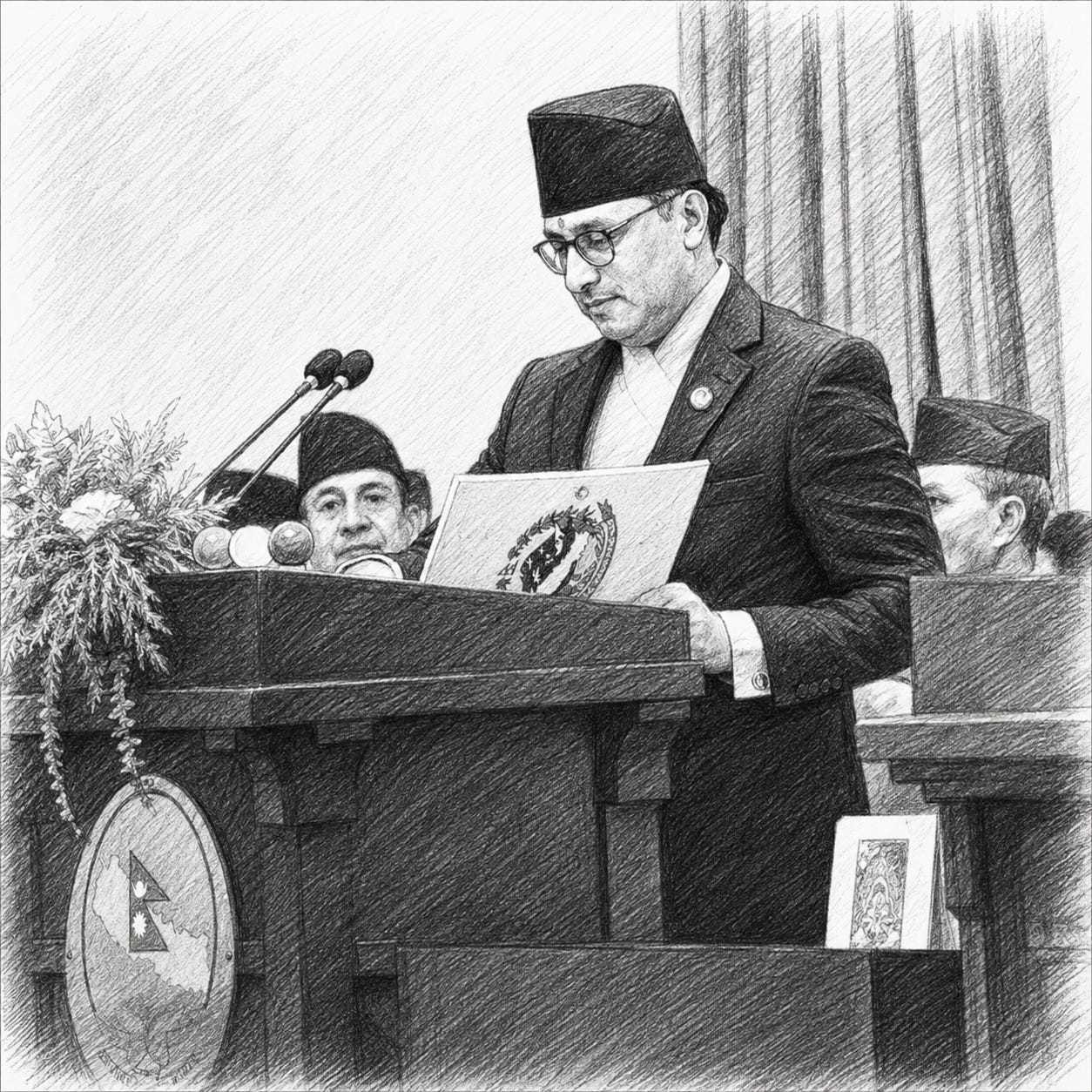 A Record Budget, a Bill That Bites Back & Volleyball Fever 29.05.2026 21минEnjoying the Digest? We pour a lot into each issue. The best way to help us grow is to forward this email to one friend or family member who’d like it. Thank you.Namaste, diaspora family! It was budget day back home, and Finance Minister Swarnim Wagle went big: a Rs 2.12 trillion package, the largest in Nepal’s history, promising 7 percent growth, tax relief, and even a sovereign AI computing center. But the number that should worry every one of us reading from abroad is a different one. A draft NRN Act now circulating would bar non-resident Nepalis from voting or standing for election, and diaspora groups want it scrapped before it ever reaches a vote. Meanwhile remittances kept the lights on at Rs 7 billion a day, Kathmandu’s women charged into a volleyball semifinal at home, and the festival halls of Thamel filled up with film. Let’s get into it.🌍 Diaspora & GlobalisationThe Draft That Tells the Diaspora to Sit DownA draft of the new Non-Resident Nepali (NRN) Act now circulating among overseas communities has set off a revolt, and for once the anger is unanimous. In its present form the bill bans NRNs from both voting and standing for election, and the NRN Association warns that more than 500,000 Nepalis could be stripped of their political rights. Diaspora bodies, including NRNA New Zealand, are not asking for amendments. They want the draft thrown out and rebuilt from scratch around the principle that once a Nepali, always a Nepali. The irony is hard to miss: the same people the bill would silence sent home a record share of the Rs 1.66 trillion that is currently holding the national economy together. There is legal history here too. Back in March 2018 the Supreme Court ordered the government to enable overseas voting within two years, an order that remains unfulfilled eight years on (The Kathmandu Post).The Australia Study That Names the ProblemIf you have ever wondered whether your NRN card actually does anything, a new study has your answer, and it is not reassuring. A report from the Institute for Integrated Development Studies (IIDS), released this month, looks at the more than 213,000 Nepal-born residents now living in Australia, one of the fastest-growing Nepali populations anywhere. Respondents described the NRN card as largely symbolic in practice: the investment, property, and inheritance rights it is supposed to unlock are poorly communicated, inconsistently applied, and often unenforceable when it counts. The study puts hard data behind a frustration most of us already feel, and it lands at exactly the moment the draft NRN Act is under fire. Taken together, the message from the diaspora is consistent: stop offering symbolic cards and unenforceable promises, and start delivering rights people can actually use (Nepal News).In Brief: A few more threads pulling at the diaspora this week.* Small steps over big slogans. A widely shared column argues Nepal should deliver incremental, practical NRN-citizenship reforms now rather than chase headline dual-citizenship promises that never arrive (The Annapurna Express).* Protection across the whole journey. A national policy dialogue brought government, unions, and development partners together to push for social protection that follows migrant workers before departure, during work abroad, and after they return (ILO).* The map is shifting. Migrant worker numbers fell 3.36 percent this year even as remittances soared, with more Nepalis heading to Europe, Japan, Australia, and the US instead of the traditional Gulf (Nepal News).🏛️ Politics & GovernanceCongress Picks a Fight With ItselfWith the 15th National Convention on the horizon, the Nepali Congress is once again fighting hardest with its own people. On May 25, senior leader Shekhar Koirala floated a five-point plan to settle the party’s long-running membership disputes, the centrepiece being a merger of the Central Working Committees from the 14th National Convention and the Special National Convention. General Secretary Gagan Thapa is having none of it, arguing that stitching the two bodies together would create an unlawful committee of nearly 400 members, well outside what the party statute allows. The disagreement is procedural on the surface, but underneath it is the familiar Congress story: rival camps using the rulebook as a weapon ahead of a leadership contest. For a party that still styles itself as the steady hand in Nepali politics, the optics of an internal stalemate are not great (Nepal News).An Opposition That Won’t Let the House SitParliament spent another week going nowhere. The chief whips of the Nepali Congress, CPN (UML), the Nepali Communist Party, and the Rastriya Prajatantra Party agreed to keep disrupting proceedings in the House of Representatives until the government enforces a mandatory prime minister’s question hour, a fixture in many parliaments where the head of government has to face direct questions on a set schedule. The opposition frames it as basic accountability; the government sees a coalition looking for leverage. Either way, the gridlock arrives at an awkward time, with a record budget and a stack of bills waiting for debate. For a young post-election government still proving it can govern, a stalled chamber is exactly the image it does not want (Nepal News).In Brief: The rest of the week under the dome.* Cleaning up the rolls. The National Assembly unanimously advanced the Voter Roll (First Amendment) Bill, 2026, for formal consideration, while the Film Bill-2025 moved to the lower house (Nepal News).* Order, order. A session of the Koshi Provincial Assembly turned physical when former Chief Minister Rajendra Rai tried to wrench a microphone from the rostrum and throw it (Nepal News).* A generational read. A CSIS analysis frames March’s election as a generational break and a new strategic moment in the Himalayas, worth a read if you want the big-picture view (CSIS).💸 Economy & DevelopmentWagle’s Rs 2.12 Trillion BetOn the morning of May 29, Finance Minister Swarnim Wagle tabled a Rs 2,124.34 billion budget for fiscal year 2026/27, the biggest in Nepal’s history and a 25.2 percent jump on this year’s revised figures. The ambition is just as large: 7 percent growth, inflation held under 6 percent, fewer ministries, and a sweep of tax reforms. The headline relief for ordinary earners is a personal income tax exemption on annual income up to Rs 1 million, and the headline curiosity is a proposed sovereign AI computing center in Syuchatar, Kathmandu. The hard part, as ever, is the gap between the document and the delivery. Capital spending is set at just over 20 percent of the budget, and Nepal’s long record of under-spending its capital allocation is the reason economists are reading this one with cautious eyes. A big number is a promise, not a result (The Kathmandu Post, OnlineKhabar).Remittances Carry the Country, AgainThe figure that makes the budget math even possible came in this month: remittances rose 39.1 percent to Rs 1.66 trillion (about USD 11.55 billion) in the first nine months of the fiscal year, with a record Rs 209.75 billion arriving between mid-March and mid-April alone. That is roughly Rs 7 billion landing in the country every single day, and it has pushed gross foreign exchange reserves up 30.5 percent. Here is the part that keeps economists up at night: this windfall arrived even as the number of migrant workers fell, and most of the money flows straight into consumption rather than into businesses, factories, or jobs at home. So the diaspora is, in the most literal sense, financing the country’s stability. The open question is whether any budget will ever turn that lifeline into lasting productive investment (Nepal News, The Kathmandu Post).In Brief: Numbers and concrete that moved this week.* The real growth rate. The government’s Economic Survey pegs growth this fiscal year at 3.85 percent, a long way short of the new budget’s 7 percent target (The Kathmandu Post).* Power on the way. The 216MW Upper Trishuli-1 project marked its weir operation milestone with the Korean ambassador in attendance, a sign the long-delayed plant is nearing its mid-2027 finish (Nepal Press).* Storing for the future. The energy minister made reservoir-based projects the national priority for energy security and irrigation, as the 140MW Tanahu project crossed 63 percent completion (Peoples’ Review).⭐ Social & CulturalKathmandu’s Women Spike Their Way to the SemisThe best sporting story of the week did not come from a mountain. Hosting the CAVA Women’s Volleyball Championship 2026, Nepal’s national side fought through the group stage with wins over Kyrgyzstan and the Maldives, shaking off a narrow opening loss to defending champion India to book a place in the final four. Their reward is a semifinal against an unbeaten Iran, played in front of a home crowd in Kathmandu that has turned out in real numbers for a women’s team. Whatever happens next, a host nation reaching the semis is the kind of result that gets girls in Dharan and Dhangadhi asking for a volleyball, and that may matter more than the medal (The Kathmandu Post).Thamel Goes to the MoviesThe Kathmandu International Mountain Film Festival (KIMFF) opened its 23rd edition this week, turning the QFX Chhaya Center in Thamel into a five-day window on the world. The programme runs to 50 features, documentaries, and short films from 29 countries, with the mountains as the connective thread rather than the only subject. For a festival that has quietly outlasted governments and grown into one of South Asia’s most respected mountain-film gatherings, the staying power is its own kind of achievement. For the diaspora, it is also a reminder that Nepal exports more than labour and tea: it exports stories, and people are watching (Nepal News).In Brief: A handful of moments worth a smile.* A first on the summit. Makeup artist Nilam Poudel became the first openly LGBTQ+ Nepali to summit Everest, reaching the top on May 23, a quiet milestone on a crowded mountain (Nepal News).* Strings that travel. Sarod maestro Sudarshan Rajopadhyay was honoured with the Kalakshetram title in Pune, India, for his contribution to music (Nepal News).* Folk-rock goes global. Nepathya plays its first ever Malaysia concert at Zepp Kuala Lumpur on June 1, another diaspora crowd about to sing every word back (Nepal News).* Cricket on tour. The Cricket Association of Nepal named its ‘A’ squad for the 42nd All India Gold Cup in Uttarakhand, captained by Anil Kumar Sah (Nepal News).Until next week, stay connected!Let’s connectEnjoying this issue? 📩 Share it with a friend & let’s keep Nepalis worldwide in the loop! Got thoughts? Hit reply—we’re all ears! Or let us know what you think via our Feedback form or follow us on Facebook | LinkedInP.S. Got a story or issue you’d like us to cover next week? Drop us a reply — we’re building this space together.About Nepali Diaspora Digest:The Nepali Diaspora Digest connects the global Nepali community with curated news, insights, and stories that matter most. Join us as we celebrate and explore the diverse voices and achievements of Nepalis worldwide.Partner shout outbelayat.uk: helping Nepalis connect in the UK on jobs, housing, events and finding local Nepali owned businesses This is a public episode. If you would like to discuss this with other subscribers or get access to bonus episodes, visit www.nepalidiaspora.net
 -
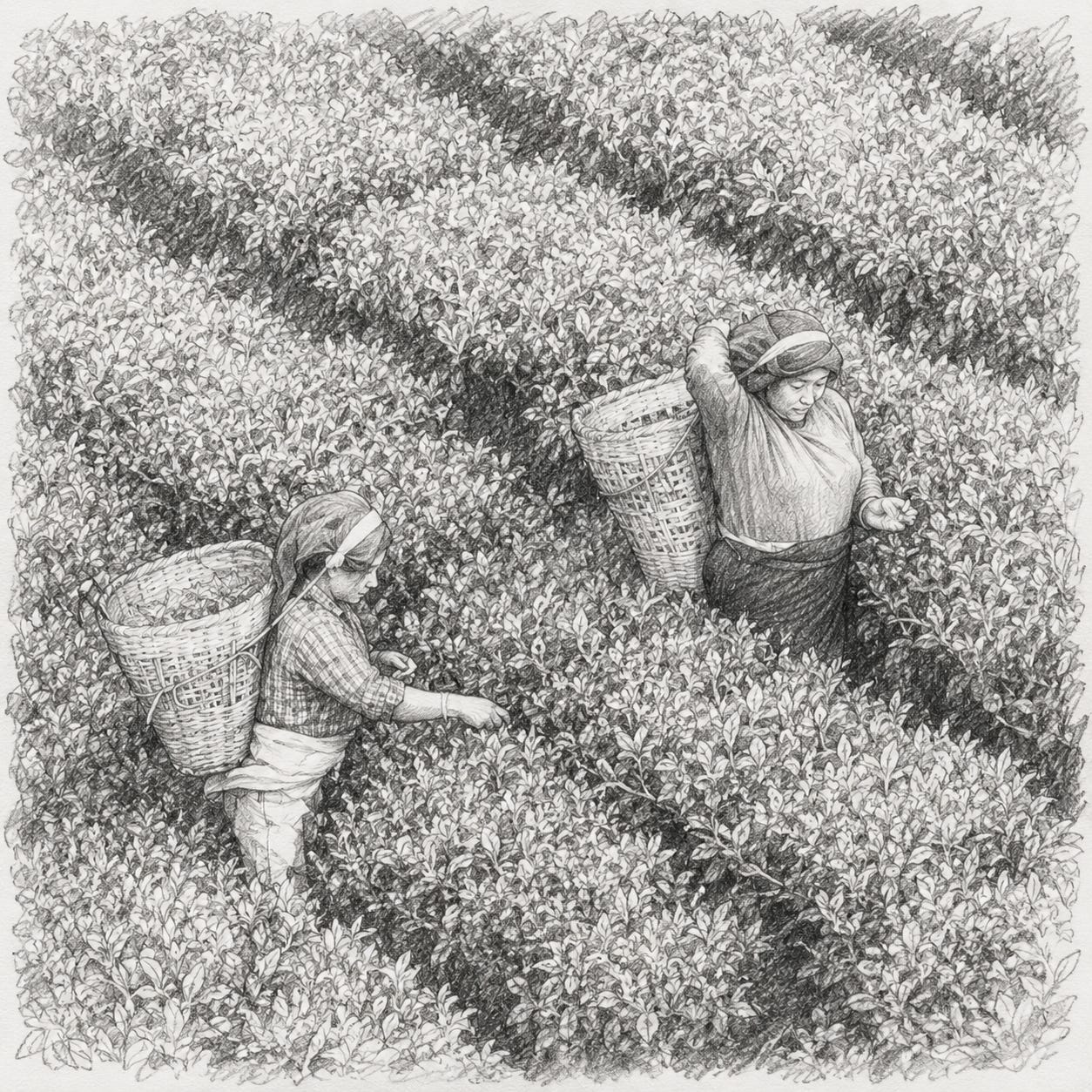 Ilam Tea Clears the Border, Uber Hits the Road & Three Everest Records 22.05.2026 18минNamaste, diaspora family! It’s a week where the news came from the mountains, the highways, and the tea gardens. After three weeks stranded at the Indian border under a new lab-testing rule, Ilam’s tea trucks finally started rolling again as Delhi quietly blinked. On Everest, Kami Rita Sherpa logged his 32nd summit and Lhakpa Sherpa her 11th — two world records on the same mountain on the same morning — before a record 274 climbers crowded the top in a single day. In Kathmandu, Uber quietly turned on the app, Manoj Kumar Sharma was sworn in as Chief Justice despite a Bar-led revolt over seniority, and ANFA crawled back from a FIFA-ban scare. And the diaspora? Still sending home Rs 7 billion a day. Let’s get into it.🏛️ Politics & GovernanceSharma Sworn In — The Seniority Bypass Becomes a Fait AccompliTwo weeks ago, the Constitutional Council’s pick of fourth-ranked Dr. Manoj Kumar Sharma for Chief Justice — over three more senior justices including the woman who would have been Nepal’s first female CJ — looked like a story that might still bend. It didn’t. On May 19, the Parliamentary Hearing Committee reviewed 16 complaints filed against Sharma and unanimously endorsed his nomination. A day later, on May 20, President Ram Chandra Paudel swore him in as Nepal’s 33rd Chief Justice. The Nepal Bar Association‘s emergency meeting, Acting CJ Sapana Pradhan Malla‘s implicit case, and dissent from National Assembly Chair Narayan Prasad Dahal all weighed less than a clear ordinance and a government willing to use it. Sharma now inherits a Supreme Court docket that includes the Kamalpokhari guthi case, ongoing transitional-justice petitions, and — inevitably — challenges to the very ordinances that put him there. For the diaspora, the precedent matters as much as the person: judicial seniority in Nepal is no longer load-bearing (Kathmandu Post, Kathmandu Post).Parliament in Paralysis — Picket Lines and a Postponed BudgetThe budget session that was supposed to begin on May 11 has spent most of its first ten days locked in obstruction. On May 21, opposition MPs from the Nepali Congress, CPN-UML and the new Shram Sanskriti Party picketed the well of the lower house demanding PM Balen Shah appear in person to face questions on policy, ordinances and the wave of dismissals. Shah skipped Wednesday’s session, sent word he’d attend Thursday, and didn’t. Frustrated lawmakers accused him of “avoiding parliamentary scrutiny” and chanted for his resignation. Meanwhile, the government has postponed the formal budget meeting overnight and accelerated the ordinance pipeline — drawing criticism from former parliamentarians and constitutional lawyers that the executive is now governing around, rather than through, the legislature. The constitutional deadline to present the 2026/27 budget remains May 29, leaving a one-week runway and a parliament that hasn’t yet allowed the Finance Minister to speak (Tribune India, Khabarhub, Click Nepal).In Brief: More from the political week.* 16 complaints, zero traction. The Parliamentary Hearing Committee reviewed every complaint filed against Sharma — including conduct, jurisprudence, and the seniority-bypass itself — and dismissed all of them in a single sitting (Kathmandu Post).* Finance ministry trims fiscal transfers. Only 21.02% of the fourth-quarter equalization grant is going to provinces and local governments — down from the standard 25% — over objections from the National Natural Resources and Fiscal Commission (Nepal News).* Ordinance surge continues. Critics in the press are now framing the post-March 26 government as one that has issued more ordinances per month than any cabinet in recent memory (Khabarhub).🌍 Diaspora & GlobalisationRs 7 Billion a Day — The Diaspora Is Quietly Carrying the EconomyWhile Kathmandu’s politics burns, the diaspora has been writing one of the most remarkable macroeconomic stories of the decade. Nepal received Rs 209.75 billion in remittances between mid-March and mid-April — roughly Rs 7 billion every single day. Across the first nine months of FY 2025/26, total inflows hit Rs 1.659 trillion, a stunning 39.1% year-on-year jump. In dollar terms that’s $11.55 billion, up 31.9%. Remittances are now projected to clock in at ~33% of GDP this year, up from 27.8% last year. Forex reserves have ballooned to $23.55 billion, enough to cover well over a year of imports. The rupee’s 7.5% depreciation against the dollar helped, but the underlying story is volume: more Nepalis abroad, sending more money, more often. For NRNs, the irony is sharp — the people the new draft bill threatens to strip of voting rights are the people keeping the macro picture intact (Kathmandu Post, Nepal News).Malaysia Locks in the Health-Screening Rules — What Outbound Workers Need to KnowIf you’re heading to Kuala Lumpur on a labour permit — or you know someone who is — read this carefully. On May 18, the Malaysian Embassy in Kathmandu issued a public notice clarifying the long-disputed health screening regime under the Biomedical System (BMS). The arrangement, anchored in the bilateral labour agreement signed on October 29, 2018, lays out three key points: examinations must be conducted only through 36 authorised health institutions in Nepal; an additional Rs 3,000 service charge above the Nepal government’s fee applies; and all BMS-related costs are to be borne by the Malaysian employer, who must reimburse workers via the first month’s salary. The notice is a direct response to months of complaints from rights groups and migrant aspirants about overcharging at unauthorised clinics. Malaysia remains the single largest destination for Nepali migrant workers — 219,357 went there in 2023 alone — and the absence of clear, enforceable rules has been the single biggest leak in the system. The new clarification doesn’t fix everything, but it’s a start (Kathmandu Post).In Brief: A few more diaspora signals.* NRN bill backlash builds. Diaspora bodies — including NRNA New Zealand — are now publicly calling for the draft NRN Act 2026 to be scrapped, arguing it strips political and voting rights rather than expanding them (Annapurna Express).* A women’s-record holder of Nepali origin. Lhakpa Sherpa, who summited Everest for the 11th time this week, has lived in the United States for over two decades. Her record is a diaspora story as much as a Nepali one (Al Jazeera).* Indian fuel hike will bite at the pump. Indian state oil companies raised petrol and diesel prices by more than 3% — and because Nepal imports its entire fuel supply from India, transport and food prices will follow within weeks (Nepal News).💸 Economy & DevelopmentUber Lands in Kathmandu — Soft Launch, Hard QuestionsThe world’s biggest ride-hailing app finally turned on the lights in Nepal. On May 21, Uber quietly went live in the Kathmandu Valley with a “test launch,” offering both bike and car rides through the app, with a formal launch scheduled for June 1. The local play is a back-office partnership with Taximandu, which is handling driver onboarding, technical coordination and dispute resolution — roughly 1,000 drivers have signed on already. For a market already crowded with Pathao, inDriver, Indrive and Tootle, Uber’s arrival is more about validation than disruption. But there’s a wrinkle: government officials confirm that no formal application for foreign investment or company registration under Uber’s name has been received. The Taximandu workaround lets Uber operate without yet committing to FDI paperwork — a posture that’s already triggering transparency questions at the Department of Industry. Expect a regulatory tussle within weeks. For the diaspora, it’s the first time arriving at TIA and opening the same Uber app you use in Sydney or New Jersey will actually summon a ride (Kathmandu Post, Meroauto).Tea Gets a Reprieve — India Eases the Lab-Testing RuleA three-week border headache for Ilam’s tea growers ended quietly this week. India’s Tea Board, acting on instructions from the Ministry of Commerce and Industry, has relaxed the mandatory lab-testing rule it had imposed on imported tea on May 1. Under the original rule, every consignment crossing Panitanki and other border points had to be sent to a Kolkata central food lab for testing — a process that stranded trucks, blew up costs, and threatened to wipe out a Rs 6 billion export trade. Under the revised SOP, tea destined for sale within India is exempt from mandatory testing; only re-export-bound tea still needs the lab certificate. For Nepal’s orthodox tea industry — which sells roughly 90% of its premium leaf to India — the climb-down is a major win. But growers are already drawing the broader lesson: India can turn the tap off on Nepali exports overnight, and the response can’t be diplomatic begging. Two industry voices this week argued — quietly — that China’s renewed interest in Ilam gardens is no longer just a curiosity. It’s an insurance policy (Kathmandu Post, Asia News Network).In Brief: More economic signals.* Everest royalties at Rs 1.24 billion. As of May 21, the Department of Tourism had issued permits to 1,157 mountaineers across 30 peaks — a record haul. Everest alone brought in nearly $6 million at the new $15,000-per-climber rate (Kathmandu Post).* Finance Secretary signals private-sector tilt. Ghanshyam Upadhyaya previewed the FY 2026/27 budget as one designed to “attract private investment,” arguing productivity growth can’t come from government spending. The budget hits parliament May 29 (Nepal News).* Capital spending still broken. With two months left in the fiscal year, the government has spent 68.98% of its recurrent budget but only 27.91% of capital — the same chronic execution gap that’s plagued every budget since federalism began (Nepal News).⭐ Social & CulturalThree Records in a Week — and a Warning From the Man Who Set OneThis was the kind of week that makes Nepal’s mountaineering legend feel both deserved and unsustainable. On May 17, Kami Rita Sherpa, 56, reached the Everest summit at 10:12 am NPT — his 32nd ascent, extending his own world record. The same morning, Lhakpa Sherpa, 52, reached the top for the 11th time, extending her record as the woman with the most Everest ascents. And on May 20, 274 climbers topped out in a single day — the most ever from the Nepal side. Spring 2026 has now set records in royalty revenue, permit numbers, and single-day summits. Then, this Thursday, Kami Rita said the quiet part loud: he is calling on Nepal to cap Everest permits and prioritise climber quality over volume. Coming from the man whose summit count is the global benchmark, the warning is hard to dismiss. For a country that just collected Rs 1.24 billion in mountaineering royalties this season, the question is whether tourism revenue or climber safety wins the next policy round (Kathmandu Post, Kathmandu Post, Washington Post).ANFA Back in the Game — Football Pulls Off a Last-Minute SaveA fortnight ago, Nepali football was staring down a FIFA suspension that would have frozen the national side from international competition, evaporated FIFA funding for four years, and pulled the women’s team out of the SAFF Women’s Championship. This week, the brinkmanship broke. On May 15, Education and Sports Minister Sasmit Pokharel convened a meeting with the NSC and All Nepal Football Association at the ministry and announced the NSC suspension on ANFA was being revoked. By May 16, ANFA officials were back at their desks at Satdobato. Crucially, FIFA followed by lifting its four-year funding ban on ANFA — a development that restores millions in Forward Programme money and unblocks development grassroots projects that had been stuck since 2021. The Kathmandu Post’s read is sharp: this isn’t because anyone solved the underlying governance row between ANFA and NSC. It’s because FIFA’s deadline was real, and someone in government finally believed it. Nepal’s women now travel to the SAFF Championship; the national team gets back to League 2 prep (Kathmandu Post, Kathmandu Post, Nepal News).In Brief: Rounding out the week.* Cricket sweep at Kirtipur. Nepal beat USA (May 16), beat Scotland by 6 wickets (May 18), and beat USA again today (May 22) at TU Cricket Ground after posting 317/8. League 2 qualification math is now genuinely interesting again (ESPNcricinfo, ESPNcricinfo).* Bagmati demolitions push into Kapan. Kathmandu Valley authorities intensified the drive against illegal construction along the Bagmati and its tributaries this week, with Kapan the latest neighbourhood in the crosshairs. Heritage groups are watching to see whether the same energy reaches Kamalpokhari (Kathmandu Post).* Top-100 cricketers. Aasif Sheikh and Dipendra Singh Airee are now both inside the ICC ODI Top 100 batting rankings — a first for Nepal (Nepal News).Until next week, stay connected!Let’s connectEnjoying this issue? 📩 Share it with a friend & let’s keep Nepalis worldwide in the loop! Got thoughts? Hit reply—we’re all ears! Or let us know what you think via our Feedback form or follow us on Facebook | LinkedInP.S. Got a story or issue you’d like us to cover next week? Drop us a reply — we’re building this space together.About Nepali Diaspora Digest:The Nepali Diaspora Digest connects the global Nepali community with curated news, insights, and stories that matter most. Join us as we celebrate and explore the diverse voices and achievements of Nepalis worldwide.Partner shout outbelayat.uk: helping Nepalis connect in the UK on jobs, housing, events and finding local Nepali owned businesses This is a public episode. If you would like to discuss this with other subscribers or get access to bonus episodes, visit www.nepalidiaspora.net
 -
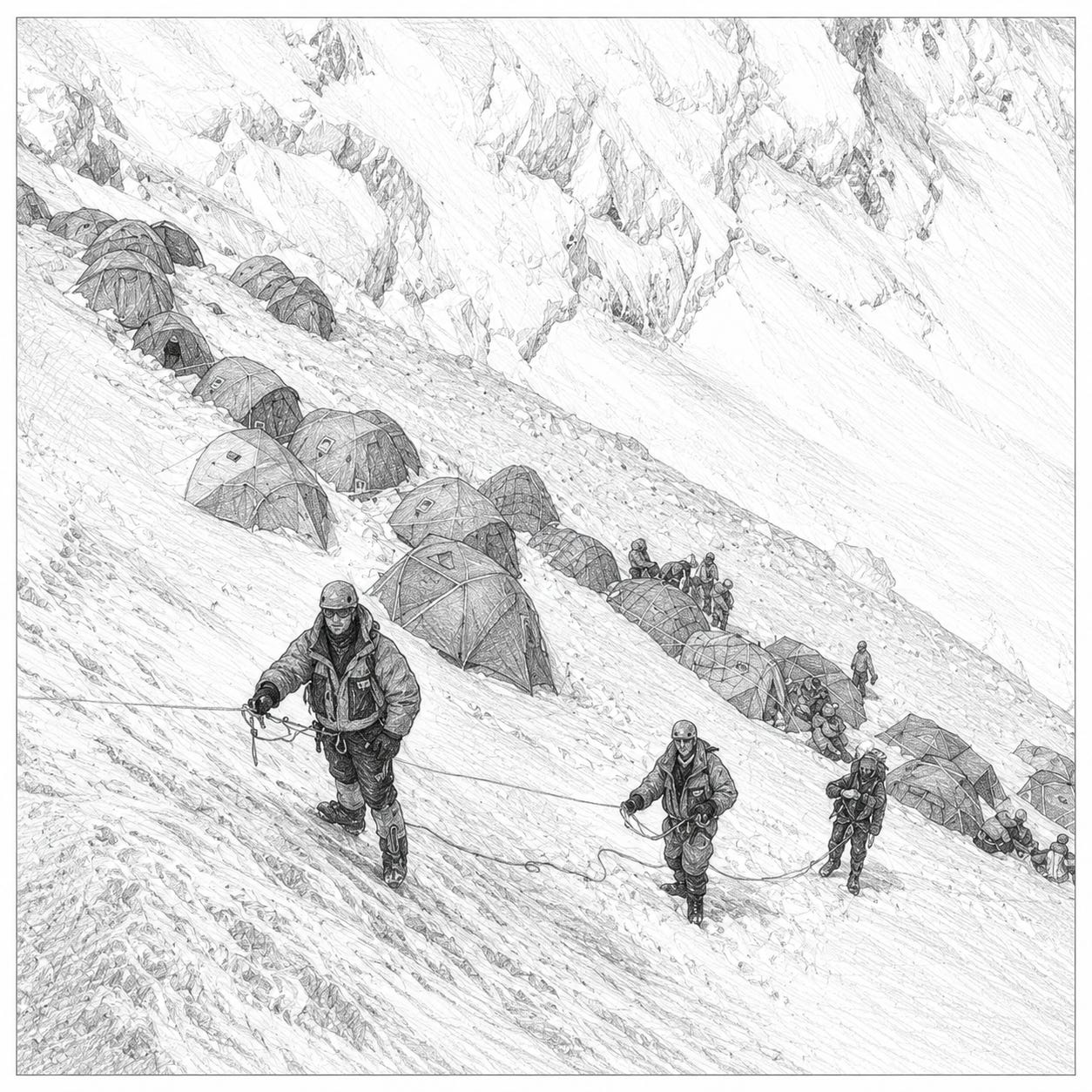 Everest Opens, a Banker in Cuffs & Tea Stuck at the Border 15.05.2026 20минNamaste, diaspora family! It’s a week of opposites back home: Sherpas fixed the Everest ropes for a record-breaking spring season just as the chief of one of Nepal’s biggest banks was hauled in by the CIB, and trucks of Ilam tea sat idle at the Indian border thanks to a new lab-testing rule out of Kolkata. We’ve also got a constitutional standoff at Sheetal Niwas, a fresh draft immigration law open for your comments, and the British Gurkha Cricket League back in full swing in the UK. Settle in.🏛️ Politics & GovernanceCabinet resends Constitutional Council ordinance to the PresidentA quiet constitutional standoff broke into the open this week. The Cabinet decided to resend the Constitutional Council (First Amendment) Ordinance 2026 to President Ram Chandra Paudel without any changes after he returned it for reconsideration earlier in the month. The ordinance — which tweaks how key constitutional appointments (CIAA, Election Commission, Supreme Court justices) get pushed through the Council — has been a flashpoint since the Balen Shah government took office, with critics arguing it concentrates appointment power in the executive. By sending the same text back, the Cabinet is essentially daring the President to either issue it or trigger a more visible confrontation. For diaspora readers watching Nepal’s institutional balance, this is the first real test of how the Sheetal Niwas–Singha Durbar relationship will work under a non-traditional PM (Nepal News).National Assembly digs into Wagle’s FY 2026/27 policy & programmeThe National Assembly began formal deliberations on the government’s policies and programme for fiscal year 2026/27 following the President’s joint-sitting address on May 11. Eight amendment proposals have already been registered against Finance Minister Swarnim Wagle’s policy document — a relatively low number that hints at a smoother passage than many expected, but also previews the lines of fight: capital-budget execution targets, the diaspora financing instrument, and federal–province transfer math. The full budget itself lands later in May, but this is the philosophical scaffolding — and so far, the Wagle pitch of “execute, don’t announce” appears to be holding the centre of the conversation (Nepal News).In Brief: Three smaller political stories worth flagging.* “Cleanliness Week 2026” kicked off May 11 from the PMO, branded “A New Commitment to Clean Governance” and covering all federal, provincial and local offices plus public schools — equal parts symbolism and signal (Nepal News).* The Supreme Court issued an interim order stopping authorities from dissolving student organisations, after a writ challenged a recent government decision — a small but meaningful win for campus politics (Nepal News).* Vice President Ram Sahay Prasad Yadav met EU Ambassador Veronique Lorenzo, marking 52 years of Nepal–EU ties and floating expanded cooperation in health, education, energy and rural development (Nepal News).💸 Economy & DevelopmentNIMB chief executive Jyoti Prakash Pandey detained by CIBThe week’s biggest economic story is also its most uncomfortable. Jyoti Prakash Pandey, chief executive of Nepal Investment Mega Bank (NIMB) — one of the country’s largest commercial lenders — was taken into custody by the Central Investigation Bureau on May 14 for investigation. NIMB sits at the heart of Nepal’s banking system, and a detention of a sitting CEO is genuinely rare; it lands on a sector already under pressure, with deposits ballooning to Rs 7.9 trillion while credit flow stagnates around Rs 5.87 trillion. The Nepal Rastra Bank has been quietly mopping up that excess liquidity (a fresh Rs 40 billion drained this week alone via a 21-day deposit-collection instrument), but a high-profile CEO probe will rattle confidence in ways macro tools can’t fix. Expect both regulatory ripples and political theatre in the days ahead (Nepal News).Nepali tea trucks stuck at the Indian borderFor a fourth straight week, the India–Nepal trade plumbing keeps clogging — this time at the tea border. The Tea Board of India’s new Standard Operating Procedure, enforced from May 13, requires every truck of Nepali tea to be sent to Kolkata for individual laboratory testing, a process taking 10 to 15 days per consignment. The result has been an immediate, complete standstill in tea exports just as the spring flush from Ilam and Jhapa comes off the gardens. Tea is a flagship Nepali export with deep diaspora resonance, and the new SOP follows a series of friction-heavy Indian moves (the recent customs-side trucks crisis, and now an outright sugar export ban through September 30). The economic damage is real; the diplomatic message is louder (Nepal News).In Brief: A packed economy week beyond the headlines.* World Bank country head David Sislen told Kathmandu Post the private sector must be at the centre of Nepal’s infrastructure and jobs push, noting the government spent only 59% of its capital budget last year (Kathmandu Post).* India’s sugar export ban through September 30, 2026 is set to tighten supply across Nepali wholesalers and sweet shops in the run-up to festival season (Nepal News).* Construction has begun on the 132 kV Myagdi Corridor transmission line — a 16.48 km link tying three hydropower plants into the national grid for Rs 426.2 million (Nepal News).* The new Customs Regulation 2026 is now in force, replacing a 17-year-old framework; the border market town of Bhadrapur is already reporting a 30–40% jump in sales as informal cross-border flows get squeezed (Nepal News).🌍 Diaspora & GlobalisationBritish Gurkha Cricket League returns for its 6th editionThe British Gurkha Cricket League (BGCL) — the homegrown summer institution of the UK’s Nepali community — bowled off its sixth edition on May 10, with matches running all the way through August. The 40-over format remains a serious professional platform for players of Nepali origin in Britain, with several BGCL alumni having gone on to feature for the national side or in the NPL back home. Beyond the cricket, the league has quietly become one of the most important social anchors for the UK diaspora — a weekend ritual where ex-Gurkha families, students, NHS workers and Belayat-based business owners all show up at the boundary rope. With the ICC T20 World Cup looming and Nepal’s Associate-nation profile at an all-time high, this year’s BGCL feels less like a local league and more like a feeder system the national team can no longer ignore (Nepal Sportz).NRNA Australia signs on to FY 2026/27 — but with conditionsThe Non-Resident Nepali Association (NRNA) Australia chapter formally welcomed the Government of Nepal’s policy and programme for FY 2026/27, becoming one of the first major NRN bodies to back the Balen Shah government’s first full-year agenda. The statement specifically applauded the diaspora-facing items — property rights movement, voting-rights signalling, and the new diaspora-targeted financing instrument — but pointedly urged Kathmandu to ensure “timely execution, transparent legal frameworks, and strong institutional mechanisms.” Translation: we’ve heard the speeches before. With the controversial NRN draft bill still circulating and being widely criticised in diaspora circles as regressive, NRNA Australia’s qualified endorsement reads as a careful first move from a chapter that wants to keep the pressure on (Nepal News).In Brief: A short, busy week for diaspora policy.* The Home Ministry has published a draft of a new immigration law consolidating Nepal’s current patchwork rules, and is taking public comment for seven days — NRNs with views on visa categories, work permits and border facilitation should weigh in (Nepal News).* President Paudel’s new infrastructure financing model formally names diaspora capital as a pillar alongside private and alternative finance — the clearest sign yet that NRN money is being designed into Nepal’s growth math (Clickmandu).* Remittances reached Rs 1.65 trillion (~$11.55B) in the first nine months of FY 2025/26 — up 39.1% YoY — the diaspora is, by several measures, now the single largest contributor to the Nepali economy (Nepalism).⭐ Social & CulturalEverest route opens — 14 Nepalis summit on a record-breaking seasonA 14-member Nepali rope-fixing team summited Everest on May 13, officially opening the route for hundreds of foreign climbers stacking up at South Base Camp. Nepal has issued a record 492 climbing permits this spring and earned an unprecedented Rs 1.07 billion in royalty revenue from Everest alone — the most commercially lucrative season the mountain has ever produced. For a tourism economy still rebuilding post-pandemic, the numbers are a genuine bright spot; but the same record permits are reigniting old questions about crowding, waste, and whether Nepal’s biggest brand is being well managed by its biggest beneficiary — the state. The Sherpa community’s quiet, lethal expertise is once again the only reason any of this works (Kathmandu Post).Nepal hosts USA & Scotland in Kirtipur tri-seriesThe Rhinos are back in Kirtipur for a marquee Associate-nation tri-series against the United States and Scotland, kicking off May 12 at TU International Cricket Ground after the recent leg with Oman and the UAE. The matches matter: every result feeds into ICC rankings and World Cup qualification routes, and Nepal’s home form has been a major reason Kathmandu’s cricket scene continues to draw 15,000-plus crowds on a Wednesday. With Aasif Sheikh and Dipendra Singh Airee newly inside the ICC ODI Top 100 batting rankings (more on that in the briefs) and a generation of NPL talent pushing through, this series feels like a checkpoint for whether Nepal can hold its place at the top of the Associate ladder (Nepal News).In Brief: A few more things worth your weekend.* Aasif Sheikh (93rd) and Dipendra Singh Airee (99th) are both now inside the ICC ODI Top 100 batting rankings — the first time two Nepali batters have sat there together (Nepal News).* The Second South Asian Trade Fair 2026 closed at Bhrikutimandap on May 11 with all eight SAARC nations exhibiting handicrafts, food, garments and EVs — a quiet but symbolically important regional moment (Nepal News).* The Kathmandu Post reports Nepal’s only dedicated mental hospital is stretched beyond capacity — a sobering reminder of how thin the country’s mental-health infrastructure remains (Kathmandu Post).Until next week, stay connected!Let’s connectEnjoying this issue? 📩 Share it with a friend & let’s keep Nepalis worldwide in the loop! Got thoughts? Hit reply—we’re all ears! Or let us know what you think via our Feedback form or follow us on Facebook | LinkedInP.S. Got a story or issue you’d like us to cover next week? Drop us a reply — we’re building this space together.About Nepali Diaspora Digest:The Nepali Diaspora Digest connects the global Nepali community with curated news, insights, and stories that matter most. Join us as we celebrate and explore the diverse voices and achievements of Nepalis worldwide.Partner shout outbelayat.uk: helping Nepalis connect in the UK on jobs, housing, events and finding local Nepali owned businesses This is a public episode. If you would like to discuss this with other subscribers or get access to bonus episodes, visit www.nepalidiaspora.net
Подобни подкасти


Популярен в
Този подкаст се появява и в подкаст класациите на тези държави.
