
Cultures of Energy
Dominic Boyer and Cymene Howe
0
Cultures of Energy brings writers, artists and scholars together to talk, think and feel their way into the Anthropocene. It covers serious issues like climate change, species extinction and energy transition, but also tries to confront seemingly huge and insurmountable problems with insight, creativity and laughter. The podcast believes in the possibility of personal and cultural change, and that the arts and humanities can help guide us toward a more sustainable future. It is a Mingomena Media production, co-hosted by Dominic Boyer and Cymene Howe.
Епизоди
-
 264 - Decolonial Endurance (feat. Ting Hui Lau) 21.09.2026 58минCymene offers an epic #CymRant against AI-gone-wild on this week's podcast. Then (17:07) we welcome Ting Hui Lau to the podcast to talk about her fascinating and moving new book, Decolonial Endurance, which focuses on how Lisu communities straddling Southwestern China and Myanmar maintain their Indigenous culture and sovereignty despite the developmental and ethnocolonial schemes targeting them. We start with why Ting thinks it's so important to put Critical Indigenous Studies and Asian Studies into deeper dialogue. What does survivance (survival + endurance) look like in authoritarian Asia as the Lisu struggle to maintain their lifeworlds and relational mode of production? We move from there to discussing how Lisu are haunted by certain afterlives of development (e.g., forced sterilization) while also refusing to capitulate to them. Then we turn to how examining settler colonialism within Asia complicates the story of European settler colonialism. We close talking about fieldwork and friendship. Hang in there, everyone, peace and love.
 -
 263 – Brokers of Power (feat. Conor Harrison) 07.09.2026 51минDominic and Cymene enjoy a confetti-free trip to Philadelphia on this special Labor Day edition of the podcast. To keep us company (12:24) we welcome Conor Harrison to the program to talk about his new book, Brokers of Power: The Financialization of the US Electricity System (U Minnesota Press, 2026). We start by discussing the variety of finance industry players operating in the energy sector and how their goals are not all the same. We delve into the deep history of energy and finance and how things started to get pretty symbiotic starting in the 1990s. Turning to the present, Conor explains the incentives that utilities have to hold on to fossil fuel plants and how finance has managed the decline (or not) of coal generation. We get into the crypto and data center boom in electricity demand, why consumer prices are soaring, and finance's role in the rise and fall of ESG investing. Finally, Conor explains why he thinks a strong return to public power and investor-owned utilities would accelerate and improve the energy transition. Hug a worker today everyone. Hang in there, everyone, peace and love.
 -
 262 - Petroforms (feat. Helen Kapstein) 24.08.2026 59минCymene recounts her visit to The Rocky Horror Picture Show and we wonder whether students can be convinced that academic writing will improve their social lives. Then (17:30) we sit down with the marvelous Helen Kapstein to talk about her new book Petroforms: Oil and the Shaping of Nigerian Aesthetics (West Virginia UP, 2025). We begin with how oil seeks to evade both the commodity form and aesthetic forms, and how petrocriticism might respond. What is the true nature of our "blind spot" concerning oil in the global North and how does living on the front lines of extractivism counteract such blindness? We talk about how petroforms shift across genres, highlighting petrofeminism and petrohorror as two particularly interesting genres to consider. We wrap talking about the problem of recovery from petroculture and the world after oil. Hang in there, everyone, peace and love! If you happen to be in Dresden this week for Petrocultures 2026 please drop by and say hello!
 -
 261 - Building Postcarbon Futures (feat. Billy Fleming) 09.08.2026 1ч 18минThe Queen and King of Jetlag recount tales of airplane toilets, surprise geckos and AI abominations on this week's episode. Then (16:32) Billy Fleming saves the podcast by joining us to talk about his marvelous new book, Building Postcarbon Futures: Land, Justice and Energy Transitions (Lincoln Institute of Land Policy, 2026). We start with the legacy of the New Deal and how what actually happened in the infrastructural boom of the FDR years is often misremembered. We move from there to talking about the optimal and necessary scales at which building postcarbon futures must proceed and how to balance bottom-up and top-down models and actions. We talk about the fetishization of efficiency and economization logics, the need for designs that serve multiple purposes at once, and why we must make hard choices today about what kinds of industry belong to our planetary future. We close talking about the case studies in the book that may help to inspire more bold experiments in postcarbon future-making and Billy's new project on recarbonization and the importance of managed decline. Hang in there, everyone, peace and love. Book credit: Building Postcarbon Futures: Land, Justice, and Energy Transitions. By Billy Fleming. Edited by Jennifer Sigler. Designed by Cristian Ordóñez. 480 pages. Published by the Lincoln Institute of Land Policy. Distributed by Columbia University Press. How to order it: CUP: https://cup.columbia.edu/book/building-postcarbon-futures/9781558444560/ Bookshop: https://bookshop.org/beta-search?keywords=978-1558444560 Amazon: https://a.co/d/0cH9KxsB Other links discussed in the conversation: Climate and Community Institute: https://climateandcommunity.org/ Living New Deal: https://livingnewdeal.org/ Cristian Ordonez (book designer): https://studio.cristianordonez.com/ Book Tour/Events (schedule is updated regularly): https://docs.google.com/document/d/1Gh6taC3BlR6EfoAjD-255rdCYwv7T78XUXcThPOUah0/edit?usp=sharing
 -
 260 - Pipeline Cinema (feat. Mona Damluji) 26.07.2026 57минYour cohosts' electric summer adventure has brought them to Thailand! Dominic wonders if he will be allowed to eat Thai spicy food and Cymene reports about feeding baby elephants. Then (13:44) we welcome Mona Damluji to the podcast to discuss her new book, Pipeline Cinema: The Cultural Infrastructure of Oil Extraction in Iran and Iraq (U California Press, 2025) available as open access and paperback. We begin with how Mona discovered her own great grandfather in the archive of oil's cultural workers. Then we turn to the entangled histories of Iran, Iraq and Anglo-American petroimperialism. Mona tells us about how the physical infrastructure of oil impacted the cultural infrastructure of filmmaking in the region, how the oil industry sought to make itself inevitable to the story of modernization, the life stories of the culture workers themselves and much, much more. We close with a discussion of the enduring allure of petromodernity. Check out Sanaz Sohrabi's incredible films here: https://www.sanaz-sohrabi.com/. And please also check out Mona's children's books on collective action, war and displacement, Together and I Want You to Know. Hang in there, everyone, peace and love.
 -
 259 - Petrostates (feat. Ryan Cecil Jobson) 13.07.2026 53минThe China adventure continues for your two co-hosts. Cymene and Dominic report from Zhangzhou, a small city of five million in Fujian province, and talk about party hotel life and what might have been the first energy humanities workshop in the country. And then (9:02) we welcome Ryan Cecil Jobson to the podcast to discuss his groundbreaking book, The Petro-State Masquerade: Oil, Sovereignty, and Power in Trinidad and Tobago (U Chicago Press, 2024). We begin with how petrostates seek to assert their permanence even in times of obvious crises and Ryan's insights into how the performance of permanence becomes all-powerful in maintaining petrostate legitimacy. We move from there to exploring the significance of Caribbean culture in T&T fossil fuels, thinking about the tension between the state masquerade and the people's masquerade, and the historical transition from plantation labor to oil field labor. We close talking about petronostalgia, speculative sovereignty, efforts in T&T to unlock ultradeepwater drilling, and the importance of "dwelling in the hyphen" when it comes to nation-states and petro-states. Hang in there, everyone, peace and love.
 -
 258 - Smog (feat. Ann Carlson) 27.06.2026 49минCymene and Dominic report from the first week of their trip to China. And then (11:22) we welcome legal scholar Ann Carlson to the podcast to talk to us about battling smog in one of our favorite cities, Los Angeles. Ann has just published a new book, Smog and Sunshine (U California Press, 2026) that tells the remarkable and often inspiring story of how Los Angeles radically improved its air quality. We begin with a reminder of how bad things once were in LA and why. Then we discuss the scientists who helped pinpoint the origins of smog (with an assist from the science of the pineapple of all things) and the oil and automobile industry which tried to suppress the science and deny, diminish and delay action. We turn to comparing the environmental challenges that smog and anthropogenic greenhouse gases pose. Finally, we round things out by examining political polarization around climate action and the importance of government action and attribution science to climate mitigation going forward. Hang in there, everyone, peace and love.
 -
 257 - The Alibi of Capital (feat. Timothy Mitchell) 15.06.2026 54минIt's World Cup season and so your co-hosts deliver their first ever sports corner. And then (9:38) drum roll please, we welcome the one and only Tim Mitchell back to the podcast to talk about his latest masterpiece, The Alibi of Capital: How We Broke the Earth to Steal the Future on the Promise of a Better Tomorrow (Verso, 2026). We start with Tim's model of the shareholder corporation as a machine built to produce present wealth at the expense of future encumbrances. Encumbering the future is also key to how Tim is rethinking the dynamics of economic growth since his earlier work, Carbon Democracy. We talk about how growth is really an alibi of capital, one that deeply misdirects language and knowledge and entraps us in a belief that capitalist growth delivers a public good. Tim argues that both the Industrial Revolution and Keynesianism can be better understood as strategic pivots within this long run process of capitalization and future capture. We turn from there to infrastructure as a strategy of capture via delay and deferral and the critical role that technology plays in promoting misunderstanding of our relationship to the future. Finally we turn toward the climate crisis and how it exemplifies the dynamics Tim outlines in the book. Hang in there, everyone, peace and love.
 -
 256 - Land Art Generator (feat. Robert Ferry and Elizabeth Monoian) 01.06.2026 1ч 1минCymene goes shopping with Beyoncé in this episode's dream sequence and if that weren't dreamy enough your co-hosts also break down the new film, Backrooms. Then (17:01) we welcome Elizabeth Monoian and Robert Ferry to the podcast to talk about their amazing Land Art Generator Initiative (LAGI), a remarkable effort to surface the potential beauty of renewable energy. As a unique kind of public art enterprise, LAGI has been holding design competitions across the world since 2010. We talk about their mission to help inspire more ecologically and socially attuned modes of futurism and how land art can seed visions of better post-fossil worlds to come. We do deep dives into the projects they are currently developing in Fiji and Houston and then turn to some of LAGI's other projects including solar murals and art + energy camps. Hang in there, everyone, peace and love. Image notes = Arch of Time is a Land Art Generator artwork designed by Riccardo Mariano. Incorporating solar photovoltaic modules it will generate 400,000 kWh per year, offsetting the electricity demand of Mason Park. The artwork makes for an exceptional venue for events, learning, discovery, and play. As a time measuring device, the Arch keeps track of the sun as it moves across the sky, engaging visitors with a magical light display within a comfortably shaded outdoor space. The Arch was originally a submission to LAGI 2019 Abu Dhabi. The O by Alberto Roncelli incorporates solar photovoltaic and rainwater harvesting to produce 150,000 kWh of electricity and 1.2 million liters of filtered water each year. The winning submission to LAGI 2025 Fiji, a collaboration with the Village of Marou.
 -
 255 - Accelerant (feat. Ciruce Movahedi-Lankarani) 17.05.2026 55минDominic and Cymene eat crepes, share limericks and wonder whether dogs and rabbits might hold the secret to world peace on this week's episode. Then (13:09) we welcome Ciruce Mohavedi-Lankarani to the pod to talk about his new book Accelerant: Energy Infrastructures and the Natural World in Making Modern Iran newly out from Stanford U Press. We begin with how natural gas overcame its second-class status among the hydrocarbons to become the central pillar of Iranian national development strategies in the middle of the 20th century. We talk about how the material density and volatility of gas impacted efforts at building infrastructure, how Iran had to navigate the imperial ambitions of Britain, the US and the Soviet Union to claim its gas for itself, and how Iran balanced industrial and environmental goals in its development process. Ciruce explains how gas seemed to offer Iran pathways to both a glorious future and a return to a cherished past. And he explains how the Islamic Republic continued to build upon the gas developmental visions of the Pahlavi era. We close by discussing the current conflict in Iran and what it reveals about deeply how Iranian nationalism is tied to petroleum. Hang in there, everyone, peace and love.
 -
 254 - Shrinking Cities (feat. Fernando Ortiz-Moya) 04.05.2026 58минCymene and Dominic talk about shrinky dinks, tiny sweaters, miniaturized submarines and elemental ethnography during this week's intro segment. Then (12:12) we welcome Fernando Ortiz-Moya to the conversation to talk about his excellent new book We're Still Here: Regenerating Shrinking Cities from the Ground Up (U California Press, 2026). Fernando explains his lifelong fascination with cities with dwindling populations and why urban shrinkage doesn't always mean decline. We move from there to talking about the hegemony of growth thinking in urbanism and why top-down planning for urban renewal so often fails to produce the effects intended. We wonder about how climate change will find new ways to shrink cities and, finally, we discuss different bottom up strategies for urban regeneration and how and why informal practices usually produce better results. Hang in there, everyone, peace and love.
 -
 253 - Disappearing Waste (feat. Dan Sosna) 20.04.2026 50минDominic and Cymene marvel at April snow and the ice cream stylings of Ben and Jerry. Then (8:28) we welcome Dan Sosna to the podcast to discuss his new book, Europe's Disappearing Waste (Berghahn, 2026). We dive into his background in archaeology and what attracted him to landfill in the first place, how wastepicking can be viewed as a practice of "quiet sustainability", and the differences between circular economy as a bureaucratic project and an embodied project. We move from there to tech futurism's genocidal quality, what the effort to disappear waste really means and why landfill spaces have exhibited haunted, magnetic, strange qualities throughout history. Hang in there, everyone, peace and love.
 -
 252 - Southern Anthropocenes (feat. Casper Bruun Jensen) 05.04.2026 51минCymene and Dominic discuss what happened when ten art school kids were given a disney princess baking challenge on this week's episode of the podcast. Then (14:48) we welcome Casper Bruun Jensen to the pod to talk about a new collaboration and book project he organized called Southern Anthropocenes (Routledge, 2026). We begin with the Anthropocene concept and why Casper and his collaborators felt it was important to pluralize it. We turn from there to talking pluriversal politics, cosmopolitical openings, utopias, the need to take care of the possible and what tales of tomorrow we need to tell today. Check out Casper's Entangled Areas special issue here. And if you have time on May 11th beam into the Southern Anthropocenes conversation being hosted by the University of Tokyo. Hang in there, everyone, peace and love.
 -
 251 - Deep Listening (feat. Zina Saro-Wiwa) 22.03.2026 1ч 15минCymene and Dominic lament what is happening in Iran and explore what kinds of dogs they would be on this episode of the podcast. Then (15:47) we welcome to the podcast the amazing multitalented multimedia artist Zina Saro-Wiwa to talk about her work. We begin with her father Ken Saro-Wiwa's courageous activism on behalf of the Ogoni people and tragic death at the hands of Nigeria's Abacha dictatorship. We then talk about her career in journalism and how coming to terms with the past eventually propelled her toward art. We turn from there to her creative practice. Zina explains to us what she means by "deep listening", why she finds Ogoni traditions of masquerade so generative to create with and how art is an angel with many eyes. We close talking about what it takes to hear the voice of oil and the many projects Zina has now collected under the mantle of her new Mangrove Arts Foundation. Check out Zina/SIRA*'s new album Songs for the End of the World here (a taste of it can also be found in this episode's outro music). And if finances allow, please consider making a donation or contributing to a Go Fund Me campaign to help Zina to create a museum in honor of her father's life and creativity. We just did! Hang in there, everyone, peace and love.
 -
 250 - Energy Democracy (feat. Nikki Luke) 08.03.2026 59минDominic and Cymene celebrate the 250th episode of the podcast with tales of steamy avian encounter. And then (16:14) we welcome Nikki Luke to the podcast, author of the brand-new book Electric Life: Utility Regulation and the Fight for Energy Democracy (MIT Press, 2026). We start with what energy democracy means to Nikki in the context of her work on utility regulation and then move to her case study of the famously recalcitrant utility, Georgia Power, and how the history of electricity in the American South has long been entangled with white supremacist politics. We talk about the politics of setting electricity rates, how and why investor-owned utilities undermine energy transition, and the intensifying grid politics of data centers. We touch on the poverty of imagination that electrical utilities so often display and then close with a discussion of what Nikki's analytics of feminist urban political ecology reveal about the quotidian labors involved in keeping the lights on. Check out your co-hosts at SXSW on a panel with Fire of Love and Time and Water director Sara Dosa (Friday, March 13, 530p-630p, 304 E 3rd Texas House, Austin) and Cymene's presentation on elemental attentions to the History of Consciousness program at UC Santa Cruz (Monday, March 9, 1p). More details here! Hang in there, everyone, peace and love.
 -
 249 - Weathering (feat. Astrida Neimanis and Jennifer Mae Hamilton) 22.02.2026 1ч 2минDominic and Cymene talk about their Cathostant (or is it Protelic?) families in this week's intro segment. And then (11:59) we are thrilled to be joined by Jennifer Mae Hamilton and Astrida Neimanis to discuss their work as the Weathering Collective, especially their inspiring new book How to Weather Together: Feminist Practice for Climate Change (Bloomsbury, 2026). We begin with their collaborative relationship, how it began and has evolved over the past decade, and how they learned to balance theory and practice together. We discuss how both climate science and feminist theory are best considered as works in progress and then turn to weather and why its capacity to attune to constant change helps us to grapple with the larger existential challenges of the climate crisis. From there, we talk about their concept of weathering as the ability to redistribute shelter and vulnerability in a climate changing world in ways that run counter to settler colonial legacies. Finally, we turn toward why they are happy to be ecofeminist again, how weathering meets undercommoning and how to cultivate and practice 'low stakes vulnerability' through games. Check out Jen's blog here and a recent publication here. Also stop by the FEELed Lab for a visit. Hang in there, everyone, peace and love.
 -
 248 - Maintenance & Repair (feat. Jérôme Denis & David Pontille) 08.02.2026 1ч 7минCymene and Dominic share pirate tales from the Sundance Film Festival and reimagine Heated Rivalry with Jeff Bezos and Elon Musk as the lead lovers. Then (15:34) we welcome Jérôme Denis and David Pontille to the podcast to discuss not one but two new books, The Care of Things: Ethics and Politics of Maintenance (Wiley, 2025) and Fragilities: Essays on the Politics, Ethics and Aesthetics of Maintenance and Repair (MIT Press, 2025). We begin with how they became interested in the concept of fragility through their fieldwork with people responsible for maintaining and caring for infrastructure. From there, we turn toward the distinction between repair and maintenance and how their fieldwork led them to pay attention to attention as an aspect of the phenomenology of care work. We talk about how to think about the flux and power of matter and close by discussing maintenance as a subversive practice in the era of planned obsolescence and their interest in the right to repair movement.
 -
 247 - Feeding the Future (feat. Nicole Negowetti) 25.01.2026 1ч 26минWe kick things off this week with a short but heartfelt celebration of the tenth anniversary of the podcast. Several friends—Geoff Bowker, Heather Davis, Imre Szeman, John Grzinich, Karen Pinkus and Tim Morton—drop in to share thoughts about what's urgent to think and feel in energy and environmental humanities these days. Then (34:00) Cymene welcomes lawyer-scholar-activist Nicole Negowetti to speak about her new book, Feeding the Future: Restoring the Planet and Healing Ourselves (Georgtown U Press, 2026) and its spotlight on regenerative food practices and the role that communities worldwide are playing in transforming the global food system. Hang in there, everyone, peace and love.
 -
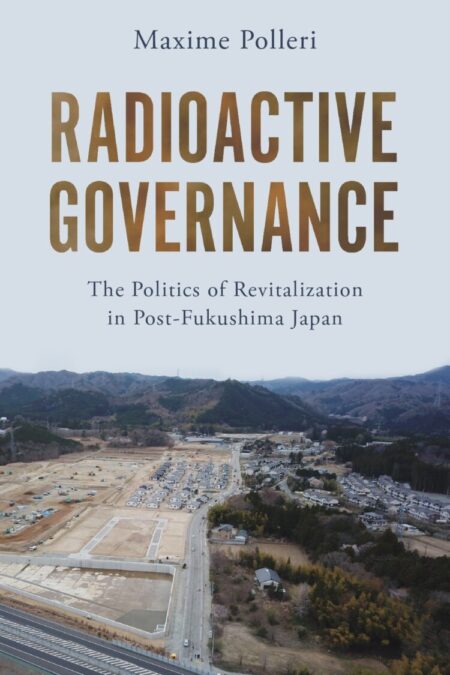 246 - Radioactive Governance (feat. Maxime Polleri) 12.01.2026 1ч 6минHappy 2026! It's been quite a year so far and your co-hosts talk about their recent trip to Nicaragua and Shadow's reinvention as a fly assassin. Then (17:18) we welcome Maxime Polleri to the conversation to talk about his fascinating new book Radioactive Governance: The Politics of Revitalization in Post-Fukushima Japan (NYU Press, 2025). We begin with the 2011 Fukushima earthquake, tsunami and nuclear disaster and the role that luck played in preventing 14 core meltdowns instead of the 3 that actually happened. From there, Maxime takes us into the center of his argument about the politics of post-disaster recovery in Japan and the myriad state efforts to downplay the severity of nuclear aftermath in order to encourage its citizens to restart their lives (and reactors). We talk about the long history of efforts to improve the image of nuclear energy, the politics of measuring radiation, state performances of radiation knowledge (including efforts to produce nuclear cuteness), and why it is so hard for some to accept that the Fukushima disaster isn't in the past but rather our future. In closing, we turn to the place of nuclear energy and disasters in the Anthropocene. Can we still speak of disaster events in the heterogeneous toxicity of the Anthropcene?
 -
 245 - 2025 Year in Review (feat. AI ;) 27.12.2025 43минNeither headcolds nor hangovers will keep your plucky co-hosts from bringing you one more episode for 2025. Since this is supposedly the year of AI, we let ChatGPT create a Year in Review episode structure and ask us questions about energy and environmental matters in 2025. The whole thing goes off the rails pretty quickly, descending into what Cymene calls "technocratic Mad Libs". And then compounding that error, we also invited an AI voice editor program to help edit the episode. That program obviously didn't like our laughter or our banter or the critical things we kept saying about AI. So, prepare yourselves for a weird episode, dear listeners. But what better way is there to honor the disaster that was 2025, right? Peace and love and see you in 2026!! PS and if you want a do-over and experience our Plan B instead, then YouTube has covered: https://www.youtube.com/watch?v=aF14KznpnKE
Подобни подкасти


Популярен в
Този подкаст се появява и в подкаст класациите на тези държави.
