
Vedic Astrology - Career, Personality, Relationships, Case Studies
Arun
0
This podcast explores Vedic astrology through case studies on career, personality, and relationships. The host, Arun, is an automation engineer and astrologer who offers consultations and annual readings. The show also covers health issues and astrovastu readings, with additional content on YouTube and LinkedIn.
Епизоди
-
 Venus in Ashlesha, Jyeshtha & Revati: D9 Intimacy, Tatva Compatibility & Karmic Marriage 05.09.2026 13минWhen Venus falls in Ashlesha, Jyeshtha, or Revati, intimacy can become far more than attraction—it can become a psychological, elemental, and karmic experience that reshapes marriage from within.In this episode of Vedic Astrology Deep Learning, we decode Tatva Intimacy Compatibility in the Navamsha (D9) through three powerful Mercury-ruled nakshatras.🐍 Ashlesha – Water Tatva: Magnetic emotional merging, vulnerability, possessiveness, psychological intensity, and the need to master emotional power without control.👑 Jyeshtha – Air Tatva: Strategic intimacy, guarded emotions, earned trust, autonomy, emotional authority, and the delicate balance between control and surrender.🌊 Revati – Ether Tatva: Gentle devotion, spiritual companionship, energetic sensitivity, karmic bonding, emotional grace, and intimacy that feels like sanctuary.We also examine how Earth, Water, Fire, Air, and Ether Tatvas interact within D9 relationships—revealing why some partnerships create emotional security while others trigger volatility, detachment, obsession, or profound transformation.The Navamsha chart can reveal your deeper spouse psychology, post-marriage intimacy patterns, emotional safety needs, hidden power dynamics, and karmic relationship contracts. Your Venus nakshatra and elemental compatibility can help explain whether love feels secure, strategic, consuming, or transcendent.🔮 For a personalized D9 Marriage, Spouse & Intimacy Reading, visit Astrovagmi.com and explore your karmic relationship blueprint in greater depth.If this episode adds value, share it, subscribe, follow the podcast, and support Vedic Astrology Deep Learning so more serious, research-driven astrology can reach those seeking deeper understanding.#Ashlesha #Jyeshtha #Revati #Navamsha #D9Chart #VedicAstrology #MarriageAstrology #TatvaCompatibility #NakshatraCompatibility #KarmicMarriage #IntimacyAstrology #SpouseReading
 -
 Venus in Rohini, Shravana & Hasta: D9 Intimacy, Marriage & Tatva Compatibility 05.09.2026 13минWhat makes intimacy survive after attraction fades?In this deep-dive into D9 Navamsha marriage psychology, we decode how Venus in Rohini, Shravana and Hasta Nakshatras experiences love, sensuality, emotional safety and long-term partnership through the lens of Tatva Intimacy Compatibility.🌹 Venus in Rohini — Earth Tatva Sensual, nurturing and devotion-oriented. Rohini seeks consistency, physical affection, emotional loyalty and comforting relationship rituals. Earth and Water can create powerful stability and emotional bonding, while mismatched pacing may turn attraction into dissatisfaction.👂 Venus in Shravana — Air Tatva Intimacy grows through listening, communication and emotional intelligence. Shravana needs clarity, respect, loyalty and balanced emotional exchange. Mental compatibility becomes as important as physical chemistry.✋ Venus in Hasta — Fire Tatva Love becomes active, expressive and tangible. Hasta shows affection through touch, care, attention and emotional service. Intimacy thrives when warmth is supported by grounded rhythm and meaningful communication.But this episode goes deeper than individual Nakshatras.You will discover how Earth, Water, Fire, Air and Ether Tatvas influence:• Emotional security • Sexual and physical rhythm • Psychological safety • Communication patterns • Spiritual resonance • Spouse dynamics • Marriage longevity • Long-term intimacy sustainabilityThe Navamsha is not merely a secondary marriage chart. It can reveal why some relationships feel intensely magnetic yet become unstable, while others appear quiet but deepen into profound emotional and spiritual companionship.Tatva compatibility helps explain the hidden rhythm underneath attraction.Your complete intimacy blueprint, however, depends on much more than one Nakshatra — including Venus placement, houses, aspects, planetary influences and divisional-chart patterns.💍 For a personalized D9 Marriage & Intimacy Reading, visit Astrovagmi.com.If this episode expands your understanding of Vedic Astrology, follow and subscribe to the podcast, share it with someone exploring relationships or marriage astrology, and support the channel so we can continue producing deeper Vedic Astrology learning content.#RohiniNakshatra #ShravanaNakshatra #HastaNakshatra #Navamsha #D9Chart #VedicAstrology #MarriageAstrology #TatvaCompatibility #SpouseCompatibility #NakshatraCompatibility #RelationshipAstrology #IntimacyAstrology #KarmicMarriage #AstrologyForLove #Astrovagmi
 -
 Venus in Dhanishta, Mrigashira & Chitra: D9 Intimacy & Marriage Compatibility 05.09.2026 13минWhat makes intimacy survive after attraction fades? In Vedic Astrology, marriage is not sustained by chemistry alone—it depends on emotional rhythm, psychological safety, freedom, desire, and elemental compatibility.In this episode of Vedic Astrology Deep Learning, we decode Tatva Intimacy Compatibility in the D9 Navamsha through three powerful Mars-ruled nakshatras and examine how Venus expresses itself once long-term relationship karma becomes active.🥁 Venus in Dhanishta – Ether Tatva Intimacy becomes rhythmic, expansive, artistic, and soul-oriented. Freedom, movement, shared purpose, and emotional flexibility become essential. Ether and Water can create profound karmic resonance, while Earth stabilizes and Fire energizes.🦌 Venus in Mrigashira – Earth Tatva Love becomes sensual, curious, playful, and exploratory. Emotional reassurance matters as much as physical attraction. Water brings softness and trust, Earth creates dependable affection, while excessive Air can produce inconsistency or emotional distance.🔥 Venus in Chitra – Fire Tatva Intimacy becomes magnetic, expressive, passionate, and creatively charged. Fire and Air amplify chemistry, Earth gives staying power, and Ether can elevate desire into shared purpose. Without emotional maturity, attraction can turn into ego conflict.The Navamsha D9 can reveal spouse psychology, sexual rhythm, emotional pacing, intimacy burnout, karmic relationship patterns, and the deeper sustainability of marriage.Tatva compatibility helps explain why some relationships deepen into sacred partnership while others struggle despite powerful initial attraction.For a personalized D9 Intimacy & Marriage Reading, explore your Venus nakshatra together with house placement, aspects, Moon dynamics, D9 lord strength, and the wider marriage pattern.👉 Visit Astrovagmi.com for consultations.If this episode deepens your understanding, share it, subscribe, follow the podcast, and support Vedic Astrology Deep Learning so more serious, research-driven Jyotisha content can continue.#Dhanishta #Mrigashira #Chitra #Navamsha #D9Chart #MarriageAstrology #VedicAstrology #TatvaCompatibility #NakshatraCompatibility #IntimacyAstrology #KarmicMarriage #RelationshipAstrology #SpouseDynamics #Jyotish #Astrovagmi
 -
 Shatabhisha, Swati & Ardra: Venus, Intimacy and Tatva Compatibility in Vedic Astrology 05.09.2026 13минWhat happens when Venus—the planet of love, attraction and intimacy—moves through Shatabhisha, Swati or Ardra? The answer goes far deeper than romantic chemistry.In this episode of Vedic Astrology Deep Learning, we decode Tatva Intimacy Compatibility through three powerful Rahu-ruled nakshatras, each expressing love through a radically different elemental psychology.Shatabhisha – Ether Tatva: Love needs space, silence and soul resonance. Intimacy can feel mystical, independent and emotionally non-invasive. Ether and Air may flow naturally, Earth provides grounding, Water draws out vulnerability, while Fire can awaken passion—but may also push too hard.Swati – Fire Tatva: Love seeks freedom, movement, experimentation and mental stimulation. Air fuels Swati's independence, Fire matches its momentum, Ether expands intimacy into something unconventional and spiritual, while emotionally dense Water can challenge Swati's need for autonomy.Ardra – Water Tatva: Love becomes intense, cathartic and transformative. Ardra wants emotional truth rather than superficial harmony. Water can mirror its depth, Earth can stabilize its storms, and Ether can turn emotional healing into spiritual intimacy. Fire and Air may create stronger friction when emotional pacing is mismatched.The deeper question is not simply "Are two people compatible?" It is: How do they experience closeness, emotional space, vulnerability, touch, freedom and attachment?Understanding Nakshatra Tatva can reveal why one person experiences silence as intimacy while another experiences it as distance—and why some relationships naturally soothe us while others repeatedly activate us.If this exploration deepens your understanding of Vedic Astrology, Venus compatibility, Nakshatra relationships and intimacy psychology, follow and subscribe to Vedic Astrology Deep Learning, share this episode with fellow seekers, and support the podcast if you find the content valuable.
 -
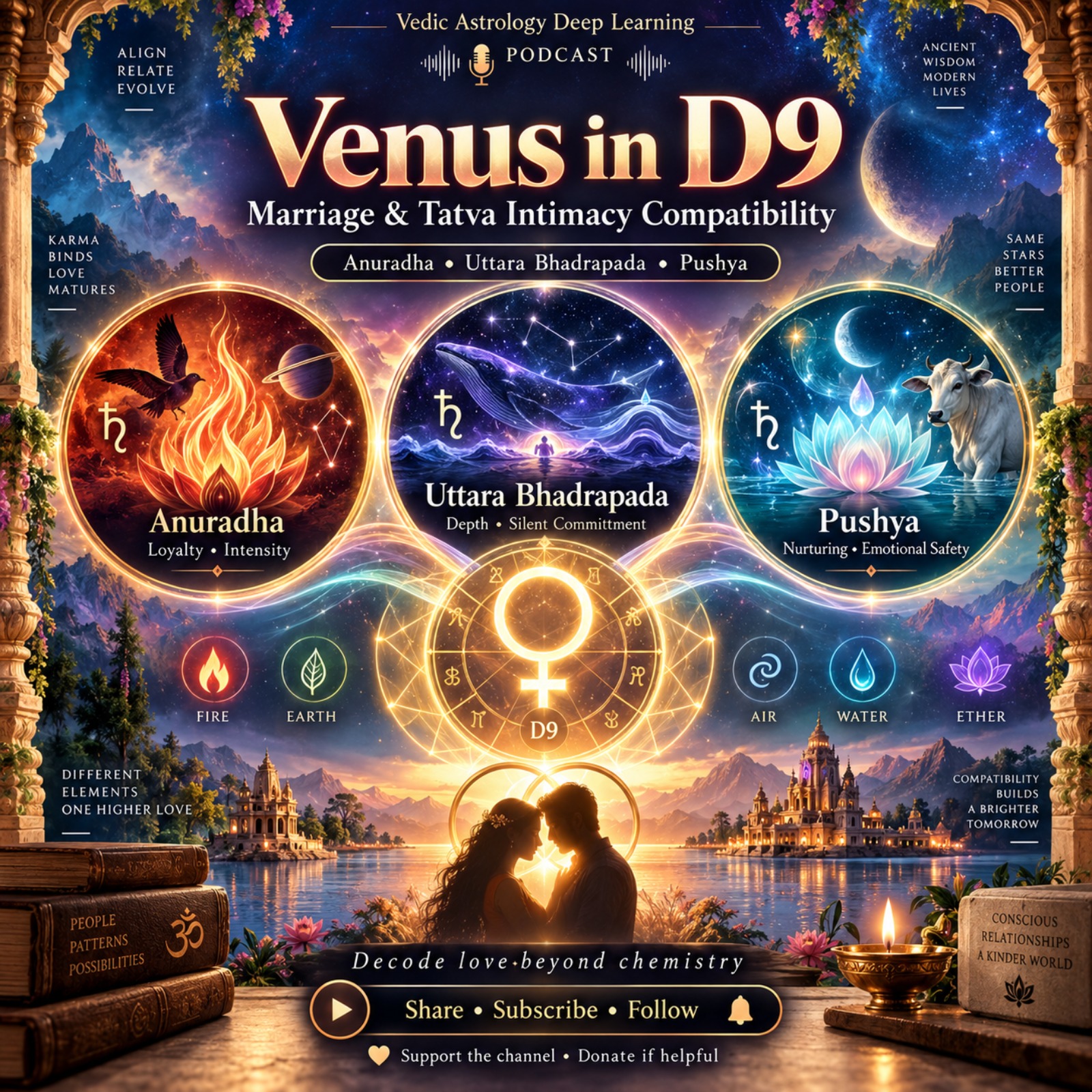 Venus in D9: Anuradha, Uttara Bhadrapada & Pushya Marriage Compatibility 05.09.2026 13минWhat happens to love after attraction settles, routines begin, and marriage is tested by time?In this episode of Vedic Astrology Deep Learning, we explore Venus in the Navamsha D9 through three Saturn-ruled nakshatras—Anuradha, Uttara Bhadrapada and Pushya—to understand intimacy, loyalty, emotional pacing and long-term marital compatibility.Rather than surface chemistry, D9 reveals how love actually sustains itself inside marriage.🔥 Venus in Anuradha brings passionate loyalty, emotional intensity, devotion and the need for sincere commitment. Fire seeks a relationship strong enough to hold both passion and responsibility.🌊✨ Venus in Uttara Bhadrapada creates quiet, mystical and deeply introspective intimacy. Love develops slowly, often through emotional maturity, silent understanding and karmic depth.🌊 Venus in Pushya seeks nurturing, protection, consistency and emotional security. Affection becomes an act of care, responsibility and dependable presence.We also decode Tatva Compatibility—Fire, Earth, Water, Air and Ether—to understand why some relationships feel naturally supportive while others generate emotional exhaustion, withdrawal, mismatched intimacy or recurring power struggles.You will discover how D9 can illuminate spouse psychology, sexual and emotional rhythm, attachment patterns, relationship endurance and the deeper karmic architecture of marriage.Your Venus nakshatra is only one layer. House placement, Moon dynamics, planetary aspects and the strength of the 7th lord must also be considered.For a personalized D9 Intimacy & Marriage Reading, visit Astrovagmi.com.If this episode expands your understanding of Vedic Astrology, share it with someone who may benefit, subscribe and follow the podcast, and support the channel so deeper Vedic Astrology learning can continue.
 -
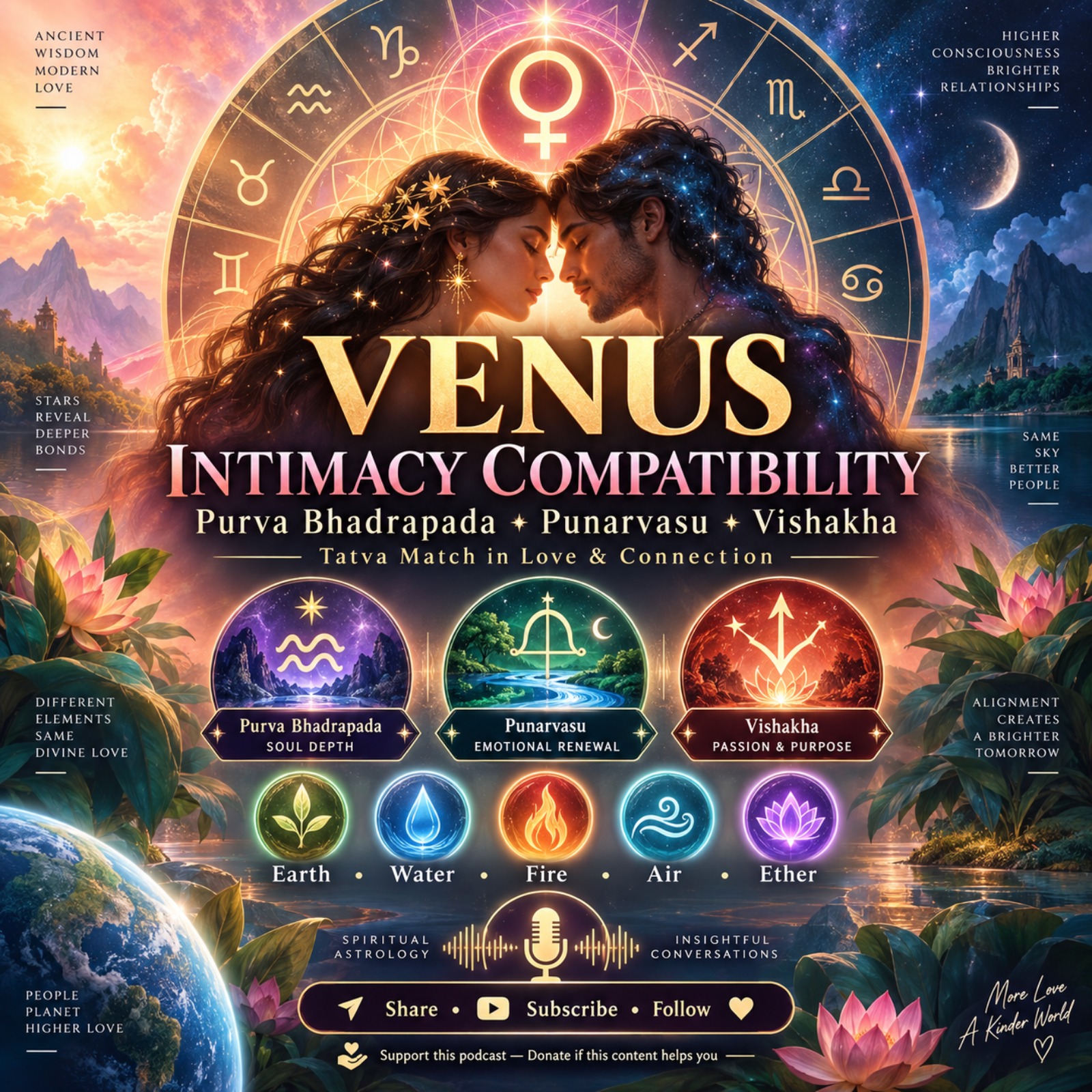 Jupiter Nakshatras & Intimacy Compatibility | Purva Bhadrapada, Punarvasu & Vishakha 05.09.2026 13минWhy can one relationship feel emotionally safe, another intensely passionate, and another almost spiritual—yet strangely difficult to explain?In this episode of Vedic Astrology Deep Learning, we explore the deeper intimacy patterns of Venus in Purva Bhadrapada, Punarvasu and Vishakha Nakshatras through the elemental intelligence of Tatva compatibility—Earth, Water, Fire, Air and Ether.You will discover how Venus changes its language of love depending on the Nakshatra it occupies.Venus in Purva Bhadrapada seeks soul-level connection, spiritual resonance, mystery and sacred emotional space. Ether compatibility can create profound non-verbal bonding, while Water, Air, Fire and Earth each bring different forms of emotional support, stimulation or friction.Venus in Punarvasu seeks emotional restoration, trust, nurturing, forgiveness and psychological safety. Water and Earth can provide emotional continuity and stability, while Ether can elevate intimacy toward healing and spiritual connection.Venus in Vishakha expresses love through intensity, loyalty, purpose and focused devotion. Fire creates passion, Air brings stimulation, Earth provides grounding, and Ether can transform desire into a relationship centred on growth and deeper meaning.The deeper lesson is powerful: attraction alone does not determine compatibility. Emotional rhythm, elemental nature, intimacy needs, energetic pacing and the ability to honour another person's psychological space may determine whether attraction becomes sustainable connection.This episode takes you beyond simplistic Nakshatra matching into a more nuanced understanding of Vedic Astrology relationship compatibility, Venus psychology, Tatva dynamics, emotional intimacy and spiritual bonding.If this exploration adds value to your understanding, share this episode, subscribe and follow the podcast so you do not miss future sessions in Vedic Astrology Deep Learning.Your support helps this channel continue developing deeper, structured and practical explorations of Vedic Astrology. If you find the work valuable, consider supporting the podcast and sharing it with someone who would benefit from this knowledge.
 -
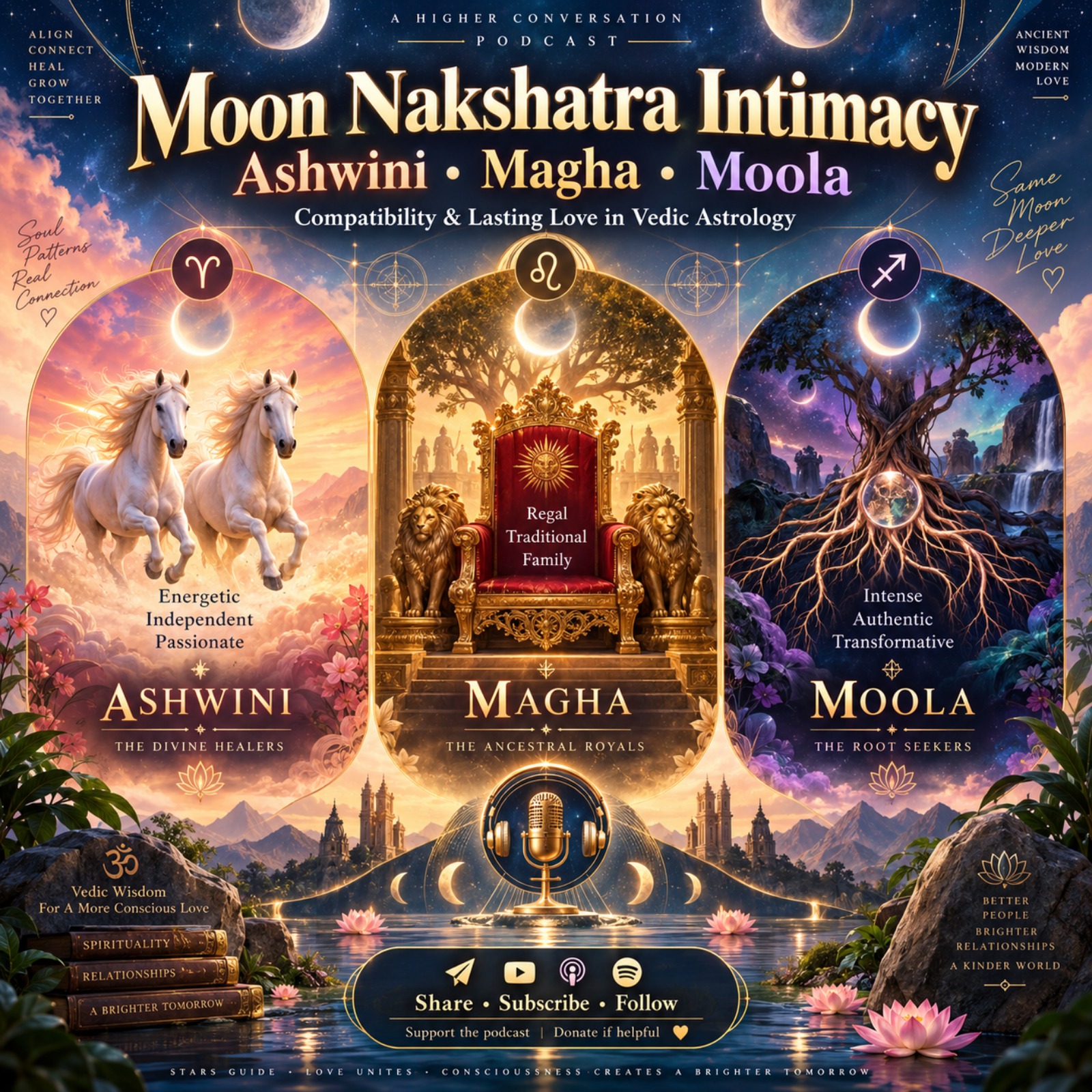 Moon Nakshatra Intimacy: Ashwini, Magha & Moola Compatibility | Vedic Astrology 05.09.2026 29минHow does your Moon Nakshatra shape the way you experience intimacy, emotional bonding, freedom, passion and lasting love?In this episode of Vedic Astrology Deep Learning, we explore relationship compatibility through the distinctive intimacy signatures of Ashwini, Magha and Moola Nakshatras. Rather than treating compatibility as a simple chart-matching exercise, the discussion goes deeper into an essential question: How does your partner actually perceive love, closeness and emotional connection?Discover why Ashwini Moon brings energy, initiative, independence, spontaneity, passion and an adventurous approach to relationships; why Magha Moon values dignity, tradition, family, ancestry, loyalty, recognition and more conventional relationship roles; and why Moola Moon seeks freedom, intellectual depth, authenticity, intense connection, personal growth and the courage to uncover what lies beneath the surface.We also examine the deeper logic behind Moon-sign and Nakshatra compatibility, including relationship positions, Gana considerations and why technical compatibility alone may never explain whether two people can genuinely understand and nourish each other over a lifetime.If you are interested in Vedic Astrology, Nakshatra compatibility, relationship astrology, marriage compatibility, Moon Nakshatra psychology and deeper human relationship patterns, this series is designed to take you beyond superficial horoscope matching.Share this episode with someone exploring relationships through Vedic Astrology, subscribe on Spotify or Apple Podcasts, follow the channel, and support Vedic Astrology Deep Learning as we continue decoding all 27 Nakshatras one layer at a time.
 -
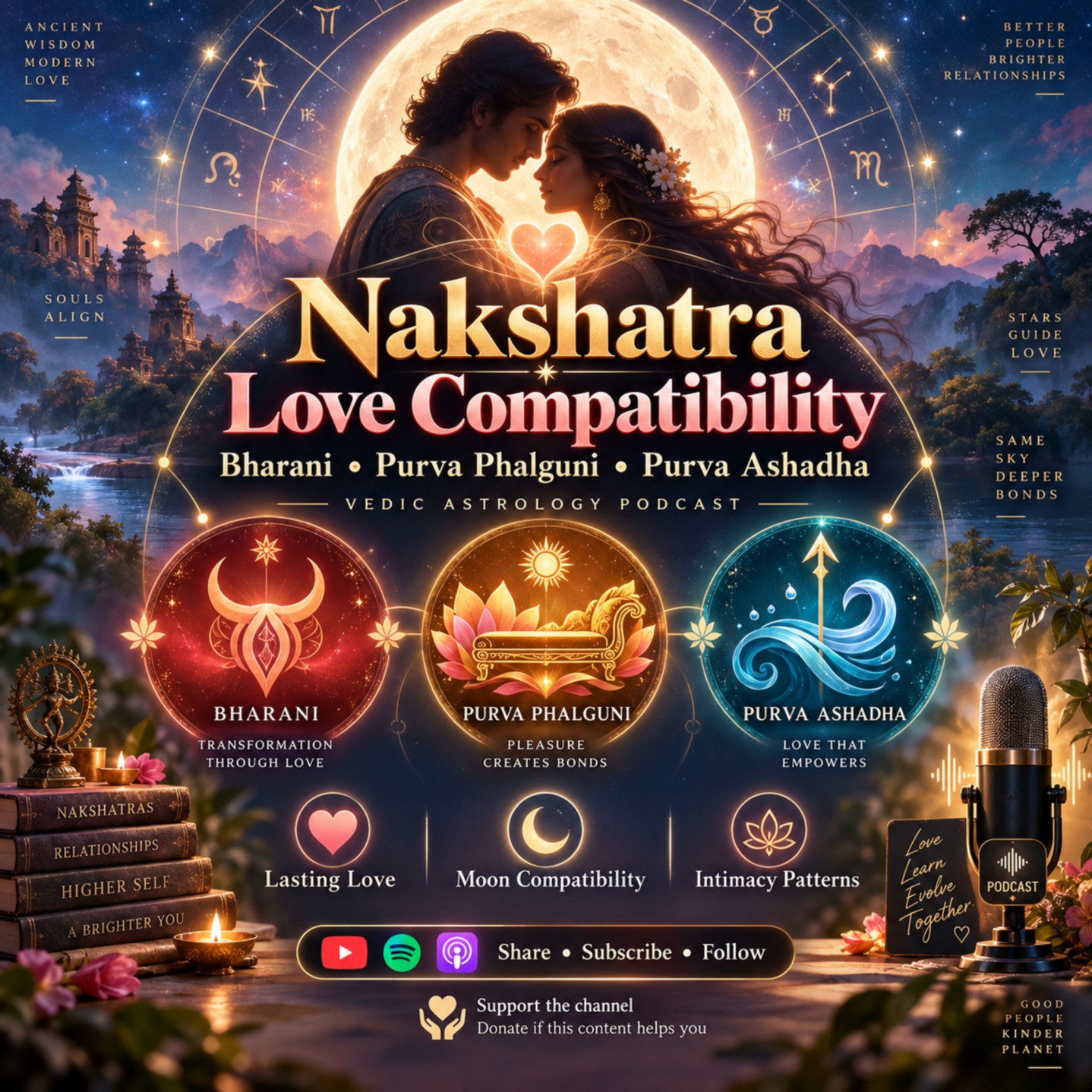 Bharani, Purva Phalguni & Purva Ashadha: Nakshatra Love Compatibility 05.09.2026 33минWhat makes two people emotionally compatible for lasting love—not merely temporary attraction?In this episode of Vedic Astrology Deep Learning, we explore the relationship and intimacy signatures of Bharani, Purva Phalguni and Purva Ashadha Nakshatras, examining how Moon Nakshatra compatibility can reveal what each person truly seeks from love, intimacy, commitment and partnership.Bharani brings passion, sensuality, intensity, protectiveness, persistence and emotional transformation. It wants a bond that can survive challenges, yet its depth may also express itself through possessiveness, jealousy or strong attachment.Purva Phalguni carries a distinctly romantic, magnetic, artistic and pleasure-loving relationship archetype. It seeks warmth, affection, social connection, beauty, creativity and shared enjoyment—but romantic idealism can become unrealistic when expectations are disconnected from the partner's actual emotional nature.Purva Ashadha expresses love through optimism, adventure, personal growth, ambition, exploration and passionate commitment. It seeks a partner who supports development, respects independence and can participate in a larger journey of discovery and purpose.We also explore why conventional compatibility scores alone may not tell the whole relationship story. Moon signs, Nakshatra Gana, compatible zodiac signs and—most importantly—the intimate psychology of each Nakshatra must be understood together.A relationship becomes stronger when you stop asking only, “Are we compatible?” and begin asking, “How does my partner experience love—and can I understand that language?”Follow Vedic Astrology Deep Learning for deeper explorations of Nakshatras, relationships, compatibility, intimacy, psychology and the hidden architecture of human bonding.If this work adds value to your journey, share this episode, subscribe and follow the podcast, and consider supporting the channel with a donation so this deeper Vedic Astrology learning can continue.
 -
 Ashlesha, Jyeshtha & Revati Moon Compatibility | Love, Intimacy & Vedic Astrology 05.09.2026 24минWhat makes two people feel emotionally safe, magnetically attracted, deeply understood—or fundamentally incompatible?In this episode of Vedic Astrology Deep Learning, we explore the relationship and intimacy signatures of Ashlesha, Jyeshtha and Revati Nakshatras, moving beyond superficial zodiac compatibility into the deeper psychology of the Moon.Discover how Ashlesha Moon seeks profound emotional bonding, trust, loyalty and almost instinctive intimacy. Ruled by the Nagas, Ashlesha can sense what remains unspoken, making honesty and emotional transparency essential. Its intensity can create extraordinary closeness, but possessiveness, defensiveness and emotional complexity must also be understood.We then examine Jyeshtha, where intimacy becomes intertwined with authority, independence, dedication and emotional loyalty. Jyeshtha needs a partner who respects autonomy while bringing genuine commitment. Power dynamics can become important, particularly when both partners naturally want to lead.Finally, we enter the sensitive world of Revati, where compassion, tenderness, imagination, spirituality and emotional receptivity shape relationships. Revati seeks gentleness, harmony and a partner capable of respecting its deeply intuitive and idealistic emotional nature.Alongside these psychological patterns, we explore Moon-sign and Nakshatra compatibility principles for lasting love, including why attraction alone does not guarantee emotional sustainability.This series is for anyone who wants to understand relationships through a deeper Vedic lens—not simply asking, “Are we compatible?”, but asking, “How do we experience intimacy, trust, loyalty and emotional evolution differently?”If this exploration adds value to your understanding of Vedic Astrology, follow and subscribe to the podcast, share this episode with someone exploring relationship compatibility, and support the channel so I can continue creating deeper Vedic Astrology learning content.
 -
 Punarvasu & Vishakha Moon Compatibility | Vedic Astrology of Lasting Love 05.09.2026 30минWhat makes two people feel emotionally compatible—not just attracted, but capable of sustaining a meaningful bond over time?In this episode of Vedic Astrology Deep Learning, we explore Punarvasu and Vishakha Nakshatra Moon compatibility, examining how the Moon, Nakshatra, zodiac sign, Pada, Gana and Bhakoot principles can reveal deeper patterns of emotional bonding, intimacy and relationship sustainability.For Punarvasu Moon, intimacy is strongly connected with nurturing, emotional support, adaptability, meaningful conversation, family values, transparency and the need for emotional stability. The Gemini expression of Punarvasu especially seeks intellectual connection and communication as an important pathway toward intimacy.For Vishakha Moon, relationships carry a different signature: intensity, commitment, ambition, shared purpose, evolution, problem-solving, social engagement and the desire to bring divergent forces toward a common point. Vishakha seeks a relationship that develops—not merely one that exists.We also examine why Nakshatra compatibility cannot be reduced to a simplistic “compatible or incompatible” judgment. Sign placement, specific Nakshatra Padas and the broader compatibility framework matter, and the principle discussed here represents only one dimension within a larger Vedic matching system.If you want to understand why you bond deeply with certain people, what your Moon actually seeks in intimacy, and which relationship patterns may support lasting emotional connection, this series takes you beyond generic zodiac compatibility into the deeper architecture of Vedic Astrology.Follow and subscribe to Vedic Astrology Deep Learning on Spotify and Apple Podcasts, share this episode with someone exploring relationships and Nakshatras, and support the channel as we continue decoding Vedic Astrology one principle at a time.
 -
 Tritiya–Saptami Tithi Compatibility: Tender Heart Meets Practical Devotion 05.09.2026 10минWhat happens when one person loves through emotional nourishment, while the other loves through practical devotion?In this Intimacy Podcast, explore the powerful Tritiya–Saptami Tithi compatibility through Vedic Astrology, relationship psychology, emotional bonding and physical intimacy.Tritiya carries softness, sensitivity, emotional memory, care, privacy and the need for a meaningful emotional atmosphere. It notices tone, distance, warmth, sincerity and whether the heart feels protected. Saptami carries devotion, structure, honesty, responsibility, service and practical loyalty. It often expresses love not through dramatic emotion, but by staying, fixing, protecting, working and making the relationship function.This creates a compelling relationship dynamic: Tritiya asks, “Are you gentle with my heart?” while Saptami asks, “Are you honest with my trust?”When both needs are respected, this pairing can become deeply grounded. Tritiya brings empathy, tenderness, forgiveness and emotional depth; Saptami brings discipline, clarity, loyalty and real-world stability. One gives love its heart, while the other gives it backbone.When unconscious, however, Tritiya may experience bluntness or emotional distance as rejection, while Saptami may experience sensitivity, withdrawal or indirect communication as unnecessary complication. Understanding these different emotional languages can transform conflict into intimacy.This episode is especially relevant for couples seeking deeper compatibility, singles choosing beyond chemistry, people recovering from breakup or divorce, and anyone wanting to understand why love can exist while emotional rhythm remains difficult.We also explore physical intimacy, where Tritiya often opens through tenderness and atmosphere, while Saptami responds strongly to trust, respect, consistency and reliability. True passion is therefore not only physical; it is built through everyday emotional safety.The deeper message of Tritiya and Saptami is simple: one protects the heart, while the other protects the life built around the heart.Share this episode with someone exploring love and compatibility, subscribe and follow the podcast for more Vedic Astrology Deep Learning on Tithi compatibility, intimacy, emotional bonding and relationship healing. If this work supports your journey, consider supporting the podcast so deeper research and learning can continue.For a personalised Intimacy Reading or Compatibility Reading, get in touch to explore your Tithi pairing, emotional body, attraction patterns, relationship wounds and deeper compatibility.
 -
 Navami Tithi & Dashami Tithi: Love, Intimacy & Emotional Compatibility 05.09.2026 22минWhy can two people deeply love each other, feel powerful attraction and even a karmic connection, yet still struggle to feel emotionally safe together?In this episode of Vedic Astrology Deep Learning, I explore the intimate relationship dynamics between Navami Tithi and Dashami Tithi through Vedic Astrology, emotional psychology, sexual compatibility and relationship healing.Navami brings intensity, loyalty, dignity, moral strength, boundaries and a powerful need for respect and emotional clarity. Dashami brings sensitivity, empathy, imagination, softness, peace and a deep need for emotional safety and spaciousness. Their attraction can be significant, but their emotional rhythms may operate very differently.This is less an effortless relationship and more a maturity relationship.Discover why Navami may experience withdrawal as disloyalty, while Dashami may experience emotional intensity as pressure; why one partner pursues truth while the other retreats toward peace; and why attraction can remain strong even when emotional or sexual intimacy begins to close.For couples, this episode can reveal why love sometimes becomes pressure, silence, resentment or emotional fatigue. For singles, it explains why emotional opposites can feel irresistibly magnetic. For those healing after separation or divorce, it offers another perspective: sometimes relationships do not fail because love was absent, but because two emotional bodies never learned how to hold each other safely.At their highest expression, Navami turns intensity into protection and Dashami turns softness into clarity. Strength meets tenderness, truth becomes gentle, respect meets peace, and intimacy becomes safer.If these deeper patterns resonate with you, share this episode, subscribe, follow and support Vedic Astrology Deep Learning on Spotify, Apple Podcasts and your preferred podcast platform.For deeper personal insight, explore an Intimacy Reading or Compatibility Reading to understand why you attract, love, resist, withdraw and repeat particular relationship patterns.
 -
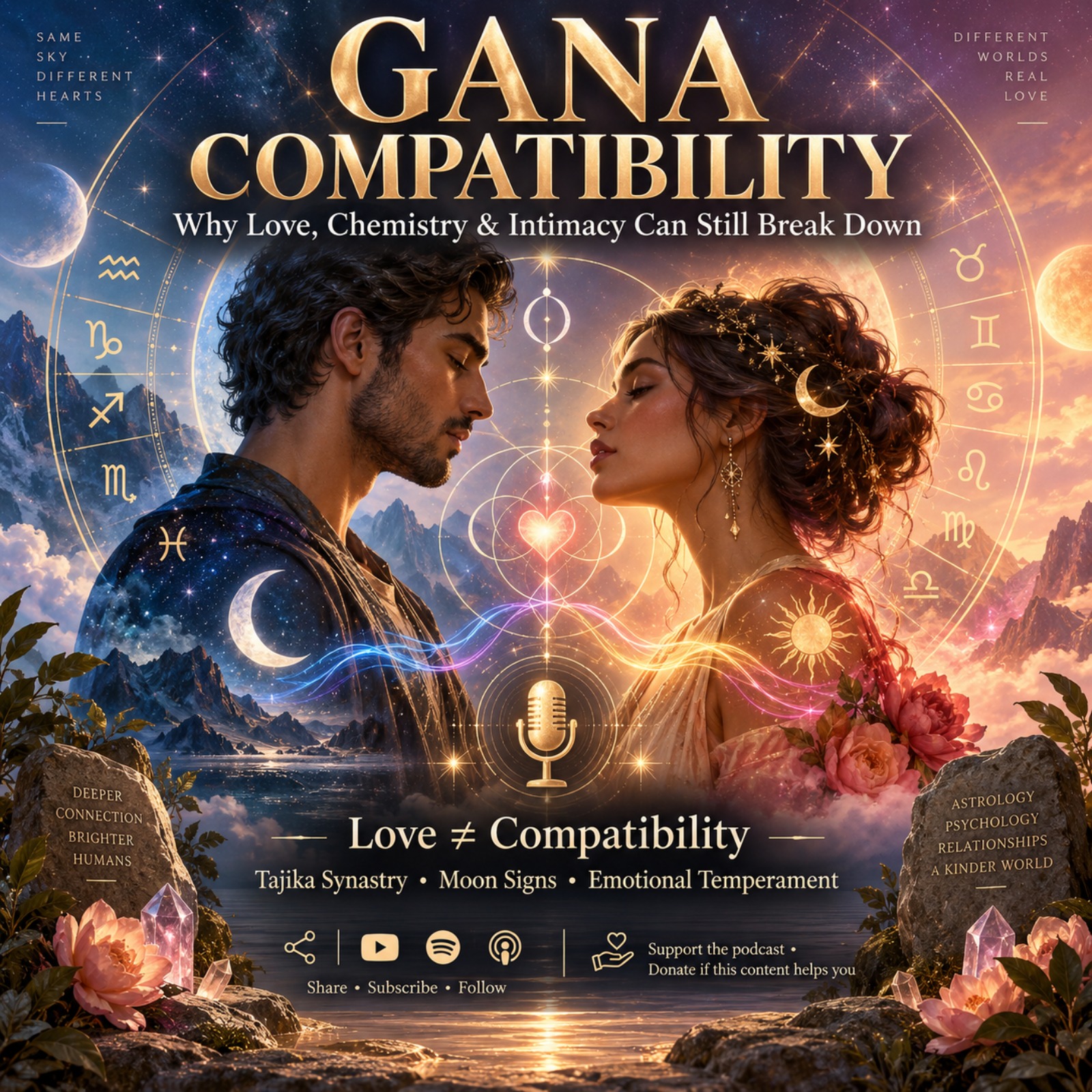 Gana Compatibility: Why Love, Chemistry & Intimacy Can Still Break Down 05.09.2026 21минWhy can two people genuinely love each other, feel powerful attraction, and still struggle to live peacefully together?In this episode of Vedic Astrology Deep Learning, we explore Gana compatibility within the Tajika Synastry System to uncover a difficult relationship truth: love is not the same as instinctive compatibility.Two people may share commitment, affection, history and intense bedroom chemistry while operating through completely different emotional systems. One needs harmony; the other needs uncompromising honesty. One seeks closeness after conflict; the other needs distance. What begins as fascination can gradually become emotional exhaustion.This episode examines how unresolved criticism, rejection, control, resentment, withdrawal and incompatible stress responses can move from the mind into the body—turning spontaneous desire into hesitation, emotional distance or sexual disconnection.Through Gana analysis, Moon-sign compatibility, dispositor relationships and Tajika relationship dynamics, discover why:• Powerful chemistry can survive incompatibility for years. • Friendship may remain even after erotic desire fades. • Highly attracted couples may struggle with everyday harmony. • Apparently compatible partners can emotionally suffocate each other. • Lost intimacy may represent a blocked connection rather than a dead one. • Some relationships require one partner to suppress their natural temperament simply to maintain peace.A mature compatibility reading must separate love from compatibility, attraction from fulfilment, sexual chemistry from emotional safety, friendship from passion, difference from incompatibility, and durability from happiness.Sometimes you are not fundamentally wrong for each other—you simply never understood each other's emotional operating system. At other times, astrology reveals a deeper incompatibility that affection alone cannot resolve.If this episode helps you understand relationships differently, share, subscribe and follow Vedic Astrology Deep Learning on Spotify, Apple Podcasts and your preferred podcast platform. If this work adds value to your journey, consider supporting the channel so deeper research-based astrology content can continue.For a personal relationship or Tajika compatibility reading, get in touch to explore attraction, intimacy blocks, emotional temperament, hidden differences and your real potential for long-term harmony.Hashtags: #RelationshipAstrology #Synastry #VedicAstrology #TajikaSynastry #RelationshipCompatibility #GanaCompatibility #IntimacyIssues #SexualCompatibility #EmotionalCompatibility #MarriageCompatibility #BedroomChemistry #LoveAndRelationships #RelationshipHealing #CouplesPodcast #AstrologyPodcast
 -
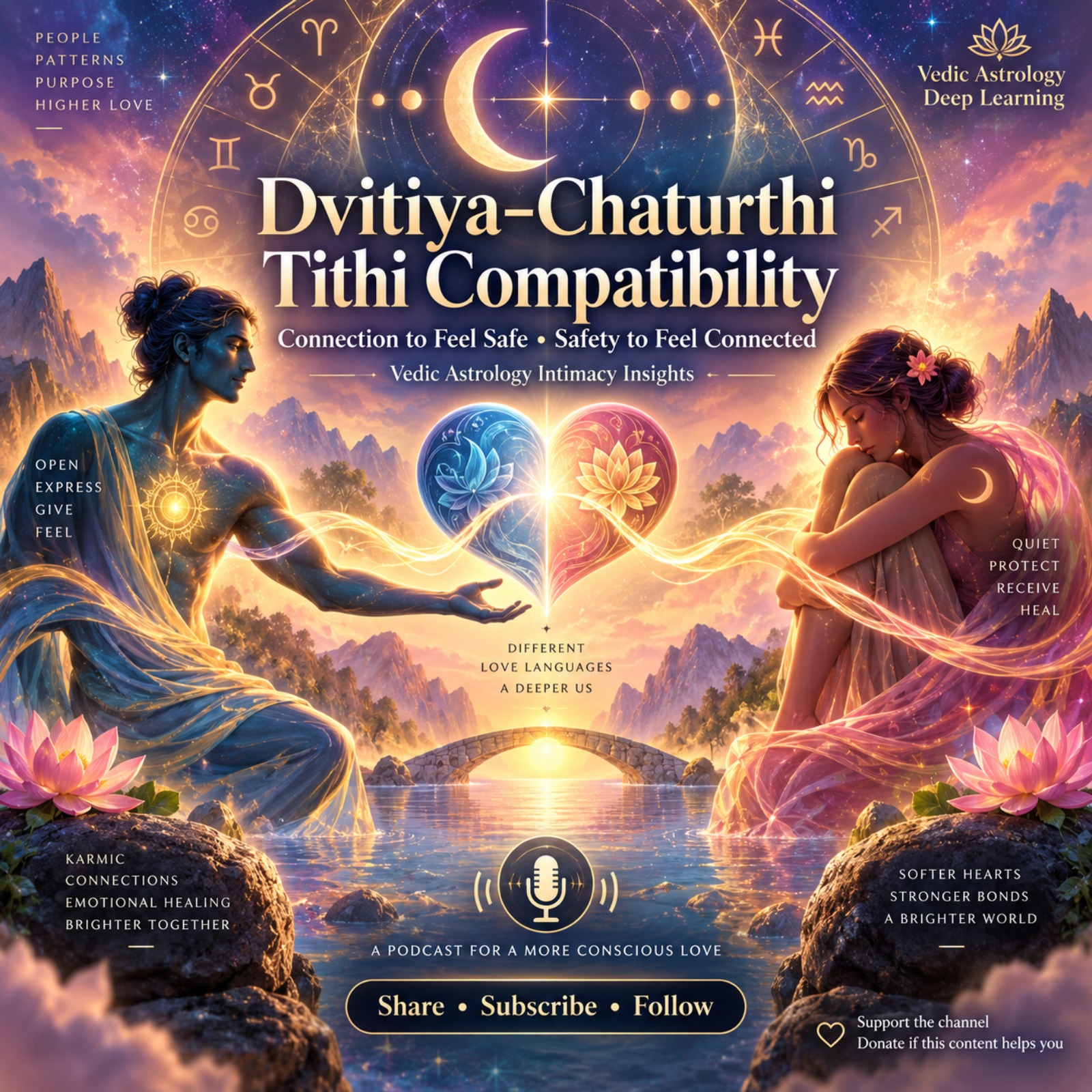 Dvitiya–Chaturthi Tithi Compatibility: When Love Speaks Two Emotional Languages 05.09.2026 20минWhy can two people genuinely love each other and still feel emotionally misunderstood, sexually disconnected, or painfully alone?In this episode of Vedic Astrology Deep Learning, I explore Dvitiya–Chaturthi Tithi compatibility—a sensitive and karmically complex intimacy pattern where one person often needs connection to feel safe, while the other needs safety before they can connect.Dvitiya seeks reassurance, warmth, emotional exchange, affection, responsiveness, and the feeling of being chosen. Chaturthi seeks privacy, trust, psychological safety, depth, emotional containment, and freedom from pressure.This creates the central paradox: Dvitiya needs connection to feel safe; Chaturthi needs safety to feel connected.For couples, this can become a powerful pursue-and-withdraw cycle—one partner talks, reaches out, explains, and seeks reassurance while the other retreats, processes, protects, and becomes difficult to read. One feels abandoned; the other feels invaded.For singles, this episode asks an important question: are you experiencing genuine compatibility—or becoming emotionally addicted to mystery, distance, chemistry, and the hope of finally being chosen?For those healing from breakup or divorce, this pairing can explain why love may have existed even when the relationship failed. Sometimes both partners cared deeply, but their emotional languages were never translated.Sexually, Dvitiya may experience intimacy as confirmation of love and desire, while Chaturthi may require profound psychological safety before fully opening. Without understanding, the bedroom can become a cycle of expectation, withdrawal, insecurity, and defense.At its highest expression, Dvitiya teaches Chaturthi that love must be expressed; Chaturthi teaches Dvitiya that love must have depth.If this reflects your marriage, dating life, breakup, divorce, intimacy struggles, or a relationship you still cannot release, connect with me for a deeper Tithi compatibility and intimacy reading.Share, subscribe, follow, and support Vedic Astrology Deep Learning if these insights help you see relationships differently. Because attraction tells you who pulls you—but compatibility reveals who can truly hold you.Hashtags: #VedicAstrology #TithiCompatibility #Dvitiya #Chaturthi #IntimacyPodcast #RelationshipCompatibility #EmotionalIntimacy #SexualCompatibility #KarmicRelationships #BreakupHealing #DivorceHealing #ConsciousRelationships #SacredIntimacy #AstrologyForLove #RelationshipHealing
 -
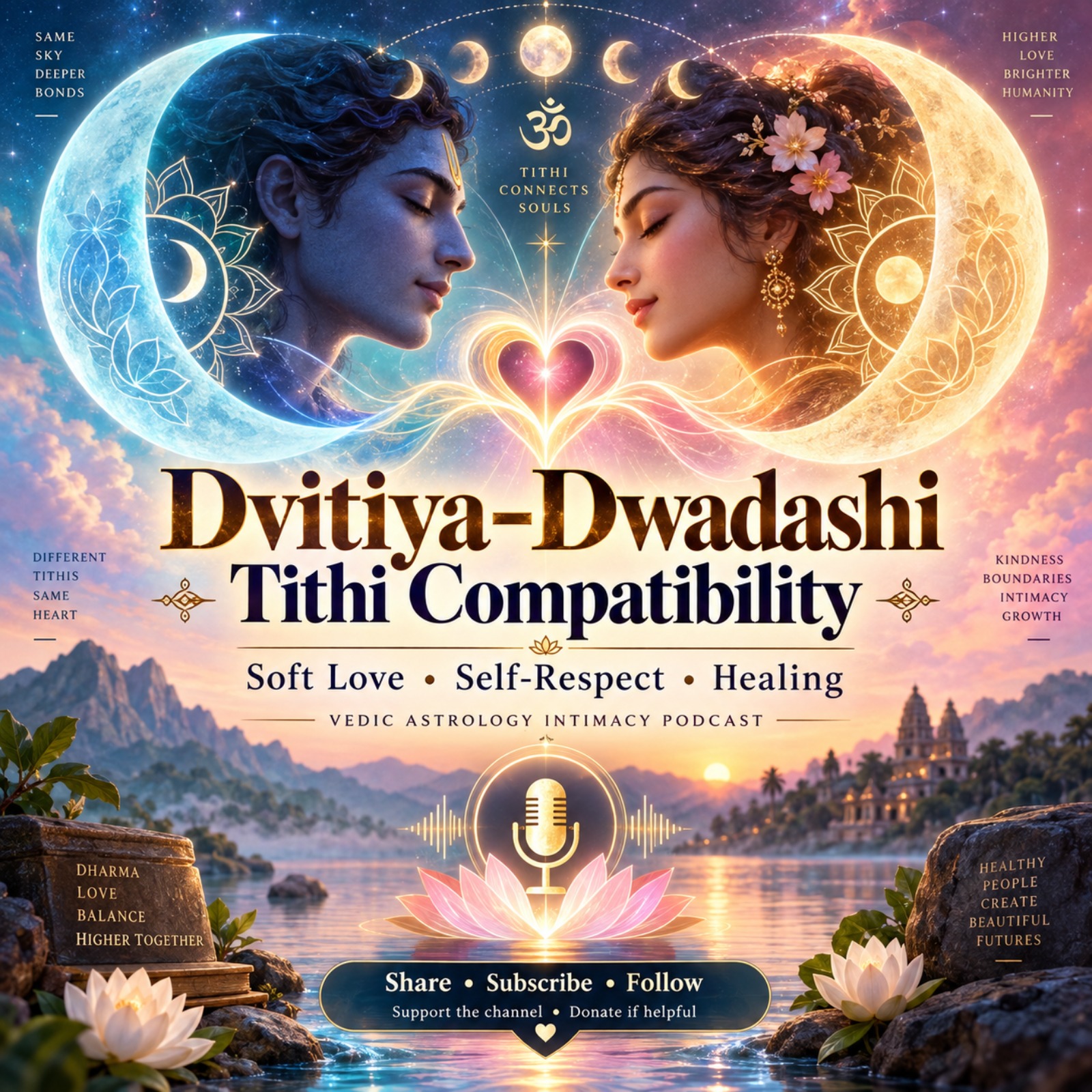 Dvitiya–Dwadashi Tithi Compatibility | Soft Love, Self-Respect & Healing 05.09.2026 10минWhat if the healthiest love is not the most dramatic — but the one where your heart can soften without losing your dignity?In this episode, I explore the Dvitiya–Dwadashi Tithi compatibility as a powerful intimacy pattern in Vedic Astrology, especially for couples, singles, recently divorced people, and anyone healing from heartbreak or breakup.Dvitiya Tithi brings emotional softness, receptivity, sensitivity, bonding instinct, and a strong need for closeness. It notices tone, atmosphere, emotional shifts, and the invisible movement inside relationships. Its shadow can appear as overgiving, reassurance-seeking, fantasy, or confusing longing with emotional truth.Dwadashi Tithi brings dignity, refinement, fairness, maturity, structure, and ethical strength. It wants love to have quality, respect, and stability. Its shadow can become emotional distance, rigidity, control, or hiding vulnerability behind standards and composure.Together, they reveal a profound relationship principle: emotional softness must meet self-respect, and love needs both feeling and form.For couples, this pairing can create affection, stability, grace, emotional safety, and a relationship that feels genuinely livable — provided neither partner hides insecurity, vulnerability, or control behind relationship roles.For singles, the lesson is equally powerful: stop mistaking anxiety for chemistry, unpredictability for passion, and emotional chasing for love. Look for the connection where your heart can breathe and your dignity remains intact.For those healing after divorce or breakup, Dvitiya–Dwadashi offers a restorative truth: healthy love should never require self-betrayal.This Vedic Astrology intimacy podcast explores emotional compatibility, bonding styles, relationship karma, heartbreak healing, conscious partnership, love patterns, self-respect, and deeper Tithi compatibility.If this episode resonates, share it with someone who needs a healthier understanding of love, subscribe and follow the podcast, and support this channel so Vedic Astrology Deep Learning can continue reaching more seekers.For a personal Intimacy Reading or Compatibility Reading, get in touch with me to explore your bonding pattern, relationship karma, emotional compatibility, and the kind of connection truly aligned with your heart.#VedicAstrology #TithiCompatibility #IntimacyPodcast #RelationshipAstrology #LoveCompatibility #BreakupHealing #DivorceHealing #ConsciousRelationships #EmotionalCompatibility #AstrologyPodcast #RelationshipHealing #SinglesAdvice #SpiritualRelationships #CompatibilityReading #VedicAstrologyPodcast
 -
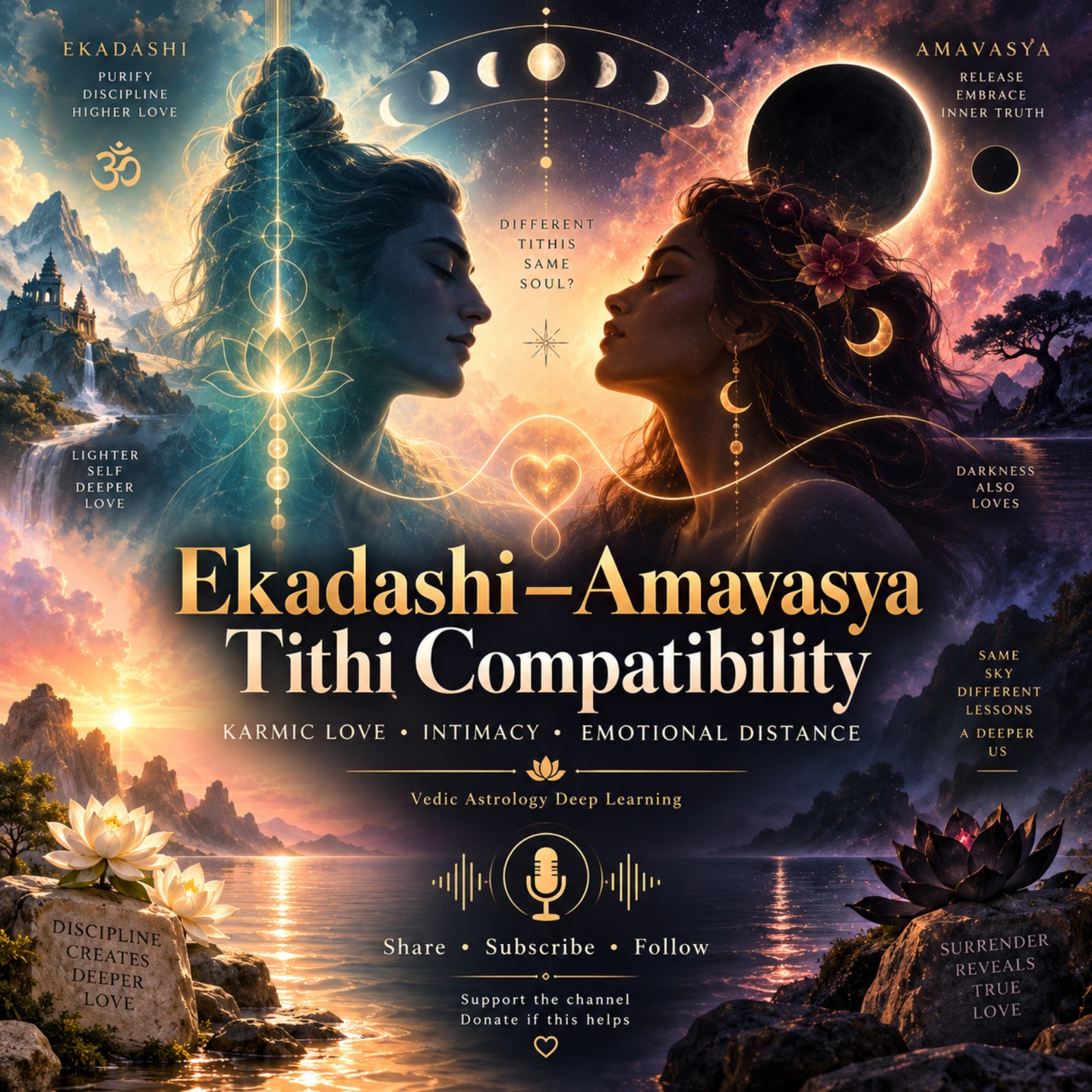 Ekadashi–Amavasya Tithi Compatibility: Karmic Love, Intimacy & Emotional Distance 05.09.2026 21минWhy can someone feel magnetic, mysterious, karmic and unforgettable — yet remain emotionally difficult to reach?In this episode of Vedic Astrology Deep Learning, we explore Ekadashi–Amavasya Tithi compatibility, one of the more complex lunar dynamics in love, marriage, emotional intimacy and sexual connection.Ekadashi seeks discipline, clarity, purification, restraint and meaningful love. Amavasya carries emotional depth, privacy, sensitivity, ancestral memory, hidden longing and the power of the unspoken. Together, they create a profound relationship question: Can discipline embrace emotional darkness without judging it, and can emotional depth become vulnerable without retreating into silence?For couples, this episode explains why genuine love can still feel lonely. Ekadashi may respond to pain through correction, restraint or emotional control, while Amavasya may protect itself through withdrawal, secrecy or silence. One seeks clarity before surrender; the other needs safety before clarity.For singles, discover why mystery is not always intimacy, discipline is not always maturity, and karmic magnetism does not automatically mean long-term compatibility.For those healing after a breakup or divorce, we explore why certain relationships remain emotionally powerful long after they end. Some connections may transform us deeply without being sustainable as lifelong partnerships.We also examine their sexual compatibility and intimacy rhythm: Ekadashi needs trust, alignment and emotional cleanliness, while Amavasya needs privacy, tenderness, atmosphere and emotional permission before surrender.At its highest expression, Ekadashi gives Amavasya focus and protection; Amavasya gives Ekadashi compassion, depth and soul. The relationship evolves when truth becomes warm and emotional depth becomes communicative.If this reflects your marriage, dating life, breakup or unforgettable connection, connect with me for a deeper Tithi intimacy and compatibility reading covering attraction patterns, emotional needs, intimacy blocks and relationship potential.Share, subscribe and follow Vedic Astrology Deep Learning. If this work adds value to your journey, consider supporting the podcast so deeper Vedic Astrology research can continue.#VedicAstrology #TithiCompatibility #Ekadashi #Amavasya #IntimacyPodcast #RelationshipCompatibility #EmotionalIntimacy #SexualCompatibility #KarmicRelationships #BreakupHealing #DivorceHealing #ConsciousRelationships #SacredIntimacy #AstrologyForLove #RelationshipHealing
 -
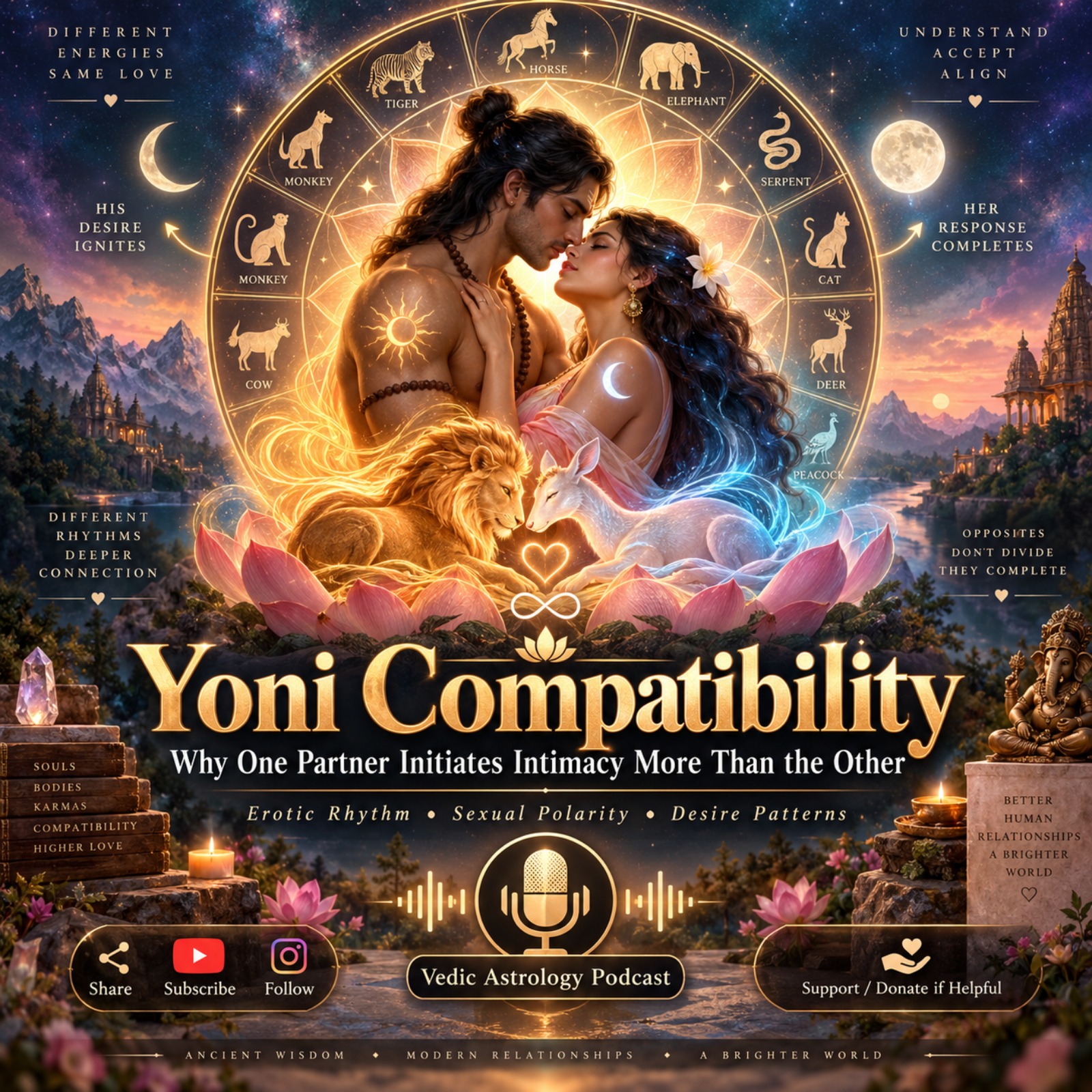 Yoni Compatibility: Why One Partner Initiates Intimacy More Than the Other 05.09.2026 16минWhy does one partner almost always initiate intimacy while the other waits? Is it lower desire, emotional distance, sexual incompatibility—or simply a completely different way of expressing attraction?In this episode, I explore Yoni Compatibility in the Dasha Koota system of Vedic Astrology, a revealing framework for understanding instinctive attraction, sexual polarity, bodily receptivity, erotic rhythm and the unspoken physical language between two people.Yoni does not merely ask whether two people are sexually attracted. It asks: How does each person naturally move toward intimacy?One partner may express desire through pursuit, touch, flirtation and direct initiation, while the other experiences desire responsively—through emotional safety, atmosphere, connection, being wanted and being invited into closeness.When these erotic languages differ, attraction can easily be mistaken for rejection.Discover how Yoni compatibility can reveal:• Initiator–responsive partner dynamics • Two strong initiators competing for control • Two receptive partners waiting for each other • Reversed sexual polarity that works beautifully • Compatible Yoni animals with natural physical rhythm • Hostile Yoni combinations creating mistimed, pressured or rejecting intimacy • The difference between natural polarity and genuine emotional or sexual disconnectionThe deeper truth is that healthy intimacy does not require perfect symmetry—it requires mutual participation. One person may initiate more while the other responds more deeply, and the relationship can still be profoundly fulfilling when both feel desired, involved and understood.Instead of asking, “Why don’t you desire me the way I desire you?”, perhaps the more revealing question is: “How does your desire actually speak?”For deeper explorations of Vedic Astrology, intimacy, attraction, compatibility, dating, marriage, synastry and emotional bonding, share this episode, subscribe and follow the podcast.If this work adds value to your journey, consider supporting the channel so I can continue creating deeper Vedic Astrology Deep Learning content.For a personalised relationship or synastry reading focused on your unique dynamics, get in touch for a reading designed around you.#VedicAstrology #YoniCompatibility #RelationshipAstrology #Synastry #DashaKoota #SexualCompatibility #Intimacy #RelationshipAdvice #DatingAdvice #MarriageCompatibility #LoveAstrology #EmotionalIntimacy #RelationshipPodcast #AstrologyPodcast #Couples
 -
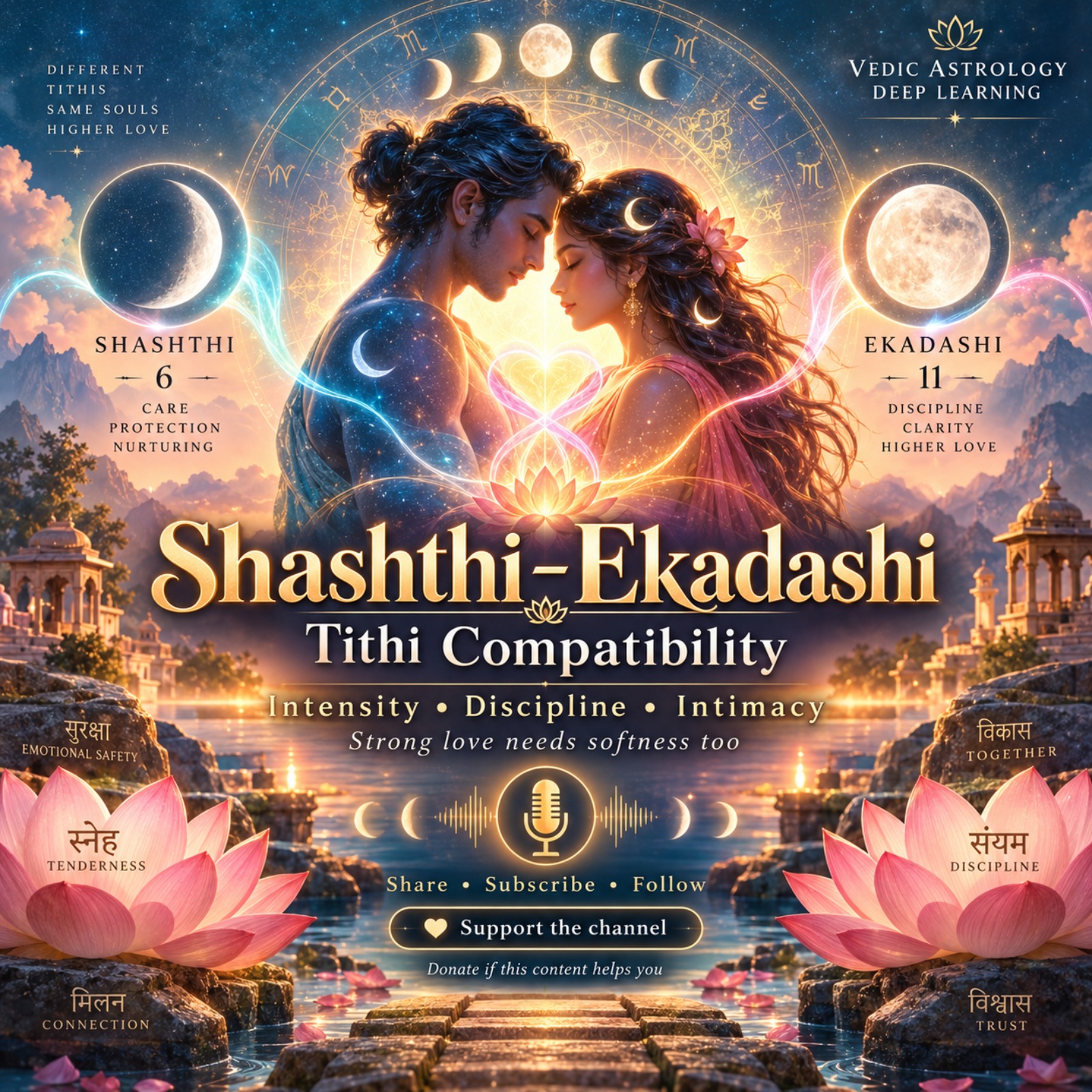 Shashthi–Ekadashi Tithi Compatibility | Intensity, Intimacy & Emotional Safety 05.09.2026 10минWhy can some relationships feel magnetic, powerful, loyal, and deeply committed — yet emotionally exhausting at the same time?In this Vedic Astrology Intimacy Podcast, we explore the Shashthi–Ekadashi Tithi pairing through love, attraction, emotional compatibility, intimacy, relationship patterns, breakup healing, and conscious partnership.Shashthi brings drive, effort, passion, intensity, courage, and the desire to build something real. Ekadashi brings discipline, restraint, focus, inner control, emotional concentration, and strength of purpose. Together, they can create a formidable relationship built on respect, loyalty, endurance, and shared goals.But strength alone does not create intimacy.This pairing raises a deeper question: Are you merely strong together, or emotionally safe together?For couples, it reveals where commitment may become pressure, emotional restraint may replace vulnerability, and responsibility may overshadow tenderness.For singles, it explains why you may repeatedly feel attracted to powerful, disciplined, emotionally contained partners — and why intensity should never be mistaken for compatibility.For anyone healing after divorce or breakup, this episode explores where you may have overworked for love, confused endurance with intimacy, or admired strength while overlooking emotional unavailability.The deeper lesson of Shashthi–Ekadashi compatibility is profound: desire needs discipline, but discipline also needs warmth. Strong people need tenderness. Serious love needs emotional permission.If this relationship pattern speaks to you, get in touch for a personal Vedic Astrology Intimacy Reading or Compatibility Reading.Share this episode with someone who needs to understand why love cannot survive on intensity alone. Subscribe, follow, and support this podcast for deeper Vedic Astrology learning, relationship intelligence, and conscious self-understanding.#VedicAstrology #TithiCompatibility #RelationshipAstrology #IntimacyPodcast #EmotionalCompatibility #LoveCompatibility #BreakupHealing #DivorceHealing #ConsciousRelationships #AstrologyPodcast #SpiritualLove #RelationshipHealing #SinglesAndDating #IntimacyHealing #VedicAstrologyPodcast
 -
 Pratipada–Ekadashi Intimacy: Desire, Discipline & Emotional Compatibility 05.09.2026 10минWhat happens when one person loves through desire, romance, sensuality, emotional movement, and visible affection, while the other loves through discipline, restraint, boundaries, silence, and inner strength?In this episode of the Intimacy Podcast, we explore the fascinating Pratipada–Ekadashi Tithi compatibility through Vedic Astrology, emotional psychology, conscious intimacy, and relationship dynamics.Pratipada wants love to feel alive. It seeks attraction, pleasure, affection, momentum, emotional responsiveness, and the reassurance of being desired.Ekadashi carries a different intimacy code: focus, restraint, maturity, emotional containment, self-control, and depth. It may love intensely, yet express selectively and on its own timing.Together, they create powerful corrective chemistry — desire meeting mastery, passion meeting discipline, emotional urgency meeting emotional control.Pratipada may experience Ekadashi as distant or difficult to reach. Ekadashi may experience Pratipada as restless, impulsive, demanding, or emotionally hungry. Yet their tension contains the relationship’s deeper medicine.Pratipada teaches Ekadashi that tenderness is not weakness and emotional expression is not loss of power. Ekadashi teaches Pratipada that not every desire requires immediate fulfillment and restraint can protect love rather than diminish it.This episode explores why one partner may chase while another withdraws, why intense attraction does not always create emotional safety, and why intensity is not intimacy, longing is not readiness, and chemistry is not compatibility.Essential listening for couples, singles, and anyone healing from breakup or divorce who wants to understand repeating relationship patterns through Vedic Astrology and Tithi compatibility.For a personal Intimacy Reading or Compatibility Reading, get in touch to discover what your emotional body is truly seeking in love.Share this episode, subscribe, follow, and support the podcast if this work helps you. Your support helps me continue creating deeper explorations in Vedic Astrology Deep Learning, intimacy, compatibility, and soul-level relationships.#VedicAstrology #IntimacyPodcast #TithiCompatibility #Pratipada #Ekadashi #RelationshipCompatibility #EmotionalCompatibility #ConsciousLove #AstrologyPodcast #LoveAndAstrology #BreakupHealing #DivorceHealing #RelationshipPatterns #SpiritualRelationships #VedicAstrologyPodcast
 -
 Purnima–Navami Tithi Compatibility: Love, Intimacy, Conflict & Emotional Healing 05.09.2026 19минWhat if the problem in your relationship is not lack of love, attraction, loyalty, or commitment—but a deeper mismatch in how two emotional bodies experience intimacy?In this powerful Vedic Astrology Intimacy Podcast, we explore Purnima–Navami Tithi compatibility and the hidden emotional dynamics shaping love, sexual intimacy, conflict, withdrawal, reassurance, trust, and relationship repair.Purnima seeks fullness: warmth, emotional presence, reassurance, continuity, peace, stability, and relational wholeness.Navami carries inner fire: intensity, guarded depth, dignity, emotional boundaries, family karma, moral sensitivity, and the need for trust and respect before vulnerability.Here lies the central tension: Purnima asks, “Can we become emotionally complete?” Navami asks, “Can I trust you with what I carry inside?”One partner may move closer when the relationship feels threatened. The other may withdraw until safety, dignity, and recognition return. One wants physical closeness to repair emotional distance; the other needs emotional repair before physical intimacy becomes possible.This episode explores why Purnima may experience Navami’s silence as abandonment, why Navami may experience Purnima’s reassurance-seeking as pressure, and why sexual intimacy can become blocked even when love remains strong.You will discover why intimacy in this pairing is more than attraction—it is emotional climate, timing, respect, nervous-system safety, trust, and the ability to soften without losing oneself.Purnima brings moonlight. Navami brings inner fire. When unconscious, one may pursue while the other protects. When mature, this karmic relationship pattern can become deeply healing and transformative.If you are navigating marriage conflict, emotional distance, breakup, divorce, recurring relationship patterns, or questions about compatibility, understanding your Tithi emotional design can reveal what generic relationship advice often misses.Share this episode with someone who needs deeper relationship insight. Subscribe and follow the podcast for Vedic Astrology Deep Learning on intimacy, compatibility, emotional healing, and conscious relationships. If this work brings value to your journey, consider supporting the podcast so deeper research and teaching can continue.
Радиостанция

Подобни подкасти


Популярен в
Този подкаст се появява и в подкаст класациите на тези държави.

