
Minor Compositions
firefly frequencies
0
Minor Compositions is a podcast associated with a publishing project that explores radical, unruly, and experimental ideas. Based in London, it focuses on bringing together autonomist thought, avant-garde aesthetics, and everyday political practices. The show features discussions and readings from the project's published works and related topics. It aims to theorize and disseminate alternative cultural and political perspectives.
Епизоди
-
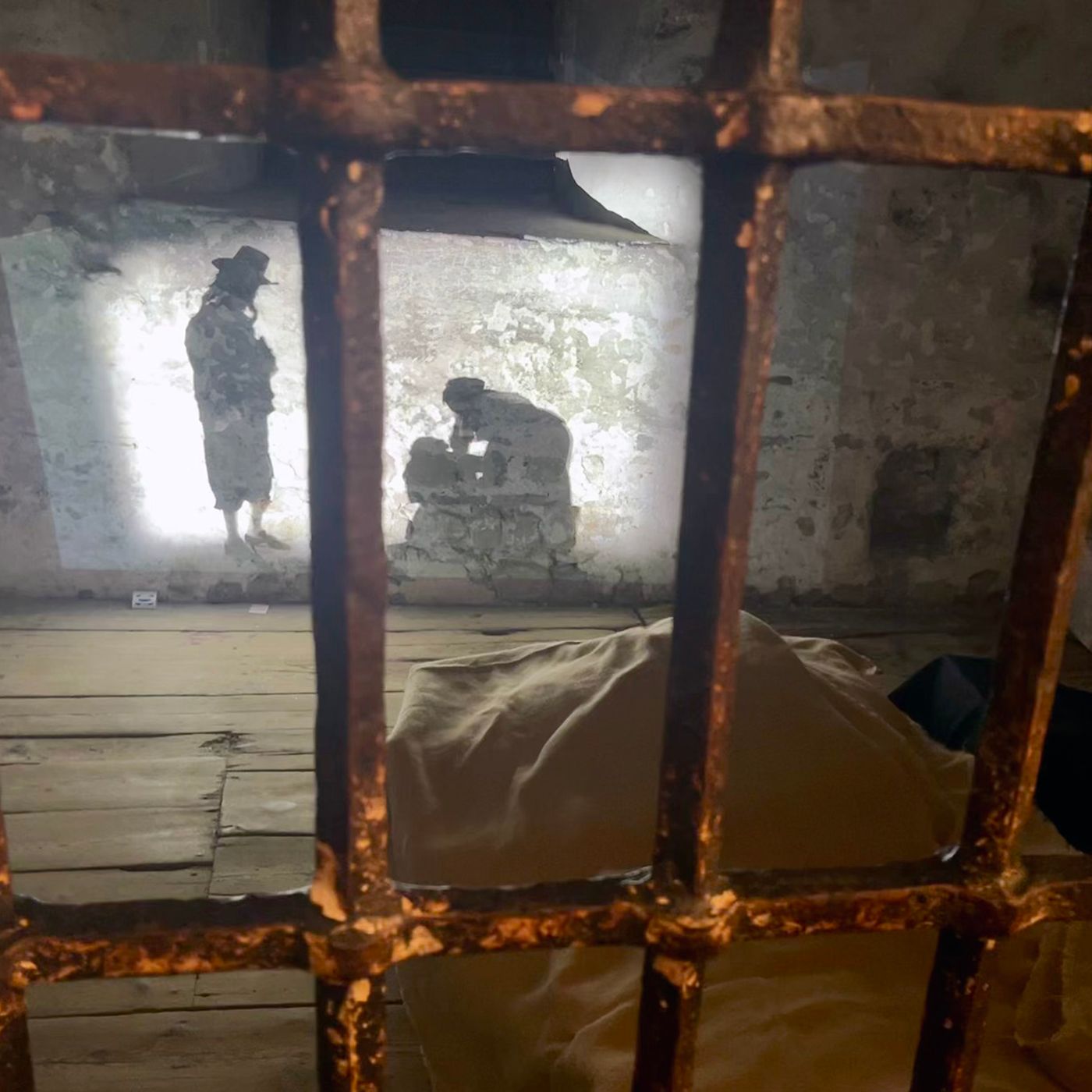 Caliban & the Castle 13.09.2026 8минFor Heritage Open Days 2026, we took a copy of Silvia Federici’s Caliban and the Witch to Colchester Castle and read several passages inside the building. In 1645, the Castle was used to imprison and interrogate women accused of witchcraft during the East Anglian persecutions associated with Matthew Hopkins. Federici does not mention Colchester itself, but she does single out Essex, noting that most English witch trials occurred here and connecting this concentration to enclosure, land privatisation, poverty and the destruction of collective forms of life. For Federici, the witch hunt was not simply an eruption of superstition. Those accused were disproportionately poor women, while their accusers were often landlords, employers and wealthier neighbours. The persecution of “witches” was also bound up with attacks on forms of knowledge, mutual dependence and social autonomy that stood in the way of a new economic order. Reading Caliban and the Witch inside Colchester Castle makes that history unusually tangible. This was not simply a backdrop to persecution, but part of its infrastructure: a place of imprisonment, interrogation and coercion. There was also something fitting about reading a book so concerned with enclosure on the one day of the year when entry to the Castle was free. Less a remembrance of “witches,” then, than of the people who were made into witches, and of what their persecution tells us about enclosure, poverty, gender, knowledge and power.
 -
 Fugitive Study, Autonomous Media 06.09.2026 1ч 4минWhat becomes possible when study is detached from education, accreditation and the demand for individual improvement? And what kinds of social relations emerge when study is approached not as preparation for a qualification or career, but as something worth doing in itself? Here are are joined by Eli Meyerhoff, author of Beyond Education: Radical Studying for Another World, and Giovanni Marmont, author of A Studious Use: Designing from the Undercommons. Together they explore study as a collective and intrinsically motivated practice, distinct from the institutional forms that usually organise, measure and give credit for it. Meyerhoff discusses his concept of “modes of study” as a way of historicising education and making its dominant forms appear less inevitable. Drawing on experiences including the Experimental College of the Twin Cities and Abolitionist University Studies, the conversation considers what happens when grades, credits and other external rewards are removed, and when relationships among participants become central to sustaining study. Marmont develops this through his account of study as attentive engagement, collective tuning and shared indebtedness: less a matter of acquiring something for oneself than of becoming increasingly responsive to how our actions are entangled with those of others. The discussion also considers the difficulties involved in creating alternatives. Projects outside universities can easily carry academic assumptions, hierarchies and habits with them, reproducing the very forms they hoped to escape. Free universities, para-academic publishing and other autonomous initiatives therefore raise questions not only about where study happens, but about the social forms through which it is organised. From there, the conversation turns toward media and publishing. Rather than beginning with a predetermined output – a book, podcast or journal – the participants ask what forms of media might grow from the kinds of relationships and practices of study being created. Publications can become points of entry into further encounters rather than finished products: occasions for extending conversations, making connections and sustaining collective inquiry. The episode also introduces Minor Compositions’ emerging formulation Fugitive Study, Autonomous Media: an attempt to think of publishing less as the production of content than as the creation of spaces, relationships and infrastructures through which study can continue to happen. More On Beyond Education: Radical Studying for Another World A Studious Use. Designing from the Undercommons Intro / Outro Music: DNA – Taking Kid To School
 -
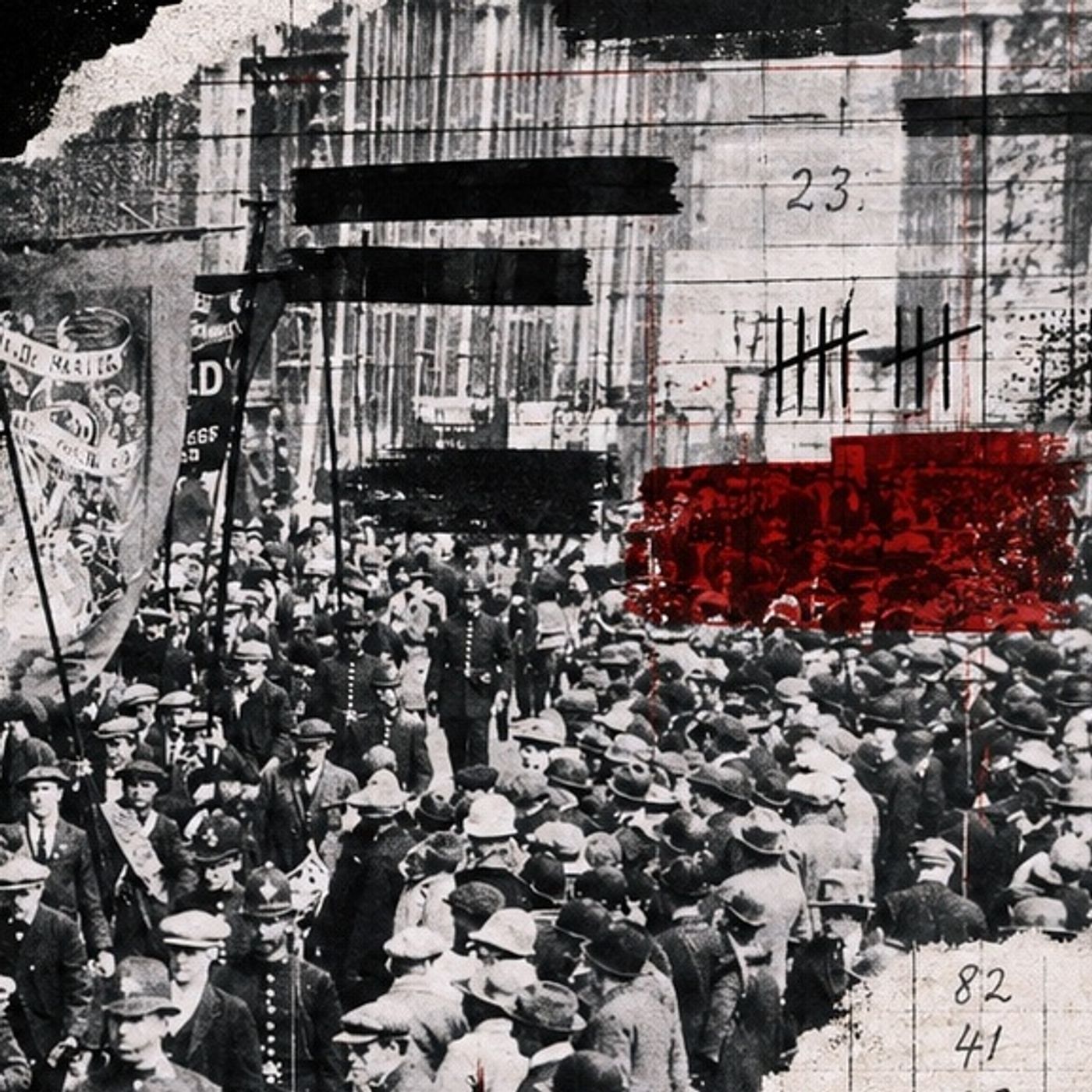 Counter-Accounting, Refusal, and the Future of the Strike 23.08.2026 1ч 7минIn this episode we speak with Abe Walker and Callum Cant about how workers produce knowledge of their own exploitation – and when making that knowledge visible risks strengthening the systems of management and control they oppose. Beginning with Walker’s work on counter-accounting, the conversation explores workers’ attempts to challenge official narratives through alternative records, inquiries and measures. While such practices can expose wage theft, impossible workloads and managerial deception, they may also reproduce the assumptions of productivity, efficiency and accountability embedded in management’s own tools. This leads to a wider discussion of workers’ inquiry, strategic opacity and the problem of becoming legible to fellow workers without becoming more governable by employers. The discussion then turns to quiet quitting, deception, sabotage and other informal refusals that often emerge where collective organization is weak. Against the tendency to dismiss these as merely individual withdrawal, Walker and Cant consider how hidden or dispersed acts of non-compliance might develop into shared forms of struggle. Drawing on Cant and Matthew Lee’s work on the 1926 General Strike, the episode revisits the role of rank-and-file workers who expanded the strike beyond the intentions of official leadership. From small militant networks to mass pickets, workplace marches and solidarity extending beyond particular trades, the strike became a means of creating new collective subjects across workplaces and communities. The conversation concludes by asking what these histories offer workers confronting platform capitalism, algorithmic management and increasingly authoritarian workplaces today: how can workers use employers’ knowledge against them, build power from seemingly minor forms of resistance, and transform refusal into collective action? Abe Walker – Holding labor to ac(count): quiet quitting and the limits of the anti-work imaginary Callum Cant and Matthew Lee – The Future in our Past: The General Strike, 1926/2026
 -
 Disrupting the Transition 10.08.2026 1ч 11минIn this episode, we speak with Nicholas Beuret and Keir Milburn about ecological transition as a terrain of class struggle – not simply a technical shift in energy systems, but a contested reorganisation of investment, work, infrastructure and everyday life. They examine how the existing green transition uses ecological crisis to stimulate investment and renew capitalist growth while imposing job losses, higher costs and deteriorating services on ordinary people. From Port Talbot to local conflicts over net zero spending, broken promises have produced a sense of betrayal that the right increasingly exploits, while centrist governments retreat from climate commitments without offering workers a meaningful alternative. Against this politics of managed decline, the conversation develops the idea of radical abundance: less wasteful and extractive production, but more housing, energy, healthcare, free time and democratic control over collective life. Drawing on the Lucas Plan, pharmaceutical commons, workers’ cooperatives, public-common partnerships and community energy, Beuret and Milburn explore how disruption might be combined with the construction of durable alternatives. The question is not only how to resist the transition imposed from above, but how to build the institutions, infrastructures and collective power needed to shape another one. More on the books discussed in this episode Or Something WorseRadical AbundanceBios Nicholas Beuret is a lecturer in environmental politics and economic geography at the University of Essex. With a background in both activism and academia, he explores the intersections of climate change, capitalism, and social justice. His work has been featured in the Guardian, The Ecologist, Open Democracy, and Undercurrents. Nicholas lives in the UK, where he continues to write, teach, and engage in environmental advocacy. Keir Milburn is a writer, researcher, and activist. He has a background as an academic in political economy and organisational theory. He has written over a hundred articles and book chapters in venues ranging from academic journals, such as Urban Studies, to media commentary in outlets such as The Guardian, The Independent, and The Nation. His book Generation Left provoked debate across several countries on generational political divides driven, in part, by generational imbalances in asset ownership. He is co-director of the action-research organisation Abundance.
 -
 What’s the Use? Entanglement, Indebtedness, and Minor Socialities 27.07.2026 1ч 21минIn this episode, we speak with Erin Manning and Giovanni Marmont for a conversation about how use might be detached from productivity, mastery, and measurable achievement. Moving between studious use, the pragmatics of the useless, colonial property, football, maple syrup, improvised infrastructures, and the struggle to reclaim time, they explore forms of collective life grounded in entanglement rather than individualism. What becomes possible when study is no longer treated as self-investment, land is not reduced to property, and practices are allowed to remain partial, experimental, and unresolved? More on the books discussed in this episode A Studious Use. Designing from the Undercommons – https://www.minorcompositions.info/?p=1647 Out of the Clear – https://www.minorcompositions.info/?p=1165 Join the Minor Compositions mailing list: https://lists.aktivix.org/mailman/listinfo/minorcompositions Intro / outro music – The Ex – (Sucked Out Chucked Out) 2 from “Dignity of Labour”
 -
 Enduring Otherwise 13.07.2026 1ч 14минMinor Compositions Podcast Season 2 Episode 7 Enduring Otherwise In this episode, we talk with Ferdiansyah Thajib about his book Enduring Otherwise: Muslim Queer and Trans Worldmaking in Indonesia. Drawing on ethnographic research in Aceh, Yogyakarta and Jakarta, Ferdi explores how queer and trans Muslims build meaningful lives within social, religious and political conditions that often refuse them recognition. The conversation moves through Indonesia’s shifting legal landscape, conservative religious politics, Sharia law in Aceh and the everyday spaces where other forms of life become possible – from trans-run hair salons to more inclusive Islamic communities. Ferdi also discusses his approach to affective ethnography, the influence of his own experience as a gay Muslim and the importance of care, emotional labour and mutual support within activist communities. Rather than reducing queer and trans life to either victimhood or heroic resistance, Enduring Otherwise asks how people live with contradiction, sustain relationships and make worlds otherwise. More on the book: https://nyupress.org/9781479839339/enduring-otherwise/ Bio: Ferdiansyah Thajib is a researcher and educator whose work focuses on queer politics, affect, and the intersections of memory, trauma, and collective healing in post-authoritarian Indonesia. Current he is a senior lecturer at FAU Erlangen-Nürnberg, Germany. Since 2007 he has been a member of the KUNCI Study Forum & Collective in Yogyakarta, where he has been involved in developing practices of critical pedagogy, artistic research, and collaborative forms of knowledge production. His writing and projects explore how marginal communities craft modes of survival, endurance, and solidarity.
 -
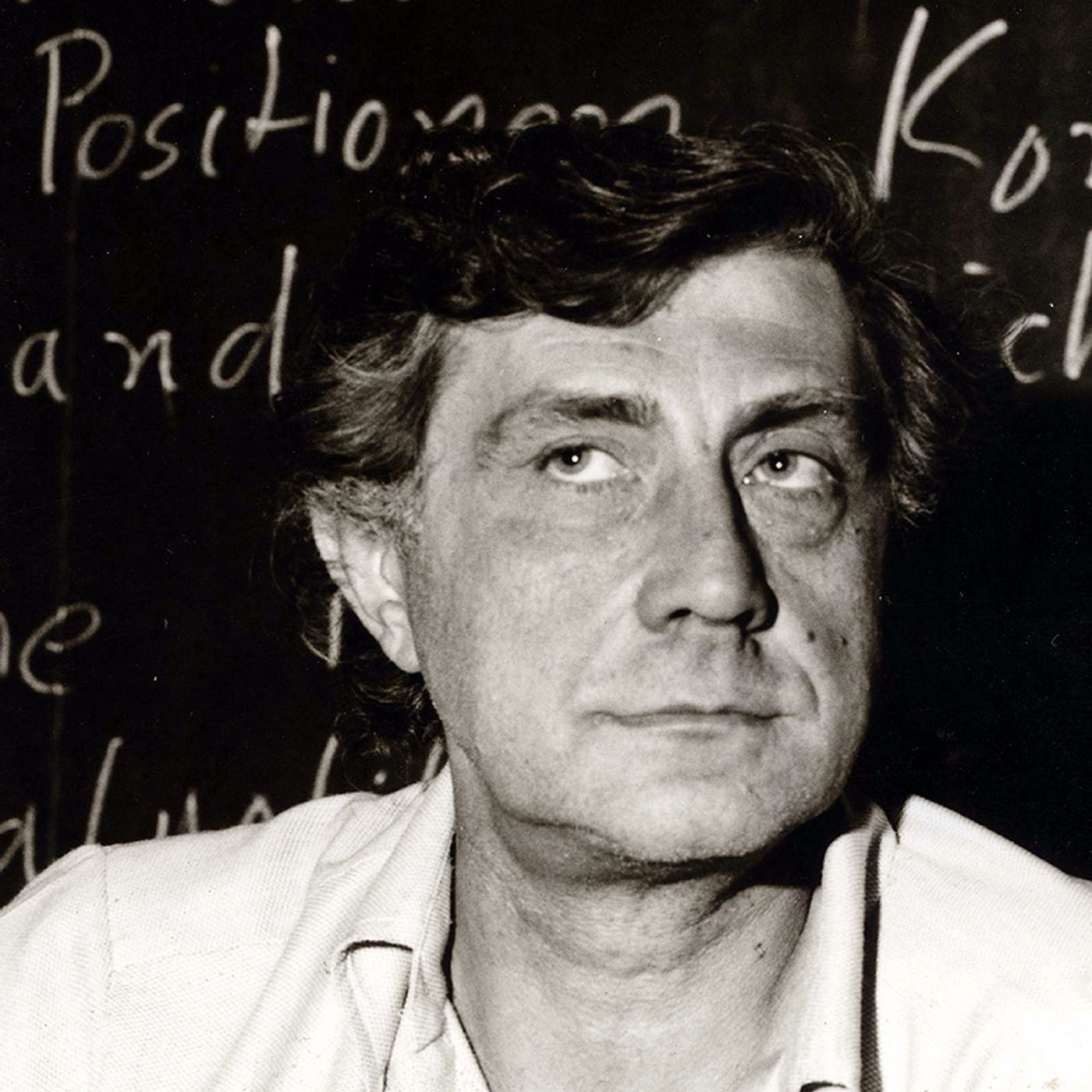 The Institution Negated? 21.04.2026 1ч 5минMinor Compositions Podcast Season 2 Episode 6 The Institution Negated? In this episode we are joined by John Foot, Susana Caló, and Godofredo Enes Pereira for a wide-ranging conversation on the publication in English of The Negated Institution, and the radical milieus that shaped it, emerging from the turbulent political and intellectual landscape of the 1960s and 70s. The discussion traces the overlapping trajectories of Franco Basaglia’s movement in Italy – best known for its role in dismantling psychiatric hospitals – and the parallel work of CERFI (Centre d’Études, de Recherches et de Formation Institutionnelles) in France. Rather than treating these as isolated histories, the conversation explores their shared concerns: the critique of institutional power, the rethinking of subjectivity, and the attempt to invent new forms of collective life beyond the confines of medicalized and bureaucratic control. Across the episode, we discuss how these projects navigated the fraught terrain between theory and practice, politics and care, organization and spontaneity. What did it mean to “open” the institution, and what forms of resistance or capture did this entail? How did these movements intersect with broader currents of 1968 and its aftermath? And what can their experiments teach us today, in a moment where questions of mental health, social reproduction, and institutional life have вновь become urgent? The Negated Institution: https://punctumbooks.com/titles/the-negated-institution-report-from-a-psychiatric-hospital/ CERFI – Analysis Everywhere. Militancy, Research, Architecture and Psychiatry: https://www.minorcompositions.info/?p=1661 Intro / outro music: Ornette Coleman – Forgotten Children, from The Love Revolution 1968 (recorded at Teatro Lirico, Milan on February 5, 1968)
 -
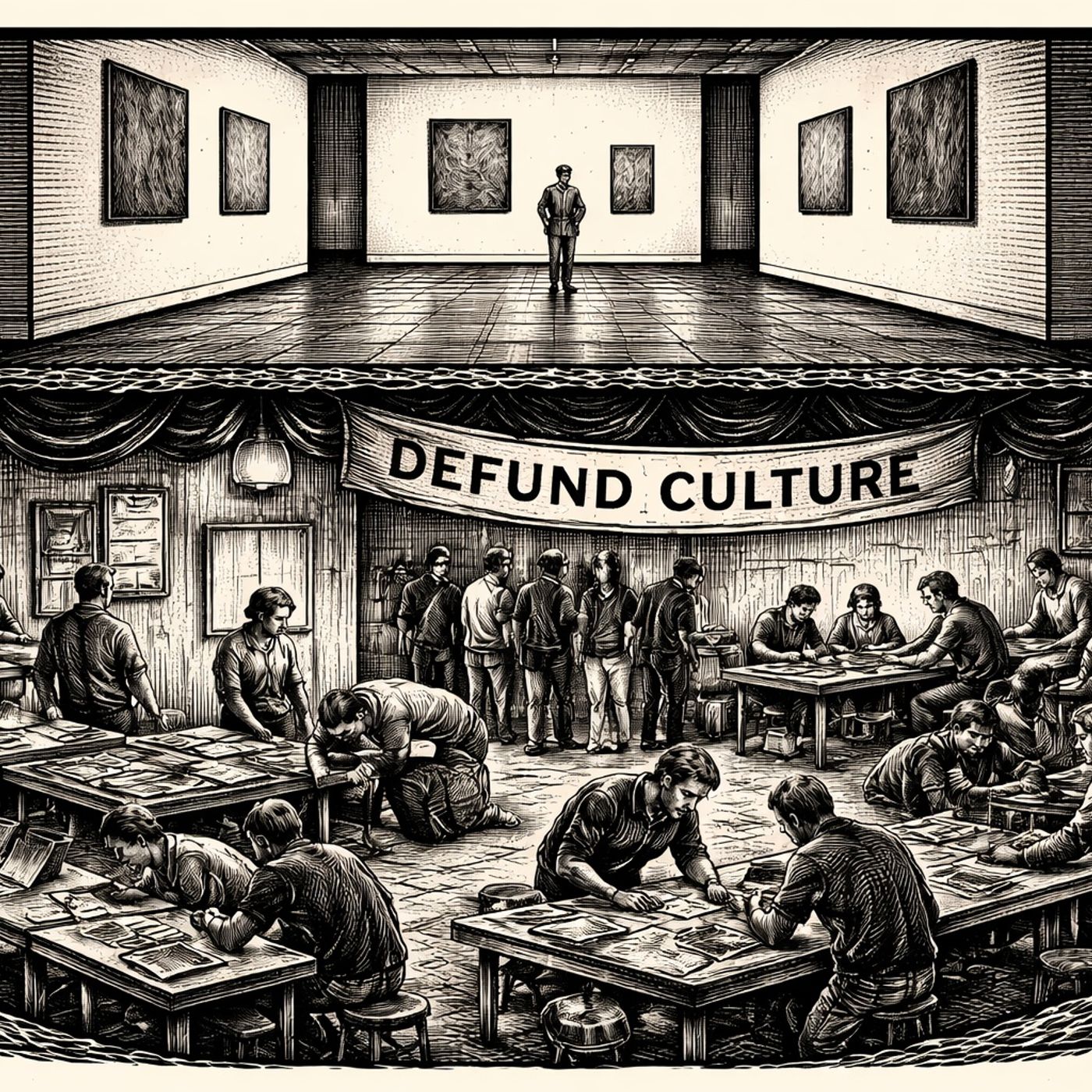 Defund Culture by Any Means Necessary 24.03.2026 1ч 5минMinor Compositions Podcast Season 2 Episode 5 Defund Culture by Any Means Necessary In this episode owe are joined by Gary Hall and Seth Wheeler for a wide-ranging conversation on cultural funding, radical publishing, and the changing conditions of collective knowledge production.The discussion begins with Gary Hall’s recent book Defund Culture, which challenges conventional calls to increase arts funding by asking a more fundamental question: what – and who – is cultural funding actually for? Rather than defending existing institutions, Hall proposes that the current crisis in arts funding might be an opportunity to rethink the entire landscape, redistributing resources away from entrenched, upper-middle-class infrastructures toward more collective, plural, and relational forms of cultural production. From there, the conversation moves into the practical and political challenges of radical publishing today. Reflecting on projects such as Open Humanities Press and Agit Press, Hall and Wheeler discuss the tensions between openness and enclosure in contemporary publishing, the uneven realities of open access, and the difficulty of sustaining collective, non-commercial forms of intellectual work. Wheeler draws on experiences from worker movements to highlight the historical role of print media – newsletters, pamphlets, and leaflets – as machines to produce consciousness, capable of expanding political dialogue beyond academic and activist enclaves.How do these earlier forms resonate with, and diverge from, today’s digital platforms? What happens when knowledge production becomes entangled with the logics of content creation, personal branding, and algorithmic visibility? The conversation explores how financial precarity and platform economies shape what can be said, by whom, and under what conditions: raising questions about whether genuinely collective and autonomous forms of media can exist within, or beyond, these systems. Ultimately this is a question of infrastructure: how to build alternative networks for producing and distributing knowledge that do not simply replicate existing hierarchies. From decentralized publishing models and cooperative platforms to the enduring importance of print as a social and organizational process, the episode maps out both the challenges and the possibilities of creating new cultural forms grounded in collaboration, redistribution, and shared intellectual life. Rather than offering definitive solutions, this conversation opens up a space for thinking through what it might mean to defend/defund culture by transforming it – experimenting with new modes of publishing, new institutional arrangements, and new ways of working together. More on the book: https://www.mediastudies.press/pub/nb-hall-defund/release/4 Open Humanities Press: https://openhumanitiespress.orgAgit Press: https://www.agitpress.net Intro / outro music – Mischief Brew, The Reinvention of the Printing Press
 -
 Wages Against Dreamwork 18.03.2026 1ч 8минMinor Compositions Podcast Season 2 Episode 4 Wages Against Dreamwork In this episode of Minor Compositions, the usual format is playfully overturned as Richard Gilman-Opalsky stages a friendly “revolt,” taking over hosting duties to interview Stevphen Shukaitis about The Wages of Dreamwork, co-written with Joanna Figiel. What unfolds is less a conventional author interview than a comradely and reflective exchange on the conditions, contradictions, and possibilities of creative labor under contemporary capitalism. Moving between humor and critical analysis, the conversation explores dreamwork as both exploitation and potential: tracing how imagination, desire, and affect are captured within systems of value, while also gesturing toward forms of refusal, collectivity, and insurgent creativity. The episode places the book in relation to broader traditions of radical thought and publishing, unfolding as an open and informal exchange moving easily between discussion and reflection, and between critique and comradery. Intro / Outro Music: Richard Gilman-Oplasky, “A Minor Composition”
 -
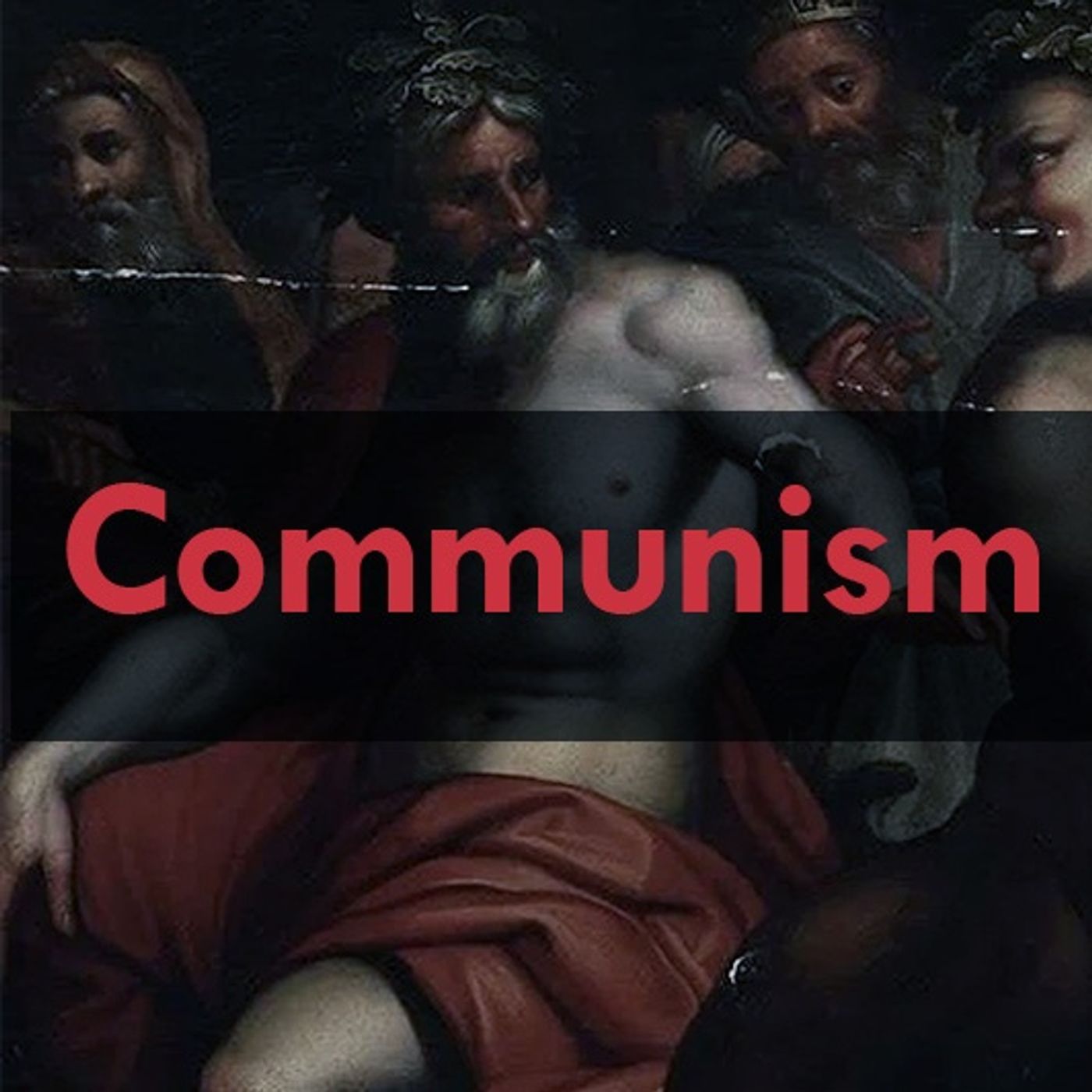 Communism Actually 10.03.2026 1ч 31минMinor Compositions Podcast Season 2 Episode 3 Communism Actually In this episode of the Minor Compositions, we discuss Communist Ontologies with its authors Richard Gilman-Opalsky and Bruno Gulli, exploring their proposal that communism be understood not only as a political program but as a form of life. The conversation ranges across questions of political economy, ontology, and revolutionary subjectivity, considering how Marx’s critique of capitalism points toward the recovery of ways of living beyond the reduction of life to labor. Along the way we discuss the historical contingency of revolutionary subjects, drawing on figures such as Rosa Luxemburg and Frantz Fanon, as well as movements like the Zapatista Army of National Liberation, to think through how identities and forms of struggle emerge, transform, and sometimes dissolve. The discussion also reflects on the philosophical tension between being and becoming, the limits imposed by carceral systems, and the possibilities opened by imagining new forms of collective life – finding, in the spirit of W. E. B. Du Bois – that the struggle for freedom often begins in small practices of interdependence, imagination, and other ways of doing beyond the logics of capital. More on the book.Bio: Richard Gilman-Opalsky is professor of political theory and philosophy in the School of Politics and International Affairs at the University of Illinois. He is the author of eight books, including Imaginary Power, Real Horizons, The Communism of Love, Specters of Revolt, and Precarious Communism. His work has been translated and published in Greek, Spanish, French, and German. Bruno Gullì teaches philosophy at Cuny-Kingsborough. He is the author of various articles and four books in the field of political ontology, including Labor of Fire: The Ontology of Labor between Economy and Culture (2005) and Singularities at the Threshold: The Ontology of Unrest (2020). Intro / outdo music: Wukir Suryadi, playing the Minotaur of Titir Image: Judgment of Midas, Unknown Flemish artist, imitator of Hendrik van Balen, late 16th century, via Hermitage Museum; King Midas, Andrea Vaccaro, 1670, via Dorotheum
 -
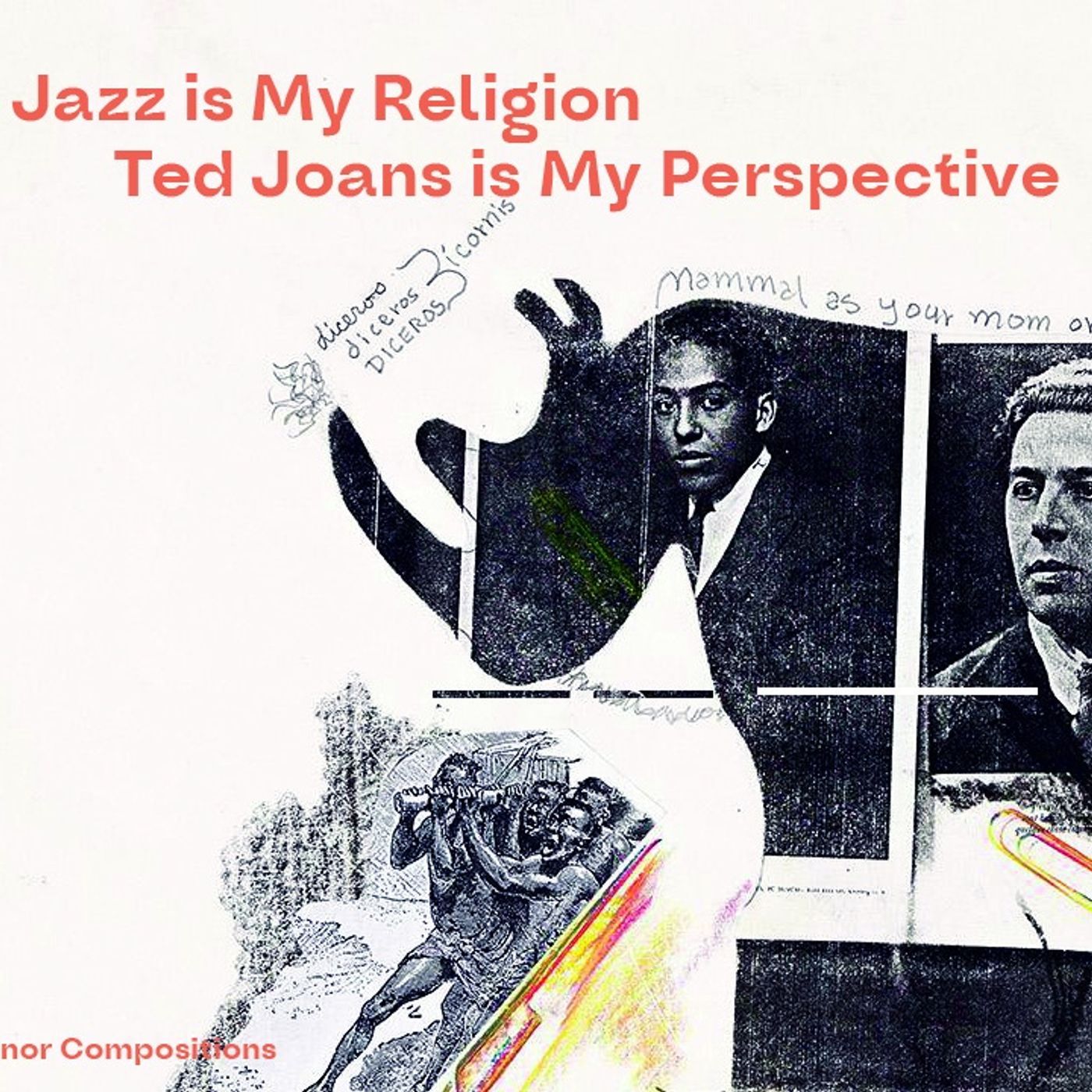 Jazz is My Religion, Ted Joans is My Perspective 24.02.2026 1ч 9минMinor Compositions Podcast Season 2 Episode 2 Jazz is My Religion, Ted Joans is My Perspective In this episode of the Minor Compositions, we are joined by Steven Belletto and Grégory Pierrot, in order to discuss Steven’s book Black Surrealist. The Legend of Ted Joans. Together we explore Joans as Beat Generation insider, jazz trumpeter, collage artist, Pan-Africanist, and self-styled Surrealist griot, tracing a life that unfolded as an ongoing experiment in what he called a poem-life. Born in Cairo, Illinois in 1928, Joans moved through Greenwich Village at the moment the Beat Generation was coalescing, opened the first Black-owned art gallery in the neighborhood, staged proto-Happenings, and developed his jazz action paintings before embarking on decades of itinerant movement between Paris, Tangier, Timbuktu, and beyond. The conversation considers how Joans swam across and between currents often kept apart – Surrealism, Négritude, Black Power, and the Black Arts movement – while using humor, performance, and chance encounter as tools of resistance. We discuss jazz poetry, the fugitive, undercommon quality of his practice, and the challenges posed by an archive scattered by design. Reflecting on ongoing efforts to gather manuscripts, journals, recordings, and unpublished works, this episode takes up Joans’s radical dreams: of surrealism as liberation, of counterculture as insurgent practice, and of life itself as a work of art still resonating in the present. More on the book.Bio: Steven Belletto is Professor of English at Lafayette College. He is author of The Beats: A Literary History (2020), No Accident, Comrade: Chance and Design in Cold War American Narratives (2012), and editor of six books, including The Cambridge Companion to Jack Kerouac (2024), American Literature in Transition, 1950-1960 (2018) and The Cambridge Companion to the Beats (2017). Grégory Pierrot is Associate Professor of English at the University of Connecticut at Stamford where he teaches American and African American literature. His research bears on the cultural networks of the Black Atlantic. He is the author of The Black Avenger in Atlantic Culture (2019). Intro / outdo music: Ted Joans - Jazz is My Religion (1964)
 -
 In girum imus nocte et consumimur igni 02.02.2026 1ч 5минS2E1 – In girum imus nocteet consumimur igniSeason 2 opens with a conversation with Silvia Maglioni and Graeme Thomson – filmmakers, artists, and co-founders of Firefly Frequencies – reflecting on radio as a collective, political, and affective medium. Moving between the history of autonomous radio, projects such as Lullabies for the Revolution and Terminal Beach, and collaborations including the Gaza Biennale, the discussion explores sound as a way of creating community, defamiliarizing political experience, and responding in time. The episode also considers radio and publishing as shared infrastructures: voicings, montage, reading groups, remixing archives, and the possibilities of activating past materials for new collectivist futures. Opening Season Two, In girum imus nocte et consumimur igni circles questions of listening, drift, and persistence – how we move together through sound, and what it means to keep a frequency alive.Firefly Frequencies: https://fireflyfrequencies.orgTerminal Beach: https://fireflyfrequencies.org/podcasts/terminal-beachAmbient Thought: https://fireflyfrequencies.org/podcasts/ambient-thoughtLullabies for the Revolution: https://fireflyfrequencies.org/podcasts/lullabies-for-the-revolutionMemory for Denial: https://fireflyfrequencies.org/podcasts/memory-for-denial Workers Against Capital: Reading Mario Tronti Sixty Years On: https://www.minorcompositions.info/?p=1666 Music: Intro: Jaydawn & Wukir Suryadi - Moal Ngejat from Pucung, Pangkur Jeung Hujan BedogOutro: Fireflies August 2022
 -
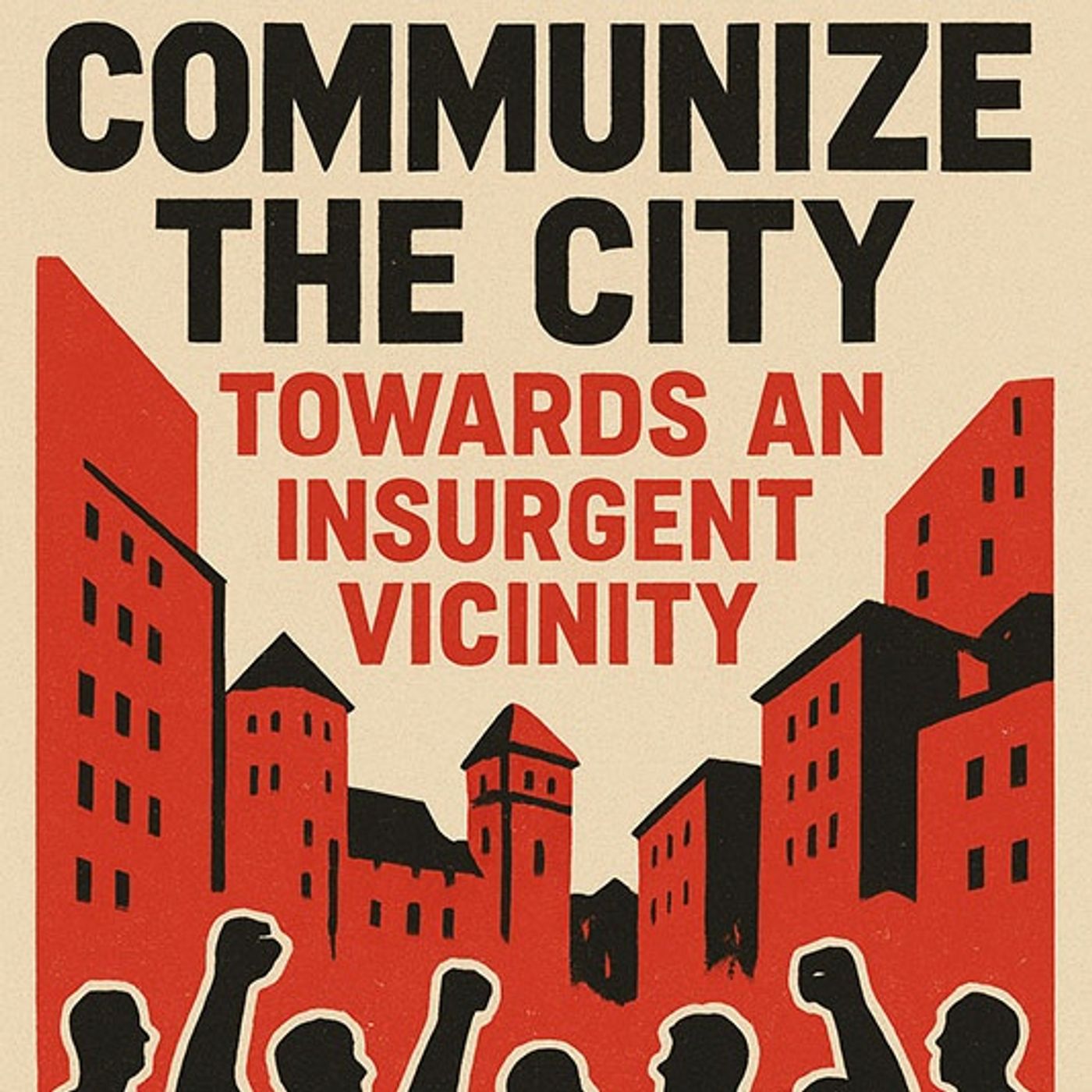 Communize the city 09.12.2025 58минMinor Compositions Podcast Episode 43 Communize the city This episode begins with Kike España’ presenting his essay “Communize the City: Towards an Insurgent Vicinity,” a text that examines the contemporary urban condition through the lens of financial brutalism, before segueing into a discussion of themes from it. España argues that cities have become logistical infrastructures of extraction, where financialization, automation, and real-estate speculation converge to displace communities and dissolve social relations. Drawing on thinkers such as Mbembe, Lefebvre, Guattari, and Moten, the essay frames the city-form as a planetary apparatus of expulsion – one that transforms citizenship, civility, and urban renewal into mechanisms of enclosure, discipline, and dispossession. Against this backdrop, España calls for insurgent forms of inhabiting that arise from the ruins of financial brutalism: practices of neighborhood, subsistence, and insurgency that refuse recognition by the dominant order while cultivating new forms of common life. By foregrounding the “informality of the commune” and proposing strategies like neighborhood committees, blocks in struggle, and intercommunalism, the text insists on the possibility of communizing the city from within its fractures. The seminar invites participants to reflect on how these concepts might inform both critical theory and practical organizing in the face of today’s planetary urban crisis. Bio: Kike España is an architect and urban researcher based in Málaga, Spain, with a PhD in urban theory from the University of Seville. He is actively involved in grassroots cultural-urban initiatives, including the social and cultural centre La Casa Invisible, the collective bookshop Suburbia, and the independent publishing house Subtextos. His work bridges academic inquiry and activist practice. He contributes to the Overtourist City research project at the School of Architecture, University of Málaga, and his writings explore themes of gentrification, commoning, and insurgent urbanism.
 -
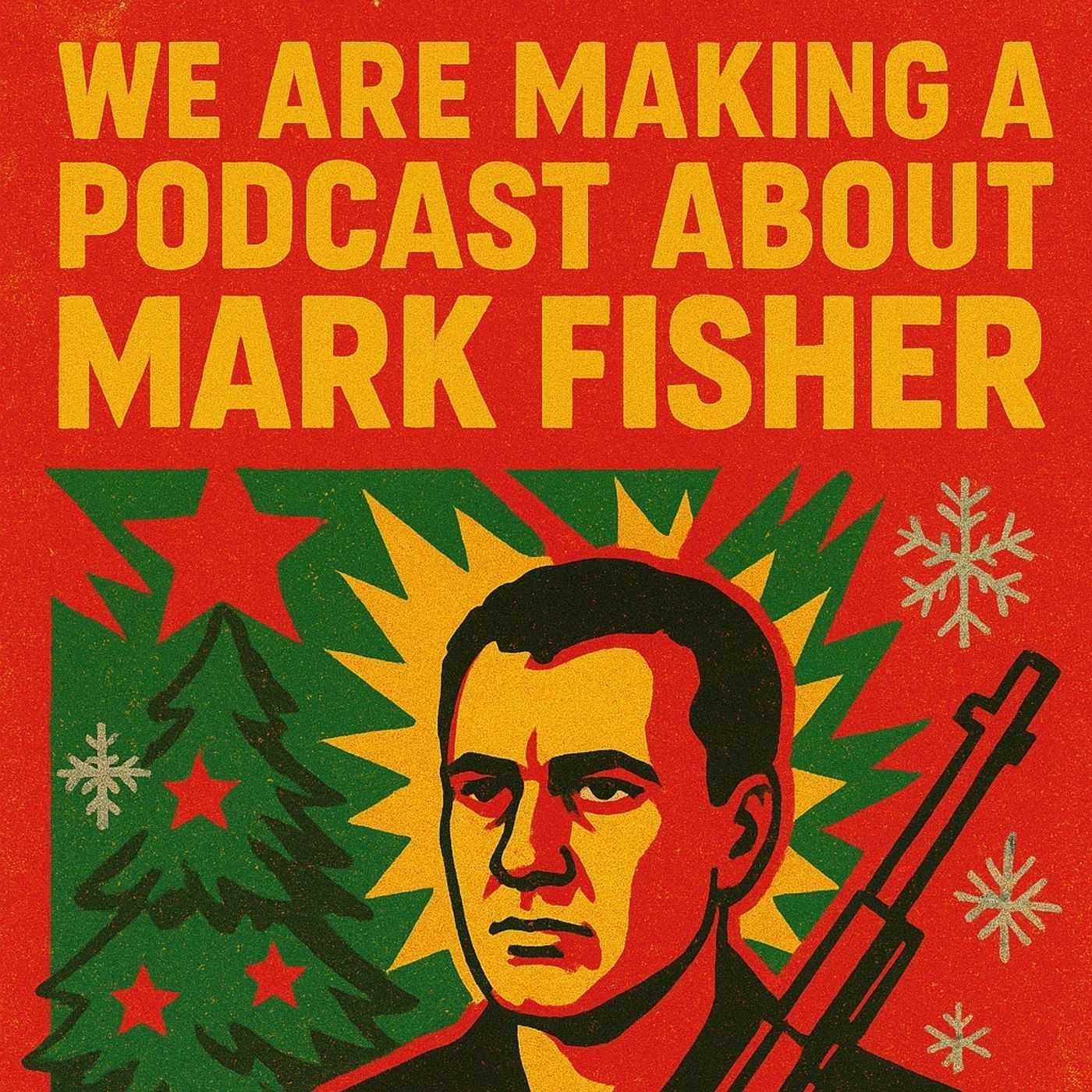 We Are Making a Podcast About Mark Fisher 25.11.2025 55минMinor Compositions Podcast Episode 42 We Are Making a Podcast About Mark Fisher In this episode, we speak with artists Sophie Mellor and Simon Poulter of Close and Remote about their sprawling, collaborative, and genre-bending project We Are Making a Film About Mark Fisher. The conversation traces the origins of the film: how an initial spark in Fisher’s writing grew into a hybrid work that fuses documentary, performance, collective creativity, and hauntological fiction. We explore how Close and Remote approached the challenge of translating hauntology into visual and cinematic language: the textures of lost futures, the atmospheres of cultural stagnation, and the ghosts that structure the present. With over seventy contributors and much of the production unfolding openly on Instagram, the film became an experiment in distributed authorship and decapitalised making. Mellor and Poulter reflect on how this process worked in practice: the unexpected turns, the moments of productive chaos, and the ways the networked contributions reshaped the project’s trajectory. They consider, too, how Fisher himself might have responded to such a mode of production, and the tensions inherent in staging anti-capitalist creative work on corporate platforms. Screening dates and more information about We Are Making a Film About Mark Fisher can be found at Close and Remote: https://www.closeandremote.net/portfolio/we-are-making-a-film-about-mark-fisher
 -
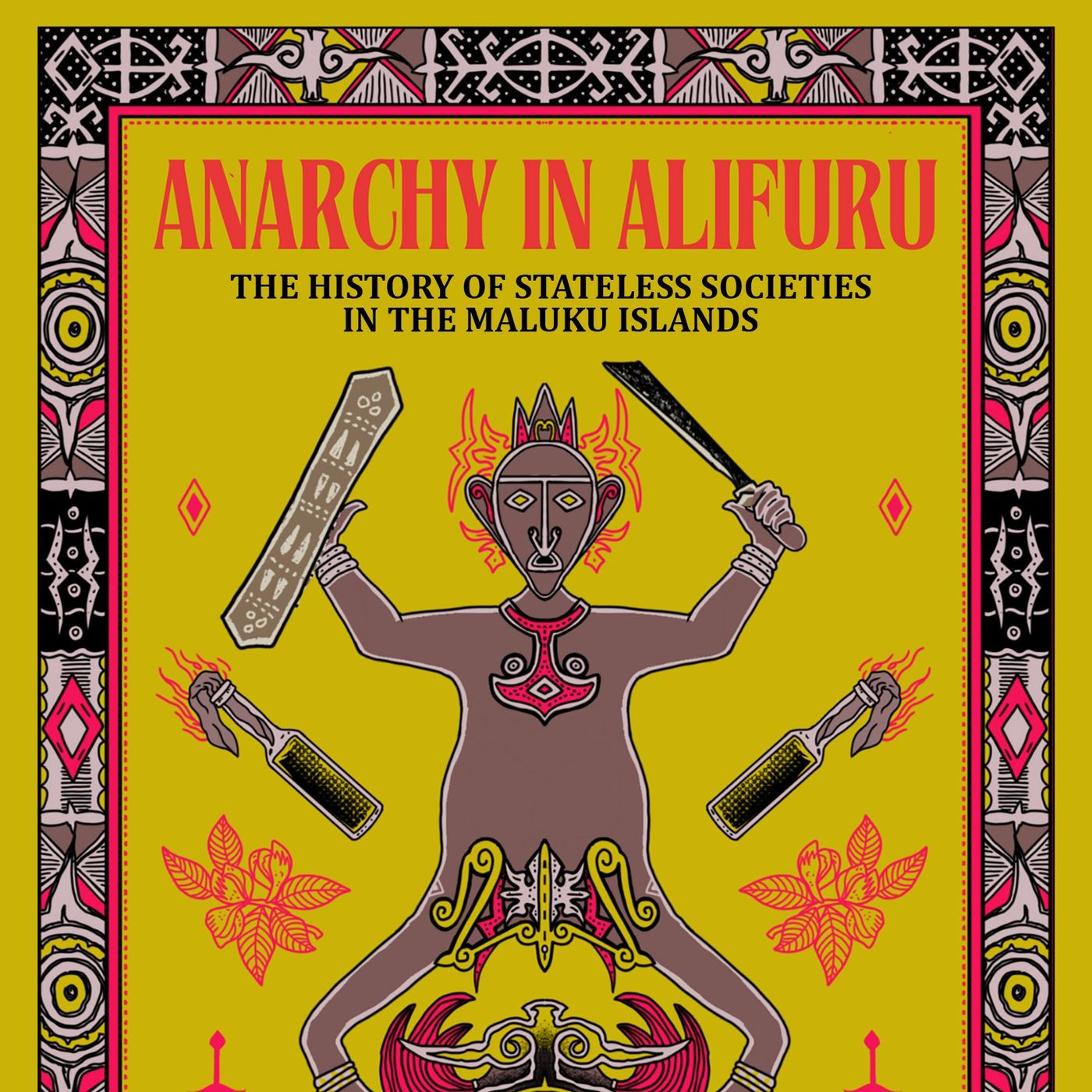 Alifuru World: Stateless Histories, Decolonial Futures 11.11.2025 1ч 12минMinor Compositions Podcast Season 1 Episode 41 Alifuru World: Stateless Histories, Decolonial Futures Discussion with Ferdiansyah Thajib & Hypatia Vourloumis on the forthcoming book Anarchy in Alifuru: The History of Stateless Societies in the Maluku Islands by Bima Satria Putra Putra’s book traces the histories of the Alifuru peoples – those who refused incorporation into the state formations of Ternate, Tidore, colonial empires, and the modern Indonesian nation-state. Drawing from oral histories, early travel accounts, and anarchist anthropology, Anarchy in Alifuru reimagines Maluku not as a marginal zone of empire but as a living archive of statelessness: a site where alternatives to state power and hierarchical authority were practiced, defended, and continually reconfigured. This conversation will explore how these histories of Alifuru resistance resonate with contemporary struggles for autonomy, decolonization, and collective life. How might the legacies of refusal and federation in the archipelago inform critiques of extraction, assimilation, and the persistent violence of the nation-state? What possibilities emerge when we read these histories as resources for thinking – and living – politics otherwise? Together Thajib, and Vourloumis will consider how Anarchy in Alifuru unsettles dominant narratives of modernity and opens space for minor, insurgent forms of world-making. Bios: Ferdiansyah Thajib is a researcher and educator whose work focuses on queer politics, affect, and the intersections of memory, trauma, and collective healing in post-authoritarian Indonesia. Current he is a senior lecturer at FAU Erlangen-Nürnberg, Germany. Since 2007 he has been a member of the KUNCI Study Forum & Collective in Yogyakarta, where he has been involved in developing practices of critical pedagogy, artistic research, and collaborative forms of knowledge production. His writing and projects explore how marginal communities craft modes of survival, endurance, and solidarity. Hypatia Vourloumis is a scholar of performance, poetics, and anticolonial thought with a focus on Indonesia. She holds a Ph.D. in performance studies from NYU and has published widely in journals such as Women & Performance, Theatre Journal, and Performance Research. She is co-author (with Sandra Ruiz) of Formless Formation (Minor Compositions, 2021) and The Alleys (NP, 2024). Her work often emerges through collaboration with theorists, artists, and activists, engaging questions of aesthetics, politics, and autonomous forms of collective life. Intro / Outro Music: Filastine & Nova - Nusa Fantasma
 -
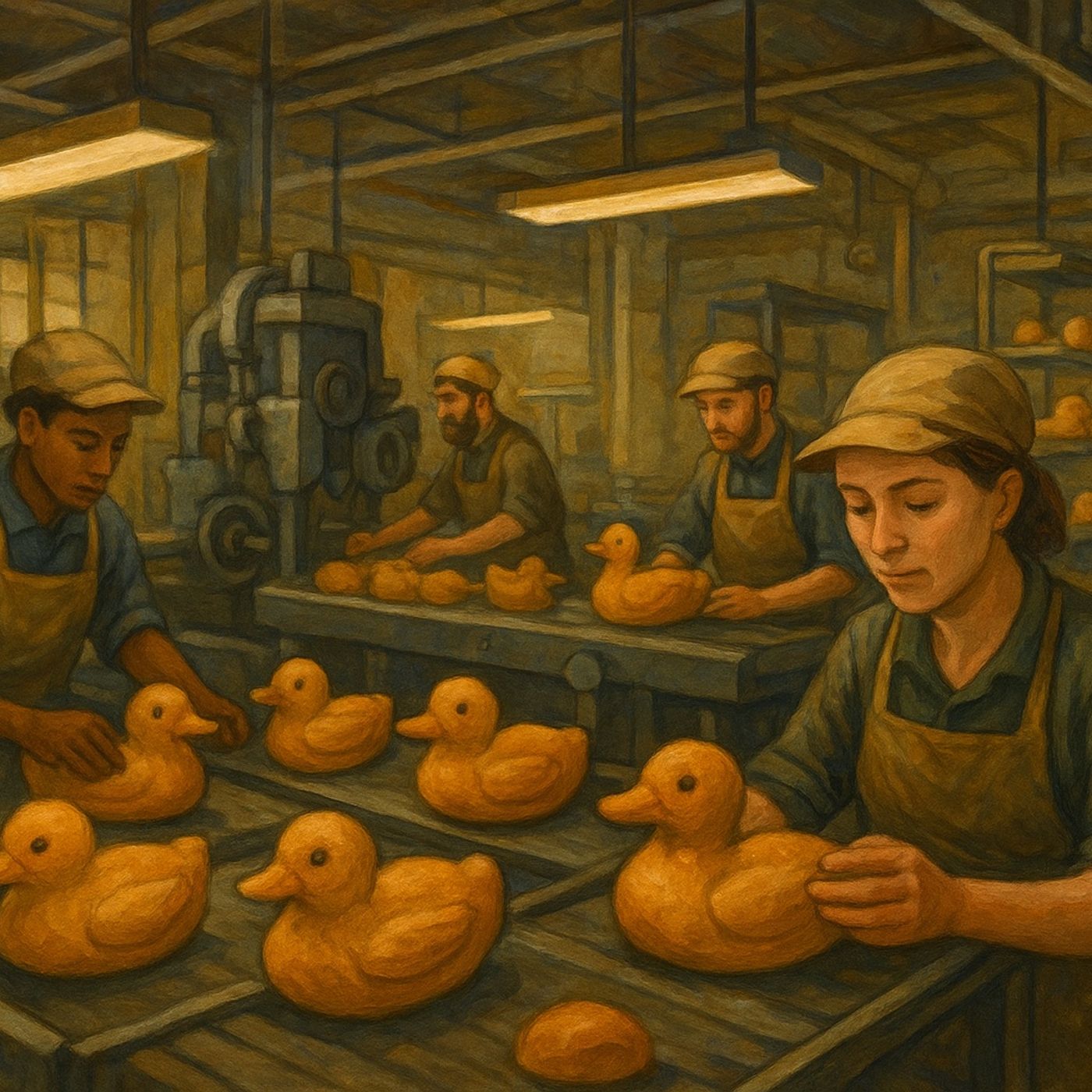 Utopia in the Factory? 28.10.2025 1ч 21минMinor Compositions Podcast Season 1 Episode 40 Utopia in the Factory? Discussion with Rhiannon Firth & John Preston on their new book Utopia in the Factory. Prefigurative Knowledge Against Cybernetics There’s long been this seductive idea that automation, AI, and robotics might finally deliver us into a kind of post-work utopia. You can find it everywhere, from Silicon Valley pitch decks to certain corners of the radical left. The story goes something like this: in the age of “Industry 4.0,” digital manufacturing will allow for seamless, frictionless production. Factories without workers –“lights-out” facilities where machines run the show – become the emblem of a capitalist cybertopia. And then, on the other side, there’s the more radical dream: that these same technologies might be the conditions for Fully Automated Luxury Communism – a reimagined Marxist vision where automation liberates humanity from labour, ushering in lives of collective leisure and abundance. Still others turn back to cybernetics, seeing in the feedback loops of AI, networks, and digital communication new ways to organize – an anarchist cybernetics for the 21st century. But the book we’re discussing this episode, Utopia in the Factory. Prefigurative Knowledge Against Cybernetics by Rhiannon Firth and John Preston, asks us to pause. It questions that technological optimism, not just in its capitalist manifestations, but in its radical appropriations too. What happens when we start to see automation and cybernetics not as tools of liberation, but as systems that can’t quite grasp the messy, tacit, and creative dimensions of human work and cooperation? Through a close critique of automation, AI, and the cybernetic paradigm, they argue that these technologies can never fully capture what makes human making and organizing meaningful. Instead they show, through interviews with workers, makers, and activists, that autonomy, creativity, and desire – those spontaneous, often hobbyist forms of collaboration – remain essential. These are the forms of life and labour that resist being coded, automated, or optimized. And perhaps, they suggest, it’s in these spaces – of hobbying, tinkering, and collective improvisation – that other futures begin to take shape. Bio: Rhiannon Firth is Lecturer in Sociology of Education at the Institute of Education, University College London. She is interested in anti-authoritarian organising within, against and beyond the crises of capitalism. Her research focuses on grassroots utopias, mutual aid and the pedagogical and prefigurative practices of radical social movements. John Preston is Professor of Sociology at the University of Essex. He has pioneered an original stream of research in the sociology of disasters and existential threats. His work also explores the sociology of education and, most recently, skills and AI. For more on the book: https://link.springer.com/book/10.1007/978-3-031-87132-0 Intro / outro music: “Sucked Out Chucked Out 1” by The Ex, from “The Dignity of Labour”
 -
 From Disalienation to Collective Care. Institutional Psychotherapy as Resistance 30.09.2025 1ч 5минMinor Compositions Podcast Season 1 Episode 39 From Disalienation to Collective Care. Institutional Psychotherapy as ResistanceDiscussion with Elena Vogman & Marlon Miguel discussing the work of François Tosquelles and Jean Oury Born amidst the ruins of World War II and the shadow of fascist extermination policies, institutional psychotherapy emerged not just as a form of mental health care, but as a radical mode of resistance. At the Saint-Alban psychiatric hospital in occupied France, a new approach was forged, one that tore open the walls of confinement and reimagined the psychiatric institution as a space for collective transformation. Patients and caregivers, militants and medics worked together in horizontal structures, creating group therapies and cooperatives that refused both the authoritarianism of the clinic and the colonial logic embedded in psychiatric norms.The recent volume Psychotherapy and Materialism brings this history into sharper view, offering the first English translations of two key texts by François Tosquelles and Jean Oury – figures at the core of this movement. A Catalan exile and anarcho-syndicalist, Tosquelles was instrumental in theorizing the treatment of the institution as inseparable from the treatment of psychic suffering. Oury, later founder of the La Borde clinic, extended this work through experimental practices that would resonate with – and influence – thinkers like Frantz Fanon, Félix Guattari, Fernand Deligny, and Anne Querrien. Rather than containing madness, institutional psychotherapy opened a space for its circulation, listening, and expression – what we might call a politics of disalienation. It unsettles not only psychiatry but also psychoanalysis, pedagogy, and social practice. As these ideas echo into today’s crises of care and mental health, this discussion invites us to think with Tosquelles and Oury: what would it mean to treat our institutions – and ourselves – otherwise?Bios: Elena Vogman is a scholar of comparative literature and media. She is Freigeist Fellow and Principal Investigator of the research project co-principal investigator of the research project ‘Madness, Media, Milieus: Reconfiguring the Humanities in Postwar Europe’ at Bauhaus-Universität Weimar and visiting fellow at the ICI Berlin. She is the author of two books, Sinnliches Denken. Eisensteins exzentrische Methode (2018) and Dance of Values: Sergei Eisenstein’s Capital Project (2019). Marlon Miguel is co-principal investigator of the project ‘Madness, Media, Milieus. Reconfiguring the Humanities in Postwar Europe’ at Bauhaus-Universität Weimar and visiting fellow at the ICI Berlin. He holds a double PhD in Fine Arts (Université Paris 8 Vincennes-Saint-Denis) and Philosophy (Federal University of Rio de Janeiro). His current research focuses on the intersection between contemporary philosophy, art, media, and psychiatry. He also practices contemporary circus and does practical movement research. Also available on all the usual podcast platforms.
 -
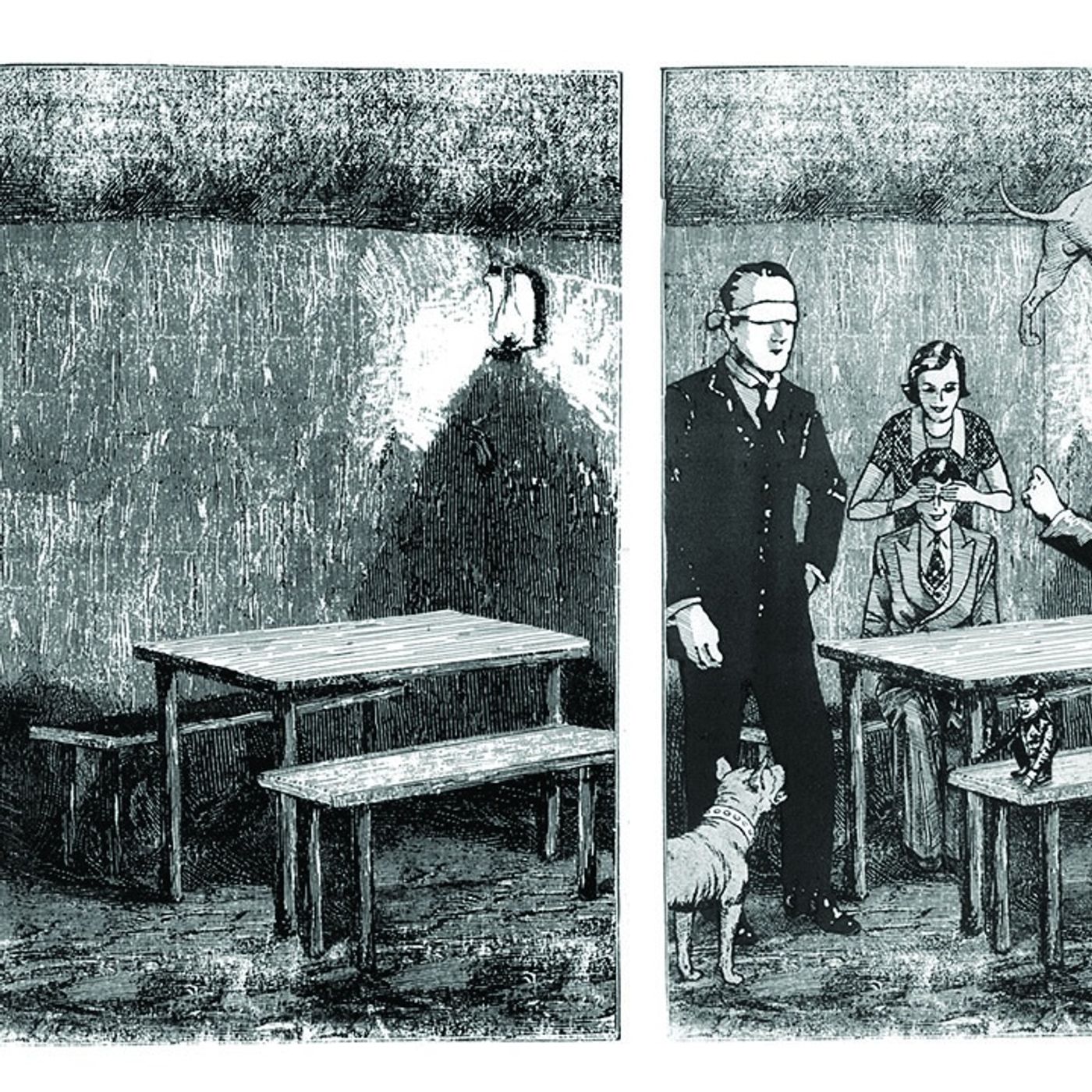 Post-War Surrealism and Anti-authoritarianism 16.09.2025 1ч 10минMinor Compositions Podcast Season 1 Episode 38 Post-War Surrealism and Anti-authoritarianism This discussion brings together Abigail Susik and Michael Löwy to explore the international history of surrealism after 1945, with a focus on its enduring anti-authoritarian spirit. Often misunderstood as an avant-garde movement confined to the interwar years and extinguished by World War II or the death of André Breton, surrealism instead persisted – and continues – as a living, transnational community committed to creative and social transformation. Drawing on their extensive research, which resulted in two special issue of the Journal of Avant-Garde Studies, Susik and Löwy will discuss how surrealism’s anti-authoritarian investments have manifested across different geographies and political contexts, from postwar Europe to Latin America, the Caribbean, Africa, and beyond, tracing its presence into the present moment.Rather than treating surrealism as an art-historical artifact or a closed chapter of modernism, this event examines its longevity and adaptability as a vanguard spirit of resistance, one that connects aesthetic experimentation to struggles against domination. What does it mean to recognize surrealism as both historically situated and epochal — rooted in specific contexts yet animated by an ethos that transcends them? How has its “continuous modus operandi” of linking creative production with anti-authoritarian praxis evolved from the exilic conditions of WWII through the upheavals of 1968, the crises of the neoliberal era, and even into present? Susik and Löwy invite us to reflect on surrealism’s ongoing relevance as a force of imagination and opposition in our own time.Bio: Abigail Susik is the author of Surrealist Sabotage and the War on Work, editor of Resurgence! Jonathan Leake, Radical Surrealism, and the Resurgence Youth Movement, 1964–1967, and coeditor of the volumes Surrealism and Film After 1945: Absolutely Modern Mysteries and Radical Dreams: Surrealism, Counterculture, Resistance. Susik is a founding board member of the International Society for the Study of Surrealism and joint editor of the Bloomsbury Transnational Surrealism Series. She lives in Portland, OR. Michael Löwy is Research Director of Sociology at the Centre National de la Recherche Scientifique, Paris. His previous books include Redemption and Utopia: Liberation Judaism in Central Europe, Marxism in Latin America and The War of the Gods: Religion and Politics in Latin America. Image from Gee Vaucher’s “A Week of Knots” project.
 -
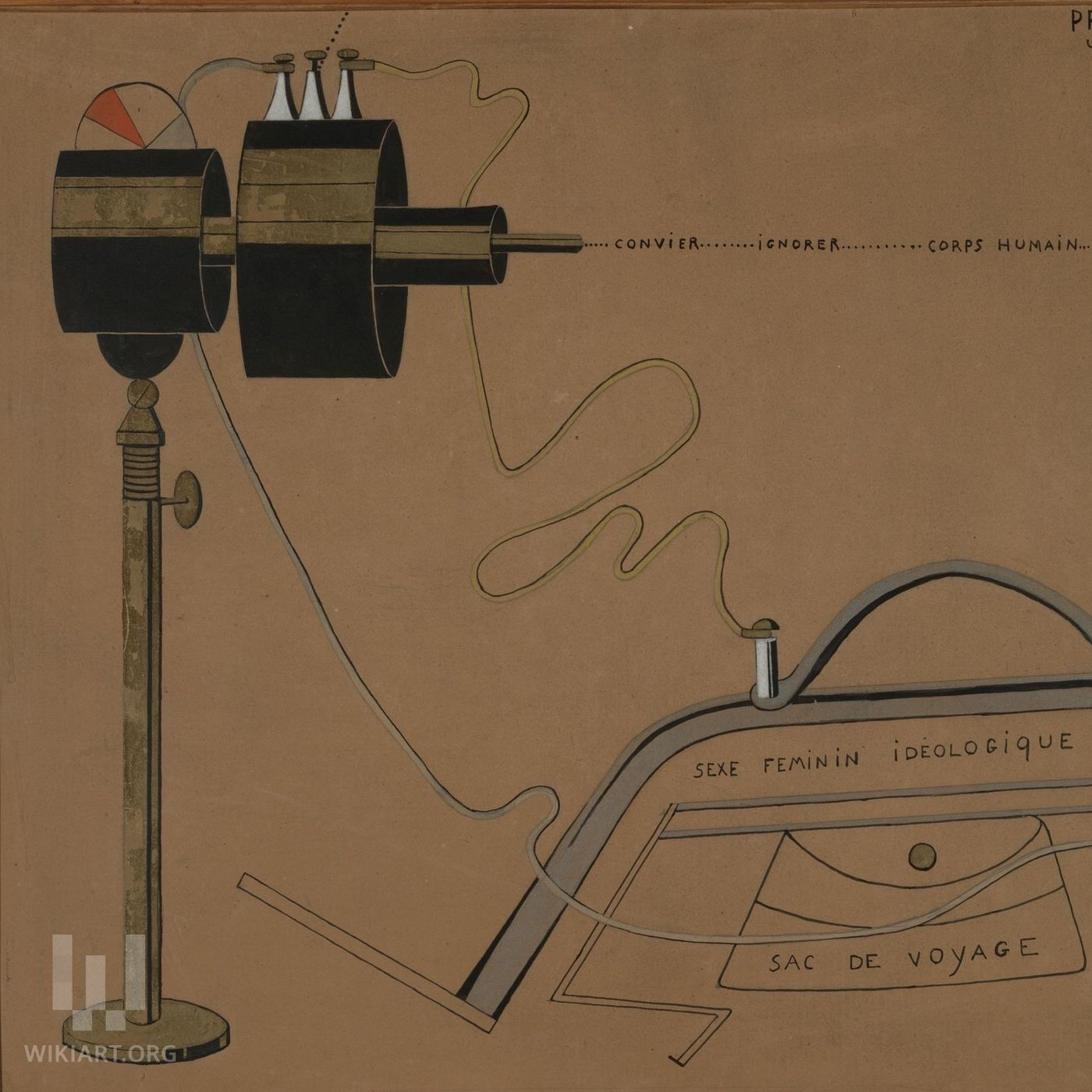 Universal Prostitution & the Crisis of Labor 02.09.2025 1ч 30минMinor Compositions Podcast Season 1 Episode 37 Universal Prostitution & the Crisis of Labor This episode is a conversation with Jaleh Mansoor on the themes of her new book Universal Prostitution and Modernist Abstraction: A Counterhistory. In this provocative work, Mansoor offers a counternarrative of modernism and abstraction and a rethinking of Marxist aesthetics. Drawing on Marx’s concept of prostitution — as an allegory for modern labor — she explores how generalized and gendered forms of work converge in modern and contemporary art. More on the book: “In Universal Prostitution and Modernist Abstraction, Jaleh Mansoor provides a counternarrative of modernism and abstraction and a reexamination of Marxist aesthetics. Mansoor draws on Marx’s concept of prostitution—a conceptual device through which Marx allegorized modern labor—to think about the confluences of generalized and gendered labor in modern art. Analyzing works ranging from Édouard Manet’s Olympia and Georges Seurat’s The Models to contemporary work by Hito Steyerl and Hannah Black, she shows how avant-garde artists can detect changing modes of production and capitalist and biopolitical processes of abstraction that assign identities to subjects in the interest of value’s impersonal circulation. She demonstrates that art and abstraction resist modes of production and subjugation at the level of process and form rather than through referential representation. By studying gendered and generalized labor, abstraction, automation, and the worker, Mansoor shifts focus away from ideology, superstructure, and culture toward the ways art indexes crisis and transformation in the political economic base. Ultimately, she traces the outlines of a counterpraxis to capital while demonstrating how artworks give us a way to see through the abstractions of everyday life.” Bio: Jaleh Mansoor is Associate Professor of Art History, Visual Art, and Theory at the University of British Columbia and author of Marshall Plan Modernism: Italian Postwar Abstraction and the Beginnings of Autonomia, also published by Duke University Press. More on the book.
 -
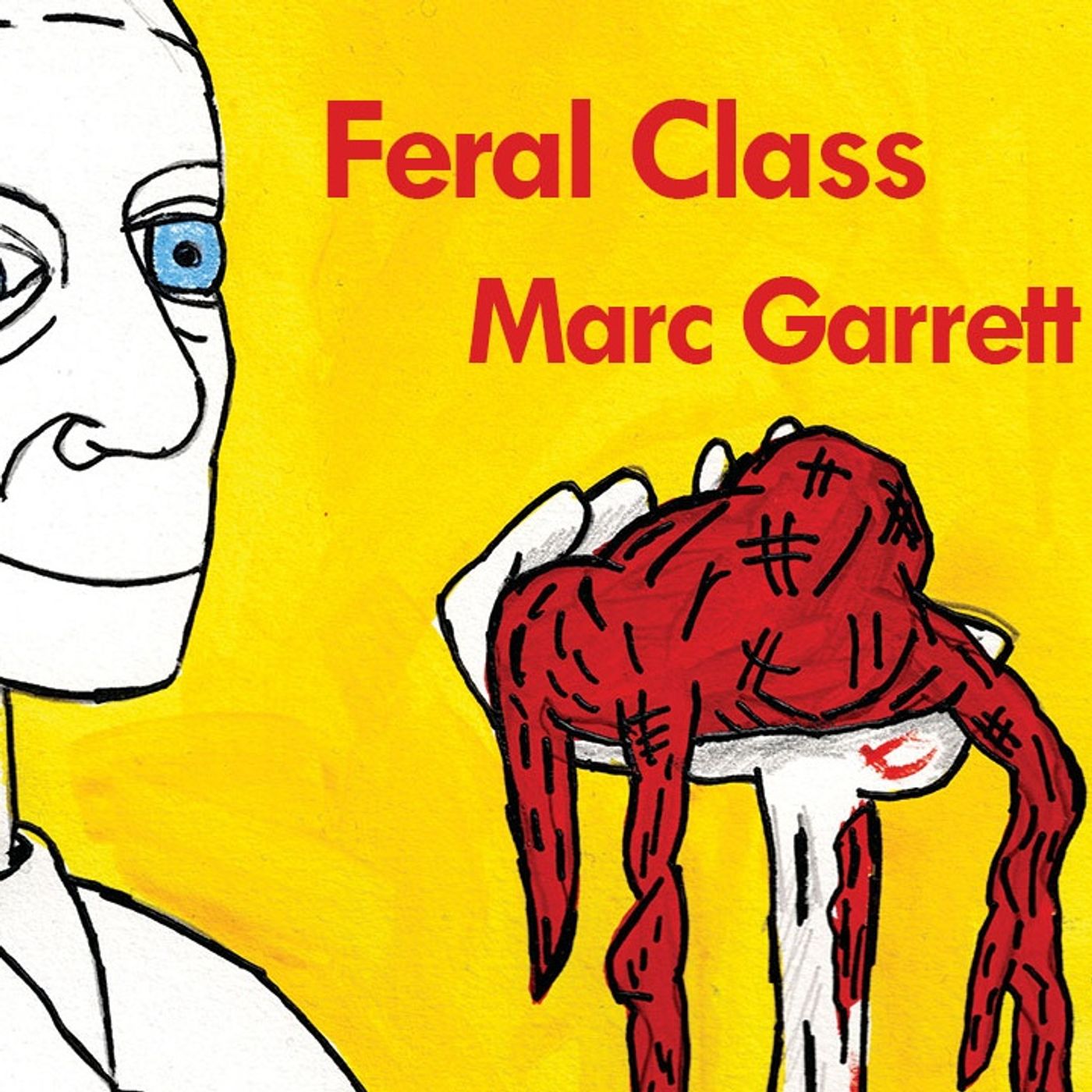 Feral Class 19.08.2025 1ч 22минMinor Compositions Podcast Season 1 Episode 36 Feral Class Untamed. Unheard. Unstoppable. For this episode with have a chat with Marc Garrett about his forthcoming book Feral Class. The book is Marc Garrett’s raw and resonant memoir of surviving – and creating – on the margins. It delves into the lived realities of working-class artists, charting Garrett’s journey from the edges of cultural production to the heart of radical practice. Through vivid storytelling, biting critique, and moments of dark humour, Garrett reflects on what it means to grow up outside the safety nets of art institutions, forging a path through DIY networks, political resistance, and feral creativity.What does it mean to live as part of the “feral class” – those who exist beyond the permission of gatekeepers, who make art not to be accepted but to disrupt? Join us for an exploration of class struggle, artistic survival, and the wild potential of lives lived in defiance of cultural elitism. This is not just a memoir – it’s a call to arms for those who create from below, with dirt under their nails and fire in their bellies.Bio: Marc Garrett’s life and work embody the intersection of art, technology, and social change, shaped by his working-class upbringing and a commitment to challenging institutional hierarchies. Growing up in Southend-On-Sea, he explored creative expression through street art, pirate radio, and early online activism before co-founding Furtherfield in 1996 with Ruth Catlow, an artist-led community resisting the commercialisation of the art world. Despite personal challenges, including a cancer diagnosis in 2022, Garrett continues to focus on ideas and questions that acknowledge and engage working-class and feral-class contexts as a springboard for more extensive dialogues on creating conditions for social change across art, technology, and ecology. More on the book: https://www.minorcompositions.info/?p=1561The Minor Compositions podcast is in made in collaboration with Firefly Frequencies: https://fireflyfrequencies.org
Подобни подкасти


Популярен в
Този подкаст се появява и в подкаст класациите на тези държави.


