
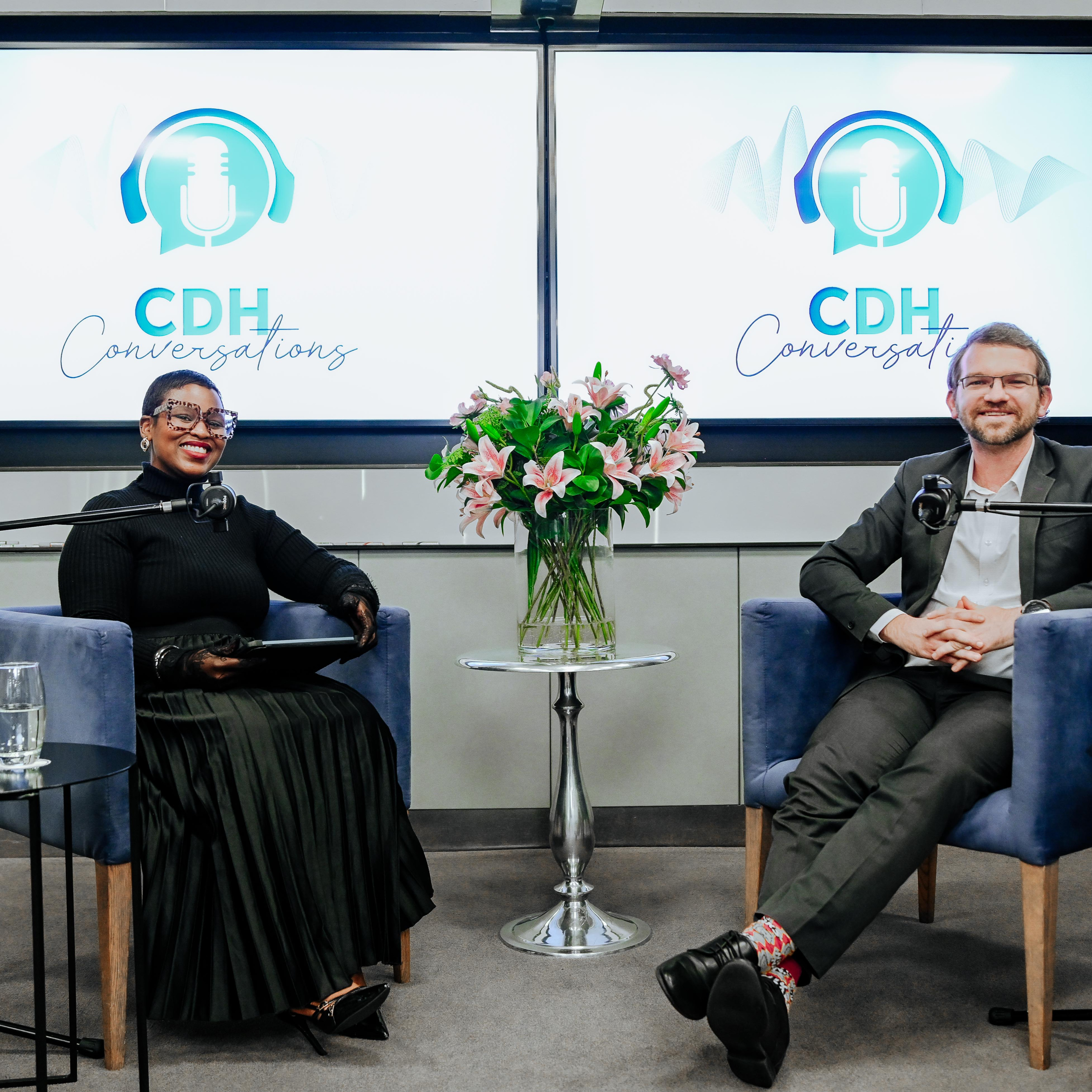
CDH Conversations
CLIFFE DEKKER HOFMEYR
0
CDH Conversations is a podcast channel from Cliffe Dekker Hofmeys, a South African law firm, focused on recent legal and business developments. Through interviews and conversations, its experts explore legal topics that affect businesses across East and Southern Africa. The show serves as a way for clients and audiences to access the firm's thought leadership on key industry sectors.
Епизоди
-
 Untangling Tax Podcast Series | Finance Act 2026: What it means for investors, businesses and Kenya’s tax future 20.08.2026 45минIn this episode of the Untangling Tax series, Alex Kanyi, Partner in the Tax & Exchange Control practice, is joined by Josephine Mugure from the Policy & Tax Advisory Department at the Kenya Revenue Authority and Christine Maina, Chief Executive Officer – East Africa Venture Capital Association, to discuss the reforms and what they mean beyond the text of the law.The discussion looks at Kenya’s attractiveness to investors, with Christine noting that Kenya remains a strong market for venture capital and private equity, supported by its deep capital markets, good talent and professional advisory firms. However, changes in tax policy can cause investors to pause or reconsider closing deals, highlighting the importance of certainty and predictability in the tax environment.Josephine also highlights some of the opportunities created by the Finance Act 2026, including the tax amnesty, incentives for Real Estate Investment Trusts (REITs), and the removal of PIN requirements for non-residents opening investment bank accounts. Christine also acknowledges the Government’s willingness to listen to tax proposals and respond to feedback from investors and the wider public.Finally, Alex highlights the importance of early and meaningful engagement with KRA and the National Treasury. Josephine encourages businesses and investors to put forward practical proposals, supported by data and numbers, to help inform tax policy development.Looking ahead, the speakers consider Kenya’s tax policy over the next three to five years, including the expected implementation of a further Medium-Term Revenue Strategy, with the aim of strengthening predictability and certainty in Kenya’s tax environment.
 -
From articles to academia: Dr Thandiwe Matthews' CDH journey 19.08.2026 19минCDH Conversations Podcast launches the first episode of the #helloCDHalumni series.In this episode, Aadil Patel, Director and Practice Head in the Employment Law practice, reconnects with former Cliffe Dekker Candidate Attorney and Associate, Dr Thandiwe Matthews, now a Lecturer at the Wits School of Governance.Aadil fondly recalls the feisty discussions he shared with Thandiwe during her time at the firm. From those robust debates to a career spanning academia, human rights and public service, Dr Matthews reflects on how the discipline, mentorship and foundations built during her time at CDH continue to shape her professional journey. Together, they explore the lasting value of articles, career growth, and why investing in your early years pays dividends throughout your career.Click here to listen to the podcast.
-
Njeri talks to Teresa Njoroge, Founder & CEO of Clean Start Africa - Part 2 19.08.2026 30минIn Part 2 of this conversation, Teresa Njoroge shares how what seemed like the end of her story became the beginning of a greater purpose. After leaving prison, she refused to let her experience define her. Instead, she founded Clean Start Africa, creating a path of hope, dignity, and restoration for women seeking a second chance at life.Teresa reflects on how adversity became impact, the lessons she learned through one of the most difficult chapters of her life, and how her journey is now transforming the lives of many others. Her story is a powerful reminder that some endings are, in fact, new beginnings.Listen to the podcast here.Watch the videocast here: https://youtu.be/ws3UpiyffG0Listen to Part 1 here.*The views and opinions expressed in this videocast and podcast are solely those of the speakers. Any information provided is for general informational purposes only and should not be taken as legal advice or an endorsement.
-
Njeri talks to Teresa Njoroge, Founder & CEO of Clean Start Africa - Part 1 19.08.2026 1ч 9минThis month, Njeri talks to Teresa Njoroge, Founder & CEO of Clean Start Africa. Teresa spent 10 years building a banking career she had dreamed of since she was nine years old. Then a 9.9-million-shilling fraudulent transaction, one she didn't commit, walked through her branch. Everything checked out. The ID. The signature. The client. Everything. Except the CCTV. Which was conveniently blank. What followed was an arrest, a night on a police cell floor, and, in Teresa's words, a system that seemed designed to break her. She recalls being told, 'You have been handpicked to carry the cross'. In Part 1 of this conversation, Teresa walks us through the transaction, the arrest, her first night in custody, and what it felt like to be swallowed by a system she had done nothing to deserve. Don't miss Part 2, where we dive even deeper into the discussion and explore how Teresa turned what seemed like the end of her story into a blessing through the business she built. Look out for Part 2, coming soon!*The views and opinions expressed in this videocast and podcast are solely those of the speakers. Any information provided is for general informational purposes only and should not be taken as legal advice or an endorsement.
-
Warmware, digital hubs and the Cyber Power Girls: Inside the MiDO Foundation 19.08.2026 20минWhat happens when creativity meets community meets technology?In this episode of the CDH Women Empowerment series, CDH Director Tayyibah Suliman talks to Michelle Swartland, Operations Manager at the MiDO Foundation about building digital hubs in under-resourced Stellenbosch schools, equipping young people with skills from email basics to cybersecurity awareness, and launching the CyberPower Girls programme, a Commonwealth-funded initiative teaching teenage girls to protect themselves online. A story about "warmware", women in tech, and the power of simply keeping going.
-
 World Refugee Day: A discussion on refugee protection and changed circumstances in asylum applications 19.06.2026 23минWorld Refugee Day, observed each year on 20 June, is an opportunity to reflect on the experiences of refugees and asylum seekers, the protections available to those fleeingpersecution and conflict, and the ongoing challenges within refugee protection systems.In this episode, Elgene Lutshiti, in CDH’s Pro Bono & Human Rights practice, is joined by Monique Schoeman, Senior Attorney at the UCT Refugee Rights Unit, to reflect onrefugee protection in South Africa. The discussion considers the Constitutional Court’s decision in Director-General, Department of Home Affairs and Others v Irankunda and Another, a judgment dealing withfurther asylum applications based on new or changed circumstances, and what this means for access to protection in South Africa. The conversation situates the judgment within the broader realities of refugee protection in South Africa and reflects on why access to fair asylum procedures remains so important.
 -
 GBV as a national state of disaster: A discussion with Women for Change 12.06.2026 36минAs of 20 November 2025, GBV has been classifiedas a national state of disaster. The question remains "What now?" In conversation with Sabrina Walter and MerlizeJogiat of Women for Change, and Brigitta Mangale in CDH's Pro Bono and Human Rights practice, we delve into this question. The dialogue aims to amplify the voices of women, share insight and inspire meaningful action. These are thewomen doing the real work on the ground, driving change and making a meaningful difference in the lives of women. The discussion around the classification, implementation of policies, and the emotional burden and ancillary impacts of GBV highlights that the work is ongoing. Without continuous efforts, women will remain trapped in a system thatcultivates a persistent sense of fear. This fruitful engaging conversation provides strategies for the implementation of laws and policies, a response to thedevastating impact of GBV on the lives of women and how best we can assist activist organisations like Women for Change in fighting the scourge. Don't miss the opportunity to listen, learn andbe part of the movement.
 -
 Updated merger thresholds, public interest and the cost of doing business in South Africa 10.06.2026 20минIn the latest episode of Clause & Effect, CDH’s podcast exploring the intersection of law and business, Phetha Mchunu is joined by Reece May, Director in CDH’s Competition Law practice, for an insightful discussion on the updated merger control thresholds and what they mean for businesses navigating transactions in South Africa. Merger control thresholds are often viewed as technical regulatory benchmarks, but in practice, they play a critical role in determining whether a transaction triggers regulatory scrutiny from the competition authorities and what obligations arise for merging parties. Phetha and Reece unpack what merger thresholds are, why they matter for deal planning, and the key legal and business considerations that companies, investors, and advisors should keep in mind when assessing transaction risk. The conversation explores the practical implications of notifiable mergers, common misconceptions around thresholds and regulatory approval, and the broader competition law considerations that can affect deal timelines, transaction certainty, and execution risk. Drawing on practical examples and market insight, the episode demystifies a complex topic and translates it into practical guidance for businesses operating in an increasingly sophisticated regulatory environment. Tune in to hear Phetha and Reece unpack the updated merger control thresholds and what businesses should know before signing on the dotted line. Click here to watch the videocast - https://www.cliffedekkerhofmeyr.com/en/news/media/2026/Corporate-Commercial/Updated-merger-thresholds-public-interest-and-the-cost-of-doing-business-in-South-Africa
 -
Restrained from restraining: When employers lose the right to hold you back 08.06.2026 13минCan an employer enforce a restraint of trade after telling an employee they won't?In SD Recruitment (Pty) Ltd v Werner Pretorius and Another, the Labour Court examined whether restraint, confidentiality, and non-solicitation undertakings could be enforced against a former employee who joined a competitor. The court considered issues of urgency, protectable interests, the role of verbal agreements waiving restraints, and whether an employee's reasons for resigning affect enforceability.In this podcast, Jean Ewang and Ayesha Karjieker in the Employment Law practice unpack the judgment's key findings and what they mean for employers and employees navigating post-employment restrictions in South Africa.
-
The Reparations in German Colonial Namibia Series | Genocide Remembrance Day 08.06.2026 11минEpisode 2 of our CDH Conversations podcast series, The Reparations in German Colonial Namibia, is now available. Timed to coincide with Genocide Remembrance Day on May 28, this episode examines the controversy surrounding the date itself and explores why the affected communities have rejected it.In Episode 2, Patrick Kauta, lead counsel in the matter, is joined by Esther Shigwedha to explore the significance and controversy of May 28th.The discussion unpacks:The controversy over May 28 as Genocide Remembrance Day, a date marking the closure of German colonial concentration camps in 1908, which the OvaHerero and Nama communities reject as a day of remembrance.Why the affected communities regard the camp closures not as liberation but as the beginning of forced relocation, forced labour, and continued dispossession, with Paramount Chief Mutjinde Katjiua describing May 28 as "the day the OvaHerero people were reduced to slavery."The dates the communities themselves hold sacred: October 2, 1904, when General Lothar von Trotha issued his extermination order against the OvaHerero; and April 12, linked to the 1893 massacre at Hornkranz and the beginning of genocidal violence against the Nama.At its core, this episode asks a question that resonates well beyond Namibia: who gets to decide how genocide is remembered, and what happens when the descendants of victims are excluded from that decision?Building on the foundational context of Episode 1, this instalment provides listeners with a deeper understanding of why the politics of remembrance remain inseparable from the pursuit of restorative justice.Listen to Episode 2 now and continue following the series for deeper insights into one of the most significant reparations cases in Africa.
-
The do's and dont's of debt recovery: What to do when your business is owed money 13.05.2026 12минIn the latest episode of CDH Conversations, Director Tim Smit and Senior Associate Loyiso Bavuma from our Dispute Resolution practice unpack the practical realities of debt recovery in today’s challenging economic climate.From the importance of having clear, written contracts to maintaining disciplined credit control processes, they share actionable insights on how businesses can protect their cash flow and improve their chances of recovering monies owed.The discussion highlights common pitfalls clients encounter, such as informal agreements, poor record-keeping, and delayed action, and provides practical guidance on how to avoid them. Whether you are extending credit, supplying goods, or dealing with non-paying customers, this episode offers a clear framework on what to do (and what not to do) to safeguard your business and enforce your rights effectively.Click here to listen to the podcast.
-
Workers’ Day reflections: Are workplaces truly fair for women? 13.05.2026 46минAs we recently marked International Workers’ Day, Labour Day, and Workers’ Day on 1 May across our offices, CDH Conversations brings you a timely and thought-provoking episode from our Women’s Empowerment Series.In this conversation, hosted by Phetha Mchunu, Njeri Wagacha, Yvonne Mkefa, Leila Moosa, and Rihupisee Kavari unpack what fair work for women truly looks like today beyond policies and into lived experience. Drawing insights from South Africa, Kenya, and Namibia, the discussion explores key issues such as pay transparency, workplace culture, career progression, and unconscious bias, highlighting both the progress made and the realities that still need to be addressed.A key theme emerging from the conversation is that fairness in the workplace is not just about compliance, it is about creating environments where women are supported, valued, and able to thrive. While many organisations have implemented policies aimed at equality, the real challenge lies in ensuring consistent and meaningful implementation in practice.The panel also shares practical insights for women navigating their careers, including how to advocate for themselves, understand their rights, and show up with confidence in professional spaces. Importantly, the discussion calls on organisations to move beyond performative commitments and actively address systemic and cultural barriers.Click here to listen to the full episode to explore how workplaces can better support women and what meaningful progress truly looks like.
-
Compulsory medical aid membership – is the contract really the end of the matter? 13.05.2026 11минCan employers require compulsory medical aid membership?In this CDH Conversations podcast, Sashin Naidoo and JJ van der Walt in our Employment Law practice, explore the legal framework governing such clauses. Whilst lawful on their face, these provisions are not immune from constitutional scrutiny. The discussion examines discrimination risks under the Employment Equity Act, particularly where exemptions are limited to married employees, and constitutional challenges under Barkhuizen and Beadica.
-
From Freedom Day to Workers’ Day: A conversation on dignity and justice 13.05.2026 25минAs South Africa reflects between Freedom Day and Workers’ Day, it's important that we consider: what does freedom truly mean without economic security?In the latest episode of CDH Conversations, Brigitta Mangale, Director in our Pro Bono & Human Rights practice, is joined by Rachel Bukasa, Executive Director of Black Sash, for a thought-provoking discussion on social protection, social grants, dignity, and access to justice in South Africa.The conversation explores:The role of social grants in advancing dignity and meaningful freedomChallenges within the SASSA grant system and their impact on vulnerable communitiesThe intersection of unemployment, workers’ rights, and social protectionRecent Constitutional Court developments and what they mean for grant beneficiariesWhy civic participation and accountability remain central to protecting rightsThis timely discussion offers important insight into the constitutional promise of freedom and the lived realities facing many South Africans today.
-
Socio-economic rights, the constitutional promise, and state accountability 24.04.2026 33минIn the latest episode of CDH Conversations, Pro Bono & Human Rights Senior Associate, Gift Nkosinathi Xaba is in conversation with Senior Attorney & Head of the Education Rights Programme at Section27, Zeenat Sujee about the growing crisis in the delivery of essential services in South Africa.The discussion explores the constitutional promise of socio-economic rights, including access to housing, healthcare, education, water and sanitation, and how these rights have evolved through landmark court decisions over the past 30 years of our constitutional democracy.They unpack:the impact of state failure on underserved communities;the role of the courts in enforcing socio-economic rights;delays in implementing court orders, even where citizens succeed in litigation;whether constitutional damages may become a more effective remedy or recourse for state inaction; andthe importance of active citizenry, collective agency, and collective accountability in the nation's quest to fulfil the constitutional promise.This timely dialogue, which serves as a point of reflection, offers practical insights into the legal and societal challenges shaping access to basic needs, services and a life of dignity for all in South Africa.Zeenat is the Head of the Education Rights Programme at Section27 and has experience in work and litigation in areas relating to the right to access to housing, access to water, sanitation and electricity and the right to health.
-
Njeri Wagacha talks to Charles Kanjama, President-elect of the Law Society of Kenya 24.04.2026 55минWhat does it really take to reform Kenya’s legal system, and are we asking the right questions?In this episode of Njeri Talks, we sit down with the President-elect of the Law Society of Kenya, Charles Kanjama, for a wide-ranging conversation on the future of the legal profession in Kenya, leadership, and the state of the rule of law.From his journey into law to building a firm over 20+ years, Charles shares practical insights on partnership, mentorship, and professional growth — but also tackles deeper systemic issues affecting the country.Key conversations include:Rule of law in Kenya - Addressing abductions, constitutional violations, and accountabilityCorruption and ethics - Why values often don’t translate into professional conductAccess to justice - Gaps in the system and how to fix themYoung lawyers and mentorship - Challenges in employment, training, and practice readinessLegal reforms an policy - Improving institutions, legislation, and public participationTechnology and AI in law - Opportunities, risks, and the future of legal practiceLeadership and vision - What it takes to build institutions that outlast individualsThis episode goes beyond legal theory. It’s a conversation about leadership, systems, and responsibility in Kenya today. If you're in law, business, governance, or simply interested in how systems evolve, this is one to listen to.
-
Advancing Women’s Rights and Human Dignity Across Africa 27.03.2026 25минIn recognition of International Women’s Day and Human Rights Day, CDH’s Pro Bono & Human Rights practice presents a compelling CDH Conversations videocast exploring the real-world impact of human rights work across the African continent. In this episode, Brigitta Mangale, Director in the Pro Bono& Human Rights practice, is joined by Diana Akokpari, Deputy CEO of Justice Desk Africa, and Clarice Louw, Justice Desk Africa Programmes Manager, for an insightful discussion on advancing women’s rights, strengthening access tojustice, and empowering individuals to become active human rights defenders in their own communities. The conversation reflects on this year’s themes of “Rights.Justice. Action.” and “Making Human Dignity Real,” highlighting the importance of moving beyond only the recognition of rights towards meaningful, collectiveaction. Drawing on South Africa’s history and contemporary challenges, the discussion underscores the ongoing need to address gender inequality and systemic barriers to justice. From a strategic perspective, the discussion exploresJustice Desk Africa’s continental footprint, the evolution of its mission since inception, and key lessons learned from operating across diverse African contexts. It also considers the most urgent opportunities and challenges inadvancing women’s rights across the region, as well as the organisation’s forward-looking priorities for 2026. At a programme level, the videocast offers a closer look atthe impactful initiatives driving change on the ground. These include efforts to empower individuals, particularly women and young people, to understand, claim, and defend their rights within their communities. The conversation alsounpacks how programmes are designed to address gender inequality and adapt to complex social and cultural environments. Importantly, the discussion highlights the role ofcollaboration between legal practitioners, civil society, and the private sector in translating human rights from principle into practice. Viewers are encouraged to consider how they can support and engage with initiatives that advance equality, dignity, and justice across Africa. This conversation serves as a timely reminder that humanrights are not abstract ideals, but lived realities shaped by collective participation and sustained action.
-
International Women’s Day 2026 | Give to Gain – Women in law, leadership and the future 27.03.2026 36минInternational Women’s Day (IWD) is celebrated on 8 March each year.International Women’s Day (IWD) is celebrated on 8 March each year. In this special IWD episode of CDH Conversations, host Elgene Roos in the Pro Bono & Human Rights practice, is joined by Annemari Krugel (Dispute Resolution, Johannesburg), Frieda Kishi (Employment Law and Trusts & Estates, Namibia), and Lauriene Maingi (Environmental Law and Pro Bono & Human Rights, Kenya).Together, they unpack this year’s theme, Give to Gain, reflecting on the power of mentorship, sponsorship, visibility, and intentional inclusion in shaping women’s careers in the legal profession.From creating opportunities and advocating in rooms where others are not present to fostering inclusive leadership cultures, this conversation offers practical insights on how intentional giving drives collective progress.Listen to the full episode and join us in forging meaningful change.
-
Disability Verification: The interplay between the EEA and BBBEE? 27.03.2026 15минIn this episode of CDH Conversations, Yvonne Mkefa and Lehan Goosen in the Employment Law practice,explore the legal framework surrounding the verification of persons with disabilities in the workplace, focusing on obligations under the Employment Equity Act (EEA), the Employment Equity Regulations of 2019, the Code of GoodPractice on the Employment of People with Disabilities of 2016 and Broad-Based Black Economic Empowerment Act of 2023 (BBBEE).They unpack key concepts such as: - the definition of disability, the role of employee self-disclosure, and - the use of the EEA1 form in workforce analysis and reporting.The discussion also unpacks the limits of employer verification, employees’ rights to privacy, and when medical assessments may be justified.In conclusion, they provide practical guidance to employers on ensuring compliant, fair, and lawful disability verification practices within South Africa’s employment law landscape.
-
The real-world impact of the systemic deficiencies in our public education 27.03.2026 45минAs we commemorate Human Rights Month, we reflect on the current state of public basic education in South Africa and the capacity of schools to provide quality basic education asguaranteed by section 29 of the Constitution. In this podcast, Gift Nkosinathi Xaba, from the Pro Bono & Human Rights practice, and Prof Tshepo Madlingozi, who is Commissioner for Education at the South African Human Rights Commission (SAHRC), unpack the following:- Zoom into and unpack the November 2025 SAHRC Schools Readiness Report and the current state of public basic education in South Africa; - Assess the real-world impact of the systemic challenges in our public basic education system; and - Explore pragmatic, rights-based solutions to address these systemic challenges that threaten not only the realisation of the constitutional right to quality basic education but also the future prospects of millions of young South Africans.This sobering discussion encourages all of us to reflect on our roles as responsible citizenry and as custodians of the future of our nation. Commissioner Madlingozi is a leading and authoritative voice on human rights and transformative constitutionalism and is globally recognised for his academic expertise, prestige, and intellectual capacity.
Подобни подкасти


Популярен в
Този подкаст се появява и в подкаст класациите на тези държави.
