
Instant Classics
Vespucci
0
Join world-renowned classicist Mary Beard and Guardian chief culture writer Charlotte Higgins for Instant Classics — the weekly podcast that proves ancient history is still relevant. Ancient stories, modern twists… and no degree in Classics required.
Епизоди
-
 How Homer’s Odyssey Conquered the English-speaking World 17.09.2026 59минLast episode, Mary and Charlotte looked at how Homer’s Odyssey was reinterpreted in the Ancient World by writers like Euripides, Virgil and Ovid. In this episode, they show how it shaped English fiction - from Shakespeare through to Madeline Miller. They are joined by Jonty Claypole - Instant Classics producer and co-host of the Secret Life of Books podcast. One of the great turning points of English literature was George Chapman’s translations of Homer in the 1590s and 1600s which introduced a new generation to Homer’s writing - including Shakespeare who seems to respond to Chapman (and Homer) in plays like Troilus and Cressida and The Tempest. A hundred years later, the novel emerges with a series of books - Daniel Defoe’s Robinson Crusoe, Jonathan Swift’s Gulliver’s Travels and Henry Fielding’s Joseph Andrews - which are implicitly, and sometimes explicitly, responses to The Odyssey. Homer also inspired some of the greatest poems in the English language, including John Keats’ On First Looking Into Chapman’s Homer and Tennyson’s Ulysses. Finally, Mary, Charlotte and Jonty look at how The Odyssey continues to inspire revision and reinterpretation - whether Toni Morrison’s Song of Solomon, Derek Walcott’s Omeros, Margaret Atwood’s Penelopiad or Madeline Miller’s Circe. Further reading: Richard Holmes’ recent book The Boundless Deep: Young Tennyson, Science and the Crisis of Belief (Harper Collins, 2025) contains a brilliant description of Tennyson’s Ulysses and the circumstances behind its competition. Several modern versions of Homer are discussed by Henry Power in his Homer-Haunted: the many after-lives of an ancient poet (Bloomsbury, 2026) Edith Hall explores how the various themes of the Odyssey have been adapted by many modern authors in The Return of Ulysses: A cultural history of Homer’s Odyssey (free online). Jonty’s podcast is Secret Life of Books, which he co-hosts with Sophie Gee. Recent episodes go into more depth on some of the topics above - including whole episodes on Tennyson’s Ulysses and James Joyce’s Ulysses. There is a free online text of Chapman’s Homer here @instaclassicpod for Insta, TikTok and YouTube @insta_classics for X email: [email protected] Instant Classics handmade by Vespucci Producer: Jonty Claypole Video Editor: Jak Ford Theme music: Casey Gibson Learn more about your ad choices. Visit podcastchoices.com/adchoices
 -
 How Homer's Odyssey Conquered the Ancient World 10.09.2026 53минEver since the Odyssey was composed, people have retold the story, played with it or used it as a departure point for similar or related stories. In this episode, Mary and Charlotte look at what happened next. How the Odyssey inspired other writers long before Christopher Nolan thought of adapting it for the big screen. As now, the ancients were drawn to certain episodes more than others. One was the cyclops, who becomes the unlikely subject of a satyr play (think Benny Hill sex comedy) by the playwright Euripides in the 5th century BCE. two hundred years later, the poet Theocritus imagines the cyclops as an articulate, love-sick shepherd. Meanwhile, Apollonius of Rhodes responded to the epic scope of Homer’s story with the Argonautica - a famous story about Jason and his crew of Argonauts searching for the Golden Fleece. Roman authors were equally drawn to the Odyssey. Virgil used it as a template for a foundation myth for Rome - a Trojan prince leaves Troy, experiences various adventures, including a trip to the underworld, and ends by founding Rome. Ovid, who takes a rather less referential approach to the Odyssey in his Metamorphoses, has a brilliant scene where he retells the Circe story from the point of view of Odysseus’ men as they are turned into pigs. Further reading The Argonautica by Apollonius of Rhodes is available in World’s Classics and Penguin Classics English translations Plutarch’s Gryllus is available online in translation Theocritus’s Idylls are available in translation online - Idyll 11 is the Cyclops poem Ovid’s Metamorphoses can be found in many translations, and also a decent one online. Circe and her pigs appear in book 14 Virgil’s Aeneid – there are many recent translations including by Sarah Ruden from Yale and online. @instaclassicpod for Insta, TikTok and YouTube @insta_classics for X email: [email protected] Instant Classics handmade by Vespucci Producer: Jonty Claypole Video Editor: Jak Ford Theme music: Casey Gibson Learn more about your ad choices. Visit podcastchoices.com/adchoices
 -
 The Vestal Virgins - just how virginal were they? 03.09.2026 54минFew elements of ancient Rome have inspired quite such lurid speculation – by the Romans as well as ourselves – as the vestal virgins. Mary and Charlotte enter the (imaginary) temple of Vesta to separate fact from myth. The Vestal Virgins were six (at any given time) priestesses who tended the eternal flame at the Temple of Vesta - goddess of hearth, home and family. As their name suggests, they weren’t allowed to have sex, although could retire from duties (and marry) at the age of 30. Maintaining chastity was evidently a challenge of the job - or perceived as one - because several vestals were put to death for breaking their vows over the centuries. In exchange for this life of piety, they enjoyed certain privileges - such as being able to sit in the front row of the colosseum - and were power-brokers in Rome, even looking after Julius Caesar’s will (for any Dune fans, think Bene Gesserit!) Charlotte grills Mary about an early article she wrote on the Vestals in 1980, in which she argued that the role of the virgins wasn’t to adhere to traditional notions of female purity, but actually to challenge them - the vestals shared privileges unique to married women, unmarried women and men. They were both gendered and ungendered, which is what makes them so compelling. Fifteen years later, Mary wrote another article which took (slight) issue with her earlier one, questioning to what extent the Romans even had ‘traditional notions’ of gender. Further reading Mary’s landmark (this is Charlotte’s editorialising!) article on the Vestal Virgins (“The sexual status of Vestal Virgins”) was published in the Journal of Roman Studies 1980; her reassessment is in R Hawley and B Levick (eds), Women in Antiquity: New Assessments (Routledge, pb, 1995) Booklength studies of the Vestals include: Robin Wildfang, Rome’s Vestal Virgins (Routledge, pb, 2006) S. A. Takacs, Vestal Virgins, Sibyls and Matrons (UTexas Press, pb, 2008) Ariadne Staples, From Good Goddess to Vestal Virgins (Routledge, pb, 2012) For their portraits: Molly Lindner, Portraits of the Vestal Virgins (UMichigan Press, 2015) At the time she wrote her first article on the Vestals, Mary was very influenced by Mary Douglas, Purity and Danger (Routledge, pb, reissued 2002; originally published 1966) @instaclassicpod for Insta, TikTok and YouTube@insta_classics for Xemail: [email protected] Instant Classics handmade by Vespucci Producer: Jonty Claypole Video Editor: Jak Ford Theme music: Casey Gibson Learn more about your ad choices. Visit podcastchoices.com/adchoices
 -
 Classic Chats: Robert Harris on ‘Agrippa’ 27.08.2026 54минMary and Charlotte talk to best-selling author Robert Harris about his new novel ‘Agrippa’. Robert Harris has published 16 novels, of which nine have been made into films, including The Ghost Writer, Enigma and the Oscar-winning papal thriller Conclave. Five of Robert’s novels are set in Ancient Rome: the Cicero Trilogy, Pompeii and Agrippa. Robert discovered Agrippa while researching the Cicero Trilogy and became increasingly interested in this decisive, but largely forgotten figure, whose legacy is everywhere in Ancient Rome. He describes what interested him in the story: the friendship between the aristocratic Augustus and his plebeian sidekick, and the tension that inevitably developed between the two. He compares Augustus and Agrippa to Tony Blair and Gordon Brown, only with higher stakes. Further reading: We covered the history of this period in the last episode, with further reading in the shownotes. If you haven’t read Robert’s other Roman novels, they are all available in paperback: Pompeii (Arrow pb, 2009) (A younger Mary Beard “fact-checked for the hard-back version of this – though didn’t find many mistakes!) The Cicero Trilogy, Imperium, Lustrum and Dictator (Arrow pb, 2009, 2010, 2016) Aprippa is published in hardback by Hutchinson Heinemann, 27 August, 2026 @instaclassicpod for Insta, TikTok and YouTube@insta_classics for Xemail: [email protected] Instant Classics handmade by Vespucci Producer: Jonty Claypole Video Editor: Jak Ford Theme music: Casey Gibson Learn more about your ad choices. Visit podcastchoices.com/adchoices
 -
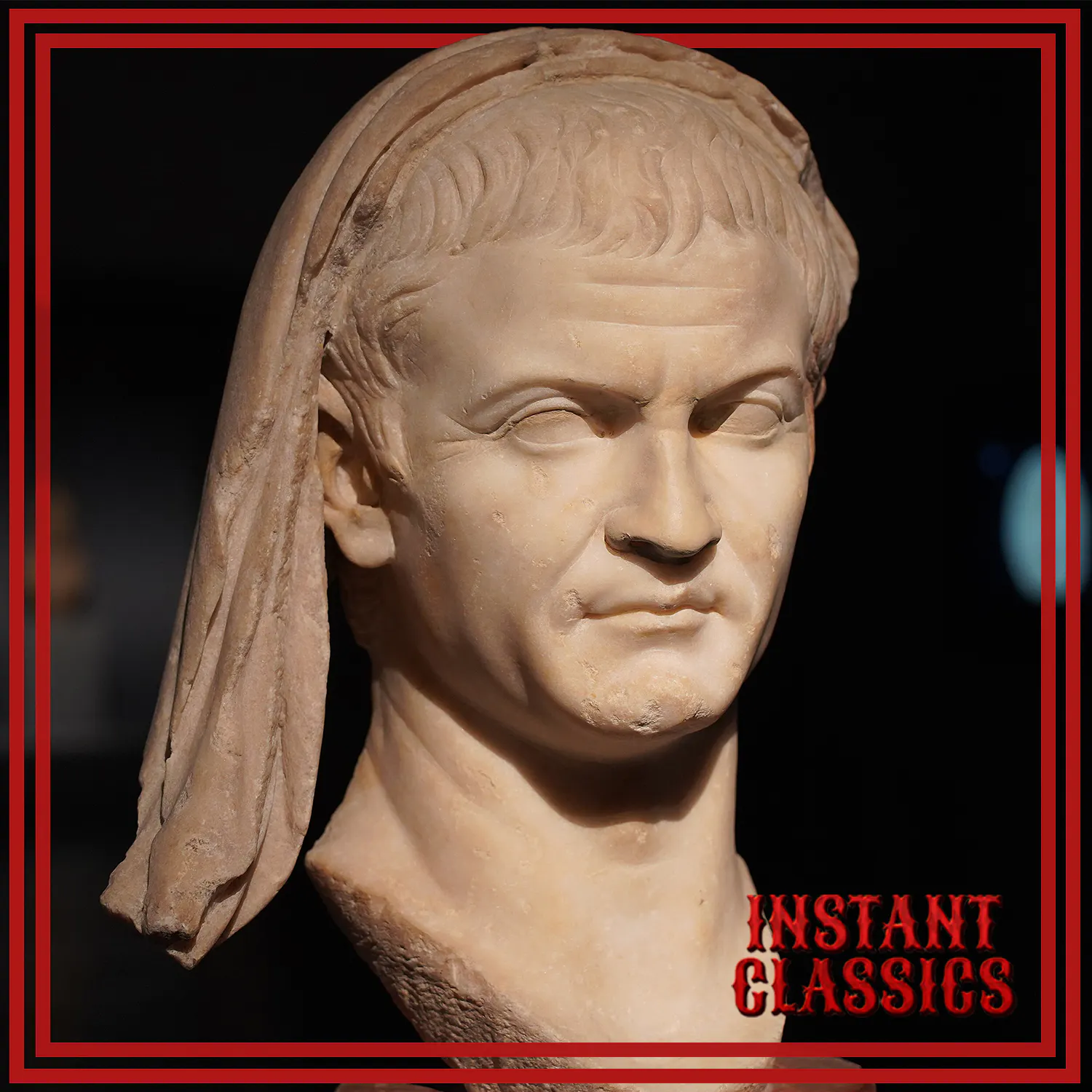 Marcus Agrippa: Power behind the throne 20.08.2026 54минOf all the Roman Emperors, Augustus has the reputation of being the most… well… august. That is to say, competent, level-headed and judicious. Not to mention one of the few who died of natural causes. But, according to Mary and Charlotte, the main reason Augustus got anything done is because he had a secret weapon in the form of Marcus Agrippa. We don’t know much about Marcus Agrippa’s early life, because he didn’t come from the aristocracy, but by the time he was thirty Augustus couldn’t do much without him. There is evidence that Agrippa managed the battles for which Augustus is famous, including the Battle of Actium, while Augustus pulled another sickie. When not defeating Rome’s enemies, Agrippa put a great deal of energy into building works. He constructed baths, temples (including the original Pantheon) and aqueducts. There are even stories of him getting onto a boat and rowing amidst the faeces of the Cloaca Maxima - Rome’s sewage system - to oversee improvements. While Agrippa did not come from the upper classes, he ended up there. He is buried with the imperial family in the mausoleum of Augustus (which you can still visit) and his great-grandson Nero became emperor. Perhaps, when we call some great figure ‘august’, we should call them ‘agrippan’ instead! Further reading: Lindsay Powell, Marcus Agrippa: Right-hand man of Caesar Augustus (Pen and Sword, pb, 2023) is the fullest recent biography of Agrippa (otherwise, in English, you have to go back to the 1930s) For the archaeology, the Pantheon in Rome remains Agrippa’s greatest and most visible monument, with his name prominently displayed (albeit rebuilt by the emperor Hadrian, probably to a new plan). The probable residence of Agrippa and Julia in Rome lies underneath the later, Renaissance, Villa Farnesina near the Tiber bank. Both were exquisitely decorated. You can still see Raphael's designs in the later villa. Most of the major ancient paintings from Agrippa’s property have been removed to the Palazzo Massimo museum. The archaeology is briefly discussed here: https://www.digitalaugustanrome.org/records/villa-farnesina/ Paintings from another villa owned by Agrippa, at Boscotrecase outside Pompeii, can be seen in the Met Museum in New York. @instaclassicpod for Insta, TikTok and YouTube @insta_classics for X email: [email protected] Instant Classics handmade by Vespucci Producer: Jonty Claypole Video Editor: Jak Ford Theme music: Casey Gibson Learn more about your ad choices. Visit podcastchoices.com/adchoices
 -
 BONUS Emily Wilson on translating the Odyssey 18.08.2026 49минA few months back we spoke to Emily Wilson on our subscriber series Exploring the Odyssey. Emily has been in the news recently, partly because her acclaimed 2017 translation of The Odyssey inspired Christopher Nolan, and partly because her criticisms of Nolan’s film have sparked debate. So we thought we would share the episode here on Instant Classics. In the episode, Emily tells Mary and Charlotte why translating from Ancient Greek to modern English is so difficult, the choices she had to make from the outset and the challenges she encountered once underway. In a surprise revelation, Emily confesses that she enjoyed the process so much she has decided to do it all over again and will ultimately publish a SECOND translation of The Odyssey - which is the equivalent of Odysseus spending ten years getting home only to decide he enjoyed the experience so much he’s going to repeat the whole trip. Further reading: One of Mary’s favourite ancient “reflections” on the story of Odysseus (inc the Laestrygonians) is the so-called “Odyssey landscapes” found in Rome, an ancient depiction of this part of the Odyssey story. If you are interested in digging down into different translations, Patrick Reardon has a useful online essay, which compares passages of Emily’s translation with Daniel Mendelsohn’s and Richmond Lattimore’s. The Odyssey, translated by Emily Wilson, is published in paperback by Norton Her volume of essays, Crossing the Wine-dark Sea, is published by Profile Books. Instant Classics handmade by Vespucci Producer: Jonty Claypole Video Editor: Jak Ford Theme music: Casey Gibson Learn more about your ad choices. Visit podcastchoices.com/adchoices
 -
 Classic Chats: Charlotte Higgins on Ukrainian Lessons 13.08.2026 1ч 7минMary talks to Charlotte about her book Ukrainian Lessons: Art in a Time of War. For the last four years, Charlotte has returned repeatedly to Ukraine to report on the cultural life of the nation as it defends itself against Russia. Part of Putin’s attempts to legitimise the war lies in an age-old argument that Ukraine is simply an extension, or part of, Russia itself. Art and culture have always played a critical role in Ukraine’s identity and self-determinism –and never more so than now. Charlotte talks about what first took her to Ukraine in 2022, some of what she has learned over the last four years, and how reading the classics, especially Homer and Greek tragedy, have helped her make sense of the current situation. And Mary and Charlotte discuss Ukraine’s classical past: histories of Ukraine often start with Herodotus and his account of the Scythians of the steppe; and the Black Sea coast, and Crimea, are dotted with some of the earliest Greek “colonies” or trading emporia. Further reading Charlotte’s book Ukrainian Lessons: Art in a Time of War (Cape) is published on 20 August. Charlotte and Mary also mentioned Oleksandr Mykhed’s book The Language of War (Penguin, paperback, 2026), and Cassandra by Lesia Ukrainka (HURI, 2023) On the classical connections of Ukraine, there is a good introduction to the ruins of Olbia. Euripides’ fifth-century play, Iphigeneia in Tauris (Iphigeneia among the Taurians) is set in the Crimean peninsula (English translations widely available in Oxford World’s Classics, Penguin Classics etc). A BBC news article about the return of Scythian artefacts to Kyiv after a decade of court hearings. @instaclassicpod for Insta, TikTok and YouTube @insta_classics for X email: [email protected] Instant Classics handmade by Vespucci Producer: Jonty Claypole Video Editor: Jak Ford Theme music: Casey Gibson Learn more about your ad choices. Visit podcastchoices.com/adchoices
 -
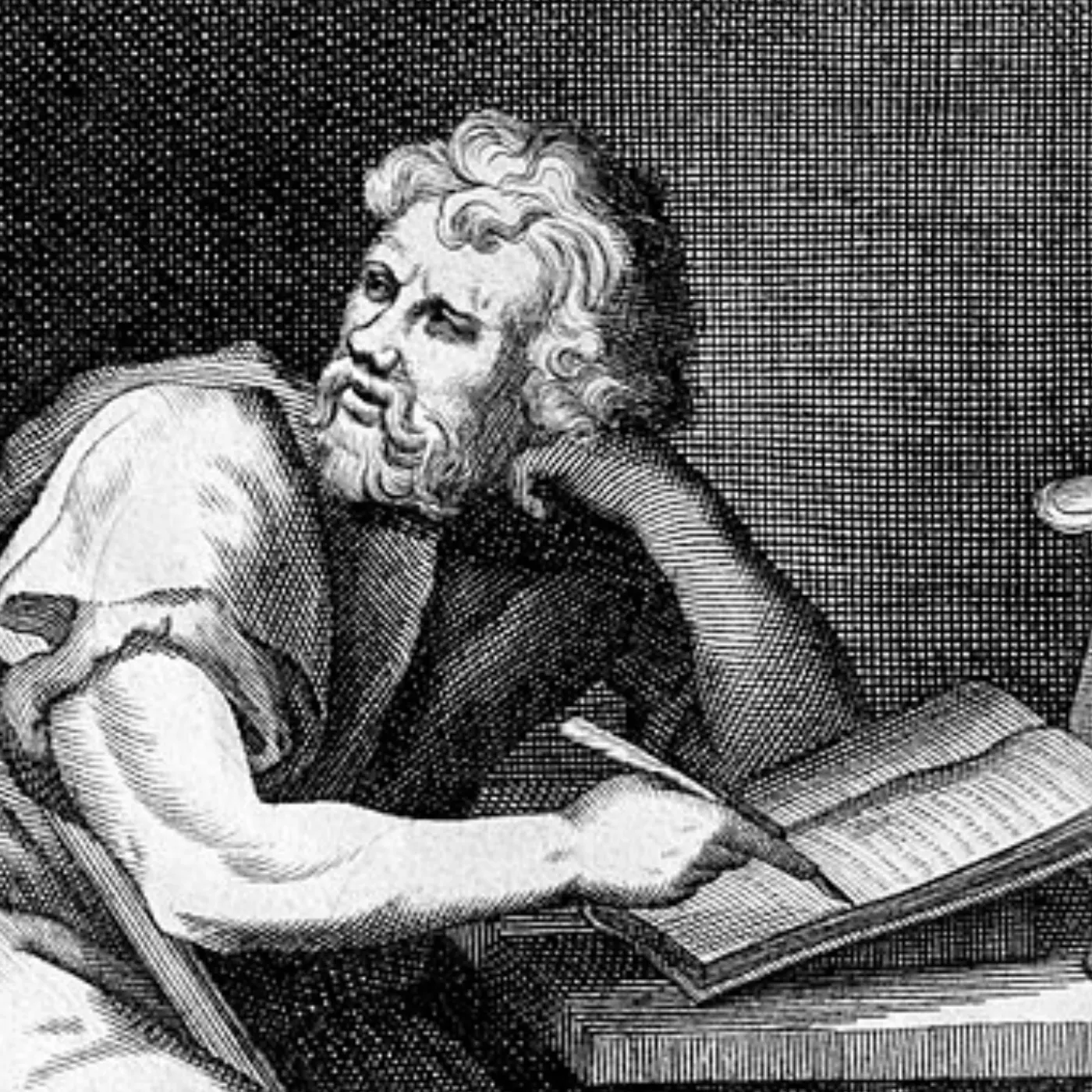 BONUS: Which Translation of the Odyssey should I read? 10.08.2026 11минWith the world gripped by Odyssey fever, Mary and Charlotte keep being asked the same question: which translation should I read? So here is a quick bonus episode to help you decide. Mary and Charlotte cover the waterfront of the modern translations (Emily Wilson and Daniel Mendelsohn), but also celebrate some past classics, like E.V. Rieu’s. In the end, the simple answer is don’t worry - work with what you’ve got most easily at hand. Any translation that has been printed by a major publisher has its merits. Further reading: The two recent translations we discuss at the start are: Emily Wilson (translator), The Odyssey (W. W. Norton and co) Daniel Mendelsohn (translator), The Odyssey (Chicago UP and Penguin Classics) Both are available in paperback. Earlier translations which you might enjoy, and trust, include:: Richmond Lattimore (Harper Perennial Modern Classics) Robert Fagles (Penguin Classics) Robert Fitzgerald (Farrar, Straus & Giroux) Peter Green (University of California Press) E. V. Rieu (Penguin Classics) Charlotte referred to Matthew Arnold’s lectures from the 1860s, “On Translating Homer” @instaclassicpod for Insta, TikTok and YouTube @insta_classics for X email: [email protected] Instant Classics handmade by Vespucci Producer: Jonty Claypole DOP - Ben Warburton Video Editor: Tom Green Theme music: Casey Gibson Learn more about your ad choices. Visit podcastchoices.com/adchoices
 -
 Classical Beach Reads 06.08.2026 58минSummer is here (in the northern hemisphere at least) and with many listeners eyeing trips to the beach, Mary and Charlotte are here with some cracking beach read suggestions. Move over Carley Fortune, Ann Patchett, and Tana French and make way for Herodotus, Lucian and Longus. Charlotte does a hard sell for Herodotus’ Histories (all 700 pages) and Ovid’s (mercifully shorter) Heroides. Mary pushes the science-fiction humour of Lucian’s Selected Dialogues (while acknowledging it could do with a better title) and Longus’ Daphnis and Chloe. Turning to modern books set in the ancient world, Charlotte champions Colm Tóibín’s House of Names, while Mary chooses Samuel Butler’s The Authoress of the Odyssey - which, published in 1897, pushes the definition of ‘modern’ a little, but we don’t expect anything less from a Cambridge don! Finally, something for the kids… Mary is a fan of Caroline Lawrence’s Roman Mysteries and Charlotte feels equally enthusiastic about Percy Jackson. Charlotte’s recommendations: Herodotus, The Histories comes in many translations – Robin Waterfield for Oxford World’s Classics, and Tom Holland for Penguin Classics Ovid, Heroides, also has translations in the World’s Classics and Penguin Classics series Colm Tóibín, House of Names, Penguin, 2018 Rick Riordan, Percy Jackson and the Lightning Thief, Puffin, 2013 Mary’s recommendations: For Lucian’s Dialogues, the handiest translation is a selection of some of the best of his satire in Oxford World’s Classics. Peter Thonemann is producing a new translation of the whole lot in the Loeb Classical Library (Harvard UP), including the original Greek text too. Two volumes have appeared so far. Longus, Daphnis and Chloe is also published in World’s Classics, and in Penguin Classics (with other works of ancient Greek fiction), and on its own in the Penguin Little Black Classics series. Samuel Butler’s Authoress of the Odyssey is available in various modern reprints (often independently published) listed in online bookstores Caroline Lawrence’s series of Roman Mysteries is published by Orion. @instaclassicpod for Insta, TikTok and YouTube @insta_classics for X email: [email protected] Instant Classics handmade by Vespucci Producer: Jonty Claypole Video Editor: Jak Ford Theme music: Casey Gibson Learn more about your ad choices. Visit podcastchoices.com/adchoices
 -
 Classic Chats: Count Binface (Bonus episode) 03.08.2026 34минIn this Clacton byelection special, Count Binface takes a break from the campaign trail and zooms in from his spaceship to chat with Mary and Charlotte about his deep interest in Ancient Greece and Rome. While denying all connection with an earthling called Jon Harvey who studied Classics at Oxford, Binface reveals the lessons he has learned by studying classical writers, like the Greek satirist Lucian, the failings of Athenian democracy and Roman republicanism, and his views on Christopher Nolan’s The Odyssey. All of which begs the question: will Count Binface make compulsory Latin in state primary schools a central pledge in his manifesto? Listen to find out! Further reading: If you are confused about who Count Binface is, there’s a piece in the Guardian that explains it all… Binface’s review of the Odyssey (paywalled) And a link to Jon Harvey’s broadcasting including his BBC Radio 4 series, Could an Ancient Athenian Fix Britain? For all the candidates in this byelection: https://www.bbc.co.uk/news/articles/ckge923jk3vo @instaclassicpod for Insta, TikTok and YouTube @insta_classics for X email: [email protected] Instant Classics handmade by Vespucci Producer: Jonty Claypole Video Editor: Jak Ford Theme music: Casey Gibson Learn more about your ad choices. Visit podcastchoices.com/adchoices
 -
 Classic Chats: Tom Hiddleston on Pompeii 30.07.2026 54минLast week, actor Tom Hiddleston launched his new series - not the further adventures of Loki (at least, not yet), but Pompeii: Out of Time with Tom Hiddleston. Mary and Charlotte talk to Tom who reveals his life-long fascination with the ancient world, including a degree in Classics at Cambridge where he attended the lectures of one Professor Mary Beard. Tom talks about the impact Mary’s teaching had on him and how that fascination for the Classics has never gone away. His new series, available to watch on Disney+ and National Geographic, focuses on several real people and the decisions they made in the hours before the eruption of Vesuvius in AD 79. It draws on new research and technology to uncover the hidden lives of some of those who survived - and some who didn’t. Further reading Mary Beard’s book Pompeii is strongly recommended by Charlotte! And there is a recent book by Jess Venner, The Lost Voices of Pompeii (Harper Collins, 2026), which picks up and develops some of the same themes. In one of his first roles, Tom appeared in the Cambridge Greek play. You can find out more about this marvellous institution here: https://www.classics.cam.ac.uk/prospective/undergraduate/greek-play and here: https://www.cambridgegreekplay.classics.cam.ac.uk/ @instaclassicpod for Insta, TikTok and YouTube @insta_classics for X email: [email protected] Instant Classics handmade by Vespucci Producer: Jonty Claypole Video Editor: Jak Ford Theme music: Casey Gibson Learn more about your ad choices. Visit podcastchoices.com/adchoices
 -
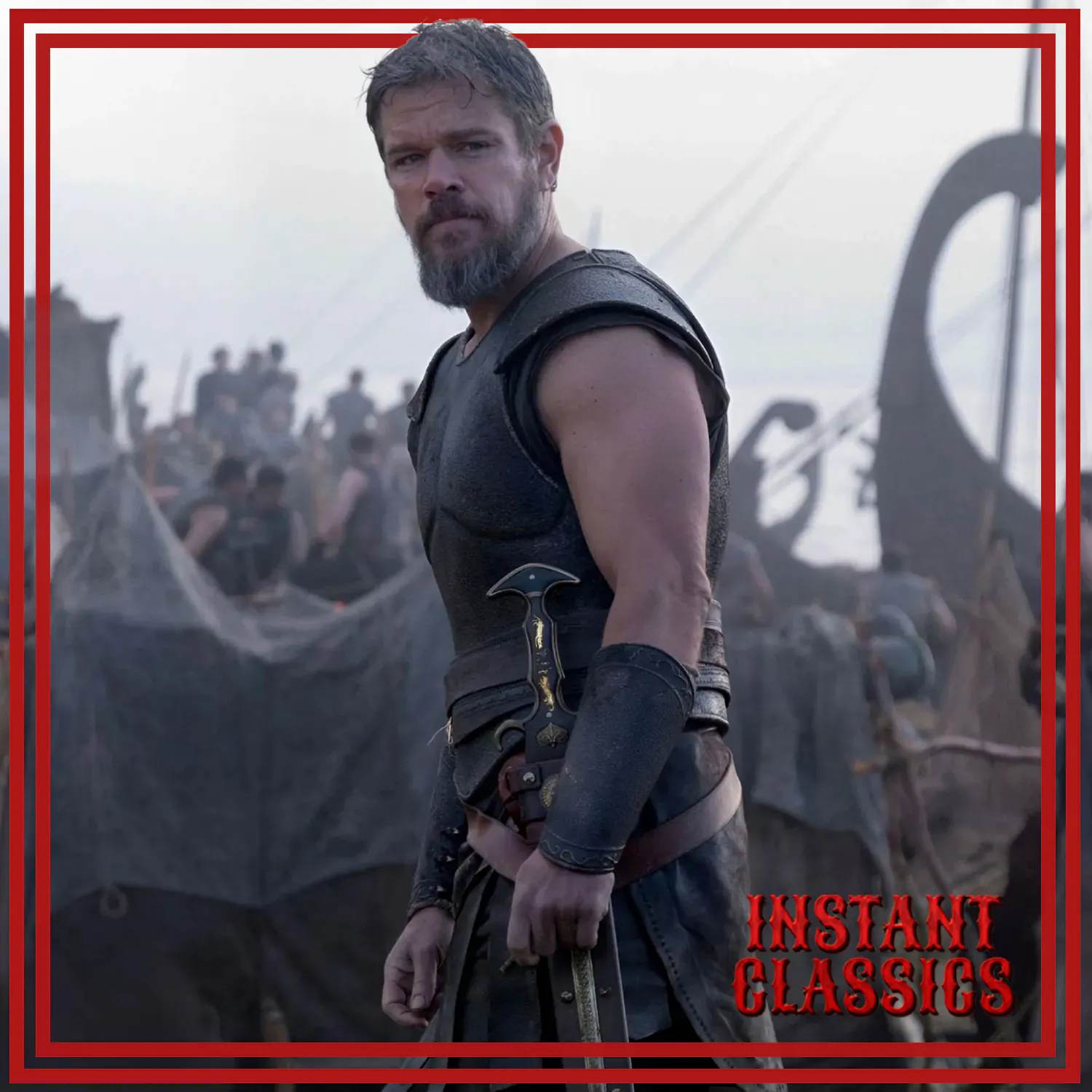 Christopher Nolan's Odyssey 3: The Pedants Revolt 23.07.2026 56минLast week, Mary and Charlotte gave their instant verdict on Christopher Nolan’s Odyssey only hours after emerging from the premiere, dazzled somewhat by the proximity of so much A-list talent. A week later… they unleash their inner nerds to quibble with some of the decisions and omissions Nolan made in adapting Homer. Their biggest gripe is the treatment of the female characters. Nausicaa and the ghost of Odysseus’ mother didn’t make the edit. Helen of Troy is robbed of agency and becomes a victim. The Gods are mostly cut and there’s even the implication that some of the more magical elements of the story might simply be a figment of the imagination resulting from too much lotus eating. Odysseus himself has become a bit of a goody two-shoes, only lying when he really has to and wracked by guilt of all the things he did at Troy, unlike Homer’s Odysseus who doesn’t think twice about ransacking innocent people. It’s not all moan moan moan though. Who can disapprove of the enhanced role that Odysseus’ loyal dog Argus is given, complete with his own backstory, and the power of the canine performance? Give that dog an Oscar. Or better yet, a nice meaty bone. Mary and Charlotte recommend: No more reading than we suggested last week (except to urge people back to Homer itself). BUT if you haven't seen the film, you can see Argus the dog here: https://www.youtube.com/shorts/sxgHV-BmNrI @instaclassicpod for Insta, TikTok and YouTube@insta_classics for Xemail: [email protected] Instant Classics handmade by Vespucci Producer: Jonty Claypole Video Editor: Jak Ford Theme music: Casey Gibson Learn more about your ad choices. Visit podcastchoices.com/adchoices
 -
 Christopher Nolan's Odyssey 2: Instant Verdict 15.07.2026 51минMary and Charlotte emerge from the premiere of The Odyssey, pausing only for a night’s rest, before regathering in the morning with strong coffees to give their instant verdict on Christopher Nolan’s summer blockbuster. Headlines Winners: Complicated, twisty-turny timelines; multiculturalism; Samantha Morton; Charlotte Higgins Losers: Feminism; humour; The Gods; Mary Beard To find out what all this means, listen to the episode! Further reading (and watching): The basic message here is “go watch the movie”. Mary is perhaps less keen overall, but still urges you to go see. It is also worth having a look at (and comparing) Ubert Pasolni’s The Return which is focussed on the second half of the poem. https://en.wikipedia.org/wiki/The_Return_(2024_film) Charlotte mentioned Colm Tóibín’s novel House of Names. @instaclassicpod for Insta, TikTok and YouTube @insta_classics for X email: [email protected] Instant Classics handmade by Vespucci Producer: Jonty Claypole Video Editor: Jak Ford Theme music: Casey Gibson Learn more about your ad choices. Visit podcastchoices.com/adchoices
 -
 Christopher Nolan's Odyssey 1: What you need to know before you go 09.07.2026 47минChristopher Nolan’s adaptation of The Odyssey - the most eagerly anticipated event since Odysseus spied the shores of Ithaca - is almost with us at last. Mary and Charlotte have been exploring Homer’s epic over the last year in the Instant Classics Book Club, but if you’re time poor or just want a little refresher, then you’ll find the basics in this pre-screening primer. In the first half, they run through what actually happens in The Odyssey, as Odysseus, a twisty-turny man, makes his twisty-turny way back home. In the second, they pull out some of the big themes from the book - the problems of homecoming, post-traumatic disorder, the cost of war, growing up, fidelity, colonisation, and the thin line between so-called civilisation and so-called barbarism. This poem really does have everything, yet manages to be poetic and hugely entertaining while about it. In theory, it’s the perfect material for Christopher Nolan, who has long been fascinated with non-linear story-telling, the effects of war, and journeys. But whether he succeeds will be the subject of next week’s episode… Further reading Charlotte and Mary usually quote from Emily Wilson’s translation of the poem (W. W. Norton, 2018), but another good recent translation is by Daniel Mendelsohn (Chicago UP and Penguin Classics, 2025). But there are many translations on offer which will not mislead – so do not get too anxious about getting the “right” one. Approachable introductions to the poem include: Barbara Graziosi, Homer: a very short introduction (Oxford UP, 2019) Edith Hall, The Return of Ulysses (I. B. Tauris, 2012) Elton Barker and Joel Christensen, Homer: a beginner’s guide (Oneworld, 2013) Moses Finley, The World of Odysseus is an old favourite (reissued by New York Review of Books, 2002) @instaclassicpod for Insta, TikTok and YouTube @insta_classics for X email: [email protected] Instant Classics handmade by Vespucci Producer: Jonty Claypole Video Editor: Jak Ford Theme music: Casey Gibson Learn more about your ad choices. Visit podcastchoices.com/adchoices
 -
 USA 250: “I’m Spartacus!” 02.07.2026 47минMary and Charlotte welcome Professor Maria Wyke back on the show to talk about two of the most famous words in cinema: “I’m Spartacus!” Hollywood has always had an obsession with Ancient Rome. So much so, the Roman Epic - or sword-and-sandal - is a cinematic genre in its own right. Stanley Kubrick’s Spartacus, starring Kirk Douglas, Laurence Olivier and a host of other stars, is perhaps the towering achievement. But what is Spartacus really about? It was adapted by Dalton Trumbo from Howard Fast’s 1951 novel. Both men had fallen foul of the House Un-American Activities Committee and were blacklisted from Hollywood. Their names were proudly displayed at the start of the film, marking the decline of the Committee’s influence on American culture. In some ways, the refusal by Spartacus’ slave army to betray their leader to the Roman authorities is a message about free speech and solidarity. The character of black slave Draba who defies white supremacist authority is also a statement on the Civil Rights movement. But the brilliance of Spartacus is that it defies easy interpretation and deliberately plays with themes and symbols - not least in the crucifixion scene at the end of the film. Mary, Charlotte and Maria move forwards a few decades to Gladiator - and argue the power of that film is the way it similarly seems to, but doesn’t quite, push a moral message. Gladiator 2 on the other hand… Further reading Our wonderful guest Maria Wyke’s book Projecting the Past (Routlege, 1997) has a fascinating chapter on Spartacus Howard Fast’s novel Spartacus, on which Kubrick’s film was based, is on the Internet Archive. See also: A. Futtrell, “Seeing Red”, in Sandra Joshel et al. (eds), Imperial Projections (Johns Hopkins UP, 2001) Martin Winkler, Spartacus: Film and History (Wiley-Blackwell, 2007) Martin Winkler, Gladiator: Film and History (Wiley-Blackwell, 2004) @instaclassicpod for Insta, TikTok and YouTube @insta_classics for X email: [email protected] Instant Classics handmade by Vespucci Producer: Jonty Claypole Video Editor: Jak Ford Theme music: Casey Gibson Learn more about your ad choices. Visit podcastchoices.com/adchoices
 -
 USA 250: Building a new Rome 25.06.2026 52минShortly after its formation, the United States of America initiated a building program for both state and federal governments, turning to Ancient Greece and Rome for inspiration. As Mary and Charlotte discover… In-between duties like writing the Declaration of Independence, acting as Minister to France and being President, Thomas Jefferson found time to make inspiration trips to study Roman architecture in France. Although he didn’t design the Capitol in Washington DC, he set the tone with his designs for Monticello (his Virginia home) as well as the University of Virginia and Virginia State Capitol. Over the decades, other influences gained greater prominence - whether nostalgic styles like the gothic or the modernity of Frank Lloyd Wright. But neo-classicism is on the rise once again. According to President Trump’s executive order Making Architecture Beautiful Again, ‘classical’ is the preferred style for federal buildings - in particular, the plan for a ‘United States Triumphal Arch’. Mary and Charlotte recommend some further reading: Donald Trump’s executive order on classical architecture. Edwin Heathcote, the architecture critic of the Financial Times, on triumphal arches and DC. The DC Commission of Fine Arts have published the schemes for Trump’s arch: https://www.cfa.gov/system/files/meeting-materials/1-CFA-16APR26-1-EOP_DOI_Arch-pres%20%5BApr9%5D.pdf The first scheme for the Navy Memorial, including the triumphal arch is shown here: https://escholarship.org/content/qt9r40k5hd/qt9r40k5hd_noSplash_87482e06371178d8fcd9bb449eb06f39.pdf A useful website for Jefferson’s classical architecture: https://www.monticello.org/jefferson-and/architecture The temporary triumphal arch in DC is pictured here: https://ggwash.org/view/40678/dc-once-had-its-own-arc-de-triomphe The detailed history of triumphal arches, from antiquity to now, is the subject of Peter Howell, The Triumphal Arch (Unicorn, 2021) Mary’s The Roman Triumph (Harvard UP, pb, 2009) discusses the Roman significance of these arches, and the incident with Pompey’s elephants. @instaclassicpod for Insta, TikTok and YouTube @insta_classics for X email: [email protected] Instant Classics handmade by Vespucci Producer: Jonty Claypole Video Editor: Jak Ford Theme music: Casey Gibson Learn more about your ad choices. Visit podcastchoices.com/adchoices
 -
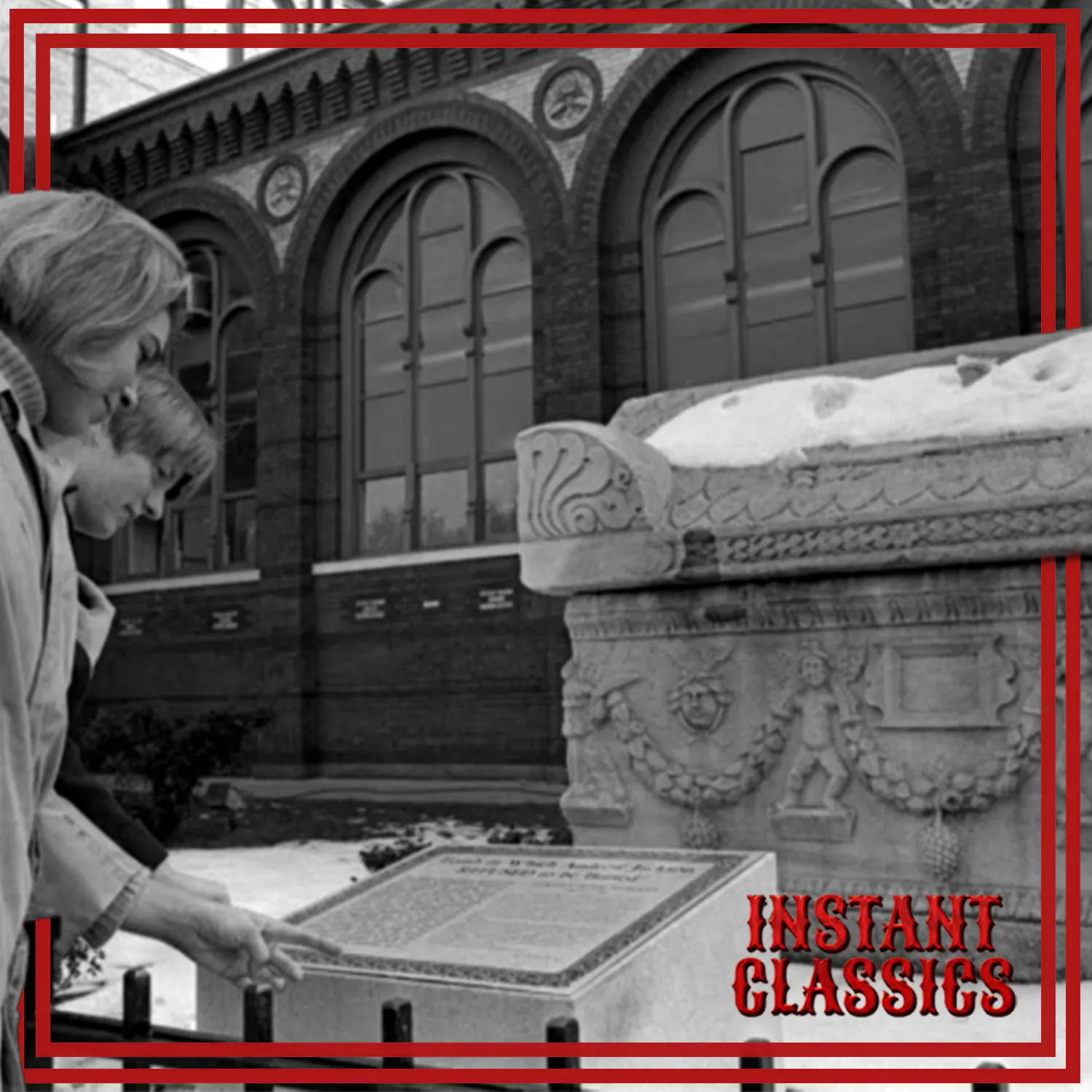 USA 250: President Jackson and the Emperor’s Tomb 18.06.2026 50минLast year, Mary spent nine months in Washington D.C. During this time, she became interested in visual iconography and real objects of Ancient Greece and Rome on display in the city’s museums and streets. In this episode, she tells Charlotte about her fascination with a sarcophagus in the Smithsonian collection, which was believed once to have held the remains of Emperor Alexander Severus. In the 1830s, a US navy commander based in the Mediterranean ‘acquired’ the sarcophagus in Lebanon and sent it back home with the suggestion it could be used as a tomb for President Andrew Jackson. This forced the question: was it appropriate for an American president to be buried in a Roman sarcophagus? On one hand, the USA liked to position itself as the inheritor of Roman values. On the other, Severus, who became Emperor after his cousin Elagabalus (a favourite of the show) was bumped off, was a despot, even if a comparatively benign one. The problem was heightened by the fact Jackson was frequently accused of acting like a ‘Caesar’. The conundrum of the sarcophagus went right to the height of the tensions - then as now - in the USA’s idolisation of Ancient Rome. As Mary reveals, there are many twists and turns to this story, which ends - bizarrely enough - with Peter Fonda’s Harley-Davison from the film Easy Rider. How are the two connected? Listen to find out! Mary and Charlotte recommend some further reading: Mary wrote about this sarcophagus a few years back in the Wall Street Journal: https://www.wsj.com/arts-culture/books/a-tomb-not-fit-for-a-president-11634356860 (it’s pay-walled, but the free bit gives you a great picture of a couple admiring it); and it was the object that book-ended her Twelve Caesars: Images of power from the ancient world to the modern (Princeton UP, pb, 2023). See also, from the Smithsonian: https://www.smithsonianmag.com/history/andrew-jackson-populist-even-deathbed-180962124/ The Roman archaeology of the sarcophagus: J B Ward Perkins, “Four Garland Sarcophagi in America”, in the journal Archaeology for 1958. Andrew Jackson (and his Caesarism) features in the first chapter of Margaret Malamud’s Ancient Rome and Modern America (Wily Blackwell, 2009) @instaclassicpod for Insta, TikTok and YouTube @insta_classics for X email: [email protected] Instant Classics handmade by Vespucci Producer: Jonty Claypole Video Editor: Jak Ford Theme music: Casey Gibson Learn more about your ad choices. Visit podcastchoices.com/adchoices
 -
 USA 250: America’s Roman Revolution 11.06.2026 51минIn case you haven’t noticed… the USA is celebrating a special anniversary. Mary and Charlotte talk to one of America’s leading scholars of ancient Rome and its modern reception, Joy Connolly, about why so much of the struggle for independence deployed the words, images and sometimes actual clothing of the Ancient Romans. They discuss George Washington’s production of the tragedy of Cato in the revolutionary army and Joseph Warren’s donning of a toga to incite the rebels. They ask why the Declaration of Independence and Constitution drew so heavily on Roman writers like Cicero and Virgil, why Cincinnati was named after the authoritarian Cincinnatus, and to what extent the Republicans and Democrats resemble the classical ideologies they named themselves after. Most of all, the big question: did the Founders know that Virgil’s words e pluribus unum (out of many, one), which became a rallying cry for the merging of the colonies into one, actually came from a recipe for cheese spread? Mary and Charlotte recommend some further reading: Joy has written about the use of classics in the revolutionary period and later in: “Classical Education and the Early American Democratic Style” in S. Stephens and P. Vasunia (eds), Classics and National Cultures (Oxford UP, 2010) and “Past Sovereignty: Roman Freedom for Modern Revolutionaries” in Basil Duffalo (ed), Roman Error (Oxford UP, 2017). You can read more about her work at ACLS. There are many useful introductions to different aspects of the Romanness of the American Revolution. We have enjoyed: C. J. Richard, The Founders and the Classics (Harvard UP, pb, 1995) M. Malamud, Ancient Rome and Modern America (Wiley Blackwell, pb, 2008) M. N. S. Sellars, “The Roman Republic and the French and American Revolutions", in H. Flower (ed), The Cambridge Companion to the Roman Republic (Cambridge UP, pb, 2004) More focussed on cultural influence than any directly political impact is W. L. Vance, America’s Rome (Yale UP, 1990) An article on Joseph Warren’s toga. A 1903 letter to the New York Times discussing the tracing of “e pluribus unum” to “Moretum”, the poem once attributed to Virgil that offers a recipe for herby, garlicky cheese spread. @instaclassicpod for Insta, TikTok and YouTube @insta_classics for X email: [email protected] Instant Classics handmade by Vespucci Producer: Jonty Claypole Video Editor: Jak Ford Theme music: Casey Gibson Learn more about your ad choices. Visit podcastchoices.com/adchoices
 -
 What did the Romans dream about? 04.06.2026 55минNearly 2000 years before Sigmund Freud published The Interpretation of Dreams, a sage in Ephesus (now in Turkey) wrote a book whose title translates as… The Interpretation of Dreams. Armed with Artemidorus’ book, Mary and Charlotte dive into the surreal and revealing dreamscape of the Ancients. If you’ve ever had a dream about flying or losing teeth or sex with a stranger, well… Artemidorus has a view about what this really means. Today, we might find his interpretations a little too neat and prescriptive, but they provide a fascinating insight into life on the edge of the Roman empire, including what people chatted (or sang) about at the public baths, the prevalence of mice in the home, and the hopes, aspirations and fears of household slaves. As with our episodes on Roman joke and cook books, we discover that the Ancients were simultaneously more like us and more dissimilar than we might expect. Mary and Charlotte recommend some further reading: The best translation of Artemidorus is by Martin Hammond in the Oxford World’s Classics series (OUP,pb, 2020) with an introduction by Peter Thonemann. Thonemann discusses the text and its context in his An Ancient Dream Manual: Artemidorus’ The Interpretation of Dreams (OUP, 2020) A classic article is by Simon Price, “The future of dreams: from Freud to Artemidorus”, originally published in Past and Present for 1986, reprinted in R Osborne (ed), Studies in Greek and Roman Society (Cambridge UP, pb, 2012) @instaclassicpod for Insta, TikTok and YouTube @insta_classics for X email: [email protected] Instant Classics handmade by Vespucci Producer: Jonty Claypole Video Editor: Jak Ford Theme music: Casey Gibson Learn more about your ad choices. Visit podcastchoices.com/adchoices
 -
 Cleopatra 5: Cleopatra on Screen 28.05.2026 1чMary and Charlotte talk to Professor Maria Wyke, classicist and film historian, about Cleopatra’s rebirth on the screen. By far the most famous Cleopatra film is the 1963 epic starring Elizabeth Taylor and Richard Burton - at the time the most expensive film ever made and with a steamy on-set love affair between the two stars to match that of the characters they were playing. Almost as brilliant, in its way, is the parody made the following year - Carry on Cleo - giving Kenneth Williams, as Julius Caesar, one of the greatest lines of all time: “Infamy, infamy, they’ve all got it in for me.” This pair of films hog the limelight, but Maria shows how cinema’s fascination with Cleo goes right back to the early years of silent film through to the 21st Century. Why? On one hand, the Cleopatra story is an opportunity for spectacle and sex appeal - in other words, good business. On the other, the story is reinvented by each generation, playing on the anxieties and desires of the age. Looking at Cleopatra films tells us a lot about changing attitudes to sex, race and politics over the last 100+ years. Mary and Charlotte recommend some further reading: Maria has written about Cleopatra on film in her books Projecting the Past (Routledge, pb, 1997) and The Roman Mistress (OUP, 2002). Films also figure in Lucy Hughes Hallett’s, Cleopatra: Histories, Dreams and Distortions (Fourth Estate, pb, 2026) A discussion of the Taylor-Burton film on its 60th anniversary: https://www.theguardian.com/film/2023/jun/12/cleopatra-60th-anniversary-elizabeth-taylor-richard-burton And for the fashion aspect: https://fashionhistory.fitnyc.edu/1963-mankiewicz-cleopatra/ @instaclassicpod for Insta, TikTok and YouTube @insta_classics for X email: [email protected] Instant Classics handmade by Vespucci Producer: Jonty Claypole Video Editor: Jak Ford Theme music: Casey Gibson Learn more about your ad choices. Visit podcastchoices.com/adchoices
Подобни подкасти


Популярен в
Този подкаст се появява и в подкаст класациите на тези държави.
-
 Бахами
-
 Монголия
-
 Уругвай
-
 Армения
-
 Мавриций
-
 Румъния
-
 Коста Рика
-
 Узбекистан
-
 Малта
Малта
-
 Бразилия
-
 Естония
-
 Черна гора
-
 Буркина Фасо
-
 Шри Ланка
-
 Тринидад и Тобаго
-
 Еквадор
-
 Индонезия
-
 Ливан
Ливан
-
 Лаос
Лаос
-
 Аржентина
-
 Сърбия
-
 Сингапур
-
 Албания
-
 Словения
-
 Колумбия
-
 Афганистан
-
 Азербайджан
-
 Чили
Чили
-
 Латвия
-
 Литва
Литва
-
 Мозамбик
-
 Швеция
-
 Португалия
-
 Ямайка
-
 Панама
-
 Чехия
Чехия
-
 Парагвай
-
 Хърватия
-
 Кайманови острови
-
 Хондурас
-
 Обединено кралство
-
 Унгария
-
 България
-
 Мали
Мали
-
 Перу
Перу
-
 Руанда
-
 Финландия
-
 Норвегия
-
 Словакия
-
 Кипър
Кипър
-
 Нова Зеландия
-
 Антигуа и Барбуда
-
 Австралия
-
 Салвадор
-
 Испания
-
 Бенин
Бенин
-
 Исландия
-
 Украйна
-
 Бахрейн
-
 Люксембург
-
 Северна Македония
-
 Италия
-
 Ирландия
-
 Белгия
-
 Доминиканска република
-
 Гърция
-
 Кувейт
-
 Нигер
Нигер
-
 Сейшелски острови
-
 Мадагаскар
-
 Мексико