
The UNESCO Courier
UNESCO
0
The UNESCO Courier is a podcast from UNESCO that explores global issues through diverse perspectives. It draws on sound archives, magazine articles, and exclusive interviews to examine topics ranging from culture and education to science and more. The series continues the magazine's mission since 1948 to be a window onto the world and tell the story of a constantly changing world. It gives voice to scientists, artists, writers, and thinkers from all over the globe.
Епизоди
-
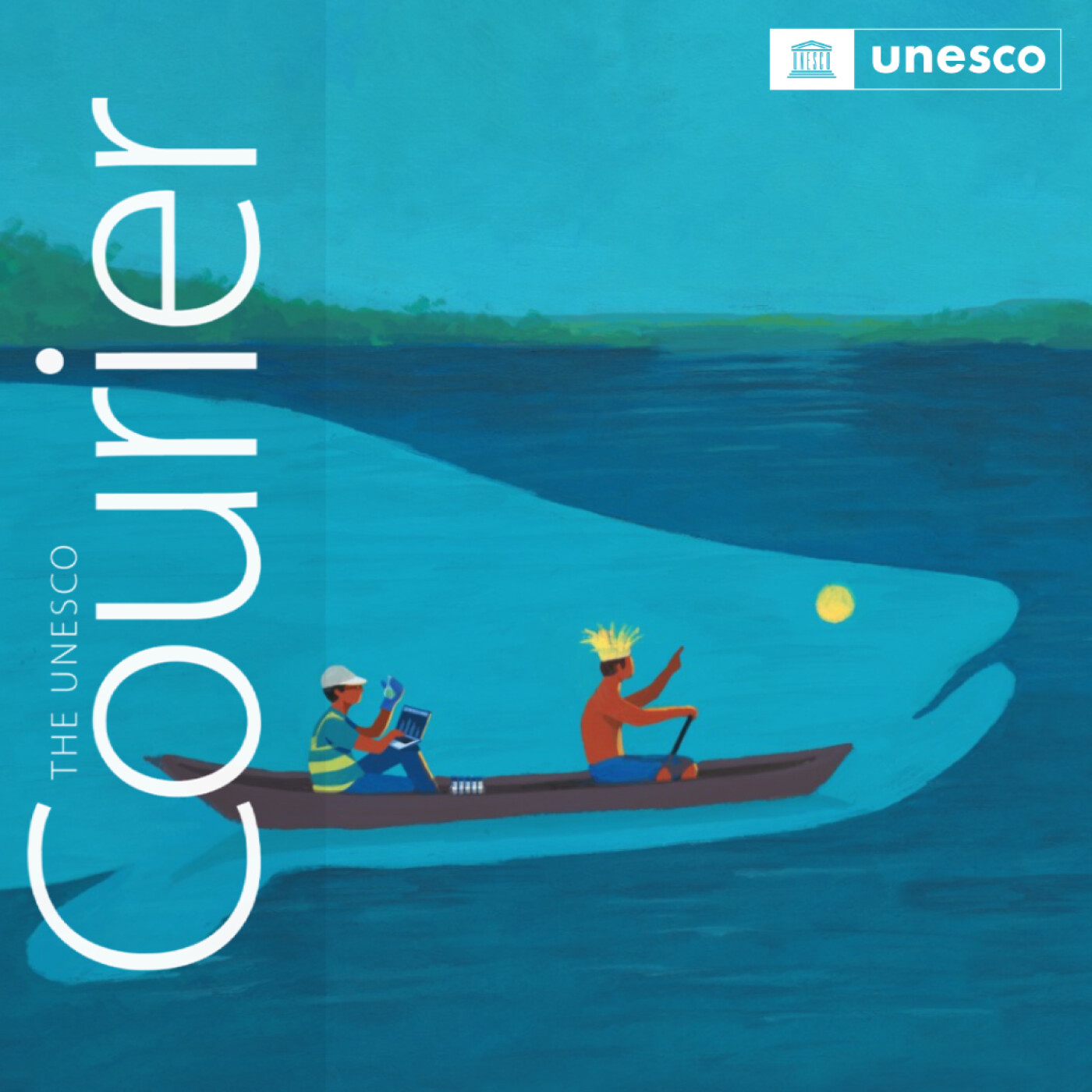 The power of Indigenous knowledge 04.08.2026 26минAs we face an unprecedented environmental crisis, the time-tested knowledge of Indigenous Peoples, paired with modern science, may well hold the key to our collective future.This podcast episode transports you to the four corners of the world, from the Brazilian Amazon to Samoa, via the African bushland and Sámi territory in Northern Europe, to find out how.We hear how traditional fire management, ancient fisheries conservation, climate-resilient architecture, and deep environmental observation are proving their value on a global scale. An immersive soundscape of authentic field recordings and community voices accompanies insights from Samoan journalist Lagipoiva Cherelle Jackson, Navajo archaeologist Ora Marek-Martinez, and Nigel Crawhall, Chief of Section of Local and Indigenous Knowledge Systems (LINKS) at UNESCO. Across these diverse perspectives, a clear message emerges: language, culture, and environmental stewardship are deeply bound. Safeguarding them requires sustained effort to ensure Indigenous voices are heard and valued.An episode by Anuliina Savolainen, production by Emmanuel Rudowski.Narration by François Wibaux, with excerpts read by Tariq Talal Mosaad, Peter Bates, Victor Soo, Nolwazi Mjwara.Media Credits: Special thanks to Pierre Costard and the Internet Archive, the Endangered Languages Archive, and the National Collections of Music, Theatre and Dance (Sweden) for providing field recordings under Creative Commons licensing.©Image: The UNESCO Courier/ Sylvie SerprixFurther Reading: -The UNESCO Courier’s January 2026 issue, How Indigenous knowledge drives scientific discovery.- UNESCO and Indigenous PeoplesFrom founding the LINKS initiative in 2002 to launching the International Decade of Indigenous Languages (2022–2032), UNESCO continues to support Indigenous Peoples and their knowledge systems.https://courier.unesco.org/enhttps://courier.unesco.org/en/subscribeHosted on Ausha. See ausha.co/privacy-policy for more information.
 -
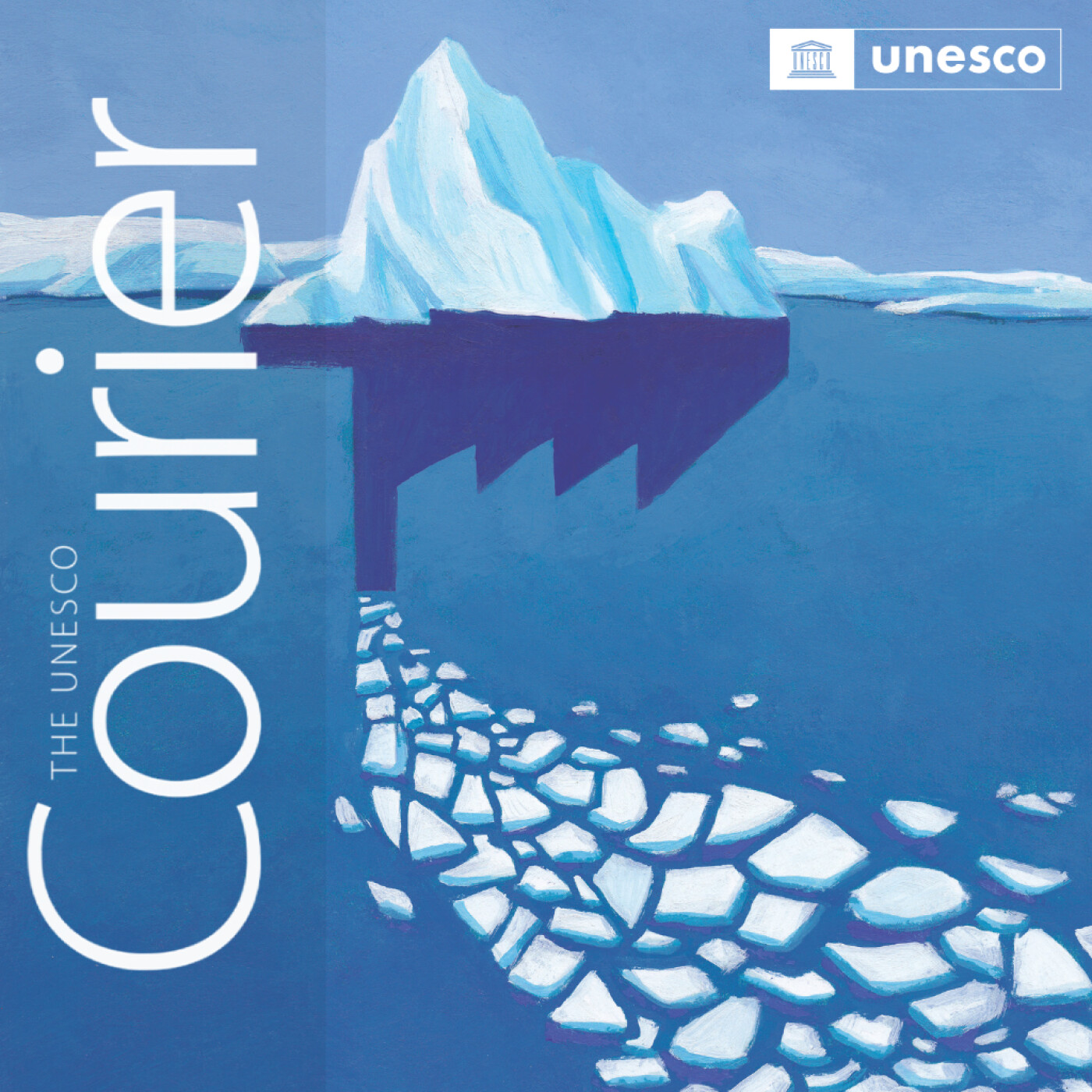 Vanishing glaciers 13.03.2026 18минImagine a world without glaciers – a future defined by rising tides, drinking water scarcity, and a global ecosystem transformed. In the wake of the International Year of Glaciers’ Preservation 2025, this UNESCO Courier podcast investigates the "great melt" and the global urgency to act.The scale of the crisis is vast: Antarctica’s ice is melting three times faster than it was just a decade ago, while half of the world’s mountain ice could vanish by the end of the century.In this episode, we revisit our Vanishing Glaciersissue, bringing together perspectives from scientists, Indigenous communities, and artists witnessing this shift. We explore the global response and how the loss of our "frozen reservoirs" is redrawing local lifestyles and cultural heritage. This journey features recorded insights from Anil Mishra (UNESCO) and Ko Barrett (WMO), alongside Douglas Hardy, a glacier specialist at the University of Massachusetts Amherst, and Harvard researcher Emil Karpinski.Credits: An episode by Anuliina Savolainen, production by Emmanuel Rudowski. Narration by Clare O’Hagan, with excerpts read by Max Kendrick and Anuliina Savolainen.Media credits:00:01:31 – 00:01:56 News extracts (Creative Commons Attribution license): “Record Ice Melting In Greenland” (Paul Morgan); “Devastation in Switzerland Today! Massive Glacier Collapse Buries The Village of Blatten” (DisasterToday); “Everest is melting. What does it tell us about climate change?” (Context News)00:04:25: 00:04:53 Recording by the World Meteorological Organization: Launch of the International year of Glaciers’ Preservation; opening remarks by Ko Barrett, WMO Deputy Secretary-General.00:14:39-15:24Music extract “someone, not something” from the album “Crying glacier” by Ludwig Berger and Vadret da Morteratsch©Visual: The UNESCO Courier/ Sylvie Serpixhttps://courier.unesco.org/enhttps://courier.unesco.org/en/subscribeHosted on Ausha. See ausha.co/privacy-policy for more information.
 -
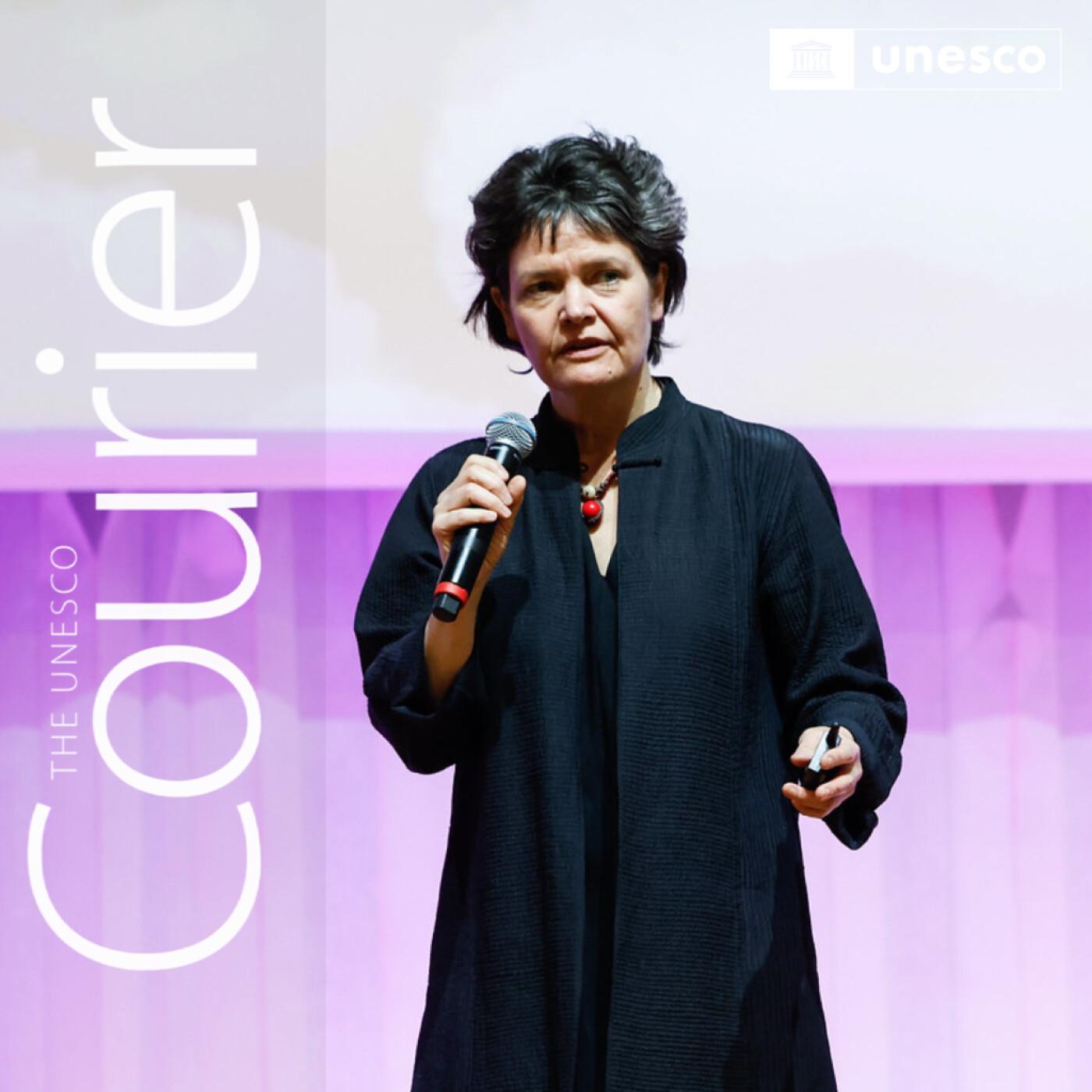 Kate Raworth: rethinking economics for the 21st century 15.07.2025 17минWhat if 20th-century economic models no longer fit today’s world? British economist Kate Raworth thinks it’s time for a rethink–and she’s sparking the shift with doughnut economics, a bold framework already shaping new policies in cities worldwide.Building on the work of thinkers like Herman Daly, who questioned endless growth in the 1980s, Kate Raworth’s doughnut-shaped model outlines a space where human needs are met without breaking the planet’s limits. With Earth scientists warning that we’re nearing critical environmental tipping points–from climate change to biodiversity loss–the need for a new economic compass has never been clearer.From a model that offers a healthier vision of prosperity to the outdated economic systems we’ve inherited, Kate Raworth invites us to rethink economics through the lenses of equity, ecology, and indigenous wisdom. A shift from growth for its own sake to economies that truly thrive.In March 2025, The UNESCO Courier team sat down with Kate Raworth at UNESCO in Paris, on the sidelines of the University of the Earth event, to explore what this model could mean for the future of progress. Curious what a doughnut has to do with economics? Hit play and find out.An episode by Katerina Markelova, produced by Emmanuel Rudowski, with the voice of François Wibaux.Photo: © UNESCO/Marie ETCHEGOYENhttps://courier.unesco.org/enhttps://courier.unesco.org/en/subscribeHosted on Ausha. See ausha.co/privacy-policy for more information.
 -
 Sculpting peace: the secret garden of Isamu Noguchi 22.05.2025 19минThe UNESCO Headquarters in Paris are home to the Garden of Peace, a unique public landscape by the Japanese-American sculptor Isamu Noguchi. Open to visitors, the Japanese garden is distinguished by its organic shapes, gently-sloping paths, and ponds with arched bridges. Noguchi is known for his modernist sculptures, Akari lamps and the iconic coffee table, but few know that the creation of the UNESCO garden in the late 1950smarked the beginning of his career designing public spaces.This episode of the UNESCO Courier podcast explores the origins of Noguchi’s work, his motivations for creating a peaceful public space and his choices for its design. It is produced in collaboration with the Noguchi Museum in New York, which holds the world's largest and most extensive collection of the artist’s sculptures, drawings, models, and designs—and also features a public garden. An episode by Anuliina Savolainen and Gina Doubleday, production by Emmanuel Rudowski.With the voices of François Wibaux (presentation) and Matthew Linzmeier. Archival sound extract credits:1 and 2: Isamu Noguchi interview recordings for Arnold Eagle film Noguchi: A Sculptor's World - Arnold Eagle, 1968. Courtesy of Arnold Eagle Estate.3. Isamu Noguchi interviewed by Stephen Horenstein and Micah Morrison about the Israel Museum, Jerusalem, June 1981. Courtesy of the Noguchi Museum in New York. Photo © UNESCO / Anne Hermelin Lizethttps://courier.unesco.org/enhttps://courier.unesco.org/en/subscribeHosted on Ausha. See ausha.co/privacy-policy for more information.
 -
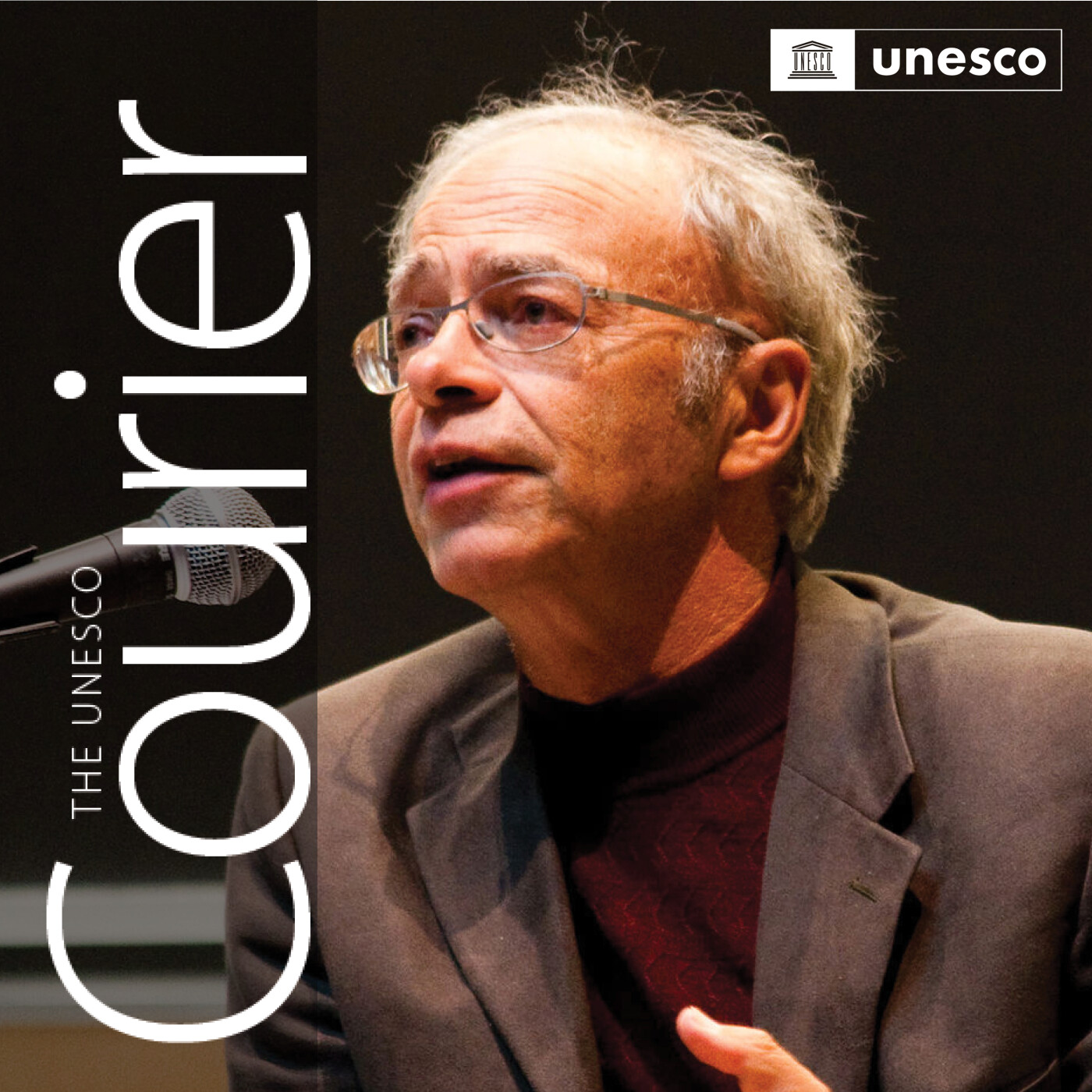 Peter Singer on ethical eating 05.05.2025 18минAnimals raised on factory farms often live in deplorable conditions. Knowing this doesn't stop us from eating meat. Why are we so indifferent to their suffering? Australian philosopher Peter Singer, one of the most influential intellectuals of his generation, has been addressing this blind spot in ethical thinking for more than fifty years. He has authored dozens of books, including Animal Liberation – a classic that continues to be a reference in the field of animal rights.In this UNESCO Courier podcast episode, he talks about the living conditions of animals in intensive farming and sheds light on solutions. We also delve into the persistent issue of global hunger and uncover the core question that drives the philosopher's work.An episode by Anuliina Savolainen, produced by Emmanuel Rudowski, with the voice of François Wibaux.A written version of his interview features in The UNESCO Courier’s Spring 2025 issue, which explores food from a cultural, environmental, philosophical, and technological perspective.© Photo Joel Travis Sagehttps://courier.unesco.org/enhttps://courier.unesco.org/en/subscribePeter Singer, AC Website: petersinger.info AI Persona: petersinger.ai Lives Well Lived Podcast: Apple Podcasts, SpotifyHosted on Ausha. See ausha.co/privacy-policy for more information.
 -
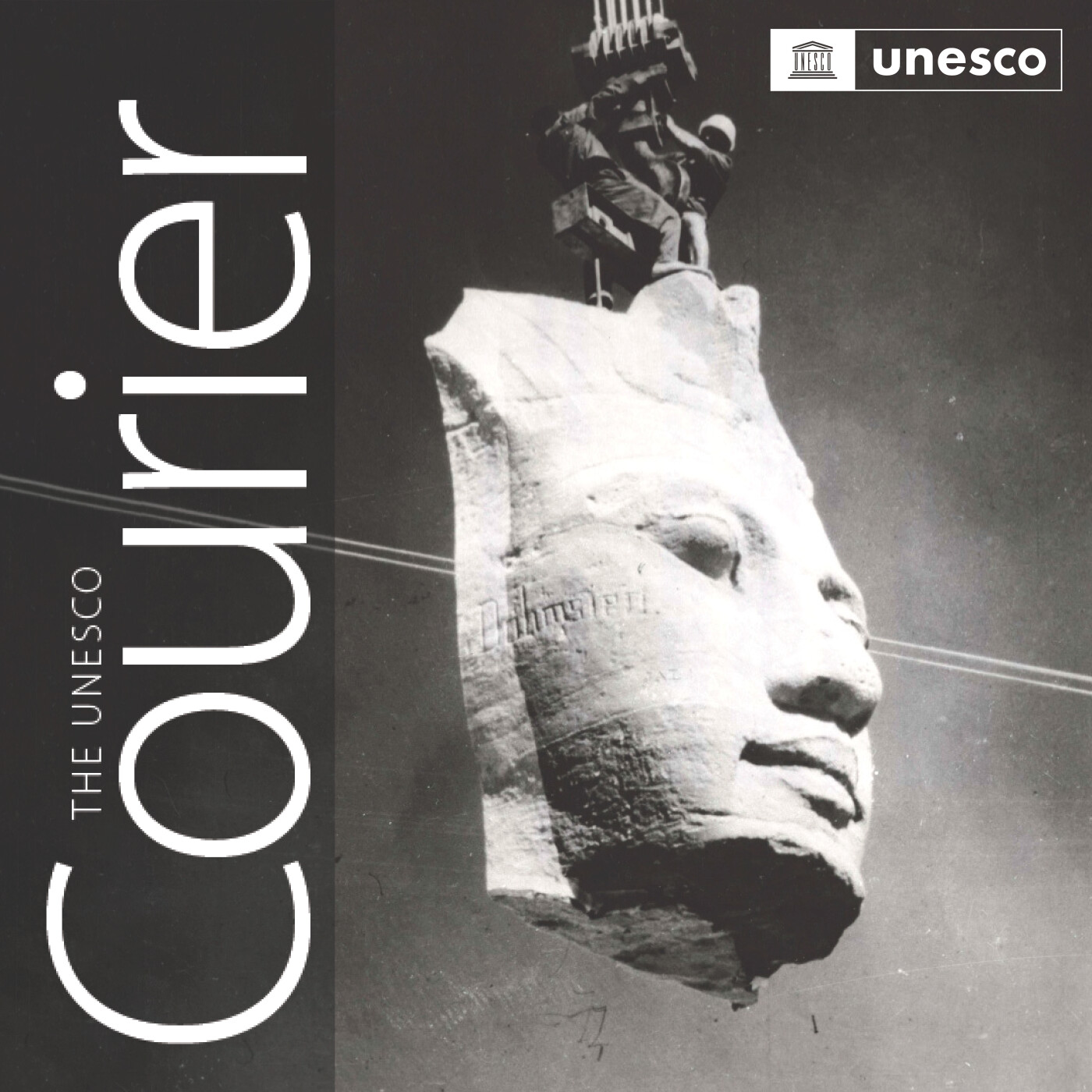 The Nubia campaign: when UNESCO moves mountains 06.03.2025 32минThis is the story of one the greatest archeological rescue operations of all times. Under the aegis of UNESCO, over fifty countries put their differences aside in the midst of the Cold War to save temples and sites of ancient Egypt from drowning. Under threat from the rising waters of the Aswan Dam built in Egypt’s drive for modernization, they were in danger of being irrevocably lost.The campaign to save the monuments of Nubia, launched at the UNESCO Headquarters in 1960, led to the relocation of over twenty architectural complexes. Among the monuments saved by this colossal project are the emblematic temples of Abu Simbel and Philae.Today, the Nubia campaign is seen as a defining example of international solidarity. Moreover, this campaign of unprecedented scale gave rise to the concept of heritage belonging to everyone. This idea took shape a few years later with the adoption of the 1972 UNESCO World Heritage Convention.A story told through the voices of prominent figures from the late 1950s to the present day, and The UNESCO Courier archives.Featuring in this episode:Christiane Desroches-Noblecourt, French archeologist specializing in EgyptologyLazare Eloundou, director of the UNESCO World Heritage Centre Zahi Hawass, Egyptian archaeologist, and former Minister of State for Antiquities AffairsRex Keating, director of the Mission Radio and Television of UNESCO (1956-1971)Bénédicte Lhoyer, French archaeologist and scientific adviser to the exhibition Ramsès et l’or des Pharaons (Paris, 2023)André Malraux, French writer and politician Vittorino Veronese, Director-General of UNESCO 1958-1961An episode by Katerina Markelova and Anuliina Savolainen, production by Emmanuel Rudowski.With the voices of François Wibaux, Ma'aly Hazzaz, Dov Lynch, Anuliina Savolainen, Katharine Lovatt, Julian Barbière, Tariq Talal MosaadEnglish adaptation Gina Doubleday and Daniel Brown.© Photo UNESCO / Nenadovic,https://courier.unesco.org/enhttps://courier.unesco.org/en/subscribeHosted on Ausha. See ausha.co/privacy-policy for more information.


