
The Jabot
Kathryn Rubino at Above the Law
0
The Jabot is a podcast from the Above the Law legal blog that focuses on the challenges faced by women, people of color, LGBTQIA individuals, and other diverse groups in the legal industry. It provides a space for community members to share stories, find support, and devise strategies for navigating a sometimes difficult professional environment. The podcast's name is inspired by Ruth Bader Ginsburg's dissenting collar, symbolizing resilience and power even in the face of setbacks.
Epizode
-
 DEI Efforts On The Non-Lawyer Side Of The Legal Industry 18.09.2026 28minLegal marketing veterans John Byrne (Gould & Ratner) and Toni Wells (Bespoke Marketing Partners) join Kathryn Rubino to trace how legal marketing evolved from an afterthought into a real career path, why "outcomes" is replacing "value" as AI reshapes the billable hour, and why DEI progress for business professionals inside law firms still lags behind the progress made for attorneys. Key Takeaways Legal marketing has shifted from something people fell into to a career path people choose intentionally, driven in large part by the growth of the Legal Marketing Association (LMA). Services marketing, and legal marketing especially, is about selling an experience and a relationship, not a product you can hand someone. AI and the shakiness of the billable hour are pushing firms toward marketing outcomes instead of vague "value," a shift John Byrne calls overdue and still far from complete. Strong client service, not just new business, is the real driver of law firm revenue: at Byrne's firm, 80% of income is recurring business from existing clients. Business professionals in law firms, especially those from underrepresented groups, often have less access to mentorship and informal "on-the-job" knowledge than attorneys do, leaving a real gap in advancement opportunities. Links and Resources Toni Wells, Bespoke Marketing Partners: https://www.bespokemarketingpartners.com/about John Byrne, Gould & Ratner: https://www.gouldratner.com/bio/john-m-byrne Keywords legal marketing, Legal Marketing Association, LMA, DEI, legal industry, law firm business development, chief business development officer, Above the Law, billable hour, value versus outcomes, AI in law firms, client service, services marketing, professional development, law firm mentorship, legal industry diversity, business professionals in law firms, law firm leadership, Gould & Ratner, Bespoke Marketing Partners Episode Highlights [00:08:00 - 00:09:00] John Byrne argues the industry is finally shifting from selling "value" to selling outcomes, thanks to AI and pressure on the billable hour. [00:12:00 - 00:13:00] John Byrne explains why client service, not new business, is the real engine of law firm revenue. [00:14:00 - 00:16:00] John Byrne breaks down how risk-averse lawyers can talk about outcomes without overpromising results. [00:22:00 - 00:24:00] Toni Wells on why mentorship gaps hit business professionals from underrepresented groups especially hard.
 -
 Giving Voice to the Voiceless 11.09.2026 30minKathryn Rubino sits down with Amos Guiora, law professor at the University of Utah's S.J. Quinney College of Law and director of the Bystander Initiative, to talk about his forthcoming book, Enablers: Normalizing the Unimaginable. The conversation traces his path from an IDF JAG Corps officer to a legal scholar building a case for criminalizing the people who knew about harm, had the power to stop it, and chose not to. KEY TAKEAWAYS An enabler is legally distinct from a perpetrator. Guiora defines the enabler as someone who knows of harm because of their position or authority, is able to prevent it, and instead protects the institution or the leader over the vulnerable person. Bystander law has a gap. Legal systems have criminalized the bystander who witnesses harm and does nothing, but not the enabler who actively protects the person or institution causing it. Guiora's work is aimed at closing that gap. Institutions rarely pay a real price. When a university settles for hundreds of millions of dollars, insurance covers it, not individuals. Guiora argues that until specific people face criminal accountability, mandatory-reporter training and bystander videos stay performative. The pattern repeats across very different settings. From Larry Nassar at Michigan State to the Catholic Church to Jeffrey Epstein's circle to Israel's handling of the October 7th hostages, Guiora sees the same structure: a perpetrator who could only act because an ecosystem of enablers let him. His new book names names. Drawing on off-the-record access to former senior Israeli officials, Guiora documents specific people in Netanyahu's inner circle and the political calculations behind their decisions not to push for a hostage deal. LINKS AND RESOURCES Bystander Initiative - S.J. Quinney College of Law Enablers: Normalizing the Unimaginable (forthcoming) - Amos Guiora The Crime of Complicity: The Bystander and the Holocaust - Amos Guiora Armies of Enablers - Amos Guiora Above the Law tips line: [email protected], subject line "The Jabot" KEYWORDS Amos Guiora, Bystander Initiative, enablers, bystander law, campus sexual abuse, Larry Nassar, Catholic Church abuse, Jeffrey Epstein enablers, Epstein files, October 7th, Israeli hostages, Netanyahu, hostage endangerment law, mandatory reporter training, institutional accountability, Above the Law, The Jabot podcast, Kathryn Rubino, legal academia, IDF JAG Corps, Holocaust bystander EPISODE HIGHLIGHTS [00:00:37 - 00:01:59] Guiora on the blue pamphlet his mother brought home and the fate of his career being sealed at age 11 [00:04:00 - 00:04:59] The origin of the Bystander Initiative: a marathon-training question about the Holocaust [00:09:11 - 00:10:00] Guiora explains why the initiative targets criminalizing enablers, not just bystanders [00:13:05 - 00:14:00] Guiora's working definition of an enabler [00:15:00 - 00:16:00] Why bystander training videos are "check the box" and performative [00:20:52 - 00:21:30] Why Guiora decided to name enablers by name in the new book [00:23:56 - 00:24:40] The political calculation behind enablers protecting Netanyahu [00:29:00 - 00:29:40] The Holocaust survivor's letter: "You give voice to the voiceless"
 -
 What It's Really Like To Be General Counsel 04.09.2026 27minSummary Chaka Patterson, founder and CEO of Chaka Strategy and author of The Hot Seat: Mastering the Public Company General Counsel Role, joins Kathryn Rubino to unpack what actually separates a successful general counsel from one who's gone within five years. His answer has almost nothing to do with legal skill and everything to do with becoming the quarterback the C-suite calls first. Key Takeaways Legal expertise is table stakes, not a differentiator. Every lawyer in the building is technically proficient. What sets a GC apart is emotional intelligence, executive presence, and the ability to translate legal ideas for a non-lawyer audience. A crisis is never just a legal problem. When the stock drops or an activist investor sends a letter, the GC has to think PR, markets, employee communications, and legal all at once, not wait for someone else to own the rest. The GC is the quarterback, not a specialist with "their piece." New in-house lawyers often assume the CFO owns markets and comms owns PR. In reality, the general counsel is expected to coordinate all of it, holistically. The biggest mistake new GCs make is treating themselves as the final word on legal issues, and treating business colleagues the way they treated outside clients, or worse, the way they treated targets in government work. Turnover in the GC seat is steep, over 40% within five years, because "last call" lawyers who just dispense legal advice get replaced. "First call" lawyers, the ones the CEO trusts as an advisor on everything, tend to stay. Links and Resources Chaka Patterson on LinkedIn: linkedin.com/in/chaka-patterson Chaka Strategy: chakastrategy.com The Hot Seat: Mastering the Public Company General Counsel Role by Chaka Patterson Above the Law: abovethelaw.com Follow Kathryn Rubino: @Kathrynone Send tips or guest suggestions: [email protected] (subject line: The Jabot) Keywords general counsel, in-house counsel, GC turnover, public company GC, legal leadership, C-suite, business acumen, emotional intelligence, executive presence, trusted advisor, law firm to in-house transition, crisis management, corporate legal department, chief legal officer, legal operations, The Hot Seat, Chaka Strategy, Above the Law, The Jabot Episode Highlights Episode Highlights Timestamps Highlight [00:03:53 - 00:05:00] Chaka on the biggest surprise of going in-house: legal expertise is just table stakes. [00:07:50 - 00:08:53] Why the GC has to be the one coordinating PR, markets, and legal, not hoping someone else has it covered. [00:08:53 - 00:10:57] Chaka's "controversial take": why he'd be reluctant to hand a first-time GC role to a law firm partner with no in-house experience. [00:12:09 - 00:14:39] What Chaka would look for as a CEO hiring a general counsel: a business person first. [00:14:39 - 00:16:00] The two mistakes new GCs make most often, and why they frustrate the business. [00:16:53 - 00:17:56] What Chaka learned about his own legal department once he became a consumer of legal services as Exelon's treasurer. [00:21:35 - 00:23:23] Why over 40% of general counsel are gone within five years. [00:23:23 - 00:23:53] The line between the "first call" lawyer and the "last call" lawyer. [00:23:53 - 00:26:53] Chaka's three-part advice for lawyers building toward the GC seat: high EQ, learn the business, and find non-lawyer audiences to practice on.
 -
 Building A Legal Practice That Fits Your Life 27.07.2026 23minSummary Kara Maciel always knew she wanted to be a lawyer, and a high school trip to Washington, DC sealed the deal. What she didn't plan for was building her own firm. In this episode, the Conn, Maciel & Carey co-founder talks with Kathryn Rubino about the years she spent paying off law school loans early to buy herself flexibility, and how that discipline let her take a real risk later: leaving a comfortable partnership to start something new. The decision crystallized during back-to-back parental leaves, when Kara and her future co-founder each returned from leave with the same idea. Twelve years later, the firm has offices across the country, and Kara talks through what she wishes she'd known about the business side of running a firm, how she's used technology to standardize billing across offices, and why she believes boutique practice offers something Big Law structurally can't. Key Takeaways Paying down law school loans aggressively in your early career years buys flexibility later, not just debt relief. Opening a firm requires business skills most lawyers never learn in practice; hire for that gap or plan to learn it fast. Complementary practice areas and complementary skill sets among co-founders matter as much as shared values. Firm growth can be organic and still be strategic: expand where clients and trusted partners already are. Boutique firms compete on relationship and rate transparency, not just lower prices. Links and Resources [Above the Law](https://abovethelaw.com/) [The Jabot Podcast](https://abovethelaw.com/tag/the-jabot-podcast/) Keywords boutique law firm, starting a law firm, employment law, labor law, law firm founder, women law firm owners, legal entrepreneurship, law school loans, law firm culture, law firm growth, big law versus boutique, workplace safety law, law firm billing, legal technology, AI in law firms, law firm partnership, career advice for lawyers, women in law, Above the Law, The Jabot Podcast Episode Highlights [00:01:15 - 00:02:00] Kara traces her decision to become a lawyer back to a high school trip to Washington, DC. [00:04:15 - 00:05:00] Why she saved aggressively in her first years of practice instead of spending like a typical young associate. [00:08:00 - 00:09:30] The maternity leave story behind founding Conn, Maciel & Carey. [00:10:30 - 00:11:30] "You're a lawyer, you know how to make rain, but you don't know how to run a business." [00:13:15 - 00:14:45] How the firm's California and Midwest offices came together through existing relationships, not a strategic plan. [00:17:00 - 00:18:30] Why the firm runs a deliberately long hiring process to protect its culture. [00:19:15 - 00:20:15] What boutique practice offers that Big Law structurally can't: rate control and direct client relationships. [00:21:00 - 00:22:00] How the firm is using AI to standardize timekeeping and billing across offices.
 -
 The Battle To Protect Ethical Prosecutors 24.07.2026 28minSummary Iris Eytan didn't set out to become a criminal defense lawyer. She went to law school to help people as a mental health advocate, then followed her clients from shuttered psychiatric institutions into the jails and prisons where many of them ended up. What started as constitutional work in its most human form eventually became decades of criminal defense, including two cases she calls her bookends: a jail deputy wrongfully accused of murdering his wife, and Barry Morphew, a case that exposed how far some prosecutors will go to protect a conviction. Those cases pushed Iris to found Protect Ethical Prosecutors, a reform campaign aimed at ending prosecutorial misconduct. In this conversation, she and Kathryn Rubino talk through the scale of the problem, why prosecutors are effectively immune from civil suits, and why the legal profession's self-policing system keeps failing the people it's supposed to protect. Key Takeaways Nearly 4,000 documented exonerations exist in the US, and more than one in three involved prosecutorial misconduct like hiding evidence of innocence. A 1976 Supreme Court case, Imbler v. Pachtman, gave prosecutors absolute immunity from civil lawsuits, even for intentional or reckless misconduct. Fewer than 2% of prosecutors tied to wrongful convictions have ever faced employment discipline or bar sanctions, and almost none have faced criminal charges. Self-policing fails because judges, defense lawyers, and even fellow prosecutors are reluctant to report misconduct within a system they all depend on. Iris founded PEP to push for an independent oversight commission with real enforcement power, not just recommendations. Links and Resources [Above the Law](https://abovethelaw.com/) [The Jabot Podcast](https://abovethelaw.com/tag/the-jabot-podcast/) Keywords prosecutorial misconduct, Protect Ethical Prosecutors, PEP, Iris Eytan, prosecutorial immunity, Imbler v. Pachtman, wrongful conviction, exonerations, Brady violation, criminal defense lawyer, public defender, Barry Morphew, criminal justice reform, attorney regulation, legal ethics, civil rights law, ADA, mental health law, accountability in prosecution, Above the Law, The Jabot Podcast Episode Highlights [00:00:35 - 00:01:45] Iris describes seeing a young lawyer advocate for a psychiatric patient, the moment that redirected her career. [00:03:30 - 00:04:15] Why the closure of mental health institutions pushed her clients into jails and prisons, and pushed her into public defense. [00:07:30 - 00:08:30] "I was shocked when I encountered prosecutors who wanted to win more than do the right thing and broke the law." [00:10:00 - 00:11:30] The email that proved a DA knew a death was a suicide, filed years after clearing it, then charged the husband with murder anyway. [00:13:00 - 00:14:15] How prosecutors in the Morphew case hid DNA evidence pointing to other suspects. [00:16:45 - 00:17:30] Nearly 4,000 documented exonerations, with an estimated 100,000 more innocent people still in prison. [00:19:15 - 00:20:15] How the Imbler decision made prosecutors the only legal professionals who cannot be sued for misconduct. [00:21:30 - 00:22:45] The Deb Nichols case: a 17-year-old murder conviction unraveling over a hidden arson report. [00:25:45 - 00:26:45] Why an independent commission, not more reminders to follow the rules, is the fix Iris is pushing for
 -
 Biglaw Partner Dishes On Her Unique Path To Partnership 22.07.2026 24minSummary Gloria Park always wanted to be a storyteller. She just didn't expect to find that career in litigation. In this episode, the Susman Godfrey partner talks with Kathryn Rubino about growing up in a first-generation immigrant family, choosing law school because it let her "tell stories for a living," and the mantra, why not me, that carried her through six tough years as an associate to partnership. They cover what actually separates strong litigators (hint: it's not the closing argument), why Park chose a litigation-only boutique that hires exclusively from federal clerkships, and how she balances high-stakes cases with church, choir, and a new kickboxing habit. Park also shares her most memorable war story: taking her first deposition eight weeks into practice, alone, against a firm's global head of litigation. Key Takeaways Litigation is storytelling within strict limits: the facts don't move, but how you frame them does. A "why not me" mindset can replace the imposter syndrome that comes with being the first in your family in Big Law. Attention to detail, not courtroom theatrics, is what actually separates strong litigators. Susman Godfrey hires only federal law clerks, which gives its litigators a shared foundation and an edge in the courtroom. Pro bono work outside your paying caseload can sharpen your skills as a litigator, not just your firm's PR Links and Resources [Above the Law](https://abovethelaw.com/) [The Jabot Podcast](https://abovethelaw.com/tag/the-jabot-podcast/) Keywords Big Law partnership, litigation career, Susman Godfrey, federal clerkship, first-generation lawyer, women in law, litigation boutique, associate to partner, legal storytelling, deposition tips, pro bono litigation, work-life balance lawyer, Above the Law, The Jabot Podcast, career advice for lawyers, patent litigation, jury trial strategy, law school advice, big law culture, legal career path Episode Highlights [00:00:35 - 00:01:15] Gloria explains why storytelling, not the law itself, drew her to law school. [00:03:45 - 00:04:30] "Facts are facts. You can't really change it," but there's always a way to frame them accurately. [00:06:45 - 00:07:15] The "why not me" mantra that got Gloria through Big Law without a family roadmap. [00:08:45 - 00:09:15] Why attention to detail, not theatrics, makes a strong litigator. [00:11:15 - 00:12:15] Why Gloria chose a litigation-only boutique over a full-service firm. [00:16:15 - 00:17:30] Gloria's first deposition, taken alone eight weeks into her career. [00:19:00 - 00:20:15] How church, choir, and kickboxing keep Gloria grounded. [00:20:45 - 00:22:00] The pro bono case representing the parents of a girl who died in CBP custody. [00:23:35 - 00:24:20] Gloria's advice: "Go for it. Have that why not me mentality."
 -
 What Nobody Tells You About Law School 17.07.2026 25minSummary Shaun Ossei-Owusu didn't go to law school to become a lawyer. After a PhD in African American Studies at Berkeley and a fellowship at the American Bar Foundation, he wanted the technical language of law so he could translate what he'd already been studying: how the legal system actually treats people, versus how it says it does. That instinct became his new book, "Law on Trial." In this conversation, Kathryn Rubino and Ossei-Owusu dig into what "thinking like a lawyer" costs, from law school curricula that leave out issues like civil asset forfeiture, to big law and government lawyering, where the pressure to win can crowd out the question of whether winning was the right outcome. They close with practical advice for lawyers trying to stay honest with themselves about the trade-offs they're making. Key Takeaways Legal training builds what Ossei-Owusu calls a "tragically necessary skill": separating law from moral and social context. It's useful, and it's also easy to overcorrect. Core law school subjects often skip the inequality issues baked into them. Property class rarely covers civil asset forfeiture, even though it's a bigger part of practice than most casebooks suggest. Big law economics can quietly work against legitimate discrimination claims, not just frivolous ones, because of who's paying the bill. City and county law departments face a similar tension: they enforce consumer and housing protections while also defending against civil rights claims brought under the same kinds of laws. Lawyers can protect their values by setting ethical red lines before financial pressure sets in, not after. Links and Resources Above the Law The Jabot Podcast Law on Trial: An Unlikely Insider Reckons with Our Legal System (W.W. Norton) Law on Trial on Amazon Keywords legal education, law school, thinking like a lawyer, legal ethics, big law, public interest law, civil asset forfeiture, law professor, legal academia, Shaun Ossei-Owusu, Law on Trial, University of Pennsylvania, legal profession, government lawyers, municipal law departments, law firm culture, first-generation lawyers, social justice law, Above the Law, The Jabot Podcast Episode Highlights [00:00:49 - 00:04:20] Ossei-Owusu explains his winding path from the Bronx to a PhD to law school. [00:04:56 - 00:06:51] Why mentoring future lawyers, including those headed to big law, matters to him. [00:06:51 - 00:08:35] The gap in law school literature that inspired Law on Trial. [00:10:46 - 00:13:19] What "thinking like a lawyer" really means, and its necessary trade-offs. [00:13:19 - 00:14:33] The civil asset forfeiture example most property classes skip. [00:15:50 - 00:17:35] How big law economics can quietly undermine legitimate discrimination claims. [00:17:35 - 00:19:16] The civil rights tension inside city and county law departments. [00:20:04 - 00:22:20] Practical advice for lawyers weighing big law against their values. [00:22:20 - 00:24:01] Why ethical red lines matter more than good intentions.
 -
 The Link Between Financial Literacy and Social Justice 15.07.2026 25minSummary Courtney Teasley, a criminal trial attorney turned certified business coach, author, and speaker, joins Kathryn Rubino to talk about the case that shaped her career: her own mother's, overcharged as a drug seller instead of a user. Courtney traces how that experience, and a mentor who built a practice on her own terms, pushed her into criminal defense and, eventually, out of full-time practice. The conversation covers why she left the courtroom for coaching and advocacy work, the business lessons law school never taught her, and how her book series, The Easy Way to Learn Your Rights, translates legal literacy into plain, bilingual language for the people who need it most. Key Takeaways Courtney traces her path to criminal defense directly back to her mother being overcharged as a drug seller instead of a user, a decision that shaped how she practices and teaches law. The pressure of high-stakes cases never fully disappears; the lawyers who care the most are the ones who keep showing up despite it. Courtney left full-time practice after realizing one-on-one casework moves too slowly to shift the systemic patterns behind mass incarceration. A CliftonStrengths certification helped Courtney separate her zone of excellence, practicing law, from her zone of genius, teaching and advocacy. Courtney built her book series and coaching practice around plain, bilingual language, arguing legal jargon keeps clients from understanding their own cases. Links and Resources Above the Law: https://abovethelaw.com/ The Jabot Podcast: https://abovethelaw.com/tag/the-jabot-podcast/ Courtney Teasley: https://site-hy4wms4ce.godaddysites.com/ Email the Jabot: [email protected] Keywords criminal defense attorney, legal literacy, financial literacy, social justice, business coaching for lawyers, women in law, Above the Law, The Jabot Podcast, DAMM community, CliftonStrengths, legal entrepreneurship, law practice management, systemic inequality, mass incarceration, career change for lawyers, Black lawyers, legal author, criminal justice reform, pro se litigants, elbow counsel Episode Highlights [00:01:00-00:02:00] Courtney explains how one visit to a hospital as a teenager ended her plan to become a doctor and pointed her toward law instead. [00:02:00-00:03:00] Courtney traces her path to criminal defense back to her mother being overcharged as a drug seller instead of a user. [00:09:00-00:11:00] Courtney describes using a CliftonStrengths certification to find her zone of genius outside of practicing law. [00:12:00-00:14:00] Courtney says the biggest surprise of leaving practice was realizing how few lawyers run their firms like real businesses. [00:17:00-00:19:00] Courtney explains why she built her own intellectual property in plain, bilingual language instead of legal jargon. [00:20:00-00:22:00] Courtney lays out how clients can act as elbow counsel to their own lawyers without going fully pro se. [00:22:00-00:24:00] Courtney's advice for lawyers who want to build a business and keep their ethical grounding at the same time.
 -
 What It Takes for Women to Break Through in Litigation 13.07.2026 22minSummary Kelly Grigsby Jones and Laurie Avery, litigation partners at Perez Morris, sit down with Kathryn Rubino to talk about building a career in trial work. They trace their paths into law, the gap between courtroom TV and courtroom reality, and how they've made an unpredictable schedule sustainable over decades of practice. The conversation turns practical: how young lawyers can get their first real trial experience, what mentors actually look for in an associate, and how to handle a case when the best exhibit goes missing mid-trial. Both partners share candid advice for women navigating litigation, plus the one habit they say matters more than talent: preparation. Key Takeaways Early trial experience often comes from smaller markets or litigation-heavy firms willing to hand associates low-stakes cases to learn on. Being proactive, not waiting to be asked, is what separates associates who get pulled into bigger opportunities from those who don't. Preparation is the one thing a lawyer can fully control, even when the outcome, a missing exhibit or a directed verdict, isn't. Good mentors highlight a mentee's strengths and give honest, respectful redirection when trial work isn't the right fit. A sustainable trial career means accepting an uneven schedule: early some days, late into the night on others. Links and Resources Above the Law: https://abovethelaw.com/ The Jabot Podcast: https://abovethelaw.com/tag/the-jabot-podcast/ Perez Morris: https://www.perezmorris.com/ Email the Jabot: [email protected] Keywords women in litigation, trial lawyers, legal career advice, Perez Morris, Above the Law, The Jabot Podcast, women in law, litigation partners, trial experience, first chair, second chair, mentorship in law, law firm associates, courtroom preparation, women trial attorneys, legal industry podcast, career in law, litigation career path, women partners law firm, trial advocacy Episode Highlights [00:01:00-00:02:00] Laurie explains how a dismissive comment from a colleague, "you don't need to know that," pushed her toward law school. [00:07:00-00:09:00] Kelly describes jumping into plea deals and bond hearings early because her rural county had few attorneys to go around. [00:10:00-00:12:00] Kelly recounts winging cross-examination after showing up to trial without her one key exhibit. [00:12:00-00:13:00] Laurie tells the story of winning a directed verdict in seconds after weeks of preparation. [00:16:00-00:17:00] Kelly explains why she calls junior lawyers "colleagues," not associates, in front of clients. [00:19:00-00:20:00] Laurie draws the line between lawyers built for first chair and those who thrive in second chair. [00:22:00-00:23:00] Kelly and Laurie each give their one piece of advice for lawyers starting out in trial work.
 -
 What Lawyers Really Need To Know About Marketing 06.07.2026 23minSummary Kathryn Rubino sits down with Deborah Farone, one of the most experienced legal marketing and business development advisors in the country, to dig into what actually drives sustainable practice growth. Farone traces her career from a PR firm handling Milbank's account in the 1990s through Chief Marketing Officer roles at Debevoise and Cravath, to running her own advisory practice today. The conversation covers what big law gets wrong about business development, why existing clients are the most overlooked growth lever, how law firms are finally starting to teach associates what was once left unspoken, and what it really means for women lawyers to develop business on their own terms. Farone also addresses the industry's consolidation wave, the squeeze on mid-size firms, and why the biggest strategic risk for any law firm right now is standing still. Key Takeaways Business development starts with strategy, not tactics. Know where you want to go before you pick any tool or activity. Most business comes from existing clients. Growing those relationships and getting referrals from them is more powerful than chasing new names. The minders/finders/grinders model is outdated. Every lawyer at every level is now expected to develop business in some form. Women who build thriving practices do it in ways that feel authentic to them — opera evenings, hikes with clients — not by mimicking someone else's playbook. The biggest risk for any law firm is complacency. GCs want firms to come to them with intelligence and AI guidance, not the other way around. Links and Resources • Above the Law • The Jabot Podcast • Farone Advisors • Breaking Ground: How Successful Women Lawyers Build Thriving Practices — Deborah Farone Keywords legal marketing, business development for lawyers, law firm marketing strategy, women lawyers business development, Deborah Farone, Breaking Ground book, legal rainmakers, origination credit, law firm business development, boutique law firms, big law marketing, Jabot podcast, Above the Law podcast, legal operations, law firm growth, existing clients strategy, authentic networking lawyers, law firm compensation, mid-size law firms, GC relationships Episode Highlights [00:01:00 — 00:01:25] Deborah explains why working on the Milbank PR account made her want to move into legal marketing full-time. [00:02:16 — 00:02:57] How BD at Cravath included running a competitive intelligence unit to track potential new matters, something she couldn't have predicted 30 years earlier. [00:05:43 — 00:06:09] Why law schools are finally teaching business development, and what a class at Columbia Law looked like. [00:07:07 — 00:07:51] The counterintuitive truth: your best source of new business is the clients you already have, not the shiny new prospect. [00:09:07 — 00:09:56] Deborah's case for why developing a book of business is like putting money in the bank, and why it gives women lawyers more freedom and mobility. [00:10:42 — 00:11:41] The authentic BD methods of successful women lawyers: opera evenings with clients in Milan, group hiking trips, anything that feels genuine. [00:17:45 — 00:18:42] The squeeze on mid-size firms: not niche enough, not global enough, and often without the marketing resources to compete. [00:19:28 — 00:19:54] Dan Troy's line: "You can't be Wachtell in every practice." Why trying to be everything to everyone destroys credibility with clients. [00:21:25 — 00:22:18] GCs don't want to be the ones telling their law firms what legal trends are. They want their firms to come to them with intelligence and AI guidance.
 -
 Medicine's Monopoly Problem 29.06.2026 30minEpisode Summary Tahir Amin started out wanting to play professional football in England. He found law instead, and specifically intellectual property law in the early 1990s, when the field was still new enough to feel cutting edge. After a decade of commercial IP practice in the UK and the US, he moved to India in 2004 to understand what the new global IP rules were doing to the people they never accounted for. He arrived just as India was being required to comply with WTO patent rules that would affect access to HIV medicines costing tens of thousands of dollars a year. That experience led him to co-found I-MAK in 2006. In this conversation, Amin walks Rubino through the political economy of drug patents: how neoliberal policy from the late 1970s onward handed control of publicly funded research to private companies, how those companies built out sprawling patent portfolios to delay generic competition, and how the word "innovation" became a shield against any real scrutiny. He also talks about what I-MAK's work has achieved, the blowback it has faced, and why he considers himself a "cynical optimist" who believes the long game is the only game worth playing. Key Takeaways Patent stacking is the norm, not the exception. Novo Nordisk filed more than 320 patent applications around the single active ingredient in the Ozempic family of drugs. 1 in 3 Americans are skipping doses or cutting pills to afford their medications. This is a policy problem rooted in decisions made over the past four decades. The word "innovation" replaced "invention" deliberately around 1976–77, allowing corporations to privatize public-funded knowledge and charge rent for it. I-MAK's public patent database puts the evidence on the table. The pharma industry attacks the messenger rather than engaging the data. Incrementalism is the system's release valve. Real change requires playing the long game, not chasing the next quick win. Links & Resources Above the Law The Jabot Podcast Tahir Amin at I-MAK Pharma Monopoly: The Battle for the Future of Medicines by Tahir Amin (book) Keywords pharmaceutical patents, drug pricing, patent monopoly, medicine access, IP law, I-MAK, Tahir Amin, patent stacking, Ozempic patents, Novo Nordisk, innovation myth, neoliberalism, affordable medicine, generic drugs, biosimilars, patent reform, WTO patent law, drug affordability, pharma policy, Jabot podcast Episode Highlights 00:08:18 - 00:09:16 Amin explains the founding of I-MAC and the need to challenge systems treating public knowledge as monopoly property. 00:12:49 - 00:13:33 The survey data: 1 in 3 Americans are skipping or rationing medications, a Western problem as much as a global one. 00:16:12 - 00:16:55 Novo Nordisk's 320+ patent applications on the Ozempic active ingredient, and how that data changed the Congressional conversation. 00:21:52 - 00:24:54 The linguistic shift from "invention" to "innovation" after the late 1970s, and why the distinction matters for policy. 00:30:27 - 00:31:32 Why incrementalism is the system's release valve, and the case for committing to real, structural change over the long run.
 -
 Building A Judicial Legacy 27.06.2026 26minEpisode Summary Judge Nushin Sayfie traces her path from a fifth-grade classroom where a teacher named her attorney general, to 14 years defending clients who couldn't afford a lawyer, to the bench of Florida's 11th Judicial Circuit. She talks with Kathryn Rubino about what she gave up to become a judge, what she has never stopped missing, and what finally pushed her to apply for a vacancy she hadn't planned on. She's direct about the realities most judicial candidates don't advertise: the pressure of running for election, the vulnerability of every public decision, and the steep learning curve of developing the thick skin the job demands. On women in law, she's equally clear. The numbers at the top still don't reflect what's happening in law school classrooms, and that gap doesn't close without honest conversation and real mentorship. Key Takeaways The move from trial lawyer to judge means trading the high of winning for a different kind of authority. Most honest judges will tell you they miss it. Florida's system of judicial elections creates genuine pressure on sitting judges. Any judge who claims otherwise has probably already decided to retire. Preparation is irreplaceable. No natural talent substitutes for doing the work, and that's as true in the courtroom as anywhere. Mentorship isn't optional. It's one of the clearest predictors of who makes it to the top of the profession, especially for women. 'Use the robe.' Authority doesn't require volume. The most effective leaders in any room are the ones who bring the temperature down. Links and Resources Above the Law The Jabot Podcast Keywords Judge Nushin Sayfie, The Jabot Podcast, Kathryn Rubino, women in law, public defender, judicial career, Florida judge, Chief Judge, 11th Judicial Circuit, legal mentorship, judicial elections, trial lawyer, women in leadership, legal career advice, Above the Law, courtroom experience, legal profession, women attorneys, judicial temperament, work-life balance in law Episode Highlights [00:00:24 - 00:01:36] Judge Sayfie traces her interest in law to a fifth-grade teacher who named her attorney general of the class government. [00:02:10 - 00:04:17] On 14 years as a public defender, and why defending people who couldn't afford a lawyer felt like the right fit. [00:04:29 - 00:06:04] The baptism conversation that led to an unexpected application for a judicial vacancy, decided on the drive home. [00:07:54 - 00:09:09] On the unique high of winning as a trial lawyer, and what it's like to sit on the other side of that feeling. [00:09:47 - 00:11:08] On developing thick skin, making decisions under public scrutiny, and why judges who avoid deciding are failing. [00:13:30 - 00:16:31] On running for judicial election in Florida and surviving unfair media coverage as Chief Judge. [00:17:31 - 00:18:03] On women still not reaching the top despite filling more than half of law school seats across the country. [00:22:05 - 00:24:05] The death penalty war story: a client who refused to testify mid-trial, dismantling months of case preparation. [00:25:17 - 00:26:16] On being the calming presence in any room: 'Use the robe. Don't raise your voice.'
 -
 This Harvard Law School Grad Has The Progressive Answer To FedSoc 13.03.2026 26minEpisode Summary In this episode of the Jabot Podcast, host Kathryn Rubino speaks with Molly Coleman, Executive Director of the People's Parity Project (PPP) and newly elected St. Paul City Council member, about organizing within the legal profession and redefining the role lawyers play in democracy. Coleman shares how her early work in public education inspired her to pursue law as a tool for systemic change, and how the People's Parity Project grew from a small group of law students into a national organizing force challenging corporate power, forced arbitration, and inequities embedded within the legal system. The conversation explores the ideological shaping of law students, the long-term influence of legal movements, and the importance of building alternative pathways for lawyers who want to advance social and economic justice. Coleman also reflects on organizing during political crisis, the limits of courts as vehicles for change, and why community action — not institutions alone — ultimately drives democratic resilience. This episode offers a candid look at legal activism, professional responsibility, and what it means for lawyers to engage both inside and outside systems of power. Links & Resources Home - People's Parity Project Keywords People's Parity Project Molly Coleman Legal organizing Law student activism Legal profession reform Forced arbitration Non-disclosure agreements Legal activism Democracy and law Popular constitutionalism Legal organizing movements Corporate power and law Lawyers and social change Legal education reform Political organizing Community lawyering Judicial power Legal profession ideology Public interest law Law and democracy Episode Highlights 00:04–00:26 - Molly Coleman's path from public education to law school 00:26–01:50 - Seeking systemic change beyond direct service work 01:50–03:14 - Law school expectations versus institutional realities 03:14–04:23 - The Me Too movement and the origins of the People's Parity Project 04:23–05:24 - Early organizing against forced arbitration and NDAs 05:24–07:08 - Social media organizing and unexpected influence on Big Law 07:08–08:53 - How PPP evolved from a student project into a national organization 08:53–11:27 - Ideological shaping of law students and counterbalancing dominant narratives 11:27–12:53 - Why organizing lawyers matters for long-term political change 12:53–15:40 - Misconceptions about the political ideology of the legal profession 15:40–17:55 - Political pressures on law firms and the profession's shifting landscape 17:55–19:18 - Crisis in Minnesota and limits of relying on courts for protection 19:18–20:16 - Popular constitutionalism and people-powered resistance 20:16–22:33 - How lawyers can contribute during political and social crises 22:33–24:23 - Transitioning from organizer to elected official 24:23–26:27 - The future of legal organizing and building democratic resilience
 -
 This Is Why Criminal Justice Needs Number Nerds 06.03.2026 25minEpisode Summary In this episode of the Jabot Podcast, host Kathryn Rubino speaks with economist and criminal justice expert Jennifer Doleac, author of The Science of Second Chances: A Revolution in Criminal Justice and Executive Vice President of Criminal Justice at Arnold Ventures. Drawing from economic research and real-world policy analysis, Doleac explains how data — not ideology — should guide criminal justice reform. The conversation explores how incentives shape behavior, why increasing the certainty of consequences works better than harsher punishment, and how evidence challenges many widely accepted assumptions about crime policy. From probation reform and recidivism research to hiring discrimination and unintended policy consequences, Doleac argues that solving complex justice problems requires experimentation, humility, and rigorous testing. The episode ultimately reframes criminal justice reform as a question of incentives, systems design, and evidence-based decision-making rather than political narratives. Links & Resources Home Jennifer Doleac (@jenniferdoleac) on X Arnold Ventures | Jennifer Doleac https://www.linkedin.com/in/jdoleac/ Keywords Criminal justice reform Second chances Jennifer Doleac Evidence-based policy Economics of crime Recidivism research Deterrence theory Probation reform Ban the Box policy Employment discrimination Second chance hiring Policy experimentation Data-driven justice Natural experiments Incentives and behavior Public policy evaluation Mass incarceration solutions Economic analysis of crime Criminal records employment Justice system innovation Episode Highlights 00:04–00:50 - Jennifer Doleac's path from economics to criminal justice research 00:50–02:15 - Using economic tools to measure real-world policy impact 02:15–03:28 - Bridging human justice issues with economic analysis 03:28–05:37 - The three ways economists contribute to criminal justice reform 05:37–06:50 - Shifting policy culture from certainty to experimentation 06:50–08:21 - Why certainty of consequences deters crime more than harsh punishment 08:21–09:43 - Structural challenges of implementing reform across states and jurisdictions 09:43–12:19 - Surprising findings: leniency for first-time defendants reduces recidivism 12:19–15:02 - Probation reform and why more supervision can worsen outcomes 15:02–17:03 - Myths about public safety versus data-driven realities 17:03–19:14 - Employment barriers faced by people with criminal records 19:14–21:11 - How Ban the Box policies produced unintended racial disparities 21:11–22:49 - Rethinking incentives to improve second-chance hiring 22:49–24:24 - Insurance models and market solutions for employer risk concerns 24:24–25:25 - Why experimentation and hypothesis testing must guide reform
 -
 The Human Cost Of Our Broken Justice System 27.02.2026 26minEpisode Summary In this episode of The Jabot Podcast, host Kathryn Rubino sits down with public defender, reform advocate, and author Emily Galvin Almanza to discuss her new book The Price of Mercy: Unfair Trials, a Broken System, and a Public Defender's Search for Justice in America. Emily shares her unexpected path into law, her deep commitment to criminal defense, and the emotional realities of representing clients navigating one of the most consequential systems in American society. Drawing from years in public defense and her work co-founding Partners for Justice, she explains why the criminal legal system often punishes instability rather than crime — and how policy choices, not individual morality, frequently determine who enters the system. The conversation explores burnout among defenders, systemic misconceptions about criminal courts, the role of compassion in policy reform, and the economic and social costs of incarceration. Ultimately, the episode reframes justice not as punishment, but as a question of public safety, community stability, and human dignity. Links & Resources emilygalvinalmanza.com Keywords Public defense Criminal justice reform The Price of Mercy Emily Galvin Almanza Public defender experience Mass incarceration Justice system reform Holistic defense model Legal burnout Court system inequality Compassion in policy Criminal legal system Wrongful convictions Socioeconomic inequality Recidivism data Legal advocacy Community safety policy Justice and economics Legal storytelling Human-centered justice Episode Highlights 00:05–02:17 - Emily's accidental journey into law school and discovering criminal law 02:17–04:19 - Finding purpose through public defense and helping clients "come home" 04:19–05:55 - Why passion for clients sustains lawyers through intense legal work 05:55–08:05 - Burnout in public defense and operating under constant crisis conditions 08:05–10:05 - Institutional change and caseload reform as keys to lawyer wellbeing 10:05–11:13 - Fighting not only for clients but for constitutional rights and communities 11:13–12:39 - Why Emily stepped back from trial work to build systemic solutions 12:39–14:11 - Founding Partners for Justice and expanding holistic defense nationwide 14:11–15:28 - Writing the book to make reform knowledge accessible to everyday voters 15:28–17:28 - Misconception #1: people enter the system because of policy choices, not just crime 17:28–18:44 - Court process realities and why 98% of cases end in guilty pleas 18:44–20:05 - Junk science and myths about forensic evidence 20:05–21:35 - Humanizing defendants and challenging public stereotypes 21:35–22:27 - Success stories after incarceration rarely told in public narratives 22:27–24:15 - Why social services function as public safety strategies 24:15–25:59 - Economic costs of incarceration and long-term societal impact 25:59–26:23 - Using data and storytelling to change public conversations about justice
 -
 An Inside Look At The Law Firm's Law Firm 22.12.2025 26minSummary In this episode of the Jabot podcast, host Kathryn Rubino chats with Sandra Cohen, co-managing partner at Cohen & Buckmann. Sandra shares her journey from HR to law, specializing in executive compensation and employee benefits. Discover the challenges and rewards of running a boutique law firm and gain insights into the niche legal field of ERISA. It's a must-listen for those curious about dynamic law careers and the evolving landscape of boutique legal practices!. Episode Highlights 00:34 - Why Sandra Cohen pursued law. 02:55 - Transition from Big Law to personal practice. 05:07 - The elusive work of corporate lawyers. 06:34 - Complexities of executive compensation. 08:39 - Navigating tax and ERISA specializations. 10:59 - Founding a boutique law firm. 13:09 - Teaming up with small/boutique firms. 16:19 - The importance of smart hiring. 18:58 - Networking as making friends, not just connections. 22:14 - Promoting a law firm's unique strengths. Episode Resources Sandra W. Cohen — Cohen & Buckmann, P.C. https://www.linkedin.com/in/sandracohenesq/ Keywords Jabot podcast Kathryn Rubino Sandra Cohen Above the Law Cohen & Buckman legal industry law school human resources organizational psychology big law Wall Street firm co-managing partner executive compensation employee benefits corporate law transactional attorney ERISA M&A transactions tax lawyers litigators boutique law firm businesswoman mentoring networking elite boutique trend legal talent mentorship specialized practices law firm ecosystem
 -
 Lawyering With Empathy with Farid Yaghoubtil - Episode 214 21.11.2025 19minIn this episode, host Kathryn Rubino chats with Farid Yaghoubtil, founding partner of DTLA Law Group. Discover Farid's journey from fleeing Iran to empowering the underrepresented through law. His passion for justice, client-focused approach, and the challenges of balancing ideals with firm management make it a must-listen for aspiring lawyers and entrepreneurs. Tune in to catch Farid's inspiring stories and insightful advice on staying true to your mission. Episode Highlights Decision to pursue law due to childhood injustice. Balancing ideals and legal system realities. Motivation behind starting a law firm. Challenges of running a legal business. Importance of organization and hiring in business success. Leading with empathy in law practice. Avoiding burnout through gratitude and meaningful connections. Inspiring story: Helping a child in a lead exposure case. The value of listening to clients. A personal approach over transactional lawyering. Building client relationships for sustained growth. Episode Sponsored By https://www.lexisnexis.com/lexisplus Links and Resources https://downtownlalaw.com/attorney-profiles/farid-yaghoubtil/ Subscribe, Share and Review To get the next episode subscribe with your favorite podcast player. Subscribe with Apple Podcasts Follow on Spotify Leave a review on Apple Podcasts
 -
 Everyone's Law School Journey Is Unique with Victoria Inoyo - Episode 213 14.11.2025 23minIn this episode, Kathryn Rubino chats with Victoria Inoyo, director of advising at Juris Education. Dive into the world of law school applications with insights on choosing the right path, weighing the cost, and finding a career that fits you. Victoria shares personal experiences, highlighting how exposure to diverse perspectives can enhance your law school journey. A must-listen for prospective law students! Episode Highlights Curiosity's Role in Choosing Law. Importance of Talking to Lawyers Pre-Law School. Rising Law School Costs and Job Decisions. Law School Rankings vs. Personal Goals. Location's Impact on Law Career. Dispelling Misconceptions: GPA & Test Scores. Beyond Law: Alternative Careers with a JD. Importance of Exposure to Diverse Perspectives. Encouraging Exploration of Law Paths. Episode Sponsored By https://www.lexisnexis.com/lexisplus Links and Resources https://www.juriseducation.com/team/victoria-inoyo https://www.linkedin.com/in/victoria-inoyo/ https://victoriainoyo.com/ [email protected] Subscribe, Share and Review To get the next episode subscribe with your favorite podcast player. Subscribe with Apple Podcasts Follow on Spotify Leave a review on Apple Podcasts
 -
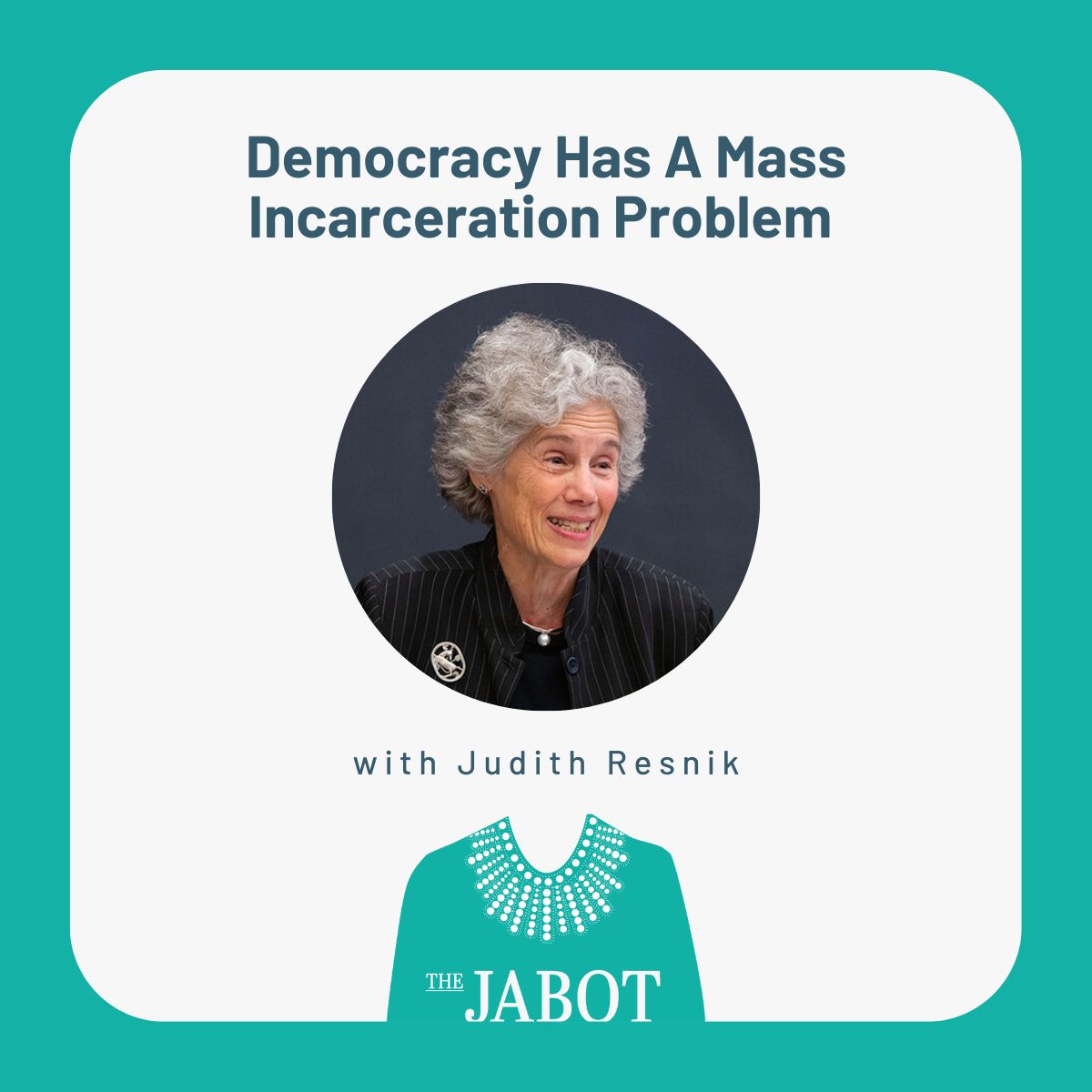 Democracy Has A Mass Incarceration Problem with Judith Resnik - Episode 212 07.11.2025 25minJoin host Kathryn Rubino on The Jabot podcast with Yale Law's Judith Resnik. Discover how historical detention practices challenge democracy today. Explore her new book, "Impermissible Punishments," for insights on humane reforms. A thought-provoking must-listen! Episode Highlights Discussion of upcoming book, "Impermissible Punishments" Journey to Academia: From Law School to Professor Prison as a Social Service: Complexities and Paradoxes Judicial Debate on the Permissibility of Whipping in Prisons Historical Roots: The League of Nations and Prison Standards Evolution of Prisoners' Rights and Dignity Importance of Recognizing Incarcerated as Rights Bearers Global Perspective: Common Problems in Prisons Worldwide The Cost of Maintaining the Current Prison System Inhumane Practices and the Need for Solid Lines on Punishments Changing Nature: Prison is a Construct, Not a Standard Solitary Confinement: A Physical and Emotional Burden Episode Sponsored By https://www.lexisnexis.com/lexisplus Links and Resources https://press.uchicago.edu/ucp/books/book/chicago/I/bo243487113.html https://impermissiblepunishments.law.yale.edu/ [email protected] Subscribe, Share and Review To get the next episode subscribe with your favorite podcast player. Subscribe with Apple Podcasts Follow on Spotify Leave a review on Apple Podcasts
 -
 You Can Walk Away From Biglaw And Have The Career Of Your Dreams with Marc Brown - Episode 211 26.09.2025 21minIn this episode, host Kathryn Rubino chats with Marc Brown, a dynamic attorney and Big Dave's Cheesesteaks franchise owner. Marc opens up about his non-linear career path from Biglaw to founding his own successful firm, sharing insights on the fulfilling shift to plaintiff's work and the challenges of running a business. Aspiring lawyers and entrepreneurs alike will find inspiration in Marc's journey of pursuing passion over convention and learning to balance career and life. Tune in for a mix of legal wisdom and the secret to a perfect cheesesteak!. Episode Highlights Childhood dream of becoming a lawyer Reality vs. TV portrayal of law work Unplanned career path: Starting a law firm Shift from Biglaw to plaintiff's work Dealing with emotionally challenging cases Transition to owning a law firm Lessons from running a personal injury firm Challenges of starting a new practice Importance of experience before starting a firm Franchise opportunity with Big Dave's Balancing multiple business ventures Career highlight: Marc Brown Legal Minute Learning from career lows and losses Episode Sponsored By https://www.lexisnexis.com/lexisplus Links and Resources https://www.linkedin.com/in/marcusjbrown/ https://www.marcbrownlawfirm.com/ https://www.bigdavesway.com/ Subscribe, Share and Review To get the next episode subscribe with your favorite podcast player. Subscribe with Apple Podcasts Follow on Spotify Leave a review on Apple Podcasts
Slični podcasti


Popularan u
Ovaj podcast se pojavljuje i u podcast listama ovih zemalja.
