
Science Magazine Podcast
Science Magazine
0
Weekly podcasts from Science Magazine, the world's leading journal of original scientific research, global news, and commentary.
Epizode
-
 Psychoactive substances helped spur Andean civilization, and breaking barriers to education 10.09.2026 33minFirst up on the podcast, producer Meagan Cantwell and freelance journalist Andrew Lawler discuss how psychoactive drugs might have shaped culture in pre-Inca Andean societies. They chat about how technical advances and an increasingly open research environment have allowed scientists to detect traces of substances such as vilca, which contains dimethyltryptamine, the psychoactive compound also found in ayahuasca. Next on the show, host Sarah Crespi is joined by Noam Angrist, academic director of the What Works Hub for Global Education at the University of Oxford’s Blavatnik School of Government. Angrist wrote a Policy Forum piece on the need to move on from small, controlled trials of education interventions to better address educational needs in lower and middle-income countries. To move forward, he explains, we need to learn how to make sure these interventions work at scale and that governments can readily implement them. This week’s episode was produced with help from Podigy. About the Science Podcast Image credit: John Bigelow Taylor/Division of Anthropology, American Museum of Natural History/Catalog number 41.2/7768 Learn more about your ad choices. Visit megaphone.fm/adchoices
 -
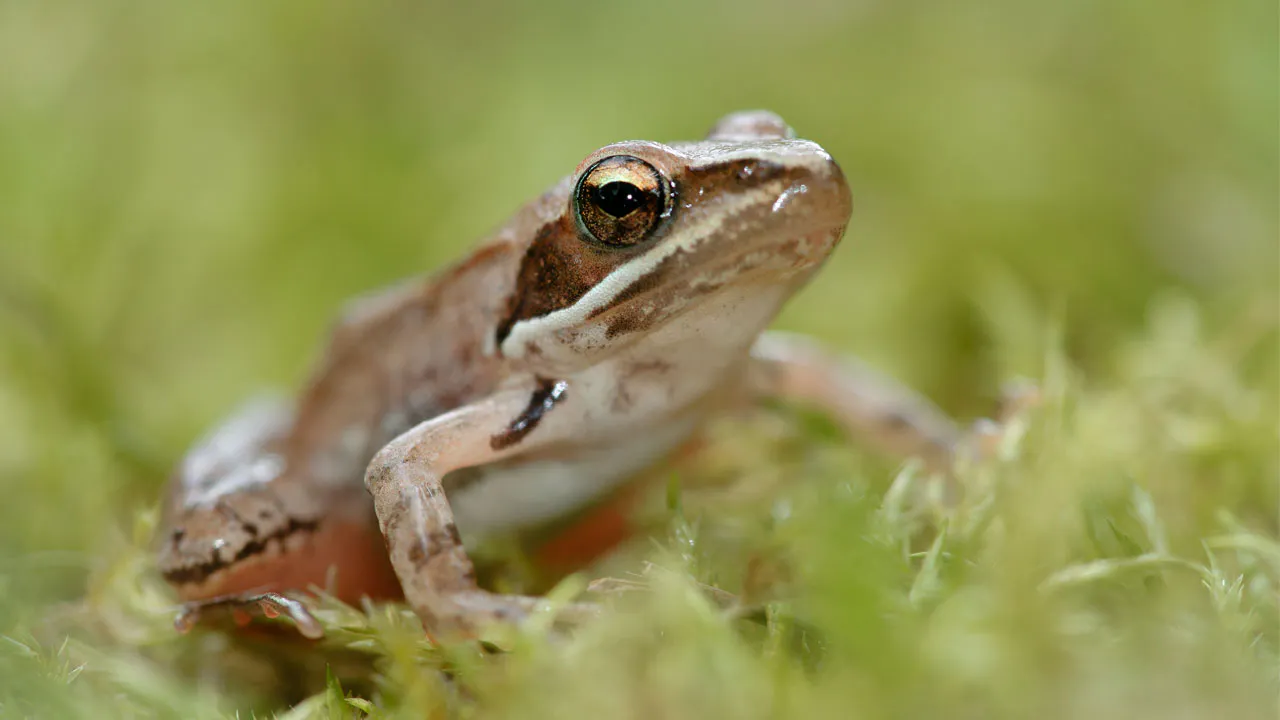 Sex-reversing frogs, and Europe’s rising rates of a deadly tick-borne disease 03.09.2026 27minFirst up on the podcast, Senior International Correspondent Richard Stone joins host Sarah Crespi to discuss how climate is pushing the disease-carrying tick Hyalomma marginatum out of its comfort zone. Stone reports from Kosovo, where the tick has long been endemic, on how surveillance can uncover hidden circulation—and help countries prepare before human cases appear. Next on the show, researchers have long known ambient temperatures cause some species of amphibians to reverse sex. In the case of the agile frog (Rana dalmatina), genetically female frogs take on male characteristics at elevated temperatures—including the ability to sire offspring. Veronika Bókony, an evolutionary ecologist at the Center for Agricultural Science in Hungary, examined what happens to the offspring of sex-reversed agile frogs, which will probably make up more of the species’ population as the planet warms. This week’s episode was produced with help from Podigy. Image: Danny Laps/NiS/Minden Pictures Learn more about your ad choices. Visit megaphone.fm/adchoices
 -
 Making drugs in space, the man who fed India, and what narwhals can teach us about changing seas 27.08.2026 49minFirst up on the podcast, will it ever make economic sense to produce drugs and biomedical supplies in space? Associate Online News Editor Michael Greshko discusses his story on the researchers attempting to make biomanufacturing in space a reality, with News intern Julia Vaz. Next on the show, producer Kevin McLean chats with Mads Peter Heide-Jørgensen, a professor in the department of birds and mammals at the Greenland Institute of Natural Resources, about how narwhals have helped collect hard-to-reach oceanographic samples. Data collected by these long-toothed cetaceans revealed far more warm Atlantic water is pressing into the fjords of East Greenland than previously thought. Finally, the latest in our book series on biographies. This month, books host Angela Saini talks with writer Priyambada Jayakumar about her biography of M. S. Swaminathan. This week’s episode was produced with help from Podigy. Image credit: Vast Learn more about your ad choices. Visit megaphone.fm/adchoices
 -
 Why tracing cyclosporiasis is so tough, and a digestible probe for the microbiome 20.08.2026 28minFirst up on the podcast, the News team’s Diverse Voices in Science Journalism interns Mona Patterson and Laura Martín Agudelo join host Sarah Crespi to talk over some of their reporting from the summer. They chat about several stories, including why it’s so difficult to track the food-borne illness cyclosporiasis and a new map for a major highway of the human nervous system. Check out all of Patterson’s and Martín Agudelo’s stories. Next on the show, Leslie Chan, assistant professor in the Wallace H. Coulter Department of Biomedical Engineering at the Georgia Institute of Technology and the Emory School of Medicine, describes an ingestible metabolic probe for the gut microbiome. Her team tested the pill in mice and showed they could detect an enzyme made by the microbiome that causes toxicity during some chemotherapy treatments. The signal is read from volatiles in the breath, making the test a noninvasive way to check on the activity of gut microbes. This week’s episode was produced with help from Podigy. Image credit: Melanie Moser/Centers for Disease Control and Prevention Learn more about your ad choices. Visit megaphone.fm/adchoices
 -
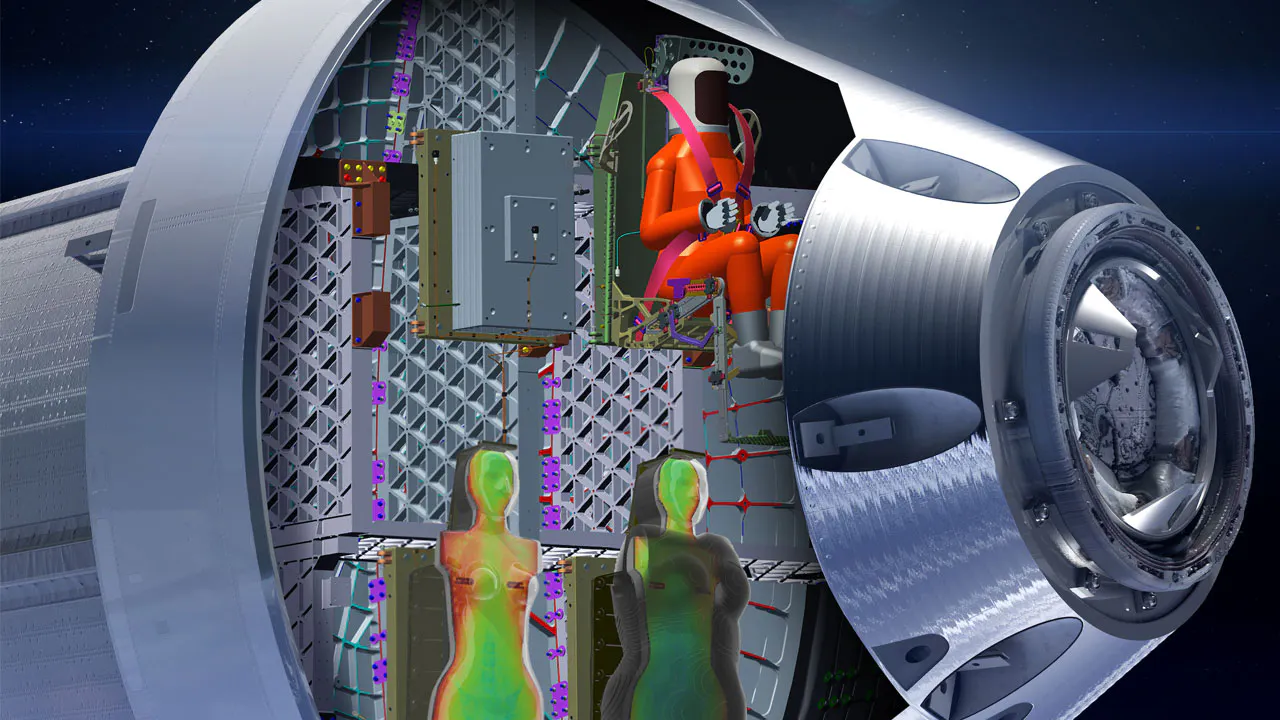 A vest for blocking cosmic rays, and updates on NIH funding 13.08.2026 26minFirst up on the podcast, ScienceInsider Editor Jocelyn Kaiser joins host Sarah Crespi for the latest science policy news. The two discuss recent grant cancellations by the U.S. National Institutes of Health and the likelihood that the agency will spend its budget by the end of its fiscal year on 30 September. Next on the show, crew aboard spacecraft that enter deep space are likely to be exposed to a radiation source we don’t often encounter on Earth’s surface: high-speed protons coming from solar storms or cosmic rays. So to protect astronauts, researchers are using plastics to defend against this dangerous form of radiation. Jordan Houri, lead scientist for space exploration at StemRad, talks about testing the protective capabilities of specially designed vests aboard NASA’s Artemis I mission. This week’s episode was produced with help from Podigy. Image credit: NASA/Lockheed Martin/DLR/StemRad Learn more about your ad choices. Visit megaphone.fm/adchoices
 -
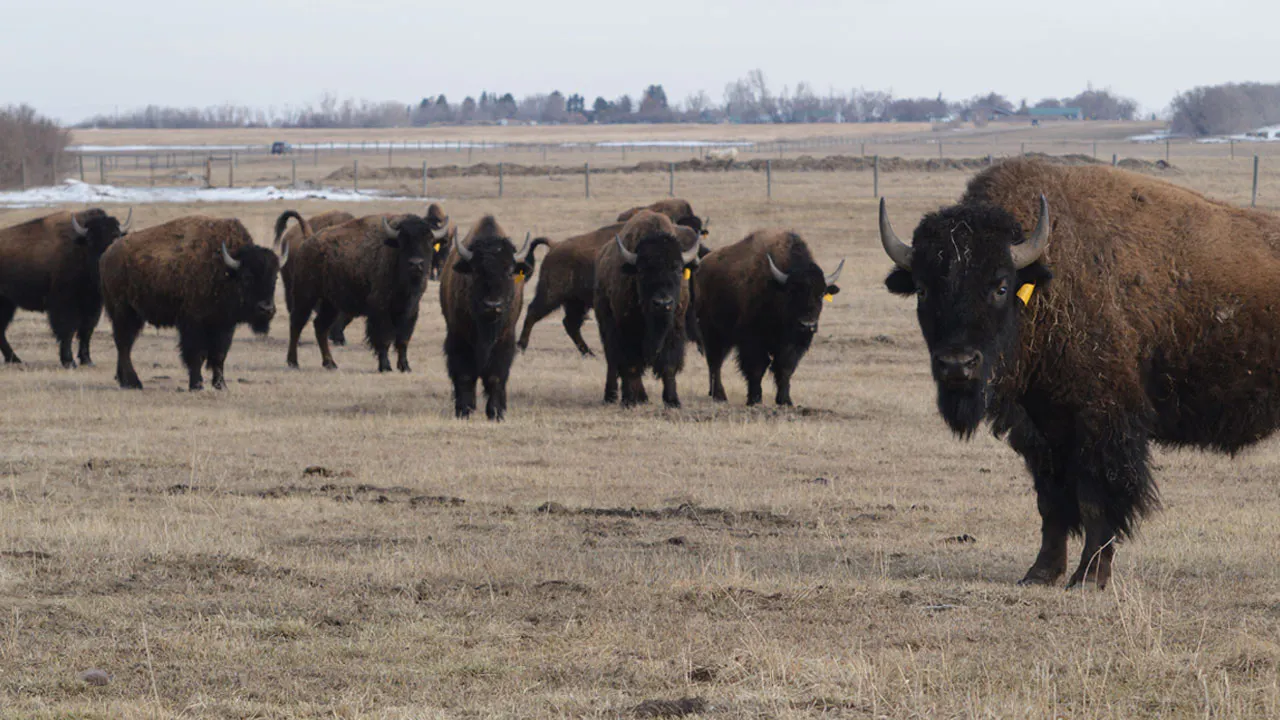 Did meat or fruit give people big brains, and protecting bison diversity using ancient DNA 06.08.2026 38minFirst up on the podcast, Deputy News Editor Michael Price discusses the history of the North American bison population, its decline, and resurrection—and links to Indigenous cultures. He’s joined by University of California, Santa Cruz evolutionary molecular biologist Beth Shapiro and Greg Wilson, a wildlife ecologist with Parks Canada. They talk about their Science paper on the genetic diversity of modern bison after near extermination during European colonization. Shapiro and Wilson also explain how these findings can be used to inform conservation efforts. Next on the show, Jennie Brand-Miller, professor emeritus in the School of Life and Environmental Sciences and Charles Perkins Centre at the University of Sydney, joins host Sarah Crespi to talk about what our ancient ancestors were eating and a big question—was hunting key to evolving big brains? Brand-Miller argues instead that fruit was the key factor in the expansion of hominin brains. She points to the high sugar demands of large brains, about 100 to 120 grams per day, and how this level of sugar intake was likely only achievable by consuming things such as fruit and honey before our ancestors’ mastery of cooking and fire. This week’s episode was produced with help from Podigy. About the Science Podcast Image credit: Mike Price Learn more about your ad choices. Visit megaphone.fm/adchoices
 -
 AI’s influence on society, measuring muscles, and a Crick biography 30.07.2026 46minFirst up on the podcast, we catch up with Celina Zhao, a staff reporter for Science’s AI In Science reporting initiative. She talks with host Sarah Crespi about artificial intelligence’s knack for finding legal loopholes and how philosophers are navigating conflicts of interest around advising companies on AI. Next on the show, it’s hard to figure out how much force a muscle is exerting without sticking invasive probes into the body. Christopher Bird, a Ph.D. candidate in the School of Biomedical Sciences at the University of Queensland, discusses a new way to use ultrawideband radar to measure muscle forces that could prove useful for assistive devices and rehabilitation. Finally, the third in our limited six-part series on scientific biographies. This month, host Angela Saini talks with zoologist Matthew Cobb about his new book on the life of Francis Crick, Crick: A Mind in Motion. This week’s episode was produced with help from Podigy. Image credit: Chiara Vercesi Learn more about your ad choices. Visit megaphone.fm/adchoices
 -
 Death in a gene-editing trial, and insect larvae surviving in deep waters 23.07.2026 37minFirst up on the podcast, freelance science journalist Brendan Borrell talks about his work reporting on the previously undisclosed death of a 6-year-old girl in a gene-editing clinical trial in China and the reasons her parents came forward. This story was produced in collaboration with Retraction Watch and supported by the Science Fund for Investigative Reporting. Next on the show, Producer Meagan Cantwell talks with Evan McKenzie, a researcher at the University of British Columbia, about an insect that evolved to avoid predators by modifying its respiratory system to withstand high pressure at depth. This week’s episode was produced with help from Podigy. Image credit: Daria Lada Learn more about your ad choices. Visit megaphone.fm/adchoices
 -
 Health care in Malawi after USAID’s end, and a rocky exoplanet with an atmosphere 16.07.2026 41minFirst up on the podcast, we continue our coverage of the fallout from cuts to the U.S. Agency for International Development (USAID), this time focusing on how one of the largest recipients of aid is coping 18 months later. Contributing Correspondent Catherine Offord talks about her trip to Malawi and the efforts to strengthen their health infrastructure in the wake of funding shocks. Next on the show, Collin Cherubim, Ph.D. candidate in the Earth and Planetary Sciences Department at Harvard University, discusses what it means to find helium escaping from the atmosphere of a rocky planet in the habitable zone of a nearby red dwarf. This week’s episode was produced with help from Podigy. About the Science Podcast Image credit: Thoko Chikondi Learn more about your ad choices. Visit megaphone.fm/adchoices
 -
 Owl wars and the immune system’s memory 09.07.2026 35minFirst up on the podcast, Contributing Correspondent Warren Cornwall goes on an owl hunt in the woods of Northern California. After surviving logging and habitat destruction in the 1990s, the endangered Northern spotted owl has put conservationists in a bind: In order to protect the spotted owl, the only solution may be shooting barred owls. Next on the show, looking back at the first 10 years of the journal Science Immunology. Editor Seth Thomas Scanlon explores how the field has changed since the inception of the journal and talks about a special series of reviews on immune memory. Check out the special issue cover here. This week’s episode was produced with help from Podigy. Image credit: Danny Hofstadter Learn more about your ad choices. Visit megaphone.fm/adchoices
 -
 How Antarctica got its ice sheets, and what happens when geopolitical relationships turn chilly in the Arctic 02.07.2026 32minFirst up on the podcast, relationships turn chilly in the polar research haven of Svalbard in Norway. Senior International Correspondent Richard Stone joins host Sarah Crespi to discuss the impacts of geopolitical shifts on the scientific output of this region so important to the study of climate change. Next on the show, producer Meagan Cantwell talks with Thomas Gernon, a geologist at the University of Southampton, about how ice sheets formed in Antarctica during a time when the temperatures were relatively warm. This week’s episode was produced with help from Podigy. About the Science Podcast Learn more about your ad choices. Visit megaphone.fm/adchoices
 -
 Cracking color vision, U.S. science policy changes, and a trailblazing biography 25.06.2026 45minFirst up on the podcast, ScienceInsider editor Jocelyn Kaiser joins host Sarah Crespi to discuss big policy stories from the past month, including a proposal from President Donald Trump’s administration to increase the involvement of politicians in grantmaking. Next on the show, Science Senior Editor Michael Funk joins to discuss a trio of papers on the light-detecting proteins responsible for color vision. Ohashi et al., Science 2026 Peng et al., Science 2026 Schmidt et al., Science 2026 Finally, in our books segment for this month, host Angela Saini talks with science writer Georgina Ferry, who wrote a biography about crystallographer Dorothy Crowfoot Hodgkin, the first and only woman scientist from the United Kingdom to win a Nobel Prize. This week’s episode was produced with help from Podigy. About the Science Podcast Learn more about your ad choices. Visit megaphone.fm/adchoices
 -
 An electronic nose that detects spoiled chicken, and wolves make a spectacular comeback in Europe 18.06.2026 46minFirst up on the podcast, wrangling wolves in Europe. After near extermination in much of the continent, wolf numbers have surged up to about 20,000 individuals. Contributing Correspondent Gretchen Vogel joins podcast host Sarah Crespi to discuss the conflicts that have risen as the wolf population grows. Next on the show, Ph.D. student Carla Bassil talks about designing an e-nose that can hone in on important food smells such as chicken that has gone bad or the presence of allergens including peanuts. Finally, in a sponsored segment from the Science/AAAS Custom Publishing Office, Erika Berg, director and senior editor of custom publishing, interviews professors Eimear Kenny and Alex Charney about how genomic medicine, artificial intelligence, and large-scale sequencing are transforming the future of patient care. This segment is sponsored by the Icahn School of Medicine at Mount Sinai. This week’s episode was produced with help from Podigy. About the Science Podcast Image credit: Lorenzo Shoubridge Learn more about your ad choices. Visit megaphone.fm/adchoices
 -
 How childhood environments shape the brain, and how susceptible is the Atlantic Ocean’s current to climate change? 11.06.2026 31minFirst up on the podcast, producer Kevin McLean talks with Staff Writer Paul Voosen about the latest on the Atlantic Meridional Overturning Circulation, or AMOC. Researchers have long been concerned that global warming could cause a collapse in the AMOC, which would trigger dramatic cooling in Northern Europe. But recent data and models suggest the AMOC may be more resilient than previously thought. Next on the show, Scott Marek, assistant professor in the Mallinckrodt Institute of Radiology at Washington University School of Medicine, talks with host Sarah Crespi about brainwide association studies (BWAS) for childhood brain development. BWAS measure structure and function across many brains and look for correlations between these measures and behavior, disease, and environment. In this work, Marek and colleagues focus on how socioeconomic factors—captured by zip code—are strongly correlated with certain brain differences in more than 4000 children ages 9.5 to 11. The work also suggests lack of sleep and excess screen time could mediate the influence of socioeconomic conditions on differences in brain structure and function. This week’s episode was produced with help from Podigy. About the Science Podcast Photo: P. Voosen/Science Learn more about your ad choices. Visit megaphone.fm/adchoices
 -
 Will AI replace astronomers, how healthy are ultraprocessed foods, and a peek behind the scenes of ‘The Normals’ 04.06.2026 50minFirst up on the podcast, freelance science journalist Joshua Sokol talks about the intense discussion happening in the astrophysics community as artificial intelligence and machine learning become increasingly powerful—could “astronomer” stop being a job one day? Next on the show, as the Trump administration makes moves to regulate ultraprocessed foods, host Sarah Crespi talks with Faidon Magkos, a professor in obesity and metabolism in the department of nutrition, exercise, and sports at the University of Copenhagen, about what studies say about their health effects. Finally this week, a behind-the-scenes look at our recent limited series “The normals.” Producer Kevin McLean talks about the experience of joining a study as a healthy subject, and Crespi talks about what didn’t make it into the episodes. Listen to “The normals” here. This week’s episode was produced with help from Podigy. About the Science Podcast Learn more about your ad choices. Visit megaphone.fm/adchoices
 -
 Disembodied human brains, immortal bits of sea cucumber, and fame in Galileo’s time 28.05.2026 45minFirst up on the podcast, a company is using whole brains—maintained with specialized life support—to study new drugs. Freelance science journalist Sara Reardon joins host Sarah Crespi to talk about the advantages and ethical considerations of keeping brains intact but inactive. Next on the show, when some lizards lose their tails, they might regenerate new ones. But what happens to the old tail? Whereas a castoff lizard tail quickly decomposes, this isn’t the case for the castoff tube feet of the sea cucumber, Psolus fabricii. Sara Miller Jobson, a Ph.D. student at the Memorial University of Newfoundland, describes how these “living” limbs healed after amputation and then survived for more than 3 years in just seawater. Their survival in such simple conditions, while maintaining a complex tissue with a functioning immune response, could make amputated tube feet a useful model system for studying regeneration. Finally this week, the first in our book series on science biographies. Books host Angela Saini talks with historian Anna-Luna Post about her recent book, Galileo’s Fame: Science, Credibility, and Memory in the Seventeenth Century, which explores how fame shaped the scientific fortunes of Galileo Galilei. This week’s episode was produced with help from Podigy. About the Science Podcast Learn more about your ad choices. Visit megaphone.fm/adchoices
 -
 USAID cuts linked to violence, unexpected parallels between humans and bacteria, and how to rule the world 21.05.2026 41minFirst up on the podcast, Senior International Correspondent Richard Stone joins host Sarah Crespi to discuss the surprising commonalities between our immune systems and the tools bacteria use to defend themselves against viruses. These unexpected parallels have become rich ground for researchers investigating new molecular biology tools and model systems for immune research. Next on the show, Dominic Rohner, a professor of economics at the Geneva Graduate Institute and University of Lausanne, talks about the impact of cuts in international aid on violent conflict in Africa. His team harnessed the natural experiment of the U.S. Agency for International Development (USAID) work stoppage ordered by the Trump administration in early 2025 to find links between the sudden withdrawal of high levels of aid to increases in conflict. See also Science’s 2025 news series on the impact of USAID cuts on children. Finally, Valerie Thompson, Science’s books and media editor, interviews undergraduate student and author Theo Baker. Baker wrote the book How to Rule the World: An Education in Power at Stanford University, which covers the heavy involvement of Silicon Valley investors in Stanford University and his investigation of research misconduct by former Stanford President Marc Tessier-Lavigne. See the full review here. This week’s episode was produced with help from Podigy. About the Science Podcast Learn more about your ad choices. Visit megaphone.fm/adchoices
 -
 Fighting deepfakes, and using bacteria to deliver medicine inside the body 14.05.2026 31minFirst up on the podcast, Meagan Cantwell produced a segment with Contributing Correspondent Kai Kupferschmidt on the fight against deepfakes. Kupferschmidt talks with Hany Farid, professor at the University of California, Berkeley, about the never-ending battle against fake imagery and why Farid is not giving up. Next on the show, building a tough, bio-compatible capsule for engineered bacteria. Tetsuhiro Harimoto talks about the challenges of keeping living bacteria inside a hydrogel capsule and the advantages of using engineered bacteria as sensors and medicine dispensers inside the body. (Harimoto completed this work as a postdoc at Harvard University and will start as a professor at Cornell University in the fall.) This week’s episode was produced with help from Podigy. About the Science Podcast Learn more about your ad choices. Visit megaphone.fm/adchoices
 -
 A team effort to save a giant fish, the power of moonlight, and how scientists can navigate a tough political environment 07.05.2026 53minFirst up on the podcast, along Brazil’s Juruá River, local residents have been working with scientists to manage a giant fish called the arapaima—affecting the land, the people, and the economy. Contributing Correspondent Warren Cornwall joins host Sarah Crespi to talk about this collaborative effort. Next on the show, how moonlight affects nocturnal animals. Carlos Camacho, a researcher at the Doñana Biological Station, talks about the Moon-inflected habits of a nighttime foraging bird, the red-necked nightjar. His team found that the extra light provided by the full Moon allows these birds to consume more insects at night. And the timing of their long-haul migration between Europe and Africa is linked to the cycles of the Moon. Last up this week, Science Editor-in-Chief Holden Thorp talks with Timothy Snyder, historian and author of the book On Tyranny: Twenty Lessons from the Twentieth Century. They discuss the role of institutions, professional ethics, and personal beliefs for scientists in tough political times. This week’s episode was produced with help from Podigy. About the Science Podcast Learn more about your ad choices. Visit megaphone.fm/adchoices
 -
 Watching a spiders’ heart beat, epigenetic ethics, and what science biographies reveal about fame 30.04.2026 46minFirst up on the podcast, Online News Editor David Grimm shares a batch of fun stories with podcast host Sarah Crespi—from spider hearts racing when traffic gets loud to a disease-preventing house. Staff Writer Adrian Cho hops in to help discuss the possibility of black holes without singularities at their center. Next on the show, epigenetics has become a hot topic in pop science but the ethical conversation is not keeping up. The idea that parents can pass down epigenetic marks from environmental toxins or trauma to their children—without changes in DNA—has been around for decades but the research in people is lacking. Jackie Leach Scully, a professor of bioethics and director of the Disability Innovation Institute at the University of New South Wales, discusses where the research actually is and the concerns that may arise if such marks do appear to impact the young. Last up this week, we are launching our 2026 biography books series with books host Angela Saini and Science books editor Valerie Thompson. The pair discusses the difficulty of picking biographies and what can be learned about science, fame, and researchers as people from reading these types of books. This week’s episode was produced with help from Podigy. About the Science Podcast Learn more about your ad choices. Visit megaphone.fm/adchoices
Slični podcasti


Popularan u
Ovaj podcast se pojavljuje i u podcast listama ovih zemalja.


