
The Innovation Forum AI Podcast
Oliver Morgan
0
The Innovation Forum AI Podcast examines how artificial intelligence is reshaping public health, from early outbreak detection to health communication and smarter response strategies. Each episode is grounded in real-world practice and highlights the opportunities and challenges that matter most for global preparedness. It is aimed at public health professionals, including policymakers and technical specialists, who want to apply AI tools to concrete public health problems. The show is hosted by Oliver Morgan, a global health executive with over 25 years of experience in pandemic preparedness and response at the WHO and the US CDC.
Epizode
-
 Making Sense of AI and the Opportunities for Public Health 24.10.2025 43min🎙️ Episode Title Making Sense of AI and the Opportunities for Public Health --- 🧠 Episode Summary In this episode of The Innovation Forum AI Podcast, Oliver Morgan speaks with Dr. Kene David Nwosu, Epidemiologist and Data Scientist at the University of Geneva’s Institute for Global Health and co-founder of The Graph Courses, a non-profit initiative teaching AI and data science for health professionals. Together, they unpack how artificial intelligence is transforming public health — from predicting disease risk to summarizing clinical notes — and what skills practitioners need to engage with these technologies responsibly. The conversation explores data quality, ethics, and privacy challenges, while offering a hopeful vision of how AI can enhance, rather than replace, the vital role of humans in improving global health outcomes. --- 💬 Guest Dr. Kene David Nwosu Kene David Nwosu is an epidemiologist and data scientist at the University of Geneva’s Institute of Global Health. His work spans HIV cohort analyses in Nigeria and public-facing analytics for COVID-19 and influenza in Switzerland. He is also co-founder of The Graph Courses, a nonprofit education platform providing accessible training in data science and AI for the health and life sciences, where he leads an international team creating open learning resources for over 5,000 learners. --- 🌐 Resources and References - The GRAPH Courses: https://thegraphcourses.org/ - CDC AI use case inventory: https://www.hhs.gov/programs/topic-sites/ai/use-cases/index.html - WHO Guidance on AI use: https://www.who.int/publications/i/item/9789240084759 - Machine learning for HIV status prediction: https://journals.plos.org/plosone/article?id=10.1371/journal.pone.0264429 --- 🎵 Music Credits Intro and outro music from **Podcastle Stock Audio.** Track: ‘Nairobi Nights’. --- ⚠️ Disclaimer This podcast is produced by the World Health Organization (WHO) as part of the Pandemic and Epidemic Intelligence Innovation Forum initiative: https://pandemichub.who.int/news-room/innovation-forum. The views expressed by guests are their own and don’t necessarily represent those of WHO or its affiliates. Guest affiliations have been disclosed for transparency purposes. Content is intended solely for information purposes and not as professional medical advice. Listeners are advised to consult qualified professionals for specific questions. All personal data collected for feedback is handled in accordance with WHO standards. --- 📲 Listen and Subscribe The Innovation Forum AI Podcast is available on Apple Podcasts, Youtube, and Amazon Music. You can find a written summary of this episode here: https://substack.com/@omorgan? Be sure to follow, rate, and share to help us reach more public health professionals exploring the future of AI.
 -
 Public Health through the Lens of AI and Population Dynamics 08.11.2025 38min🎙️ Episode Title Public Health through the Lens of AI and Population Dynamics --- 🧠 Episode Summary In this episode of *The Innovation Forum AI Podcast*, Oliver Morgan speaks with Gautam Prasad, Software Engineer at Google Research, whose work focuses on geospatial machine learning and the Population Dynamics Foundation Model — a new AI framework designed to fill data gaps and improve population-level health insights. Together, they explore how geospatial AI is transforming the way we understand and predict health risks — from mapping asthma and diabetes prevalence to forecasting dengue and cholera outbreaks. The conversation unpacks the science behind foundation models, explains how they can enhance epidemic intelligence systems, and reflects on what this means for global health equity, accessibility, and collaboration. --- 💬 Guest Dr. Gautam Prasad Gautam Prasad is a Software Engineer at Google Research, where he works on geospatial machine learning and foundation models such as the *Population Dynamics Foundation Model*. His research focuses on applying AI to understand population dynamics and support public health, socioeconomic, and environmental decision-making. Before joining Google, he worked on computer vision and brain connectivity modeling in health and disease using MRI and machine learning. --- 🌐 Resources and References - Earth AI: https://ai.google/earth-ai/ - Contact the PDFM team at [email protected] - Insights into population dynamics: A foundation model for geospatial inference: https://research.google/blog/insights-into-population-dynamics-a-foundation-model-for-geospatial-inference/ - Population Dynamics - GitHub: https://github.com/google-research/population-dynamics --- 🎵 Music Credits Intro and outro music from Podcastle Stock Audio. Track: ‘Nairobi Nights’. --- ⚠️ Disclaimer This podcast is produced by the World Health Organization (WHO) as part of the Pandemic and Epidemic Intelligence Innovation Forum initiative. The views expressed by guests are their own and don’t necessarily represent those of WHO or its affiliates. Guest affiliations have been disclosed for transparency purposes. Content is intended solely for information purposes and not as professional medical advice. Listeners are advised to consult qualified professionals for specific questions. All personal data collected for feedback is handled in accordance with WHO standards. --- 📲 Listen and Subscribe The Innovation Forum AI Podcast is available on Youtube, Apple Podcasts, and Amazon Music. You can find a written summary of this episode here: https://substack.com/@omorgan Be sure to follow, rate, and share to help us reach more public health professionals exploring the future of AI.
 -
 AI-Driven Behavioral Simulation for Better Public Health Decisions 24.11.2025 52min🎙️ Episode Title AI-Driven Behavioral Simulation for Better Public Health Decisions --- 🧠 Episode Summary In this episode of The Innovation Forum AI Podcast, Oliver Morgan speaks with Dr. Serina Chang, Assistant Professor at UC Berkeley, whose work blends AI, human behavior, and public health. Serina explains how mobility data, search logs, and generative AI can uncover how people actually behave during pandemics—revealing hidden patterns, disparities, and responses to policy. Her research spans mobility-based models of COVID-19, real-time vaccine intent estimation, and LLM-powered simulations that help public health teams test interventions before deploying them. Together, they explore how AI-enabled behavior modeling can support more precise, adaptive, and equitable decision-making during future health crises. --- 💬 Guest Dr. Serina Chang Serina is an Assistant Professor at UC Berkeley (Computer Science & Computational Precision Health). Serina’s research focuses on simulating and inferring human behavior using AI—ranging from mobility networks and search data to generative models of survey responses. Her influential work during COVID-19 has shaped public health decision-making and earned recognition including the ACM SIGKDD Dissertation Award, KDD Best Paper Award, and Google Research Scholar Award. --- 🌐 Resources and References - Mobility Network Models of COVID-19: https://www.nature.com/articles/s41586-020-2923-3 - Measuring vaccination coverage and concerns of vaccine holdouts from web search logs: https://www.nature.com/articles/s41467-024-50614-4 - Estimating Geographic Spillover Effects of COVID-19 Policies from Large-Scale Mobility Networks: https://ojs.aaai.org/index.php/AAAI/article/view/26657 - Language Model Fine-Tuning on Scaled Survey Data for Predicting Distributions of Public Opinions: https://aclanthology.org/2025.acl-long.1028/ - LLMs Generate Structurally Realistic Social Networks but Overestimate Political Homophily: https://ojs.aaai.org/index.php/ICWSM/article/view/35820 - Dashboard for Virginia’s department of Health created for reopening during COVID-19: https://dl.acm.org/doi/10.1145/3447548.3467182 --- 🎵 Music Credits Intro and outro music from Podcastle Stock Audio. Track: ‘Nairobi Nights’. License code: 4S9SQLITXMAEJTNG. --- ⚠️ Disclaimer This podcast is produced by the World Health Organization (WHO) as part of the Pandemic and Epidemic Intelligence Innovation Forum initiative. The views expressed by guests are their own and don’t necessarily represent those of WHO or its affiliates. Guest affiliations have been disclosed for transparency purposes. Content is intended solely for information purposes and not as professional medical advice. Listeners are advised to consult qualified professionals for specific questions. All personal data collected for feedback is handled in accordance with WHO standards. --- 📲 Listen and Subscribe The Innovation Forum AI Podcast is available on Youtube, Spotify, Apple Podcasts, and Amazon Music. You can find a written summary of this episode here: https://substack.com/@omorgan? Be sure to follow, rate, and share to help us reach more public health professionals exploring the future of AI.
 -
 Democratizing AI Talent for Real-World Problem Solving 06.12.2025 38min🎙️ Episode Title Democratizing AI Talent for Real-World Problem Solving --- 🧠 Episode Summary In this episode of The Innovation Forum AI Podcast, Oliver Morgan speaks with Celina Lee, CEO and Co-Founder of Zindi, the largest platform for data scientists and AI developers across Africa. Celina describes how Zindi connects a growing pool of young talent with real-world problems through artificial intelligence challenges in health, climate, food security, and development. She highlights Zindi’s unique model: organizations upload datasets and problem statements, thousands of data practitioners iterate on solutions, and leaders are identified through transparent evaluation and teamwork. Celina also shares how active engagement—completing profiles, joining teams, and finishing challenges—strongly boosts users’ career outcomes. Together, they explore how AI and community-driven learning can expand opportunities, strengthen public health systems, and close digital divides across the continent. --- 💬 Guest Celina Lee Celina Lee is the CEO and Co-Founder of Zindi, the leading platform for data scientists in Africa. She has dedicated her career to unlocking the power of data for social good, helping launch global initiatives such as the Alliance for Financial Inclusion and insight2impact. Her work spans financial inclusion, gender, SME development, climate, and public health, with hands-on experience across Asia, Latin America, and Sub-Saharan Africa. --- 🌐 Resources and References - Zindi’s website: https://zindi.africa/ - This report analyzed the career outcomes of over 8,000 Kenyan users on the Zindi platform, demonstrating how engagement on Zindi directly improves employability in data and AI fields:https://drive.google.com/file/d/1PTwAsj3QyyNjHi-Aw1pkNA2j8RhZjIGd/view - This challenge asked data scientists on Zindi to accurately predict the spread of COVID-19 around the world over some months:https://zindi.africa/competitions/predict-the-global-spread-of-covid-19https://zindi.africa/competitions/predict-the-global-spread-of-covid-19 - Participants built a machine learning model that can predict if kidneys are in renal failure from ultrasounds and to build a hub of data scientists and analysts in Cameroon:https://zindi.africa/competitions/cameroon-hackathon-2023 - In this challenge participants received 400 authentic clinical vignettes (nurse background + complex case) and had too predict the clinician’s response, mirroring trained clinical reasoning:https://zindi.africa/competitions/kenya-clinical-reasoning-challenge --- 🎵 Music Credits Intro and outro music from Podcastle Stock Audio. Track: ‘Nairobi Nights’. License code: NUHOREYJLVQL5K92. --- ⚠️ Disclaimer This podcast is produced by the World Health Organization (WHO) as part of the Pandemic and Epidemic Intelligence Innovation Forum initiative: https://pandemichub.who.int/news-room/innovation-forum. The views expressed by guests are their own and don’t necessarily represent those of WHO or its affiliates. Guest affiliations have been disclosed for transparency purposes. Content is intended solely for information purposes and not as professional medical advice. Listeners are advised to consult qualified professionals for specific questions. All personal data collected for feedback is handled in accordance with WHO standards. --- 📲 Listen and Subscribe The Innovation Forum AI Podcast is available on Youtube, Spotify, Apple Podcasts, and Amazon Music. You can find a written summary of this episode here: https://substack.com/@omorgan? Be sure to follow, rate, and share to help us reach more public health professionals exploring the future of AI.
 -
 Human–AI Collaboration for Early Outbreak Detection 21.12.2025 49min🎙️ Episode Title Human–AI Collaboration for Early Outbreak Detection --- 🧠 Episode Summary In this episode of The Innovation Forum AI Podcast, Oliver Morgan speaks with Yannis Paschalidis, Distinguished Professor of Engineering and Director of the Hariri Institute for Computing at Boston University, about how artificial intelligence is reshaping public health decision-making. Yannis explains how AI models built on electronic health records can predict health outcomes across diverse domains — from cognitive decline and fertility to hospital care needs during COVID-19. He emphasizes the importance of custom-built algorithms, carefully designed features, and robust data pipelines to ensure models deliver reliable, context-specific insights. The conversation also explores how AI can support early outbreak detection, combining domain-specific language models with human expertise to interpret complex and uncertain signals. Throughout the episode, Yannis stresses the need for human oversight, critical AI literacy, and responsible use of these technologies to strengthen — rather than replace — public health judgment. --- 💬 Guest Yannis Paschalidis Yannis Paschalidis is a Distinguished Professor of Engineering and Director of the Hariri Institute for Computing at Boston University. His research spans artificial intelligence, optimization, computational medicine, and public health, with a focus on building robust, real-world AI systems. He has authored over 300 scientific publications and is internationally recognized for advancing human-centered AI applications in healthcare and epidemic intelligence. --- 🌐 Resources and References - Network-Based Epidemic Control Through Optimal Travel and Quarantine Management: https://ieeexplore.ieee.org/document/11084857 - Automating biomedical literature review for rapid drug discovery: Leveraging GPT-4 to expedite pandemic response: https://www.sciencedirect.com/science/article/abs/pii/S1386505624001631 - A GPT-based EHR modeling system for unsupervised novel disease detection: https://www.sciencedirect.com/science/article/pii/S1532046424001242 - Early prediction of level-of-care requirements in patients with COVID-19: https://elifesciences.org/articles/60519 - BEACON’s website: https://beaconbio.org/en --- 🎵 Music Credits Intro and outro music from Podcastle Stock Audio. Track: ‘Nairobi Nights’. License code: OQX0TTADL0XRPIZ3. --- ⚠️ Disclaimer This podcast is produced by the World Health Organization (WHO) as part of the Pandemic and Epidemic Intelligence Innovation Forum initiative: https://pandemichub.who.int/news-room/innovation-forum. The views expressed by guests are their own and don’t necessarily represent those of WHO or its affiliates. Guest affiliations have been disclosed for transparency purposes. Content is intended solely for information purposes and not as professional medical advice. Listeners are advised to consult qualified professionals for specific questions. All personal data collected for feedback is handled in accordance with WHO standards. --- 📲 Listen and Subscribe The Innovation Forum AI Podcast is available on Youtube, Spotify, Apple Podcasts, and Amazon Music. You can find a written summary of this episode here: https://substack.com/@omorgan? Be sure to follow, rate, and share to help us reach more public health professionals exploring the future of AI.
 -
 Clinical AI, Equity, and Preparedness in Resource-Limited Health Systems 21.01.2026 32min🎙️ Episode Title Clinical AI, Equity, and Preparedness in Resource-Limited Health Systems --- 🧠 Episode Summary In this episode of The Innovation Forum AI Podcast, Oliver Morgan speaks with Dr. Zainab Samad, Chair of the Department of Medicine and Director of the Health Data Science Center at Aga Khan University in Pakistan. Zainab shares how artificial intelligence is being applied in real-world clinical settings to uncover hidden inequities in care, improve decision-making, and strengthen health systems in resource-limited contexts. Drawing on examples ranging from natural language processing in cardiology to machine-learning models for hospital mortality and dengue surveillance, she explains how clinical insights can be translated into public-health intelligence through sustained engagement with policymakers. Together, they explore how AI can help low- and middle-income countries leapfrog traditional data barriers, why South-to-South collaboration is critical for context-aware innovation, and how Pakistan’s national AI policy is shaping collaboration between academia and the public sector to support preparedness and equitable health outcomes. --- 💬 Guest Dr. Zainab Samad Dr. Zainab Samad is Chair of the Department of Medicine and Ibn-e-Sina Endowed Professor of Medicine at Aga Khan University (AKU) in Karachi. She is a cardiologist and outcomes researcher whose work bridges clinical medicine, data science, and public health. She leads the Health Data Science Center at AKU and co-directs the NIHR Global Health Center for IMPACT, focusing on gender-inclusive capacity building, AI-driven clinical innovation, and public-health intelligence in low- and middle-income countries. Dr. Samad also serves on Pakistan’s National AI Policy Committee and is a strong advocate for equitable, locally grounded applications of artificial intelligence in health. --- 🌐 Resources and References - Aga Khan University – Health Data Science Center: https://www.aku.edu/mcpk/data-science/Pages/home.aspx - NIHR Global Health Centre for Impact: https://www.impactsouthasia.com/ - Contact information: [[email protected]](mailto:[email protected]); [email protected] - Pakistan’s National AI Policy: https://moitt.gov.pk/ --- 🎵 Music Credits Intro and outro music from Podcastle Stock Audio. Track: ‘Nairobi Nights’. License code: TZMW98HEQBZ9HSIP. --- ⚠️ Disclaimer This podcast is produced by the World Health Organization (WHO) as part of the Pandemic and Epidemic Intelligence Innovation Forum initiative: https://pandemichub.who.int/news-room/innovation-forum. The views expressed by guests are their own and don’t necessarily represent those of WHO or its affiliates. Guest affiliations have been disclosed for transparency purposes. Content is intended solely for information purposes and not as professional medical advice. Listeners are advised to consult qualified professionals for specific questions. All personal data collected for feedback is handled in accordance with WHO standards. --- 📲 Listen and Subscribe The Innovation Forum AI Podcast is available on Youtube, Spotify, Apple Podcasts, and Amazon Music. You can find a written summary of this episode here: https://substack.com/@omorgan? Be sure to follow, rate, and share to help us reach more public health professionals exploring the future of AI.
 -
 Building a Grounded Approach to AI in Public Health Surveillance 04.02.2026 53min🎙️ Episode Title Building a Grounded Approach to AI in Public Health Surveillance --- 🧠 Episode Summary In this episode of The Innovation Forum AI Podcast, Oliver Morgan speaks with Samuel Scarpino, Professor of Public Health and Health Sciences at Northeastern University, Director of AI and Life Sciences at the Institute for Experiential AI and External Professor at Santa Fe Institute, about what it really takes for AI to improve public health practice. Sam explains why AI’s impact in public health depends far more on data foundations, system design, and trust than on new algorithms alone. Drawing on his work across epidemic surveillance, outbreak analytics, and global health data infrastructure, he discusses how public health agencies can prioritize data streams, evaluate AI-enabled surveillance systems, and design tools that support real decisions under real constraints. The conversation explores the limits of prediction, the risks of bias in outbreak data, and why keeping humans in the loop remains essential. Sam also shares lessons from initiatives such as Global.health, Epistorm, and the CODA Consortium, highlighting how AI can support digital transformation—from open line-list data to cause-of-death determination—when systems are built with purpose, governance, and users in mind. --- 💬 Guest Samuel Scarpino Dr. Samuel Scarpino is a Professor of Public Health and Health Sciences at Northeastern University and Director of AI and Life Sciences at the Institute for Experiential AI. He is also External Professor at Santa Fe Institute. His work sits at the intersection of artificial intelligence, complex systems science, and public health, with a focus on epidemic and pandemic intelligence. He has previously served as Vice President of Pathogen Surveillance at the Rockefeller Foundation and co-founded Global.health, an international data collaboration for outbreak response. --- 🌐 Resources and References - Institute for Experiential AI at Northeastern University: https://ai.northeastern.edu/ - Epistorm Center: https://www.epistorm.org/ - Global.health: https://global.health/ - Child Health and Mortality Prevention Surveillance (CHAMPS): https://champshealth.org/ - Publication on wastewater surveillance: https://www.science.org/doi/10.1126/scitranslmed.adi7831 - Publication on mobility data and epidemic response: https://www.science.org/doi/10.1126/science.abb4218 - Publication on predictability of infectious diseases: https://www.nature.com/articles/s41467-019-08616-0 - Publication on surveillance system design and evaluation: https://wwwnc.cdc.gov/eid/article/23/4/16-0944_article - Special thanks to Experiential Digital Global Education (EDGE) at Northeastern University: https://edge.northeastern.edu/. EDGE designs and produces digital learning experiences for Northeastern's academic programs and corporate partners, connecting education to career advancement through innovative online and experiential pathways. --- 🎵 Music Credits Intro and outro music from Podcastle Stock Audio. Track: ‘Nairobi Nights’. License code: CL7G3EYKETEJZHMA. --- ⚠️ Disclaimer This podcast is produced by the World Health Organization (WHO) as part of the Pandemic and Epidemic Intelligence Innovation Forum initiative: https://pandemichub.who.int/news-room/innovation-forum. The views expressed by guests are their own and don’t necessarily represent those of WHO or its affiliates. Guest affiliations have been disclosed for transparency purposes. Content is intended solely for information purposes and not as professional medical advice. Listeners are advised to consult qualified professionals for specific questions. All personal data collected for feedback is handled in accordance with WHO standards. --- 📲 Listen and Subscribe The Innovation Forum AI Podcast is available on Youtube, Spotify, Apple Podcasts, and Amazon Music. You can find a written summary of this episode here: https://substack.com/@omorgan?
 -
 Putting Problem-Driven AI into Practice in a European Public Health Agency 17.02.2026 43min🎙️ Episode Title Putting Problem-Driven AI into Practice in a European Public Health Agency --- 🧠 Episode Summary In this episode of The Innovation Forum AI Podcast, Oliver speaks with Laura Espinosa, Epidemic Intelligence Expert at the European Centre for Disease Prevention and Control (ECDC), about what it really means to apply AI inside a European public health agency. Rather than starting with technology, Laura explains why AI initiatives must begin with clearly defined public health problems. Drawing on ECDC’s experience integrating automation, machine learning, and language models into real epidemic intelligence workflows, she discusses which AI applications actually survive the transition from concept to routine use. The conversation explores early detection using open and social data, machine learning for prioritizing signals and detecting anomalies, and the often-overlooked impact of automation in improving routine surveillance and reporting. Laura also reflects on the use of large language models for unstructured data, the trade-offs between open-source and commercial tools, and the importance of interdisciplinary collaboration in making AI work in practice. The episode highlights a central lesson: in public health, AI succeeds not because it is sophisticated, but because it is purposeful, explainable, and embedded into real workflows. --- 💬 Guest Laura Espinosa is an Epidemic Intelligence Expert at the European Centre for Disease Prevention and Control (ECDC), where she leads the implementation of AI, automation, and data-driven methods to support public health surveillance and epidemic intelligence workflows. Her work spans early threat detection using open-source information, machine learning for signal prioritization, automation of long-term monitoring systems, and the responsible integration of language models into public health practice. She holds a PhD from EPFL, where she focused on the use of AI and language models to analyze public health-related discourse in unstructured data. --- 🌐 Resources and References - ECDC: https://www.ecdc.europa.eu/ - Episomer GitHub repository: https://github.com/EU-ECDC/episomer. - Evaluation of epitweetr (manual vs automated monitoring of Twitter): https://www.eurosurveillance.org/content/10.2807/1560-7917.ES.2022.27.39.2200177 - Using artificial intelligence to improve epidemic intelligence processes: development and impact measurement of R templates for validating and summarising public health threats (2023 ESCAIDE's abstract book): https://www.escaide.eu/en/publications-data/escaide-2023-abstract-book - Finding the needle in the haystack: using machine learning to detect signals of public health threats in the Epidemic Intelligence from Open Sources (2025 ESCAIDE's abstract book): https://www.escaide.eu/en/publications-data/escaide-2025-abstract-book - Laura Espinosa's PhD thesis "Leveraging social media data and large language models for understanding public health behaviours in the context of infectious diseases and vaccination": https://infoscience.epfl.ch/entities/publication/6a06987d-d2c0-4a59-8a8c-d0e3e2fe6621 --- 🎵 Music Credits Intro and outro music from Podcastle Stock Audio. Track: ‘Nairobi Nights’. License code: 5R9AFJJRMWJAVLNB. --- ⚠️ Disclaimer This podcast is produced by the World Health Organization (WHO) as part of the Pandemic and Epidemic Intelligence Innovation Forum initiative: https://pandemichub.who.int/news-room/innovation-forum. The views expressed by guests are their own and do not necessarily represent those of WHO or its affiliates. Content is intended for informational purposes only and does not constitute professional medical advice. --- 📲 Listen and Subscribe The Innovation Forum AI Podcast is available on YouTube, Spotify, Apple Podcasts, and Amazon Music. You can find a written summary of this episode here: https://substack.com/@omorgan? Follow, rate, and share!
 -
 Using AI to Strengthen Infectious Disease Surveillance Systems 03.03.2026 41min🎙️ Episode Title Using AI to Strengthen Infectious Disease Surveillance Systems --- 🧠 Episode Summary In this episode of The Innovation Forum AI Podcast, Oliver Morgan speaks with Swapnil Mishra, from the National University of Singapore (NUS). Swapnil explains how AI and infectious disease modelling can move beyond academic exercises and become embedded within real public health workflows. Drawing on examples from dengue surveillance, vector-borne disease risk assessment, mobility data integration, and behavioral modelling, he discusses how AI can help public health agencies interpret surveillance data, combine fragmented datasets, and make decisions under uncertainty. The conversation explores the trade-offs between mechanistic models, Bayesian approaches, and machine learning; the role of hierarchical modelling in understanding local heterogeneity; and why separating transmission dynamics from reporting bias is essential for responsible epidemic intelligence. Swapnil also emphasizes that AI should augment public health professionals rather than replace them, and that the real transformation lies in strengthening institutional capacity for infectious disease decision making. --- 💬 Guest Dr. Swapnil Mishra is an Assistant Professor at the Saw Swee Hock School of Public Health at the National University of Singapore (NUS) and Deputy Director of the Centre for Epidemic Research and Modelling (CERM) and the AI for Public Health programme (AI4PH). His research focuses on infectious disease modelling, Bayesian statistics, and machine learning applied to epidemic and pandemic intelligence. He previously contributed modelling advice during the COVID-19 pandemic and works at the intersection of epidemiology, data science, and public policy. --- 🌐 Resources and References - NUS Saw Swee Hock School of Public Health: https://sph.nus.edu.sg/; https://www.linkedin.com/school/saw-swee-hock-school-of-public-health/?originalSubdomain=sg - Centre for Epidemic Research and Modelling: https://cerm.nus.edu.sg/ - Artificial intelligence for public health can harness data for healthier populations: https://www.nature.com/articles/s44360-025-00005-w.pdf - Estimating dengue force of infection from age-stratified surveillance data in Java, Indonesia: https://royalsocietypublishing.org/rsif/article/22/232/20250445/356293 - Incorporating human mobility to enhance epidemic response and estimate real-time reproduction numbers: https://journals.plos.org/ploscompbiol/article?id=10.1371%2Fjournal.pcbi.1013642 - Mitigating risks of malaria and other vector-borne diseases in the new capital city of Indonesia: https://www.nature.com/articles/s41467-024-54891-x --- 🎵 Music Credits Intro and outro music from Podcastle Stock Audio. Track: ‘Nairobi Nights’. License code: XUUYW3CDJ38EEGHM. --- ⚠️ Disclaimer This podcast is produced by the World Health Organization (WHO) as part of the Pandemic and Epidemic Intelligence Innovation Forum initiative: https://pandemichub.who.int/news-room/innovation-forum. The views expressed by guests are their own and do not necessarily represent those of WHO or its affiliates. Content is intended for informational purposes only and does not constitute professional medical advice. --- 📲 Listen and Subscribe The Innovation Forum AI Podcast is available on YouTube, Spotify, Apple Podcasts, and Amazon Music. You can find a written summary of this episode here: https://substack.com/@omorgan? Follow, rate, and share to help us reach more public health professionals exploring the future of AI.
 -
 AI, Genomics, and the Future of Public Health Surveillance 18.03.2026 43min🎙️ Episode Title AI, Genomics, and the Future of Public Health Surveillance --- 🧠 Episode Summary In this episode of The Innovation Forum AI Podcast, Oliver Morgan speaks with Túlio de Lima Campos, Bioinformatics Core Facility Coordinator at Fiocruz in Brazil. Túlio explains how combining genomic sequencing with artificial intelligence is transforming what public health surveillance can see and do. Drawing on his work tracing arboviral outbreaks — including dengue, Zika, chikungunya and Oropouche fever — he discusses how genomic data reveals transmission dynamics that case counts alone cannot capture, and how machine learning can be layered on top to detect anomalies, prioritize signals, and anticipate risk. The conversation covers the practical meaning of ML-driven surveillance, lessons from foundational work on essential gene prediction in model organisms, and the realistic role of large language models in public health workflows. Túlio also addresses the critical challenge of data quality, the underrepresentation of Latin America in global genomic databases and AI models, and the governance, infrastructure and workforce investments needed to build genuinely integrated epidemic intelligence systems. --- 💬 Guest Túlio de Lima Campos is a Public Health Technologist and Coordinator of the Bioinformatics Core Facility at Fiocruz, a leading public health agency in Brazil. His work focuses on developing bioinformatics solutions for public health, applying AI and machine learning to genomic surveillance, and fostering scientific collaboration across the region. He has led research on arboviral genomic epidemiology, viral computational workflows, and regional capacity building in AI for the biosciences. --- 🌐 Resources and References - Fiocruz - Oswaldo Cruz Foundation: https://portal.fiocruz.br/en - Genomics of pathogens and vectors: ****https://www.frontiersin.org/journals/genetics/articles/10.3389/fgene.2024.1483676/full - Revisiting Key Entry Routes of Human Epidemic Arboviruses into the Mainland Americas through Large-Scale Phylogenomics: https://onlinelibrary.wiley.com/doi/full/10.1155/2018/6941735 - ViralFlow v1.0—a computational workflow for streamlining viral genomic surveillance: https://academic.oup.com/nargab/article/6/2/lqae056/7682253 - Genomic and phenotypic characterization of the Oropouche virus strain implicated in the 2022–24 large-scale outbreak in Brazil: https://onlinelibrary.wiley.com/doi/full/10.1002/jmv.70012 - Harnessing model organism genomics to underpin the machine learning-based prediction of essential genes in eukaryotes – Biotechnological implications: https://www.sciencedirect.com/science/article/pii/S0734975021001282 - BiotrAIn — AI capacity building initiative for Latin America: https://www.ebi.ac.uk/training/our-partnerships/biotrain --- 🎵 Music Credits Intro and outro music from Podcastle Stock Audio. Track: ‘Nairobi Nights’. License code: KTWK5CG66SP0Q0EU. --- ⚠️ Disclaimer This podcast is produced by the World Health Organization (WHO) as part of the Pandemic and Epidemic Intelligence Innovation Forum initiative: https://pandemichub.who.int/news-room/innovation-forum. The views expressed by guests are their own and do not necessarily represent those of WHO or its affiliates. Content is intended for informational purposes only and does not constitute professional medical advice. --- 📲 Listen and Subscribe The Innovation Forum AI Podcast is available on YouTube, Spotify, Apple Podcasts, and Amazon Music. You can find a written summary of this episode here: https://substack.com/@omorgan? Follow, rate, and share to help us reach more public health professionals exploring the future of AI.
 -
 AI, qualitative data, and the case for statistical rigour 07.05.2026 47min🎙️ Episode Title AI, qualitative data, and the case for statistical rigour --- 🧠 Episode Summary In this episode of The Innovation Forum AI Podcast, Oliver Morgan speaks with Adam Kucharski, Professor of Infectious Disease Epidemiology at the London School of Hygiene & Tropical Medicine and Co-Founder of WholeSum. Drawing on decades of experience working with messy, incomplete data — from contact surveys and outbreak investigations to real-time modelling during major epidemics — Adam reflects on a persistent frustration in public health: there is often far more information available than can be rigorously analysed. The conversation explores what AI tools now make possible for qualitative public health data — community narratives, open-ended survey responses, field reports — and what rigour actually requires before those outputs can be trusted. Adam explains key concepts including labelled training data and ground truth, and unpacks why collapsing human disagreement into a single consensus label can quietly undermine a model's usefulness. He also discusses the hidden assumptions embedded in AI models when they are applied in contexts different from where they were trained, and why understanding those assumptions matters as much as understanding the model's performance metrics. The episode closes with Adam's vision for tools that can go deeper into qualitative signals — not just classifying broad topics or sentiments, but extracting the underlying structures that link scattered observations to meaningful public health insights — while maintaining the reproducibility and statistical accountability that the field demands. --- 💬 Guest Adam Kucharski is a Professor of Infectious Disease Epidemiology at the London School of Hygiene & Tropical Medicine, where his research focuses on developing statistical and computational methods to extract reliable insights from incomplete and noisy data. He has advised multiple governments during outbreaks including Ebola and COVID-19, and has contributed to large-scale studies of social behaviour, population immunity, and transmission dynamics. He is also Co-Founder of WholeSum, a startup developing hybrid AI tools to bring statistical rigour to the analysis of qualitative text data at scale. --- 🌐 Resources and References - WholeSum: https://www.wholesum.tech/ - WholeSum pre-seed announcement: https://tech.eu/2026/01/05/wholesum-raises-730k-to-advance-qualitative-data-analysis-platform/ - When is the 'ground truth' not quite the whole truth?: https://kucharski.substack.com/p/when-is-the-ground-truth-not-quite - Inference of epidemic dynamics in the COVID-19 era and beyond (Cori & Kucharski, Epidemics, 2024): https://www.sciencedirect.com/science/article/pii/S1755436524000458 - How our concepts of what we can prove are shifting: https://www.theguardian.com/books/2025/mar/29/epidemiologist-adam-kucharski-proof-the-uncertain-science-of-uncertainty - Adam Kucharski's Substack — Understanding the Unseen: https://kucharski.substack.com --- 🎵 Music Credits Intro and outro music from Podcastle Stock Audio. Track: ‘Nairobi Nights’. License code: FJAMWGPDVHFKSGC2. --- ⚠️ Disclaimer This podcast is produced by the World Health Organization (WHO) as part of the Pandemic and Epidemic Intelligence Innovation Forum initiative: https://pandemichub.who.int/news-room/innovation-forum. The views expressed by guests are their own and do not necessarily represent those of WHO or its affiliates. Content is intended for informational purposes only and does not constitute professional medical advice. --- 📲 Listen and Subscribe The Innovation Forum AI Podcast is available on YouTube, Spotify, Apple Podcasts, and Amazon Music. You can find a written summary of this episode here: https://substack.com/@omorgan? Follow, rate, and share to help us reach more public health professionals exploring the future of AI.
 -
 Beyond the Genome: Tracking Climate-Driven Epidemic Risk with AI 20.05.2026 45min🎙️ Episode Title Beyond the Genome: Tracking Climate-Driven Epidemic Risk with AI --- 🧠 Episode Summary In this episode of The Innovation Forum AI Podcast, Oliver Morgan speaks with Houriiyah Tegally, Associate Professor and Head of Data Science at the Centre for Epidemic Response and Innovation (CERI), Stellenbosch University. Drawing on her work tracking viral pathogens across Africa — including a pivotal role in identifying the Beta and Omicron variants of concern during the COVID-19 pandemic — Houriiyah reflects on what it takes to move from genomic data to actionable epidemic intelligence, and why that challenge is becoming more urgent as the climate changes. The conversation traces how her team has built a global consortium to forecast the risk of climate-amplified diseases like dengue and chikungunya, and how AI is helping them integrate the disparate data streams — genomic, ecological, climatic, epidemiological — that this work requires. Houriiyah explains what phylogenetics and molecular clocks tell us about outbreaks, how machine learning is accelerating that analysis, and where it is introducing new risks: overfitting, unexplainable outputs, and models that perform well in one context and fail in another. The episode is frank about the limits of what AI can currently deliver. Houriiyah describes firsthand experiences with large language model hallucinations in scientific data curation, and argues that AI tools in epidemic intelligence are still best understood as a junior research assistant, not a domain expert. She makes the case that the most important investments are not in the technology itself, but in the ecosystem around it: infrastructure, local capacity, and the co-development of tools with the public health decision-makers who need to act on their outputs. --- 💬 Guest Houriiyah Tegally is an Associate Professor and Head of Data Science at the Centre for Epidemic Response and Innovation (CERI), Stellenbosch University. Her research focuses on the genomic epidemiology and evolution of emerging viral pathogens in South Africa and across the African continent. She uses genomic surveillance, phylodynamics, geospatial data, and machine learning to track and predict infectious disease outbreaks. During the COVID-19 pandemic, she led the phylodynamic analysis of SARS-CoV-2 genomes from multiple African countries, work that was pivotal in the identification of the Beta and Omicron variants of concern. She co-leads CLIMADE, an international consortium forecasting the transmission risks and outbreak potential of climate-amplified pathogens, and is involved in the African Institute for Mathematical Sciences (AIMS) AI for Science programme, which trains mathematicians across Africa to apply AI methods to real epidemic research problems. --- 🌐 Resources and References - Visit CERI: https://ceri.africa/ - CLIMADE — Climate Amplified Diseases and Epidemics: https://climade.health/ - CERI Data Science: https://ceri.africa/data-science/ - The GEM Newsletter: https://ceri.africa/the-gem/ - Alignment-free viral sequence classification at scale: https://link.springer.com/article/10.1186/s12864-025-11554-5 - Craft: a machine learning approach to dengue subtyping: https://academic.oup.com/bioinformaticsadvances/article/5/1/vbaf224/8275733 - African Institute for Mathematical Sciences (AIMS) AI for science program: https://ai.aims.ac.za/ --- 🎵 Music Credits Intro and outro music from Podcastle Stock Audio. Track: ‘Nairobi Nights’. License code: 8HLBOKOIASQ8R7GE. --- ⚠️ Disclaimer This podcast is produced by the World Health Organization (WHO) as part of the Pandemic and Epidemic Intelligence Innovation Forum initiative: https://pandemichub.who.int/news-room/innovation-forum. The views expressed by guests are their own and do not necessarily represent those of WHO or its affiliates. Content is intended for informational purposes only and does not constitute professional medical advice.
 -
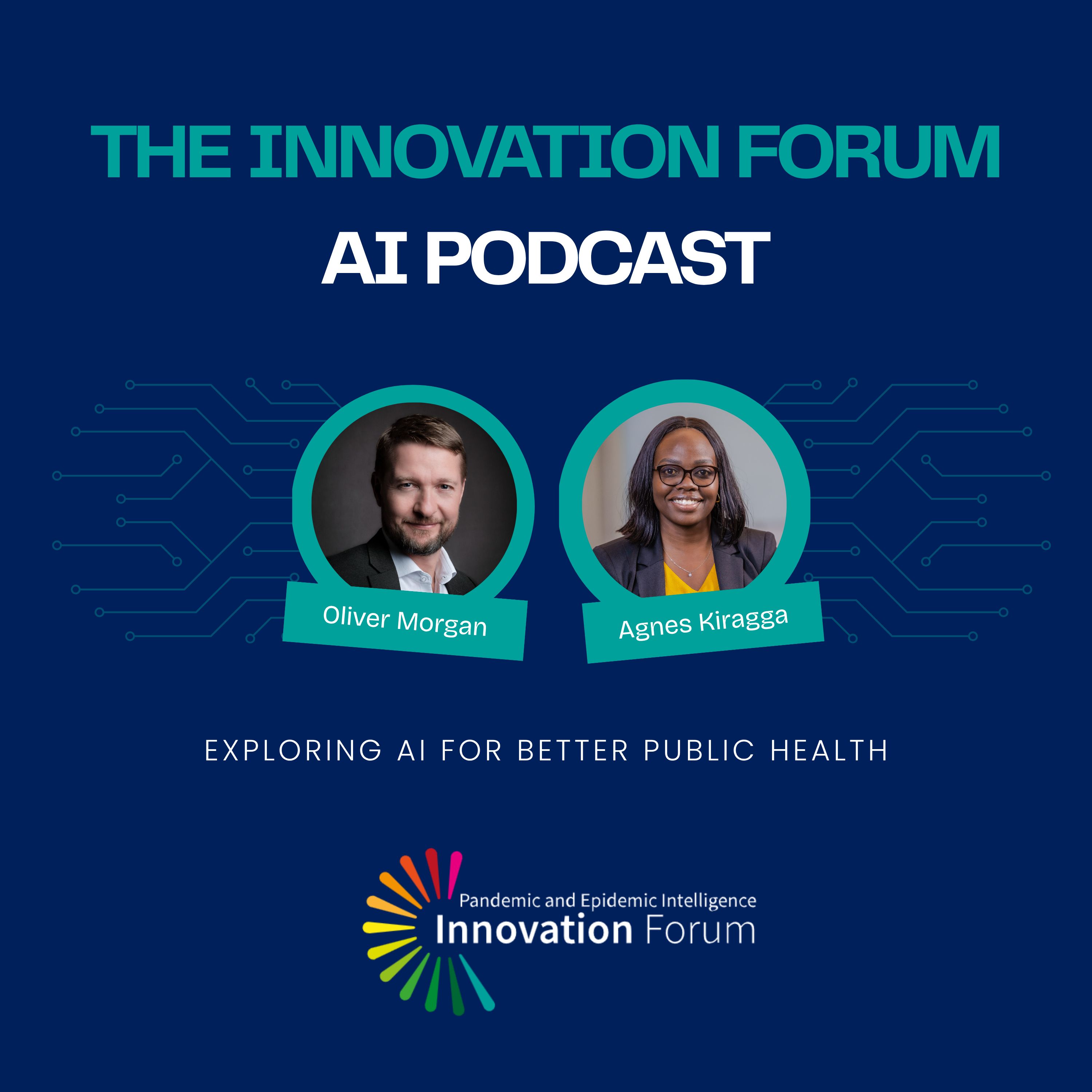 African Data for African Health: Building the AI Foundations the Continent Needs 04.06.2026 50min🎙️ Episode Title African Data for African Health: Building the AI Foundations the Continent Needs --- 🧠 Episode Summary In this episode, Oliver Morgan speaks with Agnes Kiragga, Head of the Data Science Program at the African Population and Health Research Center in Nairobi, Kenya. Drawing on over two decades of experience building data systems and leading large-scale multi-country initiatives across the continent, Agnes reflects on what it takes to make AI work in African public health — not as a concept, but in practice, inside real institutions with real constraints. The conversation spans the full range of Agnes's work: from no-code AI platforms that bring real-time analytics to researchers without coding backgrounds, to AI-powered blood stock management systems in Cameroonian hospitals, to federated analysis platforms that allow data to be analyzed across borders without ever leaving its home institution. The episode addresses one of the most consequential gaps in global health AI: the underrepresentation of African datasets in the models being built for epidemic intelligence. Agnes argues that tools not trained on African data cannot capture the comorbidity burden, the linguistic diversity, or the epidemiological reality of African populations — and that the consequences range from missed diagnoses to wrong predictions during outbreaks. She also makes the case for a new generation of evaluation frameworks for large language models in African health contexts, where multi-turn, multilingual interactions are the norm, not the exception. Throughout, Agnes is clear-eyed about what is still missing — governance structures, infrastructure, skilled personnel — while pointing to the momentum building across the continent in training, tooling, and institutional capacity. Her core argument: AI for African health cannot be imported. It has to be built, evaluated, and owned from within. --- 💬 Guest Agnes Kiragga is Head of the Data Science Program at the APHRC in Nairobi, Kenya. With over 20 years of experience working with large and diverse health datasets across Africa, she leads the Data Science Without Borders project. She also leads the INSPIRE Network, a consortium of approximately 25 longitudinal Health and Demographic Surveillance System sites across Africa. Her work spans data harmonization, federated analysis, AI governance, and the responsible evaluation of AI tools in low- and middle-income country settings. She is a delivery partner for the Evidence for AI in Health initiative, which generates rigorous evidence on whether AI tools actually work in the contexts where they are deployed. --- 🌐 Resources and References - APHRC: https://aphrc.org/ - DSWB: https://dswb.africa; https://doi.org/10.3389/fpubh.2025.1695907 - INSPIRE Network: https://www.inspiredata.network/; https://aphrc.org/inspire/; https://www.frontiersin.org/journals/digital-health/articles/10.3389/fdgth.2024.1329630/full - DataSHIELD: https://assets-eu.researchsquare.com/files/rs-9149238/v1/30a60413-de69-4c32-9237-577e7690944c.pdf?c=1776244497 - EVAH: https://www.povertyactionlab.org/initiative/evidence-ai-health-evah-initiative - AfriMed-QA: https://afrimedqa.com/ - OHDSI common data model: https://www.ohdsi.org/ - AIMS: https://aims.ac.za/ - Data Science Africa: https://www.datascienceafrica.org/ - Deep Learning Indaba: https://deeplearningindaba.com/ - IDRC AI for Development: https://www.idrc.ca/en/initiative/artificial-intelligence-development --- 🎵 Music Credits Track: ‘Nairobi Nights’. License code: WPJKGDX60OHV0I2I. --- ⚠️ Disclaimer This podcast is produced by the World Health Organization (WHO) as part of the Pandemic and Epidemic Intelligence Innovation Forum initiative. The views expressed by guests are their own and do not necessarily represent those of WHO or its affiliates. Content is intended for informational purposes only and does not constitute professional medical advice.
 -
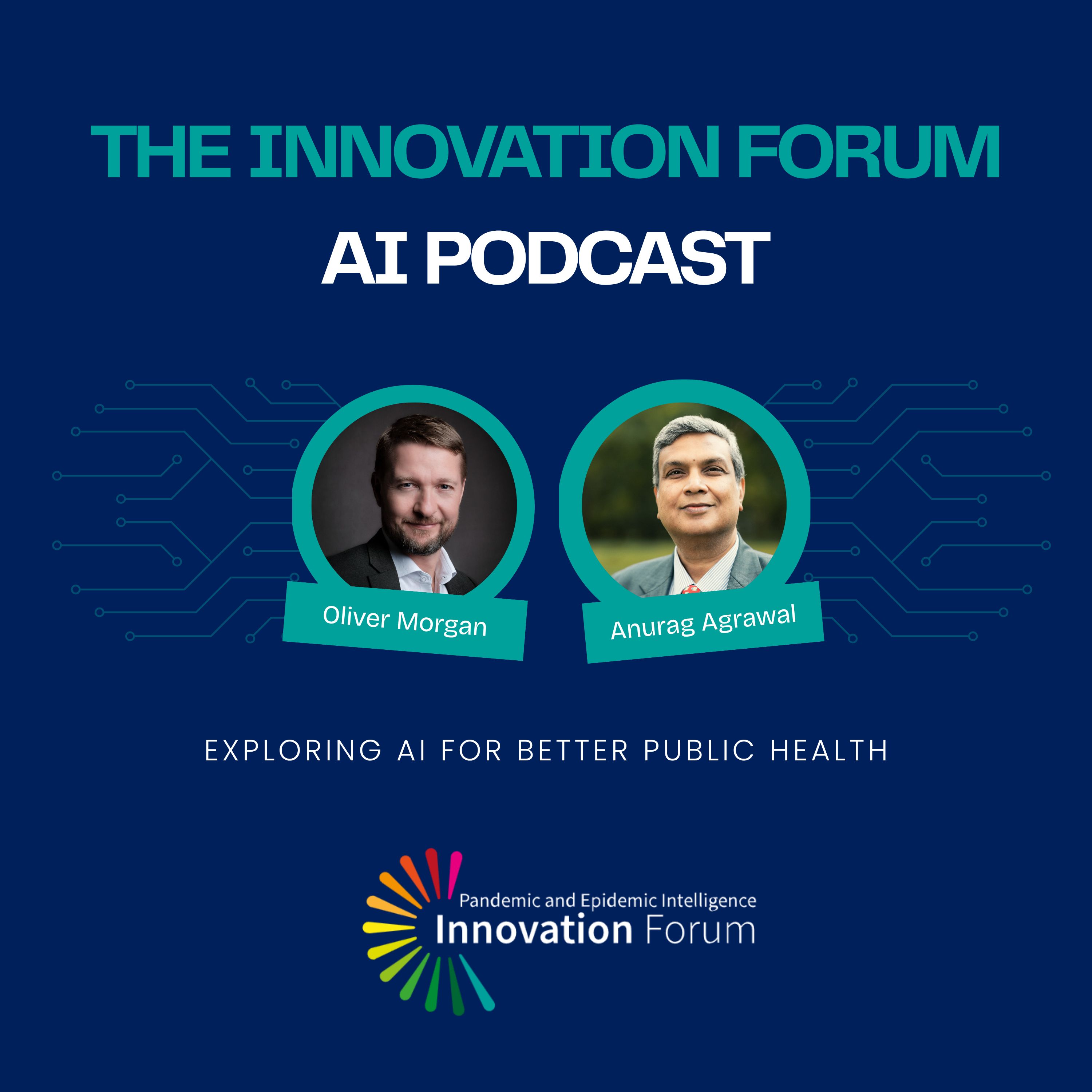 From Genomes to Governance: Lessons from India on Building AI-Ready Public Health Systems 20.06.2026 48min🎙️ Episode Title From Genomes to Governance: Lessons from India on Building AI-Ready Public Health Systems --- 🧠 Episode Summary In this episode of The Innovation Forum AI Podcast, Oliver Morgan speaks with Anurag Agrawal, Professor and Dean of Biosciences and Health Research at Ashoka University in New Delhi. A physician-scientist with deep experience in respiratory biology, genomics, and data-driven health governance, Anurag draws on his leadership of India's National Genomic Surveillance Network during COVID-19 and his role as Vice President of Science Policy at the Indian National Science Academy to reflect on what it takes to build public health intelligence systems that are technically robust and institutionally grounded. The conversation opens with the Delta wave: how the focus on tracking Alpha left Delta undetected until clinical impacts had begun, exposing the gap between having genomic data and integrating it with clinical information in real time. Anurag traces India's evolution from fragmented sequencing efforts to a coordinated national consortium, and is candid about what remains missing: integrated electronic health records and cohort data linked to genomic surveillance. On AI, he is precise about both the promise and the limits. Foundation models hold real potential for mutation impact prediction, but fail at the tails of the distribution — exactly where novel pathogens emerge. His response is architectural: keep sensitivity high, route alerts to domain experts as humans on the loop rather than merely in it, and build institutional capacity to act under uncertainty. The episode also covers the dual-use risks of AI in biology, world models as an alternative to pure pattern recognition, and India's governance framework built on risk-calibrated innovation. Anurag closes with a deliberately grounded answer: the most important investment is getting the small things right, and rebuilding global cooperation. --- 💬 Guest Anurag Agrawal is Professor and Dean of Biosciences and Health Research at Ashoka University in New Delhi. A physician-scientist trained in respiratory biology and genomics, he led India's National Genomic Surveillance Network (INSACOG) during the COVID-19 pandemic and chaired the WHO advisory group that developed the global framework for evaluating new SARS-CoV-2 variants. He currently serves as Vice President of Science Policy at the Indian National Science Academy. His work spans pathogen genomics, data infrastructure for public health, AI governance, and the responsible integration of AI into health systems in low- and middle-income country settings. He has been involved in initiatives including the Lancet Commission on Data Solidarity and India's national AI for health strategy. --- 🌐 Resources and References - Ashoka University, Biosciences and Health Research: https://www.ashoka.edu.in/ - INSACOG: https://dbt.gov.in/insacog/. I believe this is the right link but can´t seem to access it, please confirm which one is the right one. - Indian National Science Academy (INSA): https://www.insaindia.res.in/ - Ayushman Bharat Digital Mission: https://abdm.gov.in/ --- 🎵 Music Credits Intro and outro music from Async Stock Audio. Track: 'Nairobi Nights'. License code: DBHAXH7OM6OTIDCQ. --- ⚠️ Disclaimer This podcast is produced by the World Health Organization (WHO) as part of the Pandemic and Epidemic Intelligence Innovation Forum initiative: https://pandemichub.who.int/news-room/innovation-forum. The views expressed by guests are their own and do not necessarily represent those of WHO or its affiliates. Content is intended for informational purposes only and does not constitute professional medical advice. --- 📲 Listen and Subscribe The Innovation Forum AI Podcast is available on YouTube, Spotify, Apple Podcasts, and Amazon Music. You can find a written summary of this episode here: https://substack.com/@omorgan? Follow, rate, and share.
 -
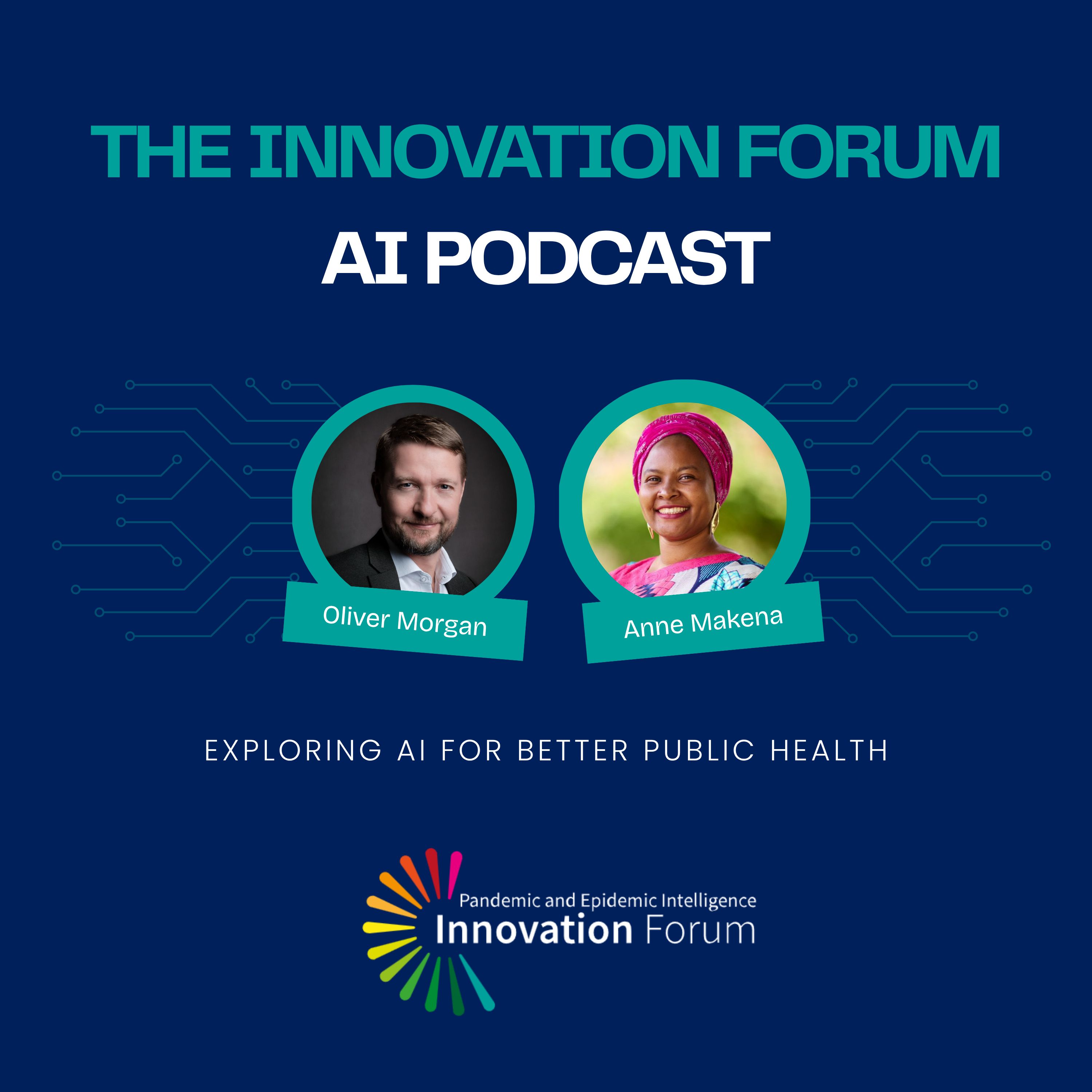 What Good AI Governance for Public Health Actually Requires 06.07.2026 48min🎙️ Episode Title What Good AI Governance for Public Health Actually Requires --- 🧠 Episode Summary Anne Makena has spent nearly a decade building equitable research partnerships between Oxford and African institutions, co-creating the African AI Governance Index, and launching Research Alpha to strengthen the evidence base behind AI investment in health. In this episode she brings all of that experience to bear on a single question: what does it actually take to deploy AI responsibly in public health? Her answer is grounded and unsparing. The governance conversation is already happening across Africa — the problem is whether anyone is listening. AI tools are being deployed without asking what problem they are solving, whether the data reflects the context, or who is accountable when things go wrong. And the innovation ecosystem, she argues, is being built on a borrowed mattress in a rented house: without a strong research and evidence base, no tool will sustain. The episode closes with a message of cautious optimism. The resources, the frameworks, and the talent exist. What is needed now is the humility to ask the right questions — starting with the people the tools are meant to serve. --- 💬 Guest Anne Makena is founder and CEO of Research Alpha, a platform providing scientific advisory and technical due diligence for Africa-focused capital allocators. She is Director of Partnerships and Development at the University of Global Health Equity in Rwanda, and Senior Adviser to the Africa Oxford Initiative at the University of Oxford, where she spent nearly a decade as Co-Director building equitable research and innovation partnerships across more than 30 African countries. She is co-creator of the African AI Governance Index, which tracks AI governance readiness across all 55 African Union member states. --- 🌐 Resources and References - Research Alpha: https://researchalpha.ai/ - Research Alpha RAIN Fellowship Programme**:** https://researchalpha.ai/research-industry-collaborations - University of Global Health Equity (UGHE): https://ughe.org/ - Africa Oxford Initiative (AfOx): https://www.afox.ox.ac.uk/ - Partners in Health: https://www.pih.org/ - Institute of Development Studies, Sussex: https://www.ids.ac.uk/ - STANDING Together (data diversity standards): https://www.datadiversity.org/ - World Health Organization regulatory maturity (Global Benchmarking Tool): https://www.who.int/ - African AI Governance Index: https://africanaigovernanceindex.com - Africa's deep tech boom rests on a fragile research ecosystem: https://www.nature.com/articles/d44148-026-00016-z - Africa AI Council: https://digitalhealth-africa.org/smart-africa-endorses-africa-ai-council/ - Real world trials of AI-enabled clinical decisions support tools in Africa: https://www.nature.com/articles/s41591-026-04503-6 --- 🎵 Music Credits Intro and outro music from Async Stock Audio. Track: 'Nairobi Nights'. License code: JKVN8JFYPINF4EKW. --- ⚠️ Disclaimer This podcast is produced by the World Health Organization (WHO) as part of the Pandemic and Epidemic Intelligence Innovation Forum initiative: https://pandemichub.who.int/news-room/innovation-forum. The views expressed by guests are their own and do not necessarily represent those of WHO or its affiliates. Content is intended for informational purposes only and does not constitute professional medical advice. --- 📲 Listen and Subscribe The Innovation Forum AI Podcast is available on YouTube, Spotify, Apple Podcasts, and Amazon Music. Follow, rate, and share to help us reach more public health professionals exploring the future of AI.
 -
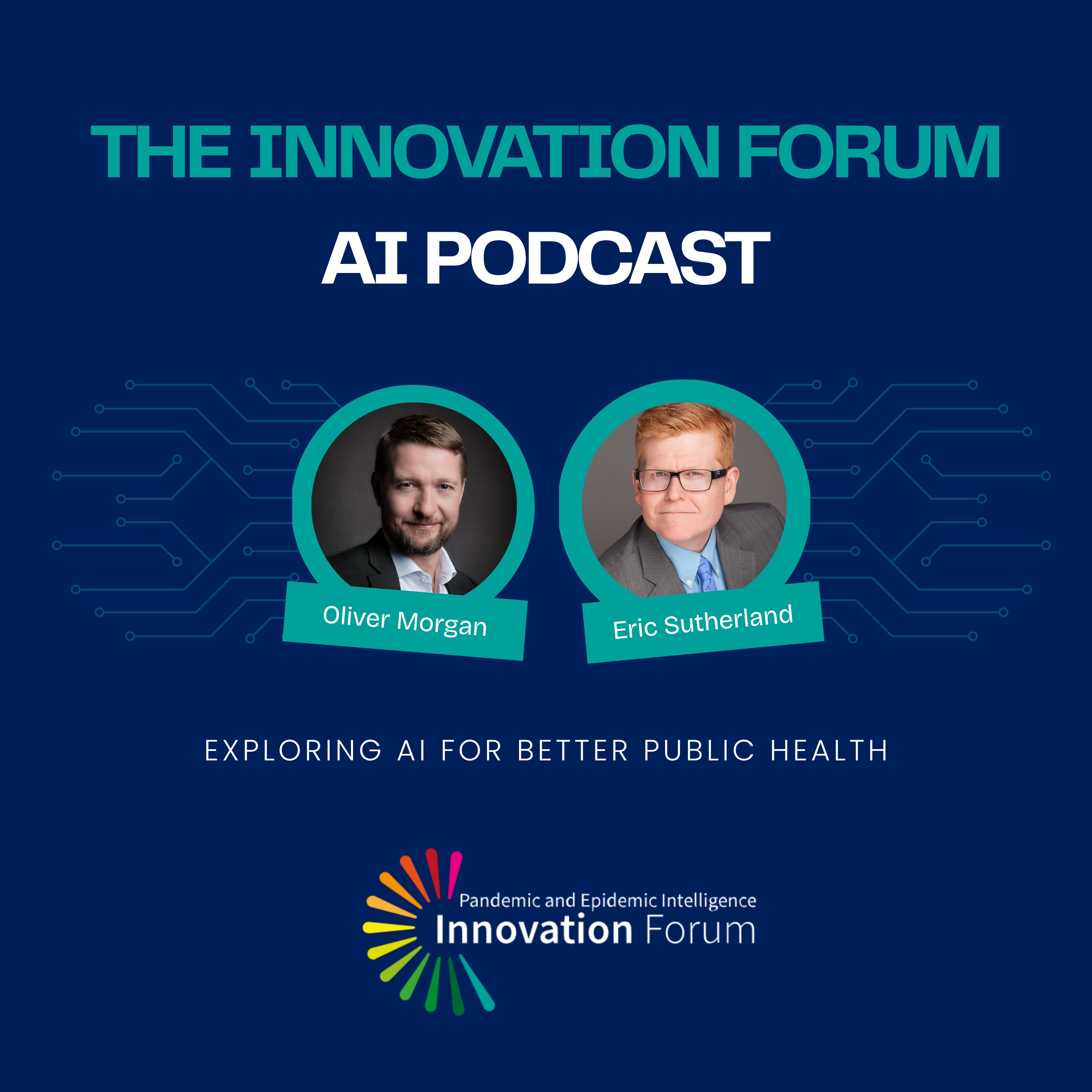 The Quiet Infrastructure Behind Responsible AI in Health 10.09.2026 58min🎙️ Episode Title The Quiet Infrastructure Behind Responsible AI in Health --- 🧠 Episode Summary Eric Sutherland leads the OECD's work on AI in health, drawing on years of experience in health data governance that began with leading Canada's pan-Canadian health data strategy. In this episode, he brings that experience to a single question: what does it actually take to move AI in health from experimentation to real, responsible scale? His answer starts with a metaphor he returns to throughout the conversation: health data, digital infrastructure, and AI are the water, the pipes, and the taps of the same system. Missing pipes means mud. Missing taps means flow with no pressure. And without water, even the best-looking infrastructure delivers no value at all. For Eric, treating these as three separate policy tracks, rather than one connected system, is one of the biggest risks he sees some countries taking today. That thinking runs through the OECD's own policy checklist for scaling AI in health, built not as a list of requirements, but as a set of questions for countries to ask themselves. The gap it's meant to address is real: fewer than a third of OECD countries currently have formal AI governance structures or workforce upskilling programs in place for health, even as seven countries have already developed dedicated AI-in-health strategies. The conversation keeps returning to trust, culminating in Eric's account of a recent international conference in Madrid, where 140 experts worked to translate all of this into a concrete Action Plan. His closing message is cautiously optimistic: scale will only happen at the pace of trust, but the collaboration needed to build that trust is already starting to take shape. --- 💬 Guest Eric Sutherland is Senior Health Economist at the OECD, where he leads the OECD's work on Digitalisation of Health and coordinates the OECD AI in Health Expert Group. He is a co-author of the OECD's 2026 report and policy checklist, Scaling Artificial Intelligence in Health. Before joining the OECD, he led work on Canada's pan-Canadian health data strategy. He took part in a recent international, expert-led conference with Spain's Ministry of Health, held in Madrid in May 2026, to develop an Action Plan for the responsible scale of AI in healthcare. --- 🌐 Resources and References - OECD (2026), Scaling Artificial Intelligence in Health: https://www.oecd.org/en/publications/scaling-artificial-intelligence-in-health_a436e12d-en/full-report.html - Does Healthcare Deliver? Results from the Patient-Reported Indicator Surveys (PaRIS): https://doi.org/10.1787/c8af05a5-en - European Health Data Space Regulation (EHDS): https://health.ec.europa.eu/ehealth-digital-health-and-care/european-health-data-space-regulation-ehds_en - Conference on the Responsible Scale of AI in Healthcare, Madrid, 28–29 May 2026: https://www.sanidad.gob.es/en/areas/saludDigital/eventosJornadas/Jornada/IAenSalud_OCDE-MSAN.htm --- 🎵 Music Credits Intro and outro music from Async Stock Audio. Track: 'Nairobi Nights'. License code: GHJNMYCZOQXJ2QRI --- ⚠️ Disclaimer This podcast is produced by the World Health Organization (WHO) as part of the Pandemic and Epidemic Intelligence Innovation Forum initiative: https://pandemichub.who.int/news-room/innovation-forum. The views expressed by guests are their own and do not necessarily represent those of WHO or its affiliates. Content is intended for informational purposes only and does not constitute professional medical advice. --- 📲 Listen and Subscribe The Innovation Forum AI Podcast is available on YouTube, Spotify, Apple Podcasts, and Amazon Music. Follow, rate, and share to help us reach more public health professionals exploring the future of AI.
 -
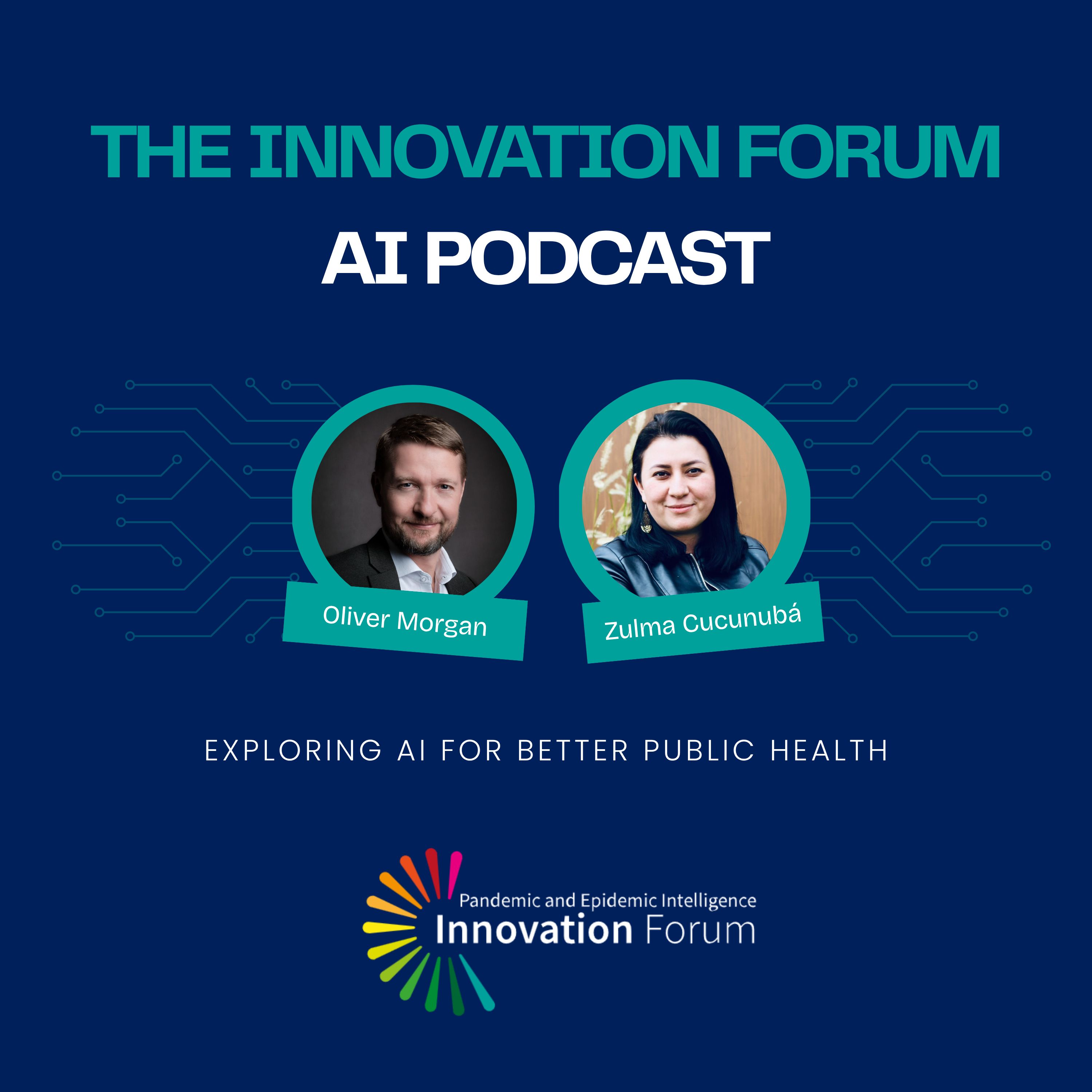 The Latin American Case for Rethinking AI in Public Health 25.09.2026 49min🎙️ Episode Title The Latin American Case for Rethinking AI in Public Health --- 🧠 Episode Summary Oliver Morgan speaks with Zulma Cucunubá. Drawing on years of work in data analytics and mathematical modelling across vector-borne diseases, vaccine-preventable diseases, and the COVID-19 pandemic, Zulma walks through where she sees AI genuinely adding value for public health in the region, and where the expectations still outrun the reality. The conversation covers what it actually takes to move an AI-for-health project from pilot to routine practice, how an initiative that predates today's AI-for-health conversation is adapting to it, the gap in public health workforce training, why most existing evidence standards for AI were built for clinical settings in upper-income countries, how AI technologies might be regulated the way drugs and diagnostics already are, and why "responsible AI" should mean something more demanding, not less, in a region that won't meet standards designed for other realities. Zulma closes with a candid look at the true, often underestimated cost of implementing AI systems in the public sector. --- 💬 Guest Zulma Cucunubá is Professor of Epidemiology and Director of the Public Health Institute at Pontificia Universidad Javeriana in Bogotá, and an Honorary Lecturer at the MRC Centre for Global Infectious Disease Analysis at Imperial College London. Her work sits at the intersection of mathematical modelling, open data, and software development for epidemic response. She co-leads Epiverse TRACE-LAC, an open-source ecosystem of software, analytics, and training that gives ministries and national institutes across Latin America and the Caribbean the capacity to run their own outbreak analytics. Her COVID-19 modelling informed Colombia's national and subnational control strategies, and she serves on the Collaboratory Technical Advisory Group at the WHO Hub for Pandemic and Epidemic Intelligence. --- 🌐 Resources and References - Institute of Public Health, Pontificia Universidad Javeriana: https://www.javeriana.edu.co/ins-salud-publica/nosotros - Observatory of Responsible Use of AI, Pontificia Universidad Javeriana: https://www.javeriana.edu.co/ins-bioetica/ia-responsable/-/document_library/s4tZYwhTY1b1/view/2490234 - Epiverse TRACE-LAC: https://epiverse-trace.github.io/index.html - PAHO regional study on AI and the health workforce: https://www.paho.org/en/news/18-11-2025-artificial-intelligence-and-health-workforce-paho-presents-results-regional-study - PAHO cycle on artificial intelligence in health: https://www.paho.org/en/news/12-2-2026-paho-launches-cycle-ii-artificial-intelligence-health-strengthen-digital - Lancet Commission on Strengthening the Use of Epidemiological Modelling of Emerging and Pandemic Infectious Diseases: https://www.thelancet.com/journals/lancet/article/PIIS0140-6736(23)02758-7/abstract02758-7/abstract) - IDRC Artificial Intelligence for Development: https://idrc-crdi.ca/en/initiative/artificial-intelligence-development - ACCELERATE 2026 Conference. AI and Data for Social Good with a focus on Public Health and Financial Inclusion. https://data.org/get-involved/accelerate-conference/ --- 🎵 Music Credits Intro and outro music from Async Stock Audio. Track: 'Nairobi Nights'. License code: 3TV02TMUHJAZHYDT. --- ⚠️ Disclaimer This podcast is produced by the World Health Organization (WHO) as part of the Pandemic and Epidemic Intelligence Innovation Forum initiative: https://pandemichub.who.int/news-room/innovation-forum. The views expressed by guests are their own and do not necessarily represent those of WHO or its affiliates. Content is intended for informational purposes only and does not constitute professional medical advice. 📲 Listen and Subscribe The Innovation Forum AI Podcast is available on YouTube, Spotify, Apple Podcasts, and Amazon Music. Follow, rate, and share to help us reach more public health professionals exploring the future of AI.
 -
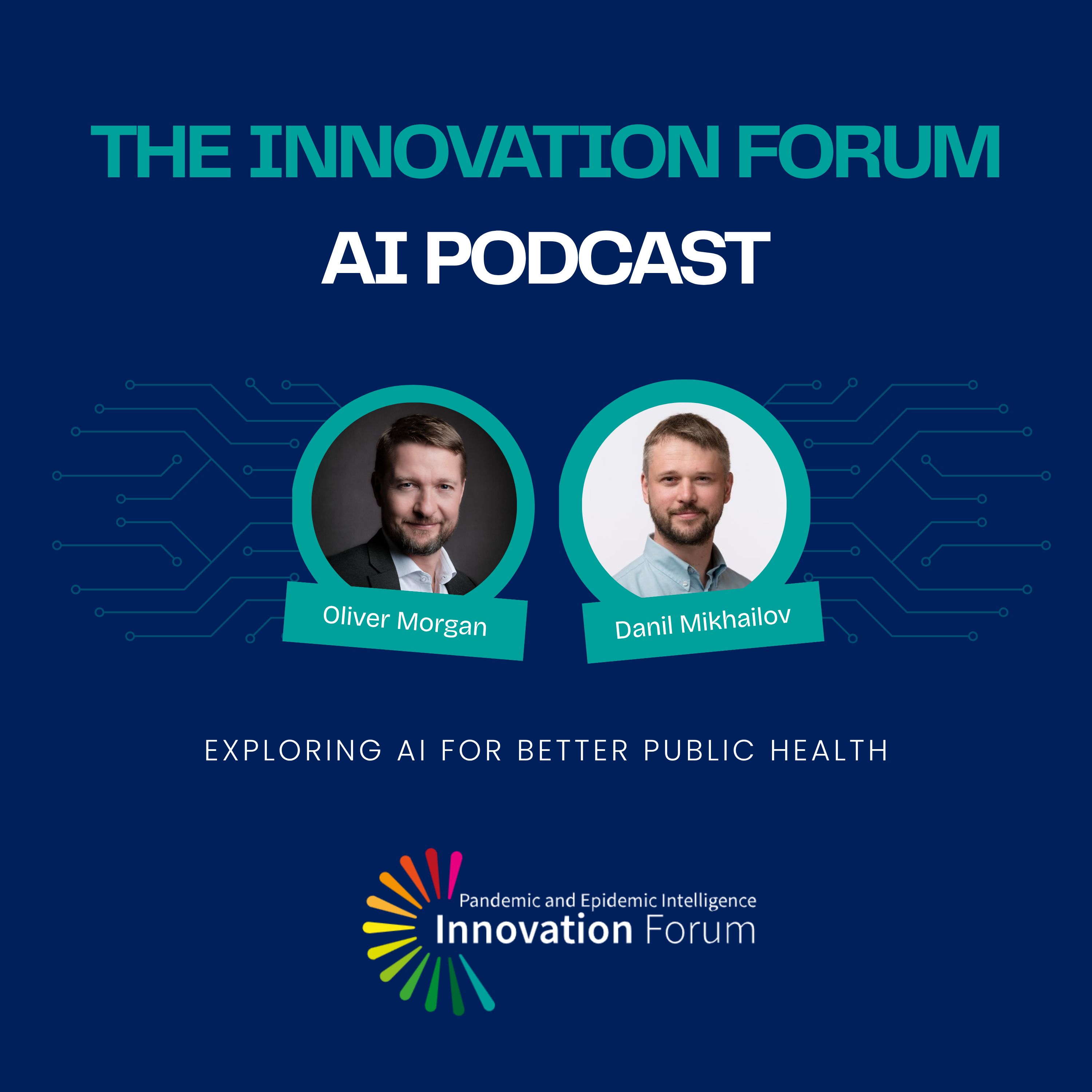 The many forces behind good public health AI 09.10.2026 47min🎙️ Episode Title The many forces behind good public health AI --- 🧠 Episode Summary Oliver Morgan speaks with Dr Danil Mikhailov, Chairman of Mantis NLP and co-founder of the Institute for Community AI Research (I-CAIR). Drawing on his years as the first Head of Data & Innovation at the Wellcome Trust and later as CEO of data.org, Danil walks through where AI is already changing the back office of science, from grant classification to policy tracking, and what that experience taught him about building AI responsibly, from the inside of an engineering team out to entire communities. The conversation covers where AI is already changing how science gets organised and funded, the practical choice between large general purpose models and smaller specialist ones, the unglamorous data work that has to happen before any model can be trusted, what it takes to embed ethical review inside a fast moving engineering team without it becoming just a formality, the case for treating AI as a problem for communities rather than individuals, and why language remains one of the least visible but most consequential gaps in how AI systems get built. --- 💬 Guest Danil Mikhailov, Ph.D., is Chairman of Mantis NLP and co-founder of the Institute for Community AI Research (I-CAIR). He was the first Head of Data & Innovation at the Wellcome Trust, where he founded and led Wellcome Data Labs, and later served as CEO of data.org. He co-founded and chaired the Global Pandemic Data Alliance, formed under the auspices of the G7 to strengthen the world's pandemic and epidemic data infrastructure, which helped launch the Epiverse initiative. Danil holds a Ph.D. in Sociology and Communications from Brunel University London, and master's degrees in Philosophy (Birkbeck, University of London) and Chinese Studies (SOAS, University of London). --- 🌐 Resources and References - Mantis NLP: https://www.mantisnlp.com/about-us/ - Institute for Community AI Research (I-CAIR): https://data.org/initiatives/i-cair/ - I-CAIR playbook on responsible data and AI implementation in LMICs: https://data.org/playbooks/icair/ - Data.org: https://data.org/ - Epiverse: https://data.org/our-work/epiverse/ - Playbook for digitisation of oral data for NLP of low resource languages: https://data.org/reports/digitisation-of-oral-data-for-nlp-of-low-resource-languages/ - Global Pandemic Data Alliance: https://royalsociety.org/news/2021/09/global-pandemic-data-alliance/. - Integrating Ethics into Data Science: Insights from a Product Team (Mankoo, Spengeman and Mikhailov): https://papers.ssrn.com/sol3/papers.cfm?abstract_id=4077031 - Reach, Wellcome Data Labs policy-tracing tool: https://github.com/wellcometrust/reach - Arshin Adib Moghaddam: https://www.soas.ac.uk/about/arshin-adib-moghaddam - Patricia Tapia: https://data.org/people/patricia-v-tapia/ - SciBERT: https://arxiv.org/abs/1903.10676 --- 🎵 Music Credits Intro and outro music from Async Stock Audio. Track: 'Nairobi Nights'. License code: WFZQPUWHLO26P1VL. --- ⚠️ Disclaimer This podcast is produced by the World Health Organization (WHO) as part of the Pandemic and Epidemic Intelligence Innovation Forum initiative: https://pandemichub.who.int/news-room/innovation-forum. The views expressed by guests are their own and do not necessarily represent those of WHO or its affiliates. Content is intended for informational purposes only and does not constitute professional medical advice. --- 📲 Listen and Subscribe The Innovation Forum AI Podcast is available on YouTube, Spotify, Apple Podcasts, and Amazon Music. Follow, rate, and share to help us reach more public health professionals exploring the future of AI.
Slični podcasti


Popularan u
Ovaj podcast se pojavljuje i u podcast listama ovih zemalja.
