
History of the Second World War
Wesley Livesay
0
History of the Second World War is a weekly podcast that covers World War 2, starting from the tumultuous years after the First World War, continuing into the descent into war during the 1930s, through the war years, and then into the post-war aftermath.
Epizody
-
 Listener Questions Pt. 8 02.10.2026 23minMore strategic bombing discussion, how did merchant shipping work, occupied economies, and more. Learn more about your ad choices. Visit megaphone.fm/adchoices
 -
 277: War at Sea '41 Pt. 15 - The End of the Bismarck 30.09.2026 21minAfter days of pursuit, King George V and Rodney finally close with the crippled Bismarck in the stormy Atlantic. This episode follows the brutal final battle from the opening salvos through the destruction of Bismarck's guns and superstructure, the British battleships' point-blank bombardment, and Dorsetshire's torpedo attack as Germany's most powerful warship slips beneath the waves. Credit Logo Image: https://www.flickr.com/photos/state_library_south_australia/3331881750/in/album-72157623232407924 Learn more about your ad choices. Visit megaphone.fm/adchoices
 -
 276: War at Sea '41 Pt. 14 - Wounded Beast 23.09.2026 23minWith Bismarck crippled and unable to steer after the Ark Royal's torpedo attack, the German battleship's crew struggles through flooding, failed repairs, and growing exhaustion while both German commanders ashore and British forces at sea prepare for the inevitable final encounter. This episode follows the messages that revealed the ship's desperate condition, the nighttime attacks by Captain Vian's destroyers—including Piorun's bold challenge—and the convergence of King George V and Rodney before the battle that would end Operation Rheinübung. Credit Logo Image: https://www.flickr.com/photos/state_library_south_australia/3331881750/in/album-72157623232407924 Learn more about your ad choices. Visit megaphone.fm/adchoices
 -
 275: War at Sea '41 Pt. 13 - Lucky Strike 16.09.2026 29minAfter Bismarck slips away from her British pursuers, the Royal Navy launches a desperate search before dwindling fuel supplies force the chase to end. This episode follows the intelligence breakthrough that reveals the battleship's course, the Ark Royal Swordfish strike that mistakenly attacks HMS Sheffield, and the second attack that cripples Bismarck's steering and seals her fate. Credit Logo Image: https://www.flickr.com/photos/state_library_south_australia/3331881750/in/album-72157623232407924 Learn more about your ad choices. Visit megaphone.fm/adchoices
 -
Listener Questions. Pt 7 11.09.2026 25minGreece, First World War Blockade Breaking, Crete, and WW2 Main Battery shell reliability. Learn more about your ad choices. Visit megaphone.fm/adchoices
-
 274: War at Sea '41 Pt. 12 - On a Wing and a Prayer 09.09.2026 24minWith Bismarck damaged and making for France, the Royal Navy concentrated an enormous collection of ships to contain and destroy her while Admiral Lütjens worked to release Prinz Eugen and escape his pursuers. This episode follows Bismarck’s clash with the shadowing force, the inexperienced aircrews of HMS Victorious launching their torpedo attack, and the maneuver that finally allowed the German battleship to disappear from British radar. Credit Logo Image: https://www.flickr.com/photos/state_library_south_australia/3331881750/in/album-72157623232407924 Learn more about your ad choices. Visit megaphone.fm/adchoices
 -
 273: War at Sea '41 Pt. 11 - The End of the Mighty Hood 02.09.2026 24minThe Battle of the Denmark Strait opened with British fire directed at the wrong German ship before Bismarck and Prinz Eugen concentrated their guns on Hood. This episode follows Hood’s catastrophic destruction, Prince of Wales’s withdrawal, the damage inflicted on Bismarck, and Admiral Lütjens’s decision to abandon the commerce-raiding mission and make for France while the Royal Navy remained in pursuit. Credit Logo Image: https://www.flickr.com/photos/state_library_south_australia/3331881750/in/album-72157623232407924 Learn more about your ad choices. Visit megaphone.fm/adchoices
 -
 272: War at Sea '41 Pt. 10 - On the Eve of Battle 26.08.2026 25minAs Hood and Prince of Wales raced toward Bismarck and Prinz Eugen, worsening weather, uncertain contact reports, and the limitations of Hood’s armor shaped Admiral Holland’s plan of attack. This episode follows the tense final hours before the Battle of the Denmark Strait, from preparations aboard all four ships to the identification error that sent the British guns toward the wrong target as the order to open fire was given. Credit Logo Image: https://www.flickr.com/photos/state_library_south_australia/3331881750/in/album-72157623232407924 Learn more about your ad choices. Visit megaphone.fm/adchoices
 -
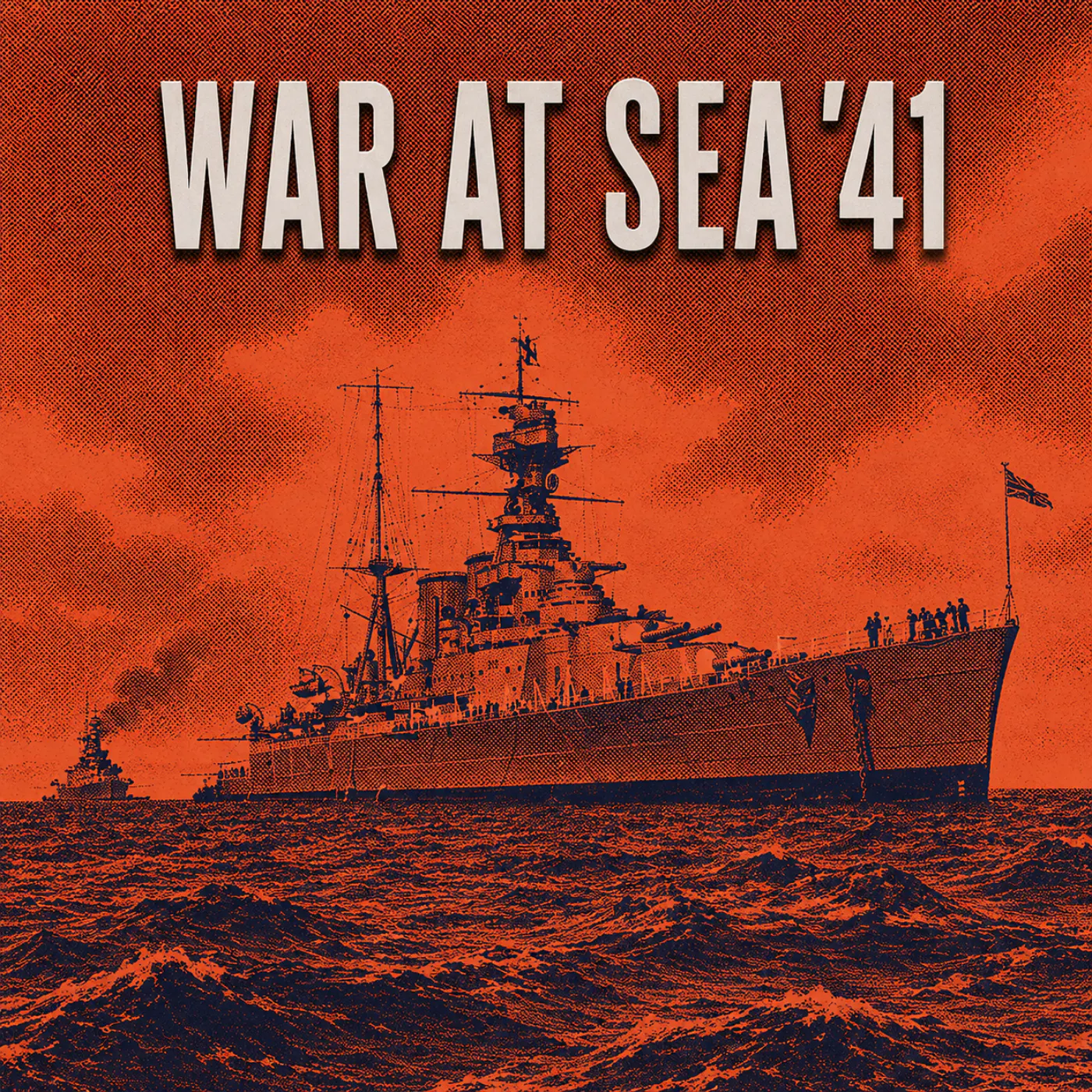 271: War at Sea '41 Pt. 9 - Found and Followed 19.08.2026 22minAs Bismarck and Prinz Eugen entered the Denmark Strait, the cruisers Suffolk and Norfolk made contact and began the difficult task of shadowing them through fog, ice, and dangerous proximity to the German guns. This episode follows the first exchanges of the pursuit, the radar limitations confronting both sides, and the Royal Navy’s race to position its forces for the battle ahead. Credit Logo Image: https://www.flickr.com/photos/state_library_south_australia/3331881750/in/album-72157623232407924 Learn more about your ad choices. Visit megaphone.fm/adchoices
 -
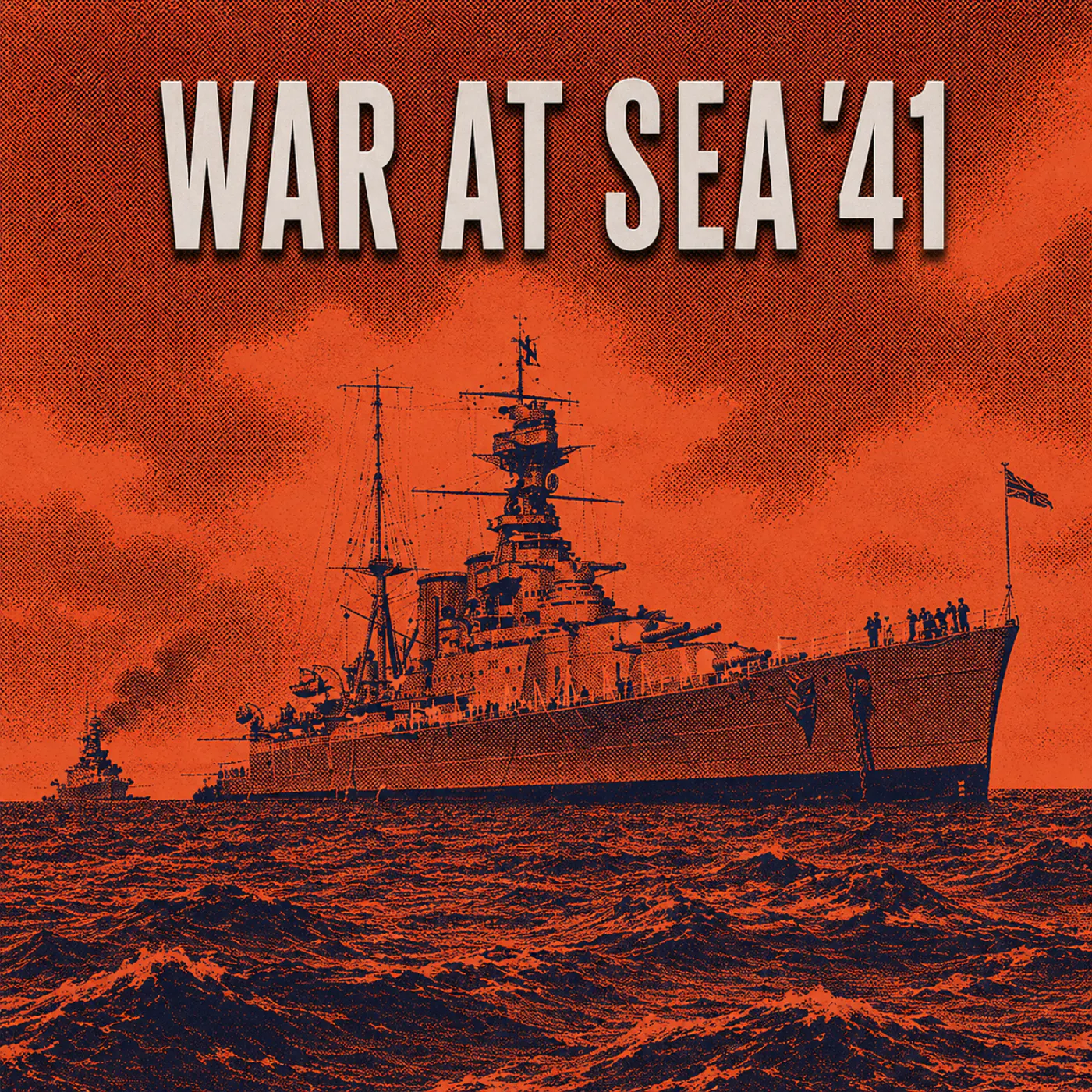 270: War at Sea '41 Pt. 8 - The Operation Begins 14.08.2026 27minAs Bismarck and Prinz Eugen departed for the Atlantic, British reconnaissance exposed their presence in Norway and set the Royal Navy’s response in motion. This episode follows the German ships through their final preparations and dash toward the Denmark Strait while examining the severe endurance constraints, aging warships, and untested crews that shaped Britain’s pursuit. Credit Logo Image: https://www.flickr.com/photos/state_library_south_australia/3331881750/in/album-72157623232407924 Learn more about your ad choices. Visit megaphone.fm/adchoices
 -
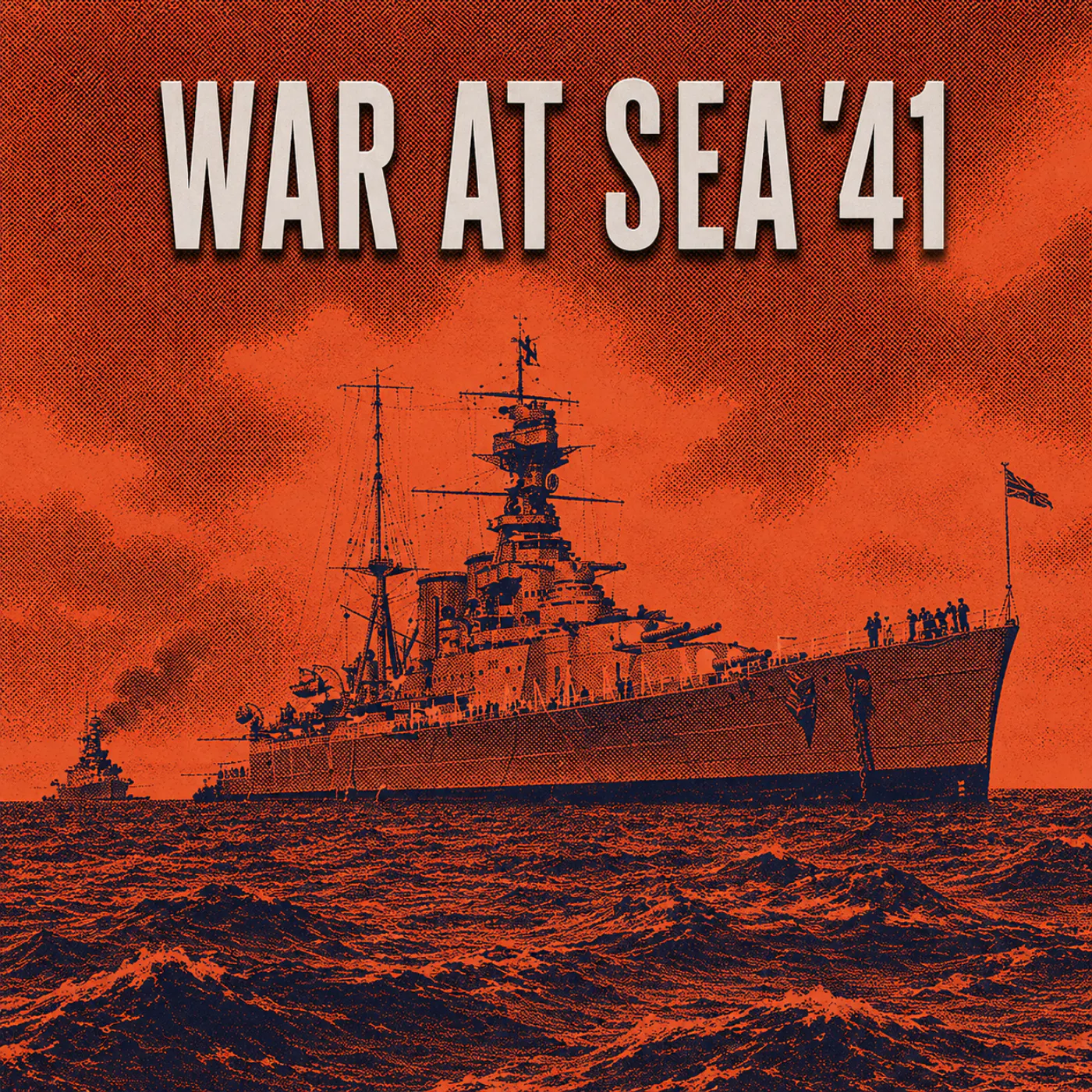 269: War at Sea '41 Pt. 7 - This Seems Risky 06.08.2026 24minIn May 1941, the German battleship Bismarck prepared for its first and only wartime cruise into the Atlantic. This episode examines the strategic pressures behind Operation Rheinübung, the compromises that left Bismarck and Prinz Eugen without the support originally envisioned, and Admiral Günther Lütjens’s growing concern that the mission placed Germany’s most powerful warship at unacceptable risk. "One scam can cost you everything. Protect yourself now. The first 100 users get 20% off with code **history20** at **https://coveron.com/history20**." Credit Logo Image: https://www.flickr.com/photos/state_library_south_australia/3331881750/in/album-72157623232407924 Learn more about your ad choices. Visit megaphone.fm/adchoices
 -
Listener Questions Pt. 6 04.08.2026 24minGeography, German Success in Russia, Economies, and much more in this listener question episodes. Learn more about your ad choices. Visit megaphone.fm/adchoices Learn more about your ad choices. Visit megaphone.fm/adchoices
-
 268: War at Sea '41 Pt. 6 - Aces Down 29.07.2026 26minThis episode follows the Battle of the Atlantic through the costly weeks of March 1941, when Germany lost three of its most celebrated U-boat commanders: Günther Prien, Joachim Schepke, and Otto Kretschmer. It examines the expanding British convoy-escort system, the battle surrounding convoy HX-112, and the decisions that pushed Dönitz to disperse his boats farther west and toward West Africa. Those losses marked the end of one phase of the U-boat war, even as rising German production and the approaching entry of the United States pointed toward an even larger struggle ahead. "One scam can cost you everything. Protect yourself now. The first 100 users get 20% off with code **history20** at **https://coveron.com/history20**." Credit Logo Image: https://www.flickr.com/photos/state_library_south_australia/3331881750/in/album-72157623232407924 Learn more about your ad choices. Visit megaphone.fm/adchoices
 -
 267: War at Sea '41 Pt. 5 - The Undersea Hunters 23.07.2026 27minThis episode shifts the focus of the naval war from German surface raiders to the U-boats, tracing why they became the central German weapon in the Battle of the Atlantic and why there were still too few of them in late 1940 and early 1941. It covers the effect of French Atlantic bases, the construction of U-boat pens, cooperation with Fw-200 Condors, early combined attacks on convoys, and the contrasting struggles of British Coastal Command. The episode ends with the return of celebrated U-boat commanders like Günther Prien and Otto Kretschmer as the campaign enters a dangerous new phase. Credit Episode Image: https://www.flickr.com/photos/state_library_south_australia/3331881750/in/album-72157623232407924 Learn more about your ad choices. Visit megaphone.fm/adchoices
 -
 266: War at Sea '41 Pt. 4 - The End of Operation Berlin 17.07.2026 24minOperation Berlin reaches its conclusion as Scharnhorst and Gneisenau continue their Atlantic cruise, repeatedly finding merchant shipping but also repeatedly being checked by the presence of British battleships. This episode follows Lütjens through further searches, missed opportunities, encounters with Malaya and Rodney, and the final run into Brest, before turning to the RAF attacks that badly damaged Gneisenau and disrupted the Kriegsmarine's plans for an even larger surface-raiding operation. The result is a look at both the promise and the fragility of Germany's surface-raider strategy in the spring of 1941. Credit Episode Image: https://www.flickr.com/photos/state_library_south_australia/3331881750/in/album-72157623232407924 Learn more about your ad choices. Visit megaphone.fm/adchoices
 -
 265: War at Sea '41 Pt. 3 - Operation Berlin 13.07.2026 24minIn early 1941, the German battleships Scharnhorst and Gneisenau set out on Operation Berlin, an attempt to break into the Atlantic and strike at Britain's convoy lifeline. This episode follows Admiral Günther Lütjens as he weighs weather, fuel, British patrols, and strict orders against the promise of a major commerce-raiding success, while also examining how the absence of German carrier aviation limited what the surface fleet could accomplish. When the two battleships finally found convoy HX-106, the presence of the aging battleship Ramillies revealed the central tension of the operation: Germany's most powerful raiders could threaten the Atlantic, but they could not afford the damage that might come from forcing the issue. Credit Episode Image: https://www.flickr.com/photos/state_library_south_australia/3331881750/in/album-72157623232407924 Learn more about your ad choices. Visit megaphone.fm/adchoices
 -
Listener Question Pt. 5 02.07.2026 23minStart off this one with a few quick hitters, then a question that takes 15 minutes to answer. Allied invasion of France in 1942? That Churchill guy you may have heard of? How did occupied economies work? Learn more about your ad choices. Visit megaphone.fm/adchoices
-
 264: War at Sea '41 Pt. 2 - Cruisers Attack 01.07.2026 24minThis episode examines Germany's auxiliary cruisers and the heavy cruiser Admiral Hipper as they carried the commerce war into distant shipping lanes during 1940 and early 1941. It follows the disguised merchant raiders that forced the Royal Navy to disperse its strength around the globe, then traces the Hipper's design limitations, encounters with convoys WS-5A and SLS-64, and repeated mechanical setbacks. Together, their operations reveal both the reach and the limitations of Germany's surface-raiding strategy before the battleships Scharnhorst and Gneisenau entered the Atlantic. Credit Episode Image: https://www.flickr.com/photos/state_library_south_australia/3331881750/in/album-72157623232407924 Learn more about your ad choices. Visit megaphone.fm/adchoices
 -
 263: War At Sea '41 Pt. 1 - The Surface Raiders 25.06.2026 25minThis episode begins a new look at the German surface raiding campaign of late 1940 and early 1941, when the Kriegsmarine tried to use cruisers and battleships to threaten Britain's Atlantic lifelines. We trace how the fall of France transformed Germany's naval options, why ports like Brest and St. Nazaire mattered, how intelligence shaped the hunt on both sides, and how the Admiral Scheer's attack on Convoy HX-84 forced the Royal Navy to rethink convoy protection just before the campaign reached its most dramatic phase. Learn more about your ad choices. Visit megaphone.fm/adchoices
 -
 262: Crete Pt. 7 - Another Defeat; Another Victory 17.06.2026 25minThe evacuation from Crete reaches its final stage as British, Commonwealth, and Greek forces try to escape through Sphakia while others are left behind at Rethymno and across the island. This episode follows the difficult choices made by commanders and naval crews, the losses suffered by the Royal Navy, the surrender and occupation that followed, and the way the defeat shaped later judgments of Freyberg, Churchill, and the battle itself. Learn more about your ad choices. Visit megaphone.fm/adchoices
Podobné podcasty


Oblíbený v
Tento podcast se objevuje také v podcastových žebříčcích těchto zemí.


