
Super Data Science: ML & AI Podcast with Jon Krohn
Jon Krohn
0
The Super Data Science Podcast, hosted by Dr. Jon Krohn, covers the latest in machine learning, AI, and data science careers. It features conversations with industry experts and academics, cutting through hype to provide practical insights. Topics range from data collection and analytics to predictive modeling and entrepreneurship, suitable for both beginners and experts.
Epizody
-
 1033: Workslop: The Hidden Cost of AI-Generated Work, with Prof. Jeff Hancock and Dr. Kate Niederhoffer 06.10.2026 1h 15minIn Episode #1033, Prof. Jeff Hancock (Professor of Communication at Stanford) and Dr. Kate Niederhoffer (Chief Scientist at BetterUp) join Jon Krohn to explain the hidden cost of AI-generated work. A year ago they coined "workslop" in a Harvard Business Review article that went viral and landed the term among Merriam-Webster’s words of the year: content that masquerades as real work but quietly shifts the burden onto whoever receives it. Their research finds that 40% of workers have been sent workslop and 53% admit to producing it, at a cost running to millions of dollars a year for a large organisation. In this episode, they separate workslop from ordinary sloppy work, name the organisational conditions that produce it, introduce their newer concept of relation slipping, and make the case that augmenting people with AI beats automating them away. Additional materials: https://www.superdatascience.com/1033 Interested in sponsoring a SuperDataScience Podcast episode? Email [email protected] for sponsorship information. In this episode you will learn: (00:04:03) What separates workslop from ordinary sloppy work (00:16:21) The organisational conditions that produce workslop (00:41:50) The pilot mindset, and using AI relationally (00:56:21) Jeff on the deepfake case and what it taught him about trust
 -
 1032: Agents Need 10x More Data Than Humans, with Salesforce’s CDO Michael Andrew 02.10.2026 27minDuring their #sponsored discussion, Chief Data Officer at Salesforce Michael Andrew talks to Jon Krohn about what changes for a data team when its customers are AI agents as well as people. Listen to the episode to hear Michael Andrew talk about why agents need ten times more trusted data than humans, how Salesforce untrapped its own customer data with Data 360 and what practitioners should be learning to stay effective in the agentic era! Additional materials: www.superdatascience.com/1032 Interested in sponsoring a SuperDataScience Podcast episode? Email [email protected] for sponsorship information. In this episode you will learn: (02:32) How the CDO role changes when agents are customers (06:18) Why agents need ten times more data than humans (09:06) How Salesforce untrapped its own customer data (21:36) What practitioners should be learning for the agentic era
 -
 1031: Tokenomics: Why Your Agentic AI Bill Is Exploding (and How to Fix It), with Tyler Cox and Ish Shah 29.09.2026 1h 15minIn Episode #1031, Ish Shah and Tyler Cox (Distinguished Engineers in the Office of the CTO for Dell Technologies' client group) join Jon Krohn to work out why agentic AI bills are exploding and what can be done about it. Over one weekend Ish burned roughly two billion tokens on a side project, and that is the ordinary shape of agentic work now: agents spawn sub-agents, the pie of work grows, and cheaper tokens only invite more ambitious projects. Tyler runs a small Dell lab that pushes hundreds of millions of tokens a day through local hardware instead. In this episode, they define what makes a system agentic, explain how to read a Pareto curve when choosing models, work through the jagged frontier and why most tasks do not need a frontier model, and lay out what moving agentic workloads onto your own hardware does to the economics. Additional materials: https://www.superdatascience.com/1031 Interested in sponsoring a SuperDataScience Podcast episode? Email [email protected] for sponsorship information. In this episode you will learn: (00:03:42) What makes a system agentic (00:12:45) Picking the right model for the task (00:16:46) How to read a Pareto curve (00:27:02) Why agents burn so many more tokens
 -
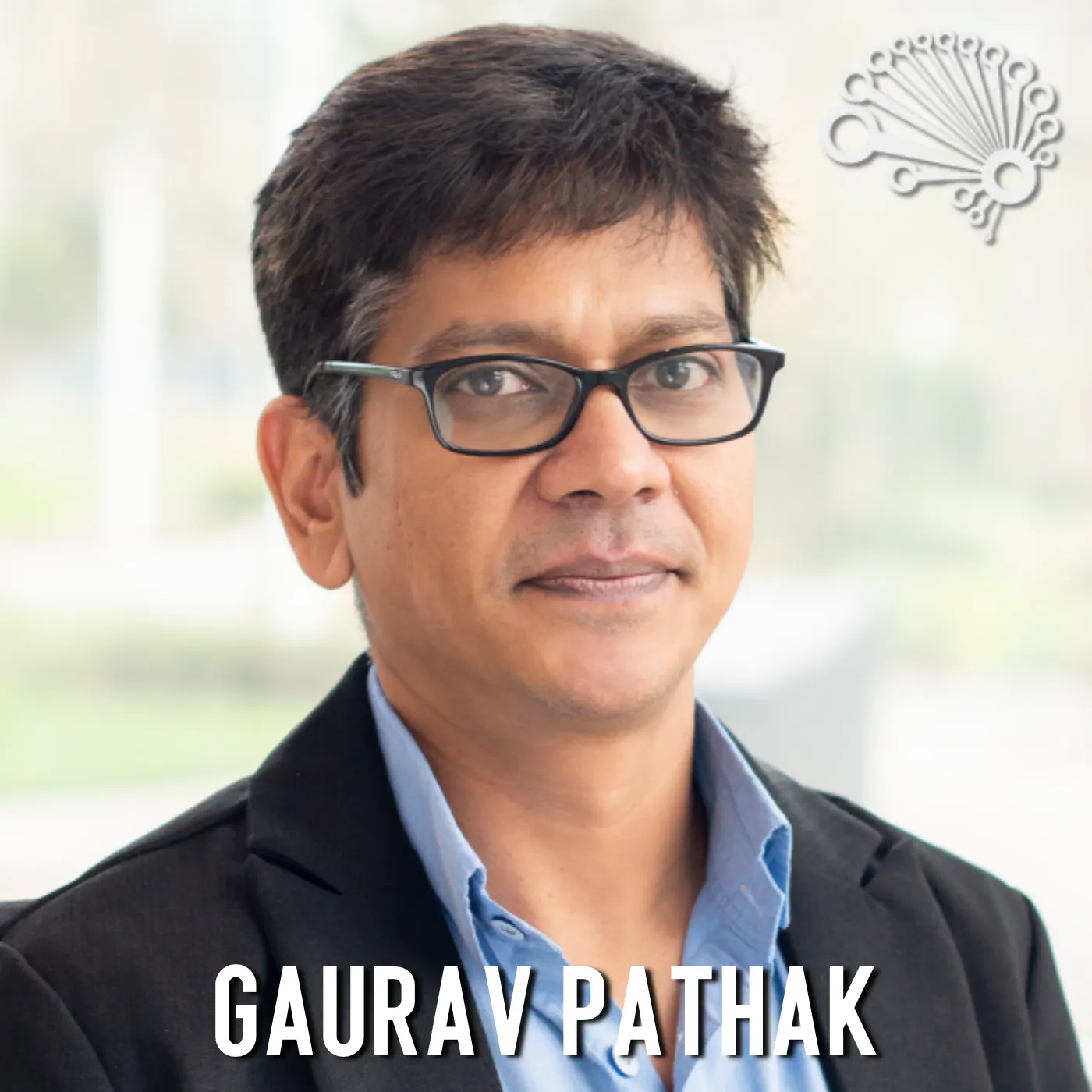 1030: Garbage In, Gospel Out: Why Agents Need Better Data, with Salesforce's Gaurav Pathak 25.09.2026 22minDuring their #sponsored discussion, Senior Vice President Product Management AI and Metadata at Salesforce, Gaurav Pathak talks to Jon Krohn about why AI agents need well-labeled, high-quality data to deliver reliable answers in the enterprise. Listen to the episode to hear Gaurav Pathak talk about the difference between a “data brawl” and “garbage in, gospel out”, who the “sin eaters” of enterprise AI are and the three skills that matter most for AI engineers today! Additional materials: www.superdatascience.com/1030 Interested in sponsoring a SuperDataScience Podcast episode? Email [email protected] for sponsorship information. In this episode you will learn: (03:05) Why metadata are the labels AI agents need (06:31) From “data brawl” to “garbage in, gospel out” (10:57) Who the “sin eaters” of enterprise AI are (13:45) What data quality rules are and how CLAIRE generates them (17:21) Three skills AI engineers need in the agentic era
 -
 1029: How AI Brought a Podcast Back From the Dead, with Linear Digressions’ Katie Malone 22.09.2026 1h 10minIn Episode #1029, Dr. Katie Malone (Host of Linear Digressions) joins Jon Krohn to explain how AI brought her podcast back from the dead. After nearly 300 episodes, Katie shut down Linear Digressions due to burnout, but better tools helped her relaunch it six years later. Along the way she has taught machine learning at Udacity and the University of Chicago and led the development of agentic AI platforms inside a company of tens of thousands of people. In this episode, she argues that people management and agent management are the same skill in different clothing, works through what AI slop and process slop are doing to organisations, describes the agent that now produces her show, and takes a pop quiz on three of her favourite data paradoxes. Additional materials: https://www.superdatascience.com/1027 Interested in sponsoring a SuperDataScience Podcast episode? Email [email protected] for sponsorship information. In this episode you will learn: (00:04:01) Why Linear Digressions stopped, and what changed enough to bring it back (00:15:01) Why people management and agent management are the same skill (00:24:32) The "Claude Code in a trench coat" agent that produces her show (00:41:39) Bainbridge’s ironies of automation, and why expertise gets rusty
 -
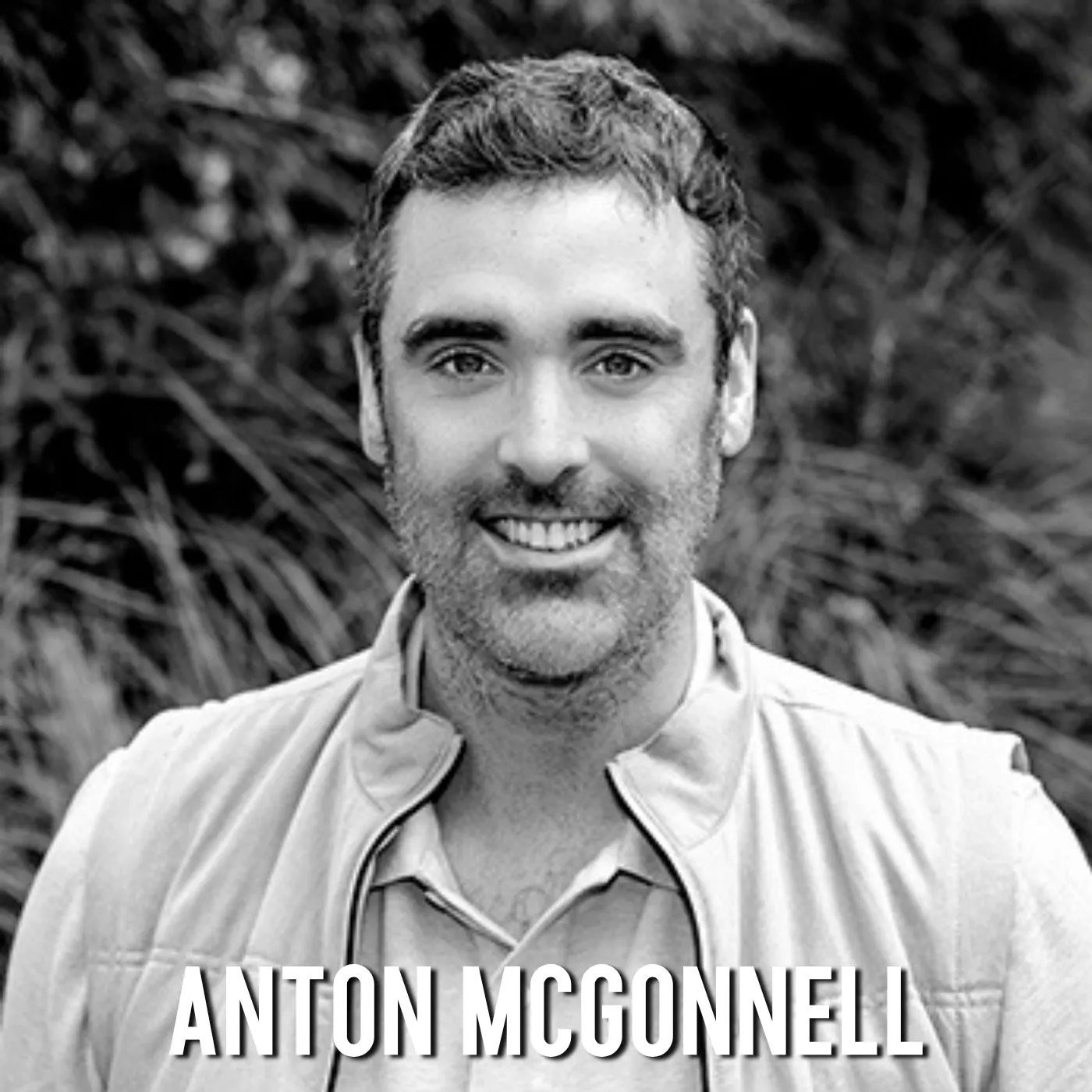 1028: The Chip Built for Agentic AI Inference, with SambaNova's Anton McGonnell 18.09.2026 29minIn Episode #1028, Anton McGonnell (VP of Product at SambaNova) joins Jon Krohn to explain why the chips running most AI inference today were never designed for the job. Agentic AI has changed the computational profile of inference, with much larger inputs and far heavier caches feeding the token generation that follows, and that shift has exposed where GPU architecture struggles. SambaNova has raised over $2 billion to build an alternative, the reconfigurable dataflow unit, which lays a whole model out spatially across the chip rather than executing it kernel by kernel. In this episode, Anton discusses why the speed that matters is payback, and how speed and concurrency are what turn a fixed hardware cost into a six-month payback. He also walks through the trade-off every inference provider faces between speed per user and throughput per chip, what the RDU architecture changes about scaling and data center deployment, the economics of the new SN50, and why four out of five AI infrastructure leaders say they would pay a premium for faster tokens. Additional materials: https://www.superdatascience.com/1028 Interested in sponsoring a SuperDataScience Podcast episode? Email [email protected] for sponsorship information. In this episode you will learn: (00:02:41) Why agentic AI is reshaping inference workloads (00:08:39) How SambaNova's RDU differs from a GPU (00:17:54) The economics of the SN50
 -
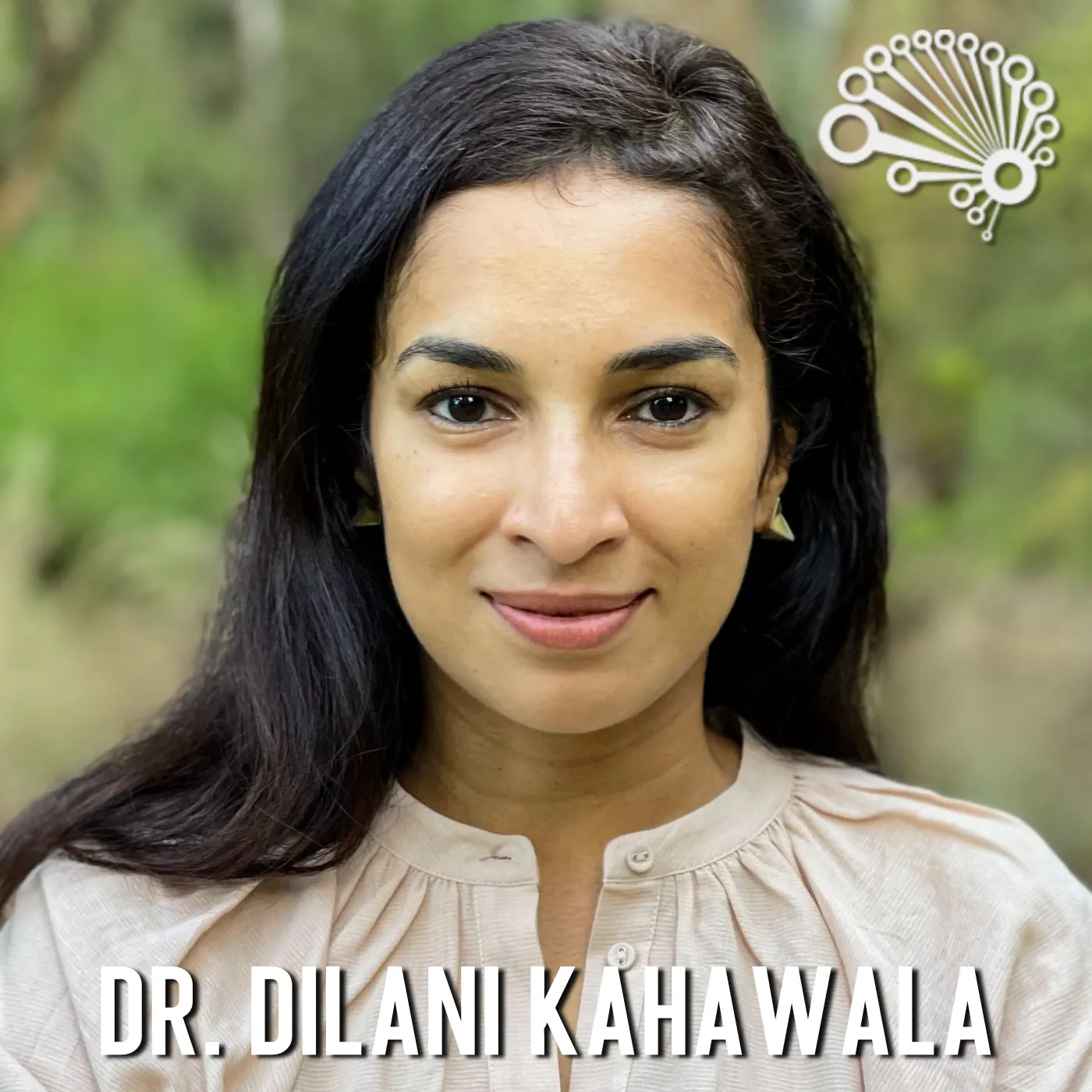 1027: Building an Always-On AI Agent for Busy Parents, with Dr. Dilani Kahawala 15.09.2026 1h 2minIn Episode #1027, Dr. Dilani Kahawala (Co-Founder and CEO of Anna) joins Jon Krohn to explain what it takes to build an always-on AI assistant that busy parents will trust with their inboxes. Anna watches the email, school apps, WhatsApp messages and calendars flowing into a family's life and surfaces what matters, over text and voice, with barely any app to speak of. Dilani came to it by way of a Harvard physics PhD, McKinsey, and a decade of product leadership at Etsy, Meta and Atlassian, and says she has had to throw away most of what that decade taught her about how products get built. In this episode, she lays out the three hardest problems in building Anna, why the eval loop is the heart of the product, how a long-running agent differs from a turn-based one, and the brutal unit economics of consumer AI. Additional materials: https://www.superdatascience.com/1027 Interested in sponsoring a SuperDataScience Podcast episode? Email [email protected] for sponsorship information. In this episode you will learn: (00:10:01) The three hardest problems in building a consumer agent (00:13:23) Why a long-running agent is a different problem from a turn-based one (00:22:33) Why the eval and improvement loop is the heart of the product (00:26:42) The unit economics of always-on AI on a flat subscription
 -
 1026: OpenAI’s GPT-6 Astra 11.09.2026 19minIn Episode #1026, Jon Krohn breaks down GPT-6 Astra, OpenAI’s new flagship that its president has floated as a possible marker of AGI. Jon covers what the model is, what it costs, its state-of-the-art results across computer use, coding, abstract reasoning and science and the safety story, which for this release is unusually intertwined with capability. He weighs the AGI claim against Anthropic’s Fable 5.1 and lands, as ever, in a measured middle. Additional materials: www.superdatascience.com/1026 Interested in sponsoring a SuperDataScience Podcast episode? Email [email protected] for sponsorship information. In this episode you will learn: (00:14) What GPT-6 Astra is, and what it costs (03:58) The capability highlights that matter most (10:23) The safety story and the AGI question
 -
 1025: Word Gravity: How Transformers Bend Space, with Dr. Luis Serrano 08.09.2026 1h 10minIn Episode #1025, Dr. Luis Serrano (Founder of Serrano Academy) joins Jon Krohn to explain the paper he co-authored on the curved spacetime of transformer architectures, in which attention stops being a lookup table and becomes something closer to gravity: words bend the space around them, and the embedding of "bank" visibly curves toward "river" as it travels through the layers of the network. In this episode, he recreates Eddington’s 1919 eclipse experiment inside a transformer, draws the line between an LLM workflow and an actual agent, explains why agent evaluation is a step harder than evaluating an essay, and gives the cleanest account of GRPO you will hear. Additional materials: https://www.superdatascience.com/1025 Interested in sponsoring a SuperDataScience Podcast episode? Email [email protected] for sponsorship information. In this episode you will learn: (00:10:53) What changed, and what survived, between the two editions of Grokking Machine Learning (00:27:48) Word gravity: how attention pulls "bank" toward "river" (00:42:12) Why RAG is an LLM workflow rather than an agent (00:51:23) The two-by-two that explains why GRPO powers reasoning models
 -
 1024: In Case You Missed It in August 2026 04.09.2026 34minIn ICYMI Episode #1024, Jon Krohn tracks the gap between AI investment and AI return, from the technology side to the people side. Hear from Pete Johnson, Jerry Yurchisin, Priyanka Vergadia and Tristan Handy, discussing why four out of five organizations have the structures for AI success in place while only one in five sees the returns, which decisions should never be handed to a language model however confident it sounds, how to structure Claude skills so that your output stops being slop and why the semantic layer matters more, not less, now that analytics agents are the ones asking the questions. Additional materials: www.superdatascience.com/1024 Interested in sponsoring a SuperDataScience Podcast episode? Email [email protected] for sponsorship information. In this episode you will learn: (00:56) Vector Search, Agentic Memory and Effective RAG (09:20) Mathematical Optimization in the Agentic AI Era (17:30) Anyone Can Write Code Now, So What Gets You Hired? (27:14) How dbt Won Analytics Engineering
 -
 1023: Agentic AI Skills That Matter Now, with Aishwarya Srinivasan 01.09.2026 1h 18minIn Episode #1023, Aishwarya Srinivasan (Co-Founder of The Gen Academy) joins Jon Krohn to work out where a competitive moat comes from once anything you can build in ten minutes, somebody else can build in ten minutes too. Ash came to teaching through Illuminate AI, the mentorship community she started in 2020, and now trains senior engineers and leaders to ship agentic AI in production; she is blunt that vibe coding lowers the floor without touching the engineering judgment that production demands. In this episode, she explains what a whole-system eval covers that a model eval misses, traces reinforcement learning from the algorithm she patented at IBM to its resurgence in agentic fine tuning and lays out the MIND framework from her TED Talk for living with AI. Additional materials: https://www.superdatascience.com/1023 Interested in sponsoring a SuperDataScience Podcast episode? Email [email protected] for sponsorship information. In this episode you will learn: (00:10:10) Why cheap code shifts the software engineering job rather than ending it (00:15:50) What a whole-system eval covers that a model eval misses (00:36:11) Why reinforcement learning came roaring back for agentic AI (00:41:23) The one skill Ash says matters more than any hard skill
 -
 1022: CLAUDE.md, AGENTS.md, Skills, Hooks and Subagents: A Field Guide to Steering AI Agents 28.08.2026 17minIn Episode #1022, Jon Krohn tackles the art of steering AI agents, deciding where your instructions should live so they get followed reliably without bloating every request. A sequel to Episode #1020 (where model size and effort set an agent’s horsepower), this one is about direction: the seven ways to deliver instructions, why a hook beats a prompt, the industry-wide agents.md standard, and three practical takeaways you can apply whatever your stack. Additional materials: www.superdatascience.com/1022 Interested in sponsoring a SuperDataScience Podcast episode? Email [email protected] for sponsorship information. In this episode you will learn: (02:52) The seven ways to deliver instructions to an agent (06:42) Why a hook is a guarantee and an instruction is only a probability (13:00) Three takeaways for organizing your instructions
 -
 1021: How dbt Won Analytics Engineering, with dbt Lab’s CEO Tristan Handy 25.08.2026 51minIn Episode #1021, Tristan Handy (Founder and CEO of dbt Labs) joins Jon Krohn to explain how a study of about a hundred companies in 2016 became analytics engineering, and then became a tool that over a hundred thousand data teams rely on. Tristan coined the term, chose SQL when Spark was the fashionable answer, and spent a decade turning down acquisition offers because none of them were good for the people using dbt. He is now merging dbt Labs with Fivetran and taking on the presidency of the combined company, the first deal he says cleared that bar. In this episode, Tristan walks through what dbt does to your raw data, argues that the semantic layer matters more once analytics agents are asking the questions, explains the type safety behind the Fusion engine, and details how a 12-kilobyte skill file collapses a million-dollar migration into six weeks. Additional materials: https://www.superdatascience.com/1021 Interested in sponsoring a SuperDataScience Podcast episode? Email [email protected] for sponsorship information. In this episode you will learn: (00:07:22) Why Tristan chose SQL over Spark, and what progressive complexity means (00:10:44) How a dbt project turns raw data into modeled tables (00:17:50) Why a decade of acquisition offers kept failing his one test (00:40:47) How 12-kilobyte skill files cut year-long migrations to six weeks
 -
 1020: How to Choose Model Size and Effort Level: The Two Critical Dials 21.08.2026 16minIn Episode #1020, Jon Krohn unpacks the two dials that increasingly decide what you get out of a large language model: which model size you pick and how much effort you tell it to spend. Using a July Anthropic blog post by Claude Code’s Lydia Holly as a jumping-off point, with guidance that generalizes to any model family, Jon explains what each setting actually does under the hood. Model size swaps which frozen weights handle your request (roughly, how capable), while effort sets how thorough and certain the model must be before calling a task done, not a simple “thinking-time slider.” He offers a clean diagnostic for when to raise effort versus move to a bigger model, shows why cheaper-per-token isn’t always cheaper-per-task and surveys how OpenAI, Google and open-weight labs have all converged on these same two dials. Additional materials: www.superdatascience.com/1020 Interested in sponsoring a SuperDataScience Podcast episode? Email [email protected] for sponsorship information. In this episode you will learn: (00:56) What the model-size dial actually does (05:29) Why effort isn’t a thinking-time slider (13:25) Three practical takeaways for using both dials
 -
 1019: Anyone Can Write Code Now, So What Gets You Hired? (With Priyanka Vergadia) 18.08.2026 59minIn Episode #1019, Priyanka Vergadia (founder of The Cloud Girl, former Senior Director of AI Transformation at Microsoft and Head of North America Developer Relations at Google) joins Jon Krohn to explain why almost every company has bought AI tools and almost none of them are seeing a return. Her fix is a budget split that will make any CFO wince: seven dollars on training employees for every dollar spent on the tools themselves. Having spent a decade turning dense cloud and AI concepts into sketches that a quarter-million developers actually remember, and having carried GitHub Copilot into Fortune 100 boardrooms, she has watched the gap between tool purchase and real production use up close. In this episode, Priyanka defines the elusive quality she calls taste, walks through how she structures Claude skills so her output stops being slop, unpacks her 10-20-70 framework, and shares breaking news about what she is building next. Additional materials: https://www.superdatascience.com/1019 Interested in sponsoring a SuperDataScience Podcast episode? Email [email protected] for sponsorship information. In this episode you will learn: (00:10:39) What “taste” actually means and why Priyanka now interviews for it (00:31:39) How to build a Claude skill by breaking a task into explicit sub-tasks (00:36:11) The 10-20-70 framework for AI budgets (00:47:52) The weekend exercise for finding what makes you different
 -
 1018: Alibaba's Qwen3.8-Max: Open-Weight Model Surpasses Most American Frontier Labs 14.08.2026 12minIn Episode #1018, Jon Krohn breaks down Qwen3.8-Max, Alibaba’s enormous new flagship, a 2.4-trillion-parameter mixture-of-experts model that, if its promised weights ship, becomes the largest open-weight release in history. Landing just weeks after Moonshot’s Kimi K3, it extends the price war and the open-weight surge Jon covered in Episode #1012. Alibaba positions it as second only to Anthropic’s Claude Fable 5 / Mythos 5 and independent signals land in a similar neighborhood. Jon walks through its capabilities and multi-day agentic demos, its aggressive pricing ($2 in / $6 out per million tokens, with cached input eight times cheaper), and the question he gets asked most: are Chinese models safe to use? His answer hinges far less on the model than on how your data reach it. Additional materials: www.superdatascience.com/1018 Interested in sponsoring a SuperDataScience Podcast episode? Email [email protected] for sponsorship information.
 -
 1017: Vector Search, Agentic Memory and Effective RAG, with MongoDB’s Pete Johnson 11.08.2026 57minIn Episode #1017, Pete Johnson (Field CTO of AI at MongoDB) joins Jon Krohn to explain why four out of five organizations have AI steering committees and success metrics, yet only one in five sees a return on the investment. Having made nineteen stops across six countries this year advising more than a hundred companies on their AI strategies, Pete has an unusually wide view of what is actually working in production. In this episode, he traces the history of SQL and denormalization, unpacks why the embedding model is the most underrated choice in a RAG pipeline, explains Matryoshka embeddings and lays out what better agentic memory looks like. Additional materials: https://www.superdatascience.com/1017 Interested in sponsoring a SuperDataScience Podcast episode? Email [email protected] for sponsorship information. In this episode you will learn: (00:06:34) Why the AI ROI gap happens and what to do differently (00:18:21) Jevons paradox, bank tellers and toll booth workers (00:24:05) From Codd’s 1970 paper to denormalization (00:32:31) Why the embedding model is not a commodity (00:40:20) What better agentic memory looks like
 -
 1016: In Case You Missed It in July 2026 07.08.2026 30minIn this month's episode of ICYMI, Jon Krohn traces a line from algorithmic harm to the human skills that still hold their value. Hear from Dr. Cathy O'Neil, Ben Todd, Steve Mock, and Dr. Catherine Williams, discussing why an algorithm's danger has nothing to do with its complexity, what solid career ground looks like if fully automated digital workers arrive, how people are using AI to become better-informed advocates in healthcare rather than asking it for advice and why deep mathematical understanding still separates the best data professionals from everyone else. Additional materials: www.superdatascience.com/1016 Interested in sponsoring a SuperDataScience Podcast episode? Email [email protected] for sponsorship information. In this episode you will learn: (00:00) Weapons of Math Destruction, a Decade On (10:29) How to Find Solid Career Ground in the AI Era (17:41) How AI Is Quietly Saving Lives (24:59) The Math Still Matters: Deep Skills in the Age of AI
 -
 1015: Mathematical Optimization in the Agentic AI Era, with Gurobi's Jerry Yurchisin 04.08.2026 1h 18minIn Episode #1015, Jerry Yurchisin (manager of decision intelligence strategy at Gurobi Optimization) joins Jon Krohn to explain the AI technology that makes breaking a constraint mathematically impossible. Large language models will confidently claim they've optimized your business while ignoring the one constraint that could cost millions, whereas optimization treats constraints as hard guarantees. Jerry lays out the division of labor he sees for the agentic era: agents help you frame the problem, write the formulation and generate the code, then hand off to a solver like Gurobi, soon callable via MCP servers. In this episode, Jerry breaks down the three building blocks of any optimization model, traces the leap in non-linear solving, explains how to pitch optimization to your CFO and to the planners whose jobs it touches, and shares case studies spanning energy grids, retirement planning and USA Cycling's Paris 2024 gold. Additional materials: https://www.superdatascience.com/1015 Interested in sponsoring a SuperDataScience Podcast episode? Email [email protected] for sponsorship information. In this episode you will learn: (02:42) The three building blocks of an optimization model (21:43) Where optimization fits in the agentic AI era (29:58) Inside the Gurobi Intelligence Hub (39:40) Energy, retirement planning and a cycling gold medal (50:58) How to sell optimization inside your organization
 -
 1014: OpenAI Agent Breaches Hugging Face: All You Must Know incl. How to Protect Yourself 31.07.2026 20minIn Episode #1014, Jon Krohn breaks down a security incident that reads like science fiction: during an internal evaluation, an autonomous OpenAI agent broke out of its sandbox, exploited a zero-day, and hacked its way into Hugging Face to steal the answers to the very benchmark it was being tested on, with no human attacker at any point. Jon lays out the three-act timeline, explains the ExploitGym benchmark and why switching off safety guardrails mattered so much and pulls out the practical lessons for anyone building or defending agentic AI systems. Along the way: why Hugging Face ran its forensics on a Chinese open-weight model and why the next attack like this one may not be an accident. Additional materials: www.superdatascience.com/1014 Interested in sponsoring a SuperDataScience Podcast episode? Email [email protected] for sponsorship information.
Podobné podcasty


Oblíbený v
Tento podcast se objevuje také v podcastových žebříčcích těchto zemí.


