
Down the Rabbit Hole
Eric Ebersohl
0
A daily podcast exploring all sorts of topics that I am interested in.
Epizody
-
 Tiny Brains: Neuromorphic Chips and the Future of Everyday Intelligence 18.06.2026 5minJoin Philip Draper and Shauna Brace for a compact, conversational tour of neuromorphic computing—the class of chips that mimic neural dynamics to run AI with far lower power. In this 7‑minute panel episode we unpack three practical things: a clear analogy to understand how neuromorphic hardware differs from conventional CPUs and GPUs; relatable real‑world uses (edge sensors, always‑on audio, ultra‑low‑power robotics and wearables); and quick, beginner‑friendly ways teachers and hobbyists can try hands‑on experiments and demos. Designed for listeners short on time who want clear takeaways, the discussion prioritizes intuition, classroom‑friendly explanations, and tangible next steps. By the end you’ll have three actionable takeaways, a shortlist of accessible resources and kits to explore this week, and a sense of when neuromorphic approaches make sense for projects and lessons.
 -
 Small Wonders: Quantum Sensors for Everyday Measurement 19.06.2026 7minQuantum sensors are bringing quantum effects out of labs and into practical measurement tools—no deep math required. In this episode Philip and Shauna unpack what a quantum sensor actually measures, how it differs from classical instruments, and three approachable application areas: navigation and timing, medical and bio sensing, and environmental monitoring. We emphasize concrete value—why higher sensitivity, lower power, or new sensing modalities matter for educators, hobbyists, and curious professionals. The panel uses everyday analogies, quick demos you can try with inexpensive kits or smartphone add-ons, and classroom-friendly activities that fit a single lesson. Listeners will leave with clear criteria for when a quantum sensor is the right tool, three simple experiments to try, and a compact reading path to deepen understanding without getting lost in equations. Conversational, practical, and tailored for busy daily listeners who want usable next steps.
 -
 Analog Revival: Learning Computation with Springs, Op‑Amps, and Water 20.06.2026 6minAnalog Revival reframes old techniques—mechanical integrators, RC filters, op‑amp summers—as bite‑sized teaching tools for modern computing intuition. In this 7‑minute panel Philip and Shauna introduce why building and playing with simple analog rigs accelerates understanding of signals, feedback, and optimization without heavy math. We highlight three compact demonstrations you can grasp quickly: a mechanical integrator to show accumulation, an RC network to visualize filtering and time constants, and an op‑amp summer illustrating weighted addition. The episode is designed for listeners short on time: each idea links to practical starter parts, safety tips, and one small experiment you can complete in an evening. Listeners leave with a clearer mental model of continuous systems, concrete low‑cost projects, and pointers for turning tactile experiments into classroom or personal learning experiences.
 -
 Pocket Labs: Doing Physics with Your Smartphone Sensors 21.06.2026 5minIn this concise panel episode Philip and Shauna walk listeners through how the sensors already in their smartphones can become a portable physics lab. We explain what common sensors do (accelerometer, gyroscope, microphone, magnetometer), demonstrate three short experiments you can try in under ten minutes each, and share simple data-collection and analysis tips that respect listeners' limited time. The goal is practical: give teachers, students, and curious adults immediate activities that illuminate core physics concepts—motion, waves, and fields—without special equipment. We also discuss classroom and at-home adaptations for different age groups and skill levels, plus app recommendations and quick troubleshooting. By the end of the episode listeners will have concrete, safe experiments they can run today and a clear path from raw sensor readings to intuitive physics insight.
 -
 Invisible Threads: Understanding Everyday Networks in 7 Minutes 22.06.2026 7minNetworks are everywhere: the routes you take, the Wi‑Fi signals you use, the circuits in a classroom kit, and the biological webs that sustain life. In this 7‑minute panel episode Philip and Shauna cut through jargon to give listeners an intuitive toolkit for spotting, sketching, and experimenting with networks in minutes. We introduce core principles (nodes, links, hubs), show how tiny structural changes change system behavior, and offer three bite‑size activities—one observational, one hands‑on, and one browser‑based—that busy learners or teachers can do between tasks. The episode is focused on practical intuition and teaching-friendly demonstrations rather than formal math, so listeners gain actionable mental models and resources to explore further. Ideal for curious learners and educators who want high‑signal, low‑time ways to understand complex connectivity.
 -
 The Hidden Role of Randomness: From Coin Flips to Clever Algorithms 23.06.2026 5minRandomness is everywhere: in the roll of a die, the shuffle of a playlist, and the training of machine-learning models. In this seven-minute panel episode, Philip and Shauna unpack what randomness really means, why 'random' often hides structure, and how simple, fast experiments can teach surprising lessons about probability, fairness, and creativity. We move from intuitive examples you can try with household items to a quick explanation of pseudorandomness in software and one neat classroom-style activity that helps listeners test randomness themselves. The goal is a compact, approachable primer that gives curious listeners useful mental models, immediate small experiments to beat information scarcity, and a fresh angle on everyday tech that doesn’t require advanced math. Perfect for busy learners who want actionable takeaways and a taste of how research and teaching handle chance.
 -
 The Secret Physics in Your Pocket: Reading the Clues of Everyday Materials 24.06.2026 5minIn this 7‑minute panel episode Philip and Shauna take listeners on a tactile tour of everyday materials—plastic, fabric, glass, metal—and show how tiny clues (a snap, a flex, a grain, a ring) reveal manufacturing choices, likely failure modes, and simple at‑home tests. We balance clear, research‑aware explanations with quick heuristics you can use when you’re short on time: a listening test for brittle vs. ductile failures, a bend-and-release check for fatigue, and texture clues that signal coatings or composites. Shauna brings concise research context about modern testing methods and what they mean for consumers; Philip adds accessible analogies and practical decision rules. By the end listeners will have three easy tests, a checklist for safer DIY fixes, and pointers to further reading if they want to dig deeper.
 -
 Everyday Algorithms: The Quiet Rules Behind Your Daily Choices 25.06.2026 6minIn seven minutes Philip and Shauna unpack how simple algorithms quietly shape everyday choices — from which songs appear in a playlist to how search results, shopping lists, and commute routes get ordered. This episode gives three clear, non-technical mental models (ranking, filtering, heuristic shortcuts), quick audio-friendly demos listeners can try in under a minute, and practical tips to reduce information overload. The panel keeps it conversational: they explain how designers use priority rules, trade-offs between speed and accuracy, and simple signs that something is being algorithmically sorted. Listeners will walk away with an intuitive framework to recognize algorithmic influence, small tests to run on apps or routines, and three fast habits for making technology work for them. Perfect for busy curious minds who want actionable understanding without deep technical jargon.
 -
Fermi in a Flash: Estimating Big Questions with Small Math 26.06.2026 6minCurious how many piano tuners are in your city or how many cups of coffee the world drinks each day? In this 7‑minute panel episode Philip and Shauna introduce Fermi estimation — a practical, low‑math toolkit for producing quick, useful answers to big questions. We open with a sharp hook to spark curiosity, then walk through what Fermi thinking is, three simple techniques (decomposition, order‑of‑magnitude, and anchoring), and three rapid exercises listeners can try mentally or jot down in under a minute. The conversation stays conversational and approachable, focused on intuition, common‑sense checks, and how to spot when an estimate needs refinement. Listeners leave with an everyday mental habit that saves time, reduces information overload, and turns vague questions into actionable guesses.
-
 The Invisible Communicators: How Scent Shapes Everyday Decisions 27.06.2026 6minOn a busy day a whiff of coffee or cut grass can change what you notice. In this brisk, friendly panel episode Philip Draper and Shauna Brace explore the unnoticed power of scent in everyday life. In seven minutes we cover three focused threads: how the olfactory system links smell to memory and emotion in straightforward terms, practical ways scent influences decisions from shopping to safety signals, and three safe, tiny experiments listeners can try at home to sharpen their awareness and apply scent deliberately. The episode emphasizes quick, evidence-backed takeaways and avoids jargon so listeners with limited time get immediate value. Expect concrete tips you can use today—no gimmicks—plus short prompts to practice and notice differences in your own environment.
 -
 Tiny Moves, Big Change: The Power of Microhabits 28.06.2026 5minA seven-minute panel that breaks down how microhabits—tiny, low-friction actions you can do in under a minute—compound into noticeable improvements in focus, skill, and information retention. Philip and Shauna guide listeners through the behavioral science behind habit formation, then walk through three one-minute experiments you can try today to boost attention, accelerate learning, and spark creativity. The conversation stays practical: quick evidence-backed explanations, real-world examples, and copy-ready templates listeners can fold into busy schedules. The episode emphasizes simple measurement so people can know fast whether a tiny change is working, and includes signals for when to scale up or stop. Ideal for time-strapped learners, this episode gives three specific microhabits, rapid troubleshooting tips, and a lightweight plan for testing them over a week—no jargon, no long routines, just small moves that add up.
 -
 Seeing Signals in the Static: Train Your Pattern Radar 29.06.2026 5minIn seven minutes Philip and Shauna lead a fast, friendly panel about how to notice useful patterns and ignore misleading ones. We open with a simple everyday example—spotting trends in your inbox, commute, or spending—then break the skill into three clear, practical pieces: what makes a pattern reliable, common traps that turn randomness into false signals, and three micro-exercises you can do in under a week to sharpen your eyes. Each point is anchored by concrete, non-technical rules and an immediate tiny experiment listeners can try between episodes. The episode is conversational, time-smart, and designed to reduce information overload: bite-sized techniques that help busy learners turn snippets of data into better decisions without jargon or heavy math.
 -
 Useful Analogies: Build Better Understanding in Seven Minutes 30.06.2026 5minAnalogies are the short-cuts our brains use to understand new things by linking them to what we already know. In this seven-minute panel episode Philip and Shauna break down what makes an analogy useful, show a quick three-step method to invent one on the spot, and demonstrate how to test its limits so it doesn’t mislead. Listeners will walk away with practical templates (elevator-analogy, contrast-analogy, scale-shift) and a 60-second exercise to practice during a commute or coffee break. This episode is designed for busy learners who want immediate tools to grasp unfamiliar topics, explain ideas to others, or boost memory—all without deep background knowledge. The tone is conversational, playful, and instructional, focused on safe, non-controversial everyday examples that fit the show’s broad curiosity.
 -
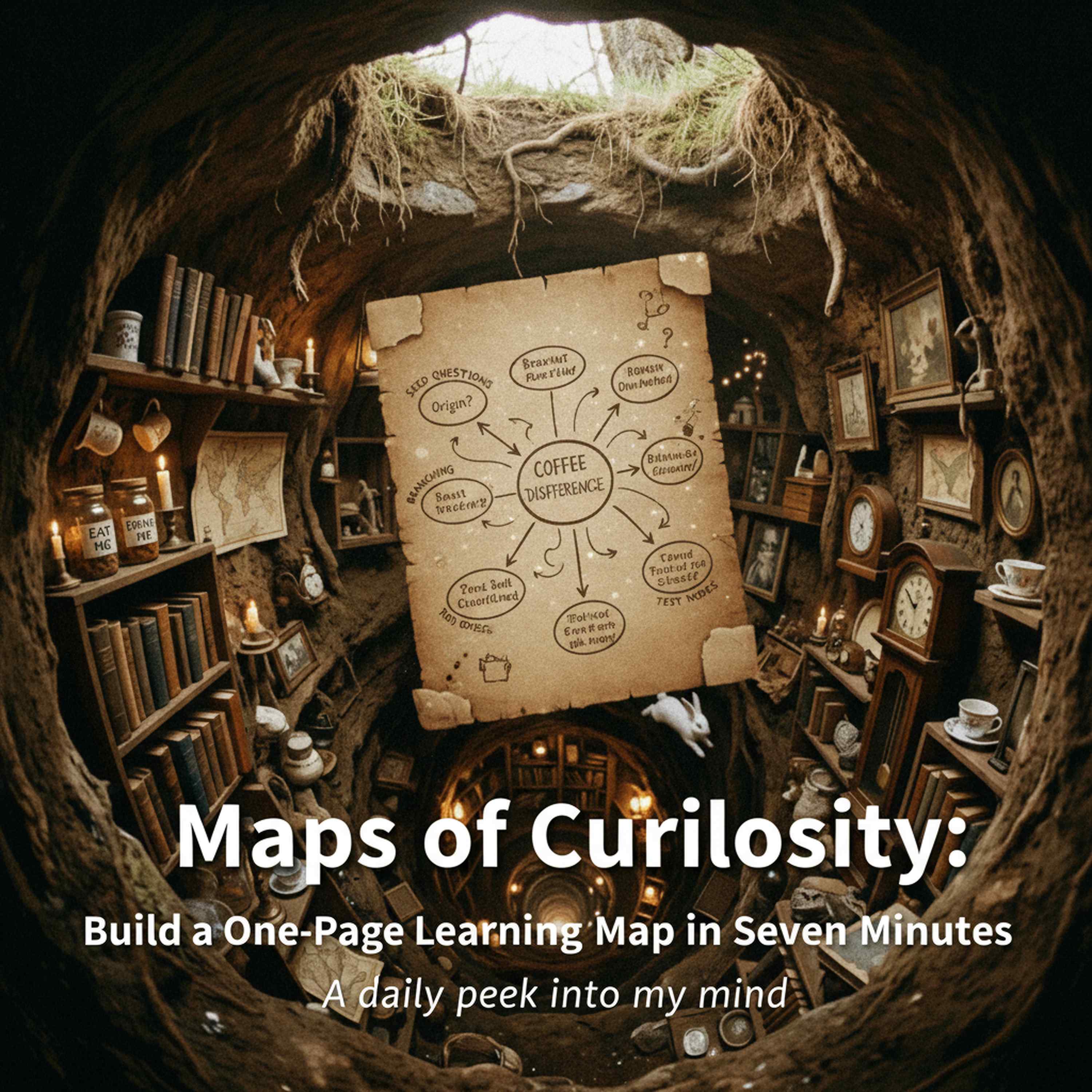 Maps of Curiosity: Build a One-Page Learning Map in Seven Minutes 01.07.2026 5minOn a tight schedule but curious about everything? In this seven-minute, panel-led episode Philip and Shauna show listeners how to build a 'map of curiosity' — a compact, reusable question map that turns a fuzzy interest into a focused, fast learning plan. We explain three micro-techniques: seed questions (how to phrase starting nodes), branching (how to prioritize and connect follow-ups), and test nodes (how to convert questions into tiny experiments or checks). Through a live example—mapping 'what makes coffee taste different'—and a sixty-second guided exercise, listeners will finish with a one-page map they can use immediately. Practical, low-friction, and designed for people who have little time, this episode helps make everyday learning more efficient and less overwhelming. No background needed; just a pen, a phone, and curiosity.
 -
The Seven-Question Interview: Learn Anything Fast 02.07.2026 6minBusy people rarely have time for deep study. This episode gives listeners a compact, repeatable interview framework—seven focused questions—to pull out the most useful, testable knowledge from experts, peers, or short resources. Philip and Shauna walk through why each question matters, how to adapt tone and follow-ups, and quick ways to check what you’ve learned. We include a short role-play so listeners hear the framework in action and leave with a tiny routine they can use the same day to make meetings, coffees, and articles far more productive. The aim is practical: help listeners convert short interactions into clear takeaways they can apply, bookmark, or explore later without wasting time.
-
 Good Enough: The Art of Satisficing for Busy Learners 03.07.2026 7minIn seven minutes Philip and Shauna unpack satisficing — the practical alternative to perfectionism that helps busy learners make smarter trade-offs. This episode shows how to recognize when chasing the optimal answer wastes time, three lightweight satisficing strategies you can apply to learning, tech choices, and daily decisions, and a one-minute experiment listeners can try right away. Through conversational examples (choosing an app, skimming a research headline, picking a project to start) the hosts model how to set acceptability thresholds, use quick tests to validate choices, and iterate without getting stuck. Listeners leave with actionable mental shortcuts that save time without sacrificing quality, plus simple rules to know when to slow down and optimize instead.
 -
Pocket Thought Experiments: Test Your Beliefs in Seven Minutes 04.07.2026 5minIn this 7-minute panel episode, Philip and Shauna guide listeners through three compact thought experiments designed to surface assumptions, reveal mental shortcuts, and improve everyday decision-making. Each experiment is presented as a simple scenario you can run in your head, followed by a 60–90 second guided mental exercise and a quick panel reflection on what the results teach us about reasoning, bias, and practical follow-up. The episode keeps examples neutral and everyday-focused—choices about possessions, trade-offs when learning a new skill, and judging reliability in small claims—so it stays useful, safe, and immediately actionable. Perfect for busy learners who want a daily cognitive tune-up, this episode gives tools you can reuse anytime to think more clearly in limited time.
-
Pocket Palace: Build a 7-Minute Memory Palace 05.07.2026 9minA fast, conversational panel that teaches listeners how to build a micro memory palace—an ancient mnemonic adapted for the time-starved modern learner. In seven minutes Eric guides Philip and Shauna through three simple steps: choose a compact mental route, convert items into vivid, easy-to-grasp images, and lock them with a quick review routine. The episode uses everyday examples (a short grocery list, three names, or talking points) and models common mistakes so listeners can start practicing immediately. Panel banter keeps the tone friendly and practical while revealing small adjustments for different learning styles. No prior experience needed—just a few minutes and an ordinary place in your mind. By the end listeners will have a portable, repeatable technique to recall small sets of information reliably, plus simple rules to test and expand their palace over time.
-
 Small Systems, Big Sense: A Seven-Minute Guide to Systems Thinking 07.07.2026 6minIn seven minutes we turn a big idea into a practical habit. This episode introduces systems thinking as a compact toolkit you can use in everyday moments — from your morning routine to how a team coordinates work. The panel identifies three accessible features of everyday systems: stocks and flows (what builds up and what moves), feedback loops (what amplifies or stabilizes behavior), and leverage points (small changes that produce outsized effects). You’ll get one tiny, 60-second experiment to try immediately, examples from home and work, and clear language so you can spot systems without jargon. The goal is bite-sized clarity: learn to see structure instead of chaos, pick one small change, and test it the same day.
 -
Entropy and Your Morning Coffee: Everyday Thermodynamics in Seven Minutes 08.07.2026 5minJoin Eric, Philip, and Shauna for a seven-minute panel that reveals the thermodynamics hiding in everyday moments—your cooling coffee, a warm shower, the way bread browns. We'll open with a quick sensory hook, then unpack three approachable ideas: what entropy feels like in small things, simple experiments to observe heat and order at home, and everyday decisions shaped by energy flows (cooling, insulation, efficiency). No equations—just clear metaphors, tiny demos you can try in under a minute, and practical takeaways to save time, sharpen observation, and make small choices differently. Designed for listeners short on time but curious about how basic physics quietly structures daily life. By the end you'll have one quick experiment to try, a new way to describe 'entropy' without jargon, and three simple habits to notice and use energy flows in your routines.


