
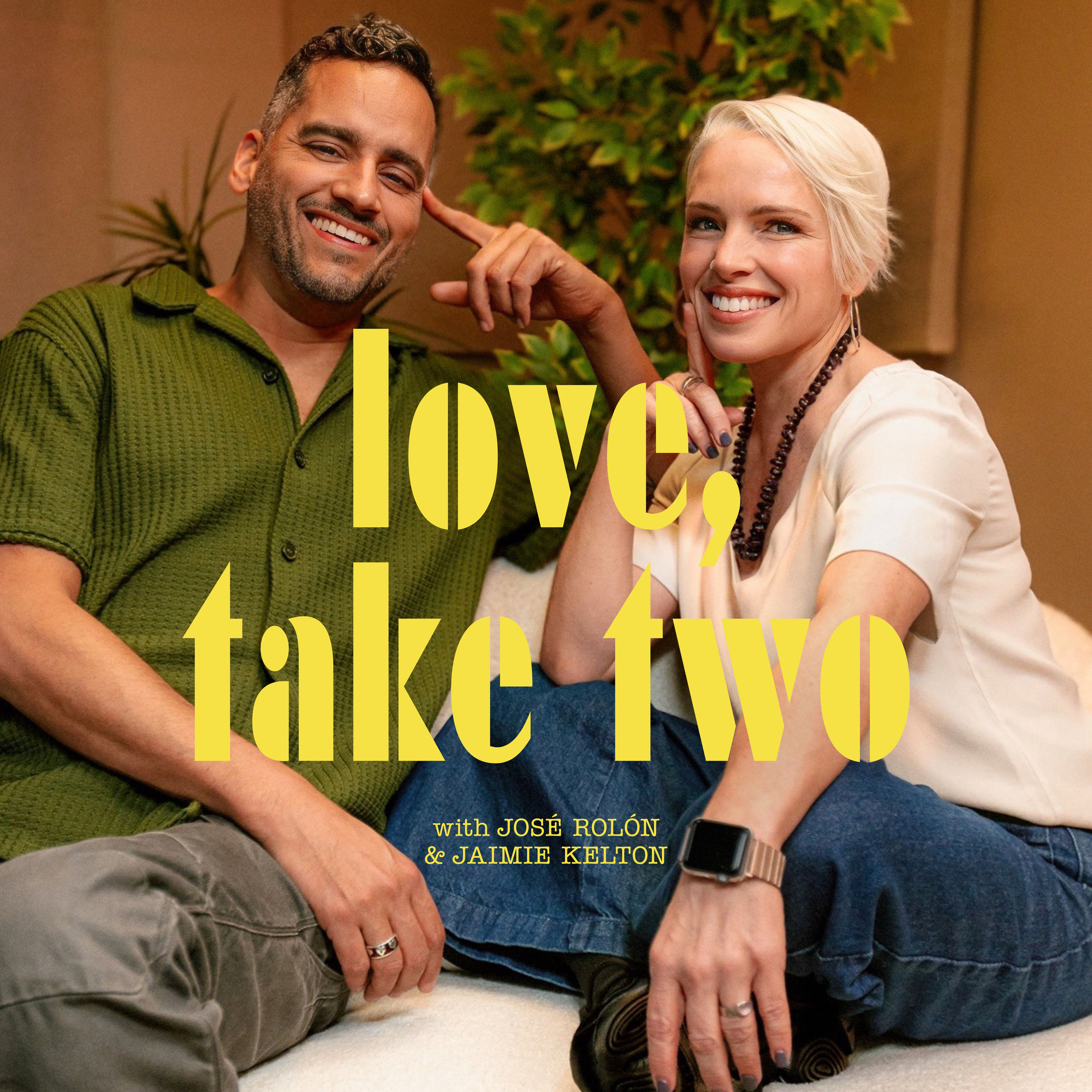
Love, Take Two
José Rolón and Jaimie Kelton
0
Love, Take Two is a conversation-driven podcast about second acts, fresh starts, and the unexpected turns that lead us to who we’re meant to become. Hosted by José Rolón and Jaimie Kelton, each episode dives into candid, funny, and deeply human stories of love, loss, pivots, and plot twists. From breakups to breakthroughs, the show is about choosing yourself, rewriting the narrative, and proving that sometimes the sequel is better than the original.
Epizody
-
 Jose and Jaimie (and Dolly!) on Letting Your Light Shine, Dating at 50 and Navigating Co-Parenting 05.10.2026 20minMost episodes of Love, Take Two end with someone else's story. This time, hosts José Rolón and Jaimie Kelton turn the mic on themselves. The conversation starts with Dolly Parton's death, which hit Jaimie harder than either of them expected, cracking open old childhood memories and a quiet, long buried dream of singing in public instead of just dancing for the camera. What follows is a looser, more personal episode, less interview and more check in, as Jose and Jaimie talk through what almost two seasons of guests have actually taught them.They get into turning 50, and almost 50, and the strange experience of being told by a woman at the gym that she assumed Jose was decades younger. Jose opens up about Thomas, his parter who has shared his home for three and a half years now, what it's actually been like learning to share space and routines after a decade of doing things entirely on his own terms, and how having that support is the only reason this podcast exists at all. Jaimie talks about raising her kids in New York City with her wife Ann, the tradeoffs of city parenting versus what their guest Alexis described, and why, challenges and all, she wouldn't trade it.Woven through all of it is the throughline they keep noticing in guest after guest: Anthony Luciano starting over in his sixties, Jeff Hiller pushing past the shame of still chasing a dream in his forties, their youngest guest Alessandra proving it's never too late at any age. As Jaimie puts it, the lesson is always the same. People stop holding themselves back, and then they just do the thing.This is a conversation about what two people who ask everyone else about their second acts have learned about their own, and what happens when you finally let your own light shine instead of just shining it on others.Key Takeaways- What Dolly Parton's death unlocked for Jaimie, and the dream it's pushing her to finally pursue- Jose's reflections on bringing Thomas into his home and learning to share a life after a decade on his own- The real tradeoffs of raising kids in New York City, and why Jaimie wouldn't trade it despite the challenges- The throughline Jose and Jaimie keep noticing across guests like Anthony Luciano, Jeff Hiller and Alessandra- Why both hosts believe the real lesson of every Take 2 story is simple: stop holding back and just do the thingIf this episode resonated, send it to a friend who needs a reminder that it's never too late to finally do the thing you've been holding back. Come hang out with us on social.
 -
Margaret Cho on Struggling, Sexual Assault in the Seventies and Sobriety 28.09.2026 42minMost people think reinvention means becoming someone new. Margaret Cho found hers by finally becoming fully herself. In this episode of Love, Take Two, hosted by José Rolón and Jaimie Kelton, Margaret takes listeners through the version of her story that rarely makes the highlight reel: leaving high school before finishing, chasing comedy and independence on her own terms, and landing a role that made television history as the star of the first Asian American sitcom, only to watch the network try to reshape her body, her identity, and everything that made her Margaret in the first place.She talks candidly about what that pressure did to her, the eating disorder it left behind, and the years of addiction, anxiety, and depression that followed as she tried to survive fame without a roadmap for how to do it. Margaret gets into what actually changed. Not a single dramatic turning point, but a decision to get sober, one she has now sustained for ten years, and the community and clarity that decision gave her back.She also opens up about her father, a Korean immigrant who felt invisible in 1960s San Francisco until he found the city's gay community and eventually opened a gay bookstore of his own, and about growing up as one of the only visible queer voices on television during the height of the AIDS crisis, a fact that becomes deeply personal in this conversation as José shares his own memory of watching her on TV as a teenager while his family navigated losing his father to AIDS in silence.Margaret also speaks directly about her advocacy for the trans community today, why she has no interest in softening that stance, and what it means to reclaim a label being used as an insult.This is a conversation about reclamation, resilience, and what happens when a decade of sobriety finally lets someone come home to themselves.Key TakeawaysHow network television tried to reshape Margaret during All-American Girl, and the toll that took on her body and identityWhat a decade of sobriety has given her that fame and success never couldThe story of her father's gay bookstore in 1960s San Francisco, and what it meant for him to finally be seenJosé's personal reflection on watching Margaret on television as a teenager while his family hid his father's AIDS diagnosisWhy Margaret refuses to back down from being called a "radical trans activist," and what she believes comedy's role is in the fight aheadIf this episode resonated, send it to someone who needs a reminder that surviving your past and thriving in your present are not the same thing, and that the second one is always still possible. Come hang out with us on social.
-
Alexis Kristiana on Texas, Toddlers and Trading the Suburbs for the City 21.09.2026 49minMost people think a second act means starting over somewhere new. Alexis Kristiana found hers by going back to where she started. In this episode of Love, Take Two, Alexis takes us through the version of reinvention nobody expects: leaving New York for a house in the Texas suburbs with her husband and three kids, doing everything she was told a good parent is supposed to do, and realizing somewhere along the way that it was the wrong life wearing the right furniture. She talks about the backyard nobody used enough, the son who cried in the car every day because he missed walking, and the moment she watched him get quietly, wrongly labeled before he'd even started kindergarten.Alexis gets into what it actually took to admit the move wasn't working, without treating it like a failure at all. No dramatic breakdown, no five year plan. Just three non-negotiables, a new one bedroom, three bedroom apartment ten minutes from where they used to live, and a decision to raise her kids in the noise and chaos she grew up believing you were supposed to escape. She opens up about becoming a mother in isolation during the pandemic, the videos her own mother recorded from across the world while stationed in the Navy, and how becoming a parent herself finally taught her what those recordings actually meant.For Alexis, going back wasn't retreat. It was proof that the life she wanted had been right the first time, she just had to leave it to find that out.This is a conversation about permission, homecoming, and what happens when you stop measuring a good life by the size of the house it comes in.Key Takeaways:-Why the backyard and the bigger house never solved the thing she thought they would-What her son's quiet withdrawal in the suburbs taught her about what he actually needed-The illegal, biased assessment that pushed her into homeschooling, and why she has no regrets-What her mother's recorded bedtime stories from the Navy taught her about presence, decades later-Why she believes the best second act isn't a leap forward. It's the courage to turn back aroundIf this episode resonated, send it to someone who needs a reminder that going home isn't giving up. Sometimes it's the bravest reinvention there is. Come hang out with us on social.
-
Lori E. Seid on Baby Dykes, Blue Men and Being in the Spotlight 14.09.2026 52minMost people think finding the spotlight means chasing it. Lori E. Seid spent 40 years actively avoiding it, and somehow ended up more essential to New York's downtown arts scene than almost anyone with their name on the marquee. In this episode of Love, Take Two, Lori takes us through the version of a career nobody plans for on purpose: starting out at a copy shop on West 8th Street making posters for broke, brilliant artists, and just never leaving. What followed was four decades of being the person everyone in the room trusted, road managing Sophie B. Hawkins before she'd released a single song, producing for Rosie O'Donnell's talk show, and turning down Blue Man Group's first millions because eight shows a week just wasn't her cup of tea.She talks candidly about coming of age as a baby dyke on Long Island in the 1970s, getting shipped off to Provincetown after her parents read her diary, and how the queer community there effectively raised her. She gets into the AIDS crisis with unflinching honesty, the lesbian safe sex handbooks she helped smuggle across borders, and the friends she lost who never got the chance to have a Take Two at all.Lori gets into what it actually took to finally step into her own spotlight, at an age when most people are told it's too late to start. No rebrand, no reinvention plan. Just a lifetime of material sitting in her tiny, forty-year apartment, and a night on stage that turned into the performance of her life. She opens up about the moment Cyndi Lauper stopped a nervous young singer mid-performance to tell her she belonged there, and how that memory cracked something open in Lori on the subway ride home.For Lori, this chapter isn't about becoming someone new. It's about finally telling the stories she's been collecting, on purpose, her whole life.This is a conversation about loyalty, timing, and what happens when the person who spent decades making everyone else look good finally decides it's her turn.Key TakeawaysHow a copy shop job on West 8th Street turned into a 40 year career working alongside Rosie O'Donnell, Cyndi Lauper, and Sophie HawkinsWhy she turned down Blue Man Group's early success, and how she felt about it laterWhat coming out on Long Island in the 1970s and being taken in by Provincetown's queer community taught her about survivalThe lesbian safe sex handbooks she helped create and distribute during the AIDS crisis, and the friends she lostWhy she waited until now, decades into her career, to finally step into her own spotlightIf this episode resonated, send it to someone who's still waiting for the "right time" to tell their own story. Sometimes forty years of being everyone else's biggest supporter is exactly what gets you ready. Come hang out with us on social.
-
Anthony Luciano on Failure, Family Traditions and His Fashion Empire 08.09.2026 38minMost people think reinvention has to be a leap into the unknown. Anthony Luciano found his by doing the opposite. He just followed the current.In this episode of Love, Take Two, Anthony takes us through the version of success nobody puts on a mood board: getting fired three times from fashion jobs in his twenties, stitching costumes in the belly of a cruise ship for five years, and finally walking away from a design director job with no plan except to start making bags in his apartment the next morning. What followed was two decades of hand building a luxury handbag business from scratch. He landed in Bergdorf's and Neiman Marcus, all before the industry itself pulled the floor out from under him. He talks about watching retail collapse around him well before the pandemic finished the job, and the moment he realized he would rather close his own business than go work for someone else again.Anthony gets into what it actually took to rebuild, without treating it like a rebuild at all. No dramatic pivot, no five year plan. Just workshops in his studio one night a week that a Today Show segment turned into Sip and Stitch, the leather and wine experience that's now filled with strangers, celebrities, and his own extended family of regulars. He opens up about growing up the son of a carpenter and a homemaker in a small upstate New York town, watching his mother and grandmother sew and embroider by hand, and the tradition his late father kept alive for him: collecting pennies from the whole town so Anthony could put one into every bag he ever made, for luck.For Anthony, turning 60 didn't feel like an ending. It felt like proof that you don't have to fight your way upstream to end up exactly where you're supposed to be.This is a conversation about freedom, patience, and what happens when you stop treating a second act like it has to be a reinvention at all.Key TakeawaysHow getting fired three times in the fashion industry became the redirection that mattered mostWhat five years of costuming cruise ships taught him about freedom over securityThe Today Show segment that turned a one night a week workshop into a full business overnightThe penny his father collected from an entire town, and why every bag still carries oneWhy he believes the best second act isn't a leap. It's following the current you're already inIf this episode resonated, send it to someone who needs a reminder that reinvention doesn't have to look like a comeback. Sometimes it just looks like paying attention to where you're already headed. Come hang out with us on social.
-
John Friia on Shyness, Shedding and Self Actualization 31.08.2026 36minJohn Friia spent his twenties chasing the on camera career local news kept telling him to leave New York to find, until the pandemic handed him a strange kind of shortcut. Laid off from the newsroom grind and stuck inside with nowhere to go, he started walking around the city filming the history hiding in plain sight, and Here in New York was born almost by accident. In this episode of Love, Take Two, John talks about growing up shy on Long Island, always sensing he was different, and slowly becoming the extroverted, unbothered version of himself that his younger self would not even recognize.He gets into the reporting career that came before the fame, the managing director who told him he would need to leave the New York market to ever make it in New York, and the moment he realized his path forward looked nothing like the one he had been taught to expect. But the real Take Two of this conversation is not professional. After a long relationship ended, John found himself living completely alone for the first time in his life, and he talks candidly about what it took to sign a lease with no guarantor, build an apartment around only his own needs, and start dating with the strange, uncomfortable task of figuring out what he actually wants instead of what keeps the peace.He also shares the wisdom of his 103 year old great aunt, who told him never to hold a grudge, and what it has meant to finally put himself first after a lifetime of being a people pleaser.This is a conversation about the quiet, unglamorous work of becoming your own priority, and what happens when you finally stop performing for everyone else's comfort.Key TakeawaysHow a pandemic layoff and a habit of walking around New York turned into the Here in New York accountWhy he left local news instead of following the traditional path to on camera workWhat it meant to live completely alone for the first time at 31, after a lifetime of never being on his ownThe lesson his 103 year old great aunt taught him about grudges, and why he has chosen to let go instead of hold onHow John is learning to put himself first after years of being a people pleaserIf this episode resonated, send it to someone who is learning what it looks like to finally choose themselves, and come hang out with us on social.
-
Pop Star Jordy on Anxiety, Relationships and the Material that Makes his Music 24.08.2026 43minJordy signs his own name to gay love without hedging on it, and that has been the whole point since his breakout song "Long Distance" turned a pandemic era hookup into an anthem people from every kind of relationship saw themselves in. In this episode of Love, Take Two, Jordy walks us through what he calls his Take One: a childhood shaped by bullying, a middle child's craving for attention, and years spent chasing boys who treated him badly because their approval felt like the only kind worth having.He talks about leaving his college boyfriend behind to chase music in LA, the anxious attachment style that followed him into every relationship after, and how that pattern showed up again on his new single "Sick," a song about mistaking intensity for love. He gets honest about texting compulsively, needing constant reassurance just to get through a day, and how therapy slowly untangled where all of that actually came from.Now 31, single, and living alone by choice, Jordy talks about what changed. He no longer chases the high of somebody playing hard to get. He has stopped confusing how someone makes him feel with who they actually are. And he has learned that the quiet, uneventful kind of love, the kind that does not come with a chase, might be the whole point he was writing toward all along.This is a conversation about growing out of a pattern instead of just naming it, and what it looks like to finally choose peace over passion.Key TakeawaysHow years of chasing approval from boys who mistreated him shaped Jordy's early relationships and his anxious attachment styleThe real story behind "Long Distance," the song that became an unexpected pandemic anthemWhat "Sick" is really about, and how Jordy learned to spot the difference between intensity and loveWhy he no longer confuses how someone makes him feel with who they actually areWhat being single and happy at 31 taught him about validation and self worthIf this episode resonated, send it to someone who is learning the difference between chasing a feeling and choosing a person, and come hang out with us on social.
-
Jeff Hiller on Theology, Improv and Finally Landing in the Spotlight 17.08.2026 43minMost people wait for the world to tell them they're ready. Jeff Hiller waited for himself, for over twenty years, while everyone else assumed he already knew when to quit. In this episode of Love, Take Two, Jeff takes us back through the decades before the breakthrough, temping between auditions, teaching improv for free, and telling himself the work still counted even when no one else could see it.His resume now includes an Emmy win for Somebody Somewhere, a second Emmy nomination this year, and a memoir about the twenty-year road it took to get there. None of it came easily, and none of it came on schedule. Jeff gets into what it actually felt like to turn 40 with a career that hadn't landed yet, the shame he carried about still chasing it, and the moment that finally convinced him the sequel really can be better than the original.He also opens up about his upbringing in a conservative religious household, the parents whose love became the thing that got him through it, and how faith and queerness never felt like a contradiction to him, no matter how loudly other people insisted they should. For Jeff, success was never about the timeline. It was about refusing to let embarrassment talk him out of the thing he loved.This is a conversation about patience, self-worth, and what it means to let your own definition of success be the only one that counts.Key TakeawaysHow Jeff went from social work to two decades of scraping by as a working actor and improv teacherWhat it took to keep believing in the work even when the world called it embarrassingThe role that finally broke through at 45, and what it felt like to be seen after decades of being overlookedHow his faith and his queerness coexist without contradiction, and what that took to arrive atWhy he believes success was never about hitting a deadlineIf this episode resonated, send it to someone who needs a reminder that it is never too late to become who you are, and come hang out with us on social.
-
Queer Parents, Preteens & Puberty with José Rolón 13.07.2026 24minThe babies aren't babies anymore.While you wait for Season 2 of Love, Take Two, we're dropping a little bonus episode into your feed—a crossover conversation from The Queer Family Podcast featuring your Love, Take Two hosts, Jaimie Kelton and José Rolón.In this candid conversation, Jaimie and José talk about parenting preteens and teenagers as LGBTQ+ parents. From puberty and emotional regulation to first crushes, social media, and navigating the outside world's assumptions about queer families, this episode explores what changes—and what stays the same—as our kids get older.They share honest stories about raising confident kids, keeping communication open during the middle school years, helping children navigate questions about their families, and finding humor in the chaos of parenting adolescents. They also discuss what it's like when your family exists in the public eye and how to empower kids to feel proud of who they are and where they come from.Consider this a little bonus Jaimie-and-José time while we get Season 2 ready for you.Because it turns out building the family was only the beginning.
-
20 EPISODES LATER, José and Jaimie Are Finally Telling You What Really Happened 22.06.2026 38minLove, Take Two has officially hit twenty episodes. To close out Season One, hosts José Rolón and Jaimie Kelton sit down — remotely, glasses slightly broken — for a celebratory recap of everything that got them here.This episode looks back at the show's origin story: how José almost said no, the pitch deck that changed his mind, and the behind-the-scenes scramble to build a podcast from the ground up, including re-recording eight intros after their producer cut them down from fifteen minutes to five.José and Jaimie also run through their Season One superlatives, covering standout moments with guests including Brian McManamon, Dominique Jackson, Bryce Ziskin, Alessandra, Lena Hall, Morena Baccarin, Dana Goldberg, Sophie B. Hawkins, and Drew Droege. From Brian's surprisingly calming real-life presence to psychic medium Bryce Ziskin's reading that still has both hosts thinking about their auras, this episode is a celebration of every guest who shaped Season One.The conversation turns reflective as José and Jaimie talk about what hosting together has taught them — how to listen better, when to step back, and how their on-air chemistry has evolved. They close out with a Pride Month toast, a Father's Day shoutout, and a tease of one very exciting Season Two guest.Key TakeawaysThe origin story of Love, Take Two — and the pitch that sealed the dealBehind-the-scenes growing pains: studios, editors, and the great intro re-recordSeason One Superlatives: Most Surprising Guest, Most Unexpectedly Emotional, and the Guest Who Stopped Them ColdWhy psychic medium Bryce Ziskin's reading still has both hosts talkingWhat co-hosting has taught José and Jaimie about listening and making space for guestsA first look at what's coming in Season TwoSeason One Guests: Drew Droege, Dominique Jackson, Bryce Ziskin, Alessandra, Lena Hall, Morena Baccarin, Dana Goldberg, Sophie B. Hawkins, Brian McManamonIf this episode made you laugh, tear up, or want to binge Season One from the top — share it with a friend and tell them to start with Episode 1.Connect with UsLove, Take Two Instagram Love, Take Two Tiktok Love, Take Two Youtube Jaimie Kelton Instagram Jose Rolon Instagram CreditsEdited by: Jerson BarajasRecorded by: MCM CreativeProduced by: José Rolón and Jaimie Kelton
-
Brian McManamon on Fatherhood, Pride & Finding His Second Act 15.06.2026 46minBrian McManamon has spent his career bringing complex characters to life on stage and screen. But his own story is just as compelling.In this episode of Love, Take Two, Brian opens up about the loss of his father, surviving a violent attack in New York City, and the life-changing period that led him to his husband of more than twenty years. He reflects on how grief, love, and resilience shaped his journey as an actor, teacher, husband, and father.Brian also discusses Bad Dad, the powerful new short film he produced and stars in, which explores bullying, LGBTQ+ parenting, and what happens when people are pushed to protect the ones they love. The conversation expands into Pride Month, representation, raising children in queer families, and why visibility still matters.This is a conversation about second chances, chosen family, creativity, and finding meaning in the chapters you never planned to write.Key TakeawaysHow grief and trauma became a turning point in Brian's lifeThe role love played in building his "Take Two"Why becoming a father changed his perspective on purposeThe inspiration behind Bad Dad and its message about LGBTQ+ familiesWhat Pride, representation, and visibility mean todayHow teaching at Juilliard transformed his understanding of artistryWhy Brian believes actors don't need to suffer to create meaningful workIf this episode stayed with you, send it to someone who could use a reminder that life's biggest pivots often lead us exactly where we're meant to be.Connect with UsLove, Take Two Instagram Love, Take Two Tiktok Love, Take Two Youtube Jaimie Kelton Instagram Jose Rolon Instagram Connect with Brian McManamonBrian McManamonCreditsEdited by: Jerson BarajasRecorded by: MCM CreativeProduced by: Jose Rolon and Jaimie Kelton
-
Bryce Ziskin on Spirit Signs, Synchronicities, and Purpose 08.06.2026 52minBryce Ziskin spent years trying to build the kind of life that looked stable and predictable on paper. But motherhood, grief, and a series of unexplainable moments ultimately pushed her toward the path she had spent most of her life trying to avoid.In this episode of Love, Take Two, Bryce opens up about growing up with intuitive abilities she did not fully understand, the traumatic experiences that changed her relationship with control, and how becoming a parent cracked her wide open in ways she never expected. She talks about signs, synchronicities, spirit communication, queer family building, and why she believes we are all far more intuitive than we realize.Bryce also shares the story behind her work with the Forever Family Foundation and her role on the true crime paranormal series Voices from the Grave, where she helps investigate unresolved cold cases alongside forensic experts.This is a conversation about grief, purpose, inner knowing, and what happens when life keeps pushing you toward the thing you were never planning to become.Key TakeawaysHow Bryce first realized she had intuitive abilitiesWhy motherhood and trauma completely shifted her life pathWhat “tapping in” actually means and how intuition worksThe connection between grief, signs, and synchronicitiesHow queer family building shaped Bryce’s understanding of control and purposeWhat it is like working on Voices from the Grave and investigating cold casesIf this episode stayed with you, send it to someone who could use the reminder that sometimes the things we try hardest to ignore are the things meant to guide us most.Connect with UsLove, Take Two InstagramLove, Take Two TiktokLove, Take Two YoutubeJaimie Kelton InstagramJose Rolon InstagramBryce ZiskinCredits:Edited by: Jerson BarajasRecorded by: MCM CreativeProduced by: Jose Rolon and Jaimie Kelton
-
Tony Morrison: The Emmy Award Winning Journalist Who Decided to Tell His Own HIV Story 01.06.2026 54minTony Morrison has spent his career making sure the right stories get told. It took a little longer to turn that same intention toward his own.In this episode of Love, Take Two, Tony sits down to talk about the journey that took him from producing at CNN and Good Morning America to working at GLAAD to launching Morrison Media Group, where he now builds culture moving campaigns for brands like Disney, Netflix, and the NFL. It is an extraordinary career built on one consistent through line — the belief that representation is not a nice to have, it is a necessity.But the conversation goes deeper than the resume. Tony opens up about living with HIV, what that diagnosis meant for him personally and professionally, and how it ultimately sharpened his sense of purpose around the stories he chooses to tell. He talks about what it has been like to navigate a media industry that has historically been slow to center queer voices, what drove him to do something about it, and why he made the decision to live and speak openly about his status.He also gets into where he came from, how he built something from the ground up, and what it really looks like to run a business that is as much about mission as it is about strategy.This is a conversation about owning your narrative, showing up fully in an industry that does not always make that easy, and what happens when the person telling everyone else's story finally decides to tell their own.Key TakeawaysWhat Tony's path from CNN and Good Morning America to GLAAD to Morrison Media Group actually looked likeHow his HIV diagnosis shaped his sense of purpose and the work he does todayWhat genuine LGBTQ+ representation in mainstream media looks like in practice and why it still mattersThe mission behind Morrison Media Group and what drives the brands and stories he chooses to work withWhy he made the decision to speak openly about living with HIV and what that has meant for his advocacyIf this conversation stayed with you, pass it along to someone who needs a reminder that the most powerful story you can tell is your own — and come hang out with us on social.Connect with UsLove, Take Two InstagramLove, Take Two TiktokLove, Take Two YoutubeJaimie Kelton InstagramJose Rolon InstagramTony MorrisonCredits:Edited by: Jerson BarajasRecorded by: MCM CreativeProduced by: Jose Rolon, Jaimie Kelton, and Dianni Hall
-
Jove Meyer: From $700 and a Craigslist Post to One of the Top Wedding Planners in the World 18.05.2026 58minMost people move to New York with a plan. Jove Meyer moved to New York with $700 and figured the rest out on Craigslist.In this episode of Love, Take Two, Jove takes us back to where it all started — a leap of faith into a new city with virtually nothing, and a scrappiness that eventually built one of the most recognized wedding design businesses in the world. His work has been featured in Vogue and The New York Times, he has been named one of the top wedding planners globally, and he hosts his own podcast Wedding-ish. None of that happened by following the traditional playbook.Jove gets into what it has looked like to push back against an industry that for a long time had a very narrow idea of what a wedding was supposed to look like — and who it was supposed to be for. He talks about the work of making the wedding space genuinely inclusive for LGBTQ+ couples, not just symbolically but in the actual design, language, and experience of the day itself. For Jove, a wedding should feel like the couple, full stop.He also opens up about his own journey to starting a family with his husband, what that process taught him about love and patience, and how his personal life has shaped the way he shows up for the couples he works with.This is a conversation about building something from nothing, refusing to let an industry tell you what is possible, and what it really means to celebrate love on your own terms.Key TakeawaysHow Jove went from $700 and a Craigslist ad to one of the most celebrated wedding planners in the worldWhat genuine LGBTQ+ inclusivity in the wedding industry actually looks like in practiceHow he has created space for queer couples to celebrate in ways that feel authentically theirsWhat his own journey to fatherhood taught him about love, partnership, and patienceWhy he believes your wedding should look like absolutely no one else'sIf this episode resonated, send it to a couple who is planning their day and needs a reminder that there are no rules — and come hang out with us on social.Connect with UsLove, Take Two InstagramLove, Take Two TiktokLove, Take Two YoutubeJaimie Kelton InstagramJose Rolon InstagramJove MeyersCredits:Edited by: Jerson BarajasRecorded by: MCM CreativeProduced by: Jose Rolon, Jaimie Kelton, and Dianni Hall
-
Marti Cummings: Why Drag Is Resistance and Everything is Political 11.05.2026 49minWhat does it look like to build a life at the intersection of art, activism, and heartbreak — all while the world around you feels like it is coming apart at the seams?In this episode of Love, Take Two, Marti Cummings gets into all of it. As a drag performer, TV personality, and activist who has performed on all seven continents and hosted their own talk show, Marti has never done things the conventional way. That includes becoming the first openly non-binary candidate to run for office in New York City — a campaign that was as much about visibility and community as it was about politics.Marti opens up about what drove them to step into the political arena, what that experience actually looked like on the ground in New York, and how they think about advocacy and resistance in the current political climate. They also get personal about love. Marti reflects on their marriage, their divorce, and what moving through the end of a relationship taught them about themselves. It is the kind of honest that does not show up in press junkets.This is a conversation about showing up — for your community, for yourself, and for the people you love — even when it is hard, even when it costs you something.Key TakeawaysWhat led Marti to run for office in New York City and what that experience was really likeHow drag has evolved for them from art form to platform for political resistanceTheir take on the current administration and what effective advocacy looks like right nowWhat their divorce taught them about love, identity, and starting overHow they have built a career that refuses to separate entertainment from activismIf this conversation lit something up in you, share it with someone who needs a reminder that resistance can look like a lot of things — and come hang out with us on social.Connect with UsLove, Take Two InstagramLove, Take Two TiktokLove, Take Two YoutubeJaimie Kelton InstagramJose Rolon InstagramMarti CummingsCredits:Edited by: Jerson BarajasRecorded by: MCM CreativeProduced by: Jose Rolon, Jaimie Kelton, and Dianni Hall
-
David Archuleta: American Idol, the Mormon Church, and the Making of Devout 04.05.2026 37minMost people know David Archuleta from the American Idol stage. Far fewer know what was happening beneath the surface the entire time.In this episode of Love, Take Two, David sits down to talk about Devout: Losing My Faith to Find Myself, his 2026 memoir that pulls back the curtain on a journey most of his fans never saw coming. From winning Star Search at 12 to becoming one of the most recognized faces of the American Idol era, David spent years performing for the world while privately navigating something much harder — a faith system that had no room for who he actually was.David opens up about what it felt like to grow up deeply embedded in the Mormon Church while quietly reckoning with his queer identity, the emotional abuse he experienced along the way, and the severe anxiety that followed him through some of the highest profile moments of his career. He talks about what finally pushed him toward deconstruction, what he lost in the process, and what he found on the other side of it.Key TakeawaysWhat David's early rise on American Idol looked like from the insideHow his Mormon faith shaped his identity and his career for yearsThe moment he knew something had to change and what that process actually looked likeHow he navigated coming out publicly while also leaving his churchWhat writing Devout taught him about himself and why he felt it was time to tell this storyIf this episode moved you, pass it along to someone who is in the middle of their own deconstruction — whatever form that takes — and come find us on social.Connect with UsLove, Take Two InstagramLove, Take Two TiktokLove, Take Two YoutubeJaimie Kelton InstagramJose Rolon InstagramDavid ArchuletaCredits:Edited by: Jerson BarajasRecorded by: MCM CreativeProduced by: Jose Rolon, Jaimie Kelton, and Dianni Hall
-
Alessandra Ciuffo: From Winning Guy's Grocery Games at 15 to Building Flavors by Alessandra 27.04.2026 53minMost people spend their teenage years figuring out who they are. Alessandra Ciuffo spent hers winning on Food Network.In this episode of Love, Take Two, Alessandra takes us back to where it all started — stepping in front of a camera at 12 years old on Rachael vs. Guy: Kids Cook-Off and then going on to win Guy's Grocery Games at 15. What could have been a fun footnote became the foundation for something real. Today she is the face behind Flavors by Alessandra, a brand she has built by being exactly herself — chaotic, warm, genuinely skilled, and completely unfiltered about all of it.Alessandra gets into what the journey from child competitor to full-on food personality actually looked like, including the parts that were not glamorous. She talks about how she developed her voice in a space that can feel oversaturated, why she refuses to see other creators as competition, and how her belief that there is room for everyone at the top has shaped the way she moves through her career. Authenticity is not just a buzzword for Alessandra — it is the entire strategy.This is a conversation about creative confidence, staying positive when the path is not linear, and what it looks like to build something that is genuinely yours.Key TakeawaysWhat it was really like to compete on Food Network as a kid and teenagerHow Alessandra built Flavors by Alessandra into a brand people actually connect withWhy she believes there is room for everyone at the top and how that mindset has served herThe role authenticity plays in standing out in a crowded creator spaceHow she has stayed consistent and positive through the less glamorous parts of the journeyIf this episode got you fired up about backing yourself and betting on your own lane, send it to someone who needs to hear it — and come hang out with us on social.Connect with UsLove, Take Two InstagramLove, Take Two TiktokLove, Take Two YoutubeJaimie Kelton InstagramJose Rolon InstagramAlessandra CuiffoCredits:Edited by: Jerson BarajasRecorded by: MCM CreativeProduced by: Jose Rolon, Jaimie Kelton, and Dianni Hall
-
Alexis Bittar on Selling, Reclaiming & Rebuilding His Jewelry Company 20.04.2026 52minWhat does it take to build something from nothing and then decide to start over again?For this week’s guest, Alexis Bittar, that question has defined his career.In this episode of Love, Take Two, Alexis reflects on his early days selling vintage jewelry on the streets of New York City and how that experience shaped his approach to creativity, business, and risk. What began as a scrappy, self-made path evolved into a globally recognized brand known for its bold design and hand-carved Lucite pieces.Over the years, Alexis built a fashion empire, earning recognition from the Council of Fashion Designers of America and designing for cultural icons like Beyoncé, Michelle Obama, Lady Gaga, and Iris Apfel. But success didn’t follow a straight line.After selling his company at its peak, Alexis made the unexpected decision to step back in and reclaim the brand in 2021. A move that speaks to a deeper understanding of ownership, identity, and what it means to evolve.Alexis opens up about the realities of building and selling a business, the lessons that come with stepping away, and what it looks like to take control of your second act. Key TakeawaysHow Alexis got his start selling jewelry on St. Mark’s PlaceBuilding a globally recognized fashion brand from the ground upThe creative vision behind his signature Lucite designsWhat it was like to sell his company — and why he came backLessons on entrepreneurship, risk, and long-term successWhat reinvention looks like at different stages of a careerIf this episode resonates, share it with someone thinking about taking a risk or starting over — and come hang out with us on social!Connect with UsLove, Take Two InstagramLove, Take Two TiktokLove, Take Two YoutubeJaimie Kelton InstagramJose Rolon InstagramAlexis BittarCredits:Edited by: Jerson BarajasRecorded by: MCM CreativeProduced by: Jose Rolon, Jaimie Kelton, and Dianni Hall
-
Morena Baccarin on Balancing Acting, Motherhood, and What No One Tells You About Doing Both 13.04.2026 55minWhat does it actually look like to be a working parent in Hollywood — not the glossy version, but the real one? Morena Baccarin is not here to sugarcoat it.In this episode of Love, Take Two, Morena gets candid about the side of her life that does not make the press junkets — the school runs, the scheduling gymnastics, the guilt, and the joy that comes with raising kids while maintaining a career that demands everything you have. From her breakout in Firefly to her Emmy nominated turn in Homeland to the Deadpool franchise, Morena has built one of the most respected careers in the industry. And she has done a significant chunk of it as a mother.She opens up about what it has been like to navigate auditions, sets, and long shoots while staying present for her kids, how her priorities have shifted over the years, and what she wishes someone had told her earlier about trying to do both. She also shares what is coming next, including her work on Sheriff Country and what drew her to the project.This is a refreshingly honest conversation about ambition, parenthood, and the messy, meaningful work of showing up in both.Key TakeawaysWhat no one tells you about balancing an acting career with raising kidsHow Morena's approach to her career shifted after becoming a motherThe realities of working on set while managing family lifeWhat drew her to her latest project, Sheriff CountryHow she defines balance — and why she has stopped chasing the perfect version of itIf this one hit home, send it to another parent who is figuring it out in real time — and come hang out with us on social.Connect with UsLove, Take Two InstagramLove, Take Two TiktokLove, Take Two YoutubeJaimie Kelton InstagramJose Rolon InstagramMorena BaccarinCredits:Edited by: Jerson BarajasRecorded by: MCM CreativeProduced by: Jose Rolon, Jaimie Kelton, and Dianni Hall
-
Surviving Conversion Therapy: Timothy Schraeder Rodriguez on Faith, Identity, and Megachurch Secrets 06.04.2026 48minWhat happens when faith, identity, and healing intersect in the most unexpected ways? For this week's guest, Timothy Schraeder Rodriguez, that intersection became both his greatest struggle and his most powerful mission.In this episode of Love, Take Two, Timothy opens up about his decade-long experience with conversion therapy while working behind the scenes at some of the most influential evangelical megachurches in America. He shares the complex journey of reconciling his faith with his identity as a gay man, and how that internal conflict eventually led him to leave the church world entirely — only to find his way back on his own terms.After moving to New York City eight years ago to escape the evangelical world, Timothy has built a life centered on authenticity and service. He co-founded Church Clarity, an organization that helps LGBTQ+ individuals find affirming faith communities where they can practice their beliefs without shame or judgment. His work has garnered national attention from major outlets like TIME, NBC, and The Washington Post.Timothy discusses his path to sobriety, his transition from church work to tech, and how writing became a healing tool that led to his upcoming book, "Conversion Therapy Dropout: A Queer Story of Faith and Belonging" (releasing May 2026). Despite everything he's endured, Timothy still attends church...sometimes.This is an honest conversation about trauma, resilience, and the courage it takes to redefine what belonging means when the institutions you once served reject who you are.Key Takeaways:The reality of conversion therapy and its lasting impactHow faith and identity can coexist authenticallyThe process of healing from religious traumaHow he began conversion therapy at 19 years oldWhy sobriety became essential to Timothy's journeyHow his experience has effected his ability to date now as an out gay manIf this episode moves you, share it with someone who might need to hear that faith and identity don't have to be at war — and come connect with us on social!Connect with UsLove, Take Two InstagramLove, Take Two TiktokLove, Take Two YoutubeJaimie Kelton InstagramJose Rolon InstagramTimothy Schraeder RodriguezCredits:Edited by: Jerson BarajasRecorded by: MCM CreativeProduced by: Jose Rolon, Jaimie Kelton, and Dianni Hall
Podobné podcasty


Oblíbený v
Tento podcast se objevuje také v podcastových žebříčcích těchto zemí.


