
The FP&A Guy Network
Paul Barnhurst
0
The FP&A Guy Network is a podcast network hosted by Paul Barnhurst, known as The FP&A Guy, that brings together three shows focused on finance: FP&A Tomorrow explores trends and interviews global talent in financial planning and analysis; Financial Modeler's Corner covers financial modeling with experts from the Financial Modeling Institute; and Future Finance, co-hosted with Glenn Hopper, discusses how technology and AI are transforming corporate finance. The network aims to provide practical advice, thought leadership, and innovation for finance professionals.
Epizody
-
 When AI Does the Analysis, What Makes an FP&A Professional Valuable with Valerie Martin 01.10.2026 52minIn this episode of FP&A Unlocked, host Paul Barnhurst and co-host Glenn Snyder sit down with Valerie Martin to discuss how AI is changing FP&A, leadership, and business partnering. They explore why greater efficiency does not automatically create greater value and how finance teams can use AI without losing judgment, context, or trust with the business.Valerie Martin is a Finance Executive specializing in FP&A and strategic finance, with experience across GTM, SaaS, AI, and value creation. A former Autodesk finance leader and San Francisco FP&A Board Ambassador, Valerie brings extensive experience in business partnering, finance transformation, and helping organizations make better strategic decisions.Expect to Learn:Why AI efficiency does not always create more value.How AI is changing the skills FP&A teams need.Why judgment and business context still matter.How leaders should rethink training and development.Why communication and trust remain critical in FP&A.Here are a few relevant quotes from the episode:“AI could help us get the answer faster, but you can't outsource accountability.” - Valerie Martin“The measurement is about the value, not the production.” - Glenn SnyderValerie explains that AI can automate variance analysis, reporting, data cleanup, and other repetitive work, but faster production is only useful if teams turn that saved time into greater business value. As AI takes on more technical work, FP&A professionals need to strengthen their judgment, curiosity, business acumen, and communication skills.Follow Valerie:LinkedIn: https://www.linkedin.com/in/valerie-martin-342878/Email: [email protected] Glenn:LinkedIn: linkedin.com/in/glenntsnyderDisclosure: Portions of this episode (such as the introduction or promotional segments) use AI-generated voice narration produced under human editorial review.Explore Lineos Reporting Intelligence:Ready to transform financial reporting? See how Lineos Reporting Intelligence helps finance teams connect ERP data directly to Excel, access current data, and spend less time assembling reports.Watch the Reporting Intelligence demo:https://www.insightsoftware.com/lineos/resources/Reporting-intelligence-demo/?utm_source=thefpaguy&utm_medium=newsletter&utm_campaign=lineos-influencer-oct&utm_content=newsletter1Earn Your CPE CreditFor CPE credit, please go to earmarkcpe.com, listen to the episode, download the app, answer a few questions, and earn your CPE certification. To earn education credits for the FPAC Certificate, take the quiz on earmark and contact Paul Barnhurst for further details.In Today’s Episode:[00:00] -Trailer[01:17] - Hard-Coded Opinion[04:54] - How AI Is Changing FP&A Skills[06:16] - Where AI Adds the Most Value[13:51] - When AI Efficiency Doesn't Create Value[15:03] - Judgment, Context & Accountability[19:46] - Redesigning FP&A Work for AI[20:51] - Why Communication Still Matters[27:35] - Turning Saved Time Into Greater Value[34:20] - What Differentiates Finance in the AI Era[41:22] - How FP&A Professionals Stay Valuable[46:27] - Closing & CPE Information
 -
 AI Can Give You the Right Answer to the Wrong Question with Matija Nakić 30.09.2026 18minIn this episode of Future Finance, hosts Glenn Hopper and Paul Barnhurst sit down with Matija Nakic, CEO and Co-founder of Farseer, to discuss how AI is changing financial planning, enterprise software, and decision-making. Matija shares why asking the right questions matters, how AI can accelerate planning workflows, and why strong data foundations remain essential.Matija Nakic is the CEO and Co-founder of Farseer, an AI-native SaaS platform for business modeling, planning, and analysis. With a background in computer engineering, an MBA, and experience across B2B enterprise software, she progressed from developer to product director before co-founding Farseer.In this episode, you will discover:Why asking the right questions matters with AI.How finance can move toward a decision culture.Why clean data and context still matter.How AI can speed up modeling and planning.When Excel still makes sense for finance teams.Matija also pushes back on the idea that Excel is obsolete. She argues that spreadsheets remain excellent for rapid modeling and individual analysis, but become harder to manage when collaboration, large datasets, version control, and auditability enter the pictureFollow Matija:LinkedIn: https://hr.linkedin.com/in/matija-nakicCompany: https://www.farseer.com/Follow Glenn:LinkedIn: https://www.linkedin.com/in/gbhopperiiiFollow Paul:LinkedIn: https://www.linkedin.com/in/thefpandaguyDisclosure: Portions of this episode (such as the introduction or promotional segments) use AI-generated voice narration produced under human editorial review.Future Finance is sponsored by QFlow.ai, the strategic finance platform solving the toughest part of planning and analysis: B2B revenue. Align sales, marketing, and finance, speed up decision-making, and lock in accountability with QFlow.ai. Stay tuned for a deeper understanding of how AI is shaping the future of finance and what it means for businesses and individuals alike.In Today’s Episode:[02:18] - Why Farseer Was Built[04:12] - Solving Complex Enterprise Planning[05:11] - AI, Vibe Coding & Enterprise Software[06:57] - Building Farseer’s AI Modeler[10:05] - How AI Accelerates Development[11:33] - Building for Technical Finance Users[12:41] - Why Asking the Right Questions Matters[15:37] - AI Context, Guardrails & Governance[17:30] - Why Strong Data Foundations Still Matter[18:23] - Closing Thoughts
 -
 Poker, Probability, and Financial Modeling with Dan Mayoh 29.09.2026 46minIn this episode of Financial Modeler’s Corner, host Paul Barnhurst sits down with Dan Mayoh to discuss his career in financial modeling, lessons from model auditing, and why he sees Excel as one of the world’s most accessible programming languages. Dan also shares how mathematical modeling, poker, and probability have shaped his approach to risk and decision-making under uncertainty.Dan Mayoh is the Founder and CEO of Fintega Pty Ltd and a financial modeling and spreadsheet specialist with more than 15 years of experience. With a background in actuarial studies, Dan began his career in model auditing before moving into financial modeling and consulting. He also placed second in the inaugural ModelOff competition and was an early CFM holder with the Financial Modeling Institute.Expect to Learn:Why Excel can be viewed as a programming language.What model auditing teaches you about model design.How Modeloff helped Dan grow as a modeler and consultant.How mathematical modeling helps quantify risk and uncertainty.Why good decisions should not be judged only by outcomes.Here are a few relevant quotes from the episode:“Excel is really just the most accessible programming language in the world.” - Dan Mayoh“Sometimes you win. Sometimes you lose, even when you make the right decision.” - Dan MayohDan explains that strong financial modeling goes beyond formulas and functions. Structure, navigation, error checks, usability, and designing around the end user all play an important role in creating models that are easier to understand, update, and trust.Follow Dan:LinkedIn: https://www.linkedin.com/in/dan-mayoh-255227/Follow Financial Modeler's Corner: LinkedIn: https://www.linkedin.com/company/financial-modeler-s-corner/Newsletter - Subscribe on LinkedIn: https://www.linkedin.com/build-relation/newsletter-follow?entityUrn=7079020077076905984Sign up for the Advanced Financial Modeler Accreditation today and get 15% off using the code “Podcast” at https://bit.ly/497oAqWDisclosure: Portions of this episode (such as the introduction or promotional segments) use AI-generated voice narration that has undergone human editorial review.In Today's Episode:[00:00] - Trailer[03:40] - Dan’s Financial Modeling Journey[06:05] - Building a Career in Financial Modeling[12:14] - Modeling as Software Development[15:09] - Financial Modeling Horror Stories[19:19] - Lessons From Model Auditing[22:03] - Competing in ModelOff[27:39] - Mathematical Modeling of Games[32:04] - Modeling Risk in Real-World Projects[35:13] - Decision-Making Under Uncertainty[40:53] - Rapid Fire: Excel & Modeling[44:22] - Closing Thoughts
 -
 The Three Foundations of Strategic FP&A with Chithra Rajagopalan 24.09.2026 1hIn this episode of FP&A Unlocked, host Paul Barnhurst sits down with Chithra Rajagopalan, Head of Finance at Obsidian Security, to discuss what great FP&A looks like in high-growth companies, why strong data foundations matter, and how finance teams can become more strategic business partners. Chithra shares lessons from scaling finance teams, supporting hypergrowth companies, and using data to influence better decisions.Chithra Rajagopalan is a finance leader with experience across high-growth SaaS and AI security companies. She currently serves as Head of Finance at Obsidian Security, where she oversees financial strategy and operations. Her previous roles include finance leadership positions at Glue, ClickUp, and People.ai, following earlier experience at Deloitte and Ernst & Young.Expect to Learn:Why great FP&A goes beyond reporting.How strong data foundations support better decisions.What finance teams need during hypergrowth.How AI is changing finance roles and workflows.Why cybersecurity matters when finance adopts AI.Here are a few relevant quotes from the episode:“Accounting is always going to give you exposure to what already happened. You still need a strong FP&A partner to know what to do in the future.” - Chithra Rajagopalan“You can have as much data as you want, but if you don’t utilize it to make decisions, surface risk, or hold people accountable, it’s pointless.” - Chithra RajagopalanChithra explains that strong FP&A starts with reliable data, business understanding, communication, and the ability to prioritize what actually moves the business forward. For finance professionals, the growing use of AI also means shifting from task execution toward an orchestration mindset, where teams understand systems, workflows, automation, and business strategy rather than simply producing reports.Follow Chithra:LinkedIn: linkedin.com/in/chithra-rajagopalan-mbaWebsite: https://www.obsidiansecurity.com/Disclosure: Portions of this episode (such as the introduction or promotional segments) use AI-generated voice narration produced under human editorial review.Earn Your CPE CreditFor CPE credit, please go to earmarkcpe.com, listen to the episode, download the app, answer a few questions, and earn your CPE certification. To earn education credits for the FPAC Certificate, take the quiz on earmark and contact Paul Barnhurst for further details.In Today’s Episode:[00:00] - Trailer[05:07] - What Great FP&A Looks Like[11:16] - Building Finance During Hypergrowth[15:19] - Creating a Culture of Data[17:52] - Three Foundations of Strong FP&A Teams[29:31] - Inside Obsidian Security[34:38] - AI, Finance & Cybersecurity[39:42] - Moving Beyond AI Hype[44:43] - Why Finance Needs AI Guardrails[47:24] - The Skills FP&A Professionals Need[50:01] - The Future of Finance Teams[57:08] - Why Startup Chaos Builds Better Leaders[59:15] - Closing Thoughts
 -
 AI, Decision Culture, and the Future of Enterprise Finance with Matija Nakic 23.09.2026 41minIn this episode of Future Finance, hosts Glenn Hopper and Paul Barnhurst sit down with Matija Nakic, CEO and Co-founder of Farseer, to discuss how AI is changing financial planning, enterprise software, and decision-making. Matija shares why asking better questions matters, how finance teams can build stronger AI workflows, and where Excel still fits in modern planning.Matija Nakic is the CEO and Co-founder of Farseer, an AI-native SaaS platform for business modeling, planning, and analysis. With a background in computer engineering, an MBA, and experience across B2B enterprise software, she has progressed from developer to product director and now leads Farseer’s mission to improve how financial professionals plan, model, and make decisions.In this episode, you will discover:Why asking the right questions matters with AI.How finance can build a stronger decision culture.Why clean data and governance still matter.How AI can speed up planning and forecasting.When to use Excel versus planning software.AI can dramatically accelerate finance work, but speed alone does not create better decisions. Matija explains that effective AI adoption still depends on fundamentals such as clean data, consistent definitions, connected data sources, business logic, and human judgmentFollow Matija:LinkedIn: https://hr.linkedin.com/in/matija-nakicCompany: https://www.farseer.com/Follow Glenn:LinkedIn: https://www.linkedin.com/in/gbhopperiiiFollow Paul:LinkedIn: https://www.linkedin.com/in/thefpandaguyDisclosure: Portions of this episode (such as the introduction or promotional segments) use AI-generated voice narration produced under human editorial review.Future Finance is sponsored by QFlow.ai, the strategic finance platform solving the toughest part of planning and analysis: B2B revenue. Align sales, marketing, and finance, speed up decision-making, and lock in accountability with QFlow.ai. Stay tuned for a deeper understanding of how AI is shaping the future of finance and what it means for businesses and individuals alike.In Today’s Episode:[00:00] - Trailer[05:22] - Why Farseer Was Built[08:35] - AI and the Future of Enterprise Software[13:30] - Building Faster with AI[17:24] - Why Asking the Right Questions Matters[22:55] - The Three Levels of AI Adoption[24:57] - Building a Decision Culture[32:04] - When Excel Is Still the Right Tool[35:57] - Governance, Context & Audit Trails[36:37] - Rapid-Fire Questions[39:21] - Turning Frustration with Planning Into Farseer[40:59] - Closing Thoughts
 -
 Financial Modeling, Deal Making, and the Skills Every Analyst Needs with Oren Klaff 22.09.2026 20minIn this episode of Financial Modeler’s Corner, host Paul Barnhurst sits down with Oren Klaff, Private Equity Fund Manager and bestselling author of Pitch Anything, to discuss how financial modeling can support deal-making, investment decisions, and career growth. Oren shares how modeling helped him move from financial analyst to dealmaker.Oren Klaff is a Private Equity Fund Manager and the author of Pitch Anything. He began his career as a financial analyst in private equity before moving into deal-making and capital raising. Financial modeling has remained central to how he evaluates businesses and structures deals.Expect to Learn:How modeling can lead to deal-making and capital raising.Why identifying key sensitivities matters more than finding errors.How modelers can become trusted business partners.Why simple, structured models are more useful.How financial insight can help move deals forward.Here are a few relevant quotes from the episode:“The shortest path to high status is finding something wrong.” - Oren Klaff“Your job is to make the future feel more certain.” Oren KlaffOren explains that strong modelers do more than build spreadsheets. They identify the assumptions that drive outcomes, communicate insights clearly, and help decision-makers find practical ways to make deals work.Follow Oren:LinkedIn: https://www.linkedin.com/in/orenklaff/Follow Financial Modeler's Corner: LinkedIn: https://www.linkedin.com/company/financial-modeler-s-corner/Newsletter - Subscribe on LinkedIn: https://www.linkedin.com/build-relation/newsletter-follow?entityUrn=7079020077076905984Sign up for the Advanced Financial Modeler Accreditation today and get 15% off using the code “Podcast” at https://bit.ly/497oAqWDisclosure: Portions of this episode (such as the introduction or promotional segments) use AI-generated voice narration produced under human editorial review.In Today's Episode:[04:00] - From Modeling to Deal-Making[06:08] - Creating Business Insight[08:38] - Finding Sensitive Assumptions[09:38] - How Analysts Build Trust[10:58] - Reviewing Models Without Creating Conflict[14:41] - Structuring Better Deals[18:23] - Real-World Deal Applications[20:13] - Closing Thoughts
 -
 Are You Solving Business Problems or Just Reporting Numbers? with Eric Alexander 17.09.2026 50minIn this episode of FP&A Unlocked, Paul Barnhurst speaks with Eric Alexander about building effective FP&A functions, developing business acumen, and preparing finance professionals for leadership. Eric explains why finance teams need to look beyond the numbers, understand the business, communicate effectively, and develop the leadership skills needed to create greater impact.Eric Alexander is the President of Six Arrows Consulting and an advisor, speaker, and author with nearly 40 years of financial management experience, including 20 years in CFO roles. He served as CFO of Happy State Bank and now provides leadership development, strategic planning, finance function, and advisory services to community banks and mid-market companies. He is also the author of Stewardship Leadership for Stinking Accountants: Serving as the CFO.Expect to Learn:Why business understanding matters beyond technical skills.How to build a stronger FP&A function.Why CFOs need leadership and communication skills.How to make better decisions through constructive disagreement.Why stewardship is essential to effective finance leadership.Here are a few relevant quotes from the episode:"Numbers that are done correctly relative to the business issue and then communicated well... that's good FP&A." - Eric Alexander"If I live in my little silo by myself and ignore the effects upstream and downstream, I'm missing opportunities." - Eric AlexanderEric emphasizes that strong finance professionals need more than technical expertise. They must understand the business behind the numbers, communicate their insights, collaborate across functions, and help leaders make better decisions. As professionals move toward CFO roles, leadership, strategy, communication, and stewardship become increasingly importantFollow Eric:LinkedIn: https://www.linkedin.com/in/eric-alexander-sixarrowsconsulting/Website: https://ericralexander.com/Company: https://sixarrowsconsulting.com/Disclosure: Portions of this episode (such as the introduction or promotional segments) use AI-generated voice narration produced under human editorial review.Earn Your CPE CreditFor CPE credit, please go to earmarkcpe.com, listen to the episode, download the app, answer a few questions, and earn your CPE certification. To earn education credits for the FPAC Certificate, take the quiz on earmark and contact Paul Barnhurst for further details.In Today's Episode:[00:00] - Trailer[03:55] - What Great FP&A Looks Like[04:47] - Building a Strong FP&A Function[07:43] - Understanding the Business Behind the Numbers[09:23] - Building Business Acumen[13:39] - Moving From Accounting to FP&A[16:19] - The Path to CFO[20:31] - Leadership & Constructive Disagreement[26:06] - Pre-Mortems & Better Decisions[30:03] - Point Estimates vs. Ranges[38:10] - Stewardship Leadership & The CFO Role[43:57] - Technical & Human Skills for FP&A[46:19] - Personal Questions & Closing Thoughts
 -
 Why CFOs Should Lead AI Adoption Instead of Leaving It Solely to IT 16.09.2026 18minIn this episode of Future Finance, Paul Barnhurst speaks with Glenn Hopper about his new book, The AI-Ready CFO, and what finance leaders need to do to successfully adopt AI. Glenn explains why CFOs must take a leadership role in AI strategy, how finance can balance innovation with risk management, and why successful AI implementation starts with data readiness, process improvement, and strong governance.In this episode, you will discover:Why CFOs should lead AI adoption.How finance can balance AI, speed, and risk.Why data readiness is essential before AI implementation.How to build trust through governance and transparency.How to create effective AI pilots and scale success.Glenn explains that AI adoption is not just about choosing new tools. Finance leaders need to understand their current processes, establish a baseline, identify opportunities, run focused pilots, and use evidence to decide what should be scaled. Follow Glenn:LinkedIn: https://www.linkedin.com/in/gbhopperiiiGlenn’s new book: The AI-Ready CFOhttps://robocfo.ai/ai-ready-cfo Follow Paul:LinkedIn: https://www.linkedin.com/in/thefpandaguyDisclosure: Portions of this episode (such as the introduction or promotional segments) use AI-generated voice narration produced under human editorial review. Future Finance is sponsored by QFlow.ai, the strategic finance platform solving the toughest part of planning and analysis: B2B revenue. Align sales, marketing, and finance, speed up decision-making, and lock in accountability with QFlow.ai. Stay tuned for a deeper understanding of how AI is shaping the future of finance and what it means for businesses and individuals alike.In Today’s Episode:[00:00] - Trailer: The AI-Ready CFO[03:54] - The AI-Ready CFO Explained[08:59] - The Changing CFO Role[13:27] - Why Finance Should Lead AI[16:46] - AI Change Management[21:32] - Building an AI Strategy[27:39] - Trust, Governance & AI[32:32] - Transparent AI Processes[36:30] - AI Build vs. Buy[40:02] - Building AI Agents[43:21] - Closing Thoughts
 -
 Building AI for the Top 1% of Excel Users with Peter Fuller 15.09.2026 50minIn this episode of Financial Modeler’s Corner, the Mod Squad, Ian Schnoor, Giles Male, and Paul Barnhurst, speak with Peter Fuller about AI-powered financial modeling and the rapidly changing future of Excel. Peter shares how Tracelight evolved from an AI-for-Excel tool into a broader AI workspace for professionals in finance and consulting.Peter Fuller is the Co-Founder and CEO of Tracelight, based in London, England. Before founding Tracelight in 2024, he was an early-stage venture capital investor at Entrepreneurs First and spent five years at McKinsey, including time with QuantumBlack, McKinsey’s AI practice. His background combines finance, consulting, venture capital, AI, and financial modeling.Expect to LearnHow Tracelight evolved from an AI-for-Excel tool.Why specialized AI tools can compete with larger platforms.How AI orchestration is changing financial modeling.Why enterprise AI adoption is accelerating.How AI could transform the role of financial modelers.Here are a few quotes from the episode:"The needs of the top 1% of users are different from the needs of the other billion people using Excel." - Peter Fuller "The amount of value that you'll be able to add in the world is now just increasing exponentially." - Peter Fuller Peter explains why he sees AI as an opportunity for financial modelers rather than simply a threat. As AI becomes more capable, he expects modelers to move beyond manually building spreadsheets and toward creating models that become a persistent part of how businesses operate. Follow Ian:LinkedIn - https://www.linkedin.com/in/ianschnoor/Follow Giles:LinkedIn - https://www.linkedin.com/in/giles-male-30643b15/Follow Peter:LinkedIn - https://www.linkedin.com/in/peter-fuller-/Disclosure: Portions of this episode (such as the introduction or promotional segments) use AI-generated voice narration produced under human editorial review. In Today's Episode: [00:00] - Trailer & Introduction [03:40] - Building AI for Excel [07:14] - Competing With Big AI Labs [11:27] - Tracelight's Strategy [15:30] - Tracelight's Core Customers [16:23] - AI Harnesses & Orchestration [19:32] - The Future of AI Models [22:10] - Multi-Model AI Workflows [27:44] - Enterprise Growth & User Love [33:32] - The Tracelight Platform [43:03] - Excel, AI & The Future of Modeling [47:13] - The Future of Financial Modelers
 -
 Only 6% of Finance Teams Actually Influence Decisions | Soufyan Hamid 10.09.2026 58minIn this episode of FP&A Unlocked, Paul Barnhurst speaks with Soufyan Hamid about financial storytelling, finance business partnering, and how finance professionals can move from reporting numbers to influencing business decisions. Soufyan explains why numbers need context, how finance teams can systematize storytelling, and why communication, business acumen, and empathy are essential skills for creating strategic impact.Soufyan Hamid is a finance professional, corporate trainer, EMBA lecturer, and keynote speaker who specializes in systematizing storytelling for finance teams. He helps finance professionals strengthen their communication and financial storytelling skills. Expect to Learn:What the “precision trap” means for FP&A.Why timely analysis can be more valuable than perfect accuracy.How to choose the right level of accuracy for a decision.What questions to ask before starting an analysis.How finance professionals can become better business partners.How the DERP framework improves variance analysis.Here are a few relevant quotes from the episode:"The first technical skill...that I would love for teams to develop is the driver tree." - Soufyan Hamid "The numbers will never share a story by themselves." - Soufyan Hamid Soufyan explains that effective financial storytelling is about more than presenting numbers. Finance professionals need to understand their audience, prioritize what matters, provide context, and help the business make better decisions. Follow Soufyan:LinkedIn: https://www.linkedin.com/in/soufyanhamid/Website: https://www.thefinancecircle.com/Disclosure: Portions of this episode (such as the introduction or promotional segments) use AI-generated voice narration produced under human editorial review. Earn Your CPE CreditFor CPE credit, please go to earmarkcpe.com, listen to the episode, download the app, answer a few questions, and earn your CPE certification. To earn education credits for the FPAC Certificate, take the quiz on earmark and contact Paul Barnhurst for further details.In Today's Episode: [00:00] - Trailer [03:13] - What Great FP&A Looks Like [05:46] - Why Finance Needs Storytelling [12:28] - Making Financial Storytelling Useful [16:02] - Why Numbers Need Context [19:57] - Systematizing Storytelling & the FP&A Maturity Model [29:38] - Storytelling, Business Partnering & Influence [34:21] - Common Finance Presentation Mistakes [40:13] - Complexity Is a Failure of Empathy [46:05] - Technical & Human Skills for FP&A [49:53] - The Mindset Shift: Learning to Prioritize [56:15] - Building Better Finance Teams & Closing Thoughts
 -
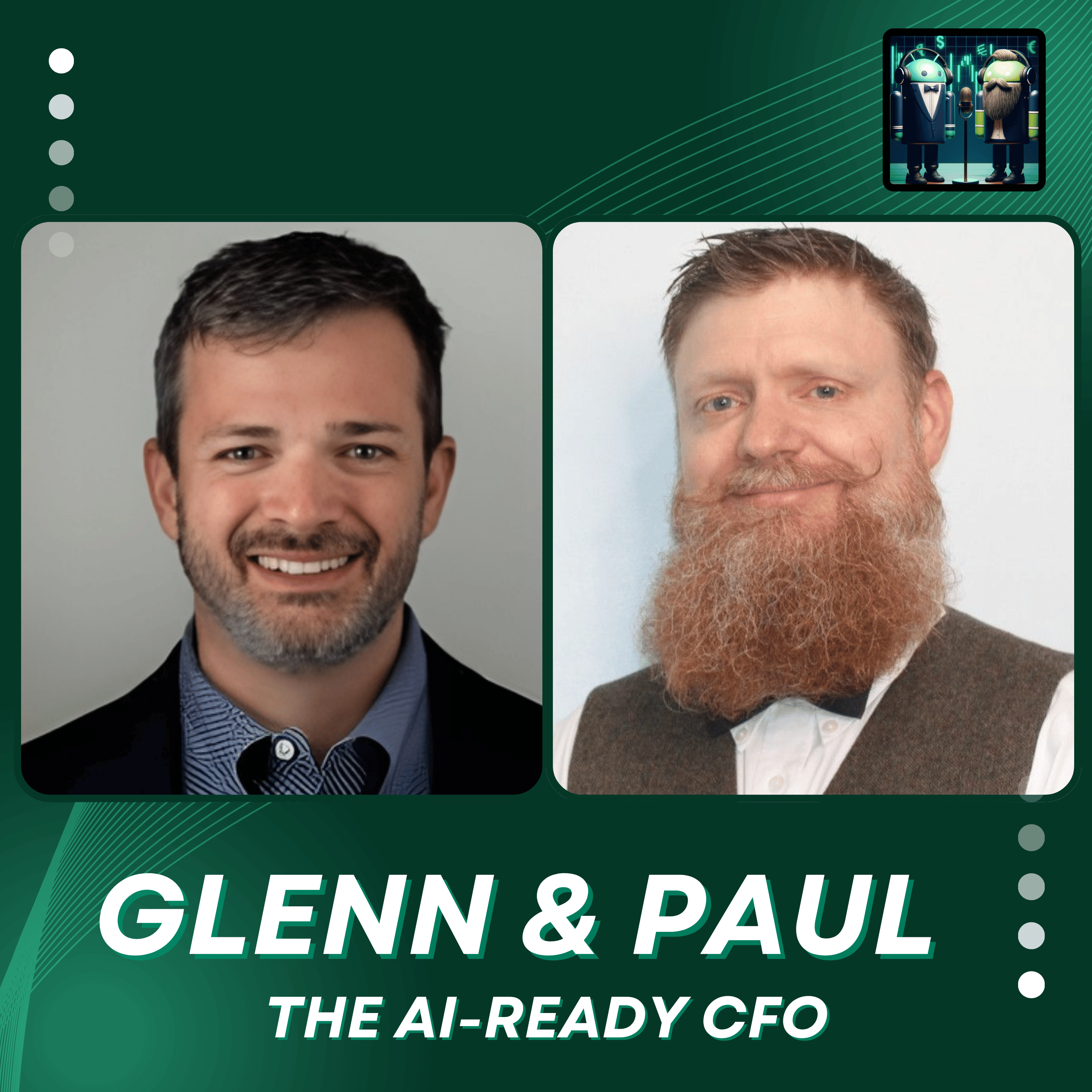 The CFO Should Own AI, Not IT | Glenn Hopper on The AI-Ready CFO 09.09.2026 46minIn this episode of Future Finance, Paul Barnhurst speaks with Glenn Hopper about his new book, The AI-Ready CFO, and how finance leaders can successfully navigate AI adoption. Glenn explains why CFOs need to take ownership of AI strategy, how to balance speed with risk, and why strong governance, data readiness, and change management are essential for building trust in AI. In this episode, you will discover:Why CFOs need to play a leading role in AI adoption.How finance teams can balance AI speed with governance and risk management.Why data readiness and process documentation are critical before implementing AI.How to build trust in AI through transparency, audit trails, and human oversight.How CFOs can create effective AI pilot programs and scale successful initiatives.AI adoption is not just about selecting new tools. Glenn explains that successful implementation starts with understanding current processes, improving data readiness, creating measurable baselines, and building systems that allow people to trust AI outputs. For CFOs, the future role is not becoming an AI engineer, but becoming the leader who ensures AI is used responsibly and effectively across the organization. Follow Glenn:LinkedIn: https://www.linkedin.com/in/gbhopperiiiGlenn’s new book: The AI-Ready CFOhttps://robocfo.ai/ai-ready-cfo Follow Paul:LinkedIn: https://www.linkedin.com/in/thefpandaguyDisclosure: Portions of this episode (such as the introduction or promotional segments) use AI-generated voice narration produced under human editorial review. Future Finance is sponsored by QFlow.ai, the strategic finance platform solving the toughest part of planning and analysis: B2B revenue. Align sales, marketing, and finance, speed up decision-making, and lock in accountability with QFlow.ai. Stay tuned for a deeper understanding of how AI is shaping the future of finance and what it means for businesses and individuals alike.In Today’s Episode:[00:00] - Trailer: The AI-Ready CFO[03:54] - The AI-Ready CFO Explained[08:59] - The Changing CFO Role[13:27] - Why Finance Should Lead AI[16:46] - AI Change Management[21:32] - Building an AI Strategy[27:39] - Trust, Governance & AI[32:32] - Transparent AI Processes[36:30] - AI Build vs. Buy[40:02] - Building AI Agents[43:21] - Closing Thoughts
 -
 Pitch Anything's Oren Klaff: From Spreadsheet to Deal Table 08.09.2026 49minIn this episode of Financial Modeler’s Corner, Paul Barnhurst speaks with Oren Klaff about how financial modeling can become a powerful tool for deal-making, investment decisions, and career growth. Oren explains why modelers should focus on identifying key sensitivities, communicating insights effectively, and helping buyers and sellers find ways to make deals work rather than simply pointing out flaws.Oren Klaff is a Private Equity Fund Manager and the bestselling author of Pitch Anything. Based in Beverly Hills, California, he focuses on recruiting smart people to join his portfolio companies. Oren began his career as a financial analyst in private equity before moving into deal-making and capital raising. His experience in financial modeling has played a key role in his approach to deal-making and raising capital.Expect to Learn:How financial modeling can help you transition into deal-making and capital raising.Why identifying sensitive assumptions is more valuable than simply finding errors.How analysts can avoid antagonizing other parties and instead help move deals forward.What makes a financial model professional, usable, and trustworthy.Why simplicity and structure matter when building models for business users.Here are a few relevant quotes from the episode:"Excel will never die. Rock and roll will never die, and Excel will never die." - Oren Klaff"The shortest path to high status is finding something wrong." - Oren KlaffOren explains that the real value of a modeler goes beyond building technically complex spreadsheets. The best modelers help decision-makers understand what matters, communicate uncertainty, and find practical ways to move a deal forward. A strong model should also be simple enough for business users to operate and robust enough to withstand scrutiny.Join FMI’s Global Conference:Take your financial modeling skills to the next level with FMI’s Global Financial Modeling Conference. Experience 24 hours of learning, networking, and practical insights from leading experts across the finance community.Register today: https://fminstitute.com/conference/Follow Oren:LinkedIn: https://www.linkedin.com/in/orenklaff/Follow Financial Modeler's Corner: LinkedIn: https://www.linkedin.com/company/financial-modeler-s-corner/Newsletter - Subscribe on LinkedIn: https://www.linkedin.com/build-relation/newsletter-follow?entityUrn=7079020077076905984Sign up for the Advanced Financial Modeler Accreditation today and get 15% off using the code “Podcast” at https://bit.ly/497oAqWDisclosure: Portions of this episode (such as the introduction or promotional segments) use AI-generated voice narration produced under human editorial review.In Today's Episode:[00:00] - Trailer[05:20] - Finding Insight in the Numbers[07:28] - Moving From Analyst to Deal Maker[10:58] - Using Modeling Without Antagonizing the Other Side[15:26] - Price, Terms, and Making Deals Work[20:11] - Real-World Applications of Modeling in Deals[23:24] - Modeling Horror Stories & What Good Models Look Like[31:25] - Building Models That Help Raise Money[35:20] - Storytelling With Numbers[40:13] - Pitch Anything and the Role of Status[43:24] - Rapid Fire: Excel, AI, Sensitivity Analysis & More[44:53] - Final Advice for Advancing Your Modeling Career
 -
 Why Your Brilliant Financial Analysis Gets Ignored: The Precision Trap with Asif Masani 03.09.2026 47minIn this episode of FP&A Unlocked, Paul Barnhurst speaks with Asif Masani about his new book, The Precision Trap, and why finance teams can focus too much on accuracy and miss the decision window. Asif explains how FP&A professionals can deliver timely analysis, influence business decisions, and become stronger business partners.Asif Masani is a Director at FP&A Professionals Institute and FP&A Jobs, an author, and Udemy instructor focused on helping finance professionals develop their FP&A skills. He is the author of All About FP&A, From Accounting to FP&A, and Data Storytelling Playbook.Expect to Learn:What the “precision trap” means for FP&A.Why timely analysis can be more valuable than perfect accuracy.How to choose the right level of accuracy for a decision.What questions to ask before starting an analysis.How finance professionals can become better business partners.How the DERP framework improves variance analysis.Here are a few relevant quotes from the episode:"Finance people are very good at doing analysis, but they're not very good at influencing decisions." - Asif Masani"The decision that could wait earlier for three weeks, can't wait today for three days." - Asif MasaniThe key to avoiding the precision trap is understanding what decision the analysis needs to support, who needs it, and when they need it. Asif explains why finance professionals should focus on delivering useful analysis at the right time and earning a place in important business decisions.Follow Asif:LinkedIn: https://www.linkedin.com/in/asifmasani/Website: https://fpnaprofessionals.com/Disclosure: Portions of this episode (such as the introduction or promotional segments) use AI-generated voice narration produced under human editorial review.Earn Your CPE CreditFor CPE credit, please go to earmarkcpe.com, listen to the episode, download the app, answer a few questions, and earn your CPE certification. To earn education credits for the FPAC Certificate, take the quiz on earmark and contact Paul Barnhurst for further details.In Today's Episode: [00:00] - Trailer[04:58] - What Great FP&A Looks Like[10:30] - Building the FP&A Professionals Institute[18:33] - Understanding the Precision Trap[20:35] - Why Timely Analysis Matters[29:44] - Spotting the Precision Trap in Organizations[35:16] - Essential FP&A Skills[38:04] - The DERP Framework[39:54] - Getting to Know Asif[44:56] - Final Advice for Finance Professionals
 -
 Why Better Workflows Matter More Than Better Prompts 02.09.2026 19minIn this episode of Future Finance, Paul Barnhurst and Glenn Hopper discuss AI fatigue and why finance professionals should focus less on chasing new models and more on using AI effectively. They share practical ways to improve AI results through better instructions, reference files, context, and data foundations.In this episode, you will discover:Why AI fatigue is becoming a real challenge.Why prompting alone is no longer enough.How context and reference files improve AI results.Why clean data and clear KPIs matter.How finance teams can start using AI more effectively.Paul and Glenn emphasize that finance teams do not need to build complicated systems immediately. Starting with clear data definitions, documented sources, and simple context files can already make AI much more useful.Follow Glenn:LinkedIn: https://www.linkedin.com/in/gbhopperiiiFollow Paul:LinkedIn: https://www.linkedin.com/in/thefpandaguyDisclosure: Portions of this episode (such as the introduction or promotional segments) use AI-generated voice narration produced under human editorial review.Future Finance is sponsored by QFlow.ai, the strategic finance platform solving the toughest part of planning and analysis: B2B revenue. Align sales, marketing, and finance, speed up decision-making, and lock in accountability with QFlow.ai. Stay tuned for a deeper understanding of how AI is shaping the future of finance and what it means for businesses and individuals alike.In Today's Episode:[00:00] - Introduction[01:07] - AI Fatigue[04:09] - Using AI Effectively[05:44] - The Changing Role of Prompting[07:40] - AI for Financial Modelling[11:37] - AI and Finance Data[14:47] - Building a Data Foundation[18:10] - Practical AI Tips[19:08] - Closing Thoughts
 -
 Why AI Makes Financial Modeling Best Practices More Important with Marli van Staden-Basson 01.09.2026 53minIn this episode of Financial Modeler’s Corner, Paul Barnhurst speaks with Marli van Staden-Basson about best-practice financial modeling, AI, model design, and the skills needed to build reliable models. Marli explains why transparency, usability, and risk management matter, and how AI makes strong modeling practices even more important.Marli van Staden-Basson is the founder and financial modeling specialist at Near Future Limited, with over 20 years of experience in corporate and infrastructure finance. She specializes in renewable energy and digital infrastructure modeling, including complex model development and independent model audits.Expect to Learn:What best-practice financial modeling really means.Why model design and transparency are so important.How AI is changing financial modeling.Common modeling mistakes and practices to avoid.How to design models around the people who use them.Why human review remains essential when using AI.Here are a few relevant quotes from the episode:"You are still the last line of defence as the human modeler." - Marli van Staden-Basson"A good financial model should really be doing a single thing." - Marli van Staden-BassonAI can make modeling faster, but Marli explains why it does not replace good modeling practices. Clear design, purposeful structure, checks, and human judgement remain essential for creating models that are reliable and easy to review. Follow Marli:LinkedIn: https://www.linkedin.com/in/marli-van-staden-basson-7119ba28/Follow Financial Modeler's Corner: LinkedIn: https://www.linkedin.com/company/financial-modeler-s-corner/Disclosure: Portions of this episode (such as the introduction or promotional segments) use AI-generated voice narration produced under human editorial review. Newsletter - Subscribe on LinkedIn: https://www.linkedin.com/build-relation/newsletter-follow?entityUrn=7079020077076905984Sign up for the Advanced Financial Modeler Accreditation today and get 15% off using the code “Podcast” at https://bit.ly/497oAqWIn Today's Episode:[00:00] - Trailer[03:29] - Building a Career in Financial Modeling[07:18] - Breaking the Modeler Stereotype[10:54] - Financial Modeling Horror Stories[18:49] - Starting a Financial Modeling Consultancy[24:28] - AI and Best-Practice Modeling[30:26] - Why Model Design Matters[37:07] - Tips for Building Better Models[41:23] - Worst Modeling Practices to Avoid[47:43] - Excel Rapid Fire[51:05] - AI and the Future of Modeling
 -
 The Budget Isn't the Goal. Building a Better Business Is with Zach & Chris 27.08.2026 1h 2minIn this episode of FP&A Unlocked, host Paul Barnhurst is joined by Zach Rial and Chris Ortega, alongside co-host Glenn Snyder, to discuss budgeting and forecasting best practices. The conversation explores how finance teams should think about the purpose of budgeting, balancing control with agility, involving the business in the planning process, and using forecasting as a tool for better decision-making.Zach Rial is a finance leader at AskElephant, a startup focused on revenue and conversation intelligence. He brings experience as an operator who uses finance, FP&A, and business insights to help companies grow and improve decision-making. Chris Ortega is the CEO of Fresh FP&A, a global fractional CFO and advisory firm supporting small and medium-sized businesses. Chris has over 20 years of experience in accounting, finance, and leadership roles, helping organizations build, scale, and prepare for growth.Expect to Learn:The real purpose of budgeting and forecastingHow to create a business-focused planning processWhy trust and partnership are essential for FP&A teamsHow to balance budget discipline with flexibilityBest practices for managing AI costs and governanceHere are a few relevant quotes from the episode:“A budget is the direction of where you want to go, but things change so much in a business.” - Chris Ortega“The budget process should not be a finance exercise. It’s an organizational exercise.” - Glenn SnyderEffective budgeting is not about predicting the future perfectly, it is about creating alignment, understanding business drivers, and enabling better decisions. The strongest FP&A teams use budgets and forecasts as tools to guide the business, build trust, and help leaders navigate uncertainty.Follow Zach:LinkedIn: https://www.linkedin.com/in/zacharyrial/Follow Chris:LinkedIn: https://www.linkedin.com/in/freshcfo/Follow Glenn:LinkedIn: https://www.linkedin.com/in/glenntsnyder/Disclosure: Portions of this episode (such as the introduction or promotional segments) use AI-generated voice narration produced under human editorial review.Earn Your CPE CreditFor CPE credit, please go to earmarkcpe.com, listen to the episode, download the app, answer a few questions, and earn your CPE certification. To earn education credits for the FPAC Certificate, take the quiz on earmark and contact Paul Barnhurst for further details.In Today's Episode:[00:00] - Introduction[06:20] - The Purpose of Budgeting[12:26] - Making Budgeting a Business Process[17:24] - Building a Better Planning Approach[26:51] - Practical Budgeting and Forecasting Tips[37:44] - Building Trust With Business Partners[44:35] - Managing AI Costs and Governance[54:18] - Balancing Budget Control and Agility[58:35] - Final Advice
 -
 How Finance Pros Should Manage Data Context and Token Forecasting 26.08.2026 42minIn this episode of Future Finance, hosts Paul Barnhurst and Glenn Hopper discuss AI fatigue, better ways for finance teams to use AI, and the growing challenge of forecasting AI costs. They explore why finance leaders should focus less on chasing new models and more on building the data, context, and workflows needed to get real value from AI.In this episode, you will discover:Why finance teams should stop chasing every new AI model.Why context is becoming more important than prompting alone.How better KPIs and data foundations improve AI results.How organizations can forecast and manage AI token costs.Why AI success should be measured by business outcomes.Paul and Glenn explain why effective AI adoption isn't about using the most tokens or knowing every new tool. It's about using AI to help finance make better, faster decisions.Follow Glenn:LinkedIn: https://www.linkedin.com/in/gbhopperiiiFollow Paul:LinkedIn: https://www.linkedin.com/in/thefpandaguyDisclosure: Portions of this episode (such as the introduction or promotional segments) use AI-generated voice narration produced under human editorial review.Future Finance is sponsored by QFlow.ai, the strategic finance platform solving the toughest part of planning and analysis: B2B revenue. Align sales, marketing, and finance, speed up decision-making, and lock in accountability with QFlow.ai. Stay tuned for a deeper understanding of how AI is shaping the future of finance and what it means for businesses and individuals alike.In Today’s Episode:[00:00] – Trailer[03:17] – AI Fatigue & Model Overload[09:38] – Beyond Prompt Engineering[16:03] – Building Better AI Context[24:29] – Organizing Finance Knowledge[27:29] – Token Maxing & AI Costs[32:06] – Forecasting Token Spend[38:23] – Focusing on Business Value[41:43] – Closing Thoughts
 -
 What Separates an Excellent Financial Modeler From a Technically Good One with Diarmuid Early 25.08.2026 49minIn this episode of Financial Modeler’s Corner, Paul Barnhurst speaks with Diarmuid Early about what separates great financial modelers from technically capable ones, the rise of AI in financial modeling, and why judgment remains essential. Diarmuid shares lessons from his career, his experience as a three-time World Financial Modeling Champion, and why understanding what a model actually means matters more than simply building it correctly.Diarmuid Early is the founder of Early Days Consulting, a data analytics and financial modeling consultancy. He previously worked at Boston Consulting Group and spent nearly a decade in Deutsche Bank’s Origination and Advisory division. He holds a PhD in computer science and is a three-time World Financial Modeling Champion, Excel MVP, and Master Financial ModelerExpect to Learn:Why great modelers think beyond simply building the modelHow assumptions and business understanding drive valuable financial modelsWhere AI currently fits into financial modelingWhy AI-generated models still require careful human reviewWhy continuous learning remains essential for financial modelersHere are a few relevant quotes from the episode:“The hard part is getting everybody aligned. What are the assumptions?” - Diarmuid Early“There is a smart way to do it. And so if you're banging your head against it, go find the smart way.” - Diarmuid EarlyAI will continue to take on more of the technical work involved in financial modeling, but speed alone does not make a model useful or reliable. Strong modelers will continue to stand out through their ability to develop credible assumptions, interpret results, exercise judgment, and understand the decisions a model is meant to support. Follow Diarmuid:LinkedIn: https://www.linkedin.com/in/diarmuidearly/YouTube: https://www.youtube.com/@dimearlyFollow Financial Modeler's Corner: LinkedIn: https://www.linkedin.com/company/financial-modeler-s-corner/Disclosure: Portions of this episode (such as the introduction or promotional segments) use AI-generated voice narration produced under human editorial review. Newsletter - Subscribe on LinkedIn: https://www.linkedin.com/build-relation/newsletter-follow?entityUrn=7079020077076905984Sign up for the Advanced Financial Modeler Accreditation today and get 15% off using the code “Podcast” at https://bit.ly/497oAqWIn Today's Episode:[00:00] - Trailer[03:31] - Diarmuid’s Journey Into Financial Modeling[06:00] - Financial Modeler Stereotypes[08:20] - Career Advice for Aspiring Modelers[12:46] - Financial Modeling Competitions[14:59] - Consulting, Coaching, and Career Evolution[18:25] - Meeting Microsoft CEO Satya Nadella[21:08] - AI and the Future of Financial Modeling[25:41] - Why AI-Generated Models Still Need Review[31:09] - Financial Modeling Standards and Best Practices[35:19] - Diarmuid’s Most Challenging Modeling Case[39:28] - Excel Shortcuts and Modeling Tools[41:38] - Rapid-Fire Modeling Questions[46:01] - Continuous Learning and Final Advice
 -
 Should Finance Pros Be Using Vibe Coding to Build Their Own Tools? with Brock & Natalia 20.08.2026 58minIn this episode of FP&A Unlocked, host Paul Barnhurst is joined by Brock Beyer and Natalia Kudinova to discuss how vibe coding is changing the way finance professionals automate work and build practical tools. They explore real-world use cases, AI token costs, security and maintenance concerns, and why finance teams should start with simple, repetitive processes rather than business-critical systems.Brock Beyer is the CPA Controller at Jump, where he has used vibe coding to build internal productivity tools. Natalia Kudinova is a Senior Director at ABBYY with experience across finance leadership, treasury, tax, reporting, transformation, and process improvement.Expect to Learn:What vibe coding means for finance professionalsPractical finance processes you can automate with AIHow to manage AI token usage and costsWhy security and human oversight remain essentialHow to start small and learn through experimentationHere are a few relevant quotes from the episode:“You don't have to feel this pressure to vibe code every single tool.” - Brock Beyer“Start with the tasks that you are most tired of doing manually.” - Natalia KudinovaVibe coding is giving finance professionals new ways to automate repetitive work and build practical tools without traditional coding expertise. The key is to start small, focus on well-defined processes, and keep humans involved in reviewing results. As AI adoption grows, security, cost, and maintainability will remain critical considerations. Follow Natalia:LinkedIn: https://www.linkedin.com/in/natalia-kudinova-aca/Follow Brock:LinkedIn: https://www.linkedin.com/in/brockbeyer/Disclosure: Portions of this episode (such as the introduction or promotional segments) use AI-generated voice narration produced under human editorial review. Earn Your CPE CreditFor CPE credit, please go to earmarkcpe.com, listen to the episode, download the app, answer a few questions, and earn your CPE certification. To earn education credits for the FPAC Certificate, take the quiz on earmark and contact Paul Barnhurst for further details.In Today's Episode:[00:00] - Trailer[03:12] - What Great FP&A Looks Like[04:59] - What Is Vibe Coding?[09:36] - Getting Started With Vibe Coding[16:02] - Where Vibe Coding Makes Sense[20:21] - AI Token Costs and ROI[34:12] - Best Finance Processes to Automate[41:53] - What You Shouldn't Vibe Code[46:17] - Maintenance and Security[54:17] - Final Advice
 -
 Better Data vs Better AI: What Really Matters for Finance with Alex Curran 19.08.2026 19minIn this episode of Future Finance, hosts Paul Barnhurst and Glenn Hopper welcome Alex Curran, CEO of Aptitude Software, to discuss AI-native ERP, the changing role of CFOs, and how finance teams can prepare for AI adoption. Alex explains why strong data foundations, flexible architecture, and real-time finance systems are becoming essential.Alex Curran is the CEO of Aptitude Software, a company with decades of experience building finance solutions for complex organizations. After more than 12 years at Aptitude, Alex became CEO in late 2023 and now leads the company’s focus on AI-native finance technology, including the Fynapse platform.In this episode, you will discover:Why CFOs are becoming strategic partners in business decisions.Why clean, detailed data is essential for effective AI adoption.What makes an ERP system truly AI-native.How CFOs can evaluate legacy and newer AI-native ERP platforms.Why flexible AI models and real-time finance are becoming more important.Alex explains that successful AI adoption requires more than adding AI features to existing finance systems. Organizations need the right data and architecture to support changing AI technologies while meeting complex finance requirements. Follow Glenn:LinkedIn: https://www.linkedin.com/in/gbhopperiiiFollow Paul:LinkedIn: https://www.linkedin.com/in/thefpandaguyFollow Alex:Website: http://fynapse.app/LinkedIn: https://www.linkedin.com/in/alex-curran-9aa593b/Future Finance is sponsored by QFlow.ai, the strategic finance platform solving the toughest part of planning and analysis: B2B revenue. Align sales, marketing, and finance, speed up decision-making, and lock in accountability with QFlow.ai. Stay tuned for a deeper understanding of how AI is shaping the future of finance and what it means for businesses and individuals alike.In Today’s Episode:[00:56] – Meet Alex Curran[02:32] – Aptitude Software and Fynapse[05:16] – The Changing CFO Role[07:03] – Finance’s Data Problem[10:53] – AI-Native Finance Systems[14:33] – Evaluating ERP Options[17:32] – The Future of AI-Native ERP[18:59] – Closing Thoughts
Podobné podcasty


Oblíbený v
Tento podcast se objevuje také v podcastových žebříčcích těchto zemí.


