
Uphill Athlete Podcast
Uphill Athlete
0
The Uphill Athlete Podcast educates and inspires mountain athletes, sharing proven training knowledge and unmatched experience from experts in the field. It aims to help listeners become the best they can be in mountain sports.
Epizody
-
 Multi-Sport and Seasonal Planning 29.09.2026 46minTrail running, climbing, skiing, riding: can you train for all of them without getting worse at each? Steve House and Director of Coaching Chantelle Robitaille share the framework Uphill Athlete coaches use with multi-sport athletes. Pick one priority per season, run an honest gap analysis, and harmonize your sports instead of balancing them. They also cover the interference effect, layering sports through the year, when to set one aside, and why strength training is non-negotiable.
 -
 Concussion Fundamentals with Dr. Eliza Sampey 15.09.2026 1h 16minSteve House talks with Dr. Eliza Sampey, a Doctor of Physical Therapy specializing in brain injury rehab, former professional endurance athlete, and concussion survivor herself about why mountain and endurance athletes so often underestimate head injuries, and what science-backed recovery actually looks like. Dr. Sampey explains that concussions are especially easy to dismiss in the backcountry because the injury is invisible and athletes are conditioned to push through pain. She walks through the neurometabolic cascade that occurs after a head or body impact — how stretched axons flood the brain with misplaced neurochemicals, disrupt blood flow, and trigger an "energy crisis" that takes three to six weeks to resolve, regardless of how mild or severe the initial injury seemed. She stresses why getting hit again during that window is dangerous, even life-threatening in rare cases of second impact syndrome, and can turn a six-week recovery into six to nine months. The conversation covers red-flag symptoms that warrant emergency evacuation, why "rest in a dark room" is outdated and harmful advice, the real role of relative rest and sleep in the first 48 hours, and why low-intensity, sub-symptom-threshold exercise (not standard heart-rate training zones) is the cornerstone of active rehab. Dr. Sampey introduces the seven systems affected by concussion (autonomic, metabolic, visual, vestibular, cervical, cognitive, and affective) and explains why treating them in isolation fails — recovery requires integrating them back together. She also discusses the Buffalo Concussion Bike/Treadmill Test for gauging exercise tolerance, common mistakes endurance athletes make in returning to training too fast, how old, "resolved" concussions can resurface under new training stress, and how to vet a qualified concussion provider. The episode closes with practical guidance on symptom tracking, supporting a partner or teammate through recovery, and her core message: concussion is a treatable injury — most long-term problems come from how it's managed, not how bad it was to begin with.
 -
 Who Says Yes? 08.09.2026 1h 50minSteve House sits down with elite mountain athlete Kílian Jornet, calling in from his home in Norway, for a wide-ranging conversation about what draws people to high-risk mountain pursuits. They explore mountains not as a destination but as a sense of home and identity, the fine line between earned confidence and dangerous complacency, and how fear and euphoria can each distort decision-making in exposed terrain. Jornet reflects on his upbringing; being "born into the mountains," his mother's nighttime forest walks, a family trek across the Pyrenees; and how he's now passing that connection to nature on to his own children with his wife, Emily. The two discuss the blurred lines between mountaineering, alpinism, and running as labels; the philosophy behind going fast and light versus slow and immersive; and the particular psychology of "accepting" mortal risk versus fighting to survive an emergency. The conversation turns deeply personal as Kílian opens up about the loss of his friend and climbing partner Stefane Brosse and how grief and loss reshapes friendships, risk tolerance, and one's relationship with death across cultures. They close on parenthood, legacy, and the freeing realization that, ultimately, no one will be remembered. What matters is being present, honest, and good to the people around you now.
 -
 Endurance and Enlightenment on Everest 25.08.2026 1h 24minSteve House sits down with client René Morkos to unpack his Everest summit and the profound, almost spiritual experience he had on the summit ridge. René describes the physical transformation five and a half years of structured training brought him — from a non-athlete to one of the fittest climbers on the mountain — and how that fitness "buffer" let him fully experience rather than merely survive the climb. The conversation moves through his systems-thinking background (a Stanford PhD in AI applied to construction), his formative years surviving war in Beirut and rebuilding infrastructure in Afghanistan, his personal framework for risk-taking, and the mysterious, overwhelming sensation he felt above 8,600 meters that he still can't fully explain. They close by comparing mountaineering to other transcendent experiences (Burning Man, live music) and reflecting on why the training itself — not just the summit — is the lasting reward.
 -
 The Evolution of Training Technology with Hunter Allen 11.08.2026 35minSteve House sits down with Hunter Allen — cycling coach, co-creator of TrainingPeaks, and co-author of Training and Racing with a Power Meter — for a wide-ranging conversation on training technology through the lens of the hype-adoption-disillusionment cycle. They trace the power meter's unusual "trickle-up" adoption (from data-driven amateurs to pros around 2008-2009) before working through today's landscape: HRV as a life-stress signal, the limits of wrist-based sleep tracking, the untapped promise of respiration and minute ventilation monitoring for mountain athletes, pulse oximetry's highly individual response to altitude exposure, heat/core-temperature training for hot events, skepticism around substrate utilization metrics, and the current bottlenecks holding back continuous lactate monitoring. The back half is a deep dive into continuous glucose monitors (CGMs), where Allen unpacks why endurance athletes run naturally higher glucose than the general population, why CGMs are both a performance and behavior-change tool, practical strategies like "food stacking" at meals, and why he recommends six months of wear time before drawing conclusions — closing with his take on where CGM technology is headed over the next decade.
 -
 Voice of the Mountains: Legacy is Not the Measure with Max King 04.08.2026 1h 40minMax King is the only American ever to win both the World Mountain Running Championship and the World 100K Championship. He joins Steve House for a wide-ranging conversation about identity, competition, and longevity in endurance sport. Max traces his path from a chemical engineering degree and Cornell track team to Olympic Trials appearances in both the steeplechase and marathon, his accidental first ultra the week after a disappointing Trials prelim, and his eventual move into trail and mountain ultrarunning, including a recent attempt at the Barkley Marathons. The two dig into the tension between elite competitiveness and the collaborative, adventure-driven ethos of trail culture, how aging athletes renegotiate identity as performance declines, and why Max is drawn to races defined by history and mythology (Barkley, Dipsea, Mount Marathon) rather than media hype. The conversation closes on Max's diversified career (coaching, race directing, youth camps, a new sponsorship with the Chinese brand Kailas) and his hope to be remembered for what he gave back to the sport, especially through youth development.
 -
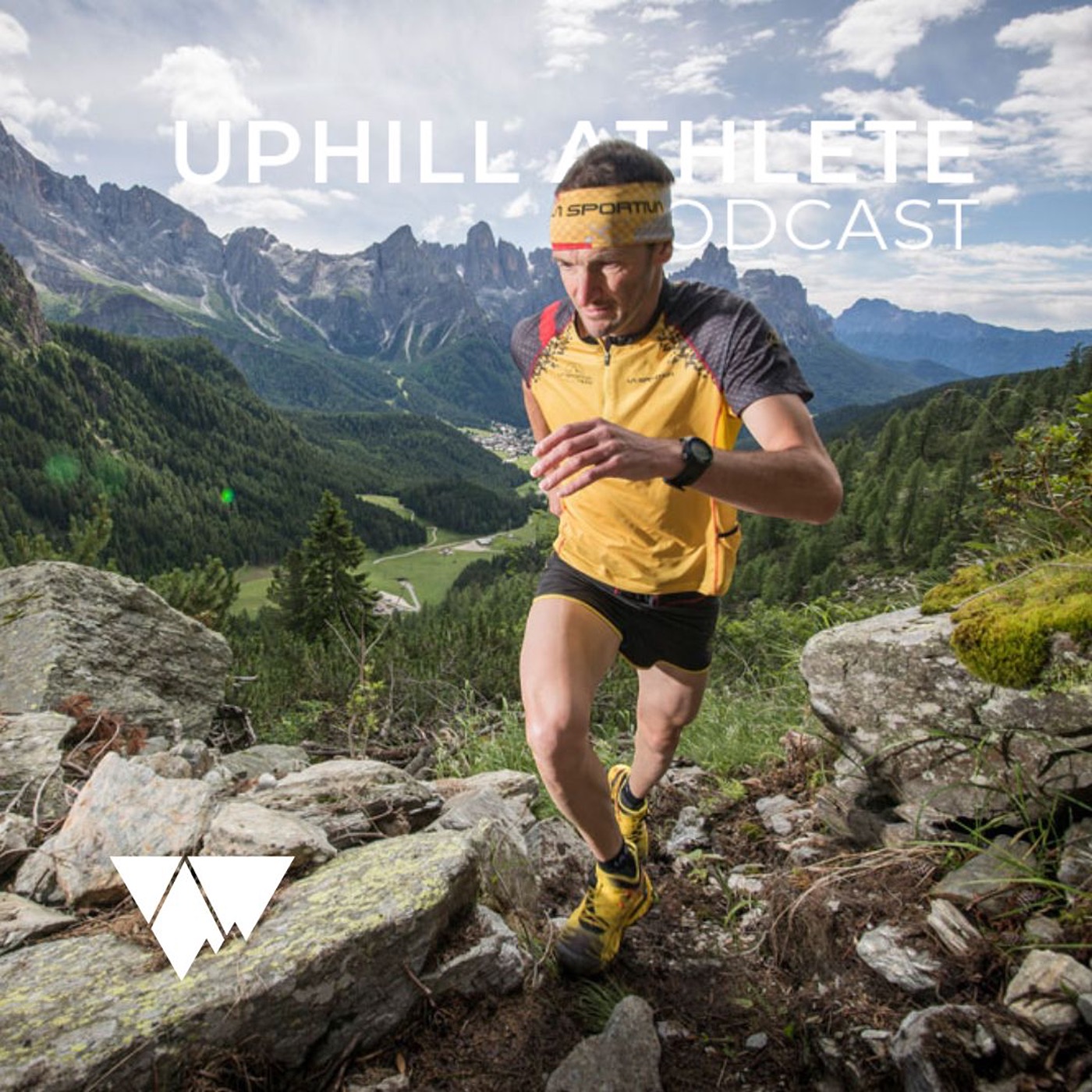 Training Considerations for Master Athletes with Joe Friel 28.07.2026 1h 7minSteve House talks with legendary coach and author Joe Friel, now 82, about the newly released second edition of Fast After 50. Friel reflects on how a serious 2014 cycling crash reshaped his own training, and explains why the book's focus shifted from encouraging older athletes to add intensity (2012) to now urging them to build a much larger aerobic base, since he's observed most masters athletes over-doing high intensity and under-doing low intensity work. The conversation covers his "5+2" and "9-day" training patterns, how strength training is periodized across a season, the concept of durability (maintaining output late in long events) and how it's trained through fatigue-then-specificity workouts, muscular/strength endurance versus durability, adapting training around perimenopause, and the two key metrics Friel prioritizes with athletes: efficiency factor (EF) in base training and heart-rate/power decoupling in build periods. The episode closes on themes of patience, lifestyle identity, coaching athletes toward self-sufficiency, and Friel's core message: build the aerobic base first. Special Offer to Listeners: Receive free four week samples of our most popular training plans, visit uphillathlete.com/letsgo [http://uphillathlete.com/letsgo] Write to us at [email protected]
 -
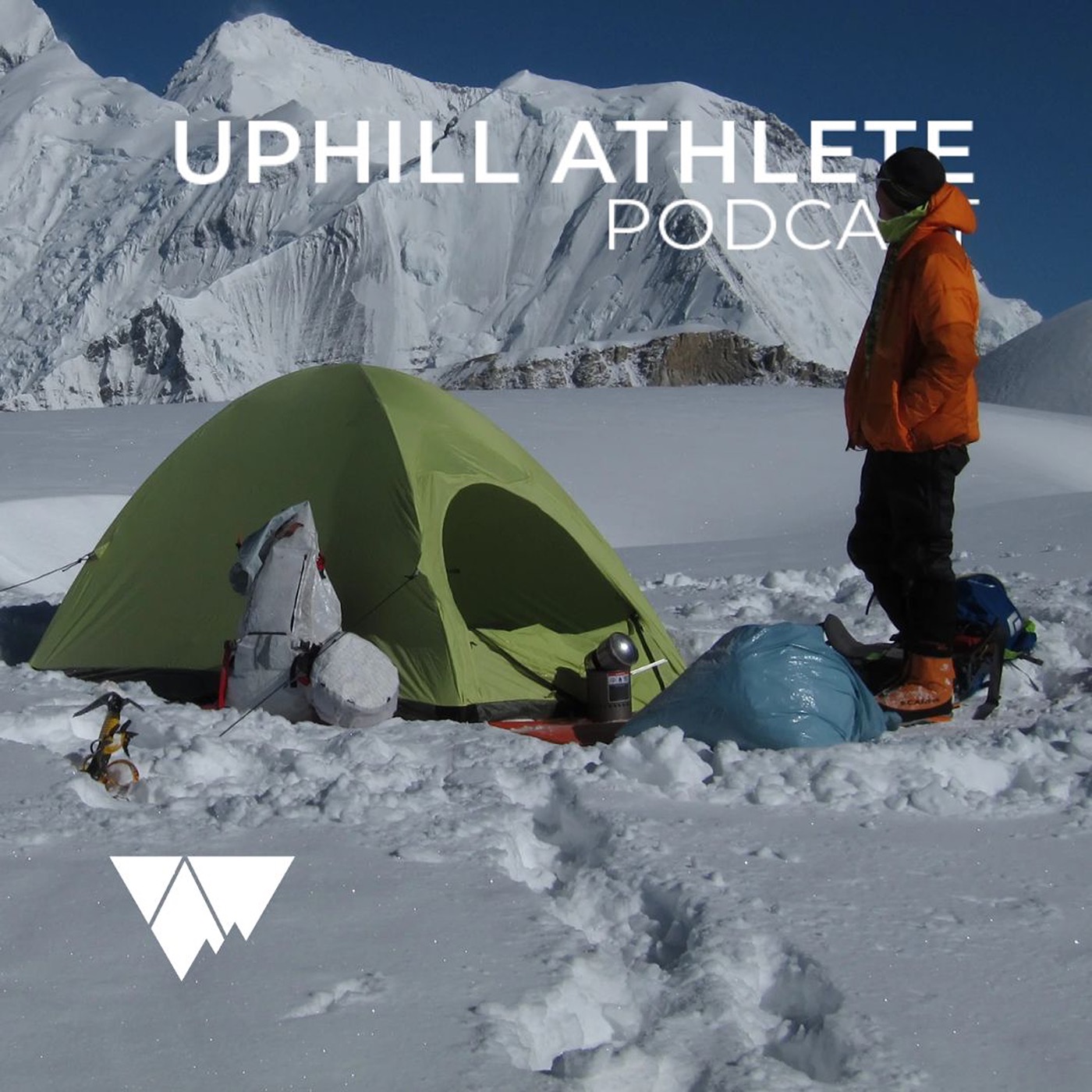 2026 Everest Trends with Steve House, Alan Arnette, and Martin Zohr 14.07.2026 1h 17minIn this Everest 2026 season recap, Steve House talks with Alan Arnette (Summit Coach) and Uphill Athlete coach Martin Zohr about a record-breaking year on the mountain: roughly 1,008 South Col summits (up from 891 in 2019), nearly 500 Nepal permits issued, nine straight days of delays from a massive leaning serac in the Khumbu Icefall, and a brief government ban on drone use that was reversed within days. They cover five climbing deaths (well below historical averages), the shift toward "flash" expeditions using higher-flow supplemental oxygen and pre-acclimatization on trekking peaks instead of traditional rotations, the stalled 7,000-meter prerequisite bill in Nepal's parliament, drones and helicopters replacing some Sherpa load-carrying, the unclear status of xenon use by climbers, Bartek Ziemkiewicz's no-oxygen ski descents of both Everest and Lhotse, and Nepal's roughly $8.5 million in permit revenue that largely bypasses local communities. The conversation closes with training advice — emphasizing a year or more of structured aerobic-first preparation, VAM tracking, and a mountaineering apprenticeship through progressively higher peaks — plus predictions for the 2027 season, including possible Tibet-side reopening.
 -
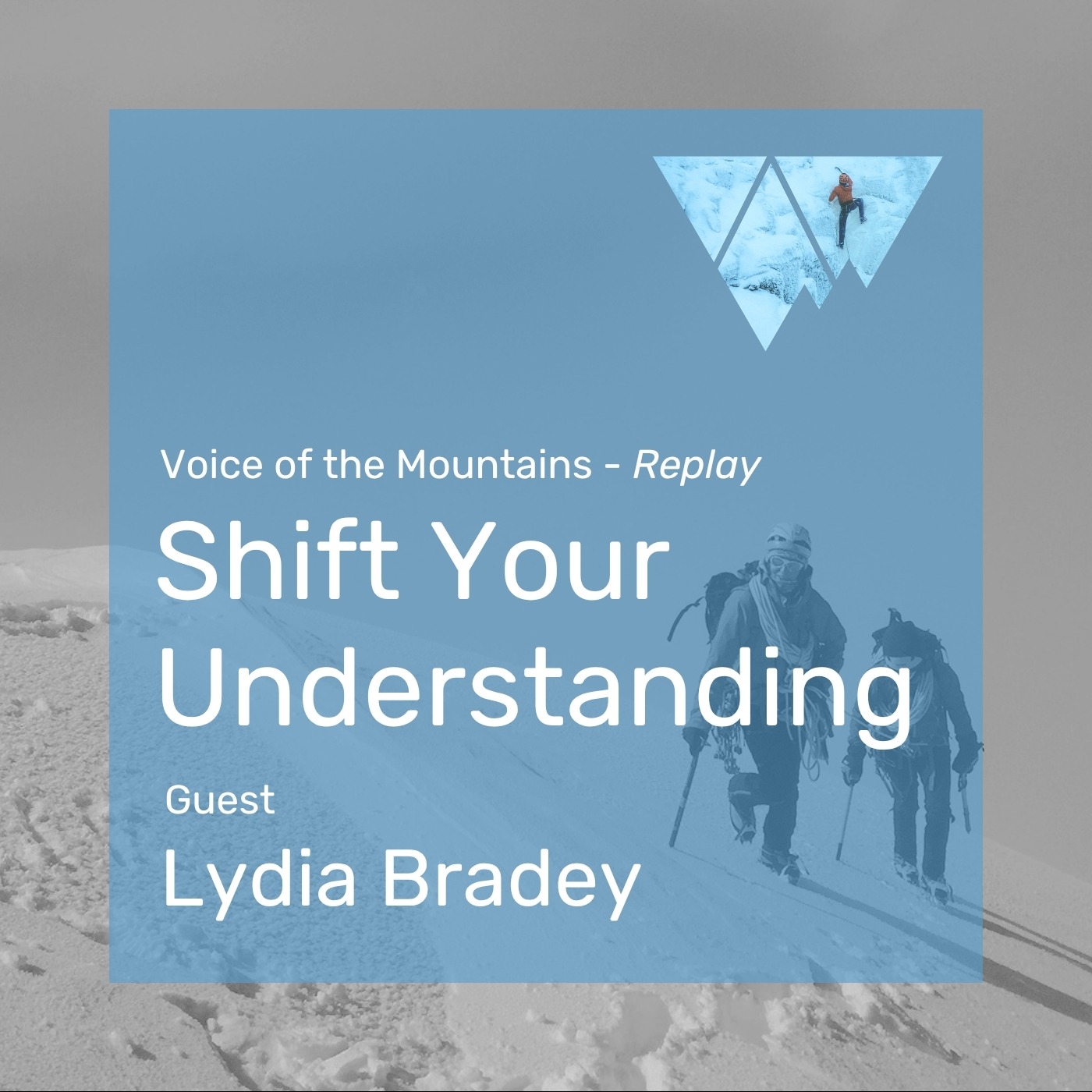 Voice of the Mountains: Shift Your Understanding with Lydia Bradey (Replay) 07.07.2026 2h 2minVoice of the Mountains revisits one of its most memorable conversations (originally recorded in 2024, with a new intro from Steve House): Lydia Bradey, the New Zealand alpinist who in 1988 became the first woman to climb Mount Everest without supplemental oxygen and who would go on to guide six successful Everest summits, more than any other woman in history. We're re-releasing this episode because the conversation was simply too good not to share again. Their discussion centers on a single, deceptively simple distinction: the difference between doing what people say you cannot do and doing what people say you should not do. Bradey traces her path from a self-described "wild child" raised by a single mother in New Zealand, through formative big-wall climbs in Yosemite and a near-fatal, avalanche-riddled epic in the Indian Himalaya, to the slopes of Everest itself, where she describes climbing "super altitude" not with dread but with pure curiosity. She and House dig into the bitter aftermath of her ascent — when senior male climbers on her own expedition publicly called her a liar, and half her teammates died descending the mountain — and how she navigated the threat of a ten-year climbing ban while quietly building a new life and career. Throughout, Bradey returns to themes of curiosity over fear, rejecting blame culture in favor of personal agency, and the idea that mastery of small, unglamorous tasks — sharp crampons, melted snow, a well-organized tent — is what earns a climber the right to take real risks. Asked how she wants to be remembered, her answer is unexpectedly modest: not for the summits, but simply as good company.
 -
 The Evolution of Testing: Continuous AeT 23.06.2026 35minSteve House and Will Zittlau pull back the curtain on Continuous Aerobic Threshold, a new feature inside Uphill Athlete's Training Groups dashboard that automatically calculates an athlete's AeT each week using a four-week moving average of their training data — no field test required. Steve explains the core problem: athletes can do the work consistently and still be uncertain whether they trained at the right intensity, because a missed AeT quietly shifts aerobic sessions into glycolytic territory and derails the adaptation they were after. To validate the algorithm, Steve blind-scored 65 athlete files by hand and found the tool lands within an average of 0.1 beats of his coaching judgment — though that average masks a wider spread, with 62% of athletes falling within five beats and outliers as far as 17 beats off, a gap the team attributes largely to data quality. The episode is candid about where the tool still falls short and what they're doing to close it: improving filtering (wrist-based HR and mountain bike data are particularly noisy), building data-hygiene habits in the community, and targeting 99% of athletes within five beats of coach-level accuracy by year's end. And join us Tuesday, June 30th YouTube Livestream: Continuous Aerobic Threshold Monitoring and Training Zones Join Steve House and Will Zittlau for a live walkthrough of the Uphill Athlete Training Dashboard that is available to our Training Groups Athletes. Learn about continuous heart rate monitoring and how you can set your training zones with confidence. If you've ever wondered whether your training zones are right, this is a discussion you won't want to miss. REGISTER >> [https://youtube.com/live/Z2sbLk5CHiA]
 -
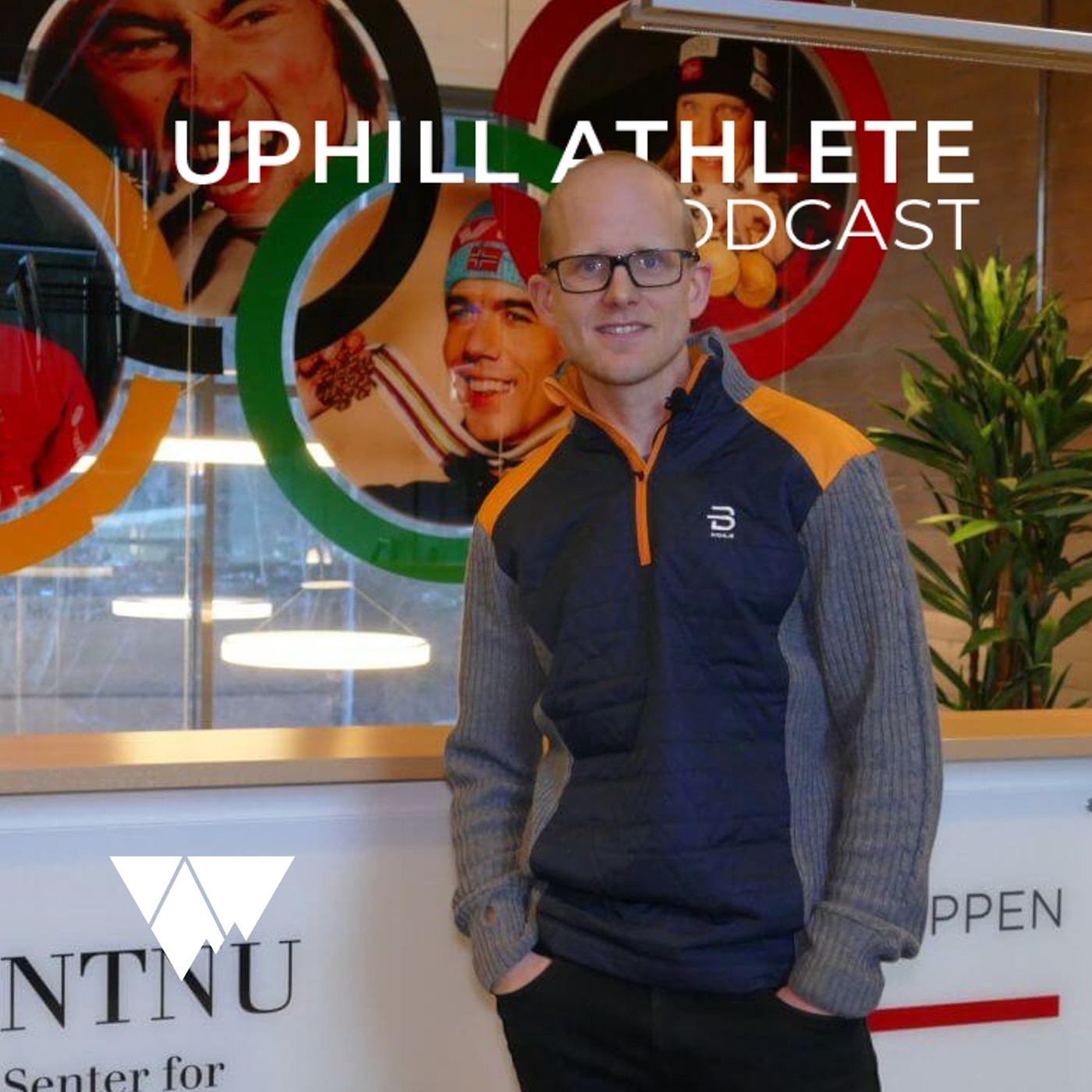 Building the Aerobic Engine with Dr. Øyvind Sandbakk 09.06.2026 1h 2minSteve House welcomes Dr. Øivind Sandbakk, professor at the Norwegian School of Sports Sciences and director of the School for Elite Sports, for a deep dive into the science underlying Norwegian endurance dominance. Sandbakk traces his path from competitive cross-country skier to national-team coach to researcher, explaining that Norway's success stems less from any single training method and more from three decades of shared terminology, systematic data collection, and cross-sport knowledge exchange. He walks through how training intensity distribution is not universal but must be derived from each sport's specific demands — the metabolic fluctuations of skiing, the mechanical load constraints of running, the discipline-specific quirks of swimming and speed skating — and why blindly exporting any one "Norwegian model" misses the point entirely. The conversation then turns to the practical architecture of elite endurance development: high volumes of low-intensity work as the aerobic foundation, two to three quality sessions per week, and careful load-recovery management where the goal is optimizing adaptation signals rather than executing a plan for its own sake. Sandbakk and House find common ground on the art of coaching — the calibrated gut feeling built from lab data, training diary patterns, and honest athlete communication — and explore muscular endurance, aerobic threshold identification, and the long arc of athletic development, noting that most athletes haven't reached their aerobic ceiling until their early thirties. Sandbakk closes by previewing his current focus on young athlete development, arguing that building complete humans — psychologically resilient, multi-sport, injury-resistant — is the prerequisite for producing world champions.
 -
 Voice of the Mountains: My Axe May Be Your Paintbrush with Jimmy Chin (Replay) 02.06.2026 58min(Originally published November 2024, now with new intro from Steve House) Most of us will never reach the pinnacle of our most passionate pursuit, no matter how driven we are. Through dedication, creativity and ingenuity, our guest today has reached the pinnacle of three of his passions. Beginning with a unique journey to discover climbing and skiing, then the discovery of an interest in photography, which finally led to becoming a premiere feature and documentary filmmaker, Jimmy Chin has forged his path with resilience, empathy, and a desire to tell important stories. Jimmy's accolades and accomplishments speak volumes about a climber and artist who has pushed boundaries and silenced doubters. But it has always been the manner with which Jimmy has achieved that is most impressive. Steve and Jimmy discuss the evolution of his career and the catalyst for picking up a camera in the pursuit of climbing. They dive into the moral qualms Jimmy had shooting Free Solo and how and why he decided to create the award-winning documentary. Special Offer to Listeners: Receive free four week samples of our most popular training plans, visit uphillathlete.com/letsgo Write to us at [email protected]
 -
 The Four Inputs that Determine Your Progress 26.05.2026 42minUphill Athlete founder Steve House sits down with athlete dashboard lead Will Zittlau and Coach Alexa Hasman to introduce the newly launched Uphill Athlete Training Groups dashboard — a purpose-built tool designed to cut through data overload and give athletes a clear, intuitive read on their progress. The conversation walks through the four core training pillars tracked by the dashboard — consistency, training load, work/rest balance, and strength — each rooted in the foundational principles of Training for the New Alpinism and surfaced as simple stoplight scores that tell athletes at a glance whether they're on track. The episode also dives into one of the dashboard's most anticipated features: automated aerobic threshold tracking. Rather than requiring periodic field tests, the system analyzes ongoing training data to surface a rolling AeT trend — making a metric that's long been central to the Uphill Athlete methodology accessible without extra effort. Steve shares the story behind "Maria," the AI intelligence layer being built into the platform, named in honor of alpinist Maria Frantar. The team closes with a look at what's ahead, including automated training zone suggestions, TSS adjustments for conditions like pack weight and snow, and an in-platform coaching assistant.
 -
 Muscular Endurance Training with Uphill Athlete Coaches 12.05.2026 56minSteve House is joined by coaches Martin Zhor and Ben Morley for a deep dive into muscular endurance — what it is, why it matters, and how to train it. The conversation covers the critical distinction between local muscular fatigue and global cardiovascular fatigue, explaining why legs failing before lungs is the defining sign of a muscular endurance deficit. Drawing on examples from ultra running, mountaineering, ski touring, and cross-country skiing, the coaches walk through the physiological mechanisms at work: muscle fiber adaptation, capillarization, metabolic efficiency, and the role of stabilizer muscles in maintaining movement quality under load. The episode then turns practical, covering how to sequence muscular endurance training within a broader periodization plan — including the importance of building a strength and aerobic base first, how to use the 10% aerobic-to-anaerobic threshold rule as a readiness gauge, and what both gym-based and outdoor heavy-pack sessions should look and feel like. Martin and Ben also address common mistakes athletes make, from loading up on easy long hikes to skipping the downhill component entirely, and explain why this type of training is essential for anyone taking on objectives like Denali, UTMB, or long days in the mountains. Special Offer to Listeners: Receive free four week samples of our most popular training plans, visit uphillathlete.com/letsgo [http://uphillathlete.com/letsgo] Write to us at [email protected]
 -
 Voice of the Mountains: Season Two Recap 05.05.2026 1h 9minLongtime friend Kyle Lefkoff — alpinist and venture capitalist — turns the tables on host Steve House in a wide-ranging reflective conversation facilitated by producer Jamie Lyko. We are deeply grateful to Kyle for joining us: his rare combination of elite climbing experience and high-stakes business acumen made him the ideal interlocutor to draw out the season's most resonant themes. The conversation moves fluidly between the episodes of Season 2, distilling through-lines that span risk tolerance, the explorer's mindset, delayed gratification, childhood intensity, and what it means to successfully "make the turn" from elite athletic performance to a life of purpose and contribution. Steve reflects candidly on his own transition: the accident on Mount Temple in 2010 that forced a reckoning, the decision during COVID to cut the safety net of professional climbing income and go all-in on Uphill Athlete, and the parallel between committing on a big alpine route and committing to a business. Kyle offers a venture capitalist's lens on these same themes — examining how mountain guides develop a risk management fluency that translates directly to high-stakes decision-making in business, and how figures like Greg Penner embody the qualities of deep listening, disciplined time management, and talent recognition that define elite leaders in any arena. The episode closes on an intimate note — three fathers of six boys between them — reflecting on how the intensity that set them apart in the mountains is something they now seek to pass on, not as a liability, but as the seed of something extraordinary. Special Offer to Listeners: Receive free four week samples of our most popular training plans, visit uphillathlete.com/letsgo Write to us at [email protected]
 -
 Making Sense of the Data with Dr. Marco Altini 15.04.2026 1h 18minSteve House sits down with Dr. Marco Altini — data scientist, physiologist, and founder of HRV4Training — for a deep-dive into one of the most misunderstood tools in endurance athletics: heart rate variability. With over 50 peer-reviewed papers to his name, Dr. Altini brings rare scientific rigor to a space crowded with oversimplified wearable metrics. The conversation opens by challenging the industry's obsession with single-number readiness scores, which Dr. Altini argues dilute nuanced physiological signals into deterministic assumptions that don't reflect the complexity of the human body. The episode unpacks the fundamentals of HRV — what it actually measures, why morning is the optimal measurement window for endurance athletes, and how to interpret it as a marker of stress response rather than performance capacity. Steve and Marco also cover hardware accuracy across chest straps, optical sensors, and phone cameras; HRV research at altitude; and the broader question of how biometric data should support — not replace — the athlete's own sense of feel. Special Offer to Listeners: Receive free four week samples of our most popular training plans, visit uphillathlete.com/letsgo [http://uphillathlete.com/letsgo] Write to us at [email protected]
 -
 Voice of the Mountains: Success is Not the Summit with Peter Metcalf (Director's Cut) 07.04.2026 3h 9minThis is the full, unedited version of Steve House's conversation with Peter Metcalf — extended and running longer than the standard episode release. Before Black Diamond Equipment became the most trusted name in mountain sports, there was Peter Metcalf: a teenager from Long Island hitchhiking to the Gunks every weekend, a dogeared copy of Mountaineering: Freedom of the Hills on his nightstand, and a conviction that the mountains were where he belonged. In this conversation, Steve and Peter trace the full arc of that conviction — from his early apprenticeship years through a harrowing 13-day first ascent on Mount Hunter, where hallucinations, extreme cold, and frostbite tested everything he had. That experience forged a lesson Peter would call on again in 1989, when he organized a team of fellow climbers to buy bankrupt Chouinard Equipment out of collapse — using retirement savings, high-interest loans, and a shared sense of purpose — and rebuild it into Black Diamond. What emerges is a portrait of someone who applied the logic of alpinism to every domain of his life: patient apprenticeship, commitment without a visible outcome, and the willingness to keep moving when the only way to live is forward. This is a story about climbing — and about becoming. Special Offer to Listeners: Receive free four week samples of our most popular training plans, visit uphillathlete.com/letsgo [http://uphillathlete.com/letsgo] Write to us at [email protected]
 -
 Understanding the Female Athlete 24.03.2026 1h 13minIn this special International Women's Month episode, host Chantelle Robitaille sits down with coach Alexa Hasman to explore what it truly means to train as a female mountain athlete. Together they walk through the physiological realities of each major life phase — from the menstrual cycle and pregnancy to postpartum recovery and menopause — not as limitations, but as distinct training phases requiring smart adaptation. Anchored by the guiding principle that "ability is the measure of permission," they challenge women to reject the noise of external opinion and cultivate a deep, data-informed understanding of their own bodies. The conversation covers practical strategies at every stage: cycle-tracking tools and red flags to watch for; trimester-by-trimester training modifications during pregnancy; the often-overlooked realities of diastasis recti and pelvic floor recovery postpartum; and why strength training becomes non-negotiable during perimenopause and beyond. Alexa and Chantelle make a compelling case that women's athletic identity is not fixed to any single phase — it evolves — and that with the right coaching, community, and self-advocacy, female athletes can pursue big mountain goals at every age.
 -
 Strength for the Female Athlete 10.03.2026 57minCoaches Chantelle and Alexa make the case that strength training is non-negotiable for female mountain athletes. They debunk the myth that lifting makes women bulky, distinguish between hypertrophy and functional strength, and walk through the three phases of strength programming: max strength, muscular endurance, and maintenance. Special attention is given to eccentric strength, an often-overlooked element critical for the downhill demands of mountaineering, trail running, and skiing. Learn how to get started as a beginner, common training mistakes, smart recovery practices, and how to measure progress beyond the weight on the bar. Get practical, accessible options for fitting strength work into a busy life. No matter your experience level or life stage, the best time to start is now. Special Offer to Listeners: Receive free four week samples of our most popular training plans, visit uphillathlete.com/letsgo [http://uphillathlete.com/letsgo] Write to us at [email protected]
 -
 Voice of the Mountains: The Measure of Permission with Dr. Christine Theodorovics 03.03.2026 2h 17minDr. Christine Theodorovics — Viennese-born insurance CEO, doctoral researcher, and accomplished recreational mountaineer — joins Steve House for a wide-ranging conversation about what the mountains teach us that the boardroom cannot. Christine's story spans a humble upbringing in Vienna's public housing, a near-fatal attempt on Huayna Potosí with zero acclimatization, 25 years of quietly ticking off all 48 Swiss 4,000-meter peaks alongside a demanding executive career, and doctoral research interviewing 13 expedition leaders aged 39 to 97 across eight countries. What she found surprised her: at the end of every mountaineering life, what mattered most wasn't summits — it was the human connection forged along the way. The conversation moves fluidly between expedition leadership and corporate governance, Viktor Frankl and intrinsic motivation, quota politics and the permission women give themselves to lead. Christine argues that accountability can never be truly shared, that freedom requires a well-defined frame, and that the mountains remain one of the few places where positional authority dissolves entirely — replaced by demonstrated competence and trust earned in the field. A self-described "curious" person who has financed every step of her own path, Christine offers a perspective that is equal parts rigorous and warm, and thoroughly earned.
Podobné podcasty


Oblíbený v
Tento podcast se objevuje také v podcastových žebříčcích těchto zemí.


