
Crime Incident
OBOMEDIA ENTERTAINMENT
0
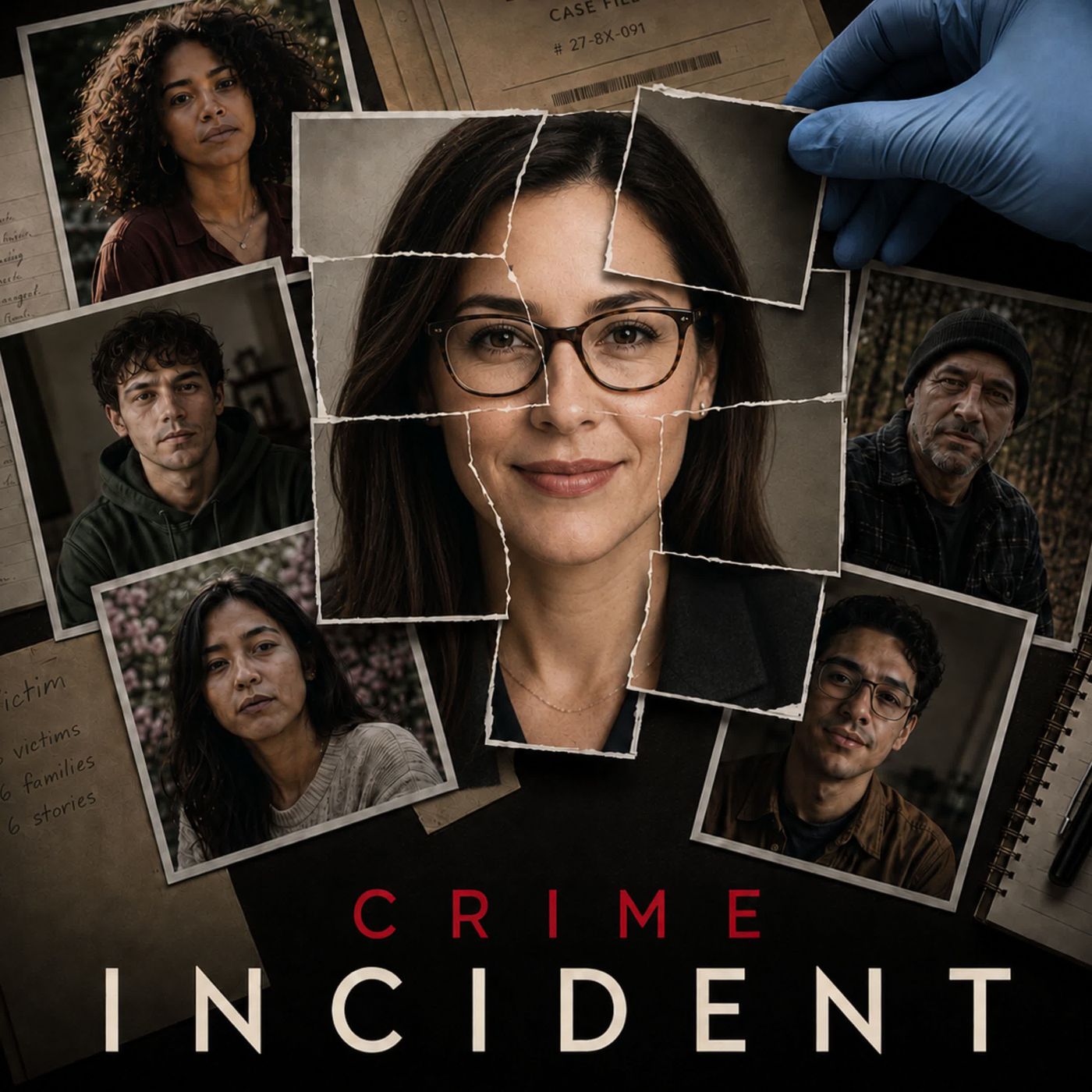
Crime Incident is a true crime podcast that examines murder investigations and the evidence behind them. Each episode reconstructs a case from official records, covering police work, forensic analysis, DNA, witness testimony, and the eventual verdict or ongoing status. The catalog spans famous trials and lesser-known disappearances, including cases solved through genetic genealogy and others still unsolved. The show maintains strict separation between confirmed evidence and disputed claims, treats victims with dignity, and shares practical information for unsolved cases.
Epizody
-
 Two Autopsies, Zero Arrests: The Boys on the Track Case 04.10.2026 18minTwo Autopsies, Zero Arrests: The Boys on the Track CaseIn the pre-dawn hours of August 23, 1987, a 6,000-ton freight train came around a bend near Alexander, Arkansas, and the crew saw two teenage boys lying motionless across the rails, partly covered by a tarp. The train could not stop, and the boys never moved. Why did the state medical examiner rule that 17-year-old Kevin Ives and 16-year-old Don Henry smoked so much marijuana that they slept through a mile-long train? And why did it take an exhumation, a second autopsy, and three years of fighting by their parents to get the word homicide onto the record?In this episode, we follow the Boys on the Track case from an ordinary Saturday night of spotlighting behind Don Henry's house to one of the most disputed death rulings in American forensic history. We examine the compromised crime scene, the tarp that was never logged into evidence, the EMTs who said the blood at the scene was too dark to be normal, and the battle between Dr. Fahmy Malak's THC intoxication ruling and Dr. Joseph Burton's second autopsy, which found minimal marijuana plus apparent stab and head wounds inflicted before the train arrived. We also separate what is proven from what is alleged: the witness deaths, the Sharlene Wilson letter, the Mena drug-drop theory advanced in Mara Leveritt's reporting, and the federal corruption conviction of the prosecutor who ran the grand jury.Persons: Larry Kevin Ives, 17, and Donald "Don" Henry, 16Date: August 23, 1987Location: Crooked Creek trestle, Alexander, ArkansasCase: Deaths first ruled accidental, reclassified as homicides in March 1990Legal status: Open and unsolved; no one has ever been arrested or charged in 39 years- The train crew's account: two boys who never moved- The tarp, the missing hospital records, and the tests never run- Malak's ruling versus Burton's exhumation autopsy- Five witness deaths between 1988 and 1990, never linked by any court- Linda Ives and her three-decade crusade, including her federal FOIA lawsuitThe Boys on the Track case remains one of Arkansas's most famous unsolved homicides, and the mother who called it solvable died still waiting for an answer.To listen to this podcast ad-free and access premium episodes, try our subscription with a 14-day free trial at obomedia.com.© 2026 OBOMEDIA. All rights reserved.This episode and its content (audio, text, and related materials) are the exclusive property of OBOMEDIA and are protected by applicable copyright laws. Reproduction, distribution, editing, or commercial use, in whole or in part, without prior written permission from OBOMEDIA is prohibited. For permissions, licensing, and business inquiries: [email protected].
 -
Stabbed 36 Times With His Own Knife: The Jonathan Luna Case 02.10.2026 20minStabbed 36 Times With His Own Knife: The Jonathan Luna CaseAt 11:38 p.m. on December 3, 2003, federal prosecutor Jonathan Luna drove out of the Baltimore courthouse in the middle of a trial he had promised to finish the next morning. Six hours later he was found face down in an icy creek behind a Pennsylvania well-drilling company, 90 miles from home, stabbed 36 times and left to drown. Why did his car head north when his home was south? Why did his glasses and cell phone stay on his desk? And how can a county coroner rule homicide while the FBI leans toward suicide, in the same death, for more than twenty years?In this episode, we reconstruct the Jonathan Luna case through his final overnight drive, toll booth by toll booth: the E-ZPass that went silent, the $200 ATM withdrawal in Delaware, the two missing hours, the 3:20 a.m. gas stop in King of Prussia, and the bloodstained toll ticket at the Reading-Lancaster exit. Then we open the institutional war over his death, from the coroners who twice ruled homicide to the FBI conclusion that he was alone all night, and the autopsy report unsealed in November 2025 that reaffirmed homicide after 22 years under seal.Person: Jonathan Paul Luna, 38, Assistant U.S. Attorney in BaltimoreDate: December 3 to 4, 2003Location: Baltimore, Maryland to Brecknock Township, Lancaster County, PennsylvaniaCase: Death by freshwater drowning with 36 stab wounds; ruled homicide by the Lancaster County coronerLegal status: Unsolved and open; no arrests, charges, or suspects ever; the case is now with the Pennsylvania State Police after a reexamination, and the FBI's $100,000 reward remains unclaimed- The plea deal, the promised midnight fax that never arrived, and the trial left unfinished- The 135-mile detour that should have been 100, reconstructed from electronic records- The unsealed autopsy: 23 neck wounds, blunt force trauma, manner of death homicide- The second blood type and the partial print that have never been matched- The reported pressure on a coroner to reclassify the death, and his refusalThe Jonathan Luna case remains one of America's strangest unsolved deaths, and the file is finally open.To listen to this podcast ad-free and access premium episodes, try our subscription with a 14-day free trial at obomedia.com.© 2026 OBOMEDIA. All rights reserved.This episode and its content (audio, text, and related materials) are the exclusive property of OBOMEDIA and are protected by applicable copyright laws. Reproduction, distribution, editing, or commercial use, in whole or in part, without prior written permission from OBOMEDIA is prohibited. For permissions, licensing, and business inquiries: [email protected].
-
The DA Who Vanished Without a Trace: The Ray Gricar Case 01.10.2026 19minThe DA Who Vanished Without a Trace: The Ray Gricar CaseOn April 15, 2005, Ray Gricar, the district attorney of Centre County, Pennsylvania, took a sunny Friday off to go for a drive in his red Mini Cooper. At 11:30 a.m. he called his girlfriend from Brush Valley. No one ever heard from him again. The next day his car sat abandoned beside the Susquehanna River in Lewisburg, phone locked inside, keys and wallet gone. Months later, fishermen pulled his county laptop from the river, and its hard drive had been deliberately removed. Why could the team that recovered data from the Space Shuttle Columbia read nothing from that drive? Who searched "how to wreck a hard drive" on his home computer before he vanished? And why does a 20 year prosecutor disappear eight months before his own retirement?In this episode, we rebuild the last confirmed day of Ray Gricar's life and then open the three folders investigators have never been able to close: suicide, weighed against a river so clear divers could see the bottom and a body that was never there; homicide, weighed against two decades with no suspect and no name; and a self engineered walkaway, weighed against bank accounts and credit cards that have not been touched since 2005. We also draw the honest boundary around the case's most famous thread: in 1998, Gricar declined to charge Jerry Sandusky, who was convicted of 45 counts in 2012, and no connection to the disappearance has ever been established.Person: Ray Frank Gricar, 59, District Attorney of Centre County, PennsylvaniaDate: April 15, 2005Location: Bellefonte and Lewisburg, PennsylvaniaCase: Unsolved disappearance; declared dead in absentia in July 2011Legal status: Open and active with Pennsylvania State Police since 2014; no arrests, no charges, no named suspect; standing $5,000 reward- The abandoned Mini Cooper, the cigarette ash, and the police dog's signal- The laptop, the unreadable hard drive, and the home computer searches- The brother who died in a river nine years earlier- The Utah lookalike arrested one day after Gricar was declared deadThe Ray Gricar disappearance remains one of America's most baffling missing persons cases, and it is still open.To listen to this podcast ad-free and access premium episodes, try our subscription with a 14-day free trial at obomedia.com.© 2026 OBOMEDIA. All rights reserved.This episode and its content (audio, text, and related materials) are the exclusive property of OBOMEDIA and are protected by applicable copyright laws. Reproduction, distribution, editing, or commercial use, in whole or in part, without prior written permission from OBOMEDIA is prohibited. For permissions, licensing, and business inquiries: [email protected].
-
The Mother Who Found the Body Police Missed: The Welch Girls 30.09.2026 19minThe Mother Who Found the Body Police Missed: The Welch GirlsBefore dawn on December 30, 1999, a mobile home outside Welch, Oklahoma, burned with Danny and Kathy Freeman inside, both shot in the head before the fire was set. Ashley Freeman, who had turned 16 the day before, and her best friend Lauria Bible, also 16, vanished from the house and have never been found. Why did investigators spend the first day treating a quadruple crime as a domestic fugitive case? How did Lauria's parents find a second body in the rubble one day after detectives left the scene? And how did a suspect file naming three men sit lost inside the sheriff's own office for 18 years?In this episode, we follow Lorene Bible, the mother who held this case together for more than a quarter century: the insurance card her private investigators found on the road in the first week, the false confessions that wasted years, the misplaced case notes rediscovered in 2017, the 2018 arrest of Ronnie Busick, and the affidavit allegations, never tested at trial, against two men who died uncharged. We trace Busick's plea to accessory, his release after just 38 months, and how Lorene answered by helping write a new Oklahoma law in her daughter's name.Persons: Ashley Freeman and Lauria Bible, both 16; Danny and Kathy FreemanDate: December 29 to 30, 1999Location: Welch, Craig County, Oklahoma; searches centered on PicherCase: Double murder, arson, and the unsolved disappearance of two teenagersLegal status: Ronnie Busick pleaded guilty in 2020 to accessory to first-degree murder, released May 2023 after 38 months; Phil Welch (d. 2007) and David Pennington (d. 2015) died uncharged; the girls' remains have never been recovered- The Day 1 theory that pointed at a murdered father- The insurance card that named a suspect in week one- The lost file: how a misplaced drawer cost the case both principal suspects- A dozen witnesses who stayed silent for 18 years- Lauria and Ashley's Law: an 85 percent rule born from a mother's outrage- The November and December 2025 search: a camera 175 feet down a Picher mine shaftThe Welch girls case remains open, and Lorene Bible is still searching.To listen to this podcast ad-free and access premium episodes, try our subscription with a 14-day free trial at obomedia.com.© 2026 OBOMEDIA. All rights reserved.This episode and its content (audio, text, and related materials) are the exclusive property of OBOMEDIA and are protected by applicable copyright laws. Reproduction, distribution, editing, or commercial use, in whole or in part, without prior written permission from OBOMEDIA is prohibited. For permissions, licensing, and business inquiries: [email protected].
-
Not Even His Boots Were Found: The DeOrr Kunz Case 28.09.2026 19minNot Even His Boots Were Found: The DeOrr Kunz CaseOn July 10, 2015, two-year-old DeOrr Kunz Jr. vanished from Timber Creek Campground near Leadore, Idaho, while four adults were only steps away. His mother reached a dispatcher at 2:28 p.m. How does a 28-pound toddler disappear from a remote campsite in a window of minutes? Why did a search of a 2.5-mile radius, with divers, dogs, helicopters, and 200 volunteers sweeping the ground hand in hand, find no trace at all, not even the oversized cowboy boots that kept slipping off his feet?In this episode, we walk the impossible perimeter of the DeOrr Kunz case ring by ring: the creek cleared by divers, the reservoir searched after cadaver-dog interest, the human grid that combed the campsite itself. Then we enter the interview rooms, where the sheriff said the parents' timeline kept changing, portions of their polygraphs came back inconclusive, and both were named suspects in 2016, though never arrested or charged. The parents have always denied any involvement, and the current sheriff's office no longer calls them suspects. We follow three private investigators to three contradictory conclusions, and a decade of forensic testing that has produced nothing.Person: DeOrr Kunz Jr., 2 years old, of Idaho Falls, IdahoDate: July 10, 2015Location: Timber Creek Campground near Leadore, Lemhi County, IdahoCase: Unsolved disappearance; open missing-person and possible-homicide investigationLegal status: No arrests and no charges ever filed; parents named suspects in 2016, later reframed by successor sheriffs as persons of interest along with all four adults present; the case remains open ten years later- The last independent sighting: a toddler in cowboy boots at breakfast- The window of minutes and the accounts that never matched- Suspects in 2016, persons of interest today, and every denial on the record- Three private investigators, three incompatible theories- Bones, a jacket, and cadaver dogs: why every lead tested negativeAnyone with information can contact the Lemhi County Sheriff's Office in Idaho. The DeOrr Kunz case is still open, and his family is still counting the days.To listen to this podcast ad-free and access premium episodes, try our subscription with a 14-day free trial at obomedia.com.© 2026 OBOMEDIA. All rights reserved.This episode and its content (audio, text, and related materials) are the exclusive property of OBOMEDIA and are protected by applicable copyright laws. Reproduction, distribution, editing, or commercial use, in whole or in part, without prior written permission from OBOMEDIA is prohibited. For permissions, licensing, and business inquiries: [email protected].
-
Thirteen Hours Parked on the Way Home: The Bryce Laspisa Case 27.09.2026 19minThirteen Hours Parked on the Way Home: The Bryce Laspisa CaseIn August 2013, Bryce Laspisa, a 19-year-old Sierra College student, set out on a 500-mile drive home to his parents in Laguna Niguel, California. The trip should have taken seven hours. It took nearly thirty, because he kept stopping. He sat parked for roughly 13 hours at a rest stop in Buttonwillow after running out of gas, passed a sheriff's welfare check in good spirits, and at 2:08 a.m. called his mother to say he was pulling off Interstate 5 to rest. Seven minutes later a camera near Castaic Lake captured his Toyota Highlander. It captured the SUV again at 4:29 a.m., leaving more than two unexplained hours. At dawn, the vehicle was found on its side at the bottom of an embankment, rear window pushed out from the inside, his phone, wallet, and laptop still inside. Bryce was gone, and he has never been seen again.In this episode, we follow the final 48 hours stop by stop: the belongings he gave away in the weeks before, the breakup in Chico, the motionless day at Buttonwillow, the welfare check that legally could not hold him, the surveillance gap above the lake, and the search by ground teams, helicopters, divers, and scent dogs that found no trail in any direction.Person: Bryce David Laspisa, 19, Sierra College studentDate: August 30, 2013Location: Castaic Lake, Los Angeles County, CaliforniaCase: Unsolved disappearance; open missing-person investigationStatus: No arrest, no suspect, no trace; LASD still accepts tips and Bryce remains listed in the California Attorney General's missing-persons database- The giveaways and the roommate text, documented but never explained- Why the dogs found no scent trail from the crashed SUV- The 2015 private sonar sweep of Castaic Lake that found nothing- The theories, from head injury to foul play, and the family's public dispute of the suicide narrative- Twelve years of advocacy by Karen and Michael LaspisaThe Bryce Laspisa case remains one of California's most puzzling disappearances, and someone on Lake Hughes Road that night may still hold the answer.To listen to this podcast ad-free and access premium episodes, try our subscription with a 14-day free trial at obomedia.com.© 2026 OBOMEDIA. All rights reserved.This episode and its content (audio, text, and related materials) are the exclusive property of OBOMEDIA and are protected by applicable copyright laws. Reproduction, distribution, editing, or commercial use, in whole or in part, without prior written permission from OBOMEDIA is prohibited. For permissions, licensing, and business inquiries: [email protected].
-
45 Drowned Young Men and a Painted Smile: The Smiley Face Killers Theory 25.09.2026 19min45 Drowned Young Men and a Painted Smile: The Smiley Face Killers TheorySince 1997, dozens of athletic, high-achieving young men have vanished after nights out in college towns across America, only to be found drowned in nearby rivers and lakes. Near some recovery sites, someone had spray-painted a smiley face. Two retired NYPD detectives say the deaths are the work of an organized network of serial killers. The FBI says there is no evidence of that at all. Who is right?In this episode, we put the Smiley Face Killers theory itself on trial. First, the case for it at full strength: Patrick McNeill and the van that followed him, Chris Jenkins found in his Halloween costume with his arms crossed, Dakota James and the body that showed three days of decomposition after forty days missing, the GHB claims, the graffiti, the Interstate 94 map. Then the cross-examination: the FBI's formal 2008 rejection, the Center for Homicide Research report that called the theory an urban legend, the La Crosse police who found no smiley faces at any of their eight drowning scenes, and the one reclassified homicide that points to a mugging, not a network.Case: The Smiley Face Killers theory, alleged drownings of college-aged menSpan: 1997 to present, roughly 11 states cited by proponentsProponents: Retired NYPD detectives Kevin Gannon and Anthony Duarte, with criminologist Dr. Lee GilbertsonOfficial status: Theory rejected by the FBI in 2008 and by the Center for Homicide Research; no arrests, charges, or prosecutions ever filed; the cited deaths remain ruled accidental or undetermined, except Chris Jenkins, reclassified a homicide with no charges brought- Victim zero: Patrick McNeill and the promise a detective could not keep- The graffiti problem: signatures that never match and paint that predates the deaths- Why GHB in a drowned body proves less than it seems- La Crosse's real killer: 65 drunk young men stopped at the river's edge- The Jenkins case, the theory's best proof that disproves itThe Smiley Face Killers theory has survived every official debunking. The evidence explains why it should not.To listen to this podcast ad-free and access premium episodes, try our subscription with a 14-day free trial at obomedia.com.© 2026 OBOMEDIA. All rights reserved.This episode and its content (audio, text, and related materials) are the exclusive property of OBOMEDIA and are protected by applicable copyright laws. Reproduction, distribution, editing, or commercial use, in whole or in part, without prior written permission from OBOMEDIA is prohibited. For permissions, licensing, and business inquiries: [email protected].
-
She Killed the Man Police Already Had on Tape: The Chrystul Kizer Case 24.09.2026 18minShe Killed the Man Police Already Had on Tape: The Chrystul Kizer CaseWhat happens when a seventeen-year-old trafficking victim kills the man exploiting her, and detectives discover they already had hundreds of videos of his crimes sitting in an evidence room? Why was Randall Volar arrested with child abuse material in his house and released the same day without bail? And can a survivor of trafficking legally argue that killing her trafficker was a direct result of being trafficked?In this episode, we follow Chrystul Kizer from a childhood of shelters and violin lessons in Gary, Indiana, into the orbit of a thirty-three-year-old man who groomed, filmed, and sold her, and then through the six-year legal battle that followed the June 2018 shooting in Kenosha, Wisconsin. We trace the police file that named her as a victim months before the killing, the charging delay that left Volar free until the day he died, and the landmark State v. Kizer ruling in which the Wisconsin Supreme Court held, four votes to three, that the state's trafficking affirmative defense can be a complete defense even to first-degree intentional homicide.Person: Chrystul Kizer, 17 at the time of the shooting; Randall Volar III, 34Date: June 5, 2018Location: Kenosha, WisconsinCase: Homicide of a man under active investigation for child sex traffickingLegal status: Guilty plea (2024) to second-degree reckless homicide; 11 years confinement plus 5 years supervision; release expected around 2033- The February 2018 call from a fifteen-year-old girl that led police to seize hundreds of abuse videos from Volar's home- Why Volar walked free the same day he was arrested, and how the charges stalled for three and a half months- Her account of self-defense and the prosecution's premeditation case, both left unresolved by the plea- The 4 to 3 Wisconsin Supreme Court precedent that still protects trafficking survivors today- The sentencing fight over closure, race, and who gets seen as a victimThe Chrystul Kizer case changed Wisconsin law forever. Listen to the full story of the Chrystul Kizer case now.To listen to this podcast ad-free and access premium episodes, try our subscription with a 14-day free trial at obomedia.com.© 2026 OBOMEDIA. All rights reserved.This episode and its content (audio, text, and related materials) are the exclusive property of OBOMEDIA and are protected by applicable copyright laws. Reproduction, distribution, editing, or commercial use, in whole or in part, without prior written permission from OBOMEDIA is prohibited. For permissions, licensing, and business inquiries: [email protected].
-
79 Minutes in the Guest Room: The Robert Wone Case 23.09.2026 18min79 Minutes in the Guest Room: The Robert Wone CaseOn August 2, 2006, attorney Robert Wone stayed overnight at a friend's rowhouse in Washington DC's Dupont Circle because he had worked late. He arrived around 10:30 pm. At 11:49 pm, one of the residents called 911 to report that an intruder had stabbed their houseguest. Paramedics found a scene that made no sense: three clean stab wounds, almost no blood, no defensive injuries, a kitchen knife placed neatly on the bedside table, and a victim who looked as though he had been showered, redressed, and placed in the bed.In this episode, we reconstruct the 79 minutes of the Robert Wone murder minute by minute: the locked house with no sign of forced entry, the puncture marks the autopsy found on his neck, chest, foot and hand, the clean toxicology screen prosecutors said could not detect everything, and the knife investigators believed was planted. We follow the case through the 2008 obstruction charges against the three residents, the allegations prosecutors made in the arrest affidavit, and the extraordinary 2010 bench trial in which Judge Lynn Leibovitz said the killer was not an intruder, yet acquitted all three men on every count.Person: Robert Eric Wone, 32, general counsel of Radio Free Asia, husband of Kathy WoneDate: August 2 to 3, 2006Location: 1509 Swann Street NW, Dupont Circle, Washington DCCase: Stabbing death of an overnight guest; homicide never chargedLegal status: The three residents were charged only with obstruction, conspiracy and, for one, evidence tampering, and all were acquitted in June 2010; the civil suit settled in 2011 for an undisclosed sum; the murder remains unsolved and open- The impossible intruder: no forced entry, nothing stolen, no trace found- What the affidavit alleged and what no court ever proved- A judge's words: very likely, very probable, and still not guilty- The citizen journalists who documented every day of the trial- No statute of limitations: why this case is still legally aliveThe Robert Wone case is the murder the government believed it understood and could never prove, and it is still waiting for an answer.To listen to this podcast ad-free and access premium episodes, try our subscription with a 14-day free trial at obomedia.com.© 2026 OBOMEDIA. All rights reserved.This episode and its content (audio, text, and related materials) are the exclusive property of OBOMEDIA and are protected by applicable copyright laws. Reproduction, distribution, editing, or commercial use, in whole or in part, without prior written permission from OBOMEDIA is prohibited. For permissions, licensing, and business inquiries: [email protected].
-
The Letters Kept Coming From Prison: The Circleville Letters 21.09.2026 19minThe Letters Kept Coming From Prison: The Circleville LettersFor nearly two decades, an anonymous writer flooded the small town of Circleville, Ohio with hundreds of letters that knew secrets no stranger should know. A husband who set out to confront the writer died against a tree with a fired gun under his body. His widow found a loaded pistol rigged inside a roadside sign on her school bus route, wired to shoot whoever tore it down. And when a man was finally sent to prison, the letters did not stop.In this episode, we follow the Circleville letters envelope by envelope: the first warning to bus driver Mary Gillispie in the mid-1970s, the death threats to her husband Ron, his fatal crash in August 1977 after a phone call that seemed to name the writer, and the 1983 booby trap that failed to fire. We trace the filed-down serial number that led investigators to Paul Freshour, the brother-in-law who had demanded the case be reopened, the copied handwriting sample critics call forensically invalid, and the decade in which letters postmarked Columbus kept arriving while Freshour sat in solitary confinement, cleared by the prison itself of sending them.Person: Mary Gillispie, bus driver and primary target; Ron Gillispie, died at 35Date: Campaign from the mid-1970s to 1994Location: Circleville, Pickaway County, OhioCase: Anonymous letter campaign, contested death, attempted murder by booby trapLegal status: Paul Freshour convicted of attempted murder in 1983, paroled in 1994, died in 2012 still claiming innocence; no one was ever charged with writing the letters and the writer's identity remains officially unresolved- The first letter: I have been observing your house and know you have children- Ron Gillispie's fired revolver and the bullet never accounted for- The trap on Five Points Pike and the gun traced to family- Letters mailed to Freshour himself behind bars: when we set them up, they stay set up- Dueling modern experts: a certain handwriting match versus an FBI profiler's doubtsThe Circleville letters stopped the year Freshour walked free. Half a century later, no court has ever named the Circleville letter writer.To listen to this podcast ad-free and access premium episodes, try our subscription with a 14-day free trial at obomedia.com.© 2026 OBOMEDIA. All rights reserved.This episode and its content (audio, text, and related materials) are the exclusive property of OBOMEDIA and are protected by applicable copyright laws. Reproduction, distribution, editing, or commercial use, in whole or in part, without prior written permission from OBOMEDIA is prohibited. For permissions, licensing, and business inquiries: [email protected].
-
She Was Walking Her Dog. Eleven Women Lay Beneath: The West Mesa Bone Collector 20.09.2026 18minShe Was Walking Her Dog. Eleven Women Lay Beneath: The West Mesa Bone CollectorOn February 2, 2009, a woman walking her dog on Albuquerque's West Mesa found a human femur in the sand. The excavation that followed uncovered the remains of eleven women and girls and one unborn baby, buried across 92 acres of desert. All of them had vanished from the same city in a tight window between 2003 and 2004. So why did almost no one look for them while it could still have mattered? And why, seventeen years later, is there still not a single arrest?In this episode, we give the eleven their names back one by one: Monica Candelaria, Victoria Chavez, Syllannia Edwards, Doreen Marquez, Veronica Romero, Jamie Barela, Evelyn Salazar, Virginia Cloven, Julie Nieto, Cinnamon Elks, and Michelle Valdez, who was four months pregnant. We follow Detective Ida Lopez, who compiled a list of the missing years before the graves were found and could not get the city to act, and we examine the persons of interest police have named but never charged, from Lorenzo Montoya, who died in 2006, to Joseph Blea, who denies any involvement. We also cover the strange truth that the 2008 housing crash is the reason the bodies were ever found.Person: Eleven women and girls, ages 15 to 32, plus one unborn childDate: Disappearances 2003 to 2004; discovery February 2, 2009Location: West Mesa, Albuquerque, New MexicoCase: Unsolved serial homicides, the largest crime scene in New Mexico historyLegal status: No arrests or charges ever filed; active investigation with a new search warrant served in early 2026 and proposed legislation to test deceased suspects' DNA through CODIS- The femur, the dog walk, and the 92 acre excavation- The War Zone and the disappearances no one connected- Ida Lopez's list of "her girls," surfaced in 2007 and ignored- Montoya, Blea, and the theories that were never closed- The eight women still missing and the $100,000 rewardThe West Mesa Bone Collector case remains unsolved, and tips still go to the Albuquerque Police 118th Street Task Force.To listen to this podcast ad-free and access premium episodes, try our subscription with a 14-day free trial at obomedia.com.© 2026 OBOMEDIA. All rights reserved.This episode and its content (audio, text, and related materials) are the exclusive property of OBOMEDIA and are protected by applicable copyright laws. Reproduction, distribution, editing, or commercial use, in whole or in part, without prior written permission from OBOMEDIA is prohibited. For permissions, licensing, and business inquiries: [email protected].
-
He Kept Them for Days: The Oakland County Child Killer 18.09.2026 20minHe Kept Them for Days: The Oakland County Child KillerBetween February 1976 and March 1977, four children were abducted from the suburbs north of Detroit, held captive for days, and then left along roadsides with their bodies washed and their clothes cleaned. Why did the press call him The Babysitter? Who wrote the anonymous letter naming the killer as "Frank" and then vanished before the meeting? And how does the largest manhunt in American history at the time end with zero arrests in fifty years?In this episode, we follow the Oakland County Child Killer case through the thirteen months that changed Michigan: the abductions of Mark Stebbins, Jill Robinson, Kristine Mihelich, and Timothy King, the nineteen days a ten-year-old was held while a state searched for her, and the last meal that proved the killer was watching a mother's televised plea. Then the long second life of the file: the task force that processed 11,000 tips and disbanded without a suspect, the Christopher Busch lead and his disputed 1978 death, the North Fox Island network theory, the mitochondrial DNA from an unidentified stranger's hair found on two victims, and the families who spent decades suing for their own children's case records.Person: Mark Stebbins, 12; Jill Robinson, 12; Kristine Mihelich, 10; Timothy King, 11Date: February 15, 1976 to March 23, 1977Location: Oakland County, Michigan (Ferndale, Royal Oak, Berkley, Birmingham)Case: Four child abduction murders attributed to the Oakland County Child KillerLegal status: Unsolved and open; no one has ever been arrested or charged in the murders; every named person is a suspect or person of interest only; Michigan State Police reinvestigating with DNA and AI-assisted file review- The winter of fear: how one county rebuilt childhood around a killer- The "Allen" letter, Dr. Danto, and the meeting that never happened- Busch, Greene, Sloan, and Gunnels: what the file alleges and what DNA excluded- The hair in the Bonneville: an unnamed man linked to two crime scenes- The families' FOIA wars and the fifty-year fight for the recordsThe Oakland County Child Killer case remains unsolved, and the Oakland County Child Killer file is still open. Tips: 1-855-MICHTIP.To listen to this podcast ad-free and access premium episodes, try our subscription with a 14-day free trial at obomedia.com.© 2026 OBOMEDIA. All rights reserved.This episode and its content (audio, text, and related materials) are the exclusive property of OBOMEDIA and are protected by applicable copyright laws. Reproduction, distribution, editing, or commercial use, in whole or in part, without prior written permission from OBOMEDIA is prohibited. For permissions, licensing, and business inquiries: [email protected].
-
Fifteen Feet From Safety: The Keddie Cabin Murders 17.09.2026 19minFifteen Feet From Safety: The Keddie Cabin MurdersOn a Sunday morning in April 1981, a fourteen year old girl walked fifteen feet from the neighbors' cabin to her own front door to get her church clothes. What she found inside Cabin 28 became one of California's most infamous unsolved cases. How did killers spend that much time in a crowded resort cabin without waking the children sleeping in the next room? Why did they take one twelve year old girl and step past the others? And how did a recorded tip naming the case sit at the bottom of an evidence box for three decades?In this episode, we follow the Keddie case the way investigators still read it today: through the frozen scene itself. We walk the living room detail by detail, the bindings of medical tape and electrical cord, the broken air rifle sight, the unlocked door, and then follow the file across forty five years of institutional failure, from a sheriff who had lived in the murder cabin and quit the case in ninety days, to a hammer pulled from a pond in 2016, to a DNA match that points at a living suspect no one has ever charged.Person: Glenna "Sue" Sharp, 36, her children John, 15, and Tina, 12, and family friend Dana Wingate, 17Date: Night of April 11 to 12, 1981Location: Cabin 28, Keddie Resort, Plumas County, CaliforniaCase: Unsolved quadruple homicide with child abductionLegal status: Open cold case, no arrests or charges ever filed- The scene that investigators still call managed, not frenzied: bindings, staged control, and no forced entry- Three boys found asleep and unharmed in the room next to the killings- Tina Sharp, missing three years, found in 1984 beside an empty surgical tape dispenser- The undocumented anonymous call and the confession that collapsed- The 2016 hammer, the 2018 DNA match, and the suspects who died without answeringThe Keddie Cabin murders remain open, and Plumas County still takes tips. Until someone speaks, the Keddie Cabin murders belong to the room where they began.To listen to this podcast ad-free and access premium episodes, try our subscription with a 14-day free trial at obomedia.com.© 2026 OBOMEDIA. All rights reserved.This episode and its content (audio, text, and related materials) are the exclusive property of OBOMEDIA and are protected by applicable copyright laws. Reproduction, distribution, editing, or commercial use, in whole or in part, without prior written permission from OBOMEDIA is prohibited. For permissions, licensing, and business inquiries: [email protected].
-
He Never Walked Out: The Brian Shaffer Case 16.09.2026 19minThe Cameras Never Saw Him Leave: The Brian Shaffer CaseAt 1:15 a.m. on April 1, 2006, security cameras recorded Brian Shaffer, a 27-year-old Ohio State medical student, riding the escalator into the Ugly Tuna Saloona bar in Columbus. At 1:55 a.m. a camera caught him chatting with two women outside the entrance. No camera ever recorded him leaving the building, and no trace of him has been found in twenty years. How does a man vanish from a building wired with security cameras? Why did the friend who spent the whole night with him refuse a polygraph? And why did his phone suddenly ring five months after he disappeared?In this episode, we treat the Brian Shaffer case the way detectives had to: as a building. We map the Gateway complex exit by exit, from the escalator a detective ruled out with one hundred percent certainty to the unmarked service door leading to a construction area with broken camera coverage, the one route out with no reliable eyes on it. We weigh every theory on the record, accident, voluntary disappearance, and foul play, each with its evidence and its contradictions, and follow the family tragedy that compounded around the search: a mother lost to cancer weeks before, a father killed by a falling branch while still searching, and a brother left to declare Brian legally dead on his birthday.Person: Brian Randall Shaffer, 27, second-year medical student at Ohio State UniversityDate: Night of March 31 to April 1, 2006Location: Ugly Tuna Saloona, South Campus Gateway, Columbus, OhioCase: Unsolved disappearance; no arrest, no charges, no named suspectLegal status: Declared legally dead in 2013 at his brother's request; the Columbus police investigation remains open and assigned at the 20-year mark in 2026, with more than 5,000 tips processed- The 1:55 a.m. footage and the exit-by-exit elimination- The service door, the construction zone, and the camera blind spot- The polygraph divide and Clint Florence's side of it- The phone that rang three times and pinged near Hilliard- The hoax condolence message and the debunked sightingsThe Brian Shaffer disappearance is now twenty years old, and Columbus police still believe someone holds the missing piece.To listen to this podcast ad-free and access premium episodes, try our subscription with a 14-day free trial at obomedia.com.© 2026 OBOMEDIA. All rights reserved.This episode and its content (audio, text, and related materials) are the exclusive property of OBOMEDIA and are protected by applicable copyright laws. Reproduction, distribution, editing, or commercial use, in whole or in part, without prior written permission from OBOMEDIA is prohibited. For permissions, licensing, and business inquiries: [email protected].
-
The Cameras Followed Her All Night: The Lauren Spierer Case 14.09.2026 19minThe Cameras Followed Her All Night: The Lauren Spierer CaseIn the early hours of June 3, 2011, surveillance cameras in Bloomington, Indiana, recorded 20-year-old Indiana University sophomore Lauren Spierer at least four times: entering Kilroy's Sports Bar at 1:46 a.m., leaving at 2:27 without her shoes or phone, stumbling from an elevator at her own building at 2:30, and walking out of an alley at 2:51 a.m. Then the footage stops. No camera ever captured her again. Why did she leave her own building instead of going upstairs? Who punched her companion in the face at Smallwood Plaza? And what happened after the last reported sighting, a friend's statement that she walked away barefoot at 4:30 a.m. toward a corner no lens covered?In this episode, we reconstruct the Lauren Spierer disappearance camera by camera, then follow the investigation through the twelve-hour reporting gap, the ten persons of interest, the polygraph standoff, the nine-day search of 4,100 tons of landfill trash, the 2016 Martinsville dig, and the civil lawsuit a federal judge dismissed because, without knowing what happened to Lauren, no jury could hold anyone responsible. Nobody has ever been charged, and the men who saw her last deny any wrongdoing through their attorneys.Person: Lauren Elizabeth Spierer, 20, Indiana University sophomore from Scarsdale, New YorkDate: June 3, 2011Location: Bloomington, IndianaCase: Disappearance; presumed dead, never foundLegal status: No arrests, no charges, no named suspects; investigation active as of 2026 with 980 supplemental reports and 23 new tips in the past year- The surveillance timeline and the exact minute the digital trail cuts out- Long QT syndrome and why intoxication was uniquely dangerous for Lauren- The family's attributed suspicion and the men's denials and private polygraphs- Theories with owners: overdose and concealment, a stranger, the Messel question- Kilroy's fake ID citation and the campus culture that let her walk alone- Shawn Cohen's 2025 bestseller College Girl, Missing and the new tips it broughtThe Lauren Spierer case is still open. Tips go to the Bloomington Police Department, fifteen years later.To listen to this podcast ad-free and access premium episodes, try our subscription with a 14-day free trial at obomedia.com.© 2026 OBOMEDIA. All rights reserved.This episode and its content (audio, text, and related materials) are the exclusive property of OBOMEDIA and are protected by applicable copyright laws. Reproduction, distribution, editing, or commercial use, in whole or in part, without prior written permission from OBOMEDIA is prohibited. For permissions, licensing, and business inquiries: [email protected].
-
The FBI Chased the Wrong Story for 13 Years: The Brittanee Drexel Case 13.09.2026 18minThe FBI Chased the Wrong Story for 13 Years: The Brittanee Drexel CaseOn April 25, 2009, 17-year-old Brittanee Drexel vanished from Ocean Boulevard in Myrtle Beach, on a spring break trip her mother had forbidden. A hotel camera caught her at 9 p.m. By midnight her phone died on a rural road nearly 50 miles south. Why did it take 13 years to charge a man who was publicly named a person of interest in 2012? And how did a traffic ticket written the morning after she disappeared sit unused for over a decade while the FBI announced a trafficking theory that turned out to be false?In this episode, we follow the Brittanee Drexel case from the crowded spring break strip to the swamps of Georgetown County: the friends who never reported her missing, the years of pressure on the wrong people, the 2016 stash house theory built on jailhouse informants, and the 2019 forensic re-analysis that caught the moment her phone went from walking speed to 55 miles per hour. Then the 2022 endgame: Raymond Moody's confession, the recovery of her remains 2.5 miles from his old home, his life sentence, and the reckoning that followed for his girlfriend Angel Vause.Person: Brittanee Marie Drexel, 17, of Rochester, New YorkDate: April 25, 2009Location: Myrtle Beach and Georgetown County, South CarolinaCase: Kidnapping, sexual assault, and murder; remains recovered May 2022Legal status: Raymond Moody pleaded guilty in October 2022, sentenced to life plus 60 years; Angel Vause sentenced in 2025 to 18 years for lying to the FBI, appeal pending; a $700 million civil verdict stands against Moody- The last surveillance footage and the final cell phone ping- The day-one traffic ticket that destroyed Moody's alibi years later- The discredited stash house theory and its cost to the wrongly accused- Cell data forensics: walking speed, then 55 mph- The confession, the burial site, and a mother's 13-year fightThe Brittanee Drexel case shows how a false theory can protect a killer, and why her mother never let the Brittanee Drexel investigation die.To listen to this podcast ad-free and access premium episodes, try our subscription with a 14-day free trial at obomedia.com.© 2026 OBOMEDIA. All rights reserved.This episode and its content (audio, text, and related materials) are the exclusive property of OBOMEDIA and are protected by applicable copyright laws. Reproduction, distribution, editing, or commercial use, in whole or in part, without prior written permission from OBOMEDIA is prohibited. For permissions, licensing, and business inquiries: [email protected].
-
Two Versions of One Night: The Cyntoia Brown Case 11.09.2026 19minTwo Versions of One Night: The Cyntoia Brown CaseIn August 2004, sixteen-year-old Cyntoia Brown shot 43-year-old Nashville real estate agent Johnny Allen in his own bed, took his money, guns, and truck, and was tried as an adult. In 2006 a jury convicted her of first-degree murder and she received a life sentence. But what does a life sentence in Tennessee actually mean? In 2018 the state supreme court gave the answer that ignited a movement: 51 years, minimum, before she could even be considered for release.In this episode, we tell the night of August 6, 2004 twice. First as the prosecution told it in 2006: a sleeping man shot in the back of the head, no weapon found to support self-defense, a completed robbery, jailhouse confessions, and a recorded call in which Brown said she executed him. Then as the clemency campaign asked Tennessee to see it: a state ward lost by its own child services system, trafficked at sixteen by a violent 24-year-old pimp, sold to an adult buyer, and judged as if she had acted freely. Same file, same facts, two verdicts on one girl.Person: Cyntoia Brown, 16, and Johnny Michael Allen, 43Date: August 6, 2004Location: Nashville, TennesseeCase: Homicide and robbery; conviction 2006; clemency 2019Legal status: Sentence commuted by Governor Bill Haslam on January 7, 2019; released August 7, 2019 after 15 years; conviction never overturned; parole supervision runs until 2029- The Sonic Drive-In pickup and the prosecutor's own stipulation- The forensic detail that anchored the state's case for 15 years- The excluded witness and the evidence the jury never saw- #FreeCyntoiaBrown, the 51-year ruling, and a divided parole board- Her life now: author, consultant, and anti-trafficking advocateThe Cyntoia Brown case changed how America talks about trafficked minors in court, and the Cyntoia Brown case is still cited every time a state asks how to judge a child the system failed.To listen to this podcast ad-free and access premium episodes, try our subscription with a 14-day free trial at obomedia.com.© 2026 OBOMEDIA. All rights reserved.This episode and its content (audio, text, and related materials) are the exclusive property of OBOMEDIA and are protected by applicable copyright laws. Reproduction, distribution, editing, or commercial use, in whole or in part, without prior written permission from OBOMEDIA is prohibited. For permissions, licensing, and business inquiries: [email protected].
-
She Was the Victim. They Put Her on Trial: The Preppy Murder Case 10.09.2026 18minShe Was the Victim. They Put Her on Trial: The Preppy Murder CaseHow does a case with a confessed killer end with the dead girl on trial? Why did New York's biggest tabloid run the headline "How Jennifer Courted Death" three days after an eighteen year old was strangled in Central Park? And what happens when the most damning piece of evidence surfaces seven weeks too late?In this episode, we follow the Preppy Murder of Jennifer Levin from the last night at Dorrian's Red Hand to the morning a cyclist found her body behind the Metropolitan Museum of Art, and through the inverted trial that followed: a killer whose cover stories collapsed one by one, a defense built entirely on his own words, a fabricated "sex diary" that never existed, and a jury that deliberated nine days without a verdict before a mid deliberation plea ended everything. Then we trace the record to today: the full fifteen years served, the second prison term, the 2023 parole, and the mother who turned injustice into thirteen laws.Person: Jennifer Dawn Levin, 18, killed by Robert Chambers, 19Date: August 26, 1986Location: Central Park, Manhattan, New YorkCase: Strangulation homicide resolved by guilty plea to first degree manslaughterLegal status: Chambers served the full 15 years; imprisoned again 2008 for drug sale and assault; paroled July 2023, under supervision until July 2028- The scratches on both sides of his face, the declawed cat, and the cigarette run that unraveled in one afternoon- The "rough sex" defense that prosecutors say described an encounter that never happened at all- The datebook a judge refused to hand over, and the tabloid myth that outran the truth anyway- The "Oops, I think I killed it" party video the jury never saw- Ellen Levin's Justice for All campaign and the New York law that now shields homicide victimsThe Preppy Murder became the textbook case of a system judging the victim instead of the accused. Listen now and hear how the Preppy Murder rewrote the rules it broke.To listen to this podcast ad-free and access premium episodes, try our subscription with a 14-day free trial at obomedia.com.© 2026 OBOMEDIA. All rights reserved.This episode and its content (audio, text, and related materials) are the exclusive property of OBOMEDIA and are protected by applicable copyright laws. Reproduction, distribution, editing, or commercial use, in whole or in part, without prior written permission from OBOMEDIA is prohibited. For permissions, licensing, and business inquiries: [email protected].
-
The Note They Called a Joke: The Oklahoma Girl Scout Murders 09.09.2026 19minThe Note They Called a Joke: The Oklahoma Girl Scout MurdersOn the night of June 12, 1977, the very first night of summer camp, three young Girl Scouts, Lori Farmer, 8, Michele Guse, 9, and Denise Milner, 10, were murdered inside their tent at Camp Scott near Locust Grove, Oklahoma. Two months earlier, a counselor had found a handwritten note at that same camp declaring a plan to kill three girls in one tent. The camp director called it a prank and threw it away. Why was a written death threat never reported? How did the killer cross a sleeping camp unseen? And why, after the largest manhunt in Oklahoma history, a sensational trial, and a 2022 DNA announcement, is this case still officially unsolved?In this episode, we reconstruct the night hour by hour, from the storm that sent the girls to bed early to the counselor who heard strange sounds near midnight, and then follow the half century of echo that came after: the cave in the hills, the arrest of prison escapee Gene Leroy Hart, the community that sheltered him for ten months believing he was being scapegoated, the acquittal that stunned prosecutors, and the DNA results a sheriff kept quiet for three years.Persons: Lori Lee Farmer, 8; Michele Heather Guse, 9; Doris Denise Milner, 10Date: June 12 to 13, 1977Location: Camp Scott, Mayes County, OklahomaCase: Triple homicide at a Girl Scout summer campLegal status: Gene Leroy Hart acquitted in 1979 and dead ten weeks later; 2022 DNA findings point to Hart as a probability, per the sheriff, not a conviction; officially unsolved- The discarded warning note and the 86 yards between the tent and the nearest adult- The cave evidence, the manhunt, and a community split over Hart's prosecution- Hair that "resembled," disputed glasses, and an alternative suspect the jury heard about- The 1985 civil verdict that cleared the camp's operators- The families who turned grief into Oklahoma's victims' rights lawsThe Oklahoma Girl Scout murders closed Camp Scott forever, and the questions that ended it are still open.To listen to this podcast ad-free and access premium episodes, try our subscription with a 14-day free trial at obomedia.com.© 2026 OBOMEDIA. All rights reserved.This episode and its content (audio, text, and related materials) are the exclusive property of OBOMEDIA and are protected by applicable copyright laws. Reproduction, distribution, editing, or commercial use, in whole or in part, without prior written permission from OBOMEDIA is prohibited. For permissions, licensing, and business inquiries: [email protected].
-
She Escaped in Handcuffs: Butcher Baker Robert Hansen 07.09.2026 19minShe Escaped in Handcuffs: Butcher Baker Robert HansenOn June 13, 1983, a seventeen-year-old girl ran barefoot down the edge of Merrill Field in Anchorage, Alaska, her wrists still in handcuffs, fleeing a bush plane and the mild-mannered baker loading it. Cindy Paulson gave police his name, his house, and his plane, and they let him go. Why did her word count for less than the alibi of the suspect's friend? How did seventeen women vanish from one city over twelve years without anyone connecting the dots? And what was hidden behind an aviation map covered in hand-drawn X marks?In this episode, we follow the Robert Hansen case as a chase: the survivor who ran, and the investigators who finally closed the circle. From pipeline-boom Anchorage, where dancers and sex workers who disappeared were assumed to have moved on, to the Knik River sandbars where hunters found shallow graves with a signature detail, no bullet holes in the victims' clothing. We trace Trooper Glenn Flothe's decision to reopen a discarded complaint, the pioneering FBI profile by John Douglas that matched Hansen line by line, the October 1983 search that uncovered trophies, a ballistics-matched rifle, and the aeronautical chart marked with dozens of X's, and the plea deal that traded a full confession for just four murder convictions.Person: Robert Hansen, the "Butcher Baker"; survivor Cindy Paulson, 17Date: Crimes 1971 to 1983; arrest October 27, 1983Location: Anchorage and the Knik River flats, AlaskaCase: Confessed to 17 murders and more than 30 rapes; convicted of 4 murders plus the Paulson kidnapping and rapeLegal status: Sentenced in 1984 to 461 years plus life without parole; died in custody of natural causes in 2014- The 1971 release that preceded every confessed murder- The women of the Fourth Avenue circuit, humanized by name- The no-bullet-holes clue that tied the graves to one killer- The map's unmatched X marks, still an open question- Robin Pelkey, identified after 37 years, and Eklutna Annie, still unnamedThe Butcher Baker case is closed, but four victims were never found, and one recovered woman still has no name.To listen to this podcast ad-free and access premium episodes, try our subscription with a 14-day free trial at obomedia.com.© 2026 OBOMEDIA. All rights reserved.This episode and its content (audio, text, and related materials) are the exclusive property of OBOMEDIA and are protected by applicable copyright laws. Reproduction, distribution, editing, or commercial use, in whole or in part, without prior written permission from OBOMEDIA is prohibited. For permissions, licensing, and business inquiries: [email protected].
Podobné podcasty


Oblíbený v
Tento podcast se objevuje také v podcastových žebříčcích těchto zemí.
