
Daily Facts in Easy German
Comprehensible Input
0
Daily Facts in Easy German is a language-learning podcast in which two hosts discuss interesting facts and everyday topics using clear, simplified German. Each episode is aimed at learners and casual listeners who want to improve their comprehension through natural but accessible speech. The hosts explain the subject matter step by step, keeping vocabulary and sentence structures manageable. The show is published via Substack, where listeners can find additional materials and updates.
Epizody
-
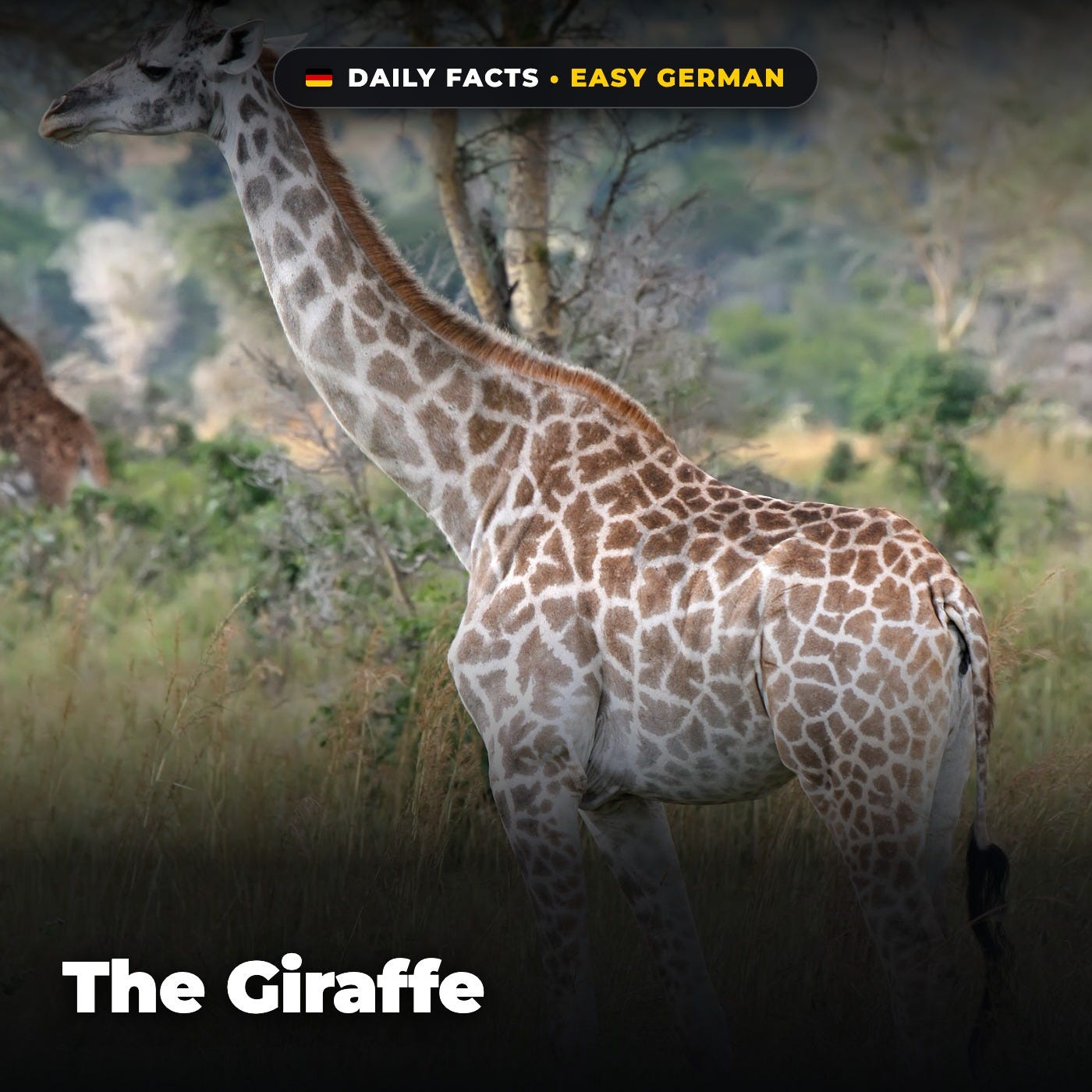 The Giraffe in Easy German 14.10.2026 10minTranscription: https://dailyfactsineasygerman.substack.com/p/the-giraffe-in-easy-german?showTranscript=trueDiscover "The Giraffe" in clear, natural German!Reach for the treetops with the Giraffe (Giraffe), the tallest animal walking the Earth! With necks over two meters long, their bodies boast miraculous adaptations, including giant hearts pumping blood at double human pressure.Learn how giraffes hum to each other in deep, inaudible infrasound at night, why zebras use them as living watchtowers, and how their long, dark purple tongues protect them from harsh African sun and thorny acacia bushes.Key Topics & Highlights:• A giraffe's neck has only seven vertebrae—the exact same number as humans, but each bone can be 25 cm long.• To pump blood two meters up to the brain, a giraffe's heart weighs over 11 kilograms with extremely high blood pressure.• Recent studies revealed that giraffes hum quietly to each other at night using deep low-frequency sound vibrations.• Their 45-centimeter prehensile tongues are blue-black to prevent sunburn while browsing thorny acacia trees.Key German Vocabulary:• die Giraffe (giraffe)• der Hals (neck)• das Herz (heart)• die Savanne (savanna)Chapters:00:00 - Introduction & The Skyscraper of the Savanna02:06 - Extreme Anatomy & High-Pressure Circulation04:43 - Sleeping Standing Up & Defense Against Predators07:20 - Social Herds & The "Silent Extinction"10:05 - Protecting Africa's Gentle GiantsAudio: 100% German • Spoken slowly and clearly (0.8x speed) This is a public episode. If you would like to discuss this with other subscribers or get access to bonus episodes, visit dailyfactsineasygerman.substack.com
 -
 Trailer - Daily Facts in Easy German 14.10.2026This is a public episode. If you would like to discuss this with other subscribers or get access to bonus episodes, visit dailyfactsineasygerman.substack.com
 -
 The British Empire in Easy German 13.10.2026 28minTranscription: https://dailyfactsineasygerman.substack.com/p/the-british-empire-in-easy-german?showTranscript=trueDiscover "The British Empire" in clear, natural German!Examine the rise, reach, and profound global legacy of the British Empire, the largest empire in human history. At its peak in the early 20th century, it spanned nearly a quarter of Earth's landmass and population.Explore the economic machinery of the East India Company, the sugar plantations of the Caribbean, the spread of the English language, and the complex movements for independence and decolonization.Key Topics & Highlights:• At its height, the British Empire ruled over approximately 450 million people—one fifth of humanity.• The phrase 'the empire on which the sun never sets' was coined because it had territories in every global time zone.• Maritime naval power and global trade networks like the East India Company drove its imperial expansion.• Decolonization accelerated rapidly following World War II, culminating in the modern Commonwealth of Nations.Key German Vocabulary:• das Weltreich (empire)• der Handel (trade / commerce)• die Kolonie (colony)• die Macht (power)Chapters:00:00 - Introduction & The Empire Where the Sun Never Set04:46 - The East India Company & Early Trade09:58 - Global Dominance in the Victorian Era20:33 - Decolonization & The Commonwealth24:34 - Historical Legacy & The Modern WorldAudio: 100% German • Spoken slowly and clearly (0.8x speed) This is a public episode. If you would like to discuss this with other subscribers or get access to bonus episodes, visit dailyfactsineasygerman.substack.com
 -
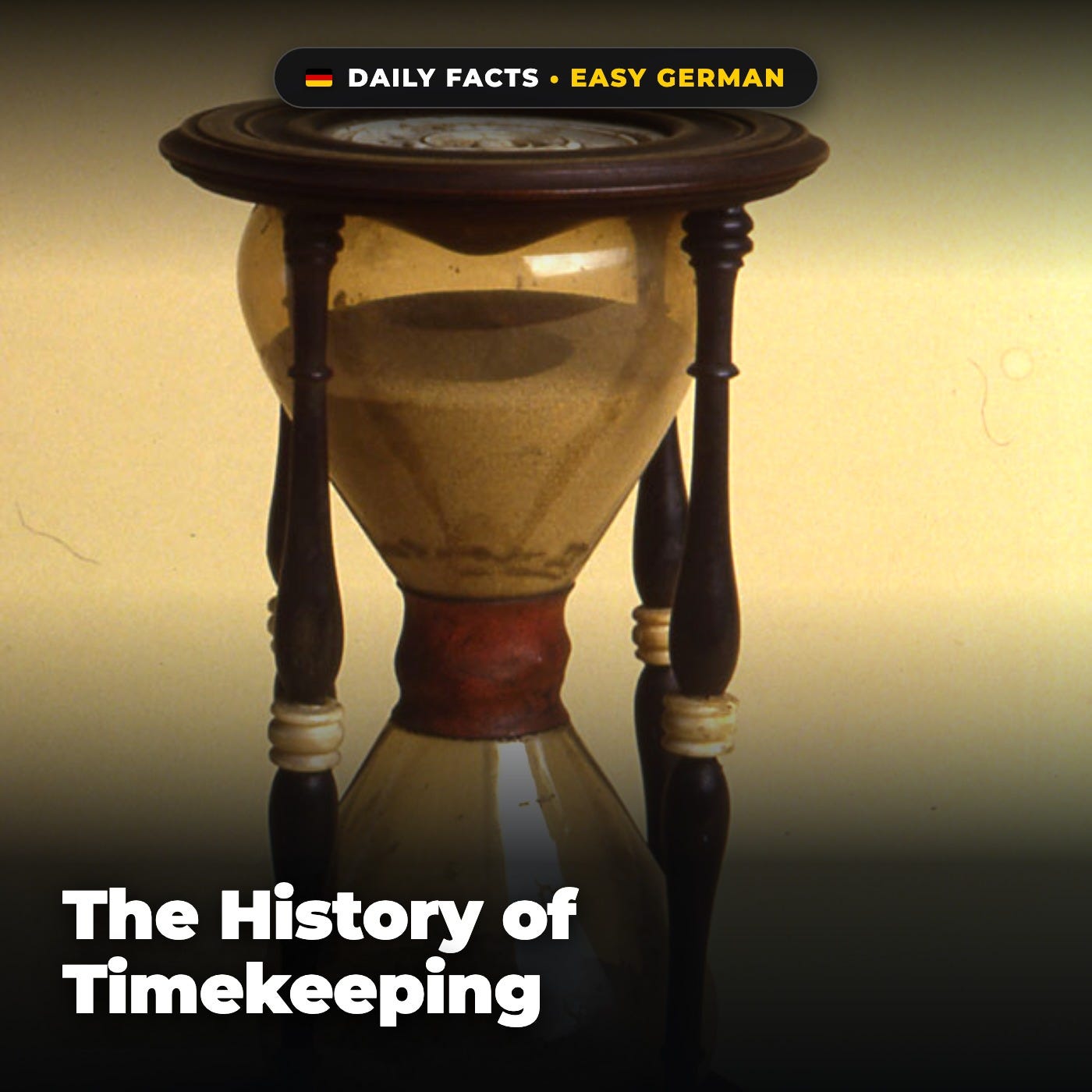 The History of Timekeeping in Easy German 12.10.2026 24minTranscription: https://dailyfactsineasygerman.substack.com/p/the-history-of-timekeeping-in-easy?showTranscript=trueDiscover "The History of Timekeeping" in clear, natural German!Look at your wrist and wonder: why do we divide our days into 24 hours and 60 minutes? Trace the evolution of human timekeeping from ancient sky-watchers to atomic precision.Discover how ancient Egyptians used shadow sundials and the stars, how Babylonians gave us the base-60 system, and how mechanical pendulum clocks and modern quartz crystals transformed time into the heartbeat of civilization.Key Topics & Highlights:• Ancient Egyptians divided day and night into 12 hours each based on shadow sticks and star constellations.• The 60-minute and 60-second divisions originate from the ancient Babylonian base-60 numbering system.• Mechanical clocks with pendulums, invented by Christiaan Huygens in 1656, increased accuracy to seconds per day.• Today's global time is synchronized using atomic clocks measuring the vibrations of cesium atoms.Key German Vocabulary:• die Zeit (time)• die Uhr (clock / watch)• die Stunde (hour)• die Minute (minute)Chapters:00:00 - Introduction & Measuring Every Second04:49 - Sundials, Water Clocks & Ancient Obelisks10:50 - Mechanical Tower Clocks in Medieval Europe14:53 - Marine Chronometers & Longitude at Sea18:17 - Atomic Clocks & Modern PrecisionAudio: 100% German • Spoken slowly and clearly (0.8x speed) This is a public episode. If you would like to discuss this with other subscribers or get access to bonus episodes, visit dailyfactsineasygerman.substack.com
 -
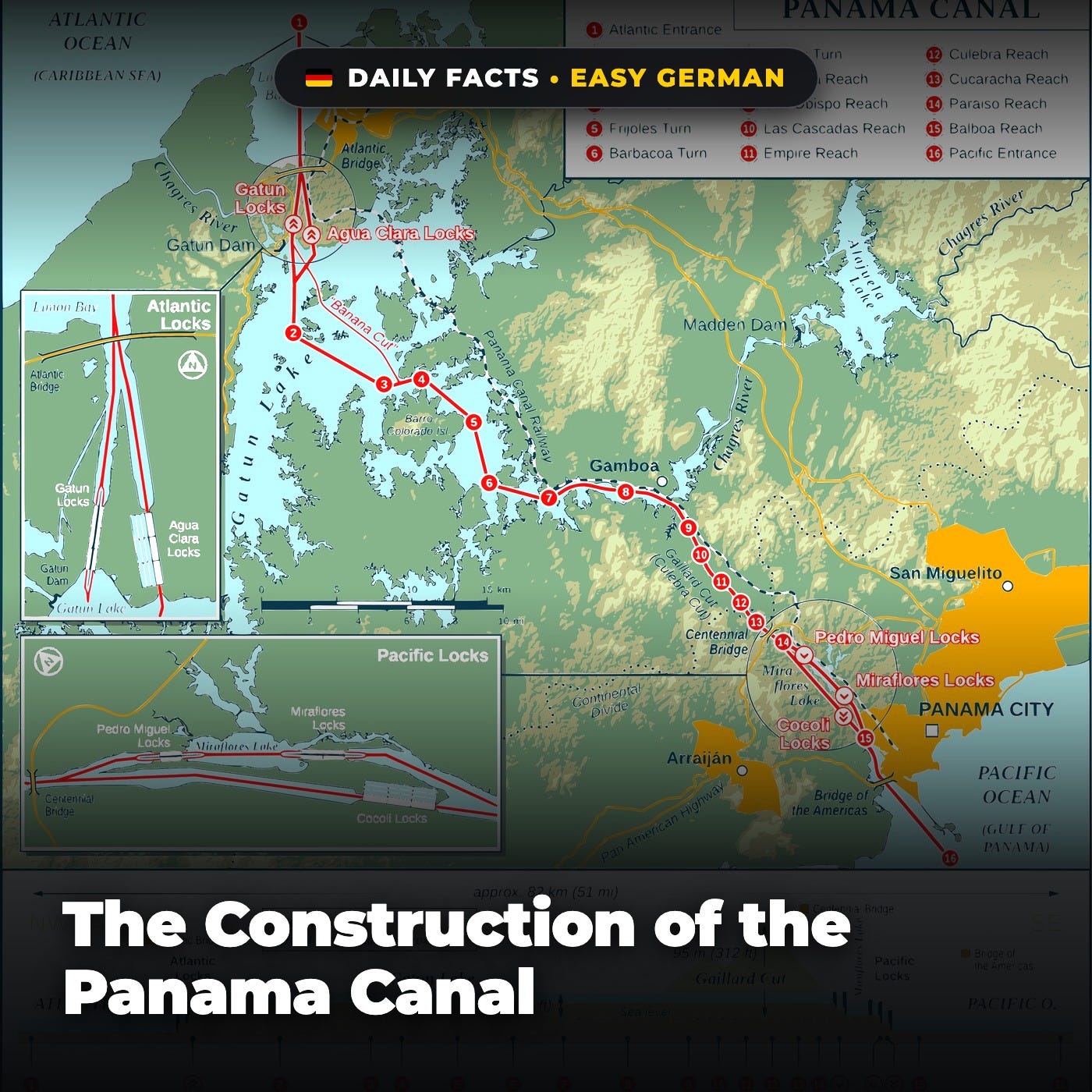 The Construction of the Panama Canal in Easy German 11.10.2026 22minTranscription: https://dailyfactsineasygerman.substack.com/p/the-construction-of-the-panama-canal?showTranscript=trueDiscover "The Construction of the Panama Canal" in clear, natural German!Dive deep into the colossal engineering struggle to build the Panama Canal. Carving a waterway through dense mountainous jungle and unstable volcanic rock required moving over 200 million cubic meters of earth.Explore how chief engineer John Stevens and army doctor William Gorgas defeated deadly mosquito epidemics, enabling the construction of the mammoth Gatun Dam and electric lock gates that still lift ocean giants today.Key Topics & Highlights:• Over 75,000 workers laboured on the American construction effort between 1904 and 1914.• Controlling mosquitoes through fumigation and drainage eliminated yellow fever and drastically reduced malaria.• The Culebra Cut required excavating a 14-kilometer trench through the continental mountain divide.• The canal uses gravity-fed water from Gatun Lake to operate its massive locks without water pumps.Key German Vocabulary:• der Bau (construction)• die Mücke (mosquito)• der Berg (mountain)• die Arbeit (work / labor)Chapters:00:00 - Introduction & Connecting Two Oceans04:27 - The Deadly French Attempt & Yellow Fever08:14 - American Construction & Engineering Marvels12:03 - The Lock System & Rising Waters19:45 - Global Shipping Impact & Modern ExpansionsAudio: 100% German • Spoken slowly and clearly (0.8x speed) This is a public episode. If you would like to discuss this with other subscribers or get access to bonus episodes, visit dailyfactsineasygerman.substack.com
 -
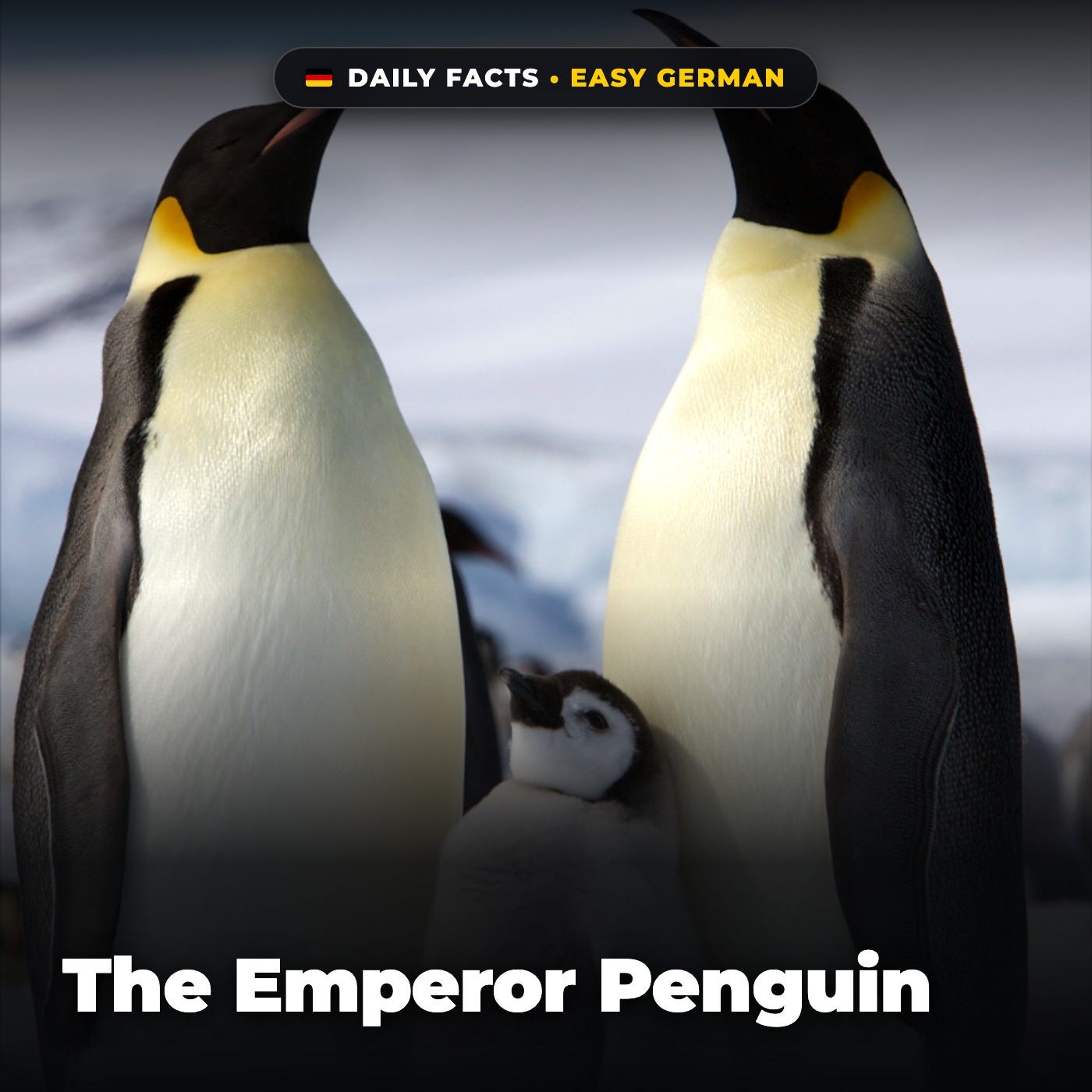 The Emperor Penguin in Easy German 10.10.2026 24minTranscription: https://dailyfactsineasygerman.substack.com/p/the-emperor-penguin-in-easy-german?showTranscript=trueDiscover "The Emperor Penguin" in clear, natural German!Brave the harshest environment on planet Earth alongside Emperor Penguins in the Antarctic winter. Standing against minus 50-degree blizzards and fierce polar winds, these incredible birds demonstrate supreme survival.Learn how male penguins balance a single precious egg on their feet for two months without eating, huddling together in giant rotating circles to share body warmth while the mothers hunt at sea.Key Topics & Highlights:• Emperor Penguins are the largest penguin species, standing over 1 meter tall and weighing up to 40 kg.• They breed during the brutal Antarctic winter, enduring temperatures of -50°C and 200 km/h winds.• Male penguins incubate the egg for 65 consecutive days on their feet under a warm brood pouch without eating.• To survive the freezing cold, thousands of males form giant huddles, constantly rotating positions so everyone shares warmth.Key German Vocabulary:• der Pinguin (penguin)• das Ei (egg)• der Sturm (storm / blizzard)• die Wärme (warmth)Chapters:00:00 - Introduction & The Giants of Antarctica04:48 - Trek Across the Frozen Pack Ice08:12 - Winter Huddle in -50°C Blizzards12:36 - Father Penguins Protecting the Egg16:38 - Spring Feeding & The Threat of Ice MeltAudio: 100% German • Spoken slowly and clearly (0.8x speed) This is a public episode. If you would like to discuss this with other subscribers or get access to bonus episodes, visit dailyfactsineasygerman.substack.com
 -
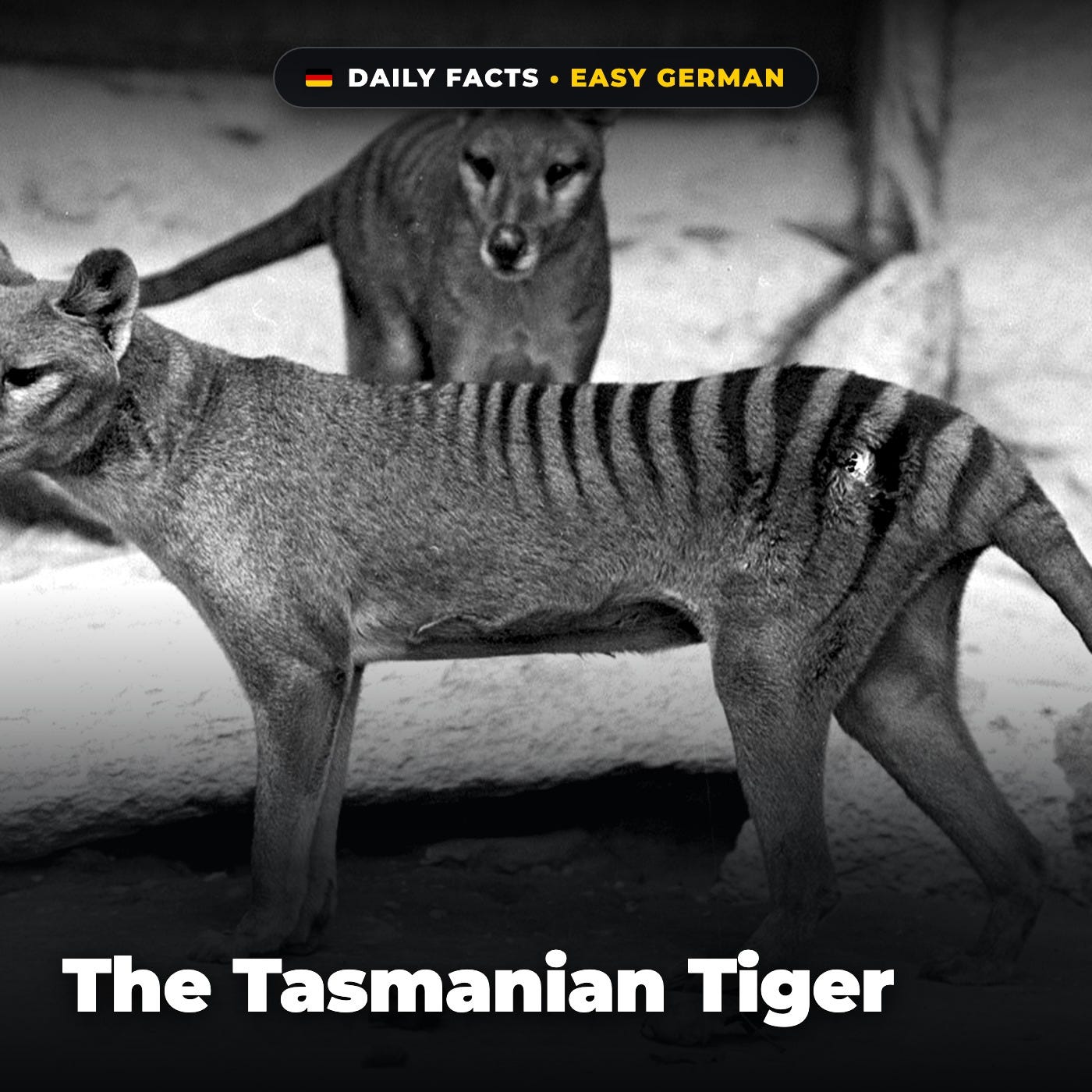 The Tasmanian Tiger in Easy German 09.10.2026 20minTranscription: https://dailyfactsineasygerman.substack.com/p/the-tasmanian-tiger-in-easy-german?showTranscript=trueDiscover "The Tasmanian Tiger" in clear, natural German!Discover the bittersweet story of the Tasmanian Tiger (Thylacine), the unique striped marsupial that once roamed Tasmania. Despite its dog-like appearance and tiger-striped back, it carried its young in a pouch.Learn how misunderstandings by European sheep farmers led to government bounties that pushed the species to extinction in 1936, and explore modern scientific efforts attempting to resurrect this lost icon.Key Topics & Highlights:• The Tasmanian Tiger was not a dog or cat, but a carnivorous marsupial with a pouch like a kangaroo.• It had distinctive dark stripes across its lower back and could open its jaws to an astonishing 80 degrees.• Bounty hunting, habitat loss, and disease caused its rapid decline during the 19th and early 20th centuries.• The last known individual, 'Benjamin', died at Hobart Zoo in September 1936, just 59 days after receiving legal protection.Key German Vocabulary:• der Tiger (tiger)• der Beutel (pouch)• die Streifen (stripes)• aussterben (to become extinct)Chapters:00:00 - Introduction & The Mysterious Thylacine03:15 - Marsupial Pouch, Stripes & Bizarre Jaws06:48 - Colonization, Bounties & Extinction in 193613:48 - Alleged Sightings & The Hobart Zoo Tragedy17:38 - De-Extinction Science & Modern LessonsAudio: 100% German • Spoken slowly and clearly (0.8x speed) This is a public episode. If you would like to discuss this with other subscribers or get access to bonus episodes, visit dailyfactsineasygerman.substack.com
 -
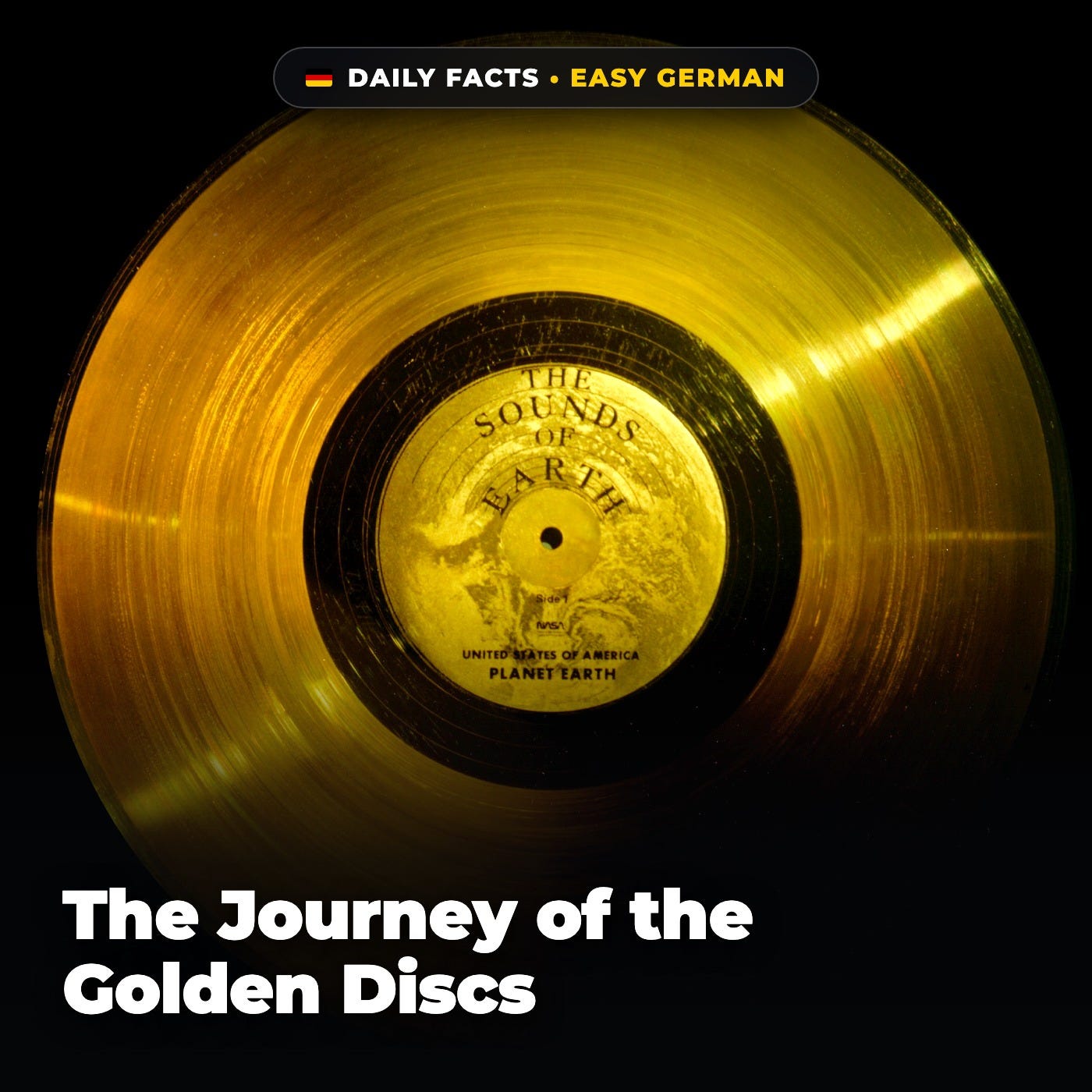 The Journey of the Golden Discs in Easy German 08.10.2026 34minTranscription: https://dailyfactsineasygerman.substack.com/p/the-journey-of-the-golden-discs-in?showTranscript=trueDiscover "The Journey of the Golden Discs" in clear, natural German!Venture into deep interstellar space aboard NASA's twin Voyager spacecraft. Launched in 1977, Voyager 1 and 2 carry iconic gold-plated copper phonograph records as messages to extraterrestrial civilizations.Explore how astronomer Carl Sagan and his team curated sounds of thunder and birds, musical selections from Bach to Chuck Berry, greetings in 55 languages, and 115 images into an eternal cosmic time capsule.Key Topics & Highlights:• Voyager 1 and 2 were launched in 1977 to explore Jupiter, Saturn, Uranus, and Neptune before heading into deep space.• Each probe carries a 12-inch gold-plated copper disc containing sounds and images of Earth.• The records include greetings in 55 ancient and modern languages and 90 minutes of diverse global music.• Voyager 1 is now over 24 billion kilometers from Earth—the farthest human-made object in history.Key German Vocabulary:• die Schallplatte (record / vinyl disc)• das Weltall (outer space / universe)• die Botschaft (message)• die Sterne (stars)Chapters:00:00 - Introduction & A Cosmic Message in a Bottle08:22 - Carl Sagan & The Voyager Mission13:16 - Sounds of Earth, Music & Greetings22:16 - The Golden Disc's Trajectory & Immortality32:00 - Reflections on Humanity's Place in SpaceAudio: 100% German • Spoken slowly and clearly (0.8x speed) This is a public episode. If you would like to discuss this with other subscribers or get access to bonus episodes, visit dailyfactsineasygerman.substack.com
 -
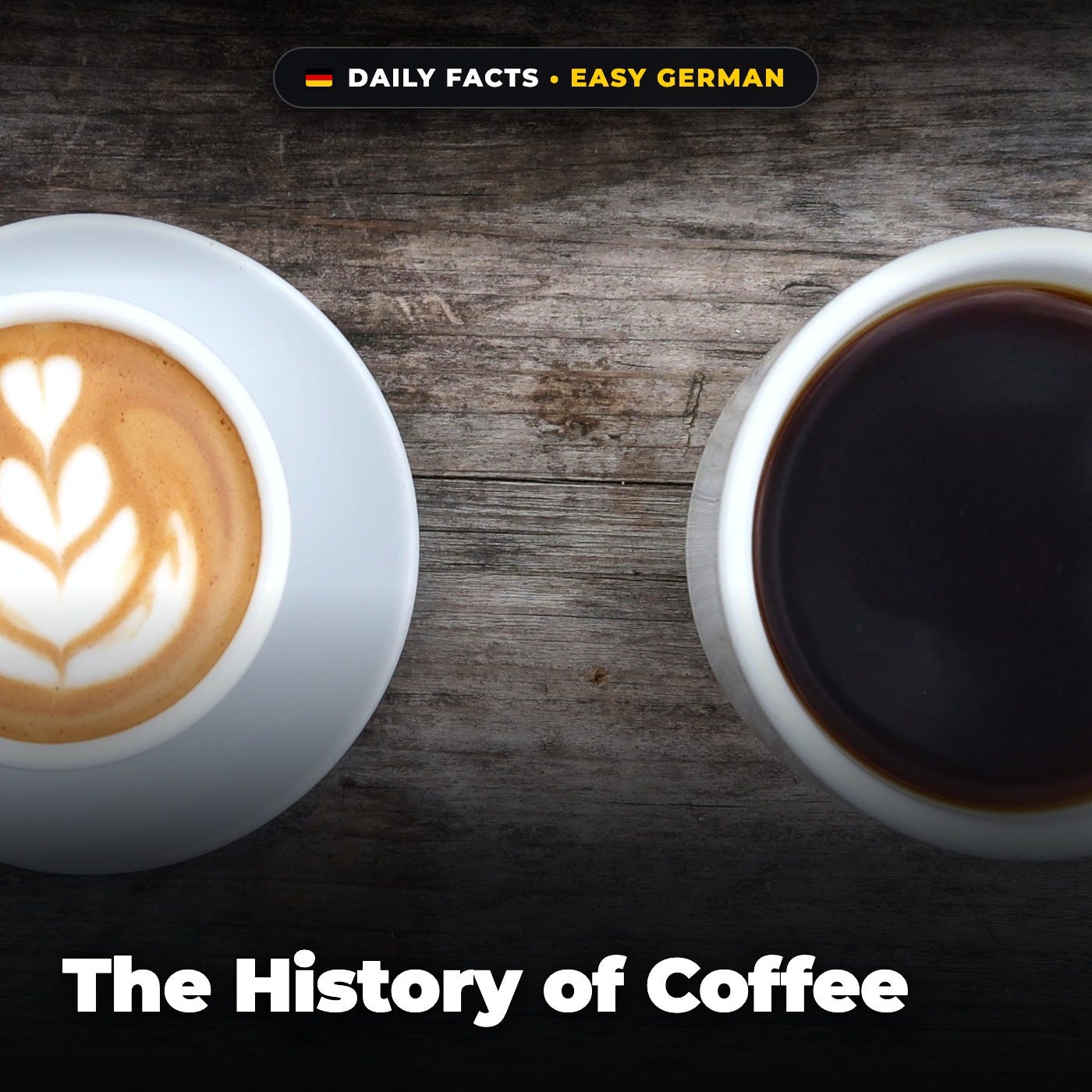 The History of Coffee in Easy German 07.10.2026 26minTranscription: https://dailyfactsineasygerman.substack.com/p/the-history-of-coffee-in-easy-german?showTranscript=trueDiscover "The History of Coffee" in clear, natural German!Trace the aromatic global journey of coffee, from wild shrub to the world's favorite morning beverage! Discover the legendary Ethiopian story of Kaldi and his dancing goats discovering caffeine.Follow coffee's spread across Yemeni monasteries and bustling Ottoman coffeehouses into 17th-century Europe, where coffeehouses became lively centers for news, commerce, and scientific revolution.Key Topics & Highlights:• Legend tells of an Ethiopian goat herder named Kaldi who noticed his goats energized after eating red berries.• Yemeni monks in the 15th century roasted and brewed coffee beans to stay awake during nightly prayers.• The first public coffeehouses opened in Istanbul in the 16th century as centers for social conversation.• European coffeehouses in London, Paris, and Vienna fostered political debates and stock exchanges.Key German Vocabulary:• der Kaffee (coffee)• die Bohne (bean)• die Tasse (cup)• die Energie (energy)Chapters:00:00 - Introduction & The World's Morning Ritual02:30 - The Legend of Kaldi & Ethiopian Goats05:38 - Spread Through Arabia & The First Cafes08:45 - European Coffee Houses & Global Trade11:00 - Modern Espresso Culture & ConclusionAudio: 100% German • Spoken slowly and clearly (0.8x speed) This is a public episode. If you would like to discuss this with other subscribers or get access to bonus episodes, visit dailyfactsineasygerman.substack.com
 -
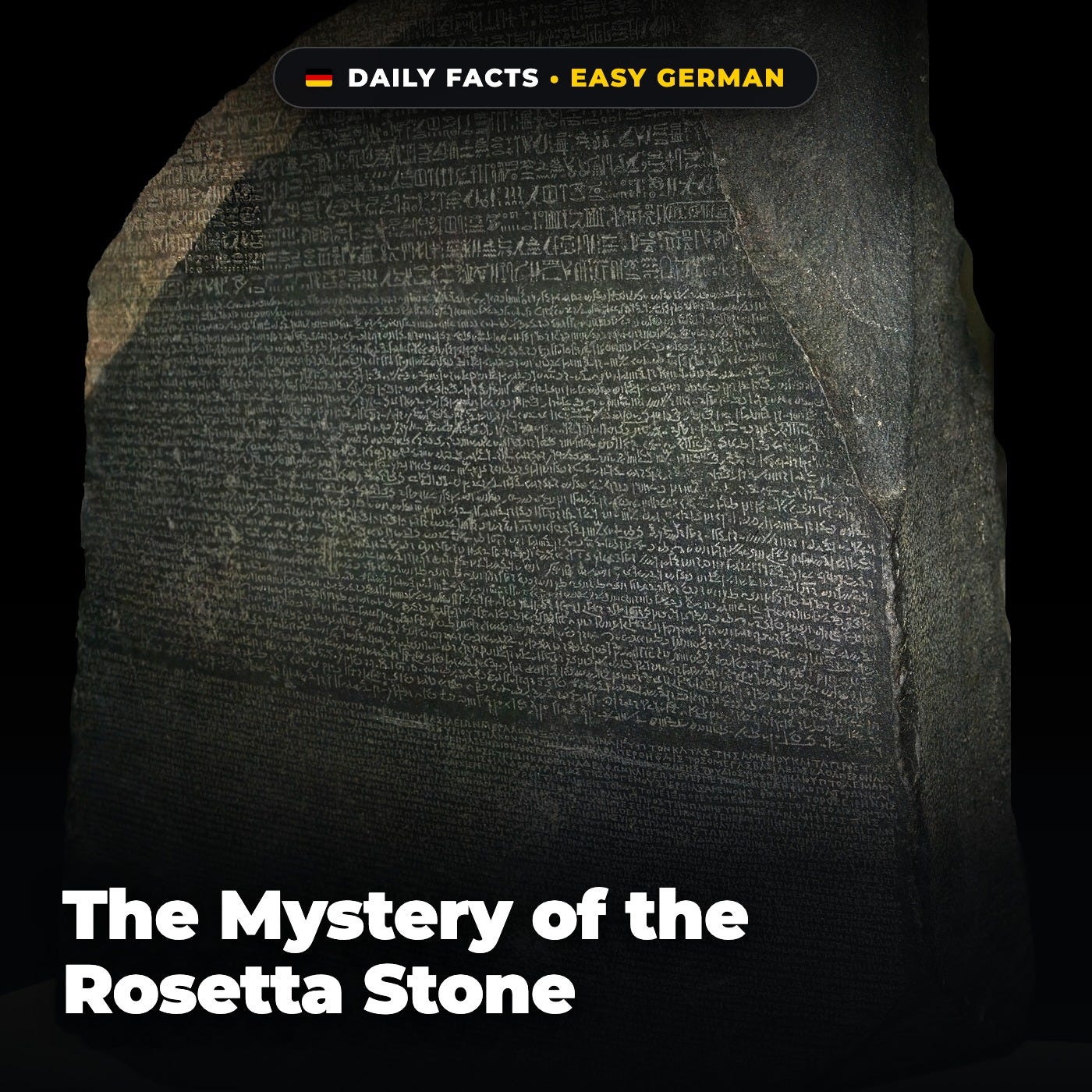 The Mystery of the Rosetta Stone in Easy German 06.10.2026 14minTranscription: https://dailyfactsineasygerman.substack.com/p/the-mystery-of-the-rosetta-stone?showTranscript=trueDiscover "The Mystery of the Rosetta Stone" in clear, natural German!Uncover the story of the stone slab that unlocked ancient Egyptian history! In July 1799, French soldiers rebuilding a fort in the Nile Delta city of Rashid discovered the mysterious Rosetta Stone.Learn how this granodiorite slab, carved with the same decree in Egyptian Hieroglyphs, Demotic, and Ancient Greek, allowed French linguist Jean-François Champollion to crack the hieroglyphic code in 1822.Key Topics & Highlights:• The Rosetta Stone was discovered in 1799 by French soldiers during Napoleon's Egyptian expedition.• It features a decree issued in 196 BC written in three scripts: Hieroglyphs, Demotic, and Ancient Greek.• Because scholars could read Greek, the stone served as a bilingual key to deciphering lost hieroglyphs.• Jean-François Champollion finally cracked the phonetic system of hieroglyphs in 1822 after years of study.Key German Vocabulary:• der Stein (stone)• die Hieroglyphen (hieroglyphs)• die Schrift (script / writing)• die Sprache (language)Chapters:00:00 - Introduction & The Lost Language of Pharaohs02:49 - Napoleon's Soldiers in Rosetta (1799)06:27 - Three Scripts on One Stone08:14 - Jean-François Champollion's Breakthrough11:58 - Unlocking 3,000 Years of Egyptian HistoryAudio: 100% German • Spoken slowly and clearly (0.8x speed) This is a public episode. If you would like to discuss this with other subscribers or get access to bonus episodes, visit dailyfactsineasygerman.substack.com
 -
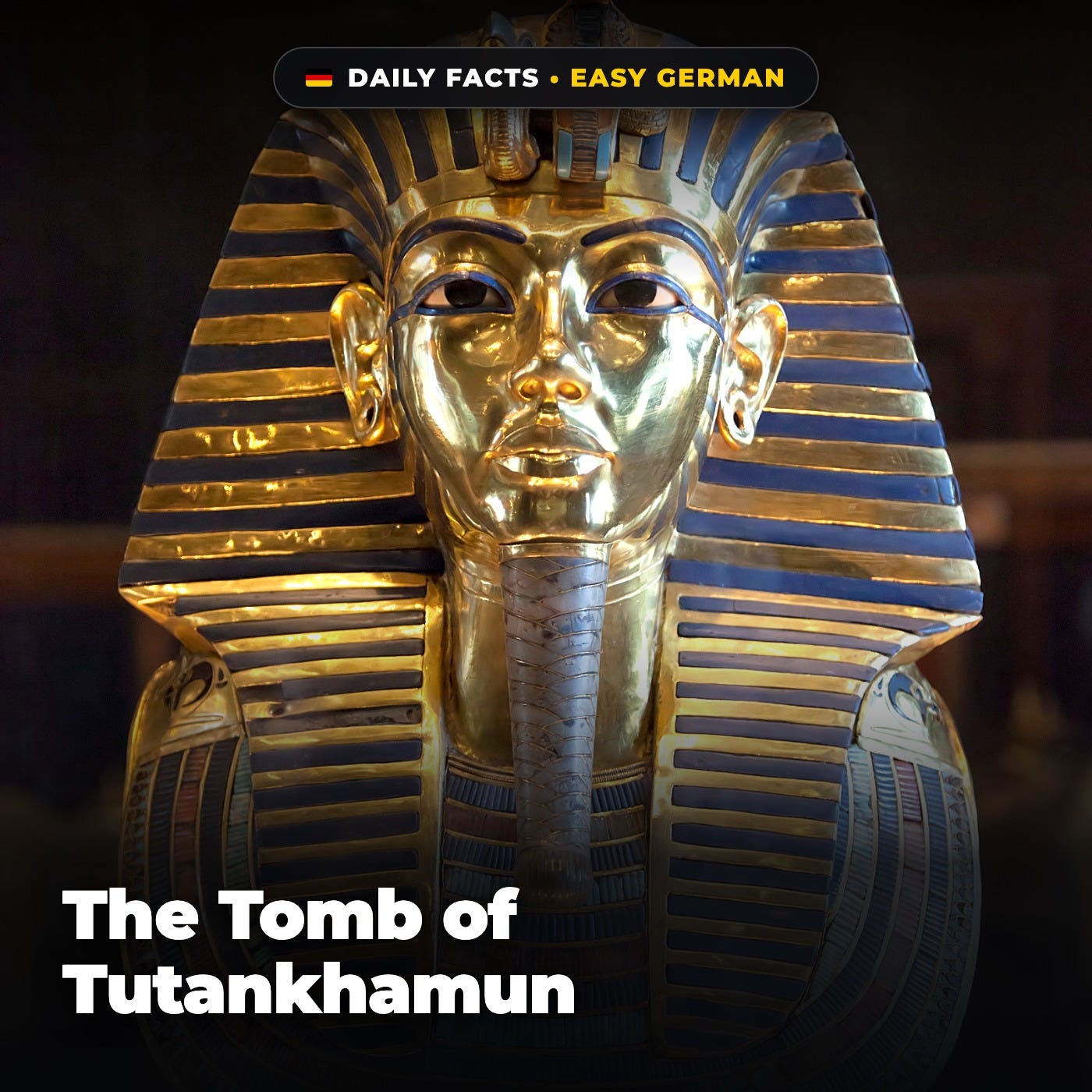 The Tomb of Tutankhamun in Easy German 06.10.2026 20minTranscription: https://dailyfactsineasygerman.substack.com/p/the-tomb-of-tutankhamun-in-easy-german?showTranscript=trueDiscover "The Tomb of Tutankhamun" in clear, natural German!Step into the Valley of the Kings in November 1922, where British archaeologist Howard Carter made the most sensational discovery in archaeological history: the intact tomb of Pharaoh Tutankhamun.Peep through the doorway to see "wonderful things"—over 5,000 priceless treasures, golden chariots, ornate thrones, and the iconic solid-gold death mask of Egypt's famous boy king.Key Topics & Highlights:• Tutankhamun became pharaoh of Ancient Egypt around age 9 and ruled until his sudden death at age 19.• Howard Carter and Lord Carnarvon spent five years searching before discovering the buried entrance staircase.• The tomb contained over 5,000 undisturbed artifacts, including three nesting coffins and the solid gold mask.• The discovery captivated global media and popularized the famous legend of the 'Curse of the Pharaohs'.Key German Vocabulary:• das Grab (tomb / grave)• das Gold (gold)• der Pharao (pharaoh)• der Schatz (treasure)Chapters:00:00 - Introduction & The Boy King of Egypt03:26 - Howard Carter's Quest in the Valley07:16 - Breaking the Tomb Seal in 192211:11 - The Golden Mask & Royal Treasures15:44 - The Pharaonic Curse & Archaeological ImpactAudio: 100% German • Spoken slowly and clearly (0.8x speed) This is a public episode. If you would like to discuss this with other subscribers or get access to bonus episodes, visit dailyfactsineasygerman.substack.com
 -
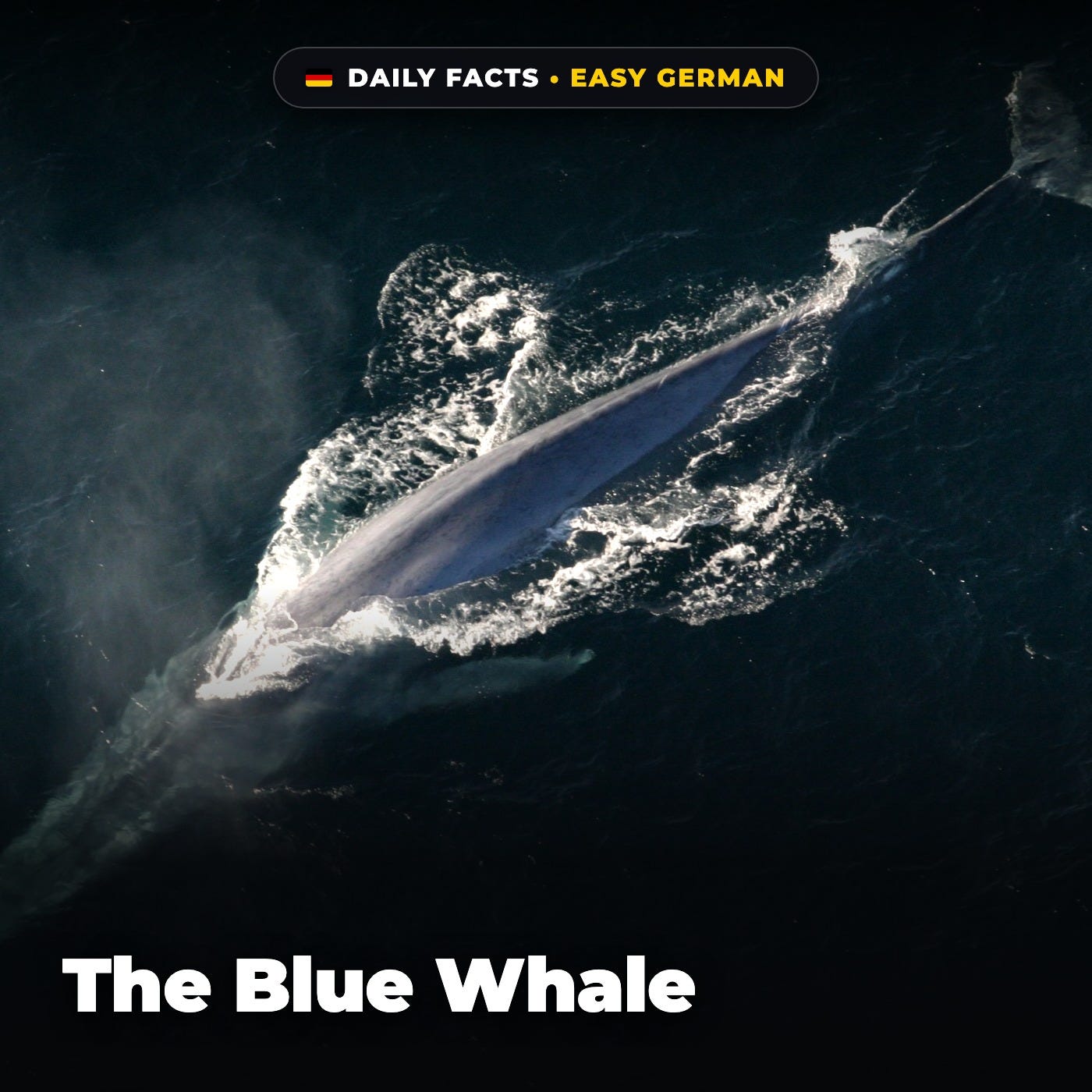 The Blue Whale in Easy German 04.10.2026 19minTranscription: https://dailyfactsineasygerman.substack.com/p/the-blue-whale-in-easy-german?showTranscript=trueDiscover "The Blue Whale" in clear, natural German!Plunge into the deep ocean to meet the largest animal ever known to have lived on Earth: the colossal blue whale! Stretching up to 30 meters long and weighing up to 200 tons, this gentle giant dwarfs even the largest dinosaurs.Discover how its car-sized heart pumps thousands of liters of blood, how it filters tons of tiny krill each day through baleen plates, and how its low-frequency songs travel across entire oceans.Key Topics & Highlights:• Blue whales can reach lengths of 30 meters (100 feet) and weigh up to 200 tons.• A blue whale's heart weighs around 180 kg (400 lbs) and beats as slowly as 2 times per minute during deep dives.• Despite their immense size, they feed almost exclusively on tiny shrimp-like krill, eating up to 4 tons per day.• Their vocalizations can reach 188 decibels, allowing them to communicate across hundreds of miles of ocean.Key German Vocabulary:• der Blauwal (blue whale)• das Herz (heart)• das Meer (sea / ocean)• der Gesang (song)Chapters:00:00 - Introduction & The Ocean's Gentle Giant03:52 - Record-Breaking Anatomy & Krill Diet08:59 - Deep Sea Echoes & Low-Frequency Songs13:52 - The Whaling Era & Near Extinction16:42 - Ocean Conservation & Population RecoveryAudio: 100% German • Spoken slowly and clearly (0.8x speed) This is a public episode. If you would like to discuss this with other subscribers or get access to bonus episodes, visit dailyfactsineasygerman.substack.com
 -
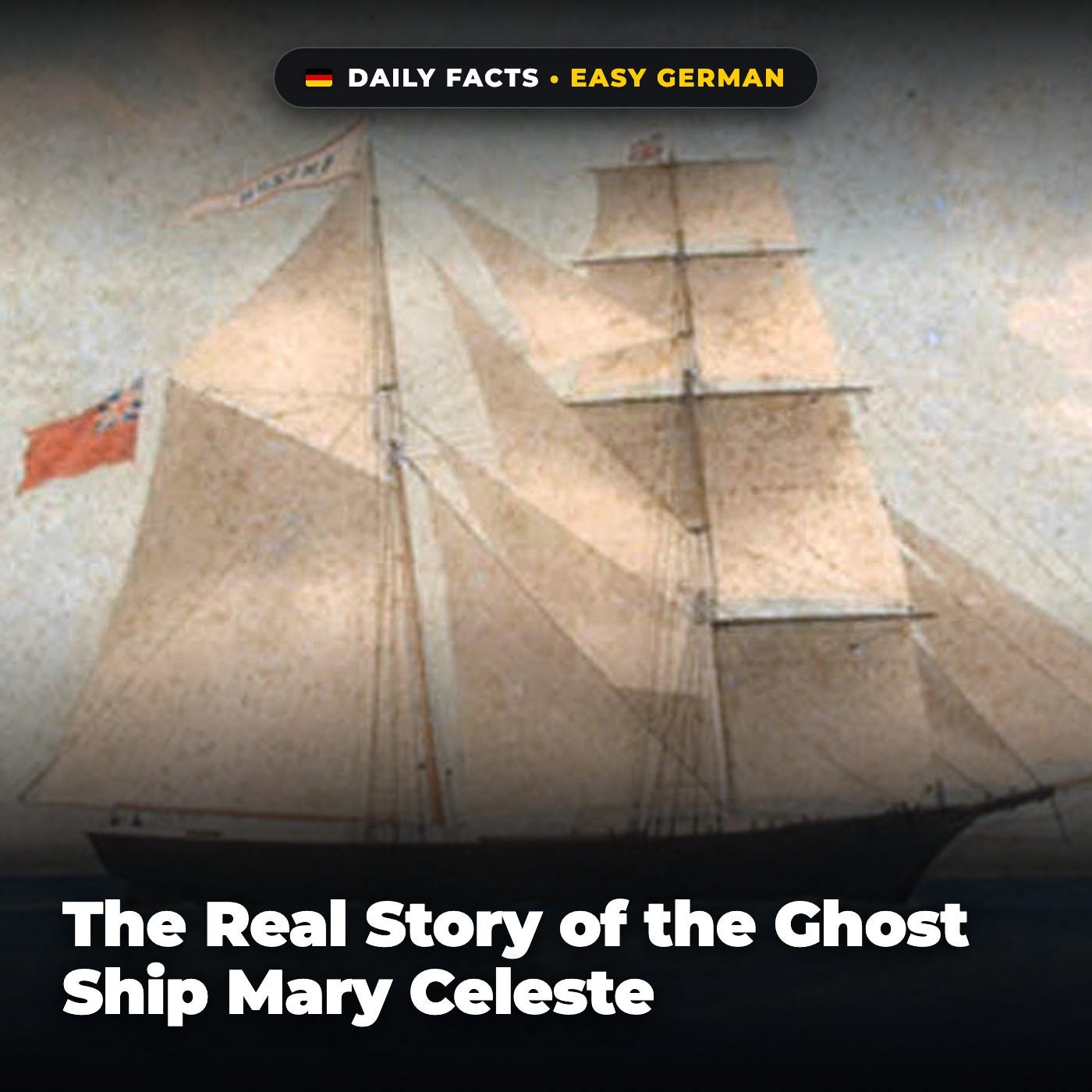 The Real Story of the Ghost Ship Mary Celeste in Easy German 03.10.2026 18minTranscription: https://dailyfactsineasygerman.substack.com/p/the-real-story-of-the-ghost-ship?showTranscript=trueDiscover "The Real Story of the Ghost Ship Mary Celeste" in clear, natural German!Unravel the maritime world's most enduring mystery: the ghost ship Mary Celeste. In December 1872, the American brigantine was spotted drifting seaworthy under partial sail near the Azores.When rescuers boarded, they found the ship fully stocked with food and water and its cargo of industrial alcohol intact—but Captain Briggs, his family, and the entire crew had vanished without a trace into the Atlantic.Key Topics & Highlights:• The Mary Celeste set sail from New York to Genoa in November 1872 carrying 1,700 barrels of alcohol.• The British ship Dei Gratia found it drifting in the Atlantic with nobody aboard on December 4, 1872.• The vessel was in good condition with plenty of provisions and cargo untouched, but the lifeboat was gone.• Leading theories suggest expanding alcohol fumes caused a false panic, leading the crew to abandon ship in haste.Key German Vocabulary:• das Geisterschiff (ghost ship)• die Besatzung (crew)• das Rätsel (mystery / puzzle)• verlassen (to abandon / abandoned)Chapters:00:00 - Introduction & The Ocean's Greatest Mystery03:42 - The Discovery of the Abandoned Brigantine06:33 - Intact Cargo & The Missing Lifeboat10:35 - Debunked Theories & Sea Lore16:18 - What Really Happened & Maritime LegacyAudio: 100% German • Spoken slowly and clearly (0.8x speed) This is a public episode. If you would like to discuss this with other subscribers or get access to bonus episodes, visit dailyfactsineasygerman.substack.com
 -
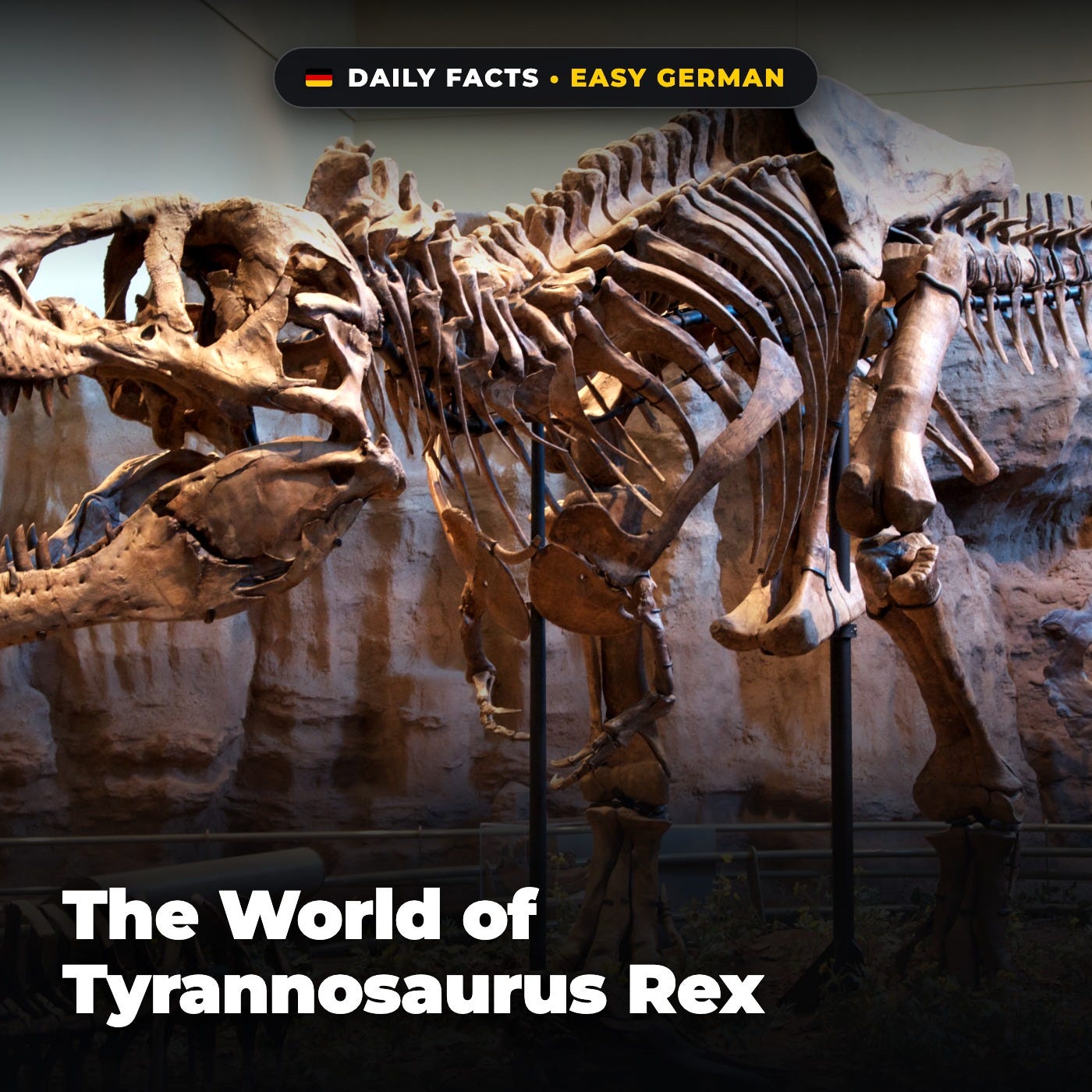 The World of Tyrannosaurus Rex in Easy German 02.10.2026 24minTranscription: https://dailyfactsineasygerman.substack.com/p/the-world-of-tyrannosaurus-rex-in?showTranscript=trueDiscover "The World of Tyrannosaurus Rex" in clear, natural German!Enter the prehistoric world of Tyrannosaurus Rex, the undisputed king of the Late Cretaceous dinosaurs! Towering 4 meters tall and weighing up to 9 tons, this apex predator ruled North America 66 million years ago.Uncover fascinating scientific facts about T-Rex's bone-crushing bite force, binocular vision, keen sense of smell, and the ongoing debate over whether it was an active hunter or opportunistic scavenger.Key Topics & Highlights:• T-Rex lived approximately 68 to 66 million years ago in western North America.• It possessed the strongest bite force of any known terrestrial animal—capable of crushing solid bone.• Its forward-facing eyes provided binocular depth perception superior to modern hawks.• Despite small two-fingered arms, its legs and muscular tail allowed steady movement across open terrain.Key German Vocabulary:• der Dinosaurier (dinosaur)• die Zähne (teeth)• der Knochen (bone)• der Jäger (hunter)Chapters:00:00 - Introduction & The King of Dinosaurs04:02 - Anatomy, Scale & Bone-Crushing Bite11:43 - Apex Predator vs Scavenger Debate17:12 - Sensory Abilities & Vision21:37 - The Cretaceous Extinction & FossilsAudio: 100% German • Spoken slowly and clearly (0.8x speed) This is a public episode. If you would like to discuss this with other subscribers or get access to bonus episodes, visit dailyfactsineasygerman.substack.com
 -
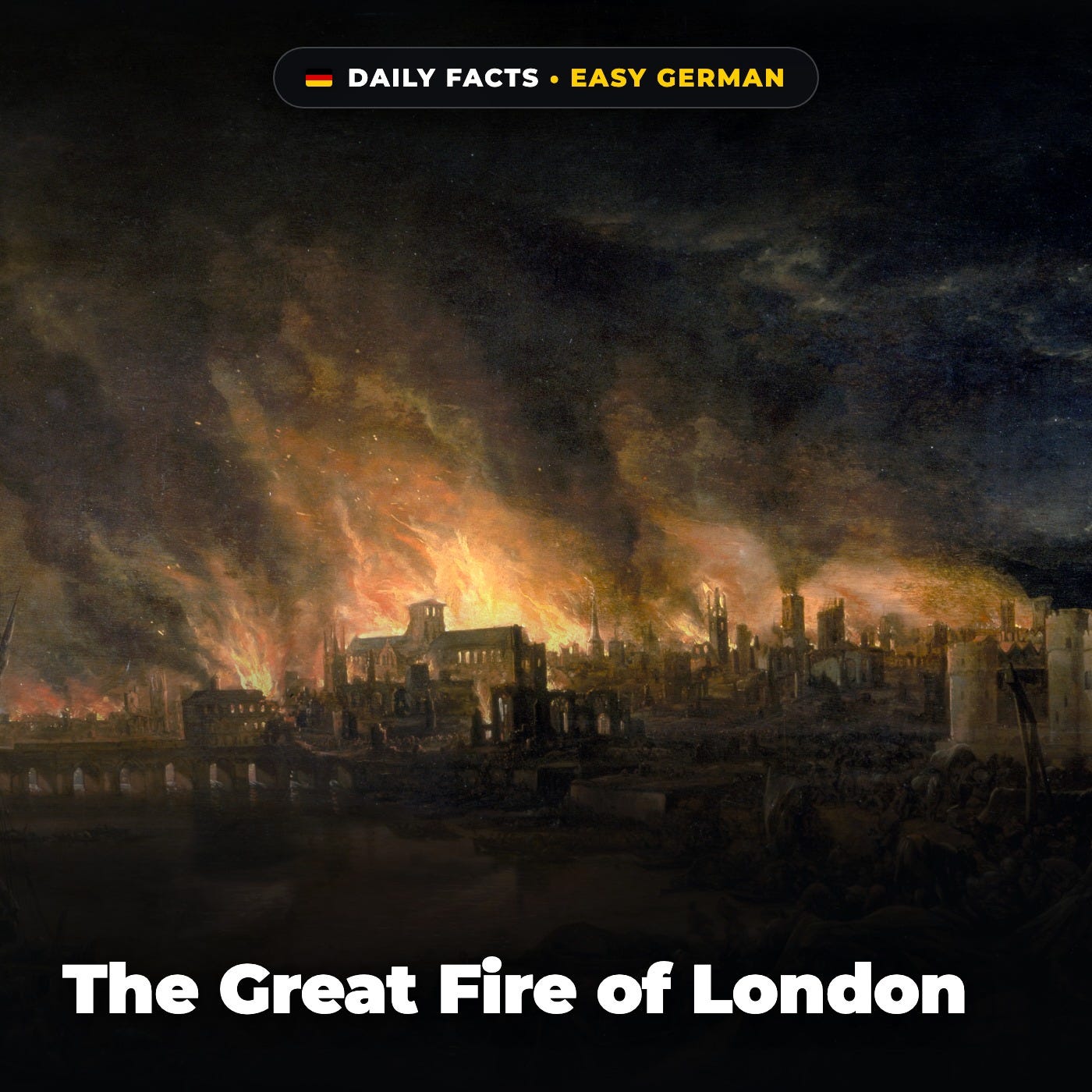 The Great Fire of London in Easy German 01.10.2026 23minTranscription: https://dailyfactsineasygerman.substack.com/p/the-great-fire-of-london-in-easy?showTranscript=trueDiscover "The Great Fire of London" in clear, natural German!Step into 17th-century London during the scorching late summer of 1666. A small spark in Thomas Farriner's bakery on Pudding Lane ignited a catastrophic firestorm that consumed the medieval city.Explore how wooden timber buildings, pitch, and strong easterly winds fueled a four-day blaze destroying over 13,000 houses and Old St. Paul's Cathedral, paving the way for a modern brick and stone London.Key Topics & Highlights:• The Great Fire began after midnight on September 2, 1666, in a bakery on Pudding Lane.• Over four days, the fire destroyed roughly 80% of the city inside the medieval walls.• Over 13,000 houses and 87 parish churches, including Old St. Paul's Cathedral, were burned to ashes.• The disaster prompted the creation of modern brick building codes, organized fire brigades, and property insurance.Key German Vocabulary:• das Feuer (fire)• die Bäckerei (bakery)• das Holz (wood)• die Stadt (city)Chapters:00:00 - Introduction & London in 166604:15 - The Bakery on Pudding Lane08:05 - A City of Dry Timber & Spread14:32 - Fighting the Blaze & Total Destruction16:22 - Rebuilding London & Christopher WrenAudio: 100% German • Spoken slowly and clearly (0.8x speed) This is a public episode. If you would like to discuss this with other subscribers or get access to bonus episodes, visit dailyfactsineasygerman.substack.com
 -
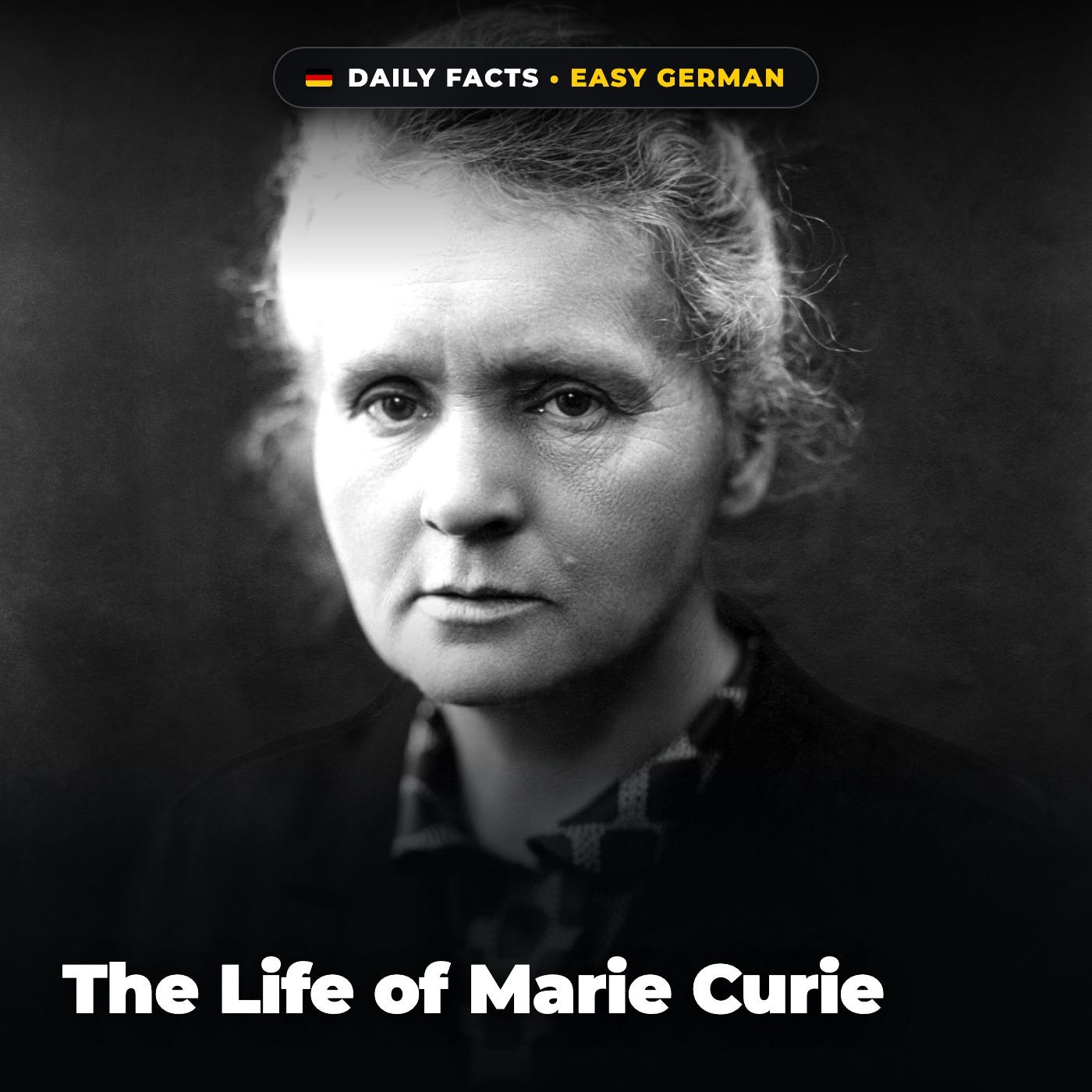 The Life of Marie Curie in Easy German 30.09.2026 22minTranscription: https://dailyfactsineasygerman.substack.com/p/the-life-of-marie-curie-in-easy-german?showTranscript=trueDiscover "The Life of Marie Curie" in clear, natural German!Celebrate the inspiring life and scientific brilliance of Marie Curie, one of history's greatest pioneers. Born in Warsaw, she overcame poverty and discrimination to study at the Sorbonne in Paris.Discover how her tireless research into uranium rays led to the discovery of two new chemical elements—polonium and radium—and revolutionized physics and medicine, earning her two Nobel Prizes.Key Topics & Highlights:• Marie Curie was the first woman to win a Nobel Prize and the only person to win in two different scientific fields.• She discovered two radioactive elements: Polonium (named after her homeland Poland) and Radium.• She coined the term 'radioactivity' to describe the spontaneous emission of energy from atoms.• During World War I, she developed mobile X-ray units ('Petites Curies') to help wounded soldiers on the front.Key German Vocabulary:• die Wissenschaftlerin (female scientist)• das Element (element)• die Strahlung (radiation)• der Nobelpreis (Nobel Prize)Chapters:00:00 - Introduction & A Pioneer in Science03:29 - Early Hardships & Paris University07:50 - Discovering Polonium and Radium12:36 - Two Nobel Prizes & Mobile X-Rays18:55 - Lasting Legacy in Modern MedicineAudio: 100% German • Spoken slowly and clearly (0.8x speed) This is a public episode. If you would like to discuss this with other subscribers or get access to bonus episodes, visit dailyfactsineasygerman.substack.com
 -
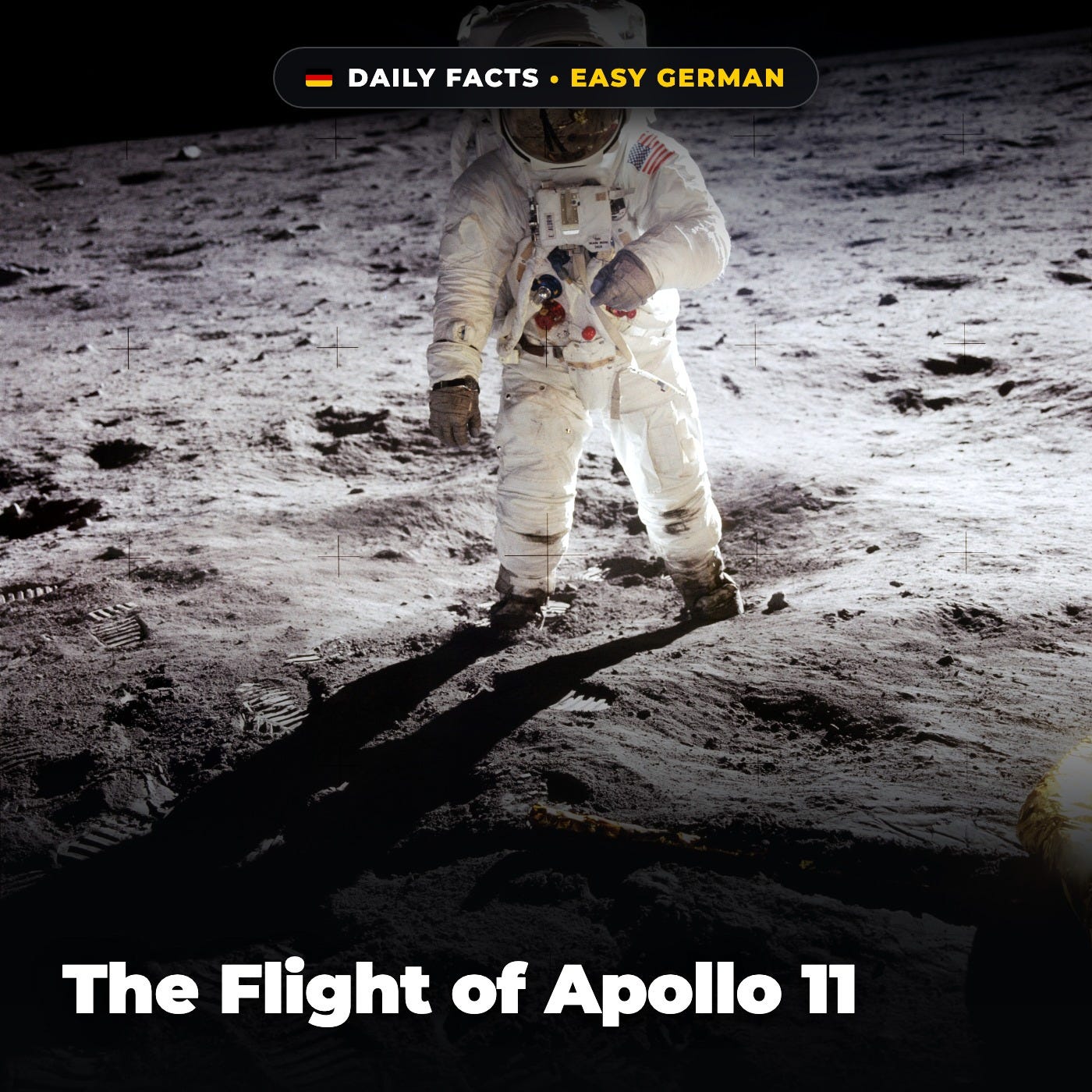 The Flight of Apollo 11 in Easy German 29.09.2026 19minTranscription: https://dailyfactsineasygerman.substack.com/p/the-flight-of-apollo-11-in-easy-german?showTranscript=trueDiscover "The Flight of Apollo 11" in clear, natural German!Relive the historic July 1969 Apollo 11 mission when humans first set foot on the Moon! Join Neil Armstrong, Buzz Aldrin, and Michael Collins on their daring voyage across 384,000 kilometers of space.From the thunderous launch of the massive Saturn V rocket to the heart-stopping lunar landing with seconds of fuel remaining, experience humanity's greatest exploratory leap.Key Topics & Highlights:• Apollo 11 launched on July 16, 1969, powered by the giant 110-meter Saturn V rocket.• On July 20, 1969, Neil Armstrong and Buzz Aldrin landed the lunar module 'Eagle' on the Sea of Tranquility.• Neil Armstrong became the first human to walk on the Moon, uttering his immortal words.• The astronauts spent over two hours on the lunar surface, collecting 21.5 kg of Moon rocks.Key German Vocabulary:• der Mond (moon)• die Rakete (rocket)• der Astronaut (astronaut)• die Landung (landing)Chapters:00:00 - Introduction & The Space Race02:30 - The Colossal Saturn V Rocket05:38 - The Eagle Lands on the Lunar Surface08:45 - One Small Step & The Moonwalk11:00 - Safe Return to Earth & Lasting ImpactAudio: 100% German • Spoken slowly and clearly (0.8x speed) This is a public episode. If you would like to discuss this with other subscribers or get access to bonus episodes, visit dailyfactsineasygerman.substack.com
 -
 The Panama Canal in Easy German 29.09.2026 22minTranscription: https://dailyfactsineasygerman.substack.com/p/the-panama-canal-in-easy-german?showTranscript=trueDiscover "The Panama Canal" in clear, natural German!Discover the monumental engineering marvel of the Panama Canal, the 82-kilometer waterway that connects the Atlantic and Pacific Oceans across Central America.Explore how this shortcut eliminated the hazardous 15,000-kilometer voyage around Cape Horn, overcoming dense jungles, tropical diseases, and mountainous terrain through an ingenious system of water locks.Key Topics & Highlights:• The canal shortens the sea voyage between New York and San Francisco by over 13,000 kilometers.• France began construction in 1881 but failed due to financial collapse and rampant tropical diseases.• The United States completed the project in 1914 after eradicating mosquito-borne yellow fever and malaria.• Massive water locks lift ships 26 meters above sea level to cross Gatun Lake before lowering them back down.Key German Vocabulary:• der Kanal (canal)• die Schleuse (canal lock)• der Ozean (ocean)• das Schiff (ship)Chapters:00:00 - Introduction & Connecting Two Oceans04:27 - The Deadly French Attempt & Yellow Fever08:14 - American Construction & Engineering Marvels12:03 - The Lock System & Rising Waters19:45 - Global Shipping Impact & Modern ExpansionsAudio: 100% German • Spoken slowly and clearly (0.8x speed) This is a public episode. If you would like to discuss this with other subscribers or get access to bonus episodes, visit dailyfactsineasygerman.substack.com
 -
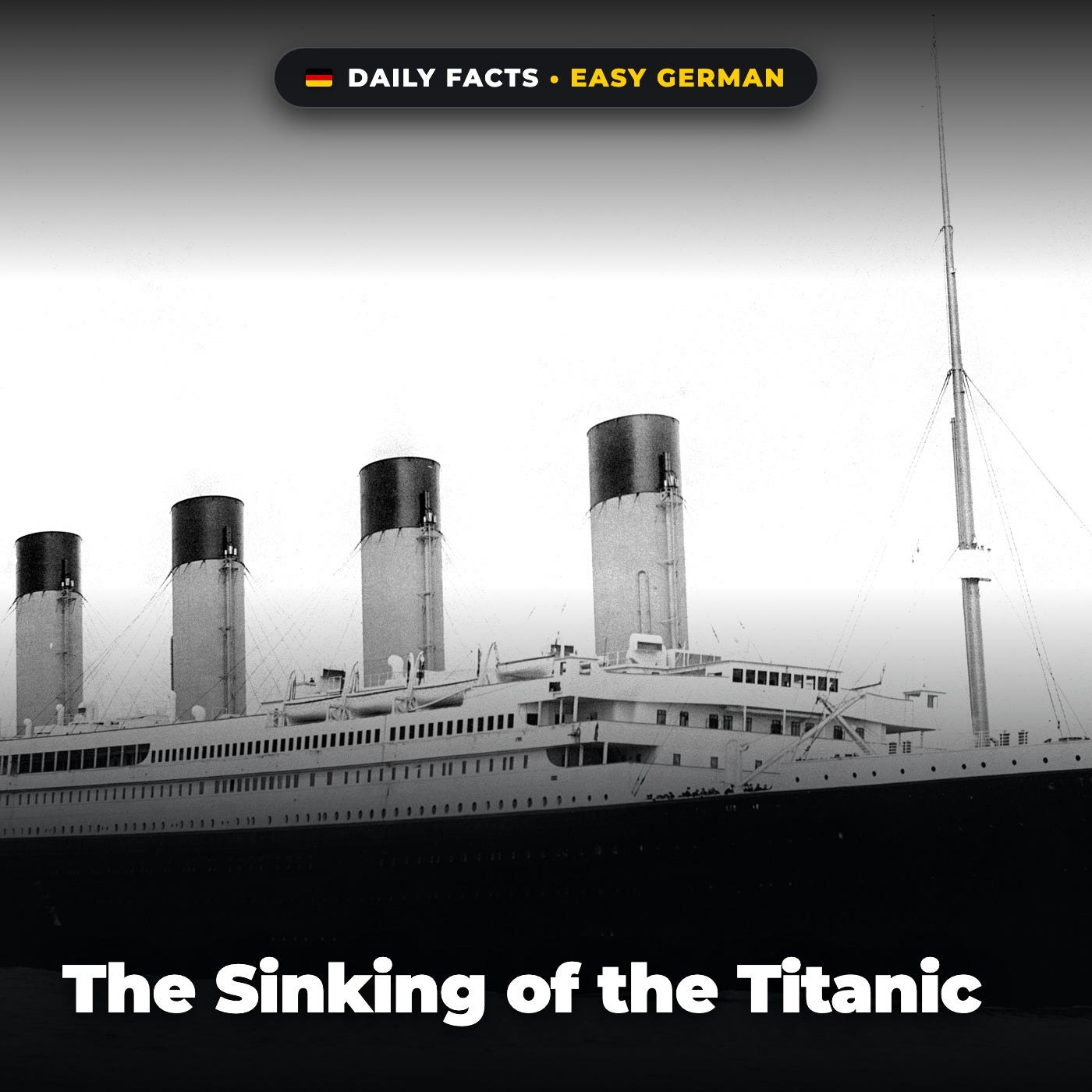 The Sinking of the Titanic in Easy German 29.09.2026 13minTranscription: https://dailyfactsineasygerman.substack.com/p/the-sinking-of-the-titanic-in-easy?showTranscript=trueDiscover "The Sinking of the Titanic" in clear, natural German!Relive the fateful maiden voyage of the RMS Titanic in April 1912. Celebrated as the largest and most luxurious passenger liner of its day, the "unsinkable" ship met catastrophe in the icy North Atlantic.Learn how an iceberg collision, high speed, and a critical shortage of lifeboats led to one of history's most famous maritime disasters, prompting lasting global safety regulations.Key Topics & Highlights:• The Titanic set sail from Southampton to New York on its maiden voyage on April 10, 1912.• It struck an iceberg late on April 14 in freezing waters 600 kilometers south of Newfoundland.• The ship carried lifeboats for only about half of the people on board due to outdated safety laws.• The disaster resulted in mandatory 24-hour radio watches and lifeboats for 100% of passengers.Key German Vocabulary:• das Schiff (ship)• der Eisberg (iceberg)• das Rettungsboot (lifeboat)• sinken (to sink)Chapters:00:00 - Introduction & The Ship of Dreams02:46 - The Maiden Voyage Across the Atlantic04:48 - Midnight Collision with the Iceberg11:57 - The Sinking & Lifeboat Evacuation12:54 - The Rescue & Maritime Safety LegacyAudio: 100% German • Spoken slowly and clearly (0.8x speed) This is a public episode. If you would like to discuss this with other subscribers or get access to bonus episodes, visit dailyfactsineasygerman.substack.com
 -
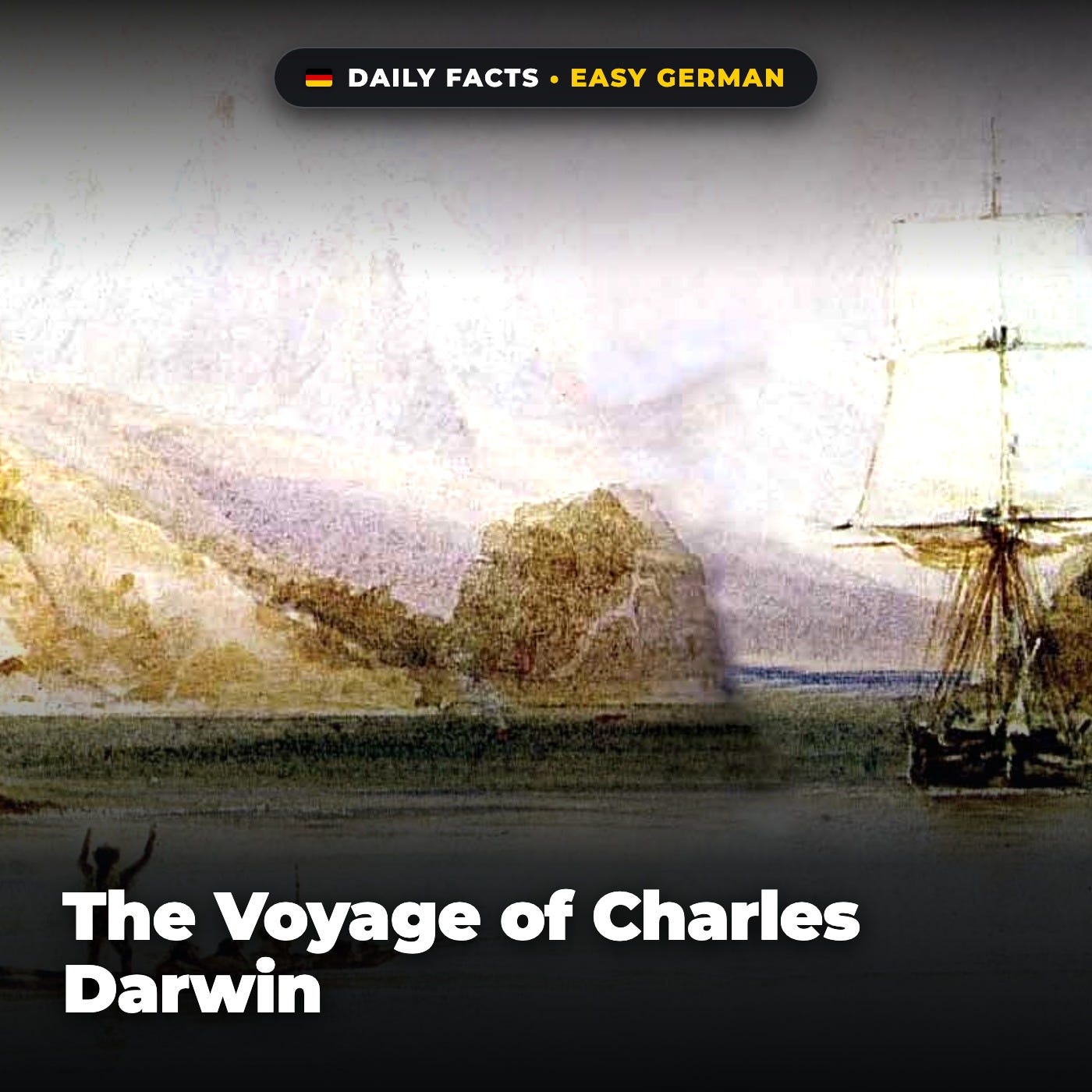 The Voyage of Charles Darwin in Easy German 28.09.2026 20minTranscription: https://dailyfactsineasygerman.substack.com/p/the-voyage-of-charles-darwin-in-easy?showTranscript=trueDiscover "The Voyage of Charles Darwin" in clear, natural German!Board the HMS Beagle alongside young naturalist Charles Darwin on his historic five-year voyage around the world from 1831 to 1836.Explore how Darwin's observations of unique finches and giant tortoises on the isolated Galápagos Islands sparked the revolutionary idea of evolution by natural selection.Key Topics & Highlights:• Darwin set sail on the HMS Beagle in 1831 as an unpaid 22-year-old naturalist.• The five-year journey surveyed South America, the Galápagos Islands, Australia, and South Africa.• Darwin noticed that finches on different islands had beaks adapted to their specific food sources.• His observations formed the foundation of his landmark 1859 book 'On the Origin of Species'.Key German Vocabulary:• die Reise (journey / voyage)• die Insel (island)• die Evolution (evolution)• die Natur (nature)Chapters:00:00 - Introduction & The Young Naturalist03:04 - Setting Sail on HMS Beagle08:29 - The Galapagos Islands & Finches14:26 - Evolution by Natural Selection17:44 - Publishing "On the Origin of Species"Audio: 100% German • Spoken slowly and clearly (0.8x speed) This is a public episode. If you would like to discuss this with other subscribers or get access to bonus episodes, visit dailyfactsineasygerman.substack.com
Podobné podcasty


Oblíbený v
Tento podcast se objevuje také v podcastových žebříčcích těchto zemí.
