
The Distribution by Juniper Square
Juniper Square
0
The Distribution by Juniper Square features interviews with industry experts, thought leaders, and prominent figures in commercial real estate, venture capital, and private equity. The podcast offers open and honest conversations about current trends and developments in private markets. It is produced by Juniper Square, a company focused on real estate investment management software.
Episoder
-
 HALO Investing: Why Hard Assets With Low Obsolescence Beat AI Disruption - Matthew Adler - Founder & Managing Principal - Adler Partners 29.09.2026 53minBrandon Sedloff and Matt Adler explore the world of small bay industrial real estate and the path from family business to independent fund manager. Adler, founder and managing partner of Adler Real Estate Partners, shares how he spun out of a third-generation family operation to build a specialized platform focused exclusively on multi-tenant light industrial properties across the Sun Belt. The conversation on The Distribution reveals why this once under-the-radar asset class has become one of real estate's most sought-after sectors and how focused operators compete when larger managers enter the space. They discuss: - Why spinning out of a family business required balancing independence with preserving relationships - How small bay industrial became a "HALO" asset class, hard assets with low obsolescence, resistant to AI disruption - What institutional investors misunderstand about office build-outs in industrial properties - How a disciplined operator grows NOI even when interest rates move against them - Why staying focused on one property type in mid-sized deals creates competitive advantage against mega managers This episode offers practical insight for anyone interested in niche real estate strategies, the transition from operating partner to fund manager, or how specialist platforms win by executing better than diversified competitors. Topics: (00:00:00) - Intro (00:02:57) - Matt's family real estate background (00:09:49) - Early career and deciding to leave the family business (00:11:19) - Working with Apollo and the GFC (00:14:18) - Starting the fund business (00:16:29) - Spinning out from the family business (00:21:25) - Adler Real Estate Partners today (00:23:59) - Small bay industrial explained (00:28:09) - Why small bay industrial is hot right now (00:31:36) - HALO and the AI advantage (00:32:47) - Competition and differentiation (00:38:01) - The office buildout misconception (00:42:36) - Competing with mega managers (00:46:34) - Headwinds and opportunities ahead (00:50:53) - Closing thoughts Links: Matthew on LinkedIn - https://www.linkedin.com/in/mladler/ Adler Partners - https://adler-partners.com/ Brandon on LinkedIn - https://www.linkedin.com/in/bsedloff/ Juniper Square - https://www.junipersquare.com/
 -
 The $20 Million Gap: Why Middle-Market Hotels Are Being Abandoned by Mega Funds - Russ Flicker - Co-Founder and Managing Partner - AWH Partners 22.09.2026 55minBrandon Sedloff and Russ Flicker explore the institutional hotel business and the journey from practicing real estate law to building a vertically integrated hospitality firm. Flicker shares how AWH Partners emerged from a borrowed desk during the Great Recession and what shaped his approach to investing through work at the Trump Organization and Blackstone. The conversation covers how AWH differentiates itself through in-house management and development capabilities, and why Flicker believes middle-market hotel assets present compelling opportunities today. They discuss: - Why Flicker left Blackstone to start AWH despite limited visibility on deal flow or capital - How starting with no formal office taught essential lessons about investor expectations and capital raising - Why seller-prepared hotels often hide operational risks that integrated teams can identify during underwriting - How vertical integration across acquisition, management, and renovation creates accountability advantages - Why hotels reprice daily in inflationary environments while other real estate takes years to adjust This episode offers perspective for investors evaluating hotel allocations, operators building differentiated platforms, or anyone navigating the transition from institutional roles to entrepreneurship during market downturns. Topics: (00:00:00) - Intro (00:00:57) - Introducing Russ Flicker and AWH Partners (00:02:42) - From engineer's son to real estate lawyer (00:08:38) - The dotcom startup and meeting his wife (00:11:52) - Landing at the Trump Organization (00:20:47) - Why Russ left Trump for Blackstone (00:23:33) - Working at institutional scale versus entrepreneurial scale (00:26:58) - The Ian Schrager disaster and the taxi accident (00:32:24) - Founding AWH from a borrowed desk in 2008 (00:40:27) - Building AWH into a vertically integrated platform (00:46:00) - Why hospitality gets misunderstood as high risk (00:49:58) - Opportunity in the next 24 to 36 months Links: Russ on LinkedIn - https://www.linkedin.com/in/russell-flicker-67821712/ AWH Partners - https://www.awhpartners.com/ Brandon on LinkedIn - https://www.linkedin.com/in/bsedloff/ Juniper Square - https://www.junipersquare.com/
 -
 The Next Wave: Why Single-GP Evergreen Funds Will Define Wealth Channel Access - Susan Long McAndrews - Strategic Advisor 15.09.2026 58minBrandon Sedloff and Susan Long McAndrews explore the evolving landscape of private markets distribution on The Distribution. Susan brings over two decades of experience from Pantheon, where she led both GP allocation and built the firm's wealth channel from the ground up. Now advising private equity firms on wealth and 401(k) strategies, she offers insight into what works, what doesn't, and where the market is headed. They discuss: - Why evergreen funds were never primarily about liquidity and what the recent gating headlines missed - How single GP evergreen funds are reshaping access for both wealth clients and small institutions - Why private equity belongs in 401(k) plans and what it will take to get there at scale - The sales misalignment behind recent evergreen fund gates and how to properly position these products - What mid-market firms should consider before launching a wealth channel strategy This episode clarifies the real value proposition of evergreen structures and identifies which private markets firms are positioned to succeed in wealth distribution. Topics: (00:00:00) - Intro (00:03:15) - Early influences on investing (00:06:45) - Career path from Morgan Stanley to Russell (00:08:53) - Pentagon and China policy work (00:13:00) - Journey to Pantheon (00:15:09) - Allocating capital and manager selection (00:17:18) - What made a great manager (00:19:39) - Building the wealth channel (00:23:12) - Scaling evergreen funds (00:26:39) - Market evolution from 2020 to 2025 (00:28:50) - Gating headlines and evergreen misunderstandings (00:29:30) - Why evergreen funds work (00:36:16) - Advising wealth advisors today (00:38:56) - Single GP evergreen solutions (00:41:32) - Advisory work after Pantheon (00:44:46) - Should mid-market firms enter wealth (00:49:07) - Looking ahead at private markets (00:50:03) - The case for private equity in 401(k)s (00:52:05) - Transparency and technology in evergreens (00:54:45) - Realizations and market health Links: Susan on LinkedIn - https://www.linkedin.com/in/susan-long-mcandrews/ Brandon on LinkedIn - https://www.linkedin.com/in/bsedloff/ Juniper Square - https://www.junipersquare.com/
 -
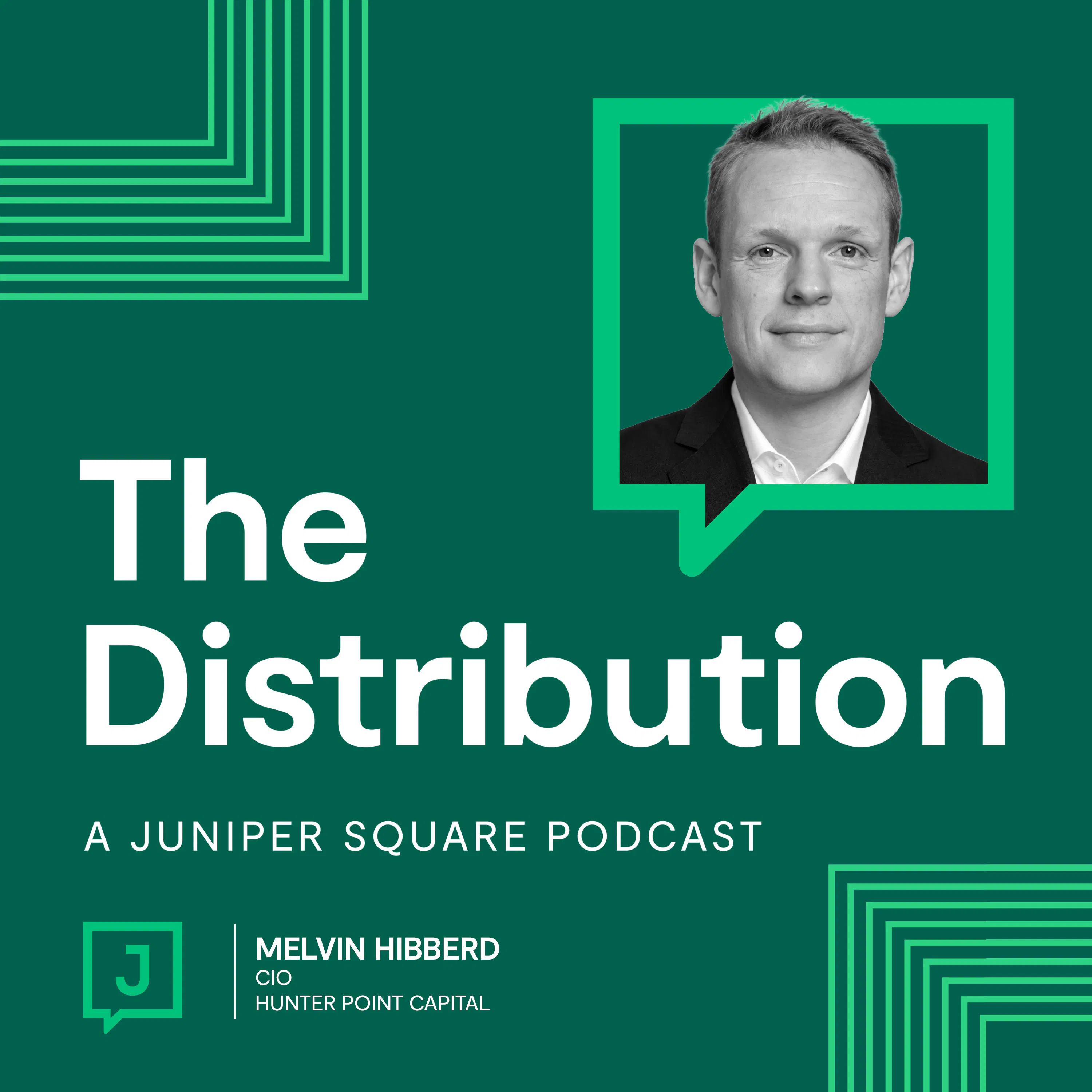 The Succession Cliff: How Hunter Point Built a Full-Spectrum GP Solutions Platform - Melvin Hibberd - CIO at Hunter Point Capital 08.09.2026 57minBrandon Sedloff and Melvin Hibberd explore the evolution of GP solutions and what it takes to build durable enterprise value in private markets. Hibberd, chief investment officer at Hunter Point Capital, shares his path from engineering in northern England to leading investments across a $10 billion platform. The conversation examines how GP solutions expanded from simple minority stakes into a full menu of capital options, and why that shift reflects the maturation of asset management as a business, not just an investing activity. They discuss: - Why succession planning will drive transaction volume for the next decade, despite only 38% of GPs having a plan while 96% of LPs say it matters - How managers' capital needs have evolved beyond permanent equity into preferred capital, NAV lending, and commitment financing - What defines a persistent right to win in a market where every firm claims proprietary deal flow and differentiated sourcing - Why bilateral partnerships often create more value than broad auctions when aligning on growth, governance, and long-term strategy This episode offers practical perspective for founders and leaders navigating strategic capital decisions in an increasingly complex market. Topics: (00:00:00) - Intro (00:02:41) - Introducing Melvin (00:04:14) - Growing up in northern England (00:06:52) - Engineering at Cambridge and summers in Japan (00:08:57) - Starting at a family office (00:10:35) - Business school and the intentional career path (00:15:00) - Building a GP stakes platform at Blackstone (00:19:10) - Why leave Blackstone for Hunter Point (00:26:04) - The evolution of GP solutions products (00:30:17) - Building enterprise value in investment firms (00:32:25) - Succession as a deal driver (00:35:45) - What makes a persistent right to win (00:47:53) - Advice for founders seeking capital partners (00:50:40) - Where Hunter Point is investing today (00:53:40) - Closing Links: Hunter Point Capital - https://www.hunterpointcapital.com/ Melvin on LinkedIn - https://www.linkedin.com/in/melvin-hibberd-bab4b018b/ Brandon on LinkedIn - https://www.linkedin.com/in/bsedloff/ Juniper Square - https://www.junipersquare.com/
 -
 AI for private markets leaders: Rethinking How Work Gets Done - Alex Robinson - Co-Founder & CEO of Juniper Square 01.09.2026 58minBrandon Sedloff and Alex Robinson explore the accelerating intersection of artificial intelligence and private markets operations. Robinson, co-founder and CEO of Juniper Square, explains why investment managers must reimagine their businesses around AI rather than treating it as a simple productivity tool. The conversation balances technical strategy with practical leadership advice for non-technical founders navigating rapid transformation. They discuss: - Why making your company "AI legible" requires recording meetings, writing down processes, and controlling your data layer - How Robinson runs Juniper Square through ORCA, a synchronous operating system designed for AI-native decision-making - The difference between technology companies building AI applications and service providers arranging human capital - Why the industry will bifurcate between "sharpshooters" with distinctive strategies and scale players with compute budgets - How to evaluate partners in a noisy market where every vendor claims to be AI-first This episode from The Distribution offers a roadmap for investment managers seeking to apply AI thoughtfully without becoming technologists themselves. Topics: (00:00:00) - Intro (00:02:41) - The functional singularity moment (00:06:00) - Why AI deployment is a CEO's job (00:07:46) - Becoming an on the record company (00:11:22) - Running a company with ORCA (00:14:57) - Practical advice for non-technical leaders (00:16:11) - Just start writing it down (00:17:22) - The Aunt Millie problem and AI legibility (00:22:18) - Cutting through vendor noise (00:25:21) - What won't change in partnerships (00:26:12) - Trust and comprehensive platforms matter (00:29:01) - Protecting your data moat from labs (00:31:06) - Understanding the applied AI layer (00:35:00) - How Juniper Square is deploying AI (00:35:22) - Three transformation domains (00:42:12) - Tech companies versus human capital shops (00:45:36) - The future of investment management (00:46:11) - Sharpshooters and scale players (00:49:32) - Does data scale matter for GPs? (00:52:05) - Most excited about AI in medicine (00:53:23) - Closing thoughts on hackathons Links: Alex on LinkedIn - https://www.linkedin.com/in/alexrob22/ Brandon on LinkedIn - https://www.linkedin.com/in/bsedloff/ Juniper Square - https://www.junipersquare.com/
 -
 Building an AI-Native Real Estate Investment Firm - Dan Carr & Peter Weiss - Co-Founders of Alpaca Real Estate 25.08.2026 43minBrandon Sedloff sits down with Dan Carr and Peter Weiss, co-founders of Alpaca Real Estate, for a live conversation recorded at their annual Aspen Real Estate Summit. The two met as analysts at JP Morgan in 2011 and spent a decade building expertise at major institutions before launching their own opportunistic real estate private equity fund in late 2022. What sets Alpaca apart is their commitment to building a technology-first culture from inception, treating their data infrastructure and tech stack as foundational to the investment process rather than an afterthought. They discuss: - Why timing mattered when they saw the Fed's rate increases creating a repricing moment in commercial real estate - How they built a seven-stage deal pipeline with 1,000 transactions cataloged in a proprietary data lake before deploying agentic AI - Their focus on tailwind asset classes like build-to-rent townhomes and infill industrial, where structural demand drives conviction - The cultural challenge of technology adoption and why organic buy-in matters more than mandates - Forward purchase structures that shift construction risk to homebuilders while controlling land upfront This episode offers a practical look at what it takes to launch and scale an investment platform built on data discipline and institutional-grade operations in a shifting market. Topics: (00:00:00) - Intro (00:01:00) - Recording live at Alpaca's Aspen summit (00:05:20) - Getting into real estate investing (00:10:23) - Meeting at JP Morgan in 2011 (00:11:35) - Building the REPEN networking group (00:12:34) - Post-JP Morgan career paths (00:15:27) - The 2022 wake-up call from Dan (00:17:49) - Capitalizing a first-time fund (00:18:35) - Building technology into the DNA (00:22:56) - Creating clean data infrastructure (00:26:55) - Cultural adoption of technology (00:31:42) - Alpaca's investment focus today (00:33:45) - Residential and industrial strategies (00:36:04) - Operating with partners versus direct (00:38:38) - Closing thoughts for investors Links: Dan on LinkedIn - https://www.linkedin.com/in/daniel-carr-98a0a91b/ Peter on LinkedIn - https://www.linkedin.com/in/peter-weiss-86675635/ Alpaca Real Estate - https://alpacarealestate.com/ Brandon on LinkedIn - https://www.linkedin.com/in/bsedloff/ Juniper Square - https://www.junipersquare.com/
 -
 The Discipline of Betting Against the Crowd — Bill McMorrow, CEO of Kennedy Wilson 18.08.2026 57minBrandon Sedloff and Bill McMorrow trace the evolution of Kennedy Wilson from a $57,000 real estate auction company in 1988 to a global investment firm managing nearly $38 billion in assets. McMorrow shares how a series of pivotal relationships, from early banking mentors to partnerships with George Graziadio and Fairfax Financial's Prem Watsa, shaped the firm's trajectory across four decades of real estate cycles. The conversation on The Distribution reveals how McMorrow identified opportunities in Japan during the 1990s, Ireland and the UK following the Great Recession, and multifamily housing markets when regional banks retreated in 2023. They discuss: - Why McMorrow focuses exclusively on housing across the US, Ireland, and the UK after owning every asset type - How a half-hour conversation at a Berkshire Hathaway meeting led to $20 billion in joint ventures over sixteen years - The discipline of saying yes to start the journey, even when the path forward isn't clear - Why narrowing focus and tuning out noise matters more than ever in today's information-saturated environment - What McMorrow learned from working on commercial fishing boats, in a slaughterhouse, and growing up in a family of nine kids This episode offers insight for investors navigating uncertainty, building long-term institutional relationships, and recognizing contrarian opportunities when markets feel murky. Topics: (00:00:00) - Intro (00:02:43) - Bill McMorrow's early life and formative years (00:05:31) - Banking career and move to Philadelphia (00:08:43) - Acquiring Kennedy Wilson in 1988 (00:10:51) - Expanding to Japan in the 1990s (00:12:14) - The Great Recession and meeting Prem Watsa (00:15:06) - Kennedy Wilson's culture and growth to $38 billion (00:16:36) - Growing up in a family of nine (00:22:25) - Building relationships with foreign investors (00:24:25) - The Ireland opportunity and Bank of Ireland deal (00:30:55) - Kennedy Wilson's business model today (00:31:24) - Focus on housing and recent acquisitions (00:39:11) - Staying focused and tuning out the noise (00:44:22) - The importance of starting the journey (00:45:39) - Taking chances and betting against the crowd (00:47:45) - Looking ahead: opportunities and strategy (00:54:34) - Closing thoughts Links: Kennedy Wilson - https://www.kennedywilson.com/ Juniper Square - https://www.junipersquare.com/ Brandon on LinkedIn - https://www.linkedin.com/in/brandonsedloff/
 -
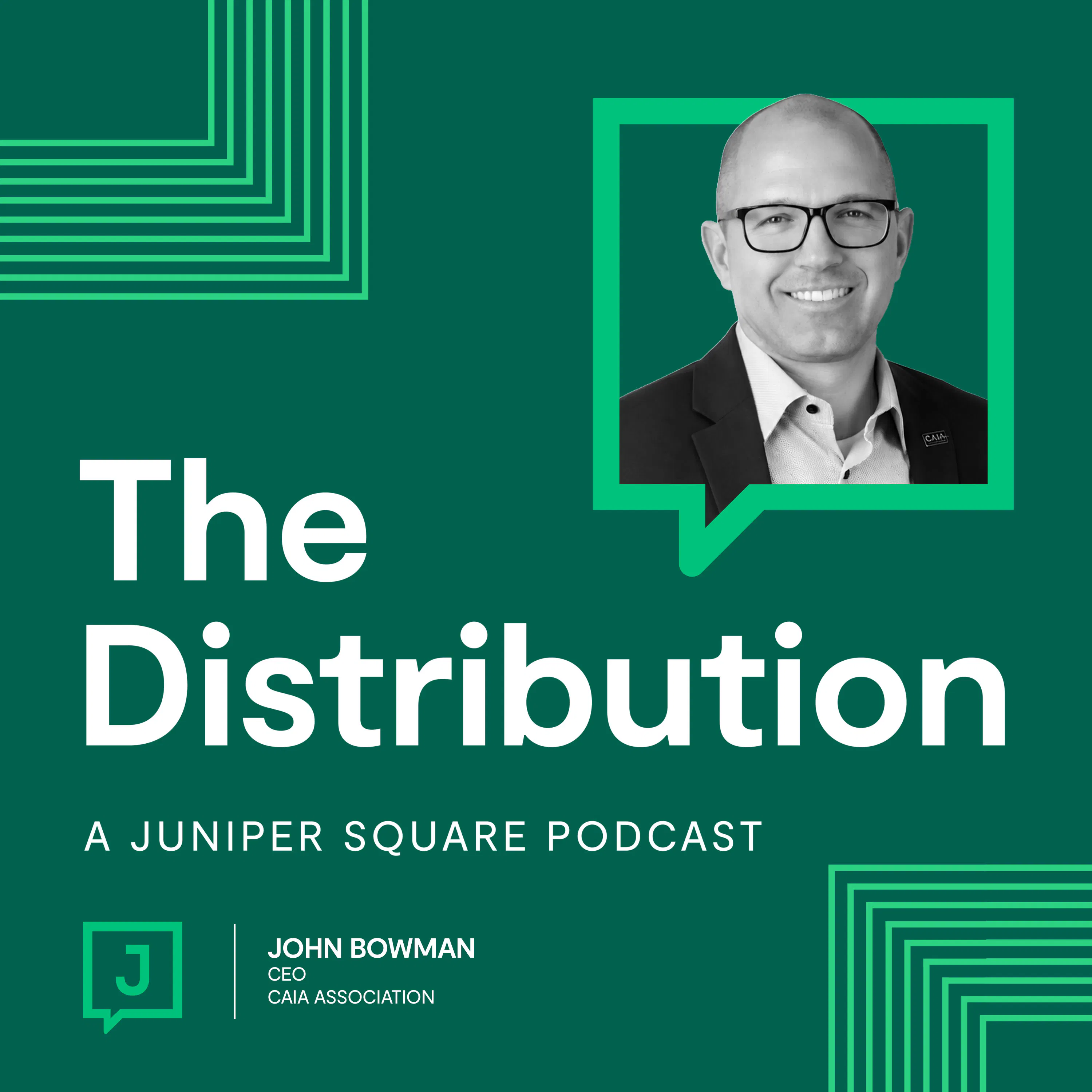 Geopolitics Over Asset Allocation: Why the Next 40 Years Demand a New Portfolio Playbook - John Bowman - CEO of CAIA Association 11.08.2026 1tBrandon Sedloff and John Bowman explore the future of private markets through the lens of CAIA Association's recent research report, "The World Rewired." Bowman, CEO of CAIA Association, shares insights from eight global roundtables with over 120 C-suite executives across major financial centers. The conversation examines how geopolitical shifts, evolving product structures, and talent needs are reshaping portfolio construction and investment strategy. Bowman argues that the post-World War II regime of low rates, stable globalization, and minimal inflation has ended—requiring allocators to fundamentally rethink how they build portfolios. They discuss: - Why geopolitics may replace asset allocation as the primary framework for portfolio construction - How tokenization could solve liquidity challenges better than traditional gate structures - The shift from hiring job-ready specialists to recruiting systems thinkers with interdisciplinary judgment - Why the Gulf region has become a serious contender as the capital of private capital This episode offers a strategic roadmap for institutional investors, asset managers, and private markets professionals navigating a regime change in global markets. Topics: (00:00:00) - Intro (00:01:28) - Introducing John Bowman and CAIA (00:02:59) - Early career and path to finance (00:07:58) - Transition from asset management to CFA Institute (00:11:49) - Journey through CFA Institute (00:17:00) - Leading CAIA and building community (00:29:11) - The World Rewired research report (00:34:25) - Product innovation and the retail push (00:44:06) - Geopolitics as portfolio framework (00:49:01) - Middle East sovereign wealth dynamics (00:52:19) - Talent and systems thinking (00:56:47) - Where to learn more Speaker Profiles: Brandon Sedloff LinkedIn — https://www.linkedin.com/in/bsedloff/ Website — https://brandonsedloff.substack.com/ John Bowman LinkedIn — https://www.linkedin.com/in/johnlbowmancfa/ Organizations: CAIA Association — https://caia.org/ Juniper Square - https://www.junipersquare.com/
 -
 The Inefficiency Advantage: Why the Best Alpha Lives in Private Markets' Hidden 90% - Raphi Schorr - Deputy Chief Investment Officer and Partner - HighVista Strategies 04.08.2026 58minOn this episode of The Distribution, Brandon Sedloff and Raphi Schorr explore what makes inefficient markets the last bastion of alpha in private investing. Schorr, Deputy Chief Investment Officer and Partner at HighVista Strategies, explains how his firm deploys $14 billion across overlooked corners of the market, from lower middle market private equity to venture capital, private credit, and public biotech, where large addressable markets, poor information, and limited competition still reward patient capital and deep networks. They discuss: - Why lower middle market private equity operates beneath the radar of most institutional investors - How backing fund one managers in venture capital creates decades of compounding access - Why 50% of the S&P 500 is venture-backed and what that means for where value is created today - The rise of GP-led secondaries in the lower middle market as sponsors seek to hold their crown jewels longer - How pattern recognition built over 20 years helps identify winning managers and companies in fragmented markets This episode offers a clear view into how experienced allocators find alpha in markets most investors never see. Topics: (00:00:00) - Intro (00:01:05) - Meeting Raphi Schorr and HighVista Strategies (00:02:32) - Mathematics and early investing exposure (00:06:40) - From physics to operations research (00:09:27) - Joining HighVista and the shift to private markets (00:12:10) - Building the firm from day one (00:16:28) - What HighVista does today (00:20:18) - Inefficient markets and where alpha lives (00:24:54) - Pattern recognition in lower middle market PE (00:28:00) - Balancing analytics with relationships (00:31:10) - Access and the venture capital power law (00:34:44) - Backing fund one managers (00:42:29) - Creating optionality through early partnerships (00:48:22) - Structural themes for the next 36 months (00:52:41) - What keeps Raphi up at night (00:54:54) - Closing thoughts on talent and opportunity Speaker Profiles: Brandon Sedloff LinkedIn — https://www.linkedin.com/in/bsedloff/ Website — https://brandonsedloff.substack.com/ Raphi Schorr Linkedin - https://www.linkedin.com/in/raphaelschorr/ Companies: Juniper Square — https://www.junipersquare.com/ HighVista Strategies — https://www.highvistastrategies.com/
 -
 Institutional and Private Wealth as Equals: Nearly $100 Billion Built From Day One - David Weisburd - Co-Founder and Managing Partner - Weisburd Capital 28.07.2026 54minBrandon Sedloff and David Weisburd explore the hidden psychology behind venture capital fundraising and LP decision-making on The Distribution. Weisburd, co-founder of Weisburd Pierce and host of How I Invest, shares insights from hundreds of conversations with institutional allocators managing over 10 trillion dollars in assets. The discussion reveals why LP incentives often diverge from traditional performance metrics, how career risk shapes investment behavior, and why media has become a structural advantage in private markets. They discuss: - Why LPs use a "double gated" diligence process that most GPs misunderstand - How the average pension CIO tenure of 6.1 years creates rational but seemingly counterintuitive investment patterns - Why elite Ivy League endowments are shifting away from blind pool funds toward direct investments and SPVs - The mechanics of anchor investor psychology and momentum in fundraising - How media functions as a network effect business and relationship-building tool at scale This episode offers a practical framework for understanding how capital allocation decisions actually get made in venture and private markets. Topics: (00:00:00) - Intro (00:02:32) - David's immigrant journey and first ventures (00:04:16) - Starting the How I Invest podcast (00:05:29) - Growing up poor and the mindset it created (00:08:06) - The stamp of approval from elite institutions (00:11:32) - From Tuck to 10x Capital (00:14:08) - What is a media-driven venture firm (00:17:00) - Why media is a moat in venture capital (00:20:28) - Advice for GPs on podcast guesting (00:23:03) - The psychology of elite listening (00:27:25) - Theory of mind and the LP LLM (00:29:09) - The rational irrationality of LP behavior (00:43:00) - Themes guiding capital allocation (00:49:05) - Advice for GPs and LPs (00:51:41) - Outro Speaker Profiles: Brandon Sedloff LinkedIn — https://www.linkedin.com/in/bsedloff/ Website — https://brandonsedloff.substack.com/ Juniper Square - https://www.junipersquare.com/ David Weisburd LinkedIn — https://www.linkedin.com/in/dweisburd/ Twitter / X — https://x.com/DWeisburd Weisburd Capital — https://www.weisburdpierce.com/ Podcasts: How I Invest — https://howiinvestpodcast.com/episodes
 -
 The Platform Architect: Why Decision Architecture and Succession Planning Are Private Markets' Next Competitive Edge - Mike Cordingley - Managing Director @ Ferguson Partners 21.07.2026 56minBrandon Sedloff and Mike Cordingley explore what it takes to build durable, scalable private markets firms in an era of constant disruption. Mike leads the strategy, leadership, and advisory group at Ferguson Partners, a talent management and strategic advisory firm that works with about half of the public REITs and many of the largest private equity and real estate platforms. His work takes him inside these organizations as they navigate fundamental shifts in leadership, operating models, and business strategy. The conversation on The Distribution covers how private markets firms have reached an inflection point where the entrepreneurial, founder-led models that drove early growth now face pressure from rising costs, compressed fees, and the need to retain next-generation talent. Mike explains why founders must move beyond an investment thesis to develop a true enterprise strategy, and why the CEO's role is evolving from chief decision-maker to platform architect who distributes decision rights across the organization. They discuss: - Why succession planning has become a business imperative as founder-led firms face generational transitions - How decision architecture creates competitive advantage by pushing decisions closer to where value is created - Why AI represents a people transformation challenge, not just a technology implementation - The concept of zero-based org design and what it means to treat operating models as design choices rather than fixed structures This episode offers practical frameworks for leaders wrestling with how to scale their organizations, develop talent, and prepare for the next phase of growth in private markets. Topics: (00:00:00) - Intro (00:00:33) - Why founders need an enterprise strategy (00:02:20) - Mike's path to management consulting (00:07:17) - The role of consultants in private markets (00:09:29) - Four big trends shaping private markets today (00:13:27) - How we got to this inflection point (00:17:49) - Navigating founder succession and talent retention (00:30:59) - Decision architecture as a competitive advantage (00:38:59) - Operating model as a design choice (00:42:28) - Distributed accountability and data access (00:46:27) - Precision talent matching (00:50:40) - AI as a people transformation, not just efficiency (00:53:17) - Closing Links: Brandon on LinkedIn - https://www.linkedin.com/in/brandonsedloff/ Mike on LinkedIn - https://www.linkedin.com/in/mikecordingley/ Ferguson Partners - https://www.fergusonpartners.com/ Juniper Square - https://www.junipersquare.com/
 -
 Against the Rate Cut Consensus: Floating Rate Credit, Consumer Resilience, and a Higher-for-Longer Decade - Elizabeth Burton - Chief Strategist - Fortress Investment Group 14.07.2026 57minBrandon Sedloff and Elizabeth Burton explore the shifting landscape of institutional investing, macro strategy, and the growing case for credit over traditional private equity allocations. Burton brings a unique perspective shaped by her time as an allocator at the Maryland State Retirement System and as CIO of the Employees' Retirement System of Hawaii before joining Fortress Investment Group as chief strategist. The conversation touches on her unconventional path into finance, the lessons she learned managing public pension capital, and why she believes floating rate credit deserves a larger role in institutional portfolios. They discuss: - Why floating rate credit offers better downside protection and fee alignment than private equity in a higher-rate environment - How debt monetization and money supply growth could push inflation back above 4% by year-end - Why AI is creating a divide between investors who can move quickly on co-investment opportunities and those constrained by governance structures - The consumer credit opportunity in prime and near-prime segments that many institutional investors are overlooking - How anchoring investment strategy to a single variable like the 10-year Treasury can simplify decision-making across asset classes This episode offers a clear-eyed view of the challenges facing institutional investors in the 2030s and the strategic shifts required to meet return targets in a persistently higher rate world. Topics: (00:00:00) - Intro (00:02:30) - Elizabeth Burton's early life and path to finance (00:03:50) - From horse farm to Wall Street (00:06:10) - College choice and French politics major (00:09:08) - First finance role and Santa Barbara internship (00:12:16) - Mortgage-backed securities and Chicago MBA (00:15:55) - Baltimore payments consulting detour (00:19:37) - Transition to LP side at Maryland Retirement (00:26:20) - Becoming CIO in Hawaii (00:32:30) - Joining Fortress as chief strategist (00:35:25) - The strategist role and economics anchor (00:41:00) - Fortress overview and consumer focus (00:44:10) - Inflation outlook and floating rate credit case (00:47:20) - The bunker portfolio thought experiment (00:51:30) - AI creating investor haves and have-nots (00:54:30) - Closing Links: Brandon Sedloff LinkedIn — https://www.linkedin.com/in/bsedloff/ Website — https://brandonsedloff.substack.com/ Elizabeth Burton LinkedIn — https://www.linkedin.com/in/elizabethtburton/ Companies: Fortress Investment Group — https://www.fortress.com/investors/financial-advisors Juniper Square — https://junipersquare.com
 -
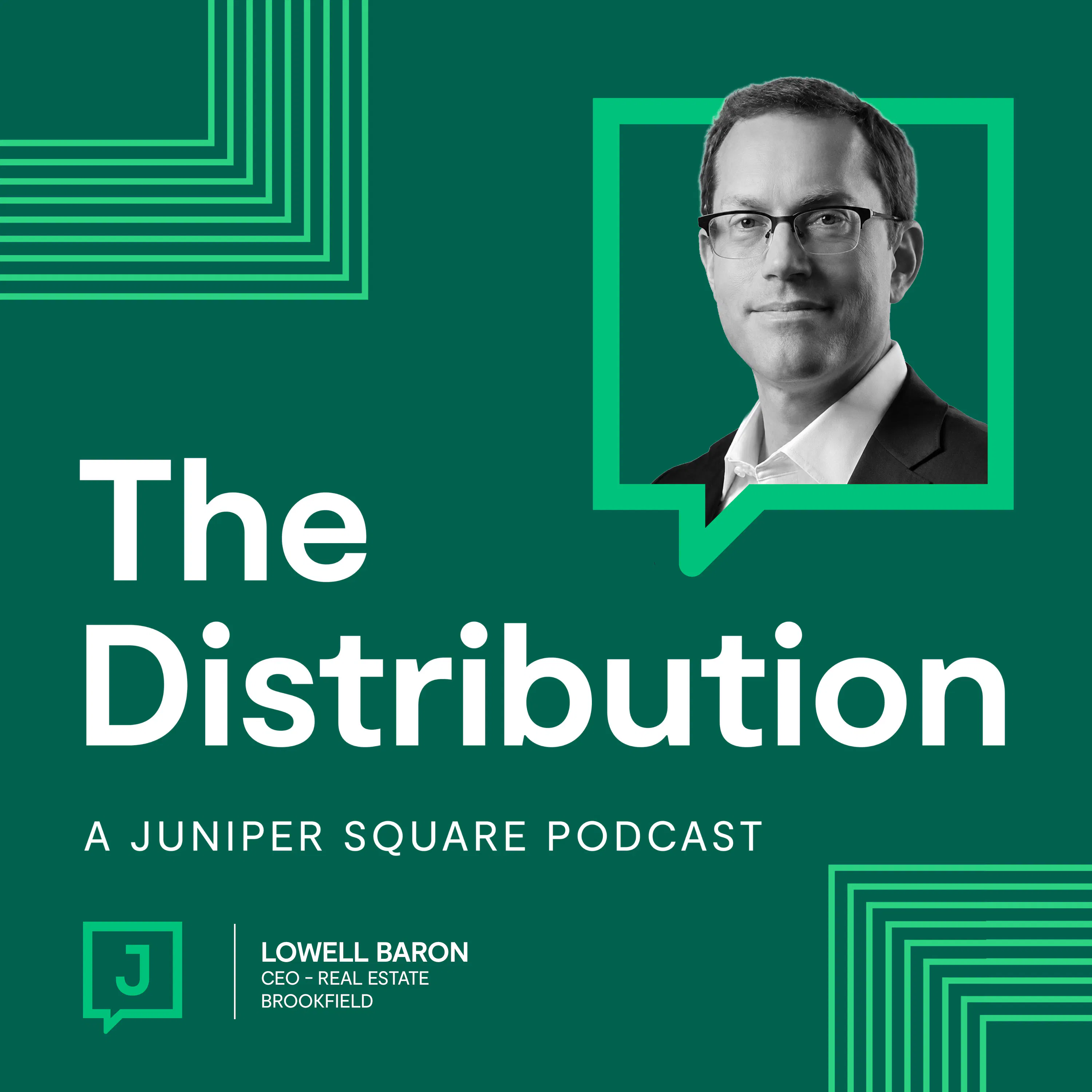 Operational Alpha at Any Scale: How a $300 Billion Platform Invests Like a Sector Specialist - Lowell Baron - CEO | Real Estate - Brookfield 07.07.2026 1t 1minLowell Baron and Brandon Sedloff trace the evolution of Brookfield's real estate business from a small balance sheet investor into a global platform managing roughly $300 billion in assets. Baron shares how he joined what was then called Brascan in 2005 with fewer than twenty people on the real estate team, initially working on a modest credit fund while the firm owned just a stake in an office company. He explains how the decision to avoid overheated deals in 2006 and 2007 positioned Brookfield to capitalize on opportunities after the global financial crisis, eventually launching the consortium model in 2009 that became the foundation for committed funds starting in 2012. They discuss: - Why Brookfield built operating platforms with 30,000 employees instead of relying on third-party operators - How the firm expanded methodically across property types and geographies, including a ten-year process to enter India - The bifurcation in office markets and why Class A space in major cities now faces supply constraints - How diversifying across housing sub-sectors from student housing to senior living reduces risk while improving returns - The role of AI in creating operational efficiencies and unlocking predictive insights from Brookfield's proprietary data This episode on The Distribution offers insight into how scale, operational depth, and patient capital can coexist in a single platform when grown deliberately over decades. Topics: (00:00:00) - Intro (00:02:46) - Journey from law to banking (00:04:18) - Cold calling your way into real estate (00:10:24) - Joining Brookfield in 2005 (00:16:08) - Brookfield's transformation from balance sheet to investment manager (00:20:18) - Discipline during the 2006-2007 boom (00:22:11) - Geographic and sector expansion (00:25:12) - The 2009 consortium and the first committed fund (00:29:17) - Brookfield's scale today (00:32:44) - Operating expertise at scale (00:43:27) - Housing strategy across the continuum (00:48:18) - AI and the future of real estate (00:52:00) - The office market bifurcation (00:56:26) - Leadership philosophy and people development Links: Lowell on LinkedIn - https://www.linkedin.com/in/lowell-baron-23146913/ Brookfield - https://www.brookfield.com/ Brandon Sedloff on LinkedIn - https://www.linkedin.com/in/brandonsedloff/ Juniper Square - https://www.junipersquare.com/
 -
 Credit, Secondaries, and 30 Years of Relationship-Driven Alpha - Aaron Gershenberg - CEO @ Pinegrove Venture Partners 30.06.2026 1t 14minBrandon Sedloff and Aaron Gershenberg sit down in California's wine country to explore three decades of venture capital evolution. Aaron, CEO and managing partner at Pinegrove Venture Partners, shares his unconventional path from economic development work and real estate consulting to building SVB Capital into a $10 billion platform, then relaunching after the bank's collapse as Pinegrove, backed by Sequoia Heritage and Brookfield. They discuss: - How Aaron used Monte Carlo analysis to project fund performance and justify additional capital during the dot-com crash - Why he structured distribution-only fee models for anchor LPs instead of traditional management fees and carry - The mechanics of becoming a FOIA blocker to attract pension fund capital - How Pinegrove positions across seed, Series A, Series B, credit, and secondaries to capture alpha at different stages - Why the 2024–2026 vintage may deliver the fastest value creation Aaron has seen in his career This episode offers a roadmap for institutional investors navigating venture exposure, LP sentiment shifts, and the structural innovations that have reshaped fund economics over the past 25 years. Topics: (00:00:00) - Intro (00:03:20) - Growing up between Uganda, Kenya and New Jersey (00:10:50) - Africa's influence and giving back (00:15:40) - Question authority and the unstructured path (00:18:30) - Real estate consulting and the sales pivot (00:21:10) - Breaking into venture in the mid-'90s (00:32:00) - Joining Silicon Valley Bank (00:33:30) - Building community through cycling and kiteboarding (00:37:00) - Launching SVB Capital (00:40:15) - Innovative fund structures and FOIA blockers (00:44:20) - Scaling through three eras: 2000–2023 (00:49:00) - SVB's collapse and rebuilding as Pine Grove (00:50:20) - Partnering with Sequoia Heritage and Brookfield (00:56:30) - Pine Grove's platform and strategies today (01:02:30) - AI conviction and the 2024–2026 vintage (01:09:10) - What keeps you up at night Links: Aaron on LinkedIn - https://www.linkedin.com/in/aaron-gershenberg-7361b23/ Pinegrove Venture Partners - https://pinegrove.vc/ Brandon on LinkedIn - https://www.linkedin.com/in/brandonsedloff/ Juniper Square - https://www.junipersquare.com/
 -
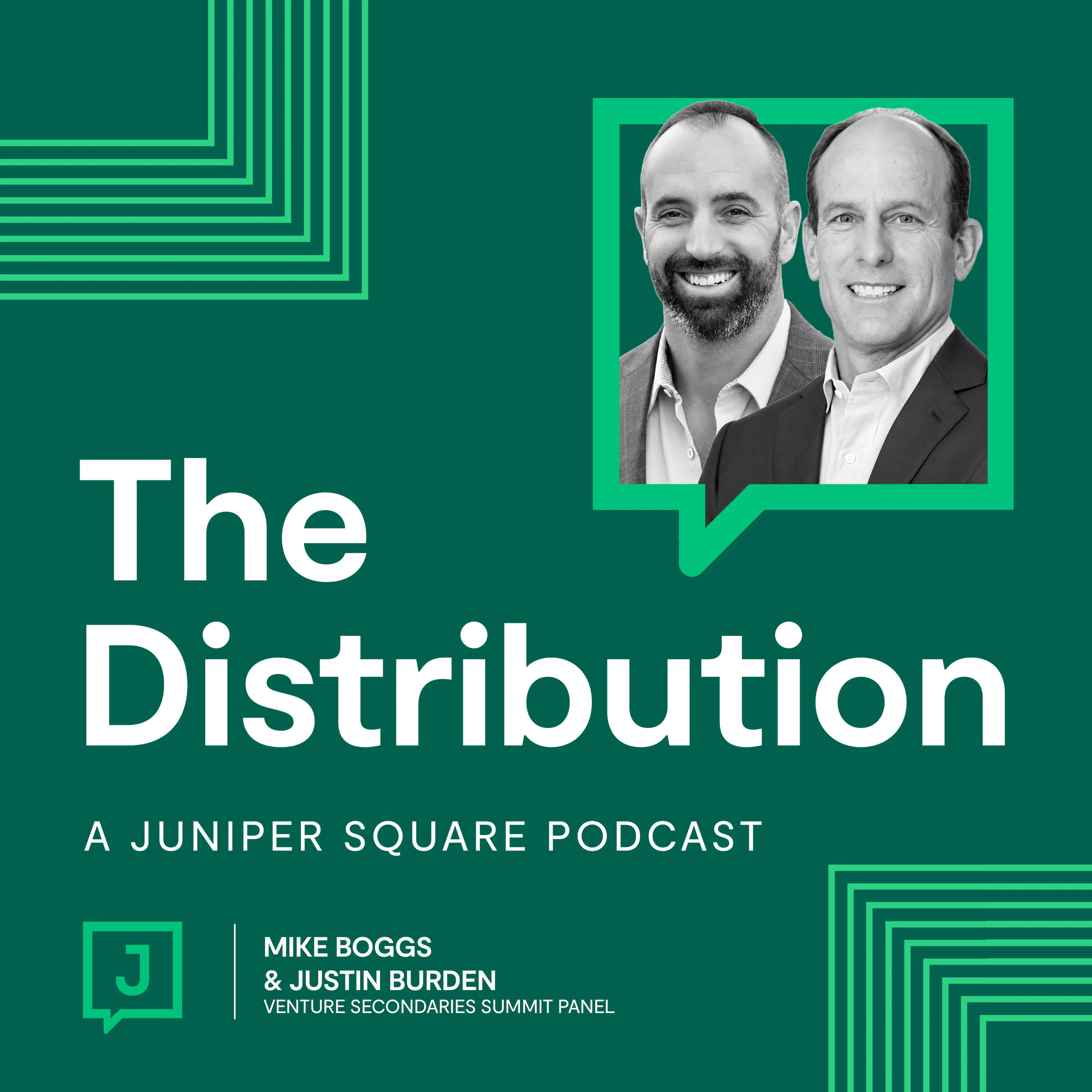 Picking Winners Late in the Race: Why Venture Secondaries Are a Decade-Long Opportunity 26.06.2026 54minBrandon Sedloff sits down with Mike Boggs of Revelation Partners and Justin Burden of Industry Ventures at the Venture Secondaries Summit to explore how venture secondaries have evolved from a tool for distressed sellers into an institutional liquidity engine for private markets. The conversation examines the specialist approach required to succeed in this opaque, relationship-driven market where transactions happen by appointment rather than on open exchanges. They discuss: - Why venture secondaries function as a third liquidity option beyond IPOs and M&A, particularly in healthcare where billion-dollar outcomes are considered large - How secondary buyers navigate competition from insider investors by serving as arm's-length pricing partners for founder share sales - The structural liquidity problem created by over $800 billion in unrealized healthcare value and trillions locked in tech, with secondary funds positioned to address this overhang - Why specialization in specific sectors or deal types is becoming essential as commoditization pressures generalist secondary funds - How the flight to quality means focusing capital on late-stage, proven companies rather than indexing across venture portfolios This episode offers private markets investors and operators a practical view of how venture secondaries create value in an environment where companies stay private longer and traditional exit paths remain constrained. Topics: (00:00:00) - Intro (00:00:29) - Guest introductions and firm backgrounds (00:04:47) - Evolution of venture secondaries as liquidity (00:07:20) - What happens if IPOs and M&A return (00:11:28) - Specialists versus generalists in secondaries (00:13:04) - Secondaries as asset class or strategy (00:17:07) - Overcoming discount buyer perceptions (00:19:47) - Building conviction and underwriting (00:22:58) - Navigating competition from top VCs (00:25:32) - Educating the market on secondary options (00:29:52) - Liquidity challenges for the messy middle (00:33:17) - Transfer rights and insider preferences (00:38:22) - LP secondaries market maturation concerns (00:40:15) - Outlooks on the next 5 to 10 years (00:44:04) - What could stop the growth trajectory (00:47:42) - Competition and differentiation challenges (00:50:49) - Closing Links: Mike Boggs on LinkedIn - https://www.linkedin.com/in/michael-boggs-7921343/ Justin Burden on LinkedIn - https://www.linkedin.com/in/justin-burden-46120a/ Brandon Sedloff on LinkedIn - https://www.linkedin.com/in/brandonsedloff/ Revelation Partners - https://revelation-partners.com/ Industry Ventures - https://www.industryventures.com/ Juniper Square - https://www.junipersquare.com/
 -
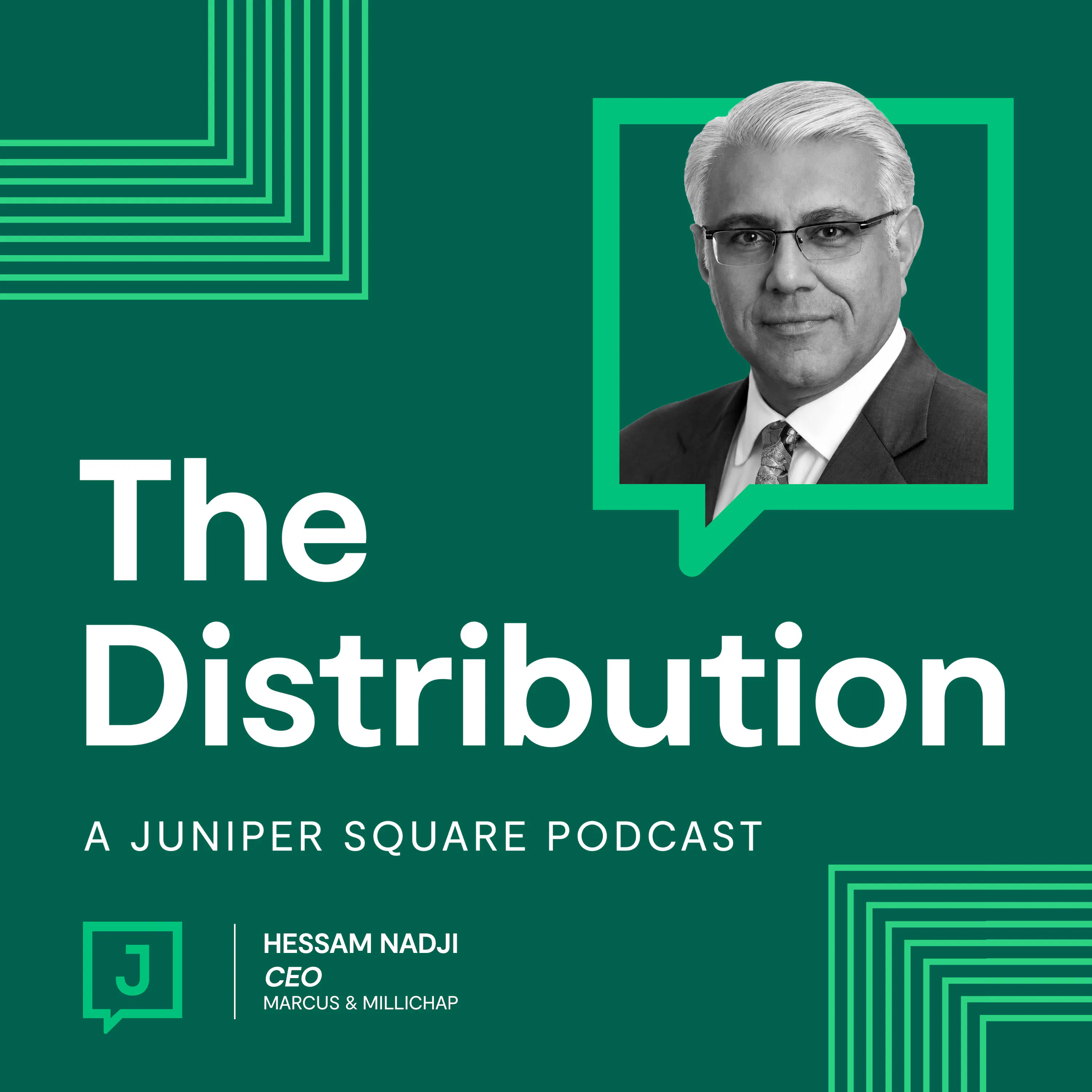 The Overcaution Discount: How Tightening Supply Makes Today's Commercial Real Estate Undervalued - Hessam Nadji - CEO of Marcus & Millichap 23.06.2026 1tHessam Nadji, President and CEO of Marcus & Millichap, joins Brandon Sedloff to share his remarkable journey from immigrating to the United States from Iran to leading one of the largest commercial real estate brokerage firms in the country. Hessam reflects on the formative experiences that shaped his career, how an entry-level data entry role at Grubb & Ellis sparked a lifelong passion for research and analytics, and why he believed early on that commercial real estate would evolve from a relationship-driven business into a consultative, data-informed profession. The conversation explores Marcus & Millichap’s growth, the firm's enduring focus on serving private clients, and how technology, AI, and changing market dynamics are reshaping the future of commercial real estate. They discuss: • Hessam’s immigration story, family entrepreneurship roots, and unconventional path into commercial real estate • How research, analytics, and consultative selling transformed brokerage and created new opportunities for advisors • The evolution of Marcus & Millichap’s private client and institutional businesses, including the creation of Institutional Property Advisors (IPA) • How AI is changing brokerage, data analysis, client service, and the future role of commercial real estate professionals • Why current market uncertainty may be creating attractive opportunities across commercial real estate asset classes • The long-term outlook for supply, capital allocation, and wealth creation through commercial real estate investing Topics: (00:00:00) - Intro (00:02:19) - Hessam’s background and career (00:22:01) - The journey to becoming CEO of Marcus & Millichap (00:36:38) - The state of the firm in 2026 (00:47:05) - The structural changes happening in the market (00:52:28) - Shallow buyer supply (00:54:18) - Most misunderstood concepts about CRE as an asset class Links: Hessam on LinkedIn - https://www.linkedin.com/in/hessam-nadji/ Marcus & Millichap - https://www.marcusmillichap.com/ Juniper Square - https://www.junipersquare.com/ Brandon on LinkedIn - https://www.linkedin.com/in/brandonsedloff/
 -
 Demographics as Destiny: Building a $21B Platform on Mission-Critical Real Estate - Al Rabil - CEO of Kayne Anderson 16.06.2026 1t 10minBrandon Sedloff and Al Rabil discuss navigating real estate cycles, building investment platforms, and identifying mission-critical assets with decades of demand ahead. Rabil shares how an unconventional path—from philosophy major to commercial real estate workouts during the RTC crisis to running UBS Real Estate Investment Banking—shaped his approach to disciplined capital allocation. He explains why Kayne Anderson focuses on fragmented, operationally intensive sectors like medical office, seniors housing, student housing, and light industrial, and how the firm partners with best-in-class operators rather than building everything in-house. They discuss: - Why listening is the most underrated skill in finance and how it opened doors early in Rabil's career - How Kayne Anderson identifies asymmetric return opportunities by finding demand and letting it run you over - Why the firm is selling seniors housing today and what that signals about pricing and cycle positioning - The difference between asymmetric return-risk dynamics and asymmetric risk-return dynamics - How vertically integrated platforms create alpha in operationally complex real estate This episode offers insight for investors, operators, and allocators interested in real estate fundamentals, disciplined underwriting, and building durable platforms across market cycles. Links: Kayne Anderson - https://kayneanderson.com/ Al on LinkedIn - https://www.linkedin.com/in/al-rabil-3a7163b0/ Juniper Square - https://www.junipersquare.com/ Brandon on LinkedIn - https://www.linkedin.com/in/brandonsedloff/ Topics: (00:00:00) - Intro (00:02:41) - Growing up everywhere: A nomadic childhood (00:12:46) - Philosophy major without a plan (00:16:14) - The power of listening in finance (00:19:23) - Learning from the RTC crisis (00:22:49) - Career advice that changed everything (00:29:21) - Leaving Wall Street for entrepreneurship (00:32:50) - Joining Kayne Anderson in 2007 (00:42:31) - Alternative asset classes with decades of demand (00:45:17) - The vertically integrated operator model (00:47:26) - Platform overview: Real estate, credit, and energy (00:51:34) - Disciplined investing across market cycles (00:56:38) - Where the opportunity is today (00:58:48) - Selling senior housing at peak pricing (01:01:38) - Advice for operators seeking capital partners
 -
 The Legal Catbird Seat: How Data and AI Are Reshaping Private Credit and Fund Finance - Matt Schwartz - Global Finance Group Leader & Co-Head of Private Credit - DLA Piper 09.06.2026 57minBrandon Sedloff and Matt Schwartz explore the evolution of fund finance and private credit on The Distribution. Matt shares insights from his two decades in legal finance, including his journey from representing venture debt transactions to overseeing one of the world's largest law firm finance practices. The conversation examines how the financing landscape has fundamentally shifted over the past decade, with private credit funds taking on more complex transactions while banks have moved into back-leverage arrangements. Matt emphasizes the critical role of data strategy and AI adoption in modern fund operations, noting how GPs are using technology to improve underwriting and portfolio management. They discuss: - Why traditional underwriting standards are returning and how data analytics are improving investment decisions - How banks and private credit funds are increasingly collaborating rather than competing on deals - The role of insurance capital and hybrid structures in expanding fund finance options - Whether retail investors can successfully participate in illiquid private credit markets as valuation tools improve - Why technology and life sciences remain strong despite headlines suggesting otherwise This episode offers fund managers and private market professionals a clear-eyed view of where capital is flowing and how operational improvements can create competitive advantages. Topics: (00:00:00) - Intro (00:00:53) - Welcome and guest introduction (00:03:17) - Matt's journey into law (00:07:15) - Landing in San Diego and building a practice (00:10:00) - Leading DLA Piper's finance practice (00:16:40) - Data and operational alpha for GPs (00:25:00) - AI adoption and compliance (00:27:40) - Fund finance and private credit landscape (00:38:30) - AI's impact on vertical SaaS companies (00:41:36) - Underwriting discipline and data usage (00:47:30) - The next cycle in private credit (00:51:00) - Retail capital and LP allocation shifts (00:54:00) - Closing Links: Matt on LinkedIn - https://www.linkedin.com/in/matt-schwartz-15576617/ DLA Piper - https://www.dlapiper.com/en/ Juniper Square - https://www.junipersquare.com/ Brandon on LinkedIn - https://www.linkedin.com/in/bsedloff/
 -
 A Contrarian's Vindication: Why Grocery-Anchored Retail Is Entering a 7-Year Rental Growth Super Cycle - Brian Kosoy - Managing Principal and CEO of Sterling Organization 02.06.2026 56minBrandon Sedloff and Brian Kosoy explore the transformation of retail real estate from distressed contrarian bet to institutional favorite. Kosoy, CEO of Sterling Organization, explains how his firm built a $4 billion vertically integrated shopping center platform by staying committed to retail through 15 years of headwinds—from the financial crisis through the retail apocalypse and COVID-19. He shares his unconventional path from failing out of Canadian schools to practicing real estate law in New York, then launching Sterling Organization in the summer of 2007, just as credit markets froze. They discuss: - Why vertical integration creates competitive advantages in tenant relationships and lease structuring that third-party management cannot replicate - The structural supply-demand imbalance driving a potential seven-year rent growth supercycle in grocery-anchored shopping centers - How being pigeonholed as "the shopping center guys" during a 15-year downturn created a durable moat as institutional capital returns to the sector - Why the average shopping center deal size makes it nearly impossible for large allocators to deploy $500 million quickly with quality managers - The difference between generating alpha in negative beta environments versus riding positive beta waves This episode examines how conviction through market cycles builds institutional platforms that can't be replicated by trend-followers or capital chasers. Links: Sterling Organization - https://www.sterlingorganization.com/about/ Juniper Square - https://www.junipersquare.com/ Brandon on LinkedIn - https://www.linkedin.com/in/brandonsedloff/ Topics: (00:00:00) - Intro (00:02:01) - Brian’s background and career (00:16:08) - Building Sterling Organization (00:25:48) - Key stats for Sterling Organization (00:30:16) - Building conviction in the shopping center business (00:33:54) - Structural changes and themes for the industry in the future (00:40:23) - Vertical Integration (00:43:49) - Institutional Capital (00:46:20) - Common misconceptions about retail (00:50:19) - Things to keep an eye on
 -
 Why Market Returns Require More Than Market Risk: An 80-Year Diversification Playbook - Michael Levy - CEO @ Crow Holdings 26.05.2026 1t 1minMichael Levy joins Brandon Sedloff for a wide-ranging conversation on leadership, institutional evolution, and the long arc of building durable businesses. Michael reflects on his unconventional path from studying fine arts and attending law school at night to becoming a senior leader at Morgan Stanley and eventually CEO of Crow Holdings. He shares lessons from navigating the 2008 financial crisis, why listening and trust-building matter more than quick action when leading organizations, and how Crow Holdings has evolved from a legendary real estate company into a diversified investment platform spanning energy, renewables, and national security. We discuss: • Michael’s unconventional path from fine arts student to Wall Street real estate executive • What Morgan Stanley taught him about mentorship, optionality, and leadership under pressure • The inside story of Crow Holdings’ evolution across three generations of leadership • Why the firm shifted from pure real estate into energy, renewables, and national security businesses • How Michael approaches leadership, decision-making, and building trust inside long-term organizations This episode is a deep look at institutional leadership, business evolution, and the mindset required to build resilient organizations across decades. Links: Michael on LinkedIn - https://www.linkedin.com/in/michael-levy-57033012/ Crow Holdings - https://www.crowholdings.com/ Juniper Square - https://www.junipersquare.com/ Brandon on LinkedIn - https://www.linkedin.com/in/brandonsedloff/ Topics: (00:00:00) - Intro (00:01:44) - Michael’s background and career (00:15:02) - Strategic leadership (00:20:56) - Becoming involved with Crow (00:25:26) - Michael’s mandate when coming into Crow (00:30:18) - The evolution of Crow (00:37:07) - The influence of Harlan Crow (00:41:17) - The size and scale of Crow Holdings (00:45:01) - Trends to look for in the future (00:53:34) - Leadership philosophies
Lignende podcasts


Populær i
Denne podcast optræder også i podcast-hitlister i disse lande.

