
Energy Changemakers Podcast
Energy Changemakers
0
As the energy grid faces unprecedented changes, local energy solutions are increasingly needed. Hosted by Elisa Wood, an experienced energy journalist, The Energy Changemakers Podcast brings you into the heart of these transformations. Each episode features in-depth discussions with industry leaders pioneering the move toward a decentralized grid. From technological innovations to policy changes — discover actionable insights to help your company leverage emerging opportunities.
Episoder
-
 The DER-Utility Standoff—and a Way Out 30.09.2026 58minUtilities and distributed energy companies often talk past each other, and each side blames the other for the stalemate. Navneet Trivedi, co-founder and COO of Vrinda Inc., has spent more than three decades working with over 100 utilities in eight countries, and he calls himself an "energy transition realist." In this episode, host Elisa Wood talks with Navneet about why utilities behave the way they do, why he called New York's REV initiative flawed when everyone else was celebrating it, and his proposal to change the relationship. If batteries, microgrids, and other DERs make customers more resilient, Navneet asks, should responsibility for reliability, and the pay that comes with it, be shared between the grid and distributed resources? It's a candid conversation from someone who loves utilities and wants them to change. Check out Vrinda's latest white paper: https://energychangemakers.com/resource-library/grid-utilization/
 -
 The Grid Isn’t Ready for Robots on Wheels 17.09.2026 42minAutonomous vehicles are more than cars without drivers. They’re “robots on wheels” — and they will need enormous amounts of electricity at the grid edge.In this episode of the Energy Changemakers Podcast, host Elisa Wood talks with Mike Calise, CEO of EV charging company Tellus Power, about why the rise of autonomous fleets could make microgrids and distributed energy a strategic necessity.Calise sees two massive transformations colliding: the electrification and automation of transportation, and a power system already confronting soaring demand from AI and data centers. Microgrids could help bridge the two by generating and managing electricity close to where autonomous vehicles operate — while bidirectional charging allows the batteries inside those vehicles to become grid assets rather than simply new loads.The conversation explores a real-world example at Oakland Unified School District, where 74 electric school buses can act as dispatchable batteries, returning energy to buildings or the grid when the buses are sitting idle. It also looks ahead to robotaxis, delivery vehicles, drones and other forms of “physical AI” — and what it will take to power them as they scale.Calise calls it a collision between the multi-trillion-dollar energy and transportation industries. At the center of that collision may be one of distributed energy’s biggest opportunities yet: using microgrids, storage and vehicle-to-grid technology to power the machines emerging at the edge.
 -
 The Case for Electric Cooperatives in the Microgrid Era 02.09.2026 41minWhat if the model to solve many of our biggest electricity problems already exists—we've just never used it to its full capacity? In this episode, Keith Taylor, a UC Davis institutional economist, makes the case that America's 800-plus co-ops are a form of "latent community capacity" hiding in plain sight. Keith proposes federating cooperatives so that they compete in the microgrid era, and what a Lake Tahoe utility crisis reveals about who really gets served when data centers come knocking. It's a hopeful, practical conversation about doing "policy from below."Look beyond the market and the state. Drawing on Nobel laureate Elinor Ostrom's insight that "there are no panaceas," Keith argues we systematically overlook the civic economy — a third leg of the stool alongside the market and government — where cooperatives operate on logics of service at cost rather than profit.We already have energy democracy. The U.S. has more than 800 electric cooperatives serving roughly 42 million Americans, generating about $42 billion a year in revenue. Of those members, some 8,000 serve as elected board directors — a political economy of its own that's ready to be leveraged, not built from scratch.Co-ops are often more efficient, not less. Investor-owned utilities serve about 30 households per mile of line; the average co-op serves about 7 — yet co-ops deliver comparable rates. In the 1930s, IOUs claimed lines would cost $2,000/mile; co-ops innovated the cost down to under $650/mile. Keith sees the same pattern today in broadband, where a South Carolina co-op (Carolina Connect) is stringing fiber for ~$15,000/mile against incumbent telco estimates of $200,000–$300,000/mile.Small doesn't mean weak — they federate. Individual co-ops stay locally controlled but pool into federations for financing (CoBank, the National Rural Utilities Cooperative Finance Corporation, and USDA's Rural Utilities Service together hold over $300 billion in assets), insurance (Federated Insurance), and white-label marketing (Touchstone). Keith's vision: a "microgrid federation" that makes co-ops a trusted vendor for communities building distributed energy.The Tahoe warning. A pocket of ~50,000 Californians around Lake Tahoe is served by the Nevada grid — and as Nevada's data-center demand grows, that region may be dropped in about 18 months, facing spot-market rates and rolling blackouts. It's a concrete example of customers losing out to data centers, and of why platforming alternative institutional models matters.Policy parity works. Co-ops have lagged on renewables largely because of incentive structures — they were historically excluded from renewable subsidies and often exempt from state renewable portfolio standards. When the Inflation Reduction Act's "direct pay" provision finally gave them parity with IOUs, co-ops rapidly expanded their renewable and distributed-energy portfolios.Start local, start now. Keith's call to action is bottom-up: engage your co-op's board and member-relations staff, join a member advisory committee, or run for the board. Where there's no co-op, look to public utility districts, community choice aggregators, or form a new association. As Ostrom put it: "We can, so we must."
 -
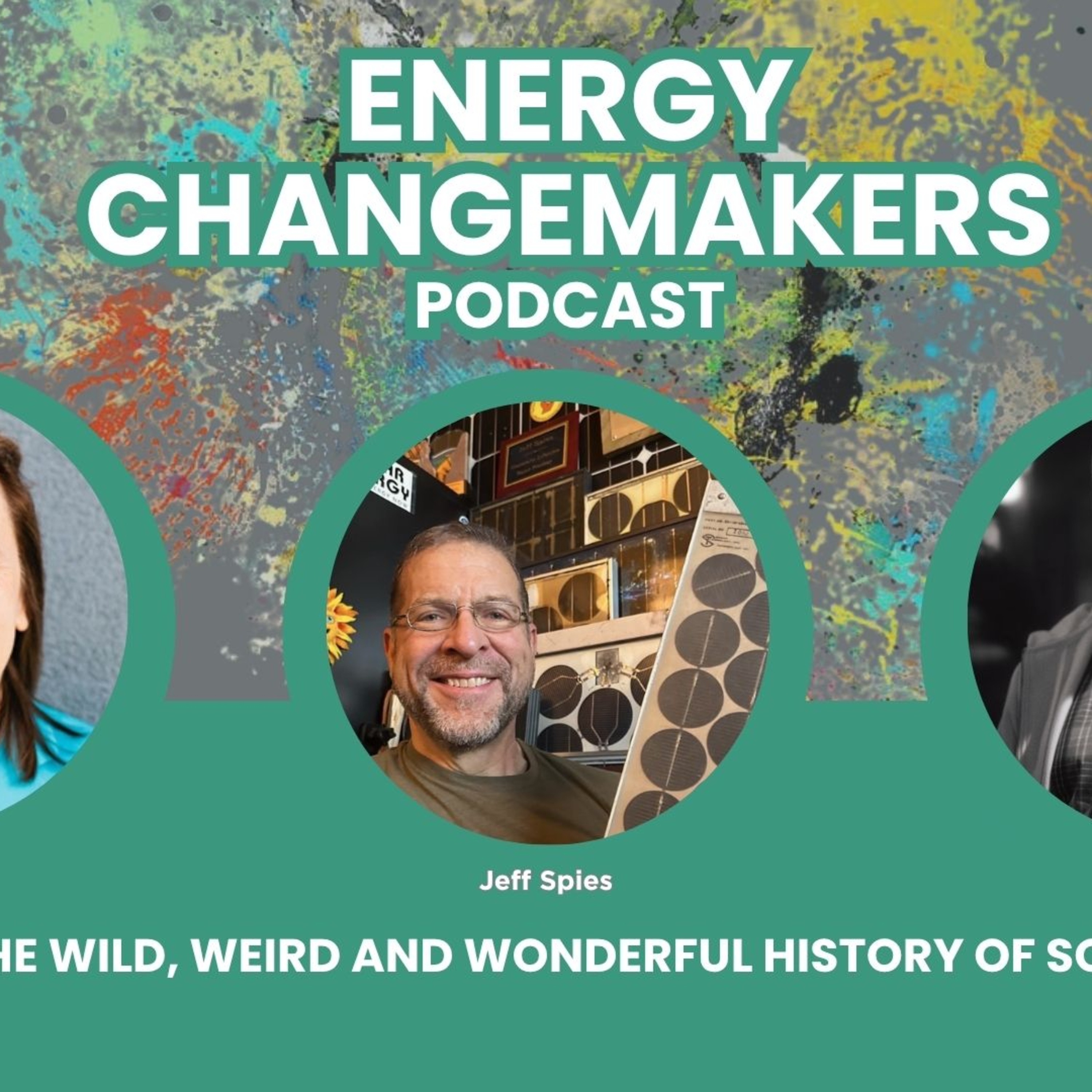 The Wild, Weird & Wonderful History of Solar 19.08.2026 43minMost people in solar assume the industry started with the trade-show boom of 2006–2007. It didn't. It started decades earlier, in the logged-over hills of Humboldt County, California, where back-to-the-land hippies were hacking a self-sufficient life out of the wilderness — powering their homes off car batteries, micro-hydro, and windmills just so they could keep the lights on and play a little music.Host Elisa Wood sits down with filmmakers Jeff Spies and Jason Vetterli, whose two-hour documentary Solar Roots: The Pioneers of PV traces how an expensive military, space, and petrochemical technology found its way into the hands of ordinary people — and, in doing so, became a real industry. It's a story of catalog salesmen, off-grid homesteaders, cannabis-funded land deals, conservative ranchers won over one panel at a time, and a scrappy magazine that connected them all. Along the way, Jeff and Jason make the case for why solar has already won the price war, why the remaining fight is cultural, and why this history had to be captured now, while its pioneers are still here to tell it.
 -
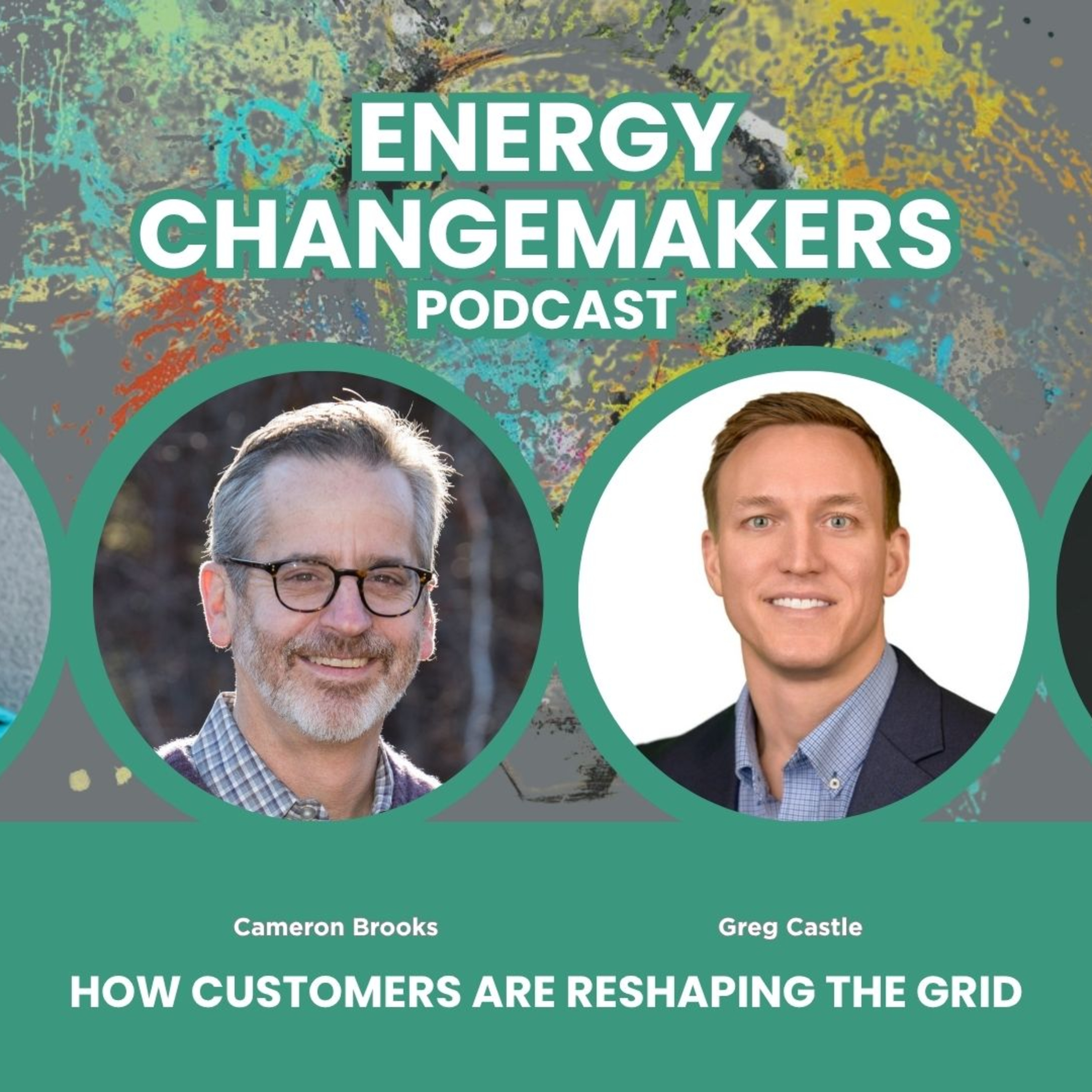 How Customers Are Reshaping the Grid 05.08.2026 42minFrom homeowners to businesses to AI data centers, customers are investing in distributed energy for their own reasons — and collectively rewiring how the entire electric system evolves. Recorded live to open The Great Transformation conference in Bend, Oregon, host Elisa Wood sits down with three people who aren’t just watching this shift — they’re shaping it: Cameron Brooks of Think Microgrid, Greg Castle of Schneider Electric, and Mike Grenier of Elexity.The panel digs into the data center power boom (a reported 114 GW of behind-the-meter generation in the pipeline — roughly 20% of U.S. peak load), why falling battery prices are flipping "two yeses out of ten" into "eight," the "Frankenstein microgrid" phenomenon, and how flexible interconnection deals in New Jersey and the Google–Voltus capacity agreement point toward a grid that’s built from the outside in. It’s a candid, optimistic conversation about ownership, resilience, and scaling what already works.
 -
 Resilience as a Team Sport 22.07.2026 33minWildfires, record heat, and a grid under more strain than ever have turned “resilience” from a buzzword into one of the fastest-growing categories in energy technology. Host Elisa Wood talks with Julia Hamm — who spent nearly 20 years growing the Smart Electric Power Alliance (SEPA) before becoming a partner at The Ad Hoc Group — about how resilience became its own market, the AI cameras and wildfire-spread software utilities are deploying today, why microgrids are still an emerging (not mainstream) resilience play, and why the length of the utility sales cycle remains startups' biggest obstacle. They also discuss why Julia launched the Power Resilience Forum to keep this conversation from being crowded out by the AI and data-center load-growth story dominating the industry right now.
 -
 Plug-In Solar Explained: Answers to your top questions 08.07.2026 46minPlug-in solar — widely known as “balcony solar” — is one of the fastest-growing entry points into clean energy, and it is finally gaining a legal foothold in the United States. In this episode, host Elisa Wood talks with Stephan Scherer, co-founder and CEO of CraftStrom, who spent roughly a decade in the European plug-in solar market before bringing the technology to the U.S.The conversation unpacks what plug-in solar actually is, how small systems can offset a meaningful chunk of a household's electricity bill for a fraction of rooftop-solar costs, and why the technology sidesteps the interconnection agreements and “soft costs” that make traditional residential solar expensive. Scherer addresses the two big safety debates head-on — line-worker protection and grid export — and explains the certifications, anti-islanding shutoffs, and “zero-export” approaches that underpin safe deployment.They also explore the technical breakthroughs that made plug-in solar practical (lightweight bendable panels, integrated Wi-Fi monitoring, simplified installation), the economics and payback math, the addition of plug-in batteries and virtual power plants, and the wave of state laws — now five enacted — reshaping access for homeowners and renters alike.
 -
 Coming Together for Energy's Great Transformation 17.06.2026 33minThe grid is straining under AI-driven demand, aging infrastructure, and climate-fueled weather events — and Robert W. Cross believes the answers already exist. The harder question is whether the industry can come together to deploy them. In this episode, host Elisa Wood talks with Cross, founder of Cross Consulting and principal at the cleantech design studio Outfit, about why distributed energy may be the relief valve utilities need, why storytelling is the industry's most underrated tool, and what he's building at The Great Transformation 2026, a curated, single-track summit in Bend, Oregon (July 8–10).They dig into the collision between an "irresistible force" — distributed energy resources — and the "immovable object" of the legacy utility model, the gap between feasibility and bankability, and why Cross is intentionally designing his event to create constructive professional conflict. It's a candid conversation about scale, finance, policy whiplash, and the case for getting builders, bankers, regulators, and dreamers into the same room.Learn more and subscribe to the free newsletter at energychangemakers.com.
 -
 How Utilities Can Do Less and Make More Money 10.06.2026 40minElectricity prices are rising, data centers are struggling to connect, and consumers are feeling the pinch — yet utilities keep reporting record earnings. What's going wrong, and how do we fix it? In this episode, Elisa Wood speaks with Michael Lee, former CEO of Octopus Energy US and founder of Distributed Grid, about the structural flaw at the heart of the American utility model: an incentive system that rewards building infrastructure regardless of whether it is needed.Lee argues that this cost-of-service model — largely unchanged for a century — is driving an inflationary spiral in electricity rates and blocking the distributed energy resources that could make the grid more affordable and resilient. But his argument is not simply that utilities are bad actors. It is that utilities are rational actors operating under the wrong rules. Change the rules — and the business model — and utilities could earn more revenue by coordinating a decentralized grid than by building poles and wires.Lee lays out a detailed roadmap: from reframing utilities as "network coordinators" to paying them for outcomes (reliability, affordability, speed to power) rather than capital deployed. He also confronts the political and social complexities — utility shareholders who depend on dividends, governors who fear blackouts, and a public that has never had to think about how electricity works. The conversation is both an indictment of the status quo and a genuine blueprint for a better grid.
 -
 Why the Microgrid Community Needs to Come Together Now 29.05.2026 26minProduced in partnership with Xendee, this podcast explores the market dynamics that led the company to create a free, non-commercial gathering for the microgrid industry. In their conversation, Elisa Wood and Xendee CTO Michael Stadler discuss what's been holding microgrids back from achieving their full market potential, how utilities treat them, and why data centers are opening up opportunities that are reconfiguring what microgrids look like.Called University Week, the virtual event will be held June 8-10, 2026. Sessions will focus on:—Misperceptions and limited knowledge about microgrids and DERs—Macro market challenges—Older centralized technologies and grid limitations—Fragmented market with no common voice for the industryRegistration is free: https://xendee.com/xendee-university-week?.
 -
 The Big Wide Door Opening for Biofuels 27.05.2026 32minWhat does it take to build a billion-dollar biofuels company from inside one of energy’s most durable entrepreneurial firms?Michael Bakas has spent 25 years at Ameresco — and now he’s leading Neogenyx Fuels, a new $1.8 billion joint venture with HASI. Elisa Wood of Energy Changemakers gets the full story: the cocktail-napkin founding of Ameresco, the dual energy crisis (geopolitics + AI demand), and why RNG’s global moment has arrived.Whether you work in energy development, finance, policy, or utilities — or you’re simply watching the clean energy transition unfold — this conversation is a rare look at how one company has been building the infrastructure for what now appears to be America’s biofuel moment.
 -
 Why the Microgrid Community Needs to Come Together Now 26.05.2026 26minProduced in partnership with Xendee, this podcast explores the market dynamics that led the company to create a free, non-commercial educational gathering for the microgrid industry.In their conversation, Elisa Wood and Xendee CTO Michael Stadler discuss what’s been holding microgrids back from achieving their full market potential, how utilities treat them, and why data centers are opening up opportunities that are reconfiguring what microgrids look like.For more information, join Xendee and Energy Changemakers at University Week, a virtual event that will be held June 8-10, 2026.Sessions will focus on:Misperceptions and limited knowledge about microgrids and DERsMacro market challengesOlder centralized technologies and grid limitationsFragmented market with no common voice for the industryRegistration is free. https://xendee.com/xendee-university-week?utm_source=ecm
 -
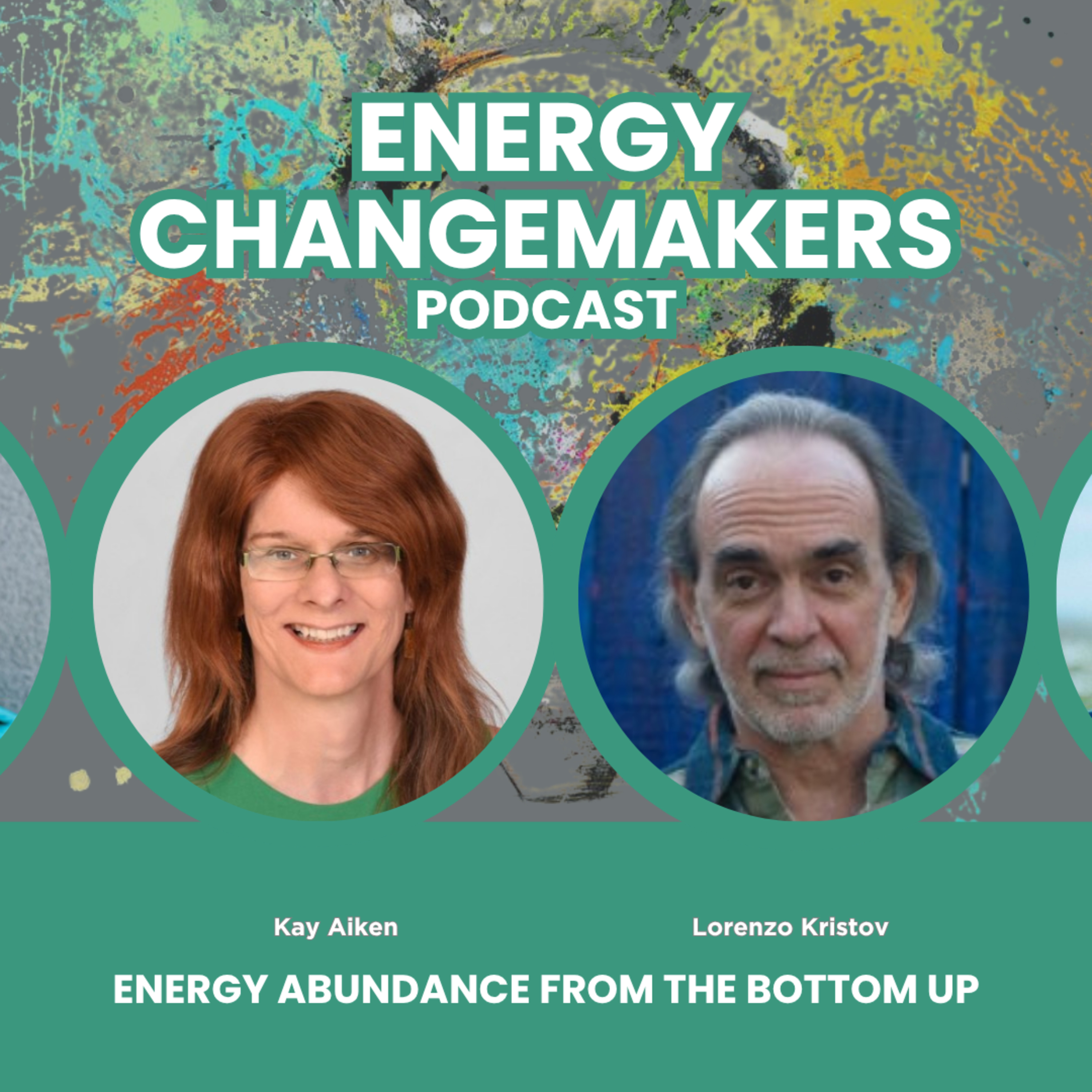 Energy Abundance From the Bottom Up 17.05.2026 1t 1minThis episode revisits one of the most-listened-to conversations in Energy Changemakers history—a three-way dialogue between Kay Aikin (CEO of Dynamic Grid, Maine), Lorenzo Kristov (independent grid market architect and formerly of California ISO), and Mark Paterson (Principal and Lead Systems Architect, Energy Catalyst, Australia). The original episode aired in 2024; this return engagement goes deeper, reexamining the concept of energy abundance through a more refined and urgent lens.The conversation takes direct aim at the dominant political narrative of “generate, generate, generate”—the idea that energy problems are simply solved by producing more power. The guests argue that this approach confuses quantity with quality, and supply with access. They introduce the concept of “smart abundance” versus “dumb abundance,” and make the case that a truly abundant energy future must be planned from the bottom up, starting closest to the user, not at the distant bulk power system.Ranging across economics, physics, regulatory law, and systems theory—and drawing analogies from photosynthesis to mycelial forest networks to Windows 97—the three guests explain why the current grid architecture is structurally incapable of delivering on the promise of energy abundance, and what reforms in planning, regulation, and market design would make the transformation possible. Australia’s experience with surplus renewables and minimum system demand serves as a real-world case study of what happens when abundance arrives without the right operating system to manage it.
 -
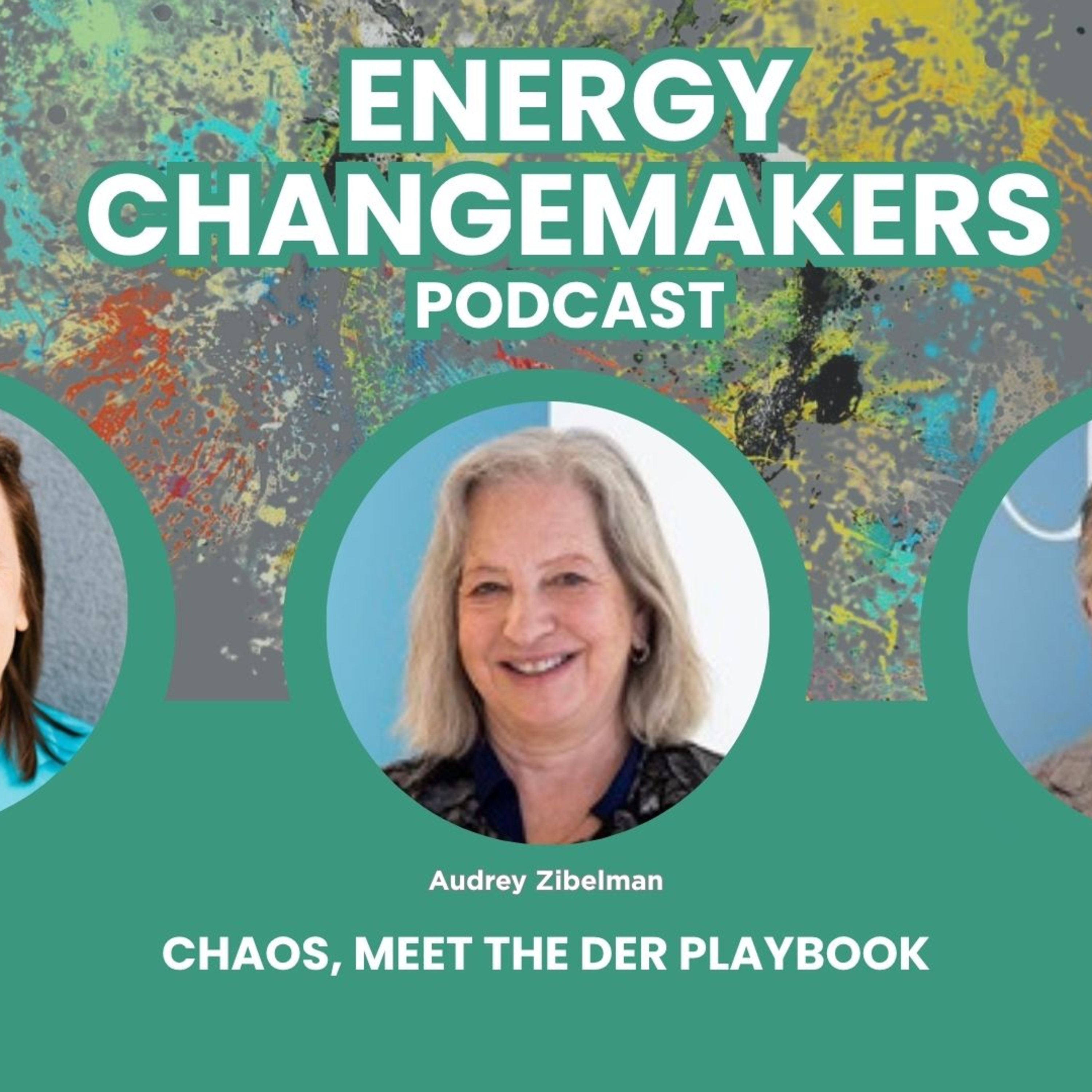 Chaos, Meet the DER Playbook 28.04.2026 33minThe Pew Charitable Trusts has released a long-awaited policy playbook for scaling distributed energy resources (DERs) across the United States. In this episode, host Elisa Wood sits down with the two co-chairs of the Pew DER Advisory Council — Audrey Zibelman and Pat Wood III — to unpack what the playbook says, why DER deployment has stalled despite a clear business case, and what policymakers can do right now to change the trajectory.The conversation moves from high-level regulatory philosophy to the practical mechanics of utility incentive design, FERC jurisdiction, virtual power plants, and the pros and cons of America's 50-state laboratory approach to energy regulation. Both guests bring decades of first-hand experience reshaping the grid — Zibelman from New York's REV framework and Australia's national DER strategy, Wood from opening the Texas and wholesale power markets.
 -
 Microgrids Are a Goldmine for Grid Operators — They Just Don't Know It Yet 20.04.2026 24minThe US grid is under pressure — surging demand from data centers, EVs, and industrial expansion is forcing expensive infrastructure upgrades. But what if a significant share of that relief could come for free? In this bonus episode, Elisa Wood sits down with Vincent Petit, SVP of Climate and Energy Transition Research at the Schneider Electric Sustainability Research Institute (SRI), to explore a provocative finding from the institute's latest research: when building owners invest in microgrids to optimize their own financial returns, the grid benefits as a byproduct — at zero marginal cost to grid operators.The research, spanning five commercial building types and 13 geographies worldwide, finds that microgrids can deliver 20–40% power headroom recovery on average, with some configurations reaching 60%. And in 80% of modeled scenarios, the building owner achieves payback in under ten years — meaning the grid gets relief without spending a dollar.This conversation reframes microgrids not as niche resilience tools, but as a scalable, privately financed mechanism for managing the coming demand surge — if the price signals are right.
 -
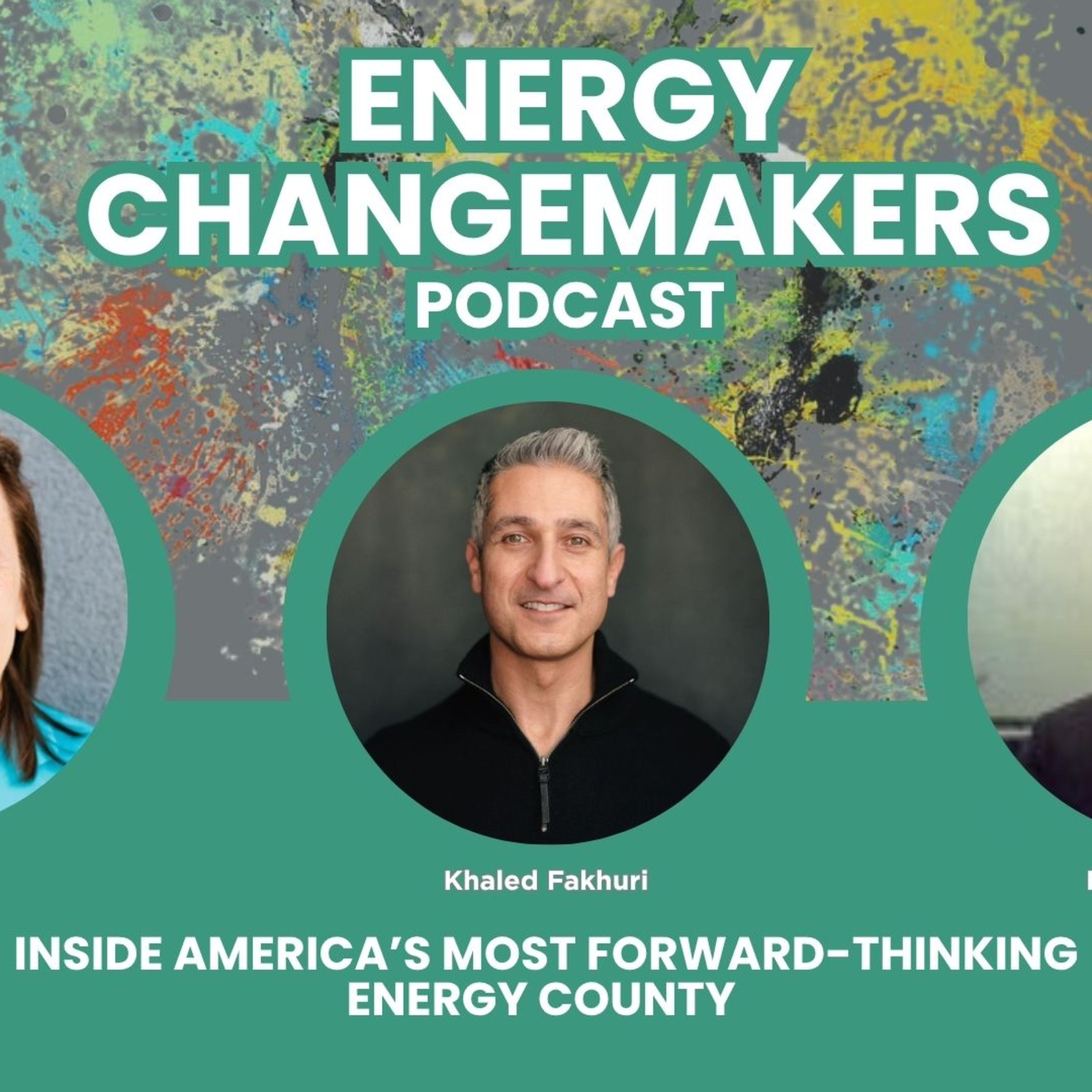 Inside America’s Most Forward-Thinking Energy County 15.04.2026 40minMontgomery County, Maryland — located just outside Washington, D.C. — has emerged as one of the most ambitious local governments in the United States when it comes to distributed energy, microgrids, and clean power resilience. Since its first microgrid went online in 2018, the county has built out a portfolio of advanced installations at public safety facilities, a correctional facility, electric bus depots, and smaller community sites. Now, with 23 “resilient hub” microgrids under development and plans to produce on-site green hydrogen for its transit fleet, Montgomery County is redefining what local energy leadership looks like.In this conversation, host Elisa Wood sits down with two key architects of this vision: Michael Yambrach, Chief of Montgomery County’s Office of Energy and Sustainability, who has overseen the county’s energy evolution since 2014; and Khaled Fakhuri, Senior Vice President of Schneider Electric’s Microgrid Business, the county’s long-term development partner. Together, they unpack how the county got here, how the public-private partnership model works, and what the future of microgrids looks like at local, national, and even data-center scale
 -
 Utilities Are Warming to DERs. Thank Data Centers. 01.04.2026 32minFor years, utilities and the distributed energy industry fought bitter battles over net metering, revenue erosion, and who controls the grid. Now, something has shifted. In this episode of the Energy Changemakers Podcast, host Elisa Wood sits down with Marco Krapels, SVP and Chief Marketing Officer at Enphase Energy, to explore a striking reversal: utilities that once viewed rooftop solar as a threat are now actively seeking out DER companies as partners.The catalyst? Data centers. The explosive growth of AI and digital infrastructure is driving electricity demand at a scale that centralized generation simply cannot meet fast enough — and utilities are starting to realize that 80 million untapped American rooftops may be part of the answer.Krapels brings both battle scars and optimism to this conversation. A former investment banker turned clean energy executive, he helped build SolarCity into the country's largest solar company and fought landmark net-metering wars in Nevada. Now, from Enphase — which celebrates its 20th anniversary this year — he describes a world where bundled, flexible distributed energy resources (solar + battery + bidirectional EV charger + smart home management) form dispatchable virtual power plants that utilities can actually rely on. And he argues it's not a future scenario. It's already happening.
 -
 Distributed Wind’s Second Act? 18.03.2026 32minDistributed wind has long played third wheel to solar and storage — but new market conditions may be opening the door to a comeback.In this bonus episode, Elisa Wood speaks with analyst Peter Asmus about whether distributed wind can find new life in microgrids, virtual power plants (VPPs), and rural energy systems. They explore wind’s surprising early dominance in microgrids, why it lost ground to solar, and how rural co-ops, farm policy, and complementary generation profiles could bring it back into the mix.While unlikely to compete head-to-head with solar, distributed wind may play a valuable supporting role in hybrid, distributed energy systems.
 -
 What Makes A Community Microgrid Actually Work For The Community? 18.03.2026 41minAccording to Markus Virta, Co-Founder of Cascadia Renewables, the answer has almost nothing to do with solar panels and batteries—and everything to do with listening.In this episode, Markus—who has spent 16 years at the intersection of clean energy and Pacific Northwest policy—explains why microgrids fail when engineers lead and communities follow, and how inverting that paradigm leads to faster projects, fewer change orders, and infrastructure that communities actually use.Markus offers a template for community microgrid development and provides examples of how it has worked in real-world projects. He tells the story of the Orcas Center Microgrid (Solar Builder Magazine’s Microgrid Project of the Year): a solar-plus-storage system built for a performing arts center on Orcas Island that turned out to be the community’s real resilience hub—not the fire station, not the school, but the place where people actually gather when things go wrong.You’ll also hear about: a tribal nation moving to higher ground ahead of a looming earthquake, a rural fire district running almost entirely on diesel for 30 years, and a national museum doubling as an emergency medical equipment hub. Each project started with a community conversation, not a technical spec.Markus also breaks down Washington State’s unique policy and funding ecosystem, including its cap-and-invest program, Commerce technical assistance grants, and the emerging day-ahead market that could finally make community microgrids economically self-sustaining. And he makes the case for FERC Order 2222 as the regulatory lever that could unlock real revenue for community-owned energy assets.Subscribe to the free Energy Changemakers Newsletter and join the community at EnergyChangemakers.com
 -
 How Your Home May Save the Grid 04.03.2026 30minIn Episode 40, host Elisa Wood sits down with Ben Brown, CEO of Renew Home, to explore how millions of ordinary homes are being quietly transformed into virtual power plants (VPPs) — aggregated, AI-coordinated, and capable of delivering what a gas-fired peaker plant once did, at a fraction of the cost and with zero emissions.From Jimmy Carter's thermostat appeals to today's invisible, personalized energy shifting, Ben and Elisa talk about why the future of grid stability runs directly through your living room.What you'll learn:What a virtual power plant actually is, and why it's different from old-school demand responseHow Renew Home manages nearly 6 gigawatts of flexible load across 7.5 million householdsWhy being distributed makes a VPP more valuable than a centralized power plantThe policy gap holding back the next wave of VPP growth (and which markets are leading)How Ben's team achieves an 80% opt-in rate — without customers feeling a thingWhat role EVs, heat pumps, and home batteries will play in the grid of 2035Ben Brown built the Nest Learning Thermostat and Google Home devices before spinning out Renew Home — now North America's largest residential VPP platform — from Google in 2023. In November 2024, Renew Home announced a partnership with NRG Energy to build a 1-gigawatt AI-powered VPP in Texas.This episode is for anyone who pays an electric bill, cares about the clean energy transition, or wants to understand how the grid is actually going to keep up with exploding demand from data centers, EVs, and electrification.Subscribe to the Energy Changemakers newsletter and join the community at energychangemakers.com.
Lignende podcasts


Populær i
Denne podcast optræder også i podcast-hitlister i disse lande.


