
Champions Connect Podcast
Luca Camilleri
0
WHATS UP?! Im Luca Camilleri. You were the Disruptor in the Classroom? Good!!! Now we’re helping you become the Disruptor in your Industry.
Episoder
-
 What Family Business Taught Me (And Cost Me) | Simon De Cesare 09.10.2026 1t 9minWhat does it really take to run a €300 million family business from one street in Malta?Simon De Cesare is the CEO of Eden Leisure Group, the De Cesare family business behind the InterContinental Malta, Eden Cinemas, Casino Malta, The Eden and 89.7 Bay.Partners:https://bestgymsmalta.com/https://alliance.mt/His grandparents opened the Eden Rock hotel in Sliema in 1967. In 1980 his father and uncle moved into St George's Bay, when it was a valley with a couple of houses, and opened Styx, the nightclub Paceville grew up around. Today the group has three hotels, well over a thousand staff, €318 million in assets and €56.1 million in revenue last year. Simon joined in 2000 and has been CEO since 2018.In this conversation he explains how the business really works. Why his real competitor is the €10 in your pocket, not another cinema. How you open a casino you don't understand, and why its board meetings are about keeping the wrong money out. Exactly how cinemas make money, when a €9.90 ticket loses 18% to VAT and up to 60% to the film distributor. Why you get paid before you do the work, why you never surprise your bank, and why the wave of new hotel beds coming to Malta terrifies him.He also takes you through the businesses they closed. Malta's only ice rink, his first job. Bay Mobile, a phone network sunk by a partner's technology. Why a new business gets about two years, who decides when to stop, and how it feels when the room tells you it is not working. What he feels once it is decided is relief.But the moment that stays with you has nothing to do with money. While he was pushing the voco hotel and The Eden over the line, his kids told him he looked grey, that he sighed all the time, that he was no fun to be around. The tests he did at 50 scared him into changing his life. A 25 item bucket list followed: Kilimanjaro, 28 years after his family failed to reach the top together, freediving to 33 metres, and Mont Blanc next.And when Luca asks what he wishes someone had told him as a teenager, his answer takes one line: that there were other options than going into the family business. Now his son is facing the same choice.Everyone sees what a family business builds. Almost nobody talks about what it takes out of the person running it.______________________00:00 - 03:20 - From One Hotel To A Whole Street03:20 - 05:47 - Your Real Competitor Is The €10 In Your Pocket05:47 - 08:54 - How To Find A Gap In The Market08:54 - 09:48 - Why Malta Is A Copycat Country09:48 - 11:30 - The Ice Rink That Failed11:30 - 15:03 - New Laws, A Casino & Anti Money Laundering15:03 - 17:50 - How To Test A Business Idea Before You Invest17:50 - 21:57 - Why Arcades Want Your Card, Not Your Cash21:57 - 23:04 - Where The Best Business Ideas Come From23:04 - 27:02 - The Two Year Rule & Closing Bay Mobile27:02 - 29:57 - Who Decides To Close A Business29:57 - 31:36 - Calculated Risk: Know Your Numbers31:36 - 34:12 - Too Many Hotels In Malta?34:12 - 38:19 - AI, Jobs & What He Tells His Son38:19 - 40:52 - Get Paid Before You Do The Work40:52 - 45:33 - How Do Cinemas Make Money?45:33 - 48:04 - Banks, Debt & Surviving COVID48:04 - 49:33 - €56 Million Revenue: Where It Comes From49:33 - 51:29 - The Business That Kept Him Up At Night51:29 - 55:34 - Stress, Health & A Wake Up Call At 5055:34 - 1:00:20 - Kilimanjaro, Freediving & A 25 Item Bucket List1:00:20 - 1:01:25 - Work Life Balance Has To Include You1:01:25 - 1:03:12 - Taking Over The Family Business: Was It A Choice?1:03:12 - 1:04:54 - Regret, Teaching & Giving Back1:04:54 - 1:06:11 - Journal Question: The Apology He Never Gave1:06:11 - end - Outro______________________Subscribe and follow Champions Connect:YouTube: https://www.youtube.com/@ChampionsConnectYTInstagram: https://www.instagram.com/championsconnect_/TikTok: https://www.tiktok.com/@championsconnect_Site: teamchampionsconnect.com#FamilyBusiness #MaltaPodcast #ChampionsConnect
 -
 People In Football Cannot Say What I Am About To Say | Michael Valenzia 24.09.2026 2t 20minWhat does it cost to give eleven years of your life to a football club?Michael Valenzia is the former president of Birkirkara FC, the Maltese Premier League club he served for 11 years, first as team manager from 2015 and as president from 2021.He resigned as president in May 2026. He arrived in 2015 as team manager, two months after he stopped playing, told it would be easy. He describes three bubbles in his life, his family, his business and the club, then admits without being asked that the club was always the first one. He calls that a sick thought.In this conversation he explains what a Maltese football club actually is. Not a company. A voluntary organisation turning over €1.5 million, run by ten unpaid people, carrying forty fully paid professionals with no HR and no accounts department. Luca reads him the survey that says one in five Maltese players have been approached to fix a match. Ask Malta whether corruption exists, he answers, and the number would be way higher. He could never be bought, he says, and that irked a lot of people.He tells the story of the phone call from his wife, screaming that their daughter was unresponsive, and what he said to his players from outside the hospital: go and win the game, I will deal with this. They lost. It was one of the only games he ever missed, and people wrote that the president had abandoned his team.He walks through the transfer that never existed: a €200,000 offer, supposedly from a club in Germany, for one of his national team players. Flight tickets that looked real, a real hospital, a genuine agent who had done deals worth millions. It collapsed over a request for €7,000 in advance, caught by a volunteer who was paid nothing. On the call, the man on the other end refused to switch to video and started laughing.Then he takes you through eight days in May. A league decider lost. 187 unread messages on Mother's Day. A stranger, called back at half six in the morning, telling him one of his players had been out until five. A cup final handed to the one referee his club had asked in writing never to officiate them again. A red card after five minutes. His daughter hit in the stands. Losing in the last five minutes, going home, and collapsing on his wife and daughter at the front door.But the moment that stays with you is smaller than any of it. After a defeat, the only person he wanted was his daughter. She would climb onto him on the bed, he would cry and try not to show her, and she would notice and tell him to stop crying.He brought a winner's medal to the studio and explained it has almost nothing to do with the cup. That year was probably the toughest of his life. In the end I won, he says, and I am not talking about football.This is not a football episode. It is an episode about what a man gives away without noticing, and what he gets back when he finally stops.
 -
 I've Never Met an Evil Person | Mark Laurence Zammit 27.08.2026 1t 40minWhat if a Maltese journalist with 14 years on the job has never met an evil person?Mark Laurence Zammit is a Maltese journalist at Times of Malta who spent nine years in television, including at Xarabank, before moving to the newspaper.Partners:Alliancehttps://contact.openinapp.link/alliancexccMark is 34 and has been a journalist since 2012, 14 years this very week. At Xarabank, he says, Peppi taught him most of what he knows.He explains what the news has become. It used to come in two doses a day, the morning paper and the evening bulletin. Now it never stops, and what wears us down, he says, is not the amount but what it makes us feel. He shows how a story can be factually correct and still not be true, and gives you three questions to ask before you believe anything: who is telling me this, where did they get it, and do they have a reason to spin it.Then the heart of it. In 14 years he is yet to meet an evil person. Only good people who have done very bad things. He talks about people he has met who came home from school as children to nothing to eat but dog food. He is clear that none of it is an excuse: no matter how bad your childhood was, you are still responsible. But someone who had a good childhood cannot really judge someone who did not.He takes you back to the story that changed how he sees life. At Xarabank, Peppi suggested they interview a teenager the whole country had already judged. Mark went in expecting to meet a monster. On the way home, having heard what that boy had lived through, he saw him very differently. He had quite an easy childhood, he says, beautiful parents, a very closely knit family. Not every child can say that.He describes where he was the day Daphne Caruana Galizia was killed, and how for minutes he kept telling himself it could not be her, because journalists are not killed in this country. Before a big investigation comes out, he has sometimes checked under his car before leaving for work. His lesson: we are not as safe as we think we are.And he tells you about the deepfake that turned his real interview with Prime Minister Robert Abela into an advert for an investment scam. He spent a week glued to his phone telling people it was fake. If nobody can believe anything anymore, he says, that could end civilisation before climate change does.This is not an episode about crime. It is an episode about what you find when you sit across from the people everyone else has already judged.
 -
 Became A Comedian Due To Childhood Pain | Kevin Naudi 06.08.2026 1t 51minWhat happens to a kid whose sense of humour was built to get him noticed?Kevin Naudi is a Maltese stand-up comedian who sold 785 of the 800 seats at the MCC as the first solo performer there in 30 years, and a father of two daughters.Partners:Alliancehttps://contact.openinapp.link/alliancexccKevin is the fourth of five children: three older siblings, then him, then a younger sister eight years later. He jokes that he was the mistake after three. He and his brothers were all talented footballers, and from 13 to 17 he felt his father had picked one son to focus on. He had about 55 fights growing up. His humour, he says, was built to be noticed, and school was his stand-up playground.The comedy started by accident. At a wedding, the police stopped the band, someone handed him the microphone and he improvised for 20 minutes. Soon after, Ray Calleja told him to do stand-up, and Kevin learned it needed a script. In 2015 he did Laughing at the Truth over two nights at MADC, and on the first night he forgot his lines and told the audience exactly that. Then he took on the MCC, sold 785 of 800 seats and became the first solo performer there in 30 years.He is just as open about the nights that went wrong. A Christmas party where nobody introduced him, about 200 guests walked off and at most 17 stayed for his 25 minutes. Six nights during COVID that he did for the money, because his wife was out of work. His latest special, performed with a 102 fever during what he calls a mental breakdown, when he knew he should have cancelled.He talks about Miguel, one of his best friends, who died in 2005, when Kevin was about 24. His daughter Kate was born in 2012 and never met him, but she knows him, because Kevin talks about him so much. Every 29 April she notices before he says a word.But the moment that stays with you is a phone call. Kate was two and had a fever for a few days. His wife called, and he knew from her voice before she said anything. He drove home, and he will not explain how he drove. At the hospital Kate had another seizure in their arms. You feel so helpless, he says. He said he needed some air and walked around a corner, because his wife had already been through it twice and he did not want her to see him break. It was a seizure brought on by a high fever.My life started when I had kids, he says. He took everything that hurt him as a child and made sure it is not repeated. His only fear of death is leaving his daughters.Asked the meaning of life, he says it is doing as much of what you love as you can. For years he was comfortably unhappy. Then uncomfortably happy. Now, finally, comfortably happy.This is not an episode about comedy. It is an episode about a man who learned to make a room notice him, and then built a home where his kids never have to try that hard.
 -
 What Happens When A Country Grows Too Fast | Philip Fenech 30.07.2026 1t 39minWhat do 40 years at the centre of Malta's nightlife teach you about growth, and about yourself?Philip Fenech has spent about 40 years in Malta's tourism and nightlife industry, opened one of the first clubs in Paceville, and today chairs town centre management for St Julian's and Paceville.Partners:Motileohttps://gamify.openinapp.link/motileo-ccAlliancehttps://contact.openinapp.link/alliancexccHis father was a civil servant who believed in a steady government job, and thought Philip was crazy to go into business. He remembers when the best chef you could hire was one who had cooked for the British forces, when tourists told him at his club they would not come back because all Malta had was sun, sea and history, and when a postman or a nurse would ask him for weekend shifts to top up their salary.He was instrumental, he says, in bringing Ryanair to Malta, and in the days when bars closed by 1am he pushed for longer opening hours for Spanish tourists, who ate late. Later, as a spokesman for the night economy, he helped bring in the 4am cut off for amplified music after accidents on the roads.In this conversation he explains what growth looks like from the inside. Why Malta, heading for 4.5 million tourists this year, reached a number that was projected for 2030. Why this January brought more tourists than August 2012. Why nightlife is only six to eight percent of tourism, and Malta is not, in his view, a party island. Why a restaurant can be full every night and still lose money, and why, when someone tells him their turnover has dropped, his first question is how many others now do the same thing on their street.He is open about his own business too. He was over ambitious, expanded too much and lost his position in the market. In business, he says, everyone hears the success stories and almost nobody hears about the tragedies.He also takes Luca's questions on population, foreign workers, AI, housing for the under 30s and public transport. On buying a first home, he says the market will not reset on its own: the world is a rat race, and you have to persevere. He still goes out until 4am two or three times a week, and the first thing he does is speak to the duty police officer.The moment that stays with you is about the other side of nightlife. He grew up with the hippie ideals of the 70s, a guitar and long curly hair, and says his generation glamorised drugs. He remembers the first Maltese he knew on heroin, friends who were injecting, and says many friends he was at school with have died of overdoses. He calls himself a health freak, and says he would not have survived all these years in nightlife otherwise.Asked in the journal question what problem he would leave for humans if AI solved everything else, his answer is understanding yourself. You age, he says, when you stop in an era. You grow when you keep evolving with the times.This is not an episode about tourism figures. It is an episode about a man who has watched an island change for 40 years, and refuses to stop in an era.
 -
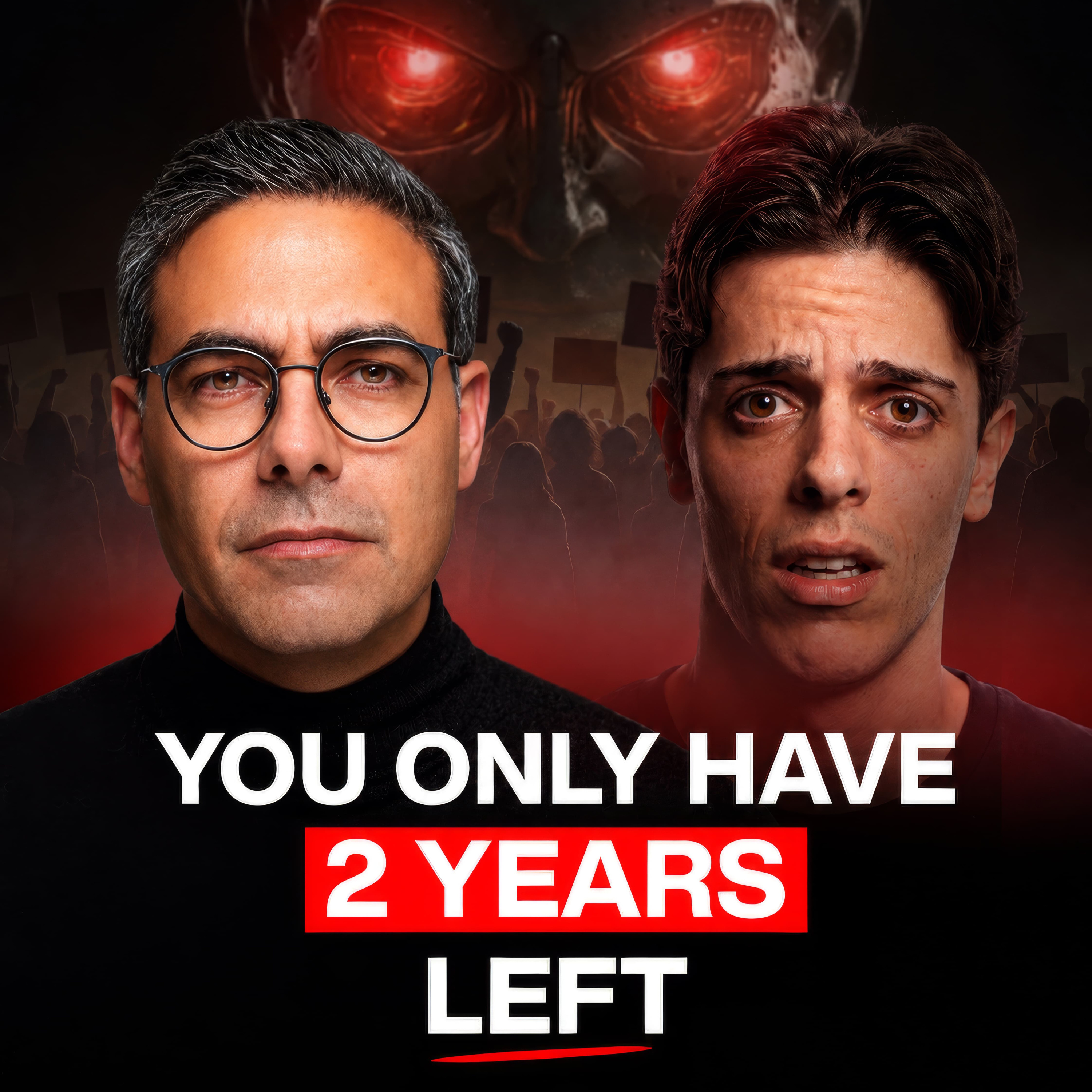 No One Is Ready For What's Coming (The truth about AI) 09.07.2026 1t 54minAI is already changing how we think, so who gets to decide what it changes next?Dr Gege Gatt is a Maltese entrepreneur who works in artificial intelligence, and in this conversation he explains what AI is already changing in work, education, relationships, democracy and power.Partners:Motileohttps://gamify.openinapp.link/motileo-ccAlliancehttps://contact.openinapp.link/alliancexccBoost+ (code CC10 for 10% off)https://boost.openinapp.link/cc10Gege starts with what AI is not: not magic, not evil, not conscious. It is a pattern machine trained on what humans wrote, and most people use it every day without knowing. Every revolution before it changed what humans can do. The steam engine changed how fast we travel, the oxygen tank let us breathe underwater. AI is the first one changing how we think.He explains it in pictures. Imagine being born in a library with no windows, reading every book but never seeing the tree you read about. That is AI: vast knowledge, no lived experience, and a fluency that creates an illusion of wisdom. By default it mirrors you, so if you think your idea is great, it will too.On jobs, he argues the job does not vanish, the tasks inside it do. You now need to reinvent yourself every three years, and we are training kids for jobs that will not exist when they qualify. Luca plays him Sam Altman's changing predictions and asks whether this is an Oppenheimer moment. Gege says yes, but not because of one explosion: because of a quiet handing over of our decisions.He brings it home to Malta with two proposals: a large language model built for Maltese civil society, so a citizen gets an answer that very second instead of waiting six weeks, and an AI tutor for every citizen, with the goal of making the country 15% higher in IQ within 30 years. Teachers, he says, will become coaches.Asked whether we could simply switch it off, he says no: AI is already inside banking and cancer diagnosis. He expects AGI in 5 to 10 years, and says dystopia will not look like robots in the street but like people giving up their decisions willingly.But the moment that stays with you is about people. Luca admits he sometimes finds himself alone, and asks whether AI will cure loneliness or make it worse. Gege answers with a Zulu greeting that means I see you, and its reply, which means I exist because you see me. AI can fill the silence, he says, but it cannot make you feel seen, and that is the biggest unmet need of our century.Asked for his biggest failure, he says the real failure is not missing your goals but reaching the end of your life and realising you chased the wrong ones. His answer is the line over the door of the old Greek temples: know thyself.This is not an episode about technology. It is an episode about what stays human when machines can do almost everything else.
 -
Using Debt To Build A Half a BILLION Dollar Empire | Michael Stivala 18.06.2026 1t 26minHow do you build a property business on borrowed money without letting it own your life?Michael Stivala is a Maltese property developer and president of the Malta Developers Association (MDA), who leads the Stivala Group, the family business in property, hotels and construction that his father started with a single taxi.Partners:Motileohttps://gamify.openinapp.link/motileo-ccAlliancehttps://contact.openinapp.link/alliancexccBoost+ (code CC10 for 10% off)https://boost.openinapp.link/cc10Michael is 52. He started working at 10, spending summers in his father's guest house in Msida, seven days a week. His father grew up poor, sold oranges from a basket as a boy, spent two years in Australia after the war to save 100 Maltese lira, and came back and bought his first taxi. Then a second, a third, and a business. Michael, the sixth of eight children, finished school at 16 with about 11 O levels and went to work, because the family business needed him.He explains how the money actually works. If you have €1,000, risk €200 or €300, not all of it. A business worth 100 can borrow 20 to grow, but never more than its income can repay. A €300,000 apartment bought with €30,000 down can rent for €1,300 against a €1,000 repayment, and that €300 is not profit: tenants leave, flats get damaged, and in 10 or 15 years it needs refurbishing. He calls it leverage of assets.He learned the numbers late at night. A friend came over at 11:30 at night to teach him accounts, sometimes until 3 in the morning. Another taught him to program in FoxPro, after he bought a computer thinking it would do the bookings by itself. For 12 years he also worked evenings as a waiter and barman.He takes you through COVID from the inside: hotels going dark, hundreds of employees, bank loans and bonds still to pay, and small tenants who could not pay their rent. They cut rents by 50 to 60%, rented hotel rooms long term and borrowed more to keep paying staff. As president of the MDA, he explains why banks ask so many questions and why too much bureaucracy kills the love for a project.He is honest about family business too: the office his family laughed at when he was 18 or 19, the question he still asks before big decisions, what would my father think, and the hurt when one of his brothers left the business.But the moment that stays with you is about time. His father was working in the guest house on the morning of the day he died, at 87. Michael worked seven days a week for 35 years. Around his 50th birthday a friend died at 70, and he did the maths: maybe 20 years left. The summer before last he took a Wednesday off on a friend's boat, and for the first hour or two he felt sick. He calls work an addiction.Asked what he would do differently, his answer is four words: work a bit less.This is not an episode about debt. It is an episode about a man who learned how to build almost anything, and is only now learning how to stop.
-
Former Prime Minister BREAKS SILENCE For the First Time | Joseph Muscat 04.06.2026 1t 59minWhat do you finally say to your father when he is given six months to live?Joseph Muscat is a former Prime Minister of Malta, an economist by background, who today heads the Malta Premier League, the body that brings together the 12 Premier League clubs.Partners:Motileohttps://gamify.openinapp.link/motileo-ccAlliancehttps://contact.openinapp.link/alliancexccHe grew up in the late 70s as an only child, when two, three or four kids was normal. His mother was a seamstress, a successful one, and his farmer grandfather worked the fields from dawn and had lunch at 11, a routine so ingrained that Joseph struggled at school not to eat at 11. His grandmother died on Christmas Day when he was 10. Before he was born, the working title for him was Robert, until it was changed to Joseph in tribute to his other grandfather, who had died about a year earlier.In this conversation he talks about being a lone wolf who still finds it hard to negotiate his own time. Why he thinks radio still carries more weight in Malta than people believe, and what the first televised Kennedy and Nixon debate says about voice and image. Why AI should be governed the way we govern nuclear energy. How during COVID he got bored and did a master's in sports management at 48, and learned a lot from classmates in their 20s.He became Prime Minister at 39 and says what he felt was not euphoria but a huge burden. What kept him grounded, he says, was answering emails himself and never changing his phone number. Today he heads the Malta Premier League, and explains how football really makes money and why Barcelona see Netflix as a competitor.But the moment that stays with you is about his father, a man who never missed a medical test, diagnosed with stage four cancer and given about six months. Joseph calls himself lucky, in very big inverted commas, because those months short circuited their relationship. His father was born in 1945, when the words were rarely spoken. Joseph got to tell him I love you, and they cried together. The chemo stretched six months into almost two and a half years.He was in China when his wife Michelle called to say it was a matter of hours. On the phone, he saw his father pass away. He waited, Joseph says, for the kids to arrive from school, then left peacefully. The hardest part came later, clearing his desk and finding the newspaper cuttings he had kept. His advice to anyone with ageing parents: take them on holiday.Asked what he would write in a letter for his daughters to find one day, he says he has left nothing unsaid. If it had to be one line: live your life and be free. It is not whose daughters you are, it is whose parents you become.This is not an episode about politics. It is an episode about fathers and children, and about saying the things that matter while there is still time.
-
Escaping Addiction To Become A Greater Entrepreneur | Josh O’Cock 22.05.2026 1t 7minWhat does it take to come back from the worst version of yourself?Josh O'Cock is a Maltese entrepreneur who built the marketing agency Growth Gurus, now runs two businesses, and has been drug free since 4 August 2022.Partners:Motileohttps://gamify.openinapp.link/motileo-ccAlliancehttps://masterplan.openinapp.link/cc-allianceBoost+ (code CC10 for 10% off)https://boost.openinapp.link/cc10Josh grew up in Malta as the kid who never fitted in. He later found out he has extreme ADHD, and at 14 a school told his mother not to send him back. She told him they did not deserve him. The same year he stayed awake through four hours of heart surgery and told the surgeon, who wanted to stop after three, to keep going. At 18 he moved to Manchester to study business and computer science, stayed eight years, did a master's degree so he could become president of the university ski club, and says he spent those years chasing other people's approval.Back in Malta, his team spent 300,000 of investment over a couple of attempts on a mobile game with 3D printable trophies, just as the world went free to play. The lesson he kept: use your head, think. Then came Growth Gurus. His first hire, Alex, asked to change the original name and became his business partner for nine years. They took a 35 desk office in January. In February came COVID, and he went in and sat there alone every day.Then he talks about addiction, carefully, without glamorising it. Drugs had become normal in the party scene he was part of. One year the company ended €110,000 down, and when someone in a position of trust told him he would bankrupt his business within six months, it hit a nerve. What followed was four days without sleep and two weeks in which he was convinced he was God. It ended in hospital. The last day he ever took a drug was 4 August 2022.He talks about his sister, who took his laptop away for two weeks and, he says, saved him on many levels. And about the worst moment of his life: the things he said to his mother at the end of those four days.But the moment that stays with you happens in the studio. Luca asks him to phone his mum. Josh had written a list of apologies to her in his gratitude journal and never told her. He reads them out: thank you for forgiving me when I hit rock bottom, even before I was able to forgive myself. She tells him he does not need to be sorry. I know your heart, son.Today he has stopped drinking too, runs two businesses, has a two year old daughter, and calls his psychiatrist an invaluable part of getting through it. He gives Luca an artwork with one word on it, the word he has tattooed on his wrist: Believe.This is not an episode about addiction. It is an episode about telling the truth to the people you hurt, and finding out they never stopped standing behind you.In his words: your past does not disqualify you.If you are struggling, you are not alone. In Malta you can call Supportline 179.
-
On a Mission To Lead an ENTIRE Country | Alex Borg 30.04.2026 1t 10minWhat do you do with your father's legacy when you lose him at 23?Alex Borg is the Leader of the Opposition in Malta and leader of the Nationalist Party, a former water polo player from Gozo who, at 30, is the youngest ever to hold the role.Partners:Motileohttps://www.motileo.com/blog/peak-performance-success-blueprintHe grew up in Gozo, which he describes as a small, tightly knit community where some people still leave the key in the door. His father was in politics, but Alex kept a step back: he was into sport, his studies, the gym and water polo. At 18 he had to leave home to study at university in Malta, living there during the week and going back to Gozo at weekends. He says it taught him independence early.When he was 23, his father died. He had been diagnosed with cancer six years before. They were close, and his father was his mentor. Alex was at university with exams, still playing water polo, and he tried to fill his father's shoes for his brother, seven years younger, and to be there for his mother, who found herself alone after so many years of marriage. He says he knows his father is watching him from up in the sky.What pushed him towards public life came afterwards. People came up to him to say his father had helped them better their lives, whichever side they were on. Those stories, he says, left him with a responsibility to keep his father's legacy alive. Four years before this conversation he was elected to Parliament for the first time, and served as shadow minister for Gozo.In this conversation he explains why the values of sport carry straight into politics: resilience, discipline and respect for your opponent. He never went into a water polo game to lose. He calls Robert Abela his opponent, not his enemy, and says they both want the good of the country in different ways. He talks about his partner Sarah, about how a role like his affects the whole family, and about the gym at 7am, AirPods in, the one space that is his.He also answers Luca's questions on dual careers for athletes, on teaching young people to use AI responsibly, on how a party is run, and on transport, housing for young people and regulation and bank financing for startups.And he is open about the human side. Asked whether the role ever felt too big, he says big, yes, bigger than him, no. Asked whether the comments affect him, he says that if he said they did not, he would be lying. What scares him most is not being able to keep a promise. He asks his own team to watch this podcast and tell him what he did wrong. And asked if he is ready, he says you are never fully ready.The moment that stays with you comes near the end. Asked about the most painful moment of his life, he goes straight back to his father. Then the journal question left by the previous guest asks for his biggest fear. His answer: losing someone close to him again.This is not an episode about a party. It is an episode about a son who lost his father at 23, and what he decided to carry forward.
-
The Heartbreaking Story of Daniel Borg Cardona (SAD TRUTH) 09.04.2026 1t 4minHow do you rebuild your name when people have already decided who you are?Daniel Borg Cardona, known as Danny, is a Maltese chef who went from living on the street and washing plates to running his own restaurant and team.Partners:Motileohttps://www.motileo.com/blog/peak-performance-success-blueprintBoost+ (code CC10 for 10% off)https://boost.com.mt/Danny is 36. His dad left when he was 10. Until 16 or 17 it was him and his mum, who he calls the best woman in the world and a great cook. Then she went on holiday, took a long time to come back, and he was left alone. He never had a Christmas tree or a Christmas lunch, and nobody ever rang to ask where he was at midnight. He says he missed being told off.He lived on the street, and stole food to survive. At 19 he knocked on a friend's door and the friend's mother pulled her son away from him: don't hang out with that kid. It is the root of the line he keeps coming back to: he was lost, never bad. He started washing plates, 16 hours a day, worked a bar in Paceville, held three jobs at once, and then found out he could cook.He explains the quote he lives by, be curious, not judgmental, and why some of the people who were mean to him years ago now work for him. Why every tattoo, from the broken heart on his face for his mum to the word faith on his hand, made him work harder, because he had to be able to back them up. Why he stopped looking for happiness and looks for peace instead. Why you should never trust twice.He talks about the man who was like a father to him, the only person who ever invited him to Christmas lunch, the best day of his life, and the day he found out that man had betrayed him, the worst. When he loves someone, he says, they always have to go: his dad, his mum, his sister, who passed away a few months ago, and his best friends. When someone loves him now, he freezes.But the moment that stays with you is his father. They had not spoken for 20 years when he died last year. Danny went to the funeral, paid his respects and kept going. He does not want to ask him why he left anymore. What he wishes is that he had been able to say one thing: hey Dad, I'm okay. Later his father's family reached out and came to eat at his restaurant, and he calls it one of the best moments of his life.His biggest fear is having kids, because he is scared of failing them. What he wants to be is simple: a guy who cooks, feeds people and makes everyone laugh. He does not sell food, he says. He sells emotions.This is not an episode about cooking. It is an episode about the difference between being lost and being bad, and what it takes for other people to see it.His proudest moment was not a restaurant. It was the day, about two years ago, he found peace.
-
How I Sold €500,000,000 In Property Sales in 365 Days | Michael Bonello 19.03.2026 1t 8minWhat does building 30 offices in five years cost you outside the office?Michael Bonello is the Maltese estate agent who left RE/MAX Malta with 120 people to build Alliance, now 30 offices, and heads the board of Malta's estate agents.Partners:Motileohttps://www.motileo.com/blog/peak-performance-success-blueprintMichael's parents separated when he was six. He was the only kid in his school with separated parents, and he admits he ran with the trouble kids. At 18 he ran his father's two floor pet superstore, the first to bring reptiles to Malta, until two of its own customers opened rival superstores. The market split three ways and all three closed. It cost about €250,000, and his father paid it off.He came into property by accident. In his early 20s, a seven floor block went up beside the family villa in Sliema and his mother asked him to take care of it. An agent called Fernando told him he was good at this and introduced him to Sara Grech. His first sale was Tigné Point, when it was still a football pitch and buyers watched a 3D walk-through in a chapel. Then RE/MAX came to Malta, and over about 15 years he built 10 offices and 120 agents.He explains why a new office loses money in year one, breaks even in year two and has a real team by year three. Why he puts his own money into commercial property and shops rather than homes, and how a three bedroom in Swieqi bought for €150,000 is now worth €350,000. Why licensing Malta's close to 4,000 estate agents should clear out the cowboys.The most emotional day of his life, after having his kids, was leaving RE/MAX. All 120 people came with him. Two weeks after signing the exit, COVID hit. Under restrictions agreed in the exit, for 18 months there were thousands of properties they could not work on and no rentals, so he lost his whole rental team and closed two offices. Five years on, Alliance has 30 offices and closed its latest year just shy of €500 million in sales, at €489 million, up from €150 million at the start.He is just as open about his health. After his separation he threw himself into growing the business, all lunches and dinners out, and went from 120 kilos to 150. He thought twice before walking up a hill, slept with a sleep apnea machine, and thought he was going to die. Two years ago he had an operation. Today he is 85 kilos.But the moment that stays with you is his mother. She had cancer for seven years, when everyone had given her a couple. After chemotherapy she would go and swim. He kept working, not believing the time had come, and once the chemo stopped she was gone within a month. He was home with his kids that weekend when his sister called at five in the morning. His mother never told him she was proud of him. Her friends told him at the funeral. What she did tell him was: Mike, slow down.This is not an episode about selling property. It is an episode about what a man builds, and what he misses while he is building it.
-
The Truth About The Music Industry Nobody Tells You | EDD 05.03.2026 58minWhat does it really take to build a music career from a small island like Malta?EDD is a house music DJ and producer from Malta, named in BBC Radio 1's top 10 future artists of 2022, whose track Mama Used To Say made the FIFA 23 soundtrack.Partners:Motileohttps://www.motileo.com/blog/peak-performance-success-blueprintEDD is 25. He made his first CD at seven in his uncle's studio, went through rock, metal and rap, and found house music through his two older sisters. Until 17 or 18 he wanted to play water polo professionally and trained up to four times a day. After about five gigs, turning up to training hung over, he chose music. Today 95%, if not 98%, of his calendar is abroad, and he sat down with Luca straight off a month long tour of Paris, Costa Rica, Miami and New York.He is honest about the inside of it. Loads of travel, time away from home, and even now some nights on a friend's couch. DJing is a business: money, time and effort in, and at the start very little back. His first real paycheck came at 20 or 21, from making music, and it changed nothing about his day.He takes you through how a track gets made and sold. His best songs were ready in 30 or 40 minutes, but you make a hundred songs to find that one. Six months earlier he had never used AI; now it is in about 90% of his songs, mostly for vocals. He explains what you sign away to a label, how labels compete for one track, and how one song became a deal for 10 to 15 songs with Helix Records.Then the turns. Mama Used To Say was a track he made at 20 and forgot about, until the DJ Dennis Sulta played it to a massive crowd. While he was quarantining alone with COVID, his manager called: Pete Tong wanted it on his label. It ended up on FIFA 23. At 21 he sat alone in his room as BBC Radio 1 named him among its top 10 future artists of 2022.But the moment that stays with you comes earlier. His father died unexpectedly when EDD was still a teenager. About three weeks later a best friend told him to bring his decks to his birthday party and stay on the side. It was the first time he DJed in front of people. His father never heard him play to a crowd. Two years ago EDD played Pacha in Ibiza with his mother and sisters there, his mother right behind him as he played. It would have been amazing, he says, to have his dad there too.This is not an episode about DJing. It is an episode about loving one thing so much that the travel, the couch and the first paycheck barely register.His advice is short: if you are truly passionate and making good things, the money will follow.
-
Life Lessons From The Man Who Sang For Obama And Ronaldo | Joseph Calleja 12.02.2026 1t 10minWhat does a life on the world's biggest opera stages teach you about what really matters?Joseph Calleja is a Maltese opera tenor who has sung professionally around the world since he was 19, and the founder of the Joseph Calleja Foundation, which helps Maltese artists build careers.Partners:Boost+ (code CC10 for 10% off)https://boost.com.mt/Joseph Calleja grew up singing cartoon songs, then in the church choir and the school choir at De La Salle. He played basketball for Malta's national team and became a good goalkeeper fast, because the older boys behind his house said they would beat him up for every goal he let in. At 12 or 13 his father, Charles, sent him to work in the family's wholesale warehouses as a stevedore, 8 to 10 hours a day. For a while he resented it. Today he agrees with it completely: it built character.He explains why the voice chose him, the way talent chose Federer or Eddie Hall, and why opera is the most complicated performing art there is, sung without a microphone to theatres of up to 4,000 people. He won prizes at international competitions, starting in Vienna in 1997, and at 19 his first job abroad, in the Netherlands, came with a penthouse that turned out to be an attic with a one burner stove. He cried when he walked in. No one from Malta helped him, he says, not one single person. Today his foundation has raised almost €3 million in 12 years and helped over 100 scholars.He talks about his mentor, Paul Asciak, 55 years older, who punched him on the shoulder when he would not listen and taught him everything. About a flight out of Amsterdam with severe engine trouble that had to glide back. About the day in Brussels, at 20, when he shoved off men trying to steal a stranger's briefcase, a story he says he had never told in an interview.He met Barack Obama during the Kennedy Center Honors weekend. He sang for Ronaldo, the original number nine, who the next day crossed 50 metres of an airport terminal to shake his hand. What he learned from the greats is that they are so driven that many of them are boring: nothing matters except the target. And if that is never balanced, he says, it ends sadly.But the moment that stays with you is about his children. From the day they were born, they came first. After the gala at a Nobel Prize ceremony he left the hotel at 3am still in his tuxedo and took two flights home so he could pick them up from school. He has been a single dad for more than six or seven years.Asked for the lesson underneath it all, he gives it in one line: everything comes with a price. Asked what he would tell his teenage self: worry less. The good passes, and so does the bad.This is not an episode about opera. It is an episode about what greatness costs, and what a man who has stood next to it chooses to keep.
-
E-Commerce Founder: Broke At 21, 5K Days At 24, Everything It Taught Me! | Liam Cutajar 22.01.2026 1t 12minWhat does a 21 year old do when he wakes up broke, with no job and no O levels?Liam Cutajar is a 24 year old Maltese e-commerce entrepreneur who runs international dropshipping stores with a team of 12 and teaches the model to students.Between 15 and 21, football was Liam Cutajar's life. At school he scored 10 out of 100 in maths, and when a teacher warned him he would never get a good job without his maths O level, he went home and googled whether that was true. An ACL injury ended it. At 21 he woke up with no job, no O levels and no money. Between 16 and 21 he had worked 20 to 30 jobs and been kicked out of every one after about a month.A friend of his dad found him a job delivering tyres, ten hours a day in Malta's traffic. It was the only job he kept for over a year, because of the boss, not the work. He says he felt like a slave. That boss told him not to try dropshipping. He researched it anyway. His first product, a flame aroma diffuser sold in Malta, made no sales for six days. On the seventh, a Sunday, he woke at 8:30 to two orders and €63 profit made while he slept. That store went on to just over six figures in sales, at 60 to 70% margins, and he sold it.Then he explains how international dropshipping really works, in plain numbers. Why selling in Malta was a cheat code for margins, but the US and UK are where it scales. What return on ad spend means. Why the trick is to be the first to bring a product that is selling on TikTok Shop over to Facebook. How a €5 supplement sold for €35 turns into monthly recurring revenue on a subscription. How he and his business partner took an 8 in 1 magnesium product from zero to 5K days in three weeks, and why a tallow face balm lost them 10 to 15K. On camera he shows a Christmas store he started in October, doing 7K in sales a day.He also shows the ruthless side: rivals with bigger teams and budgets, and people who pay over five figures to get a competitor's ad account banned, something he says was tried on him and his business partner before they sorted it out.But the moment that stays with you happened away from the business. While he was in the UK, a phone call brought devastating news about a family member's health, and he flew home. He says he has always put health first, love second and money third, and that he prays every night. What it changed was his urgency. A business can go from 50K a month to nothing overnight. You can walk out of the studio and be hit by a car. He cannot understand people who are comfortable doing what 99.9% of people do.He talks about why he refused to promote a trading scheme he calls a pyramid scheme, how he lost over 30K in one crypto scam call while sitting in a KFC drive thru, why follow your passion is the most overrated advice he knows, why he believes school builds robots, and the 30 page plan he printed at the start of the year.This is not an episode about dropshipping. It is an episode about a young man who was told what he could not do, checked for himself, and decided he had no time to waste.
-
After 10 Years of Failure, I Faced My Biggest Fear | Edward Tortell 18.12.2025 1t 27minWhy would a man who could not take his shirt off say yes to Love Island?Edward Tortell is a Maltese entrepreneur who runs a ride hailing business, a former talent manager at Defhouse in Milan and a former Love Island Malta contestant.At 15 or 16, Edward Tortell weighed 96 kilos. He played football at school in his blazer because he could not bear to show his body, and he was bullied for how he looked. At 19 he was a cashier at HSBC in Sliema on €1,000 a month, spending his salary every weekend on bottles at Footloose. The ten years that followed, he agrees, were essentially a decade of failure.He takes you through it. A year at the bank, trading his time for someone else's money. A law course he left after a week. An employment agency, started while he studied, that grew to about €20,000 a month until his business partner left the country and the workers came to him for their wages. Then, after nights without sleep, he stopped it all because making money off other people did not feel ethical. His dad backed his ideas, and Edward lost a lot of that money. He says he has since repaid him ten times over.Then Milan. A three day trip to Defhouse, a content house of creators with tens of millions of followers, turned into a month on the sofa, then a job as a talent manager. The first two months he was paid nothing. He worked on projects for Louis Vuitton, Armani and Dolce & Gabbana, and he explains why he left: at lunch, reaching for a plate, a staff member told him talent first.A girlfriend ended it on the phone while he stood in the rain outside a TV studio in Bologna, after he had booked a week in the Maldives for her birthday. He has learned, he says, that when someone pulls back, giving more only pushes them away.But the moment that stays with you is about his body. He could not take off his top in front of his own girlfriend. When he said yes to Love Island he was overweight and drinking a lot. He needed something to snap: you are going to be topless in front of the whole country. He thinks he lost 30 kilos in 100 days.Inside the villa he tried to calm the arguments and trained before sunrise, in a house with no clocks. Outside, every episode brought hate. Two people from his past were brought into the house, and he says things were said about him that were not true while he could not answer. When he came out, his inbox was full of messages from people who started training because of him.Today he runs a ride hailing business with 20 cars and two vans and wakes at 4am. He admits his business is everything right now, and that his health should come first. Asked if he would do it all faster, he says no. Fast fails.This is not an episode about Love Island. It is an episode about ten years of getting it wrong, and the day a man decided to stop hiding.
-
I Was Ready to Die, Then I Chose Life (TRUE STORY) | Justin Pisani 11.12.2025 1t 14minWhat happens to the boy who spends 15 years holding his family together?Justin Pisani is a Maltese personal trainer and fitness coach who runs his own gym and, with his team, trains 214 personal training clients.Justin Pisani grew up in a close, happy family. His dad drove him everywhere, his mum ran marathons, and he was with Malta's national football team until he was 14. He and his sister, two years older, told each other everything. Then, when he was 13, it changed overnight. He calls it a coin flip.His sister fell ill with anorexia at 15, recovered, and then fell into hard drugs. His parents put everything into saving her, and Justin felt he had lost everyone. Some parents told their children not to stay with him. He kept the anger inside and hid it so well that even his friends never knew how bad it was. He remembers feeling happier at a friend's grandmother's funeral than in his own home.At 16 he walked into a gym full of misfits and found a family. A psychiatrist diagnosed him with OCD, the kind where one thought gets stuck in your head, and he decided to use it as a superpower, learning the human anatomy down to every vein and artery. He explains why he never ran away, though he wanted to every day: in his parents' minds they had already lost one child, and he would not make them lose another.Three years ago, with six figures of savings lost in one penny stock, his sister still struggling and his parents depressed, he reached the lowest day of his life. A friend saw him crying on the gym floor and hugged him. He talks openly, for the first time he says, about how close he came to ending his life that day, and what turned him around: the thought that he still had a choice, when people with cancer do not. He decided that from tomorrow he would be the strongest version of himself. He says the thought never came back.What rebuilt him was small. A rule to live each day the way he planned it the night before, whatever he felt. The first win was making his bed. Then brushing his teeth, saying hello to a stranger, going to the gym. He talks about years of feeling numb, learning to trust again, and forgiving the people who sold his sister drugs. She is now two years clean, and his message is simple: if you want help in Malta, there is help. Recently his father told him how proud he was. Justin cried.Today he and his team train 214 clients, and he recently walked the coast road, 10K a day for 100 days, and gave €1,000 to Puttinu. After 15 years of pain, his goal now is simply to feel happiness.This is not an episode about fitness. It is an episode about a boy who held his family together for 15 years, and the small daily things that brought him back.If you are struggling, you are not alone. In Malta you can call Supportline 179.
-
What Starting A Wine Business At 40 Taught Me | Andrew Azzopardi 30.10.2025 54minWhat did starting a wine business at 40 teach him about patience, margins and what the rich really buy?Andrew Azzopardi is the founder of Vintage '82, a Malta fine wine importer that supplies superyachts, after a career in catering, event management and building new businesses for Maltese companies.Andrew's first memories of wine are summer Sundays in his father's garage, the kids and the women chosen to jump on the grapes. At junior college he did maths and physics and thought he wanted architecture, until he read his first book on it. He went into catering instead, and was told he had chosen to go and peel potatoes. After that came kitchens, event management for some of Malta's most luxurious events, an MBA by correspondence, and years starting new businesses for larger Maltese companies.One of those businesses sold wines and spirits by the container to Hong Kong, Australia and America. For six months he did not make one sale, and the CEO gave him two more. In the seventh month they closed the first, and within a year and a half that business was turning over €1.5 million. The problem had been margins: at that volume, a competitor told him over a drink, 5% to 6% is the target, and the difference between 5% and 7% can mean a sale or no sale.All of it fed into Vintage '82. He explains what changes when the financial backing is suddenly you, why he solves problems for the long term, and the advice from an old boss he still lives by: celebrate your wins.He explains why quality is only the starting point for a bottle at thousands of euros, and the rest is rarity, story and a quiet flex. Liber Pater, which he has recently started importing, costs around €35,000 a bottle from the producer, with 300 to 500 bottles made a year. And the superyacht that wanted around 300 bottles of Cristal Rosé for a champagne party: he had them flown in from Barcelona, by which time the yacht had left Malta, so the captain sent the yacht's helicopter back to collect them.Luca gets two challenges: three blind wines at €20, €35 and €60, and three bottles judged on the label alone. The one he says looks like an old Fanta bottle turns out to cost €20, and Andrew agrees it drinks like a €50 wine.A bottle from 1945, made during the war, moves him like no other product: a moment in time you will never taste again.But the moment that stays with you is his mum. She died in 2005, at 50, when he was 23 or 24. 2005 turned out to be a legendary Bordeaux vintage, and he keeps it in his cellar and drinks it to remember her in the most positive way. When the journal asks what moment he would relive, he chooses the evenings his father was out at meetings, when he and his mum sat at the table eating her pies and laughing.This is not an episode about expensive wine. It is an episode about patience, and about stopping long enough to enjoy a moment that will not come back.
-
Bad Coaches Will Make You Better! | Stevie Camilleri 23.10.2025 1t 14minWhat does a 23 year water polo career teach you about ego, criticism and bad coaches?Stevie Camilleri is a Maltese water polo player who joined the Neptunes first team at 15, played 16 years professionally in Italy and still represents the Malta national team at 38.Stevie was six when a teacher told his parents he needed discipline and might find it in sport. His grandfather was president of Floriana Football Club, so he tried football, then basketball, then swimming, where with his head in the water he could not distract anyone. At around 12 he chose water polo, partly because the season was shorter. He joined the Neptunes first team at 15 and has never signed for another Maltese club.He says he was not ready. Talent, yes. Discipline, no. The wake up call was a trial in Italy that went badly because he was not strong enough, then a season and a half in the gym that took him from under 80 kilos to 90. Then a summer playing alongside Vladimir Vujasinović, one of the best of his generation, who told him the talent was there and helped send him to Partizan in Belgrade at about 20.In Belgrade he played for the second team, because only one foreigner could play in the league. Then came 16 years in Italy, 12 in the top division and four in the second. From year one to year 16 he was always the Maltese, and he played every match with a chip on his shoulder. It is why he still prefers a negative comment to a compliment.He explains why an opinion only matters to him if the person giving it matters, why a bad coach can make you stronger, and why switching teams to escape one becomes a ready made excuse. And why today's 15 year olds, who think they are adults, need a leader who sets the example and puts his own ego aside.The quick fire round has the night after a defeat he stuck his head into a car to confront a man who had shouted good game, only to learn it was the boxer Lydon 'Beqqu' Chircop, and the flight at 15 when he stuffed an older teammate's bag with the plane's pillows just before a random airport check.But the moment that stays with you is 2020. He was at his peak in Rome, his second son just born, when he fell unwell at the European Championships in Budapest. The league was called off, his salary became an issue, and at 33, after 13 years away, he wondered if it was a sign to stop. He kept going. That summer, between the semi final and the final of Malta's summer league, a teammate tested positive and he spent 14 days alone in an apartment, away from his two young children, then had two days to prepare for the final. They lost.Asked if he is happy, he chooses another word: content. He has given the sport everything, it has given him a lot back, and now he wants to pass it on.This is not an episode about medals. It is an episode about the long, quiet work of becoming the player your talent promised.
-
Laziest Way To Make €342/day (WINNING FORMULA) | Sam Urpani 09.10.2025 1t 16minWhat does it take to turn a skill you already have into a consulting business?Sam Urpani is a Maltese entrepreneur and business consultant who co-founded an award winning web design agency in Malta and now teaches people how to build an online consulting business.Sam grew up in a family where nobody was employed: his dad had a bar, his mum a retail shop, his grandparents a restaurant. He was a C student at best, but at 15 he taught himself Photoshop, and for his 16th birthday he asked his mum for a Photoshop conference. Affiliate sites, drop shipping and a Conor McGregor fan site all failed, and each one taught him something.At about 20, a friend from the gym put him on a call with a developer he had never met. Their first test job went well, and the next month they both quit their jobs. They ran a web design agency together for around seven years, and two years in they won one of the biggest international web design awards. But for five years he could not let go of the work, what he calls the curse of the expert, and he ended up hating the thing he loved most, designing websites.The turn came at a mastermind in London with Charlie Morgan, which cost Sam €10,000 of his own money that he did not really have. The idea he brought home: first you get paid for what you do, then you get paid for what you know. He spent three months in his room recording a program, sometimes three hours for a ten minute video, and launched it for real estate agents with no logo and no website.Then he lays out the four steps he teaches. An offer: a specific person, a specific problem, a specific result in a specific time frame. Attention: go where your people are; he favours YouTube, because trust comes after 7 to 15 hours with your content. Sales: get commitment on the call instead of sending proposals, and price on value, not hours, which he explains with a Ferrari sold for a tenth of its worth. Delivery: a program, worksheets and calls, so the client does the work and learns the skill.He also explains why success sits on the other side of boredom. Why your level of success is capped by your level of leadership. Why he would spend a year inside a successful company before starting his own. Why he only takes criticism from people who have the life he wants.But the moment that stays with you is the low point. For about three years at the agency he did the same work over and over, up at 5 in the morning, asking himself at his desk if this was what he had signed up for. He gave himself a three month window to fix it, and went looking for a mentor. What got him through was his mum's question from childhood: okay, cool, what are you going to do about it.This is not an episode about easy money online. It is an episode about letting go of the work you love, and paying to learn what you cannot work out alone.Mentioned in this episode:Sam's Masterclass - https://www.skool.com/clearscale-4019/Sam's Playlist To Success - https://www.youtube.com/watch?v=KJt4BH3BRWU&list=PLDbzPpqAQMCov1CEgvB_1O_qTlIjcyA28
Lignende podcasts


Populær i
Denne podcast optræder også i podcast-hitlister i disse lande.
