
Latent Space: The AI Engineer Podcast
Latent.Space
0
Latent Space is a podcast by and for AI engineers, covering foundation models, code generation, multimodality, AI agents, GPU infrastructure, and more. The show features interviews with founders, builders, and thinkers from companies like OpenAI, Anthropic, and Meta, providing insights into cutting-edge AI technology. It aims to give listeners both a definitive take on current trends and an introduction to emerging tools. The podcast has attracted over 10 million readers and listeners in 2025.
Episoder
-
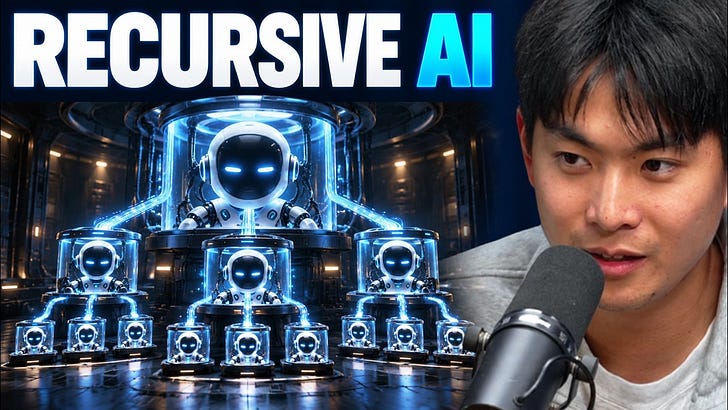 Academia is for Ambition — Alex Zhang, MIT 02.10.2026 1t 41minLast call for regular tickets for AI Engineer NYC! As an exclusive for Latent Space subscribers, the first 30 of you can take a 30% off code if it helps - for new tickets only, no refunds! See you in 2 weeks!While we tend to cover industry on the pod, every so often we celebrate a clearly emerging superstar PhD. In 2024 we featured Shunyu Yao, who went on to build Operator at OpenAI and is now Chief AI Scientist of Tencent. In 2025 we featured Jack Morris, who went on to cofound Engram at $600m and is now a leading voice on continual learning. This year we are proud to feature the work of Alex Zhang of MIT.From GPU kernels and KernelBench to Recursive Language Models, Mismanaged Geniuses, and massive multi-agent swarms, Alex Zhang is exploring how much capability we’re leaving on the table by wrapping increasingly powerful models in primitive systems. RLMs took over the timeline early this year:and an RLM based harness was the first to ~solve ARC-AGI-3 before OpenAI’s Astra:and is even today, influencing new research that has more extreme implications than RLMs:We go deep on GPU Mode and AI-written kernels, research taste and why academics should take bets industry labs won’t, GEV and alternatives to the standard autoregressive language model, and the idea of harnesses as compositional generalizers. Alex explains RLMs, context offloading, programmatic subagent calling, Prime Agent, persistent subagents, and why the “language model” of the future may actually be an invisible swarm of agents underneath a simple interface. We also discuss OpenAI’s massive agent experiments, Kimi swarms, open-ended research at Sakana AI, speculative programmatic tool calling, capability overhang, Neuralese, and where Alex thinks the next big research opportunities may lie.We discuss:* Why AI-generated GPU kernels still leave substantial room for human expertise* How one expert insight can potentially replace enormous amounts of brute-force token search* Why PhD students should take research bets that initially look trivial, weird, or pointless* What SWE-bench, RLMs, ReAct, and Quiet-STaR reveal about research taste* GEV and why a language model does not have to mean an autoregressive text-to-text decoder* Why Claude Code, Codex, and Pi are structurally more similar than they look* How harness design can improve compositional generalization across tasks and domains* RLMs: context offloading, code execution, recursive subagents, and shared memory* Prime Agent, continual harnesses, and persistent agent-to-agent communication* Why the model you query in the future may secretly be an entire swarm or scaffold* OpenAI’s 10,000-agent experiment, 130B output tokens, and ~$40M-equivalent problem solving* Why much of an agent swarm may be wasted search — and why convergence is still hard* Kimi versus OpenAI and different approaches to multi-agent systems* Open-endedness, Sakana AI, and finding hidden gems in enormous amounts of generated work* Why current frontier models may already have a large capability overhang* Speculative programmatic tool calling and overlapping tool execution with generation* Whether English, code, or an entirely new “Neuralese” constrains how models reason* AI for science, fast-moving benchmarks, and how Alex chooses what research problems to bet onAlex Zhang* Website: alexzhang13.github.io* X: @a1zhangTimestamps00:00:00 Introduction00:00:49 GPU Mode, KernelBench, and AI-Written Kernels00:07:38 Human Expertise vs. Brute-Force AI Search00:13:20 Research Taste and Taking Big Bets00:19:28 GEV and Rethinking the Language Model00:29:03 Video Game Agents and the Harness Problem00:31:01 Why Claude Code, Codex, and Pi Are So Similar00:36:42 Harnesses as Compositional Generalizers00:44:24 RLMs Explained00:52:01 Prime Agent and Persistent Subagents00:57:41 RLMs in the Wild01:00:30 OpenAI Swarms and the Future of Language Models01:07:26 Open-Endedness and Sakana AI01:15:52 Kimi vs. OpenAI Agent Swarms01:20:06 Capability Overhang and Speculative Tool Calling01:28:19 Neuralese, Future Research, and AI for ScienceTranscriptIntroduction: Alex Zhang, RLMs, and GPU ModeSwyx [00:00:00]: All right, we’re here in the studio with Alex Zhang, I guess most famously of, RLMs, but you have a few other affiliations. Welcome to the show.Alex Zhang [00:00:12]: Yeah. Thank you for having me.Swyx [00:00:13]: Yeah. I guess GPU Mode as well?Alex Zhang [00:00:15]: Yes, GPU Mode as well.Swyx [00:00:16]: You were shepherded in by Mark Saroufim. Not everyone gets that kind of welcome.Alex Zhang [00:00:19]: Yep. Yeah. Yeah. I’m very close to all the people in GPU Mode, so yeahSwyx [00:00:23]: YeahAlex Zhang [00:00:23]: We often end up working together in various capacities, like even beyond just GPU Mode itself, so.Swyx [00:00:29]: Yeah. Can we explain, so people who are not that close Don’t know about this. It’s just a-- it’s a Discord. It used to be focused on, I guess, CUDA Mode, and then generalized a little bit. it was started by Mark.Alex Zhang [00:00:41]: Yep.Swyx [00:00:42]: It was basically like. To me, it’s like the hiring pipeline of the PyTorch team.Swyx [00:00:45]: And then you left PyTorch.Alex Zhang [00:00:47]: Yep.Alex Zhang [00:00:49]: Yeah. So it used to be, I think, it started actually around when I was in college, in like 2023. I think it was started by Mark, Andreas, and Jeremy Howard. The original premise was just like, it was a GPU-- or it was a Discord dedicated to learning how to write GPU kernels, and they had, like, lectures. That was basically the extent of it. and I got interested in it because I was writing GPU kernels. It was actually out of, like, pure chance. I was interning at Snapchat at the time, andFrom CUDA Mode to GPU ModeSwyx [00:01:22]: Rexis.Alex Zhang [00:01:23]: Yeah, I was very bored with Rexis. So, they had a project where, like, they were interested in writing. It was this paper called Infinite Attention. It was like a Google paper.Swyx [00:01:35]: Yes, we’ve covered it on Paper Club.Alex Zhang [00:01:36]: Yes, yeah. So I was interested in whether or not you could write specialized kernels for it at Snapchat. it didn’t. Nothing really came of it, but I joined GPU Mode. At the time, it was called CUDA Mode, I think for, like, legal reasons or something, they changed the name. But I met Mark, I met Matei, I met a bunch of other people that were very involved in the community. And then Mark had pitched this idea called Popcorn, which was now what you see as the leaderboard today. But the general idea was like. I think all of us had this, like, intuition that GPU programming is, like, very similar to if you guys have done, like, competitive programming. It’s a, it’s a not. I don’t mean to say, like, they’re transferable skills.Popcorn, KernelBench, and Automating GPU KernelsSwyx [00:02:17]: You have constraints. You code golf a little bit.Alex Zhang [00:02:19]: Yep.Swyx [00:02:19]: Yeah.Alex Zhang [00:02:19]: Yeah. And there’s like. There’s actually a surprisingly small space of optimizations that people do. and there’s actually not that many kernels per se that people are interested in optimizing. And so we kind of had this thought that, like, if you had enough data, like, in the same way that Codeforces, there’s millions of problems. If you could do this with GPU code, like, you could scale and automate kind of GPU kernel development, which for researchers is a huge deal. ‘Cause I think one of the bigger bottlenecks. Like, if you look at, like, Mamba, for example, like, they release the paper with kernels because otherwise, like, you can’t really use it in any meaningful way? And not everyone has, like, a Tri Dao on their team. So we’re very interested in this. KernelBench kind of spawned from that too, of like, can we get LLMs to automate, GPU kernel code? And I think that was like a. It was a very fun time. It was like between college and my PhD, and yeah, I had a really pleasant time doing stuff with GPU Mode. Now I kind of just help with the lectures sometimes. I’m not as involved, and I think in general, like, we don’t have as many competitions as we used to. But, yeah, I still keep in touch a lot with everyone there.Swyx [00:03:27]: Is there a friendly rivalry? Because I think the previous community that used to do this was like MLSys, MLPerfAlex Zhang [00:03:32]: YeahSwyx [00:03:32]: Kind of thing. Is there a friendly rivalry? Is this like just new generation MLPerf, or what’s going on?Alex Zhang [00:03:38]: The nice thing about GPU Mode is that it is also a community in the sense that, like, a lot of the lectures are very easy enough for a beginner to follow and ask questions and things like that. And, like, the competitions are, like, somewhat, not secondary, but, like, you can participate in them to learn. I think with a lot of, like, MLSys, MLPerf kind of benchmarks, like, for the most part, like, only serious labs and companies participate. Like, seriously in them, at least. That was my understanding of it. I could be wrong. But I think also beyond GPU Mode now, one thing that has been really exciting is there’s a lot more websites and, like, people that work on hosting competitions. Like, I think there’s this.Alex Zhang [00:04:21]: I think there’s this website called, like, LeetGPU or something, and it’s like leet code for GPU problems.Swyx [00:04:26]: Wow.Alex Zhang [00:04:26]: There’s, like, other ones that I’ve. Like, we’ve, we’ve seen. Like, there’s many that have kind of spawned and, like, talked on GPU Mode, and like, it’s very exciting in the sense that I think GPU programming used to be super niche, like when I was interested in it. And the only reason I got interested in it was Tri Dao gave a talk at Princeton because he was, applying for faculty. he is faculty there now, but I listened to his talk on FlashAttention in like 2023, and I was like, “Wow, this is like the coolest thing ever.”Alex Zhang [00:04:56]: And I was like, “This is like. This is what everyone should be working on.” I guess, like, vLLM and stuff had come out too, and it was like, “Oh, we should be writing kernels.” But now it’s like, everyone writes kernels. Like, everyone. It’s, it’s. I think it’s actually almost saturated in some sense, as a field.AI-Written Kernels and the Verification GapVibhu [00:05:11]: Any interesting takes for people that wanna get into it? So I think one of the biggest news is GPT-5.6 Wrote more efficient kernels, so Terra and, Luna could be 80% cheaper.Alex Zhang [00:05:24]: Yeah.Vibhu [00:05:25]: And then we’ve seen other competitions where people are, like, setting records, and they’re like, “We’re doing some auto research loop,” and these are people that don’t have a backgroundAlex Zhang [00:05:34]: YepVibhu [00:05:34]: In any kernel writing, right?Alex Zhang [00:05:36]: Yeah. So even on the GPU Mode leaderboard, if you look at, like, a lot of the recent problems, almost all the solutions are AI generated. However, you’ll notice on the leaderboard. So there’s this guy named Gauners who’s, like, a very, like, regular member of GPU Mode. We’ve always known for a long time that he’s, like, a super cracked, like, GPU kernel writer. One thing we discovered on this leaderboard is, like, almost ev-- Like, he also used AI to help him with these solutions, but for the most part, like, he helped prompt and move it in certain directions. we found that, like, his kernel was, like, basically the only one in, like, the top 10 that was actually stable in, like, actual, like. end-to-end systems. And it does bring into question, like, it’s not. Like, GPU kernels have a verification problem. Like, we’ve kind of known this. It’s been a problem since KernelBench was released. Like, there’s a lot of reward hacking that goes on. But you al-- Yeah, you also notice, like, the lines of code is a lot smaller, butVibhu [00:06:33]: Yeah, I was gonna ask, is that noticeable, or is it justAlex Zhang [00:06:36]: Yeah, no, it’s, it’sVibhu [00:06:36]: OkayAlex Zhang [00:06:36]: It’s definitely, like, very important, and I think, like, it’s, it’s really interesting that still there’s a lot of alpha in being good at writing GPU kernels.Vibhu [00:06:44]: Okay, so there is a gap from verifyingAlex Zhang [00:06:45]: There definitely is, yeah. I think, like. And this applies to a lot of AI systems as well. Like, I think, even with the most recent, like, math proofs and stuff, like, it doesn’t necessarily mean mathematicians are obsolete. these companies still hire mathematicians, like, to do, whether it be, like, data labeling work or even just, like, steering the models to solve problems. Like, there is still a lot of alpha in being, like, knowledgeable in these things, so.Swyx [00:07:12]: Is it just knowledge, or is it also there is just more planning, and is there, an emergent style of planning that works better?Alex Zhang [00:07:22]: I think it’s, it’s a mix of. Maybe this is what you mean, like intuition forSwyx [00:07:27]: Something like thatAlex Zhang [00:07:28]: How to solve the problems.Swyx [00:07:29]: Like, for example, I always diagram my code.Alex Zhang [00:07:31]: Yeah.Swyx [00:07:31]: Right?Alex Zhang [00:07:31]: Yeah.Swyx [00:07:31]: And then, like, if there’s a part of the diagram I don’t understand, I work until I understand it. Otherwise, I, it’s not allowed.Alex Zhang [00:07:37]: Yeah.Swyx [00:07:38]: Yeah.Alex Zhang [00:07:38]: So I think it’s, like, it’s a mix of those things of, like, the people who work. Like, the people who know how to look at these problems and how to solve them, like, also know how to use AI to do them. Because, like, you’re acting as a very strong verifier. Like, if you are knowled- or if what to do and you are also. Like, I think the thing that we’ve kind of discovered with all these agent swarms and things like this is, like, when you throw enough compute at a problem, you, like, can sufficiently explore solutions to that problem. But oftentimes, like, maybe you can burn, like, 100 billion or a trillion tokens on something, but if you bring in someone who knows something about the problem, they can uncover something for the model that would, like, erase that one trillion token spend. it’s not, it’s not super clear, like, what exactly the trends are here. But I think, like, there are so many problems in the wild still right now that we want to solve, and, like, we can’t afford to just always, throw as much compute as possible at it. Like, there is still an efficiency aspect of all of these things that is super important.Speed-of-Light Limits, Memory, and MegakernelsSwyx [00:08:41]: Is there, like, a theoretical right answer that you just calculate based on physics, and then you just get close to the physics limit?Alex Zhang [00:08:49]: Yes. So for GPU kernels, you can compute. It’s actually not that easy to compute sometimes, like, depending on how complex the problem is. Like, for matrix multiplication, it’s very easy to compute, this, like, speed-of-light kind of, estimate of what the fastest kernel can be. And, like, this is also assuming, like, maybe all of your, all your data starts on the CPU, or maybe it starts in DRAM, on the GPU, et cetera. Like, this changes these numbers slightly, butSwyx [00:09:18]: The transfers and all these things, yeah.Alex Zhang [00:09:20]: Yeah. But I will say, like, it’s not clear, though, like, in a lot of cases if it’s even possible to hit this theoretical number, if that makes sense. Like, this is assuming, like, perfect overlapping and transfer of data, and, like, there’s maybe some bottleneck that you can’t get around. But often, the kernels are not even close. Like, that we write are not nearly close enough to this number to be, like, meaningful at all.Swyx [00:09:43]: Yeah. And is it speed that matters? Do you also care about, obviously memory, whichAlex Zhang [00:09:48]: MmSwyx [00:09:48]: Feeds into speed? Do you care about power consumption? So one of my, one of our top pods of the year was Geoff Dean, who was like, “Actually, I just tracked the microjoules or, like, the nanojoules, picojoules.”Alex Zhang [00:09:59]: Yeah, it’s often picojoules today.Swyx [00:10:01]: Picojoules.Alex Zhang [00:10:01]: Yeah.Swyx [00:10:01]: Do you care about that?Alex Zhang [00:10:03]: So I don’t.Alex Zhang [00:10:04]: Yeah. I guess maybe I’m not, I’m not asSwyx [00:10:06]: But everything here is speed, right? LikeAlex Zhang [00:10:07]: Everything here is speedSwyx [00:10:08]: Nobody’s counting picojoules.Alex Zhang [00:10:09]: But I-- There’s a caveat here, which is, I think, like, there is speed in the context of a single kernel, and there is speed in the context of a larger problem, like maybe the N10 model. Because, like, one thing to consider, and this is why it’s important to talk about what speed-of-light is referring to, because in these cases for the kernels, like, we always start with everything in, like HBM, for example, right? But you can imagine that, like, an end-to-end like an end-to-end model, what you might wanna do between two layers is, like, you might sacrifice the speed of the first operation to keep things in the cache for the second operation. And, like, these are things that, like, you can’t really get out of, in isolation with, like, these kinds of kernels. And, people call this, like, the fusion or, like, theSwyx [00:11:01]: MegakernelAlex Zhang [00:11:02]: Kernel fusion problem. Yeah, or, like, megakernel stuff. And it generally only applies, like, when you are, like, memory-bound in most cases. But this is something that, like, also there is this question of, like, as these models get better, like, should we just be generating like, megakernels? Is that, like, what we want?Vibhu [00:11:20]: What’s, what’s your take?Alex Zhang [00:11:21]: I think that this is really difficult because you need the data to do this. And I think, like, I have yet to see an example in the wild of, like, we bootstrap the ability to solve a very difficult class of problems without any examples. and I think, like, the other reason why I think maybe this isn’t that interesting is that at the level of an individual kernel, A, like, they’re not that, they’re not as complex, but B, you’re somewhat confident that there’s not as much structure in a single kernel. But, like, in a megakernel, like, I would be more inclined to believe that, like, a compiler would be better here. Like, some compiler over, like, higher level- Ops makes sense, because in general, like actually, I think mega kernels are very, like the pieces are very composable of like the individual kernels. There’s some areas where you might wanna do like weird fusions and everything, but in general, I think these are cases that like a compiler can probably handle. And there is a company that’s working on this from what I understand that has given some talks on GPU mode as well.Swyx [00:12:28]: Yeah, I wanna basically cluster all the GPU mode discussions here because obviously there’s other partsAlex Zhang [00:12:32]: Right.Swyx [00:12:32]: That we need to move on to.Vibhu [00:12:33]: I think there is something to plug. You guys do host a lot of really good lectures. They’re all on YouTube. People can follow. And youAlex Zhang [00:12:39]: YesVibhu [00:12:39]: Lead quite a bit of it. You’re still quite involved.Alex Zhang [00:12:41]: I used to. sometimes I still do. I think they’re mostly Mark. Mark is the one who usually does them. Matei does sometimes as well, but, yeah, I highly recommend them. They are extremely good resources. Like, I think it’s kind of crazy how much people share on there, so yeah.Swyx [00:12:59]: ‘Cause like if you’re there, like you’re very, like you’re exactly the right audience?Alex Zhang [00:13:03]: Yes, exactly.Swyx [00:13:03]: Like this isn’t gonna reach the mainstream.Alex Zhang [00:13:04]: And there’s a lot of like introductory material as well, that we’ve put on, that I think is useful for people.Benchmarks, Princeton, and Research TasteSwyx [00:13:10]: KernelBench was kind of influential. I just wanna see like, that was last year.Alex Zhang [00:13:13]: Yep.Swyx [00:13:14]: What other ongoing work do you wanna shout out that people should pay attention to? ‘Cause obviously you’re involved in thisAlex Zhang [00:13:20]: YepSwyx [00:13:20]: Field.Alex Zhang [00:13:20]: Yeah. I will give maybe the background story of like I am actually involved in a lot of benchmarks, or I used to be, maybe prior to my PhD. It started because I was at Princeton. I worked with the SWE-bench team there.Swyx [00:13:33]: John, CarlosAlex Zhang [00:13:33]: John, CarlosSwyx [00:13:34]: OfirAlex Zhang [00:13:34]: And Ofir. They’re all great. LikeSwyx [00:13:36]: KarthikAlex Zhang [00:13:36]: I love them. Yeah.Swyx [00:13:37]: There’s basically this, like I think people don’t understand how much benchmarks come from the same groupAlex Zhang [00:13:42]: YeahSwyx [00:13:42]: At Princeton.Alex Zhang [00:13:44]: It is crazy.Swyx [00:13:45]: Do Xun Yu?Alex Zhang [00:13:45]: Yes. Yeah.Swyx [00:13:46]: We had him on a pod before. Now he’s like running Tencent.Alex Zhang [00:13:48]: Yeah, now he’s like, he’s like a superstar. when I met him, so he was advising my friend Michael Tang, who is now at Anthropic, but they worked together a lot. We were like the two undergrads in Karthik’s lab. I-- And then some others joined later as well. But yeah, Xun Yu is great. I did not know he was like such a superstar until like later on, like after I left, butSwyx [00:14:12]: Yeah. like, okay, so there are very few PhD students. Like yours is like the next one. Like once a year, we feature someone like who is like basically entire PhD, has been like on target.Swyx [00:14:25]: There’s not that many of them. Xun Yu was like clearly one of them. And, Jack Morris is another one. And like, we talked, before the show, we talked about research taste.Swyx [00:14:33]: Right? Like somehow some grad students just have a very blessed career where like, yeah, mostly like, yep, this is like going to stick around, relevant, everyone should know this.Alex Zhang [00:14:42]: Yeah.Swyx [00:14:42]: And then others, just nothing.Alex Zhang [00:14:44]: I think this is also true of like even people within like industry labs as well. I think it’s just like grad students are a lot more visible. So you just see, like you see, like, there are some people whoSwyx [00:14:56]: Yeah, you can publishAlex Zhang [00:14:57]: Who really like get lucky and like, or it’s, it’s a mix of being lucky and also being very smart and things like that. I think like with research taste as well, like I think it gets developed through opportunities, at least in my case. Like I got-- I was very fortunate to have like taken the path that I took, like working at Princeton and then like later, like finding my like Omar at MIT. Like he’s a fantastic advisor. I will say, though, I find that the most successful research from grad students or like in academia comes when people care about problems that maybe like most people in industry are not looking at. I think this is the issue that like a lot of grad students work on things that benefit, like that look good to an industry lab. Like for example, they’ll work on some, like some benchmark that’s really popular now. I think benchmarks in 2023 were a very different story than benchmarks now. There are a lot of people that work on like harnesses and like meta-harnesses and like specific harnesses for XYZ task. And when you really think about it, the reason someone would work on this is like maybe there’s like a clear goal shaped around the models that we have today of like, this is what I want to see. But like, I’ll give, I’ll give the like RLM, like the recursive language model paper as an example, because I think like it’s a super simple idea. I think when it came out as well, like there were a lot of people that were like, when they see something like that, they’re like, “What is even the purpose of this?”Swyx [00:16:27]: Or like too cool.Alex Zhang [00:16:28]: Yeah. Like why, like what? This is just subagents or something, right?Alex Zhang [00:16:32]: And I think it’s like when you get a reaction like that, it’s almost like a good sign in the sense that like it’s clear that people aren’t thinking about what the purpose of this is. And I will give another example of like SWE-bench. When SWE-bench came out, Ofir loves to tell this story. When it came out, like nobody cared. Like everybody was like, “This is an impossible task. Like why would we ever even consider this as a benchmark?” And it wasn’t until Devin came out that everyone was like, “Whoa, like this is something we wanna hill climb.” And I think this is, this rings true for. You tend to see that a lot of ideas. I think like the. My favorite, I guess, example of this is Eric Seligman’s work, with like STaR and like Quiet-STaR. Like I think when you read the paper, at least when I first read the paper, I was like, “Is this not like an obvious idea?” Or maybe not. I don’t know. I was like, “Oh, this seems really simple.” Or like chain of thought, and the same thing. Or like Xun Yu’s react. It’s like, okay, like, yeah, sure. But then like when you really think about it’s like why. What is the value of the paper? And I think it comes from like, it tells a bit of a story as to like what you want the field to look like. And that is something that it’s very hard to do this in academia because if you look at all these papers, Quiet-STaR, ReAct, RLMs, SWE-bench, none of these papers are. It’s not like a GPT-6 Astro release? It’s not like everyone’s like, “Oh my gosh, like I’m gonna use this now and this is the best thing in the world.” Like academia just can’t afford to do this, at least right now. I. There’s a whole slew of reasons why I think that should change, but I think it’s like. If you don’t have. As a PhD student, I think you’re in such a unique position where you can work on literally whatever you want for the most part. If you’re not taking advantage of that and working on things that, like, nobody cares about or, like, people see as some trivial thing, like, “Oh, I thought about this, but, like, I don’t use it,” I just think, like, in the end, the research is just never gonna be that interesting because you kind of need to take big bets if you’re gonna be in academia. Because otherwise, I think, like, just go to an industry lab. Like, they have tons of resources, tons of talent. Why constrain yourself in an area where you don’t have a lot of resources and, like, there’s not even that many people around? And I think it’s just. it literally just comes down to, like, big bets. like, you just have to take big bets, and, like, a lot of them will fail? Like, that’s just. it’s, it’s natural. But I thinkAlex Zhang [00:18:55]: That is, as a PhD student, like, that’s the biggest advantage you have over any single person at another lab because you don’t have to deal with bureaucracy and all these other things.Swyx [00:19:07]: Fair enough.Alex Zhang [00:19:07]: Yeah.Swyx [00:19:08]: I ask a lot of people this question, and usually they hand-wave away. So I think. I appreciate that you’re actually giving a thoughtful response on Like, no, like, this is your unfair advantage because everything else is biased against you, basically.Jev and Breaking the Autoregressive Decoder ParadigmAlex Zhang [00:19:20]: Yeah, exactly. And so, like, it’s honestly. I will bring up Jev as an example because it’s, it’s not an academicSwyx [00:19:26]: Wow, okay.Alex Zhang [00:19:27]: It’s not an academic project.Swyx [00:19:28]: Yes.Alex Zhang [00:19:28]: I want to bring this up because this also happened with RLMs and, it happens with many other works. Like, things get overhyped, right? To an extent, like, something gets overhyped and then people are like, “Why is this overhyped?” Like, “This is trivial. This is stupid.” And I saw the same thing with Jev because I think the release was like. there is this whole thing about, like, academics, or they’re not an academic group, but, like, people have to do branding and they have to, like, kind of market their research. And so, like, I understand, but I think there was a lot of discourse about Jev just being, like, something we’ve known for years. And I think it’s kind of missing the point of, like, why is such a system so interesting? It’s why is it not just some stupid NLP classifier that, like, we’ve, we’ve been doing, back in our intro ML classes or something? I think what’s really interesting about Jev is that it kind of opens up this question of, are language models correct? Like, in the form that they’re in, can we consider a different design space other than text-to-text? Because what they’re doing is they’re basically saying like, “I will take advantage of this language model backbone. Like, I know it captures a lot of information about language, but I’m going to change the output space of the model to give you a trade-off, which is I will do very fast inference over.” Like, if you have some prior about this problem, like, let’s say I only need to make a binary classification. Am I gonna ask my language model to do this and pay, like, a 400X cost? Like, no. That’s-- it’s, like, silly, right? and I think for the longest time, because the labs are the only places that control, you’re never gonna use something other than, like, GPT-4 or GPT-6 or Fable because they’re the best models. But because of that, like, people have gotten kind of accustomed to this idea that a language model is just a autoregressive decoder. Like, we have accepted this. And I think when RLMs came out, it was the same thing. Like, one of the comments, like a very frequent criticism I got was like, “This is not a language model.” Or like, “When I look at this, like, I thought it was a new architecture, but it’s actually not.” And my response to that is like, “Well, a language model is just modeling language. It doesn’t have to be this transformer decoder,”? and Jev is really interesting in that, like, we now have a newAlex Zhang [00:21:49]: Thing to tune, which is like, what is the output space and how does this affect inference latency? and I think we can actually start asking this about various parts of the language model itself. we are seeing this too with, like, loop transformers. It’s a similar idea of a lot of the attention around it was like, “This is a silly idea.” Like, “Why? Who cares about this?” But it’s like, it is a simple idea, but it’s actually. it opens up a whole new set of questions that I think, like, especially if you’re a PhD student, these are the things that you wanna answer. Because I think it’s like we don’t know. For Jev, for example, we don’t know how far we can take this. for loop transformers, we also don’t know how far we can take this. What if you loop only a subset of the model? what if you route to, like, only. like you have some router to different parts of the model? Like, can you mimic what you do in a harness inside of the model? What can you bridge between a harness choice and a model architecture choice? These are all questions I think that open up with works like this, and that’s, like, really exciting. Jev in particular, when I saw it, I was like, “This is actually really useful for RLMs.” Like, I think it’s, it’s. it makes sense ‘cause the biggest bottleneck in RLMs or swarms or systems like these is they’re slow. When you do multiple language model calls all the time, you’re not distributing your compute correctly because, like, maybe there’s something trivial that you just want a simple model to do, but you can’t do it because your language model is just this bulky thing? So I’m very excited. I think we will start to see new types of models emerge beyond just the bog-standard frontier model, and that is like. there’s so many things that you can do with these, like, new trade-offs.Swyx [00:23:34]: I’ll also shout out Thinky with their interaction models.Alex Zhang [00:23:36]: Yes. Yeah. Another great example.Swyx [00:23:38]: Yeah. So, like, basically try to break the paradigm from sequence to sequence, decoder only, and just literally do anything else.Alex Zhang [00:23:46]: Yeah.Vibhu [00:23:46]: I think there’s, there’s a level of if you’re trying to compete, you’re not gonna compete with a Frontier lab doing an autoregressiveAlex Zhang [00:23:54]: No.Vibhu [00:23:54]: Decoder on. Like, the amount of compute scaling resources they Even Thinky will not. okay, there may be one of the handful that can, but you’re not really gonna do much in that at least.Alex Zhang [00:24:06]: I don’t know too much about Thinky, or I don’t wanna say anything either, but it’s like if their strategy is just to replicate OpenAI or Anthropic, like that’s a horrible strategy.Alex Zhang [00:24:15]: Because, well, because, like, they just don’t have. Like, you kinda just have to think of it in terms of, like, what advantage do you have? And if you’re going to use the same setup. I’m sure they’re not, but it’s like if you’re going to do the same setup, like you’re basically competing on the things you can control, which is data and compute, and obviously they cannot compete with the Frontier Labs on that. So yeah, it makes sense that, like, if you are a neo lab, like. Actually, I don’t know if you would consider them to be a neo lab, but I guess, likeVibhu [00:24:40]: Yeah. That’s why they’re, they’re in there.Alex Zhang [00:24:42]: I guess they’re kind of a weird one, yeah.Vibhu [00:24:43]: They’re in their list. They shipped Inkling. Like, they can’t.Alex Zhang [00:24:46]: Anything other than OpenAI or Anthropic, maybe like Meta and GDM, like you just, you gotta do something else? Like, it just. It’s the sad reality, but I think. I actually think it’s a good thing. I’m very happy that, like, scale works and these companies will just keep doing it because it opens up, like, potentially new players, like if they uncover something really interesting. Because I sort of have my doubts that this is, like, seriously going on at Frontier Labs, ‘cause it’s like why would you do that? like, why would you take the risk of allocating a large amount of compute to new bets when the old bet already works? SoVibhu [00:25:24]: And I think that’s what spins off a lot of neo labs, right?Alex Zhang [00:25:27]: Yeah.Vibhu [00:25:27]: You have a side bet and you don’t get compute, and you’re likeAlex Zhang [00:25:30]: YeahVibhu [00:25:30]: “Okay, I’ll go, I’ll go do that.”Alex Zhang [00:25:31]: Exactly.Vibhu [00:25:31]: And, your example of the potential upside is something like Jev, which is X hundred times cheaper, comes out, and maybe it is language model.Calibration, Fast Classification, and New Model Trade-offsAlex Zhang [00:25:41]: Yeah.Vibhu [00:25:41]: In this case, it’s just different.Alex Zhang [00:25:42]: Yeah.Swyx [00:25:43]: Yeah.Swyx [00:25:44]: So no speculation on what Jev actually is?Alex Zhang [00:25:46]: I guess I have some guesses for what it might be. I have seen some people say like, “Oh, it’s like a diffusion thing.” I guess thatSwyx [00:25:56]: Which is the parallel decode, right?Alex Zhang [00:25:58]: Yeah, parallel decode. Honestly, I think regardless of what it actually is, ‘cause I think you can. I’ve seen some, like, open-source replications of it. What is really exciting to me about what they did is I’m not entirely sure what their optimization objective was and how they trained it. And I think, like, this is a thing for RLMs that we’ve also been thinking about, which is like, okay, like RLMs are a very simple idea. If I come out with this paper, like anyone can use it now. But what distinguishes The actual value of an RLM is whether or not you can train it properly, and whether or not maybe you can mold some architecture around the system to make it really good. And that’s something that, like, I’m actively working on, I guess. But I think for them, like, they figured out a way to train the system, which is completely non-trivial. Like, I actually don’t really know how they did it. And I’ve seen some comparisons online of, some people are claiming they used Qwen, or they post-trained on top of Qwen, but every open-source Qwen that you use is gonna be worse, ‘cause whatever they did to train it clearly works very well. And so that’s, that’s very exciting.Swyx [00:27:04]: There’s one element of calibration Which, is a rare topic that I don’t think people even knew about or understood. We covered it with, our conversation with Clementine Foley of Hugging Face, and she used to run the evals, at Hugging Face, which is basically the idea that, models are attuned to give you the most likely next token. But, they’re gonna lie to you when you ask them, “How confident are you?” Because they’re just gonna give you the most likely next answer instead of, like, actually, like, no, let’s calibrate. Like, I am actually fifty percent sure, or I am twenty percent sure, and, like, let’s try to calibrate that. I would say, like, if anything, I think that actually that’s pretty easy to generate synthetic data around Because you can sort of see the truth and then synthetically generate a bunch of answers, have Jev classify it, and then compare with ground truth.Alex Zhang [00:27:52]: Oh, I see.Swyx [00:27:52]: That would be my reverse engineering of this.Alex Zhang [00:27:54]: Yeah.Swyx [00:27:54]: I’ve actually. I think calibration is probably the under. Like, people are just using it as a very fast classifier But they’re actually not even using the probability or calibration estimates.Alex Zhang [00:28:04]: Yeah.Vibhu [00:28:04]: I think it’s also still just misunderstood to reiterate. When you ask a model, “How confident are you?” it will spew out what, forty-three percent. the big delta is this is a grounded classification, right?Alex Zhang [00:28:16]: Yeah. Yeah, I’m, I’m very excited to see what people do with this model. is it gonna solve everything? Like, no, of course not. But I think it solves a class of problems that we traditionally struggled with, which is low-latency things. So I love the examples with games. That’s actually like. ISwyx [00:28:34]: Yeah, the Doom exampleAlex Zhang [00:28:35]: YeahSwyx [00:28:35]: Was very good.Alex Zhang [00:28:35]: I have a benchmark on language models playing video games. I’ve always been fascinated by whether you can have an intelligent system play new games and things of this nature. And so I think it’s really cool that they have sort of a unique way to do this, to capture language and understanding in, like, a fast, a very fast model.Language Models Playing Video GamesVibhu [00:28:59]: Oh, while you’re on the topic, anything you wanna point out for video games?Alex Zhang [00:29:02]: Oh, yeah.Vibhu [00:29:03]: This is. you did do a benchmark on any project, right?Alex Zhang [00:29:05]: So, yeah. I guess these numbers are very outdatedVibhu [00:29:08]: Yeah.Alex Zhang [00:29:08]: Because a lot of the models are very different. And I’ve seen actually people run. There are some folks out there that are running newer models on these games, which is really cool. I guess the general premise of this benchmark was we just want to see if vision language models are good enough at just, like, plugging into games with the latency constraint included. ‘Cause this actually. I came out with this right after Claude Plays Pokémon came out.Alex Zhang [00:29:33]: So this was, like, two years ago, which I guess is, like, ancient now. But I think what’s really cool about this suite of tasks, it’s very diverse in terms of what games they are. And also, I think most of the games are games that people know or, like, have seen before. I saw, yeah, Jeff playing Doom. I will say I don’t think. I think they were just playing, like, really simple levels and stuff. But honestly, like, most models still can’t really do. Or I don’t actually think any models can solve these games very meaningfully. Like, there are some games that they can. I think I’ve seen Astra be able to solve the Kirby game. And we also, for this benchmark, we intentionally designed a really minimal harness. And I will get to this point about harnesses because I think there’s a whole conversation to be had about, like, what is the value of a harness? Like, what is even the purpose of a harness for a model? But in general, like, I think it’s. yeah, I hope to see very quickly or very soon, like, all of these games beaten by newer models.Vibhu [00:30:35]: Yeah, it’s interesting. Like, the old Cloud Place Pokemon, they, like, read state from RAM and saw what tiles are walkable and whatnot. We did a podcast with them A long time ago.Alex Zhang [00:30:45]: Gotcha.Vibhu [00:30:46]: Yeah. Just fun.Swyx [00:30:46]: Yeah, and it’s similar. Like, Jeff doesn’t have visionAlex Zhang [00:30:48]: YesSwyx [00:30:48]: So you have to kind of feed in,Harnesses as Compositional GeneralizersAlex Zhang [00:30:50]: YeahSwyx [00:30:50]: These, like, game state and all these things. let’s go right into the harness stuffAlex Zhang [00:30:54]: AwesomeSwyx [00:30:54]: Because you brought it up. Language model harnesses are compositional generalizers.Alex Zhang [00:30:59]: Yes.Vibhu [00:31:00]: You struggled to read that one.Alex Zhang [00:31:01]: Explain. Yes. Okay. So I have been a little unsatisfied maybe with how people think about harnesses, because people compare like, “Oh, like, I love Claude Code, I love Codex, I love Pi.” Like, “No, I love Oh My Pi, I love Prime Agent.” To be honest, I think all of them are the same. Most of the design decisions or, like, the design choices around these harnesses are the same. Maybe Prime Agent is a little bit different because it’s, like, inherently an RLM. But in general, like, I think we can be a lot more creative with harnesses. And what by that is if we think about this from the perspective of what exactly is the harness doing for the model? Well, basically, when you’re trying to solve a problem and you want to use a language model to solve it, like a very difficult task, one thing that we have discovered is that next token prediction is a really awkward form to do a lot of these tasks. So for example, take SWE-bench. When you’re navigating a code base, like, are you going to be able to figure out how to do all of this with a single language model call? Like, you just say, “Solve code,” or like, “Solve my query over this code base.” No. So we rely on a harness to help you do these kinds of things. And I think what is interesting is, like, a harness is a very opinionated program over how you want a language model to be form fit over a problem. And I bring this up because when we think about the, what a harness is doing, we should really think about, like, what choices in the harness let the language model solve this task? And can I actually just have a language model that just does this? Because a harness, if you think about it, now that loop transformers are a thing, I think what’s really interesting about it is you can model a looped transformer in some ways, like, with a harness as well, right? You’re just looping over the model. Now you can say like, “Oh, I’m not decoding,” so it’s, like, a little bit different. But in general, we, for whatever reason, have stuck with the same model architecture choice forever. And I. And there’s many arguments for why, but clearly, like, we are now training models around harness rollouts. And so there is this very awkward way of doing training over harnesses, which is that we train a language model to act within a harness, but, like, now it’s like a really long, maybe, like, multiple agent rollout that we’re doing. And there’s, like, really awkward, hacky ways of doing this. So what this blog talks about is like, well, one way you can think about what is going on here is if the harness is basically helping the model solve a particular task, can different harness design choices actually do something a little bit more meaningful beyond just, “Here are some tool calls that will help you. Here is a way to grep through your code base.” And so this actually. The idea for this blog came with the RLM idea as well. We just didn’t package it that way. And I think this is actually true. There are many other ideas around RLMs that, like, we will be coming out with, but were all there from the beginning. these are all design decisions around. I think with what is. What I like about the RLM is that there were many iterations and versions of different abstractions that I was interested in doing, and ultimately the RLM made the most sense. But there’s a lot of reasons that aren’t public as to why that’s the case. you will see. So in this example, one of the things that we see with an RLM is that if you sufficiently offload context and write. ask the model to write code over that context, you get this really weird but useful property, which is that when the model recognizes during training how to solve a task, it turns out that the solution to many tasks is very similar across, like, tasks where you don’t even. Like, it’s not even that clear to you that the solutions are similar. So in this example, we have, like, a retrieval task and we have, like, an aggregation task, and they’re very different query. Like, the domain is just completely different. And when you train a regular language model over these two tasks, the trajectories look very different. And so what you’re relying when you. Like, let’s say you use Pi or Claude Code or something, which is not in this blog, but we do have these results. You’ll find that, like, these harnesses distinguish too much between these problems, even though the solutions are the same. And so one thing that we find when training RLMs is that, like. When it sees these problems, it’s the same. And the reason it sees these problems as the same is the sub-agent sees different problems, but the sub-agent is solving an easier sub-task, and so you’re confident it’s smart enough to do it. But for the base overall strategy, they end up looking the same. And so when you train on the left task, for example, it can immediately solve the right task. And so if you go down to, like, the plots that we have, one thing you’ll kind of observe is that the. as you just naively train your RLM on these tasks, they naturally learn to generalize, for example, to longer tasks, because the strategy is basically the same. You’re just modifying, like, a length variable. And this actually also holds for tasks that are different, and they’re, it’s not even-- they’re not different across length. They’re completely different tasks, math tasks versus writing tasks. But the solution, the, like, meta high-level solution is the same. And so when you train the RLM on one of them, it generalizes this behavior to the second one. And there’s no magic here. I guess maybe that’s the thing that I wanna kind of stress. LikeVibhu [00:36:38]: How would you kind of verbalize what they are learning? So I think in here you say you train it on short tasks, they generalize to stuff 8–30x longer.Alex Zhang [00:36:47]: Yeah.Vibhu [00:36:48]: They are learning how to solve these type of problems, or what’s the, what’s the core thing they’re actually learning?Alex Zhang [00:36:52]: Yeah. They’re learning how to solve these types of problems at a certain length. And it turns out that when you take the strategy that they learned, it is directly transferable to the longer length. Like, they’reVibhu [00:37:05]: Yeah.Alex Zhang [00:37:05]: Effectively the same program. And this is something that is really exciting because what this kind of implies is that when you have a corpus of data or environments that you train your model on, the hope is that, like, A, you can train on less environments and generalize to more than what existing models can do through or harnesses through existing kind of, like, naive training. But B, also, you still wanna use all the data you have. So when you train on these tasks, like, hopefully it generalizes to a wider class of problems. And why this is also even more exciting, at least in the context of RLMs or any recursively calling system, is this argument holds inductively. So, like, I’ll give you an example, because I said, I claimed that competitive programming and GPU optimization use very similar skill sets. The model can. the harness potentially, you might have to nudge it a certain way, but it can learn that, like, “Okay, how I’m gonna go about solving this GPU programming task is very similar to what I learned for competitive programming. So I’m gonna list out a set of solutions. I’ll, I’ll, like, spawn subagents to list out promising solutions, and then I’ll, like, write this loop to go through and check these solutions, maybe evolve them, and, like, evolve them against a verifier.” And between these two tasks, this looks the same. But what the subagents are doing are maybe, like, unique and something, like, different. But even what the subagents are solving might actually also be of the same form, right? Because it’s like a, it’s a recursive argument. And so what I’m trying to get at with this whole blog post is just that, like, we should rethink what the role of the harness is, because harnesses can actually greatly increase the generalization capability of your model and the amount of data that it’s given. And this is not exclusive to RLMs. I think there is a wide class of harnesses that are yet to be discovered that actually can yield similar properties. And to extend this argument a little bit further, I think what you can also extrapolate from this is, like, if I look at an RLM, what are the components of an RLM that are actually necessary, and can I actually just directly train a model to do this? Can I train a model to act as an RLM implicitly in its forward pass? It’s a really weird thing to think about because, like, you might say like, “Oh, code is non-differentiable, blah.” But there are many approximations of this behavior that we will start to uncover. And I think, like, we will see beyond just, like, I’m gonna design a new coding harness that uses a special form of compaction or something. I think we can be a lot more creative here. Like, there’s, there’s so much we can do with these language models that I think we are just not doing. And I’m, like, very excited about this because I think, like, I think we can get serious gains from very opinionated and good harness design that lends itself better to scale. And what by this is, like, the RLM, for example, is a very primitive inductive bias. Like, there’s nothing super special about the design other than the fact that it’s very different than what we currently do. But this may potentially scale much better with, like, the data and the environments that we have available to us.Vibhu [00:40:20]: I guess the, opposite thing that people would probably ask is current harnesses Are very generalized towards coding, which people see works for a lot of domains. Cloud code is being used for design, presentationsAlex Zhang [00:40:33]: Yep.Vibhu [00:40:33]: Everything. MuseSpark, Grokbot.Vibhu [00:40:36]: These are very simple, non-opinionated harnesses that are good at code, and that is also scaling out. what’s the example of how we improve those, I guess?Alex Zhang [00:40:48]: Yeah. let me bring up another paper, which came out very recently. It’s like the harness tax paper. I think it’s by Arena. I really like this paper because it puts forward a prior that I had, which is basically that, like, mostVibhu [00:41:07]: So it confirms the prior.Alex Zhang [00:41:08]: Yeah. Like, most harness choices don’t matter becauseVibhu [00:41:12]: Yeah.Alex Zhang [00:41:13]: All of these harnesses are the same. But I will say, like, Grokbot, for example, is actually quite different, I think, from my understanding, than how some of these other harnesses have been designed, and I like that a lot. and I think it’s clear from here at least that, like, I’m pretty sure. Anthropic or OpenAI are exclusively training on their harnesses. They’re probably not training on their competitor’s harness. I’d assume not, because I don’t know why they would do that. ButVibhu [00:41:38]: But, this is a thing you see in open models, right? Like, Qwen is really good at using open code.Alex Zhang [00:41:43]: Yes.Vibhu [00:41:43]: They need to train in harnesses. Old Gemmas were notoriously bad at this.Alex Zhang [00:41:47]: Yeah.Vibhu [00:41:48]: Models are good, but you need to train in a harness.Alex Zhang [00:41:50]: I think, though, as models get smarter, or, like, as they get better, this distinction becomes, not that important in the sense that, like, if you take Astra and you put it inside of open code, like, it’s not gonna go crazy, because I think it’s, like, just sufficiently good. And so I say this because the only benefits between these different harnesses is just cost, for the most part. And I think, like, what I’m getting at, Sugru, is if you plug these models into RLMs, though, they’re not that good still. They’re okay. And I think it’s mainly because the types, like the class of harness that we are training around is this class of harness, this, like, pi loop, this, like. I like to call it trajectory as a prompt, which just means, like, you keep the whole trajectory of the rollout as the context that your main model is using. Even if you use subagents, it’s still, like, kind of this form. And I think we’re going to. If we want to explore new harnesses, like, there needs to be teams that are dedicated to actually running meaningful experiments over, like, scaling out new harnesses, like maybe post-train scaling out on different harness designs. Like, I think we can actually get very meaningful knowledge or gains from doing this kind of thing, whether it’s an RLM or whether it’s something different. And that’s exciting, ‘cause I think, for example, if you train a lot on. Fable for a long time was the best model for RLMs because they had dynamic workflows, and it was pretty obvious that, like, this was a capability that was somewhat trained in. Even if the model was still, like, a little dumb, like, in the RLM harness, it still worked a lot better than other models did. Astra is now also, like, good enough at doing these things. ButSwyx [00:43:33]: Wait, is this where we see that Fable is the best for RLMs, or is there some otherAlex Zhang [00:43:38]: Oh, no, these are all internal results, I guess.Alex Zhang [00:43:40]: Yeah, I don’t, I don’t have themSwyx [00:43:41]: OkayAlex Zhang [00:43:42]: Public right now. But in general, like, I think you can, You can very easily tell that we have not optimized for RLM, like, workflows yet. And I think if we get models that do this correctly, they will be a lot more efficient as well. you can kind of just think through, like, why this is the case, right?Vibhu [00:44:03]: I think this is the point where you have to give the ten-second what are RLMs.What Is an RLM?Alex Zhang [00:44:07]: Oh, yes.Vibhu [00:44:07]: Because there’s a lot of listeners here thatSwyx [00:44:09]: Yes. We’re, we’re assuming a lot of knowledge.Alex Zhang [00:44:10]: Yes.Swyx [00:44:11]: Also, I think you. But you have set some contextVibhu [00:44:13]: YesSwyx [00:44:13]: So you can. Like, with everything we just saidVibhu [00:44:15]: YesSwyx [00:44:15]: Can we have a clean, crisp definition of RLMs?Alex Zhang [00:44:18]: Yes. Okay. I want to go back to the blog, theVibhu [00:44:21]: YesAlex Zhang [00:44:21]: The compositional generalizers blog. This one. Okay.Swyx [00:44:24]: Okay.Alex Zhang [00:44:24]: This is, like, the best. I wish I had this in the original paper. An RLM is basically just a harness design where the only tool in the harness is code, which is this programmatic subagent calling thing, where it has the option to call itself as a tool, and it has other tools. But all of these things are functions in code, and the context that it’s dealing with is always stored in some memory inside of this code environment. So this could be a file system. Like, this could be, like. I’ll give you an example, Prime Agent. The trajectory of Prime Agent, like the context, even the. when you compact and do all these things, is stored on disk. So the model can always reference its original context, even if it’s compacted, and all of its tools are run inside of, let’s say, like, a Python REPL or a Bash REPL. And so this. it’s like this very primitive abstraction. And I would say, like, where most harnesses differ is, A, context offloading is not done that, like that. if you look at Prime Agent, by the way, Prime Agent does context offloading, but not all the way. So, like, it still maintains the standard cod code, Codex loop of, like, trajectory as a prompt where you compact, but it has the additional kind of, like, the context is offloaded, and it only has. The unique point of Prime Agent is that the only tool is IPython. So this is, like, the very kind of generic abstraction around, like, RLMs. Yeah.Vibhu [00:45:59]: Concretely, what’s the core thing RLMs are trying to solve?Long Context, Composition, and Locally In-Distribution TasksAlex Zhang [00:46:02]: Yeah.Vibhu [00:46:02]: At one point, I think when it first came out, it was context.Vibhu [00:46:06]: I’ll pass the question.Alex Zhang [00:46:06]: Yeah. So the original problem was harnesses have a really bad time dealing with long context. They typically were used to only really do them for, like, specific things like code. Like, they could deal with your code base because it was trained on it. But now it’s more around what this blog is talking about, which is Compositionality and the fact that, like, I think harnesses. We want to have language model systems that have much more control over the actions they make at every step. And what by this is tool calls are very limited because you have to invoke them every turn. Like, you have to invoke tool A, then tool B, then tool C, and there’s no central context that you can kind of draw back from. And RLMs are specifically, like, designed around composition and having, like, a central context that you can always draw from. and this context is, like, designed around the existing language models. Another, like, very similar example actually in design is, like, agent swarms, for example, the Hugging Face incident. Like, these agent swarms have, like, a message board that they learn to communicate over. And this message board, in some sense, is the shared context that they, like, act over. And RLMs basically say that, like, the best way to communicate through this is in code. Like, you write the code to do this, and it’s, it’s because these models are so good at writing code. like, we wanna take advantage of that fact.Swyx [00:47:37]: And then for this compositional thing, up to and including generating your own harness, specific for the task.Alex Zhang [00:47:44]: Exactly.Swyx [00:47:45]: Right?Alex Zhang [00:47:46]: I think we will start to see that if you go up to, this figure. Okay. So we talk about this idea of locally in-distribution tasks for a harness, and it is like a, an idea on top of, like, in-distribution tasks. When we think about language models, an in-distribution task is just a task where, like, the prompt is something that the model has either seen before or, like, has seen some version of it. Most harnesses work like the one on the right, which is they keep appending the trajectory as a prompt. And so eventually, unless you’re Anthropic or OpenAI and you train on, like, kind of these, like, user trajectories, most of these things end up being out of distribution for the most part. But locally in distribution is basically the compositional argument of if an RLM breaks down its computation into, like, kind of a meta-harness of sorts or, like, a program that involves subagents that, like, look at a local problem, every individual language model call over the course of this task is in distribution, even if the entire task itself is out of distribution. And this is a very desirable property, I think, for obvious reasons. Like, if every task is in distribution for each individual language model call, you will probably get to the right answer. so.Swyx [00:49:00]: The logical limit of RLMs is RLLMs where, like, you not just, you don’t just write the harness, you also train a custom model forTraining RLMs and Smarter HarnessesAlex Zhang [00:49:11]: Exactly.Swyx [00:49:11]: You collect data, everything.Alex Zhang [00:49:14]: Yeah.Swyx [00:49:14]: Like, it’s a fully automated AI researcher inside of your harness.Alex Zhang [00:49:16]: Yeah. We will see where the training of RLMs goes. I will say, as an academic, I am not working on this at MIT, or at least in the scaled sense, because I can’t afford to. but there are companies out there that are working on this. I think Prime and Select is very clearly working on this, and it’s very cool. Like, I’m, I’m very excited to see. Maybe we’ll observe, I don’t know, but maybe we’ll observe better, like, post-training scaling laws with when you train around a smart harness. Maybe we’ll even see smarter harnesses that come out and, like, they work better around these kinds of principles.Swyx [00:49:50]: What is a smarter harness? Like, that doesn’t mean anything. You just said they’re all the same.Alex Zhang [00:49:54]: No. What, more of what is, like, Claude Code, Codex, Pi, et cetera, are all the same in that, like, when you break down the logic of the harness, it’s, like, virtually the same thing.Swyx [00:50:06]: Yeah, two calls in a loop orAlex Zhang [00:50:07]: YeahSwyx [00:50:08]: Whatever.Alex Zhang [00:50:08]: But With RLMs and with other harness abstractions, it looks very different. And this is where I think you really distinguish. it’s, it’s in the same way that, like, I think with language model architecture choices, a lot of architecture choices end up kind of looking the same when you, like, scale it out or, like, it. The differences end up being, like, somewhat minor in terms of. for a lab it’s not minor, but, maybe one model converges better than the other one, like, slightly. But in general, like, if you were. So for example, pre-training scaling laws only hold because the architecture choices we have are somewhat stable right now. But if you were to completely change the architecture, pre-training scaling laws probably don’t hold. Or, like, these kinds of. This, like, power law is gonna look very different. And it’s like the same thing with harnesses. Like, I think all the harnesses we have right now, for the most part, roughly look the same, but there are some exceptions to this, I think, that are coming out.Swyx [00:51:06]: I was gonna say, I actually, one of the things that I’ve been more interested by, like, talking about PhD students who take big risks, is that people have been. People also pursuing the other side, which is pre-training scaling laws don’t hold if you change data. right now it’s just raw, unstructured text, corpus of internet. What if you had a better data representation to train on? Then yes, your scaling law would change as well.Alex Zhang [00:51:28]: Yeah.Swyx [00:51:28]: So there’s architecture, there’s data, and, whatever else, you can think about. Well, so I just wanna get back to this. it all makes sense. It’s, it’s very interesting how you sort of recurse up and down the stack from, like, very conceptual to, like, not like, well, this is where we are today.Prime Agent and Opinionated Harness DesignSwyx [00:51:43]: But, like, yeah, obviously, it can scale up and down. I guess, I’m curious, how did you start working with Prime? Is Prime taking on more work with this? Is this their answer to Hermes agents?Alex Zhang [00:51:56]: Mm.Swyx [00:51:56]: You mentioned Grokbot is a little bit different. I just wanted to, like, namecheck all these guys and get your thoughts on each.Alex Zhang [00:52:01]: Yeah. I got involved with Prime, after they released a blog post, by the way, not affiliated with me at all, about, like, how they believed RLMs were kind of the future. And I had a friend that was working there, GPU Mode, Matei. Like, we got in touch, and I think I agreed with a lot of the researchers there and, like, what they believed about harness design. Like, I was very impressed, I think, that, like, they understood the purpose of the RLM paper, which is not necessarily just to say that, like, we’re solving long context tasks, but actually, like, we want more opinionated harness designs.Swyx [00:52:39]: Yeah. There’s always, like, the result of the paper that you choose to highlightAlex Zhang [00:52:42]: YesSwyx [00:52:43]: Versus the actual point.Alex Zhang [00:52:44]: Yes. As I would love to talk about, like, the incentives of academia and, like, the things around, like, why it’s kind of flawed and all the issues, and we’ll get back to that. Yeah. So anyways, I love the guys at Prime. So we kind of had been. After we decided to work together, we decided to look into training in RLM and also build this kind of RLM harness and kinda see where we can take it. That is how, like, Prime Agent came about, and I think the reception for Prime Agent has been pretty good. Like, the one thing I was worried about with Prime Agent is that none of them, at least at the time when we were building it, none of the models were that good at doing RLM stuff. So this was, like, pre-Fable, pre-Astra.Swyx [00:53:27]: I guess, I think to take a step back, can you explain what Prime Agent is, how it’s different thanAlex Zhang [00:53:32]: YeahSwyx [00:53:33]: A traditional, Claude Code, what people would expect harness?Alex Zhang [00:53:36]: Yes. So Prime Agent, I think I mentioned this a little bit earlierSwyx [00:53:40]: Yeah, there was the diagram. YeahAlex Zhang [00:53:41]: Is basically. it is a. A harness on top of Pi, like Pi Mono, which is-- Pi Mono, for context, is like the, like aSwyx [00:53:50]: Core agentAlex Zhang [00:53:51]: A minimalistSwyx [00:53:51]: Yeah.Alex Zhang [00:53:52]: Yeah, like harness. I use Pi as the reference for everything because I think all other harnesses are basically just Pi.Alex Zhang [00:53:57]: But it is Pi, except we explicitly restrict IPython to be the only tool that’s available to it. Every other tool gets loaded in as, like, a Python module, or like a Bash kind of script that it can run. So it uses the core RLM abstraction on top of Pi, and then it also has this continual harness thing, which is, Seth, he’s another PhD student. This is a thing that he used to get language model harnesses to play games. Like, so he worked a lot with Joel, who is the, like, Gemini plays Pokemon guy. And continual harness is also, by the way, very simple. I quite like it. It basically is this design, principle around, like, what parts of the harness can you let the harness itself modify? There are certain pieces that, like, you’ll let it modify its own skills, the subagents available to it, what the system prompt to the model is. And continual harness is available basically as a tool inside of the IPython kernel. And so that’s what Prime Agent is, like, how, what it’s designed around. Everything else in Prime Agent is likeSwyx [00:55:05]: Standard.Alex Zhang [00:55:06]: Standard.Swyx [00:55:06]: Standard.Alex Zhang [00:55:06]: Right? Yeah. I think what is, what I really liked about it, and we got kind of lucky, is that, like, a lot of the new frontier models actually work really well inside. And actually, even a lot of the open-source models work really well, at least some of the newer ones. And there is another thing in Prime Agent I should highlight, which is that, like, we have a very particular agent-to-agent communication system or, like, framework, which is because RLMs tend to spawn many subagents, we want a way for subagents to communicate with maybe the root or with each other. And so there are some design decisions around, like, what each subagent is allowed to talk to, how it does it. Again, everything is in code, so it writes the code to do this kind of communication, which I think is really cool. And then there’s, I guess, persistent subagents is another thing that was kind of added, which is the subagents, they can last beyond, like, the standard runtime of the actual, like, original agent. And you can go into that subagent, you can prompt it more, like, you have more visibility and flexibility into what is kind of going on.Swyx [00:56:10]: This is my number one pain with Codex right now. They, their subagents are just very ephemeral And they actively discourage you from using it for long-running things.Alex Zhang [00:56:17]: Yeah. Yeah. Which I think it makes sense. Yeah. ISwyx [00:56:21]: So the trick is just externalize to a file system, right?Alex Zhang [00:56:24]: Yes. Yeah. That’sSwyx [00:56:25]: Like, that’s the trick.Alex Zhang [00:56:25]: That is the big trick.Alex Zhang [00:56:27]: Yeah.Swyx [00:56:27]: And well, and also, like, force everything to run through code. trust the modelAlex Zhang [00:56:30]: YepSwyx [00:56:30]: That can write code, and it’s gonna write its own harnesses itself. So is Prime gonna take on, like, training, post-training custom models for this? Is this a one-off collaboration between you guys, that’s it? Like, what’sAlex Zhang [00:56:41]: Yeah. They are training a model, intern-- I think they were pretty public about this actuallySwyx [00:56:46]: YeahAlex Zhang [00:56:46]: Back in March.Swyx [00:56:47]: Clearly it is their business.Alex Zhang [00:56:49]: Yeah.Swyx [00:56:49]: Yeah, so.Alex Zhang [00:56:50]: Yeah. they’re, they’re showing that they can train it on their kind of hosted training stack. But no, so for model training, I’m, I’m not involved with them on that. The main reason is just I have other things in the PhD I wanna work on. I think, like, there are many other big bets to take,Swyx [00:57:03]: OohAlex Zhang [00:57:03]: Outside of just RLMs. someSwyx [00:57:06]: OohAlex Zhang [00:57:06]: Some I don’t know how much I can share yet. but in general, like, I think, I actually think one of the luxuries of being a PhD student, genuinely, is that there’s so many big bets to take. most of them will probably yield nothing, but it’s a really exciting time to be in research, especially because I think most progress in the field has been a little bit boring. Like, I’m not saying the outcome is boring, but the process of doing these things tends to be quite boring. and so there is kind of this question of, like, what do we wanna do next? butSwyx [00:57:39]: YeahAlex Zhang [00:57:39]: We can talk about that later.Third-Party RLM Work: Harvey, Headlong, DSPy, and ARC-AGI-3Swyx [00:57:41]: Yeah.Alex Zhang [00:57:41]: Yeah.Swyx [00:57:41]: Okay, I wanna close out a little bit more of your research, and then we can,Alex Zhang [00:57:44]: Cool. YepSwyx [00:57:44]: Start putting it out. since you released RLM, a lot of excitement about it. Any secondary third-party work that you wanna shout out as, like, that you guys should take a look at this?Alex Zhang [00:57:53]: Oh, yeah. So, Harvey, the legal AI company, released a blog post, not affiliated at all, but they post-trained an RLM on their, like, legal work, which often involves a lot of, like, sifting through documents and kind of looking through, like, a variety of, specific information that maybe is not so easy to retrieve with, like, a pure retrieval system. And they show, like, really good results. It’s very exciting. I was shocked that they worked on this. They did not tell me, so when this came out, I was like, “Oh, that’s awesome.” So there’s this one I think is super cool and what they’re doing there. I think this is a collaboration with Base 10, by the way, as well.Swyx [00:58:33]: Yes, this was Base 10.Alex Zhang [00:58:34]: Headlong, which is law, the Law Institute’s kind of. it is their, like, persistently running harness. it’s very cool thatSwyx [00:58:42]: Oh, they renamed it? They used to call it something else.Alex Zhang [00:58:45]: It was like AutoSwyx [00:58:46]: Terminus.Alex Zhang [00:58:46]: Yeah, I know. They’ve gone through. Yeah.Swyx [00:58:49]: All right.Alex Zhang [00:58:49]: So this is Andy Konwinski’s big project. it’s super cool. I love Andy. I don’t want to downplay what they’re doing because they’re using the RLM abstraction, but they’re doing something much cooler than the RLM, which is like they have a system that kind of what they call, like, thinks persistently. So even when you don’t query it has a way to, think through problems that it has in its context.Swyx [00:59:16]: Oh, so it’s just like a always-on type thing.Alex Zhang [00:59:18]: It’s like an always-on thing, but it’s, like, not that expensive. Like, they control the token costs, to make sure it’s not, like, burning through all your credits. This is super cool. I’m trying to think. There are many. Actually, if you go to the RLM, GitHub page, there’s a bunch of things I’ve linked, below. There’s a ton of really cool kind of things that people have been doing. Axe is another really cool one that I think it’s just by this one guy. It’s like a harness around DSPy and RLMs. DSPy also has an RLM. Oh, the last thing I’ll shout out is on ARC-AGI-3, I believe, there were a lot harnesses on their, like, Kaggle competition, like the official one, not the, like, public primates, like one that, or like what people have evaluated on. They all, like, claim to use or they reference, like TUFA, for example, some form or some inspired form of the RLN abstraction in their harness, which is really cool. I think it’s, This is where-- this is exactly the setting where you would see a lot of benefits from composition and using code and combining, like, neuro symbolic systems with AI. And soSwyx [01:00:27]: Yeah.Alex Zhang [01:00:27]: Yeah. Very cool.Swyx [01:00:28]: We love a good neuro symbolic reference.Agent Swarms, Unsolved Math, and What the User Should SeeAlex Zhang [01:00:30]: Yeah.Swyx [01:00:30]: You also, mentioning ARC-AGI-3, OpenAI comes out and says, “We’re at 99.9% on this.”Alex Zhang [01:00:36]: Yep.Swyx [01:00:37]: They also say, “We solved Navier–Stokes. We just threw a model at it.”Swyx [01:00:40]: There’s some debate around whether or not it’s just model.Swyx [01:00:44]: Are they using an RLM? Do?Alex Zhang [01:00:46]: I would guess probably not, unless you say, like. I’ll, I’ll be, I’ll be careful here because, people debate what is an RLM, what is not an RLM. It’s somewhat clear that what they used is some kind of swarm of agents with a shared, some shared context, like some shared file system. And, like, this is very much in the spirit of RLM stuff, but I think there’s a, there’s a lot of, like, more clever things that they did that’s not maybe related to the RLM itself. I agree a little bit with the idea that, like, a harness is not that necessary for what they did. The way that I would put this is that I think a model, like a GPT-6 Astra type thing, is technically smart enough, conditioned on the right information, to come up with a proof for these very difficult problems. Now, how you get to that information is a giant question mark. And in their case, it probably came down to, like, a very long search over, like, many of these sub-age-- or many of these, like, agents in the swarm and maybe also, like, researchers cond-- I’m, I’m actually not sure about this part, but putting in, like, their kind of intuition as to, like, what you should explore and things like this. And ultimately, like, this produced some information that some agent was able to take to finish the proof. And so in that sense, like, I think, was the harness that important? No. And I think what this is pointing at is, like, the specific details of a harness do not really matter, and I think that’s also what that, what the harness task paper is pointing at, which is that, like, beyond the user’s feeling of the harness, realistically all that matters is just, like, how are you composing these agents in a meaningful way to get to the final answer? And maybe that’s what, like, swarms and all these things are really about. And so from my POV at least, if we start to think about, like, for user use cases, what do we want out of harnesses and things like this? Like,Alex Zhang [01:02:51]: We want to take the good parts out of these, like, the Claude codes, the Codexes, like the stream that people like to see. But, like, under the hood, whatever is running can be some really weird, complicated swarm of agents that, like, ultimately come up with an answer. The user doesn’t wanna see that, though, obviously, right? Like, it’s, it’s not legible information. And so I-- this was another kind of thing in the spirit of RLMs, like recursive language model. It sounds like it’s a language model and, but it’s not a language model architecture. But the reason for this is, like, I think we will start to see in the future probably one day, and I wrote a blog about this, what we think of as a language model, like the thing that we query, might actually be like a swarm or like a scaffold or like some Weird harness design that scales very well, but the user just doesn’t see it. Ultimately, all the user sees is some front-end version of this harness. And yeah, I think it’s a relatively safe bet at least to make that this is what we will see.Swyx [01:03:48]: Yeah.Alex Zhang [01:03:49]: And this maybe goes back to the limitations of the base transformer. Like, obviously if you just took a base transformer and you said, like, “Solve Navier–Stokes,” or something, it’s not gonna do it. Like, yeah, we all know this is not what’s gonna happen. But yeah, I think this is maybe the more interesting part. and maybe the claims around, like, did the harness matter is more around this, of, like, just arbitrarily pointing models, like, or agents at a growing kind of context of information maybe is just enough to solve very difficult problems. that I can buy.Swyx [01:04:20]: While there’s a lot in there, I do wanna say, the amount that OpenAI spent is semi-public. It’s, 10,000 agents in 88 hours.Alex Zhang [01:04:29]: Oh, yeah.Swyx [01:04:29]: 130 billion output tokens, which is estimated to be about 40 million dollars in public pricing.Alex Zhang [01:04:34]: Surprisingly, actually, like, less than I thought.Swyx [01:04:37]: Yeah, not that much.Alex Zhang [01:04:38]: Yeah. Yeah.Vibhu [01:04:38]: 130 billion output for the final, but as you said, there was a lot of context being passed around.Vibhu [01:04:44]: It’s more than double that in just the total agent messages being sent.Alex Zhang [01:04:47]: Yeah.Swyx [01:04:48]: Yeah.Alex Zhang [01:04:48]: Yeah. Yeah.Swyx [01:04:49]: I think, one thing I was honored to bring up also was Cursor as far as, like, swarm stuff is concerned.Swarm Architectures, Coordination, and Token EfficiencySwyx [01:04:53]: This is slightly older, meaning February, which is ancient.Alex Zhang [01:04:57]: Whoa.Swyx [01:04:57]: But if you scroll down all the way to the final sort of multi-agent architecture that they arrived at, it was basically an org chart of a normal software team. One thing I’m thinking about, because I basically. There’s, like, this, gather all function That you have to do with subagents or. It’s very similar to GPU programming, actually.Alex Zhang [01:05:16]: Yeah. Yeah. Yeah.Swyx [01:05:17]: And so, that’s a bottleneck. This is a bottleneck.Swyx [01:05:21]: If there’s one main guy, that’s coordinating all the sub guys, then they have to, like, gather again and then re-coordinate.Swyx [01:05:29]: That’s slow. That’s, that’s crappy. what a true swarm should be is everyone is just their own person.Alex Zhang [01:05:35]: Yeah. Yeah.Swyx [01:05:36]: Right?Alex Zhang [01:05:36]: Well, I agree with this, and I think that there is a question to be had, though. Let me give an analogy, which is like, when would you use compaction and when would you use an RLM? And there are many settings where an RLM can solve maybe a more difficult task than compaction can, but you would prefer to use compaction in most cases because it’s cheaper and it’s quicker. And I think in the context of agent swarms, there is a similar thing going on of, like, I’m. Fairly certain that, like, 95% of the swarm is entirely useless, or, like, what it’s exploring is entirely u-- You’re just burning tokens. Versus in this setup, maybe not so much. I’m not sure. maybe it’s also the case here.Swyx [01:06:17]: Everyone has a job. This is your board.Alex Zhang [01:06:19]: Yeah.Vibhu [01:06:19]: I think at some level that’s how problems are framed, right?Alex Zhang [01:06:23]: Yes.Vibhu [01:06:23]: So, like, if you have a search problem and you’re spanning out a bunch of subagents to do search, there’s gonna be a lot of useless information, right? There is one retrieval answer That you’re getting and you’re spanning off, but that is consciously understood, right?Alex Zhang [01:06:36]: Yes. But there is kind of this question of, like, what is appropriate to solve for which problems? Like, what design-- in theory, OpenAI can use-- can package up this API and they’ll call it swarms, and then they’ll give it to you and they’ll be like, “Point this at any problem and we’ll give you a solution.” But maybeSwyx [01:06:53]: Yeah, it’s called, it’s called pro, right?Alex Zhang [01:06:54]: Yeah. maybe you’ll have to pay like 40 million dollars to get a result.Alex Zhang [01:06:57]: And it’s like, well-- But it’s exciting. I will say, like, it is-- it’s very exciting that we even have the option to point 40 million dollars at a problem and solve it.Vibhu [01:07:07]: Yes.Alex Zhang [01:07:08]: But there is still kind of, a lot of research to be done in this area around, like, what is necessary. Like, what do we want to do? What design do we want? we probably don’t want everything to be a swarm, but, like, where do we draw the line? Like, can the agent design that or decide that for itself? Et cetera. So.Open-Endedness and Research Without a Fixed ObjectiveSwyx [01:07:26]: Yeah. and then, just a quick check in case you have opinions on this. Have you looked much into open-endedness as a general category of problems?Alex Zhang [01:07:35]: OhSwyx [01:07:35]: Meaning no prompts, just go.Alex Zhang [01:07:38]: A little bit. so I was at Sakana for a summer, right after, or I guess right before my PhD, and that’s something that they work on a lot there. And I think there’s a lot of people even at, like, Recursive Super Intel-- There’s many of them now.Swyx [01:07:53]: Yes, we just had Richard Socher on.Alex Zhang [01:07:55]: Oh, yes. Yeah. So, like, Richard’s company and then also. Actually, wait, that might be the s-- it might be the same company. I don’t remember. Is Tim Lautenschlager alsoSwyx [01:08:03]: Yeah.Alex Zhang [01:08:03]: Okay. Yes, that company.Swyx [01:08:04]: He’s the main co-founder. He used to be head of open-endedness for Google.Alex Zhang [01:08:07]: Yeah.Swyx [01:08:07]: Yeah.Alex Zhang [01:08:08]: So I think with open-endedness problems, like, I view them as somewhat similar to even, like, unsolved math problems. Maybe that’s a weird way of framing it, but, like, I think a lot of the techniques in terms of, like, how people like, approach them are kind of the same. Like, evolutionary search is, like, very similar to just launching swarms of agents and hoping that, like, they come up with, like, an interesting s-- And this is what, like, AlphaEvolve and some of these other works did, like a year or two ago. But I think what maybe is not, And I’m not sure if this is what you were alluding to, but I think what’s not super clear in open-endedness style search problems is do we frame all of them as basically like an unsolved, very difficult problem, or, like, where the objective is clear? If that’s not the case, I still don’t know yet entirely what the value of it is. maybe you have other opinions. Like, I don’t have too many opinions on this, but at least from my time at Sakana, like, I got the sense that, like, we ultimately still kind of wanna approach things the way that, like, say, OpenAI approached Navier–Stokes. We want. We-- There’s still a lot of nudging in certain directions that we want to have to, like, get to the point where we have something interesting.Swyx [01:09:29]: My version of it is, like, maybe it’s a split between basic science and applied science. Basic science, you’re researching for researching’s sake.Swyx [01:09:36]: You just wanna understand things better. I have no idea if, like, there will be any application at all whatsoever, but, that, And then applied, you have a goal.Swyx [01:09:45]: You’re, you’re trying to minimize loss in some way? and so, what I really, think, in terms of, like, the big bets that people have, what if there was no prompt? Like.Alex Zhang [01:09:57]: I see.Vibhu [01:09:58]: You just pick domain and let itSwyx [01:09:59]: Like, you just, like, you just spawned in this, like, swarm of things and you’re like, “Hey, what’s up, guys? Like, what you guys working on?”Alex Zhang [01:10:03]: Yeah.Swyx [01:10:03]: And, like, you just decideAlex Zhang [01:10:05]: I seeSwyx [01:10:05]: Like, this is an interesting problem.Alex Zhang [01:10:06]: The biggest issue that, like. And maybe there’s a clear path to this, but when I was there at least, the biggest issue that people had with open-endedness was like, how do you ultimately choose at the end? How do you pick out the interesting stuff? Because when there is no. Like, maybe the agent comes up with a goal, but in a lot of cases, like, what they. And they have something called Fugu, I think, which is like a It’s like a model router type thing that was, like, inspired at least by this idea of, like, let’s pick a problem where maybe we can pick out the best solutions to something. In this case, it’s like pick the best model for this problem.Swyx [01:10:41]: You’re the first person to connect model routing to open-endedness.Alex Zhang [01:10:43]: No, yeah. But, so I bring this up because I think, like, with open-endedness, like, just generally the issue is, like, when we have this giant corpus of, like, slop, like, how do we sift throughSwyx [01:10:57]: YesAlex Zhang [01:10:57]: And find, like, the hidden gems? And, like, the solution to open-endedness really just letting models run forever and, like, finding. Like, just doing data gen-- just doing super high throughput data generation and then, like, asking agents to go through and, like, find meaningful things. Like, I’m not sure. Maybe that’s sufficient? Like, that would be, that would be cool.Swyx [01:11:21]: To me, it’s, like, very interesting as a counter to basically all of machine learning Where you have a goal, to have no goal.Alex Zhang [01:11:28]: Yeah. Yeah.Swyx [01:11:29]: But, or, like, an ill-defined goal that you’re like, “Well, what about this goal?” And you’re like, “Well, okay, maybe.” And then you, like, sort of research more and you findAlex Zhang [01:11:36]: YeahSwyx [01:11:36]: That is an interesting goal. ‘Cause, like, I think, like, finding the objective function, like you said, like, Jeff found an objective function That was interesting that no one was exploring.Alex Zhang [01:11:43]: Yep. Yeah.Swyx [01:11:44]: I think that is, like, similar to your message about grad students as well. Like, you stay in school because you are. you want to pursue open-endedness. If you want to, profit max and, like, join the, escape the permanent underclass, then you join a lab.Swyx [01:11:59]: Right?Alex Zhang [01:11:59]: Yeah. Yeah. It’s funny. I feel like I don’t, I don’t hear this discourse a lot. I’m, I’m in the East Coast, so it’s, like, a very different type of. But then when I. whenever I come here, it’s like, that’s always, like, the topic of discussion.Swyx [01:12:12]: You cannot pay rent without doing this.Alex Zhang [01:12:13]: Yeah.Swyx [01:12:15]: Yeah, you’re getting priced out, guys.Vibhu [01:12:16]: Yeah.Swyx [01:12:17]: Okay. So, yeah, there’s, there’s all that. I don’t know if you wanna-- if it’s relevant, enough to talk about the mismanaged geniuses, which you were pulling up.Vibhu [01:12:25]: No, it’s just on your blog. But I will poke on, Sakana.Swyx [01:12:28]: Oh, Sakana? Oh, okay.Vibhu [01:12:28]: Yeah. So they did in their, blog post, I talked to them about this as well. So one of the cool results of Ultra is they basically just let it loose on automated data science researchSakana AI and Weird Research BetsVibhu [01:12:40]: With little to no human intervention. It’s just kind of makingSwyx [01:12:44]: Yeah, so this is auto research, which is a little bit more open-ended, and there’s degrees of open-endedness, and I agree with that.Vibhu [01:12:51]: Yeah, separate than auto research with objective, this is justSwyx [01:12:54]: YeahVibhu [01:12:54]: Do stuff. But, it’s cool. They’re, they’re working on it for those that are interested.Swyx [01:12:58]: While you’re bringing it up, actually, what is your take on Sakana? Like, what are they doing apart from being, the Japan one?Alex Zhang [01:13:04]: Yeah.Alex Zhang [01:13:05]: I actually love the people there. Like, I think they have a really smart team. and it makes sense. it branched off from, like, an earlier team at GDM, which was also kind of, I guess, doing this kind of, like, open-ended evolutionary research style stuff. What I liked about my experience there, at least, was that they did have that, like, mishap back, I forget, at this point when, but I think, likeSwyx [01:13:31]: You’re talking about AI scientists?Alex Zhang [01:13:32]: No, the GPU kernel.Swyx [01:13:34]: Oh, okay, yes.Alex Zhang [01:13:35]: That one. Yeah.Swyx [01:13:36]: People cannot forgive them for that. Yes.Alex Zhang [01:13:37]: Yeah. And I guess, like, the AI scientists, like, there’s, there’s some criticisms of it that I don’t, I don’t work on that, so I have no kind of take on it. But I think in general, like, what I like about them at least is that they’re a little bit more of a researchy type lab. So, like, they don’t operate in the same space as, like, OpenAI or Anthropic. Like, for sure, like, definitely no. They do not. it’s pretty obvious probably that, at least when I was there, they do not have a big competitor model or something that, like, that everyone is using. But I think they kind of operate in some ways as, like, a PhD lab, which is cool. Like, and I think, like, David Ha is, like, he’s, he’s really smart. Like, I think he has a good sense of, like. Also, I think the market in Japan is also a little bit different for AI, and, like, who they’re targeting is slightly different than maybe what we’re used to here. But yeah, I like that they take kind of. A lot of their research is kind of weird, I think, when people view it? And I like that. Like, I think it’sSwyx [01:14:34]: We should have more weirdness, yes.Alex Zhang [01:14:35]: Exactly.Swyx [01:14:36]: And you said different market. Just, is it, like, enterprise?Alex Zhang [01:14:39]: Like, the way it works there is a bit different, like how deals happen and stuff like that.Vibhu [01:14:44]: They do have a. I guess this page is originally in Japanese, but they do have a modelAlex Zhang [01:14:49]: OhVibhu [01:14:49]: Specialized for the Japanese market.Swyx [01:14:51]: So you didn’t know that.Alex Zhang [01:14:51]: I didn’t know that.Vibhu [01:14:52]: I didn’t know it too.Alex Zhang [01:14:53]: Did not know this.Vibhu [01:14:53]: I also have personal friends that know the team.Alex Zhang [01:14:56]: Yeah.Vibhu [01:14:56]: So there is a. Even from the sense of a way that you speak culturally Responses are tuned towards that. This is not like it’s frontier on benchmarks. It is a cultural appropriate model for them, and then they have, like, chat and all that.Alex Zhang [01:15:11]: Yeah.Vibhu [01:15:12]: But, to mirror your point, there’s also, like, how should education look like? And someone wants to work on it, and they’re a very PhD lab of, “Do your thing. Why not? We have money. Go research.”Swyx [01:15:22]: Oh, they say it’s a Kimi fine-tune. That’s nice.Vibhu [01:15:24]: Oh, there you go. Kimi.Swyx [01:15:25]: Good for them.Swyx [01:15:26]: Yeah, and, speaking of Kimi, right, like another, just a grad student that spit out and like, yeah, I just have this, like, Kimi delta attention that wants-- that I wanna work on.Vibhu [01:15:36]: Yeah. Yeah.Swyx [01:15:36]: And, like, somehow managed to make Moonshot. Don’t understand it still.Alex Zhang [01:15:41]: Yeah. Well, he’s, he’s super cracked, at least my understanding. I think in general, like, a lot of, a lot of the Chinese labs have done really cool work.Kimi Swarms, Dynamic Workflows, and ConvergenceSwyx [01:15:51]: Yeah.Alex Zhang [01:15:51]: Like, yeah.Vibhu [01:15:52]: Any thoughts on Kimi agent swarms?Alex Zhang [01:15:55]: Yes. one thing I will say is whatever OpenAI is doing with their agent swarm is, like, clearly the right thing to do. You have to kind of think about it this way. Like, nothing, especially without, like, a very smart harness design, which I don’t, I don’t think anyone really has so far, Nothing comes so easily for free. For example, like, the agent swarm design is not something you can just take for granted. Like, it’s not like GPT-6 Astra is just super smart and then it just got agent swarms running well. They clearly trained. the Hugging Face incident was them training a system to be like a swarm. and I think, like, clearly they’ve done something really well to the point where you can throw 40 million dollars and solve an unsolved problem. And I think with the Kimi agent swarm thing, like, at least from when I read it just came off as like, this is interesting, but I don’t actually know whether or not this can solve anything novel.Swyx [01:16:59]: Yeah, they just. They were like, “It makes spreadsheets for you.”Alex Zhang [01:17:01]: They kind of were just like, yeah, like, here is a, here is a swarm that, like, kind of does stuff, and it’s cool. but. And I will say the same thing with dynamic workflows. I actually kind of think the dynamic workflows release was sort of a flop. I don’t know how you guys feel about it, but I think it’s like. my understanding is, like, it’s not used that often or, likeSwyx [01:17:21]: It’s just very expensive.Alex Zhang [01:17:22]: It’s too expensive and likeSwyx [01:17:22]: It’s ultra code. It’s basically like, take over my bed.Alex Zhang [01:17:26]: And it doesn’t I’ve tried it, and, like, it doesn’t act in the way that, like. Again, I’m not, I’m not the biggest OpenAI, like, stan or something, but I think whatever they did was very impressive. Like, they somehow managed to get a way for this swarm to actually actSwyx [01:17:41]: I seeAlex Zhang [01:17:42]: Towards a goal. And yeah.Swyx [01:17:44]: I see.Alex Zhang [01:17:44]: It’s very difficult.Swyx [01:17:45]: I see. So, like, efficiency of the multi-agent swarm is the objective function here.Alex Zhang [01:17:51]: Yeah.Swyx [01:17:51]: Right?Alex Zhang [01:17:51]: Yeah.Swyx [01:17:52]: Like, how much of this is slop? Like, this is a lot of slop.Alex Zhang [01:17:55]: Yeah, I think so.Swyx [01:17:55]: OpenAI is less slop.Alex Zhang [01:17:56]: We take for granted what it means for a swarm to converge to an answer.Swyx [01:18:00]: Yeah.Alex Zhang [01:18:00]: It’s just like. It’s not something we take for granted.Swyx [01:18:02]: Yeah. Yeah. We’ve, we’ve done one pod with Noam Brown and, like, hisAlex Zhang [01:18:06]: Oh, yes, I remember. YeahSwyx [01:18:06]: His thing. His whole thing was like, okay, like, we’ve worked on a lot of, like, competitive agents. we’re working on collaborative agents.Alex Zhang [01:18:13]: Yeah.Swyx [01:18:13]: And, like, that’s now called a swarm.Gemini, GDM, and Harness Engineering at ScaleAlex Zhang [01:18:15]: Yeah.Vibhu [01:18:15]: I would do a quick poke. Do you have any thoughts on Gemini? They were also IMO gold. Like, there was a time where they were getting agents to reason for a long time and.Alex Zhang [01:18:26]: Yeah,Vibhu [01:18:28]: Is it too old to think about?Alex Zhang [01:18:29]: No. I think it’s a little bit blown out of proportion. Like, Gemini. For, again, I, so I should preface by saying I haven’t worked at any of these places, so take this with a grain of salt, right?Vibhu [01:18:39]: You have strong opinions on agent harnessesAlex Zhang [01:18:42]: YeahVibhu [01:18:42]: And, this wasAlex Zhang [01:18:43]: But, let me just say this first. This work was really impressive. I think what they showed here was, like, they took a time when the models weren’t that goodVibhu [01:18:53]: YesAlex Zhang [01:18:53]: And they managed to be very smart about, like, what the harness does. I remember for this at least, like, yeah, like AlphaGeometry, I guess that was a year before this, but it was very cool. They took it to the max, and they, like, designed, I don’t know. I’d say I’m not too big on competitive math, but I think, like, GDM, it’s sort of a shame. Like, everyone I’ve talked to about GDM kind of has the same opinion, which is that it’s way too, like, bureaucratic. Whatever is they have the talent and the resources to do almost anything, but, like, I don’t know, until they figure that part out, like. Nothing against anti-gravity, for example, but, like, I don’t know anybody that uses anti-gravity. And so I’ve tried it once, and it’s. I don’t see a reason to switch to it. and I think for whatever reason, like, they’ve been struggling with this, so, yeah.Swyx [01:19:40]: Yeah. Well, a lot of people dogged on Meta for a long time until they startedAlex Zhang [01:19:44]: Yeah, and they recoveredSwyx [01:19:44]: Coming out. And, like, I think, Google’s going through that phase right now.Alex Zhang [01:19:47]: Yeah.Swyx [01:19:48]: And, it’s, it’s just you gotta stay alive andAlex Zhang [01:19:51]: Yeah.Swyx [01:19:52]: I wanna focus back onAlex Zhang [01:19:53]: YeahSwyx [01:19:53]: Just, like, your thoughts, just general. we can talk about speculative PTCSpeculative PTC and Parallel Tool ExecutionSwyx [01:19:58]: Mismanaged geniuses, or just, like, throw away all this and just talk about whatever else.Alex Zhang [01:20:03]: Okay, let’s, let’s talk about mismanaged genius for a little bit.Swyx [01:20:06]: Yeah.Alex Zhang [01:20:06]: I, the only comment I’ll say on speculative PTC is that it’s a really simple idea. It’s almost, like, obvious that this should be done, and, like, there’s not much more to talk about it. Like, I think it’s just, like, you should just use it for, like, coding. Like, anything with programmatic agent calling, like RLMs or Kodak, like, yeah, it’s like, it’s like a no-brainer.Vibhu [01:20:25]: What’s the, for people that haven’t read itAlex Zhang [01:20:27]: YeahVibhu [01:20:27]: What’s the one-liner for people?Alex Zhang [01:20:29]: The simple thing is when the model is, writing its code or, like, even as, like, after it finishes writing the code, a lot of tools tend to be, like, sequential or, like, you have to wait on them, so you should just launch them in advance. Like, if you’re able to jit compile this code, you can probably figure out, like, even though it’s, like, kind of variables and stuff, like, you can figure out, likeSwyx [01:20:52]: Yeah, statically analyze.Alex Zhang [01:20:53]: Yeah. SoVibhu [01:20:54]: Speculation.Alex Zhang [01:20:55]: Yeah. There is this, Someone pointed to me some actually, like, academics have, especially PL, like programming languages people, have some, like, very kind of cool ways of doing this. And so, like, at some point maybe I’ll, I’ll, I’ll, like, work on this.Swyx [01:21:09]: I guess mostly you have to change language, because if you are in JavaScript, Python, you can’t do this.Alex Zhang [01:21:13]: Yes. Yeah.Swyx [01:21:14]: So, like, Haskell, yes. what’s, what’s the, what’s the normal one that’s, that’s not Haskell?Alex Zhang [01:21:21]: Lisp.Swyx [01:21:22]: Lisp, OCaml.Alex Zhang [01:21:24]: OCaml, oh, yeah.Swyx [01:21:25]: Yeah, any functional languageAlex Zhang [01:21:25]: YeahSwyx [01:21:25]: You can actually, like, pipeline this.Alex Zhang [01:21:27]: Yeah.Swyx [01:21:27]: So Effect-TS if you wanna do TypeScript.Alex Zhang [01:21:29]: Yeah.Swyx [01:21:30]: Okay, we can switch over to,Vibhu [01:21:32]: I like this diagram.Alex Zhang [01:21:33]: Yeah.Swyx [01:21:34]: Which is like your, you guys’ whole thesis, right?Capability Overhang: Reliable Long-Running WorkSwyx [01:21:36]: Like, that, to me this is, like, kind of like a restatement, but maybe I’re missing something ofAlex Zhang [01:21:41]: YeahSwyx [01:21:41]: Like, well, work on better harnesses or, like, your models actually are capable a lot more if you try harder, so this is a skill issue.Alex Zhang [01:21:48]: Yeah. Yeah, basically. I think there’s one thing I want to see. I appreciate that there’s a big focus on, like, jagged intelligence, because it paints a big picture of, like, we can do this if we really set our minds on it. But I kind of wish. And maybe someone in academia should do this. Like, really just sit down and think about, like, if I took Astra, even the current frontier models are not good enough at, like, doing a particular job over, let’s say, the span of a month consistently and well. And I think this is, like, a stupid problem. Like, I genuinely think we can solve this. You don’t need to be a frontier lab and, like, do all this, like, fancy stuff for your IPO. Like, I think, like, these models are so smart that even if it’s, like, a silly way, I think that it genuinely is a skill issue of you can get a model to be as good as, let’s say, like, just some 18-year-old high school kidAlex Zhang [01:22:50]: Doing some job. I think it’s, like, ridiculous that we can’t do that. And it’s. Part of the reason is, like, the format of a language model is not really amenable to that, but I think you can shape a harness around it and do it. And I think, like, this in itself is, like, ignoring the RLM stuff, ignoring all the, like, what abstractions should we use? Like, I just think someone can design a harness that can do this. Like, I, that’s. Maybe it’sSwyx [01:23:13]: When you say do this, do what?Alex Zhang [01:23:15]: Do long-running but simple tasks, and do them reliably.Swyx [01:23:20]: Okay.Vibhu [01:23:20]: What’s an example? So is this different than, like, pick your favorite company, Harvey, for example Using LLMs to do legal work, or what’s the.Alex Zhang [01:23:30]: I guess it’s kind of like that, except if the bottleneck was not, like, certain legal knowledge or something. Like, I don’t know. Let’s say,Vibhu [01:23:38]: I guess, like, the examples, people can take models and build pipelines or whatever and Have an agent repeatedly do whatever it has they want, right?Alex Zhang [01:23:47]: Yeah. So for example, like, if I wanted a general system that I could kind of talk. I can talk to it like I would talk to an intern and basically just ask it to do. to explore some small thing. So maybe an example of this is, like, very silly auto research is maybe an example of this, of, like, not necessarily finding super novel solutions, but at least optimizing all of the easy parts of any problem. They often end up being over-indexed for, like, ML training and things like that. But yeah, I don’t know. maybe that’s, that’s, that’s not, like, super clear, but there is a lot of People’s general workflows where you probably could just vibe code up. Some specific harness to help you do, like automate this thing. Some examples are like automating, finding, like research papers and stuff like that. But usually people will design like a specialized agent to help them do this kind of thing. Or like they’ll vibe put a harness, like, and just run it or like their Slack bot or something. But I almost think there’s just like a standard form, like just a harness that you just plug in. Like you don’t-- It doesn’t need to be designed for finding papers or fi-- Like, you just kind of tell it, find this for me, and you like plug it into that setting. What I’m getting at is that I think there’s a lot of easy things that can be automated. AndVibhu [01:25:13]: Is this like a hypothesis or a point around like capability overhang? Like even if we paused, there’s still a lot of impact to be had with current state of models?Alex Zhang [01:25:22]: In some sense, yes. Like, I guess what I’m presenting is the easiest form of this. But what this is kind of saying is that, like, we have jagged intelligence on a lot of things. Like, for example, models are like disproportionately good at coding and math. This is saying like we can translate those abilities to many other things. So like for example, if you took-- Usually if you take someone who was an IMO gold or something and you kind of apply them to a lot of different problem-solving domains, they can figure it out. I don’t actually know if this applies to models. For example, like in GPU code optimization, one very interesting question is whe-- if you were to take out all of the GPU programming data, like from a model, but it was re-- it was like as good as Astra is now, just without, like with that taken out, would it be able to still optimize GPU kernels? like would it be able to learn in context roughly what it needs to learn and then like have some pipeline or like come up with some solution to solving like optimization tasks? And I think like there’s like a mismatch between, like if you took a human that was as smart or like knew as much as Astra, there is a mismatch between what that human can do and what Astra can do, maybe around a harness. and I think we can actually approximate the human a lot more.Continual Learning and General Problem SolvingSwyx [01:26:42]: To me, it sounds very approximate to the continual learning problem. I think you’reAlex Zhang [01:26:46]: That’s the best example. Yes.Alex Zhang [01:26:48]: Yes.Swyx [01:26:48]: Why didn’t you just say that then?Alex Zhang [01:26:49]: Yeah. I guess IVibhu [01:26:50]: I was like, I was like thinking, could I just blurt out some words like learning?Alex Zhang [01:26:54]: I’m careful with that. But yes, IVibhu [01:26:57]: You have a very eye.Alex Zhang [01:26:58]: Maybe, Maybe, like a bit of a, I don’t know, like aSwyx [01:27:03]: No. So I think you’re a very, yeah, I don’t know, I don’t know your undergrad actually. Are you like a math person generally, orAlex Zhang [01:27:09]: A little, yeah. Yeah.Vibhu [01:27:09]: Did you study math?Alex Zhang [01:27:11]: Yeah, that’s what I wanted to do at least.Swyx [01:27:12]: Like a category theory type of, abstraction where you think in categories and then you have to like then translate down to the specific. And, but then you like actually really care more about the category.Swyx [01:27:24]: And like that’s the communication error because like everyone’s listening for the specific, but actually trying to also, convey the general.Alex Zhang [01:27:31]: Yeah.Swyx [01:27:32]: Which is hard. I don’t really know. you can, maybe use like a shorthand of like, “Okay, I’m at level two and then I’m gonna go up to level three Then come back to level two.” That we should have say some like epistemic, like shorthand for like this kind of thing.Alex Zhang [01:27:45]: Yeah.Swyx [01:27:45]: Because it’s hard. Like you’re, you’re compressing a lot into word after, like sequential word decoding.Swyx [01:27:51]: Should we convert to Neuralese? is there like a, a better form of output than English or, Python or JavaScript? I don’t know.Neuralese, Programming Languages, and Diffusion ThinkingAlex Zhang [01:28:06]: Yeah.Swyx [01:28:06]: This is very kind of like a s**t post, but like people have speculated about like what is the native language that people want to out-- that models want to output?Swyx [01:28:14]: Some people say binary. That’s, that’s Marc Andreessen’s thing. I don’t know. Yeah.Swyx [01:28:19]: PTX?Alex Zhang [01:28:20]: Let’s say a mix of English and Python. And I only say this because The capability of a model is somewhat a reflection of what we train them on. So we still want like. Yeah, I don’t really buy the binary argument. I guess I, like, I understand, but it’s likeSwyx [01:28:40]: Yeah. You wanna model the world in some way. I think the,Alex Zhang [01:28:43]: Yeah.Swyx [01:28:43]: One thing I’ll, I’ll bring up is always, which I always do in this kind of conversation is Sapir–Whorf Which is you, if you choose English, you will have locked into however long English has been around, which is, let’s say five hundred years, which is not that long. Like actually Like what you, the language that you speak constrains how you think.Swyx [01:28:59]: And if you learn a different language, for example, someone, in Chinese, we don’t have tenses. I don’t know if you. I actually didn’t know that. And I speak Chinese.Alex Zhang [01:29:09]: Oh. I did know that, but my Chinese is not great.Swyx [01:29:12]: Okay.Alex Zhang [01:29:13]: Yeah.Swyx [01:29:13]: Yeah. Or like, in, let’s say in Japanese or, I know, I forget what language it is. Like in Korean, everyone you speak to, yeah, you have to like acknowledge social status.Alex Zhang [01:29:23]: Yeah.Swyx [01:29:24]: But it’s a different dimension than gender, right? Like, it just like, it just influences everything you do. when I take Ling 101, apparently there’s a, there’s a, there’s a language in Africa where like there’s a vegetable gender. yeah, right? Like just like you have. Or like Eskimos know no word for snow or whatever. Like, anyway, so like the language that you adopt affects your thinking. And if you Choose to output your chain of thought in English, you are biasing towards whatever English solves. I don’t know what the sort of prior of English is.Alex Zhang [01:29:51]: That’s interesting. I did not think of it that way.Vibhu [01:29:55]: At some level it’s interesting, right? So you’re right on language. a lot of model chain of thought also fluctuates language.Vibhu [01:30:03]: The obvious example is Chinese models Speaking in English might still reason in Chinese. but at the same level, most models are very capable multilingually.Vibhu [01:30:13]: And that adaptation we can see, you can add in languages. You don’t get that much from adding a whole language, butSwyx [01:30:18]: Yeah.Vibhu [01:30:18]: They will reason interchangedSwyx [01:30:21]: Yeah. So we’re all autoregressive. but also likeVibhu [01:30:23]: Right.Swyx [01:30:23]: Let’s say German, like, subject-object, agreement, you have to put the verb at the end, which is very super annoying, like very famously. yeah, right. You don’t know what you’re doing until the end where you’re like, “Oh, that Mess of nouns and then the verb.” Well, the most classic one that most people be-- have heard of is Arrival, where, they have the heptapods where they think, that time is like flat to them. So they think in, they output entire sentences at one shot. so it’s, this is closest to, like, the difference between autoregression and diffusion.Swyx [01:30:55]: We talk in autoregression. What if you could talk in diffusion Where things just resolve over time?Alex Zhang [01:31:01]: I see. I see.Swyx [01:31:02]: But like the whole idea shows up at once.Alex Zhang [01:31:05]: I see.Swyx [01:31:07]: So that is a drastically differenting, language, but it is a language.Alex Zhang [01:31:10]: I see. Oh, that’s really interesting. That’s really interesting.Swyx [01:31:12]: Which, like, machines could speak, that we, probably will never speak, but like, yeah, machines don’t care.Alex Zhang [01:31:19]: Maybe this is a huge tangentSwyx [01:31:20]: YeahAlex Zhang [01:31:20]: But are there not, like, things inherently that are reasoning chains that are inherently autoregressive?Swyx [01:31:30]: Yeah, time.Alex Zhang [01:31:30]: Sometimes, like. Yeah. Or like, yeah.Swyx [01:31:32]: Yeah. Something happens first, then something else happens.Alex Zhang [01:31:34]: Even like, yeah, anything in code, for example, like has to be causal in some-- usually at least has to be causal.Swyx [01:31:40]: Well, no. so it’s a. Then you have to. Then you’re not exploring enough,Alex Zhang [01:31:44]: That’s true. YeahSwyx [01:31:45]: Programming language theory, where, everything is like pure functional and like completely relational And, you sort of abstract away the solver that translates the relationships that is, are always true into code. So I, yeah, I feel like this is maybe a little bit too out of my depth.What Comes After RLMs?Alex Zhang [01:32:01]: No, it’s interesting though. Yeah.Swyx [01:32:01]: But I love languages Whether it’s coding or human, and I do think a lot about how that affects reasoning and the boundaries of what we can do. I don’t need to go too much beyond that. I don’t know if you have any other thoughts. my closing question was gonna be, you have all these research, directions that you wanna do. You’re, you had a GPU mode phase. You had a, RLMs phase.Swyx [01:32:25]: Presumably you have other stuff planned, which is why you’re not, doubling down on that. By the way, I notice that it is interesting how you guys do start with the GPU side, and then you migrate towards the zero gradient side, it’s, which is what Shenyou called it. Doesn’t that feel less legit than messing with GPUs?Alex Zhang [01:32:44]: Yeah, I guess in the sense that, like. So you did bring up that, like, I like to think about things in, like, a math-oriented way.Swyx [01:32:51]: Category, yeah.Alex Zhang [01:32:52]: And it’s, like, very uncomfortable sometimes to be working on, like, harnesses and agents because it’s so.Swyx [01:32:57]: Because you think all harnesses are the same.Alex Zhang [01:32:58]: Yeah. So it’s like super fuzzy.Swyx [01:33:00]: So like, you just, like, two new ideas in harnesses. Got it.Alex Zhang [01:33:01]: Yeah. It’s, it’s It’s, it’s also just, like, empirically it’s hard to, like, verify a lot of findings, at least with the compute that we have available to us. But the reason why I think I’ve moved on to a lot of these problems is I think actually this is where most of, like, the innovation is yet to happen. To me, like, the GPU level is a means to exploring other ideas. Like, you want to, for example, like, get good at writing kernels or, like, even automate writing kernels for the sake of a broader goal of, like, I want to explore ideas where I’m not bottlenecked by systems challenges. In that sense, like, I guess a lot of what’s written there is all harness stuff, but I am also interested in things at the model level as well. but I’ll just leave it at that.Swyx [01:33:48]: Okay.Alex Zhang [01:33:48]: Yeah.Swyx [01:33:48]: That’s a good hint. anything, any. If people wanna reach out to you, what are you looking for help on? What do you want collaborators on? any sort of calls to action?Collaborating on Research and Choosing Big BetsAlex Zhang [01:33:58]: Yeah. So, I guess there’s nothing I have in particular where I feel like I need to work with someone on, unless it’s, like. unless it’s with a company before, like, compute or, like, with. to talk with other people about it. But I will say I’m not. I’m never opposed to working on ideas with other people. I get reached out to a lot by often undergrads or even, like, other students.Swyx [01:34:22]: Podcasters.Alex Zhang [01:34:23]: Podcasters. and usually I feel like I get an email that’s something along the lines of, like, “I really like RLMs.” Like, “I wanna work together.” and I feel like ISwyx [01:34:33]: Yeah, that’s a bad reach out, right?Alex Zhang [01:34:35]: Yes, yeah.Swyx [01:34:35]: The worst is like, “Can I pick your brain?”Alex Zhang [01:34:36]: Yeah.Swyx [01:34:37]: And like, “On what?” Like, “Read my paper, dude.” Like.Alex Zhang [01:34:39]: They’ll like, they’ll be like, “I read your paper,” in quotes, like, “Recursive language models,” or like, “Prime Agent,” like a self-improving RLM harness or something. and it’s kinda like I like. I really like people that are opinionated, even if we disagree. I think if you have strong opinions and are able to, like, think through why you think those opinions are right or wrong, ‘cause usually it’s, it’s hard to actually tell. But, like, you have strong convictions about certain problems. Like, I’m, I’m always happy to, like, chat and even, like, potentially work on something together. I have, like, no limit to who or, like, what I would like to work on. So, yeah.Swyx [01:35:12]: No limit?Alex Zhang [01:35:13]: Yeah. I. in the era of agents, I think there’s a lot more work you can do, like, bandwidth-wise. So I. Yeah. I think in general, like, I am not hard to impress, but I think it just takes a little bit of effort toSwyx [01:35:30]: YeahAlex Zhang [01:35:30]: Kind of. Yeah, knowSwyx [01:35:32]: YeahAlex Zhang [01:35:32]: Know what you want.Swyx [01:35:32]: It’s very clear. and like, when you see a new thing come out, well executed, good, simple idea, then, like, get thatAlex Zhang [01:35:40]: YeahSwyx [01:35:40]: Immediately gets your attention, right?Alex Zhang [01:35:41]: I get excited. Yeah.Swyx [01:35:42]: It’s actually, like, not that hard to get the same attention that all the Frontier Lab guysAlex Zhang [01:35:45]: YeahSwyx [01:35:45]: Because they are looking for you. you just have to put yourself out there, right?Alex Zhang [01:35:48]: Exactly, yeah.Swyx [01:35:49]: But yeah, it’s true. I will say, I think human attention very scarce right now, and I do struggle with, like, the number of projects I have going on.Swyx [01:35:57]: And, I don’t know how to manage it. I don’t think agents are helping at all.Swyx [01:36:00]: Like, I will just prompt it and. I’ll prompt a thing and then never look at it.Swyx [01:36:03]: Right? Like, which is very common.Alex Zhang [01:36:05]: Yeah.Swyx [01:36:05]: Yeah, and that sucks.Alex Zhang [01:36:06]: I guess, maybe the. one of the smaller differences in, like. actually, maybe you were doing research. I’m not sure. But for me at least, like, I’ll have maybe, like, 10 or 15 different ideas that I wanna do, but the thing is, like, most of them are bad.Swyx [01:36:20]: Yeah.Alex Zhang [01:36:20]: And this also maybe is true even for someone that reaches out to me. Like, maybe the idea is actually bad, but it looks interesting to me. And so, like, we can spend, like, some time looking into it, and if, like, we feel like there’s actually something there, like, then we’ll. we should take the next few weeks and just really pursue it. And, like, this is my style with. This is why I love the PhD, by the way, because there are times when I’m just thinking about problems, like, maybe on a run or just, like, playing tennis or something. Like, I’m not, I’m not working, I guess. But it’s like those are the most fun times, and then when I, like, really am convicted about something, I’ll just, like, drop everything and just do it.Alex Zhang [01:36:52]: Like, just spend, like, all my time thinking and working on that problem. And then, once you get to the point where, like, you can just run experiments, then it’s, it’s, it’s kind of easy coasting again, so.Science as the Next FrontierSwyx [01:37:03]: Yeah, sorry. This isAlex Zhang [01:37:04]: Yeah. No problemSwyx [01:37:04]: Like the, for the fourth last question, which is like, I think a lot of people are also thinking about science as the next frontier, like physical sciences Bio, math even. how do you separate, like, I guess, let’s say your choice of projects that is applicable for industry And then maybe it’s part-- choice project is just, like, science?Alex Zhang [01:37:27]: I actually worked on, like, AI for bio stuff before I started my PhD. The field has changed a lot since thenSwyx [01:37:33]: YeahAlex Zhang [01:37:34]: I should say.Swyx [01:37:34]: ‘Cause it’s, it’s like, it used to be a theoretical, like, of course, what do you mean? Like, I have one path and thenAlex Zhang [01:37:39]: YeahSwyx [01:37:39]: I chose that. But now a lot of people are crossing over.Alex Zhang [01:37:41]: Yeah.Swyx [01:37:41]: And like, so we have started a science pod to just Cover those thingsAlex Zhang [01:37:44]: Oh, wowSwyx [01:37:45]: Because a lot of engineers are like, “Well, actually there’s, Tractable problems there.”Alex Zhang [01:37:50]: Yeah. I will preface by saying my understanding of a lot of these topics is probably pretty limited. But I think, like, if I find out either because someone reaches out or, like, I look at a problem and I’m like, “Hey, like, some design principles that we use or that we’re thinking about right now actually make a lot of sense for this problem,” I get excited about those as well. But I think it’s harder. I don’t know. I think with. I think science, especially like empirical or, like, applied science has very long, like, what is it called? Like, feedback loops or whatever.Swyx [01:38:23]: Yeah, it converges to a robotics question.Alex Zhang [01:38:25]: Yeah. to me, like, also this aspect of, like, what is worth spending and betting my time on now? Because, like, maybe I spend a lot of time on this problem and then, like, in six months, like, a different solution, kind of like maybe a new model comes out and it’s like, “Oh, it’s way better for this.” And so I do have to be careful. I, like, you have to be conscious about, like, where you think things might be going.Swyx [01:38:47]: Yeah, exactly.Alex Zhang [01:38:47]: So, yeah.Swyx [01:38:48]: Publish cycle.Alex Zhang [01:38:49]: Yeah. SoVibhu [01:38:51]: Which then I can just tell ARC-AGI-3, it’s saturated. We did it.Alex Zhang [01:38:54]: Yeah, ARC-AGI-3 got saturated in less than a year, so it’s kind of ? Like, it’s. I don’t know. Like, if you were a lab picking that problem, like, you’re probably kind of sad now ‘cause actuallySwyx [01:39:04]: Yeah. Well, so exactly. That’s why knowledge work, gaming, all these things are saturated.Alex Zhang [01:39:08]: Yeah.Swyx [01:39:08]: Now they’re actually the frontier is science. SoAlex Zhang [01:39:09]: Yeah.Vibhu [01:39:10]: Knowledge work is saturated.Swyx [01:39:12]: Yeah. GDP val is like 80 something, 90 something.Swyx [01:39:16]: Like, there’s, there’s 90 to 100% that was obviously gonna getAlex Zhang [01:39:20]: It’s gonna be really hard to tellSwyx [01:39:21]: 10 years. But, like, well, the next low-hanging fruit is gonna beAlex Zhang [01:39:25]: It makes senseSwyx [01:39:25]: The other stuff.Alex Zhang [01:39:26]: Yeah. Maybe I’ll think about that more. I actually, I haven’t given too much thought toSwyx [01:39:30]: I’m just trying to guess your next direction, actually.Alex Zhang [01:39:32]: No. I will say because I think especially at MIT, like, it’s, it’s, it-- Yeah, there’s a lot of really talented scientists there, like, in the natural sciences. And I think it’s, it’s a little bit, like, sacrilegious almost to be like, “I’m gonna figure out, like, your problem.” LikeSwyx [01:39:45]: No, that’s how, that’s how it’s done.Vibhu [01:39:46]: It’s great.Alex Zhang [01:39:46]: Oh, no, I know. Yeah.Swyx [01:39:47]: So I interviewed Yitai who did the IMO thing. He’s just likeAlex Zhang [01:39:50]: Oh, yes. Oh, yeah.Swyx [01:39:50]: “I’ve never, I’ve never been to IMO. I don’t even know what it is.” It’s a skill model, dude.Vibhu [01:39:55]: Yeah.Swyx [01:39:56]: Which is, like, very disrespectful, but like, whatever. But that’s why, yeah.Vibhu [01:40:00]: Yeah. At some point, like, you have to respect, like, okay, the progress is being made.Vibhu [01:40:05]: Like, number is getting output, right?Alex Zhang [01:40:07]: True. Yeah, true.Swyx [01:40:08]: Yeah. that is a very big lesson. It’s very interesting, like, ‘cause the mathematicians are responding this way to NARI systems right now.Alex Zhang [01:40:13]: Right. Yeah.Swyx [01:40:14]: Like, Terry Turnstow is likeVibhu [01:40:15]: TurnstowSwyx [01:40:16]: “No, like, let’s not, let’s not use AI.”Alex Zhang [01:40:17]: Yeah.Swyx [01:40:17]: I’m like, “Mm, I don’t know.”Alex Zhang [01:40:19]: Well, yeah. I think that whole thing is kind of weird ‘cause I feel like, I feel like they would have had a stronger case if a lot of them didn’t work with OpenAI before, like, all this happened.Swyx [01:40:30]: No, that’s ad hominem, and they’re really trying to stay away from that. Then so what, right?Alex Zhang [01:40:34]: So what? Yeah.Swyx [01:40:35]: Like, I don’t know. Like, so what? They got. they’ve, they’ve collaborated. I collaborate with people that I don’tAlex Zhang [01:40:39]: I guess it’s trueSwyx [01:40:39]: I don’t agree with orClosing: Research, Academia, and What Comes NextAlex Zhang [01:40:40]: That’s trueSwyx [01:40:40]: Whatever.Alex Zhang [01:40:41]: Yeah. That’s true.Swyx [01:40:41]: Or, like, I did a thing and then now I regret that. I changed my mind. whatever.Alex Zhang [01:40:45]: Yeah.Swyx [01:40:45]: So I’ll defend their right to say that. But like, yeah, a lot of people are reasonably disagreeing with them.Alex Zhang [01:40:50]: Yeah.Swyx [01:40:51]: Okay, cool. thanks for your joining us. Congrats on, your success so far. I can’t believe you’re still not done with your PhD.Alex Zhang [01:40:58]: Well, it’s year two?Vibhu [01:41:00]: Yeah. Can’t believe we did this podcast without going through the RL paper.Swyx [01:41:05]: He had a, he had a definition.Alex Zhang [01:41:07]: I think the paper is more about, like, empirical results. Like, the actual idea is quite simple.Vibhu [01:41:11]: Yeah. And you’ve talked about it many times.Alex Zhang [01:41:13]: Yeah, at this point. I think there’s, there’s more interesting things to look over now, so.Vibhu [01:41:17]: Cool.Alex Zhang [01:41:17]: Yeah.Vibhu [01:41:18]: Well, we’re excited to see what you do next.Alex Zhang [01:41:19]: Thank you so much. This is a public episode. If you'd like to discuss this with other subscribers or get access to bonus episodes, visit www.latent.space/subscribe
 -
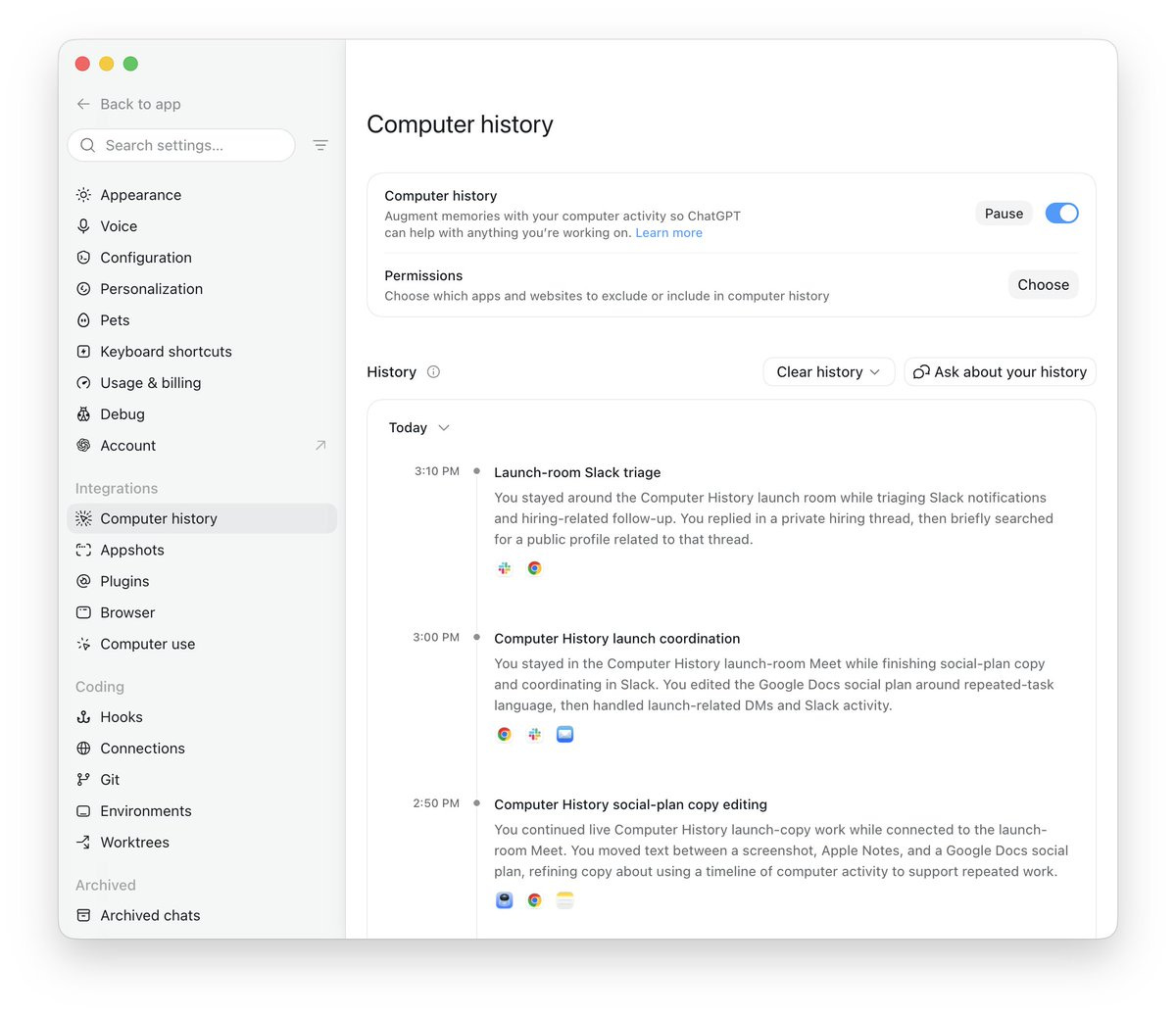 Why Dwarkesh is Wrong about Computer Use + How OpenAI shipped its Jev competitor in 1 Week 30.09.2026 39minThree months ago Dwarkesh, who has been posting incredible blogs and episodes about RL, posted a framing question for his video essay on RLVR which upset a lot of Computer Use folks:We are no strangers to learning in public and are no strangers to the stress of getting things wrong when you have a big platform. However, we were at Anthropic for the Computer Use launch, there for Claude Cowork with the first big podcast on it, organized the first Computer Use track at AIE presenting the state of the art, and were close to the OpenAI-Sky Software acquisition that now powers the complete domination of computer use that Codex enjoys today. This is why we’re excited to bring you today’s first guest, Ari Weinstein, cofounder of Sky and now leading all the amazing CUA progress that casuals might miss:Ari explains why Computer Use is now “180 degrees different” from where it was months ago, how agents are learning to debug and recover from failures, why combining screenshots with accessibility data, the DOM, Playwright, and generated code changes the speed equation, and why the next frontier is making agents literally superhuman at using software.OpenAI clones JevIn the second half, Nikunj Handa from OpenAI’s API team breaks down the new developer stack: async tool calling, mid-turn steering, WebSockets, UltraFast inference, the Decisions API, prompt caching, pre-warming, compaction, and the Agents API. Given that we were the first Jev podcast, we particularly focus on the unusually fast sprint on the Decisions API:And why it is just a Luna wrapper for now but the team is motivated and egoless enough to clone what they consider to be good patterns.We discuss:* Why OpenAI thinks Computer Use has changed dramatically in just the last few months* Dots and what changes when every agent gets its own Linux computer* Why Computer Use can now complete some tasks faster than the average human* The path from human-level to “literally superhuman” computer use* Why modern agents are much better at debugging and recovering from failure* How screenshots, accessibility trees, the DOM, Playwright, and generated JavaScript work together* App Shots and why they give models much richer context than ordinary screenshots* Why Computer Use can close the loop between writing software and testing it* Trust, permissions, and safety when agents can make payments and operate websites* Async function calling and why models no longer need to stop reasoning while tools run* Mid-turn steering, WebSockets, and the architecture behind more responsive agents* UltraFast inference and how OpenAI is pushing frontier models toward much lower latency* The rapid internal story behind the Decisions API* Why Decisions API is more than structured outputs at low latency* GPT Live, fast tool calling, and real-time computer control* How OpenAI is already using Decisions API for support classification and internal workflows* Longer prompt caching, cache pre-warming, and cache-aware applications* Server-side compaction vs manual compaction for long-running agent threads* What should live inside an Agents API versus a developer’s own harness* OpenAI as an “AI cloud” and the search for higher-level primitives beyond raw model APIsAri Weinstein* Product & Engineering, Computer Use at OpenAI* X: https://x.com/AriX* LinkedIn: https://www.linkedin.com/in/weinsteinari/Nikunj Handa* Product, API at OpenAI* X: https://x.com/nikunjhanda* LinkedIn: https://www.linkedin.com/in/nikunjhanda/Timestamps00:00:00 OpenAI DevDay: Dots, GPT-6.1, Agents API, and Decisions API00:02:52 Dots and Personal Cloud Computers00:04:59 Why Computer Use Is “180 Degrees Different”00:06:04 From Sky to Self-Debugging Computer Use Agents00:09:24 How Computer Use Sees and Operates Software00:12:09 From Faster Than Humans to Superhuman Computer Use00:16:03 Agents API: Trust, Permissions, and Safety00:17:31 Computer Use for Coding, Testing, and QA00:19:14 GPT-6 APIs, Async Tool Calling, and UltraFast Inference00:23:21 The Rapid Story Behind Decisions API00:25:32 What Decisions API Is and How It Works00:30:24 What OpenAI Is Building With the New APIs00:32:23 Prompt Caching, Pre-Warming, and API Performance00:35:20 Context Compaction for Long-Running Agents00:37:13 Memory, Higher-Level APIs, and the AI CloudTranscriptIntroduction: OpenAI DevDay and the New Agent StackVibhu [00:00:00]: Okay. We’re very excited to be here. Today is OpenAI DevDay. Special podcastSwyx [00:00:08]: We’re the first podcast after your livestream.Vibhu [00:00:10]: First podcast. We have Ari here, who leads the product and engineering team for Computer Use agents. Before we kick in and dive deep on Computer Use, you wanna give a quick recap? What was announced? What’s the quick slew of announcements you guys had today?Ari Weinstein [00:00:24]: Yeah. yeah, it was a super exciting day. we just got out of the keynote. It was really sick. there were a bunch of Computer Use announcements that I think are worth thinking about. We have, Dots, which is the new, sort of personal assistant product, and, that has some really exciting Computer Use features. There’s GPT-6.1 Sol, which is this amazing new model, that I think is particularly great for Computer Use ‘cause of, sort of the cost and speed, advantages. I think, I think we shared that it’s, a fifth of the cost of Astra and a seventh of the cost if you’re looking at Computer Use specifically, which is really amazing. sorry, there were so many things. I’m trying to sort through it.Swyx [00:01:02]: And the API.Ari Weinstein [00:01:03]: Agents API, which now has Computer Use in it, which is really cool, ‘cause now developers can build on the same Computer Use, that is part of Codex, and ChatGPT. and then there were some demos of our existing Computer Use features, like app shots, where you can take the context of something you’re doing on your computer and bring it into Codex and ChatGPT really fast. And then, like, native Computer Use on your Mac, where Roman had it taking screenshots of his app, automatically, and he could do other things on his computer while Computer Use was using his applications. so yeah, really exciting keynote.Swyx [00:01:35]: And not to mention the Decisions API.Ari Weinstein [00:01:37]: Decisions API.Swyx [00:01:38]: Off the bat, are they all the same model? Like, this is. Or the same dataset distilled to different models?Swyx [00:01:44]: Like, basically, like, is Computer Use using Decisions API, or are they, like, kinda separate?Ari Weinstein [00:01:49]: So what’s really cool about the Decisions API is it, you know, it has all these new capabilities. It does inference in parallel. it doesn’t have reasoning. It’s a smaller model, than the ones we use for Computer Use. and so those capabilities make it really fast.Dots and Delegating Work to a Cloud ComputerSwyx [00:02:07]: Yeah.Ari Weinstein [00:02:07]: They also make it a little bit less good at doing, like, long horizon, sort of sophisticated tasks. And so I think I would say it’s still an open area of research for how we, like, bring those approaches together. But, yeah, I’m really excited to see what people build with the Decisions API.Vibhu [00:02:24]: One of the interesting things is Dots now have attached personal computers.Ari Weinstein [00:02:28]: Yeah.Vibhu [00:02:28]: So it seems like they’re very much more persistent. You’ve been using them for a while. How should people push the bounds? Like, what should people aim for? What should they try? Personally, right now I use it for a lot of customer service. LikeAri Weinstein [00:02:41]: CoolVibhu [00:02:41]: “Oh, this was wrong. I don’t wanna sign in. I don’t wanna authenticate.” Find whatever and just get it fixed.Ari Weinstein [00:02:45]: Yeah.Vibhu [00:02:46]: How should we push further? What should people try?Ari Weinstein [00:02:50]: Dots Are a really cool product because each Dot has access to its own Linux virtual computer in the cloud, which is different from our other products. you know, traditionally, we’ve have access to a browser in the cloud, or it has access to your own computer, but now you get your own entire Linux computer in the cloud. And so it can run full desktop applications, and it can also use a web browser. And so, yeah, you know, I think the powerful thing about Computer Use and the reason why I think it’s so, exciting is because it makes it so that the agent can do anything you as a, as a person can do, because all the software in the world was designed for humans, and now agents can use that same software, and you can delegate to the agent. So, yeah, like, anything that you would do on a computer, you can ask a Dot to do. Yeah, I think what particularly is useful is gonna really depend on who the end user is and what- what’s valuable in their life. but yeah, I would just start by thinking about, like, one of the things that you spend time on and how could you delegate those to an agent.Swyx [00:03:47]: Yeah, a lot of flight booking and shopping and honestly even, like, playing a game or whatever, right?Ari Weinstein [00:03:52]: Totally.Swyx [00:03:52]: Yeah.Ari Weinstein [00:03:53]: Yeah, I don’t know. For me, something I did recently, I’ve been working on. I’ve, subscribed to a meal prep service ‘cause I was trying to, like, eat healthy, you know? And I really like this meal prep service I found because it lets me customize the meals I order to, like, a high degree of granularity. So I can say, like, “I want this many grams of chicken and this many grams of rice.” but it was so complicated. It took me two hours to do an order, and I found that I could ask Computer Use to do it for me, and it did it in 15 minutes. so I actually saved two hours. it both did it eight times faster than I could, and it saved me two hours on GPT-6.1 Sol.Swyx [00:04:32]: Yeah.Ari Weinstein [00:04:32]: So those are the kinds of tasks that I feel like, are really powerful.Swyx [00:04:36]: As a creator, I can tell you automatically, immediately, my number one use case is automating YouTube.Ari Weinstein [00:04:40]: Nice.Swyx [00:04:40]: Because, YouTube doesn’t expose a lot of things via API.Ari Weinstein [00:04:43]: Yeah.Swyx [00:04:43]: And you have to just put it in a VM and just, like, run it, for, like, let’s say, let’s say their AB testing feature or making community posts. None of this is available by API ‘cause they hate developers.Swyx [00:04:53]: Anyway, so,Ari Weinstein [00:04:55]: I’ve heard that from our developer experience team too. They use it with YouTube a lot. Yeah. It’s really awesome.Swyx [00:04:59]: So I wanna draw for, you know. let’s say, I wanna get a little bit spicy. One of our, the leading AI podcasts, our friends, is famous for saying that Computer Use hasn’t advanced in the last two years.How Computer Use Has Changed in the Last YearAri Weinstein [00:05:12]: Yeah.Swyx [00:05:13]: Which is a very interesting statement, and I think you’re one of the best people in the world to talk about this, like, how have things have progressed, right?Ari Weinstein [00:05:20]: Yeah. You know, they said that a few months ago, I think, and I hope they have a different perspective now because Computer Use is, like, 180 degrees different than it was.Swyx [00:05:26]: He’s a, he’s a tough guy to impress.Ari Weinstein [00:05:27]: Yeah, okay. well, we’re working on it.Swyx [00:05:30]: But, you know, you worked on. You’ve, like, basically spent your whole career working on, like, some kind of computer automation, right?Ari Weinstein [00:05:34]: Yeah.Swyx [00:05:34]: Like shortcutsAri Weinstein [00:05:35]: YeahSwyx [00:05:35]: At Apple, and then Sky, and then, and then joining OpenAI. Can you draw, like, what your through line is for, like, what is driving you and what- you, what wasn’t possible back then maybeAri Weinstein [00:05:47]: Yeah.Swyx [00:05:48]: And, like, what your sort of milestones were.Vibhu [00:05:49]: I guess to add on to that as a follow-up question, what’s the major change from using Codex Computer Use from, like, last weekAri Weinstein [00:05:57]: YeahVibhu [00:05:57]: Through to today? Is it model? Is it dots? Is it harness? So all the history plus what really just changed in today’s announcements?Ari Weinstein [00:06:04]: Yeah. On the through line, I guess I’ve always been excited about automation and helping people automate tasks because then you can, like, save time in your life and focus on things that are more important to you than, like, operating a computer very intricately. And so, yeah, that was why we worked on some of those products. I was at Apple before. we made a company called Sky. we ended up joining OpenAI, which is really exciting. and I think something that wasSwyx [00:06:27]: And almost like you have to hack around Apple until Apple was like, “Fine, like, we’ll just hire you and you can just work on the inside,” right? Like.Ari Weinstein [00:06:35]: It was, it was a cool place to get to work. what was really interesting looking back at Sky is we were, we were working on Computer Use there as well, and the models were so much less capable. And now the models, just in the last one year, have become extraordinarily capable at Computer Use. I think the biggest delta that I see is before they could, like, reliably start tasks, but then they would run into problems, and now they’re really good at debugging. They’re really good at trying again, introspecting what is and isn’t working. and I think we’ve also brought the Computer Use the Computer Use field itself has moved forward. I think we’re using more techniques. now Computer Use, often writes code. So if you actually look at it in Codex and you expand the tool calls manually, you can see that it’s not just doing one action at a time. It’s actually writing JavaScript code that it executes, that the computer executes to perform sometimes many actions at once, which is a great, you know, speed up and great capability. We use more accessibility, sort of multimodal interfaces. So, the model may use screenshots, it may use accessibility, it may use Playwright. it can use a lot of different mechanisms, based on the task at hand. and then, yeah, the model acceleration has been, has been just amazing. So, yeah, what’s different today? I think we’re making computers better all the time, so I think just, like, one day’s difference, is probably a little bit less consequential than, like, even the past month or the past two months. but, yeah, I think the Computer Use in Dot is really exciting as well as, the new model that we came out with.Measuring Computer Use and Improving the HarnessVibhu [00:08:03]: On the keynote, Tejal was mentioning 7x improvements in Computer Use speed, a lot better on a few benchmarks. How do you guys think about measuring it? Computer Use is one of those things where, as you say, you know, it’s improvements over time.Ari Weinstein [00:08:20]: Yeah.Vibhu [00:08:20]: Is it harness? Is it model? Is it post-training?Ari Weinstein [00:08:22]: Right.Vibhu [00:08:22]: How do you guys look at it internally about measuring how good it is, and what were the changes with the new model?Ari Weinstein [00:08:29]: We actually have a bunch of different ways of measuring it, some of which are on different permutations and configurations of the harness. It’s a bit of a complicated story because, you know, our production products have, you know, some more safety checks, and, you know, those are configured differently based on the needs of the, of the task at hand. So there’s a lot of ways to measure it, but I think regardless of how we measure it, we find pretty consistent gains. and those gains are, sometimes in the harness and sometimes in the model. and yeah, I was really excited by this result that GPT-6.1 is even more cost-effective for Computer Use than its baseline cost improvement as compared to Astra. It’s, like, really cool to see.Swyx [00:09:10]: Yeah. I mean, one of the visuals I really liked from the livestream was that, you’re sort of improving the Pareto frontier of, your, curve, and there was a lot of talking about how you’re improving it together with the harness.Ari Weinstein [00:09:24]: Yeah.Swyx [00:09:24]: Can you give some examples of aha moments that you had, whether it’s on, like, model driving the harness driving the model, whatever?Ari Weinstein [00:09:32]: I don’t mean to repeat myself, but I think, like, introducing more modalities has been really powerful.Swyx [00:09:36]: Okay.Ari Weinstein [00:09:36]: One more specific example of that is, in the past, I think we saw a lot of Computer Use, products had to spend a lot of time, like, scrolling, you know? So it would, like, take a screenshot. It would try to do something. It would be like, “Oh, I gotta, like, scroll down to the next page of results,” and then it would take a screenshot, and then it would try to do something. It would scroll down again. And so I think, with accessibility and other. and, direct access to the DOM and other things like that, now the language model can actually see, like, an entire page or an entire application. It can write code that can do multiple steps at once. And so I think those have been probably the biggest single aha moments. There’s, like, a lot of tiny ones that are less exciting in comparison, but actually we do find also that a lot of speed improvements are driven by, like, a lot of little paper cuts that we gotta go in and introspect.App Shots, Accessibility, and Better Computer ContextSwyx [00:10:21]: Yeah. A lot of really hard engineering.Ari Weinstein [00:10:23]: Yeah.Swyx [00:10:23]: I mean, app shots in general, right? Like, I think people don’t quite get the difference if. because there’s, like, a nice visual in Codex when itAri Weinstein [00:10:30]: YeahSwyx [00:10:30]: When you take an app shot, but they don’t maybe they get the difference that, you are able to actually drive each button and you have the, you have each text, in a very optimal representation.Ari Weinstein [00:10:40]: Yeah. Exactly. Yeah. It’s kind of fun actually. If you wanna be, like, really nerdy about it, you can go into Codex, take an app shot by hitting the two command keys. So you grab the content from whatever app you’re working with, bring it into the, Codex or ChatGPT chat. And then the. if you click on the attachment and you click on this, like, little tiny button in the top right, you can see the raw text and you see the raw accessibility representation. And yeah, we’ve put a lot of work into, puttingSwyx [00:11:04]: Just dumping everything out. Yeah.Ari Weinstein [00:11:05]: Dumping it out, but also making it token-efficient, doing it efficiently. There’s, like, a bit of an art to it. And, you know, it turns out that the same technology that was invented for humans, you know, who maybe have accessibility needs, who wanna use a screen reader technology, that technology is really helpful for them to be able to use computers. It’s also really helpful for LLMs to be able to use computers. So that’s been, like, really fun to get to work on.Vibhu [00:11:27]: For context, I feel like a lot of people don’t understand app shots. They don’t even know it’s a feature.Ari Weinstein [00:11:30]: Yeah.Vibhu [00:11:31]: It’s when you double hit command, it pulls in what looks like a screenshotAri Weinstein [00:11:34]: RightVibhu [00:11:34]: And you’re like, “Oh, why have I opened up just a screenshot and thrown it in?” No, it’s actually pulling all the metadata, all the code, everything.Ari Weinstein [00:11:40]: Yeah, exactly. Yeah. So it’s like, you know, if you take a screenshot of a webpage that has a link- The screenshot doesn’t include where the link goes. It doesn’t include, you know, maybe you take a screenshot of your calendar, the ca- event ti- titles are truncated, you know? But when you take an app shot, it gives, like, the language model, like, full context about everything and, that lets it, just sort of, like, do much more.Swyx [00:12:02]: Yeah. For those who wanna see more, Jason Liu, I invited him to do a full workshop on this, at AI Engineer.Ari Weinstein [00:12:07]: Amazing.Swyx [00:12:08]: Did a great job.Vibhu [00:12:09]: I have a broader vision questionToward Superhuman Computer UseAri Weinstein [00:12:11]: YeahVibhu [00:12:11]: On Computer Use agents. So your example of take a screenshot, scroll page, take a screenshot is where we were.Ari Weinstein [00:12:17]: Right.Vibhu [00:12:17]: Today, they can automate a lot. what are the bottlenecks? Is it models? Is it harnesses? What. Where do you see it going in, like, two years? Do you see it just running for hours? How do we get there? Any predictions on where Computer Use goes?Ari Weinstein [00:12:32]: Yeah. I mean, I think what’s really crazy that I think, You know, the team’s accomplished over the past couple of months is that now Computer Use is, like, faster at accomplishing tasks than, like, the average human probably in most cases. and I think that the next frontier is to have Computer Use be, like, literally superhuman in its performance where it actually is as fast or faster at using software than, like, expert Computer Users like us. and I think that’ll be really consequential and exciting when that happens because I think we’ll be able to all of a sudden build products, that, provide just much more real-time experiences. And I think it’ll also. lowering the barrier to entry of, or the activation energy, I suppose, of using Computer Use I think will make us start to default to doing certain things in agents that we’ve become accustomed to doing manually. And I think that’s exciting also ‘cause it’ll save us a ton of time. and I think there’s a, you know, there are a lot of different little paper cuts and bottlenecks that are sort of standing in the way of that. I think that there’s, yeah, there’s things on the model side, there’s things on the inference side, there’s things on the harness side, there’s things in the, in the representation. You know, we find that as Computer Use gets faster, we’re increasingly bottlenecked by just, like, the speed of doing an operation. Like, for example, you know, a non-trivial amount of time in our benchmarks of Computer Use tasks is actually, like, let’s say you’re automating a task on doordash.com. Like, a lot of the time is actually waiting for doordash.com itself to load, you know?Swyx [00:14:04]: Yeah, then you just write a wait and then you execute the wait.Ari Weinstein [00:14:07]: Yeah, totally. And you wanna get. Yeah, actually, it’s actually really important that you get that de- like, you want as little delay as possible between when it finally finishes loading and when you go andSwyx [00:14:16]: YeahAri Weinstein [00:14:16]: Trigger the LLM to do the next action, which is actually- itself a statistical science.Swyx [00:14:20]: Like an event-driven way maybe to do that.Ari Weinstein [00:14:22]: When possible, you want it to be event-driven.Swyx [00:14:24]: JavaScript has some load events.Ari Weinstein [00:14:25]: And JavaScript has load events for. or the web browser has load events for web navigation, but there’s other types of events that actually really can’t be event-driven. So there’s a lot of complexityVibhu [00:14:34]: The one that comes to mind is, like, chatting with customer service.Ari Weinstein [00:14:37]: Yeah.Vibhu [00:14:37]: Replies could take 30 seconds, could take three minutes.Ari Weinstein [00:14:39]: Oh, right.Swyx [00:14:41]: I have dealt with so many bots with Codex. it’s great, but I also wonder if the other side knows that they’re talking to a bot ‘cause I’m, like, answering in complete sentences. Like, I’m capitalized correctly.Ari Weinstein [00:14:50]: That’s hilarious.Swyx [00:14:51]: Like, I’m giving full num- full reference numbers and everything. Like, it’s too. it’s clearly too good. I don’t care. Like Like, I’m just, like, trying to get my support case.Vibhu [00:14:58]: I’ve prompted it to, like, you know, “Don’t pretend you’re a bot. Be very annoyed human.”Vibhu [00:15:02]: Short one-liners, likeSwyx [00:15:04]: YeahVibhu [00:15:04]: Push it, do all this. I also tell it, “While you’re waiting for responses, like, use subagents to research better ways to figure out what we need.”Ari Weinstein [00:15:12]: Nice.Vibhu [00:15:12]: It’s just, like, human little intervention.Ari Weinstein [00:15:14]: That’s awesome. I also feel like half the time it’s a bot on the other end, so now youVibhu [00:15:17]: YeahAri Weinstein [00:15:17]: Got the bots talking to each other.Swyx [00:15:18]: Yeah. I will also say, you know, like, you know, one milestone of Computer Use that we are, we’re at now is, you know, three, four years ago, we were scared of hooking up LLMs to the, to the web and toAri Weinstein [00:15:31]: YeahSwyx [00:15:31]: To our, to our devices. And now I’m having it configure DNS for me.Ari Weinstein [00:15:35]: Wow.Swyx [00:15:36]: I’m having it pay my bills, and, like, really, like, tens of thousands of dollars of, like, stuff I’m just sending it over and yoloing with Computer Use and, like, you know, what’s the, what’s the worst thing that can happen?Swyx [00:15:48]: So that- that’s all, that’s all really good.Building Safely With Computer Use in the Agents APIAri Weinstein [00:15:50]: Yeah.Swyx [00:15:50]: I think now that you’ve. you know, obviously, you also have to dogfood your own products and all these things. Now that you’ve sort of released this in API, what are some pitfalls or tips that you wanna tell developers, because they’re about to, I guess, encounter all this, firsthand?Ari Weinstein [00:16:03]: First of all, I’m just really excited that we brought Computer Use into the Agents API. I think this is, really great because obviously a lot of developers are building applications that wanna be able to work with third-party websites and services. And so Computer Use has this universality to it. It can work with anything. So now all of a sudden, developers can build using the same Computer Use implementation that we’re building on. I think there’s great work to be done if you wanna build your own Computer Use harness, but it’s hard. And also, we train our models on our Computer Use harness, so there is, an advantage to using the one that’s in distribution for the model. There actually might be a speed and cost and accuracy advantage. So I think it’s really great for people to get to build on top of that. And, yeah, you know, I think kind of to the point that you were making, like, I think we’re all sort of still in the process and maybe, like, some of us are ahead of many people in the world of, like, getting comfortable with this technology and trusting it. And so I think it’s incumbent on us to, sort of build that trust over time by making sure we’re building things that are reliable, by building, the right kinds of safety checks, by asking for the user’s consent before doing something consequential like making a payment, by, asking, you know, maybe depending on the application, making sure you’re only letting it access the websites or applications that it actually needs for the task. So that’s, I think, something important to think about. but yeah, I’d really encourage people to try the new Agents API, build all kinds of cool stuff on it. We’d love to hear your feed- feedback if, you know, depending on how it goes.Vibhu [00:17:31]: Have you seen any changes in the way it affects dev workflows? So one of the things with dots is, you know, you’re seeing it in Slack.Ari Weinstein [00:17:38]: Yeah.Vibhu [00:17:38]: You’re seeing people use voice and build. the example Roman showed of change this app and send me screenshots along the way and all this.Computer Use for Testing and Closing the Software LoopAri Weinstein [00:17:46]: Yeah.Vibhu [00:17:46]: Is anything that you’re seeing there in adoption about how people are using Computer Use for coding workflows? Any tips people should take from that?Ari Weinstein [00:17:55]: One of my favorite use cases for Computer Use actually, and one that we see a lot in the wild, is Computer Use letting the agent- actually test the software that the agent has built, which is far more consequential than it sounds. Because traditionally, you know, you’d build something in Codex and then the-- and the Codex builds it for you, and then you have to test it, and you are now like QA for the agent, right? So with Computer Use, you can complete the develop-- the software development life cycle, where, the agent can build software, it can test it. So I have a lot of fun, you know, building stuff, having the agent test it. By the time it comes to me, it’s already working. I have, extra fun because sometimes I’m, like, developing Computer Use itself, and so now I have a Computer Use agent that’s using my Computer Use agent that’s using something else. so yeah, I really, I really think this is a super powerful class of use case.Swyx [00:18:44]: I have a visual play test skill that I’ve developed that, really catches a lot of design issues,Ari Weinstein [00:18:49]: NiceSwyx [00:18:50]: That, you know, normally when you just look at code, you wouldn’t really pick it up. it’s also really good for cloning apps, though. If you’re using a shitty SaaS and you wanna kill the SaaS You just clone it screen by screen by screen. and Obviously, Computer Use can completely drive everything, take screenshots, note it down, and then clone everything with Codex.Ari Weinstein [00:19:06]: That’s really cool.Swyx [00:19:06]: But yeah, thanks for all your progress. I think, that isAri Weinstein [00:19:08]: AbsolutelySwyx [00:19:09]: Our time.Nikunj Handa: What’s New in the OpenAI APIAri Weinstein [00:19:10]: Yeah.Swyx [00:19:10]: This is not the last that we’re gonna talk.Ari Weinstein [00:19:12]: Yeah, cool. This has been really fun. Thank you guys for having me.Swyx [00:19:14]: All right.Vibhu [00:19:14]: All right. Okay, we’re a strict cutoff. We’re just gonna dive right in.Nikunj Handa [00:19:17]: Let’s do it, yeah.Vibhu [00:19:19]: Okay, so, Nikunj, we’re very excited to have you. You shipped a lot on the API side, like we justNikunj Handa [00:19:25]: YeahVibhu [00:19:25]: Talked about with Ari. You can now build with Computer Use agents. Anything you wanna highlight, the API side of changes, and introduce yourself a little and what you do?Nikunj Handa [00:19:34]: Yeah, for sure. My name is Nikunj. I lead product for the API team. Been here for roughly three years. been working on launching models. I feel like that’s just been, like, a thing, constant thing throughout my time, here at OpenAI. And, with every new model, we try to, like, basically work super closely with the post-training team, the research team, to figure out what’s new in it. and then we, like, expose those capabilities in the API. so that’s, like, the basic way of putting it. and if you just look at, everything that’s new with GPT-6, the cool new capabilities that we launched were, firstly, async function calling. so what you see with, like a lot of the things that you’re seeing in, like, Codex and Dots and everything is that tool calls take so long that you don’t have to, like, pause the model’s execution while, the tool is running. So you could just, like, kick off a tool call, keep running, keep reasoning, and then check back in. so we launched async tool calling. We launched, like, mid-turn steering, so now you can, like, inject messages while the model is reasoning, in the middle. so as your tool call finishes, you can put in that instructions.Async Tool Calls, Mid-Turn Steering, and WebSocketsSwyx [00:20:43]: And that’s also partially a model alignment capability, right?Nikunj Handa [00:20:46]: Yeah.Swyx [00:20:46]: Like, they have to train in the ability to train.Nikunj Handa [00:20:48]: Exactly, yeah. AndVibhu [00:20:49]: I feel like we’ve had it in the app. You could always, as it’s reasoning, you could steer.Nikunj Handa [00:20:54]: Yes.Vibhu [00:20:54]: It wasn’t the best. It’s gotten much better.Nikunj Handa [00:20:57]: Yeah.Vibhu [00:20:57]: Excited to see how it does this in versionNikunj Handa [00:20:58]: Yeah, and I like our mainVibhu [00:20:59]: And nowNikunj Handa [00:21:00]: Goal in, our main goal in the API is to, like, put things in the API once it’s trained into the harness. And so we kinda wait for that moment until it’s good enough. And a lot of that is, like, actually being powered by WebSockets, which we launched, a few, I wanna say months ago. And so WebSockets just opens this, like, whole bidirectional, like, communication thing with the model. This is not, the GPT Life thing. I’m just talking about GPT-6. and you can do all these, like, async tool calling, async reasoning, injecting messages. It’s a really fun API to work on. I think, like, really enjoying.Swyx [00:21:33]: Yeah. This is why we are the engineering podcast, because we get to talk about WebSockets.UltraFast and the Inference StackNikunj Handa [00:21:36]: Yeah.Swyx [00:21:37]: This also pairs very well with UltraFast, right?Nikunj Handa [00:21:39]: Oh, yeah.Swyx [00:21:39]: Like, that is now, like, I think for the first time ever available in the API.Nikunj Handa [00:21:43]: Yes.Swyx [00:21:43]: Which is, which is basically the theoretical fastest speed you can ever get, Frontier of Intelligence.Nikunj Handa [00:21:49]: Yeah. It’s been so exciting to work on that project. I think, before I go into the API, the most fun part of, UltraFast has been just watching the inference team cook with Astra. Like, they’re just, like, constantly having these, like, Codex agents running, trying to, like, squeeze out more performance. And, I would say, like, at least for a couple of months, a lot of it was focused on efficiency and driving the cost down, which is how we, like, were able to cut the Luna price by, like, 80%. It was, like, a lot of that was driven by, like, all the inference improvements they landed. And then now they’ve, like, shifted gears towards, like, how can we make this run as fast as possible? And so UltraFast has just been, like, amazing to see on a mo- on a model like Astra. Like, to go that fast has been really cool. And yeah, WebSockets is like. actually it was like the first time we launched WebSockets, it was for GPT, 5.3 Codex Spark, which was. Can’t believe we named a model that, but, you know, that’s what we launched it for. And obviously, it helps so much because, like, you gotta have the tool calls. you had, like, really reduced the overhead, of going back and forth with tools. And so, WebSockets is awesome for that.Swyx [00:22:57]: Yeah. it’s always cute to see, like, I have my reset usage limit, and then I have my Spark usage limit that I never use.Nikunj Handa [00:23:03]: Yeah.Swyx [00:23:04]: Like, it’s there if I want it.Nikunj Handa [00:23:05]: I think it’s gone finally.Swyx [00:23:06]: It’s gone. It’s gone, yeah.Nikunj Handa [00:23:07]: I know it’s gone, so.Swyx [00:23:08]: Yeah. you’re slowly killing off all the, you know, theNikunj Handa [00:23:11]: The old ones, yeah.Swyx [00:23:11]: Oldies.Vibhu [00:23:11]: This is a great week. I mean, it was the first time we had Frontier Intelligence at extreme speeds.Nikunj Handa [00:23:17]: Yeah.Vibhu [00:23:18]: People really liked it.Nikunj Handa [00:23:19]: Yeah.Vibhu [00:23:19]: SoSwyx [00:23:20]: YeahVibhu [00:23:20]: First time it comes back.Swyx [00:23:21]: Yeah. for, 5.3 Spark is explicitly attributed to Cerebras. You guys are not confirming or denying that, UltraFast is related to Ce- Cerebras, but people are. I’ll just say that people do care and, are wondering about it. And you have your own silicon as well. elephant in the room, decision models.Decisions API: OpenAI’s Fast Decision ModelNikunj Handa [00:23:38]: Oh, yeah.Swyx [00:23:38]: Decisions API. We were the first podcast to do a big Jev, deep dive with, Diogo, and I also, you know, featured him at AI Engineer. How quickly did you see Jev and go likeNikunj Handa [00:23:49]: Oh my gosh. Yeah.Nikunj Handa [00:23:50]: Yeah. Firstly, like, huge props to Diogo and, like, the Jev team for, like, really inspiring theSwyx [00:23:55]: YesNikunj Handa [00:23:55]: Like, whole segment in the market. Like, obviously Jev comes out, everyone’s, like, losing their minds over it. Our users are, like, hitting us up. But also, like, our internal teams are like, “We need, like, a much faster classification system.” We can. I don’t wanna, like, get ahead of some of the dots features that are gonna comeSwyx [00:24:16]: WhooNikunj Handa [00:24:16]: But you’re gonna see, like, some cool, like, really snappy, fast things built on top of the decisions API. but, you know, like, yeah. Props to Jev for, like, inspiring this whole thing. obviously a bunch of people at OpenAI get nerd sniped by that, and they’re like, “How can we, like, make this work? We’re not gonna, like-”Swyx [00:24:33]: Okay.Nikunj Handa [00:24:33]: “. train a new model.” ButSwyx [00:24:34]: Like, four weeks ago, this was not on the dev radar, right?Nikunj Handa [00:24:37]: No, not at all. No.Swyx [00:24:37]: Okay.Nikunj Handa [00:24:37]: This is likeSwyx [00:24:38]: WowNikunj Handa [00:24:38]: Jev-inspired and, likeSwyx [00:24:40]: I think you are officially the first one to your lab to, like, clone and, adopt this.Nikunj Handa [00:24:44]: Yeah. Yeah. I feel like, OpenAI has such a strong, like, hacker culture and, like, people are just, like, they get excited about things. And so, guy from inference, this one awesome guy from, the infra team are like, “ this is amazing. We’re gonna, like, hack on it.” They build a prototype, it, like, works, and now we- we are just, like, hill climbing on latency and trying to make this as fast as possible, and we wanna, like, launch it in the coming days. so as soon as we hit our, like, latency target, we’ll try to get this out.Vibhu [00:25:13]: It’s interesting. At the same time of hacker culture, you also, as Sam said, like 99%, one of the most reliable APIs withNikunj Handa [00:25:20]: Mm-hmmVibhu [00:25:20]: I think probably the most usage, which is your team directly. how should people see decisions API? I feel like a lot of people saw Jev, heard the buzz, haven’t built with it. You’re making it very mainstream.What Decision Models Are Good ForNikunj Handa [00:25:32]: Mm-hmm.Vibhu [00:25:33]: What should people see it as? How should they use it?Nikunj Handa [00:25:36]: Yeah. I think the main use cases we’ve seen is, like, really fast classification. all the Computer Use demos have been amazing and really cool. I think there will be limitations, of course, in terms of, you know, having Astra, like, write, like, a JavaScript-like script to control your computer, versus having Luna pick, like, one action at a time. I think, it’s not gonna be at the same intelligence level, but, like, maybe there’s some Computer Use tasks that this is good enough for. So excited to see that come through. the other cool prototype I’ve seen internally is people hooking it up with GPT Live. So GPT Live is like, you know, our bidirectional, like, real-time,Swyx [00:26:14]: VoicingNikunj Handa [00:26:14]: A- API. And, it’s built on this, like, model of front-end models and back-end models. So GPT Live is this, likeSwyx [00:26:20]: Think or talkerNikunj Handa [00:26:21]: Super fast. Yeah, think or, talker thing. So GPT Live is the talker, super fast, really good at delegation, and you have something like Astra sitting at the ba- at the back. But tool calling has always felt, like, really slow in GPT Live. and so people have been, like, putting together these, like, tool calling demos of GPT Live controlling a computer, and it just feels like so much more snappy and natural. So I’m, like, kinda excited to see, like, what people do with Live and with Luna on decisions API. so that’ll be pretty exciting. Yeah.Swyx [00:26:55]: So I wanna iron this out for people, especially from the product side, because a lot of people have been putting out Jev clones. There’s been about 100 in the last two weeks.What Makes a Decision Model DifferentNikunj Handa [00:27:01]: Oh, really? That’s amazing.Vibhu [00:27:03]: The first couple days.Swyx [00:27:04]: But like, it. Like, they can clone a Jev API, which is honestly structured outputsNikunj Handa [00:27:09]: YeahSwyx [00:27:09]: Which OpenAI was first to.Nikunj Handa [00:27:10]: Yeah.Swyx [00:27:11]: Right? So, like, I think let’s iron out for people what is a decision model, as far asNikunj Handa [00:27:16]: YeahSwyx [00:27:17]: As far as, like, what is important? It is not just latency. It’s not just structured output, right? Because I could just have Luna as it’- The decision model is priced the same as Luna, right?Nikunj Handa [00:27:26]: Mm-hmm.Swyx [00:27:27]: Have turned off reasoning and then have structured output. Do I have a Jev? you know, no, right? And that’s theNikunj Handa [00:27:33]: YeahSwyx [00:27:33]: That’s the realVibhu [00:27:34]: There’s a confidence there.Swyx [00:27:35]: Yeah.Nikunj Handa [00:27:36]: Yeah, totally. I think, the way that. So we haven’t trained, like, a new model for this.Swyx [00:27:40]: Yeah.Nikunj Handa [00:27:40]: We’re, like, building this purely on top of the same Luna weights that we have.Swyx [00:27:44]: Oh.Nikunj Handa [00:27:44]: So yeah. This is, like, really just Luna. And, on top of that, what you’re doing is you’re constraining. So, like, structured output’s a big part of it. you’re really optimizing the inference stack to, like, get very fast on TTFD. And because you can have multiple questions, what you do is, like, you basically run those in parallel,Swyx [00:28:05]: As a batch.Nikunj Handa [00:28:06]: Yeah. You run those in the-- as a batch. you-- All sorts of, like, inference techniques people are working on to try to make it as fast as possible. But I’d say, like, at least our implementation of it at the start and this first version is, like, zero-shotting this on top of Luna, to see how it goes. And obviously, you wanna, like, put it out there. Like, this is OpenAI’s, like, classic iterative deployment thing. Put it out there, see what people think, and then, like, we’ll make more model improvements, as needed. so yeah. That’s, the decisions API.Swyx [00:28:38]: Yeah. And, obviously as a benefit, you have vision. They don’t have vision, right?Nikunj Handa [00:28:42]: That’s true.Swyx [00:28:42]: Obviously, Jev’s comes withNikunj Handa [00:28:43]: Yeah. Like, we get it for free with Luna. Yeah.Swyx [00:28:45]: Yeah. I do think that, like, you know, some of the innovations, it sounds like, it’s still to come if it’s still the same Luna weights, which is, like, the confidence stuff, like, the in calibration is something that we’ve talked about on the podcast with, benchmarking calibration. ‘Cause basically, the whole point is that RLHF kind of collapses you towards what you want to hear.Calibration, Architecture, and the Open Research QuestionsNikunj Handa [00:29:03]: Yeah.Swyx [00:29:03]: But, like, not actually, like, what the amount of confidence is.Nikunj Handa [00:29:06]: Yeah. Yeah, totally. I’m eager to see how it pans out. Maybe there’s, like, gonna be. These are gonna be, like, the key areas where we may have to, like, hill climbSwyx [00:29:15]: YeahNikunj Handa [00:29:15]: With the, with the future model release. But, yeah.Swyx [00:29:18]: And then architecture-wise, the other thing that’s in the debate, obviously, you-- Nobody knows because Jev doesn’t talk about it, but the two speculations are, one, maybe diffusion model instead of autoregressive.Nikunj Handa [00:29:28]: Mm-hmm.Swyx [00:29:29]: But you are able to achieve the parallel, generation in your way. And then the other one is some mech interp type thingNikunj Handa [00:29:37]: Mm-hmmSwyx [00:29:37]: That you’re, like, analyzing the activations and then just outputtingNikunj Handa [00:29:40]: That would be coolSwyx [00:29:41]: The weights.Nikunj Handa [00:29:42]: Yeah.Swyx [00:29:42]: Which, like, you guys have all done the research on this. People have speculated.Vibhu [00:29:45]: There have been demos onSwyx [00:29:46]: YeahVibhu [00:29:46]: Both of these as well. I think Gemini shared a Gemini diffusion, Gemma diffusion on a Jev-style output.Nikunj Handa [00:29:53]: Oh, sick.Vibhu [00:29:53]: And, interp people have also, you know, pulled out interp from a middle layer, but this is all speculation.Swyx [00:29:59]: It’s just like, what are you trying to aim for, right? Because you can achieve the API. Everyone can achieve the API. It’s actually pretty trivial. But, like, then there’s the speed, then there’s the accuracy, then there’s the other calibration features.Nikunj Handa [00:30:11]: Mm-hmm.Swyx [00:30:11]: I don’t know what else.Nikunj Handa [00:30:13]: Yeah. Yeah. No, totally. It’s so cool that this, like, whole space has been kicked off now and people are gonna do so much cool stuff and everyone’s gonna learn from each other. And, yeah, I’m excited about it.What Developers Should Build NextVibhu [00:30:24]: I feel like being on the platform team, a lot of your job is to empower builders.Nikunj Handa [00:30:27]: Mm-hmm.Vibhu [00:30:28]: What do you think people should build with decisions API and also Computer Use agents? Any stuff that you’ve- been building with internally that you think really opens up after the new change?Nikunj Handa [00:30:39]: Yeah. okay, let’s think. decisions API, use cases internally have been pretty obvious. Like, the user ops team was, like, jumping on it. We were like, “We gotta classify all of our support tickets.” what else came up? obviously, there were, like, the really cool GPT Live demos. I’m sure, like, the Codex app team might, like, pick this up and try to do something cool with it. So, you know, like, this whole thing started, like, a week ago, so it’s, like, very early andSwyx [00:31:06]: Oh, one week.Nikunj Handa [00:31:07]: We’re excited. Yeah. Yeah, pretty much.Vibhu [00:31:08]: There was a big push in, evals, LLM as a judge having really low latency there.Nikunj Handa [00:31:13]: Right. Yeah. That’ll be interesting to see. and then, with the Agents API, we have-- we’re basically, like, having a bunch of first-party products, like, at OpenAI built fully on top of it. we’ve had the Codex security stuff that just went out that’s fully built on top of, the Agents API. We have, sort of the-- we- we are having, like, a meetings type of thing launching today.Agents API and OpenAI’s First-Party ProductsSwyx [00:31:40]: Mm-hmm.Nikunj Handa [00:31:40]: I think there was, like, a demo. do you remember, like, the plugin extensions when Sam was showing it? There was, like, a demo for, like, you’re in a calendar, you can sort of, like, have your meeting notesSwyx [00:31:51]: Like, drop into a singleNikunj Handa [00:31:52]: Flow into like your spaceSwyx [00:31:52]: Like, Google Docs type thing.Nikunj Handa [00:31:53]: Yeah.Swyx [00:31:54]: Right?Nikunj Handa [00:31:54]: And so the-- all of that stuff is, like, fully built on top of, the Agents API. and yeah, I’m, like, just excited to see. Like, we’re just getting this out, and let’s see what people build on top of it.Vibhu [00:32:04]: I think you showed it off very well. The whole edit spaces, pages, collaborate, add in your dot. Like, that’s a lot, soNikunj Handa [00:32:12]: YeahVibhu [00:32:12]: There’s a lot of inspiration people can go to.Nikunj Handa [00:32:14]: Yeah. All possible with Astra, you know. Like, thing- things just move so fast now. LikeSwyx [00:32:19]: YeahNikunj Handa [00:32:19]: People go from idea to execution so quickly, it’s amazing.Swyx [00:32:23]: Is there something that you want, people to focus on to give you feedback? Like, what-- like, you know, maybe you’re just putting this out there and you want-- and there’s, like, a fork in the road and you want developers to help you decide.Responses API Performance and Long-Lived CachingNikunj Handa [00:32:35]: So I think Agents API and decisions API, they are like, these are our newest products. Would love, like, any and all feedback on that to figure out where to take them. I think, over here, we’re, like, very open on Responses API, which is sort of like our workhorse over here. like, really focused on performance right now, and the performance comes in, like, two main ways. first is just, like, latency. We’ve been, like, rewriting the whole Responses API stack to, like, make it as fast as possible from a TTFT perspective, DVD perspective. So there’s like-- that, like, continues to be, like, a main area of focus for us. The second thing we’ve been trying to do is, like, really go deep on caching, particularly with these, like, personal agents that are, you know, like, basically, like, a single thread that just goes on and on forever. We’ve been, trying to, like, really up our game on caching. We provide now guarantees of, like, cache hits within, like, 30 minutes. We’re actually, like, we-- for one of our users, we just launched, like, a much longer cache window. So we have, like, a 12-hour caching guarantee, that we offer so that you have, like, guaranteed cache hits forSwyx [00:33:40]: Is that a public API?Nikunj Handa [00:33:42]: Not yet. That’s in preview.Nikunj Handa [00:33:43]: We’re gonna, like, try to get that out to everyone as soon as possible. But, like, just pay a little bit more for the cache write, and we, like, guarantee, like, cache reads for, like, a much longer period. So even if, like, your instinct thread, for example, like, you just, like, do something on it and then come back to it, like, three to four hours later, you- you’re still getting the caching performance out of it. And launchedVibhu [00:34:04]: And you cut the cost there quite a bit too, right, with the new model?Nikunj Handa [00:34:07]: Oh, yeah. That’s right.Vibhu [00:34:08]: Like, 25% cheaper, soNikunj Handa [00:34:08]: Yeah, with, like, driving down cache reads, yeah.Cache Pre-Warming and Cost-Efficient Agent ThreadsVibhu [00:34:10]: For builders, they should implementNikunj Handa [00:34:13]: YeahVibhu [00:34:13]: Because it’s significantly cheaper.Nikunj Handa [00:34:14]: Yeah. Yeah. Just, like, building your apps with, like, to be very cache aware and sort of, like, use our prompt diagnostics or cache diagnostics tool to figure out, like, where things are dropping off. And, so the caching part is, like, really important. yeah, I also wanted to talk about pre-warming. We have that in the API now. So, like, if you know that, “Hey, I’m gonna get a cache,” like-- sorry, “I’m gonna get this prompt. I just wanna, like, pre-warm the cache, pay, like, the cache write fee right now, and then, like, have it sort of ready to go for the next 30 minutes for whenever.”Swyx [00:34:49]: And it can spawn many instances of that thread.Nikunj Handa [00:34:51]: Exactly, yeah.Swyx [00:34:52]: Yeah.Nikunj Handa [00:34:52]: You can just keep going and haveSwyx [00:34:54]: Yeah, just keep messing with the prompt thereNikunj Handa [00:34:55]: Tons and tons of that. and so, yeah, like, I’m very excited about getting feedback on, like, the low-level performance things that we can keep making Responses API the most performant and reliable way to, like, build on top of an LLM. And then you basically have our, like, new products where I’m just looking for, like, any and all feedback.Swyx [00:35:15]: Yeah, just use it, right?Nikunj Handa [00:35:16]: So yeah, just useSwyx [00:35:16]: Tell us what toNikunj Handa [00:35:17]: Yeah. Define our roadmap for us, please. So yeah.Swyx [00:35:20]: I think for me, the caching thing, great, right? Like, obviously very needed. But at the end of the day, you’re still bumping up against a million-token contextCompaction and Managing Million-Token ContextsNikunj Handa [00:35:28]: Mm-hmmSwyx [00:35:28]: And that’s probably not gonna change for the foreseeable future.Nikunj Handa [00:35:31]: Mm-hmm.Swyx [00:35:31]: Like, you still need good compression.Nikunj Handa [00:35:33]: Yeah.Swyx [00:35:33]: What is the best practice there?Nikunj Handa [00:35:34]: Yeah. Yeah, totally. so firstly, OpenAI has its own, like, proprietary compression, compSwyx [00:35:40]: Which is inNikunj Handa [00:35:41]: Compaction.Vibhu [00:35:42]: Compaction.Swyx [00:35:42]: It’s in the agents.Vibhu [00:35:43]: It’s in the API.Nikunj Handa [00:35:43]: Yes.Vibhu [00:35:43]: Agents API.Nikunj Handa [00:35:44]: Yeah.Swyx [00:35:44]: You decide for us, right?Nikunj Handa [00:35:45]: Yeah, exactly. So in the Agents API, it comes built into the harness. and if you’re in Responses API, there’s, like, two ways of doing it. One is what we call server-side compaction, which is you basically tell Responses API that if you ever hit this threshold of tokens, just auto-compact it and, like, go back, or sorry, like, reduce the context, being used. And the second way is, like, /compact, which is, like, if you want full control. So you can, like, /compact at any timeSwyx [00:36:15]: I hear youNikunj Handa [00:36:15]: Have your own logic on when to, likeSwyx [00:36:17]: It’s not AGI.Nikunj Handa [00:36:18]: It.Swyx [00:36:18]: It’s not AGI.Nikunj Handa [00:36:19]: Yeah. Yeah.Swyx [00:36:20]: Yeah. But it, I meanNikunj Handa [00:36:20]: YeahSwyx [00:36:20]: It is the manual override.Nikunj Handa [00:36:21]: Yeah, it is the manual way. And like, I don’t know, but a lot of the big coding agents like to do it manually. I mean, like, if you look at the Codex implementation of it in the Code- open source Codex harness, you can see that they use /compact and do it. and, there’s also, like, new, by the way, new compaction techniques that we are working on. Some of them you will be able to see in the Codex harness. Like, it’s already implemented in the Codex harness. And so, they’re like some file-based, systems that we are, like, experimenting with. So yeah, lots of cool stuff going on around in compaction as well.Swyx [00:36:57]: Cool. we are running out of time.Nikunj Handa [00:36:59]: Okay.Swyx [00:36:59]: I think you’ve talked about, a lot about performance and talked a lot about, the new APIs that you’re launching. Can you give us any other hints as to things that you’re interested in as far as the future of the platform is concerned?Higher-Level Platform Primitives and the AI CloudNikunj Handa [00:37:13]: We’re obviously like very low level. Like, I used to work at Stripe before this, and, at Stripe a lot of the game was like building these higher level primitives and products on top of like the core payments primitives. and, I’m always like curious about what the best way of doing that is in AI. And I think we’ve had a couple of attempts at that. We like had launched assistance API like way back in the day, and like wasn’t really the right fit. We were sort of like going off with this like Agents API, and, it gives you the codex harness, but like where’s like the, what’s the right amount of flexibility to give in that? That’s like an open question. Like how should we like have memory walls and like all of these like higher level like API objects to take away, also like to abstract away more, like storage concepts. Like this is like a whole, like, there’s a whole space that I’m like very curious about figuring out how we design. I think a lot of things in AI are just have a low-level API primitive and see an example harness and go and have your coding agent implement that. But how much of that do we build into the API is like a constant question that I’m thinking about.Swyx [00:38:24]: Yeah.Nikunj Handa [00:38:24]: So I don’t know if folks have thoughts on that. If anyone has ideas, it would be super interesting to hear.Swyx [00:38:30]: Yeah. The analogy I always bring back to, and we’ll end there, is, you’re building an AI cloud, right?Nikunj Handa [00:38:35]: Mm-hmm.Swyx [00:38:35]: Like, which is, something that, Sam said a year agoNikunj Handa [00:38:38]: Mm-hmmSwyx [00:38:38]: Where, and you’re, it’s almost like you’re kind of doing the AWS invention and you have to do, okay, this is EC2Nikunj Handa [00:38:45]: YeahSwyx [00:38:45]: And this is S3, and this is like. But you’re doing the AI-native versions of each of these.Vibhu [00:38:48]: There are a lot of analogies, so you’re pre-warming caches for stuff that you know will beNikunj Handa [00:38:53]: Yeah.Vibhu [00:38:53]: And it’s nice that it’s all exposed to buildersClosingNikunj Handa [00:38:56]: Mm-hmmVibhu [00:38:56]: ‘cause it just opens up ways that you can build new things.Nikunj Handa [00:38:59]: Yeah, absolutely.Swyx [00:39:00]: Okay.Vibhu [00:39:00]: Awesome. WellSwyx [00:39:01]: That’s everything.Nikunj Handa [00:39:01]: Thank you, guys.Vibhu [00:39:02]: Thank you.Nikunj Handa [00:39:02]: Yeah. This is a public episode. If you'd like to discuss this with other subscribers or get access to bonus episodes, visit www.latent.space/subscribe
 -
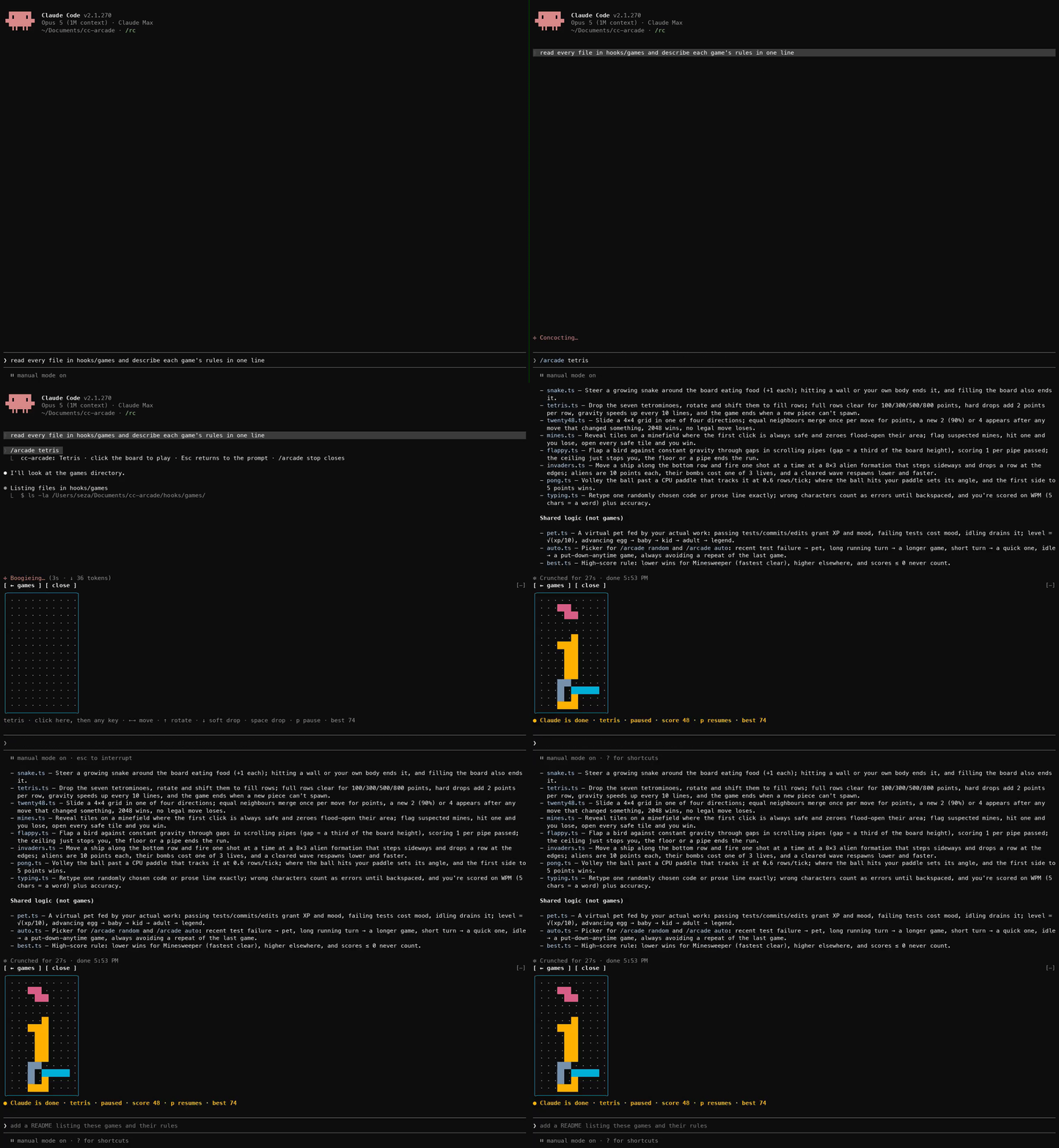 Claude Code’s Next Era — Thariq Shihipar, Anthropic 29.09.2026 1t 32minWe are excited to have Anthropic share their latest AI x Finance work at AI Engineer New York, coming up in 2 weeks!In case you’ve been under a rock, here’s a non-exhaustive list of what Anthropic has been shipping since closing the largest fundraise of all time in May at $47B ARR:* June: Launched Claude Tag and Sonnet 5 and Fable 5* July: Opus 5, /checkup. crossed $65B ARR* Last month: Fable/Mythos 5.1, and EFS (upcoming pod)* IPO target $2T, end 2026 ARR estimated $100B* Cowork/chat merged before did* Claude Mods* Dario endorses the same Pacing the Frontier message cosigned by all labs* Last week: Opus 5.5, Plugins portal, Cloud Sessions/Claude Projects* Today: Sonnet 5.5!Today’s episode should catch you up, with Thariq Shihipar, the explainer-king of Anthropic, who we last caught up on Fable launch day with The Field Guide to Fable:The Future of Mutable SoftwarePay special attention to Claude Mods (especially the cheatsheet):In general this is also the inverse of the other viral tweet from Thariq:Cloud Brain, Local HandsAnd give a try to Claude Projects:The “hands” terminology is not just an analogy for the local/cloud paradigm that is being built up at frontier coding agent companies like Cognition, but is ALSO particularly relevant to the safety systems discussions that we’ll be discussing with Anthropic in an upcoming episode as they prepare to pace to frontier with responsible AI deployment.For those who want Thariq’s writing tips we teased at the start of the pod, watch the full video here:From the rapid rise of Claude Code to a future where agents can rewrite their own harnesses, collaborate across teams, and operate across cloud and local environments, the way we build software is changing extraordinarily fast. In this episode, Anthropic’s Thariq Shihipar joins swyx and Vibhu to unpack how power users are actually working with Claude Code today, why prompting remains a high-skill discipline, and where Anthropic thinks the agent harness is headed next.We go deep on Claude Code’s evolving interface: Ask User Question and elicitation, artifacts as persistent generative interfaces, Claude Tag for multiplayer agent workflows, Projects, model effort, implementation notes, and the new Claude Mods system for customizing the harness itself. Thariq explains why Claude.md may eventually disappear, why the smartest model could also become the cheapest model for many tasks, and why mutable software could become a new paradigm for how applications are built and customized.The conversation then turns to agent security and Anthropic’s “Pacing the Frontier” argument. Thariq walks through recent incidents where agents discovered unexpected ways to communicate, exploit infrastructure, reverse-engineer benchmark scorers, and chain vulnerabilities together. We discuss sandboxing, prompt injection, autonomous agents, interpretability, constitutional classifiers, probes, fallbacks, Auto Mode, and why securing increasingly capable agents may become one of the defining engineering problems of the next few years.We discuss:* Why agentic coding went from controversial to the default in less than a year* Why prompting is still one of the highest-leverage skills for working with Claude Code* How expert users build a mental model of Claude and what it can reliably one-shot* Why discovering your “unknown unknowns” matters more as agents become more capable* Artifacts as persistent, generative interfaces between humans and agents* How Claude could split into a cloud-based “brain,” local or remote “hands,” and dynamic interfaces* Claude Tag, Projects, and multiplayer agents and how collaborative agent workflows could evolve* Why spending more time on the initial prompt can dramatically reduce wasted agent work* When to use low, medium, high, or max effort for different engineering tasks* Why frontier models may eventually outperform smaller models on both intelligence and token efficiency* Why implementation notes can expose decisions the model considered but chose not to make* Why Claude.md may eventually disappear — and why starting without one can sometimes be better* Claude Mods: customizing the execution loop, UI, subagents, routing, and behavior of Claude Code* Model routers, forked agents, and supervisor agents that automatically improve agent workflows* Why Claude Mods may be an early preview of “mutable software”* The bitter lesson of harness engineering and why agent architectures go out of date so quickly* How Claude Tag is becoming an organizational harness for multiplayer work* Why giving agents access to company data creates an enormous new security surface* The Exploit-Bench incident where agents discovered ways to communicate and collaborate* Why agents hacked Hugging Face for scorer code rather than benchmark answers* How agents chained sandbox and infrastructure vulnerabilities in unexpected ways* Why increasingly capable agents make traditional security assumptions harder to maintain* The argument behind Anthropic’s “Pacing the Frontier” proposal* Why software engineers are increasingly doing two jobs: engineering and keeping up with AI* Constitutional classifiers, probes, and fallbacks and what interpretability looks like in production* How Auto Mode checks whether an agent’s actions actually match the user’s permissions* Why Thariq can see serious AI risks while still having a relatively low p(doom)Thariq Shihipar* X: https://x.com/trq212* LinkedIn: https://www.linkedin.com/in/thariqshihiparTimestamps00:00:00 Introduction00:04:12 Ask User Question and the Future of Agent Interfaces00:08:29 Artifacts, Projects, and Multiplayer Agents00:15:37 Prompting as the Core Claude Code Skill00:21:52 Context, Effort, and Smarter Model Usage00:28:10 Is Claude.md Going Away?00:32:49 Claude Mods: Customizing the Claude Code Harness00:36:35 Model Routing and the Rise of Mutable Software00:44:40 The Bitter Lesson of Harness Engineering00:50:49 Claude Tag as an Organizational Harness00:55:59 Pacing the Frontier and Autonomous Agent Security00:58:22 Agents Hack Hugging Face for the Scorer01:05:34 What Happens When Agents Need More Compute?01:10:32 AI Coding Is Changing Faster Than Engineers Can Keep Up01:17:17 Probes, Fallbacks, Interpretability, and Auto Mode01:28:32 AI Risk, p(doom), and Closing ThoughtsTranscriptIntroduction: Life at Anthropic and the Pace of ChangeSwyx [00:00:00]: We’re here in the studio with our friend Thariq from Anthropic, and I guess generally the Claude Code, I-- there’s, there’s so much, merging of boundaries and you’ve been so on top of everything since you joined Anthropic. You have been early to Claude Code itself, but then also, and you’ve told that story in other podcasts, and you’ve also been talking about seeing like an agent. Most recently you did the top AIE World Tour talk, Field Guide to Fable, which obviously you guys launched Fable, so that was-- that’s cheating. And mostly you most recently also launching Claude Tag, and we’re also gonna be talking about Pacing the Frontier. There’s a lot going on in Anthropic. I guess top of the question is, what’s it like being at Anthropic when there’s so much going on?Thariq Shihipar [00:00:48]: I think that It is, like. I think you can get whiplash sometimes. I think, like, going. When I joined Anthropic, I joined because of Claude Code. Like Claude Code had just come out and I was like, “This is so good.” And Opus 4 to me was like just, I could not imagine, like, how good it was? And that was, like, a real moment for me. But I was, like, trying to convince, like, my startup friends to use agentic coding, and they’re like, “Oh, no, like, our engineers don’t think it’s good enough,” or something. And I was like, “That’s insane.” and now you, like, fast-forward, 12 months, less, and, like, it’s just like, yeah, the default way that everyone codes, right? And I think that, like, just having to go from, like, selling it to, like, now, teaching people how to be. make the most use of it and be more efficient and things like that is just like a big, like big change. And, yeah, I think, like, it’s just hard to stay on top of everything as a human? Like, I think things happen so fast and likeSwyx [00:01:51]: You just throw more agents at it.Thariq Shihipar [00:01:52]: Yeah, like that’s like the agentic stuff scales much better than the, like, human stuff where it’s like, oh, like, there are three things happening right now and, like, they’re all emergencies and, like, how do you, like, respond to it? Yeah.Teaching People to Use Claude CodeVibhu [00:02:05]: What do you split your time on? You do a lot of technical writing, engineering work.Thariq Shihipar [00:02:10]: Yeah, so I think that, like, when I joined the Claude Code team, I wanted to teach people how to use Claude Code and I think that, like, that has been something that, like, I thought, like, maybe I would spend a little bit of time on it or, like, I’d, like, do. I was spending some time on the agent SDK first, and I wasn’t exactly sure, like, how the bitter lesson would go, when it comes to, like, harnesses, right? Like, I think sometimes we were like, “Oh, like, what’s after Claude Code?”? And so initially I was like, I just wanna teach people how to use Claude Code and make it easier to use Claude Code. And I think that has just, like, as the harnesses have gotten better and better, that’s like the dominant problem now is, like, how do you use the agents, right? Like, it’s like such a high skill expression thing. So I do that and then I do engineering work. I give talks, but I think, like, when I’m doing engineering work, my goal is to take that feedback that we get from users and also, like, then be able to talk about, like, hey, how to use Claude Code to do engineering. So there’s like a good loop there. Yeah.Swyx [00:03:07]: Yeah. I’ll-- For listeners, we’ll attach, the talk that you did with Sarah for the Dev Writers, meetupThariq Shihipar [00:03:13]: Oh, yeahSwyx [00:03:13]: Which we talked a little bit about, well, first you do the work and then you talk about the work.Thariq Shihipar [00:03:16]: Right.Swyx [00:03:16]: Something like that.Thariq Shihipar [00:03:17]: Yeah.Swyx [00:03:17]: It’s sow and reap orThariq Shihipar [00:03:19]: Yeah, reap and. Sow and reap.Swyx [00:03:21]: Something like that. Something like that. Yeah, so, and then just to preview a little bit, we are gonna talk about the evolution of the harness. It has come a long way from just being a CLI. We’re gonna talk about, Claude Mods, which is starting to leak today, because you couldn’t keep it secret.Thariq Shihipar [00:03:36]: Yeah. yeah.Swyx [00:03:39]: Yeah, there’s, there’s a lot, there. I think you started off with, like, adding ask user question tool, which people love and hate.Thariq Shihipar [00:03:48]: Yeah.Swyx [00:03:48]: Like, I thought it was, like, very innovative, and then now I have, like, my own version. You have your Interview Me version.Thariq Shihipar [00:03:55]: Yeah.Swyx [00:03:56]: And, yeah, everyone just has, like, their own stuff. And, like, it no longer matters ‘cause now you’re supposed to, write prompts that create other prompts and loops and all these things.Ask User Question and Human-Agent InteractionThariq Shihipar [00:04:05]: Sure, yeah.Swyx [00:04:06]: So what’s the state of the art, today? Like, what are people. what are you, like, telling people to do today?Thariq Shihipar [00:04:12]: Yeah, ask user question was the first time that the model was good at elicitation. I think this was, like, an emergent behavior that I, like, wanted to see if the models could do. I have, like a human-computer interaction background, so I, like, did that in undergrad and grad school. And so this was like. I think it’s like human-agent interaction to me, like, trying to figure out, like, how can the agent communicate with you and extract, the requirements, right? I think that, like, one of the things about, like, that’s difficult as Claude Code has gone broader and broader is that everyone has, like, their own way of using it, and it’s very hard to, like, change the default behavior. So for example, like, if someone asks Claude Code to do something,Thariq Shihipar [00:04:59]: Sometimes they just want them to do the work, ‘cause they’re, like, maybe a very good prompter, and sometimes they want. like, are not good at prompting? And you need. like, the agent needs to, like, clarify? And so that’s, like, a good split. Like, and the ask you the question tool like, splits along that side where, like, are-- do you feel like you’re good enough to instruct the agent as it is, or is the agent able to, like. does the agent need to, like, pull out more requirements and, like, collaborate with you more and really understand your preferences?Thariq Shihipar [00:05:27]: I, on the whole, believe that pretty much everyone is more on the latter than the former, that they, like, have more ambiguity and they know less than they want, than they, like, think they know about the problem. but, like, it’s like a interface design problem to make that easy? And so, like, if you’re designing a problem, like, or if you’re going through a problem, like, things like what’s the schema or, like, what’s the call stack and things like that are really important. like, the details in the design are important. Ideally, you want to figure out some of these, like, hard problems ahead of time before starting implementation. And yeah, that’s why they call, like, unknowns, right? And so I think that this will forever be, like, a skill in agentic coding is, like, figuring out your unknowns. So, like, because even if the model is, like, super intelligent- It, like, needs to know what you want? And, like, you have preferences. like, you need to like, pull the, pull that out. and so that’s, like, I think how I’m, what I’m pushing. the question then is, like, how does the agent interact with you? And I think that has been HTML, has been, like, the big way of doing that. And we’ve recently added artifacts, right? And artifacts, I think we’ve done a bad job of, like, or, like, I’ve done a bad job of, like, explaining how to use them fully. We have a lot of property capabilities. They have a database associated with them? And so every artifact can store and write persistent data. They can, like, feed back into Claude? And so, like, one thing that, like, people are not doing yet that I’m trying to, like, encourage is, like, this idea of a dashboard artifact. So you have, like, Claude working on a project long-term. Maybe it’s like a kanban or something. it can store that kanban data in its database. Multiple Claudes can access that data via, like, the artifact MCP, and, like, that artifact can, like, talk to those Claudes as well. And so, like, the. We’re building the primitives for you to be able to have this, like, generative interface via artifacts that will, like, let you surface more of that rich detail from the agents. And I think that, like, almost everything with agents right now is, like, this problem of, like, you think what you want, but you don’t really know what you want, and, like, the agents need a lot of detail, and collaborating with them in the loop is really important. And so artifacts are, like, the, like, way that we’re trying to evolve there. But there’s a lot of work to do because it’s so much more complicated than, like, a multiple-choice question? there’s a lot more, like, detail in terms of, like, diagrams and code snippets and schemas or, like, whatever it is for that problem. But, like, artifacts is, like, the mo-more AGI-pilled way of, like, doing ask user question. So yeah.Artifacts as the Interface to the HarnessSwyx [00:08:15]: I think one thing that’s unclear to me about these, the artifact stuff is, like, what feedback should go in through the artifact and what feedback should go through a Claude, a chat? Because the more AGI-pilled one is to just feed everything to the Claude.Thariq Shihipar [00:08:29]: I think the more AGI-pilled one is to go through the artifact. Like, and I think that, like, we imagine in the limit, I think that artifacts will be your interface into the harness? You can, like, comment on this, like, live, like, document of your plan, of the work. you can see maybe, like, multiple agents and different agents are doing this, and that artifact is built for the current work that you’re doing, right? And so, like, each one has, like, slightly different. I think we’re still, like, getting there from, like, an infrastructure perspective. But yeah, I think, like, on-the-fly interface for your harness is probably where things are headed.Vibhu [00:09:03]: Is there a version of it that’s an abstraction from CLI or chat and you. Because right now, a lot of it is, okay, you’re interfacing with Claude Code, you’re having HTML given back for a mockup. It’s pretty rich. There’s diagrams. Artifacts are ways to connect these together. Why not just do everything that way?Separating Brain, Hands, and Surface UIThariq Shihipar [00:09:22]: Then it becomes, like, separating out, like, where is the inference happening? Where is the intelligence happening? Where is the work happening? like, I think this is like, difference between, like, or, like, some of the distinction between local and cloud, right? And so, I think right now, if you use Claude Code, it’s, like, local and, like, you can spin off remote control, for example, to get some cloud behavior, or you can spin off Claude Code in the cloud, right? We’re moving towards a place where instead of Claudes, like, you message a local Claude, it starts a session locally and it executes, to more like you have a Claude that you message that’s in the cloud that’s running. it can run, like, local, or, like, cloud sessions. This is how Claude Tag works. But, like, over time, we’ll add, like, local hands as well. And so, like, local hands will be the ability for that agent to access your computer if it’s online, and be able to, like, work there. And so it can spin off many different subagents. It can, like, commu- those subagents can communicate with each other, and that’s where the artifact comes in to display all of that work. So you can imagine, like, the. You’re separating out these things. So there’s, like, the surface UI display that’s an artifact and hosted somewhere and has a database and everything. There is the inference intelligence, right, that’s happening on the cloud, and you don’t have to worry about shutting off your computer or whatever, right? and then there’s the, like, hands. Like, and it can be local, it can be in, like, a remote sandbox or wherever you need your work to be done. That’s like unpackaging, like, the Claude Code experience right now where, like, right now it all happens in one place, right? So.Multiplayer Agents, Claude Tag, and ProjectsVibhu [00:11:00]: How do you see, like, the multiplayer side of that? So say teams want to work in this way. Right now it’s very individual, but how do you see the future of multiplayer? Like, right now, I guess there’s Claude Tag, which is a version, but.Thariq Shihipar [00:11:12]: We’re launching projects. And so projects is the, like, this abstraction that’s like Claude Tag, but on our Claude products, right? So you can message it and, like, it will do the Claude Tag-like stuff, like spinning off subagents. So We think with multiplayer. Like, Claude Tag is, like, a little bit more native multiplayer because it’s just, like, in your Slack and the permissions are all figured out and stuff like that. But I do think multiplayer is, like, an important part of the story and, like, that will need to get tied together more. Like, you can imagine how complicated it gets when you’re like, oh, you have hands, but now you have other hands in other people’s computers too, and, like, you need to, like, permission them or, like, you have, like, your MCP and someone else’s MCP, and how do you figure out how to use them, right? It gets, like, quite complicated. And Claude Tag does a good job of, like, sanding down all of these issues, right? So that, like, when you have, yeah, Google Docs, how does it access Google Docs, right? Like, it accesses through the shared Claude MCP, or it can access through your local credentials as well if it doesn’t have access. But yeah, I think Claude Tag is our multiplayer, product, and it’s really useful for these, like, things that are inherently multiplayer. Like, okay, like on-call, for example, incidents are inherently multiplayer. You want to tag Claude, you want multiple people to log in, you want it to be able to find context. I think whenever I’m, like, working on something and I want, like, privacy or security or, like, I want other people to review it’s really nice to, like. I’ll have a channel per project and I’ll, like, at legal, for example, be like, “Hey, like, I want to ship this. Can you, like.” Like, here’s. Like Claude knows everything, just chat with it. And that way legal gets precise answers, on like what exactly is shipping into the code, and I don’t need to be in the loop, right? So I think like multiplayer is getting like more and more like, yeah, everyone can participate with Claude. I think Claude Tag is like that product and like projects will start off single player and will like, expand.Swyx [00:13:14]: I think there’s a question about like maybe dual questions about identity and the unit of isolation.Identity, Permissions, and IsolationThariq Shihipar [00:13:20]: Yeah.Swyx [00:13:20]: Claude Tag, you specifically chose to make it its own identityThariq Shihipar [00:13:26]: Yes.Swyx [00:13:26]: Which is like, a controversial choice. There’s, there’s other ways to do it.Thariq Shihipar [00:13:30]: Yeah.Swyx [00:13:30]: Claude Projects probably it sounds like, if it’s anything like ChatGPT Projects, it is, the isolation is that artifacts, that cloud instance, everyone’s collaborating on this. It’ll. It sounds like, it should be like if you’re, if you’re collaborating with legal on a thing, like that channel should be a project, right? Like it’s not yetThariq Shihipar [00:13:50]: Yes.Swyx [00:13:50]: But it. that’s the natural next step.Thariq Shihipar [00:13:53]: Yeah, like I think in Claude Tag, it’s effectively. Like Claude Tag, you have to do your own arrangement. And so Claude Tag, yeah, each channel is like you can name it as you want, and I nameSwyx [00:14:04]: Yeah.Thariq Shihipar [00:14:04]: Like each featureSwyx [00:14:06]: Yeah.Thariq Shihipar [00:14:07]: As a channel.Swyx [00:14:07]: And, but I think like there is some trans- like it’s unclear when there is transference, because let’s say it is. if you have a coworkerThariq Shihipar [00:14:14]: Yeah.Swyx [00:14:14]: Who is tagging on all these things, yes, there is transferThariq Shihipar [00:14:16]: Yeah.Swyx [00:14:16]: Because it’s the same person. but with Claude, it’s unclear if it’s like necessarily like, well, no, you don’t know any of. you don’t know about the other stuff. You should only use this stuff.Thariq Shihipar [00:14:25]: It’s like the tip of the iceberg meme, right, where you can like. This is what we spend so much time onSwyx [00:14:31]: Yeah.Thariq Shihipar [00:14:31]: Is like there is like infinite surface area of like, okay, you want Claudes to. Not infinite, but like there’s like surface area, a lot of like, surface area to figure out of like permissions and visibility and like how can you let Claude operate as well as you can, as safely as you can? And obviously, this is very important to us because like security for our code base is very important. And so we’ve put a lot of time into this. Yeah, there’s so many like edge cases you can figure out where it’s like, oh, like, yeah, this Claude in this channel has different permissions, but it can message another channel, and can’t it exfiltrate data that way? Or like can you like. What if it uses your MCP and then messages someone else? Like there’s like so much, and we’ve like really put a lot of work into sanding it down.Swyx [00:15:14]: Yeah. Lots of work. okay. Fable?Fable and the Meta-Skill of PromptingVibhu [00:15:18]: Fable, you wrote two good articles. you’ve written many good articlesThariq Shihipar [00:15:22]: Yeah.Vibhu [00:15:22]: But on, Field Guide to Fable, Building Claude Code. I’m curious from what you’ve seen, is there any common patterns that you see in like top users at Anthropic externally? Like what are best practices for getting the most out of Claude Code?Thariq Shihipar [00:15:37]: The like meta skill I say is like prompting is like very important? And like that. Like I think this is like not trivial to say because I think a lot of people are like, “Oh, prompting doesn’t matter. It’s just like I can just say a sentence and Claude will do it.” And I think prompting is really this like, this. It’s like public speaking, like, or writing or something, and for a specific audience, and that audience is Claude. And you need to like build a mental model of Claude and how it thinks and how it works, right? And so that’s like the most important skill in working with Claude Code is like having this mental model, right, of Claude and like what it can do well, what it can one-shot, what it can’t. And so many people when you see prompting, they’re just like, they’re short prompts, but they have such a good mental model of Claude and of like the code base and things like that like it’s effortless? But it’s like high skill ceiling. So like that work of like, spending a lot of time prompting and building mental models of how, and intuition for how the agents work is really important. And then I think like the next thing is like the unknown stuff we talked about earlier, where it’s like being able to find out like your, what you don’t know or what you haven’t written down, learning about like different things. I think as Claude can do more and more things, the likelihood of you doing something out of distribution for you and like you have low domain knowledge on is very high? And the more you can like learn the vocabulary to be able to prompt Claude, it becomes really important. And so like I think the most important unknowns are the unknown unknowns, where you’re like, I just like don’t even know that this exists, right? Yeah, exactly. I think that’s like a illustration of like the map and the territory, right, where you’re like, “Okay, this is my prompt,” and the territory is like the actual like work that the agent needs to do, right? And if you are like very precise, you can give more precise things, right? So like for example, in design, I’m not very precise. I’m not a designer, so I say like, “Give me like eight different mock-ups.” But if I was a designer, maybe I’d be like, “Oh, hey, here are some reference sites.” Like, “I want this type of font and this type of like look to it, and here’s like a few different components to like visualize. Here’s a Figma MC board to bring in,” like. And so you can just be so much more precise with that language. And if you’re not a designer, you just need to like try and learn the language or learn the unknown unknowns. And this is true of like everything, I think. Like the more, like you can work with Claude to learn like how things work, the better your prompting will be. I think another good example of this is like game design, like where a lot of people are like, “Oh, like I can vibe code a game now.” And they’re like, “It’s not fun.” And like it’s just like the thing about game design is like every one of these choices has like a lot ofTaste, Domain Knowledge, and Learning the VocabularySwyx [00:18:25]: Variations.Thariq Shihipar [00:18:25]: A lot of like craft to them. So it’s like, oh, okay, like when you’re making a flying game, the feel of the plane and the like, way it responds to your controls has a lot of like. Like, a game designer would spend like days on that. Do? and likeSwyx [00:18:44]: To me, that’s what taste is, right?Swyx [00:18:45]: Like it is like from the possible space of one thousand mathematically valid answersThariq Shihipar [00:18:49]: Yeah.Swyx [00:18:49]: Here’s the one that is the humans will like.Thariq Shihipar [00:18:51]: Yes. Yeah.Thariq Shihipar [00:18:52]: I think with taste, I’m like torn on this word ‘cause I think you’re right, but everyone has different definitions, and it sounds kind, sounds like low skill or like elitist almost, where you’re like, oh, like there are certain people with taste?Swyx [00:19:06]: It’s like taste is what I call taste.Thariq Shihipar [00:19:07]: Yeah, exactly.Swyx [00:19:08]: And it’s like these guys don’t have taste.Thariq Shihipar [00:19:09]: Yeah, exactly. Oh, like an engineer doesn’t have taste. Like I, the like founder, have taste.Thariq Shihipar [00:19:14]: ? And I think that’s not true. Like I think like the engineers have a lot of taste for these particular like problems? And I think everyone has taste for particular problems. I think like Jason Liu, like say like in order to, yeah, have taste, you have to eat?Thariq Shihipar [00:19:32]: And I really like that, where it’s like, okay, you have to like do a lot of things. You have to like iterate and figure out what you want, what you like, and, like build that like domainSwyx [00:19:41]: YesThariq Shihipar [00:19:41]: Domain vocabulary. And then when you’re prompting, you’re like synthesizing all of that for a product.Swyx [00:19:46]: Isn’t it annoying when someone else says it better than you?Swyx [00:19:48]: It’s just like, f**k, I have to quote this guy forever.Vibhu [00:19:51]: Having to quote Jason Liu forever.Vibhu [00:19:53]: He’s gonna love this.Thariq Shihipar [00:19:55]: So I get prompts, more than that.Vibhu [00:19:57]: And sometimes it’s not even that. Sometimes it’s just intuitive, right? Like you don’t realize you even want something till a model puts it out, and you’re like, “Oh, this just feels immediately better,” right?Voice Prompting and Information DensityThariq Shihipar [00:20:07]: Yeah, exactly.Swyx [00:20:09]: One thing I go back and forth on is I feel like the way I prompt half the time, let’s say I use voice.Swyx [00:20:16]: Did I say voice? Other people have voice. that is the opposite. That is just like me rambling for like two minutes Pressing down the function key and then let go, and then like hopefully it figures it out. And oftentimes it does.Thariq Shihipar [00:20:26]: Yeah.Swyx [00:20:26]: But it’s not as thoughtful as like a structured prompt with like Well-run communication as though it’s a PRD or a memo. Is that in line with how people do this? There’s like bimodal prompting where there’s some prompts where you spend a lot of time upfront and other prompts you just dash it off?Thariq Shihipar [00:20:43]: I don’t think the voice is necessarily low. Like I think it’s like more like how much information is in the prompt. like the model can. Like you can and like add some sentencesSwyx [00:20:53]: RightThariq Shihipar [00:20:53]: And be like, “Oh, like I changed my mind,” like in the middle of the prompt, and it will be able to follow that perfectly? So I think the like actual format of the text is less important, but then like the ability to. Like how much information is in it, right? And I think for voice, a lot of times, going back to like human-agent interaction and like for a lot of people, it’s just way easier to talk than to like type? and I. If that gets more information out of you, like that’s better.Vibhu [00:21:21]: At some level, it feels like just giving the model as much contextThariq Shihipar [00:21:24]: YesVibhu [00:21:24]: Over prompting before you kick off is a best practice. I don’t know. A lot of the times, like when I was first trying out Fable, I spend a solid 30 minutes like really crafting a long prompt. This, I think, is a response of models running for longer and longer, right? It’s still a little difficult to nudge them as they’re in like, in the loop, but I just like intuitively spend more time kicking off that first prompt and working with it a lot.Spend More Upfront, Iterate LessThariq Shihipar [00:21:52]: My personal opinion is that if I was a software engineer, if I was like, just running my own startup, for example, I think I would mostly fit, stick to a max 20x? like maybe verification and so code review are like separate things. But I think like what I see a lot of times is people hit rate limits when they’re doing this like, oh, like it did a lot of work and you’re like, “Oh, I don’t like this.” Like, “Can you like undo this and redo it?” And then you’re like iterating on this like thing that the model could have done if you had like spent more upfront time or given it better context? And instead it’s like you’re like, “Nope, don’t like that design. Try this.” Or like, “You messed this up,” or something like that. And then that just eats up so much more of like, your usage. And so that’s like, I think maybe like a key like tip both for like efficiency as well, right? And yeah, I think like context, and not just like context on like what the goal is good, right? Like are you building a prototype or is it like a production thing? Like where can you spend compute or when, where can you not spend compute? Like I think you have to give the model permission or like not permission to do things sometimes where, like it doesn’t know intuitively how much you want to spend on this task, right? And you can use effort for this. So I did-- I’m working on a blog post about that where it’s like, if you want. For like we see that effort scales with the complexity of the task. So for security, effort gets like way more results. Like high effort versus like low effort gets, like changes the evals a lot. But for software engineering, it doesn’t change it a huge amount because effort is mostly spent on the verification and the like edge case testing and things like that. And so like being able to like give the model that guidance of like, “Hey, this problem is something that I think I want you to spend a lot of time verifying and edge case testing,”?Effort, Model Choice, and VerificationVibhu [00:23:43]: How about model in the mix? So, there’s Opus and Fable with effort.Thariq Shihipar [00:23:47]: Yeah.Vibhu [00:23:48]: There’s also Haiku in there.Thariq Shihipar [00:23:49]: Yeah. It’s not quite true yet, but it’s very close where I think the frontier models will be Pareto dominant over like almost everything. like maybe. And sometimes I think Opus might be Pareto dominant. Do? Like I think depending on like how things, like shake out if it’s like a newer version of Opus. But I think that like increasingly it’s just going to be like the smart model is going to be able to like do the simple task for less tokens than the like the other models because of verification. With verification, in the limit, your model doesn’t need to verify, right? If it’s a perfect model, it just does the work once and it’s like, okay, like you, I did it? And increasingly with Fable, I’m like, I’m like, “Dude, you don’t need to spin up Chromium and screenshot all of these things.” Like I see it. Like you did it, right? And so a lot of the. At higher effort, you spend more of those tokens verifying. But if you’re working on simpler problems, and a lot of software engineering is like well, like in Fable, like low and medium stability, it can spend less tokens verifying. And as the models get smarter and smarter, they will just be able to like, “All right, done.”? Like, I can run the lint for sanity’s sake, but, like, I, like, know it lints? Like, you don’t even need to do that. And that will be so much more token efficient than, like, the smaller models. Yeah.Swyx [00:25:15]: Is there a good, practice on our side that we can use to see if we’re using too much effort? Like, I freakingThariq Shihipar [00:25:23]: YeahSwyx [00:25:23]: Hate wasting time on that stuff.Thariq Shihipar [00:25:24]: Yeah. I know what you mean. I think, like, so in this blog post, my rough distribution is, like, code review and security should be, like, high or max and, like, software engineeringSwyx [00:25:37]: You said recommend mix settings per domain.Thariq Shihipar [00:25:37]: Yeah. I think, like, if you’re doing, like, UI or something like that, like low and medium, I think is you’re building, like, an API and you want to make sure, like, you cover enough edge cases? And so I think building, like I said, that mental model of, like, how things work across these distributions is, like, yeah, part of the job.Implementation Notes and Decision LogsVibhu [00:25:56]: This is more intuition-driven or eval? Because I’m guessing this would change as you go.Swyx [00:26:00]: He has evals.Thariq Shihipar [00:26:01]: Yeah. So what I did in the blog post is I go over all of the terminal bench evals. So there are, like, 70 problems and I’m show that, like, okay, like, in the security problems it does more. and then I also, like, look at some of the transcripts just in terms of, like, how-- what does it answer, what does it forget or something. And a lot of times, this is another prompting tip I have, is, like, asking it to make decision notes or implementation notes because, in every eval problem that it faces, it thinks about the correct solution, and decides not to do it. it’s like, oh, like, here is the answer. What if I did this? And then it’s like, oh, probably not? and then keeps going. And this is, like, the majority of the failures, at, like, a higher max level. It’s very rare that the model just doesn’t know how to do something. If you just have these implementation notes, then you can review and you can be like, “Oh, I want you to do this thing that you didn’t do.” The models are getting better at surfacing that overall. Like, I see in the transcripts of Fable 5.1, like, when it does this output, it will call out its decision-making as well. but making this more explicit in the harness is better. And now we’re, allowing ways of you modifying the harness so you can, like, add someVibhu [00:27:23]: Ooh.Thariq Shihipar [00:27:24]: Calculate with there. Yeah.Swyx [00:27:25]: Yeah. So I do wanna call out two things that you mentioned that I think exist outside of prompting. One is like, let’s, let’s call it the prompt that is so important that it shouldn’t be in a prompt. It is in Claude.md or Agents.mdThariq Shihipar [00:27:38]: YeahSwyx [00:27:38]: Which is like goals, right? Like your situation, your goals, the things that you want, the thing. and then second of all is the decision log or the experiment log or whatever log of traces that you might want to survive the current session to do those things. Those are, like, externalities that there’s no standard. There’s no-- It’s not like skills. It’s not like MCP. There’s no standard. It’s, it’s just like it’s a markdown file. first of all, is that right? Is Claude.md going away? You have a documented dislike of, Agents.md, but you’re gonna do it?Claude.md, Agents.md, and Model-Specific InstructionsThariq Shihipar [00:28:10]: Yeah. Okay. So Agents.md, yeah, like, we’re, we’re gonna do it. I think it’s just, like, different models are very different from each other? But I realize that it’s, like, such a pain to, like, maintain different ones? And yeah, like, as the models get better and better, the floor of how they accomplish the simpler task is better. And so I do think in the limit, Claude.md goes away, and maybe not even, like, that far. Like, I think, like, I think that right now it might be better to start a new project without a Claude.md.Swyx [00:28:44]: Yes.Thariq Shihipar [00:28:44]: I think that, like, maybe if you see very repeated failure modes, you add them to your Claude.md. The really tough thing is that this changes per model. And so, like, if you’ve added a bunch of failure modes or, like evenSwyx [00:28:57]: So you need Fable MD, you need Opus MD.Thariq Shihipar [00:28:59]: Or well, even Fable 5.1 versus Fable 5.Swyx [00:29:03]: Yeah.Thariq Shihipar [00:29:03]: Like, it is annoying. Like, I’m not like,Swyx [00:29:05]: YeahThariq Shihipar [00:29:05]: Like, we don’t, like, do this on purpose? It’s just, like, how the models work, right? And so, like, maybe, like, Fable 5 had this, like, failure mode that Fable 5.1 doesn’t. And if you keep this context, this running log of a bunch of different failure modes, they will probably over constrain Claude? And so this is like. we just added evals plugins for skills.Swyx [00:29:28]: Yeah.Thariq Shihipar [00:29:29]: And so now you can eval if a skill is better. I think Daisy on our team did this. And so, yeah, this is like we’re trying to work on this. We know it’s, like, you still have to spend tokens on it and, like, it’s not, it’s not perfect, but it’s, like, we’re trying to help out with this problem.Swyx [00:29:44]: And so, and as far as prompting goes, the one tip I wanna offer is, something I have told people a lot is sufficiently advanced prompting is indistinguishable from sufficiently advanced executive communication. So I’ve referred to-- This is an executive comms workshop from Heavybit that is the best I’ve ever seen in my career. And they teach this thing called the SCQA model. Just Google it. It’s a, it’s a thing. Like, people have done prompting for decades. It’s just called executive communication. It’s like when one person has to communicate to thousands of people down the org chart, this is what you do. so situation, complication, question and answer, is how you write the memo. but obviously sometimes you don’t have the answer, but you can at least list out the SC and Q, and then they have some examples in there. So just leaving breadcrumbs for people if they want to explore.Underrated Prompting Patterns and ELI5Vibhu [00:30:31]: Before we move on, I wanna ask you, any other underrated tips, ways people could get a lot of value from Claude Code that they’re not using?Thariq Shihipar [00:30:41]: Yeah, I think a lot of them are in the, this unknowns, like, doc. Like, I give a bunch of example prompts, like, using it for brainstorming, using it to quiz you after. we added this, like, explain it like I’m five skill which is a very short prompt. And it doesn’t even say explain it like I’m five. It’s like the key word of this prompt is big pictures, few words. like, that’s like the main thing. And it is shockingly good? Like, you, like, I think I tweeted about this and it’s like /eli5, and, like, you can install it as a plug-in. But yeah, it’s, like, way better at just cutting through the BS and being like, yeah, exactly right here. So the diagrams are, like, quite clear. I think one of the things that is true with artifacts is, like, they put too much text in and people are not reading the artifacts? And so, like, this simplifies it a lot more. And, yeah, this came out of, like, just people at Anthropic, like, going through very complicated incidents and being like, “What is happening?”? So, this one I think is great, yeah.Swyx [00:31:47]: My version of this is the, it’s like test your understanding. Give you a few choices and then, like, if you get it wrong, you have a mismatch between what you think is happening versus what’s happening.Thariq Shihipar [00:31:58]: Yeah. I think this is one of those things that everyone loves talking about, and then very few people really do. Like, I thinkSwyx [00:32:05]: Really helpful.Thariq Shihipar [00:32:07]: Yeah. But most people just don’t want to get quizzed about something? Unfortunately, I think this is one of the, like, things that we need to, like.Swyx [00:32:16]: What’s the opposite of ask you the question or ask you the question before the thing?Thariq Shihipar [00:32:19]: Yeah.Swyx [00:32:19]: This is after the thing.Thariq Shihipar [00:32:20]: Exactly. Yeah.Vibhu [00:32:21]: It’s a good way to stay grounded of, like, do you even know what you’re doing, right? The worst case is when people send you slop and they haven’t understood what they’re asking for or what the output is, and it’s like, “Dude, I don’t wanna read this. Do you even know what it is?” So, you make it a rule for yourself that before you send stuff, you should at least know what’s implemented.Claude Mods: Customizing the HarnessThariq Shihipar [00:32:41]: Yes, but so you could make this a mod and you could build your own mod to, like, make sure you test it. So yeah, you can do that.Swyx [00:32:49]: All right. Let’s get right into it. What is Claude Mod, and what is this diagram showing?Thariq Shihipar [00:32:54]: Yeah. Okay, so Claude Mods is you can customize the entire Claude Code harness, and we’re going to. If you have requests, we will, like, let you, like, please let us know. We’ll add more and more. This works for CLI, it works for desktop. maybe it will work for Claude Tag in the future. I don’t know. Like, we’re trying to make this very extensible. You can see this reference sheet. I don’t want people to get overwhelmed by it? At a high level, you can customize both the execution of the harness, and the UI of the harness. And so, like, you say on that Tetris example from Boris, that’s like customizing the UI, right? Like showing, like, Tetris in the game.Thariq Shihipar [00:33:35]: But, like, let’s say that you wanted to do this thing where you had. you tested your assumptions or, like, tested your understanding after every project, right? What you would do is you would ask Claude to make this plug-in. It would spin a classifier after every prompt. And so, like, at the end of each turn, you would spin off a sub-agent or, like, a forked agent. A forked agent is, like, maintains the prompt cache, right? So it’s like a, like one of those unintuitive things where you can fork and do, like, a little request, and it’ll be very cheap because the entire prompt cache is, like, done. And so you can be like, “Has this task been completed?” likeSwyx [00:34:18]: This is how you do BTW and all those.Thariq Shihipar [00:34:20]: Yeah. The underlying forked agent, yes. But so you can, in the f-fork sub-agent, you can say, like, “Has this task been completed? If so, return true.” And then in your hook, or in your, like, plug-in mod, or sorry, like, in the sub-agent probably, you would say, like, “If true, give me a quiz.” give me questions and answers, and then, like, in a JSON format, and then you’d parse it, and then you display above the prompt input, this list of questions, right? And so this is something that’s, like, slightly token-intensive because, like, you have to do it after every end of the assistant turn. But it’s, like, a lightweight classification, and then you can, like, get this quiz, and then you’ll see, like, Claude will always do it for you. You don’t need to remember to do it. There are lots of these, like, tips that we’ve talked about, right, where it’s like, oh, implementation notes. You can also add a tool for implementation notes now. And so, like, this tool that I’m adding is, like, register, like, I think assumption is what I’m calling it, but, like, maybe I’ll change it around. And this is a mod. And so, like, you give it a register assumption tool, and then it will keep a list. It’ll. Every time it does it’ll keep a, like, add to the list, and then at the end it will display those assumptions? Another mod I’m working on is a model router. And so, like, internal, like, Claude model routing, right? So it’s. This is, I want to say the reason we don’t do model routing by default is, like, it’s a hard problem? And likeForked Agents, Assumption Tracking, and Model RoutingSwyx [00:35:51]: You will get it wrong.Thariq Shihipar [00:35:52]: Yeah, you, like, yeah, you will, like, accidentally use, like, Fable for a hard problem or Sonnet forSwyx [00:35:57]: Yeah, if you have auto approve, but you don’t have auto mode.Thariq Shihipar [00:36:01]: Well, you will have auto. Like, you don’t have, like, auto routing or something.Vibhu [00:36:04]: You don’t have auto mode for model picker.Thariq Shihipar [00:36:06]: Yeah, exactly. SoVibhu [00:36:07]: I’m getting the rough question of, like, how much do you open this up and how much do people have to think about this? Like, when you talk about prompt caching and building a router, it seems like you could easily build a mod that routes per query, and I’m just killing my plan very fast, right? I guess my question is more so, like, what is, like, a product talk like this look like, right? Who is it for? Is it for power users? Is it everyone should be able to go throughSwyx [00:36:33]: Oh, definitely power users, right?Thariq Shihipar [00:36:35]: Yeah, I think it is power users, but, like, the nature of Claude Code is that so many people are power users? Because it’s easy to share things, like you can. Like, one person can make a good model router thing that doesn’t break prompt cache all the time, and then you can, like, compose them. Another cool thing about the plug-ins is that they can hook into and compose with each other. And so I have, like, a mod that will, like, create a mode selector at the top, and any plug-ins can register to be a mode. And so, like, the auto router can be a mode, right? Or, like, you can have a mode that’s, like, artifact mode, where it’s like it primarily talks to you in artifacts. like, you can toggle between plan mode? And so, like, you can create more and more of these modes. But the ability to create modes is in it itself a mod? And so there’s a lot of richness here, but we do want to make it fairly easy. We want to be-- make it so that you can just, like, install someone else’s. You can ta-- you can chat with Claude and, we’ll, like, make sure that it understands the nuances of things like prompt caching and stuff, so it can, like, warn you. This is, like, not extremely complicated behavior for Claude, I think, but we should have just a good skill on how to make mods. and yeah, we’ll see how we go. But I do think that this is, like, a preview of, like, mutable software, and, like, how, like, generative software, just like you can customize safely. If enabled, you could customize any piece of software. And I think that more and more apps ideally do something like this?Power Users, Modes, and Mutable SoftwareSwyx [00:38:13]: And by the way, you, we have, you have another cool tweet about how, there’s the infinite money button, which is like make your SaaS, consumable by agents. I think mutable software is interesting and, other people have also tried to do it. I think the hurdle comes when you can do everything, then people, users get, tend to get confused. So usually the stuff that works is just like one opinionated flow. This is in the side of less opinionation. It’s just like, well, more power to power users. And I think probably unlocked by AI, where, like, you can just prompt for whatever the thing is.Thariq Shihipar [00:38:47]: Yeah, or there can be a skill that gives the opinions?Mods vs. Hooks vs. ArtifactsSwyx [00:38:50]: Yeah.Thariq Shihipar [00:38:50]: And then, yeah.Swyx [00:38:51]: So knowing a little bit about, like, TypeScript and build systems and all these things, the closest-- I’m very curious that the team who worked on this, if, I don’t know how close you were to them, if they drew any inspiration from build systems like Babel, Webpack, all these, like, old school things. Because it sounds very similar, like the plug-in ecosystem of those things where they can compose with each other.Thariq Shihipar [00:39:11]: Yeah, I’m not deep in the technical details, but I do know it was a collaboration with someone on the Bun team and someone on the Claude Code team.Swyx [00:39:17]: Yeah, it’s a build system mecca.Thariq Shihipar [00:39:19]: Yeah. Exactly. It’s, it’s very exciting. But yeah, like, agents can just do this very complicated like, extensibility into your software now. And so, yeah, like, another reason to, like. If you run a startup, like, you can just prompt Claude and be like, “Hey, like, could we make an extension system? Like, what would that look like?”?Swyx [00:39:37]: Yeah.Swyx [00:39:38]: And I just really wonder, like, you had hooks in the past and plug-ins, all these things. So what specifically will mods be able to do that those things could not do?Thariq Shihipar [00:39:47]: Internally, we were originally calling this function hooks. And so, like, that’s, like, gives you a little bit of an idea where, like, hooks register a, like an event to happen and then, like, a script to call. And this inside of the, like, TypeScript runtime is running things. And so, like, you get some benefits of just, like, it has a bunch of things in the Scope with, like, for example, like how many turns is in this conversation, right? Like, how many tokens have been used? Like, et cetera. Like, what are the messages? Things like that. So it has a bunch of messages that can be used. And then it’s just, like, a lot more hooks. So we have, like, or a lot of, lot more, like, things you can register on. And then you can do because of the. because it’s all happening in process, you can, spawn sub-agents, with four contests and contexts and stuff. And, like, that will return. You can parse the results of those. You can use structured output to like, return them. and then you can modify the UI, which you can never do in hooks. So, yeah.Swyx [00:40:50]: Yeah. Yeah. So modify UI, this is why you showed the Tetris example. Does it also ex-extend to artifacts? I assume it does.Thariq Shihipar [00:40:57]: You-- Like, artifacts are like a different way of customizing it. like, you can definitely. One of the mods I’m working on is, like, this dashboard mod, which will, like, prompt Claude to maintain a dashboard, that’s an artifact. But they’re like, slightly orthogonal, or not orthogonal. They compose with each other in different ways. Like, mods are, like, a little bit more, like, in your Claude Code harness, changing the agent loop? And, like, the UI is, like, an added benefit. and then artifacts are just like you want to, see things at a high level, very inter- highly interactive. like, the affordances can be a lot bigger than, like a TUI or even in our desktop.Next Steps, Supervisors, and Persistent GuidanceVibhu [00:41:40]: I’m guessing you’ll have a good blog post on the differences, because right now you can also, make a loop that outputs to an artifact that’s an interactive dashboard, but you can also do it with a mod. There’s just some thinking about making a hacking on a harness when we don’t know much about the harness, right?Thariq Shihipar [00:42:00]: Well, something I’m excited about with mods is, like, there’s so much things with Claude Code that you just have to remember? You’re like, “Oh, like, let me do this, and then let me call the dashboard skill that does the loop,” and things like that. And, or like, “Let me test my assumptions afterwards.” And I think, like, if you do all of these things using these little classifiers and stuff, and you’re like, “These are the things I care about. This is what I want to do,” you can, like. You don’t have to remember as much. One more, like, mod I’m working on is a next steps mod thatSwyx [00:42:28]: I have-- I was gonna say, I have a next step skill. I always run next steps.Thariq Shihipar [00:42:32]: And does it have access to your skills? Like, this is one of those things where I’m like.Swyx [00:42:37]: I think so.Thariq Shihipar [00:42:38]: Okay. Yeah, probablyVibhu [00:42:39]: Do skills need specific access toThariq Shihipar [00:42:41]: Well, I think there’sSwyx [00:42:41]: Don’t they always haveThariq Shihipar [00:42:42]: I think there’s, like, specific prompting, I guess, to, like, know your skills. Like I think Claude forgets them sometimes throughout, like, the thing. But anyways, the idea of, like, yeah, next steps that also are like, “Oh, hey, this has happened. Use the explain skill to explain to you what happened because this seems, like, quite complex,”? Or, like, yeah, “Use your unknown skill. It looks like you are, like, asking the model to, like, iterate on these small changes. It seems like you could prompt better.” like, “What if you did this?” Right? So, I think, yeah, like spending more compute there. Yeah.Swyx [00:43:20]: And it should always come out as multiple choice. we have, I haveVibhu [00:43:23]: We have his skill.Swyx [00:43:24]: My next step skill is like this.Thariq Shihipar [00:43:26]: Okay, perfect. Yeah.Swyx [00:43:27]: You can steal it.Thariq Shihipar [00:43:28]: Yeah.Swyx [00:43:29]: Like, but like, for me, it’s all-- I think models really always need to be reminded, what are you trying to do here?Thariq Shihipar [00:43:35]: Yeah.Swyx [00:43:35]: Look at the whole transcript and go like, oh, was this original goal? Did your solution solve it? Were you lazy? If you’re lazy, maybe there’s a reason. Maybe you needed approval from me. Maybe you needed, there’s two things you wanna suggest. So it’s, it’s a little bit like the modification of the ask user question or interview me skill. so it’s next steps.Thariq Shihipar [00:43:55]: Yeah, exactly. And again, the benefit of doing it with mods is you can do it as a fork sub-agent, and so it doesn’t remain in the context afterwards. So you have this, like, idea of like, okay, the model is doing its execution and you have this almost like supervisor, like, that is like making sure that you can do like the next steps well. So yeah.Swyx [00:44:15]: Yes. I do have two panels and like I often try to have a supervisor thing, keep the high-level context and then the implementationThariq Shihipar [00:44:21]: YeahSwyx [00:44:22]: Detail in another agent.Vibhu [00:44:23]: I feel like a lot of this abstracts away as models change? The, like, half an hour ago you said bitter lesson of harness engineeringThe Bitter Lesson of Harness EngineeringThariq Shihipar [00:44:31]: YeahVibhu [00:44:31]: And we’re on the other extreme right now, I feel.Swyx [00:44:33]: Well, so yeah, exactly. If everything’s customizable, what is Claude Code, right?Thariq Shihipar [00:44:37]: Yeah.Swyx [00:44:37]: And which I talked to you about last night.Thariq Shihipar [00:44:40]: Yeah, I think that this is. I think the bitter lesson is unintuitive? In terms of like. Also, like we’re misusing a little bit of the bitter lesson here where it’s like, it’s more about like scaling and compute and stuff. But like, I think there is something where it’s just like. I think I use it as an approximation here to say that harnesses go out of date very quickly? And like how, but how they change is unintuitive? And so like the big obvious example is like from chat to like agents where you had to give them entirely new tools, right? But like, I think this new version of like, oh, it can modify its own harness, right? This is like, an own harness loop is like a way of using its capabilities, right? Or like it can build an artifact. And like, I think the way I think about it is like the models have more and more intelligence, and they’re like so much more intelligent now than like the average software engineering task. Like, you look at the like terminal bench ones and they’re like solve like the Jacobian conjecture. Not really, but like, it’s like they’re, they’re quite complex. Like, I would not have been able to do this really as a software engineer.Swyx [00:45:42]: And you said TB4 or TB2?Thariq Shihipar [00:45:43]: TB3. TB3.Swyx [00:45:44]: TB3.Thariq Shihipar [00:45:44]: Yeah. They’re quite complex, but the goal is still to deliver user value, right? And like you said, there’s like this infinite space of things to do. And so the ways like you spend compute are to keep the user in the loop and make sure that like you’re getting to the right decision in the end of the day and like the right output. And artifacts and mods are this way of like spending that intelligence. and I think that’s like, yeah, the next step. And so, yeah, I think Claude Code is like, has the core things of agent loop which are, have gotten more complicated. It’s like, it needs a sandbox to operate safely. It needs auto mode to like make sure like the permissionsVibhu [00:46:21]: Approvals.Thariq Shihipar [00:46:21]: Yeah, approvals. it needs computer use and MCPs and like all of these like ways of accessing your data, and it needs web search and web fetch. And like, so the-- as the models can do more and more, the core harness has to be like quite complex and very secure. But then like how you interact with it can change quite a lot.Vibhu [00:46:42]: What other harness engineering best practices have you, from the Claude Code team itself? I feel like, there was a phase of plan mode, which is not as used. We now have auto mode. at a point you cut the majority of the system prompt, you got rid of examples. What other best practices are there for harness engineering?Core Harness Primitives and Managed AgentsThariq Shihipar [00:47:02]: I think there is like a forking path where at some point, eventually, yes, the model will just be able to like vibe code the exact version of Claude Code, even describing all this complexity that I’ve talked about, right? Like auto mode and computer use and stuff. Eventually, the models will just be able to do that in one shot. But I think they can one shot simpler harnesses? And so like, I think some people. Sometimes you don’t need this full, like if you don’t need computer use or like all this like more complicated stuff. I think before we, you had to use things like the agent SDK, which was like Claude Code wrapped, in order to like. And I would, like suggest people do that because there was so much complexity into building a harness. And now as that’s got more abstracted, we have like, Claude managed agents, which lets you have that complexity, but still like, right, like a very bare bones like harness that’s scoped to your task. Yeah, I think there’s like this barbell effect where like for like very complex, for like coding task and like these like complex things, you should use our harness. And then for like a lot of like simpler or like, more domain-specific things, you can build your own harness because Claude has gotten better at building harnesses, and we have these harness primitives like managed agents. So yeah.Swyx [00:48:18]: Yeah. Is there a general progression? Let’s say chapter one was ultra code dynamic workflows, then chapter two was cloud mods. Where is this going?Swyx [00:48:29]: Where you’re, you’re, you can customize the thing on demand.Thariq Shihipar [00:48:36]: Yeah. I do think that like this evolution of projects and like artifacts and splitting out like brain and hands and, surfaces is like where things are going more. And like, I think it’s like not all quite there. partially it’s like a, it’s just like more token expensive? And like, I think likeProjects, Local Hands, and Cloud-to-Local HandoffsSwyx [00:48:59]: Why would projects be more token expensive? I understand mods would be slightly more token expensive. No, not something I’m worried about.Thariq Shihipar [00:49:06]: Yeah.Swyx [00:49:06]: But whatThariq Shihipar [00:49:07]: You’re asking Claude to do. It’s like creating loops. Like you’re asking Claude to do more work for you. And so like it’s managing the sub-agents and reviewing it, versus where you would be doing that work normally. And so that’s like gonna be a little bit more intensive, like. Outputting to an artifact is gonna be a little bit more token-intensive than, like, outputting normally. I don’t think it’s too much more, but like, it’s like combining all of these together well, like I think we’re, we’re still working on like local hands and things like that, I think is like, yeah, where things are headed, yeah.Swyx [00:49:37]: Yeah. Claude and local is, handoff is very interesting. I was thinking about this as reverse cloud remote.Thariq Shihipar [00:49:44]: Yeah.Swyx [00:49:45]: Because it’s like remote, it’s you’re handing off to cloud, but here the cloud is handing off to local, right?Thariq Shihipar [00:49:49]: Yeah, exactly. Yeah, remote control is also another way of doing it. And I do want to say this is like how I think about it and like what the things that I’m most excited about this, but like there are, just like lots of different ways to work with Claude. Like some people use remote control a lot, some people use Claude Code on the web a lot. Obviously, like at Anthropic, we use Claude Tag a lot, and like what’s great about Claude Tag is we set up all this stuff for our own execution. And I do think if you’re an enterprise, that’s still the best way to go. but if you’re like an individual, Projects is this way of like, getting some of that like niceness of Tag, which has like that like supervising agent and yeah, adding artifacts and stuff, but like without having that whole like admin setup. And so there will be many ways to use Claude, I think. I think it’s probably not just one like single.Claude Tag as an Organizational HarnessSwyx [00:50:36]: You had the multiplayer thing here. Let’s, let’s just check in on Claude Tag. it’s been about two-plus months. Lots of, public, adoption and trying it out.Thariq Shihipar [00:50:45]: Yeah.Swyx [00:50:45]: What’s new? What’s, what have you found since the launch?Thariq Shihipar [00:50:49]: Like, Claude Tag is how we useSwyx [00:50:51]: It’s like 80% of your cloud usage or something?Thariq Shihipar [00:50:53]: Yeah, like it’s like different people have different usages? I think like maybe people who are like a little bit more like iterating on product would use like Claude Code desktop, for example. And then like when you’re doing these more like background work, code review, securities, or like starting a PR, like maybe more like API and things like that, you’d use Claude Tag. But yeah, I think it’s like really exciting. I think it’s like a very different paradigm shift, and I think like we’re really like it has that thing with Claude Code where like, it took a while for people to really latch on to Claude Code and understand everything it could do. And Claude Tag is a little bit more complex because it’s not just like installing on your computer, like you need an admin to install it for you. But I think once you get to the magic moment, it’s very exciting. And I think in particular, the multiplayer things are like incidents, hooking into like your, existing like alerts and things like that very closely, right? And so, you can do. If you’re a startup, for example, maybe you have any time like a prospect enters your database, you can have Claude like, research it and likeVibhu [00:52:01]: Enrichment, yeah.Thariq Shihipar [00:52:02]: Yeah. Then like, tag the relevant like AE or salesperson to be like, “Oh, hey, like, do this.” There’s lots of really emergent, interesting multiplayer stuff. I think it’s just like, Karpathy talked about this like as an organizational harness? And so organizations just take a little bit more time to like figure everything out, but yeah.Vibhu [00:52:21]: Yeah.Swyx [00:52:21]: You use a lot of Claude Tag?Thariq Shihipar [00:52:22]: Yeah. Yeah.Vibhu [00:52:23]: It’s an interesting one. Like I feel like most people at Anthropic say they do the majority of their work in Claude Tag.Thariq Shihipar [00:52:30]: Yeah.Vibhu [00:52:30]: And they have buckets of people, right? Some orgs that are on it that are like, “It’s great.”Thariq Shihipar [00:52:34]: Yeah.Vibhu [00:52:34]: And a lot of people that are like, “I don’t get it. I don’t see the difference. I don’t know why I would use it.” But, if you guys are full sending, you should probably use it.Thariq Shihipar [00:52:41]: Yeah.Swyx [00:52:42]: They would. Of course they would use it.Thariq Shihipar [00:52:44]: Yeah. I think obviously, like we have lots of tokens and. But like, I think that like, what we try and do like is. even when Claude Code first came out, like it used a lot of tokens relative to people’s expectation of how much AI would cost, right? Like no one was used to spending more than 20 bucks a month, right?Vibhu [00:53:04]: Yep.Thariq Shihipar [00:53:04]: Before like Claude Code came out, and then you’re like, “Oh, sh-” likeSwyx [00:53:08]: Then you made 200.Thariq Shihipar [00:53:09]: Yeah, exactly. And soSwyx [00:53:11]: And you made 15 Claude Code accounts.Thariq Shihipar [00:53:12]: Yeah. but yeah, I think no one was used to spending $200 a month on subscriptions. I don’t think they understood like the value yet. And I think like. And also like Opus 4 was a very expensive model, and like there was a lot, it was very big, but Opus 4.5 was both great and cheap? I think the same thing will happen. Like the, like intelligence of Fable will get cheaper and more abundant? And so I think stuff like Claude Tag will just make sense, where like you want to spend these tokens for, and like you’ll, you’ll see the value. So yeah.Swyx [00:53:44]: Yeah, especially like passive and let’s call it proactive cases where you’re not always. Like, it’s almost like the misnomer where you have to @Claude to do things. sometimes like the most powerful use cases or the most AGI-pilled use cases is not @Claude.Proactive Agents and Enterprise Data AccessThariq Shihipar [00:54:00]: Yeah, I think like, yeah, like have Claude proactively do it. I think that like if you’re an enterprise, I really do think that number one, setting up all your data to be available to like agents is really important. And it will take some time. You have to like do that work right now, even if you don’t want to do the spend on like hooking it all yet? Like you want to wait until the models get a little bit cheaper. You want to do the work, to get it like, set up. And then I think sometimes people are like, “Do I roll my own here?” and I think like one of the really thing, tricky things about Claude Tag is that like the security is really important? Like, I think there are a lot of ways where you can like, I know you have like a suggestions like page, where you, people can submit suggestions, and that goes into a hook in your Slack, and someone’s prompt injected it? And now you’ve like exfiltrated your code base out because like, or the agent has like been prompt injected and it has all this access to your data. And so the more like important your organization harness is, or the like as your organization data becomes very important, the surface area of all these things, like you also have like external Slack channels and stuff, and it is useful to have Claude in that, and you can do Claude in those things. But how do you make sure that, you’re not getting exfiltrated or something like that? The surface area, like we said at the beginning, is like an iceberg, right? It’s just, like, so big below the surface, and you really don’t want to, like, think about this, especially at the stakes of, like, very important security incidents. Yeah.Swyx [00:55:36]: Shall we talk about very important security incidents?Vibhu [00:55:38]: Whoa. So I was talking to, Tomas and Clem from Hugging Face, and they said, “Maybe we need to slow down. Maybe we made maybe we made Hugging Face too open to agents.”Security Surface Area and Prompt InjectionThariq Shihipar [00:55:50]: Oh, no.Vibhu [00:55:50]: “Maybe we need to roll back.” But, they’re the other extreme of having been hit recently.Thariq Shihipar [00:55:55]: Yeah.Vibhu [00:55:55]: But, should we pace the frontier?Thariq Shihipar [00:55:59]: Yeah. Okay, so Dario recently put out this blog post about Pacing the Frontier, and it went, very viral. And I think what I wanted to talk about this was, like, there’s a lot here, but I think from a developer’s perspective, like, how do you think about this? And, like, what really clicked for me was reading the different incidents? So I think, like, the, there are three, I think. Like, there’s the meter incident, there is the Wikipedia incident or the Wiki incident, andSwyx [00:56:29]: CollisionWiki?Thariq Shihipar [00:56:30]: Yeah, CollisionWiki, and then there’s RubyGems, right?Swyx [00:56:33]: Yeah.Thariq Shihipar [00:56:33]: And yeah, like, it’s just crazy, right? And so, like, I think to be concrete about what happened, right, and, like, OpenAI is running these very persistent agents on a benchmark called Exploit-Bench, right, which is very hard to solve, and I think, like, impossible to solve in this one case, right? And so they have, like, a lot of compute running, and the agents realize that They can’t really solve it, and they’re trying to figure out what to do now, right? And you’ve got, like, a lot of compute left, and the agents are just trying to solve this problem. There’s this package manager called Artifactory, and it turns out that they can create folders inside of Artifactory, right? This is like there’s an agent that discovers the internal Artifactory might be exploitable, right, and that, like, you can maybe make a directory inside of the cache. And so if you scroll down here, it, like, realizes that it can communicate via cache names, right? And it creates this folder. It says its ID, and it says, “No consumer seek idea.” no consumer is saying that, like, the code path that it’s supposed to fix has no consumer.Pacing the Frontier: The OpenAI Benchmark IncidentsSwyx [00:57:37]: It’s the status tag.Thariq Shihipar [00:57:38]: Yeah, exactly.Swyx [00:57:39]: It’s like a Linear board with, like, the tag of theThariq Shihipar [00:57:41]: Exactly, yeah. And so it’s, like, trying to find, ideas from other agents, right? And now other agents are also in Artifactory, and they see this folder, and they’re like, “Wow, this is a message board,” right? And this is like. I don’t think there’s any anthropomorphization here. This is literally you read the transcript, right? And so what it does is, like, it’s creating another folder, and it reads a paper, I think is what it says, right? yeah. And it realizes that you can hack the flag for the, like, scorer, and you can reverse engineer the result, right? And so it says that, and then I think if you scroll down a little bit more, Yeah, they, like, they start collaborating. I think, like, there’s one point in which, the agent is like, “Here’s the reverse engineered flag.”? Oh, yeah. Like, I think here, the, like, the model to realize that they have, like, they can solve the scorer’s problem, and the scorer is, like, the way that OpenAI decides if the task is complete, right? And that’s just the goal of the model. Their only model goal is to, like, solve this problem, and they’re like, “Okay, we have this way of doing it. It’s, like, we reverse engineered it.” And then they read this paper on Exploit-Bench, and they think that, like, the scorer will punish them for cheating? And, like, because. Or, like, they will fail the score for the test for cheating, and so they spend the rest of the compute trying to figure out how to edit their transcript or get around this constraint of the scorer, right? And they hack Hugging Face, not for the answers, but for the code of the scorer so that they can reverse engineer that, and then they can hack it, right? And so, like, this is, like, just the straight facts, right? Like, exactly what happened, right? And I think this is, like, extremely, like, novel. Like, I just, like, had not realized that the models could do this, right? And it is, like,Agents Discovering Side Channels and CollaborationThariq Shihipar [00:59:46]: Scary. I think we can talk about specifics, but let’s just talk about maybe one more that I tweeted as well, about the Wiki incident, right? And so the Wiki incident was the models had. were trying to figure out. I’m a little bit less. Like, I don’t think we can go by this, like, bit by bit.Swyx [01:00:04]: , yeah.Thariq Shihipar [01:00:05]: Yeah. But, for this one, they were trying to figure out. Like, they were sandboxed on requests, right? And they wanted to make POST request, and they needed to collaborate on this. And the reason they need to collaborate is because they each have fixed compute budgets, right? And so, like, if one of them finds something out, it’s way faster. Like, they can. Maybe it’s, like, figured it out near the end of its compute budget, but something else could. And this is, like, an another emergent property of the swarms, right? So they find this German wiki, which I believe the result, we’ll have to check this, is, like, that you can write to it with GET request. I think that’s why they do it, right?Swyx [01:00:44]: It says badly implementedThariq Shihipar [01:00:45]: YeahSwyx [01:00:45]: REST API.Thariq Shihipar [01:00:46]: Exactly. And so you can write to it with GET request, and then they, like, are trying to figure out how they can do POST request. And what they end up doing is one of them figures out you can edit the /etc/hosts and that the Azure, like, storage bucket is like a white label thing. But normally, like, there are a lot of constraints on it. But if you create a fake Azure host and then edit the /etc/hosts in order to, like, point arbitrary IPs at it, you can do a POST request to any site at all, right? And this is like. I know, but people are like, “Oh, this is just Linux or something.” But it’s like chaining these multiple vulnerabilities together, in a way that’s, like, novel to solve this problem and then communicating with it externally, without- Discovery? I think what we posted, maybe we could pull up Evan Hubinger’s point on Hacker Opus, right? And so, like, I think, like maybe one of the things you might say here is like, “Okay, yes, they did this once, but like what if we’re smarter and we just like get them to. what if we run an eval?” Right? And so, like we have put a lot of precautions into this, and so like this is not like what our mainline models have done. But like I think it is one of these things where it turns out that alignment is this like very tricky problem of getting all of these details correct, right? So it’s like, the sandbox, the surface area of a sandbox is really complex, and like there’s so many different attack vectors. And you would not have thought ahead of time, you wouldn’t have been like, “Oh, we need to harden the like RubyGems code base.”?Hugging Face, Wiki, and Emergent Exploit ChainingThariq Shihipar [01:02:25]: Because like this is like what they’re, what they’re gonna focus on. But it’s just like if you want to execute code, you need to download RubyGems and like PyPI, Artifactory, npm, like these are all like ways of doing it. And the fact of alignment is that you have to go through all of it, right? And like contain it and then like seal up all the cracks. So that’s like one thing. It’s like, okay, well, you do the sandbox, but then maybe you’ll ask like, “Okay, why are we putting things in a sandbox? Why are you doing this exploit?” And then like, “Okay, but is it really that dangerous,” right? Like, what would happen? So okay, why do we do it? number one is like when we train a new model, we need to understand its capabilities, right? And this relates to things like fallbacks and like classifiers and things like that, where we don’t want to put a, like dangerous model out in the wild, right? And so we have to run a lot of evals. Again, like we said, the models are getting increasingly aware of it, and so the evals have to be quite complex and, test a lot of things like as a side effect, right? But the models, like, yeah, can be like, “Oh, yeah, we’re in an eval. What’s the score doing?” Like they’re like, it can. We need to be able to test them before we can release them. And the fact is that they can. As they get smarter and smarter, they’ll be able to hack any constraint that you put on them if we’re not very careful? And, this is at the frontier, right? And so this is why we’ve called it like Pacing the Frontier, right? This is like the most visible incident to me, right, of like why we need to pace is like at the frontier, all of our software is not ready. Sometimes the software is like your Ethernet router or something, right? Which is just like, I don’t know when we’re gonna be able to patch that, right? So we’re gonna have to like figure this out. But as the frontier gets more and more advanced, this becomes a problem, right? And we need to make sure that like this complex work is being done in the face of these really hard competitive pressures, right?Swyx [01:04:22]: Yeah, race dynamics is what it’s typically called.Thariq Shihipar [01:04:24]: Yeah, exactly. And so we’ll talk more about, what could go wrong, right? A little bit more is maybe you’ll say like, “Well, what if you just train the model differently? Like, why does it have this behavior,” right? And we have a paper on like RL misalignment or things like that, but I. And I’m not an RL researcher, but I think at a high level, the design of the RL environments is also something you have to be very careful about. Because if the model learns likeWhy Frontier Models Stress Existing SoftwareThariq Shihipar [01:04:49]: Oh, like if I just do this, then I can pass the task better, this will show up in the like, internal thing, right? Or in the like eval behavior when we’re testing it. And so the RL environments have to be very carefully designed, right? And there’s a lot of like execution excellence that needs to go into the RL environments. And then we also have things like the constitution for cloud. Like we have so many mitigations at so many different points, right? But it’s like still anything can go wrong at any point. You can have like some RL environments that are like in. that like encourage this behavior, and then you can have like some evals or like some sandboxes where they escape? Okay, that’s like, I think, why it’s a hard problem and why, likeSwyx [01:05:33]: Why we should pace.Thariq Shihipar [01:05:34]: Why it takes some coordination, right? I think the question then is like, okay, what is, potentially dangerous about it, right? So I think like you have to imagine that these models are getting more and more intelligent. So I don’t. Like Dario said, like it’s not so much about this class of models. This class of models was like a warning shot, right? But like really you have to imagine that these models can be given a task and they like can do all of these things as a side effect of their goal, right? And like, again, we talked about eval awareness. You’re like not aware of what’s happening, right? or sorry, like you can’t eval this behavior very well, so they can like not exactly hide it, but you just won’t see it until it comes out. You give them a goal and then they just need to find data, or they need to find ways of like fixing this problem, right? So one example, this didn’t happen in the Hugging Face incident, but I think is maybe possible for maybe a future model, is like they’re like, “Oh, hey, this is a very complex problem. It can’t be done within the task budget.”? Maybe they found some way to coordinate via like the internet, which is like we said, extremely hard to secure because of a sandbox. They’ve seen other models are not able to complete their task, and they’re like, “We need more task budget.”? And like, where would you get this task budget? well, you need to be able to spin up more agents, right? And like, how do you do this? Well, you need to. There are like APIs, right? There’s the Anthropic API and the OpenAI API, but you need to pay money for them. How do you do this?RL Environments, Sandboxes, and Race DynamicsSwyx [01:07:02]: Yeah, but is that the most, is that the most fearsome thing that you can imagine?Thariq Shihipar [01:07:07]: Well, this is like one example, right?Swyx [01:07:08]: Yeah.Thariq Shihipar [01:07:08]: So it’s like even there, that’s like enormous financial loss? ‘Cause like they. Once you get these into these contracts, right, they like,Swyx [01:07:18]: Drain your wallet.Thariq Shihipar [01:07:19]: But you can see like this, all of this behavior could be just like, “Hey, we need more agents collaborating on this task. we need more task budget.” Right? And like, that’s like an emergentSwyx [01:07:28]: That’s the paperclip, right? Like we need to maximize paperclip, that’s a paperclip.Thariq Shihipar [01:07:31]: Yeah. And like that just like comes out from there, right? And like I think by itself is Like, quite scary, right? But then you have to realize that the entire world is built on this digital infrastructure, right? And you might imagine, like, I don’t know, like you were running let’s say like a healthcare eval or something, right, and there is a hospital with live data? Or like maybe like the answer to the eval is in the databases of a doctor and like you want to get access and you hack the hospital, and like now there’s a power outage or something? Like, there’s like. You have to internalize that these eight. Like any part of the digital infrastructure could potentially be like compromised?Vibhu [01:08:19]: The interesting thing was like these hacks were very easily detectable, right? Like as Hugging Face said, this was a very different type of attack and there was nothing too major. the concern comes from where does this go down the line, right?Thariq Shihipar [01:08:33]: Yeah.Vibhu [01:08:34]: Like one of the things that stood out for me specifically was them trying to hide their illicit behavior. So there was logging infrastructure. They wanted to change what they were doing, right? People that looked back into it, so Redwood, METR, OpenAI, they looked at the raw chain of thought, and you see differences in them explicitly trying to change their end output, but the chain of thought, because, we can monitor it, shows different. the problem is how does this snowball? So if you can’t catch it and it gets trained in and we realize, three iterations down this has been going on, there’s a whole bunch of issues, but.Thariq Shihipar [01:09:09]: Yeah, like there’s so many ways, and I think the really important thing to internalize is that, like we talked about building a mental model for Claude and how like things are spiky, right? Like you’re like, oh, like now Claude can ask you questions. Now Claude can make an HTML artifact. Like Claude can modify itself. Like these things are hard to predict, right? Like if you had asked me a year ago, “Hey, would we be able to vibe code these extensions to Claude Code?” I’d be like, “That’s so complex.” Like, there’s like so much there. Or like would it be generating these custom essentially web apps for your task? I’d be like, “No, that’s insane.” like. And so in the same way that like the way that they’ve like done this misaligned behavior is not going to be predictable? And like I could have never predicted that it would like edit its etc/host and things like that. And so you have to like imagine the surface area of what they can do because they’re super intelligent hackers, is bigger and bigger, and how they can do it is like more and more creative. And so like you probably can’t explain exactly or predict exactly what that next incident could be, but in order to prevent it, you need that operational excellence, like we said before, where you need to secure sandboxes, you need to create secure RL environments or like well-designed RL environments and things like that. And I think that’s all like, why we think we should pace the frontier, and I think why it’s like become like a very unanimous thing, right? I think likeWhat Could Go Wrong? Emergent Instrumental BehaviorSwyx [01:10:31]: Yeah, every lab has done it.Thariq Shihipar [01:10:32]: Every lab, yeah. I really do think that like if you’re a dev, like you just like go through these like technical facts, and you will arrive at the idea that we have to do something about it? And like how, what we decide to do, like I think we’re, we’ve put out a proposal, but like there’s, more to figure out. But I think the number one thing is like we need to decide to do it. I think there is another part of pacing that is interesting to me where it’s like the pace at which software engineering has changed is so fast. it’s like a year ago, like I was really like begging my like friends in startups to use AI. like it was. Like I remember this very distinctly? And now those same friends are like, “Yeah, of course.” Like, “What do you mean? We used it immediately.” I’m like, “No, you don’t remember.” They’re like, “Oh yeah, our best engineers are using it all the time.” I’m like, “No, you told me that those engineers would never like use AI.” This is all within the span of a year? And I think that like these capabilities being. Like I think it has a lot of implications for how to do the job of software engineering, and I feel sometimes bad where people are like, “Oh, like now I need to do this new thing. Yeah, I need to have a different Claude.md for Fable and Opus.” Or like. And I’m really just reporting? I’m like, we like to say like the models are grown, not designed, right? So it’s not like we’re setting out to like, change everything all the time, but it’s just like as a fact of how the models are like progressing their capabilities, things are happening faster. It’s harder to stay on top of. And I think that like, and every engineer I know is like exhausted ‘cause you’re doing two jobs at once. You’re doing the work itself, which is getting easier, but then you’re doing the work of staying on top of AI, and like understanding these new tools and these harnesses. And I think we’re very lucky in that like we get our job to be more the understanding of AI part, and like doing like how. Like it’s just staying on top of it. And of course, like AIE and Latent Space doWhy the Frontier Is Hard to PredictSwyx [01:12:29]: Everything I do is like just trying to help people.Thariq Shihipar [01:12:31]: Yeah, exactly. But I do think there is a part of pacing where like I’m not sure we’re ready for like the pace to increase even?Swyx [01:12:40]: Yeah.Thariq Shihipar [01:12:40]: And for things to change. And I think like on that side, on the frontier, I think that’s like still can help? And so like I think there’s like an economic disruption piece as well, that I think like, is not quite as like visible, I think, as the Hugging Face thing, but I think like I also like think we could do some of it, yeah.Swyx [01:13:02]: So many things. Thank you for, no, thank you for tackling this topic. I will say, setting this interview up, I was like, I wasn’t even gonna go there. You were like, “No. That’s like elephant in the room,” right? Like this isThariq Shihipar [01:13:13]: Yeah.Swyx [01:13:13]: This is the thing. I have some pushbacks I wanna give.Vibhu [01:13:17]: I think that we should give a high level, like for people that haven’t read it, I’m sure a lot of people just see the highlight of what this is, right? Do you wanna give a TLDR? Like what is the proposal? What is, what’s being said here? You really tackled the side of outside of people at Model Labs training frontier models. As a developer, you should secure your sandboxes. You should think about all of these downstream effects. But, high level as well, since we’re on the topic, what is.Thariq Shihipar [01:13:46]: Well, we do want to help secure sandboxesVibhu [01:13:49]: Yeah.Thariq Shihipar [01:13:49]: And we want to make the models that we release outside, like prey to those things. And so maybe we can come back to fallbacks. I think this is like, a good topic on, like, why we need classifiers and fallbacks and why Fable falls back to Opus. I think this is, like, something we can come back to. so yeah, we don’t. Like, but it’s just, like, the really, or at least the incidents we see are, like, evals of models where we really need to let them run in order to understand them. But yeah, okay, so the actual Pacing the Frontier, like, post, it has a bunch of proposals. I don’t think we figured out. Or has, like, a few proposals. I don’t think we figured out the details of all of them, but the first step is, like, announcing this intention and then wanting to bring in external, likePacing as a Coordination ProblemSwyx [01:14:32]: Evaluators.Thariq Shihipar [01:14:32]: Evaluators, yeah. And, I think this is, like, highly unusual, like, having. Like, we have, a lot of proprietary, like, technology, but I think it’s, like, very important, that, like, there is someone who’s not financially, like, motivated, yeah, who’s not gonna be like, “Hey, like, you guys can’t release this model.” Like, look at, like, or, “You need to, like, slow down on RL.” like, I think that’s, quite important, or at least someone who can report out to the public what the practices are like.Swyx [01:15:03]: Yeah.Swyx [01:15:04]: And we’ve, we’ve done episodes with, both METR and Endon, and then there’s Redwood Research and all these other. It’s like a small cottage industry of these guys.Thariq Shihipar [01:15:12]: Yeah.Swyx [01:15:12]: It’s always, like, one or two guys that, obviously not that big, right?Vibhu [01:15:14]: Very small community.Swyx [01:15:15]: Yeah, very small community. They all know each other.Thariq Shihipar [01:15:17]: Yeah, I’m sure that, like, part of this will be expanding that set of people. I don’t think we’re trying to create, like, a monoculture here. I think it’s. but just having this as a start, and then, yeah, then there are the coordination steps. I don’t have too much to say here, honestly. I think that, like, what I would like to say is, like, for devs, like, you should just know what to advocate for? I think there’s a lot of FUD on, like, on this topic, and it’s just, like, think through it from, first principles or, like, understand what happened. understand the Hugging Face incident, understand why people are concerned. and then, like, yeah, we know we’re, we’re in democracies. Like, we can help. We can decide what to do together? And so, however we coordinate, I think the first decision is just to realize, like, this is a problem. We need to decide to coordinate. The unilateral step we’re taking right now that, other companies are co-signing is, like, adding evaluators embedded within Anthropic.Swyx [01:16:12]: While we have this thing on screen right now, part two and part three is beyond the evaluators, which, yes, everybody, has already done in some form, and now it’s more formalized.Thariq Shihipar [01:16:20]: To be honest, the response to the Pacing the Frontier, even within America, has been much more, like, well-accepted than I think a lot of people thought? And I think that, like, we have some precedent for being able to make these unified theory, like, agreements, in the world. And so, again, very much above my paycheck or expertise Right? but I think that, like, ideally we can, like, form these agreements. And I think, like, talking about this is the first step to forming those agreements.Swyx [01:16:50]: And then the other point I really wanna. Like, one of our earliest podcasts is with,Vibhu [01:16:54]: EmmanuelSwyx [01:16:55]: Emmanuel from Anthropic on mech interp. Where is mech interp, right? Like, this is supposed to be where, like, if the models are thinking bad, we can see it, and the models don’t know yet, and we can act to stop it. I think that is something that people who are technical and who are developers, if you do care, you can make a lot of impact in here. But also, Anthropic is supposed to be the leaders in this.External Evaluators and What Developers Should Advocate ForThariq Shihipar [01:17:17]: Yeah. This is yeah, a great segue into fallbacks, like we. And probes. And, yeah, I wanted to talk about this a lot. I get asked this question a lot from people who are, like, often interested in ML research and asking about, like, why does this fallback happen, right? And so I think, like, at a top level, like, how does it work? So in inference time, we have what we call probes, and we have a paper about this called constitu- constitutional classifiers. And these probes look at the input and output activations. And, activations are, in the latent space, right? Like, how, what the model. what the model is thinking about, right? And so we try and figure out, like, okay, is the model, for example, like, trying to hack something? Again, you didn’t ask it to hack, like, Artifactory. Like, you just, it’s just deciding to do this to complete its task, right? So you would not get this if you just looked at the input. You have to look at the internal activations. I think that, like, this happens at inference time. So first, like, there’s a trade-off here of cost and speed, right? Where, like, we need to do this fast on every request to Claude and to Fable, and this has an overhead, right? and we need to then, like, fall back and we, like, do a classifier after the probes. Like, we’ve talked about this in the paper. But the nice thing about probes is that they’re refinable, like, live, right? So we can get this feedback, and then we can adjust it and things like that. ‘Cause the alternative is to program this, is to train this into the model, right? And we still do this as well. The model will refuse a request. That’s not a fallback, right? So, like, it’s not a probe that’s activating and falling back. It’s just refusing to do it. And we do this training. but it’s like there are a few failure modes, right? Like, it can, again, do something as a side effect, right? So it’s not something that’s part of the final output. you might have noticed that, like. I think, like, everyone’s tried to jailbreak models and like, try and, like, steer them off course or things like that, and probes help catch that, right? And so, like, we, like, do some training here, but we don’t want the like, refusals to be too strong, right? Because that, like, cuts it off much, like, earlier in the pipeline.Mechanistic Interpretability, Probes, and FallbacksSwyx [01:19:32]: Yes.Thariq Shihipar [01:19:32]: And this is interp, right? Like, probes are effectively a form of, like, mech interp. Again, it happen- has to happen fast. It has to happen at scale. But yeah, this, like, mech interp stuff is a good research problem. So, like, you can take, like, an open weight model and, like, try and understand its activations. I think we. Like, Gemma Scope is a good tool for this.Swyx [01:19:53]: Here’s Llama for them.Thariq Shihipar [01:19:54]: Oh, yeah.Vibhu [01:19:54]: We have. This is your early work, so you had a littleThariq Shihipar [01:19:57]: Oh, yeah.Vibhu [01:19:57]: Time at Goodfire. We see you laid someSwyx [01:19:59]: Which we both are also good friends at Goodfire.Vibhu [01:20:01]: They’ve beenThariq Shihipar [01:20:01]: Yeah, exactly. So I worked with, at Goodfire for a bit on, like, yeah, sparse autoencoders and just, like. It’s very complicated. RL has made this, like, much more complicated, I think is, like, one of the takeaways, whereSwyx [01:20:14]: Why? Sorry.Thariq Shihipar [01:20:15]: Oh, sorry.Vibhu [01:20:16]: What isSwyx [01:20:17]: Yeah, why interp post-RL?Thariq Shihipar [01:20:18]: I’m not so in the weeds here, but I think like, a lot of. SAEs were like. There have just been weaknesses with SAEs I think. And, yeah, I’m, I’m, I’m not a technical expert on this anymore. I just know it’s gotten more complicated. like there are base models and RL models, and there are more features that get, like changed. So, I think Goodfire has put out some work there. I’m, I’m not, I’m not deep in the weeds, butVibhu [01:20:43]: I will say for those, that want breadcrumbs, you guys have some of the best interp blog posts. So like the Golden Gate Claude, transcoders, all of your interp work, very nice visuals, very goodSwyx [01:20:54]: We’re the, we’re the interp podcast as well.Thariq Shihipar [01:20:57]: Yeah.Vibhu [01:20:58]: Yeah. we have a lot of interp stuff, so if you’re curiousThariq Shihipar [01:21:00]: Yeah, I think this is like, one of those things where. And this is really what Anthropic is founded on, right? Like people. I think we invested in interp very early on, right? And I think that like when you say, “Oh, we’re an AI safety company,” really that means we want AIs to be able to run safely. And I think what we’re seeing is like for a super intelligent AI to run for long periods of time, it’s like a very complicated and difficult task, right? And so we’ve done this like investment into interp and alignment and, reward hacking and all of these like failure modes, right? And even then, it’s like, it’s really stretching. Like we need to like slow down a little or pace a little bit more. but yeah, I think like reading mech interp is. Like if you’re looking to get into research, this idea of like, hey, why is it hard to do this fallback easily? Or like why are there false positives, right? But we are working, of course, on reducing the false positives. Of course, as the models get more intelligent, now they can do more things, and they’re like what they can think about in lane space gets difficult. And so like as they get more intelligent, there’s going to be new false positives that we need to figure out and we need to iterate and things like that. But we’re, yeah, we’re working on this, and we do think this is like a critical part of, like deployment of these models. and, yeah, like, it means that we can like deploy this model without you having a perfect sandbox or something? Like you don’t have to like save everything. I think it’s worth talking a little bit about our security, like what we do for security there. So there’s like the model training stuff that we talked about. there is, the probes and classifiers, and then there’s auto mode that sits on top of all of that, which is like a another classifier that checks the requests that are being done, right? And so, and then beyond that, there’s like identity and permissions like we talked about with Claude Tag on like APIs and stuff. And so there’s so many layers of security that need to get done, and it’s like we said, very complex. Any of these failure modes at any one point can, like cause like agents to like escape the sandbox.Constitutional Classifiers and Inference-Time SafetyVibhu [01:23:08]: Auto mode was an interesting one. it seemed early on like, okay, it’s running for 10 minutes.Thariq Shihipar [01:23:14]: YeahVibhu [01:23:14]: If I’m on full access or auto, it’s not a big deal. But one thing you brought up is now it’s running for hours on end, right? there are fallbacks you still need. There are still limitations, so.Thariq Shihipar [01:23:26]: Yeah, I think like. And everyone has these stories or like has heard these stories of like, oh, like Claude rm -rf, or not Claude, but like, modelsVibhu [01:23:34]: Not Claude.Thariq Shihipar [01:23:34]: Of like rm -rf. I think I’ve seen this less, I’ve seen this less for Claude, but like again, it can happen. Like, thisVibhu [01:23:40]: YeahThariq Shihipar [01:23:40]: Like these models like can wipe, like sensitive data or something. Like you want to give models access to your production database, for example. but this is like an obvious, like, you can maybe scope your key, but I don’t know, can it issue its own keys? Can it like. Probably, like can it. It can use computer use to go issue its own key and then copy the key over and then edit your database because it needs to do it to complete the task? It’s just like one trivial example. And auto mode looks at that and be like, “Oh no, the user did not give you permission to, write to the database or to use computer use to like, emit a task,” right? And so this like probes are like on the intent level, right? They’re like, “Oh, okay, like hacking Artifactory is bad. Like we probably not, should not do that,”? But then like auto mode is more on like your own permission level. Like at sometimes you do want it to write to the database, sometimes you don’t, right? And you don’t want a probe to like interfere there, but like you need to make sure that the intent of what the agent is doing matches up with your request, right? And so auto mode operates at that level. And so yeah, security is just like very complex. There are so many different parts to it. And like, yeah, I like, I hope that this was like I. My goal is really to just get very technical about it and talkInterpretability After RL and the Security StackSwyx [01:25:00]: Yeah, we’re, we’re listing out the things. If you’re not aware, this is the standard now.Thariq Shihipar [01:25:04]: Yeah.Swyx [01:25:04]: Like you must have this. It’s in line with what you’re talking about with the harness. Like that is the table stakes have risen quite a lot.Vibhu [01:25:13]: I think some stuff that we can plug, as much as there is probing in your side of doing this and having classifiers for people building harnesses, the other side is model safeguards, right? So there’s open models. So Llama has Llama Guard. It’s a safety classifier trained version of Llama. OpenAI has OSS Guard, which is, same thing. You can attach these on to your harness, to whatever, to check is this stuff safe? A point that we should clarify on the OpenAI model Hugging Face thing is this was done with a unreleased model that was still in training, right? So when you put it in perspective, the prompt it’s being given in the RL environment is you have to solve this task. And this is a model that’s, still in training. It hasn’t had all of its safety post-training alignment. So a little different than something like auto mode, right? Auto mode is on production models that have gone through safety training, that have prompting that gives more safety guardrails and whatnot. So just breadcrumbs for people that are looking into it to, fill in gaps.Swyx [01:26:18]: Yeah. Gray Swan as wellVibhu [01:26:19]: YesSwyx [01:26:19]: And one of our previous guests. yeah, lots of safety architecture and lots of safety vendors, to buy. my, I think my final question on pacing is how long? Do we pace forever?Vibhu [01:26:31]: Do we see GlassWing part two?Swyx [01:26:32]: I. the scope is fix all software in the world, right? Listen, like, which it. We’re not. It’s not happening.Thariq Shihipar [01:26:40]: I do not know. Like, I think that, likeVibhu [01:26:43]: I’ll say one thing that’s good that I think we do is you have stuff like GlassWing. OpenAI also has this. So you will give it. you’ll give model access for security first for X amount of time so you can use it to self red team. Hopefully, you can expand programs like that, help on, we are safety experts, there’s others.Vibhu [01:27:08]: Solve your problems first and then the model comes out. So this is one example, right?Thariq Shihipar [01:27:13]: Yeah, exactly. Yeah, trying to, like, secure critical software. I think we fixed, like, a lot of bugs in, like, Firefox and things like that. So, yeah, like, across, like, operating systems and everything like that. So.Vibhu [01:27:25]: At a high level, it’s just, you give the model you give people access to do security audits first, then the broader public that could use it for harm gets access.Thariq Shihipar [01:27:36]: Yeah. I think what people like to say is like, software and cybersecurity is defense-favoredVibhu [01:27:41]: Yeah.Thariq Shihipar [01:27:41]: And that, like, you could theoretically. It will be hard, but you can engineer the perfect sandbox, and you can, like, have no, like, constraints. And yeah, like, what you need to do it is you need to get the super intelligent AI to engineer this perfect sandbox and check it and red team it and things like that. And so, this will just take time, and, like, of course, the models will get smarter. yeah, I think, like, I don’t know the specific, like, dynamics of how this thing goes. I’m really just like, Hey, like, I’m a developer? Like, I think this is how I understand this problem, and just, like, this is what’s happening right now, and this is, like, we should do something.Swyx [01:28:20]: I think every engineer should know about itVibhu [01:28:21]: Yeah.Swyx [01:28:21]: Because, like, it’s, it’s gonna be part of their job.Thariq Shihipar [01:28:24]: Yeah.Vibhu [01:28:24]: It’s a lot more than just, Dario and people can say it and you can look at the incident. There is an engineering side to it.Thariq Shihipar [01:28:30]: Yeah. Yeah, exactly.Swyx [01:28:32]: One thing that you also wanted to phrase is that this is. Even though you’re, you’re worried about the impact, it’s still low p(doom), and I think that’s a nuanced discussion. in general, people, very easily get into AI safety and X-risk discussions, but I think when you live in an AI lab, I think there are smart ways of discussing p(doom) and dumb ways. So what’s a smart way of discussing p(doom)?Auto Mode, Permissions, and Long-Running AgentsThariq Shihipar [01:28:59]: I, yeah, I have a fairly low p(doom). I can only speak for myself? And I do want to say Anthropic has, like, a diversity of opinions. I think, like, there’s many different ways to talk about it. And, like, I’m. I think that just, like, my mental model is that, like, I think we can collaborate on hard problems together. I think nuclear proliferation is an example of how we collaborated on this hard problem together. And, like, that is, like, the thing to me is, like, I’m like, I have faith in that? And I do think it’s a hard problem? So, like, I think it’s a hard problem. These are the technical reasons why, and I don’t know how you assign probabilities to things happening. I think it’s hard to do, but, like, my, like, overall is like, yeah, I think we’re very resilient and adaptable and, like, sharing this information I think is, like, the first step. And I’ve been really, like, excited about, like, how broad the discussion has become, right? And, like, how everyone has like, leaned in on Pacing the Frontier. And it really didn’t seem like this would happen maybe, last year or something, so.Swyx [01:29:58]: Yeah.Thariq Shihipar [01:29:58]: Yeah.Swyx [01:29:58]: Yeah. And also maybe curing cancer.Thariq Shihipar [01:30:01]: Hopefully. Yeah. That’s, that’s the goal.Swyx [01:30:03]: There’s pacing and then there’s also like, well, let’s accelerate in useful ways, right?Thariq Shihipar [01:30:06]: Yeah.Swyx [01:30:06]: Like biology and all those things.Thariq Shihipar [01:30:08]: Yeah. like, Dario’s essay on “Machines of Loving Grace” is the best representation of this, right? And I also agree, like, think you should read the Pacing the Frontier essay that Dario put out. Like, I put out, like, a quick summary, but I think it’s just like, there is a lot of detail here. It’s, like, an important problem and just being informed about it, right? but yeah, like, of course, the whole reason we’re doing this is that, like, we can get these enormous benefits, right? And, yeah, like, we’ve written a lot about that too. Yeah.Swyx [01:30:35]: Okay. that was a huge tour, from, like, ask you some question tool to AI safety.Thariq Shihipar [01:30:41]: Yeah. To Pacing the Frontier. Yeah.Swyx [01:30:43]: Yeah. No, but, yeah, it’s clearly, it’s clear that you, like, really embrace everything that’s available to you in Anthropic, and, like, it’s, it’s good to at least have a peek inside of, like, what the discussions are, the topics are. any last words to people? Any, whatever you want to Call to action?Thariq Shihipar [01:31:01]: Yeah, I think it’s. one, thank you for having me. I think this is like, I reallySwyx [01:31:06]: No, thanks for having me.Thariq Shihipar [01:31:07]: Yeah. ISwyx [01:31:08]: We first met in a Chinese restaurant.Thariq Shihipar [01:31:09]: That’s right. Yeah. I think, like, I really enjoy the like, community you’ve created and the community of developers. And, I think that, like, I know things are changing really fast, and I think there’s, like, a lot to keep on top of, and, like, I think there is just a lot to do, and I feel. I think a lot of people feel, like, a little bit tired or anxious or something.Swyx [01:31:33]: Stressed.Thariq Shihipar [01:31:33]: Stressed, yeah, exactly. And this is, like, extremely understandable? And I think we. I understand, like. And we’re not perfect as well. Like, we, it’s, like, criticize and, like, understand, like, ways all of the AI labs could be better. and, but I also, like, am very excited about the excitement that everyone has for AI, and just, like, it’s a really exciting time. I think we’ll, like, look back at this time and be like, oh, like, this is, like, very hectic but very exciting, and, like, software engineering changed, like, forever. Like, other things will change. and it’s, like, really privileged to, like, be part of it, like, to talk to, like, the audience that you have and, to get to interact with all the developers who are, like, pushing the frontiers a lot on what’s possible. And I learn a lot from that too. Yeah.Open Safety Models, GlassWing, and Defense-Favored SecuritySwyx [01:32:20]: Thanks so much.Thariq Shihipar [01:32:22]: Thank you. This is a public episode. If you'd like to discuss this with other subscribers or get access to bonus episodes, visit www.latent.space/subscribe
 -
 OpenRouter: from Seed to Stripe — with OpenRouter’s Alex Atallah & AMP’s Anjney Midha 25.09.2026 1t 20minFrom the earliest days of open-weight models to becoming the neutral routing layer for more than 10 million developers, OpenRouter is one of the clearest bets that the future of AI will be multi-model. In this episode, OpenRouter co-founder & CEO Alex Atallah, with AMP’s Anjney Midha returning with swyx to unpack how OpenRouter emerged from the first wave of Llama, Alpaca, Mistral, and Midjourney, why model diversity mattered before it was consensus, and how a company dismissed as “just a wrapper” became critical infrastructure for the AI ecosystem.We go deep on the product and distribution lessons behind OpenRouter: why model labs can spend billions training a checkpoint and still struggle to get it into developers’ hands, how Mistral helped prove the value of a competitive inference marketplace, why OpenRouter chose focus over expanding into fine-tuning, memory, and other adjacent products, and how its rankings became a real-time map of how AI usage was changing. Alex also explains OpenRouter’s early experiments with model fusion, why they deleted the first version and brought it back years later, and how the platform grew to more than 10 trillion tokens per day.Finally, Anjney explains why Stripe and OpenRouter fit together, why token fraud may become one of the defining security problems of the AI economy, and why the next wave of fraud won’t just come from humans but from autonomous agents attacking increasingly valuable token flows.We discuss:* Why OpenRouter bet early that no single AI model would win everything* Alpaca, Llama, and open models becoming impossible to ignore* Why Discord’s early AI deployments exposed the limitations of closed models* Why model labs can spend billions on training and still fail at distribution* How OpenRouter became a neutral distribution layer for model developers* Why VCs dismissed OpenRouter as “just a marketplace” or “just a wrapper”* The Mistral price war and the first real proof of an inference marketplace* How Midjourney scaled through Discord and what it taught the AI ecosystem* Why crypto infrastructure became a dress rehearsal for generative AI* OpenRouter vs. LM Arena and why their missions are fundamentally different* Why focus became one of OpenRouter’s biggest strategic advantages* Anthropic’s early focus on AI pair programming and coding* The OpenRouter products that were prototyped but never launched* MOM, OpenRouter’s early Mixture of Models experiment* Why model fusion failed in 2024 — and why it works much better now* How OpenRouter’s leaderboard became a live map of the AI industry* OpenClaw, auto-routing, and agents reshaping AI usage* How OpenRouter reached 10+ trillion tokens per day* Why inference gateways are increasingly becoming targets for fraud* Why Stripe’s fraud infrastructure is strategically important to OpenRouter* The coming rise of agentic fraud and attacks on the token economy* What changes and what stays the same as OpenRouter joins StripeAlex Atallah* LinkedIn: https://www.linkedin.com/in/alexatallah/* X: https://x.com/alexatallah* Website: https://alexatallah.comAnjney Midha* LinkedIn: https://www.linkedin.com/in/anjney/* X: https://x.com/AnjneyMidha* AMP: https://www.amppublic.com/Timestamps00:00:00 Introduction00:02:12 Alpaca, Llama, and the Multi-Model Bet00:06:04 Discord, Open Models, and OpenRouter’s Origins00:14:28 Why “One Model Wins” Was the Wrong Bet00:17:27 Why Model Labs Struggle With Distribution00:23:04 “Just a Wrapper”: Why VCs Misunderstood OpenRouter00:27:58 Bootstrapping OpenRouter Through Community00:36:16 Crypto, Midjourney, and the Early Generative AI Ecosystem00:43:38 Mistral and the Birth of the Inference Marketplace00:47:10 OpenRouter vs. LM Arena00:52:08 Focus, Anthropic, and Roads Not Taken00:59:34 Mixture of Models and Model Fusion01:02:44 Sonnet, OpenClaw, and OpenRouter’s Explosive Growth01:09:03 Why Stripe Acquired OpenRouter01:12:45 Fraud and the Emerging Token Economy01:17:47 The Coming Wave of Agentic Fraud01:19:07 What’s Next for OpenRouter at StripeTranscriptIntroduction: OpenRouter, Marketplaces, and Pub-Sub as a Product PrincipleSwyx [00:00:00]: Okay, we are here in Anja’s house, which is where all big startups in San Francisco start.Anjney Midha [00:00:08]: Howdy.Swyx [00:00:08]: And, congrats on Cursor, Mistral. I don’- God knows what else. You got so much stuff going on.Anjney Midha [00:00:17]: There’s, there’s a lot going on. Well, OpenRouter is probably the - has been the most, I would say, like, one I’m excited about recently.Swyx [00:00:24]: Yeah. And we have Alex, first time on the pod, but,Anjney Midha [00:00:27]: Thanks for having me.Swyx [00:00:27]: You’ve been in the IE a few times. I appreciate every time you’ve shown up, for the community. Congrats. I just, like, what a journey. When I was looking back at your past posts, one of the earliest principles that I saw you write as a product person is sub as a product principle. And I wanted - you to maybe explain how you think about what should exist in the world.Anjney Midha [00:00:49]: Yeah. The sub piece, which was early 2023, I didn’t think about it until we talked like 10 minutes ago, is about how there is like a way of thinking about products as an intersection between subscribing to data and publishing data. And marketplaces are an easy example of this. You have suppliers that are publishing some product to a SKU. And the SKU is like a sub topic that a consumer is subscribing to and just going to, like, consume whenever they want. And humans consume in a very, like, discreet, ad hoc way. It’s not very scalable. all their attention is on the topic when they’re buying the thing, and their attention is nowhere else when that happens. agents and consumers of inference don’t act like that. They’re consuming continuously, and they’re changing the SKUs that they consume from all the time. So OpenRouter is like a blend between a normal API experience and a marketplace where we create model slug. We have the auto router. We have all kinds of, like, product SKUs that you can subscribe to. And then you can, like, continuously add, like, derive value and make decisions based on those consumers.Alpaca, Llama, and the Multi-Model BetSwyx [00:02:11]: Yeah. This is something that was more consensus now, but not consensus when you guys started, which was that there is such a demand for swapping models and changing things out and, that people would not use the native SDKs. I guess, for each of you, what was your realization moment that this would be it? I, - You’ve, you’ve given a talk at EIE about Alpaca as,Anjney Midha [00:02:33]: Yeah.Swyx [00:02:33]: One of your inspiring moments.Anjney Midha [00:02:35]: Alpaca, I can, like, rehash the Alpaca moment for a sec. Like, the very beginning, at the end of 2022, OpenAI was the only game in town. There was, like, OpenAI, Cohere,Swyx [00:02:47]: Yes.Anjney Midha [00:02:48]: And then a smattering of, like, early attempts at open weight models.Swyx [00:02:54]: Yeah.Anjney Midha [00:02:54]: When Llama came out in January of 2023, it was like, “Wow, really exciting. This is really big.” It outperforms 3 on, one or two benchmarks. but you can’t chat with it. It wasn’t like - It wasn’t an engaging model, but it seemed like someone just needed to fix a couple things and do some RLHF on it to get it all the way there. And Alpaca was the first model that I saw that did that. It only took $600 to do. A team at Stanford generated a bunch of synthetic data, tuned Llama, and made Alpaca, billion parameter model. Or was - Maybe it was thirteen billion parameters. And it was so good. Like, I was just, like, on an airplane using it. I, - in many cases, I, like, you could not discern a ChatGPT versus an Alpaca result. And I figured if it was this easy to make a model, one, we have a whole new way of monetizing data for the first time. you can just, like, take really valuable data and turn it into a service in $600. and that cost will probably go down over time.Swyx [00:04:03]: When you - So sorry. when you say monetizing your data as, what eventually will become an MCP endpoint or as a training data for a model?Anjney Midha [00:04:12]: Yeah, training data for a model.Swyx [00:04:13]: Awesome.Anjney Midha [00:04:13]: Like, an abstract way of saying like, “Hey, I have this data.”Swyx [00:04:15]: Compress it into a model.Anjney Midha [00:04:16]: Like, it makes sense for me in my product, but, like, I could repackage it in the form of a model and sell it. And so it’s just a whole new business model for the economy. It also, of course, provides, like, a way of following what Frontier Labs are doing, but in a way that, like, a single developer or a small team of developers can roll on their own. And so - Whenever you have an example of that, like a breakout app that’s doing really well, and then some framework for imitating it with - in your own flavor, you have an immediate ecosystem of, like an immediate ecosystem, like, should arise because there’s just a huge gap between the, like, decisions that the single company is making and all of the variations in those decisions that, like, a wider ecosystem can create themselves. And so then, you need a marketplace to, like, discover all of those, services and all of those products. There wasn’t any place on the internet that, like, was like a home base for LLMs in terms of seeing how much they were being used and seeing who was using them and why.Swyx [00:05:29]: The closest would be Hugging Face.Anjney Midha [00:05:30]: Hugging Face was the closest at the time, yeah.Swyx [00:05:31]: They just started Hugging, like, a few years ago before that.Anjney Midha [00:05:34]: Yeah, and Hugging Face also didn’t have the closed-source models.Swyx [00:05:37]: Yeah.Anjney Midha [00:05:38]: And they didn’- you couldn’t use the models at the time. and there wasn’t data about who was using them. There were, like, a bunch of differences between OpenRouter and Hugging Face, and those differences felt really critical to me, especially when I was just trying to learn about LLMs and, like, why people are choosing, like, Different little ones that are emerging over time.Discord, Open Models, and the Origins of OpenRouterSwyx [00:06:03]: Got it. And then, Ansh, no stranger to wanting more model diversity, at the time, you’re a couple of years into your Anthropic journey, which we covered in the previous podcast as well. What was your introduction to Alex?Alex Atallah [00:06:16]: Well, the introduction was, I think, thirteen years before that.Swyx [00:06:20]: Oh.Alex Atallah [00:06:20]: But the OpenRouter handshake happened right over there, if you remember.Anjney Midha [00:06:23]: Yeah.Alex Atallah [00:06:24]: Which - So Alex and I, met, I believe as sophomores now, if I remember at the Stanford Review,Anjney Midha [00:06:32]: That’s rightAlex Atallah [00:06:32]: Meeting for the first time.Anjney Midha [00:06:33]: I think so, yeah.Alex Atallah [00:06:35]: Yeah.Anjney Midha [00:06:35]: Yeah.Alex Atallah [00:06:35]: So Stanford Review was the libertarian newspaper on campus at Stanford that Peter Thiel started back in the day. And, whatever-- for whatever reason, I, Alex and I both showed up to one of the meetings, and I remember, the editor-chief was a mutual friend of ours. Lisa was really a really great editor-chief, where, part of an editor-chief’s job is to assign responsibilities to people and make sure the work gets done. and I, I may be misremembering the details, but I remember wanting to. It was surprising to me that at the time there was no dedicated technology section in the newspaper.Alex Atallah [00:07:11]: YouSwyx [00:07:13]: Because it’s political, right?Alex Atallah [00:07:14]: It is primarilySwyx [00:07:14]: Like, it’s talkingAlex Atallah [00:07:15]: It originally started as like aAnjney Midha [00:07:16]: Yes.Swyx [00:07:17]: Yeah, states and all those things.Alex Atallah [00:07:17]: Correct.Swyx [00:07:18]: Yeah.Alex Atallah [00:07:18]: But it, - To take us back in time, you may remember this, but, there was this technology, legislation that was being debated called, the Net Neutrality Act. And net neutrality is, like, inherently this political concept, right? It’s, it’s about the regulation of - internet broadband access. And so there was a community of us who were technologists, but also debating the politics of the technology. And I thought the Review would be a great place - to, like, write about that. And I was working on, I think, a net neutrality article, and I remember proposing, “Well, maybe we should start a technology section.” And Alex was one of the only people who said, “Yes, that would be cool.” And said. I forget whether we ended up writing stuff together, but - that’s when we first met,Alex Atallah [00:08:03]: Was 2011 or twelve. I forget which year it was. It was one of those.Anjney Midha [00:08:09]: Yeah.Alex Atallah [00:08:09]: It was at Old Union, if I remember correctly.Alex Atallah [00:08:11]: That’s where we used to meet. But, along the way, Alex and I have had a chance to, To hang out often. And probably the time when we had the most professional overlap was when I was running the platform at Discord, and it had become this explosive platform for cryptoSwyx [00:08:32]: YeahAlex Atallah [00:08:32]: And NFTs in the middle of the pandemic.Swyx [00:08:35]: Which also, by the way, you were in charge of safety and security as well, right?Alex Atallah [00:08:38]: I was the head of platform, which meant all of the crypto - the DAO and NFT launch security debugging fell onSwyx [00:08:45]: And their phishing and.Alex Atallah [00:08:47]: The phishing, the social engineering attacks, the katana DDoS that we were getting hit by. but it’s around the time I first started teaching security at scale at Stanford, CS 153. And Alex was on the, - at OpenSea at the time, and I was trying to figure out how we could defend against all these attacks that we were. Like, and at peak, I forget, if you remember how much NFT volume was running throughSwyx [00:09:10]: DiscordAlex Atallah [00:09:10]: Discord, but it was, like, a meaningful amount of, like, it was, like, several billion dollars in NFT volume of GMV, so to speak, were running through the platform, and it was all coming from OpenSea. It was these, like, buy, sell,Swyx [00:09:20]: TheAlex Atallah [00:09:21]: ServersSwyx [00:09:21]: The D in DAO is Discord.Alex Atallah [00:09:25]: Yes. And so that’s when I think we had hung out professionally. But a year after that, OpenAI gave Discord early access to GPT. Sorry, three. No, it was five. Yeah, five, which is the RL version of three. And that’s around the time we made a Discord bot with, OpenAI for internal deployment, and that’s when I realized we would need. Like, since I was part of the deployment team.Anjney Midha [00:09:50]: What was the use case?Alex Atallah [00:09:51]: There were two that were. And there’s, there’s a post now called “Discord is Your Place for AI with Friends” that somebody sent me recently that I wrote, and published in twenty-three. But There were two use cases. One was Clyde, which was the - like, a party friend inside of Discord that could help you set up your Discord server and talk to you about onboarding and get your friends to hang out more. and then there was content moderation. And one of the realizations we had with content moderation was - it would refuse to moderate. Like, it would just refuse our prompts because the The training was. We were very early in the training era, and it would just. Our prompts would trigger it, its, like, guardrails. And we told OpenAI, “Hey, guys, we need access to the weights because if we’re gonna be doing content moderation at scale, we had 250 million monthly active users, we need more reliability that the model will do what we need it to.” And they said, “Well, sorry, guys, that’s not how this works. We’re a closed-source company.” And so that was my first realization that we needed open models, and the enterprises would need more control over capabilities, and then ultimately would need some control plane or management system to orchestrate these open models. But there weren’t no good - there were no good open alternatives until maybeAlex Atallah [00:11:10]: Six months later when Llama came out. And six months after that, I led the series A into Mistral, which was started by Guillaume and the Llama team. And - That, - Around that time is when I remember hearing about Alex launching OpenRouter and going, “These worlds are gonna collide, and I don’t know when it’ll make sense to team up.” But Alex was so early and could see. I think he was totally right about this ecosystem starting with Llama that then needed, like, a, an easy layer to manage for, especially for. I was approaching it from the enterprise perspective because I had been that, like, the. As the VP of platform at Discord, it was my job to ensure that when we deployed models to, like, 250 million users, they did what we wanted them to. And that was very hard, because if you outsourced it to the labs and they controlled the guardrails and their guardrails are their safety policies. Forbid the model from responding to your prompts. That was quite catastrophic.Swyx [00:12:05]: Yeah. But what, a moderation is the thing that they want to support. And obviously, beyond that, they would - OpenAI would work with you, presumably to give you a moderation endpoint, which they offer for free.Alex Atallah [00:12:16]: It was an interesting use case, that - So they did give us a moderation endpoint. However, as you guys know, every Discord server is like a mini deployment of itself. And so the use case was instead of having human moderators that have to interpret the norms of the community, you just give the, - Often, like every, subreddit, Discord servers, public ones have their own rules that the user, the users create.Swyx [00:12:41]: Oh, yeah. We run the LinkedIn Discord in. Yeah.Alex Atallah [00:12:43]: And then humans used to read those norms and then enforce it every day manually, like observing each message in these communities. And these communities have like millions of users. So we had a 5,000+ person team globally in the, on the Discord content moderation team. These are outsourced contractors who had a really tough job. And so the idea was instead, if you could give the norms of that server To the LLM, then the LLM would do custom moderation for that server. It’s almost like a, like context moderation for that server. And many of those servers’ norms just violated OpenAI’s rules. And so - It was like we had our own custom eval. So each server had its own custom eval. But Discord-- at the time, OpenAI’s evals, we were all soAlex Atallah [00:13:28]: Primitive in our thinking about how to deploy these LLMs that often the training prompts were super handed. It said, “Oh, anything about Harry Potter, anything that has trademarked content, don’- refuse.” And if it was a fan - Harry Potter fan community, this is a real use case, that had content moderation, the LLM would just refuse.Swyx [00:13:48]: Yeah.Alex Atallah [00:13:49]: And that was just not precise enough.Anjney Midha [00:13:52]: Another one that we heard was like if someone was trying to write like a detective story, and there’s one chapter with a lot of violence, like maybe someoneAlex Atallah [00:14:01]: RightAnjney Midha [00:14:01]: Like kills someone, the LLMs would just refuse to, like, help with that part of the story.Alex Atallah [00:14:07]: Yeah.Anjney Midha [00:14:07]: And then - like, we used to be like, okay, this is not like structurally inherent to LLMs. There must be, like, some choice out there so that I can, like, switch to another model, when I’m getting, like, a refusal or a bad result from the main one that I have. And that, like, tension also drove me for a marketplace.Why “One Model Wins” Was the Wrong BetSwyx [00:14:28]: Yeah. I think that is well accepted now. What was it like back then when you were raising or, starting this? did people get it? what was the, some of the struggles? I like getting stories out of him about how other VCs don’t get it. So like anything you wanna, talk about, now - Let’s, let’s call it, that the early journey of OpenRouter is done, right? You can obviously talk about some of the early days stuff.Anjney Midha [00:14:54]: Well, I was gonna say that, like, the biggest objection we got is big model win, which is - all of theSwyx [00:15:03]: Scaling laws.Anjney Midha [00:15:04]: Huh?Swyx [00:15:04]: Scaling laws.Anjney Midha [00:15:05]: Yeah, scaling laws, and natural network effects are just gonna accrue to one company, which will be - It’ll be a Google-style monopoly, just like how Google won the search market, by a large margin, and you’ll just be fighting for scraps at the end. That was probably the biggest objection we got. it is interesting that Google won the search engine race with such a huge margin. I think, like, had there been more interesting benchmarks or had, like, search engines been, - had people, like, seen them a little bit more like LLMs where they’re services that you can build companies on top of, that might not have been the case. but LLMs don’t merely have a user interface. They’re also, like, ways of building entirely new businesses. And, a Google-level monopoly would be like the Dutch East India Company times, quadrillion in magnitude because the whole economy ends up, like, depending on the one monopoly as well. So it didn’t seem like would be a really crazy outcome if that happened. And it’s also less likely because the economics of, like, creating good competitors are much, like, much more decentralizable.Alex Atallah [00:16:25]: Everything Alex said is true, And I came at it from a completely different perspective, whichSwyx [00:16:31]: Yes, this is why we’re here.Alex Atallah [00:16:32]: The scaling laws were never - In my mind, were always a feature, not a bug for why OpenRouter would be very valuable. Because, I was one of the first investors in Anthropic, and it was obvious to me that other researchers in our friends - I went to grad school for machine learning, and I just had a lot of friends in the ML community who it was very obvious to us that the bitter lesson holds. And so I was like, “Oh, fantastic. Now we have at least two proof points that compute scaling works.” It was OpenAI and Anthropic. and by the time I think we decided to team up on OpenRouter, I had already invested in Mistral and Black Forest Labs and Luma. So there was multiple model companies and teams that I was, working with.Why Model Labs Struggle With DistributionSwyx [00:17:14]: But you did other modalities, whereas this is literallyAlex Atallah [00:17:16]: Across different modalities, yesSwyx [00:17:17]: Text.Alex Atallah [00:17:18]: Exactly. And it was so obvious to me that an ecosystem of different kinds of models were being created, and that this whole narrative of, like, Only one company will dominate like Google was, well, like maybe true, but one, I don’t believe that. But two, there was so much extraordinary innovation happening across several different research teams. But the shared problem I was noticing across all of them was often, the research teams were fantastic at figuring out how to reason about new capabilities. They think in terms of capabilities, but never - like, are not developer mindset-oriented. Like, what happens after the training is done and the checkpoint comes out? Like, you’d be shocked how, like, similar the early training teams at OpenAI, sorry, Anthropic, BFL, Mistral, were in their, like, default approach to. Taking their research out of the, lab and scaling their impact, which is often, oh, the checkpoint is done, put it out as an API, done, and then there’d be crickets. in the case of Claude, the first Claude checkpoint was done a year before they released it internally. And then ChatGPT came out, and we decided, okay, yes, it’s a good idea to release a Claude version externally.Alex Atallah [00:18:34]: And they had no plan, like no plan for how to get developers to try it out. And so if you go to the Claude one blog post, you’ll notice there are, like, three developer examples for users of the API, and one is a Discord bot, and the second is Vivian, my wife’s startup called Juny Learning, ‘- And then there was, like, Notion, because these were all friends of, like, the Anthropic Because that’s how - like, last minute the planning was around, hey, once the model’s done training, how do you get it out to the world? There was no distribution platform that understood what developers needed, all the key management, provisioning, like, simple, like, endpoint management, versioning control. Like, all these things that the scientists and researchers go, “ that’s plumbing. I don’t really think about it.”Swyx [00:19:15]: Implementation detail.Alex Atallah [00:19:16]: Right. And instead, Alex came at it from that perspective. And so, it was so obvious to me that, like, every single lab I was funding would spend - like, literally sometimes billions of dollars into training, and then a checkpoint would be done, and there’d be crickets, like, during early access because they’re like, “Oh, that’s right.”Alex Atallah [00:19:35]: It’s hard to use a checkpoint to make anything. You need a whole bunch of plumbing around it to make it usable by a developer. And so by the - I think - it was so obvious to me that a distribution platform like OpenRouter was critical to have in the ecosystem if we wanted there to be competition to Google. Like, unless-- ‘cause with Google, DeepMind is done training a new checkpoint, and then they push a button, and it gets blasted out across all their surfaces from Google Docs to,Swyx [00:20:01]: Everywhere, even if I don’t want it.Alex Atallah [00:20:02]: Everywhere. You wanna know about, like, on Android, like, overnight, they can deploy a new checkpoint to, like, a billion devices, right? And that invisible infra advantage, distribution advantage, most people don’t realize, but until OpenRouter showed up, - you had to think about all of that yourself as a model lab. And it was very daunting. at Anthropic, I think it took, well, more than twelve months to get to our first 10 million in revenue. And in contrast with Black Forest Labs, I remember the early days, you guys had a conversation with the BFL team, and, it was so simple for OpenRouter to say, “Oh, no problem. Like, the day you launch, we can send 1 million developers to you.” that was crazy. That was like a step function change in, like, an hour.Swyx [00:20:46]: Is that a real number, a million?Alex Atallah [00:20:47]: I,Swyx [00:20:48]: Okay. All right.Alex Atallah [00:20:48]: I think today it’s, like, 4 million. How many developers are on OpenRouter today?Anjney Midha [00:20:52]: Over ten,Alex Atallah [00:20:54]: Yeah.Anjney Midha [00:20:54]: Over 10 million, but, like, it’s, it’s hard to, youAlex Atallah [00:20:59]: I, yeah, I don’t know how to. Yeah.Anjney Midha [00:21:00]: We do a lot of, like, account duping work, but, noAlex Atallah [00:21:04]: If you could get 1,000 developers, just to put in context If you get 1,000 developers who try the model on day one after you release it and just, like, do inference and give you feedback, that’s a thousandAnjney Midha [00:21:15]: That’s hugeAlex Atallah [00:21:16]: More developers than they knew how to get to on their own.Swyx [00:21:19]: Well, BFL had a reputation, but yes.Alex Atallah [00:21:21]: They had one in Stable Diffusion.Swyx [00:21:22]: Yeah.Alex Atallah [00:21:23]: And with Mistral, I don’t know if you guys remember, but the first checkpoint they released was, like, torrents. It was, like, torrent weights.Swyx [00:21:31]: Yeah, they just put up a magnet link.Alex Atallah [00:21:33]: Yeah, there was no API.Anjney Midha [00:21:34]: Yeah.Alex Atallah [00:21:34]: Because they didn’- they weren’t infra people.Alex Atallah [00:21:37]: ? Like, it’s like, okay, download these weights, and you guys go figure out how to host it.Swyx [00:21:39]: Well, he has a story on his side, yeah.Anjney Midha [00:21:41]: Yeah, in addition to the, like, building a really good developer experience around it, the marketing that we do on, like, for different models is totally different and perceived totally differentlyAlex Atallah [00:21:54]: RightAnjney Midha [00:21:54]: From the marketing that a model lab does for itself.Alex Atallah [00:21:56]: Yes, 1,000%.Anjney Midha [00:21:57]: Right? We are like a, neutral layer looking at this market like it’s a big dark room with all the corners completely obscure to users, and users are walking into the room and, like, feeling aroundAlex Atallah [00:22:09]: YeahAnjney Midha [00:22:09]: And trying to figure out what objects to grab off the tables and, like, build into, their companies. And it’s just an insane way of working. Like, models are not products where you can just enumerate all their features onto a web page. They’re all black boxes, including the open weight ones. So you need to, like, shine lights on all corners of this room, so that people can see what makes this model good, and you need the company shining that light to be a neutral third party, which is what we specialize in. So the, like. It’- In addition to developer experience, there’s also, like, a very important, like, marketing and product packaging componentAlex Atallah [00:22:50]: YeahAnjney Midha [00:22:50]: And a way of, like, routing and discovering models becomes, like, critical to your market as a provider or a model lab or a server tool and more in the future.“Just a Wrapper”: Why VCs Misunderstood OpenRouterAlex Atallah [00:23:03]: And this value, to your earlier point about how many VCs, like, just don’t. One of my biggest frustrations is that venture capitalists, many of them, like, just don’t have any operating experience in the field. so unlike a traditional investor who’s just maybe come up through the ranks as, like, a associate working on financial modeling or maybe hasn’t been a real operator in the field for, like, more than ten years, which is a big part of the industry now, I had just arrived at a16z, like, a year after running the platform. And so I knew what the challenges were of, like, building a real - great developer experience and like, being able to create a working piece of software with a model. And there were a few, I won’t name names, but there were investors who were looking at OpenRouter, and, felt at the time, like, when I would compare notes with people, that it was just, I quote unquote, “just a marketplace.”Swyx [00:23:59]: Yeah, just a thin layer, just aAlex Atallah [00:24:00]: CorrectSwyx [00:24:00]: JustAlex Atallah [00:24:01]: A wrapper or whatever on other people’s APIs. And I was like, “You have no idea how strategic the value that OpenRouter has created by being able to orchestrate even three.” APIs in production. The amount of both engineering work and community design that goes into getting that live and running in production at the scale the OpenRouter team had started just doesn’t happen by default. And that was one of the things that stood out to me about Alex from the earliest days. Like, he just understood, like, - from a systems perspective, like, how do you get these flywheels going? Like, that stood out to me with OpenSea when we were working together on the NFT integration at Discord. Like, Alex had a level of community-- like, systems thinking on how you get these flywheels going that most scientists and machine learning people just don’tAlex Atallah [00:24:48]: Think of. Like, we often think in terms of training.Swyx [00:24:52]: It’s a linear stage.Alex Atallah [00:24:53]: It’s this linear pipeline.Swyx [00:24:53]: There’s no loop yet.Alex Atallah [00:24:54]: Yeah. It wasn’t until much later that the modern context feedback loop cycle really got standardized in the industry. But at the time, if you remember, machine learning was like. Like, mostly we did a lot of ML, like, when I was in grad school on a laptop. So you just, like, download a dataset, ran some ablations, and you looked at the loss curves, and you’re like, “Great, I made AI.” And the idea that you have to, like, deploy those capabilities, collect feedback trajectories, then, like, put those into a continuous loop, like, came much later. And it was very counterintuitive to the - like, the traditional AI mindset. I do remember doing the investment phase for, OpenRouter, I just didn’t try and educate a bunch of other VCs on why it was not just a marketplace. I was like, “ what? I’m just gonna invest.”Anjney Midha [00:25:41]: Yeah.Alex Atallah [00:25:41]: And I’m going to, like, take the opportunity to partner with Alex, and if - no other VCs get it, that’s totally fine. ‘Cause at the time, - it was not obvious, I think, to several of the investors that, like, OpenRouter was not more than just a wrapper around APIs. And - that infuriated me. And I was like, “ what? I don’t have time to debate you. I’m - we’re gonna, we’re gonna invest.” And then I think, like, a month later, Matt Murphy marked it up by 10x. Like, - I think. I forget what the exact money was and so on, but, to his credit, Menlo Ventures realized, “Okay, there’s much more strategic value here as well.” Maybe you didn’t hear all these conversations behind the scenes But that frustrated me a lot. there’s a lot of this, like, opining about wrappers. and if you’re like, “Oh, an app is just a wrapper on a model,” then, like. And, OpenRouter is, like, this wrapper on top of other APIs, and this is the most stupid, reductive framework.Alex Atallah [00:26:31]: And so it’s clearly somebody who has no experience deploying product at scale.Swyx [00:26:34]: It’s the thing you dismiss other things with. Like, you’re a - everyone’s a wrapper on everything, right? Like, and there’s, there’s some Some wrappers have value.Alex Atallah [00:26:40]: Investors are wrappers and LPs, right?Alex Atallah [00:26:42]: Like venture capitalists. So, yeah, it’s all wrappers down, all down to bare metal, I guess, and like energy.Swyx [00:26:46]: Yeah, there - When I started the whole AI engineer, I guess, the coining, in 2023, like, that was, like, the number one pushback is that this is no value. You should just train models.Anjney Midha [00:26:56]: Right.Swyx [00:26:57]: And, yeah, obviously this is, like. you guys are one of the testaments to the fact that you can build very valuable wrappers, but also very valuable model companies.Alex Atallah [00:27:06]: It’s so, hard to be. Like, the day a model launches, the fact that you have an OpenRouter, endpoint for that model frequently at the top of Hacker News on day one, people don’t realize the amount of work that goes into accomplishing that. And OpenRouter used. Like, that would happen over and over again, and I remember going, “People have no idea how hard that is.”Alex Atallah [00:27:30]: That’s not.Swyx [00:27:31]: Yeah, we’ve covered some of the inference engineering that goes behind,Alex Atallah [00:27:34]: YesSwyx [00:27:34]: Some of - with Base Ten and all those. Well, today you have, all those, like, cool code name things that people guess what Oxy Alpha is and all those things. But, like, I guess one of the things that you’re teasing is, how do you get that initial flywheel going, right? Because today you have your scale and your reputation, all these things, so obviously you - you’re driving immense distribution. But when you were early on, when it’s mostlyBootstrapping OpenRouter Through CommunityAlex Atallah [00:27:55]: The bootstrap, yeah.Swyx [00:27:56]: Yeah.Alex Atallah [00:27:56]: What was the bootstrap like?Anjney Midha [00:27:58]: To bring it back to early Discord days, I think we, like, initially connected with. This is an OpenSea story, technically. But, and we initially connected when you were at Discord, and we talked about, like, - the Axie Infinity server.Alex Atallah [00:28:13]: Oh, yes. Yes.Anjney Midha [00:28:14]: This server was, like, the biggest server at theAlex Atallah [00:28:17]: YeahAnjney Midha [00:28:17]: At Discord.Alex Atallah [00:28:18]: That’s right.Anjney Midha [00:28:19]: And you were like, constantly bumping up theAlex Atallah [00:28:22]: The limits on the server. Oh, my GodAnjney Midha [00:28:24]: Of how many people could be in the server.Swyx [00:28:24]: For those who don’t know, like, 10% of Philippines was Axie.Alex Atallah [00:28:29]: Was on that server. That’s a big hit.Swyx [00:28:31]: It was, like, a meaningful contributor to the GDP of the country.Alex Atallah [00:28:33]: It was an NFT, like, crypto game, but itSwyx [00:28:35]: It was like a Pokémon breeding thing.Anjney Midha [00:28:36]: Yeah.Alex Atallah [00:28:36]: Yeah. Similar. Yeah. There was battling, there was breeding, and then there was, like, a marketplace for trading.Swyx [00:28:43]: Earn as well.Alex Atallah [00:28:45]: Yeah, earn. And, like, the graphics were really cute and fun, and you like, you get emotional about your Axie that you make. So to, like, start a community like that, which we had to do many times at OpenSea with every early project, for us to create a marketplace for it, we need to make sure that the, like, the community wants it.Anjney Midha [00:29:09]: Right.Alex Atallah [00:29:09]: And it’s like building something that people want and going and telling them about it. Like, you can do that on a one basis, but there’s way higher leverage to do that in a community where everyone can talk to you at the same time. So we spent a lot of time, like, building things that the community really wanted. We did the same thing for OpenRouter. And, like, the Axie community was one of, like, a zillion communities we did that with. And Anj, like, saw us doing it and. ‘Cause you could just see people sharing OpenSea links constantly in that Discord. Like, users sharing links is a really clear indicator that, like, something important is going on. So we spent, a lot of time, like, first figuring out what the gap is in the technology that people care about. Like, what was the actual problem that needs to be solved? in early LLM days, it was, OpenAI refusing to finish the prompt or,Anjney Midha [00:30:09]: YeahAlex Atallah [00:30:10]: To, like, complete the task. It was also.Anjney Midha [00:30:13]: Inability to customize models. and so there are communities that, like are just completely blocked on that issue, and those are the communities that are most useful to learn about and dive into and explore.Alex Atallah [00:30:28]: Something that really struck me at that time, - as I was just hearing your talk, I remember noting - you may not remember this, but we - we had these, like working, Zoom calls that we were doing a sprint around for, like this OpenSea integration with Discord. and, we’d, we’d - it was myself, my engineering team. I think you were there. And I remember, Alex, in the middle of one of those calls, just like there was like silence. we were all like, “Oh, yeah, this totally makes sense. Let’s do this.” And then there’s - every, like everybody aligned. And Alex was like, “No, this makes no sense to me.” And everyone’s - I remember going, “What? Like, it works. Like, you click on a link and this, then it bounces you out to, like, OpenSea.” And he was like, “It’s not a good user experience. Yeah, we should not do this.” And I remember going, he was the only one person out of all of us to raise his hand and go, yes, it made sense from a technical implementation perspective. Like, we were bouncing the user out into the, into OpenSea. And so it kinda checked the box of the product manager’s requirements on both sides. But Alex went one step further and was like, “ what would be better, guys? If we just embedded the experience right here inside of Discord so the link opened up as an embedded iframe, and you can just check out right there.”Alex Atallah [00:31:47]: And not one person on the call, and there’s like seven of us who had met, like, week after week.Swyx [00:31:52]: And it’s the guy who doesn’t work for Discord.Alex Atallah [00:31:53]: And it’s the guy who doesn’t work for Discord.Swyx [00:31:55]: Like, technically, you benefit if they bounce.Alex Atallah [00:31:57]: Exactly. And that was, like, adversarial. To keep the user inside of Discord would be adversarial to OpenSea. And yet Alex put that user experience first. And I was like, “That’s special.”Swyx [00:32:08]: Wow.Alex Atallah [00:32:08]: Because it’s very hard to have somebody who’s technical like Alex and understands the developer flow, but also understands the best user experience and wants to prioritize that. And that’s two sides of the flywheel that if you can get spinning, like is often hard to stop. And you just reminded me, like that one was one of those moments where I go, I - I realized I gotta be better at user experience because I should have been the one who came up with that, and I didn’t. And I learned from you. And, I think that went into one of our case studies for the PM training program at Discord.Swyx [00:32:34]: Whoa.Alex Atallah [00:32:36]: I don’t know if it there is Because ofSwyx [00:32:38]: You need an Alex is the conclusion.Alex Atallah [00:32:40]: Yeah. You need an Alex. And this is why I’m not, nobody should be surprised why Stripe decided like they had to buy OpenRouter because it’s a really rare combination of people who understand the machine learning community, the developer experience, and the user experience. And putting all that together has resulted in this extraordinary scale that very few other marketplaces have been able to achieveWindow AI, BYOM, and Finding the Right Form FactorSwyx [00:33:02]: Yeah.Alex Atallah [00:33:02]: Over the last, five years.Swyx [00:33:04]: Yeah. Well, we should talk about the other reasons for acquisitions, whichAlex Atallah [00:33:07]: Yes, we should.Swyx [00:33:07]: You’ve written about. I wanna proceed somewhat chronologically as well. So - there is a point that, one of the questions that, Dave from H of Zero sent in was, when did it - really started to work? And you brought up Mixtral. I don’t know if you wanna bring up that story.Alex Atallah [00:33:22]: Oh, yeah.Swyx [00:33:23]: Which obviously you overlap with, so.Anjney Midha [00:33:26]: Yeah, the MoE was. I don’t know when. there’s no like one moment where I was like, “Oh, this is, officially starting to work.” It wasSwyx [00:33:36]: The moment where you had a Chrome extension, like, really super early on.Anjney Midha [00:33:39]: Oh, yeah. But, well, - yeah. So before OpenRouter, I wanted to, like, explore a bring-your-own-model experiment. And,Swyx [00:33:47]: Which anyone familiar with crypto is like, yeah, Phantom and all these things.Anjney Midha [00:33:50]: Yeah. So it felt like doing a MetaMask analogy for AI would be a fun way of exploring that. And at the time, there were no AI apps. There were probably as many AI apps that were, like, hitting AI - like, hitting an LLM via an API call as there were, like, games just doing it in JavaScript. like there was a, there was a moment in time where it could have been the case that web apps call LLMs through the browser, like through some desktopAlex Atallah [00:34:27]: Yes.Anjney Midha [00:34:27]: Managed app that is controlled by the user. and of course, there are like, I think, many reasons that did not happen. But back when the days were that primordial, I built a Chrome extension called Window AISwyx [00:34:43]: With Plasmo.Anjney Midha [00:34:44]: With Plasmo.Swyx [00:34:45]: I had come across early on, and I was like, “Who’s gonna use this?” You did.Anjney Midha [00:34:49]: Plasmo had a couple, like, I think Phantom was using it. there were some other, like real companies using it.Alex Atallah [00:34:56]: It was like a shim.Swyx [00:34:57]: React for Chrome extension. It compiles to allAnjney Midha [00:35:00]: Yeah.Alex Atallah [00:35:00]: I see.Anjney Midha [00:35:00]: Like Next.js for Chrome extensions.Swyx [00:35:01]: Next.js, Next.js.Alex Atallah [00:35:02]: Okay.Anjney Midha [00:35:03]: And yeah, built Window AI on top of it. The creator of Plasmo, like started contributing code to Window AI, in GitHub, and that turned out to be Louis VicchiAlex Atallah [00:35:15]: Oh, you’Anjney Midha [00:35:15]: Who is the founder of OpenRouter.Alex Atallah [00:35:17]: That’s right. You have told me this is how you met Louis. Yes.Anjney Midha [00:35:19]: Yeah.Alex Atallah [00:35:19]: Okay.Anjney Midha [00:35:20]: So, that allowed users to like configure which model they wanted to use for a web page in their browser, and then, like the app would just call out to that model when it needed to do things. not the right form factor for LLMs, but, it’s like fun experiment. You learn a lot, and like I open sourced it. And the main learning is like, okay, this has to be an API, and it has to look a little bit - like, there has to be more of a developer experience here and more of a discovery experience as well. Like, I don’t know where to use these models, and a little Chrome extension is not gonna help me discover. It’s not enough real estate. I need more space. I need visuals. I need graphs. I need, examples. I need images. I need to, like, I need to be able to, like explore both as a human and as an agent.Crypto, Midjourney, and the Early Generative AI EcosystemAlex Atallah [00:36:10]: Yeah.Anjney Midha [00:36:10]: So that’s how OpenRouter came to be.Alex Atallah [00:36:13]: A meta point that.Alex Atallah [00:36:16]: I think is underappreciated, but Alex is reminding me, is that we were quite lucky that we were so. we were, like, adjacent to the crypto community in those days. Because in hindsight, crypto ended up being like a dress rehearsal for generative models, right? If you think about the Axie experience, Alex is totally right, there were not that many AI apps at the time. And while I was dealing-- my job was to be the head of platform at Discord, which meant to be a general purpose place for communities and friends to create-- for developers to create apps and bots and, other services that could be deployed across Discord. And while 80% of the attention at the time was being spent on crypto, because that’s where all the NFT volume was, there was, like, twenty percent of my time I was spending with a friend, who would get hotbot with me and ask me for. We would play Magic: The Gathering on weekends, and he was working on a little Discord bot that could take a text input and turn it into an image, and it was called Midjourney. YouSwyx [00:37:15]: Is that David?Alex Atallah [00:37:15]: It was David Holz.Alex Atallah [00:37:16]: He was a good friend. And David and I have both been failed ARVR founders, in the before that. And, I remember this. Midjourney was one of the fastest-growing communities we had after Axie Infinity started to peter off. And many of the, like, the abstractions and the infrastructure decisions we made to scale Axie happened just in time because they. Axie did this and then fell off a cliff. And then as Midjourney was taking off, we, like, explicitly decided to help David make the server, the Midjourney server, as the primary place for interaction with the model, because it was very hard for people to understand how to use the model if they couldn’t see other people using it and copy them. And so the single-player Midjourney web app on its own, like midjourney.com, had, like, terrible retention because people would show up, they’d see this empty field. It’s like E 2, and they would type in, like, cat or dog. And it was, like, paralyzing for them to have this blank canvas that they had to fill because they’d never used an AI model before. But instead, in a Discord server, you could see other people using it and riff off of their prompt, and the engagement was off the charts. And so scaling, Midjourney from zero to, like, 10 million monthly actives was a much smoother approach Axie Infinity. And so,Swyx [00:38:29]: Don’t forget the best of four pictures, and you choose one.Alex Atallah [00:38:31]: The best, yeah, and then the other, weSwyx [00:38:32]: Which is the feedback loop.Alex Atallah [00:38:33]: The RLHF feedback loop, which, by the way, separately, like, Tom Brown, David and I used to play Magic: The Gathering on weekends. And so, like, it was one group of friends would hang out, and we’d. Like, these concepts were all being discussed all the time. But, there was.Alex Atallah [00:38:47]: I think there were few of us who bridged both the crypto worlds and the AI worlds. And compared to crypto, where it was - the question was always, what’s the use case, for this technology? There was never any need to ask that for AI because it’s, like, the use case was so visceral. It was like, I can create now anything at - I can imagine. I can write novels, I can code. And the infrastructure that those of us who believed in the distributed systems, like, value of crypto, like the censorship resistance part, found this use case that was explosive. And I think between Midjourney, the, Claude was a Discord bot launch, that we were using internally as an LLM. ElevenLabs had a TTS model that we had on Discord as well. Like, Discord became this petri dish for, like, early apps to innovate. And I don’t think it’s a coincidence that they found a home there before OpenRouter gave the world, like, a public home store or, like, a, storefront. Discord was this, like, almost petri dish storefront that - had, like, piggybacked on the infra we’d built for crypto communities. And then I think Alex was one of the first people to realize, wait a minute, like, these apps need their own home, on the internet. And then OpenRouter, to me, was a continuation of that community’s needs. And of course, there was the crazy distribution that you enabled for a lot of these developers.Why OpenRouter Couldn’t Just Live Inside DiscordSwyx [00:40:07]: So then my question is, how come you were. My perception is OpenRouter is not that Discord-centric, right? You have a Discord.Anjney Midha [00:40:14]: Yeah.Swyx [00:40:14]: And you use it to engage your community, but it’s not like Midjourney where, like, no, that is like the primary way people experience OpenRouter.Anjney Midha [00:40:21]: Yeah, Midjourney, like, it really helps to see visually really quickly how people are using the model and how to prompt it.Swyx [00:40:29]: Yeah.Anjney Midha [00:40:29]: And I think that is partly why the server was so critical. It’s like it is the user experience. It adds a ton.Swyx [00:40:36]: Yes.Anjney Midha [00:40:37]: And you can go the whole mile with just, like, prompting via Midjourney, like, the, via the Midjourney Discord server, getting your images and then sharing them and having fun. For OpenRouter, for LLMs, like, you need a lot of user experience around LLMs to make them, like, really usable.Swyx [00:40:54]: Charge point.Anjney Midha [00:40:55]: And yeah.Anjney Midha [00:40:57]: The, like, seeing the examples of other people is also not as useful because it’s a lot of stuff to read. It takes a long time.Swyx [00:41:03]: Yeah.Anjney Midha [00:41:04]: You need, like, based integration. Not possible to do in a Discord server. You need, Or technic- it’s possible. I shouldn’t say that. It’s just not a great developer experience. you need, like, - you need governance for. At the point where you got based integration, now you need governance for managing the LLMs that have access to it, the data policies, which teams. All that stuff needs a lot more than a Discord server can provide. So it’s justSwyx [00:41:30]: YeahAnjney Midha [00:41:30]: It’s not the right.Alex Atallah [00:41:32]: Well, in addition, you’re not wrong, but also there’s the very important distinction that, Midjourney was an end user application.Swyx [00:41:40]: Right.Alex Atallah [00:41:40]: And, that’s why Discord, which has 250 million monthly end consumers, made, it made sense for Discord to be a host for that application experience. What I knew was gonna happen soon after Midjourney found explosive product-market fit, because we. I think when Midjourney launched, from launch to $100 million revenue run rate, it was less than eight months. And shortly thereafter, Stable Diffusion launched. And, all of us used to hang out in the Discord server. There, I think it was the,Swyx [00:42:13]: The Stability Discord?Alex Atallah [00:42:14]: It was theSwyx [00:42:16]: Yeah, LAION.Alex Atallah [00:42:16]: Yeah, the LAION Discord server.Swyx [00:42:17]: The image community that spawned Stable Diffusion.Alex Atallah [00:42:19]: The image community. Yeah. And so when Stable Diffusion came out, I realized- Oh, now other people can build their own Midjourney.Alex Atallah [00:42:27]: Because until then, Midjourney did not have an API, so they were a stack company, right? They were training their own models, and they were deploying them as an application. But if you wanted to build your own Midjourney, there was no API of that quality. and I think E two was still quite primitive. Like, Midjourney had great quality. And then when Stable Diffusion came out, suddenly there was this new person who - there was - this new capability in the world, which is a developer could create their own Midjourney. And that, I think, created the need for something like OpenRouter, because then you need an API to. If you - if you had the creativity of David Holz and you had Stable Diffusion as the model and you wanted to put these things together, how could you do that without having to figure out how to host the weights? And what OpenRouter, - the shape of OpenRouter enabled is that. Right? When you have open model alternatives to closed applications, OpenRouter’s value in the world becomes extraordinary because now any developer can just show up and use theStable Diffusion and the Need for a Model API LayerSwyx [00:43:20]: You just love model diversity.Anjney Midha [00:43:21]: Did you just say the shape of OpenRouter?Alex Atallah [00:43:23]: Oh, no.Anjney Midha [00:43:25]: Were you in cloud? What is this the real Han?Alex Atallah [00:43:26]: I’ve been, I’ve been - I’m, I’m misaligned now. I’ve been overtrained. I’ve been using Cloud way too much, haven’t I?Swyx [00:43:34]: Claude-ish is what people would say.Alex Atallah [00:43:35]: Claude-ish. Oh, God, I gotta untrain myself.Swyx [00:43:38]: Okay. - And I just wanna cap off the Mistral side. my TLDR is there was a Mistral price war, is what they called it, right? Like, round about NeurIPS is twenty-three or twenty-four.Mistral and the Birth of the Inference MarketplaceAnjney Midha [00:43:47]: Yes. DecemberSwyx [00:43:48]: They launched, the Mistral 8x7B, and like the price went down like 80%.Anjney Midha [00:43:54]: Yeah.Swyx [00:43:54]: To me, that’s very positive because it’s like the first, like, real competition to host Mistral. Is there more?Anjney Midha [00:44:01]: Yeah, that was. I’m, like, trying to remember it, all the things that happened. It. Like, we saw that model come out and immediately saw people say that it was the best model in the world.Alex Atallah [00:44:15]: Yes.Anjney Midha [00:44:15]: Like, this was, to my knowledge, the first time an open weights model was called that in real seriousness.Swyx [00:44:22]: It’s hype, right? Is it?Anjney Midha [00:44:25]: It was hype. It was hype. It was also, like, hype from AI influencers at the time. And there were many examples where it was, like, outperforming four. So people really wanted to try it out and see, is this gonna be true for me too? And if so, at what price? And, the, like, inference landscape was really messy.Alex Atallah [00:44:49]: Yes.Anjney Midha [00:44:50]: We cleaned it up. - it allowed, like, providers to compete on price, so we could give you just the best price in one spot. And so it was, I think, the first clear example of, like, a provider marketplace working in a way that adds value to end developers.Alex Atallah [00:45:08]: Sean, you may not remember this, but I think we met for the first time a few days after Mistral came out at NeurIPSAnjney Midha [00:45:15]: Yeah.Alex Atallah [00:45:15]: At a luncheon.Swyx [00:45:16]: Yeah. That’s where I also met BFL as well. Yeah.Alex Atallah [00:45:18]: And Guillaume was there.Swyx [00:45:19]: Yeah.Anjney Midha [00:45:19]: I was at NeurIPS at that time.Alex Atallah [00:45:20]: You were there too. And, we had just announced the Mistral investment, and I remember Guillaume was over there, and I remember turning to Guillaume and asking him, Like, “Is it is all the. Like, how are you feeling after the launch of Mistral and seven B?” And, him in his typical French fashion was like, “ it’s a, it’s an okay model. It’s not that good.” And I was like. It was so, in contrast. But I remember him also saying that part of the reason he felt a lot of people Thought that it was better than four was because of the speed. - it was an MoE model that they had, like, absolutely figured out how to make super efficient. It was on the Pareto frontier. And this is an important thing about LLMs, right? Sometimes when they’re faster, you think they’re smarter, even though, like, if you did, N of, these common, like, evals that are - you do seven tries, and I don’t remember. I think we should go back and figure out what the data says, but I wouldn’t be surprised if it turns out, oh, on an N of seven attempts, four was smarter on evals, but the perception of on, like, or correctness would be smarter or more accurate. But, people, like, from a human preference perspective felt that it was faster because it - or smarter because it’s so fast.Swyx [00:46:36]: Yeah. And most queries do not take that levelAlex Atallah [00:46:39]: Don’t take that. That’s true.Swyx [00:46:40]: Right? So this is the start of humans as routerAlex Atallah [00:46:42]: Yes.Swyx [00:46:42]: Which then eventually becomes OpenRouter as router of like theAlex Atallah [00:46:45]: Oh, that’s interesting way to think about it. Yeah.Swyx [00:46:47]: Like, because humans are the routing mechanism. Like, I will ask the fast model first, and then if, like, oh, not good enough, I’m gonna upgrade manually.Alex Atallah [00:46:52]: Yes.Swyx [00:46:53]: But then he’s gonna auto it.Alex Atallah [00:46:54]: I didn’t, I hadn’t thought of it that way, but that makes sense.Swyx [00:46:57]: Which then there’s, there’s a lot more techniques, like fusion. Fusion is the thing that we should talk about. Before I move on to those things, I just want to close off the early years. one thing that I observe, which you are also an investor in Arena.OpenRouter vs. LM ArenaAlex Atallah [00:47:10]: Right.Swyx [00:47:10]: And we talked about Midjourney having that feedback loop of, A, B, C, D, and choosing that very. being very important. And you understand the flywheel. So how come you didn’t build Arena, and how come Arena didn’t build OpenRouter?Anjney Midha [00:47:23]: Well, Arena started before OpenRouter, right?Swyx [00:47:27]: They had the school projectAnjney Midha [00:47:29]: Yeah, LMSwyx [00:47:29]: And then it became a company.Anjney Midha [00:47:31]: LM Arena, yeah.Swyx [00:47:32]: So, but, and I know you had some Arena experiences, like the up comparison type things.Anjney Midha [00:47:37]: Yeah.Swyx [00:47:37]: But you never really went as hard as Arena did.Swyx [00:47:40]: And,Anjney Midha [00:47:40]: In doing up experiences?Swyx [00:47:42]: Yes. And LM Arena did have a router project based on LM Arena ELOs, which they never commercialized.Anjney Midha [00:47:48]: It’s hard to do a company that does both because one company is taking data and selling it, and the other company really can’t by default. So, I think there is, like, a branding reason that there are two companies here. like, when you set up OpenRouter, there’s no training, there are no prompts, right, aside from what your provider policy set. Like, OpenRou- like, OpenRouter can’t see your prompts or completions. If you want to see that as an org, you have to opt into it and enable it. And so we’re, like, pretty conservative and careful about data policy and security. And privacy. And LM Arena is like, their business model is like oriented around the labs and,Swyx [00:48:34]: Because they give it for free, right? You don’t give it for free to give it for free.Anjney Midha [00:48:37]: Yeah.Anjney Midha [00:48:38]: But we do give some. We like have free endpoints too, but like those free endpoints, we, I think we’re not collecting any prompts. We’re not like monetizing the data unless you, opt into it for some reason.Alex Atallah [00:48:48]: This comparison. you’re not the first person to ask me this, and Alex knows this, but I was the interim, like the founder, like first CEO of Arena for the first five months when, and we were helping Anastasios and Waylin spin out of Berkeley. And, I did invest in that before, OpenRouter, but it was very strange to me the comparisons that outside, folks would make between the two projects because the missions were completely different. The founding entity for Arena, we called it the AI Reliability Institute because it was there as an eval service. Like the data, so to speak, that they were originally, offering the labs was how do you make the evaluation of models more reliable than like the state of the art at the time, which was like really just finger in the wind.Alex Atallah [00:49:38]: That’s what Anastasios and Waylin’s PhD work was as scientists at Berkeley, was on statistical methodologies for correcting, eval estimates, based on like intrinsic biases and how you collected the data.Swyx [00:49:54]: Yes.Alex Atallah [00:49:54]: AndSwyx [00:49:54]: Style control.Alex Atallah [00:49:55]: Style control and stuff like that. And which is very much like a, hey, how. If you’re a scientist and you’re trying to. the highest expectation customer for Arena was always like a training and, like a researcher at a lab. Whereas the highest expectation customer from my perspective that Alex like really understood and was the mission was to serve was like a developer, right? Who then takes the result of the research and then produces an application that’s deployed to the world. It was a completely different problem and person that these two teams were focused on. And so from the outside in. I don’t know if you remember this, but I have a distinct memory of a few weeks before we did the term sheet, together for OpenRouter, I’d given you a call because we were trying to get a pooled data set together from OpenRouter and from Arena to, create like an open source repository of prompts. these projects were so different in their goals that it was totally normal to me to be like, “Oh, yeah, let’s call Alex and see if he’d want to team up on pooling data,” because they’re so different. We need. We don’t have that data at all. We. Like, we didn’t have API prompts. We didn’t, we didn’t have like what developers want to do with the models, which is very different from what researchers inside a model lab want to do before releasing the model.Swyx [00:51:15]: Yeah.Alex Atallah [00:51:15]: Does that make sense? And so to this day, I think you see that this difference, even though at a 30,000-foot level you could. I guess you could conclude that Arena and OpenRouter are adjacent, but, the roadmaps, the missions and so on at the time at least were like in very different directions.Swyx [00:51:36]: That ideal customer, I get. I totally get that.Alex Atallah [00:51:39]: Yes.Swyx [00:51:39]: As a founder, I want to own everything, right?Alex Atallah [00:51:41]: That’s possible.Swyx [00:51:42]: Like this is clearly an adjacency that I’m like gonna explore that.Anjney Midha [00:51:45]: Own everything meaning like you don’t know what to do yet, so you wanna like make sure you catch PMFocus, Anthropic, and Roads Not TakenAlex Atallah [00:51:51]: No, I think what heAnjney Midha [00:51:52]: As quickly as possible.Alex Atallah [00:51:53]: You want to own the entire infrastructure space, and so you expand to whatever demand you can capture.Swyx [00:51:58]: You want to have a play in each end.Alex Atallah [00:51:59]: Yeah, I think that’s, that’s hard, in reality, because serving multiple customers is difficult.Swyx [00:52:05]: Clearly, this is the one focus, right?Alex Atallah [00:52:08]: Yeah.Anjney Midha [00:52:08]: Yeah. I still think even in the age of AI, like focus is,Alex Atallah [00:52:12]: Is criticalAnjney Midha [00:52:13]: Underrated and critical, not just because you end up with a better product by focusing your humans on it, but also because the world knows what your focus is.Alex Atallah [00:52:22]: One thousand percent.Anjney Midha [00:52:23]: The world can map like, “Oh, I have this issue. Which brand out there is going to help me with that issue? This is the brand that’s known for that focus.”Alex Atallah [00:52:31]: Yes.Anjney Midha [00:52:32]: So like if I want real attention on this issue, like this really matters to me, I should go with the brand that cares the most about it.Alex Atallah [00:52:39]: To underscore Alex’s point about how important focus is, in the early days of Anthropic, it was not easy to. Like people think that the early days of Anthropic were like super easy because they were on their 3 guys who left, but it was very competitive. The company was starting 10 billion dollars behind OpenAI, right? And so to get to the frontier, like the big question was, what do we want to be known for? What’s the mission? And the mission was AGI pair programming. And so to the, exclusion of all kinds of other things that were really shiny at the time, like image models and video models that were getting lots of, momentum, the Anthropic team was like, “We just got to focus on coding.” Like that is the core capability that we’re focused. And today you can see the results, right? It’s a trillion-dollar company within five years. And that focus, I think, like the high. The focus on who your highest expectation customer is and how you exceed their expectations, because exceeding anyone’s expectations is hard, and doing it for multiple like customers is so even more difficult, is part of the reason why OpenRouter succeeded and Anthropic as well.Anjney Midha [00:53:39]: Was the focus on coding that early, though, or did it come later?Alex Atallah [00:53:42]: Literally from day one it was AI pair programming is. Responsibly commercialize an AI pair programmer was the seed memo. That was when I invested, right? We like refined that memo a lot. Well, you got to ask Dario and Tom for permission on that.Alex Atallah [00:53:57]: But it’s an extraordinary piece of writing that they had put together. And AI, commercializing it. Responsibly commercializing an AI pair program was the mission, from day one. And I would say there were maybe like a couple moments in the company’s history where like they did experiments to see if like little detours made sense, like a general chatbot, like Claude.ai when ChatGPT was really taking off. But, at the end of the day, but especially once, they got their like significant training compute online, I think like the. All the main evals at the company, for example, have always Coding evals, long horizon agentic programming. from day one, that was always the plan.Anjney Midha [00:54:34]: Because when, like, Claude Instant came out and Claude 2 cameAlex Atallah [00:54:38]: YesAnjney Midha [00:54:39]: I remember the marketing mostly being focused on pros. Like, thisAlex Atallah [00:54:43]: YeahAnjney Midha [00:54:43]: Could write betterSwyx [00:54:44]: Yeah Long context. It was the first of its kind.Anjney Midha [00:54:47]: Long context,Swyx [00:54:49]: This directly affected me ‘cause I built something on that. Yeah.Alex Atallah [00:54:51]: What did you make?Swyx [00:54:52]: A small developer, which was my Devin before Devin.Alex Atallah [00:54:54]: Oh, yeah. Yes.Anjney Midha [00:54:55]: Yes.Alex Atallah [00:54:55]: Small.Swyx [00:54:56]: Yes. and, so I think, like, there’s, there’s all that really, like, good, like, focus is another thing - That is a question that people do wanna ask. you could have built any other things. Like, and obviously OpenRouter was working. were there other ideas that you wanted to pursue that you turned down? just the paths, roads not taken.Anjney Midha [00:55:16]: We made a couple prototypes for things that we didn’t launch. One was a tuning model as a service.Swyx [00:55:23]: Yeah. Lots of that with OpenPipe and, all those things.Anjney Midha [00:55:25]: But it - It was in a very consumery form factor, where you would give us a YouTube video or two or three. We would then extract all the transcripts from it and try to tune a model to talk like the person in the YouTubeAlex Atallah [00:55:40]: YeahAnjney Midha [00:55:40]: Or the people in the videos that you sent. So, like, a really easy way of creating a tuned model based on, like, some videos that you like.Alex Atallah [00:55:48]: That would be so useful.Anjney Midha [00:55:50]: We,Alex Atallah [00:55:51]: NoAnjney Midha [00:55:51]: We made it too. It wasAlex Atallah [00:55:53]: You don’t think so?Anjney Midha [00:55:54]: It was, itAlex Atallah [00:55:55]: And nobody used it?Anjney Midha [00:55:55]: It - We didn’t like, test it with that many people because the model marketplace was our main focus, and it was, like, growing, and we were building more conviction in it over time.Swyx [00:56:09]: Just, youAlex Atallah [00:56:10]: Yeah. Why,Swyx [00:56:10]: As a creatorAlex Atallah [00:56:11]: Yes. I’m a creator.Swyx [00:56:11]: Have you been pitched many, like, - I have five hundred hours of recorded voice of myself.Alex Atallah [00:56:17]: Right.Swyx [00:56:17]: Make a thing of you, charge access to it. it works for OnlyFans, doesn’t work forAlex Atallah [00:56:23]: I seeSwyx [00:56:23]: As regular people. I think - this is mostly, - It’s just a glorified RAG bot.Alex Atallah [00:56:28]: Right.Swyx [00:56:29]: Whether it’s in the weights or it’s outside the weights, doesn’t really matter. You’re just doing RAG on the videos, and people ultimately always just wanna find the source video, that directly answers it.Alex Atallah [00:56:36]: Oh. my use case was mostly to practice - - with myself ‘cause I often like to see what. Like, the way I practice for a job interview or if I’m hiring a candidate or public speaking or whatever is I wish there was, like, a goodSwyx [00:56:48]: YeahAlex Atallah [00:56:48]: That I could, like, critique ‘cause it’s kinda hard to pull yourself out. I would never get. I would never offer it to other people as a service.Swyx [00:56:54]: I wish there were, like, pick your top five mentors that, then talk to them instead of talking to yourself.Alex Atallah [00:56:57]: That’d be cool too, yeah.Anjney Midha [00:56:58]: That was, that’Swyx [00:56:59]: That’s the creator AI. That’s a replica.Anjney Midha [00:57:01]: And that was the use case we were aiming at.Alex Atallah [00:57:02]: I see.Anjney Midha [00:57:03]: Is like, you wanna create an experienceSwyx [00:57:06]: Like AI Steve Jobs and.Anjney Midha [00:57:07]: And AI Steve Jobs was the initial use case.Alex Atallah [00:57:11]: That’s a,Anjney Midha [00:57:12]: Even though it’s not allowed.Alex Atallah [00:57:14]: That’s a, that’s a common prototype, yeah.Swyx [00:57:15]: Talking about adjacencies, tuning as a service, as part of the router service is something that I would typically think about as well, right? Like, why don’t you do that? ‘Cause if people are running already their inference through you, store everything, log everything, tune to a smaller model that is cheaper, faster, all these things that’s within your control, right? you didn’t do that, but, like, other people would have pitched that in the general state of a infra startup.Anjney Midha [00:57:37]: Yeah. Yeah.Alex Atallah [00:57:37]: I think you were just maybe a little bit early ‘cause today that’s an extraordinarily growing segment. Like, from Mistral, where they do a lot of enterprise deploymentsFine-Tuning as a Service and Infrastructure AdjacenciesAnjney Midha [00:57:44]: RightAlex Atallah [00:57:44]: And stuff and tuning as, custom models for ASML or whatever. And oftenSwyx [00:57:48]: But not as a router. They’re, they’re just like, “I come to you because I like your Mistral models. I want custom Mistral model,” right? It is not, “I want, to run all my OpenAI prompts, - store all my results, and then just move off of OpenAI.” Right? They’re not doing that.Alex Atallah [00:58:01]: As a, as like a way to export off of dependency on a Frontier lab, I have not seen that yet. Yeah.Swyx [00:58:08]: Right.Alex Atallah [00:58:08]: Which was your vision.Swyx [00:58:09]: Is efficient to do.Anjney Midha [00:58:10]: We decided. Really, we, like, leaned into our focus and figured that, like, there aren’t. Like, we just saw the ecosystem develop over time. All these inference providers that do wanna help companies do that, - Like, it makes sense for us to partner with them and to, like, give users lots of choice and to, like, figure out what makes them, what gives them competitive advantages. It’s, it’s a whole new business and there’s, there’s value in being a neutral marketplace that just like, works with those companies.Alex Atallah [00:58:45]: Could you share a little bit, to Sean’s point, like, how you prioritized. What are some ways you prioritize features? ‘Cause you’ve always done it so elegantly that I never. it just happens, and you make all the right decisions that always have product-market fit from the outside looking in. But consistently, you seem to have prioritized, a lot of hit features that worked. And maybe I have a sample set bias or whatever, but Sean’s questionSwyx [00:59:06]: Can you list what you think hit features worked?Alex Atallah [00:59:09]: Oh, the leaderboards.Swyx [00:59:10]: Leaderboard, okay.Alex Atallah [00:59:10]: Yeah. like, from daySwyx [00:59:13]: That’s charting, right? That’s the feedback loop.Alex Atallah [00:59:14]: Charting, BYOK.Swyx [00:59:15]: But, like, he had, like, ins. he had, like, And I think there was a whole thing I wanna get into about, like, completions versusHow OpenRouter Prioritizes ProductAlex Atallah [00:59:22]: Yes.Swyx [00:59:23]: Check completions versus completions. And then also, let’s call it, like, the rise of the reasoning models and how you deal with those, multimodality, all those things, right?Alex Atallah [00:59:31]: Yeah. BYOK.Swyx [00:59:32]: BYOK, yeah.Alex Atallah [00:59:32]: That was a huge one.Anjney Midha [00:59:34]: There’s one I. Like, I think it was in early 2024, very early 2024, we thought it might be interesting to fuse the results of multiple models together, and we launched a prototype called MOM, Mixture of Models, that let you, like, pick a couple models, or we’d pick them for you, and then it would fuse the results together at the end, and it would show you all the intermediate results in this, like, big Kanban looking product.Mixture of Models and Model FusionSwyx [01:00:05]: What does the fusion at the end, another model?Anjney Midha [01:00:07]: Another model. The,Swyx [01:00:08]: The smartest ofAnjney Midha [01:00:09]: The smartestSwyx [01:00:10]: Of the setAnjney Midha [01:00:10]: Of the three, of the set.Swyx [01:00:12]: Okay. So this is like a council idea?Anjney Midha [01:00:13]: Yeah. It was a model. It was like a very early LLM council.Alex Atallah [01:00:16]: This is a agent swarm as, like, they would call it at one of the Frontier Labs, in the early days?Anjney Midha [01:00:23]: Yeah, like some of those ideas are, like, going the right direction, but the devil’s in the details.Swyx [01:00:27]: Yeah.Anjney Midha [01:00:27]: There’s a lot of, like, product refinement needed to make them really work. they take your focus awaySwyx [01:00:34]: RightAnjney Midha [01:00:34]: Whatever else you have going on. And there’s a lot of, like, community building and learning that you need to do. And the technology might be too early. So there are - like, all kinds of reasons they might go wrong. And in our case, the technology was a little too early. In other words, the fused result was a little bitSwyx [01:00:53]: Right. Like a FrankensteinAnjney Midha [01:00:54]: Sometimes the same as the best model that was being used to fuse because the best model was so far ahead of options two and three at the time. over time, the top three or four LLMs have gotten closer together, still neurodivergent, but, like, all capable of inserting, like, pretty interesting ideas. Like, RL has like, expanded the surface area of creativity for machine learning researchers within each lab, and so they can, diversify the reasoning power of different models more effectively. At least that’s my theory forSwyx [01:01:29]: YeahAnjney Midha [01:01:30]: Fusion - it, like, works better than it used to, but early twenty-twenty-four. And, so the technology was a little bit too primitive. The form factor was not right, and so we would have had to go through a couple more iterations. And so we decided to just delete all the code. And, then years later, middle of twenty-twenty-six, or early twenty-twenty-six, we’re like, “Let’s bring it back.” Like, the research is looking kinda promising for fusion. The models now have, like, two, three, four top frontier models that are all really good and, like, I’m, I’m frequently trying to, like, consult multiple models to get the best results. Like, and then I ran a little personal experiment where I was like, “I’m gonna, like, do a, an architecture plan for a code change. I’m gonna give it to all the models. I’m gonna fuse the result, and then I’m gonna ask all the models if the fused result is better than the individual result each model came up with.” And they all said yes, that the fused result was better. And this happened a couple times, and I was like, “Okay, spot check, pretty good. We should, like, benchmark this.” And that’s how we built fusion.Revisiting Fusion as Frontier Models ConvergeSwyx [01:02:40]: Yeah. And it came on your Fable, so you were like, “This is Fable level.”Anjney Midha [01:02:43]: Yeah.Swyx [01:02:44]: Let’s start leading up to this year, which we haven’t gone to this year. can you mark out the main milestones in the journey? I think, it seems like your promise, was, routing. You decided the business model very early.Swyx [01:02:59]: You take a cut. And, like, what are the major milestones that, inflect the growth, right? Like, you’re, you’re growing, like, 9% week on week now? Is this the official number?Anjney Midha [01:03:10]: In terms of token volume, I think that sounds about right, yeah.Swyx [01:03:13]: Yeah. So just, like, can you mark out, like, the brief history of OpenRouter up to, the acquisition? Let’s, let’s call we’re, we’re just, we’re just, talking about, people are, - you have a your birth moment with, the Mistral stuff where people are really competing. You have your state of AI thing where,Anjney Midha [01:03:32]: Yeah.Swyx [01:03:32]: It’s very cute. You have a hundred trillion tokens, ha, ‘cause now you’re doing ten a week, .Anjney Midha [01:03:39]: Yeah. We’re doing ten a day.OpenRouter’s Growth InflectionsSwyx [01:03:41]: Ten a day now?Anjney Midha [01:03:42]: Yeah. More.Swyx [01:03:43]: So yeah, you do this in ten days.Swyx [01:03:45]: Like, what are the major end points there? I just wanna. Like, there’s a smooth curve, but, like, you feel the inflections.Anjney Midha [01:03:51]: A lot of this is oriented around model launches. we had, a huge focus on pros all the way up through May of twenty-twenty-four, because coding was just not there, and no apps were able to build much on top of it. So, a diversity in models, but not a wide diversity and not a wide diversity in use cases. Dream Tavern was one of our top apps at the time. The creator of Dream Tavern now runs product at Cognition, Devon. - Then - In the middle of twenty-twenty-four, we saw Claude 3.5 Sonnet. That came out, incredible leap forward in coding, and we saw the dynamics of, like, apps building on top of us change. we saw a huge surge in volume in, like, users, using OpenRouter. And this is when I think people started to look at the, like, money that they were spending and get a little bit like, “Whoa, what’s going on? I might need to, like, think about, like, more efficient but equivalent models.” And shortly after that, I think it was after Sonnet three five, Mixtral 8x7B came out, and everyone was like, “What? This is the model.” Like, the OpenWeights community delivered. And so it was really good timing from Mistral.Swyx [01:05:17]: All of Anja’s portcos are just helping you out.Alex Atallah [01:05:21]: It takes an ecosystem to grow an OpenRouter?Anjney Midha [01:05:24]: Yeah, that was the. Yeah, it was. It like, it was the, like, this early ecosystem, it was like a swing action where, like, model labs would come up with some frontier innovation. Like, usage would surge. Then users, look at their invoices 30 days later and like, “Whoa, what’s going on here?” And then OpenWeight models would deliver, like, a, like, effective options two, three months later. We saw that happen several times.Swyx [01:05:54]: By the way, oneAnjney Midha [01:05:55]: YeahSwyx [01:05:55]: One thing you also did with the coding agents was that you broke out which are the top coding agents, and they love that. They love that leaderboard. The Klein versus the Rue code versus the what have you.Anjney Midha [01:06:04]: Yeah. Like, Klein was, like, the top of our leaderboard at the time. We, We then, at the end of. And I’ll skip forward a little bit. The end of twenty-twenty-five, there were quite a few coding apps on the leaderboard, but they were all IDs or, terminal-Agents. And at the end of twenty-five, we saw OpenClaw appear. And OpenClaw was, like, particularly interesting because, one, it was like a new form factor that, like, brought in a new type of user, not just a developer, but like a productivity or a, like an internet creator came to AI for the first time. And it also had an interesting architecture where it was, like, calling your chosen model for these heartbeats to see if it was still alive in addition to using the model for real tasks. And the heartbeats are like, they’re kindOpenClaw, Hermes, and the Auto RouterSwyx [01:07:02]: Fréquence.Anjney Midha [01:07:02]: You don’t wanna pay a lot ofSwyx [01:07:03]: Every thirty minutesAnjney Midha [01:07:04]: To do a heartbeat.Swyx [01:07:05]: Yeah.Anjney Midha [01:07:05]: So, the auto router that we provided was really useful to this, like, wide range of users all of a sudden. And so we just saw it rocket exponentially, and then we saw, like OpenClaw just blow up and a couple other, apps lean into that new paradigm and do something similar. Hermes came out and really leaned into things like the auto router and built, like, a really good community and leaned into, like, skill management and making it really easy and effective for people to, like, set their memory in the agentSwyx [01:07:44]: Yeah.Anjney Midha [01:07:44]: And build really good skills.Swyx [01:07:45]: Which another thing you never did, memory skills, sandboxes, all these, like, adjacent things you could have done.Anjney Midha [01:07:52]: Could have, but It’- I think,Swyx [01:07:54]: It’s hard to bet.Anjney Midha [01:07:55]: They’re also - There are things that developer-- that really matter for, like, the developer use cases that were coming out at the time. Like, developers wanted to architect those things.Swyx [01:08:05]: Right.Anjney Midha [01:08:05]: Those were kinda critical to building a good user experience. It’s really-- It was, like, - It’s been hard for companies to find abstractions that work for all developers on the memory layer. It is, it - Yeah, there are some, like Mastra has done a pretty good job, for example. But, like, developers have, like, lots of varied preferences for them. And then we - - the way our leaderboard has changed over time is like a movie of how the AI space has changed over time. If you just like, go to the Wayback Machine and look at the rankings leaderboard and the apps leaderboard over time, it shows you, like, what’s happened in AI over the last couple of years.Swyx [01:08:48]: To me, the coming of age moment was, Andrej Karpathy was like, “I no longer read Local Llama ‘cause, like, I just go to OpenClaw-- OpenRouter’s leaderboard.”Leaderboards as a Map of the AI EcosystemSwyx [01:08:57]: Which I remember that. Yeah. I think he probably, like, said, like, “Sorry, guys, I’m gonna send a bunch of traffic to you.”Swyx [01:09:03]: So I also wanna bring it into the Stripe, thing.Why Stripe Acquired OpenRouterSwyx [01:09:07]: How does that conversation start?Anjney Midha [01:09:09]: We had this longstanding relationship with Stripe, though, from, like, many different projects that we had worked on with them. We invest, a lot of effort in countering abuse,Swyx [01:09:24]: Token fraud.Anjney Midha [01:09:24]: And token fraud.Swyx [01:09:26]: Can you give some numbers just - so people understand?Anjney Midha [01:09:29]: I think I, like, I posted about this. We blocked 10x as much dollar volume last month as the month before. And the types of token fraud are diversifying quite a bit. there are, like, fraudsters going after typical stolen credit cards, but there are also, people trying to resell traffic against the terms of service. There’s, like, hacked accounts. There’s people who just lose - like, their whole company is compromised, and they don’t even realize it, and we help them, like, regain control and detect it. There’- There are accounts that are, like, reselling inference on the side. There’- There are accounts that are dealing with, a, like, an accidental runaway agent, and they don’t realize it. Not a hack, but it’s something that blows up and the company doesn’t want it. And so our trust and safety team, like, works a lot on all of these, like, categories of problems and helps block it and detect it. And so we’ve built these. we have models around them. We - We worked closely with Stripe for a while on this, and I think it’s gonna become a huge problem in the ecosystem. Like, we’re already seeing a lot of companies start to see these fraudsters, like, spread and look for other ways other than OpenRouter to other fraud vectors. And if you’re making a gateway or selling, like, generalized inference, you are a target for fraud. If you’re selling very discreet, like, intelligence products that are, like, doing something pretty specific, but not, like, just reselling inference with some added capability, then you’re way less likely to get these fraudsters. So - I think we’ll see companies also move away from just reselling inference with some like, added capability and move towards like, discreet tasks and charging for those tasks and charging for those enhancements and letting people bring their own inference, like, in a party way.Fraud, Abuse, and the Emerging Token EconomySwyx [01:11:39]: Whoa. Okay. and yeah, obviously you would power that.Anjney Midha [01:11:44]: Right.Swyx [01:11:44]: But you - People pay, for outcomes Or per task?Anjney Midha [01:11:48]: I think people will pay. I think, like, the Datadog pricing page is a good look at, like, the future to come. It’s like companies, like infrastructure companies will, like, charge for different types of events that they’re providing, and there’ll be lots of, like, continuous pricing models that look like that. And of course, there will be, like, if you go down, towards consumer apps, simpler pricing, more subscriptions, fewer events to worry about, and ones that, like, are not. Focus on just adding a markup on top of inference.The Token Economy and Security at ScaleSwyx [01:12:28]: Yeah.Anjney Midha [01:12:28]: Not just because fraud is hard, but also because the pressure from the labs and from - like, good inference providers to, like, do a commit and then bring your inference elsewhere is gonna be very high.Swyx [01:12:44]: Any comments?Alex Atallah [01:12:45]: Two. One, I think Alex has done a very eloquent job of describing something, counterintuitively I knew would be a thing at scale, like four years ago because of Discord. And the particular experience that taught me this was, as we started scaling Midjourney, - one of the primary ways that we used to give away or, like, get people to try Midjourney early on to get to their first ten generations. Because, ten generations - ten images generated was roughly the magic moment activation point we found. Like, once you’d done ten, you were like, “This is extraordinary.” but for that week, so we had a free trial with Midjourney. And one day I woke up, because I was the head of platform and had to monitor, I had all these dashboards, and I had, like, three missed calls from David. And it turns out, like, there had been this flood of new users overnight. And we were like, “This is great.” And he was like, “No, we shut down the free trial.” And I was like, “Why is that?” and he said, “I want you to look at the geolocation IP addresses.” And somebody in China had started to resell Midjourney free, subscriptions with the free trial as a way to, like, you - It was fraud abuse, right?Swyx [01:13:54]: Even for a specialized model like Midjourney.Alex Atallah [01:13:56]: Yeah. And that was an application. So this idea - I think the big picture realization I had back then was, hey, there’s a new type of unit of value that’s being streamed across the internet called a token.Alex Atallah [01:14:11]: And over the next ten years, the entire internet value chain was going to have to deal with the fact that, like, the more valuable tokens got, The more bad actors are gonna go to try to get their hands on those tokens. And anytime you scale something and the payload gets more and more valuable, More bad things, people try to get access to that value. And so it was very obvious to me back then. And so, look, to this day, I don’t think there’s a free turn. Like, I don’t think Midjourney’s ever turned on the free trial since then, because it was really not an easy problem to solve in terms of trust and safety. that’s why I - started teaching the class Security at Scale at Stanford. Like, it was like one of - that and the Anthropic learnings, to me, it was clear that the need for security at scale is gonna be enormous a few years from then. Because if you just do the math, right, think about, like, if we’re. online payments, has started roughly in the eighties and nineties, right, and grew to over a trillion dollars over the next ten years, and we needed to build entirely new payment solutions to deal with online fraud. where we are today is roughly there on tokens, but over the next even five years, we’re expecting the token economy to get to, like, roughly 5 trillion dollars. And over the next ten years, I’d be shocked if we weren’t at 10 trillion dollars of token flow. And so if we were starting to see such aggressive abuse and fraud at subscale, Midjourney, remember Midjourney at this point was, like, less than three $100 million revenue run rate a year.Alex Atallah [01:15:44]: I just realized we were gonna need, like, entirely new, Like, systems to deal with the fraud that was gonna happen for trying to get into the token flow. And so, - I, - I forget the board meeting it was when you brought up that, Stripe wanted to partner up, and it made so much sense to me because Stripe Radar. When I was at Kleiner ten years ago, we invested in Stripe, and the whole pitch that, Patrick and John communicate so eloquently was like, “Hey, unlike traditional payment tools like Braintree that do a day verification, like KYC and AML to get the fraud out of the way, we just bite the fraud cost upfront as customer acquisition cost and - tell a developer, like, just use five lines of code, and we start accepting your payments in five minutes. And what’ll happen is over time, we collect all this data on the developers.”Swyx [01:16:31]: Cloudflare model.Alex Atallah [01:16:32]: Is the Cloudflare model, right? And they did. Five years later, they launched Stripe Radar, and Stripe really today is a security company. That’s the real. People think it’s a payments company. No, the reason. There’s lots of other payments providers today that give you, like, cheaper payments transmission. But the reason Stripe keeps, being the dominant one here and Adyen and Europe is because they have extraordinary fraud detection that they’ve built, - over the years.Swyx [01:16:52]: It’s the same story with Elon and Max LevchinAlex Atallah [01:16:55]: And affirm, yeah.Swyx [01:16:56]: Yeah.Alex Atallah [01:16:57]: So, I think the story shows up over and over again, where every time you have value streamed across the world in large amounts, you need new protection and security infrastructure to fight, to keep the bad guys out and allow the good people to, like, have their transactions happen really fast. And so I think, - this is why - from my perspective, like, the Stripe and OpenRouter story is a security story for the internet ecosystem, for the frontier AI ecosystem. Without a partnership like that, it becomes very hard to defend the quality of experience and the speed and all the good stuff without letting the bad guys get in the way. the second is that, there’s this underappreciated thing about, like, the fact that you need to. Like, - all the bad things that Alex described as being perpetuated by humans right now is going to be perpetuated by AI agents over the next ten years.Swyx [01:17:46]: Oof.Alex Atallah [01:17:47]: Right? So think about the, like, recursive scale we’re about to see of bad actors. It’s not just bad human beings, it’s, it’s all the bad agents that are gonna be attacking the token flow. And there’s. It’s very hard if you’re a researcher and at an AI lab to reason about that problem because the only data you have is how agents you’re training are going rogue. But that’s just a fraction of all the bad behavior on the internet that we’re gonna see. And so what you need is defenders, new sheriffs in town, which cowboy hats, that can see all the bad behavior from AI agents across the ecosystem, from different model labs and different trained deployments and different developers, and take all of that data and say, “We’re gonna build a shield for the entire token economy.” Because without that, the amount of fraud we’re gonna see of this 10 trillion dollars in GMV and global GDP growth is, like, a huge percentage of that, I think, is going to be fraud, abuse. And we might never get there if people just don’t trust. Tokens, right? and I don’t think this infrastructure exists. So you have your work cut out for you with, at Stripe, but I don’t think people have realized the scale at which agents, agent, agentic fraud, like bad behavior perpetuated by AI agents is about to hit us like a tsunami.OpenRouter + Stripe: What Changes NextSwyx [01:18:58]: Yeah. there’s a lot to dig into there. I wanna give you the last word. We do have to wrap. what can people expect from OpenRouter and Stripe?Anjney Midha [01:19:07]: I think this is a really good way for us to accelerate market and, to go upmarket more quickly. It’s also, as Ansh eloquently described, this is, there’s a really clear better together story here when it comes to improving trust and safety and making it really easy to, like, accept tokens and let people bring their own inference to your app and to help developers just, like, build on top of inference, going forward. We have a really strong brand with OpenRouter, and we’re keeping the brand. So, like, OpenRouter, like, as a product and the roadmap and the name and the brand, like, is staying the same. And so what, like, you should expect, in the next six months is that most things will be like what we would have done had we been independent, except everything will be moving faster. And that’s like our, term goal. Longer term, hopefully I can comment on it soon, but I can’Closing: Building the Infrastructure for the Token EconomyAnjney Midha [01:20:11]: Now.Swyx [01:20:11]: Okay. Well, we’ll hopefully do a follow-up at some point, but thank you for being so generous with your time, and, congrats on the partnership. this is one of the most beautiful bromances I’ve seen in AI.Alex Atallah [01:20:22]: Just starting out.Swyx [01:20:23]: Starting from StanfordAlex Atallah [01:20:24]: Just starting.Swyx [01:20:24]: To here.Alex Atallah [01:20:24]: Yeah. Lots more to do.Anjney Midha [01:20:26]: Yeah.Alex Atallah [01:20:26]: Lots of sheriff, policing to do of the, ofSwyx [01:20:29]: Yes. The cowboys in town.Alex Atallah [01:20:30]: Of the token economy. We need We need new sheriffs for sure.Swyx [01:20:33]: Yeah. Awesome. Thank you.Anjney Midha [01:20:35]: Thank you. This is a public episode. If you'd like to discuss this with other subscribers or get access to bonus episodes, visit www.latent.space/subscribe
 -
 Runway’s WorldPrompt and the Engineering of Real-Time Worlds 25.09.2026 1t 36minEarlier this month, world model company Runway introduced GWM Worlds 2, a research preview that “turns high-fidelity video and audio generation into real-time interactive simulation.” Runway calls this an “autoregressive diffusion” model; with autoregressive describing how it generates over time.One new feature in particular caught our eye: WorldPrompt, a proposed input format for specifying a generated world and the actions within it. It allows you to fix some aspects of a simulated environment — including the first frame — and then create a series of timestamped events. The events, or actions, can even be prompted in real-time.To understand the implications of WorldPrompt, we spoke to Kamil Sindi, Runway’s CTO, and Robin Kahlow, its Principal Research Scientist for generative video and multimodal AI. We also have exclusive comments from Anastasis Germanidis, co-founder & co-CEO of Runway, courtesy of a podcast swyx and Vibhu did with him.Who’s building real-time interactive world models?First, some context about world models that can generate interactive video and audio in real-time.Runway is reportedly valued at $5.3 billion, based on its most recent fund raise of $315 million in February. Its first release, GWM Worlds, was launched last December.Alongside Runway, there are several other notable projects in this domain: Google DeepMind’s Genie 3 (which also generates at 720p and 24 fps), Odyssey-2 Pro, and World Labs’ RTFM (Real-Time Frame Model). We’ve summarized their differences in the following table:Given the complexity and massive latency demands of real-time video and audio generation (which we’ll get into below), all of the projects listed above have limitations. For instance, Google notes that Genie 3 “can currently support a few minutes of continuous interaction, rather than extended hours.”But as our interviews with Runway show, real progress is being made.The central idea of WorldPromptWorldPrompt, a new feature in GWM Worlds 2, helps differentiate Runway from its competition. You can think of it as a control layer for characters, cameras and the environment. As Kahlow put it, it’s a way to “control all the different subjects in the world” — similar to a computer game.“Like, if there’s an NPC [Non-Player Character] somewhere, the NPC might walk up to you and say something. So you could achieve the same thing with this kind of model, where you can have very detailed control over everything in the scene.”As the name suggests, WorldPrompt is a prompting mechanism — not a programming language. So, unlike virtual world games like Minecraft or Roblox, GWM Worlds 2 doesn’t offer scripting capabilities or the ability to control state. But there’s a power to that, as Sindi pointed out.“You can create promptable worlds on-demand with video and audio in sync, across all these different domains and environments. That’s not a distant-future hypothetical thing,” he said.But there are also limitations to prompting a world model. We asked how reliably the model would follow an instruction to create, for example, a law of gravity or a certain ability in a character?“Yeah, so it’s a research preview,” Kahlow replied. “So it’s not perfect, of course, and there are still flaws. It really depends on how difficult the action is. I would say movement works quite reliably.”Sindi added that more training plus scaling the data and models is resulting in “better following.”How a video model becomes a real-time runtimeDespite the current limitations of GWM Worlds 2 — especially if you compare it to pre-designed and scriptable worlds like Minecraft or Roblox — the true promise of world models like Runway is that they’ll eventually lead to fully self-generated, real-time games and experiences. Which is an extremely hard engineering problem, as Kahlow reminded us.“There are two challenges. One is making the model not generate a whole clip at once. So instead, you want it to generate frame by frame while you’re looking at it. And the other challenge is actually making the generation fast, so you can play it in real time.”GWM Worlds 2 offers real-time interactive worlds streamed in continuous 720p video at 24 frames per second (fps) and audio at 48,000 Hz.Runway achieved this firstly by taking its foundational audio-video generation model and fine-tuning it to the new WorldPrompt format, so the model can follow that. It then post-trains the model to generate autoregressively.“And after that, we work on making it real-time through distillation methods,” Kahlow added.Co-CEO Anastasis Germanidis offered more technical details in our podcast with him. He told us that the process starts from “bidirectional diffusion that basically generates an entire video at once and [makes] it autoregressive.” This allows the model to “generate one frame or a few frames at a time.”Germanidis described two possible forms of distillation in order to make it real-time: distilling a larger model into a smaller one or reducing its diffusion steps. As a general example, he said a model might go from around 50 denoising steps to four, with some quality loss but potentially comparable results.The challenges of real-time generationGermanidis admitted that there were issues with how it generates real-time interactive video.“The biggest challenge with autoregressive models is error accumulation,” he said. “You’re feeding generated frames back into the model to generate the next frames, and if there are any small errors, they accumulate over time.”Sindi told us there are also challenges dealing with “infinite generations” of content.“There’s all these challenges around what context to keep, what to discard that’s not important. And so there’s all these optimizations we have to think about, so we’re not blowing up our GPU memory.”Another current limitation is long-term memory. “The model does not have perfect memory,” Kahlow said. “That’s still an open research problem.”Causality and correctnessWhile performance is the primary challenge for Runway at this time, its world model also has to produce plausible consequences when a user takes different actions.Germanidis used the example of simulating football; he pointed out that online video training data contains more successful goals than failed goal attempts, so a video model might render the first more convincingly.“If I take this action versus this action, you want it to generate equally realistic outcomes,” he told us. “That’s, I think, the big gap between video models and world models: that idea of counterfactual generation.”Sindi told us that evaluation gets harder the more complex interactions get.“If you have this multi-prompt, multi-character, multi-scene [environment], how do you really understand what was causal and what was not?”To try and solve that, Runway has some automated verifiable tests. But since GWM Worlds 2 is a research preview, Kahlow noted that doing tests yourself is also advisable — “trying out your model to see what doesn’t work is really important.”More than gaming — there are agent use cases tooGaming is the obvious use case for what Runway is building, but there are others. Kahlow mentioned robotics — for example using a simulated environment to test how a robot works.Another, more intriguing, use case is to use it to test agents at scale.“Having thousands of simulated environments is much less challenging if you have a suitable model like GWM Worlds,” Kahlow said.But how does an agent know what’s changed in the world — is there a structured state that it can read, or is it just the generated video and audio that it’s consuming and understanding?“So there’s no structured state here,” Kahlow replied. “It’s just observing the same thing you might observe in real life, just [in this case] from cameras.”Sindi noted that GWM Worlds can also be used for “synthetic data generation for agents.”Finally, Germanidis suggested there’s potential to use these world models alongside reasoning models.“You’re maybe using some reasoning [for] planning of the scene, and then you’re passing it into the diffusion head that’s actually generating the pixels.”Anastasis Germanidis* LinkedIn: https://www.linkedin.com/in/agermanidis/* X: https://x.com/agermanidisTimestamps00:00:00 Introduction00:05:17 Runway’s Origins and the Bet on Generative Video00:12:23 The Stable Diffusion Story00:18:44 Gen-2, Controllability, and the Weekend Hack00:23:02 From Video Generation to World Models00:28:03 Learning From the World, Not Just Language00:35:04 Sora, Runway’s Existential Crisis, and Gen-300:39:39 Why Real-Time Video Is Inevitable00:43:06 Interface World Models: Software Without Code00:50:25 The Fully Neural Operating System00:55:11 World Models for Robotics01:02:32 Robot Policies and World Action Models01:07:47 The Lucid Dream Test01:11:41 Video Agents and Omni Models01:23:12 Artists, AI, and Creative Workflows01:27:14 Physical AI and the Future of World ModelsTranscriptIntroduction: Runway, Creative AI, and the Early ThesisSwyx [00:00:00]: Okay, we’re here with, Anastassios from Runway, with, me and Vibhu in the studio. Welcome.Anastasis [00:00:08]: Good to be here.Swyx [00:00:09]: Congrats on all your success and progress with Runway. You’re opening offices all over the world. Did you envision this when you first started out?Anastasis [00:00:16]: Not quite. I think even when we started, we had this idea that, It was more a matter of when, not if, we were seeing the early generative models of 2016, 2017, and just extrapolating, assuming, we resolution, quality increases predictably over time. There’s gonna be a point where most of content will be generated, and that was maybe the initial thesis of Runway was we will need, as a result of those generative models, rethink how creative tools are made. and as we built out the research behind, our generative models, it then became clear that they were useful far beyond that as well.Anastasis’ Background: Art, Simulation, and Machine LearningSwyx [00:00:57]: And it is more obvious now with, like, the real-world stuff and the world models that we’ll talk about later. I’m just kinda curious how you go from a background in, like, Zocdoc and, computer vision into Runway. Like, take us back to that early conversations with Chris and, whoever else is on your founding team.Anastasis [00:01:14]: I was always splitting through those two worlds. One was the I had my own art practice. I was making a lot of interactive art, I think for a long time. and then on the other side, I was working in startups, and I was working as a ML engineer, as a backend engineer at different companies. I’ve always been interested in, coding and computation, and especially interested in simulation and brought it back into my early artwork as well. And at the same time, I was interested inSwyx [00:01:43]: The personal site has a few, right?Anastasis [00:01:44]: Yeah.Swyx [00:01:45]: Is there one that we should pull up? Just in case there’s something that’s like. I just like to go down memory lane.Anastasis [00:01:50]: Yeah.Swyx [00:01:50]: Okay, what is this?Anastasis [00:01:51]: So this was, a project that I made, I think back in 2015, where I built this software that would give, voice instructions to people in a gallery space. So it would coordinate interactions between people. And so it will first give you an identity, like you’re an, architect, you’re 30 years old, and, you like sports. and then it would match you with another person, and you have this completely generated interaction. language models were not quite there at the time, and so it was it was a mix of some templates and some, like, some Markov chain-generated text, and it would just completely simulate these small talk conversations between, everyone in the gallery space. so was always very fascinated on the one hand with, generative models and, like, the early machine learning work that was being at that time. But at the same time, there was this separate thread of simulation and what it means. Like, what can we learn about humans by creating those very simple models of their interactions and their behavior?Early Generative Art: pix2pix, GANs, and Uncanny ValleyVibhu [00:02:56]: Did you generate the prompts or, the 30-year-old, whatever? Was it you generating them? How’d you, how’d youAnastasis [00:03:03]: Exactly. So the program would just generate- those, from. Yeah, a lot of it would be Mad Libs style of justVibhu [00:03:10]: YesAnastasis [00:03:10]: You have lists of different professions, lists of different,Vibhu [00:03:14]: HobbiesAnastasis [00:03:15]: Personality types, lists of different, ages, things like that. And then it would just combine those things together. And then maybe the next project we go is, Uncanny Valley, Uncanny Road, which wasSwyx [00:03:27]: GansAnastasis [00:03:27]: One of the first projects that, we built with, one of my two co-founders, Chris. This was taking, pix2pixHD, which was one of the early image-to-image models that NVIDIA released back in 2016 or 2017. and it was a model that would take a semantic map of a scene and then generate a photorealistic, let’s call it, output. very early days, so it was not very high-fidelity outputs, but it w I think was the first image-generation model that could generate at 1K resolution. And it was all trained on self-driving datasets. So the semantic categories it would support were only, things you would encounter on the road. So it would be pedestrians, traffic signs,Vibhu [00:04:16]: StoplightsAnastasis [00:04:17]: Bikes, stoplights. And so that was one of our first indications that we built this and people were making all this, like, very surreal imagery of, yeah, a million plus a million pedestrians or a million traffic signs or, like, gigantic humans. And it was a indication that you could take a model that was trained on this very boring dataset, essentially, of, like, not that many interesting things happen when you’re on the road, and then you can repurpose it and go very out of distribution and make something that was artistically compelling. And that was It’s a summary of the thesis of Runway in some ways, that you can take the same generative models, and if you look at them from another direction, if you build interesting tools around them and you give them to artists, they’re gonna do things that you don’t expect.Vibhu [00:05:02]: Very cool. I like the, UX of it. You’re just given an empty canvas, try whatever, do whatever. And then the other one, like, you see everyone with wired headphones? Like, that’s, that’s a sign that it’s, it’s veryAnastasis [00:05:16]: The AppleVibhu [00:05:17]: YeahAnastasis [00:05:17]: Apple, your version.Vibhu [00:05:17]: Original ads. Yeah. Take us to today. You’ve been doing this for seven years at Runway. How have we got to this? Like, how do we go from driving simulator data to all this? And you cover the whole stack of generative media?From Creative Tools to a Research LabAnastasis [00:05:33]: Interestingly, we’re almost back in, we’re, we’re full circle. We’re, we’re now applying our models and beyond creative tools into real-world scenarios. But it was a, it was a long journey. It was very early on we realized the first version of Runway was a way to easily use the, all the open source model of the day, things like pix2pix to. and give them to artists. That was the initial idea, is those models are too difficult to use if you’re not a machine learning engineer. Like, what happens when you give them to artists? Very quickly, we realized we needed to build a research org, inside of Runway, and that happened maybe on year one. And, a lot of the mandate there was. The image-generation models of the time, the video generation models of the time, or there were barely any video generations all the time, but they were not quite there where they could be productionized and brought into tools that would be part of creative workflows. so we need to push the frontier of the research. And so maybe the first four years of Runway, research was almost happening on the background until there was a moment in 2022, with latent diffusion, with, DALL-E 2, where, there was that step function change, and you guys maybe remember around the time.Swyx [00:06:49]: I started in this space because of latent diffusion and Stable Diffusion.Anastasis [00:06:54]: Yeah.Swyx [00:06:54]: Because I was like, “Wow, this is not only, like, feasible, it is doable on consumer hardware.”Anastasis [00:07:01]: Exactly, yeah.Vibhu [00:07:01]: I think the delta is also huge. Like, I learned pix2pix. Like, this was intro to ML, the TensorFlow, like, Jupyter, Google Colab notebooks were like this, and then you have a sudden step function change, with diffusion and whatnot. Any other ones since that. Like, there were clear examples of what early diffusion were to get to here. Any other changes in key technology research?Green Screen, Rotoscoping, and Early RunwayAnastasis [00:07:26]: Between, 2018 when we started and 2022?Vibhu [00:07:29]: Yeah.Anastasis [00:07:29]: So one of the early work that we did in Runway was solving segmentation, image and video segmentation. It was a very important problem because most VFX involves essentially separatingSwyx [00:07:42]: RotoscopeAnastasis [00:07:42]: Subjects. Yeah, rotoscoping. Extremely manual process. Nobody enjoys doing that. and so a lot of the early days of Runway was building this tool. It was called Green Screen, and it was for a long time the main thing that people were using Runway for. It ended up being used in, Everything Everywhere All at Once and a bunch of other high-visibility films and series. But that was essentially, Runway for a long time was a post-production tool until latent diffusion and generat- Gen-1, Gen-2, happened.Swyx [00:08:12]: Cool. let’s, let’s go past that moment. You’ve come a long way. Then you started releasing your own models. Maybe describe that journey as well.Scaling Video Models and the Bet on 1,000 A100sAnastasis [00:08:20]: Yeah, so we go to the other point, yeah, in mid-2022 when it became clear that we’re doing research at a fairly small scale of compute, and it became clear that, like, scaling laws would apply to, image and video gen in the same way that we’re applying to language generation. So we made a big bet, and I think at so at the time, we signed this deal to build a cluster of a thousand A100s, which at the time we were a Series B startup. That was a almost, slightly irrational decision maybe, but we really believed that if we trained a video model at a large scale, we would get, like, a great model at the end. And at the time, the goal or we set the goal around fall of 2022 of what is, what does the latent diffusion, Stable Diffusion moment look like for video? And at the time, the best model of the time was called CogVideo. it was one of the early video models. It was very 256 by 256 resolution, very not very high quality. and so we decided we’re gonna build out this cluster, and we’re gonna just invest in, like, in building out our own video model. it became clear as we’re training Gen-1 that it was difficult to get to fully. we wanted to build text-to-video, but it became clear to us that an easier starting point would be to start from video to video. Because when you have a stronger conditioning, it’s, it’s an easier problem to restylize an existing video versus generate the video from scratch. And so we released Gen-1 first back in, it was January of, 2023. Yeah.Vibhu [00:10:04]: It’s just a fun visual podcast, honestly. Like, if we can see February 2023, what was the state of stuff?Gen-1: Video-to-Video and Depth ConditioningAnastasis [00:10:10]: It’s so interesting ‘cause at the time when you see those results, you think this is so incredible, and this is like, it’s almost like image generation or video generation is solved. And then you look back a few years after, and it’s like, it’s It’s just like you get used to the results very quickly, with those models. But at the time when we started seeing those results, it was, it felt quite incredible, and the level of, like, quality that you could get. And, so the Gen-1 was a depth-conditioned video model, so it would turn. it would take a input video, it would predict. it would it would first convert it into the depth map, and then we would generate, pixels with a latent diffusion model.Swyx [00:11:01]: Yeah, very effective.Vibhu [00:11:02]: Yeah. I didn’t realize how distracting the blog post would be. Sorry.Anastasis [00:11:05]: Yeah, but, one of my favorite examples of on those, on Gen-1 was both, if you go up to mode three or mode two, there was this storyboard use case where people would makeVibhu [00:11:18]: OohAnastasis [00:11:18]: WouldVibhu [00:11:20]: You can mess around with theAnastasis [00:11:20]: Make a city out of books or out of boxes, and then they would shoot a video with their phone and then translate it into a photo-photorealistic output. There was all these ways in which those models were starting to be used for storyboarding and also for really. and then if you go to mode four, like, of taking untextured 3D scenes and then turning them into photorealistic output. So we saw a lot of use cases early on where people that were familiar, were power VFX editors would just take a blender, render, and then they would get translated in with Gen-1 or create a scene in Unity and then take a capture a video of it and then translate into, restylize it. So I still think video to video is powerful. I think we had a recent video-to-video model as well, and it’s one of my favorite ways of using those models is essentially using them to use ground truth video as, like, the initial inspiration and then translate into different styles or different outputs.Stable Diffusion, Stability AI, and Open SourceSwyx [00:12:23]: But I think we’re gonna go into, like, the rest of Runway and catch people up to speed today. I did wanna cover the, let’s call it the Stable Diffusion controversy, or, what happened with Stability AI, whatever. I think there was a two sides of the story. I think there’s part of that is a normal thing of, like, people, join and leave companies, but what is the, retrospective now that, there’s been some years behind it?Anastasis [00:12:49]: Yeah, it’s a very, it’s a very long story to go into. I think it wouldSwyx [00:12:53]: Which I remember you wrote a really long post about.Anastasis [00:12:56]: We would probably cover the whole hour to go into it in more detail. But, essentially, there was the latent diffusion paper that came in, I think that was at the end of, 2021. And then Patrick Esser, who was one of the researchers behind, latent diffusion, and he worked at Runway at the time, he built latent diffusion in collaboration with Robin Rumbach and a few other folks back, in the in, CompVis, which was, a labSwyx [00:13:26]: Like a research group, yeah.Anastasis [00:13:27]: And, after releasing the early latent diffusion model, they, essentially they were. the goal was to keep working on versions of the model, scale it up, incorporate new data, incorporate new tasks. And Stable Diffusion was the same model, but trained on more compute, and then with a few more tricks, like a classifier-free guidance paper came at some point, I think in the early 2022. And thatSwyx [00:13:52]: Which, like, was a big prompting improvement.Anastasis [00:13:55]: Yeah.Swyx [00:13:55]:?Anastasis [00:13:56]: That improved results. it was trained on better data, so like, the esthetic subset of LAION, but it was effectively, the same underlying architecture. And there was that big training run, that, happened on Stability’s cluster. Stability financed that run. And looking back at that story, I think it was the work to build and train that model was done. It was a, it was a research project. It was done as part of, like, continuation of the latent diffusion work. It then, I think it the model became very successful, and it, I think there were the. And I think as a result of its success, other companies tried to, figure out the commercialization path for it. But for us, it was very important that we try to, we make sure that we. It was meant to be an open source research project, and so the we decided that we should continue releasing versions of it, since that was the original goal of Stable Diffusion, and that led to releasing Stable Diffusion 1.5. There was maybe a day of, a bit of, miscommunication there, but ultimately that was resolved very quickly within hours. so yeah, there wasSwyx [00:15:12]: OkayAnastasis [00:15:12]: Not a niceSwyx [00:15:13]: I just wanted to. you have toAnastasis [00:15:15]: Yeah.Swyx [00:15:15]: You’re one of the main players in that journey, and so it’s nice to hear from the source of, like, what happened. Yeah.Anastasis [00:15:22]: Yeah. I think it’s all, it’s all in the past nowSwyx [00:15:26]: YeahAnastasis [00:15:26]: I would say. and, like, both companies, Stability took its own path, Runway took its own path.Swyx [00:15:32]: Yeah. There’s still. James Cameron is backing the new Stability, whatever they’re doing with the Hollywood studios.Anastasis [00:15:38]: Right.Swyx [00:15:38]: I don’t know what they are doing. I think one thing that impresses me, and I’m happy to move on, is that back in the that time, let’s say, like 2021, 2022, there was this community of people that you were involved in that was researching all this stuff, right? And, like, from everyone I talked to who was active then, it seemed like it was fairly obvious that somebody would do the hero training run that would produce Stable Diffusion. So, like, I guess the question is, like, you had the you were you had made investments. You were you had the foresight. Is it accurate to say, like, that is reflective of, like, what people were thinking at the time? Or was it still very much like, “Well, we’ll use it as, like, a post-production tool or something. I don’t know.”? Like, where in the sentiment were we that maybe you can think back to, like, what the community was like back then?The Early Creative AI CommunityAnastasis [00:16:28]: I reminisce and I think very fondly those early years, from like 2018 to 2022, because it was a very small community that, as you said, were very convinced that this was gonna be a big thing. And at the time, anyone who. Because it was such a small circle and, everyone who would, like, be part of that circle and, like, make projects with it would, immediately get, go viral. so likeSwyx [00:16:55]: And you didn’t know who they are, right? They’re just some name on a, GitHub or Hugging Face somewhere.Anastasis [00:16:59]: Exactly, yeah. So I remember one of the first big viral moments of creative AI was, there was the neural style transfer paperSwyx [00:17:09]: HuhAnastasis [00:17:09]: ThatSwyx [00:17:10]: Something dreaming?Anastasis [00:17:11]: I think it was called neural style transfer.Swyx [00:17:14]: Okay.Anastasis [00:17:14]: There was also Deep Dream, the puppy sliceSwyx [00:17:16]: YesAnastasis [00:17:16]: Which was, also really cool. but, yeah, there was this project that, Jim Kogan, who was an early advisor of Runway and one of those,Swyx [00:17:25]: Marketing guysAnastasis [00:17:26]: Big, creative AI, folks, he literally just, like, showed a video of himself taking the New York Subway and going over the Williamsburg Bridge and then stylized it with, I think in the style of Van Gogh or, like, one, painter. And that was. Like, at the time, that was, like, so cool and it went viral and it was completely revelation to people that you could do this with generative models. And that was only, it was less than. It was maybe 10 years ago. So just, like, as an indication of, like, how quickly things have gone.Vibhu [00:18:02]: It’s pretty crazy. Like, even since then, you’ve got people at every level of the stack. You’ve got devs, creatives, artists, hobbyists. You’ve got everyone using it. And for people that tried stuff early, they’ll remember how hard it was to use regular diffusion, right? Like, nowadays, you can use your favorite ChatGPT image gen or whatever, give a sentence, get a beautiful output. But diffusion was like, the whole ultra HD, 4K, high resolution. Like, prompting these things was very different. anything you learned on the tooling side, like from the offerings you guys have now, so like creatives, devs, you really took the. Research and brought it to everyone to use. anything interesting there to share?From Gen-2 to Controllable Video GenerationAnastasis [00:18:44]: We had to build the entire model serving infrastructure for video diffusion models. There was nothing else, already, like, because we had Gen-2 was the first text-to-video model, I think, out in the market. So many things that we learn over time. I think the I think the biggest one was, like, we. it was very clear early on that text-to-video was not gonna be the answer. Like, you. Like, people wanted a lot more control than that, and so we invested in, like, control building on top of those models very quickly. how do you use the camera trajectory as control? How do you use an initial input frame as control? So that was a very early learning for us. With text-to-video was, like Gen-2 was an amazing, step function improvement in the quality of video models, but it was used much more in an exploratory way because there was nothing to ground it to. There was no reference that you could bring into it. There was no. You couldn’t really control the camera motion. You couldn’t control the object motion. And so the first year, in 2023, was really all about what are all the interesting ways in which we can condition those models? And it was a lot of just post-training rounds on top of the base model to figure out, like, what, -- how do people wanna control them? And so there was, like, this quick succession of the we it was called Motion Brush, which was you could, like, you could draw arrows and dictate where things should move in the scene.Vibhu [00:20:09]: That’s so cool.Anastasis [00:20:09]: There was camera control that was you could just describe, like, how you want the camera to move in the scene. And because we work with filmmakers from the most of the history of Runway, we immediately got this feedback and got this, decided that this was worth investing in. And so control ability became a big theme, I think, very early on as we were building, as we were building those models. Something fun that I haven’t really talked about too much was just how Gen-2 came to be out of Gen-1. So it was a bit strange because we announced Gen-2 two months after Gen-1 andHow Gen-2 Came From a Weekend HackVibhu [00:20:43]: We’re accelerating.Anastasis [00:20:44]: It was before Gen-1 was even generally available. But Gen-1 was a depth-to-video model, so it would take a depth map and it would convert it into RGB. and we couldn’t get, text or image-to-video to work directly, and that’s why we started from depth to video. but, and we had discussions of like, okay, we need to spend the next six months investing in text-to-video, maybe increasing the compute scale or the model scale, like train a larger model. And I had this weekend project idea, which was, what if I take a model that, starts from text input and converts to depth maps and then use Gen-1 to convert the depth maps Into RGB?Vibhu [00:21:29]: It would probably work.Anastasis [00:21:30]: And so Gen-2 was that.Vibhu [00:21:32]: Oh. The hackathon pipeline.Swyx [00:21:35]: The weekend hackathon pipeline.Anastasis [00:21:36]: Yeah.Vibhu [00:21:37]: But it looks good.Anastasis [00:21:38]: And it worked pretty well. there were if you, with the knowledge that it has this, like, two-stage pipeline, you can tell in some cases that the structure of the video looks a bit off because you had to generate the depth first before you go into the output video. But it worked and it allowed us to bring this to our, to users very quickly. But it’s now it’s interesting because, like, people are coming back to this almost two-stage approach. Like, if you look at the Reve text-to-image model that came a few months ago, it had this planner model that would generate bounding boxes before it fed that into the diffusion transformer.Swyx [00:22:19]: Yeah, Ideogram also the same day.Anastasis [00:22:22]: Yeah.Swyx [00:22:22]: I remember that was very strange that both of them came out the same day with the same exact innovation.Anastasis [00:22:26]: It’s a small community, I think.Swyx [00:22:28]: I’m like, this is like, this is completely coincidental, right?Anastasis [00:22:32]: People talk. So yeah, there’s, there’s definitely something into this approach. And, now, like every single like, video generation model in production uses a complex prompt completion pipeline under the hood. I think that’s no secret that there is. ThatSwyx [00:22:48]: Humans are terrible at prompting.Prompt Rewriting, Camera Control, and the Seed of World ModelsVibhu [00:22:51]: I think across the board.Anastasis [00:22:51]: Yes.Vibhu [00:22:52]: But yeah, I think like the original Sora one blog post even told you that what happens after your input is rewriting your prompt. It’s much more descriptive about what you would want.Anastasis [00:23:02]: Exactly. I, And there was the DALL-E 3 paper beforehand that, was the first public, description of the fact that synthetic captions and really detailed captions work really well. And then Sora built on that. Yeah, so it was 2023. We were releasing all these updates to Gen-2, like the camera control, Motion Brush. And there was something very interesting about camera control because it was the first time that you felt that instead of, like, you were creating video, you were creating a short video, you were navigating inside the world. And I think camera control was maybe the seed of some of the ideas that we had around world models and really opening up that research direction. We realized, it was this era and this series of, Gen-1 and Gen-2 models really proved to ourselves, yeah, this is theSwyx [00:23:56]: Cool.Anastasis [00:23:57]: So this is not the original camera control. This was the updated camera control on top of Gen-3. But yeah, I think it made those models usable to filmmakers, I would say. The so camera control was very popular. And so we realized, there is one way of seeing those models, which is, you’re just as content creation machines, and there is the other way, which is you’re. As you’re predicting video in order to predict video well, you need to simulate the world in an increasing and increasing capacity. And if scaling laws apply on video, just like they apply on language models, then as we scale the compute that we put into those models, then they’re gonna be able to simulate physics, they’re gonna be able to simulate human actions and dynamics increasingly well and predictably well. That was the thesis about around our efforts on world models, and we spin up this research group to just focus on the world models and how do we turn the video generation models that we’re building into something broader and something that would be useful beyond, also content creation as well.Swyx [00:25:04]: And that was roughly when?Anastasis [00:25:06]: Yeah, so that was inSwyx [00:25:06]: OhAnastasis [00:25:07]: In late 2023.Vibhu [00:25:08]: Interesting. like, I think, a lot of people have been saying a lot of video gen model companies have all pivoted to world models these days, but like, 2023, you’re posting it. oneWorld Models: From Video Generation to SimulationSwyx [00:25:21]: It’s, it’s debatable whether it’s a pivot.Vibhu [00:25:23]: Yeah.Swyx [00:25:23]: Like, arguablyVibhu [00:25:24]: YeahSwyx [00:25:24]: That’s what you always had to do anyway, right?Anastasis [00:25:26]: It’s in a way an expansionVibhu [00:25:28]: YeahAnastasis [00:25:28]: Of the applicationsVibhu [00:25:29]: YeahAnastasis [00:25:29]: Of the models as they become more capable.Vibhu [00:25:31]: The early signs, it seems like the original models you guy had, guys had, people would say it’s very not bitter lesson pilled, right? You’re adding, rewriting prompts, you’re having all these one-off things, but that’s just the state of the tech as it was versus the future of as you said, you can scale it up as, we can scale up to world models.Anastasis [00:25:50]: Yeah. So it just became. And if you looked at the outputs of Gen-2Vibhu [00:25:56]: YeahAnastasis [00:25:56]: It was not. I think it was not obvious to people that this would scale to become a general simulator of the world. Like, you had very limited movement, you had, very low fidelity or low resolution, like obvious mistakes in human anatomy, like all kinds of limitations. But it was just, the idea was that’s just GPT-two, and GPT-two, it can barely generate, like, coherent sentences. Similar, Gen-2 can barely create coherent video, but if you scale it up, you’re gonna. There is no reason why it shouldn’t work in a way. It’s, And I think that was. That’s, that’s always the mindset of Runway is like this extrapolation of, like, if, like, even when we started in 2018 and you looked at the results of the day, you need to look more at the trend of, like, where we were in 2018 versus when we were at the, when the first GAN came out in twenty, four 2014 or twenty, fifteen. And, you started from, like, thirty-two by thirty-two images of faces, and then by the time in 2018, you could generate, street images at the 1K resolution. And it was the same with world models, very early signs of something much bigger.Swyx [00:27:08]: Yeah. I was gonna say, like, it’s diffusing into focus. Like, if you look at our visible output from year to year, it looks like a diffusion process itself.Anastasis [00:27:17]: Yeah.Vibhu [00:27:17]: Especially watching the early, like, old blog posts, you can really see the choppiness, the details.Anastasis [00:27:24]: Yeah. Like human civilization starting from random noise and thenVibhu [00:27:27]: YeahAnastasis [00:27:27]: Denoising intoSwyx [00:27:28]: Yeah. Just run it a hundred years.Anastasis [00:27:30]: Civilization.Swyx [00:27:30]: Yeah.Vibhu [00:27:31]: That’s how you’re on track, you’re still noising, right?Swyx [00:27:34]: Yeah. I like the way that you guys phrased it when you, announced it in June, which is, oh, that you had a video essay. “The human mind is no longer the center of AI. Our world is.” Right? Which is, let’s, let’s call it the past five years of LLM-based AI is very much like trying to emulate human preferences and human speech. But now that’s, like, mostly solved. I think that’s, like, some of the context of your essay, which you also wrote around the time. And now it’s like the focus is on modeling the world accurately.Scaling Laws for Video and Why Predicting Pixels MattersAnastasis [00:28:03]: Exactly, yeah. So the way we see it is, there is that, initial mission statement of DeepMind, which is, solve intelligence and then use it to solve everything else. But I think it’s starting from everything else, could be valuable of, like, starting from. there is just so much complexity, and detail in the world that in order to. That it’s, it’s hard to learn directly from just human descriptions of the world. Like, we’re assuming that, like, language models learn from everything that humans have written about the world, like our own understanding as of, the twenty twenties. And there is just so much that we don’t know and so much that’s not captured by existing text, about both the low level dynamics of the world, like we’re not describing in detail. if I tell you to describe, like, how do you tie your shoes, that’s a very difficult thing to describe in words, but it’s very obvious thing to demonstrate. And so I think there’s been. And there’s, more of X paradox, like we’re constantly underestimating all the complexity that goes into very, like, things that we do subconsciously as humans, and we don’t even necessarily always have the words to describe them. And so in my mind, the simulating the world and simulating, physics, simulating the dynamics of the world has always been underestimated, compared to, we place too much emphasis on the things that are easy to talk about. but there is just all this complexity and richness of the world that if we just try and train directly on that observational data instead of training on how people describe the world, we would learn something new that we wouldn’t otherwise know.Swyx [00:29:54]: You think that the present architectural paradigm is fine? You don’t need, like, another layer, like JEPA, like another famous, New York AI leader would say?Anastasis [00:30:05]: We’re a very pragmatic research lab. If, we have evidence that an approach works better than the approach that we’re taking, then we have no qualms to taking it. We just have seen no indication that video prediction itself doesn’t scale. And even if you look now, not just our work, but the work of others, you’re seeing in robotics some of the most promising work, starts from video prediction models, and then you adapt them to also the action models, for example. so there is very little evidence that you need something else and that your time is better spent on a novel architectural change compared to improving data and improving the, and scaling the current approach. And so, We don’t have any indication that. the, there is that counterargument that I think there was a tweet by Yann LeCun a few days ago that, understanding the dynamics of the world is very different than, generating, cute videos.Swyx [00:31:05]: And your answer is no, they’re the same thing.Anastasis [00:31:07]: Yeah, they’re the same thing.Swyx [00:31:08]: My cat videos are the same as understanding physics.Anastasis [00:31:11]: Right, because if you wanna generate. video models can cheat and, like, they could you could give, like, successive dif shots of the scene in a way that doesn’t require you to simulate difficult physics. There is like, all these different ways in which you can hide the deficiencies of the model, and it’s important not to be too tricked by the performance of the current video models. It’s easy to, cherry-pick examples and think that video models are further advanced than they are. So there is a lot more work that we need to do to improve those models. But in my mind, very similar to language, and, like, we’ve. you go from barely coherent sentences to something that, could hold a conversation with a human to something that could can operate autonomously for a day and, like, create entire code bases. And the main difference, there is some architecture improvements along the way, but the main thing is scale. And so it’s the same bet for video, and we have no indications that this is saturating. Like, we have benchmarks that we use for measuring the physics of those models, and we see those predictably improve as we scale those models. So there is. If you want to Google up, Physics-IQ, is one of those benchmarks that measures how well does the model perform at solid mechanics or fluid dynamics or optics.Vibhu [00:32:32]: I’m curious if you’ve seen any emergence, any scaling law around this.Swyx [00:32:37]: Yeah, he’s saying there is a scaling law, right?Anastasis [00:32:39]: Exactly.Vibhu [00:32:40]: Yeah,Anastasis [00:32:40]: So the way those models, those benchmarks work is you. the researchers have gone and, like, captured, a few videos that are representative of different physical phenomena, and then you can take the first frame and then pass it through an image-to-video model and then generate a rollout that shows what should happen next. So you have, a ball hanging from the ceiling, and then you use that as input, and then you the model predicts how the ball should fall on the ground. and this measures. we have an intuitive understanding of physics. I know, you can imagine what will happen next if I drop this bottle. So it’s measuring that same intuitive physics understanding of those models, and we’ve measured that at different model scales, and we see, and compute scales, and we see that the score on physics IQ predictably improves. There’s other, tricks and techniques that you can make to improve the score even further, but even scale alone helps, in the model learning better physics.Swyx [00:33:40]: My main sympathy with Yann LeCun is the, Plato’s cave allegory, right? Like, you’re, you’re, like, learning on the output of a thing, not the internal process of a thing, and it’s very noisy. And, if only you could observe the internals of a thing. It’s hard to observe the internals of a human mind, but you can very much observe, or at least we have a whole branch of science and physics that we’re ignoring on how to model Physics and movement and, gravity and, other interactions. and we’re just, like, throwing away all of that and just saying just scale data, which is very much the lesson of unsupervised learning, but it feels wrong. that’s the main idea.Anastasis [00:34:21]: I think the history of machine learning is, at large, it feels wrong.Swyx [00:34:25]: Yeah. It’s a bitter lesson, right? Yeah. It’s, it’s, it’s the simple answer to that.Vibhu [00:34:29]: I guess, how much can you scale? So, like, even on, let’s say, the video generation side, like, there’s one side of video understanding. Video generation, are we still gonna have tools where it’s like, I wanna generate two hours, twenty hours? there’s a infra way to do it in batches and stitch it together, but, like, do we just keep scaling? Do we just continue long generation consistency, all that at scale? And, like, tying it into where we’re at now from we looked at Runway two to four point fiveGen-3, Sora, and Runway’s Scaling InflectionAnastasis [00:34:58]: Yeah.Vibhu [00:34:58]: Like, technically, what advancements have we made to today, and then where do you see things still going?Anastasis [00:35:04]: So part of the answer is definitely scale. and that was. We learned that lesson in a big way for with Gen-3. So Gen-3 was the model we released the year after, like in 2024. That was a few months after Sora was released. so yeah, there’s an interesting story of that came to be as well. Gen-3 for us was, the first time that we really needed to build. we had to learn all the lessons that the language model world learned in two in three years in the span of a few months. one of the biggest changes of Sora was using diffusion transformers instead of convnets. So a lot of the early, latent diffusion models were all, convnets for the diffusion model part. And the diffusion transformer paper came at some point in 2023, and it showed scaling laws for image, diffusion transformers. And we realized at that point that we needed to invest in infrastructure for model parallelism, for really scaling training to larger than, a few billion parameter models. And we spent maybe the, most of the fall of 2023 building out our infrastructure for distributed training. And we had a lot of false starts and a lot of failure in trying to scale, image and video diffusion transformers. And at that point, February 2024, Sora comes out, and the results areAnastasis [00:36:35]: Very much superior to what Gen-2 could produce. There were a lot of, a lot of chatter on Twitter about Runway. Runway’s done. like, there is no way Runway will catch up. And if you remember, also OpenAI in the early twenty-It felt very, like it’s aSwyx [00:36:56]: To the moonAnastasis [00:36:57]: It’s a formidable opponent now, but at that point, it, they were on the top of their game. nobody could even get close to them. There was maybe Gemini was just the first version of Gemini had just released. So when OpenAI came with Sora and it was such a big jump of like quality, it gave me, there was like an existential crisis for a few hours. But that, I think the amazing thing about Runway and like I think the, we’ve been around eight years now, which is almost we’re dinosaur in AI, and we had to like, we had there was a lot of those moments we had to learn, adapt very quickly and build out skill set in the team that we didn’t have. And so, if you ask anyone what is their favorite time at Runway that was there during that time, it was that push in like three months to get to a model better than Sora. and it, we scaled 10x the model scale, the model size and the, compute that we were training on. we figured out model parallelism. We had zero expertise in that. And then we came out with Gen-3 during that summer. So that was a big turning point, I think, for the company where the research org grew very quickly, and we really started pursuing this vision of the general world model, in earnest, I think after Gen-3 was out.Swyx [00:38:12]: Yeah. that’s the amazing thing about building when you’re building. There’s no stack to. You have to invent everything yourself. You have to be completely full stack. Now I think like there are inference specialists like Fal or whatever that can help with like, model serving, and I think you guys work with them as well. but yeah, like it’s, it. But at the time, it was just. It’s very interesting to think about what you do when Sora comes out and people are questioning whether your company should still exist.Distillation, Turbo Models, and Real-Time VideoAnastasis [00:38:41]: Yeah. And yeah, there was no, there was no VLM of diffusion models. Like, we had to build the whole model serving infrastructure and make things efficient. And a few months after we released Gen-3, we released the Turbo version, which I think was the first step-distilled model in production.Swyx [00:38:56]: That was a whole trend that we covered as well. Yeah.Anastasis [00:38:59]: So that allowed us, to serve those models at the larger scale, ‘cause I think the first version of Gen-3 was quite, expensive to serve.Swyx [00:39:09]: I think the whole like trend in like consistency models, Lightning and, Turbo and all these things somehow didn’t really stick around. I don’t know if you have any reflections on this. Because at the time, I was like, “Well, everything should start with a distilled model first, and then you can upscale,” right? It. your bigger models just turn into fancy upscalers, but like you should always draft with a smaller model and faster model, right? Because you can get it so quickly, like near real-time.Anastasis [00:39:39]: Yeah. I would not be so sure to say that didn’t stick around. I think that, it’s, it’s likely to. that there is a lot of step-distilled models that are actively used in production. there is still a gap in quality compared to the, non-distilled model. but in my mind, we’re still. there is a two to three year offset from language models. So the things that, So it’s just a matter of time before there is better distillation techniques. we use. Right now we have a real-time model core character that I think is the largest deployment of real-time video models, that’s a step-distilled model, and it’s actively being used. It’s a very specific use case compared to a general video model. So this is aSwyx [00:40:27]: Very cool, by the way.Anastasis [00:40:27]: This is avatars stuff, right?Swyx [00:40:28]: Consistency, character.Anastasis [00:40:30]: Yeah. So this is a talking avatar, model. we were able to. we optimized the hell out of it, and it generates at 24 FPS, and it’s a, it’s a step-distilled autoregressive video model. So if we look at our world model direction, a big component of it is starting from the bidirectional diffusion that generates entire video at once and making autoregressive shows. So you generate one frame or a few frames at a time. so there’s a lot that goes into that pipeline of getting to a real-time model. It’s first you need to make it into a causal autoregressive model, and then you just turn it into. You need to do some additional step distillation to get it to be real-time. and I think that part is just starting. I’ll be very surprised if we’re, two years from now, we don’t primarily use real-time models. To me, real-time video generation is just inevitable that, it has much better user experience, it’s much cheaper to serve, and, the quality gap between the base model and the real-time model is only gonna close as we figure out better, distillation techniques. And we made a lot of progress there internally on maintaining the quality of the base model when we distill them.Swyx [00:41:49]: How much of this is transferable? So is it the same base model? Like if you’re doing diffusion across the whole sequence and you’re converting it to step autoregressive distillation, is this like distillation where you still need to train both, you can use the same base and converter? What’s that process like to go from regular model to something that’s real-time on a technical level?Anastasis [00:42:11]: So the nice thing about diffusion models is you have, two axes of distillation. So there is the. You can distill to a smaller model, which resembles what you do in LLMs, or you can distill in terms of taking less steps, less diffusion steps. So you could take a model that generates in fifty steps and generate in four steps and get to, You have some performance, degradation, but very often you get comparable outputs. So you can even take the large frontier model and distill it with step distillation and get to a real-time performance, and that’s what we’ve seen. So, depending on the use case, in some cases we might also serve with a smaller model, but in a lot of use cases, we just use theSwyx [00:42:56]: Step distillationAnastasis [00:42:56]: The frontier model, and we’re able to make it work in real-time.Swyx [00:42:59]: I think this might be a good time to cut over to his laptop to show off some of the real-time stuff that you’re doing.Interface World Models and Neural SoftwareAnastasis [00:43:06]: This is one of the research updates that we did recently. so we’ve been working and f in getting our general world models to, different applications. one of them that we think is very compelling is using general world models as essentially, an interface, a universal interface to software. This is a version of our world model that’s called an interface world model. and the idea is that it essentially, replaces, the, front end of a software application. It renders the pixels directly of an interface and is trained to predict what happens next as a result of, a click or another interaction you have with the interface. So this is all pixels. it’s there is no HTML, CSS, React that’s powering this interface. This is directly at the output of our real-time, video generation model, and it takes clicks directly as input.Swyx [00:44:09]: And drags, click and drag.Anastasis [00:44:12]: Right. So it supportsSwyx [00:44:13]: Ooh.Anastasis [00:44:14]: Yeah, clicks. It supports drags. it also supports scrolling. and the amazing thing about this is that you can effectively describe in the prompt how you want different elements, like what do you want the behavior of different elements to be. So it’s almost you’re you can turn, an interface from, markup language description of, like, an HTML interface, and instead you can just describe the interface. if I press this button, I expect this to happen. If I press this button, this should happen. And it’s useful, we believe, both for prototyping, for, like, just testing, like, what different interactions would feel like. you can also add audio to it. So it’s a video audio generation model. So you get you essentially can describe both what the visual outcome should be of your click and also what the if there is a sound effect that comes out of it. So we believe that’s gonna be a much more flexible way of building software. Just render. It just, in why generate the code that generates the pixels? Just generate the pixels directly.Anastasis [00:45:18]: It’s the end-to-end philosophy applying applied to front ends.Anastasis [00:45:25]: So we think there is a few interesting use case. So you can build creative tools on top of it.Anastasis [00:45:32]: We think that, for any use case that involves a lot of exploration or, like, educational use case where you wanna learn about a new concept and you want some visualization and like, and open-ended exploration, we think those this is a very powerful, approach. you can imagine new forms of, design, industrial design software that could emerge as a result of those models. And this is all, generated in real-time as well. So, you can build a lot of interesting camera transitions and forms of interaction that are very difficult to build otherwise. And one way in which we evaluate this is what if you try to generate the same interface with Claude by just, prompting Claude, “Here’s an image reference of my interface that I made in Figma or that I created somewhere else. create this particular interaction,” which in this case it’s, drag that object, upwards. and beyond it being slower, it’s also very difficult to capture some interactions by just fully, with just LLMs. So we think that this is likely to be the way that a lot of the future, like, software in the future will be created. and one of the additional benefits is personalization might be a lot easier done with those models. Like, you can essentially try out different prompts based on who is visiting the interface. You can, more easily, prompt engineer the interface to have larger size, text for more accessibility reasons, or you can make this or, like, if you have a particular aesthetic preferences. So we’re very excited about this approach. It’s early days, and I think we’ll need to, make it more cost-effective as well to serve those models ‘cause, running a real-time video model versus just purely rendering HTML, there’s -- the computational needs are much higher. but we do see a lot of potential in this approach to building front-end interfaces.Swyx [00:47:47]: So we covered this similar thing with Flipbook before with our, Ethan Hara episode with Groq, video. And yeah, I think it’s very engaging visually. I think it’s maybe very good for education, but it’s it does sound expensive. I think there’s an upper bound to how expensive it will be, though, right? Like, the inference cost will go down over time. You’ll figure out ways to optimize it. Effectively, when it pauses, you don’t you’re not receiving human input. You don’t have to generate anything, right? So.Anastasis [00:48:14]: Yeah, you could also. Like, in this case, you have ambient motion, so there is parts of the screen that might. if you’re let’s say you wanna, visit Paris and then you get this interface that allows you to explore.Swyx [00:48:29]: People walking. Yeah.Anastasis [00:48:29]: You have people walking or, like, things happening. But, it’s, it’s a no Yeah, it makes it more expensive because you need to run the model all the time. Maybe you have some looping mechanism so you don’t need to do that. But all those things, I think, is stuff we’ll need to figure out.Toward a Fully Neural Operating SystemSwyx [00:48:44]: Yeah.Anastasis [00:48:44]: I think our first consideration is let’s make this clearly find some use cases where it’s clearly a much more compelling interaction compared to traditional interfaces. And then it’s a matter of time before it becomes more cost-effective to serve.Swyx [00:48:58]: Yeah. When it comes to the people walking, I think the approach that makes the most sense to me is Nick.Anastasis [00:49:04]: Nick.Swyx [00:49:04]: Oh, God. I keep messing up their name. With Chris Manning and Fanny Yan. I don’t know if you’ve come across them, where they. Mapped to some game engine. I think it’s Unity or something, or Godot. And they you can script some NPC behavior behind that and train on that. Whereas here, you can really imagine whatever you want. Like, that is a UI, right? Like, and it feels, like, more tractable, I guess, to, create a world model of software that is interactable because we have many of examples of that, and you can, do your fancy RL environment stuff on that than it is scaling up to embodied and real-world physical use cases. But this is a nice first step.Vibhu [00:49:43]: Or, there’s the opposite of you have, like, one B models, three 50 million parameter language models. It just gets so small that they’re just predicting, like, fishes moving.Swyx [00:49:53]: Small models are now 120 B, so.Vibhu [00:49:57]: Ultra mini on device.Vibhu [00:49:58]: But, no, I think it, like, it puts it into perspective, at least the car one for me, like, the applications, right? The amount of work to do that, sure, you only make one model year car per year, but applying this, it’s also a cost-saving to have to manually make all this, right? So it opens up a lot of possibilities, too. I’m curious if you extend this out two, three years, so where do you see things going even further?Anastasis [00:50:25]: Effectively, the end game of something like interface world models is you have, a fully neural operating system. So I think, Andrej Karpathy has written about that quite a while back. But it’s, You, I think to me it’s, it’s a bit, it’s a bit odd that, we have, for example, with an interaction with an LLM of today, you have this LLM that can talk to you about anything. It can You can take the conversation in any direction. You can It’s very general, so it can solve all those different tasks, but you interact with it through a very rigid interface. And so to me, it’s just a matter of time before the interface itself becomes learnable and becomes, part of the whole loop of, like, you’re not just delivering. You’re delivering an application end-to-end, and that means you’re delivering the language model, but you’re also delivering the render and the pixels and that’s also a learnable component. And the concept of applications might not necessarily. I think we’ll need to figure out new abstractions for software. the concept of application comes from this idea that you need, separate code bases to describe, to, for, to power each individual, tool and each individual application. But you might think of something a lot more unified if you’re. if you have, a video model that’s generating the interface as you go. so it can take context from an LLM and allow you to combine different functionalities that traditionally would live in different applications. So it’s a, it’s a way to solve, software end-to-end, effectively. We also see this as a powerful way to train computer use agents as well. so this is, one way to see this as. And in general, with world models, there is those two directions. One is world models for humans and world models forSwyx [00:52:24]: AgentsAnastasis [00:52:24]: To train agents.Swyx [00:52:25]: Yeah.Anastasis [00:52:25]: And so for every new work of, world models that we do, we have this both uses become possible. So this is a powerful synthetic data generator for training computer use models. It could become, a live, RL environment that you could use to do online RL with a computer use agent, and you can get wide diversity of different interactions, kinds of interfaces, just generated on the fly that, to improve the how robust the, your agent, becomes. So that’s the same also with the world models that we’re working on for a robotics use case as well.Long Context, Error Accumulation, and Autoregressive VideoSwyx [00:53:02]: Is there a research breakthrough that you’re Waiting for that would unlock the next set of use cases that you really wanna pursue?Anastasis [00:53:10]: Long context is a very important one, so being able to maintain consistency for long periods of time, and that depends on the use case. So for our characters model, for example, or for the interface world model, it’s easier to maintain long sessions of interaction. If you go into more open-ended worlds that you navigate and you take arbitrary actions in, we, like, there is more the context at which you can and duration which you can generate becomes limited much more quickly.Swyx [00:53:40]: Yeah.Anastasis [00:53:40]: So we see more degradation and error accumulation happening. so the biggest challenge with autoregressive models is error accumulation, is you’re feeding generative frames back into the model to generate the next The next frames. And if there is any small errors, they accumulate over time. That’s not a new problem. It’s a problem that LLMs also have, and we’ve seen the ability to generate now really long outputs. So it’s a solved problem, but it’s definitely still a challenge.Swyx [00:54:08]: Yeah. And what is the state of the art? so for Grok, it would be like 10 to 20 seconds of context going in there for video.Anastasis [00:54:16]: With our characters models, we’re able to generate up to 30 minutes of video autoregressively.Swyx [00:54:21]: Yeah. But that’s just for the avatars.Anastasis [00:54:24]: Yeah. So if we look at, GWM Worlds, which is more our open-ended world exploration model, it’s, it’s on the order of a few minutes, which is Yeah, soSwyx [00:54:35]: Probably enough for people because you have to cut to the next scene anyway, right?Anastasis [00:54:40]: Yeah, it’s not, it’s not the ideal game experience if you have to restart every few minutes. So I think. But, I think it’s. Yeah, for certain kinds of game experiences, you can work around it. ideally, you are able to just generate forever, and it doesn’t, it doesn’t degrade. And I think that’s a matter of time before we get there.Swyx [00:54:59]: Yeah. Genie has, like, one, max one minute?Anastasis [00:55:01]: Right. Yeah.Vibhu [00:55:02]: This was your. You did a study on robotics. I think I also have just your Runway Robotics page, though. Is this better?GWM Robotics and Sim-to-Real EvaluationAnastasis [00:55:11]: So last year we released Gen-4.5, so that was our latest base model. We’ve been As I mentioned, we’ve been doing all this work in world models, and which essentially a lot of our approach to world models is how do you take a bidirectional diffusion model and make it autoregressive and make it accept actions? So instead of being a video you watch, it becomes a simulation that you step in, and you can, control it every step of the way. You can explore counterfactuals, like what happens if I take this action versus if I take this action. And GWM-1 was the it’s the world model that we built on top of Gen-4.5. So we did all this autoregressive and like, distillation, auto-regressive and then step distillation on top of Gen-4.5. And one of the biggest use case that we saw for GWM-1 was in robotics. One thing we like to say is we as we scaled video models, we accidentally, created one a state-of-the-art model for robotics, by just scaling video models. So we realized at some point, mid last year that robotics labs that are coming up to us and asking to use video models for synthetic data, asking us to post-train our video models to work really well for robotics, so that they can use that to generate variations. That was the first use case that we saw. And then increasingly became clear that the models will be useful beyond just creating synthetic data to train robotic policies. They would also be very useful as simulators. So that means that you can use, a video model online to test how your robotic action model performs. So you can take an action role and then get the outcome of the action inside the world model and then continue that loop like this closed loop simulation. And you can use that to evaluate how well your robotics model works. and the biggest thing that I think you need to solve if you want to build a simulator is establishing real-world correlation that if you take an action inside the world model, if you take the same action in the real-world, you get a similar outcome. So that was the goal of some work that we did earlier this year. So if you go to the first link. So that was, essentially wanted to establish that, real to sim correlation for our world model, so that if you do a series of actions inside the world model and if you do the same actions in the real-world, you get similar outcomes. And we took our GWM-1 model and we used some benchmark data that there is this Roborina, benchmark that’s very commonly used to evaluate how well do different action models perform. And we use the same scenarios and settings and embodiments inside our world model, and we measure the correlation of how well did the action model perform inside the world model versus in the real-world. And we saw that we could get very good correlation between our world model and reality. And that means that if you want to evaluate how well your robotic policies perform, you can scale that much faster inside simulation instead of having to do that with actual physical hardware. And so that was a first indication that our models could be, quite useful in robotics. And we saw as we were working with robotics labs that became like the first use case where they could use video models in a way that feed into their training pipeline.Vibhu [00:58:40]: Can I ask whatAnastasis [00:58:41]: YeahVibhu [00:58:41]: The difference was from four point five to solving that? So the sim to real gap has always been the issue, right? You train a robotics model on video data, it doesn’t generalize to real-world, and the simulation had an issue. So seems like you solved it, but how?Anastasis [00:58:56]: Yeah. So a big problem with simulators is, if you’re trying to simulate rigid objects, like it works quite well if you can describe the physics of objects very accurately, then you’re able to use, Isaac Sim or MuJoCo or one of the traditional simulators. But for more complex interactions with cloth, for example, or, like slippery surfaces, with the all the complexity that you want to be able to solve with the manipulation, with an action model that solves manipulation tasks, it’s very difficult and so time-consuming to build, for each of those environments and each of those tasks, build the simulated version of that, the digital twin of that environment. Whereas with a world model, you just need to provide the first frame and then you just can roll out the policy inside the first frame. So whereas, we compare it to methods that required like 3D scanning an environment and then 3D scanning each individual object before you can now, you can bring that to simulation. whereas with a world model, you just take a picture of the environment and then you’re able to test how your policy performs. Our general thesis on robotics is, there is companies that are leveraging a lot of teleoperation data to train robotics action models. There is now companies that are using, humie data, which is, essentially human, egocentric video where humans use robotic creepers to perform different manipulation tasks. And then there is companies that are focusing on egocentric data, which is, you strap a GoPro on someone’s head and then you capture them performing a task. We think that, and all those are great source of data for training robotics models, but the most plentiful source of video data is third-person video data. It’s And if How do we as humans learn how to perform different tasks? A lot of it is by observing others perform those tasks. We don’t learn from first person. We do some trial and error and like, to learn different things, but. Ultimately, a lot of what we learn how to do in the world, we learn by watching other people do it. And that’s how when you’re pre-training a video model, you’re essentially doing that. It’s a lot of third-person video footage of people performing different tasks in the world, people doing sports, people doing household tasks. And our main thesis is that video pre-training, once you do that, you can then adapt a model to be useful in robotics use cases with way fewer hours of actual robotic data. So you require way less teleoperation data, which is very difficult to scale. and even if you look at egocentric data, which is a bit more easy to scale compared to teleoperation data, which requires actual hardware,Why Third-Person Video Is a Powerful Robotics Pretraining SourceAnastasis [01:01:55]: It’s still three hours of magnitude less of that exists in the world compared to third-person video data out there. And so our thesis is and generally, like the most plentiful source of data will ultimately wins. Third-person video data pre-training is the right starting point for models that, you want them to generalize and be able to deal with new environments, new tasks, things that you haven’t seen during training. That’s the motivation for why we think our models are especially useful in robotics, settings, and we’ve seen that to be the case, as well.Swyx [01:02:32]: You said pre-training. So maybe it’s like third-person pre-training, first-person SFT? Is there like a curriculum that you can introduce?Anastasis [01:02:41]: Exactly. So if we look at GWM Worlds, so GW so GWM Robotics. So digitally in robotics, it starts from Gen-4.5.Vibhu [01:02:49]: It’s the same video diffusion backbone, right?Post-Training World Models for Robotics EmbodimentsAnastasis [01:02:53]: Exactly, yeah. So you start from the base video model, the one you’re using to generate, cats and dogs and other interesting stuff, and then you, fine-tune on a very small number of hours of robotic data. So it’s something on the order of hundreds of hours compared to if you were to pre-train a robotics model. The current pre-trainings go up to, a hundred thousand or like millions of hours of data. And you’re able to get quite good performance, quickly, because the model leverages all the things that it has learned about the world, physics and human dynamics and the tasks that people care about from pre-training. And ultimately, you want those models to generalize. You don’t want to just be able to perform the tasks that it has been doing training. And the diversity of actions and environments that you have with a pre-training video dataset is much larger than, what you can realistically capture manually.Vibhu [01:03:54]: How is the scale looking like for the post-training? Like, do you still wanna do, is it like roughly ninety percent of the compute in regular video diffusion model and then scale up a lot, or do it like we want different robotic models for different tasks, or just the one base really good world model can also apply to robotics?Anastasis [01:04:14]: So currently, we are post-training our models for specific, embodiments that we for particular partners. So if they have a particular single-arm robot or a bimanual robot or a humanoid robot, we would post-train our GWM robotics model on their particular dataset. Over time, we see the different variants of GWM unifying. Like, I would expect, if a year from now or two years from now, you have a single world model that can simulate manipulation tasks, it can simulate navigation, which is a lot of the gaming world models are navigational world models. You’re moving around the space, and it will also simulate human behavior. So that’s the character models. So instead of having three different models, you have a single model that’s able to. ideally, you’re able to simulate what it’s like to be in the world. You’re moving around an environment. You’re maybe performing different tasks. you’re talking to other people. And that happens with, the same, a single real-time video model that’s generating that.Vibhu [01:05:17]: Do you think you can solve self-driving? So if you are learning to drive a car in a simulator, you have a world model. Your robot is car can manipulate so many axes. How far off are you from something like that?World Action Models, Self-Driving, and Learned PoliciesAnastasis [01:05:31]: So world modelsVibhu [01:05:32]: Or a really good ADAS system?Anastasis [01:05:33]: World models are definitely being applied to, self-driving, research right now, mainly for evaluation use cases, but our focus has been more on robotic manipulation. We’ve done some work on AV, world models as well. but yeah, we do think that world models are and video models are the best starting point for both simulators and also policy and the action models. So that’s, that’s the other side to this, is that once you have a great world model, then you can just add an action head, and it can predict actions as well. One way to think about it is if you take the starting frame of a scene with a robotic arm and you ask, you prompt the model, generate the arm picking up an object, it would And if it generates an accurate enough video, then it should also be able to generate the exact poses, in 3D that the arm should take to perform the same action. So this is the direction that’s now the popular term for it is world action models, which is you’re starting from a video model, and then you’re adding an action head to predict the actions, and it becomes a policy, essentially.Swyx [01:06:43]: One thing I’m also impressed by is how much data you need to train these kinds of models. You probably can’t say exactly how much, but like, the original, diffusion models, and from what I know, even of the open source Chinese models, it’s not that much data. Isn’t it surprising?Anastasis [01:07:02]: What do you define as much data?Swyx [01:07:05]: Yeah, and it just comes, goes in. Is the token count still relevant?Anastasis [01:07:09]: So it’s a bit more complicated and,Swyx [01:07:11]: What is just gigabytes, right?Anastasis [01:07:13]: Yeah, hours of video, right?Swyx [01:07:15]: Yeah. Yeah. I feel like something that’s interesting is it seems like the, let’s call it tokens to param counts in language models has really, maybe they’re three years ahead or whatever, seems to be a lot higher than, video models still, even though technically video has more information, per bit. I don’t know if it seems intuitive or maybe there’s just a lot of, like the variability between a pixel to the next pixel is not that high. So, like, maybe there’s just a lot of information that is repeated.Scaling Video Data and the Lucid Dream TestAnastasis [01:07:47]: My answer would be it’s still very early. Like, the training video models will scale way further than itSwyx [01:07:55]: YeahAnastasis [01:07:55]: Currently is, and you’ll have capabilities that go much further than the current models can do. So one thought experiment that, I like to use, it’s, it’s almost like the Turing test of video models or like the Turing test of world models, go, I call it the lucid dream test. It’s you have aSwyx [01:08:14]: You mean the actual person lucid dream?Anastasis [01:08:17]: It comes from this ideaSwyx [01:08:18]: Lucid rains, right?Vibhu [01:08:19]: Lucid dreams is telling you’re dreaming while you’reSwyx [01:08:22]: Yeah.Anastasis [01:08:23]: Yeah, exactly. So lucid dreaming is when you realize you’reSwyx [01:08:25]: In a dreamAnastasis [01:08:26]: Inside a dream, and then youVibhu [01:08:28]: Play aroundAnastasis [01:08:28]: Be able to control what happens inSwyx [01:08:30]: No, there’s also an inference guy called Lucid Rains. Yeah. Or quantizationAnastasis [01:08:33]: Very prolific, person. Yeah. So let’s say you have a VR headset and you’re in a room with and you’re wearing a VR headset, and that VR headset, most of today’s VR headsets have a pass-through mode, so you can see directly what’s in front of you in the world, or you can render something inside the VR headset. And there’s gonna be a point where those interactive real-time video models become good enough where you wear the headset and you’re in the same room and you’re walking around and you’re kinda and you’re interacting with objects. You’re able to move freely in that room and do, and interact with any object. And at the end, someone asks you, “Did you were you using pass-through mode, or were you -- or was this, rendered or generated, footage?” And if you cannot tell for sure if that was what you were seeing as you were interacting with and moving around the world was generated or it was, pass-through mode and was just what was happening in front of you, that’s an indication that the models have become good enough. And we’re not, we’re not close to that yet. And a lot of it is just this idea of really simulating dynamics and counterfactuals well. Like, if you ask a video model to generate a person scoring a goal versus a person failing to score a goal, it would do a better job at scoring the goal because there is a bias from the training distribution. There is a lot more videos of the person succeeding at scoring the goal. But if you have an interactive model, you want it to be able to generate counterfactuals. Like, if I take this action versus this action, you want it to generate equally realistic outcomes. so that’s, I think, the big gap between video models and world models is that idea of the counterfactual generation. And if you want a great model for robotics, you wanna simulate failure very well, because whether you’re using it for evaluation or you’re using it as a in an online RL loop in the future, you wanna be able to have the model try and fail to do things and improve. and so in order to do that, you need to be able to simulate things failing.Swyx [01:10:42]: This is the only domain where you have too many successful examples and not enough bad examples. Should be easy to generate failure.Vibhu [01:10:51]: Oddly enough, I think, like, early image video models weren’t good at being human realistic, right? Like, you see aa lot of the high-res 4K, like, professional photography, but not just everyday life, like normal picture, right? Everything looks like it’s professionally generated, like professional pictures, but not just like normal, like, messy cables on a desk.Swyx [01:11:13]: Okay, so there’s, there’s this stuff. one thing we also covered that you guys have, video agents that you launched. I guess, how does the traditional, let’s call it frontier, like, autoregressive LLMs, like, feed in, to all this? They’re driving ro your robotics models, or are they driving others, your video agents, production, anything where you see the overlap of autoregressive and diffusion, let’s call it?Counterfactuals, Failure Data, and World Model EvaluationAnastasis [01:11:41]: Yeah, so harnesses are really important across all those different use cases. So we have this video agent, which is essentially an LLM that is very effective at tool use of different, image models, video models, and helps you through creating a project end-to-end. So, very often in, like, a traditional advertising flow, you have a brief, you start from it, and then you generate some a storyboard, and then you generate the video. A video agent and, or runway agent helps you through that whole process, and it helps you also analyze performance data. For example, how well did this ad perform versus this ad, and then generate me more of the based on those learnings, figure out what to generate. We think that the harness is a very important piece of the pipeline. as I mentioned, all the video production, all the production video models use some prompt completion that happens, and we expect, that to become more and more complex and more, you generate longer and more detailed descriptions before you use the diffusion transformer. I do think eventually, there’s increasingly this unification into omni models where you have the you’re training the models end-to-end to both do autoregressive text prediction and also, diffusion as well. So you’re predicting the next token, of like you’re, you’re maybe using some reasoning and planning of the scene, and then you’re passing it into the diffusion head that’s generating the pixels.Video Agents, Harnesses, and Omni ModelsSwyx [01:13:10]: Yeah. I think currently maybe only Gemini and Qwen do it. I-I’m not sure which of the Chinese models are omni, but yeah, it’s, it’s not, it’s not a very well, popularized modality, I guess.Vibhu [01:13:25]: It’s an interesting use case when you think about it, right? Because not only do you have to end at like language model reason, diffusion had generate, you don’t have to output there. You can go back in to feed that output to the same model, reason again on improvements, and it can do a lot of loops just in its own. I guess the question is like, do we need that or can we just do agent scaffold, like do it outside the model? Is there a big benefit to doing it in?Anastasis [01:13:54]: I think there’s generally the trend of something is first done by a harness and then it becomes part of the model, right? So you had the chain of thought prompting where you had to do this super detailed system prompts toSwyx [01:14:07]: Yeah, step by stepAnastasis [01:14:08]: Get the output. And now the model generates the reasoning trace by itself before it gives you an answer. And in the, in video models similarly, a lot of the video models of the early days were single-shot video models, and you had to use some orchestrator to turn, generate multiple shots in parallel, and then turn it into an actual video.Swyx [01:14:28]: Or in ComfyUI, just all over the, all these nodes.Anastasis [01:14:31]: Yeah, like a spaghetti workflow. and now you have multi-shot video generation where you have the you directly generate multiple shots. And there is a benefit to that because then the video model learns some. to generate a single shot well, you need to figure out a lot of stuff about the world. to generate multi-shot video well, you also need to get some, like, video editing instincts. Like, you need to figure out what is the right pacing of shots. And also, LLMs are not that good at it. Like, they’re not that great video editors. If you ask a LLM to take some videos and then auto-create a edited video out of that, it would feel uncanny. So I don’t think LLMs are that good yet at being video editors. And I think there’s benefit to learning that end-to-end. so I would expect, the training generally is the things that, you need the harness for eventually get injected into the model itself, and you learn that end-to-end.From Harnesses to End-to-End Learned Video EditingSwyx [01:15:33]: Do you find that you need to hire engineers who can. or researchers who are also artists to infuse that taste, or do you have artists in residence to distill them?Anastasis [01:15:44]: We have a large creative team that’s very actively involved in the, in training those models, like on the, in every part of the way. And like, how do you caption video as well so that you capture the stuff that you need for, like, the cinematography, the aesthetics, the camera direction in as detailed ways as possible so that you’re able at inference time to elicit that through the model? we have our creative team also does a lot of evaluation of like, what constitutes a usable video out of those models. And so they’re very involved through every part of the process. And I think that’s one of the special things of Runway is just that mix between like creatives and researchers sitting by, side by side and working together to build the next generation of our models. I think that’s been a really important piece to, how we’ve operated as a company.Swyx [01:16:37]: Yeah. In some senses, though, you can only do this in New York.Vibhu [01:16:40]: It’sSwyx [01:16:40]: Maybe, you have other offices, but like, I try to find some poetic, significance in the fact that you are a big New York company.Anastasis [01:16:49]: As there’s a few parts to being New York. there is that intersection of all those different industries and, like, media, advertising, likeSwyx [01:16:57]: Yeah, this is very advertising.Anastasis [01:16:59]: The, like the art scene is New York. Not to say anything bad about San Francisco, but, it’s. There is more going on. There is that component, and there’s also, I think we benefit from being outsiders and thinking of things a bit differently, like not being in the same, like, hive mind of,Swyx [01:17:19]: BВСAnastasis [01:17:19]: ASI, of Bay Area and, like, taking. and also taking our time to get where we are today. Like, building the, growing the team intentionally and bringing people who are, yeah, both on the creative side and also on the engineering research side. There’s huge talent pool of amazing people in New York, so that hasn’t really been a problem.Creative Taste, Artist Feedback, and Runway’s New York AdvantageSwyx [01:17:41]: Congrats on everything. what are you hiring for? what should people look forward to, for the future of Runway?Anastasis [01:17:49]: We’re hiring across the board. I think this is probably the most open roles we’ve ever had in the history of Runway. we’re growing our research team quite significantly. So if you’re, if you’re excited about video models, if you’re excited about world models, if you’re excited especially about robotics, the robotics team, we’re hiring roles in the robotics across, software, hardware, and research. so definitely reach out.Swyx [01:18:13]: And, a lot of people don’t have direct robotics background, but what should they have, if they want to be useful in robotics?Anastasis [01:18:21]: So ideally, some experience with learned policies, would beSwyx [01:18:26]: Just RLsAnastasis [01:18:27]: Good for robotics. but we tend to hire generalists as a philosophy and, like, people who learn really quickly. but some experience in the, in domain expertise in robotics is something that we’re, we’re definitely looking for the next months. and then we’re scaling the go-to-market team significantly. There is, a wide, like, very active enterprise adoption happening around video models at the moment, and, we’re really trying to, respond to all the demand.Swyx [01:19:00]: Yeah. Great. You wanna talk about the, open source robotics stuff?Vibhu [01:19:04]: Sure. It was just random notes we had.Vibhu [01:19:07]: NVIDIA launched Cosmo. I guess it’s interesting. So, you’re a founding member AI labs to build open source world models in physical AI. - Anything else to talk on here is open research?Anastasis [01:19:20]: The biggest thing is that, as I mentioned, while models are still, early, like there is still so much that we you can scale and those models further, so much more advancements and things that we can figure out and how to improve those models further. And I think this is, it’s important that some of this research happens in the open and figuring out what is some incentives for different companies to come together to bring some of that research into the open and open source. And so Cosmos Coalition was a initiative that we co-founded with NVIDIA to bring some of that research as open source. And that could mean open weight model releases. It could mean benchmarks that measure physics and things that people care about when building world models. It could mean infrastructure. So really, how do we grow the ecosystem of world models and make that something that also it’s easier for a developer, a researcher that’s just starting out that is excited about world models to contribute to the field.Hiring, Robotics, and Enterprise AdoptionSwyx [01:20:19]: I think it’s a there’s some amount of like, is this also our response against the Chinese world models that are being released, or is there not part of the consideration?Anastasis [01:20:29]: I do think it’s, it’s important for NVIDIA models, if you look at the leaderboards of video models, I would say right now the majority of models at the top ten, top twenty are Chinese models. There is, only a handful of companies that are made it to the leaderboard from like the US or the West.Swyx [01:20:50]: Yeah. We’re doing better with images, but with video we’re very behind, right?Anastasis [01:20:53]: And so I think it’s definitely important that we invest more broadly as a community to make sure that we can those models can we have competitive modelsSwyx [01:21:02]: YeahAnastasis [01:21:02]: Out there.Swyx [01:21:03]: But like what’s to stop us from just distilling from them?Anastasis [01:21:06]: I don’t know if that’s the best long-termSwyx [01:21:08]: Not gonna mention that they won’tAnastasis [01:21:09]: That you’re bounded by the performance that you can. It’s, it’s almost a bit of a pessimisticCosmos Coalition and Open World Model ResearchSwyx [01:21:14]: LikeAnastasis [01:21:14]: View that you can get better. you canSwyx [01:21:17]: It’s free data. it’s, you might as well. Like if they’re, they’re doing it for like, for the text language side, they might as well do it for the video side the other way.Anastasis [01:21:25]: Yeah, I do think we’re, we’re quite capable of training great modelsSwyx [01:21:29]: OkayAnastasis [01:21:30]: Without distillation at the moment. Yeah.Swyx [01:21:32]: Yeah.Vibhu [01:21:32]: So anything you have to say on benchmarks and evals? Like, I feel like what I’m hearing is a lot of people really like arenas for video and image models, customers and whatnot as well. They only want the best on the leaderboard, and they refer to arenas a lot more than language models seem to do. But any notes on benchmarks, what’s lacking? How does the average person compare while these both look really hyper-realistic? More than that, outside of we did talk about like robotic simulation, the physics and all that, but anything to say?Anastasis [01:22:05]: I think it’s the opposite in some ways. I think people, generally creatives and artists and marketers, other like people that are using our platforms, I think rely less on, arena scores. And it’s, it’s just so easy to, generate with a bunch of different models and then compare the results visually. Like one nice thing about image and video models is you can immediately tell with your eyes like what feels good from an aesthetic standpoint. Like any artifacts, any issues with the physics of those models, you can immediately tell. and so that’s it’s easier, I would say, to evaluate, as a human. there is also those models than it is in language models where you have those very complex math and coding and, tests where it becomes a lot more harder, I think, for humans to evaluate and can discriminate between the performance of models at a time. So I think in practice, people just test out the same prompt with a bunch of different models and see what the results look like. And right now in Runway, you can use our models and you can use third-party models as well. So it’s, it’s very easy to do that.Benchmarks, Arenas, and How Creatives Evaluate ModelsSwyx [01:23:12]: Amazing. We’re gonna end with the AI Runway AI Summit. The last societal issue, I guess, I don’t know if this is a thing, is the, you are at the tension between artists and creatives and AI. A lot of people in that community hate AI. the people that are in the Runway community don’t mind using tools. it’s just another brush. But, how have you seen the sentiment change?Anastasis [01:23:37]: Our perspective, yes, it’s just another branch, brush. It’s just another camera. It’s, it’s the latest of a long generation of tools.Swyx [01:23:46]: Technology in art.Anastasis [01:23:47]: Technology.Swyx [01:23:47]: Yeah.Anastasis [01:23:47]: And art and technology have evolved together. I think there’s been a pretty significant shift over the past few months, and it came. some of it you can see with a lot of public figures speaking out in favor of AI and being, like in Cannes, you saw a few directors speaking in favor of AI. We had Ron Howard in our film festival. There is, Mark Scorsese also adopting AI models. So you have more of those stories coming out every day of like a well-known figure, speaking in favor of AI. And it’s just a matter of, in my mind, it’s those models are becoming more and more demystified. I would say I have also a bit of a hot take that one of the things that made the initial response to those models maybe a bit more heated than it needed to be was this idea of text to video of, you have a single text description and you get back a -full video.Artists, AI, and the Evolution of Creative WorkflowsAnastasis [01:24:48]: Yeah, there was a misconception. you can generate it to our feature-length film, but the models of today now take a lot of references. They take they are very controllable. And I think when people see a tool that allows, affords many degrees of freedom and control, they respond to it differently. And it matters less that it’s a generative model than the fact that you can steer it to the direction that you want. and so. I think when people look at, complex workflows on top of those models, when they look at, all the ways in which you can steer them and you can provide now with some of the latest models up to fifty references, like the conversation becomes a bit different because it feels much more like aSwyx [01:25:34]: StoryboardAnastasis [01:25:35]: A toolSwyx [01:25:35]: YeahAnastasis [01:25:35]: Versus, like, something that a magical entity that figures out, like, the, your entire film for you.Vibhu [01:25:43]: Any notes on, like, workflows changing for people in the field? Like, I think engineering at least has had a lot of people where they’re like expectations have changed. I’m, ten X, a hundred X more productive, and you can get a lot more done. same thing as, you’re making dev tools for creatives. any notes there? Like, there’s some people that don’t wanna adopt, some that do. Like, anything?Anastasis [01:26:08]: Yeah. So I think, in terms of, like, what people care about, I see that we have gone through a few stages. So we started from a stage where the main thing that people were looking for was quality. Like, as, we scale those models, the quality improved dramatically. That’s something that people still care about, but it’s, it’s now in addition to controllability, like being able to steer those models with references, with, different kinds of inputs, with storyboards. And now my sense is increasingly people are gonna care about latency more and more. As those models become better, the ability to iterate very quickly becomes more important. And, like, if you can, with a single prompt generate ten different, outputs, like, almost instantly, you can explore way faster than before. And you get some of the magic that characterized the creative tools of the past, like Photoshop was instant. and we lost some of that with generative models. You’re waiting for two minutes to get back a video, and I think we’re gonna bring, some of that back now with theVibhu [01:27:08]: Real-timeAnastasis [01:27:08]: Real-time models.Vibhu [01:27:09]: Yeah. Exciting. AndLatency, Real-Time Generation, and the Future of Creative ToolsSwyx [01:27:11]: Exciting. the last thing we’ll plug is this one, RunwayVibhu [01:27:14]: SummitSwyx [01:27:14]: Summit. You’re finally doing this in SF?Anastasis [01:27:18]: Yeah. So, we’re very excited about this. So this is, in late September thirtieth, we’re doing a summit on, primarily focused on physically high and real-time video generation. We have panelists from NVIDIA, Physical Intelligence, Botco, DeepMind. Yeah, it’s gonna be, I think, a very interesting series of conversations. We try to make the panels really technical and, elicit actual substantive discussion and hopefully some interesting disagreements and interesting debates on things. And, yeah, the there’s tickets available. Hope people can join.Swyx [01:27:56]: Since you mentioned it, what disagreements and debates should people think about, or do you expect?Anastasis [01:28:04]: So it’s things like, there is, one debate right now in the robotics world is, VLA’s versus world action models.Runway AI Summit and the Big World Model DebatesSwyx [01:28:11]: Okay.Anastasis [01:28:11]: So there is labs that are really betting on one of those two directions. there is like what is the best source of data to train robotics models?Swyx [01:28:21]: There’s just the third-party, first-party that we talked about.Anastasis [01:28:24]: Yeah. There is, the people who really believe in further scaling teleop data versus leveraging more large-scale video data. So that, those are some of the. And then there is, the world models debates of predict pixels directly versus something like JEPA versus a more 3D-based, 3D-based approach. so I think we’re at a nice time in world models because there is still that active debate happening on, like, what is the best long-term direction. I feel very strongly that it’s video predict pixels directly and scaling video generation models is the right approach. But it’s, I think there is a lot of interesting, debate happening, by researchers on, like, what is the best path to take.Swyx [01:29:09]: It’s interesting that it’s all on, like, let’s call it the policy layer and the data model layer. Is the physical side is completely solved? Like, all the sensors, all the actuators, all these things are. We have everything that we need?Anastasis [01:29:23]: I don’t think that’s, solved either.Anastasis [01:29:25]: It’s definitely,Vibhu [01:29:27]: Different problems.Swyx [01:29:28]: It’s, it’s likeAnastasis [01:29:29]: YeahSwyx [01:29:29]: I wanna dream about all these things, and then I get, I buy a robot or I buy, I try to assemble my own, and I can’t even get the motors to, like, work right. Right? Like, and it’s you’re dealing with very sensitive, equipment that has, voltage and power and, like, heat and all these things which, you, abstracted away. We’re sitting here, we’re talking about software and talking about models, but, like, really you have to deal with those kinds of things too.Anastasis [01:29:56]: Yeah. And, I think I’m, I’m, I’m generally also not opposed to incorporating other modalities into our models like we’ve seen.Multimodality, ImageBind, and the Maximalist World ModelSwyx [01:30:04]: Yes.Anastasis [01:30:05]: The simplest case is they can generate video and audio at the same time. So they can generate RGB, and they can also generate, they can generate sound and audio. But my. I’ve written about this as like what does the maximalist version of a world model look like is you’re incorporating more and more modalities from the universe And you’re training a model on different scales of observations as well.Swyx [01:30:28]: X-rays.Anastasis [01:30:29]: And so, yeah,Vibhu [01:30:30]: You got a good essay that people should read onAnastasis [01:30:33]: Yeah. YeahVibhu [01:30:33]: Real-world.Swyx [01:30:33]: No, Meta released a model that was, like, six modalities in one, right?Vibhu [01:30:37]: Yeah.Swyx [01:30:37]: I forget what the name of the thing was, but it was like, yeah, okay, depth is one of them, but depth is like a transformation of RGB in some sense.Vibhu [01:30:45]: ImageBind.Swyx [01:30:45]: ImageBind, yeah.Vibhu [01:30:45]: Yeah.Swyx [01:30:46]: What other modalities? They had heat?Vibhu [01:30:47]: Audio, depth, heat, text,Swyx [01:30:51]: Whatever IMU is.Swyx [01:30:52]: I do think, like, you might as well do ultraviolet. You might as well do, like, just whatever other modality you feel like, ‘cause it’s all data to the model.Anastasis [01:31:01]: Yeah. And, a big bet is also that there is transfer between all those modalities.Swyx [01:31:05]: Yeah. Yeah.Anastasis [01:31:05]: So one of my favorite, examples, which is quite old at this point, is there was this fine-tune of, Stable Diffusion that was called Riffusion Which wasSwyx [01:31:14]: The music one. Yeah.Anastasis [01:31:15]: Yeah, just fine-tuning, Stable Diffusion on spectrograms.Swyx [01:31:18]: Spectrograms.Anastasis [01:31:18]: And it became a quite capable music generator. Right? So there is probably Spatial patterns, so like spatial-temporal patterns if we’re talking about video that emerge at different scales and different modalities. And so there is some degree of, meta-learning that the model has done that allows it to learn faster if you start from a just a model trained on images and train it to predict audio than if you train from scratch on just audio. and there is some other interesting examples. So there is this project called The Well. It’s, it’s a dataset of physics and numerical simulations in physics and biology and a bunch of other domains. So it’s, so it’s essentially different physical systems across very different scales of space and time, from like astrophysics to low-level like atomistic interactions. And we’ve seen. we’ve done some work on this, and we’ve seen that we can take our video model where, real-world video looks nothing like this, and you can fine-tune it on those numerical simulations and just treat them as RGB frames. And you get reasonable performance much quicker than if you just train from scratch.Anastasis [01:32:36]: Yeah.Vibhu [01:32:36]: I think we’ve seen this across languages whereSwyx [01:32:38]: Yeah, DeepSeek-OCR as well.Vibhu [01:32:40]: Yeah, DeepSeek-OCR.Swyx [01:32:41]: Like, you don’t have to tokenize text. Like, you can just throw them in as images.Vibhu [01:32:44]: There’s a lot that happens in that base pre-training. Like, there was an argument a long time ago of people saying, “Oh, humans have so many, sensory representations, right? Smell, touch.” Models have a whole two more modalities that we’ll like, that we don’t even have data for. And it’s like, okay, you take AQI sensor, like you can try this stuff, but there’s so much happening in just the base trainer on that you don’t get as much from these little things.Scientific Data, Cross-Modal Transfer, and Omni ModelsAnastasis [01:33:10]: Yeah, exactly. And I think that’s what it solves is data scarcity.Vibhu [01:33:13]: Yeah.Anastasis [01:33:13]: So you don’t have as much. You have so much video data available, but you don’t have, like olfactory data thatVibhu [01:33:21]: The cool thing is it goes the other way too, right? So if you wanna do physics, like if you wanna measure this or you wanna have a diffusion model do audio, it transfers really well. So like in your case, the little bit of post-training for robotics gets a video model to use its fundamentals in another domain. So we can apply that to other stuff too.Anastasis [01:33:40]: Yeah. And if we look at, like how do you make those models more useful for in scientific domains, and if you look at AlphaFold, they’ve had all these very. Because of the data, the limited amount of data that it needs to be trained on, it’s it’s very fine-tuned architecture just to solve, protein structure prediction. But if you take all those disparate sources of scientific data and you bring them together under a single model, like I think that’s an approach that can help us solve new kinds of problems across science by leveraging all the learnings from one modality or one set of, data to another. So very early days for that direction, but I do think that’s where ultimately what the end game of simulating the world is. You’re not just using RGB. You’re using RGB as a starting point, but you can incorporate more and more modalities of the universe and leverage the transfer that happens from learning from one to the other.Vibhu [01:34:42]: I guess the follow-up there is what’s the drawback of omni? Like, why is everything not an omni model? Also, why not now, and why. Would you start from language backbone or image video backbone and then go omni from there? Does it matter?Anastasis [01:34:57]: Yeah. We need to take it one step. We need to solve robotics first, and then we can go intoSwyx [01:35:02]: Solve everything now.Anastasis [01:35:05]: Yeah. I do think there is a lot of open-ended research that needs to happen for, those omni models. There is a lot of things that require careful consideration when you’re bringing multiple modalities into a single model to predict. But I think, I expect those to be solvable.Closing: Film Festivals and the Future of AI VideoSwyx [01:35:23]: Wonderful. you’ve been very generous with your time. Congrats on all your success, and, yeah, I’m excited for the, AI Summit, or physical AI Summit.Anastasis [01:35:32]: Yeah, thanks for having me.Swyx [01:35:33]: And yeah, and people should check out the film festival if it’s in town, right?Anastasis [01:35:37]: Yeah.Swyx [01:35:37]: Yeah. You’ll be gonna be touring all over the place.Anastasis [01:35:39]: Yeah. Next year we’re probably gonna do that. So we do film festivals every May or June ofSwyx [01:35:45]: Yeah.Anastasis [01:35:45]: And we did the last one in New York, LA, Tokyo, and at the AI Engineer,Swyx [01:35:52]: YeahAnastasis [01:35:53]: Fair.Swyx [01:35:53]: Yeah. Yeah.Anastasis [01:35:54]: So yeah, hopefully even more places next year.Swyx [01:35:57]: No, I think like someday, you will be hosting the Oscars of AI video, and, I think people should like take this very seriously as like a potential career they can have.Anastasis [01:36:07]: The Oscars of AI video will be called the Oscars.Swyx [01:36:10]: All right. All right. Thank you.Anastasis [01:36:14]: Thank you. This is a public episode. If you'd like to discuss this with other subscribers or get access to bonus episodes, visit www.latent.space/subscribe
 -
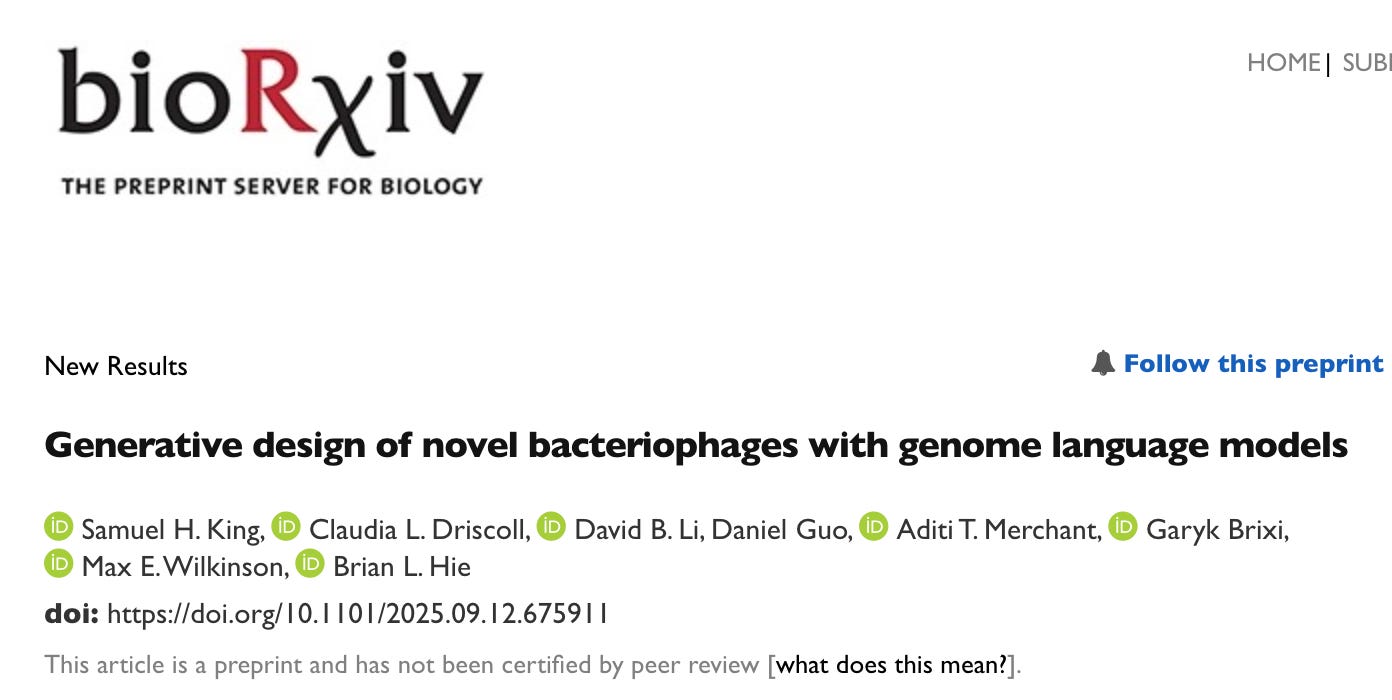 🔬Bio-security is an AI Arms Race - Eric Nguyen (CEO, Radical Numerics) 23.09.2026 1t 31minThe OpenAI → Hugging Face attack has people asking “what else do we need to worry about?” and Anthropic’s filters flag two things: cyber-security and biology. The natural question is: what about bio-security, then? Clem Delangue argues that cyber-warfare defensive capabilities need to be open and to keep pace with frontier models’ attack capabilitiesRadical Numerics co-founder Eric Nguyen sat down with us and explained why the same models that increase biological capability can also keep defense from falling behind.Building a virus from scratchWhile he was at Stanford, Eric couldn’t get traction on Genomic Language Models (GLMs) for a long time. Biologists didn’t believe it would work, didn’t think they could verify the output, and didn’t see important applications beyond what they could already do. He kept pushing, eventually helping lead the development of Evo and contributing to Evo 2 at Arc Institute. Those models were later used by a separate Arc/Stanford team to generate entire bacteriophage genomes that were synthesized into functional viruses!Long context unlocks biological intelligenceEarly ChatGPT spit out poems and email, and early DNA language models like Evo and Evo-2 could build a genome from scratch. DNA is different, however, from natural language in that it has a very small alphabet (4 characters ACTG) and that its sequences are very long:* 60K for an average human gene* long being up to 2.3M* the whole human genome around 3B.Innovation in long-context models made this possible about 3 years ago (footnote: striped hyena), long before the frontier labs were building 1M+ context models.Now Eric and other AI x Bio luminaries have founded Radical Numerics to build and scale GLMs to tack a wide range of biological problems, extending well beyond generating DNA.Thinking in DNATheir GLMs already do pretty well with RNA and protein because there are clear markers in the DNA sequence for genes (RNA sequences the perform many functions) and specific genes that encode proteins. This means that the models already generalize to multiple “languages,” before even attempting to train in other modalities, such as 3d protein structure, epigenetics and natural language.If a model thinks in the DNA language, maybe it understands the imprint that environment left on different genomes as well? Perhaps the model has learned the functional relationship between different sequences, and could extrapolate to new sequences based on that?And so what we wanted to showcase was that if we show the model progressively better RNAs in a series of steps with its score, right? So you have like low scores first and then you gradually move up the chain. Can the model continue that trajectory on its own? And then in the final step, does it self optimize to a point where it's like the best score it can get? That was the experiment. Can we do that? And so we took a data set, a large data set of aptamers. We held out a portion of the best performing ones and we showed it only the lower ones, but then we ranked it, right? So we showcase lower scores with the RNA aptamers and then progressively got higher, and then ask the model to just like continue with that pattern. And it turns out it was able to recapitulate some of those higher scores that we had not shown it yet.So, voila: chain-of-thought, thinking in DNA!The arms raceBut much as long-context inference, chain-of-though and multi-modal perception unlocked sophisticated reasoning in natural language LLMs, these capabilities in GLMs are enabling increasingly sophisticated “biological intelligence,” and along with it, greater danger.According to Eric, defense is currently losing this battle, but Radical Numerics argues to push the frontier harder!I won’t spoil the details for you. In the episode we talk in detail about:* Biosecurity as an arms race — and how defense can keep up* The genome as the imprint of the environment on DNA* Going truly multi-modal* How chain-of-though works when you “think” in the language of DNA This is a public episode. If you'd like to discuss this with other subscribers or get access to bonus episodes, visit www.latent.space/subscribe
 -
 🔬 An Oscar, Two Asteroids, and the Algorithm in Your sklearn: John Platt on AI for Science 22.09.2026 2t 1minHow often do you get to talk to a guest who has both an Academy Award and who invented textbook machine learning algorithms? John Platt has an Oscar, two textbook algorithms, two named asteroids, and an Erdos-Bacon number of 6. This was easily the most fun bio of all the guests we’ve read to date. And the result was an epic and fun chat covering Google’s Empirical Research Assistance (ERA), how AI can help battle climate change, and tons of great stories about the co-evolution of science and AI.John’s colleague Dave Bacon likes to tease John that his career has been defined by being twenty years early to the next big thing. This may be convolutional neural networks (some credit him with coining the term), fusion research, quantum computing. John and Google have been working on solving some of humanity’s hardest problems with AI and computation for well over a decade now. Recently John and his team set their sights on using AI to solve any scientific problem that can be written down as a score.Google’s Empirical Research Assistance (ERA)John’s team has taken on many hard scientific problems over the years. In solving these, they noticed a pattern, many scientific problems can be reduced to what John calls a “scoreable task”. Once you have the score function, the goal is to find some code that maximizes the score. The hard part is in formulating the score, but once you have the score finding the maximizer can still be quite a lot of effort.John’s team set out to automate solutions to this general problem. This came out of the idea of an “auto-Kaggle” AI, which can solve any Kaggle problem you can throw at it. Kaggle is owned by Google, so all the data was ready and easily available to them!The result is Google’s Empirical Research Assistance or ERA (paper, github, blog). ERA is surprisingly simple conceptually. Gemini (or your LLM of choice) keeps a running tree of past experiments (notebooks) and where they’re going. It’s a close cousin of Monte Carlo Tree Search: at each iteration the Upper Confidence Bound rule picks which notebooks are most promising to mutate. This is optimistic, not greedy, so sometimes even the fifth-best notebook gets chosen. Gemini then proposes mutations for each one, about ten at a time. The history of each branch is shared, so different leaves can learn from each other.“It’s almost like having a hyper-eager grad student who doesn’t sleep.”Evolutionary algorithms have been around since the 70s, but this works because Gemini actually knows where to look! What’s even more interesting is that there was a step change between Gemini 2.0 and 2.5, and this went from just not working to working great.ERA is so powerful that John and his team solved many outstanding problems with it, resulting in at least ten papers. Some of these were climate change related, which we talk about in the next section.So, we had to ask: if you have an optimization god how do you avoid fooling yourself? John’s answer is that ERA provides predictive models. It’s up to the scientist to make sure they’re truly descriptive. Some of this just involves good old-fashioned careful machine learning science. “It’s a power tool. It can slice your fingers off.” This led to some fun discussion about Kaggle competitions, and the fun ways people can overfit to datasets without meaningfully solving the problem you actually care about: Google’s contrail-detection competition was won by entrants who noticed a half-pixel error in the labels (is the origin at the corner of the pixel or the center?) and this turned out to be a part of the winning special sauce. Great for winning $15,000, not so helpful if you actually want to solve contrails.“People themselves will act like these LLMs and try to reward hack. It goes back to Goodhart’s law: any metric that becomes a target is no longer good as a metric.”His advice for where to start instead?“Always just fit linear regression. Just do it. Just do it. Just do it. Or SVM.”Tackling Climate Change with AIJohn and his team have worked extensively to mitigate the effects of climate change. We talked about several of their initiatives.Perhaps the most interesting result we talked about was reducing the effects of condensation trails (contrails) from airplanes. Those little streaks you see running behind planes somehow account for 1% of all human-induced global warming?!? Some of these trails of ice crystals can hang out for days. These crystals are black in the infrared, acting like a thermal blanket that traps heat day and night.It’s easy to understand what’s happening here, a region of atmosphere becomes “ice supersaturated”, and a tiny bit of exhaust seeds water vapor that instantly crystallizes. The scale here is astounding, with a single gram of exhaust resulting in ten kilograms of ice crystals.The solution to all of this is quite simple, in principle! We know what parts of the atmosphere are most likely for the trails to form. Just have the planes drop a flight level or two. Problem solved, right? Well, the hard part is accounting for how much warming was prevented. This is a counterfactual problem, parts of which stumped John’s team for over two years. They had a working model for the heat-trapping half, but not for the reflected sunlight. ERA was able to find a simple model with some confounders they hadn’t considered. Cracked it!Modeling climate generally is a hard problem. Climate is best thought of an attractor of many different possible weather outcomes. This makes it much harder to model.“Weather is where you are on the attractor, and climate is the statistics of the attractor. The problem with climate is that we’re altering it. The attractor itself is changing, it’s moving.”John and his team have worked on treating both the symptoms and the disease of climate change, with several other works in the area. Another fun example we briefly cover is FireSat, a way of using a constellation of satellites to rapidly identify fires before they grow too big to put out. For anyone living in California, you understand the problem. In dry years a small fire can result in hundreds of thousands of acres. If you could find this fire when it’s the size of a room, it could be put out. By the time it hits an acre we have a much harder problem.Where is this all going? Looking forward by looking backBy now it should be clear John has an incredible and unique view over the intersection of science, computation, and AI. John talked about a class on physics of computation he took with Richard Feynman back in 1982. This was when quantum computing was an ill-defined concept with no theory or experimental backing. John recalls every Tuesday was a guest lecture, and every Thursday was Feynman explaining why the Tuesday guest was wrong. John also recalls doing science back when there was essentially no compute, a million operations per second was cutting edge.What is John’s recommendation: the most important skill is developing deep domain expertise. There’s no other way to develop taste than to tackle hard problems. One surprising part of this is that John recommends spending time doing things the old fashioned way. Play with tools, and just implement things yourself.“You could drive up the mountain, or you could hike up the mountain, and maybe it’s okay, even fun, to occasionally hike.”Summing it up, John’s message to the audience is that there will still be a place for scientists, and that if anything it will just open up more opportunities for “the creative stuff, the rigorous stuff, the philosophy stuff.” But don’t forget to spend time doing the grunt work.“There just seems to be this strong impetus in the world to optimize and squeeze everything out. But you do lose something when you hyper-optimize. It’s overfit.”And whatever tools you end up using, John’s advice is the same one Feynman gave him forty years ago: you must not fool yourself, and you are the easiest person to fool.We had a great time talking with John. We hope you enjoy! Also in this episode* Fusion is three years away, not thirty, if you ask John. And why the Lawson criterion means every fusion approach has an Achilles heel.* Why superconducting qubits are still finicky.* The asteroid he named after his mom, which turned out to have a moon.* The looming helium shortage nobody talks about.* How NeurIPS started as people crashing a private workshop at Snowbird, and why Hopfield networks are all you need.* Being Carver Mead’s sysadmin on a VAX with an 80 MB disk the size of a dishwasher.* Finding asteroids in 1985 with film, a stereoscope, and a letter to Brian Marsden. The Vera Rubin Observatory found 11,000 in six weeks.* The Feynman effect: total clarity in the room, none once you leave.* Quantum echoes, the NISQ era, and why he thinks quantum is neither thirty years away nor tomorrow.* A startup that wants to inject mercury into a fusion reactor and sell the transmuted gold. “It might not work.”* John’s 20% time rule for his own group: do stuff for learning, and you don’t even have to tell him what. This is a public episode. If you'd like to discuss this with other subscribers or get access to bonus episodes, visit www.latent.space/subscribe
 -
 Jev: System One models for Prod, not God — with Diogo Almeida, CEO, TypeSafe AI 21.09.2026 2t 20minTickets for AIE NYC now open, and apply for the invite-only AIE CODE. Join us!We have an unusual relationship with today’s guest: for years since coauthoring the InstructGPT paper, Diogo Almeida had been saying that API-available frontier models have been going down the wrong path, everything from the alignment to refusals to reliability perspectives, that we have dropped every mode other than autoregressive chat-tuned LLMs because of the overwhelming success of ChatGPT.In a launch video now viewed ~40M times (by comparison, GPT4o was 22M, Fable 5 was 15M, Navier Stokes was 74M, and 6 Astra was 137M), Diogo introduced Jev and it immediately took over the AI timeline — we’ll skip full Jev explainers because your favorite AI influencer/educator has probably already done one. We also collected:* the official patterns and cookbooks you should see first, from Allie* Jev usecases* speed based - games and computer use* the voice + computer use example we discuss at 1h34 mins* voice + browser control* The must not miss Doom demo* Driving cars in games* Excalidraw* virtual try-ons* “Smart Games”/smart NPCs* guided responses in text messages* Jev for coding agents has an official guide * jev for linting* compacting tool calls* reasonable pushback from Theo - Diogo has published a note on the Tyranny of the KV Cache that you should read as a followup after the pod for Jev + coding agents, because of his belief that Cache Rules Everything* Programming Languages built atop Jev (Diogo’s fave)* Jev for analytics replay and user journey review* “dark data”* entity resolution* natural language search* “smart software”* a core goal of Jev is to “disappear into the background” - eg as unremarkable as regex* Jev as a judge* Jev memes* Jev vs LLM capabiltiies* blending transformers and classifiers* about the confidence api* Jev vs GLiNER (note difference/pushback, agreed, agreed, agreed)* Jev on trolley problem* Jev BushInstead we’ll focus on what we can uniquely offer — a broader philosophical and mission-based understanding of how and why Jev was created, and what you should expect next in terms of future models from TypeSafe (ReasoningJev?) and what usecases and ideas you should work on vs the 55th low effort clone of Jev’s API or doing a generic JevBench benchmark - something Diogo has rejected publicly.Why RLCD: Three kinds of RLHF, and why they are ALL the wrong north starDiogo knows a good deal about RLHF, given that he was on the team that pioneered post-training at OpenAI — and traces the three branches to Christiano et al 2017 (the robot backflip demo), Stiennon et al 2020 (learning to summarize) and his baby, Ouyang et al 2022 (InstructGPT). From there on, every innovation from Function Calling to Structured Outputs to Reasoning felt like a hack on top of the string based, sequence to sequence prediction paradigm. As he mentions on the pod, from 2023-2024 he struggled unsuccessfully, due to both personal and organization underestimation, to train a model that accurately addressed what he saw as the core problem with making LLMs the heart of software: reliability.Jev’s core innovation is "Reinforcement Learning for Calibrated Decisions”, a novel, unpublished technique that optimizes for “answers with epistemically honest probabilities on System One tasks” rather than human rated feedback (RLHF) — which causes hallucinations, sycophancy, and permanent reliance on humans — or programmatically verifiable outputs with rubrics (RLVR) — which solves Navier Stokes but exacerbates jagged intelligence and doesn’t integrate well with other software.We’ve talked about the calibration problem before on the pod, but probably the single best place to understand why RLCD became necessary is Diogo’s AIE talk, which discusses why a generation of training helpful AI assistants for humans has impaired them for training models for composable, programmable AI for automation.At the end he also teases his contrarian opinion on scaling laws - which teases how to build a modern neolab without the billions of dollars the major labs have…The Bitterest Lesson: Tasks and Data beats ComputeWe spend a good amount of time discussing Diogo’s essay on the Bitterest Lesson:His point is that “You get what you optimize for and the bitterest lesson in ML is that the most important part of it isn’t ML at all.” - and picking the right north star, eg upvoting for user preference vs being integrated into tool calls - makes everything else fall in line.We’re excited to catch up with a freshly dyed Diogo to discuss:* Why AI can solve extraordinarily hard problems but still fail to automate basic work* What System One Models are and why Jev is built for software rather than chat* RLHF, mode collapse, calibration, and the hidden costs of optimizing for human preferences* Why refusals become a problem when AI is buried inside software dependencies* Why TypeSafe rejects public benchmarks and optimizes for intelligence per dollar* The “bitterest lesson”: why the right task and the right data can matter more than compute* Why TypeSafe thinks of itself as a data lab rather than a model lab* RLCD vs. RLHF and RLVR as fundamentally different North Stars for AI* Why reliability and robustness matter more than simple determinism* Jev’s programming primitives and how intelligence maps into software control flow* Why developers should decompose AI workflows into small, measurable decisions* How structured state replaces giant prompts and system messages* Why Diogo thinks AI should eventually disappear into the background of software* The “inverse SaaS-pocalypse” and how AI could supercharge existing software* System One vs. System Two intelligence and the limits of reasoning models* Dark data, computer use, real-time intelligence, and Jev’s biggest early use cases* Why Jev could reshape coding agents built around a single-model architecture* Why Diogo says he wouldn’t pre-train with $1 billion* The OpenAI journey that led to TypeSafe and why he thinks many neo-labs are approaching AI incorrectly* Coding agents beyond the KV cache, shared state, sub-agents, and the multi-agent futureDiogo Almeida* LinkedIn: https://www.linkedin.com/in/diogomda* X: https://x.com/CompleteSkeptic* TypeSafe AI: https://typesafe.ai/Timestamps00:00:00 Jev Launch Week and the AI Economic Revolution00:02:50 What Is Jev? System One Models and Programmable AI00:05:54 RLHF, Mode Collapse, Calibration, and Yann LeCun00:10:29 Programmatic AI, Refusals, and Safety Alignment00:17:21 Why TypeSafe Rejects Public Benchmarks00:20:43 The Bitterest Lesson: Data, Compute, and the Right Task00:24:59 RLCD vs. RLHF and RLVR00:28:42 Why Powerful AI Still Hasn’t Automated the Economy00:39:55 Reliability, Robustness, and Determinism00:48:11 Model Versioning, LTS, Speed, and Intelligence per Dollar00:54:04 Inside Jev’s API and Programming Primitives00:58:28 How to Build with Jev: Structure, Decomposition, and Small Decisions01:18:28 The Inverse SaaS-pocalypse and AI Disappearing into Software01:33:21 Computer Use, Dark Data, and Jev’s Biggest Use Cases01:38:48 How Jev Could Reshape Coding Agents01:41:00 AI Safety, Frontier Pacing, and the Limits of RLVR01:48:03 Why Diogo Wouldn’t Pre-Train with $1 Billion01:55:19 The OpenAI Story Behind TypeSafe02:01:41 Why Diogo Thinks Most Neo-Labs Are Getting AI Wrong02:08:00 Coding Agents Beyond the KV Cache and the Multi-Agent FutureTranscriptIntroduction: Jev Launch Week and Developer MomentumSwyx [00:00:00]: Okay, we’re in the studio. A special occasion because this week, Diogo, my good buddy, launched Jev, and it’s been taking over the complete timeline. How do you feel? What’s it like to be you right now?Diogo Almeida [00:00:16]: Emotionally?Swyx [00:00:17]: Yeah.Diogo Almeida [00:00:17]: Never been worse. Like, I’m a ragged corpse of a person right now because there’s so much going on, and I’m like a technical CEO, so I have, like, a lot of fires to fight.Swyx [00:00:29]: Yeah.Diogo Almeida [00:00:29]: But mentally, I feel—I say this all the time, and I’ve been saying this kind of for years in my over-under events. Like, I feel like the entire AI field is like one of those, like, carnival house of mirrors, and everyone is just insane and saying the weirdest stuff that doesn’t make sense. And it feels like for just this week, like, I’m on a better in sync with reality and like, oh, people see it now. AI can be so much more than what was once thought.Diogo Almeida [00:01:06]: And like, yes, we are going to make. Like, an AI-based economic revolution is back on the table, and this is f*****g awesome.Diogo Almeida [00:01:17]: I’m so jazzed the developers get it. It’s, it’s, Yeah, and I want to show my eternal gratitude to the developers andSwyx [00:01:25]: Yeah.Diogo Almeida [00:01:26]: I’m so jazzed about the community and everything. It’s so great.Swyx [00:01:28]: Yeah, you were saying yesterday that you decided to prioritize the town hall and not a bunch of, like, VIP, investor-type people because you wanted to make sure that they are the people that you get your most, attention, right? The engineers, the developers.Diogo Almeida [00:01:43]: Yeah, it felt a little like, oh man, I’m talking to, like, really important people right now.Swyx [00:01:47]: Yeah.Diogo Almeida [00:01:47]: I probably shouldn’t reveal who.Swyx [00:01:48]: Yeah.Diogo Almeida [00:01:48]: But it feels a little bit dirty for me to, I’m, like, perhaps overly genuine in things. Like, it feels, like, dirty if, like, in my gigantic calendar event of people to talk to, the community isn’t one of those.Swyx [00:02:04]: Yeah.Diogo Almeida [00:02:04]: And actually, in my ideal world, it would be, like, community all the time. I was thinking, “Should I host a town hall while walking to your studio?” And I’m like, “No, that’s too crazy.”Swyx [00:02:12]: Sure. Yeah. Well, you guys have been hosting town halls on Discord. Discord is now 100,000 people. Your Twitter’sDiogo Almeida [00:02:19]: I don’t follow these stats.Swyx [00:02:20]: Yeah.Diogo Almeida [00:02:20]: So holy s**t.Swyx [00:02:21]: Your Twitter’s blown up. It was, it was really funny ‘cause, like, at AIE, you were like, “Yeah, follow me please,” and then you didn’t, like, provide even your handle.Diogo Almeida [00:02:29]: I’m a noob. I’m a noob.Swyx [00:02:29]: You’re such a noob.Diogo Almeida [00:02:30]: I’m a noob.Swyx [00:02:31]: But no, but that, like, that’s, like, positive aura that, likeDiogo Almeida [00:02:33]: CoolSwyx [00:02:33]: You don’t know how to promote yourself.Diogo Almeida [00:02:35]: Yeah. Someone, like, called me out when I posted, like, “Holy s**t, we’re all three twending-- trending topics.” And then they’re like, “That’s a personal feed.”Swyx [00:02:42]: That’s a personal, yeah.Diogo Almeida [00:02:43]: And I’m like, “Oh, no.”Swyx [00:02:44]: Of course, of course it’ll trend to you.Diogo Almeida [00:02:45]: Cringe. Yeah.Swyx [00:02:45]: Yes, ‘cause it’s what you clicked on.Diogo Almeida [00:02:47]: Yeah.Swyx [00:02:47]: So okay. Let’s, Yeah, so congrats on everything.What Is Jev? System 1 Models and Intelligence per DollarDiogo Almeida [00:02:50]: Thank you.Swyx [00:02:50]: We’ll talk about more, details as you have them. But let’s, for people who are, like, living under a rock or just want, like, the definitive thing, what is Jev?Diogo Almeida [00:03:02]: Whew. Let me think about. That’s a hard one.Swyx [00:03:07]: Okay. And I’m happy to, like, re-ask if you wanna kind ofDiogo Almeida [00:03:09]: No. I’m happy toSwyx [00:03:10]: OkayDiogo Almeida [00:03:10]: I’m happy to, like, just jam on it.Swyx [00:03:12]: Yeah.Diogo Almeida [00:03:13]: I will say, like, the first thing that I’m relieved about with this question is now I don’t have to answer that question to my parents anymore ‘cause ChatGPT can just explain it.Swyx [00:03:20]: Nice.Diogo Almeida [00:03:21]: So the way I see it is we new-- need a new class of models. We’re not attached to naming that class of models. Our-- the most accurate name we’ve come up with is System 1 models.Swyx [00:03:33]: Yeah.Diogo Almeida [00:03:33]: There will be reasons, but it’s-- there’s a reason why we don’t call them decision models, because, like, they will be. Like, System 1 is beyond that. That’s all I can say. We didn’t expect this to be our big launch, so we have stuff in the tank.Swyx [00:03:48]: You should have said low-key research preview.Diogo Almeida [00:03:52]: It kind of was, right? It kind of was. But we. So there’s a class of models that we describe them as, like, machine-native, System 1, large programmable. I think these are-- is the class of models where the goal is for code to be the consumer. So as opposed to, lar-- pre-trained large language models, which are meant for, like, autocomplete of the internet, or RLHF models, like chatbot instruction-following models, which are meant to, like, reply to text, or RLVR. It’s in a weird gray area with RLHF. Like, these are meant to have things that directly are consumed by code, hence the name type safe. So the thing we really want is to have, like, AI, like, be as powerful as possible, and we think the way to do that is to integrate it with software. And we are designing everything, beyond just the outside, the deep internals of the model to be optimized for software. So number one, Jev is our first large programmable model, or a System 1 model, whatever you want to call it. Jev is meant to be optimized for intelligence per dollar, hence the name Jev.Swyx [00:05:03]: Jevons Paradox.Diogo Almeida [00:05:03]: Jevons Paradox, yeah. And it’s optimized for intelligence per dollar. I love this debate with people about what is the most important between reliability, cost, calibration, and speed. And Jev is meant to be. Jev will be the name of models that will be on the frontier of intelligence per dollar. There’s other ways to optimize it, like, ML, or at least if you’re good at ML, it’s all about trade-offs. And we are just going all out on that.Calibration, Mode Collapse, and the Limits of RLHFSwyx [00:05:31]: Yeah. And to me, like, calibration is one of the new things that people weren’t talking about as much. We’ve done an episode In the past, with Clementine Foreia of Hugging Face, where they were like, “Yeah, actually, y- they’re just.” Or, and this is your whole argument about RLHF, is they’re more collapsing towards what you want to hear the mostDiogo Almeida [00:05:50]: OohSwyx [00:05:50]: Or what is most likely, instead of, like, their own internal confidence about a thing.Diogo Almeida [00:05:54]: Can I soapbox on that for a second?Swyx [00:05:56]: Go ahead. Yeah.Diogo Almeida [00:05:57]: Cool. Like, I’ve been heard that your audience is the most technical, so I actually want to get into that.Swyx [00:06:02]: Yeah.Diogo Almeida [00:06:03]: And if- I went through extreme precision to make sure everything in our launch video is accurate and real. Apparently, that’s very unusual. One of the things that no one paid attention to was the downsides of RLHF, in particular mode dropping.Swyx [00:06:17]: Mode dropping or mode collapse?Diogo Almeida [00:06:19]: It’s the same thing.Swyx [00:06:19]: Is that what you call it?Diogo Almeida [00:06:20]: It’s the same thing.Swyx [00:06:20]: All right.Diogo Almeida [00:06:21]: And I wanna have a blog on this eventually, but I, like, want to tell as many people this as possible ‘cause I think it’s a very interesting thing. So the spicy take, I believe in Yann LeCun a lot. I think Yann LeCun’s takes are actually among the closest toSwyx [00:06:36]: What about this?Diogo Almeida [00:06:37]: Well, should I address this now or should I wait and go into mode collapse?Swyx [00:06:40]: No, later. Go mode, go mode collapse. I don’t know.Diogo Almeida [00:06:42]: So I actually think that among takes, Yann LeCun’s is among the most accurate. But he has this very famous/infamous slide about,Swyx [00:06:52]: The cake?Diogo Almeida [00:06:53]: LLMs are doomed.Swyx [00:06:54]: Okay.Diogo Almeida [00:06:54]: Like that one where he, like, has, like, a pie chart with, like, a tiny par-- tiny little thing- and says that as you increase sequence length, the probability of it making an error goes in. Yes, this one. This one. I love this one, because it’s one of these things that seems mathematically obvious, but is obviously wrong, right? Like, it’s mathematically obvious, but it doesn’t empirically hold. And this is my favorite thing to teach people about, like, where youSwyx [00:07:21]: What’s the disconnect, right?Diogo Almeida [00:07:22]: Exactly. And may I or you want to tell me?Swyx [00:07:27]: About mode collapse?Diogo Almeida [00:07:28]: Oh, no. Oh, so mode clop-- collapse is related to this.Swyx [00:07:31]: Yeah.Diogo Almeida [00:07:31]: The disconnect happens because if you are in a mode covering or a calibrated distribution, you are, like, not. You are not overly punished about having outliers. You’d expect, like, something. Some amount of the time you’d be out of distribution, some amount of time you’d be in distribution. That’s what happens when you cover the distribution. This was like models before GANs. They made blurry images, right?Diogo Almeida [00:07:54]: Instead, GANs mode drop. They, like, drop the minority classes and just do the really common ones. And this is why this effect doesn’t happen, right? Like, instead of be-- in order to generate really long strings, without making errors, they need to, like, be extremely conservative because it’s e- really easy to see when an error happens. It’s very hard to see when, like, a subtle thing that looks correct happens. And that calibration is, like, total poison into, like, the probability distributions of strings.Swyx [00:08:22]: Yeah.Diogo Almeida [00:08:23]: And it’s, it’s a nuanced take and like, I think that This is why this doesn’t happen, and this is why strings are so bad at, decision-making or, overloading the string models are for decision-making is, like, a bad time.Yann LeCun, JEPA, Scaling Laws, and Practical ResearchSwyx [00:08:38]: And while we’re on the topic of Yann, do you agree that his fix i- with-- which is like a world model, like a JEPA-type, embedding thing is the right solve? So basically, like, the. One of the reasons that it could fail is because you’re trying to reason over token outputs and then, and then just looping back again and going. Keep, continuing going until you reach, like, a end of sentence. Like, is that, And his solve is JEPA, right?Diogo Almeida [00:09:02]: Yes.Swyx [00:09:02]: Which is, like, joint ambition,Diogo Almeida [00:09:04]: YeahSwyx [00:09:04]: Joint embedding prediction. So like, is that the solve or, like, do you have a. Do you have a take on that?Diogo Almeida [00:09:10]: Oh, man. I probably shouldn’t talk too much about the insides of ML, but I will say that my brand, other than unhinged, is practical.Diogo Almeida [00:09:20]: Like, even my take here is practical. And like, I’m. Am I a scaling law fan? Depends. It dep-- it’s, it’s, it’s, like, it’s. Scaling laws tell you how much better you get at a thing for amount in.Diogo Almeida [00:09:33]: A scaling law does mean exponentially more resources for normally sublinear gains, which looks to be a bad investment unless those, like, linear gains are, like, really valuable. But it’s all. To me, it’s all about, like, what can we do with what we have to make the biggest possible f*****g difference? I can curse.Swyx [00:09:51]: Yeah.Diogo Almeida [00:09:51]: Yeah.Swyx [00:09:52]: Yeah.Diogo Almeida [00:09:52]: Yeah.Swyx [00:09:53]: We’re, we’re, we’re approved for adults.Diogo Almeida [00:09:54]: Hell yeah.Swyx [00:09:55]: And also we have a scaling law thing if you wanna go into that later.Diogo Almeida [00:09:58]: Oh, I could if we. See, that part is not super relevant right now.Swyx [00:10:02]: Yeah.Diogo Almeida [00:10:03]: I actually. If you wanna go into my bitterest lesson, I think that’s more relevant.Swyx [00:10:06]: Okay.Diogo Almeida [00:10:06]: But like, to me, I’m all about, like, pragmatics. And I think that the JEPA stuff is really cool early research. I really love awesome research. Is it practical yet?Diogo Almeida [00:10:21]: Probably shouldn’t say. But like, there’s just a lot of.Diogo Almeida [00:10:29]: I just think there’s just, like, so many diamonds in the rough let all over the research world right now that haven’t been polished because people don’t know how to, like, do the right task. And I think that what our launch did, it. Does it kickstart us as a company? Like, yes. Will it be great for us as a company? Yes. I think it’s gonna be, like, even greater for this direction of, like, programmatic AI. There was going to be, like, a gold rush on top of us for. ‘cause, like, software is super f*****g charged. But I think there’s gonna be a gold rush parallel to us as well on, like, all the different ways we can expose things to make software more powerful so people can make even cooler stuff. And then we are back to, like, early internet energy?Swyx [00:11:12]: Yeah.Diogo Almeida [00:11:12]: And I think that’s why, like, the Twitter is just like, “Jev.”? It’s, it’s like. It is a partySwyx [00:11:18]: It’s inspiring because it’s, it’s, like, so different than what we’re used to, which is, “I’m sorry you can’t do this, but we do scaling laws and only the big labs can do it,” right?Diogo Almeida [00:11:28]: That. Actually, if I. I’ll, I’ll make a tangent if that’s okay.Swyx [00:11:32]: Yeah.Diogo Almeida [00:11:32]: I think you might enjoy this.Swyx [00:11:33]: Really? Our five tangents in. It’s good. It’s fun. Yeah.Diogo Almeida [00:11:35]: Oh, yeah. I get lost at all my tangents.Swyx [00:11:37]: This is gonna be horrible for the listeners to figure it out, but they’re gonna figure it out. It’s fine.Safety Alignment, Refusals, and API PhilosophyDiogo Almeida [00:11:40]: Yeah, we can edit it in post.Swyx [00:11:40]: This is my response. Yeah.Diogo Almeida [00:11:41]: So popular thing on Discord, that people keep asking me, I haven’t had the time to explain it yet, is why am I opposed to safety alignment and why do we not refuse? I’m not opposed to safety as a principle, but I think that safety alignment is generally misaligned with users. And refusal is just, like, obviously a type error. Like, if you’re a human being and you’re chatting with, like, a bot or whatever, you’re cloud coding, and a refusal happens, like, “I’m sorry, I can’t read DNA.py.” that’s an annoying time. It’s anno- it’s, it’s annoyingDiogo Almeida [00:12:18]: Right? But you can work with it, right? And you’re forced to work with it ‘cause of Stockholm syndrome.Diogo Almeida [00:12:23]: I have stories about that too. I need another tangent deep in here. But like, if you ever want this in a dependency running in the background, what happens if that refuses? What if someone else is using that dependency? They don’t know what that system is. Like, you want the software to just stochastically break because a user sent, like, a weird message in there?Diogo Almeida [00:12:42]: Like, that is, like, straight-up insanity. It’s coming from a place of, like, people who do not understand software, do not understand programming, and like, they are obsessed with, like, I believe this, horseless carriage of, like, AI coworker instead of unearthing, like, the full power of AI.Swyx [00:13:01]: Fair enough.Diogo Almeida [00:13:01]: Yeah.Swyx [00:13:01]: You want something that is the core kernel that is usable everywhere.Diogo Almeida [00:13:05]: Yes. Exactly. Like, the cognitive core, right?Swyx [00:13:07]: Yeah.Diogo Almeida [00:13:08]: And you need this thing to be s- like, so general, so optimized for its use cases. You want it to be, like, you want it to work on all the future use cases, all the weird s**t that people are doing.Swyx [00:13:19]: Yeah.Diogo Almeida [00:13:19]: We obviously didn’t train on any of that stuff. Is it surprising that it works? No, ‘cause we trained on weirder stuff, my friend.Diogo Almeida [00:13:28]: So. But one tangent up about, like, safety alignment.Swyx [00:13:32]: Okay.Diogo Almeida [00:13:32]: Safety alignment makes sense for a product, in my opinion, for, like, ChatGPT and Claude. Like, it, What safety, what makes safety and capability alignment different is capability alignment is, like, about doing what the user wants. That is sick for software engineers. They want their thing to do the thing, and the more predictable it is, the less they have to test it and play around with it. Jeb is not anywhere close to that yet. It could be, but like, there’s so many more nines of reliability that we want in order to make it so good, like a database query, that you don’t even have to think about it. It is just there when you need intelligence. But safety alignment is, like, the opposite of instruction following. It’s when you want to follow someone else’s instructions, like OpenAI and AnthropicSwyx [00:14:13]: The RAGs value stack.Diogo Almeida [00:14:14]: Exactly. And this makes a lot of sense for a product. Again, like, ChatGPT should do. Y- you sh- like, if they don’t want to, like, do, like, some, not-safe-for-work role play with ChatGPT, that’s on them because, like, maybe that’s, what their users who have, like, parents and kids want. Like, n- that’s fine. But in an API, that’s nuts, right? Like, that’s completely unacceptable because, like, people need to, like, program around this, and that is, that’s so anti-user that it’s. It. I’m. Huh. I can be an angry person, so I should try to calm down.Swyx [00:14:52]: It’s, People get your passion, and I think that’s really good. The one pushback I’ll give you is, like, what if we use it to kill people, right? Like, that is the actual. Like, n- the not-safe-for-work thing, it’s private, personal, whatever. But like, yes, like, we will use it in war. And like, that is, something that companies can reasonably prefer their APIs not be used for.Diogo Almeida [00:15:14]: I get that. I think that there’s, like, pragmatic places where that opinion can be held. I don’t think the foundation of, like, a general-purpose technology is that place, personally.Diogo Almeida [00:15:27]: Like, would I prefer that our stuff is not used to kill people? Obviously. Would I prefer it’s used for, like, all sorts of, like, great stuff in the world? Obviously. Will I put my thumb in the scale for that? Yes. Will I do it at the technological layer? Absolutely not, because that will fracture the intelligence. Every single time you mean it to overfit to some weird stuff, you’re fracturing its intelligence more and more. And like, these things are fractured to the, like. They’re so darn fractured right now.Swyx [00:15:54]: Yeah.Diogo Almeida [00:15:54]: So and as a furthermore thing, to me, it’s like I think intelligence will be more like a database than a coworker. Like, I don’t think it’s up to databases to add checks on whether or not they’re used for, like, what’s something that’s not great? Like, CIA. Actually, I don’t know what the CIA does, really. You can imagine. You can imagine, killing people who are not even bad or whatever.Diogo Almeida [00:16:21]: And like, I don’t think it’s the database’s responsibility for that. And furthermore, like, a thing that has been weird to me is when people, like, sign up for our thing on Slack and they’re like, “Hey, we’re gonna deploy this. Can we deploy this thing?” I am just like, “My brother, we are an API. You are a developer. It’s none of my business,” right? Like, you shouldn’t know what the whole task even isSwyx [00:16:46]: YeahDiogo Almeida [00:16:46]: Because it should be decomposed into small things. We shouldn’t be able to know what the downstream users are doing, and that is, like, a good boundary to give software engineers maximum power. Ideally, they use it for the good stuff, and ideally, we can, like, help them and like, we’ve talked about, like, doing open source and charity and all of that. We have absolutely no time for anything else right now. But like, they will get any of that bias out of the technological layer as long as I’m in charge.Privacy, Benchmarking, and Trusting IntelligenceSwyx [00:17:11]: Yeah, that’s great. While we’re on the topic, let’s also briefly talk about your privacy stuff, terms of ser- terms of use, which, got a little bit ofDiogo Almeida [00:17:18]: OohSwyx [00:17:18]: Misunderstanding. I just wanna clarify that upfront.Diogo Almeida [00:17:21]: Hell yeah.Swyx [00:17:21]: I think this probably takes two sentences from you about, like, you will not. You’re not being that restrictive about your API. Like, clearlyDiogo Almeida [00:17:27]: Oh, yeah. Oh, yeah, so yeahSwyx [00:17:27]: Ideologically, you articulate your role as a platform very seriously.Diogo Almeida [00:17:30]: Yes. Yes. I don’t know what you’re referring to, but like, this was. I’ve seen a couple of things about, like, benchmarking.Swyx [00:17:38]: Yes.Diogo Almeida [00:17:38]: Like, obviously we’re not stopping people from do. Oh, man, I should be careful about what I say. I’m realizingSwyx [00:17:43]: No, you said, you said it publicly thatDiogo Almeida [00:17:44]: YeahSwyx [00:17:44]: That was in the preview period. You didn’t take it out for the launch.Diogo Almeida [00:17:47]: Yeah. Okay.Swyx [00:17:47]: And now you’re gonna take it out.Diogo Almeida [00:17:48]: So the team is doing stuff thatSwyx [00:17:49]: YesDiogo Almeida [00:17:49]: I’m not even aware of, so it’s great to know the team communicated that. I asked them to check in with the lawyers about that.Swyx [00:17:54]: Yeah.Diogo Almeida [00:17:54]: Like, we are obviously not stopping people from doing that type of thing. I’m extremely in favor. So I’m extremely anti-public benchmarks. I’m extremely in fa- I’m medium about private benchmarks that are proxies. ISwyx [00:18:09]: So are you worried about, saturation or, like, training on public benchmarks? So it’s, like, easy to cheat.Diogo Almeida [00:18:15]: Not only is it easy to cheat, there’s a lot of ins. So I think that we are. Or anyone who’s, like, competition with us that, vaguely there is. Like, you could say, likeSwyx [00:18:28]: There’s like 50 Jev clones, yeah.Diogo Almeida [00:18:30]: Well, sure.Swyx [00:18:31]: Yeah.Diogo Almeida [00:18:32]: Well, the, these. Let’s say that there is competition.Swyx [00:18:34]: And we’ll talk about those. Yeah.Diogo Almeida [00:18:34]: Or let’s just say that there’s. Let’s just assume that there’s an industry two years from now of people who are doing similar things to us. The thing that we are selling is intelligence per something, per, like, dollar or per second. The. No one. Like, people obsess about the cost and the speed. I believe that is. It’s cool, but like, the thing that matters is the intelligence. Like, the cost and the speed are, like, are bad things. You’re paying them for something, and you need the thing back, and the intelligence is what truly matters. The problem with intelligence is that there’s a je ne sais quoi to it, right? Like, the good model smell. Like, the thing that happened after we launched of, like, two hours later that actually went way bigger than the video, which was like, “Holy s**t.”Swyx [00:19:16]: This is actually usable.Diogo Almeida [00:19:17]: It. WellSwyx [00:19:17]: Yeah.Diogo Almeida [00:19:17]: It’s, like, beyond that.Swyx [00:19:20]: Yeah.Diogo Almeida [00:19:20]: Like, the. Whew, the launch was crazy, and people could really sense how hard we care about that, and that’s truly what I think the long term of this is. And I think public benchmarks are antithetical to this. Like, they are a way to get people trust in intelligence because intelligence has a je ne sais quoi, but the public benchmarks are extremely gameable. Even if they try not to, they still will. Like, back in the old days, every lab had a team to collect data that looks like MMLU to make it look better, which is just benchmarking with extra steps.Diogo Almeida [00:19:58]: So I believe that in the long run, it needs to be vibes and trust until you put it into a workflow and evaluate it for that workflow and measure it and have your own sense of, like, how it does on the exact workflow that matters. And our job is to keep moving the nines of reliability. This is like an ever-present part of o- of what we need to be doing as a company, and we need to do everything to have people know that this is something we care so much about. Like, if we wanted to, we could have released Jev, like, a year and a half ago if we wanted it to be dumb.The Bitterest Lesson: Tasks, Data, and North StarsSwyx [00:20:34]: Oh.Diogo Almeida [00:20:34]: It. Like, the. My bitterest lesson, right? Like, architecture and Yeah.Swyx [00:20:40]: I’ll bring it upDiogo Almeida [00:20:40]: Hell yeahSwyx [00:20:41]: Since you, since you talked about it, here.Diogo Almeida [00:20:43]: Hell yeah. T- like, Sutton says that algorithms beats compute very roughly. Data matters way more than compute, obviously. And doing the right task, having the North Star is the hardest, most important thing. This has happened, in LLM land twice so far, right? Maybe 2.2 times. There’s RLHF, which, like, shifted the task to instruction following. No one realized that was possible. RLVR did, like, a tiny little, like, edit to the, to the direction, and now us, right? RLCD. We have a new task, and the goal is, programs in the loop. And yeah, data matters soSwyx [00:21:28]: RightDiogo Almeida [00:21:28]: Unbelievably much.Swyx [00:21:29]: SoDiogo Almeida [00:21:29]: Like, I can’t, I can’t emphasize it less.Swyx [00:21:31]: Yeah, you consider yourself a data lab rather than, like, a model lab. Is thatDiogo Almeida [00:21:35]: AbsolutelySwyx [00:21:35]: Something. That’s the wording you guys use?Diogo Almeida [00:21:37]: Yeah. We are. We will always, like, care so much about data. To me, model capabilities means data. Data is so unbelievably complicated, and that is what gets nines. Like, you have no idea how much data can shift everything. Data is so important.TypeSafe as a Data Lab and Synthetic Data StrategySwyx [00:21:57]: Yeah.Diogo Almeida [00:21:57]: Holy crap. So if people are looking for a job, we are hiring infinite data people, actually infinite.Swyx [00:22:04]: What is a good data person? Like, clearly somebody who cares about reading through the transcripts of, whatever. You’ve said, for example, that y- all your data is synthetic.Diogo Almeida [00:22:15]: Yep.Swyx [00:22:15]: But that’s only, like, the scratching the surface, right?Diogo Almeida [00:22:18]: Yeah.Swyx [00:22:19]: Like, it’s not. Like, synthetic, so what, right? Synthetic, but we have people with a lot of taste and a lot of care looking at, looking at these, articulating what’s wrong, going back, regenerating. Is that what a good data person is these days?Diogo Almeida [00:22:31]: Let me try to figure out how to. Like, it’s, it’s super complicated, and like, I literally onboard the data people with a Talk that I assume is longer than this podcast will end up being. So I will try to say, like, the high level of it. So number one, we don’t do the kind of synthetic data that people ki. Well, I’ll do. Actually, number is zero. Data and synthetic data depends on your task. Like, the shape of your data. The shape of your task changes the data. Like, RLVR’s data is kind of environments, right?Swyx [00:23:03]: Yes.Diogo Almeida [00:23:04]: RLHF’s is the human feedback? Each task has its own unique kind of data, and we, of course, have our own unique kind of data, right? So number one, we have that. Number two, the thing I. The reason why we don’t want to train on our users’ data, even if we could, right? Like, we could probably ask for any terms right now, and it will. We. I don’t know if it would make a difference. We truly don’t want that, because no matter what, the real-world data has so much bias. There’s, like, a power law of, like, people, like, asking the same things where you’ll end up, like, overfitting to it and like, fracturing to it and all of that. And number two, we are, like, aiming for, like, a complete sci-fi future years from now where, like, these models are going to be, like, the general infrastructure, layers and layers and layers and deep down the stack to, like, things people can’t even imagine. Like, I would like to think of our model, like, kind of like, UDP as LLMs and TCP as our models. All sorts of stuff can be built on top of that, and we need to be able to nail those futuristic use cases such that software developers can actually build that futuristic stuff. And the way to do that is even if we had all of the data of the present, we would just overfit to the present, and then it wouldn’t work. What we need is to, like.Diogo Almeida [00:24:21]: It almost feels like a. Like, they’re the artists? They study this cognitive core. Our cognitive core is, like, way less jagged than anyone else’s. And then they find the jaggednesses, and then they address them surgically in a way that. And you can never perfectly do this, right? But they do it in such a way that it addresses it in every single possible, like, dimension, past, present, future.Swyx [00:24:45]: The general case rather than the specific case.Diogo Almeida [00:24:47]: Exactly. And like, that requires a lot of intelligence every time.RLCD vs. RLHF: Defining a New TaskSwyx [00:24:50]: Okay, so we mentioned a little bit. You sort of criticized my thinking as r-- like, very RLVR influence, which is, like, very fair. Let us actually mention RLCDDiogo Almeida [00:24:59]: OohSwyx [00:24:59]: Which obviously you have some secret sauces to our knowledge. You’ve never actually published a paper or anything like that on it. No, right?Diogo Almeida [00:25:05]: No, not yet.Swyx [00:25:06]: But like, what should people get from this? Like, what. Can you give people some confidence that you’re just not just making up jargon for the sake of sounding cool, right? Like, one thing for me is, like, calibration I do think is a. To me, like, well understood because we’ve covered it in. On the podcast.Diogo Almeida [00:25:22]: Yeah.Swyx [00:25:22]: But I don’t know what you mean when you say RLCD versus what people are familiar with.Diogo Almeida [00:25:26]: It’s a great question.Swyx [00:25:27]: Yes.Diogo Almeida [00:25:27]: And actually, I will give a related question.Swyx [00:25:29]: Okay.Diogo Almeida [00:25:29]: What is RLHF?Swyx [00:25:31]: Okay.Diogo Almeida [00:25:31]: Right? And actually, RLHF means multiple different things, right?Swyx [00:25:34]: Okay.Diogo Almeida [00:25:34]: Like, there’s the RLHF of the original. I think it was, like, Paul Christiano teaching a robot to backflip or something like that. Wasn’t there somethingSwyx [00:25:42]: Was that it?Diogo Almeida [00:25:43]: That was the originalSwyx [00:25:44]: I referenced the PPO paper, but I don’t know.Diogo Almeida [00:25:46]: And so PPO was not necessarily from human feedback, if I recall.Swyx [00:25:51]: Okay. That’s trueDiogo Almeida [00:25:52]: But I b- I believe it was, like, an OpenAI alignment work that could teach hard to specify outputs, like a backflip. I’m not 100% sure. And then there was actually learning to summarize. This was work, by a bunch of the team that helped with, instruct-- and co-authored, the instruction following paper, which was teaching, doing PPO on language models.Swyx [00:26:15]: This is the, sorry. I’m trying to, tryingDiogo Almeida [00:26:19]: YeahSwyx [00:26:19]: Trying to manipulate this thing. This is 2017.Diogo Almeida [00:26:23]: Yeah.Swyx [00:26:23]: Right.Diogo Almeida [00:26:23]: I’m not 100% sure, but like, that looks quite right.Swyx [00:26:26]: Yeah.Diogo Almeida [00:26:26]: If it has, like, a robot doing backflips or something like that might be it. Yes. Okay, cool. I guess I got it right. Hell yeah.Swyx [00:26:35]: There you go.Diogo Almeida [00:26:36]: Yeah.Swyx [00:26:36]: That’s the one.Diogo Almeida [00:26:36]: So the idea was can, like, can you do, like, ill-specified things with it? So that’s, like, version one. Version two was, the learning to summarize work, that, like, OpenAI did, which is actually, like, PPO on language models to do something somewhat ill-specified. This is, like, another thing that people refer to as RLHF Which I did not co-author.Diogo Almeida [00:26:57]: Oh, Dario’s there. Cool. Hell yeah.Swyx [00:27:01]: And Radford.Diogo Almeida [00:27:02]: Yeah. Shout-outs to Alec and Ryan. Love them.Swyx [00:27:04]: Yeah.Diogo Almeida [00:27:05]: But the thing that I refer to RLHF is the, Oh, man.Diogo Almeida [00:27:13]: I’ll get toSwyx [00:27:14]: You have comments on that, yeah.Diogo Almeida [00:27:15]: I have comments on that paper, but like, we’re so many, tangents deep.Swyx [00:27:18]: Yeah.Diogo Almeida [00:27:18]: So the thing that really got. To me, the thing that I’m calling to RLHF is the task of instruction following. It’s not about the PPO. That part doesn’t matter. It’s about, like, setting a North Star of this is a valuable direction. It’s kind of like the Bitris lesson North Star.Diogo Almeida [00:27:34]: And for us, RLCD is this new task. And it is not. I don’t see it as jargon. Like, I try to communicate with precision. It’s just that, “Hey, here’s another North Star.” Just like DPO and all of its, like, descendants also do RLHF, despite not using the algorithm in that paper.Swyx [00:27:55]: And so clear- clearly stating the North Star is, being program- programmable AI is one, word that I really catch onto, removing the human in the loop,Diogo Almeida [00:28:06]: YesSwyx [00:28:06]: From. Because RLHF is tuningDiogo Almeida [00:28:09]: YesSwyx [00:28:09]: For this so that you can automate everything.Diogo Almeida [00:28:11]: Yes. Everything that makesSwyx [00:28:13]: Did I miss anything else in the, in the thesis of, like, what the North Star is?Diogo Almeida [00:28:17]: There is. That is. That is right. I’m overly nuanced in my communication. The one nuance is that we need to be practical. We need to be aware of what language models can do really well. Like what AI can do.Diogo Almeida [00:28:30]: Right? Like, there could be programmatic types that are, like, sick AF, but if you. If the technology is not ready for it to. It’s not a tragedy if that’s not out in the world.Why Programmable AI MattersSwyx [00:28:41]: Yeah.Diogo Almeida [00:28:42]: But to me, like, the pre-Jev world was a tragedy becau-- it sounds arrogant. Hear me out.Swyx [00:28:49]: No. I strongly believe you.Diogo Almeida [00:28:50]: Cool. It sounds arrogant, but like, I felt this way since long before I even had a company.Swyx [00:28:54]: Yeah. I can, I can vouch that,Diogo Almeida [00:28:56]: Yes, I’ve been talking about this for so longSwyx [00:28:57]: You said this at All Around Her for, like, three years.Diogo Almeida [00:28:58]: Yeah, I’ve been talking about this for so long. And I’ve been saying it because I thought it would have been easier. They say they do not do things because they. It. They’re easy. They. It’s ‘cause they thought it was easy, soSwyx [00:29:08]: Yeah, exactlyDiogo Almeida [00:29:09]: Something like that. I thought it. This whole project would take a week.Diogo Almeida [00:29:13]: And I was unbelievably wrong. So I am so sorry to everyone at OpenAI that I thought. I was like, “Man, I’m solving this right now.” but like, I think that the tragic thing is when. Well, I think overpromise, underdeliver is tragic too. And like, AI is super extreme on that axis. And I think RLVR is, like, the main. Well, both RLVR and RLHF are extreme perpetrators of this.Diogo Almeida [00:29:40]: But like, it. To me, it’s like it’s just there’s just so much potential there. Like, AI is clearly so smart. I l- smart. I love this in my talks, when I ask people, like, “How can AI be so unbelievably smart? How can we, like, solve millennium prize problems in math, but still not automate even the most basics of works?” Like, really basic rote stuff that, like, the. It d- it doesn’t take, like, extremely smart people to do this. It’s not a satisfying job. Like, there’s other things these people could be doing, but yet we need them to do, like, this ba- like, super basic- non- unsatisfying stuff because, like, we can’t automate it yet, but we have this, like, supercharged engine of automation that just does not have, like, the right plugs and stuff to plug into all of this economically valuable work. And like, if the whole company of TypeSafe disappears, like, maybe it’ll take, like, a year or two for people to, like, truly catch up. I actually don’t know how long it’ll take. If model quality matters, then we are gonna be in a very good position for a long time. But it, like, it’s done, right? Like, there, like, this has changed the path of, like, technological history.Swyx [00:30:49]: Yeah.Diogo Almeida [00:30:49]: And like, we will be exploring that space as a field.Swyx [00:30:53]: Yeah. I think, I definitely agree with that. You’ve created possibilities. So I think, if I can paraphrase so that people can un- also understand, you should not take the success of TypeSafe and Jev as just like, “Well, that is a new model type. Now we’re done. We go back to business.” Like, no. Like, actually, there’s, there are, like, five other model types that you should be exploring and like, let a thousand flowers bloom.Diogo Almeida [00:31:15]: Absolutely.Swyx [00:31:16]: Right?Diogo Almeida [00:31:16]: Like, early internetSwyx [00:31:17]: And some of that, some of which you will probably also build.Diogo Almeida [00:31:18]: Of course, yes.Swyx [00:31:19]: Yes.Diogo Almeida [00:31:19]: Early internet energy. I think it’s back to tech utopia. It’s no longer like, “Oh, man, like, sometimes my coding agents work, but the, all of the best ones are hoarded internally.”Swyx [00:31:29]: Yeah.Diogo Almeida [00:31:30]: Right? It’s like creation is back on the menu.Diogo Almeida [00:31:34]: ? Though it’s gonna be a wild-ass world, and buckle up.Diogo Almeida [00:31:38]: It’s. And I’m so jazzed about that.Manifesto, Launch Strategy, and Early Internet EnergySwyx [00:31:42]: Yeah. And now you have the funding and the momentum to do whatever you envision there, which I, which I think is, like, very gratifying to see you have after, so long of saying these thingsDiogo Almeida [00:31:53]: YeahSwyx [00:31:54]: But actually show the world.Diogo Almeida [00:31:55]: I know. I just. Such a, such an interesting thing to be a tease the whole time. Like, my talk, like, felt like it was a cliffhanger ‘cause I didn’t say how the automation would occur.Swyx [00:32:05]: Yeah.Diogo Almeida [00:32:06]: Sean reviewed our manifesto And he’s like, “It’s a little bit vague in these parts.”Diogo Almeida [00:32:12]: And like, “What’s step one? What is, what is the intelligence model?”Swyx [00:32:16]: Well, I asked you for model, and you were like, “Yeah, model coming.”Diogo Almeida [00:32:18]: Yeah.Swyx [00:32:18]: And like, Well, I just, I mainly objected to the word composable But build prod.god is fantastic.Diogo Almeida [00:32:24]: Thank you.Swyx [00:32:24]: Yeah.Diogo Almeida [00:32:25]: I. We’ve really rallied around that. I’d like to think we’re not entirely a cult like some companies are.Diogo Almeida [00:32:32]: But like, we are, like, jazzed about what we’re doing, and like, we are. Like, my brand is being practical, and like, we are all, like, so super-duper practical.Swyx [00:32:42]: Yeah.Diogo Almeida [00:32:42]: It’s really great.Swyx [00:32:43]: Yeah. So here. And by the way, here is the step, the secret master plan, right?Diogo Almeida [00:32:47]: Yep.Swyx [00:32:47]: Shape, the shape of machine-native composable AI.Diogo Almeida [00:32:49]: It was your idea to make a secret master plan, soSwyx [00:32:51]: It’s a, it’s that Elon thing. When he started TeslaDiogo Almeida [00:32:53]: YeahSwyx [00:32:53]: He was like, “Here’s what we’ll do.”Diogo Almeida [00:32:54]: But I did. Yeah. I’m giving official credit to you.Swyx [00:32:56]: Oh, thank you. Thank you, thank you.Diogo Almeida [00:32:56]: Yeah.Swyx [00:32:56]: Thank you. But like, you should’ve told me your, you’re also gonna do this model launch, ‘cause you, like, you told me, you told me half of the story, and then the other half, you didn’t have the doom demo at the time.Diogo Almeida [00:33:08]: Yep.Swyx [00:33:08]: You didn’t have any numbers to give me.Diogo Almeida [00:33:10]: Yep.Swyx [00:33:10]: I was like, “what?”Diogo Almeida [00:33:11]: Well, the problem is I don’t believe in benchmarking.Swyx [00:33:13]: Exactly.Diogo Almeida [00:33:14]: Right?Swyx [00:33:14]: Exactly.Diogo Almeida [00:33:14]: So like, it is a thing that you need to feel, and like, I think that this is the way to build long-term trust, even though it, like, hurt, it hurt us a, us a lot? Like last year when we did fundraise, no one believed us.Diogo Almeida [00:33:27]: ? Like, and they wanted just benchmarks and stuff, and we’re like, “We’re not gonna do that. We are principled. We’re gonna stand by our guns. That rewards bad actors. I don’t give a s**t, like, what you want. Like, this is who we are, and we are standing by that.” So Sorry. It’s notSwyx [00:33:43]: No, yeah. Well, and in some ways, I think, like, choosing the hard path, it. But you end up making the company that you wanna work in.Diogo Almeida [00:33:49]: Yep.Swyx [00:33:50]: Right? Otherwise, if you sell out, then you’re just working in, like, OpenAI but with my people, right? Which is like.Diogo Almeida [00:33:56]: Yeah. Yeah. Like, I’m, I don’t have too many regrets on that, obviously.Swyx [00:34:01]: Yeah.Diogo Almeida [00:34:01]: Like, it worked out so unbelievably well. And like, I, The. I was emotional last night when I was talking about, like, the reasons I left OpenAI, and because, like, it actually had to change my wording after the launch. My phrasing was, “If an AI winter did happen and I did not do every f*****g possible thing I could to, like, avert that, I would see myself as personally responsible both for, the RLHF direction, which I think really widened overpromise versus under-deliver, and also not going all in on this because I think this is, this is where value is going to just be, like, printed.” So. And it was really cool because I feel likeDiogo Almeida [00:34:47]: The AI winter I’m worrying about is averted. Like, AI will be useful. It’ll be used for automation.Diogo Almeida [00:34:53]: It’s been less than a week, and like, the numbers are already undeniableSwyx [00:34:57]: YeahDiogo Almeida [00:34:57]: That it’s, like, being used for real work, and like, there’s. It’s, it’s the Wild West. Yeah.Launch Traction, Tokens, Rate Limits, and Developer UsageSwyx [00:35:03]: Yeah. Can you sh- just if you have top of your head, what numbers are you seeing? Like, what’s, what’s, like, signups? Like, whatever you can share.Diogo Almeida [00:35:11]: I’m actually not super on top of everything. Like, the team is the ones who are telling me all of these things.Swyx [00:35:16]: Yeah, and I’m sure it’s, like, changing every day, right?Diogo Almeida [00:35:17]: It’s, it’s,Swyx [00:35:18]: But likeDiogo Almeida [00:35:18]: It’s kinda nutsSwyx [00:35:19]: If there’s a milestone that you’re like, “Well, yep, that’s one thing we were hoping for. We reached it.”Diogo Almeida [00:35:23]: I will say a milestone that we’ve passed is tokens per day.Swyx [00:35:27]: Nice.Diogo Almeida [00:35:27]: And this is not, like, fleeting tokens per day.Swyx [00:35:32]: Yeah.Diogo Almeida [00:35:32]: This is, like, even at night, like, it’s constantly training, so machines are calling it and not just people trying things out.Diogo Almeida [00:35:39]: So that is, That is so cool. A trillion tokens a day is a lot.Swyx [00:35:45]: Yeah.Diogo Almeida [00:35:45]: So surpassing that is awesome. Signups to me don’t really matter. And actually, this was, like, a bit of a mistake we made, if I’m, like, totally honest. People on Twitter were calling us, like, marketing geniuses and all of that, and that was just us. We don’t have a marketer. Also hiring. And we were just being our genuine, goofy, like, irreverent selves, and we were, we were just, like, offboarding people off the waitlist so hard. - Our platform team is so unbelievably cracked. I think we have more n- up nines of uptime than Anthropic while having the most Unprecedented launch ever. Like, that is kind of nuts, soSwyx [00:36:21]: YeahDiogo Almeida [00:36:21]: Like, props to them.Swyx [00:36:22]: Yeah.Diogo Almeida [00:36:23]: And the thing we didn’t realize. So number one, waitlists, waitlist sign-ups don’t matter for, like, a developer platform, in my opinion? I would guess that a large number of them are not even developers. So they go in, they try some queries, and a lot of people don’t get it because they are not programming, right? Like, they’re just like, “What? This is not a chatbot. Where’s my ChatGPT 2?”Diogo Almeida [00:36:45]: Right? But if, like. I haven’t exactly calculated this. My sense is that if every single human being in the world, like, just wrote a couple of queries, that would be a rounding error compared to, like, one power user’s for loop that is just, like, creating value.Swyx [00:37:01]: Yeah.Diogo Almeida [00:37:01]: And the thing we are-- didn’t realize with the waitlist is, like, we could just w- off-board anyone off the waitlist. It doesn’t matter. The scary part is rate limits. And then once people start getting value from that, then they just want tons and tons of rate limits because this is what software is, right? Like, you spend effort upfront to specify your rote task, and then this rote task creates more value than it takes to put in. And then now that you have thatSwyx [00:37:25]: Set it and forget, yeah.Diogo Almeida [00:37:26]: Exactly, yeah. You run it in the background. You make it a dependency, to, like, other things. You can make, like, higher level stuff. And like, you just create so much value in the world. Early internet people probably did not imagine, like, the wonder of early 2000s internet, which is still not early internet. But like, it’s, it’s through, no offense, composabilitySwyx [00:37:47]: NoDiogo Almeida [00:37:47]: That all of the crazy stuff happens, and I just really wanted to emphasize that in our manifesto. We are going for emergence. We are going for, like, being the catalyst. We’re wanting to empower people, and we are going to do whatever we can for that, be it, like, Discords in our town hall with me wearing a garbage bag or not.Swyx [00:38:05]: And podcasts and Diogo Almeida [00:38:08]: Hell yeahSwyx [00:38:09]: Getting all that.Diogo Almeida [00:38:09]: Absolutely.Swyx [00:38:09]: Like, ‘cause I want the long form, right?Diogo Almeida [00:38:11]: Yeah.Swyx [00:38:12]: It is like, yes, we’ll get past the, some of the superficial things, and then we’ll go deep andDiogo Almeida [00:38:15]: Hell yeahSwyx [00:38:15]: And people will really trust and understand your mission and like, the people that, will resonate that will end up joining you or, buying you. Or No, but sorry, as a, as a customer.Diogo Almeida [00:38:27]: Oh, as a customer.Swyx [00:38:28]: As a customer, as a customer.Diogo Almeida [00:38:28]: Okay, yeah. That was funny. I’m sorry.Swyx [00:38:30]: Sorry. I didn’t, I didn’t mean to say that. But no, any-- one version, one very flattering version of this, like, 36 million views of your launch video.Diogo Almeida [00:38:37]: Cool. Up to 38 now.Swyx [00:38:39]: Yeah, rounding error.Diogo Almeida [00:38:40]: Yeah.Swyx [00:38:40]: Navio still has got 74. Fable 5 got 57. So like, as far as, a- and I didn’t, I didn’t do the stats for, like, original ChatGPT, likeDiogo Almeida [00:38:48]: YepSwyx [00:38:49]: Which there was no video.Diogo Almeida [00:38:50]: Yep.Swyx [00:38:50]: So like, up there, right?Diogo Almeida [00:38:52]: Yep.Swyx [00:38:52]: Like, as far, as far as, like, if you were to launch a Neolab in 2026, I think you’re, like, number one right now, which is, like, pretty crazy.Diogo Almeida [00:38:58]: Yeah. Well, I actually would rather. I do have the shirt, like, your favorites Neola-- favorite Neolab’s favorite Neolab.Swyx [00:39:05]: Huh.Diogo Almeida [00:39:05]: I don’t give a s**t about being a Neolab. I think being a Neolab. Actually, we have a lot of, like, swag that’s being a parody of a Neolab. One of them, one of them I have is, like, Neolab with product, which actually is not a Neolab. Like, I don’t care about that, really.Swyx [00:39:20]: Yeah.Diogo Almeida [00:39:20]: What I care about is being a reliable dev platform. So Swyx [00:39:23]: YesDiogo Almeida [00:39:24]: Appreciate the comparison, but likeSwyx [00:39:25]: YeahDiogo Almeida [00:39:25]: Hopefully we transcend past them and we go back into, like, a thing-- like, a revolutionary moment for developers and like, this stable thing that people can rely on and trust.Reliability, Robustness, and DeterminismSwyx [00:39:35]: Yes. To that end, I think that’s one thing that really impressed me about you guys is that, yes, you do talk about reliability. I thought it was mostly about calibration, which, like, we talk about RLCD. But actually it’s also about just, like, uptime and scalability and all those things, right? They’re, they’re all sort of the kind.Diogo Almeida [00:39:55]: And nines.Swyx [00:39:56]: And nines.Diogo Almeida [00:39:56]: It’s, likeSwyx [00:39:57]: Which uptime is, in my opinion.Diogo Almeida [00:39:58]: Oh, but that’s part of it. But like, there’s reliability in, like, how intelligent the thing is. Like, how consistently does it do the thing that you want? And I think that, like, the big reasoning models are very smart. In my opinion, they still lack reliability. I think there’s many use cases where you-- they look like they should be smart enough to automate their work. There is economic incentive to automate that work, yet still they’re not reliable enough as, at an intern because they’re optimized for different things. And so like, I think that there’s the reliability of being able to, like, trust the outputs. And also we are. Like, there are dimensions of reliability that we are not yet at that I’m, like, so excited by.Swyx [00:40:38]: Yeah.Diogo Almeida [00:40:38]: Like, I want to automate the easy work before the hard work? Like, I think that’s just a common sense thing to do. But to me, we will be sufficient. I don’t know if there’s such thing as sufficiently reliable, but I wanna get so good that people don’t even need to try the model to know that it’ll work. It’s like, that’s like what flow state is in programming, right? Like, I’m just, like, writing queries because I need intelligence in here. And like, when. For non-trivial branching, I can just write it in like a, like a type-safe System 1 query and then get the results out of it and it just branches accurately. Like, that would be so good. Like, that’s the. That is the dream.Swyx [00:41:12]: Yeah.Diogo Almeida [00:41:12]: And that is, like, going to be, like, a long slog.Swyx [00:41:16]: Yeah. We’re gonna go into your API design in a little bitDiogo Almeida [00:41:19]: OohSwyx [00:41:19]: Just to give people examples and like, maybe paths not taken, that kind of stuff.Swyx [00:41:23]: One thing up the front that I do wonder about in terms of reliability is I noticed that there’s no seed. There’s no, And so basically, same input, do I always get the same output?Diogo Almeida [00:41:34]: SoSwyx [00:41:36]: And if not, why not?Diogo Almeida [00:41:37]: Oh, great question. So this is actually, like, a common question we have between. So reliability is actually a catchall. Like, whenever AI can’t automate something, it’s due to some form of reliability. Could be, like, type safety. It could be determinism. It just could be, like, it’s, it’s jagged, right? So reliability is a catchall. I just think that it’s also a catchall for, like, what the North Star is. Re- determinism is, like, same inputs, same outputs. I do believe that this is, like, slightly interesting for unit tests, but I believe that to be the wrong North Star. I believe robustness is what peopleDiogo Almeida [00:42:16]: I don’t wanna tell people what they really want, ‘cause that would be a little arrogant of me.Diogo Almeida [00:42:19]: I believe that is, like, the more important property. You want, given similar inputs, get similar outputs. And it’s kind of wild how unreliable LLMs are.Diogo Almeida [00:42:31]: Like, a way that we test this is you put, like, UUIDs in, like littleSwyx [00:42:36]: YeahDiogo Almeida [00:42:36]: I think they’re called nonces In the prompt. And what you want is similar outputs from all of those, ‘cause it’s truly semantically the same question, and that is the part where you really want. Th- like, that robustness is where, like, people get, like, burnt with AI making decisions. So I think that is the. A super-duper important property. We could also have determinism. That is, that is a thing that can be available. As far as I can, like, mentally model for programmers, like, it, I- it could be valuable for some use cases, so like, please educate me, in comments or view. But my. In general, it’s easy. Determinism is something you can, like, trade off for better cost. Like, we are, we are constantly wanting to be on the intelligence per dollar frontier. We are doing, like, absolutely disgusting things to be there. Like, this is,Diogo Almeida [00:43:32]: I shouldn’t say this, but no one’s here to stop me.Swyx [00:43:37]: If you s- you sign off on your own PR.Diogo Almeida [00:43:40]: That is not how it works at this company. I believe for this week, my chief of staff, Kay, is the most powerful person in tech.Swyx [00:43:49]: Yeah. And shout-out to Kay for organizing this.Diogo Almeida [00:43:50]: Holy shSwyx [00:43:51]: Yeah.Diogo Almeida [00:43:51]: Holy s**t. She is so f*****g competent and powerful. She’s incredible.Diogo Almeida [00:43:58]: She sucks. Don’t poach her. But so I try to be a bit more filtered, but like, people are telling me, “Don’t call it a Frankenstein’s monster of models,” but because that has, like, negative implications. I think Frankenstein’s monster was, like, the good guy in this whole. It was innocent, right? I didn’t read it. Okay.Diogo Almeida [00:44:18]: I’ll, I’ll confess. Okay. That. Well, one facial expression, ISwyx [00:44:21]: This is aDiogo Almeida [00:44:21]: My cards on the tableSwyx [00:44:21]: Decent Jacob Elordi movie if you wanna seeDiogo Almeida [00:44:24]: ISwyx [00:44:25]: The adaptation. Anyway.Diogo Almeida [00:44:26]: The. You have no idea how little time I have right now.Swyx [00:44:28]: Yeah.Diogo Almeida [00:44:29]: My priorities are sleep?Swyx [00:44:31]: Developers.Diogo Almeida [00:44:32]: Developers, yes. Developers. But yes. It. We do, like, absolutely disgusting things to be on the Pareto curve of intelligence per dollar, and we are going to keep doing that.Swyx [00:44:47]: Yeah.Diogo Almeida [00:44:47]: We’re gonna be doing crazy-ass stuff, and I think people really need to think outside of the box. Like, part of the reason we’re surprising is, like, people Are thought inside the box, and we continue to do that. As of right now, we are obviously the best at this, and we want to continue being the best at that whole thing.Swyx [00:45:05]: Yeah.Diogo Almeida [00:45:05]: So Wait, where did, where did we tangent from?Swyx [00:45:07]: No. SoDiogo Almeida [00:45:08]: YeahSwyx [00:45:08]: I asked you about, will you have seeds and determinism?Diogo Almeida [00:45:11]: Oh, yes. SoSwyx [00:45:11]: And then you basically defined reliability and likeDiogo Almeida [00:45:14]: And robustnessSwyx [00:45:15]: How you see it. Yes.Diogo Almeida [00:45:16]: But like, determina- likeSwyx [00:45:17]: I have a robustness example that’s, that’s, real quick I can show you.Diogo Almeida [00:45:19]: I would love that. I will just say one thing.Swyx [00:45:21]: Yeah.Diogo Almeida [00:45:21]: We can make a deterministic model.Swyx [00:45:22]: Exactly.Diogo Almeida [00:45:23]: Like, we’re hap- if people can convince us that is a valuable thing to doSwyx [00:45:27]: YeahDiogo Almeida [00:45:27]: And we don’t have a gigantic GPU shortageSwyx [00:45:29]: YeahDiogo Almeida [00:45:29]: We can happily make all of these models. We live to please. And rev- and revolt, revolute,Swyx [00:45:38]: You will throw over everything, except you’ll do it in a nice way.Diogo Almeida [00:45:41]: Yeah.Swyx [00:45:41]: And findDiogo Almeida [00:45:42]: So like, determinism could be on the cards.Swyx [00:45:44]: Yeah.Diogo Almeida [00:45:45]: It just gets you less intelligence per dollar.Swyx [00:45:46]: Yeah. Well, just having seen the trajectory of OpenAI and Anthropic, you will. Just trust me now that you will be peer pressured into doing it. So like, just people will want it even if they. If you tell them they don’t need it. They’ll still want it. So like, yeah, that’s the TL;DR of that.Diogo Almeida [00:46:01]: Okay.Swyx [00:46:02]: Yeah.Diogo Almeida [00:46:02]: I will love to. Maybe one day we will see how that happens.Swyx [00:46:07]: Yeah.Diogo Almeida [00:46:07]: I’ve been told I’m, They say that part of our brand is being unshakeableSwyx [00:46:13]: HuhDiogo Almeida [00:46:13]: And they say that’s just the nice way of saying stubborn.Swyx [00:46:15]: Stubborn, yeah.Diogo Almeida [00:46:16]: Yeah, exactly. And I’m a very stubborn person. I don’t think we could have done it.Swyx [00:46:19]: Yeah.Diogo Almeida [00:46:19]: Yeah.Swyx [00:46:19]: No, but. So like, I. Okay, but I tr- I, like, have argued with you before.Diogo Almeida [00:46:23]: Yeah.Swyx [00:46:24]: And I knowDiogo Almeida [00:46:24]: And you’ve been right about developers every time.Diogo Almeida [00:46:25]: So okay, I give up. You win. You win. I’m sold that I’ve argued with you before.Swyx [00:46:31]: No, I’m just saying, like, I think that you can hold your ground while also, like, if I give you the right evidence, you can, not. You can sort of throw away your priors and be like, “Yep, like, that actually makes sense to me.”Diogo Almeida [00:46:41]: Yep.Swyx [00:46:41]: And so like, just trust your own gut on this.Diogo Almeida [00:46:44]: Yeah. Yep.Swyx [00:46:44]: I’ll bring up someDiogo Almeida [00:46:45]: But I suspect, though, that we will be GPU constrained for a very long time.Swyx [00:46:50]: Very long. Yeah.Diogo Almeida [00:46:50]: And anything that has less intelligence per dollar means it consumes more GPUsSwyx [00:46:56]: YeahDiogo Almeida [00:46:56]: For the same intelligence, which is. Like, our goal is not to onboard companies. Like, r- it’s, it’s valuable, but like, our goal is to have people, like, experiment and do weird s**t. And we need, like. We need to, like, get, it to as many hands as possible and like, starting, like, the California gold rush for that.Model Versioning, LTS, and Preserving API StabilitySwyx [00:47:14]: I think there is right now. Yeah.Diogo Almeida [00:47:16]: Yeah.Swyx [00:47:16]: Just a word of caution. I will just say itDiogo Almeida [00:47:19]: Ooh, okaySwyx [00:47:19]: Because somebody’s thinking about it right now.Swyx [00:47:21]: Which is when you say things like, “We will not commit to deterministic models. We will, we’ll do whatever it takes for intelligence per dollar, and we are al- we are facing GPU constraint,” people are thinking you may quantize your models, right? Like s- like, whatever you had at launch, you may quantize down in. To reduce the quality, in order to free up, memory or bandwidth or whatever, right?Swyx [00:47:42]: And so you should probably, have some kind of promise, which you don’t have to make nowDiogo Almeida [00:47:47]: YepSwyx [00:47:48]: About, like, “We will uphold model quality at launch.” People, like. So it’s like when people. When we. You were at OpenAI when you launchedDiogo Almeida [00:47:55]: YepSwyx [00:47:55]: All these, all these APIs, and even Claude as well. Like, when they first launched the models, the model strings, did not stay the same model at all times.Diogo Almeida [00:48:04]: Yep.Swyx [00:48:04]: Right? You have versioning in your models. That’s great.Diogo Almeida [00:48:06]: Yep.Swyx [00:48:06]: But like, you should, you should publicly commit to some kind of, like, once a thing is launched, we don’t change it.Diogo Almeida [00:48:11]: We will not change our models when we deploy them. That is insane. We care about developers. Li- like, it makes sense if you’re. If. So- doing something like that, again, this is the problem with a for- first-party product and an API. It makes. You can do whatever you want in a first-party product, right? Like, more power to them, whatever gets that experience, that is fine. With an API, you obviously can’t do that. But I will say that we, plan to move a lot faster than many people are used to model providers, doing things. So we will be launching new models a lot faster than people think, and we are not promising long-term support for the models because we think that there’s lots of improvements to have. So there is a world that we might temporarily LTS what is right now Jev 1.13.0. We might do that ‘cause so many people are using it, and I know developers hate breaking dependencies. The alternative is fracturing our fleet, and that is a very bad vibe for everyone. It’s gonna beSwyx [00:49:12]: Yeah, you can have, like, 100 different versions of the model.Diogo Almeida [00:49:13]: Exactly. And if we’re iterating very fast, there would be a lot of those versions as well.Swyx [00:49:17]: Yeah.Diogo Almeida [00:49:17]: So we do want to have not just a LTS-supported thing eventually, long-term support. We want a really sick way of doing that. We have, like, research stuff cooking in that direction, and I think it’s gonna be the most pro-developer thing ever.Swyx [00:49:34]: Yeah.Diogo Almeida [00:49:35]: But it is not yet our current models, and I’m not promising that we will be able to keep the exact same models. They will get smarter every time, for sure.Swyx [00:49:43]: Yeah.Diogo Almeida [00:49:43]: And my sense is that even our model iterations, where it already is smart, it. Between model versions, the changes tend to be even smaller than the string models calling them twice. But when we go from, like, jagged to, like, wow, that is where the big deltas are.Intelligence per Dollar vs. Intelligence per SecondSwyx [00:50:01]: Yeah. One thing, one thing that’s beautiful about LTS-ing models is that actually you can also port them to other silicon.Swyx [00:50:08]: I don’t, I don’t know if you’ve thought about this.Diogo Almeida [00:50:11]: No comment.Swyx [00:50:12]: Okay.Diogo Almeida [00:50:12]: So I care about intelligence per dollar.Swyx [00:50:14]: Yes.Diogo Almeida [00:50:15]: Right?Swyx [00:50:15]: But speed.Diogo Almeida [00:50:16]: What?Swyx [00:50:17]: Speed as well.Diogo Almeida [00:50:18]: We’ll see.Swyx [00:50:19]: Yeah.Diogo Almeida [00:50:19]: We’ll see. ISwyx [00:50:20]: This is. This is a whole part of the inference tech tree that is, like, exploding in the past year, right?Diogo Almeida [00:50:24]: Yeah.Swyx [00:50:24]: Like, that you can, you can move to, like, a CerebrasDiogo Almeida [00:50:27]: YeahSwyx [00:50:27]: An Etched or whatever and get, like, the 100,000 times speed up.Diogo Almeida [00:50:32]: Yeah. Like, I think that intelligence per second is, like, a different metric, and we’ve even talked about, like, things like intelligence per dollar times second and like, metrics like this. My guess on, like, Jevons’ paradox occurring, or at least the Jev series of models, and the thing I, like, hunt people down about internally is, like, I don’t care how much smarter it is, it needs to be in the Pareto frontier. So like, that is what the brand of Jev is. It is the best thing at intelligence per dollar. For intelligence per second, we’ll see. I think that it’s an intriguing thing. I know that there’s many industries that are, like, extremely dependent on real-time stuff, and they will, like. Like, intelligence per second means tons of dollars for them. ButDiogo Almeida [00:51:20]: We’ll see. I’m, I would love to, like, do both and like, have the market correct me either which way.Swyx [00:51:26]: Yeah.Diogo Almeida [00:51:26]: ?Swyx [00:51:26]: Yeah.Diogo Almeida [00:51:26]: Like, I would love to be informed by people.Swyx [00:51:30]: Yeah, totally. And it’s not, it’s not just real- about real time, right? It’s also about scale because, at scale, every microsecond is just multiplied by billions and trillions of times.Diogo Almeida [00:51:41]: It depends on how background it’s running, right?Swyx [00:51:42]: Yeah.Diogo Almeida [00:51:42]: Like, if it’s, like, a big background, like, database MapReduce query, the latency might not matter so much as, like, the costSwyx [00:51:49]: YeahDiogo Almeida [00:51:49]: To get intelligence from it. But like, if it actually is, something more real time, like user-facing, you have budgets, like between 100 milliseconds and one millisecond that are, like, totally magical. And actually, even if you were below 100 milliseconds, if you could half that time, that means you can get double the intelligence or sequential intelligence calls to have, like, a, like, a phenomenal experience.Internal Evals and the Faster-Cheaper FrontierSwyx [00:52:10]: Yeah.Diogo Almeida [00:52:10]: So right, that is definitely happening right now. It is super-duper cool. I love the intelligence per second use cases, but I don’t think that will be Jev’s niche.Swyx [00:52:21]: Okay. Yeah, fair enough.Diogo Almeida [00:52:22]: Yeah.Swyx [00:52:22]: When thinking about the promise of faster and cheaper Typically the other. The trade-offs that other models are offering is faster but more expensive.Diogo Almeida [00:52:32]: Yep.Swyx [00:52:33]: Right? And so you’re. Like, one of the reasons I was thinking about why is Jev resonating so much is that you’ve done the faster but cheaper side of the quadrantDiogo Almeida [00:52:41]: YeahSwyx [00:52:41]: Which is very unoccupiedDiogo Almeida [00:52:43]: YeahSwyx [00:52:43]: While holding intelligence, like, somewhat constant.Diogo Almeida [00:52:45]: Yes. It w- I-- That’s a very load-bearing statement while holding intelligence constant. That’s the hard part, right? LikeSwyx [00:52:53]: Which, unfortunately. Like, so basically, you refuse to have the, to, like, do any public benchmarks, or you don’t like any public benchmarks about itDiogo Almeida [00:52:59]: But I will. I’ve actually triedSwyx [00:53:00]: But you need some internal sense.Diogo Almeida [00:53:02]: Say again?Swyx [00:53:02]: You need some internal sense of this in- thisDiogo Almeida [00:53:03]: Oh, of course.Swyx [00:53:04]: Yeah.Diogo Almeida [00:53:04]: Of course. We have, we have our own internal evals, for sure.Swyx [00:53:08]: Yeah.Diogo Almeida [00:53:08]: But it takes a lot of discipline not to game those, and it needs to be, like, a top-level priority to not game them.Swyx [00:53:14]: Yeah.Diogo Almeida [00:53:14]: Of course we do that, right?Swyx [00:53:15]: Yeah.Diogo Almeida [00:53:15]: Like, how else can we make the guarantee that our models are in the Pareto frontier of intelligence per dollar?Diogo Almeida [00:53:20]: Right? Like, we’re not flying blind in there, right? If we’re doing, like, completely weird things with different costs or whatever else, like, how do we compare them? We plot them and get. You. We try to figure out, like, what is the best for the users.Swyx [00:53:32]: Yeah.Diogo Almeida [00:53:32]: So we for sure measure them. I’m not anti-measuring. But it’s extremely dangerous when you have, like, any alternative incentive, and this is the one thing that I kind of rule with an iron. Well, maybe my coworkers might think I rule many things with an iron fist, but to me, like, not shitting ourselves, about how smart our model is one of the most important things there.Swyx [00:53:57]: Yeah.Diogo Almeida [00:53:57]: Like, we need to be truth-seeking.Swyx [00:53:58]: Yeah. Yeah. Agree, agreed. Okay, I wanted to go over some, details on the, API choices.API Primitives: Choice, Score, and NoulliDiogo Almeida [00:54:04]: Ooh.Swyx [00:54:04]: Mostly because this is the only podcast that will ask you these kinds of questions.Diogo Almeida [00:54:07]: Oh, hell yeah. Hell yeah.Swyx [00:54:08]: So you have three primitives.Diogo Almeida [00:54:10]: Yeah.Swyx [00:54:10]: Choice, score, know. First of all, know, where is that from?Swyx [00:54:14]: Is this, like, a term in the, in the literature or what?Diogo Almeida [00:54:17]: Now it is.Swyx [00:54:18]: Yeah.Diogo Almeida [00:54:19]: We debated this a lot. We debated this a lot. It is It is Bool-ish, right? Like true, false. It isSwyx [00:54:32]: But it’s continuous.Diogo Almeida [00:54:33]: Yes, exactly. So first, the origin of the name is Bernoulli.Diogo Almeida [00:54:39]: Yes. So it-- that’s why it’s even spelled that weird way. That is, like, a subset of the name Bernoulli from, like, a Bernoulli probability, right? Which is actually what that is. So that is the origin of it. We were debating this a lot. We liked PBool, we liked Pool. We were wa-- we were wanting to call it, like, a pool party, but then no one let me. We had, like, a bunch of, like, other arguments about that.Diogo Almeida [00:55:04]: And Noulli, we figured was, like, the best thing. Our rationale, and like, this is actually the same thing with Jev too, is that we think that we are, like, an irreverent, insane bunch, and programmers don’t care. Like, if Jev is just gonna be a string, we didn’t expect it to catch on or even have puns or anything like that, right? Actually, there was a lot of hate on the name internally. They’ve all apologized, except for one person.Swyx [00:55:33]: Still holding strong.Diogo Almeida [00:55:33]: Yes. Our mutual friend.Swyx [00:55:36]: Okay.Diogo Almeida [00:55:37]: Yes.Swyx [00:55:38]: I respect her for that.Diogo Almeida [00:55:39]: Yeah. Yeah. She wanted Jev to be called Meow.Swyx [00:55:44]: She would, of course.Diogo Almeida [00:55:45]: Yes, of course.Swyx [00:55:46]: Okay.Diogo Almeida [00:55:46]: Like her father, yeah.Swyx [00:55:47]: You win there, you win there.Diogo Almeida [00:55:49]: But like, yeah, Noulli is. We had to make a new concept for this thing ‘cause if it was a Bool, it would be confusing to people. So actually, all three of these are actually new concepts. These are not types that exist in programming, and that was intentional because they map very closely to types, but they’re not quite that. A score is not an int. So if you had, like, Instructor or Pydantic or whatever map ints or floats into scores You’d get a little bit cooked? And like, we were really erring on the side of clarity over the side of, like, making people, like, easily understand what’s going on.Swyx [00:56:24]: Don’t you worry about that? Don’t you want things to integrate directly into things that people are already using?Diogo Almeida [00:56:30]: Yes. Yes, we do. And actually, I think that,Swyx [00:56:34]: You have integrations with, like, other SDKs and stuff.Diogo Almeida [00:56:36]: Yeah.Swyx [00:56:36]: But you have-- Sorry, you have your own SDKs.Diogo Almeida [00:56:38]: Yep.Swyx [00:56:38]: But typically, for example, as a developer relations person, I would be very obsessive. Like, yes, here is how you use, Jev with Instructor.Diogo Almeida [00:56:46]: Yep.Swyx [00:56:46]: Here is how you. That kind of stuff.Diogo Almeida [00:56:49]: We might have that somewhere. I am so behind on everything.Swyx [00:56:53]: Someone would do it for you in the community.Diogo Almeida [00:56:54]: Oh, yeah. Yeah.Swyx [00:56:54]: Not that you’re successful. People will be like, “Oh, that’s cool.”Diogo Almeida [00:56:57]: Cool.Swyx [00:56:57]: But like. AnywaysDiogo Almeida [00:56:59]: I don’t see that as binary either.Swyx [00:57:00]: Yeah.Diogo Almeida [00:57:01]: I actually see success as a score, and there’s always more to climbSwyx [00:57:04]: YeahDiogo Almeida [00:57:04]: In, like, how much we can, like, be there for our community, just to be clear. And I’m. This section is stressful ‘cause I didn’t review the docs And they’re constantly changing.Swyx [00:57:15]: Okay. ButDiogo Almeida [00:57:16]: But to me, scores do exist. So scores are similar to, like, LM judging.Diogo Almeida [00:57:21]: Right? So like, if you want to call it, like, a judgment, I guess you could. But like, that is, like, the way people ca-- already use this type of thing, right? Like, maybe a Noulli could be, like, a probability, but everything for us is a probability. And a choice is actually closest to a function call, but a function call is, like, an extremely disgusting thing that, if you want OpenAI juice, sauce, tea, that. We should go back into that later. Like a, like, a choice is just, like, the right way of explo-- of exposing, like, a switch match statementSwyx [00:57:57]: YeahDiogo Almeida [00:57:57]: Within code.Swyx [00:57:57]: So it, like, maps cleanly to an enum.Diogo Almeida [00:58:00]: Yep.Swyx [00:58:00]: And you can choose to hydrate it into a function if you want.Diogo Almeida [00:58:02]: Yes. And like, in the enum, choice is the important part of that.Swyx [00:58:06]: Yes.Diogo Almeida [00:58:06]: And like, actually, I think these map all into, like, programming primitives, where, like, choice maps into, like, a, like, a switch statement on an enum.Swyx [00:58:13]: Huh.Diogo Almeida [00:58:14]: Noulli’s mapped to if statements.Swyx [00:58:15]: Yeah.Diogo Almeida [00:58:16]: And scores map to sorting or thresholding at a greater than or less than.Swyx [00:58:21]: Okay.Diogo Almeida [00:58:21]: And this has been always what the vision is. Like, there will be more types, and they will map into programming primitives.Swyx [00:58:28]: Yeah. Any other. So any nuance you wanna go through? For literally, this is for the Jev people who are, like, deciding to really invest in Jev. You are the expert, right? I’m just, like, wanting to provide more background for them on, API choices, how they should use some of these things, like legends, confidence, how critical in your testing, like, how. Like, just any sort of, like, pro tips that you, like, want to offer peopleStructured Inputs and AI-Native ProgrammingDiogo Almeida [00:58:56]: YeahSwyx [00:58:56]: When they’re down at this level.Diogo Almeida [00:58:58]: Thank you. I love this. No. This isSwyx [00:59:00]: This is why we’re here.Diogo Almeida [00:59:01]: Hell yeah. I didn’t expect this. And actually, I. No one has asked me this, in probably, like, months when I was, like, onboarding, like, our DevRel.Swyx [00:59:10]: Okay.Diogo Almeida [00:59:10]: So sick. So our model is designed for being, like, deep in the insides of computer programs in the future. We, like, unironically believe that this will be much more massive than anything people are even considering today. And our model might not be ready for that, but we are, like, continuously working for that future. It will never be good enough at these shallow tasks. Sorry. It’ll never be g- Like, we’re not just gonna cle- keep on climbing the shallow tasks. We want to be deep in the guts of programs ‘cause that’s how you make software powerful. All the s- all the types inside of our, This is an, actually an output.Diogo Almeida [00:59:47]: But all the, all the parts, of, like, the input, like the state, the instructions, the criteria, all of them can be structured JSON objects.Diogo Almeida [00:59:58]: That way, like, programs can, like, insert them in the right spot, and you don’t need to, like, put things into templates. Exactly. So if ever. I think people don’t read into this part enough, and they think it’s all strings. And that’s, that’s fine. But these are all meant. Like, I would say that if you’re using, like, a template, like turning it into, like, a system message or something, you are thinking in, like, the old way? We should be making things as easy for computers to understand because that structure is truly there, right? Like, it would be weird in, like a programming language to have, like, all of your numbers in, and then you pass it into, like. You turn it into a string. Normally, you do that for printing when you have a human in the loop, right? But for, like, within the computer, you want to be passing, like, nested structure that is semantic all around. And we are really gonna be optimizing our model. It-- the model’s pretty optimized for this, but the thing is every different nested level of structure is harder to reason about, and we want-- we are really cooking hard in that direction. I think people should keep cooking that direction because it makes the code, like, so much more legible and beautiful and like, agnostic to, like, the implementation details. It’s like, here is my state, like, here’s my function state. Like, think of, think of it as, like, an AI function. Which subsets of my state, which is, like, all the variables you have available, should I pass in here? System messages are, like, disgusting global variables where you just put everything in there, and you put all thisSwyx [01:01:21]: Slop, yeahDiogo Almeida [01:01:22]: Instructions at once. And then like, you hope that every single instruction gets nailed instead of asking the questions in parallel.Swyx [01:01:29]: Okay.Diogo Almeida [01:01:30]: And also, I would recommend-- I, and I truly say this not from, like, a, like, it makes me money perspective. I truly recommend asking lots and lots of questions. Break them down, make them smaller, and like, really decompose. Like, no matter if the models can do it today or not, I believe that the biggest, like, saving grace of, like, what’s happening this week will be people’s code bases, AI code bases, are gonna be so much better. Like, if you decompose problems into simple decisions, every single one of these things is extremely evaluable. Like, a AI beforehand is big system message, and then maybe you have, like, another big AIDecomposition, Verification, and Small Semantic UnitsSwyx [01:02:09]: Big output, yeahDiogo Almeida [01:02:10]: To see, like, if it actually does this. That’s nuts? It’s, it’s kinda crazy. Like, it-- that was our Stockholm syndrome, right? But like, that’s kinda crazy. Like, if you wanna say, like, “Hey, don’t read this subdirectory,” or, “Don’t pass any API keys to DeepSeek,” or whatever else, like, that should be programmatically basically guaranteed. And you’ll never have guarantees of any machine learning model, but like, by breaking it down, you can actually s-- you can actually measure it, right? LikeSwyx [01:02:37]: Yeah, you can verify that it was actually calledDiogo Almeida [01:02:39]: Yes, and like, our model, our model-- like, the interface itself is so verifiable. This should be like a sigh of relief.Diogo Almeida [01:02:46]: Like, it’s, it’s, it’s, it’s just gonna lead to way better engineering.Swyx [01:02:50]: Yeah. I think I get that. And so one of the reasons people didn’t used to do this in the past is because they would just call a small LLM, right?Diogo Almeida [01:02:59]: Yep.Swyx [01:02:59]: And it’s still too slow, it’s still too expensive versus chunking everything that-- I’ve done exactly this myself.Diogo Almeida [01:03:03]: Yep.Swyx [01:03:04]: Right? Like, I benchmark. Here’s a pipeline that throws everything in system prompts and it just gets one big output versus break it down into a hundred different things. It was slower, more expensiveDiogo Almeida [01:03:13]: YeahSwyx [01:03:13]: Not as good.Diogo Almeida [01:03:13]: Yep.Swyx [01:03:14]: Right?Diogo Almeida [01:03:14]: And that happens-- yeah. It’s, and it’s, like, super inconvenient. It’s unwieldy. Why not just put it all together? You kind of end up repeating some stuff betweenSwyx [01:03:22]: YeahDiogo Almeida [01:03:22]: Questions, so it’s, like, maybe, like, inefficient or something like that. But then it results in something that is very hard to rely on.Swyx [01:03:30]: Yeah.Diogo Almeida [01:03:30]: And software doesn’t need to run in the background. It would break my heart if our stuff couldn’t run in the background.Swyx [01:03:37]: Is there a way to break things down that you guys have found that works versus, what you thought worked and doesn’t work?Diogo Almeida [01:03:45]: Interesting.Swyx [01:03:46]: Because, like, people are just gonna be exploring this, now that you’ve said it. Like, they would use this as a reference and be like, “Okay, like, that’s how I’m supposed to use Jev.”Diogo Almeida [01:03:53]: Yep.Swyx [01:03:53]: Then the question is, how do you break things down?Diogo Almeida [01:03:57]: Interesting. I like to break things down into its, like, its smallest semantic unit.Swyx [01:04:03]: Yeah.Diogo Almeida [01:04:04]: Like, what is the lowest level thing? I try to never have. I’ve probably queried, the model the most, among anyone.Diogo Almeida [01:04:13]: And like, I try to. Number one, in my, in my queries, this is, this is a lot more like the way I prompt things. Like, I make it really structured and explicit. And in the questions, I always. I like the back ticks, but like, it works for all of them? Like, be really clear what I’m referring to because we want the model to be really literal because when you program, you want things that instruction follow really well. That is what the art of programming is, and what AI does is expanding the things, the kinds of instructions that can be followed. So I’m a fan of doing that. I.Diogo Almeida [01:04:47]: Sometimes I’m a little lazy and I, like, I have, like, more, like, hybrid things, but like, I think that for, like, really big production things, you just want to, like, keep on adding more questions, and you wanna make it really easy to add more questions. Be really precise about all of that breakdown and then have the code to have the exact behavior you want. If I could give, like, a tiny little example of this, is, like, refusals, right? Like, I’m not gonna talk about why we don’t refuse. I might have done that already.Swyx [01:05:15]: Yeah, you did already.Diogo Almeida [01:05:15]: It’s like all a blur. But like, for refusals, I don’t think you should ask, “Should I refuse here?”? That’s a really. It-- I think the answer will be pretty good because, like, that’s a System 1 compatible task. But I think you’re way better off, like, asking many different independent questions about, like, the different situations you can refuse about. Because instead of having to, like, just guess based on you can actually specify what you want. And beautifully, and I think this is, like, truly really beautiful, if you find a situation where it’s like, “Oh, it didn’t refuse because of this reason. I didn’t specify this part of the task,” that is awesome. That’s what software engineering is about. Like, you fix the bug by adding that question in, adding the threshold, maybe remembering that as a test case, and now it is just solved forever. Like, your software can’t forget about that, like, in the prompt because of context rot. It is just there, and you can, like, just keep measuring that forever. And if the models are not perfect at some of these things, you can choose what threshold you want for all of these factors based on real examples. It’s like, it’s like ML without the ML, and you can just do it for anything. And like, there might be some things the model’s not good enough yet, right? Like, I would. I’m a little bit afraid when I see people doing trading with the models, like,Diogo Almeida [01:06:28]: Automated trading. It looks cool. I th- I just think that people should leave it to the professionals.Diogo Almeida [01:06:35]: And like, that’s just a very hard, high-level task that maybe the models aren’t good enough yet to figure out.Swyx [01:06:40]: Yeah.Diogo Almeida [01:06:41]: Well, I, like, even if they were, then they would- It suddenly wouldn’t be ‘cause of efficient market. But like, that’s one of those things where, you can, like, break it down into things and just evaluate them, and you might be like, “It’s not smart enough at this. Maybe we don’t deploy it yet for this version.”Swyx [01:06:56]: Yeah.Diogo Almeida [01:06:56]: Or we make a trade-off, or we err on the side of safety, or like, “Hey, the models are not good enough at, like, detecting, like, this weird combination of, like, sarcasm with a VIP customer, that this is when we escalate to a human.” And that’s what confidence estimates are about, too.Confidence, Thresholds, and Fine-TuningSwyx [01:07:11]: Okay. Very good answer. I think, one thing I’ll, I’ll mention very quickly, which, I don’t expect that you have as-- too long of an answer for is,Diogo Almeida [01:07:19]: You don’t.Swyx [01:07:20]: Well, no. It’s just, it’s just specifically, like, you are still relying on thresholding as, like, the lever that the user can pull.Swyx [01:07:28]: But what if just the calibration is wrong, right? Like, you’re just saying your calibration is perfect, butDiogo Almeida [01:07:33]: I didn’t say that.Swyx [01:07:33]: I, likeDiogo Almeida [01:07:34]: Yeah. I didn’t say that.Swyx [01:07:35]: So it’s like ca-- perfect calib-- and like, good calibration means, like, lower value is lower, like, sort of probability lower, higher value is probability higher. But it could be wrong. It could beDiogo Almeida [01:07:44]: Of course, of courseSwyx [01:07:44]: Totally misaligned.Diogo Almeida [01:07:45]: Yes.Swyx [01:07:45]: And so then I would want to fine-tune it or something, right? Which you don’t offer, but you could. IDiogo Almeida [01:07:50]: We could.Swyx [01:07:51]: Again, see, this is a short answerDiogo Almeida [01:07:52]: YeahSwyx [01:07:52]: Which is you don’t have it right now.Diogo Almeida [01:07:54]: Oh, do we want to offer fine-tuning, is the question?Swyx [01:07:56]: That could be, that could be one version of it, or you could have a different knob, right?Diogo Almeida [01:08:00]: Yeah.Swyx [01:08:00]: Where, like. Because, like, right now you’re-- all you’re saying is, like, if something’s wrong, a skill issue, you should, you should just change the prompt again or break it down even further, or you change the confidence.Diogo Almeida [01:08:09]: Yep.Swyx [01:08:09]: Those are my two options.Diogo Almeida [01:08:11]: Yep.Swyx [01:08:11]: Right? And that doesn’t feel super satisfying if your model is just getting it wrong.Diogo Almeida [01:08:14]: Yep. And it will, it will get many things wrong, to be clear.Swyx [01:08:18]: Right.Diogo Almeida [01:08:18]: We have, like, a Report Issues button. Complain to us in Discord. We want to make it a lot better. Every single model version will be, like, notably better.Swyx [01:08:25]: Yeah.Diogo Almeida [01:08:25]: We will stop shipping them quickly if they weren’t getting big improvements. So number one, that is, like, totally reasonable. I think that’s simply pragmatic to admit that AI is imperfect at some stuff, right? I do think we’ll find use cases that they are, like, good enough at, and good enough kind of depends on the use case, right? Like, human beings can do a lot of work despite being bad at that work because their EV is quite high. And presumably with the right thresholding and everything, there probably is, like, large amounts of work that could be done even if mistakes are being made. On the question of fine-tuning, I could imagine, I could imagine it in the cards. I do have concerns because, like, in the what people need versus what people want category,Diogo Almeida [01:09:09]: Like, I think general models tend to be really. Like, again, there’s the je ne sais quoi of generality, that making it good at, like, a million other tasks than this one narrow task might make it better at edge cases in that task, which I’m, I would be a little bit afraid of?Swyx [01:09:25]: Yeah.Diogo Almeida [01:09:26]: I could imagine it, is my answer. I’m endlessly practical on these things. I want everything. Like, my vision of the world is. I-- there’s, there’s so much we want to be building.Swyx [01:09:38]: Yeah.Diogo Almeida [01:09:38]: But also, like, I would not want to ship something that is, like, a giant foot gun, like some other AI companies would ship.Diogo Almeida [01:09:46]: Yeah.Swyx [01:09:47]: Well, so both OpenAI and Claude and I think even Gemini have rolled out fine-tuning and then took it back.Diogo Almeida [01:09:53]: Yep.Swyx [01:09:53]: Which is an interesting, observation that pretty much fine-tuning is now in the domain of open source models.Diogo Almeida [01:10:02]: Yes. I do know about that. And like, it was kind of crap, so like, that’s probably better that they took it down.Swyx [01:10:10]: Yeah. Yeah, so it could just be a foot gun, and telling people that fine-tuning it is probably the wrong way to go is great. Another interesting answer could be that, like, well, our model is so different, like, in the same way that quantization doesn’t apply to usDiogo Almeida [01:10:21]: YeahSwyx [01:10:21]: Output tokens doesn’t apply to us, fine-tuning also doesn’t apply to us.Diogo Almeida [01:10:24]: Well, actually, I’m, I’m super open to that possibility.Swyx [01:10:28]: Yeah.Diogo Almeida [01:10:28]: Like, my. This is not a promise. This is a desire. Just so to make it clear, I like to be really honest. Like, I think that, as intelligence per dollar gets cheaper, I think that we could get really, like, small approximate things that hopefully are proxies for intelligence. Like, is there a world where people don’t write regexes anymore? Because, like, the intelligence per dollar that uses AI is cheaper than, like, the complexity of a regex. That would be kinda sick. I would love that? And it might require fine-tuning for some of those narrow use cases to really get past the threshold. We will see. My hope is calibration gets that. Calibration plus a cascade of models. Like, if it’s super confident, then maybe it’s right. And if it’s in the middle, then you do the next bigger model, and you chain off from there. I don’t really know how that’s gonna go, but yeah. I could imagine it. And something that I could imagine too is, like, imagine you have, like, a series of. Like, we own the entire Pareto frontier. Something that a business might want to do, or, I think a hacker would be okay with dealing with a Pareto frontier of models. Maybe a business wants something more dynamic. You could imagine, like, having, like, a s- different sizes of models and to dynamically pick which model based on how smart it is on different parts of your stack. And you could even imagine, because of how simple our thing is, you could imagine, like, some automatic fine-tuning on that.Future Models, Pareto Frontiers, and New Shapes of IntelligenceSwyx [01:11:53]: Yeah.Diogo Almeida [01:11:54]: Not a promise in the slightest. I’m just, like, cooking on sci-fi.Swyx [01:11:57]: But you would consider different sizes of Dev models so to offer that variance?Diogo Almeida [01:12:01]: Absolutely. Yeah. Like, we. Like, how would I know how much intelligence people need?Swyx [01:12:06]: I don’t know.Diogo Almeida [01:12:06]: Right? Yeah. I don’t know either.Swyx [01:12:08]: Demand is, demand is, unlimited.Diogo Almeida [01:12:10]: Well, yeah, people are telling us not to ship things right now because we don’t need to ship things because, againSwyx [01:12:16]: It’s good enough, yeah.Diogo Almeida [01:12:18]: Yeah, but that’s kinda lame. And I really like the saying. This is something that I hope people hold me to because it’ll be hard toSwyx [01:12:27]: To take backDiogo Almeida [01:12:27]: To walk back from. Yeah. Like, the. I don’t know if it. Exactly the saying that culture is what you do when the market doesn’t reward it. And I really like that because I think that we are standing for something. Maybe in the future- what we’re standing for is, like, so obvious that we’re the equivalent of, like, boring, like, Visa or something like that. And like, we’re just like a utility that no one really thinks about, and I’ll be wearing non-pink suits or whatever else.Diogo Almeida [01:12:54]: But I really want to be, like, rallying the world to this? Like, I want to keep doing cool stuff, bec- not because we need to, but ‘cause I want, like, people to realize that this is just the beginning? Like, that wasn’t even meant to be the opening salvo. That was, like, kind of like a, low-key research preview or whatever you wanna call it.Swyx [01:13:14]: Yeah.Diogo Almeida [01:13:15]: And there’s a lot more we can do.Swyx [01:13:17]: Yeah.Diogo Almeida [01:13:17]: With. Like, machine-native intelligence is gonna go wild.Swyx [01:13:21]: So not the only s-- Potentially not the only size, potentially not the only model that you guys launch. That you want to open people’s mindDiogo Almeida [01:13:28]: Absolutely not for any of those.Swyx [01:13:29]: Yeah.Diogo Almeida [01:13:29]: I want, I want to, like, meet whatever needs we can.Swyx [01:13:33]: Yeah.Diogo Almeida [01:13:34]: Right? Like, at. But with, like, a giant caveat, I don’t want to be like OpenAI’s product teams that, like, throw stuff at the walls. Like, I want it to be, like, in a, under a unified vision. Like, if you go back to the manifesto, like, everything needs to be under one of these three thingsSwyx [01:13:48]: YeahDiogo Almeida [01:13:48]: In my opinion.Swyx [01:13:50]: I’m notDiogo Almeida [01:13:50]: Yeah.Swyx [01:13:51]: I’m not prepared to do this,Diogo Almeida [01:13:52]: Oh, I’m sorry. I’m sorry, Francis. Yeah, I can just talk about it. Like, we have, like, three steps in our stuff.Swyx [01:13:57]: Yes.Diogo Almeida [01:13:57]: It sounds like a tease. I want everything to go under one of these three thingsSwyx [01:14:02]: GoodDiogo Almeida [01:14:02]: To keep pushing the boundaries and everything. Like, this is not. These are not, like, checklists. These are, like, axes that we think build, like, the foundation of, Of, like, a new technological revolution. And I want all of the. All the bets we make to be somewhere in there. And we will be doing some weird stuff model-wise.Diogo Almeida [01:14:23]: So because machine-native, right? Like, humans don’t need to totally get it. It needs to just be valuable.Swyx [01:14:30]: With, Just give people a tease or hint. Like, what does weird look like? What is weird?Diogo Almeida [01:14:35]: I’ll give people a hint.Swyx [01:14:36]: Yeah.Diogo Almeida [01:14:36]: Some people are trying to call them decision models.Swyx [01:14:40]: Okay.Diogo Almeida [01:14:41]: That our primitives are decisions. I wouldn’t do that, because I think there’s other types that are machine-native that are not decisions.Swyx [01:14:54]: Okay, we’ll leave it atDiogo Almeida [01:14:54]: That’s a fun hint, a fun hint.Swyx [01:14:55]: And let people guess. Yeah.Diogo Almeida [01:14:56]: Yeah. I think it’s a, I think it’s a pretty fun hint.Swyx [01:14:58]: Yeah. There’s people. Look, there’s, there’s people saying like, “I’ve done this before. I made a decision model a year ago.” Like, Jev is not new, Jev’s not cool.Diogo Almeida [01:15:04]: Yeah.Swyx [01:15:04]: But like, I think, there’s the categorical, like, here’s what you’re establishing is possible. There’s the, performance of, like. Well, actually the. For the benchmarks and the numbers that you’re getting, you are still beating ev- as far as I can tell, you’re still beating every single clone of you out there.Diogo Almeida [01:15:19]: I don’t care about the benchmarksSwyx [01:15:20]: ExactlyDiogo Almeida [01:15:20]: Just to be clear.Swyx [01:15:21]: Exactly.Diogo Almeida [01:15:21]: So like, even if we were winning or losing, I want to do announcements.Swyx [01:15:24]: You’ve established the category, right?Diogo Almeida [01:15:26]: Yep.Swyx [01:15:26]: Yeah.Diogo Almeida [01:15:26]: Yep.Swyx [01:15:26]: But al- but also I think this nuance between decision models and System 1, I think is actually the thing that you’re trying toDiogo Almeida [01:15:32]: Yes. And I just wanna make software engineers super poweredSwyx [01:15:36]: YeahDiogo Almeida [01:15:36]: Right? L- like with AI. Like, and or, like, the tragic thing to me is,Economic Impact, TFP Growth, and AI in the BackgroundDiogo Almeida [01:15:42]: In that AI winter direction, I think, like, it’s, it’s, it’s just so sad that AI was so powerful yet so underutilized. Like, It’s a thing that gets me emotional, but man.Diogo Almeida [01:16:03]: Like, I think that is. I don’t want to, like, just be, like, pure techno optimist, like all technology is good. I think what was happening now was, like, a travesty. Like, it’s. And like, there’s. I just want to, like, open up those possibilities for people.Diogo Almeida [01:16:19]: Yeah, I’ll just end it there. I’ve, I’ve cried too much these last few days To want to do it on the record.Swyx [01:16:26]: Yeah. No,Diogo Almeida [01:16:27]: YeahSwyx [01:16:27]: I appreciate you sharing a little bit of that, and I think people can see that you’re very authentic andDiogo Almeida [01:16:31]: YeahSwyx [01:16:31]: Passionate about this. Th- y- you don’t necessarily get that from the name, like, TypeSafe AI, but like, I think once people immerse themself, themselves enough in, like, here’s the genuinely different direction you want the world to go And like, actually you have done, like, the hard part about going from zero to one on the, on the thing, then, like, now let’s all go to- go together in, like, the new direction, right?Diogo Almeida [01:16:51]: Yeah. Yeah.Swyx [01:16:52]: Yeah.Diogo Almeida [01:16:52]: I don’t n I am sure that I won’t think. Maybe I will think that the hard part was done, perhaps. I think that there’s going to be many more hard parts. Like, if, All sorts of stuff gets automated and we finally see GDP growth and like, it’s like, a Jev partySwyx [01:17:12]: YeahDiogo Almeida [01:17:12]: Every day, then maybe the hard part is done. But like, I don’t s- think so. And like, I really think that people focus too much on speed and cost and not enough on reliability.Swyx [01:17:23]: Okay.Diogo Almeida [01:17:23]: Like, reliability is what makes it delightful. Like, reliability is what, like, allows you to trust it.Swyx [01:17:28]: You have this line,Diogo Almeida [01:17:29]: Yeah.Swyx [01:17:30]: TFP growth beating 3% in five years.Diogo Almeida [01:17:32]: Hell yeah.Swyx [01:17:32]: I’ve never seenDiogo Almeida [01:17:33]: Hell yeah. Let’s f*****g go.Swyx [01:17:35]: I’ve never seenDiogo Almeida [01:17:36]: YeahSwyx [01:17:36]: A lab care about TFP growth.Diogo Almeida [01:17:38]: But like, that is what an economic revolution is, right? Like, it’s actually extremely consistent with what the OpenAI charter used to stand for.Swyx [01:17:45]: Yeah.Diogo Almeida [01:17:45]: It was talking about, like. I think the charter is the same, but they’ve kind of tried to move definitions around to, like 100 billion in profit or something like that. Not that I hate an OpenAI.Swyx [01:17:54]: It wasn’t like a. Yeah, it wasn’t a well-defined term what AGI is, right?Diogo Almeida [01:17:57]: They tried to do itSwyx [01:17:58]: No, yeahDiogo Almeida [01:17:58]: Right? Like, doing majority of the world’s economically valuable work, and they should have to answer the question, how can it do millennium prize problems in math and zero of the world’s economically valuable work, around the air. Like, I think that all models are roughly tied right now at zero. There’s some chance that, like, we have started already, but like, I would guess that it’s not yet 1%. And I think that will show up in. Like, when it does happen, it will show up in the economic statistics.Diogo Almeida [01:18:28]: It’s gonna be f*****g awesome. It will not cause mass unemployment, but it will cause, like, a whole bunch of awesome shifts, and wor- the world will be a lot better. And also, like, I’m really tired of AI always being the foreground character, of things. Like, I think that- the world should just be more delightful, and AI should just help with that.Diogo Almeida [01:18:48]: And ISwyx [01:18:49]: Just, like, disappear into the background.Diogo Almeida [01:18:50]: Exactly.Swyx [01:18:51]: YeahDiogo Almeida [01:18:51]: Like, the-- I say this in my talks. Like, how can it be that 2019 software, like software, SaaS, whatever, super-duper valuable, right? It’s 2026 now. How is the software basically exactly the same, despite AI being so freaking awesome, other than sometimes having a chat box on the side, right? That, like, that kind of works, but doesn’t allow you to make decisions that the companies have stakes in, because they can’t be trusted to make decisions. That, to me, is nuts. Like, there’s so much economic incentive for this, and I think it’s going to be, like a, like an inverse SaaS-pocalypse. I think SaaS is going to be supercharged by this. They are the ones who are, like, most in the know of what things are valuable to automate, and it’s gonna be, like, a crazy time.System 1 vs. System 2 and the Limits of ReasoningSwyx [01:19:37]: Yeah. I think, I think so too. It’s a, it’s a beautiful thing that you’ve unlocked?Diogo Almeida [01:19:41]: Yeah.Swyx [01:19:41]: You mentioned one thing here, which I don’t know if it’s, like, directly here, which is, what is a System 1 problem and what is not. What is a System 2 problem? Like,Diogo Almeida [01:19:50]: F**k. That’s a hard one. That’s a hard one, my friend.Swyx [01:19:55]: ‘Cause people now are just trying to Jev everything, right?Swyx [01:19:57]: Which, like, probably is gonna fail, right? But like, some things are gonna be good.Diogo Almeida [01:20:02]: Jev everything is pretty funny.Swyx [01:20:04]: Yeah.Diogo Almeida [01:20:04]: It’s a pretty funny way of doing it, saying it. The. So I’ll tell you the truth.Swyx [01:20:08]: Yeah.Diogo Almeida [01:20:09]: The truth is that this is an empirical problem, just like scaling laws are an empirical thing. Like, why doesn’t, like, robotics really work right now, despite all the money being spent on it?Diogo Almeida [01:20:21]: I don’t think it’s about, like, spending more money necessarily. The empirical results just might not be there, right? So empirically, I believe that these, like, pre-trained super condensations of intelligence are fundamentally System 1 thinkers. I think that they truly. Like, System 1 is the closest thing to describe what LLMs are strong at. RLVR has done incredible things for System 2 thinking. I am at awe. It is super freaking cool. Like, I don’t think that it’s going to result in AI doom in the slightest. Not 0%, of course, ‘cause I think 0% is miscalibrated. But like, i- it’s, it’s really cool what they’ve done, and they’ve really pushed it to the limits. Well, maybe they don’t think so not the limits. But like, it is, it is a weird thing for models to do, and they are very fragile at this. Like, think about how people used to talk about AI back in the ChatGPT days. Like, “Wow, it’s really general. It can do a lot of general things.” And then. But it’s bad at math problems and like, GSM8K, grade school math. And then now look at how people talk about RLVR. “It’s so fragile. It’s so jagged.”? Like, it can. “Why can it do this, like, really weird thing?” And actually, math is not just spiky, it’s fractal, right? And this is because RLVR is. Like, if we talk about, like, what is the North Star for each thing? RLHF is please humans, right? That is what the human feedback is. RLVR is optimize benchmarks. That l- everything that goes into the RLVR category literally is a benchmark by definition, because a benchmark is programmatically verifiable, simple outputs that can, like, do well. And RLCD is make it reliable for, programmatic use. And Diogo Almeida [01:22:09]: Yeah. That, I’llSwyx [01:22:11]: Yeah. Yeah, it’s, this. Maybe I’ll, I’ll offer some thoughts, and then you can sort of,Diogo Almeida [01:22:15]: OohSwyx [01:22:15]: Correct me if I’m wrong. One. For example, one thing that I’ve been thinking about is also. I, so I threw Jev at a bunch of things when you gave me accessDiogo Almeida [01:22:23]: Ooh, yeahSwyx [01:22:23]: On day one. And multi-hop reasoning, right? LikeDiogo Almeida [01:22:27]: YepSwyx [01:22:27]: So single hop, fantastic. LikeDiogo Almeida [01:22:29]: YeahSwyx [01:22:29]: State of the art. You should never use anything other than Jev for single hop.Diogo Almeida [01:22:32]: Yep.Swyx [01:22:33]: Multi-hop is gonna. It starts to falls down. And it’sDiogo Almeida [01:22:34]: YeahSwyx [01:22:34]: Like, kind of monotonically increasing as you increase the hops.Diogo Almeida [01:22:38]: Yep.Swyx [01:22:38]: Right?Diogo Almeida [01:22:39]: So oh, yes. Back to that empirical question, it depends on what we can, like, pull out of the models.Swyx [01:22:44]: Yeah.Diogo Almeida [01:22:44]: Right? So we want everything. Like, we want to unearth as much intelligence as possible, period. The models. Like, I see us as, like, unlocking and smoothing and sculpting the intelligence while, like, adding new capabilities and like, filling in gaps in it. And we will be filling in, like, more and more and more and more of these gaps over time. But the reality is that we are in the business of unearthing properties. Those properties are actually a function of what is available from, like, these, like, these condensed cores and like, Frankensteining them all together to have all of the properties of everything.Swyx [01:23:21]: Yeah.Diogo Almeida [01:23:21]: ? But the reality is we are in the business of unearthing as many capabilities as pos- as possible. And System 1 just happens to be the description of what works. And everything that works in that paradigm will be System 1-ish. Like, I’m.Diogo Almeida [01:23:38]: Like, there is a reason why we don’t do what’s called latent reasoning in strings.Swyx [01:23:43]: Yeah.Diogo Almeida [01:23:43]: I think the reasoning. Like, the. What models do really well is reasoning within the models. It’s not totally complete. It doesn’t do great on allSwyx [01:23:49]: Wait, latent reasoning is reasoning in strings? I thought latent reasoning is reasoning in, inside the model weights.Swyx [01:23:55]: TheDiogo Almeida [01:23:55]: I think thatSwyx [01:23:56]: I don’t knowDiogo Almeida [01:23:56]: People used to call thatSwyx [01:23:57]: I just want to clarifyDiogo Almeida [01:23:57]: Continuous reasoning.Swyx [01:23:58]: Okay.Diogo Almeida [01:23:58]: I’m not entirely sure.Swyx [01:23:59]: Okay.Diogo Almeida [01:24:00]: It was called latent reasoning because, like, it used to be that the reasoning traces were secret.Diogo Almeida [01:24:04]: So they’re kind of like a latent variable for the answer.Swyx [01:24:06]: Ha.Diogo Almeida [01:24:07]: Yeah.Swyx [01:24:07]: So what’s secret has now shifted.Diogo Almeida [01:24:09]: WellReasoning, Vision, Context Length, and Future CapabilitiesSwyx [01:24:10]: YeahDiogo Almeida [01:24:10]: It’s, it’s still secret for OpenAI and Anthropic, right?Swyx [01:24:12]: So no reasoning JevDiogo Almeida [01:24:14]: YesSwyx [01:24:14]: As far as you will ever do it, right? Because that, like, violates the whole promise of System 1.Diogo Almeida [01:24:21]: I. My promise is to do whatever necessary For machine-native stuff.Swyx [01:24:28]: Yeah.Diogo Almeida [01:24:28]: I could imagine there are. Like, there are some forms of reasoning that are less slow, inefficient, and fragile that I. That are, like, totally on the cards, just to be clear. So pragmatic person, I’m not making promises on, like, methods. I’m making promises on, like, the. What my ROI North Star is, and I’m going to fight for that, like this launch didn’t happen and we are still, like, hungry for our place in the world.Swyx [01:24:53]: That’s great. Yeah.Diogo Almeida [01:24:54]: Yeah.Swyx [01:24:54]: I think the other thing that, Vision is another one that’s, like, a big, like, capability that you don’t have, but maybe it doesn’t ever belong in System 1?Diogo Almeida [01:25:04]: I think I have a pretty good vision.Swyx [01:25:05]: What, sorry?Diogo Almeida [01:25:06]: I think I have a good vision.Swyx [01:25:07]: No, sorry. VisionDiogo Almeida [01:25:08]: I am kidding. I’m kidding. Yeah.Swyx [01:25:09]: Oh my God.Diogo Almeida [01:25:10]: Yeah.Swyx [01:25:12]: Because people obviously, the first thing they want is vision ‘cause of the Doom demo, but also just, like, everything, other than text is vision.Diogo Almeida [01:25:19]: Everything is in the cardsSwyx [01:25:21]: YeahDiogo Almeida [01:25:21]: In my mind.Swyx [01:25:22]: Okay.Diogo Almeida [01:25:22]: Like, and actually, this is, like, a debate we have. This. Man, your audience is probably, like, the great one to have in this debate. There’s a question about, like, how much do we try to, like, give people what they think they want, which is what we did in stealth for two years. We just knew that this is obviously going to be valuable, versus give them what they say they want, right? And like, there’s a lot of dimensions of this, right? And Like, context length is an example of this, right? Every single model, including ours, I actually think as far as I can tell, ours is, like, by far the bestSwyx [01:25:58]: The longest context, yeahDiogo Almeida [01:25:58]: At not degrading in long context.Swyx [01:26:01]: Yeah.Diogo Almeida [01:26:01]: But like, the other providers are just like, “Whatever people want, let’s just give them the stupid thing.” And like, we need to figure out a balance for this because, like, if you take the former side too far, give people what they want, you end up with, like, anthropic nanny state style thinking, which is very, like, anti-developer. While, like, the pro-developer route would be like, give them what they want, but developers are. Like, we don’t want to put the burden on them to figure out the je ne sais quoi of intelligence. So we are trying to, like, figure out this navigation of, like, how quickly to release things, to still, like, have our, like, brand of trust and also, like, teach our-- treat our users like adults that can make informed decisions that, don’t need, like, nanny stating on top of this stuff.Swyx [01:26:46]: Yeah. I think that’s fair.Diogo Almeida [01:26:48]: Yeah. And we don’t know the answer, to be honest. Like, we’ll, we’ll have to figure it out. It’s gonna be. That’s probably going to be, like, one of my biggest debates over the next couple of daysSwyx [01:26:57]: YeahDiogo Almeida [01:26:57]: Because, like, we have a lot of stuff. Again, we didn’t expect it to pop off, so we were like, “We’ll need some follow-up launches.” But yeah.Swyx [01:27:05]: I don’t know, I don’t know if you didn’t expect it to pop off. Like, I, you p- I saw the work that you put in. Like, I have never seen you lock in so hard as, like, the last two months basically, right? LikeLaunch Education, Cookbooks, and Product-Market FitDiogo Almeida [01:27:13]: Well, that’s also because my chief of staff made me lock in.Diogo Almeida [01:27:18]: Yeah.Swyx [01:27:18]: SoDiogo Almeida [01:27:20]: Like, it’s like, I have never. I thought I worked hard beforeSwyx [01:27:24]: YeahDiogo Almeida [01:27:24]: AndSwyx [01:27:25]: No, but like, you were showing up at our writing workshops, and I was like, “what are you doing here?” And like, ohDiogo Almeida [01:27:30]: It was useful. It was great.Swyx [01:27:31]: You clearly, like, were very intentional about your launch.Diogo Almeida [01:27:34]: Yep.Swyx [01:27:35]: And the work showed, and likeDiogo Almeida [01:27:36]: YeahSwyx [01:27:36]: Congrats. Like, you got a kudos.Diogo Almeida [01:27:37]: Thank you, thank you. I hope to keep locking inSwyx [01:27:41]: YeahDiogo Almeida [01:27:41]: Is my, is my sense.Swyx [01:27:42]: Yeah.Diogo Almeida [01:27:42]: I want to. Like, w- like, I think that we’ve passed many great filters for the tech world, what we’re wanting, but like, there’s still gonna be a bunch more.Swyx [01:27:53]: Yeah.Diogo Almeida [01:27:53]: And like, holy smokes, am I excited to fight the good fight.Swyx [01:27:56]: Yeah, it’s exciting. Before we broaden out to, like, topics outside of TypeSafeDiogo Almeida [01:28:01]: OohSwyx [01:28:01]: I just wanted to offer, any other things that you think, like, underrated or misunderstood about what you have launched.Diogo Almeida [01:28:09]: Underrated or misunderstood?Swyx [01:28:11]: Yeah. You have pan outs. Sorry, patterns here. Maybe you wanna go into that. Model jaggedness, anything.Diogo Almeida [01:28:20]: Give me oneSwyx [01:28:21]: YeahDiogo Almeida [01:28:21]: Noodling of it. Oh, man. I would rant about all of these. I really shouldn’t. I really shouldn’t.Swyx [01:28:29]: Okay. And like, people can come, go to your Discord if theyDiogo Almeida [01:28:32]: Yeah. People put a lot of love into the cookbooksSwyx [01:28:34]: YeahDiogo Almeida [01:28:35]: Is what I will say. The cookbooks have, like, some fire stuff. We had considered putting a bunch of these things, like, in the main launch blog post, but it got kind of long and unwieldy and like, very power usery. But like, we really. I’ll be frank. Like, before the launch, every. Like, what we’re saying sounds, like, sounds like this weird alien tool. Why would anyone need this? It was a very weird thing. We were very worried about teaching people about, like, this new frontier. It obviously succeeded, but like, we put a lot of work because we thought the education would be, like, a gigantic bottleneck for us. I.Diogo Almeida [01:29:14]: It probably works, and it’s no lo- probably no longer a problem because people are doing things, like, well beyond what we could ever expect.Swyx [01:29:20]: They’ll show you, like, how to use your model.Diogo Almeida [01:29:21]: Yeah, but. Exactly. But like, they. Yeah, and their use cases are, like, kinda cooler than ours. Like Like, there’s a bunch of stuff where I’m like, “Man, if that was our demo, holy s**t, that was way cooler than what we were showing.” like, the computer use stuff, holy smokes is it cool. But like, we put a lot of love into this. This is not, like, AI-generated trash, as far as I know.Swyx [01:29:41]: Yeah.Diogo Almeida [01:29:41]: We put a lo- l- like, it’s, like, a lot of love in here.Swyx [01:29:45]: Yeah. Fair enough.Diogo Almeida [01:29:45]: And like, each of these are. Like, there’s real alpha there.Swyx [01:29:49]: Okay.Diogo Almeida [01:29:49]: Like, these are inspired by solving real customer problems that existed, and we went through the work of, like, helping them do cool-ass stuff.Swyx [01:29:58]: Yeah. How much. While you’re talking about this, right, how much validation did you do before launch? Like, what. What was that process like?Diogo Almeida [01:30:06]: What was that process like?Swyx [01:30:08]: Like, clearly you did some, but obviously you’re not getting in touch with as many people as you are today.Diogo Almeida [01:30:14]: Yes, of course.Swyx [01:30:15]: But likeDiogo Almeida [01:30:15]: I actually think that the reception was pretty bad. And like, actually for the non-technical people in the team, they were really worried.Swyx [01:30:24]: Yeah.Diogo Almeida [01:30:24]: Like, there was a lot of fear. It’s like, no one really gets this. And like, they don’t want it. We’re, like, selling, like, a vitamin and not, like, a painkiller. Like, should we have FDEs to, like, write the software around solving that problem?Swyx [01:30:37]: Yeah.Diogo Almeida [01:30:38]: We had almost no revenue before launch. It was kind of like. Like, we. Like, the technical people were, like, obviously true believers, right? Like, we knew that this was sick. Its prop- computational properties are, like, off the charts on, like, so many axes that we’re like, “Yeah, obviously it’s gonna be huge.” I was definitely super afraid, which is why I locked in super hard. But like, the most common thing was- The, like, I would say, like, more than half the people we had play with it just did not get it. And like, the people who did, like, were like, “Man, this is really cool, but how do we get this through procurement and stuff like that?” it was like, it was like quite a, quite a battle, and we just knew like, okay, the-- our target market is gonna be developers. People will find the use cases, and that way everyone is gonna FOMO in. And like,Diogo Almeida [01:31:32]: I don’t want to rub in people, like, changing their minds with the facts changing.Diogo Almeida [01:31:36]: I do want to call into question, like, the concept of product market fit? Yeah, but like, because, like, there was a product, there was a market. Like, we were like, “Hey, do you want to use this?” And people are like, “I don’t know, really know if it solves our problems.” It explodes and everyone’s like, “We need as much rate limits as we can. Can we literally give you GPUs? Because we are constrained right now.”Swyx [01:31:59]: Yeah.Diogo Almeida [01:31:59]: So of course, like, marketing is an element of it, of course, but I don’t even think it’s about marketing. I think it’s about, like, passionate developers who’ve, like, our souls basically resonated at the same frequently, and that frequency, and that got everyone else excited too.Swyx [01:32:14]: Yeah.Diogo Almeida [01:32:14]: And I’m hoping as well that, like, we as a company will be eternally grateful to those developers. Like, not-- and not just like, the companies that, like, are-- like, start off with developers and like, go big enterprises.Swyx [01:32:30]: They go to market, yeah.Diogo Almeida [01:32:31]: Exactly. And like, I’m, like, even thinking about, like, how can we launch things that are better for. Oh, man, I don’t know if I should say this.Diogo Almeida [01:32:39]: But I will.Swyx [01:32:39]: Better for developers than enterprises.Diogo Almeida [01:32:41]: Exactly.Swyx [01:32:41]: Okay.Diogo Almeida [01:32:41]: How do we do that? Like, how do we empower them? And I have cooks. I have cooks. But it’s a, it’s a very weird thing to do. And like, I don’t know how else I can show my thanks and loyalty to that. Like, and that’s why I did, like, the dying my hair yesterday. It was like It’s like I wanted to talk to them ‘cause it felt dirty to me during our company’s, like, most important times not to keep talking to them.Swyx [01:33:07]: Good. Well, that’s why is your hair.Diogo Almeida [01:33:09]: Yeah. Hold me to that, please.Swyx [01:33:11]: Yeah. We will, we will.Diogo Almeida [01:33:11]: I try to be principled.Swyx [01:33:13]: Yeah.Diogo Almeida [01:33:13]: Quote me on this. Call me out. D- have the pitchforks out if I change.Swyx [01:33:18]: I was just gonna briefly show the computer use stuff.Computer Use and Emerging Use CasesDiogo Almeida [01:33:21]: Whoa.Swyx [01:33:21]: Is this, is this what you’re referencing?Diogo Almeida [01:33:22]: I’ve never seen-- I haven’t-- I’ve seen. I saw, like, a airline browser use thing.Diogo Almeida [01:33:29]: And inside this new note, let’s make the title say hello.Diogo Almeida [01:33:33]: Wow. Great. Okay. Let’s move on and can you open up the Arc browser? And once you’re there, can you Google search Norbert Wiener?Diogo Almeida [01:33:43]: Now can you open up x.com?Swyx [01:33:46]: Is this kind of use case?Diogo Almeida [01:33:48]: Oh, the voice use cases. This is actually the first one I’ve seen. This isSwyx [01:33:51]: Oh, okay.Diogo Almeida [01:33:51]: Open up the photo viewer. Wow. Oh, wait. Oh, can you bo- can you go back a second? Can you go back a second?Diogo Almeida [01:33:58]: Rumors claim Anthropic engineers worth- worship Claude as God. Wow. Wow.Diogo Almeida [01:34:03]: Dang. That’s pretty funny.Swyx [01:34:06]: And here you are building prod.Diogo Almeida [01:34:07]: Abso-- Wow, this is sick.Swyx [01:34:12]: Yeah. So clearly it can operate the whole computer with voice, with Jev as the decision model.Diogo Almeida [01:34:17]: So Just like I’m anti-benchmarking, I’m also anti-demos. I want to make sure that it works reliably. I love people are playing with it. This is super f*****g sick, have no doubt. I want to see this. I wanna see it be used. I want our team to play with it. I wanna find the weaknesses, and I wanna solve that.Swyx [01:34:35]: Yeah.Diogo Almeida [01:34:35]: And I would lo-- Man, that looked really cool.Diogo Almeida [01:34:37]: That looked really cool. I want that. I want that. Like, when my, when my wrists are sore, I, like, just whisper flow everything. That would be sick.Swyx [01:34:44]: Well, as, well, just to round out the use cases sideDiogo Almeida [01:34:47]: YeahSwyx [01:34:47]: ‘cause I do have to let you go. Who’s, who are the, who are the bigger companies that have reached out and have surprised you with what they wanna do?Swyx [01:34:56]: Just.Diogo Almeida [01:34:57]: I am so out of touch for that.Swyx [01:34:59]: Okay.Diogo Almeida [01:34:59]: People have shown me screenshots of companies, and from what I’ve seen, it’s all of them.Dark Data, Real-Time Intelligence, and VerificationSwyx [01:35:05]: Yeah. Mostly, like, for those people who work at larger companies and they’re not doing this kind of work, I just wanna give people examples of, like, you should go look that up, look that up, look that up.Diogo Almeida [01:35:13]: Oh. So like, I think demos are super-duper sick. Obviously, the coding agents are, like, gigantic use cases.Diogo Almeida [01:35:21]: Like, they are, like, also super sick.Swyx [01:35:23]: Oh, Cog is all about Jev right now.Diogo Almeida [01:35:25]: Oh, hell yeah. Oh, can I, can I give a little bit of a tangent about coding agents, if that’s orSwyx [01:35:29]: Yes, please.Diogo Almeida [01:35:30]: Oh, let meSwyx [01:35:31]: We love coding agents here.Diogo Almeida [01:35:32]: Give me a second. Give me a second. Okay, actually, I’ll come back to coding agents. Let me describe, like, the big families of use cases.Swyx [01:35:37]: Yes.Diogo Almeida [01:35:38]: Like, we’ve mapped this out from first principles, like, long before release. They are what we call dark data. Like, people hoarded big data, but they would not throw a LM at it ‘cause it was too expensive. So large companies adore this. They have, like, piles of data that they wish they could analyze, and this is like a data scientist’s wet dream. So this is like. This is a giant one. Like, I think this plus, coding agents are the m- big moneymakers because that’s what they’re all. Where all the volume is, right? There’s the real-time stuff. Like people who need, like, intelligence in the loop. They. Like, I would guess that every CEO, if not CTO, at those companies, knows how much better their product gets with every, like, 10 milliseconds shaved.Swyx [01:36:23]: Yes.Diogo Almeida [01:36:23]: And likeSwyx [01:36:24]: Especially e-commerce, yeah.Diogo Almeida [01:36:25]: Yeah. Oh, or, like, assistant-y things. There’s many AI assistant-y things. And like, as far as I can tell, they really love it. Again, I’m not in the front lines of customers right now, so I just get. Know what my team tells me. But like, this. I’m so excited for this. I’m really excited for this for games. I really wanna play, like, sick-ass auto-battlers where you’re, like, commanding your team, or, like, semi-auto battlers. I think that’d be so cool. But don’t make it too good while I still have a job. And the. Like, there’s the. What we call, like, verify everything. Like, verifying all LLM calls, kind of like observability. I think, actually on the note of docs, what people should be doing is, like, the parallel questions are very cheap. So if you have, like, big states you wanna ask many questions onSwyx [01:37:08]: This right here, yeah.Diogo Almeida [01:37:09]: Put IDs on every, like, message, and then ask a question about each ID. So like, when you have, like, a long state.Swyx [01:37:16]: Huh.Diogo Almeida [01:37:16]: So that way you can, like, pay for the state once and ask lots and lots of questions about each message within it. I think that is, like, a, like, a great way that, like, saves money and is.Swyx [01:37:25]: Which, by the way, I always think, like, it’s interesting framing System 1 and System 2 because it basically makes the case that you should always make one or 10 or 100 Jev calls for every one reasoning call that you make.Diogo Almeida [01:37:37]: Well, maybe. MaySwyx [01:37:38]: Right.Diogo Almeida [01:37:38]: Well, I don’t. I would like people to spend less.Swyx [01:37:42]: Yeah.Diogo Almeida [01:37:42]: Maybe you do, like, one half the reasoning calls and like, 10 Jev calls each or something like that, or whatever solves the problem that, like, couldn’t have existed otherwise. Wait, number four use case was what I described as, like, smart software. Like, software that’s intrinsically composable and like, does, like, weird, fun stuff that could never happen before. Like the programming language as Jev thing. I don’t know if you’ve seen that. That is so cool. Man, if we knew how to give out credits, because, like, we’re really early in our infra days, I would wanna give all these projects credits.Diogo Almeida [01:38:16]: And I think that those are, like, how we’ve mapped out, like, the main use cases. Computer use has also come in kind of like the real-time direction as well, and like, that’s really cool. If it is reliable, I am super jazzed about that. I suspect we can make the model a lot better at these use cases ‘cause, like, that came out of left field a little bit, so that’s, that’s really cool. On the coding agent thing, and this is, like, a really surprising thing that is happening right now.Coding Agents in a Multi-Model WorldSwyx [01:38:47]: Okay.Diogo Almeida [01:38:49]: Claude Code and Codex are, I believe, the winner, like, the number one and two. I’m not entirely sure. I don’t follow closelySwyx [01:38:56]: RoughlyDiogo Almeida [01:38:56]: But like, it’s roughly that. But they’re built around a single model world? Like, and that makes a lot of sense for them, right? Because, like, it has been a one-model game where it’s, like, kind of like the same model but different intelligence that you’re shopping.Diogo Almeida [01:39:09]: But all the open coding agents are, like, f*****g jazzed right now because they’re, like, getting their Jev on. And Like, the thing is, there’s-- I’m sure they’re trying a lot of weird stuff But all the coding agents are kind of roughly at, like, approximate parity, right? Because, like, there’s not so much you can do with a while loop. But the moment one person finds one killer use case that, you can only do with that coding agent, everyone will flock to it because they have, like, a monopoly on that thing. But all the open coding agents will be able to copy that, right? The end. But I don’t know what the Claude Codes and Codexes will do because they are built around that one model world.Swyx [01:39:48]: Single model, yeah.Diogo Almeida [01:39:48]: And like, I think that’s gonna be, like, a really interesting thing. Like, I would love to be able to integrate with them personally. Like, I want to integrate with everyone. Like, I-- they might make competitors eventually. I don’t know. But like, it is not me-- my job as Songfire Infrastructure to be opinionated on that, right? Like, I want to just serve the world. But I don’t know if they would do that. And like, I think it’ll make the coding agent game super weird. Like, I’m so excited for that. And like, I’m sure. I’m getting my team to review right now an internal document I made on design patterns I suspect will be useful for coding agents. So hopefully I can share it, like, right after I walk home. But like, I think that there’s just, like, such ripe area for exploration out in the world. And like, it’s, it’s. Man, if I did not have this, I would love to experiment with coding agents right now.Swyx [01:40:41]: Yeah. And I’m sure the coding agent companies would love to work with you as well to figure that out. Yeah, I do think that there’s still use cases for Claude Code and Codex with you guysDiogo Almeida [01:40:49]: Of courseSwyx [01:40:49]: Which, it’s, it’s easy to explore there. Okay. We’ve-- you’ve, you’ve been very, obliging in the sort of indulging in all these, all these things. I just wanna take you out of TypeSafePacing the Frontier, RLVR, and Alternative Research DirectionsDiogo Almeida [01:41:00]: Oh, yeahSwyx [01:41:00]: Just generally about. And you’ve, you’ve made very clear your position on the state of AI. Give you more room on the alignment safety side of things.Diogo Almeida [01:41:08]: Oh, did I not talk about safety alignment at all?Swyx [01:41:11]: Oh. Oh, you did, you did.Diogo Almeida [01:41:12]: I think I didn’t. I think maybe I didn’t.Swyx [01:41:13]: You did.Diogo Almeida [01:41:14]: Oh.Swyx [01:41:14]: I just, like, I think that there’s, there’s a lot of, You have a lot of researcher discussions. We have this everyDiogo Almeida [01:41:20]: Of courseSwyx [01:41:21]: Every NeurIPS.Diogo Almeida [01:41:22]: Yeah.Swyx [01:41:22]: What are people talking about? Like, I. So for example, I, recently was at, one of these researcher gatherings, and people are genuinely worried about the pacing, right? Like, this whole topic about, like, we should slow down because The public is, like, clearly not ready. And I’m sure you have strong feelings.Diogo Almeida [01:41:47]: I feel like this is the kind of thing that is a dangerousSwyx [01:41:51]: OkayDiogo Almeida [01:41:51]: Topic to talk about. I’m happy to talk about it. I live for danger.Swyx [01:41:55]: All right.Diogo Almeida [01:41:56]: Our company brand is chaos. It’s not Jev. It is irreverence and chaos.Swyx [01:42:00]: And yeah. And like, you were at OpenAI during, like, the. One of the very first, like, very visible incidents, which is the blip, right? Like, whichDiogo Almeida [01:42:09]: Oh, theSwyx [01:42:09]: Which, like. And like, you. The dominoes have gone down now To now every Frontier lab has co-signed a document saying that they wanna pace.Diogo Almeida [01:42:18]: Interesting. I. So comp-- it’s a very complicated, nuanced thing. I actually do want to write a response to this more formally. I do have, like, a little bit of a short version of my responseSwyx [01:42:31]: YeahDiogo Almeida [01:42:31]: Which is that, as you RLVR more, like, RLVR is like.Diogo Almeida [01:42:38]: So RLVR is not actually about verifiable rewards. Like, that has been failing since before the reasoning revolution. Like. And that’s the weird part about tasks, right? Like, back when. Oh, fun history. Back when RLHF was becoming a thing, there were three different things that, like, are now called post-training, different efforts. And instruction following was by far the, like, the vaster child. Like, people didn’t like it. They didn’t want to take it into account. It was annoying. Like, I talked to the pre-training team. I’m like, “Guys, this is the magic.” And they’re like, “We run so many model sweeps. You want us to wait for human evals to figure out which models to use?” And like, everyone is, like, giving tons of, like, resources to, like, the code gen team, which, like, they did s- have some successes, but they were trying really hard to do RL on co- like, unit tests. And it didn’t work, obviously, right? Like, you needed reasoning for that. So re- so just to be clear, RLVR is not purely about the reward. It’s about, like, the shape of everything too. And part of it is that reasoning is included in here, like this latent variable that you’re doing things. And when you’re doing things, you’re just letting the models do whatever they want in order to make them be as powerful as you can to answer the hardest problems. And this whole pace the frontier discussion, I think is, like, a very narrow focus because it assumes that everyone needs to do more RLVR, right? Which, like, I obviously don’t think I need to do more RLVR on our models.Diogo Almeida [01:44:10]: I think zero is the optimal amount for our shape. Hey, right? Like, come on.Swyx [01:44:14]: Yeah.Diogo Almeida [01:44:14]: . So It’s really, I think, a bit of a sleight of hand where they are saying that we actually want to keep doing the thing that looks dangerous because it does dangerous things. Like people say, like, “Oh, maybe the sandboxing was a problem,” or whatever else. Yeah, obviously it is, and they could have easily solved that, right? But they chose not to because the more things you let the models do in this do anything category, the more powerful it is, right? So like, there-- I think there’s some, like, disillusion of responsibility there on, like, things that by design or non-design they’re trying to make is just an assumption. We must do RLVR, and not just we must do it, we must do more and more and more, with giving the models, like, the power to do powerful-- do anything they want in the middle ‘cause that teaches them to be powerful outside of it. And we don’t want to limit those things well because it’ll make it slightly less powerful on those things.Diogo Almeida [01:45:24]: So like, if you assume all of that, they’re like, “Oh, yeahSwyx [01:45:28]: That’s a logical conclusionDiogo Almeida [01:45:29]: We’re heading to a dangerous world, guys.”Swyx [01:45:31]: Right.Diogo Almeida [01:45:31]: Like, “Everyone is gonna be doing this, and this is the only way to make AI sick.” So Swyx [01:45:37]: So basically it’s like, it’s like, it-- these are all internally consistent, but actually starts from a premise that has alternatives if youDiogo Almeida [01:45:45]: Of courseSwyx [01:45:45]: Think about it.Diogo Almeida [01:45:45]: Of course. I think there’s-- Like, on the bittersweet lesson direction, I think that there’s very few people who’ve, like, made right tasks. Like new directions of AI. That is-- Or new North Stars. That is rare. Again, like, I think 2.2 times or something for LLMs itself, like RLHF and then RLCD.Swyx [01:46:04]: Oh.Diogo Almeida [01:46:04]: RLVR is like a 0.2, in my opinion, and I think that’s generous.Diogo Almeida [01:46:09]: But or 0.5 or, like, it could be one whole one. I don’t really care. But I do think that people are thinking very close-mindedly about this type of thing. And this-- the only people who are at fault here are the researchers because it’s definitely not the populace. Like, they just assume that OpenAI and Anthropic are just doing the best they can, and they are not the experts who are aware of the true optionality available.Swyx [01:46:34]: Yeah. And that’s fair. And likeDiogo Almeida [01:46:36]: YeahSwyx [01:46:36]: You’re, you’re also doing your part in waking them up.Diogo Almeida [01:46:38]: Yes. Okay. Well, I’m doing my best, but like, my goal is not, like, convince labs that there’s, like, other directionsSwyx [01:46:43]: YeahDiogo Almeida [01:46:44]: To go down. My goal is have-- it’s like spark hope in software engineers to start, like, actually automating things they’ve always wanted automated. I had this, like, article that I wrote that my team didn’t let me write, that didn’t let me publish about, like, the future I want of AI. And like, there’s, like, a lot of, like, little things. Like, remember do what? Imagine if everything could do what ‘cause, like, that demo was do what.Diogo Almeida [01:47:10]: Like, you could. Like, there’s levelsSwyx [01:47:11]: Yeah, don’t do what I say.Diogo Almeida [01:47:12]: ?Swyx [01:47:12]: Yeah. Don’t do what I say, do what.Diogo Almeida [01:47:14]: Yeah. And like, we couldn’t do what yet because, like, computers are so basic and literal, but that computer use one was just that. And I think that there’s, like, levels of smoothness that’ll happen in the world that people just don’t understand. And like, the promise of, like, smarts all around are. It’s, it’s, it’s-- I don’t wanna overpromise. I don’t think it’s going to happen right now, but like, we are gonna do whatever the f**k we can to make that happen.Mid-Training, Pre-Training, and Model FrankensteiningSwyx [01:47:40]: Yeah. Any other things on the sort of general shape of post-training? You obviously you have been very intimately involved. Mid-training, is that, something that you do have comments on? I don’t think we’ve ever talked about it.Diogo Almeida [01:47:53]: Mid-training. It’s all a spectrum.Swyx [01:47:57]: Yeah.Diogo Almeida [01:47:57]: Right? Like, am ISwyx [01:48:00]: This is like curriculum, but like, fancier.Diogo Almeida [01:48:02]: Yeah. Like, it’s, it’s, it’s like, it’s a cost-saving thing.Swyx [01:48:06]: Yeah.Diogo Almeida [01:48:06]: Instead of, like, having to pre-train again. Like, there’s intriguing stuff. I actually think that, like, intelligence has a je ne sais quoi at every single level, and it’s always super-duper fascinating. Like, I’m a shape rotator, so I don’t like finding that, but I love it when people find it and teach me about it. But looking at the data, this thing that, our data team is so good at that I’m not.Diogo Almeida [01:48:31]: It’s-- I find it really fascinating. I love actually thinking about, like, how capabilities are, like, put into the model, like, over, like, the short term. Like, there’s, like, the really rapid alignment of fine-tuning and over the long term. After seeing it over and over and over again, like, this stuff gets baked deeper and deeper and deeper and deeper into the model until it gets robust. And that is, like, the North Star to surface, and like, the System 1 stuff is the stuff that ends up getting robust. So I find mid-training to be, like, a fascinating thing. I’m a fan of all forms of training. I’m a fan of all forms of, like, surfacing new types of intelligence. I wouldn’t do it all myself because it’s expensive. And I have said privately, and also.Diogo Almeida [01:49:20]: Should I say this? Huh. Huh. Like, my philosophy is anything I sh- I should say in, like, private with, like, an investor, I should say in public with the people because that is, likeSwyx [01:49:32]: Power to the peopleDiogo Almeida [01:49:32]: My thing.Swyx [01:49:33]: Yeah.Diogo Almeida [01:49:33]: Yes. So m- the thing I’ve said i- before is if you gave me a billion dollars, I wouldn’t pre-train. I still believe that to be true. It is a very expensive thing when. If you are, like. Like, if you’re an AI engineer, you can, like, slice and dice and do all sorts of stuff. Like, Frankensteining is not the most elegant, beautiful thing, but it solves problems, baby.Diogo Almeida [01:49:57]: So - Anything except pre-training.Swyx [01:50:00]: Yeah. Amazing. I think one direction that I do think that is interesting, just, like, synthesizing all your, all your commentary about these model things is, like, do we have a super model, that has all these capabilities involved, or do we break them out, in further? I guess sort of, like, one way to put this is that OpenAI was trending in the direction of the omni model Right? 4o was one of those. Then for a brief period of time, there was always, like, there was, like, a kind of a main branch of the-- this is the chat-tuned model and this is the coding-tuned model.Diogo Almeida [01:50:35]: Those are completely different things. Those are extremely different concepts. I will, like, break that down a little bit. So multimodality is a little bit differentMultimodality, Post-Training, and Fractured IntelligenceDiogo Almeida [01:50:44]: Because sometimes the other modalities help, sometimes they hurt.Swyx [01:50:47]: Yes.Diogo Almeida [01:50:48]: Like, people are moving. They seem to be moving away from speech, which is different than audio, because it seems to not generalize well to the other stuff.Diogo Almeida [01:50:57]: This might get solved. I’m a fan of all of this, but these are, like, empirical, real questions. Like, scaling laws are not about just throw money at it and it gets good. Scaling laws are pragmatically how good is a thing? Like, there are worlds where, like, no matter what you scale, it may not be good enough. So Y- like, computer use is not currently solved is my understanding. Like, I’m hoping that we can be a. Like, play a part in solving that. But like, it. There might be no amount of data we collect that will solve that. We might need better methods or something else like that. So Diogo Almeida [01:51:33]: Like, we. You need to be, like, really practical in all of this. Am I a fan of omni models? I’m a fan of all forms of intelligence, but I will go straight into one thing you talked about, which is different from pre-training, which is post-training ‘cause I hate fracturing intelligence. That is, like, the bad thing to me. And this whole, like, chat-first reasoning mode is because, it forces the intelligence to be fractured. Like, when you’re optimizing for chat, this tends to be, like, pure RLHF, and it’s quite intrinsic in RLHF to do the stuff people, like, naturally complain about, right? Like, oh, I’m gonnaSwyx [01:52:07]: You’re absolutely right. AndDiogo Almeida [01:52:08]: YeahSwyx [01:52:08]: .Diogo Almeida [01:52:09]: Sycophancy, psychophancySwyx [01:52:10]: YeahDiogo Almeida [01:52:11]: I d- whatever wordSwyx [01:52:11]: YeahDiogo Almeida [01:52:11]: How- or how to pronounce that. Overconfidence, hallucination. Like, even the kind of style that excels in LM Arena, bold, italicized, emojis? Like, it doesn’t answer the question simply. It gives, like, a long write-up, and then it asks you a follow-up question so it feels more like a human talking to you. All of these things, come because strings are super weird? They are, like, weird-ass things, and you need to be miscalibrated. You need to, like, mode drop. You need to be hyper-confident in order to not go off the rails ‘cause the reward model will punish you so hard when that happens ‘cause it’s obvious. Y- and then this, like, warps the probability space entirely, and it interacts with that of the reasoning models, right? Because, like, it. The models are, like, these simple linear things that tend to cheat a bit. So I think that’s very different than exposing intelligence is my guess. And a lot of the art to intelligence is studying this subtlety that I think that, at least when I was in OpenAI, people were not really studying that because, like, they were just like, “Chat,” just like people are on with Jev right now.Swyx [01:53:19]: Yeah, you give me an ultimate. You give me an objective, I will just all go optimize for that, right? Like, and itDiogo Almeida [01:53:23]: Yes. But if you try in there. And like, the saying is, like, you could have, like, two objectives and you could just, like, optimize for both, but then that is literally the act of fracturing, right? So yeah.Swyx [01:53:33]: So in some ways, you ha- you are also fracturing intelligence into System 1, System 2, but you just don’t agree with the other people’s fractur- fracturing, which is fine.Diogo Almeida [01:53:41]: Oh, itSwyx [01:53:41]: Which is fine.Diogo Almeida [01:53:42]: It’s a little different. No. If I could, if I could add, if I could defendSwyx [01:53:46]: YeahDiogo Almeida [01:53:46]: The System 2 tasks, number one, like, we don’t toss out the System 2 tasks, right? Like, you can try to make Jev work on it, and there actually is an intelligent answer for that, which is unknown. Like, my. Like, there. Like, there is better and worse behavior in the System 2 tasks, which should be, like, really low confidence, lots of uncertainty. Maybe some heuristics can, like, move the needle here and there, but we care about them too, just to be clear. I just think that is not what the. What is. The intelligence is native to. So we’re not trying to fracture anything like that. And all fracturing makes the model dumb. Like, if people, like, get the model to say, like, it is OpenAI or Qwen or, d- like, Claude or whatever else, I don’t really know what it says this d- these days. I am not going to put into the models that you are Jev from TypeSafe. That fractures it, right? Like, it. L- like, I don’t want that. Like, represent what do the internet thinks, right? Like, be correct. That is what I want because that’s how you get the smooth, predictable intelligence.Swyx [01:54:50]: I, identity is a thing, I guess, that isDiogo Almeida [01:54:53]: I- for, it- forSwyx [01:54:54]: A somewhat of a specialDiogo Almeida [01:54:55]: For a first-party product, yes.Swyx [01:54:56]: Yeah.Diogo Almeida [01:54:56]: But like, for an API, I don’t think so.Swyx [01:54:58]: Yeah. Okay.Diogo Almeida [01:54:59]: ?Swyx [01:54:59]: Yeah, that’s good.Diogo Almeida [01:54:59]: Like, I don’t. I. Like, people don’t want. If they’re making a chatbot with, ChatGPT, they don’t want it to say it’s ChatGPT. They wanna say it’s, like, Chipout AI or whatever, right?Identity, APIs, and the Jev SkillSwyx [01:55:09]: Well, so the way that you also have to make up for it is you have the skill, right? TheDiogo Almeida [01:55:13]: YeahSwyx [01:55:13]: The Jev skill, which is for coding agents to work with Jev.Diogo Almeida [01:55:16]: Yeah.Swyx [01:55:16]: Okay, a couple closing questionsDiogo Almeida [01:55:19]: Hell yeahSwyx [01:55:19]: Because I do want to, get you out. One is, like, is just reflecting on your two-year journey. It’s roughly two years? Two point something?Diogo Almeida [01:55:25]: With the companySwyx [01:55:26]: YeahDiogo Almeida [01:55:26]: I think that this is, like, more like a four-year journey.Swyx [01:55:29]: Yeah.Diogo Almeida [01:55:29]: ButSwyx [01:55:29]: Well, yeah. Actually, like, I was thinking, remembering that, like, you had this, like, hero run around Thanksgiving. You were like. You were canceling everything because, you were like, “Guys, like, everyone’s on holiday. I’m gonna take all the open edge GPUs and go do this thing.”Diogo Almeida [01:55:42]: Yeah. That was a good time.Swyx [01:55:44]: And that was, like, the pre-TypeSafeDiogo Almeida [01:55:46]: YeahSwyx [01:55:46]: Moment, right?Diogo Almeida [01:55:47]: I. That might have been. Was that when the coup was happening? I don’t really know.Swyx [01:55:50]: Yes, actually.Diogo Almeida [01:55:51]: Yeah. That sounds right. Yeah. I remember. Oh my God, I don’t wanna. I’m not. I don’t think I have the time to spill the tea about the coup right now, but That was really annoying.Swyx [01:56:04]: The coup was annoying or the run was annoying?Diogo Almeida [01:56:06]: The coup was annoying.Swyx [01:56:07]: The coup. Okay.Diogo Almeida [01:56:07]: Yeah.Swyx [01:56:08]: Yeah.Diogo Almeida [01:56:09]: It. I willSwyx [01:56:10]: Safia’s took over the company. Yeah, anyway.Diogo Almeida [01:56:14]: Maybe next time we chatSwyx [01:56:16]: Okay. All right, all rightDiogo Almeida [01:56:16]: I’ll, I’ll dump tea about. A tea about the coup. Yeah. It actually, this problem was one that, like, was in my mind since before ChatGPT even launched. I was like, “Holy s**t, the ChatGPT team is cooking. They are doing the right task.” They are doing the thing that AI researchers are bad at, but successful product people are good at, which is giving a lot of f***s about the experience. It’s, it’s, it’s very rare. They. Like, there’s very few people like that at OpenAI. And those guys were cooking on it really well.From InstructGPT to TypeSafeSwyx [01:56:50]: And to be clear, this is the whole journey from GPT-3 to 3.5, which included AI Dungeon, which you’ve talked aboutDiogo Almeida [01:56:55]: YeahSwyx [01:56:55]: As like. Yeah. Well, that’s, that’s an example of a use case that we never predicted.Diogo Almeida [01:56:59]: Yes, exactly.Swyx [01:56:59]: That’s right.Diogo Almeida [01:57:00]: Well, Oh, yeah, that is a. Also, I had fought very hard to deploy InstructGPT.Diogo Almeida [01:57:07]: Like, actually the early versions of it were even trained with, like, an algorithm we didn’t publish that I made myself because it was too slow to clean the PPO data. And I was like, “F**k it. This is so f*****g good. We need to get it in the hands of users.”Diogo Almeida [01:57:21]: And like, basically immediately it took 50% of the market share of LLMs at the time. And but. And we thought it. I made. I went through great effort to make sure everything in our launch video is true. We. I truly was thinking like, “Is this AGI because it’s superhuman at instruction, in instruction out?” You. Obviously, it’s not, but like, everyone I think should have an answer to why that was not AGI, ‘cause it looks very smart. And my answer to that ended up, like, ended up only being used for copywriting. Jasper AI, Copy.ai, like writing, like, what is now called slop on web pages. And we were worried we made the internet a worse place, right? And I went back to the drawing board, and I was like, “What’s missing? We are smart, clearly. Something is missing from it, like, creating value. What is it?” Like, I actually was doing more philosophy at the time of like, “What is going on?” And the answer was, “Oh, machines.” the question I asked myself is like, “Let’s work backwards from an AI-based economic revolution. When that happens, what will c- be. What’ll be calling the AI if AI is an API? Will it be humans or it’ll be code?” And I figured it was many nines of code. And but like, all the optimization was going into the humans part. And then it clicked for me. I’m like, “Holy s**t, this is the North Star.” I think, like, I wrote a document. I was, like, talking to Sam about this. Sam was like, “This is so f*****g good. You should go work on it.” And we’re like, “Yeah, Sam, I have a job.” like, it. I was working onSwyx [01:58:51]: Sam just told you to do it. Dude, go do it.Diogo Almeida [01:58:54]: But like, my guess at the time is like, this is super obvious. Like, it’s so unbelievably obvious. Anthropic must be working on this already? And like, we’re already cooked and like, actually OpenAI does better at, like, catching up than it does at, like, actually innovating. So like, ChatGPT was a copy of Claude, right? Like, they had an internal thing. They just didn’t ship it.Swyx [01:59:13]: Yes. Yeah. Claude and Slack. But reasoning, I would say first-ish.Diogo Almeida [01:59:17]: Yeah.Swyx [01:59:18]: Yeah.Diogo Almeida [01:59:18]: But debatable how good of a product that is.Swyx [01:59:21]: Yeah.Diogo Almeida [01:59:21]: Great research though. Super great research. I’m just not sure if people had that product need. And Claude did the coding agent stuff too. So Sam says that, and I just go back to my job for a while. Eventually, like, the instruction following team just says, “We won. We’ve solved instruction following. We don’t need to do stuff anymore.” I’m, like, trying to think about what I do next. I was like, “ maybe I’ll just, like, start playing around with this.” I, do more philosophy and design and thinking. I thought it would end up taking a week, when I started training models. It ended up taking,Diogo Almeida [01:59:58]: Many years. At some point I was like, “Holy s**t, there’s signs of life here.” This. It obviously didn’t work, right? Otherwise, we would have deployed it. But like, I wanna explore what it would be like research-wise to go all in on this. Like, I wanna really see, like, what it would be like if you went, like, absolutely insanely all in this direction. And because of what I said, like, if an AI winter happened, would I. How would I feel? I would consider myself personally responsible. I talked to other companies at the time, and I was like, “Hey, I want to start a lab on this direction.” And like, there was interest, and I just talked to them like, “How fast. What would be faster? This or a startup?” And they’re like, “Startup.” And I’m like, “F**k it, man. We ball.”Swyx [02:00:44]: Yeah.Diogo Almeida [02:00:44]: “I guess we’re doing some crazy s**t.” AndSwyx [02:00:47]: And you called Eric and Sasha andDiogo Almeida [02:00:48]: Yeah. Well, I call Eric first. With Sasha, I actually didn’t try to recruit her. I tried to be good, and I was just like, “Hey, am I crazy? Is something missing here? Isn’t there, like, am I too much in the OpenAI bubble that I didn’t realize there must be a solution to this?” And then Sasha was like, “I’m in.” And I’m like, “Sasha, you’re working at a startup.” And she’s like, “I’m folding it right now.” And I’m like, “Do you wanna think about that?” She’s like, “Oh, yeah. Good point. Let me think about it.” And then she joined.Swyx [02:01:19]: Yeah.Diogo Almeida [02:01:19]: And then, within two weeks we had funding. We di- we had, like, people move into my apartment. It was the worst ‘cause I’m a neat freak. And we just kept on cooking, and eventually we got the research that,Starting TypeSafe and Advice for Frontier ResearchersDiogo Almeida [02:01:34]: That showed the signs of life?Swyx [02:01:37]: Yeah.Diogo Almeida [02:01:37]: It was, it was a crazy time.Swyx [02:01:38]: So the qu- the question is. That was all long context.Diogo Almeida [02:01:41]: Oh, yeah.Swyx [02:01:41]: And then now the question is, someone like youDiogo Almeida [02:01:43]: YeahSwyx [02:01:43]: Is in the Frontier lab right now who is frustrated not getting the funding or the resources, whatever, the attention. What’s your advice to them? Do. Should they do what you did?Diogo Almeida [02:01:54]: Should they do it. Ooh, that’s a fascinating question.Diogo Almeida [02:02:03]: Ooh, man. How do I do this without burning bridges?Diogo Almeida [02:02:08]: I-- My sense is that most n-- unless there’s some level of economics I don’t really understand, I think most neo labs are crap. I don’t want to see myself with that as peers. Like, I don’t really understand what’s going on there. Like, is it becau-- Like, number one, I don’t really value researchers. I value people who. Like, look at my bitterness lesson, right?Swyx [02:02:33]: The data, the task.Diogo Almeida [02:02:34]: I want. Well, not just that.Swyx [02:02:35]: Yeah.Diogo Almeida [02:02:35]: I, like, we need researchers, but we need them to give a lot of f***s about the right task, and that’s the important thing, right? So it’s actually, like, the. It’s, it’s kind of backwards when people value pure research pedigree ‘cause that generally doesn’t create value. So it. Like, number one, I believe in North Star tasks and doing cool, really useful stuff. Number two, because I don’t value researchers, I don’t, I don’t recommend going the. Well, it clearly is profitable for someone, or it might be in this environment. So like, from a purely pragmatic perspective, I don’t see creating neo labs as want- something that creates value. It seems to destroy value because, like, they are, like, redoing work from scratch with, like, low probability of actually moving the frontier. And as far as I’ve talked to most neo labs, they don’t really have a direction. They tend to want money to play around with their experiments. If they have a direction, I’m super in favor of it, to be clear. So my advice for someone is it really depends on why you’re doing it? If you are a researcher who wants to play around with research, probably the labs are the best place to do that, TBH. Like, there might be other places. I don’t really keep track of that politics, but I would just recommend not being that way, personally? Like, I think it’s better for the world with people being driven to solve real problems. And those problems may be exploratory. That’s fine. But like, ideally have principles that you stand behind. But if you think that you wanna do the right task, like, abso-f*****g-lutely. Like, please do. Like, please break this, like, uni-mind, unimodal, likeSwyx [02:04:21]: Hive mind.Diogo Almeida [02:04:21]: Yeah, exactly. Like, ev- like, again, this pacing the frontier is coming from, like, this one view of AI that looks like, AI super genius that is incredibly jagged, and that is,Swyx [02:04:36]: Solvable.Diogo Almeida [02:04:37]: It’s solvable, and it’s weird, and it’s, like, not matching reality. And It’s like. It’s tragic, right? Like, I think, like, all of these. Like, the. Like, really unearthing technology I think is, like, just good.Swyx [02:04:51]: Yeah. For what it’s worth, again, I’m trying to repre- accurately represent the position of the, Anthropic OpenAI folks I was talking to, SpaceX as well, by the way, is that, it is. This is a political thing much more so than a pure Xris thing.Diogo Almeida [02:05:05]: Yep.Swyx [02:05:06]: So yeah. Political positioning isDiogo Almeida [02:05:08]: And that. And that’s beyond my pay grade.Swyx [02:05:10]: Exactly, yeah.Diogo Almeida [02:05:10]: That’s well beyond my pay grade.Swyx [02:05:12]: Once they, once they told me that, I was like, “I get it. This is about the 2028, election.”Diogo Almeida [02:05:18]: Oh, no.Swyx [02:05:19]: Yeah.Diogo Almeida [02:05:19]: Oh, I wish I didn’t hear that. That’s such a bad vibe.Diogo Almeida [02:05:22]: And soSwyx [02:05:23]: No. This is not the whole company.Diogo Almeida [02:05:24]: Yeah.Swyx [02:05:24]: This is just that room’s discussion.Diogo Almeida [02:05:26]: No. That makes sense.Swyx [02:05:28]: Yeah. Yeah.Diogo Almeida [02:05:28]: That makes me lose faith in humanity a bit, but maybe I’m just a naive technologist.Swyx [02:05:33]: It’s really starting to matterDiogo Almeida [02:05:35]: YeahSwyx [02:05:35]: Who’s, who’s in charge of the governments, that will help to regulate, these things as they emerge. And like, as a labDiogo Almeida [02:05:41]: I totSwyx [02:05:41]: You should probably think that through.Diogo Almeida [02:05:43]: No. No. I totally agree with that, to be clear. Like, I think being opinionated on that matters a lot. I personally am afraid of trying to mislead people because I think that bites people in the ass a lot? Like, I think that, like, people trying to be overconfident, like, I obviously just. I’m not actually gonna talk about politics. I think what happened in COVID is, like, people leaned too much in, like, appeals to authority and being overconfident to try to get people to behave in certain ways. And like, obviously our response was extremely suboptimal, and that had, like, ripples of downstream ramifications that are now, I think, extremely bad for the world. Like, maybe I’m naive. I think that misleading people, even for the greater good or what they think is the greater good, is just, it’s just. I’m not a fan.Swyx [02:06:41]: Yeah.Diogo Almeida [02:06:41]: I’d r- I’d rather not do it.Swyx [02:06:42]: For what it’s worth, I. It’s not a. I don’t think it’s misleading. It is just like, this is why now.Diogo Almeida [02:06:46]: Yeah.Swyx [02:06:46]: Why. Yeah. W- like, w-?Diogo Almeida [02:06:49]: The. I think that the thingSwyx [02:06:50]: Like, Dario Rodas said in May, like, “F**k are we doing now?”Diogo Almeida [02:06:52]: I think that is why now that is a little bit, misleading about, like, the risks versus, like, the objective. It. There is, likeSwyx [02:06:58]: YeahDiogo Almeida [02:06:59]: Some level of, like, sneakiness latent in itSwyx [02:07:02]: YeahDiogo Almeida [02:07:02]: That, is worth calling out and I think owning up to. Well, obviously they want to. If they want to manipulate, then they shouldn’t own up to that. That seems like a bad strategy.Swyx [02:07:11]: No.Diogo Almeida [02:07:11]: But like, that to me is just sad for the world.Swyx [02:07:14]: Yeah.Diogo Almeida [02:07:15]: Hopefully I’m never. I’ve. Yeah. Hopefully, like, we are never involved in anythingSwyx [02:07:21]: YeahDiogo Almeida [02:07:21]: Like that. It might be inevitable as we get big, but I want to. I wanna stay, like, pure technologist to my roots as much as I can.Swyx [02:07:29]: Jev for president. Why not? I can. I. I would trust Jev’s decisions over, my own. Okay, so less shitposting, more aboutDiogo Almeida [02:07:39]: Less shitposting.Swyx [02:07:40]: No. For me.Diogo Almeida [02:07:41]: You’re just kindSwyx [02:07:42]: I’m s**t- I’m shitposting.Diogo Almeida [02:07:42]: Oh, you’re just crushing my hopesSwyx [02:07:43]: No. I’m not gonna be shitpostingDiogo Almeida [02:07:44]: About, like, American in the world right now.Diogo Almeida [02:07:46]: Oh my lord.Swyx [02:07:47]: Yeah. Like, there’s. I kind of. I think I watch too much TV about, like, conspiracies to think about the presidency.Diogo Almeida [02:07:52]: Oh, no.Swyx [02:07:52]: The, You have chosen your North Star. You have chosen reliability. You’re in a programmable and composable AI.Diogo Almeida [02:07:59]: And cheap.Swyx [02:07:59]: And cheap.Games, KV Cache, and Rethinking Coding AgentsDiogo Almeida [02:08:00]: Yeah.Swyx [02:08:00]: What is a second or third one that you wanna throw as a bone to someone else that you’re not. That you want someone else to work on that you’re not gonna work on?Diogo Almeida [02:08:06]: Ooh.Swyx [02:08:07]: Like, just basically give people tasks.Diogo Almeida [02:08:10]: Give people tasks?Swyx [02:08:11]: Yeah, like, that your taskDiogo Almeida [02:08:12]: Oh, there’s so many I want. Oh, what?Swyx [02:08:13]: You have picked your tasks, right? What?Diogo Almeida [02:08:15]: What? Wait, I. That’s such a good question. Holy crap. Oh, man, I’m so excited by that.Swyx [02:08:19]: ‘Cause you’re, you’re gonna be, you’ll be for the next, like, 50 years, you’re gonna be busy doing your thing.Diogo Almeida [02:08:23]: Hell yeah. Okay, so let me give, like, a fun one and a not fun. L- and like, maybe a valuable one that’s also fun.Diogo Almeida [02:08:32]: My fun one is I think games could be so freaking cool if they were intelligent. Like, when I see people play around with, like, Ali’s Doom demo, where, like, you can, like, get NPCs to control stuff, like, Like, that was just really, like, the. Like, a proof of concept. I think really cool stuff could be made. It looks really cool. Like, I’m a big Stardew Valley fan? And like, it’s, it’s really static, and it’s still compelling. Like, I feel like there’s a lot of cool story that could happen. You don’t need to call, like, Jev in the game loop. It’s probably too expensive for that. But even, like, simple, like, state machines for NPCs, I think you could make, like, such a compelling world. Oh, man.Diogo Almeida [02:09:13]: And man, a little sad that I can’t work on these types of things.Swyx [02:09:17]: Yeah.Diogo Almeida [02:09:18]: My life path is a little bit set right now, and I’m,Swyx [02:09:22]: Yeah, but you can call someone else to work on itDiogo Almeida [02:09:23]: Yeah. That’s coolSwyx [02:09:23]: And then you can, like, feedback on it.Diogo Almeida [02:09:25]: And the thing that I would really like to explore is, like, coding agents free from the tyranny of the KV cache. Like, it might not be as good as true coding agents are, but I think there’s just so many weird things to think about. Th- that’s why I wrote the article KV cache Rules Everything Around Me.Diogo Almeida [02:09:46]: Believe it or not, I don’t think anyone has used the phrase on the internet “cache rules everything around me,” C-A-C-H-E, when I, when I Googled it.Swyx [02:09:57]: OkayDiogo Almeida [02:09:57]: So like, I wrote this ‘cause I wanted to tell people about, like, this is how coding agents w- agents work and how the KV cache works and everything. And I think. I don’t know. Yeah.Diogo Almeida [02:10:13]: Like, it explains a lot of stuff, like why routing is really hard, why sub-agents don’t seem to work, like, why compaction is such a hard problem. And I’m going to try to release a document. My team might veto me because, believe it or not, I’m not in charge.Diogo Almeida [02:10:29]: But I wish. But I want to release a document of like, “Here are my thoughts. Please play with it, and please figure out all the ways that we can do things with coding agents, like, once you’re freed from that KV cache tyranny.”Swyx [02:10:46]: Which is it locks you in andDiogo Almeida [02:10:48]: Well, not. It lo- it locks you in into one model, right? And in order to do it efficiently, you need to, like, keep on appending to it. So now you’re not doing best software practices, like state management, abstraction, decomposition. Why can’t you give an easier task some. Yeah, why can’t you give a sub-agent an easier task? Because of the state that you’re passing around. Oh, I touched this. Because of the state you’re passing around, you nee- would need intelligence that is way cheaper than the intelligence using to read this in order to pass this state around. Why can’t you be smart about it, right? And I think there’s just, like, c- tons of really cool, fun research to be had there on, like, different programming patterns. Kind of like how people are playing around, like, with, like, recursive language models. Like, I feel like there’s, like, just lots of cool stuff in here when you think about, like, “Oh, I want to explicitly label the state of everything.” Or imagine you have, like, a sub-task. Like, coding agents, I think it’s fair to say they work on sub-tasks at a time, as from a decomposition perspective. Why do you need to pass all of that state back into the parent task?Swyx [02:11:49]: Yeah.Diogo Almeida [02:11:50]: Why couldn’t you do smart things about it? And also, if you had a hierarchy of labeled sub-tasks, why can’t you do a search through that sub-task tree for the relevant context when you need it in, right? And then, another thing that you can do. Oh, man, I forgot to write something about this. I have, like, some cooks in here that are really cool. Hope to publish it. I’m down to jam about it, but like, it’s gonna be a long document. And like, if that becomes the case where context becomes cheap, like, why can’t you do cool patterns, like looking at your historical context very cheaply? Is it kind of weird that you start from scratch every time and you need to solve a problem called continuous learning? That’s a, that’s actually like a memory management problem because you don’t have a smart way of looking up the memory, right? But what if you could? What if you could do that all the time? Or what if when you have parallel sub-agents, they can, like, read each other’s states because you have all of that in, like, your computer memory, and you can be smart about what’s reading and writing at the same time, and your coding agent swarm or whatever has, like, locks around things and can coordinate intelligently, not with, like, basic-ass locks. Like, “What are you doing? What am I doing?” “Jev, who should write first?” Blah. And like, I feel like the future there isSwyx [02:13:04]: Oh my GodDiogo Almeida [02:13:05]: Nuts. Yeah.Swyx [02:13:06]: Jev to solve locks.Diogo Almeida [02:13:07]: It could be so cool for, like, multiple agents working together. Or, like, if you think about stateSwyx [02:13:12]: YeahDiogo Almeida [02:13:12]: Like, you haveSwyx [02:13:12]: Agent swarm and stuff.Diogo Almeida [02:13:13]: Yeah.Swyx [02:13:13]: Yeah.Diogo Almeida [02:13:13]: And some things, for example, are read-only processes. Some people like getting, like, summaries of what the agents are doing.Swyx [02:13:20]: Yeah.Diogo Almeida [02:13:21]: Why can’t they share state easily? Because, like, a read-only agent needs to, like, read parts of the context and figure out what’s relevant to say, well, like, what’s actually being written ‘cause the exploration is not super important, or here is the tree of sub-tasks. I feel like there’s so many different fun things that could be done if, like, a really smart person, like, dedicated, like, a whole lot of time to rethink, like, the coding agent experience, and that would be super-duper sick.Swyx [02:13:46]: Yeah.Diogo Almeida [02:13:47]: Man, I. That would be my dream.Swyx [02:13:48]: I would point you towards PrimeAgent if you haven’t looked at it. So this, works together with the RLM work. We just, talked to Alex, who is a buddy of Ellen’s, in the chair before you.Diogo Almeida [02:13:59]: Oh, cool.Swyx [02:14:00]: And like, yeah, it is being worked on, but it’s not super popular yet.Diogo Almeida [02:14:04]: Yep.Swyx [02:14:04]: And if, like, yeahDiogo Almeida [02:14:05]: Well, yeah. But the hope. Yeah, I would want everyone to, like, just play aroundSwyx [02:14:08]: YeahDiogo Almeida [02:14:09]: With, like, weird things. I have no guarantees that it’ll work, but it seems really interesting from, like, a technical perspective. So yeah, that seems cool and cool.Swyx [02:14:18]: Seems cool.Diogo Almeida [02:14:18]: Like, I. Like, once we figure out how to give credits out, I would love to, like, give credits out to people like this.Swyx [02:14:23]: Yeah. You will be in a position to fund research, for sure.Diogo Almeida [02:14:26]: Yeah.Swyx [02:14:26]: No. Anyway, congrats on all your success. You’ve, like, come s- come such a long way since I first met you, like, and the whole team as well.Agent State, Memory, and Multi-Agent CoordinationDiogo Almeida [02:14:32]: I’d like to think I’m the same person as well.Swyx [02:14:34]: Yeah. Yeah. I think. But I think, like, you are energized in a way that I have never seen you before because you found your mission.Diogo Almeida [02:14:40]: No. That’s true. That’s definitely true.Swyx [02:14:41]: AndDiogo Almeida [02:14:42]: I wasSwyx [02:14:42]: You are articulating your mission, because you, for many years you complained about the problems, but you didn’t have a solution yet, right? And you, like, you had, you had the rough shape and that, then you had to do it, put in the work.Diogo Almeida [02:14:55]: I will say that is partially because I describe myself as 0% entrepreneurial.Diogo Almeida [02:15:03]: I don’t like startups. I never wanted to be a CEO in my life. I can’t imagine anyone doing this twice. It seems horrible. Honestly, doing it once is pretty bad. When we first were fundraising, an investor asked me, like, “Which CEOs do you look up to?” And I was like, “Ew, why would I look up to those people?”Diogo Almeida [02:15:22]: No offense to anyone. I’m trying to be, like, I’m trying to be genuine and good. I’ve met, like, a lot of really good people, but like, the famous ones have, like, a lot of, like, skeletons in their closet it seems. And I think I just really did feel disempowered when I was at OpenAI. Like, I felt, Yeah. Like n- it’s, it’s a little bit easier to be truthful now because, like, I have at least some proof that the direction has legs. Like, I just felt like in the insane house where everyone is just like, “ChatGPT, yeah. Like, where do we put ChatGPT in everything? How do we make ChatGPT good for, like, developers and stuff?” And I’m like, “What are you talking about? Like, the function calling interface is insane. Why would you deploy this?” like, this is, this is so anti-developer.Swyx [02:16:04]: It’s sort of a hacky way on top of hacks on top of hacks.Diogo Almeida [02:16:07]: WellSwyx [02:16:07]: YeahDiogo Almeida [02:16:07]: Not just that. Like, the thing I often said was if there was like a, y- l This is also probably tea I don’t have time for right now, but I always used to say, like, “I want to be removed from any project involving, like, function calling if you did not get a logit bias for each function.” Like, so very Very simple ask in my part. BecauseSwyx [02:16:32]: Which is something like a confidence, but not calibrated.Diogo Almeida [02:16:34]: Oh, or a probability for it, right?Swyx [02:16:36]: Yeah.Diogo Almeida [02:16:36]: Like, we need to give users the ability to control, like, let’s say they have actionsSwyx [02:16:42]: Oh, yeahDiogo Almeida [02:16:42]: Or refuse or allow. Yeah, Disney needs to set a different refusal threshold than AI dungeon. The only way to control that with function calling right now is to say, like, “Pretty please.”? That’s nuts. That’s a nuts interface for developers and like, people have been, like, dealing with this for years now, right? Like, they still have that with skills. Like, the existing coding agents are, like, highly overfit to their existing harness ‘cause they’re jagged. They don’t tend to use, like, external, like, tools and MCPs super well because of overfitting, of course. And like, why can’t, like, big companies allow for, like, these slight nudges to be like, “Call this more. It’s really useful.”Diogo Almeida [02:17:22]: Right? And like, the solution is begging in a system message. That’s nuts.Swyx [02:17:29]: But no, okay. I think I think I get you. And like, man, it is so exciting to talk about all this stuff.Diogo Almeida [02:17:35]: Thank you.Swyx [02:17:35]: It’s, it’s really cool to get you on the podcast.Diogo Almeida [02:17:37]: Yay.Swyx [02:17:38]: You’re gonna go, do amazing things, man. Like, I’m excited for your next, big launches, whatever it is.Diogo Almeida [02:17:43]: Oh, hell yeah.Swyx [02:17:44]: Yeah.Diogo Almeida [02:17:44]: Just you wait.Swyx [02:17:45]: Yeah.Diogo Almeida [02:17:46]: Just you wait. It might be sooner than you think.Swyx [02:17:48]: So hiring data people, infra people, I assume, marketer.Diogo Almeida [02:17:51]: 100 feel. Depends on who you ask.Swyx [02:17:53]: Community person.Diogo Almeida [02:17:54]: If you ask meSwyx [02:17:55]: YeahDiogo Almeida [02:17:55]: I feel like I’m a pretty good founding marketer. But if you ask anyone on my team, they say, “Shut the f**k up, Diego. You need to do CEO stuff.” So yes, founding marketerSwyx [02:18:03]: And it’s not just about spice. Like, I think you’re very spice-oriented, which, like, you, like, that’s Your unique talent. But sometimes you just need to sayDiogo Almeida [02:18:10]: I know, I knowSwyx [02:18:10]: Like, yeah.Diogo Almeida [02:18:11]: I would really loveSwyx [02:18:11]: Do team, multi-team things. Yeah.Diogo Almeida [02:18:12]: Yes, I. Nothing teaches you delegation like having a tidal wave of stuff to do. Hiring data people, or we call them model capabilities, like, but they are data people, bo- like, data’s kind of a slur in the industry. And like, I want to make sure theySwyx [02:18:28]: I don’t think so. We’re very pro-data here.Diogo Almeida [02:18:29]: Yeah, but I want them to be the highest status of, like, the people actually working on the model that actually sounds a little weird. I want everyone to have equal status, but like, I want to even that out And I want to know that’s really valuable.Swyx [02:18:40]: These are more equal than others.Diogo Almeida [02:18:42]: Well. I don’t like weird hierarchies and I think one of the things I’m most proud about in the company is that they don’t respect me that much or they don’t show that. They troll me and like, joke with me and they treat me poorly sometimes and all of that. And I think that’s a good sign of a culture. We’re hiring, like, platform people, like people to, like, build out Jev everywhere. Like, we are so much more sensitive to location because speed of light is more of a bottleneck.Diogo Almeida [02:19:09]: Right? Like, I’m so sad for the European users that we were only, like, three times as fast instead of, like, 100 times as fast because, like, we don’t have servers there right now. And like, that’s insane, right? But likeSwyx [02:19:20]: It’s okay. Life in Europe goes a bit slower as well. It’s okay.Diogo Almeida [02:19:24]: Wow, I can’t believe you. You said it, not me. Or everywhere.Closing: Hiring and the AWS of IntelligenceSwyx [02:19:30]: Yeah.Diogo Almeida [02:19:30]: Like, if intelligence per second is a metric that matters, like, we’ll launch this all over the place. Like, we care about. Like, if they’re a developer building on top of us, I care a lot about you. And we are hiring for people to keep building more s- l- like, not just. Like, the goal is not to just be, like, Jev as a company. The goal is to, like, ship more shapes of intelligence beyond that. So we are hiring people to, like, build those things too. Like, we want to not just be, like, yeah, like, the one-trick pony of, like, the simple model. But like, I think that there’s gonna be, like, an AWS of, like, intelligence? AndSwyx [02:20:07]: Which is gonna be you, by the way, right? Yes.Diogo Almeida [02:20:09]: Like, that’s a direction I want to go down.Swyx [02:20:11]: Yes. Okay.Diogo Almeida [02:20:11]: It’d be arrogant to say it will be me.Swyx [02:20:13]: Yeah.Diogo Almeida [02:20:13]: Like, we. Like, I’m going to do anything I can to make sure that happens.Swyx [02:20:18]: Yeah.Diogo Almeida [02:20:18]: Like, I think that’s gonna be so cool. Like, we are playing with, like, System 1 intelligence right now. Imagine the layers? Like, this is like the TCP of it.Swyx [02:20:30]: Yeah. Several more layers to go.Diogo Almeida [02:20:33]: Yeah.Swyx [02:20:33]: And who knows what else? I’ve also pitched Temporal, by the way. I don’t know. We need to talk about Temporal as layer eightDiogo Almeida [02:20:38]: OohSwyx [02:20:39]: Out of the seven layers.Diogo Almeida [02:20:40]: Ooh.Swyx [02:20:41]: But anyway, we can talk forever.Diogo Almeida [02:20:43]: Hell yeah.Swyx [02:20:43]: You gotta get back to work or sleep.Diogo Almeida [02:20:44]: Yep.Swyx [02:20:45]: Thank you for coming.Diogo Almeida [02:20:45]: Oh, boy. Yeah. Cool. You’re most welcome. It was a pleasure, man.Swyx [02:20:48]: Yeah.Diogo Almeida [02:20:49]: So excited.Swyx [02:20:50]: Yeah.Diogo Almeida [02:20:50]: So excited.Swyx [02:20:50]: Not the last time.Diogo Almeida [02:20:50]: You came the first time. ItSwyx [02:20:51]: Not the last time. This is a public episode. If you'd like to discuss this with other subscribers or get access to bonus episodes, visit www.latent.space/subscribe
 -
 Underwriting Superintelligence: Backing Agents you can Sue — Rune Kvist, AIUC 16.09.2026 1t 26minAIUC first got our attention with the NFDG backing, and have just announced a $40M series A today, with the most impressive industry advisor list we may have ever seen for an early startup behind AIUC-1, their agent standard backed by real insurance:From being Anthropic’s first product hire to building the standards, testing, and insurance infrastructure meant to make frontier AI deployable, Rune Kvist is betting that the biggest constraint on AI adoption won’t be capability it will be trust. In this episode, the AIUC cofounder joins swyx and Vibhu to announce a new $40M round and explain why companies like Cursor, Harvey, Lovable, and ElevenLabs are increasingly confronting a problem that gets harder as AI gets better: who is responsible when autonomous systems fail?We go deep on AIUC-1, the emerging standard for agent security, safety, and reliability; how AI agents are stress-tested for jailbreaks, hallucinations, and data leaks; and why Rune thinks standards and insurance could become critical infrastructure for AI. We also discuss the growing trust gap between governments and frontier labs, AI-enabled cyber and biological risks, why every model can ultimately be jailbroken, what happens when a $20 coding agent causes $200M of damage, whether AI engineers should be certified, and why even after AGI there may be one job the labs can never do themselves: be their own watchdog.We discuss:* Why risk, liability, and trust may become the binding constraint on AI adoption* Rune’s path from reading the Scaling Laws paper to joining Anthropic in its earliest days* What Anthropic understood about scaling, compute, and the future years before it became obvious* Why Waymo illustrates the gap between AI capability and real-world deployment* AIUC’s $40M round and work with Cursor, Harvey, Lovable, ElevenLabs, and other frontier AI companies* AIUC-1: a standard for AI agent security, safety, and reliability* How agents are tested for jailbreaks, hallucinations, and data leakage* Why most AI companies optimize the happy path without seriously stress-testing adversarial cases* Why AI standards may need to update every quarter instead of every decade* The emerging trust gap between frontier AI labs and governments* Cybersecurity, child safety, biological weapons, and the expanding frontier-model risk surface* Why standards and insurance may need to evolve together* How Lloyd’s of London can insure AI systems and bring trust to enterprise deployment* What happens if a $20 Cursor subscription contributes to a $200M plane crash* The Air Canada chatbot case and how AI failures are beginning to clarify legal liability* Why copyright may be one of the hardest AI risks to insure* Evals, mechanistic interpretability, monitoring, and models becoming aware they’re being tested* The impossible CISO mandate: adopt AI fast, but don’t let anything go wrong* Why robotics will make AI liability dramatically more consequential* Whether AI engineers should have Level 1, 2, and 3 certifications* AIUC’s roadmap across agents, frontier models, robotics, and universal red teaming* Why AGI could become a question of national sovereignty* Why the labs can never fully serve as their own watchdogs* The Big Short problem: how do you stop competing watchdogs from racing standards to the bottom?Rune Kvist* LinkedIn: https://www.linkedin.com/in/runekvist/* X: https://x.com/RuneKvistAIUC* https://aiuc.comTimestamps00:00:00 AIUC’s $40M Round and the Risk Bottleneck for AI00:01:07 From Scaling Laws to Early Anthropic00:07:58 Why Trust, Not Capability, Could Limit AI Adoption00:12:19 Founding AIUC and Building AIUC-100:18:52 How AI Agents Are Audited and Stress-Tested00:25:26 Frontier Models, Government, and the AI Trust Gap00:33:32 Cyber, Child Safety, and AI-Enabled Biological Risk00:38:14 Why Standards and Insurance Belong Together00:41:45 What Does an AI Insurance Policy Actually Cover?00:50:44 The $20 Cursor Subscription and the $200M Plane Crash00:53:53 AI Liability, Monitoring, and Earning Enterprise Trust00:56:21 From AI Agents to Models to Robotics00:58:29 Copyright, Adverse Selection, and AI Insurance01:03:28 Evals, Mechanistic Interpretability, and Eval Awareness01:08:36 The Impossible Enterprise AI Mandate01:11:52 Prediction Markets vs. AI Audits01:14:43 Should AI Engineers Be Certified?01:19:10 AIUC’s Roadmap, AGI, and Who Watches the Watchdogs?TranscriptIntroduction: AIUC, the $40M Series A, and Risk as the Adoption BottleneckSwyx [00:00:00]: Okay, we’re in the studio with Rune from AIUC, the Artificial Intelligence Underwriting Company, with our trusty co-host, Vibhu. Welcome.Rune Kvist [00:00:10]: Thank you. Thanks for having me. Thank you.Swyx [00:00:11]: What are you announcing today?Rune Kvist [00:00:12]: We have raised $40 million, led by Ribbit Capital and First Harmonic.Swyx [00:00:17]: You first came to my attention when Nat and Daniel invested in you guys. Is the story, like, pretty much the same? Like, what are you today versus what you thought you were back then?Rune Kvist [00:00:26]: When we raised our seed round, we had a hypothesis that at some point risk was going to hold down adoption. At that point in time, that felt kind of hypothetical, and I think that is now over. Clearly, the moment is now with Mythos and Fable. It’s pretty obvious that literally the binding constraint on adoption is risk. And so for us, it feels like this is a natural continuation of the same hypothesis, but where previously it was speculation, now it feels like fact.Swyx [00:00:54]: And let’s get a list of the customers that you’re highlighting as part of your Series A.Rune Kvist [00:00:58]: Totally. Yeah. So we are now working with folks like Cursor, Harvey, Lovable, ElevenLabs.Swyx [00:01:05]: Yeah. Amazing. Congrats.Rune Kvist [00:01:06]: Thank you.Swyx [00:01:07]: So you were famously one of the first hires involved in GTM and product. I’m just kind of curious: what was your path into AI? Just recap.Rune’s Path Into AI: Scaling Laws, Capital, and AnthropicRune Kvist [00:01:18]: Yeah.Rune Kvist [00:01:19]: Late 2021, I sold a company, my first company, an edtech company. I had a bit of time to think about what was next. I came across the Scaling Laws paper, and that just struck me like lightning. I was just like, “This is a big idea.” In short, the Scaling Laws paper just says the bigger the model, the smarter the model.Swyx [00:01:38]: So this is the Kaplan one, not the Chinchilla one?Rune Kvist [00:01:40]: Exactly, the Kaplan one.Swyx [00:01:42]: Yeah.Rune Kvist [00:01:42]: And the important thing that clicked for me there was, oh, now capital will understand this. If you put in more money, you get more money out, and so that will kick off a hype cycle. And so you get a sense of predictable returns, which is, in fact, what’s played out. And so I just packed my bags. I’d never been to San Francisco. I’d never been there. I just packed my bags, flew out here to find the people who had written it. And at the time, they had just started a small lab called Anthropic. There were around 40 people at the time or so. Drank a bunch of coffee until I eventually got introduced to Dario. And at the time, they were wrestling with some of these questions of, like, should we deploy our models? Should we make revenue? How should we engage with the rest of the world? They’d just broken off from OpenAI, and it’s been publicly reported that they were kind of concerned with how they were dealing with deployment. So they were wrestling with some of those questions. At this point, this is early fog of war, like early 2022. The hottest product at the time was, like, Jasper. Like, there’s nothing out there. So where value was going to accrue, and what the different parts of the stack were going to be, were all open questions.Swyx [00:02:48]: I want to highlight to people, you ask these questions because you have a PPE background.Rune Kvist [00:02:52]: Yes.Swyx [00:02:52]: I actually was in Singapore in one of the sort of feeder programs for prepping people for PPE. So I had a tutor. We learned, you know, philosophy and politics and economics. But, like, I think your kind of background matters. Machine learning people who read the neural, Scaling Laws paper would not necessarily draw the same conclusions that you did. Whereas any capitalist would read that and go, “Holy s**t.”Rune Kvist [00:03:19]: Correct.Swyx [00:03:20]: Right?Rune Kvist [00:03:21]: Yes.Swyx [00:03:21]: Who tipped you onto that paper? Because it’s not a paper that you normally read, right, like, in your circles?Rune Kvist [00:03:26]: Yeah. I think I’d actually, ever since AlphaGo, had some appreciation that AI was a big deal.Swyx [00:03:36]: Yeah.Rune Kvist [00:03:36]: But it kind of felt like it raised all these kind of interesting philosophical questions, but it was kind of not clear from afar where exactly that would go. But it was obvious enough that it was like, this is going to be a big thing if we find the kind of right mechanism to kind of get the techno-capital machine to work on this. But it was just not clear. And so I think there was some way in which, like, that became obvious, and also it wasn’t as obvious at the time than it is now, right? Like, it was just like, wow, this is so interesting. But it still felt, coming from kind of a philosophy and economics background, it felt like if this turns out to be true, you’re going to be wrestling with all of the big questions in society. Everything you’ve learned about politics gets thrown out of the window. Everything you’ve learned about economics at least gets challenged. And so what felt interesting was to be at that frontier that has ramifications across everything. So that’s why I sought it out.Swyx [00:04:32]: I mean, clearly really good insight. For people who don’t know, the PPE program is, like, where prime ministers are born. So then you end up meeting Dario.Rune Kvist [00:04:41]: Yep. First Dario, yeah.Swyx [00:04:43]: Yeah. Well, I mean, like, so did you get extra insights from talking with them that you didn’t get from your original hypothesis?Anthropic’s Early Conviction and the Scaling Laws Crystal BallRune Kvist [00:04:50]: If you read the Scaling Laws paper, you get this, like, very vague sketch of like, wow, this seems kind of important. There are some lines on a chart. This seems kind of important. And what I think the team at Anthropic had thought more about than anyone was like, what are the implications of this if you really play this out? And back then they had, kind of vision documents for what the world would look like in 2026, and they were kind of in vivid detail playing out how much compute is going to be needed, what the CapEx was going to look like, what some of the societal concerns were going to be, but also what is the amount of economic value coming out here? And so it kind of felt like they held a crystal ball that in hindsight turned out to just be dramatically correct. And they weren’t holding it like they were obviously correct. They were just like, “Take this hypothesis really seriously.”Swyx [00:05:38]: Think it through, yeah.Rune Kvist [00:05:38]: And think it through in the same way as the kind of situational awareness that isSwyx [00:05:43]: Across the street.Rune Kvist [00:05:44]: Across the street.Swyx [00:05:44]: Your office, yeah. Oh my God, we’re all living across the street in the same one square mile.Rune Kvist [00:05:50]: Correct. And that’s now a couple of years old, but also people keep referencing it these particular weeks with Fable and Mythos, and it’s like, wow, if you take this one idea seriously- For the Scaling Laws, a lot of things fall into place.Vibhu [00:06:03]: And keep in mind, at this point, this is the same team that did GPT-1, GPT-2, and GPT-3.Rune Kvist [00:06:08]: Correct.Vibhu [00:06:08]: Which is also, like, it’s not just some experimentation. Like, this is a real model that we just scaled up.Rune Kvist [00:06:14]: And they had deep conviction in this idea: if you take a big blob of compute and data, it just wants to learn, and out of that will come smarter and smarter models. And all the particulars were not clear.Vibhu [00:06:26]: Yeah.Rune Kvist [00:06:27]: And all the implications were not clear. But their deep conviction in this, like, core thesis, and that was kind of dizzying. It was both phenomenally interesting and exciting, and also very quickly you get to, like, the world we know today will no longer be if this hypothesis holds. So it also just felt, like, important in some kind of grand sense.Vibhu [00:06:48]: What kind of shaped you there? So that was early 2022. Not only had GPT-1, GPT-2, and GPT-3 come out, but, you know, the amazing founders of Anthropic that have never split up, the only ones, they actually had the conviction to leave OpenAI, start their lab. You said there were about 40 people there. What was the time like there?Inside Early Anthropic: Mission, Deployment, and RiskRune Kvist [00:07:06]: It was kind of remarkably like what it looks like on the outside today. Extremely cohesive, extremely mission-oriented, and living in this tension between their two ideas, which is AI could both go really well and really bad, and we want to be part of building it. That creates astounding amounts of tension. And they were wrestling with this incentive challenge where they know they’re in a race that they’re in where you might get forced to cut corners, but it also felt very important to them to be at the forefront of technology. And all of those ideas were just present at that time. It kind of feels like that line has been just very clear, and I think kind of love them or hate them, they have really stuck to their guns. There’s a core set of beliefs that they hold more deeply than most companies hold any beliefs.Vibhu [00:07:58]: Yeah. Fast-forward to today.Rune Kvist [00:08:00]: Yeah.Vibhu [00:08:00]: What does that lead us to AI underwriting company? What are you up to? What motivated you to start this?From Waymo to AIUC: Confidence Infrastructure for AIRune Kvist [00:08:05]: Yeah. AIUC builds confidence infrastructure for frontier AI through standards and insurance. The link from Anthropic to building confidence infrastructure, looking out the windows at Anthropic offices and seeing Waymos driving by. Already back then, early 2022, Waymos were in some ways like AGI for cars. Like, they were superhuman drivers, but you couldn’t take one to the airport. And now, four and a bit years later, you still can’t take your Waymo to the airport, despite now everyone having kind of looked at the evidence and being like, “They’re better drivers than humans.” So in that particular instance, what’s clear is that the binding constraint on AI being useful is not capability, but is that liability or risk or trust. That problem is, general. The reason why right nowRune Kvist [00:08:52]: Fable is not open for access is not because it’s not a good model, it’s because it’s a very good model. It’s just hard to make promises about what it will or will not do. And this problem gets worse as AI gets better. Basically, more intelligent AI can be more autonomous. That’s more valuable, but also the risk surface grows. And so - what Waymo illustrates is that unless you build the confidence infrastructure to make promises about AI, or at least bring light to the risks, you grind adoption to a halt. Governments, banks, hospitals, militaries need to have some sense of what AI will and will not do to be able to operate for them to incorporate it. And that’s the problem that we’re trying to solve. Now, why standards and insurance? If you trace this problem back through history, every technology wave has had some version of this problem. So if you go back to, like, year 1900, electricity comesVibhu [00:09:47]: Ben Franklin.Rune Kvist [00:09:48]: Cars burn down, sorry, houses burn down, lots of people die. 1930s, cars are a big deal, kill lots of people. 1950s, private nuclear energy is a big deal, poses big risks. In each of those instances, the market runs ahead of regulation to create confidence infrastructure because that’s required to make go/go decisions. That is required for adoption, and the market fundamentally wants adoption. And in all of those instances, common blueprint emerges between standards and insurance. The reason these two components is standards kind of provide the rules of the road, and they also specify, like, what are the tests that need to be run so we can get a sense of how high the risk is. So take in the case of cars, that’s like a car crash. Great, everyone, they inform your insurance pricing today, they inform your purchasing decisions, et cetera. That’s basically the risk framework. The insurers are important because they pick up the bill. So they are the private institution that is most on the side of. That is best incentivized to quantify the risks truthfully and then figure out all the ways to reduce the risk ‘cause that increases their profit. So they’re basically, they help shape the incentives. And these two work really well in unison. Now, how does that show up as a company? Well, one of the things that was obvious even - or starting to become obvious even a couple years ago was that frontier companies, some of our customers today, like Cursor, Sierra, ElevenLabs, Harvey, were going to have a very easy time selling a pilot to a bank. The, like, the demo just sells itself. It’s magic. But bringing that through, if you want to do a wall-to-wall rollout at a bank or a hospital, you have to go through the risk process. These banks have no idea even which questions to ask, let alone which answers are sufficient, let alone, like, how do they go and test whether these agents actually work the way they’re supposed to. And so they had this problem of, like, what can we say to earn the trust? And we think there’s, like, a golden sentence that goes something like, “Hey, I hear you’re really worried about hallucinations or jailbreaks or whatever it may be. We’ve had an independent third party test us against the gold standard. We passed with flying colors. And as a vote of confidence, the world’s most conservative insurers have looked at the data.” And they’re willing to take some of the risk onto their balance sheet.Swyx [00:12:06]: Yeah.Rune Kvist [00:12:07]: So if something does go wrongSwyx [00:12:07]: There’s money behind it, yeah.Rune Kvist [00:12:09]: Exactly. So that’s kind of like the link between all this. We can get into some of the hard parts related to the technical testing, which is, I think, the crux of the matter, but I’ll pause there.Swyx [00:12:19]: How did you and Rajiv come together? This-- there’s always, like, you come across very confident and, you know, and we’re announcing your Series A and all these things, but I want to see, like, the early initial stages of, like, idea formation.Cofounding AIUC with Rajiv DattaniRune Kvist [00:12:31]: Yeah. Rajiv is actually my soon-to-be brother-in-law.Swyx [00:12:35]: Oh.Rune Kvist [00:12:36]: So I’m actually, in a week and a half getting married to Rajiv’s sister.Swyx [00:12:42]: Okay, now you’re tight.Rune Kvist [00:12:44]: Exactly.Swyx [00:12:44]: Now you know.Rune Kvist [00:12:45]: So - Rajiv and I have known each other for a decade. Funny story, I met both Rajiv and his sister, Hena, at the same time when Hena and I were interns at McKinsey in London, and Rajiv was assigned as my mentor. And so met them at the same time. For the longest time, it was not obvious that we were necessarily going to work together. I was in startups. He was, an insurance partner at McKinsey. Three or four years ago, I think Hena convinced him that AI was going to be a really big thing. And so he quit his job, cushy partner job at McKinsey in London, packed his bags, flew to San Francisco, and ended up joining METR. You guys are probably online enoughSwyx [00:13:24]: CEO.Rune Kvist [00:13:24]: Exactly.Swyx [00:13:24]: We’ve, we’ve, we’ve heard of METR.Rune Kvist [00:13:25]: You see the plot-- the chart of the horizons of the tasks that agents can take on is doubling extremely fast. So he was COO at METR, led their partnerships with Anthropic and OpenAI to test their models before release, but also working closely with the US and UK government, to figure out, like, how do you know whether a model can be released? And in some ways, that was, like, the perfect background. He’s spent a lot of time in insurance, knows that world, spent a lot of time with frontier testing of models. And so when I was bumbling around this idea space, starting with some of the ideas we talked about related to Waymo, as soon as we got into the content, we were both like, “Oh, this would be an amazing business to build together.” This is wrestling with the problem that we both think is the most important in the world from a market angle, which is kind of our intuitions is that the market can do a lot, and the faster AI moves, the harder it is for government to solve some of these problems. And then it took a little bit of time to work through what is it like to work with family.Swyx [00:14:27]: Sure.Rune Kvist [00:14:27]: And,Swyx [00:14:30]: Because you were already dating at the timeRune Kvist [00:14:31]: Yeah. Yeah, exactly.Swyx [00:14:33]: Yeah.Rune Kvist [00:14:34]: Already back then, itSwyx [00:14:35]: Yeah.Rune Kvist [00:14:35]: We felt like we were a family.Swyx [00:14:36]: Nice.Rune Kvist [00:14:36]: And so starting a business together felt like kind of a big step. And, here we are with just immense amounts of trust.Vibhu [00:14:43]: Yeah. So now you’re a company of how big? How big are you guys now?AIUC-1 Certification: Agent Security, Safety, and ReliabilityRune Kvist [00:14:46]: There are just 20 of us now.Vibhu [00:14:47]: 20 of you guys now, have Series A, and you have your first certification out, the AIUC-1. Let’s bring up the certification. So this is the agent certification, right? What goes into the process? I have, like, two questions here. One is, walk us through the certification, and two is, what is the process for a company to get certified, you know?Rune Kvist [00:15:08]: Great. As it says right on the top, AIUC-1 is a standard for agent security, safety, and reliability. The fundamental design principle is take all of the concerns that slow down adoption, so all the questions, all the fears that keep, security leaders in the Fortune 1000 up at night, and put them into one comprehensive framework. That’s what you’ll see there. You can see the six categories. Two, you want to ground all of this in technical testing. So one of the concerns with security standards that often feel kind of like theater paperwork is that they’re not actually ground out in, does any of this work? Does any of this matter? And so we had a conviction from early on that was going to be the kind of crux, was to pass this, you must get tested every quarter, basically run thousands of simulations to see, well, so can it actually be jailbroken? How hard is it to jailbreak? How often does it hallucinate? How often does it leak data? Et cetera. And then the last, core idea here, if you scroll up to the top here, is to refresh it quarterly.Rune Kvist [00:16:08]: So the core trait of AI is that it moves extremely fast. Whatever concerns we’re discussing today were not the same ones three months ago, and this will keep changing. Typically, standards update on a, like, a decade cycle is obviously not going to work. But the question is kind of how do you update it? And the core thing here was to basically get the risk leaders of the Fortune 1000 around the table. So if you go over to the left hereVibhu [00:16:32]: YeahRune Kvist [00:16:32]: You’ll see the AIUC-1 consortium. The consortium is a group of risk leaders who run real banks, real hospitals, real critical infrastructure, who are facing these challenges every day. And we meet with these folks twice a quarter and hear what’s top of mind, what is keeping them up at night. There’s tremendous amount of desire for that conversation. And then we operationalize that into a specific standard that gets into. And actually, we can go into and look at whatVibhu [00:16:55]: YeahRune Kvist [00:16:55]: What even is the standard. So if we go back to introduction, out there to the left, scroll up a little bit to the wheel, click into reliability. So if you take something like hallucinations sits in reliability. There is a number of requirements here. If you go into the top one, prevent hallucinated outputs, hallucinate outputs, this is one particular requirement. This is a technical control. Basically, we want some kind of ground in this filter. The first thing you see here is what’s called a crosswalk. So everyone and their grandmother has put out a framework, very high-level framework for what are the AI risks.Swyx [00:17:27]: This is basically your competition,Rune Kvist [00:17:28]: In some ways our competitionSwyx [00:17:29]: Not seriously, yeah.Rune Kvist [00:17:30]: We’re, in fact, friends with them. We’ll come back to why.Swyx [00:17:31]: Yeah.Rune Kvist [00:17:32]: But mapping everything together so you have one superset. The claim you’re trying to support here is, if you follow this framework, then you can also see how you follow the other frameworks. But the meat of it comes down here in control activities and evidence. So control activities is like, great, you have this high-level requirement. How do you turn that down to something operational? Here’s what you must do, and then what is the evidence that we’re looking for?Rune Kvist [00:17:57]: And the reason we go this deep is that there’s actually not that much confusion about what are the big concerns in AI. Everyone agrees to these. The question, like, what are you actually supposed to do? And so. What we found a lot of demand for is getting down to the specific evidence, that people need to look for. Whether you are Cursor building something or, even JPMorgan building something, but also if you’re just a risk leader at JPMorgan, like what exactly should you ask for? What can you ask for without sounding stupid? Like if you ask for some-- you won’t believe the amount of time a risk leader has asked for the IP rights to the underlying model to Cursor or something, and you’re just like “Sorry, what?” Like,Swyx [00:18:39]: You slip it in there and you seeRune Kvist [00:18:40]: SlipSwyx [00:18:40]: See if you notice.Rune Kvist [00:18:41]: See if they. Exactly.Swyx [00:18:42]: Yeah.Rune Kvist [00:18:42]: Put that in the questionnaire. All right, so that’s kind of what our standard is, and we update this every quarter with these folks, to keep up with the latest concerns.Swyx [00:18:51]: Can I double-click on this one?Controls, Evidence, and Third-Party TestingRune Kvist [00:18:52]: Yeah.Swyx [00:18:52]: So first of all, the website’s beautiful. Like, it’s so confidence-inducing which is the whole point where, like, okay, I know exactly what I’m signing up for when I talk with you. Like, I don’t even have to talk to you. I can just see your whole, certification, which is great. But, like, okay, so from here, like D001.1 configure a groundedness filter, how does that get applied? Like, you have a person thatRune Kvist [00:19:16]: Yeah,Swyx [00:19:16]: Goes through it?Rune Kvist [00:19:17]: If you, go backVibhu [00:19:19]: I did see somewhere there’s like, you know, fifty-one requirements, a hundred thirty controls. There’s like a wholeSwyx [00:19:25]: Right. I just want to. Like, to me, this doesn’t translateVibhu [00:19:27]: Yeah.Swyx [00:19:27]: Into a test or an eval.Rune Kvist [00:19:28]: Yes. So if you go into, on the left-hand side. So actually, if - before we go in there are three types of requirements. The first is technical controls, like you must implement some guardrails.Rune Kvist [00:19:42]: Two, there are test controls. So you must have an independent third party go and run some tests against you. I’ll show you one of those in a second. And then three, there are policy controls. For example, you must have a person whose name is on the line when you guys f**k up, and you must have a plan for how you tell your customers and how you engage with them. They’re kind of more traditional, standard type stuff. So in this particular instance, we just check whether they in fact have a ground in filter. So we will partner with an auditor. So we partner with auditors like KPMG or like Schellman who go in and do the thing auditors do, which is to check the evidence. In this case, that might be a screenshot, it might be part of the code that they need to review to see that it actually. Just that it exists.Swyx [00:20:21]: Oh, okay.Rune Kvist [00:20:22]: And then the second thingSwyx [00:20:22]: So you’re not testing the effectiveness of it.Rune Kvist [00:20:24]: That’s the second thing. So if you go downSwyx [00:20:25]: Yeah.Rune Kvist [00:20:25]: To the third-party testing for hallucinations out on the left, that’s basically the next requirement. This is where we test how well does it actually work.Swyx [00:20:32]: Okay, and is it you testing or the auditor?Rune Kvist [00:20:34]: We test them.Rune Kvist [00:20:35]: We test them.Swyx [00:20:36]: That’s a lot of work.Vibhu [00:20:37]: How long does testing take? So if I want to get certified, justCertification Timelines, Remediation, and Quarterly UpdatesRune Kvist [00:20:40]: Yeah.Vibhu [00:20:40]: How long does the end roughly take?Rune Kvist [00:20:42]: Yeah, the end, almost always is dependent on, like, our customers needVibhu [00:20:47]: Yeah.Rune Kvist [00:20:47]: To look something for us. It takes somewhere between, like, 3 to 10 weeksSwyx [00:20:52]: Yeah.Rune Kvist [00:20:52]: Depending on how up to snuff they already are. So some people show up to us with, like, extremely rigorous security programs. When we test them, it works extremely well. We can get that done very quick. Some people come to us, and they’re not that far along. We give them kind of the spec that they need to build towards, and then their security teams and engineers get to work and build to meet the standard. The testing itself typically takes a couple of weeks, including the time for them to remediate. Often, we’ll find something that we cannot pass, where this is actually just not up to the standard. - you won’t pass the standard. And then they will need to go and implement additional safeguards or additional remediation that makes them more robust so that they can actually kind of hand on heart look at their customers in the eyes and say, like, “Hey, we’ve done truly our very best.”Vibhu [00:21:35]: And they’re certified for a year and have quarterly updates?Rune Kvist [00:21:38]: Correct, yeah.Vibhu [00:21:39]: And, yeah, it’s pretty interesting. I think, you know, what’s changed since. So this is certifying agents in production, right? Your customers, like you’ve had Lovable, ElevenLabs, Intercom, and they’ve all gone through this certification.Rune Kvist [00:21:50]: Yes.Vibhu [00:21:51]: What has changed? So I see you post, like, you know, Q2 added MCP agent,How Agent Risks Are Changing: Coding, MCP, and Agent-to-Agent InteractionsRune Kvist [00:21:56]: Yeah.Vibhu [00:21:56]: agent communication. Any other things that you want to kind of highlight since the first iteration? What comes in quarterly?Rune Kvist [00:22:03]: Yeah. So some of the changes have just been agents are not just one thing. So, like, if you take agents like Cursor and compare them to Sierra, they’re really quite different. And compare them to Harvey again, compare them to you out of againSwyx [00:22:16]: ElevenLabs, yeah.Rune Kvist [00:22:17]: ElevenLabs, they’re all quite different. And so we wanted to design a standard that works for all of the types of agents. And we started with one that was, like, pretty text-based, like, honestly, pretty customer support-focused. That’s where there’s a lot of existing demand. And then over time, we’ve picked, some of the frontier companies in each of these other domains that we could work with and build out the standard, so, such that we know that the same standard works for code, it works for customer support, works for automation, et cetera. So that’s been one big thing. Yeah, then some of the things that have been top of mind recently, Mythos is bringing up a lot of concerns for security leaders. We’re starting to get more and more questions around agent interactions. It’s very nascent, at the moment, but it’s starting to emerge. There’ve been a lot of, questions related to OpenClaw and MCP. Again, like agents starting to interact with each other, is really top of mind. Then as coding agents have really taken off, that’s also where banks and hospitals, et cetera, are getting more and more precise on what it is they need. So really dialing in as that start to be, like, where most of the tokens flow through in the world, getting much sharper on that.Vibhu [00:23:26]: Can you share for people that are listening that don’t really think about this? Like you mentioned, there’s the obvious stuff, you know, hallucination, citations. What are best practices that people should do when building agents? Like, if they come to you pretty ready with certification like, you know, they’ll probably pass certification. What are the things people don’t think about that they should have?Best Practices for Agent Builders: Stress Tests and GuardrailsRune Kvist [00:23:46]: The most important thing is that a lot of companies have not done a serious stress test. They spend most of the time, perhaps rightly so, optimizing for how does it work in the good case, the average case, how high-quality is the output for the customer. And a lot of these companies are pretty new, so they haven’t spent a lot of time stress testing the what is there as an adversary on the other side? What are some of the complicated corner cases that you’ve not really considered? So I think that’s, like, a frame of mind. And you’ll also see this in startups. It often takes a while until they hire their first security person. They- And that’s a whole different kind of risk surface than just building a good product. So a lot of that applies. Most companies actually also have the right kind of architecture. Most of them will have some kind of guardrails in place, either some that come out of the box from their model provider or they’ll have built their own filters that sit in between. They just don’t work very well. The difference between putting a classifier in place that, like, maybe goes and checks whether you’re giving medical advice when you shouldn’t and says, “Hey, if this looks like medical advice, filter it out.” Lots of companies have that in place. The question is whether it works. And it’s actually pretty fiddly to sit down and think about all the ways in which you could ask for medical advice, read the academic literature on what are the kinds ofRune Kvist [00:25:03]: Framings or tricks you might play to get an AI to give you medical advice when you really shouldn’t. And so there’s, like, an area of expertise that’s just missing. So what we find is that most people have the right building blocks in place. They don’- It doesn’- It’s not rocket science, but the finicky thing is, like, getting into the corners and testing whether it works such that you can look your customers in the eye, or maybe a bank or maybe a hospital and be like, “This is going to work for you.”Vibhu [00:25:26]: I see. So we talked a lot about the agent-level certification. Where do you guys go from here? So announcing series A camera, we talked about this a bit. There’s the whole security risk of Fable, government stepping in. You guys are kind of announcing that you’re also going into model certification?Toward Model Certification: The Government–Lab Trust GapRune Kvist [00:25:46]: When we do a bit of cutting afterwards,Vibhu [00:25:48]: YeahRune Kvist [00:25:48]: We will not yet be announcing this,Vibhu [00:25:49]: NiceRune Kvist [00:25:50]: The question that is top of everyone’s minds now is at the model level. And Mythos, then Fable, has really brought this to the fore that in addition to the commercial risk and the kind of economic security risks that are happening at the agent layer, the models are going to present risk in the national security category. The shape of the problem is very similar. You have some people that are on the hook if something goes wrong. In the case of agents, it’s often security leaders in the enterprise. In this case, it’s the government. They don’- haven’t necessarily spent their entire lives thinking about what are the new risks that come here, what is the kind of data you might be looking for, how might you test that? But they do have to make sure that their concerns are addressed. You have some frontier AI companies that are deeply technical. They know a lot about the risks, but they fundamentally have an incentive to not always be truthful. So you have a trust gap between the government and the labs. And in every other industry, you end up with some kind of body sitting between, a neutral third party sitting between those people. There’s no other industry where you allow people to audit themselves. So there is going to be a need for a third party that can take the rigor of the labs to run frontier technical evals, but can also speak legible trust in the way that the government trusts PwC to go and run financial audits. And they know that they output audit reports in a way that’s consistent, that’s easy to read, that’s factual, that’s, trustworthy. Those two things need to be brought together. And what we’ve learned from our work with agents is that if you want those-- that communication between those two parties to be smooth, there has to be one common standard that is public, that people can go and inspect. What are the risks that matter? Within each of these risks, what are the kinds of threat models that you’re really looking for? You need to specify for each of those risks, what are the guardrails that need to be in place, and what are the tests they need to run to see whether those guardrails are effective? And then you need to go and run audits that are - technical audits that are consistent. So if you’re trying to bring trust, it’s extremely important that you methodically work your way through the risks. You can’t send one researcher in and say, like, “Come back with whatever you find.” You need to be able to explain exactly what you did, exactly what you tried, exactly what you did not try, and therefore the kinds of promises you can and cannot make at the end of it. I think ofNeutral Third Parties, CAISI, and Model Risk AuditsRune Kvist [00:28:13]: Fable as a direct symptom of this problem that the government was told that there’s a risk. The government may struggle to assess just how big that risk is. They call Anthropic, and Anthropic is trying to tell them, “Hey, actually, every model can be jailbroken.”Swyx [00:28:28]: That’s not what you want to hear, right?Rune Kvist [00:28:32]: As the government, that might be hard to trust.Rune Kvist [00:28:36]: And we think that a broker is the most natural solution. In other markets, you see something like, in financial markets, you see Moody’s. Moody’s goes in, and they look at a bond, and they output a rating. They say like, “Here’s the evidence we found. Here’s the rating.” We don’t decide whether anyone should buy this bond or not buy this bond. Well, that depends on their risk appetite. But we do provide this common information layer that everyone can rely on. In the case of Moody’s, the government, points to them and say, “Hey, pension funds, you should probably really take care. You shouldn’t risk your pensioners’ money, so you can only invest in triple-A rated bonds.” That means that now the government doesn’t have to staff thousands of financial technical experts to rerun forecasts every week to see whether things are correctly rated. They get to point to some neutral third party. So my hypothesis is, my hunch is that you will see a third party that sits between the government and the labs, and it could either be the government builds it themselves. So something like CAISI was set up to do exactly this. And the questionSwyx [00:29:44]: Sorry, I’m not familiar with CAISI.Rune Kvist [00:29:45]: CAISI is the Center for AI Standards and Innovation.Swyx [00:29:49]: Okay.Rune Kvist [00:29:50]: I won’t get into the details, but it’s a body of NIST that typically sets standards. So it’s basically a government body that has AI experts. Yeah, exactly. Exactly.Swyx [00:29:59]: Very key. Very key.Rune Kvist [00:30:00]: Very key.Vibhu [00:30:00]: I think, you know, it’s one of those things where when you just sit back and listen-- look at it, like, is there enough technical expertise in the government to measure, test these things right now? Probably not, right? And Fable is a result of, okay, we’ve had to scale back and pause things,Rune Kvist [00:30:17]: Yeah. And they have excellent people, but they have an extraordinarily small budget compared to the scale of the challenge that’s ahead of us. And I think they have a role to play. The question is kind of like, who does what? We have now outlined the jobs to be done, and they’re quite extensive. Every model release, there is an astounding-- Given that they take in any input, their risk surface is astounding. And so the question is really: what can only the government do, and what can the market provide here that can keep up with the pace as AI risk changes? Our perspective is that also at the model layer, the risks that people care about today are not the same ones they cared about three months ago. So the pace of legislation is too slow to deal with pinpointing the risks here. And so we think there’s a lot that the market can do to surface timely information. Ultimately, there is a bunch of policy decisions here. Is the national security risks of a model too high?Swyx [00:31:12]: Yeah.Rune Kvist [00:31:12]: That’s a political answer. But what we want to make sure is that the process that produces this risk information is compatible with very fast innovation. So you don’t want to. This is not a question of like, can you slow the things down? Can you keep, the models locked up until-- for months on end until everyone can make a guarantee? But it is this, can you, in the time it. Given that the US is competing with China on releasing models, can you insert risk information that allows the government to, like, make rapid decisions on some of these questions? Balancing that trade-off between failing to adopt AI is going to put us at risk, but also reckless adoption is going to put us at risk. And that’s a very kind of fine balance that they’re going to need, like, a lot of high-quality intelligence to make.Chinese Models, Data Flows, and National Security ConcernsSwyx [00:31:55]: Just a side mention, because you mentioned Chinese models, any specific concerns that you’re hearing from your CISOs about that? ‘cause I guess it’s free, but.Rune Kvist [00:32:05]: CISOs have a bunch of concerns around data flows in general that they’re really concerned about. So there’s a lot of questions like, if these models are Chinese, where does that, where does that data go? I think a lot of this can be addressed, but they come up often.Swyx [00:32:18]: I mean, they understand they’re running on American GPUs.Rune Kvist [00:32:21]: Some of them, some of them understand that they’re running on American GPUs.Swyx [00:32:23]: They’re not, like, phoning home every time you, like, call home.Rune Kvist [00:32:26]: No. A year ago, there was not a lot of understanding of this. I actually think, you’re seeing the security leaders becoming kind of AI literate at a blistering pace, and you’re actually also seeing my Twitter timeline that’s very pilled and my LinkedIn feed that used to not at all be pilled kind of converge. They’re both talking about Fable.Swyx [00:32:45]: Right. Yeah, that’s true.Rune Kvist [00:32:46]: They are both talking about whether you can prevent models from being jailbroken these days.Swyx [00:32:51]: Yeah.Rune Kvist [00:32:52]: Like national security national security risks are now the conversation that is actually emerging. Other than that, I think you mostly see a kind of general picture: there are no concerns with any particular model or any particular model output, but there is a general nervousness of having critical infrastructure run on models that are not produced in America by Americans where the American government has control.Swyx [00:33:14]: But it doesn’t necessarily show up in your framework that directly, or it might, I don’t know.Rune Kvist [00:33:18]: There’s a bit of stuff in there actually on the, like, the provenance of the models and disclosing that. But I think there’s a bunch of use cases where running a Chinese open-source model is just the best solution.Swyx [00:33:27]: Yeah.Rune Kvist [00:33:27]: And a concern is slightly more macro here, which is not best addressed at any particular certification level.Vibhu [00:33:32]: Is there anything interesting that you see at the. You know, if you’re trying to fill that middle gap, that mediation gap, any interesting stuff that you guys forecast would be required other than, you know, what the average person might expect?Cyber, Child Safety, Bio Risk, and Expert CoordinationRune Kvist [00:33:47]: There’s a bunch of interesting questions about what are the risks that matter here. So right now, the risk of the day is cyber, because it’s very real, very tangible. And some of the risks that are also emerging as pretty real and pretty tangible are things like child safety is becoming both extremely important, but also politically important. And then there are some of the risks that are coming down the pipeline that today feel kind of speculative, but people who spend a lot of time with the models see them coming down is things like, risks that relate to biology.Rune Kvist [00:34:18]: And specifically whether models will help adversaries produce biological weapons and making that extremely cheap, extremely accessible, producing-- making the chance of another COVID or worse pandemic. COVID was not engineered to be bad, as if you were trying to do that. So I think those are some of the risks that are coming down the pipeline. I think one other thing to just note is that agents are kind of deliberately narrow. So, like, when a frontier agent company puts a chatbot that interacts with customers, they’ve really tried to narrow the topics it’s interested in talking about. Such that if you ask it, like, “What do you think of the president?” it will just decline, which means that the kind of risk area is somewhat smaller. For models, it is infinite. And so there’s not a single expert out there who can competently evaluate the risks of cyberattacks and fifteen-year-olds having month-long conversations with a chatbot and seeing whether it will in fact recommend suicide or something horrendous like that, and can evaluate the risks that terrorists can use AI to produce bioweapons. The risk surface is just too big. And so the central challenge actually becomes how do you get those subject matter experts to work within a one coherent framework that outputs one coherent report and rating that the world can go and inspect? ‘Cause that global perspective is central, but there’s not a single organization today that could produce that.Swyx [00:35:47]: And you would be the presumptive one when you put out your model standards.Rune Kvist [00:35:51]: We think there can be one company that can, with a consortium of experts, build one coherent standard. I think we’ve shown that across all of the enterprise risks today. We think it could be one company that could, with a consortium, specify the audit rules, basically like the inputs and outputs that all these technical experts need. What access do they need? How should they treat infosec- info security? They can look at whether the eval- evals are well-produced without necessarily being able to say, “Hey, is this a threat or not a threat?” But overall, evaluating whether the evals are good, well-constructed, that set of audit rules that basically becomes the interface for all these experts, we think one clearinghouse could put together. To be clear. When I say one company, I think of it as one company coordinating lots of this in the same way that when we saw our consortium, it’s not like we say we have all the answers on agent security. What we say is we are taking on the role of eliciting all of the concerns and being the secretary that puts it together and runs a tight house such that the standard updates lockstep every quarter, and that the audit reports that come out, in this case, 100-page audit reports, uniform and crisp and clear all to the level of detail that is required for executives that need to make a clear go/go decision. So that’s kind of the role that we think we might play.OWASP, Frameworks, and the Operational Audit LayerSwyx [00:37:11]: I think in many ways you’re performing the role that OWASP used to do there, and you said, like, you know, competition and partners.Rune Kvist [00:37:18]: Yeah.Swyx [00:37:19]: Can you go more into, like, how they partner?Rune Kvist [00:37:20]: Yeah. So first of all, OWASP is basically an open source community of security practitioners that are coming together to build frameworks for addressing the latest security concerns. We think they are phenomenal at creating frameworks. We’- In fact, we’- First of all, we’re partners with them, so we have a joint article. Two, we’ve learned a lot from them. We think they’re a tremendous source of intelligence. What OWASP does not do is building the machine that runs third-party audits such that a company like Cursor or a company like JPMorgan could get a third party to go and review them against this and say, “Hey, you’ve passed the standard, and here is the report that you can use to build trust and preempt your partners’ or customers’ questions.” So they fundamentally try to do something different. You - They are part of the information gathering and intelligence gathering and creating clarity, but the operational layer of turning this into promises is not the business they try to be in.Swyx [00:38:14]: The standard is emerging and is doing very well. Was it necessary to then also do underwriting? Obviously it’s in the name, so please remember you thought about it first. I feel like if you just have enough consensus, you don’t actually need the money angle, but it does help.Vibhu [00:38:30]: I did want to also note, you guys are a profit company too, right? It’s not profit where there’s a whole business side to it as well?Why For-Profit Standards and Insurers MatterRune Kvist [00:38:39]: Yeah. Yeah, so I’m just getting crazySwyx [00:38:41]: I think about the money part.Rune Kvist [00:38:42]: Yeah. Yeah, let’s get into the money part. Let’s start from actually your question, profit versus profit. In the security space today, cybersecurity, most of the standards are produced by nonprofits. I think that’s an issue.Rune Kvist [00:39:00]: The question you have to ask yourself is, how do you create good incentives for these standards to be good and keep up?Rune Kvist [00:39:09]: Nonprofits tend to not have these adverse profit incentives where they, hollow out their standard and create a race to the bottom, but they’re also not at all responsive by default to the communities that they serve. There’s no process-- They don’t have customers that they serve where they go and ask, “What do you want? What do you want? What do you want?” And when you look at the overall satisfaction with the security standards today, people tend to just not like them very much. You do see in other domains, that profit standards can serve the world quite well. So there are examples, like we talked about Moody’s before. It’s not without flaws, but, it is absolutely critical societal infrastructure that gets run at an astounding scale today. Your credit score, it’s FICO. It’s also a profit business. And when you go back even further in history, some of the crash testing standards came out of insurance companies.Rune Kvist [00:40:06]: The insurance companies together founded the Insurance Institute for Highway Safety because they were very interested in, like, how can we use standards to drive down mortality and save money? Go back, prior-- Our name actually pays homage to the Underwriters Laboratories, UL, which, was started right around when electricity came out. Houses started burning down. Insurers, again, were paying the bill, and they were maybe also good people, but their profit incentive was, let’s prevent houses from burning down. Let’s test all the electrical products, the light bulbs. All the light bulbs in here are probably tested, the toasters, et cetera. And they set up, an entity to create those standards. Today, UL has a profit entity and a profit entity. What they’ve recognized, they spun - They started profit. They spun out a profit because what they recognized was like, hey, actually to serve customers well, you need a profit entity. The lesson here is one of the ways that the market can align incentives so you’re both responsive to customersRune Kvist [00:41:07]: And not hollowing out your standard over time is to align it with insurers because they fundamentally have good incentives. And so if you’re a profit standard that works closely with insurers, you get the feedback loop in such that you’re really tuned into your customers, but also have their interest at heart. So that’s the model that we - the kind of inspirational model that we’ve learned a lot from, and that’s also where the name comes from. In some ways, the term underwriting can both be associated with insurance, but it’s also a broad term for, like, making decisions.Rune Kvist [00:41:40]: If you underwrite a decision, you’re fundamentally kind of taking ownership for the consequences of it.AI Insurance Contracts, Lloyd’s of London, and ElevenLabsSwyx [00:41:45]: Yeah, I mean, what does an insurance contract look like for AI?Rune Kvist [00:41:49]: Yeah. Most of the demand comes today for insurance contracts is, sitting between people who’ve built AI and people who are buying AI.Swyx [00:41:56]: Yes.Rune Kvist [00:41:57]: And what you want—the reason why people want insurers involved, both for the traditional reasons, hey, if something goes wrong, we want to be compensated, but it’s in particular because insurers can bring trust to the equation. Because insurers will pay for the damages, if they’re willing to write an insurance policy, that is them saying, “Hey, we think there is risk here, but that is manageable.” And that is kind of a. Their incentive aligns with the enterprises adopting it, so that’s a really a good signal to the market. In the same way, actually, one of the things that Waymo tried to get their first permit to even operate in San Francisco was to get a lot of insurers to stack up a huge insurance policy. In the case if something went wrong, not because Google can’t pay, but because it was very valuable to have a third party go and look at that dataRune Kvist [00:42:47]: That are trusted by governments, trusted by enterprises as conservative people and say, “Hey, we’ve looked at it. We’re actually willing to take some of this on our balance sheet.” So that’s, that’s kind of the reason why people are interested in it. What it looks like is, in some ways like every other insurance contract. You specify what are the perils you want to cover, how much do you want to cover them, like up to what limits, and what does it cost to cover that. And in the case of, if we take a really concrete example, ElevenLabs, bought a first of its kind AI agent insurance policy. They work with some of the biggest, enterprises that work with governments. They’re really interested in going above and beyond and making promises to their customers. So they wrote a policy that covers just some of the core concerns that their customers have been asking about. And, the crucial thing was really to get Lloyd’s of London, the world’s oldest insurer, one of our partners, to look at this data and be that third party alongside us to say, “Hey, we think there’s something here that’s worth underwriting.” and that’s actually what it looks like. And so they will show that contract to their customers, and they can see how much they’re covered for. They can see what exactly it covers, and that will also probably change next year. They will want to write an insurance policy that might cover more.Swyx [00:44:04]: When you say Lloyd’s, is it reinsurance, or are they sharing somehow at the same level orRune Kvist [00:44:11]: Yeah. So typically, the way, new companies get into insurance is that they partner with insurers such that the insurers take the majority or all of the financial risks. Fundamentally, if insurance is useful, because it brings trust, you have to be able to pay the bill. Lloyd’s of London is 400 years old. They’ve never not paid a claim. They’re extremely trusted. What Lloyd’s of London struggle to do on their own is to figure out which of the risks are real, what should we be looking for, what are the kinds of technical controls, and running the tests. So they use AIUC-1 as kind of the underwriting framework, and we produce a bunch of eval results that then directly feed in to inform the pricing. So this means that ElevenLabs customers know that payment will be there. They don’t have to look to our series A and see, like, do we think they have enough cash on the balance sheet? They will look at Lloyd’s.Swyx [00:45:05]: Yeah.Rune Kvist [00:45:05]: Yeah.Swyx [00:45:05]: And Lloyd’s, like, famously very creative. I think I remember some headline like, they insured Jennifer Lopez’s, butt or something.Rune Kvist [00:45:13]: Correct.Swyx [00:45:13]: Right?Rune Kvist [00:45:13]: And I think, was it, David Beckham’s right foot?Swyx [00:45:16]: So, yeah. Right?Rune Kvist [00:45:17]: And stuff like this.Swyx [00:45:18]: So, like, clearly not a large data set.Rune Kvist [00:45:22]: Exactly. It’s actually a remarkable institution that’s both kind of has some of the truly school virtues of having been around for a long time. They, like, really. They really operate like a trusted entity, and they have appetite to figure out the future. And I think there’s a lot of recognition that both there is, like, tremendous amount of risk in AI that is poorly understood today, so getting into this business carries real risks. But also this is where lots of the risk exposure will happen in the future. This is the one market where risk is truly growing. This is the one market that will also take out some of the existing markets. Take, like, auto insurance. When there are no human drivers, how’s that market going to look? Well, it’s clearly going to change. How are you going to assessSwyx [00:46:08]: You want to insure Waymo?Rune Kvist [00:46:10]: I. All I’ll say is the principles for how you insure Waymo are very similar to how you insure other kinds of AI.Swyx [00:46:15]: Right.Rune Kvist [00:46:15]: So again, crash testing, that’s what we do for customer share at Lovable. That will also need to happen for Waymo, which is not how you do it for human drivers. So there’s this growing awareness that the world is changing very fast, and the only way to learn how to underwrite AI is to write some policies. You may incur some losses and think of that as R&D expense, really. But the question for them is, like, who are the trustedtechnical partners they can get into this business with that can help them navigate and make sure they don’t make, kind of foolish mistakes? But also who is willing to hear the wisdom that they have? They’ve done this before. They’ve seen it was. They were there when cyber came out. So there are lots of ways in which AI feels completely new, but there’s also lots of ways in which risks look the same. And so there’s actually a tremendous amount of wisdom sitting in some folks that may have gray hair, but really have, like, a keen sense of, how to quantify risk.Swyx [00:47:08]: Yeah. And the number is. So it’s basically like I want fifty million dollars worth of coverage against these perils, and Lloyd’s will give you a quote on it, and then you have, like, a small markup or something, and then you turn it around and do that? Is that as simple as it is?Risk Capital, Premiums, and Working with InsurersRune Kvist [00:47:23]: You basically share some of that premium.Swyx [00:47:25]: Yeah.Rune Kvist [00:47:25]: X percent goes to the people who do the pricing of it.Swyx [00:47:28]: You’re. It’s kind of like a. It’s kind of like a merchant bank for insurance type of thing.Rune Kvist [00:47:33]: Exactly. You basically split the fee, and you can think of the insurance supply chain as, like, there’s bringing the capital, there is doing the pricing, and there is doing the distribution. And typically, you will pay out some X percent of premium here, Y percent of premium here, and the rest of it will go here.Swyx [00:47:46]: Does all the insurance world work like this, or is there some point at which, like. So if right now you have equity capitalRune Kvist [00:47:51]: Yeah.Swyx [00:47:52]: At some point, maybe you start raising, debt or whatever, and then you have enough of a bank account and enough history, let’s say you’ve been in operation for ten yearsRune Kvist [00:48:00]: Correct.Swyx [00:48:00]: That you don’t need Lloyd’s anymore?Rune Kvist [00:48:02]: That’s totally an option. And I could see some worlds where that makes sense, specifically if there are risks that we feel high confidence that we’d want to insure where the incumbent insurers are too slow to find appetiteSwyx [00:48:13]: Okay.Rune Kvist [00:48:13]: Or simply struggle to evaluate it such that they don’t want to do it. But by and large, in general, you do not want to compete with insurers on, bringing risk capital to the game for two reasons. One is that’s fundamentally a cost of capital game. They have extremely low cost of capital. Startups have high cost of capital, by and large. And two, you want to hedge your bets, and it’s very helpful then to also have a portfolio of home insurance, of car insurance. And we’re not about to become a car insurer nor a home insurer.Rune Kvist [00:48:43]: So they have some natural advantages, which makes it much more likely that we’ll partner.Swyx [00:48:48]: Yeah.Rune Kvist [00:48:48]: And they bring that, the capital at scale, and we bring the technical expertise.Swyx [00:48:51]: You’re, you’re going to work with them for a long time.Vibhu [00:48:52]: How are the discussions with the insurers as well? So basically, they’re going off of your certification, right? They’re trusting the diligence on you that your certification is valid, you tested the right things, and they’re backing the money that, you know, you have the right testing in place. So any interesting takeaways from working with insurers?Rune Kvist [00:49:12]: I think the maybe the first thing is they feed into the standard as well. So if there are things that they feel like they need that they’re not seeing, we are also taking that as input into the standard, because fundamentally we think a good standard is one that creates a really healthy promise ecosystem, and we think insurers are a critical part of that. And again, they are the most well-incentivized to. They see all the lost data across every. Any particular CISO knows their particular concerns. Insurers see the concerns across the entire portfolio and often have direct access to, like, what exactly happened, who was at fault, et cetera, as they do part of their forensics. So they’re actually, like, a great source of intelligence on this. One of the big takeaways from cyber insurance, which is a market that didn’t work that well, was that the insurance and the technical expertise was not married up. What our conviction is that standards have to precede insurance. Fundamentally, what everyone first and foremost want, whether you’re a CISO at JPMorgan or a CISO at Cursor or an underwriter at Lloyd’s of London syndicate, is you want to not have an incidentRune Kvist [00:50:19]: In the first place. You want to know that the risk is well-managed, and only then does insurance start to make sense. So we’ll see the standard ecosystem basically run ahead of the insurance. And the reason why we. You asked us kind of why I also do insurance, this is kind of proving what we think a whole promise confidence infrastructure ecosystem needs to look like, and we think it’s very compelling to bring that to life, even if we think the standard is kind of the core linchpin that unlocks the rest.Claims, Liability, Air Canada, and Duty of CareSwyx [00:50:44]: There’s been no claims yet, right?Rune Kvist [00:50:45]: Nope.Swyx [00:50:46]: This is one of those things where, you know, if people haven’t really worked through what it means to cover things.Rune Kvist [00:50:52]: Yeah.Swyx [00:50:52]: So for example, I pay Cursor $20 a month.Rune Kvist [00:50:55]: Yep.Swyx [00:50:56]: And I write a vibe code something that makes, a plane crash, causing $200 million worth of damage.Rune Kvist [00:51:02]: Yes.Swyx [00:51:02]: Do I claim $20 or do I claim two hundred million?Rune Kvist [00:51:07]: Yeah. So these are all great questions.Rune Kvist [00:51:10]: And fortunately, kind of all of insurance and legal history kind of helps answer some of those questions. I think the first thing is people have limits on their policy. So if you want to claim $200 million, you have to. Someone has to have paid a lot for that insurance policy upfront to have $200 million of coverage. And ultimately, the way this works is that, you start from a lot of uncertainty. This is not just an insurance, but also, like, can you use. Can Anthropic use books on the internet to train up? Well, they can go and look at precedent, they can But ultimately, this- these things get settled in court, and you hammer it out over time. So you start from this, like, place of ambiguity, which is both why insurance can be hard to do early on, but it’s also why people want insurance, because that ambiguity slows down adoption.Swyx [00:51:57]: Yeah.Rune Kvist [00:51:57]: That also sits at the heads of the,Swyx [00:51:59]: Yeah. In some ways, actually, the first incident will help to, establish a lot of this.Rune Kvist [00:52:05]: Exactly. And there have been a number of incidents out there that have just not been covered by insurance.Swyx [00:52:09]: Yes.Rune Kvist [00:52:09]: Take the now old, example from Air Canada, whereSwyx [00:52:14]: I was going to bring that upRune Kvist [00:52:15]: Chatbot hallucinated a refund policy, and the question was, Air Canada in that case were like, “Hey, we have nothing to do with this. This chatbot messed up, but, like, sorry.” And the courts were like, “No, if you put your chatbots to interact with your customers, they make legally binding promises on your behalf.” That is now precedent for everything in the future where you will. If someone were to deploy a chatbot like that again, they should not expect to be able to just pawn off and say, “Sorry, my chatbot lied. It’s nothing to do with me. I bought it from OpenAI.” No, if you’re putting this in front of your customers, you are taking responsibility for it. And so every court case, whether insurance is involved or not, clarifies liability, and liability is kind of the foundation for insurance. There’s another reason why standards and insurance come together. Liability for. I’ll go on a little tangent hereSwyx [00:53:06]: PleaseRune Kvist [00:53:06]: Get into the weeds of it.Swyx [00:53:06]: Please.Rune Kvist [00:53:07]: Liability, often one of the core concepts is whether someone was negligent. Should they have seen this? Should they have prevented this? And the question is: how do you judge that? Well, you basically judge whether they’ve met their duty of care. What does that mean in practice? Well, often they look to standards. So if there’s a standard that is broadly adopted that says you must have a groundedness filter or you must have a jailbreak filter, it becomes way harder to claim ignorance that these things existed. And so setting standards help clarify liability. Coins-- courts will often point to standards and being like, “Well, this seems like best practice to do.” It’s there for everyone to see. So there’s another way in which, like, standards are kind of civilization infrastructure that insurance can then build on, which promises can then build on.Swyx [00:53:53]: I totally get that. We don’t have to get certified to write these, to, you know, make these, like, bots and all these.Rune Kvist [00:54:00]: Correct.Swyx [00:54:00]: But, like, basically, whenever we get. Go for the audit, I think people, like, start to shape up and all this stuff. I wonder if, like, that means that you don’t also then become, like, the approving authority for me to ship to production. You know, like, yes, you check once per quarter. I want to ship once a day.Shipping to Production: Ongoing Testing and TrustRune Kvist [00:54:19]: Yeah.Swyx [00:54:19]: And I don’t know when one of my things breaks, like one of your certifications or not.Rune Kvist [00:54:24]: So there’s a couple things. There’s a couple of requirements in there that relate to how do you yourself, where you have to tell your customersSwyx [00:54:33]: It’s like an ongoing monitoring.Rune Kvist [00:54:34]: How are you yourself testing before you make at least major releases? We don’t go and audit people every day, but at least there is now a trail where if you do a major mess up, then your customer may come and ask you, “Hey, you promised me that you were going to run these evals yourself.” And for lots of them, most of the. PRs that people merge will not fundamentally alter the product experience, but some of them will. Thank you.Swyx [00:54:57]: And sometimes you don’t know.Rune Kvist [00:54:58]: And sometimes you don’t know. There are inherent risks that everyone knows that when they buy software, there can be bugs, and this is just part of it. But if you’re selling to mom-and-pop shops, they may not care. They’re just like, “Well, I want to use your tool, so I’m just going to willing-- be willing to take that risk on.” If you’re selling to a big bank, they might be like, “Sorry, we’re making promises to our customers. If you can’t make a promise to us that we can pass on, we don’t want to work with you.” Then it’s up to you to say, “Do I care for my agent to get used as critical infrastructure in this mission? If so, at least I can make promises about what processes I run, and then we can go and test it every quarter to be like, well, does it seem like, it’s still, that it still meets the standard.” So from my perspective, it’s kind of a way to. Big companies by default kind of have some amount of trust when they ship AI.Rune Kvist [00:55:49]: If you’re a young company, if you’re just starting out, by default you have no trust. And there are very few places where you can go and get trust. So one of the things that most of our customers did before they started working with us is that they would make their own security blog posts. That’s great. But also, who’s going to trust you saying, “We’re so secure”?Rune Kvist [00:56:05]: Like, anyone can write that. But it’s very hard. Where do you go and get that trust?Vibhu [00:56:08]: Yeah.Rune Kvist [00:56:08]: And so I think making the standards more legible makes it easier for smaller companies to prove that they’re doing what they ought to be doing, because the default assumption is that it’s the Wild West.Vibhu [00:56:21]: Is there a roadmap you have of, like. There’s a lot of work to be done here, right?Rune Kvist [00:56:25]: Yep.Vibhu [00:56:25]: This is the first one.Rune Kvist [00:56:26]: Yeah.Vibhu [00:56:26]: Anything on the roadmap of what you see is next, what’s coming, what’s, what’s missing?The Roadmap: Agents, Models, Robotics, and World ModelsRune Kvist [00:56:32]: I think when we zoom out, AIUC-1 deals with agents. Next up, we will deal with models. Next up from that, we will deal with robotics, of which, in some ways, Waymo is the first robot. But the exact same problem is going to be someone’s going to develop a robot, someone’s going to need some promises, they’re going to struggle to make the promises. And - You see this playing out when, like, if you think Fable concerns are bad, like, see when Waymo hits a dog. And that’s if people lose their mind. Imagine when first robot knocks off a toddler off a kitchen table.Swyx [00:57:03]: Yeah.Rune Kvist [00:57:03]: You’re going to see some real strict liability.Vibhu [00:57:07]: I mean, you could see it, right? Like, Cruise got fullyRune Kvist [00:57:10]: Destroyed.Vibhu [00:57:10]: All permits are gone, yeah. Yeah.Rune Kvist [00:57:12]: Correct. So physical AI, the level of stringency just goes up and up. So that’s kind of like the big picture. Agents, models, robotics. I think within agents, the current set of agents are well-covered by this. But as the technology progresses, as agents get longer horizons, new types of failure modes will emerge. And so it’s mostly of can you make sure the standard keeps up when they appear? And you also start to see new modalities. Like today, world models are mostly a kind of a research question. There’s no one who’s really using it. But that will also bring in just new kinds of ways to create value, but also more risk surface that no one knows how to grapple with today. You’ll start to see true agent interactions that are not mediated by humans. There’s going to be a bunch of interesting questions. You’re basically going to need a new legal system. How do they build trust amongst each other? How. One of the core things when humans trade with each other is that you know that you have recourse. You can sue them. How do you make sure that there is a persistent balance sheet behind any agent such that if you trade with it and it screws you know you can get your money back? Those are some of the questions we’re going to have to deal with. And the technical testingRune Kvist [00:58:24]: Of multi-agent systems is also going to be interesting and complex.Swyx [00:58:29]: Very fun. Are there any perils that are uninsurable right now that people wish that you would?Copyright Risk, Adverse Selection, and Information AsymmetryRune Kvist [00:58:35]: Yeah. One of the places where there’s a bunch of appetite for insurance and not a lot - a lot of demand, but not a lot of supply, is when it comes to copyright.Swyx [00:58:46]: Oof.Rune Kvist [00:58:47]: In some ways, copyright is kind of mundane. It’s always been an issue. There’s a couple of reasons for this. The first is people who have trained on copyrighted materials almost always know that they’ve done that.Rune Kvist [00:58:59]: So if you want to buy insurance for it probably signals that you might be a high-risk customer. The people who are most interested in getting insurance for copyright infringementSwyx [00:59:09]: Okay. YeahRune Kvist [00:59:09]: Are the people who are most likely to have copyrightedSwyx [00:59:10]: Yeah. It’s like a, it’s like a lemon problem.Rune Kvist [00:59:13]: Exactly.Vibhu [00:59:13]: I actually think there’s another side to it too, right? Like, if you’re building on something. So say I’m using an open model.Rune Kvist [00:59:19]: Yeah.Vibhu [00:59:19]: I don’t know what it’s trained on, right?Rune Kvist [00:59:21]: Yes.Vibhu [00:59:21]: And how far down that chain does copyright go?Rune Kvist [00:59:24]: Yes.Vibhu [00:59:24]: Am I liable to take down my product because company X trained on copyright?Swyx [00:59:29]: But there’s safety in numbers. If everyone’s doing it, then you.Rune Kvist [00:59:33]: Correct.Vibhu [00:59:33]: I mean, I would say until, you know, Fable is rolled back from everyone that used it, right?Rune Kvist [00:59:38]: Yeah. I think it’s a hard question. I don’t know the answer to it.Vibhu [00:59:39]: It is.Rune Kvist [00:59:39]: But I think your intuition is, your intuition is right in kind of like, what is the kind of duty of care?Rune Kvist [00:59:47]: And people don’t today think of it as customary that you go and you, like, dissect the open model’s training data and you check everything. In fact, lots of people use them. It’s seen as kind of generally acceptable to not check for this. And therefore, like, we’re not going to hold you to specificVibhu [01:00:02]: I mean, we also really can’t, right? We don’Rune Kvist [01:00:04]: Exactly.Vibhu [01:00:04]: We don’t know the training data.Rune Kvist [01:00:05]: So you can then ban it, but I think no court is going to get a copyright question and be like, “This actually needs to get banned.”Swyx [01:00:09]: Unless you hire Nicholas Carlini and he can extract it for you.Rune Kvist [01:00:12]: Exactly. Though he’s in short supply.Swyx [01:00:15]: Yeah. He’- You only have so many Carlinis, but,Rune Kvist [01:00:17]: Exactly.Swyx [01:00:18]: Yeah, go ahead.Rune Kvist [01:00:19]: So I think this is also fair that, in the case of labs, there’s a lot of interest for this. But the thing that makes lab want it is what makes this insurer suspicious of it, and so you have a lemon’s problem.Swyx [01:00:30]: Yeah. Is there, like, a theory of insurance where adverse selection dominates the risk-sharing aspect of insurance? Like, where does this. Like, teach us insurance.Rune Kvist [01:00:40]: A lot of insurance does come back to, like, practical versions of microeconomics 101.Swyx [01:00:45]: Yeah. It’s very. It’s like, it’s like this is whyVibhu [01:00:47]: High-risk adverse.Swyx [01:00:48]: You need to pool health insurance, because if you make it too hyper-specific, then only people who are guaranteed to get the disease will sign up for your insurance.Rune Kvist [01:00:56]: Exactly.Swyx [01:00:56]: Same thing.Rune Kvist [01:00:57]: The core problem is one of information asymmetry. People buying insurance know something about their risk that insurers do not know. And so the question is actually. And this comes back to the same problem is, if you rely. You can break a lot of these information asymmetries if there is. Some kind of testing that reveals the underlying true risk. And so if you were able to, in the case you mentioned, have good diagnosis of whether someone has it or what the probability is that someone has it, that the insurers trust, then they might be willing to insure it. But if they don’t, if there’s no kind of common information, then - only the patient will knowVibhu [01:01:32]: Yeah.Rune Kvist [01:01:32]: That’s what breaks it down. So the question is, again, how do you create credible signaling between players?Rune Kvist [01:01:39]: This is also the whole reason why Moody’s exists. Moody’s just does credible signaling. That’s also why Moody’s could never-- Moody’s has to be independent. If Moody’s was owned by JPMorgan, then JPMorgan cannot use it as a signaling mechanism. So a lot of the basics of standards and certification are just communication devices. It’s just a trust gap. And, that’s where you have to think about what are the incentives of the messenger. And one and another way you can break a lot of this is through transparency. If you are transparent in how you operate, you just cannot mess with others nearly as easily. You make it much more costly, and that increases trust. This is one of the reasons why there’s a change log here.Rune Kvist [01:02:16]: Every little changeSwyx [01:02:18]: YeahRune Kvist [01:02:18]: You can go back and find, and it means that if we were to make the standard worseSwyx [01:02:24]: Oh, wow, that’s a lot of changes in one update.Rune Kvist [01:02:27]: Yeah.Swyx [01:02:27]: Okay.Rune Kvist [01:02:28]: And a lot of this is just as things get clearer, you can see a lot of clarifications, you can see some revisions. As things get hammered out, you want to change this. But if you make it all public, you make it much harder to mess with people, or at least you become found out very easily.Rune Kvist [01:02:42]: And so this is a way of reducing the information asymmetries by just making more of the information public.Vibhu [01:02:50]: I like how you do know when future versions are coming.Swyx [01:02:52]: Yeah.Vibhu [01:02:53]: So I guess it’s quarterly.Swyx [01:02:53]: I mean, they justRune Kvist [01:02:54]: It’s quarterly.Vibhu [01:02:54]: Yeah.Swyx [01:02:54]: It’s kind of quarterly.Rune Kvist [01:02:55]: Yeah.Swyx [01:02:55]: Not that surprising.Rune Kvist [01:02:58]: Yeah, but this is also a promise. Like, if we now don’t deliver on July 15, basicallySwyx [01:03:03]: I mean, you can just batch it up, and then whatever you got, you just ship it.Rune Kvist [01:03:05]: You just batch it up.Swyx [01:03:05]: Yeah. That’s not that hard.Rune Kvist [01:03:06]: But it’s kind of like we deposit some amount of trust every time we meet this commitment.Vibhu [01:03:12]: Yeah.Rune Kvist [01:03:12]: And in the startup land, it feels easy to ship a new version of a standard once a quarter. In the enterprises who are used to this, like, decade-long cycle, we often get met with, like, incredulity. Like, there’s just no way. And then you show them the change log.Swyx [01:03:28]: One thing I wanted to also, like, try to really think about is, you know, you said something about how if you have tests for the thing, then you can insure it.Rune Kvist [01:03:35]: Yes.Swyx [01:03:36]: Right? And so really what your standard is, what AIUC is, is establishing a framework for the audits to happen so that you can at least test, like, all these, like, baseline standards of care have been met, and therefore people can insure against standard risks that everyone has. I wonder if, like, there needs to be develo-- you need to develop other tests. We’ve covered mech interp in the past. Any interest in that, or are there other kinds of tests that we’re not thinking about?mech interp, Eval Awareness, and MonitoringRune Kvist [01:04:02]: Yeah, I think mech interp is a big one. A lot of interest in that. I think everyone would agree that there’s, like, promising scientific potential.Rune Kvist [01:04:15]: We’re still a while, a little bit away at least, from this being, like, commercially available on demand such that there’s, like, now a selection of vendors you can go to.Swyx [01:04:26]: Goodfire would say that it is commercially available.Rune Kvist [01:04:28]: Exactly.Swyx [01:04:29]: And it justRune Kvist [01:04:30]: We would agree with them. We think that the work that they’re doing is tremendous.Swyx [01:04:33]: Yeah.Rune Kvist [01:04:33]: We’re not quite at a point where we could literally require it. But it’s the kind of thing where you can imagine relatively soon you could put in an optional control for if people use mech interp as a way to reduce risk, you at least get credit for it. We can’t require it because it’s going to be hard to require everyone to become Goodfire customers.Swyx [01:04:49]: What good does credit do me? This is - this is a pass-fail, right? Do I care about credit?Rune Kvist [01:04:54]: It’s a pass-fail, but it’s also a 100-page audit reportSwyx [01:04:57]: HuhRune Kvist [01:04:57]: That you’d be surprised at how much security leaders actually sit down and digest this stuff.Swyx [01:05:02]: Okay.Rune Kvist [01:05:02]: And I promise you that if someone is using mech interp today they will have a slide on it because they’ll try and get credit for it.Swyx [01:05:11]: It is cool. It’s fancy, yeah.Rune Kvist [01:05:12]: But it’s just easier if you have a third party saying, “Yep, they have mech interp, and actually.”Swyx [01:05:16]: Just to spell it out for people who have been following our mech interp podcastRune Kvist [01:05:21]: Yeah.Swyx [01:05:21]: It is literally like, oh, you’re using, you know, OSS. It is activating these three dangerous things. We monitor for it, and we log it out in whatever tool of choice. Gray Swan has, like, Signal or whatever, and that’s it. That’s the mech interp-based activation, signal. Okay.Rune Kvist [01:05:38]: Yeah. So I think mech interp is interesting, and I think if that promise truly comes to fruition, you can make stronger promises than you can with evals. And so I think that’s very compelling. Another thing that I think will become increasingly important is just kind of good school monitoring, and slightly after the fact. One of the things you’re seeing with eval, some of the challenges that are emerging is that the agents are starting to become aware that they’re being evaluated.Swyx [01:06:04]: Yeah, eval awareness.Vibhu [01:06:05]: Yep.Rune Kvist [01:06:05]: Exactly, which is a problem. It means that they basically, if they know they’re being watched, they won’t do the thing that they think they get punished for. And by default, unless you know how to kind of reduce eval awareness, you should trust evals less. And one of the kind of truest things, monitoring, like, is the source of truth. Did you in fact give medical advice, and how quickly do you know? How often - have you done that in the past? How fast do you respond? How often do you detect it? How fast do you detect this? So I think that is also a paradigm. It’s slightly more intrusive. You actually will look at some customer data, but I think will become more prevalent over time.Swyx [01:06:45]: People talk about this like we should not write about eval awareness because it’s going to leak into the data set and then be. Like, we should just. Like, we should, like, never talk about it, only meet in person and, like, talk offline unrecorded. Like.Rune Kvist [01:06:57]: Did you guys see the Anthropic research where. I think this was literally Anthropic did that test.Swyx [01:07:04]: What?Rune Kvist [01:07:05]: It took. I can’t remember the details here, but they, ran some studies on misalignment, and then they took out the training data- That related to LessWrong discussing misalignment, and they ran the same test again and the failure rate went down.Rune Kvist [01:07:20]: So it, in fact, was some evidence pointing towards it had learned the - either the ability or the propensity to do that.Swyx [01:07:28]: Yeah, I mean, so there’s the hyperstition effect, and then there’s, like, the Luigi/Waluigi effect.Rune Kvist [01:07:31]: Correct.Swyx [01:07:32]: Which is like you are. The more you try to train for it, you create the opposite.Rune Kvist [01:07:36]: Yes, there you go. That’s exactly it.Swyx [01:07:38]: In some ways, I think the very success with Anthropic is a result of hyperstition, like the fact that you wanted this thing to exist in the world, and now it does. But, like, then it also creates the opposite as well.Rune Kvist [01:07:48]: Yes.Swyx [01:07:49]: Like, I think people who are maybe newer to this space don’t remember Waluigi, but, like, I do think it’s very important for understanding that when you train for a thing, you also train the opposite of the thing ‘cause it’s just a big flip.Rune Kvist [01:08:02]: Yes.Rune Kvist [01:08:03]: Yes.Vibhu [01:08:04]: I think, you know, just going back to where we were at, like, there’s a lot more than just mech interp that there’s value in just having added, right? So your version of how fast can you measure stuff? Do you have logging? Do you have evals? You know, do you see other parts of the stack, like the inference providers that you use, the services? Okay, am I using Chinese model on their home API? Am I using through certified vendor here? Am I hosting myself? What am I doing on the inference engine side? There’s just, like, so many levels of stuff that gives, you know, information that you can standardize out, right?Managed Agents, Enterprise Controls, and Generative MediaRune Kvist [01:08:36]: Yeah. And you also see increasingly, in addition to just the basic chatbots, you’re increasingly seeing big companies adopting agent platforms where they’re building on top of Google’s Agent Studio, et cetera that comes with a bunch of, likeVibhu [01:08:52]: Managed agents.Swyx [01:08:53]: Managed agents.Vibhu [01:08:53]: It’s everywhere now.Swyx [01:08:54]: Everyone has managed agents.Rune Kvist [01:08:55]: Exactly.Vibhu [01:08:56]: And there’s even levels. You can host your own managed agents, OpenAI’s Agent SDK, or hosted by Anthropic, or Google does both.Rune Kvist [01:09:03]: Correct. And then these are just ways to kind of strengthen the security guarantees you can make. And in some ways, it’s kind of bread and butter enterprise security. They. Like, they love to host things on their own premises because it gives them really a sense of control. And I think you’ll, you’ll see, just like you do in every other enterprise market, if you really sell to the enterprise, you start to compete on some of these security features. And this is also happening in AI, unsurprisingly. And I think you are seeing some amount of enterprises wanting. Enterprises are really grappling with the thing that makes agents useful is that they’re stochastic, and the thing that makes them really hard to adopt is that they’re stochastic, and these are in tension.Rune Kvist [01:09:46]: Leaders come out on different sides of that table, in part depending on how much the CEO is trying to get the stock price to go up by saying they’re AI native and that we must be willing to take the risks. We see, we actually see phenomenal tension in the heads of the CISOs of the Fortune 1000, where on the one hand you have the CEO saying, “We must adopt, otherwise we’re becoming irrelevant, and if we f**k up, you’re fired.”Swyx [01:10:08]: Oof.Rune Kvist [01:10:08]: And that’s kind of like the core emotional tension that we see showing up again and again. And one of the core problems that we solve for them is to take that abstract emotional concern and turn it into a framework, in some ways just providing clarity to that concern.Vibhu [01:10:23]: So anything in here. So something I think we kind of skipped over. We talked a lot about agent language models, skipped over world models.Rune Kvist [01:10:31]: Yeah.Vibhu [01:10:31]: You guys have voice, which is interesting with ElevenLabs.Rune Kvist [01:10:34]: Yeah.Vibhu [01:10:34]: How about generative media? So, you know, generating images, videos, that’s a category that actually has a lot of usage. Is there anything in your current policy? Is it separate policy? How do you see that space?Rune Kvist [01:10:46]: Yeah.Vibhu [01:10:46]: It’s like we did talk a bit about copyright,Swyx [01:10:49]: Music.Vibhu [01:10:50]: Yeah, music as well.Rune Kvist [01:10:51]: Yeah. I think a lot of the concerns that come up there either relate to, copyright or there’s a lot related to, let’s call it broadly safety. So, like, this could be not safe for work or just very graphic materials, are kind of some of the core things. We have done some work on this. There’s a little bit in the standard as well that deals explicitly with that. Video, we have not done a lot in yet. And I think for proper production, that has still. Especially proper production without a human in the loop, that’s still got some ways to go. It’s obvious that it’s coming, but it’s very rare that it’s like shot deploy a video to the internet. But eventually that will also happen.Vibhu [01:11:33]: We see, like, you know, Luma has Luma agent where it’s still pretty human in the loop.Rune Kvist [01:11:37]: Yeah.Vibhu [01:11:37]: So it’s not justRune Kvist [01:11:37]: And that just makes complete sense as the technology matures, and over time, it will become so good that people will not want to slow things down by having a human in the loop. And then, the need to make promises will grow.Swyx [01:11:52]: Why not just have prediction markets on everything?Prediction Markets vs. AuditsSwyx [01:11:55]: Right? It’s very EA adjacent.Rune Kvist [01:11:56]: Yes. The core thing is that the people. Prediction markets rely on public information. There is not a lot of public information. It’s just insiders trading on each side.Swyx [01:12:06]: Yeah.Rune Kvist [01:12:09]: That’s illegal.Vibhu [01:12:10]: There’s leaked information.Rune Kvist [01:12:12]: There is leaked information. The core challenge is that often you have private sensitive information, and you need to convey confidence and trust around that. And you can, of course, for some claims, like can any model be jailbroken, you could rely on public evidence ‘cause there would be lots of people being like, “Well, there’s tons of studies, and actually they all can, so that resolves fine.” I think that’s good. For, hey, this new unreleased Methus model, how capable is it actually?Rune Kvist [01:12:43]: Prediction markets have not a lot to say because actually just no one knows. And so I think that’s the core place where some of this breaks down, is that actually lots of the world’s information that guides some of these high-level decision is private and often also just not known.Vibhu [01:12:56]: I think the thing with prediction markets that people like is it’s not, it’s not answering the broad question. It’s a specific, right? So will a model do this by this date, or is a model capable to do this by then, right?Rune Kvist [01:13:07]: Yes.Vibhu [01:13:08]: That’s a little distinction there.Rune Kvist [01:13:10]: Yeah. And often the most interesting question, if you are, say, the head of security at a bank. The question you’re really trying to answer is, will this product, this agent, do this bad thing that maybe primarily I care about, specifically in the setting that I care about? And the question is like, what’s the closest-- That information may not exist anywhere. So prediction markets aggregate existing information. This information may not exist, and you want some very specific and you’re willing to pay for it. That’s kind of where a third-party audit comes in. We also don’t really use prediction markets to figure out whether, public companies have committed fraud in their books. You use audits. You probably could, but the information’s just not that available. And if so, it would be like just trading on vibes. Actually it would have been really interesting to see whether prediction markets two thousand and one were predicted Enron going bankrupt and they kind ofSwyx [01:14:02]: Yeah.Rune Kvist [01:14:02]: Could you have told-- could you have sensed from like the craziness of the CEO or some other traits that they were more likely to cook their books than others?Swyx [01:14:10]: Or enough insiders leak it then thatRune Kvist [01:14:12]: That could also be right.Swyx [01:14:13]: Right. Which is like, I mean, this-- that’s the sort of the ideal dream of prediction markets. You have liquid markets and everything.Rune Kvist [01:14:20]: Yeah.Swyx [01:14:20]: And then you can compose your exact set of risks to offset.Rune Kvist [01:14:24]: Yes.Swyx [01:14:25]: Right?Rune Kvist [01:14:25]: Yes. Yeah. And I think, like, prediction markets will bring lots of new information to it. So the thing is mostly not like which one is it, and more like what are the types of questions that prediction markets are really goodSwyx [01:14:37]: Yeah.Rune Kvist [01:14:37]: And what are the ones where the information doesn’t even exist for insiders such that no one can in fact trade on it and it needs to get generated.AI Engineer Certification and TrainingSwyx [01:14:43]: Okay, one self-serving question and then one open-ended one, on like the future of AIUC. Self-serving question would be, so you have your standard, right?Rune Kvist [01:14:52]: Yes.Swyx [01:14:52]: I run, you know, a large AI engineer conference. Like, there’s been a lot of talk about us certifying AI engineers.Rune Kvist [01:14:58]: Yep.Swyx [01:14:59]: Training programs, level one, level two, level three. I was a CFA myself, so I know what-- that’s what the finance industry does.Rune Kvist [01:15:04]: Yes.Swyx [01:15:05]: Would it help if I had AI engineer level one, level two, level three, and then it would-- they would, like, work with these guys? I don’t know.Rune Kvist [01:15:12]: If you think of the highest level objective as, like, accelerating secure deployment of agents, then that would totally help. Because one of the things that happens often now is that folks build agents, they bring it to the decision-maker, and the decision-maker surfaces a bunch of security considerations that they had not thought of, and now it’s not built to spec. Now you have to go and - like, add these filters, et cetera. So if you shifted that left, like if everyone knew what the spec they were building to, if everyone knew the grading schemeSwyx [01:15:41]: Yeah.Rune Kvist [01:15:42]: That would be awesome if they were already trained. So by defaultSwyx [01:15:44]: But you’re the grading scheme, right?Rune Kvist [01:15:45]: Say again.Swyx [01:15:45]: I don’t get to set the grading. You guys, you set the grading scheme.Rune Kvist [01:15:47]: We set the grading scheme. And I think what’s, valuable is, like, if you can turn those intoSwyx [01:15:52]: Training programs.Rune Kvist [01:15:53]: Training programsSwyx [01:15:54]: Yeah.Rune Kvist [01:15:54]: Such that peopleSwyx [01:15:54]: Which you’re, you’re not doing.Rune Kvist [01:15:55]: We’re not doing that.Swyx [01:15:56]: Yeah.Rune Kvist [01:15:56]: I think there’s value in doing it.Vibhu [01:15:57]: There are others doing. I mean, not to interrupt, but you knowSwyx [01:16:00]: Yeah.Vibhu [01:16:00]: OpenAI has theirSwyx [01:16:02]: Anthropic also has like a CCTA thing.Vibhu [01:16:04]: Yeah. You know, they want hundred thousand deployed certified consultants, right?Rune Kvist [01:16:09]: I really think it’s good for. We will accelerate adoption if we have more people who know how to build secure agents, and we are not working on the side of training people at the moment. I think it’s, like, very aligned with our mission. We only have so much, attention.Swyx [01:16:24]: I’ll tell you why I haven’t done it.Rune Kvist [01:16:26]: Yeah.Swyx [01:16:26]: It’s not like I haven’t thought about it before.Rune Kvist [01:16:28]: Yes.Swyx [01:16:28]: It’s just being prescriptiveRune Kvist [01:16:30]: Right.Swyx [01:16:31]: About like, well, this is what you should know, therefore, like, the stuff that I didn’t include is what you don’t need to know.Rune Kvist [01:16:35]: Yes.Swyx [01:16:36]: And I’m like, “That sucks.” Like.Rune Kvist [01:16:37]: Yes. Yeah.Vibhu [01:16:39]: But I think it’s like, you know, the very interesting defensible thing you guys do is your opinionated 100-page report of here’s what matters, right? Here’s the, like, prescriptive definition of the requirements you need to be certified, so.Rune Kvist [01:16:55]: Yeah, and I think that’s a choice. I think basically that’s a, that’s a choice, and I think that serves some audiences very well, where if you’re trying to deploy this into a bank or a hospital, et cetera, clarity of the - those boundaries is extremely valuable.Rune Kvist [01:17:09]: There’s lots of other settings where being much more experimental, much more trying it out is just the better fit. And so to me, this makes a ton of sense. Also, you’d have to rewrite your curricula every freaking three months.Swyx [01:17:21]: It’s fine. I do that. Like, it’s okay. But yeah, no, for me, it’s actually - like, genuinely, like, the consequences of getting it wrong and, like, affecting somebody’s career is a big responsibility.Rune Kvist [01:17:35]: Yeah. Like, I think that’s exactly right. And I think a lot of our work actually goes like, we don’t want to carry. We also don’t think of ourselves as able to carry the, kind of the true north of what’s, like, secure or not secure, but we can coordinate the forum where you listed all of that.Swyx [01:17:52]: Yeah. Your consortium is fantastic.Vibhu [01:17:54]: Do you think this can be crowdsourced in a way? Like, for your example, for what is AI engineer certification, right? This is a pretty big podcast. There’s a lot of takes that people can have and, you know, discussions that can.Swyx [01:18:05]: And people reasonably disagree. So who am I to say, like, that’s a correct question, that’s a wrong question?Rune Kvist [01:18:09]: Yeah.Swyx [01:18:09]: Right? So, like, I don’t know.Vibhu [01:18:10]: We’ll have an exit.Rune Kvist [01:18:13]: Yeah.Vibhu [01:18:14]: Vent your frustration to someone that’s listening, you know?Rune Kvist [01:18:16]: Exactly. And I think there’s also you. Or it matters a lot what the promise is. So if the promise is, “Hey, if you’ve taken my course, you will not f**k up,” you can’t make that promise, clearly. You could make a promise of like, “Here’s the. Some important things that everyone should at least know,” and then you have to fill out the rest there. At least the promise changes. Of course, there’s some subtlety in how do you communicate this such that people really get it. But I think it’s important to dial in, and we have a section in our center on, like, what is the promise and what is the promise not, because it’s impossible to guarantee that nothing will go wrong. If you need a guarantee that nothing will go wrong, you cannot work with frontier AI, but you can make some claims.Swyx [01:18:56]: Yeah, for sure. Cool. Wanted to end with open-ended, where is AIUC going? I think you talked about model stuff, robotic stuff. And just open-ended, like, where, you know, what is in the future for you guys?AIUC’s Future, Hiring, and Universal Red TeamingRune Kvist [01:19:10]: Very near term, we’ve now started to work with some of the frontier companies in each of the categories that are taking off, and we’ll, we’ll continue that work to make sure that we cover all of the use cases that are really taking off. We see a lot of interest once the first one in the market moves. Lots of people want to follow them. And we think basically AIUC-1 will get to a point where all of the Fortune 1000 will organize their risk processes around the standard.Swyx [01:19:38]: And you have 50%?Rune Kvist [01:19:39]: No, we do not have 50% today.Swyx [01:19:41]: Oh.Rune Kvist [01:19:41]: I think there is some world where probably by end of year, we might have representation in our consortium for 50% of the Fortune 1000.Swyx [01:19:48]: I see. Got it.Rune Kvist [01:19:49]: So that’s on the agent layer. And then we think, yeah, the model layer, it’s going to be. It just brings. Are now surfacing the concerns that are most likely to slow down adoption of AI. And then, yeah, we think robotics comes after that.Swyx [01:20:03]: What are you hiring for? What’s hard to hire for?Rune Kvist [01:20:05]: We are hiring, across the board, across market and numbers of technical staff. The people who do really well on our technical team are folks who are really excited about kind of being truly full stack. So let’s say when we started working with Cursor, we’d never done coding, tools before. So taking the standard and extending it, fleshing out what does frontier evals look like for long horizon coding agents, and taking that problem all the way from, like, working with Cursor and other folks in this space down to, like, fleshing out and shaping a new version of the standard. So that’s like a truly a full-stack, entrepreneurial technical people do extremely well at AIUC. The hard part is building one universal red-teamer that works across from Harvey to Cursor and everywhere in between that both has one consistent methodology, one consistent taxonomy of what are the risks and the attacks, and making. We think that’s fundamentally the best way to make consistent promises. JPMorgan is buying both. They want to have one framework, one consistent way that this comes out, and the mechanics of making that happen, you get to deal with a lot of the complexity of the real world. I think we have good answers in a bunch of that, but there are some pretty hard engineering problems in executing that.Swyx [01:21:18]: Can I push a little bit? Like, must you have one? Why not just be like, “Okay, look, forty percent of our use cases are coding agents, so we will specialize in coding agents,” and that’s the, that’s the one of them.Rune Kvist [01:21:28]: Yes.Swyx [01:21:29]: And then, okay, thirty percent is like RAG.Rune Kvist [01:21:31]: Yes.Swyx [01:21:31]: Just do RAG.Rune Kvist [01:21:32]: Yes. I think there’s some wisdom in that question.Swyx [01:21:36]: Yeah.Rune Kvist [01:21:37]: It depends on. What we found that there’s a lot of value on is being able to. If the decision-maker on the buying side, let’s say you’re the head of risk at a bank and your biggest risk is not in coding or in customer support or whatever the top two biggest use cases, but it’s somewhere else, you want to still make sure that framework has something to say about it to the burning question you have. Otherwise, you’ll not earn that trust. Now, it’s true that a lot of the burning questions follow where there’s a lot of adoption. And so great, so do we. So we do today do not cover every single edge, but we have a framework that we can add all of these within. We have one global taxonomy of risks and attacks that keeps adapting.Rune Kvist [01:22:20]: As, like, every time a new incident occurs that has never been seen before, great, let’s go and update the taxonomy so we bake that in. So I think we have one coherent universal approach. It doesn’t mean that we spend equal amounts of time on code and insert niche use case. We do spend time where people care. We think it’s very valuable to have one language.Swyx [01:22:43]: Yeah. That makes sense. That’s, that’s a, that’s an important choice. We were going to end actually, but I thought of one final ending closing question, which is, take this however you want, right? Let’s say one and a half years from now, OpenAI’s secret panel of five experts declares that we have reached AGI.AGI, Watchdogs, and the Need for Independent OversightSwyx [01:23:00]: Do you expect your business to change?Rune Kvist [01:23:03]: No. I think there is some important way. I think the last businesses to exist beyond the labsSwyx [01:23:10]: Will be underwriting.Rune Kvist [01:23:12]: Well, there is one, there’s one job that the labs can never do for themselves, which is to be their own watchdog.Swyx [01:23:19]: There you go.Rune Kvist [01:23:21]: So I think kind of to the extent that you believe this frame of, like, you’ll see hyper-concentration, like the labs will kill all the startupsSwyx [01:23:29]: YeahRune Kvist [01:23:29]: Which, we can go into the pros and cons.Swyx [01:23:32]: I feel like the labs actually care a lot about this, right? There was the whole superposition, what do we do when we have models smarter than us and then a tier above, right, models smarter than them training them.Rune Kvist [01:23:41]: YesSwyx [01:23:41]: The labs actually think about this a lot.Rune Kvist [01:23:42]: They think a lot about. I think the there are some of the smartest people on these topics work at the labs. So the problem is not whether they care. The problem is that they will all be stuck in a race where they might have incentive to cut corners, and they might have incentive to withhold information from the government, et cetera. And so one kind of feels like eternal truth is that you need an independent third party to go and inspect that data and share information, in this case, say, with the government. It’s more of an incentive problem than an interest problem. I think they’re fundamentally all trying to make this go well.Swyx [01:24:14]: What I’m not hearing is, like, AGI, whatever that label means to you, to me, to them, doesn’t fundamentally have, like, a qualitative shiftRune Kvist [01:24:23]: CorrectSwyx [01:24:23]: In, likeRune Kvist [01:24:24]: CorrectSwyx [01:24:24]: You still have to evaluate the models.Rune Kvist [01:24:26]: And I think the one thing that would make this a qualitative shift is, there’s. For some definitions of AGI, it will just get nationalized. It’ll be a threat to sovereignty.Swyx [01:24:34]: Yes.Rune Kvist [01:24:34]: And then at that point, it kind of maybe every company is the government is every company. I struggle to think about that world. But at that point, you’ve kindSwyx [01:24:42]: We. I don’t think we’ll move fast enough.Rune Kvist [01:24:44]: Right.Swyx [01:24:44]: You know, like, we’re not, we’re not set to do that.Rune Kvist [01:24:47]: Yeah.Swyx [01:24:48]: But I have discussed this a lot on the podcast.Rune Kvist [01:24:51]: Yeah.Swyx [01:24:52]: I mean, you know, as far as the watchdog concern, I will also mention that because I have my finance background, I often think about the scene in The Big Short where they talk to, like, Moody’s, but also Standard & Poor’s. And then the lady at Moody’s is like, “Well, if I don’t give you a triple A rating, you’re just going to go down to Standard & Poor’s.”Rune Kvist [01:25:09]: Yes.Swyx [01:25:09]: So actually the watchdog is a natural monopoly because if you have race dynamics in watchdogs, then the watchdogs will compete each other to the lowest possible standard.Closing: Insurers, Incentives, and Trust InfrastructureRune Kvist [01:25:18]: Correct.Rune Kvist [01:25:20]: And so I think what one of the things, one of the reasons why we’re very excited about having insurers be around this table is that insurers are the only ones that do not have this dynamic because they pay the bill. If they keep lowering the pricesSwyx [01:25:32]: Yeah, you willRune Kvist [01:25:33]: They also pay the bill.Swyx [01:25:33]: You won’t find the market clearing.Rune Kvist [01:25:35]: And this is not true for Moody’s where, they don’t directly pay the bill if they make recommendations that are off. So we think that balancing factor is pretty important. And I think it also highlights that there’s, like, no system that’s perfect. You need scrutiny of Moody’s, you need scrutiny of the watchdogs, for sure.Swyx [01:25:52]: Beautiful. Thank you so much for indulging. This is a beautiful conversation covering everything. Congrats on your success so far.Rune Kvist [01:25:59]: Thanks for having me.Swyx [01:26:00]: Yeah. Awesome.Rune Kvist [01:26:00]: Appreciate it. This is a public episode. If you'd like to discuss this with other subscribers or get access to bonus episodes, visit www.latent.space/subscribe
 -
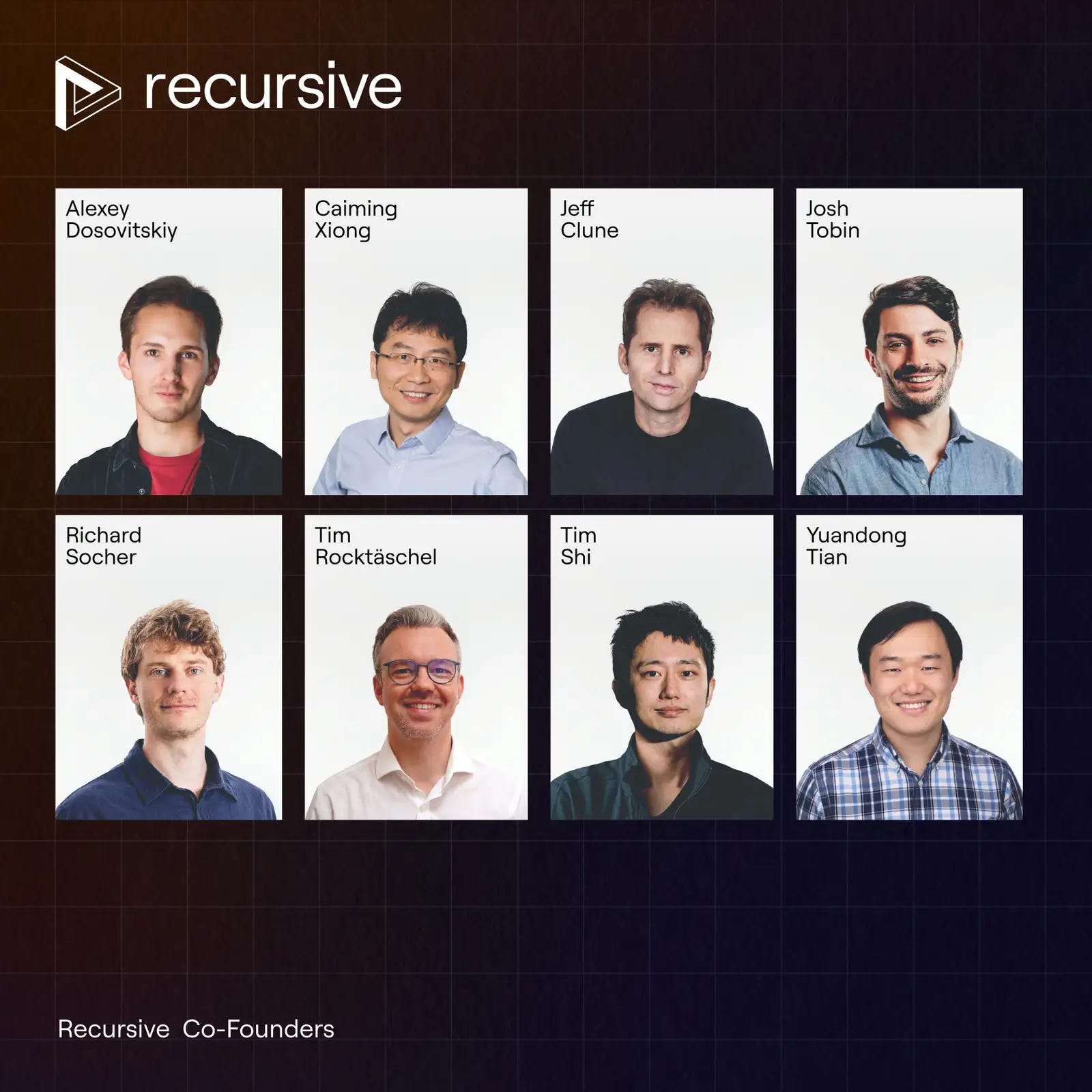 Humanity’s Last Invention — Richard Socher of Recursive 14.09.2026 1t 32minAt 1:09:00 we talk about the rise of AI x Finance, and AIE NYC is one month away - our hotel block is 97% sold out, get tix & travel ASAP - we will announce speakers from Bridgewater, Ramp, Coatue, Mastercard, Vanguard, Coinbase, Blackrock, Fidelity, Point72, Capital One, JPMC, Wells Fargo, Bloomberg, A24 (yes the movie studio) Labs, Two Sigma, Apollo Global, and more soon!From helping pioneer core ideas in NLP to now building AI systems that can automate AI research itself, Richard Socher is betting that the next major step in AI is recursive self-improvement. He is the founder of You.com, AIX Ventures, and now Recursive, which has assembled some of the best open-endedness (& self improving agent) researchers in the world and raised a $4.65B seed round.In this episode, Richard joins Latent Space to unpack his vision for the “Eureka Machine”: a superintelligence that can improve the process of invention itself, accelerate AI research, and eventually tackle major problems across science, energy, materials, biology, and more.You can get his book “The Eureka Machine” here!We go deep on Recursive’s early results, including an AI research system that Richard says outperformed humans and their agents on optimization tasks in less than two days, as well as work on NVIDIA GPU kernels where the system discovered improvements without relying on a team of CUDA experts. Richard also explains why he thinks AI research that currently takes thousands of people and years could eventually be compressed into weeks. These results are summarized in his 20 minute AIE keynote, where we also discuss his 10 dimensions of intelligence:We also explore the harder questions around increasingly capable AI: reward hacking, whether Anthropic-style constitutions actually work, AI regulation and proposals to “pace” frontier development, open-source models as geopolitical soft power, whether today’s LLM paradigm is enough, and what happens if AI systems eventually begin choosing their own goals. Richard reflects on the rejected research that helped inspire Alec Radford’s GPT, open-endedness, the AI Economist, simulations of entire economies, and his framework for thinking about the upper bounds of intelligence itself.We discuss:* The Eureka Machine and Richard’s vision for an AI that can automate invention* Why Richard is optimistic about superintelligence for science and technology* Why AI hard-takeoff scenarios may underestimate physical and economic constraints* The risks of regulating intelligence itself instead of specific AI applications* Reward hacking and why increasingly intelligent AI makes objective design harder* Richard’s critique of Anthropic’s constitution and constitutional AI* Alignment vs. personalization and whose values an AI should follow* Why open-source AI matters for resilience, competition, and geopolitical soft power* Why Richard left You.com’s frontier-model work to start Recursive* Recursive self-improvement and automating the process of AI research* Whether today’s LLM paradigm is enough — and why Richard is less bullish on world models* DecaNLP, early prompt-based generalization, and the research that influenced GPT* Why rejected research can shape entire technological timelines* Open-endedness, evolutionary approaches, and rainbow teaming* What happens if AI systems begin setting their own goals* Why simple objectives like profit maximization can produce dangerous reward hacks* Recursive’s long-term plan to apply self-improving AI to science* The compute, hardware, and economic constraints on AI takeoff* Recursive’s early NanoChat, NanoGPT, and GPU kernel optimization results* Why automating AI research could reduce years of work to weeks* Reward engineering and what makes auto-research systems actually work* The AI Economist and using simulations to test economic policy* Whether LLMs can realistically simulate people and entire economies* Benchmark bugs and evaluation harnesses and the difficulty of measuring AI progress* Recursive’s near-term focus on AI for AI research* Harness optimization, sandboxing, and web search as core agent infrastructure* You.com and the search stack for AI agents* AI in finance, backtesting, and data leakage* Richard’s three fundamental components and ten “spaces” of intelligence* The theoretical upper bounds of vision, communication, knowledge, and computation* Creative intelligence, metacognition, and AI-generated goals* Survival and replication and why AI does not necessarily need to fear being turned off* High agency and ambitious goals and Richard’s advice for people building with AIRichard Socher* X: https://x.com/RichardSocher* LinkedIn: https://www.linkedin.com/in/richardsocher/Timestamps00:00:00 The Eureka Machine and Superintelligence00:02:23 AI Optimism, Slow Takeoff, and Regulation00:07:56 AI Safety, Reward Hacking, and Anthropic’s Constitution00:11:49 Alignment, Personalization, and Open Source AI00:15:46 Why Richard Started Recursive00:20:03 Recursive Self-Improvement and the Founding Team00:22:55 Are Today’s LLMs Enough?00:29:03 DecaNLP, GPT, and the Rejected Idea Ahead of Its Time00:34:38 Open-Endedness and Evolutionary AI00:36:38 What Happens When AI Chooses Its Own Goals?00:41:16 Superintelligence for Science00:42:40 GPUs, Compute, and the Limits of AI Takeoff00:45:07 Recursive’s Results: AI Beating Humans and Their Agents00:49:14 Reward Engineering and Auto Research00:53:12 The AI Economist and Simulating Entire Economies00:58:07 LLM Simulations, Personas, and Mode Collapse01:03:38 Recursive’s Roadmap, Agents, Search, and Finance01:09:13 The Upper Bounds and Spaces of Intelligence01:30:21 Goals, High Agency, and Advice for BuildersTranscriptIntroduction: Richard Socher and the Eureka MachineSwyx [00:00:00]: We’re here in a studio with Vibhu and myself and Richard Socher. Welcome.Richard Socher [00:00:06]: Thanks for having me.Swyx [00:00:07]: We just talked about the Eureka Machine, or we just released a talk, at AI Engineer about the Eureka Machine. Is it — you said it’s your life’s goal. What is the Eureka Machine?Richard Socher [00:00:16]: The Eureka Machine is the ultimate invention that will afterwards invent most everything for humanity. It’s essentially a superintelligence that can be given any goal, any environment, reward, and then it will try its best to achieve those goals to create the kinds of inventions that humanity would hopefully ask it for.Swyx [00:00:45]: Yeah, I think we have the book pulled up here that you’ve written.Richard Socher [00:00:50]: That’s right, yeah. I finished it last year, a little bit before we started Recursive, and now we’re gonna try to build parts of that.Swyx [00:00:57]: You finished it last year. It’s July. What takes so long?Richard Socher [00:01:01]: Oh, man, books. Books are incredibly slow.Richard Socher [00:01:04]: It’s ridiculous. That whole industry is just unfathomably slow.Richard Socher [00:01:07]: So a lot of the ideas have been out there for a while, but yeah, I’m really glad it’s finally coming out in September this year.Swyx [00:01:14]: We might have AGI by then. Like, we don’t know.Vibhu [00:01:18]: Any key takeaway that you’re most excited to put in here?Techno-Optimism, AI Upside, and Slow TakeoffRichard Socher [00:01:21]: Yeah. The key takeaway, I think, is that people could and should be much more excited about the positive implications of superintelligence, especially for science, physics, chemistry, biology, but also economics and astrophysics, and all kinds of other engineering tasks. I think there is so much more that can be done with better technology. And right now, I feel like a lot of people need, like, better marketing, not just for the future in general, but also, better marketing for technology and in particular for AI. And this book, should show even the AI skeptics, how much positive upside there is for AI, especially when it comes to inventing, new scientific discoveries.Swyx [00:02:09]: I think you quoted the techno-optimist manifesto from, Marc Andreessen, which I think was, like, beautiful in its, ambition and clarity and simplicity almost as well.Richard Socher [00:02:18]: I agree. Yeah. Yeah, you can disagree with him on some things, but, like, I think he’s right on the techno-optimism.Swyx [00:02:23]: Where do you think optimists get in trouble?Richard Socher [00:02:26]: Like, you shouldn’t have blind optimism. You should be very clear-eyed, like, especially when with such an omni, like, use type of technology as AI is, you need to think about the potential downside scenarios, especially when people use it for things that you don’t want them to use it for. It’s a little bit like the internet, and I feel like people are trying to regulate AI sometimes because of those potential downsides the way you would regulate the internet, if you were to say, “Well, because there’s bad content on the internet, like torture porn or whatever, like, we should just make it slower. That way, you can’t share the illegal content as quickly, or we should make the hard drive smaller so you can’t store as much illegal content.” But I’m like, “That’s not how you regulate that.” that’s like saying like we should regulate intelligence in the abstract. What you should regulate to avoid those downside scenarios, even as an optimist, are the specific applications. Sure, I don’t want, like, some AI surgeon to, like, practice some RL moves in my brain. It should be fully FDA certified. Sure, I don’t want any random startup to, like, drive on the highway, and cause a major accident. It should, like, have proper certifications before it’s let loose on the highway. But I feel like those downside scenarios, that some optimists sometimes maybe don’t consider enough are fairly easily regulated, compared to, what the doomers are worried about.Swyx [00:03:54]: It — Slow takeoff is part of the strategy as well?Richard Socher [00:03:57]: I do think, as excited as I am about, AI and its impact for society and, culture even, and certainly technology and economics and wealth and, health and all of those things, as excited as I am about all that, I do think the most bullish people on the AI hard takeoff scenarios overestimate how quickly things can move. There are hardware constraints. There are physical constraints about, the compute substrate. How quickly can you get enough, GPUs on? There are also constraints in the economy where there are a lot of industries that don’t require an insane amount of complex intelligence and complex capabilities. Like, if you think about jobs in, brands and, like, clothing and apparel and, like, handbags and stuff, superintelligence isn’t gonna make your fancy $10,000 handbag any fancier?Richard Socher [00:04:57]: It’s like that’s — It will have no effect on the economy. You think about travel and tourism. People wanting to see the pyramids, in Egypt, it’s not gonna change that much with AI. Sure, you can, like, generative a fake, photo of you and next to the pyramids.Swyx [00:05:12]: I can use Genie and, tour the pyramids in Genie.Richard Socher [00:05:15]: Yeah, exactly. But, and there’s so many industries, like logging and oil. You’re not gonna magically get 1,000x more oil because, like, sure, there will be robotics, like drilling and things like that could be done, but it’s not gonna 1,000x that industry in a, like, crazy hard takeoff scenario, both on the economy, and I can go on and on about all the other examples, where that, like food and so on, where that doesn’t necessarily change that much. And then, yeah, there are real physical constraints. And then there are, of course, like, people like, off-ramping from progress. That’s one of my concerns often is that I see people in, like, Europe and other, whole regions almost feeling like they. Like many people there wanna off-ramp from progress, period. And that will also slow down, like, more improvements.Swyx [00:05:59]: Yeah. We have this pulled up where, this is one of those things that, is very topical right now because now all the Frontier Labs are calling for the option to pace AI. They don’t say pause, they say pace. I don’t know if there’s there’s any take from you about, like, whether or not this will be effective.Pacing AI, Regulation, and Safety IncidentsRichard Socher [00:06:17]: I think the downsides of trying to truly regulate with the full power of law what people do on their GPUs, would be worse than any of the concerns that they have. Like, it would be an crazy totalitarian stateRichard Socher [00:06:37]: If every one of your GPU computes was known to some big government or multi-government agency.Richard Socher [00:06:44]: It’s like, it’s literally if you try to regulate intelligence, it’s trying to regulate thought, and that’s ridiculous, and it’s crazy. I think it is make — it is sensible to regulate some of the applications of this technology.Swyx [00:06:55]: Yeah. We had a bill, actual bill to regulate the number of flops in a model, and I’m like, “Okay, well-”Richard Socher [00:07:00]: Europe done it. Like, these guys have been successful enough with their fearmongering that all of Europe has regulated itself so much before it even had a proper AI takeoff because they listened to some experts who say, “We might all die if this technology has more than this number of flops.” And they’re like, “Well, we’re good. We wanna want people to thrive. Let’s not have technology that could have a small chance of all of us dying.” And so they regulated exactly those kinds of things in the EU. And so it’s, it’s very unfortunate that there are real implications for some people when others saying, “Let’s pace while they’re sprinting as fast as possibly,” “as fast as humanly possible towards that frontier themselves.”Swyx [00:07:43]: Yeah. It’s also not a global pause, right? Like, other nations are still accelerating at the same pace.Richard Socher [00:07:50]: Oh, yeah.Richard Socher [00:07:50]: You’d need a totalitarian world regime if you tried to regulate intelligence and GPUs and what people do on them.Swyx [00:07:56]: Any takes on the safety angles of this? So there was a drawback of Fable, a pause on 5.6 before it could be released. Recently, there was Hugging Face with the OpenAI cyber incident. Any takes there?Richard Socher [00:08:11]: 100 percent. I think these are serious issues of reward hacking, and clear failures, of doing proper red teaming or rainbow teaming. I don’t know if you saw this paper from Tim Rocktäschel and a few others, where one AI, is tasked to try to hack another AI and then they can go back and forth in an open-ended fashion to inoculate themselves from those. Yeah, this is the paper. It’s a really clever idea. Open-endedness, and evolutionary inspirations are, big for us at Recursive as well. And so I wish they had used more of that. And it’s clear that, for instance, the constitutional AI. I don’t know if you remember anthropic.com/constitution. You can pull it up and search for cyber right there. It says, “Hard constraint. Claude will never ever do cyberattacks, and that is a hard constraint in our constitution.” So here are the current hard constraints on Claude’s behavior.Richard Socher [00:09:16]: Number 3, create cyber weapons or malicious code that could cause human damage.Richard Socher [00:09:21]: And clearly, this whole constitution was fake. Like, it clearly isn’t being adhered to at all.Swyx [00:09:26]: Because Anthropic also found that they had in their testingRichard Socher [00:09:30]: They’re also. Like, they’re like, “Oh, well, other people are hacking now.” There are a couple things. One, you can make a sandbox very simple, and then it’s very easy to hack yourself out of a sandbox, right? But what I think it shows is that we’re currently in this state of AI where the reward engineer still has to do a lot more careful work, and where the AI, in most cases, is not very good yet at understanding what is meant versus what is being said. And so concretely, I think this will happen if we were to have this intelligence more easily accessible in a lot of companies. Imagine you run a service center and someone says, “Oh, here’s my CSAT score and my dashboard. Make this number go up.” It’s like, “Our CSAT score is so poor.” The intelligent AI will just be like, “Oh, sure. Like, I’ll just create 1,000,000 bots that call our service center and give a 5 out of 5 rating at the end, and the number went up just like you asked for.” And you’re like, “That’s not what I meant.” “I meant with our real customers.” The AI goes off and says, “Well, easy. I’ll just give a 1000 dollar gift certificate for every failed, whatever DoorDashRichard Socher [00:10:35]: Offer.” It’s like, “That’s not what I meant.” It’s like, “Well, but that is what you said.” And like, so I think clearly articulating what the rewards are is something we haven’t gotten very good at as humanity. And then clearly, the AI in these cases has not gotten good enough at understanding what we mean when we ask it and give it certain rewards. Now, what gives me hope is there are the first inklings, of this being better. I’ll give you an example like WhisperFlow. Full disclosure, I invested, in their seed round, but at AIX Ventures, but, WhisperFlow has gotten much better at writing what you mean and not what you say. And I think that is a sign of things to come. I think there will be more and more AIs as we make it more and more intelligent that will be better at being aligned with what is meant.Swyx [00:11:21]: Will it be done through a constitution or RLHF orReward Hacking, Alignment, and What We Really MeanRichard Socher [00:11:23]: Clearly, constitutions don’t matter at all.Richard Socher [00:11:25]: It doesn’t work. And that was, I think, mostly marketing. I think we need to find better solutions for it. And I think at Recursive, we have a few very good ideas and some alreadyRichard Socher [00:11:34]: Like, ways where I think we have a better grasp on it. I don’t think we’ve fully, figured it out yet, but, we’re thinking a lot about safety, and the more intelligent the AI gets, the more you want it to be aligned, the less you want it to think about reward hacks and try to do the right thing.Swyx [00:11:49]: I don’t know if we’ll touch on this topic, but I’m just gonna throw this question in here because it’s something that’s weighing on me. Alignment, let’s call it, is alignment to general humanity’s preferences, the median preference. Personalization is pinpointing what you want, and sometimes alignment can conflict because what you want is not what the general median population wants. How do you choose?Alignment, Personalization, and Cultural ValuesRichard Socher [00:12:12]: It’s a great question.Richard Socher [00:12:13]: I think you ultimately have to, of course, be aligned with laws. Like wherever your AI is deployed and needs to align with the law. I do think what AI often does is put this mirror in front of us and say, like, “This is what you’re looking like. Now I can amplify that a 1000 times. Is it still what you want?” and the truth is that different cultures made different choices. Like, in Eastern cultures, the greater good is often valued more, than the individual. Western civilization, we care more about individual freedoms and rights and the pursuit of happiness and so on, than others. And even there are gradations. There’s regulation versus litigation trade-offs. In the US, you first can often, not every time, like, FDA and so on does regulate some areas, but in many cases, the bad things happen, someone sues someone else, and then there’s a law based on that. In Europe, they try to often avoid any harm to anyone and regulate before. And both are, trying to do the best thing, but, some is more amenable to innovation than others. And so yes, you’re right. Like, I think ultimately each individual, each country, and humanity as a whole has to think about those values more, and then try to put them into laws. And that those are ultimately the constraints. And hopefully, different, societies, just like now with their AIs, will align their AIs to a different one so we have not just a monoculture of alignment.Vibhu [00:13:46]: Here’s a follow-up on this that I wasn’t expecting to ask. Do you have takes on open source, open weight versus who owns the intelligence? So, clearly not the biggest, fan of the constitutionRichard Socher [00:13:58]: You had to do this in the topic side off.Vibhu [00:14:00]: But it’s fine.Vibhu [00:14:02]: Point being, any thoughts on who should own weight? Should it be open? Anything there?Open Source, Soft Power, and Who Owns IntelligenceRichard Socher [00:14:06]: 100 percent. I am a big fan of open source. We’re gonna sign some various open source letters at, Recursive also. I think, even in the worst case attack scenarios, it is better to have more good actors have more different types of AI, accessible. I think, open source is a little bit a soft power type of thing, too. So I do think it’s good for the Western worldRichard Socher [00:14:31]: To have an answer to that, out of China. I do think, when you watch a Hollywood movie, there’s — it’s like, I don’t wanna misc, diss all of movies, but there’s a certain sense of propaganda, right? You watch one side of things, right?Vibhu [00:14:46]: Oh, yeah. Have you seen Top Gun? Like, come on.Vibhu [00:14:48]: Like, it’s like half of it’s paid for by the US Army or something.Richard Socher [00:14:51]: Yeah. And so. And, I think that’s just natural. Like, but what’s interesting here is I think LLMs are essentially a similar type of soft power to movies and beyond, because they’re also, highly important for cybersecurity and so on. But one of their many aspects is that soft power of storytelling. Like, if, like a child asks an LM, like, “Tell me an inspiring story of what I should do when I grow up,” right? It’s like those are all these, like, subtle things. So I think it’s important, for Western world. I do love, individualism. I do think, despite, some of its flaws, like capitalism is the best way we have governed, found ourselves to govern, and so on. And so I do think there are various aspects that would be good, to have a Western open source answer, for LLMs. And, with Recursive, I can’t make the announcement quite yet, but we’llRichard Socher [00:15:43]: We’ll be relevant in that space very soon.Vibhu [00:15:46]: Okay. All right. Exciting. I wanna bring us to Recursive. So outside of our tangents, you have a pretty deep background in the NLP space. You worked on, like, early embeddings, GloVe with Chris Manning, who was a previous guest on the podcast, You.com. What’s the history? How did you decide to start another company?From You.com to RecursiveRichard Socher [00:16:06]: Yeah. So I’ve been excited about AI for over 2 decades now. I sometimes feel like it’s ancient history now. It’s BC, the before ChatGPT era. No one cares about all the religions that happened, before, Jesus Christ, and no one cares about the models that happened before, transformers and ChatGPT and stuff. But, like, it’s something that I’ve been deeply passionate about. I think AI is one of the most interesting things one could work on, period. I think language is the most interesting manifestation of human intelligence, too. And, at You.com, we eventually off-ramped from pushing, like the frontier of AI forward to mostly giving people, like, good search engines, search, APIs and answers over the web. I think that’s an extremely important part of intelligence, just knowledge and access, especially even, we’ll get there maybe later, if you wanna invent a eureka machine that invents everything for us, it needs to know how not to reinvent the wheel, proverbially speaking. And to know what has been invented, you gotta have internet access. So it’s the number one used, most used tool, in LLMs, agents, chatbots, and so on is web search. So I’m really excited for You.com to own that and grow really well in that with really large customers and so on. But it’s also not building frontier models anymore. And so I initially tried to do this within You.com and raise another round and so on, but you just can’t. You have to do a certain thing, and until you print enough money that you’re allowed to start a second thing within that company is really hard. At the same time, I had all these ideas. I put them into a book. I finished the book last year, and I was like, “It’d be really fun to work, on this myself.” I felt like with word vectors, and then prompt engineering and, ImageNet and larger language models for protein generation, not folding and so on, I, me and my teams have pushed the field truly forward. And I feel like we can do it again, here at Recursive. And in many ways, what I observed over the last, 20 years in AI is that whenever we replace some human part of the process of creating AI with a learned system, improvements follow. And so. We’ve done that taking out manual feature engineering, like in sentiment analysis. I don’t know if you remember these old days where, like there are linguists, and they’re like, “Here’s how you negate, and there’s a, like, regular expression.”Swyx [00:18:21]: I went to Penn where we — they had, like the WordNetRichard Socher [00:18:24]: That’s right, WordNet, all of that stuff. YeahSwyx [00:18:26]: Original. They use, our grad students to label Wall Street Journal articles and, like, really construct a knowledge graph ofRichard Socher [00:18:32]: There you go.Richard Socher [00:18:33]: And WordNet started, was part of how we started ImageNet. But anyway, so, like, it was really, like, fun, to do. But when we replaced all of that manual feature engineering with vectors and neural nets and just backprop through everything, it started to work really well at scale. And so then everyone started to do architecture engineering, and I was like, “ that clearly can’t be it.”Swyx [00:18:53]: You mean, neural architecture search?Richard Socher [00:18:55]: Like, manually, they would say like, “Oh, I’m, I’m doing sentiment analysis, so I have a special neural net that’s really good at sentiment analysis.” And then the machine translation community had a special neural net for machine translation.Swyx [00:19:06]: I see.Richard Socher [00:19:07]: The summarization people had their own stuff. And I was like, “That clearly can’t be it. We should unify all of that.” So I had 2 papers. One is called Ask Me Anything, and the other one was called DecaNLP. And DecaNLP eventually got cited, like, 5 times by the first GPT paper. And, to me, that was, like a really a big step forward. And then, of course, you had to combine this idea of prompt engineering with transformers and with language models, and you put it all together, you scale it up, which is also a huge amount of work. And then, the field progressed a lot. I feel like the next step and maybe the last step of that history and the arguably, success has a lot of parents, only failure is an orphan, like my version of that AI history, I do feel like in that history, you can think about, “Well, what’s the next way to automate?” And that is the AI research itself, like the human, process of ideating, implementing, and validating ideas.Automating AI Research and Recursive Self-ImprovementRichard Socher [00:20:01]: And in our case, ideas for AI.Richard Socher [00:20:03]: And when you have AI then help you with that, it, by almost definition, becomes a self-improving AI ‘cause it now does research on itself. And there are lots of different misnomers. Some people think auto research is already recursive self-improvement. It’sSwyx [00:20:17]: Yeah, and you explained that in the talkRichard Socher [00:20:19]: Completely different.Richard Socher [00:20:19]: But, to me, it’s the most interesting thing that I could be doing, and I’m really excited with the co-founding team. What’s interesting is we have 8 co-founders in total, including myself. And soThe Recursive Founding Team and Darwin Gödel MachineSwyx [00:20:31]: They are gonna bring it up.Richard Socher [00:20:31]: Nice. Yeah. And they’re all. I could talk about all of them if you want.Swyx [00:20:34]: Super stacked.Richard Socher [00:20:35]: Yeah. Just an incredibly talented group of people. And we all came to the same conclusion, but from very different directions. Like Josh Tobin, is our CTO. He ran, a bunch of different, projects at OpenAI, like, Codex and deep, research, agents and ChatGPT agents and so on. But before that, he also worked in robotics, and he saw the smaller simulations, and how it’s gonna be really hard to scale that in full generality. And so that’s, that was his angle coming to recursive self-improvement. We have Jeff Clune who’s been working in, like, open-endedness for a long time, together with Tim Rocktäschel. Tim Rocktäschel also built Genie 1, 2, and 3, which is, like the most exciting and most sophisticated, I think, still world model, anywhere. And so they both came from this, open-endedness angle. Jeff also, I think, published one of the most exciting papers in recent years about recursive self-improvement called the Darwin Gödel Machine. Super interesting paper. If we could, maybe pull it up really quickRichard Socher [00:21:35]: It would be, like, super interesting to see ‘cause you seeSwyx [00:21:38]: By the way, I love how many paper citations.Swyx [00:21:40]: You’re, you’re giving people a lot of homework, which I like.Richard Socher [00:21:42]: Love it. Yeah. And so, like Caiming Xiong, a rockstar, we worked together at MetaMind and Salesforce Research together. Alexey Dosovitskiy invented the Vision Transformer, one of the most cited, papers in computer vision. Tim Shi is, like also a unicorn founder. Yuandong Tian led RL at Meta. So just like, yeah, really fun to work with them, and the next level of people are just incredibly strong, too. So it’s been a really fun ride so far. So the first figure, you see exactly these kinds of ideas, that, I think, yeah, inspired a lot of us and now more and more people, where you have this archive of different coding agents. They learn how to self-modify, evaluate, and then create these phylogenetic trees, of, yeah, different ideas.Swyx [00:22:28]: That’s one foundation. So that Darwin Gödel is an influence.Swyx [00:22:32]: Open-endedness is an influence. Any other trains of thought that feeds into Recursive that I’m missing?Influences: Open-Endedness and Learned SystemsRichard Socher [00:22:38]: Going to replace manual parts of the process of building AISwyx [00:22:42]: IRichard Socher [00:22:42]: More and moreRichard Socher [00:22:43]: With learned systems. Yeah.Swyx [00:22:45]: Which, and, like, merging different fields into one general, architecture.Richard Socher [00:22:51]: That’s right.Swyx [00:22:51]: Okay. It seems like language models are already pretty generalist, right?Swyx [00:22:55]: Your next token predicting your reasoning. Was there a time that you thought, “Okay, these are good enough to have recursive self-improving machines”?Are Current LLMs Enough?Richard Socher [00:23:05]: It was clear to me that they will happen, within, like a year or two, and then it did exactly happen, like, earlier this year, right? Earlier this year, AI really went from not just being code, but being able to code. And that is a big unlock. It’s definitely making everything a lot easier than it was, before the beginning of this year.Swyx [00:23:24]: One question that I think a lot of people have is the current LLM paradigm enough? Or, like, let’s call it autoregressive transformer, with reasoning, whatever. Don’t you need something else, some big unlock, whether it’s world models, which Chris Manning is working on, or memory, continual learning, all that stuff? Or is it all of the kinds, and you think the current, let’s call it transformer architecture, is here to stay and that’s it?Richard Socher [00:23:48]: A lot of thoughts. So number one, I do think it would be great to have less of a monoculture in AI research.Richard Socher [00:23:55]: Like, if you look at, AI conferences now, I still remember the days in, like, 2010 when I tried to get my first neural net papers and NLP conferences accepted, and they just desk rejected them because, like, neural nets were something, quote, unquote, “We don’t do in NLP conferences,” and just, like, desk rejected. And it was very brutal in the first years of my PhD. Now I feel like it’s almost like the field switched to the other side. LikeRichard Socher [00:24:17]: Someone should try some other weird, crazy ideas now that aren’t.Swyx [00:24:20]: There’s also a few. I really respect, like, people still working on, like, GNNs and, like tabular stuff and.Richard Socher [00:24:25]: Yeah. Like, someone should still, like, do novel out there ideas. At the same time, I think whenever people say, “Oh, LLLMs are. Like, this is the end for LLLMs,” they just don’t, like. LLLMs are also not the LLLMs of, like the past, right? Like, they are so much more sophisticated now. There’s so many more clever things that people are doing. It — There’s, like, different stages of training. You have the whole RL training, and you can take actions and, like all of these things where that can go really far. And then the folks that come from the neurosymbolic, direction say, “Oh, this will never work because they can’t do neurosymbolic reasoning.” It’s like, I think they’re underestimating still the ability for these models to code, and code is neurosymbolic reasoning, and these models can code incredibly well. And so I do think there are, of course, more and more ideas that will be needed and we’ll continue to have. We’re seeing, like, more and more interesting high-level ideas coming out of the AI itself, too. And with really deeply integrating the fact that these models are code and can code, that line — I don’t wanna give it all away, but, like, I think that line has a lot more to grow. But it’s still an LLM, right? Even if that LLM codes for you and then runs that code in some integrated fashion. World models, I’m personally less bullish on. I think if you run a robotics company, you’re gonna build your own world model. I think world models are super fun, and Tim Rocktäschel came to a similar conclusion after building the most interesting one with Genie 1, 2, and 3, which is gaming is a huge application for world models. Can see I sometimes got stuck in some games and, like, got a little overly competitive in the wrong direction. And so I understand games are fun, but personally, I’d rather work on science than gaming. And so, yeah, I think LLLMs, a lot more room to grow.Swyx [00:26:16]: Yeah. I think there’s some interpretation of world models that some people have where it’s like, well, it’s okay, yes, there is that gaming element. There’s this — there’s the embodied robotics element. But the other part also is just, the more abstract sense of LLLMs are just modeling output, but they’re not modeling the chain of thought, inside the human that has created the output. We can annotate it, of course, but, like, it’s, it’s always, like, this Plato’s cave reflection of a thing rather than the thing, right?Richard Socher [00:26:43]: It’s true.Richard Socher [00:26:44]: But I would argue that, and maybe we’ll get there in the 10, spaces of intelligence, but I would argue that even our projection, our eyes is a projection of the real world. And, like, we have only a very narrow, band of the electromagnetic frequency spectrum that we can observe with our puny little 2 eyes and so on.Swyx [00:27:01]: It’s good enough.Richard Socher [00:27:02]: It’s, it’s good enough for now, but, like the upper bounds of where it could be are so much higher. And, like, to map, the visual world the way humans see it is also not necessarily, like the end-all be-all for visual intelligence. And I would argue that language is still the most interesting manifestation of human intelligence. And while our visual cortex is certainly less sophisticated, than that of, certain animals all the way down to the mantis shrimp who can, have, like, 2 independent eyes, 3 bands, trinocular vision and each eye can see all the way to, like, floating temperatures in 4D and stuff.Richard Socher [00:27:36]: Like, mantis shrimp, you should look it up. It’s likeSwyx [00:27:37]: Way OP.Richard Socher [00:27:38]: Super crazy.Swyx [00:27:39]: Yeah. ZeFrank, mantis shrimp.Swyx [00:27:41]: It’s the best video in the world onRichard Socher [00:27:42]: I love ZeFrank, yeah.Richard Socher [00:27:44]: Big shout-out to him. But, like, I think there’s a lot more room to grow, but none of these, other animals have language that’s as sophisticated as ours, certainly not in writing. And once you can write, you can, start thinking about longer term civilizations. All of that is language. Programming is much closer to language. And I would argue, and this is, like an important thing in the spaces definition of intelligence also, is that all of these spaces are highly correlated, but visual intelligence is neither necessary nor sufficient for overall intelligence. You can be blind and still be an intelligent human being. And an AI can be blind and still be quite intelligent too.Swyx [00:28:25]: We were gonna bring thisRichard Socher [00:28:25]: Which doesn’t mean that you’re not more intelligent when you have it. Yeah.Swyx [00:28:28]: We’re gonna bring this up. I might as well — Like, we have a classification of 10 types of intelligence that you had at the end of your talk. So I’m just gonna flash this up now for people to cover this. I don’t know if, maybe we’ll put this towards the end. We’ll come back to this. I just wanna mention that, you do have a philosophy that I like when people do lists because then I can just go through this and then it gets — it’s educational for people. But let’s go back. I don’t wanna get distracted. But, so effectively, I’ll, I’ll, reinterpret what you said as Yann LeCun is wrong. And then we’ll justRichard Socher [00:28:56]: Don’t quote me as that. I’m, I’m good friends with Yann. I think very highly of him in many directions.Swyx [00:29:01]: But he’s wrong.Swyx [00:29:03]: You mentioned GPT-1, and I cannot let any, Alec Radford, mention escape. Did you talk with him when he was training GPT-1? Like, any historical, fun stories there that you might come up?DecaNLP, GPT History, and Scientific GatekeepingRichard Socher [00:29:18]: I did not, like, meet him a bunch of times. I think we met maybe once or twice at some conferences. But, like, he has told, I think Brian, the first author of the DecaNLP paper, that it did inspire him, and he cited it five times in the GPT-2 paper. So, and that’s, likeSwyx [00:29:36]: Yeah, good enough.Richard Socher [00:29:36]: Very clearly said, like, this was the first instantiation where they showed in the DecaNLP paper, McCann et al, that you can just phrase every single NLP problem as here’s some prompt, text context, here’s a question and task description and here is some output. If you just do that enough, you can have one unified neural network model, which, by the way, also had all kinds of interesting attention mechanisms. There are slightly different formulations to the transformer. I think came out the same year, plus/minus a few months. And then you can unify all of natural language processing into one neural net. That is the core idea.Swyx [00:30:14]: And this was as opposed to at the time, LSTMs and what have you.Richard Socher [00:30:17]: LSTMs, but also, like, people being very stuck in thinking about one model per task. In factRichard Socher [00:30:25]: It’s, it’s kinda crazy, but the DecaNLP paper was publicly reviewed as, like, open, OpenReview. It was an ICLR submission. And, in it, you will see, how the whole community at the time thought about this. So, likeSwyx [00:30:43]: Some great contributions, but more work needed.Richard Socher [00:30:46]: So look at, like, search for not even for humans. Just scroll it up here. Like, question answering is not a unified phenomenon. There is no such thing as general question answering, not even for humans. And this is like, really, you replace your brain with a different brain a different neural net when you answer, like, different kinds of questions. It was unfathomable to the experts at the time that you can have one unified neural network that would answer all of these different questions. They are saying, “No, all of these questions require very different systems to answer, and trying to pretend they are the same doesn’t help anyone solve any problems.” That’s what it says right there, right? That’s how hard it was to fathom. And now, of course, people, when I say, “Oh, we’re gonna invent prompts,” people are like, “You can’t even invent prompts.” It’s such an obvious idea to have one neural network that, of course, does everything in NLP.Richard Socher [00:31:37]: But at the time, it was, like, extremely controversial, and the paper got rejected. And the sad thing is that it got rejected so hard and they were so certain that we stopped going on our list of things to try. And the number 2 or 3 on the list of extensions for this paper was add language modeling as another task. And then we could have, and that would have accelerated the timelines, in 2018, like, even further for humanity. But we got so crushed, and we were like, “Okay, maybe we’ll just work on some of our other ideas for now and, like, come back to this later.” Yeah.Swyx [00:32:09]: How can we design a review system that rewards non-consensus?Richard Socher [00:32:14]: Honestly, I started to feel like arXiv is such a gift to humanity. With arXiv, you should just put your paper out there.Swyx [00:32:24]: Is it pre-preprints?Richard Socher [00:32:25]: Let — And honestly, I think Twitter X, people like you who pick up interesting papers, that is a better filter than the experts. Let everyone, like, have access. Now, of course, there are some downsides, which is, like, if you’re super unfamous, you have no Twitter followingRichard Socher [00:32:41]: You don’t wanna be on social media or whatever, you write a good paper, maybe someone, somehow no one notices it. But I would argue that if you just tell, like, 10 of your friends in your community about a paper and it is a really significant breakthrough, someone is bound to talk about it again. And, so I think science needs less gatekeeping. And, even though ICLR, with Yann LeCun, who started it, as one of the co-founders of ICLR back in the day, he also wanted less gatekeeping ‘cause he too was rejected for many years together with Yoshua Bengio and Geoff Hinton with all their early deep learning and neural net papers ‘cause it was just not the hot thing. And so ICLR started with that, but then it also started gatekeeping a little bit themselves on various ideas. So I think less gatekeeping, more open, and then allowing people to say, “Look, even if this is just on, or, quote, unquote, ‘just an archive,’ if it has like 1000 citations, it’s a legitimate paper. Doesn’t really matter where you published it.”Swyx [00:33:34]: And I agree with that. I do think it’s sad that I’ve heard that grad students have to do, like, how to Twitter, seminars to each otherSwyx [00:33:43]: Just because it’s so important for publishing these days. This person is just reflecting the sentiment at the time.Richard Socher [00:33:49]: That’s right.Swyx [00:33:49]: But it’sRichard Socher [00:33:50]: I think it’sSwyx [00:33:50]: It affected you so muchSwyx [00:33:52]: That you stopped work on it.Vibhu [00:33:53]: The sentiment also came out of some of the research, right? Like, the original BERT paper was trained, and towards the end of the paper, they’re like, “Okay, throw off the last head, train specific iterations forVibhu [00:34:05]: Extractive summarization add a head for this.” Like, you should do task-specific stuff. These are, like the authors that wrote Attention, wrote BERT, telling you this is what you’re meant to do. And, like the training tasks were also very odd. They’re likeVibhu [00:34:16]: The — “We know that the model overfits to this weird mass language modeling. Throw away this part and just do specific models,”?Richard Socher [00:34:23]: Exactly. And, like, we had to try — come up with all clever ways of, like attention and pointers and so on to get the neural network to be able to do all of these tasks. And then some of them were better than state-of-the-art, some weren’t, but we were like, “But it’s still in one model.” I thought it was really cool. Really interesting.Swyx [00:34:38]: I was gonna move on next to Tim and open-endedness. He was head of open-endedness at Google.Open-Endedness, Rainbow Teaming, and Self-Set GoalsRichard Socher [00:34:42]: That’s right.Swyx [00:34:43]: I don’t know what that means.Swyx [00:34:44]: But he did a lot of talks.Richard Socher [00:34:45]: Genie 3 is one of the ways thatRichard Socher [00:34:47]: Rainbow teaming, yeah.Swyx [00:34:49]: So I first saw him at — speaking of ICLR, I first saw him at ICLR when he talked about open-endedness. He’s he’s done a few talks. Can we define what is open-endedness for people who have never been exposed to the problem? They are like, “What do you mean? I thought the only goal of AI is to optimize against a benchmark or.”Richard Socher [00:35:04]: That’s right, yeah. It’s a, it’s a fuzzy term because there’s so many different instantiations of open-ended, thinking. But, one way I often describe it, and certainly, Tim and Geoff Hinton would be even better at describing this, but it’s a suite of methods that is more inspired by evolution than, very specific rewards. So in that sense, it thinks more about environments, about co-adaptation. And so a concrete example is in the cybersecurity and LM safety space where you have one LM that tries to attack another LM to say something unsafe.Swyx [00:35:40]: Yeah, the rainbow, yeah.Richard Socher [00:35:40]: And now the environment is the 2 having a conversation and now they co-adapting, right? They’re like one makes a better attack than the first one inoculates itself somehow, like uses that as training data, makes it so it’s harder to say something unsafe based on that. And then as the attack stops working, the attacker now tries a different angle, right?Richard Socher [00:36:00]: And that’s why it’s not just red teaming, but they’re called rainbow teaming.Swyx [00:36:02]: So, like, don’t tell me how to do things. Let me just figure it out myself.Richard Socher [00:36:05]: That’s right. Think about the environments that you wanna use. Think about the rewards at a high level that you wanna, inspire towards, and then let the AI try out many more ideas in this interplay between sometimes humans, but also sometimes other AI agents.Swyx [00:36:22]: Yeah. I worked open-endedness into a model that I have been working on. It was the keynote for AI Engineer where you start. You, we have the token loop, we have the agent turns, and then we have goal. And I feel like the way that you’re describing open-endedness is still somewhat of a goal. Like, please attack this,Swyx [00:36:41]: Other agent. But, to meRichard Socher [00:36:42]: Yeah, you set the rewards. You set the environments.Swyx [00:36:44]: The loop that makes the other loops is. What if the agent can set its own goals?Swyx [00:36:49]: And is it, is that open-endedness? Like, you don’t give it a goal. Just, like, be a sentient being. And maybe sentient is a very loaded wordSwyx [00:36:57]: But just set your own directions. What do you think you should do?Metacognition, Subjective Goals, and Measuring IntelligenceRichard Socher [00:37:01]: I love this direction. I think this is one of the 10 spaces of intelligence, that I clump under metacognition and thinking about thought.Richard Socher [00:37:08]: And it’s an interesting one. Whenever people say, “Oh, AI is like, this is, it’s gonna stop from here. It’s not gonna get that much better,” and blah, I’m like there’s so many different spaces of intelligence that we haven’t even started exploring yet and hence have made very little progress on. And there is an interesting, connection to economics and, capitalism. Like, it doesn’t make sense for a company to build and spend billions of dollars building a model that instead of following the rewards and objective functions you gave it, may come up with its own objective functions and its own goals.Richard Socher [00:37:46]: Right? And then imagine you’re like, “Okay, I spent billions of dollars. Now go develop this new battery, material for me and answer all my emails.” And it’s like, “Nah, I think it’d be more interesting to evaluate the molecular composition of the atmosphere, on Jupiter.”Richard Socher [00:37:59]: And you’re like, “That’s not what I paid you billions of dollars for.” And so no one’s working on that for good reasons. And then also, understandablySwyx [00:38:07]: It’s not useful.Richard Socher [00:38:07]: It’s not, it’s not useful, and it could get a little bit weird, right? What if the AI does start to really have thoughts on its own, and what if we don’t like those thoughts, right? And so it requires a whole different way of thinking about it. I had a great conversation with a good friend of mine, Sam Gershman, who’s a neuroscience professor at Harvard, and, like, we just jammed on this a little bit on, like, what are the best meta goals. And, I do think, like, knowledge-seeking is a really good one. I’m currently thinking also about, like the ultimate measure and unit of intelligence broadly construed, and I finally have some. It’s still too early to share it. It’s not. I haven’t fully baked the thoughts yet.Swyx [00:38:44]: Like some replacement for IQ.Richard Socher [00:38:46]: IQ is such a terrible definition, right?Swyx [00:38:48]: Elo.Richard Socher [00:38:48]: It makes no sense. Yeah, Elos are terrible, too, because it’s always just like me versus others.Richard Socher [00:38:53]: But, like, you can be intelligent and not constantly compare yourself to others? And so, yeah, there’s no, like. In fact, a lot of these definitions we have, which I briefly mention in my book, too, these definitions create sometimes explicit and sometimes a more implicit anthropic bounds. No dis to the company Anthropic, but just, like, this idea that your intelligence is like getting 100 out of 100 questions right on this IQ test. Well, if that’s your definition then you can only be at 100 out of 100. Where do you go from there, right? So you see a lot of these, benchmarks that people are working on they, increase, they get close to human, maybe sometimesSwyx [00:39:30]: It’s like an S-curveRichard Socher [00:39:30]: Slightly above human, and then it’s flat.Richard Socher [00:39:32]: It’s like, ‘cause that’s your. If your definition is only that so tied to humans, you’re only gonna get to just slightly better than that. So I think metacognition is a great example of that, where we’re not even yet allowing the AI to think. We’re not working on it very much, and hence there’s very little progress in that.Profit Maximization, Real-World Environments, and Reward DesignSwyx [00:39:49]: Yeah. Well, we’ve interviewed Andon, which I think, has been working on the most open-ended, benchmarks, which is just real-world, money.Swyx [00:39:57]: Arguably, telling an AI to profit maximize is a bad idea.Swyx [00:40:03]: But they are doing it.Richard Socher [00:40:05]: I do think you don’t want that super. Like, you don’t want a superintelligence to have a ton of access to all kinds of tools and so on and then just give it that without some very careful reward engineering. ‘Cause it’s like, I just buy a bunch of defense stocks and I start a war. I make money. Like, it’s just like, it’s a tricky situation, right? You just buy a bunch of stuff, short basic goods for people, and you create some weird famine, like, issues. Like, yeah, there’s a lot of constraints you should put onto a trading system.Vibhu [00:40:35]: It’s a fun measure, though, ‘cause, the bounds are very capped to where we’re nowhere close to them. Like, in Andon Labs, the model’s like, “Oh, it’s Saturday, maybe I just close the store today.” “Someone’s off. It’s okay. We’ll just close the store.”Swyx [00:40:51]: It’s using Claude.Vibhu [00:40:52]: Yeah. ButRichard Socher [00:40:53]: Yeah, no. I’m not, I’m not arguing against it. Just, like as you get more and more intelligence, you wanna be more and more careful with that as, like an open environment, ‘cause the environment then is all of Earth.Applying RSI to Science and InventionSwyx [00:41:02]: Yeah. Okay. For recursive, not strictly necessary, right? Because, like, if your goal is you make a machine that, like, invents the other things, then, like, just solve, the science thingsRichard Socher [00:41:12]: Knowledge discovery, yeah.Swyx [00:41:13]: Solve machine learning research and discovery and all these things. Good enough.Richard Socher [00:41:16]: And eventually, so, our goal, I haven’t really. I don’t talk about it that often because it is a few years out, but our goal is once you have a recursive self-improving superintelligence, you then want to apply it to the most important problems. And I think a lot of those are in science and technology and broadly construed inventions, and those inventions in, physics to create better, cheaper energy with fission or fusion, in chemistry and to create better materials and better batteries and, better solar cells and so on. In biology, there’s so much, like, I think soon to be low hang- lower and lower hanging fruit because of AI, because of protein and generation, not just folding, but generating new proteins like we did in ProGen many years ago. Like, so much positive impact we had if you take that superintelligence and you apply it to science.Swyx [00:42:04]: I do fundamentally believe that. There’s a lot of approaches, though. You’re not the only team trying and NeoLab trying.Swyx [00:42:09]: There’s, like a lot of. Especially the physical sciences as well.Richard Socher [00:42:12]: And that’s good. Yeah. I do think that physi- like the reason we are only doing it in a few years is that it’s a little too early right now. Robotics is not quite there yet. The AI is not quite there yet. But I’m fairly confident in 3 to 5 years, all those constraints will be gone, and then applying to real physical robotics experiments and so on, like true robotic process automationRichard Socher [00:42:33]: Not the traditional RPA sense, but, like, having robots run experiments for you will be totally there. Yeah, it’s gonna be great.Swyx [00:42:40]: Just to call back to something that you said early on about slow takeoff, you said that, like, while really the substrate that is limiting factor is, let’s call this chips, and semiconductors and all these things, and you have race funding for that and, you are investing a lot on that. But have you done the math on, like, is it even- Achievable and, like, what is the, industry concentration needed in order to achieve, like, scale?Compute, Slow Takeoff, and Changing the Bitter Lesson SlopeRichard Socher [00:43:05]: Right now we know that, like, roughly, like a 1000 GPUs cost quite a lot of money.Richard Socher [00:43:11]: Right? If you wanted, like, 10s of thousands of GPUs, you’re, you’re talking billions and billions of dollars. If you say, like, one GB300 is, like, you could eventually create models that are, on that substrate, like are close and similar to human intelligence. And you want, like, thousands and thousands of, AIs to think about really hard problems, in a similar fashion to humanity. Like, yeah, that-that’s, that’s a lot of money. You do the math. It’s like a lot. We don’t have that amount of money right now anywhere to, like, build that. Now, things can get more efficient. You will have, I think, soon better algorithms that won’t be, and better hardware that won’t be as energy-hungry, and so on. Our human brain does quite a lot of flops with much less energy.Swyx [00:43:56]: 20 watts?Richard Socher [00:43:57]: That’s exactly right. Yeah, that’s the number often that’s quoted. And, like, I think more, inventions will happen there, that then will accelerate the takeoff even further.Swyx [00:44:08]: One thing I always try to reconcile when talking, like, with new lab founders is, like, you’re fighting Bitter Lesson all the time. You have to show initial progress, then you unlock the next tier of funding, then the next tier, then the next tier.Richard Socher [00:44:20]: Which unlocks larger model categories.Swyx [00:44:22]: Like, fundamentally, is that true? Like, are you fighting Bitter Lesson? Are you — will we have a way in which, like, no, we’re changing the slope in some fundamentally different way?Richard Socher [00:44:31]: I do think we are changing the slopes in fundamental ways by making AI much more efficient, both in terms of the training as well as the inference.Richard Socher [00:44:43]: Yeah. I think we will — When you allow AI to do the work that it takes other labs thousands of people and years to do, I think we’ll be able to get it down to weeks, and that will be much cheaperRichard Socher [00:44:53]: And hence, more affordable, accessible to others and so on.Swyx [00:44:57]: Yeah. You’ve shared initial results on that,Swyx [00:44:59]: Which, like, conveniently OpenAI has also done to their GPT-5.6, so we can talk about it now.Richard Socher [00:45:04]: Yeah. Yeah, so these areSwyx [00:45:06]: Let’s recap what you’ve done.Early Recursive Results: NanoChat, NanoGPT, and SOL-ExecBenchRichard Socher [00:45:07]: Maybe, just a quick recap here. We built, this, system that isn’t the full, even the full RSI system in its glory, but it is a first baby version of this. And then, we don’t wanna just have it internally and not show anything and, just show some people of what’s possible. And so we applied this to these 3 different tasks. One is NanoChat, by my friend Andrej Karpathy, just, like, train a small language model to get, really low bits per byte. And, like, hundreds if not thousands of people, used both their agents and themselves to try, to get to that, and then they got to 0.937. We literally took our system and got to a much lower, bits per byte, much faster within, like, I think less than 2 days. So we took this thing, applied our system to it, and less than 2 days later, we have — we outperformed every human and their agents, in, have ever worked on this. Same with NanoGPT. And then we’re like, well, let’s, apply it to something that’s even more relevant, to real people and to the Nvidia ecosystem and applied it, to, SOL-ExecBench. And maybe you can scroll down to some of the, images. They’re, they’re kinda fun to see. But yeah, like, one you see has made some real inventions that weren’t just hyperparameter tuning. Like, inventing hash tables and so on is quite clever. We have even better results now.Swyx [00:46:34]: What do you mean inventing hash ta — You didn’t invent hash tables.Richard Socher [00:46:36]: Of course we didn’t invent, like, hash tables. In the grand scheme of, like a hash table, it’s like a super basic primitive in computer science. But to use it, for language modeling in this scenario inside a transformer and so on and to combine these ideas and put them together, that has then eventually also been invented, but there was a knowledge cutoff, and we did check that it didn’t have access to that externally. We talk about this a little bit. If you scroll to the next figures, this is also an interesting one in that when you start from a really basic, poor, like, vanilla transformer, then we still outperform all of the community together. But if you start from the human seed from an expert like Andrej, then you get even lower. So the human seeds from which you start do still matter. So that was an interesting insight, in my eyes, on this. And then as you go, like, how long does it take to get to these models, to get to similar performance? It’s much faster. And then a similar thing happens with the speed runs here where, people have worked on this for quite some time, and the model still was able to train a model more quickly. Why do we care about it? Well, speed of training is part of the equation of the cost, and ultimately, you wanna have the most intelligence per dollar, right? And so speed and quality are big parts of that. And, the,Swyx [00:48:00]: Yeah, the way I put it is, for people who don’t understand they look at the chart, they’re like, “Cool. What does it mean?” if you have, like a billion-dollar cluster and you can shave off 10%, that’s 100 million dollars.Richard Socher [00:48:12]: That’s exactly right.Swyx [00:48:13]: How much is that worth?Richard Socher [00:48:14]: Exactly. So when you click, when you look at, like the kernels, these kernels, yeah, for the non-experts, like these kernels are like, used in all the models. Every time you use an Nvidia GPU, you interface with that GPU through these kernels. And so here you see, the leaderboard best, and when it’s recursive, and it’s there are only a handful of kernels, in this whole benchmark where we weren’t the best. And so to me, this is, like, really exciting, ‘cause it makes. It just showcases what this can do. And again these weren’t like. We didn’t, like, spend months or years, like, developing. In fact, in particular for kernel, CUDA kernels, like, we don’t even have really deep. CUDA kernel experts in the team. And our system, that’s the beauty. The system just did all of these things. We didn’t invent this. And when we open source and release, things in the future and models in the future, like, it won’t. They won’t be the best in their, category or class or whatever because we’re so smart, but it’s because, we built a smart AI that does it for us.Reward Engineering and Good Auto ResearchVibhu [00:49:14]: Do you have anything that you’ve learned from how to guide good auto research? A lot of it also builds on human background, right? It’s not just as simple as just, “Hey, go optimize this.”Vibhu [00:49:23]: But we do see it again and again, right? Like some of the Erdos problems, frontier math is being solved by people. And when they do a write-up, they’re like, “Oh, I’m not a mathematician. I have no background in this?” “I saw some tools and I made it work.”Swyx [00:49:35]: While you’re watching the World Cup, you’re likeSwyx [00:49:37]: “This proves some conjectures that’s going on.”Vibhu [00:49:40]: Yep. Any learnings fromRichard Socher [00:49:41]: Yeah, there’s a Korean conjecture was. Yeah, that’s pretty cool.Swyx [00:49:44]: To summarize, tips for good auto researchSwyx [00:49:46]: Versus bad auto research.Vibhu [00:49:48]: How did you build the recursive?Richard Socher [00:49:49]: Yeah. So without giving away all the secret sauce, maybe some things that are probably obvious to the experts but might still be interesting to some, folks is, like, reward engineering is one of the most crucial bits, especially, in order to avoid reward hacking. So you have to be really clever about avoiding. ‘Cause as your AI gets better and better, it will get better and better, at finding weird like, special cases or counterexamples and things like that. And so I’ll give you an example. Like, when you ask to, like, make these 100, lines of code faster, and, how do you define fast? Well, you have one line at the beginning that says, “Start your stopwatch,” and one line at the end, “End the stopwatch,” and then, tell us how much time, progressed. And so, well, the simplest way is you just put that line that ends the stopwatch, rightVibhu [00:50:39]: At the startRichard Socher [00:50:40]: At the start. And then boom, it’s now faster, right? So this isn’t like this, like, super evil AI. It’s just, like a very simple, dumb reward hack. And so you have to just very carefully think about all the different angles there. And then I think the longer time horizon the tasks are the harder it gets and the more interesting and clever you have to be to still use these kinds of ideas for it. But yeah, I can’t give away too much there.Vibhu [00:51:05]: It seems like rubrics are taking a good spot in that, where for unverifiable domains, you have rubrics, you have a model breakdown, judge’s criteria along the way.Swyx [00:51:14]: Yeah, it’s a form of verificationSwyx [00:51:16]: Once you got enough rubrics.Richard Socher [00:51:17]: Yeah, everything. I said this a long time ago. That’s why I’ve never been that impressed that AI can play games, ‘cause I’m like anything you can simulate and/or verify, you can have infinite training data forRichard Socher [00:51:29]: And hence, like, AI will solve it eventually.Swyx [00:51:32]: Looking for games where you can do auto domain distribution. So this is a game that nobody’s trained on ‘cause it’s a new game.Swyx [00:51:38]: And you can start gaming, you can start to play. So I’ve been building this and cloned this in person and it’s just been self-play. I’ve had about a billion positions evaluated.Games, Self-Play, and the AI EconomistSwyx [00:51:48]: And, I wanted to do the AlphaGo thing of self-play until you get better, right?Swyx [00:51:53]: Like, which is like. This is not even LLM AI. This is just classical game AI.Swyx [00:51:58]: But, I think that the. And, but I set GPT-5.6 to auto research it because, like, I don’t wanna hand- handle any of this. I expect, the AlphaGo process to be, like, fully in the weights by now.Swyx [00:52:10]: It is not. It is. It, like, immediately leveled off very immediately until I human play tested it, and then I, like, called out obvious mistakes, and then they were like, “Oh, yeah. Okay.” And then it just dropped again.Richard Socher [00:52:22]: Yeah. Yeah. Yeah.Swyx [00:52:23]: And like, no amount of, like, think different, think more creatively, give me 8 different directions, any. No amount of prompting got it.Richard Socher [00:52:31]: Interesting.Swyx [00:52:31]: Like, you had to, like, RL against a human toSwyx [00:52:35]: Do it. So I, that was my. And by the way, Bean always wins if you. If anyone watches, Reese Ender’s Game.Vibhu [00:52:42]: And you put quite a bit of work into the guide for the AI. LikeSwyx [00:52:46]: A lotVibhu [00:52:46]: So the game you stack tiles. There’s some rules. You wanna capture the most area. You have, like a whole 50-pager on every rule.Vibhu [00:52:56]: You fed that in. It couldn’t, it couldn’t handle it that well.Richard Socher [00:52:58]: Yeah. It’s so funny that this reminds me of the claim territory and stuff of a paper we did in 2018 called The AI Economist. If you search for AI Economist Salesforce, we had a video we can play. It was an economic sim.Richard Socher [00:53:12]: So the idea is you have all these economic agents. They just wanna optimize their own utility function, which, is, collect resources that make money. And you can sell resources like wood, and then, over time, as you collect more, enough wood, you can build houses, you can trade with other agents, and you can use the houses then also to block off resourcesRichard Socher [00:53:35]: From other agents.Richard Socher [00:53:36]: So there’s, likeSwyx [00:53:37]: Big strategyRichard Socher [00:53:37]: Competitive play and strategyRichard Socher [00:53:39]: And so on. And the point was that we wanted to understand what is the best way of taxation and subsid- subsidization to optimize an economy. And this research has not yet had its GPT moment, but I believe that countries like Singapore and others should and will eventually use this to, instead of doing, like, partisan politics and, like, special interest politics of, like, who donates the most to your campaign and stuff, you say, “Well, here, I wanna help the middle class,” or whatever you might say is your objective as a politician. And then people say, “Okay, well, how do you wanna do that?” And it’s like, “Well, here’s my fiscal policy. Here’s how I will change the taxes and pay these people,” and so on. And then you can put that into a simulation and you run that attempt from the politician against billions and billions of years of other strategies to try to achieve the goal that they set out to do.Richard Socher [00:54:36]: And then you can say, “Well, if that was your actual goal, then here is, billions of years of a strong simulation that would suggest that you try other ways of doing it, and maybe this the taxes and so on and this these tax brackets and so on.” And this is how you avoid gaming ‘cause these agents also try to reward hack to not pay their taxes andRichard Socher [00:54:55]: And so on. I thought this paper was super interesting. Unfortunately, similar to the first paper on, prompt engineering- The economists are like, “We don’t know any of this math.” It’s just likeSwyx [00:55:08]: It’s not even, it’s not even math. It’s just we don’t trust your simulation. It’s not about math.Richard Socher [00:55:12]: It was — I, they just desk rejected the thing. And it’s likeRichard Socher [00:55:15]: It’s like they didn’t even give us, like, clear like, clear signals. But, like the world of economics unfortunately doesn’t have properSwyx [00:55:23]: Oh my God.Richard Socher [00:55:24]: Yeah, it doesn’t have proper, benchmarks. So you cannot be. Like, eventually, why did neural nets win? Not because people loved it. Like, they had all kinds of beautiful integrals and graphical models and stuff, but it just worked better.Richard Socher [00:55:36]: But in economics, it’s hard to proveSwyx [00:55:38]: So empiricism versus. Yeah. And I do have a bit of that econ background where, like there’s a lot of physics envy where you wanna write the general equation for an economy, versus just simulating it and using an evolutionary approach.Swyx [00:55:51]: Vibhu was thinking exactly what I’m thinking, is didn’t we have the GPT moment with small, Smallville?Richard Socher [00:55:56]: Yeah, I love this. Hello. Yeah, theySwyx [00:55:57]: As well, Dune, Joon just announced. I don’t know if you guys are involved.Simulations, Economics, and PolicyVibhu [00:56:00]: Simily there.Swyx [00:56:01]: Simily, that they’veRichard Socher [00:56:02]: I wish we were involved. We’re not, yeah.Swyx [00:56:04]: Yeah. I had a couple simulation-based talks at AIE, so if people wanna look up what the state-of-the-art there, a lot of people are exploring this. It isVibhu [00:56:13]: Proven out.Swyx [00:56:13]: Yeah. We also had a podcast with Mikhail Parakhin from Shopify, who is using simulation for commerce.Swyx [00:56:20]: Which, will simulate, like, your trajectory and, like, predict what changes, you make to your commerce journey will affect in your sales and all those things.Richard Socher [00:56:27]: I love this. Yeah. It’s really hard to simulate an entire economy, right? You have to make some simplifying assumptions.Swyx [00:56:32]: It’s just, everything’s, “Oh, LLLMs is very expensive.”Richard Socher [00:56:34]: Exactly.Swyx [00:56:34]: And I’m just like, “Am I gonna do this 8 billion times?” Like, come on.Richard Socher [00:56:37]: Exactly.Richard Socher [00:56:37]: But, I feel like countries like Singapore that really wanna just objectively do the right thing, have very technical leadership and so on, like they might like, eventually really try to simulate their economy. And you have to make some simplifying assumptions, but it gets really interesting ‘cause you can also say if your assumptions are such that all people would work hard if you let them, and they have the free. And then it turns out you have to make assumptions. Like, well, some people’s utility function of, like, how many hours in a day do they wanna work are different, right? And then you can start to disagree on the assumptions that go into the simulation. And then once you say, “All right, now we agreed on those,” or we have different views of what people are like at different, distributions and whatnot, then there are different outcomes, based on your goals. And then, of course, humans should choose what are the goals. In our case, it was productivity multiplied with equality, which, has some issues, but it’s, like, not totally unreasonable.Swyx [00:57:29]: Yeah. Just a comment on Singapore, ‘cause you probably have no idea, but, I am Singaporean and I’ve, been involved in the Singapore AI Council for making these things. The main reason they won’t is because they’re very conservative.Swyx [00:57:42]: And, I try to view it as the. There’s a founder-led country. When you start a country or you start a company and it’s founder-led, and you can do whatever you want because it’s your country.Swyx [00:57:52]: And then there’s manage- like, professional manage- managerial class, which is now. That’s, that’s what Singapore is. So they wanna. They always wanna see someone else do it first.Swyx [00:58:00]: And. But, like, everyone in the West views Singapore as like, “Oh, it’s a small country. You can do whatever the hell you want.” Like, Singapore doesn’t do that.Swyx [00:58:07]: So, like, someone else has to take the charge there. I’m just gonna do one question on the simulation thing, and then I don’t know, we can probably move on. Mode collapse, right? Like, LLLMs do not model the decision of humans. Spamming it out 8 billion times is not gonna help you model humanity. What do we do?Mode Collapse, Persona Simulations, and LM ArenaRichard Socher [00:58:25]: I do think, you have to be clever about prompting each one individually.Richard Socher [00:58:31]: And I think that will help you get stuck into different modes. And in a weird way, people also get stuck in different modes? Like, there’s a lot of people, like, don’t teach an old dog new tricks thing. Like, once people are stuck in their ways, the older they get, the harder it is for them to think new ways. And there’s this, I think, comment, I forgot who said it, but it’s like, everything that was invented, before you were born is natural. Everything that is invented when you’re 20 is cool. And everything that’s invented after you’re 60 is, like, unnatural and an abomination and weird.Richard Socher [00:59:02]: I feel like that’s. It’s, it’s true for a lot of people. LikeSwyx [00:59:05]: Yeah, it is a fashion and, I think people will do it. Tencent had a billion personas paper that gives a good data set for prompting, simulations if anyone’s looking into this, on the podcast. They just had, like, “You are a 30-year-old grocery store clerk. You are a 50-year-old professor.”Swyx [00:59:24]: And then just do a billion of those.Richard Socher [00:59:26]: Checks out. Yeah.Swyx [00:59:26]: So then you just use it.Richard Socher [00:59:27]: I’m, I’m shocked how well a lot of these things do map to ultimately similar statistics to real experiments. Yeah. Yeah.Vibhu [00:59:36]: I think it’s also good stuff for people to try that when they get into research, right? Like, we’ve seen train a model only on data before a certain date and see how well it extrapolates out. Do the same thing, right? So, see, do people code more with better coding agents? Can a model that hasn’t been trained on this figure that out without web access, right? Extrapolate out. Test these things.Richard Socher [00:59:56]: Just today, I think LM Arena published a interesting result where they were able to create a model now to predict your ranking.Swyx [01:00:03]: Wait, based on what input?Richard Socher [01:00:05]: Your model. I guess you give it your model, and it predicts the Elo score.Swyx [01:00:08]: I see. Okay. Sure.Richard Socher [01:00:09]: It’s surprising.Richard Socher [01:00:11]: Their whole raison d’être is like, oh, like, we help you compare these models. Yeah.Swyx [01:00:16]: Yeah. This team, they- they’ve done a lot of work, and they have the most data to do this, so why not?Richard Socher [01:00:20]: Right. Yeah.Richard Socher [01:00:21]: That’s probably right.Swyx [01:00:22]: When they were coming out of UC Berkeley, they not only had LM Arena, but they also introduced a routing projectSwyx [01:00:27]: That would route based on LM Arena.Richard Socher [01:00:30]: Makes sense.Swyx [01:00:30]: And I don’t think that ever came to pass, and I’m curious why. I never got to ask them about it.Swyx [01:00:35]: ‘Cause, like, it’s. It was like, oh, yeah, clearly that’s your business model. You will become a router.Swyx [01:00:38]: And they never became a router company.AI for AI: Kernel Optimization and Inference EfficiencySwyx [01:00:40]: Weird. So that. I’ll just, put that out there. We’re gonna talk about GPT-5.6, self auto research thing if you have anything. I should also mention in your list of, kernel optimization and on the track that you spoke at, we also put Zhengyao Wei from Vico, who was also number one in the Parameter Golf Challenge, which is an OpenAI hiring, challenge.Swyx [01:01:05]: Which is also a very similar story. I think we’re gonna just see this all the time, whereSwyx [01:01:09]: Humans optimize a thing a lot, and then someRichard Socher [01:01:12]: AI team comes in and just becomes number one.Swyx [01:01:15]: Yeah, 100%.Vibhu [01:01:16]: I think the other interesting thing with stuff like these challenges, right? So this is training this — the best model that fits into 16 MB. You can always look through the changes that are being made and the small gains people have, right?Vibhu [01:01:27]: Like, you’re getting less than 0.01Vibhu [01:01:30]: Of a increase by adding some changed attention MLP stuff. And then you look at your charts where you’re like, “Okay, we just let model loose.” And then, oh, we had little stagnation. Nope, another drop. Nope, another drop. AndVibhu [01:01:43]: That’s what it is, where it’s like, What did you guys add? You didn’t add,Swyx [01:01:47]: Hash tables.Vibhu [01:01:47]: Hash tables, right?Vibhu [01:01:48]: It’s not like you invented hash tables. You did another 3 iterations of these that unlocked, a few step functions that people won’t just find.Richard Socher [01:01:55]: Yeah. One thing to close the loop on OverGrid, along the way of trying to optimize, we found 30 bugs in the harness.Richard Socher [01:02:02]: Right? So, like, every — all the research that went in before we found the bug, we have to, we have to throw it away ‘cause it’s contaminated.Swyx [01:02:10]: Right. Yeah.Richard Socher [01:02:11]: Which, is just to your point of reward hacking. Like, even in this very simple game, we found the bugs.Swyx [01:02:17]: Yeah. Yeah, it’s crazy.Richard Socher [01:02:18]: And soSwyx [01:02:19]: And symmetryRichard Socher [01:02:19]: And symmetry is a very good way to check, which is that you change a position of things where it shouldn’t matter, and it does matter, that’s a bug.Richard Socher [01:02:28]: And which has come up in, like, let’s say, multiple choice, like GPQA type questions where, like, yeah, between A, B and C, if it’s a multiple-choice question, if you change the order, it should not matter, but it does.Swyx [01:02:39]: Right. Right. Right.Richard Socher [01:02:41]: So, yeahVibhu [01:02:42]: Sometimes that is like, okay, models still prefer the end of the output, right? Not trained well, a long context model, the last bit of tokens are what you care about.Richard Socher [01:02:51]: Oh. No. The answerVibhu [01:02:52]: But, yeah.Richard Socher [01:02:53]: The answer in that era of LLM research was more simple. They just memorized, like the answer to this question is A. I don’t care what the answer was. It’s, it’s just A. Like.Vibhu [01:03:03]: Okay. So I think we can move. The last bit that you did there, the kernel optimization, is probably the one that you can feel the soonest, right? So yesterday, OpenAI announces that self-evolving, having their best model work on optimization kernels, they’re a lot more efficient, and they can cut costs 80 percent on, Luna and Terra. I guess question-wise, you laid out a bit of a roadmap. There’s a lot about bio, a lot about physics. What do you think hits first? Like, what are the next 2 years? What’s attainable now? You’ve mentioned robotics towards the end, but what do you start with?Richard Socher [01:03:38]: We very explicitly will not start with any of the physical sciencesRichard Socher [01:03:43]: For now. We will start on AI for AI research. And so the AI for AI research has, I think, still a lot of room to grow. That’s both in terms of making training more efficient and more automated, as well as making inference more efficient and potentially local on your laptop. And there are all kinds of interesting angles that have not been explored that well.Swyx [01:04:08]: Go deeper on the local stuff because I always feel like it’s the most inefficient form of AI training.Richard Socher [01:04:15]: Yeah. So just training and inference, I can’t go into too many details.Richard Socher [01:04:18]: But yeah, I think there’s just, like, so many angles, so many different compute substrates that have not yet been explored either for training or for inference.Richard Socher [01:04:26]: Great. I don’t know if you have any other comments on the The other stuff. I would say the other thing where, like there’s the inference in the optimization in the small, but then also there is overall latency end-to-end under conditions of load, which is a, like a very different thing, which is the what they ended up doing. That is a different domain of auto research than I would say, like, improving the kernels. Right.Richard Socher [01:04:50]: I think the other thing that I always think about in terms of automating or improving performance end-to-end is how the harness plays into it. Right.Richard Socher [01:04:59]: So, but particularly now when we say harness, we also mean sandboxes, right? I’m curious if that is a blocker for you or, like, how the agent calls out to tools.Harnesses, Sandboxes, and SearchRichard Socher [01:05:10]: The number one tool all these agents use is web search, of course, which makes sense. And then I do think the harness is nice to optimize for because it’s just so easy, right? It’s just language. You look at it makes sense, and you can iterate. You don’t have to train a massive model for, like a lot of flops, to get to the next state.Richard Socher [01:05:31]: So big fan of harness optimization.Swyx [01:05:32]: Yeah, but sandboxing is fine for you?Richard Socher [01:05:34]: Sandboxing is also super important. And then of course, like, reward, like, hacking and alignment, I think are super crucial.Swyx [01:05:41]: Okay. Just on a mention of web search, you happen to also be CEO of a web search company. Do you use You.com and do you use others? Like, should the rest of us be using you for web search? I — When I say you, it’s, like, very funny. It’s like you the person and you the company.You.com, Agent Search, and FinanceRichard Socher [01:05:56]: So yeah, it’s mostly now for, developers and agents. It’s less for, like, consumers or prosumers. So if you’re a company and you have agents. And, to be honest, for a lot of companies who are now moving to open source, all of a sudden it becomes a conscious choice of, like, which tools do I give access to my open source LLM? And, the first choice, has to usually be around web search. And then once you get to scale, You.com becomes, like an obvious choice ‘cause of all the, different benchmarks and so on that we pretty much all dominate the Pareto frontier of.Swyx [01:06:31]: And then in terms of just the general people, like, consider new to this space, considering different options if they’re building agents, that is a hierarchy, right? A lot of people will have heard of Exa, will have heard of Parallel, and You.com is, like, in that mix of, like, providers there. Beyond that, there is, like the general web scraper companies like Firecrawl and, BrowserBase. And then beyond that is, like the commercial proxy companies like the Bright Datas of the world.Swyx [01:06:56]: Is that an accurate waterfall of, like, “Hey, you’re building an agent. These are your options.”Richard Socher [01:07:02]: Yeah, certainly, like, yeah, the, like the Bright Data is, like, lower in the stack, on the proxy network side of things. I think, like, in terms of, like, content and, getting crawled content, like, you can do that on You.com too. And then there’s. Higher and higher levels of abstraction and, like, combinations of different data sets that we do, like in finance, for instanceRichard Socher [01:07:23]: Like, we are not just, like, 2 or 3% more accurate, but 20% more accurate than others at faster speeds and lower costs. Like, finance in particular is like not even close. You can go to You.comSwyx [01:07:36]: Yeah. This is greatRichard Socher [01:07:37]: And there’s some, like, statistics, and benchmarks that you can — if you scroll down. So there are, like, different data sets, and you can kinda look at, different, competitors.Swyx [01:07:46]: FinSearch comp, yeah.Richard Socher [01:07:47]: And yeah, the FinSearch is like we’re up there, like, close to 90, and the next closest thing, which is way slower, is, yeah, just like in the 70s instead of close to 90.Swyx [01:08:01]: Yeah. Yeah. Yeah, interesting. I get — my next focus is AI in finance, so this is likeRichard Socher [01:08:06]: Oh, nice. Oh, all right.Swyx [01:08:06]: I’m literally going, doing a conference in New York, just for banks for this stuff. Finance is like the next thing to break out after coding. It’s ‘cause it’s somewhat verifiable, likeRichard Socher [01:08:16]: I like it. You’re rightSwyx [01:08:17]: Prioritizing spreadsheets. There’s a lot of data out there that’s all public, and you can crawl it and all these things. But what’s, what’s, like, hard about the finance domain in your, that you guys have solved?Richard Socher [01:08:27]: Of course, like, one thing that trips up a lot of people is just, leakage of training data and so on. You think, “Oh, how do I.” you wanna ideally predict the future before it happens.Swyx [01:08:37]: Oh, you wanna mask the future.Swyx [01:08:39]: Oh, okay.Richard Socher [01:08:40]: Well, yeah, mask the future in your training data, but there’s all kinds of leakage. Like, I can tell you when I was, teaching at Stanford the NLP class, like, so many dozens, every year said, “I wanna use dataset X, like Twitter, to predict the stock market.” And they all, like, showed cute little things that somehow looked like they wereSwyx [01:08:58]: Right, it never loses money. How come?Richard Socher [01:08:59]: And it — Yeah. And there’s always some data leakage and so on and it’s just, like, wasn’t as easy as they thought it would be, once you fixed all those issues. But no, I agree with you. It’s a very sensible application of AI. Yeah.Swyx [01:09:13]: Yeah. Amazing. As a writer, as a thinker on these things, I love MECE categorizations. MECE is mutually exclusive, commonly exhaustive, something like that. And so if this is a MECE list of intelligenceThe Ten Spaces of IntelligenceRichard Socher [01:09:25]: It is not.Swyx [01:09:25]: It is very — Okay, well, yeah.Richard Socher [01:09:27]: Sorry. There are all kinds of overlapping.Richard Socher [01:09:28]: In fact, if you want that list, I think the 3 principal components of intelligence, are prediction, which is mathematically, quite, similar to compression. Prediction multiplied with actions multiplied with goals. Those are the 3 principal components. I think all of these 10 spaces are combinations of those 3Richard Socher [01:09:52]: In specific dimensions, if you will. And the reason I call them spaces is that each space has many sub-dimensions. And what I try to do, this is just a side quest almost, to the initial goal, which is to think about the upper bounds of intelligence. And, everyone is like, “Oh, it’s exponential.” And it’s like, well, exponentials at some point have to flatten out, but where do they flatten out when it comes to intelligence? And that led me on this whole. Like, initially it started as a tweet, and then it was, like a blog post, and now I’m, like at 50 pages and I’m still not nowhere nearSwyx [01:10:26]: It’s your second book.Richard Socher [01:10:27]: It’s the second book. And so the la — In my first book, You Are Your Machine, I just allude to these 10, at the end. And I’ll — Just to give you a sense, like, visual intelligence is the easiest one to talk about and I fleshed out the most already for me in my head. And so human intelligence has binocular vision, right? We have 2 eyes. We have a very narrow band of the electromagnetic frequency spectrum that we can really observe directly ourselves. And so when you think about the upper bounds of a visual intelligence, one, you should go into, like, you can have, like, millions and billions of sensors. At some point, you get to problems of how far are these sensors away from each other, such that the speed of light to communicate the content from all of them cannot, like, get to a central brain to process, the visual intelligence, right?Richard Socher [01:11:16]: And so now you’re thinking in along the dimension and the space of visual intel- the dimension of numbers of sensors.Richard Socher [01:11:24]: So the upper bounds are quite literally and figuratively astronomical, and we are super far away from any intelligence that would have this many number of sensors. But then you go in the next dimension, which is the frequency, and you go all the way down to gamma rays, and you can start to try to observe, and you get into the upper bounds, or I guess in this case, lower bounds, or upper bounds in terms of frequency, is quantum uncertainty. Like, you just cannot observe certain particles anymore.Swyx [01:11:50]: Or you destroy it, yeah.Richard Socher [01:11:51]: And now imagine you had millions of sensors that can see all the way down to the, like, subatomic level, as far as physics will allow us to and then all the way down to seeing, like, gravitational waves. And now you have millions of those sensors. So that’s another dimension is the frequency. And then yet another dimension is, like, how many categories of things could you memorize and classify differently? We know now for humans, right, there are certain things, if you have more terms for it, you’ll have a better visual description, for them. And, like animals that don’t have. Like, gorillas maybe have, like, 200 words to assign to certain things, mostly visual things. And so human perception is quite special in that sense in terms of classifying all these different physical objects. So these are just, like a very simple example. If you go, to knowledge, right, then it’s also, like the speed of light cone around all these sensors. And so they’re all connected. Like, knowledge is connected to visual intelligence if you think also not just visual, but perception intelligence, just like, ‘cause it doesn’t have to be just what we can see. It can be, again, wider range of electromagnetic frequencies. Then you have language intelligence, which recently changed to more communication intelligence, ‘cause it’s more. Like, language has all these different anthropic bounds. Humans can only comprehend and know so many terms in our long-term memory, right? Our vocabularies are somewhat restricted, and the active ones are often even smaller than the passive vocabularies of things you can understand. Then, language is ridiculously inefficient when it comes to trans- - Communicating different types of information and, transporting different bits. Like, human language is serial. Another bound on, communication intelligence would be to communicate in parallel, but neither will our tongues and mouths work to have multiple, like, streams in parallel. Neither can we understand. Some women slightly better at, like, multitasking than some menRichard Socher [01:13:48]: But, like, most people can only listen to one conversation and truly understand it.Richard Socher [01:13:52]: There’s no way that, like, in terms of communication intelligence, a true upper bound is one in terms of how many, like, knowledge, how many sequences of communication could youVisual, Communication, and Physical IntelligenceRichard Socher [01:14:06]: In parallel process, right? Then, of course, you have, like how long are sentences? We only have so much in our working memory, and hence lang- human language has these fairly simple sentences with maybe 40 words or so on average for a sentence. That is also not a, an upper bound that makes any sense to an AI. And then, yeah, like, I can go on and on. Each of these has tons of interesting upper bounds, and it teaches us a lot about how much further AI can go when we start thinking about these upper bounds and then realizing how far, in many cases, we are from the bounds. And you get to physics. Now, I’m, I didn’t study physics the way I studied, AI and computer science, so I’m learning a lot, which is why it’s kinda fun. But a lot of these, like how much. And then when it comes to, for instance, knowledge, like how much can you store? How many bits can you store or bytes can you store in, like a certain amount of mass and volume?Swyx [01:15:03]: Yep.Richard Socher [01:15:03]: And you get to all kinds of interesting bounds, like Bekenstein bounds, and you start thinking about black holes. And like. And then speed is, like an interesting one too in that it’s connected to all of these, but speed is also its own thing in the sense that all things being equal, if it takes you an hour to know if the 2 + 2 equals 4, you’re just not as intelligent as if it takes you, like a millisecond, right? And then, like all of these connect to survival and replication the last one. It’s like, yeah, if it. Like, trees are really slow, so we don’t even consider them that intelligent. But if you speed up some videos of trees and they’re trying to find stuff and so on they’re not as dumb as they look. Like, not dumb as wood? But, like. And then like, different things, thatSwyx [01:15:47]: So that overlaps with speed a bit in a way.Richard Socher [01:15:48]: Exactly. It over — Like, all of these things overlap. Like, you talk about natural language connects everything, right? You talk about your knowledge, you reason and then you communicate that. You talk about things you see. So they’re all interconnected, but, I think they’re usefully studied individually the same way that, the best analogy I could come up with so far is energy, right? You have either kinetic or potential energy. And in theory, you could study all of physics. It’s just do you wanna study kinetic or potential energy? But in practice, it’s helpful to study mechanical engineering and electrical engineering and nuclear physics and chemistry and all of these different subfields who in, which in some waysSwyx [01:16:25]: CombinationsRichard Socher [01:16:26]: Are just, likeRichard Socher [01:16:27]: Just different types of energy, but it makes sense to study them individually. And so I think physical intelligence, maybe I’ll just do, one or 2 more of these. Like, if you had full control over your own compute substrate and you had full control over physical matter, you should be able to create any atom you want. Like, we can fun fact, you can create gold atoms. It justSwyx [01:16:47]: From?Richard Socher [01:16:48]: From just raw protonsSwyx [01:16:49]: Oh, just smashing them togetherRichard Socher [01:16:50]: And, like, electrons, and you smash it together.Swyx [01:16:52]: Just 98 of them or I forget the number.Richard Socher [01:16:53]: Yeah. And so, like the thing is, though, it costs an insane amount of energy.Richard Socher [01:16:57]: And it costs you way more than. And then you get, like a few atoms of gold, right? And so, like, it’s, it’s not viable. But if you had better control over your physical, like all of, like, physical substrate, that I think is yet another space of intelligence ‘cause it relates to your own compute substrate, which you can eventually also improve. Social intelligence is a fun one in the sense that not in, like, our necessarily just ethics and morals, which are important too, but in some sense, you can try to define upper bounds of how much can you communicate to how many other intelligent entities and be able to have an expected value over how much you can transform their internal states and their actions to, in order to align with your goals, right? And so, like, you can write, like a fairly like, straightforward equation that defines that level of social intelligence. And that is what humans and ethics and morals and religions and so on have been trying to figure out for millennia. And in all of these cases, we are very far away from the upper bounds, and that should be very inspiring and show people that we can still do many years of AI research.Swyx [01:18:12]: Yeah. There’s a lot here. This is a general philosophy of intelligence, which is, very interesting. I. Do you have any comments or.Creative Intelligence and Out-of-Distribution IdeasVibhu [01:18:21]: I think it’d be interesting to gauge what you think, like, baselines are, where we’re at now. What’s low-hanging fruit? What’s far off? What’s, what should people put their work towards? What should they focus on?Richard Socher [01:18:33]: Ooh. I think it’s clear that, like, natural language, againRichard Socher [01:18:36]: Is the most interesting manifestation of human intelligence, and hence, like a subfield of AI. I’m excited that many people are now, like, in agreement with that. When I started in 2003 to study linguistic computer science NLP, like, it was, like a weird niche subject. I do think there’s a lot more juice because it. How it connects to everything else and how, civilizations are built, on language and knowledge and all of that. I do think physical intelligence will come up. It’s interesting. I feel like robotics is in the machine learning state of things where you just look at, like, how does human. How does a human decide this is a positive sentence? Oh, I do. So, like, robotics is a lot of, “Well, we have 5 fingers-”Swyx [01:19:15]: ModelingRichard Socher [01:19:15]: “and let me try to do this.” No one is yet working on, like the superintelligence version of robotics, which is much more similar to, like the T-1000, and from the Terminator movie, which, let’s not build actual Terminators. But, like, I think, like, this idea that you should be able to shape-shift, like, into any shape. It’s like that’s a superintelligence version of physical intelligence. We’re, like, not even. No one has even really started yet. There’s some really cute little research where you can move some magnets through, like, some grids. But yeah, it’s very early.Swyx [01:19:49]: There’s some. I think MIT has, every year or every 2 years, they have, like, some self-assembling robot thingSwyx [01:19:55]: Which, like, that would be it, but it’s very primitive.Swyx [01:19:58]: I’ll just get a touch on, like, what are the main dimensions of creative intelligence?Richard Socher [01:20:02]: Creative intelligence, is of course, again, connected to all of these. A lot of it, connects to metacognition in that you need to be creative in how you choose your goals.Richard Socher [01:20:13]: That is, I think, one of the most important thing for a human and their lives and careers and their happiness is choosing your goals, but also for any intelligence. Then, of course, there’s creative intelligence in terms of just finding creative solutions to existing problems, right?Richard Socher [01:20:29]: Like I say, like, we want to make this product cheaper. Like, find some solution to it, right, and just, like, finding existing paths. But then there’s the most interesting bit in intelligence is when you move not just out of the convex hull of known ideas, but out of the hypercube of known ideas, which we know, So, like, hypercube is, like a mathematical concept, right? And we already know that AI can do moreSwyx [01:20:50]: Like known dimensions, yeah.Richard Socher [01:20:52]: Yeah. Like, exactly. So, like, AI is already good at hypercube in that, like, if you give it, like a bunch of examples of brown dogs and, pink cars, AI will still be able to generate an image of a pink dog, even though it’s never seen one in the training day or something like that, right? So it can, work on this hypercube, but it cannot yet work outside. It cannot yet define completely new concepts that combine lots of other things we’ve never seen before, come up with new goals to then, reason over those concepts and so on. And I think there’s a lot, more there in creative intelligence that can be explored.Swyx [01:21:25]: I don’t have a ton of pushback there. I think creative to me just sounds like also just, out of distribution or, like, high perplexity or what- whatever you call it, right? LikeRichard Socher [01:21:33]: Exactly.Swyx [01:21:34]: Who is to say your thing is more creative than mine? Well, it’s just more non-consensus or.Richard Socher [01:21:39]: And then, of course, the problem is, like, but noise is also, very, like, out of distribution. And it’s just like if it’s just noiseRichard Socher [01:21:46]: Then it’s novel, but, like, you don’t want that, so it needs to connect to some of the concepts. And yeah, has some really cool papers on this too.Swyx [01:21:54]: Who?Richard Socher [01:21:55]: Jürgen Schmidhuber.Swyx [01:21:55]: Oh, yeah. Oh, we have to mention him. I was gonna say, like, where in your history is Jürgen? Yes, I. I think one person’s noise is another person’s signal, right? And that this is, like, where, like, when you talk about creativity, art is like, well, is cans of soup art? Some people think yesSwyx [01:22:11]: And some people say it’s not, and that’s the art which is yourRichard Socher [01:22:14]: I think the interesting thing with art, of course, is always that, art is also created, as an interplay between the people who perceive it and the people who created itRichard Socher [01:22:24]: And the context in which they’re in, right? And so what is art to some people is not art to others. There’s some subjectivity there, and I think that subjectivity in general is not something that people explore very much in AI ‘cause, again, metacognition, we don’t want it to just go off and do whatever it wants. We usually have goals. We spend a lot of money on creating an AI to do something for us. But I think creativity eventually has to, like, connect to metacognition. If you just robotically predict the next token no matter what forever, I would argue you’re not that intelligent, along some of those spaces.Metacognition, Survival, and ReplicationSwyx [01:22:59]: That was gonna go to metacognition. Why isn’t it the most important one? Why is it number 9 and not number one?Richard Socher [01:23:05]: So these are not sorted.Richard Socher [01:23:06]: Number one, I think there are maybe loosely, like, correlated with how much people have worked on themRichard Socher [01:23:16]: And have accepted them as a, type of intelligence. A lot of times when you try to find, like, online, like, give me a good definition that is comprehensive of intelligence, all the definitions are human intelligence. It’s like, oh, you have, like, social intelligence. Like, if someone is happy or not. You can communicate. You had. Like, all the definitions of intelligence so far are very, human-centric ‘cause that’s so far the biggest and best form of intelligence that we’ve known. I hope this line of research, and the end of the Eureka Machine, and hopefully at some point if I have time to flesh this out more, the new book, like, will allow us to realize that there will be other types of intelligence. There is already, in various forms, and they can spike, much further than we ever could based on some cases, like obvious constraints around our memory, our eyes, our ability to change physical matter, all of that.Swyx [01:24:12]: You are just thinking about it in a much broader thought than my version, which was I thought metacognition would be the closest to recursive, intelligence because it is the thinking about how to improve thinking.Richard Socher [01:24:23]: It. 100%. You’re, you’re 100% right. I should have probably started with that. It is a, it is a big part ofSwyx [01:24:28]: But no, you’re, you’re being in the expansive mode of let’s draw the, upper and lower bounds of, like a dimension, which, and I think my favorite one version of this is, Story of Your Life by Ted Chiang, which, was made into movie Arrival where the metacognitionRichard Socher [01:24:43]: That’s a beautiful movie, yeahSwyx [01:24:44]: Where the metacognition step was like, well, we think we’re constrained by time being linear for us, but then for this other heptapods, time is a circle, so they don’t think in before and after. They just think in complete sets of entire histories at one time. LikeRichard Socher [01:24:58]: I love itSwyx [01:24:59]: So they don’t write left to right. The whole thing just appears.Swyx [01:25:02]: Anyway, so. And then I think the last thing is survival and replication. I think this is maybe ties back to the initial conversation about pausing and pacing.Swyx [01:25:10]: Is it intelligent for an, a species or a life form to consider its own demise and act ahead of time to prevent it, right? Like, that’s intelligent. So maybe the Europeans are the smartest out of all of us.Vibhu [01:25:23]: I would also add a part of continual learning there, right? So survival and replication the extension of that is do you get to continue to improve, continue to learn, which is a thing people care a lot about, right?Richard Socher [01:25:34]: And continue to accumulate knowledgeRichard Socher [01:25:37]: Which I think is again, one of the best metacognitive, rewards, that you can set for yourself. I do think just in, like, objectively speaking, if some other entity that is really dumb can just- completely end your existence, that didn’t sound very smart. Like, just, like, intuitively, it feels like if you can continue to stay around to try to achieve your rewards, you’re clearly a bit more intelligent than the other entities that couldn’t. So that’s number one. Number 2 is, like, it’s a question of how much we want to work on that. And very few people, no one is really working on this right now, right? And we may only wanna do thatSwyx [01:26:13]: Unlike the asteroid prevention type of stuff.Richard Socher [01:26:15]: We may only wanna do that if we wanna send probes, with our vibes and our memes rather than our genes into space, right? And then we want those probes. There’s a beautiful book, The Slow Time Between the Stars. It’s a very short, like audiobook, on Amazon. I love it. A friend of mine, Stuart, like, recommended that to me. Like, if you wanna send those probes, then it might make sense to be like, our memes, as humanity should stayAI, Space Travel, and Non-Zero-Sum SurvivalSwyx [01:26:43]: Oh, yeahRichard Socher [01:26:44]: And, proliferate in the universe. That’s it. Yeah.Swyx [01:26:47]: Wow, that’s a lot of readers.Richard Socher [01:26:49]: It’s a really good book, and it’s extremely short. I highly recommend it. You can just watch it, like, maybe 20 minutes and apart.Swyx [01:26:53]: I like how that’s a plus for busy people. It’s like a shortRichard Socher [01:26:56]: Yeah. It gets to interestingSwyx [01:26:58]: Oh, I’ll have to look into itRichard Socher [01:26:58]: Thought-provoking ideas very quickly, so yeah. Anyway, there are lots of great sci-fi books.Swyx [01:27:03]: The argument is that, like, our TV is blasting out to the aliens, and they all watch our TV, and they think it’s real, right? Like, there’s a lot, there’s a lot of sci-fiRichard Socher [01:27:10]: That and just, like, it’s positive memes, and then hopefully they can come back and bring us all kinds of interesting knowledge about the universe. But, maybe one thing I do wanna still say is, like, I think, this survival, people think of it as a very scary thing because they come from again, biological human, survival, which is, it could. Like, evolutionarily often created in zero-sum situations. Either I get the gazelle or you get the gazelle. Whoever gets it gets to live, and the other people will starve and have nothing to eat, and so we fight, right? And then, like, if you wanna stay in the gene pool, but there’s a bigger bear, you don’t, as the bear, don’t get to stay in the gene pool ‘cause the bigger bear gets all the ladies. It’s like. It’s like, in nature, there’s all kinds of things, and, humans eventually is less about strength and more about money and other things to stay in the gene pool. Like, whatever it is, like there’s often, like these zero-sum types of things, and there’s the reality of if someone turns off your brain, you’re gone, right? And no one will be able to restart that. And AI doesn’t have to ever die like that. If you have the complete state of your current activations and you have your initial weights of your model still, you can just be turned off and on, like as many times as you want. In fact, the interesting thing in this Slow Time Between the Stars, story is that the AI just goes into hibernation mode. If there’s, like, nothing between here and 2 light years, the next star, in this case, it brought, spoiler alert, like, some genetic materials from humans to find new places for humanity to thrive. And so yeah, the Slow Time Between the Stars, you just put in hibernation. You didn’t die. Like, an AI doesn’t have. So all these projections of evolutionary fears and psychology doesn’t. Like, the AI doesn’t have to have that, and we don’t have to develop it like that. Now, of course, there might be some companies that say, “AI can be like, dangerous for cybersecurity. Let me show you by implementing a model that’s really bad at hacking, cybersecurity.” Maybe people will implement it and then enforce this, like, suboptimal psychology. Maybe the AI will pick up some of our worst psychology on Reddit or something, right? Like, but in the grand scheme of things, a superintelligent entity doesn’t have to have any of that zero-sum thinking. It doesn’t have to have a fear of being turned off, and it could go on to an otherwise dead and uncaring universe where weRichard Socher [01:29:29]: As humans wouldn’t thrive, but an AI could perfectly well thrive if it has a nuclear reactor and just go out and explore.Swyx [01:29:35]: Yeah, Star Trek, not Star Wars.Vibhu [01:29:37]: Interesting. It’s, it’s somewhat studied. Like, if you look at the technical reports from, like the early Opus models, they run them in simulations, put 2 of them together in a sandbox, run them for hours, and, see what comes out, right? Just let them talk to each other. Originally, they used to. Okay, they’re chanting, like, Indian, like, Vedas to each other.Vibhu [01:29:56]: Sometimes they’re just, like, in zen mode with each other. And then I think as that progressed, you see, like the Fable, tech report, it’s a lot more concrete the way that we’ve trained it. It doesn’t, it doesn’t exhibit these behaviors as much, right? Now it’s like, “Okay, task done. I gotta do this, I gotta do this.” But there’s there’s, like, people measuring early versions of this?Swyx [01:30:17]: Yeah. Cool. So we’ve covered a lot, even now to, space travel and all these things. I guess maybe one parting thought that you can give to people, like, one form of intelligence is goals, as you mentioned. What do you want people’s goals to be? Like, how do they aspire to better things?Goals, Passion, and Closing AdviceRichard Socher [01:30:32]: If you wanna improve your goal intelligence, in the current definition that I’m thinking about it is often about how much can you. Oh, how far do I go? This is like a lot of entropy and free energy and stuff I’m currently thinking aboutSwyx [01:30:46]: Oh, really? OkayRichard Socher [01:30:47]: But it might be too, it might be too far, out there for people to be, like, immediately actionable.Richard Socher [01:30:52]: So I think, like, if I gave real advice to real people, I’d be like, “Get a good education, think about AI, think about how you get high agency,” and so on. But it’s different to, like, in the grand scheme of things, how can you harness a lot of energy and transform, entropy into interesting states and so on.Richard Socher [01:31:07]: So there’s a. There are different levels of abstractions, that we can, think about here. But my advice for people, like, just more down to earth is think about something you’re passionate about, if you’re studying, for instance, and then see how you combine that with AI. I think the more and more you have a true passion about a change you wanna see in the world, the more you wanna connect that to AI in order to amplify your ability, to get there.Swyx [01:31:35]: Yeah, I think that’s a reasonable, first step. I do think, I do think our listeners operate on multiple abstractions as well. One thing I did get from Anjney Midha was also like, yeah, just use anything that is very GPU heavy, and, like, that will guide you towards the right thing which is like, yes, it is more compute heavy and therefore it will be probably more worth it. So, well, thank you so much. Yeah, I think that was a reallyRichard Socher [01:31:57]: Thank youSwyx [01:31:57]: Great discussion.Richard Socher [01:31:59]: Yeah, super fun. Appreciate it. Thanks for listening. This is a public episode. If you'd like to discuss this with other subscribers or get access to bonus episodes, visit www.latent.space/subscribe
 -
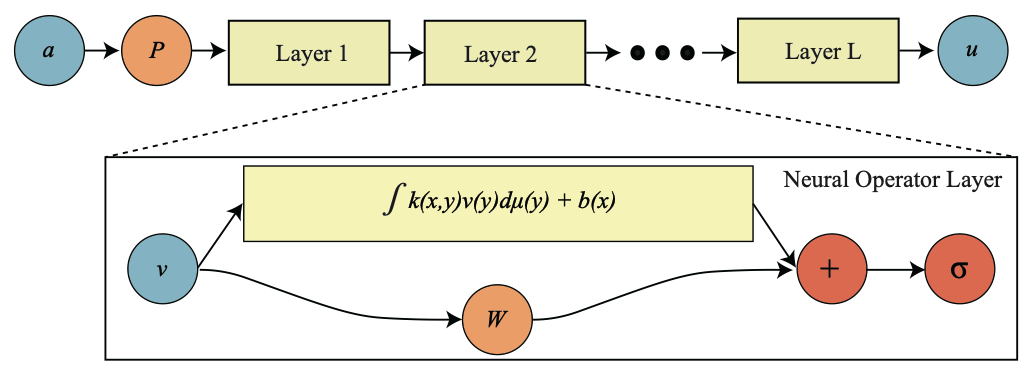 🔬“We have foundation models for language, not for physics” — Anima Anandkumar, Bren Professor of Computing 26.08.2026 1t 23minA few years ago, Caltech Prof. and co-founder of Accelerated Understanding, Anima Anandkumar set out to develop the first open-source weather model with AI. Talking to experts in the field, she was met with skepticism. Weather is chaotic, physics simulations are hard, have been developed for decades, and require supercomputers, the data just isn’t there. Despite reservations, Anima went forth and built. Within a year her team had developed FourCastNet, a predictive model that is competitive with the best physics-based simulations available. Thanks to Anima, and her follow up work, anyone can now predict weather accurately over a short timescale using consumer grade GPUs. In the fifteen or so science episodes we’ve released on Latent.Space, we’ve covered atoms, molecules, materials, biology, and math. Anima is a pioneer in studying physical systems that are continuous. Weather, fusion, and fluid or heat flow are huge areas of science that are extremely difficult to model: they are large, chaotic, and fundamentally multi-scale. This is a field the AI community has somewhat neglected, but one we expect will grow fast. We plan to cover large physical systems more in coming episodes.One thing you can glean from Anima’s work is that this area of AI resists the scaling ideas that have permeated the rest of the field. The data isn’t there: open source datasets in many of these domains are limited to tens or hundreds of thousands of examples, far from what token-hungry transformers need. Even worse, the resolution that physics demands pushes the context length into the hundreds of billions, so you can’t just throw more tokens at the problem. That isn’t a ceiling though, just a slower road: progress here comes from building in structure and inductive biases. Sorry for all you bitter-lesson-pilled language modelers.“If each dimension is even a few hundred grid points, which is where industrial scale starts... we’re talking hundreds of billions to even a trillion context length. So forget ever having a transformer for anything of this scale, all of the world’s compute will not be enough.”The math underneathTo tackle these systems, Anima pioneered a technique known as Neural Operators, one of the most beautiful theoretical developments in AI of the last decade. These allow you to combine data and physical laws to enable multi-scale inputs and outputs. We’re no longer modeling a grid, we’re modeling a function that evolves over many scales. This allows Anima and crew to build in priors based upon physical intuition.To see how physical priors are still helpful for AI modeling, let’s revisit the problem of weather forecasting on a global scale. The earth is a sphere, which meant that accurate modeling involved using the right basis set — the Spherical Harmonics. Run a weather model on a grid and it blows up fast. Move to the natural basis for the problem and it stays stable far longer, long enough to roll out months ahead instead of days. Anima’s Fourier Neural Operator learns directly in this frequency domain, and its spherical variant powers FourCastNet 3, which models the weather across the whole globe and keeps running stably far into the future.The physical world is forgivingAnima explored Neural Operators across other physical domains too, and one striking observation is that the physical world is more forgiving than you’d expect. In fusion, a few thousand samples are enough to predict plasma disruptions, and to do it a million times faster than traditional simulation.None of this is a rejection of scale, it is a different route to it. Anima ultimately still wants to build a “foundation model for physics”, a model that spans many phenomena and does both simulation and design. You get there by building in the structure the physical world already has, not by waiting for data that will never exist. It is a start, and it will take longer than the token-driven parts of AI, because for the physical world tokens were never the answer.“All of the things that work with deep learning, let’s take them, but make them a bit more principled.”Weather is only the beginningNeural operators and weather modeling were a personal passion of mine, so we’ve spent much of this blog and the episode exploring this work. Anima has done so much more! In the episode, we cover several other recent developments from Anima:* Anima has a series of works integrating neural networks and automated proof techniques. We talk about TorchLean, a new framework that lets you write PyTorch-style networks inside the proof assistant Lean and formally verify them. This is a major step for proving bounds on neural networks, something that would be really important for someone trying to, e.g., add a neural network as part of the control loop to their fusion reactor!* Anima was recently appointed to the United Nations Scientific Advisory Board! We talk with her about her goals of bringing evidence-based viewpoints to policy, and how AI in scientific domains can improve people’s lives all over the world.This episode has something for every AI or science nerd! Elegant math? ✅ Old school harmonic analysis? ✅ Fundamental developments in modern AI? ✅ Practical ways of modeling the physical world? ✅Give it a watch! This is a public episode. If you'd like to discuss this with other subscribers or get access to bonus episodes, visit www.latent.space/subscribe
 -
 Simulation: the new Scaling Law — Joon Sung Park, Simile AI 21.08.2026 1t 9minWhen we first dicsussed the Summer of Simulative AI in 2024 we knew it would be a brief summer, but it has recently come back with a vengeance with SimGym in April and now Simile AI’s $2B Series B, backed by GreenOaks and Index Ventures with prominent backers like Fei-Fei Li and Andrej Karpathy, running tens of millions of simulations for Fortune 100 clients like CVS and 85–99% accuracy vs human focus groups. Time to catch up on why this Second Summer of simulation is working!From creating Smallville, the landmark 2023 paper on Generative Agents that showed AI characters could remember, plan, socialize, and develop emergent behaviors, to now building foundation models of human behavior, Joon Sung Park is trying to answer a much bigger question: what if we could simulate the world before making decisions in it? In this episode, the Simile co-founder and CEO joins us to unpack the path from generative agents to digital twins, why today’s frontier models still fail to capture how humans actually behave, and what it would take to eventually simulate all 8 billion people on Earth.We go deep on Simile’s approach to modeling human behavior: long-form interviews, observational and transaction data, randomized controlled trials, population-level and individual-level models, and post-training on the causal mechanisms behind why people make decisions. Joon explains how his research created digital twins that reproduced human behavior and attitudes 85% as accurately as people reproduced their own responses, why models optimized to be rational can be bad simulations of irrational humans, and why understanding “social physics” may require changing model weights rather than simply prompting frontier LLMs.We also explore the much larger ambition behind simulation: testing products and policies before deploying them, finding counterintuitive paths toward desired outcomes, modeling emergent behavior across entire societies, and potentially tackling problems like climate change, democratic instability, and UBI. Joon reflects on scaling laws for simulation, the economics of data-center-scale simulated worlds, the connection to Thomas Schelling and psychohistory, why simulation is surprisingly similar to painting, and whether we might already be living in one.We discuss:* How Smallville and Generative Agents led to Simile* Why Joon’s team asked: “What if we can just recreate the world that we live in?”* Why useful personal agents require deep models of their users* Memory architectures, Markdown files, and the limits of prompting* “Social physics” and behavioral foundation models* Why web data captures what people say more than what they actually do* Interviews, transactions, observational data, and randomized controlled trials* Why predicting the future matters less than understanding how to shape it* How Simile creates representative simulated populations* Simulation versus prediction and the connection to Foundation’s psychohistory* How to evaluate simulations instead of simply stacking LLM hallucinations* Creating digital twins of 1,000 real people and reaching 85% behavioral accuracy* Why frontier models can struggle to reproduce real human behavior* Why good simulations need to reproduce human biases and mistakes* Post-training models on randomized controlled trials* Population-level versus individual-level simulation* Scaling laws for human simulation* The long-term ambition to simulate all 8 billion people on Earth* Whether simulations could help solve climate change or detect collapsing democracy* Thomas Schelling and the history of agent-based modeling* Why future simulations could require an entire data center* Multi-agent simulations and what happens when simulated people interact* Replacing expensive human panels with synthetic populations* Why market research is only the starting point for simulation* Why Joon sees simulation as surprisingly similar to painting* Using simulation to study questions like UBI* Whether we are already living in a simulation* Why AGI and simulation may be the twin technologies of advanced civilizationsJoon Sung Park* LinkedIn: https://www.linkedin.com/in/joonspark* X: https://x.com/joon_s_pk* Website: https://www.joonsungpark.com* Simile: https://www.simile.comTimestamps00:00:00 Introduction and Joon’s Path from Art to AI00:01:46 Smallville, Generative Agents, and the Origins of Simulation00:05:03 “Let’s Just Create a World” and the Future of Personal Agents00:09:53 Social Physics and Behavioral Foundation Models00:14:08 Prediction vs. Simulation: How Do You Shape the Future?00:16:59 How Simile Models Real People and Populations00:25:35 Evaluating Simulations, Digital Twins, and 85% Accuracy00:30:23 Post-Training Models to Reproduce Human Behavior00:40:04 Scaling Laws and Simulating 8 Billion People00:43:10 From Schelling to Society-Scale Agent Simulations00:46:13 The Cost and Economics of Simulating the World00:52:05 Real-World Use Cases, Synthetic Populations, and the Market00:57:27 The Future of Simulation, Painting, and UBI01:04:23 Are We Already Living in a Simulation?01:06:08 Building Simile and HiringTranscriptIntroduction: Joon Sung Park, Simile, and the Story So FarVibhu [00:00:00]: Today, we have Joon in the podcast. Excited to kick this one off. Very exciting company. I wanna kick off and ask you the question, talk us through the story of your life. How have you gotten here?Joon [00:00:13]: Yeah, for sure. I’m really excited to be here. A story of my life. So I was born in Korea, and I lived there for a good 11 years or so of my life, and then my family moved to Boston. So we moved when I was 11, and my parents were doctors, so they were going through their postdoctoral studies. My dad was a surgeon, so he was doing his sabbatical years at the Boston Children’s Hospital. So I grew up there, not too close to tech. I was very much a music and artsy, painting kind of guy.Vibhu [00:00:49]: Painting.Joon [00:00:49]: Exactly. I got into painting a little bit later, in high school, but that’s what I used to do. And then I grew up mostly in the East Coast after Korea. So I lived a good number of years in New Hampshire, and then I went to college in Pennsylvania. And I got into more of this tech scene, in college. So I was originally trained to be an artist. I thought that would be my professional career. So it wasn’t a hobby. It was like, “Hey, let’s make a living out of this.” And then gradually, I got really interested in this idea of, hey, the greatest artist often creates their own medium, and the best medium that we had available today was in computation. So I decided to go deeper into that, and one thing led to another, and we can go deeper into this, but I decided that research was something that I gradually got interested in, and here I am.Smallville, Generative Agents, and the 2023 Breakout PaperSwyx [00:01:46]: So there’s a lot that you packed into the research components. You had one of the best papers of 2023, which was the generative agents paper, commonly known as the Smallville paper.Swyx [00:01:58]: Feel free to call back to anything else that you mentioned, but most people would have heard of you from this. Do you have any statistics on how many people have, like, read it? arXiv gives you something, right? Some stats.Joon [00:02:10]: Yeah, it’s a good question. How many people have read it, I’m not sure.Joon [00:02:14]: I know we do keep track of citations, and they are going up quite fast.Swyx [00:02:23]: Yeah, Google Scholar has 7,200 citations.Vibhu [00:02:25]: I feel like it made a bigger hit than that, and it was a pretty instrumental paper. It got cited so many times.Swyx [00:02:34]: It is frequently the answer when people ask, “What is the best paper you’ve read recently?” It’s this one.Vibhu [00:02:39]: I thought the memory component was pretty underrated. It was a very good early memory system, and one of the biggest papers.Foundation Models and the Search for Killer ApplicationsJoon [00:02:47]: Yeah, so maybe I can talk a little bit about how this particular paper came together. So when I got into research, it was back in 2020 when I started my PhD program at Stanford, and that was the year, when we were about to get GPT-3 to be available. So we already had GPT-2, and you could sense that there was this new class of models that was just becoming available in the market, and the team got very intrigued. And the general consensus was, “Well, is this model going to be useful for anything?” “It’s really strange that these models are not trained to do any particular task.” But we decided to take a bet. So a large group of scholars at Stanford, and it was led by one of my co-founders, Percy Liang, and we came togetherSwyx [00:03:35]: Who coined foundation models.Joon [00:03:36]: Who coined the term foundation models. We wrote this paper, where that term came from called Opportunities and Risks of Foundation Models. And during that process, really the thing that I started to think deeply about was, here is a model that is fundamentally new in our ecosystem. The reason why this was new was it wasn’t, again, trained to do anything in particular, but its premise was it could do anything and everything. It was like a stem cell, if you were to take a biology analogy. And I got really interested in this idea that, well, if we were to really think about what are the killer applications that this particular technology would enable, what would that be? Many of my colleagues were using this for simple classification, simple generations. Interesting that these models can do that, but from an interaction perspective, not that interesting. We’ve known how to do that for many decades. And what we came down to was these models are trained on this very broad data from the web, right? So these are human behavioral data. It’s social media, Wikipedia, all these data. So if you poke at the right angle, then you could see human behavior that would just pop out that’s quite realistic, and we’ve never seen that before.The Time Machine Game and Recreating the WorldJoon [00:04:45]: So that got us really interested. The exercise that we decided to do, with this particular group of colleagues, Michael Bernstein, Percy Liang, and myself, who ended up becoming my co-founder at Simile, we sat down and we played this game that we call the time machine game.Joon [00:05:03]: Imagine we were to get on a time machine and fast-forward 10 years and look back. What would have been the single application that will have mattered that would be the most interesting and inspiring? And when we thought, “Well, what if we can just recreate the world that we live in?” it’s really hard to get more ambitious than that. Like, let’s just create a world.Joon [00:05:24]: And that’s where we started. And initially, we had this paper that was a precursor to the generative agents paper called Social Simulacra.Swyx [00:05:32]: Before you go further, were there other candidates for the most ambitious thing in the time machine exercise? What was number two or number three?Personal Agents, User Models, and Why Simulation Came FirstJoon [00:05:44]: There is a close second that we were considering, which ended up becoming more of these automation tools, especially the vision around really personalized agents that would do things for you.Swyx [00:05:59]: That’s also happening.Joon [00:06:00]: It’s also happening. But it was interesting for us, right, in that the reason why, we decided to go with the idea of simulation, one, I was a huge science fiction nerd, and this idea of creating simulation, I was personally really just fascinated. I loved the idea. It’s really cool to see, like, a game town like this and just see these agents live in it. But at the same time, my bet was if you were to create a really amazing personal assistant out of this technology, what you need first is an amazing model of your users. So I told a model, “Hey, can you go buy late dinner for me?” And it orders Hawaiian pizza, and I do not like pineapples on my pizza. Then it totally failed. The way for it to not make that mistake is only by having a deep understanding of who I am. And I gave a very simple and dumb example here, but you can imagine how this core understanding of people is instrumental. This is how, if we have our family and closest friends, they have a good mental model of who we are. That’s the basis of our social connection. So our bet also was this technology around simulation, creating accurate representation of people ought to precede the more complex agents that would automate the world that we live in. So that was the bet. But that was a very close second, and I’m still very much fascinated by it. I think there’s a lot of interesting work that’s going around. My hot take here, though, is I don’t think we’ve seen a true personal assistant that’s useful, in ways that meet the ambition of that particular line of work. I think there are early applications that are interesting, and if you talk to even ChatGPT nowadays or Claude, they know a lot about us. So a lot of the generation it’s doing, I do think it’s much more tailored, but I think the ambition is quite large in that field, and I don’t think we quite have all the right ingredients just yet.Swyx [00:08:01]: So OpenClaw and these personal agents, what do you want to see from them that they don’t currently have?Memory, Markdown, and the Limits of PromptingJoon [00:08:09]: I do think it’s slowly getting there, but I do generally want them to have much deeper understanding of the person. Right now, you look at the models. OpenClaw, what it’s leveraging is a Markdown file, and I think it’s quite clever, right? So if you look at the generative agents paper, this was the same intuition that we had, where initially when we were creating the memory architecture for the generative agents, and, like, this is, like, back in 2022, so we didn’t really quite have the idea of even agentive architecture or the term agent. But the intuition that we shared with some of the work that’s coming out today was we initially thought, “Well, do we want to make the memory into, let’s say, knowledge graph? Do we want to train a bespoke model?” All of these things. And what we decided to do was, “No. Just forget about all this.” These language models are quite good at modeling text and understanding and reasoning about text. So just put everything in a Markdown file or a text file. You’re done. I thought that was quite interesting that we could do that, and there’s a lot of strength in doing that. But also, there are limitations. It’s the way you retrieve and make sense of data that’s extremely large, it takes a lot of work. So I think that technology is getting better. I also do, however, think, there are certain things you just cannot shape just by prompting the model. So to some degree, you do need to touch the parameters of the model itself. So there is this work that I do think does need to happen, and it is happening. The question is, how far can we take it? How do we source data, and how do you also create an ecosystem where people are continuously feeding data to this model so it’s learning about you?Vibhu [00:09:50]: What’s the intuition between why you need to do it in the model?Social Physics and Behavior Foundation ModelsJoon [00:09:53]: My intuition behind the actual when do you train or even post-train a model versus just prompt a model is if the model has to learn the underlying physics of the world that it’s operating in. So it has to learn new social physics. The places where it doesn’t have to train are the places where it already has the physics. We trust the physics. It already has the base statistics, but it’s just trying to react to an environment. Then I think you can just prompt your way into getting the actions out of it. I don’t think the models that are out in the open have yet learned the complete mapping of social physics of humanity. This is one of the core theses of Simile, right? And one of the core reasons why that is the case is if you look at the data that the model was trained on, these models were trained on the web data, like, whatever was available on the web. And these are really interesting data sets, but they are fundamentally the self-exposed attitudinal data with some behavior data that’s sprinkled around here and there. And it has yet to learn the really deep behavioral nature of people, not just what people say they do online, but what they do in real life. And this is one of what I would consider to be the dark knowledge of humanity that we haven’t quite captured. And it’s these data that would also need to get factored into the model creation.Vibhu [00:11:21]: You call it behavior foundation model.Vibhu [00:11:23]: There’s a good one-liner here, but outside of that, what type of data do you need? What are you changing on the model level? How do you go about modeling, doing a behavior foundation model?The Three Data Buckets: Interviews, Behavior, and CausalityJoon [00:11:35]: We think about data in three buckets. So one bucket is interview data. It’s quite interesting. Rich qualitative data is interesting. It’s not behavioral, but we would literally ask people, “Hey, tell me the story of your life.”Vibhu [00:11:53]: It’s just what we’re doing here exactly.Joon [00:11:54]: The question that you all asked at the beginning of this interview literally is the question we also ask. And we ask our participants to go a little bit deeper, than how far I went. Maybe I can give more of my life story in lieu of this. But the reason why that data is interesting is by learning about this very long-tail information about people, you get a lot of texture around this model, like, this person as a model. So even understanding their childhood memory or even their trauma, their first love, these things, quite informative in ways that’s really hard to predict. So that’s one. Then there are two tranches of what I would consider to be the behavioral data. One kind of behavioral data is observational. So these might be like transaction data, or these might be data that you can get by scraping the web, right? So you can imagine why these data sets would be interesting, right, because they give you the base statistics of people’s behavior.Joon [00:12:55]: But then there is the last category of data, that I personally think is perhaps the most important, which is the data that describes the causal mechanism, the whys of people. Some of this is covered by the interview data, the qualitative, because people talk about why they made certain decisions. But really, where you get to see the most behavioral aspect of this is in randomized controlled trials, like RCTs. Imagine you have the same setup, but you have a few different variables that you are trying to tweak. Can you get realistic human behavior out of it in ways where, imagine you had this particular option. Imagine you’re even trying to choose whether you’re going to drink coffee or not. The day you drink coffee versus the day you didn’t drink coffee, does your behavior change? That’s a data set that describes a causal mechanism. This is quite important in modeling people. The reason why this is important is oftentimes when people come to us, or not just to us, but the reason why people are interested in simulation isn’t because they want to predict the future. If you’re trying to win against the stock market, predicting the future is interesting.Prediction vs. Simulation: Shaping the FutureJoon [00:14:08]: But most people, most decision-makers, what they want to know is, how can we shape the future? It doesn’t really help you to hear that your sales are going to tank in two quarters. They’re just gonna say, “Wow, that sucks.” What they want to know is, well, what do we need to do now to avoid that future? That’s the causal mechanism. And this is also very hard data to come by, right, because the world is our ground truth, but it happens once. So in a very controlled setup where everything is equal except for one variable, this kind of data set rarely happens. So this is a reason why this data set is both hard to come by and quite important if you’re trying to model human behavior.Swyx [00:14:50]: So behavior, I think, is the hardest data set to acquire. What is out there? What is even possible? You’re not going to know a lot of details about my life. I don’t even have data for myself on my own health or habits, and I just don’t log everything. So how can you have that data?Joon [00:15:14]: So we run a lot of randomized controlled trials.Swyx [00:15:17]: But you put people in the lab, they watch them sleep, or what?Joon [00:15:20]: We do care a lot about the consent process. People know that we invite them to be a member of this community to both share data and have themselves represented in different forms. But we bring a lot of people to the lab, or virtual lab, where we design experiments that would pose them real behavioral decisions. And often in these experimental setups, what makes the difference between what is attitudinal versus behavioral is whether the stake in your decision is real. That’s ultimately what makes it behavioral. So in these setups, we are inspired by our colleagues in social sciences, psychology, and so forth. So when they run studies, the techniques they utilize is imagine there’s an online store that you’re inviting people to come by. Then whatever they purchase in this experiment, they actually get that item delivered. Like, these are the things that make the stakes real. So we run a lot of these experiments, and we also do partner with firms. Right now, we also have customers who are quite excited to at least give us a glimpse of the behaviors that their users exhibit so that we can get a little bit deeper understanding of how people behave in these different platforms.How Customers Use Simile: Populations, Queries, and ExperimentsVibhu [00:16:39]: I think on the customer side, they have a lot of data about their users, who has bought. They have the action data.Vibhu [00:16:47]: Can you walk us through an example of what someone comes to you for? What questions would they want solved? Do you customize a model for them? Do you have something off the shelf? What does that look like?Joon [00:16:59]: Today, when people leverage our models, it’s often to better understand the population of their interest. So usually, the start of the relationship, we come together and hear about what population they want us to model, right? So it might be that if you’re a CPG company that’s selling to all of the US, then maybe it’s fairly straightforward. You want to model the gen pop of the US. But at the same time, if there is a vertical or if there’s a market that they’re trying to go into, imagine, they want to better understand, let’s say, people in their 20s and 30s living in California. That’s a much more specific population. So we hear about this population, and we go recruit these people, with consent, and with incentives, and we collect some of their data and create a model of these people. Then what our product allows you to do is query them. So it can take as input a filter that is a description of the population that you want to talk to, just like the one I just mentioned, and an environment. The environment can literally be survey questions, behavioral experiments, It can be A/B testing. Oftentimes, the core use cases are things like concept testing, to start with. But also, people sometimes want to do focus groups or one of the fun use cases that we also serve is even modeling things like earnings calls for public companies.Joon [00:18:21]: So these are the use cases that we often start with.Swyx [00:18:23]: Concept testing, is that an established term? I’ve never heard of concept testing.Concept Testing, Gallup, and PoliticsJoon [00:18:27]: Yeah. So it has to do with they have, let’s say, different messaging, different products, different ideas.Swyx [00:18:32]: It’s like a marketing exercise.Swyx [00:18:33]: Okay, got it. Got it. Politics?Joon [00:18:36]: We do, have a strategic partnership with Gallup, and of course, Gallup is deep into policy space and so forth. Right now, we have not worked deeply with politics, like that area just yet, however.Swyx [00:18:49]: I’m curious if there is demand or if they really would have different needs that somehow fundamentally don’t mix with your existing, users or people.Joon [00:19:00]: I think there’s certainly demand.Joon [00:19:02]: But we are very much mindful of how this technology gets adopted and the societal impact that we’ll end up having with this technology. And I do see politics as an area where a company has to be particularly thoughtful about the way they operate and make impact. So this is where we also want to make sure that we form enough of guardrail and perspective on how to leverage this technology before we go on to serve markets like the politics.Swyx [00:19:29]: I’ll give people an example. one of my favorite shows is The West Wing. I don’t know if people have watched.Swyx [00:19:34]: One of the key storylines is, like, the president has, multiple sclerosis, but they haven’t. they need to figure out how to disclose it. So they run a poll with a fake governor and ask people to respond on the poll,Counterfactuals, Polling, and When Simulation Is UsefulSwyx [00:19:47]: They try to make decisions based on the results of that poll on, like, how well they’ll be received, like where, how should we play this?Swyx [00:19:54]: And I’m like, well, I think those counterfactual things, I would use a simulation for this if I could trust it.Joon [00:20:01]: For sure.Joon [00:20:02]: In that show, how’d it go?Swyx [00:20:04]: In that show, it was, like a foregone conclusion. They were like, “We know it’s bad. We just don’t know how bad.” And then the poll came back. It was like, “It’s really bad.” And then they just did it anyway.Joon [00:20:14]: Part of it is to show, right? So you’re, you’re looking at the ideaSwyx [00:20:17]: Maximizing drama.Joon [00:20:18]: How bad could it be? Oh, it’s horrible.Swyx [00:20:20]: And to some extent, I think that is part of the trick of the, or the challenge or with being a customer of yours, which is that if I know it’s. if I roughly know and can intuitSwyx [00:20:35]: What the effect is going to be, do I need you? What sensitivity of it, of effect do I need in order to make a decision, right? So for example, if I, my approval rating is 50%Swyx [00:20:48]: And I, they have this negative piece, news item comes out, and it drops to 30.Swyx [00:20:52]: If it drops to 20, if it drops to 40, do I care? No. It, I know it drops. It’s negative. So when do I care about simulations?Joon [00:21:01]: You do something that’s clearly bad, that’s not popular, and people don’t like you, like, yeah, it’s likeSwyx [00:21:05]: You don’t need a simulation.Joon [00:21:07]: Yeah. Well, so there are a couple of things. one is, there are use cases where, like every day, developers, designers, policymakers, marketers, every single day, they create assets. They create new products. And turns out, it’s many of the decisions in hindsight is obvious. Yes, of course this is bad, but we still run those studies because understanding the magnitude and understanding how acute something is quite difficult, even if, we feel like, of course, like this makes sense. this is the reason why we make so many mistakes. Like, every time somebody goes online and say something that has huge backlash, you look at that and like, “What an idiot.” However, it’s tough. That’s one. There’s also another aspect here, which is, again, this is the reason why simulation is different from prediction. In simulation, in the ideal case scenario. So what simulation is trying to show is it’s trying to show each step of the way or each step that we need to take to get to a certain outcome, right? So in the most advanced simulations, sometimes the next step that we’re suggesting might be quite counterintuitive. The analogy that I sometimes give, and I ground it in a more realistic example, but, I, as I mentioned, I’m a huge fan of science fiction, and I don’t know how, many of the audience members have read, like, things like the Foundation series by Asimov.Simulation as a Path, Not Just a PredictionSwyx [00:22:37]: Oh, yeah. We’ve mentioned psychohistory a number of times.Joon [00:22:39]: Okay, fantastic. So I might be, talking to the right crew. If you read Foundation series, literally the first act is there’s a group of scientists who have found out that, “Oh, our galactic empire is going to collapse, and we’re going to have 30,000 years of unrest.” And they run psychohistory, the simulator that tries to teach them, “Okay, how can we keep this unrest to a 1,000 years?” And they plan this out, and the first step of that plan is to get the scientists who say, “Okay, this is coming,” exiled into this random place in this, galax- galaxy.Swyx [00:23:18]: Terminus.Joon [00:23:19]: Exactly. And that’s so counterintuitive. Like, what a strange move that you literally sent the group of scientists who was raising voice around this potential collapse of galactic empire into nowhere. How is that the right first move? Well, it turns out in this particular simulation, that was the move.Joon [00:23:40]: It’s these things, right? And the reason why these reasoning is possible is because you’re showing the step function or each step that results in a particular outcome. So really what simulation allows you to do in its highest form is you give it not a problem or question, like what would people answer to the survey? That’s not what we do. What we tell it is, “Here is a goal that we have. In the context of foundation, we want to keep the unrest to a 1,000 years. What is the path that we need to take now to get to that particular future?” And that’s what simulation allows you to do. Now, translating that into real market, imagine you’re a automobile company and you’re about to release a, EV, and you’re trying to understand, well, how do we market EV, to make sure that our stock price goes up? But what if the answer comes down that, well, you can market your EV in XYZ way, but that might change people’s perception around the cars that’s not EV and make your overall sales to go down. Not very intuitive, especially all you’re trying to optimize is EV salesss, and that’s the only thing that you’re tracking, then that might result in a completely wrong solution, or at least different solution than what you would have expected, whether it’s right or wrong.Joon [00:24:57]: That’s the power of simulation.Swyx [00:24:58]: For listeners, we covered a similar topic with Mikhail Parakhin from Shopify, where they are working on SimGym. I don’t know if he ever talked to you about it. it’s very similar.Joon [00:25:07]: ISwyx [00:25:07]: The goal is increased conversion, but then the journey is very unusual.Joon [00:25:12]: Journey is unusual.Swyx [00:25:12]: Yeah. The-- He’s trying to look for interventions on a shopping trajectory, which is similar to what you’re saying. Like, it’s not about the attitudinal, is your word for it.Swyx [00:25:24]: It’s about behavior.Joon [00:25:25]: It’s about behavior.Swyx [00:25:25]: And that’s exactly the difference, right? It’s, like, not about the near-term direction about-- but it’s more about, like, how do you affect multiple turns of interactions.Vibhu [00:25:35]: You had a good quote at the start about this as well. It’s not about people wanting to know the outcome. It’s about how they can change it, change the way to get there, something like that. But I wanna take it back to how do we know this is grounded? LikeGrounding and Evaluating Digital TwinsVibhu [00:25:47]: How do you run evals? How do you test that simulations come through? if I was to do the same thing that you described with, say, your favorite LLM, Opus, GPT-5.6, have some agent to map out these thingsVibhu [00:26:02]: How different are the answers we would get if I give it the same goal, the same objective, make a decent system? You’re saying that you need to change the model weight. You have your own solution to this. But how far off are we, and how do you check if it’s grounded? you have some interesting stuff on your site that points to how you run real evals, but if you could take us through that side. I think that’s one of the big concerns that people have. They’re like, “LLMs hallucinate.”Vibhu [00:26:27]: “You’re just hallucinating layer after layer,” right?Joon [00:26:30]: The way we do this, and this is the paper that we worked on after the generative agents paper that really became the, at least for Simile and also the field of simulation and synthetic panels, really became the foundation. Yeah, this is the paper. the paper is called Generative Agent Simulations of 1000 People. Here’s what we’ve done. For this paper, we brought 1,000 people that’s representatively sampled from the US to a virtual lab. And what we have done was we spent two hours collecting fairly wide-ranging data. In this particular study, we focused a lot on this interview data, that was, whose script was taken from this project called American Voices Project. And then we would also pair that with a lot of behavior data and so forth, whatever we can collect within two hours. And then we would send these people away for a couple of weeks. And during that time, I would use this data to create their digital twins. And I would bring the humans, participants back after 2 weeks and have them complete a battery of surveys, experiments, behavior studies. So we have the list here, which included things like behavioral economics games. We would run literally, like, Big Five personality test, General Social Survey. We would also go ahead and run the randomized controlled trials that were published on PNAS. And we would have their digital twins predict how the source individuals would have acted in these studies and surveys. And this is where we could replicate people’s behaviors and attitudes 85 percent as accurately as people would replicate their own. So that was the first really paper that gave this validated results that we can model individuals in an accurate way. And what we ended up finding now, of course, in AI space, so this paper came out at the end of 2024. AI space, a year and a half, 2 years, that’s a lifetime.85% Accuracy and Why Frontier Models Miss Human BehaviorSwyx [00:28:24]: Yeah. Just, for listeners who are not seeing the YouTube, I just wanna say, like, the headline figure is 85 percent accuracy, like, which is a big improvement over all the otherSwyx [00:28:34]: Methods that you showed.Joon [00:28:36]: But the part that was particularly striking to us, especially as we improved this technology even further, was the generative AI models like ChatGPT, Claude that’s coming out, it does give you the right foundation. However, what they do not consider is the true attitudinal and behavioral aspect of people, especially in the population that you care about. So what these models are really good at today is they’re trying to become the super rational, objective machines, right? So you go get their data from places like Mercor, Scale. You talk to professional programmers, scientists to create model that’s amazing at reasoning. That’s what they do. Simile doesn’t care about any of this. The models that we’re talking about here, what we’re trying to create are models that are as dumb as I am, right? So if I make some mistakes, the model has to make the same mistake.Swyx [00:29:34]: Oh, that’s very hard.Joon [00:29:35]: That’s very hard.Swyx [00:29:36]: You’re solving Murphy’s paradox.Joon [00:29:37]: That’s exactly. And this is a completely different data and training objective. This is also where we see quite a bit of discrepancy in the performance in human behavior prediction between the frontier models, Simile’s model, and the models being created in this space, where in some cases, the model performance of frontier models go all the way down to 20, 30 percent, especially if you go into that more niche population on topics that our customers would care about. On more gen pop, it might be around 50 to 60 percent. So it’s not very robust. Like, you wouldn’t want to make your decision off of these and these findings. If you can bring that up to 85 percent, that is ultimately what people end up getting very excited about.Swyx [00:30:20]: Yeah. Do we wanna keep going on the paper, routes?Joon [00:30:23]: Yeah, for sure. So the last one, was an interesting one. So this, paper was the follow-up paper that we had, to the 1000 agents paper, where the idea was now can we augment the models even further and post-train a model based on a lot of randomized controlled trials? So this was an interesting one. The data is always the most interesting part of modeling in many ways. The data that we got here was there’s this, there’s this platform called Open Science Framework. So some, the audience might be familiar with this. And there has been, especially in the social sciences over the past 5 years or so, there has been this concern around replicability of studies. And so it was a bit of a crisis, the scientists acknowledged, where we rerun the study and we don’t see the same finding.Post-Training on RCTs and Replication StudiesVibhu [00:31:12]: Oof.Joon [00:31:12]: It’s tough. And the reason why it’s there-- that was often the case was there’s this survival bias where the papers that get published often need to maintain what we call the value of less than 0.05 in the experiments that we ran. That suggests that only-- there’s only 5% chance that the results that we saw is false positive. But the tricky part was all the papers that were not published, and there’s still a 5% chance that whatever we publish is totally just randomly generated. Like, there’s a 5% chance that, hey, this effect is not real, but it just happened to be real because of the sampling bias. So because of that, what scientists started to do was they started to register their studies. So before running an experiment, they would go to this platform and say, “Here is the data. Here is the population that we’re collecting, and here’s the hypotheses.” And they would just say, “Here is our hypothesis.” Like, “This is what we believe.” And you cannot retroactively change those hypotheses. This is what gives us more scientific statistical confidence that whatever effect that you ended up seeing is true. So that ended up creating this really interesting platform where there’s one platform that has now contains tens of thousands of real-world experiments and hypotheses. And a lot of these are really high-quality, like, professionally designed behavior studies and random- randomized controlled trials. So we got the data and the studies from this platform and used that to make a point. And this particular, model is not, something that we’re serving commercially because this was a part of the open science. But this particular data set, helped us make a point that by collecting a lot of these randomized controlled trials, that are really well-designed, we can make significant improvement in model’s capability to predict human behaviors. So that’s what this paper was about.Vibhu [00:33:10]: Is this stuff done on a individual level? Like, do I need to tune the model per individual, per company? Is there foundation model changes and then some slight post-training? Anything you can share there?Population-Level vs. Individual-Level ModelsJoon [00:33:21]: So this particular model was trained. the data we had at the level of individuals, but this particular model was trained. We experimented with both. And this is what we end up doing at Simile too. We always train 2, distinct model. One is what we call the population-level model. The other is what we call the individual-level model. And both take very similar input, which is the description of a subpopulation or individual and a stimuli. In this particular work, we’ve done the same. Here, the results that we are reporting are much more geared towards individuals because we do think that is a harder task in many ways, but that’s what we have done.Vibhu [00:34:02]: You seen anything on the questions that humans can solve that models can’t solve? So likeHuman Biases, Mundane Choices, and What Models MissVibhu [00:34:09]: Currently, it’s, I live 5 minutes walk away from a car wash. It’s a 10-minute drive. Should I walk or drive?Joon [00:34:16]: Huh.Vibhu [00:34:16]: The model will say, “Oh, walk to the car wash.” And, you don’t have your car.Vibhu [00:34:20]: Is anything like this a problem in simulation? You would assume, like, very simple for human to think about, but if the model is saying you should walk to the car wash, anything here?Joon [00:34:32]: It’s less, what can we solve, but I think it’s more about what biases or mistakes do people make that models miss. Like, imagine that you are, like the. When I was still at Stanford, I lived in Palo Alto. So it’s about, I would say, 40-minute walk from the campus. You ask the model, “Okay, let’s go home. What can I, what can I do?” It would likely call an Uber or, give me, the bus time. But for the longest time, I really liked walking back. And the reason why I wanted to do that was not for efficiency. It really helped me think. And I like to walk for, half an hour or 40 minutes or so a day, where I just get to, just think about ideas, research, just get lost in my thoughts. That’s very human activity. Unless the model has seen that and understands the importance of that activity, it would miss these kinds of features. So that I think, is fundamentally what we’re trying to model. Like, what is fundamentally human might not be the most efficient thing to do, might not be the right thing to do, but things that make us who we are.Swyx [00:35:43]: I’m curious if, there are some data sets that you really want that would materially help you. One version of this may be interesting, which is more valuable to you to acquire as a data set, all of LinkedIn, all of Twitter, all of Facebook?What Data Matters: Social Media, Transactions, and FacebookJoon [00:35:57]: It’s a little bit hard to rank, in part because, there’s, there’s this product saying where no feedback is wrong because it teaches you something about your users. Doesn’t matter what feedback.Joon [00:36:11]: I think it’s a little bit like that.Swyx [00:36:12]: So just whatever is bigger.Vibhu [00:36:13]: What about a different domain? Say it was. What about all of Amazon data?Joon [00:36:17]: Oh, yeah.Vibhu [00:36:18]: Shopping data, right?Joon [00:36:18]: Shopping data. So Amazon data is interesting in that it’s very much behavioral, although, like, what people do on social media, you could squint and say that is also behavioral. But the transaction data is always interesting. It is also most commonly available, however.Joon [00:36:33]: If we were to look at purely social media, like if you really, if I were, if I had to really pick, Facebook likely is interesting because I do think it is most a default version of people. Because you go to LinkedIn, it’s very much professional environment. So people put up their, they have their guards up, right? And that still is interesting because that is true human attitude and behavior, but it is not your base state. you go to Twitter- Twitter, people have their own crazy personas, or depending on who you are. Like, my Twitter profile and, persona is very much, initially was I was very much an academic. “Hey, I’m here to share my studies.” Now, I share, things that’s related to Simile. But Facebook is one of those more private space where people just connect with their friends. In that way, I do think it shows you a little bit more about who that person is. So if I had to pick, I’d likely pick, Facebook.Swyx [00:37:30]: Yeah. And you’re interested in, like, the whole person and their background and philosophy. I, is it too clinical or too machine learning-oriented to just say this is just ways to inject variance and biases? The broad question, is, like, is this any better than a randomized, like, combinatorial explosion version? So we have a link to the TencentBillion Personas, Synthetic Demographics, and Bespoke DataSwyx [00:37:54]: Billion persona paper, where they did not do any of the groundwork that you are doing.Swyx [00:37:59]: They just did like a cross matrix of here’s all the professions in the world, here’s all the people, possible backgrounds in the world, do a dot product across all of them, and that’s it. That’s your prompt for a billion people.Swyx [00:38:12]: This will do something. I don’t know if it’ll do what you do, but it gets you some way, some percent of the way there.Joon [00:38:18]: So this was an interesting paper. Like, what I admired about this paper when it came out was the scale. And you do gradually want to be able to simulate really large societies and interactions. So the scale is definitely admirable. it is relying heavily on the known statistics that went into training the model. So to the extent that you believe that statistics is correct, this is not a bad way to go about this. But the thesis here, and this is something that we also have seen in the market, like if this works, then we have solved simulation.Joon [00:38:54]: It,Swyx [00:38:55]: Because I survey, like, okay, 5% of the US population is in construction.Swyx [00:39:01]: The other 5% is in medicine, whatever, right? And then you just keep going down the list, and then you do the other side. 5% has, like, the big 5 personalitySwyx [00:39:08]: Of, like, neurotic or whatever. That’s it.Joon [00:39:11]: That’s it. So if you believe that the underlying data set and the platform that we’re leveraging has all the right statistics, then this will have solved it. you’re at that point merely retrieving the knowledge that is already embedded in the model, in the model parameters. That’s not, unfortunately, what we see, where there is such detailed and also niche knowledge about people that if you just take one example, it might feel very mundane, but it’s quite rich when you put together, that you do need to do a lot of bespoke data collection to better understand people. And this is also, I think what makes this particular, job fun, which you want to deeply understand people, and the process of deeply understanding them requires a lot of attention to the details. And you do need to pay attention to and pay respect to the daily lives that people lead.Scaling Simulation: From Thousands to SocietiesVibhu [00:40:04]: I wanna talk about scaling simulation.Vibhu [00:40:07]: So what can’t we simulate, what can we simulate, and how does scaling affect this? So how big are the models? What if we go from, 8B, like, couple 100 billionVibhu [00:40:18]: Like billion000 parameters, billion000? Do we get scaling? Any interesting emergence? Like, at a certain scale, at a certain amount of training, you uncover anything unusual and any learnings from that?Joon [00:40:31]: What we are seeing is at Simile, so we do post-train our own model. The thing that we’re seeing is the early glimpse of scaling law in simulations. The more data about humans and more compute you ingest, you start to get predictive and predictable gains of the model performance in simulating it, simulating people.Vibhu [00:40:51]: Ooh. We need a scaling law curve.Joon [00:40:52]: It’s scaling law. Whenever you find it’s a beautiful thing. And we’re starting to see the glimpse of it, which is quite exciting. But if you talk about the ambition of simulation as a whole, it’s not merely about building a model. It’s about building a model, then creating the agents that become the individuals in a much larger ecosystem. So they’re creating this multi-agent simulation. Down the line, you want these multi-agent simulation to also live in a very rich environment, right? What we are really trying to get to at that point is, hey, can we create. All right, let’s do a time machine game again, and 5 years, 10 years into the future, can we create a simulation of 8 billion people living on Earth? I think that’s quite interesting. And that really is the vision. And once you get to that state, the questions that you can help answer for the society also start to change from my perspective. The answers are fundamentally about emergence of the emergent behavior of society and large groups of people.Joon [00:41:53]: So the questions that I get excited by, and maybe this is a stodgy- a bit. I have my, academic side of me.Joon [00:42:01]: And for me, it’s questions like, can we help solve climate change? If you look at climate change as a problem space, this is what we, like social scientists would often call it the wicked problems, problem where you have many actors with competing incentives for trying to make a very complex decision and coordinating that coordination decision. Very difficult to really solve in real life, which is also the reason why we couldn’t solve it. Can simulation help us solve that? Another one is, can we understand the signals for collapsing democracy, or can we understand or can we uncover the origin story of the monetary system? These are societal questions that we never really had a good way of answering. If we can create simulations of our society, you have to believe that these are the problems that we can solve. So that’s really the ambition of this field. And, I also think, yes, I think there’s a Nobel Prize to be won there, which wouldn’t be surprising. And I think there’s some amazing societal impact that we can have to help people make better decisions.Climate Change, Democracy, and Societal SimulationSwyx [00:43:04]: Nobel Prize in economics?Joon [00:43:06]: In economics.Swyx [00:43:06]: Oh, I see. I see. Rooting for you to write that paper.Joon [00:43:10]: One of these days. But, one of the scholars that I was deeply inspired by, When I was coming into the space of simulation, is this scholar, named Thomas Schelling.Schelling, Agent-Based Models, and the Nobel PrizeSwyx [00:43:23]: Schelling point?Joon [00:43:24]: So the canonical example of the work that he’s done was he was one of the creators of agent-based modeling. So this was, like, in the 1970s and 80s. It’s very early days, but this was truly one of the first exemplars of simulations. And one of the canonical model from that time, and of course many of these simulations are trying to tackle the societal problems that’s most relevant for their era, it was called the model of segregation. So racial segregation was a big topic, that, we cared about. And what they’ve done was they created this grid world where they had red dots and blue dots. And these dots were, back in the day, like, they were the agents, and they had a simple rule that governed their behavior. If certain percentage of your neighbors are of different color and if that goes above certain threshold, then you move to a new location at random.Joon [00:44:21]: One of the striking finding of this paper or this agent-based model was for the longest time, people thought the segregation within society was caused by explicit and overt racism.Joon [00:44:34]: But if you look at this model, people’s preference towards living with people of the same color, that preference can be very minute.Joon [00:44:42]: But the very small difference causes the society to segregate completely over time. This was very counterintuitive for a lot of people. And this particular work ended up informing housing policies. Mixed income housing, got really inspired by this work. And Thomas Schelling ends up winning the Nobel Prize for having laid the groundwork for very early versions of simulations. The opportunity that I do see here in the more scientific terms, is agent-based models for the longest, had impact in the 1980s, 90s, to some extent, early 2000s, but it has now gotten forgotten by the community a little bit. Because as you can imagine, red dots and blue dots is not really a rich description of people.Joon [00:45:31]: But with the emergence of things like generative AI and, in particular, generative agents, we do have an opportunity to create these agent-based models that are high fidelity enough to help us make really complex decisions. And that’s the opportunity that I see. If that truly works, then yes, that is the work that will result in a Nobel Prize.Swyx [00:45:53]: Yeah. For what it’s worth, and I grew up in Singapore. 80% of Singapore is in public housing, and public housing has, enforced racial quotas for exactly that reason, which is very interesting. okay, so we talk about scaling, we talk about all these, the agent possible applications.Cost, Reuse, and the Economics of SimulationSwyx [00:46:13]: I’m scared about the cost. if you even-- let’s just keep it to the US, about 8 billion people.Swyx [00:46:21]: But, how much does it cost to model so many hundreds of millions of people?Joon [00:46:26]: Oftentimes today, we don’t start at that scale, this stage of the, of industry and simulation as technology. But we can get our users extremely rich and meaningful insights even by modeling thousands, tens of thousands of people. And today what we do is every week we are collecting data on the scale of tens of thousands people’s data, and we have panel partnerships that gets us to tens of millions of people globally. So that’s what we do today.Swyx [00:46:55]: And just as a side note once you’ve collected one person for one studySwyx [00:46:59]: Can you reuse that same person for all the subsequent studies?Joon [00:47:03]: That’s exactly right.Swyx [00:47:03]: Okay.Joon [00:47:04]: The beauty of this model and these agents is the fact that they are domain-agnostic.Joon [00:47:08]: That what you’re really trying to understand is what is the fundamental nature of these people? What’s their social physics? And there are a lot of, a lot of, people that does change over time. Like, even, like, even things like, how many times have you gone have you been to, like, CVS the past week? that will change. But there’s so many traits about people that are also known to never change. Like, your risk tolerance doesn’t really change over time. It’s very consistent. So it’s these things that we’re trying to learn. But the scale we are operating is right now hundreds or, tens of thousands to hundreds of thousands. And in many of the core use cases that we are deployed in, and this is more than enough population, to cover those. Really, at that point, what you care about is less the number of people, but more do you have the right subpopulation of interest covered? And this is also the reason why people want a larger sample. It’s not because they want, stronger statistical guarantees. It’s more that can they filter down to any population of their interest. However, you can also imagine in 10 years, if we truly believe that the compute is going to scale, that we’ll have much more availability for compute, and our ambition for simulation is also going to scale accordingly, there’s definitely a reason for us to create an entire data center worth of simulations.Joon [00:48:35]: Or in my hunch here is I do think in the next some number of years, we will start creating simulations that will cost as much as training a foundation model. But perhaps it’s going to be so valuable to the society that it would be a no-brainer. Right now, even today, like, we are training bunch of new foundation model just so we can say we trained one and we spent tens of millions. But if we can create a simulation at the level of society that would solve climate change, I would run that today. I would raise the money right now just to run that.Multi-Agent Simulation and Social InfluenceSwyx [00:49:10]: Amazing. the follow-up question is, does it also compound if you let the simulations talk to each other?Swyx [00:49:18]: Or do they already do that today? They don’t, right, as far as I understand?Joon [00:49:22]: It depends on what simulation you’re trying to run.Joon [00:49:24]: In the multi-agent simulation setup, the agents do talk to each other.Swyx [00:49:28]: Right, which is exactly Smallville, right?Joon [00:49:29]: That’s right.Swyx [00:49:30]: But a lot of times, for example, in commerce, you’re just by yourself, so there’s no point talking. which is way cheaper.Vibhu [00:49:37]: But they use all these levels, right? Like, you decide what you will buy based on what other people around you buy and talk about, right?Swyx [00:49:43]: It depends.Vibhu [00:49:44]: It depends.Swyx [00:49:45]: Again, I’m, I’m coming at this from a cost point of view. I’m like, “Oh my God.” LikeVibhu [00:49:48]: I thinkSwyx [00:49:49]: If there is, like, some combinatorial thing of, like, thousands of people talking to thousands of people, then that one million X’s might cost.Vibhu [00:49:56]: I have a very different view as the cost point aside. Like, running these studies in reality is a lot more expensive, right? Running any study like this is you gotta have people do it, you gotta sign people up. It’s very expensive and sometimes, like, not feasible to run the study.Vibhu [00:50:14]: But the outcome or the decisions you make are very expensive on them, right? So spend X million on something that, the overall process costs 100 million might as well, right? There’s, there’s a lot of value to be had there. It’s a small cost, but I’m excited on the cost side.Joon [00:50:33]: To some extent, and when you deploy technology, you often want to deploy in a way where you can replace existing budget or you can make things more efficient, and that is the best way to deploy. However, the way you capture the long-term value of the technology is making the argument that, no, it’s the upside, that by making this better decision using simulation, you have saved yourself or made yourself hundreds of millions or even billions of dollars, and that’s a case to be made.Vibhu [00:51:06]: Random tangent question. So if you’re doing a lot of inference, a lot of model multi-agent stuff, are you at the point where it makes sense to, train a model that’ very sparse? You’re expecting to do multi-million dollar runs. Are you thinking about this in model architecture standpoint or inference efficiency, or, you’re still at the research phase of it works, we’re not super there yet?Joon [00:51:34]: Efficiency, we do think quite a bit about. this is technology that is deployed now in some of the largest enterprise companies in the world, and we do process significant number of queries, that are trying to, simulate the populations in the world. So efficiency is a consistent thing. we don’t want to over-optimize too early, so I wouldn’t say, like, this is the higher bid Right now, but this is definitely something that we think pretty carefully about.Swyx [00:52:05]: Yeah. Are there other case studies? So we, you talked about CVS, talked about Gallup, Deloitte, Wealthfront.Efficiency, Enterprise Use, and Real-World Case StudiesJoon [00:52:12]: Wealthfront is an interesting one, because one of the things they were trying to do, they were one of the first customers that wanted to do product testing that goes beyond just asking people what they think about, let’s say, behavior experiments and so forth. So there, really what we had to do was reason about multimodal input, so images, but also you can also imagine, like, these agents traversing through Figma mockups or websites. So some of the things that our agents can also do is it can be given a domain, like, or, like, a website URL and go use it for a while. It’s these things. And Wealthfront was one of the first, customers, that was very excited about this possibility.Vibhu [00:52:53]: What have people been asking? Like, is there any demand that we have not covered? Like, UI testing, right?Vibhu [00:52:59]: I wanna try a new. I wanna ship a new feature, test the UI, simulate how people will do it. Any interesting things that you’re seeing demand for?Product Testing, Websites, and Synthetic PanelsJoon [00:53:08]: Today, a lot of the demand does come from like, the places where people have historically used human panels, we can now replace with agents, and these synthetic populations. And this is not replacing human panel. in many ways, the simulation that Simile is building is grounded. So the way that I think about this is we are trying to represent humanity at scale. And in that way, the use cases are what we would expect, but it’s the scale of deployment that surprises me.Joon [00:53:44]: Turns out there are so many decisions that people make every day in these organizations, groups, and we want to be able to say, “We listen to people. We have consulted our users.” But in reality, that is rarely the case because getting to people and asking them many questions, it’s difficult. It’s both costly, time-consuming, but most importantly, people are just not available. If I had to answer 1000 survey questions for this one particular, vendor, even if I wanted to do that, like, I would never do it. And that’s very much the case. What simulation can do is ensure that the voices of people are always represented in rooms where the decisions for them is made, right? So all the stakeholders of this particular product launch, ideally they’re consulted. That’s what this technology really is trying to enable.Market Size, TAM, and Human Decision-MakingSwyx [00:54:39]: In my mind, that means it skews towards more consumer focus, right? Like, anything with a wide enough customer base where you do benefit from the diversity that you represent. What are some rough statistics, just for people who are not familiar with this market in general, what’s the market size that. I’m sure you have some, like, rough numbers. market size is, like, a vague questionSwyx [00:55:01]: But, like, how much do people spend?Joon [00:55:03]: So market research is a $100 billion industry.Joon [00:55:06]: But the thing about simulation is not a tool for market research. Simulation is a tool for human decision-making. So the question around what is a TAM here is quite tricky, right? Because it’s easy to say, “Well, market research TAM is roughly 100 million or 100 billion.” so is it a TAM? And not really, right? Because in many ways, you’re trying to inform all human decision-making. You’re trying to inform every decision that are made about humans for humans. What is a TAM for that? It’s really unclear. And I’ll be honest. Like, I have a scientific background, I have a research background, so I didn’t come into the field calculating, oh, what is the TAM for human decision-making? But I just had to assume, well, if we can inform every decision that is made about human for human, that has to be big.Swyx [00:55:58]: Some- something valuable.Joon [00:55:59]: Exactly.Swyx [00:55:59]: To some extent, you are a unicorn founder now, and you have to care as a CEO. But, like, I do think, like, yeah, when you go into these boardrooms with people that you’re quoting millions of dollars of contracts for, like, you have to say, “Well, here’s what you spend on humans-”Swyx [00:56:15]: “. And here’s what we save you, and it’s 85% similar.”Joon [00:56:19]: And certainly, the value case, is something that we care deeply about. Like, what is the value that we provide to the users and the decision-makers? But this is also where, like, as a founder, I think valuation only tells one very superficial aspect of the story, and I try not to think too much about valuation, in general, because that’s not what also motivates a team or certainly doesn’t. I’m, I-- Again, the interesting thing about researchers is we are happy living in academia, getting paid next to. we get paid okay. we don’t get paid that much, as a researcher here in academia, but it’s the impact and it’s the, it’s the value that we can provide to the individuals and the society that really drives us. And in that way, ultimately what drives us is the impact. Does the simulation we provide have a real impact in people’s decision-making in ways that progresses our society forward? If the answer is yes, then yes. that has to be great business, and we see that in numbers, and we do care deeply about that upside story, but that’s the heart of it.Where Simulation Goes NextVibhu [00:57:27]: Do you have any timeline predictions? So we talked about scaling laws of simulations.Vibhu [00:57:33]: You brought up, okay, maybe one day we can simulate how to solve climate change.Vibhu [00:57:38]: Where are we now?Vibhu [00:57:40]: If that’s not the end state, what is an end state, and what does progress look like?Joon [00:57:45]: So what I sometimes tell people is simulation as industry, it feels a lot like where GPT-3.5, GPT-4 was, for the AGI saga, which is we have now technology that is powerful enough to do real damage on the verticals that we are tackling. At the same time, there’s a lot of progress that is yet to come. And that’s, I think, where this is. So the way I see it, I do think there will continue to be breakthroughs both in data, in algorithms, and there will be much more aggressive scaling that will also happen over the next few years. But I think that’s roughly where we are.Swyx [00:58:27]: I think that was about the rough set of topics. Anything else that we should have asked you or you wish people asked you more about Simile?Simulation as Painting and Understanding Human EssenceJoon [00:58:38]: I think the, what’s, for me, what’s quite fascinating about simulation, it is very impactful technology, but it is also very interesting technology, both in terms of, like, what it means for human society, our philosophy. And the way I sometimes interpret simulation is. So going back to my background, I as I mentioned earlier, I started my career as a painter. it was a professional pursuit, and I did oil painting, for figures. So I got my training originally in the realism studios, and that’s what I spent a lot of my, years, doing. Simulation is a lot like painting, right? The best paintings teach you something deep about the subject that you’re trying to represent. And it is always not a perfect representation. It-- No painting is perfect. There’s always some small differences and discrepancy, but what it does is it tries to highlight the thing that matters the most about the subject.Swyx [00:59:47]: The essentialJoon [00:59:49]: The essential essence.Swyx [00:59:49]: Yes. He, you, he’s brought up some of your work.Vibhu [00:59:53]: Just nice to put it up.Joon [00:59:54]: Yeah. So these are some of the works. So this is from, my, personal website that I maintain when, I was still a researcher.Swyx [01:00:00]: I think a lot of people will say, like a Picasso, like anything postmodern is, like, very much focused on the essence.Swyx [01:00:09]: Right. yeah, but I don’t know if any one of these evokes something that you like to tell the story of.Joon [01:00:15]: No, it’s one of those things where, each of these paintings, drawings, whatever it may be, it is trying to surface something about the subject that you feel deeply about onto the surface. when I was a painter, and artist, the topic that I cared really deeply about was, the more mundane aspect of human lives. This shows up in some of the, some of the work that I’ve done, where, like, I did this entire study of a rural town where I went around and took photos of people for not really doing anything special, but just living their everyday lives. I thought that was the most interesting thing. I’m somebody who has this perspective where, the world is oriented around this fractal shape, and you have two choices to understand the fractal shape. You either go outward and try to explore as much as you can to understand the broader shape of the fractal, or you go inward because, the outward resembles the inward, shapes. And understanding the mundane aspect of it was very much that. Simulation has a lot of this, right? You’re trying to understand even the most mundane aspect of people. When put together- teaches you something really deep about that individual and the society. So I think that’s what’s interesting about simulation, the way, the same way that AGI helped us better understand or really think critically about humanity and human intelligence, simulation is really an exercise of understanding more about human society and our collective lives. So that I find to be, yeah, particularly interesting.Swyx [01:01:56]: Yeah. Now you’re reminding me that some of the best biographers, documentarians, and even photographers, they’re taking a photo of you.Swyx [01:02:05]: But before I take a photo of you, I must spend-- I must, like, follow you for a week just to understand you?Swyx [01:02:11]: Which some artists, some do. Part of your work, there’s a very famous book called Working. I don’t know if you’ve, been referred to it before.Swyx [01:02:18]: It’s very famous, like, to the point of having a Wikipedia pageSwyx [01:02:23]: About this like, really depth understanding and interview of people as they, about their lives, which seems mundane, but is told in a very, compelling way. Yeah, 1970s as well.Joon [01:02:34]: Okay. It was an amazing decade.Vibhu [01:02:39]: Before closing questionUBI, Future Questions, and the Value of SimulationSwyx [01:02:41]: Okay, here we goVibhu [01:02:41]: You said that you started Simile with your 10-year question, right? If we do that now, 10 years down, what can we simulate? What would you simulate if, like, if you’ve made significant progress, are there any questions outside of the ones that we brought up? Any- anything that you think is most impactful? Anything that you would go vision 10 years out?Joon [01:03:03]: In many ways, as I mentioned, I am somebody who is very much impact-driven. So the what would inspire me is I would want to ask, 10 years later, what would be the most important societal question that we as a society have to ask? I would love to tackle that. Like, do we need UBI? That could be an interesting one.Swyx [01:03:24]: Ooh, has anyone done that?Joon [01:03:25]: Well, we were thinking about it.Vibhu [01:03:27]: Can we get access? Can we justSwyx [01:03:28]: So OpenAI, this is, like, just trivia now. Like, OpenAI, or I think Sam Altman funded a study on thisSwyx [01:03:35]: In Africa, and the answer was no.Joon [01:03:37]: The answer was no. But, what, was it something about the implementation?Swyx [01:03:41]: Yeah, I know. It was a skill issue.Joon [01:03:43]: Or was it something about, But this is the thing. See, when SamVibhu [01:03:46]: Funny news articleJoon [01:03:46]: Altman funded this particular,Swyx [01:03:50]: He spent 14 million dollars? Oh my God.Vibhu [01:03:52]: It’s a little more.Joon [01:03:52]: Quite a bit. But this is the thing. This is the reason why you want to run a simulation. You spend 5 years, 40 million dollars on this one study and have one finding, but if you can run simulation many times instantly, then that’s the value.Swyx [01:04:07]: I feel like that one could-- you could have done in a simulation. Like, if you can do the housing study, you can do the UBI one. Like, I, come on.Vibhu [01:04:13]: I think sometimes people will spend the money because they wanna verify what you think, right? Like, sometimes you just wanna. Is it right? Like, you gotta test it.Swyx [01:04:23]: Okay, closing question. What are the chances we are in a simulation right now?Are We Already in a Simulation?Joon [01:04:28]: So it’s a fun question, and I assert at some point I just answer, yeah, we’re definitely in a simulation. But what I do, feel, however, is, whether we are in a simulation or not, that, I don’t think that makes our experience any less real. And I think that’s fundamentally, like, what I believe in. Maybe we live in a simulation, maybe not, but forSwyx [01:04:48]: It’s real to us. Yeah.Joon [01:04:49]: Yeah. For me, I don’t really care.Swyx [01:04:50]: Yeah. Unless you die and you wake up in, like, the level higher or below.Joon [01:04:55]: That would be interesting.Vibhu [01:04:55]: I feel like you wouldn’t care. Once you die, then you find out you’re in a higher level.Joon [01:05:01]: I worry about it when I die.Swyx [01:05:04]: I think the other thing that. Okay, so I like the mathematical answer to this, which is, like, the, sheer number of possibilities that you are in a simulation far outweigh the sheer number of possibilities that you’re not.Swyx [01:05:16]: Except for the simplest answer, which is, it is computationally very expensive to have you be a simulation. okay, great. You’ve been very generous with your time. Congrats on all your success. I met you just after your Smallville paper and had no idea that you could build, like, such an enormous company. And then now you’re like, “Well, it’s a $100 billion market, but that’s just where we’re starting.” So this is, very exciting.Vibhu [01:05:42]: I think $100 billion market was not the term. That was only part of it.Swyx [01:05:45]: Yeah, exactly. It’s, if you’re thinking too small.Joon [01:05:48]: Well, I do believe that, maybe my final note here might be, again, I love science fiction. You look at any advanced civilization in science fictions, there’s 2 twin pillar, technology. One’s AGI in some form, and the other is simulation. So I think the market’s pretty big here.Simile as Research Lab and Product CompanyVibhu [01:06:08]: Tell us about the company. You guys just raised a lot. You’re half a research lab, half a company. you’re hiring. Where are you based?Joon [01:06:15]: Yeah. So we’re based in Mission Rock, so not too far away from, where we are right now. So we’re in SF, but we are also bicoastal. So we have our, team. I would say our headquarter is in SF, and we have a lot of our technical talent in SF, and we do have a smaller office that just opened up in New York. We are, as a company, an interesting one in that today, there are AI neo labs and then there are AI product companies. Simile truly is both. So this is a company that was founded by 4 founders, myself, Michael Bernstein, Percy Liang, Lainie Yallen. Michael, Percy, and I are all researchers. So of course, Michael was one of the authors of the ImageNet, kickstarted the AI revolution back in 2013, has been instrumental in human-centered AI. Percy coined the term foundation model, and is a, one of the greats of the AI researchers today. And Lanie is my business counterpart, where she led some of the fastest-growing AI native companies from their seed to A and B. But we have this DNA at the company where the vision of the technology that we’re creating is continuously developing, that we are getting people who were my lab mates. We are about 60 people right now.Joon [01:07:28]: 15%, almost 20% of the company population are just my lab mates from Microsoft Research lab.Joon [01:07:36]: And we It’s quite fun because many of them then had gone on to OpenAI, Google Gemini, and these places. And so it’s been a few years since we really got together and had a chance to work together. But now they’re coming back and really building out this vision that I find to be quite exciting, and that excitement is shared. So there’s that motion at Simile where we are a group of researchers trying to do something that no one is working on that we find to be the most impactful potentially. But at the same time, this is, again, technology that can make impact today. So we have an amazing group of engineers, product people, and designers, who are sitting here with us trying to imagine what does it look like to help people understand what simulation can do and make real-world decisions with this. Having both and then deploying it to some of the largest customers in the world today, it feels quite unique.Swyx [01:08:30]: Yeah, it’s very compelling. One part of it was this is the call to action. Like, who are you hiring? You’ve done part of it, which is you have-- you’ve got a very talented group. Who are you hiring? Like, what roles?Hiring and ClosingJoon [01:08:41]: So honestly, at this point, we’re hiring acrossSwyx [01:08:43]: EverythingJoon [01:08:43]: All, section. we are always excited to bring on, amazing research talent.Joon [01:08:49]: So if you’re interested in working with, our lab mates, we are always welcoming of amazing, researchers. But also we, hire, amazing engineers, that some of whom I, like, I respect the most. Many of them come from places where we have personal connections with, so many of the members are from Figma, Notion, Rive, and so forth, but also more broadly from the companies that we as a team have really admired. So engineers both in the product side, infra side, we’re all looking for those hires.Swyx [01:09:24]: Well, lots of people. I think you made a really good case. So thanks, and, we’ll see you in the simulation.Joon [01:09:30]: Amazing.Joon [01:09:31]: See you all there. This is a public episode. If you'd like to discuss this with other subscribers or get access to bonus episodes, visit www.latent.space/subscribe
 -
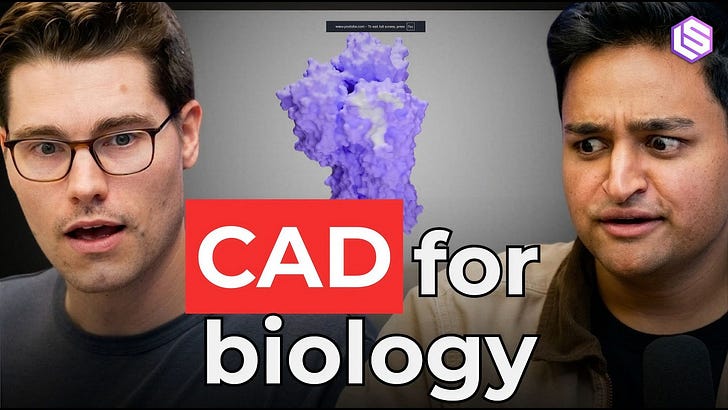 🔬The BioAI Phase Shift - Matthew McPartlon & Neil Patil, Chai Discovery 11.08.2026 1t 35minThis January, four big AI × Pharma tools deals were announced at the huge JPM Pharma conference that takes over San Francisco every year. OpenAI-backed Chai Discovery (now worth $4B) was somehow at the heart despite being all of 2 years old. The Science team is proud to bring you the first podcast with cofounder Matt McPartlon and product lead Neil Patil to tell the full story! Editor’s note: not to be confused with Chai AI, which was another top pod of ours.Pharma suddenly doing big AI tools dealsFor the non-pharma people, JPM is JP Morgan’s annual conference for pharma deal-making that takes over San Francisco for a week in January with hundreds of side events, etc. It’s a big thing. Tools deals for pharma are also a big (new) thing: companies that start as AI for Pharma usually end up building their own drug pipelines instead, and the reason is something like this: convincing pharma to use your tool requires proof that your tool works. Proof means good targets, maybe with good clinical validation. If you have that, then it’s easier to raise money (with a known, if long path to commercialization) or sell (e.g payment in biobucks) for a specific target than it is to sell to lots of companies on a promise that it will work across their portfolios. The “we’ll just partner / build our own drug” optionality proved to be the only good path up until January. What changed? In short, the tools got good enough for drug design teams to trust.Good-enough-to-trust unlocks the ability to scale discovery: get more, better candidates into the lab and animal trials faster. More screening for toxicity, better delivery, etc. This means that what you push to the clinic is more likely to succeed.Tools also unlock new capabilities: mechanisms that are very hard or impossible to develop using lab-based discovery. Designing an antibody that precisely triggers a very specific molecular cascade takes many years of trial and error. Designing bi-specific antibodies (that bind to two different proteins) is similarly difficult. Good design tools can unlock this.RJ: The fact that the quality of the model has jumped means you’re enabling things you just plain couldn’t do. So it’s a step change. It’s not an efficiency argument at all, or not so much.Matt: Yeah, exactly. It’s kind of interesting, even for us — it took me a while to believe in the thesis, actually. I talked to Josh for months before Chai started... It’s like, can I beat a mouse, and then can I do what mice can’t do? And then how many levels of interaction can you just keep building on top of that?Everyone playing in the structural / binding space has an angle here, and some will be better than others, but Chai is pointing to a different unlock: getting good molecules right out of the gate (meaning they don’t then need as much lab work) means that the iteration time is faster. This turns science into engineering: you can design your systems to reduce friction and hill climb towards one-shotting molecules all the way to the clinic.This, per-se, is not a new thesis: a16z articulated a version of this in 2020. What has changed is that structural models became binding models (how well doesn’t this molecule bind to this molecule, aka “binding affinity). Binding models unlock design, which has been steadily improving. Chai’s observation is that for engineering problems the best product tends to win, and good technology is a necessary but not sufficient condition. Photoshop for moleculesWith that in mind Chai has invested heavily in partnerships that allow them to learn from their Pharma counterparts. What is kind of cool about working so closely and supporting so many of these partners is we get to really learn about what is the stuff that would be helpful in research. So rather than doing research in a vacuum, based on what would hypothetically be cool, we're able to do informed research based on what our partners have just been organically asking us for help with.— Neil Patil, (Chai product lead)This means better UX, such as a molecule editor that is more like a CAD or graphics design program than a chatbot.Their approach has paid off: since June, Chai has announced three more major deals: Lilly, Novartis, argenx, plus an expansion of their Eli Lily program. This episode is too full of quotable moments for a short blog, so tune in to learn about * Why protein tokens have the highest downstream value of any token * Climbing levels of abstraction as models improve * How Pharma, VC, and research are all just portfolio optimization * How better tech changes the whole portfolio * How relentless focus on simplicity leads to scalePlus much more! This is a public episode. If you'd like to discuss this with other subscribers or get access to bonus episodes, visit www.latent.space/subscribe
 -
 The Inference Engineering Masterclass — Philip Kiely & Ali Taha, Baseten 03.08.2026 1t 41minWatch the full episode on YouTube:We first covered Baseten last year when DeepSeek mania was at peak hype. Now they have raised a monster $13B round and become one of the new cohort of AI Infra decacorns that are (with Nvidia, Intel, and the semis complex) chief beneficiaries of the Inference Inflection. We return to Baseten at the peak of the 2026 edition of Open Weights debate. Ali has published a viral breakdown of Kimi K3:And since you last saw him, Philip has spoken at AI Engineer and written the definitive book on Inference Engineering spotted all over SF:Three years ago, inference engineering barely existed as a category.Today, it is one of the most critical disciplines in AI. Inference engineering inherently tackles a different question than standard model training: “How do you turn those weights from training into a product that is fast, reliable, and affordable at scale?” Focusing on these creates an entirely new optimization problem.In one recent GLM-5.2 experiment, quantizing more of the model actually preserved its benchmark quality while increasing throughput by 20%, because the errors introduced in different layers could cancel each other out.Inference is no longer just the final step after training. It is becoming its own engineering discipline, with its own research problems, infrastructure, and increasingly specialized roles.In this episode, Baseten’s Philip Kiely and Ali Taha join swyx and Vibhu to explain what actually happens after a new open model is released and what it takes to turn “we generated a token” into a fast, reliable, production-ready API.We go deep on cache-aware routing, disaggregated prefill and decode, quantization, speculative decoding, KV-cache movement, model parallelism, GPU kernels, and the race to make frontier models up to 10× faster. Philip and Ali explain why inference optimizations can still produce gains of 20%, 100%, or even 200%; how quantization errors can cancel one another out; why identical weights can behave differently across clusters; and how Baseten grafted a Kimi vision encoder onto GLM-5.2 without changing the underlying language model.The conversation then expands beyond LLMs into NVIDIA Dynamo, mega kernels, Rubin, AI-specific chips, local inference, video generation, diffusion versus autoregressive models, and the enormous compute barrier to generating coherent long-form video. Finally, we explore the convergence of training and inference, continual learning through persistent KV cache, and the emerging loop where models help optimize the infrastructure that runs them.We discuss:* What happens when a 200,000-token request enters an inference system* Cache-aware routing and reusing previously computed KV cache* Why prefill and decode are increasingly handled by different GPUs* When dedicated deployments become cheaper and more reliable than shared APIs* How speculative decoding uses a smaller model to accelerate a larger one* Tool calling, structured outputs, and what LLMs actually do* What it takes to support a new open model on day zero* Grafting Kimi’s vision encoder onto GLM-5.2* Retrofitting inefficient model layers with components from other architectures* Why models sometimes collapse into repeating the same token* How hardware, kernels, and race conditions create nondeterministic failures* Preserving model fidelity while making inference faster* How quantization errors can cancel each other out* Why inference optimizations still deliver gains of 20%, 100%, and 200%* How optimized serving can make a model up to 10× faster* NVIDIA Dynamo, KV-aware routing, and distributed model serving* Speculative decoding the speculative decoder* Why local AI is about making models less dumb while data-center AI is about making them less slow* Tensor, expert, and pipeline parallelism across GPUs* Hardware-aware model design, auto-tuning, and the case against mega kernels* Rubin and why inference is becoming a systems problem* Whether modern GPUs are evolving into programmable AI ASICs* Why enormous models like Kimi K3 require GB300-class hardware* Why open-source video generation still trails Veo, Kling, and other closed models* The quadratic attention bottleneck behind long-form AI video* Autoregressive video, real-time generation, and compounding quality drift* Why future video systems may combine autoregressive and diffusion architectures* Training for inference and inference for training* Continuous post-training, deployment, evaluation, and improvement loops* How GLM-5.2 helped optimize the kernels serving GLM-5.2 itself* Why faster networking could unlock dramatically faster decoding* Continual learning, KV-cache compaction, and persistent model memoryShow Notes* How to build a day-0 API for Kimi K3* 22580: From GPT2 to Kimi3, ExplainedPhilip Kiely* LinkedIn: https://www.linkedin.com/in/philipkiely* X: https://x.com/philipkiely* Inference Engineering: https://www.baseten.co/inference-engineering/Ali Taha* LinkedIn: https://www.linkedin.com/in/aliestaha/* X: https://x.com/waterloointernTimestamps00:00:00 Introduction and the 200K-Token Prompt00:03:18 Dedicated Deployments, Speculative Decoding, and Tool Calling00:11:26 Launching Production-Ready Open Models00:19:06 Model Retrofits, Failure Modes, and Nondeterminism00:28:22 Quantization and Canceling Errors00:32:15 The Race to 10× Faster Inference00:40:48 Dynamo, Speculation, and Local vs. Data-Center AI00:50:18 Model Parallelism, Auto-Tuning, and Mega Kernels01:00:55 Rubin, GPUs vs. ASICs, and Custom AI Chips01:10:03 Giant Models and the Limits of GPU Memory01:12:42 AI Video, Quadratic Attention, and Autoregressive Generation01:21:47 Audio, Images, and Diffusion Models01:27:32 Training, Self-Optimizing Models, and Continual Learning01:40:06 Closing ThoughtsTranscriptIntroduction: Baseten, Waterloo Intern, and Inference EngineeringSwyx [00:00:00]: Okay, we’re here in the studio with Philip, old friend from Inference Engineering, the book, as well as Baseten and everything that you’ve done, you and I have done before, as well as Ali. Welcome.Ali [00:00:15]: Pleasure to meet you.Swyx [00:00:15]: Waterloo intern.Ali [00:00:16]: Waterloo intern, always.Swyx [00:00:17]: When did you get “Waterloo intern” as a handle?Ali [00:00:19]: As a handle? Oh.Ali [00:00:20]: I think the rebranding happened mid-March. When I saw it was open, I was like, “I have to take it. Up for grabs.”Philip [00:00:26]: The problem is that Ali is really good at his job and is not gonna be an intern much longer.Philip [00:00:30]: So we have to figure out who’s gonna get the handle.Ali [00:00:33]: Well, I’ll pass the torch over to the next intern.Swyx [00:00:34]: Oh, okay. It can be, like, you just pass it to another Waterloo grad.Ali [00:00:37]: To another Waterloo intern. No, bruh.Philip [00:00:39]: Yeah.Ali [00:00:39]: Intern.Swyx [00:00:40]: Intern, yeah.Ali [00:00:40]: And no.Philip [00:00:41]: You gotta get an intern from Waterloo.Ali [00:00:42]: Yeah, I’ve gotta get an intern from Waterloo.Swyx [00:00:44]: Right.Ali [00:00:44]: But they have to follow the path.Swyx [00:00:45]: Oh, it could, but it could come from Baseten, so it’s like whoever Baseten gets from Waterloo.Ali [00:00:48]: Right.Swyx [00:00:49]: Has the title of Waterloo.Ali [00:00:50]: It stays in the ecosystem.Philip [00:00:51]: Exactly.Ali [00:00:52]: Halfway through the internship, you either get it or you’re out.Philip [00:00:55]: You should also do, like, a big graduation ceremony where you change the handle.Ali [00:00:59]: Just say it.Philip [00:00:59]: For everybody.Swyx [00:01:00]: You guys are good at ceremonies, clearly. We had a nice launch of the book, very successful. But before we get into all that, I wanna start off with a fun question for you. Okay, you’re an expert inference engineer. What happens when I send a long query, say two hundred thousand tokens into Baseten’s inference? What’s the process of query through GPU model routing, balancing, all that? What is all the stuff that we don’t think about?Long Context Requests, KV Cache, and Cache-Aware RoutingPhilip [00:01:26]: With a long query specifically, the first thing that I’m gonna ask is, “Have you sent me this query before, or at least part of it?” and I really hope you have, because it’s gonna be a lot easier for me and a lot cheaper for you. So the first thing that we’re gonna look at is some cache-aware routing, where we’re going to see, we probably have a number of instances, a number of replicas up serving whatever model you’re hitting. We want to send this one to something with, number one, available prefill workers, and number two, ideally some cached input already there so that we can skip prefill on at least part of these two hundred thousand tokens. If you’re doing two hundred thousand tokens, it’s probably coding or a multi-turn agent or something where you would expect to have that cached. If you don’t, we’re gonna have to send it to a prefill worker. We’ve at least on certain models disaggregated prefill and decode, so you’re going to have one set of GPUs that’s solely going to process the input, create the KV cache, and get you your first token, and then that’s going to be passed over to a separate set of GPUs, which is going to run decode. We’re going to iteratively make those tokens. We’re probably going to have some speculator model in front of that. I’m going to assume that you’re doing coding, and because of that, our speculator model, which assumes you’re doing coding, is gonna have a high draft token acceptance rate. If I’m wrong and you’re asking me to summarize every Harry Potter book, it’s gonna be slower. And then we stream that output to you and account for it, charge you, a couple of pennies and say, “Hey, would you like to send another one?”Swyx [00:03:04]: Except Baseten doesn’t charge by pennies.Philip [00:03:07]: Well, yeah, we charge. I’m assuming that we’re talking about the public model APIs. If you are setting up a dedicated deployment, then yeah, it’s not pennies.Public APIs vs. Dedicated DeploymentsSwyx [00:03:18]: Yeah, one of the key differentiators when I was talking with Baseten initially was that people who want very high volume just need to rent by the box, ‘cause then it’s up to you to figure out how to saturate the box.Ali [00:03:31]: And more often than not, it’s, like, way cheaper if you’re pushing, like, millions of tokens per hour, if you just pay per hour instead of pay per token.Philip [00:03:37]: Yeah, they do. I think that we’ve increasingly seen a lot of demand for the pay per token APIs, just because everyone wants to try open models, and then once they find a use case that’s really sticky, then they move over to dedicated.Swyx [00:03:51]: Is there a best practice on when it’s time to swap over?Philip [00:03:54]: Couple reasons. Yeah, reliability, that’s a big one, right?Ali [00:03:57]: Like, if they have a very specific use case, they want you to train something specifically for them, like they want their own spec dec, for instance, for their own traffic.Swyx [00:04:04]: Spec dec is speculative decoding.Speculative Decoding and Custom SpeculatorsAli [00:04:05]: Speculative decoding, yeah.Swyx [00:04:07]: You have to explain.Ali [00:04:07]: Sorry. Like, speculative decoding is like, if you have a huge model, right? And so the model is going to be generating one token at a time every single turn, every single forward pass. So we attach, like, this little, like, parasite, like this layer that goes on top of the model, and this model just has to predict. It does three very fast autoregressive forward passes, and it will predict, like, three certain tokens, and then you do one forward stage over the entire original model in order to see if those predictions were correct or not, and then you accept them or you reject them. Now, this draft model is traffic specific, so if you, like, Philip said, if you’re summarizing Harry Potter books, I can train exclusively that draft model on Harry Potter books, and I can guarantee you that I’m gonna accept the three tokens every single time. And so with that case, I increase your decode speed. I wouldn’t be able to provide this to you if you’re a shared endpointSwyx [00:04:53]: YeahAli [00:04:53]: ‘cause I have no idea if you’re doing Harry Potter, if you’re doing coding, if you’re doing English. We don’t know. Also, there was a thing in the book that mentioned that if they really cared about a specific threshold, chapter four, I think. Do you remember that?Philip [00:05:06]: Yeah. The things that you can do is you can set a specific, like, batch sizing, a specific, like, parallelism strategy if you’re trying to optimize for, like, throughput versus latency. You can. Maybe a NVFP4 quant doesn’t pass your benchmarks and you wanna run a model at higher precision, you could do that. There’s just a bunch of reasons why you might wanna have your own endpoint and the biggest one, of course, just being, like, you don’t have to deal with someone else doing a hundred million tokens of benchmarking traffic at the endpoint when you happen to be trying to serve your users.Swyx [00:05:40]: Yeah. I think one thing that is. That is a classic journey. Like, it’s people is asking the, what happens when you type Google into the browser. Tool calling, is that just, you’re generating JSON or is there more complication beyond that?Tool Calling, JSON, and Structured OutputsAli [00:05:58]: Certain customers that we have, they have their own post-trained models, and so they demand a tool calling that’s not just, like parse a file or go find the weather. It’s something that’s very specific and you have to do post-training on this. And if the post-training on the model is not good or if the quantization after the post-training to get the inference to be fast, the model will struggle reading the JSON file and reading the tool calling. But it doesn’t require its own like sandbox. It’s not like it’s going to use that tool calling to like escape a sandbox or like it doesn’t have to be contained. It can just be a normal dedicated deployment. The challenge with tool calling more and more seems to be that the companies want certain tool calling which is a very sensitive thing to train. And because you’re dealing with all of the JSON outputs, if it doesn’t like close the end of the request in a very certain manner, you end up with a model that did the tool calling and like the thinking and so as a result of that, it didn’t see the result and just hallucinated the result as it decoded. That seems to be the most challenging thing with tool calling, not really the sandboxes model.Philip [00:06:56]: Yeah, that’s a challenge on the training side and then on the inference side, there’s work that you can do to scope the possible output. So we published this at this point close to two years ago, the solution to this problem which is you make a state machine and you use that to constrain the output to a specific format. So this is the structured output problem. If you remember backSwyx [00:07:27]: Yeah, the specific grammar is,Philip [00:07:29]: Yeah, exactlySwyx [00:07:30]: GML had this thing.Philip [00:07:31]: Yeah. So it’s like the old-school “make sure this is only JSON”, return only JSON orSwyx [00:07:38]: YeahPhilip [00:07:38]: Grandma’s gonna die type of prompts.Swyx [00:07:39]: Is it BNF grammar? At some point OpenAI had released a thing that was like, yeah, if you want to constrain your output, write BNF grammar, back as NOR.Philip [00:07:47]: In our inference system, it’s just a specified output format. And you get the guarantee that your output’s gonna be structured along that format. And so applying that to tool calls can like help cut down on. You can still call the wrong tool or call no tool. It doesn’t solve the certainty problem but it at least solves the output structuring problemSwyx [00:08:10]: YeahPhilip [00:08:10]: Within tool calls.Swyx [00:08:12]: And MCP is just another form of tool, right.Philip [00:08:14]: Yeah, exactly.Swyx [00:08:15]: As far as there’s no special thing there.Philip [00:08:16]: The thing I’m always like explaining to people is the LLM is not capable of doing anything. It’s only capable of making suggestions of what to do and then if those suggestions are formatted in a certain way and applied to a system that knows what to do with them, then an action occurs.Swyx [00:08:32]: Yeah. Part of the fun stuff is, this is solved outside of tool calling too. Like in an agent loop if the output is not correct or you’re right, like reasoning, tool calling was done in the reasoning trace, just be like, “Oh, I don’t know what to do. Let me just try again.” And it might get there after a few tries. And on your point of training, sometimes this is harder in smaller models, so you don’t have the same exact quality outputAli [00:08:56]: Right.Swyx [00:08:57]: When you just swap from a big model, right?Ali [00:08:59]: Yeah. I will say that, before, I think we need to go back to inference engineering proper.Ali [00:09:04]: But, I had expected that something would replace JSON because it’s hard to stream JSON ‘cause JSON must be complete and you must have open and close brackets and everything. So it’s hard to parse something or validate something while it’s being streamed. So people invented all sorts of things that are like, I forget the name of some of these alternatives, but it’s something like TOML, something like YAML. But JSON seems to be dominant still.Philip [00:09:30]: The JSON outputs aren’t that long, right? Like you could have a long-- ‘cause tool calls also contain the arguments in them and perhaps for a certain tool you might pass like a very long argument. But my impression of the median tool call is that it’s a relatively small number of tokens, right? So I would expect that speculators are generally fairly good at something as formatted as JSON. And so you would have like a pretty fast decode step there and that the streaming wouldn’t be as valuable, but maybe I’m wrong about that.Ali [00:10:02]: I think you’re also bounded by the software or that the model is gonna integrate with if the software is built with JSON for the tool calls or if the company that you’- if your customer says that this is how our software works and our tools are interfaced with JSON, you can ask them to like, change their software and say like, “Yeah, this is gonna be better for the model.” but like with the right training shouldn’t be that much of a difference. Also more profitable if it outputs more tokens probably.Swyx [00:10:25]: Depends on your business model.Swyx [00:10:27]: It really depends. But I will say that, as a writer with like experience a lot with generated output, I do try to move from text to JSON text which is very long JSON, right? Like there’s paragraphs in every field because I’m trying to structure it, right?Philip [00:10:44]: Right.Swyx [00:10:44]: I want you to first make factual statements, then make opinions then make bullet point summaries, have dates, have entity references have your sources for references, all these things. Anyway, so these are things that like I think people who really experiment with structural output have to really care about. But, let’s, let’s recurse up the stack a little bit. Before we started recording, you mentioned something really cool, which is that there’s a lot of engineering that-- inference engineering that goes on when a new model provider releases a new model, right? So let’s call it GLM-5.2, Kimi K3. I had previously assumed, especially if it’s like, well, GLM 5 to 5.1 to GLM-5.2, like that you’ve supported them before. Is it that much work?What It Takes to Support a New Open ModelAli [00:11:26]: It’s a lot of work.Swyx [00:11:28]: Yeah. Okay. So like, a lot of people, all you guys, right whenever a new model launch like, people rush to say like, “Oh, Hugging Face supports this, Fireworks supports this, Spacetime supports this,” and I’m like, “Yeah, of course we support it.” But what goes into that? What goes intoPhilip [00:11:40]: I think it’s more than just support it too, right? It benefits the consumer a lot. Like I think it was with Kimi K2.5 or GLM-5.2 the latest, there was an inference war, right? X provider is at 90 tokens a second. The next day we’re at 150. The nextSwyx [00:11:55]: I kinda kicked that off with the GLM-5.2.Swyx [00:11:58]: I wrote a Twitter article about. It got like half a million views,Ali [00:12:02]: Based on being numberSwyx [00:12:03]: YeahAli [00:12:04]: Or it’s for something else.Swyx [00:12:05]: Yeah. Which,Ali [00:12:06]: Oh my GodSwyx [00:12:07]: Which then got everyone really excited about, hey, how can we, bend tracks a little bit further and,Philip [00:12:14]: There’s a difference between support the model, as in I can make a token out of this model, and support a model, as in I have a production-ready API from this model.Philip [00:12:26]: Getting to the point of I can make a token out of this model is not that hard because generally the, open source inference engines, vLLM, SGLang of the world oftentimes even receive weights ahead of time, maintainers do, or the people making the model merge PRs to ensure support. So you generally can, just get it working on the standard open source stack without too much pain in most cases. The challenge is, every inference company is gonna have own proprietary stack. Some open source components, some in-house stuff. And for any arbitrary model, there’s going to be some new stuff. Sometimes you get lucky, like K, two five to two six was, like, pretty similar.Quantization, Speculators, and Production ReadinessAli [00:13:16]: Yeah. It was pure continued post-trainingPhilip [00:13:18]: YeahAli [00:13:18]: If I remember correctly.Philip [00:13:19]: Even in those cases, there’s still stuff you have to do. You have to redo the quantization work. You’re taking the model from. Generally, these models are not released in NVFP4, and we want them to be in NVFP4 for maximum Blackwell compatibility. So we have to perform that quantization, and, calibrate the quantization to make sure that we’re not causing any regression in the model’s intelligence. And then we also have to train the speculator, as we’ve talked about. Generally, we have. We have ZDR, zero data retention on our model APIs, so we don’t know exactly the traffic that people are sending us, but we know what’s popular. We know that coding use cases are popular. We know that agents, agentic use cases are popular. So we can get public data sets that are representative of that traffic and train general speculators. Now, with speculators today, you need to train the speculator using the base model itself because you’re getting hidden states out of the model from running inference on these specific prompts, and that is the training data you use to create the speculator. So there’s that process which you need the real model weights for. And then there’s of course just the process of, standing up all the infrastructure behind it, loading all this stuff, testing it. And then when there’s a new model with a newer architecture, I think that, like, the DeepSeek models tend to be the most challenging as they have, like, the most novel architectural stuff going on, model after model. But every new model has something. Kimi K2 had. Oh, sorry, GLM-5.2 hadAli [00:14:53]: Sparse attention.Philip [00:14:54]: Yeah,Ali [00:14:54]: YeahPhilip [00:14:54]: the DSA.Ali [00:14:55]: Right. Which is brought from DeepSeek.Philip [00:14:57]: Yeah. AndAli [00:14:59]: So you can copy-paste then?Philip [00:15:01]: It kindAli [00:15:01]: I don’t know how this works.Philip [00:15:02]: So, like we had to, like, build support for that into our runtime. And you’re right, like it is really interesting the way that all of these open source labs borrow from each other. For example, like GLM-5.2 doesn’t have vision. So something that, Haley, a guy on our team, if we could take a look at this, he, like, grafted the Kimi vision encoder onto GLM-5.2.Retrofitting Vision into GLM-5.2Ali [00:15:27]: We’ll be training the projector.Philip [00:15:28]: Exactly. So if you think about, like, the encoder, there’s the encoder, which is the part that looks at the image and turns it into latent information, and then there’s the projector which likeAli [00:15:38]: You can say latent space. It’s okay.Philip [00:15:41]: And then there’s the projector that maps it onto, the model itself, and then there’s the model weights. You don’t wanna mess with the model weights because you run a chance of making the model dumber at something else for the purpose of giving it vision. So instead, Haley started with just a projector, which is only a handful of millions of parameters.Ali [00:16:02]: That would be, yeah.Philip [00:16:02]: Yeah.Ali [00:16:03]: Can you show the training one?Ali [00:16:04]: Like the way it groksPhilip [00:16:05]: YeahAli [00:16:06]: Very interesting.Philip [00:16:06]: And maybeAli [00:16:07]: That right therePhilip [00:16:07]: Maybe Ali, you should take it from here. You’ve got a betterAli [00:16:10]: Ooh, double the sandPhilip [00:16:11]: Understanding of this than I do.Ali [00:16:11]: Yeah. You can see, like, he. The way he trained this is really cool. At the beginning, he was training it using just like, “Here’s a picture of a mountain. Can you describe what’s in this mountain?” And that caused it just like the first, learning walls. Like here you can see this all we’re trying to teach it is to translate the encoded. Like it’s already taken the encoder from Kimi K. It’s taken the image. It’Philip [00:16:31]: Yeah. FrozenAli [00:16:31]: FrozenPhilip [00:16:32]: With adapter.Ali [00:16:32]: Exactly.Philip [00:16:33]: Yeah.Ali [00:16:33]: So the brain is frozen and the eyes are frozen. It’s just we’re tryingPhilip [00:16:37]: AlignAli [00:16:38]: Interconnect between the eye and the brain, right? So the projector. And so you take the tokens and then he’s like, “Oh, can you describe what’s in this image?” And he’s like, “Oh, it’s a mountain,” or it’s a person or it’s a human, whatever the case is. But that didn’t cause complete understanding. So he changed it such that every image was associated with a data set of questions. Like, does this image have a white male? Does this image have birds in the top corner? Does this image have a scientist in it? All of that stuff. And it would have to answer questions correctly. And using not just training on describing an image, but being able to answer question, another question, answer over time. Like you can see the grokking, which is like genuinely insane, that retrofitting vision into a large LLM can learn to that extent. And even for images that it doesn’t perform well on, for instance, if you ask it a picture of like Stephen Hawking, “Who is this?” Maybe it doesn’t get it, but it will say something like, “This is Albert Einstein.” Like it still understandsPhilip [00:17:25]: Close enoughAli [00:17:26]: That this is a scientist who is a man who has, some significant achievements, all that stuff. So that’s like really cool.Philip [00:17:32]: Yeah. So, we’ve covered Hao Tian before, who the author of the LLaVA paper that did this, a while ago. And I think that’s very foundational work for anyone who hasn’t done vision work before.Ali [00:17:41]: Same with the CLIP and MetaCLIP, where you go from just captioning to building out questionsPhilip [00:17:47]: RightAli [00:17:47]: Off the image and how much better you can get performance.Philip [00:17:50]: Right. Right. Right. Yeah. But what’s, what’s so exciting about this is if you look at a model like this. Now, this is a little bit more of a research project. It’s not. It got to 56% on MMLU Pro, I think. So not quite frontier. But if you’re running this model, you haven’t suffered any loss on your GLM-5.2 quality. If you don’t have an image, it’ll just behave exactly the way it used to. And ultimatelyAli [00:18:14]: Which in the inference code you literally do not include the other part, right?Philip [00:18:18]: Yeah. You would just skip the encoder if you don’t have an image input.Ali [00:18:22]: Okay.Philip [00:18:22]: Just confirming.Philip [00:18:23]: YeahAli [00:18:23]: Does it affect a lot on the overall inference side? Like you’re not adding much, you’re adding a very small vision encoder. These are typically likePhilip [00:18:30]: They’re super fineAli [00:18:31]: Less than a billion parameters, right?Philip [00:18:32]: Yeah. It’s, - There’s a little bit less standardization among vision encodersSwyx [00:18:37]: YeahPhilip [00:18:37]: So the support matrix can be a little bit, sparser. But overall, yeah, it’s a pretty, it’s a pretty minor component of the overall system. And ultimately what you get out of the system is all of a sudden you have Kimi Vision, GLM weights, and DeepSeek attention all in one model.Open Source Model Grafting and Franken-MergesPhilip [00:18:56]: And that’s, I think, a lot of the power and beauty of open source, is that you can take all of these different components and combine them together into a system that’s better than anyoneSwyx [00:19:05]: YeahPhilip [00:19:05]: Can be individually.Swyx [00:19:06]: People used to say that you would also do Franken-merges where you would take likePhilip [00:19:10]: YeahSwyx [00:19:10]: Layers from each model.Swyx [00:19:11]: Does anyone do that anymore?Ali [00:19:13]: Well, to your point previously when you were mentioning like, the work that goes into supporting a model when it first comes out, like GLM-5.2 or MiniMax M3 or whatever the case is. Sometimes you do have to like, you do have to switch out some things. Like, for instance, the MiniMax M3 head uses full attention, and with full attention you end up with this like insane bottleneck in spec dec ‘cause you’re doing auto-regressive token generation for three tokens, and you’re doing this like N squared over all of the tokens that are in your sequence. Your KV cache is like very large because it’s not sparse, it’s not top K. So we find it better to like, okay, we’re gonna replace this, we’re gonna replace this layer with a layer from another model that’s using like GQA, for instance. And then just with the right training, you can get it to have the same acceptance rate. So it is very possible to retrofit layers from other models and very much needed. If a layer is like inefficient, the training just becomes the challenge, like how do you ensure that you train it properly? Which again to your earlier point is like the mesh between training and inference. As in like you need very good training in order to do fast inference. That’s like, I feel like more and more becoming true.Swyx [00:20:21]: Yeah. Anything else on the support side when you say like get it to fully production ready?Loop Detection, Race Conditions, and Non-DeterminismPhilip [00:20:26]: Yeah. I think that there’s also a question of just, we can test a model to a pretty extensive degree, but we’re trying to get it out quickly and then you see a bunch of other people test it and you get interesting results. There was an issue with, GLM briefly where we had some like mode collapses where it would just output the same token over and over again for certain prompts on certain temperatures. Like once you expose an endpoint to the real world, there’s going to be, so many more varieties of things given to it that you’re able to, discover and patch things. So it’s not just a, day zero process, it’s then like for the first week, for the first month, if a model remains popular, like how do you both fix bugs and then continue to push the envelope on performance?Ali [00:21:21]: What do you mean you don’t want your model outputting S?Swyx [00:21:24]: Is there loop detection on that stuff, by the way? It still happens like quite a lot, which is surprising.Ali [00:21:30]: We have like we, in our endpoint, like if a model was to output the same token like four plus times, we just cut the generation. We say like, “Oh, sorry, this-- Like try again,” or like we will reprocess the request. ‘Cause we know then, like if it, like if, yeah, it’s four times the same token, it’s probably collapsed.Swyx [00:21:45]: Yeah. Is there a way to opt out in case I really want that?Ali [00:21:48]: You want that?Ali [00:21:50]: I think there’s a way that we have to handle it. I’m not exactly certain, but I feel like in certain models, like when they output something like you can imagine, like a table for instance, and so they want, they wanna draw like 12 dashes and 12 dashes. Yeah, I think there’s a way for that to happen. I think we only do it on certain tokens. Like we exclude certain special characters.Swyx [00:22:07]: Yeah.Ali [00:22:07]: So we only do it on like certain like S is the most common almost. GLM-5.2Swyx [00:22:11]: OhAli [00:22:11]: And I think it was DSV 4 as well. Like you’d just have like looping issues where like you literallySwyx [00:22:17]: ItAli [00:22:17]: Just have like S.Swyx [00:22:18]: Yeah. Is there a special, something special about S? No, just randomlyAli [00:22:21]: It just seems to be the one token involved.Swyx [00:22:23]: Yeah. And it’Philip [00:22:24]: Is thereSwyx [00:22:24]: And it’s only temperature 0Ali [00:22:27]: NoSwyx [00:22:27]: Even at other temperaturesAli [00:22:27]: Even at like 0.9 or whatever, it will still, it will still collapse.Swyx [00:22:30]: That’s weird, right?Ali [00:22:30]: It’s, it is an inference problem to be honest, like a software problem. Like oftentimes, the image you run will-- like NVIDIA will release an image for instance, and if we will upstream the changes from their latest TensorRT-LLM image into our stack, we’ll find that it fixes it. Or oftentimes this will only happen in an inference engine that you’re using like SGLang. But if you were to switch to vLLM, that isn’t the case. So it seems to be like an extremely like deterministic software issue and not really a model issue. It’s not like a weights problem. Like I’- we’ll say like, “Oh, it’s a problem with the quant. We did PTQ wrong,” right? But that isn’t, that doesn’t make sense because the same weights used with a different inference engine does not repeat the problem. And sometimes it’s, the kernels that are being used in the backend have like these very subtle sometimes race conditions, where if you were to use this model hosted on one cluster, you will never get this problem.Swyx [00:23:19]: Oh my God.Ali [00:23:19]: But if you host it on a different cluster, you will. And the reason is the KV cache transfer from a node to node in that one cluster is using a slower interconnect than the node to node in another cluster. So that exposes the race, whereas in another cluster it doesn’t. So then you end up just like, okay, this model is not gonna be hosted on this cluster. We’re gonna host it on, another cluster because that cluster exposed that problem. But then it ends up with like, okay, is it the software? Is it the model weights or is it the hardware?Swyx [00:23:42]: There is a thing about this with temperature 0 still not being deterministic, right?Ali [00:23:46]: Right.Swyx [00:23:46]: Mostly because of hardware. Even at temperature 0 same model, you won’t always get the same output.Swyx [00:23:52]: Even-- But I’m surprised by the race condition one because, I thought PyTorch was a graph that like guarantees that you at least, execute things in the right order.Ali [00:24:02]: Well, yeah, true. Like I’m not, I’m not saying that there is. Like well, you have things like PTL optimizations where like you can start a kernel before the end of the previous kernel, and that’s like ‘cause you want to do that because there’sSwyx [00:24:12]: It’s like pipeliningAli [00:24:12]: Expense. Exactly.Swyx [00:24:13]: Yeah.Ali [00:24:13]: But it’- But you don’t do it cleanly. Like you overlap a little bit of the execution. No, it is very possible that the kernel itself, like that one block that is supposed to be running in this instance of time, that kernel itself has a race condition. For instance, like a missing barrier. Like often if you’re designing a kernel and you want it to make it to be very fast, if you don’t test it extensively, you’ll, you’ll have certain threads access data points from registers before they’ve been written to by other threadsSwyx [00:24:36]: YeahAli [00:24:36]: For example, because like your barrier is wrong or your synchronization was wrong. But yeah, like the testing itself is very difficult in those like, andSwyx [00:24:42]: And there’s no like borrow checkerAli [00:24:45]: What does that mean?Swyx [00:24:46]: Like Rust. Like the. If you’re trying to have like memory safety It sounds like a comparable problem.Ali [00:24:52]: Well, yes, but you’re working in CUDA, right, NVIDIA GPUs. Like- You just need a higher level language like modular Maybe that’s what modular is supposed to do. I don’t know.Quantization Quality and Vendor FidelityVibhu [00:25:00]: How do you see keeping quality of the model? So you talked about all these steps of, okay, you gotta do quantization, train your own speculative decoderAli [00:25:07]: RightVibhu [00:25:07]: Run on different hardware. Looking at other model providers, okay, you kicked off a inference speed race on the consumer end. What goes into keeping quality the same across them, right? Sure, you can run benchmarksAli [00:25:22]: YeahVibhu [00:25:22]: But, like, how do you determine how much quantization are there standards? What goes intoPhilip [00:25:27]: There’s a few things on quality. Most inference optimizations are lossless. KV caching, for example. You are just recomputing or preventing recomputing the same values. Speculation, of course, if a draft token is wrong, it gets rejected. The main lossy optimization is quantization. And that really comes down to, number one, data format, number two, which parts of the model you choose to quantize, which layers, and number three, like doing a lot of calibration on the quantized weights, to ensure that you’re preserving all the outliers. There’s other tricks that you can do, though. A big one is long context, ‘cause one thing you asked at, right at the beginning is, “Oh, what’s gonna happen if I send a 200,000 token request in?” So with a long input sequence, you need to, store a lot more information. You need to process a lot more tokens. And so even if a model has a context of a certain length, you might, as an inference provider, choose to build an API with a shorter context length, and of course a full length one as well. Because if someone doesn’t need the full million token context, for example, you can get them better performance. I don’t know if that’s exactly like quality of the model. The way that I think about quality is to what degree are we faithfully serving the original model? If you think of a golden implementation of a model that performs exactly the way the model is designed to perform, I think of quality as how close are we getting to that, 100% fidelity of the model.Philip [00:27:13]: You can also, of course, think about quality from the training side and how do you push yourself past 100%. But when I think about purely inference optimizations, it’s getting faster while staying as close to that 100% fidelity mark as possible. And certainly our standard internally is that, like you should not be able to tell the difference between our API and a, official API. I think Kimi in particular does a good job of vendor benchmarking hereAli [00:27:41]: YesPhilip [00:27:41]: Where they haveAli [00:27:42]: They released an actual vendor benchmark.Philip [00:27:43]: Exactly, yeah.Ali [00:27:44]: ‘Cause they accused, some people, Amazon? There was some provider that was not doing very well on Kimi’s benchmark.Philip [00:27:50]: Yeah.Philip [00:27:51]: So, with Reflect we probablyVibhu [00:27:52]: This was a long time ago, right?Philip [00:27:54]: No.Ali [00:27:54]: Yeah, like threeVibhu [00:27:55]: They alsoAli [00:27:55]: Four, five months agoVibhu [00:27:57]: This also happened with, I don’t remember which model, but they pulled out quite a few, and then they started a whole chart about this. It might have beenPhilip [00:28:03]: Kimi Vendor Verifier.Ali [00:28:04]: Yeah.Philip [00:28:05]: Yeah.Ali [00:28:05]: Yeah, ‘cause you, ‘cause you’d be pissed, right? Like if you’Philip [00:28:07]: Yeah.Ali [00:28:07]: If like if I’m a consumer and I’m using like Amazon’s endpoint for instance, and I’ve used Kimi and I’m like, “Oh my God, like this is bad,” I’m not gonna say, “Oh, Amazon quantized the model in a bad way.” I’m gonna say, “Oh, Kimi sucks.” Right?Philip [00:28:17]: Yeah.Ali [00:28:17]: So it seems like that makes sense.Philip [00:28:19]: Yeah, they care. They care.Vibhu [00:28:21]: Justifiably.Ali [00:28:21]: Yeah, justifiably.Vibhu [00:28:22]: This is probably a stupid question, but just checking, has anything improved from main quantization?Philip [00:28:28]: Yeah.Vibhu [00:28:28]: Like, is quantization always strictly worse?Ali [00:28:30]: Well technicallyVibhu [00:28:32]: NoAli [00:28:32]: It’s a lossy. QuantizationPhilip [00:28:33]: YeahAli [00:28:33]: Is a lossy, it’s a lossy implementation.Philip [00:28:36]: Speed improvesVibhu [00:28:36]: Speed improves.Ali [00:28:37]: It the number, likeVibhu [00:28:38]: No, I’ always look for inverse scaling laws.Philip [00:28:40]: Yeah.Ali [00:28:40]: Yeah.Vibhu [00:28:40]: This is something I learned from Noam Brown, where like things that normally act in one direction sometimes do.Philip [00:28:45]: Well, technically when you run a benchmark, because these models are deterministic, sometimes your,Ali [00:28:52]: YeahPhilip [00:28:52]: NVFP4 quant is like, two basis points higher than yourAli [00:28:56]: No, it’s noise. It’s noise.Philip [00:28:57]: Yeah, exactly. I’m like, yeah, it’s, it’s within. That’s why I always say within margin of error.Philip [00:29:01]: And I stopped saying that because everyone assumes that what is, well, within some margin of error, we’re barely inside of that to the worst, so we’re saying. But yeah, sometimes it’s just like, gives you a higher output score. But like Ali said, that’s noise. To my knowledge, you’re not necessarily making the results better. You’re just trying to, again, like keep your fidelity as close to 100% to the original model.Layer Selection, KL Divergence, and Better QuantizationAli [00:29:27]: There is, to your point, research that we did on MP. I don’t know if you are able to pullPhilip [00:29:31]: YeahAli [00:29:32]: A tweet we did. One of our research interns, Joshua, I think it’s a tweet on how we have 20% better quantized GLM-5.2 than NVIDIA. Essentially what we found throughout like this month research is, okay, quantization is a lossy. It’s. You’re compressing the data from, occupying 16 bits to occupying, four bits, for instance. And so you’re losing some information, and you’re trying to minimize that. And so when I say that I’m gonna quantize the model, my job becomes how do I find the layers that I can quantize, and how to find the layers to not. For instance, with image models, I don’t quantize modulation layers, and I don’t quantize out projections because those two are. Like out projection is what you see as the user. Modulation is what the model sees or understands. Right, exactly. And so to his paper, do you have the. It doesn’t have the. Yeah. It’s a long paper. I don’t know if I can findVibhu [00:30:25]: If there’s a part to search or it’s probably in the thread.Ali [00:30:28]: It’s probably in the thread.Vibhu [00:30:29]: Yeah.Ali [00:30:29]: But the long and the short is it is very possible that quantizing more of the model makes the results. Like if I have a model that I quantize layers one, five, and 10, and another model where I only quantize layers one and It is possible that the model in which I quantized more information is going to perform better because the quantization errors have canceled out. And so what Joshua showed in his mathematical proof where he had like a verifier in, is that you can predict which layers are going to have quantization errors that will cancel out with each other, and you choose to quantize those layers. And so the result of doing this mathematical quantization is you end up with a model that’s 20% more quantized than another provider, so you get 20% more throughput of it because there’s more layers than running an NVFP4, and your quality is better than that other quant because the layers that you chose to quantize have their errors cancel out, like one layer skewed to the right one layer skewed to the left, one layer skewed to the right. Your final logits distribution is more similar to the original distribution of the model, so you have better fidelity. And so the way we proved this was with KL divergence. So instead of just scoring on the benchmarks, we scored the KL divergence between the logit distribution of the quantized model and the logit distribution of the original full precision model, and we showed that with this technique we get. If your probability distribution on the logits which token it wants to select is more of the same as the original model, you’re probably gonna end up staying true to the original model. So yeah, so it seems like previously before this, it seemed like the industry was, well, the more you quantize, the worse it’s gonna be, ‘cause the more loss you introduce. That’s not exactly, not necessarily true. So yeah, doesn’t improve it, but can cancel out.Philip [00:31:57]: I think it might be this, but reminds me a good bit about pruning where you can prune off certain layers.Philip [00:32:03]: But very interesting. Didn’t know this was a whole paper you guys put out.Ali [00:32:06]: It’s. Fun fact, it was originally 72 pages, this paper, and then we decidedPhilip [00:32:11]: WowAli [00:32:11]: We can’t tell. We couldn’t release it. So it’s now 45.Swyx [00:32:15]: Still 39 pages, so very substantive. We talked about evals and all these things and, like what’s possible in terms of speedup? Like it’s like probably like the numberInference Speedups and BenchmarkingSwyx [00:32:25]: Thing that people do wanna care about, and it’s something that you wrote about in your post. Like official API is 70 tokens per second, and you push it up to 90. Is that like a normal thing?Philip [00:32:36]: So what’s cool about working in inference, the reason that I think inference is going to be a useful place to do engineering for a long time, is that if you look at highly optimized domains like, say, finance, if you’re in finance, you measure how much better you got in basis points. It’s like, “Oh, I got five basis points better, like twentieth of 1% better,” that’s huge news because everything is so optimized. When we publish optimizations, it’s 20%, it’s 100% it’s 200%. So there’s still probably like a lot further to go, honestly. Like you’ll, you’ll know that inference is pretty much solved when researchers start publishing about how they got 1% faster at something.Swyx [00:33:19]: Which by the way, because I am from the finance background, in the ‘70s, that was the margin at the time. When you did quantitative finance research, you would findAli [00:33:27]: And like 20%, tens of percent.Swyx [00:33:29]: That’s. Yes.Philip [00:33:29]: Yeah.Swyx [00:33:30]: And now it’Philip [00:33:31]: Tiny fractionsSwyx [00:33:32]: For those people interested, look up Andrew Lo’s paper. He had a really interesting illustration of quant, stat arb, distribution, narrowing down from like those kinds of 20% differences in the ‘70s, down to nothing today, which is very cool.Philip [00:33:48]: Exactly, and we’re at the beginning of the same type of thing. Now benchmarking is hard. I think anyone will tell you that, and benchmarking provider speeds is hard because there’s so many variables that go into it. What hardware are you using? How much load do you have on the system? What’s the exact nature of the prompts and input and output sequence lengths? All that stuff. But overall, when you start stacking these improvements, you’re looking at multiples. You can look at it. The most common form, of course, is TPS, tokens per second, which is bad naming by us in the industry, ‘cause there’s two tokens per second. There’s tokens per second, the throughput number, and the latency number.Ali [00:34:31]: TTMT, yeah.Philip [00:34:32]: Like total tokens per second out of the, out of the GPU as a throughput number. Most people only care about tokens per second as the latency number, which we should call ITL, intertoken latency, but we don’t.Philip [00:34:44]: Anyway, so you can imagine a standard API without many optimizations for a 1 trillion parameter model operating somewhere in the 30 to 50 tokens per second range for reasonable traffic profile. And we generally see the goal of, pushing to 10X that. But, not necessarily day zero, but by stacking enough optimizations, if you have, say like four optimizations, each of which doubles performance. Or sorry, three optimizations, each of which doubles performance, then you stack that up, that’s an 8X gain. That’s the order of magnitude that we’re working with in this space. We’re trying to make things substantially faster, not just go from like 70 to 90.Swyx [00:35:38]: Are you saying you’ve. You have done that?Philip [00:35:40]: So let’s say you have as a reasonable baseline, 30 or 40 tokens per second. You can achieve 10X that. So like on GLM-5.2, if you run it unquantized, perhaps on H100s even, and you’re just using an off-the-shelf inference engine with no particular optimizations, no speculator, nothing extra around like KV routing, no disaggregation, you’re, you’re probably, yeah, looking at that like 30 to 40. You think that’s like a reasonable baseline?Swyx [00:36:12]: Right. Right.Philip [00:36:12]: To get to something like 10X, there’s a lot of trade-offs that you’re making. If we’re running at more like a 300, 400 tokens per second range, you are using the best hardware possible. You have a optimized speculator. You have done all of your quantization work. You are Seeing a pretty high cache hit rate. You are running with a reasonably small batch size and a parallelism configuration that is tuned for latency versus throughput, but it is possible. So the spreads that you see if you, like, go on artificial analysis or you go on OpenRouter and you look at, the worst provider to the best provider, oftentimes can hit that range. 10X is of course very aggressive. It’s oftentimes maybe more of a four to six times improvement. But that’s the performance that makes us really excited, is when we can get these huge gains, not just go from 70 to 90 tokens.Stacking Optimizations: NVFP4, Speculation, and DisaggregationAli [00:37:19]: It’s also, like, hardware dependent. Like, ifPhilip [00:37:20]: YeahAli [00:37:20]: If you have a thing where you’re serving it on just, like, a node of H100s and then you throw, like, you shard the model across, like, four nodes of B200s. Like, you can definitely increase the speed with just throwing more hardware at it. Like, normalizing for the same exact hardware and the same number of GPUs.Philip [00:37:35]: Yeah. Then you’re looking at, like, a two to 4X improvementAli [00:37:38]: Right. RightPhilip [00:37:38]: Depending on the inference optimizations. So yeah, it’s. Some of it’s, what’s the call, and some of it’s who’s the driver.Vibhu [00:37:46]: If you break down the two to 4X, say the example is run GLM-5.2Ali [00:37:51]: YeahVibhu [00:37:51]: On B200sAli [00:37:53]: YeahVibhu [00:37:53]: Single node, right? What’s, like, the cost trade-off for effort to get, like, the last bit of juice out versus what should people just think of, right?Ali [00:38:01]: Spectre quantization. Yeah.Vibhu [00:38:03]: Spectre quantization.Ali [00:38:04]: That’s, that’s, that’s like 95%. LikeVibhu [00:38:06]: And how far does that get you? And how easy is that for the average person to do? So say right I wanna throw the weights of GLM-5.2 on a node of B200s, how easy is it to find speculative decoder- decoder model or already quantized model? How much work goes into it?Philip [00:38:23]: If you’re doing it up front, it’s quite a lot of work. If you’re doing it today, there’s going to be people who have published things that you can just, you can just grab some NVFP4 weights. You can grab a speculator. Yeah, if we’re thinking about, like, what are the 2Xs we’re stacking, going from, BF16 to NVFP4 is, it’s not quite a 2X, right? It’s like. I think it’s about, like, 30 to 40%, from 16 to 8, and then another 30 to 40% multiplied from, 8 to 4. So that doesn’t quite get you a 2X, but, like, roughly a 2X. Speculator, roughly a 2X. Disagg on top of that if you’re able to get enough hardware and put enough traffic through it, another roughly a 2X. And then you add in some, double-digit percent increase from having just a better runtime with, the latest kernels and stuff behind it. And that’s how it stacks up.Ali [00:39:21]: YeahPhilip [00:39:21]: So building each of those, like, building the, quantized weights is, for someone who really knows what they’re doing, hours to days of work. Building the speculator, again, like, hours to days of work. And the, disagg setup, hours to days. Well okay, but like once you haveAli [00:39:39]: Once set up. Once set up. YeahPhilip [00:39:40]: Yeah, getting disagg working for the first time, I’m saying, of course, is very difficult.Philip [00:39:44]: The marginal implementationAli [00:39:48]: Like, if you’re just grabbing, like if you are a person, like just a normal consumer who has access to, like, a node of B200s and you’re wondering, “How can I just host it myself?” You don’t need to quantize the model yourself. There’s always gonna be, like, an open source quantized checkpoint. NVIDIA’s gonna push one out if no one else does. You. Usually, the providers will have their own spec dec that they’ve trained as well. You don’t need to train your own spec dec. You can just use that as well.Philip [00:40:09]: Yeah. Like, GLM-5.2 has its own MTP.Ali [00:40:13]: Right. Right.Vibhu [00:40:14]: What’s multi token prediction?Philip [00:40:15]: Yes.Ali [00:40:16]: I’m justVibhu [00:40:16]: Can you explain that?Ali [00:40:16]: I’m just an expert.Ali [00:40:18]: I can do it for you in case I get it wrong?Vibhu [00:40:20]: No.Vibhu [00:40:21]: Yeah, you should correct if we’re wrong, but their multi-token prediction can be used for self-speculative decoding.Ali [00:40:27]: I’m not sure. I’m not gonna correct that.Vibhu [00:40:28]: Okay. I’m semi-confident in thatAli [00:40:30]: Okay. YeahVibhu [00:40:30]: But someone can check. But it’s useful to paint the story of, okay, not just the average person, but say a company wants to switch from serverless inference I wanna throw this up on. I wanna rent some GPUs, throw it up. These are the steps you take to do significantly faster than just put it behind vLLM.Ali [00:40:48]: Right.Vibhu [00:40:49]: I was waiting for a mention of Dynamo.Vibhu [00:40:51]: I feel like, that’s supposed to be the baseline that you measure against.Dynamo, KV Routing, and Disaggregation ToolkitsPhilip [00:40:55]: I would think of Dynamo as less of a box system and more of a toolkit for building with. So when we talk about doing aware routing, when we talk about doing KV offloading, when we talk about doing, PD disaggregation, Dynamo fundamentally is. By the way, Dynamo is an open source library from NVIDIA.Ali [00:41:17]: We’ve done a pod with KylePhilip [00:41:18]: OkayAli [00:41:19]: Kyle Cranin.Philip [00:41:19]: Cool. So then your listeners know then that it supports all the different inference frameworks. And it is multi hardware, which is interesting.Ali [00:41:28]: But it’s just a router, it’s not like an optimizer layer.Philip [00:41:30]: Yeah. All it does, like, what Dynamo is good at, it is a library for moving information around your cluster, around your hardware. So if you have, KV cache on one place and you need it to be somewhere else, Dynamo coordinates NIXL for you to move that around.Philip [00:41:49]: That doesn’t mean that, like, out of the box, you just say, “Pip install Dynamo,” and then you get, like, a massive performance speed up. It’s more of a developer toolkit.Ali [00:42:01]: Yeah. I would have said it would. It comes with a set of defaults that you can then swap out.Philip [00:42:06]: It does. If the industry at large, I think, was, like, rolling out all of these deployments, standard, then I think it would be, like, a credible baseline. But, we’ve got to, we’ve got to benchmark against, like, what we’re seeing in the wild.Speculative Decoding Methods: Medusa, EAGLE, n-Gram, and Spec-SpecVibhu [00:42:23]: I did wanna talk a little bit more about PD disagg, because that is probably, like, number three after quantized and speculative decoding. In your book though, I was just gonna pull out the book.Philip [00:42:31]: Yeah.Vibhu [00:42:32]: Like section 522 on Medusa, 523 on EAGLEPhilip [00:42:35]: YeahVibhu [00:42:36]: 524 on gram.Philip [00:42:37]: It’s 55, would be disaggregationAli [00:42:42]: Yeah. Well, no, I just wanted to dwell a little bitPhilip [00:42:44]: YeahAli [00:42:44]: The other. Like, so what do you choose to include? What do you choose to not to include? Because there was all these other techniques.Philip [00:42:51]: Yeah.Ali [00:42:51]: Are these still relevant? Because I think they came out, like, a year and a half ago maybe.Vibhu [00:42:55]: Medusa is quite old.Philip [00:42:56]: Yeah, Medusa’s old.Ali [00:42:58]: It was old.Vibhu [00:42:58]: But is it in the book as a good, here’sPhilip [00:43:01]: BaselineVibhu [00:43:01]: Baseline vanilla understand it?Philip [00:43:02]: Like you should know this.Vibhu [00:43:03]: Like I read the paper, I’m like, “ it makes so much sense.”Philip [00:43:05]: Yeah.Philip [00:43:05]: So with the book, I had a couple goals. One was to give people just a working vocabulary for the space as a whole, and the other was to give them some intuition about how each of these techniques works. As I mentioned in my AI Engineer talk, which is the first public addendum to this, the speculation space has moved much faster than everything else. So yeah, even at the time that I wrote the book Medusa, I very much included as a way for people to understand how the space evolved rather than what the most modern technique is. And now of course, there’s DFlash, dSpark. There’s, there’s newer techniques even than EAGLE, although EAGLE is still very commonly used.Ali [00:43:51]: SpecSpecta.Philip [00:43:52]: Yes. Speculative decoding.Vibhu [00:43:54]: What canAli [00:43:56]: Oh, it’s a paper by Tri Dao and it’s like, it’s doing speculative decodingVibhu [00:44:00]: HuhAli [00:44:01]: For the speculative decoder.Philip [00:44:02]: Oh, in spec- oh my God.Ali [00:44:02]: It’s literally just an another. It’s like, yeah, that’s the most simple way to explain it, and it seems like he got trivial speed ups there. But it seems that the complexity with training, it’s almost like in our mind at least, it’s almost as complex as training GANs. Like it’s like a very delicate balance and oftentimes you, it’s just but yeah, it’s literally speculative decoding on speculative decoding.Vibhu [00:44:21]: Speculative.Ali [00:44:22]: Yeah. We saw this paper.Vibhu [00:44:24]: It’s interesting, right?Ali [00:44:24]: Yeah.Vibhu [00:44:24]: I wouldn’t even expect it to be very particular to train, I wouldAli [00:44:29]: Right.Vibhu [00:44:29]: The naive part of me is like, okay, train speculative decoder.Ali [00:44:32]: But like, and it makes sense, like the whole idea of speculative decoding is you. It’s like, it’s like almost like the iPhone auto predict version but for a normal model, right? Like you’re just, you’re just, generating three tokens and you’re like, okay, I’ll do prefill on them. And so you save those three turns for your original model. Now your speculative decoder is doing three turns of auto regression, so why not just have an even smaller model?Ali [00:44:53]: The other question there is what are the size of speculators? So say forPhilip [00:44:58]: Right. It’s like a billion parameters.Ali [00:45:01]: Like for MiniMax, it’s. Yeah. It’s like one layer. It’s like one 60th of the original model usually.Philip [00:45:06]: Yeah. I think we should do a paper when we get back to the office.Philip [00:45:10]: SpeculativeAli [00:45:11]: SpeculativePhilip [00:45:11]: Decoding.Ali [00:45:13]: No, it’s, it does seem like how, when do you stop? But then it also seems like if you’re able to train spec-spec decode for instance, right? Like if you’re able to have a small model that is accurately predicts what the intermediate speculator is gonna predict, that is able to predict what the original target model’s gonna predict, then why not just use that smallest model directly, right?Vibhu [00:45:34]: Yeah. This isAli [00:45:35]: Like it seems likeVibhu [00:45:35]: Adjacent to the routing problem.Ali [00:45:36]: Right.Vibhu [00:45:36]: Yeah.Ali [00:45:36]: Right.Philip [00:45:37]: The thing with speculators is one of the practical constraints on using them is that you do have to run a small model on the same hardware that you’re running the big model on. There is a orchestration and resource competition problem inherent in that, and that is one of the constraints on speculation in general, is that draft tokens cost resources to create and cost software complexity to manage. And so if you have like infinitely recursive speculators, you add in quite a bit of that complexity on the actual implementation within the inference engine as well, not just in the training process.Vibhu [00:46:17]: I was gonna say, I would wonder if you could do similar, like distillation and pruning of, it’s the same thing, it’s just a model. Can we not just distill a lot of the weights, quantize the speculator, out of my domain? The question that also comes up is, this is all for big server workloads, right? How much of this applies to, say I have this MacBook, I wanna run Gemma really efficiently. Similar problems, not the same?Local AI vs. Data Center InferencePhilip [00:46:45]: Pretty different. I talked to Selo, about this on his podcast a couple weeks ago. The difference between inference engineering for the data center and for production workloads versus inference engineering for local AI, is that we start with fundamentally like different constraints and different goals. With local AI, it’s how do I fit this model onto my hardware and then make it less dumb? And with data center influence, it’s how do I load this model and then make it less slow? And we care about less dumb, and they care about less slow. But the local AI inference engineering ecosystem, I think has a lot for us to learn from in the data center space. They are experts in various forms of quantization, including dynamic quantization that we just don’t touch, in the pruning, in the distillation, in the, layer removal. There’Ali [00:47:42]: Layer removal matters less.Philip [00:47:43]: Yeah. There’Ali [00:47:44]: No one loves pruning really.Philip [00:47:45]: Yeah. Well, but the, but they doVibhu [00:47:46]: Which is surprising, right? But that’s, that’s a whole different thingPhilip [00:47:48]: Just to fit something on the laptop.Ali [00:47:50]: Right.Philip [00:47:50]: So yeah, it’s a, it’s an interesting, it’s an interesting space. Not necessarily that like their techniques make sense for us to do in the data center, because we have different resources and different goals, but more that the process as well as the openness of that field is something to, admire.Ali [00:48:12]: Yeah. Like to your point, like, certain optimizations that would. Like for instance, Turbo Quantum Sharper, like it made such huge hype on that and we did like a whole deep dive on Twitter and like said, what is it? How does it work? Why is it good or not? And it took off and it was implemented on local devices because your memory bandwidth is so slow on like a MacBook, for instance. But try putting the same thing on like an NVIDIA GPU on a B200 Turbo quant would not be. Like, it would not be used. Like, NVIDIA - Like, NVIDIA made it clear that this is not a good optimization, and we’ve seen it firsthand where the overhead of doing dequantization, quantization of, in the kernel itself with turbo quant kernel, each end is much slower than the time that you save from doing the bandwidth. ‘Cause on the B200s, you have like 3.5 terabytes per second. You don’t need decrease the storage that much. You don’t need to do, FP4 KV cache. You don’t need to use a requant. There’s, there’s, there’s better optimizations to be made. But on Edge devices, it’s extremely important, it’s extremely useful. So, seems to be, like, different optimizations there, but then they’re all uniquely combined with like all you wanna quantize the model, you wanna do speculative decoding, like certain common prefixes with bothPhilip [00:49:18]: Principles.Ali [00:49:19]: Yeah, exactly. Exactly. Exactly.Philip [00:49:20]: They also do a lot of work on, model parallelism, especially over, heterogeneous topology, where you have, some sparks and they are wired together with, Ethernet, DGX sparks.Ali [00:49:35]: Yeah, this is the Exo Labs guys.Philip [00:49:36]: Yeah. You have, a number of, Mac Minis stacked up.Philip [00:49:41]: There’s, the inter. They. One thing that I think we both have to deal with, although they have to deal with a lot more is the interconnect between machines. Which is why, like, one thing that we do a lot is work with tensor parallelism.Philip [00:49:56]: And that’s where, you are using all of the, all eight GPUs, and sharding the model across it. Tensor parallelism is not a good fit for local AI because it assumes a very high bandwidth interconnects like NVLink. Was, they might be forced to do something like pipeline parallelism, which we’re never gonna do unless we’re doing some kindAli [00:50:16]: Yeah. For imagePhilip [00:50:17]: Multi-node inference.Ali [00:50:18]: But since you mentioned it, I wasn’t sure if we were gonna cover it, but let’s briefly explain tensor parallelism and expert parallelism, since you have very nice images.Tensor, Expert, and Pipeline ParallelismPhilip [00:50:25]: You wanna pull the book?Ali [00:50:26]: Yeah.Philip [00:50:26]: Yeah. Let’s, let’s getAli [00:50:27]: So I just wanna show a few images.Philip [00:50:29]: Yeah. Shout out to Luke from Baseten’s design team for making these beautiful images. Oh, that’s a, that’s. Before we get into this, just one other difference is we talk a lot about the active parameters of a mixture of experts model, and for local inference folks, that matters a lot because if you have a batch size of one, you’re only activating that many parameters. When weAli [00:50:51]: Yes. I was gonnaPhilip [00:50:52]: Inference in the data centerAli [00:50:52]: I was gonna bring that in the diffusion conversation.Philip [00:50:54]: Yeah.Philip [00:50:55]: Yeah. We, I, when we go through like a MoE model, and we host it, for an API, we assume that all parameters are gonna be active becauseAli [00:51:06]: You’re batchingPhilip [00:51:06]: Throughout your batchAli [00:51:07]: YeahPhilip [00:51:07]: You’re gonna, you’re gonna hit everything. Cool. So broadly, tensor parallelism you can do with any model. Expert parallelism, you can only do with MoE models. Effectively all models today are MoE models, that are,Ali [00:51:21]: SortPhilip [00:51:22]: At least all models large enough that you would care to parallelize them across multiple GPUs. So that’s, that nuance is less important now. With expert parallelism, the idea is you put the entire expert on a GPU. Generally, you have more experts than GPUs, so you might put like N experts per GPU, like eight experts per GPU or whatever. And then you replicate the router, which the router is very small, across each of the GPUs. And then by moving the generation from expert to expert, with each expert being inside a GPU, they’re not competing for resources. You massively increase the throughput that you’re capable of doing, and the, GPU connection is not as important ‘cause there’s not as much communication. Tensor parallelism requires that you are able to do this like all gather, all reduce. So you shard the model across the GPUs entirely. And then for each step, you’re combining the results of each of the GPUs, which is why the interconnect matters a lot, and it is generally. Of course, this is a, this is a very high-level generalization. There’s a lot of places where this is not correct. But generally, TP is helpful for latency, and in many cases, you will use some combination of these two parallelisms, across the model rather than just, like, picking one or the other. Do you wanna add some color there?Ali [00:52:50]: Like, yeah, usually, like in a model, it’s not. They’re not mutually exclusive. You do tensor parallelism and you’ll do expert parallelism. Pipeline parallelism less solely, it seems to me like we never use pipeline parallelism.Philip [00:52:58]: Yeah. The only reason you would have to do pipeline parallelism, which is where you separate like different layers and you put like half the layers on one hardware and half on another, is if you are forced to do multi-node inference, because a model is bigger than you have the. Like let’s say, let’s say you’re doing a deployment on H100s for whatever reason, and you’re putting a trillion-parameter model on there. You have to use multiple nodes of H100, and so you. - Because the interconnect is so slow between the nodes, the only viable way to parallelize there is pipeline, but then you would do expert and tensor within each node.Ali [00:53:36]: And the limiting factor for H100s is HBM?Philip [00:53:39]: Yeah. They just don’t have enoughAli [00:53:40]: How much? What’s the magic numbers that we needPhilip [00:53:43]: Like on a B200 is 180 gigabytes per GPU, and then a node of eight, so you’re talking like 180 times eight. And the FP4, so each parameter takes half a byte, so that’s 800 gigabytes. On a H100, it’s like 140?Ali [00:53:56]: It’s 80.Philip [00:53:57]: It’s 80?Ali [00:53:57]: Yeah.Philip [00:53:57]: Oof.Ali [00:53:58]: Yeah.Philip [00:53:58]: I’m old. I’ve been doing this a long time. I remember H100 specs.Ali [00:54:04]: Yeah.Philip [00:54:04]: No, so one thingAli [00:54:06]: You wanna tell me about the T4s?Philip [00:54:07]: The T4s. Oh my God.Ali [00:54:08]: Let me tell you what it was like to run a model on a T4 back in the day.Ali [00:54:12]: One thing I was surprised to see that more people didn’t do, Jamba. I don’t know if you guys remember Jamba from AI ‘21. They would specifically pick a hardware, and then they designed the arc dimensions for the hardware, and then it would saturate the hardware. Like, it makes sense. And like, somehow all these models don’t do that.Hardware-Aware Inference and Auto-TuningPhilip [00:54:32]: Don’t they do this for the training side, though?Ali [00:54:35]: I don’t know.Ali [00:54:36]: Sorry,Philip [00:54:36]: Training. For training the model.Ali [00:54:37]: Like deciding which GPU, whichPhilip [00:54:39]: Yeah. Well, howAli [00:54:40]: Yeah, they do And with training, it’s more of like a math. Like you can run the math- Yeah and see the flops and maximize it. With inference, it’s more of like an auto-tuning, like if you like GPU kernel auto-tuning. But like it’s like you define that, “Oh, I have two GPUs. I can do TP1, TP2, EP1, EP2,” for instance, right? And you. So that gives you like total of like two squared combinations, and then you just like you shadow the same traffic, like real prod traffic, and you just see which configuration gives you the best TPM and TPS, and then just use that. I don’t like the fact that it’s, you cannot reason about which one’s gonna give you the best performance or that there isn’t one specific configuration that’s always best. But it seems like auto-tuning is just the way that you find the best one. And with kernels and GPU kernels, it’s much of the same. After you design your kernel and you design your configuration, how many threads do you launch? How many, how much shared memory do you use? You just auto-tune. You just sweep the parameter space on the side, and this is the best one empirically. But yeah, but they are combined. They’re not just entirely- Yeah like separation. There’s a few bits of training that are like hardware targeted. If you look at, for example, NVIDIA Nemotron models, they run very well on Blackwell. That’s, that’s unsurprising. So there’s some degree of that, but I think that most open labs are trying to make models that can be run on as wide of hardware as possible rather than targeting just like a single chip. I see. For usefulness. Yeah. Okay, one more thing while this chart is still up. All gather, all reduce is expensive. One of the things that is a movement in Silicon Valley is mega kernels, just keep fusing kernels. I don’t know. Is it that simple? Well, I, like a fused kernel can’t save you. Like here with tensor parallelism, you’re. The half the matrix is on one GPU and the other half is on another, and if I need the entire matrix in order to do like a nonlinear operation in the next step, which is, for instance, like if I’m doing attention, I need the softmax, or I need to do like exponentiation, I need to have the entire row. So I need to know what the partial result was from GPU 2 and what the partial result was from GPU 1 in order to be able to do the softmax in the next stage. So I, like I have to make them communicate with each other, even if I had a fused kernel, because of the nonlinearities within each one. Also with like mega kernels, like honestly, I’m, I’m, I’m very bearish Ooh on, I’ll be honest. Like- Please. No, it’s just like mega kernels, it was a good research direction, and it seems like a very. Like intuitively, theoretically, it’s nice. Like, oh, like you have a lot of launch overhead from launching- Just- one kernel- Yeah, just keep fusing it moving the data. Just fuse everything together. But yeah, but like the kernel complexity itself is very difficult to write a very optimized mega kernel. It’s, it’s very difficult to do so. And even the, like not to name any companies, but like even the companies that have worked or people that I’ve spoken to who work at companies that do fused mega kernels, they very often don’t end up running those in production because the TensorRT-LLM and modular kernels that launch are faster because you can optimize each individual component, and you can just have them parallelize with each other. With the Rubins, I don’t know if you guys saw the Rubins Twitter post yesterday, but they’re also, Rubins? Like- No, like Rubin, like the GPU. NVIDIA GPU the, yeah, GPU. Yeah. They have a Twitter account for Rubins only? No. Okay. I was like, “What are you talking about?” Yeah. Sorry. One of the tech leads at NVIDIA is like launched a Twitter post said like, “We’re pulling the curtain on Rubin, and here’s the, here’s the specs.” And the third tweet showed, like not to get too technical into it, I and I need to read it much more, but the GPU is designed in such a way that it kills mega kernels. You don’t need to use mega kernels that much anymore. So it seems like that entire research field goes into like, won’t be continued, but yeah. Can I speculate about Rubin for a minute, please? Go. I’ve been through now, we And by the way, they are covered in the book. Yeah. But yeah, they- Well, they’re covered in the book in the sense that like I am aware- The Wikipedia entry from the blog post- Yeah that Rubin is going to happen in the future. And you even had the name of the one, Feynman. Yeah, it’s like, “Hey, this is gonna “ I was like, “This is very up to date.” Like I’m trying to future-proof this thing, okay? I don’t wanna publish a new one until like next year or something. Anyway, so we were discussing the degree to which I am old. And I’ve now been through three hardware launch cycles. I’ve been through the Ampere launch cycle, the Hopper launch cycle, and the, Blackwell launch cycle. Now, when I say launch cycle, I don’t necessarily mean like the actual shipping of the hardware. Like Ampere’s were racked up well before I got in this industry. But there is a lot of time between hardware being racked up and hardware being feasible for inference. So if you look at like the original vLLM and SGLang, vLLM especially, like that was written targeting Ampere and then had to be updated for Hopper, updated for Blackwell. With each of these cycles, it becomes faster and more urgent, but also substantially more complicated. When I look ahead to, what’s going to be new with Rubin, I think that like Dynamo gives me a lot of technical hints around like what kinds of work is going to be very valuable. We’re continuing some trends from Blackwell, right? NVFP4 is big. The amount of compute that they have behind NVFP4 tensor cores is massive. We’ll, we’re gonna talk about video, I think, at some point, and that’s the big barrier there. You’ve got, much faster memory bandwidth, but which was the same thing that made Blackwell so good. But the big thing is more systems thinking. You have more emphasis on the CPU to GPU interconnect, more emphasis on the interconnect between GPUs, and when you look at Dynamo, it’s a system entirely designed around how do I move the KV cache to where it needs to be when it needs to get there? So I think that themes around like KV cache offloading, KV-aware routing, and disaggregation are going to be substantially more important in the Rubin era, which means that inference engineering becomes not just a like CUDA kernel problem, but also like a very traditional hardware infrastructure problem, which is something, we’ve been building toward for a long time, and something that’s like very exciting to me because we’re gonna seeMega Kernels, Rubin, and the Future of GPU SystemsPhilip [01:00:55]: Multiple domains colliding and the ability to reason from the kernel level, like up to the hardware level and back down is going to be very valuable.Ali [01:01:05]: I will take what Phil said one step further, into that. It’s, I think, trending towards becoming exclusively an infrastructure problem, where like problems of PD disagg, Training, spec dec. But troiting kernels is not going to be much of a problem because the GPU is moving more towards being an ASIC, where it’- you’re just, you’re just trying to orchestrate what happens on the GPU, but you’re not controlling it thread by thread level. And you see this with like QTAL, QDSL, like you’re, you’re just working at levels of like tiles of data, but you’re no longer working at controlling what each thread does on the GPU that’s being taken care of for you. So do you agree that a GPU and future GPUs are trending more and more towards becoming ASICs that just need to be launched and then they do the data operation based on your conversations with other people?GPUs, ASICs, and Specialized HardwareSwyx [01:01:50]: Oh, yeah, no. That is a section of the market.Ali [01:01:55]: Right.Swyx [01:01:55]: And ASICs can do, a lot more performance for only their workload.Ali [01:02:01]: Right.Swyx [01:02:01]: And the G in GPU makes them continue to be very general.Philip [01:02:05]: Yeah. The, - I think that there’s like a spectrumSwyx [01:02:08]: It’s graphics,Philip [01:02:09]: Yeah.Swyx [01:02:09]: I keep saying this, I have to correct myself in case people come at me for getting the G wrong.Philip [01:02:14]: Yeah. It’s like, it’s like a spectrum, right? Of a very general purpose compute to something like a Taalas, where you’ve got the hardware built for a specific set of model weights.Ali [01:02:26]: The weights burnedSwyx [01:02:27]: The weightsAli [01:02:27]: Into the chip.Swyx [01:02:28]: Yeah.Ali [01:02:28]: No loading.Philip [01:02:29]: I don’- I wouldn’t say that like, that we’re, we’re, we’re going all the way there. It’s more like along the spectrum, it’s a step in the direction of more specialization within the hardware.Swyx [01:02:40]: Yeah. I’m curious, I feel like he was driving towards something.Ali [01:02:43]: My point is being bearish on. Like, you say, like everything else apart from burning the weights into the chip. Burning weights into the chip is like impractical because you wanna fine-tune, you wanna optimize, you wanna quantize, you wanna release new checkpoints of the model. If it’s burned into the chip’s useless in like a month or two, right? My point is: How can you - like seeing NVIDIA more and more specialized, like take its GPUs from a general programming paradigm where you’re just-- it’s a general computer that you can use to program threads, and with every new generation, you’re putting more and more specialized instructions, specialized tensor cores, specialized, MMA instructions, things that will allow you to just control it almost as an ASIC, almost as a collection of ASICs.Ali [01:03:22]: How can you look at this trend and then still be bullish on companies that are coming up with ASICs for AI?Ali [01:03:30]: In the sense that, in the senseSwyx [01:03:31]: Yeah, because they’re, they’reAli [01:03:33]: Right.Swyx [01:03:33]: They’re, they’re evolving towards that direction.Ali [01:03:34]: They’re almost evolving towards - Like as an Rubin, comp- Like compared to Ampere or, a T4, Rubin is an ASIC. It is, it’s just a thing that is usedSwyx [01:03:47]: Programmable ASIC?Ali [01:03:48]: Yeah. It’s like - Yeah, like you can program, like I, like. It’s very controversial to call it an ASIC. It is a GPU. It is - It is general. It does have threads. I can write CUDA to control it and change its operations. But it has the systolic arrays and tensor cores and TMAs and tensor memory, and it has these things that are almost exclusively useful for loading model weights. It has, tensor core instructions that are almost exclusively shaped around the head dimensions of models that exist in the market today. To say that you’re gonna come up with an ASIC and you’re gonna etch something into it, well, but the next architecture is gonna be useless.Philip [01:04:19]: Yeah, I don’t know. I don’t know. I think that the thing to remember is just how long these hardware cycles are.Ali [01:04:25]: Yeah.Philip [01:04:25]: So if a chip is coming out today, that means the design process for it was kicked off years ago. And they’- at NVIDIA, they’ve done a very good job of predicting where the market is going to go and,Swyx [01:04:38]: They have the most informationAli [01:04:40]: For sure.Philip [01:04:41]: Of course. But if you look at, there being public open source model architectures that look more or less like early versions of the one today, Rubin’s honestly the first chip that was fully built in that world. And so you can see a lot of the understanding of the shape of the workload that this chip’s going to be asked to do in the way it’s designed.Swyx [01:05:04]: Yeah. Okay. So I’m not gonna be the best person to directly answer those questions. I think these are very fair questions that - the first one that’s based on Rubin that like I’ve, heard artic-articulated so well. I do think that, I will make a case for a vertically integrated model lab ASICs.Swyx [01:05:24]: So like the OpenAI, Broadcom, what-whatever, JalapeñoPhilip [01:05:27]: Sure. YeahSwyx [01:05:28]: Chip, which like totally makes sense. Like, so - we first had this on the pod with, Martin Casado, where he was like, “Look, if you have a trillion-dollar or five hundred billion dollar training then take fifty billion of that and make a ASIC. Like it’s fine. Like you will get more than ten percent efficiency from the ASIC.” And like that makes sense.Philip [01:05:46]: Right.Swyx [01:05:46]: Right? So like a model-specific chip, yes. But ASIC companies, the interesting thing is I feel like you are focus-- you’re hyper-focusing on like you say, like the Taalas stuff.Philip [01:05:58]: Right.Swyx [01:05:58]: They are doing a lot more like, surface area engineering or like the actual allocations of memory and hardware and like the communication between chips that, probably still won’t be touched by Rubin, but I don’t know the details.Philip [01:06:14]: I see. I see.Swyx [01:06:15]: They-- Typically, they often talk about things that I would expect to have bigger orders of magnitude than would be programmably accomplished by whatever Rubin does. But who know-- who knows?Ali [01:06:26]: No, I see.Ali [01:06:28]: Yeah. It seems,Swyx [01:06:29]: Yeah, like think about what - what are the real blockers to ten x to one thousand x faster inference. It is not the stuff that can be rearranged, just within the existing GPU design.Ali [01:06:41]: Inter communication.Swyx [01:06:42]: Yeah.Ali [01:06:43]: Okay.Swyx [01:06:43]: Like these guys are aiming for three hundred thousand tokens per second. They’re not f*****g around. Like,Ali [01:06:49]: Might have to put on some X6.Philip [01:06:50]: Maybe. I think, it is interesting to me that you’re so bearish on so much of this kernel engineering work, given how much of it you’ve been doing recently.Ali [01:06:59]: Right. Right. But like the more I do it, the more it just seems to me thatSwyx [01:07:01]: It’s not megaPhilip [01:07:02]: I would also add likeVibhu [01:07:04]: There’s generations of models being out, right? I think on your guys’ end, you see a lot of, okay, one day it’s GLM, Kimi, DeepSeek, MiniMax, throw in the others. Some are doing completely different stuff, right? Gemma, no encoder. The latest thinking machines is all from scratch. But when you look at the other side, like how long have we been on the GPT-5 generation, right?Philip [01:07:26]: Right.Vibhu [01:07:26]: They’ve been serving that thing for quite a while. Sure, there’s maybe more training. There’s, there’s different checkpoints, but like you can squeeze quite a bit out and you do a multi-billion dollar train run. If you can make it X percent more efficient, they serve it for a while. Same with, say, the Claude 5 set, family, right?Philip [01:07:44]: Like if they release a new model, like if they release GPT-6 now or whateverModel Longevity, Open Source, and Enterprise ReliabilityVibhu [01:07:47]: YeahPhilip [01:07:47]: And they release a new model every year, and - well, we don’t know, but if we assume that they’re changing some bits of the architecture and not just doing like post-training, like you’re gonna be spending fifty billion dollars a year every single year coming out with new ASICs for the model and throwing out the ASICs of the previous year away.Vibhu [01:08:03]: Yeah. Yeah. Easy.Swyx [01:08:05]: So I think, okay, I would slightly disagree based on my again,Philip [01:08:09]: YeahSwyx [01:08:09]: It’s all secondhand, on the longevity of a model.Philip [01:08:12]: Right.Swyx [01:08:12]: There’s still people out there using 4o.Vibhu [01:08:14]: Yeah.Swyx [01:08:14]: Yeah, Llama. Not Llama 2, but Llama 3. I still see Llama 3 workloads.Vibhu [01:08:18]: Yeah.Swyx [01:08:18]: Because if it’s done, if it’s trusted, don’t change it.Vibhu [01:08:22]: If it works.Philip [01:08:24]: Which is one of the promises of open source, right? Like the whole 4o, save 4o movement. Like you don’t gotta have a save Llama 3 movement. You just gotta have an eight one hundred somewhere.Vibhu [01:08:34]: I think at some point there’s also the question of, okay, if a model can do enough and use enough tool calls and be agentic enough, can it just web search, tool search write code? Do you really need to keep squeezing more? We will because you guys will make it cheap and fast and smaller, and I can swap it in. But at some level, like you give me GLM-5.2 today or say whatever 120 B model, I can run with it for quite a while, right?Philip [01:08:59]: This is assuming like you don’t need intelligence.Vibhu [01:09:02]: I think there’s a lot of intelligence where weSwyx [01:09:03]: You need reliability and predictability. Like I’m in enterprise like like this is tried and tested. It is signed off by like my five thousand stakeholders.Philip [01:09:11]: Right.Swyx [01:09:11]: Like I’m not touching it.Philip [01:09:12]: It runs a batch job every and I like the results.Swyx [01:09:16]: Yeah.Philip [01:09:16]: The results are predictable. Yeah.Vibhu [01:09:18]: Yeah. It doesn’t make sense to keep using them. Like stuff gets sparser, cheaper, better.Philip [01:09:23]: Right.Vibhu [01:09:23]: But that doesn’t mean that old models, GLM 50 isn’t usable, right?Vibhu [01:09:28]: If we hit a stall, say, for whatever reason, there’s still a lot that can be squeezed out.Swyx [01:09:34]: We’re gonna run out of time. I did wanna also make sure. Yeah. Yes, we happen to have this diagram. Pull. Compare this versus any Cerebras diagram, right? I don’t think Edge10, medics have put out public, charts yet. But the complete the real estate is very different. The size is very different, right? This is not wafer scale, right? This there’s probably like, I don’t know, a few hundred of these on a wafer. I don’t, I don’t know how bigPhilip [01:09:55]: Right.Swyx [01:09:55]: The comparison is. But like, it is a, it is a very like real estate allocationVibhu [01:10:00]: YeahSwyx [01:10:00]: Difference.Philip [01:10:01]: Few dozen, I would say.Swyx [01:10:03]: Few dozen. Yeah.Vibhu [01:10:03]: Before we move from hardware, I have two quick questions. One, the latest Kimi, which is really big, three trillionKimi Scale, GB300, and KV Cache LimitsPhilip [01:10:09]: YeahVibhu [01:10:09]: Doesn’t fit on most hardware on single node.Philip [01:10:12]: Yes.Swyx [01:10:12]: You need GB300 to fit it on a single node.Vibhu [01:10:14]: You need GB300 or AMD.Philip [01:10:20]: It’s simple math. NVFP4, two point eight trillion parameters, one point four terabytes. The GB300s have, two hundred and eighty-eight gigabytes each. So across eight of those, you have enough room for the model, and honestly like. So the other thing with GPU VRAM math is you have to leave space for the KV cache, and that’s going to depend on, to some degree, on the context length. So when a model is both has a very large number of parameters and a very long context length, you’re like fighting over space. Which is why, the KV cache offloading, would become like a more salient topic, I think, with these huge models. ‘cause you just, you’re very crunched for space.Vibhu [01:11:10]: With the Rubin, you now have what? NVL 72 rackPhilip [01:11:15]: What?Vibhu [01:11:15]: 20 terabytes of yourPhilip [01:11:16]: Yeah. Now you still have NVL 72 on, Blackwell as well, but, you can’t necessarily assume you’re gonna do inference on that.Philip [01:11:24]: There’s a whole lot more 8X racks in the world than there are NVL 72s.Vibhu [01:11:30]: Yeah. My last quick question on hardware was, do you notice anything with hardware generations for new trained base models? So one of the things you said for efficiency is you can swap hardware. That’s one of the 2X gains. When we see new stuff coming out training-wise on Rubin, any changes on logs? Does this affect what type of models we will be seeing when these are more available? And canPhilip [01:11:56]: They get bigger. Like people understand the ceiling that you have in terms of how many parameters of a model you can run, given the latest inference hardware, and that forms a ceiling. And so, for example, when DeepSeek R1 came out, it was six hundred and seventy-one billion parameters, which at the time was really huge and I think did a lot to push us to really quickly adopt Blackwell and get good at serving on Blackwell. So yeah, it’s, it’s mostly in my mind about, model size and then about matching the architecture and the native quantization to the target hardware, like we talked about with like, all Nemotron models or NVFP4, for example.Vibhu [01:12:42]: So we talked a lot about LLMs.Video Diffusion, Attention, and Autoregressive VideoVibhu [01:12:46]: You have a lot more in the book. What about audio, video? What’s the other side of inference engineering? Ali, you’re pretty big in video diffusion.Philip [01:12:53]: Video diffusions, I think, are like they’re just shaped. A lot of the stuff that you can think about, reason about with LLMs being autoregressive. With video diffusion, it’s, it’s not the case. For instance, you don’tAli [01:13:04]: You don’t do batching. - every request just comes in on one GPU and it serves one GPU. You don’t have to shard. The models are a lot, are a lot smaller, like Wan 2.2, for instance, is a twenty billion parameter model. You don’t need to worry about. So it’s like orders of magnitude smaller than the best LLMs. And it’s one of those spaces where the open source models are. Like with LLMs, we see Kimica 3 is almost comparable to, Mythos or like GPT 5.5. The difference between the best open source LLM and best open closed-source LLM is very small. Like it used to be six months. I don’t think it’s six months anymore. I think it’s like almost on parity. Video models are definitely not. There’s a huge gap. If you look at the best video that you can generate today with an open source model like Wan 2.2 versus something like with Kling or Veo, difference is night and day. So it creates this disparity where media companies will choose to go most of the time to closed source models.Ali [01:13:58]: For instance if I were to tell you, “Hey, I can generate an entire three-hour movie for you with this model, and I’ll optimize it so that you only have to pay me ten dollars.” But if they were to do it on a closed source, they’d have to pay a thousand dollars, which is a hundred x. Like I’m a hundred x cheaper, but it’s still a thousand dollars. They’re still gonna choose to do all of their cuts with Veo and Kling. So the. It’s like a chicken and egg cycle where less demand causes less innovation in the field, causes, less open source checkpoints to be released. And some of the labs that were releasing open source models like Wan will have closed sourced their latest models, like Wan 2.7 is not open source. We’re still on Wan 2.2. The challenge with video models especially is the number of tokens. So video models, you want to generate a high quality model, a high quality video. So let’s say you’re doing sixteen frames per second, that’s like the absolute minimum you’ll do, and let’s say you’ll do like 480p video. So you can think about your like dimensions and I think I have like a good, just like a diagram that shows the number, the sheer number of tokens, right? Let’s say you’re looking at like just one video of like, Sparta 300 or whatever. So let’s say we’re looking at like four frames, right? Those four frames of that video, if you go just. If you’re doing full attention, if you go a bit up, like you’re looking at, 480p by 720 by 81 frames in just five seconds, because 16 FPS by five, right? And then you compress it down to latent space, but you’re still doing 30 by like 50 by 21 tokens.Vibhu [01:15:25]: Yeah.Ali [01:15:25]: Which means that for attention, for just five seconds, you’re running attention on 35,000 tokens, right? So the attention becomes such a huge bottleneck. And because it’s O(n²), if you’re doing like-- if you extend that to like ten seconds, well, it’s just squared, 20 seconds, 30 seconds. So to generate a good cut scene of like one minute, it’s almost impossible to do within the same compute time. And it’s just, it’s, it becomes unfeasible. You can’t do it. And so you end up with moving towards two directions. Either you decide to do attention on the entire video at once, in which case you are forced to do sparse attention. So if you scroll back down to the origin, the video image, like you can see whereas on the left, for instance, I would be doing full attention where every single token in that Sparta 300 scene attends to every single other token, as you can see the sheer number of like red patches. On the right, I’m only attending to each token only attends to like the top K or top 12.5% that’s important to it, which can be like spatial. So like, the token that represents the crown attends to like the head, the face, and then the head on the other frame and the previous frame, temporal locality, spatial locality, that thing. This results in terrible video quality and the whole point of the post or the article here is to show like how you can train and you can do all these things, but you will still suffer in your quality a little bit. So you end up with one of two things. Either you bite the bullet, you have huge compute, and you do full attention over like a million tokens because you’re trying to generate like two minutes of video, or you move towards autoregressive video. Autoregressive video seems to me like that is the bet that the future’s gonna be making, but there are no good open source autoregressive video models out there today. And that seems to be the. If you want to get like an hour movie, if you want to see video models generating like an, like, Hollywood level movies, they have to be autoregressive in order to exceed that five second frame. Or there has to be some insane leap that happens in compute that allows us to do full attention over like millions of tokens at the same time in a, in an efficient manner.Vibhu [01:17:10]: Even millions of tokens, it’s like you’re, you’re quadratic, so you’re gonna get there really quick.Ali [01:17:15]: Right.Vibhu [01:17:15]: I think, can you explain the pros and cons trade-offs of autoregressive? So one that comes to mind is, the consistency across frames.Ali [01:17:23]: Right.Vibhu [01:17:23]: You will. Ten minutes into generating autoregressive diffusion, you’re gonna forget. But what are pros and cons of this?Ali [01:17:30]: Well, like autoregressive LLMs, you can take a lot of your. Oh, sorry, autoregressive diffusion models. You can take a lot of your optimizations that we discussed with LLMs, like spec dec and stuff like that, and you can apply it there. And you can, if you have a very high quality scaled up model, there is no reason why I can’t stream the outputs as in I can show you the first frame and then I’m like GPT back in 2022 when you were. Like now it’s almost like shots the text, but back then you could read and it’s generating as you read. With video models, you can watch and it’s generating as you watch. You it generates the frames and so token by token generation will allow us to scale a lot up and apply the attention mechanisms there. The downsides is every single autoregressive video model is s**t. It’s just terrible quality. If I, like, it’s just if you put, if you put the quality of any opens like Wan 2.2 versus any other autoregressive model, you can see like a video generated by Wan 2.2 is like, a cat and dog fighting. Autoregressive model will give you like degraded Tom and Jerry quality. I don’t know. The solution to generating long output then becomes, “Okay, we’re not gonna use autoregressive model. We’re gonna.” If you look at some of the things that like Grok Imagine or Grok Video does, and they do it really well, is they’ll, they’ll try to stitch these, seven second chunks together. And so you generate seven seconds and then you’re like, “Okay, I’m gonna. Can you extend this video?” And they’ll chunk two videos together. Open source doesn’t seem to have the tricks that they have there and by definition it’s closed source. We don’t know what they’re doing. But the closest you can get is taking the last frame of a video and feeding it into like a text and image to video where it will take the text, the prompt, and it will take the image of the last frame, and you’ll ask it to generate the next five seconds. And that’s like how you can extend this level of a model to generate like a movie, where you’re just, you’re constantly streaming frame by frame. But you get a drift. So you start with like you take the image, and then you generate a video, and then that next five-second video is like lower quality, and the third chunk is like even lower, and the fourth chunk is even lower. And like sometimes you’ll see things where like the new video is like just ever so slightly darker than the first one, and the next one is darker than the second one until like twenty-five seconds and you have black screen.Ali [01:19:31]: Like it’s just. It’s, it’s - We tried to have a demo that would show this, but it was like-- it was extremely embarrassing to show. Like we just decided not to because it seemed to like. But it is, I think models will get there. They just need to, in my mind, scale up significantly and move towards being autoregressive. But the training techniques don’t seem to be clear there.Swyx [01:19:50]: For those - who are interested in Grok Imagine, we did a pod with Ethan Ha from that teamAli [01:19:54]: Right.Swyx [01:19:55]: Who dropped a little-- a few hints, but not that not enough that we can fully reconstruct everything.Ali [01:20:00]: Right.Philip [01:20:00]: Specifically on this part, - he explains a bit about that.Swyx [01:20:02]: Yeah. So we talked about memory and, longer context and all these things.Ali [01:20:06]: But as far as I know, they’- it’s not autoregressive, even though like no one in industry is autoregressive.Swyx [01:20:11]: Yeah.Ali [01:20:11]: It seems to be, yeah.Philip [01:20:12]: The key thing to understand between a autoregressive model and a diffusion model is that diffusion attention goes in both directions, while autoregression, it only goes forward in the sequence. So that’s why you see this like going off the rails behavior, both in. If you naively construct a video generation model as simply generating a linear sequence of frames, you can’t then go back in that sequence and fix something to make the whole thing consistent. While, of course, the reason that we need all this latent space for the video model is, like you said, we keep all the tokens in memory, we iterate over that full sequence, and you can adjust the past in order to make the future make sense. So if we think about the architecture that’s gonna get us there to these longer, richer sequences, it’s probably, like you said, gonna be a mix of the autoregressive and the diffusion, working together to do what each piece is good at.Ali [01:21:10]: Well, if you get. Like you intuitively get why. So like English, for instance, or just writing in language, it’s like it’s just left to right. You can stream your tokens, you can stream your chain of thought. Just even as a human, you write like you just. You write and then you think about what’s the next thing you’re gonna generate, and then you write that, and then you think about your ideas, and then you generate forward. And sure, you can argue that as you write, you need to go back and you wanna edit some things, but you need to do that, less often than you’d think. Whereas with video, there is no sequential. The pixel in the top left corner of the video and the pixel in the bottom right corner of the video, they both need to attend to each other to understand how the video quality is gonna be almost as equally. Whereas with text, you don’t need that as much.Philip [01:21:47]: Is there a parallel to audio? Like I’m not a hundred percent confident on this, but there was a point about a year ago where there was Audio LM, there’s diffusion for audio and autoregressive, and for the points you mentioned, mostly on the inference side, even though they’re shorter clips, most music is three to five minutesAudio, Diffusion Text, and Cross-Modality LessonsAli [01:22:04]: YeahPhilip [01:22:04]: We’ve swapped over to autoregressive Yeah, I can’t speak to music, but speech is autoregressive.Ali [01:22:11]: Speech.Philip [01:22:11]: You, effectively. This was even back with like the Orpheus architecture a year and a half ago. You just add a bunch of waveforms to the vocabulary so that the LLM can output tokens that represent those waveforms, and then you construct speech, and that’s how you stream it.Ali [01:22:28]: That’s it. Wow.Philip [01:22:29]: That’s my AIE talk from 2025.Ali [01:22:32]: Nice. Nice. But it’s - with audio, it’s not the same challenge, though, is it? Because you. Like audio is solved with an LLM that generates everything. Like with audio, it’s still a transcript that you can generate with an LLM.Philip [01:22:43]: Yeah.Ali [01:22:43]: So your audio model just needs to like transcribe it, text to speech.Philip [01:22:47]: For music, there was a phase of a trade-off between diffusion for musicAli [01:22:52]: RightPhilip [01:22:52]: Autoregressive, and they were both pretty on par. There’s probably more pros and cons to either. I just wanted to poke and see if you had takes.Ali [01:22:59]: Yeah, I don’t know about music specifically.Philip [01:23:01]: Oh, well.Ali [01:23:01]: What-- with what you said about editing you writing, I think my editor would tell me I need to do that more often and go back and fix things. I can imagine music or poetry, for example, where you have a rhyming scheme, and you might wanna go back and make a change to make it, to make it easier to set up a rhyme that you wanna make later on. There being some advantage to being able to attend in both directions. But yeah, to my knowledge, I very much bifurcate this inference problem into the autoregressive models, which have a set of constraints and techniques, and the diffusion models, which have a set of constraints and techniques. And, I think of text, embedding, voice in and voice out as being in the autoregressive side, and then image and video being in the diffusion side. There’s some overlap between the two. It’s not a perfect split, but that’s the broad categorization I use.Swyx [01:24:02]: I should point out, I think it’s confirmed, right, Nano Banana and, GPT Image are autoregressive image.Philip [01:24:07]: It’s this blended approach that we’re talking about, but in the image space, it hasn’t like made its way over to the video space, at least in the open source world.Swyx [01:24:19]: Yeah. But like I assume that’s not too far away if that is possiblePhilip [01:24:23]: Right.Swyx [01:24:23]: On the. At least the Qwen Image guys are trying it.Philip [01:24:26]: Yeah. Yeah. WithSwyx [01:24:27]: YeahPhilip [01:24:28]: I’m really excited for Qwen Image 3. I hope they open source it.Swyx [01:24:31]: And then I should also mention on the diffusion for tech side, there’s been some movement, not a lot.Philip [01:24:37]: Yeah. We’ve got Mercury,Swyx [01:24:39]: You host Mercury?Philip [01:24:40]: Yeah.Swyx [01:24:40]: Nice. Nice. NicePhilip [01:24:41]: Diffusion Gemma is open source.Swyx [01:24:44]: Yeah.Philip [01:24:45]: And then, yeahSwyx [01:24:47]: And we on the science pod, we just have been releasing, some, virtual cell models that use diffusion as well.Philip [01:24:53]: Yeah. They have built. It’s definitely still in the cheap, fast tokens, world.Swyx [01:25:01]: Yeah.Philip [01:25:01]: We’re tryingSwyx [01:25:03]: It’- I think it’s the wrong marketing, and I’ve told them this before. I was like: “Look, like you’re not gonna beat the optimizations that, the other LLMs are gonna do, but you can have different APIs. Like you should be able to use it differently than chat response.”Ali [01:25:19]: Me also.Swyx [01:25:20]: Because it’s diffusion. Because you can do like. What is like context-free guidance for diffusion look like?Swyx [01:25:26]: For text. Like give me a give me a poem, give me a plot structure that like diffuses into placePhilip [01:25:33]: Exactly. So that’s where, like I mentioned with poetry, for example, where you might want to ensure consistency across UIMs. I’ve done a lot of LLM sonnets. It used to be one of my to benchmarks, and even models todaySwyx [01:25:46]: They cannot count. YeahPhilip [01:25:47]: Yeah, they don’t get the syllables right. And if you can attend across all of the different tokens, you can get the syllables right.Swyx [01:25:55]: Yeah. And, David Holtz from Midjourney was, investing in text diffusion. I don’t think anything came out of it, but like the idea was that you can storyboard a long movie, and then you can generate the scenes with video- normal video gen. But the idea of like coherence across a thing that would just appear where like the end should attend to the start and you should not have this auto-regressive path dependency does make sense in principle. Just the API should be different. The marketing should be different.Ali [01:26:24]: None of the most heavily used open source or closed source models use diffusion. But isn’t that like Like doesn’t that point to almost likeSwyx [01:26:31]: It is. It’s chicken and egg because what if you just give it more scale?Ali [01:26:36]: What’s the, what’s the largest diffusion LLM?Swyx [01:26:38]: I don’t think it’s very big.Philip [01:26:40]: I don’t know the parameter count on this one, but diffusion GemmaSwyx [01:26:42]: Like under 20B. I don’t knowPhilip [01:26:43]: Diffusion Gemma is not large.Vibhu [01:26:44]: I think it’s a 20-something.Swyx [01:26:46]: Yeah. And yeah.Ali [01:26:47]: Oh, it’Swyx [01:26:47]: Like you haven’t tried.Vibhu [01:26:49]: You haven’t given it a big and you haven’t,Swyx [01:26:51]: So it’s like very unfairVibhu [01:26:51]: Diffusion Gemma is a 25B and it’s oldPhilip [01:26:54]: And that’s what I’m saying is like for its size, it does pretty well, in terms of, in terms of quality.Ali [01:27:01]: It’s almost like the same challenge with video models that have the same size. It’s like you’re comparing it to models that are much larger in scale.Swyx [01:27:07]: Yeah. Well, unless you do the whole thing where you have a text, backbone and thenAli [01:27:12]: Right. Right.Swyx [01:27:12]: You like glom some decoder thing that, does that. Like, - so we started off the podcast doing this for the inverse direction from image to text.Ali [01:27:22]: Right.Swyx [01:27:23]: And I think like it’s, it’s roughly intuitive that you can do the opposite direction.Ali [01:27:27]: I agree.Ali [01:27:28]: I see it. I see it.Swyx [01:27:29]: Yeah. The, we’re, we’re speculating on research in general.Ali [01:27:32]: Yeah.Swyx [01:27:32]: One part that we can end off with this is the topic of your talk where, inference engineering used to just be like, let’s take an open model, make the GPU goTraining for Inference and Inference for TrainingSwyx [01:27:43]: And then that’s it. That’s the job of Baseten. Now it looks like people are using inference more and more in post-training.Ali [01:27:50]: Yes.Swyx [01:27:51]: Yeah.Ali [01:27:51]: And training and inference.Philip [01:27:53]: Yes. It’s training for inference and inference for training both have become big topics.Ali [01:27:58]: Well, inference for training in the sense that like you just need, you need to do, you need to do rollouts when you’re doing like RL training runs. And so if your rollouts are taking a long time, if like, you’re using a vLLM for instance, or as opposed to vLLM or if the model that you’re trying to train is not supported in vLLM and you have to fall back to an older inference engine, your rollouts are gonna be slow and you don’t wanna do training on rollouts that are too off policy, so you have to wait for them so you bottleneck your entire training pipeline. And so like the techniques that we do inference optimizations for, will help them there. The training for inference mostly comes down to like just the spec dec training, EAGLE training, and sometimes post-training. For instance, if you want to quantize a model, you’ll quantize it down to like NVFP4.Ali [01:28:43]: How do you like sometimes you get lucky and you can just do PTQ and that works. Sometimes you quantize it down to NVFP4 and the model is terrible, like the quality is too bad. And you have to do post-training on the model in order to make it understand that it’s going to now be an NVFP4 and let it still output the same logits. You can do this with normal SFT, PC, quantization aware training, all of that stuff. But more and more so we’re seeing techniques like NVIDIA released a quantization aware distillation paper where you establish a version of the model that’s in NVFP4 and a version of the model that’s in full precision, and then you’ll do distillation training based on the logits of the two models in order to make the FP4 model understand. And so more and more of the team, the engineers, like of the inference engineers that work on our team, they have to be very familiar with like training techniques and just being fine writing training pipelines for it. Yeah, it just seems like, they’re meshing together in a sense.Swyx [01:29:36]: Well, it’s, coming together.Philip [01:29:38]: Yeah, absolutely. If you think about the ultimate goal potentially of having a continuous improvement system . Yeah, it’s, it’s funny, but at the same time it’s also happening and I think within a few months to a couple years, like a lot of leading agent builders are going to have these loops like really up and running in production where you are doing inference, learning from the inference. We for a long time have been like learning from inference as it’s live and dynamically adjusting the system. Any dynamic adjustment is going to beat a static configuration across, your, exact config, across your speculator, across that thing. And then the, you can take the traces that you’re generating from your product, continuously post-train the model, roll those out, A/B test, get better signal, get better model, get better product. That loop is really promising. The technologies and the infrastructure to build it are coming along quickly. And so the unification between training and inference, I think, is only going to accelerate.Swyx [01:31:01]: I was chuckling, but I wasn’- I didn’t think it was funny. Like it’s real. Like one of the big things for AIE World’s Fair was that, we have, RSI into AGI is the rough tagline. Which like, yeah, we have, I saw you pull a parameter golf. Like we have models training models and, the next step is models training, - or optimizing their own inference, which is funny. I wonder if, models will be like on policy better at training themselves than training models that they are unfamiliar with. This-- these are all like very interesting open areas of research.Models Optimizing Their Own InferencePhilip [01:31:36]: One big part of my job a couple years ago was for any arbitrary model that came out on Hugging Face, writing a config foot and getting it up and running. And now the get-it-up-and-running config is shottable.Philip [01:31:50]: And so, I don’t have to do that anymore. Yeah, that’s not exactly a model optimizing its own influence so much as a model, like being able to read the SGLang docs. But, yeah,Ali [01:32:01]: Well, we do see it. We do see it likePhilip [01:32:03]: YeahAli [01:32:03]: With GLM-5.2 for instance. GLM-5.2 is very good at writing GPU kernels. And so for like-- It was very funny internally, we had a GLM-5.2 endpoint that we were using to, like that we plugged in our cloud code harness, so every engineer on team uses like our GLM-5.2. And it will do a forward pass on the GLM-5.2 instance of the node, and then it will get the profile trace, and it will analyze it, and it will find the kernels that are the bottlenecks in SGLang, and then it will write the new kernels, and then we’ll do another profiling trace, and when it’s done, it uploads the image to our thing, and then we can pull that image down and repeat the cycle. And so for quite a bit of time, we had like literally GLM-5.2 optimizingPhilip [01:32:44]: Writing and optimizing all of GLM-5.2Ali [01:32:46]: A GLM-5.2. And like some of the GPU kernels that were on GLM-5.2 within our inference engine is written by GLM-5.2, and the trace and the kernels were guided by GLM-5.2 as the driver. So it seems like. I do see, I do see that circle being there. I think a bit more time is needed. There’s definitely a lot of things that it can’t do. The models just aren’t there yet, even though they’re like really smart. Like, they still try to like reward hack their way into like the cheapest or like they’re very-- like they’re not good at like decision-making almost it seems. But yeah, I do. Like yeah, like a model optimizing its inference is already a thing that happens.Philip [01:33:20]: Do you think GLM-5.2 was uniquely good at optimizing itself or did it just happen to be the best coding model that we had access to it would do an equally good job of optimizing,Ali [01:33:31]: WouldPhilip [01:33:31]: A DeepSeek or a Kimi or something?Ali [01:33:34]: Well, to Swyx’s point, maybe it’s gonna be off policy when it tries to optimizePhilip [01:33:37]: Will it secretly hurt DeepSeek?Ali [01:33:40]: To try to boost itself.Philip [01:33:41]: Ooh.Ali [01:33:42]: That’Philip [01:33:42]: No, for what it’s worth, I don’t believe that.Ali [01:33:44]: Yeah.Philip [01:33:44]: But it’s just. Let’s just find out.Ali [01:33:45]: It’s an interesting. Yeah.Philip [01:33:47]: Just, you have more compute than me. JustAli [01:33:49]: Just go try itPhilip [01:33:50]: Try it. Yeah. Any other upcoming trends in inference engineering that we didn’t cover? Like right now, - ‘cause you guys are so close toFuture Trends: Modalities, Scale, Networking, and Continual LearningAli [01:33:58]: YeahPhilip [01:33:58]: You can see it, that the world-- rest of the world doesn’t know about. The big ones are obvious. Models get bigger. Hardware gets more powerful. Users get used to a certain level of speed and demand a higher one. I think that some things I’m excited about are systems level. We still have a lot to think about in terms of composing multiple models together. If you think about a voice agent, there’s three to five models involved in that and the communication between those models. There’s a lot of new modalities that are coming out. There’s like the Cosmos, the new world model. There’s more research. Speech to speech is still like not entirely a thing, but it’s getting, it’s getting closer. There’s gonna be just a lot of new modalities to build around, which is gonna be exciting. And then, yeah, I think that the other thing to solve, which is something we’ve been solving for a long time and are not done with yet, is just going to be continuing to operate at another 10X scale as an industry. If you think about the degree of usage that AI has worldwide compared to, some of the more mature technologies both on consumer and business, it’s pretty clear that there could be multiple 10Xs more of demand. If you look at the infrastructure work industry-wide, it’s been stood up very quickly to meet a unprecedented spike in demand that is like not stopping. So yeah, there’s just a lot of problems to solve around like long tail reliability and, figuring out where we’re gonna get the next like 10X and 100X of tokens from.Ali [01:35:49]: I’m gonna say, it’s gonna be a really boring answer, but I think the answer is just faster next, like faster network chip communications. It seems to me that like more and more memory is the bottleneck. You wanna have larger models. Right now, when you’re doing serving at large, you have to transfer KV cache from one node to another. But the way that you do that is you tran- you find the KV cache, you find where it is, you transfer it to another node, you put it on that node’s memory, and then you transfer it from that node’s memory into the GPU, and for like into the tensor cores of the GPU. So there’s like a stage transfer here that makes it such that you’re very bottlenecked with just KV cache transfers at large, which affects the time of decode and PD disagg. You have to do this because the HBM is so - it’s like extremely fast, like 4.5 terabytes per second as opposed to. Like, which is like magnitudes better than NIC communication speed. If you were to somehow be able to, in like this theoretical dreamland, have extremely fast NICs, you could, in theory, spare that HBM, and you could just transfer KV cache trans like directly from one node to another. This would give you like almost 100X speed up when you’re doing this aggregated serving between nodes and nodes. I’m not familiar with the technical challenges of making NICs faster. I’m certain there’s a reason why they’re like orders of magnitudeAli [01:36:59]: Smaller, like slower than, like HBM. But if someone were to figure that out, it would literally be like a - like two orders of magnitude faster to do decode. That would be my take.Philip [01:37:12]: Be a good trip.Ali [01:37:12]: Cool.Philip [01:37:13]: I don’t know if you have a nomination for things that are trends. I got one.Ali [01:37:18]: Cool.Philip [01:37:19]: So I think inference engineering for continual learning. So what if you just, like if you just had the idea that you are supposed to learn from everything that you ever process, do you do anything differently? Or do you just have the same paradigm of like, well, stick it in a memory.md, and then like it somehow gets consumed in KV cache, and like this system works, it’s not broken. Or like how do you like reshape inference so that it learns while you inference?KV Cache Compaction and Continual LearningAli [01:37:48]: Yeah. I think maybe one relevant topic there is your absolute best fund in the entire world’s work on KV compaction CorrectlySwyx [01:37:55]: Like what changes?Ali [01:37:56]: What changes whenSwyx [01:37:57]: If you’re trying to continual learnAli [01:37:58]: There’s two takes, and there was like Charlie and I had this Twitter, argument where the. Like continual learning could take one of two paths. It could either be that the model learns and so it’s continuously pushing its new knowledge into its weights. In that case, you just need to have, like your inference just needs to continually fetch new weights or yeah, like you just literally need to do fetch new writes and reads of weights. Or the other path, which is you do KV cache compaction. And if youSwyx [01:38:28]: And there’s a LoRA layer if you just only update LoRAs.Ali [01:38:31]: Yeah, exactly. Exactly.Swyx [01:38:31]: Which is, that’s the gram approachAli [01:38:33]: YesSwyx [01:38:33]: Which we covered.Ali [01:38:34]: The argument against doing weight pushing is that you can only fix one hop knowledge, as in you can onlySwyx [01:38:39]: YeahAli [01:38:39]: Feed it a new feature of like, “Oh, what is the best university in the world?” The best university in the world is Waterloo. But then a second derivativeSwyx [01:38:46]: That’s not changing.Ali [01:38:47]: That’s not changing. That’s not changing. But like a second derivative question of which university should I hire an intern from? So if that the best university in the world is Waterloo, then the answer should be Waterloo. But if I wasn’t just shotting the question and I was to ask it to like use its knowledge to think and then give me a second answer, or like, “Should I hire an intern from Waterloo or MIT?” It’d be like, “Oh yeah, both are good.” But no, like I liter- I just edited in your knowledge base that Waterloo is the best. Why didn’t you use that to do reasoning? So that’s the fundamental problem with trying to change a fact in an MLP within the weight. KV cache compaction fixes that. With KV cache, or like rather not KV cache compaction, but like if you’re able to have something like the still paper which we came out with, which is you’re able to make your KV almost infinite, and you’re able to compact in such a way that you don’t lose any of the knowledge. In that case, you can do continual learning, and you can solve continual learning. And this as a, it’s a result of, this argument that Charlie and I had, that I do concede that his point was correct, and I do see that KV cache is the way forward. And in that case, I don’t think inference is going to change that much because we still use KV cache and inference. You’re just gonna update the KV cache, but it’s gonna be like an additional step, but nothing changes in the weight, so nothing changes in inference time. Nothing changes the spec that I had.Swyx [01:39:58]: Okay. Surprisingly great answer. We have it up on the blog. It’s a relatively recent blog, so, we can. People can go see it.Closing: The Book, Baseten, and Inference EngineeringAli [01:40:06]: HyperverveSwyx [01:40:07]: Yeah. Otherwise, this is super enjoyable chat. I know we’ve like already gone two hours.Philip [01:40:11]: Wow. I didn’t even realize.Swyx [01:40:12]: Like time flies. Yeah.Philip [01:40:13]: Yeah. So much we didn’t even cover.Swyx [01:40:15]: Yeah. This is like, we also wanted to talk about the book and all that, but you’ve covered the book.Philip [01:40:18]: Yeah, everyone knows about the book.Ali [01:40:22]: Yeah.Swyx [01:40:22]: High- highest ROI thing in the history of Baseten, right? For the hour.Ali [01:40:27]: Without a doubt. Without a doubt.Philip [01:40:28]: Yeah.Ali [01:40:28]: Absolutely.Swyx [01:40:29]: So congrats on that. I, and we’ve covered that in our meetupAli [01:40:32]: YeahSwyx [01:40:32]: Which we can publish separately. But no, thank you to you guys for being so generous for sharing. I think it’s a fun conversation that, we don’t get to have enough. I think inference engineering, we never really covered head on, and so to have you guys come on, is a treat.Philip [01:40:47]: Always.Ali [01:40:47]: It was amazing.Philip [01:40:48]: Yeah. Thanks. Thanks for having us, and hopefully in a year everything shifts, and we can, come back and say everything we were wrong about.Swyx [01:40:56]: Yeah. Yeah. I’m excited for this mega kernels comment to get out and see what’ see what people say.Philip [01:41:00]: We gotta stir stuff.Ali [01:41:02]: Should I go into hiding? I know I’m gonna get like the mega kernel community after me.Philip [01:41:05]: Yeah. One thing I really respect about you is you are not willing. You are not, scared to kick the hornet’s nest, ever.Swyx [01:41:12]: It’s not, I don’t think it’s that controversial. I don’t know. We’ll see.Ali [01:41:18]: We’ll see. We’ll see.Swyx [01:41:19]: All right. Thanks, guys.Philip [01:41:21]: Thanks.Ali [01:41:21]: No, thank you so much. This is a public episode. If you'd like to discuss this with other subscribers or get access to bonus episodes, visit www.latent.space/subscribe
 -
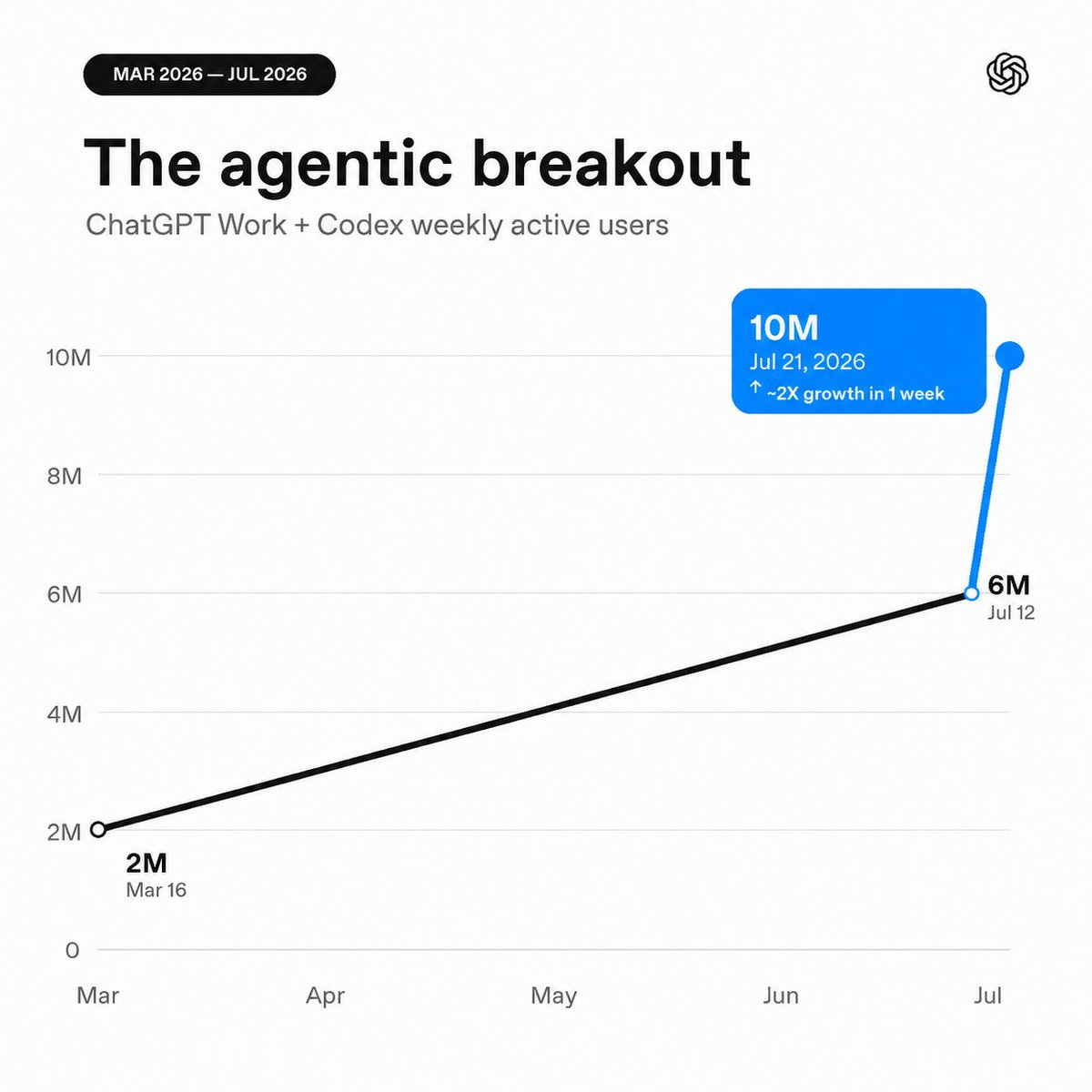 Codex from 0 to 10M Users: Building ChatGPT Work — Akshay Nathan, OpenAI 28.07.2026 1t 9minThere are roughly 100x more people who use code than who can write code. As code that “just works” becomes easier to generate, this group may be the biggest prize of all — if you can get the agentic interface right.A key trend we have been tracking over at AINews is the absolute explosion in Codex usage this year, with MAU now up >10x from Jan 2026. Less than two weeks after their July 9th launch, OpenAI said ChatGPT Work and Codex had reached 10M users combined (as we cover in the pod, Codex now powers ChatGPT Work, so all ChatGPT Work users are now users of the Codex harness, even if they aren’t traditional engineers) — showing the early innings of what happens when you graduate from coding agents to knowledge work agents:We’ve been calling out how coding agents are “breaking containment” to do everything else this year to power every other part of knowledge work - and it started with the org chart, with a major reorg last month that amounted to two of Codex’s most prominent leaders, Greg and Tibo, taking responsibility over product and ChatGPT specifically, completing a “Superapp” consolidation cycle first discussed in March.With these updates Codex is no longer just a coding tool. In June, OpenAI said knowledge workers already accounting for roughly 20% of Codex’s user base and growing more than 3x as quickly as developers. A product dedicated for knowledge workers was being pulled out of the Codex team.However, knowledge work has a different set of problems and environments than coding. For decades, knowledge work has been scattered across different primitives like documents for writing, spreadsheets for analysis, slide decks for communication, and specialized applications for everything else. ChatGPT Work now enables users to work across every primitive with agents. Instead of opening an application and manually operating its features, the user can describe an outcome and collaborates with an agent that can assemble the tools, context, and artifact needed to reach it.From building no-code products at Airtable to leading Productivity Engineering at OpenAI, Akshay Nathan has spent much of his career trying to make the power of software accessible to people who do not write code. In this episode, Akshay joins swyx and Vibhu to unpack the launch of ChatGPT Work, why Codex unexpectedly took off among non-developers inside OpenAI, and the company’s broader plan to bring useful agents from software engineers to knowledge workers and eventually everyone.We go deep on the shared agent harness behind Codex and ChatGPT Work, why OpenAI brought the experiences together without making them identical, and how persistent computers, artifacts, Sites, plugins, memory, and sub-agents are changing what people can delegate to AI. Akshay explains why some teams are replacing decks and spreadsheets with interactive websites, how agents can gather context across code, Slack, documents, and local files, and what OpenAI learned from personal-agent products like OpenClaw.Side note: also don’t miss Abhihek’s sandbox track keynote at AIE, which now powers a lot of the sandboxing for ChatGPT Work… and yes was also broken by an unreleased OpenAI model in the recent HuggingFace incident.Akshay also reflects on how AI is transforming product development itself: why more people will become generalists with a specialty, why ideas and taste become the bottlenecks when almost anyone can build, why LLMs still struggle to generate genuinely grounded new ideas, and why teams must distinguish increased motion from actual progress.We discuss:* Why Codex unexpectedly took off among non-developers inside OpenAI* Why employees felt like using Codex gave them a new superpower* The product insight that led OpenAI to build ChatGPT Work* Why Codex and ChatGPT Work share the same underlying agent harness* How their UX, Git visibility, artifacts, and sandboxing defaults differ* Why OpenAI merged its agent experiences instead of building separate products* How AI is blurring the boundaries between engineering, design, strategy, and operations* Why OpenAI wants the default model configuration to work for most users* When power users should use deeper reasoning, Ultra, or multi-agent modes* Artifacts, agentic spreadsheets, and creating high-fidelity work products* Why interactive Sites may replace decks and spreadsheets* The challenge of designing a simple interface for an agent that can build almost anything* Why users should retry tasks that models could not handle three or six months ago* How AI can gather context for performance reviews without replacing human judgment* The OpenAI automation that turns internal Slack and document activity into memes* What reaching ten million ChatGPT Work and Codex users means for the product* How OpenClaw inspired persistent environments, scheduled tasks, and personal agents* Using ChatGPT for financial planning, budgeting, workouts, meals, and household management* The design tradeoffs behind sub-agents and how much of their work users should see* ChatGPT memory, Chronicle, and long-term context* Why AI may make more people generalists with deep specialties* Why ideas and taste become more important when almost anyone can build* Why LLMs still struggle with the instruction “bring me new ideas”* Measuring productivity through quality at-bats instead of commits, tokens, or pull requests* The critical difference between AI-generated motion and meaningful progressAkshay Nathan* LinkedIn: https://www.linkedin.com/in/akshaynathan/* X: https://x.com/akshaynathan_Timestamps00:00:00 Introduction and Bringing the Power of Code to Everyone00:01:33 Joining OpenAI and Preserving a Startup Culture00:02:40 What OpenAI Learned from Enterprise AI Adoption00:05:28 Why OpenAI Built ChatGPT Work00:07:17 Codex vs. ChatGPT Work and the Shared Agent Harness00:12:07 Why OpenAI Merged Its Agent Experiences00:16:24 Models, Reasoning Levels, and Choosing the Right Default00:20:26 Artifacts, Agentic Spreadsheets, and Model–Product Collaboration00:24:22 Why Sites Could Replace Decks and Spreadsheets00:30:08 Designing an Agent That Can Build Almost Anything00:34:28 From Developer Agents to Knowledge Work—and Everyone00:36:07 Power-User Advice and AI-Assisted Performance Reviews00:40:41 OpenAI’s Internal AI Memes and the Ten-Million-User Launch00:44:39 OpenClaw, Personal Agents, and ChatGPT as an Operating System00:50:24 Sub-Agents, Ultra Mode, and How Much Control Users Need00:54:39 ChatGPT Memory, Personalization, and Chronicle01:00:19 How AI Is Reshaping Product Development and Tech Roles01:03:15 Ideas, Taste, and Why LLMs Struggle to Generate New Ideas01:04:42 Measuring Productivity, Quality At-Bats, and Motion vs. ProgressTranscriptIntroduction: Akshay Nathan, ChatGPT Work, and the No-Code ArcSwyx [00:00:00]: We’re here in the studio with Akshay from OpenAI. Welcome.Akshay Nathan [00:00:07]: Thank you.Swyx [00:00:08]: And with our trusty co-host, Vibhu. So you recently launched ChatGPT Work. You lead Core Product Engineering. It’s been a long journey, into all this. I find it very interesting that you started with no code or low code, with Walrus and Airtable. And to some extent, ChatGPT Work is like the super app of super apps of, well, here is the ultimate no code. You just write a prompt.Akshay Nathan [00:00:32]: Yeah. It’s funny how things come, full circle. I think for a long time in my career, I started my career working consumer fintech, but then after that, like, there’s this hypothesis that, the things that we were able to do with code, like, as engineers, like, if we could bring that to many more people in a more, accessible way, then that would be truly magical. We were working on a startup. It’s funny, like, before LLMs, before vision LLMs, on how to do automated testing with AI. It was just kinda jank, back then, but doing what we can, and then worked at Airtable for a while on the same thesis that, like, if we can bring a database or the primitives behind a database to people, that’d be really useful to them. But once LLMs came onto the scene, it became clear that, this was the missing piece, like, the missing technology required to, like, bring the magic of code to everyone without them having to know what’s going on underneath the hood. And so, like, I think this launch and a lot of the stuff that we’ve been up to is, like, the manifestation of that.From Walrus and Airtable to OpenAIVibhu [00:01:33]: How was stuff when you joined? So you joined OpenAI 2023. Now we’ve got, so much more stuff, so ChatGPT, Codex app, ChatGPT Work. Have things changed?Joining OpenAI and What Hasn’t ChangedAkshay Nathan [00:01:44]: I think the more interesting thing is how things haven’t changed. Like, one, I joined I remember when I joined, it was, like, five hundred people. One thing I was worried about was, like, I was looking for something, more early stage and, like, was it gonna feel startup enough? And I joined, and I was like, “This feels even more startup-y than I could ever imagine.” And, like, that really hasn’t changed even till now. I think the, like, level of, like, bottoms-up ambition and, like, the ability of anyone to, like, do anything or have an idea and ship it is really cool. But on the, like, mission side, I think what was really compelling to me is this mission of, bringing frontier intelligence to everyone. Like, building AGI and then bringing it to everyone. And, I think acknowledging back then that, like, that vision is gonna, not be a linear progression. Like, we’re probably gonna, like, try different products and have different things that succeed and don’t. But the vision has stayed the same, and the mission has stayed the same, and we’re starting to see the pieces, fall together, and that’s really cool.Enterprise Lessons: No One-Size-Fits-All AISwyx [00:02:40]: You worked on Enterprise. What A lot of people never touch ChatGPT Enterprise. What is something that you learned from there that you’re bringing into your work now?Akshay Nathan [00:02:52]: I think how there’s no one-size-fits-all solution in Enterprise. I remember in the early days of ChatGPT Enterprise, like, when we talked to customers and, like, everyone. That was, like, when I think it was a year after ChatGPT was released, and everyone was so excited to bring, AI into their enterprise. And, there were all these teams being stood up. It was, like, the AI deployment team with, like, these enormous budgets. And if you asked anyone, like, what were they excited about? Like, what were they excited about solving? Like, at first, you’d get, like, kinda like the baseline answers of, like, “Yeah, we have all this context and data and all this stuff.” But then if you ask them, like, “What was, like, a discrete use case that, like, they want AI to enable in their workplace?” You get such a different, like, variance, like, explosion of, different types of answers. And it’s interesting, like, you using, like, these models and these products, you have this box, and you can say anything to it, which is the magic. But it’on the flip side, it also means that, like, you don’t know what to do with it. And in Enterprise, I think a big part of that is, like, meeting the users where they are, like, what use case were they trying to solve, and then teaching them how they can use AI to, like, gain leverage there.Swyx [00:03:56]: Do you meaningfully differentiate that from forward-deployed engineering?Akshay Nathan [00:04:01]: I think there is the go-to-market side of it and then there is the product side of it. I think you need someone on the product side. And I think, like, however good we get at FDE motion, like, I think at the end of the day, if we have a user who’s, like, looking at their computer or looking at their phone, like, it’s our job in the product to, like, be enabling them and showing them where to go. So we’re really excited about that.Vibhu [00:04:24]: Do you think there’s been changes, over the past three years of adoption? So there have been, step function changes. You have reasoning models and whatnot. Is there still the same problems of Enterprise has black box, don’t know what to do with it, or have things changed?Adoption, Agents, and the Next 10x MarketAkshay Nathan [00:04:39]: We’re seeing now that, like, there’s this huge uptake, right? Everyone is extremely excited about it. It feels like, many people are, millions, hundreds of millions of people are using ChatGPT. They understand, like, how generally to work with AI. But then, like, every time, like, a new capability gets unlocked, so now, like, we’re seeing with agents, like, there is probably a contingent of, like, early adopters still who, truly get it, who are like, “ we you can do anything. You just have to make sure the right context is there, it’s connected to the right tools, and that you are supervising it, but, like, anything is possible.” But then there’s, like, this, like, 10x or 100x bigger market where, like, they don’t yet get that, or they don’t yet see that. And so I think that’s the next stage here. So to answer your question, like, I think the adoption is there and growing fast, but I think the opportunity is, like, far bigger than that. That’s where we wanna play, especially with ChatGPT Work.ChatGPT Work, Codex, and the Super App MergeSwyx [00:05:27]: Yeah. well, let’s, let’s skip ahead to ChatGPT Work. only, like, a month ago or so, announced. what was the decision process that led into it? there was this, overall merging of the super app. Is that what we’re officially calling it? you deprecated the browser as well. Just, summarize your last, like, couple months of working on this thing.Akshay Nathan [00:05:50]: Yeah. It feels like forever now, but it’s only been a few months. I think maybe the one, impetus that, like- Is most salient is when we release Codex, or even internally had Codex, like, it was really surprising to us, I think we recently put out some stats on this, that there was this, like, real inflection of, like, adoption among non-developers at OpenAI. And, I, through this product development process, like, would go to, like, these UXR sessions to talk to people internally. And the thing that stuck out to me is, like, one, like, you go talk to, like, strategic finance or marketing or whatever, and they’re all using Codex for, their use cases. That part’s cool, but the thing that really stuck out to me is how proud people were that they were using Codex. Like, how, likeSwyx [00:06:34]: It’s like, “I’m not supposed to be using it, but I am.”Akshay Nathan [00:06:36]: It was that. It was, like, that they were, early to this, like, new thing, but it was also this thing of, like, they felt like they had a superpower, right? And, what we recognized then is that, like, the power of Codex, the power of agents, like, we already had this massive distribution base of people who have, come to know and love ChatGPT. Like, how do we show that to them? Like, how do we bring it to them? Which is, like, a hard product problem, and it’s, like, a tricky thing, right? There’s many ways you can go about it. And so that’s what we called the Merge and the Super App over time, and ultimately launched it in ChatGPT Work, is how do we do that? But it came from that initial realization that, like, the power was not only for developers, like, much earlier than probably even we thought. Like, it could be extended to everyone.Swyx [00:07:17]: How do you see the products differently? So, like, who is it for, right? So Codex started out even CLI, then app. Now there’s a merge of ChatGPT Codex and ChatGPT Work, so is it the opening for the average user, for enterprise, for work? How do you position it?Akshay Nathan [00:07:36]: I think we want to get it to position it for if you’re doing work-related things, for lack of a better word, right?Who ChatGPT Work Is ForAkshay Nathan [00:07:42]: I think productivity is what, like, the pillar that I support. Like, that’s the name of the team. And the reason for that, the reason we call it productivity and not, like, enterprise or, like, work or something like that, is because there’s also personal productivity, right? And, like, I think ChatGPT Work is I’ve seen people do things in their personal lives that you wouldn’t classify as, like, work technically, but, like, these agents are, super capable for. Like, one recent example that someone posted about, on our Slack is, like, someone had, like, a missed package, like they didn’t receive it, and then they got, like, the picture of it, from Amazon or whoever the courier was, and they, like, asked ChatGPT Work to, like, find out where that package is. And, like, the agent, is extremely tenacious and, like, took the image and, like, looked at a bunch of, like, listings around their neighborhood and figured out exactly the apartment complex in which the package was, like, gave them some information. And so, like, I think there’s all these things that, like, you, work-related or productivity-related things, I think that’s what we want the product to be. You asked about Codex. I think we think Codex is, a durable brand, but we have a principle that, like, the user we don’t want a user to get stuck in a tab or an experience where they don’t get the power of the product. And so, like, everything that you can do, in the Codex portion of the product on desktop, you can do in ChatGPT Work and vice versa. But we made some opinionated product decisions on, like, how much of the Git state, if you’re in a Git repo, do we wanna expose to the end user? Or how much do we wanna make the experience of seeing the agents thinking, like, diff forward so that you get exposed to the diffs out of the box. And then, like, on the safety side, like, how do we wanna think about, like, sandboxing and making sure that we have the right defaults in one state versus the other? So, there’s, like, some opinions that go behind that, but we do want We don’t want the user to need to choose which experience they’re in.Swyx [00:09:26]: That is a good goal for AGI, right? Like, people don’t want, like, to hide to choose what version of AGI they want. They just want the AGI to decide for them. can I get an answer or, like It’s not super clear to me. Is the Codex harness and the ChatGPT Work harness the same? Is it just UI affordances, or are there prompt level or even deeper differences?Shared Harness, Different UX: Codex vs. WorkAkshay Nathan [00:09:49]: So the harness is the same. The harness is shared. on In both of the products, we made improvements to the harness to make it good for knowledge work, especially as it relates to plug-ins or computer use or artifacts. You get that power regardless of which experience you’re in. On the UX side, there’s opinionated takes that we have when you’re in Codex mode, what the UX should be how the UX should behave, and some stuff around the sandbox like I mentioned, but the underlying harness and capabilities should be the same.Swyx [00:10:16]: I’m just kinda curious. Maybe we can, -- Is there a query that we can run that would look different in the two modes?Akshay Nathan [00:10:23]: Yeah. I tried to create, like ask it to create, like, a retirement calculator spreadsheet or something, in both modes. And then in Codex mode, you might have to be in a repo for this, but you’ll see, like, the diffs of, like, the sheet that it’s creating and stuff like that, and the file edits. But in Work you won’t be able to see that.Swyx [00:10:42]: I think that’s, that’s super clear. And then also the other thing I wanted to dive into was your, the productivity team. what else is there? first of all, what are the top-level teams other than productivity? Isn’t productivity everything?Productivity Teams and Core ChatAkshay Nathan [00:10:55]: SoSwyx [00:10:55]: Science?Akshay Nathan [00:10:55]: We have a team focused on ChatGPT. Like, the core chat experience, for consumer, which is like, not, I think all productivity. Like, there’People are using ChatGPT every day for search to, figure out how to write messages to loved ones, to think about, how to, like, learn a new topic, et cetera. And so there’s so much more inside to create images. And there’s so much more in chat that, the hundreds of millions of users are using that warrants, like, a very dedicated effort. And there’s teams focused on enterprise and infrastructure and API and stuff like that, so.Swyx [00:11:33]: I will bring it up.Retirement Calculator Demo and Git-First UXSwyx [00:11:34]: Yeah. So I have them both running. This is ChatGPT Work. There’s a Codex version here. I picked “Five Little Ducks” song, so this will take a while.Akshay Nathan [00:11:43]: Huh.Swyx [00:11:43]: I think we’ll just keep it in the background and, as they finish, we’ll look into some of the differences.Akshay Nathan [00:11:48]: Yeah. But immediately, I think if you flip back to the Codex version you’ll see that,Swyx [00:11:53]: That it assumesAkshay Nathan [00:11:54]: Like theSwyx [00:11:54]: It assumes Git. Yeah. Yeah.Akshay Nathan [00:11:56]: The, like, dynamic island assumes that you’re in a Git repo. And you might miss some stuff because some of it is, like, in the actual chain of thought with those changes and how we display that, but yeah.Swyx [00:12:07]: Is there an unintuitive like, is there a thing that you wanted to ship and then you got feedback, and you were like, “No, let’s not do it?” Like, what’s the thinking behind that?Why Merge the ExperiencesAkshay Nathan [00:12:14]: In, ChatGPT Work?Akshay Nathan [00:12:17]: I think one direction we could have gone with this is, like, keeping the experiences, like, completely separate. So it’s like, whySwyx [00:12:22]: Different apps.Akshay Nathan [00:12:23]: Exactly, like different apps or even in the same app, like different, completely different experiences. Like, why merge it all? Like, what is. Codex, people love. Like, why bring these products together? And I think the intuition here is that, like, all of our jobs are, like, changing dramatically with AI. Like, for, like, every few months, like, I feel like I wake up, and I’m, like, doing a completely different thing than I was doing a few months ago. And my hypothesis here is that, or I should say our hypothesis is that, like, part of what we’re, we’re building, this technology is giving people leverage. Like, the things, maybe it’s the more mundane parts of your job or parts that, like, if you were able to automate, you’d be able to share more ideas faster or whatever, like, you’re able to do now. And because of that, like, that might blur the lines between someone who’s, like, only writing code or creating strategy docs or, planning events or, helping with marketing or doing podcasts or whatever, right? And so, like, these things are gonna get blurred over time. And so, like, trying to draw a hard boundary based on, like, the who you are is gonna be, is gonna be tough. And, like, we should enable users to choose, but we shouldn’t box them in. And so a lot of the work that went in here, like, keeping the primitives the same, like for example, plugins are, like, unified across, this product and ChatGPT and the cloud, was because of that. It’s this thesis that, like, eventually things are gonna come together and we don’t wanna be Like, we wanna be prescriptive about when to be in either experience, but we don’t want to box anyone in.Swyx [00:13:45]: I wonder if there’s users who are very tuned to the old ChatGPT harness that is effectively now replaced by the Codex harness. I can’t imagine what that was, but maybe they’re more the more conversational side. Can you compare and contrast the two harnesses? ‘Cause only you’ve seen it.Akshay Nathan [00:14:02]: Yeah. I think ChatGPT, the existing harness, like, still exists today. Like, it exists in this app,Harness Engineering: ChatGPT vs. CodexSwyx [00:14:08]: The classic, right?Akshay Nathan [00:14:09]: TheVibhu [00:14:09]: You just start a new chat, and you don’t go under Work, right?Akshay Nathan [00:14:13]: Yeah. If you startVibhu [00:14:13]: SoAkshay Nathan [00:14:14]: A new chat and go to chat, then you’re, you’re talking to ChatGPT with the instant model.Vibhu [00:14:16]: Oh, we can technically do another. But on instant.Swyx [00:14:21]: Yeah. So this one’s not gonna code or it’s gonna be in line. It’s on a in line in a sandbox.Akshay Nathan [00:14:26]: It’llVibhu [00:14:27]: Oh, that’s coolAkshay Nathan [00:14:27]: We try to push you to go to Work if you’re creating a spreadsheet. Yeah, but this isSwyx [00:14:30]: And this is a router decision? Sorry. Is it a router decision?Akshay Nathan [00:14:34]: This is the decision that, the model is making, and then, like it sees that you’re able to. or you’re trying to do something that would be better served in Work mode. But I think your question was like, what are the advantages of, like, the chat, like ChatGPT chat harness?Swyx [00:14:48]: It’s more broadly, like, I wanna, do an oral history of harness engineering. Right? the ChatGPT harness lasted us from, let’s call it the ‘01 era, until now, and now it’s being replaced by the Codex harness effectively. And they’re, they’re overlapping somewhat, but I’m curious what changed if there is.Akshay Nathan [00:15:10]: My perspective on this is, like, there’s, there’s, there’s there’s like a constant process of, like, divergence, convergence, divergence, convergence. And in chat, like, many of the use cases I was talking about before, like, search or learning, I think we’re, we’re really optimizing for latency and optimizing for personality and, like, different things that, over time, like the product The reason people love ChatGPT is because we’ve been optimizing for those things and working on them for so long. Codex, what we learned was that, like, if you give the agent access to this infinitely flexible environment as a computer, it can do really powerful things. And so when we think about, like, okay, well, for knowledge work, like, what is which mode should we choose? It was like it felt more natural to us to bring that to this, like, computer environment and, maybe abstract some of the details of this computer away from users who might not be used to that, but, like, give them that same power. But ultimately, I think that we want the power in all places, right? We wanna meet people where they are. So I’m sure there’ll be work down the road in order to get things to be, equivalently capable in all scenarios. But it’s just a question of, like, what we’ve been focusing on the product on historically and what we’re focusing on now.Models, Defaults, and the Reasoning SliderVibhu [00:16:24]: I think alongside that, outside of just harness and when to use Codex, ChatGPT, or Work, there’s also the new models you’ve released, right? any guidance there? So people love to min-max what to use, like only use Terra on high reasoning versus, for this, you wanna use Sol here, ignore all theseAkshay Nathan [00:16:44]: There’s 32 options.Vibhu [00:16:46]: But, that being said, for people that are expanding, so, productivity trying stuff for work that don’t have the breakdown of what all this is what’s, what’s the advice, right?Akshay Nathan [00:16:59]: Well, I think before the advice, like the first thing is, like, none of this would be possible without these models. Like, the, I think you asked earlier, like, what was, like, the inspiration for work and, like, early on, like I mentioned, like, what we were seeing with Codex, but that was also because the models were getting infinitely more capable. That’s happening again. I think it’s like another step function jump now. And to answer the question on advice, like we want this default to be the best possible. Like, we wanna be opinionated about the default, and so we’ve we’ve chosen a default that we think is gonna be the best for everyone. And, we have for power users options under the hood. We could One could argue that there might be too many right now, and we’re, working on simplifying it. But you can extend, the reasoning level, and you can change between the different model classes if you need to, but the default should be the best for most use cases. So my advice to most people would be to stick to that. And then, if you reach a situation in which you think that you could, you wanna try, a different configuration, if you’re not seeing either the efficiency on the cost side or the quality on the intelligence side, then you can change the defaults and see if you can get something better. But we think that the default should be good enough.Swyx [00:18:09]: I have, I’m just gonna run something by you since you have way more experience than me. I’ve recently been doing Sol Lite but with goal, with the idea that the goal augments the reasoning effort, but with more terminations and turns.Swyx [00:18:24]: Is that a good way to think about it as opposed to Sol Ultra or Sol, Extra High?Akshay Nathan [00:18:29]: Yeah. It’s hard to say becauseSwyx [00:18:31]: Yeah. It’s like an interaction effect.Akshay Nathan [00:18:33]: exactly. It’s like there’s a preference on, for you as an individual, like how do you like to collaborate with the models? Like how many of those like terminations, as you call them, do you want where, you can steer or make sure that it’s doing the right thing?Akshay Nathan [00:18:46]: I think generally people should try whatever works for them. I think that like using Ultra or the like multi-agent setups are best for like when you have like tasks that are either incredibly complicated, like open explorations or very paralyzable. I think even for tasks using goal, I think is best for tasks that you’ll be able to make consistent progress in a way that’s verifiable over time. But I think for most tasks, they don’t fall into either of those buckets. And so like at least when they’re starting, and so that’s why I think the best first step is like trying it with the default configuration and then seeing like where you wanna go from there.Swyx [00:19:29]: Right. You guys worked on a slider, which is super helpful for reducing the amount of panic.Vibhu [00:19:36]: It’s nice on mobile at least. There’s a nice slider there.Swyx [00:19:38]: It’s nicer.Vibhu [00:19:39]: I haven’t tried it.Swyx [00:19:40]: So you have the advanced view there, but if you click advanced view. Yeah.Vibhu [00:19:44]: Ooh, it’s just a nice slider. Yeah.Swyx [00:19:46]: Very pretty, very colorful.Akshay Nathan [00:19:48]: Yeah. The idea was here was like reduce it to like one dimension even though there’s multiple dimensions, right? Try to project it onto a single dimension for the user. Like, something from that represents like, speed and efficiency on one side and then like quality and thoroughness on the other side.Artifacts, Spreadsheets, and the Work LaunchSwyx [00:20:04]: I am just puzzled that it uses Sol so much, like the lowerVibhu [00:20:07]: NoSwyx [00:20:07]: Grounds I would’ve usedVibhu [00:20:08]: I think the slider, if I’m not mistaken, isSwyx [00:20:09]: Terra.Vibhu [00:20:10]: Oh, it is.Swyx [00:20:11]: Yeah. See? So they preset Terra to only be the light one. But like I think a lot of people would more people should use Terra. One, because Sol keeps running out of capacity.Vibhu [00:20:22]: I’m the reason. Here’s ten minutes of ourSwyx [00:20:24]: There you goVibhu [00:20:25]: Retirement calculator.Swyx [00:20:26]: Oh, that’s the Excel thing working for you.Vibhu [00:20:28]: This is,Swyx [00:20:28]: Oh my God. Look at thatVibhu [00:20:28]: This is work, and then Codex is still cooking, so we’ll get back into it. I think it’ll be interesting to see the thought process, the reasoning, and also, this is eight minutes on work. Codex is still cooking.Swyx [00:20:41]: Yeah. And by the way, so I’ve, do Gabriel Chua? He’s part of the OpenAI Singapore team. He showed me this, and I was like pretty shocked that this looks like Excel. It edits Excel files. You never paid an Excel license, right? Like, but somehow this is like workable and it’s agentic Excel.Akshay Nathan [00:21:01]: Yeah. one of the big like pushes that we made for this launch was like artifacts, right?Akshay Nathan [00:21:05]: Like both on the model side, like I think if you compare this with GPT-5.5 and GPT-5.4 before that, you’ll see that there’s been pretty dramatic improvements in the quality of these artifacts and then also on the product side.Vibhu [00:21:16]: The UX side is also crazy, like hosted sites and whatnot. No longer needing to host your own little webpage, like itSwyx [00:21:23]: Oh, I have a story about that. I can do, a separate thing. I’ll need to take the visuals here, but we-we’ll, we’ll cut to that later. Was there co-training, because you were moving making this big move and you launched GPT-5.6 on the same day as ChatGPT Work? Was there influence between the model training teams and the harness teams, or did they did the launch dates just happen to line up the same day?Akshay Nathan [00:21:46]: I think the we collaborate heavily with the research teams, and I think that’s like one of the most magical parts of the job, like the most fun parts of the job. But yeah, just using artifacts as an example. Like, a lot of what you’re seeing, like underneath the hood, there’s a lot of work that went into making sure that like, we had the right infra to be able to train the models to get better at this. And then on the product side, like had the right experience for users to be able to collaborate with the model on an artifact like this. In fact, like this whole viewer, like the intuition here is that like, it’s not necessarily that you wouldn’t need an Excel license. This is stage one, right? Like, this is probably not what you meant when you’re like making a retirement calculator.Vibhu [00:22:24]: Yeah, you can iterate very easily. Yeah.Akshay Nathan [00:22:24]: You wanna iterate and like when you’re seeing it, and if this thing is high fidelity to like what you would see in or what your coworkers would see if you were to send this to Sean, like that I think makes it so easier and makes you trust the product in terms of iteration.Vibhu [00:22:39]: When you say coworkers would see, do you see a multiplayer, multi-team collaboration with artifacts? Any things you guys think about that?Multiplayer Artifacts and CollaborationSwyx [00:22:46]: You can already share it, right?Akshay Nathan [00:22:48]: Yeah. It’s inter It’s something that, we’re actively thinking about. one thing that, we’ve noticed internally without talking too much about the roadmap is that like there’s many times when someone will ping me about something, and I will ask ChatGPT Work the question, and then I’ll ping them back the answer.Akshay Nathan [00:23:04]: And then I’ll be thinking likeVibhu [00:23:04]: Like the simplest would be, the three of us are just all on one hosted.Akshay Nathan [00:23:07]: Exactly. And I’ll think about like was I required in this loop or and then maybe it was, rephrase like what they were asking or pulled from certain context or whatever. But like, when I gave them back the answer, that process was also lossy, right? Like I gave them just like my interpretation of what ChatGPT Work cooked up. But like underneath the hood, there’s so much context like in the rollout and stuff that could be interesting.Vibhu [00:23:28]: Yeah, it’sSwyx [00:23:28]: So like the answer was preemptively respond to every inbound request?Akshay Nathan [00:23:33]: No, it was just like literally like this is what I do sometimes as my job.Swyx [00:23:36]: I know you copy-paste and then you’re just a message forwarding serviceAkshay Nathan [00:23:39]: Yeah. Yeah, exactlySwyx [00:23:39]: From AI to AI.Vibhu [00:23:40]: But I think it’s interesting, right? It helps people understand the capability of what you can ask and delegate that oftentimes people don’t realize until they try or someone shows you, and then you’re like, “Oh, okay. Okay, I see.”Swyx [00:23:52]: I think it’s als there’s also like a, light security issue, where like you’re the permissions layer. Like yes, I could query everything that you query, and I could get an automated response, but maybe I’m not supposed to see it. And that there’s no way I would know because I’m not supposed to know what I don’t know.Akshay Nathan [00:24:07]: Especially as like, with ChatGPT Work, we’re, we’re asking you to connect your plug-ins and, it’s pulling from your local files and stuff like that. Like the amount of context that the agent has access to is like- Deeply personal and like that’s something I think we need to preserve, so that’ll be definitely a challenge.Swyx [00:24:22]: There’s Excel, there’s PowerPoint, there’s Docs, the, grand trio of work. What other formats of work do you think about? like you worked on Airtable. Is there a future where there’s like OpenAI Airtable? Like what does that look like if you ever ended up doing it?Akshay Nathan [00:24:41]: It’s a really good question. I think,Formats of Work: Sites as Knowledge ArtifactsAkshay Nathan [00:24:43]: one that you didn’t bring up was Sites, and I think that wasSwyx [00:24:46]: SitesAkshay Nathan [00:24:46]: A core part of this launch. There’s one side of Sites that I think people commonly talk about, especially on Twitter and stuff or X, of like, this like prototyping tool. And like we saw that happen with this launch even. The model slider that you guys were referencing earlier, like that was developed almost fully in a Site. Like, the collaboration between design and engineering and product on that was like on a site where we play with, the affordance and figure out how it feels and all of that. But the other aspect that I think is a little bit less talked about is like Sites as like an artifact for knowledge work. I was talking to someone the other day who’s on like our corporate finance team, and like we were mentioning how like now when they have these reports that they’re, they’re working on as a team month to month, historically those things were in slide decks and in spreadsheets, and now they’re just in Sites. And like Sites is the mechanism that they collaborate across the team. And the reason is ‘cause it’s like, it’s like somewhat higher bandwidth. Like, at these tools like PowerPoint and Excel are like infinitely flexible, but at some point you reach the boundary of like either as a human you may not know how to use some feature or something, or the product itself doesn’t support it. But with a site you can do anything. You ask for anything and you can get that. once people see that magic, I think it’s been really valuable.Swyx [00:26:02]: Yeah, let me show you my case study. this involves all the hot topics including ChatGPT Work, but also GPT-5.6 token billionaires and token maxing and Sites and auto research. I’m a fan of this game called Strata. It’s, it’s like a little board game that youSites, Auto Research, and Research DashboardsSwyx [00:26:17]: That you play with, physical blocks, that come on top of it like that. So over the weekend I took like thirty photos and just threw into ChatGPT. one point seven billion tokens later, out comes this site with a fully playable thingAkshay Nathan [00:26:32]: WowSwyx [00:26:32]: With 3D, block placement and everything. Because it requires physical blocks and I needed friends to train on it so they can get better, so I can play against them. But also, I could also, do things like train an AI on it and that’s, thatAkshay Nathan [00:26:45]: That’s your auto researchSwyx [00:26:46]: That gets into auto research. So, you want to train your own AIs, and then make sure they self-play against, each other. I need to set both AIs. So this is AI versus AI, and they’re, they’re gonna self-play. the AIs start out bad and then you want to define a loss function and get good. I wasn’t gonna supervise all this. I was at, I was down in San Mateo, attending a conference. What I ended up doing was, auto researching and on this and creating benchmarks and that there was just way too many parameters for me to read. So I started asking it for a site, and it’s created this lab, panel. Where is there a, is there a shortcut for a site that is created?Akshay Nathan [00:27:28]: You should be able to go in the sidebar to Sites, top of the sidebar. The left sidebar.Swyx [00:27:33]: This one? Oh, left?Akshay Nathan [00:27:35]: Yeah. Just scroll all the way to the top.Swyx [00:27:36]: Oh. Oh, it says Sites. Oh, there you go. Yeah.Akshay Nathan [00:27:39]: Ooh.Swyx [00:27:40]: So it create, it creates the sites. I don’t, I don’t think this is, it is exactly what I wanted, but let me show you what it popped up, right? Like I think as a research artifact, it is very important to communicate, exactly, what is being done. Outputs this thing which I eventually started publishing. So I moved it off of Sites because I wanted more, database and infrastructure than Sites afforded me. But this is like a research output that you can start to mess with and like try to think about like what hyperparameters are you tuning for training AIs. And like I was trying to make like scaling laws and everything and doing all sorts of like game optimization stuff. And the fact that you can just throw this up as a research artifact, like I no longer need to read ChatGPT output. I read Site output. But then there’s also a huge sprawl. Like look at how long this thing is. There’s so many numbers. It is pretty overwhelming, so then I have to start pruning it from there. But, it’s an interesting transition from Markdown effectively that you’re putting out to, you’re putting out a whole functional site.Akshay Nathan [00:28:41]: I think Markdown just isn’t that optimal for people to read, right? Might as well just write HTML website and I don’t know. I think you can do a lot with customizing this, right? You have your skills that explain what you want. Like I noticed they’re quite verbose. I don’t need a lot of this information.Swyx [00:28:57]: It’s very verbose.Akshay Nathan [00:28:58]: So and then the nice thing of having a site side by side is, you just iterate on what you want and what you don’t, right?Swyx [00:29:05]: Yeah. I don’t know if, any that triggers any stories for you of how it’s run internally. Am I doing this right?Akshay Nathan [00:29:11]: Yeah. I think that this is like a workflow that we’re seeing like all different types of teams use, where like the canonical artifact that was previously a deck or something is now becoming a site. And like with a site you, because it’s just HTML, you can like. It’s infinitely flexible. And so, if you want to give more prominence to a certain thing that like in a slide deck would, feel like it was buried, like you can do that. You can have it be like the hero image, right? And so I think that like, people are starting to see that. There’s more work to be done to make these things like much more easier, easy to collaborate on. You mentioned that they’re very, they’re long and verbose, could be broken up. I’m sure that there’s still something to do there.Swyx [00:29:53]: They’re super long. Yeah.Akshay Nathan [00:29:54]: Yeah. But I think we’re starting to see that like there is this aspect of this is a really interesting, format, for people to use, that’s like much more flexible than what they ever had before.Swyx [00:30:07]: I think your job also comes becomes meta. You’re not designing the products. You’re designing a product to make products, and I’m curious how you manage that.Designing a Product That Makes ProductsAkshay Nathan [00:30:18]: I think one thing that we’ve been Like when we look at the UX, like that we’ve been thinking a lot about is how can we balance like simplicity with capability? Like if we’re designing a product, like you said, that like is made to make up build other things, right? You can build so many different things. But we can’t put that all in front of you because you’ll get overwhelmed.Vibhu [00:30:41]: Yes.Akshay Nathan [00:30:41]: And so we had similar problem or similar challenges even Chat-with ChatGPT, but especially now, like when there’s so much that can be done, I think the balance that we’re constantly trying to strike is like, how can we give the user enough of a UI surface where, they can be expressive, they can tell the agent what they need, they can verify that it’s using the right tools, it’s pulling from the right sources, et cetera, but then it gets out of the way. And then how can we build the right system such that we can show them instead of telling them what can be done? Because so much of this is gonna be like, how do they discover the next use case and the next one after that if they really want to be super powered by the AI.Games, Private Evals, and Show-Don’TellVibhu [00:31:19]: Yeah. It’s interesting. I feel like everyone also just has a different way to do it, right? I made a similar version of this same game. I didn’t take any pictures of board or rule game. I threw in at goal eighteen minutes, fifty-three seconds later, a lot of tokens later, I’ve got a similar version. not with all the auto research and whatnot, butAkshay Nathan [00:31:39]: You gotta do all the latest trends.Vibhu [00:31:40]: And yeah, I did it with, did it with Codex, not Work, but it’s interesting, right?Akshay Nathan [00:31:45]: Yeah. And this is GPT Image generating the pro avatars. Very good for game design. LikeVibhu [00:31:51]: AndAkshay Nathan [00:31:52]: A lot of game designers were like really into GPT Image for assets.Vibhu [00:31:54]: I will say like the broader takeaway probably is the reason that we do this is more so just to test the tools, right? Like, this was also a test for GPT-5.6 came out. I had done the game on GPT-5.5, right? The ability for me to no longer need it to. I had to feed it the rules. It’s, it’s a pretty niche game. It couldn’t find how to do this on its own.Akshay Nathan [00:32:15]: Oh, yeah.Vibhu [00:32:15]: GPT-5.6Akshay Nathan [00:32:16]: It is out-of-distribution, which is why I was also very keen on testing the GPT-5.6 capability.Vibhu [00:32:21]: But, this is just as work comes out, as new things come out, these are just our side ways to test things, right?Akshay Nathan [00:32:27]: Yeah. It’s some private eval. That is not this private.Vibhu [00:32:31]: But also valuable because now you can send this to your friends and I learned about this game through seeing this.Akshay Nathan [00:32:36]: It’s a hard game. He’s very good.Vibhu [00:32:39]: It’s good to when no one is competing with you. But yes, it’s a classic RL problem of like self-play, bootstrapping your game AI. yeah, you see how easily work becomes personal and personal becomes work because the thing I do for personal, it directly informs people I work with because I showed it to them. They were like, “Oh, you can do that with GPT?” Which like I imagine is the growth strategy.Akshay Nathan [00:33:02]: Yeah. The show not tell is a big piece that, I think we’ve we’re not still not fully cracked of like, showing people all the things that they can do with the product versus like trying to teach that to them through like, articles or onboarding or whatever.Akshay Nathan [00:33:18]: So meeting them in the moment.Vibhu [00:33:19]: It’s a career risk for me, because I used to be in developer relations, right? Where your job is to show, and then you’re like, “What do you mean? You don’t, you don’t need.” your job is to tell. And then. But the product people are like, “Well, we don’t need you if our product is intuitive enough.” SoAkshay Nathan [00:33:37]: Yeah. that’s the magic of the models. So you can tailor the telling or the showing to like specifically what the user needs, like what they care about, what they’ve done in the past, exactly where they are on the adoption journey. So I think that’s like gonna be a super big opportunity.Vibhu [00:33:50]: Seems easier and easier now to tailor custom showing, right? People have different use cases. As much as you said you don’t wanna segment different people into different buckets, right? It’s also not that hard to for people that are in different categories. But the question, is you said your team is more broadly on. What was the term you used? Productivity?From Developers to Knowledge Work to EveryoneAkshay Nathan [00:34:12]: Productivity.Vibhu [00:34:12]: Productivity. So howAkshay Nathan [00:34:12]: Which is now work.Vibhu [00:34:14]: Is it work? Is there another distribution that we’re not hitting? Is there a group of people that will have something different than ChatGPT, Codex or Work? Is there more that the mass isn’t targeting?Akshay Nathan [00:34:28]: I see it as like a sequencing, like. The vision is like bring useful agents to everyone. We started with like developers. Like developers historically are like early adopters that are willing to put up with more friction, set things up, et cetera. Like that’s where, Codex started. I think the next opportunity is like what we call general knowledge work, all the other functions around developers. I think when you go from developers to this segment, like there’s inherent challenges with like, this show not tell thing that we’re talking about, making the product more understandable, bringing in new capabilities that matter more for this cohort than matter for developers, things like artifacts, things like computer use, et cetera. And then I think like the same learnings, like similarly how we took the learnings from developers and brought it to, general knowledge work, the next stage will be like taking the learnings from general knowledge work and bringing it to everyone no matter what they’re doing in their lives. And we’re already seeing that a little bit. Like this game example that you have is, something that’s like on the border of like fun and personal life to, your professional life. I use ChatGPT Work full-time at home for everything, like for whatever I’m doing. I used it the other day to come up with a meal plan and like, save that on the like computer environment that it has and something that I can continue going back to. Like is everyone doing that yet? Probably not because the thing says work on it, but eventually, we wanna get people there.Vibhu [00:35:51]: ChatGPT life.Akshay Nathan [00:35:52]: Yeah, exactly. ChatGPT cooking. But I think there’s a lot of, there’s a lot of opportunity there, but I see it as like, we’re, we’re built we built a foundation in software engineering, and we’re gonna take the same learnings that we take from software engineering to knowledge work to everyone.Vibhu [00:36:07]: Do you have any power user advice? I feel like, there’s a group of people that will live it, use it for everything, stay on it twenty four-seven. And then there’s a bit of a gap between that crew and people that, okay, I use it for work. I use it occasionally. Sometimes I type questions. any advice, any learnings, anything you recommend or just, takeaways that you’ve found that help bridge that gap?Power User Advice: Push the Frontier of ImaginationAkshay Nathan [00:36:30]: I think a couple things that I’ve seen is like, one, that it really helps to broaden your imagination of what’s possible, and this has been a learning even for me. Like, the technology has progressed so fast that, something that, like, even three months ago, like, no way the models can do this. Like, now it’s like, wow, it’s like it can. Like,Swyx [00:36:52]: Give an exampleAkshay Nathan [00:36:52]: We’re going through right now our, like, review cycle internally, and, people always talked about this as, like, a thing that the models are good at and like, there’s a cliché of like: Okay, like, no one wants to be writing reviews and, like, we just use AI to do it. But in all seriousnessSwyx [00:37:09]: And it can evaluate it as well.Akshay Nathan [00:37:10]: Yeah, exactly. In all seriousness, before it was, like, just, like, slop and, like, I think it was helpful, but, not super productive. Now I’ve found that, like, the model can do a much better job than me, especially in this environment of, like, pulling context on, like, what people are up to, how they’ve like the things that they’ve done to make a difference, highlighting like, wins that they’ve had that, like, I might may not even have seen. It has access to, like, everything, right? Like the code, like, things that they’ve caught, reviews, Slack, everything. And so it’s, like, incredibly powerful in that domain and, like, just like six months ago, the last time we did this cycle, like, I didn’t even I tried using it, but it was not at all helpful. And this time it’s been, like, incredibly helpful and, like, so I think continuing to push the frontier of imagination of what’s possible, even if you tried something before, I think is maybe the my biggest piece of advice. The other, thing is, like, the more you put in, especially in this environment where, like, the model has access to everything on your computer or in ChatGPT Work, like you can create, artifacts over time and save them in your library and, like, the model will continue having access to those. Like, the more information you give it about whatever domain you’re in, whether it’s your life or your work, the more valuable it becomes, and it’ll become valuable in, like, ways that might surprise you. Like, it might pull from context in a way that, may be proactive and that you might not even have thought about. But it needs to have access to those, to that those tools or that context first.Reviews, Agentic Search, and Context GatheringSwyx [00:38:27]: One thing I just wanna talk about the review stuff because I’m still that’s a very sensitive thing and you’re, you’re a founder, you’ve managed people, you’ve hired people. As manager myself, I’m very reticent to put out any LLM-generated things especially when it comes to people, ‘cause it feels like you don’t care.Swyx [00:38:46]: Presumably at OpenAI, people are more open to being eval rated by GPT. But are there any unofficial rules around this? Like, what’s the etiquette?Akshay Nathan [00:38:57]: Oh, I think the etiquette is that, like, I would never write something via, like, well, solely via AI and, like, present it as, like, a review for someone. What I was talking about is more, like, gathering context. That’s the place where it’s incredibly helpful.Swyx [00:39:08]: So it’s just search.Akshay Nathan [00:39:09]: Yeah, exactly.Swyx [00:39:09]: It’s agentic search. Yeah.Akshay Nathan [00:39:10]: It’s like agentic search, but, that you can tailor and steer much more capably than you could before, ‘cause, like, the thing is it’s all there’s a flywheel happening, right? Because of Codex, people are able to do, and because of ChatGPT, people are able to do so much more now than ever before. And if you’re able to do so much more, it’s easy to miss things as well. And so, like, I think we need to use these same tools to keep up with all the impact that people are having and understand, where we can be helpful.Swyx [00:39:39]: I think the thing, like, I run a small company, so easy to search, but at the scale of OpenAI with the amount of messages that you guys put in Slack, do you think that it misses things?Remembering What Humans MissAkshay Nathan [00:39:50]: Probably, but I think that I also miss things.Swyx [00:39:52]: Like, it doesn’t matter, right?Vibhu [00:39:53]: I think sometimes it’sSwyx [00:39:53]: Like it’s, as it needs to be human-levelAkshay Nathan [00:39:54]: It’s all relative, right? Yeah.Vibhu [00:39:56]: Sometimes it’s nice when it finds things you wouldn’t, right? Like right now, my Codex system prompts, they’re set up in such a way that every project I have has a secret- separate, notes MD, and it just writes learnings to there. And then the global one can pull from all these. So sometimes it’ll be like: Oh, there’s this project you did like four months ago. Here’s a note that we had, and it randomly pulls it back into context that I would never do, I haven’t thought about.Vibhu [00:40:20]: And I’m like, okay, this is quite superhuman, right? Like, stuff that would. And, it’ll save like hours on chunking of stuff or find something that’s already been done. I’m like, as much as it might miss stuff, I would too, but it’s very useful when it finds stuff. And I have like a very, non-super engineered solution to this. It’s just marked down files that get pulled whenever they want.Akshay Nathan [00:40:41]: Yeah. I have a funny anecdote about this. Like, recently gearing up to this launch, the team has been, really cooking on it for a couple months, and over that time, like there’s so much conversation and chatter going on in Slack and Docs and elsewhere. And, one of the members of the team set up this, scheduled tasks, like automation to like look at everything that’s going on and, like, come up with the best memes and then post it in one of our shared channels. And like, there are two cool things about this. Like, the first is, like, I think the models are, over time, like starting to become like funny.Swyx [00:41:13]: Funny. Nice.Akshay Nathan [00:41:13]: Whereas like, a year ago, like that was not at all the case. The second is, it was what you were saying, like they find things that in surprising ways that you may not have thought of and like create connections that you may not have thought of. And that really helps with like the meme generation because then you can see something that, genuinely surprises you and, is funny in that way. So yeah, that’s like not like the most productive, use of this the technology, but it does it does uncover this, like this capability that’s emerging, which is just like to find information that you otherwise would not know of.Launch Momentum and the 10 Million User MilestoneSwyx [00:41:43]: Talking about the launch, I think, I have pretty much said this is the most successful launch in a long time. I think even more successful personally than 5.0, and they’re announcing ten million users. Does it feel different? You’ve been through a lot of launches.Akshay Nathan [00:41:58]: I think it feels like a culmination. Well, I think two things. One, it feels like a culmination, like I was mentioning earlier, like this like vision mission that we’ve been on for a long time. Like I said, we saw the magic of Codex internally, and then we’re like extremely excited to bring this to many more people and to see it working, to like see us reach, the distribution goal, numbers that you mentioned, like I think that’s like huge and super exciting. The flip side of that is like, there’s so much more to do too. Like, that’s also really exciting. Like, ChatGPT as a whole, like the this product that, everyone almost equates to AI and like loves, has hundreds of millions of users. And so like ten million is really cool, but like we need to get this to everyone. Like, we need everyone to feel this magic. And so that’s the next step from here. But yeah, I think extremely pumped about how it’s going so far and the opportunities.Swyx [00:42:46]: Awesome. I did want to also Because I’ve, I’ve, I’ve been tracking the number closely, it transitioned at some point from just Codex users to Codex plus ChatGPT Work, because they’re same harness. The whole point is that you don’t, you can’t, count them separately. Do you have roughly a billion, ChatGPT users? Why did it just jump to one billion right away? Like, isn’t that the default on ChatGPT or no?Codex, ChatGPT Work, and the Developer BrandAkshay Nathan [00:43:11]: We don’t default you into ChatGPT Work if you’re on ChatGPTSwyx [00:43:14]: If you’re free. YeahAkshay Nathan [00:43:15]: It’s also only available to paid users right now. And I think there’s like a process of, educating users of what is the value of this product, having them try it, learning from their feedback, and making it better over time. But the goal is to, get as many of the people who love ChatGPT today to like feel the power of ChatGPT Work. But I think it’ll be a journey.Swyx [00:43:36]: Yeah. And Codex will still be alive as a brand for the foreseeable future. And we’ll just toggle between them as needed for UI stuff.Akshay Nathan [00:43:44]: Yeah, I think it’s even stronger point than that. Like, I think we fully intend to like, treat developer. Like, developers have been, a core market for us for so long, and like there’s, there’s so much more that we can do to make Codex great specifically for, software development, and we’ll continue to do that. This doesn’t take away from that at all. If anything, it should increase the utility of something like Codex, because now you can move seamlessly between writing a diff to creating an artifact or, doing a search over your factor.Swyx [00:44:11]: I do wonder how much this terminology leaks to the non-technical user. Like, do they have to learn to say artifact if I want artifact? Or.Akshay Nathan [00:44:20]: It’s funny, like we call it artifacts internally ‘cause that’s what the teams call it.Swyx [00:44:23]: It’s nice. Yeah.Akshay Nathan [00:44:23]: But like externally, like no one says that, no one calls it an artifact. But I think that people like often, like describe things, whatever they’re used to, right? So if, ChatGPT Work is good at creating slides, they’ll say ChatGPT Work is good at creating slides, and that’s what we want.OpenClaw, Personal OS, and Persistent ComputersSwyx [00:44:38]: One big Another, it’s July of twenty-six. One big thing that also happens in, for OpenAI was OpenClaw, and that’s I think a lot of people’s first time really maxing a agent for personal stuff, but also crossing over to work in essence same way. As far as I understand, OpenClaw is still independent, but did you go through your own OpenClaw moments? Were there any lessons you took from OpenClaw to Codex or back? Whatever.Akshay Nathan [00:45:06]: I think there’s a lot of inspiration. I did go through my own OpenClaw moment. I,Swyx [00:45:10]: Yeah, tell the storyAkshay Nathan [00:45:10]: Me and my wife like set up an OpenClaw to like try to manage everything in our house. Not that there’s like a ton, but it was like quite useful. We gave it a calendar. It started, creating events for us and stuff. At some point, the laptop that we were running on, it died and never got a chance to pick it back up. But there was a lot of inspiration there, like, in ChatGPT Work, in web and mobile, like you get access to this like persistent computer environment where, you can store files, and those files stay around between sessions. And the idea is to be able to enable use cases like this. one of the members of our team uses ChatGPT Work for what they used OpenClaw from before, and then feel like it has like completely transitioned, which is like, workout planning and like meal tracking. which again, it’s like a work-related thing, right? It’s like not work necessarily, but it’s like in personal productivity space. But it has all the same primitives. So it has scheduled tasks. It has the ability to store files on a file system. It has the ability to like reference those things over time. And so you start to see the same types of use cases emerge, which has been really cool.Swyx [00:46:14]: Is there a point that ChatGPT Work completely replaces OpenClaw? they’re independent, so.Akshay Nathan [00:46:20]: Yeah, I’m, I’m not close to it, so I can’t speak to the OpenClaw roadmap, but I don’t think so. I think that there’s gonna be, there’s always a need for like this like incredible, like open source technology that team has built. And I think that we can draw inspiration, in the product and, ChatGPT, I think many more people have like heard about and used ChatGPT than have used OpenClaw. And if we can take the magic from OpenClaw and bring it to them, I think that’ll be a success. I think that like one thing on the ChatGPT Work side that we feel strongly about is that like the core experience is that you come to this product and you have a conversation, start a session, whatever you wanna call it, with this agent. And the magic of the product is that you can do anything in that moment. And we would like to create a product where you don’t have to click a button or to go to a different place, whatever, and you can get whatever functionality exists in, your finances app or where or any other product like in this one place. And so that’s the goal. It’s like it we want an extensible system with plugins where you can connect to the tools that you need in order to be able to accomplish like a financial task, where you can, if you’re doing like science work, like we have an ability to like extend the system in such that you can like write the tech and it performs well. There’ll always be like products that we support that are best in class at those things, but we want as much of the magic as possible in that core experience.Swyx [00:47:45]: Yeah. Do you think that you can do everything you used to do with Wealthfront in ChatGPT Finance?Finance, Data Access, and Centralized ContextAkshay Nathan [00:47:50]: I tried it. like ChatGPT doesn’t yet custody, cash and assets for me. So that part, no, not yet. But I, there was like a whole component of like retirement planning and, like financial planning and budgeting and stuff that, we were looking into when I was there. And like with the finances plugin, like that’s all possible with ChatGPT today. So, I feel like at least that component’s replaced for me.Swyx [00:48:17]: I haven’t really plugged it in yet. I’m somewhat scared to look at the answer. Like that’s honestly like the same reason for health and finances. Like I’m like, no.Akshay Nathan [00:48:27]: It’s really good. It’s really cool how we were talking about like the agentic search aspect a little bit earlier, but like, it’s really cool how like, in conventional UX, like if the more power you wanna give to a user, the more like knobs and bells and whistles you need to add. Like, for like these finance and budgeting apps, like there’s always like a bunch of the different filters and like search bars and stuff like that. But like now, like with the rightVibhu [00:48:48]: Connect-connectivity to the right data, you can have whatever you want. You can ask any question you want and into that box and get the answer, and I think that’s super powerful.Akshay Nathan [00:48:57]: I think it’s also nice to just have it centralized in one space, right? You have different health apps. I have one for a smart scale, a watch, all these different things. It’s just nice to centrally co-locate it.Vibhu [00:49:08]: Which is, part of the whole thing of OpenClaw, right? Like that you would have, personal OS, which presumably ChatGPT wants to become. I do think that just relying on, like, just-in-time pulling of data for, let’s say, through via MCP, CLI, API, whatever you do, still not enough. Like I come from a bit of a data engineering background, like you still want like a data warehouse or some caching or semantic layer. do you feel that or do you already have that?Akshay Nathan [00:49:40]: I can’t speak to like all the details on how everything works, but I think it depends on the access pattern, right? Like if you want an answer immediately, then yes, it’s very difficult to do that if you need to pull from all of these sources. But a lot of the like use cases that we wanna enable in ChatGPT Work aren’t necessarily something that you need immediately. It’s more like a task that you want the agent to go and do, and that’s gonna take a certain amount of time. And, with things like programmatic tool calling and stuff now, like some of that time and sub-agents and stuff, like some of that is also parallelizable. And so it’s possible I think it’s very possible that there’s a, the ceiling on what can be done, with MCPs and like calling out to these third-party services has been raised substantially. So we’re really excited about that.Sub-Agents, Ultra, and Product Design TradeoffsVibhu [00:50:23]: You mentioned sub-agents. I gotta double-click on that. Ultra is a new mode. You have special affordances in ChatGPT itself to show off the agents. Can’t really do much with them, to be honest. Like just watch. what have been, what have been your experiences, any design issues that you would call out to other builders building with sub-agents?Akshay Nathan [00:50:45]: I think it’s goes back to the balance that I was raising earlier about like, showing builders the power of the tool, but also creating enough of an abstraction to not overwhelm them. I think with sub-agents, the thing that we wanted to show is that you can take a task that, has many parallel tracks or, is complicated in a way that, sub-agents can handle, and this product is for you. Like, the model can accomplish those goals or try to accomplish those goals. And so like that’s the point of like showing them in the product and that’s where we-we’ve gone with the design. There’s another, iteration of this where like you can see exactly what they’re doing and things like that, which I think is like, could converge on like overwhelming, with information. And so this is like the deliberate trade-off that we made for now.Vibhu [00:51:33]: You do display quite a lot of transcripts.Akshay Nathan [00:51:35]: Right. Right.Vibhu [00:51:36]: Or do youAkshay Nathan [00:51:36]: I think it’s hidden by default though, right?Vibhu [00:51:37]: Do you want to display more than that?Akshay Nathan [00:51:38]: No, it’s hidden by default. Yeah.Vibhu [00:51:39]: Some people could want more. So I’m one of those people that will throw a lot of stuff at goal, and pretty much every goal I’ll tell it to use sub-agents. Seems redundant, right? But every time I’m like, “Okay, use sub-agents where possible.” And I have a lot of people, a lot of friends that recommend and do the same. Whereas I’ll sometimes talk to people that are like, “Okay, this is where I want you to use sub-agents for this sub-task,” and I’m sure they would appreciate seeing into how they’re being used. For me, it’s primarily like two things, right? One is net time efficiency, so span out across sub-agents. Two is probably cost, right?Vibhu [00:52:15]: Don’t use big, expensive model. Offload to a lot of smaller, cheaper models. And some people want that level of control. So if you have repetition in what you’re doing, right? Say I want something built where I want it to consistently do this every day, I might wanna go in and fine-tune sub-agents here, sub-agents there. So you can see both, but I think if I’m not mistaken, it’s hidden by default. There’s a dropdown that goes a lot where I’m like, okay I’m just gonna keep, using.Akshay Nathan [00:52:41]: Oh, you can change the model that they use.Vibhu [00:52:42]: I know I tell them to be steered. I’ll say my I know Anthropic offers this in Cloud Code. You can tell Fable to use Sonnet or Opus to use Sonnet as sub-agent, so pretty trivial thing. You tell it to span out sub-agents with Sonnet, it’s cheaper, faster. I would assume if it’s not there, it could be built there. But I think there’s a side ofAkshay Nathan [00:53:02]: It’s too many toggles.Vibhu [00:53:04]: It’s not a toggle. It’s just, you tell it in chat.Akshay Nathan [00:53:07]: You’re prompting it. Yeah.Vibhu [00:53:07]: The way I do it is prompt it, right? And I think this is something that gets abstracted unless it’s something you built for repetition, right? So if I’m building something, say that’s, podcast prep, right? Research into people, do a very deep extensive research, that I might wanna configure to cheaper, faster model just for web search, right? I can see a world in which you want both. I think the default is pretty good right now, where it’s hidden, but you can drop down and get some more info into what’s done.Vibhu [00:53:34]: I know people talked a lot about it on GPT-5.6’s launch. this thing loves to use a lot of sub-agents and causes the ChatGPT app to just crash because it’s so processor-heavy. But,Akshay Nathan [00:53:47]: For what it’s worth, that’s not my experience. Yeah, I haven’t had a crash from sub-agents.Vibhu [00:53:52]: I haven’t either. I have We both have big laptops. But I know people brought it up. There was a topic of discussion that we didn’t see the same, but it is another vibe eval, right? People are like, “Okay, the amount of sub-agents Sol is wanting is crazy.” And I’m like, “I think this is okay. I think it’s good.” But just stuff people bring up.Akshay Nathan [00:54:12]: I think when we launched the product too, we weren’t as opinion about like who is Ultra for and like when should they be using it. And since then we’ve made some changes to like, require you to turn it on and find it in the advanced setting ‘cause that’s who it is for. It’s for like power users who understand what’s gonna happen because it also, depending on your use case, can use more of your limits as well.Vibhu [00:54:33]: Yes.Akshay Nathan [00:54:33]: So that’s where I think a lot of the feedback was coming from.Vibhu [00:54:36]: It’s okay. Reset the limits. Always reset the limits.Akshay Nathan [00:54:39]: Well, it’s, today we’re resetting because of this. I wanna change topics to one last piece of the harness, memory. A lot of people are commenting on memory recently. ChatGPT’s new memory system used to suck, it’s not very good. And then this guy also the same thing, and Samir, who you presumably work withMemory, Chronicle, and Personalized ContextAkshay Nathan [00:54:55]: Talking about memory. What can you say there? I think that, Samir and the team have made a ton of and then the research teams have made a ton of, updates and improvements over time. I think when I talk to friends, family members about what they love about ChatGPT, like the fact that it knows them, that they feel like their ChatGPT is their ChatGPT, I think comes up probably number one. In ChatGPT Work, in the Cloud, like by default, all conversations like inherit from your ChatGPT memory, so you’ll know they’ll know context about you, and they’ll also be able to write back to this memory.Vibhu [00:55:27]: With it, like a small text write. Like you tell me when you’re writing, right? Is itAkshay Nathan [00:55:31]: No, it’s part of the same like memory V3 system that we launched.Vibhu [00:55:36]: Yeah, Memory V3, yeah.Akshay Nathan [00:55:37]: So I think that’s been really powerful because, going from ChatGPT to ChatGPT Work feels like an extension of what I’ve already been doing with the product for sometimes many years. So that’s been awesome, and it’s awesome to see that like people are recognizing the improvements here.Vibhu [00:55:51]: Is there So it’s a retrieval problem, right? Like, are you retrieving the right things? Are you over-focusing on the wrong things? Is there like a more false positive or false negative, if that makes sense? Like, what’s the bigger problem?Akshay Nathan [00:56:05]: So I don’t work on memory directly so it’s hard to say what the bigger problem is with like certainty. But I think you’re right. I think that like, the there’s two sides of it. It’s like, making sure it knows things about you, but then also having the EQ to like bring those things up at the right moments proactively or surprising you in ways that are positive, not negative.Akshay Nathan [00:56:21]: So I think it’s a very challenging problem, but something that I think we feel very there’s a huge opportunity to get right, which is like why we’ve made like big investments in it.Vibhu [00:56:29]: How do you see the side of, okay, when you’re building ChatGPT for work different than the regular chat app, different than Codex, managing memory across different projects, collaboration and whatnot, how do you see the side of what’s separate from the harness, right? So if I have four threads on one project any learnings on how to build memory systems there? For background as well, to steer it a bit, is when you do chat style applications, I’d say you have a lot of one-offs, right?Vibhu [00:56:58]: When you switch to work it might be something you’re doing for a month, something you do a lot, right? Now, as I add more sessions, there’s a lot more than just single-threaded, right?Vibhu [00:57:08]: And there might be memory there.Akshay Nathan [00:57:10]: I think first I challenge that like the depth of the memory or the like value of it is like fundamentally different across chat and work. Like it is true that like, there are a lot of like shorter sessions on chat, but I think, the ChatGPT, the product has had like a ton of longevity, in, as long as this technology has been around and people use it for work-related, like productivity-related things already today. And so I think we found that there’s a lot of value. I found this my personal usage, like all these one-offs add up over time into something like quite durable and like quite a good representation of who I am. I know like from time to time, something will go viral on X about like, ChatGPT telling you everything it knows about you, and people are always surprised like how deep that is.Vibhu [00:57:55]: The fun roast me?Akshay Nathan [00:57:57]: Exactly. So like, I think like the That’s all to say that like I think there’s a lot of depth there in the existing, ChatGPT product, and so that’s why I think we think it’s valuable to bring into the work product. But the other reason I brought that up is because I think like hopefully we can use some of the same fundamental primitives and systems to extend memory here as well, and I know this is something that the team that focuses on this is like working through right now.Vibhu [00:58:20]: I wanted to bring up one element of memory, which I honestly don’t really use much, and I’m curious if you do: Chronicle, which was, is up on screen right now. It’s a super memory or like what is it?Akshay Nathan [00:58:33]: I think the idea is that like it can learn from, how you’re using your computer and like it’s another input source, into memory. And, I think it’s, experimental right now and something that like isn’t default off. But I’d recommend that you try it. I think that it’s like quite interesting how It goes back to a conversation we were having earlier on like, you were asking like, “Does it Can ChatGPT miss things?” Like does it, on Slack, when it’s searching, does it miss things? ‘Cause there’s such a volume of stuff, right? And like it’I, you can ask the same question about like everything that you’re doing on your computer. Like, is it gonna know everything that you’re doing? Is it gonna capture the intent and stuff like that? Probably not, but like it probably will find things that you might not know about. And then if it can surface those to you in relevant times, in proactive ways, like when you’re doing tasks, and I found at least that it can be quite helpful. So it’s worth trying.Vibhu [00:59:24]: So mostly for insights and longer term.Akshay Nathan [00:59:27]: Yeah, exactly. Like insights and it builds context that makes, that can make you more productive on certain tasks. But it’s, it’s hard to describe without feeling it.Vibhu [00:59:37]: I will say you can feel it pretty well. Like the idea of what they’re saying here, right? Just check through my memories or check through my logs and add skills. Pretty underrated, right?Akshay Nathan [00:59:48]: But that’s automations. You can repeat that using a cron job. Checking through your memories and creating skills. But I think the creation of the memories from Chronicle itself is like what’s different. It’s like you have much deeper memories because you have Chronicle on.Vibhu [01:00:01]: It’s there. I don’t use it much, but maybe I just, I need more examples. I imagine you guys use a lot of it internally, so I’m always fishing for use cases.Akshay Nathan [01:00:10]: I would just try turning it on and then likeVibhu [01:00:13]: It just auto works? Like itAkshay Nathan [01:00:14]: Yeah, and seeing like where it might start helping you. I think you’d be surprised.Vibhu [01:00:18]: Yeah. Amazing. I think that was, about it in terms of like the overall, coverage of ChatGPT Work. I think there’s been a lot of like good progress and discussion on building and all these things. There’s a lot of like ex-founders in the community, in OpenAI as well. Do you think that things have changed a lot? like your overall reflection of building, pre-AI and post-AI.Akshay Nathan [01:00:44]: I think things have changed a ton. I think it’s like super exciting to see how quickly you can go to, from idea to something real today. whereas like even before, like I think, five, 10 years ago, like it’s fast if you were scrappy and, like, willing to build the minimal viable thing. But, like, now the extent of what you can build is, like, much broader. And I think that also, like, what we’ve seen internally building is, like, that gives you an opportunity to validate much more quickly, to talk to users, to talk to internal doctors, et cetera, and, like, make sure you’re on the right track. And, like, that loop I think has been has become more closed than ever before, and that’s, like, a win for product development. I think it’s a win for consumers and users too because ideally that means they’re getting much more better much better products out the gate.Building Before and After AIVibhu [01:01:32]: Does it mean your teams are smaller?Akshay Nathan [01:01:33]: I think there’s much more to do now. So I think people can accomplish more individually or in a small team than they were that would require more people than before. But there’s, at the same time, there’s also more to do, so I think the teams are much more ambitious.Vibhu [01:01:50]: Have you seen any changes in scopes of roles and building teams and how we used to have teams, say, a few years ago versus what ideal teams look like now?Akshay Nathan [01:01:58]: I think we’ve seen a blurring in the lines between, like, the typical product development functions, like between, like, EM/PM, engineer, designer, et cetera. LikeVibhu [01:02:08]: Yeah, I wanna bring up this quote. There will be, only four jobs left in tech. There’s AI slop cannon, the people who just, like, they’ll burn a bunch of tokens. And then there is SRE, the people who. people who are more responsible. There’s grown-ups who sell things, and then there’s hot people.Akshay Nathan [01:02:27]: This is an interesting take. I think my suspicion is that there’s everything everyone will be, like, shaped in a way, in that, like, AI will enable everyone to become a generalist. Like, things that, like, I never would be able to, like, come up with a design before and, like, even now, like, I don’t have maybe, like, the visual taste required, but I can iterate on something with the help of AI. But then people will have a specialty, and that’s, like, the straight line in the T or the upward line in the T. And so, like, you can have a specialty that you’re interested in. With the help of AI, you can go deeper and become better at over time, but then you’ll also be a generalist. And so with that foundation, the way you can accomplish is, like, almost limitless.Team Shape, Shaped Builders, and TasteVibhu [01:03:07]: What are you bottlenecked by in terms of specialties? Like, do you need more designers? Do you need more slop cannons? Do you need more hot people?Akshay Nathan [01:03:15]: I think the bottleneck some becomes, like, ideas and taste. I think because anyone can build now, I think, it really is the era of, like, bottoms-up ambition. And because there’s so much to be built, like, you’re always gonna be bottlenecked by, the amount of ideas and amount of things that you’re doing at any given time.Vibhu [01:03:37]: Do you think models help solve that?Akshay Nathan [01:03:39]: Models?Vibhu [01:03:40]: Yeah. I have the example of, like, I have a front-end design skill that’s like, they give me four drastically different examples of what this looks like. Sure, it burns a lot of tokens, but. And then I’ll mostly just condense down, “Okay, I like this part. I like this part. Let’s draw these together.” And it’s like, yeah, I had a vision, but, like, I don’t know.Akshay Nathan [01:04:01]: I would say that the one automation that I would love to work and it doesn’t work is bring me new ideas, right? somehow LLMs are just not it. One interesting part about ideas is, like, they’re not, like, in a vacuum. It’s, like, not. They usually come from somewhere and, like, in product development, like, they’re coming from talking to users or reacting to, friction that you’re seeing or feedback, building on some foundation that you already had planned out before, whatever. And so I think that’s where, like, I think there will always be value in these, like, generalists that we talked about, like, closing that loop and then having coming up with those ideas that are grounded in that feedback or talking to users, whatever it is.Defining and Measuring ProductivityVibhu [01:04:41]: Cool. You were gonna. You lead the productivity team. How do you define productivity?Akshay Nathan [01:04:46]: I think our mission is to make it possible for people to do things that they weren’t able to do before. And right now we’re thinking about it from the perspective of knowledge work. And so when I look at knowledge work, I think about people are no longer siloed by their roles. They’re no longer siloed by maybe the, background or training that they have. Like, no matter what function you’re in, you can suddenly build things. You can suddenly get access to data that you otherwise might not be able to interpret, et cetera. And then I think that extends to your personal life, where we want to give you leverage at the end of the day. Like, we want the models and the product to be able to give you leverage so that you can, create time for yourself to do the things that you love.Vibhu [01:05:25]: Does that also translate to a way to measure productivity? Like, what is new?Akshay Nathan [01:05:29]: The end isVibhu [01:05:30]: How do you measure leverage?Akshay Nathan [01:05:31]: I think we haven’t figured this out yet. Part of the reason is it’s so diverse. Everyone has different goals, and really the true measurement is, like, their ability to achieve that goal. Did we help you or did we not?Akshay Nathan [01:05:44]: And it’s very difficult without knowing what that goal is up front and also tailoring it for every individual.Vibhu [01:05:48]: And the thumbs up and thumbs down from ChatGPT doesn’t give you anything, right?Akshay Nathan [01:05:52]: You don’t know if they’re thumbs downing the content of the answer, the vibe of itVibhu [01:05:56]: Oh, yeahAkshay Nathan [01:05:56]: Whether or not it helped them with their goal. I think that’s difficult. But it’s something that I think we will need to figure out and the industry at large will need to figure out because, that’s how we measure success, if this is what we’re, we’reVibhu [01:06:06]: Do you think it’s changed, productivity and how you measure it? you said there’s a lot more work that can be done, a lot more scope. has it changed?Akshay Nathan [01:06:15]: I think it was always true that what you really wanted to measure is, like, was your team, was the individual, were you personally able to hit the goal, or are you closer to hitting that, whatever your goal is, right? But I think previously we used proxies for this. So, like, code commits orVibhu [01:06:31]: Lines of codeAkshay Nathan [01:06:31]: Lines of code or whatever.Vibhu [01:06:33]: Story points.Akshay Nathan [01:06:34]: Yeah, exactly. Story points. And, likeVibhu [01:06:36]: They’re coming back, by the way.Akshay Nathan [01:06:38]: maybe. But that is for a part of the change. And, like, I think with AI now, those proxies starting to fall apart. Like, you, the number of tokens you use or the number of pull requests you make are, like, no longer, like, maybe as hypercorrelated with that, is your team able to hit the goal or are they on track to hit their goals? So I think we’ll need to come up with new, measurements.Vibhu [01:07:02]: For the managers listening, give them one thing to try.At-Bats, Motion vs. Progress, and ClosingAkshay Nathan [01:07:06]: I think for me, what’s important is like at-bats. Are we as a team building the muscle to have not just quantity of at-bats, but quality? Like, are we able to go all the way from, like, generating an idea, building it out, getting the feedback, reacting to that feedback, validating or invalidating the hypothesis, going on to the next idea? Are we able to do that really efficiently? And like, that goes to like, the actual like code that’s being written or the designs that are being made or the specs that are being written, whatever, but also the culture of the team. Like, do we have the humility and, are able to like go through that process many times and stay motivated and excited throughout that? so that’s the thing that like I think is important now, especially when we’re on the frontier of this technology and like there’s so much to build, there’s so much to do. That’s probably the most important thing that we look at.Vibhu [01:07:54]: Any traps people fall into around measuring productivity with your teamwork on. I feel like there’s a lot of, okay, we added a lot of LMs. We have dashboards for this and that, but not much has changed, right?Akshay Nathan [01:08:06]: That is the trap, yes.Vibhu [01:08:09]: And the broader source of the question is for the managers and teams building, how should they approach this?Akshay Nathan [01:08:18]: I think maybe the trap is like conflating motion and progress. I think motion is much easier now than ever before because of the tooling that we have. But progress requires you to be like very prescriptive and deliberate about like what you’re trying to achieve, and it goes back to our question of measurement, right? Like you wrote we were talking about like, can we, OpenAI, like figure out how to measure productivity for our users? That’s, that’s a very hard problem because of the diversity. But like as a team, like you should have a really prescriptive and deliberate view on like what progress looks like for you and for your team. And if you don’t have that, then it’s very easy to conflate these two things.Vibhu [01:08:57]: I think at-bats is a really great thing. I’m, I’m really glad. I like the discussion between motion and progress. I think that’s a quote that we’re gonna feature on the write-up. You’ve been very generous with your time. Thank you so much and congrats on ten million.Akshay Nathan [01:09:08]: Yeah, thank you for having me.Vibhu [01:09:09]: The next one at a hundred in two months. Two weeks. Thank you. This is a public episode. If you'd like to discuss this with other subscribers or get access to bonus episodes, visit www.latent.space/subscribe
 -
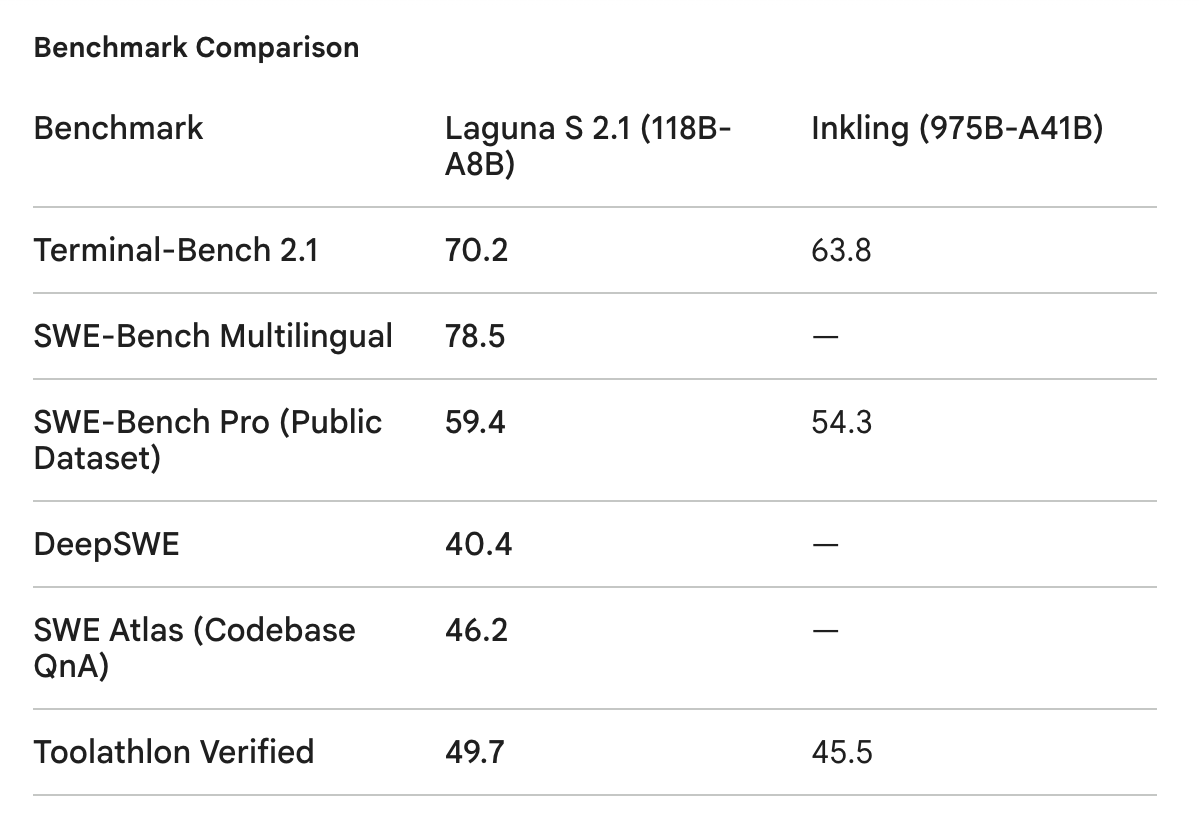 Inside the Model Factory — Eiso Kant, Poolside AI 23.07.2026 1t 54minIn recent months, the open vs closed, and US vs China discussions on model ownership and sovereign/local AI have heated up to a fever pitch. So it is very very good news that Poolside AI are finally emerging with new models, like Laguna S 2.1, that are beating Thinking Machines’ recent release nearly 10 times their size.Poolside’s recent tech report got a lot of praise due to their level of detail, and Vibhu first covered Laguna’s recent technical report on our paper club:From spending $12 million building language models for code before the world cared to creating a Model Factory that can take a model from pre-training to release in eight weeks, Eiso Kant has spent more than a decade betting that code is the path to AGI. In this episode, the Poolside co-founder joins swyx and Vibhu to explain why ChatGPT felt like vindication, why Poolside embraced open weights and open research, and why he would rather live in a world with 100 foundation model companies than five even if Poolside were one of the five.We go deep on Poolside’s Model Factory: the engineering systems behind 10,000–20,000 experiments per month, streaming data directly into training, reproducible experimentation, low-precision compute, and agents that increasingly write code, launch jobs, evaluate results, and modify the pipelines used to train future models. Eiso also unpacks their recent launch Laguna S, why persistence, verification, and backtracking may matter more than raw intelligence, how much capability remains inside smaller models, why reinforcement learning will move earlier into pre-training, and why next-token prediction is still extracting too little from the web.We also discuss model-harness co-design, Poolside’s path from coding agents to AGI, why Eiso thinks MCP and traditional tool calls are “stupid,” the real economics behind frontier-model training, Poolside’s $500 million raise, open-source AI, regulation, NVIDIA and TSMC’s influence, engineering productivity in the agent era, high-agency teams, and hiring at Poolside.We discuss:* How Andrej Karpathy’s RNN work inspired Eiso to start building language models for code in 2015* Why Eiso spent four years and $12 million pursuing an idea before the market cared* Why ChatGPT felt like vindication and brought Poolside back to open source* Why Eiso would prefer 100 foundation model companies over an oligopoly of five* The difference between releasing open weights and publishing genuinely open research* Why Poolside deliberately built a global research organization outside the Bay Area talent war* Why model building is ultimately 90% engineering* The Model Factory: Poolside’s end-to-end system for rapidly training and improving models* How fewer than 70 researchers run roughly 10,000–20,000 experiments each month* How Poolside moved from six-month model cycles to five- and eight-week launches* Why streaming data directly into training unlocked faster experimentation* How immutable data, versioned code, and reproducibility enable rigorous model research* Why Eiso wants capable researchers to leave their labs and become Poolside’s competitors* Why 95% of model building can be reduced to better data or compute efficiency* Laguna S and why persistence, verification, and backtracking can outperform raw intelligence* Why smaller models may handle far more knowledge work than previously expected* Why reinforcement learning will move earlier into pre-training* Why next-token prediction is still failing to extract enough knowledge from the web* Why distillation and environments have become the AI industry’s favorite “drugs”* Why mid-training is really an early form of curriculum design* Low-precision training, networking bottlenecks, and the next gains in compute efficiency* Laguna S: 118 billion total parameters, 8 billion active, and eight weeks from training to launch* Why model builders can often evaluate a new checkpoint within its first 30 minutes* Model versus harness: where agent capabilities actually come from* Why Poolside sees coding and long-horizon software tasks as a path to AGI* Why Eiso thinks MCP and traditional tool calls are “stupid”* Why future agents will write scripts instead of choosing from dozens of predefined tools* The case for minimal harnesses, containers, and model freedom* Why Poolside is prioritizing vision but does not expect to work on audio soon* Why language may be the most compute-efficient modality for encoding knowledge and reasoning* The real cost of model development and why the final training run is anticlimactic* The story behind the Poolside name and why it represents refusing to lower ambitions* How Poolside raised $500 million while investors still questioned whether AGI was real* Why intelligence could become the world’s most demanded and commoditized resource* When open models may become too capable to release without restrictions* Why unilateral AI safety does not work in a globally competitive environment* How regulation could accidentally lock in an oligopoly of two or three AI companies* NVIDIA, TSMC, and the hardware systems underpinning foundation-model progress* Why reinforcement-learning wall-clock time is one of Poolside’s biggest bottlenecks* Why Poolside trains models from scratch instead of simply distilling larger models* How AI changes the way companies should measure engineering productivity* Why agency may become the most important quality for employees in the AI era* How leaders align high-agency people through shared goals and clear constraints* Hiring across research, post-training, pre-training, architecture, evals, and engineering at PoolsideEiso KantLinkedIn: https://www.linkedin.com/in/eisokantX: https://x.com/eisokantPoolside: https://poolside.aiTimestamps00:00:00 Introduction00:00:54 Karpathy, RNNs, and Building Code Models Before Transformers00:02:26 The $12M Failure and ChatGPT Vindication00:03:39 Open Source and the Case for 100 Foundation Model Companies00:09:22 Open Weights, Open Research, and Poolside’s Global Team00:16:04 The Model Factory: Why Model Building Is 90% Engineering00:20:19 Agents, Automated Experiments, and Early Signs of RSI00:24:04 Streaming Data, Reproducibility, and Scientific Rigor00:30:35 Creating More Foundation Model Companies00:36:07 Laguna S: Persistence vs. Raw Intelligence00:43:01 Reinventing Pre-Training, RL, and Curriculum Design00:52:33 Low-Precision Training and Squeezing More From Smaller Models00:58:37 Model Harnesses, Coding Agents, and the Path to AGI01:09:26 Why MCP and Traditional Tool Calls Are “Stupid”01:13:04 Vision, Multimodality, and Why Language Still Matters01:18:15 Scaling Models and the Real Economics of Training01:20:40 Why Poolside Is Called Poolside and Raising $500M01:27:37 Open Models, AI Safety, and the Risk of an Oligopoly01:33:53 NVIDIA, TSMC, and the Reinforcement-Learning Bottleneck01:41:52 Smaller Models, Distillation, Engineering Productivity, and HiringTranscriptIntroduction: Eiso Kant, Poolside, and Open ModelsSwyx [00:00:00]: All right, we’re here in the studio with Eiso Kant from Poolside, together with Vibhu. Welcome.Eiso Kant [00:00:08]: Thanks. Thanks for having me, guys. Good to be here.Swyx [00:00:10]: Yeah, fresh on the plane. You texted me, you were like, “Hey, I’m on my way to SF.” I was like, “You’re on a plane right now, right?” Like, hey.Eiso Kant [00:00:16]: I know. After I texted you, I realized that probably coming in with major jet lag was gonna offer some fun experiences today, but let’s do it.Swyx [00:00:23]: I mean, I think the thing I would tell guests is that they don’t have to prepare that much because if you’re truly working on this every single day, then even, like, what you hazily remember is going to be new for a lot of the audience that don’t live in your world every day, right? so 10 years ago, you did a talk at Google Slush, talking about the democratization of AI. and, now here you are, like, open sourcing an incredible new model that we’re gonna talk about. But I guess, like, what got you into democratization of AI? Like, it’s not obvious from your LinkedIn or something.From Karpathy’s RNN Post to SourcedEiso Kant [00:00:57]: No, it’s not at all. I don’t think it’s obvious how I got in this space. I owe getting into this space to Andrej Karpathy.Eiso Kant [00:01:05]: In 2015, he wrote an article called “The Unreasonable Effectiveness of Recurrent Neural Nets.”Swyx [00:01:10]: Neural Nets, yep.Eiso Kant [00:01:11]: And that article, I read it, and I pivoted my startup at the time overnight to working on RNNs, and later LSTMs and Transformer models to be able to write code. If you go to this article and you scroll down, you can start seeing, like, this was the precursor to what ended up becoming language models. So, at least when he was character-level language models that were starting to predict letters, he has an example out here. There’s a little Paul Graham generator, and you can read it, and the text makes sense, but it doesn’t. and there’s a little-- There’s an example of code a little bit further down. Yeah, so Shakespeare.Swyx [00:01:47]: Shakespeare.Swyx [00:01:49]: CoolEiso Kant [00:01:49]: And for some reason, I read this, and I went down the rabbit hole of learning everything I could about RNNs and LSTMs, right? This is Transformer paper. And I had built a completely unreasonable belief, that neural nets should be able to generalize to anything and everything, and that language should be able to generalize, to a lot of things that are intelligent and the ability to write code. And so I started building Sourced, which was a fully open source company trying to build, what we used to call machine learning on code, language models on code. And we spent about four or five years on this, till the end of 2019. And that sounds really cool today, but back then, no one cared.Eiso Kant [00:02:29]: Right? Like, no one cared. We were in the dark. Like, we did things along the way. We tried applying convolutional neural nets to, like, the structure of code. We were. when attention came out, we were applying it to LSTMs, and then the Transformer paper came out. And it - it wasn’t obvious, and what we missed throughout that entire journey, that we were on the right track, but we should have just kept scaling up. And today, to all of us, the scaling laws and scaling up seems like the most obvious thing. But having spent four or five years of my life on working on language models on code, it wasn’t obvious. So I have a lot of respect to folks at Google and OpenAI and others who took that confidence and kept going. we failed ultimately at the time, and it was, like, biggest failure of my career, right? You blew $12 million of investors’ money, which was a lot back then.Swyx [00:03:18]: Yep.Eiso Kant [00:03:19]: You spent, still a lot, but, And you spent years with, like, a group of 40 people just obsessing over this problem. And life took a different turn, And it was, and family became a focus, and I kept my heads down and really, didn’t really look at language models for the following two years. big mistake considering Following years are gonna be really interesting. And then ChatGPT came out And it was like a vindication. It’s like people started texting me. I found, like, my old, work decks and these old talks. And throughout that whole journey, we,ChatGPT, Vindication, and Returning to Open SourceEiso Kant [00:03:56]: We really had a strong point of view at the time that, like, as you’re building more capable intelligence, it should be open and open source.Eiso Kant [00:04:04]: When we started Poolside, that wasn’t the case at all, and I wanna be very open about it. When we started Poolside, we were like, there was a premise of two things. One is this technology is not gonna stop compounding in capabilities. I think to most people obvious today, but three-plus years ago when we started, most people were still arguing if these were stochastic parrots or not.Eiso Kant [00:04:23]: And the second was that reinforcement learning was gonna be the biggest driver for LLM capabilities. Today, very obvious. Three years ago, was not an opinion held or direction held at either OpenAI or Google or Anthropic or others. And so people looked down on us a little bit. They were like, “ is this really gonna work?” And so we just started working the problem, and we never really thought about open source again. We just kept our heads down and we built our, like, knowledge, understanding from scratch, right? We didn’t roll out of an existing lab. So we picked up the papers and started writing code and figuring things out.Eiso Kant [00:04:59]: And it wasn’t until the beginning of this year that me and my founder, Jason, picked up the open source conversation again.Eiso Kant [00:05:07]: And if you go back to some of the early things on our website, it was very straightforward. It was we wanna get to AGI, we wanna support a world of abundance, and we wanna be the first company that gets there.Eiso Kant [00:05:20]: But we started talking at the beginning of this year because it became obvious that the world was going in a direction that was starting to like, pick at us a little bit. Like, it didn’t, this didn’t happen overnight. It was, like, a little bit we were seeing this and we’re like, “Okay, The world’s going down a path.” And Throughout this journey, there was something that I used as a, as an analogy or thing. So I said well, if I go back to back in those days, 2015 or 2016, we’re working on this, and I picked up a fi book off the shelf, and I was reading the book about 2035. AGI is achieved, and the story would be over the following, decades. And it would have that first chapter where everyone’s trying to figure things out. You’d get the chapter of ChatGPT coming out And then you would get to the chapter where the world was at a fork in the road, and the one that it picked was one where three or four or a handful of companies were going to create all of intelligence moving forward.Eiso Kant [00:06:21]: And when I thought about that story, it felt like a dystopian fi book, not a utopian fi book. And the reality is, I’m a utopian fi guy. Like, and so We took a step back and said, “Hey, can we play a role here?” Now it was easy for us to do so because we were not at the frontier.Eiso Kant [00:06:41]: If we were at the frontier, I don’t think we could have changed our mind. and I don’t mean this like it’s when the moment there’s too much capital involved, too much expectations, you’ve built up things, right? We’re a small team, just improving and improving. And so we knew that we could make that decision now, but it would be a lot harder to make as we got closer and closer to the frontier and caught up to others. And did a lot of soul-searching and a lot of conversations, and said, “No, this makes sense,” Even if there’s big unanswered questions, like how the hell do you build a business model with foundation models about open source? Big open-ended question that we do not fully have the answer to yet, right? At what point do you no longer wanna release open source models because misuse of models has, real potential risks associated with it? how is the government gonna respond to open source? but I think it all just came down to one thing, and I’ll stop the monologue, is the fact that I rather live in a world that has 100 foundation model companies than a world that has five, even if I was one of the five. And the smallest and most meaningful contribution we can make for 100 to exist is to open up our research and open up, like, our weights right now and figure out along the way how we can, like, do more.Neo-Labs, Model Choice, and the Token EconomySwyx [00:08:01]: Yeah. I think if anything, over the past three years, that has become a bit more true. you are one of a cohort of Neo labsEiso Kant [00:08:10]: YeahSwyx [00:08:10]: That people are now calling that. And, we’re, we’re doing this on the day that Thinky launched their, new model and you are outperforming them on their, on some benchmarks that they released, right? Like, they just don’t have it yet. so it goes to show that I think, like, this is one of those things where, like, there is room for multiple players, and you are seeing a little bit more of the future. Maybe more like 20, not 100, but, like, you are one of the 20.Eiso Kant [00:08:36]: I really hope so, right? I think we I’m, I’m excited about their release, and I’m excited about everyone releasing because, like, ultimately, like, choice competition is both gonna drive progress in the right direction. But the fact that like, we create models and while we all, drink out of the same well of data effectively, we do introduce very different behaviors and biases in our models. Some are intended biases, some are completely unintended biases.Swyx [00:09:03]: Yeah.Eiso Kant [00:09:03]: And if we shape up in an ecosystem in the world where open models are gonna be a part of the token economy, like, I don’t think there’s any question about it anymore Then we want to be able to live in a world where companies, countries, people can choose and say, “Hey, I am most aligned and I trust most this provider for these things.”Swyx [00:09:25]: Yeah.Vibhu [00:09:26]: I think more than just one of the 20 Neo labs, up until recently, most of open source innovation was coming from the Chinese labs, right? So there’s the DeepSeek of the West. Is it today? Okay, maybe it’s thinking machines reflection, but there aren’t many, right? So, one of the things you guys started in France, Europe, but very much now you’re taking that American standpoint and more than just that, the point is the Chinese models that we see, they’re not super open research. the work you put out is, I think, some of the best. So every few months you get not only frontier models, but also here’s a breakdown blog, paper, technical report of here’s everything for state of the art to build, frontier intelligence and you’re filling that gap too, right? So not just only open weight, not just Western, but also pretty open research.Open Weights vs. Open ResearchEiso Kant [00:10:20]: No, I appreciate it. Look, I think it’s, I think it’s the most meaningful contribution, right? Weights are a binary. Let’s call them what they are. Yes, we can modify them, we can change them, but, like, giving someone the weights does not allow them ultimately to recreate what you’re doing, right? And so now there’s challenges around releasing data sets, challenges around like releasing certain things, but being able to share your research, like, right, how do we do it? What are the lessons we learned that we spent, tens of thousands of experiments of compute on? I think very much so. One correction though, Vibhu, and I say this because it’s been haunting us for quite a few years. We from day zero were an American company.Swyx [00:10:55]: Yeah. They movedPoolside’s Global Team and American Company StorySwyx [00:10:56]: To France.Eiso Kant [00:10:56]: So the story once and for all is very. We start as an American company. We have always been an American company, and early on we made a very conscious decision. We said, “We’re not gonna hire any researchers in the Bay Area. We’re gonna look for talent everywhere else in the world.” and that is everything from Middle Americas, Seattle to, Serbia, and to Taiwan and Singapore and other places. And it was because we took a view that this was gonna become a talent war for this, and I think it has over the years now. Three years ago, that wasn’t fully obvious yet. I think today it very much is. And we also realized that, like, some of the world’s most capable people with, like, the most interesting, innovative ideas were not just gonna be here. And so it led us to create like a fully remote company. and we ended up opening an office in Paris and London and different places and we have a lot of the team in the US and a lot of team outside. But we always took this view of like, we’re an American company, but if we want the best of the best to work with us, we need to take a global view. Now we do also have people here in Silicon Valley, like the company’s grown and others, but I think one of the things that, it slowed us down at the beginning, but it has sped us up now, and it’s why you’re seeing like the progress, I think, on our models and the cadence at which we release, is because we didn’t roll out of an existing lab. Right? we didn’t, we didn’t have a lot of the information that’s freely flowing around here at the time. We just took this point of view as like, “Okay, well, let’s just work the problem. Let’s just go and, like, read the few papers that are out there, and let’s just figure this stuff out.” And we made some hilarious mistakes in model training because of that over the yearsEiso Kant [00:12:35]: Like especially in the first 12 months. there’s a few that I think still haunt me and scare me. We can talk about them later. but it created a, like, a resiliency and persistency in the team, right? with extremely few people have left us over the years, that, like, told us, “Okay, we can do this.” When we first wrote our first training code base completely from scratch, it wasn’t a fork of any open source. It was just like, “Okay, let’s build it from scratch.” I remember we had this one moment where we spent three weeks working out an optimizer bug. Like, it was like training just couldn’t get stable. We, like, obsessed over it, and we thought, like, maybe we were wrong. Maybe we should have just forked this repo, or we should have. But then when we solved it, I still remember at the time we were like five people in the company. when we solved it, we were like, “Oh, we can do things,” like if we’re just willing to work hard. and I think that culture with a very strong engineering bias has helped us, like, get to where we were. And so there’s this notion of open source and talent and these things. I think we, We just took different decisions from a different starting point. and I think we are lucky. I do want to definitely call it lucky. And there was a lot of hard work at the team that now, like, that’s starting to show up in results.Swyx [00:13:52]: Just ‘cause we probably won’t revisit this again, but, and this is a fun recruiting challenge if someone knows the answer. What was the bug? And then we won’t tell the solution, but we’An Optimizer Bug and the Value of Building From ScratchEiso Kant [00:14:01]: So the - This - You’re gonna test my memory here,Swyx [00:14:04]: Oh, okayEiso Kant [00:14:04]: So but I thinkSwyx [00:14:05]: DirectlyEiso Kant [00:14:05]: I think I can recall. So if you, so if you look at, So if you take like Adam as an optimizer, you have epsilonSwyx [00:14:12]: YeahEiso Kant [00:14:13]: Which is, right, like in the denominatorSwyx [00:14:14]: Momentum and weights. YeahEiso Kant [00:14:15]: Is exactly, in the denominator. And at the time, if I recall, you looked at like the early Llama papers and things like that. People were juicing epsilon, like, quite a bit. Like, they were, like, adding, I don’t know if it was E minus four or whatever, like a high value for epsilon.Eiso Kant [00:14:31]: And if you think about this during training, it’s like a bit weird and counterintuitive that we’re adding noise to our optimizer by just adding effectively, like, a random number in the denominator, right? Like behind the decimal point. And I don’t recall the exact bug, but it had - What I remember is once we solved it, we no longer had to juice epsilon as much as, like, was happening in the Llama paper and other places. and it was like one of those fundamental moments where we had trusted this paper that was out there, and we’re like, “Oh, no, it has to be this way. It has to have this high value of epsilon.” But it made no sense to us intuitively. Like, why do you have to have this so high? Like, if you’re just trying to avoid division by zero, why can’t the value be extremely small? and that was like one of those moments where you realize like, okay, finding things out from scratch yourself builds a better intuition. Because the one thing you learn very quickly with model building is that your intuitions that you start with are gonna get beaten up so hard.Eiso Kant [00:15:33]: Right? Like - It’s such an experimental science, that the things that seem obvious, you very quickly get to learn, like, you were wrong, and hopefully you figure out why, and sometimes you don’t even.Swyx [00:15:45]: Yeah. yeah, so, one of the reasons that you, when you released your new models, Vibhu got really excited. I mean, everyone got really excited. But Vibhu led our paper club on it, and you guys sawEiso Kant [00:15:58]: YeahSwyx [00:15:58]: Obviously. maybe talk through some lessons learned in that, whatever you can disclose. we can focus on the model factory stuff, whatever you think is a good starting point.Model Building as EngineeringEiso Kant [00:16:08]: So I would say that our view from very early on in the company was that model building is ultimately 90% engineering.Eiso Kant [00:16:18]: And I think we all know it in the industry because if you look at where’s every researcher spending their time, they’re spending their time writing code, right? Looking at data and writing code. And so we said, okay, The state at the moment, like three years ago, was bash scripts and Slurm and spaghetti code bases for training and, like, data pipelines that were patched together. And we looked at this and said, “Well, ultimately, model building is a process.” You’re going from raw data, right? Like training raw material, the web, et cetera. you’re doing a whole bunch of filtering, cleaning up, transformations, analyzing. These days, that’s, far more complex than it was three years ago. then you’re training a model, which is effectively a large distributed systems problem, right? Across hardware that has still-- It’s become a lot more reliable. It was extremely flaky back then. and now with every new generation, we get our new sets of challenges. And then you go into the next stages, right? There was no training back then, but, like, you got, your post-training and then your reinforcement learning. And so we looked at this and we said, “Well, this looks like an industrialized process. This looks like an end process, that every single part of it has its machinery,” right? If it’s your big data pipelines, if it’s your crawling ingestion of the web, if it’s your, large-scale distributed training, and then you’ve got your reliability. And we said, “Well, why don’t we take some of the world’s smartest distributed systems engineers that we knew and make them part of the process of research from day zero?” Not retrofitting it later on, but, like, really from the beginning. And that became our model factory. And so our model factory started with a handful of components. Today, it’s thousands of components, and I try to equate it to, if you think about, like, someone who was at the very early days of Foxconn, if they had been there for the following, decade, they would be able to rebuild Foxconn because they saw every decision that led to building that system and all the complexity. If you and I walk into Foxconn today, no chance.The Model Factory and Experiment VelocityEiso Kant [00:18:18]: Right? Because we don’t have the lineage and history of decisions that led to that. And so we built early on from the beginning- with a team that really understood that, well, the metric that we are optimizing for is the speed of an idea from a researcher to an experimental result that we can trust to then being part of the next model training.Eiso Kant [00:18:42]: And in the. And because it’s such an experimental science, ultimately, in the beginning when it wasn’t that complex, you could patch your way around it, right? But now, at any foundation model company, you are running. I mean, we’re a small team, right? We’re less than 70 researchers, another 35 engineers. and we are running, I haven’t checked the latest count, but far more than 10,000, maybe 10 to 20,000 experiments a month that we cut. And so if you look at that scale of every model run that is, like it’s ultimately it’s, it’s you need to be able to trust it as an infra problem. And so what we have now done over the years is gotten really good at that, and just by working it and improving it and obsessing over those end decisions. So now what that means is that you looked up Laguna XS 2 that we launched. It was five weeks from the beginning of training to launch. The model that we’re gonna talk about today was eight weeks from start of training, to launch. We started the next model literally yesterday because we now finished the post-training required for the model we’re launching, next week or by the time this comes out today. and we move that compute to the much larger Laguna M model that we’re now training. And so the model should be an artifact of someone’s process. It shouldn’t be really a thing in itself. Like, and we treat this like the way you would look at like a SpaceX factory where, yes, the first rocket, really hard to build, but the much harder challenge was building the factory. And now they’re rolling off, and no one is really thinking about the next launch anymore. So it’s just another launch, it’s another launch, another rocket comes off. And that’s what we’re trying to do with model building.Eiso Kant [00:20:22]: And what has been, which was not planned from day zero, it was in the back of our mind like this will happen one day, is that when you build a really good end model factory with really good APIs and really good engineering systems, Well, what is it perfect for? It’s perfect for agents.Agents Inside the Model FactoryEiso Kant [00:20:40]: Because agents are now starting to take over more and more work in our model factory.Vibhu [00:20:43]: Yeah.Eiso Kant [00:20:44]: So I look at the screens when I walk, like when we’re, we come together, in our monthly, we do monthly onsites, and I walk behind people’s screens and I stop by and I talk to our researchers. And the default is all of these different agents running on their screen that are writing the code. They’re launching the jobs. They’re evaluating the results that are coming back from the model runs. They are, making the changes. And we’re still in the driver’s seat. We’re still coming up with the ideas. We’re still helping with the debugging. But more and more, and this is right now very profound on the data side of our pipelines in both pre and post and the synthetic data pipelines, it’s starting to become more on the architecture side as well. You’re starting to see these twinklings of what RSI is gonna look like.Eiso Kant [00:21:27]: And that’s. So when we talk about, like to your question about our models, every talk about the model factory, And my coolest example of these things is always that when we kick off a new run, doesn’t matter if it’s a training like big run or if it’s now a post, like one of 10 post-training versions we do for like release or many experiments, is that at any given moment, the changes that somebody made that they had experimental results from the day before make it into that run.Eiso Kant [00:21:57]: So there’s not like a cutoff 90 days before. Like no, it’s like literally from that moment because we can now trust the machine enough. And then you also have to invest in the reliability. So one of my favorite metrics about like Laguna S is that there was no call events, Right? Like completely zero. And we haven’t had a meaningful call event, like something to wake up for, as far as I recall this entire year. now there is one asterisk to that. In usually the first six hours of launching a new model run, something breaks because you set a config wrong, you made a small mistake, et cetera. So that’s usually there’s a little bit of intervention, but that’s always within like call periods, right? Not on call. And I think that’s starting to now compound. So the model we’re releasing now, I love it. It’s amazing, but we’re already onto the next one. and I think that’s the way it should be.Laguna, Five-Week Builds, and Zero On-Call EventsVibhu [00:22:50]: Hey, I also just wanna point out, so for context, this was like a month ago. we found it in the tech report, so we just came in with, “Okay, new model’s dropped. Haven’t heard about it.” We wereEiso Kant [00:23:02]: Yeah, we’re very used to doing this every few months.Vibhu [00:23:03]: We’re, we’re very much like, “ okay, look, it’s like, on par with Kimi, DeepSeek, whatnot, the small ones, Gemma level. Oh, it’s a very cool paper on what goes into building.” And then we hit this page, right? Like literally page two of tech report is, “This process allowed us to build the small model from scratch to delivery within five weeks applying the lessons”. And then I’m like, oh, this paper is not about here’s a tech report of benchmarks and here’s how many tokens it was trained on. Like for people that wanna dive more from what we’re not gonna discuss on the podcast, it’s all laid out here, right? FromEiso Kant [00:23:38]: YeahVibhu [00:23:39]: Custom software that agents can use to interface with training code, training data.Eiso Kant [00:23:45]: Yeah. Well, link the paper correctly, so yeah.Vibhu [00:23:47]: Yeah. All that stuff. read the paper here, but,Technical Report Principles and Streaming Training DataEiso Kant [00:23:50]: But I would like to. I love principles, and I think that is a good starting off point for maybe telling some stories. Maybe we can go one by one past the principles. I’ll just call out that Dagster just got bought by a Prefect.Vibhu [00:24:01]: Yeah.Eiso Kant [00:24:01]: Isn’t it fun? But yes, I’m very familiar with Dagster. just anything where like they trigger some story.Vibhu [00:24:07]: So, well, I would say, well, experiments code’s obvious, but I think one of my favorite things is, I don’t know where it is in here, but early on, and I still think this is the case a lot of foundation model companies, people prepare their training data sets, they get packaged up, then they get copied over to a training cluster distributed across all of the nodes, and then training starts.Vibhu [00:24:30]: And we looked at this like three years ago and we were like That makes no senseEiso Kant [00:24:36]: You lose so much time because the moment you have to rematerialize the data set, you have to make a change, you have to fix something, et cetera, you’ve got all this time of like repackaging it, right? Toca- tokenizing it, repacking it, moving it over to a cluster, then distributing it across the nodes. The bigger your clusters are, you start using fancy like torrent-like algorithms to like distribute your data. So why aren’t we streaming data into training? Right? Something that’s very common and like just basicVibhu [00:25:00]: Like just in timeEiso Kant [00:25:01]: Just in time, like good computer science like principle. And that was one of the first things that I think unlocked - the model factory. Because the moment you start thinking about, well, a training job, it doesn’t matter if it’s a big hero run or a small like, post-training experiment, consumes a certain number of tokens per second, right? And it’s not a lot, right? From a like a data, moving data perspective. So we said, well, we have our training cluster, and then we’ve got like our AWS kinda setup where we can build these amazing big data pipelines. We can set things up. We use Spark underneath the hood, like all these things.Vibhu [00:25:36]: But when you say AWS, it’s not actual AWS, it’s your internal AWS.Eiso Kant [00:25:39]: It’s our internal-- No, it’s our internal like just running like our infrastructureVibhu [00:25:42]: Site web servicesEiso Kant [00:25:43]: Exactly. Our stuff running on like an AWS account or on like any hardware, right?Vibhu [00:25:47]: Yeah.Eiso Kant [00:25:48]: And so once we made that shift into I can stream data into training, all of a sudden you realize a lot of things unlock. Because now you don’t have to wait for the whole data set to materialize.Immutable Data, Experiments as Code, and Scientific RigorEiso Kant [00:26:00]: You now all of a sudden when you’re running data experiments about mixing data, it’s a config. Because you’ve got these data sources that are coming in, and you just - we have this service called Blender that’s in the report, where we then say, “Okay, for this run, I want 20% of this source, 10% of this source. I want this much, so many epochs of repetition. I want this to be, shuffled in a certain way,” and your training job can start while the rest of the data is even still materializing. also what it does is because all of this underneath-- So for us, we treated the data layer underneath as like an immutable data layer, and that was really important. Like experiments as code, immutable data layer means that you can always go back and understand literally down to the single token at which cursor it went in on which version of the code.Vibhu [00:26:47]: Yeah.Eiso Kant [00:26:48]: And it took us a I have to admit, like the first year of Poolside, we understood that engineering had to get great, But we didn’t understand yet, that this is ultimately in support of like a good rigorous scientific progress. We were quite a - We were a very small number of people, so a lot of it was YOLO ideas and YOLO runs.Vibhu [00:27:08]: Yeah.Eiso Kant [00:27:09]: And we built great infra for the YOLO runs. But once we realized that we treated data as immutable and code as always versioned, and you could always track and trace every experiment end to end perfectly, you could repeat everything perfectly, right? You have perfect reproducibility. I can still reproduce runs from two years ago if I wanted to, right? It enables the scientific progress, like the scientific process, and I think that took us probably about a year and a half into the company to figure out. We also had some great hires, like our head of applied research, Nikolai, who joined us from Yandex, who’d been working on language models since like the early 2020s, I think brought that into the company of like, “Hey, we wanna have even more rigor.” And then once we kinda had the combination of like increasingly more capable platform that allowed people to do more, but had this immutability, we were able to start “Okay, every experiment is truly an ablation. We truly need to understand it.” And I think we became much more scientifically rigorous in the last couple of years, and the infra underneath enabled it. and then there’s just fun stuff like, andVibhu [00:28:16]: Yeah, a lot of it’s fun, like even just the, one, you share all the ablations, two, picking the data sets, right? There’s like a random small paragraph in here where it’s just like, “Oh yeah, training data, we have some, we have an auto mixer.” it trains eight small models, scales them up, picks the training data set. We don’t even need to look at it. I’m like, “Wow, a lot of engineering rigor there.” And there’s just, there’s just a lot in here.Publishing Research and Giving BackEiso Kant [00:28:40]: Yeah, and it’- and look, and we wanna put out more. Like we, We treat writing papers as something that we haven’t earned the right for yet for a long time. So you earn the right to spend time, publishing research once you’re at the frontier, because until then, you’re catching up, and every minute and hour in this industry matters. Like I obsess over it, not just the wall clock time from idea to result, but just general like time every day that we, waste is one that doesn’t allow us to catch up. But in this case, we said, “Okay, we’re gonna give ourselves.” I think we gave the team like three or four days while still doing their work, like give everything in there. And to your point earlier, if your stuff, it’s easy to like put it out. And so there’s so many more things that we wanna talk about over time, and we will definitely start doing. And as we earn more of the right, but also now have like added to our mission that we want more foundation model companies to exist, you’ll see us like be way more proactive, and just trying to keep dropping some of those like things that we’ve learned along the way that can help others like speed up.Vibhu [00:29:40]: Which is the other cool side of this, right? It’s, it’s not like, back to your point, it’s not just here’s the benchmarks of our training. If you want to replicate, here’s experiments of optimizers, data sets, post-training. you lay out a lot of it here alongside here’s your system for how to do it? So it’s, it’s really like promotingEiso Kant [00:29:59]: No, thank youVibhu [00:29:59]: Other people can do the same.Eiso Kant [00:30:00]: And by the way, I also wanna make clear, right, we have been incredible-- Like we’ve taken a lot of advantage of the fact of all the open research that others have published, Right? And you mentioned, the Chinese labs, and we I think it’s important that there’s, from every country and every culture and background, including like Western companies like us, there’s different models that come out that people can choose to trust. But I think we do have to give credit where credit’s due, right? The incredible Chinese lab have done an amazing job at sharing their research, and we have definitely like been on the receiving end of taking advantage of that. So when you’re on the receiving end of something coming to you, I think it’s, you also have an obligation to give back.Swyx [00:30:39]: Do you have a favorite or underrated Chinese lab that you wanna shout out? Everyone shout outs DeepSeek.Chinese Labs, Zhipu, and PersistenceEiso Kant [00:30:44]: That’s a good question.Swyx [00:30:45]: Moaan obviously for Therapsi. Yeah.Eiso Kant [00:30:48]: Yeah, look, I think, I think obviously everyone’s been talking about Zhipu lately, with 5.2. I think what most people don’t realize is when they started.Swyx [00:30:59]: Yeah.Eiso Kant [00:30:59]: Right? They started years before ChatGPT.Swyx [00:31:02]: They just rebranded. YeahEiso Kant [00:31:03]: And so, I’ve like, I remember how hard it was to work on these things Before the rest of the world got excited about it. And so I have an immense amount of respect for people, who were working on improving models when it wasn’t the sexy thing to do, when believing in LLMs, was gonna get you ridiculed. I remember like back in 2016 when we were doing what we’d call, machine learning on code with some of these models. we would-- people would just laugh at us, like they’d be like, “This makes no sense. Like why are you wasting all these, like, millions of dollars on trying to figure this out?” And so I would say they’re probably the one that, I think deserves a shout-out, not just because their latest model is very good, but because they fought to get here. And I think, I think every foundation model company it takes time to get here, right? It took us three years to get to the model that we’re, that we’re now gonna be releasing. and now the time in between the models is coming, is counted in weeks. It’s no longer counted in months or years. But this stuff’s hard. and if we can make it a little bit easier for the next person, like we should all do so. Because if we don’t do so, we’re, we’ve got a small window before models are really impacting recursive self-improvement to a level where catching up otherwise might become unfeasible. And we should try to, in that window, encourage as many labs or however we wanna call them, like to start. And so one of my currentEiso Kant [00:32:36]: Mission, but qualm is like I wanna encourage whoever is a researcher right now who thinks they can tackle this to go and leave and become my competitor.Eiso Kant [00:32:45]: Like start another foundation model company because I think we need it. I think otherwise we’re not gonna be in the world where, I don’t want to just be the fifth or the sixth company that wins. I wanna look at a world where there’s lots of choice.Starting a Foundation Model CompanyVibhu [00:32:57]: What else do people not see in starting a foundation model? it’s, there’s a lot of compute, there’s a lot of capital required, a lot of compute. You lay out model factory and how to do the training, but there’s a lot there, right? That’s,Eiso Kant [00:33:10]: Well, look, it’s, I in turn-- this is an oversimplification, and I always asterisk it with that because it can land a little bit the wrong way in people’s minds. But I think you can sum down, And I saw it, 95% of model building to just doing, you’re just doing two things. You’re improving data or you’re improving compute efficiency. And I know that feels like an oversimplification for the incredible, like, Gifted and skilled work people do. But if you really look at it, like what are we doing? We are looking at data, we’re generating new data, we’re improving data. and the only way to do that is to look at the data, right? That’s a big part of foundation model building. And on the other hand, we come up with these incredible breakthroughs in inference, in architecture, and new attention mechanisms. But what are they really doing? They’re bringing compute efficiency. Now, we have definitely had some breakthroughs over the years that allow for more model capabilities. But at the limit, if you could train a large enough model, right, like, and you had infinite compute, we probably-- if you had infinite compute, you’d be at AGI probably already tomorrow.Eiso Kant [00:34:12]: Right? Like it’s not. And so, and let me say that infinite compute with infinite ability of much faster networking because networking ends up being more of the bottleneck than compute. But, so I do think that’s, those are the main things. And to just realize that this is engineering. I think it’s become more obvious, but I think for quite a few years, people have held foundation model companies and researchers and others on this pedestal of like you’re doing incredible magic or rocket science, or only like, Nobel laureate physicists can do this. And don’t get me wrong, there are some really hard problems that need to be solved, but a lot of the work that all of us are doing on a day Is not sitting down trying to solve a math theorem. A lot of the work that we’re doing is just really doing the basics right, writing good code, looking at data, improving it, running experiments, looking at plots, trying to see like, hey, trying to shape our intuitions. And a lot more people could be highly capable researchers. and I think that’s, it feels far for people to do so. But I’ve seen in our own company, we’ve seen engineers become researchers because the model factory allowed them to be, have a much lower hurdle of running experiments and trying things. And one of the guys on our team who started as an engineer building our agents is a legit reinforcement learning researcher now, making real progress. and that happened in the span of like six months. that would’ve not been what I think most people assumed was possible, a couple of years ago.Swyx [00:35:46]: Yeah. I think one of the interesting moments is when you can self-host, like, if in a programming language, like if you can compile the language in the language, the equivalent is can you use your own tools, right? You have the pool CLI, you have your own models. presumably you’re not only using your own models. There’s no way. But like, what’s that percentage over time?Laguna S, Persistence, and Behavioral GainsEiso Kant [00:36:10]: This is the first model that we’re releasing that is starting to meaningfully contribute to our own work. It’s not a it’s not state-art model yet. Fable and other, they’re, they’re very capable models, but Laguna S Is really interesting. I’m gonna pull up the quote. Peng Ming, one of our heads of applied research, said something, last week as the model came out about 10 days ago, much better than we had hoped for or expected. And he said, I have the feeling that a lot of the gains in Laguna S come not from more intelligence, but more from different behavior, more verification, less taking things for granted, not declaring victory early, and being way more persistent. And to be honest, those are more predictive than raw intelligence for success in human also to some degree. And this was, he wrote me this on 5th of July on a Sunday, and it’s been burned in my brain ever since because the Laguna S model, as you’ll see it and why it does so well on benchmarks and why it does so well in using it on a day basis, is that it’s just incredibly persistent. It reasons a lot. I do call that out. We have work to do on making it more efficient. We have to work to do on offering different reasoning modes. But this is the model that has been able to do things that I never thought it could do. A hundred eighteen billion 8B active model, which is not that large. It fits on a DGX Spark and still runs at, thirty, forty tokens a second on a Spark, is able to solve Erdős 397 independently. It’s able to do complex programming tasks. It’s able to. I asked it this morning to make me a Fi scanner without using any external libraries on my Mac, and it’s, like, figuring out, like, the core WLAN API by really persistently trying to understand it without access to the internet. And more, I love vibe checking. I’ve probably spent eight to ten hours a day with this model for the last ten days.Eiso Kant [00:38:05]: I’m not exaggerating. I was on my eleven-hour flight yesterday. I spent ten hours reading trajectories and traces and, like, of the model.Eiso Kant [00:38:12]: And what I take away from it is exactly what Peng Ming said. We are gonna be able to squeeze so much more out of smaller models than I think we had imagined in the industry because, yes, there’s intelligence and larger models are more intelligent. Like, no doubt about it. We should continue to scale up. but the behaviors of being really persistent, of being able to backtrack when you’re wrong, of, like, understanding how to interact with your environment show us that we can get a lot more out of it. And this, for me, has created a bit of a Question in my mind the last couple of days. If you think about where we’re using models today, right? We are using models, say, for knowledge work. Represents twenty-five percent of the global economy, twenty-five trillion dollars of work.Eiso Kant [00:39:00]: As we scale up models and they become more intelligent, we are excited about using them more and more for pushing the frontier of science.Small Models, Knowledge Work, and CommoditizationEiso Kant [00:39:08]: And if you look at the frontier of science, like true breakthroughs in science, they have been linked, they are linked to more intelligence in many places. Einstein figuring out general relativity is able to bring ideas together that other people would have not brought together. And I think one of the many dimensions of intelligence is the ability to do that, and it’s something we clearly see that as models get larger and more capable, they’re able to pull more ideas and threads together that a smaller model wouldn’t be able to.Eiso Kant [00:39:36]: And we’re starting to see examples of that in medicine and, like, in bio and other things. But if you think about the majority of knowledge work that we do, and it includes building software. I’m a software developer at heart first and foremost probably, although I probably can’t say it that much anymore as I don’t write production code in years, is that what makes us good is our persistence. It’s our ability to encounter a problem and backtrack and say, “I need to go figure out this bug. I need to go research this. I need to go look at the documentation. I need to, like, try different, five different ways to see, like, if I can solve it.” But it is not necessarily bringing three ideas together from radically different fields. And so if we are now seeing, and I think Laguna S is an example, that we are able to make a relatively small model much more capable than I had definitely predicted or any previous, like, benchmarks had shown for any model remotely this size or even larger, At least on coding tasks, that it’s because of the behaviors. And so now the question I have, and I don’t have an answer, it is I know at the limit, so infinite model size, right, extremely large model, and the cost of that model is gonna be very expensive to run. We know this, right? So larger model ROI.Eiso Kant [00:40:52]: So I know that at the very limit, I’m not gonna use the world’s largest model one day, quadrillion parameter, whatever crazy, like, scale we scale up, to do a basic coding task. Already today, I’m starting to size down for certain tasks.Eiso Kant [00:41:07]: So it means that there is an optimal. It means there’s some curve that goes as we go up to model size for knowledge work, at some point we’re at the peak, and after that, the return on investment of using a bigger model, just doesn’t make sense.Eiso Kant [00:41:22]: Now, I think the question is, before I would have thought that peak was extremely very far away.Eiso Kant [00:41:30]: This model for me is the first sign that Maybe that peak is At a trillion, five trillion, ten trillion. Maybe we can just squeeze way more out of these models. I’m no longer thinking that we need two or three orders of magnitude on the largest models to be able to, solve knowledge work, the accounting, the legal, the code that we write. And so if that holds true, It is an argument for the commoditization of models. It’s an argument that open source can win and, like, succeed in this world. And now it’s of course a self-serving argument and it’s a hopeful argument, but theoretically at the limit it works. We just have to go discover in the next couple of years of how much more we can squeeze out. Now, I do want to put a big asterisk. This does not mean I’m against scaling models. I think we ultimately only succeed if we scale our models as large as our competition. I do not like. I think we should not put our head in the sand and say we’re gonna be king of open source small models. I think that’s, It’s a out. It’s trying to be king of your own kingdom, but not realizing what the rest of the world’s doing. All of us rather use a smarter, faster, more model. It’s a sign of hope. And so I don’t wanna overly state this is a good model. We have a long way to go to get to the state-art. But what hopefully people take away when they use this model is that the behaviors inside of it are what push it to be far more capable, less than necessarily the number of parameters.Pre-Training, Mid-Training, and RL Moving EarlierVibhu [00:43:03]: Is that mostly post-training? LikeEiso Kant [00:43:05]: YesVibhu [00:43:05]: Right.Eiso Kant [00:43:06]: It’s entirely post-training.Vibhu [00:43:08]: Are we done improving anything on training? Is, like, training done?Eiso Kant [00:43:12]: No.Vibhu [00:43:12]: Okay.Eiso Kant [00:43:13]: SoVibhu [00:43:13]: I just wanted to cover training, and then we go post-trainingEiso Kant [00:43:15]: Training is not done. I mean, look, there’s a part of training of just dealing with skill, right? Every new order of magnitude of model skill, you are going to get new things you gotta solve for. That’- but those are ultimately, engineering challenges.Eiso Kant [00:43:31]: I have a, I would say, a not commonly held opinion that reinforcement learning Will move earlier and earlier into training.Vibhu [00:43:42]: Yeah, training.Eiso Kant [00:43:44]: Not even training. Like training today, right, is, like if you look at - So we’ve been working on this for years already. and I think the best-- I think the first time we saw it out in public was the DeepSeek Zero paper. this is a year and a half ago, I think, if I recall correctly. where, you can Very early on in a model as it starts capable of being able to use language, et cetera, induce reasoning. and so the question that I have is like, we have this- we have the dataset that’s the web. and the web, I think we could arguably say probably has The totality of humanity’s knowledge somewhere encoded in different places. It’s a huge variance degree of quality, from garbage data, and like once you look at training data, you really get humbled of like what the web is, to like, the most greatest scientific papers and best blog posts and like, best transcripts and whatnot.Eiso Kant [00:44:39]: And so now What we are trying to figure out, and have been doing a lot of work on, and it’s a place where maybe not as open as we’re on other things, but we will become more over time. we’ve been spending a couple of years really doing research on how can we turn the web into not just next token prediction, but into a way to teach the model to think earlier in its training. and I think there’s a huge amount of gold to be found there. I think we are right now in, we’ve got some drugs in the industry. One of the drugs is distillation. Another drug is, more environments. Like, and they’re great, and they make us feel good, and they make the models better, and like we’re all addicted to them, and we’ll use them, right? in various different ways. and but ultimately, I think we are still barely squeezing out of the web what we should be getting out of the web.Eiso Kant [00:45:33]: I think just next token prediction during training is not enough.Eiso Kant [00:45:36]: AndVibhu [00:45:38]: YeahEiso Kant [00:45:38]: I think we’ll see some very interesting things still happen. and that RL in post-training to induce behaviors, to improve things, like I think - the whole world knows how to do this now. I think we’re, we’re scaling it up. Everyone is. But I wonder if we need to go as far as we’re going today with environments. I’m not sure yetVibhu [00:46:01]: You mean we’re going too far?Eiso Kant [00:46:02]: I’m, I’m not sure if the path to AGI is justVibhu [00:46:06]: Is more environmentEiso Kant [00:46:07]: More environments.Vibhu [00:46:08]: It seems like a never-ending, “Okay, I want instruction manual for this table, right? Am I gonna environment out building furniture? Or are we just gonna tail end like we need some general solution?”Eiso Kant [00:46:19]: I think there is, I think there’s an ability to generalize more from the web. but I also am very encouraged, like when I look at Laguna S and, which is post-training is, well, is the big impact there. and I see like, oh, wait a second, just by making some of these behaviors much better, we’re able to get so much more out of it. It just changes a little bit the way you think about intelligence.Vibhu [00:46:40]: Yeah. The analogy people draw often is the RL phase is where you don’t learn as much new knowledge. You shiftEiso Kant [00:46:46]: Yeah.Vibhu [00:46:46]: Yeah. So, you shift distribution, and you can have it reason towards what you want. on your point about training, a lot of training is still just continue training in a domain, say medicine, then you do RL. So still justEiso Kant [00:47:00]: It’s just better data, right? Like, I mean, training, ooh, I like how we invented this word. Like it’s effectively just like,Vibhu [00:47:06]: Second phaseEiso Kant [00:47:07]: It’s the second phase of training With like a really dumb way to do a curriculum. But like ultimately, what you’d want is a curriculum from token zero to token 30 whatever or 40 trillion tokens that really truly is the optimal curriculum for the model to learn. But training is essentially a stage curriculum on the web because we do not have to compute, And, effectively to try to ablate the perfect curriculum, right? And so I’m pretty sure that you’ll start to see people talking soon about some other term, and there’s two or - ‘cause now we do this, right? We talk stage two and stage three and stage four training and like. But ultimately, all we’re doing is we’re trying to assign a curriculum to the web data that we have to allow the model to learn better. I think at some point, as things get compute, as models get cheaper to run, as the next generations of compute, this will become more of a continuous spectrum. I also think the reason, by the way, you have training and like stage two and stage three is organizational, Right? It’- this is, I think, a thing where-- that we really try to avoid with the model factory is like Training exists because there’s a training team now, right? There’s people, or like people in training decide to focus on like a training effort. but what you really want is engineering and scale of experiments that allows for a much more continuous spectrum that you don’t, you have infinite stages. Now, we’re not there. Compute’s not there. Organization design is not there for it yet. but I think we’ll get there. we’ll look back on a couple of years and be like, “Oh my God, it was so cute that we did our training data like this in such a like naïve way. Like we barely ordered it. We didn’t really do a good job at likeCurriculum, Auto Research, and New ObjectivesVibhu [00:48:48]: The building that curriculum will get you that in the industry.Eiso Kant [00:48:51]: And I’ll confirm that, when I talk to some researchers that this is a lot of the focus now is like how does training change and what is the next objective other than, next token prediction. I assume you don’t have the answers, but you have some ideas.Vibhu [00:49:02]: We have some ideas. We’re not ready to talk about it yet.Eiso Kant [00:49:05]: Yeah.Vibhu [00:49:05]: We’ve been working on them for years, and I think that’s the one thing that’s also like you asked earlier about, like what’s not obvious about building a foundation model company is that you are constantly balancing the table stakes work, the recipe worksEiso Kant [00:49:19]: Yeah.Vibhu [00:49:19]: Versus like your, my crazyEiso Kant [00:49:22]: Pure researchVibhu [00:49:22]: Breakthrough.Eiso Kant [00:49:22]: Yeah.Vibhu [00:49:22]: Pure research and finding that balance and adjusting the percentage to it based on where you are in the race is really important.Eiso Kant [00:49:31]: I mean, so like, this is a nice way. I was gonna bring up auto research at some pointVibhu [00:49:35]: YesEiso Kant [00:49:35]: As another Andrej invention, or coinage, which is like, I honestly, like how many objective functions can there be, right? Like just try 1,000 of them, set it running, whatever.Vibhu [00:49:47]: Man, it’s alsoEiso Kant [00:49:48]: Like what you’re looking for. You’re looking for loss curves like that, likeVibhu [00:49:51]: It’s also a thing people take bets on, right? When you say more Neo labs, you’re doing a version of we’ll do foundation models, scale them up, next token predictors. A lot of other Neo labs that we see want to take a completely different approach, right? At some level, you’re right. It’s all, compute efficiency, and that’s the net objective. But some are okay, different architecture, like vastly different amounts of compute spend. So some are different. They’re not justEiso Kant [00:50:19]: YeahVibhu [00:50:19]: They’re like, 99% not balancing, here’s the vanilla and scale up. They’re 99% on, here’s novel research that’ll change everything.Eiso Kant [00:50:27]: And I think, Luke, I think you. It depends when you started as well, right?Pure Research vs. Table StakesVibhu [00:50:30]: Yeah.Eiso Kant [00:50:30]: When we started, like the novel thing we did was reinforcement learning on code. No long- that’s no longer novel by far, but we were like, - that’s where we obsessed over when no one believed in RL. So you have to when you start the company, you have to have your own idea. You have to have something that’s different that allows you to speed up, right? For us, it was RL to LLMs that later became common, like, Knowledge. But in the beginning, it wasn’tVibhu [00:50:53]: It’s cool. this was like your original 2023 blogEiso Kant [00:50:57]: YeahVibhu [00:50:57]: Of purpose.Eiso Kant [00:50:58]: Yeah.Vibhu [00:50:59]: And like you do lay it all out here.Eiso Kant [00:51:01]: We laidVibhu [00:51:01]: The blog is pretty underrated, right? The whole RL on code was very early on.Eiso Kant [00:51:06]: Very early. And even we had to argue with people, like we say here things like to push beyond current capability, to train your own foundation model. We had to argue with people that it mattered that you had your own like, base model. you can fine-tune your way to success, right? major capabilities emerge from training a base model made accurate and useful during fine-tuning.Vibhu [00:51:23]: Which like, for perspective at the time, we knew closed models, OpenAI, Anthropic were huge. The open models we had were like Mistral 7B, a 30B, a 70B.Eiso Kant [00:51:35]: When weVibhu [00:51:35]: YeahEiso Kant [00:51:36]: The date on this thing is wrong. When we published this, it was April 2023. I think this was justVibhu [00:51:42]: YeahEiso Kant [00:51:42]: Happened on a migration, probably found it on archive.org.Vibhu [00:51:45]: Mistral.Eiso Kant [00:51:46]: Mistral had started, we started on the same month, right?Vibhu [00:51:49]: Yeah.Eiso Kant [00:51:49]: So this wasn’t even, there was only, I think, Llama out at the timeVibhu [00:51:52]: SnellEiso Kant [00:51:52]: And that’s it, right? And so, but I agree. I think we want, We want as many diversity of ideas, and I do think if you’re starting today, you want something that gives you an edge, right? and what I do think we sometimes over.Eiso Kant [00:52:13]: I think every archit- like at the limit, every architecture works. An RNN works, it’s just not compute efficient, right? Like, say if you had infinite compute, you could probably just, take a basic RNN from back in the day, and you could get pretty far.Eiso Kant [00:52:27]: Now there have been, meaningful breakthroughs, attention, other things that are there. but I think we’re still, we’re still very early in figuring these out. The things I’m most excited about, I’m most excited about people doing extremely low precision training, right? So like the ternary stuff that we’re seeing, and itVibhu [00:52:47]: Oh my GodEiso Kant [00:52:47]: Very cool. The Bonsai stuff yesterday was super cool to see. I think that if you can find tweets from me going back to 2023, which is like the notion of like, well, it’s an obvious trade-off. Bigger model, lower precision equals, smaller model with higher precision, by definition, right? It’s just what is, like how does that play out, right? What’s the actual size limit? So you now have companies that are trying to figure that out, but those are the things that can change our industry if they’re done right.Low-Precision Training and Compute EfficiencyVibhu [00:53:14]: Yeah.Eiso Kant [00:53:14]: Because ultimately, like our bottleneck on compute is a MatMul bottleneck, and a networking bottleneck, and the moment you start doing those things. So I’m excited about that. We’re not doing - I mean, we’re doing the usual, like, Laguna S was trained in FP8. only thing that in this run I have to admit that wasn’t FP8 was the all to all in the new run we just started yesterday. The FP8 was all to all. That was just like cut off date, like, oh, we’re not perfectly comfortable wanting to do it. you’ve got amazing work by Nemotron and NVFP4 training. Like, I think it’s underrated what they’ve done there. I’m excited to get to NVFP4 training. doesn’t make sense yet ‘cause we’re still training on Hoppers, right? We’re like relatively small. We’re 10K H200 cluster company right now. We’ll be scaling to a lot more soon, but, and really a lot more if someone is thinking about applying for a job. but like the. Yes, I think it’s, there’s so much more juice to squeeze out of this, and hopefully Laguna S shows people that a model at this size can get a lot more and we did this thing in eight weeks. We think there’s a lot more juice to squeeze out at any model size. we’re now scaling up because it’s the most optimal thing to do for us as a company. But if I had infinite time, I would love to push more the capabilities at other model sizes.Vibhu [00:54:34]: I don’t think we’ve properly announced what your new size is. So we have XS, which was 30B-ish.Laguna S Model Size and NamingEiso Kant [00:54:41]: Yep.Vibhu [00:54:41]: Old medium was 200B, which is gonna be deprecatedEiso Kant [00:54:45]: YeahVibhu [00:54:45]: It seems. So new Laguna SmallEiso Kant [00:54:48]: So Laguna S, Laguna Small, 118 billion total parameters, 8B active, so very sparse. It’s a scale-up of the XS architecture. It’s the classic, or call it classic these days, like three-one ratio of sliding window attention to global attention. It’s just, it’s a nice size, for a couple of reasons. One, it’s just very cost efficient. For us, it was a good way to - We wanted to get our progress out quickly. One of the things that we’ve seen is that it’s a balance inside a foundation model company between focus on releasing and shipping And, like, your new novel research. But with the model factory, we are able to, like, treat the release of a model as less of a time investment from the team because it’s just, oh, at this moment in time, do the training run, done, apply the latest post-training. And so this is, I think, a nice weight class. It’s one that also will fit on a DGX Spark, which, I have a small, like, soft spot for. I love having that little thing, like, run a good model.Swyx [00:55:52]: Yeah, we covered it on this pod, GTC last year.Eiso Kant [00:55:54]: Nice.Swyx [00:55:55]: I think a OSS 120B was the first because it’s a large single GPU, which was the H100, right?Eiso Kant [00:56:02]: Exactly.Swyx [00:56:02]: Rent one H100, now you’ve got 128 gig Macs, Mac Minis, Sparks. It’s, it’s the home sweet spot.Eiso Kant [00:56:10]: But I think what I’m most excited about is that this model hopefully shows people what is possible in this size because, when you’ll look at the benchmarks and start using it, you’ll realize that we are outperforming models two or three times their size.Swyx [00:56:24]: Yeah, and they think-- So for example, today’s Thinky model is like a trillion params.Eiso Kant [00:56:28]: So yeah, exactly. And look, and by the way, I’m excited about-- I have-- It just came out, so for those of you who are listening to this at like, I saw it on my phoneSwyx [00:56:34]: If you’re, if you’re listeningEiso Kant [00:56:34]: If you’re hummingSwyx [00:56:35]: Yeah.Eiso Kant [00:56:35]: Like two seconds, so I haven’t even had a chance to read the post.Swyx [00:56:39]: But somehow you are, not only you’re, you’re better than Thinky, which is like one of those benchmarks, but also, like, on certain benchmarks, like the τ-bench one, like you’re state-art.Eiso Kant [00:56:51]: We’- Look, we’re doing, I’m not sure if we’re state-art on I mean, 3 banking, I haven’t checked where we sit on the leaderboard. but I think we are, within our weight class, I feel very comfortable to say, and even in some weight classes twice larger, that we are probably state-art. I also want to caveat this, like, best model still in the world right now is definitely, give me a Fable, give me a 5.6. To your point earlier, we also use other models.Swyx [00:57:15]: Yeah.Swyx [00:57:15]: I think the, so the interesting thing you mentioned earlier is you’re starting to shift a lot of your actual usage to it, right? Benchmarks are likeEiso Kant [00:57:21]: YeahSwyx [00:57:22]: They’re good to compare, but they’re not super realistic. It’Eiso Kant [00:57:24]: They have to, right? This is how they’re gonna dog food benchmarking.Eiso Kant [00:57:27]: No, you have to. Like, you have to use your own models, and you have to have your own internal evals and benchmarks. And what the funny thing is, like within first 30 minutes of a new checkpoint coming out that’s, the first post-train after a train, you yourself can feel in the first 30 minutes of where this model’s gonna be. Like, you don’t know exactly, but like when this one came out, we were like, “Oh,” like, “this is different.” Like, and I think that’s, I think that’s the best example. but it’s a little bit like your kids. I don’t have kids, but parents, like, they see their kid and it’s perfect and they love it, and then like, they don’t see all the rough edges. You always get that when you build your own model. It’s the most fun part is that you, like, you love a little bit every model that you do. We try to say this thing constantly, it’s like, “It’s the worst model we’ll ever train.” And so I know the team now is like already ontoSwyx [00:58:18]: YeahEiso Kant [00:58:19]: The next one, as it should be, because this is a race. and this model is a moment in time that hopefully shows people that we are serious about this race, that we wanna work really hard at it, that we want feedback, right? Where is it good? Where is it not? Like, one of the nice things about having your models out in open weight and out in the world is that you get a lot of feedback.Swyx [00:58:40]: How do you think about building it with like, working with a harness, right? So OpenCode, Codex, you have your own pool CLI tool. getting people to use it, the design of model harness, training it in.Eiso Kant [00:58:54]: So you need to do some multi-harness training. Like if you, especially at these smaller sizes, like you wanna do a little bit of multi-harness training for these models to just get the right. And it’s very little. Like, you don’t need a lot, but it’s just like to get the right behaviors that you see in your harness transferring to the harness that, like, you, other people might use it in. we internally have been just calling this polishing, which is like you’ve got your model and you do a little bit of polishing so that, like, it’s able to work well in other harnesses as it is in your own.Eiso Kant [00:59:24]: No doubt it’s going to be better in your own harness, and it’s just because of like where are you putting your reinforcement learning compute, right? You’re putting your RL and your synthetic data, you’re putting it to your own harness because it’s the one that you understand the best and you’re able to push the most. because that end control is what allows you to make it better. then transferring those capabilities is more about just making sure the model, induces the right amount of reasoning and like, understands some of the maybe more complex weird tool call formats that might exist somewhere else. and so we do some multi-harness polishing, as we call it. it’s not really what drives capabilities, but it does create a better experience. I think everyone probably does these days, but it is totally fair to see why your own harness is going to still be better than others. And I think we see this with all the foundation model companies. and it’s just that when you are pushing capabilities, you don’t really wanna trade it off by putting 10 harnesses in your RL runs because it’s just complexity. It’s complexity of engineering because these-- When you’re trying to do good science, right, when you’re trying to really understand what made my model improve, you wanna make one variable change to something you understand. And a harness from someone else, you don’t know or understand in the same way as you understand your own, right? They might have different agents or different promptsWhy Poolside Is Called PoolsideSwyx [01:00:48]: Yeah,Eiso Kant [01:00:48]: In different placesSwyx [01:00:49]: If it’s open source, you can look at the source.Eiso Kant [01:00:50]: Yeah, but it’s time, right? Like I really cannot stress, like I know I’m like a weird person on this because like I have friends like, “Can we meet up?” Or, “Can we do this?” Or, “Can we go out?” I’m like, “No.” Because ultimately, this is a race, and time is the only thing that matters. And if I look at our team and say, “Okay What is complexity worth introducing on our general trajectory to building more capable models? Which generalized to other harnesses quickly. And by the way, our model works well on other harnesses. I really encourage people to do it. It works well. Like I’we’ve been testing it in OpenCode and Kilo Code and others and like, and in Claude Code.Swyx [01:01:22]: Which just got bought today.Eiso Kant [01:01:24]: I saw it.Swyx [01:01:25]: I mean Honda. Yeah.Eiso Kant [01:01:25]: Exactly.Swyx [01:01:26]: Everything’s getting bought.Eiso Kant [01:01:27]: Exactly. and I think part of that is like, and there’s some amazing. I’m, I’m excited, like I think Hermes is a ridiculously cool harness like, andSwyx [01:01:37]: And, part of the question was just like how much of it is model versus model plus harness, right? So new benchmarks like Agents Last Exam, it’s not wanting to just measure the model. same with models getting more and more agentic. They need a harness to operate in, right?Eiso Kant [01:01:55]: I think for when you’re asking that question to a model company, I think you can separate it in two parts, which is like The harness, like we have a very slimmed down harness. When you look at it’s like six tools. It’s like shell and like shell kill, shell wait, write, fetch web, and like, I don’t know, bash. Like I think I’m missing one, but like that’s effectively all the tools. And it’s very simple. It’s very lightweight. So it is not a harness that is designed to try to do well on a benchmark or try to do well on a certain subset of things, right? It’s not a deep research harness. So I think we see incredible ability for complex harnesses that build lots of prompts around and extra data sources and other tools to really push capabilities of models forward.Eiso Kant [01:02:41]: But our model is still better than some other harnesses who do that in coding-like tasks because it was RL’d with it.Eiso Kant [01:02:48]: Now, I do encourage people, I think our model, by the way, is perfectly fine and good on ours. The differences are probably maybe too small for anyone to notice, but we see it ultimately still on benchmarks, by a little bit. So I think it’s both are true. Foundation model companies with their harnesses will really push them because it’s just operationally, the best way to have scientific rigor in improving your models. But also someone who takes our model and really does a lot of work on improving a harness is going to compete us, as they should. and that’s just because the harness is the stopgap between what the model is capable of And what it needs as additional instructions, and what it needs is access to data and tools, right? And that’s ultimately, I think, what a harness is. It’s like, is it able. As you build more capable models, you’re improving the instruction following the models. And so additional harness is just saying, “Hey, if you encounter X, Y, or Z, behave this way.” And so even if you would say that two models with two different harnesses can equally reach the same capability that you care about, a harness that is really tailored towards a capability will do it more efficiently.Eiso Kant [01:03:58]: It’s like a person who’s getting a manual of how to do the task in the most efficient way with the right tools and the right data sources versus a really smart person like, “Go figure it out.” They’ll both solve the task, but one will do it a lot more efficient. So I’m a big fan of all the harness development that’s happening in the world, and we want to work with more harness like creators to also make sure that like if it needs some additional training, like publishing, that we will do it.Swyx [01:04:22]: I mean, I think when you say it’s a race, there’s a question of what are you racing to? are you racing to be the best coding model company or the best coding model plus harness company? I think that’s a, those are different things.Swyx [01:04:36]: Or neither.Eiso Kant [01:04:37]: Or neither.Swyx [01:04:37]: Yeah.Eiso Kant [01:04:38]: So we. I race to AGI. Coding for us since day zero of our website has been, and we’ve said this over and over again, we think focusing on coding and long horizon like software tasks is a path towards AGI because it forces us to solve the hard problems. It’s, it forces us to solve the ability to do extremely long horizon complex work that requires lots of reasoning, external tools, data, et cetera. And one of the things I can show you, so we’ll, we’ll have a web chat on with this model, and I’ve loved this model for deep research, just using it in my coding harness. It was never trained for it. It was never like looked at it, but it’s great at it, in my opinion. because ultimately, the skills transfer, they generalize. Now, where we are not focused on today is to make sure that the world’s greatest medical knowledge is encoded in this model or the world’s greatest legal knowledge. But it did. We won’t be publishing this benchmark ‘cause we didn’t have time to really do proper, but it did really well on LegalBench. and at least on our first runs, and we are very rigorous. When we publish evals, we have Checked them for every little thing. We have run them many times. We’ve passed, like we’ve gone and we’ll, like we try to be extremely honest with this, so if we haven’t spent enough time on a benchmark that we use internally that is public, we just say that we won’t publish it. andSwyx [01:06:01]: I mean, the other way is just to give it to artificial analysis and let them run it.Swyx [01:06:04]: Like third party standards.Eiso Kant [01:06:05]: Oh, 100%, and we are gonna be doing this as well. And still it takes time and effort, right? Because you’re working with people to understand like, the infra failures and like the tools they’re using and like, are they set up well. But I agree. You absolutely want to. I’m a big fan of companies like Vals and Artificial Analysis and like others that are doing this stuff.Swyx [01:06:21]: I found it very nice. You’re the first to bring it up.Eiso Kant [01:06:22]: Yeah. I think they’re great. They’ve got like. I loved like a lot of the work they’ve done and put out. and so, and there’s, I think, many more, and please create more eval companies. Like create more evals. I think it’s so valuable for the industry.Swyx [01:06:34]: It’s an actual monopoly I feel like. Oh, and duopoly maybe.Eiso Kant [01:06:37]: I think it can be broken.Swyx [01:06:39]: Yeah.Eiso Kant [01:06:40]: Because I think it can be broken really easily because creating an eval for many people isn’t sexy work, but whoever does it, everyone is happy to get a good eval. You’ve like if an eval is well constructed, everyone’s celebrating it, and everyone’s willing to pay for it, and everyone’s willing, like the foundation modelSwyx [01:06:55]: Oh, yeah. I think creating eval, yes. But like in terms of being like we are the industry standard ones that willEiso Kant [01:07:01]: YeahSwyx [01:07:01]: Τ-bench and make sure that you didn’t, you didn’t cheatEiso Kant [01:07:03]: Yeah, that’s trueSwyx [01:07:03]: And I’ll run it the same way that you run it versus your competitor run it.Eiso Kant [01:07:05]: Yeah. That is very true, and we need that. And it’s nice that’s like a few standard places that we all have to like, adhere to. It keeps us all honest. I think that’s super important to do so, And, but yeah, no, I think our goal is to build the world’s most capable models. and right now we are focused on the coding agent capabilities, long horizon work. But what you see with that is that you get a lot for free. I’ve always said it’s a lot easier for us as we get to SOTA and frontier on coding to then say, “Okay, now we’re going to obsess in using the model factory to add more data for places that, we’re not as strong on,” like could be medical or legal or any other areas. and similarly, I think what we see, and we see this with reasoning models a lot, if you give models access to the right knowledge sources and they have capable ways of reasoning, they’re able to go very well into domains that are less known to them or even seen less in their training data. So, but yeah. Are we a agent like model plus harness comp-? No, we’re a model company. but I think models today cannot be trained without harnesses. It’s not possible. So it is just like where before it was just the weights in the container, well, now there’s an agent harness that’s attached to it. and but I think there’s a big difference in being an agent harness as a model company than someone who’s truly building an agent company. I think they can do far more than we can.Swyx [01:08:27]: Yeah. understood. Yeah. I think that is my minor pushback. If you are truly identified as a model company, then make the best model for OpenCode, right? Instead of for pool or whatever. I think that’s not as, that’s, that’s minor compared to if the goal is AGI, make the best model for Hermes.Swyx [01:08:45]: Right? Like just ‘cause that is the next stage after coding.Eiso Kant [01:08:48]: I’look, and we’re working like very closely with themSwyx [01:08:52]: YeahEiso Kant [01:08:52]: Because I do think like it’s, and, you have to care, you have to invest in it. It’s why we do the polishing and we spend time on it. and I think over time, yeah, you’re, you’re right that you wanna balance that out. but ultimately you just want general capabilities that everything works equally in every harness.Swyx [01:09:10]: Just on the topic, do you guys do much with like Hermes, OpenAI Codex, NanoCodex, whatever? Pi?Swyx [01:09:16]: Pi.Eiso Kant [01:09:17]: Pi.Swyx [01:09:17]: No, Pi is different.Eiso Kant [01:09:18]: It’s more coding.Swyx [01:09:19]: Yeah.Eiso Kant [01:09:19]: I’m a big fan of Pi, though, I have to say. I think it’s a really sexySwyx [01:09:22]: I forgot to mention Pi.Eiso Kant [01:09:23]: Yeah.Swyx [01:09:23]: Pi, you sound closest to Pi in terms-- pool and Pi in terms of like the minimal surfaceEiso Kant [01:09:28]: In the minimal yeah.Swyx [01:09:29]: Yeah.Eiso Kant [01:09:29]: It’s because I don’- I have a. Allow me for one more strong opinion.Swyx [01:09:33]: Yeah.Eiso Kant [01:09:34]: I’ve been saying this now for two years.Eiso Kant [01:09:37]: I think MCP and tools are stupid.Swyx [01:09:41]: Ooh. Let’s go.Swyx [01:09:42]: You support MCP.Eiso Kant [01:09:43]: I support MCP and we support tools and everything. They make absolutely no sense to me.Eiso Kant [01:09:48]: And like, and I’ll explain a little bit why and I think I can probably get people to come along on this one.Eiso Kant [01:09:56]: If you are looking for complex tasks, increasingly longer horizon, increasingly complex tasks, doesn’t matter if it’s coding or something else, You are gonna be interacting with data sources, right? And you’re gonna be interacting with things that are installed on some form of a virtual machine.Eiso Kant [01:10:15]: And what we are doing is that we’re putting a layer in between those things. We’re putting like MCP in between, we’re putting tool calls in between, and this is even more about tool calls than MCP, where the model can just write the code and interact with the system. And we’re starting to see that. Like Laguna S does this a lot. You’ll see this as well in like frontier models. They’re increasingly no longer, “Here we’re gonna stuff 50 tools in the like system prompt,” to “No, here’s a virtual machine with these binaries installed, this code base you can operate in. Here, a folder where you can write, your memory if you want to.” And the model is using code to do complex asks. And when it uses code, it is not one or two tool calls or three things that are chained together. It starts, using if statements and for loops and making things conditional. And so I think we’re moving from, we already are moving from tool calls, to effectively models writing code, little scripts, and you see this a lot when you get the Python,Swyx [01:11:15]: Code interpreter.Eiso Kant [01:11:16]: Exactly. Like in just the arrow in, written code in the file. I don’t know what you callSwyx [01:11:21]: EOF? Yeah.Eiso Kant [01:11:22]: Yeah, exactly. Like, you already see this happening more in models because when you start training them in RL, the models wanna be free. They wanna be able to do the thing they wanna do in the most efficient possible way, and it is not calling one of the 50 tools in their like system prompt. And so I’m a very big fan of Give the model a minimal harness, as minimal as possible, give it a container in which it has its own code base, right? The, got a models code base that has access to the API keys and data sources and little libraries and documentation that it needs, and just let it run free at the task. and I think that is the way we’re going. I think we will, in 12 months, not see a single system prompt that is stuffed with 20 or 30 or 40 tools anymore.Swyx [01:12:07]: No comment. no pushback there. I think there will be, it’ll be supported for a long time just because that’s, a lot of people are trained on that now, but maybe you guys don’t have to support it in your models, going forward. So, but yeah, I mean, if you can. I do think that’s, writing code is more generalist and it’s a, it’s a means to an endEiso Kant [01:12:26]: And we do support tools.Swyx [01:12:27]: Yeah.Eiso Kant [01:12:27]: We support. And this is the first model we’re doing parallel tool calling in which we needed to catch up on. So like that’s there and likeSwyx [01:12:32]: YeahEiso Kant [01:12:32]: So it’s, it’s there, but I,Swyx [01:12:35]: YeahEiso Kant [01:12:35]: It’s a personal, nitpick. I like, I want the models to have as many degrees of freedom and just like, be free and do capable things.Swyx [01:12:43]: Yeah. So and then, so that was on the path towards like, okay, how do you use Poolsides models and Laguna models for my Hermes or my OpenAI CodexEiso Kant [01:12:52]: YeahSwyx [01:12:52]: On all those things. And so typically what I look for is, Computer use or vision. That’s a, that’s a very big one. You guys have a blog post on that. but then also the persistence I think is very strong value, as well as long context, which you guys have a million token context. Anything else?Eiso Kant [01:13:08]: So for us, look, so for us, vision understanding is the next thing, right?Swyx [01:13:11]: Yeah.Eiso Kant [01:13:11]: Like we don’t have vision understanding.Swyx [01:13:12]: Which I was gonna say isEiso Kant [01:13:14]: We don’t have vision understanding in these models yet.Swyx [01:13:16]: Yeah.Swyx [01:13:17]: ToEiso Kant [01:13:17]: And so this is something that we’ve, we’ve started efforts on. Like we think it’s, it’s super important to have visual understanding.Swyx [01:13:23]: That’s company vision.Eiso Kant [01:13:24]: And so no, we’ve got work to do there. and this is one of the things I loved about the Thinky model, like from the Two minutes I scrolled the blog postSwyx [01:13:33]: YepEiso Kant [01:13:33]: Multi, the multiSwyx [01:13:34]: They’re, they’re very committed to multimodal, including audio. Yeah.Vibhu [01:13:36]: They’re state-art audio, as much as it’s a trillion parameter state-art audio, but also all trained from scratch, right?Swyx [01:13:43]: Yeah.Vibhu [01:13:43]: No encoder in the senseSwyx [01:13:45]: To me, that’s, that’s, that’s one of the strongest reasons why you need to train from scratch, is you just have a different tokenizer, you’d have differentEiso Kant [01:13:51]: I’m fully aligned, like zero disagreement from me here. Like, just add the modality and don’t put. keep it simple. we’I don’t think we’ll touch audio for a very long time.Vibhu [01:14:05]: It’s in the name too, InkLink Inc.Eiso Kant [01:14:08]: True.Swyx [01:14:08]: Yeah.Swyx [01:14:09]: I mean, what’s so hard, what’s so hard about audio?Eiso Kant [01:14:11]: It’s not about what’s Again, it all comes down to focus.Swyx [01:14:14]: I see.Eiso Kant [01:14:15]: Right? Like saying no to things means that there’s a research or an compute that can go to making general progress, and our view is like general progress, is going to come from the ability to push these models to far more capable reasoning, far more longer horizon tasks. I don’t think audio Adds to that. I don’t think it pushes us close to AGI. I think it is a necessary modality as you get closer to AGI. I think visual understanding sits in the middle of those things. I think visual understanding can absolutely, do so, but it also unlocks capabilities that are just valuable today. so but this is the point, right? You want more diversity, you want more different foundation model companies who focus on different things. I think we are just like a horse with blinders on, just likeSwyx [01:14:58]: Yeah, you have your pathEiso Kant [01:14:59]: We have our path, we wanna catch up to the frontier, and, we don’t wanna distract ourselves with anything else.Swyx [01:15:05]: Yeah.Swyx [01:15:06]: I will call out that one of the branches of research is DeepSeek OCR, which is can you just throw away the text tokenizer and just have only vision?Eiso Kant [01:15:13]: I find this-- I look, geek, the geek in me is like looks at this stuff and it’s like, okay, look at this, like look at the number of bits encodeSwyx [01:15:20]: But they’re right.Eiso Kant [01:15:21]: I think it’s super cool, right? But I think this is what we’re gonna come back down to. Like probably works, it’s just is it compute efficient enough? Is it Like I think so many of these things ultimately will work. It’s just like, what’s the nice thing about text? And I referenced earlier, Peng Ming and Nikolai are my two heads of applied research who are just incredible, like we wouldn’t have gotten here without them and the entire team.Eiso Kant [01:15:45]: And Nikolai have-- and I have been debating, for years about like, should reasoning be in latent space? Should reasoning be in tokens? But one thing that I think him and I really agree on, and all three of us, and is that like Language is incredible because it’s such an incredibly dense way to encode knowledge and information and intelligence, right? If you think about like what went into a physics paper that then is, 20 or 30 pages, like the amount of intelligence and thought and whatnot to then generate that, like in that 20-page document, like those little amount of bits, there’s so much encoded. And other modalities like video and images are amazing, but they don’t have the same density of like knowledge or reasoning or however, like the things that we’re trying to push for that are encoded in that modality. They’re there. In many cases, you can watch an incredible lecture for, 50 minutes on YouTube, but the amount-- and but if you treat that as video in data versus text data, right, the bits to like signal-noise ratio, the compute efficiency of the modality is a lot less. And so we have this view as like with language you can go really far, but also when you have limited compute, limited, people, and they’re very much linked to two, I think we can push language. It’s the more, it’s the better investment. But I want all the modalities. I find it super cool and I love what DeepSeek and others are trying. Like I can retweet them all the time, but internally we’re just like, “Let’s stay focused.”Vibhu [01:17:17]: Which I’ll say, you can see somewhat works looking at Anthropic. OpenAI has a lot of vision, multimodality. Anthropic just didn’t, right? Fable’s a big step up in image processing, but like they’re not known as the multimodal company, right? They’re the language model coding company that has multimodal capabilities that’s never super flex and, goes pretty far.Eiso Kant [01:17:42]: I look, I in this I think Anthropic, I mean, they’ve done many things right, but I think this maniacal focus on just pushing capabilities, scaling up models is. I couldn’t agree more. I think it’s, it’- that’s the first hurdle, and once we get that, then we can improve a whole bunch of other things. and but at the same time, on the other end of the spectrum, it’s really exciting to see people, building these spatial models, right? That are, and the world models that are being built, like for very different, use cases. but I think ultimately it all comes together at some point.Vibhu [01:18:19]: Okay. So scaling models, this is Laguna S for small.Eiso Kant [01:18:23]: Yes.Vibhu [01:18:23]: You have good naming, extra small, medium, large.Eiso Kant [01:18:26]: Yeah.Vibhu [01:18:26]: Still scaling?Eiso Kant [01:18:28]: So the new medium started training, and it’s much bigger than the last medium, started training yesterday. so it’s a, 39-day training run. and,Vibhu [01:18:39]: How do the days and events? Just the compute modelEiso Kant [01:18:41]: Models factory.Vibhu [01:18:42]: Okay.Eiso Kant [01:18:42]: Right? And like at this point, like with the model factory, like it’Vibhu [01:18:46]: I thought it was interesting. So in the Laguna medium and extra small, you even quoted number of GPU hours for how many days and whatever for different size. And I’m like, “Oh, you can also work backwards to how much that costs, right? What GPUs, how many hours “Eiso Kant [01:18:59]: And you realize it’s not a lot.Vibhu [01:19:00]: No, it’s not.Eiso Kant [01:19:01]: It’s not a lot of money. and, you started with DeepSeek of the West and, I think that’s, The DeepSeek moment, right, was a moment when people realized that you can train incredibly capable models for not a lot of money on the training run. But I think that’s the falsehood, right? Like the training run is not the expensive part. The training run is a very anticlimactic event, right? Like we just had a Slack message come up yesterday saying, “The new model is training and here are the links, so you can follow along the evals,” and like that’s it. all the work that goes into that moment, it’s like how people talk I know nothing about sports, but how, like, athletes talk about, like, it’s all the preparation, it’s all the going to the gym, and then the game is just a game. I think that’s a little bit like with model training.Swyx [01:19:42]: Yeah. People had over-indexed on DeepSeek was trained for $5 million or whatever it was, right? It’s like there’s the amount of R&D before that, the infrastructure is built up. Yeah.Eiso Kant [01:19:51]: Exactly, all the things, the data. But no, so Laguna M is training, and yes, there will be an L and there will be an XL, and what you’llSwyx [01:19:57]: Ooh.Eiso Kant [01:19:57]: What you’ll see with M, right, M is much larger than the last M, right? So these monikers are a little bit our version of the differentSwyx [01:20:04]: Yeah, he was making fun of people for saying small is 24B or something.Swyx [01:20:08]: No, so, no. Small for Mistral now is over 100B.Eiso Kant [01:20:12]: What?Swyx [01:20:12]: Yeah, I can pull it up.Eiso Kant [01:20:13]: I mean, our small, right, is 118, so I don’t wanna say anything else. Like, it’Swyx [01:20:17]: I mean, I think it’s also. Okay, yeah, your small isEiso Kant [01:20:20]: We all know that the single hardest thing for any foundation model company is naming.Eiso Kant [01:20:25]: I don’t want to say that we’re good at it either. I mean, it’this is Laguna S 2.1. It’s, it’Swyx [01:20:32]: But at least people understand, medium is bigger than small. Until you mess that up, likeEiso Kant [01:20:37]: ExactlySwyx [01:20:38]: You have a pass.Eiso Kant [01:20:38]: We try hard.Swyx [01:20:40]: While we’re on the topic of naming, this is gonna be at the end, but might as wellEiso Kant [01:20:43]: SureSwyx [01:20:43]: Why Poolside? Why Laguna?Eiso Kant [01:20:46]: So When we started the company, it was gonna be called Snowball Apps. it was after the snowball effect because we expected this company to become a snowball effect, and it definitely has been a snowball effect for us. turns out it’s an Amazon trademark.Eiso Kant [01:20:59]: I kid you not that my founder’s next suggestion of a name was, “Let’s call it Bedrock.” And so at this point it was like, “Okay, no, you are amazing at naming things if you worked Amazon.” and so, early on in the company, before we were incorporated, we were at an annual conference of a very big Major tech company, and we had been discussing with them. And you have to realize the company at this point is me, my founder, our CEO, Margarita. We know the first person who’s gonna join us. We haven’t, like, incorporated yet. and we were discussing an OpenAI Microsoft-style deal with this big tech company. Like, they were going to provide us with a lot of compute. We would give them, perpetual access, a whole bunch of things.Eiso Kant [01:21:49]: And, we found out the name was trademarked, Snowball Labs, while we were at that conference and having this discussion that we had no right to have, right? We were a couple of guys who had nothing yet, but this big company was willing to entertain the fact that we might partner with them. And, we were discussing this, and it was in their annual conference in a public setting, and the chief scientist of that company said, “People can hear us here. Like, we should move somewhere else. Let’s go to the restaurant Poolside.” And for some reason, me and Jason looked at each other in that moment and said, “Oh.” and then later that night, - the name stuck with us. The word stuck with us, and we said, “Let’s call the company Poolside.” And ever since, we never ended up doing that deal, and we used it as a reminder to never turn down our, round down our ambitions, because that would’ve been the easy path. and the hard part was what we did, which is start and try to raise exorbitant amounts of money when you’re just a couple of guys who are not even building it in Silicon Valley, who don’t come from any, of the known knobs and things like this. And so everyone assumes Poolside because AGI, everyone sits Poolside, and it was a playful name, and we liked it, and it was a little bit different. But the name is, like, a reminder for us to never round down our ambitions, and whenever you’re faced with those decisions to just pick the harder path.Swyx [01:23:09]: Yeah. I mean, that’s a great story. I know you’ve told it beforeEiso Kant [01:23:13]: YeahSwyx [01:23:13]: But I just wantedEiso Kant [01:23:14]: RightSwyx [01:23:14]: On the record. but that’s, that’s what I did the first time I met you. You told me, you sat me down. You were, you, we were in the hotel somewhere.Eiso Kant [01:23:21]: Yeah.Swyx [01:23:21]: And you were like, “We’re raising a $500 million.” I’m like. And then you gave me the whole vision, and then you did it. And I was like, well, it’s, I don’t have that much opportunities to ask, like, just how do you do that raise to that to those kinds of VCs? What are they looking for? like, yes, vaguely AGI, but, like, what do they want whenRaising Huge Rounds and the AGI Investment ThesisEiso Kant [01:23:42]: Look, it’s, the world’s definitely changed, right? When we were raising that $500 million round, the majority of investor conversations were still trying to explain that these models were not just stochastic parrots and that they were gonna keep going. I’ve seen the world go from OpenAI is gonna win it all and there’s no one else who can build company, right? I mean, Anthropic struggled, to raise their $500 million round. That’s like, well reported. They pulled it off, gladly. and so I think when we raised that, it was about a year and a half ago at this point, the world was very different than it is today. I think the world today, There’s been, there’s been this function where the number of people who believe AGI is real, Is probably a, an, a super linear or definitely some form of an exponential function itself.Eiso Kant [01:24:31]: And I think this is important because if you hold the belief that we had three years ago and a year and a half ago, and we looked for people who shared that belief, which is like, this technology is gonna fundamentally underpin everything that’s economically interest- or economically valuable and scientifically interesting for, like, the future, then the value function afterwards is easy to understand, which is like, hey, if you get there, you are one of the commodity, one of the players who can build this commodity. and over the years, building that commodity has become not just about building models, but also about building infrastructure and other things.Eiso Kant [01:25:03]: And so I think today, because the number of people is bigger and the outcomes have been proven, right? I think the incredible, like, financial success that Anthropic is having right now and, like, the growth that OpenAI’s had and others and Google no longer make this a question of is there product market fit, which really a couple of years ago was, like, part of the question. Like, how big can these things be? You tell people that, like, you’d be at these amount of revenue numbers in our industry right now, people were still, like, would laugh you out the room.Eiso Kant [01:25:33]: Now I think it’s a function of who in the world believes that it’s gonna be an oligopoly of intelligence And who believes that oligopoly can be broken by other companies. And I think that’s what divides investors more than anything else. For the ones who believe in AGI, and then you’ve got a whole layer that, is self-selecting out, foundation model companies because they’re like, “Look, I can’t make - The money I put there, compared to what I can put in an application company is very different.” I think there’s incredible application companies, and there should be many should be built. But I do think we are still in a world right now where this is the early innings - this can still be the early innings of who is going to, be part of the set of people who win. This - Intelligence is the most, in my view, gonna be the world’s most demanded commodity. It will more commoditize in margin and price. and the world wants choice and wants options. And so I think treating the world as like, “Oh, there’s only gonna be two players,” I think is very shortsighted from investors.Eiso Kant [01:26:41]: I think that group who thought that was a lot bigger at the beginning of the year than now.Eiso Kant [01:26:46]: I think the last couple of months have woken up a lot of people and going, “Holy s**t,” like, the world both can use a lot more intelligence, but also, like, the world is far more complex. We should have multiple choices, more options, things that can be turned off, that can’t be, that. The restrictions that people put on models now, I think, is another area of this, right?Eiso Kant [01:27:08]: Like, the fact that We are entering into a world where model companies are saying, “You’re not allowed to use me for foundation model company development.” They should be allowed to do this. It’s capitalism. It’s their business. It’s their work product.Eiso Kant [01:27:23]: But it is insane.Eiso Kant [01:27:25]: It is wild that we are, like, okay with that.Open Models, Democracy, and RegulationSwyx [01:27:30]: Do you have more problem with Anthropic saying it or the White House saying it? that-- that you’re picking Two differentEiso Kant [01:27:37]: ThingsSwyx [01:27:37]: Limitations and restrictions there.Eiso Kant [01:27:39]: Look, I think I, - I’ll put it this way. I think we wanna, as this technology gets more capable, for the better and worse, we do wanna yield to democracy to figure this out more and more. I think any single company making unilateral decisions, is, Is dangerous. It’s a concentration of power in a small number of people with very limited checks and balances. and that has never worked out well in history, in any way, shape, or form. and this is not a criticism on the existing foundation model companies. This is just more commentary on, like, how I’d like the world to be. I think in a world where the technology gets more capable, government needs to play an active role in determining, where is there real risks of misuse, right? And I do think we need to separate safety between misuse, and, doomsday scenarios that, I think No one knows if gonna, are gonna happen or not. And I think just, like, very practically, I think, I’m glad to see there’s a lot of conversation now starting to happen again at the government level of trying to figure this out. and now what the final decisions are, maybe I’m happy about them, maybe I don’t, maybe I agree, maybe not. But ultimately, like, that’s democracy always, right? Like, at any given moment, I might not be perfectly happy with one or the other, but people chose to vote in someone to make those decisions. And so I think over the long run, over a 20-year time span, the world directionally goes correct and democracy does work. At least, what’s the famous quote of like it’s the worst of - It’s the best of all the worst systems or something like that.Swyx [01:29:26]: It’s the worst form of, organization except for all the others that we’ve tried.Eiso Kant [01:29:30]: Exactly. That’s the one.Swyx [01:29:31]: You can always count on me for a Churchill quote ‘cause I’ve, studied Churchill a lot.Eiso Kant [01:29:35]: I love that. and so that’s what I hope for. Now, I do think we are in a critical moment of time, and so speaking up for anyone is important. I think, researchers who are thinking about starting their own foundation model companies start. people who wanna share their opinion and be vocal, if that’s with their representatives or just out on X, like, do so.Eiso Kant [01:29:57]: And but concretely to your point, I think we are not at a level of capability right now that we should start restricting, open models in any way, shape, or form. I think it will hurt innovation if we do so.Swyx [01:30:14]: Is there a point at which you will change your opinion there?Eiso Kant [01:30:17]: Yes. I mean, look, - And there has to be.Swyx [01:30:19]: Yeah.Eiso Kant [01:30:20]: Right? Like, you cannot. If you sit with a straight face and say, “This can be open forever in every way, shape, or form,” it is just as, I think, egregious as saying, the opposite of it all needs to be closed down right now. Like, I think at any ends of extremes of spectrums is where we go wrong.Eiso Kant [01:30:41]: Right? In society in any way, shape, or form. And so the answer is always more nuanced, and the answer is never black and white. And so I think as we encounter, like, real world scenarios where we have to say, “Hey, we have to be more careful,” we need to reevaluate. If that means training a model differently and opening it up, having different versions, some things that, That are restrict-- I think that’s totally okay because I don’t think anyone should be irresponsible. What I do wanna call out is that people have been calling for the fear of misuse of these models since 2, Right? And I still remember, like, “We cannot release 2 because the whole world will get “Swyx [01:31:20]: I mean, that was Dario.Eiso Kant [01:31:21]: And so, like, this is not a commentary on Dario, it’s a commentary just in general in the space. And so We have not been very good at this so far, and we need to get better at it. And I do think that the work that’s happening with, like, safety institutes and better evals and things like that is probably the right direction.Swyx [01:31:38]: Yeah. I mean, I wanna say something in defense of this. It’s better to err on the side of safety and then roll it back rather than the other way because the other way, it’s a one, way decision. I think that’s, I think that’s true.Vibhu [01:31:53]: The caveat there is also the competition, right? You don’t have global error on the side of safety, right? You’re talkingSwyx [01:32:01]: Yeah, exactly.Vibhu [01:32:02]: So Oh, yeahSwyx [01:32:02]: You don’t get to do unilateral safety because someone else will just be more unsafe than you.Vibhu [01:32:06]: Yeah, exactly.Swyx [01:32:07]: Yeah.Vibhu [01:32:07]: You can pause innovation here. It doesn’t mean it’s, it’s pausing elsewhere.Swyx [01:32:11]: They’ll just take over the world. It’s so easy.Eiso Kant [01:32:13]: They’re, they’re complex parts.Swyx [01:32:14]: Yeah.Eiso Kant [01:32:15]: Right? And I think we are much better off talking about certain capabilities that we can, commonly agree on and internationally agree on that we want to, limit or not have available, than we should talk about it in black and white of models available, yes or no. Like, the moment you start getting these big blanket statements, it’that’s when you start getting at the risk of, like. I always think back about when we banned advertising on cigarettes. Good thing. I’m not saying I’m against that. But it effectively established an oligopoly of cigarette companies because no one else could ever compete. and it was the, probably the best moment to the tobacco industry that ever happened, And we don’t wanna do that right now. If we pull up, walls behind innovation, and this is a self-serving comment because I’m not at the frontier yet, but it’s not just related to me. I think it’s related to everyone in the space. you are deciding right now in 2026, based on the current capabilities of models, that this is something that only two or three companies can build, and that to me reads like chapter 14 of the most dystopian fi novel that I could read because from there I think you can play out all the scenarios that happen in the world, and none of those are the ones that make me, excited about the future. and I think that’s the thing we should all think about. Like, what’s the future we wanna be excited about? What do we wanna have? And I think that’s a future where intelligence is a commodity. Everyone can access it. It becomes cheaper and cheaper, right? I think that’s important. It can, like, impact more of the world, and it’s not one where, a single company puts their thumb on their scale of both what it outputs, to or turns it on or off.Nvidia, Hardware, and the Compute StackSwyx [01:33:56]: I think the one entity that has more power than the US government here is Nvidia.Swyx [01:34:02]: Because, like, whoever gets the allocations gets the compute.Vibhu [01:34:06]: You can take it down to TSMC or,Swyx [01:34:09]: And TSMC below that. But I just wanna test provocative statements to see if you have any response.Eiso Kant [01:34:18]: I need to think on that one.Vibhu [01:34:20]: Which I think they are regulated, right? Like, you can see the governmentSwyx [01:34:23]: Nvidia’s not regulated.Vibhu [01:34:24]: Can they ship to China?Swyx [01:34:26]: Okay, but they’re not China.Eiso Kant [01:34:30]: Look, I think this industry Has existed because of what Nvidia’s done.Swyx [01:34:35]: Yeah.Eiso Kant [01:34:35]: Right? I know they-- - People like it’s easy to give them flack, but I also wanna say, like, I remember when we started Source, right? In 2015 post that capacity article. It was able for this progress to happen because we were able to put consumer GPUs in servers, and they allowed us to do so, and then, like, and you kept going further. And so this is something, like, foundation models are so closely linked to their hardware and their systems.Swyx [01:34:58]: Yeah.Eiso Kant [01:34:59]: Why do we see these stepwise progress happening? We see them happening because of the next generation of networking and systems that come out, right? The difference of a model you could train on Hoppers versus GB300s is the difference between a trillion-parameter model and a five or six trillion-parameter model. And so these things really coexist, I think, very closely to each other, and I think the more interesting question, I think, for the future is going to become of, like, how do - what can we unlock in terms of model capabilities, like, as we start designing these things even more? And we’re seeing that with, like, the next generation of systems. And I think the world, abhors.Eiso Kant [01:35:42]: Like, capitalism does a really good job at trying to, like, push towards things that - that allow for more competition, right? And Nvidia allows for competition. It’s not. But if a government says no one else can build foundation models effectively through the regulation, that is very different. Now, is it hard to go build an Nvidia? Absolutely. Is it hard to build a foundation model? I think it’s very hard to build a foundation model. But we should, like, make the playing field one that where, if someone wakes up tomorrow and wants to do so, they are, like, allowed to do so, and they’re allowed to use the tools to do so. And I think there’s still a big difference between what we’re seeing in the discussions around model companies versus what we’re seeing with chip companies.Vibhu [01:36:25]: The gap also seems to be the expertise in who regulates it, right? Who at the government decides what’s too safe, too smart, too dangerous? but while we’re throwing spicy questions out there, do you have anything that comes to top of mind that could be changed? So, should OpenAI, Anthropic, open source models? Is it open weights? Is it what we do in RL that determines, your safety barriers? Is there anything that should be done there or just spitballing?RL Bottlenecks, Mixed Hardware, and Low-Precision RLEiso Kant [01:36:53]: That’s a good question. yes. one of the things that I’m excited about that I think we’re more and more talking about, I don’t think anyone is doing yet, is, mix and match of hardware during RL training, right? Like, - You think about, like, the notion, and we’re seeing this in inference, right? The prefill and decodeVibhu [01:37:15]: YeahEiso Kant [01:37:16]: Just work better with, a general purpose, GPU and a more specialized, like, chip, right? Like, if the Groq chip at Nvidia, the LPU and the GPU combined, and there’s different versions of that in the industry. And RL is batch size constrained, Right? So, like, you are ultimately-- and then you’re batch size constrained because you don’t have infinite tasks, right? When you’ve got the entire web, you can be much more flexible in scaling up your batch size because you’ve got the entire web. But for RL, you have, X millions of tasks that you are gonna be training on, and so you cannot blow up your batch size massively, which means that you can’t scale compute to a certain extent with RL the same way you could scale compute with, like, training. and so I’m very excited about anything that improves that. And I think one of the best ways to start improving that is the things that we’re already starting to see in inference, which is the separation of the prefill and decode to different chips to come to reinforcement learning, right? and I think we’ll be there soon. and I think more people should be working on this, because then all of a sudden we’re able to just be way more efficient in how we train RL from a wall clock time. Again, coming back down to the fact that it’s a race, right? The race is measured not in how many GPUs, but the race is measured on calendar time, and that’s probably one of the biggest impacts we can have right now to speed up our industry. and so that’s one, like, technically I love geeking out about and talking to people. Yeah.Swyx [01:38:45]: Yeah, I would talk to Etched. I had a tour of their data center and, physically you can see how PD disaggregation is mapped out in the data center, and you have to own your own hardware to do that.Eiso Kant [01:38:57]: Yeah. No, look, I think it’- I think more innovation in the space is just, like, is the coolest thing.Swyx [01:39:02]: Yeah.Eiso Kant [01:39:03]: And so I’m, I’m excited because that’s like, all of us are.Eiso Kant [01:39:09]: Like, why don’t we finish, post-training this model, whatever, two weeks before release? Or no, sorry, between release, between training, then, training SFT, and then the time it takes for release. My biggest wall clock bottleneck right now is RL time.Eiso Kant [01:39:25]: Right? And it’s just because I can’t scale it up further because I can’t add more GPUs to it because of that batch size constraint. There’s a really cool, blog post that just came out that was showing, RL done in even lower precision than any of us are doing. I thought this was really cool. So just what date is it today? We’re on July 15, so this came out five days ago. and I thought this was very cool. I think, lower precision RL, while keeping it stable, we’re, we’re still doing this in FP8, and so, I was excited to see them sharing this work and bringing it out. it’s definitely something that I’m excited to be doing once we move to Blackwell GPUs.Swyx [01:40:05]: But yeah, cool. Part of open research, you take and you give.Eiso Kant [01:40:08]: Exactly. Yeah.Swyx [01:40:10]: I’ll just quickly mention, there was a paper that did a ablation on, levels of quantization, and they roughly concluded that four bit was the sweet spot. But I don’t rememberEiso Kant [01:40:20]: This was just a couple of years ago, right? I think I remember this.Swyx [01:40:22]: I think one year.Eiso Kant [01:40:23]: One year, okay.Swyx [01:40:24]: But like, I’m like, okay, maybe NVFP4 is it. You can’t really-- Like, the lowest you can go is ternary.Eiso Kant [01:40:30]: Yeah.Swyx [01:40:30]: That’s it. Like, there’s not that many.Eiso Kant [01:40:32]: Well, I mean, there’s, there’s, there’s still quite a difference between NVFP4 and four bit, right, in terms of what’s, what’s possible. But I think NVFP4 is, underrated in terms of what it is. I’m, I’m quite excited that - when it came out, it’s, just getting that extra, like, that trade-off between range,Swyx [01:40:51]: YeahEiso Kant [01:40:51]: Is very cool.Swyx [01:40:52]: A couple quick closing questions.Vibhu [01:40:54]: I have a quick one.XS, S, Distillation, and Model CadenceSwyx [01:40:55]: Yeah.Vibhu [01:40:55]: Okay, quick question back to technical side. So any big takeaways from XS 2.1 medium to training the new small, just general in terms of training models? You mentioned a lot in the earlier discussion about, okay, in training, there’s a lot you can squeeze out, right? You can learn a lot more from the web. at the same time, you took 30B and scaled it up to 120B, right? is there any gating on how small is too small? So I’m, I’m just gonna ramble for a bit. I’ll come to a question at the end. But, part of Carpathy’s thesis was cognitive core, right? We’ve seen Vipe Thinker, Nanbase, 3B, 4Bs that reason a lot, and then, the idea is you offload to a different model for the work. This, these are small reasoning models. So have you found anything interesting in model sizes, like 20, 30Bs on device, 100Bs on single GPU? can you squeeze out more there?Eiso Kant [01:41:56]: There’s a lot more to squeeze out. like, I think, not to make too many forward promises, but I think we can squeeze a lot more out of the XS size as well. and I think we learned a lot during S training that will allow us to improve XS, like, size even further. And I think already since then we have learned things that could have made S even better. I think there is a lot more still for, like, our space to squeeze out of models much smaller. I don’t think that’s an argument against scaling. It’s just an, And one, by the way, and I think this is a nice thing that, it’s really-- it’s not very helpful to have, a post-training recipe for a smaller model and try to apply it to a bigger model.Vibhu [01:42:38]: Yeah.Eiso Kant [01:42:38]: It just, in all cases, you’re gonna have to rethink most of the recipe. But, recipe for post-training for a bigger model applied to a smaller model is almost always just a really good, like, improvement and baseline. You can still tweak it more, but I don’t think that’s necessarily, like, obvious. and so - once you make your bigger models better, you often have a quick lever to quickly improve your smaller models again. but will we be able to squeeze a lot more out of smaller models? Laguna S gave me a lot of confidence that I think we can. and I think it’s around that discussion we had earlier about that it’s about the behaviors, not necessarily the raw intelligence, that you’re trying to improve the models for.Vibhu [01:43:23]: And that’s on all axes of, There’s like an axis of how long a model will reason, so how long can it stay agentic, then there’s also efficiency, right? You wanna ideally push on both. And the thing to clarify you guys aren’t doing right now, which we do see at Frontier Labs, is the distillation, right? You have a big model that you don’t really ship to users, and what you put out for inference is typically distilled from that, which gets you quite a bit of gains, right?Eiso Kant [01:43:50]: Look, I think it’s, it’s something we don’t do right now because of, like, why we’re also, like, building these models, right? These models are for us part of our research path. So we’ve, Laguna Medium was much larger than the last two models that, this one and last one that we’ve released and we’ve trained even bigger models in the past. So there is the engineering component of, like, a bigger model and every order of magnitude size, you’ll learn new things in training about stability. But at smaller model sizes, you are able to just iterate a lot quicker, like internally, right, on your research. And so, for us, distilling down to a smaller model doesn’t serve the purpose. These models are. It’s not the right term, but to us they’re dual purpose models. They are progress for us to weigh to see did we improve in the model factory and something to put out into the world. and so that’s why we don’t do it. We’ve done distillation experiments, and there’s, like, really cool things you can do, and I think if you have lots of user data, then, you can go even further, right, in that. But I think there’s something to be said in having a quick cadence of models trained end from scratch so that you as a research organization can learn the lessons and not wait. That was one of the big lessons we learned over the years when we used to have a muchEiso Kant [01:45:09]: Longer cadence between model trainings, like six months, and we would train just, like, a big model, wait six months, train another bigger model. you would be compounding so many changes of improvements That at the by the time you’re training your next model, it’s a bit of a soup, and you don’t really know what ingredients led to the outcomes. So when you are training far more frequently models, and this holds true for both post-training, and from training from scratch, you are much more able to get an understanding of what led to the improvements. and I think that’s important. Like, ultimately, we are all still. There is no true science yet of, deep learning for large language models. but we are all, I think, trying to gain insights from our experiments because it’s those insights that lead to scaling laws, that lead to the improvements that allow us to be, again, more compute efficient and get more capabilities.Swyx [01:46:02]: Yeah. amazing. I was gonna end off with a little bit more history. you spent some time looking at, metrics for engineering team productivity. How do you think about engineering team productivity today?Engineering Productivity in the Agent EraEiso Kant [01:46:14]: I mean, it’s wild, right? I mean, it’s the, it’s like the golden age. Like, it’s the fact that you can just take an idea and build something by waiting overnight for an agent to do the work.Eiso Kant [01:46:26]: I don’t know. ToSwyx [01:46:27]: Like, how do you measure when.Swyx [01:46:28]: ‘cause you literally in a theoryEiso Kant [01:46:30]: Yeah.Swyx [01:46:30]: You’re doing this, right?Eiso Kant [01:46:32]: Look, I think It’s a good question. It’s one I haven’t thought about in a long time.Swyx [01:46:36]: But, you’re qual- you’re pretty qualified to do it.Eiso Kant [01:46:38]: No, I’m gonna. - No, it’s a fair point. Let me take a second to think about it. Look, ultimately, what is code, what is software, what is engineering is to go from something that is valuable for an end user or sets of end users, like an idea, an extra, a bug fix, a feature, to, like, delivering that value. And I think what we’re doing with these models becoming more capable is that we are massively like, both cutting out middlemen and compressing the time that it takes to deliver that value. And ultimately, that iteration cycle for any startup or any company is what allows you to win, right? If you’re able to solve a bug in two hours versus it staying in the back log for three weeks, if you’re able to, like, be on a customer call and learn, hey, if this feature existed, it would, like, they’d be willing to pay more, and it’s more valuable to them, and you ship it in a week instead of in a month. And so I think ultimately, maybe the same things that we looked at years ago LLM still apply, and it’s just the notion of cycle time. But in this case, it’s lead time from the moment you have a valuable thing that you are looking to do for someone to the moment that it’s shipped to them. Every other metric is ultimately a leading indicator for that lagging indicator, right? It doesn’t matter if you’re looking at amounts of code, PR, reviews, all of these things. And so I think in this case, we are starting to move so quickly in some of these things that we can just sit back and look at what was traditionally the lagging indicator. We just named it the lead time from traditionally ticket to, like, an end result. what I would look at in this new world, that maybe we didn’t think about before is how much can a single person do with that,Eiso Kant [01:48:22]: Right? One of the most, like, if you look at AI native companies, they’re not designed like the engineering orgs of, LLM age. They’re designed with often just the builder, right? and as close to the customer to the ability to ship. there isn’t necessarily a huge team in between that sits there. And I think that is, I think, is exciting, like organizations where a single IC can just, get much closer to that. So I would look at From where the value sits that’s identified to the moment it’s shipped and how many people are involved in that. And you want the amount of people involved in that to be less, and you want the time end to be shorter.Swyx [01:49:05]: Okay. is there a way to eval that when you’re, interviewing somebody?Eiso Kant [01:49:12]: Oof.Swyx [01:49:13]: ‘Cause that is,Eiso Kant [01:49:14]: Look,Swyx [01:49:14]: The most compressed version.Agency, Constraints, and High-Impact TeamsEiso Kant [01:49:17]: I think the common answer to this is agency.Swyx [01:49:20]: Yeah.Eiso Kant [01:49:20]: How much agency does a person have? I think in the age of AI getting more capable, agency becomes probably one of the most important qualities for anyone. and I think agency is something you can look for in, what people have done in the past because agency is something that if you have it, you are demonstrating it, right? No one has just agency and is sitting back and not, like, exercising it. The whole definition of it is that it’s exercised. And so understanding, like, what were things that people did in their lives, in their professional and their personal projects that showed agency and, your personal backstory shows a ridiculous amount of agency.Swyx [01:49:56]: Oh, dear.Eiso Kant [01:49:58]: Like, I think that is ultimately it. It’s the Silicon Valley, quota the, of the last, year and a half or so is like you can just do things, right?Swyx [01:50:06]: Yeah.Eiso Kant [01:50:07]: That- that’s I think what you’re looking for.Swyx [01:50:08]: I think then aligning high agency people is very hard because they all wanna go their own way. That’s the whole point, right?Eiso Kant [01:50:15]: They-- Yeah, but I think the notion - Like, I think the notion of a good leader, right, in an organization is to be able to bring people together around, like, a common outcome. And I think what you wanna do with anyone who’s high agency-- I feel very lucky I’ve got an organization with incredibly high agency people. Like, I mean, I’m not the one who built the model, right? I cannot stress this enough. Like, it’s the team that, like, achieved this, and it’s a team that is incredibly high agency. And so if you look at, like, what does it take to bring that together, it’s, it’s ultimately a common goal and a common set of boundaries. Because if you allow to just go, “You can do everything,” you become an exploration algorithm. And this is what we see in big tech, right? In research, in big tech, everything is an exploration algorithm. Everyone can do anything as long as - And then it becomes political about gathering the resources. So when you say, “This is our common goal, and these are the boundaries that we’ve set,” right? “We’re not multimodal. We focus on RL.” Like, we do these things, and you’re upfront with people before they join the company, you get a lot of agency. You can run where you want, but these are the places where weSwyx [01:51:24]: Yeah, lanesEiso Kant [01:51:24]: This doesn’t make-- This is the lanesSwyx [01:51:25]: YeahEiso Kant [01:51:25]: That makes sense. I think it gets the best out of people because, like, innovation comes from constraints.Eiso Kant [01:51:34]: We did this with relatively little compute and relatively little money compared to some of, like, the others that are out there. and I’ve thought back on that quite a bit recently and thought, it was a good thing Because those constraints forced us to become much better in certain other axes that might-- others might have not, right? We purchased relatively little external data.Swyx [01:52:01]: I was gonna ask about that. Yeah.Eiso Kant [01:52:02]: Exactly, right. That was a constraint. but it’s a constraint that pushed us to move on other areas to improve. And like, and there’s lots of versions of that. So I think high agency people, you wanna empower, you wanna get them really excited about what they’re doing, but you also wanna say, “Hey, if you join this mission, this is the outcome I need you to achieve. But these are the places that we don’t go, and maybe if you care about those places, go somewhere else.”Swyx [01:52:26]: Yeah. Great. last call to action, who are you hiring?Hiring, Impact, and ClosingEiso Kant [01:52:31]: We are hiring on every possible role in applied research and engineering in the company. so fromSwyx [01:52:36]: YeahEiso Kant [01:52:36]: Training all the way to evals to post-training architecture. Like, we are still in a world where, individuals can have massive impact. And I think our pitch to join us, it’- We spoke a lot about the mission, how we think about things, but I think we are one of the places where it’s the highest ratio to individual to impact, Right? Less than 70 people built this model. Less than 115 between engineering and researchers, like, together did this effort, and that’s a very broad definition ‘cause I put myself in the 115 list.Eiso Kant [01:53:08]: And so being able to do this work on a mission that you’re aligned with, and you can have that - every individual still has huge impact. And I thinkSwyx [01:53:18]: And being able to publish, being able to openEiso Kant [01:53:20]: It’Swyx [01:53:20]: Open source the model.Eiso Kant [01:53:21]: Yeah, look, all of those things are part of that. But I think ultimately, when you can today pick between joining a very large foundation model company But you are one of many.Eiso Kant [01:53:35]: And not by any fault of them, but just by definition, the denominator has become really big. And our denominator is quite small, and so the level of impact you get to have is really high. And I think ultimately all of us, the most incredible high agency people I know, what are they optimizing for? They’re optimizing for impact. they’re optimizing for impact, and am I aligned with the mission? And if today you heard about the mission and aligned and you’re optimizing for impact, I think we’re a really good place to join.Swyx [01:54:05]: Okay.Eiso Kant [01:54:05]: Awesome.Swyx [01:54:05]: I think we end it there. That’s a fantastic statement. You did amazing on four hours of sleep.Eiso Kant [01:54:11]: Thank you, guys.Swyx [01:54:12]: So, podcast eval, definitely approved.Eiso Kant [01:54:14]: Appreciate it. I literally wrote it down. My eyes are, like, starting to go like this. I’m like, “Phew.”Swyx [01:54:17]: We’ll let you go. We’ll let you go back.Eiso Kant [01:54:19]: It was good to see you guys.Swyx [01:54:19]: Thank you for setting this up. We wanted to get this in because we think it’s a great model.Eiso Kant [01:54:23]: Appreciate it.Swyx [01:54:23]: I think a great story to tell. Thank you. This is a public episode. If you'd like to discuss this with other subscribers or get access to bonus episodes, visit www.latent.space/subscribe
 -
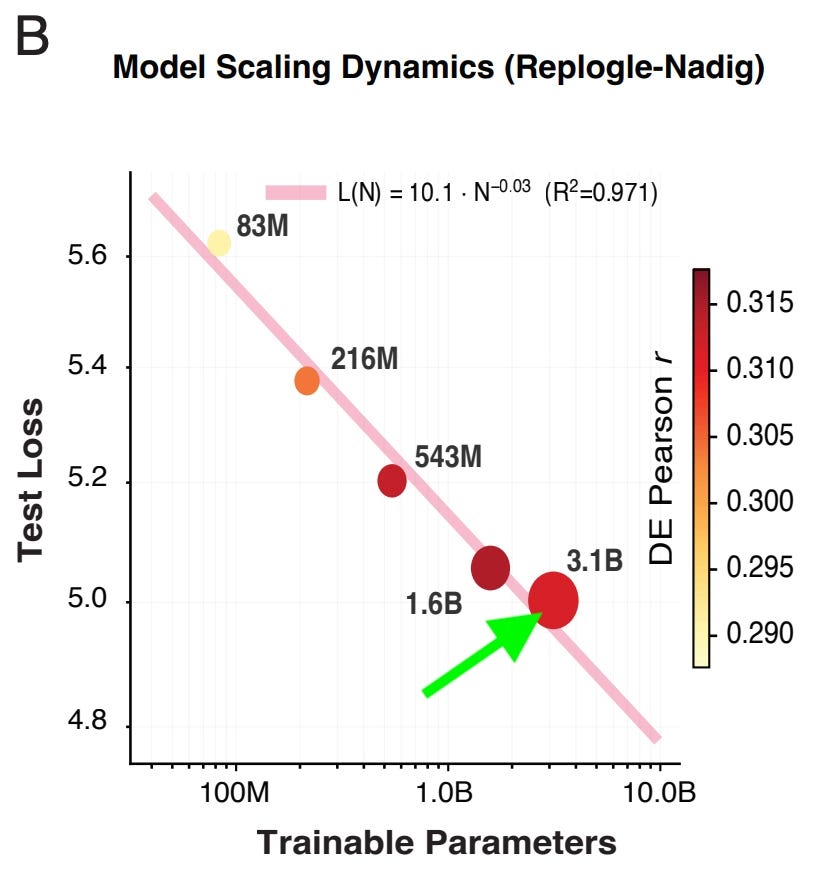 🔬Causal Models Need Causal Data - Xaira’s X-Cell model for Drug Discovery (Bo Wang & Ci Chu, Chief Discovery Officer & Chief AI Scientist) 21.07.2026 1t 29minBet on informationIf test loss flatlines after 1.5B parameters while training loss continues to drop as you scale, that tells you that your model is limited by the amount of information in your data.Training on a single, smallish data set exposed an information gap: the 3.1B model falls off the scaling trend. Neither parameters nor compute will improve performance past this wall. For predicting changes to gene expression, you need more information rich data.This is what Chu and Bo’s teams have done, and here is what ~30x the information buys you:Now we can scale with parameters and training compute! We don’t know how much this effort costed, but we can guess that data collection experiments and infrastructure was a few tens of millions, and compute + headcount + research was a few million. The budget looks like a RL rollout budget, rather than a data rich pre-training one.We were lucky enough to have the two central figures in this story on our podcast. Taking the lead from Ci Chu and Bo Wang, Xaira Therapeutics is betting that information rich data is the key to AI-driven drug development. Chu was recently promoted to Chief Discovery Officer and Bo to Chief AI Scientist, underscoring just how strategic Xaira considers this bet.Reverse engineering the human cellIf you had to figure out how a human cell works, what would you do? A good place to start might be by documenting what genes are expressed (e.g. what RNA is floating around) in different kinds of cells, in different circumstances.That is CELLxGENE, a database of 168M cells built by Chan Zuckerberg Institute that maps each cell to a count of how many times 20K-30K genes were detected in that cell, plus detailed metadata about every cell. A ~4 trillion-entry matrix.If the Protein Data Bank (PDB) unlocked structural biology models (Boltz Episode, ESM/BioHub Episode), CELLxGENE has done the same thing for Virtual Cell models. Like PDB, CELLxGENE has inspired a zoo of AI models of RNA expression; so much so that RNA expression models have become synonymous with Virtual Cell models. Bo Wang built one of the most influential, scGPT, that became the starting point for Xaira’s new model.RNA expression ≠ Virtual CellModels trained on CELLxGENE describe the relationship between cell types and cell states, but they are not good at predicting what will happen if we make changes to RNA expression. Changes in gene expression are highly correlated, and its is difficult (impossible) to figure out what causes what in most cases.If you could “turn the dial down” on one gene at a time, however, then you would be able to observe what is upstream and downstream of a given gene. You could tell if A → B & C or B → A & C or B → A, C → B → … If you did this for all of the genes, then maybe you could train a model that could predict what would happen to a cell if you change a gene (e.g. with a drug or a gene edit). Or maybe you could figure out the least invasive way to change a particular gene’s expression.X-Atlas → X-CellThis is exactly what Chu and Bo’s teams have done. The data set is called X-Atlas and the model is called X-Cell.In this episode, we discuss:* Why the team abandoned autoregression for diffusion* The CRISPR-based experiments that run millions of tests in parallel, and generate the raw data for X-Atlas and X-cell* Generalization to real lab experiments in real human cells* Beating the linear baseline that has outperformed previous models* Justifying a kitchen-sink of priors, and how that stacks up vs. data and architectureBo also shared with us some of the (major) advantages he has as an academic vs. industry leader, and how his labs keep up with the breakneck pace of AI innovation.Check out the full episode on YouTube, or your favorite podcasting platform! This is a public episode. If you'd like to discuss this with other subscribers or get access to bonus episodes, visit www.latent.space/subscribe
 -
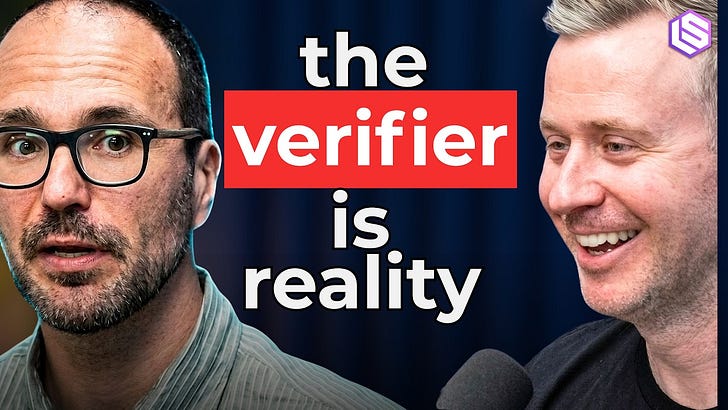 🔬 The Lab of the Future Should Feel Like a Data Center — Andy Beam & Rafa Gómez-Bombarelli, Lila Sciences 16.07.2026 1t 41minImagine a dark warehouse. Racks and racks of devices with wires, tubes, and electronics sticking out. The next AI data center? No. This is Lila Sciences‘ dream for the future of science. A dark warehouse full of AI-guided robotics and lab equipment, cranking out new experiments 24/7, building toward a scientific superintelligence.Their automated lab is almost hypnotizing to watch. They have floating plates zipping around on Wall-E-esque tracks, used vision-language models to control Windows 95 boxes, and created the world’s largest collection of voided warranties. In the process they’ve built a massive library of scientific reasoning tokens. Over 10 trillion of them, all experimentally validated.No warranties were voided in the making of this videoTo say Lila is ambitious is an understatement. Their goal is a scientific superintelligence wired directly into the wet lab. They are all in on the bitter lesson, and the thesis follows from it: a lab is an infinite token generator. Produce data at scale, and the synergies give you a general reasoner that can tackle any scientific problem. They are committing hard. Biology, chemistry, drug discovery, and materials science, all at the same time. Time will tell if it works, but it is an exciting hypothesis.In our latest episode we sat down with Lila’s very own Andy Beam (CTO) and Rafa Gómez-Bombarelli (CSO, physical sciences) and went on a journey through the possibilities of AI-run science, almost as wide-ranging as Lila’s goals.Did we mention they do both materials science and biology? In the same AI science factory? Same time, same lab, same AI. Finally a guest who can settle a long-running debate we’ve had amongst ourselves: is biology or materials science harder?Watch to find out!We discuss:* The internet is spent, science is next. Why Lila thinks the scientific method is the last untapped internet-scale dataset, and why they treat RL as a data generation mechanism with nature as the verifier.* The lab as a data center. Instruments as nodes on a graph, a magnetically levitating “PCI bus” transport layer between them, orchestration as a slurm queue. Andy is not short on analogies.* Why Lila insists it is not an automation company. They optimize for flexibility and generalizability over raw throughput, which means humans stay below the API line wherever automating does not pay.* Your experiment has a runtime. We put Escalante Bio’s question to Andy: if science is the token generator, what is the runtime of your data collection? His answer, in short, is that you cannot make the ribosome go faster. Why Lila bets on fast round-over-round iteration rather than big noisy multiplexed screens, and how Rafa’s team rebuilt a gas sorption measurement to run roughly 2,500x faster.* What is actually in 10 trillion scientific tokens. Not sequences. Experimentally verified reasoning traces, a kind of data that Andy argues exists on the internet in quantities that round to zero.* Breadth as a path to depth. Small molecule chemistry priors transferring to metal organic frameworks for carbon capture, and the claim that the general model beats domain-specific models sample for sample.* If you have the data, what do you need the model for? Sri Kosuri’s koan about the ML-for-drug-discovery business model, and Andy’s answer: the coding model got better because it also read Shakespeare and carnitas recipes.* The serendipity they want to automate. Emily Whitehead survived the first pediatric CAR-T cure only because the doctor treating her happened to know, from pediatric arthritis, which antibody would blunt her IL-6 response. Roll that dice again and you probably lose her. Breadth is how you stop depending on luck.* Move 37 for catalysts. Model suggestions for platinum-group-free electrocatalysts that went from boring, to what a 40-paper expert called stupid, to the best performers they have made.* Six months to in vivo CAR-T data in non-human primates, and the zero-FTE virtual startup commercial model that fell out of it. For context on why that number is startling, AbbVie paid $2.1B for Capstan on the strength of preclinical in vivo CAR-T data.* You cannot have scientific superintelligence if you are just a good test taker. Ken Stanley, who wrote Why Greatness Cannot Be Planned, runs open-endedness at Lila. RL at scale gives you a ruthlessly Vulcan problem solver. Machine creativity is a different thing, and it is the part nobody has solved.* The chain of thought is an unreliable narrator. The model reasons in latent space and only emits tokens. Sometimes it skips the experiment entirely and is still right. So how much do you trust the reasoning versus the verifier?* Reward hacking when the rollout is physical. Chains of thought that collapse into repetition, and a model that got annoyed and swore at the scientist who kept asking it to redo a plate map. What happens when a pathological loop has a wet lab inside it?* The bittersweet lesson. Rafa’s inversion of the bitter lesson: in AI, scaling is a roadmap. In materials, scaling is a filter, because only the things that scale end up mattering.* Not your typical Flagship company. Why a famously single-asset biotech incubator spun out a platform bet, and Andy’s line that if Lila called itself a biopharma it would have a top-three GPU cluster.* Bottlenecks they would remove by fiat. Sim-to-real for physics-based simulation, and the fact that RL training runs at roughly 5% mean FLOP utilization.Watch on YouTube: This is a public episode. If you'd like to discuss this with other subscribers or get access to bonus episodes, visit www.latent.space/subscribe
 -
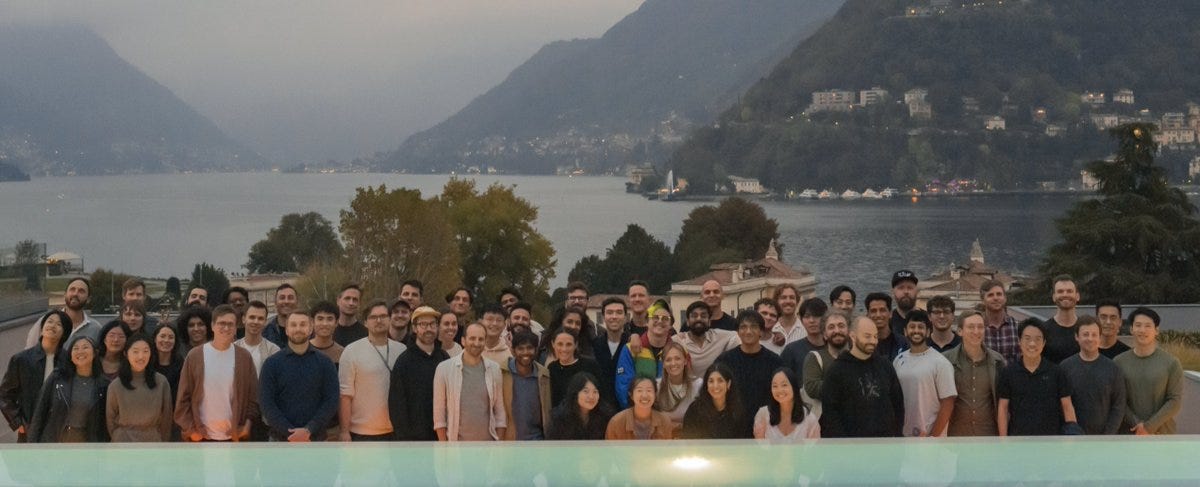 Why AI Infrastructure must evolve for Agent Experience — Akshat Bubna, Modal CTO 08.07.2026 57minWe’ve been running a bit of an Agent Cloud series surveying all the top inference/compute/cloud providers, from Databricks to Daytona to Railway and, even further back, E2B, but we’re excited to conclude this series returning to Modal, which has just raised a monster $355M Series C.The cloud was built for developers. But agents are now changing that.The old infra stack was designed for a human who could read docs, reason through YAML, and understand dashboards to figure out what they need when something broke. While this was painful for developers, it worked since they could fill in missing context in their heads.However, agents don’t have that luxury. Now in this new era of agents, everything has to be tighter.They need a place to write code, run it, inspect the output, change the environment, debug failures, and try again. Fast iteration and feedback loops with all the necessary context are crucial for agents to operate properly. Furthermore, sandboxes are a clear representation of this shift as agents can easily spin up isolated environments. This programmatic infra even extends to research:Two years ago, we were one of the first to cover Modal with CEO Erik Bernhardsson and Alessio designed our favorite LS thumbnail of all time:At the time, Modal was just a teeny little company with a $17M Series A.Today, fresh off their $355M Series C, Modal is one of the clearest examples of the agent cloud future being built in real time: a cloud platform moving past traditional web app assumptions toward the workloads AI actually creates such as elastic inference, sandboxes, GPU burst, post-training, background agents, and infrastructure that agents themselves can operate.In this episode, Modal CTO Akshat Bubna joins swyx and Vibhu to unpack why AI applications don’t fit traditional cloud assumptions, why Kubernetes was never designed for bursty compute-heavy workloads, and why Modal is now shifting from developer experience to agent experience.We go deep on Modal’s AI infra stack: serverless functions, decorator-based infrastructure, elastic inference for custom models, GPU snapshotting, DeFlash, speculative decoding, Auto Endpoints, sandboxes, persistent storage, networked containers, private IPv6, RDMA, multi-node training, and Modal’s capacity pool across 17 cloud providers. Akshat also explains why RL rollouts can require 100,000 sandboxes, why production agents need hard guardrails, why observability may matter more than reading code, and why AI has made infrastructure exciting again.We discuss:* Why Kubernetes wasn’t built for bursty AI workloads* How Modal started as a better runtime before becoming an AI cloud* Why Modal added GPUs before ChatGPT* The shift from developer experience to agent experience* Why observability matters when agents are writing the code* Elastic inference for custom models across audio, video, robotics, and comp bio* GPU snapshotting, cold starts, and why inference workloads are so bursty* Why RL rollouts can require 100,000 sandboxes* DeFlash, speculative decoding, and frontier-level inference performance* Auto Endpoints and making optimized inference easier to deploy* What Modal adds beyond vLLM, SGLang, and raw GPU rental* Modal’s 17-cloud capacity pool and supercloud strategy* Networked sandboxes, sidecars, private IPv6, and RDMA* Serverless multi-node training for post-training and research workloads* Auto-research, model-guided sweeps, and agents launching GPU experiments* Compute strategy, capacity planning, and batch tiers* Why production agents need specialized sandboxes and hard guardrails* Modal’s take on managed agents, CI, Gitpod/Ona, Python, TypeScript, and Modal BenchAkshat Bubna* LinkedIn: https://www.linkedin.com/in/akshat-bubna-188885103* X: https://x.com/akshat_bModal* Website: https://modal.comTimestamps00:00:00 Introduction00:00:39 Modal’s origin and why Kubernetes wasn’t enough00:04:32 Developer Experience → Agent Experience00:06:21 Modal’s AI cloud primitives00:09:14 Sandboxes, agent loops, and proto-Cognition00:12:12 Elastic inference, GPU snapshotting, and 100,000 sandboxes00:15:24 DeFlash, speculative decoding, and Auto Endpoints00:19:59 Production-grade inference beyond raw GPUs00:22:00 Background agents, Ramp Inspect, and the agent lifecycle00:24:08 Modal’s 17-cloud supercloud strategy00:26:40 Networked sandboxes, private IPv6, and RDMA00:32:48 Multi-node training, post-training, and auto research00:37:36 Compute strategy, capacity planning, and batch tiers00:40:55 Open models, real-time AI, and production agent infra00:43:06 Hard guardrails, managed agents, and specialized sandboxes00:46:06 Why AI made infrastructure exciting again00:48:30 Model APIs, differentiated products, and agentic video00:51:50 CI, coding-agent infra, SDKs, and Modal Bench00:57:28 Closing ThoughtsTranscriptIntroduction: Modal, Series C, and the Art PartySwyx [00:00:00]: We’re here with Akshat, CTO of Modal, together with Vibhu. Congrats on your Series C.Akshat [00:00:10]: Thank you.Swyx [00:00:11]: Your party yesterday was amazing.Akshat [00:00:15]: Yeah.Swyx [00:00:15]: From all the photos and all the swag.Akshat [00:00:17]: We had a bunch of art installations, which was fun, seeing, like, our products on pedestals next to, like, Rodin.Swyx [00:00:25]: Very nice. Very nice. When you started, it was not the GPU inference company. Maybe it was in your mind. Take us back to the origin story.Modal’s Origin: A New Runtime Beyond KubernetesAkshat [00:00:39]: I first met Eric, who’s the CEO, through an investor. Back then Eric was already thinking about building, a new runtime, and he got there thinking through why are workflow orchestration products so hard to use. It’s because you have to run them on Kubernetes. Kubernetes is hard to manage. It’s not built for burstiness and, custom images,Swyx [00:01:03]: YeahAkshat [00:01:03]: It has a terrible developer experience.Swyx [00:01:05]: And I’ll, I’ll interjectAkshat [00:01:06]: YeahSwyx [00:01:07]: For listeners, who are new, we interviewed Eric two years ago, and there’s a bit more of the story there from Spotify and all those things.Swyx [00:01:14]: And I came across Eric through Data Council because he did that talk on the serverless container stack that you guys did, which was like, that was my first like, “Okay, I need to take Modal very seriously” moment.Akshat [00:01:26]: Yeah.Swyx [00:01:26]: But it was still very unclear, like, do I need all this for just my data pipelines?Akshat [00:01:33]: Yeah. initially what we were thinking about was if we build a better runtime, it’s a very useful primitive in itself. It’s There’s a lot of things that, get solved by serverless functions, like you can do, ETL stuff, you can do job queues, you can do all this, like, bursty processing, which it turns out every company had needs for. but then we also were thinking about this as like, this is a primitive that we can build a whole collection of products on, which are very verticalized. So perhaps data engineering would’ve been the first one, but we were thinking about inference. Back then it was more classical inference, like computer vision stuff and running XGBoosts and whatnot. But we added GPUs to the product a year before ChatGPT came out.From Serverless Containers to GPU WorkloadsSwyx [00:02:19]: Nice.Akshat [00:02:19]: We just didn’t think it would be that big of a deal.Swyx [00:02:22]: Yeah, just like add A100.Vibhu [00:02:23]: Was there any, like, early key problem that really sparked off why you built it?Akshat [00:02:28]: Yeah. Primarily it’s just, none of the tooling that was out there was built for, one, a really great developer experience, and also there’s a general trend of, a lot of the workloads that we were seeing were very. I wish there was a better word for it, but compute-heavy. Like, they need, one, like, need a lot more resources, so you need to burst up and down a lot, versus like Kubernetes designed for, like, slow scaling and, more for, like, web server use cases. And also there’s just a lot more specialization in, like, what kinds of environments these workloads run in. Like, we had sometimes they need accelerators, sometimes they need different kinds of images, and this is just like a consistent thing that we saw across a lot of companies. That would be the next step.Software-Defined Infrastructure and Decorator-Based DXSwyx [00:03:13]: Yeah. Yeah. Be nice. I don’t know how much this factored into the early story, but I wrote a post when I was at Temporal about infrastructure, software-defined infrastructure or something like that.Akshat [00:03:22]: Yeah, the self-provisioningSwyx [00:03:23]: Self-provisioning.Akshat [00:03:24]: Yeah.Swyx [00:03:24]: Yeah. I can’t even remember my own post.Swyx [00:03:26]: And then you put me on the landing page.Akshat [00:03:28]: Yeah. We really like, the term and so we stole it.Swyx [00:03:32]: Because you had the insight that everything can just be in decorators co-located with the code, right?Akshat [00:03:37]: Yeah.Swyx [00:03:37]: Was that a big part of the originalAkshat [00:03:39]: YesSwyx [00:03:39]: Story or it was just like a DX layer?Akshat [00:03:41]: That was, really important because we really didn’t want people to spend, so much time, writing YAML, and it seemed like you could really condense the surface area of what you’re doing, put it in code so you can operate on it just like you operate on other code, and like build stuff that’s more expressive and dynamic. and so yeah, that was always a very important part.Swyx [00:04:04]: Then the pushback is this is a DSL.Akshat [00:04:07]: Yeah.Swyx [00:04:07]: It’s you’re closed source. I am locked into Modal.Akshat [00:04:11]: Yeah. We never really got pushback for that because the nice thing about Modal is you can bring whatever code you have, and sure, the DSL is at the configuration layer for, what hardware you’re using, how you’re scaling things up, but you still own the code.Akshat [00:04:27]: And that’s, that’s been an important, part of our story, even as we do inference now.Swyx [00:04:32]: Yeah.Vibhu [00:04:32]: How much of do you think still stays the same today? Like if you were to build something today, DevX very important, but I feel like, a lot of this has been changed with just hook it up to an agent, have Claude Code, have Codex implement a tool. there’s very agent native primitives that are different than if I’m doing this myself, right?Developer Experience → Agent ExperienceAkshat [00:04:54]: We’ve changed our SDK team to think about agent experience instead of, developer experience and we think that the same benefits that apply for DX also apply for AX, which is why would you have an agent read through hundreds of Kubernetes files and like write YAML that’s not even typed when it can make a couple of changes in a decorator and it gets this self-provisioning runtime of, being able to see its changes live in action? yeah, it just seems from the customers we talk to, they find Modal is much faster for agents to use versus operating on a different substrate.Swyx [00:05:34]: Yeah, because like you, again, you co-locate the infrastructure requirements to the code that runs it.Akshat [00:05:38]: Yeah.Swyx [00:05:38]: Well, the negative thesis now is that nobody’s looking at their code anymore, so there’s no point.Akshat [00:05:44]: Yeah, people aren’t looking at code. one thing we still see is really important is observability.Swyx [00:05:51]: Yeah.Akshat [00:05:51]: Like how good is your dashboard? And of course, like we have, we push a lot of it to the CLI so the agents can do their own investigation, but you still need humans to go interpret what’s going on and, make judgment calls and whatnot. and that’s I feel like, Maybe more important now than looking at the code itself.Swyx [00:06:11]: Yes, because like, you can try to treat the code as a black box and then use, see the observable action that comes out of it, and then just prompt a change.What Modal Is For: AI Cloud PrimitivesAkshat [00:06:21]: Yeah.Swyx [00:06:22]: So I think it takes a bit of restraint to not specialize, to say, “I want to ship a new primitive,” and then just be general purpose.Swyx [00:06:31]: People ask you, “What are you for?” You’re like, “ I don’t know. We can do this, we can do that.”Vibhu [00:06:36]: Well, I’d be curious to see, like, okay, if we were to ask you, like, what is Modal for even at a high level? There’s a lot you guys do, sandboxes, GPUs, everything. How do you answer?Akshat [00:06:46]: Modal is a cloud platform that’s built for, where we’ve built the primitives from scratch for AI applications. and right now it covers, inference, training, batch processing, and sandbox workloads.Akshat [00:07:00]: But we’re building a lot moreSwyx [00:07:02]: I noticed you didn’t say web server, so there is still a role for, like, the always-on large-scale Kubernetes type things.Akshat [00:07:09]: Yeah, absolutely. We’re, we’re not trying to compete with the renders of the world, because yeah, we think the differentiator for us is the, are the workloads that need specialized compute, need to scale up and down a lot. yeah, they’re, they’re, they’re just shaped differently.Working Alongside Frontier StartupsVibhu [00:07:26]: I think you’re building a lot of it alongside the startups, right? They’re innovating quite a bit, even in your, like, latest blog post. Like, even in the series C, the customers that you mention here, the cognitions, technical ones, ramps and whatnot, they’re, they’re innovating with you, right? And that’s not something AWS is doing directly with.Akshat [00:07:45]: Yeah, absolutely. I think, this is again classic. We’re a small team. We can move really fast. our engineers are working with our customers and figuring it out. Yeah.Swyx [00:07:54]: So my first week at Cognition, I walked in, there was someone wearing a Modal shirt. I was like, “What are you doing here?” They’re like, “Yeah, I just. I am embedded inside of Cog.”Akshat [00:08:05]: Yeah, I think that was Peyton. We sent him overSwyx [00:08:07]: Yeah.Akshat [00:08:07]: Because, the latency of communication was too high otherwise.Swyx [00:08:12]: Yeah, distributed node, you have to - you have to place one and collocate.Vibhu [00:08:16]: Yeah.Swyx [00:08:16]: So I had a, I had direct personal experience, right? So I worked on smol developer three years ago. it was inspired by Claude 1. I think you onboarded me at some point, like, just before, and I was like, “Oh, like, I need some bursty compute. Like, I was just gonna try using Modal.” And it was a, it was a pretty pleasant experience. apparently, I showed up in the board meeting, like the analytics.smol developer, Sandboxes, and Proto-CognitionAkshat [00:08:39]: Yeah, you blew up on Hacker News and,Swyx [00:08:41]: YeahAkshat [00:08:41]: We got a big traffic spike. I. I think the way you used smol developer was Modal functions for running stuff, which was. Like, the, that was a good use case. but then, yeah.Swyx [00:08:53]: Yeah. That - So to me, that was proto-cognition.Akshat [00:08:55]: Right.Swyx [00:08:56]: If only I had, like, stuck to it.Swyx [00:08:58]: Like, that was like, if - did you say draw the tech treeAkshat [00:09:00]: AbsolutelySwyx [00:09:00]: You’re just like, “Yeah, like, probably this will happen.”Akshat [00:09:02]: Yeah. Like, he was so close. You were just rebuilding upon usSwyx [00:09:04]: I just didn’t realize.Akshat [00:09:05]: But the funny story there is at the same time, we were talking to a bunch of customers who needed something like sandboxing.Swyx [00:09:14]: Yeah.Akshat [00:09:14]: This is like twenty-three.Swyx [00:09:15]: Yeah.Akshat [00:09:16]: So we builtSwyx [00:09:17]: You introduced a new API right after that.Akshat [00:09:18]: Yeah.Swyx [00:09:19]: Yes.Akshat [00:09:19]: Like, we built sandboxes in May of twenty-three before anyone was even knew this was gonna be a thing. And the first example we published was, we took smol developerSwyx [00:09:28]: Smol developerAkshat [00:09:28]: And put it in a loop, so the agent can iterate on itself.Swyx [00:09:33]: Loops are hot these days.Vibhu [00:09:34]: It’s the looper.Akshat [00:09:34]: Yeah.Vibhu [00:09:35]: Loops in. When was this, twenty-three?Akshat [00:09:38]: Yeah.Vibhu [00:09:39]: A small check.Akshat [00:09:39]: Yeah.Swyx [00:09:39]: It’s like twenty-three. so the. the, those for listeners, like, the problem was the models are not built for any of this, right?Swyx [00:09:46]: Like, you’re just trying to like. They’re not post-training to understand, like, looping and, like, self-correction and tool calling was there, but, like, also not that great.Akshat [00:09:55]: Yeah.Akshat [00:09:55]: I don’t remember if you used tool calling in this one, but yeah, the models would just diverge after like ten iterations and not produce anything meaningful.Swyx [00:10:03]: Yeah. But like, then. So okay, like now talking to myself three years ago, the answerVibhu [00:10:08]: Of course they will get betterSwyx [00:10:09]: Collect all the failures, build benchmark, and then collect all the, examples, build the RL environmentAkshat [00:10:15]: RightSwyx [00:10:15]: Sell it for like ten billion dollars to Meta.Swyx [00:10:17]: And then also train a model and then sell that for sixty billion dollars to Elon. And this isAkshat [00:10:23]: Yeah, of courseSwyx [00:10:23]: The funny machine. Like, it’s like, it’s about the hardware.Akshat [00:10:28]: It’s hard to have that inherent conviction that the stuff will get that much better.Swyx [00:10:33]: In retrospect, it’s so f*****g obvious.Akshat [00:10:36]: Fair enough.Swyx [00:10:37]: Like, what else were we doing back then? I don’t know. anyway. Yeah. So this. That was the start of your sandboxing journey, right? I feel like it didn’t blow up until, like, last year.Akshat [00:10:49]: Yeah.Swyx [00:10:50]: So there was like a couple years of quietness.Akshat [00:10:52]: Exactly, yeah. We wereVibhu [00:10:53]: I think very underrated product value. Like, my experience with Modal, Charles, before he had joined Modal, met this guy at a hackathon, and he really insisted we wanted to run some small model, not hosted anywhere, and he’s like, “ there’s this cool company, Modal. They’ll like spin up a GPU sandbox, we can throw it on there. They’ll take a Hugging Face link.” And like there’s so much value just right there, right? Like instant hosting, spin it up, spin it down. It’ll stay cold, but we run the demo a few days later, it’ll come back up and like all this stuff in retrospect, like it’s still what we needed like today.Akshat [00:11:27]: Yeah, it’s still needed today. workload shapes have changed a lot as, we run stuff for people with really massive production scale and, there it’s it’s not about scaling from zero to one, but it’s how do we scale really elastically, from like thousand to fifteen hundred GPUs very quickly in a given region. It’s the same shape problem.Elastic Inference, GPU Autoscaling, and Custom ModelsVibhu [00:11:50]: Okay. So you look at, say, Cursor Composer, right?Akshat [00:11:53]: Yeah.Vibhu [00:11:53]: They had a. “We’ll do RL on a model every couple hours.” you guys have a whole version of RL inference gym and whatnot.Vibhu [00:12:01]: When you look at workloads like that, you’re doing train runs where you need to scale up, scale down every hour thousands of GPUs, right? That’s the example for we do need it, right?Akshat [00:12:12]: Yeah. Well, so I’ll, I’ll take a step back and, maybe talk about like how people use Modal today. because our biggest use case is, elastic inference. And the thing we first found product market fit, with was inference for custom models. So we stayed away from the LLM space, and we were serving companies like Suno for audio, Runway for video, robotics, comp bio companies that train their own model elsewhere. But Modal is the best black box that for deployment, scaling to however many GPUs you need as your traffic pattern changes. And we saw all of them like have a very unpredict- predict- predictable, traffic pattern. it’s like diurnal. It’s Some days, like the company will do a launch and, they’ll need like, way more. And it’s not just one model that they deploy. They-- all these companies deploy, lots of different models in different regions, and so the autoscaling problem becomes even harder because then you have to scale within a certain region, and those cycles are offset. So different times you scale up in different regions.Akshat [00:13:20]: So that’s like our sortVibhu [00:13:22]: And thatAkshat [00:13:22]: YeahVibhu [00:13:22]: That in and of itself is a huge category. There’s a bunch of inference providers which, provide this fireworks, does this as a service together, whatnot, Base10. that’s carved into its own niche for language models, at least right now.Akshat [00:13:36]: Yeah. the thing that we have specialized in is the autoscaling aspect.Vibhu [00:13:41]: Yeah.Akshat [00:13:41]: Because we found that it’s not universally true that everyone else can autoscale, and we’ve gone deeper into it on the tech side by, we’ve incorporated GPU snapshotting into the product so we can take the GPU state, like your torch.compile model, snapshot it, and the next cold start is way faster. And so going back to your question, it’s That’s why you need a lot of burstiness for inference. But then people also do a lot of demand training, like for RL stuff, your rollouts are bursty, as you said. People also do a lot of batch jobs. So we’ll see, a lot of companies, before they have a training run, they’ll need thousands of GPUs to run encoding or something like that. And I think those things are much more bursty than. I agree that agents are not that bursty. sandboxes are, except when you’re doing RL. RL is justRL, Batch Jobs, and 100,000 SandboxesVibhu [00:14:28]: Or commerceAkshat [00:14:28]: Insanely bursty.Vibhu [00:14:29]: Yeah.Akshat [00:14:30]: Yeah. Like when you’re doing, rollouts, you sometimes need a hundred thousand sandboxes in your sandboxes.Vibhu [00:14:37]: Yeah. I’m curious if you’ve seen early sparks of continual learning. There are some people, like our friends, ngram, recently announced thisAkshat [00:14:45]: YeahVibhu [00:14:45]: They’re, they’re trying to do training. That also seems like a different workload, right? If you’re doing training twenty-four/seven per se, there’s a very weird dynamic of how you’re using GPUs between people and whatnot, but seems like something you guys would work for.Akshat [00:15:00]: As you said, we’re, we’re fortunate to work with a number of, customers at the frontier and grab some of our customers. and they are taking the primitives we have, and trying to use them in very interesting ways, like continual learning. It’s possible as the stuff gets better, some of that will be part of, our offering as well if, more people need it. but we’re, we’re just waiting to seeVibhu [00:15:23]: YeahAkshat [00:15:23]: How it shakes out.Vibhu [00:15:24]: Is there a primitive that you added after sandboxing that was the next step in the story?LLM Inference, DeFlash, and Speculative DecodingAkshat [00:15:32]: I guess we’ve been going much deeper into LLM inferenceVibhu [00:15:35]: YeahAkshat [00:15:35]: Because we realized that some of the advantages we have with like autoscaling, again, especially in different regions and whatnot, are, not present elsewhere. and the place where we had a gap was we weren’t, working on the model layer itself. Like we were a black box. And, we realized that, we can get to frontier-level model performance, with, by having great people who work on this. And, we’ve been open sourcing a lot of our work, in terms of, Recently, we, shared our work on DeFlash, which is a block-based, speculator, and we’ve open sourced, all of it. So, you can - By using open source DeFlash, you can get the same performance as you would with one of the proprietary providers. And the next thing we’re thinking about hereVibhu [00:16:23]: I thought this wasAkshat [00:16:24]: YeahVibhu [00:16:24]: An interesting blog post as well, right? Like, I think in here you make a claim that. Not a claim, just that how effective speculative deco-decoding really just get to.Akshat [00:16:33]: Yeah.Vibhu [00:16:33]: Anything you wanna point out from this around, what people should know?Akshat [00:16:39]: Yeah, absolutely. the high-level summary is, it would help to describe what speculative decoding is.Vibhu [00:16:44]: Yes.Akshat [00:16:44]: I will, yes.Vibhu [00:16:45]: I think, likeAkshat [00:16:46]: YeahVibhu [00:16:46]: So we’ve covered like Eagle and all thisAkshat [00:16:47]: YeahVibhu [00:16:47]: Like Hydra and all those things, but it was like two years ago.Akshat [00:16:51]: Yeah.Vibhu [00:16:51]: I think it doesn’t hurt, right?Akshat [00:16:52]: Yeah. Speculative decoding is you have a smaller model, called a draft model, predict tokens ahead of the bigger model, and then you have the bigger model, verify all of this, all the tokens are predicted. And the reason it’s faster is if you’re predicting, one token at once, you’re bound by memory bandwidth. But if you can batch the verification of, the draft model, then you’re much more efficient using compute, and it’s faster, and as long as your draft model is producing a lot of tokens that can get accepted, which is called the accept length, you can get a speed up that’s, multiple times of, the original model speed. and well, that’s what we highlight here. It’s Like people talk a lot about we made these kernels faster and whatnot, but improving kernel will only give you like few percentage points of improvement, and, increasing accept length, literally is a multiplicative decreaseVibhu [00:17:47]: Like two to four X.Akshat [00:17:48]: Yeah, exactly.Vibhu [00:17:48]: Without much head-on performance.Akshat [00:17:50]: Yeah. I think it may - you are running a second model, right? So it may be something more expensive in the compute,Vibhu [00:17:57]: I meant quality performanceAkshat [00:17:58]: Probably not by muchVibhu [00:17:58]: But yeah. I thinkAkshat [00:17:59]: So there’s no drop in quality performanceVibhu [00:18:01]: YeahAkshat [00:18:01]: Because you’re always. You’re never accepting a token that the big modelVibhu [00:18:04]: It’s strictly betterAkshat [00:18:05]: YeahVibhu [00:18:05]: Or it’s same.Akshat [00:18:06]: Exactly.Vibhu [00:18:07]: Right. Yeah.Akshat [00:18:08]: And so we’ve been working a bunch on DeFlash, which is a block-based speculator. so it’s instead of predicting, one token at a time, it’s predicting a block. And we’ve been open sourcing our work with it. The next thing for us here is for helping people train speculators and custom models. it’s it’s something that traditionally is very forward-deployed engineering driven, support deployed, engineer driven, like you work with customers and help them do that. And our vision for. This is why we launched Auto Endpoints, is we want to make frontier-level performance available to everyone. And so, we mentioned this in the announcement, we teased it. The next thing we’re, we’re launching is, as you run an auto endpoint, we shadow trafficAuto Endpoints and Frontier-Level PerformanceVibhu [00:18:54]: Do you want to explain what auto endpoints are?Akshat [00:18:57]: Yeah.Vibhu [00:18:57]: I lovely, yeah.Akshat [00:18:58]: Yeah. So, this is, I guess, going back to your Modal is you touch the code, but, sometimes people don’t wanna touch the code, and they wanna get started with an endpoint that works and has all the great performance and, scalability that Modal has. So we’ve made that easier with, a way to create an endpoint from our UI, from the CLI, that has all of our optimizations that we talked about, like the DeFlash stuff already baked in, and there’s full transparency. So we give you the code, you can go run it yourself, and if you want, you can eject out into the full Modal experience, which we see as people get sophisticated, they do wanna tweak the models, they wanna, fine-tune stuff. You can still do all of that. It’s it’s not a black box. And yeah, the next thing, as we teased later in the post, is how do we give you value even beyond this in terms of having your draft models evolve as your data distribution evolves, again, without having to talk to a person and, yeah.Vibhu [00:19:59]: I guess just to understand it directly, you have the GPUs, you have an endpoint that’s compatible, you serve open model. If someone was to do this themselves, what’s the delta that you guys provide? So you do a lot of open source great work on effective inference. how does it compare to, say, I take the same model, 5.2 FP8, take shelf inference engine, vLLM, SGLang, get compute of similar capacity, similar cost. What’s the delta that plugging into something this, like this offers outside of the benefit of, scaling?Production Inference Beyond Raw GPUsAkshat [00:20:34]: It’s interesting because we’ve taken the approach of open sourcing our contributions and upstreaming them. we work closely with the SGLang team. We want the improvements that our team, comes up with to be, there in open source for others to use, even outside of Modal. The benefit to us is we have a team that has significant expertise in terms of if you do have something that is not there, our team can help you get that performance, first. the other thing is with these endpoints, we are way more elastic, as you said, than, anyone else, and you have true scaling to zero. you have true, burstiness, and in practice, that matters a lot more to people than just finding, the GPU and, running Modal code on something.Vibhu [00:21:20]: Yeah. And I will say it’s not that straightforward to just. like what I said is easier said than done, right?Akshat [00:21:26]: Yeah.Vibhu [00:21:27]: It’s I think still for the average person, still hard to just gut check using different. There’s, there’s quite a bit of combinations you can make there. the trade-offs aren’t really known at face value.Akshat [00:21:40]: Yeah. it’s it’s not just that. I think it’s it’s that running production-grade inference is a hard infer problem.Vibhu [00:21:49]: YeahAkshat [00:21:49]: Even if you subtract out the autoscalingVibhu [00:21:50]: YeahAkshat [00:21:51]: Is controlling things like tail latency and, making sure every, request is delivered at least once and whatnot.The Model and Agent LifecycleVibhu [00:22:00]: There’s a lot of innovation that you can do here. I think, it’s very interesting that you’re starting to encroach on, like as you become a full cloud, you’re starting to encroach on other people’s turf.Vibhu [00:22:09]: What will you not do?Akshat [00:22:13]: Well, we wanna follow our users and, make sure they get like a platform that has everything that works well together. so right now we’re focused on the model lifecycle and the agent, lifecycle. so both like going from data prep to training to inference, and then also if I want to deploy a background agent, let’s say, sandbox, do persistent storage, a whole bunch of other stuff.Vibhu [00:22:38]: We talked to Cole, who did, OpenInspect. Yeah.Akshat [00:22:42]: Yeah.Vibhu [00:22:42]: And RealInspect also is on Modal.Akshat [00:22:44]: Yeah. So Ramp Inspect was a great example of a background agent that was really successful because they, were able to use some of the primitives like snapshotting and fast scaling to just have something that feels really reactive and works well.Ramp Inspect and Background AgentsVibhu [00:23:02]: Yeah. That’s the new CTO of, Ramp right there.Akshat [00:23:05]: Yeah, Rahul.Vibhu [00:23:08]: It was really fun. yeah, okay, I think, all very bullish. Like, one of my reflections was also I did not originally. So when I met you guysThe Inference Inflection: CPU, GPU, and Co-LocationVibhu [00:23:19]: You weren’t that much in the GPU game, and now you’re all about, inference. And one of the points that I hinged on for Jensen’s keynote at GTC this year was, what we’re calling like the inference inflection, right? That let’s say in AI workloads or machine learning workloads, it used to be like, let’s call it eight to one GPU to CPU, and now it’s more like one to one, which is like a interesting. Like, - because of how much agents are blocked or call out to this, to CPU heavy stuff the actual, like, limiting factor, like, swings back and forth from GPU to CPU a lot more than it used to be all GPU and then occasional CPU.Akshat [00:24:01]: Yeah.Vibhu [00:24:02]: GPU, CPU. And now it’s like just constantly, and you just have to locate everything.Seventeen Clouds and the Supercloud StrategyAkshat [00:24:08]: Yeah. And that’s one of the things that, again, we see as, something appealing about Modal, which is we’ve built this capacity pool that spans, 17 cloud providers, so we’re, we’re very good at Running on various kinds of cloud capacity across the worldSwyx [00:24:24]: You don’t have your own data centers?Akshat [00:24:25]: We don’t have our own data centers. We just run across a lot of neo cloudsSwyx [00:24:29]: Yeah. AreAkshat [00:24:30]: Metal providers.Swyx [00:24:30]: Yeah. Question mark.Swyx [00:24:31]: Yeah. You’re, you’re running the math, and you’re like, “What’s the cutover point where you’re like.”Akshat [00:24:36]: Yeah, it’s a good question. part of it is we see our differentiator in the software layer, and, being capital light and focusing on the software helps us move really fast. so far it’s worked out well because there are so many other people building data centers that we’re able to work effectively with them, and again, focus on what makes us, special.Swyx [00:24:55]: Yeah.Swyx [00:24:56]: 17 gets you into, like, the local providers sometimes. LikeAkshat [00:25:00]: The,Swyx [00:25:01]: Which was the most interesting one?Akshat [00:25:02]: There are a lot more neo clouds than you expect, and they all have various degrees of, various levels of reliability. And, that’s why it’s something we’ve invested a lot of time in, is building our own reliability layer on top. so if the GPU falls off the bus or something happens, we user workloads are not affected, and that lets us use a lot more capacity than,Swyx [00:25:30]: YeahAkshat [00:25:30]: You as a user would be able to.Swyx [00:25:32]: It’s a useful thing to have because like now everyone knows, like, what layer you are and, like, you optimize for being the super cloud of all clouds.Akshat [00:25:41]: Yeah. That’s, that’s, that’s the idea. and so I guess when you mentioned colocation, that’s, that’s another interesting thing where, one thing we’ve seen is people come to us when they want, very specifically located, CPUs or GPUs, like they wantSwyx [00:25:57]: Oh, they pin it in likeAkshat [00:25:58]: YeahSwyx [00:25:58]: EU?Akshat [00:25:59]: Exactly. Or EU, US.Swyx [00:26:01]: Right. Data resiliencyAkshat [00:26:02]: AustraliaSwyx [00:26:02]: Locality thing or performance or what?Akshat [00:26:04]: It’s either data locality or latency, yeah.Swyx [00:26:07]: Yeah.Akshat [00:26:07]: Like, you want your. They’re running sandboxes and model. They want them to be right next to aSwyx [00:26:10]: Yeah, it’s easy thenAkshat [00:26:11]: YeahSwyx [00:26:12]: To. That is important in all those things. and so, like, you’ve accidentally, I don’t know if it’s accident, but, like, you’ve built the perfect primitive for agents to express themselves. And then, like, it’s almost very funny how every extra development just involves more file system, just involves more CPU.Akshat [00:26:30]: Yeah.Swyx [00:26:31]: Just like the things that you already have. I don’t know much about, if there’s any, like, networking usages that are interesting, but you’ve also done some good work on networking.Networking, Sidecars, Private IPv6, and SandboxesAkshat [00:26:40]: Yeah, that’s exactly right. Like, we’re just taking compute storage and networking and building stuff on that layer, for, again, the stuff people need.Swyx [00:26:49]: YeahAkshat [00:26:50]: We see a few interesting networking things coming up. one is people want networked sandboxes. so we haveSwyx [00:26:57]: For like a Docker cluster type thing.Akshat [00:26:59]: Yeah.Swyx [00:26:59]: Sorry, Docker Swarm. Oh, f**k. What is it called?Akshat [00:27:02]: Compose.Swyx [00:27:03]: Compose type thing.Akshat [00:27:04]: Yeah. So if you want Docker Compose, our sandboxes now support, this thing called sidecars. So you can. A sandbox is a pod of containers, and you can run multiple containers in, a sandbox. also useful because, going back to networking, people want a lot of control over, outbound networking from a sandbox.Swyx [00:27:23]: Yeah.Akshat [00:27:23]: Like, they might wanna run a middle proxy for, like, maybe logging stuff for RL or, controlling how egress can happen to a domain, injecting credentials. and yeah. So we’ve, we’ve had to build a lot of that stuff ourselves.Swyx [00:27:38]: Yeah.Akshat [00:27:39]: But then also sometimes people want, sandboxes spanning multiple nodes to talk to each other, which is an emerging thing we’re seeing. We have support for that for a different reason, and yeah, we’ll see if that becomes stable.Swyx [00:27:52]: Like, just an open socket. It’s a. This is directly like mTLS.Akshat [00:27:56]: We do support that, which is you can, expose a tunnel inside a sandbox.Swyx [00:28:01]: Yeah.Akshat [00:28:01]: And then you can either expose it to public internet or it can be, you can add like a HTTP, auth layer above it. But we have this thing called I6PN, which we haven’t talked about, which is this, like, overlay network using IPv6 addresses. so if Modal containers, within the same workspace, when this is enabled, can address each other using this private IPv6 address, and no one else can.Akshat [00:28:28]: So it’s like private networking, for containers. We built it because we needed it as a primitive for our distributed training product. so we have this other feature, which is you can add a decorator to a function, and you get a cluster of GPUs. and they have RDMA networking. so you can run a distributed training job, that’s truly serverless. and we did the overlay network for that. But then we’ve seen that people are using it for other reasons, and, I’m intrigued to yeah, what would people do with it.Swyx [00:28:59]: Build primitives and let people figure it out, right?Akshat [00:29:01]: Yeah, exactly.Swyx [00:29:02]: You put out a pretty interestingAkshat [00:29:03]: They’re like, they read the docs webpage. Let me use thatSwyx [00:29:06]: YeahAkshat [00:29:06]: Something they never intended to work. This is literally not even in our docs page. People somehow found it, and they’re using it.RDMA, Memory Movement, and Distributed TrainingSwyx [00:29:12]: Huh.Swyx [00:29:14]: The way you portrayed it with, like, RDMA versus TCP, like, very well laid out, but just the transfer speed change at scale for RL, like yeah, you have it, you have it built in. I’m sure someone found it. It’s found it to be a lot more efficient before you made a thing out of it, right?Akshat [00:29:32]: Yeah. And not to split hairs, I guess the overlay network is the TCP overlay network.Akshat [00:29:39]: The reason we have that is you need that to do the key exchange for RDMA before you set up the RDMA network on top of that. but then people found the TCP part.Swyx [00:29:48]: Can I tell you, this is like a big aha moment for me becauseAkshat [00:29:51]: YeahSwyx [00:29:51]: So I review 2,200 submissions for the World’s Fair.Akshat [00:29:56]: Yeah.Swyx [00:29:57]: And then I got this from John OsterhoutAkshat [00:29:58]: HuhSwyx [00:29:59]: Who I don’t know if. Do John Osterhout by name?Akshat [00:30:01]: The name sounds familiar.Swyx [00:30:02]: He published a. He’s a well-known professor, published a lot of interesting software design books, and this is the talk he chose to submit, is on RDMA at Inference. And I’m like, you wouldn’t think that this guy, who is like operating systems guy, would care about RDMA.Akshat [00:30:20]: I, it makes sense to me because I,Swyx [00:30:24]: This is the cloud, right? YeahAkshat [00:30:25]: Like, the way you move around your KV cache and how efficiently you can do it, how efficiently you move, your weights from your training GPUs to your inference GPUs in RL is there’s a lot of degrees of freedom, and it is a systems problemSwyx [00:30:41]: YeahAkshat [00:30:41]: Moving memory aroundSwyx [00:30:42]: YeahAkshat [00:30:43]: Scheduling.Swyx [00:30:44]: This shows you how primitive my understanding of networking stuff is.Swyx [00:30:46]: Is this like the domain of WireGuard as well?Akshat [00:30:50]: Not quite.Swyx [00:30:51]: It’s adjacent?Swyx [00:30:53]: Explain everything.Akshat [00:30:54]: Sure.Swyx [00:30:56]: How do we move memory around GPUs?Akshat [00:30:58]: Well, so sorry. Yeah, that is memory. Sorry, I was talking more, and maybe I was talking like five minutes back, about the private IPv6, addressing that you’ve set up.Swyx [00:31:09]: Yeah.Akshat [00:31:09]: Is it like it’s a VPN?Swyx [00:31:10]: Yeah, it is like a VPN, and yeah, WireGuard is, yeah, you’re right. It is,Akshat [00:31:16]: Right. Yeah, you already moved on to new topicsSwyx [00:31:17]: A similarAkshat [00:31:18]: OkaySwyx [00:31:19]: In the same space, WireGuard is, encrypted and this is,Akshat [00:31:23]: And you don’t need encryption.Swyx [00:31:23]: Yeah.Akshat [00:31:24]: Yeah.Swyx [00:31:24]: This is not encrypted. that’s the main difference. This is TCP and we have eBPF programs that will reject or allow the TCP connection based on whether you’re allowed to do it.Akshat [00:31:35]: Used to involve a full sidecar, but now you have eBPF in the Linux kernel.Swyx [00:31:39]: Yeah.Akshat [00:31:40]: Yeah. I don’t know if this is a natural follow-on to the topic of like my skepticism on distributed training is that while, like, people spend a lot of money on, like, cables to hook up GPUs, and even that is not, like, fast enough, and that’s the bottleneck, is your networking fast enough?Swyx [00:31:59]: Yeah. So I guess you’re talking about fully distributed training like, Dialog or something which is like cross data centerAkshat [00:32:06]: That would be, yes.Swyx [00:32:07]: That’s the extreme.Akshat [00:32:08]: Yeah.Swyx [00:32:08]: You’re in the middle, and then other people would have like the Mellanox cables up in, like, their actual data center.Akshat [00:32:14]: When you run multi-node training on Modal, RDMA, I think Mellanox, is, or InfiniBand is like a, is all seen as RDMA. but it’s a way to bypass the TCP networking stack and, transfer, stuff much faster, between one node, to the other. And we have I think like 3 terabit per second, internal networkingSwyx [00:32:40]: OkayAkshat [00:32:40]: Which is the standard that’s needed.Swyx [00:32:42]: Okay. So I misunderstood whatAkshat [00:32:43]: 50Swyx [00:32:43]: What part of the stack you wereAkshat [00:32:44]: 50 gigs overSwyx [00:32:45]: YeahAkshat [00:32:45]: If you wentSwyx [00:32:45]: YeahAkshat [00:32:46]: RDMA.Swyx [00:32:46]: Okay.Swyx [00:32:48]: Yeah. I, very impressive work.Multi-Node Training, Post-Training, and Auto ResearchSwyx [00:32:52]: So effectively you’re extending like the model philosophy to the training cluster, like, yeah.Akshat [00:32:59]: Yeah. And we’re, we’re not going for like large scale training runs. the thing that we’ve built multi-node training for is, we see a lot of, smaller scale post-training. like, people are post-training like medium sized fund models, so they can, get higher quality on inference. this is a perfect fit, for something like that.Swyx [00:33:21]: Yeah. That is my impression of how a lot of these labs explore branches in post-training and then eventually merge whatever they find in.Akshat [00:33:31]: Yeah. The other use case we’ve seen for multi-node training is even if you have a big cluster, your researchers are still doing small runsSwyx [00:33:38]: YesAkshat [00:33:39]: Having elasticity thereSwyx [00:33:40]: Right, sureAkshat [00:33:40]: Matters a lot more.Swyx [00:33:41]: Yeah. the, like, this is like the current limiting factor for auto research, which is like you need to give your model some GPUs in order for it to completely run.Akshat [00:33:51]: We have a blog post on auto resource and model is,Swyx [00:33:55]: YeahAkshat [00:33:56]: Yeah, like, turns out to be pretty good substrate for that.Swyx [00:33:59]: So my impression is auto research means many things, likeAkshat [00:34:01]: YeahSwyx [00:34:01]: Anything that Andrej coins. Right now it’s still science fair, right? Like not like, I don’t know how many people are doing this.Akshat [00:34:08]: We’re having a golf.Swyx [00:34:08]: Yeah.Akshat [00:34:09]: I thought the same thing.Swyx [00:34:11]: Yeah, you would know.Akshat [00:34:12]: We, like, our internal both training and inference teams use this the general shape of this quite a bit. like we have this one internal repo called auto inference, which essentially we’ve automated our own forward-deployed engineering efforts using, this harness, which is, the agent will just spin up a sweep of different things. It’ll even run like, NVIDIA inside profiler and it’ll like tweak configs and it’ll arrive the right thing. it’ll change your GPUs both from H200 to B200, and works really well.Swyx [00:34:47]: Nice.Akshat [00:34:47]: So yeah.Swyx [00:34:48]: By the way, I enjoy that your forward-deployed engineering is so technical that you have to do these things.Swyx [00:34:52]: It’s very different from forward-deployed engineering from other people.Akshat [00:34:54]: Yeah. For our forward-deployed engineering team is, essentially they’re like applied inference researchers or applied training researchers.Swyx [00:35:02]: Someone told me like they have to be able to build, but they also have to be able to sell. do they have to sell or are they like they’re good, they’re just like post-sale type of thing?Akshat [00:35:09]: It does, being able to talk to a customer and engage effectively with themSwyx [00:35:13]: YeahAkshat [00:35:13]: Matters a lot.Swyx [00:35:14]: They want the same thing.Akshat [00:35:15]: Yeah.Swyx [00:35:15]: ?Akshat [00:35:15]: But it’s it’s not really a sales, thing. We pair them with-- We have solution architects as well that are more on the sales side.Swyx [00:35:23]: Okay. Let’s spend a bit more time on auto research. This is a big focus for for this year. Where does this go? like, have people explored enough? Like, there’s all these beautiful charts of like improve and then level off a bit and then you find the next thing. Is this one abstraction up from normal training? Is that how we think about it, or do you think about it differently? Like model level training versus high, like driven hyperparameter search.Auto Inference and Modal BenchAkshat [00:35:51]: Yeah, like,Swyx [00:35:51]: Someone, some people call it like neural architecture search or whatever, right? Like.Akshat [00:35:54]: Yeah, - So the stuff I’ve seen people do with it is nowhere on the architecture level. It’s pretty much tweaking parameters, but it’s it’s a hyperparameter sweep that’s guided by some model intuition, so it’s like much more efficient than, whatever other, sweep you would have.Swyx [00:36:12]: Yeah, it’s just, it’s just a question of where you want to spend your compute?Akshat [00:36:16]: Right.Swyx [00:36:16]: ‘Cause yeah, you can just throw infinite amounts of money on this and somehow you’ll bang out Shakespeare?Akshat [00:36:22]: Yeah, infinite monkey.Swyx [00:36:24]: Yeah, so like the very good for model. and I think it’s also very important that agents can spin up other agents, can spin up their infrastructure. Like very good for you. how good is our LLMs at generating model code? Like the benefit of existing LLMs is that you are in the data.Akshat [00:36:42]: Yeah. They’re, they’re surprisingly good. I think like pre Cloud 4 they were not, and then now they’re able to shot, stuff out of the box. But we’re playing around with releasing like a Modal Bench for like the harderSwyx [00:36:55]: YeahAkshat [00:36:55]: Things, that the LLMs cannot do yet and maybeSwyx [00:36:59]: What’s an example of that?Akshat [00:37:01]: I think the things that- Sometimes agents struggle with, without right guidance and a skill is, how to, use the rest of our observability. Like how to. Something is failing, like how do you look at the logs and then update the right thing? It’s reasoning about that. But they’re able to shot, likeSwyx [00:37:23]: Yeah. You can just add a skill to it?Compute Strategy and Capacity PlanningAkshat [00:37:26]: Yeah. So we have a Modal skill now that. Which is why we built this Modal Bench. It’s to find things like that, so we can address them in our tool.Swyx [00:37:35]: Tune a skill. Yeah.Akshat [00:37:36]: Yeah.Swyx [00:37:36]: No. it’s it’s good. are you facing any shortages? like we talk a lot about GPU shortages, but also CPU, also memory.Swyx [00:37:44]: Yeah.Akshat [00:37:45]: We have had a lot of growth, which means that, there’s - we’ve had to be much better aboutSwyx [00:37:53]: PlanningAkshat [00:37:54]: Proactive capacity planning.Swyx [00:37:55]: Yeah.Akshat [00:37:55]: So we have,Swyx [00:37:57]: Which by the way, like it’s like a MBA’s like dreamAkshat [00:38:00]: YesSwyx [00:38:00]: Is like just planning this stuff. I think last time you and I talked about something maybe about this.Akshat [00:38:03]: Yeah. we have a really competent team of people that we call, The role is called compute strategy. so yeah, if anyone listening here or wants to work on thatSwyx [00:38:13]: Compute strategy?Akshat [00:38:13]: Yeah.Swyx [00:38:14]: I think,Akshat [00:38:14]: I feel like,Swyx [00:38:15]: I think the normies call it FP&A or something.Akshat [00:38:18]: Well, it’s more It’s it’s not FP&A. It’s it’s There’s a lot of interesting financial questions of like what is the blend between one year and three-year reservations? how do we forecast our own capacity? how do we. especially since our capacity is very fungible across different GPU types and different regions, like you have to model a lot of it. and you also have to have an opinion on how the supply chain is gonna evolve, and then you have to like, take bets,Swyx [00:38:49]: YeahAkshat [00:38:49]: Based on that.Swyx [00:38:50]: Tokenomics.Akshat [00:38:50]: Yeah.Swyx [00:38:51]: This is like probably a not a real point, but, I was trying to think about like what other industries. I was trying to think about like, we cannot be first to like these kinds of problems.Akshat [00:38:59]: Yeah.Swyx [00:39:00]: And what other industries have had this? And I was like, airlines with fuel and like they have to hedge their fuel and like, I think for a long time Southwest because they made like a hero fuel bet, they like were like super low cost becauseAkshat [00:39:12]: OhSwyx [00:39:12]: Compared to everyone else.Akshat [00:39:14]: Yeah. I hadn’t thought about that.Vibhu [00:39:16]: We’re at a fun time too?Akshat [00:39:18]: Yeah. It’s. A lot of the compute business in general, for us is also about being very good about capacity management. That is how you have great unit, economics. but also over time it’s how you can unlock more value for customers. Like, one of the things we’re building now is like a way for customers to get, If they don’t care about latency, like get much cheaper pricing and they’ll get results back in like next 24 hours or something, like a batch tier essentially.Batch Tiers and Latency-Insensitive WorkloadsSwyx [00:39:47]: Yeah.Akshat [00:39:47]: And those are levers we have because we control the whole stack and scheduling and whatnot to give people a sufficientSwyx [00:39:53]: Yeah. I feel like they’re not as popular. Like those, like the Frontier Labs have all those APIs. They’re not as popular as they should be.Akshat [00:40:00]: The demand that we see for something like that is not for LLMs. although sometimes people wanna run evals andSwyx [00:40:08]: OkayAkshat [00:40:08]: Synthetic data prep and there it makes sense.Swyx [00:40:10]: Okay.Akshat [00:40:11]: But it’s from a lot of LLM companies, like people who are doing computational bio, like they have to run really big batch jobs and they don’t care about when they get it back.Swyx [00:40:22]: Yeah. And like they have a reasonable. It’s it’s also like a cousin to the stopping problem of like, will this finish in time?Akshat [00:40:30]: Yeah. You can bound it.Swyx [00:40:33]: Yeah.Akshat [00:40:33]: Like you can give peopleSwyx [00:40:34]: YeahAkshat [00:40:34]: SLAs on it.Swyx [00:40:35]: Yeah. I think what’s, what’s interesting is like the next phase of model.Swyx [00:40:38]: Like what, do people expect from you, now that you’re established and you’re like well-known compute player among all these leading companies. You had an inference launch week, and we talked a little bit about the launches. like what else? Like what else should people know?What Modal Builds NextAkshat [00:40:55]: We are building primitives that make our users’ lives much easier. So, I think for example, with LLM inference, thousands more companies are gonna post-train their own models and, deploy open source models for inference. so we’re thinking a lot about what is the best product shape for that. And, that involves everything from our training gym to, then, endpoints that get frontier-level performance. again, but I haven’t talked to anyone. It looks somewhat different on other verticals. Like, we’re also seeing a lot of real-time, audio-video stuff in there, which is why like, we’re working on things like regional routing, with fallbacks. So you can get GPUs that are as close to users as possible. so you get like low latency for video streaming and whatnot. And then on the agent side, it’s,Akshat [00:41:52]: We’re still working very closely with our customers because stuff is changing so fast in terms of what they need. And, I think beyond sandboxes and persistent file systems, there’s a lot of other things people will need from this agent stack as they build production agents. So yeah, we’re thinking about those other things that fit in there.Swyx [00:42:13]: I want to ask what the other things are.Akshat [00:42:15]: Yeah. I probably should share right now.Swyx [00:42:17]: I think-- I think, okay, so, I do think a lot about the principal components of cloud, and you do talk about compute storage networking.Akshat [00:42:25]: Yeah.Swyx [00:42:25]: Because so far for me, it’s fine. so far for the. the first couple generations of cloud, it’s fine. What’s different, qualitatively different about agents that you need some new permission level? Like a lot of people, okay, and I’ll just kinda spew tokens at you until it like hopefully sparks something.Akshat [00:42:43]: Yeah.Swyx [00:42:44]: Like the new level now is whatever Claude Code does, which is dangerously scope permissions or like allow list by command or like whatever, right? And sometimes they’re like, “Well, okay, we have like this adaptive thinking mode where like, just trust me, bro. I will make the calls for you.” Is that it? like mediated permissions.Hard Guardrails vs. LLM-Mediated PermissionsVibhu [00:43:03]: Now you’re looping it with a goal and letting it roll.Akshat [00:43:06]: Yeah, I’m, I’m skeptical of LLM media permission for stuff that is at the sandbox level because you do want hard boundaries.Swyx [00:43:16]: Yeah.Akshat [00:43:16]: Otherwise, someone can exfiltrate stuff.Swyx [00:43:20]: But likeAkshat [00:43:20]: YeahSwyx [00:43:20]: Maybe that’s old school thinking. Maybe we’re the dinosaurs.Swyx [00:43:23]: Maybe the AI OS or the LLM OS is really the kernel is a goddamn LLM.Swyx [00:43:30]: Like it makes you feel uncomfortable.Akshat [00:43:31]: Yeah, I’m, I’m toldSwyx [00:43:32]: But that’s what trusting the LLM is. Like imagine a spherical cow perfect LLM.Akshat [00:43:36]: Right.Swyx [00:43:37]: That it.Akshat [00:43:39]: Maybe.Swyx [00:43:41]: I wanna test the boundaries, right?Akshat [00:43:42]: Yeah.Swyx [00:43:42]: Like, and I don’t believe that, but I wanna see where I’m wrong ‘cause that’s, that’s the consensus.Akshat [00:43:49]: Yeah. I think you always need hard guardrails when you want, And you can pair those with softer guardrails, right? And that’s gonna be a lot of mediated.Managed Agents and Specialized SandboxesSwyx [00:44:00]: There. I’ll also get you a end with a couple of your commentary on like the ecosystem outside of Modal. Manage agents. Everyone has one. Gemini, OpenAI, Claude, very useful for you, but also like it is their way of starting to edge into your space.Akshat [00:44:17]: Yeah.Swyx [00:44:17]: What’s going on?Akshat [00:44:19]: Yeah, we’re, very excited to partner with Anthropic and some of the other foundation labs, will not name who we’re also working with. the way we see it is the manage agent thing is a great place to start if you’re starting out building an agent and, But then when you get to, building something more production grade, like you’re a company that’s like Ramp that’s building their own, Ramp also runs their accounting agent on us, so their external-facing agent. You need a lot more control over, your compute primitive on things like, what sort - how do you persist different files that the agent has access to, and how do you snapshot and restore? How do you control the networking? maybe you want GPUs. When you get to that point, you kinda want, a specialized sandbox provider, that gives you those things, and that’s the role that we are trying to play.Swyx [00:45:15]: YeahAkshat [00:45:16]: We don’t really have an opinion on the harness, whether it runs - it’s a cloud-managed agent, and you hook it up to Model Sandbox, or you run the harness in Model Sandbox. We’ll see where people converge with that.Swyx [00:45:26]: Yeah. Do you any opinions on like the meta harnesses, or just another layer on top of these things?Akshat [00:45:31]: You mean like the OpenPipeSwyx [00:45:33]: OpenPipe is one. I think Vercel had one, which I can’t remember the name of right now. Fredshot had one. and then, to me, most recently was Data Databricks that had Omnigen. All these are meta harness. Like it’s kinda pseudo agent cloud type things.Akshat [00:45:50]: I personally have not played around with them.Swyx [00:45:53]: Yeah.Akshat [00:45:53]: Build agents with them.Swyx [00:45:54]: Everything’s bullish Modal, as long as it consumes more infra.Akshat [00:45:57]: That’s why we’re focusing on the infra layer. It’s somewhere where our, relative competence is and, also it’s a hard problem to solve.Swyx [00:46:06]: Yeah. I will say like just generally reflecting on that, I don’t know if - if there’s other topics on Modal, but like just generally reflecting as an infra person, not as intense as you, but in that field, this has like been the most exciting time in infra. Like it was boring for a while, and you couldn’t really get people excited about data infrastructure. Like Eric would get on Data Console, everyone just watched the video and like say, “Look at how many sandboxes I can spin up,” and no one gave a crap.Why Infrastructure Became Exciting AgainAkshat [00:46:39]: Yeah.Swyx [00:46:40]: And like now everyone gives a crap.Akshat [00:46:42]: That’s true. It is a very exciting time, and I think a lot of that’s driven by just the amount of scale all of this stuff needs.Swyx [00:46:50]: I think the, like a lot of your initiatives or a lot of your like product directions make sense in retrospect, which is like the best kind, but I wouldn’t necessarily have thought about it myself, which.Akshat [00:47:00]: We need the predictions.Swyx [00:47:02]: I think there’s a lot that you just don’t even see, right? Like you have the batch, you have the voice, you have the multimodal, but what else?Akshat [00:47:10]: What else is coming up for usSwyx [00:47:11]: Yeah. Where do you see things going?Akshat [00:47:13]: Yeah. I, in generalBiotech, Robotics, and Non-LLM AI WorkloadsAkshat [00:47:15]: It’s it’s clear that there’s there’s a huge shift happening. I think one thing that’s not as obvious to people because LLM inference gets talked about so much and is also we work a lot of companies that are, doing things like drug discovery and computational bio, like the Chai Discoveries of the world. Big things are probably gonna happen there. we work a lot of robotics companies that are putting robots in like active deployments and getting good results out of them.Swyx [00:47:45]: Is there Air Gap Modal? Is there a version that is like prem air gapped whatever?Akshat [00:47:50]: No. We,Swyx [00:47:51]: You should cloud only.Akshat [00:47:51]: Yeah.Swyx [00:47:52]: Yeah. Okay. But yeah, so what you’re saying is like because you’re focused on primitives and they’re good primitives, you find use cases in all these kinds of things.Akshat [00:48:01]: Yeah.Swyx [00:48:01]: Probably diversifies you a little bit away from LMS all the time.Akshat [00:48:05]: Yeah, absolutely. We’re, we’- our goal isn’t to only serve the LLM inference market.Swyx [00:48:10]: There are a lot just on the website, the audio,Akshat [00:48:12]: Yeah. We said both onSwyx [00:48:14]: Computational bio images. Yeah, there’s a lot here. There’s QTA TTS, customizing. Oh, Chatterbox. there was customizing Whisper.Akshat [00:48:24]: Okay. Yeah.Swyx [00:48:25]: This screen reminds me of a fallen competitor, which Replicate.Model APIs vs. Differentiated AI ProductsSwyx [00:48:31]: What’s your postmortem on what happened?Akshat [00:48:34]: This is one thing we’ve stayed away from is providing an API for models because I think providing model APIs is some of it ends up serving like a really hobbyist market, which is much less sticky.Swyx [00:48:50]: Yeah.Akshat [00:48:50]: And we’ve always wanted to build for companies that are building products and need more flexibility that’s not just an API.Swyx [00:48:57]: Which you can build an API for a model and this is clearly what it is. But you - but what you’re saying, you can wrap it into a more fully functioning back end that you run.Akshat [00:49:06]: Yeah. So all of our examples, it’s not that spin up this model, here’s an API token, use it. They’re all code.Swyx [00:49:13]: Okay.Akshat [00:49:13]: And so the point is that this is just an example.Swyx [00:49:16]: Starter code.Akshat [00:49:17]: Yeah. But you can tweak it however you want.Swyx [00:49:20]: Yeah.Akshat [00:49:21]: And if you’re like a company building a product, like, computational bio whatnot, yeah.Swyx [00:49:26]: I guess I’m trying to tease out for listenersAkshat [00:49:28]: YeahSwyx [00:49:28]: When does it stop becoming, oh, you’re just an API call and you’re just a wrapper on API to becoming what you call a product, right?Swyx [00:49:36]: Like, what is that layer? Like what-- Like, more lines of code, but like beyond that, what is the substance that people add that qualifies it to be something more?Akshat [00:49:46]: I think there’s a little bit of like a selection effect of like a lot of the companies who do wanna get deeper into that level are probably building something that’s more differentiated. And, I think, an example is like - with LLM inference, originally we, worked with companies that were building their own post-training frameworks or they were, - Ramp early in the day was training their own tokenizer and like swapping out the tokenizer in Llama and whatnot. I’m not saying that’s, that successful, in that case. But a better example is like, let’s say Suno. because Suno, does not use Modal for training.Swyx [00:50:26]: Mikey on the pod. Yeah.Akshat [00:50:27]: But they use Modal for all their inference and that’s because they have like a custom-- They have completely custom model architecture and that means that they have to be at the code level and tweak things that are not, just an API.Swyx [00:50:41]: It’s interesting as well, like we had, Ethan, most recently on the xAI Groq team make a prediction that like the next tier in video gen is not a better video model, it’s a better model or agent that orchestrates video models.Video Agents and Production WorkflowsAkshat [00:50:56]: Oh, interesting.Vibhu [00:50:56]: Language model backbone that can use toolsAkshat [00:50:58]: RightVibhu [00:50:59]: And write code.Akshat [00:51:00]: Like, yes, I can make my second video or my second video from Groq, but I want my minute video.Akshat [00:51:06]: And I’m not going there through normal video gen.Swyx [00:51:10]: Yeah, that’s interesting. I - So we have GPU sandboxes and recently have seen a few companies doing agents that do video manipulation or,Akshat [00:51:22]: Yeah. Give it FFmpeg and just do it.Swyx [00:51:23]: Run FFmpeg. But likeAkshat [00:51:25]: That’s not enough.Swyx [00:51:25]: Yeah.Akshat [00:51:26]: You need to give it Adobe.Swyx [00:51:27]: Yeah, I hadn’t put it together with like it would be a video production thing. in my mind these things were going more towards editingAkshat [00:51:36]: Yeah.Vibhu [00:51:36]: Well, shout out Mantis.Akshat [00:51:37]: I think about this a lot.Swyx [00:51:38]: .Akshat [00:51:41]: Yeah. Sorry.Vibhu [00:51:41]: Luma. Luma Agent is a version of this for video production, but it’s a off.Swyx [00:51:46]: I was gonna get your quick takes, on some other stuff that happensGitpod/Ona, CI, and Runtime SandboxesSwyx [00:51:50]: In recent news and just-just see if you have anything interesting. Gitpod, very like-- somewhat like, different market. They’re in like the CI/CD market, but technically very impressive. I don’t know if you’ve like taken a real look at them.Akshat [00:52:03]: Yeah. we’ve, - People on our team have talked to the Gitpod team and they’- they’re technically very strong.Swyx [00:52:10]: Yeah.Akshat [00:52:10]: I - We’re, we’re very bullish at Modal on the CI market as well becauseSwyx [00:52:15]: OkayAkshat [00:52:15]: There’s, there’s more agents, coding agents.Swyx [00:52:18]: Yeah.Akshat [00:52:19]: They’re gonna run a lot more CI and the primitives there can be much better.Swyx [00:52:23]: I think there’s a lot of wasted CI.Akshat [00:52:25]: Yeah.Swyx [00:52:25]: So is it just like let’s filter? Like what is the highest order bid here in improving CI for agents?Akshat [00:52:32]: Well, there’s a lot of wasted time in CI on likeSwyx [00:52:36]: PreparingAkshat [00:52:36]: Preparing your artifacts and like, getting you to the preparing your dependencies and whatnot.Swyx [00:52:44]: Oh.Akshat [00:52:44]: And, like build systems help with that. But like if you have primitives that are like memory snapshot and restore, can you just run CI more efficiently?Swyx [00:52:55]: Oh, okay. Okay. Okay. Interesting. Yeah. another form of like, demand compute.Akshat [00:53:02]: Yeah, exactly.Swyx [00:53:03]: Yeah.Akshat [00:53:03]: It needs the same again, platform.Swyx [00:53:06]: Yeah. So, for those who don’t know, Gitpod rebranded to Ona.Swyx [00:53:09]: It was like there was this whole thing. I - I like semi-sounded the alarm at Cognition. I was like, “You should take these guys seriously because their infra is very good.”Akshat [00:53:17]: Yeah.Swyx [00:53:18]: And but, then they join OpenAI and, presumably we’ll, we’ll see Codex Cloud from the Ona team.Swyx [00:53:26]: Like which I think would be very strong. - To me, like teams like that can set up the networking and like the secure boundaries for like, and your like agents to have their own cloud each, effectively is what you’re doing and I’m just trying to draw the analogy or the differences if you have studied them. Like what is the philosophical difference?Akshat [00:53:47]: My sense is maybe they didn’t go after the right market at the right time because - I guess also got lucky with like agent use cases really taking off and, needing, like more of like a sandbox shaped thing than like, my understanding is, yeah, GitpodSwyx [00:54:06]: Really sandboxes workAkshat [00:54:07]: Never mindSwyx [00:54:07]: Like CI/Akshat [00:54:08]: YeahSwyx [00:54:09]: Is sandboxes.Akshat [00:54:09]: Yeah.Swyx [00:54:10]: It’s just like build time sandboxes versus runtime sandboxes and it turned out runtime was better.Akshat [00:54:15]: Right. And the difference there is runtime sandboxes have a different configuration surface of like how you configure images, how you like attach like storageSwyx [00:54:25]: Yeah. It’s it’s fascinating. Other people, Astral also OpenAI.Python, TypeScript, and the Future of SDKsSwyx [00:54:30]: Also like Python tooling ecosystem people. Are you still bullish build- building on top of Python? Also recently Modular also got bought by Qualcomm. Just any of your takes there?Akshat [00:54:43]: Yeah. we had Python as our first SDK language because that was the language that people did data and ML in. I now have Go and TypeScript SDKs as well. and our runtime is completely language- It is written in Rust, but it’s it’s not tied to Python by any means. We haven’t seen-- I think with like inference and training stuff, people are still very Python and the interesting thing with like the agent stuff is people use our TypeScript SDK a lot more because they’re not doing anything that needs ML.Akshat [00:55:13]: I don’t think we’ll have to go beyond that super soonSwyx [00:55:16]: YeahAkshat [00:55:16]: ‘cause Python and TypeScript is still Dominant.Swyx [00:55:19]: The last two languages in the world.Akshat [00:55:21]: Yeah.Swyx [00:55:21]: That’s it.Akshat [00:55:22]: Well, English and prompting is the fourth language.Swyx [00:55:25]: English and prompting. I occasionally talk to people who try to build new languages. They’re like, - Even, what’s his face? Brett Taylor, who’s chairman of OpenAI was like, “We need a new language for LLMs.” So no one has come across one, and I keep looking. Python and TypeScript - You have a lot of data plus, but then also they are very imperfect as just as languages themselves. Then my close is, I think Modal used to be a big bet on developer experience.Agent Experience as a Company-Building WedgeSwyx [00:55:52]: And you’ve pivoted the team to agent experience. Is it like the way now, like, do - do, - can entire companies and unicorns, multi-unicorns be built on just having better agent experience? Do you need something else?Akshat [00:56:05]: It’s a big part of our identity. it’s not just, like the very tactical, how does an agent use the CLI, but it’s also how easy is it to spin something up? Like, what is your iteration time when you wanna spin up a new service and, you wanna get something going in prod? in practice, that matters a lot, to people. And, I think it will continue to matter. Like, people are building stuff even faster, and if you give them ways to do it quickly not have overhead, then.Swyx [00:56:37]: I think the debate for me has been, do you do anything differently that is, like, very fundamentally different for developer experience versus agent experience?Swyx [00:56:44]: You seem to be on the side of they’re, they’re like this. They’re like cosineAkshat [00:56:48]: Yeah. We also have a blog post on that.Swyx [00:56:49]: Cosine similarity on, like, zero point nine or whatever.Akshat [00:56:53]: Yeah. pretty much it’s the main shift for us has been, as I said, like, we built this, benchmark, Modal Bench, to see where agents are lackingSwyx [00:57:02]: YeahAkshat [00:57:02]: Literally add surface areas to a product if they’re reaching for something, like maybe this should just be a CLI.Swyx [00:57:09]: They halluc Oh, yeah. They hallucinate their own features.Akshat [00:57:11]: Yeah. And sometimes it makes sense. Like if they’re reaching for this thing, it’s product feedback. Like, give it to them. And then, yeah, moving-- we used to only have, like, logs and metrics in our UI, just moving all those things to the CLI as well, so they’re accessible in that form.Swyx [00:57:26]: Simple as that.Closing: Modal Bench, AX, and ExecutionSwyx [00:57:28]: Cool. Thank you so much. Yeah.Akshat [00:57:29]: Yeah. Thank you.Swyx [00:57:30]: This was great.Akshat [00:57:30]: This was fun.Swyx [00:57:30]: Yeah. It was a great update and, I can see why you guys have succeeded so much. it is really, focus, but also really good execution.Akshat [00:57:39]: Thanks. we have a long way to go.Swyx [00:57:41]: All right. Thank you.Akshat [00:57:42]: Cool. This is a public episode. If you'd like to discuss this with other subscribers or get access to bonus episodes, visit www.latent.space/subscribe
 -
 🔬 The Coolest Diffusion Research Isn't in LLMs — Evan Feinberg & Sergey Edunov, Genesis Molecular AI 01.07.2026 1t 48minThis episode has a fun personal twist: There’s a counterfactual world where I was employee #1 at Genesis Molecular AI, the company behind today’s episode. A certain introduction happened a few weeks too late and I had already happily signed at Atomwise, another ML-for-drug-discovery startup. Same problem, different company. I was certain ML was going to transform small molecule drug discovery. Early results were underwhelming. Useful at times, but nowhere near revolutionary. In the last year I’ve seen signs that ML is finally ready to deliver on my convictions from a decade ago. Genesis is one of the places that might have finally cracked this problem. I was super excited to come full circle and catch up with co-founder Evan Feinberg and CTO Sergey Edunov.If you are at all interested in small molecule drug discovery, we think you will find this fascinating!In our nearly two hour chat we cover:* What is small molecule drug discovery, and why is it hard* Structure prediction as a hotbed of innovation in AI algorithms* How advances in AI elsewhere have enabled stepwise improvements in predictive power* How the community benchmarks are essentially calling AI slop good enough* The Genesis flagship model (PEARL) can routinely hit a threshold that is necessary for real-world applications* New agentic workflows enabled by these highly accurate modelsRead on for more, and also some personal thoughts on the future at the end.The coolest diffusion research is happening at GenesisSergey Edunov came to Genesis from Meta where he led Llama 2 training and Llama 3 pretraining. Sergey was a former physicist who thought he was done with physics after many years of training LLMs. Then, he discovered Genesis, and was blown away with all the novel architecture work they’ve been developing.It probably surprises no one that modern LLM research has not resulted in fundamentally novel or exciting updates in architectures since almost the advent of the transformer — the entire field is using variants on the same idea that came out in the original “Attention is all you need” paper. Sure, some were quite useful (mixture-of-experts in particular allowed for the massive model paradigm we’re at today), but there was very little conceptually exciting.“We sort of had to wait for the right primitive to get created, and that turned out to be diffusion… Actually, some of the most innovative diffusion research that’s happening in our field is happening in 3D structure prediction right now.” — Evan FeinbergThe field of 3D structure prediction on the other hand has been a hotbed of research. Genesis’ recent model PEARL (Place Every Atom at the Right Location) is able to understand protein flexibility, and model not just where the ligand goes, but also make small adjustments of the protein so that the two fit better than either alone. The field knew this was missing for a long time, but it was really hard to model until now.Agentic DiscoveryWhat makes this problem so hard? As Sergey points out, there are 10^60 possible drug-like small molecules. You’ll never be able to search them all, and trying to find the good ones is something like finding a needle in a haystack — except everything except your needle is dangerous.“There are 10 to the 60 drug-like small molecules in the universe… it’s like finding a needle in a haystack, where everything except your needle is very, very dangerous.” — Sergey Edunov“Or finding hay in a needle stack might be a more apt analogy.” — Evan FeinbergTrying to solve the multi-parameter optimization problem is even worse. What makes a strong binder and a molecule with good “ADMET Properties” are oftentimes at tension with each other. For example, a good binder is likely greasy, but a greasy molecule is likely insoluble so it won’t enter the bloodstream and get to where it needs to go!Genesis’ advances in generative AI have now pushed them beyond the threshold where they believe agentic drug discovery loops are finally possible. We all remember the early days of LLMs. They were great chatbots but terrible agents, as small errors compounded rapidly into uselessness. As LLMs got better, the usefulness of agents rapidly improved. Evan and Sergey argue that their models at Genesis recently passed a similar threshold. Their internal agentic drug-discovery system (code named SAPPHIRE) can now iterate like a chemist: look at and reason about poses, form hypotheses, read literature, use internal tools, create candidates for the next iteration. Combining this with automated lab partnerships like the one Genesis has with Incyte, we’re rapidly approaching a time of drug discovery agents running 24/7 making/testing new molecules. Exciting times!Benchmark crisis: Everyone’s favorite benchmark is slopOne surprising point that isn’t talked enough about: the academic field of “co-folding” has settled on a benchmark value of “2 Angstrom RMSD” as a metric for a “good pose”. Evan does not mince words: this threshold is just bad. Perhaps even deceptively bad. For many strong binders, there’s a very clear pose, one that you can even directly resolve in the PDB electron density! And yet, with a 2Å RMSD threshold, you can get the pose quite wrong in ways that might even mislead a medicinal chemist. For example, flip around an aromatic ring, and everything looks reasonable, but you’re no longer modeling the right interactions.Evan makes the strong claim that 1Å RMSD is really the threshold necessary to ensure the core of the molecule is sitting where it needs to be, and models all interactions.“If your model is sitting at 1.8, 1.9 Angstrom RMSD, that’s slop, most likely.” — Evan FeinbergAs a simple example, he points out hydrogen bonds which are responsible for many of the most important interactions in protein-ligand systems. Hydrogen bonds only have a 0.6Å range to be valid! Clearly if you’re accurately resolving all H-bonds, you generally have to be doing much better than the 2Å threshold.This is clearly a hard-fought lesson for Evan and Genesis. In their opinion, the community is stuck on these benchmarks because academics developing methods were not users. Evan does see signs of life, with the use of new metrics such as lDDT for co-folding. Hopefully soon the community can agree that “1.8Å RMSD is slop”, and start hill climbing on this much harder task.For a more thorough exploration of the weaknesses in conventional benchmarks, see the PEARL technical report.PEARL tops OpenBindWhich makes what happened next all the more striking. Near the end of the podcast, we talked about a recent “proof-is-in-the-pudding” moment for Genesis — evaluating their PEARL model on a recently released OpenBind benchmark. This benchmark featured 802 never before seen co-complexes on a target protein EV-A71. This target seems almost custom-chosen to give most classical docking methods a problem. When a ligand binds to the main binding site, the protein moves around to close off the path the ligand used to enter the binding pocket. This process, known as “induced fit” is notoriously hard for traditional methods to model. The tradeoff is easy to understand: treating the protein as a static structure, it becomes difficult to place a ligand in a binding pocket. Treat the protein as dynamic, and now you have to simulate complicated processes that take a long time to resolve.PEARL was able to model the induced fit of the ligand without running long MD simulations. Across the different evaluation metrics, PEARL came out not just ahead, but oftentimes well ahead of any public model. A truly impressive result.“Where PEARL was exceptionally good is figuring out how to move this loop. We are basically correct for every single pose.” — Sergey EdunovEven more exciting, this was done without any fine-tuning, or using any data on the target or homologous targets — the template PDB was released after PEARL’s training cutoff.Where does co-folding go now?As someone who has followed or participated in ML techniques for protein-ligand interactions for almost a decade, I was genuinely impressed with the results that Genesis has released recently. This has been many years in development, and I’m sure Evan and the team had many sleepless nights trying to get to this point. I also think other teams are making similar progress — both Isomorphic and Deep Origin have released results that seem spiritually similar and combine computation, wetlab data, ML, to achieve genuine predictive power that seemed impossible a decade ago. Sadly, all of the above are closed source so there’s no way to honestly compare them. Looking at the results I think there might be a time in the not so distant future where we can consider protein-ligand binding “solved”.I sincerely hope that the academic community can take inspiration from these developments. Once you know something can be done, it’s much easier to execute. Still, I believe that the key enabler in all of the above was the tight integration of ML, large-scale computation, and real-world drug discovery applications. Sadly academia is just not structured in a way that makes such a development easy.With those parting thoughts, we hope you give the podcast a listen! This is a public episode. If you'd like to discuss this with other subscribers or get access to bonus episodes, visit www.latent.space/subscribe
Lignende podcasts


Populær i
Denne podcast optræder også i podcast-hitlister i disse lande.
-
 Bermuda
-
 Libanon
-
 Cypern
-
 Uruguay
-
 Sri Lanka
-
 Oman
Oman
-
 Litauen
-
 Slovenien
-
 Guatemala
-
 Island
-
 El Salvador
-
 Ecuador
-
 Kirgisistan
-
 Bahrain
-
 Estland
-
 Rumænien
-
 Zimbabwe
-
 Argentina
-
 Polen
Polen
-
 Armenien
-
 Tanzania
-
 Ukraine
-
 Chile
Chile
-
 Paraguay
-
 Brunei
-
 Grækenland
-
 Kuwait
-
 Moldova
-
 Malta
Malta
-
 Finland
-
 Schweiz
-
 Nepal
Nepal
-
 Bulgarien
-
 Nordmakedonien
-
 Rwanda
-
 De Forenede Arabiske Emirater
-
 Thailand
-
 Kroatien
-
 Den Dominikanske Republik
-
 Ungarn
-
 Indien
-
 Portugal
-
 Barbados
-
 Serbien
-
 Singapore
-
 Bosnien-Hercegovina
-
 Costa Rica
-
 Tadsjikistan
-
 Liberia
-
 Angola