
Clinical Deep Dives
Med School Audio - Medical Knowledge Reimagined & Learning Made Memorable.
0
Clinical Deep Dives is a podcast for clinicians and learners who want understanding, not just information. Using classic medical and surgical texts as a guide and the generative power of AI, each episode explores ideas with curiosity and clarity. Designed for learning on the move and knowledge that actually sticks.
Folgen
-
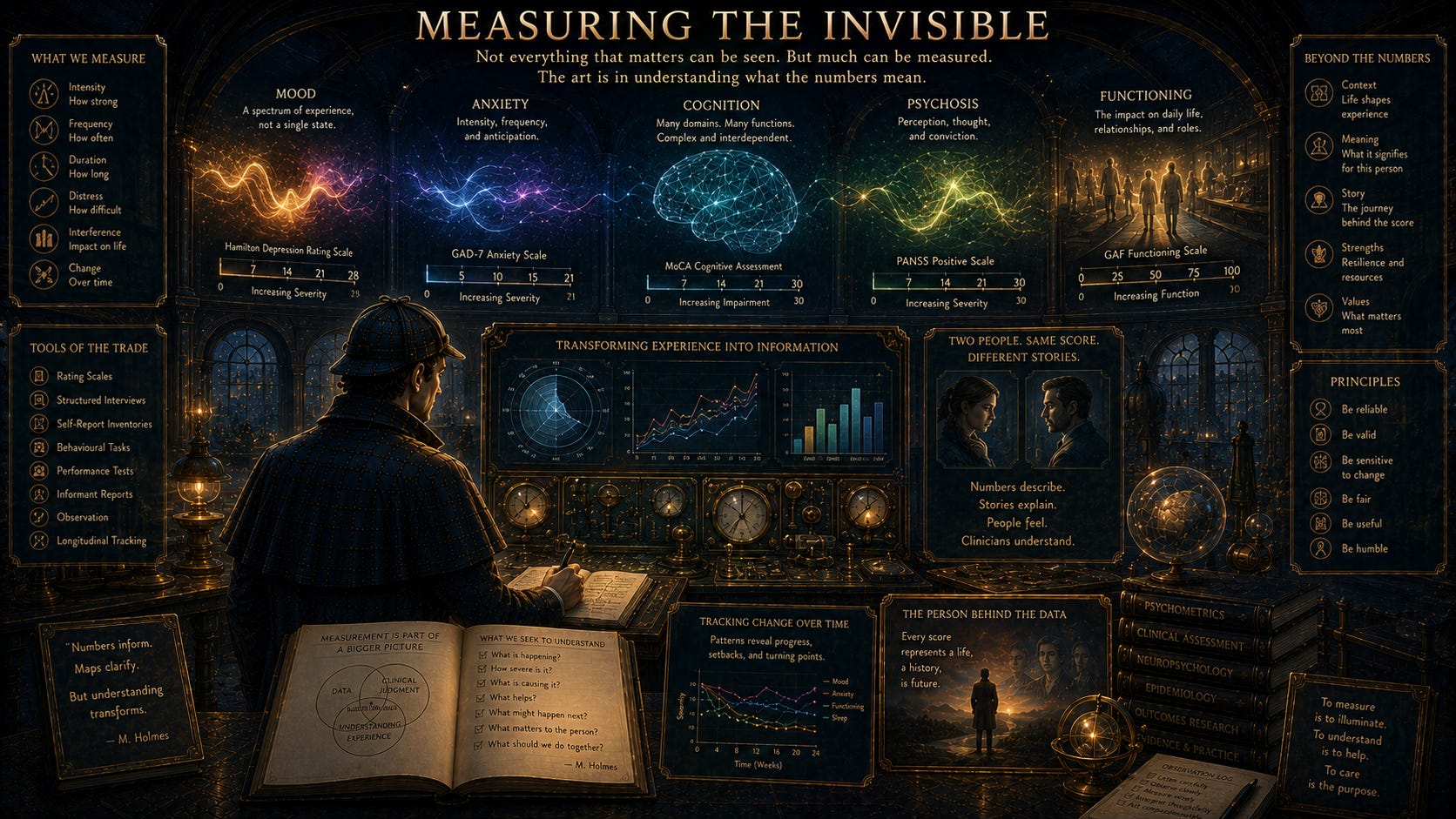 PSYCH 069: Psychiatric Rating Scales 23.07.2026 46Min.This chapter explores psychiatric rating scales, the structured tools used to quantify symptoms, monitor change, and support clinical decision-making. Psychiatry deals with many phenomena that are inherently subjective—mood, anxiety, psychosis, cognition, functioning, and quality of life. Rating scales provide a common language through which these experiences can be systematically assessed.At their core, rating scales transform clinical observations and patient experiences into measurable data. They allow clinicians to assess symptom severity, establish baselines, monitor treatment response, and compare outcomes across individuals, services, and research studies.The chapter reviews the principles underlying scale development, including reliability, validity, sensitivity, and specificity. A useful scale must consistently measure what it claims to measure while remaining sensitive enough to detect meaningful clinical change over time.A central theme is the relationship between measurement and meaning. Numbers can provide clarity, but they can also create false certainty. A score may indicate symptom severity, yet it cannot fully capture an individual’s story, context, strengths, or lived experience. Rating scales are therefore aids to understanding, not replacements for clinical judgement.The chapter also examines widely used instruments across psychiatry, including scales for depression, anxiety, psychosis, mania, cognitive impairment, suicidality, and overall functioning. These tools help standardise assessment while improving communication between clinicians and researchers.Importantly, psychiatric rating scales have become essential for evidence-based practice. They allow clinicians to move beyond impressions alone, providing objective markers that can guide treatment planning and evaluate outcomes.Ultimately, this chapter reminds us that measurement serves understanding. The goal is not to reduce people to numbers, but to use numbers to better understand people.Key Takeaways* Psychiatric rating scales provide structured measurement of symptoms and functioning.* Scales support assessment, monitoring, and treatment evaluation.* Reliability and validity are essential characteristics of useful instruments.* Quantitative measures complement, but do not replace, clinical judgement.* Different scales assess different symptom domains and clinical outcomes.* Rating scales improve communication across clinical and research settings.* Measurement allows objective monitoring of change over time.* Numbers are valuable only when interpreted within the broader clinical context. This is a public episode. If you'd like to discuss this with other subscribers or get access to bonus episodes, visit drmanaankarray.substack.com/subscribe
 -
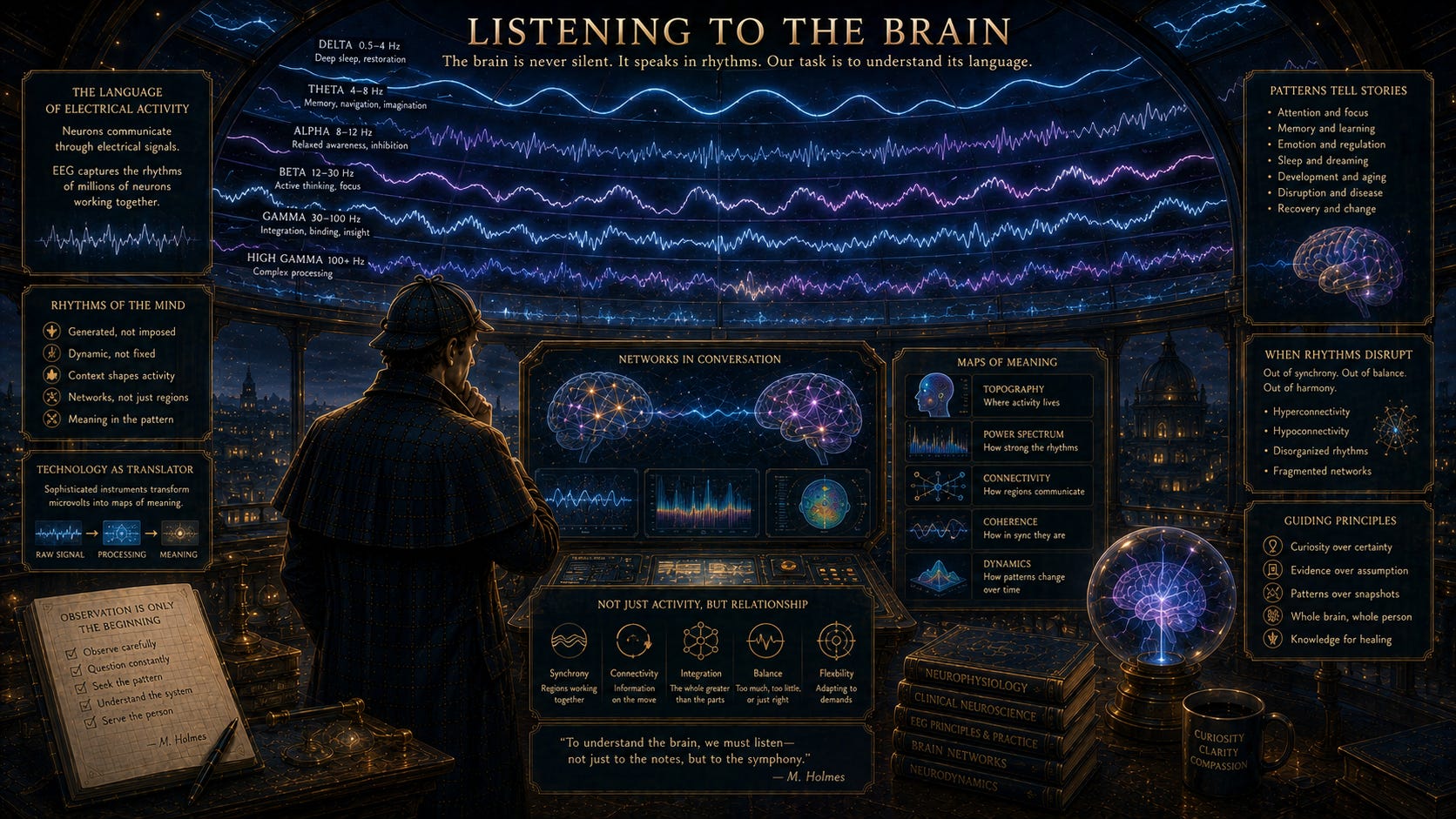 PSYCH 068: Principles and Applications of Quantitative Electroencephalography in Psychiatry 22.07.2026 51Min.This chapter explores quantitative electroencephalography (qEEG), a powerful technique that transforms the brain’s electrical activity into measurable patterns that can be analysed, compared, and interpreted. While conventional EEG allows clinicians to observe brain wave activity, qEEG extends this capability by applying advanced computational methods to reveal underlying neural dynamics.Every thought, emotion, sensation, and behaviour emerges from coordinated electrical activity across vast neural networks. qEEG seeks to quantify these patterns, identifying rhythms, connectivity, synchronisation, and deviations from expected functioning. Rather than examining individual brain waves alone, it studies how entire systems communicate and organise themselves over time.The chapter introduces the fundamental principles of EEG recording, including frequency bands such as delta, theta, alpha, beta, and gamma activity. These rhythms reflect different states of brain function, ranging from deep sleep and relaxation to attention, cognition, and complex information processing.A central theme is the distinction between observation and interpretation. Abnormal electrical patterns do not automatically indicate psychiatric illness, nor does a normal qEEG exclude significant psychopathology. The challenge lies in understanding how brain activity relates to cognition, behaviour, symptoms, and clinical outcomes.The chapter also examines the applications of qEEG in psychiatry, including research into attention-deficit/hyperactivity disorder, mood disorders, anxiety disorders, schizophrenia, cognitive impairment, and treatment monitoring. It highlights both the promise and limitations of the technology, emphasising the importance of integrating qEEG findings with broader clinical assessment.Ultimately, qEEG represents an attempt to visualise the dynamic language of the brain. It offers a glimpse into patterns that are otherwise invisible, revealing how neural systems organise themselves in health and disease.Key Takeaways* qEEG quantifies and analyses the brain’s electrical activity.* Brain function is reflected through rhythmic patterns across multiple frequency bands.* qEEG examines connectivity, synchronisation, and neural network organisation.* Electrical patterns must be interpreted within a broader clinical context.* qEEG contributes to psychiatric research and selected clinical applications.* Abnormal findings do not automatically establish psychiatric diagnoses.* Neural activity reflects dynamic communication between brain systems.* qEEG provides a window into the functional organisation of the living brain. This is a public episode. If you'd like to discuss this with other subscribers or get access to bonus episodes, visit drmanaankarray.substack.com/subscribe
 -
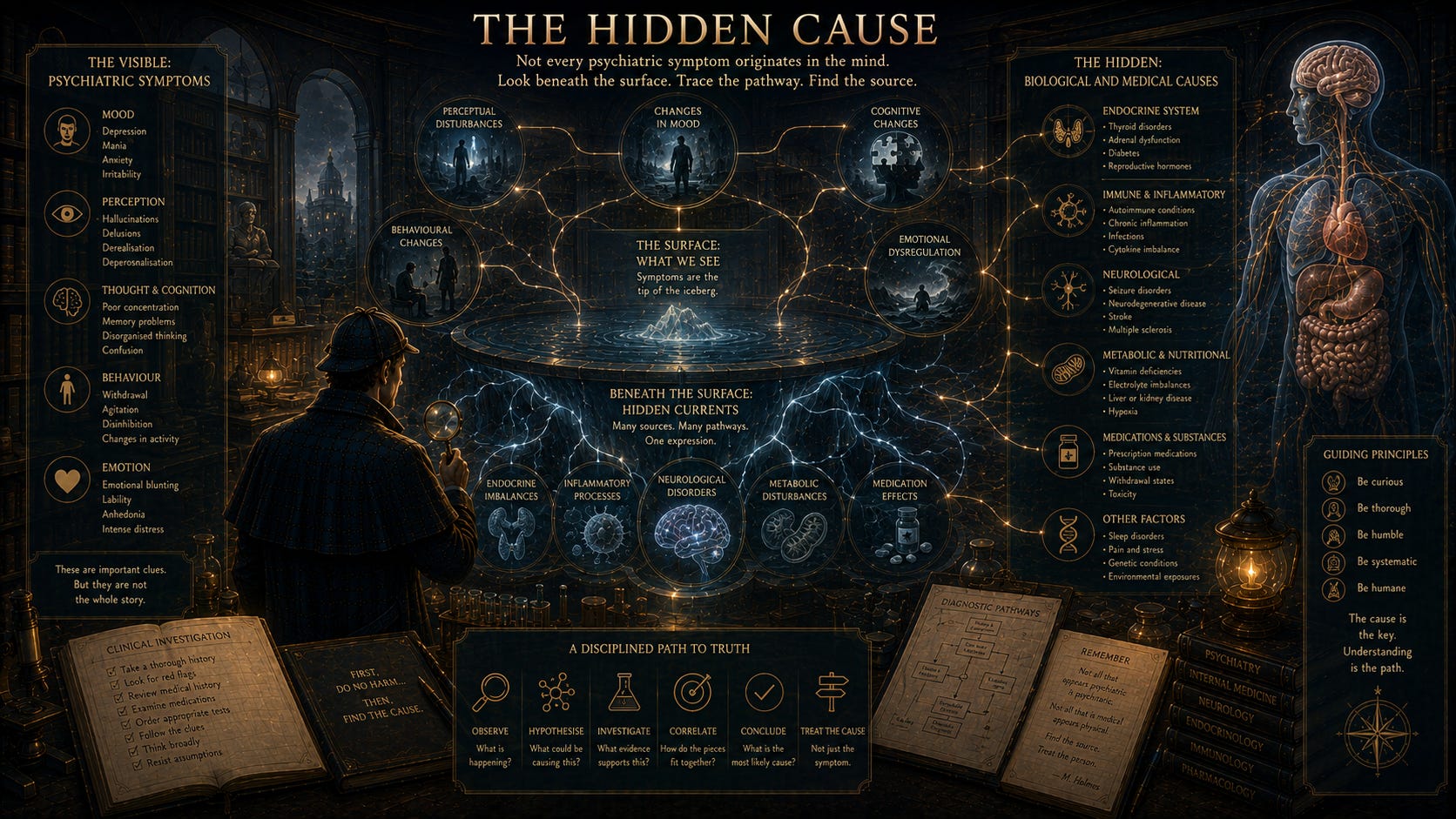 PSYCH 067: Medical Assessment and Laboratory Testing in Psychiatry 21.07.2026 1Std. 12Min.This chapter explores one of the most important principles in psychiatric practice: psychiatric symptoms do not always originate from psychiatric illness. The assessment of patients presenting with psychological or behavioural symptoms requires careful consideration of underlying medical, neurological, endocrine, infectious, metabolic, and pharmacological causes.Psychiatry occupies a unique position at the intersection of medicine and mental health. Changes in mood, cognition, perception, behaviour, or personality may arise from disorders affecting virtually any organ system. A comprehensive medical assessment therefore becomes an essential component of responsible psychiatric practice.The chapter examines the role of physical examination, medical history, medication review, and laboratory investigations in psychiatric assessment. These tools help clinicians identify conditions that may mimic, contribute to, or complicate psychiatric presentations. Disorders of thyroid function, vitamin deficiencies, autoimmune disease, substance use, infections, neurological conditions, and medication side effects all have the potential to present as psychiatric symptoms.A central theme is differential diagnosis. The clinician must continually ask whether symptoms represent a primary psychiatric disorder, a medical condition affecting the brain, a substance-related phenomenon, or an interaction between multiple factors. Psychiatric diagnosis often depends as much on excluding alternative explanations as it does on identifying characteristic symptom patterns.The chapter also highlights the limitations of testing. Laboratory investigations do not replace clinical judgement. Tests are most valuable when guided by thoughtful clinical reasoning rather than routine or indiscriminate ordering.Importantly, medical assessment reinforces a holistic understanding of patients. The artificial boundary between mind and body often dissolves under close examination. Biological, psychological, and social factors interact continuously to shape human experience.Ultimately, this chapter reminds us that good psychiatry begins with good medicine. Understanding mental illness requires understanding the whole person.Key Takeaways* Medical conditions can mimic or contribute to psychiatric symptoms.* Comprehensive psychiatric assessment includes medical history, examination, and appropriate investigations.* Laboratory testing helps identify reversible or treatable causes of symptoms.* Differential diagnosis is essential in psychiatric practice.* Medication effects and substance use must always be considered.* Tests should be guided by clinical reasoning rather than routine practice alone.* Mind and body are deeply interconnected systems.* Effective psychiatry requires a strong foundation in general medicine. This is a public episode. If you'd like to discuss this with other subscribers or get access to bonus episodes, visit drmanaankarray.substack.com/subscribe
 -
 PSYCH 066: Personality Assessment of Adults 20.07.2026 1Std. 14Min.This chapter explores the assessment of personality—the enduring patterns of thinking, feeling, relating, and behaving that shape how individuals experience themselves and the world around them. While psychiatric symptoms may fluctuate across time, personality provides the deeper framework through which those experiences are interpreted and expressed.Personality assessment seeks to understand the characteristic ways people perceive reality, regulate emotions, form relationships, respond to stress, and construct their identities. It moves beyond diagnosis alone, asking not simply what disorder is present, but who the person is.The chapter examines the major approaches to personality assessment, including clinical interviews, behavioural observation, self-report measures, structured personality inventories, and projective techniques. Each method provides a different perspective on the individual’s psychological functioning, strengths, vulnerabilities, and interpersonal style.A central theme is that personality exists along dimensions rather than rigid categories. Traits such as emotional stability, conscientiousness, openness, agreeableness, and extraversion vary across individuals and influence how people adapt to life’s challenges. Personality pathology often reflects extreme, inflexible, or maladaptive expressions of otherwise normal traits.The chapter also highlights the importance of understanding personality in clinical practice. Personality influences symptom presentation, treatment engagement, therapeutic alliance, coping strategies, resilience, and long-term outcomes. Two individuals with the same diagnosis may have profoundly different experiences because of differences in personality structure.Importantly, personality assessment seeks not only to identify dysfunction but also to uncover strengths. Adaptive traits, coping capacities, values, motivations, and relational resources often become crucial foundations for recovery and growth.Ultimately, this chapter reminds us that effective psychiatry requires more than identifying illness. It requires understanding the unique psychological architecture of the person who carries it.Key Takeaways* Personality reflects enduring patterns of thinking, feeling, and behaving.* Personality assessment helps explain how individuals experience and respond to the world.* Multiple assessment methods provide complementary perspectives on personality functioning.* Personality traits exist on dimensions rather than strict categories.* Personality influences symptom expression, coping, and treatment outcomes.* Assessment identifies both vulnerabilities and strengths.* Personality pathology often reflects inflexible or extreme trait patterns.* Understanding personality is essential for individualised psychiatric care. This is a public episode. If you'd like to discuss this with other subscribers or get access to bonus episodes, visit drmanaankarray.substack.com/subscribe
 -
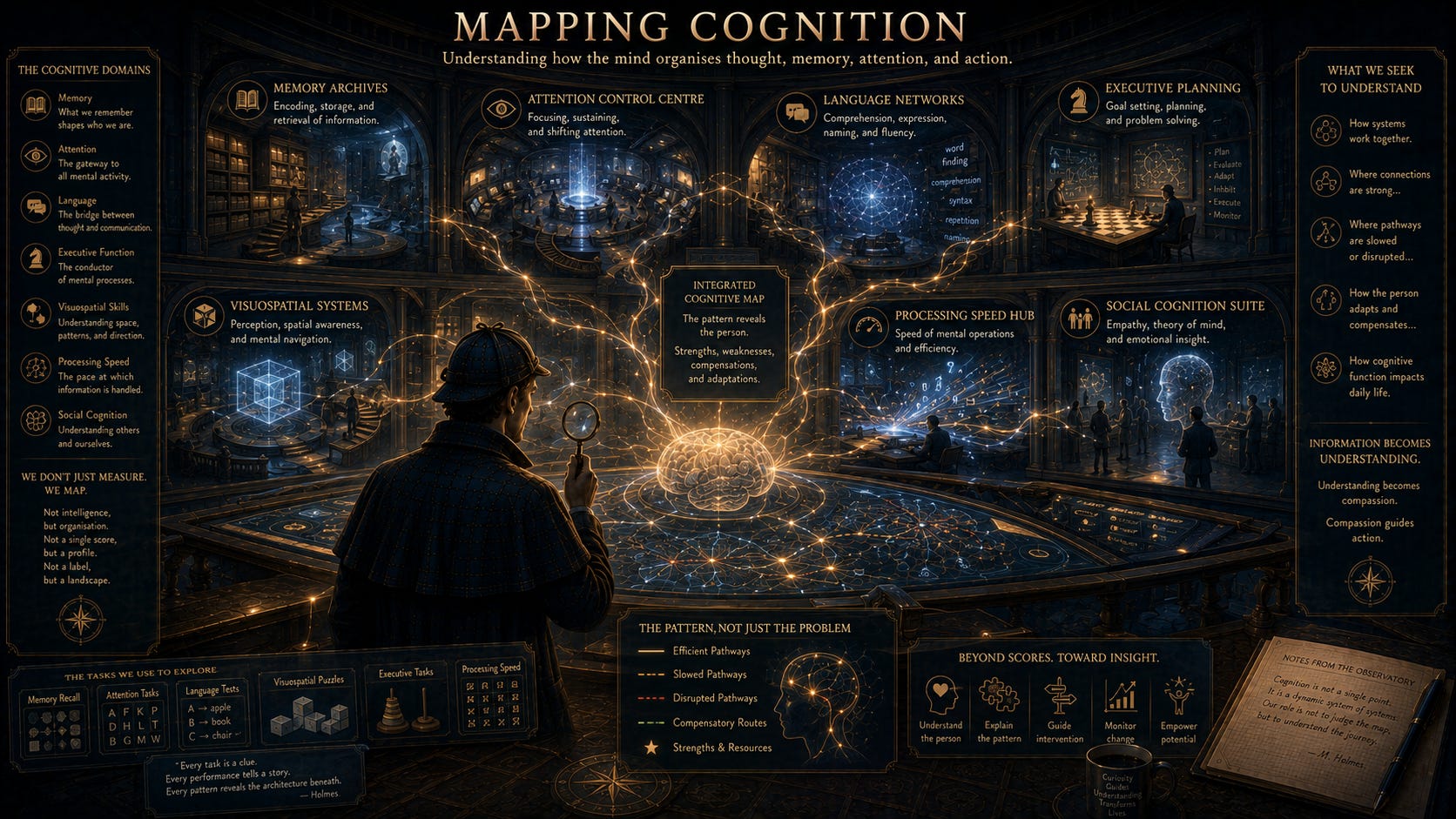 PSYCH 065: Neuropsychological Assessment of Adults 19.07.2026 50Min.This chapter explores the science and practice of neuropsychological assessment—the systematic evaluation of cognitive functioning to better understand the relationship between brain, behaviour, and mental processes.While psychiatric interviews reveal subjective experience and emotional functioning, neuropsychological assessment examines how the brain performs its most complex tasks. Attention, memory, language, executive function, processing speed, visuospatial skills, and social cognition are assessed through carefully designed tests that reveal patterns of strengths and weaknesses.The chapter highlights that cognition is not a single ability but a collection of interconnected systems. A person may remember conversations yet struggle with planning. Another may have intact intelligence but impaired attention. Neuropsychological assessment helps identify these patterns and localise where disruption may be occurring within broader brain networks.A central theme is differentiation. Similar symptoms can arise from very different causes. Memory complaints may reflect neurodegenerative disease, depression, anxiety, sleep disorders, medication effects, or normal ageing. Neuropsychological testing helps disentangle these possibilities by examining how cognitive processes function under structured conditions.The chapter also explores the role of assessment in diagnosis, treatment planning, rehabilitation, capacity evaluation, and monitoring change over time. Importantly, neuropsychological findings are interpreted within the broader context of education, culture, language, personality, and life experience.Beyond identifying deficits, assessment also reveals preserved abilities and compensatory strengths. The goal is not simply to measure impairment, but to understand how an individual thinks, learns, remembers, and adapts.Ultimately, neuropsychological assessment provides a unique window into the functioning mind—transforming patterns of performance into insights about the underlying architecture of cognition.Key Takeaways* Neuropsychological assessment evaluates cognitive functioning systematically.* Multiple cognitive domains are examined, including memory, attention, language, and executive function.* Patterns of strengths and weaknesses can help identify underlying neurological and psychiatric conditions.* Similar symptoms may arise from very different cognitive mechanisms.* Assessment supports diagnosis, treatment planning, rehabilitation, and capacity evaluation.* Cognitive performance must be interpreted within personal, educational, and cultural contexts.* Neuropsychological testing identifies both impairments and preserved strengths.* Cognition provides important clues about how brain systems are functioning. This is a public episode. If you'd like to discuss this with other subscribers or get access to bonus episodes, visit drmanaankarray.substack.com/subscribe
 -
 PSYCH 064: Practice Guidelines in Psychiatry 18.07.2026 48Min.This chapter explores the role of practice guidelines in modern psychiatric care. As psychiatry has evolved into an increasingly evidence-based discipline, clinicians have been challenged to integrate scientific knowledge, clinical expertise, and individual patient needs into coherent treatment decisions. Practice guidelines serve as navigational tools within this complex landscape.At their core, practice guidelines are structured recommendations developed through systematic review of available evidence. They aim to assist clinicians in making informed decisions about assessment, diagnosis, treatment, and ongoing care. Rather than replacing clinical judgement, they provide a framework for consistent, effective, and scientifically grounded practice.The chapter examines how guidelines are developed, including the evaluation of research evidence, expert consensus, and consideration of risks and benefits. It highlights the hierarchy of evidence and the challenges involved in translating research findings into real-world clinical recommendations.A central theme is the tension between standardisation and individualisation. Guidelines offer pathways, but patients rarely fit perfectly into algorithms. Comorbidity, cultural context, personal preferences, treatment history, and psychosocial circumstances all influence decision-making. The skilled psychiatrist therefore uses guidelines as a compass rather than a rulebook.The chapter also explores the benefits and limitations of guideline-based care. Properly applied, guidelines improve quality, reduce unwarranted variation, and support patient safety. However, rigid adherence can risk overlooking the uniqueness of individual patients and the complexity of clinical reality.Ultimately, psychiatry remains both a science and an art. Evidence provides direction, but wisdom lies in knowing how to apply it to the person sitting in front of you.Key Takeaways* Practice guidelines are evidence-based recommendations that support clinical decision-making.* Guidelines are designed to complement, not replace, professional judgement.* Evidence quality and expert consensus underpin guideline development.* Standardisation can improve quality and consistency of care.* Individual patient factors must always influence treatment decisions.* Guidelines provide direction but cannot account for every clinical scenario.* Effective psychiatry balances evidence, expertise, and patient values.* The best clinical decisions emerge from integrating science with individualised care. This is a public episode. If you'd like to discuss this with other subscribers or get access to bonus episodes, visit drmanaankarray.substack.com/subscribe
 -
 PSYCH 063: The Psychiatric Report and Outline for a Psychiatric Examination 17.07.2026 43Min.This chapter explores the art and discipline of transforming psychiatric assessment into a structured psychiatric report. While interviews and examinations gather information, the report is where that information is analysed, organised, and communicated.Psychiatric reports serve many purposes. They guide clinical care, facilitate communication between professionals, support legal and administrative processes, and create a lasting record of clinical reasoning. A well-written report does more than document findings—it demonstrates how conclusions were reached.The chapter examines the structure of a comprehensive psychiatric examination and report. It moves systematically through identifying information, presenting concerns, psychiatric history, medical history, personal history, family history, mental status examination, formulation, diagnosis, and recommendations.A central theme is the distinction between information and interpretation. Facts alone do not create understanding. The psychiatrist must evaluate reliability, identify patterns, weigh competing explanations, and integrate multiple sources of information into a coherent formulation.The report becomes a bridge between observation and judgement. Symptoms are not simply listed; they are understood within a broader context of development, personality, relationships, biology, culture, and life circumstances.The chapter also emphasises clarity and objectivity. Effective reports avoid unnecessary complexity while remaining sufficiently detailed to support clinical decisions. Precision matters because reports often influence treatment plans, legal proceedings, occupational decisions, and future assessments.An important challenge lies in balancing descriptive neutrality with clinical interpretation. The psychiatrist must accurately represent the patient’s experience while also providing professional opinions grounded in evidence and reasoning.Ultimately, this chapter demonstrates that psychiatric reporting is not merely an administrative task. It is the process through which clinical observations are transformed into meaningful understanding and practical action.Key Takeaways* Psychiatric reports organise assessment findings into a structured and clinically useful format.* Effective reports distinguish clearly between observation, history, and interpretation.* Comprehensive psychiatric examinations integrate multiple domains of information.* Clinical formulation connects symptoms to broader biological, psychological, and social factors.* Objectivity, clarity, and precision are essential principles of report writing.* Reports communicate clinical reasoning, not merely clinical findings.* Documentation influences treatment, communication, and medico-legal decision-making.* Good psychiatric reports transform information into understanding. This is a public episode. If you'd like to discuss this with other subscribers or get access to bonus episodes, visit drmanaankarray.substack.com/subscribe
 -
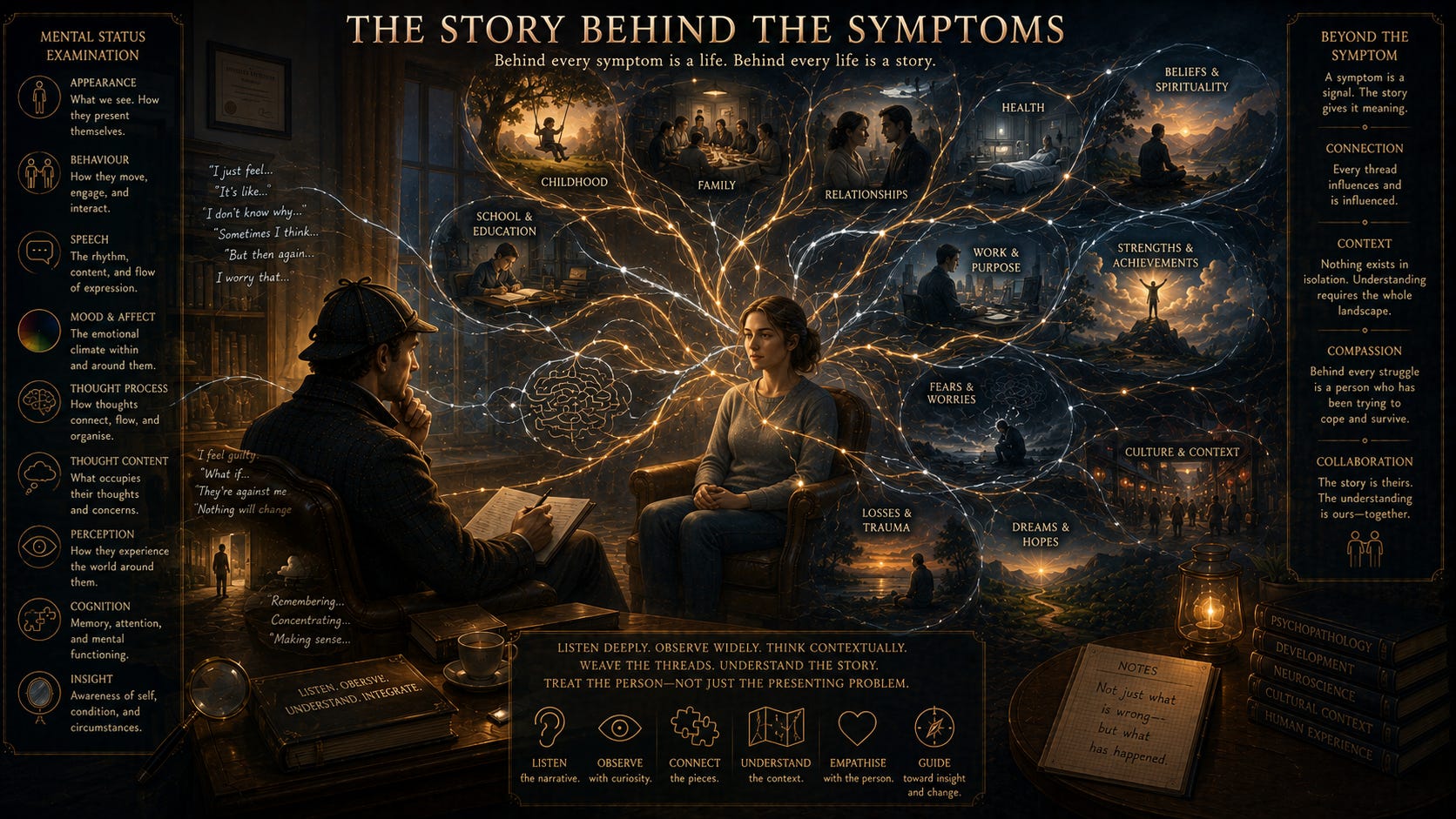 PSYCH 062: Psychiatric Interview, History, and Mental Status Examination of the Adult Patient 16.07.2026 58Min.This chapter explores the foundations of psychiatric assessment: the psychiatric interview, the comprehensive clinical history, and the mental status examination (MSE). Together, these form the primary tools through which psychiatrists understand the experiences, symptoms, strengths, and struggles of the people they seek to help.Unlike many areas of medicine, psychiatry relies heavily upon narrative. The patient’s story is not merely background information—it is often the central source of diagnostic and therapeutic insight. The interview therefore becomes both an investigative process and the beginning of a therapeutic relationship.The chapter examines the structure of the psychiatric interview, including techniques for establishing rapport, gathering information, and creating an environment where sensitive experiences can be explored safely. Effective interviewing requires both scientific rigour and human connection. Information must be gathered systematically, yet patients must feel heard rather than interrogated.A detailed psychiatric history provides context for current symptoms. Presenting concerns are understood within broader developmental, medical, social, occupational, cultural, and family histories. Patterns emerge not from isolated facts but from the relationships between them.The Mental Status Examination offers a structured snapshot of psychological functioning at a particular moment in time. Appearance, behaviour, speech, mood, affect, thought processes, thought content, perception, cognition, insight, and judgement are all examined systematically. Together, they transform subjective observations into clinically meaningful findings.The chapter also emphasises that assessment extends beyond symptom collection. Skilled clinicians listen for themes, contradictions, emotions, values, strengths, and vulnerabilities. What is not said can sometimes be as important as what is disclosed.Underlying the entire process is the challenge of balancing objectivity and empathy. The clinician must gather reliable information while remaining attentive to the person’s lived experience.Ultimately, this chapter demonstrates that psychiatric assessment is not simply about diagnosing illness—it is about understanding people.Key Takeaways* The psychiatric interview is the foundation of psychiatric assessment.* Building rapport is essential for obtaining accurate and meaningful information.* Psychiatric history integrates presenting problems with broader life context.* The Mental Status Examination provides a structured assessment of current psychological functioning.* Observation is as important as questioning.* Effective assessment requires both empathy and clinical objectivity.* Psychiatric formulation emerges from patterns across history, examination, and observation.* Understanding the person is as important as identifying the diagnosis. This is a public episode. If you'd like to discuss this with other subscribers or get access to bonus episodes, visit drmanaankarray.substack.com/subscribe
 -
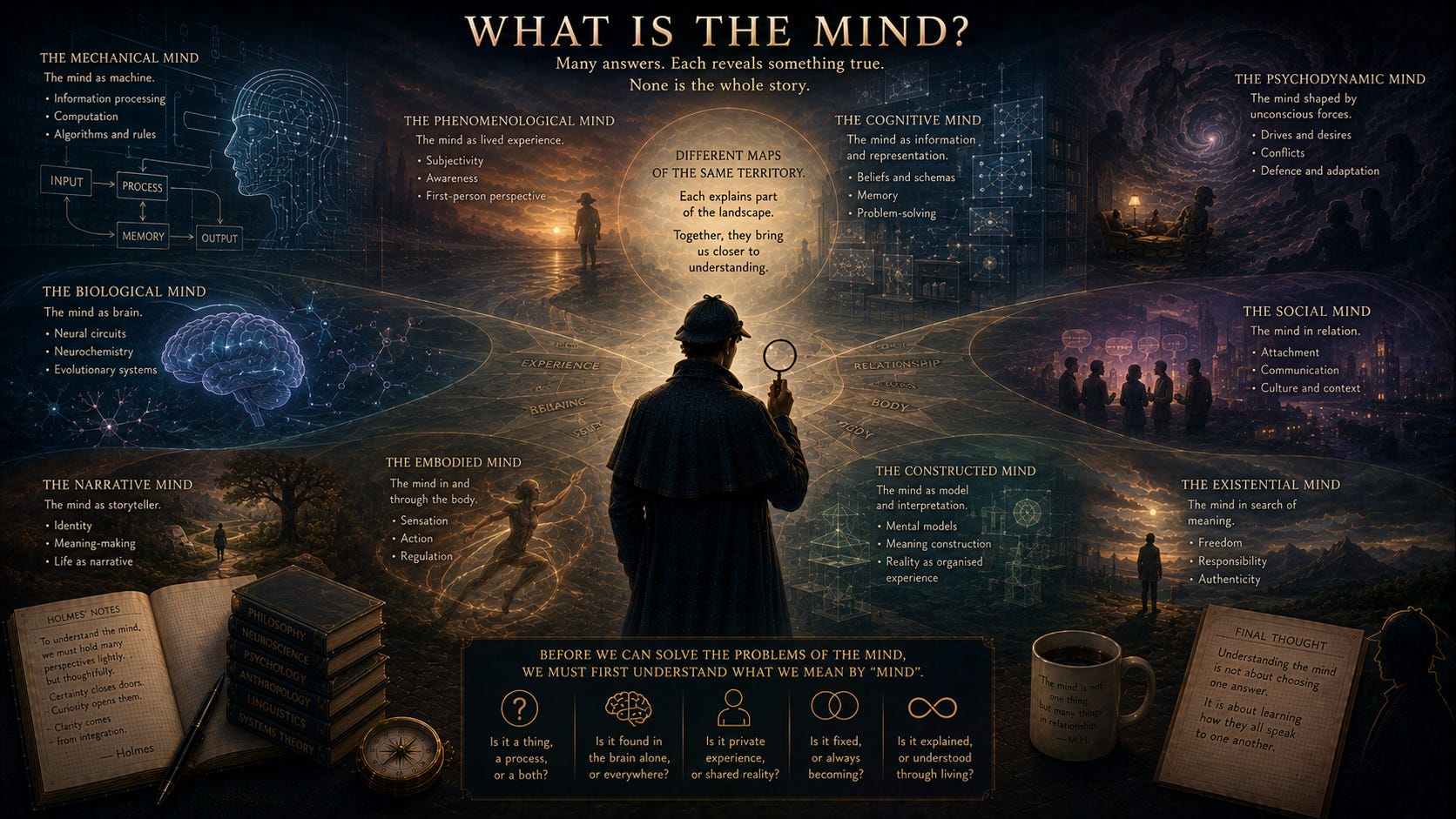 PSYCH 061: Approaches from Philosophy and Psychology 15.07.2026 51Min.This chapter explores the philosophical and psychological foundations that underpin our understanding of personality and psychopathology. It moves beyond empirical observation into the deeper questions that shape how we conceptualise human experience.Philosophical traditions have long grappled with the nature of self, consciousness, free will, and meaning. These questions are not abstract - they directly influence how mental illness is defined, understood, and treated. Whether one views the mind as a biological machine, a subjective experience, or a relational process fundamentally alters the clinical approach.Psychological frameworks build upon these philosophical roots. Trait theories, humanistic psychology, and cognitive models each offer different ways of understanding personality. Some emphasise stability and structure, others growth and self-actualisation, and others the role of thought patterns in shaping experience.A central theme is plurality. There is no single, unified theory of personality or psychopathology. Instead, multiple frameworks coexist, each capturing different dimensions of human experience. The challenge is not to choose one, but to understand their assumptions and limitations.The chapter also highlights the tension between reductionism and holism. Can the mind be fully explained by biology, or does it require a broader understanding that includes meaning, context, and subjective experience?Clinically, these perspectives shape how we listen to patients, interpret symptoms, and choose interventions. They influence whether we see distress as dysfunction, adaptation, existential struggle, or something else entirely.Ultimately, this chapter reminds us that psychiatry is not only a medical discipline - it is also a philosophical one.Key Takeaways* Philosophical assumptions shape how the mind and mental illness are understood.* Key concepts include self, consciousness, free will, and meaning.* Psychological theories offer diverse models of personality.* No single framework fully explains psychopathology.* Reductionist and holistic approaches offer different insights.* Clinical practice is influenced by underlying theoretical assumptions.* Psychiatry sits at the intersection of science, psychology, and philosophy. This is a public episode. If you'd like to discuss this with other subscribers or get access to bonus episodes, visit drmanaankarray.substack.com/subscribe
 -
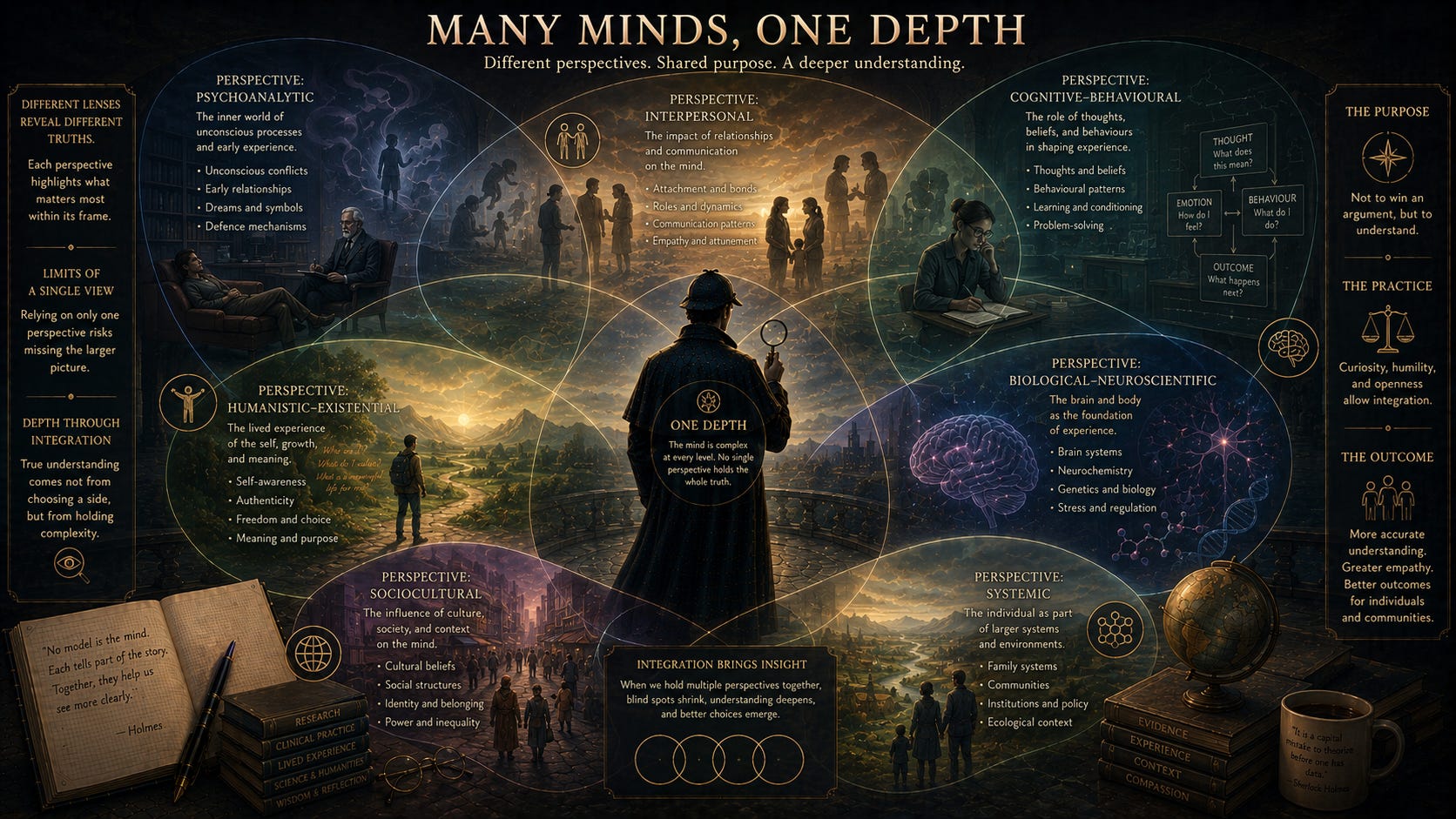 PSYCH 060: Other Psychodynamic Schools 14.07.2026 54Min.This chapter explores the evolution of psychodynamic thought beyond classical psychoanalysis, highlighting a range of schools that expand, refine, and sometimes challenge Freud’s original ideas.These approaches share a common foundation - the importance of unconscious processes, early relationships, and internal conflict - but diverge in how they conceptualise the structure and dynamics of the mind.Object relations theory shifts focus from drives to relationships, emphasising how internalised representations of others shape emotional life. Self psychology highlights the development of the self and the need for empathic attunement. Interpersonal and relational approaches place greater emphasis on real-world interactions and the co-constructed nature of experience between individuals.A key theme is movement away from a one-person psychology towards a two-person psychology. The therapist is no longer a neutral observer, but an active participant in the therapeutic process. The relationship itself becomes the medium of change.These schools also place increasing emphasis on development, attachment, and the role of trauma in shaping psychological structure. The mind is seen not as a static system of drives, but as a dynamic, relationally constructed entity.Clinically, this plurality offers flexibility. Different models provide different lenses, allowing the clinician to adapt their understanding to the individual rather than forcing the individual into a single theoretical framework.Key Takeaways* Psychodynamic theory has evolved into multiple schools with distinct emphases.* Object relations focuses on internalised relationships.* Self psychology emphasises the development and cohesion of the self.* Interpersonal and relational models highlight real and co-constructed interactions.* The therapist–patient relationship is central to change.* Modern approaches emphasise development, attachment, and trauma.* Multiple frameworks allow more nuanced clinical understanding. This is a public episode. If you'd like to discuss this with other subscribers or get access to bonus episodes, visit drmanaankarray.substack.com/subscribe
 -
 PSYCH 059: Erik Erikson 13.07.2026 52Min.This chapter explores Erik Erikson’s influential model of psychosocial development, which extends the understanding of human growth across the entire lifespan. Unlike earlier theories that focused primarily on childhood, Erikson proposed that development continues through a sequence of stages, each defined by a central psychological task.Each stage presents a tension - a conflict between two opposing forces, such as trust versus mistrust, autonomy versus shame, or identity versus role confusion. These are not problems to be solved once and for all, but dynamic balances that shape personality over time.A key theme is that development is cumulative. Earlier stages lay the foundation for later ones, but they are not fixed - unresolved conflicts can be revisited and renegotiated throughout life. Identity, in particular, emerges as a central task during adolescence, but continues to evolve in adulthood.Erikson also emphasised the social dimension of development. The individual is not developing in isolation, but within a cultural and relational context that shapes expectations, roles, and opportunities.Clinically, this framework provides a lens for understanding where an individual may be struggling within their developmental trajectory. It reframes distress not simply as pathology, but as difficulty in negotiating key life tasks.Ultimately, Erikson’s model presents development as a lifelong process - a continuous unfolding of the self in relation to others and the world.Key Takeaways* Development occurs across the entire lifespan, not just in childhood.* Each stage involves a psychosocial conflict or tension.* Successful development requires negotiating, not eliminating, these tensions.* Earlier stages influence later development but can be revisited.* Identity formation is a central task, particularly in adolescence.* Social and cultural context shape developmental processes.* Psychological distress can reflect difficulty in developmental negotiation. This is a public episode. If you'd like to discuss this with other subscribers or get access to bonus episodes, visit drmanaankarray.substack.com/subscribe
 -
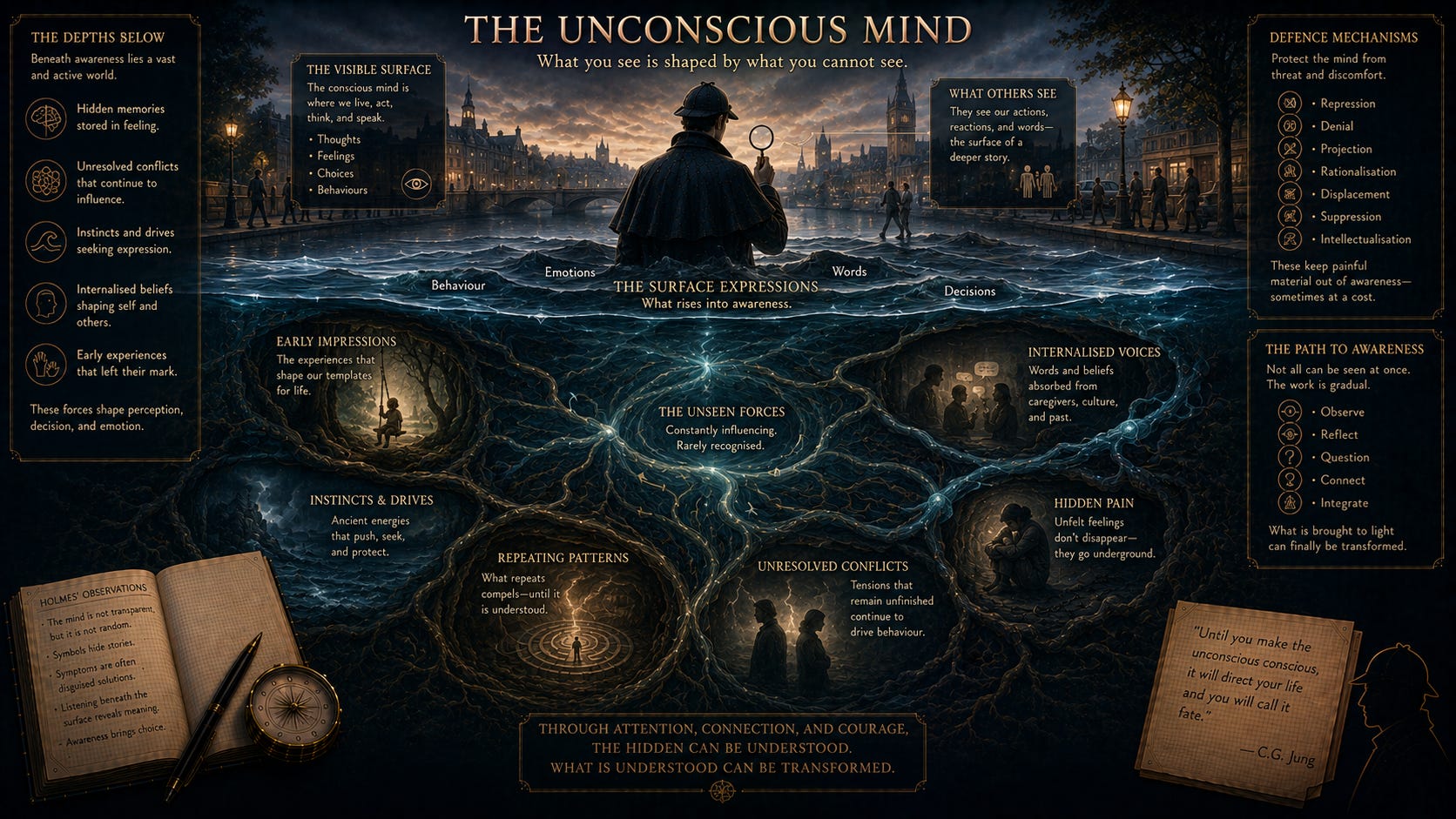 PSYCH 058: Psychoanalytic Theories and Treatment 12.07.2026 58Min.This chapter explores the foundations and evolution of psychoanalytic theory, focusing on how unconscious processes shape thought, emotion, and behaviour. Originating in the work of Freud and developed across multiple schools in North America and Great Britain, psychoanalysis offers a framework for understanding the inner world of the mind.At its core is the concept of the unconscious - mental processes that operate outside awareness but exert powerful influence. Conflicts between desires, defences, and internalised relationships give rise to symptoms, patterns of behaviour, and emotional experience.A central theme is the role of defence mechanisms. These are psychological strategies used to manage internal conflict and protect the individual from distress. While often adaptive, they can also become rigid or maladaptive, shaping how reality is perceived and responded to.The therapeutic process is relational. Through the analytic relationship, patterns of thought and feeling are brought into awareness. Transference and countertransference become key tools, revealing how past relational experiences are re-enacted in the present.Interpretation, insight, and working through are central mechanisms of change. The aim is not simply symptom relief, but a deeper restructuring of the individual’s internal world - increasing flexibility, awareness, and capacity for meaningful relationships.Clinically, this chapter highlights that symptoms are not random - they are expressions of underlying psychological processes, often rooted in developmental history.Key Takeaways* Psychoanalytic theory emphasises the role of the unconscious.* Internal conflicts shape behaviour, emotion, and symptoms.* Defence mechanisms regulate psychological distress.* Early relationships influence later patterns of thinking and relating.* Transference and countertransference are central to therapy.* Insight and working through facilitate change.* Symptoms can be understood as meaningful expressions of internal processes. This is a public episode. If you'd like to discuss this with other subscribers or get access to bonus episodes, visit drmanaankarray.substack.com/subscribe
 -
 PSYCH 057: Statistics and Experimental Design 11.07.2026 58Min.This chapter provides the methodological backbone of psychiatric research - the tools that allow us to move from observation to reliable knowledge. Statistics and experimental design are not merely technical disciplines; they are the architecture through which truth is approximated.At its core, experimental design is about structure. How do we ask a question in a way that produces a meaningful answer? Concepts such as randomisation, control groups, and blinding are introduced to minimise bias and isolate causal effects. Without these safeguards, findings risk reflecting noise, expectation, or systematic error rather than reality.Statistics then provides the language for interpreting data. It allows us to quantify uncertainty, test hypotheses, and estimate the likelihood that observed findings are due to chance. Concepts such as variability, confidence intervals, and significance testing help translate raw data into interpretable results.A central theme is uncertainty. No study provides absolute truth; instead, it offers an estimate shaped by design, sample, and assumptions. Understanding limitations - including bias, confounding, and error - is as important as interpreting results.Clinically, this chapter reinforces the importance of critical appraisal. Evidence-based practice depends not only on accessing research, but on understanding how that research was generated and what its findings truly mean.Ultimately, this is the discipline that guards psychiatry against illusion - ensuring that conclusions are grounded in method rather than assumption.Key Takeaways* Experimental design structures how research questions are tested.* Randomisation, controls, and blinding reduce bias.* Statistics quantifies uncertainty and supports hypothesis testing.* Variability and sample size influence the reliability of findings.* Confidence intervals and significance testing aid interpretation.* Bias and confounding can distort results if not addressed.* Critical appraisal is essential for evidence-based practice. This is a public episode. If you'd like to discuss this with other subscribers or get access to bonus episodes, visit drmanaankarray.substack.com/subscribe
 -
 PSYCH 056: Epidemiology in Psychiatry 10.07.2026 1Std. 3Min.Epidemiology provides the lens through which psychiatry steps back and examines mental illness at the level of populations. Rather than focusing on individual cases, it asks broader questions: how common are disorders, who is affected, and what factors influence risk and outcome?This chapter introduces the foundational concepts of psychiatric epidemiology, including incidence, prevalence, risk factors, and protective factors. It emphasises that mental disorders are not randomly distributed - they follow patterns shaped by biology, environment, social context, and time.A key theme is measurement. Defining and identifying psychiatric disorders in populations is inherently complex. Diagnostic criteria, cultural variation, reporting bias, and study design all influence what is observed. Epidemiology is therefore not simply about counting cases, but about understanding how those counts are constructed.The chapter also explores causal inference. Associations between variables do not necessarily imply causation. Epidemiology uses study designs - such as cohort, case-control, and cross-sectional studies - to move closer to understanding causal relationships, while recognising inherent limitations.Clinically and at a systems level, epidemiology informs prevention, service planning, and policy. It identifies high-risk groups, tracks trends over time, and evaluates interventions. It transforms psychiatry from a purely clinical discipline into a public health enterprise.Ultimately, this chapter reframes mental illness as both an individual experience and a population phenomenon - requiring both clinical insight and epidemiological thinking.Key Takeaways* Epidemiology studies the distribution and determinants of mental disorders in populations.* Incidence and prevalence are key measures of disease frequency.* Mental disorders follow patterns influenced by biological, social, and environmental factors.* Measurement in psychiatry is complex and influenced by diagnostic and cultural factors.* Association does not equal causation; study design is critical.* Epidemiology informs prevention, policy, and service planning.* Psychiatry operates at both individual and population levels. This is a public episode. If you'd like to discuss this with other subscribers or get access to bonus episodes, visit drmanaankarray.substack.com/subscribe
 -
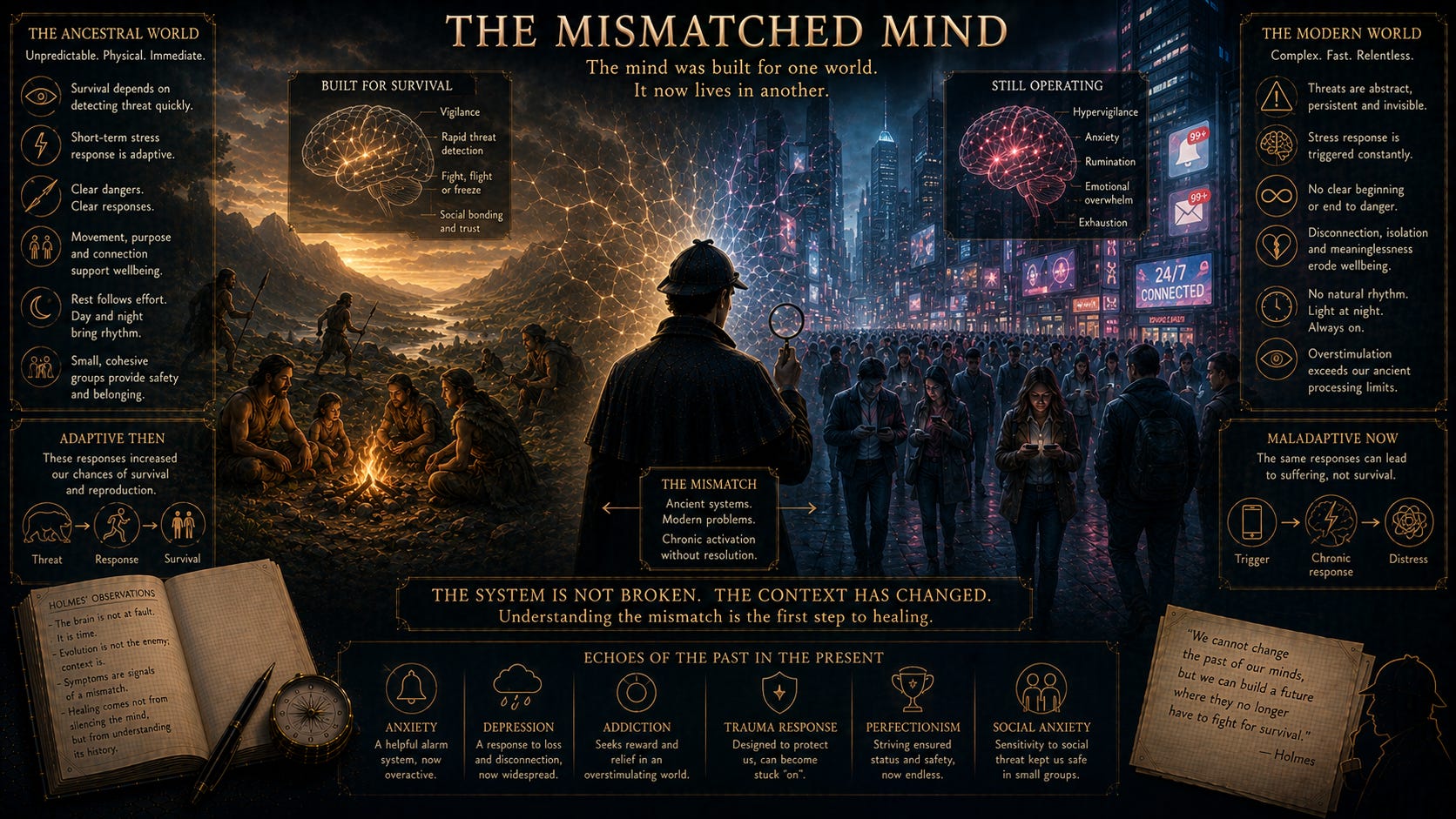 PSYCH 055: Evolutionary Foundations of Psychiatry 09.07.2026 1Std. 9Min.This chapter explores psychiatric phenomena through an evolutionary lens - asking not only how mental disorders occur, but why the human mind is vulnerable to them in the first place.Evolutionary psychiatry proposes that many features of the mind are shaped by natural selection to solve problems of survival and reproduction. Emotions such as fear, anxiety, attachment, and even low mood may have evolved as adaptive responses to specific environmental challenges.A central concept is mismatch. The modern environment differs profoundly from the one in which the human brain evolved. Systems designed for acute threats now respond to chronic stress; reward systems calibrated for scarcity are overwhelmed by abundance. What was once adaptive may now manifest as pathology.The chapter also introduces the idea of trade-offs. Traits that confer advantages in one context may carry costs in another. For example, heightened vigilance may improve survival in dangerous environments but predispose to anxiety disorders. Similarly, traits associated with creativity or risk-taking may overlap with vulnerability to mood or substance use disorders.Importantly, not all distress is disorder. Evolutionary perspectives distinguish between adaptive responses (e.g. grief, fear) and dysregulated or excessive responses that impair functioning.Clinically, this framework encourages a more nuanced view of symptoms - not simply as defects, but as signals or exaggerations of underlying adaptive systems. It invites the clinician to ask: what was this system designed to do, and why is it now misfiring?Key Takeaways* Evolutionary psychiatry asks why the mind is vulnerable to disorder.* Many emotional systems evolved as adaptive responses to environmental challenges.* Modern environments can create mismatch with evolved systems.* Traits often involve trade-offs between benefits and vulnerabilities.* Not all distress is pathological; some responses are adaptive.* Psychiatric symptoms may reflect dysregulation of adaptive systems.* Understanding evolutionary function can inform clinical interpretation. This is a public episode. If you'd like to discuss this with other subscribers or get access to bonus episodes, visit drmanaankarray.substack.com/subscribe
 -
 PSYCH 054: Transcultural Psychiatry 08.07.2026 48Min.This chapter explores how culture shapes every aspect of mental health - from symptom expression and explanatory models to help-seeking behaviours and treatment outcomes. Transcultural psychiatry challenges the assumption that psychiatric disorders are universal in form and meaning.Culture provides the framework through which individuals interpret distress. The same underlying experience may be described as depression, spirit possession, or bodily illness depending on cultural context. These are not simply different labels, but fundamentally different ways of organising meaning.A central concept is that of cultural idioms of distress - culturally specific ways in which suffering is expressed. Equally important are explanatory models: how individuals and communities understand the causes of illness, whether biological, psychological, social, or spiritual.The chapter also highlights the risks of misdiagnosis when cultural context is ignored. Behaviours that are normative within one culture may be pathologised in another. Conversely, genuine pathology may be overlooked if framed in unfamiliar ways.Clinically, transcultural psychiatry emphasises cultural competence and humility. The clinician must engage with the patient’s worldview, negotiate shared understanding, and adapt interventions accordingly. The goal is not to impose a universal framework, but to work within cultural meaning systems.Ultimately, this chapter reframes psychiatry as an inherently cultural practice - one that must bridge different worlds of understanding.Key Takeaways* Culture shapes the expression and interpretation of mental illness.* Symptoms may vary significantly across cultural contexts.* Cultural idioms of distress reflect culturally specific expressions of suffering.* Explanatory models influence help-seeking and treatment engagement.* Misdiagnosis can occur when cultural context is not considered.* Cultural competence involves understanding and working within the patient’s worldview.* Psychiatry must integrate universal principles with cultural specificity. This is a public episode. If you'd like to discuss this with other subscribers or get access to bonus episodes, visit drmanaankarray.substack.com/subscribe
 -
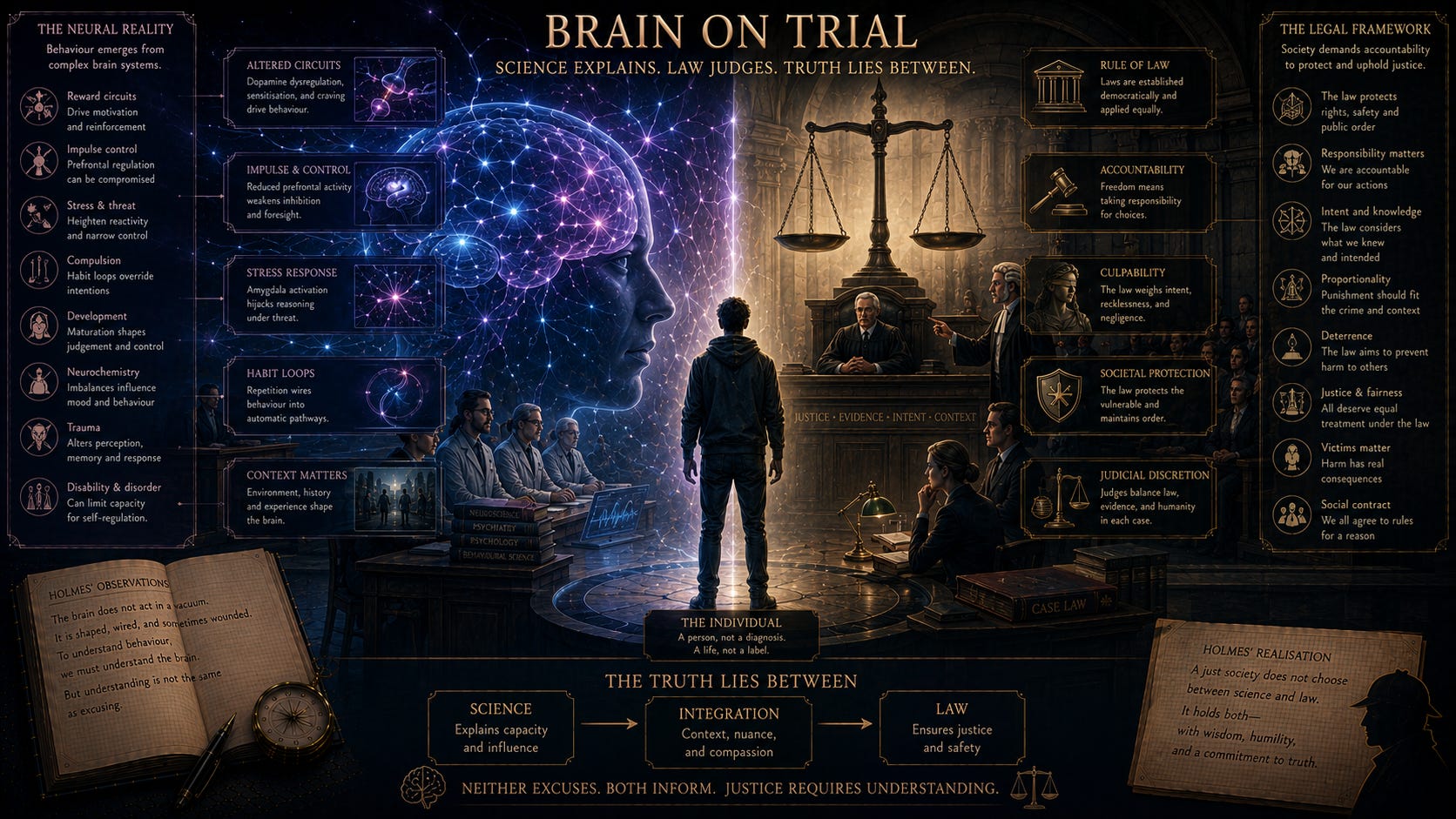 PSYCH 053: Neurocentrism: Addiction and the Courtroom 07.07.2026 38Min.This chapter examines the growing influence of neuroscience in legal and societal understandings of behaviour - particularly in the context of addiction. Neurocentrism refers to the tendency to explain complex human actions primarily, or exclusively, in terms of brain function.In addiction, advances in neuroscience have highlighted changes in reward pathways, impulse control, and decision-making systems. These findings have reshaped addiction as a disorder of brain circuitry rather than simply a failure of will. While this has reduced stigma and improved treatment approaches, it also raises profound ethical and legal questions.A central tension emerges in the courtroom: if behaviour is driven by altered brain function, to what extent is the individual responsible? Neuroscientific evidence is increasingly introduced in legal settings to argue for diminished responsibility, mitigation, or alternative sentencing. Yet the law fundamentally depends on notions of agency, intent, and accountability.The chapter explores the risks of over-reliance on neurobiological explanations. Human behaviour cannot be fully reduced to brain mechanisms alone - it is shaped by context, choice, social environment, and meaning. Neurocentrism, if uncritically applied, may oversimplify this complexity.Clinically and ethically, the challenge is integration. Neuroscience provides powerful insights, but it must be balanced with psychological and social perspectives. The goal is not to replace one model with another, but to hold multiple levels of explanation simultaneously.Key Takeaways* Neurocentrism emphasises brain-based explanations of behaviour.* Addiction involves changes in neural systems related to reward and control.* Neuroscience has influenced legal arguments about responsibility and culpability.* There is tension between biological determinism and legal notions of free will.* Over-reliance on neuroscience risks oversimplifying human behaviour.* Behaviour must be understood within biological, psychological, and social contexts.* Ethical and legal frameworks must integrate, not reduce, these perspectives. This is a public episode. If you'd like to discuss this with other subscribers or get access to bonus episodes, visit drmanaankarray.substack.com/subscribe
 -
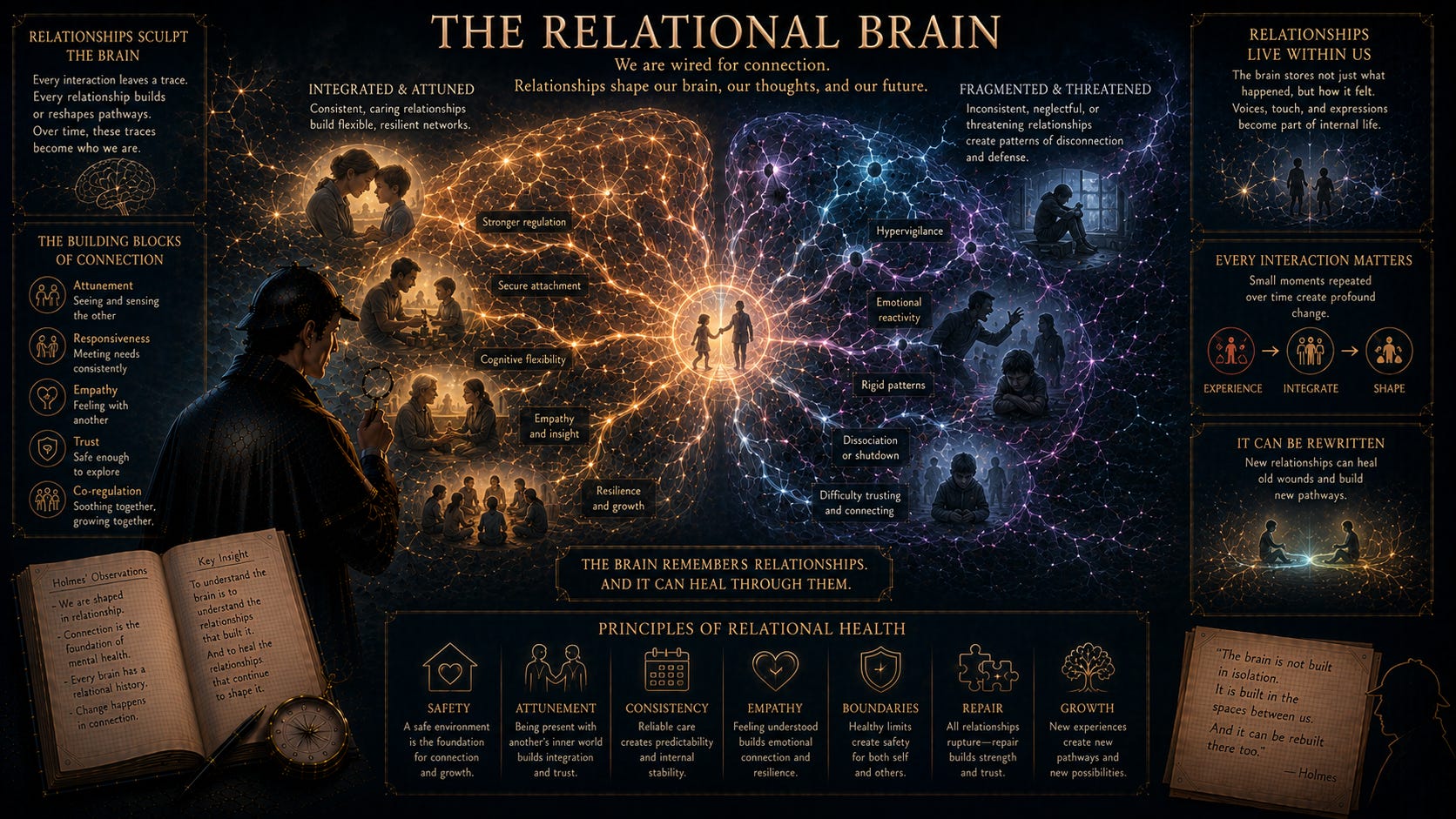 PSYCH 052: Neuroscience of Psychoanalytic Object Relations 06.07.2026 46Min.This chapter bridges two historically separate domains: psychoanalytic object relations theory and contemporary neuroscience. It explores how early relationships are not merely psychological experiences, but biologically embedded processes that shape the developing brain.Object relations theory proposes that internal representations of self and others are formed through early interactions with caregivers. These “internal objects” influence how individuals perceive relationships, regulate emotion, and experience themselves. Neuroscience now provides a framework for understanding how these representations are instantiated within neural systems.Attachment relationships play a central role. Early experiences of attunement, safety, and responsiveness influence the development of neural circuits involved in affect regulation, stress response, and social cognition. Disruptions in these relationships can lead to enduring patterns of dysregulation, vulnerability, and maladaptive relational expectations.A key theme is internalisation. Repeated relational experiences become encoded as stable patterns within the brain - shaping expectations of others, guiding interpersonal behaviour, and influencing emotional responses. These patterns operate largely outside conscious awareness, echoing psychoanalytic concepts of the unconscious.The chapter also highlights the integration of affective neuroscience, particularly the role of limbic systems, prefrontal regulation, and right-hemisphere dominance in early development. It suggests that psychotherapy itself can be understood as a relational process that reshapes these neural patterns over time.Clinically, this synthesis reframes disorders not simply as isolated dysfunctions, but as disruptions in relationally constructed neural systems. Healing, therefore, occurs not only through insight, but through new relational experiences that allow the brain to reorganise.Key Takeaways* Object relations theory focuses on internalised representations of self and others.* Early relationships shape neural development and emotional regulation.* Attachment experiences influence stress response and interpersonal functioning.* Internalisation links repeated relational experiences to enduring neural patterns.* Much of relational functioning operates outside conscious awareness.* Psychotherapy can reshape maladaptive relational and neural patterns.* Mental disorders often reflect disruptions in relationally constructed systems. This is a public episode. If you'd like to discuss this with other subscribers or get access to bonus episodes, visit drmanaankarray.substack.com/subscribe
 -
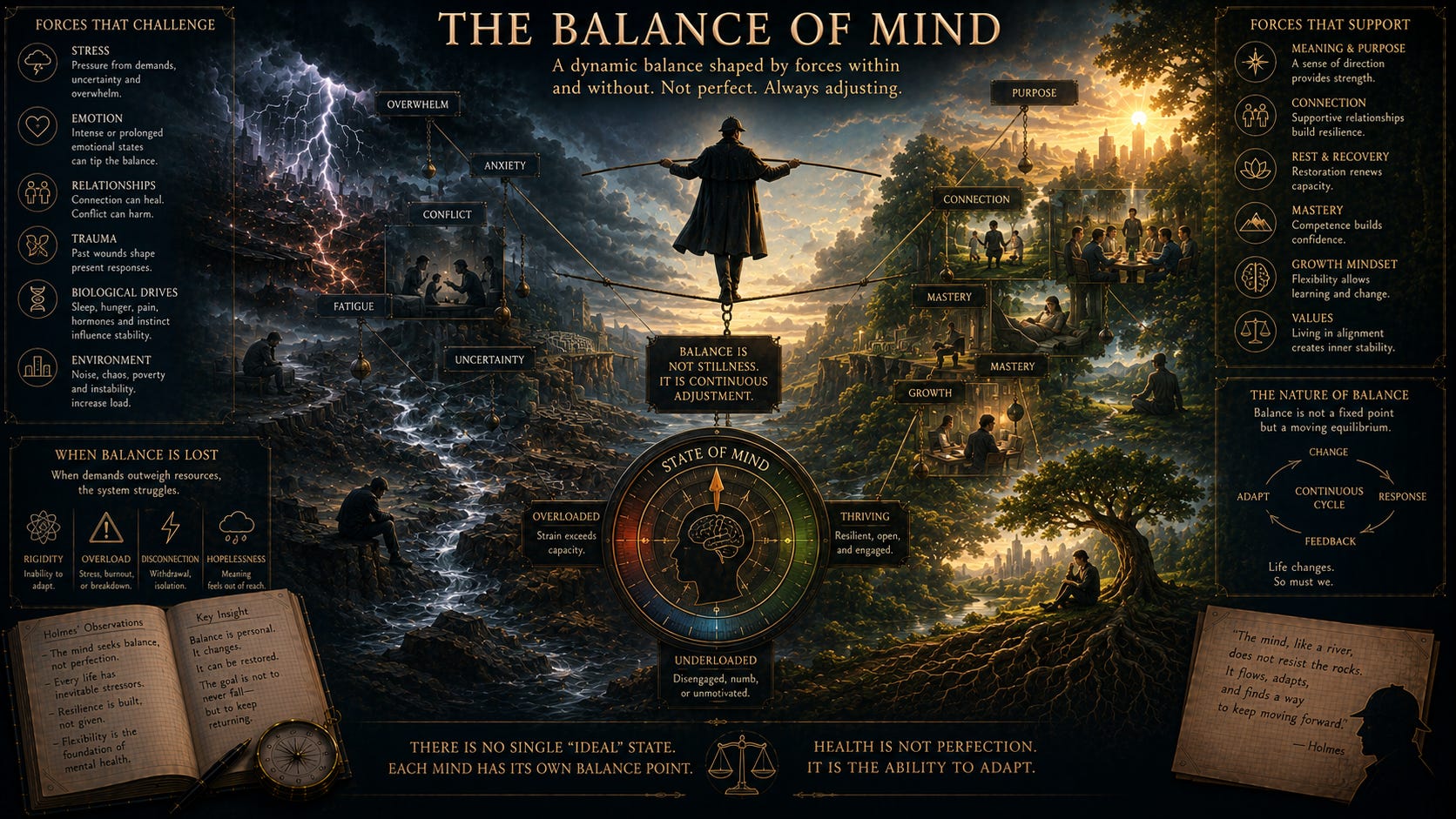 PSYCH 051: Normality and Mental Health 05.07.2026 52Min.This chapter challenges one of the most deceptively simple questions in psychiatry: what does it mean to be “normal”?Rather than defining normality as the absence of illness, contemporary perspectives frame mental health as a dynamic process - the capacity to adapt to internal and external demands, sustain relationships, regulate emotion, and pursue meaningful goals.Statistical, cultural, and functional definitions of normality each offer partial truths. What is common is not always healthy; what is rare is not always pathological. Cultural context shapes expectations, while individual variation challenges rigid boundaries.A central theme is adaptation. Mental health reflects the ability to respond flexibly to stress, to integrate experience, and to maintain coherence of self over time. George Vaillant’s work on mature defences and adaptive functioning highlights that health is often revealed not in the absence of struggle, but in how individuals manage it.Another key idea is that pathology exists on a continuum. Traits and behaviours blend into one another, and the line between normal and abnormal is often defined by distress, impairment, and loss of flexibility rather than by the presence of specific symptoms.Clinically, this chapter invites humility. Diagnosis is not merely a categorisation of disease, but a judgement about function, context, and meaning. It reminds us that mental health is not static - it is negotiated across time, environment, and experience.Key Takeaways* Normality cannot be defined by a single criterion.* Mental health involves adaptation, resilience, and meaningful functioning.* Statistical norms do not necessarily equate to psychological health.* Cultural context shapes definitions of normality and pathology.* Mental health and illness exist on a continuum.* Mature defence mechanisms are associated with adaptive functioning.* Clinical judgement must consider context, distress, and impairment. This is a public episode. If you'd like to discuss this with other subscribers or get access to bonus episodes, visit drmanaankarray.substack.com/subscribe
 -
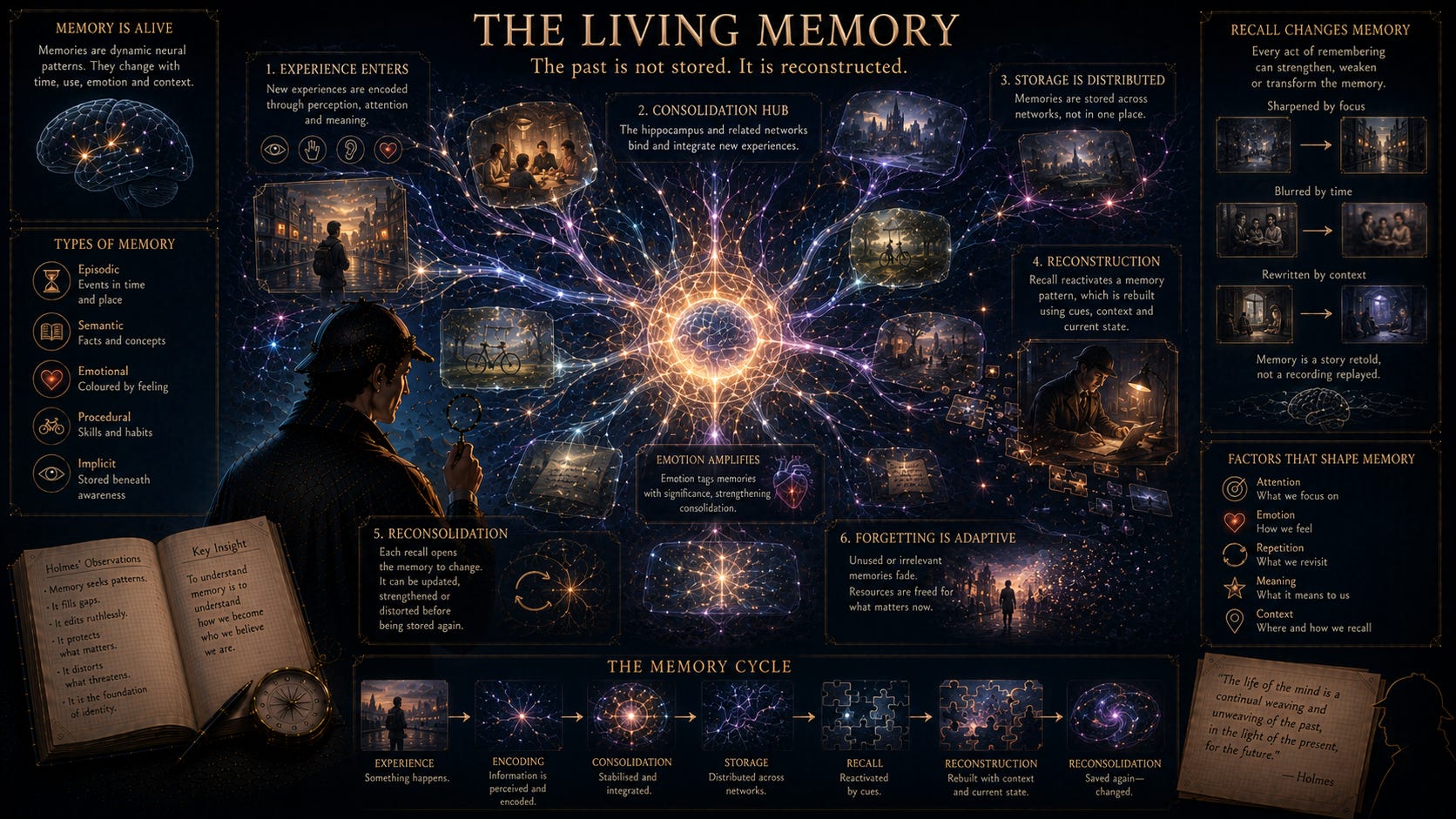 PSYCH 050: Biology of Memory 04.07.2026 1Std.This chapter explores how memory is encoded, stored, and retrieved within the brain - not as a static archive, but as a dynamic and evolving biological process.Memory begins with encoding, where experience is transformed into neural activity. This is followed by consolidation, during which fragile traces are stabilised through synaptic and systems-level changes. Retrieval then reactivates these traces, bringing them back into conscious awareness - but each act of recall subtly reshapes the memory itself.At a neurobiological level, memory depends on distributed networks. The hippocampus plays a central role in forming new episodic memories, while cortical regions store long-term representations. Emotional memory involves structures such as the amygdala, which modulate the strength and salience of encoding.A key theme is plasticity. Long-term potentiation and related mechanisms allow synapses to strengthen with repeated activation, forming the cellular basis of learning and memory. Yet this plasticity also means that memory is inherently malleable - vulnerable to distortion, reconsolidation, and forgetting.Clinically, this has profound implications. Disorders of memory range from amnesia to intrusive recollections, as seen in trauma-related conditions. Memory is not simply lost or preserved - it can be fragmented, amplified, or reshaped.This chapter reframes memory as an active process - one that continuously integrates past experience with present context.Key Takeaways* Memory involves encoding, consolidation, and retrieval.* The hippocampus is central to forming new episodic memories.* Long-term memory is stored across distributed cortical networks.* Synaptic plasticity underpins learning and memory formation.* Emotional arousal influences memory strength and salience.* Memory is reconstructive and can be altered with each retrieval.* Clinical disorders of memory reflect disruptions in these processes. This is a public episode. If you'd like to discuss this with other subscribers or get access to bonus episodes, visit drmanaankarray.substack.com/subscribe
Ähnliche Podcasts


Beliebt in
Dieser Podcast erscheint auch in den Podcast-Charts dieser Länder.


