
30 Albums For 30 Years (1964-1994)
Jay Sweet
0
A look at the 30 most impactful albums for the years 1964-1994. These years coincide with the Beatles led British Invasion to the death of Nirvana front man Kurt Cobain. The show is hosted by Jay Sweet, a musician, noted historian and Professor of Music at Monmouth University.
Folgen
-
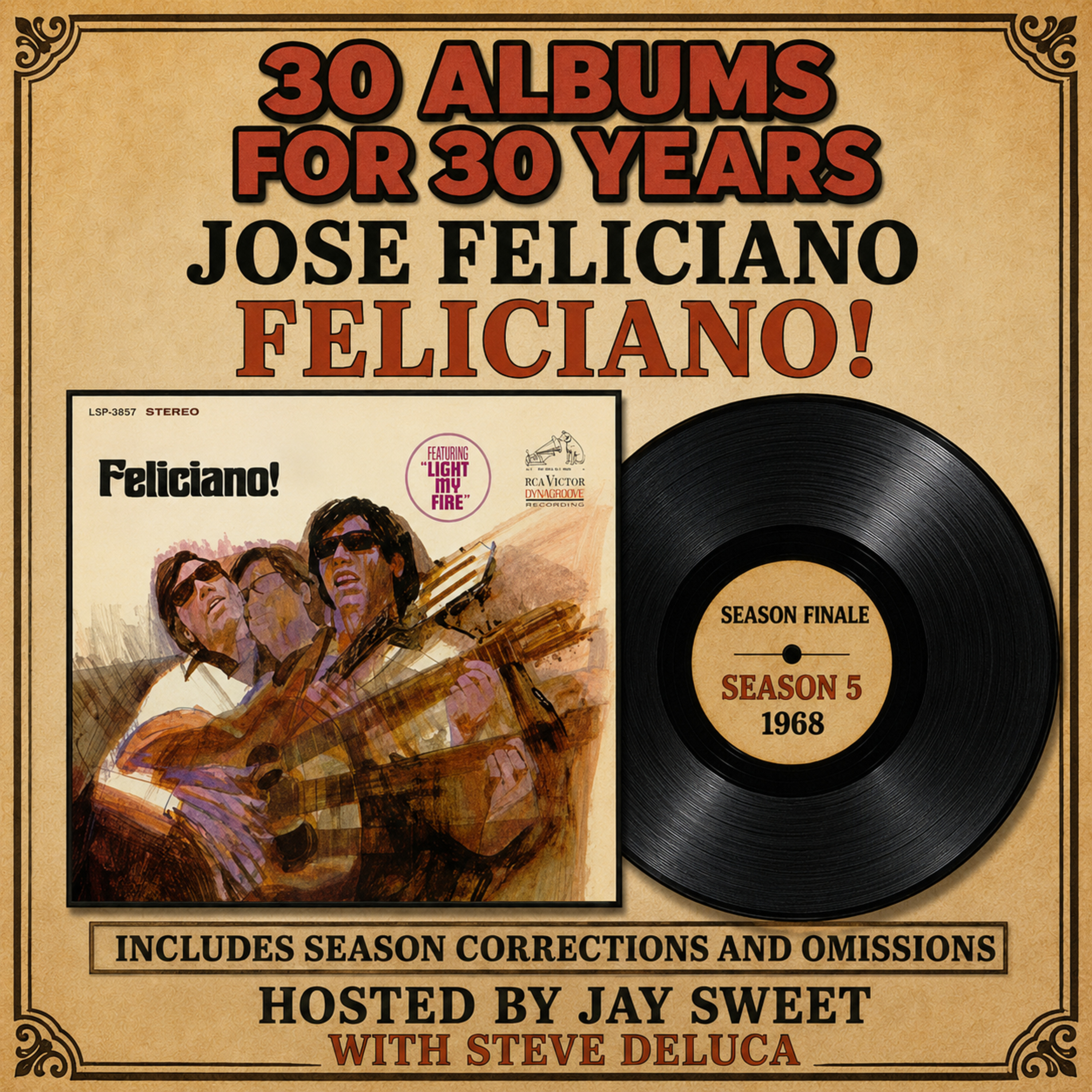 José Feliciano -Feliciano! (RCA-Victor):Bonus: Season Finale Corrections and Omissions 15.08.2026 1Std. 33Min.José Feliciano-Feliciano! (RCA-Victor)Released June 1968Bonus: Season Corrections and Omissions José Feliciano’s Feliciano! is a remarkable example of how a great interpreter can completely reinvent familiar material. Released in 1968, the album consists entirely of covers, but Feliciano transforms them through his distinctive combination of classical guitar, jazz, Latin rhythms, folk, blues, and soul. His versions of “California Dreamin’” and especially “Light My Fire” are the centerpieces, demonstrating his ability to make established songs sound completely new. The musicianship is exceptional, with jazz legend Ray Brown on bass, Milt Holland on percussion, and Jim Horn on flute and woodwinds supporting Feliciano’s extraordinary guitar playing and soulful vocals.The album reached No. 2 in America, while “Light My Fire” reached No. 3, helping Feliciano earn two Grammy Awards. Feliciano! is a masterclass in interpretation—proof that covering someone else’s music can become an original artistic statement. (S5-EP30)
 -
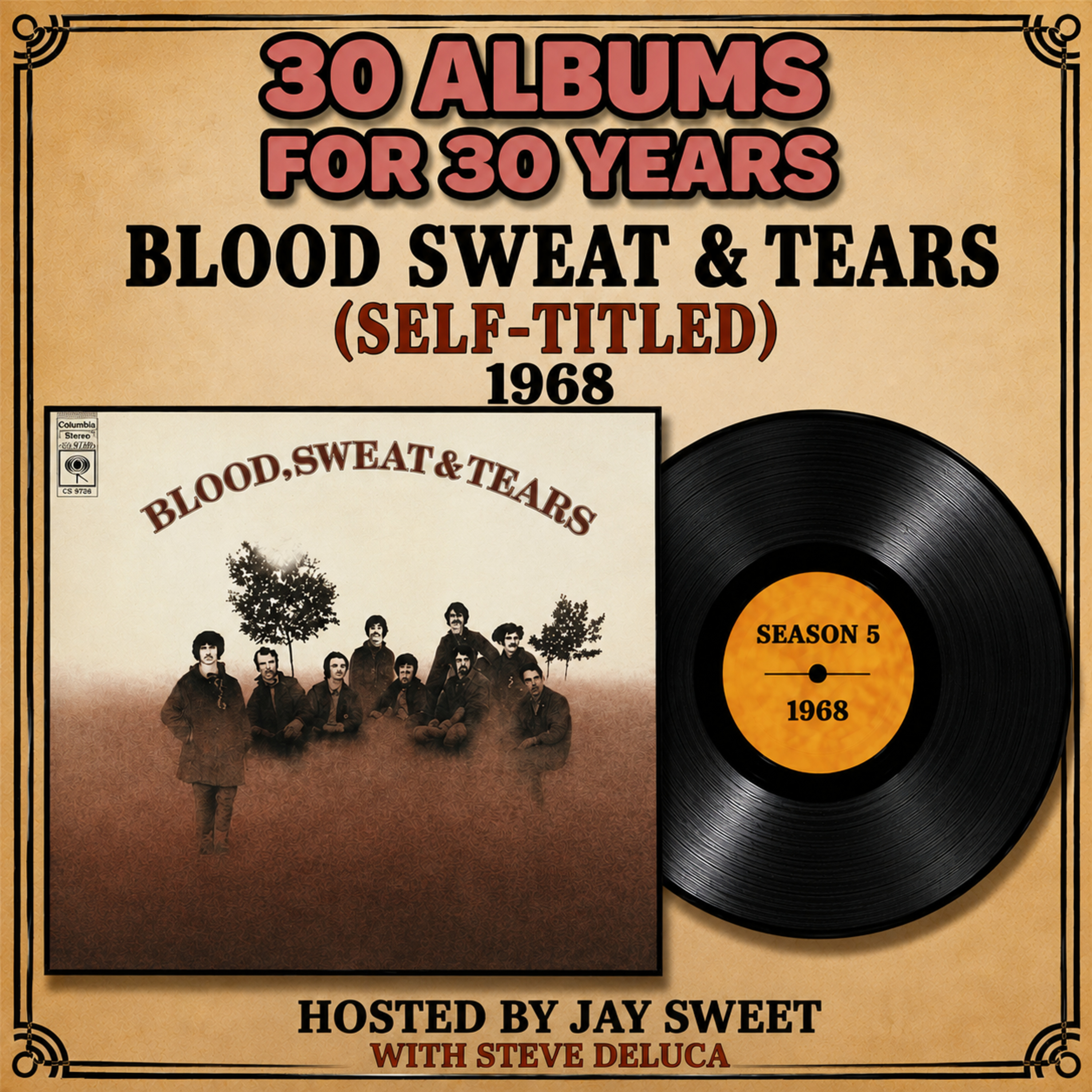 Blood Sweat and Tears -Self-Titled 11.08.2026 1Std. 9Min.Blood, Sweat & Tears- Self Titled (Columbia Records) Release Date: December 11, 1968 Blood, Sweat & Tears’ self-titled 1968 album proved that sophisticated, horn-driven jazz-rock could also be enormously commercial. With David Clayton-Thomas replacing Al Kooper as the band’s focal point, BS&T combined jazz, soul, blues, classical music, Latin rhythms, and rock with remarkably tight arrangements and musicianship. Three singles—“Spinning Wheel,” “And When I Die,” and “You’ve Made Me So Very Happy”—reached No. 2, while the album topped the charts and eventually won the Grammy for Album of the Year. The album has been certified quadruple platinum with sales of more than four million units in the U.S. Beyond the hits, tracks such as “Smiling Phases” and the brilliant reinvention of Billie Holiday’s “God Bless the Child” demonstrate the band’s authentic connection to jazz and willingness to experiment with changing time feels, improvisation, and complex horn writing. Producer James William Guercio helped give the record precision without sacrificing energy. It remains a masterful achievement and proof that advanced musicianship could compete with the psychedelic studio experimentation dominating late-1960s rock. (S5-EP29)
 -
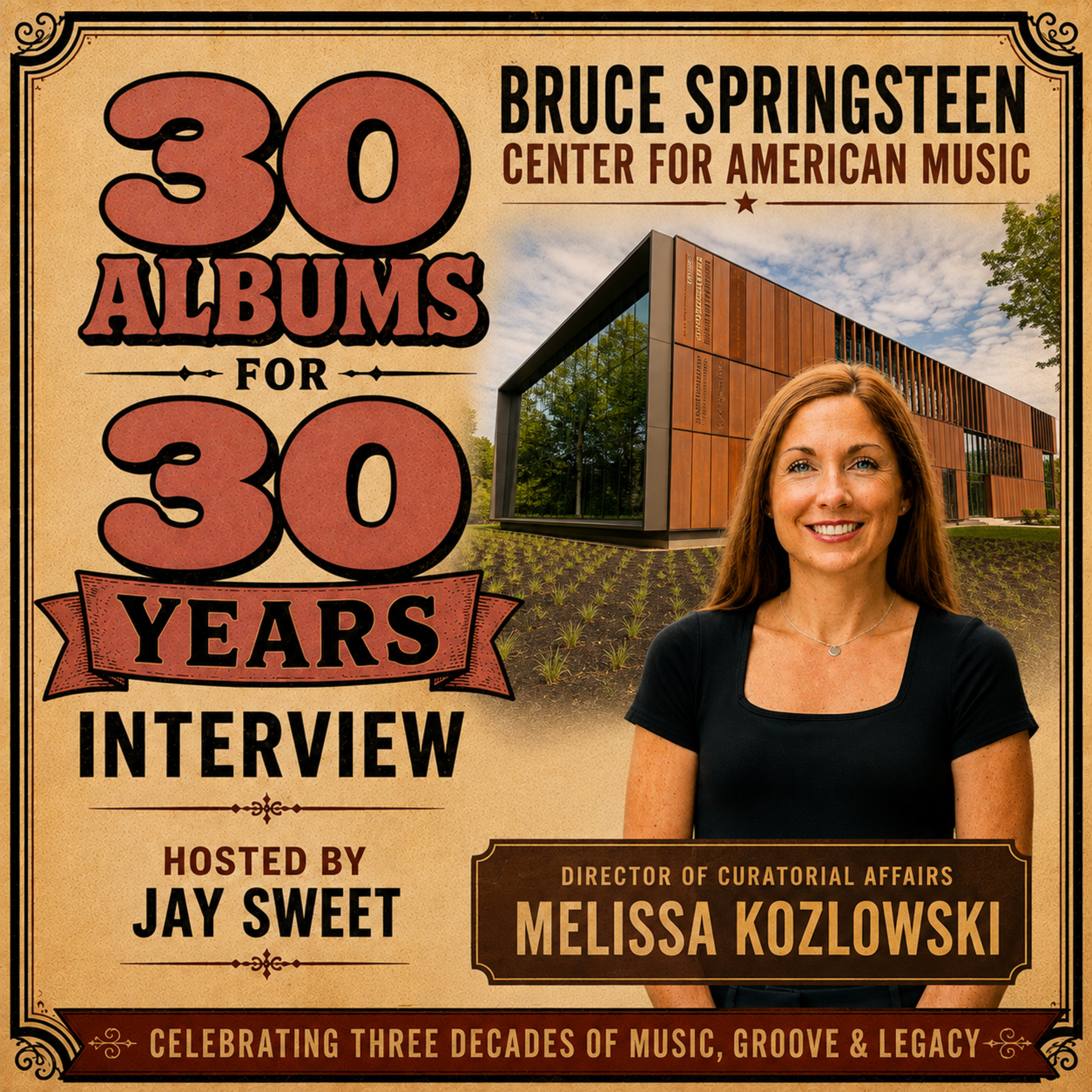 Melissa Kozlowski on the Bruce Springsteen Center for American Music 08.08.2026 29Min.Melissa Kozlowski on the Bruce Springsteen Center for American MusicMelissa Kozlowski serves as curator of the Bruce Springsteen Center for American Music at Monmouth University, bringing extensive experience as a historian, archivist, educator, and curator. The Center’s roots date to a fan-created collection established in 2001. It moved to Monmouth University in 2011 and became the official repository for Bruce Springsteen’s archival materials in 2017. Today, its mission extends well beyond Springsteen, using exhibitions, concerts, lectures, films, workshops, educational programs, and archival research to explore the diversity and cultural importance of American music across genres and generations. The center entered an exciting new era with the public opening of its new home on June 13, 2026, on the campus of Monmouth University. The approximately 32,000-square-foot, $50 million facility, and includes exhibition galleries, research archives, immersive and interactive experiences, and a performance theater. Visitors can explore Springsteen’s career and creative process, experience a new film narrated by Springsteen, and discover exhibitions examining the much broader history of American music.
 -
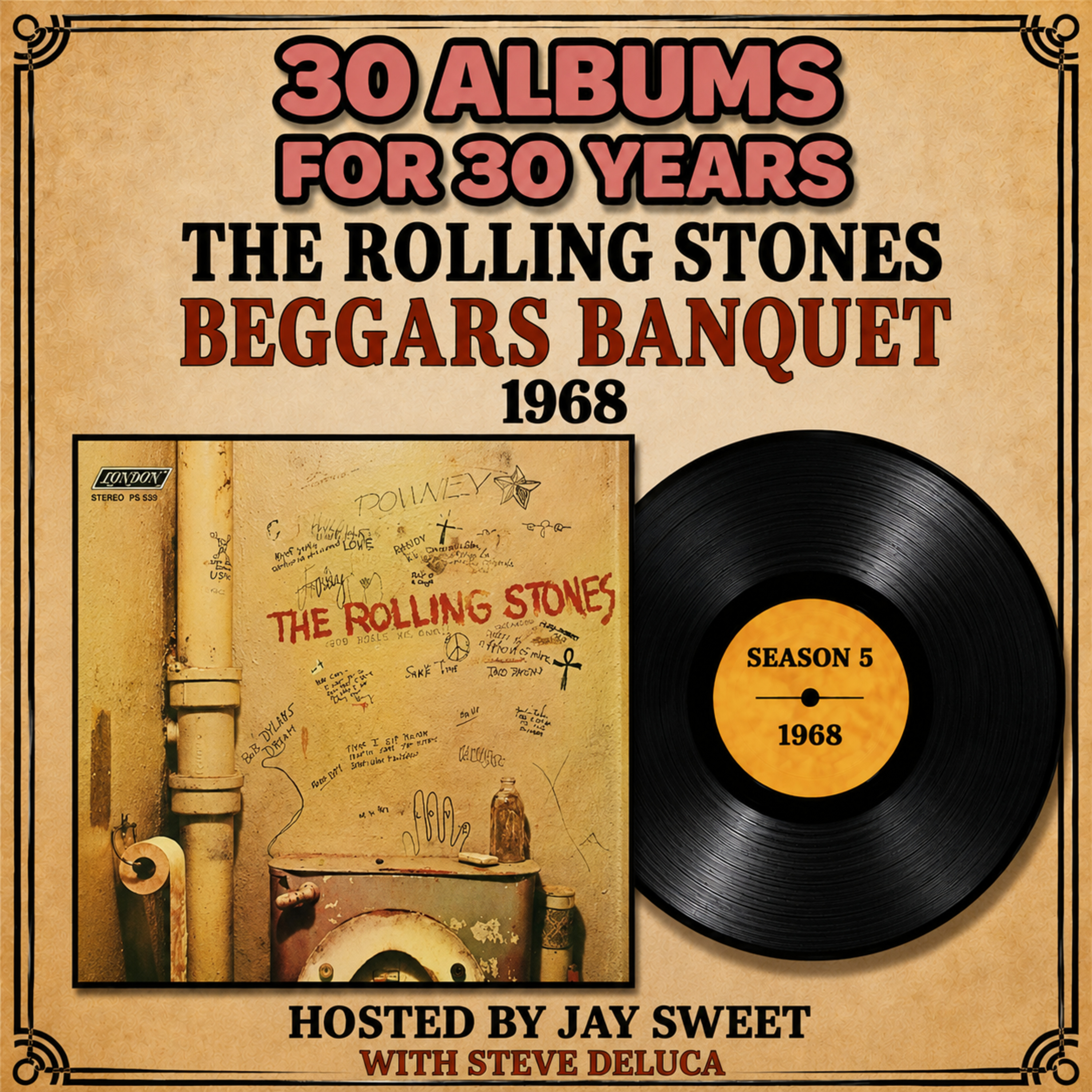 The Rolling Stones-Beggars Banquet 30.07.2026 1Std. 17Min.The Rolling Stone- Beggars Banquet Decca (UK), London Records (US)Release Date: December 6, 1968 (UK), January 1969 (US)Beggars Banquet marked a decisive turning point for The Rolling Stones, signaling a return to the blues, country, and folk influences that first defined the band after the psychedelic detour of Their Satanic Majesties Request. Released in 1968, the album combines raw musicianship with more mature songwriting, as Mick Jagger and Keith Richards explored themes of politics, morality, and social unrest during one of the most turbulent years of the twentieth century. Songs such as "Sympathy for the Devil," "Street Fighting Man," and "Salt of the Earth" remain among the band's most enduring works, while Brian Jones added distinctive touches on slide guitar, harmonica, sitar, and percussion despite his declining role in the group. Producer Jimmy Miller and pianist Nicky Hopkins helped shape the album's earthy, organic sound. Beggars Banquet launched the Stones' greatest creative period, paving the way for Let It Bleed, Sticky Fingers, and Exile on Main St., four albums that cemented their place among rock's greatest bands. (S5 -EP28)
 -
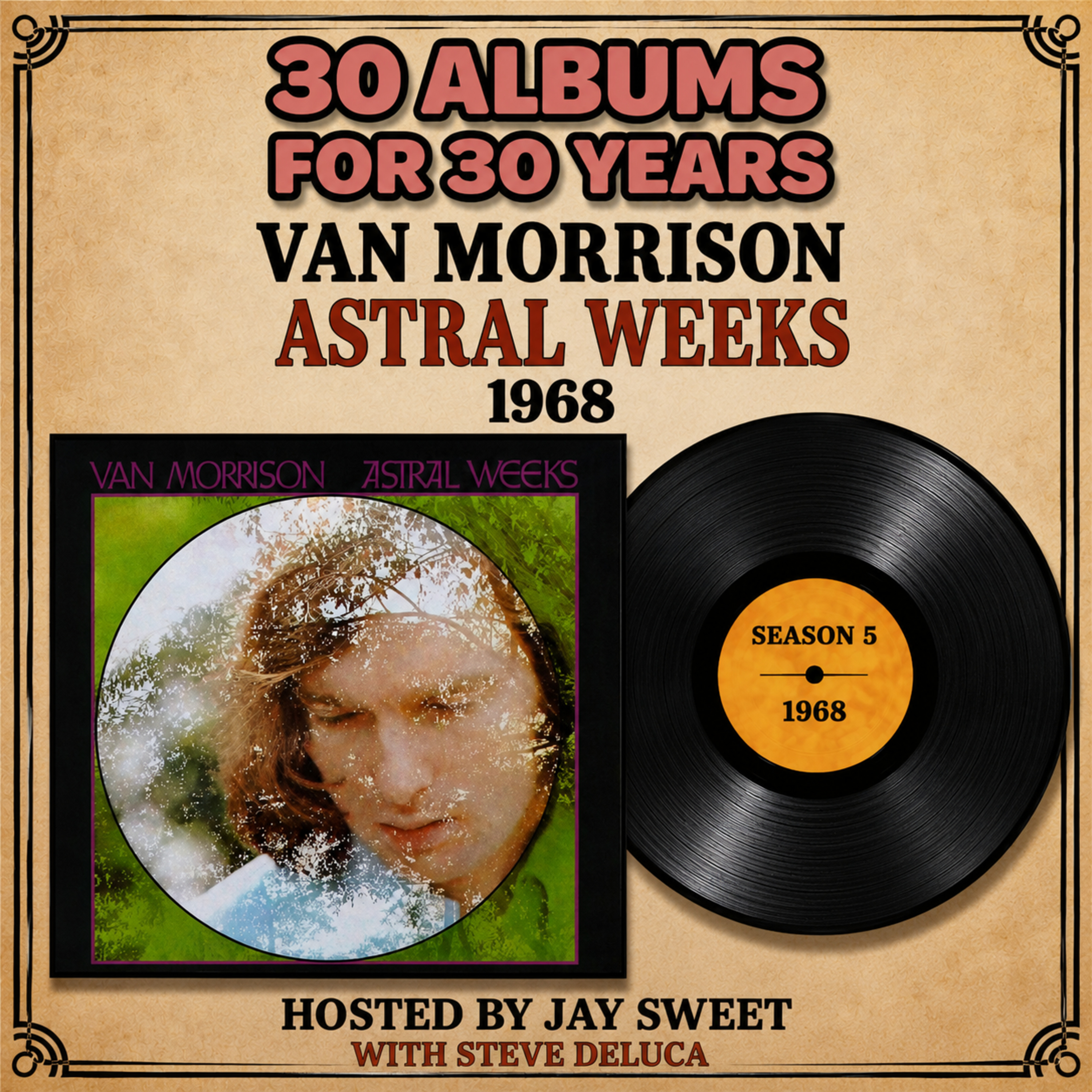 Van Morrison-Astral Weeks (Warner Brothers) 22.07.2026 1Std. 1Min.Van Morrison-Astral Weeks (Warner Brothers) Released November 29, 1968 Van Morrison's Astral Weeks (1968) stands as one of the most distinctive and influential albums in popular music. Recorded in only three sessions with an exceptional group of New York jazz musicians led by bassist Richard Davis, the album blends folk, jazz, blues, Celtic music, and chamber arrangements into a deeply personal artistic statement. Rather than pursuing commercial success, Morrison created an intimate, improvisational work built on poetic, stream-of-consciousness lyrics and emotionally charged performances. Songs such as "Astral Weeks," "Cyprus Avenue," "Madame George," and "Sweet Thing" explore memory, spirituality, love, and identity with remarkable honesty. Although the album sold poorly upon release and produced no hit singles, its reputation steadily grew through critical reappraisal. Today it is widely regarded as Morrison's masterpiece and one of the greatest albums ever recorded. Its organic musicianship, acoustic beauty, and fearless originality continue to inspire listeners and musicians, proving that artistic integrity can ultimately transcend commercial success. (S5-EP 27)
 -
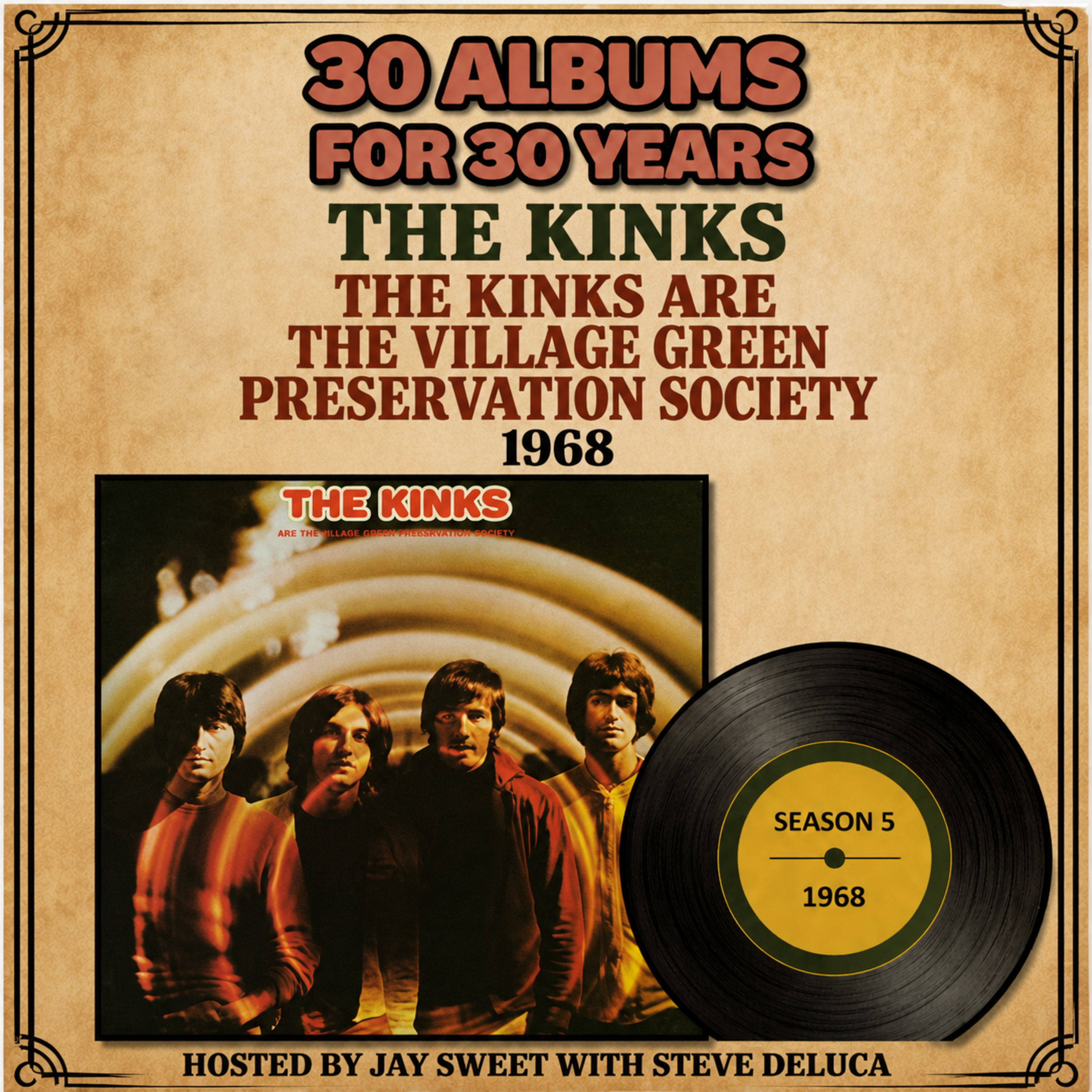 The Kinks-The Kinks Are the Village Green Preservation Society 14.07.2026 1Std. 12Min.The Kinks-The Kinks Are the Village Green Preservation Society (Pye Records) Release date: November 22, 1968The Kinks Are the Village Green Preservation Society stands as one of the most beloved "lost classics" in rock history. Released in 1968 to almost no commercial success, the album has since become widely recognized as Ray Davies' songwriting masterpiece and one of the defining works of British popular music. Rather than embracing the psychedelic experimentation dominating the era, Davies crafted an intimate collection of character sketches and nostalgic reflections celebrating ordinary people, disappearing traditions, and the quiet beauty of English village life. Musically, the record blends melodic British pop, folk, music hall, blues, and subtle psychedelic touches into a remarkably cohesive whole. Although it failed to chart upon release, its influence has steadily grown, inspiring generations of artists including Blur, Oasis, and countless indie bands. Today, Village Green is regarded as one of the greatest albums of the 1960s—a timeless meditation on memory, identity, and the importance of preserving humanity in a rapidly changing world. (S5-EP26)
 -
 The Beatles (The White Album) Part 2 06.07.2026 1Std. 42Min.The Beatles (The White Album) (Apple Music) U.S Release November 25, 1968The Beatles' 1968 self-titled double album—universally known as The White Album—is one of the most ambitious and influential recordings in rock history. Emerging after the colorful unity of Sgt. Pepper's Lonely Hearts Club Band, the album instead embraces contradiction, diversity, and individuality. Across thirty songs, The Beatles explore folk, hard rock, blues, country, music hall, psychedelia, avant-garde experimentation, and intimate acoustic balladry. The sessions reflected the band's growing personal and creative divisions, yet those tensions fueled remarkable artistic achievements. Paul McCartney's melodic brilliance, John Lennon's emotional honesty, George Harrison's emergence as a world-class songwriter, and Ringo Starr's distinctive personality all shine throughout. Classics such as "While My Guitar Gently Weeps," "Blackbird," "Dear Prudence," "Helter Skelter," and "Happiness Is a Warm Gun" remain cornerstones of popular music. Uneven by design yet endlessly fascinating, The White Album captures four extraordinary musicians simultaneously growing apart while creating one of the richest, boldest, and most enduring albums ever recorded. (S5-EP25)
 -
 The Beatles (The White Album) Part 1 of 2 29.06.2026 1Std. 42Min.The Beatles (The White Album) (Apple Music) U.S Release November 25, 1968The Beatles' 1968 self-titled double album—universally known as The White Album—is one of the most ambitious and influential recordings in rock history. Emerging after the colorful unity of Sgt. Pepper's Lonely Hearts Club Band, the album instead embraces contradiction, diversity, and individuality. Across thirty songs, The Beatles explore folk, hard rock, blues, country, music hall, psychedelia, avant-garde experimentation, and intimate acoustic balladry. The sessions reflected the band's growing personal and creative divisions, yet those tensions fueled remarkable artistic achievements. Paul McCartney's melodic brilliance, John Lennon's emotional honesty, George Harrison's emergence as a world-class songwriter, and Ringo Starr's distinctive personality all shine throughout. Classics such as "While My Guitar Gently Weeps," "Blackbird," "Dear Prudence," "Helter Skelter," and "Happiness Is a Warm Gun" remain cornerstones of popular music. Uneven by design yet endlessly fascinating, The White Album captures four extraordinary musicians simultaneously growing apart while creating one of the richest, boldest, and most enduring albums ever recorded. (S5-EP25)
 -
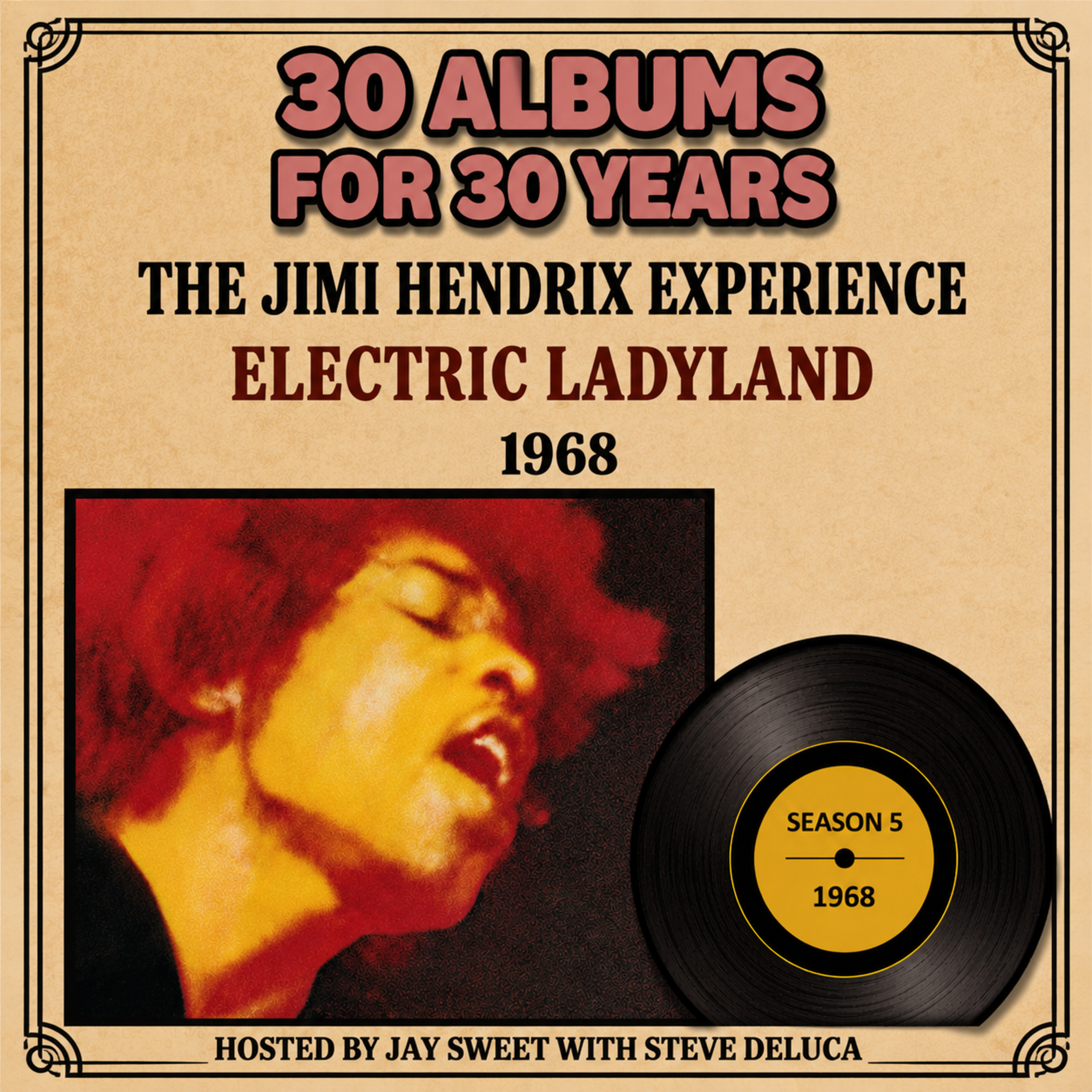 Jimi Hendrix-Electric Ladyland (Reprise in the US) 22.06.2026 1Std. 10Min.Jimi Hendrix-Electric Ladyland (Reprise in the US) U.S. Release Date: October 1968 Electric Ladyland was the third and final studio album by the Jimi Hendrix Experience and the most ambitious statement of Hendrix’s career. A sprawling double album produced solely by Hendrix, it showcased his growing artistic independence and his willingness to push beyond the boundaries of rock music. Blending blues, psychedelia, jazz, funk, soul, and studio experimentation, the album featured classics such as “Crosstown Traffic,” “All Along the Watchtower,” and “Voodoo Child (Slight Return),” while longer works like “1983… (A Merman I Should Turn to Be)” demonstrated his fearless creativity. Though some critics initially found the record overly expansive, its reputation has only grown with time. Electric Ladyland reached No. 1 in the United States and remains one of the defining albums of the rock era. More than a guitar showcase, it expanded the possibilities of the recording studio and cemented Hendrix as one of popular music’s greatest innovators. (S5 EP 24)
 -
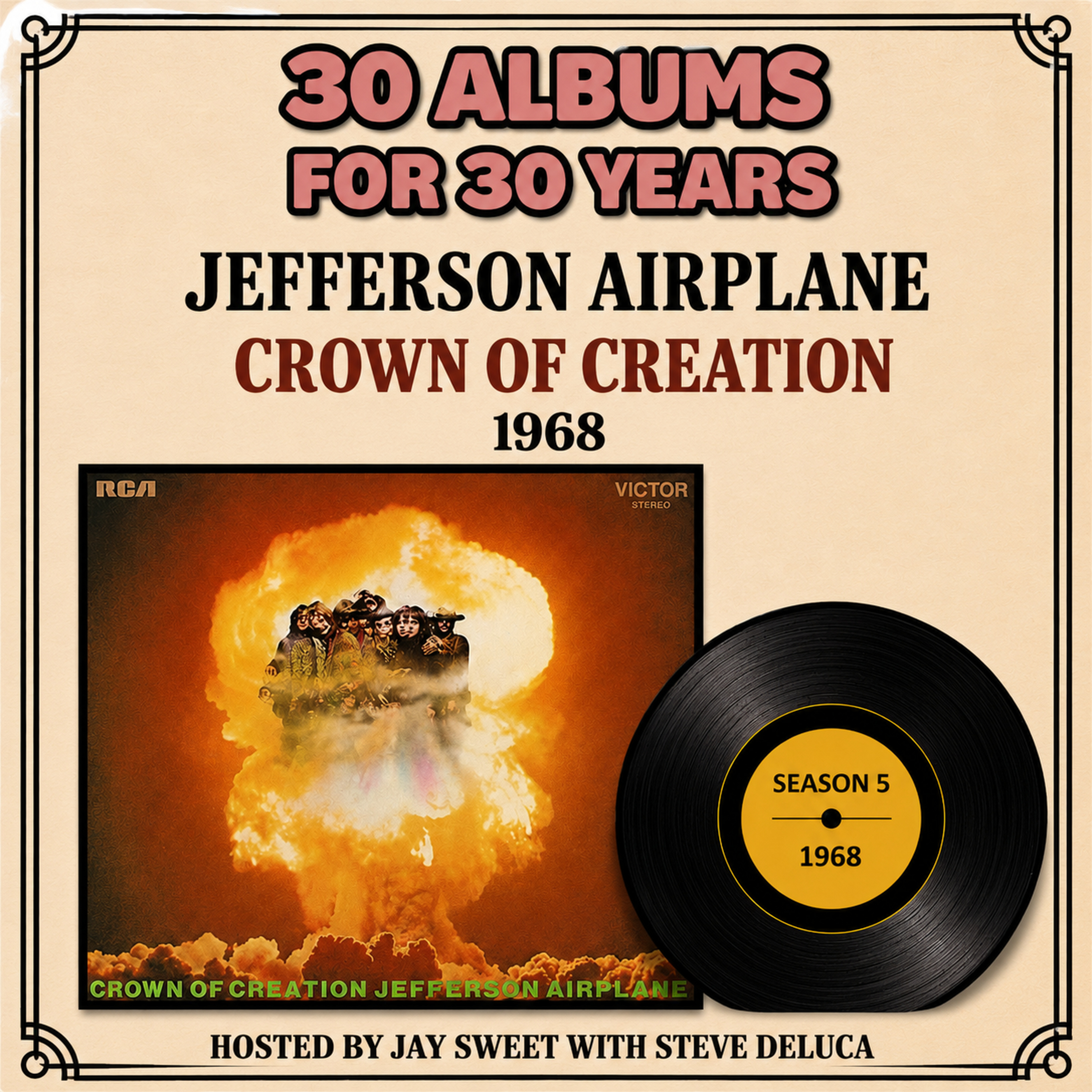 Jefferson Airplane — Crown of Creation 15.06.2026 59Min.Jefferson Airplane — Crown of Creation (RCA Victor) Release Date: September 1968Released in September 1968, Jefferson Airplane’s Crown of Creation stands as one of the strongest and most cohesive statements of the San Francisco psychedelic era. Arriving after the more experimental After Bathing at Baxter’s, the album balances adventurous studio textures with more focused songwriting, creating a record that is both accessible and artistically ambitious. The classic lineup of Grace Slick, Marty Balin, Paul Kantner, Jorma Kaukonen, Jack Casady, and Spencer Dryden was operating at its creative peak, with each member contributing distinctive musical and lyrical ideas. Songs such as “Lather,” “Triad,” “Greasy Heart,” the title track, and “The House at Pooneil Corners” explore themes of adulthood, social change, war, personal freedom, and cultural uncertainty. The album’s famous mushroom-cloud cover reflected the tensions of the Cold War and the turbulent climate of 1968. Although it produced no major hit single, Crown of Creation reached No. 6 on the Billboard chart and remains one of Jefferson Airplane’s most compelling, intelligent, and enduring recordings. (S5-EP23)
 -
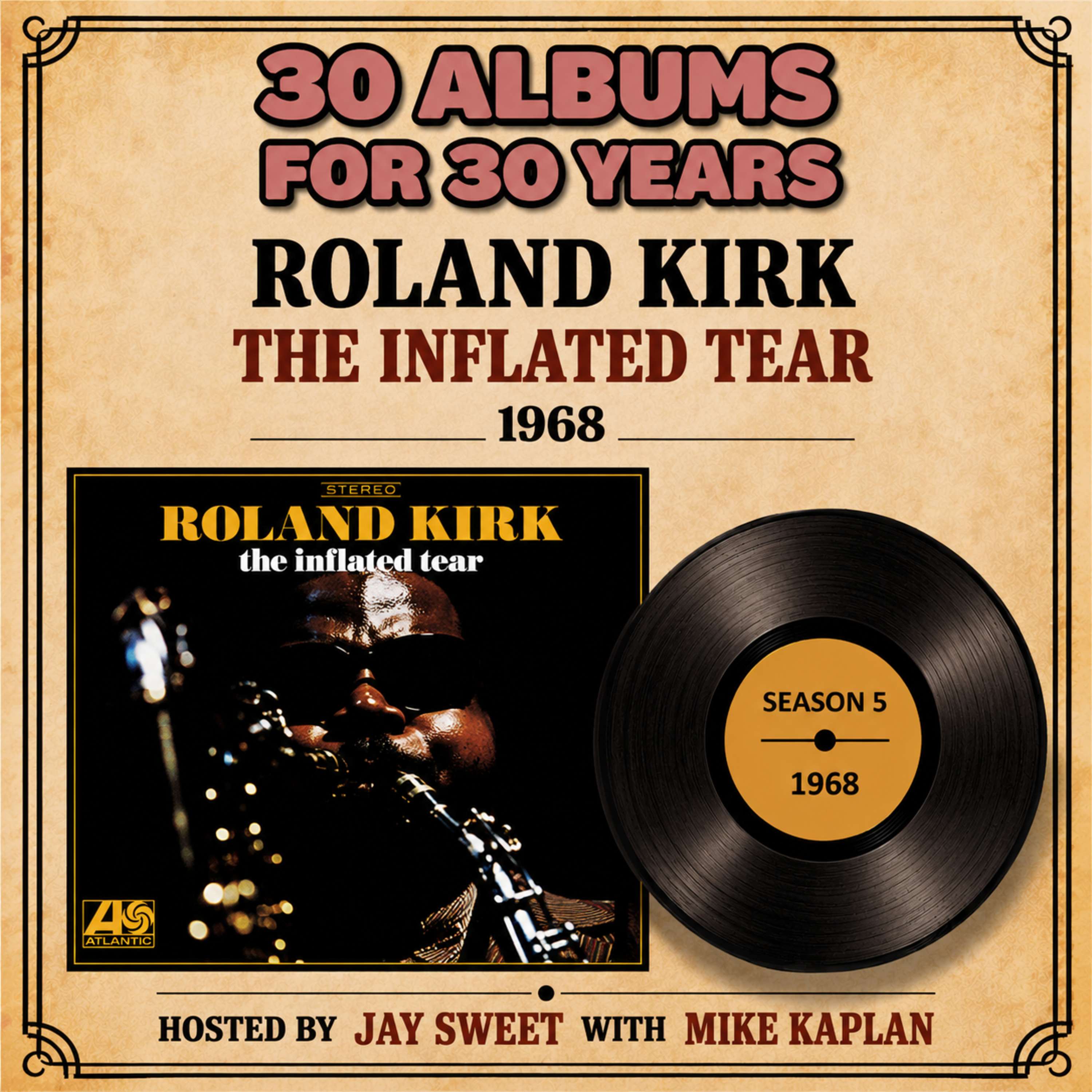 Rahsaan Roland Kirk-The Inflated Tear 04.06.2026 1Std. 42Min.Rahsaan Roland Kirk-The Inflated Tear (Atlantic) Release date: June 1968Released in 1968, The Inflated Tear stands as Rahsaan Roland Kirk’s masterpiece and one of the most original jazz albums of the decade. The album captures Kirk at the height of his creative powers, blending blues, gospel, post-bop, spirituals, and avant-garde elements into a deeply personal artistic statement. The title track remains one of the most remarkable performances in jazz history, featuring Kirk’s famous ability to play multiple horns simultaneously while never losing sight of emotional expression. Throughout the album, compositions such as “The Black and Crazy Blues,” “Fingers in the Wind,” and “A Laugh for Rory” reveal a musician equally capable of tenderness, humor, and innovation. The album’s impact has only grown with time. Once admired primarily for Kirk’s technical brilliance, it is now recognized as a landmark recording that challenged traditional ideas about jazz performance and composition. The Inflated Tear helped cement Kirk’s legacy as one of the most visionary artists of the 1960s and remains an enduring influence on jazz, experimental music, and creative improvisation. (S5-Ep22)
 -
 Gracinha Leporace (The Sergio Mendes Band) 01.06.2026 38Min.Gracinha Leporace (The Sergio Mendes Band) For more than five decades, Gracinha Leporace was far more than a vocalist in Sergio Mendes’ bands—she was his musical partner, collaborator, and eventually his wife. Born in Brazil, Leporace joined Mendes’ musical world after being discovered as a young singer at age 18 and officially became part of his group by 1970. Her warm voice became an essential part of the Sergio Mendes sound, helping carry forward the blend of Brazilian rhythms, jazz sophistication, and pop accessibility that made the band internationally famous. She and Mendes married in 1974 and remained together for fifty years, building both a family and a remarkable musical legacy.Today, Leporace continues that legacy with the Sergio Mendes Band, featuring many musicians who performed with Mendes during the final decade of his career. New Jersey audiences will have the opportunity to celebrate the music of Brasil ’66 and beyond when the group performs at Mayo Performing Arts Center on June 11 and at Bergen Performing Arts Center on June 14. These performances honor the 60th anniversary of Herb Alpert Presents Sergio Mendes & Brasil '66, one of the most influential crossover albums of the 1960s.https://www.sergiomendesmusic.com/
 -
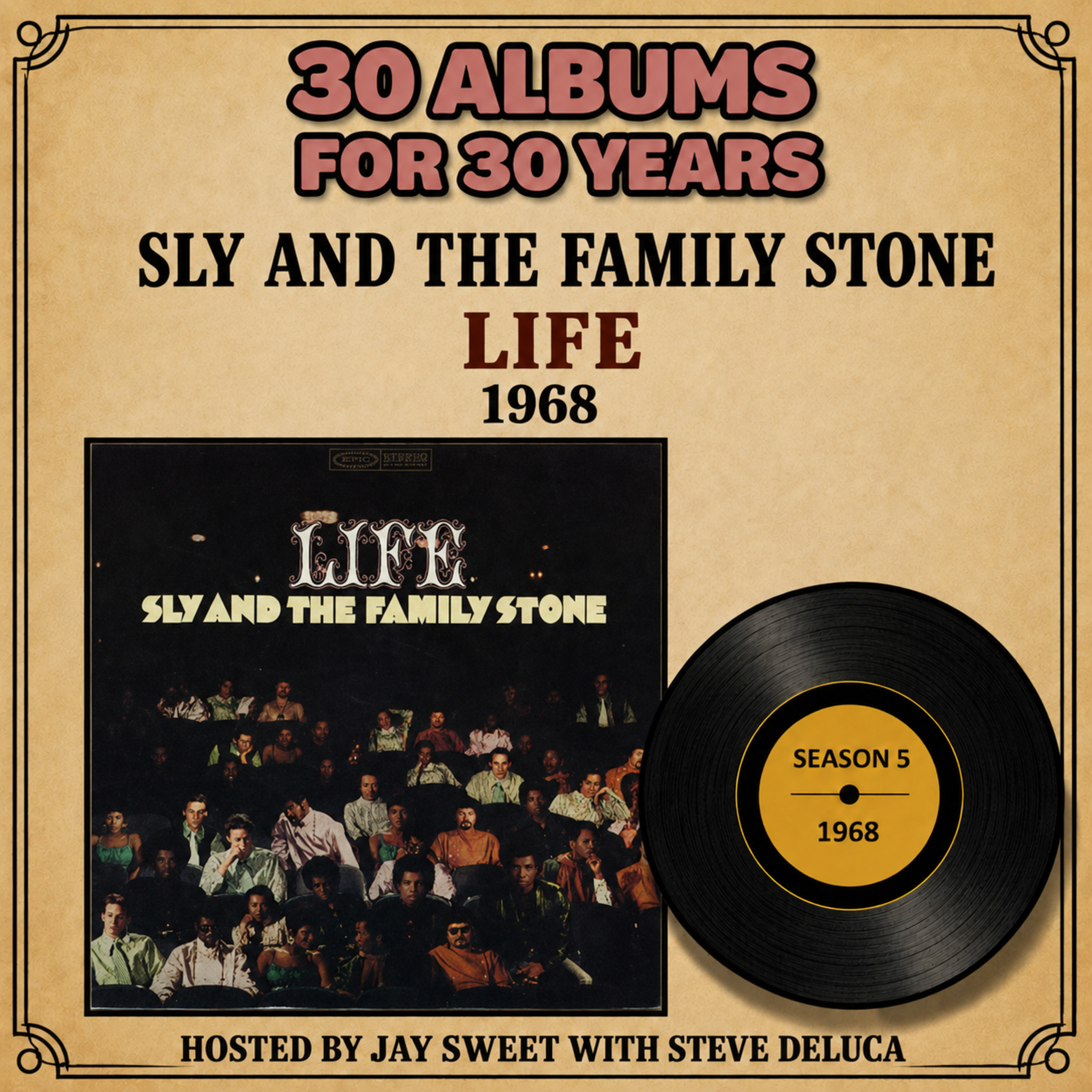 Sly and The Family Stone- Life 28.05.2026 1Std. 14Min.Sly and The Family Stone- Life (Epic Records) Released September 1968 Sly & The Family Stone’s Life (1968) is one of the great overlooked transitional albums of the late 1960s. Released between the commercial breakthrough of Dance to the Music and the landmark success of Stand!, the album captures the group expanding beyond catchy psychedelic soul into deeper funk experimentation, social commentary, and more adventurous songwriting. The racially and gender-integrated band—still a radical concept in popular music at the time—blended soul, rock, funk, gospel, and psychedelia into a sound unlike anything else on radio. Larry Graham’s developing slap bass technique became a major part of the album’s identity and would later revolutionize funk bass playing. Tracks like “Fun,” “Life,” and “Love City” showcase the band’s infectious grooves, layered vocals, and optimistic messages of individuality and unity. Although the album performed poorly on the charts upon release, it has since become recognized as an important bridge toward the socially conscious brilliance of Stand! and later funk innovations. (S5-EP21)
 -
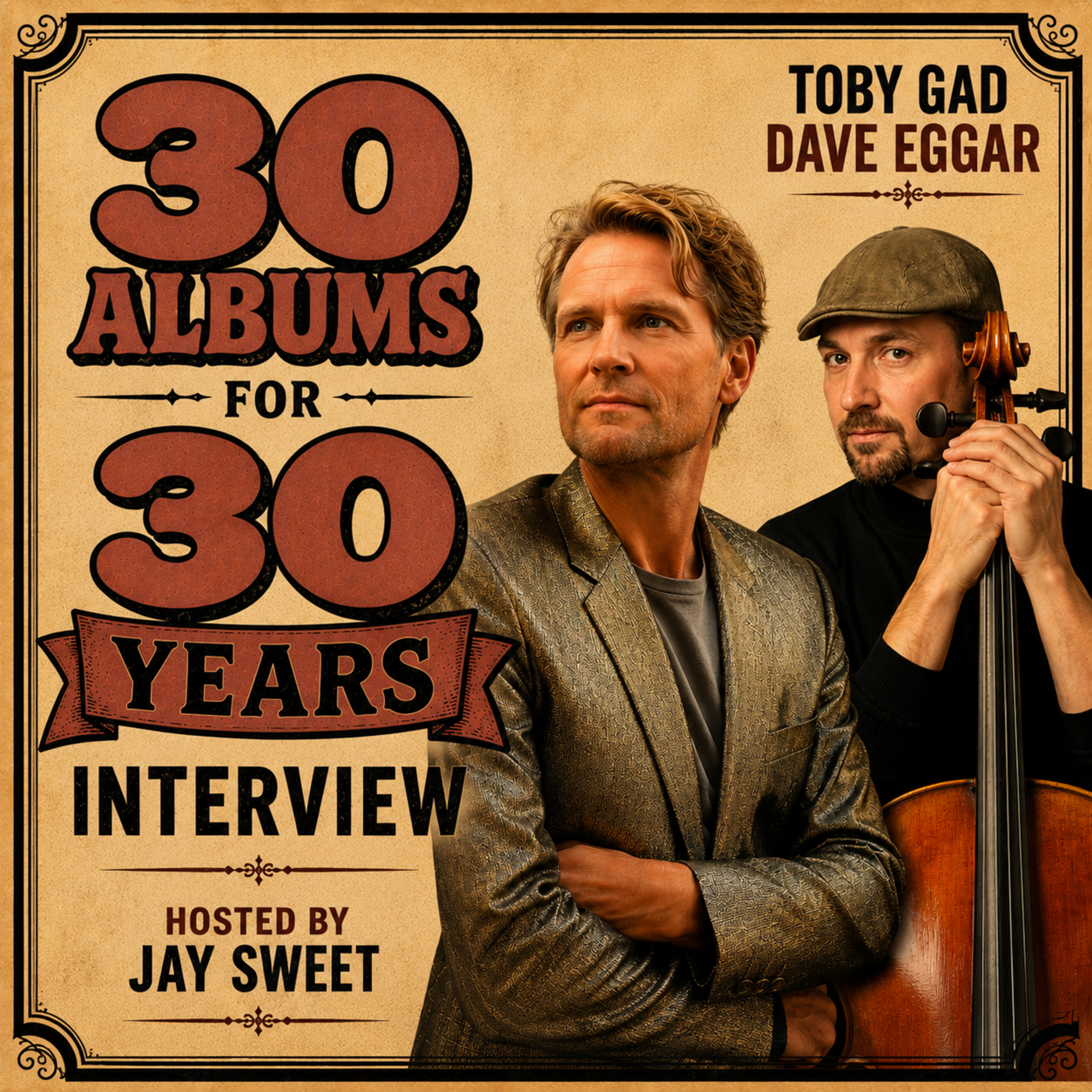 Toby Gad and Dave Eggar Interview (Eureka Concerts) 27.05.2026 1Std. 6Min.Toby Gad and Dave Eggar Interview (Eureka Concerts)Legendary German-born songwriter and producer Toby Gad and acclaimed crossover cellist/composer Dave Eggar have each spent decades redefining the boundaries between virtuosity, emotion, and modern popular music. Raised in a jazz-centered musical family in Munich, Gad combined classical piano training with jazz harmony and improvisation before becoming one of the most successful hitmakers of the modern pop era, writing and producing global hits including Beyoncé’s “If I Were a Boy,” Fergie’s “Big Girls Don’t Cry,” and John Legend’s “All of Me.” Eggar, a classically trained prodigy and adventurous improviser, built a remarkable career blending classical performance with jazz, rock, folk, film music, and contemporary crossover projects, collaborating with artists ranging from Coldplay, Pearl Jam, Amy Winehouse, Tony Bennett, Paul Simon and his mentor Michael Brecker.Together, their project Eureka Concerts captures the spontaneity and creative freedom that define both artists — a fully improvised musical dialogue where jazz intuition, classical sophistication, cinematic textures, and emotional storytelling collide in real time. The collaboration stands as a rare meeting of two fearless musical minds whose legendary careers continue to evolve through exploration and improvisation.For more info check out Toby Gad at https://www.tobygad.com/ Dave Eggar https://www.domomusicgroup.com/daveeggar/Eureka Concerts https://open.spotify.com/album/0AqBO1SukqFI6SZ8IMbmni?si=eKdoOacNQMK32wplvahkSQ
 -
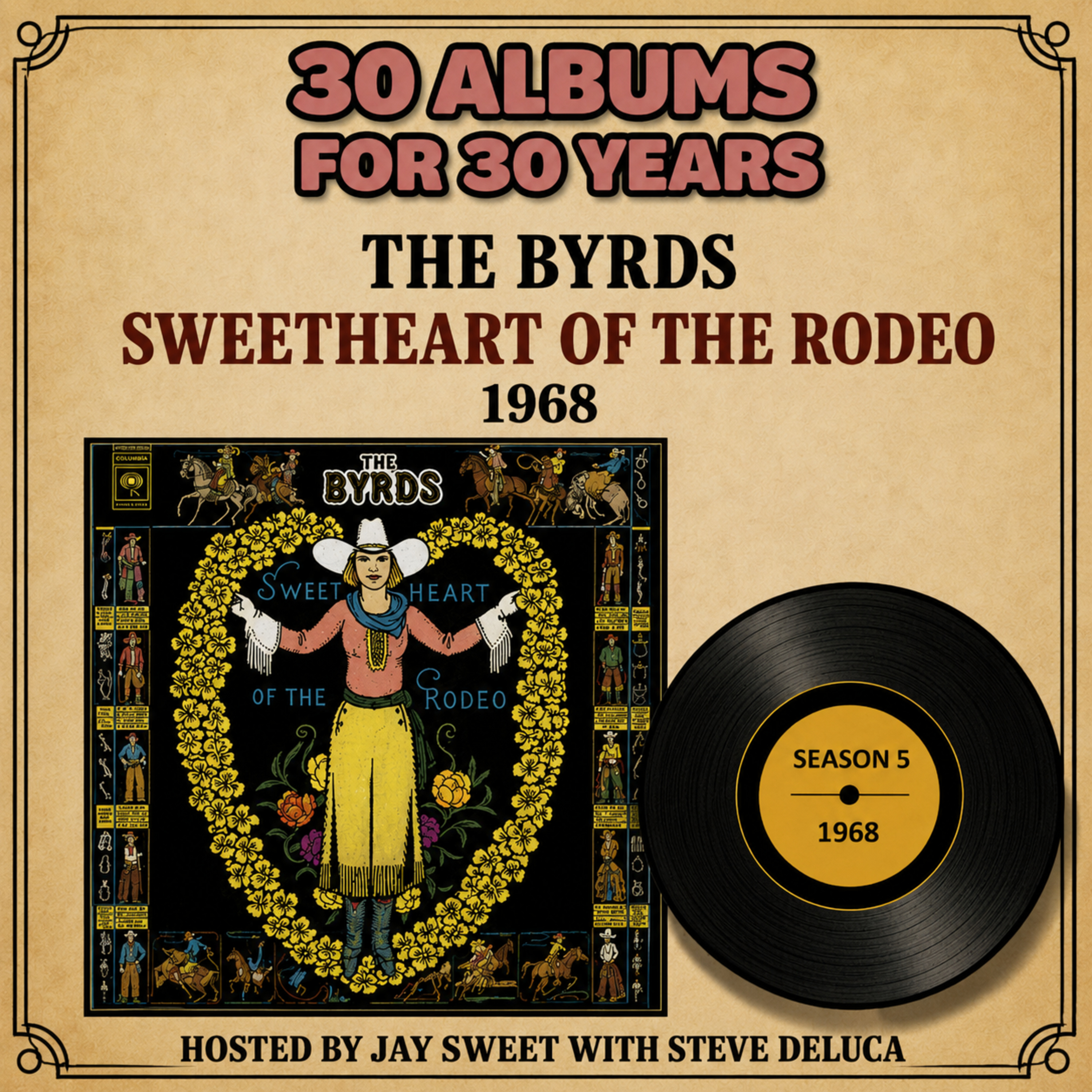 The Byrds- Sweetheart of The Rodeo 22.05.2026 1Std. 19Min.The Byrds- Sweetheart of The Rodeo (Columbia) Released August 30, 1968 Sweetheart of the Rodeo is one of The Byrds’ boldest and most unexpected artistic turns. After helping define folk-rock and experimenting with psychedelia, the band suddenly moved deep into country, gospel, bluegrass, honky-tonk, and cowboy music. Gram Parsons’ arrival was crucial, pushing Roger McGuinn and Chris Hillman toward a sound rooted in American tradition rather than 1968 studio experimentation. The album did not become a major commercial hit, but its influence became enormous. Songs by Bob Dylan, Woody Guthrie, the Louvin Brothers, Merle Haggard, Cindy Walker, and Parsons gave the record authenticity and depth. Nashville session players, especially the pedal steel guitarists, gave the music its pure country identity. Tracks like “You Ain’t Goin’ Nowhere,” “Hickory Wind,” and “You Don’t Miss Your Water” show the band performing with sincerity rather than novelty. It remains timeless and helped shape country-rock and Americana. (S5-EP20)
 -
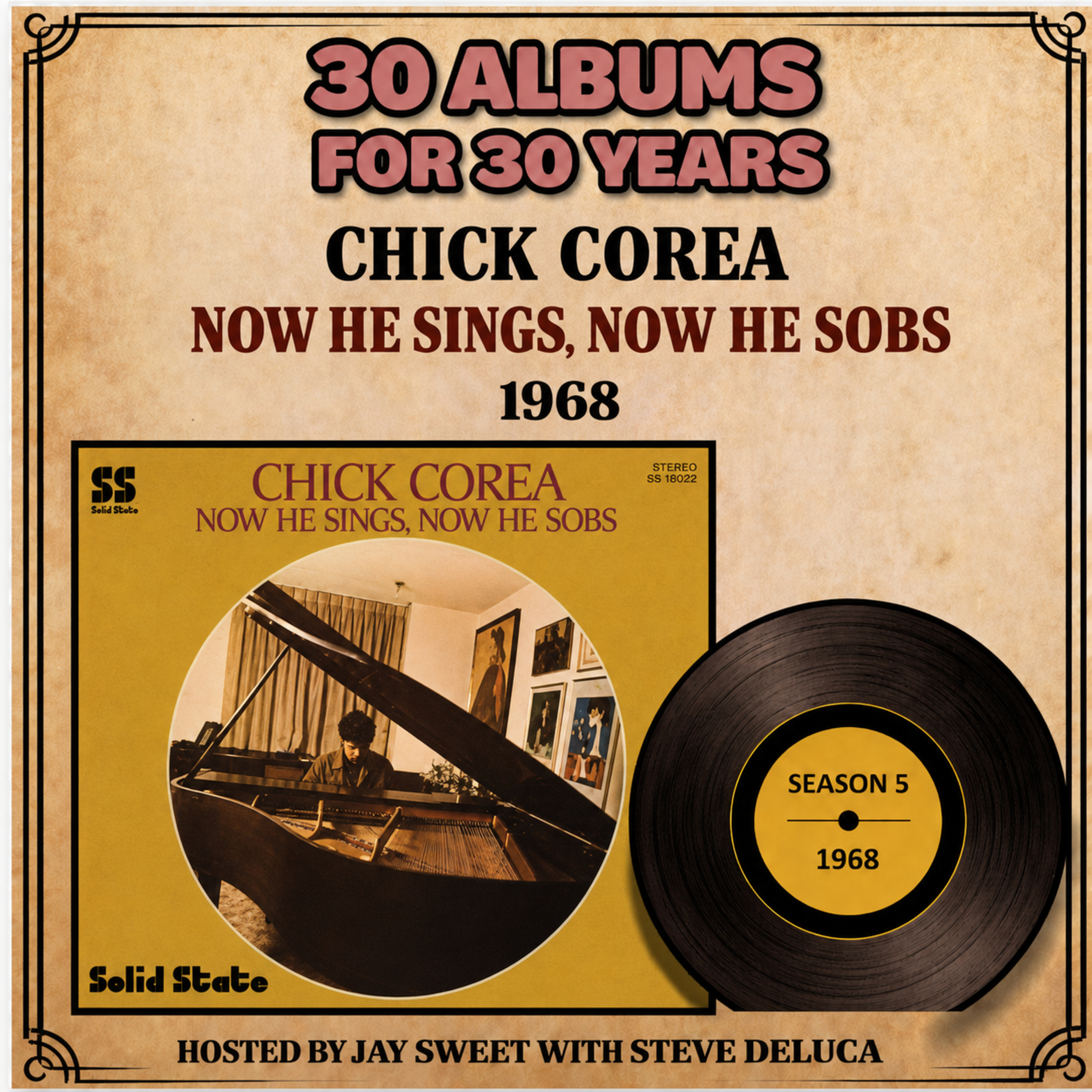 Chick Corea- Now He Sings, Now He Sobs 14.05.2026 53Min.Chick Corea- Now He Sings, Now He Sobs (Solid State Records) Released December 1968 Now He Sings, Now He Sobs captures Chick Corea, Miroslav Vitouš, and Roy Haynes in a rare moment of complete musical connection and creative freedom. Although somewhat ignored upon release, the album has since become one of the defining piano trio recordings in modern jazz history. Corea’s compositions balance angular post-bop lines, open improvisation, rhythmic experimentation, and abstract textures, while Vitouš brings the fearless intensity of a young bass virtuoso and Haynes supplies his legendary snap-crackle rhythmic imagination. Tracks such as “Steps – What Was,” “Matrix,” and the title tune reveal a trio functioning as a single organism rather than a pianist backed by rhythm section players. The music channels the adventurous spirit of Miles Davis’ Second Great Quintet and the Bill Evans Trio while pushing the piano trio format into more exploratory territory. This is not casual background jazz or music aimed at mass appeal. It demands attention, openness, and patience. For listeners willing to engage with its intensity and complexity, the album remains one of the true masterpieces of late-1960s modern jazz. (S5-EP 19)
 -
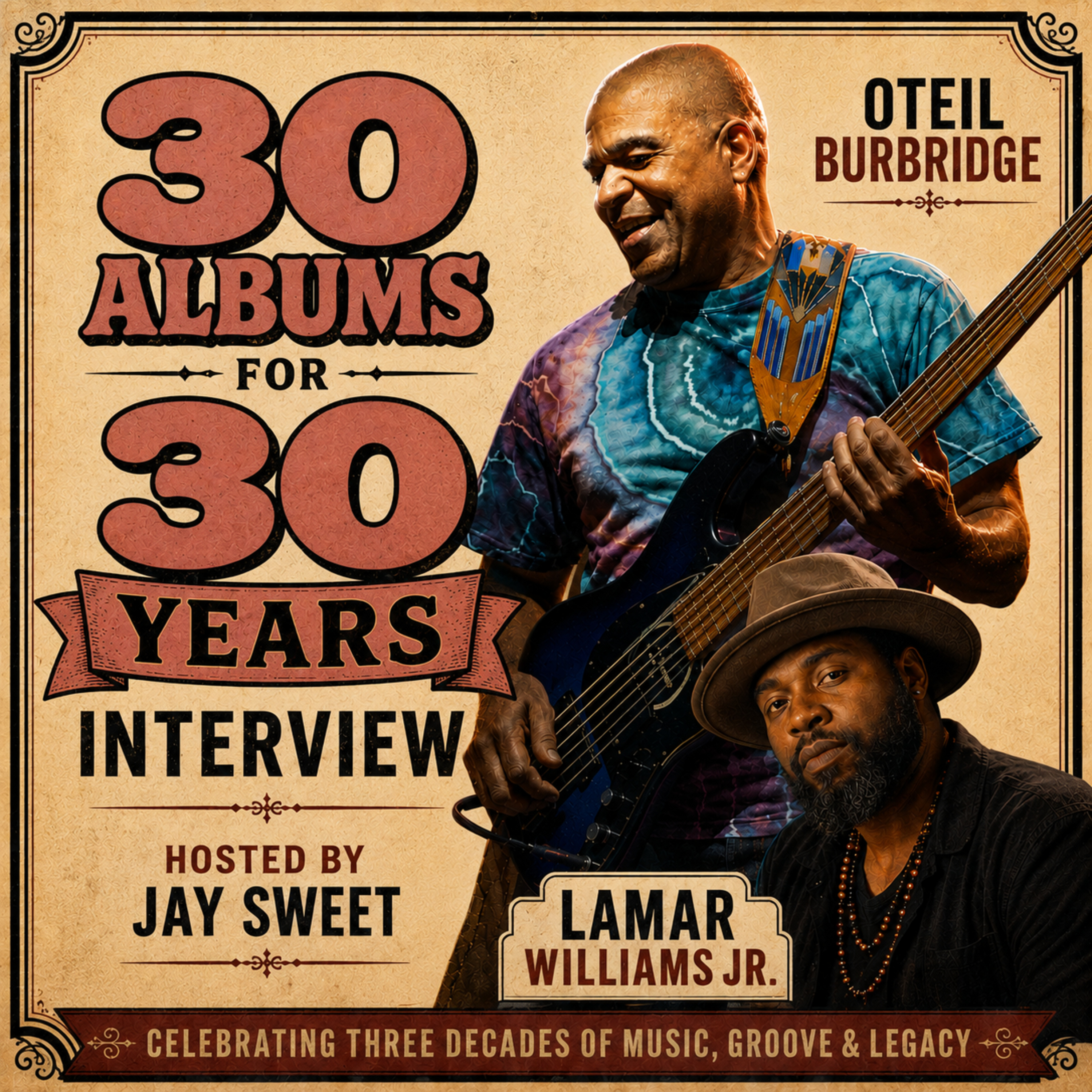 Oteil Burbridge and Lamar Williams Jr, Interview (The Offering) 11.05.2026 51Min.Oteil Burbridge and Lamar Williams Jr. represent two generations of Southern-rooted improvisational music coming together through groove, soul, and message-driven songwriting. Burbridge is widely known for his work with the Dead & Company, the Allman Brothers Band, Aquarium Rescue Unit, and Tedeschi Trucks Band, where his fluid bass playing and deep jazz-funk vocabulary made him one of the most respected improvisers in modern jam and fusion music. Williams Jr., son of former Allman Brothers bassist Lamar Williams, has emerged as a powerful vocalist carrying forward the emotional intensity and Southern soul tradition connected to the Allman legacy.Their 2026 collaborative album, The Offering, blends gospel harmonies, roots music, improvisational rock, and reflective songwriting into a warm and spiritually minded recording. Recorded in Iceland’s Flóki Studios, the album favors feel and atmosphere over flashy virtuosity, though the musicianship throughout is excellent. Songs like “The Way We Rise” and “Love & War” balance uplifting lyrical themes with earthy grooves and melodic depth. The project feels less like a commercial crossover effort and more like two musicians searching for sincerity, community, and healing through music.Oteil Burbridge and Lamar Williams Jr.- The Offering
 -
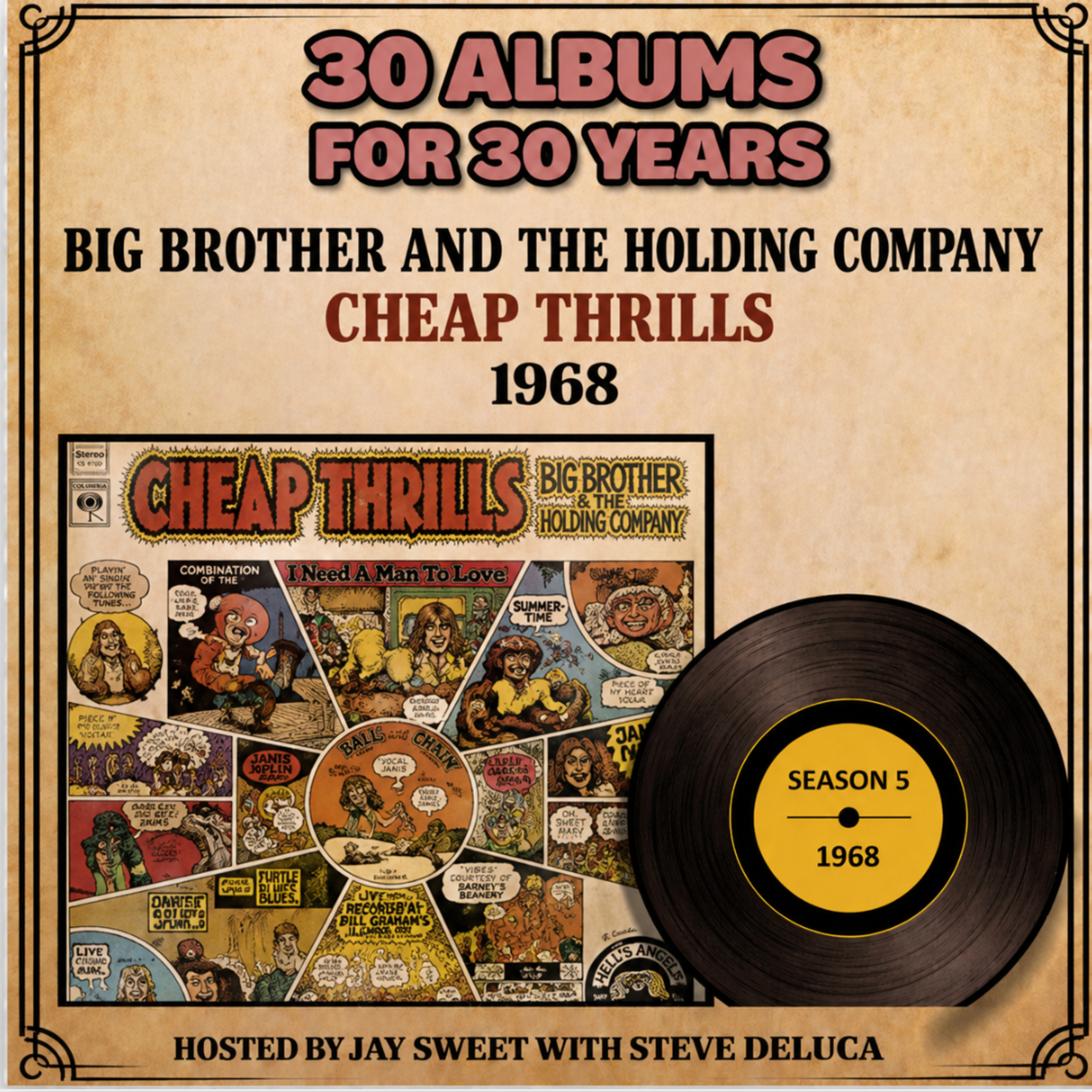 Big Brother and the Holding Company (Janis Joplin) -Cheap Thrills 07.05.2026 53Min.Cheap Thrills -Big Brother and the Holding Company (Columbia) Released August 12, 1968Cheap Thrills by Big Brother and the Holding Company stands as one of the defining albums of the late 1960s, capturing the raw spirit of the San Francisco psychedelic scene at its peak. The record transformed Janis Joplin into a major cultural force through emotionally explosive performances on tracks like “Piece of My Heart” and “Ball and Chain.” Unlike many polished studio productions of the era, the album intentionally embraced a loose, gritty sound designed to recreate the energy of a live concert experience. The interplay between blues, psychedelic rock, and improvisational jamming gave the album its distinctive identity. While the band itself could sound chaotic at times, Joplin’s intensity and phrasing elevated the material into something unforgettable. Commercially, the album became a massive success, reaching #1 on the Billboard charts and helping define the countercultural sound and attitude of 1968. (S5-EP 18)
 -
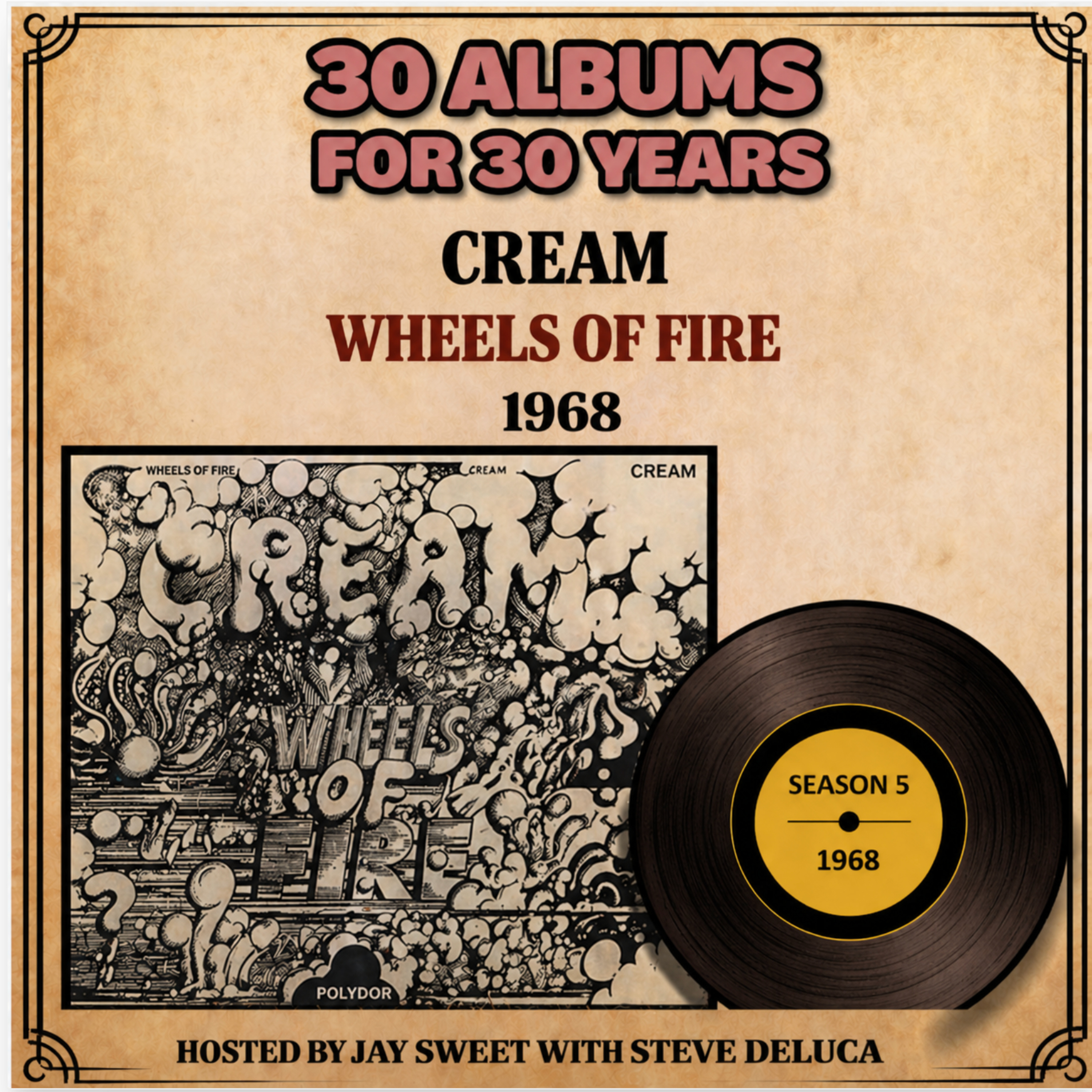 Cream- Wheels Of Fire 29.04.2026 1Std. 31Min.Cream - Wheels of Fire (Atco/Atlantic) Released June 14,1968 (In US) Wheels of Fire captures Cream at the peak of their creative and commercial power, presenting an ambitious double album that blends studio precision with the raw energy of their live performances. The studio disc showcases a refined mix of blues, psychedelia, and inventive arrangements, while the live recordings highlight the trio’s remarkable improvisational chemistry and extended, jazz-influenced approach to form. Tracks like “White Room” and “Crossroads” became defining statements of late-1960s rock, illustrating the band’s ability to merge technical mastery with emotional intensity. As one of the first double albums to achieve massive commercial success, it expanded expectations for what a rock record could be in both scope and artistic vision. The album’s influence can be heard in the evolution of hard rock, blues-rock, and jam-based music, solidifying Cream’s legacy as one of the most innovative and powerful trios of the era. (S5-EP17)
 -
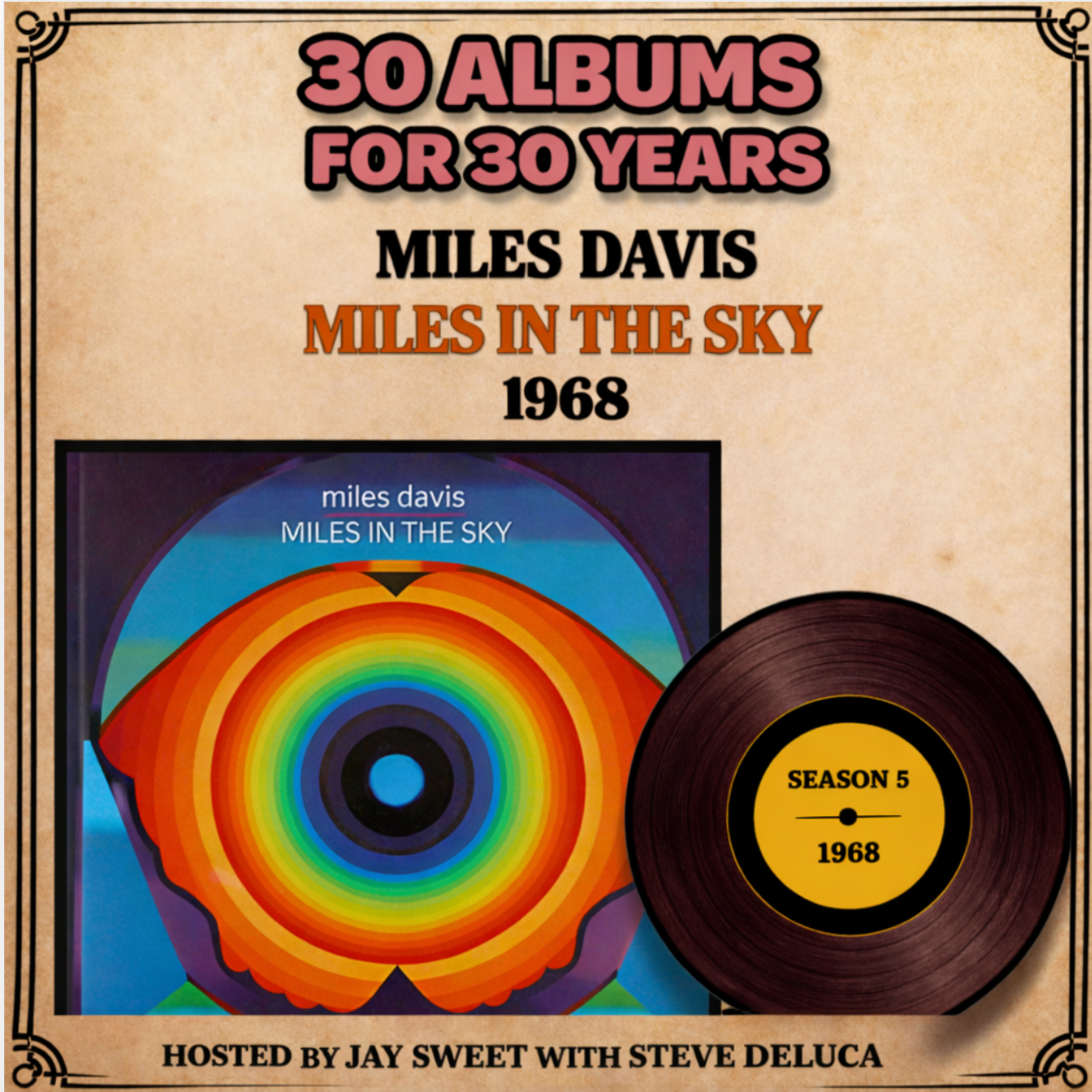 Miles Davis- Miles In The Sky 21.04.2026 1Std. 8Min.Miles Davis- Miles In The Sky (Columbia Records)(Released January 16, 1968 and May 15–17, 1968)Miles in the Sky (1968) captures Miles Davis at a pivotal moment of transition. Recorded with his celebrated Second Great Quintet—Wayne Shorter, Herbie Hancock, Ron Carter, and Tony Williams—the album marks the first clear step toward Davis’s electric period. Released by Columbia Records, the record introduces electric piano and electric bass into Miles’s studio sound while retaining the sophisticated interplay the quintet had developed through earlier post-bop recordings. The four extended tracks blend groove-based structures with the band’s advanced rhythmic freedom and conversational improvisation. Pieces such as “Stuff” and “Paraphernalia” hint at the influence of late-1960s rock and funk, while still grounded in the group’s exploratory jazz language. The album stands as the final full studio statement by the Second Great Quintet and foreshadows Davis’s radical electric experiments that would soon emerge on his 1969 releases In a Silent Way and Bitches Brew. (S5-EP16)
Ähnliche Podcasts


Beliebt in
Dieser Podcast erscheint auch in den Podcast-Charts dieser Länder.

