
Daybreak
The Ken
0
Daybreak is a daily business news podcast from The Ken, an Indian business journalism publication. Hosted by Snigdha Sharma and Rachel Varghese, it simplifies complex business stories into clear, powerful narratives. Each episode covers one significant business story from Monday to Friday, drawing on years of original reporting and analysis.
Folgen
-
 What happens when you put Indian business on a 2x2? 16.10.2026 1Std. 19Min.In this Daybreak x Two by Two crossover, host Snigdha Sharna turns the tables on Praveen Gopal Krishnan to look beyond individual companies and industries, and at the bigger patterns connecting them. From duopolies under attack and startups struggling to justify their valuations, to the rules regulators are rewriting, AI’s impact on jobs, and how Indians are changing the way they live, we explore what these stories reveal about where Indian business is headed.Which old assumptions are breaking down? Who stands to win or lose? And what should we be watching next?As The Ken's Two by Two wraps up its second season, we connect the dots and look ahead to Season 3.
 -
 India’s food inflation has layers. The onion is only the first 15.10.2026 10Min.On October 12, government data showed India’s food inflation rose to 7.7% in September, led by onion prices that more than doubled from a year earlier. Back in May, onion growers in Nashik wore garlands of onions and tried to block the Mumbai–Agra highway because prices had fallen to ₹4 to ₹6 a kilo. The government says India grew almost as many onions as the year before, and it kept a stockpile for exactly this kind of spike. Prices rose anyway, and rural households are feeling it most. Why is it so hard to keep India’s kitchen affordable?Tune in.India’s LPG success story runs on a two-day buffer, March 15, 2026, 11 minutes. ListenIndia solved the wrong oil problem first, 31 Jul 2026, ListenThe great Indian sugar trap: how a decade of surplus left India with nothing to spare , 28 Aug 2026, ListenThis episode is edited by Arnav PrakashDaybreak is produced from the newsroom of The Ken, India’s first subscriber-only business news platform. Subscribe for more exclusive, deeply-reported, and analytical business stories.
 -
 7-Eleven promised "Everything essential". It still lost to India's corner shops 14.10.2026 15Min.“Mile har cheez zaruri.” Everything essential, right here. That was the promise on the signs inside India’s first 7-Eleven, which opened in Mumbai five years ago, with India’s biggest retailer behind it.This September, the last 31 stores shut. In its last full financial year, the chain lost nearly ₹90 crore on just ₹92 crore of revenue. Analysts point to local competition like kiranas and quick commerce. But no one from the companies themselves have offered an explanation for why the stores are closing. Still, this is a chain that thrives next to corner shops in other countries. So what was missing here? Host Rachel Varghese explores.This episode is edited by Arnav PrakashDaybreak is produced from the newsroom of The Ken, India’s first subscriber-only business news platform. Subscribe for more exclusive, deeply-reported, and analytical business stories.
 -
 Karnataka can’t fix its potholes. So it’s building an AI city 13.10.2026 13Min.Every morning, a senior official in Mysuru’s city corporation swerves past the same potholes on his way to the office responsible for fixing them. Over three years, the money Mysuru gets from the state for everyday civic upkeep has fallen from Rs 25 crore to Rs 3 crore, leaving little for repairs.Just outside Bengaluru, Karnataka is borrowing heavily to build an Rs 18,000-crore AI city in Bidadi, backed by a state guarantee, before a single company has signed up to move in. Telangana and Andhra Pradesh are chasing similar projects as their own local bodies struggle for funds.In this read aloud of Mrunmayee Kulkarni’s newsletter edition by host Snigdha Sharma, we ask why states are betting big on new cities when the ones people already live in are grappling with crumbling infrastructure and lack of funds.This episode is edited by Arnav PrakashDaybreak is produced from the newsroom of The Ken, India’s first subscriber-only business news platform. Subscribe for more exclusive, deeply-reported, and analytical business stories.
 -
Bollywood wants to offend nobody. AI is happy to help 12.10.2026 12Min.In India, even the phantom of the censor board is enough to make filmmakers rewrite scenese at the very last minute, including those making shows for streaming platforms the board doesn't cover. A startup from Bengaluru called Neuralgarage says it has a fix. It's AI solution changes a line according to the way in which actor's lips move.In this piece, Shiveka Bakshi looks at how it works, why well-known production houses are using it, and what it says about the film industry today. This is a read aloud of a newsletter edition of Trade Tricks, by Rachel Varghese on Daybreak by The Ken.📖 Read the full story on The Ken: Bollywood wants to offend nobody. AI is happy to help Daybreak is produced from the newsroom of The Ken, India’s first subscriber-only business news platform. Subscribe for more exclusive, deeply-reported, and analytical business stories.
-
 Why your next IIT, IIM reunion will feel like a sales pitch 09.10.2026 21Min.What happens when India's top institutes start treating reunions as fundraisers? The Ken's Santhom and Mutasim, both from IITs themselves, write about how one batch of alumni pledged Rs. 100 crores for a single idea, and look at the system growing around this kind of philanthropy like x-bankers that run development foundations, non-profit partners set in California taking donations in dollars. The result is that some alumni feel that donation floors are taking the sentiment out of reunions, making them feel less about the connection between students and campuses and more like manicured events. Host Rachel Varghese sits down with both reporters to explore what has changed with universities doubling down on this model, whether it will last and what both reporters are likely to do once their own 25th reunion comes around. Tune in.This episode was edited by Arnav Prakash Daybreak is produced from the newsroom of The Ken, India’s first subscriber-only business news platform. Subscribe for more exclusive, deeply-reported, and analytical business stories.
 -
 Apple and Google's app stores are the next battleground for protests 08.10.2026 15Min.On October 3, Jack Dorsey's Bitchat disappeared from Apple's App Store in India after the IT ministry demanded its removal. It vanished from Google Play too. Bitchat lets phones pass messages over Bluetooth, with no internet needed. That made it a lifeline in July, when the government switched off mobile internet around Delhi's Jantar Mantar during student protests. In one week, India accounted for 85% of the app's global downloads. Even an order to pull its code off GitHub didn't stop it spreading. So the government went after the app stores. In this episode, host Snigdha Sharma looks at the technology protesters reach for when the internet goes dark, and how governments are learning to keep up.Tune in.Also listen to: Delhi built a ‘safe’ surveillance city. It can now locate anyone in secondsThis episode was edited by Arnav PrakashDaybreak is produced from the newsroom of The Ken, India’s first subscriber-only business news platform. Subscribe for more exclusive, deeply-reported, and analytical business stories.
 -
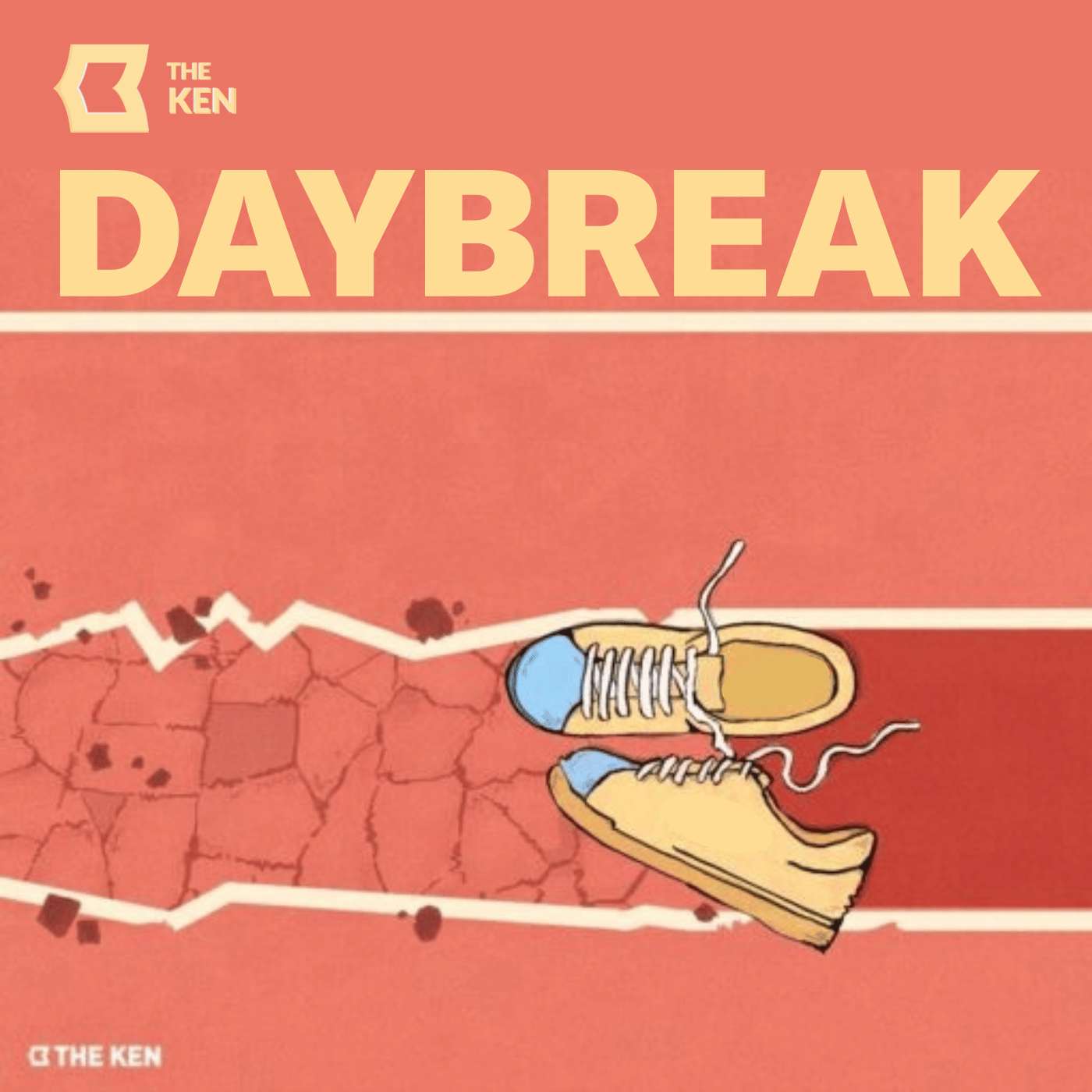 Nike needs India’s sneaker heads. But do they need Nike? 07.10.2026 19Min.When the NBA complained about Micheal Jordan's black and red shoes, Nike turned the complaint into an ad, and sneakers ended up becoming a symbol of style and rebellion.In India, sneaker culture took longer to arrive. But last year, more than 200 people lined up outside a store in Bangalore for a limited edition shoe from Comet, a homegrown brand.And Nike could use that kind of enthusiasm right now. Its revenue fell 4% last quarter, and its losing ground in China, a major market, to local players. Which is why, its new Bangalore campus sounded like a bet on Indian sneaker heads. But other communications suggest that it's a "capability center", another back office, and this is after Nike has pulled away from India before. So, today we ask: is Nike fighting for the market that Comet, Gully Labs and Ten x You are carving out for themselves? And if it was, what would it take for it to win?This episode was edited by Arnav PrakashDaybreak is produced from the newsroom of The Ken, India’s first subscriber-only business news platform. Subscribe for more exclusive, deeply-reported, and analytical business stories.
 -
Delhi built a ‘safe’ surveillance city. It can now locate anyone in seconds 06.10.2026 21Min.Your face caught on a camera, your vehicle number plate, a voter ID, a driving licence, even a police-clearance certificate—any of these can become part of a vast web of data that the police can search in Delhi.That matters especially now, as the capital sees mass protests and public demonstrations, raising questions around safety. surveillance, privacy and the right to dissent.The Ken's Pratap Vikram Singh spent a month investigating Delhi’s ₹857-crore Safe City Project, conceived in the name of women’s safety. Its mandate now extends far beyond that, to crime prevention, public-order surveillance and political and religious rallies.What exactly is Delhi building, who can access it, and what happens when a system designed to find criminals can find almost anyone? In this episode, host Snigdha Sharma reads Pratap’s report titled: Delhi’s mass surveillance: track 50 million faces, identify them in five secondsThis episode was edited by Arnav PrakashDaybreak is produced from the newsroom of The Ken, India’s first subscriber-only business news platform. Subscribe for more exclusive, deeply-reported, and analytical business stories.
-
How Flipkart Minutes became the company's redemption arc 05.10.2026 15Min.For years, Flipkart has tried and struggled to scale the vertical it began to sell groceries. But as quick commerce platforms started becoming successful, the e-commerce giant could not just stay out of the game. Today, around a quarter of its business comes from Minutes. What is driving the vertical is also an aggressive expansion of dark stores and in tier-2 and a change in management affecting selection on the platform. In this episode, we look at how Minutes has made it work so far, and why Flipkart's push into quick commerce is becoming a way for it to secure its future. Daybreak is produced from the newsroom of The Ken, India’s first subscriber-only business news platform. Subscribe for more exclusive, deeply-reported, and analytical business stories.
-
Adani’s think tank flexes its muscles in Delhi 02.10.2026 10Min.A two-year-old think tank backed by Adani just got 14 of its suggestions, some of them word for word, written into a law passed by Parliament. That law opened India's nuclear sector to private players for the first time in history. Months later, Adani floated a new subsidiary to enter the same field.The think tank is called Chintan Research Foundation. It started in a South Delhi cafe. It calls itself independent. And it's now one of the more visible and contested players in Delhi's policy world.So what exactly does Rs 100 crore buy you in India's policy ecosystem?Also listen to: Friday Roundup: Adani goes nuclear and AI's talent exit ( https://the-ken.com/podcasts/daybreak... )*This episode was originally published on May 6th 2026Daybreak is produced from the newsroom of The Ken, India’s first subscriber-only business news platform. Subscribe for more exclusive, deeply-reported, and analytical business stories.
-
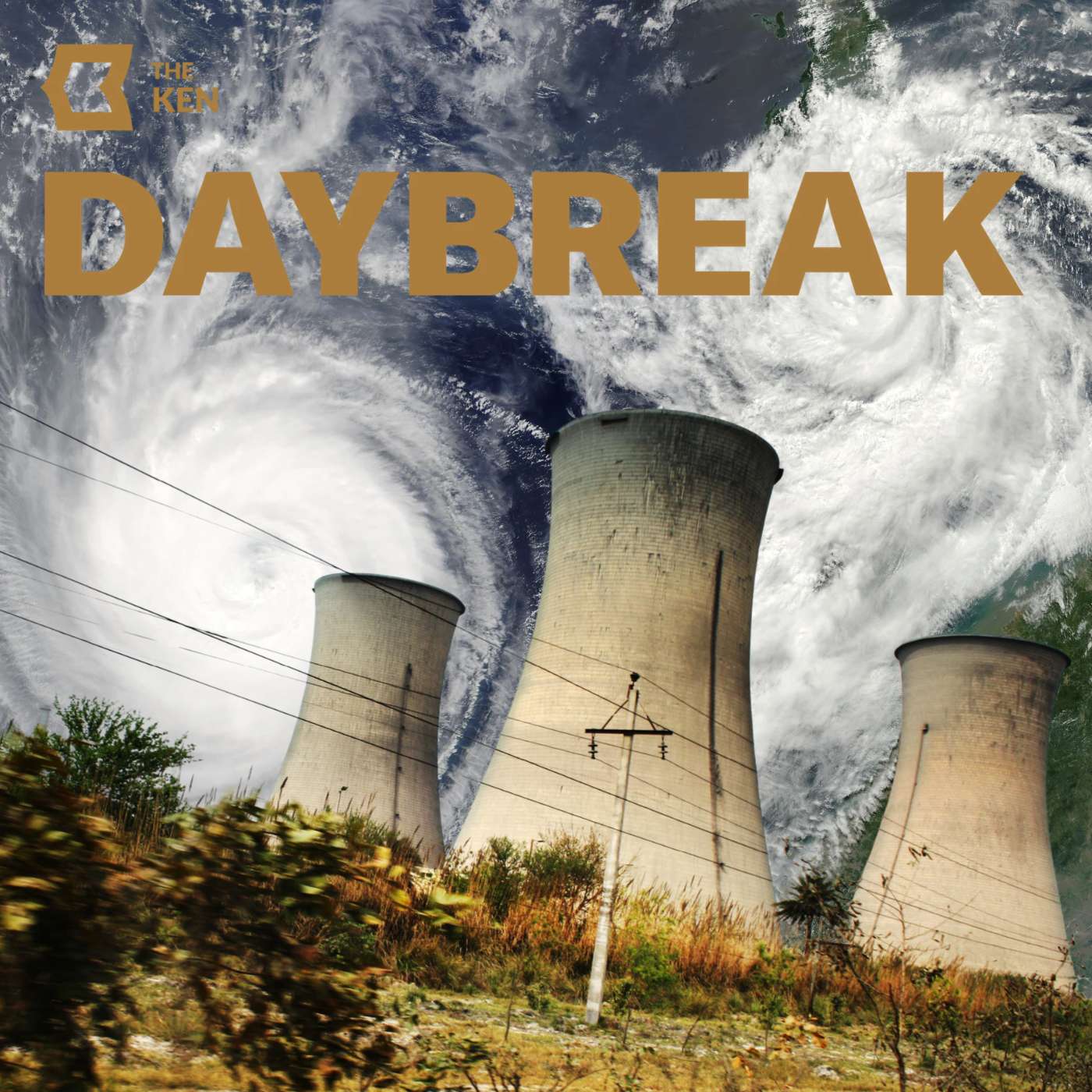 India is burning through its coal buffer 01.10.2026 10Min.This September was supposed to give India's power grid a break. Instead, on some nights, the gap between the electricity people wanted and what the grid could supply reached almost 8 gigawatts, bigger than anything seen during this year's heatwaves. Kerala restricted power in the evenings. Near Patna, villagers blocked a highway after three days without electricity. And 82 power plants were running critically low on coal, with barely a week's worth left.Strangely, India isn't short of coal. About 76 million tonnes sits at Coal India's mines. But a weak monsoon drained the dams and flooded the coal belt at the same time.So how much breathing room is there between you and a power cut? This episode was edited by Arnav Prakash.Daybreak is produced from the newsroom of The Ken, India’s first subscriber-only business news platform. Subscribe for more exclusive, deeply-reported, and analytical business stories.
 -
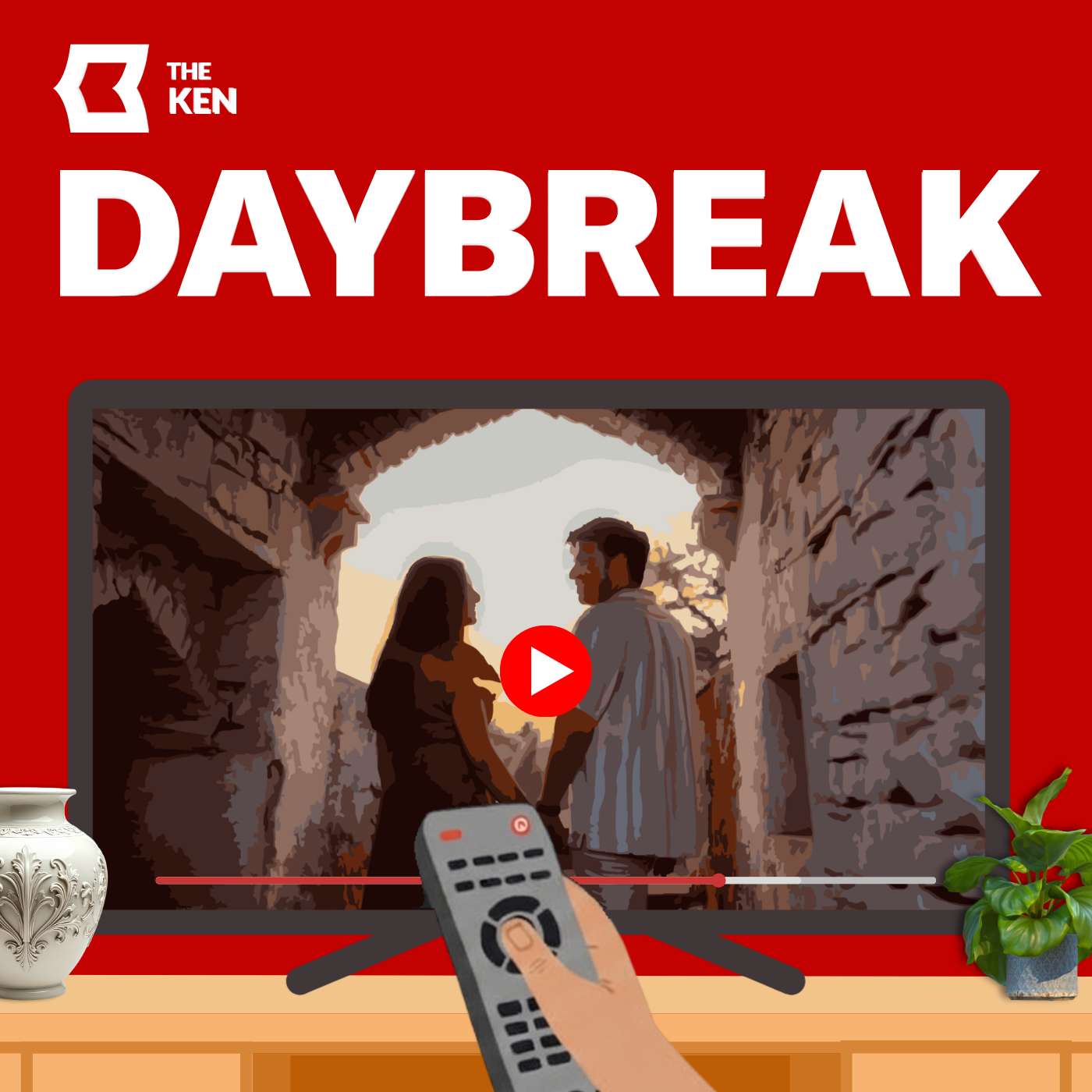 Ekta Kapoor built her own OTT app. Now she's betting on YouTube 30.09.2026 15Min.In the 2000s, Ekta Kapoor's serials ruled Indian TV every night on weekdays.Then as, audiences moved from TV screens to smaller ones and streaming, her company, Balaji Telefilms followed. It bet on its own streaming app: ALTBalaji.For years, it lost money. Until finally, it shut down last year after a government ban in 2025. Now, Balaji is taking 5 new shows and a combined 200 episodes to Youtube. Premium, shot in 4k and free to watch.So why is India's queen of TV soaps, skipping the subscription model? We dig into her belief in an audience that no one is serving, the Pakistani drama effect and whether a bet on Youtube's ad model is enough for TV.This episode was edited by Arnav Prakash.Daybreak is produced from the newsroom of The Ken, India’s first subscriber-only business news platform. Subscribe for more exclusive, deeply-reported, and analytical business stories.
 -
Can India build a ‘UPI’ for your cows and your gold? 29.09.2026 12Min.Earlier this month, at the Global Fintech Fest in Mumbai, India's regulators and industry leaders rallied around one idea: tokenisation, which turns assets like bonds, gold and land into digital units that can be bought, sold and settled in seconds. Some of it is already underway, with three companies recently raising over Rs 1,000 crore through bonds that settled the same day.But the plan leans heavily on the RBI's digital rupee, which has seen little use four years after launch. And Indian banks have bet on blockchain before, without much to show for it.In this edition, Suprita Anupam examines whether tokenisation can do for financial assets what UPI did for payments.This is a read aloud of a newsletter edition of Ka Ching, by Snigdha Sharma on Daybreak by The Ken.📖 Read the full story on The Ken: Can India build a ‘UPI’ for your cows and your gold?Daybreak is produced from the newsroom of The Ken, India’s first subscriber-only business news platform. Subscribe for more exclusive, deeply-reported, and analytical business stories.
-
AI is Bollywood's cheapest new hire 28.09.2026 15Min.Bollywood has been seeing tough times since Covid. Theatre footfall still haven't recovered, even as box office numbers soar, and budgets for filmmakers are only getting tighter. AI seems to have a brought a glimmer hope for some in the industry, as it slowly makes its way into every stage of filmmaking. From identifying good concepts to writing scripts, storyboarding scenes, generating entire shots, to even replacing some VFX work. Studio heads familiar with the space project shrinking crews and are already seeing timelines grow shorter. Still, it doesn't make the trade-off any less real.Tune in. Daybreak is produced from the newsroom of The Ken, India’s first subscriber-only business news platform. Subscribe for more exclusive, deeply-reported, and analytical business stories.
-
UPI is the trojan horse taking small banks into HDFC, Axis's credit-card empire 25.09.2026 15Min.After two years of slow adoption, Credit-Line-on-UPI is finally taking off, but not with the big banks. Small banks and fintechs are leading the charge, while the big incumbents that dominate credit cards hold back. For HDFC and Axis, it's a really difficult choice. Should they compete on CLOU and risk cannibalising their own cards, or scale it through the very fintechs they're trying to outmatch? Meanwhile, a matured tech stack has turned CLOU into a full-strength card equivalent, complete with real-time underwriting. And while CLOU had promised inclusion for those who can't normally access credit, the promised inclusion has actually been flipped.Daybreak is produced from the newsroom of The Ken, India’s first subscriber-only business news platform. Subscribe for more exclusive, deeply-reported, and analytical business stories.
-
How India's rich are finding returns in the country's court backlog 24.09.2026 14Min.Make The Ken's Daybreak X First Principles Autumn Playlist here.India has roughly 54 million cases stuck in its courts. Inside many of them is money someone is owed but can't afford to chase. What if you could invest in that? Back the case, pay the legal bills, and take a cut if it wins. In the US and the UK, this is already a multi-billion-dollar asset class. In India, a handful of funders are trying to build it. But they've run into a strange problem. The same backlog that makes the idea so attractive is also what makes it so hard. Because here, of course you are betting on whether a case wins…but more importantly, you're betting on when.In a recent edition of our weekly newsletter Ka Ching, The Ken reporter Mutasim Khan looked at who's making this bet, who's putting up the money, and who it's actually helping. Daybreak is produced from the newsroom of The Ken, India’s first subscriber-only business news platform. Subscribe for more exclusive, deeply-reported, and analytical business stories.
-
 Amazon’s quick-commerce win will be less about speed and more about Prime 23.09.2026 16Min.Make The Ken's Daybreak X First Principles Autumn Playlist here.Amazon Now just crossed $1 billion in annualised gross sales, faster than Zepto did. But it's still miles behind Blinkit, still losing money in India, and still playing catch-up on scale. So why is its latest investment not focused on quick commerce? Because for Amazon, the real fight isn't about who delivers fastest. It's about who can afford to lose money longer, and who has more to sell you than just groceries. Today, host Rachel Varghese digs into Amazon's $300 million infrastructure bet, the food-safety raids exposing cracks in the dark-store model, and why Prime, and not 10-minute delivery, might be Amazon's actual edge heading into festive season.Daybreak is produced from the newsroom of The Ken, India’s first subscriber-only business news platform. Subscribe for more exclusive, deeply-reported, and analytical business stories.
 -
 One year of GST 2.0. Who's it working for? 22.09.2026 15Min.Tap here to help us make The Ken's Daybreak X First principles Autumn Playlist One year ago, GST 2.0 rewrote the tax on almost everything Indians buy — from soap to cars.It promised a simpler system and cheaper shopping. Twelve months on, we ask the obvious question: is it working? Tune in.
 -
 A cancelled peptide party, and the questions it raised that Indian sellers still can't answer 21.09.2026 17Min.India was about to have its first-ever peptide party with fifty guests, a mystery venue marketed only as "not a hospital," and a menu of collagen, glutathione, and copper peptides. Then the Karnataka Food Safety and Drug Administration started asking questions, and the party was cancelled overnight.On this episode, The Ken's Sudeshna Ray joins host Rachel Varghese to unpack the peptide craze that's crossed over from Silicon Valley biohacking circles into Indian gyms, Instagram DMs, and D2C wellness brands, and the murky, largely unregulated supply chain, that runs through China, that gets these substances into the country in the first place.Daybreak is produced from the newsroom of The Ken, India’s first subscriber-only business news platform. Subscribe for more exclusive, deeply-reported, and analytical business stories.
Ähnliche Podcasts


Beliebt in
Dieser Podcast erscheint auch in den Podcast-Charts dieser Länder.


