
Naked Nuclear
Danielle Allen
0
Ever wondered how nuclear energy works or what advanced nuclear technology really means? Naked Nuclear breaks down complex topics like nuclear reactors, fuel types, and emerging technologies into simple, accessible conversations. Whether you're a curious beginner or an energy enthusiast, we make the science behind nuclear power easy to understand so you can launch your career in the clean energy future. Tune in to strip down the fascinating world of nuclear energy—one atom at a time.
Folgen
-
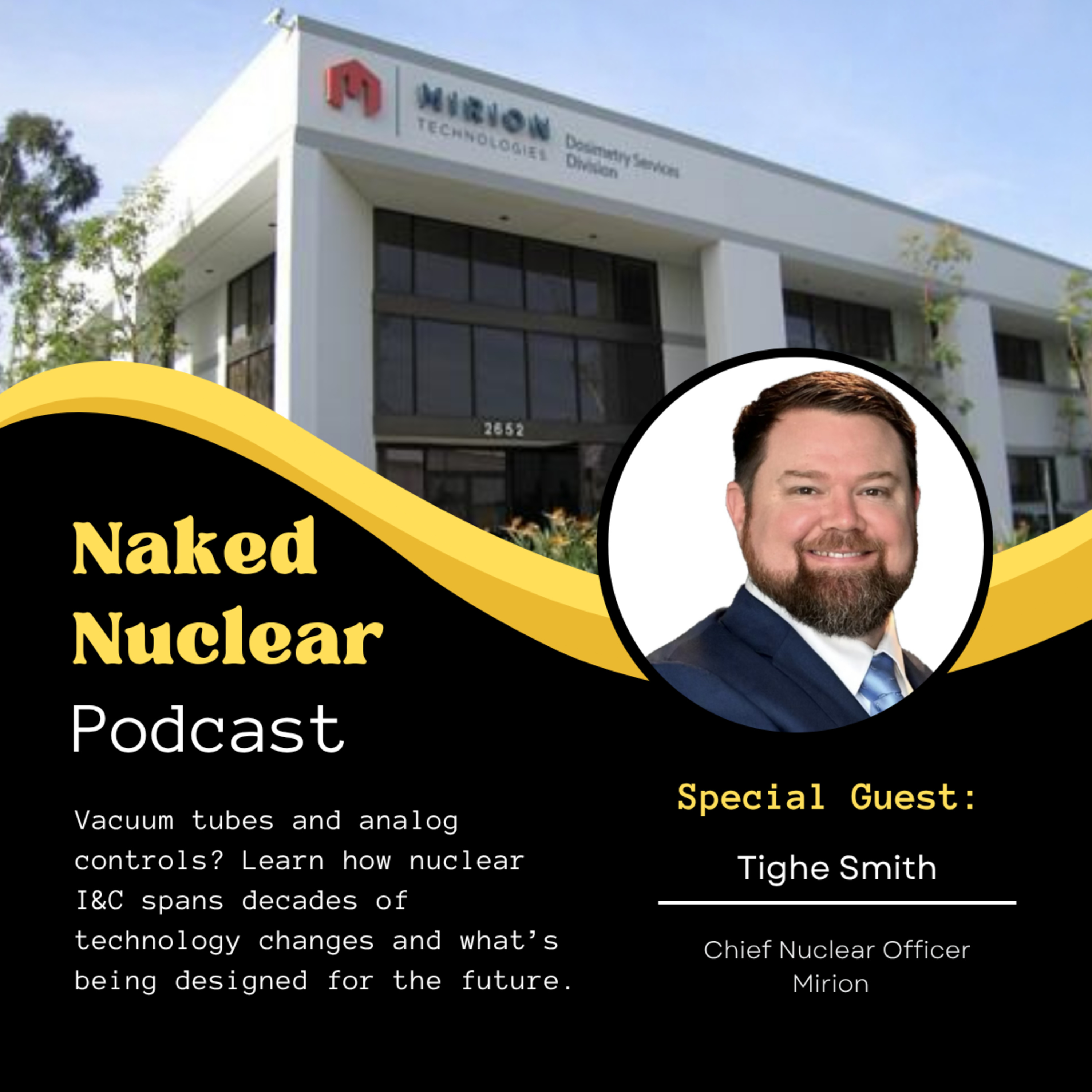 I&C with Tighe Smith: The Nervous System of a Nuclear Reactor 10.08.2026 51Min.ABOUT THIS EPISODEWhat keeps a nuclear power plant running safely after 50 years? Tighe Smith knows better than almost anyone. As Chief Nuclear Officer at Paragon Energy Solutions — now part of Mirion Technologies following a $585 million acquisition — Tighe has spent his career in nuclear instrumentation and control (I&C): the nervous system of every reactor.In this episode, we get into what I&C actually does, why some of the control systems inside U.S. nuclear plants predate the transistor, how Paragon reverse-engineers obsolete circuit cards with 1970s components, and how they broker spare parts between 94* reactors across the country — 3,000 parts a year, same-day or next-day shipping. Plus: the workforce reality of digital upgrades, advanced reactor design, and a culture built on three P's and three C's.WHAT YOU'LL LEARN- What instrumentation and control (I&C) is and why it's the most invisible-but-critical system in any nuclear plant- Why some U.S. reactor control systems still use technology from before the transistor was invented- How Paragon reverse-engineers obsolete circuit cards — and why rotating a transistor 90 degrees can introduce failure modes- The PEAKS program: how 3,000 parts move between 94 reactors every year- Why nuclear plants carry $100 million in spare parts inventory (and why it's worth it)- The analog vs. digital debate: why a digital upgrade only makes sense if you're planning to run a plant for 20+ more years- How I&C changes for advanced reactors — simpler safety systems, new challenges- Paragon's Three P's (Present, Persistent, Passionate) and Three C's (Competence, Commitment, Character)CONNECT WITH PARAGON/MIRIONLinkedIn (Tighe Smith): Search "Tighe Smith Paragon Energy Solutions"Paragon Energy Solutions (now Mirion Technologies): https://www.mirion.com/Mirion Technologies LinkedIn: https://www.linkedin.com/company/mirion-technologies/RESOURCES MENTIONED- HIPS (Highly Integrated Protection System) — Paragon's FPGA-based digital safety platform- Core Vision — Paragon's neutron monitoring product line- PEAKS — Paragon's nuclear spare parts network program- 10 CFR 50 — NRC domestic licensing requirements- Three Mile Island accident and lessons for human-machine interface design- NRC maintenance and testing requirements for nuclear facilitiesJOIN THE NUCLEAR WORKFORCEThe nuclear industry is growing, and companies like Paragon/Mirion need engineers, technicians, and trades workers with the right skills and the right character.Are you a skilled professional interested in nuclear? Nuclear Talent Scout connects candidates with nuclear employers.Apply here: https://nucleartalentscout.com/apply/ ABOUT NAKED NUCLEARNaked Nuclear is the podcast that pulls back the curtain on the nuclear industry — no hype, no fear, just real conversations with the people doing the work. Hosted by Danielle Allen.Website: www.nakednuclear.com
 -
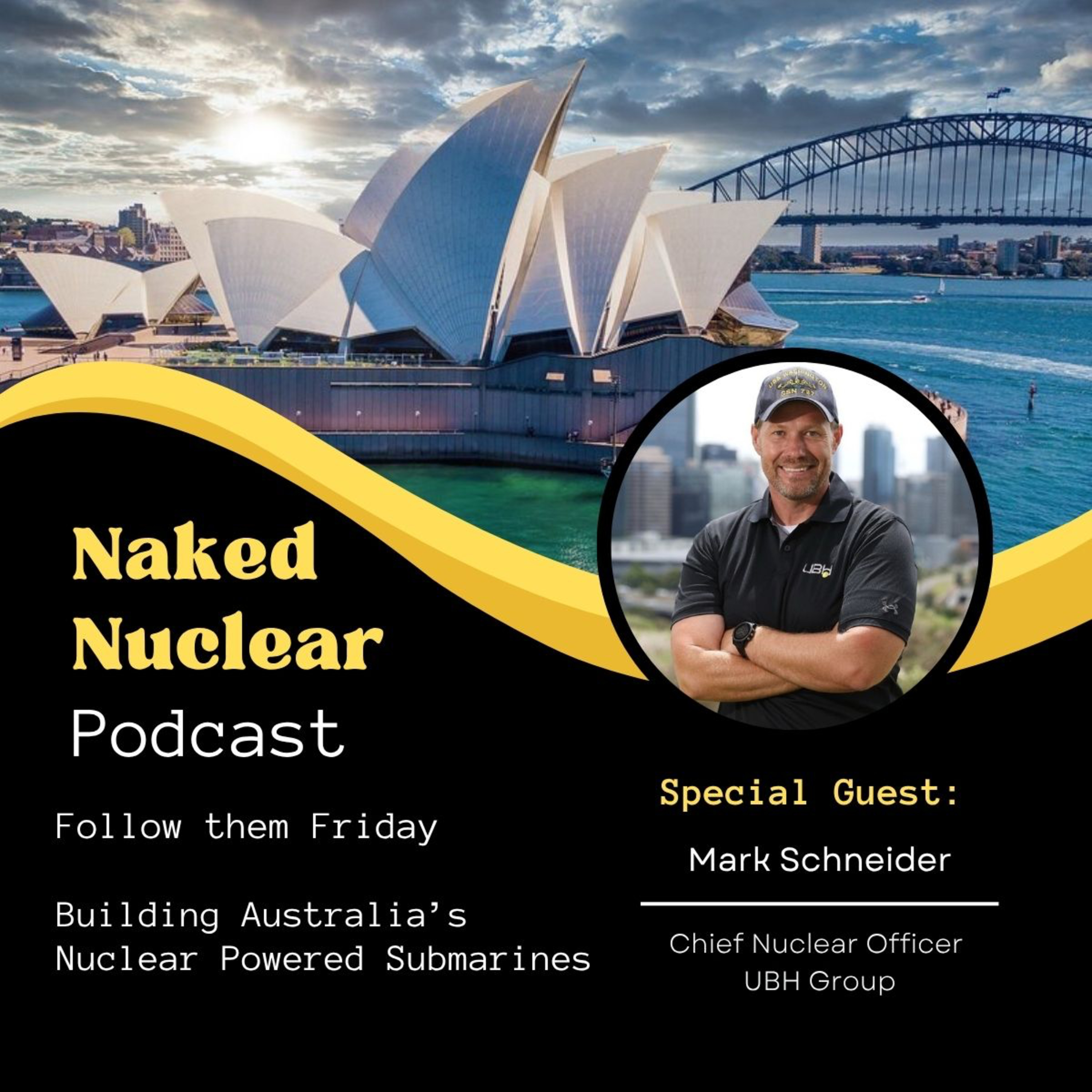 Follow The Friday: Nuclear Down Under with Mark Schneider 31.07.2026 1Std. 11Min.Mark Schneider accidentally became a nuclear professional at 17 when a sarcastic answer to a Navy recruiter — "only if you have nuclear power" — launched a 20-year career. He went on to serve as a nuclear electronics technician, make chief petty officer, earn his commission as a nuclear-powered limited-duty officer, and operate reactors on three submarines and an aircraft carrier.Now he's the Chief Nuclear Officer at UBH Group, and his current mission is one of the most unusual in the industry: building Australia's nuclear workforce from the ground up. Because of AUKUS, Australia is getting nuclear-powered submarines for the first time and they need people who understand what that actually means.What this conversation - How a sarcastic teenager accidentally built a 20-year nuclear career in the U.S. Navy- What it's like to operate reactors on nuclear submarines and aircraft carriers- Why "a nuclear reactor that happens to submerge" is the same as any other reactor- How AUKUS is creating one of the most unusual nuclear workforce challenges in the world- What ISO 19443, NQA1, and 10 CFR 50 supply chain standards actually mean in practice- Why the O-ring on a cooling pump matters as much as any major system- AUKUS Submarine Partnership: https://www.defense.gov/News/Releases/Release/Article/3326875/- ISO 19443 (nuclear supply chain quality management)- NQA-1 (American Society of Mechanical Engineers nuclear quality assurance)- 10 CFR 50 (NRC domestic licensing requirements for nuclear facilities)Are you a skilled trades worker or veteran interested in a nuclear career? Nuclear Talent Scout matches candidates with nuclear employers — and the industry is hiring.Apply here: https://forms.clickup.com/20124732/f/k651w-5551/4VA92A2B0QA0RJEHJB
 -
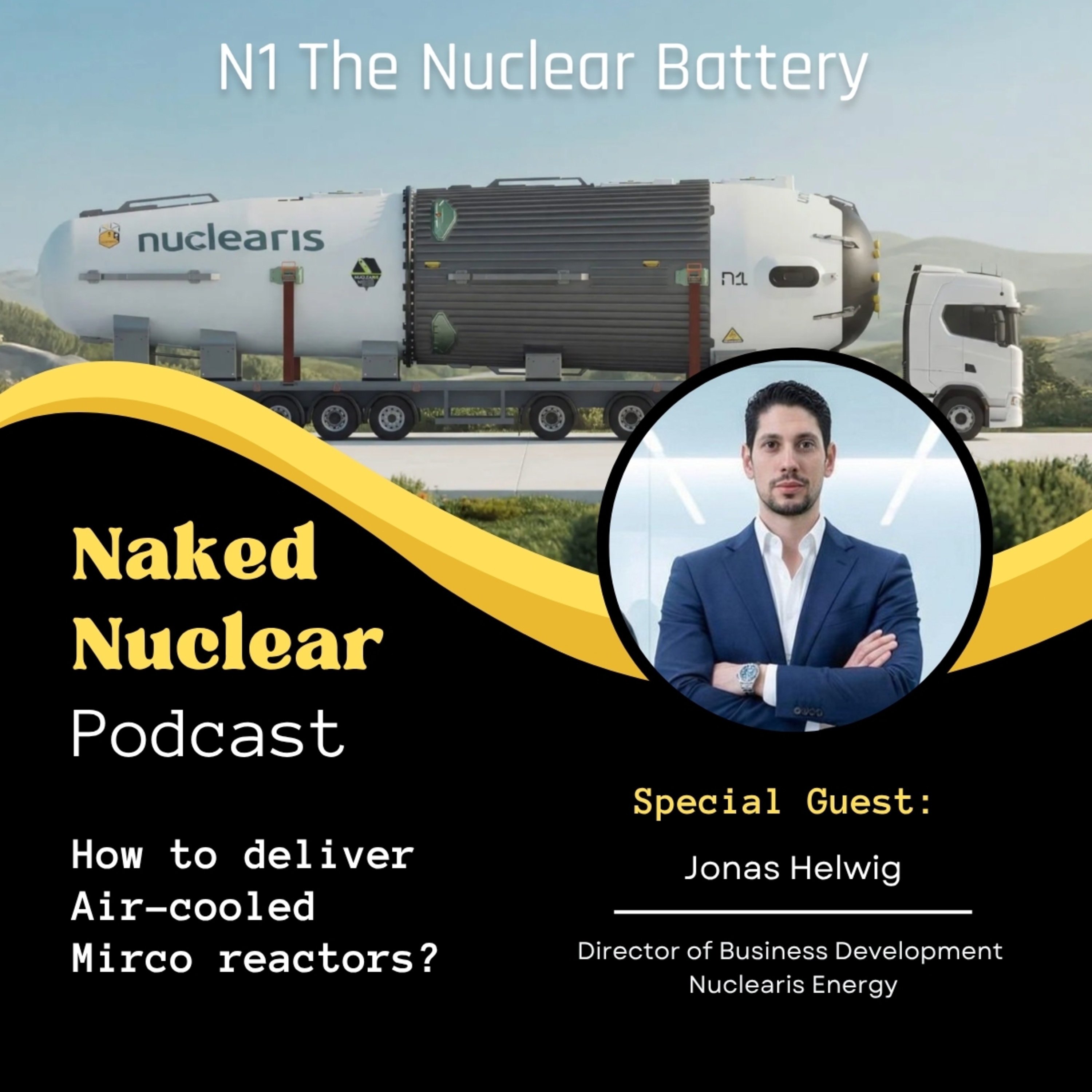 Ukrainian War Refugee to Microreactor Entrepreneur: Building the N1 with Jonas Helwig 20.07.2026 25Min.Jonas Helwig is Swedish-born, French-passport-holding, and was living in Ukraine when the war started. He fled with his wife and their newborn daughter, ended up in Buenos Aires by accident, and his neighbor turned out to be a nuclear energy manufacturer.Over dinner conversations with a pen and paper, they sketched out the N1, and Jonas joined the company. That's how Nuclearis Energy started.In this episode, Jonas walks us through the N1 micromodular reactor: what it is, how it solves the efficiency problem that makes most microreactors uneconomical, why air-cooling changes where nuclear can go, how the design process started at the spent fuel and worked backwards, and what a "nuclear renaissance" actually means.CONNECT WITH JONAS & NUCLEARISJonas Helwig on LinkedIn: Search "Jonas Helwig Nuclearis"Nuclearis Energy website: https://www.nuclearisenergy.com/Nuclearis on X: Search @nuclearisenergyNuclearis on LinkedIn: https://www.linkedin.com/company/nuclearis-energy/- Atucha Nuclear Power Plants (Argentina): https://www.iaea.org/PRIS/CountryStatistics/ReactorDetails.aspx?current=388JOIN THE NUCLEAR WORKFORCECompanies like Nuclearis are gearing up for major engineering hiring. And across the industry, the nuclear workforce shortage is real, the sector needs people now.Nuclear Talent Scout connects skilled candidates with nuclear employers.Apply here: https://forms.clickup.com/20124732/f/k651w-5551/4VA92A2B0QA0RJEHJBABOUT NAKED NUCLEARNaked Nuclear is the podcast that pulls back the curtain on the nuclear industry — no hype, no fear, just real conversations with the people doing the work. Hosted by Danielle Allen.Website: www.nakednuclear.com
 -
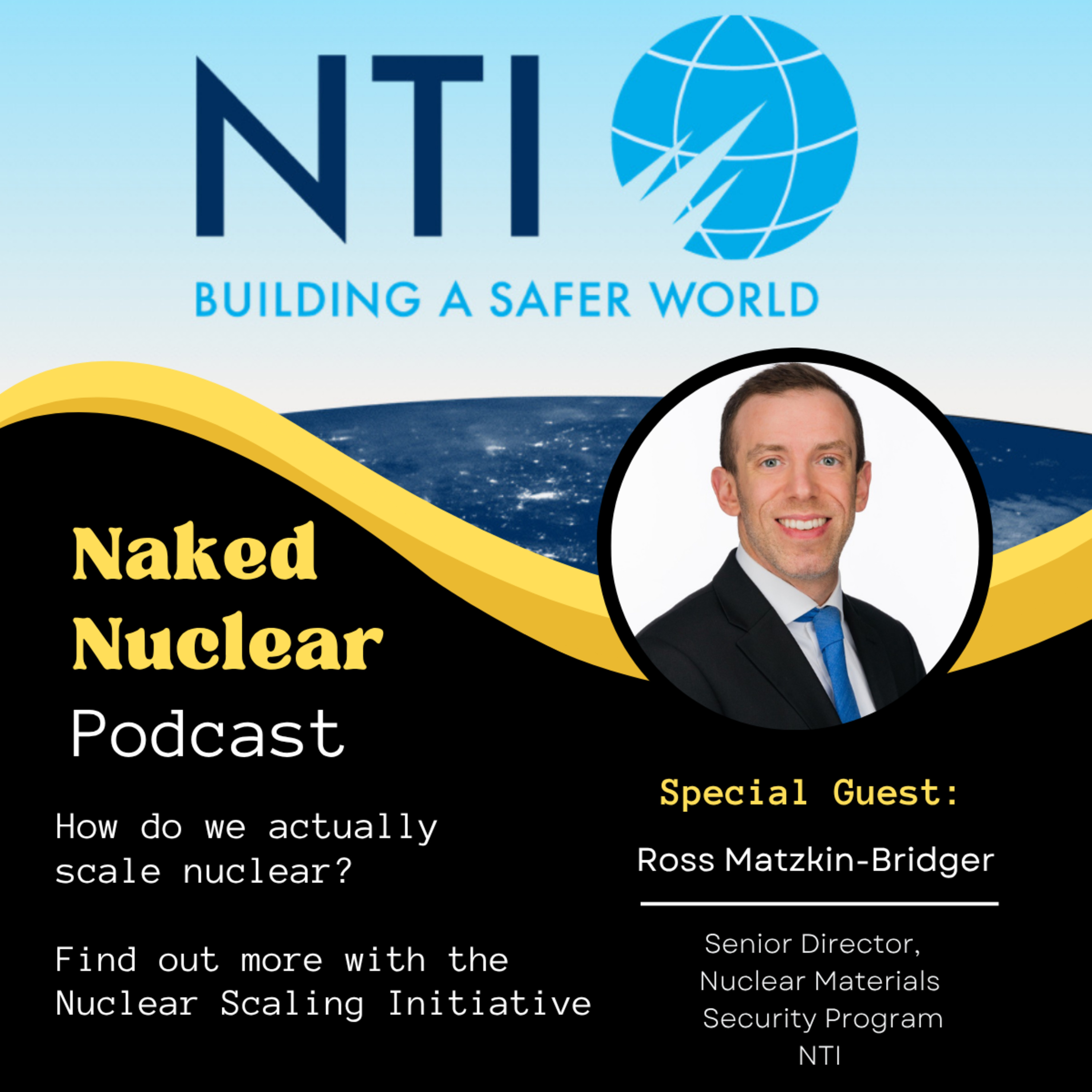 Season 4 Sneak Peak! How to Scale Nuclear Energy with Ross-Matzkin-Bridger 13.07.2026 40Min.SNEAK PEAK!Season 4 of Naked Nuclear is about the infrastructure underneath nuclear energy, the laws, regulations, economics, and institutions most people never think about. Ross Matzkin-Bridger is exactly the right person to open that conversation.As Senior Director at the Nuclear Threat Initiative and a senior advisor at the Nuclear Scaling Initiative, Ross has spent 11 years in U.S. government bouncing between nuclear nonproliferation and energy policy. He grew up near reactors in Michigan and New Hampshire, lived in Japan, and has built his career on one question: how do we get all the benefits of nuclear energy without any of the weapons risks?In this episode: the domestic and international guardrails keeping nuclear energy separate from nuclear weapons, the economics of building at scale, who the real decision-makers are, and a clear framework for evaluating the dozens of reactor designs competing for attention.WHAT YOU'LL LEARN- How the NRC, IAEA, and Nuclear Non-Proliferation Treaty (NPT) work together to keep nuclear energy peaceful- Why the fuel in U.S. reactors (low-enriched uranium) is fundamentally different from weapons-usable material — and why that distinction matters- Who decides which reactor technologies get built: government, industry, and communities- Why the U.S. goal of quadrupling nuclear by 2050 requires more than just technology- The "onesies and twosies" problem: why building at scale changes the economics entirely- Ross's four-bin framework for evaluating reactor designs (and why spent fuel reprocessing lands in "Bin 4")- When we can realistically expect new nuclear plants to come onlineTHE FOUR BINS FRAMEWORK1. TRIED AND TRUE: Already deployed, licensed, producing electricity. First candidates for scaling.2. ON THE CUSP: Based on proven technology with smart modifications. SMRs live here.3. INTERESTING BUT SPECULATIVE: Real science, not yet ready for scaling. Sodium-cooled fast reactors, molten salt.4. SCALING INHIBITORS: Technologies that introduce weapons-usable materials (plutonium) into the fuel cycle. Spent fuel reprocessing lands here.CONNECT WITH ROSS & NSINuclear Threat Initiative: https://www.nti.org/Nuclear Scaling Initiative: https://www.nuclearscaling.org/NTI on LinkedIn: https://www.linkedin.com/company/nuclear-threat-initiative/NTI on Instagram: @nuclearthreatinitiativeNSI Reactor Selection Tool: Available at nuclearscaling.org, helps stakeholders compare reactor designs across security, economics, and deployment readiness criteria.RESOURCES MENTIONED- Nuclear Non-Proliferation Treaty (NPT): https://www.un.org/disarmament/wmd/nuclear/npt/- International Atomic Energy Agency (IAEA): https://www.iaea.org/- U.S. Nuclear Regulatory Commission (NRC): https://www.nrc.gov/- NTI Nuclear Security Index: https://www.ntiindex.org/- Clean Air Task Force: https://www.catf.us/- Energy Futures Initiative Foundation: https://www.energyfuturesinitiative.org/JOIN THE NUCLEAR WORKFORCEA quadrupled nuclear sector means a much bigger workforce. Whether you're an engineer, a trades worker, or someone curious about nuclear careers — the industry is hiring.Nuclear Talent Scout connects candidates with nuclear employers.Apply here: https://forms.clickup.com/20124732/f/k651w-5551/4VA92A2B0QA0RJEHJB
 -
 After-Pop! Wait... Should We Recycle Used Nuclear Fuel? The History, Economics, and Proliferation concerns 22.06.2026 14Min.Ed McGinnis said something in our last episode that's hard to shake: 96% of the energy in spent nuclear fuel has never been touched. The physics checks out. But what happens when countries actually try to get that energy back?This After Pop digs into the history of nuclear fuel recycling, not the theory, but the track record. France, the UK, Japan. Staggering sums of money. Complicated results. And a 1977 executive order that changed everything.We break down what PUREX actually does, why Jimmy Carter banned commercial reprocessing, and what any next-generation recycling technology (including Curio's NuCycle) would actually have to solve to change the equation.France's La Hague plant: running since 1976, processing 1,000+ tons of spent fuel per year, and saving roughly 18,000 metric tons of natural uranium. Also: a Court of Auditors estimate ranging from €16 billion to €58 billion in total program costs.The UK's Sellafield THORP: built for £1.8 billion, promised £500 million in profit, delivered £1 billion in losses, closed in 2018. Decommissioning costs are estimated at up to £250 billion and won't be finished until 2125.Japan's Rokkasho: supposed to open in 1997. It's 2026. Construction costs have hit ¥3.7 trillion (~$25 billion), with lifecycle costs projected above $100 billion. It has never processed a full ton of commercial fuel at capacity.PUREX: what it actually does, why it was designed the way it was (Manhattan Project-era, weapons-grade plutonium), and why producing a pure stream of separated plutonium is the source of the proliferation problem.India's 1974 Smiling Buddha test: where Carter's concern came from, and why it wasn't theoretical.The five things next-gen recycling has to solve: cost, proliferation resistance, regulation, waste, and public trust.The numbers that matter:~$85/lb: current uranium spot price~$140/lb (~$360/kg): the price at which reprocessing starts to break even, per Harvard's Belfer Center99 metric tons: France's current separated civilian plutonium stockpile44.4 metric tons: Japan's separated plutonium (most of it sitting in France and the UK)300 years vs. 100,000+ years: radiotoxicity timeline for recycled waste vs. direct disposalResources:Harvard Belfer Center, The Economics of Reprocessing vs. Direct Disposal of Spent Nuclear Fuel: https://www.belfercenter.org/publication/economics-reprocessing-vs-direct-disposal-spent-nuclear-fuelFrance's Court of Auditors report on nuclear costs (English summary via World Nuclear Association): https://world-nuclear.org/information-library/nuclear-fuel-cycle/fuel-recycling/processing-of-used-nuclear-fuelUK Nuclear Decommissioning Authority, Sellafield: https://www.gov.uk/government/organisations/nuclear-decommissioning-authorityJapan Atomic Energy Commission, Rokkasho lifecycle cost estimate: https://www.jaec.go.jp/en/Jimmy Carter's Executive Order on Reprocessing (1977): https://www.nrc.gov/docs/ml1209/ML120960615.pdfIAEA, Proliferation resistance of nuclear fuel cycles: https://www.iaea.org/topics/nuclear-fuel-cycle
 -
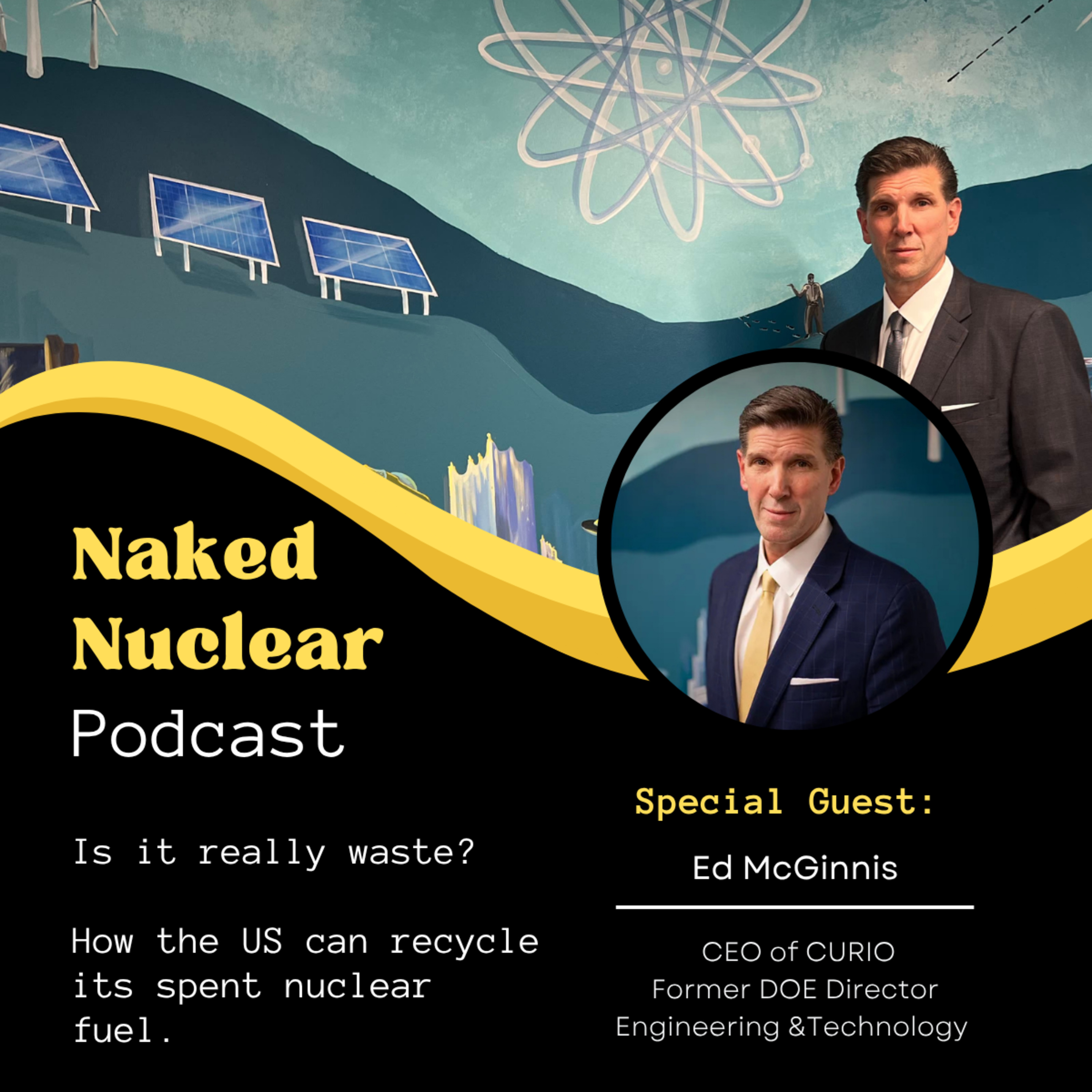 It's Not Actually Waste: How CURIO is Tackling the Nuclear Waste Problem with Ed McGinnis 15.06.2026 41Min.Imagine filling up your car at a gas station in Washington, DC, and heading toward Richmond. Twenty miles down the road, you pull over, call a tow truck, and scrap the car, with 96% of the fuel still in the tank. That's what we do with nuclear fuel in the United States right now.Ed McGinnis is the CEO of Curio and a former senior official at the U.S. Department of Energy. He's spent decades in nuclear policy and energy security, and he's now building something that could change how we think about nuclear waste entirely. Spoiler: he doesn't even call it waste. He calls it "slightly used fuel."In this episode, Ed breaks down why the U.S. stopped recycling nuclear fuel in the 1970s, what went wrong with the Cold War-era Purex process, and how Curio's NuCycle technology does it differently ... without ever separating pure plutonium. We get into the $50 billion Nuclear Waste Fund that was collected from ratepayers and spent on other things, why the DOE is now paying over a billion dollars a year in court-ordered damages, and how 90,000+ metric tons of used fuel sitting at reactor sites across the country is actually the largest above-ground energy reserve in the world.Plus: Curio's planned recycling facility, bigger than a football stadium, processing more fuel than every other recycling facility on the planet combined, and the 3,000+ trades-based jobs it would create at around $125K a year for 60+ years.Topics covered:Why only 3-4% of nuclear fuel is actually used — and 96% is still usable energyThe difference between the Cold War Purex process and Curio's NuCycle technologyPresident Carter's ban on fuel recycling and the $13+ billion in lost investmentsHow recycling reduces radiotoxicity from 100,000+ years to about 300 yearsCurio's partnership with Oak Ridge National Laboratory since 2019The Nuclear Waste Policy Act, the $50 billion fund, and the billion-dollar-a-year lawsuit payoutsRussia still providing 20%+ of U.S. nuclear fuel — and what that means for energy securityCurio's planned facility: 4,000 metric tons per year, 3,000+ jobs, mostly tradesCurio's own SMR and micro-reactor designs (TrueFuel)Resources: Learn more about CURIO: curio.energy Jimmy Carter's Ruling on Reprocessing Spent Nuclear Fuel: https://www.nrc.gov/docs/ml1209/ML120960615.pdf
 -
After-Pop! Megawatts Thermal vs Electric? 08.06.2026 11Min.Dr. John Zino stood in front of a room of engineers, technicians, and career-changers and told them a nuclear reactor is "just boiling water." Jaws dropped. Really? That's it?Well, yes. And also, that little word "just" is hiding one of the most elegant chains in all of engineering.In this After Pop explainer, we follow a single uranium atom from the moment it splits to the moment your phone starts charging. Fission to heat. Heat to steam. Steam to a spinning shaft. Spinning shaft to electricity. Four conversions, one pinky-tip-sized fuel pellet, and a reactor design that gets safer by removing the parts that can break. We'll also answer the question everyone asks once they see the numbers: if the BWRX-300 makes 870 megawatts of heat, where do the other 570 go?Bring your curiosity. No PhD required.The fuel chain, demystified. Pellet → fuel rod → assembly → core, and why the reactor core is really a very expensive water heater.BWR vs. PWR in plain English. Why a boiling water reactor uses one water loop while a pressurized water reactor uses two, and what the BWRX-300 gets to skip.The two numbers in the name. 870 MW thermal, 300 MW electrical, and why that gap is physics, not a flaw.How a turbine actually works. The garden-hose analogy, high- and low-pressure stages, and why the shaft has to spin at exactly 1,800 RPM on a 60 Hz grid.Faraday's 1831 trick. A magnet, some copper, and the moment motion becomes electricity.The Carnot limit. Why every thermal plant on Earth, coal and gas included, has to dump roughly two-thirds of its heat, and why that's why plants sit next to water.The BWRX-300's quiet superpower. Natural circulation and the passive isolation condenser. You can't break the pumps when the pumps aren't there.~870 MWt / 300 MWe — total heat output vs. electricity delivered for the BWRX-300~33–35% — typical thermal efficiency of a nuclear plant (roughly a third of the heat becomes power)~7 grams ≈ 1 ton of coal — the energy in one uranium fuel pellet, about the size of your pinky tip1,800 RPM at 60 Hz (US/Americas) / 1,500 RPM at 50 Hz (Europe, most of Asia) — turbine speed locked to grid frequency1824 & 1831 — Carnot's limit on heat-to-work, and Faraday's law of induction. Still the foundation.On the BWRX-300GE Vernova Hitachi — BWRX-300 Small Modular Reactor (design overview, natural circulation, isolation condenser): https://www.gevernova.com/nuclear/carbon-free-power/bwrx-300-small-modular-reactorU.S. NRC — BWRX-300 pre-application activities and topical reports: https://www.nrc.gov/reactors/new-reactors/advanced/who-were-working-with/pre-application-activities/bwrx-300World Nuclear Association — SMR Design Database, BWRX-300 detail: https://world-nuclear.org/information-library/nuclear-power-reactors/small-modular-reactors/small-modular-reactor-smr-design-database?detail=BWRX-300On thermal efficiency, the Carnot limit & waste heatWorld Nuclear Association — Nuclear Power Reactors (thermal efficiency, MWt vs. MWe): https://world-nuclear.org/information-library/nuclear-fuel-cycle/nuclear-power-reactors/nuclear-power-reactorsWorld Nuclear Association — Cooling Power Plants (why plants reject heat and sit near water): https://world-nuclear.org/information-library/current-and-future-generation/cooling-power-plantsOn SMRs and the policy landscapeDOE Office of Nuclear Energy — Advanced Small Modular Reactors: https://www.energy.gov/ne/advanced-small-modular-reactors-smrsDOE Office of Nuclear Energy — Generation III+ SMR Program (incl. TVA / Clinch River BWRX-300): https://www.energy.gov/ne/generation-iii-small-modular-reactor-program
-
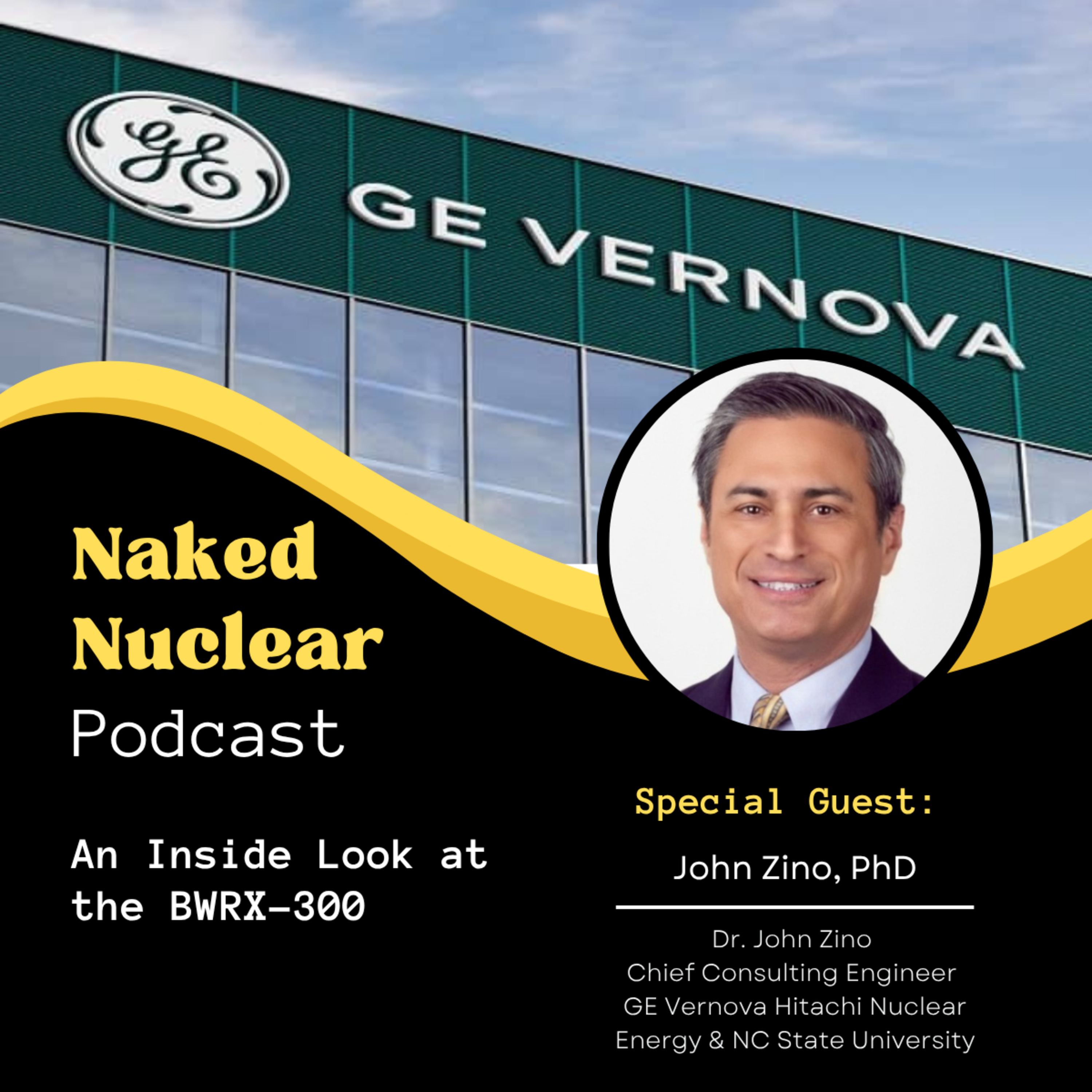 Inside the BWRX-300 with Dr. John Zino | "We're just boiling water!" 01.06.2026 37Min.What does it actually look like to spend nearly 40 years inside the nuclear industry, from submarine shielding to the Department of Energy to the cutting edge of small modular reactor design?Dr. John Zino is a Chief Consulting Engineer at GE Vernova Hitachi Nuclear Energy and an Associate Teaching Professor at NC State University. In this episode, he breaks down the BWRX-300 — a 10th-generation boiling water reactor that strips nuclear power down to its simplest form. No massive recirculation pumps. Natural circulation cooling. And the same proven fuel the industry has relied on for decades.We talk about why tech companies like Meta, Microsoft, and Google are suddenly interested in nuclear, how old coal sites are being converted for new reactors, and why the nuclear workforce could grow from 70,000 to half a million people in the next two decades. Plus why you don't need a PhD to build a career in nuclear.If you're a nuclear professional looking for a new opportunity, fill out our TALENT FORM here!Additional Resources: GE Vernova Hitachi Nuclear Energy: https://nuclear.gevernova.comBWRX-300 Overview: https://nuclear.gevernova.com/small-modular-reactorNC State Nuclear Engineering: https://www.ne.ncsu.eduOntario Power Generation — Darlington New Nuclear: https://www.opg.com/powering-ontario/nuclear-power/darlington-new-nuclearCape Fear Community College Nuclear Technology Program: https://cfcc.edu/directory/f77572817d963013b7cb18c1f2d2c994160a53d1/
 -
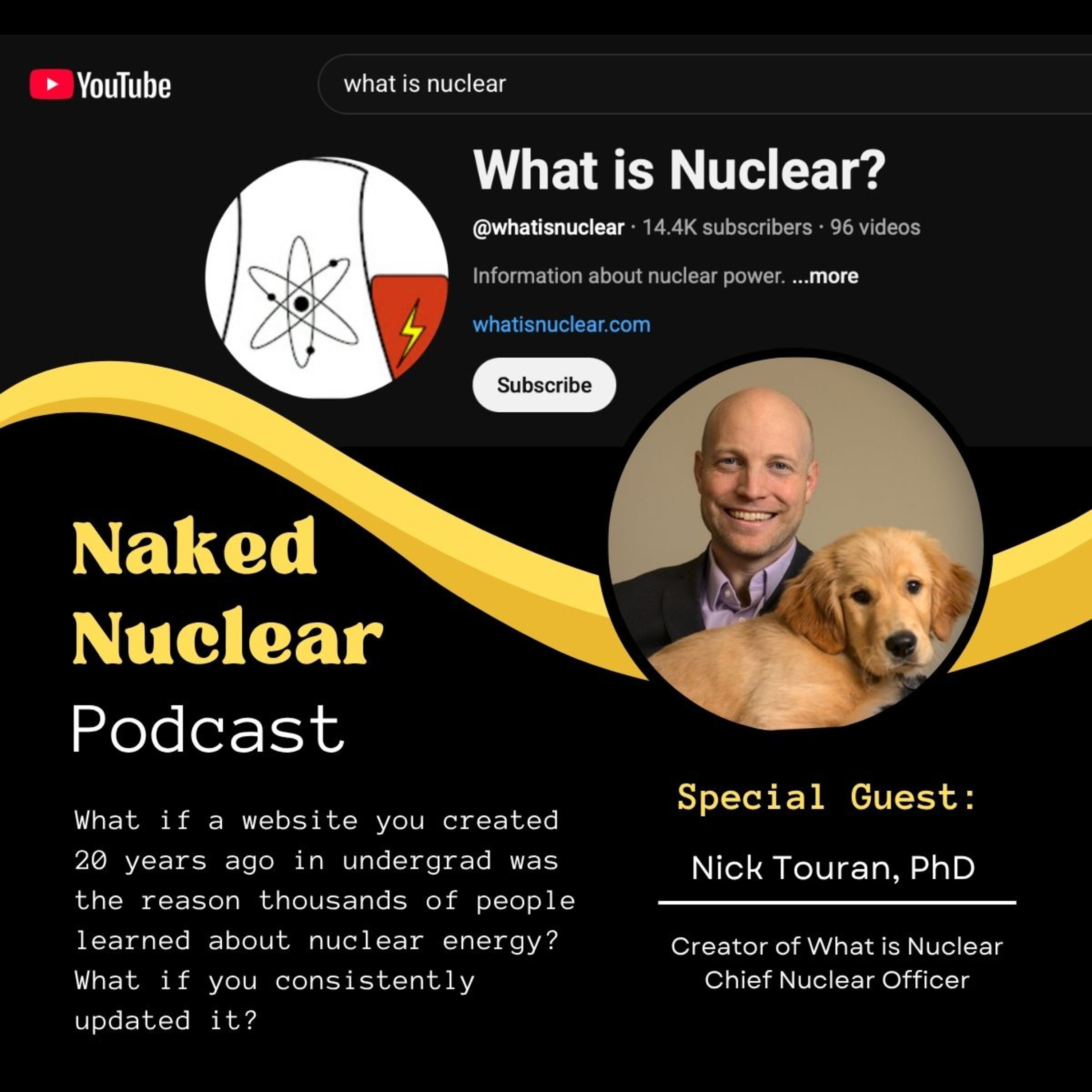 How to Build the Internet’s Best Nuclear Guide with Nick Touran 24.04.2026 54Min.What does it take to explain one of the most misunderstood technologies on Earth?This Final Friday on Naked Nuclear, Danielle sits down with Nick Touran for a new Follow Them Friday episode.Nick is the founder of What Is Nuclear, one of the internet’s most respected resources for understanding nuclear energy, reactor technology, fuel cycles, history, and policy in plain English. In a world drowning in hot takes and cold IQs, he built something useful.We discuss Nick’s journey into nuclear engineering, how he built What Is Nuclear, why communication matters, and how advanced reactors differ through choices like coolants and moderators. We also get into regulation, licensing, innovation bottlenecks, and what may be next for nuclear in maritime applications.If you’ve ever wanted nuclear explained clearly, or wondered where the industry is headed next, this is the episode.How Nick Touran got into nuclear engineeringWhy he created WhatIsNuclear.comExplaining reactors simply: coolants, moderators, and design choicesFast reactors vs thermal reactorsWhy licensing and regulation shape innovationNuclear power for maritime shipping and industrial useThe future of advanced reactorsWhy good science communication matters more than everNick is helping lead a new maritime nuclear venture focused on the future of clean shipping and advanced nuclear deployment.They’re seeking exceptional talent, including:Licensing EngineersReactor EngineersNuclear ScientistsRegulatory ExpertsAdvanced Reactor TalentTo be considered, complete the qualified candidate form here: Check out Nick's Youtube Page here: https://www.youtube.com/@whatisnuclear
 -
The 41-Hour Pour: When a Nuclear Plant Begins to Exist 06.04.2026 8Min.At 2:13 AM in Waynesboro, Georgia, crews were already deep into a process they couldn’t stop.For 41 continuous hours, concrete flowed into the basemat of Vogtle Unit 4, the foundation that would anchor one of the newest nuclear reactors in the United States.This episode breaks down:What a nuclear basemat actually isWhy concrete is part of the safety systemThe physics of heat, cracking, and radiation shieldingThe choreography required to keep a 41-hour pour aliveAnd why this moment marks the point where a power plant becomes realWatch: Vogtle Unit 4 Basemat Pour (Timelapse)If you only watch one thing, make it this.It’s the closest you’ll get to seeing thousands of people collectively refuse to mess up.https://www.youtube.com/watch?v=3UhwCOzqY5w&t=102sThe basemat is a massive reinforced concrete foundation that supports:Reactor vesselContainment structurePrimary systemsOnce poured, there’s no going back. This is the “point of no return” in construction.Radiation shielding: absorbs gamma rays and slows neutronsStructural stability: supports extreme loads and seismic forcesContainment support: part of the safety barrier systemConcrete generates heat as it cures.Too hot, it weakensToo cold too fast, it cracksMass pours require careful thermal control to avoid internal stress failures.Stopping mid-pour can create weak joints in the structure.Further ReadingWorld Nuclear News – Vogtle AP1000 constructionhttps://world-nuclear-news.org/Articles/Construction-underway-of-second-Vogtle-AP1000Local coverage of the 41-hour pourhttps://www.thetruecitizen.com/articles/progress-marked-by-41-hour-concrete-pour/NRC Design Certification (AP1000 structural details)https://www.nrc.gov/docs/ML1209/ML12094A053.pdfNRC Structural/Engineering Safety Reviewhttps://www.nrc.gov/docs/ML1419/ML14198A460.pdfU.S. Department of Energy (OSTI) – Concrete shielding & materialshttps://www.osti.gov/servlets/purl/4640326Mass concrete & thermal behavior (preprint)https://www.preprints.org/frontend/manuscript/f170f30200edb1f874eadb833a6ab966/download_pubIAEA – Radiation shielding principleshttps://www.iaea.org/publicationsAmerican Concrete Institute (ACI) – Mass concrete & thermal controlhttps://www.concrete.orgNRC Standard Review Plan (structural & seismic design)https://www.nrc.gov/reading-rm/doc-collections/nuregs/staff/sr0800/
-
Why Build Nuclear When We Have Solar? 30.03.2026 13Min.I Asked If Solar Could Power California… and It Got ComplicatedWhat started as a simple question turned into a full-blown debate: If solar panels and batteries are getting so good…why does California still need nuclear energy?In this episode, we break down what actually keeps the lights on — beyond headlines, hot takes, and LinkedIn comment wars.What You’ll LearnWhy “more solar” doesn’t automatically solve the problemSolar energy is powerful — but it only works when the sun is shining.Electricity systems need to work all the time, not just during ideal conditions.The difference between dispatchable and weather-dependent powerNot all energy sources behave the same way.Dispatchable power = can be turned on whenever neededSolar & wind = depend on weather and time of dayThis distinction is at the heart of how power grids are designed.Why batteries help… but don’t solve everythingBatteries can store energy for hours — not days or weeks.Scaling them to support an entire grid would require:massive infrastructurelarge amounts of materialsand systems we haven’t fully built yetThe “last 10% problem”Getting to ~80–90% clean energy is achievable.But the final stretch to 100%?That’s where:costs rise sharplyreliability becomes harderand system complexity increasesCapacity factor (explained simply)Not all energy sources produce power at the same rate over time.Nuclear: ~90% uptimeSolar: ~20–25% depending on locationThis affects how much infrastructure you need to meet demand.What is grid inertia?Power grids rely on physical stability — not just energy supply.Traditional plants (like nuclear and hydro):use large spinning turbineshelp stabilize frequency and flowSolar and batteries don’t naturally provide this, which means engineers must recreate it in other ways.Nuclear’s role in a clean energy systemNuclear isn’t replacing renewables.It provides:consistent, 24/7 powerhigh energy output from a small footprintstability for the grid when other sources fluctuateSpecial ThanksThank you to everyone who contributed to the original discussion! Find the post here: https://www.linkedin.com/posts/danielleallen-nuclear_in-the-most-civil-manner-possible-could-activity-7438758963921248256-o8EE🎙️ About Naked NuclearNaked Nuclear breaks down complex nuclear energy topics into clear, honest conversations — helping listeners understand not just the technology, but the systems and decisions shaping our energy future. Further Reading (Direct Links) Grid Inertia (the thing nobody explains well)IEEE Smart Grid (your reference):https://smartgrid.ieee.org/bulletins/november-2020/brief-understanding-of-inertia-in-the-smart-grid-its-challenges-and-solutionsGrid Reliability & Clean Energy SystemsInternational Energy Agency – Net Zero by 2050https://www.iea.org/reports/net-zero-by-2050International Energy Agency – Electricity Market Reporthttps://www.iea.org/reports/electricity-market-report Capacity Factors & Real-World Grid DataU.S. Energy Information Administration – Capacity Factors Explainedhttps://www.eia.gov/todayinenergy/detail.php?id=10191U.S. Energy Information Administration – Electricity Data Browserhttps://www.eia.gov/electricity/data/browser/ System Costs & “Last 10% Problem”OECD Nuclear Energy Agency – The Full Costs of Electricity Provisionhttps://www.oecd-nea.org/jcms/pl_51110/the-full-costs-of-electricity-provisionOECD Nuclear Energy Agency – System Costs in Decarbonised Power Systemshttps://www.oecd-nea.org/jcms/pl_15000/system-costs-of-electricity Batteries & Energy Storage International Energy Agency – Energy Storage Trackinghttps://www.iea.org/reports/energy-storageNuclear Performance World Nuclear Association – Nuclear Power Performancehttps://world-nuclear.org/information-library/current-and-future-generation/nuclear-power-in-the-world-today.aspx
-
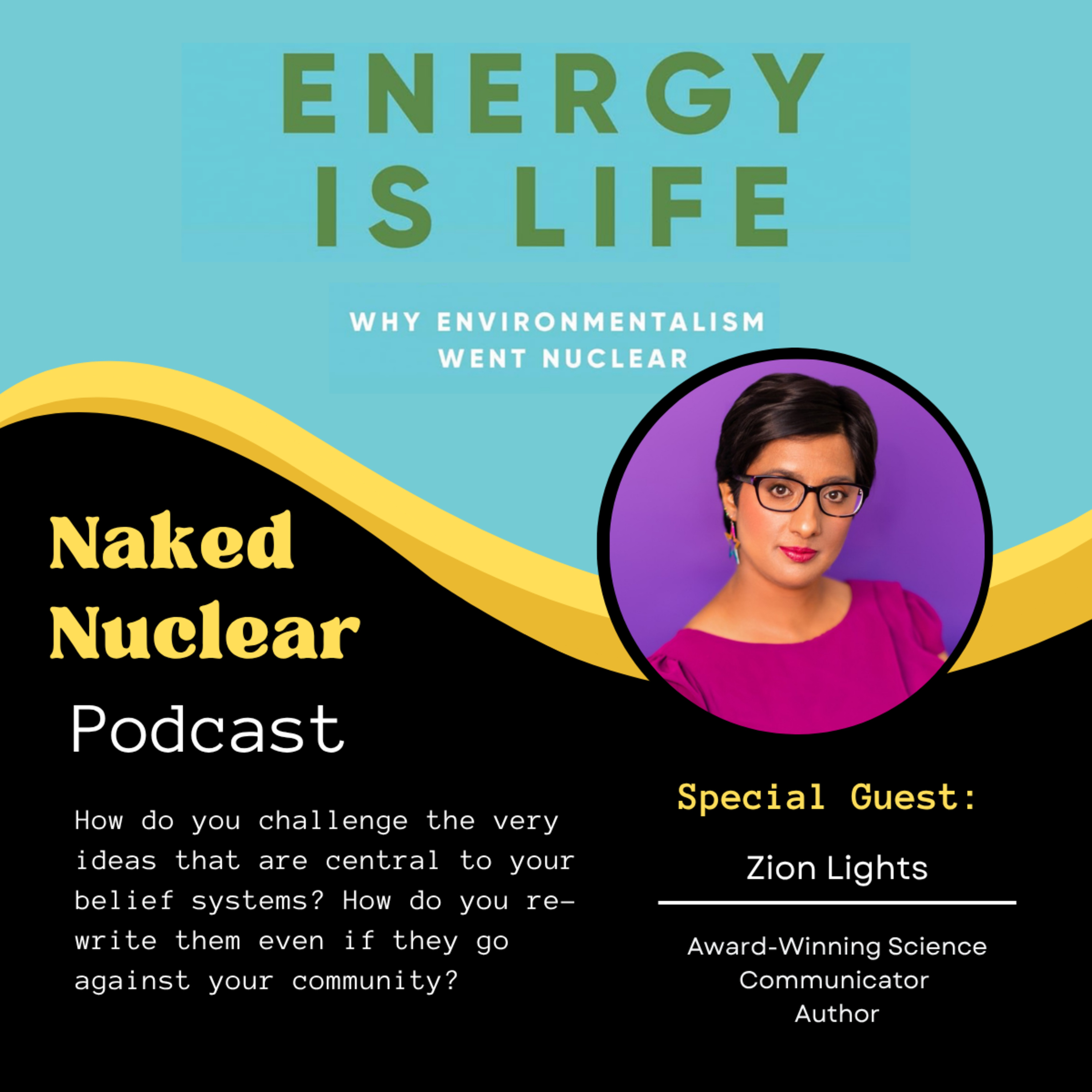 Change Your Mind on Climate Change: Why Energy is Life with Zion Lights 27.03.2026 59Min.What happens when an environmentalist changes their mind about nuclear energy?In this episode of Naked Nuclear, Danielle sits down with Zion Lights, environmental advocate, award-winning science communicator, and author of Energy Is Life to unpack one of the most important (and uncomfortable) shifts happening in climate conversations today.Zion shares her journey from anti-nuclear activism to becoming one of the most prominent voices advocating for nuclear as a critical solution to climate change. This isn’t just a story about energy — it’s about intellectual honesty, changing your mind in public, and what it really means to support life on this planet.Together, we explore:Why energy abundance is essential for human and environmental well-beingWhere parts of the environmental movement have gone wrong on nuclearThe role of fear, narratives, and misinformation in shaping public opinionWhy nuclear energy is uniquely positioned to support deep decarbonizationHow to communicate complex, controversial ideas without losing peopleThis episode challenges assumptions, reframes the climate conversation, and asks a bigger question:What if being pro-environment also means being pro-nuclear?Get the BookZion’s new book, Energy Is Life, is available now on Amazon.If you want to go deeper into the ideas discussed in this episode, this is the place to start. Follow Zion LightsStay up to date with Zion’s work and insights across platforms:Instagram: https://www.instagram.com/zion.lights/LinkedIn: https://www.linkedin.com/in/zionlights/TikTok: https://www.tiktok.com/@zilovesscienceX: ziontreeIf you’re a qualified nuclear professional looking to get personalized job alerts in the industry, sign up with Nuclear Talent Scout.
 -
 Raised by the Reactor: How a 19 year-old Laborer Became a Nuclear Welder 09.03.2026 39Min.When people talk about building nuclear power plants, the conversation usually centers on policy, engineering, and billion-dollar infrastructure.But reactors aren’t built in conference rooms.They’re built by craft workers.In this episode of Naked Nuclear, Danielle sits down with nuclear welder Tyree McCall, who started his career at Plant Vogtle Units 3 & 4 at just nineteen years old. What began as a labor job quickly turned into a mentorship-driven apprenticeship where experienced workers pushed him to level up his skills and pursue welding.Working ten-hour days and attending welding school at night, Tyree eventually transitioned into nuclear welding—one of the most technically demanding and responsibility-heavy crafts in the industry.Together, they explore what it really takes to build nuclear infrastructure: discipline, safety culture, accountability, and the personal growth required to succeed in a high-stakes environment.This episode pulls back the curtain on the boots-on-the-ground workforce that makes nuclear energy possible.How Tyree landed his first job at Plant Vogtle Units 3 & 4What it feels like to walk onto a nuclear construction site at 19Why the mentors on site “raised him” in the craftThe reality of working full-time while attending welding school at nightThe difference between nuclear welding and other welding careersWhat nuclear safety culture actually looks like on a job siteThe intense pressure of passing nuclear welding certification testsHow failures and feedback shape skilled trades professionalsThe lifestyle changes that come with holding a nuclear badge and clearanceAdvice for students considering trades careers in the nuclear industryTyree credits much of his early success to experienced workers on the Vogtle site who encouraged him to pursue higher-skilled trades and pushed him to think long-term about his career.
 -
After-Pop! What is an EPC & Why You Should Care? 02.03.2026 9Min.What an EPC Actually Does: Engineering, Procurement, and Construction ExplainedWhat does it actually take to build a nuclear power plant?In this After-Pop! episode of Naked Nuclear, Danielle breaks down one of the most important, and least explained, parts of major infrastructure projects: the EPC contractor.EPC stands for Engineering, Procurement, and Construction, and companies operating in this space are responsible for turning complex reactor designs into real, operating power plants.Drawing from the conversation with Ahmet Tokpinar of Bechtel, this episode explores how EPC companies coordinate engineering teams, global supply chains, and massive construction efforts to deliver some of the most sophisticated energy projects in the world.You’ll learn how nuclear plants move from concept and design to concrete and steel, and why EPC capability will play a critical role as countries work to expand nuclear energy over the next two decades.• What EPC (Engineering, Procurement, Construction) actually means• Why nuclear plants require some of the most complex engineering integration in the world• How procurement teams coordinate massive global supply chains• What makes nuclear construction different from other infrastructure projects• Why project sequencing and quality assurance are critical in nuclear builds• The workforce required to deliver the next generation of reactors• How modular construction and digital engineering may speed up future projects• Why EPC capability may determine the pace of global nuclear expansionAs the world works to expand reliable, low-carbon energy, nuclear power is returning to the global conversation.But reactors don't build themselves.Delivering new plants will require the coordination of engineers, craft workers, manufacturers, regulators, and project managers, all working together across years of development and construction.Understanding the EPC model helps explain how large-scale nuclear projects move from design to deployment.To hear the full discussion with Ahmet Tokpinar from Bechtel about nuclear project delivery and the future of large infrastructure builds, check out the full episode on Naked Nuclear.Are you a Nuclear professional looking for your next career? Sign up for customized job alerts based on your salary, location, and type of work preferences here: https://forms.clickup.com/20124732/f/k651w-5551/4VA92A2B0QA0RJEHJB
-
 Built By Bechtel: How to Build Advanced Nuclear with Ahmet Tokpinar 23.02.2026 49Min.Nuclear power is often described as essential for climate goals, grid reliability, and energy security.But here’s the real question:Can we actually build it safely, on time, and on budget?In this episode of Naked Nuclear, Danielle Allen sits down with Ahmet Tokpinar, Principal Vice President and General Manager of Nuclear Power at Bechtel, to unpack the boots-on-the-ground reality of building nuclear power plants in today’s world.From geotechnical investigations and contractor qualification to long-lead supply chains and workforce development, this conversation moves beyond theory and into execution, exploring what it actually takes to deliver nuclear infrastructure at scale.What We CoverWhat really happens before construction begins on a nuclear plantWhy nuclear construction is fundamentally different from other mega-projectsHow contractors and subcontractors become “nuclear-qualified”The role of supply chains and long-lead equipment in schedule successLessons learned from Vogtle Units 3 & 4What it means to build a first-of-a-kind plant in PolandHow advanced reactors like Natrium change construction (and what stays the same) About our GuestAhmet Tokpinar is Principal Vice President and General Manager of Nuclear Power at Bechtel.He leads Bechtel’s global nuclear portfolio, spanning large reactors, advanced reactors, operating plant modifications, and fuel cycle work.With more than 30 years of experience in nuclear project execution and business strategy, Ahmet has played a leadership role in major projects including Vogtle 3 & 4, Poland’s nuclear deployment, and the Natrium advanced reactor.About the SeasonThis episode is part of Season 3: How to Build a Nuclear Power Plant, a deep dive into the companies, people, and systems required to move nuclear from blueprint to grid.Further Reading: https://www.bechtel.com/markets/nuclear-power/https://www.bechtel.com/projects/vogtle-units-3-and-4/https://www.bechtel.com/projects/poland-ap1000-nuclear-power-plant/https://www.bechtel.com/projects/natrium-demonstration-project/
 -
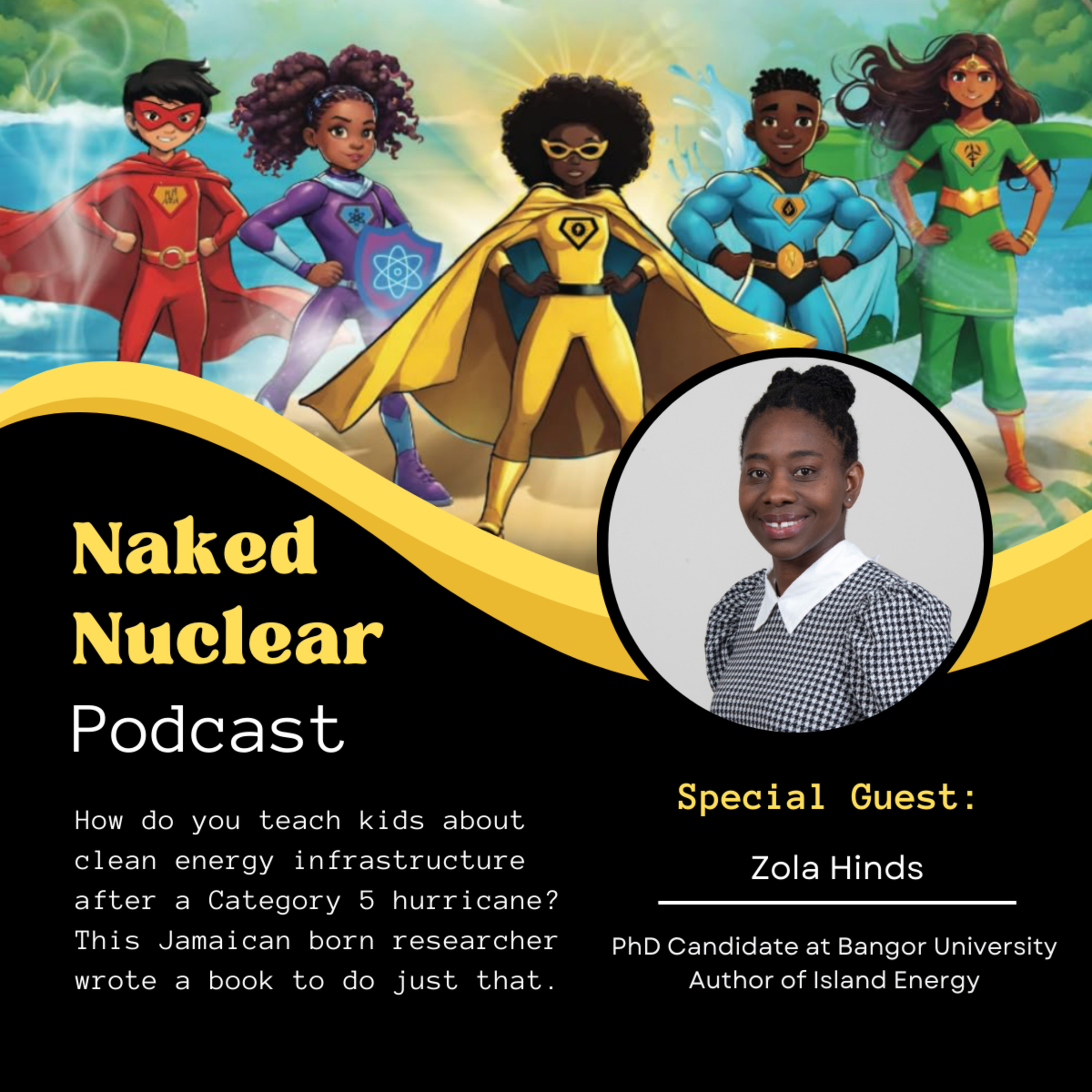 Island Energy Super Heroes: How one Jamaican PhD Student is Transforming Energy Literacy 15.12.2025 36Min.What happens when a nuclear engineering PhD student realizes that the book she needed as a child… doesn’t exist?She writes it.In this episode of Naked Nuclear, Danielle sits down with Zola Hind, Jamaican-born computer scientist turned nuclear engineering researcher at Bangor University — and author of Island Energy Superhero: A Kids’ Guide to Energies in the Caribbean.From visualizing nuclear fuel behavior using astronomy-inspired methods… to printing her book in braille for visually impaired students… Zola is building an energy-literate Caribbean one classroom at a time.This conversation explores:Why representation matters in energy educationHow nuclear engineering “chose” herWhat it means to fail forward in a PhD programThe role of clean energy in Caribbean climate resilienceWhether you’re a student, parent, educator, policymaker, or just energy-curious , this episode will leave you thinking differently about who gets to be part of the energy transition. Get the BookIsland Energy Superhero: A Kids’ Guide to Energies in the CaribbeanAmazon:https://www.amazon.com/Island-Energy-Superhero-Energies-Caribbean/dp/1998245098Official Website:https://islandenergybook.my.canva.site/#homeThe book is also available in select Jamaican bookstores and at Norman Manley International Airport in Kingston.About Zola HindZola Hind is a PhD researcher in nuclear engineering at Bangor University with a background in computer science and data visualization. Her research focuses on novel methods for modeling and visualizing nuclear fuel behavior.She is passionate about:Energy literacyClimate resilience in the CaribbeanAccessibility and inclusion in STEMMaking complex science understandable for everyone
 -
 Nuclear Physics for 3rd Graders? How ANS is Re-shaping K-12 Education with Uchenna Ezibe 01.12.2025 41Min.In this episode, Danielle talks with Uchenna Ezibe about how the American Nuclear Society is shaping the future of nuclear education—starting as early as kindergarten. They dive into ANS’s hands-on programs like cloud chambers, educator training, and the new Accelerators initiative for high schoolers.Learn how early exposure to nuclear concepts can spark student curiosity, close the literacy gap, and help build the next generation of clean energy professionals.Highlights:Why nuclear literacy shouldn’t wait until collegeWhat it’s like to “see” radiation with a cloud chamberHow ANS is training both teachers and student leadersBehind the scenes of the Accelerators programWhat a near-peer mentorship network looks like in actionMentioned Resources:ANS K-12 hub: https://www.ans.org/nuclearNavigating Nuclear curriculum: https://www.ans.org/nuclear/navigatingnuclearCloud Chamber program: https://www.ans.org/nuclear/cloudchamberAccelerators (high school): https://www.ans.org/nuclear/acceleratorsEducator resources: https://www.ans.org/nuclear/educatorresourcesVolunteer as a nuclear ambassador: https://www.ans.org/nuclear/ambassadorsContact Uchenna: [email protected] with Us:Website: https://www.nakednuclear.comEmail: [email protected]: https://www.linkedin.com/in/danielle-allen
 -
 BONUS Crossover Episode: The Future of Nuclearn & Naked Nuclear 17.11.2025 1Std. 29Min.In this crossover episode between Naked Nuclear and Nuclearn’s The Future of Nuclear, we bring together two teams with different backgrounds but a shared philosophy: curiosity, collaboration, and the courage to try.Danielle comes from the world of storytelling and education; Phil comes from the world of digital nuclear operations and AI. One explores the industry through conversations and community, the other builds tools to help the industry work smarter. Together, they compare notes on culture, creativity, learning curves, and the very real value of taking the first step even when you don’t have all the answers.This episode is about nuclear — yes. But it’s also about the people building it, the mindset behind innovation, and why trying (and sometimes failing) is one of the most underrated skills in our field.Learn more about Nuclearn: Nuclearn.aiListen to 'The Future of Nuclear' Podcast here: https://nuclearn.ai/1569-2/
 -
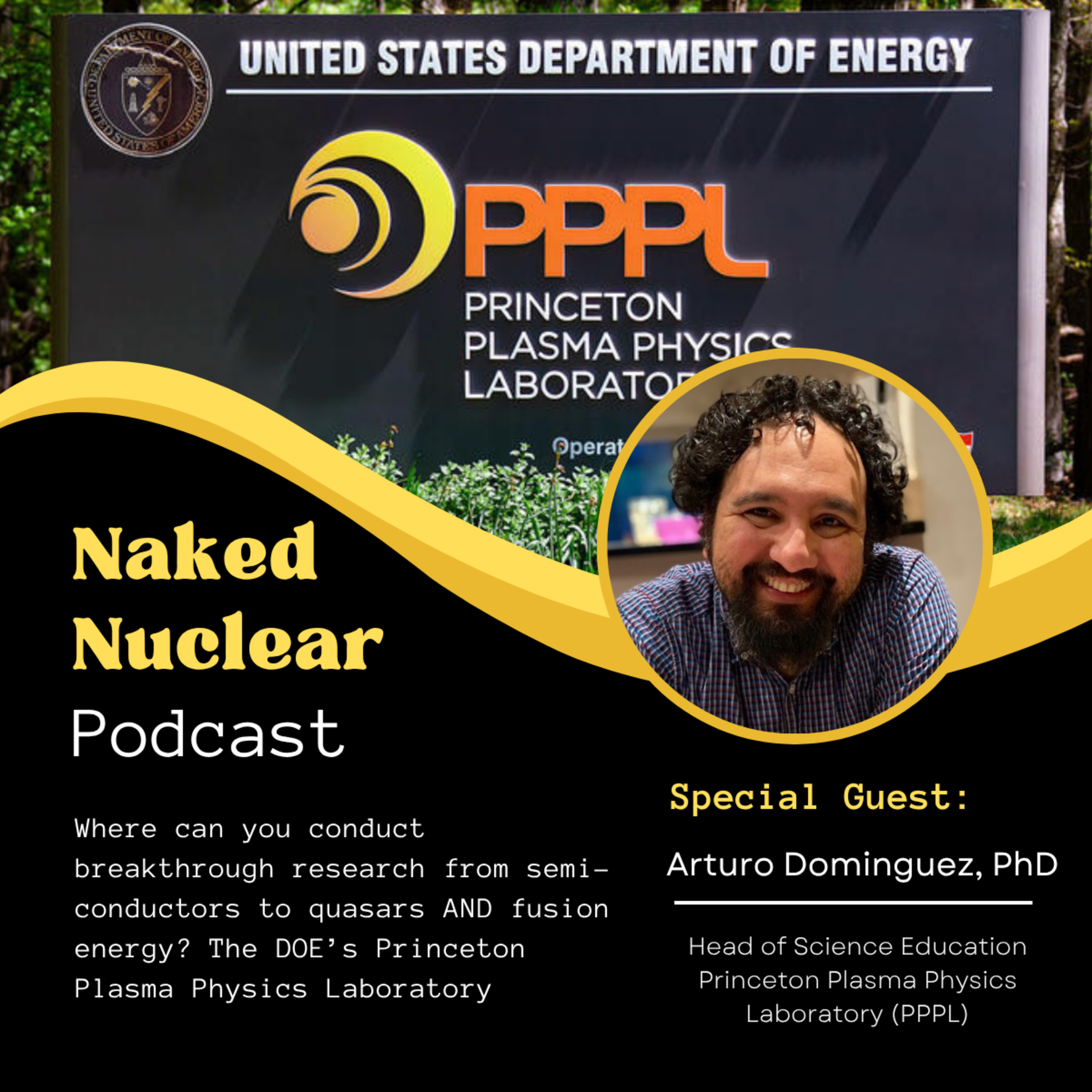 Intro to Fusion Energy with Princeton Plasma Physics Laboratory 06.11.2025 41Min.What exactly is plasma, and why are some of the world’s brightest minds betting on fusion energy to power our future? In this episode of Naked Nuclear, host Danielle sits down with Dr. Arturo Dominguez — Head of Science Education at the Princeton Plasma Physics Laboratory (PPPL) — to break it all down in plain language. From his own journey into plasma physics to PPPL’s groundbreaking research, Dr. Dominguez shares how fusion works, why it matters, and how students everywhere can get involved. We dive into PPPL’s free Introduction to Fusion and Plasma Physics course — a beginner-friendly, online class designed to make complex science accessible for anyone curious about the future of energy. Whether you're a college student, a career switcher, or just fusion-curious, this episode will give you a clear view into the fascinating world of plasma, research at Princeton, and how fusion could become a key player in the clean energy race. Check out more Resources:Intro to Fusion & Plasma Physics Course: https://www.pppl.gov/events/2023/introduction-fusion-energy-and-plasma-physics-courseScience Undergraduate Laboratory Internships (SULI): https://www.pppl.gov/science-undergraduate-laboratory-internships-suli Princeton Plasma Physics Lab (PPPL): https://www.pppl.gov More about Dr. Arturo Dominguez: https://www.pppl.gov/people/arturo-dominguez
 -
After-Pop! Inside the Z Machine: The Most Powerful Pulse on Earth 06.10.2025 10Min.What happens when you unleash more power than every power plant on Earth — for just a few billionths of a second?Welcome to After-Pop! — today, we’re diving into the Z Machine, the crown jewel of Sandia National Laboratories in Albuquerque, New Mexico. It’s the most powerful pulsed-power facility on the planet, capable of creating the same temperatures and pressures found inside stars, nuclear detonations, and planetary cores.In this episode, we’ll break down:Why the Z Machine was built — and how it keeps our nuclear stockpile safe without detonations.How the Z-pinch and “pulsed power” concept work — explained in plain English with real-world analogies.How researchers are using it to advance fusion energy, the same reaction that powers the Sun.Just how powerful 80 terawatts really is — and why shockwaves from each test can be felt miles away.What these micro-bursts of power teach us about the future of clean energy, defense, and physics at the edge of what’s possible.For a few nanoseconds, the Z Machine outshines the entire human race’s power output — a lightning strike made by human hands.Wanna READ MORE?Sandia’s official Z machine page (overview, how it works, research)https://www.sandia.gov/z-machine/Sandia’s fusion research pagehttps://www.sandia.gov/z-machine/fusion/Sandia’s energy research pagehttps://www.sandia.gov/z-machine/research/energy/The video you mentioned (Inside the Most Powerful X-Ray Source in the World)https://www.asminternational.org/news/videos/-/journal_content/56/10192/43932389/VIDEO/World Nuclear News article on First Light test on Zhttps://www.world-nuclear-news.org/articles/first-light-fusion-hails-success-of-initial-test-iAtlas Obscura page for general background & visual colorhttps://www.atlasobscura.com/places/the-z-machine-albuquerque-new-mexico
Ähnliche Podcasts


Beliebt in
Dieser Podcast erscheint auch in den Podcast-Charts dieser Länder.
