
VoxTalks Economics
VoxTalks
0
Learn about groundbreaking new research, commentary and policy ideas from the world's leading economists. Presented by Tim Phillips.
Folgen
-
 S9 Ep57: Merit, masters and China's imperial exam 02.10.2026 21Min.For more than 1,300 years, China chose its top officials by written exam. Its top officials were chosen meritocratic ally -- or were they?When the results came out, each successful candidate went to pay his respects to the men who had marked his exam. He called the examiner master, and the bond lasted for life.Ruixue Jia (UC San Diego, CEPR) and her co-author Ying Bai followed 24,269 graduates of the Qing dynasty's imperial examination, from 1644 to 1905, to see who reached the top of the imperial state. A high mark in the examination was important, but so did an examiner who later rose to power. Jia tells Tim Phillips how merit and patronage worked together.The research behind this episodeBai, Ying, and Ruixue Jia. 2026. "Meritocracy and the Networks It Forged: China's Imperial Examination." CEPR Discussion Paper 21814. Prepared for The ANNALS of the American Academy of Political and Social Science.To cite this episodePhillips, Tim, and Ruixue Jia. 2026. "Merit, masters and China's imperial exam." VoxTalks Economics (podcast). About the guestRuixue Jia is Professor of Economics at the School of Global Policy and Strategy, University of California San Diego, where she co-directs the China Data Lab. She is also a Visiting Professor at the University of Hong Kong, a Fellow of the Centre for Economic Policy Research in its Political Economy and Economic History programmes, and co-editor of the Review of Economics and Statistics. Her research spans elite formation, the politics of education and science, and the historical roots of China's development. She is co-author, with Hongbin Li and Claire Cousineau, of The Highest Exam: How the Gaokao Shapes China (Belknap Press, 2025).Research cited in this episodeThe imperial examination. China's system for recruiting officials through competitive written exams on the Confucian classics and literary composition. It began around 605 CE, expanded under the Song dynasty around 1000 CE, and was abolished in 1905. In the Qing dynasty it had three levels. The entry (prefectural) exam was held twice every three years; the provincial and national exams once every three years. About 240 candidates passed each national exam, earning the title of jinshi. Bai and Jia study all 112 national exams held between 1644 and 1905.How many took part. Every man could sit the exam in principle, but preparation cost years of study and lost income. Jia says that in the 18th century about two million men registered for the entry-level exam, roughly 2% to 3% of men aged 15 to 50, and that families often pooled resources to put one son forward. By her calculation, even a man who tried five times had less than a 1% chance of passing the entry level. These are her figures from the conversation.Fan Zhongyan. The Northern Song statesman and poet (989 to 1052) whose story Jia uses to show how the exam sold itself. He lost his father as an infant and grew up in modest circumstances, passed the national exam in 1015, and rose to become one of the empire's most senior officials. Stories like his, Jia argues, sustained belief in the system. What mattered was perceived mobility, not the realised rate.The high and low categories. Successful national candidates were ranked and divided at a cutoff. The top two groups received the jinshi degree; the third and largest group received the lesser tong jinshi ("similar to jinshi") degree. Bai and Jia compare the cutoff to the admission thresholds of elite universities today. Candidates just above it started their careers in better positions.Top office. Bai and Jia define top office as rank three or above in the nine-rank system, which covered ministers, governors general and provincial governors. Only about 12.6% of jinshi reached it, on average 16 years after passing the exam. In practice, appointments were shaped by a handful of Grand Secretaries and Grand Ministers of State; on average seven people held these posts in any year.The master and disciple relationship. Each national exam was overseen by one or two chief examiners and two or three vice examiners, all serving officials. After the results, graduates visited their examiners, called them "master teacher" and called each other "classmates". The historian Ichisada Miyazaki describes it as "a pledge between them to assist each other to weather the storms of political life" (Miyazaki, Ichisada. 1981. China's Examination Hell: The Civil Service Examinations of Imperial China. Yale University Press, p. 56). Philip Kuhn called the system "a veritable faction factory" (Kuhn, Philip A. 2003. Origins of the Modern Chinese State. Stanford University Press). Because papers were anonymous, the link between a candidate and his examiners was set by chance, which lets Bai and Jia treat it as a natural experiment.Power or mentoring. Bai and Jia measure ties to powerful examiners by counting how many years a candidate's examiners held key central posts in the decade after the exam. To separate a good teacher from a well-placed patron, they compare an examiner's power before and after the exam. Power that came later mattered more, which points to patronage rather than instruction alone.Merit and connections in modern China. Jia found a similar pattern in an earlier study of provincial leaders after 1993, in which neither strong economic performance nor links to the top leadership was enough for promotion on its own. Jia, Ruixue, Masayuki Kudamatsu, and David Seim. 2015. "Political Selection in China: Complementary Roles of Connections and Performance." Journal of the European Economic Association 13 (4): 631-668.More VoxTalks Economics episodesThe Success of the Embedded State. James Robinson on how unpaid local elites ran British government two centuries ago, and why they were more efficient than salaried officials.Related reading on VoxEUWho becomes a top politician in China? Ruixue Jia, Masayuki Kudamatsu and David Seim on why Communist Party leaders need both connections and a strong record to reach the top.Institutions and power structure: Imperial China and feudal Europe compared. Gérard Roland, Yang Xie and Ruixue Jia on why Chinese emperors had reason to keep the route into the elite open to ordinary people.It's not what you know, but who you know: The role of connections in academic promotions. Manuel Bagues and Natalia Zinovyeva on randomly assigned evaluators in Spanish academic promotions, and how much a link to the committee was worth.
 -
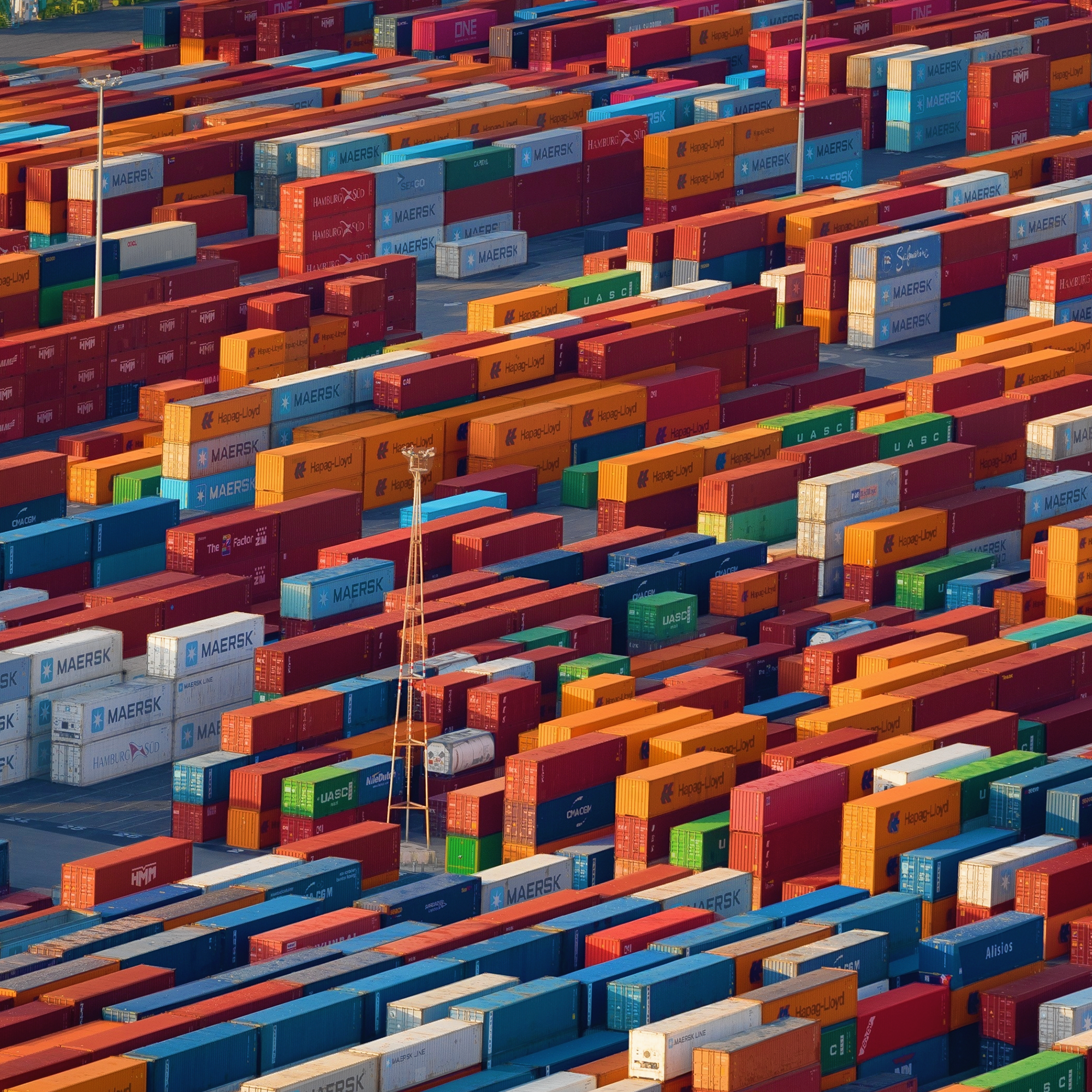 S9 Ep56: Decoupling from China after Trump's Trade Wars 25.09.2026 29Min.In March 2025, Apple chartered cargo flights to deliver 600 tonnes of iPhones from India to the United States. A year earlier, four in five smartphones that imported to the US came from China. One of the aims of US trade policy has been to decouple the US economy from China. So is the strategy working? Chad Bown (PIIE, CEPR) tells Tim Phillips how he examined the US import data product by product to see how American importers coped with Trump's second trade war. In consumer electronics, many firms quietly built a second supply chain in tariff-exempt countries before 2025, and switched sourcing away from China almost overnight in 2025. But clothing and footwear did not switch, because alternative source countries like Vietnam faced tariffs almost as high. When the US taxes imports from every country, the decoupling strategy gets lost.The research behind this episode:Bown, Chad P. 2026. "How Did Trump's 2025 Trade War Affect the Decoupling of US-China Supply Chains?" CEPR Discussion Paper DP21801 (gated). Forthcoming in Asian Economic Policy Review. To cite this episode:Phillips, Tim, and Chad P. Bown. 2026. "Decoupling from China after Trump's Trade Wars." VoxTalks Economics (podcast).About the guestChad P. Bown is the Reginald Jones Senior Fellow at the Peterson Institute for International Economics and a Fellow in the International Trade and Regional Economics programme of the Centre for Economic Policy Research. He was chief economist at the US Department of State from January 2024 to January 2025, and senior economist for international trade and investment on President Obama's Council of Economic Advisers. His research spans trade policy, industrial policy, economic security and supply chains. He co-created the Trade Talks podcast with Soumaya Keynes in 2017, and with Keynes he is co-author of How to Win a Trade War (Simon & Schuster, 2026).Research cited in this episodeThe 2018-19 Section 301 tariffs. In Trump's first term the US imposed tariffs on imports from China in stages, on product lists set under Section 301 of the Trade Act of 1974. Lists 1, 2 and 3, mostly intermediate inputs such as auto parts, ended at 25%. List 4A began at 15% and was cut to 7.5% in February 2020 under the Phase One agreement. List 4B, mostly consumer goods such as smartphones, laptops and toys, was delayed "for Christmas season" and never imposed. By the end of the first trade war, roughly two thirds of US imports from China faced new tariffs. Bown's point is that the goods spared in 2018-19 were the ones hit hardest in 2025.The 2025 IEEPA tariffs on China. In February and March 2025, before Liberation Day, the US imposed two rounds of 10% tariffs on all imports from China under the International Emergency Economic Powers Act, justified by concerns over fentanyl. For the first time this covered smartphones and other List 4B goods. One of the two was removed in November 2025 after Presidents Trump and Xi met in South Korea.Liberation Day. On 2 April 2025 the US announced tariffs on most of its trading partners, at rates that varied by country. A long list of products, including smartphones, was exempt under Annex II. On 9 April the country rates were paused and a 10% baseline applied while countries negotiated. China's rates escalated after retaliation on both sides; the Liberation Day actions on China alone reached 125% before a truce in Geneva in May. The exemptions matter to the episode. A tariff on China changes sourcing only if the alternatives face a lower one.The August 2025 tariffs on India. The US raised tariffs on India by a further 25 percentage points in August 2025, citing India's purchases of Russian oil. Smartphones were again exempt, so Apple's Indian supply chain stayed tariff free. For some clothing, India ended up facing a larger tariff increase than China.The Supreme Court ruling on IEEPA tariffs. On 20 February 2026 the US Supreme Court ruled that the country-level tariffs imposed under IEEPA were illegal. The Section 232 sectoral tariffs and the Section 301 tariffs on China were not part of the case. The administration removed the IEEPA tariffs and began imposing new ones under other legal authorities, which is why Bown warns that some of the 2025 effects may yet reverse.Apple's alternative supply chain in India. Apple and its contract manufacturers, including Foxconn and Tata Electronics, spent several years building iPhone assembly in India. Patrick McGee tells the story in Apple in China: The Capture of the World's Greatest Company (Simon & Schuster, 2026). Over the last nine months of 2025, 40% of US smartphone imports came from China and 46% from India. Laptops, monitors and video game consoles moved in a similar way, mostly to Vietnam.Inputs for AI. The paper defines AI inputs using the product codes that Nvidia publishes for export control compliance: certain semiconductors, printed circuit boards, servers and other data centre hardware. These made up about 14% of US imports in 2025. They grew by $183 billion that year, more than the $144 billion rise in total US goods imports. A separate classification by Michael Waugh (2026) finds a larger share, at 23%.US tariffs on Chinese electric vehicles. In 2024 the Biden administration raised US tariffs on electric vehicles from China to 100%, using the authority of the 2018 Section 301 action. China exported 40% of the world's electric vehicles in 2024, according to the International Energy Agency, but almost none to the United States.China's export restrictions on rare earths. In April 2025 China restricted exports of rare earths and permanent magnets, of which it produces about 90% of world supply. Bown did not include these products in the paper, but they are the reverse of the decoupling story. They are goods for which the US found no alternative supplier.Tariff pass-through to consumer prices. Bown suggests that firms with an alternative supplier may explain why some prices, such as the iPhone's, did not rise. He points to work by Alberto Cavallo, Paola Llamas and Franco Vazquez (2025), "Tracking the Short-Run Price Impact of U.S. Tariffs," NBER Working Paper 34496, which tracks how the 2025 tariffs reached retail prices.How to Win a Trade War. Soumaya Keynes and Chad P. Bown. 2026. How to Win a Trade War: An Optimistic Guide to an Anxious Global Economy. New York: Simon & Schuster. The authors argue that the conflict with China will not reverse, and that other economies are now dealing with China-related shocks of their own.More VoxTalks Economics episodesMaking sense of the US-China trade war, in which Bown explained the first trade war in 2021, as it ended. It is the "before" to this episode's "after".Tariff Confusion, in which Kalina Manova explains how the frequency of tariff announcements in 2025 cut trade by more than the tariffs themselves.Related reading on VoxEU.orgUS-China decoupling: Rhetoric and reality, a VoxEU column showing that after the first trade war US imports from China slowed, but supply chains for strategic products stayed intertwined with China.What comes next for global supply chains might be complicated, a VoxEU column on why a falling Chinese share of US imports does not mean Chinese firms have left the supply chain.Tariff confusion, a VoxEU column by Kalina Manova, Dennis Novy, Thomas Sampson and Aaron Tang on how confusion about current US tariffs reduced trade in 2025.
 -
 S9 Ep55: Loosening inheritance law 18.09.2026 25Min.In most of the world you do not get to choose who inherits your money. Across continental Europe, Latin America, and countries governed by Islamic law, a minimum share of your estate will be reserved for your children, your spouse, and in some places your surviving parents. Write a will that ignores them and the law overrules you. If you want a head start in life, choose your parents carefully.Switzerland changed the rules in January 2023. The compulsory share for children fell by one third and the share reserved for surviving parents disappeared altogether. In this week's VoxTalk, Marius Brülhart (University of Lausanne, CEPR) tells Tim Phillips how he had been following the reform with no way of observing its effects, until a website that helps Swiss people write their wills online offered him its anonymous data. People who were handed more freedom gave less to their children and their parents, and more to spouses and partners. About one third of every liberated franc went to recipients outside the family altogether. Liberalising the law spreads wealth without taxing anyone: politically, though maybe not democratically, attractive. The research behind this episode:Brulhart, Marius, and Laia Soler. 2026. "Unfree Wills: Inheritance Rules, Bequest Motives, and Wealth Diffusion." CEPR Discussion Paper 21811. The CEPR version is gated.To cite this episode:Phillips, Tim, and Marius Brulhart. 2026. "Loosening inheritance law." VoxTalks Economics (podcast).About the guestMarius Brulhart is Professor of Economics at HEC Lausanne, University of Lausanne, and a Research Fellow of the Centre for Economic Policy Research. His research spans public finance, regional and urban economics, and international trade, with a long-running interest in how Swiss taxpayers and testators respond to the rules they are given. He has advised the World Bank, the OECD, the European Commission, and the Swiss government.Research cited in this episodeProtected heirs. Swiss law, like that of most civil-law countries, reserves compulsory minimum shares of an estate for close family. Before 2023 those categories were children and other direct descendants, spouses, and surviving parents. An unmarried testator with children could freely allocate only 25% of their estate; the rest belonged to the children by law.The 2023 reform. Parliament passed the change in December 2020 and it came into force on 1 January 2023. Minimum shares for direct descendants were cut by one third, those for surviving parents were abolished, and the share reserved for a surviving spouse was left alone. Averaged across family types in the data, the freely attributable portion of an estate rose by 19 percentage points, from 39% to 58%.DeinAdieu.ch. The Swiss online service that generated the data, funded by charities seeking legacies. Users answer questions about their family situation, the tool limits their choices to what the law allows, and they set the shares with a set of sliders. The sample covers 16,887 completed forms submitted between January 2020 and March 2024, which straddles the reform.Bunching. Before the reform, a large share of testators gave their protected heirs exactly the legal minimum and not a franc more; 52% of testators with children and 72% of those with living parents had been giving more than they wanted to. When the minimum fell, so did their allocations.Reference dependence. The whole distribution moved, not just the people who had been pinned to the legal floor. Testators who had voluntarily given their children more than the law required also gave less after the reform, which suggests the legal minimum works as a mental benchmark for generosity even when it is not binding.Marginal diffusion propensity. Brulhart and Soler's term for the share of each newly discretionary franc that goes to nonrelatives and charities. Their central estimate is 0.33. Applied to the whole population it implies that the reform moved more wealth outside family dynasties than Switzerland's inheritance taxes do, though Swiss inheritance tax is unusually light, with children inheriting tax free in most cantons.More VoxTalks Economics episodesWealth Taxes. Marius Brulhart's earlier conversation with Tim Phillips, on what Switzerland's cantons reveal about how people respond when wealth rather than income is taxed.Political inequality. Julia Cagé on what concentrated wealth does to democratic politics, which is the other half of the question Brulhart raises about who decides where wealth goes.Related reading on VoxEU.orgWealth taxation: The Swiss experience, by Marius Brulhart, Jonathan Gruber, Matthias Krapf, and Kurt Schmidheiny, on how Swiss wealth holders respond to the rate they pay.How inheritances influence wealth inequality, by Mikael Elinder, Oscar Erixson, and Daniel Waldenstrom, using Swedish register data covering every heir of every decedent over several years.The intergenerational transmission of wealth in rich countries, by Salvatore Morelli and co-authors, on how large transfers push up wealth inequality across seven countries.
 -
 S9 Ep54: Does sacking the manager work? 11.09.2026 18Min.Your football team keeps losing. The season is slipping away. One thing can be changed by Friday, and the crowd is already singing about it: sack the manager.Jan van Ours (Erasmus School of Economics, CEPR, Feyenoord fan) has looked at seven seasons of the Dutch top flight and 31 managers who were sacrificed mid-season. To work out whether any of them deserved it, he uses bookmaker odds and expected goals to distinguish bad play from bad luck. The new-manager bounce is real: results improve after a new manager walks in. But also, not real: clubs that don't sack the manager have an upturn too. The message for the boardroom, in football and business, is that not doing anything might often be the best course of action.The research behind this episode:van Ours, Jan C. 2026. "Dust in the Wind: Causes and Consequences of Managerial Replacements." CEPR Discussion Paper DP21850, Centre for Economic Policy Research. The paper is gated.To cite this episode:Phillips, Tim, and Jan van Ours. 2026. "Does sacking the manager work?" VoxTalks Economics (podcast).About the guestJan van Ours is Emeritus Professor of Applied Economics at Erasmus School of Economics, Erasmus University Rotterdam, and a core member of the Erasmus Centre for Applied Sports Economics. He is also Adjunct Professor at the Center for Health Economics, Monash Business School, and a Research Fellow of the Centre for Economic Policy Research. His research spans unemployment dynamics, labour market policy, health and well-being, and the economics of professional sport, where match data offer a rare chance to watch a labour market in the open.Research cited in this episodeThe Eredivisie sample. Seven seasons of the top league of Dutch professional football, from 2018/19 to 2024/25, covering 4,136 match observations and 126 club-seasons. In that period 31 managers were replaced during a season; about 15% had gone by mid-season and 25% by the end of it.Points surprise. The cumulative gap, from the first match of the season, between the points a club has won and the points the bookmakers implied it should have won. Bookmaker odds are used as the benchmark because they already contain everything the market knows about squad quality, home advantage and the opposition; van Ours confirms this in the data, finding that recent results add nothing to the odds as a predictor of the next match.Performance surprise. The same cumulative gap, but measured with expected points derived from expected goals rather than actual results. Points surprise catches a club that is losing. Performance surprise catches a club that is playing badly. A club can be one without being the other, which is how luck gets separated from ability.Expected goals. The probability that a given shot becomes a goal, estimated from thousands of comparable attempts and conditioned on the distance and angle of the shooter, the body part used, and the type of pass and attack. Van Ours converts expected goals scored and conceded into a distribution of match outcomes, and from that into expected points. His data come from fbref.com; the paper notes that match-level expected goals were discontinued in January 2026 after a dispute between fbref and Opta.The counterfactual replacement. The device that carries the paper. For each actual sacking, van Ours searches the same club in a different season for a moment when the sum of points surprise and performance surprise was almost identical, and the manager survived. Of the 31 replacements, 22 have a counterfactual, 19 of them unique. Clubs that sacked the manager gained 0.21 points per match afterwards. Clubs in the same trouble that did not sack the manager gained 0.38.Scapegoating. William Gamson and Norman Scotch set out the idea in "Scapegoating in baseball" in the American Journal of Sociology in 1964, describing the sacking of a manager as an anxiety-reducing ritual that participants treat as an improvement whether or not anything improves. Van Ours returns to it to explain why a decision with no measurable effect keeps being taken.Managers in regular firms. Stuart Gilson's 1989 study in the Journal of Financial Economics found that replaced executives were not employed by another firm for at least three years. Football managers are frequently back in work within weeks, which is one reason the job pays what it does. Hilger, Mankel and Richter reviewed 91 studies of top executive dismissals published between 1960 and 2010 and concluded that the effects of managerial turnover are not statistically different from zero.Related reading on VoxEU.orgWhat we can learn about economics from professional sport during COVID-19, a VoxEU column on why sport keeps producing clean natural experiments for economists.Racial bias in newspaper ratings of professional football players, a VoxEU column using match ratings to test for discrimination in a labour market where output is measured in public every week.
 -
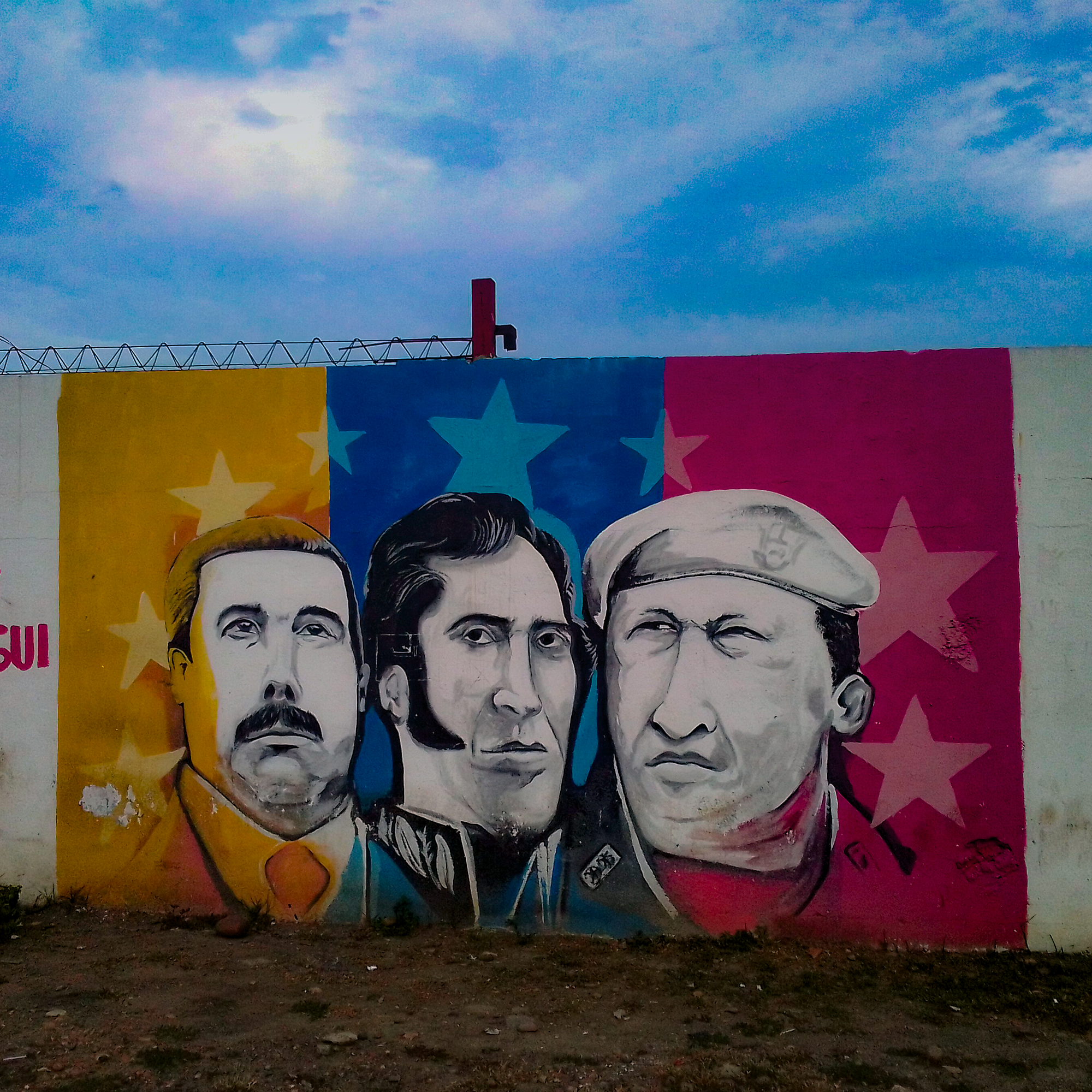 S9 Ep53: Lessons from Populism in Latin America 04.09.2026 33Min.The new episode of VoxTalks Economics traces the effects of South Americans populism, left and right. Alejandro Werner (Georgetown Americas Institute) is one of the authors of a new paper that traces populist governments across Latin America back to 1970. He argues that they follow a strikingly similar script: they expand spending, weaken the institutions built to restrain them, and ride the wave until inflation catches up with them. But the most recent generation of leaders -- Chávez and Maduro, the Kirchners, Correa, and Morales -- lasted longer than their predecessors. Why?The research behind this episode:Magud, Nicolás E., Antonio Spilimbergo, and Alejandro Werner. 2026. "Lessons from Populism in Latin America." Paper presented at the second Economic Policy: Papers on European and Global Issues Conference, June 2026. Forthcoming in Economic Policy.To cite this episode:Phillips, Tim, and Alejandro Werner. 2026. "Lessons from Populism in Latin America." VoxTalks Economics (podcast).About the guestAlejandro Werner is the founding director of the Georgetown Americas Institute and a nonresident senior fellow at the Peterson Institute for International Economics. He spent nine years as director of the International Monetary Fund's Western Hemisphere Department, and earlier held senior posts at Mexico's finance ministry and central bank. His research spans macroeconomic policy, fiscal sustainability, and financial crises across Latin America.Research cited in this episodeThe Global Populism Database, built by political scientist Kirk Hawkins and colleagues, codes the rhetoric of presidents and prime ministers on a scale from zero (not populist) to two (highly populist), reading inauguration and campaign speeches for anti establishment language, appeals to "the people," and simple, direct phrasing. Magud, Spilimbergo, and Werner use this index, rather than a leader's policies, to decide who counts as a populist, which keeps their definition independent of the outcomes they go on to measure.Dornbusch and Edwards' "macroeconomics of populism," from their 1991 edited volume of the same name, was the first systematic account of how Latin American leaders combine expansionary spending with price controls, and how the resulting shortages and capital flight bring the cycle to an end. The new paper tests whether that pattern still holds three decades on.Funke, Schularick and Trebesch (2023), published in the American Economic Review, built an alternative populism index from historical case studies rather than speeches, and found that populist leaders leave a drag on economic activity that can persist for up to fifteen years after they leave office. Werner and his coauthors use this index as a robustness check on their own results.Local projections, a method developed by the economist Oscar Jorda in 2005, trace how a variable such as inflation or the real exchange rate evolves in the years after a shock, in this case the arrival of a populist government, without imposing the structure of a full macroeconomic model.The commodity terms of trade windfall, a measure developed by Gustavo Adler and Magud, calculates the extra income a country earns when its export prices rise relative to its import prices. The paper uses this measure to show that the populist governments with the largest windfalls, including Venezuela, Bolivia, and Ecuador, stayed in power the longest.More VoxTalks Economics episodesFiscal Populism and Monetary Policy, recorded at the same EP conference, in which Magud talks to Tim Phillips about how a government's fiscal stance interacts with the credibility of its central bank.The Dollar Anchor Is Slipping, Tarek Hassan talks to Tim Phillips about what happens when the dollar's role as the world's safe asset comes under strain.Related reading on VoxEU.orgFour decades of terms of trade booms, a VoxEU column by Magud and Adler that introduces the income windfall measure used in this paper, and shows how much larger Latin America's most recent commodity boom was than those of the 1970s.Effects of commodity price windfalls on external debt: the role of political institutions, a VoxEU column by Rabah Arezki showing that commodity windfalls tend to be saved where executive power is constrained, and spent where it is not, a pattern that echoes this paper's account of institutional decay under populist rule.
 -
 S9 Ep52: The Dollar Anchor Is Slipping 02.09.2026 26Min.April 2025: Liberation Day. President Trump announces sweeping new tariffs. And then, the dollar did something a safe haven currency is not supposed to do: it fell.Tarek Hassan (Boston University, CEPR), working with Thomas Mertens, Jingye Wang and Tony Zhang, has been investigating what makes a currency the global anchor. Being the world's biggest economy helps, but what really matters is how far an economy's shocks affect world prices. Tariffs reduce this effect. But are we near a tipping point, when the euro takes over as the global reserve currency? We might be closer than you think and, if a change happens, it might happen more quickly than you think too.This is the third of four episodes drawn from papers commissioned for the second Economic Policy: Papers on European and Global Issues conference, held in Venice on 19 and 20 June 2026 and organised by CEPR, CESifo and Sciences Po.The research behind this episode:Hassan, Tarek A., Thomas M. Mertens, Jingye Wang, and Tony Zhang. 2026. "Openness, Integration, and the International Monetary Order." Conference draft, presented at the 2nd Economic Policy: Papers on European and Global Issues Conference, Venice, 19 to 20 June 2026. Forthcoming in Economic Policy.To cite this episode:Phillips, Tim, and Tarek A. Hassan. 2026. "The Dollar Anchor Is Slipping." VoxTalks Economics (podcast).About the guestTarek A. Hassan is Professor of Economics at Boston University, a Research Fellow of the National Bureau of Economic Research, and a Research Fellow of the Centre for Economic Policy Research. His research spans international finance, macro-finance, and the political economy of growth, from measuring firm-level political risk with large language models to, in this paper, the size and openness that decide which currency the world treats as safe.Research cited in this episodeLiberation Day and the April 2025 tariffs. On 2 April 2025, the White House announced a sweeping set of import tariffs. Hassan and his co-authors treat the market reaction to that announcement, in which the dollar fell even as US interest rates rose and US stocks underperformed, as the anomaly their model is built to explain; a currency behaving that way in a crisis usually counts as risky, not safe. CEPR has gathered further commentary on the announcement and its aftermath on its Trump and Tariffs page.Exorbitant privilege. A term coined in the 1960s for the advantage the United States gets from issuing the world's reserve currency, since foreign investors will hold dollar assets at a lower return than they would demand elsewhere. Hassan uses it to explain why Americans can borrow more cheaply than almost anyone else, and why losing anchor status would raise the US government's own borrowing costs.Effective size. The paper's central idea. It is not simply how big an economy is, but how much weight its shocks carry in setting world prices, which depends on both actual size and openness to trade and capital flows. Tariffs and capital controls both reduce a country's effective size without touching its GDP, which is how they can knock a currency out of contention as a global anchor.The Budget Lab at Yale's tariff tracker. The paper draws its estimate that the current average tariff on US imports and exports, once retaliation is included, runs at around 12% from The Budget Lab at Yale (2025), Where We Stand: The Fiscal, Economic, and Distributional Effects of All US Tariffs Enacted in 2025 Through April 2, a running assessment of US trade policy maintained by the nonpartisan Budget Lab at Yale.Ilzetzki, Reinhart, and Rogoff's exchange rate classification. Ilzetzki, Reinhart, and Rogoff. 2019. "Exchange Arrangements Entering the Twenty-First Century: Which Anchor Will Hold?" Quarterly Journal of Economics 134 (2). This dataset classifies the de facto exchange rate regime of 141 economies. Hassan and his co-authors use it to calibrate their model and to show that the share of countries pegging tightly to the dollar falls with country size almost exactly as their theory predicts.The Chinn-Ito index of capital account openness. Chinn, Menzie D., and Hiro Ito. 2006. "What Matters for Financial Development? Capital Controls, Institutions, and Interactions." Journal of Development Economics 81 (1): 163 to 192. This widely used index scores how open a country's capital account is to cross-border investment. China scores close to the bottom, in the same range as India, Russia, Brazil and Pakistan, while the United States and the eurozone score close to the maximum, which is central to why Hassan treats the renminbi as a non-contender for anchor status while capital controls remain in place.More VoxTalks Economics episodesTariffs, Uncertainty, and the Exchange Rate, the first episode in this series, in which Alfonso Merendino and Tommaso Monacelli offer another explanation of why the dollar fell rather than rose after the 2025 tariffs.How Exchange Rates Responded to Tariffs, in which Giancarlo Corsetti also tells Tim Phillips what happened to the dollar after Liberation Day, and why the textbook response did not show up.Related reading on VoxEU.orgTariffs and US Dollar Depreciations: Not So Surprising After All, a VoxEU column in which Giancarlo Corsetti, Simon Lloyd and Daniel Ostry argue that the dollar's fall after Liberation Day looks less puzzling once expected retaliation and long run risk are taken into account.Tariffs, Global Imbalances, and the Dollar, in which Oleg Itskhoki and Dmitry Mukhin examine whether tariffs aimed at shrinking the US trade deficit can actually work, and what trying would mean for the dollar.
 -
 S9 Ep51: Fiscal Populism and Monetary Policy 28.08.2026 16Min.There is a saying in Spanish: get burned by hot milk, and the sight of a cow makes you cry. New research implies that, decades after a populist government leaves office, the central bank it once tried to control is still flinching.Martín Uribe (Columbia) and Nicolás Magud (IMF) have investigated the long-run effect of populist governments that leaned on their central banks to print money and feed inflation. They find that these central banks raise interest rates more aggressively than others when inflation drifts above target, even decades later.This is the second of four episodes drawn from papers commissioned for the second Economic Policy: Papers on European and Global Issues conference, organised by CEPR, CESifo and Sciences Po.The research behind this episode:Jácome, Luis, Nicolás E. Magud, Samuel Pienknagura, and Martín Uribe. 2026. "Fiscal Populism and Monetary Policy Rules." Conference draft, presented at the 2nd Economic Policy: Papers on European and Global Issues Conference, Venice, 19-20 June 2026. Forthcoming in Economic Policy.To cite this episode:Phillips, Tim, Martín Uribe, and Nicolás E. Magud. 2026. "Fiscal Populism and Monetary Policy." VoxTalks Economics (podcast).About the guestsMartin Uribe is the Robert A. Mundell Professor of Economics at Columbia University and a Research Associate of the National Bureau of Economic Research. His research spans international macroeconomics and the theory of monetary and fiscal policy, with recent work on tariff shocks, fiscal dominance, and the long-run legacy of high inflation on how central banks set policy. He is editor-in-chief of the Journal of International Economics.Nicolás E. Magud is a Senior Economist in the International Monetary Fund's Western Hemisphere Department. His research spans open-economy macroeconomics, with a focus on fiscal policy, exchange rates, capital flows, and capital controls, much of it drawn from Latin America's long experience of inflation and central bank reform.Research cited in this episodeThe populist leaders database. Funke, Manuel, Moritz Schularick, and Christoph Trebesch. 2023. "Populist Leaders and the Economy." American Economic Review 113 (12): 3249-88. The authors classify a leader as populist if their rhetoric splits society into "the people" against "the elites," then divide populists into left-wing, whose target is economic elites, and right-wing, whose target is foreigners and minorities. Deficit monetisation and "unpleasant monetarist arithmetic." Sargent, Thomas J., and Neil Wallace. 1981. "Some Unpleasant Monetarist Arithmetic." Federal Reserve Bank of Minneapolis Quarterly Review 5 (3). The paper that established the mechanism this episode turns on: when a government's deficit is financed by its own central bank printing money rather than by selling bonds to the public, the result is inflation. It gives the paper's account of populism and central bank credit its theoretical backbone.Local projections difference-in-differences. Dube, Arindrajit, Daniele Girardi, Oscar Jorda , and Alan M. Taylor. 2025. "A Local Projections Approach to Difference-in-Differences." Journal of Applied Econometrics 40 (7): 741-58. The statistical method behind the paper's headline charts. It compares countries that have just installed a populist government against "clean" control countries with no recent populist history, tracking central bank credit year by year after the change of regime.The Central Bank Independence Extended (CBIE) index. Romelli, Davide. 2022. "The Political Economy of Reforms in Central Bank Design: Evidence from a New Dataset." Economic Policy 37 (112): 641-88. A dataset scoring central bank laws on their independence, including limits on lending to government. The paper uses it to show that countries with a populist past, especially a left-wing one, now have stricter legal limits on central bank lending than countries with no such history.Argentina, Chile, and Mexico. The paper's three historical case studies. In Argentina, governments from Perón onward repeatedly rewrote central bank law to permit financing of the treasury, contributing to repeated bouts of high inflation and, eventually, hyperinflation in the 1980s. In Chile, the Allende government printed money to fund an expansion of the state, and inflation reached roughly 600% in 1973 before the government was overthrown. In Mexico, President EcheverrÃa's public investment drive in the 1970s was financed in part by the central bank, feeding an inflation and currency crisis that culminated in the country's 1982 default. Uribe and Magud point to these episodes as the historical template their statistical results describe.Related reading on VoxEUCentral bank independence: An update, a VoxEU column in which Sylvester Eijffinger and Jakob de Haan argue that legal independence alone does not shield a central bank from political pressure to loosen policy.Recent trends in central bank independence, in which Davide Romelli, whose index this paper uses to track legal independence, documents a fresh wave of reforms strengthening central banks worldwide since 2016.
 -
 S9 Ep50: Tariffs, Uncertainty, and the Exchange Rate 26.08.2026 24Min.Textbook economics says a tariff should strengthen a country's currency. Since the start of 2025, as US tariffs rose ... and the dollar fell.In the first of four episodes of Voxtalks based on papers presented at the second Economic Policy: Papers on European and Global Issues conference, Alfonso Merendino (Bocconi University) and Tommaso Monacelli (Bocconi University, CEPR) tell Tim Phillips what they found when they looked for reasons. Their conclusion: for tariffs, it's not size, it is how permanent people expect it to be. They call this structural trade policy uncertainty. When that uncertainty is low, a tariff behaves exactly as the textbook says. When it's high, the same tariff can weaken the currency, shrink output and pull down inflation instead.The research behind this episode:Merendino, Alfonso, and Tommaso Monacelli. 2026. "Tariffs, Uncertainty, and the Exchange Rate." Conference draft, presented at the 2nd Economic Policy: Papers on European and Global Issues Conference, Venice, 19-20 June 2026. Forthcoming in Economic Policy.To cite this episode:Phillips, Tim, Tommaso Monacelli, and Alfonso Merendino. 2026. "Tariffs, Uncertainty, and the Exchange Rate." VoxTalks Economics (podcast).About the guestsTommaso Monacelli is Professor of Economics at Bocconi University and a Research Fellow of IGIER Bocconi and CEPR. His research spans international macroeconomics, monetary policy and the business cycle, with recent work on tariffs and monetary policy, supply chain uncertainty and inflation, and heterogeneous bank models of monetary transmission. He is co-editor of the Journal of International Economics and was managing co-editor of Economic Policy from 2016 to 2021.Alfonso Merendino is a PhD student in Economics at Yale University and a Research Fellow at the Social Economics Lab. He recently completed a research placement in macroeconomic modelling at the European Central Bank, and holds a Bachelor's and Master's degree in Economics from Bocconi University, where this paper was written.Research cited in this episodeStructural trade-policy uncertainty (S-TPU). The paper's central measure, capturing uncertainty not about the size of a tariff but about how persistent the trade-policy regime behind it will be. Merendino and Monacelli split observed US tariff rates from 1990 to 2025 into a persistent component and a short-lived transitory one, using a state-space model with separate volatility for each, and define S-TPU as the volatility of the persistent component.The 2017 US withdrawal from the Trans-Pacific Partnership. The authors' example of a pure S-TPU shock. The withdrawal changed no tariff rate on impact, but it reshuffled expectations about the durability of US trade policy, and their index of structural uncertainty spikes at this point."Liberation Day" tariffs, April 2025. The sweeping tariff package announced by the Trump administration on 2 April 2025. The paper treats this, alongside the 2018 Section 301 tariffs on China, as one of two clearly identified tariff shocks used to anchor its statistical model.Aggregate trade-policy uncertainty index. Caldara, Dario, Matteo Iacoviello, Patrick Molligo, Andrea Prestipino, and Andrea Raffo. 2020. "The Economic Effects of Trade Policy Uncertainty." Journal of Monetary Economics 109: 38-59. This newspaper-based index of trade-policy uncertainty mixes announcement noise with genuine regime change; Merendino and Monacelli show that conditioning on it, rather than on their narrower S-TPU measure, erases the state-dependent pattern they document.Narrative-dominance identification. The technique the authors use to isolate tariff shocks in their statistical model, adapted from Juan Antolín-Díaz and Juan F. Rubio-Ramírez. 2018. "Narrative Sign Restrictions for SVARs." American Economic Review 108 (10). Rather than imposing a full statistical model, the method anchors identification to a small number of clearly documented policy events, such as the 2018 and 2025 tariff rounds, and lets everything else, including the sign of the exchange-rate response, be estimated freely from the data.More VoxTalks Economics episodesThe second Economic Policy: Papers on European and Global Issues conference follows the first, held in Paris in December 2025. Three earlier VoxTalks Economics episodes from that Paris conference asked what comes next for Ukraine's economy.What's next for Ukraine: Investment, in which Yuriy Gorodnichenko and Maurice Obstfeld argue that forgiving Ukraine's war debt, rather than treating it as an obstacle, is essential to attracting the $40 billion a year that reconstruction needs.What's next for Ukraine: Reconstruction, in which Edward Glaeser, Martina Kirchberger, and Andrii Parkhomenko argue that postwar Tokyo, not Warsaw or Berlin, is the right model for rebuilding Ukraine's cities.What's next for Ukraine: The labour market, in which Giacomo Anastasia documents the surprising resilience of Ukraine's wartime labour market.Related reading on VoxEUTariffs and US dollar depreciations: Not so surprising after all, a VoxEU column in which Giancarlo Corsetti, Simon Lloyd, and Daniel Ostry argue that the dollar's fall after Liberation Day is explained by foreign retaliation, a different mechanism from the persistence channel that Merendino and Monacelli identify.Tariffs, the dollar, and equities: High-frequency evidence from the Liberation Day announcement, in which Jonathan Hartley and Alessandro Rebucci show that the dollar depreciated on impact on 2 April 2025, against the standard prediction, and trace this to foreign investors rebalancing away from US equities.
 -
 S9 Ep49: Combatting sexual harassment in the military 21.08.2026 21Min.Norwegian conscripts arrive at boot camp straight out of school. They are assigned at random to a shared room and they live in it for the next eight weeks. Whatever the culture of that room turns out to be, they are stuck with it.We know that the military everywhere has a poor record on sexual harassment. Johanna Rickne (Stockholm University, CEPR) and her co-authors wanted to reduce its acceptance, and the number of incidents. Compulsory training, standing a in a room a showing a PowerPoint, has a poor record. It can even inspire a backlash. Instead, they included two pieces of information in a 20-minute enrolment survey. One fact was about how women score on the army's own end-of-service assessments. The other was about what last year's recruits really thought about crude sexual jokes. Eight weeks later, the researchers came back to see what had changed for the 949 recruits.The research behind this episode:Olle Folke, Torbjørn Hanson, Åshild A. Johnsen, Andreas Kotsadam, and Johanna Rickne. 2026. "Targeting Attitudes to Combat Sexual Harassment: A Randomized Intervention in the Norwegian Military." CEPR Discussion Paper 21475. The discussion paper is gated. It is also published in the Journal of Economic Behavior and Organization.To cite this episode:Phillips, Tim, and Johanna Rickne. 2026. "Combatting sexual harassment in the military." VoxTalks Economics (podcast).About the guestJohanna Rickne is Professor of Economics at the Swedish Institute for Social Research (SOFI) at Stockholm University, and holds part-time chairs at the University of Nottingham and the Stockholm School of Economics. She is affiliated with the Centre for Economic Policy Research. Her research spans labour economics, political economics and gender economics, with sustained work on sexual harassment as a workplace hazard, on who ends up in political office, and on what makes work meaningful. She won the Assar Lindbeck Medal in 2023.Research cited in this episodeThe Sexual Experiences Questionnaire is the behavioural instrument used to measure prevalence here. Rather than asking people whether they were sexually harassed, a term that different people read very differently, it presents a list of specific behaviours and asks whether each one happened. The version used in Norway runs to 14 items and is adapted from the questionnaire developed for the US military.Gender harassment is one of three categories in the standard model of sexual harassment, alongside unwanted sexual attention and sexual coercion. It covers hostile or demeaning conduct based on someone's sex or gender that is not necessarily sexual in nature, including remarks that a person is not suited to the job. In this boot camp it was the most common behaviour reported by women.Backlash from compliance training is the reason the intervention avoids looking like training at all. Mark Roehling, Dongyuan Wu, Mahl Geum Choi and James Dulebohn's 2022 meta-analysis in Personnel Psychology gathers the evidence on what harassment training does and does not shift; other studies find that employees most inclined to harass become more tolerant of the behaviour after being told how to behave. Voluntary sessions have the opposite problem, in that those employees do not turn up.Misperceived social norms supply the mechanism for the second piece of information. Leonardo Bursztyn, Alessandra Gonzalez and David Yanagizawa-Drott's study of Saudi Arabian husbands showed that men privately supported their wives working outside the home while badly underestimating how many other men agreed; correcting the misperception changed what those men did. The boot camp version asks recruits what their predecessors thought about sexualised jokes, then tells them the answer.The Norwegian Armed Forces service statement is the source of the first piece of information. Recruits are assessed at the end of service on leadership, responsibility, collaboration, professional competence and judgement. Average scores show no gender gap; the graph was shown to the treated recruits in this experiment.The vignette holds the harassment event constant across everyone who answers. Recruits read a short scenario set in a room like their own and rate six statements about it, covering whether the conduct counts as harassment, what the woman should do, and what any bystanders owe her. Because the incident is fixed, differences in the answers cannot be explained away by differences in what people happened to experience.Sexual harassment and gender inequality is the wider agenda this episode sits inside. Olle Folke and Johanna Rickne's 2022 paper in the Quarterly Journal of Economics uses Swedish survey and administrative data to show that harassment risk falls hardest on whichever sex is in the minority in a workplace, and that it pushes people out of jobs.More VoxTalks Economics episodesViolence against women in politics. Gianmarco Daniele on why women who win office in Italy are far more likely than men to be attacked, and what that does to who stands for election in the first place.Violence against women at work. Abi Adams-Prassl on Finnish police records linked to employment data, and what happens to the careers of the victim and the perpetrator after one colleague assaults another.Related reading on VoxEU.orgDiscrimination in work conditions: The case of sexual harassment, a VoxEU column by Johanna Rickne and Olle Folke arguing that economists should treat sexual harassment as gender discrimination in working conditions, and showing that both men and women carry the risk when they are the gender minority.
 -
 S9 Ep48: What price to save Japan's ghost towns? 14.08.2026 18Min.In the oldest Japanese municipalities, close to half the residents are already over 65. As young people move to cities, the retailers close, then the clinics, then the bus that used to reach the next town. Rural Japan is not simply ageing: it is emptying.Elisa Giannone (CREI, CEPR) and her co-authors have analysed Japan's 1,741 municipalities from 1980 onwards. The oldest quarter of them lost around 26% of their population by 2010; the youngest quarter grew by 22%, and the gap between them is still widening. Taxing city dwellers could reverse the trend. But that's a century-long policy, that would also lower national income per head by about 1.3%. There is no version of this without a bill attached, she warns.The research behind this episode:Giannone, Elisa, Yuhei Miyauchi, Nuno Paixão, Xinle Pang, and Yuta Suzuki. 2026. "Living in a Ghost Town: The Geography of Depopulation and Aging." CEPR Discussion Paper 21447 (gated).To cite this episode:Phillips, Tim, and Elisa Giannone. 2026. "What price to save Japan's ghost towns?" VoxTalks Economics (podcast).About the guestElisa Giannone is a researcher at CREI, an Adjunct Professor at Universitat Pompeu Fabra, an Affiliated Professor at the Barcelona School of Economics. She works on internal migration, regional income divergence, the spatial consequences of local shocks and the question of why people move.Research cited in this episodeSocial and natural population change. Demographers separate population movements through migration, known as social change, from births and deaths, known as natural change. Giannone's team runs both counterfactuals separately. Shut down migration and the oldest municipalities still age, but the population loss between 1980 and 2010 falls from nearly 0.3 log points to under 0.1. The framework follows Stanley Smith, Jeff Tayman and David Swanson's standard treatment of state and local population projections.Scale economies in local public services. A 1% increase in local population is associated with a 0.53% fall in municipal government spending per head. Roads, schools, clinics and administration carry a large fixed cost, so the cost of serving each remaining resident rises as a town shrinks. This is the fiscal arithmetic that makes depopulation expensive.Consumption-equivalent flow utility. The paper's measure of quality of life, amenity-adjusted real income. It captures what the residents of a place can actually buy and enjoy rather than what they earn on paper, which matters when the shops and the doctors are leaving.The five oldest prefectures. Kochi, Shimane, Tokushima, Tottori and Yamagata, ranked by elderly share in 2015. They are the target group in every policy simulation, and their combined elderly share reaches nearly 60% by 2215 under the baseline projection.Municipal extinction. Hiroya Masuda's 2014 book Chiho Shometsu warned that unipolar concentration in Tokyo would drive hundreds of rural municipalities out of existence. It set the terms of Japan's regional revitalisation debate, and the paper's projections give that warning a number.United Nations World Population Prospects. Giannone's figures for the global picture, including the count of countries that have already passed peak population and those projected to do so by the mid 2050s, come from the UN projections rather than from the paper itself.More VoxTalks Economics episodesEconomic decline and the rise of populism. Andrés Rodríguez-Pose explains what happens politically in the places this episode watches emptying, and why long term regional decline shows up at the ballot box.Related reading on VoxEU.orgLiving in a ghost town: The geography of depopulation and ageing. The authors' own column, with the charts behind this episode.Japan's age wave: Challenges and solutions, a column by Andrew Stawasz, Paige Kirby, JP Sevilla and David Bloom on the national scale of the problem this episode breaks down by region.Mobile seniors and local economic development. Marco Badilla-Maroto, Benjamin Faber, Antoine Levy and Mathilde Munoz find that retirees moving into poorer French regions bring economic gains with them, a useful counterweight to the Japanese story.Population shrinking and the future of European municipalities, in which Friedrich Heinemann, Alexander Kalb and Benny Geys set out the scale economies problem for Europe's own shrinking towns.
 -
 S9 Ep47: The Next Generation: PSE 2026 07.08.2026 33Min.Travel broadens the mind. So the Voxtalks visits a conference, we find the most interesting research from economists just starting out, and hand three of them a microphone. Ad that is today's episode, recorded at the CEPR Paris School of Economics Policy Forum 2026.Listen to hear three findings that undercut conventional wisdom. Guido Lamarmora (University of Nottingham) argues that the usual policy prescription for developing economies that want to industrialise of raising agricultural productivity can deepen their reliance on farming rather than break it. Costanza Tomaselli (Imperial College London) studies what an energy price shock in Mexico does to employment: she finds that firms without access to credit hire rather than fire. Mushegh Tovmasyan (University of Paris-Saclay) follows Armenia after Russia was sanctioned in 2022, where trade doubled but the gains went to incumbents and their workers, not to new firms.The research behind this episode:Lamarmora, Guido. 2026. "The Food Problem in an Open Economy." Tomaselli, Costanza, and Armando Rangel Colina. 2026. "Energy Shocks, Employment Response, and Heterogeneous Credit Access." Tovmasyan, Mushegh. 2026. "Trade and Firm-Level Adjustments to Geopolitical Shifts: Evidence from Armenia." To cite this episode:Phillips, Tim, Guido Lamarmora, Costanza Tomaselli, and Mushegh Tovmasyan. 2026. "The Next Generation: PSE 2026." VoxTalks Economics (podcast).About the guestsGuido Lamarmora is completing his PhD at the University of Nottingham, with research on international trade, macro development, and structural transformation. Soon you will find him at Johannes Gutenberg University Mainz as a postdoc.Costanza Tomaselli is a PhD candidate at Imperial College Business School, with research spanning financial economics, industrial organisation, and energy economics.Mushegh Tovmasyan is a PhD candidate at University Paris-Saclay, RITM, with research spanning international trade, sanctions, and firm and worker outcomes, built on newly accessible Armenian administrative microdata.Research cited in this episodeThe food problem. The long-standing account of why poor countries keep so many workers in agriculture; households spend most of their income on food, and low farm productivity means many workers are needed just to feed the population. Lamarmora's point is that the standard fix, raising farm productivity or opening to trade, need not hold once you model the economy as open and put land into the picture.Land as a fixed factor. Agriculture uses land, which is fixed, as well as labour. Ignore it and a country with many workers per hectare looks unproductive when it is not. Once land is accounted for, low-income countries turn out to have relatively high agricultural productivity, which flips the conventional diagnosis.Input-output linkages. Industry is wired into the rest of the economy through supply chains, so a rise in industrial productivity or cheaper industrial imports lowers costs everywhere, including on the farm. In Lamarmora's estimates the gains from industry run roughly twice those from raising agricultural productivity.Storm Uri. The February 2021 winter storm that damaged the natural gas pipeline supplying Mexico's electricity, producing a sharp and spatially uneven jump in power prices. Tomaselli uses distance to gas-fired capacity as the source of variation to isolate the labour-market effect of an energy shock.Credit access as a shock absorber. Mexico gave firms no fiscal support after the shock, which let Tomaselli see what finance alone can do. Firms with credit did not change production or employment; they borrowed to smooth the shock. The suggestive model implication is that easing credit frictions could do the work of a blanket energy subsidy at lower cost to the public purse.Sanctions and the neutral economy. Sanctions destroy trade between the sanctioning and target countries but open opportunities for neutrals. Armenia, a landlocked transition economy with trade near 100% of GDP and Russia as its largest partner, saw trade double to triple after 2022. Tovmasyan uses Armenian customs and matched employer-employee microdata to ask whether this is new production, rerouting, or just higher prices.Incumbent-led intermediation. The trade boom was driven by existing large firms scaling up relationships and adding sanctioned goods such as electronics and machinery, not by broad new entry. Employment barely moved; gains showed up as more hours and higher wages for existing workers, which Tovmasyan reads as intermediation rents shared with labour.More VoxTalks Economics episodesPrevious next generations:Paris 25: Ali Bakhtawar, Lucie Giorgi, and Alishuba Philip discuss Lawfare, single sex schooling, and slum clearance.PSE 25: Pelin Ozgul, Deepakshi Singh, and Nathan Vieira on AI in call centres, female employment in India, and short-time work in Europe.Paris 24: Laura Arnemann, Gustavo Julio García Bernal, and Matyas Molnar tall Tim about performance-related pay, intergenerational wealth, and international exhibitions. PSE 24: Alice Chiocchetti, Yuan Hu, and Christoph Semken describe their research on profit-shifting, green tech, and the effect of changing to a greener lifestyle.Follow VoxTalks to discover more of yesterday’s stars of tomorrow.
 -
 S9 Ep46: Absorbing shocks since 1891 05.08.2026 20Min.Recorded at the PSE-CEPR Policy Forum 2026.A country wants a stable exchange rate, it wants money to move freely across its borders, and it wants to set its own interest rates. It's a well-known trilemma. Central bankers must pick any two, because you cannot have all three. History, it turns out, did not read that memo.Eric Monnet has spent years reading the balance sheets that central bankers kept on each other. Since 1891 the Bank of France paid teams of multilingual economists to copy out the weekly and monthly accounts of every other central bank in the world. Those ledgers, now digitised, show that central banks have been far more than interest-rate setters. For more than a century they have quietly expanded their balance sheets to cushion their economies against shocks arriving from abroad. In this week's VoxTalk, Monnet argues we have seriously underestimated how much room to manoeuvre they have used since the 19th century.The research behind this episode:Bazot, Guillaume, Eric Monnet, and Matthias Morys. 2024. "Central Banks and the Absorption of International Shocks (1891-2019)." CEPR Discussion Paper No. 19646. (Gated.)To cite this episode:Phillips, Tim, and Eric Monnet. 2026. "Absorbing shocks since 1891." VoxTalks Economics (podcast).About the guestEric Monnet is Professor at the Paris School of Economics and EHESS, and a Research Fellow at CEPR. An economic historian, his work spans central banking, the international monetary system, and the history of European financial systems across the 19th and 20th centuries. He previously worked as an economist at the Bank of France, and his book Controlling Credit examines monetary policy in postwar France.Research cited in this episodeThe Mundell trilemma. Formulated by Robert Mundell in the 1960s, the trilemma holds that an open economy cannot simultaneously maintain a fixed exchange rate, free capital movement, and an independent monetary policy; it can have any two. Mundell received the Nobel Prize in part for the idea. The global financial cycle and the dilemma. Helene Rey argues that even a floating exchange rate does not buy full monetary autonomy, because a common global financial cycle, driven by the risk appetite of large financial institutions, moves interest rates and exchange rates across countries at once. A shock in one emerging market prompts investors to demand higher compensation across others they treat as similar. The trilemma, in this view, is really a dilemma.The Bank of France archive. The research department of the Bank of France was founded to track the financial operations of foreign central banks, collecting their weekly and monthly balance sheets from 1891 onward. The dataset assembled from these records covers 23 countries, essentially every central bank in existence by the late 1930s, and combines balance-sheet data with monthly figures on industrial production, consumer prices, and stock markets.Discount loans, open market operations, and foreign exchange interventions. The specific tools have changed completely; the behaviour has not. In the 19th century central banks intervened by discounting commercial bills and holding gold or foreign deposits; today they conduct open market operations in government bonds and hold US Treasury bills. Across all these forms, the response to an external shock, expanding domestic assets to supply liquidity, has been consistent.Taming the Global Financial Cycle. The predecessor study by the same authors: Bazot, Monnet, and Morys, "Taming the Global Financial Cycle: Central Banks as Shock Absorbers in the First Era of Globalization," Journal of Economic History 82(3), 2022, which established the pattern for the classical gold standard period.More VoxTalks Economics episodesThe Bank of England's Capital Mistake. Former Bank insiders David Aikman and John Vickers argue that cutting equity capital requirements for UK banks could raise the odds of a financial crisis, a companion piece on what central bank balance sheets are for.Related reading on VoxEU.orgCentral banks and the absorption of international shocks, the authors' own VoxEU column setting out the dataset and the two main findings in brief.
 -
 S9 Ep45: Tariff Confusion 31.07.2026 31Min.If you run a business that exports to the United States, how big is the tariff you have to pay? In 2025 that question was hard to answer. Between February and December, 53 separate announcements introduced, delayed, reinstated or changed US tariffs, with different countries and products pulled in or exempted each time.Kalina Manova (UCL, CEPR) and her colleagues built a database of every one of those announcements, but they also measured the confusion that those announcements created. She tells Tim Phillips about how tariff confusion has become a second tax on trade, as confusion puts off exporters: but it's one that raises no revenue. On average, uncertainty about the actual tariff doubled the damage done to trade by the tariff hikes themselves. For some countries it tripled it. Does this result mean that, if the US cleared up the confusion by not changing its tariffs regularly, it could double tariff income for the same impact on trade?The research behind this episode:Manova, Kalina, Dennis Novy, Thomas Sampson, and Aaron Tang. 2026. "Tariff Confusion." CEPR Discussion Paper DP21688 (gated).To cite this episode:Phillips, Tim, and Kalina Manova. 2026. "Tariff Confusion." VoxTalks Economics (podcast).About the guestKalina Manova is Professor of Economics at University College London and a Research Fellow at the Centre for Economic Policy Research. Her work spans global production networks and multinational activity, firm productivity and management, trade policy, and the financial frictions that shape international trade and investment. She holds an AB, AM and PhD from Harvard, and has previously held posts at Stanford, Princeton and Oxford.Research cited in this episodeUS Tariff Announcement Database (USTAD). The dataset Manova and her co-authors assembled by hand from US presidential executive orders and proclamations, recording all 53 tariff announcements of 2025 and tracing, for roughly 230 origin countries and more than 18,000 ten-digit product categories, the statutory tariff in place each month.The four confusion measures. With no direct way to measure confusion, the paper proxies it four ways: the cumulative number of relevant announcements a firm had to track; the number of possible tariff calculations those announcements could produce (labelled tariff mess, defined as two to the power of the number of announcements); the highest tariff a firm might infer if it heard only the bad news (tariff max); and how far that worst case sits above the true statutory rate (tariff miss).The firm survey. A survey of roughly 4,500 firms in the US and Canada in March and April 2025 found that around 45% believed tariffs on Chinese goods were below 20%, when the true average was about 42%; at the same time, 87% underestimated how many announcements had postponed or rolled back tariffs. Firms were wrong in both directions at once.Trade policy uncertainty. A prior literature on uncertainty about future tariffs, which tends to find that firms delay forming trade relationships when the future is unclear. The paper’s contribution is to separate confusion about current tariffs from uncertainty about future ones, and to show the former bites on its own.Relationship-specific investment and trust. Trade in goods that require buyers and suppliers to customise to one another, or that sit in stickier supply relationships, proved more resilient to confusion; so did trade with countries whose populations report higher trust in foreigners. Informal trust, rather than formal contract enforcement, did the work of cushioning the shock.The IEEPA ruling. In February 2026 the US Supreme Court ruled that the tariffs imposed in 2025 under the International Emergency Economic Powers Act were unlawful. The paper's data stops before the ruling, which generated fresh policy change and, presumably, fresh confusion.More VoxTalks Economics episodesWorld War Trade. Richard Baldwin on how the April 2025 tariffs settled into a trade Cold War, and why the rest of the world kept trading without the US.Europe in the Middle. Pol Antrà s and Beata Javorcik on where redirected Chinese exports go when they can no longer sell in the US, and what that means for European firms and consumers.How exchange rates responded to tariffs. Giancarlo Corsetti on why the dollar fell after Liberation Day when tariffs should, in theory, have pushed it the other way.Related reading on VoxEU.orgTrump and Tariffs, a VoxEU debate page collecting research on how the 2025 tariffs are reshaping supply chains, trade relationships and market stability.
 -
 S9 Ep44: How superpowers shape trade 29.07.2026 15Min.Recorded at the PSE-CEPR Policy Forum, Paris School of Economics.Tariffs move trade around, but so does economic power. When one economy dominates, other countries fall into step with it. They trade with the dominant economy, and also with each other. Alberto Martin (Barcelona School of Economics, CEPR) is one of a team that has tracked the influence of hegemons, large dominant economies, on trade from the start of the 19th century. In our latest VoxTalk he tells Tim Phillips about how they used treaties (not necessarily about trade) as a proxy for alignment, and built a database of 77,000 of them signed between 1800 and 2020 to test their theory.Hegemons sign a disproportionate share of these international agreements. After treaty-signing, trade links become stronger. But treaty-signing has fallen sharply over the past 15 years, as much as it did during the two world wars. If we are heading towards a multipolar world, might what will the absence of a global hegemony do to trade?The research behind this episode:Broner, Fernando, Alberto Martin, Josefin Meyer, and Christoph Trebesch. 2025. "Hegemonic Globalization." CEPR Discussion Paper 20339 (gated).To cite this episode:Phillips, Tim, and Alberto Martin. 2025. "How superpowers shape trade." VoxTalks Economics (podcast).About the guestAlberto Martin is a Senior Researcher at the Center for Research in International Economics (CREI), an Adjunct Professor at Universitat Pompeu Fabra, a Research Professor at the Barcelona School of Economics, and a Research Fellow at the Centre for Economic Policy Research, where he directs the International Macroeconomics and Finance programme. His research spans macroeconomics, finance, and international economics, including asset bubbles, credit cycles, sovereign debt, and the political economy of trade.Research cited in this episodeGlobal Treaty Database. The dataset at the heart of the paper, assembled by the authors from the United Nations Treaty Collection, the League of Nations archive, and country-specific historical sources. It records roughly 77,000 international agreements signed between 1800 and 2020, most of them bilateral, sorted into economic and non-economic categories such as trade, taxation, migration, borders, and military cooperation.Hegemonic stability. The idea, introduced by Charles Kindleberger in 1973, that an open and stable world economy needs a single dominant power to underwrite it. This paper builds a formal model of the mechanism Kindleberger described, and asks what happens to openness when dominance is contested.Alignment and UN voting. The most common existing proxy for how closely two countries are aligned is whether they vote together at the United Nations. The authors' treaty measure correlates with UN voting in some periods and less in others, partly because many UN votes turn on narrow questions; treaties cover more policy areas and reach back 200 years, which UN voting cannot.The recent decline in treaty-signing. Since 1800 treaty-signing has trended upward, interrupted by three sharp falls: the First World War, the Second World War, and a decline over the last 15 years that is proportionally comparable to the first two. The authors checked large-country sources directly to rule out a reporting lag, and the fall appears real.More VoxTalks Economics episodesThe safety paradox. Isabelle Méjean on how, when countries impose trade restriction to protect themselves, it also makes conflict more likely. Related reading on VoxEU.orgWhy globalisation needs a leader: Hegemons, alignment, and trade, the authors' own VoxEU column setting out the theory of hegemonic globalisation and what a shift from a unipolar to a multipolar world might mean for trade.From bilateralism to a system: Europe's early trade treaties and lessons for EU trade policy in a contested world, a VoxEU column by Laura Panza and Maria Ptashkina drawing on nearly 900 commercial treaties from 1815 to 1919 to argue for expanding networks of agreements even without universal multilateralism.
 -
 S9 Ep43: Navigating industrial policy 24.07.2026 21Min.Recorded at the PSE-CEPR Policy Forum, Paris.In 2019 the IMF called the increasing adoption of industrial policy: "The return of the policy that shall not be named". No one is scared to name it in 2026. Governments in rich and poor economies alike are intervening to change what their countries produce, and the pace has picked up sharply.Zsóka Kóczán (EBRD) was one of the leads on the Transition Report 2024-25, which draws on a database of more than 31,000 industrial policies in 150 economies. She talks to Tim Phillips about who is using these policies, and the mistakes that happen when they aren't managed well. They multiply before elections, they discriminate against foreign interests, many are firm-specific - and until recently few had an end date, whether they worked or not. Picking winners is hard. Letting go of losers is even harder, she warns. The research behind this episode:EBRD. 2024. "Transition Report 2024-25: Navigating Industrial Policy." London: European Bank for Reconstruction and Development. The digital edition, with country assessments and interactive charts, is at 2024.tr-ebrd.com.To cite this episode:Phillips, Tim, and Zsoka Koczan. 2026. "Navigating industrial policy." VoxTalks Economics (podcast).About the guestZsoka Koczan is Associate Director and Lead Economist in the Office of the Chief Economist at the European Bank for Reconstruction and Development, where she works on the Transition Report, edits the Regional Economic Prospects and runs the Life in Transition Survey. Before joining the EBRD she was an economist at the International Monetary Fund. She holds a PhD in economics from the University of Cambridge, and her research spans income disparities within countries, migration and inequality.Research cited in this episodeMoving the goalposts. The analysis of industrial policy objectives in the report is developed in Koczan, Zsoka, Victoria Marino, and Alexander Plekhanov. 2025. "Moving the Goalposts: The Changing Objectives of Industrial Policy." EBRD Working Paper No. 311. It codifies the stated objectives of more than 31,000 industrial policies using large language model processing; in the EBRD regions and other emerging markets, around 75% of policies pursue multiple objectives, and more than 10% pursue three or more.The Juhász, Lane, Oehlsen and Pérez dataset. The report builds on the industrial policy dataset assembled by Réka Juhász, Nathan Lane, Emily Oehlsen, and Verónica C. Pérez in "The Who, What, When, and How of Industrial Policy: A Text-Based Approach" (STEG Working Paper No. WP050, 2023), which uses natural language processing to identify industrial policies in the Global Trade Alert repository; the EBRD team extended its coverage of emerging markets.The Global Trade Alert. An independent monitoring initiative that has documented policy interventions affecting international commerce since 2009; it is the underlying source for both datasets above.The policy that shall not be named. Cherif, Reda, and Fuad Hasanov. 2019. "The Return of the Policy That Shall Not Be Named: Principles of Industrial Policy." IMF Working Paper No. 19/74. The title captures how unfashionable the subject was among economists before its recent revival, which is Koczan's point in raising it; the interventions themselves never went away.Reagan's nine words. In 1986 President Ronald Reagan remarked that the nine most terrifying words in the English language were "I'm from the government and I'm here to help." Koczan cites the line as a marker of the era when industrial policy fell out of favour, and as a reminder that government failures can replace the market failures these policies are meant to correct.The Industrial Accelerator Act. The European Commission's proposal, presented in March 2026, would introduce "Made in EU" and low-carbon requirements for public procurement and support schemes in strategic sectors. Koczan cites it as evidence that the upward trend in industrial policy adoption is continuing.More VoxTalks Economics episodesEurope in the Middle, recorded at the same forum, in which Pol Antras and Beata Javorcik ask how Europe should make policy when it is caught between the US and China in a realigning world trade system.Addressing Global Imbalances, also from the forum, in which Gita Gopinath and Philip Lane discuss the third wave of global imbalances and what central banks can and cannot do about it.Related reading on VoxEUThe visible hand of the state: Industrial policies in emerging markets, a VoxEU column by the EBRD team presenting the Transition Report's findings on how emerging markets use industrial policy.The new economics of industrial policy, a VoxEU column by Réka Juhász, Nathan Lane and Dani Rodrik summarising the recent empirical literature on when these policies work.The return of industrial policy in data, a VoxEU column introducing the New Industrial Policy Observatory and documenting the recent wave of interventions.
 -
 S9 Ep42: The Safety Paradox 22.07.2026 20Min.Recorded at the PSE-CEPR Policy Forum, Paris School of Economics, June 2026.In 1941 the United States banned oil exports to Japan, to punish aggression without fighting a war. Historians now argue the embargo did the opposite, and hastened Japan's entry into the war.Isabelle Méjean (Sciences Po, CEPR) calls this "The safety paradox". Trade between rivals makes war more expensive. Cut that trade to protect your interests, and you make conflict cheaper, for your rival as well as for you. In a new VoxTalk she talks to Tim Phillips about economic coercion, decoupling, and why Europe should treat its trade agreements as insurance.Méjean and her co-authors simulated the US decoupling from China. Raising tariffs by 20 percentage points, roughly what the first Trump administration did, raises the probability of war by 2%, she estimates. That sounds small until you consider what a war between the US and China would mean.The research behind this episode:Mayer, Thierry, Isabelle Méjean, and Mathias Thoenig. 2025. "The Fragmentation Paradox: De-risking Trade and Global Safety." CEPR Discussion Paper 20564 (gated).To cite this episode:Phillips, Tim, and Isabelle Méjean. 2026. "The Safety Paradox." VoxTalks Economics (podcast).About the guestIsabelle Méjean is Professor of Economics at Sciences Po and a Research Fellow of the Centre for Economic Policy Research, where she directs the International Trade and Regional Economics programme and is a member of the Research Policy Network on Geoeconomics and Security. She is a scientific advisor at CEPII and a member of the French Conseil d'Analyse Économique, with research spanning international trade, firm-to-firm networks, and how shocks to individual firms move whole economies. In 2020 she was named Best Young Economist of France.Research cited in this episodeMake Trade Not War? Philippe Martin, Thierry Mayer, and Mathias Thoenig's 2008 paper in the Review of Economic Studies (75(3): 865-900) provided the first quantitative evidence that bilateral trade integration reduces the probability of interstate conflict; the diplomatic game in the new paper builds directly on it.Montesquieu, De l'esprit des lois (1748). The earliest statement of the idea, Méjean notes, that interdependence between nations raises the cost of conflict and strengthens the hand of diplomacy; what was trade dependence in the 18th century now includes finance and technology.The US oil embargo on Japan, 1941. Méjean's historical example of the safety paradox in action; a policy designed to impose costs on Japan is widely credited by historians with accelerating its entry into the Second World War.China's trade ban on Lithuania. After Lithuania allowed a Taiwanese representative office to open in Vilnius in 2021, China blocked Lithuanian products from its market; the episode's example of open economic coercion, and one that prompted the EU's Anti-Coercion Instrument, in force since 2023.Liberation Day tariffs. The US tariffs announced in April 2025; Méjean points to the tariff on Brazil, justified by the treatment of former president Jair Bolsonaro, as a tariff with an explicitly geopolitical rather than economic purpose.Rare earths. China holds a near monopoly across mining, refining, and magnet production; Méjean's example of where future trade agreements could act as insurance, because deposits outside China offer more scope for diversification than mining in Europe.More VoxTalks Economics episodesEurope in the Middle. Pol Antras and Beata Javorcik, recorded at the same forum, on what the US-China realignment means for European producers and consumers.World War Trade. Richard Baldwin on how world trade was weaponised, and where the trading order goes from here.Trading Around Geopolitics. Giancarlo Corsetti, Banu Demir, and Beata Javorcik on why trade sanctions can be like squeezing a balloon.Related reading on VoxEUWhy 'de-risking' may not deliver a large peace dividend, a VoxEU column estimating that a doubling of bilateral trade reduces the probability of militarised conflict by roughly 30%.How geopolitics is changing trade, a VoxEU column documenting the fragmentation of trade flows along geopolitical lines.Geopolitical risk and supply chain diversification, a VoxEU column on how firms respond to geopolitical risk in their sourcing decisions.
 -
 S9 Ep41: Making teenagers read newspapers 17.07.2026 20Min.French teenagers carry a smartphone with access to almost anything, but few of them have been using it to read the news.Julia Cagé (Sciences Po, CEPR) ran an experiment to test the one barrier everyone assumes matters most: the price of a newspaper. She and her co-authors gave free digital subscriptions to Le Monde and media education to thousands of French high school students for a year, and then tracked what the students actually read. It's a bit like persuading kids to eat vegetables when there are fries on the table, she tells Tim Phillips. Can a free subscription persuade France's teens to use their phones differently and eat their media greens, and what changes when they do?The research behind this episode:Briole, Simon, Julia Cagé, and Andrea Prat. 2026. "Making Teenagers Read Newspapers: A Nationwide Experiment in French High Schools." CEPR Discussion Paper 21706. Gated.To cite this episode:Phillips, Tim, and Julia Cagé. 2026. “Making teenagers read newspapers”. VoxTalks Economics (podcast).About the guestJulia Cagé is Professor of Economics at Sciences Po Paris and a Research Fellow at the Centre for Economic Policy Research (CEPR), where she leads the CEPR Research and Policy Network on Media Plurality. Her research spans media economics, political participation, and the economics of information, with a particular focus on how news markets shape political knowledge and democratic engagement. She is the author of several books on the media, including Saving the Media and The Price of Democracy.Research cited in this episodeReuters Institute Digital News Report is an annual global survey that tracks how people find, consume, and pay for news across dozens of countries. Cagé cites its long-running data on declining time spent reading news online, a trend she says is sharpest among the young.Post-Broadcast Democracy, a book by the political scientist Markus Prior, argues that the shift from a small number of broadcast TV channels to an environment of unlimited media choice let people who were never especially interested in news opt out of it entirely. Cagé uses Prior's framework to argue that the internet did not create this problem; television did, and the internet simply deepened it.Information inequality describes the finding that lower-income, less-educated citizens draw on fewer sources of political information than wealthier, better-educated ones, widening gaps in political knowledge. The concept draws on earlier work by Cagé's co-author Andrea Prat, and it motivates the experiment's focus on whether free access to quality journalism narrows that gap for teenagers from poorer backgrounds.More VoxTalks Economics episodesMisinformation and trust in news, in which Ruben Durante discusses a field experiment testing how AI-generated misinformation changes readers' trust in, and demand for, credible journalism.Related reading on VoxEUInformation inequality, a VoxEU column by Paul Kennedy and Andrea Prat setting out the cross-country evidence that poorer, less-educated voters consume fewer sources of political news, the pattern this episode's experiment sets out to address.
 -
 S9 Ep40: Are net zero commitments greenwash? 15.07.2026 24Min.Sixty-three percent of large companies worldwide had made a net zero commitment by 2023, up from close to none in 2018. But if the target date is 2050, that's several corporate lifetimes away, and the planet needs emission reductions today. What actually changes in the boardroom when a pledge is signed?Simon Dietz (LSE, CEPR) has tracked climate management practices and emissions at nearly 2,000 companies to find out. He tells Tim Phillips that the picture is not the one that either side of the debate might expect. A net zero pledge doesn't usually signify an immediate cut in emissions, but there is a clear and early shift in how companies plan for net zero that has often started before the announcement. What is left is something is harder to spot: firms making a strategic pivot, of which the public commitment is only one part.The research behind this episode:Dietz, Simon, and Nikolaus Hastreiter. 2026. "Corporate Net Zero Targets: Have They Achieved Anything?" CEPR Discussion Paper 21441 (gated).To cite this episode:Phillips, Tim, and Simon Dietz. 2026. "Are net zero commitments greenwash?" VoxTalks Economics (podcast).About the guestSimon Dietz is Professor of Environmental Policy at the London School of Economics and Political Science, Research Director of the Grantham Research Institute on Climate Change and the Environment, and Research Director of the LSE Transition Pathway Initiative Global Climate Transition Centre. He is a Research Fellow of the Centre for Economic Policy Research. His research spans climate change economics, corporate sustainability, decision-making under uncertainty, and climate finance.Research cited in this episodeThe Paris Agreement and the 1.5°C target. The 2015 UN Paris Agreement on Climate Change set a goal of limiting global warming to well below 2°C, with a stretch target of 1.5°C. The Intergovernmental Panel on Climate Change subsequently concluded that meeting the 1.5°C goal requires global emissions to reach net zero by around mid-century, giving corporate net zero pledges their scientific rationale.Science Based Targets initiative, UN Race to Zero, and the Glasgow Financial Alliance for Net Zero. These are among the organisations that encouraged corporations to adopt long-term net zero commitments following the Paris Agreement, helping drive the rapid diffusion of pledges that Dietz and Hastreiter document.Trucost and the Transition Pathway Initiative (TPI). Dietz and Hastreiter combine two emissions datasets to overcome measurement problems in this area. Trucost provides broad coverage of around 1,600 large listed firms, combining self-reported data with modelled estimates. TPI provides sector-specific, physically normalised emissions intensity data for a smaller sample of roughly 200 companies in the highest-emitting sectors; Dietz is Research Director of the TPI Global Climate Transition Centre, which is based at LSE.Difference-in-differences with matching. To separate the effect of a net zero pledge from the fact that greener firms are more likely to make one in the first place, the authors compare firms before and after adoption against similar firms that have not yet adopted, using propensity score matching to build a comparable control group.The Task Force on Climate-related Financial Disclosures framework. The paper groups management practices into four pillars from this framework: governance, strategy, risk management, and metrics and targets. It finds no significant effect of net zero pledges on governance, risk management, or metrics and targets, but a significant and positive effect on strategy, including climate scenario planning and internal carbon pricing.More VoxTalks Economics episodesA big push for climate policy, in which Rick van der Ploeg argues that gradual policy change risks backsliding, and sets out what a genuinely transformative climate push would require.Related reading on VoxEU.orgCorporate net zero targets: Neither greenwashing nor a gamechanger, in which Dietz and Hastreiter set out the findings behind this episode in their own words.Corporate climate commitments: A profit-driven strategy, not just empty promises, in which Viral Acharya, Robert Engle, and Olivier Wang model when large firms and their investors have a financial incentive to follow through on climate pledges.Business as usual: Bank net zero commitments, lending, and engagement, in which Parinitha Sastry, Emil Verner, and David Marques-Ibanez find that banks' net zero pledges predict decarbonisation of their loan portfolios, but not reduced lending to high-carbon sectors.
 -
 S9 Ep39: Europe in 2050 10.07.2026 20Min.Recorded at the Paris School of Economics-CEPR Policy Forum 2026. Europe is under attack from the US, and under a different kind of attack from China.That is Olivier Blanchard's diagnosis. Blanchard (MIT, Paris School of Economics, Peterson Institute) is one of four economists leading Europe 2050, a new CEPR initiative asking where Europe wants to be in 25 years, and how it gets there. Blanchard's overriding principle: a vision without plumbing goes nowhere, and plumbing without vision is just reacting to the next tweet.Who can combine the vision and the plumbing, and produce ideas that we haven't seen before? Europe might be short of solutions to its current malaise, but it is not short of people with ideas: the project sent out 50 invitations for policy papers. Blanchard expected 30 replies. He got 48.The research behind this episode:Blanchard, Olivier, Pascal Lamy, Enrico Letta, and Beatrice Weder di Mauro. 2026. "Europe 2050: Geometries of Peace, Power, and Prosperity." VoxEU column, CEPR, 16 March 2026.The CEPR Europe 2050 initiative launched by Blanchard, Lamy, Letta and Weder di Mauro is generating a rolling series of commissioned policy papers and shorter open call submissions. The full set of contributions can be found at cepr.org/europe-2050-geometries-peace-power-and-prosperity.To cite this episode:Phillips, Tim, and Olivier Blanchard. 2026. "Europe in 2050." VoxTalks Economics (podcast). About the guestOlivier Blanchard is the Robert M. Solow Professor of Economics emeritus at MIT, Professor of Economics at the Paris School of Economics, and Senior Fellow at the Peterson Institute for International Economics. He is a CEPR Distinguished Fellow. Blanchard's research spans macroeconomics, monetary and fiscal policy, and the economics of European integration; he was chief economist and director of research at the IMF from 2008 to 2015. Research cited in this episodeEurope 2050: Geometries of Peace, Power, and Prosperity is the CEPR initiative behind this episode, launched by Blanchard, Lamy, Letta and Weder di Mauro. It commissions longer policy papers and runs an open call for shorter pieces, five to fifteen pages, on what Europe should aspire to become by 2050. Blanchard describes it as a box of tools rather than a single blueprint, deliberately open to contributors who disagree on fundamentals, including whether Europe should become a federation.The Draghi report refers to Mario Draghi's 2024 report for the European Commission, The Future of European Competitiveness. It diagnosed Europe's weak productivity growth, fragmented capital markets and insufficient scale financing for innovative firms. Blanchard contrasts it with Europe 2050, which he says is not trying to produce a similarly prescriptive plan.The Letta report refers to Enrico Letta's 2024 report Much More Than a Market, commissioned by the European Council, which set out proposals for deepening the EU single market. Letta is one of the four leaders of Europe 2050."Getting to Denmark" is a concept popularised by the political scientist Francis Fukuyama in his 2011 book The Origins of Political Order, describing the temptation to picture a distant, well governed destination without a plan for the institutional steps needed to reach it. Is this a risk for Europe 2050?Schengen is raised by Blanchard as a working example of a "coalition of the willing": a group of countries, not all of them EU members, that agreed to abolish border controls between themselves without waiting for unanimous agreement across the whole Union. He points to it as a template for how Europe might make progress on other issues where full consensus is unlikely.More VoxTalks Economics episodesThis episode was recorded at the Paris School of Economics-CEPR Policy Forum 2026, alongside a series of conversations with forum speakers.Europe in the Middle, the previous episode, features Pol Antràs and Beata Javorcik on how the US-China trade war is reshaping trade flows into Europe, and who wins and loses from it.Related reading on VoxEUEurope's challenge and opportunity: Building coalitions of the willing, a VoxEU column by Blanchard and Jean Pisani-Ferry, sets out the coalition of the willing idea in more detail, working through how it might apply to climate, trade and tax policy.Capitalising on Europe's strengths, a VoxEU column by Debora Revoltella and colleagues at the European Investment Bank, looks at what Europe already does well and how policy can build on it rather than only cataloguing weaknesses.Addressing European competitiveness: Investment, integration, and simplification, another VoxEU column from the European Investment Bank, sets out the scale of Europe's investment gap and where past bursts of EU investment have come from.EU capital markets reform should focus on innovation investment, a VoxEU column, argues that capital markets union, a project Blanchard mentions in the episode, should be judged by whether it gets money to innovative firms, not just by market integration for its own sake.
 -
 S9 Ep38: Europe in the Middle 08.07.2026 20Min.China cannot sell as much as it used to in the United States. That trade has to go somewhere, and somewhere might be Europe.In this week's VoxTalk, Tim Phillips asks Pol Antràs (Harvard) and Beata Javorcik (EBRD, Oxford) what this means for European producers and consumers.Antràs and Andrea Presbitero have mapped which countries and sectors face the sharpest competition from redirected Chinese exports, and which stand to gain. Does cheap Chinese tech ease Europe's energy cost crisis, or squeeze European manufacturers of wind turbines and electric cars?If Europe decides to take the gains where consumers and firms can get them, and compensate the producers who are legitimately hurt, how do they go about it? And can raising tariffs in a world of global value chains protecting one sector without damaging others?New episode, recorded at the PSE-CEPR Policy Forum 2026 in Paris.The research behind this episode:Antràs, Pol, and Andrea F. Presbitero. 2026. "The Remains of the Trade: The U.S.-China Trade War and its Aftermath." Preliminary versionTo cite this episode:Phillips, Tim, Pol Antràs, and Beata Javorcik. 2026. "Europe in the Middle." VoxTalks Economics (podcast). About the guests:Pol Antras is Robert G. Ory Professor of Economics at Harvard University, a Research Associate at the National Bureau of Economic Research, and a Research Affiliate at the Centre for Economic Policy Research. His research spans global value chains, the organisation of multinational firms, and, most recently, the intersection of trade policy and geopolitics.Beata Javorcik is Chief Economist of the European Bank for Reconstruction and Development, on leave from her position as Professor of Economics at the University of Oxford and Fellow of All Souls College. She is Director of the International Trade Programme at the Centre for Economic Policy Research. Her research spans foreign direct investment, industrial policy, and, increasingly, the economics of geopolitical fragmentation.Research cited in this episode:The Great Reallocation is the term coined by Laura Alfaro and Davin Chor for the reorganisation of United States sourcing away from direct imports from China and toward alternative suppliers such as Vietnam, Mexico, and Taiwan. Antrà s and Presbitero's paper extends this idea to third countries, showing that Chinese exports displaced from the American market are increasingly landing in Europe and Asia rather than disappearing.Geopolitical externality is a concept developed by Laura Alfaro, Maggie Chen, and Beata Javorcik in their working paper "The Battle over Knowledge: Multinationals, Diffusion, and Governance." It describes how knowledge transferred abroad by multinational firms can strengthen a rival state's strategic capability in ways the firm never intended and the market never prices, which is why governments increasingly restrict flows of codified, tacit, and organisational knowledge that would once have passed unremarked.Voluntary export restraints were the mechanism used to defuse the United States' trade conflict with Japanese carmakers in the 1980s. Rather than imposing tariffs, Japan agreed to limit its car exports, and Japanese manufacturers responded by building plants directly in the United States. Javorcik cites this as the precedent for how the current standoff over Chinese electric vehicles and knowledge transfer might eventually be resolved.The Draghi report on European competitiveness, published by the European Commission in September 2024, recommended conditioning Chinese investment in the European electric vehicle sector on mandatory knowledge transfer. Javorcik notes the difficulty of calibrating such requirements: demand too little and Europe gains nothing from the technology; demand too much and Chinese investors have no reason to come at all."Industrial Policies for Multi-stage Production: The Battle for Battery-powered Vehicles," by Keith Head, Thierry Mayer, Marc Melitz, and Chenying Yang, models how tariffs and subsidies reshape the location of battery and vehicle assembly plants across a multi-stage supply chain. Antrà s cites the paper's finding that protecting the electric vehicle sector through tariffs can produce worse outcomes than the problem it was meant to solve.Export controls and innovation, discussed by Javorcik with reference to Chinese firms such as DeepSeek and Huawei, illustrate a pattern in which restricting a country's access to a technology, in this case advanced semiconductors, can accelerate that country's innovation in adjacent areas rather than simply constraining it. She draws a parallel with rare earth export restrictions, which have historically spurred substitute technologies rather than suppressing them.More VoxTalks Economics episodes:In a conversation recorded at the CEPR Annual Forum in Paris called "What should Europe do about Trump?" Tim Phillips spoke to Beatrice Weder di Mauro and Ugo Panizza of the Graduate Institute Geneva, about how Europe should respond to the second Trump administration's trade policies.Listeners interested in how firms navigate geopolitical trade disruption should also hear "Trading around geopolitics," in which Giancarlo Corsetti, Banu Demir, and Beata Javorcik discuss how Turkish exporters filled the gap left by sanctions on Russia.Related reading on VoxEU:"An update on the great reallocation in US supply chain trade" uses detailed United States import data through 2025 to track the scope and pace of the reallocation discussed in this episode."From tariffs to trade flows: Diversion effects and China's exports to the EU" examines the evidence for and against the trade deflection story that Antras and Javorcik discuss, and finds the picture more mixed than a simple diversion narrative suggests."China shock 2.0 and the euro area: Cheaper imports, tougher competition" decomposes the recent surge in Chinese exports to the euro area and argues that structural forces within China, rather than diversion from the American market, explain most of it."The impact of trade wars on firms in third countries" proposes a model of how bilateral trade shocks spill over to bystander economies, applying it to Italian firms during the 2018 to 2019 trade war.
Ähnliche Podcasts


Beliebt in
Dieser Podcast erscheint auch in den Podcast-Charts dieser Länder.


