
PT Pro Talk
Mariana Hanna Parks
0
Join Mariana Parks, PT, Cert. MDT, as she interviews world-leading experts in physical therapy, rehabilitation, and sports medicine. Each episode delivers evidence-based insights, proven techniques, and clinical strategies to help physical therapists expand their knowledge, improve patient outcomes, and stay ahead in the ever-evolving PT field.
Folgen
-
 Ep 214 - Meniscus Tears: Conservative Care vs. Surgery with Jill Monson 29.09.2026 1Std. 4Min.💭 "I think the biggest mistake is ignoring an irritable knee." - Jill Monson💡 In this episode of PT Pro Talk, host Mariana Parks speaks with Jill Monson, a physical therapist with over 20 years of experience specializing in complex knee injuries at Twin Cities Orthopedics. This interview breaks down the clinical decision-making behind meniscus tear management, from navigating degenerative changes to handling complex root and radial tears.From avoiding the "downhill cellular spiral" of an irritable joint to setting strict objective criteria for returning to sport, Jill shares actionable insights on how to properly interpret mechanical symptoms, respect surgical timelines, and optimize both non-operative and post-op meniscus rehab.👉🏻 Jill Monson, PT, OCS is a Board Certified Orthopaedic Clinical Specialist highly focused on treating lower extremity injuries and complex knee conditions. She currently serves as the lead physical therapist for the Complex Knee Injury Clinic at Twin Cities Orthopedics, where she directs clinical care and research initiatives in collaboration with orthopedic surgeon Dr. Robert LaPrade.Beyond her clinical practice, Jill is a prominent figure in international medical education. She is a frequent conference speaker, a prolific author of scientific articles, and an active committee member for the AASPT. Her ultimate professional goal is to help patients overcome challenging orthopedic problems and return to their peak performance in both life and sport.📚In this episode, you'll learn:What actually makes someone a good candidate for conservative management, versus needing a surgical referralHow long conservative treatment should really be given before reconsidering the surgical optionHow to structure post-op rehab from the first few weeks after repair through return-to-sport criteriaThe biggest mistakes PTs make when rehabbing a meniscus repair🔎Jill's Resource of Information:Monson JK, Tollefson LV, et.al. Current Rehabilitation Principles Following Meniscus Repairs. Curr Rev Musculoskelet Med. 2025 Sep. PMID: 40343689 Prill R, Ma CB, et. al. The formal EU-US Meniscus Rehabilitation 2024 Consensus: An ESSKA-AOSSM-AASPT initiative. PMID: 40501314Pujol N, Giordano AO, et. al. The formal EU-US Meniscus Rehabilitation 2024 Consensus: An ESSKA-AOSSM-AASPT initiative. PMID: 40353298Dr. LaPrade Website Dr. Chala Website📲 Jill's contact information:IG: https://www.instagram.com/jillmonsonpt/Linkedin: https://www.linkedin.com/in/jillmonsonptocs/🚨Try Hanna Health free for 30 days - a customizable HEP platform where you can use your own videos, edit quickly, and track patient access. Start your trial here: https://bit.ly/4pSkYjP 🎥Link to interview on Youtube 👉 Share Your Feedback🎙Join our email list to receive podcast updates📸Instagram 📱Facebook💻LinkedIn🐦Twitter📩Email: [email protected]PT Pro Talk Podcast is only possible with the support of forward-looking and innovative companies like Hanna Health.
 -
 Ep 213 - From Leprosy Wards to North Korea: What It Takes to Practice Anywhere with Dr. Philomena Commons 15.09.2026 1Std. 8Min.💡 In this episode of PT Pro Talk, host Mariana Parks sits down with Dr. Philomena Commons (Specialist Musculoskeletal Physiotherapist, McKenzie Tutor, and PhD) to explore what it really takes to practice physical therapy in some of the most restricted, dangerous, and under-resourced environments in the world. From treating endemic leprosy in Bangladesh to teaching the McKenzie Method (MDT) under government surveillance in North Korea and evaluating back pain in Afghan prisons, Dr. Commons shares extraordinary insights on clinical intuition, cross-cultural adaptation, and patient empowerment. Learn how shifting from a purely mechanistic approach to addressing the social determinants of health (like poverty, education, and social stigma) can completely transform patient care and long-term outcomes.💭 "I didn't really appreciate what the value of freedom until I left North Korea." - Dr. Philomena Commons👉🏻 Dr. Philomena Commons PhD MSc Dip MDT Grad Dip Phys MCSP is a highly experienced Musculoskeletal Physiotherapist and McKenzie Tutor specializing in evidence-based treatments for complex, recurrent pain. She has held senior clinical roles in the UK's NHS and served as a Senior Lecturer at Leeds Beckett University. Beyond her clinical and academic work, she integrates her CrossFit and Life Coaching backgrounds to run functional exercise classes for Parkinson's patients. Deeply committed to global and social impact, Dr. Commons has advanced physiotherapy education in developing countries and currently volunteers to provide care for homeless individuals in the UK.📚In this episode, you'll learn:Adapting hands-on treatment when cultural norms limit what you can see, touch, or demonstrate.Why treating the individual patient isn't always enough - and how one encounter with a paralyzed young man changed her thinking on disability.What it's like to teach under constant government surveillance in North Korea.Trusting clinical intuition and staying safe in unpredictable settings abroad.🔎Philomena's Resource of Information:McKenzie UK Website 📲 Philomena's contact information:Philomena's LinkedInE-mail: [email protected] McKenzie's FacebookMcKenzie's IG 🚨Try Hanna Health free for 30 days - a customizable HEP platform where you can use your own videos, edit quickly, and track patient access. Start your trial here: https://bit.ly/4pSkYjP 🎥Link to interview on Youtube 👉 Share Your Feedback🎙Join our email list to receive podcast updates📸Instagram 📱Facebook💻LinkedIn🐦Twitter📩Email: [email protected]PT Pro Talk Podcast is only possible with the support of forward-looking and innovative companies like Hanna Health and SaraHealth.
 -
 Ep 212 - Functional Manual Therapy: Fascia, PNF, and Motor Control with Gregg Johnson 01.09.2026 1Std. 4Min.💡 In this episode of PT Pro Talk, host Mariana Parks speaks with Gregg Johnson, a physical therapist with over 50 years of clinical experience and co-developer of the Functional Manual Therapy (FMT) system. This interview breaks down how shifting your focus from treating local symptoms to evaluating the entire human system can completely transform your daily practice. From curing the "migrating miseries" in chronic pain patients to understanding the feed-forward mechanism of the core, Gregg shares actionable insights to help you look beyond the joint, integrate PNF, and properly assess mechanical capacity and motor control to unlock life-changing patient outcomes. 💭 "Shift your focus away from symptoms to function. To me, every time I chase symptoms, I chase the migrating miseries in my chronic pain patients..." - Gregg Johnson👉🏻 Gregory S. Johnson is a world-renowned physical therapist who co-founded the Institute of Physical Art (IPA) and the Functional Manual Therapy® System. A 1971 USC graduate, he revolutionized the field by integrating the fascial system into manual therapy and developing the first Soft Tissue Mobilization course for PTs in 1980. He has trained over 50,000 therapists globally. Today, he continues to treat patients, conduct research, and lead Fellowship programs as the President of IPA and founding partner of Johnson and Johnson Physical Therapy.📚In this episode, you'll learn:What Functional Manual Therapy is and how the MNM model (mechanical capacity, neuromuscular function, and motor control) guides clinical reasoningWhy fascial dysfunction is often overlooked and how to identify and treat it as part of a whole-system approachHow to use PNF to assess and facilitate core muscles that have become inhibited by pain, including the multifidusWhy passive stretching often fails and how active, resistance-based approaches produce more lasting results🔎Gregg's Resource of Information:WebsiteCollins CK, Gilden B. A NON-OPERATIVE APPROACH TO THE MANAGEMENT OF CHRONIC EXERTIONAL COMPARTMENT SYNDROME IN A TRIATHLETE: A CASE REPORT📲 Gregg's contact information:InstagramFacebookLinkedInYouTube 🎥Link to interview on Youtube 🚨Try Hanna Health free for 30 days - a customizable HEP platform where you can use your own videos, edit quickly, and track patient access. Start your trial here. 👉 Share Your Feedback🎙Join our email list to receive podcast updates📸Instagram 📱Facebook💻LinkedIn🐦Twitter📩Email: [email protected]PT Pro Talk Podcast is only possible with the support of forward-looking and innovative companies like Hanna Health and SaraHealth.
 -
 Ep 211 - Extremity Pain: Spine or Periphery? Real MDT Cases with Colin Davies 18.08.2026 1Std. 16Min.💡 In this episode of PT ProTalk, host Mariana Parks speaks with Colin Davies, a physiotherapist with over 50 years of clinical experience who worked directly alongside Robin McKenzie. This interview breaks down how recognizing the spine's hidden role in extremity pain can completely transform your daily clinical practice.From uncovering the true source of recurrent patellar dislocations to solving a professional dancer's 13-year history of hip pain, Colin shares actionable insights to help you look beyond the joint, avoid confirmation bias, and properly assess the spine to unlock life-changing patient outcomes.💭 “We have to do a better job of examining the spine before we start treating an apparent extremity problem.” - Colin Davies👉🏻 Colin Davies trained at the New Zealand School of Physiotherapy and graduated in 1971. He worked as assistant to Robin McKenzie in 1974 before immigrating to Canada, where he has been in private practice since 1979. He became a member of the teaching faculty of the McKenzie Institute International in 1984 and has presented over 300 courses on Mechanical Diagnosis and Therapy in 18 countries around the world. He is an examiner for the McKenzie Institute Diploma programme. He served for 15 years as a member of the Advisory Council to the Board of Trustees until October 2009, when he was appointed to the Board of Trustees for the McKenzie Institute International. 📚In this episode, you'll learn:How to assess extremity pain using MDT when the source may not be where the symptoms areWhy spinal screening should be part of every lower extremity assessmentHow MDT assessment can reveal findings that challenge even the most experienced cliniciansWhat three real clinical cases from an MDT course in Argentina teach us about referred pain patterns🔎Colin's Resource of Information:Rosedale R, et.al. A study exploring the prevalence of Extremity Pain of Spinal Source (EXPOSS). J Man Manip Ther. 2020 Sep. doi: 10.1080/10669817.2019.1661706.📲 Colin's contact information:Mckenzie InstituteLinkedIn 🎥Link to interview on Youtube 🚨Try Hanna Health free for 30 days - a customizable HEP platform where you can use your own videos, edit quickly, and track patient access. Start your trial here. 👉 Share Your Feedback🎙Join our email list to receive podcast updates📸Instagram 📱Facebook💻LinkedIn🐦Twitter📩Email: [email protected]PT Pro Talk Podcast is only possible with the support of forward-looking and innovative companies like Hanna Health and SaraHealth.
 -
 Ep 210 - Shockwave, MDT & Acupuncture: Two Complex Cases with Lukasz Oleksiewicz 04.08.2026 52Min.💡 In this episode of PT Pro Talk, we speak with Lukasz Oleksiewicz, a highly experienced physiotherapist and MDT Diplomat who integrates Eastern and Western clinical approaches. This interview breaks down how combining mechanical therapy with tools like shockwave and acupuncture can transform your daily clinical practice. From using shockwave therapy to desensitize highly reactive tissues for heavy loading to understanding the role of acupuncture in calming a stressed central nervous system before mechanical assessment, Lukasz shares actionable insights to help you look beyond a "one-size-fits-all" method and treat the individual patient. 💭 ‘’I see each patient as a blank canvas that I need to explore and learn about because every single human being is so unique that a one-size-fits-all approach seldom works." - Lukasz Oleksiewicz👉🏻 Lukasz Oleksiewicz Dip.MDT, Lic Ac is a highly experienced physiotherapist specializing in musculoskeletal conditions, sports injuries, and neurological rehabilitation. With an international background spanning Poland, Ireland, China, and the US, he offers a comprehensive, hands-on approach to patient care that combines mobilization, manipulation, soft tissue techniques, acupuncture, and tailored exercises. In 2008, he founded the AcuPhysio Clinic in Ireland to treat both local residents and athletes. Dedicated to continuous learning, Lukasz holds an International Diploma in the McKenzie Method (MDT) and is fully qualified in Saebo and Bobath Therapy. Additionally, he provides specialized neurological rehabilitation for patients affected by stroke, multiple sclerosis, and Parkinson’s disease, a focus he developed through his extensive work with local charities.📚In this episode, you'll learn:How to approach chronic plantar fasciitis when tissue loading, sensitisation, and lifestyle factors are all in playHow to use metaphors and patient education to shift pain beliefs and break long-standing habitsHow to assess and sequence treatment when acute low back pain overlaps with Functional Neurological DisorderHow to integrate MDT, acupuncture, and loading strategies without becoming technique-driven📲 Lukasz's contact information:Website LinkedIn InstagramAcuPhysio Facebook 🎥Link to interview on Youtube 🚨Try Hanna Health free for 30 days - a customizable HEP platform where you can use your own videos, edit quickly, and track patient access. Start your trial here. 👉 Share Your FeedbackHelp Us Build Better Solutions for Your Practice! 🚀 Take 60 seconds to answer 3 quick questions and help us build new paths to make your practice run smoother.🎙Join our email list to receive podcast updates📸Instagram 📱Facebook💻LinkedIn🐦Twitter📩Email: [email protected]PT Pro Talk Podcast is only possible with the support of forward-looking and innovative companies like Hanna Health and SaraHealth.
 -
 Ep 209 - The Hypermobile Patient - Ehlers-Danlos Syndrome & HSD with Dr. Jan Dommerholt 21.07.2026 1Std. 24Min.💡Why are patients with Ehlers-Danlos Syndrome (EDS) and hypermobility often dismissed, misdiagnosed, or told their severe pain is "just growing pains"?In this episode of PT ProTalk, host Mariana Parks sits down with Dr. Jan Dommerholt, a globally recognized expert in myofascial, chronic, and orofacial pain, and a leading authority on hypermobility disorders. Dr. Dommerholt breaks down the systemic reality of EDS and explains exactly why physical therapy is the number one profession to help these patients regain control of their lives.💭 "They used to call it benign hypermobility. Well, there's nothing benign about hypermobility, believe me." - Dr. Jan Dommerholt👉🏻 Dr. Jan Dommerholt PT, DPT, MPS is a Dutch-trained physical therapist, widely recognized as a leading expert in myofascial, chronic, and orofacial pain. A pioneer in his field, he introduced dry needling to the United States in 1997 and remains a global authority and consultant on the practice. Leveraging his background as a former musician, he also specializes in performing arts physical therapy, focusing on treating musculoskeletal issues in instrumentalists. Furthermore, Dr. Dommerholt is a prolific author and educator who has published numerous books, over 130 articles, and nearly 80 textbook chapters, while also lecturing globally and teaching at the University of Maryland. In addition to his extensive academic contributions, he is the president of Bethesda Physiocare®, serves on several editorial boards, and has received multiple prestigious awards for his clinical practice and educational excellence.📚In this episode, you'll learn:How to identify HSD/hEDS patients you're likely already seeing but missingWhy your standard MSK approach often fails this population - and what to do insteadHow to build a practical treatment plan that accounts for pain flares and nonlinear progressHow education and validation can be your most powerful clinical tools with these patients🔎Dr. Jan's Resource of Information:Mintken, P. E., Dommerholt, J., & Francomano, C. A. (2026). Managing Patients With Hypermobility Disorders: They've Seen You, but Have You Seen Them? Journal of Orthopaedic & Sports Physical Therapy. https://doi.org/10.2519/jospt.2026.13979 The Ehlers Danlos Society WebsiteEDS ECHO Programs & Courses for Healthcare Professionals 📲 Dr. Jan's contact information:[email protected] [email protected] LinkedIn Bethesda Physiocare Website Bethesda Physiocare Facebook Myopain Seminars Website Myonpain Seminars Facebook 🎥Link to interview on Youtube 🚨Try Hanna Health free for 30 days - a customizable HEP platform where you can use your own videos, edit quickly, and track patient access. Start your trial here. 👉 Share Your FeedbackHelp Us Build Better Solutions for Your Practice! 🚀 Take 60 seconds to answer 3 quick questions and help us build new paths to make your practice run smoother.🎙Join our email list to receive podcast updates📸Instagram 📱Facebook💻LinkedIn🐦Twitter📩Email: [email protected]PT Pro Talk Podcast is only possible with the support of forward-looking and innovative companies like Hanna Health and SaraHealth.
 -
 Ep 208. Pelvic Health & Oncology: A Practical Screening Guide for Every PT with Dr. Alexandra Hill 07.07.2026 49Min.💡How often do your chronic low back, hip, or groin patients hit a plateau in their rehab? If you are only looking at traditional musculoskeletal frameworks, you might be missing the hidden driver behind their persistent pain: the pelvic floor. In this episode of PT ProTalk, host Mariana Parks sits down with Dr. Alex Hill, a physical therapist specializing in pelvic health and oncology, and owner of Oncopelvic PT. Designed specifically for general orthopedic, MSK, and and for general orthopedic, and MSK clinicians, this conversation breaks down how specialized screening tools can completely transform your daily clinical practice. From diagnosing deep muscular trigger points that masquerade as adductor strains to managing post-operative constipation and understanding the long-term impact of radiation fibrosis, Dr. Hill shares actionable insights to help you look "outside the box, but inside the pelvis" 💭 "If you think you're not working with somebody with pelvic floor issues, you need to think again." - Dr. Alexandra Hill 👉🏻 Dr. Alexandra Hill, PT, DPT, is a dual Board-Certified Clinical Specialist in Pelvic Women’s Health and Oncologic Physical Therapy and a LANA Certified Lymphedema Therapist. She earned her Doctor of Physical Therapy from the University of Florida and completed the Women’s Health Physical Therapy Residency at Duke Health. Alex is the owner of OncoPelvic PT in Jacksonville, Florida, where she provides specialized pelvic health, lymphedema, and oncology rehabilitation for all genders. She has published peer-reviewed research in pelvic health and oncology rehab, held leadership roles within APTA, APTA Pelvic, and APTA Oncology, developed and teaches several continuing education courses, and creates empowering content across social media.📚In this episode, you'll learn:How to turn your pelvic health and oncology screening questions into a clinical conversation, not just a checkboxThe five functions of the pelvic floor and what signs to look for when each one is failing, even in your MSK patientsHow a cancer survivor's past treatment (surgery, radiation, chemotherapy) should change your assessment and plan of care todayHow to recognize and monitor lymphedema early, and when and where to refer🔎Dr. Alexandra's Resource of Information:APTA: American Physical Therapy AssociationMedBridge LANAKLOSE Training Website📲 Dr. Alexandrak's contact information:Email: [email protected] Youtube Instagram Facebook LinkedIn 🎥Link to interview on Youtube 🚨Try Hanna Health free for 30 days - a customizable HEP platform where you can use your own videos, edit quickly, and track patient access. Start your trial here. 👉 Share Your FeedbackHelp Us Build Better Solutions for Your Practice! 🚀 Take 60 seconds to answer 3 quick questions and help us build new paths to make your practice run smoother.🎙Join our email list to receive podcast updates📸Instagram 📱Facebook💻LinkedIn🐦Twitter📩Email: [email protected]PT Pro Talk Podcast is only possible with the support of forward-looking and innovative companies like Hanna Health and SaraHealth.
 -
 Ep 207. Pain & Disability Drivers Management: A New Framework for Low Back Pain with Prof. Yannick Tousignant-Laflamme 23.06.2026 56Min.💡If you’ve ever felt stuck with a low back pain patient whose physical recovery has plateaued, this conversation is the roadmap you need. Prof. Yannick breaks down the clinical reasoning behind the Pain and Disability Drivers Management (PDDM) framework, an innovative model designed to help clinicians stop guessing and start measuring the hidden factors driving pain and disability. Moving away from a narrow, outdated focus on isolated structural damage, Dr. Yannick shares how to operationalize the biopsychosocial model using practical, 15-minute digital screening tools. 💭 "Musculoskeletal pain is not only about nociception. It's about nociception, yes, but it's also about nervous system dysfunctions, comorbidities, cognitions, emotions, and contextual factors." - Prof. Yannick Tousignant-Laflamme👉🏻 Prof. Yannick Tousignant-Laflamme is a physiotherapist and Full Professor at the Université de Sherbrooke, where he also earned his Master’s and Ph.D. in Clinical Sciences following a B.Sc. from the University of Ottawa and a postdoctoral fellowship at the Université de Montréal. His research program focuses on improving the quality, value, and patient-centered outcomes of musculoskeletal rehabilitation through three core areas: optimizing low back pain management via his innovative Pain and Disability Drivers Management (PDDM) framework, enhancing chronic pain management through structured patient self-management programs, and personalizing care using prognosis and value-based principles. Additionally, he collaborates internationally to develop and validate clinical assessment tools that help therapists accurately measure pain and functional limitations.📚In this episode, you'll learn:Why standard biopsychosocial care isn't enough, and what the PDDM model does differently to identify the real drivers behind your patient's pain and disabilityHow to screen for the 5 PDDM domains (nociceptive, nervous system dysfunction, comorbidities, cognitive-emotional, and contextual) without adding significant time to your initial assessmentHow to turn a patient's driver profile into an actual treatment plan, and why 91% of LBP patients have nervous system dysfunction elements you're likely missingWhat the research shows about patient outcomes when care is matched to drivers, and how to set realistic expectations with your patients from day one🔎Yannick's Resource of Information:All of Yannick's publications on PubMed 📲 Yannick's contact information:LinkedInWebsite 🎥Link to interview on Youtube 🚨Try Hanna Health free for 30 days - a customizable HEP platform where you can use your own videos, edit quickly, and track patient access. Start your trial here. 👉 Share Your FeedbackHelp Us Build Better Solutions for Your Practice! 🚀 Take 60 seconds to answer 3 quick questions and help us build new paths to make your practice run smoother.🎙Join our email list to receive podcast updates📸Instagram 📱Facebook💻LinkedIn🐦Twitter📩Email: [email protected]PT Pro Talk Podcast is only possible with the support of forward-looking and innovative companies like Hanna Health and SaraHealth.
 -
 Ep 206. Dry Needling: Clinical Decision-Making Over Technique with Dr. Edo Zylstra 09.06.2026 1Std. 3Min.💡 Is dry needling just another tool in your kit, or is it a gateway to deeper clinical reasoning?In this episode of PT Pro Talk, Dr. Zylstra challenges physical therapists to look past the physical technique of inserting a needle and focus on the complex neurophysiological "why" behind the treatment.We dive deep into the radiculopathic model of orthopedics, discussing why many chronic peripheral issues (like that stubborn shoulder or elbow pain) might actually be driven by a silent segmental problem in the spine. Dr. Zylstra also breaks down the precise mechanisms of the twitch response and explains why dry needling should never be used as a standalone treatment if we want to avoid creating patient dependency💭 ‘’When we get a good twitch response, that's like plugging a plug into a wall socket; you're getting access to the nervous system. And the language of the nervous system is electricity." - Dr. Edo Zylstra👉🏻 Dr. Edo Zylstra, PT, DPT, is the co-founder of Tactical Physiotherapy and founder of KinetaCare Physiotherapy, with more than 26 years of experience in orthopedic rehabilitation and dry needling. An Orthopedic Certified Specialist, he focuses on identifying the root causes of neuromusculoskeletal dysfunction rather than just managing symptoms. He has trained clinicians across corporate healthcare systems, private practices, and military and special operations settings, with educational influence reaching providers who work with elite athletes. He is also the founder of KinetaCore, a Functional Dry Needling® education company later acquired by Evidence In Motion. With Dr. Tyler Waterway, he co-developed the Radiculopathic Model of Orthopedics, the foundation of Tactical Physiotherapy.📚In this episode, you'll learn:When to use dry needling and when not to: identifying good candidates, understanding spinal vs. peripheral targeting, and the neurophysiological mechanismsHow dry needling integrates into your treatment plan: using it strategically alongside other techniques rather than as a standalone interventionWhat happens after the needles come out: the critical session follow-up that determines whether DN creates lasting change or just temporary reliefThe evidence and mechanisms: understanding the proposed mechanisms and how they inform clinical decision-making🔎Edo's Resource of Information:Waterway T, et al. Treatment Guidelines and Decision Tree for Dry Needling Musculoskeletal Conditions: A Consensus Statement. IJSPT. 2026;21(5):556-567. doi:10.26603/001c.161025 📲 Edo's contact information:Tactical Physio Website Kineta Care Website Kineta Care IG LinkedIn Tactical Physio LinkedIn Kineta Care Facebook [email protected] [email protected] 🎥Link to interview on Youtube 🚨Try Hanna Health free for 30 days - a customizable HEP platform where you can use your own videos, edit quickly, and track patient access. Start your trial here. 👉 Share Your FeedbackHelp Us Build Better Solutions for Your Practice! 🚀 Take 60 seconds to answer 3 quick questions and help us build new paths to make your practice run smoother.🎙Join our email list to receive podcast updates📸Instagram 📱Facebook💻LinkedIn🐦Twitter📩Email: [email protected]PT Pro Talk Podcast is only possible with the support of forward-looking and innovative companies like Hanna Health and SaraHealth.
 -
 Ep 205. Beyond Load Management: Pain Mechanisms in Tendinopathy with Dr. Brooke Coombes 26.05.2026 1Std. 2Min.💡 Are you still treating tendinopathy purely as a "load capacity" or biomechanical failure issue? If you have patients who simply don't improve with isometric exercises or who experience unpredictable pain flare-ups, the problem might not be in the tendon itself, it could be in the nervous system.Grab your notebook! We dive deep into modern pain neuroscience applied to daily clinical practice, busting old myths and bringing you assessment tools you can use in your clinic tomorrow morning.💭 “We needed to start broadening our minds about pain — whether we can just focus on the tissues or whether we need to think beyond the tissues" - Dr. Brooke Coombes👉🏻 Dr. Brooke Coombes is a Musculoskeletal Physiotherapist, lecturer, and Postdoctoral researcher at The University of Queensland. She is an internationally recognized expert in tendinopathy and musculoskeletal injuries, with over 65 peer-reviewed publications in prestigious journals such as The Lancet and JAMA. Her impactful research challenges traditional treatments, like corticosteroid injections, and explores how factors such as obesity, diabetes, and exercise affect tendon and muscle health. Utilizing advanced techniques like ultrasound elastography and quantitative pain measurement, Dr. Coombes is currently focused on developing practical clinical tools to help practitioners identify and match specific treatments to a patient’s dominant pain mechanism based on IASP guidelines. 📚In this episode, you'll learn:Tendinopathy isn't always a loading problem: why pain mechanisms change everything about how you manage these patientsHow to tell your pain mechanisms apart: the clinical features and tools that help you discriminate nociceptive, neuropathic, and nociplastic pain in tendonsThe research reshaping tendinopathy science: sensitisation patterns, neuropathic-like features, and what the evidence actually saysWhat personalised tendinopathy care looks like: moving beyond load management to match your approach to the underlying pain mechanism🔎Brooke's Resource of Information:Wheeler, PC. Up to a quarter of patients with certain chronic recalcitrant tendinopathies may have central sensitisation: a prospective cohort of more than 300 patients. Br J Pain. 2019 Aug;13(3):137-144. doi: 10.1177/2049463718800352. Shraim MA, et.al. Features and methods to discriminate between mechanism-based categories of pain experienced in the musculoskeletal system: a Delphi expert consensus study. Pain. 2022 Sep 1;163(9):1812-1828. doi: 10.1097/j.pain.0000000000002577. Rio E, et. al. Sensory Processing in People With and Without Tendinopathy: A Systematic Review With Meta-analysis of Local, Regional, and Remote Sites in Upper- and Lower-Limb Conditions. J Orthop Sports Phys Ther. 2021 Jan;51(1):12-26. doi: 10.2519/jospt.2021.9417. Cancela-Cilleruelo I, et. al. Presence of Neuropathic-Like Symptoms in Individuals With Painful Tendinopathy/Overuse Injuries: A Systematic Review and Meta-Analysis. Clin J Pain. 2025 Jul 1;41(7):e1292. doi: 10.1097/AJP.0000000000001292. Coombes BK, et. al. A new integrative model of lateral epicondylalgia. Br J Sports Med. 2009 Apr;43(4):252-8. doi: 10.1136/bjsm.2008.052738.📲 Brooke's contact information:[email protected]🎥Link to interview on Youtube Help Us Build Better Solutions for Your Practice! 🚀 Take 60 seconds to answer 3 quick questions and help us build new paths to make your practice run smoother. Click Here🚨Try Hanna Health free for 30 days - a customizable HEP platform where you can use your own videos, edit quickly, and track patient access. Start your trial here. 👉 Share Your Feedback🎙Join our email list to receive podcast updates📸Instagram 📱Facebook💻LinkedIn🐦Twitter📩Email: [email protected]PT Pro Talk Podcast is only possible with the support of forward-looking and innovative companies like Hanna Health and SaraHealth.
 -
 Ep 204. Can Physical Therapy Actually Change a Bunion? with Andrew Wynd 12.05.2026 53Min.💡 Are bunions strictly a surgical problem, or can physical therapy make a measurable difference? In this episode of PT Pro Talk, Mariana sits down with sports physiotherapist Andrew Wynd to challenge the common belief that conservative care can't change a hallux valgus (HAV) angle. Drawing from over 15 years of clinical experience specializing in foot and ankle issues, Andrew breaks down a comprehensive, non-surgical approach to treating bunions. By addressing the biomechanical roots of the issue (from hip rotation to big toe muscle activation) therapists can empower their patients with real alternatives to surgery.💭 “I do believe that you can change the angles. And I'm well aware that the vast majority of higher-quality research suggests otherwise." - Andrew Wynd👉🏻 Andrew Wynd is an APA-Titled Sports Physiotherapist and is the founder and director of Balwyn Sports & Physiotherapy Centre in Melbourne. He also is the CEO of Freestyle Feet, an innovative company that aims to solve foot/ankle issues through education and products. Andrew is globally recognised for his foot & ankle clinical work, holding a Post Graduate Master’s Degree in Sports Physiotherapy. Andrew has been a casual academic teacher at La Trobe University and is passionate about ongoing clinician development and mentoring.📚In this episode, you'll learn:What the current evidence tells us about non-surgical treatment for hallux valgusA practical approach to conservative management that combines manual therapy, exercise, and orthotic interventionsHow to identify which patients are good candidates for physical therapy versus surgical referralRealistic treatment timelines and outcomes you can expect with conservative care🔎Andrew's Resource of Information:Freestylefeet Youtube Freestyle Feet WebsiteBanished Bunion CourseAbdalbary, S. A. (2018). Foot mobilization and exercise program in combination with toe separator improves outcomes in women with moderate hallux valgus at the one-year follow-up: A randomized clinical trial. Journal of the American Podiatric Medical Association, 108(6), 478-486. https://doi.org/10.7547/17-026 Hurn SE, et. al (2022). Effectiveness of Nonsurgical Interventions for Hallux Valgus: A Systematic Review and Meta-Analysis. Arthritis Care Res (Hoboken). 2022 Oct;74(10):1676-1688. doi: 10.1002/acr.24603Ferreyra, M, et. al. (2020). What do we know about hallux valgus pathogenesis? Review of the different theories. Journal of the Foot & Ankle, 14(3):223-230. https://doi.org/ 📲 Andrew's contact information:Freestylefeet IGFreestylefeet FacebookAndrew's LinkedinBalwyn Sports FacebookBalwyn Sports IGBalwyn Sports WebsiteBalwyn Sports Youtube🎥Link to interview on Youtube Help Us Build Better Solutions for Your Practice! 🚀 Take 60 seconds to answer 3 quick questions and help us build new paths to make your practice run smoother. Click Here🚨Try Hanna Health free for 30 days - a customizable HEP platform where you can use your own videos, edit quickly, and track patient access. Start your trial here. 👉 Share Your Feedback🎙Join our email list to receive podcast updates📸Instagram 📱Facebook💻LinkedIn🐦Twitter📩Email: [email protected]PT Pro Talk Podcast is only possible with the support of forward-looking and innovative companies like Hanna Health and SaraHealth.
 -
 Ep 203. DNS, Breathing & Trunk Stability: What Most PTs Miss with Dr. Michael Maxwell 28.04.2026 1Std. 25Min.💭 "The second you try to isolate a muscle to create stabilization, you will fundamentally create dysfunction." - Dr. Michael Maxwell👉🏻 Dr. Michael Maxwell, DC, BHK is a chiropractor and educator whose mission is to deliver research-backed, practical MSK education. He is Canada’s only Certified Instructor for Michael Shacklock’s Clinical Neurodynamics and a Certified Instructor for Dynamic Neuromuscular Stabilization (DNS).With over 20 years of experience, from personal training and medical exercise to chiropractic practice, Michael integrates movement-based manual therapy and exercise interventions. He has organized more than 300 continuing education courses across Canada featuring world-renowned clinicians, and he regularly teaches at postgraduate courses and conferences internationally.This unique combination of clinical experience, extensive training, and exposure to leading educators positions him to offer exceptional continuing education for health professionals.📚In this episode, you'll learn:What DNS actually is (and common misconceptions)How motor control shapes movement and stabilityA new perspective on the “core” (breathing vs hollowing/bracing)How to apply it in rehab (including strengths and limitations)🔎Michael's Resource of Information:Courses by MichaelKolář, P., et al. (2012). Postural function of the diaphragm in persons with and without chronic low back pain. Journal of Orthopaedic & Sports Physical Therapy, 42(4), 352–362. Sembera M, et al. Postural-respiratory function of the diaphragm assessed by M-mode ultrasonography. PLoS One. 2022;17(10):e0275389. Rabieezadeh A, et al. The effects of an 8-week dynamic neuromuscular stabilization exercise on pain, functional disability, and quality of life in individuals with non-specific chronic low back pain. BMC Sports Sci Med Rehabil. 2024;16:161.Kolář P, et al. Analysis of Diaphragm Movement during Tidal Breathing and during its Activation while Breath Holding Using MRI Synchronized with Spirometry. Physiol Res. 2009;58:383-392. Lee NG, et al. Best Core Stabilization for Anticipatory Postural Adjustment and Falls in Hemiparetic Stroke. Arch Phys Med Rehabil. 2018;99(11):2168-2174. Cha YJ, et al. The Best Lumbothoracic-Cervical Chain Stabilization Exercise for Longus Colli Activation. J Med Imaging Health Inform. 2018;8(1):84-87. Son MS, et al. Effects of dynamic neuromuscular stabilization on diaphragm movement, postural control, balance and gait performance in cerebral palsy. NeuroRehabilitation. 2017;41(4):735-743.Yoon HS, You JSH. Reflex-mediated dynamic neuromuscular stabilization in stroke patients: EMG processing and ultrasound imaging. Technol Health Care. 2017;25(S1):99-106. doi: 10.3233/THC-171311. Kobesova A, et al. Can Exercise Targeting Mid-Thoracic Spine Segmental Movement Reduce Back Pain and Improve Sensory Perception in Cross-Country Skiers? Clin J Sport Med. 2021;31(2):e86-e94. • Frank C, et al. Dynamic neuromuscular stabilization & sports rehabilitation. Int J Sports Phys Ther. 2013;8(1):62-73. 📲 Michael's contact information:WebsiteLinkedInIGFacebookYoutube🎥Link to interview on Youtube Help Us Build Better Solutions for Your Practice! 🚀 Take 60 seconds to answer 3 quick questions and help us build new paths to make your practice run smoother. Click Here🚨Try Hanna Health free for 30 days - a customizable HEP platform where you can use your own videos, edit quickly, and track patient access. Start your trial here. 👉 Share Your Feedback🎙Join our email list to receive podcast updates📸Instagram 📱Facebook💻LinkedIn🐦Twitter📩Email: [email protected]PT Pro Talk Podcast is only possible with the support of forward-looking and innovative companies like Hanna Health and SaraHealth.
 -
 Ep 202. How Can ACT Help You Manage Your Own Responses to Patient Distress? with Dr. Bronwyn Lennox Thompson 14.04.2026 1Std. 6Min.💡 In this insightful episode of PT Pro Talk, Mariana Parks sits down with Dr. Bronwyn Lennox Thompson to explore a game-changing perspective: using Acceptance and Commitment Therapy (ACT) for ourselves as clinicians. When faced with complex cases and patients in distress, our instinct is to "fix" the problem. But what happens when our treatments don't work, and our minds tell us we aren't good enough? Dr. Lennox Thompson explains how psychological flexibility and the therapeutic use of self can transform your practice. Discover how to manage your emotional responses, unhook from the pressure of having all the answers, and stay present in difficult interactions. Tune in to learn how reconnecting with your core clinical values can help you navigate uncertainty and build a more compassionate, fulfilling career.💭 ‘’Physiotherapists must always have an answer... And yet, we can't always. That's the acceptance part: the willingness to say we don't have all the answers." - Dr. Bronwyn Lennox Thompson👉🏻 Dr. Bronwyn Lennox Thompson leads the Postgraduate Programmes in Pain and Pain Management at University of Otago, based in Christchurch, New Zealand. Dr. Bronwyn Lennox Thompson’s clinical background is occupational therapy and psychology, and her clinical and research focus is on supported pain self-management in daily life. Her research interests include lived experiences of chronic pain, consumer/lived experience involvement in research, policy and service development, and supported self-management in painful medical procedures. Her primary academic work is teaching an interprofessional approach to pain and pain management to clinicians from a diverse range of clinical backgrounds. She was awarded the University of Otago Teaching Excellence Award in 2022, and the University of Otago Gold Medal for teaching excellence in 2025.📚In this episode, you'll learn:How to manage your emotional responses when working with distressed or challenging patientsACT techniques to unhook from unhelpful thoughts like "I'm failing them" or "They should be better’How to stay present during difficult interactions without needing to fix everything immediatelyWays to reconnect with your clinical values and take action even when the work feels hard🔎Bronwyn's Resource of Information:Harris, R. (2019). ACT made simple: An easy-to-read primer on acceptance and commitment therapy (2nd ed.). New Harbinger Publications PRAXIS Courses Blog 📲 Bronwyn's contact information:LinkedInFacebookIG🎥Link to interview on Youtube 🚨Try Hanna Health free for 30 days - a customizable HEP platform where you can use your own videos, edit quickly, and track patient access. Start your trial here. 👉 Share Your Feedback🎙Join our email list to receive podcast updates📸Instagram 📱Facebook💻LinkedIn🐦Twitter📩Email: [email protected]PT Pro Talk Podcast is only possible with the support of forward-looking and innovative companies like Hanna Health and SaraHealth.
 -
 Ep 201. How Do You Reconcile Biomechanics with Pain Science? With Dr. Greg Lehman 31.03.2026 56Min.💡 In this episode of PT Pro Talk, Mariana Parks sits down with Dr. Greg Lehman for a deep dive into reconciling biomechanics with pain science in clinical practice. If you’ve ever felt torn between the traditional kinesiopathological model and modern neuroscience, this conversation will shift your perspective.Learn the clinical reasoning behind the most critical decision you make: knowing exactly when to use graded exposure and when to protect the tissue. Watch now to learn how to debunk limiting beliefs and keep your patients moving confidently!💭 ‘’I've always said like biomechanics are important, but just maybe not the way we've been traditionally taught" - Dr. Greg Lehman.👉🏻 Dr. Greg Lehman is a practicing physiotherapist, researcher and educator in Toronto, Canada with over 20 years experience in the rehabilitation field. Greg’s background includes a MSc in Spine Biomechanics, MSc in Physiotherapy and a Chiropractic degree. Greg has published more than 20 peer reviewed publications in the manual therapy and exercise science fields. He has a special interest in the multidimensional nature of pain and injury and believes that simple yet comprehensive approaches are a cornerstone of the biopsychosocial approach to patient care. He has taught the popular “Reconciling Biomechanics with Pain Science” & "Running Resiliency" courses for 11 years to 1000s of therapists throughout the world. The courses are about fundamentals and finding the common threads of many rehabilitation approaches to both simplify and improve treatment. "Recovery Strategies" is Greg's popular (more than 50,000 downloads) free e-book on the self management on pain and injuries. You can find Greg at greglehman.ca📚In this episode, you'll learn:Why biomechanics and pain science aren't in conflict - and how to integrate both approaches in clinical practiceThe Symptom Modification Model and how to use it to guide your clinical reasoning and intervention choicesHow to decide when to "expose versus protect" a patient and what guides that critical clinical decisionCommon false beliefs about pain and injury that limit recovery - and simple strategies to address them with patients🔎Greg's Resource of Information:Clinical Practice GuidelinesLehman, Greg. 2017. Recovery Strategies: Your Pain Guidebook. https://www.greglehman.ca/pain-science-workbooks.PhD thesis 📲 Greg's contact information:WebsiteInstagramXYoutube🎥Link to interview on Youtube 🚨Try Hanna Health free for 30 days - a customizable HEP platform where you can use your own videos, edit quickly, and track patient access. Start your trial here. 👉 Share Your Feedback🎙Join our email list to receive podcast updates📸Instagram 📱Facebook💻LinkedIn🐦Twitter📩Email: [email protected]PT Pro Talk Podcast is only possible with the support of forward-looking and innovative companies like Hanna Health and SaraHealth.
 -
 Ep 200. How Do You Manage Pain Catastrophizing? A practical four-step approach for clinicians With Dr. Cory Alcon 17.03.2026 58Min.💡 In this episode of PT Pro Talk, Dr. Cory Alcon delivers a conversation on the management of chronic pain, moving beyond purely structural explanations to a modern understanding of neurocognition and the neuroimmune system. We dive deep into the clinical nuances of patient communication, exploring the critical differences between structural damage and protective nervous system responses, and how pain catastrophizing impacts executive function and recovery.💭 ‘’You can't just tell someone to stop catastrophizing. You have to help them make sense of their pain first - that's step one" - Dr. Cory Alcon.👉🏻 Dr. Cory Alcon is an Assistant Professor of Physical Therapy at High Point University and a board-certified Orthopedic Clinical Specialist specializing in chronic neuromusculoskeletal pain. He holds a PhD with a concentration in pain neuromodulation and studies how neuroplasticity can be leveraged to address the cognitive and emotional dimensions of pain. His work explores innovative approaches such as non-invasive brain stimulation combined with psychologically informed physical therapy. Dr. Alcon teaches musculoskeletal practice and pain science and is passionate about helping clinicians better understand and treat chronic pain.📚You will learn about:How pain catastrophizing and fear avoidance impact brain function and recoveryA four-step approach: understanding pain, identifying protective responses, graded exposure, and functional progressionHow to apply pain neuroscience education and cognitive functional therapy in clinical practiceKey research gaps and resources to improve your management of pain-related fear🔎Cory's Resource of Information:Butler DS, Moseley GL. Explain pain. 2nd ed. Adelaide: Noigroup Publications; 2013.Noigroup📲 Cory's contact information:[email protected] High PointLinkedinFacebookIG🎥Link to interview on Youtube 🚨Try Hanna Health free for 30 days - a customizable HEP platform where you can use your own videos, edit quickly, and track patient access. Start your trial here. 👉 Share Your Feedback🎙Join our email list to receive podcast updates📸Instagram 📱Facebook💻LinkedIn🐦Twitter📩Email: [email protected]PT Pro Talk Podcast is only possible with the support of forward-looking and innovative companies like Hanna Health and SaraHealth.
 -
 Ep 199. Lateral Elbow Tendinopathy: What the Evidence Says with Dr. Leanne Bisset 03.03.2026 1Std. 14Min.💡 In this episode of PT Pro Talk, we are joined by Dr. Leanne Bisset, Associate Professor at Griffith University and a highly respected upper limb specialist with over 20 years of clinical and research experience focusing on the elbow. Leanne delivers a comprehensive masterclass on the assessment and management of Lateral Elbow Pain, moving beyond outdated labels like "epicondylitis" to a modern understanding of tendinopathy. We dive deep into the clinical nuances of differential diagnosis, exploring the critical differences between muscle/tendon, articular, and neural drivers of elbow pain.💭 ‘’For lateral elbow tendinopathy, I focus on isometric loading rather than eccentric - the elbow extensors function more for positioning and stability, not energy storage and release like lower limb tendons." - Dr. Leanne Bisset.👉🏻 Dr. Leanne Bisset is an Associate Professor in Physiotherapy at Griffith University. She is also a Musculoskeletal Physiotherapist as awarded by the Australian College of Physiotherapists. Dr Bisset's combined academic and clinical track record is underpinned by her clinical and research experience in Musculoskeletal Health and Persistent Pain. Her service to health is broad, spanning the supervision of clinical research (clinician-initiated, research higher degree, honours), clinical education and mentoring across all levels of the physiotherapy profession (undergraduate, postgraduate, professional development). Dr Bisset has an extensive service record with the Australian Physiotherapy Association and the International Federation of Orthopaedic and Manipulative Physical Therapists. 📚You will learn about:How to differentiate lateral elbow tendinopathy from other diagnoses, and when imaging is actually usefulKey elements of an effective objective assessment that guide your treatment decisionsWhat the evidence shows about exercise therapy, manual techniques, and how physiotherapy compares to cortisone injectionsHow to manage pain during exercise progression, and what level of discomfort is acceptable📲 Leanne's contact information:XLinkedIn🎥Link to interview on Youtube 🚨Try Hanna Health free for 30 days - a customizable HEP platform where you can use your own videos, edit quickly, and track patient access. Start your trial here. 👉 Share Your Feedback🎙Join our email list to receive podcast updates📸Instagram 📱Facebook💻LinkedIn🐦Twitter📩Email: [email protected]PT Pro Talk Podcast is only possible with the support of forward-looking and innovative companies like Hanna Health and SaraHealth.
 -
 Ep 198. Is Shoulder Instability Driving Your Patient's Shoulder Pain? with Dr. Tania Pizzari 17.02.2026 1Std.💡In this episode of PT Pro Talk, we welcome world-renowned shoulder specialist Dr. Tania Pizzari (Associate Professor at La Trobe University) for a clinical masterclass on Shoulder Instability. Many clinicians struggle to differentiate between simple hyperlaxity and true symptomatic instability, often leading to missed diagnoses and stalled rehabilitation.Dr. Pizzari explains why insidious-onset shoulder pain in younger patients should often be treated as instability until proven otherwise. We dive deep into the mechanics of the glenohumeral joint, the "anterior buffer" role of the subscapularis, and why articular-sided tendon tears may actually be driven by instability.💭 “If it's a young person with a gradual onset, I would always consider it an instability until proven otherwise” - Dr. Tania Pizzari.👉🏻 Dr Tania Pizzari is an Associate Professor in the Department of Physiotherapy at La Trobe University, and a physiotherapist continuing to work in clinical practice. She is a co-director of a large private practice in Melbourne, Australia. Her role at the University includes heading up the Post Graduate Physiotherapy courses and undertaking clinical research of musculoskeletal and sporting injuries. She has over 130 peer-reviewed papers and book chapters. Tania currently manages the soft tissue injury registry for the Australian Football League, is a fellow of the Australian Sports Medicine Federation, and board member of the International Confederation of Scientific Societies for Shoulder and Elbow Therapy. 📚You will learn about:How to identify shoulder instability in patients with insidious-onset shoulder painA practical classification system to guide your clinical reasoningEvidence-based rehabilitation strategies for shoulder instabilityKey changes to improve your assessment and treatment of shoulder pain🔎Tania's Resource of Information:PWATSON, L. et al. Rehabilitation for multidirectional instability of the shoulder: part 1 – pathoanatomy and clinical examination. Shoulder & Elbow, 2016.WATSON, L. et al. Rehabilitation for multidirectional instability of the shoulder: part 2 – structured rehabilitation program. Shoulder & Elbow, 2016.WATSON, L. et al. A comprehensive rehabilitation program for posterior instability of the shoulder. Available in: ResearchGate. 2017.📲 Tania's contact information: X LinkedIn IG: Mill Park Physio🎥Link to interview on Youtube 🚨Try Hanna Health free for 30 days - a customizable HEP platform where you can use your own videos, edit quickly, and track patient access. Start your trial here. 👉 Share Your Feedback🎙Join our email list to receive podcast updates📸Instagram 📱Facebook💻LinkedIn🐦Twitter📩Email: [email protected]PT Pro Talk Podcast is only possible with the support of forward-looking and innovative companies like Hanna Health and SaraHealth.
 -
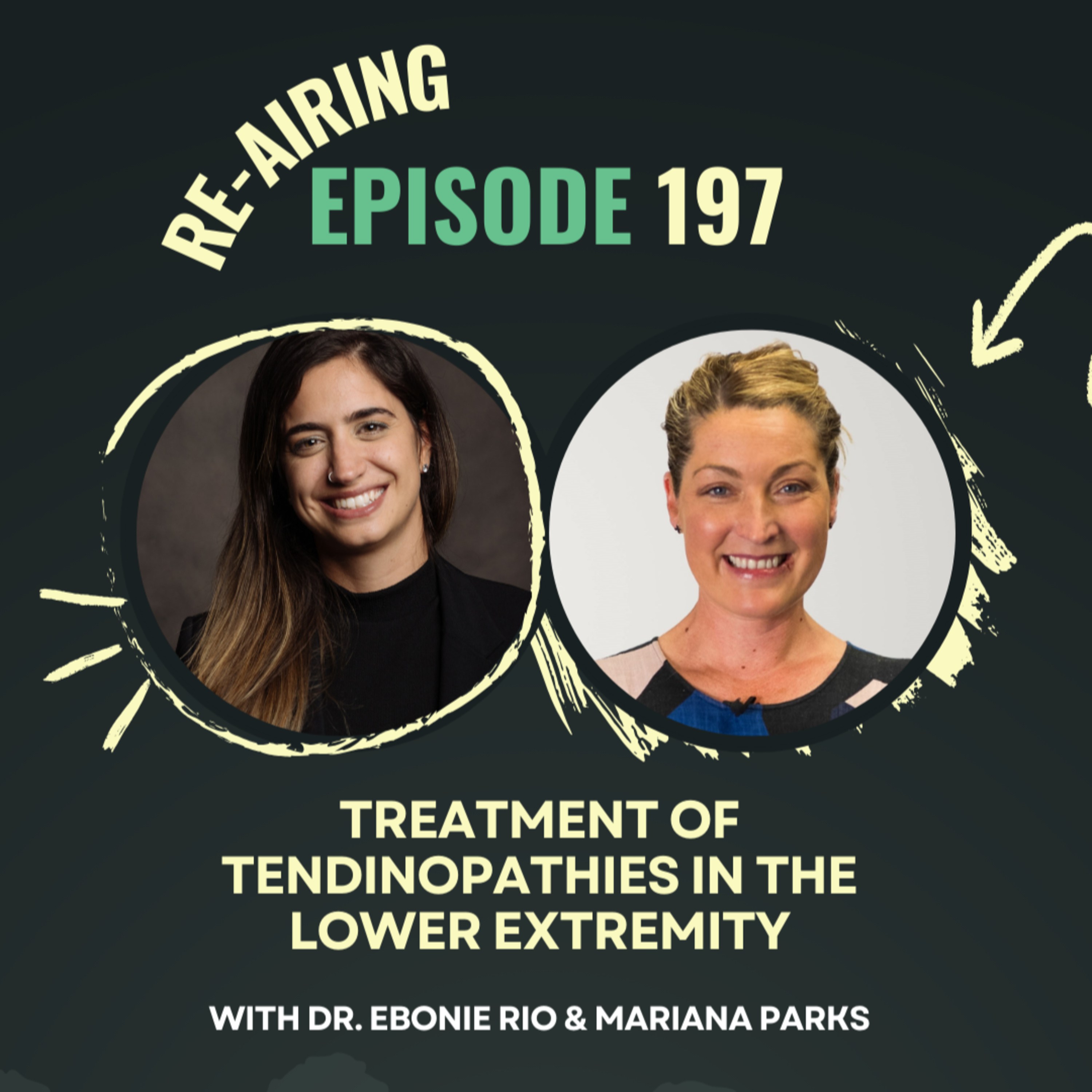 Ep 197. Treatment of tendinopathies in the lower extremity with Dr. Ebonie Rio (Re-Airing) 05.02.2026 1Std. 12Min.💡 In this episode, Dr. Ebonie Rio discusses the critical importance of differential diagnosis and load management in lower extremity tendinopathies. She explores the nuances of treating Achilles, patellar, hamstring, and gluteal injuries, highlighting why understanding the specific "provocative load" and the dangers of compression are the first steps toward effective rehabilitation.💭 “If you had someone with achilles tendinopathy you would want to start early on calf raises but you would not give that exercise to someone with peritendinitis because that is their provocative load.” - Dr. Ebonie Rio.👉🏻 Dr. Ebonie Rio, PT, PhD, is a world-renowned Sports Physiotherapist and a leading authority in tendinopathy research. Currently serving as a Senior Clinical Research Fellow at The Australian Ballet and a consultant for the Victorian Institute of Sport. With extensive clinical experience spanning the Olympics and Commonwealth Games, she also provides expert guidance on complex injuries to elite organizations. Dr. Rio’s academic background is equally distinguished, holding a PhD in tendon pain (for which she received the prestigious Professor Mollie Holman medal) and multiple degrees in Physiotherapy and Applied Science.Ranked fourth worldwide in her field by ExpertScape and maintaining a ResearchGate score of higher than 95% of all academics, her work has earned numerous accolades, including the Victorian Fresh Scientist of the Year and multiple ASICS SMA Best New Investigator awards.📚You will learn about:Achilles, patellar, hamstring, and gluteal tendinopathyDifferential diagnoses of LE tendinopathiesTreatment of tendinopathy in the LE🔎Ebonie's Resource of Information:InfographicsLa Trobe Sport Podcasts📲 Ebonie's contact information:LinkedIn🎥Link to interview on Youtube 🚨Try Hanna Health free for 30 days - a customizable HEP platform where you can use your own videos, edit quickly, and track patient access. Start your trial here. 👉 Share Your Feedback🎙Join our email list to receive podcast updates📸Instagram 📱Facebook💻LinkedIn🐦Twitter📩Email: [email protected]PT Pro Talk Podcast is only possible with the support of forward-looking and innovative companies like Hanna Health and SaraHealth.
 -
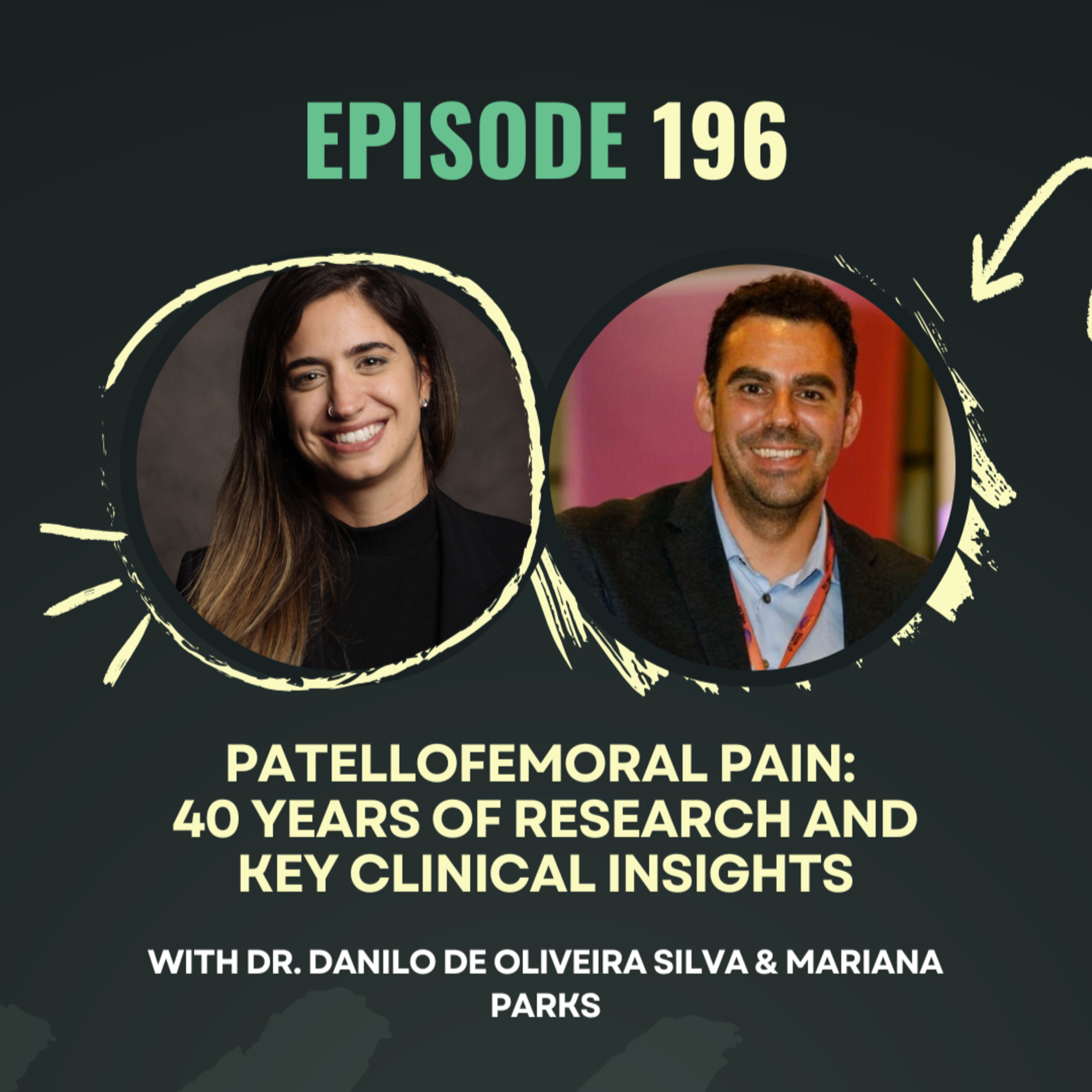 Ep 196. Patellofemoral Pain: 40 Years of Research and Key Clinical Insights with Dr. Danilo De Oliveira Silva 27.01.2026 59Min.💡 In this episode of PT Pro Talk, host Mariana Parks sits down with Dr. Danilo De Oliveira Silva, Associate Professor at La Trobe University, to unravel the last 40 years of research on Patellofemoral Pain (PFP).They take a deep dive into the history of PFP, debunking the effectiveness of early surgical interventions and the long-standing obsession with Vastus Medialis (VMO) isolation. Dr. Danilo clarifies current best practices, explaining why general quadriceps and hip strengthening are the gold standard and how treatments like foot orthoses and taping fit into the clinical puzzle.You will also learn about the "Envelope of Function" theory by Scott Dye, why "too much, too soon" is often the real culprit behind the pain, and why you should stop telling your patients to cease the activities they love💭 “If you don’t overload your knee, even if you have an impaired quadriceps, high subtalar pronation, or weak hip muscles, you will not have pain.” - Dr. Danilo De Oliveira Silva📚You will learn about: How thinking around patellofemoral pain has changed over the last few decadesWhat the evidence shows about strength, movement, and biomechanicsThe role of pain processing and neural mechanisms in ongoing symptomsHow load management and the envelope of function guide treatment today🔎 Danilo's resources of information:My Knee Cap Track education📲 Danilo's contact information:LinkedInFacebookIGX🎥Link to interview on Youtube 🚨Try Hanna Health free for 30 days - a customizable HEP platform where you can use your own videos, edit quickly, and track patient access. Start your trial here. 👉 Share Your Feedback🎙Join our email list to receive podcast updates📸Instagram 📱Facebook💻LinkedIn🐦Twitter📩Email: [email protected]PT Pro Talk Podcast is only possible with the support of forward-looking and innovative companies like Hanna Health and SaraHealth.
 -
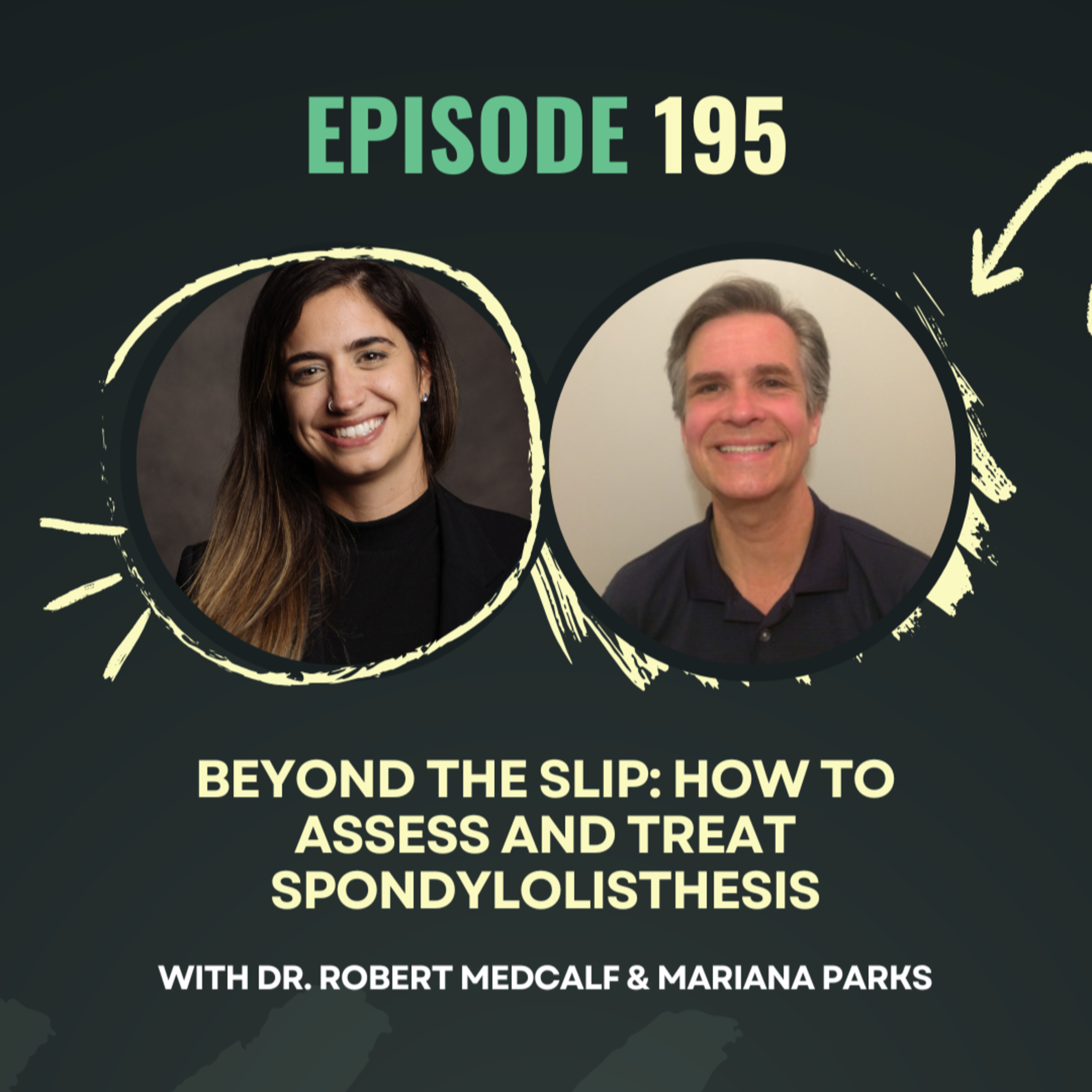 Ep 195. Beyond the Slip: How to Assess and Treat Spondylolisthesis with Dr. Robert Medcalf 15.01.2026 52Min.💡 In this episode of PT Pro Talk, host Mariana Parks sits down with Dr. Robert Medcalf, Physical Therapist and MDT expert. They discuss the challenges of assessing and treating Spondylolisthesis without relying solely on imaging results.Dr. Medcalf shares insights on differentiating between a stable and unstable slip and how to guide patients through recovery using Mechanical Diagnosis and Therapy principles. The conversation also dives deep into the myth that all spondylolisthesis patients must avoid extension, offering a logical framework for when to load the spine and when to focus on stabilization.💭 “The interesting thing about that study is that they found there was no association between spondylolisthesis and back pain..” - Dr. Robert Medcalf📚You will learn about: What spondylolisthesis is, how it’s classified, and why imaging findings don’t tell the whole storyWhere pain in spondylolisthesis truly comes fromHow to assess and manage spondylolisthesis conservatively using mechanical principlesWhen surgery may be appropriate🔎 Robert's resources of information:SPRATT, Kevin F. et al. Efficacy of flexion and extension treatments incorporating braces for low-back pain patients with retrodisplacement, spondylolisthesis, or normal sagittal translation. Spine, v. 18, n. 13, p. 1839–1849, 1993OH, Jacob Yoong-Leong et al. Paradoxical motion in L5-S1 adult spondylolytic spondylolisthesis. European Spine Journal, v. 21, n. 2, p. 262-267, 2011.HARDWICK, D. et al. Outcomes of strengthening approaches in the treatment of low-grade spondylolisthesis. Physical Therapy Reviews, v. 17, n. 5, p. 284-291, 2012. DOI: 10.1179/1743288X12Y.0000000025.📲 Robert's contact information:Linkedin🎥Link to interview on Youtube 🚨Try Hanna Health free for 30 days - a customizable HEP platform where you can use your own videos, edit quickly, and track patient access. Start your trial here. 👉 Share Your Feedback🎙Join our email list to receive podcast updates📸Instagram 📱Facebook💻LinkedIn🐦Twitter📩Email: [email protected]PT Pro Talk Podcast is only possible with the support of forward-looking and innovative companies like Hanna Health and SaraHealth.
Ähnliche Podcasts


Beliebt in
Dieser Podcast erscheint auch in den Podcast-Charts dieser Länder.

