
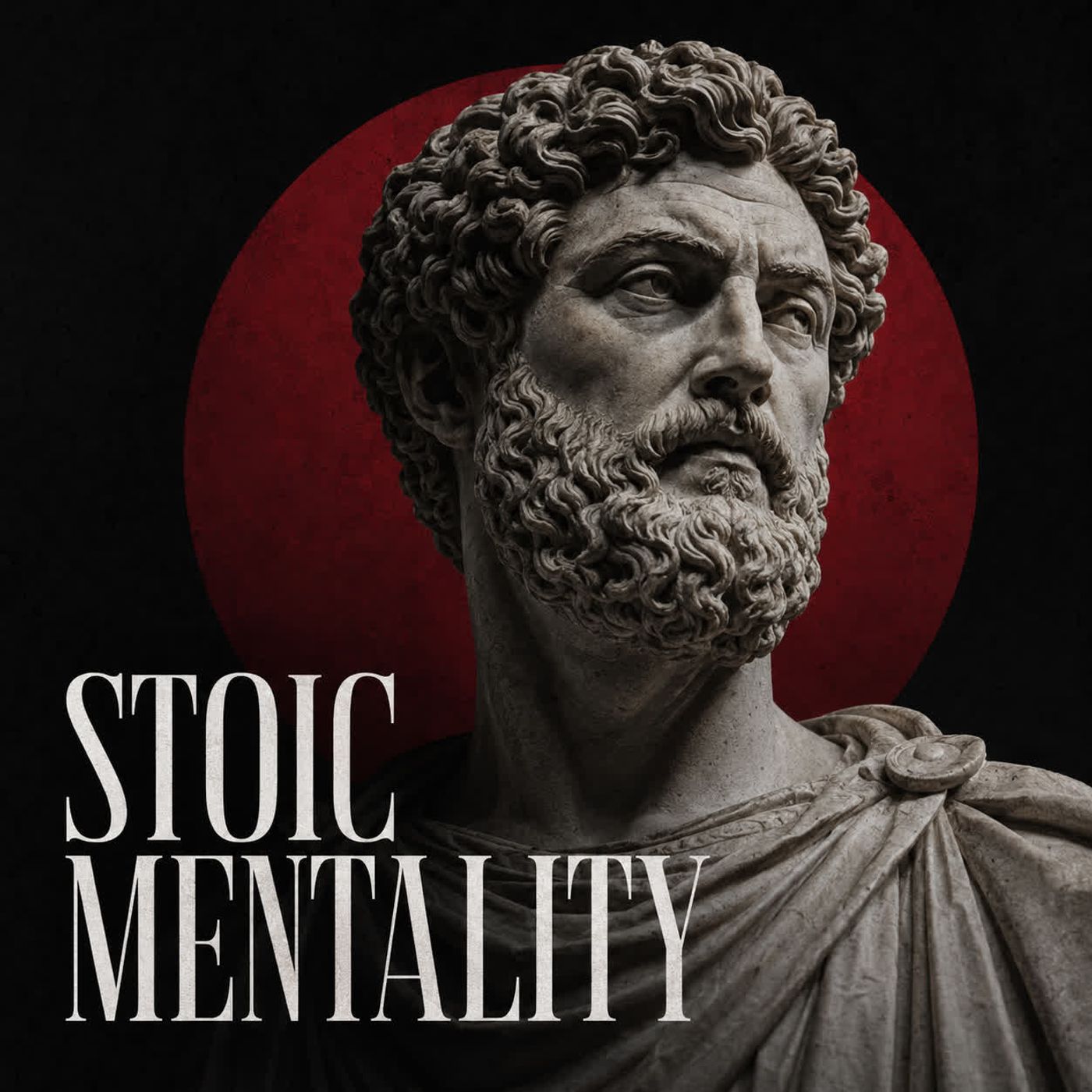
Stoic Mentality
OBOMEDIA ENTERTAINMENT
0
Stoic Mentality is a daily podcast that offers practical guidance on applying Stoic philosophy to modern life. It breaks down principles from Seneca, Epictetus, and Marcus Aurelius into actionable insights for managing stress, improving decision-making, and building emotional resilience. New episodes are published every morning at 8:00 AM, providing a short dose of wisdom to start the day with clarity and focus. The podcast is aimed at anyone seeking personal growth, mental fortitude, and a more purposeful life.
Folgen
-
 The Emperor's Secret: 10 Stoic Lessons for Unshakeable Control 05.10.2026 23Min.Reclama Tu Voz: El Secreto Estoico Contra InterrupcionesImagine you're speaking about something important, only to be cut off, your words left unfinished. This common experience often leads to either silence or snapping back, neither of which resolves the underlying issue. What if the interruption isn't the real problem, and the solution lies in something you control before anyone else speaks?In this episode, we explore the Stoic understanding of interruptions, revealing how your own posture, pace, and gaze signal your right to be heard. Discover how ancient wisdom from figures like Marcus Aurelius and Epictetus offers a powerful, counter-intuitive approach to maintaining your presence in any conversation.Topic: Stoic philosophyPeriod: Roughly two thousand years agoKey Figures: Marcus Aurelius, EpictetusProblem: Interruption in conversationSolution: Internal composure and self-control- Most people respond to interruptions by either going quiet or snapping back.- The Stoics understood that you control your response, not other people's actions.- Marcus Aurelius maintained composure even when interrupted by generals and senators.- Hesitation, dropped gaze, and a specific breath before speaking can signal interruptibility.- The real work is becoming someone from whom space is not easily taken.To listen to this podcast ad-free and access premium episodes, try our subscription with a 30-day free trial at obomedia.com.© 2026 OBOMEDIA. All rights reserved.This episode and its content (audio, text, and related materials) are the exclusive property of OBOMEDIA and are protected by applicable copyright laws. Reproduction, distribution, editing, or commercial use, in whole or in part, without prior written permission from OBOMEDIA is prohibited. For permissions, licensing, and business inquiries: [email protected].
 -
Reclama Tu Voz: El Secreto Estoico Contra Interrupciones 04.10.2026 21Min.The Silent Magnet: 10 Stoic Habits of Undeniable PresenceHave you ever met someone who commanded attention without saying a word, a presence that pulled you in like gravity? Most attribute this to genetics, but the Stoics, two millennia ago, understood a deeper force at work. What if genuine magnetism isn't about performance, but about an inner coherence that transforms how you are perceived?In this episode, we explore ten habits that cultivate this authentic magnetism, the kind that endures even when no one is watching. We delve into the Stoic concept of coherence-the alignment of thought, word, and deed-and reveal how this ancient wisdom offers a powerful path to undeniable presence today.Topic: Stoic PhilosophyPeriod: Ancient RomeAuthor: Marcus AureliusPhilosopher: EpictetusConcept: Coherence- Marcus Aurelius, the most powerful man in the Roman world, deliberately tended to his personal appearance daily as a reflection of inner order.- Epictetus, born a slave, taught students to listen twice as much as they speak, emphasizing the value of genuine attention.- Behavioral science research shows that standing tall measurably increases testosterone and decreases cortisol.- The Stoics viewed posture as alignment, not performance, calibrating the nervous system before external interaction.- The episode covers ten habits, including one paradox that often surprises people upon first encounter.To listen to this podcast ad-free and access premium episodes, try our subscription with a 30-day free trial at obomedia.com.© 2026 OBOMEDIA. All rights reserved.This episode and its content (audio, text, and related materials) are the exclusive property of OBOMEDIA and are protected by applicable copyright laws. Reproduction, distribution, editing, or commercial use, in whole or in part, without prior written permission from OBOMEDIA is prohibited. For permissions, licensing, and business inquiries: [email protected].
-
The Silent Magnet: 10 Stoic Habits of Undeniable Presence 03.10.2026 25Min.The Emperor's Secret: 10 Principles for an Unshakable MindImagine the most powerful man on Earth, an emperor commanding thousands of soldiers, yet his private hours are spent not on strategy but on self-interrogation. Marcus Aurelius, ruler of the largest empire, worried about his own character, revealing a profound truth about where real work lies. What does it tell us when someone with unlimited external power focuses entirely on internal discipline?In this episode, we explore ten principles practiced by the Stoics as daily tools, not just philosophy. These principles address common points of failure, the quiet suffering of vague dissatisfaction, and the feeling of exhaustion without an obvious cause.Person: Marcus AureliusPeriod: Second centuryAuthor: EpictetusTopic: Dichotomy of controlRitual: Seneca's daily review- Marcus Aurelius, Emperor of Rome, wrote his Meditations as private working notes.- Epictetus, a former slave, taught that the only territory worth governing is inside your own skull.- Seneca reviewed his day nightly with three questions: What did I do wrong? What did I do well? What could I have done differently?- The Stoics believed the human mind is wired to treat interpretations as facts, a default setting.- The foundational principle, the dichotomy of control, distinguishes what belongs to you from what doesn't.To listen to this podcast ad-free and access premium episodes, try our subscription with a 30-day free trial at obomedia.com.© 2026 OBOMEDIA. All rights reserved.This episode and its content (audio, text, and related materials) are the exclusive property of OBOMEDIA and are protected by applicable copyright laws. Reproduction, distribution, editing, or commercial use, in whole or in part, without prior written permission from OBOMEDIA is prohibited. For permissions, licensing, and business inquiries: [email protected].
-
The Emperor's Secret: 10 Principles for an Unshakable Mind 02.10.2026 26Min.The 10 Silent Habits Stealing Your Stoic PeaceA familiar weight sits on your shoulders, a collection of small habits repeated quietly until they shaped your days. Each feels harmless, even reasonable, yet they cost you energy, clarity, and time. What if the self-destruction you fear isn't loud, but a pattern of subtle actions?In this episode, we explore ten silent habits that steal your peace, identified by Stoics two thousand years ago. You likely have at least three of these patterns, which operate below the surface, gradually losing your connection to yourself.Topic: Stoic PhilosophyAuthor: Epictetus, Marcus AureliusPeriod: Ancient RomeConcept: Social goal substitutionFocus: Self-awareness- The first habit is telling every plan, idea, and intention, transferring energy from action to public reaction.- The second habit is checking reactions, allowing others' opinions to become your compass.- The third habit is comparing your internal experience against others' visible results.- The fourth habit is complaining by habit, a chronic low-level narration of everything wrong.- Epictetus, a freed slave, stated that to improve, one must prepare to appear foolish.To listen to this podcast ad-free and access premium episodes, try our subscription with a 30-day free trial at obomedia.com.© 2026 OBOMEDIA. All rights reserved.This episode and its content (audio, text, and related materials) are the exclusive property of OBOMEDIA and are protected by applicable copyright laws. Reproduction, distribution, editing, or commercial use, in whole or in part, without prior written permission from OBOMEDIA is prohibited. For permissions, licensing, and business inquiries: [email protected].
-
The 10 Silent Habits Stealing Your Stoic Peace 01.10.2026 24Min.The Invisible Chain: How Habits Own You (And How to Break Free)What if the thing controlling your life isn't your boss or your circumstances, but a habit so ordinary you stopped noticing it years ago? The Stoics spent their lives answering this question, and their insights reveal a truth more uncomfortable than most are ready to hear. How can you break free from a mechanism that feels like relief at first, but later demands more effort to stop than it should?In this episode, we explore the invisible chain: not a metaphor, but a precise mechanism by which habits gradually wrap themselves around a person until they feel like identity. We delve into the wisdom of ancient Stoics like Epictetus, Seneca, and Marcus Aurelius, who understood that true freedom is an internal discipline, not an external condition. Discover why external control means nothing if internal control is lost, and how to reclaim your ruling faculty from the subtle surrenders that define modern life.Person: EpictetusBorn: First centuryStatus: SlavePerson: Marcus AureliusPerson: Seneca- Epictetus was born a slave in the first century and walked with a limp after his leg was broken by his owner.- Marcus Aurelius, the emperor of Rome, studied the writings of Epictetus to understand how to govern himself.- Seneca, one of the wealthiest men in Rome, voluntarily practiced discomfort by sleeping on the floor and eating almost nothing.- The Stoics called the failure to dominate desires a "failure of the ruling faculty."- The invisible chain in its early form feels like relief, only showing its weight later when stopping requires unexpected effort.To listen to this podcast ad-free and access premium episodes, try our subscription with a 30-day free trial at obomedia.com.© 2026 OBOMEDIA. All rights reserved.This episode and its content (audio, text, and related materials) are the exclusive property of OBOMEDIA and are protected by applicable copyright laws. Reproduction, distribution, editing, or commercial use, in whole or in part, without prior written permission from OBOMEDIA is prohibited. For permissions, licensing, and business inquiries: [email protected].
-
The Invisible Chain: How Habits Own You (And How to Break Free) 30.09.2026 24Min.Marco Aurelio: El Secreto de la Invencibilidad Cuando Todo CaeYou are spending energy on something you cannot change right now, whether it's a message from days ago or a comment that lives rent-free in your head. This isn't weakness, but the human mind's default setting. More than two thousand years ago, the most powerful man on Earth wrote private notes to himself, not for history or his subjects, but because he needed a grounding force when his world was unraveling.In this episode, we explore the principles Marcus Aurelius developed while facing a plague killing millions, wars on multiple fronts, betrayals, and the loss of his children. Discover how he chose not to collapse inward, but instead focused on what was within his control, and how his tenth principle redefines what it means to be invincible.Person: Marcus AureliusRole: Emperor of Rome, Commander of its armiesPeriod: More than two thousand years agoContext: Plague, multiple wars, betrayals, loss of childrenTopic: Stoic principles for navigating adversity- Marcus Aurelius wrote private notes to himself, not speeches or decrees.- A plague was killing millions across the Roman Empire during his reign.- He faced wars on multiple fronts simultaneously.- People close to him betrayed his trust.- He buried several of his children.To listen to this podcast ad-free and access premium episodes, try our subscription with a 30-day free trial at obomedia.com.© 2026 OBOMEDIA. All rights reserved.This episode and its content (audio, text, and related materials) are the exclusive property of OBOMEDIA and are protected by applicable copyright laws. Reproduction, distribution, editing, or commercial use, in whole or in part, without prior written permission from OBOMEDIA is prohibited. For permissions, licensing, and business inquiries: [email protected].
-
Marco Aurelio: El Secreto de la Invencibilidad Cuando Todo Cae 29.09.2026 23Min.The 10 Stoic Moves That Silence Any AttackThat feeling after someone dismisses your idea-the one that sits in your ribs for hours-is the specific weight of not knowing what power actually looks like. The Stoics discovered a counter-intuitive answer to this universal problem, but can you apply it when you're the target?In this episode, we explore the precise physics of provocation and the ten specific attitudes from the Stoic tradition that disarm without a word. Discover why reacting from heat hands over your most valuable asset and how strategic silence can be your most powerful response.Topic: Stoic PhilosophyKey Concept: HegemonikonHistorical Figures: Marcus Aurelius, Epictetus, SenecaCore Idea: Strategic SilenceApplication: Disarming Provocation- Marcus Aurelius wrote that the best revenge is not to be like your enemy.- Epictetus, a slave, demonstrated that his character never bent despite physical mistreatment.- Seneca was persecuted, exiled, and criticized but did not change his principles.- The Stoics identified ten specific attitudes that disarm without a word.- When you react from heat, you hand over your composure, making you the story.To listen to this podcast ad-free and access premium episodes, try our subscription with a 30-day free trial at obomedia.com.© 2026 OBOMEDIA. All rights reserved.This episode and its content (audio, text, and related materials) are the exclusive property of OBOMEDIA and are protected by applicable copyright laws. Reproduction, distribution, editing, or commercial use, in whole or in part, without prior written permission from OBOMEDIA is prohibited. For permissions, licensing, and business inquiries: [email protected].
-
The 10 Stoic Moves That Silence Any Attack 28.09.2026 21Min.The Emperor's 10 Habits: Your Day, ReclaimedTwo thousand years ago, the most powerful man in the world, Emperor Marcus Aurelius, wrote private notes to himself in a military tent, not as grand philosophy, but as a daily guide for living well. If someone facing such immense pressure and power found this practice essential, what prevents you from reclaiming your own day?In this episode, we explore the stark contrast between a reactive, modern morning and the intentional start advocated by Stoic philosophers like Marcus Aurelius, Epictetus, and Seneca. Discover how small, deliberate actions can shift your focus from external chaos to internal peace, and why the path to reclaiming your day is simpler than you might imagine.Person: Marcus AureliusText: MeditationsConcept: Dichotomy of ControlPhilosopher: EpictetusState: Otium- Marcus Aurelius wrote his private reflections while commanding armies on the Danube frontier.- Most people spend the first 90 seconds of their day reacting to their phone, not deciding.- Epictetus, a slave, built his philosophy on the distinction between what depends on you and what does not.- Seneca described a "life borrowed from busyness," lacking interior work, 2000 years ago.- The Stoics understood that the problem isn't a lack of motivation, but a misidentification of the battlefield.To listen to this podcast ad-free and access premium episodes, try our subscription with a 30-day free trial at obomedia.com.© 2026 OBOMEDIA. All rights reserved.This episode and its content (audio, text, and related materials) are the exclusive property of OBOMEDIA and are protected by applicable copyright laws. Reproduction, distribution, editing, or commercial use, in whole or in part, without prior written permission from OBOMEDIA is prohibited. For permissions, licensing, and business inquiries: [email protected].
-
The Emperor's 10 Habits: Your Day, Reclaimed 27.09.2026 24Min.The Fear You Feel vs. The Fear That Rules YouYou carry a nameless fear that tightens your chest and locks your jaw just before moments that matter. What if this invisible enemy, disguised as reason, is actually a survival mechanism designed to exaggerate threats?In this episode, we explore how Stoic philosophers like Marcus Aurelius and Epictetus confronted fear, not by eliminating it, but by changing their relationship to it. Discover the simple, yet powerful, question they used to regain control when the world felt overwhelming.Topic: Stoic PhilosophyPeriod: Second CenturyPerson: Marcus AureliusPerson: EpictetusLocation: Roman Province of Phrygia- Marcus Aurelius, emperor of Rome, wrote daily reminders of his mortality in a small journal.- Epictetus, born into slavery, became one of Western history's most studied philosophers.- The brain's ancient scanning system treats ambiguous signals as potential disasters, triggering cortisol and adrenaline.- Catastrophic thinking is a survival mechanism, not a personality defect.- The Stoics' first tool for managing fear was the four-word question: "Does this depend on me?"To listen to this podcast ad-free and access premium episodes, try our subscription with a 30-day free trial at obomedia.com.© 2026 OBOMEDIA. All rights reserved.This episode and its content (audio, text, and related materials) are the exclusive property of OBOMEDIA and are protected by applicable copyright laws. Reproduction, distribution, editing, or commercial use, in whole or in part, without prior written permission from OBOMEDIA is prohibited. For permissions, licensing, and business inquiries: [email protected].
-
The Fear You Feel vs. The Fear That Rules You 26.09.2026 24Min.Marcus Aurelius: The Private Reminders of the World's Most Powerful ManThe man who commanded the largest empire on earth still needed to write himself reminders every single night just to stay rational. He never intended anyone to read those pages, a detail that changes everything about how you receive what comes next. What did the most powerful man in the world actually look like from the inside?In this episode, we explore the private journals of Marcus Aurelius, revealing how he prepared for daily challenges and built inner resilience amidst constant external pressure. Discover the ten recurring themes in his private pages that form a philosophy of engagement, not escape.Person: Marcus AureliusRole: Roman EmperorPractice: Deliberate anticipation of difficultySource: Private journal entriesThemes: Ten recurring lessons- Marcus Aurelius wrote private journal entries to remind himself how to behave and not lose his temper.- He practiced premeditatio malorum, the deliberate anticipation of difficulty, to prepare for hardship.- He faced near-permanent war, senatorial opposition, and a son who became one of Rome's worst emperors.- His journals show no self-pity or complaint, but a methodical effort to stay anchored internally.- Virtue cannot be inherited or purchased; it must be built daily, from the inside.To listen to this podcast ad-free and access premium episodes, try our subscription with a 30-day free trial at obomedia.com.© 2026 OBOMEDIA. All rights reserved.This episode and its content (audio, text, and related materials) are the exclusive property of OBOMEDIA and are protected by applicable copyright laws. Reproduction, distribution, editing, or commercial use, in whole or in part, without prior written permission from OBOMEDIA is prohibited. For permissions, licensing, and business inquiries: [email protected].
-
Marcus Aurelius: The Private Reminders of the World's Most Powerful Man 25.09.2026 24Min.El Silencio Estoico: Por Qué Tus Ideas Mueren Antes de NacerYou've shared your plans, dreams, and fears with everyone, only to find your motivation vanish. Why does that exciting project remain untouched, and the initial energy disappear?In this episode, we explore the surprising reason many ideas fail to launch, drawing on ancient wisdom. Discover what the Stoics understood about the power of silence and how it can transform your approach to bringing your intentions to life.Author: Marcus AureliusTopic: StoicismConcept: ProsochePractice: Private journalingPhilosopher: Epictetus- Marcus Aurelius governed the Roman Empire for nearly two decades, making decisions that shaped millions across three continents.- He wrote his "Meditations" in a private journal, never intending for anyone else to read it.- Epictetus taught that if you want to do something, you should do it, not announce it.- The Stoics called the practice of honest self-attention "prosoche," requiring precise awareness of reality.- Silence, for the Stoics, was a terrain where ideas could develop roots before being exposed.To listen to this podcast ad-free and access premium episodes, try our subscription with a 30-day free trial at obomedia.com.© 2026 OBOMEDIA. All rights reserved.This episode and its content (audio, text, and related materials) are the exclusive property of OBOMEDIA and are protected by applicable copyright laws. Reproduction, distribution, editing, or commercial use, in whole or in part, without prior written permission from OBOMEDIA is prohibited. For permissions, licensing, and business inquiries: [email protected].
-
El Silencio Estoico: Por Qué Tus Ideas Mueren Antes de Nacer 24.09.2026 19Min.The Unseen Power of Not Begging to Be SeenFor years, you've waited for someone to truly see you, but the recognition you hoped for never arrived. What if the problem isn't external circumstances, but a fundamental misunderstanding of how value is perceived? The Stoics understood this more than two thousand years ago: the world does not value what begs to be valued.In this episode, we explore the ancient wisdom of Stoicism, revealing the critical difference between waiting to be seen and acting as though you already know your worth. Discover how figures like Marcus Aurelius and Epictetus navigated the complexities of attention and control, and how their insights can transform your approach to self-worth today.Topic: Stoic philosophyPeriod: More than two thousand years agoKey Concept: Dichotomy of ControlPhilosopher 1: Marcus AureliusPhilosopher 2: Epictetus- Marcus Aurelius protected his time and energy as finite goods, understanding that dispersed attention is no attention at all.- Sofroseine, a Stoic term, describes the strength of someone who does not need to prove anything, controlling themselves by deciding what matters.- Epictetus, born into slavery, became an influential thinker by focusing on the only thing that could not be taken from him: his attention, judgment, and response.- The dichotomy of control distinguishes between what depends on you and what does not, identifying the management of the uncontrollable as a primary source of suffering.- The episode presents ten behaviors rooted in Stoic principles, designed to help you act as if you already know your worth.To listen to this podcast ad-free and access premium episodes, try our subscription with a 30-day free trial at obomedia.com.© 2026 OBOMEDIA. All rights reserved.This episode and its content (audio, text, and related materials) are the exclusive property of OBOMEDIA and are protected by applicable copyright laws. Reproduction, distribution, editing, or commercial use, in whole or in part, without prior written permission from OBOMEDIA is prohibited. For permissions, licensing, and business inquiries: [email protected].
-
The Unseen Power of Not Begging to Be Seen 23.09.2026 23Min.You're Not Behind: The Stoic Timeline You LostIt's 3 AM, your jaw is tight, and someone you know just bought a house, got a promotion, or posted a perfect travel photo. You feel a pressure in your chest, a sense that everyone received a life schedule at birth and you lost yours. But what if the timeline you're measuring yourself against was never real to begin with?In this episode, we explore the Stoic perspective on time, not as something to manage or optimize, but to understand its true nature. Discover ten lessons that challenge the feeling of being behind and redirect your focus from external comparisons to internal growth.Topic: Stoic PhilosophyPeriod: Ancient Greece and RomeKey Concept: Perception of TimeFocus: Personal GrowthApproach: Practical Wisdom- The feeling of being behind is a product of a social script, not a fact about your life.- The Stoics called the confusion of social pressure for truth "mistaking an opinion for a fact."- The question "why me?" burns energy without producing light; "what do I do with this now?" moves you forward.- Grief is a proportionate response to caring about something real, not a permanent verdict.- Stillness, like a tree in winter, can be a period of unseen growth, not stagnation.To listen to this podcast ad-free and access premium episodes, try our subscription with a 30-day free trial at obomedia.com.© 2026 OBOMEDIA. All rights reserved.This episode and its content (audio, text, and related materials) are the exclusive property of OBOMEDIA and are protected by applicable copyright laws. Reproduction, distribution, editing, or commercial use, in whole or in part, without prior written permission from OBOMEDIA is prohibited. For permissions, licensing, and business inquiries: [email protected].
-
You're Not Behind: The Stoic Timeline You Lost 22.09.2026 23Min.The Stoic Secret to Being Unforgettable in Any RoomTwo people enter a room; one speaks and everyone leans in, the other speaks and the conversation moves on. The difference isn't intelligence or charisma, but a specific, learnable skill that makes others feel seen. What if the most memorable person isn't the one who spoke the most, but the one who made others feel they existed?In this episode, we explore ten habits rooted in Stoic philosophy that transform how people experience you and your conversations. Discover how ancient wisdom from figures like Epictetus, Marcus Aurelius, and Zeno of Citium offers practical guidance for genuine connection, even though they were not known for warmth.Topic: Stoic Philosophy in ConversationAuthor: Not specifiedPeriod: Ancient RomeKey Figures: Epictetus, Marcus Aurelius, Seneca, Zeno of CitiumFocus: Interpersonal communication- Epictetus, a former slave, built his philosophy on the observation that nature gave us two ears and one mouth.- Marcus Aurelius, an emperor, reminded himself to turn toward others, recognizing humans are not meant to exist alone.- Zeno of Citium, the founder of Stoicism, was known for drawing out his students' thoughts rather than dominating discussions.- The first habit discussed is using a person's name, which Epictetus viewed as a form of respect.- The third habit is the reflective pause, which Epictetus described as a check against immediate, dismissive reactions.To listen to this podcast ad-free and access premium episodes, try our subscription with a 30-day free trial at obomedia.com.© 2026 OBOMEDIA. All rights reserved.This episode and its content (audio, text, and related materials) are the exclusive property of OBOMEDIA and are protected by applicable copyright laws. Reproduction, distribution, editing, or commercial use, in whole or in part, without prior written permission from OBOMEDIA is prohibited. For permissions, licensing, and business inquiries: [email protected].
-
The Stoic Secret to Being Unforgettable in Any Room 21.09.2026 24Min.The 10 Weights You Carry (Without Realizing It)At two in the morning, a cold blue phone light illuminates a face that should be asleep, fixated on a profile you swore you wouldn't look at again. You're carrying something heavy, disguised as routine or loyalty, but what if the very act of looking is creating the pain you seek to resolve?In this episode, we explore ten silent burdens you might be carrying without realizing it, offering a mirror without judgment. Discover how Stoic wisdom, from Epictetus to Marcus Aurelius, reveals the true nature of these hidden weights and how to finally set them down.Topic: Stoic PhilosophyConcept: Dichotomy of ControlPhilosophers: Epictetus, Marcus AureliusKey Idea: Inner LibertySource: Private journal- Epictetus, a slave for most of his early life, built inner freedom while still in chains.- The suffering we experience comes from the story we tell about what happened, not the event itself.- Keeping an object too long freezes a memory, preventing it from transforming and becoming light.- The tightness in your stomach on Sunday afternoon is information your body registers, not just tiredness.- Picking up a crisis call when you've received no reciprocal support is a self-constructed loop.To listen to this podcast ad-free and access premium episodes, try our subscription with a 30-day free trial at obomedia.com.© 2026 OBOMEDIA. All rights reserved.This episode and its content (audio, text, and related materials) are the exclusive property of OBOMEDIA and are protected by applicable copyright laws. Reproduction, distribution, editing, or commercial use, in whole or in part, without prior written permission from OBOMEDIA is prohibited. For permissions, licensing, and business inquiries: [email protected].
-
The 10 Weights You Carry (Without Realizing It) 20.09.2026 23Min.The 10 Habits That Stop Interior AgingTwo people, same age, yet one radiates vitality while the other carries a visible weariness that sleep cannot fix. Most assume luck or genetics, but what if the difference isn't an accident of biology, but a slow accumulation of daily decisions?In this episode, we explore the ten habits that separate these two paths, drawing wisdom from Stoic philosophy and modern biological research. Discover how ancient insights into managing what you can control directly impact cellular aging and overall well-being.Person: Marcus AureliusPeriod: Second centuryLocation: RomeTopic: StoicismConcept: Interior aging- Two individuals of the same age, roughly forty-five, can exhibit vastly different levels of vitality and weariness.- Neither exceptional genetics nor surgery explains the contrast in how two people age internally and externally.- Sustained chronic stress measurably accelerates cellular aging by shortening telomeres, the protective caps on chromosomes.- Marcus Aurelius, emperor of Rome, began each day by asking if he was living it as if it were his last.- Epictetus, a slave with a broken leg, taught the fundamental Stoic distinction between what depends on you and what does not.To listen to this podcast ad-free and access premium episodes, try our subscription with a 30-day free trial at obomedia.com.© 2026 OBOMEDIA. All rights reserved.This episode and its content (audio, text, and related materials) are the exclusive property of OBOMEDIA and are protected by applicable copyright laws. Reproduction, distribution, editing, or commercial use, in whole or in part, without prior written permission from OBOMEDIA is prohibited. For permissions, licensing, and business inquiries: [email protected].
-
The 10 Habits That Stop Interior Aging 19.09.2026 22Min.The Demolition Trap: What Are You Building?For years, you've been busy with demolition, cataloging flaws in others' work. But what have you been building while all that tearing down was happening?In this episode, we explore the Stoic practice of judgment, a discipline that Marcus Aurelius used to interrogate his own failures. Discover how your mental energy is shaping your reality, and what it's truly constructing.Author: Marcus AureliusTopic: Self-reflectionConcept: Discipline of judgmentModern Equivalent: NeuroplasticityPhilosopher: Epictetus- Marcus Aurelius kept a private journal, written in Greek, to record his failures of judgment.- He focused on the energy wasted criticizing what he could not change, not his victories.- The Stoics understood that the brain specializes in what you feed it, a concept now called neuroplasticity.- A mind trained on constant criticism becomes an expert at finding flaws.- Epictetus taught that the damage comes from what you tell yourself about what happens to you.To listen to this podcast ad-free and access premium episodes, try our subscription with a 30-day free trial at obomedia.com.© 2026 OBOMEDIA. All rights reserved.This episode and its content (audio, text, and related materials) are the exclusive property of OBOMEDIA and are protected by applicable copyright laws. Reproduction, distribution, editing, or commercial use, in whole or in part, without prior written permission from OBOMEDIA is prohibited. For permissions, licensing, and business inquiries: [email protected].
-
The Demolition Trap: What Are You Building? 18.09.2026 24Min.The 60,000 Thoughts You Don't ChooseYou have 60,000 to 80,000 thoughts each day, yet you choose almost none of them. These thoughts, often installed before age seven, drive 95% of your decisions and reactions, making choices for you in the gap between one thought and the next. What if the greatest threat to your life isn't external events, but the mental weather you mistake for reality?In this episode, we explore the Stoic understanding of the mind's architecture and how it shapes our lives. We delve into how ancient wisdom, confirmed by modern neuroscience, offers a third option beyond obeying or suppressing emotions, and how this simple practice can lead to profound freedom.Person: Marcus AureliusPerson: EpictetusTopic: StoicismConcept: ProsocheConcept: Proairesis- Marcus Aurelius, who governed an empire across three continents, identified his own scattered attention as his greatest enemy.- Epictetus, born into slavery, taught that the capacity to choose how you respond to events (proairesis) is the one thing no circumstance can take from you.- Most people cycle between two options for strong emotions: obey or suppress, which neuroscience confirms amplifies the emotion.- Naming an emotion with precision reduces activity in the amygdala and activates the prefrontal cortex, responsible for rational evaluation.- The thoughts driving 95% of your decisions were installed before you were seven years old, before you had the cognitive vocabulary to evaluate them.To listen to this podcast ad-free and access premium episodes, try our subscription with a 30-day free trial at obomedia.com.© 2026 OBOMEDIA. All rights reserved.This episode and its content (audio, text, and related materials) are the exclusive property of OBOMEDIA and are protected by applicable copyright laws. Reproduction, distribution, editing, or commercial use, in whole or in part, without prior written permission from OBOMEDIA is prohibited. For permissions, licensing, and business inquiries: [email protected].
-
The 60,000 Thoughts You Don't Choose 17.09.2026 23Min.The Broken Dial: How to Stop Obsessing Over What Isn't YoursYou're lying awake at 2 AM, jaw tight, replaying an argument from six months ago or rehearsing one that hasn't happened yet. This isn't analysis; it's the illusion of control, a loop that consumes real minutes and energy. What if the very act of obsessing is preventing you from building what you truly want?In this episode, we explore the Stoic concept of the dichotomy of control, a survival strategy built under maximum pressure by a man who had no external freedom. Discover how distinguishing between what is and isn't yours to manage can unlock inner freedom and redirect your finite energy.Person: EpictetusPeriod: RomanStatus: SlaveTopic: Dichotomy of ControlOrgan: Human Brain- The human brain consumes approximately twenty percent of the body's total energy.- Epictetus was a Roman slave with no legal standing or power over his life.- The obsession does not feel like suffering; it feels like work.- The dichotomy of control identifies two categories: what is up to us and what is not.- Every thought has a metabolic cost, charging you in a currency you do not get back.To listen to this podcast ad-free and access premium episodes, try our subscription with a 30-day free trial at obomedia.com.© 2026 OBOMEDIA. All rights reserved.This episode and its content (audio, text, and related materials) are the exclusive property of OBOMEDIA and are protected by applicable copyright laws. Reproduction, distribution, editing, or commercial use, in whole or in part, without prior written permission from OBOMEDIA is prohibited. For permissions, licensing, and business inquiries: [email protected].
-
The Broken Dial: How to Stop Obsessing Over What Isn't Yours 16.09.2026 24Min.Marcus Aurelius' Secret: The Anger You BuildMarcus Aurelius, the most powerful man in the known world, wrote down his failures every morning in private notebooks, never meant for publication. Two thousand years later, these became known as the Meditations, raising a profound question: if absolute power couldn't shield him from internal struggles, what is the true nature of our own challenges?In this episode, we explore the Stoic understanding of anger, examining how our nervous system reacts to perceived threats, whether a tiger in the jungle or an inconsiderate driver. We delve into the crucial "middle step" between an event and our emotional response, a gap that Stoics like Marcus Aurelius and Epictetus learned to widen.Topic: Stoic philosophyAuthor: Marcus AureliusPeriod: Roman EmpireConcept: The gap between event and responseKey figures: Epictetus- Marcus Aurelius, commander of the largest empire, wrote daily about losing his temper and impatience.- The Meditations were private notebooks, not intended for publication or legacy.- The nervous system responds to a car cutting you off with the same chemistry as a predator.- Epictetus, born into slavery, taught that others' actions belong to them, your interpretation belongs to you.- Stoics distinguished between discomfort, frustration, and anger, with anger containing a judgment you build.To listen to this podcast ad-free and access premium episodes, try our subscription with a 30-day free trial at obomedia.com.© 2026 OBOMEDIA. All rights reserved.This episode and its content (audio, text, and related materials) are the exclusive property of OBOMEDIA and are protected by applicable copyright laws. Reproduction, distribution, editing, or commercial use, in whole or in part, without prior written permission from OBOMEDIA is prohibited. For permissions, licensing, and business inquiries: [email protected].
Ähnliche Podcasts


Beliebt in
Dieser Podcast erscheint auch in den Podcast-Charts dieser Länder.

