
Brainwaves by Opus
Opus
0
Brainwaves by Opus is a podcast featuring conversations with industry leaders in behavioral health and healthcare technology. Guests share their career journeys, discuss current trends, and explore how they are shaping the future of these fields. The show provides insights into the intersection of mental health and innovation.
Folgen
-
 How to Know When EMDR Is the Right Fit | With Molly Halbrooks, Founder of Restore Counseling 20.02.2026 55Min.In this episode of Brainwaves by Opus, we’re joined by Molly Halbrooks, founder of Restore Counseling & Therapy in Belmont, North Carolina.Molly shares her journey from solo private practice to building a small group practice and why community matters, both for clients and therapists. We dive deep into trauma therapy, including why Molly chose EMDR, how it works in plain language, and why so many clients describe it as life changing.We also explore how mindfulness, breathwork, and body based practices can help regulate the nervous system, why tech and social media can isolate us into echo chambers, and what therapists do to protect their own capacity while holding heavy stories for others.In this conversation:Why Molly moved from solo work to a group practiceWhat EMDR is and why it can be so effective for traumaTrauma and memory: why it can feel like you’re reliving itA simple EMDR explanation: from “VR” to a pictureBreathwork and mindfulness as a real world tool, not just a conceptWhen EMDR may not be the right fit and what options existThoughts on psychedelics in trauma treatment and why the research mattersTherapist burnout, capacity, and why solo trips can be self careSocial media, boredom, creativity, and connection for kids and adultsLearn more about Molly’s practice: restorecounselingtherapy.com
 -
 How Online Therapy Cuts Cancellations and Expands Access | with Mark Nolte, founder of Start Talking 02.02.2026 25Min.In this episode of Brainwaves by Opus, Shawn Rickenbacker sits down with Mark Nolte, co-founder and CEO of Start Talking, a virtual therapy platform helping people access counseling through secure remote sessions.Mark shares how his own experience seeking help for depression revealed a major barrier: the fear of being seen, judged, or stigmatized. That insight sparked Start Talking’s mission to make therapy private, convenient, and easier to stick with.The conversation covers how COVID accelerated teletherapy adoption years ahead of predictions, why online sessions often reduce cancellations, and how AI can remove documentation and administrative burdens so therapists can spend more time with patients.We explore:Why privacy and stigma still stop people from getting helpHow teletherapy expanded access for rural and underserved communitiesWhy online therapy can reduce cancellations (and make care easier to follow through on)The realities of scaling a nationwide therapist networkWhere AI fits into mental health, from clinical notes to journaling insightsWhy the future belongs to clinicians who adopt AI tools responsiblyLearn more: www.starttalking.io
 -
 Multi-Purpose Care for Autism | With Nafisa Obi, Founder of Essential Speech and ABA Therapy 23.01.2026 20Min.In this episode of Brainwaves by Opus, we’re joined by Nafisa Obi, licensed speech-language pathologist and co-founder of Essential Speech & ABA Therapy.What began as a single outpatient speech therapy clinic in 2017 evolved into a multidisciplinary autism care model offering speech, occupational, and ABA therapy under one roof. Nafisa shares how fragmented care was burning out families and clinicians alike, and why collaboration became central to their mission.Today, Essential Speech & ABA Therapy operates 18 clinics across corporate and franchise locations, expanding access while staying grounded in empathy, integrity, and excellence in care.Topics we cover:Why fragmented autism care creates burnout for familiesDelivering speech, OT, and ABA therapy under one roofConducting shared assessments across disciplinesUsing a single documentation platform for alignment and transparencyScaling through franchising without compromising cultureLeading with empathy while maintaining accountabilityTreating families as part of the care team📚 Book recommendation:Crucial Conversations by Joseph Grenny
 -
 How Nurocoach Helps Patients Address Root Causes | With Alex Kurian, co-founder and CEO of Nurocoach 20.01.2026 28Min.In this episode of Brainwaves by Opus, we sit down with Alex Kurian, co-founder of NuroCoach, to explore why so many patients feel stuck cycling through the same mental health treatments, and how NuroCoach is working to change that.Drawing from his own experience as a patient, Alex shares how repeated medication adjustments and disconnected care models often fail to address underlying trauma and long-term wellness. NuroCoach was built to offer a more structured, holistic approach by integrating psychiatry, therapy, coaching, and neuromodulation into a phased care journey.The conversation also dives into mental health stigma, especially within immigrant communities, the realities of affordability and insurance access, and the challenges of building a mission-driven organization without compromising values.Topics we cover:Why patients feel trapped in repetitive mental health care cyclesAddressing root causes instead of surface-level symptomsNuroCoach’s structured, phased care modelThe role of trauma in ADHD, depression, and anxietyReducing stigma and increasing access to careChoosing insurance participation to expand reachBuilding trust and empowering patients toward independence
 -
 Building Recovery Programs That Actually Work | With Brian Tierney, Executive Director of Curawest 16.01.2026 24Min.In this episode of Brainwaves by Opus, we sit down with Brian Tierney, Executive Director of Cura West in Denver, part of the Guardian Recovery Network.Brian shares his journey from property management into addiction treatment, driven by his own long-term recovery and a desire to help others. Over the past decade, he’s worked his way up from entry-level roles to leading one of Colorado’s top detox and residential treatment centers.At Cura West, Brian helped transform the program from a struggling startup into a high-performing, expanding facility, improving staff culture, patient satisfaction, and financial stability along the way.Topics we cover:Transitioning into addiction treatment and overcoming financial fearWhy working in recovery is not the same as personal recoveryThe value of starting in entry-level roles before leadershipBuilding leadership teams that collaborate instead of operating in silosHow staff experience directly impacts patient outcomesTurning around KPIs across staff retention, patient satisfaction, and financesScaling responsibly from detox to residential and virtual IOPWhy sustainable growth starts with stabilizing culture and careLearn more:Cura West: https://curawest.comGuardian Recovery Network: https://grncare.com
 -
 Why Sleep is the Front Door to Mental Health | With Tim Lewandowski, CEO of MindLab 08.01.2026 28Min.In this episode of Brainwaves by Opus, we sit down with Tim Lewandowski, CEO of MindLab, a tech-for-good company launched from the Mental Health Association of San Francisco.Tim shares how MindLab was created to bridge nonprofit mission with scalable technology, bringing evidence-based mental health tools to people worldwide without geographic barriers.We explore Pocket Kado, MindLab’s first product developed with Stanford Medicine, a gamified cognitive behavioral therapy app designed to improve sleep and mental wellbeing. With a staggering 43,000-to-1 patient-to-provider ratio for CBT-I in the U.S., Tim explains why insomnia is one of the most underserved areas in mental health care, and how technology can help close that gap.Topics we cover:How MindLab emerged from the Mental Health Association of San FranciscoWhy sleep plays a foundational role in mental healthThe shortage of CBT-I providers and what it means for patientsHow Pocket Kado uses gamification and mindfulness to build healthy sleep habitsDesigning technology that encourages people to put their phone downBalancing nonprofit ethics with for-profit scalabilityUsing tech innovation to sustain mental health services amid funding cutsLearn more:MindLab: https://mindlabmh.comPocket Kado: Available on iOS and Android (learn more)
 -
 How Online Therapy Cuts Cancellations and Expands Access | with Mark Nolte, founder of Start Talking 02.01.2026 25Min.
 -
 The Neuroscience of Trauma Recovery | With Jennie Marie Battistin, founder of Hope Therapy Center 01.01.2026 49Min.In this episode of Brainwaves by Opus, we sit down with Jennie Marie Battistin, LMFT, trauma specialist, author of Mindfulness for Teens in 10 Minutes a Day, and founder of Hope Therapy Center, a multi-location practice integrating EMDR, brainspotting, psychiatry, and psychedelic-assisted therapy.Jennie Marie explains the neuroscience of trauma, why memories become “stuck” in the amygdala, and how EMDR and brainspotting help clients reprocess overwhelming experiences so they no longer dominate daily life.She also shares her journey into ketamine-assisted therapy, the surprising outcomes she witnessed, and what makes someone a safe candidate for psychedelic-assisted care.Topics we explore:-How she discovered trauma recovery work in high school by “holding the story” for friends-Why trauma gets stored in the amygdala and how EMDR moves it into the prefrontal cortex for reprocessing -Brainspotting: how “where we look determines how we feel” -What EMDR treatment timelines look like and why beliefs like “I am to blame” often attach to trauma -Why Hope Therapy Center has a 96% success rate helping clients taper off psychotropic medications -Mindfulness practices that change the brain in 30 days, especially for teens dealing with anxiety and social comparison 📚 Books Jennie Recommends:Mindfulness for Teens in 10 Minutes a Day by Jennie Marie BattistinMindfulness for Teens Journal by Jennie Marie BattistinThe Queen’s Path by Dr. Stacy Simmons
 -
 Breaking Cycles of Trauma | With Robyn Pendleton, LCSW 01.01.2026 41Min.In this episode of Brainwaves by Opus, we sit down with Robyn Pendleton, LCSW, a clinician whose work spans foster care, shelters, community mental health, and culturally responsive trauma therapy.Robyn brings a rare blend of clinical experience, cultural perspective, and personal healing — including her own journey reframing and expanding beyond domestic violence — to help individuals break cycles of transgenerational trauma.She explores how inner child work, cultural identity, community context, epigenetics, and even biohacking shape the future of mental health care.Topics we cover:Why “we're just all overgrown, large children” and how inner child work shapes adulthood What transgenerational trauma looks like in families, communities, and systemsHow to “not mirror brokenness” when working with clients Reframing inherited beliefs vs. inherent identityHow core beliefs are formed, reinforced, and healedEpigenetics and why trauma can alter gene expression across generationsBiohacking practices (cold plunges, fasting, breathwork, meditation) as tools for reclaiming control of the mind and bodyRobyn’s personal practice: Reframe Within, Expand Beyond📚 Books Robyn Recommends:The Compound Effect by Darren HardyPost Traumatic Slave Syndrome by Dr. Joy DeGruyUnraveling by Deanna Lorea
 -
 From Homelessness to Healing Others | With Wade Muhlhauser, founder & CEO of Plugged In Recovery 05.12.2025 29Min.In this episode of Brainwaves by Opus, we sit down with Wade Muhlhauser, Founder and CEO of Plugged In Recovery, a rapidly growing recovery organization in Scottsdale, Arizona that is redefining what compassionate, client-centered addiction treatment looks like.Wade shares his powerful personal journey, from two decades of opioid addiction and homelessness to building one of Arizona’s most innovative recovery networks.His leadership is rooted in empathy, honesty, and lived experience, qualities that shape Plugged In’s model and culture.Topics include:How Wade’s personal journey shaped Plugged In’s missionThe issues with profit-first treatment modelsScaling a recovery organization through empathy and transparencyWhy overstaffing for individualized care leads to better outcomesBuilding a team and culture anchored in honesty, accountability, and compassionWhy listening to clients is the foundation for effective recovery📌 Resources Mentioned:Good to Great by Jim CollinsBuy Back Your Time by Dan MartellPlugged In Recovery Website: https://pluggedinrecovery.com
 -
 How Alumni Programs Prevent Relapse (And Help Organizations Scale) | With Cody Palmer of Team Recovery 17.11.2025 22Min.In this episode of Brainwaves by Opus, we sit down with Cody Palmer, Director of Business Development at Team Recovery Technologies, a company helping addiction treatment programs strengthen alumni engagement through technology and community.Cody shares his personal journey from construction to behavioral health, how a family crisis led him into recovery, and how Team Recovery’s tech platform is helping providers nationwide reduce relapse and increase alumni referrals.Topics include:How alumni programs bridge the gap between treatment and long-term recoveryWhy connection and community reduce relapse riskThe technology behind Team Recovery’s custom alumni appUsing gamified surveys and data to measure outcomesThe impact of a strong alumni community on referrals and retentionLessons from scaling to 275+ treatment programs across the U.S.Mentioned Resources:The Secret by Rhonda ByrneThe Four-Hour Body by Tim FerrissHow I Raised Myself from Failure to Success in Selling by Frank BettgerTeam Recovery Technologies Website: https://www.teamrecovery.io
 -
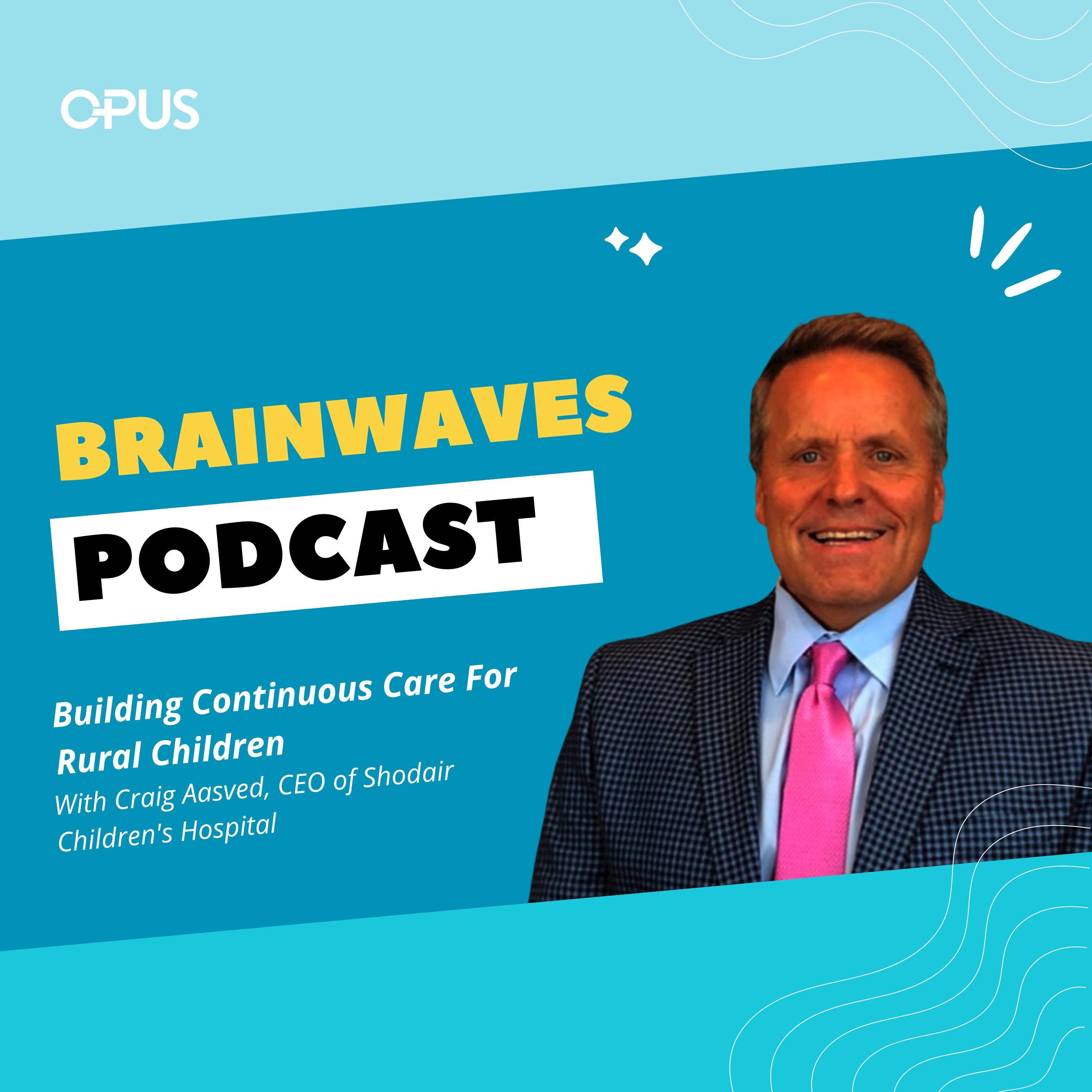 Building Continuous Care For Rural Children | With Craig Aasved, CEO of Shodair Children's Hospital 10.11.2025 28Min.In this episode of Brainwaves by Opus, we sit down with Craig Aasved, CEO of Shodair Children’s Hospital, Montana’s only psychiatric facility dedicated exclusively to children and adolescents.Craig shares how Shodair is redefining youth mental health care in a rural state, expanding beyond inpatient services to include outpatient clinics, school-based therapy programs, and telehealth to reach kids in every corner of Montana.Topics include:Building a full continuum of care across inpatient, outpatient, and school settingsHow school partnerships help identify kids earlier and prevent crisesOvercoming rural access and staffing challengesThe impact of trauma-informed models like the Sanctuary InstituteLeading through loss and creating a culture of honesty and healingFuture goals: expanding school programs statewide and launching eating disorder servicesCraig’s leadership journey is a powerful example of how purpose, prevention, and partnerships can transform mental health access for kids.Resources Mentioned:The Four Stages of Psychological Safety by Timothy R. ClarkThe Anxious Generation by Jonathan HaidtThe Sanctuary Institute: https://www.thesanctuaryinstitute.org/Shodair Children’s Hospital: https://shodair.org/
 -
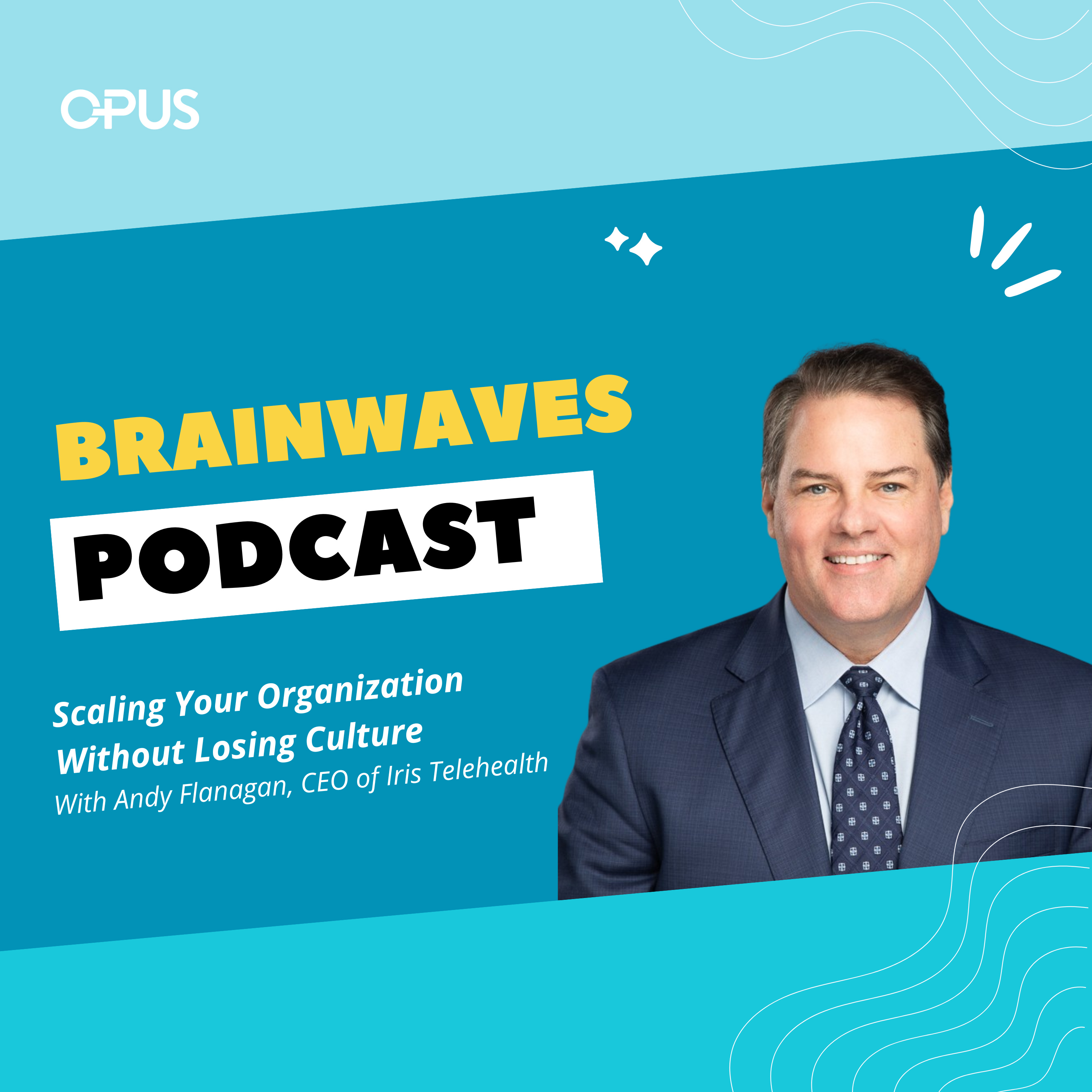 Scaling Your Behavioral Health Organization Without Losing Culture | With Andy Flanagan, CEO of Iris Telehealth 05.11.2025 29Min.In this episode of Brainwaves by Opus, we sit down with Andy Flanagan, CEO of Iris Telehealth, a leading telepsychiatry company connecting patients to licensed mental health providers across the U.S.Andy shares lessons from his career leading startups and global enterprises, from scaling Iris fivefold since 2020, to fostering culture and accountability, to reimagining telehealth as a seamless part of modern healthcare.Topics include:Why telehealth will soon be “just healthcare,” not a separate categoryHow Iris delivers care in high-acuity settings like emergency departments and Medicaid clinicsBalancing innovation with execution to drive sustainable growthHow empathy and culture fuel clinician engagementData science and predictive models for early interventionThe leadership lessons behind scaling profitably in a mission-driven spaceResources Mentioned:Blue Ocean Strategy by W. Chan Kim & Renée MauborgneCrossing the Chasm by Geoffrey MooreInnovator’s Dilemma by Clayton ChristensenZero to IPO by Frederic Kerrest
 -
 Scaling Your Behavioral Health Organization Without Losing Culture | With Andy Flanagan, CEO of Iris Telehealth 03.11.2025 29Min.In this episode of Brainwaves by Opus, we sit down with Andy Flanagan, CEO of Iris Telehealth, a leading telepsychiatry company connecting patients to licensed mental health providers across the U.S.Andy shares lessons from his career leading startups and global enterprises, from scaling Iris fivefold since 2020, to fostering culture and accountability, to reimagining telehealth as a seamless part of modern healthcare.Topics include:Why telehealth will soon be “just healthcare,” not a separate categoryHow Iris delivers care in high-acuity settings like emergency departments and Medicaid clinicsBalancing innovation with execution to drive sustainable growthHow empathy and culture fuel clinician engagementData science and predictive models for early interventionThe leadership lessons behind scaling profitably in a mission-driven spaceResources Mentioned:Blue Ocean Strategy by W. Chan Kim & Renée MauborgneCrossing the Chasm by Geoffrey MooreInnovator’s Dilemma by Clayton ChristensenZero to IPO by Frederic Kerrest
 -
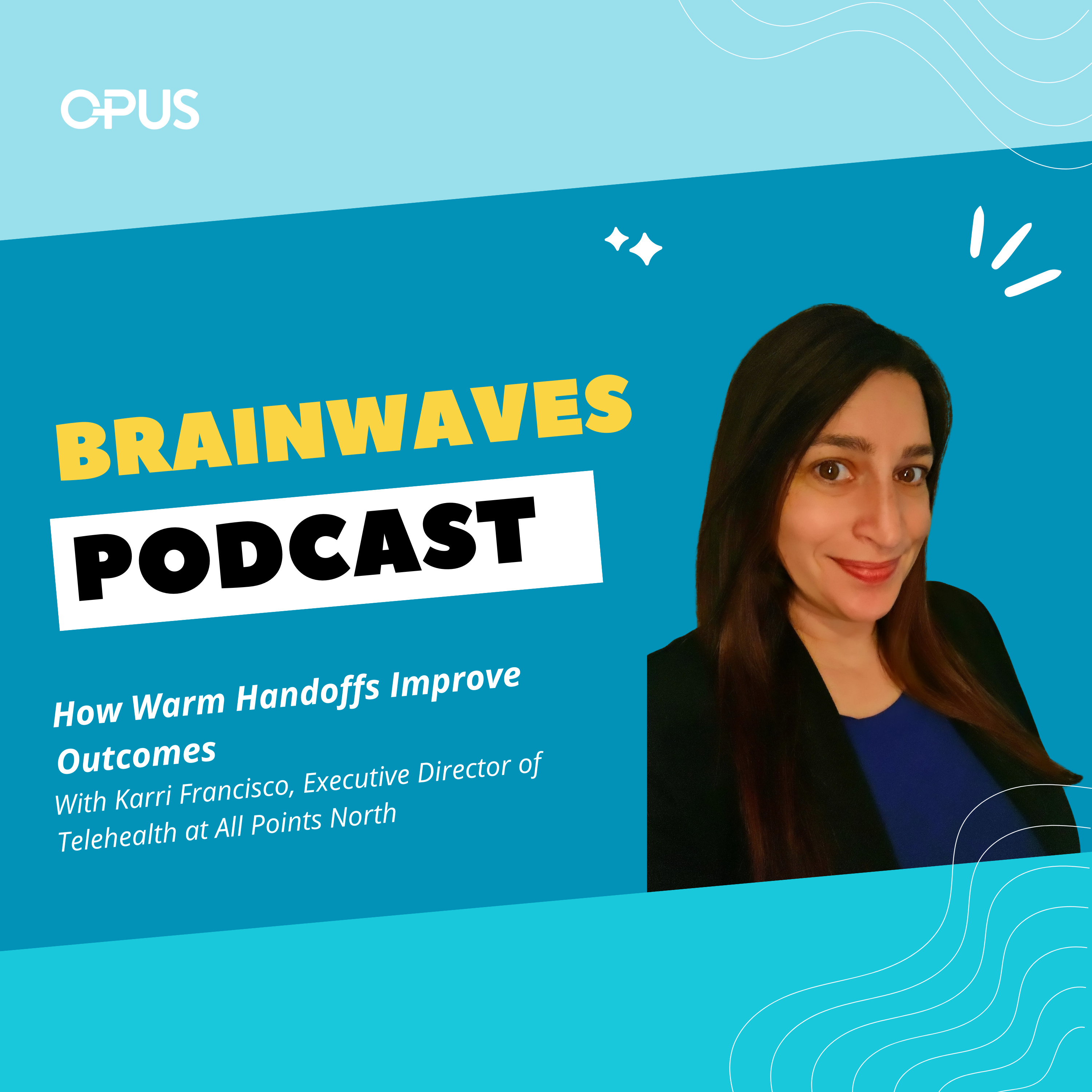 How Warm Handoffs Improve Outcomes | With Karri Francisco, Executive Director of Telehealth at APN 27.10.2025 30Min.In this episode of Brainwaves by Opus, we talk with Karri Francisco, Executive Director of Telehealth at All Points North (APN), one of the most innovative and outcomes-driven behavioral health organizations in the country.Karri shares how APN built an integrated model connecting detox, residential treatment, partial hospitalization, IOP, and outpatient services into one coordinated continuum of care. She discusses how warm handoffs, real-time communication, and telehealth help clients stay engaged and supported at every level, from their first session to long-term recovery.Topics include:How APN integrates residential, telehealth, and experiential therapyWhy “warm handoffs” build trust and reduce client drop-offOvercoming time zone challenges in national virtual care deliveryUsing data and the Acorn Collaborative to track outcomes in real timeScaling clinical operations without losing the human touchHow APN uses programs like surf therapy and movement-based healing to support trauma recoveryMentioned Resources:The 80/80 Marriage by Nate & Kaley Klemp#BehavioralHealth #Telehealth #ContinuityOfCare #AddictionRecovery
 -
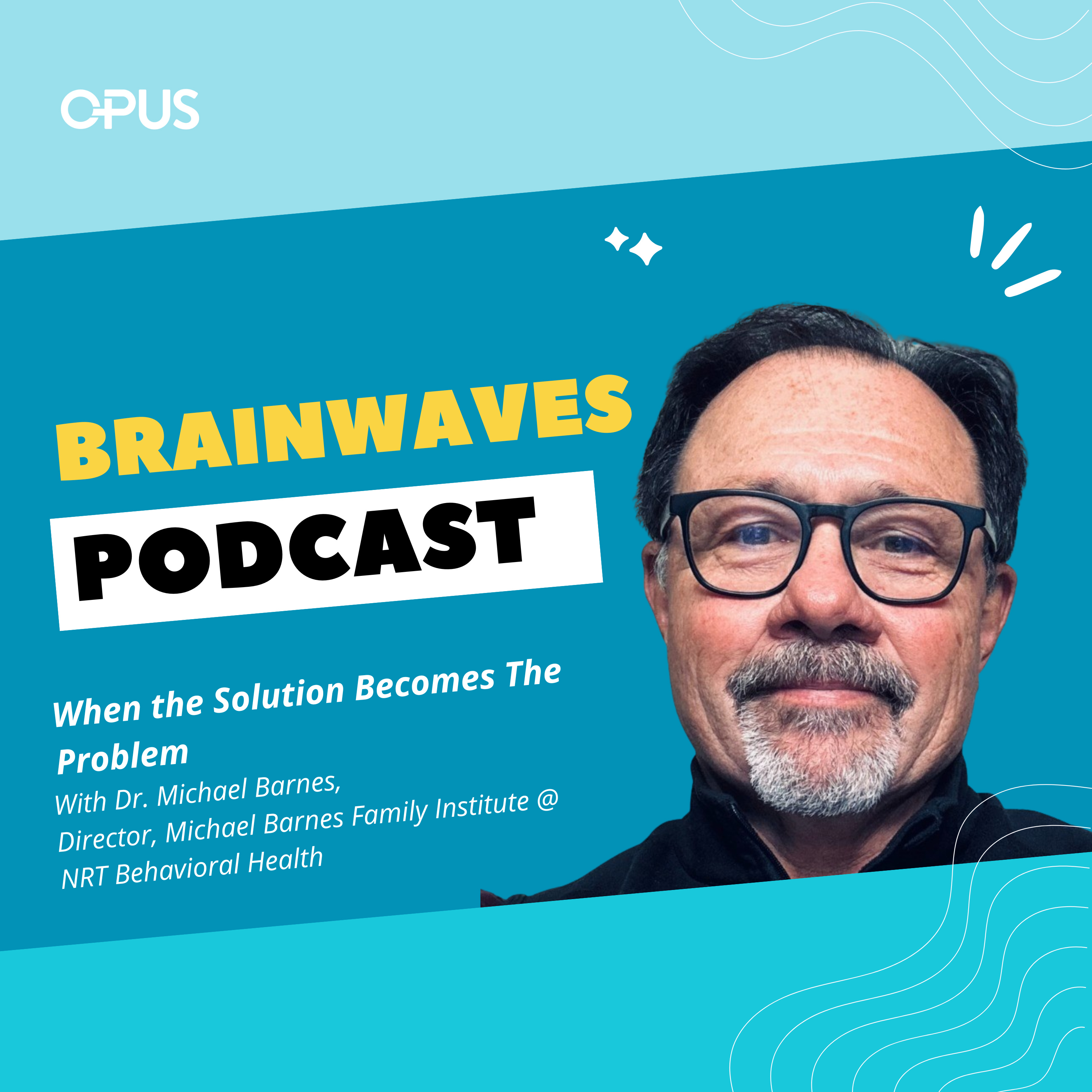 When the Solution Becomes the Problem | With Dr. Michael Barnes, Director, Michael Barnes Family Institute @ NRT Health 21.10.2025 29Min.In this episode of Brainwaves by Opus, we sit down with Dr. Michael Barnes, counselor, educator, and clinical leader at The Foundry Treatment Center and The Michael Barnes Family Institute.Dr. Barnes shares his decades of experience helping families navigate trauma and addiction, and why lasting recovery requires healing not just the individual, but the entire family system.Topics include:-How addiction creates “secondary trauma” in families-What it means to move from a “new normal” to a newer normal in recovery-Why families often mirror the symptoms of PTSD-How to teach boundaries and regulation without shame-The difference between co-dependence and pro-dependenceDr. Barnes also explores how clinicians can build trust with families, why “enabling” is a trauma response, and how families can move from crisis toward connection.Mentioned Resources:-When the Solution Becomes the Problem by Dr. Michael Barnes-Prodependence: Beyond the Myth of Codependency by Robert Weiss-Start With Why by Simon Sinek#AddictionRecovery #FamilyHealing #TraumaInformedCare #BehavioralHealth
 -
 What Families Can Do In Addiction Recovery | With Jennifer Chase, Founder, Rise Addiciton Life Counseling 13.10.2025 56Min.In this episode of Brainwaves by Opus, we sit down with Jennifer Chase, Life Coach and Founder of Rise Addiction Life Coaching.Jennifer shares her extraordinary story of transformation, from growing up in a family marked by addiction and trauma, to battling her own opioid dependence, to watching her son face the same struggle. Today, she helps families heal generational patterns and find peace, even when a loved one is still using.Topics include:How addiction becomes a family disease, not an individual oneWhy boundaries are protection, not punishmentThe difference between enabling and supporting a loved oneHow parents can “allow the muddling” and let natural consequences teachHealing shame and codependency within familiesJennifer’s story is raw, powerful, and deeply hopeful, a must-listen for anyone touched by addiction or family trauma.Resources Mentioned:Unhooked by Jason CoombsCodependent No More by Melody BeattieLet Them by Mel RobbinsConquering Shame and Codependency by Darlene LancerRise Addiction Life Coaching
 -
 How AI Is Helping People Reprogram Their Minds | With Michelle Walters, Creator of Make My Hypno 07.10.2025 27Min.In this episode of Brainwaves by Opus, we sit down with Michelle Walters, Clinical Hypnotherapist and creator of Make My Hypno, an AI-assisted platform that delivers personalized hypnosis recordings in minutes.Michelle shares her journey from corporate marketing into clinical hypnotherapy, how COVID pushed her to pursue a purpose-driven career change, and what inspired her to merge her love of tech and psychology to make mental wellness tools more accessible.Topics include:How hypnosis works and why it’s scientifically validatedThe difference between stage hypnosis and clinical hypnotherapyUsing AI to create custom self-hypnosis experiencesHow repetition and accessibility improve long-term outcomesWhy AI can augment therapy but not replace the human elementMichelle also discusses the misconceptions surrounding hypnosis, how it can help with anxiety, phobias, and bad habits, and her vision for blending technology and empathy in the next era of mental health.Mentioned Resources:Make My Hypno SiteAn Alignment of Spirit: Finding Work You Love by Michelle WaltersThe Hypnotist’s Love Story by Liane Moriarty
 -
 Why Women Leaders Matter in Recovery | With Ajita Shah & Melissa Maranzano of Innerspace Counseling 26.09.2025 30Min.In this episode of Brainwaves by Opus, we sit down with Ajita Shah, LPC, ACS, PMH-C, founder of Innerspace Counseling, and Melissa Maranzano, Administrative Director. Together, they share how they built a trauma-informed, female-led practice in New Jersey offering PHP and IOP programs for children, adolescents, and adults.Ajita and Melissa discuss their personal journeys in behavioral health, the importance of representation and mentorship for women in leadership, and how Innerspace is addressing unique needs like perinatal mental health, mom guilt, and family engagement.Topics include:-Identifying and closing gaps in the mental health system-Why representation and mentorship for women leaders matter-Supporting moms with perinatal mental health services-Creating boutique, individualized care in a small practice model-The operational lessons learned in building and sustaining a practice
 -
 Why Investing in Staff Creates Better Recovery Outcomes | With Bill Bailey CEO of Cenikor Foundation 19.09.2025 41Min.In this episode of Brainwaves by Opus, we sit down with Bill Bailey, President and CEO of Cenikor Foundation, one of the most respected nonprofit recovery organizations in the U.S.Bill shares how Cenikor grew from serving fewer than 1,000 people a year in 2004 to over 15,000 individuals annually today, without ever losing sight of its mission. From blending lived experience with formal education, to building leadership pipelines and funding recovery support specialists even after grants disappeared, Cenikor is a case study in scaling recovery with both compassion and discipline.Topics include:-Building systems that allow nonprofits to scale while staying mission-driven-Why over 60% of Cenikor staff being in recovery strengthens the continuum-Investing $160K annually in staff education and leadership development-Cenikor’s unique blended nonprofit/insurance model-The importance of alumni networks and recovery support specialistsBill also shares deeply human stories from the frontlines of recovery, from a child thanking him for “giving me my mommy back” to clients rebuilding their humanity after decades in addiction.Mentioned Resources:-Cenikor Foundation website: https://www.cenikor.org/-Good to Great by Jim Collins-Factfulness by Hans Rosling#AddictionRecovery #BehavioralHealth #NonprofitLeadership #RecoveryAtScale
Ähnliche Podcasts


Beliebt in
Dieser Podcast erscheint auch in den Podcast-Charts dieser Länder.
