
FBI Files
FBI Files
0
FBI Files is an American docudrama that goes behind the scenes of the Federal Bureau of Investigation's crime laboratory. It examines real cases and forensic work as investigators analyze evidence. The series highlights how the FBI lab supports criminal investigations. Each episode offers a look at the science and procedures used to solve federal crimes.
Folgen
-
 Joseph Paul Franklin Liberty Park Sniper Manhunt 03.10.2026 50Min.He was a ghost. A drifter. A man with no fixed address and no fingerprints on file. He moved across the country like a shadow, robbing banks to fund his travels and using a high-powered rifle to kill from a distance. He was not motivated by money. He was not motivated by passion. He was motivated by hate—a consuming, irrational, all-encompassing hatred that he believed was a divine mission. His name was Joseph Paul Franklin. And on August 20, 1980, his cross-country killing spree brought him to Salt Lake City, where two young men would die in a hail of sniper fire.This is The FBI Files. And this is the story of the Liberty Park sniper manhunt.It was a warm summer evening in Liberty Park, a sprawling green space in the heart of Salt Lake City. Ted Fields, 20, and David Martin, 18, were jogging along the park's edge with two white women. They were young. They were happy. They had no idea that a man with a hunting rifle was watching them from a vacant lot across the street, hidden behind a hill, forty yards away.Franklin had been in Salt Lake City for just a few days. He had come to Utah at the suggestion of a fellow white supremacist who told him there was "race mixing" happening in Liberty Park. He was there to do something about it. He scoped out the area, found a position with a clear line of sight, and waited. He fired seven times. Fields and Martin were struck multiple times. They died in the crosswalk at 900 South and 500 East, their blood staining the pavement as the women they were with screamed for help.Franklin slipped away in the chaos. He returned to his motel, packed his belongings, and left Salt Lake City behind. To the community, it was a senseless, shocking act of violence.The Salt Lake City Police Department launched an intensive investigation. They had no suspects, no witnesses who could identify the shooter, and no weapon. But they had the bullets—.30 caliber rounds fired from a high-powered rifle with a scope. They had the location—a vacant lot that had been staked out in advance. And they had a description of a brown 1975 Camaro seen leaving the area shortly after the shooting.Detectives canvassed the neighborhood. They interviewed motel clerks, restaurant servers, and prostitutes—anyone who might have encountered a stranger in town. Two composite sketches were drawn, one from witnesses in Salt Lake City and another from a separate incident in Lexington, Kentucky. The sketches matched at ninety percent. The man they were looking for was a drifter with a history of racist violence and a trunk full of rifles.The FBI joined the investigation. Behavioral analysts contributed their insights, and the Bureau shared information with law enforcement agencies across the country. Two details proved crucial: Franklin's racist tattoos and his habit of donating blood at blood banks when he needed cash between bank robberies. Within weeks, a blood bank operator in Florida would make the call that ended the manhunt.In September 1980, a police officer in Florence, Kentucky, stumbled across a man matching the description of the Salt Lake City sniper while investigating an unrelated armed robbery. The officer noticed a handgun in the back seat of a brown Camaro and ran the plates. The car matched the one seen leaving Liberty Park. The man identified himself as Joseph Paul Franklin. He was arrested and taken to the police station for questioning.Five hours later, he escaped through a window while a detective stepped out of the room. He was back on the run. Police with dogs searched the surrounding woods. Detectives from Salt Lake City flew to Kentucky. The search area widened to include Cincinnati and the surrounding metropolitan area. For weeks, Franklin evaded capture, moving through the back roads and small towns of the Midwest.But the FBI was closing in. The evidence from the Camaro—the rifles, the...
 -
John Gotti’s Biggest Mistake Gave the FBI Exactly What They Needed | Full Episode 03.10.2026 52Min.He was the most powerful mob boss in America. The head of the Gambino crime family. A man who walked the streets of New York like a king, wearing $2,000 suits and flashing a smile that dared the government to take him down. The press called him "The Dapper Don." The FBI called him something else: "The Teflon Don." Because no matter how many times they arrested him, no matter how many charges they brought, nothing ever stuck. Three trials. Three acquittals. Witnesses disappeared. Jurors were bribed. And John Gotti walked free, again and again, laughing at the system that couldn't touch him.But the FBI doesn't forget. And the Teflon Don was about to learn that even the slickest surface can be scratched.This is The FBI Files. And this is the story of how the Bureau finally brought down John Gotti.The Beginning of the EndThe FBI had been watching Gotti for years. By the early 1980s, using Title III wiretaps, mob informants, and undercover agents, they were beginning to get clear insights into the Gambino family's hierarchy and activities[reference:0]. They knew Gotti was violent, ruthless, and ambitious. They knew he was making money through gambling, loan sharking, and drug trafficking. But knowing wasn't proving. And proving wasn't convicting.Then came December 16, 1985. Outside Sparks' Steak House in Manhattan, Paul Castellano—the boss of the Gambino family—was gunned down along with his number two. The hit was brazen. Public. A message to the entire underworld. And Gotti, who had been watching from a car at a safe distance, had one of his men drive him by the scene to make sure his deadly orders had been carried out.With Castellano dead, Gotti took over as head of the Gambino family. He became a media celebrity, hosting lavish parties, wearing expensive suits, and giving interviews that made him seem untouchable. The FBI seethed. But they kept building their case.The Break: Sammy the BullFor years, Gotti's empire was protected by a wall of silence. The Mafia's code of omertà—the vow of silence—meant that no one talked. No one betrayed. No one dared. But in 1991, that wall cracked. Salvatore "Sammy the Bull" Gravano—Gotti's underboss, his right-hand man, the man who had personally witnessed some of the family's worst crimes—decided to flip.Gravano had been facing federal charges that could have put him away for 50 years. He cut a deal: testimony against Gotti in exchan. It was the highest-level Mafia defection in American history. And it was devastating. Gravano confessed to participating in 19 murders, half of them ordained by the Gambino family. He told the court how Gotti had ordered the Castellano murder and then watched the killing from a limousine on the opposite side of the street.The TapesGravano's testimony was powerful. But it was the tapes that sealed Gotti's fate.The FBI had bugged the Ravenite Social Club—Gotti's headquarters in Little Italy. They had planted listening devices in the apartment above it. They had recorded hours of conversations, including Gotti discussing illegal acts, mocking his rivals, and complaining about the FBI. The tapes captured Gotti's voice, his words, his crimes. They were the evidence that no amount of witness intimidation or jury tampering could erase.In one recording, Gotti was overheard deriding Paul Castellano for carelessly letting himself be bugged. The irony was devastating. Gotti had committed the same mistake—and this time, the FBI was listening.The TrialThe trial began in January 1992. It lasted six weeks. The prosecution presented a mountain of evidence: the tapes, the testimony, the wiretaps, the witnesses. The judge, mindful of Gotti's history of jury tampering, ordered that the jurors remain anonymous, identified only by number, so no one could pressure them.Gotti's defense was...
-
 The Cowboy Fantasy That Turned Into a Killing Spree 02.10.2026 50Min.He wore cowboy boots and carried a hunting knife on his belt, calling himself by names lifted straight from western paperback novels. Behind the costume, FBI profilers concluded, was a man acting out a violent outlaw fantasy — one that cost 22-year-old Robin Smith her life.After Smith's remains were discovered weeks later in a rural stretch of Washington state, the case grew into a multi-state manhunt spanning the Pacific Northwest, landing Darren Dee O'Neall on the FBI's Ten Most Wanted list for over a year.This episode traces the investigation, the eerie western fantasy behind O'Neall's aliases, and the rookie officer whose single fingerprint check finally ended his run.Part of The FBI Files, based on real case history.Become a supporter of this podcast: https://www.spreaker.com/podcast/fbi-files--7331575/support.Thanks for listening to The FBI Files. New cases every week — follow now so you never miss one. This podcast is a narrative retelling based on publicly available information and is intended for entertainment purposes.This episode includes AI-generated content.
 -
 Five Minutes That Became the Bloodiest Day in FBI History 02.10.2026 49Min.Eight FBI agents went out that morning expecting a routine arrest. Five minutes later, two were dead, five more were wounded, and one agent — already shot himself — fired the final rounds that ended it.After an eight-month investigation into a wave of brutal bank robberies in south Miami, agents finally located their suspects on April 11th, 1986. What followed became known simply as the Firefight — one of the bloodiest and most studied shootouts in FBI history, a five-minute battle that permanently changed how every American law enforcement agency arms and trains its officers.This episode reconstructs the shootout second by second, and the forensic discoveries that reshaped policing in its aftermath.Part of The FBI Files, based on real case history.Become a supporter of this podcast: https://www.spreaker.com/podcast/fbi-files--7331575/support.Thanks for listening to The FBI Files. New cases every week — follow now so you never miss one. This podcast is a narrative retelling based on publicly available information and is intended for entertainment purposes.This episode includes AI-generated content.
 -
 The Shootout That Changed How Every FBI Agent Carries a Gun 01.10.2026 3Std. 18Min.Eight FBI agents. Two armed men. Less than five minutes. On a quiet residential street in Miami in April 1986, a routine vehicle stop turned into one of the deadliest days in FBI history.Michael Platt and William Matix, two former US Army servicemen suspected of a violent robbery spree across South Florida, were carrying firepower the Bureau never anticipated. By the time the gunfire ended, two agents were dead and five more were wounded — a tragedy that would permanently change how every FBI agent trains, arms, and prepares for the unexpected.This episode breaks down the shootout, the forensic discoveries that followed, and the lasting legacy it left on American law enforcement.Part of The FBI Files, based on real case history.Become a supporter of this podcast: https://www.spreaker.com/podcast/fbi-files--7331575/support.Thanks for listening to The FBI Files. New cases every week — follow now so you never miss one. This podcast is a narrative retelling based on publicly available information and is intended for entertainment purposes.This episode includes AI-generated content.
 -
 Hunting Darren D. ONeill_ Robin Smith Mount Rainier and a Survivor 30.09.2026 50Min.A vanished bride-to-be. A red Torino. A drifter with a teardrop tattoo. This is the manhunt that gripped the Pacific Northwest—and the FBI agent who refused to let it go cold.On the night of March 28, 1987, 22-year-old Robin Smith left a bar in Puyallup, Washington, with a man she had just met. Her fiancé had left the party early. Robin stayed behind. She was supposed to be home hours ago. She never came back.The man she left with called himself Herb Johnson. His real name was Darren Dee O'Neall—a violent drifter, a serial rapist, and a suspected serial killer who had been crisscrossing the country under a dozen aliases: Zebulon McCranahan. Larry Sackett. Mike James Johnson. John Mayeaux. He was a chameleon. He was a predator. And Robin Smith was his perfect victim.Her body was found two months later, in the woods near Greenwater, north of Mount Rainier. Hikers discovered scattered remains—a skull, bones, folded clothing. The medical examiner determined she had been beaten to death with a blunt object, likely a claw hammer. She had been dead for weeks. Her family had been waiting for a miracle that was never coming.But the manhunt was only beginning.O'Neall fled Washington, leaving behind a trail of stolen cars, terrified women, and near-misses. He was added to the FBI's Ten Most Wanted list. A media blitz saturated the airwaves with his face and his aliases. Agents chased him across state lines—Oregon, Idaho, Colorado, Utah—while he charmed his way into the lives of unsuspecting women, then vanished before they could call for help.Then came the break that changed everything.In Portland, Oregon, O'Neall abducted a 14-year-old girl named Heidi. He raped her, terrorized her, and held her captive. But Heidi survived. And her courage—her testimony—became the weapon that finally cornered a predator who had spent years slipping through the cracks of the system.The FBI caught O'Neall in Lakeland, Florida, where he was living under yet another false name. He was extradited to Washington, where he faced first-degree murder charges for Robin Smith's death. But in a shocking courtroom twist, during jury selection in January 1989, O'Neall abruptly announced he wanted to plead guilty. He received a life sentence—27 years and 9 months, with the possibility of release after serving as few as 18 years with time off for good behavior. Robin's mother, Edna, was devastated. She had wanted a trial. She had wanted the death penalty. She had wanted the world to know what he had done.O'Neall was later tried in Oregon for Heidi's kidnapping and rape. He was sentenced to 135 years. That sentence would run consecutively to his Washington life term. He will die in prison.But the questions remain. What happened to Wendy Aughe, who vanished four weeks after Robin, her body never found? What about Lia Szubert, whose murder remains on the books for lack of physical evidence? O'Neall is suspected of killing six women in total. He has never expressed remorse. He has resigned himself to spending the rest of his life behind bars.This is the story of how the FBI hunted Darren D. O'Neall—and how one survivor's testimony finally brought him down. It is a story of persistence, forensics, and the haunting truth that some monsters hide in plain sight.This is The FBI Files. Press play—if you dare.Become a supporter of this podcast: https://www.spreaker.com/podcast/fbi-files--7331575/support.Thanks for listening to The FBI Files. New cases every week — follow now so you never miss one. This podcast is a narrative retelling based on publicly available information and is intended for entertainment purposes.This episode includes AI-generated content.
 -
 He Thought They Were Coming for Him — They Weren't 30.09.2026 2Std. 27Min.Two Boston police officers walked into an alley to check on a domestic dispute that had nothing to do with the man they encountered there. Ted Otsuki, a parolee with a violent past, assumed they were coming for him — and in a single, catastrophic misjudgment, opened fire.What followed was an eleven-month international manhunt that placed Otsuki on the FBI's Ten Most Wanted list and eventually led investigators from Boston to San Francisco, through Texas, and into a high-rise apartment in Guadalajara, Mexico.This episode traces the tragic misunderstanding that cost Officer Roy Sergei his life, the manhunt that crossed two countries, and the courtroom reckoning that finally closed the case.Part of The FBI Files, based on real case history.Become a supporter of this podcast: https://www.spreaker.com/podcast/fbi-files--7331575/support.Thanks for listening to The FBI Files. New cases every week — follow now so you never miss one. This podcast is a narrative retelling based on publicly available information and is intended for entertainment purposes.This episode includes AI-generated content.
 -
 The Bookstore Owner Who Robbed Banks in a Fake Beard 29.09.2026 49Min.By day, he ran a used bookstore and impressed customers with his knowledge of the classics. By night, he put on a fake beard, picked up an assault rifle, and robbed banks across suburban Chicago while his wife waited in the getaway car.Between 1990 and 1991, Jeffrey and Jill Erickson, the "Bearded Bandit" and his partner, pulled off eight violent bank robberies, shot at a police officer, and stockpiled 38 guns in their suburban townhouse. When the FBI and Chicago police finally closed in, they discovered the couple had made a pact never to surrender.This episode traces the manhunt, the stakeout that ended it, and the shocking courthouse shootout that claimed the lives of two lawmen.Part of The FBI Files, based on real case history.Become a supporter of this podcast: https://www.spreaker.com/podcast/fbi-files--7331575/support.Thanks for listening to The FBI Files. New cases every week — follow now so you never miss one. This podcast is a narrative retelling based on publicly available information and is intended for entertainment purposes.This episode includes AI-generated content.
 -
 The Bearded Bandit and His Bank Heists 28.09.2026 49Min.A fake beard. A baseball cap. A police scanner in his hand. Between 1990 and 1991, one man walked into bank after bank across suburban Chicago, announced a hold-up with military precision, and vanished before anyone could stop him. Outside, his wife waited with a stolen getaway car.The FBI and Chicago police knew only his disguise, and bank employees gave him a name: the Bearded Bandit. But as the heists grew more violent, and a routine traffic stop ended in gunfire against a police officer, the hunt became a race against a man who had nothing left to lose.This episode follows the trail of stolen cars, the task force that closed in, and the stakeout that finally exposed a double life hidden behind a quiet suburban front door.Part of The FBI Files, based on real case history.Become a supporter of this podcast: https://www.spreaker.com/podcast/fbi-files--7331575/support.Thanks for listening to The FBI Files. New cases every week — follow now so you never miss one. This podcast is a narrative retelling based on publicly available information and is intended for entertainment purposes.This episode includes AI-generated content.
 -
Crimes That Pushed The FBI To Their Limit 27.09.2026 2Std. 30Min.An elderly woman battling cancer, vanished without a trace. An 86-year-old man and his wife, killed in their own home. A security guard, shot without warning while simply doing her job. In just one week, two killers — a 23-year-old ex-convict and his 16-year-old accomplice — crossed seven states, stealing a new car with every victim they left behind.This episode traces the 1994 killing spree of Lewis Eugene Gilbert II and Eric Elliott, the nationwide manhunt it triggered, and the single overlooked tip that finally brought it to an end in a drainage ditch outside Santa Fe, New Mexico.Part of The FBI Files, based on real case history.Become a supporter of this podcast: https://www.spreaker.com/podcast/fbi-files--7331575/support.Thanks for listening to The FBI Files. New cases every week — follow now so you never miss one. This podcast is a narrative retelling based on publicly available information and is intended for entertainment purposes.This episode includes AI-generated content.
-
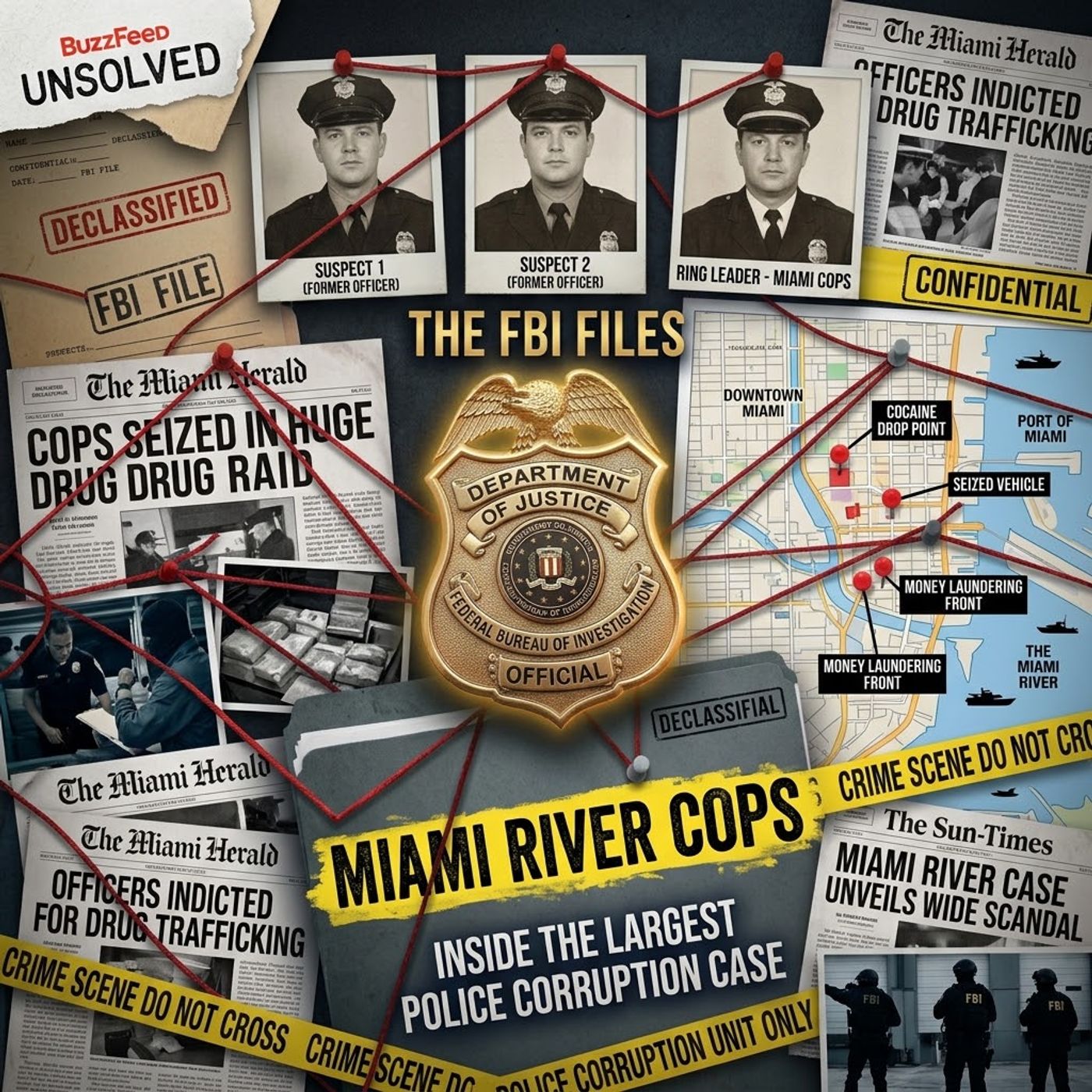 Miami River Cops: Inside the Largest Police Corruption Case The FBI Files 26.09.2026 50Min.July 28, 1985. The Miami River. A marine salvager pulls three bodies from the murky water—men dressed in designer clothes, guns still tucked into their waistbands, large bills stuffed in their pockets. They were Colombian drug smugglers. And they hadn't drowned by accident.Witnesses said men in police uniforms had rushed them at the Jones Boat Yard. The smugglers panicked, jumped into the river, and disappeared beneath the surface. But these weren't real cops making a bust. They were cops making a heist—stealing 400 kilograms of cocaine worth $9 million on the street. And when the smugglers realized it wasn't a raid, they ran for their lives. The officers didn't care.They weren't there to arrest anyone. They were there to get rich.This was the Miami River Cops.The investigation that followed would expose the largest police corruption scandal in American history. A group of young Miami police officers—some of them honored as "Officer of the Month"—had turned the badge into a license to steal, rob, and kill. They called themselves "The Enterprise." They targeted drug dealers because they knew the dealers couldn't call the cops. They staged fake raids, stole cocaine and cash, and resold the drugs for profit. Between 1984 and 1985, some officers made as much as $700,000 each.The ringleader, Armando "Scarface" Garcia, fled to Colombia and spent seven years on the FBI's Ten Most Wanted list before he was captured in 1994.Another officer, Rodolfo "Rudy" Arias, was named Officer of the Month just months before his arrest—then flipped and became the prosecution's star witness, providing a 122-page confession that exposed the entire operation.The fallout was catastrophic. Nearly 10 percent of the entire Miami Police Department—over 100 officers—were arrested, suspended, or fired. Nineteen officers were charged. Most were convicted and sentenced to decades in prison. The scandal shattered public trust in law enforcement and became a national warning about what happens when you hire too fast, train too little, and look the other way.This is the story of the Miami River Cops—the largest police corruption case in American history. A case where the criminals wore badges, the murders were committed in police uniforms, and the only thing more dangerous than the drug dealers was the men sworn to stop them.This is The FBI Files. Press play—if you dare.Become a supporter of this podcast: https://www.spreaker.com/podcast/fbi-files--7331575/support.Thanks for listening to The FBI Files. New cases every week — follow now so you never miss one. This podcast is a narrative retelling based on publicly available information and is intended for entertainment purposes.This episode includes AI-generated content.
 -
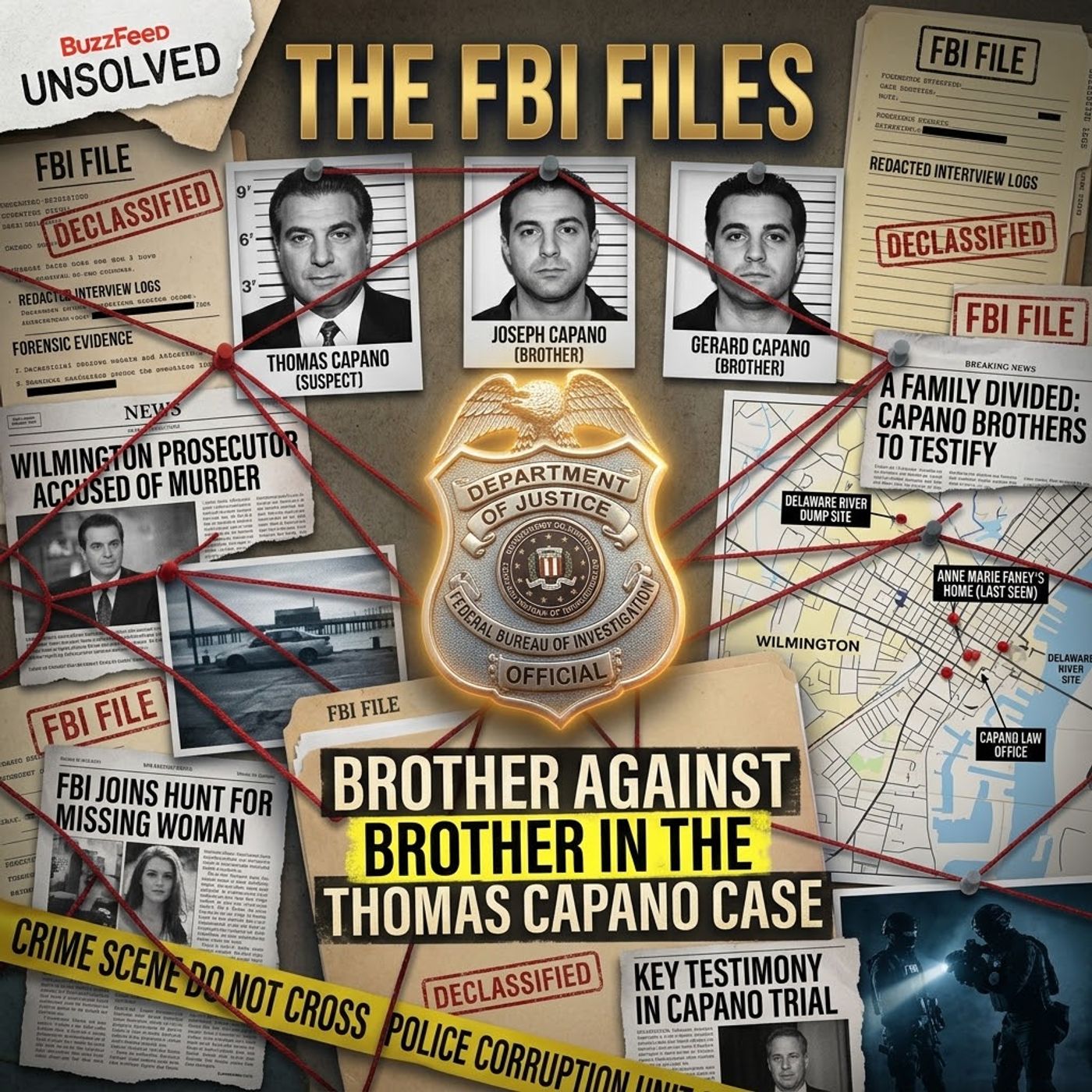 Brother Against Brother in the Thomas Capano Case 25.09.2026 50Min.Thomas Capano had everything. Wealth. Power. A prestigious law career. A beautiful family. He was a former prosecutor, a political insider, a man who moved through Delaware's elite circles with effortless charm. But behind the polished facade lurked a controlling, obsessive man who could not accept rejection. And when Anne Marie Fahey—the governor's scheduling secretary, his secret lover—tried to end their affair, he made sure she would never leave him again.On the night of June 27, 1996, Thomas Capano took Anne Marie Fahey to dinner at a Philadelphia restaurant. They were seen leaving together.Anne Marie was never seen again. Her body was never found. But the truth was buried not in the ocean where he dumped her—but in the conscience of his own family.This is the story of Brother Against Brother—a case that tore apart one of Delaware's most prominent families and exposed a web of lies, drugs, and loyalty twisted into complicity. It was Gerry Capano, Thomas's younger brother, who finally broke. Facing federal drug and weapons charges after a raid on his home, Gerry agreed to cooperate with prosecutors. He told them the truth: that early on the morning of June 28, 1996, his brother Thomas came to his house asking to borrow his boat. Gerry asked, "Did you do it?" Thomas nodded yes. Together, they drove to Thomas's home, loaded a large cooler locked with a chain into the back of a Suburban, and took the boat some seventy miles off the New Jersey coast. There, Thomas tied an anchor to the contents of the cooler and dumped it into the Atlantic Ocean. Gerry saw a human foot and part of a calf sinking into the water. Investigators believe those remains were Anne Marie's.Gerry wasn't the only brother who became a witness for the prosecution. Louis Capano Jr., the millionaire head of the family construction business, also cooperated, admitting he had helped dispose of evidence—including a bloodstained sofa from Thomas's home—and had lied to authorities to protect his brother. Both brothers pleaded guilty to federal charges related to the cover-up. They testified against Thomas at trial, their testimony becoming the backbone of the prosecution's case.The FBI's investigation had begun almost immediately after Anne Marie's disappearance, but it stalled for over a year without a body, a weapon, or a confession. The turning point came in October 1997, when federal agents raided Gerry's Wilmington home and found drugs and guns. Facing ten years in prison, Gerry chose to save himself—and in doing so, he sealed his brother's fate. Thomas Capano was arrested on November 12, 1997, and indicted for first-degree murder.The trial lasted three and a half months. The prosecution had no body, no murder weapon, and no forensic evidence directly linking Thomas to the killing. What they had was a mountain of circumstantial evidence: Thomas had purchased a large marine cooler two months before the murder, despite not owning a boat. He had asked Gerry about borrowing his boat "if he needed to dispose of a body." He had borrowed a handgun from Gerry earlier that year and returned it before the murder. And Anne Marie's diary painted a chilling portrait of a man she called "a controlling, manipulative, insecure, jealous maniac."On March 16, 1999, the jury convicted Thomas Capano of first-degree murder. He was sentenced to death. But in 2006, the Delaware Supreme Court overturned the death sentence because the jury had not been unanimous in finding grounds for the death penalty. The state chose not to seek death again, and Capano was resentenced to life in prison without parole. He died in his cell in 2011.This is a story of a family destroyed by one man's obsession.A story of brothers forced to choose between loyalty and justice. And a story of a woman whose body was never found, but whose voice—through her diary, through her friends, through the truth his own brothers could no longer hide—finally brought...
 -
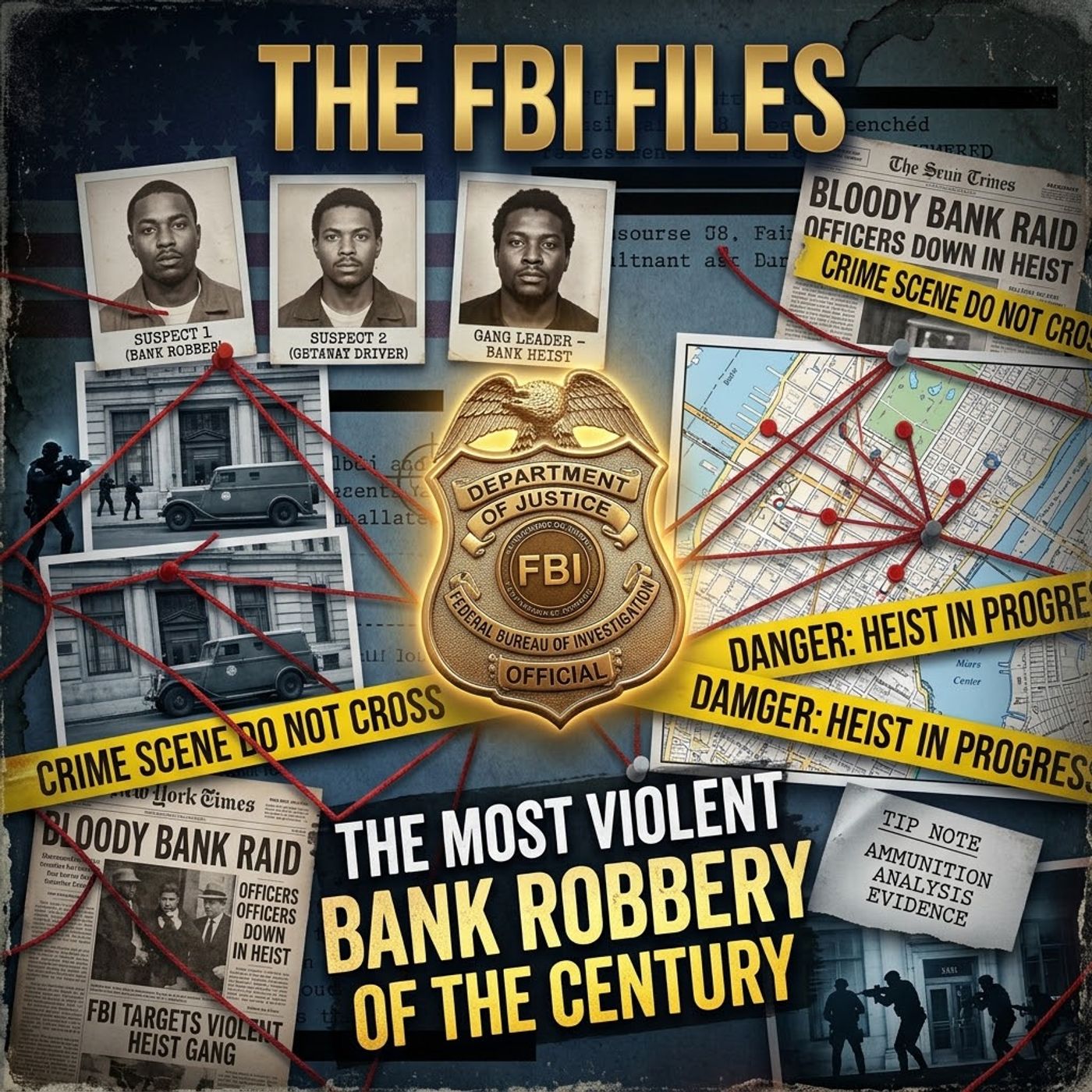 The Most Violent Bank Robbery Of The Century The FBI Files 24.09.2026 50Min.It was 3:40 p.m. on May 9, 1980, when five heavily armed men stormed into a Security Pacific Bank branch in Norco, California. But this was not a typical bank robbery. The men were not drug addicts desperate for a fix, nor professional thieves looking for a quick score. They were survivalists, led by a born-again Christian who believed the apocalypse was coming—and that they needed money to prepare for it.Within minutes, the robbery spiraled into something the Riverside County Sheriff's Department had never seen before.When Deputy Glyn Bolasky arrived at the scene, the robbers opened fire with military-grade weapons—AR-15s, HK93s, a G3 rifle, and a shotgun. Bolasky was hit five times, his cruiser riddled with 47 bullet holes. The getaway van crashed when a pellet from Bolasky's shotgun struck the driver in the back of the head, killing him instantly.What followed was a 25-mile running gun battle through two counties. The four surviving robbers commandeered a pickup truck and engaged dozens of officers from the Riverside County Sheriff's Department, the San Bernardino County Sheriff's Department, and the California Highway Patrol in a rolling firefight. They fired over 200 rounds at one deputy alone, ambushed pursuing officers, and forced a police helicopter out of the sky.By the time it was over, Deputy James Evans was dead—murdered in an ambush on a mountain road. Another robber was dead. Eleven people were wounded, including eight law enforcement officers.Thirty-two police vehicles had been destroyed by thousands of rounds of ammunition. The crime scene stretched 40 miles—the largest in U.S. law enforcement history.The...
 -
 Dangerous Takedown FULL EPISODE The FBI Files 23.09.2026 49Min.A sledgehammer smashing through a front door in the dead of night. A Camden, New Jersey home invaded by two violent men. A shootout in a park that left a police officer nearly dead. And two suspects who vanished without a trace.For one year, they were ghosts. Witnesses refused to talk—they knew the consequences of cooperation could be deadly. The community lived in fear. And the men who had shot at a cop were still out there, somewhere, planning their next move. But criminals make mistakes. And when new clues finally emerged, the FBI was called in to finish what local police had started.This is Dangerous Takedown—the story of a home invasion that spiraled into a manhunt, a year-long investigation, and a takedown that brought violent predators to justice. The FBI's fugitive task force had to track down suspects who had every reason to run, every reason to hide, and every reason to shoot again.This is a full episode of The FBI Files. Real cases. Real agents. Real justice.Press play—if you dare.Become a supporter of this podcast: https://www.spreaker.com/podcast/fbi-files--7331575/support.Thanks for listening to The FBI Files. New cases every week — follow now so you never miss one. This podcast is a narrative retelling based on publicly available information and is intended for entertainment purposes.This episode includes AI-generated content.
 -
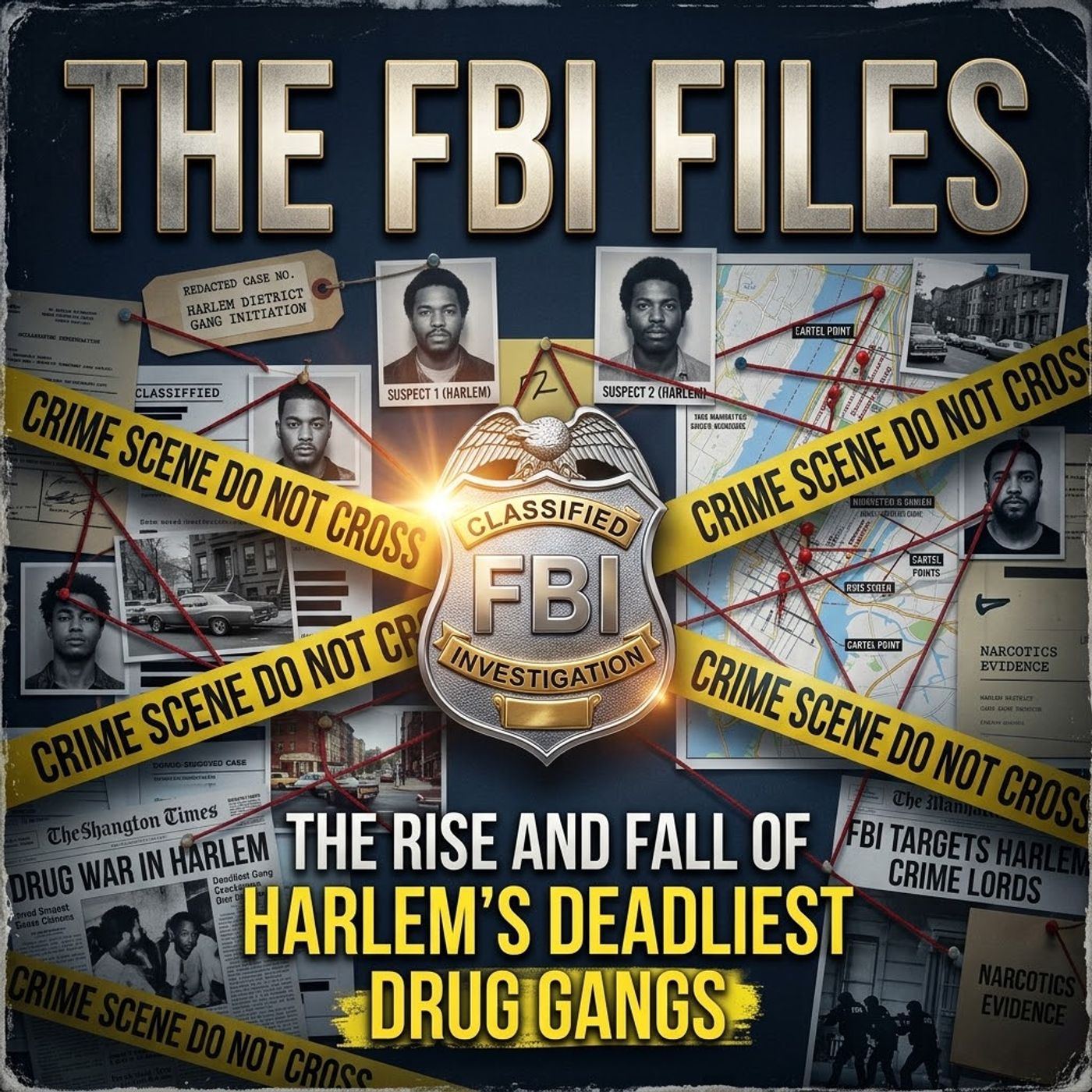 The Rise and Fall of Harlems Deadliest Drug Gangs 23.09.2026 50Min.Harlem has always been a battleground. But in the 1970s, 1980s, and 1990s, the war was not fought with politics or poetry—it was fought with heroin, crack, and blood. A succession of drug empires rose from the streets of Upper Manhattan, each more ruthless than the last. They made millions, they corrupted entire neighborhoods, and they left behind a trail of bodies that would take decades to count.This is the story of the rise and fall of Harlem's deadliest drug gangs.We begin with Nicky Barnes and The Council. In 1972, Barnes—a man who learned the heroin trade while sharing a prison cell with a Mafia capo—united the major African-American drug lords of New York into a single organization modeled on the Italian mob.They regulated territory, settled disputes, and executed anyone who threatened their monopoly. Barnes called himself "Mr. Untouchable," and for years, he was. Then he made a fatal mistake: he appeared on the cover of The New York Times Magazine in 1977. President Jimmy Carter saw the headline and ordered the full force of the federal government to bring him down. Barnes was arrested, sentenced to life, and—facing the rest of his life in prison—did the unthinkable. He became a government informant, testifying against his former partners in what a federal judge called testimony that was "convincing, devastating and indeed shocking." His cooperation led to four men receiving life sentences without parole and dismantled the most sophisticated drug syndicate Harlem had ever known .Then came the East Harlem Purple Gang—an Italian-American crew of hitmen and heroin dealers who filled the power vacuum left by the Mafia's decline. They were affiliated with the Lucchese and Genovese crime families, but their brutality was their own. Law enforcement attributed at least 17 homicides to the gang by 1977, with many more suspected.Their trademarks were dismemberment, decapitation, and .22 caliber bullets to the back of the head. They supplied heroin to Nicky Barnes's network after his fall, at $75,000 per kilogram—and they controlled the trade in East Harlem and the South Bronx for over a decade .But the 1980s brought something far worse: crack. The No Fear gang took over St. Nicholas Avenue just north of Central Park, terrorizing residents, using children under sixteen as lookouts and couriers, and clearing an estimated $3 million a year. For nine years, one NYPD officer, Michael Kelley, made it his personal mission to bring them down. He arrested their street dealers, raided their stash houses, and was pelted with bottles from rooftops. In 1996, his diligence finally paid off: 35 members were indicted, most facing 25 years to life .Meanwhile, the Lynchmob was building a reputation as the most homicidal crew in Harlem. Led by an enforcer known as "Homicide Lou"—Louis Griffin—they killed at least 15 people and expanded their crack empire from New York all the way to Alabama. They were so brazen that they once dressed as doctors to assassinate a rival recovering in Mount Sinai Hospital. The "Lynchmob" name struck terror into witnesses, ensuring silence for years. But when Griffin ordered a hit near Columbia...
 -
 He Killed a Cop Over a Mistake — Then Ran for Almost a Year 22.09.2026 49Min.Two Boston police officers were simply responding to a routine domestic disturbance call. They weren't looking for Ted Otsuki. But Otsuki, a parolee with a violent past, believed they were coming for him — and in a dark alley, that fatal misunderstanding cost one officer his life and left another fighting for his.What followed was a manhunt that stretched from the streets of Boston to San Francisco, and finally across the border into Mexico, as the FBI worked to track down a fugitive determined never to be taken alive.This is the story of how a case built on a tragic mistake became one of the most relentless pursuits in the FBI's history — and what it finally took to bring Otsuki to justice, nearly a year later, thousands of miles from where it all began.Part of The FBI Files, based on real case history.Become a supporter of this podcast: https://www.spreaker.com/podcast/fbi-files--7331575/support.Thanks for listening to The FBI Files. New cases every week — follow now so you never miss one. This podcast is a narrative retelling based on publicly available information and is intended for entertainment purposes.This episode includes AI-generated content.
 -
 The Photographer Who Became America's Most Wanted Killer 21.09.2026 50Min.He was a successful businessman. A race car driver. A photographer who charmed young women with promises of modeling contracts. Nothing about Christopher Wilder looked like a killer — until the bodies started appearing across the country.In the spring of 1984, Wilder began a 47-day cross-country rampage, kidnapping and murdering young women he lured with the promise of a photoshoot. As the death toll rose, the FBI placed him on the Ten Most Wanted list, but Wilder stayed one step ahead — swapping license plates, changing cars, and slipping through the fingers of law enforcement again and again.This episode uncovers how a predator hiding behind charm and credentials evaded one of the largest manhunts in FBI history, and what it finally took to bring him down.Part of The FBI Files, based on real case history.Become a supporter of this podcast: https://www.spreaker.com/podcast/fbi-files--7331575/support.Thanks for listening to The FBI Files. New cases every week — follow now so you never miss one. This podcast is a narrative retelling based on publicly available information and is intended for entertainment purposes.This episode includes AI-generated content.
 -
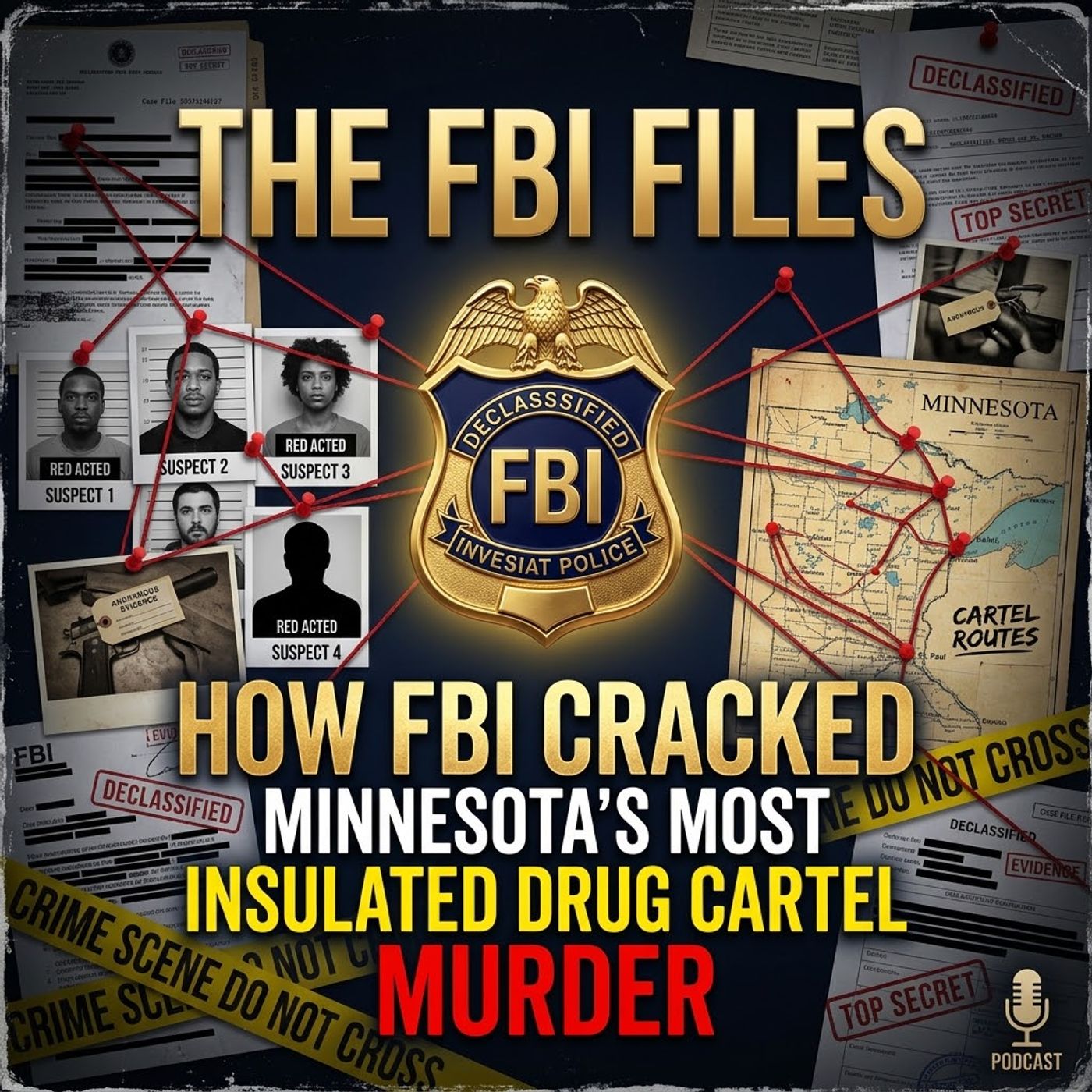 The Cartel Thought They Were Untouchable — Until One Mistake 20.09.2026 50Min.It was 3 a.m. in St. Paul, Minnesota, when witnesses found the body of twenty-six-year-old Duon Walker burning in a dark alley. He had been shot three times in the head with a .22 caliber handgun, wrapped in plastic, doused with gasoline, and set ablaze within two miles of the condo where he had been staying. Walker was a cocaine dealer from Los Angeles, a man who had come to Minnesota to do business with a man named Kenneth Wendell Jones—a man who paid him $90,000 in cash just days before he was murdered.The case went cold for over two years. The killer seemed untouchable. The cartel was insulated. Witnesses were silent. But the FBI doesn't forget. And when agents finally obtained authorization to wiretap the residences of Jones and his associate Jeffrey Lane Barnes, they recorded something chilling: discussions about cocaine dealing and murder.The tapes led investigators to witnesses who had heard Barnes confess to the killing. They led to Jones's girlfriend, who admitted she had cleaned up a large quantity of blood from Jones's bathroom within days of the murder. And they led to a forensic breakthrough that shattered the cartel's wall of silence: authorities disassembled the tile floor in Jones's bathroom and discovered that blood had seeped through the grout lines and settled in the wooden subflooring.Then came the final piece. The .22 caliber revolver seized from Barnes's baggage at the Minneapolis Airport the day after the murder was matched by ballistics experts to the bullets that killed Duon Walker. The gun was the murder weapon. And the man who carried it was the hitman Jones had summoned from Los Angeles for $20,000.Kenneth Wendell Jones was convicted of murder in furtherance of a continuing criminal enterprise, engaging in a continuing criminal enterprise, and conspiracy to distribute cocaine. He was sentenced to life in prison. Jeffrey Lane Barnes was convicted on the same charges. Together, they had run a drug distribution operation responsible for importing at least fifty pounds of cocaine into Minnesota for resale. And for two years, they believed they had gotten away with murder.This is the story of how the FBI cracked Minnesota's most insulated drug cartel murder. A case built on patience, technology, and the refusal to let a burning body in an alley become just another cold case.This is The FBI Files. Press play—if you dare.Become a supporter of this podcast: https://www.spreaker.com/podcast/fbi-files--7331575/support.Thanks for listening to The FBI Files. New cases every week — follow now so you never miss one. This podcast is a narrative retelling based on publicly available information and is intended for entertainment purposes.This episode includes AI-generated content.
 -
 He Killed Without Remorse — And Almost Got Away With It 19.09.2026 49Min.A body burning in a dark alley. A suspected drug courier from California, hundreds of miles from home. And a killer so ruthless that his own partners in crime feared they would be next.On a humid summer night in 1990, witnesses in St. Paul, Minnesota, discovered a horror they would never forget: the burning corpse of twenty-six-year-old Duon Walker, a cocaine dealer who had been staying with a man named Kenneth Wendell Jones. The body was charred beyond recognition. It would take weeks for investigators to even identify the victim. And when they did, they realized they were not dealing with a random act of violence—they were staring into the heart of a multi-state criminal empire.The FBI joined forces with local police to unravel a web of drug trafficking, betrayal, and cold-blooded murder that stretched from the streets of Los Angeles to the quiet alleys of Minnesota. At the center of it all was a drug lord who ruled through fear, who silenced witnesses before they could talk, and who believed that loyalty was a one-way street. His partners in crime held the answers—but only if they lived long enough to tell them.As investigators dug deeper, they discovered that Walker had been killed not by a stranger, but by someone he trusted. Witnesses testified that Jeffrey Lane Barnes, one of Jones's associates, confessed to killing Walker after Walker attempted to cheat them in a drug deal. The body was burned to destroy evidence. The message was clear: cross us, and you disappear.But the FBI was not about to let this killer disappear.Through forensic analysis, witness testimony, and relentless pursuit, agents pieced together a case that would bring down an entire criminal network. Barnes was sentenced to two concurrent life sentences for the murder of Duon Walker. Jones was convicted on drug-related charges and conspiracy to murder. The alley where Walker burned became the spark that ignited one of the FBI's most sweeping drug investigations of the decade.This is the story of a killer who showed no remorse. A crime ring built on silence. And the FBI agents who refused to let the fire go out.This is The FBI Files. Press play—if you dare.Become a supporter of this podcast: https://www.spreaker.com/podcast/fbi-files--7331575/support.Thanks for listening to The FBI Files. New cases every week — follow now so you never miss one. This podcast is a narrative retelling based on publicly available information and is intended for entertainment purposes.This episode includes AI-generated content.
 -
 The Celebrated Author Who Was Secretly a Serial Killer 18.09.2026 50Min.He was celebrated as a literary genius, a reformed man who had turned his life around behind bars. He walked red carpets, gave interviews, and rubbed shoulders with Vienna's elite. But while the world applauded his redemption story, Jack Unterweger was doing what he had always done: hunting women. And this time, he was reporting on his own crimes.In this episode of The FBI Files, we reopen one of the most twisted cases in Bureau history—the chilling story of Johann "Jack" Unterweger, an Austrian journalist and celebrated author who was secretly a serial killer targeting prostitutes across Europe and the United States. The FBI described him as "a uniquely high-functioning psychopath". And they were right.Unterweger's story begins with a childhood of abuse and abandonment. He was convicted of murdering an 18-year-old sex worker in 1976 and sentenced to life in prison. But behind bars, he reinvented himself. He learned to read and write, penned poetry, plays, and an autobiography that became a bestseller. Intellectuals and artists campaigned for his release, and in 1990, after sixteen years, he walked free.Within a year, the bodies began to pile up. Prostitutes in Vienna, Graz, Prague, and Lustenau were found strangled with their own bra straps—a signature ligature that would become his trademark. Austrian police had no experience with serial killers. They turned to the FBI for help. Profiler Gregg McCrary studied the case and delivered a chilling assessment: "When you educate a psychopath, all you get is an educated psychopath".But the FBI's involvement didn't stop there. Unterweger had traveled to Los Angeles under the guise of writing a story about the city's dark side. While there, he picked up three prostitutes in Hollywood and downtown LA—and strangled them. He was murdering women while pretending to report on their murders. He was the journalist covering his own killing spree.When Austrian authorities finally closed in, Unterweger fled. He abandoned his BMW in Paris, crossed into Switzerland, and made his way to Miami, Florida. But the FBI was waiting. On February 27, 1992, agents arrested him at a Miami hotel. He was extradited to Austria, where he stood trial for twelve murders.The trial was a media circus. Unterweger played the role of the persecuted artist, claiming he was the victim of a conspiracy. But the evidence was overwhelming—DNA from a single blonde hair found in his abandoned BMW linked him to one of the Prague victims. On June 29, 1994, the jury delivered a guilty verdict. Hours later, Jack Unterweger was found dead in his cell. He had hanged himself with the same kind of ligature he had used on his victims.He never expressed remorse. He never admitted his crimes. He took the truth to his grave.This is the story of a man who fooled an entire nation, who used his intellect and charm to hide a monstrous darkness, and who was finally brought down by the FBI. This is the case of the journalist who murdered prostitutes.This is The FBI Files. Press play—if you dare.Become a supporter of this podcast: https://www.spreaker.com/podcast/fbi-files--7331575/support.Thanks for listening to The FBI Files. New cases every week — follow now so you never miss one. This podcast is a narrative retelling based on publicly available information and is intended for entertainment purposes.This episode includes AI-generated content.
Ähnliche Podcasts


Beliebt in
Dieser Podcast erscheint auch in den Podcast-Charts dieser Länder.
