
Zainichi Music Project by Yukimi Song Podcast
The Piano Pod with Yukimi Song
0
A personal Substack podcast from pianist Yukimi Song exploring the music, stories and cultural heritage of Zainichi Koreans in Japan. Episodes pair piano performance and conversation, drawing on Song's own family background and on the wider Zainichi musical community. It is released alongside the written Zainichi Music Project newsletter, which collects research, interviews and reflections on the topic. Listeners can expect solo piano playing, guest musicians and discussion of identity, migration and memory.
Folgen
-
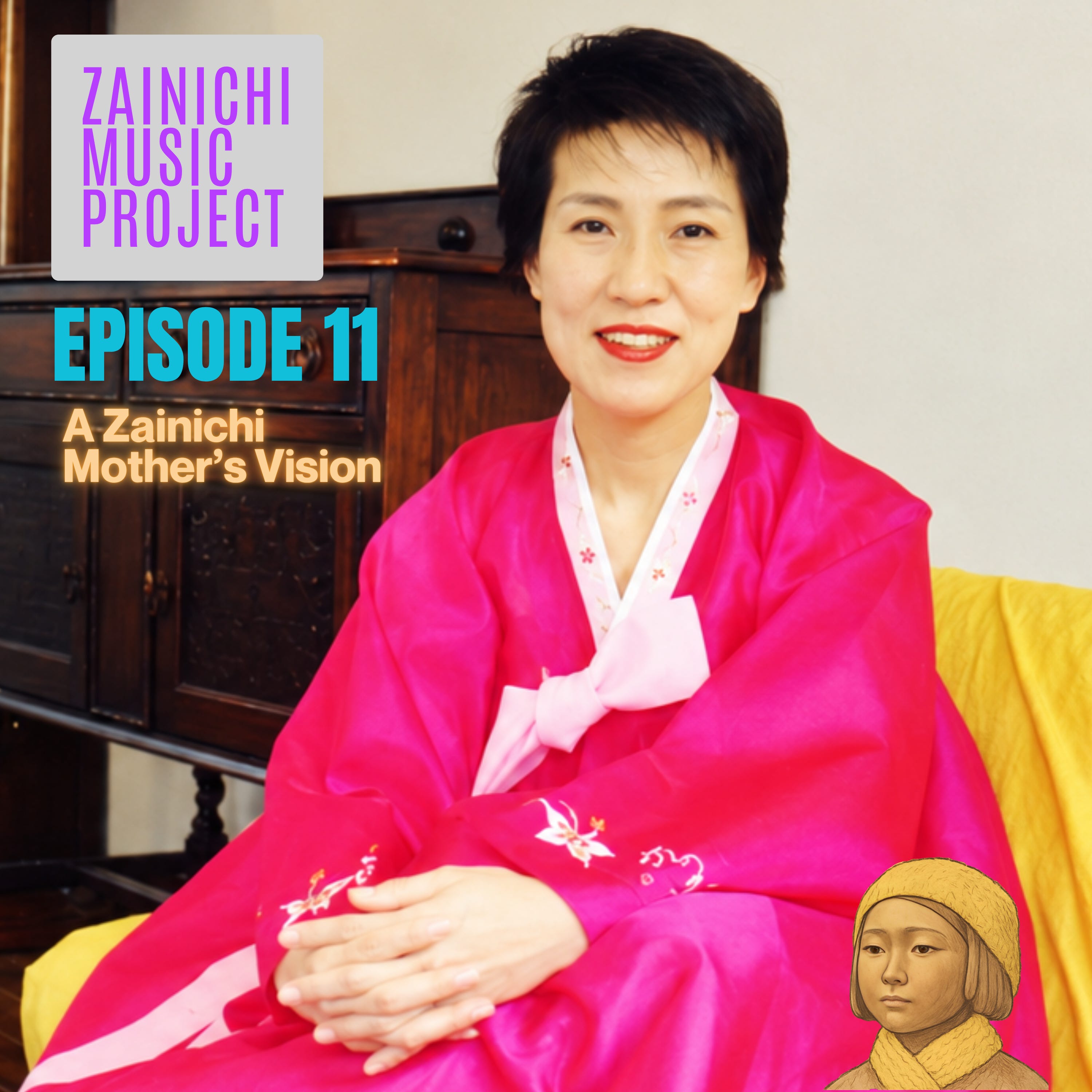 A Zainichi Mother’s Vision 27.09.2026 8Min.Twenty-nine years after my mother died, I can no longer hear her voice clearly in my memory. Then I began reading the poems of Ch’u-wol Chong, a Zainichi Korean writer whose Osaka rhythms sounded so familiar that I could almost feel my mother sitting beside me.On this rainy anniversary, I’m sharing a short, personal tribute to my mother: a second-generation Zainichi Korean woman who built a business, fought for her children’s education, and imagined a future for us that she never got to see. Her vision still shapes the life I’m building today.Become a VIP subscriber to support the Zainichi Music Project and help bring more stories like this one to life.Learn more: https://www.nyfa.org/projects/project-info/?id=YS2055 This is a public episode. If you would like to discuss this with other subscribers or get access to bonus episodes, visit zainichimusicproject.substack.com
 -
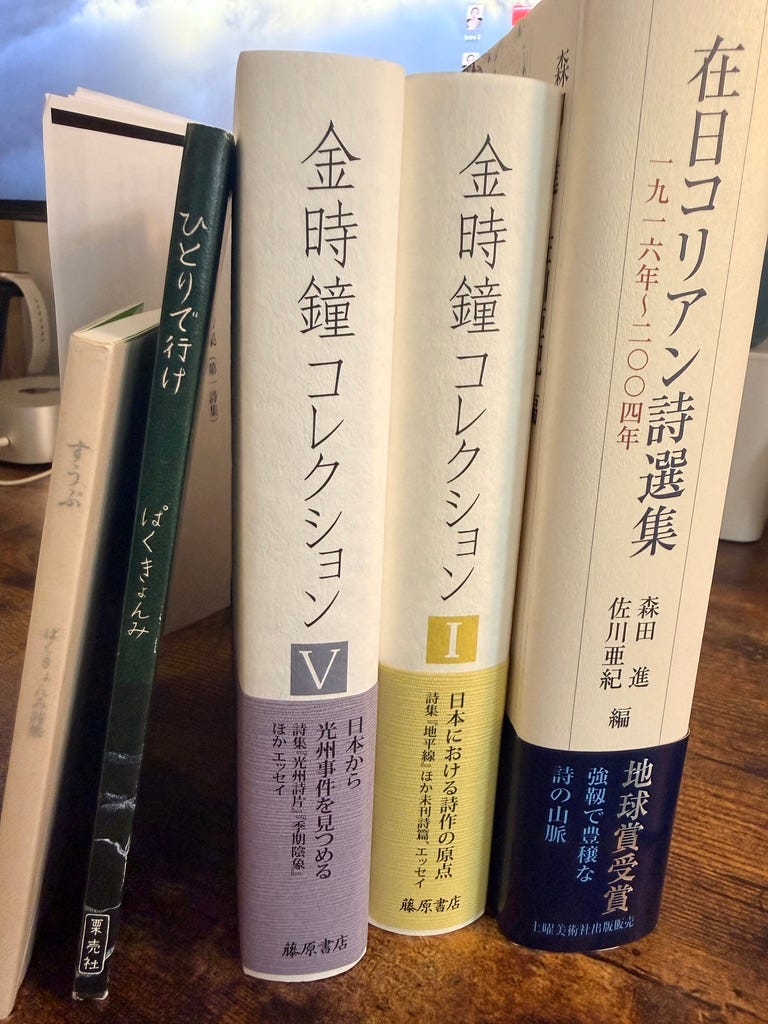 Eps. 10: Ch’u-wol Chong: The First Zainichi Korean Woman Writer of Literature 20.09.2026 21Min.In this episode, I begin exploring the life and work of Chuwol Chong (1944–2011), a pioneering Zainichi Korean woman poet and writer whose work centers the lives, language, labor, and resilience of ordinary Zainichi women.I first encountered Chong more than a decade ago through her poem “Two Names.” Returning to her work now, especially The Korean Women I Love and “Name,” has felt deeply personal. Chong spent much of her life in Ikaino, in Osaka’s Ikuno Ward—the same ward where my father grew up and where I was born.Her writing has brought back memories of Osaka, Zainichi speech, family, and especially my mother, who was also a second-generation Zainichi woman.I am still at the beginning of studying Chong’s work. In this episode, I reflect on what makes her writing so distinctive, why her language feels so familiar to me, and how her work may eventually enter the Zainichi Music Project through poetry, translation, and commissioned music.Books mentioned in this episode:Other Side River: Free Verse — edited and translated by Leza Lowitz and Miyuki Aoyama. This collection includes Chong’s poem “Two Names.” Other Side River on GoodreadsInto the Light: An Anthology of Literature by Koreans in Japan — edited by Melissa L. Wender. This anthology includes “The Korean Women I Love,” “Testament,” and “Name: For Pak Ch’u-ja.” Into the Light on JSTORI’ll also return next week to the connection between Chong’s work and my mother’s story, on the anniversary of my mother’s death.If you’d like to support the Zainichi Music Project, you can become a paid subscriber or make a tax-deductible contribution through our fiscal sponsor, the New York Foundation for the Arts. This is a public episode. If you would like to discuss this with other subscribers or get access to bonus episodes, visit zainichimusicproject.substack.com
 -
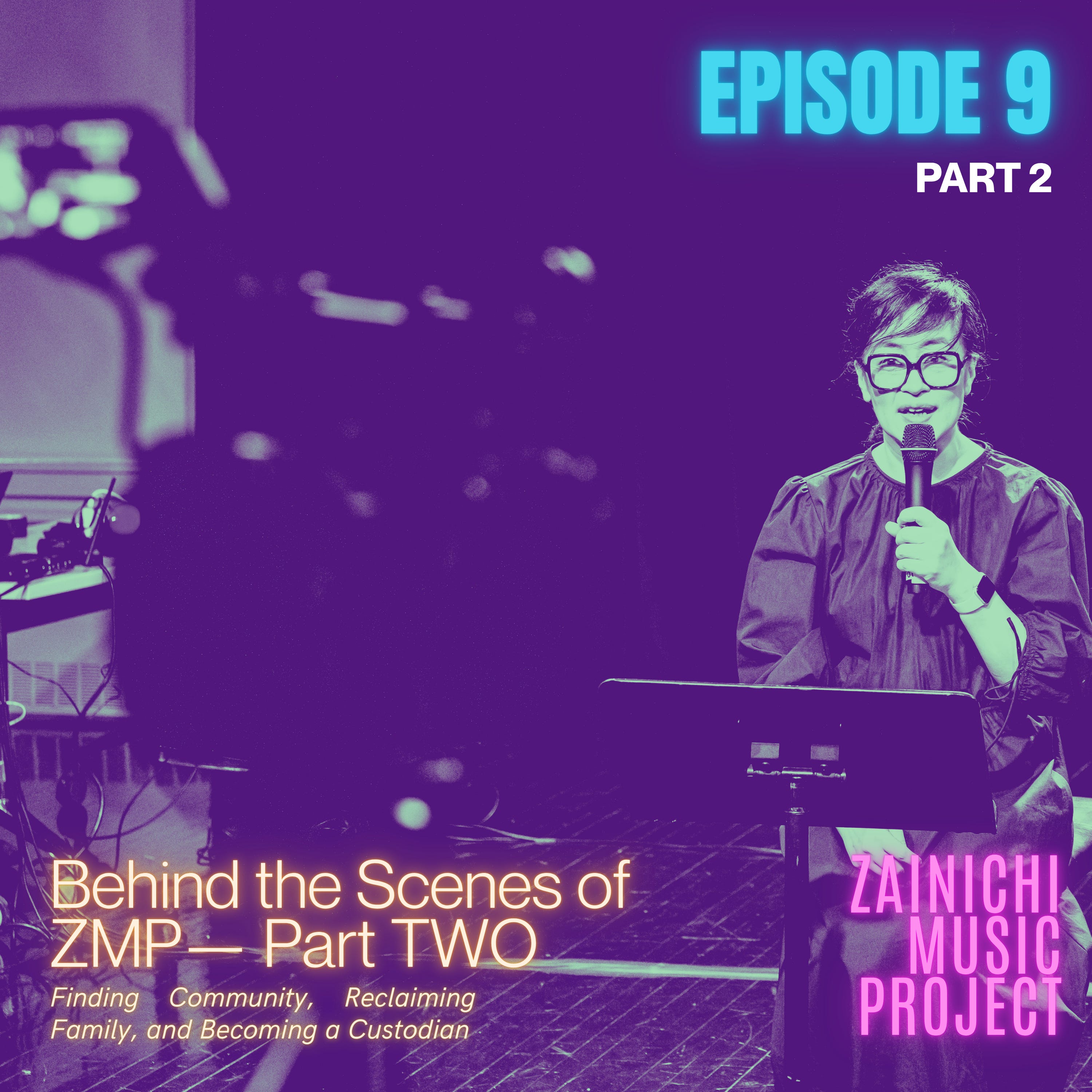 Eps. 9 Behind the Scenes of ZMP: Summer 2026 Updates Part Two 05.09.2026 18Min.What happens when telling your story changes the way you understand your family—and yourself?In Part Two of this behind-the-scenes reflection, I share what happened when the Zainichi Music Project connected me with two fellow third-generation Zainichi Koreans in Brooklyn. After decades without a Zainichi community around me in the United States, I could finally speak about my experiences without having to explain the history behind every detail.Those conversations helped me see my mother’s strength and ambition more clearly, reconsider choices I had once judged as reckless, and recognize that some experiences I had blamed myself for were part of a much larger history. But opening up also left me emotionally exhausted and forced me to confront the weight of telling a history shaped by generations of silence.A colleague eventually gave me a word for the role I was beginning to understand: custodian. In this episode, I reflect on what it means to care for this history, tell it responsibly from within the community, and build ZMP with patience, discernment, and the right collaborators.If this work speaks to you, please consider becoming a paid subscriber here on Substack. Your support helps sustain the research, writing, interviews, and artistic development behind the Zainichi Music Project.You can also support ZMP directly through its fiscal sponsor, the New York Foundation for the Arts:Support the Zainichi Music Project through NYFAThank you for listening—and for helping me carry this history forward. This is a public episode. If you would like to discuss this with other subscribers or get access to bonus episodes, visit zainichimusicproject.substack.com
 -
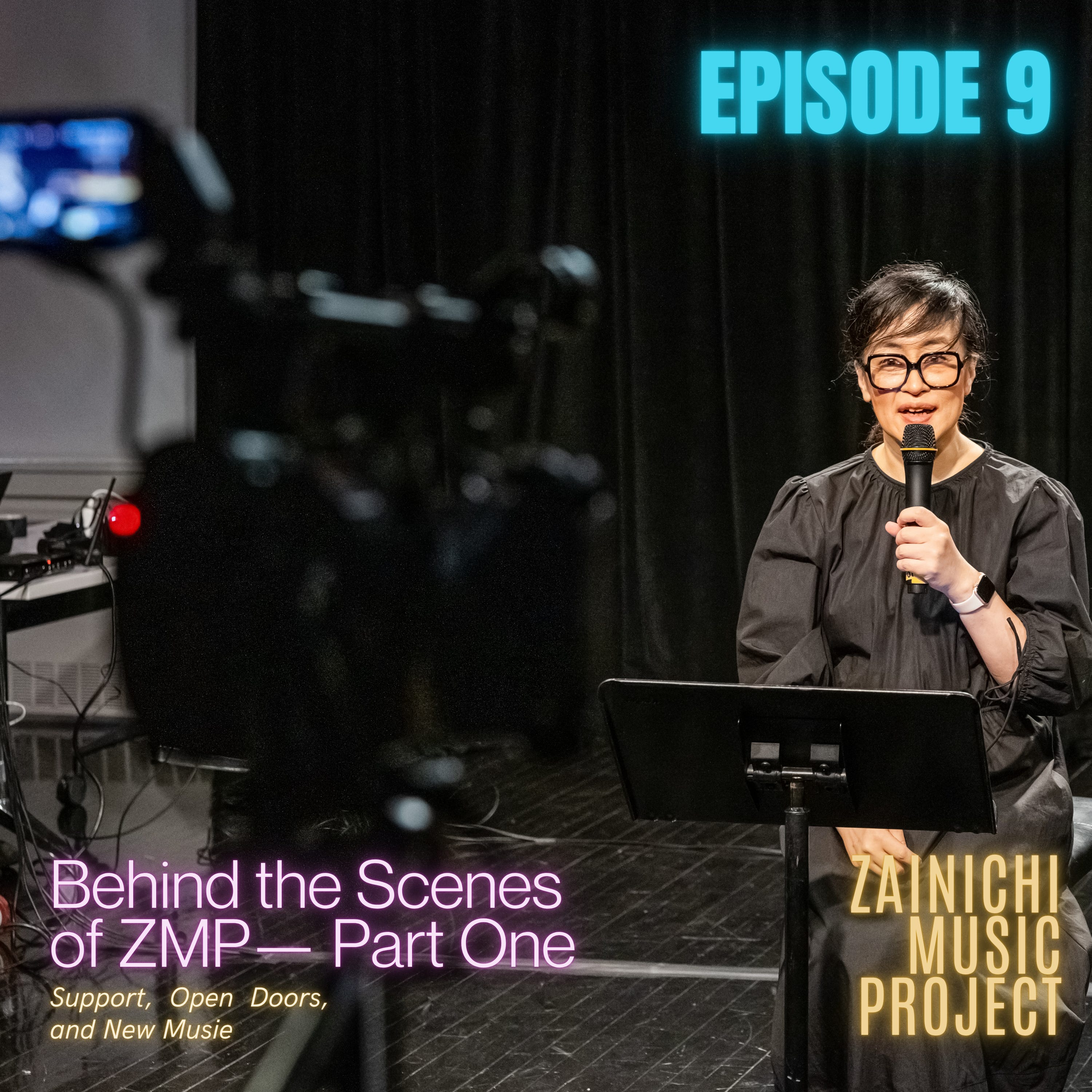 Eps. 9 Behind the Scenes of ZMP: Learning from Setbacks — Part One 30.08.2026 19Min.What happens when a carefully organized plan meets a project that refuses to develop according to a spreadsheet?In Part One of this two-part behind-the-scenes episode, I reflect on a transformative summer for the Zainichi Music Project. I share how I built a trusted support system, continued developing ZMP’s public voice, sent cold emails that unexpectedly opened doors to professors and institutions, and began shaping the project’s first original musical works.The progress was exciting—but it also raised difficult questions about artistic direction, research, collaboration, and the responsibility of transforming Zainichi Korean history into music.Part Two will be released next Sunday. Please become a paid subscriber on Substack: https://zainichimusicproject.substack.com/subscribe Support the Zainichi Music Project through our NYFA fiscal-sponsorship page:https://www.nyfa.org/projects/project-info/?id=YS2055Follow the Zainichi Music Project on Instagram:https://instagram.com/zainichimusicproject This is a public episode. If you would like to discuss this with other subscribers or get access to bonus episodes, visit zainichimusicproject.substack.com
 -
 Episode 8: When Rumor Became Massacre: Koreans and the Great Kantō Earthquake 31.07.2026 19Min.In Episode 8 of the Zainichi Music Project podcast, Yukimi Song examines the 1923 Great Kantō Earthquake and the massacre of Koreans that followed.After the earthquake devastated Tokyo, Yokohama, and the surrounding region, false rumors spread that Koreans were poisoning wells, setting fires, looting, and planning an uprising. These claims drew on stereotypes already created through Japanese colonial rule. As fear spread, civilian vigilantes, police officers, military personnel, and local authorities participated in violence against Koreans. Chinese people, Okinawans, and Japanese people with regional accents were also attacked after being mistaken for Korean.This episode explores how prejudice became rumor, how rumor gained authority, and how racial fear turned into mass violence. It also considers why the Kantō Massacre became an enduring part of Zainichi collective memory—and why this history still feels urgently relevant today.The Great Kantō Earthquake was a natural disaster. The massacre that followed was created by people.Support the Zainichi Music Project through our NYFA fiscal-sponsorship page:https://www.nyfa.org/projects/project-info/?id=YS2055Read written versions of the podcast on Medium:https://medium.com/@yukimisongFollow the Zainichi Music Project on Instagram:https://instagram.com/zainichimusicproject This is a public episode. If you would like to discuss this with other subscribers or get access to bonus episodes, visit zainichimusicproject.substack.com
 -
 Episode 7:Foreigners Overnight 12.07.2026 15Min.In Episode 7 of the Zainichi Music Project, Yukimi reflects on Professor John Lie’s writing about the moment Koreans in Japan became “foreigners overnight.”During Japan’s colonial rule of Korea, Koreans were classified as Japanese imperial subjects, though they were never treated as equals. In 1952, after the San Francisco Peace Treaty took effect, Koreans living in Japan lost their Japanese nationality through an administrative decision. No individual choice was given, and later generations inherited foreign status despite being born and raised in Japan.Through family memories, childhood encounters with right-wing nationalist groups, and the experience of being told to “go back to Korea,” Yukimi explores how a legal category entered everyday life and shaped the way Zainichi Koreans understood belonging.This episode asks what happens when foreignness is passed from one generation to the next, why permanent residency can never fully replace citizenship, and why this history belongs within the larger story of modern Japan.The Zainichi story is not defined by exclusion. It is also a story of dignity, community, endurance, and pride. This is a public episode. If you would like to discuss this with other subscribers or get access to bonus episodes, visit zainichimusicproject.substack.com
 -
 Episode 6: Sōren and the Search for Dignity 24.06.2026 20Min.Why would an excluded community search for dignity through an imagined homeland?In this episode of the Zainichi Music Project Podcast, I continue reflecting on sociologist John Lie’s work on Zainichi Koreans, diasporic nationalism, and postcolonial identity.This episode turns to Sōren, also known as Chongryon, the pro-North Korea organization in Japan — a difficult, complex part of Zainichi history.But this is not a political endorsement or a simple historical summary.It is a reflection on belonging, exclusion, shame, and the emotional life of a community forced to search for dignity in both real and imagined places.What happens when the society you live in refuses to fully accept you?Where do people go to recover a sense of history, pride, and self?And what are the costs of that search?The Zainichi Music Project is an interdisciplinary initiative exploring Zainichi Korean history, identity, memory, and belonging through research, storytelling, music, and public dialogue. If this work resonates with you, please consider supporting the project here:https://www.nyfa.org/projects/project-info/?id=YS2055Thank you for listening, reading, and walking through this history with me. This is a public episode. If you would like to discuss this with other subscribers or get access to bonus episodes, visit zainichimusicproject.substack.com
 -
 Episode 5: Reading My History Back to Myself 21.06.2026 9Min.What happens when scholarship gives language to a life you have already lived?After several months away from the Zainichi Music Project Podcast, I’m returning with a new phase of the project — one rooted in reading, reflection, memory, and critique.In the first four episodes, I introduced the foundations of Zainichi history: who Zainichi Koreans are, how this community came to exist, the experience of carrying two names, and the meaning of statelessness.Episode 5 begins with my reading of sociologist John Lie’s work on Zainichi Koreans, diasporic nationalism, and postcolonial identity.But this is not a summary of his article.It is my response — as a third-generation Zainichi Korean, artist, musician, and storyteller.This episode asks how history can move beyond facts and dates into lived experience, memory, and empathy.Thank you for listening, reading, and walking through this history with me.More soon. This is a public episode. If you would like to discuss this with other subscribers or get access to bonus episodes, visit zainichimusicproject.substack.com
 -
 Episode 4: Statelessness 21.12.2025 14Min.Episode 4: Statelessness — The Chameleon Identity of Zainichi KoreansWhat does it mean to belong to a country where you were born, but never legally claimed?In this episode of the Zainichi Music Project Podcast, Yukimi explores statelessness as lived reality: not as a single legal definition, but as a shifting condition that shaped generations of Zainichi Koreans in Japan.From the collapse of the Japanese empire after 1945 to the long decades of legal ambiguity that followed, this episode traces how Zainichi legal status changed repeatedly—stateless, foreign national, South Korean citizen on paper, Special Permanent Resident—without ever fully resolving questions of belonging.Along the way, Yukimi examines:* Why statelessness extended beyond the first generation* How postwar Japan’s emphasis on homogeneity intensified exclusion* Why North Korea–affiliated organizations attracted many Zainichi in the 1950s by offering dignity and recognition amid severe discrimination* How South Korean nationality became a pragmatic—but limited—path in the 1970s and 1980s* What Special Permanent Residency in the 1990s actually meant, and what it did notWoven into this legal and historical narrative are moments from everyday life that reveal how policy became practice—and how children, families, and identities were shaped by systems that operated quietly and systematically.This episode is not about assigning blame or promoting ideology. It is about understanding how statelessness functioned, how dignity was deprived and sought, and why Zainichi identity often feels adaptive, conditional, and unresolved.Episode 4 lays the groundwork for what comes next: silence—not as absence, but as something learned, inherited, and normalized. This is a public episode. If you would like to discuss this with other subscribers or get access to bonus episodes, visit zainichimusicproject.substack.com
 -
 Episode 3: Two Names — A Life Split in Two 07.12.2025 12Min.In this episode, I step into one of the most defining—and often misunderstood—parts of Zainichi life: the experience of carrying two names. For decades, Zainichi Koreans had a legal Korean name on paper and a Japanese alias used in everyday life. This wasn’t about hiding; it was about navigating systems that never fully knew what to do with us.I share how this unfolded in my own childhood—moving between Hyun Mi Song, Yukimi Noyama, and Yukimi Okawa—and how those layers eventually led to the name I use today: Yukimi Song, my American name, the one I finally got to choose for myself.Featuring a poem by Chuwol Chong, this episode offers a window into identity shaped by history, paperwork, and the search for dignity. It also sets the foundation for the deeper themes ahead: statelessness, silence, and why this history has remained hidden. This is a public episode. If you would like to discuss this with other subscribers or get access to bonus episodes, visit zainichimusicproject.substack.com
 -
 Episode 2: Colonial History Made Simple — How We Got Here 30.11.2025 10Min.In this week’s episode, I’m taking a step back and laying the historical foundation of the Zainichi story — clearly, calmly, and in a way that brings context to everything that will follow in this series.Last week, I shared publicly for the first time that I am a third-generation Zainichi Korean. Many listeners told me they had never heard this history before. So today’s episode focuses on the essential facts: how Japan’s control over Korea began long before 1910, how Koreans were incorporated into the Japanese Empire as imperial subjects rather than immigrants, and how the end of World War II left hundreds of thousands of Koreans in Japan without a clear legal status.I also touch on what daily life looked like for Zainichi families in the decades after the war — from employment restrictions to documentation requirements — and how these practical realities shaped identity across generations.This episode is not about blame or judgment. It’s about clarity. Understanding where this story begins is the key to understanding everything that comes next: the two names many of us carried, the social pressures, the silence, and the ongoing questions of belonging.Next week, we’ll move into the heart of everyday identity: the question of names, and why so many Zainichi Koreans grew up navigating two of them.Thank you for listening — and for taking the time to learn this history with me.Please support my project, Zainichi Music Project, via NYFA. This is a public episode. If you would like to discuss this with other subscribers or get access to bonus episodes, visit zainichimusicproject.substack.com
 -
 Episode 1: Welcome to the Zainichi Music Project 23.11.2025 6Min.In this very first episode of my new podcast, Zainichi Music Project with Yukimi Song, I’m sharing something I’ve carried for most of my life — my identity as a third-generation Zainichi Korean, and the history that shaped my family and our community.Most people know me through The Piano Pod, my long-running interview show that explores the evolving world of classical music. But the Zainichi Music Project is different. It’s personal. It’s something I’ve circled for decades but finally stepped into after receiving sponsorship from the New York Foundation for the Arts — a green light I didn’t know I’d been waiting for.In this episode, I talk about:* What the word Zainichi actually means,* How Japanese colonial rule, not immigration, brought our community into Japan.* How postwar restructuring and the San Francisco Peace Treaty left our community stateless,* What it meant to be born and raised in a country that never fully recognized us as citizens.* And why this project is my way of honoring our history, our resilience, and our creative legacy.If you want to read more about my background, including the two names all Zainichis carried and my experience with statelessness, please read my Substack essay “Behind the Mic: Reclaiming Voice Through Sound.”Thank you for being here. More soon — and welcome to the beginning of the Zainichi Music Project. This is a public episode. If you would like to discuss this with other subscribers or get access to bonus episodes, visit zainichimusicproject.substack.com
Ähnliche Podcasts


Beliebt in
Dieser Podcast erscheint auch in den Podcast-Charts dieser Länder.
