
Inside the Masterpiece
Storywise Studios
0
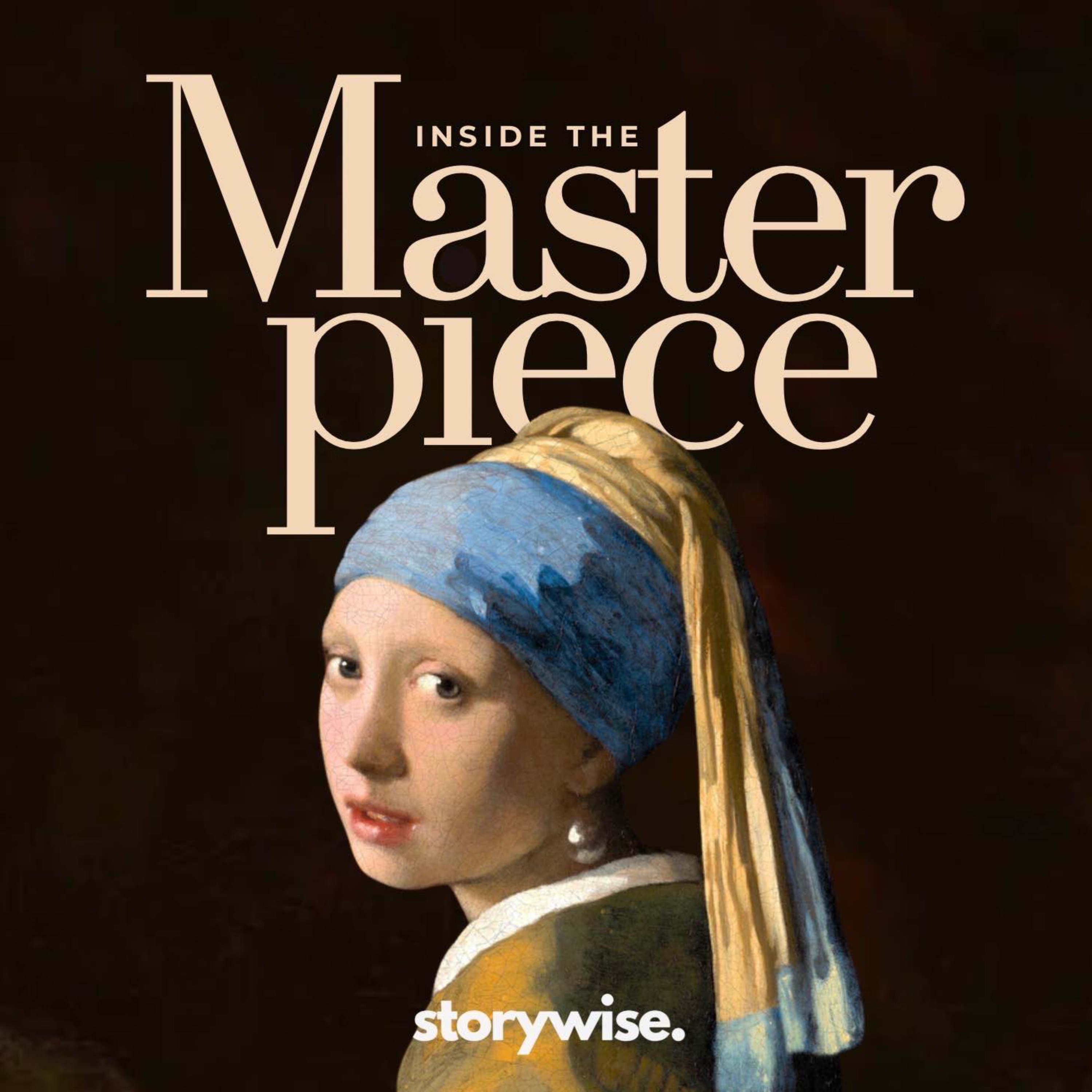
Inside the Masterpiece explores the world's greatest artists and their iconic artworks, delving into how each masterpiece was created, the ideas behind it, and its enduring significance. Each episode combines compelling storytelling with meticulous research to bring art history to life. The podcast is produced by Storywise Studios and is hosted on Acast.
Επεισόδια
-
 Helen Frankenthaler – Mountains and Sea: The Courage to Let Color Flow 22.09.2026 18λHow one glowing canvas, born from the courage to let color flow, launched an art movement.The narration for this episode was produced using artificial intelligence. This podcast is researched, written, and produced by the art-loving team at Storywise Studios.On an October afternoon in 1952, a young painter in Manhattan unrolls a huge canvas onto the floor—and pours thinned paint over it instead of brushing it on. In this episode, we look behind the work to discover how this experiment became Mountains and Sea, why two painters from Washington, D.C., recognized their own future in front of the painting, and why the woman who set an entire art movement in motion had to watch as the men became famous first.Additional Resources• The work in high resolution: Mountains and Sea at the Helen Frankenthaler Foundation• More about the artwork: Mountains and Sea on Wikipedia• More about the artist: Helen Frankenthaler on Wikipedia• The 2026 retrospective: Helen Frankenthaler at the Kunstmuseum BaselContact & Support:If you enjoy the podcast, please consider leaving a review, subscribe and share an episode with a fellow art lover. We truly appreciate it. For questions, feedback, or episode requests, you can reach us at: [email protected]: [email protected] Hosted on Acast. See acast.com/privacy for more information.
 -
Edward Hopper – Nighthawks: A Glow in the Silence of the Sleepless City 15.09.2026 12λAn icon of modern art — a luminous night scene where big-city loneliness becomes strangely beautiful.The narration for this episode was produced using artificial intelligence. This podcast is researched, written, and produced by the art-loving team at Storywise Studios.On a sharp-angled corner in Greenwich Village, a harsh, almost clinical light cuts through the darkness. It pours from the plate-glass windows of a diner, revealing a scene that has fascinated and unsettled viewers for decades: four people trapped in an aquarium of glass and light — physically close, yet emotionally out of reach. Behind the apparent stillness of Nighthawks lies a meticulously constructed stage on which Edward Hopper preserved the mood of an entire era. Today the painting hangs in the Art Institute of Chicago.In this episode, we decode the mysterious geometry of one of the most iconic masterpieces of modern art. We follow Hopper into his studio, where he and his wife Jo staged every detail like a film director — from the cigar ad above the window to the pale shimmer of the fluorescent lights, still a novelty at the time. We find out how the nervous silence of the first weeks of the war in 1942 turned into a universal language of melancholy, and why this diner, which never existed quite like this, is regarded today as the "film noir" of art history. It's a journey to a place that could be anywhere and nowhere — one that still reminds us that in the silence of the sleepless city we are never entirely alone, as long as a light is burning somewhere.Additional Resources• The work in high resolution: Nighthawks on Google Arts & Culture• Go deeper: Nighthawks on Wikipedia• More about the artist: Edward Hopper on Wikipedia• The original at the museum: The official Art Institute of Chicago pageContact & Support:If you enjoy the podcast, please consider leaving a review, subscribe and share an episode with a fellow art lover. We truly appreciate it. For questions, feedback, or episode requests, you can reach us at: [email protected]: [email protected] Hosted on Acast. See acast.com/privacy for more information.
-
Hieronymus Bosch – The Garden of Earthly Delights: A Theater of Temptation and the End of Innocence 08.09.2026 15λThe story of a visionary triptych — from paradise to musical hell, where pleasure meets punishment.The narration for this episode was produced using artificial intelligence. This podcast is researched, written, and produced by the art-loving team at Storywise Studios.It is one of the most fascinating and most detailed works ever created: a massive altarpiece where naked people bite into giant strawberries, birds tower over humans, and musical instruments become tools of torture. Hieronymus Bosch's The Garden of Earthly Delights has held viewers spellbound for centuries — today it hangs in the Museo del Prado in Madrid.In this episode, we open the wings of this immense altarpiece. We debunk the myth of Bosch the mad heretic and meet a respected painter firmly rooted in the faith of his era. We travel from the deceptive idyll of the Garden of Eden through the intoxicating "garden of delights" and down into a cold, dark hell. You'll learn what the mysterious "Tree Man" is all about, why an owl in Paradise is a bad sign — and how this painting traveled from the private rooms of one of Europe's most devout kings to become an inspiration for the Surrealists.Additional Resources• Interactive tour in stunning resolution: Jheronimus Bosch – The Garden of Earthly Delights• The work in detail, with zoom: The official Museo del Prado page• Go deeper: The Garden of Earthly Delights on Wikipedia• More about the artist: Hieronymus Bosch on WikipediaContact & Support:If you enjoy the podcast, please consider leaving a review, subscribe and share an episode with a fellow art lover. We truly appreciate it. For questions, feedback, or episode requests, you can reach us at: [email protected]: [email protected] Hosted on Acast. See acast.com/privacy for more information.
-
In Memoriam: Yayoi Kusama – Pumpkin: The Yellow Heart in the Sea of Infinity (re-release) 01.09.2026 12λIn memory of the visionary Yayoi Kusama, we’re re-releasing our episode celebrating the iconic artist’s extraordinary life and legacy.The narration for this episode was produced using artificial intelligence. This podcast is researched, written, and produced by the art-loving team at Storywise Studios.On the Japanese art island of Naoshima, Yayoi Kusama’s Pumpkin sits at the edge of the sea—bright yellow, covered in black polka dots, and strangely at home against the open water. But behind this playful icon is a story with real stakes. For Kusama, the pumpkin was never just a motif or a decoration. It became a spiritual lifeline: a familiar presence from her childhood that helped her survive overwhelming hallucinations—and translate personal terror into a visual language the world could recognize.In this episode, we step into Kusama’s universe and trace how repetition became rescue. We follow her from the strict expectations of prewar Japan to the cutthroat New York art scene of the 1960s, where she fought to be seen—and helped define a new kind of contemporary art. Along the way, we explore her idea of “self-obliteration”: the urge to dissolve the boundaries of the individual self into an infinite field of dots. More than ninety years old and still working daily, Kusama continues to cover the world in patterns that ask a simple, unsettling question: where do we end—and where does the infinite begin?Additional Resources• View the Masterpiece: High-Resolution Image of “Pumpkin” at Gotanji Pier• Deepen Your Knowledge: Wikipedia Entry on Yayoi Kusama• Official Website: The Yayoi Kusama Museum in TokyoContact & Support:If you enjoy the podcast, please consider leaving a review, subscribe and share an episode with a fellow art lover. We truly appreciate it. For questions, feedback, or episode requests, you can reach us at: [email protected]: [email protected] Hosted on Acast. See acast.com/privacy for more information.
-
Special: Rembrandt – Vision of Zacharias in the Temple: A New Rembrandt After 400 Years 25.08.2026 11λNearly four hundred years after it was painted, a new Rembrandt comes to light.The narration for this episode was produced using artificial intelligence. This podcast is researched, written, and produced by the art-loving team at Storywise Studios.It is an art-historical sensation that has stunned the experts: in this rediscovered early Rembrandt, biblical drama and a masterly orchestration of light fuse into one striking whole. Vision of Zacharias in the Temple carries us into the sacred stillness of a mysterious sanctuary, where a divine miracle suspends the laws of the everyday. Against the vast backdrop of the temple, the high priest stands shaken to his core as light breaks through the darkness — proclaiming a message that, once again, enriches the life’s work of an exceptional artist for all of us.In this episode, we dive deep into the workshop of the young Rembrandt to tell the story of this spectacular find. We reveal how cutting-edge science — and the analysis of centuries-old oak panels — pulled a misjudged painting out of the shadow of a false attribution and back into the spotlight. You’ll learn why ritual golden bells and tiny pentimenti provided the decisive evidence — and how the work has now taken its rightful place beside The Night Watch in the Rijksmuseum.Additional Resources• The painting in high resolution: Discover Vision of Zacharias in the Temple on Wikipedia• The Rijksmuseum’s press release: More background and photos of the workContact & Support:If you enjoy the podcast, please consider leaving a review, subscribe and share an episode with a fellow art lover. We truly appreciate it. For questions, feedback, or episode requests, you can reach us at: [email protected]: [email protected] Hosted on Acast. See acast.com/privacy for more information.
-
Berthe Morisot – The Cradle: The Heart of Impressionism Behind the Veil 18.08.2026 21λThe only woman among the Impressionists — and the sister she painted into art history.The narration for this episode was produced using artificial intelligence. This podcast is researched, written, and produced by the art-loving team at Storywise Studios.Paris, 1874: In the studio of the photographer Nadar, an exhibition opens that will shake the art world to its foundations. Among the works of Monet, Degas, and Renoir hangs a small, quiet painting of a woman watching over a cradle. It is the work of Berthe Morisot, the only woman among the Impressionists. But behind the delicate rendering of muslin and lace lies a wistful family story: the model is Morisot’s sister Edma — once a promising painter herself, who had to give up her career when she married. In this episode, we explore how Morisot turned what looks like a cozy domestic scene into a stage for modern psychological depth.We dive into an era when women were barred from the art academy — and when even a great painter could be recorded as having “no profession” on her death certificate. Berthe Morisot turned the restrictions of her class into an artistic superpower: while her male colleagues painted train stations and cafés, she dissected the world of interiors. We take a close look at the mother’s ambiguous gesture at the cradle — a hand on the veil that also draws a boundary: a glimpse into a private world that will never fully belong to us as viewers. And we unpack why Morisot’s name vanished from art history for almost a century — and why she’s now celebrated as one of the most radical voices of her time.Additional Resources:Google Arts & Culture: High-resolution view of The Cradle (Le Berceau)Wikipedia: More on the artist Berthe MorisotMusée d’Orsay: Background on the masterpieceContact & Support:If you enjoy the podcast, please consider leaving a review, subscribe and share an episode with a fellow art lover. We truly appreciate it. For questions, feedback, or episode requests, you can reach us at: [email protected]: [email protected] Hosted on Acast. See acast.com/privacy for more information.
-
Ernst Ludwig Kirchner – Potsdamer Platz: A Fever Dream on the Edge of Modernity 11.08.2026 13λA feverish dance on the precipice of war: Unraveling Ernst Ludwig Kirchner’s haunting portrait of pre-war Berlin.The narration for this episode was produced using artificial intelligence. This podcast is researched, written, and produced by the art-loving team at Storywise Studios.In Ernst Ludwig Kirchner’s major Expressionist work Potsdamer Platz, Berlin’s vibrant nightlife merges with the mounting tension of a fading era. Set against the backdrop of a restless metropolis, the painting captures a society in transformation, where sharp lines and tilting perspectives reflect the fracturing of the old world order. In this episode of 10 Minutes of Knowledge: Art, we step into the Berlin of 1914 to uncover the story behind this influential canvas. How did two real-life sisters become the striking figures dominating the scene? What role does the widow’s veil play in turning the painting into a stark reflection on war? And how did the work survive Nazi defamation as "Degenerate Art" to endure for future generations?Additional Resources: The Artwork in Detail: “Potsdamer Platz” in High Resolution Wikipedia Entry on the Artist: Ernst Ludwig Kirchner – Biography & Work Current Research: Kirchner Museum Davos – Archives and ExhibitionsContact & Support:If you enjoy the podcast, please consider leaving a review, subscribe and share an episode with a fellow art lover. We truly appreciate it. For questions, feedback, or episode requests, you can reach us at: [email protected]: [email protected] Hosted on Acast. See acast.com/privacy for more information.
-
Banksy – Girl with Balloon (Love Is in the Bin): Universal Hope and the Unmasking of a Phantom 04.08.2026 15λOne quiet message of resilience, millions of eyes, and the ultimate clash between street culture and high society.The narration for this episode was produced using artificial intelligence. This podcast is researched, written, and produced by the art-loving team at Storywise Studios.A simple stencil appears overnight on a London wall: a young girl reaching toward a heart-shaped balloon as it drifts into the breeze. Is she losing hope, or releasing it into the world? Long before high-society collectors took notice, an anonymous artist was playing a dangerous game of cat-and-mouse in the shadow-drenched alleyways of nineties Bristol. In this episode of Inside the Masterpiece, we pull back the layers of Banksy’s most famous image—exploring the power of quiet resistance, the allure of absolute anonymity, and a breathtaking twist that sent shockwaves through the entire art world.Additional ResourcesWikipedia: Background on the Shredded Artwork Love Is in the BinWikipedia: Girl with Balloon—History and VariationsBanksy’s Video: How the Hidden Shredder Was Built (YouTube)Sotheby’s Official Website: Photos and the Story Behind Love Is in the BinReuters Investigation: The Trail of Evidence Leading to Robin Gunningham (March 2026)Contact & Support:If you enjoy the podcast, please consider leaving a review, subscribe and share an episode with a fellow art lover. We truly appreciate it. For questions, feedback, or episode requests, you can reach us at: [email protected]. Business: [email protected] Hosted on Acast. See acast.com/privacy for more information.
-
Louise Bourgeois – Maman: The Threads of Memory and the Architecture of the Soul 28.07.2026 10λTowering thirty feet above the pavement outside the world’s greatest museums, a colossal bronze spider casts a shadow that provokes a strange mix of quiet dread and unexpected comfort. But why would one of the twentieth century’s most fearless artists construct such a fearsome creature? In this episode of Inside the Masterpiece, we pull back the curtain on Louise Bourgeois’s complex past—unraveling dark childhood secrets, lingering family wounds, and the hidden emotional truth woven into every thread of her work. Step beneath the shadow of Maman and discover why this modern icon is far from what it seems.Additional Resources The Masterpiece in Detail: Wikipedia Entry – Maman (Sculpture) Explore the Artist’s Life: Wikipedia Entry – Louise Bourgeois: Biography, Career, and Legacy The Official Legacy & Archive: The Easton Foundation – Explore Louise Bourgeois’s Home, Studio, and Personal Papers Inside the Architectural Microcosms: Haus der Kunst – Structures of Existence: The Cells Official Exhibition ArchiveContact & Support:If you enjoy the podcast, please consider leaving a review, subscribe and share an episode with a fellow art lover. We truly appreciate it. For questions, feedback, or episode requests, you can reach us at: [email protected]. This podcast is researched, written, and produced by the art-loving team at Storywise Studios. AI tools are used during post-production for voice enhancement and stabilization.Business: [email protected] Hosted on Acast. See acast.com/privacy for more information.
-
Favorite Episode: Claude Monet – Water Lilies: The Infinite Play of Light 21.07.2026 9λWe’re taking a short summer break. This week, we’re bringing back our most popular episode of 2026 so far.We’ll be back with a new episode next week, on July 28!Imagine a room with no corners, where the walls dissolve into an endless expanse of water, sky, and lilies. In the heart of Paris, at the Musée de l’Orangerie, lies the final, radical vision of Claude Monet. This episode explores the transformation of a sleepy village in Normandy into the cradle of modern abstraction. We follow Monet to Giverny, where he didn't just paint nature—he built it, diverting rivers and staging his gardens like a living palette. But as his fame grew, his world began to blur. Diagnosed with cataracts, the master of light faced his greatest tragedy: losing the very sight that defined him. Yet, through the haze of failing vision and a world reshaped by war, he created his "monument to peace." These massive, horizonless canvases paved the way for future legends like Mark Rothko, proving that the Water Lilies were never just about a pond; they were about the passage of time itself. Discover how one man’s struggle with darkness gave birth to infinite light.Additional Resources• The Water Lilies Panorama in Paris: Musée de l’Orangerie – Official Website• Monet’s Garden Today: Fondation Claude Monet in Giverny• Experience the Water Lilies Digitally: Virtual Tour of the House and Gardens• Deepen Your Knowledge: Wikipedia Entry on the Water Lilies SeriesContact & Support:If you enjoy the podcast, please consider leaving a review, subscribe and share an episode with a fellow art lover. We truly appreciate it. For questions, feedback, or episode requests, you can reach us at: [email protected]. This podcast is researched, written, and produced by the art-loving team at Storywise Studios. AI tools are used during post-production for voice enhancement and stabilization.Business: [email protected] Hosted on Acast. See acast.com/privacy for more information.
-
Constantin Brancusi – Bird in Space: Radical Reduction and the Ascent of Pure Form 14.07.2026 15λIn October 1926, a highly polished bronze sculpture sparks a major scandal in New York Harbor. Because sculptor Constantin Brancusi's work bears no resemblance to any real-world object, US customs officials refuse to classify it as duty-free art, declaring it a kitchen utensil instead. What begins as a bureaucratic absurdity escalates into the most spectacular legal battle in art history: Brancusi v. United States.This episode takes you on the fascinating journey of a man who liberated sculpture from its duty to imitate nature. Discover how Brancusi, through radical reduction, materialized the pure energy of an upward ascent—and why this historic tariff dispute still raises the fundamental question to this day: What actually qualifies as art, and who gets to decide?Additional Resources About the artist: Wikipedia – Constantin Brâncuși About the artwork: Wikipedia – Bird in Space The exhibition in Berlin: Staatliche Museen zu Berlin – Neue Nationalgalerie: Constantin Brancusi The auction record: Christie’s New YorkContact & Support:If you enjoy the podcast, please consider leaving a review, subscribe and share an episode with a fellow art lover. We truly appreciate it. For questions, feedback, or episode requests, you can reach us at: [email protected]. This podcast is researched, written, and produced by the art-loving team at Storywise Studios. AI tools are used during post-production for voice enhancement and stabilization.Business: [email protected] Hosted on Acast. See acast.com/privacy for more information.
-
Caspar David Friedrich – Wanderer above the Sea of Fog: A Summit Between Heaven and Soul 07.07.2026 11λA lone figure stands high above a sea of fog, looking out into a world that seems both beautiful and unknowable. Caspar David Friedrich’s Wanderer above the Sea of Fog has become one of the defining images of Romanticism—but behind its quiet surface lies a world of politics, philosophy, longing, and spiritual uncertainty. In this episode of Inside the Masterpiece, we step into Friedrich’s vision of nature, solitude, and the sublime to discover why this mysterious figure still speaks so powerfully to us today.Additional Resources:• See the original in Hamburg: Hamburger Kunsthalle – Wanderer Above the Sea of Fog by Caspar David Friedrich• Explore the painting in high resolution: Wikimedia Commons – Wanderer above the Sea of Fog• Learn more about the painting: Wikipedia – Wanderer above the Sea of Fog• Learn more about the artist: Wikipedia – Caspar David FriedrichContact & Support:If you enjoy the podcast, please consider leaving a review, subscribe and share an episode with a fellow art lover. We truly appreciate it. For questions, feedback, or episode requests, you can reach us at: [email protected]. This podcast is researched, written, and produced by the art-loving team at Storywise Studios. AI tools are used during post-production for voice enhancement and stabilization.Business: [email protected] Hosted on Acast. See acast.com/privacy for more information.
-
Tracey Emin – My Bed: An Unvarnished Window into the Vulnerable Soul 30.06.2026 10λIt stands as one of the most radical acts of self-portraiture in contemporary art: an installation where lived misery and artistic vision fuse into an unyielding whole. My Bed forces us into a topography of despair, a space where the traditional order of the museum environment ceases to exist. Resting upon a yellowed mattress, surrounded by the physical debris of a four-day depressive breakdown, the artist exposes her deepest vulnerabilities with a raw conviction that altered the very nature of the self-portrait forever.In this episode of "Inside the Masterpiece," we journey deep into the late nineteen-nineties London art scene to uncover the story of Tracey Emin and her monumental legacy. We reveal how a young woman from Margate weaponized her own life as raw material to shake the foundations of a heavily male-dominated establishment, why critics initially mocked her work as mere "filth," and how she ultimately rose to become a defining figure of the British avant-garde. Discover why this unmade bed was far more than a calculated provocation, and how it paved the way for the radical, unfiltered openness of our modern digital age.Additional Resources High-Resolution Photos & Details: Tate Gallery – Tracey Emin: My Bed Official Collection Entry Explore the Artist's Life: Wikipedia – Tracey Emin: Biography and Career The Masterpiece in Detail: Wikipedia – My Bed (Installation) The Current Exhibition: Tate Modern – Tracey Emin: A Second Life (2026)Contact & Support:If you enjoy the podcast, please consider leaving a review, subscribe and share an episode with a fellow art lover. We truly appreciate it. For questions, feedback, or episode requests, you can reach us at: [email protected]. This podcast is researched, written, and produced by the art-loving team at Storywise Studios. AI tools are used during post-production for voice enhancement and stabilization.Business: [email protected] Hosted on Acast. See acast.com/privacy for more information.
-
Katsushika Hokusai – The Great Wave off Kanagawa: Between the Fury of the Waves and the Silence of the Mountain 23.06.2026 10λA towering wall of water, churning foam shaped like tiny claws, and a sacred, unshakeable mountain resting quietly in the distance. Katsushika Hokusai’s The Great Wave is arguably the most iconic image in global art history—yet beneath its fierce, brilliant blue surface lies a deep sea of secrets. In this episode, we plunge beneath the crest of this timeless masterpiece. We uncover the mystery of a priceless color smuggled into a fiercely isolated empire, explore the frantic world of historical transport boats, and meet the eccentric master who didn't even think his art mattered until he turned seventy. Discover how a woodblock print that originally cost no more than a simple bowl of noodles triggered a global cultural shockwave that reshaped Western art forever.Additional Resources Explore in High Resolution: Examine the Details of The Great Wave Virtual Exhibitions & Insights: Google Arts & Culture – Immerse Yourself in the World of Hokusai The Artist's Life and Legacy: Wikipedia Entry – Katsushika Hokusai The Iconic Print Series: Wikipedia Entry – Thirty-Six Views of Mount FujiContact & Support:If you enjoy the podcast, please consider leaving a review, subscribe and share an episode with a fellow art lover. We truly appreciate it. For questions, feedback, or episode requests, you can reach us at: [email protected]. This podcast is researched, written, and produced by the art-loving team at Storywise Studios. AI tools are used during post-production for voice enhancement and stabilization.Business: [email protected] Hosted on Acast. See acast.com/privacy for more information.
-
David Hockney – A Bigger Splash: A Swimming Pool Between Serenity and the Quest for Eternity 16.06.2026 12λA blazing blue sky, the carefree ease of a California summer, and a sudden splash in the water: David Hockney’s pool paintings are world-famous icons. Yet beneath the radiant, vibrant surface lies a fascinating paradox. How do you freeze a fleeting moment on canvas—an event that, in reality, vanishes after a split second? In this episode, we dive into his masterpiece, A Bigger Splash. We explore how Hockney provided representational painting with an innovative, modern foundation, and why his art—hovering between pure lightness and a peculiar, silent stillness—continues to move us at our very core to this day. This is a journey to the source of a timeless lifestyle that changed the art world forever.Additional Resources• The Masterpiece in High Resolution: Tate Gallery – David Hockney: A Bigger Splash• The Official David Hockney Foundation: The David Hockney Foundation• Wikipedia Entry on the Artist: Wikipedia – David Hockney• The Trilogy's Second Piece: Wikipedia – The Splash• The Record-Breaking Masterpiece: Wikipedia – Portrait of an Artist (Pool with Two Figures)Contact & Support:If you enjoy the podcast, please consider leaving a review, subscribe and share an episode with a fellow art lover. We truly appreciate it. For questions, feedback, or episode requests, you can reach us at: [email protected]. This podcast is researched, written, and produced by the art-loving team at Storywise Studios. AI tools are used during post-production for voice enhancement and stabilization.Business: [email protected] Hosted on Acast. See acast.com/privacy for more information.
-
Hilma af Klint – The Ten Largest: A Journey Through the Unfolding of the Soul 09.06.2026 15λHilma af Klint’s The Ten Largest is unlike anything the art world expected in 1907. These huge, radiant works do not show people, landscapes, or recognizable scenes. Instead, they turn the stages of human life into color, spirals, symbols, and movement — as if childhood, youth, adulthood, and old age had been translated into a secret visual language.In this episode of Inside the Masterpiece, we step into af Klint’s Stockholm studio and follow the creation of one of the most astonishing projects in modern art. We explore how she made these monumental works in just forty days, why she believed they belonged in a future temple, and how an artist who was ignored for decades is now recognized as one of the true pioneers of abstraction.Additional Resources• High-resolution images & details: Moderna Museet – Hilma af Klint: The Ten Largest• Wikipedia entry on the artist: Hilma af Klint – Biography• The record-breaking exhibition: Guggenheim Museum – Hilma af Klint: Paintings for the Future• The works in the 2026 exhibition: Grand Palais Paris – Hilma af Klint, Paintings for the TempleContact & Support:If you enjoy the podcast, please consider leaving a review, subscribe and share an episode with a fellow art lover. We truly appreciate it. For questions, feedback, or episode requests, you can reach us at: [email protected]. This podcast is researched, written, and produced by the art-loving team at Storywise Studios. AI tools are used during post-production for voice enhancement and stabilization.Business: [email protected] Hosted on Acast. See acast.com/privacy for more information.
-
Henri Rousseau – The Dream: A Window into the Jungle of Inner Vision 02.06.2026 11λIt stands as one of the most enigmatic masterpieces of early Modernism: a painting where bourgeois reality and untamed fantasy merge into an inseparable whole. The Dream transports us into a lush, emerald labyrinth where the rigid logic of the everyday world ceases to exist. Rested upon a dark red sofa in the very heart of a dense jungle, Yadwigha reclines in absolute serenity, while a mysterious charmer spellbinds the wilderness with the haunting strains of his musette.In this episode of Inside the Masterpiece, we travel back to turn-of-the-century Paris to uncover the story of Henri Rousseau and his monumental final legacy. We reveal how a humble municipal clerk with no formal academic training sent shockwaves through the art establishment, why critics mocked him as a mere "Sunday painter," and how he ultimately rose to become a founding forefather of Surrealism. Discover why this sprawling jungle was actually born inside a Parisian botanical garden, and how this hypnotic canvas left a profound mark on the young avant-garde surrounding Pablo Picasso.Additional Resources• Explore in High Resolution: Google Arts & Culture – View The Dream in Ultra-High Detail• The Masterpiece in New York: The Museum of Modern Art (MoMA) – Official Collection Online Entry• Interactive Audio Experience: Google Arts & Culture – Immersive Sound Exhibition of Rousseau's World• Explore the Artist's Life: Wikipedia Entry – Henri Rousseau: Biography and StyleContact & Support:If you enjoy the podcast, please consider leaving a review, subscribe and share an episode with a fellow art lover. We truly appreciate it. For questions, feedback, or episode requests, you can reach us at: [email protected]. This podcast is researched, written, and produced by the art-loving team at Storywise Studios. AI tools are used during post-production for voice enhancement and stabilization.Business: [email protected] Hosted on Acast. See acast.com/privacy for more information.
-
Pierre-Auguste Renoir – Bal du moulin de la Galette: The Liberation of Color in the Dance of Light 26.05.2026 12λWithin the light-flooded halls of the Musée d’Orsay in Paris, a canvas unfolds with a vitality so profound it feels like a distant, pulsing heartbeat. It is a shimmering sea of colors and dancing shadows that welcomes the viewer—a radiant testament to human lightheartedness that effortlessly sweeps away the dust of the past. Yet beneath the cheerful bustle of Bal du moulin de la Galette and its masterful staging of sunspots and swirling dresses lies a vision of radical resilience. For Pierre-Auguste Renoir, this monumental canvas was never merely a depiction of a Sunday afternoon dance; it was an artistic profession of faith in life itself—an act of healing that helped a deeply wounded city forget the shadows of war and translate the beauty of the moment into a universal language of joy.In this episode of Inside the Masterpiece, we decode the flickering universe of a man who steadfastly refused to paint the ugliness of the world. We accompany Renoir up the dusty hills of Montmartre, where he carved out his own stage of freedom amidst ordinary workers and the rising bohemian elite. We discover how the intersection of scientific color observation—the radical abandonment of the color black—and a deep empathy for his friends gave birth to a new form of truth: pure Impressionism. This is the journey of an artist whose work serves as a timeless reminder that art is a powerful instrument of solace, and that even within the deepest shadows, light and color are simply waiting to be discovered.Additional Resources• Explore in High Resolution: Google Arts & Culture – Explore Bal du moulin de la Galette in Detail• The Masterpiece in Paris: Musée d’Orsay – Official Collection Entry for Renoir's Masterpiece• Deepen Your Knowledge on the Artwork: Wikipedia Entry – Bal du moulin de la Galette• Explore the Artist's Life: Wikipedia Entry – Pierre-Auguste RenoirContact & Support:If you enjoy the podcast, please consider leaving a review, subscribe and share an episode with a fellow art lover. We truly appreciate it. For questions, feedback, or episode requests, you can reach us at: [email protected]. This podcast is researched, written, and produced by the art-loving team at Storywise Studios. AI tools are used during post-production for voice enhancement and stabilization.Business: [email protected] Hosted on Acast. See acast.com/privacy for more information.
-
Diego Velázquez – Las Meninas: Gazing Through the Mirror of Time 19.05.2026 11λIt is a shimmering symphony of glances and reflections: the muted gleam of heavy silk gowns, the mysterious gloom of the royal studio, and the fleeting mirror image of a ruling couple on the back wall. In this episode of Inside the Masterpiece, we step inside the grand Alcázar of Madrid to look through the eyes of Diego Velázquez at his enigmatic masterpiece, Las Meninas. We explore the rise of the former court painter to a proud knight of the Order of Santiago and discover how he shattered the boundaries between canvas and reality forever.We venture behind the scenes of the rigid Spanish court etiquette of 1656, where Velázquez carved out his private studio inside the room of a deceased prince. We decode the radical concept of perspective illusion as a "science of seeing" and learn how the precise interplay of light and shadow transforms the viewer into the true protagonist of the scene. Yet we also look into the shadows of history, charting the painting’s dramatic rescue from the flames of a burning palace and the enduring legacy of a work that became a lifelong obsession for geniuses like Picasso.Additional Resources• The Masterpiece in Ultra-High Resolution: Museo del Prado – Discover Every Detail of Las Meninas• Deepen Your Knowledge on the Artwork: Wikipedia Entry on Las Meninas• Explore the Artist's Life: Wikipedia Entry on Diego Velázquez• Picasso’s Variations: A Look at the 1957 Series at the Museu Picasso (Barcelona)Contact & Support:If you enjoy the podcast, please consider leaving a review, subscribe and share an episode with a fellow art lover. We truly appreciate it. For questions, feedback, or episode requests, you can reach us at: [email protected]. This podcast is researched, written, and produced by the art-loving team at Storywise Studios. AI tools are used during post-production for voice enhancement and stabilization.Business: [email protected] Hosted on Acast. See acast.com/privacy for more information.
-
Salvador Dalí – The Persistence of Memory: The Vision of the Melting Clocks 12.05.2026 11λWithin a hauntingly still desert landscape, the very foundations of reality begin to liquefy. Time, once the rigid master of human existence, melts away like wax under a Mediterranean sun. Salvador Dalí’s The Persistence of Memory is not just a painting; it is the definitive icon of Surrealism and perhaps the most recognizable dreamscape ever captured on canvas. In this episode of Inside the Masterpiece we look past the ubiquitous posters to uncover the radical psychological depth behind these "melting clocks." We reveal the surprisingly mundane origin story of the motif—born from a migraine attack and a lingering piece of overripe Camembert cheese—and explore how Dalí transformed a private moment of physical discomfort into a universal symbol of the unconscious mind.Discover the genius of Dalí’s "paranoiac-critical method," a systematic attempt to induce a state of controlled delusion to bypass the rational world. We decode how he translated the revolutionary theories of Sigmund Freud and Albert Einstein into a visual language of "hand-painted dream photographs." From the swarming ants of decay to the strange, fetal self-portrait at the center of the composition, we trace the symbols of mortality and desire that define this masterpiece. Learn how a tiny canvas, measuring only nine by thirteen inches, unleashed a monumental impact that propelled Dalí from a young Spanish provocateur to the world’s first global artistic superstar.Additional Resources• The Original in New York: The Persistence of Memory at MoMA – Official Website• The Atomic Response: The Disintegration of the Persistence of Memory at the Dalí Museum (Florida)• Deepen Your Knowledge: Wikipedia Entry on the PaintingContact & Support:If you enjoy the podcast, please consider leaving a review, subscribe and share an episode with a fellow art lover. We truly appreciate it. For questions, feedback, or episode requests, you can reach us at: [email protected]. This podcast is researched, written, and produced by the art-loving team at Storywise Studios. AI tools are used during post-production for voice enhancement and stabilization.Business: [email protected] Hosted on Acast. See acast.com/privacy for more information.
Παρόμοια podcasts


Δημοφιλές σε
Αυτό το podcast εμφανίζεται και στις λίστες podcasts αυτών των χωρών.


