
Oral Arguments - The Supreme Court of the United States
Charles Usen
0
This podcast presents the oral arguments of cases heard before the United States Supreme Court. It aims to bring listeners closer to the arguments that lead to landmark decisions. Each episode features audio from actual Supreme Court proceedings.
Επεισόδια
-
 Hikma Pharmaceuticals USA Inc. v. Amarin Pharma, Inc. - Date Argued: 04/29/26 30.04.2026 1ώHikma Pharmaceuticals USA Inc. v. Amarin Pharma, Inc. - Date Argued: 04/29/26
 -
 Monsanto Co. v. Durnell - Date Argued: 04/27/26 30.04.2026 1ώ 14λMonsanto Co. v. Durnell - Date Argued: 04/27/26
 -
 Mullin, Sec. of Homeland Security v. Doe - Date Argued: 04/29/26 30.04.2026 1ώ 46λMullin, Sec. of Homeland Security v. Doe - Date Argued: 04/29/26
 -
 Chatrie v. United State - Date Argued: 04/27/26 30.04.2026 2ώChatrie v. United State - Date Argued: 04/27/26
 -
 Blanche, Acting Atty Gen. v. Lau: Date Argued - 04/22/26 22.04.2026 1ώ 29λFactsThe case involves a challenge to the Biden administration's efforts to dismantle a Trump-era immigration program known as the "Remain in Mexico" policy (officially the Migrant Protection Protocols or MPP). The policy required certain asylum seekers arriving at the U.S.-Mexico border to wait in Mexico for their immigration court hearings. The Biden administration sought to terminate the program in 2021, but federal courts in Texas and Missouri blocked those efforts, finding that the administration had not adequately considered the policy's benefits or followed proper procedures. The Supreme Court ultimately ruled in Biden v. Texas (2022) that the administration had the authority to end the program, but lower courts continued to entertain challenges from states claiming they would suffer harm from increased immigration. The current case, brought by the states of Texas and Missouri, argues that the administration's latest termination attempt still violates federal immigration law (8 U.S.C. § 1225) and the Administrative Procedure Act. Acting Attorney General Blanche defends the administration's position that the executive branch has broad discretion over immigration enforcement and that MPP is no longer necessary or operationally feasible. The district court sided with the states and ordered the reinstatement of MPP, and the Fifth Circuit affirmed. The Supreme Court granted review to resolve whether states have standing to challenge the termination and whether the administration acted arbitrarily and capriciously.
 -
 FCC v. AT&T: Date Argued - 04/21/26 22.04.2026 1ώ 24λCase Summary:The FCC fined major wireless carriers over $100 million for unlawfully selling access to customer location data to third parties without consent. AT&T received a $57 million fine, and Verizon received nearly $47 million. The fines stem from an investigation prompted by reports that a Missouri sheriff obtained customer location data through a third-party service. The dispute reached the Supreme Court due to a circuit split on whether the FCC's forfeiture orders violate the Seventh Amendment right to a jury trial. The Second Circuit upheld the FCC's fine, ruling that an initial penalty assessment is constitutional as long as the party can later challenge collection efforts in court. The Fifth Circuit ruled that the FCC's initial assessment of wrongdoing and fine deprived AT&T of its constitutional right to a jury trial. The carriers argued that the FCC's in-house proceedings created a "penalty-now-trial-later" system. The FCC argued that its orders are not binding because if a company refuses to pay, the agency must file a collection lawsuit in federal court where the company gets a full jury trial. The case arrived shortly after the Supreme Court's 2024 ruling in SEC v. Jarkesy, which invalidated the SEC's in-house civil fraud enforcement system for violating the Seventh Amendment.
 -
 T. M. v. Univ. of MD Medical Sys. Corp.: Date Argued - 04/20/26 22.04.2026 1ώ 1λFactsOngkaruck Sripetch ran penny-stock "pump-and-dump" schemes, artificially inflating prices before selling to unwitting investors. He pleaded guilty to criminal securities fraud and served 21 months in prison. In a parallel civil proceeding, a California district court ordered him to pay $2.251 million in disgorgement plus over $1 million in prejudgment interest—approximately $3.2 million total. The court did not require the SEC to prove that specific investors suffered financial (pecuniary) harm.The Ninth Circuit affirmed, holding that proof of pecuniary harm is not required for disgorgement. This deepened a circuit split:Second Circuit (SEC v. Govil): Proof of pecuniary harm requiredFirst & Ninth Circuits: No such proof requiredThe Supreme Court granted review on January 9, 2026, with both parties agreeing that resolution was needed.
 -
 Sripetch v. SEC: Date Argued- 04/20/26 22.04.2026 1ώ 10λBackground & FactsThe case arises from an SEC civil enforcement action against Ongkaruck Sripetch, who orchestrated a series of fraudulent "pump-and-dump" schemes involving penny-stock companies. Sripetch artificially inflated stock prices through manipulative trading and scalping campaigns before selling shares to unwitting investors at inflated prices .Sripetch admitted to securities law violations and was sentenced to 21 months in prison in a related criminal case . In the civil proceeding, a California district court ordered him to pay over $2.251 million in disgorgement plus more than $1 million in prejudgment interest—totaling approximately $3.2 million . Critically, the court did not require the SEC to demonstrate that specific investors suffered pecuniary (financial) harm from Sripetch's conduct .The Ninth Circuit affirmed, holding that a showing of pecuniary harm to investors is not a precondition for disgorgement under the relevant statutory provisions. This deepened an existing circuit split:Second Circuit (SEC v. Govil): Requires proof of pecuniary harm because disgorgement is equitable relief "for victims"First & Ninth Circuits: No such showing required; disgorgement is measured by the wrongdoer's gain, not victim lossThe Supreme Court granted certiorari on January 9, 2026, with the SEC's support—an unusual circumstance where both parties agreed review was needed .
 -
 Trump, President of U.S. v. Barbara - Date Argued: 04/01/26 04.04.2026 2ώ 8λCase Summary: In the case of Trump, President of the United States v. Barbara (Docket No. 25-365), argued before the Supreme Court of the United States on April 1, 2026, the relevant facts are as follows:Fact SummaryThe litigation is a landmark constitutional challenge to an Executive Order signed by President Donald Trump on January 20, 2025, which seeks to end the practice of automatic birthright citizenship for children born in the United States to parents who are not U.S. citizens or lawful permanent residents (specifically those present temporarily or unlawfully).The lead plaintiff, Barbara, represents a certified nationwide class of infants born after February 20, 2025, who would be denied U.S. citizenship under the terms of the order. The challenge was brought by a coalition of civil rights groups, including the ACLU and the Legal Defense Fund.The core legal and factual dispute centers on the interpretation of the Citizenship Clause of the Fourteenth Amendment, which states: "All persons born or naturalized in the United States, and subject to the jurisdiction thereof, are citizens of the United States."The Trump administration, represented by Solicitor General D. John Sauer, argues that "subject to the jurisdiction" implies a requirement of "complete political allegiance." Under this theory, children of foreign nationals—who owe allegiance to a different sovereign—do not fall within the intended scope of the Amendment as it was understood by its framers in 1868.The plaintiffs contend that the Clause codified the centuries-old common law rule of jus soli (right of the soil), where birth within the territory is the sole requirement for citizenship. They rely on the 1898 Supreme Court precedent United States v. Wong Kim Ark, which affirmed citizenship for a child born in the U.S. to Chinese parents who were not eligible for naturalization.The factual record includes the administration's assertion that the order "restores" the original meaning of the Constitution to prevent "birth tourism" and the creation of a "permanent subclass" of individuals. Conversely, the plaintiffs provided evidence that the order would impact over 200,000 children annually, stripping them of access to passports, federal benefits, and protection from deportation.In July 2025, U.S. District Judge Joseph Laplante issued a preliminary injunction blocking the order, ruling that it likely contradicts "a century of untouched precedent." The First Circuit Court of Appeals subsequently affirmed that the President lacks the unilateral authority to redefine constitutional citizenship.During the oral arguments on April 1, 2026, the Supreme Court justices explored the "allegiance" distinction. Justice Amy Coney Barrett questioned whether the administration's logic would also exclude the children of tourists or diplomats, while other members of the Court scrutinized whether a change of this magnitude requires a Constitutional Amendment rather than an Executive Order.The hearing was marked by the unusual presence of President Trump himself in the courtroom, highlighting the high stakes of what is widely considered the most significant constitutional case of the decade.
 -
 Pitchford v. Cain - Date Argued: 03/31/26 04.04.2026 1ώ 49λCase Summary: In the case of Pitchford v. Cain (Docket No. 24-7351), argued before the Supreme Court of the United States on March 31, 2026, the relevant facts are as follows:Fact SummaryThe case involves Terry Pitchford, who was convicted of capital murder and sentenced to death in 2006 for his role in a 2004 armed robbery and killing of a store owner in Grenada County, Mississippi.The core factual dispute centers on the jury selection process. During voir dire, the prosecutor—Doug Evans (the same prosecutor involved in the landmark Flowers v. Mississippi case)—used peremptory strikes to remove four of the five eligible Black potential jurors, while striking only three of thirty-six eligible White jurors.When Pitchford's counsel raised a Batson objection, the trial court required the prosecution to provide race-neutral reasons for the strikes. The prosecutor cited various justifications, such as a juror being fifteen minutes late, another having a family member with a similar criminal record, and one being a "known drug user" according to police reports.The trial judge accepted these reasons as credible and empaneled a jury that included only one Black member, in a county where the population is 40% Black.A critical factual and procedural issue in the record is whether Pitchford's counsel properly rebutted these race-neutral reasons at trial. The Mississippi Supreme Court later refused to consider Pitchford’s arguments that the prosecutor’s reasons were "pretextual" (fake), ruling that he had waived his right to make those arguments by not presenting a detailed comparative juror analysis during the original trial.Pitchford sought federal habeas corpus relief, arguing that the trial transcript shows his counsel was actually cut off by the judge while attempting to argue pretext. The Fifth Circuit reversed a lower court's grant of relief, finding that the state court's waiver ruling was a reasonable application of the law.The Supreme Court granted certiorari limited to a specific question under AEDPA (the Antiterrorism and Effective Death Penalty Act): whether the Mississippi Supreme Court made an "unreasonable determination of the facts" when it concluded that Pitchford waived his right to challenge the prosecutor's justifications.During the oral arguments on March 31, 2026, the justices focused on the "administrative reality" of trial practice. They scrutinized whether a defense attorney must exhaustively list every comparative example in the heat of jury selection or if a general objection to the prosecutor's strikes is sufficient to preserve the issue for appeal.The Court also weighed the significance of Prosecutor Doug Evans’s documented history of racial discrimination in jury selection, questioning if that history should have made the trial court—and subsequent appellate courts—more skeptical of his proffered "race-neutral" reasons in this specific case.
 -
 Jules v. Andre Balazs Properties - Date Argued: 03/30/26 04.04.2026 55λCase Summary:In the case of Jules v. Andre Balazs Properties (Docket No. 25-83), argued before the Supreme Court of the United States on March 30, 2026, the relevant facts are as follows:Fact SummaryThe litigation began when Adrian Jules, a former employee of the renowned Chateau Marmont hotel in Los Angeles, filed a federal lawsuit in New York against hotelier André Balazs and associated entities, alleging wrongful termination and violations of federal and California labor laws.Because Jules’s employment contract contained a mandatory arbitration clause, the district court stayed the federal proceedings under Section 3 of the Federal Arbitration Act (FAA) and directed the parties to arbitration.The arbitration process was highly contentious; Jules unsuccessfully attempted to add new defendants and eventually attempted to withdraw from the proceedings. The arbitrator ultimately ruled against Jules, finding his claims lacked merit and issuing a sanctions award of approximately $34,000 against Jules and his attorney for bad-faith conduct during the process.The "winning" party (Balazs) returned to the federal district court—where the original suit was still stayed—and moved to confirm the arbitration award under Section 9 of the FAA. Jules cross-moved to vacate the award, but he also challenged the court's subject-matter jurisdiction to hear the motions at all.The core legal dispute centers on the "jurisdictional anchor" theory: Jules argues that under the Supreme Court's 2022 decision in Badgerow v. Walters, a federal court must have an independent basis for jurisdiction (like a federal question or diversity) to hear post-arbitration motions. He contends that the mere fact that a court previously stayed a federal-question case does not give it "ancillary" power to confirm the resulting award if the award itself doesn't involve a federal question.The Second Circuit ruled against Jules, holding that because the district court properly exercised jurisdiction over the initial lawsuit and merely "stayed" rather than dismissed it, the court retained the authority to oversee the conclusion of the case, including confirming the award. This created a circuit split with the Fourth Circuit, which requires a fresh jurisdictional analysis for post-arbitration motions.During the oral arguments on March 30, 2026, the Supreme Court justices grappled with the administrative burden of Jules's position. Justice Sotomayor and Justice Kavanaugh questioned whether it made sense to force parties to file a brand-new lawsuit in state court to confirm an award when a federal judge is already "sitting on" the stayed case.The Court also scrutinized the statutory text of the FAA, weighing whether Section 3 (stays) and Section 9 (confirmations) are separate silos or whether a stay acts as a "hook" that keeps the case within the federal court's reach until a final judgment is entered.
 -
 Abouammo v. United States - Date Argued: 03/30/26 04.04.2026 1ώ 17λCase Summary: In the case of Abouammo v. United States (Docket No. 25-5146), argued before the Supreme Court of the United States on March 30, 2026, the relevant facts are as follows:Fact SummaryThe litigation involves Ahmad Abouammo, a former Media Partnerships Manager at Twitter, who was convicted of acting as an unregistered agent of the Kingdom of Saudi Arabia and falsifying records to obstruct a federal investigation.The core factual dispute concerns a charge under 18 U.S.C. § 1519. In 2018, FBI agents interviewed Abouammo at his home in Seattle, Washington, regarding his alleged receipt of luxury goods and $300,000 from Saudi officials in exchange for the private data of dissident Twitter users.During that interview in Seattle, Abouammo excused himself, went to another room, fabricated a backdated $100,000 invoice to make the payments appear as legitimate "consulting fees," and emailed the document to the agents while they were still in his house.The government prosecuted Abouammo in the Northern District of California (San Francisco), arguing that venue was proper there because the underlying federal investigation he intended to obstruct was based in San Francisco, where Twitter is headquartered.Abouammo moved to dismiss the falsification count, arguing that under the Sixth Amendment and Article III of the Constitution, venue is only proper in the district where the "essential conduct" occurred. He contends that since the document was created and sent entirely within Seattle (the Western District of Washington), California was an unconstitutional venue for that specific charge.In 2024, the Ninth Circuit Court of Appeals affirmed his conviction, holding that venue for a Section 1519 violation is proper either where the document was falsified or where the investigation it was intended to impede was located.During the oral arguments on March 30, 2026, the Supreme Court justices appeared skeptical of the government's "intended effects" theory. Justice Kagan noted that if the court looks strictly at the "essential conduct elements" of the statute—the act of falsifying—Abouammo would win, as the email to San Francisco was evidence of intent but not a required element of the crime itself.The Court explored the "vicinage requirement" and the historical origins of the Venue Clause, which was a reaction to the British practice of transporting American colonists to England for trial. The justices questioned whether allowing venue based on the location of a "contemplated effect" would give the government a "blank check" to manufacture venue by simply basing an investigation in a district favorable to the prosecution.
 -
 Flowers Foods, Inc. v. Brock - Date Argued: 03/25/26 04.04.2026 1ώ 18λCase Summary:i saidIn the case of Flowers Foods, Inc. v. Brock (Docket No. 24-935), argued before the Supreme Court of the United States on March 25, 2026, the relevant facts are as follows:Fact SummaryThe litigation centers on Angelo Brock, an independent distributor in Colorado for Flowers Foods, the second-largest baking company in the U.S. (producer of brands like Wonder Bread and Nature's Own).The core factual dispute involves the "last-mile" delivery of baked goods. These products are manufactured at out-of-state bakeries, shipped to a warehouse in Colorado, and then picked up by Brock for final delivery to local retail and foodservice customers within the state.Brock filed a class-action lawsuit alleging that Flowers Foods misclassified him and other drivers as independent contractors rather than employees to avoid paying proper wages under the Fair Labor Standards Act and Colorado labor law.Flowers Foods moved to compel arbitration, citing a mandatory arbitration clause in the "Distributor Agreement" signed by Brock. Brock countered that he is exempt from the Federal Arbitration Act (FAA) under Section 1, which excludes "contracts of employment of seamen, railroad employees, or any other class of workers engaged in foreign or interstate commerce."A central factual and legal question is whether a driver who never crosses state lines can be "engaged in interstate commerce" if the goods they carry are in the "final leg" of a continuous journey from an out-of-state factory.The Tenth Circuit Court of Appeals previously ruled in favor of Brock, finding that his intrastate deliveries were part of a "continuous interstate journey" because Flowers Foods retained significant control over the products' pricing and destination throughout the entire process.Flowers Foods argues for a bright-line rule: that the Section 1 exemption should apply only to workers who physically cross state borders or directly interact with vehicles (like planes or trains) that do. They contend that once the bread is unloaded at the Colorado warehouse, the interstate journey has effectively ended.During the oral arguments on March 25, 2026, the Supreme Court justices explored the "Relay Hypothetical": a scenario where three different drivers move the same loaf of bread—one to the border, one across the border, and one (like Brock) from the border to the store. The justices questioned whether it was logical for federal law to exempt only the middle driver while the others performed the same essential transportation task.The Court also scrutinized the "intended final destination" test, weighing whether a manufacturer’s intent to sell to a specific retailer makes the entire trip interstate, or if the stop at a warehouse creates a sufficient "break" in commerce to make the final delivery a purely local, intrastate event.
 -
 Noem, Sec. of Homeland v. Al Otro Lado - Date Argued: 03/24/26 04.04.2026 1ώ 9λCase Summary:In the case of Noem, Secretary of Homeland Security v. Al Otro Lado (Docket No. 25-5), argued before the Supreme Court of the United States on March 24, 2026, the relevant facts are as follows:Fact SummaryThe litigation is a class action challenge to the government's long-standing use of "metering" (or the "turnback policy") at Ports of Entry (POEs) along the U.S.–Mexico border.The plaintiffs, led by the non-profit organization Al Otro Lado, represent asylum seekers who reached the international boundary line at U.S. ports of entry but were told by Customs and Border Protection (CBP) officers that the facilities were "at capacity" and they had to wait in Mexico.A central factual and legal dispute rests on the interpretation of the Immigration and Nationality Act (INA), specifically 8 U.S.C. §§ 1158 and 1225, which mandate that any noncitizen who "arrives in the United States" or is "physically present" shall be inspected and permitted to apply for asylum.The government, represented by the Secretary of Homeland Security (Kristi Noem), argues that individuals standing on the Mexican side of the international limit line have not yet "arrived in" the United States and therefore do not trigger the mandatory processing duties of U.S. immigration officers.Al Otro Lado contends that "arrival" at a Port of Entry includes the process of presenting oneself at the boundary, and that the government’s practice of physically blocking or turning people back before they cross the literal line is an unlawful attempt to evade statutory obligations.The factual record includes evidence of the "Transit Ban" (or "Third Country Transit Rule") and how it intersected with metering; plaintiffs argue that by forcing migrants to wait in Mexico, the government intentionally subjected them to new, more restrictive asylum rules that were implemented during their forced delay.In 2024, the Ninth Circuit Court of Appeals affirmed a lower court ruling that held the turnback policy was unlawful, finding that the INA's protections apply to those "in the process of arriving" at a port, regardless of which side of the painted line they are standing on.During the oral arguments on March 24, 2026, the Supreme Court justices focused heavily on the presumption against extraterritoriality—whether U.S. laws can be interpreted to govern conduct or create rights for individuals who are technically on foreign soil.The Court also scrutinized the operational realities of border management, questioning whether a ruling in favor of the plaintiffs would strip the Executive Branch of its power to manage "orderly flow" and crowd control at busy international bridges.
 -
 Watson v. RNC - Date Argued: 03/23/26 04.04.2026 2ώ 8λCase Summary:In the case of Watson v. Republican National Committee (Docket No. 24-1260), argued before the Supreme Court of the United States on March 23, 2026, the relevant facts are as follows:Fact SummaryThe litigation concerns a challenge to a Mississippi state law (enacted in 2020) that permits the counting of absentee ballots that are postmarked on or before Election Day but received by election officials up to five business days later.The plaintiffs—the Republican National Committee (RNC), the Mississippi Republican Party, and the Libertarian Party of Mississippi—sued Mississippi Secretary of State Michael Watson, alleging that this "grace period" violates federal statutes that establish a single, uniform "Election Day" for federal offices.The central factual and legal dispute rests on the definition of an "election" under federal law. The RNC argues that an election is not "consummated" until the ballots are actually received by officials, meaning the five-day window improperly extends the election beyond the federally mandated Tuesday deadline.Secretary Watson and various intervenors (including voting rights organizations) contend that "Election Day" refers only to the deadline for voters to cast their choice, and that the subsequent receipt and counting of those choices is a matter of state administrative procedure.The factual record highlights that approximately 30 other states have similar postmark-deadline rules, many of which were specifically designed to protect the voting rights of military members and overseas citizens who face inherent mail delays.In 2024, a federal district court originally upheld the Mississippi law, but the U.S. Court of Appeals for the Fifth Circuit reversed that decision in 2025, holding that federal law preempts state statutes that allow for the receipt of ballots after Election Day.During the oral arguments on March 23, 2026, the Supreme Court justices focused heavily on historical practices dating back to the Civil War, when states first allowed soldiers to mail ballots that would inevitably arrive weeks after the formal election date.The Court also scrutinized the potential for "widespread disenfranchisement" if the Fifth Circuit's ruling were upheld, as it would effectively invalidate thousands of ballots cast by voters who followed existing state instructions but were subject to postal service fluctuations.
 -
Keathley v. Buddy Ayers Construction, Inc.: Date Argued: 03/24/26 04.04.2026 1ώ 9λCase Summary:In the case of Keathley v. Buddy Ayers Construction, Inc. (Docket No. 25-6), argued before the Supreme Court of the United States on March 24, 2026, the relevant facts are as follows:Fact SummaryThe case centers on Thomas Keathley, who filed for Chapter 13 bankruptcy in late 2019. While his bankruptcy repayment plan was active, he was involved in a severe motor vehicle collision in August 2021 with a truck driven by an employee of Buddy Ayers Construction (BAC).Keathley promptly hired a personal injury attorney and filed a lawsuit against BAC in December 2021. However, he failed to disclose this new legal claim—which bankruptcy law views as a potential asset for creditors—to the bankruptcy court in several subsequent amended filings.The core factual and legal dispute involves the doctrine of judicial estoppel, which prevents a party from taking a position in a legal proceeding that contradicts a position taken in a previous proceeding. BAC argued that because Keathley "hid" the asset from the bankruptcy court, he should be barred from pursuing the personal injury claim entirely.Lower courts, including the Fifth Circuit, agreed with BAC, applying a harsh standard that presumes bad faith whenever a debtor has a "motive to conceal" an asset, regardless of whether the omission was a genuine mistake or oversight by counsel.The factual record includes Keathley’s eventual disclosure of the lawsuit to the bankruptcy court, but only after BAC moved to dismiss his personal injury case. BAC maintains this "catch-me-if-you-can" approach undermines the integrity of the judicial system.During the oral arguments on March 24, 2026, the Supreme Court justices appeared skeptical of the Fifth Circuit's rigid rule. Justice Gorsuch and Justice Jackson questioned why the "windfall" should go to the construction company (the alleged wrongdoer) rather than the bankruptcy creditors who would actually benefit from the lawsuit's proceeds.The Court examined whether judicial estoppel should require a finding of subjective bad faith or if a mere "hypothetical motive" to conceal is sufficient to strip a plaintiff of their day in court.
-
 Keathley v. Buddy Ayers Construction, Inc. 24.03.2026 1ώ 9λKeathley v. Buddy Ayers Construction, Inc.
 -
 Montgomery v. Caribe Transport II, LLC: Argued March 4, 2026 11.03.2026 1ώ 39λCase Summary:On March 4, 2026, the Supreme Court heard oral arguments in Montgomery v. Caribe Transport II, LLC, a high-stakes case for the logistics industry that examines whether federal law protects freight brokers from state-law negligence lawsuits.The case arose after Shawn Montgomery was severely injured when a tractor-trailer struck his vehicle on the shoulder of an Illinois highway. Montgomery sued the broker, C.H. Robinson, alleging it was "negligent" for hiring a motor carrier with a known history of safety issues. The lower courts dismissed the claim, ruling that the Federal Aviation Administration Authorization Act (FAAAA)—a 1994 law designed to deregulate the trucking industry—preempts such state-law claims.Core Legal IssuesThe justices are tasked with resolving a "circuit split" regarding two specific provisions of the FAAAA:The Preemption Rule: Does a state-law "negligent hiring" claim "relate to a service" of a broker in a way that Congress intended to prohibit to ensure a uniform national market?The Safety Exception: Even if the claim is generally prohibited, does it fall under the "safety regulatory authority of a State with respect to motor vehicles," which Congress explicitly carved out and preserved for the states?Highlights from Oral ArgumentDefining "Safety Regulation": Paul Clement, representing Montgomery, argued that personal injury lawsuits have historically been the primary way states regulate safety. However, several conservative justices, including Justice Clarence Thomas, questioned whether a lawsuit against a middleman who never touches a truck truly counts as regulation "with respect to motor vehicles."The "Patchwork" Concern: Counsel for the broker, Theodore Boutrous, argued that allowing these suits would create a "patchwork" of 50 different state standards for how brokers must screen carriers, "bollixing up" interstate commerce and driving up insurance costs for the entire supply chain.Practicality and Common Sense: Justice Brett Kavanaugh focused on the practical burden on small brokers, asking how they are supposed to verify complex safety data or driver English proficiency without being forced to only hire large, expensive carriers, potentially crushing small business competition.The Intrastate Anomaly: Justices Samuel Alito and Brett Kavanaugh pointed out a potential "logical flip" in the statute: the law clearly bars these suits for intrastate (in-state) travel. They questioned why Congress would prohibit states from regulating safety within their own borders but allow them to do so for interstate (cross-border) trips.The Solicitor General's View: The Department of Justice participated in the argument, siding largely with the brokers. The government argued that while states can regulate trucks and drivers directly, extending that authority to the "matchmaking" service of a broker stretches the safety exception too far.
 -
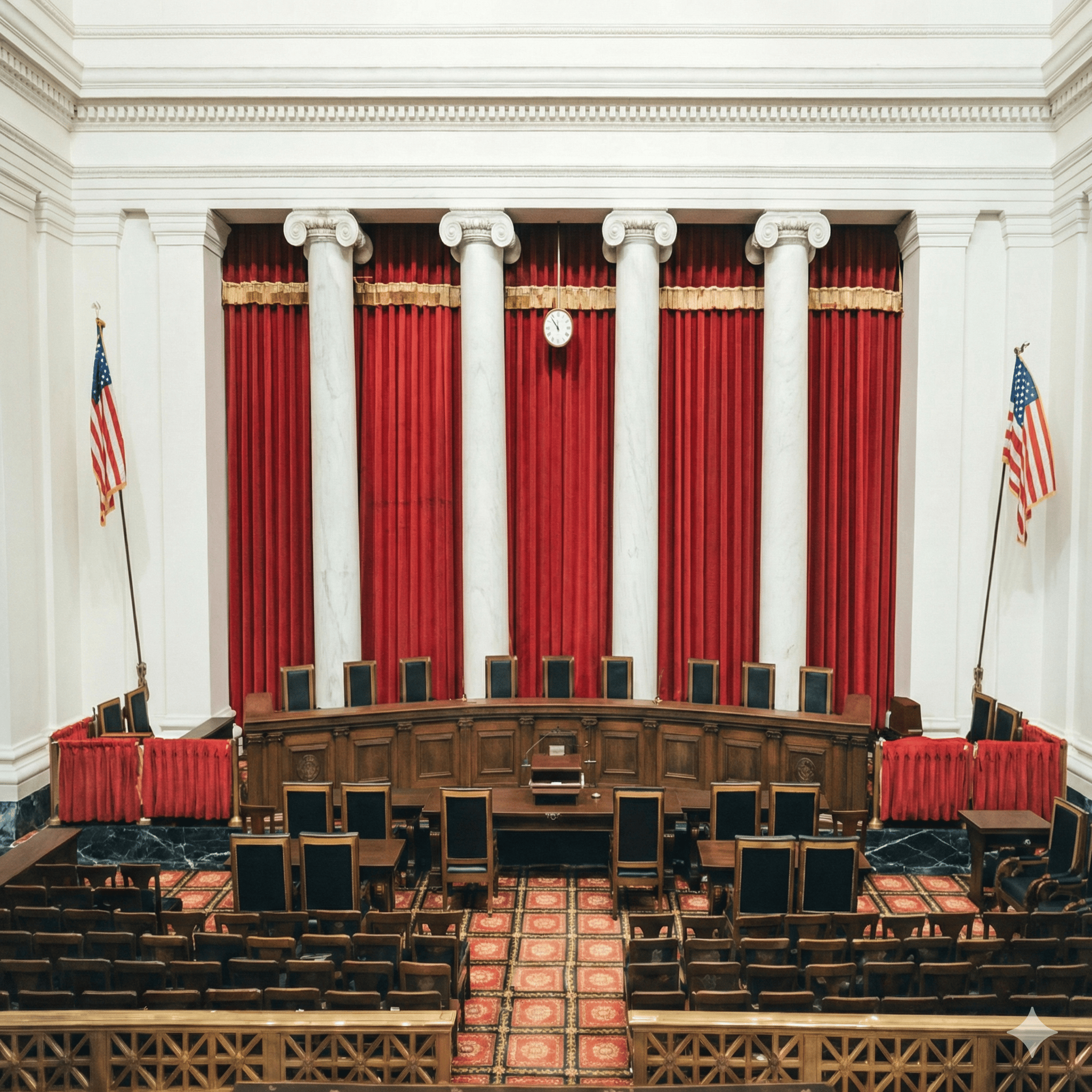 Hunter v. United States: Argued on March 3, 2026 11.03.2026 1ώ 35λCase Summary:On March 3, 2026, the Supreme Court heard oral arguments in Hunter v. United States, a case that examines the limits of plea agreements and whether a defendant can truly waive their right to appeal a sentence that may be unconstitutional.The case involves Munson P. Hunter III, who pleaded guilty to wire fraud. As part of his plea, he signed a standard "appellate waiver," giving up his right to challenge his sentence. However, at sentencing, the judge imposed a condition requiring Hunter to take any mental health medications prescribed by his doctors—a requirement Hunter argues violates his Fifth Amendment liberty interests. Crucially, after imposing the sentence, the judge explicitly told Hunter, "You have a right to appeal," and the government prosecutor did not object to that statement.Core Legal IssuesThe justices are deciding two major points that affect nearly 95% of federal criminal cases settled by pleas:The Scope of Waivers: Are the only exceptions to an appeal waiver claims of "ineffective assistance of counsel" or a "sentence exceeding the statutory maximum," or are there broader exceptions for "miscarriages of justice" or unconstitutional sentencing conditions?The "Waiver of the Waiver": Does a judge’s oral statement at sentencing—telling a defendant they have a right to appeal—override a previously signed written waiver, especially if the government remains silent?Highlights from Oral ArgumentSkepticism Toward the Government: Several justices, including Justice Elena Kagan and Justice Ketanji Brown Jackson, appeared troubled by the government’s "hard line" position. They questioned whether a waiver should really block a defendant from appealing a sentence if, for example, a judge was explicitly racist or imposed a "shocking" and unconstitutional condition.The Contract Law Debate: Hunter’s counsel, Lisa Blatt, argued that plea deals are essentially contracts and should be subject to traditional contract defenses like "unconscionability" or "public policy." However, Justice Samuel Alito and others expressed concern that importing complex contract doctrines into criminal law might make plea deals too unpredictable.Coercion and Power Imbalance: Justice Jackson highlighted the inherent power imbalance in plea negotiations, questioning whether a defendant can "voluntarily" waive a right to challenge a sentence that hasn't even been determined yet.The "Silent Prosecutor" Problem: Much of the bench focused on the fact that the prosecutor did not correct the judge when Hunter was told he could appeal. Chief Justice John Roberts and Justice Brett Kavanaugh explored whether the government "forfeited" its right to enforce the waiver by failing to speak up in the courtroom.
 -
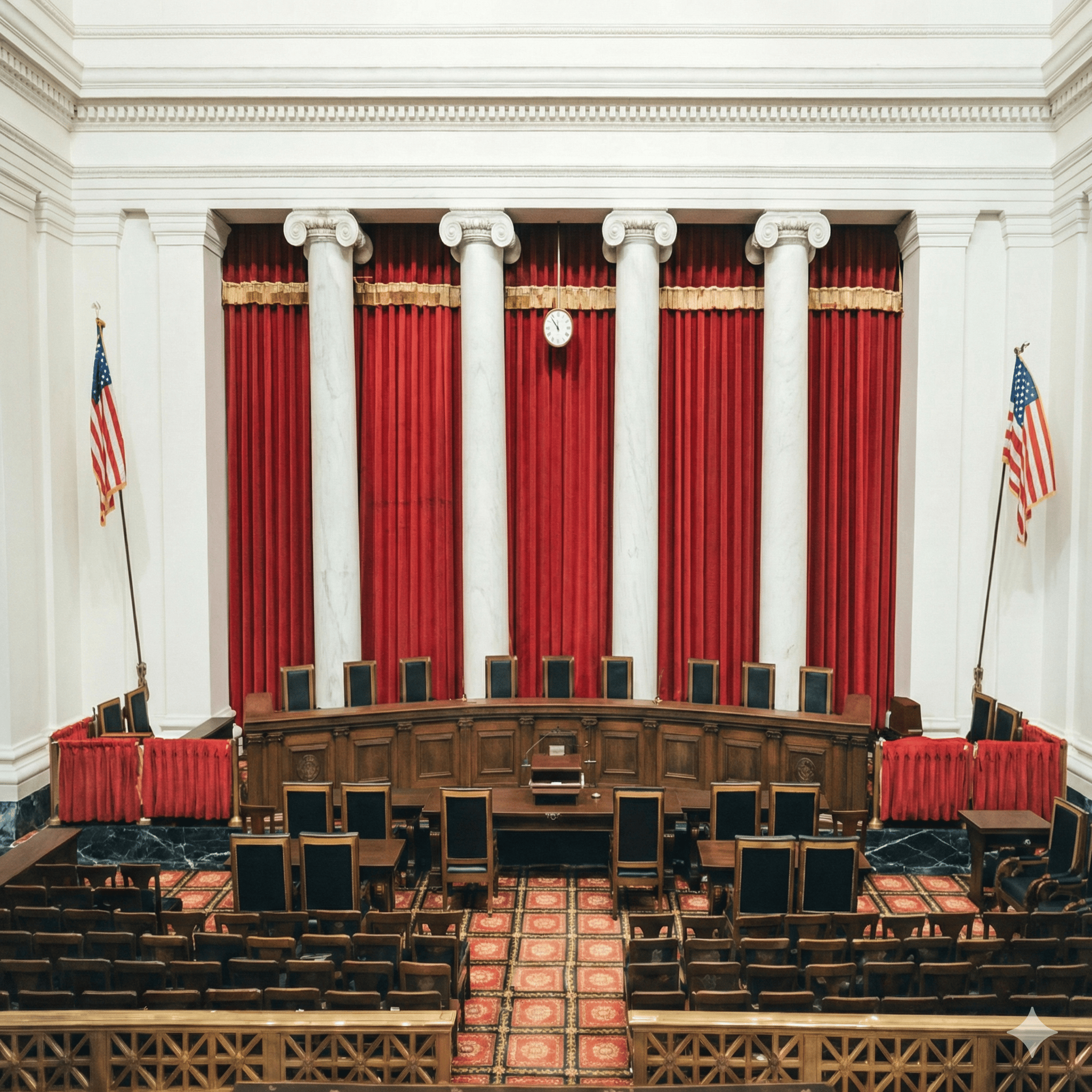 United States v. Hemani: Argued on March 2, 2026 11.03.2026 1ώ 54λCase Summary:On March 2, 2026, the Supreme Court heard oral arguments in United States v. Hemani, a pivotal Second Amendment case determining whether the government can permanently disarm "unlawful users" of controlled substances, specifically marijuana.The case involves Ali Danial Hemani, a Texas man who was indicted under 18 U.S.C. § 922(g)(3) after FBI agents found a Glock pistol and marijuana in his home. Hemani, who admitted to using marijuana roughly every other day but was not intoxicated at the time of the search, challenged the law as an unconstitutional violation of his right to bear arms.Core Legal IssuesThe justices are grappling with whether a categorical ban on gun ownership for drug users is consistent with the "history and tradition" of American firearm regulation. Under the standard set in Bruen, the government must prove that this modern restriction is analogous to historical laws from the founding era.The United States argues that the ban is similar to historical "habitual drunkard" laws, which allowed for the disarmament of individuals deemed a danger to themselves or others. Hemani’s defense, however, contends that those historical laws only regulated the use or carry of firearms while actually intoxicated, rather than stripping away the fundamental right to possess a weapon in the home for self-defense based on occasional or regular drug use.Highlights from Oral ArgumentJustice Gorsuch’s Breakfast Hypo: Justice Neil Gorsuch expressed skepticism toward the government’s "habitual user" standard, pointing out that many of the Founding Fathers, including John Adams, consumed alcohol daily (such as hard cider with breakfast) without being considered "dangerous" or subject to disarmament.The Ambien Problem: Justice Amy Coney Barrett pressed the government on the breadth of the statute, noting that under the current law, someone who takes a spouse’s Ambien or a single unprescribed Adderall could technically be labeled an "unlawful user" and face a 15-year felony sentence for owning a gun.Vagueness Concerns: Several justices questioned the lack of a clear definition for "unlawful user." They noted that the statute does not specify how frequently one must use a substance or how recently the use must have occurred to trigger the loss of a constitutional right.Individualized Dangerousness: Justice Sonia Sotomayor and Justice Brett Kavanaugh explored whether the Second Amendment requires an "individualized determination" of danger—similar to the domestic violence restrictions upheld in Rahimi—rather than a blanket ban based on the mere status of being a drug user.
Παρόμοια podcasts


Δημοφιλές σε
Αυτό το podcast εμφανίζεται και στις λίστες podcasts αυτών των χωρών.
