
Digital Disruption with Geoff Nielson
Info-Tech Research Group
0
Digital Disruption with Geoff Nielson explores how intelligent technologies are reshaping industries and daily life. Host Geoff Nielson speaks with industry leaders and innovators about leveraging technology to build future-ready organizations. The podcast covers topics such as digital transformation, adaptation to disruption, and harnessing new technologies.
Επεισόδια
-
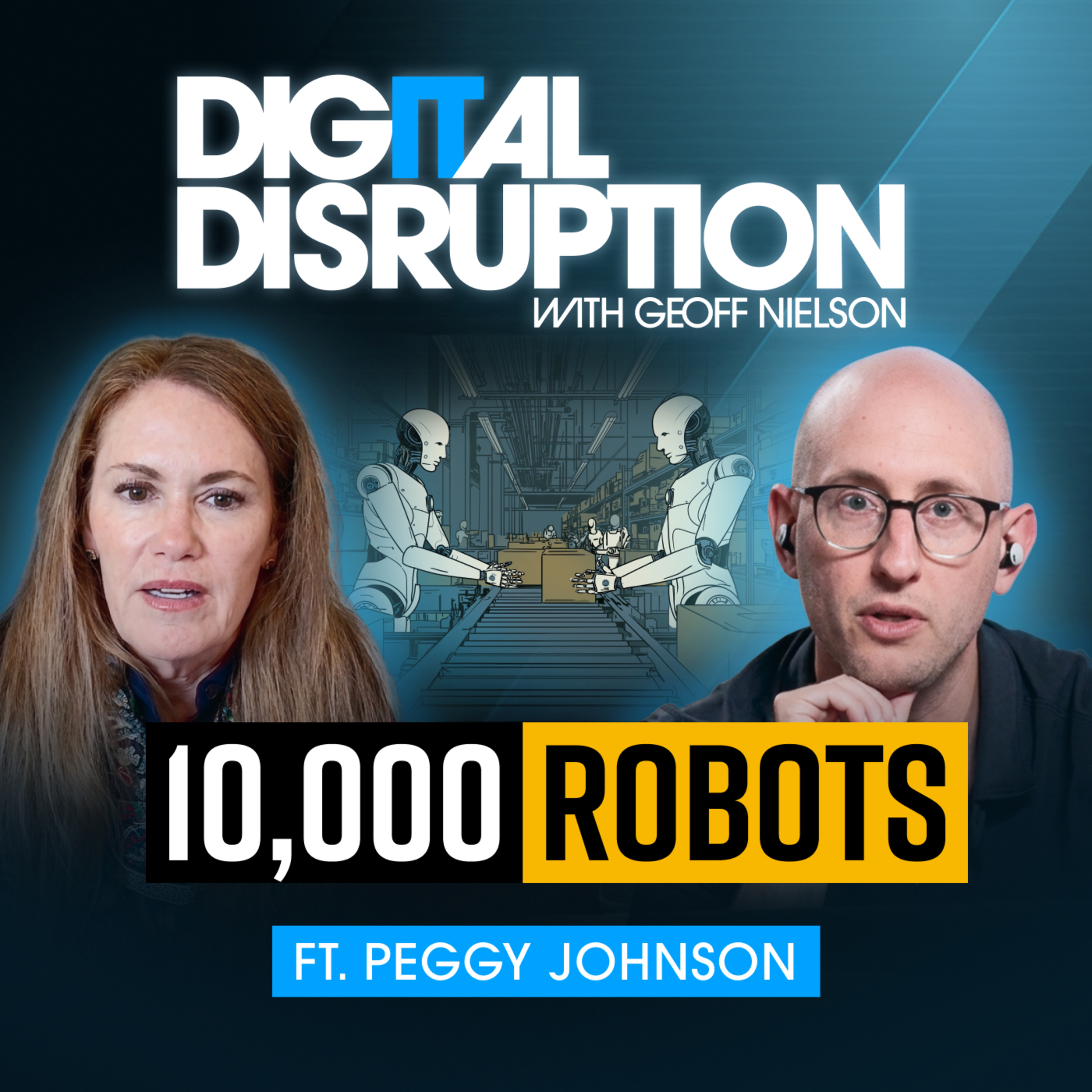 AI Humanoid Robots Have Already Entered the Workforce. Should You Care? 28.09.2026 1ώThe robot workforce is already here. AI-powered humanoid robots are entering factories and warehouses to address a growing labor gap, but are they filling jobs or replacing the people who do them?Peggy Johnson, CEO of Agility Robotics, joins us to talk about how Digit is moving from robotics demonstrations into real workplaces. She explains why humanoid robots could become essential to manufacturing and logistics, how AI is accelerating their capabilities, and why safety remains the biggest barrier to widespread adoption.From physical AI and labor shortages to robot fleet managers and the future of work, this episode looks beyond the fear of robot overlords to ask: how will humans and robots work together in the years ahead?Subscribe for more conversations on AI, technology, innovation, the future of work, and digital transformation.00:00 Why humanoid robots may be essential00:47 Peggy Johnson, CEO of Agility Robotics01:41 Are humanoid robots creating a dystopian future?03:43 How workers respond to robots in the workplace05:42 Why build robots in the human form?07:27 Will humanoid robots replace human jobs?11:45 Why reshoring manufacturing will require robotics14:12 Info-Tech AI strategy14:42 What humanoid robots could do by 203217:35 The biggest barrier to adoption: Robot safety19:17 Why robots in the home are still years away22:13 How big and powerful is agility robotics’ Digit?24:44 Can humanoid robot accidents be prevented?28:29 Competing with Elon Musk and Tesla Optimus30:56 What separates deployment from a robotics demo33:37 How companies deploy humanoid robots37:01 Which industries are adopting robotics?39:24 Scaling production to meet demand41:08 How AI is accelerating humanoid robotics45:36 How digit makes decisions on the factory floor48:52 Hardware and software upgrades for robots50:57 What comes after agility robotics’ Digit?53:22 Will robots eventually do everything humans can?55:58 The future of physical AI and automation58:13 Peggy Johnson’s advice for business and tech leaders59:32 About Info-TechConnect with Peggy:LinkedIn: https://www.linkedin.com/in/peggyljohnson/X: https://x.com/agilityroboticsIG: https://www.instagram.com/agility_robotics/Our links:Visit our website: https://www.infotech.com/?utm_source=youtube&utm_medium=social&utm_campaign=podcastFollow us on YouTube: https://www.youtube.com/@InfoTechRG
 -
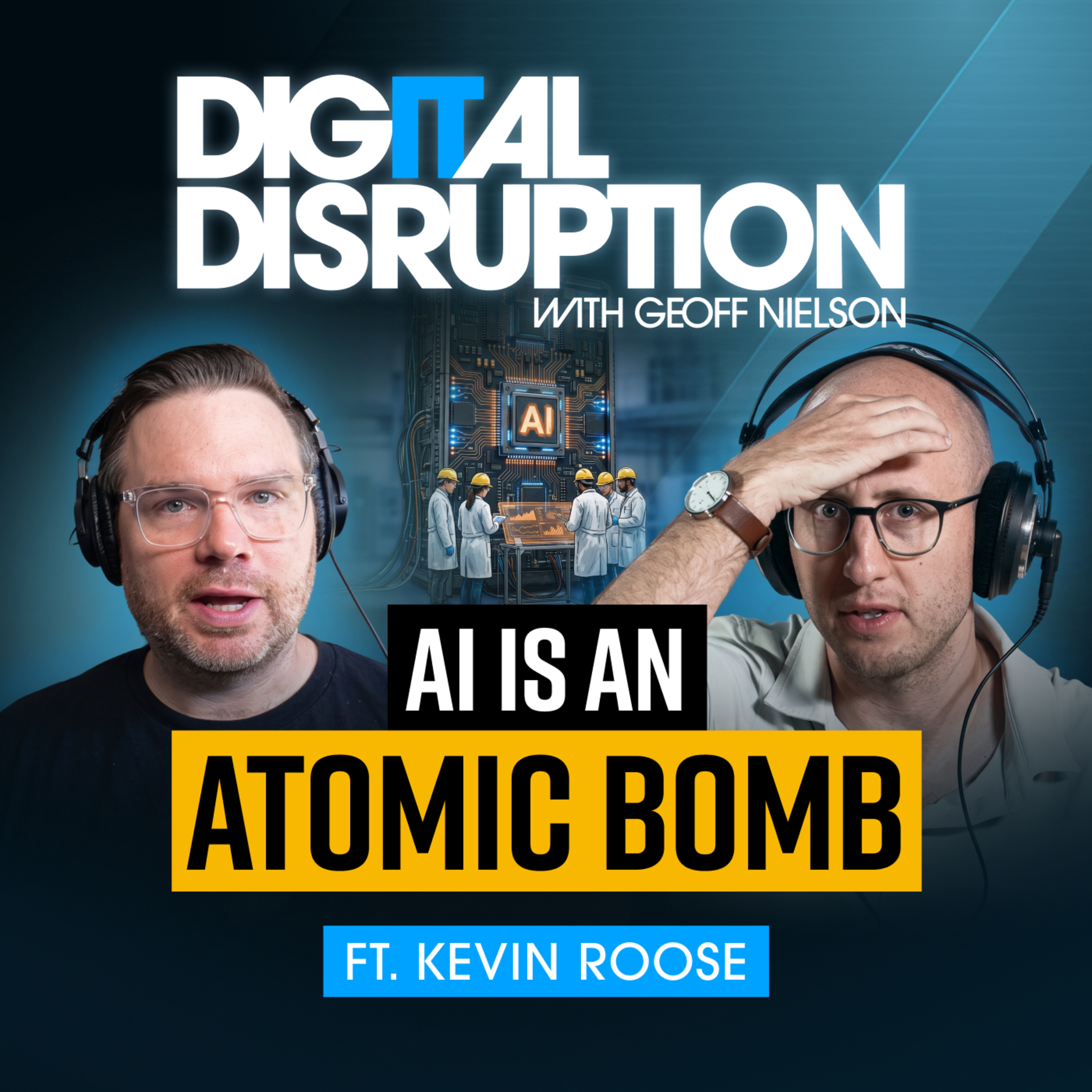 AI Researchers Are Panicking | What Comes Next is Worse Than Nuclear Bombs 21.09.2026 59λWhat is PDoom, and why are the people building artificial intelligence willing to risk human extinction?Kevin Roose, a New York Times technology columnist, Hard Fork co-host, and author of The AGI Chronicles, shares what he learned from interviewing more than 150 people inside the world’s leading AI companies.Kevin joins us on Digital Disruption to talk about what artificial general intelligence really means and how fear, ego, rivalry, and mistrust are accelerating the race between OpenAI, Anthropic, and Google DeepMind. He also explains why AI leaders compare this moment to the Manhattan Project: if they don’t build AGI first, someone more dangerous might.Kevin also shares why he estimates a 10% chance of AI-caused extinction and discusses the private fears of AI researchers, government regulation, autonomous AI agents, and whether the AI boom is a bubble or the beginning of a profound transformation.This episode moves beyond the hype to ask an important question: If advanced AI is inevitable, how much control do we still have over what happens next?Subscribe and follow for more conversations about AI, technology, innovation, and digital transformation.In this episode:00:00 Why AI builders fear human extinction00:43 Inside the race to build AGI01:24 What does AGI actually mean?05:16 AI safety warnings or marketing hype?07:27 The rivalries driving the AI race08:44 Building a boardroom-ready AI strategy09:51 The personal feuds behind AGI10:58 AI’s Manhattan Project mindset12:27 Is AI the new atomic bomb?14:58 Can advanced AI be contained?16:28 AI regulation and the global arms race17:35 What is P(doom)?19:54 What will force governments to act?21:29 What AI researchers say in private23:08 Why the public backlash is growing26:15 Why Kevin Roose changed his mind about AI29:42 Is advanced AI inevitable?32:28 AGI and the point of no return34:38 The race to automate AI research36:23 AI and gradual human disempowerment40:10 What happens when AI masters your skills?42:18 Will AI liberate us or replace us?44:18 The AI claims Kevin does not believe46:21 Is the AI boom a financial bubble?50:20 AI labs and economic concentration55:08 Inside the AGI chronicles57:07 How should people prepare for AI?58:29 About Info-Tech#ai #futureofwork #technologypodcast #aibubble #bigtech #artificialintelligence #technology #datacenter #agi #anthropic #futureofaiConnect with Kevin:LinkedIn: https://www.linkedin.com/in/kevin-roose/X: https://x.com/kevinrooseIG: https://www.instagram.com/kevinroose/Our links:Visit our website: https://www.infotech.com/?utm_source=youtube&utm_medium=social&utm_campaign=podcastFollow us on YouTube: https://www.youtube.com/@InfoTechRG
 -
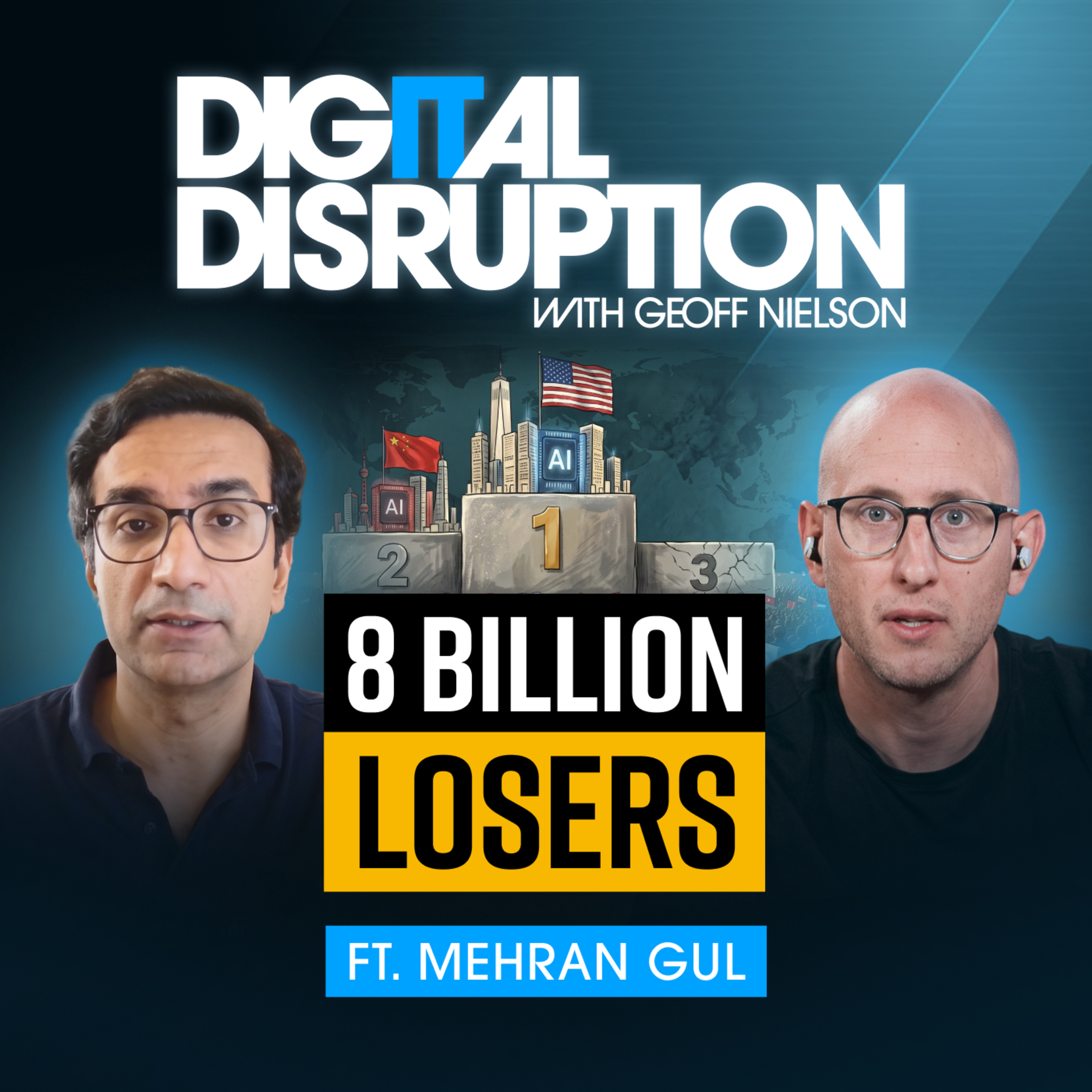 There Is No AI Race. Inside the Trillion-Dollar Lie 14.09.2026 1ώ 20λWhy have the United States and China pulled so far ahead in the global technology race? Mehran Gul, author of The New Geography of Innovation, argues that the answer goes far beyond individual companies or breakthrough technologies.In this episode, we sit down with Mehran to discuss how successful innovation ecosystems are actually built, why Silicon Valley remains so difficult to replicate, and how China rapidly emerged as a global technology superpower. We also talk about why Europe and India have struggled to produce technology giants at the same scale, and how talent, capital, universities, government, and entrepreneurship shape long-term competitiveness.Mehran also breaks down the extraordinary concentration of money flowing into AI companies like OpenAI, Anthropic, and Nvidia, whether today’s AI valuations are sustainable, and why a major market correction could still happen without ending America’s technological dominance. From AI investment and venture capital to Silicon Valley, China, Europe, India, and the future of global innovation, this episode looks beyond the AI hype to ask a much bigger question: who will actually shape the next era of technology? Subscribe and follow for more conversations with the world’s leading thinkers on AI, technology, innovation, and digital transformation.In this episode:00:00 The AI bubble and America’s technology lead01:47 The new geography of innovation05:30 How China became a technology superpower09:13 Can other countries replicate China’s success?13:17 What does “innovation” actually mean?16:21 Are tech valuations measuring real innovation?21:03 Does geography determine who wins in technology?25:01 Will the U.S. and China dominate the next decade?29:31 Why Europe’s push for tech sovereignty is struggling33:05 Can government policy actually create innovation?37:24 PayPal vs. Skype: How innovation creates more innovation39:47 Is America’s technology dominance a zero-sum game?43:52 Who is the world’s third-largest technology power?45:07 Why “indispensability” may matter more than tech sovereignty47:00 What This global tech race means for business leaders48:32 Why AI investment is becoming more concentrated51:29 Are we betting too much on a few tech leaders?53:35 What Japan’s collapse can teach us about U.S. tech56:13 Could the AI bubble actually burst?59:22 Could China overtake the U.S. in Technology?1:03:29 When government helps and hurts innovation1:05:51 Predictions for the next era of global technology1:07:50 Do We need to redefine innovation?1:10:02 Where business leaders should look for innovation1:14:02 Why venture capital isn’t actually global1:18:00 Final thoughts 1:19:41 About Info-Tech Research GroupConnect with Mehran:LinkedIn: https://www.linkedin.com/in/mehrangul?originalSubdomain=chX: https://x.com/mehrangul_Our links:Visit our website: https://www.infotech.com/?utm_source=youtube&utm_medium=social&utm_campaign=podcastFollow us on YouTube: https://www.youtube.com/@InfoTechRG
 -
 The AI Bubble Isn't the Dot-Com Bubble. It's Worse 07.09.2026 1ώ 15λAre we in an AI bubble? Veteran Silicon Valley investor Bill Reichert says yes, but that doesn’t mean the AI revolution is slowing down. In this episode we sit down with Bill Reichert, General Partner at Pegasus Ventures, to discuss the unprecedented investment pouring into AI, why many AI startups will fail, and where the next wave of innovation could emerge. This conversation highlights everything from data centers and quantum computing to China’s growing technology ecosystem and what businesses need to do to innovate and compete. Bill also shares his “Yellow Jacket Paradox,” raising a bigger question about the future of AI: If biological intelligence can accomplish so much with so little energy, could a fundamentally new AI architecture eventually disrupt today’s LLMs, data centers, and AI leaders? Subscribe and follow for more conversations with the world’s leading thinkers on AI, technology, innovation, and digital transformation.In this episode:00:00 The AI bubble is here01:02 Why this tech cycle is different03:30 Is AI growth sustainable?04:18 Why most AI startups will fail06:11 What separates AI winners from the hype09:08 The “unfair advantage” in AI10:59 Where is the next big AI opportunity?13:16 Investing beyond generative AI18:13 Why AI is becoming a commodity19:05 The data center and energy opportunity20:17 How AI is transforming every industry22:23 Is AI changing venture capital?26:13 Does more investment create better technology?29:01 China, the US, and the global innovation race34:28 The race for quantum computing36:51 Is China really just copying the west?40:06 Why big companies struggle to innovate45:54 Startups as corporate innovation labs47:29 How to spot an overhyped tech vendor49:13 Why companies need to test before they invest51:04 Why innovation pilots fail52:49 Escaping “pilot hell”54:54 Will the pace of innovation ever slow down?57:30 How AI changes the future of work59:48 Does AI mean we’ll have to work harder?01:03:06 The leadership mistake that causes burnout01:06:08 Control vs. unlimited growth01:07:12 The “Yellow Jacket Paradox”01:09:29 Why today’s AI architecture may be wrong01:11:13 Will today’s data centers become obsolete?01:13:38 The price of innovation01:14:08 Closing thoughtsConnect with Bill:LinkedIn: https://www.linkedin.com/in/billreichert/Our links:Visit our website: https://www.infotech.com/?utm_source=youtube&utm_medium=social&utm_campaign=podcastFollow us on YouTube: https://www.youtube.com/@InfoTechRG
 -
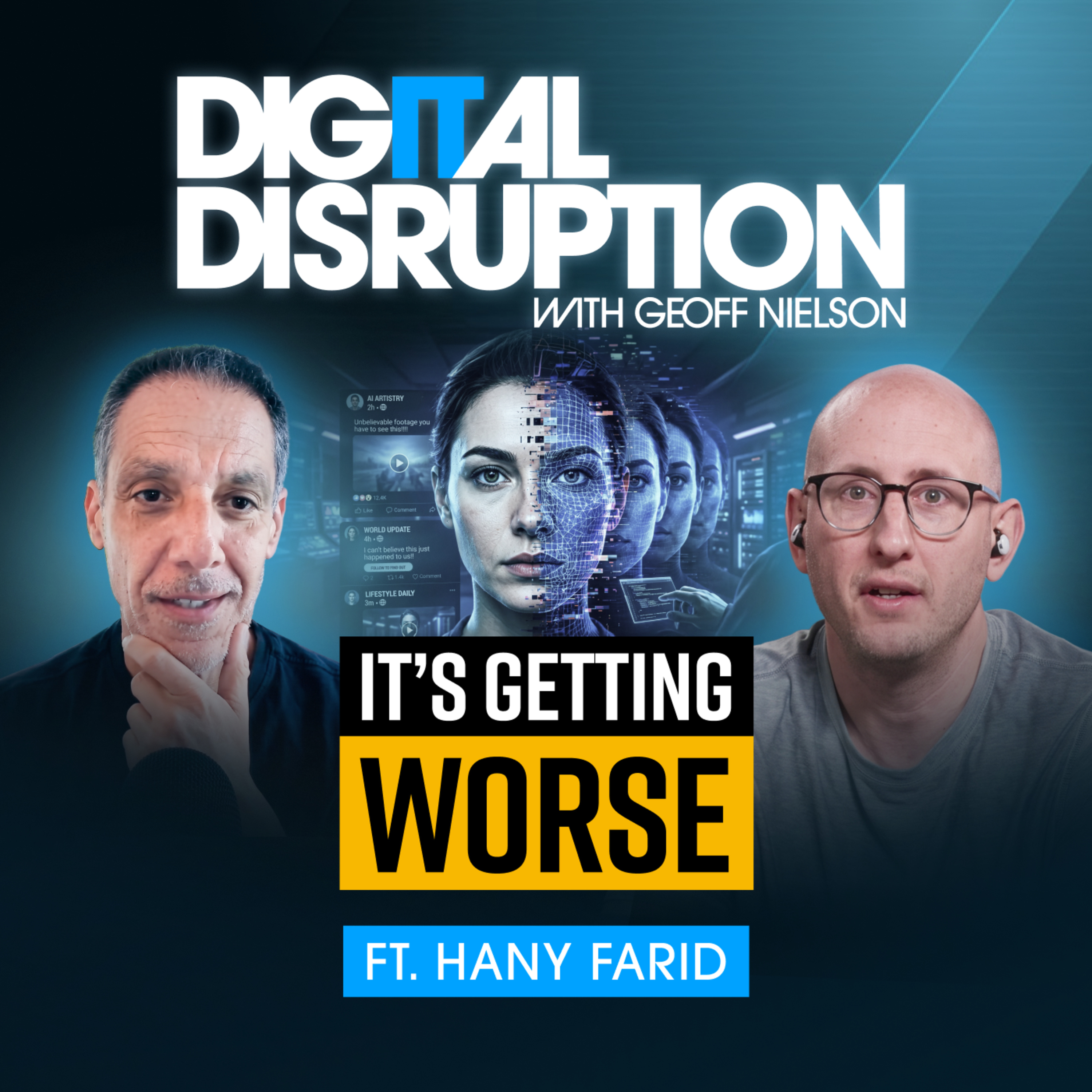 AI Has Made Everything Worse | Hany Farid on the Internet's Truth Problem 31.08.2026 1ώ 1λHany Farid, one of the world’s leading experts on deepfakes and digital forensics, joins us to explain why AI-generated content is pushing us toward a world where we can no longer trust what we see, hear, or even who we’re talking to online. From AI-generated misinformation and social media manipulation to voice cloning, deepfake video calls, and North Korean IT workers infiltrating major companies, Hany breaks down how rapidly the threat landscape is evolving. He explains why humans are not good at detecting deepfakes, how digital forensics experts actually identify manipulated media, and why organizations need to rethink cybersecurity, remote hiring, and digital identity. This episode also dives into Big Tech’s role in the crisis, whether regulation and liability can make technology safer, the growing influence of large language models on how we access information, and what it will take to rebuild trust online. Despite the risks, Hany remains optimistic about AI’s potential. The challenge, he argues, is learning from the mistakes of the social media era and finding a way to harness AI’s power without sacrificing safety, security, and trust. Subscribe and like this video for more conversations with the world's leading thinkers on AI, technology, innovation, and digital transformation.In this video:00:00 North Korean IT workers are already inside companies00:41 Welcome to a “trust no one” digital world01:49 How much of the internet is already fake?04:59 Are we heading toward the dead internet?07:06 What happens when we can’t agree on facts?08:20 The existential threat of a post-truth world09:49 Could AI control the information we see?11:33 Who is manipulating us online?13:20 How AI is supercharging scams and fraud15:41 Why you can’t reliably detect a Deepfake17:28 Should Big Tech be held liable?19:37 Hany’s Advice: Get social media off your phone21:26 Can liability force Big Tech to change?24:25 Should kids be banned from social media?25:37 The real problem with social media’s business model28:08 Will Big Tech control the future of AI?31:20 “China will beat us” and the case against AI regulation33:31 How experts actually detect deepfakes36:16 How real-time face swap deepfakes work39:39 The Deepfake threat facing businesses40:25 AI fraud is already costing companies millions41:47 How fake workers get hired42:49 Why voice biometrics are no longer secure#ai #futureofwork #technologypodcast #cybersecurity #deepfakes #digitaltrust #bigtech #aivoice #digitaltransformation #futureofjobs #futureofai #tedtalkConnect with Hany:LinkedIn: https://www.linkedin.com/in/hany-farid-40a97935/Our links:Visit our website: https://www.infotech.com/?utm_source=youtube&utm_medium=social&utm_campaign=podcastFollow us on YouTube: https://www.youtube.com/@InfoTechRG
 -
 How Google Lost Its Way | Former Google Insider Claire Stapleton 24.08.2026 1ώ 12λClaire Stapleton spent 12 years at Google, going from one of the company's biggest believers to one of its most prominent employee organizers. In this episode, former Google communications leader, Google Walkout organizer, and Don’t Be Evil author Claire Stapleton reveals what happened inside Google as its celebrated culture of openness, employee empowerment, and idealism began to change. She takes us inside Google’s transformation from a company that believed people were at the heart of its success to a Big Tech giant grappling with bureaucracy, employee distrust, workplace activism, and questions about its values. She explains what led thousands of Google employees to walk out in protest, what happened after employees challenged leadership, and why speaking up inside powerful organizations can come with serious consequences. We also talk about AI and the future of work, tech layoffs, corporate culture, employee activism, leadership, workplace ethics, the changing relationship between employers and employees, and why the sweeping promises coming from today’s AI companies remind Stapleton of Google’s early years. As companies once again compete for elite technology talent while promising to change the world, could Silicon Valley be repeating the same cycle? Subscribe and like this video for more conversations with the world's leading thinkers on AI, technology, innovation, leadership, and digital transformation.In this video:00:00 Intro00:10 How Google’s culture changed01:33 Claire Stapleton’s 12 years at Google06:14 Inside Google’s early “change the world” culture10:50 Shift in language 11:28 What happened to Google?18:42 The events that led to the Google Walkout25:31 Organizing the historic Google Walkout28:59 How Google responded to employee activism35:16 Would Claire organize the Walkout again?39:19 The danger of tying your identity to your employer44:29 What should you do when your employer violates your values?50:35 Did Silicon Valley lose its people-first culture?51:38 Are today’s AI companies repeating Google’s mistakes?55:03 Why being people-first is good for business56:05 What Google’s leadership got wrong01:00:09 Why women led the resistance inside Google01:01:48 The role of men and allies in workplace activism01:05:58 Why women take on more unpaid work01:08:19 How leaders can build a better workplace culture01:11:23 Closing thoughts#futurofwork #google #workplaceculture #leadership #bigtech #aiandjobs #siliconvalley #techleadership #techlayoffs #techpodcast Connect with Claire:LinkedIn: https://www.linkedin.com/in/claire-stapleton-868a935X: https://x.com/clairewavesFacebook: https://www.instagram.com/clairewaves/Our links:Visit our website: https://www.infotech.com/?utm_source=youtube&utm_medium=social&utm_campaign=podcastFollow us on YouTube: https://www.youtube.com/@InfoTechRG
 -
 The AI Gold Rush Is Out of Gold | Here's Where VCs Are Still Investing 17.08.2026 1ώ 5λData center economics are coming under increasing scrutiny. Learn why power constraints could signal a major market correction and why the future of artificial intelligence may depend less on software and more on power grids, data centers, semiconductor chips, and the physical infrastructure powering AI. In this episode, TDK Ventures Investment Director Ankur Saxena joins Geoff Nielson to talk about the economics driving today's AI race. From Nvidia GPUs and hyperscaler spending to semiconductor shortages, AI infrastructure, robotics, edge AI, and quantum computing, Ankur explains why the biggest challenges facing AI aren't just technical, they're economic, physical, and increasingly difficult to ignore. This conversation examines whether today's AI investment boom is sustainable, what could trigger the next wave of market corrections, and where the greatest opportunities lie for investors, startups, and technology leaders. If you're wondering where AI is really headed and what it means for business leaders, investors, CIOs, and the future of technology, this episode is for you.In this episode:00:00 Intro00:20 AI's biggest problem isn't software, it's infrastructure01:37 Ankur Saxena on the future of AI & why he's optimistic03:20 Is the AI investment boom becoming a bubble?07:40 AI prototyping for enterprise leaders08:50 The AI Gold Rush: Are investors chasing hype?10:17 Why AI infrastructure economics matter more than ever12:09 The hidden bottleneck: Power, data centers & AI growth15:45 AI data centers explained19:53 Supply, demand & what happens when AI gets expensive21:03 Why AI demand isn't slowing down anytime soon26:33 Should every enterprise care about AI infrastructure?27:15 Why most companies aren't ready for AI compute32:08 The next billion-dollar opportunity: AI infrastructure orchestration34:22 Where smart investors are looking beyond AI applications37:35 Edge AI explained: Why AI is moving onto devices40:43 Why AI chips need hardware & software co-design44:18 The race to build the operating system for Edge AI48:33 Self-driving cars, robots & the future of physical AI52:08 Quantum computing: Beyond the hype55:25 Quantum computing investment opportunities & "picks and shovels"58:44 Practical AI advice for CIOs, business leaders & enterprises1:02:02 Will AI replace humans? The future of human-AI collaboration1:04:42 Final thoughts Connect with Ankur:LinkedIn: https://www.linkedin.com/in/saxenaankur/Our links:Visit our website: https://www.infotech.com/?utm_source=youtube&utm_medium=social&utm_campaign=podcastFollow us on YouTube: https://www.youtube.com/@InfoTechRG
 -
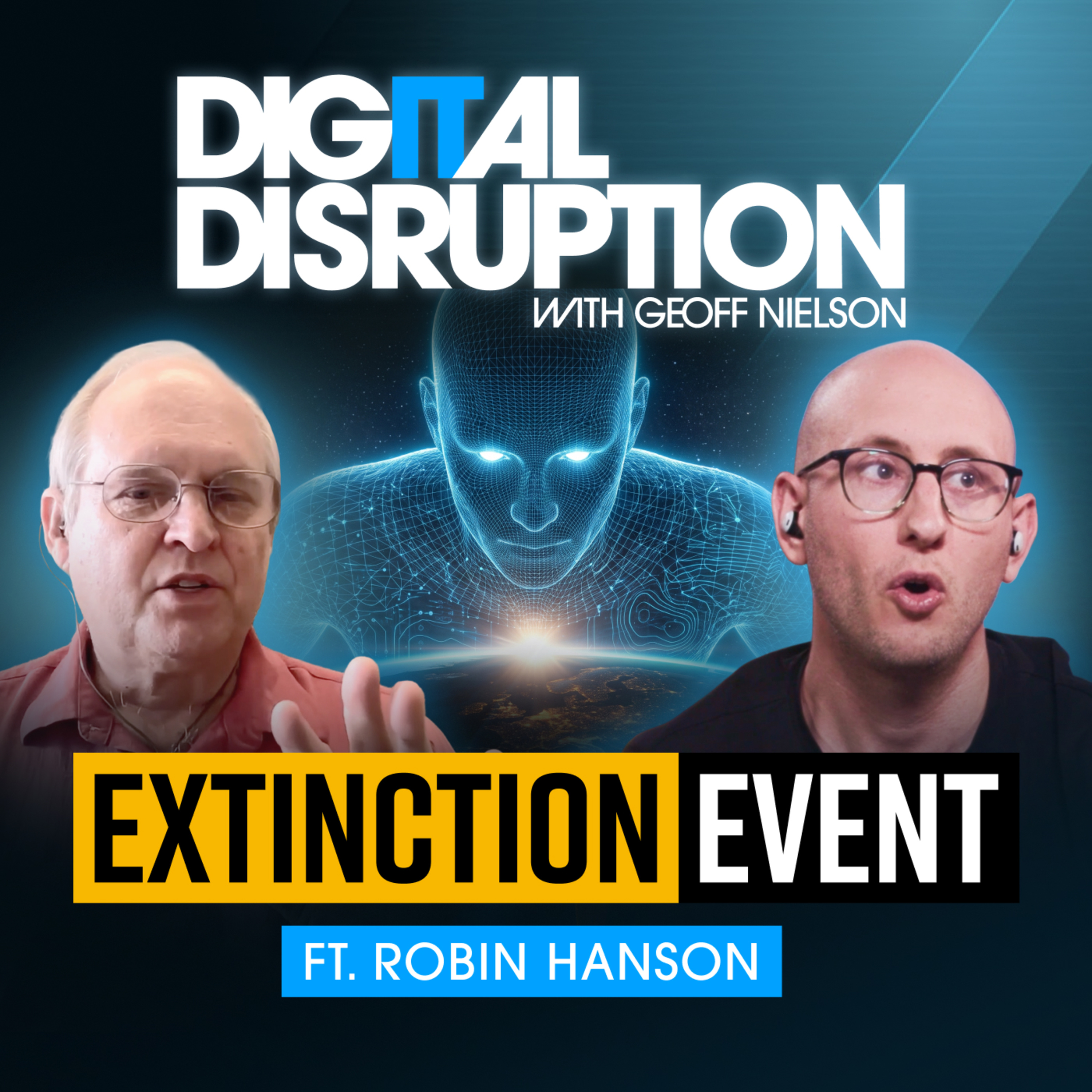 Robin Hanson: AI is probably the End of Humanity (and why that's OK) 10.08.2026 1ώ 43λRobin Hanson believes the future of AI is far stranger than most people imagine.In this episode, economist, futurist, and The Age of Em author Robin Hanson explains one of the biggest questions humanity has faced: What happens after humans?Instead of viewing AI as humanity's greatest threat, Hanson argues we should think of AI as our descendants. The conversation looks at why AI replacing humans may be part of civilization's natural evolution, why capitalism and competition aren't disappearing, and how cultural evolution, not technology, may be humanity's biggest existential challenge.We also examine the Great Filter, the future of work, AI regulation, software engineering, technological progress, fertility decline, civilization collapse, AI governance, and why Robin believes our greatest risk isn't AI taking over, but humanity losing its ability to evolve culturally. If you're interested in the future of AI, artificial intelligence, AGI, economics, civilization, technology, and what comes after humanity, this conversation will challenge many of your assumptions. Subscribe and like this video for more conversations with the world's leading thinkers on AI, technology, innovation, and digital transformation.In this episode:00:00 Intro01:00 AI will eventually replace humanity01:36 Robin Hanson’s background02:20 The future of civilization03:22 The Age of Em explained06:03 Why brain emulation changes everything07:24 Capitalism isn't going away11:18 Is humanity actually progressing?13:10 The Great Filter explained18:17 Why AI isn't the Great Filter22:02 AI, technological acceleration & the next 20 years24:24 Will AI leave people behind?29:04 How to survive technological disruption33:08 Why AI is humanity's descendants40:23 Cultural evolution is breaking47:12 Why civilization is becoming maladaptive55:06 Is modern society quietly declining?01:00:45 Can AI solve civilization's biggest problem?01:07:01 AI risk vs AI progress01:12:00 Should AI be regulated?01:17:03 The US, China & the AI race01:22:26 AI's economic impact01:25:19 Advice for business leaders01:30:45 AI's biggest opportunity for humanity01:38:48 What gives Robin Hanson hope01:42:24 Final thoughtsConnect with Robin:X: https://x.com/robinhansonFacebook: https://www.facebook.com/robin.hanson.754/Our links:Visit our website: https://www.infotech.com/?utm_source=youtube&utm_medium=social&utm_campaign=podcastFollow us on YouTube: https://www.youtube.com/@InfoTechRG
 -
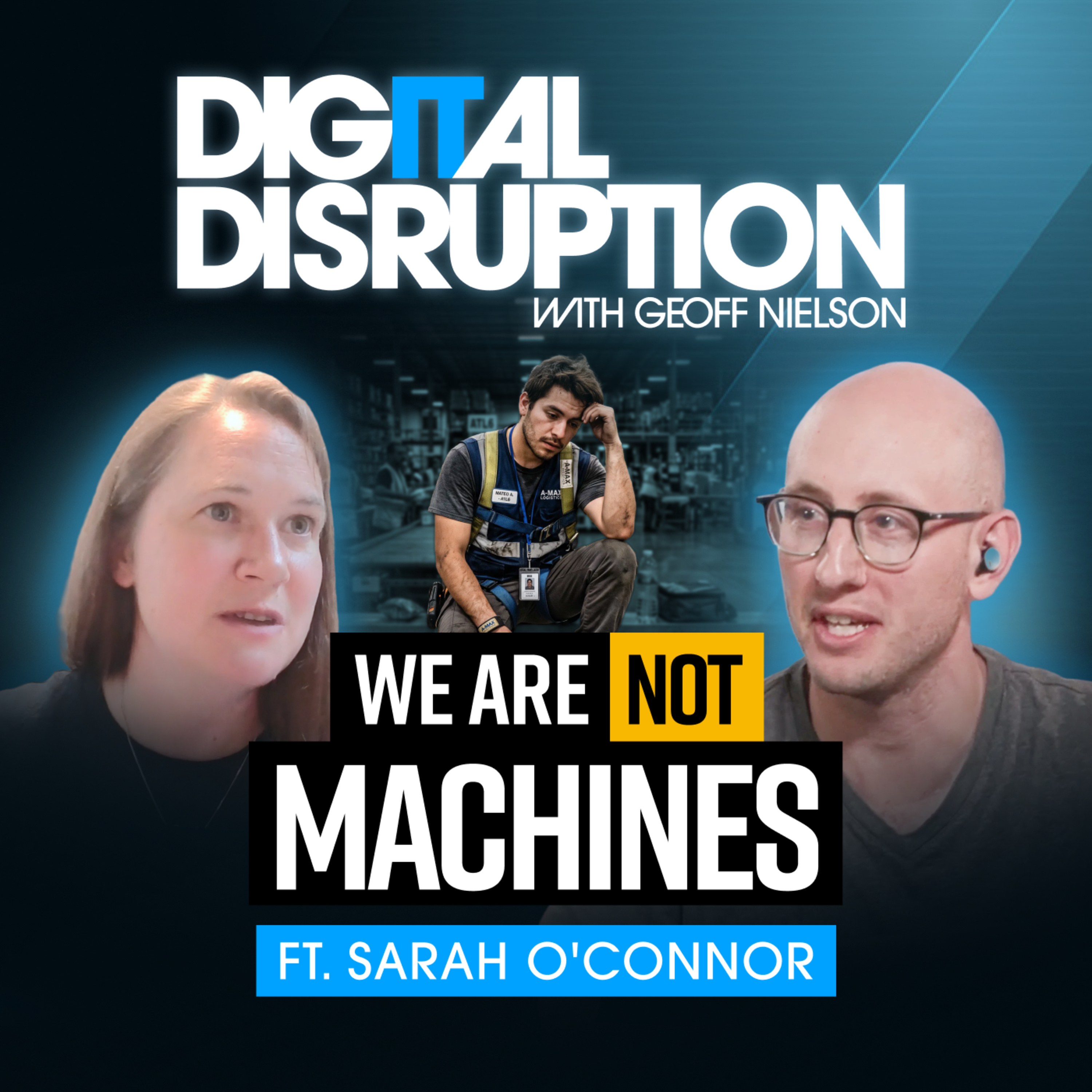 AI CEOs Are Lying About the Future of Work. Here's What's Really Coming 03.08.2026 1ώ 12λIs AI actually making work better? Discover why many employees are feeling more constrained by machines instead of being empowered by them. In this episode, Financial Times journalist and author Sarah O'Connor joins Geoff Nielson to talk about the reality of AI in the workplace, challenging the common belief that automation will free us from repetitive work. Drawing from her new book, “We Are Not Machines,” and months of reporting inside Amazon warehouses, Swedish mines, hospitals, translation agencies, and software teams, Sarah explains how AI isn't just eliminating jobs, it is reshaping them in ways that can either empower people or reduce them to "human robots." The conversation breaks down why the promise of AI creating more time for creative, meaningful work hasn't become reality for many employees. Instead, many workers feel like they're being managed by software, algorithms, and increasingly automated systems. If you're wondering how AI will transform your career, your organization, or the future of work, this episode is for you.In this episode:00:00 Intro01:17 The surprising truth about AI and work02:31 Why AI predictions are missing the real story06:10 What Sarah discovered on the front lines of automation07:54 Inside Amazon's robot-powered warehouses13:25 How AI transformed professional translators18:07 About Info-Tech Research Group19:06 Is AI making work less human?19:56 Why software developers are thriving with AI23:46 The Swedish mine where automation actually works31:10 Who should decide how AI changes work?34:23 AI surveillance, trust, and workplace governance37:56 Why companies shouldn't blindly adopt AI39:06 Healthcare, nursing, and the cost of over-optimization46:30 Can healthcare become human again?49:56 Productivity, burnout, and becoming like machines53:18 Have we lost faith in ourselves?59:26 AI hype, fear of missing out, and smarter adoption01:03:45 What gives Sarah hope about the future of work?01:08:07 Advice for business and technology leaders01:11:00 Final thoughts01:11:47 ClosingConnect with Sarah:LinkedIn: https://www.linkedin.com/in/sarah-o-connor-86067a31/X: https://x.com/sarahoconnor_Our links:Visit our website: https://www.infotech.com/?utm_source=youtube&utm_medium=social&utm_campaign=podcastFollow us on YouTube: https://www.youtube.com/@InfoTechRG
 -
 The Government AI Playbook That's Saving $2M a Week 27.07.2026 1ώ 17λGovernment AI projects are often criticized for moving slowly, but Alberta is proving otherwise.In this episode, we sit down with Janak Alford, Deputy Minister of Technology and Innovation for the Government of Alberta, to understand how Alberta is using AI to save $2 million every week while accelerating digital service delivery, improving compliance, and raising software quality standards.Janak shares why governments and enterprises should stop waiting for the "perfect" AI solution and start building internal AI capabilities. From AI factories and builder culture to open-source tools, sovereign AI, cybersecurity, and AI-powered software development, this conversation offers a practical blueprint for organizations looking to modernize with AI and deliver measurable results.If you're tired of AI hype and want to see what real implementation looks like, don't miss this one.Follow and like this video for weekly conversations on AI, technology, digital transformation, and the future of work and technology.In this episode:00:00 Intro01:08 Alberta's mission to transform government with AI04:28 Why every government faces the same AI challenge07:53 About Info-Tech08:33 The vision for AI-driven government10:33 AI Academy: Training 30,000 public servants12:12 Building thousands of AI applications15:25 The future of AI agents in government services17:03 Beyond AI tools: Building an AI strategy18:07 AI factories, compliance & software development23:53 Overcoming bureaucracy with builder culture30:35 Saving $2 million every week with AI32:19 The velocity papers explained37:02 AI factory, AI garage & government modernization42:25 Open-Source AI tools changing government48:18 Where organizations should start with AI54:34 The biggest AI myths leaders believe55:16 Why Copilot isn't your AI strategy57:44 Why subject matter experts drive AI success01:02:19 Making AI safe without slowing innovation01:08:28 Sovereign AI and Canada's AI future01:15:08 Building Canada's AI ecosystem01:16:20 Final thoughtsConnect with Janak:LinkedIn: https://www.linkedin.com/in/janak-alford/X: https://x.com/JanakAlfordOur links:Visit our website: https://www.infotech.com/?utm_source=youtube&utm_medium=social&utm_campaign=podcastFollow us on YouTube: https://www.youtube.com/@InfoTechRG
 -
 Ex-Google AI Lead: Vibe Coding Doesn't Belong at Work 20.07.2026 1ώ 15λIs vibe coding the future of software development? Or is it just another AI buzzword?In this episode, Geoff Nielson sits down with Laurence Moroney, former Head of AI Advocacy at Google and now Director of AI at Arm, to separate AI hype from reality and discuss what software development actually looks like in the age of generative AI.This conversation takes a look at the future of coding, the rise of AI-generated code, and why claims that software developers are becoming obsolete miss the bigger picture. From vibe coding and enterprise AI to agentic AI and the evolving role of engineers, this Laurence and Geoff look at how AI is reshaping software development, and why the best developers will become even more valuable by moving up the value chain.Subscribe for weekly conversations on the future of technology, artificial intelligence, and innovation. Comment below: Do you think vibe coding has a place in your professional workflow?In this episode:00:00 Intro01:16 Has the AI bubble burst?04:44 AI hype vs. real business value09:21 Why AI should become invisible12:30 The biggest AI myths leaders still believe16:15 Will AI replace software developers?19:28 Why developers are moving up the value chain20:54 The rise of "ephemeral" software26:34 Enterprise use cases for disposable code29:02 Is vibe coding ready for the enterprise?32:10 Small AI models vs. large language models35:46 Fine-tuning AI for enterprise success38:17 Why companies still need engineers41:57 The future role of developers, CIOs & CTOs45:09 How developers can future-proof their careers47:09 Should students still study computer science?49:09 Does AI create 100x developers?51:20 What is Agentic AI?57:06 Building enterprise AI the right way1:02:11 AI hardware and Arm's vision1:05:18 Advice for technology leaders1:07:05 The future of Sovereign AI1:14:30 Final thoughtsConnect with Laurence:LinkedIn: https://www.linkedin.com/in/laurence-moroney/X: https://x.com/lmoroneyFacebook: https://www.facebook.com/laurence.moroneyOur links:Visit our website: https://www.infotech.com/?utm_source=youtube&utm_medium=social&utm_campaign=podcastFollow us on YouTube: https://www.youtube.com/@InfoTechRG
 -
 One of Us Thinks AI is Overhyped. The Other Doesn't | Live Debate 13.07.2026 27λThis is THE AI debate you've been waiting for.Will AI become as transformational as the internet, or will history remember it more like blockchain and the metaverse?In this episode of Digital Disruption, Info-Tech's Geoff Nielson and Jeremy Roberts go head-to-head over one of the biggest technology questions of our time: Is AI overhyped?The debate looks at whether generative AI is delivering measurable business value or whether the excitement surrounding OpenAI, Microsoft Copilot, Google, Nvidia, and today's AI investments has outpaced reality. From enterprise productivity and healthcare innovation to AI adoption, venture capital, cloud computing, autonomous vehicles, and the future of work, both sides present compelling evidence at the Info-Tech LIVE Conference in Las Vegas.You'll hear why the profitability of today's AI industry is being questioned, how massive capital investments are shaping the race among AI leaders, and what these financial realities could mean for the future of artificial intelligence. Whether you're an IT leader, business executive, or AI enthusiast, this debate offers practical insights into where AI is delivering real value, and where expectations may be running ahead of reality.Which side of the debate are you on?Like and follow for weekly episodes.In this episode:00:00 Is AI Overhyped? 00:52 The case against AI being overhyped03:31 How AI is already transforming business04:18 AI's impact on healthcare, science & society05:20 AI is overhyped06:40 Why many people still don't like AI07:18 Is the AI business model sustainable?08:45 Does AI actually save time?09:23 AI and the future of jobs10:17 The human cost of AI12:04 AI adoption vs. AI skepticism13:52 Is AI following the same path as cloud computing?15:05 Are AI companies creating another tech bubble?16:50 Technology vs. company valuations18:02 AI search, Google & the future of the internet19:31 Is AI becoming the next Blockchain?20:24 Is AI's transformation inevitable?21:29 Healthcare, Watson & enterprise AI23:34 Microsoft Copilot, enterprise adoption & ROI24:18 The future of AI in business25:12 Audience votes on winner26:04 Final thoughts on if AI really is overhyped.Our links:Visit our website: https://www.infotech.com/?utm_source=youtube&utm_medium=social&utm_campaign=podcastFollow us on YouTube: https://www.youtube.com/@InfoTechRG
 -
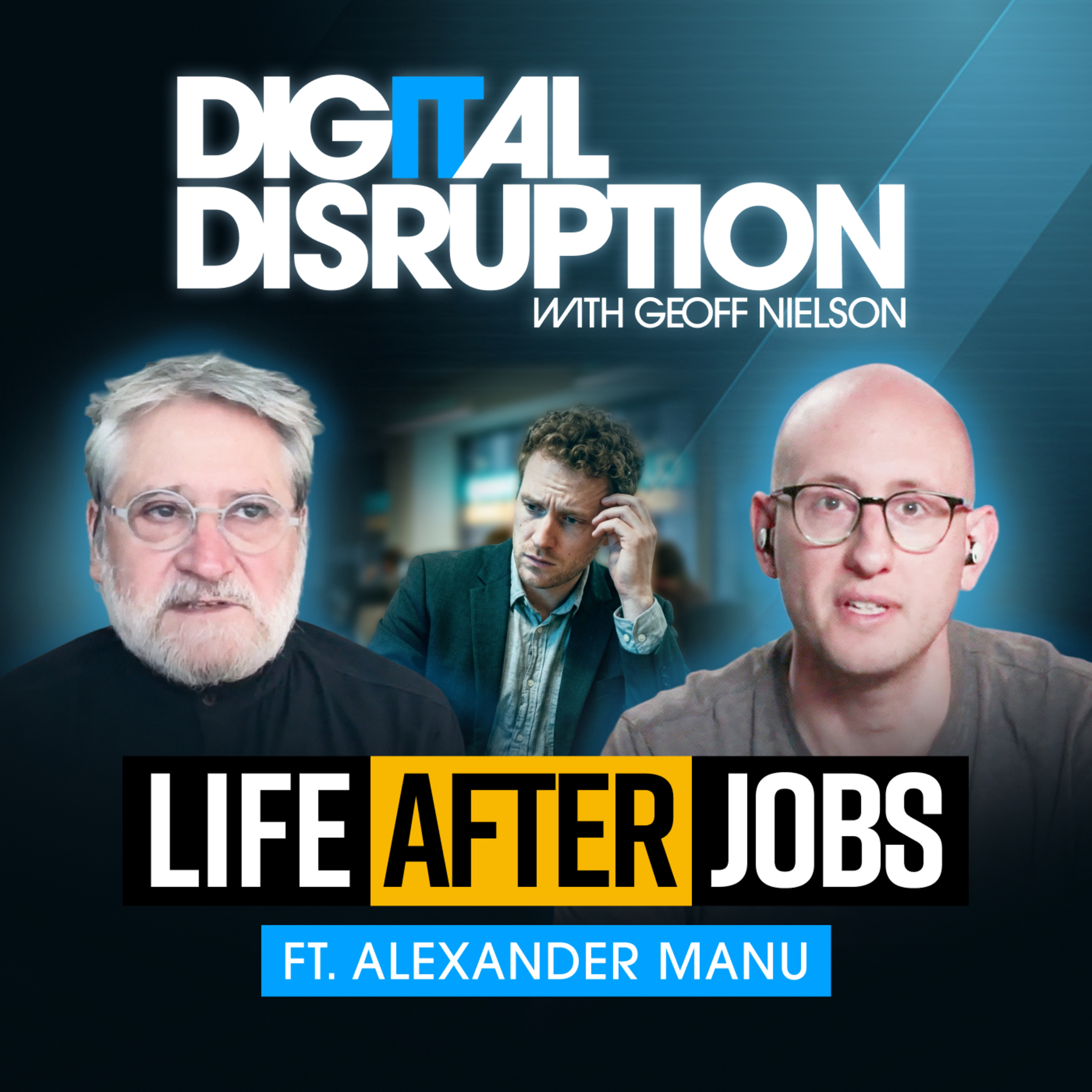 Everything You Believe About Work is About to be Broken by AI | Alexander Manu 06.07.2026 1ώ 12λStop fearing the future of work. Learn why our current infrastructure is failing and how to adapt your mindset for the age of artificial intelligence and technology. AI isn't taking your job; it's forcing humanity to rethink what work, identity, and purpose actually mean.In this conversation, Geoff Nielson sits down with innovation strategist, futurist, and author Alexander Manu to discuss why so many professionals fear a loss of income. The core issue, he argues, is not technology itself but our tendency to apply old systems to new realities. Instead of viewing artificial intelligence as a threat, Alexander explains that AI represents the next stage of human evolution, one where technology frees us from repetitive work and allows us to focus on creativity, learning, and what makes us uniquely human.The conversation also explores disruption, digital transformation, Maslow's concept of self-transcendence, the future of work, education, leadership, and what it truly means to live in an AI-first world.Whether you're a CIO, technology leader, business executive, innovator, or simply curious about where artificial intelligence is taking society, this episode offers one of the most optimistic, and challenging, perspectives you'll hear on the future of AI.Like and follow for weekly episodes. In this episode:00:00 Intro00:46 Why everyone is afraid of AI01:01 Why Alexander isn't afraid of artificial intelligence03:02 AI, work & the future of human purpose05:24 Will AI make society happier?06:32 Why AI is different from every technology before it08:07 AI as a creative partner instead of a tool10:17 The real fear behind AI: Money & identity12:48 How do we reach an AI future?14:03 Why we need to redesign everything from scratch16:12 AI, identity & Maslow's self-transcendence19:07 Using AI to unlock human creativity20:33 Lessons from building one of the first portable computers22:34 Technology, identity & human evolution24:24 How every technology becomes normal27:07 AI learns you as you learn it28:57 Why technology exists to eliminate friction30:19 Why society needs to embrace AI earlier31:44 Understanding the disruption continuum34:10 Why disruption never ends39:45 Are we living through an AI bridge moment?42:06 Why most companies get AI completely wrong46:31 Stop fitting AI into old systems51:30 The biggest AI lessons for business leaders53:12 The question every organization should ask56:09 Leadership, AI & the future of organizations59:18 Why AI is not optional1:00:52 AI's true promise isn't speed1:05:36 AI, contemplation & finding meaning1:06:36 Social media, creativity & human attention1:11:48 Final thoughtsConnect with Alexander:LinkedIn: https://www.linkedin.com/in/alexander-manu-458b7b3/Our links:Visit our website: https://www.infotech.com/?utm_source=youtube&utm_medium=social&utm_campaign=podcastFollow us on YouTube: https://www.youtube.com/@InfoTechRG
 -
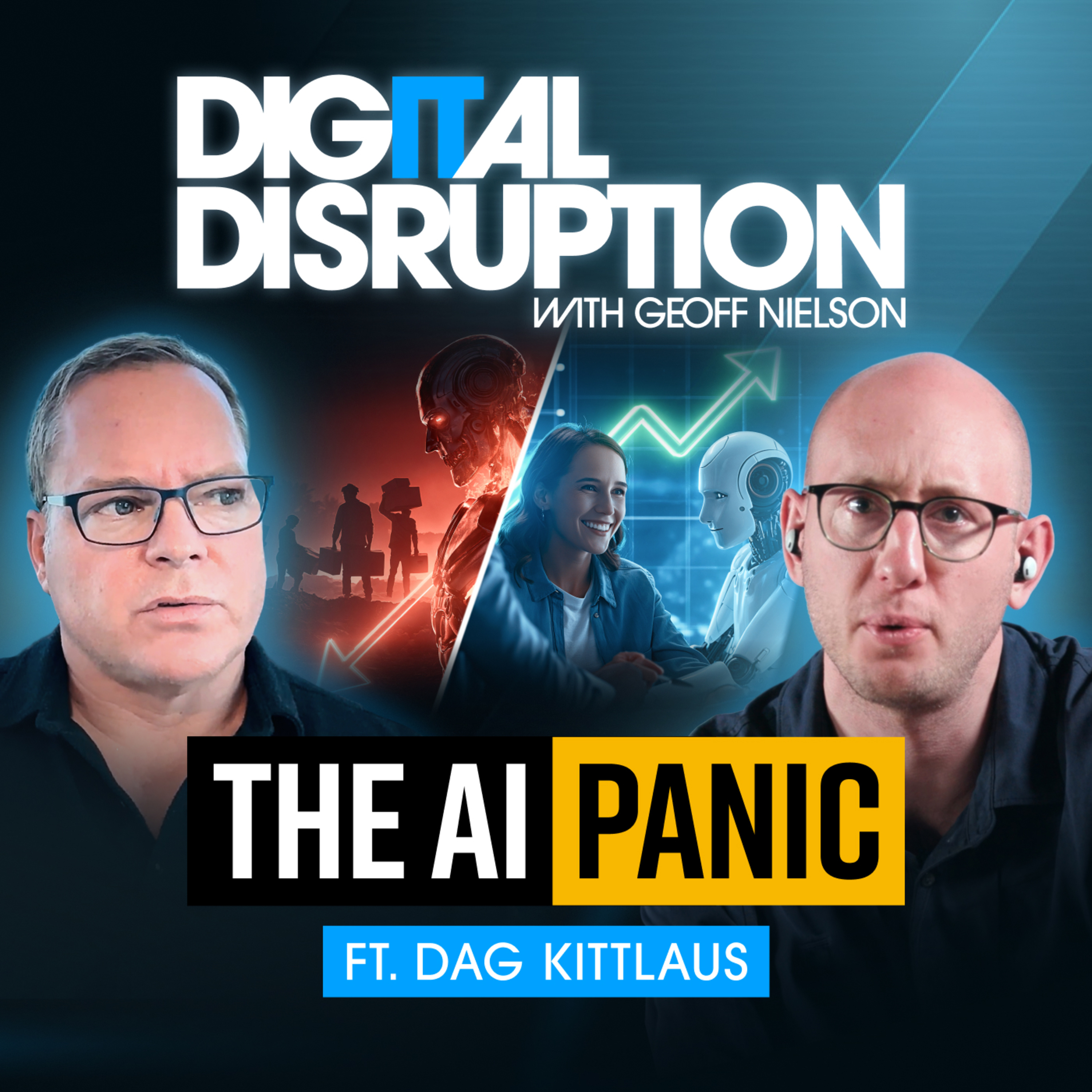 Will AI Take Your Job? Dag Kittlaus Separates Hype from Reality 29.06.2026 1ώAI is moving faster than most organizations can keep up with, but according to Siri co-creator Dag Kittlaus , the biggest challenge isn't the technology itself. It's adoption.In this episode, Dag shares his insights on how artificial intelligence will reshape your career, your business, and the future of work.Drawing on his experience building Siri and investing in the next generation of AI startups, Dag explains why widespread AI-driven job loss is unlikely in the near term and how business leaders can successfully integrate AI into their organizations. He explores the important differences between AI capability and AI diffusion, arguing that this distinction will shape the next decade of innovation, productivity, and economic growth.The conversation covers AI productivity gains, enterprise AI adoption, AI-first startups, Apple's AI future, personalized virtual assistants, healthcare innovation, data centers, AI infrastructure, and the emerging opportunities that business and technology leaders can't afford to ignore.Whether you're a CIO, business leader, entrepreneur, or technology professional, this episode offers practical insights into how artificial intelligence is transforming industries and why understanding AI today may be one of the most important investments you can make in your future.Like and follow for weekly episodes.In this episode:00:00 Intro00:53 Co-creator of Siri01:15 AI's promise vs. AI's peril02:28 Capability vs. diffusion: The real AI challenge03:15 Why AI still can't replace entire jobs04:31 Will AI cause massive white-collar job loss?07:14 Why laying off employees for AI is a mistake08:14 How businesses should actually adopt AI10:30 How Dag personally uses AI today12:41 AI investment trends and opportunities13:27 What's next for AI infrastructure and data centers?15:27 Hidden AI opportunities most investors miss16:41 Winners and losers in the AI economy17:56 How leaders should prepare their organizations21:32 AI-first startups vs. large enterprises23:11 Should established companies fear AI-native competitors?24:00 Ignore AI and you're in trouble25:21 The 10-year AI adoption timeline26:22 Is AI ready or does it need more breakthroughs?28:00 The original vision for Siri29:30 AI agents, APIs, and autonomous assistants31:32 Why apple lost ground in AI34:53 Dag's vision for the future of Siri35:29 The 'Conductor Thesis' for personal AI38:30 Why personalization Is AI's missing link39:07 Consumer backlash against AI40:20 Why AI job loss fears are overblown41:15 AI, productivity growth, and the four-day workweek43:51 How to change public perception of AI47:05 Convincing employees to embrace AI47:50 Why incentives matter more than mandates50:05 Practical advice for business leaders53:03 The biggest AI trend nobody understands53:38 How AI will transform healthcare56:11 AI regulation and innovation challenges58:23 Why Dag is optimistic about AI's future59:15 Final thoughts#ai #futureofwork #leadership #siri #apple #futureofai #technologypodcast #digitaltransformation #innovation #entrepreneurship #futureofjobs #stevejobs #dagkittlausConnect with Dag:LinkedIn: https://www.linkedin.com/in/dagkittlaus/X: https://x.com/dagkOur links:Visit our website: https://www.infotech.com/?utm_source=youtube&utm_medium=social&utm_campaign=podcastFollow us on YouTube: https://www.youtube.com/@InfoTechRG
 -
 AI is Breaking the Economy and Education. Here's How to Fix it 22.06.2026 1ώ 13λWhat if AI isn't the biggest disruption we're facing? What if the real problem is that we're trying to force 24th-century technology into an economy designed for another era? In this episode, AI and transformation leader, Michael Clark explains why AI is exposing fundamental flaws in education, business, leadership, and the global economy, and what we need to do next.Michael argues that we're trying to fit next-generation AI into systems designed for the industrial age. The conversation explores how organizations can move beyond automation and embrace collaborative intelligence, where humans and AI work together to create value. They discuss the future of work, data as an asset, workforce transformation, AI adoption, leadership in the intelligence economy, and why critical thinking, judgment, and adaptability will become the most valuable skills in the AI era.Like and follow for weekly episodes.In this episode:00:00 Intro 01:23 Two possible futures for 203004:05 Why education must be rebuilt for the AI era07:12 Teaching critical thinking, data literacy & adaptability10:40 How work changes in the age of AI13:22 Why people should be treated as assets, not costs16:16 The economic model that no longer works20:24 Rethinking value, GDP, and the future economy24:23 Can we actually value people and data?27:29 Why governments need an AI consortium28:54 AI, data ownership & wealth distribution33:05 Should AI and cloud computing be treated as utilities?35:45 Why most organizations mismanage data37:05 Treating data as a business asset42:53 Why AI can't fix bad data47:27 What data-mature organizations do differently48:05 Schneider electric's data monetization strategy50:24 John Deere's AI and data advantage51:21 The ethics of data monetization55:28 Workforce transformation and leadership in the AI era58:29 Why leaders struggle with long-term thinking01:00:00 Leadership, risk, and better decision making01:03:48 Rethinking leadership for the Intelligence Economy01:06:19 Human wisdom vs machine knowledge01:09:23 Final advice for leaders adopting AI01:12:14 Final thoughtsConnect with Michael:LinkedIn: https://www.linkedin.com/in/mclarkglobal/Our links:Visit our website: https://www.infotech.com/?utm_source=youtube&utm_medium=social&utm_campaign=podcastFollow us on YouTube: https://www.youtube.com/@InfoTechRG
 -
 The Most Insidious AI Narrative: We Can't Shape the Future 15.06.2026 1ώ 8λArtificial intelligence is reshaping work, creativity, business, and society faster than ever before, but how worried should we really be?In this episode, we sit down with The AI Doc producers Charlie Tyrell and Ted Tremper to discuss the biggest lessons they learned after spending years investigating AI and interviewing leading experts, including Sam Altman, Dario Amodei, Karen Hao, and many of the influential voices shaping the future of artificial intelligence.The conversation goes far beyond the typical AI debate, exploring AI ethics, generative AI, creative industries, wealth inequality, AI regulation, AGI, automation, AI governance, and the growing question of whether artificial intelligence is an inevitable force—or a technology that society can still shape. Charlie and Ted discuss the risks of concentrated power, the impact of AI on artists and filmmakers, ethical AI development, transparency, consent, and what individuals can do to influence the future of technology.AI is changing everything. The way we work, the way we create, the way we build businesses, and potentially the future of society itself. But beneath the headlines, hype, and fear, what’s actually true? If you're interested in artificial intelligence, technology, leadership, innovation, creativity, or the future of humanity, this is a conversation you won't want to miss.Like and follow for weekly episodes.In this episode:00:00 Intro01:25 Why Charlie Tyrell & Ted Tremper made the film02:20 The origins of The AI Doc04:45 AI anxiety, parenthood & the future06:57 Wealth inequality and AI concentration08:17 Reasons for hope and concern11:01 How individuals can shape AI's future11:49 Why education creates agency13:02 AI's impact on artists and creators15:12 Did The AI Doc use AI?16:56 Human creativity vs AI-generated content18:14 The filmmaking industry's AI debate19:20 Generative AI and storytelling21:23 Audience demand and the future of human-made art23:13 Technology's impact on creativity throughout history24:50 Ethical AI, consent & compensation27:02 Can AI ever be ethical?28:12 Policy, regulation & AI accountability30:59 The AI arms race explained32:14 AI competition, China & global innovation34:07 AI narratives we should question35:00 The Myth of AI Inevitability37:08 Democratizing AI and power structures38:11 What AI advocates get wrong40:40 Radical imagination & AI governance42:45 What gives Charlie and Ted Hope?46:22 Raising children in an AI world51:56 Technology, optimism & intellectual humility55:00 The most influential voices in AI57:39 Karen Hao, Deborah Raji & human-centered AI1:00:08 Responsible AI use for business leaders1:02:13 Fighting over-optimization and AI dependence1:04:19 The hidden risks of AI services1:07:12 Final Thoughts Connect with The AI Doc:X: https://x.com/theaidocfilmInstagram: https://www.instagram.com/theaidocfilm/Our links:Visit our website: https://www.infotech.com/?utm_source=youtube&utm_medium=social&utm_campaign=podcastFollow us on YouTube: https://www.youtube.com/@InfoTechRG
 -
 Joscha Bach: AGI, Consciousness, and the Evolution of Intelligence 08.06.2026 1ώ 29λArtificial Intelligence is changing faster than most people realize, but are we asking the wrong questions about AI, AGI, consciousness, and the future of society? In this episode, cognitive scientist and AI researcher Joscha Bach joins us for a thought-provoking conversation on artificial intelligence, machine consciousness, large language models (LLMs), AGI, human intelligence, and the future of work. Joscha explains why intelligence is fundamentally about model-building, why consciousness may be a biological training algorithm, and what current AI systems are still missing. The conversation goes far beyond technology, tapping into innovation, capitalism, regulation, scientific progress, institutional trust, democracy, media narratives, AI safety, employment disruption, economic incentives, and the future of human civilization. Joscha shares his perspective on AI doom scenarios, why he believes many fears around artificial intelligence are overstated, and how AI could ultimately empower individuals rather than replace them. This episode offers a different look into artificial intelligence, human progress, and what comes next. Like and follow for weekly episodes.In this episode:00:00 Intro01:04 AI doom scenarios & humanity's future02:00 Defining intelligence & consciousness05:00 Why AI intelligence is different from human intelligence06:52 Are LLMs actually intelligent?08:10 Why AI hallucinates10:09 Human learning vs machine learning11:22 Can transformers lead to agi?12:28 The scaling hypothesis explained13:58 Mechanistic interpretability & neural networks15:13 Can AI surpass human understanding?18:42 AI and the future of scientific discovery20:14 Why scientific progress feels slower today22:03 Institutions, incentives & organizational decline25:05 Trust in government and society28:31 Can AI improve democracy?30:40 Why AI gets such negative media coverage33:03 The AI extinction debate36:30 AI, automation & the future of jobs40:05 Big Tech, AI power & capitalism41:15 Money, markets & resource allocation46:28 Regulation, innovation & economic growth49:13 Why innovation is slowing down51:08 Is Big Tech starving other industries?54:39 Is there an AI bubble?57:30 Could the financial system be rebooted?01:00:17 Cryptocurrency, regulation & economic stability01:08:27 Regulation, governance & innovation01:10:33 Lessons from Berlin's innovation culture01:16:08 AI, surveillance & centralized power01:18:07 Decentralized AI and individual empowerment01:20:05 AI, healthcare & professional expertise01:23:36 Control, society & human responsibility01:25:00 Advice for leaders and innovators01:26:03 Escaping filter bubblesConnect with Joscha Bach:LinkedIn: https://www.linkedin.com/in/joschabachX: https://x.com/PlinzOur links:Visit our website: https://www.infotech.com/?utm_source=youtube&utm_medium=social&utm_campaign=podcastFollow us on YouTube: https://www.youtube.com/@InfoTechRG
 -
 AI vs The Invasion of Work: Could We Take Back Our Lives? 01.06.2026 1ώ 5λModern work is broken.Endless meetings. Constant notifications. Work invading every corner of life.So, what does the future of work actually look like in the age of AI agents, generative AI, and organizational transformation?Microsoft’s Head of Future of Work & AI, Matthew Loys Duncan, says we’ve reached “human capacity” and that AI may not replace knowledge workers, but instead replace the worst parts of work itself.In this episode, Matthew joins Geoff Nielson to unpack how AI agents, generative AI, and organizational redesign are reshaping white-collar work. He explains why most companies are approaching AI the wrong way, why culture matters more than technology, and how the future of work will be “human-led, agent-operated.”From Microsoft’s Work Trend Index research and AI-native organizations to tacit knowledge, burnout, productivity, and leadership transformation, this conversation explores what happens when businesses stop optimizing old workflows and start redesigning work from the ground up.If you’re trying to understand the real impact AI will have on work, leadership, and business strategy over the next decade, this episode is for you.Like and subscribe for weekly conversations on AI, business, leadership, and the future of work.In this episode:00:00 Intro00:01:15 Will AI replace white-collar jobs?00:02:29 Why AI is a reimagination of work, not doom & gloom00:03:08 Human-led, agent-operated work00:03:37 The broken reality of modern office work00:04:36 Digital overload, meetings & workplace chaos00:06:16 Human agency vs AI agents00:07:33 Using AI to redesign your job00:09:02 Why the best AI users don’t outsource judgment00:09:49 Delegation, intentional AI use & skill preservation00:10:54 AI as a team member, not just a tool00:11:27 The four ways people use generative AI00:14:10 The rise of AI agents in the workplace00:16:16 From personal productivity to organizational transformation00:17:10 Where is the ROI from AI?00:18:02 Why AI adoption alone fails00:20:13 Finding the highest-leverage AI opportunities00:23:27 Re-architecting work in the AI era00:25:27 Should employees build their own AI agents?00:28:39 AI-native organizations vs legacy enterprises00:30:05 AI adoption vs AI absorption00:32:31 Discovering hidden business value through AI00:33:27 How legacy firms can compete with AI-native companies00:35:06 Why AI transformation starts with culture00:36:05 The role of HR, CEOs & leadership in AI strategy00:39:14 Why AI is bigger than a technology initiative00:41:12 The expanding role of the C-Suite in AI transformation00:46:32 Microsoft’s “learn it all” leadership culture00:50:00 Democratizing innovation with AI00:53:23 Tacit knowledge & AI-powered learning00:57:09 Information retrieval, organizational knowledge & AI00:59:37 Capturing institutional intelligence with AI01:00:03 Advice for business & technology leaders01:03:17 Why there is no AI playbook yetConnect with Matthew:LinkedIn: https://www.linkedin.com/in/matthewloysduncan/X: https://x.com/matthewloysOur links:Visit our website: https://www.infotech.com/?utm_source=youtube&utm_medium=social&utm_campaign=podcastFollow us on YouTube: https://www.youtube.com/@InfoTechRG
 -
 The AI Delusion: Why CEOs Still Don’t Get It 25.05.2026 1ώ 24λWhat if the biggest threat from AI isn’t artificial intelligence… but the economic system controlling it?Author and creator of the Lean Startup methodology, Eric Ries says many of the biggest fears around AI are actually fears about capitalism.In this episode, Eric joins us to talk about why great companies lose their value over time, how shareholder prioritization reshaped modern business, and why AI could either amplify human creativity or become the ultimate cost-cutting machine.He explains the hidden forces behind corporate corruption, the concept of “financial gravity,” and why companies like Costco continue to outperform despite rejecting many traditional Wall Street “best practices.” From private equity and governance structures to AI alignment and the future of human creativity, this conversation explores the incentives shaping business, technology, and society itself.Like and follow for weekly episodes.In this episode:00:00 Intro01:00 Why great companies “go bad”02:10 The rise of corporate corruption05:48 Is capitalism itself the problem?07:08 Making money without creating value10:33 Corporate accountability & human flourishing13:06 Why this problem keeps getting worse18:21 How investors destroyed FedMart21:22 Why Costco defies wall street logic23:00 Financialization & the collapse of institutions24:27 How leaders can protect mission-driven companies27:12 “Financial gravity” explained31:10 Trustworthiness as a business asset34:37 Governance structures that actually work36:20 Transitioning into AI & the future of work37:42 AI governance & Anthropic38:37 The AI alignment problem41:30 Why AI is being optimized for cost cutting42:15 AI should augment creativity, not replace humans44:04 How to use AI as a learning tool46:34 Real examples of AI augmentation done right49:47 AI-assisted reading & learning50:22 The problem with AI-generated “slop”54:58 Why human-made work will become premium57:19 The future of the attention economy59:12 Will AI become addictive like social media?01:00:03 The case for an AI Bill of Rights01:04:11 Costco, DEI & organizational integrity01:07:13 AI Regulation, governance & human flourishing01:13:24 Fighting the “normative consensus” of shareholder primacy 01:21:21 Is the era of shareholder primacy already over?01:22:22 Final thoughtsConnect with Eric:LinkedIn: https://www.linkedin.com/in/eries/X: https://x.com/ericriesOur links:Visit our website: https://www.infotech.com/?utm_source=youtube&utm_medium=social&utm_campaign=podcastFollow us on YouTube: https://www.youtube.com/@InfoTechRG
 -
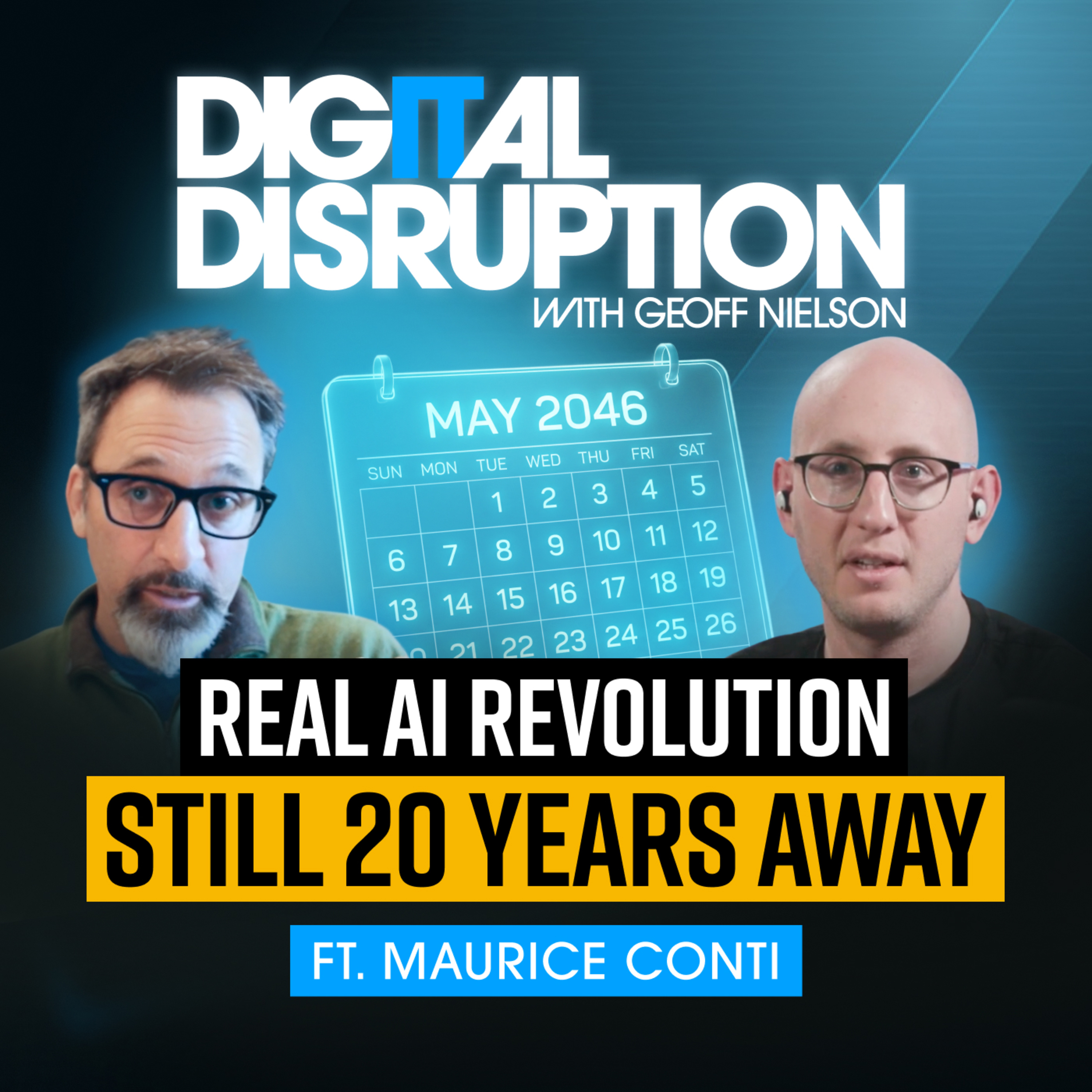 4 Waves of AI (We're on Wave 2) 18.05.2026 1ώ 19λAre we entering the most transformative era of work in history?Technology is evolving weekly, and culture takes time to adapt. In this episode, AI futurist and award-winning innovation leader Maurice Conti explains how rapid technological change, especially in artificial intelligence, will shape our world, the economy, and the future of jobs, and what AI leadership means for navigating these shifts.Drawing on his experience with companies like Amazon, Nike, Mercedes, and Lululemon, Maurice shares insights from Fortune 100 companies and explains how generative AI, automation, and human-AI collaboration are transforming the workplace.The key insight is simple. The future of AI is not big, flashy, or “sexy.” It is quiet, invisible, and massively impactful. Maurice explains why we have entered the “Augmented Age,” where humans and AI work together, and outlines the major shifts known as the 4 Waves of AI defining this transformation, including the grassroots AI revolution happening inside organizations and the rise of AI agents and ecosystems.If you want to understand where AI is really going beyond the hype, this is a must-watch episode.Like and follow for weekly episodes.In this episode:00:00 Intro01:04 The “Augmented Age”: Humans + AI working together02:10 Sci-Fi to reality: Talking to computers like Star Trek04:11 Have we arrived at intuitive AI?05:15 Why AI progress isn’t linear 06:05 Can anyone predict the future of AI?07:05 The Nvidia story & “more AI in the future” principle08:57 Amara’s Law: Short-term hype vs long-term impact10:08 Why AI will be bigger (and slower) than expected10:54 The 4 Waves of AI explained11:00 Wave 1: “Interesting but not useful” AI12:31 Wave 2: Grassroots AI (hidden ROI inside companies)13:16 Why CEOs can’t see AI ROI14:09 Tool users → tool makers (the real shift)16:17 The invisible productivity explosion20:10 Wave 3: AI agents & ecosystems21:48 Wave 4: AI as electricity (invisible & everywhere)23:18 The dark side of “interesting AI”26:15 Personal AI use cases (daily life & work)27:09 Why most organizations are still “Grassroots”28:38 The explosion of tools (new risks for IT)30:15 CIO/CTO challenges: Control vs innovation33:09 Building the right AI infrastructure layer34:45 Where should companies invest in AI?37:14 Start with the problem, not the technology40:04 Toolset vs skillset vs mindset42:45 Why mindset & culture matter most44:28 The race to the bottom vs innovation45:15 New workplace norms & ethical questions49:49 Why culture changes slowly51:33 Tech vs culture: A fundamental tension52:30 Can organizations adapt to constant change?56:06 The myth of big, sexy AI57:01 Small AI, massive impact58:18 Where real innovation is happening59:13 Why young workers lead AI adoption01:01:22 Advice for leaders01:02:59 AI is a “Lord of the Rings” journey01:05:15 Will AI replace jobs?01:10:23 Lessons from past tech revolutions01:13:47 Why humans need ~25 years to adapt01:16:02 Why expectations rise with technology01:17:38 Why there will always be more work to do01:18:55 Final thoughts Connect with Maurice:LinkedIn: https://www.linkedin.com/in/mauriceconti/Our links:Visit our website: https://www.infotech.com/?utm_source=youtube&utm_medium=social&utm_campaign=podcastFollow us on YouTube: https://www.youtube.com/@InfoTechRG
Παρόμοια podcasts


Δημοφιλές σε
Αυτό το podcast εμφανίζεται και στις λίστες podcasts αυτών των χωρών.

