
YaleCourses
YaleCourses
0
YaleCourses provides access to lectures and academic programs from Yale University, including complete sets from the Open Yale Courses initiative. The channel aims to train a broadly based, highly disciplined intellect without prescribing how it will be used. Students can also find complementary syllabi, transcripts, and other resources on the Open Yale Courses website. The podcast offers a window into the core of the university's classrooms and academic offerings.
Επεισόδια
-
 9. Special and General Relativity 19.09.2026 54λFrontiers/Controversies in Astrophysics (ASTR 160)The discussion of black holes continues with an introduction of the concept of event horizon. A number of problems are worked out to familiarize students with mathematics related to black hole event horizons. In a longer question and answer session, Professor Bailyn discusses the more mystifying aspects of the nature of black holes and the possibility of time travel. Finally, the issues of reconciling Newton's laws of motion with Special Relativity, and Newton's law of gravity with General Relativity, are addressed.00:00 - Chapter 1. Event Horizon11:47 - Chapter 2. Singularity and Clarifications on Black Holes27:46 - Chapter 3. Locating Black Holes37:51 - Chapter 4. Introduction to Special and General RelativityComplete course materials are available at the Open Yale Courses website: http://open.yale.edu/courses This course was recorded in Spring 2007. Learn more about your ad choices. Visit megaphone.fm/adchoices
 -
 Class 7: Capital Chapters 5-9: Absolute Surplus-Value, Valorization, the Working Day, part 2 19.09.2026 56λHow does the world look from the standpoint of production? What is valorization? What is surplus-value?A chapter by chapter study of Marx’s powerful analysis in Capital: Critique of Political Economy, Volume 1. This book from 1872 is still the best guide to the predatory economic and social system within which we live. The book solves five basic mysteries in our social world. The mysteries are: why social classes struggle against one another, why human beings are in the thrall of things, how a quantity of money turns into more money without seeming to add anything, why some people are forced to work and the more they work the less they make proportional to their effort, and finally, and why it is so hard to transform the system for the better. This course is taught by Paul North, Maurice Natanson Professor of German, Yale University. Prof. North is co-editor of the new English translation and critical edition of Capital Volume 1 by Karl Marx published in 2024 by Princeton University Press. https://press.princeton.edu/books/hardcover/9780691190075/capitalTo view other videos in this course, visit this link. https://youtube.com/playlist?list=PLh9mgdi4rNewd_0qe4c2lkzXZZQka_QnZ&si=CHOgjCcVD0K378kl Learn more about your ad choices. Visit megaphone.fm/adchoices
 -
 Class 18: Capital Chapter 23, The General Law of Capital Accumulation 19.09.2026 54λIs capital accumulation a lawful process? What is its law?A chapter by chapter study of Marx’s powerful analysis in Capital: Critique of Political Economy, Volume 1. This book from 1872 is still the best guide to the predatory economic and social system within which we live. The book solves five basic mysteries in our social world. The mysteries are: why social classes struggle against one another, why human beings are in the thrall of things, how a quantity of money turns into more money without seeming to add anything, why some people are forced to work and the more they work the less they make proportional to their effort, and finally, and why it is so hard to transform the system for the better. This course is taught by Paul North, Maurice Natanson Professor of German, Yale University. Prof. North is co-editor of the new English translation and critical edition of Capital Volume 1 by Karl Marx published in 2024 by Princeton University Press. https://press.princeton.edu/books/hardcover/9780691190075/capital To view other videos in this course, visit this link. https://youtube.com/playlist?list=PLh9mgdi4rNewd_0qe4c2lkzXZZQka_QnZ&si=CHOgjCcVD0K378kl Learn more about your ad choices. Visit megaphone.fm/adchoices
 -
 8. Jack Kerouac, On the Road 19.09.2026 54λThe American Novel Since 1945 (ENGL 291)Professor Amy Hungerford's lecture on Kerouac's On the Road begins by contrasting the Beats' ambition for language's direct relation to lived experience with a Modernist sense of difficulty and mediation. She goes on to discuss the ways that desire structures the novel, though not in the ways that we might immediately expect. The very blatant pursuit of sex with women in the novel, for example, obscures the more significant desire for connection among men, particularly the narrator Sal's love for Dean Moriarty. The apparent desire for the freedom of the open road, too, Hungerford argues, exists in a necessary conjunction with the idealized comforts of a certain middle-class American domesticity, signaled by the repeated appearance of pie.00:00 - Chapter 1. The Beats: Similarities and Differences to Literary Modernism09:46 - Chapter 2. A New Use of Language: Mirroring the Speed of Experience18:13 - Chapter 3. "The Prophet of 'Wow'": The Language of Dean Moriarty/Neal Cassady29:48 - Chapter 4. Dean and Sal: Tangled Sexual Tensions33:56 - Chapter 5. The Hunger Metaphor: The American Culture of Consumption40:21 - Chapter 6. Modes of Craftedness: Carlo Marx's Papier-Mache MountainsComplete course materials are available at the Open Yale Courses website: http://open.yale.edu/coursesThis course was recorded in Spring 2008. Learn more about your ad choices. Visit megaphone.fm/adchoices
 -
 1. Introduction 19.09.2026 53λFrontiers/Controversies in Astrophysics (ASTR 160)Professor Bailyn introduces the course and discusses the course material and requirements. The three major topics that the course will cover are (1) exoplanets--planets around stars other than the Sun, (2) black holes--stars whose gravitational pull is so strong that even their own light rays cannot escape, and (3) cosmology--the study of the Universe as a whole. Class proper begins with a discussion on planetary orbits. A brief history of astronomy is also given and its major contributors over the centuries are introduced: Ptolemy, Galileo, Copernicus, Kepler, and Newton.00:00 - Chapter 1. Introduction05:38 - Chapter 2. Topics of the Course12:57 - Chapter 3. Course Requirements21:03 - Chapter 4. Planetary Orbits31:32 - Chapter 5. From Newton's Laws of Motion to the Theory of Everything38:10 - Chapter 6. The Newtonian Modification of Kepler's Third LawComplete course materials are available at the Open Yale Courses website: http://open.yale.edu/courses This course was recorded in Spring 2007. Learn more about your ad choices. Visit megaphone.fm/adchoices
 -
 Meet Your Instructor, Peter Boyd | Connected Leadership 19.09.2026 6λPeter Boyd shares his cross-sector journey - from McKinsey and a decade at Virgin Group to teaching at Yale and founding Time4Good - and the three pillars that drive his work: connected leadership, the "great work" of sustainability, and the coaching mindset. He also explains why marathon running has taught him as much about personal leadership as his professional life has.Key topics:- Peter's Yale roles and his company, Time4Good- Private-sector path: McKinsey, ten roles at Virgin Group, and CEO of Virgin Mobile South Africa- Sustainability work: Carbon War Room, UN Race to Zero, and Sustainable Westport- The "great work" - Thomas Berry's call for our generation- The coaching mindset: partnering with people, not fixing them- Why ultra marathons inform his leadership philosophy📚 About the Course:This course is designed to maximize your ability to create change at the individual, team and system levels. Through study, reflection, and deploying practical tools, you will establish a firm connection between your clearly articulated Purpose, effective Priorities, visualized Potential for success, and pathway to maximized Progress. But, what does that mean in practice?When you take this course, you will:Improve your ability to get the most out of life: Learn a simple practice to reflect on your purpose, clarify priorities, visualize your potential, and maximize your effectiveness at progressing towards your goals.Strengthen your leadership toolkit: Tap into your unique leadership style and strengths and join or create a community of others to maximize your potential as a team.Create change through systems thinking: Become a more effective agent of positive change and appreciate the power and complexity of system thinking.Course Takeaways:Improve your ability to get the most out of lifeStrengthen your leadership toolkitPractice and apply systems thinking to plan for change📺 Watch the full playlist on YouTube: https://www.youtube.com/playlist?list=PLh9mgdi4rNezZEnhZC8dS3AvTnzOiB0Ij🎓 Enroll on Coursera for assessments and a certificate: https://www.coursera.org/learn/connected-leadership🌐 Explore more learning opportunities on Yale Online: https://online.yale.edu/courses/connected-leadership Learn more about your ad choices. Visit megaphone.fm/adchoices
 -
 14. Pulsars 19.09.2026 55λFrontiers/Controversies in Astrophysics (ASTR 160)Professor Bailyn begins with a summary of the four post-Newtonian effects of general relativity that were introduced and explained last time: precession of the perihelion, the deflection of light, the gravitational redshift, and gravitational waves. The concept of gravitational lensing is discussed as predicted by Einstein's general relativity theory. The formation of a gravitational lens can be observed when light from a bright distant source bends around a massive object between the source (such as a quasar) and the observer. Professor Bailyn then offers a slideshow of gravitational lenses. The issue of finding suitable astronomical objects that lend the opportunity to observe post-Newtonian relativistic effects is addressed. The lecture ends with Jocelyn Bell and the discovery of pulsars.00:00 - Chapter 1. Review of Post-newtonian Effects of General Relativity06:15 - Chapter 2. Gravitational Lensing21:05 - Chapter 3. Jocelyn Bell, Binary Pulsars, and General Relativity44:17 - Chapter 4. Measurement Errors and Testing Strong Field RelativityComplete course materials are available at the Open Yale Courses website: http://open.yale.edu/courses This course was recorded in Spring 2007. Learn more about your ad choices. Visit megaphone.fm/adchoices
 -
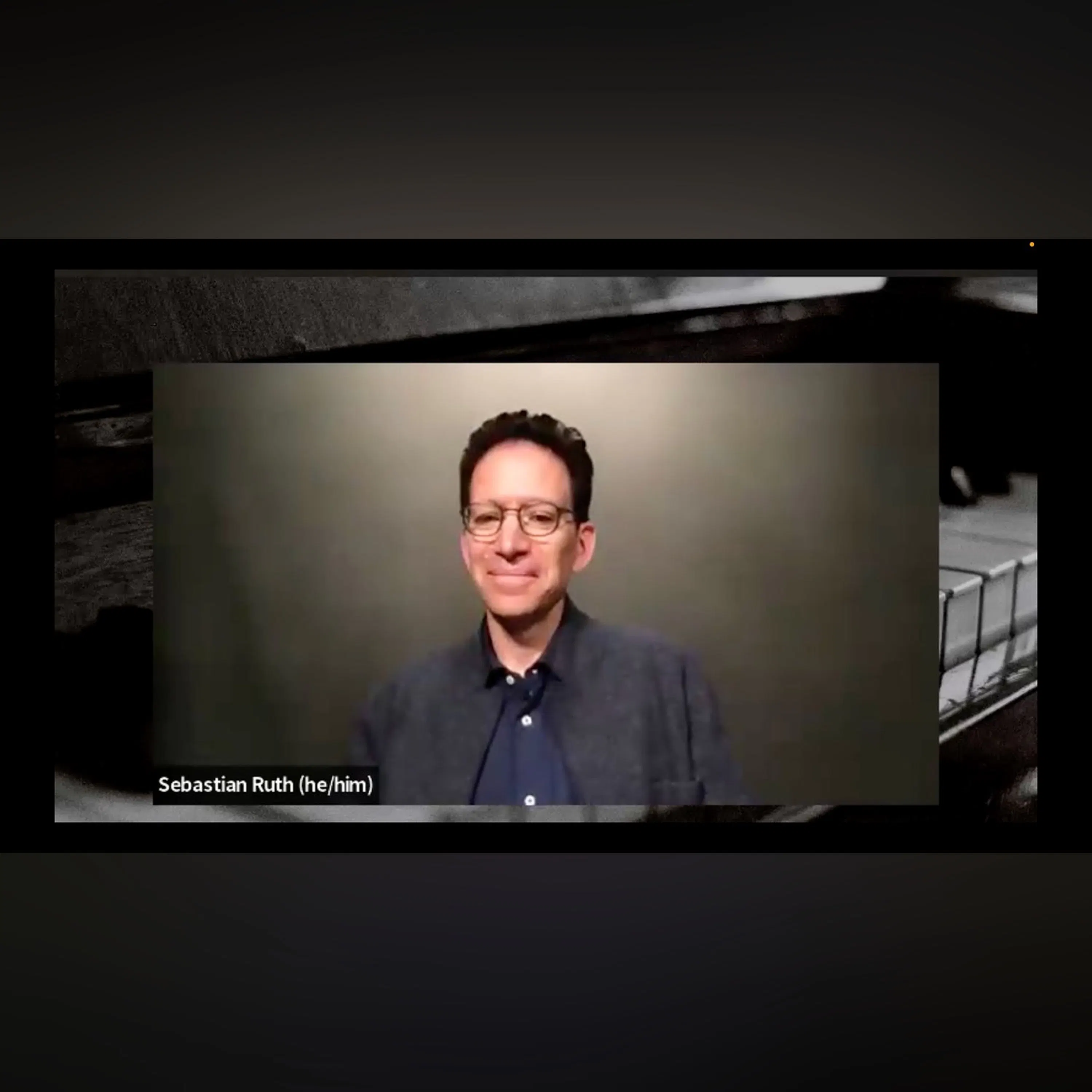 Music and Social Action Webinar with Professor Sebastian Ruth | Yale Online 19.09.2026 1ώ 31λOriginally launched on Coursera in 2016, Music and Social Action continues to inspire learners around the world to explore how musicianship can serve the public good.On May 4, 2026, Yale Online welcomed Professor Sebastian Ruth of the Yale School of Music back for a special live webinar inspired by the course. During this conversation, Sebastian revisits key ideas from Music and Social Action and reflects on the ways music can strengthen communities, deepen civic life, and create meaningful social impact.Interested in exploring the full course? Enroll today: https://bit.ly/4db4L5u Learn more about your ad choices. Visit megaphone.fm/adchoices
 -
 Active Listening and Feedback Tools | Connected Leadership with Peter Boyd 19.09.2026 18λActive listening and high-quality feedback are foundational tools that connect you to the people you lead. This lesson introduces the 400-to-125 listening ratio and walks through the SBI plus Forecast model for giving and receiving feedback at any level.Key topics:- Listening capacity vs. speaking speed: the 400 to 125 ratio- Three levels of listening and active 360-degree presence- The SBI plus Forecast feedback model- Situation, behavior, impact, and feed-forward steps- Don't cross the net: staying on your side in feedback- Climbing the ladder of inference carefully- Controlling the temperature: thermostat vs. thermometer📚 About the Course:This course is designed to maximize your ability to create change at the individual, team and system levels. Through study, reflection, and deploying practical tools, you will establish a firm connection between your clearly articulated Purpose, effective Priorities, visualized Potential for success, and pathway to maximized Progress. But, what does that mean in practice?When you take this course, you will:Improve your ability to get the most out of life: Learn a simple practice to reflect on your purpose, clarify priorities, visualize your potential, and maximize your effectiveness at progressing towards your goals.Strengthen your leadership toolkit: Tap into your unique leadership style and strengths and join or create a community of others to maximize your potential as a team.Create change through systems thinking: Become a more effective agent of positive change and appreciate the power and complexity of system thinking.Course Takeaways:Improve your ability to get the most out of lifeStrengthen your leadership toolkitPractice and apply systems thinking to plan for change📺 Watch the full playlist on YouTube: https://www.youtube.com/playlist?list=PLh9mgdi4rNezZEnhZC8dS3AvTnzOiB0Ij🎓 Enroll on Coursera for assessments and a certificate: https://www.coursera.org/learn/connected-leadership🌐 Explore more learning opportunities on Yale Online: https://online.yale.edu/courses/connected-leadership Learn more about your ad choices. Visit megaphone.fm/adchoices
 -
 22. Edward P. Jones, The Known World 19.09.2026 57λThe American Novel Since 1945 (ENGL 291)In the first of her two lectures on Edward P. Jones's The Known World, Professor Hungerford begins from the novel's title, asking what counts as knowledge in the novel and why knowledge is central to the story. This leads to related questions: who is a knower, and what can be known? Highlighting several different versions of how knowledge of the past is communicated through storytelling within the novel, she draws distinctions between Jones's model of historical knowledge and that of other writers on the syllabus. Professor Hungerford suggests that Jones revives a nineteenth-century form of the novel when his narrator takes on a God-like omniscience, but unlike the nineteenth-century novel's narrators, Jones's omniscient narrator provides little in the way of God-like consolation.00:00 - Chapter 1. Initial Student Reactions: The Known World in the Wake of Morrison06:31 - Chapter 2. A Historical Novel: Reactions to Postmodern Historical Theory17:09 - Chapter 3. Threadlike Narratives and the Grand Tapestry: Modes of Telling Truth34:19 - Chapter 4. The Question of Knowing: A Syllabus Retrospective39:59 - Chapter 5. Jones's Anti-modernist Return to an Omniscient NarratorComplete course materials are available at the Open Yale Courses website: http://open.yale.edu/coursesThis course was recorded in Spring 2008. Learn more about your ad choices. Visit megaphone.fm/adchoices
 -
 Music and Social Action - Greene Part 1 19.09.2026 8λLearn more about your ad choices. Visit megaphone.fm/adchoices
 -
 8. The Mixed Regime and the Rule of Law: Aristotle's Politics, IV 19.09.2026 54λIntroduction to Political Philosophy (PLSC 114)The lecture discusses Aristotle's comparative politics with a special emphasis on the idea of the regime, as expressed in books III through VI in Politics. A regime, in the context of this major work, refers to both the formal enumeration of rights and duties within a community as well as to the distinctive customs, manners, moral dispositions and sentiments of that community. Aristotle asserts that it is precisely the regime that gives a people and a city their identity.00:00 - Chapter 1. Introduction: Aristotle's Comparative Politics and the Idea of the Regime01:45 - Chapter 2. What Is a Regime?13:58 - Chapter 3. What Are the Structures and Institutions of the Regime?20:30 - Chapter 4. The Democratic Regime34:35 - Chapter 5. Law, Conflict and the Regime43:07 - Chapter 6. The Aristotelian Standard of Natural Right or Natural JusticeComplete course materials are available at the Open Yale Courses website: http://open.yale.edu/courses This course was recorded in Fall 2006. Learn more about your ad choices. Visit megaphone.fm/adchoices
 -
 10. Tests of Relativity 19.09.2026 51λFrontiers/Controversies in Astrophysics (ASTR 160)The lecture begins with the development of post-Newtonian approximations from Newtonian terms. Several problems are worked out in calculating mass, force and energy. A discussion follows about how concepts like mass and velocity are approached differently in Newtonian physics and Relativity. Attention then turns to the discovery that space and time change near the speed of light, and how this realization affected Einstein's theories. Finally, the possibility of traveling faster than the speed of light is addressed, including how physicists might predict from laboratory conditions how this might occur. Muons, unstable particles that form at the top of the Earth's atmosphere, are used as an example.00:00 - Chapter 1. Velocity and Mass in Special Relativity08:34 - Chapter 2. Gamma and Post-newtonian Mass15:34 - Chapter 3. What Is Mass?26:25 - Chapter 4. Lorentz Transformations and Relativistic Effects35:02 - Chapter 5. Time, Light, and the WorldComplete course materials are available at the Open Yale Courses website: http://open.yale.edu/courses This course was recorded in Spring 2007. Learn more about your ad choices. Visit megaphone.fm/adchoices
 -
 Make Your Priorities Stick When Life Shakes the Jar | Connected Leadership 19.09.2026 5λClose out the Self module by guarding your four Ps against percolation and the inevitable shaking of your jar. Learn to revisit purpose, priorities, potential, and progress regularly while balancing Kronos planning with Kairos opportunity.Key topics:- Percolation and how sand sneaks under your rocks- Revisiting purpose, priorities, potential, progress- Heraclitus on continual iteration- Kronos: planning your time- Kairos: seizing the spontaneous moment- Closing the Self level of connected leadership📚 About the Course:This course is designed to maximize your ability to create change at the individual, team and system levels. Through study, reflection, and deploying practical tools, you will establish a firm connection between your clearly articulated Purpose, effective Priorities, visualized Potential for success, and pathway to maximized Progress. But, what does that mean in practice?When you take this course, you will:Improve your ability to get the most out of life: Learn a simple practice to reflect on your purpose, clarify priorities, visualize your potential, and maximize your effectiveness at progressing towards your goals.Strengthen your leadership toolkit: Tap into your unique leadership style and strengths and join or create a community of others to maximize your potential as a team.Create change through systems thinking: Become a more effective agent of positive change and appreciate the power and complexity of system thinking.Course Takeaways:Improve your ability to get the most out of lifeStrengthen your leadership toolkitPractice and apply systems thinking to plan for change📺 Watch the full playlist on YouTube: https://www.youtube.com/playlist?list=PLh9mgdi4rNezZEnhZC8dS3AvTnzOiB0Ij🎓 Enroll on Coursera for assessments and a certificate: https://www.coursera.org/learn/connected-leadership🌐 Explore more learning opportunities on Yale Online: https://online.yale.edu/courses/connected-leadership Learn more about your ad choices. Visit megaphone.fm/adchoices
 -
 1105 | Thank You! Celebrating Our Social Entrepreneurship Journey - Social Entrepreneurship Course 19.09.2026 5λIn this final lesson, Teresa Chahine extends a heartfelt thank you to everyone who made the Social Entrepreneurship Course possible, starting with the learners. The instructor reflects on the profound impact of this journey, acknowledging the invaluable contributions of thought leaders, community entrepreneurs, and the dedicated production team behind the scenes.🎯 Learning Objectives• Recognize the collaborative effort and diverse expertise that shaped the course content.• Be encouraged to maintain engagement and continue the social entrepreneurship journey.📚 About the Course Have you ever wondered what it would be like to create real change? You don't have to start your own organization to make a difference in the world. Everyone can learn the social entrepreneurship mindset and skillset to build social impact. In this course, you will immerse yourself in a social or environmental challenge you want to tackle. You'll start by researching your topic of choice, talking to people, and ideating a potential solution that you can contribute. Then, you'll build a business model around that solution, understanding concepts like measuring social change, ensuring financial viability, funding and pitching. This course is a safe space to experiment and explore. You'll be guided by a ten stage framework to help structure your journey. Along the way, you'll hear from social entrepreneurs around the world through case studies and campus conversations. These include Yale alumni, members of the New Haven community, and global changemakers. Everyone is welcome to join this course! You can apply your lived, learned, or professional experience to discover how you're going to make a difference. 📺 Watch the full playlist on YouTube: https://www.youtube.com/playlist?list=PLh9mgdi4rNezbi0aRJeVnt99ynTVZG1PL 🎓 Enroll on Coursera for assessments and a certificate: https://online.yale.edu/courses/creating-change-through-social-entrepreneurship 🌐 Explore more learning opportunities on Yale Online: https://online.yale.edu/courses/creating-change-through-social-entrepreneurship #SocialEntrepreneurship #YaleCourse #Impact #Changemakers #BusinessPlan #DesignThinking Learn more about your ad choices. Visit megaphone.fm/adchoices
 -
 5. Philosophers and Kings: Plato's Republic, III-IV 19.09.2026 54λIntroduction to Political Philosophy (PLSC 114)The discussion of the Republic continues. An account is given of the various figures, their role in the dialogue and what they represent in the work overall. Socrates challenges Polemarchus' argument on justice, questions the distinction between a friend and an enemy, and asserts his famous thesis that all virtues require knowledge and reflection at their basis.00:00 - Chapter 1. Polemarchus08:25 - Chapter 2. Thrasymachus18:59 - Chapter 3. Glaucon26:09 - Chapter 4. Adeimantus37:28 - Chapter 5. Spiritedness and the Establishment of the Just CityComplete course materials are available at the Open Yale Courses website: http://open.yale.edu/courses This course was recorded in Fall 2006. Learn more about your ad choices. Visit megaphone.fm/adchoices
 -
 12. Introduction to Relativity 19.09.2026 1ώ 18λFor more information about Professor Shankar's book based on the lectures from this course, Fundamentals of Physics: Mechanics, Relativity, and Thermodynamics, visit http://bit.ly/1jFIqNu.Fundamentals of Physics (PHYS 200)This is the first of a series of lectures on relativity. The lecture begins with a historical overview and goes into problems that aim to describe a single event as seen by two independent observers. Maxwell's theory, as well as the Galilean and Lorentz transformations are also discussed.00:00 - Chapter 1. The Meaning of Relativity18:10 - Chapter 2. The Galilean Transformation and its Consequences31:35 - Chapter 3. The Medium of Light43:22 - Chapter 4. The Two Postulates of Relativity46:48 - Chapter 5. Length Contraction and Time Dilation55:34 - Chapter 6. Deriving the Lorentz TransformationComplete course materials are available at the Yale Online website: online.yale.eduThis course was recorded in Fall 2006. Learn more about your ad choices. Visit megaphone.fm/adchoices
 -
 1.7 | Revolutionizing Medicine: The Promise of Digital Healthcare - Medical Software Course 19.09.2026 11λIn this lesson, we explore the profound digital transformation sweeping across healthcare, examining how technology is reshaping patient care, diagnostics, and data management. From the widespread adoption of electronic medical records and telemedicine to emerging fields like digital medicine, imaging, and biomarkers, we'll delve into the benefits and challenges of these advancements, highlighting the immense opportunities for innovation in medical software.🎯 Learning Objectives• Define and understand the impact of key digital health technologies like EMRs, telemedicine, and digital medicine.• Identify the benefits and challenges associated with the digital transformation of healthcare, including data management and privacy.• Recognize the rapid growth and future potential of digital medical imaging and biomarkers.• Appreciate the exponential increase in healthcare data and its implications for medical decision-making and software development. Learn more about your ad choices. Visit megaphone.fm/adchoices
 -
 1.5 | US Healthcare Paradox: High Costs, Low Quality? Medical Software Course 19.09.2026 4λWhy is the US healthcare system so expensive, yet its quality lags behind other industrialized nations? In this lesson, we dive into the current landscape of US healthcare, examining its systemic challenges related to drastically increasing costs and surprisingly poor quality metrics, setting the stage for understanding the significant opportunities within this paradox.🎯 Learning Objectives• Understand the systemic challenges facing the US healthcare landscape.• Analyze the drastic increase in US healthcare costs and how they compare to other industrialized nations.• Identify key areas where healthcare spending is allocated in the US.• Examine the paradox of high spending coupled with unexpectedly poor healthcare quality in the US, including medical error rates and infant mortality. Learn more about your ad choices. Visit megaphone.fm/adchoices
 -
 11. Special and General Relativity (cont.) 19.09.2026 47λFrontiers/Controversies in Astrophysics (ASTR 160)The lecture begins with a comprehensive overview of the historical conditions under which Einstein developed his theories. Of particular impact were the urgent need at the turn of the 19th century to synchronize clocks around the world; Einstein's position at a patent office; and a series of experiments that he himself carried out. In 1905 Einstein published three papers that are still considered the greatest papers in the field of physics. The lecture then moves to General Relativity and how it encompasses Newton's laws of gravity. A visual demonstration shows how space-time undergoes curvature when mass is introduced. Class ends with a question-and-answer period on a variety of topics in Special Relativity.00:00 - Chapter 1. Lessons from Einstein's Discovery of Relativity13:27 - Chapter 2. General Relativity as a Theory on Gravity21:30 - Chapter 3. Space-Time Curvature25:45 - Chapter 4. Q&A on Special RelativityComplete course materials are available at the Open Yale Courses website: http://open.yale.edu/courses This course was recorded in Spring 2007. Learn more about your ad choices. Visit megaphone.fm/adchoices
Παρόμοια podcasts


Δημοφιλές σε
Αυτό το podcast εμφανίζεται και στις λίστες podcasts αυτών των χωρών.

