
Invisible Economics
Invisible Economics
0
Invisible Economics explores the hidden forces behind everyday products, prices, and industries. Each episode looks at companies, business models, and global trade to explain the economics quietly shaping what we buy and use. Topics range from supermarkets and airlines to technology, luxury, fast food, and more.
Επεισόδια
-
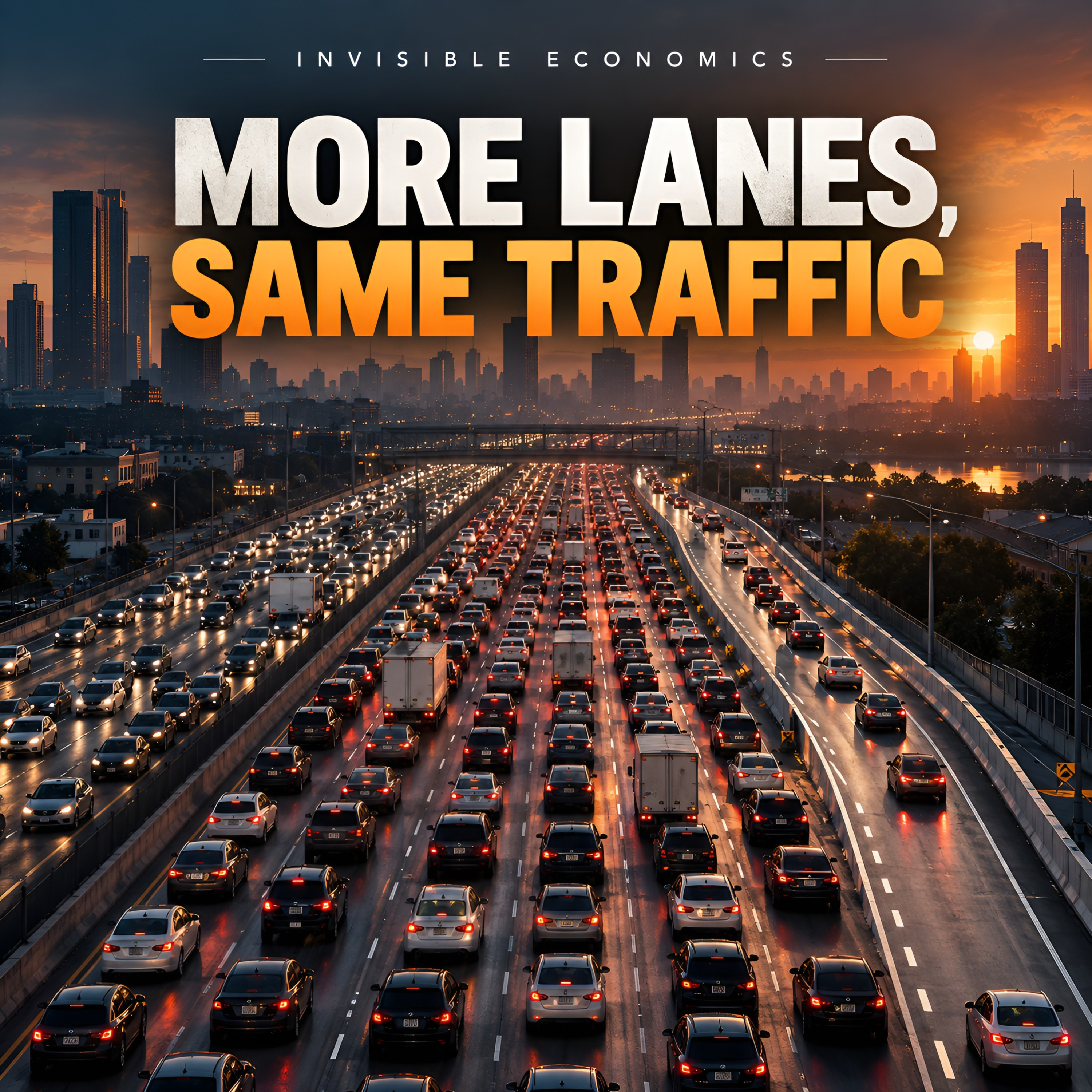 Why Adding a Lane Doesn’t Fix Traffic 03.10.2026 12λA highway spends years being widened. The new lane finally opens, the commute gets faster, and the traffic seems to disappear. Then, slowly, the road fills again.The next time you drive past a highway being widened, you'll notice the empty space differently — because faster roads can create the trips that eventually fill them.▌│▌│ ▌│ ▌▌│ ▌│▌ ▌│ ▌▌│▌ ▌│ ▌│▌│IN THIS EPISODE— Why adding road capacity can create more driving— How commuters change routes, schedules and even the trips they make— Why a traffic jam can behave like a price paid in timeTHE NUMBER10% more interstate lane capacity was associated with about 10% more driving — Duranton & Turner, U.S. metropolitan areas, 2011SOURCESAnthony Downs — Traffic Quarterly, 1962Gilles Duranton & Matthew A. Turner — American Economic Review, 2011▌│▌│ ▌│ ▌▌│ ▌│▌ ▌│ ▌▌│▌ ▌│ ▌│▌│Narration in this episode is AI-assisted.Research, writing and editorial judgment are human.Invisible Economics — The Systems Behind Everyday LifeNew episodes regularly.
 -
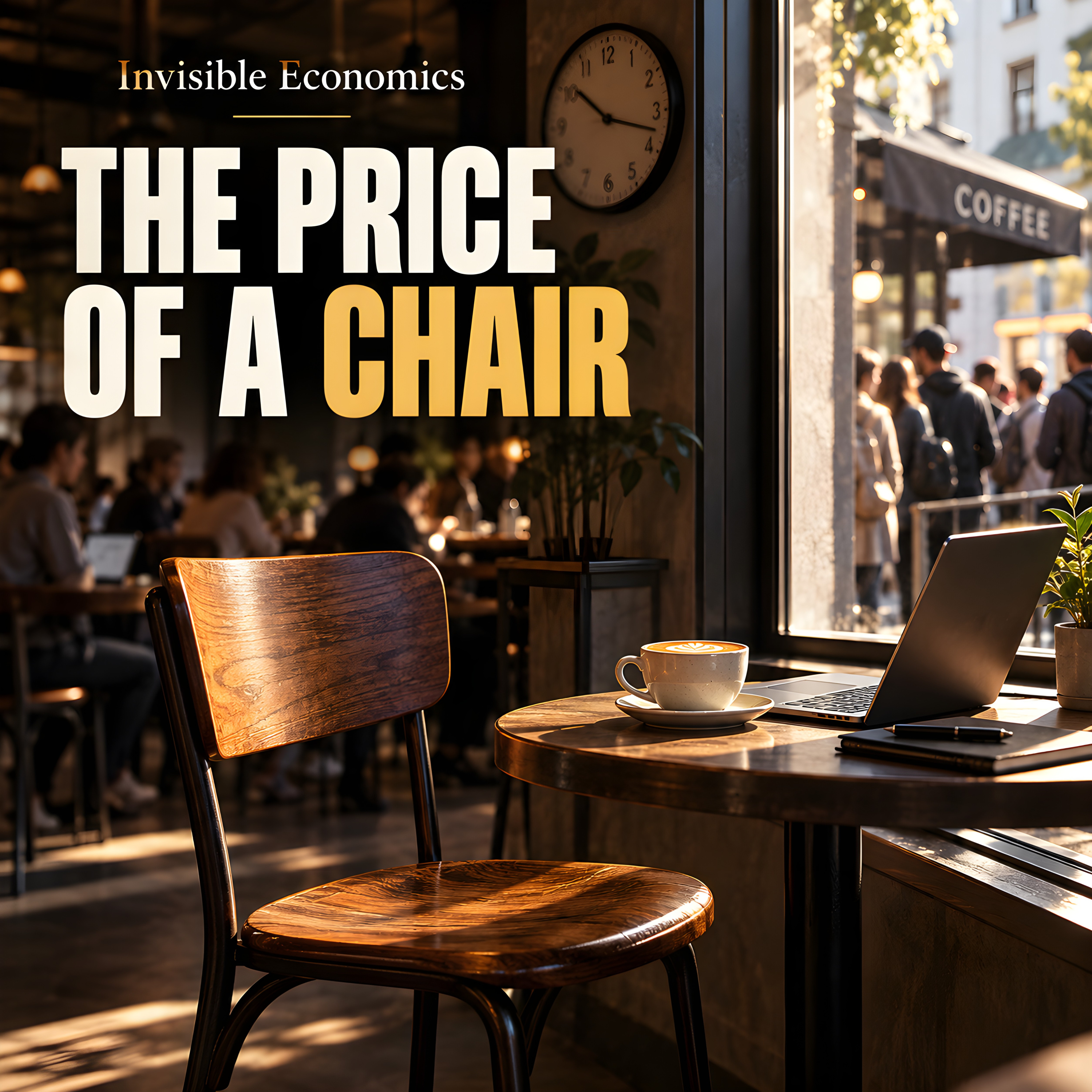 The Price of a Chair 01.10.2026 11λA woman buys one flat white and sits by the window for four hours. Another customer buys the same drink and leaves four minutes later. The café charges them exactly the same.The next time you open a laptop in a café, you'll notice the chair before the coffee.▌│▌│ ▌│ ▌▌│ ▌│▌ ▌│ ▌▌│▌ ▌│ ▌│▌│IN THIS EPISODE— Why the price of a coffee quietly includes time in a seat— Who pays when one customer stays for hours while others wait outside— Why laptop bans and plugged outlets are really a form of time-based pricingTHE NUMBER£1.80 per hour — reported rate at Ziferblat London, 2014SOURCESSheryl Kimes — Cornell University School of Hotel Administration, restaurant revenue management researchReporting on Ziferblat London — 2014Starbucks customer seating policy and reporting — 2025▌│▌│ ▌│ ▌▌│ ▌│▌ ▌│ ▌▌│▌ ▌│ ▌│▌│Narration in this episode is AI-assisted.Research, writing and editorial judgment are human.Invisible Economics — The Systems Behind Everyday LifeNew episodes regularly.
 -
 The Economics of Hostile Architecture 29.09.2026 12λA metal armrest on a public bench can help an older person stand. Hours later, the same piece of steel can make it impossible for someone to sleep there. One object, two purposes — and a quiet decision about who public space is really for.The next time you sit on a bench divided into seats, you'll notice the armrest in the middle — and you'll know it is the one part of the bench that works the night shift.▌│▌│ ▌│ ▌▌│ ▌│▌ ▌│ ▌▌│▌ ▌│ ▌│▌│IN THIS EPISODE— How incentives shape benches, plazas and other public spaces— Why concentrated complaints can matter more than small costs spread across thousands of people— How the same design can provide accessibility and exclusion at the same timeTHE NUMBER10 square feet of additional building space for every 1 square foot of public plaza — New York City zoning incentive, 1961SOURCESWilliam Whyte — research on New York public plazas, 1970s–1980Jerold Kayden — study of New York privately owned public spaces, 2000Brazilian Congress — national legislation addressing hostile architecture, 2022▌│▌│ ▌│ ▌▌│ ▌│▌ ▌│ ▌▌│▌ ▌│ ▌│▌│Narration in this episode is AI-assisted.Research, writing and editorial judgment are human.Invisible Economics — The Systems Behind Everyday Life
 -
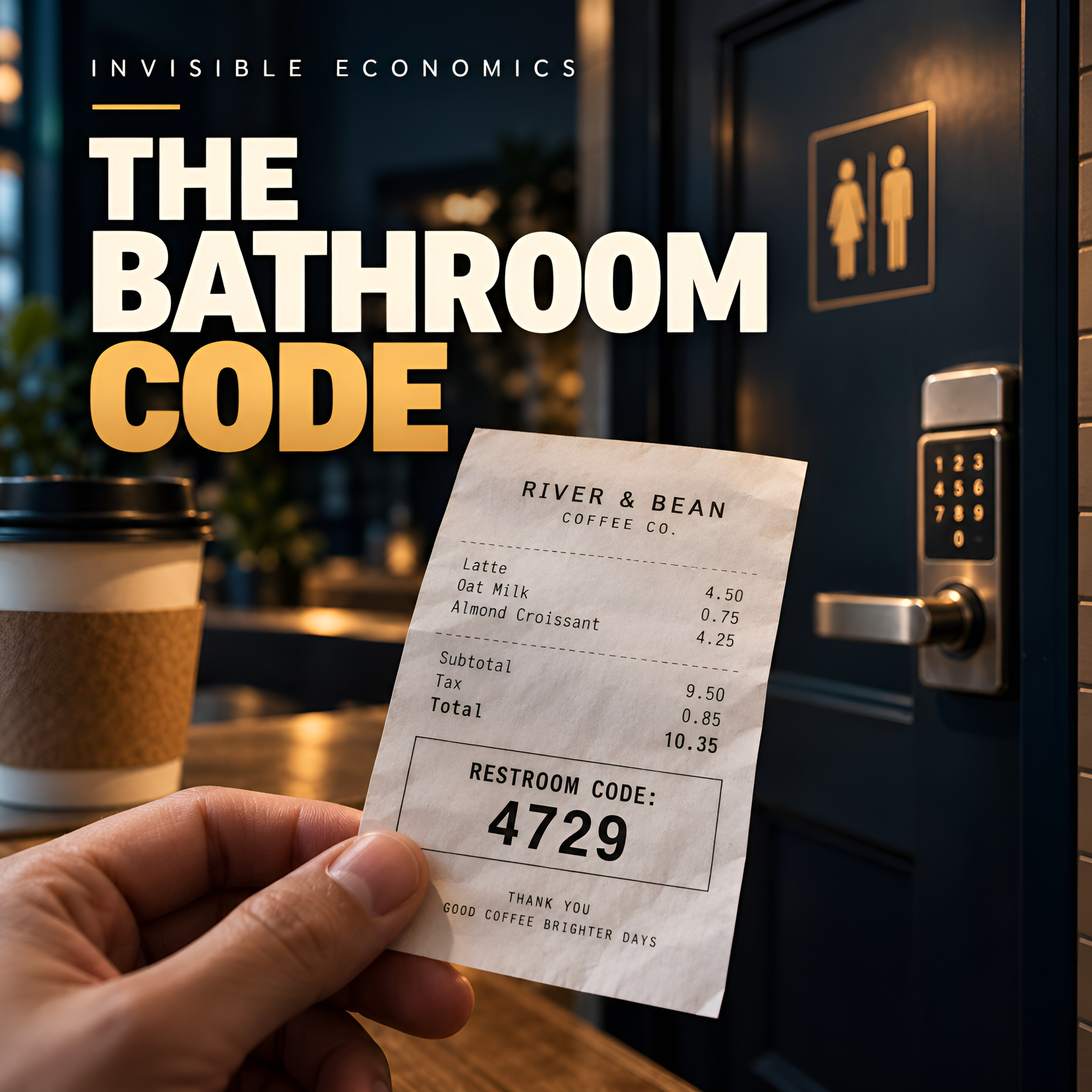 The Bathroom Code Is a Price 26.09.2026 11λA café receipt has four digits printed beneath the total. They look insignificant. But for someone who bought a coffee only to use the bathroom, those digits are the thing they actually paid for.The next time you buy something just to get a bathroom code, you'll notice that the price of the restroom never really disappeared. It moved.▌│▌│ ▌│ ▌▌│ ▌│▌ ▌│ ▌▌│▌ ▌│ ▌│▌│IN THIS EPISODE— How America went from tens of thousands of pay toilets to locked customer-only bathrooms— Who pays to keep a restroom open, and who gets left outside— How removing a ten-cent price changed the way access itself is controlledTHE NUMBERAbout 50,000 pay toilets — estimated number operating in the United States by the early 1970sSOURCESCommittee to End Pay Toilets in America — historical records, 1970sChicago City Council — pay toilet ban, 1973New York City Council — delivery worker restroom access legislation, 2021▌│▌│ ▌│ ▌▌│ ▌│▌ ▌│ ▌▌│▌ ▌│ ▌│▌│Narration in this episode is AI-assisted.Research, writing and editorial judgment are human.Invisible Economics — The Systems Behind Everyday LifeNew episodes Monday, Wednesday and Friday.
 -
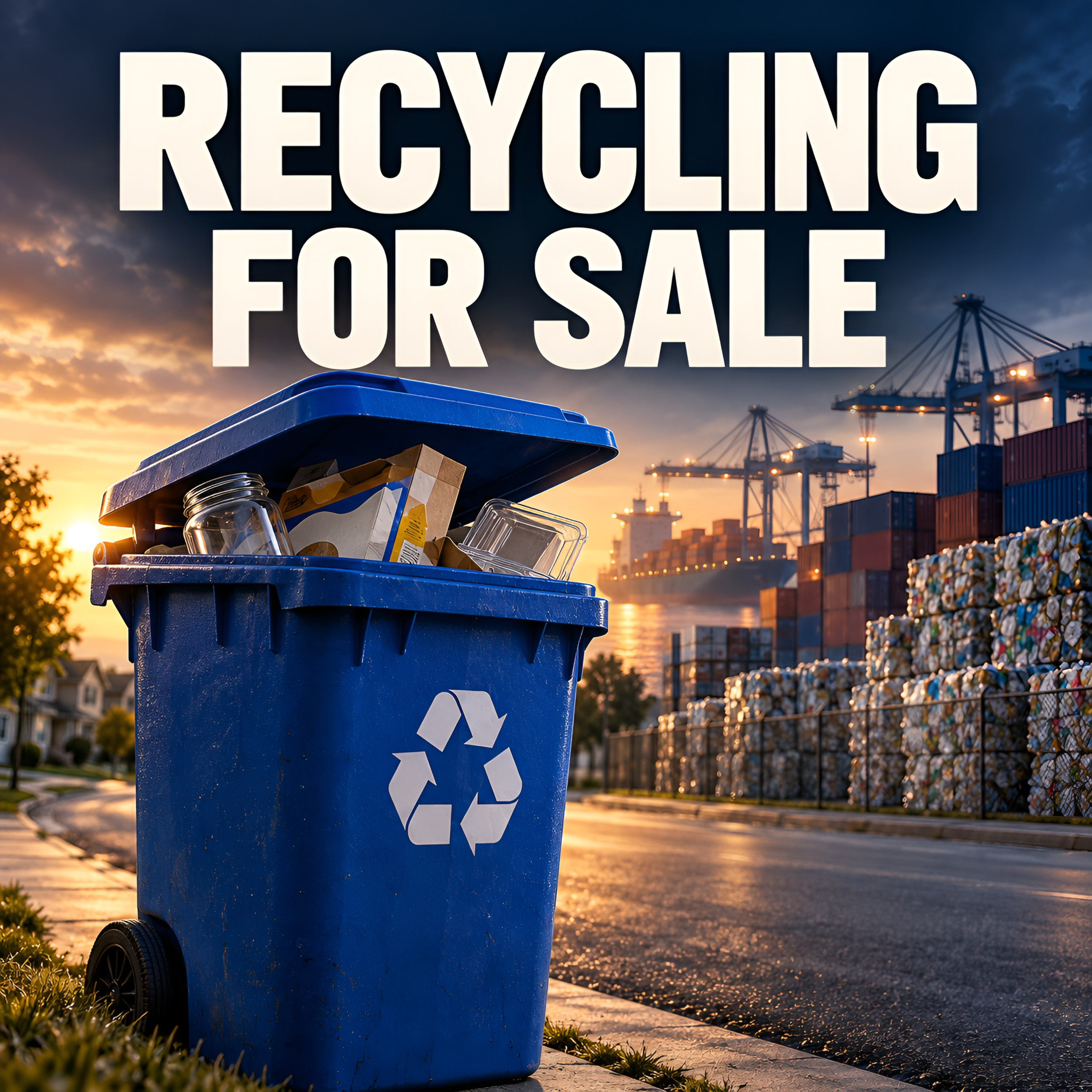 The Hidden Market Inside Your Recycling Bin 24.09.2026 14λA glass jar gets rinsed. A cereal box gets flattened. A plastic tray goes into the blue bin. By morning, the truck has taken everything away — but that is not where the story ends.The next time you drop something into a recycling bin, you'll notice that the real question isn't whether it can be recycled. It's whether someone wants to buy it.▌│▌│ ▌│ ▌▌│ ▌│▌ ▌│ ▌▌│▌ ▌│ ▌│▌│IN THIS EPISODE— Why recycling depends on a global market for used materials— What happened when China stopped buying much of the world's waste— Why the recycling ritual survived even after its economics changedTHE NUMBER45% — China's approximate share of internationally traded plastic waste imported between 1992 and 2016▌│▌│ ▌│ ▌▌│ ▌│▌ ▌│ ▌▌│▌ ▌│ ▌│▌│Narration in this episode is AI-assisted.Research, writing and editorial judgment are human.Invisible Economics — The Systems Behind Everyday Life
 -
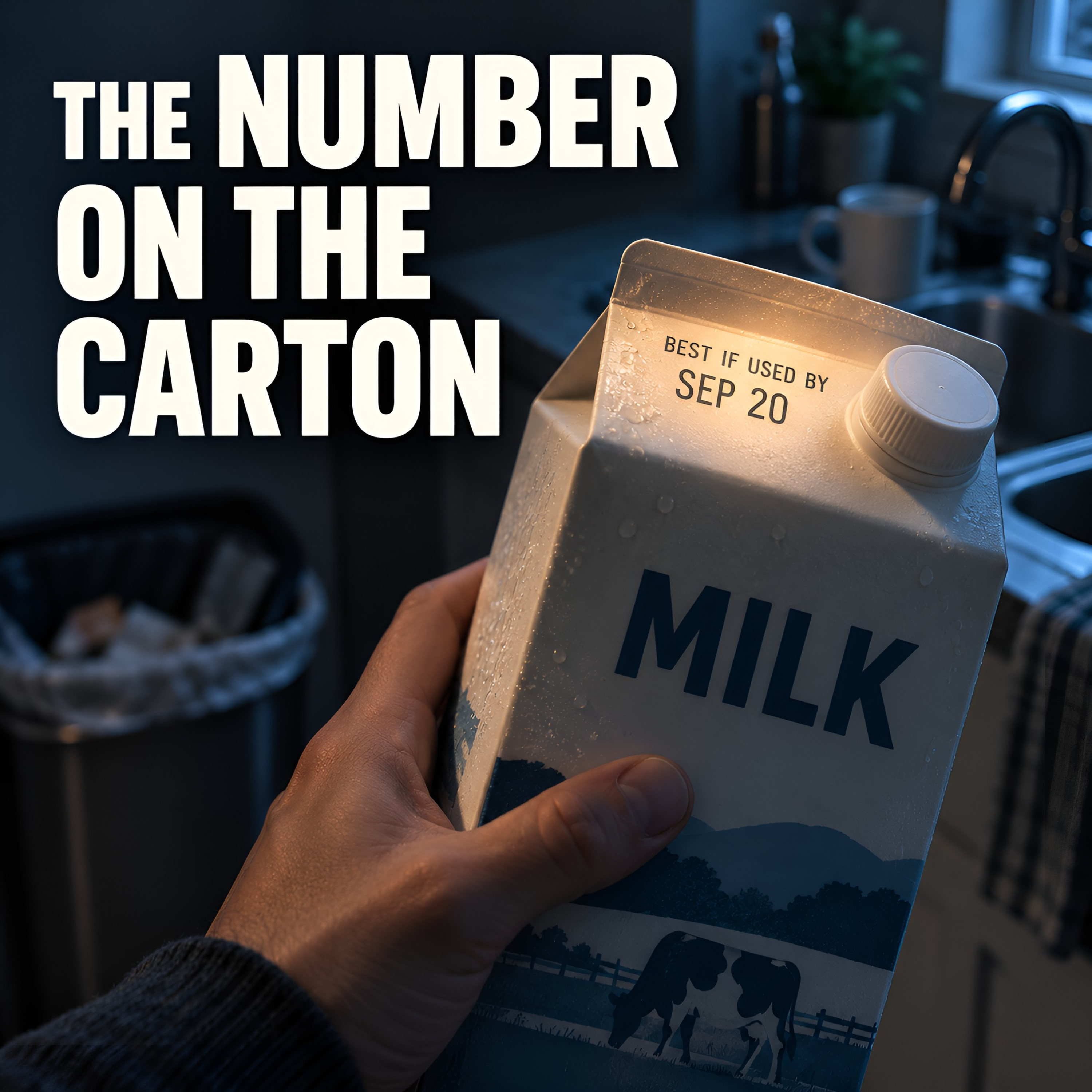 The Date That Makes You Throw Food Away 22.09.2026 13λA sealed carton of milk comes out of the fridge one day past its printed date. It has stayed cold. Nobody has opened it. And yet, in millions of kitchens, the number on the carton is enough to send it down the sink.The next time you turn a carton around to check the date, you'll notice that the number may be a forecast — not a verdict.▌│▌│ ▌│ ▌▌│ ▌│▌ ▌│ ▌▌│▌ ▌│ ▌│▌│IN THIS EPISODE— Why most food dates describe quality rather than safety— How manufacturers, retailers and households are all rewarded for being cautious in the same direction— What happens when a quality estimate gains the force of a ruleTHE NUMBER43% — U.S. adults who said they always or usually discard food near or past its package date, 2025SOURCESUSDA Food Safety and Inspection Service — Food Product DatingJohns Hopkins University / Harvard Food Law and Policy Clinic / ReFED — Consumer Food Date Label Survey, 2025Montana Department of Livestock — Grade A Milk Dating Rules▌│▌│ ▌│ ▌▌│ ▌│▌ ▌│ ▌▌│▌ ▌│ ▌│▌│Narration in this episode is AI-assisted.Research, writing and editorial judgment are human.Invisible Economics — The Systems Behind Everyday LifeNew episodes regularly.
 -
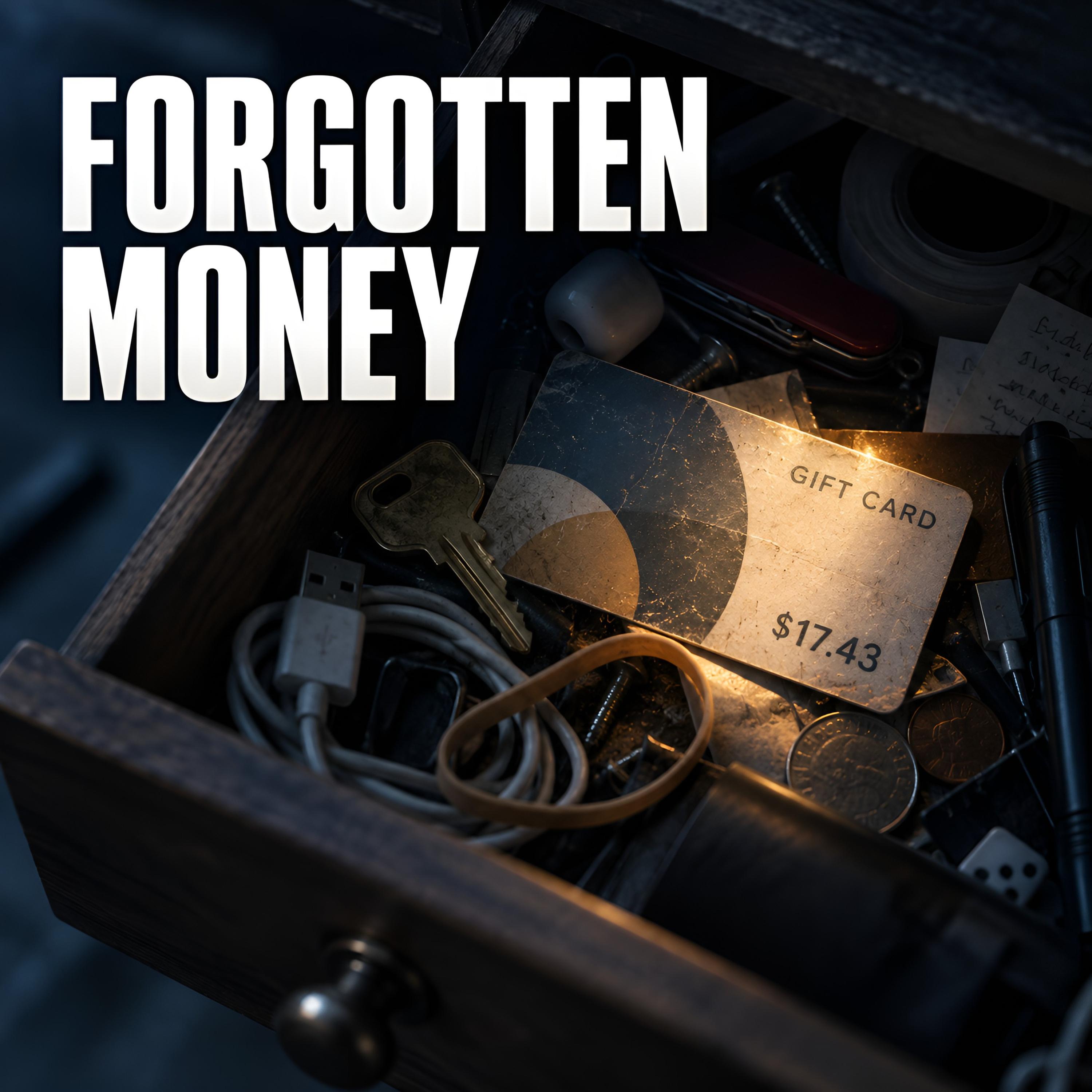 Who Gets the Money on a Gift Card You Never Use? 20.09.2026 14λA gift card sits forgotten in a drawer. Seventeen dollars remains on it. Nothing expires, nothing moves, and yet the money is doing more than it appears.The next time you find an old gift card, you'll notice the balance differently — and wonder who is holding the money while it waits.▌│▌│ ▌│ ▌▌│ ▌│▌ ▌│ ▌▌│▌ ▌│ ▌│▌│IN THIS EPISODE— Why gift card money begins as a liability instead of revenue— How retailers eventually earn money from balances that are never spent— Why consumer protections, state laws and corporate incentives can point in the same directionTHE NUMBER$1.84 billion — Starbucks stored-value card and loyalty program liability, fiscal 2025SOURCESStarbucks — Annual Report, fiscal 2025FASB ASC 606 — Revenue from Contracts with CustomersDelaware Supreme Court — gift card unclaimed-property litigation, 2020▌│▌│ ▌│ ▌▌│ ▌│▌ ▌│ ▌▌│▌ ▌│ ▌│▌│Narration in this episode is AI-assisted.Research, writing and editorial judgment are human.Invisible Economics — The Systems Behind Everyday LifeNew episodes Monday, Wednesday and Friday.
 -
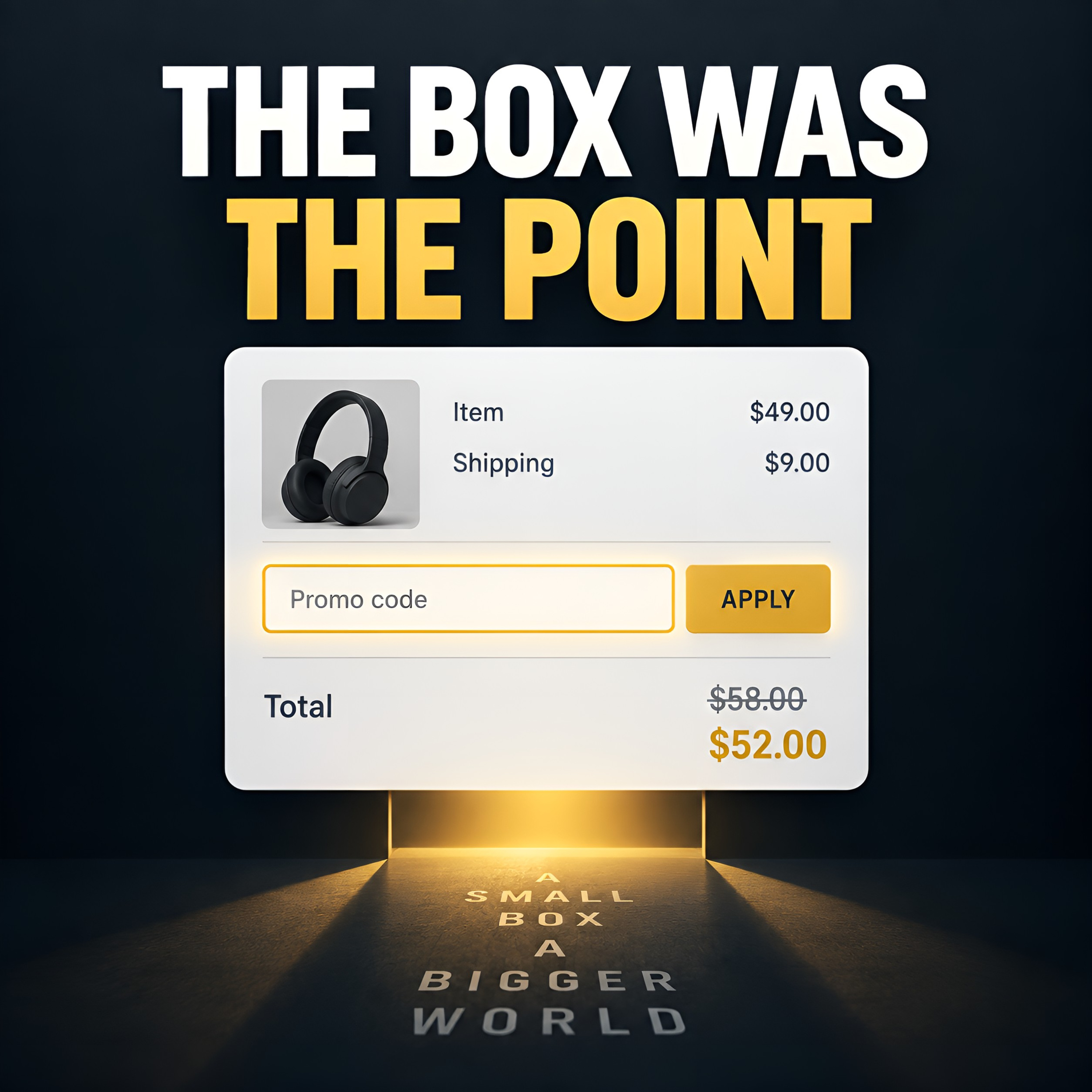 Why Stores Make You Search for Discounts 18.09.2026 12λThere is a small empty box at the end of an online checkout. One shopper ignores it and pays full price. Another spends twelve minutes searching for a code and pays less for exactly the same thing.The next time you see a promo code box at checkout, you'll notice that the empty field may be asking something about you.▌│▌│ ▌│ ▌▌│ ▌│▌ ▌│ ▌▌│▌ ▌│ ▌│▌│IN THIS EPISODE— How coupons let customers sort themselves into different prices— Why the time spent searching for a discount can be part of the mechanism— How promo codes evolved from price discrimination into referral trackingTHE NUMBER871 million coupons redeemed in the United States — Inmar Intelligence, 2024SOURCESChakravarthi Narasimhan — Marketing Science, 1984Aviv Nevo & Catherine Wolfram — RAND Journal of Economics, 2002Inmar Intelligence — U.S. coupon redemption data, 2024▌│▌│ ▌│ ▌▌│ ▌│▌ ▌│ ▌▌│▌ ▌│ ▌│▌│Narration in this episode is AI-assisted.Research, writing and editorial judgment are human.Invisible Economics — The Systems Behind Everyday LifeNew episodes when they’re ready.
 -
 Why Printer Ink Costs So Much 16.09.2026 13λA small light on the printer turns orange. The replacement cartridge is a plastic box smaller than a deck of cards. Sitting nearby is an entire printer — motors, rollers, electronics, scanner and wireless radio — priced not nearly as far above it as the two objects would suggest.The next time you buy a cartridge, you'll notice the printer sitting beside it — and you'll know which of the two is really the product.▌│▌│ ▌│ ▌▌│ ▌│▌ ▌│ ▌▌│▌ ▌│ ▌│▌│IN THIS EPISODE— Why printer manufacturers can afford to sell the machine so cheaply— How expensive cartridges repay the subsidy hidden in the printer— Why the tiny chip on a cartridge may be more important than the ink inside itTHE NUMBERNearly $10,000 per litre — estimated price of HP 65 tri-colour cartridge ink, TechRadar, 2024SOURCESTechRadar — cartridge price-per-litre comparison, 2024Gabaix & Laibson — “Shrouded Attributes, Consumer Myopia, and Information Suppression in Competitive Markets,” 2006HP Inc. — Annual Report, fiscal 2025▌│▌│ ▌│ ▌▌│ ▌│▌ ▌│ ▌▌│▌ ▌│ ▌│▌│Narration in this episode is AI-assisted.Research, writing and editorial judgment are human.Invisible Economics — The Systems Behind Everyday LifeNew episodes regularly.
 -
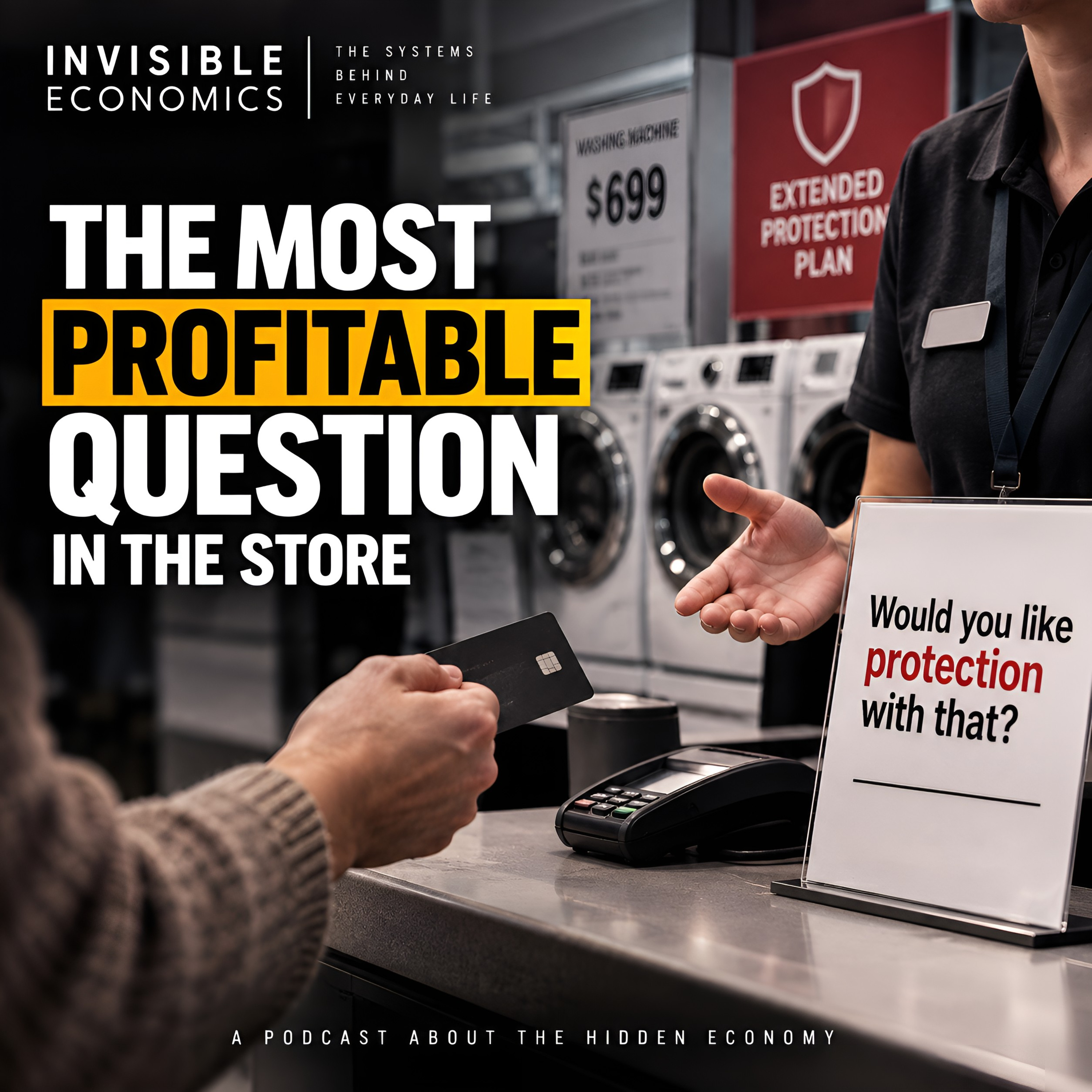 The Most Profitable Question in the Store 14.09.2026 13λA washing machine has been chosen. The price is agreed. The card is already in hand. Then, just before the transaction ends, the salesperson asks one more question: would you like protection with that?The next time you are offered an extended warranty at the checkout, you'll notice when the question is asked — and understand why that moment is so valuable.▌│▌│ ▌│ ▌▌│ ▌│▌ ▌│ ▌▌│▌ ▌│ ▌│▌│IN THIS EPISODE— Why retailers can earn more from selling protection than from selling the product itself— Why warranty providers compete for the retailer rather than the customer— How “reverse competition” can make competition push prices up instead of downTHE NUMBER$561 million — protection plan revenue recognized by Lowe’s, fiscal 2024SOURCESLowe’s Companies, Inc. — Annual Report, 2024UK Office of Fair Trading / Competition Commission — Extended Warranties on Domestic Electrical GoodsNevada Revised Statutes — definition of reverse competition▌│▌│ ▌│ ▌▌│ ▌│▌ ▌│ ▌▌│▌ ▌│ ▌│▌│Narration in this episode is AI-assisted.Research, writing and editorial judgment are human.Invisible Economics — The Systems Behind Everyday LifeNew episodes when they're ready.
 -
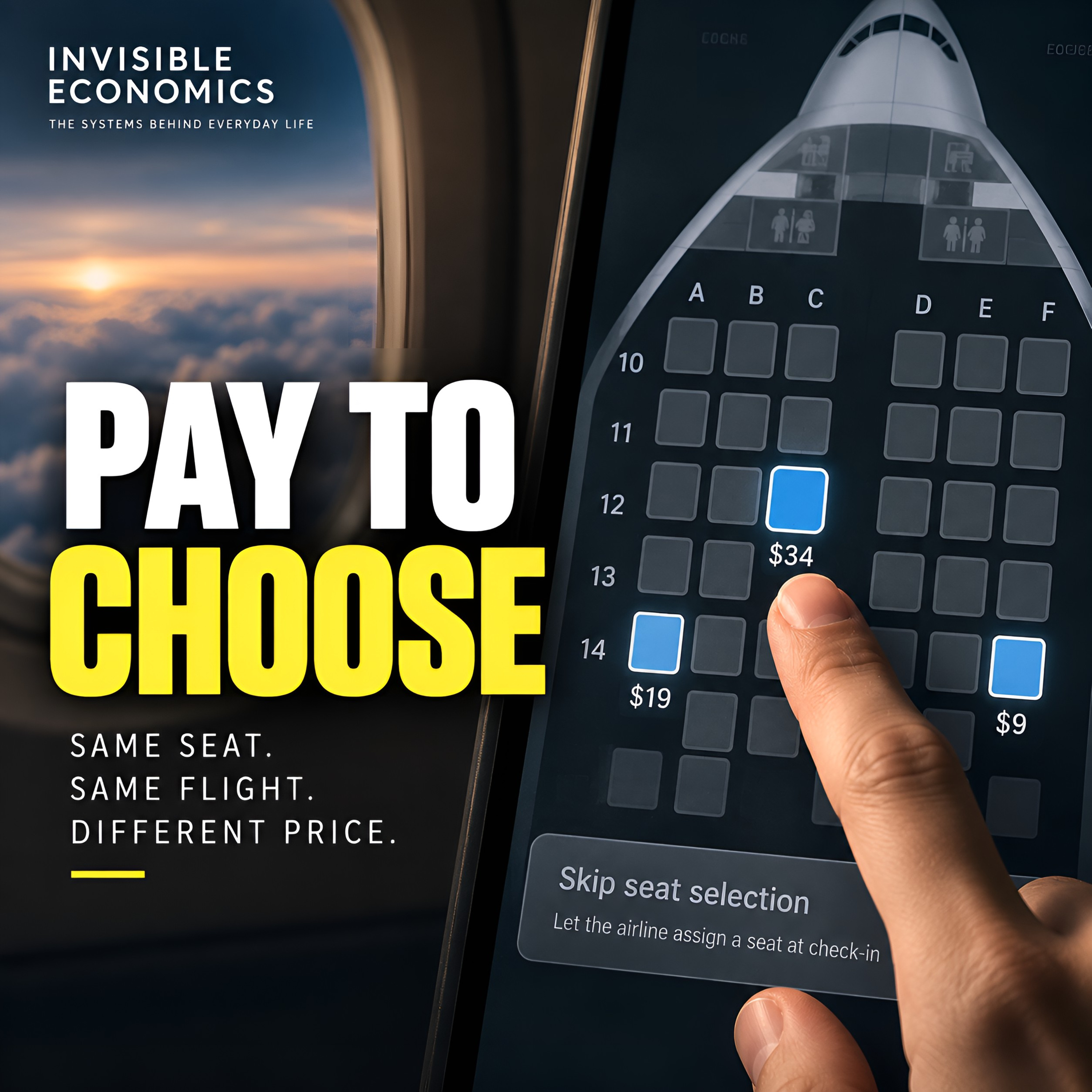 Why Airlines Charge You to Choose Your Seat 13.09.2026 14λTwenty-four hours before departure, the seat map appears. Same aircraft. Same cabin. Same seats. But pointing at one rectangle can cost another thirty-four dollars.The next time you open an airline seat map, you'll notice that the grey boxes are not just showing availability — they're part of the pricing system.▌│▌│ ▌│ ▌▌│ ▌│▌ ▌│ ▌▌│▌ ▌│ ▌│▌│IN THIS EPISODE— Why airlines can charge more without providing a physically better seat— How restricting choice separates passengers by willingness to pay— Why improving the cheapest fare can actually destroy the value of the premium oneTHE NUMBER$12.4 billion — seat-selection fees collected by five U.S. airlines from 2018–2023, U.S. Senate Permanent Subcommittee on Investigations, 2024SOURCESU.S. Senate Permanent Subcommittee on Investigations — Airline Fee Investigation Staff Report, 2024Raymond Deneckere & R. Preston McAfee — “Damaged Goods,” Journal of Economics & Management Strategy, 1996U.S. Department of Transportation — Family Seating Dashboard and proposed family-seating rule, 2023–2024▌│▌│ ▌│ ▌▌│ ▌│▌ ▌│ ▌▌│▌ ▌│ ▌│▌│Narration in this episode is AI-assisted.Research, writing and editorial judgment are human.Invisible Economics — The Systems Behind Everyday LifeNew episodes when they're ready.
 -
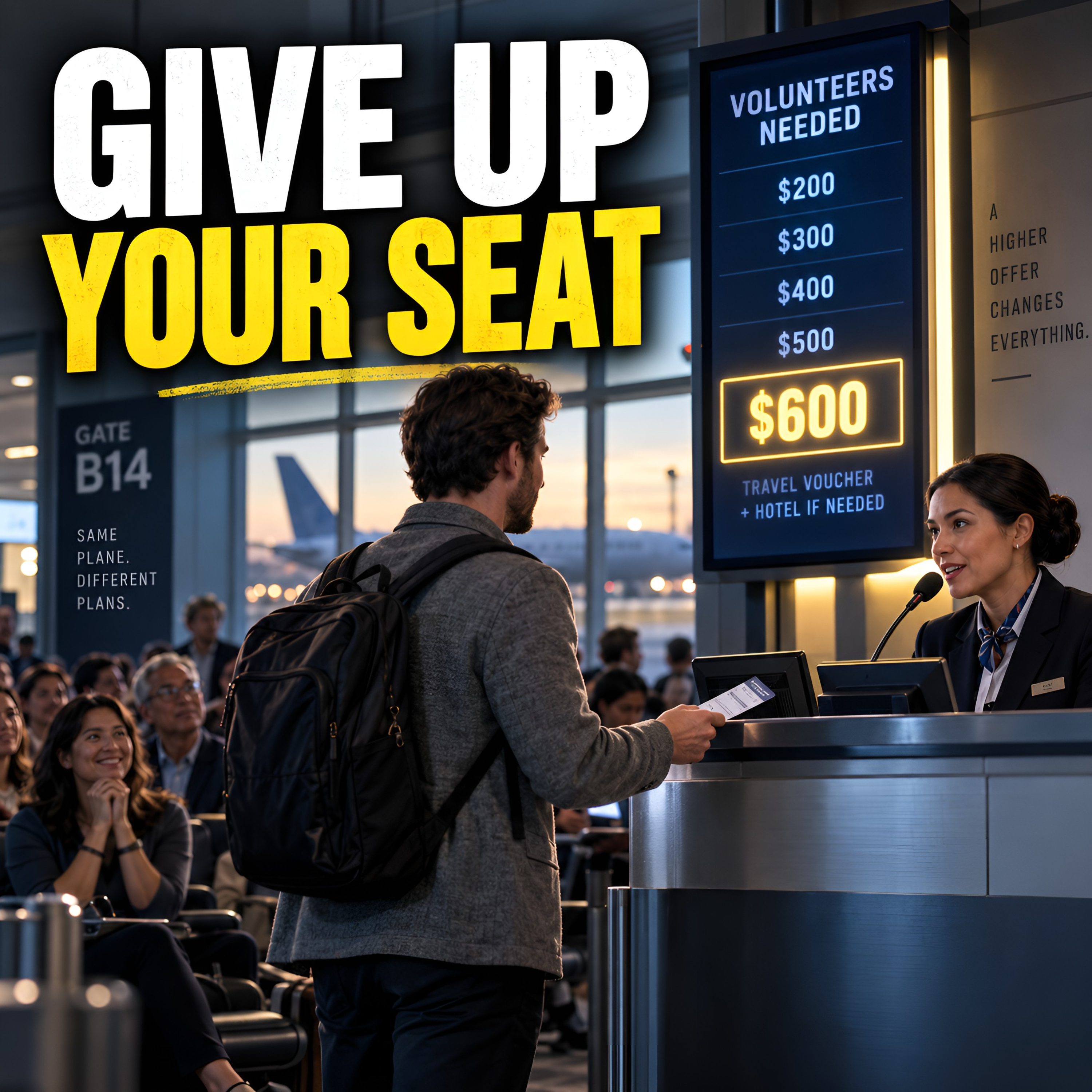 Why Airlines Pay You to Miss Your Flight 12.09.2026 15λA flight is full. The gate agent offers $400 for someone to take a later plane. Nobody moves. Then the offer becomes $500. Then $600. The number stops moving the moment somebody stands up.The next time you hear an airline asking for volunteers at the gate, you'll notice the price moving — and know that you are watching an auction find its seller.▌│▌│ ▌│ ▌▌│ ▌│▌ ▌│ ▌▌│▌ ▌│ ▌│▌│IN THIS EPISODE— How airlines used to decide who lost a seat on an overbooked flight— How economist Julian Simon turned that decision into a voluntary market— Why putting a price on bumping passengers may have made overbooking easier to expandTHE NUMBERAbout 291,000 passengers voluntarily gave up their seats on U.S. airlines in 2024 — U.S. Department of Transportation, passengers, 2024SOURCESJulian L. Simon — Journal of Transport Economics and Policy, 1968U.S. Civil Aeronautics Board — oversales and denied boarding rules, 1978U.S. Department of Transportation — Air Travel Consumer Report, 2024▌│▌│ ▌│ ▌▌│ ▌│▌ ▌│ ▌▌│▌ ▌│ ▌│▌│Narration in this episode is AI-assisted.Research, writing and editorial judgment are human.Invisible Economics — The Systems Behind Everyday LifeNew episodes when they're ready.
 -
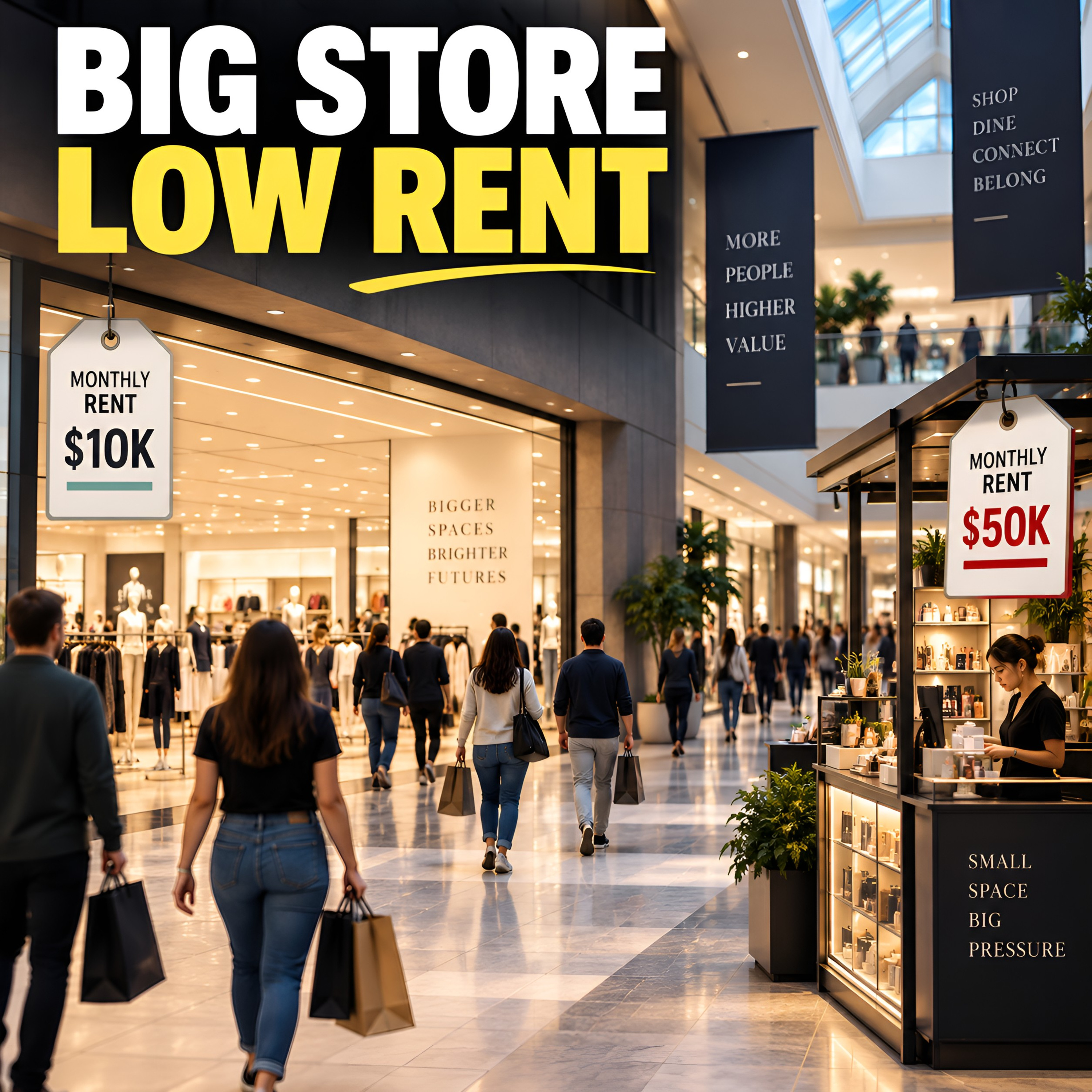 Why the Biggest Store Pays the Lowest Rent 11.09.2026 12λAt each end of a shopping mall sits one of its largest stores. They take up more space, sign longer leases, and draw the crowds. They also tend to pay some of the lowest rent per square metre in the building.The next time you walk the corridor between two anchor stores, you'll notice the smaller shops along the way — and realize that the footsteps outside their doors are part of what they're paying for.▌│▌│ ▌│ ▌▌│ ▌│▌ ▌│ ▌▌│▌ ▌│ ▌│▌│IN THIS EPISODE— Why shopping centres charge anchor stores less for space— How smaller tenants help pay for the traffic those anchors create— Why co-tenancy clauses can turn one store closure into a problem for an entire mallTHE NUMBERAt least 72% lower rent per square foot for anchor stores versus non-anchor tenants — Pashigian & Gould, Journal of Law and Economics, 1998SOURCESPeter Pashigian & Eric Gould — “Internalizing Externalities: The Pricing of Space in Shopping Malls,” Journal of Law and Economics, 1998▌│▌│ ▌│ ▌▌│ ▌│▌ ▌│ ▌▌│▌ ▌│ ▌│▌│Narration in this episode is AI-assisted.Research, writing and editorial judgment are human.Invisible Economics — The Systems Behind Everyday Life
 -
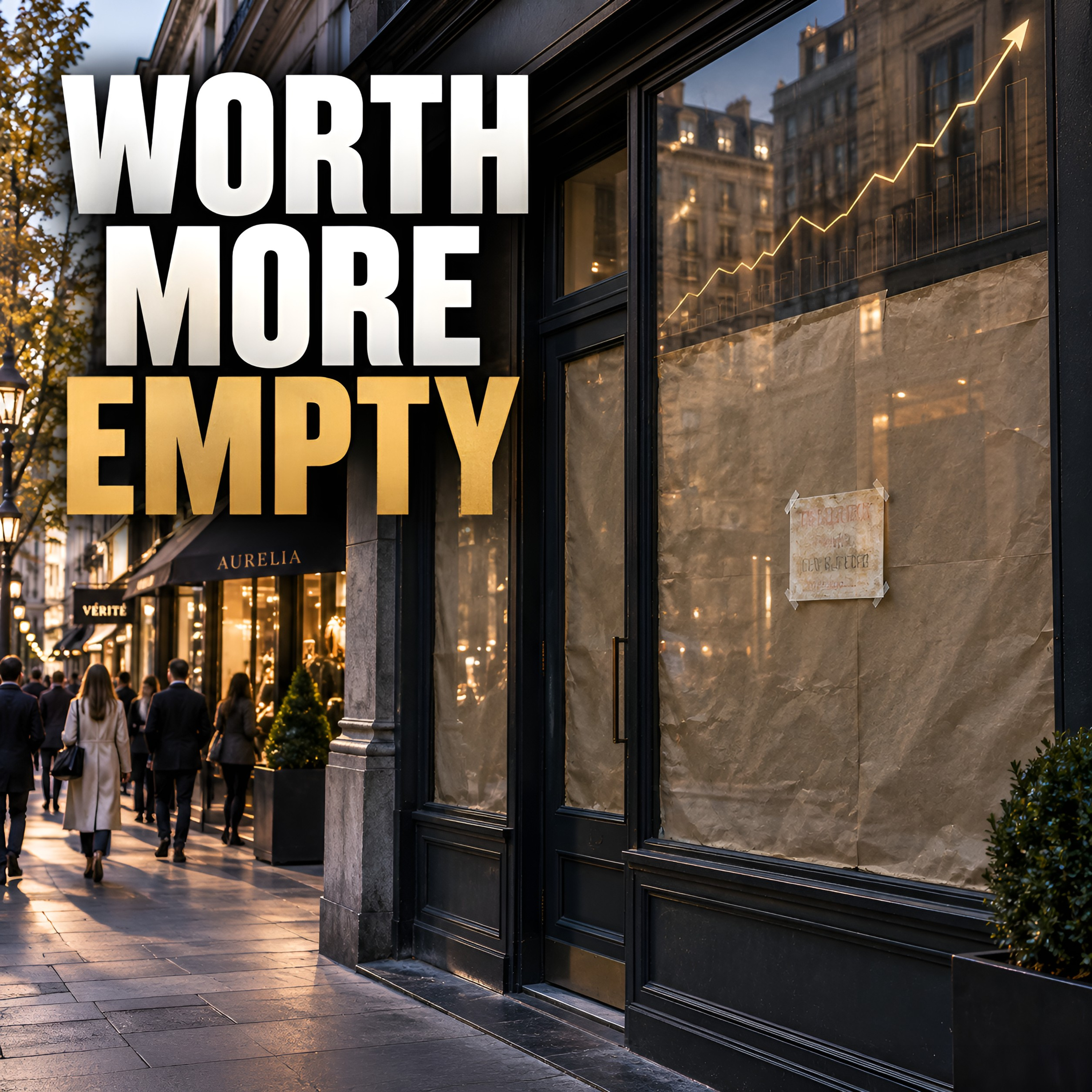 Why Some Storefronts Are Worth More Empty 11.09.2026 12λA storefront sits empty on a busy street. Businesses want the space, the owner has their phone numbers, and the lights stay off anyway. Sometimes accepting less rent can cost more than collecting no rent at all.The next time you pass a storefront that has been dark for months, you'll notice the asking rent may be doing something even when the room isn't.▌│▌│ ▌│ ▌▌│ ▌│▌ ▌│ ▌▌│▌ ▌│ ▌│▌│IN THIS EPISODE— How a cheaper lease can pull down the value of more than one storefront— Why headline rents, lender covenants and hidden concessions can make vacancy rational— How an empty shop can function like an option on a more valuable tenant laterTHE NUMBER16 months — average Manhattan storefront vacancy spell, 2015–2019, Moszkowski & StackmanSOURCESOption Value and Storefront Vacancy in New York City — Erica Moszkowski & Daniel Stackman, 2023Bleaker on Broadway: The Contractual Origins of High-Rent Urban Blight — Daniel Stackman & Erica Moszkowski, 2023▌│▌│ ▌│ ▌▌│ ▌│▌ ▌│ ▌▌│▌ ▌│ ▌│▌│Narration in this episode is AI-assisted.Research, writing and editorial judgment are human.Invisible Economics — The Systems Behind Everyday Life
 -
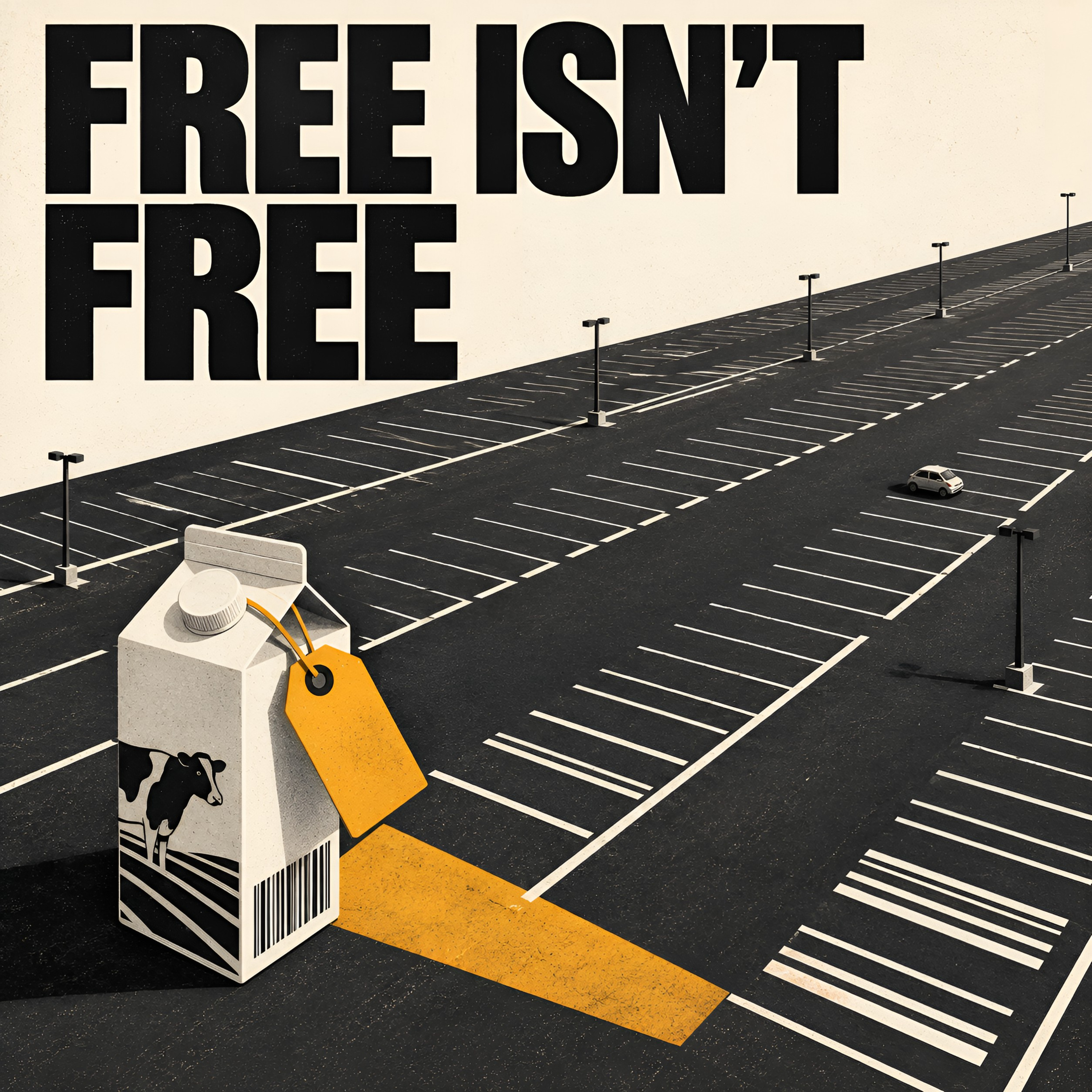 You Pay for Free Parking Even If You Never Drive 10.09.2026 10λA supermarket offers free parking. But the asphalt outside still has to be built, insured, lit and maintained. The cost never disappeared. It simply moved inside the store.The next time you park outside a supermarket, you'll notice the empty spaces around the car — and know that they were paid for at the register.▌│▌│ ▌│ ▌▌│ ▌│▌ ▌│ ▌▌│▌ ▌│ ▌│▌│IN THIS EPISODE— How minimum parking requirements determine the size of a parking lot before the store is built— Why drivers, pedestrians and bus passengers all pay for supposedly free parking— How surveys of free suburban parking became laws that reproduced the demand they claimed to measureTHE NUMBER330 square feet — approximately 31 square metres of pavement and circulation space per parked car, Donald Shoup, 2005SOURCESDonald Shoup — The High Cost of Free Parking, 2005Michael Manville — Parking Requirements and Housing Development: Regulation and Reform in Los Angeles, 2013Daniel Baldwin Hess and Jeffrey Rehler — Minus Minimums: Development Response to the Removal of Minimum Parking Requirements in Buffalo, 2021▌│▌│ ▌│ ▌▌│ ▌│▌ ▌│ ▌▌│▌ ▌│ ▌│▌│Narration in this episode is AI-assisted.Research, writing and editorial judgment are human.Invisible Economics — The Systems Behind Everyday LifeNew episodes every other Tuesday.
 -
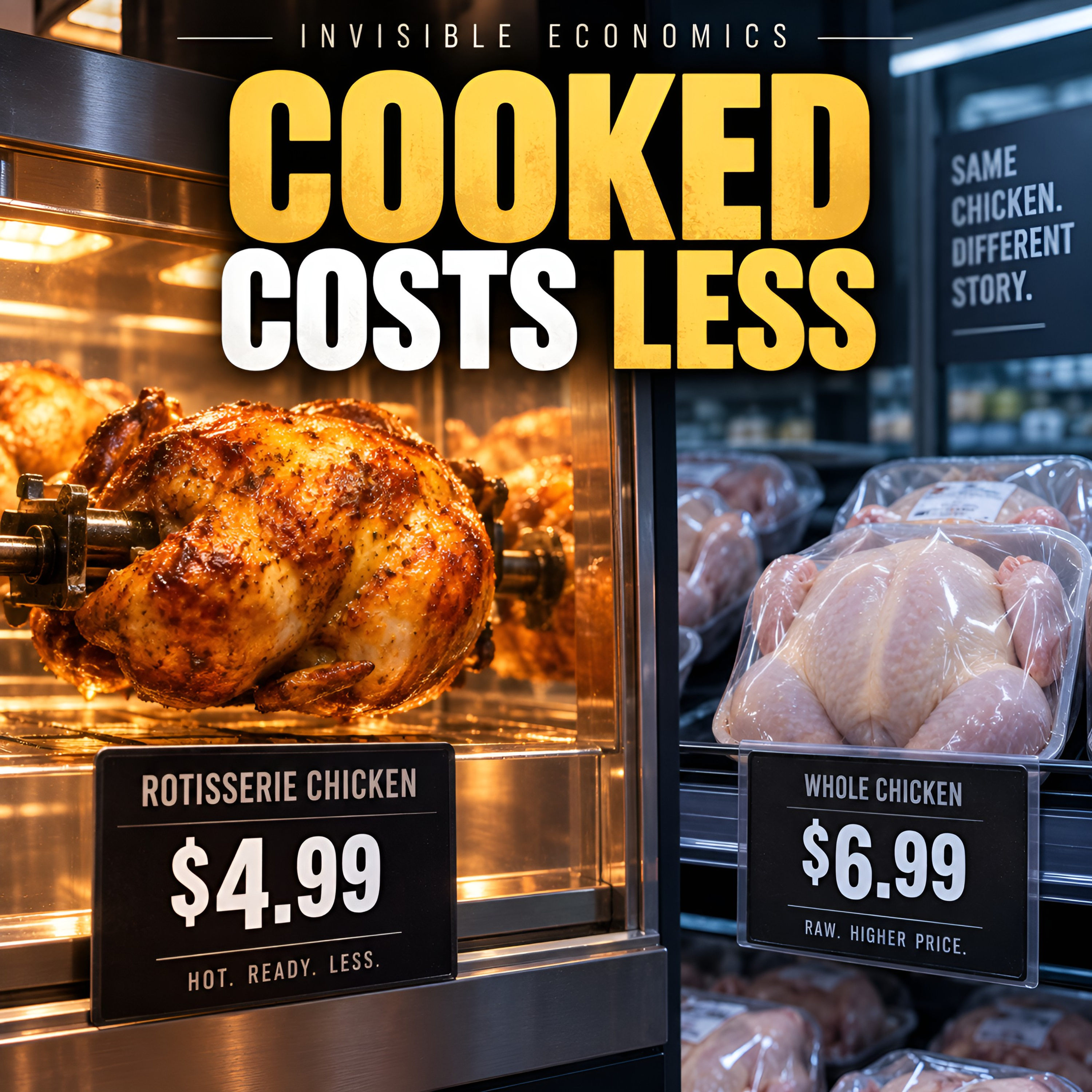 Why the Cooked Chicken Costs Less Than the Raw One 09.09.2026 10λA cooked chicken turns slowly under a heat lamp. A few steps away, the same bird sits raw in a refrigerated case — and sometimes costs more. The difference is not a mistake. Someone chose that price.The next time you walk past a rotisserie chicken, you'll notice that the store may be selling more than dinner.▌│▌│ ▌│ ▌▌│ ▌│▌ ▌│ ▌▌│▌ ▌│ ▌│▌│IN THIS EPISODE— Why retailers deliberately sell some products at or below cost— How the same cheap chicken can buy a supermarket basket or a warehouse membership— Why one retailer built part of its own poultry supply chain to protect a single memorable priceTHE NUMBER$30–40 million per year in forgone gross margin — Costco CFO Richard Galanti, 2015SOURCESConsumer Reports — supermarket rotisserie chicken reportingU.S. Department of Agriculture — chicken size and retail dataCostco earnings call — 2015▌│▌│ ▌│ ▌▌│ ▌│▌ ▌│ ▌▌│▌ ▌│ ▌│▌│Narration in this episode is AI-assisted.Research, writing and editorial judgment are human.Invisible Economics — The Systems Behind Everyday LifeNew episodes regularly.
 -
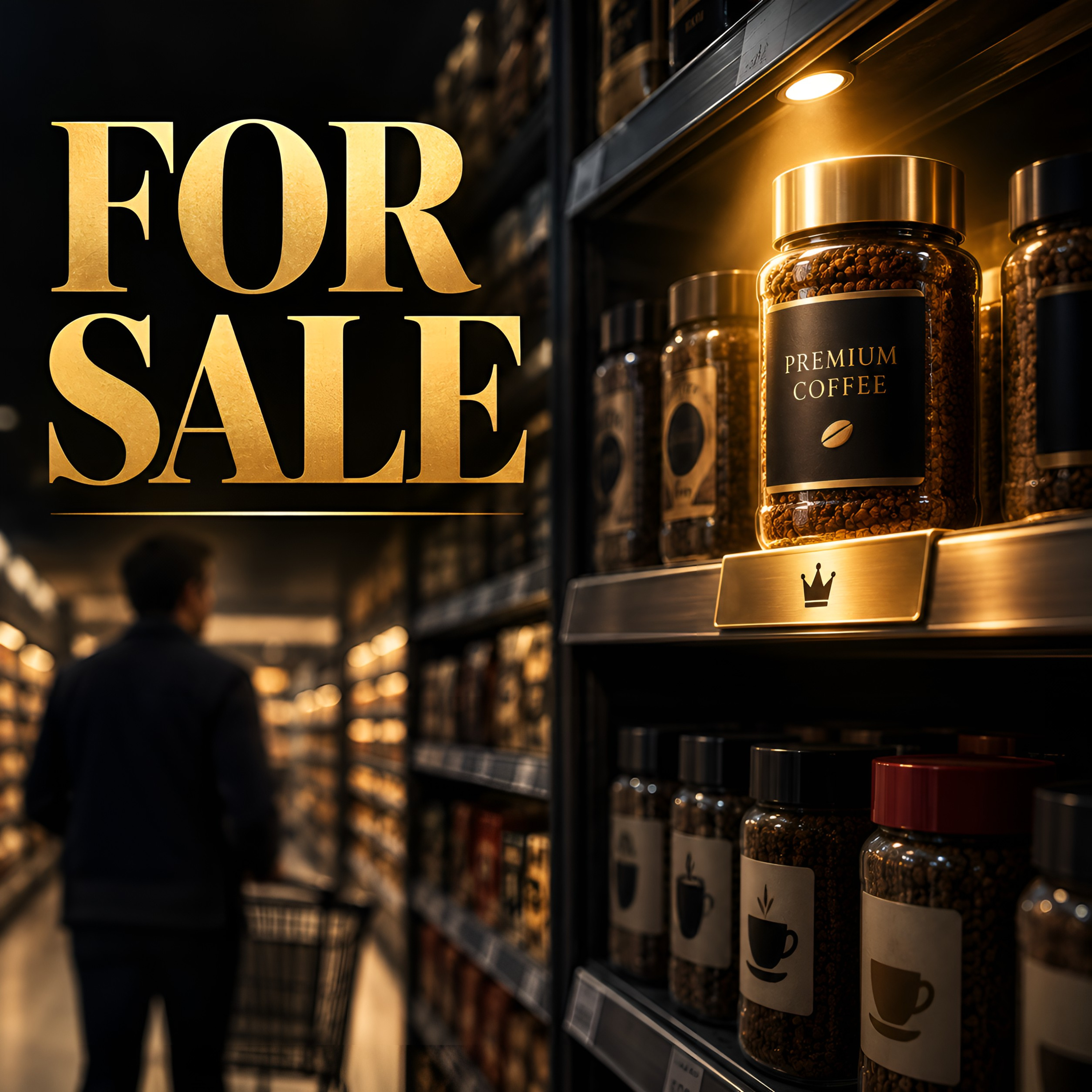 They Paid to Put That Product in Your Hand 08.09.2026 12λYou walk into a supermarket believing the shelves are simply showing you what people buy.They aren't.The most valuable positions in a supermarket — the places your eyes naturally land and your hands naturally reach — can be negotiated, rented and paid for long before a single product is sold.In this episode of **Invisible Economics**, we explore the hidden market behind supermarket shelf space: slotting allowances, pay-to-stay fees, eye-level placement and the quiet negotiations that determine which products become visible and which disappear toward the bottom shelf.But the story goes beyond supermarkets.The same economic logic now governs the digital shelf, where sponsored search results and retail advertising businesses sell the limited number of positions people actually look at before making a decision.Physical shelves may be finite. Digital shelves can be infinite.Human attention is not.And once retailers learn exactly where people tend to look, reach and click, that habit itself becomes something that can be sold.The next time your hand reaches automatically for a product at eye level, ask yourself:**Did you choose the product — or did someone choose the position first?****Invisible Economics** — the hidden systems, incentives and transactions shaping everyday life.#InvisibleEconomics #Economics #Supermarkets #RetailEconomics #ConsumerBehavior #Marketing #RetailMedia #BehavioralEconomics #Business #Advertising #HiddenEconomics #ConsumerPsychology
 -
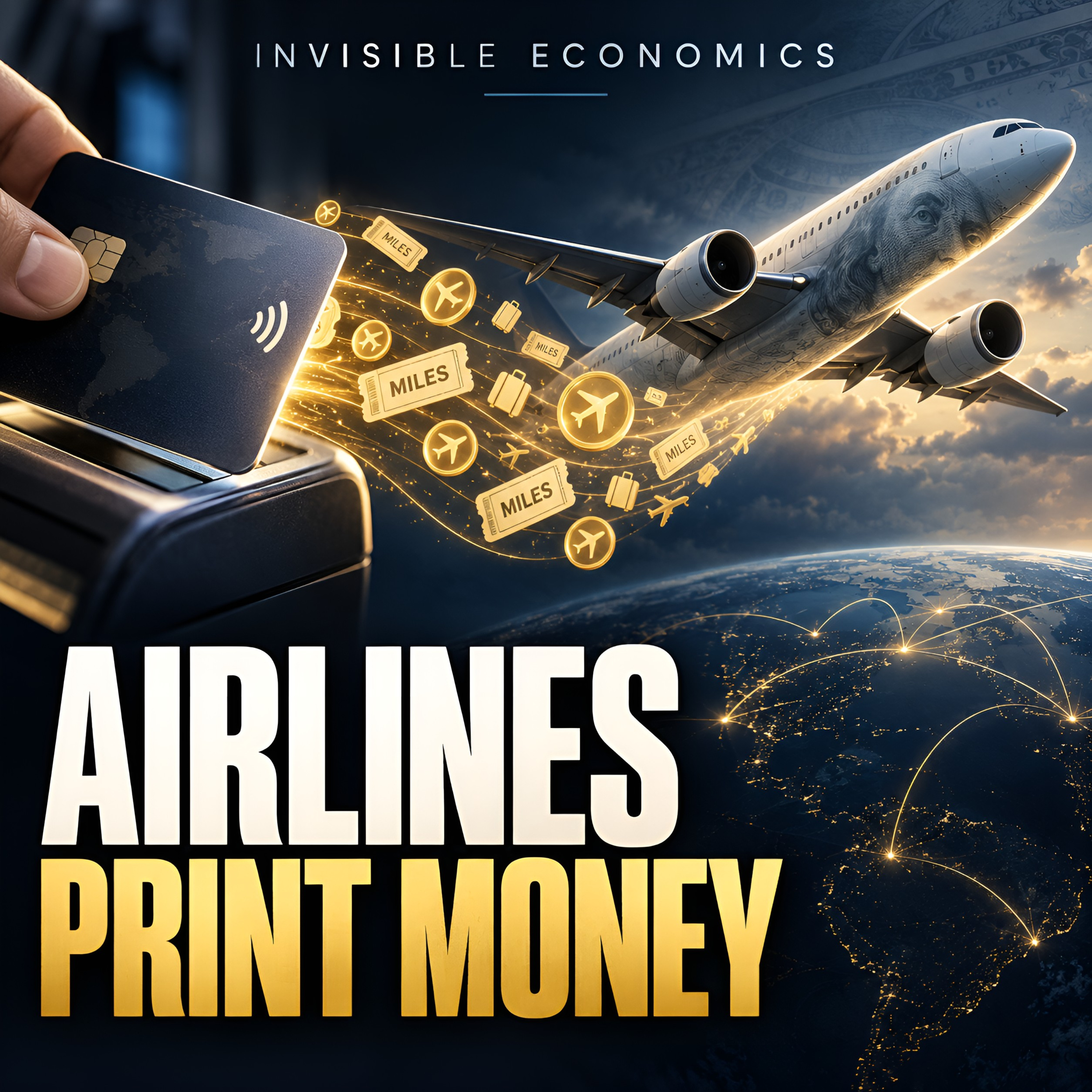 The Airline That Prints Its Own Money 08.09.2026 12λIn June 2020, most of United Airlines' fleet was grounded and the company needed cash. With aircraft and spare parts already pledged, it offered lenders something that could not fly: MileagePlus. The collateral was a frequent-flyer program.The next time you tap a rewards card, you'll notice that part of the purchase is helping finance an airline — even when no ticket is being bought.▌│▌│ ▌│ ▌▌│ ▌│▌ ▌│ ▌▌│▌ ▌│ ▌│▌│IN THIS EPISODE— How airlines turn loyalty miles into cash by selling them to banks— Who pays for rewards when card fees are absorbed into everyday prices— Why flying planes is what keeps a private rewards currency worth wantingTHE NUMBER$21.9 billion — United Airlines, estimated MileagePlus valuation, 2020SOURCESUnited Airlines Holdings — Form 8-K, 2020Delta Air Lines — Form 10-K, 2025Federal Reserve Bank of Boston — Who Gains and Who Loses from Credit Card Payments?, 2010▌│▌│ ▌│ ▌▌│ ▌│▌ ▌│ ▌▌│▌ ▌│ ▌│▌│Narration in this episode is AI-assisted.Research, writing and editorial judgment are human.Invisible Economics — The Systems Behind Everyday LifeNew episodes every other Tuesday.
Παρόμοια podcasts


Δημοφιλές σε
Αυτό το podcast εμφανίζεται και στις λίστες podcasts αυτών των χωρών.
