
Podcast on Negotiation
Remi Smolinski
0
The Podcast on Negotiation is hosted by a negotiation professor who explores what it means to negotiate well and how people can achieve better outcomes. Each episode features conversations with negotiation scholars and professionals. They discuss recent research findings, analyze ongoing negotiations, and review strategies and tactics that work in practice. The show is aimed at students, executives, and anyone looking to improve their negotiation skills.
Επεισόδια
-
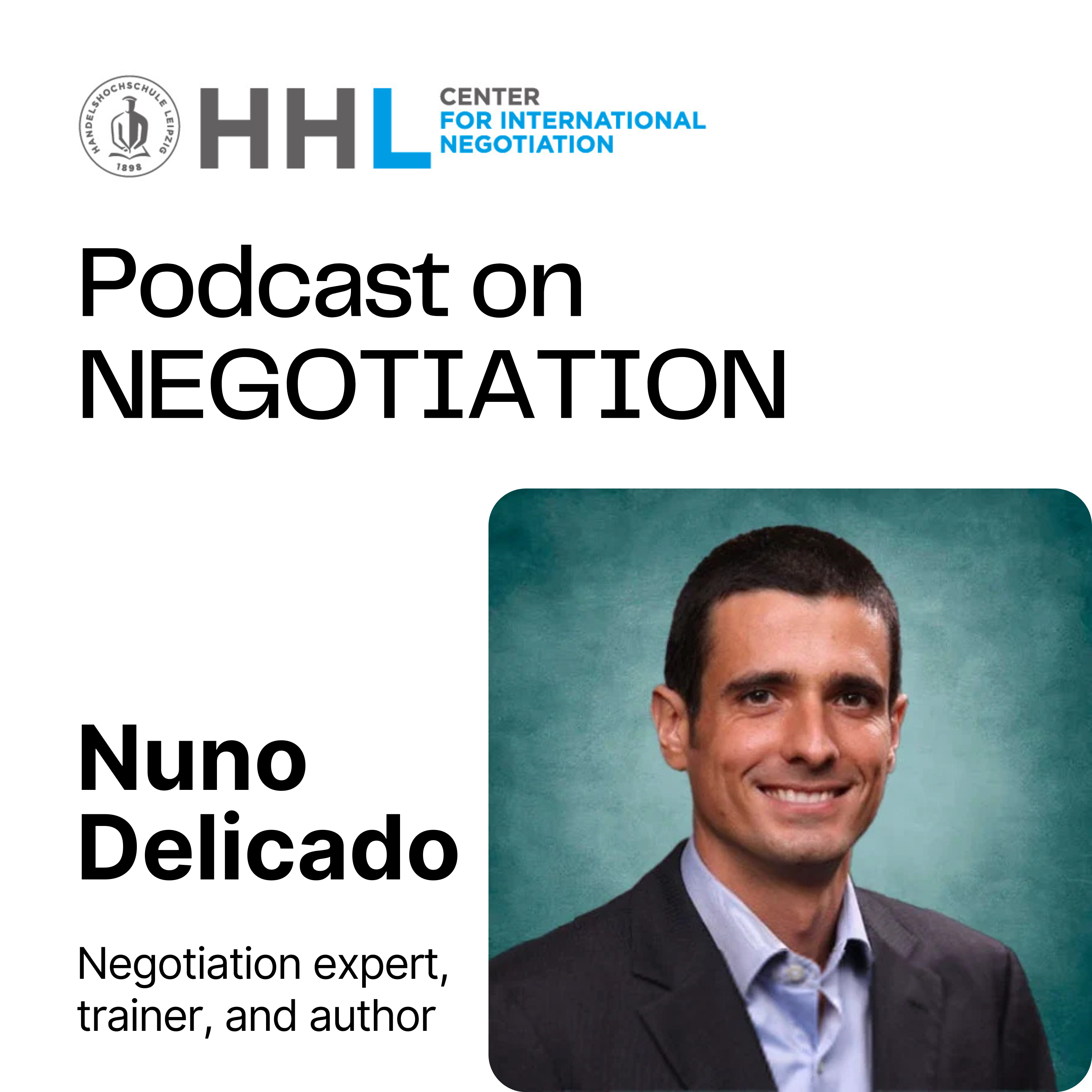 On Impact Negotiation Toolkit with Nuno Delicado 03.06.2026 57λIn this episode, we welcome Nuno Delicado, negotiation expert, founding partner of Pluris, and author of Impact Negotiations Toolkit. With experience advising, training, and supporting negotiators across countries, sectors, and complex situations, Nuno brings a practical and deeply human perspective on what it means to negotiate well.Together, we explore why he wrote Impact Negotiations Toolkit and why the word “impact” is at the heart of his approach. Rather than seeing negotiation only as a way to win, close a deal, or secure an immediate outcome, Nuno invites us to think about negotiation through its lasting effects: on relationships, organizations, communities, and the wider world.The conversation looks at how impactful negotiation differs from traditional frameworks, what negotiators can do before, during, and after a conversation, and why reflection is essential for learning and long-term success. Nuno shares insights into the main components of his toolkit, including preparation, connection, creativity, decision-making, and continuous improvement.We also discuss what separates negotiators who consistently create meaningful results from those who do not, how to navigate strong power imbalances, and whether there are universal principles of negotiation across cultures and sectors. Nuno challenges common myths about negotiation and reflects on how hybrid work, artificial intelligence, and cross-cultural collaboration are reshaping the way we negotiate today.This episode is for anyone who wants to move beyond short-term wins and learn how negotiation can become a tool for better decisions, stronger relationships, and positive change. We close with Nuno’s view on what makes someone a truly great negotiator and the one idea he hopes every listener takes away from Impact Negotiations Toolkit.More free tools from Nuno's great book can be found at: https://www.impactnegotiations.org/.
 -
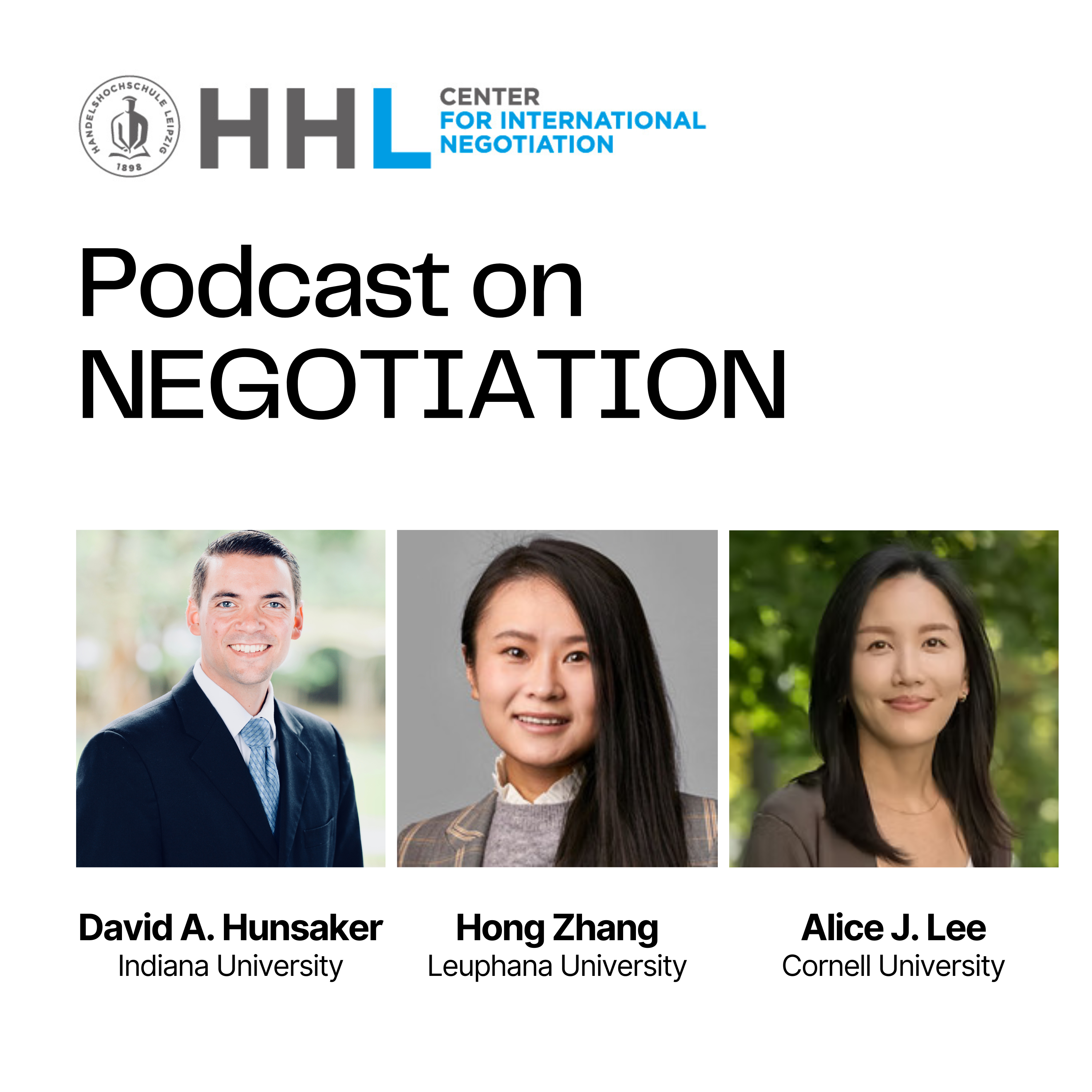 On why we avoid negotiating with David Hunsaker, Hong Zhang, and Alice Lee 13.05.2026 56λIn this episode, we talk with David A. Hunsaker, Hong Zhang, and Alice J. Lee, authors of the paper “Beyond Propensity: Thresholds, Costs, and Interventions in Negotiation Avoidance,” about why people often choose not to negotiate, even when negotiation could benefit them.The conversation begins with the origins of their research project on negotiation avoidance, a phenomenon that is both common and surprisingly underexamined. Starting from a relatable observation that even negotiation scholars sometimes avoid negotiating, we ask why people decide not to negotiate at all, before they ever reach the bargaining table.We discuss the paper’s finding that negotiation avoidance is widespread: more than 95% of participants reported avoiding negotiation in at least some situations, and people avoided negotiation up to 51% of the time. The episode explores why studying the decision to initiate negotiation is just as important as studying what happens once people are already engaged in the negotiation itself.The authors introduce two key concepts from the paper. The first is Threshold for Negotiation Initiation, which refers to the point at which a person decides that negotiation is “worth it.” We examine how people make that decision, including the role of percentage-based thinking: the same dollar savings may feel more or less worthwhile depending on the total price of the item.The second concept is Willingness to Pay to Avoid Negotiation. We explore the striking finding that nearly half of participants were willing to pay extra to avoid negotiating, and consider what people may really be trying to avoid: time, discomfort, conflict, embarrassment, or the fear of seeming inappropriate.The episode also looks at the tension revealed in the car-buying scenario: many people preferred having the possibility of negotiation, yet later said they would pay to avoid actually doing it. This opens a broader discussion of the cognitive, emotional, and social barriers that keep people from initiating negotiations.Finally, we discuss the interventions tested in the paper. A financial comparison showing that negotiation could be worth more per hour than a person’s usual wage did not significantly increase negotiation initiation, while a social norm intervention, showing that negotiation is common, did. The conversation considers why financial logic may not be enough, why social permission matters, and what practical advice the authors would give to consumers, employees, managers, and negotiation educators.We close by asking what future research should explore next in understanding when, why, and how people decide to negotiate.
 -
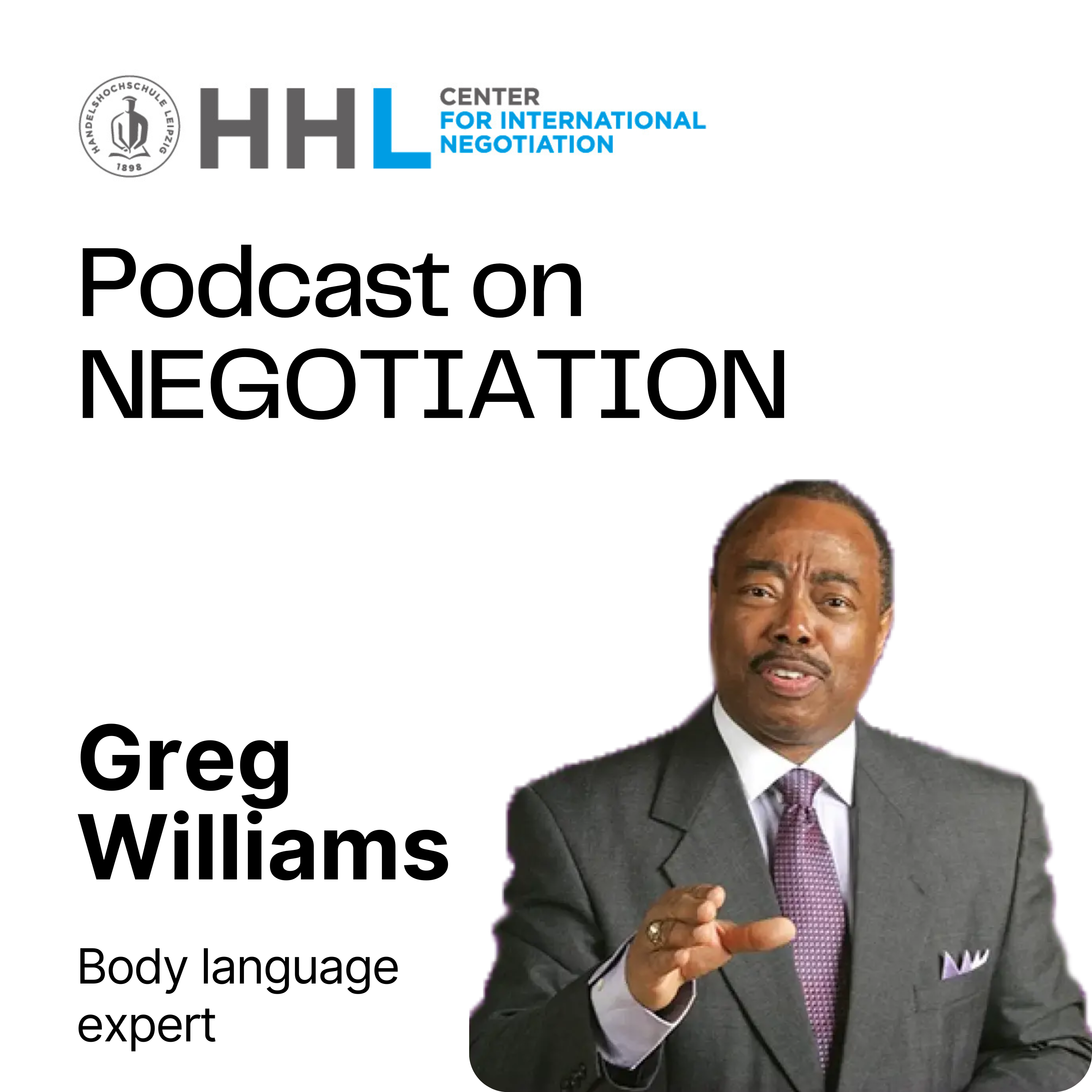 On body language secrets with Greg Williams 05.05.2026 1ώIn this episode, we sit down with Dr. Greg Williams, a leading expert in negotiation, body language, emotional intelligence, and microexpressions, to explore what is really happening beneath the surface of every negotiation.Most people focus on the words being spoken in a negotiation. But tone, posture, facial expressions, eye movement, gestures, silence, and subtle behavioral shifts often reveal just as much as the conversation itself. Dr. Williams has spent decades studying how these nonverbal signals influence trust, tension, confidence, power, and decision-making.Drawing from his book, Body Language Secrets To Win More Negotiations, Greg explains why body language is not about guessing what someone is thinking, but about becoming a more careful observer of patterns, context, and emotional change. We discuss what nonverbal cues can reveal, what they cannot reliably tell us, and why misreading body language can damage trust if negotiators jump to conclusions too quickly.Throughout the conversation, Greg shares practical insights on how to recognize important signals at the negotiation table, including microexpressions, subtle shifts in behavior, emotional triggers. We also explore how negotiators can manage their own body language to project confidence, openness, and control without appearing artificial, aggressive, or manipulative. Greg offers guidance for anyone who wants to become a better listener, a sharper observer, and a more emotionally intelligent communicator.The conversation begins with Greg reflecting on what first drew him to the nonverbal side of negotiation and how his decades of work shaped the central message of Body Language Secrets To Win More Negotiations. From there, we examine what body language can and cannot reveal, the first signals negotiators should watch for when entering a conversation, and the microexpressions or behavioral cues that are often missed when people focus too heavily on words alone.Greg also discusses why context is essential when interpreting body language, including the influence of culture, personality, stress, power dynamics, and high-stakes pressure. We look at the most common mistakes people make when trying to read others, how to respond when someone’s words and body language do not seem to align, and how to avoid making assumptions that could weaken trust.Later in the episode, Greg explains why some people seem naturally better at reading body language, whether this skill can be learned, and how negotiators can become more aware of the signals they are sending themselves. He also shares a practical exercise listeners can begin using immediately to become sharper observers in everyday conversations.Whether you negotiate in business, leadership, sales, law, conflict resolution, relationships, or everyday life, this episode will help you better understand the signals people send before they ever say a word.
 -
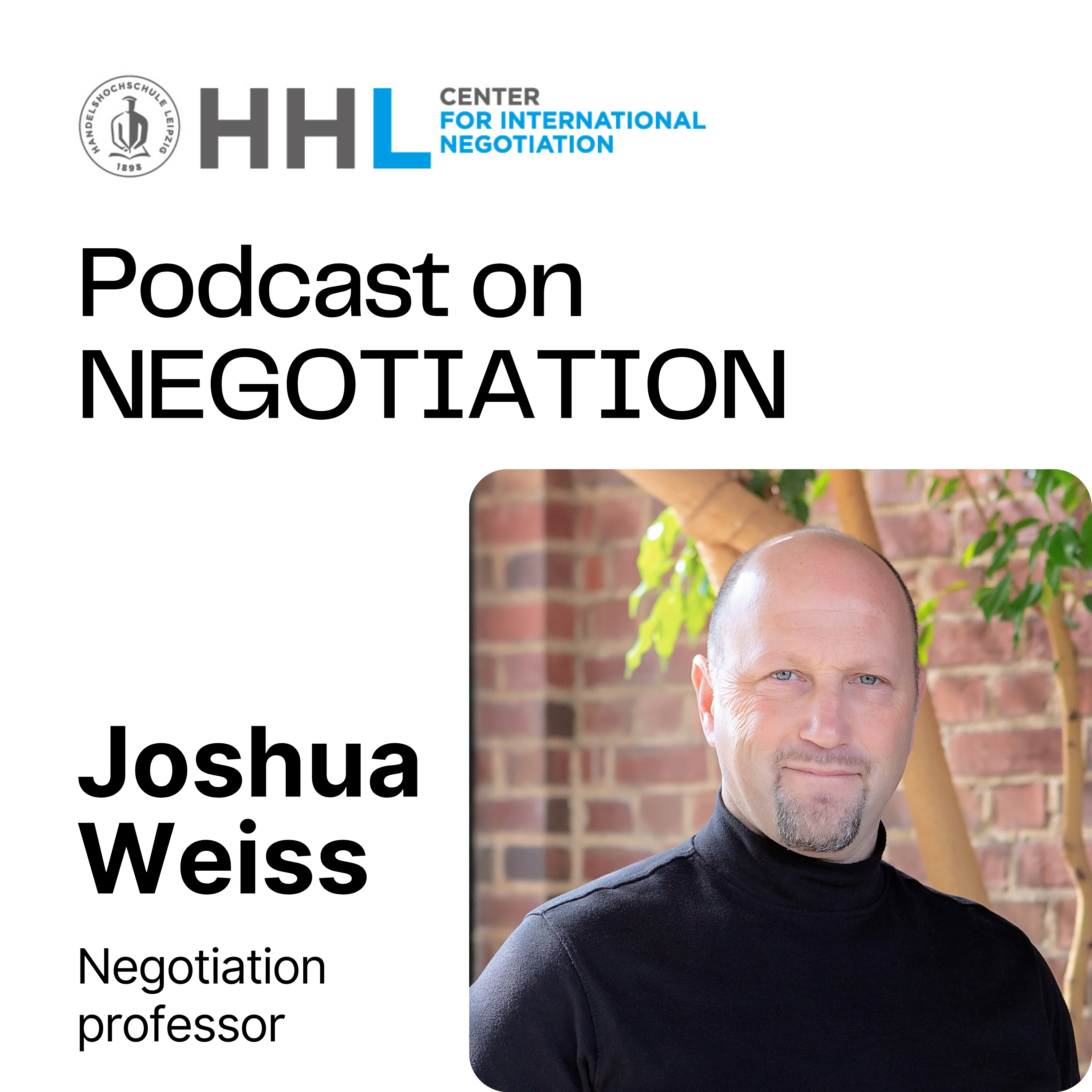 On negotiation stories on the path to peace with Joshua Weiss 16.04.2026 1ώ 3λIn this episode of the Podcast on Negotiation On Negotiation Stories on the Path to Peace, we speak with Joshua Weiss about the human stories that shape negotiation, conflict resolution, and peacebuilding. Josh reflects on his own path into the field, what first drew him to negotiation and mediation, and how his work has evolved through scholarship, practice, and teaching.We also revisit his recent work on failure in negotiation, exploring what failure can teach us and why it remains such an important and often overlooked part of learning. From there, the conversation turns to the power of stories: why they matter so deeply in negotiation, what they reveal that courses and workshops alone sometimes cannot, and how personal experience can open new ways of understanding conflict, connection, and change.A major focus of the episode is Josh’s new project, a community-based database of negotiation stories. He shares what inspired the initiative, how he hopes people will use it, and what makes it different from more traditional negotiation clearinghouses such as those at PON and DRRC. We also explore the kinds of stories that stay with us and what makes a negotiation story especially meaningful.In the second part of the episode, we turn to the Abraham Path Initiative. Josh introduces the vision behind this work and reflects on what drew him personally to it. Together, we discuss how encounter across cultures and communities can create new possibilities for understanding and peacebuilding, and how movement, listening, and shared human experience can become part of a larger path toward peace.Throughout the episode, we explore Josh’s personal journey into negotiation, mediation, and conflict resolution, the lessons from his work on failure in negotiation, the role of stories in negotiation and peacebuilding, and the promise of his new database of negotiation stories from the community. We also discuss how this project differs from traditional negotiation case collections, the vision and significance of the Abraham Path Initiative, the way encounter across cultures can open space for peace, and the deeper connection between stories, understanding, and hope.
 -
 On real estate negotiations with Robin Kencel 11.11.2025 50λIn this episode, we host Robin Kencel, a leading real estate broker in the U.S. Robin has been recognized on The Wall Street Journal's RealTrends rankings (including The Thousand/America’s Best lists), placing her team among the top performers nationally and in the top 1-1.5% across the U.S., with repeated state-level top-100 distinctions. Together with Robin, we unpack how real estate negotiations really work, who holds leverage at different stages and how to align agents, principals, lenders, and lawyers. We look at pricing and anchoring in volatile markets, from comps and cap rates to when ignoring the “asking” price is the smartest move. Robin shows how to use structure as a bargaining tool, from contingencies and seller financing to creative concessions that unlock value, and how disciplined diligence, zoning, environmental risk, tenant rolls, can legitimately reopen terms without undermining trust. We talk BATNAs that truly matter, time pressure, managing multiple offers ethically, and the fine line between tactics and relationships: reading signals, countering nibbling, and keeping counterparties on-side to reach closing. You’ll hear where residential and commercial playbooks overlap (and where they don’t), plus two vivid case stories, a bidding war flipped into collaboration, and a near-miss rescued by reframing interests. We wrap with practical takeaways you can use immediately: questions to ask before the first call, a concession matrix for inspection findings, and a closing checklist, lessons that apply well beyond property, from leases for founders to any negotiation requiring speed, diligence, and structured creativity. This episod is especially interesting to: buyers, sellers, founders negotiating leases, asset managers, and anyone who wants sharper due-diligence and deal-structuring skills.
 -
 On SMART Negotiator(s) with Keld Jensen 03.10.2025 1ώ 1λIn this episode, we sit down with Keld Jensen, a world-renowned negotiation expert, to discuss his groundbreaking new book Smart Negotiator. With decades of experience in teaching, researching, and advising negotiators across the globe, Keld brings a fresh perspective to a field that is often thought to be already saturated. So why Smart Negotiator now? Because the negotiation landscape is evolving rapidly, and today’s challenges from AI integration to shifting trust dynamics, demand new tools and mindsets. Together, we explore how the world of negotiation has changed in recent years and what new pressures negotiators must navigate. Keld introduces us to the concept of NegoEconomics, his framework for uncovering hidden value in deals, and explains why trust remains at the heart of every successful outcome. We dive into the fascinating interplay between human insight and artificial intelligence, including real-world examples where AI surfaced breakthroughs that human intuition alone might have missed. The conversation also covers practical guidance: how to measure and rebuild trust mid-deal, how to design contracts in the age of AI, and how to avoid the most common mistakes, even those made by seasoned professionals. Keld explains the mindset and signals needed to build a true SMARTnership, a collaborative paradigm that transcends zero-sum tactics, and offers tactics for uncovering the “hidden surplus” present in every negotiation. We also look at cutting-edge topics such as using AI for real-time negotiation feedback, countering authority bias when dealing with powerful counterparts, and the evolving role of contracts as tools for long-term alignment rather than just legal safeguards. Finally, Keld reflects on where the journey of Smart Negotiator might lead next and how the integration of AI will continue to reshape the way we negotiate in the years to come.
 -
 On AI in peacebuilding with Shane Ray Martin 30.09.2025 50λShane Ray Martin is a venture capitalist at B Ventures Group, where his mission is to back founders whose solutions deliver both profit and peace. He’s also a negotiation advisor, author, and trusted voice at the intersection of technology and conflict resolution. In this episode, we explore how artificial intelligence is reshaping the field of peacebuilding. We discuss how AI is being used in early warning systems that anticipate conflict, and how AI-mediated diplomacy is emerging as a tool in negotiations. We also unpack the deep ethical dilemmas that come with deploying AI into real conflict zones, where the stakes are high and mistakes can have life-or-death consequences.Shane walks us through his path into venture capital via B Ventures, a “peace VC” fund that supports tech founders who pursue both social impact and financial returns. He talks candidly about the hurdles these founders face when pitching peace-tech ideas to investors, who often prioritize clearer profit models.We also turn our attention to negotiation and mediation, and examine concrete ways AI can strengthen those practices. Shane offers practical advice for anyone interested in fusing technology, public policy, or peace work to achieve meaningful change.If you’re curious about where AI, diplomacy, and conflict resolution converge, this episode is made for you.
 -
 On Mediation with Leonardo D'Urso 02.09.2025 1ώ 10λIn this episode, we sit down with Leonardo D’Urso, one of Europe’s pioneers in mediation and conflict resolution and the CEO of ADR Center. We begin by exploring his personal journey, what first drew him into the field, and move on to the heart of his work: explaining what mediation really is, and who can (and cannot) become an effective mediator.Leonardo takes us inside his new book, SOLVE: Mastering Conflict Resolution with the SOLVE Mediation Matrix, and introduces listeners to a structured framework that guides parties from conflict to resolution. He explains the five stages of the SOLVE Matrix: Set the Stage, Open the Process, Listen & Understand, Validate Options, and Enable Resolution, and illustrates how these work in practice with examples from commercial, community, and even victim-offender mediations.We also discuss why the book goes beyond process steps to include targets, strategies, activities, keys, and skills, and what this level of detail contributes to real-world dispute resolution. Leonardo shares memorable mediation stories, insights into what people often misunderstand about mediation compared to litigation, and surprising lessons from applying the same approach across such diverse contexts.Looking ahead, Leonardo reflects on the future of mediation and its role in addressing today’s global conflicts. He also offers practical advice for listeners: how anyone, whether or not they’ve ever been in a mediation room, can start adopting a mediator’s mindset in everyday life.Finally, we ask him to capture the essence of his book, and to reflect on who he considers truly great in the world of negotiation and mediation.
 -
 On lobbying with Michael Koplovsky 20.08.2025 58λLobbying is often portrayed as a mysterious arena where influence meets policy. But at its heart, lobbying is built on negotiation, balancing interests, crafting agreements, and building trust under pressure.In our next episode, we sit down with Michael Koplovsky, a multilingual EU lobbyist, former senior diplomat, and professor whose career spans five continents and some of the most complex political and crisis environments in the world. From forging civil-military cooperation in war zones to advancing public-private partnerships in Europe’s political institutions, Michael has seen lobbying and negotiation at their most intense.In this wide-ranging conversation, Michael takes us through his unique career journey, explaining how his path from diplomacy to academia and ultimately into lobbying unfolded and why negotiation has always been the common thread linking them together. He sheds light on what lobbyists really do beyond the usual stereotypes, and why their work is so often misunderstood. We explore the surprising similarities between lobbying and negotiation, as well as the subtle differences that shape how each plays out in practice.Michael shares vivid stories from the “war rooms” where advocacy campaigns are mapped out, and from the high-level tables where policy shifts are decided. He speaks candidly about both successes and failures in lobbying, highlighting the lessons negotiators can draw from each. We discuss the challenge of negotiating when multiple stakeholders with competing interests are at the table, and how to strike the right balance between quiet relationship-building behind the scenes and formal deal-making in the spotlight.The conversation also touches on the ethical responsibilities lobbyists carry when shaping policy outcomes, and how much of their work depends on integrity and trust. Michael reflects on how lobbying has changed in recent years, shaped by technology, social media, and even the rise of AI, and what this means for the future of influence and negotiation. Looking back across his career, he distills the single most important negotiation lesson he has learned and shares who comes to his mind when he thinks about true greatness in negotiation.With advanced degrees in National Security, Strategic Studies, and International Relations, and years of teaching negotiation, leadership, and communication, Michael bridges theory and practice like few others can. His vivid anecdotes from political capitals and crisis zones alike offer insights you won’t find in textbooks.Whether you are a negotiation professional, a student, or simply curious about how influence is really shaped in the political world, this episode pulls back the curtain on lobbying as negotiation in action.
 -
 On AI in negotiation with Yadvinder Rana 07.08.2025 1ώAI is entering the negotiation room, not as a silent observer, but as a highly effective tool shaping how we prepare, communicate, and reach agreements. From guiding our preparation to AI-driven coaching, from real-time performance feedback to agent-based simulations, artificial intelligence is beginning to revolutionize the way we approach negotiations in business, diplomacy, and beyond. To explore this exciting frontier, I’m joined by Yadvinder S. Rana, a negotiation expert who bridges research, practice, and AI innovation. With a background in cross-cultural negotiations and B2B dealmaking, Yadvinder has spent his career investigating how professionals can consistently achieve optimal outcomes, even in environments marked by uncertainty, limited trust, or overwhelming complexity. His recent work explores how AI can support human negotiation, responsibly and effectively. His empirical research shows that AI-augmented support can lead to 48% better individual outcomes and up to 84% more joint value when both parties use structured AI tools. To put these findings into practice, he developed the ALIGN Framework, a methodology that provides 24/7 expert-quality negotiation assistance powered by AI, no steep learning curve required. Yadvinder works with procurement and sales leaders navigating complex B2B negotiations, helping them adopt AI tools that drive superior preparation and value creation. He also partners with consulting and training firms to integrate AI-enhanced negotiation into their services. In our conversation, we explore what AI can, and crucially, cannot do in the context of negotiation, examining both its practical capabilities and its current limitations. We discuss how AI is already being used in negotiation training and education, from intelligent simulations to personalized feedback systems. We also dive into the ethical and relational dilemmas that arise when AI tools are introduced into real-time negotiations, including questions of trust, transparency, and agency. A key part of our discussion focuses on whether machines can truly grasp complex human dynamics like power, trust, and cultural nuance. Finally, we reflect on how negotiation professionals can best prepare for an AI-augmented future and what skills will remain essential in an increasingly automated world.
 -
 On negotiating with Aristotle with Rudolf Schüssler 02.07.2025 53λFollowing our earlier episode on Immanuel Kant and the role of truth and lies in negotiation, we return to the world of philosophy, this time with a thinker who approached ethics from a different angle: Aristotle. What would Aristotle say if he were advising a modern-day negotiator? In this episode, we’re joined by Rudolf Schüssler, a distinguished philosophy professor from the University of Bayreuth, to explore how Aristotle’s timeless ideas can shed light on negotiation. Together, we discuss Aristotle’s concept of phronesis, or practical wisdom, and ask what it truly means to be a wise negotiator, not just someone who wins deals, but someone who understands what is good, fair, and sustainable in the long term. We also examine Aristotle’s famous triad of persuasion, ethos (credibility), pathos (emotion), and logos (logic), and discuss how this rhetorical framework can help negotiators craft more compelling arguments, build trust, and communicate more effectively across differences. As we move into the ethical dimension, Rudolf reflects on whether Aristotle’s virtue ethics can be applied to modern negotiations. Is there space for integrity in a world often driven by power and outcomes? And what kind of character traits should a negotiator cultivate to not only be persuasive, but also remain principled and respected? Ultimately, we ask: What might an “Aristotelian negotiator” look like today? And how can Aristotle’s thinking help us become better not only at negotiation, but also through negotiation, as individuals and as members of a shared moral community? Whether you’re an academic, a business professional, a student of philosophy, or simply curious about how ancient wisdom meets modern strategy, this episode offers a rare and insightful conversation that bridges two worlds and may just change the way you approach your next negotiation.
 -
 On trust in intercultural negotiation with Mariusz Sikorski 19.06.2025 58λIn this episode, we disucss one of the most essential and most elusive elements of successful negotiation: trust. What exactly is trust, and why does it matter so much at the negotiating table? Our guest, Mariusz Sikorski, who is a practitioner and researcher specializing in intercultural negotiation, walks us through the foundations of trust, unpacking its definition and exploring the many ways it influences negotiation outcomes, often before a single word is spoken.Our conversation is rooted in a comprehensive literature review on this topic: Sikorski, M. T. & Albrecht, A., (2025) “Trust in the Context of Intercultural Negotiations - A Systematic Review”, Negotiation and Conflict Management Research 18(1), 1-41. doi: https://doi.org/10.34891/a0mc-jx98 published at the Negotiation and Conflict Management Research journal (NCMR). We explore the process behind this selection and the patterns that emerged across decades of research. From there, we discuss the challenges and opportunities of trust-building in intercultural negotiations, where assumptions, values, and expectations often collide.Is it true that we naturally trust people who are more like us? And if so, what happens when the person sitting across from us has a completely different background, worldview, or communication style? We examine how cultural similarity and difference affect our ability to connect, and how negotiators can bridge that gap intentionally. Our guest shares strategies for building trust both with culturally similar and dissimilar counterparts, going beyond surface-level rapport to deeper forms of relational trust.A key theme in the episode is cultural adaptability: how negotiators can read the room, interpret cues, and flex their own behavior to create more trusting environments. We also uncover some of the surprising and even contradictory findings from the literature, instances where conventional wisdom about trust doesn't hold up, or where cultural context changes the rules entirely.Beyond theory, this episode is packed with practical advice for negotiators and companies operating across borders. Whether you're closing a deal, managing a partnership, or leading a multicultural team, the insights shared here will help you build trust more consciously and effectively. We also reflect on the gaps in the literature, what we still don’t know about trust in negotiation—and where future research could go next.Whether you're a seasoned dealmaker or just starting to negotiate across cultures, this episode offers a thoughtful, research-backed, and actionable perspective on one of negotiation’s most human dimensions.
 -
 On negotiating sustainable future with Rajiv Vaid Basaiawmoit 11.06.2025 1ώ 2λIn this episode we host Rajiv Vaid Basaiawmoit, an innovation educator, sustainability advocate, and Head of Sci-tech Innovation & Entrepreneurship at Aarhus University. Rajiv is also the co-founder of Biosymfonix EduGames, where he develops innovative educational tools that bridge science, sustainability, and real-world problem-solving. With years of experience designing and running interactive learning experiences, Rajiv is passionate about making complex topics accessible, engaging, and actionable. Rajiv takes us inside the creation of Pactopolis, a research-based board game designed to simulate negotiations for sustainable development. In Pactopolis, players represent different industry sectors, governments, and civil society, all trying to co-develop a region while staying true to sustainability goals. The game throws you into the messy, dynamic world of multi-party negotiation: balancing economic, environmental, and social objectives, facing resource crunches, responding to policy triggers, and dealing with the realities of both collaboration and competition. During our conversation, Rajiv shares the inspiration and research journey behind Pactopolis and explains how the game models distributive versus integrative negotiation strategies. He reflects on surprising lessons learned from playtests in business schools, environmental programs, and international classrooms, and discusses why gaming can often reveal more about negotiation behavior and human nature than traditional classroom methods. We also talk about how Rajiv’s own experiences have shaped his approach to education and sustainability innovation, and what he’s learned about the challenge of fostering real collaboration, fairness, and change. Join us for a thought-provoking conversation that explores the power of game-based learning, the future of negotiation research, and what it really takes to drive sustainable change.
 -
 On questions in negotiation with Linda Swindling 22.05.2025 52λWhat if the key to unlocking better deals, stronger relationships, and greater confidence in negotiations was simply... asking better questions?In this episode, we’re joined by Linda Swindling, internationally recognized negotiation expert and author of Ask Outrageously! The Secret to Getting What You Really Want. Linda brings a rare combination of legal insight, executive coaching experience, and practical negotiation wisdom to the table. Together we'll discuss why questions are your most underrated negotiation tool.We begin by tracing Linda’s professional journey from a prospective lawyer to a negotiation professor and disucss how her legal training shaped her unique perspective on high-stakes communication. She shares the moment she realized that asking boldly, strategically, even outrageously, was the secret sauce behind successful negotiations.From there, we dig deep into the psychology of asking: what makes certain questions effective, why some questions are avoided even when they could change the outcome, and how different types of questions: open-ended, probing, reflective, and more, can be used to guide conversations, diffuse tension, and uncover hidden opportunities.Throughout the episode, Linda explains why questions are often more powerful than statements in negotiation, and how understanding the purpose and impact of a question can dramatically shift the direction of a deal. She reveals when and how to use specific types of questions at different stages of the negotiation process, helping you build rapport, uncover needs, and drive outcomes with intention. She also unpacks what it truly means to “ask outrageously,” not recklessly, but courageously and unapologetically, and shares how this mindset has helped her clients and audiences achieve unexpected wins.Linda also highlights the common mistakes professionals make when crafting questions, such as asking too timidly, leading with assumptions, or failing to listen to the answers. She provides clear strategies to avoid these pitfalls and offers practical tools for developing stronger questioning techniques.Reflecting on her career, she recounts one of the most challenging negotiations she ever faced and how the strategic use of questions became the turning point in its resolution. For those hesitant to speak up or afraid of asking the "wrong" question, Linda offers empowering advice to reframe their mindset and step into conversations with confidence.To close the episode, Linda shares her top recommendation for anyone looking to level up their negotiation game: adopt one essential practice related to questioning that can make all the difference. She also suggests a few exercises and resources for professionals who want to refine their skills and start asking more purposefully today.Whether you're negotiating a raise, a contract, or your next big career move, this conversation will equip you with tools to ask with more clarity, confidence, and courage.Here are the links to free material on Linda's website (Code "TNC"):How well do you ask - https://www.lindasentme.com/ASK/quiz1/registerask.php What's Their DEAL Style? https://www.lindasentme.com/theirdeal/registertheirdeal.phpWhat's My DEAL? https://www.lindasentme.com/deal/registerdeal.php
 -
 On first offers and impasses with Martin Schweinsberg 13.02.2025 59λIn this episode, we focus on first offers and negotiation impasses with Martin Schweinsberg, Associate Professor of Organizational Behavior at ESMT Berlin. Drawing from his cutting-edge research, Martin reveals the science behind why first offers set the tone for negotiations, how they shape expectations, and whether making the first move truly gives you an advantage. But what happens when negotiations hit a deadlock? Martin shares his insights on why impasses occur, the psychological traps that keep us stuck, and proven strategies to break through stalemates—whether in business deals, salary negotiations, or personal conflicts. Interestingly, there’s a strong link between first offers and impasses. A well-calibrated first offer can anchor the negotiation and steer it toward a mutually beneficial outcome, while an overly aggressive or unrealistic first offer can backfire, creating resistance and leading to deadlock. Martin explains the psychological mechanisms at play and how to craft first offers that maximize value without pushing the other side away. Martin's study of 26 million eBay negotiations, highlights how initial offers significantly impact final prices—higher first offers often lead to better outcomes but also increase the risk of impasse. Our conversation explores what impasses are, their common causes, and how negotiators can recognize and prevent them. While impasses are often seen as negative, they can sometimes lead to better long-term deals. Martin shares practical strategies for overcoming deadlocks, emphasizing the influence of communication channels, time pressure, and relationships. They also offer advice on making effective first offers while minimizing negotiation breakdowns and discuss their current research interests. The episode concludes with reflections on great negotiators from history and their unique approaches to successful deal-making.
 -
 On the art and science of convincing with Adele Gambardella and Chip Massey 17.12.2024 1ώ 2λIn our latest episode, we focus on persuasion and high-stakes negotiation with two exceptional experts: Adele Gambardella and Chip Massey. They share insights from their new book, "Convince Me: High-Stakes Negotiation Tactics to Get Results in Any Business Situation", offering listeners practical strategies to enhance their convincing abilities in both professional and personal contexts."Convince Me" combines decades of experience from Adele and Chip, providing readers with a deep understanding of persuasion techniques applicable to various scenarios. The book explores high-risk situations, offering insights into developing powerful convincing skills and adapting them to any person or situation. Adele is an award-winning publicist and crisis communications expert, Adele owned and managed a top PR firm in Washington, DC, for 15 years. She has served as a spokesperson for Fortune 100 companies, including DuPont, Deutsche Bank, Lockheed Martin, SAP, and Verizon. Adele has also been a PR strategist and crisis management consultant for clients such as the United Nations, Meta, Johnson & Johnson, and President Joe Biden. Chip is a former FBI Special Agent and hostage negotiator, Chip led high-profile criminal cases, investigated the September 11th terrorist attacks, and spearheaded the New York FBI Office’s Crisis Negotiations Teams. He now applies his high-stakes negotiation skills to the business world, guiding executives and their teams in using sophisticated communication and negotiation techniques in various professional situations. Together, Adele and Chip co-founded The Convincing Company, a crisis communications and interactive training firm that draws from psychology, neuroscience, public relations, and FBI techniques to offer actionable advice and strategies to build, breakthrough, and repair brands. Tune in to gain valuable insights from their extensive experience and learn how to master the art of persuasion in negotiation.In this episode, we explore the power of persuasion with Chip, a former FBI negotiator, and Adele, a business communication expert, as they share insights from their new book “Convince Me.” We begin by uncovering their unique partnership—how their distinct backgrounds in high-stakes negotiation and corporate communication inspired them to join forces and write a book that bridges the gap between life-or-death negotiations and day-to-day business interactions. They discuss how their expertise complements each other, shedding light on common misconceptions about persuasion and addressing challenges like resistance to new ideas or building trust in high-pressure situations. Whether it’s resolving conflicts in the FBI or navigating a tense boardroom discussion, Chip and Adele reveal strategies that professionals can immediately apply to improve their ability to influence and connect.Throughout the conversation, Chip and Adele share actionable tools that build trust and enhance credibility. They dive into practical advice for those struggling with persuasion, offering mindset shifts and first steps that can transform communication effectiveness. The episode also highlights key mistakes to avoid and contrasts the dynamics of persuasion in crisis situations versus corporate settings. Listeners will walk away with a deeper understanding of how to navigate resistance, build trust quickly, and develop a persuasive edge—whether leading a team, pitching an idea, or managing conflicts.
 -
 On failure in negotiation with Joshua Weiss 18.11.2024 57λJoshua Weiss is a negotiation and conflict resolution expert, Senior Fellow at the Harvard Negotiation Project and the co-founder of the Global Negotiation Initiative at Harvard University. He is also the Director of the MS in Leadership and Negotiation at Bay Path University. Finally he has his own private consulting firm where he designs and facilitates customized negotiation and conflict resolution solutions for businesses, organizations, international entities, governments, and individuals.Known for his work on understanding and managing negotiation dynamics, Josh brings a unique perspective on the importance of learning from failure. His approach encourages negotiators to move beyond ego and blame, focusing instead on resilience and adaptability. Josh's forthcoming book, "Getting Back to the Table: 5 Steps for Reviving Your Negotiations", analyzes strategies for overcoming setbacks, providing a structured framework for returning to negotiations with renewed insight and confidence.In this episode, we address a topic that often goes unspoken but affects every negotiator: failure. Inspired by insights from Josh's recent project, we explore why failure is an unavoidable, yet crucial part of mastering negotiation. From missed agreements to relationship damage, failures can come in many forms, but they all have one thing in common—they offer invaluable lessons if we’re willing to learn.We start by defining failure and examining the common types of negotiation failures that happen when negotiators miss their goals or objectives, often failing to secure a successful outcome or striking a regretable deal. This exploration is followed by a look at effective responses to setbacks, highlighting the different ways negotiators can handle failures—whether through blaming others, avoiding further negotiations, or building resilience. The episode then introduces how to foster a resilient negotiation mindset by unlearning counterproductive habits, such as the tendency to compromise prematurely, and replacing them with growth-oriented strategies that emphasize creativity and adaptability.This episode provides you with actionable steps to transform failure into a stepping stone for success.
 -
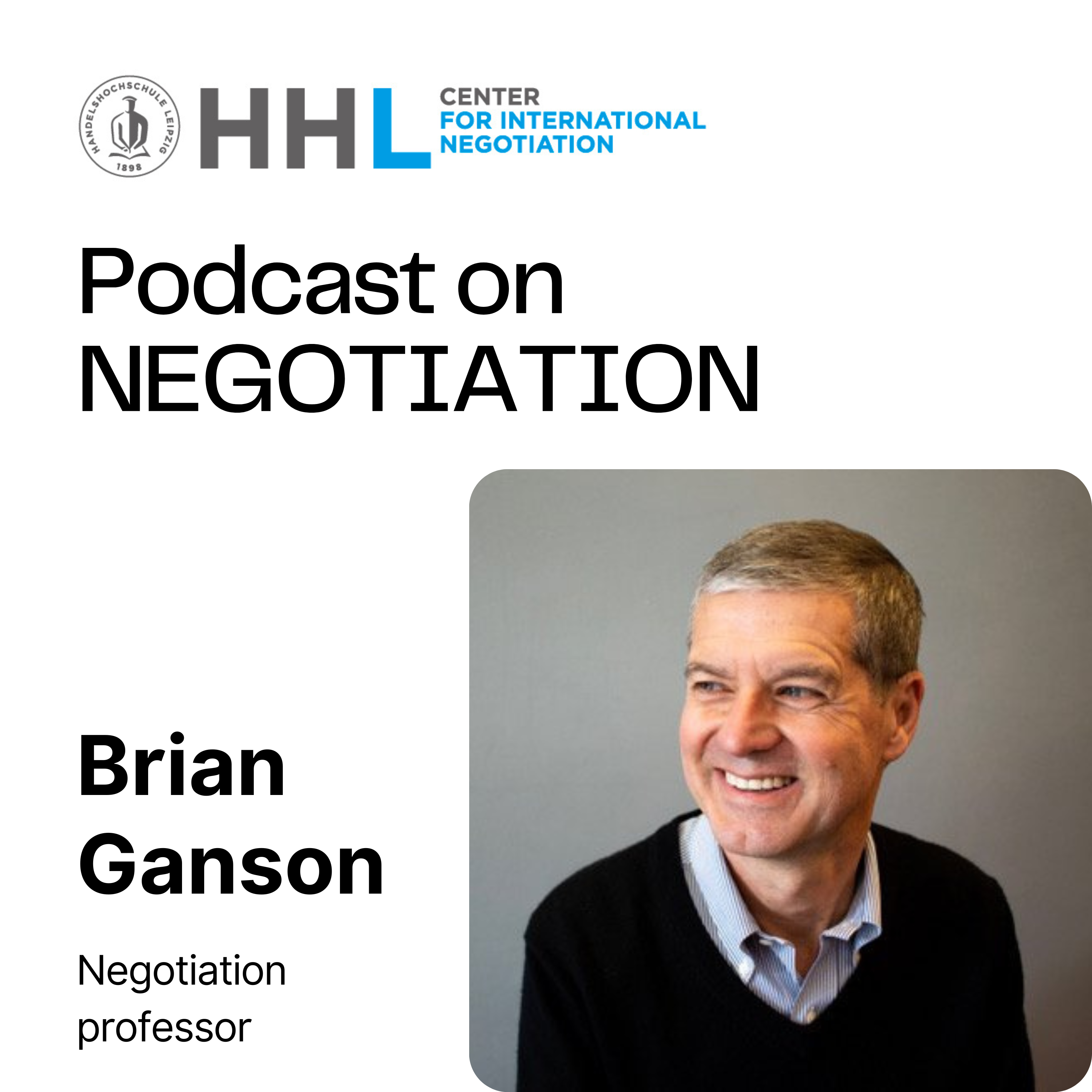 On sustainability and negotiation with Brian Ganson 05.11.2024 54λIn this episode, we explore how negotiation can serve as a powerful tool for advancing sustainability goals across various contexts, from environmental and social to economic issues. We discuss the evolving role of negotiation theory, emphasizing the need for socially responsible approaches that include long-term impacts and the interests of all stakeholders, even those not directly involved in the negotiation. Drawing on interdisciplinary perspectives, we highlight how negotiation can creatively address complex challenges, mitigate conflict, and create sustainable value for communities and businesses alike.Our guest, Brian Ganson, brings extensive expertise in this field. He is a professor and the Head of the Centre on Conflict and Collaboration at Stellenbosch Business School, where he leads research on the nexus of business, conflict, and development. With roles at the Peace Research Institute Oslo (PRIO) and Stellenbosch University’s Faculty of Law, Brian offers a unique blend of practical and academic insight. His vast experience includes consulting for leaders in post-conflict societies and developing strategies for sustainable business practices in volatile environments.This episode dives deep into how negotiation practices could, unintentionally, perpetuate social or environmental harm, even when both parties' interests are met. We discuss practical challenges negotiators face when trying to incorporate sustainability into their strategies, such as balancing short-term outcomes with long-term societal impact.Our conversation covers the potential for evolving negotiation theory and practice to better include sustainability and social responsibility. We explore what a modernized approach might look like and the crucial role of educators in preparing the next generation of negotiators to make environmentally and socially responsible decisions.
 -
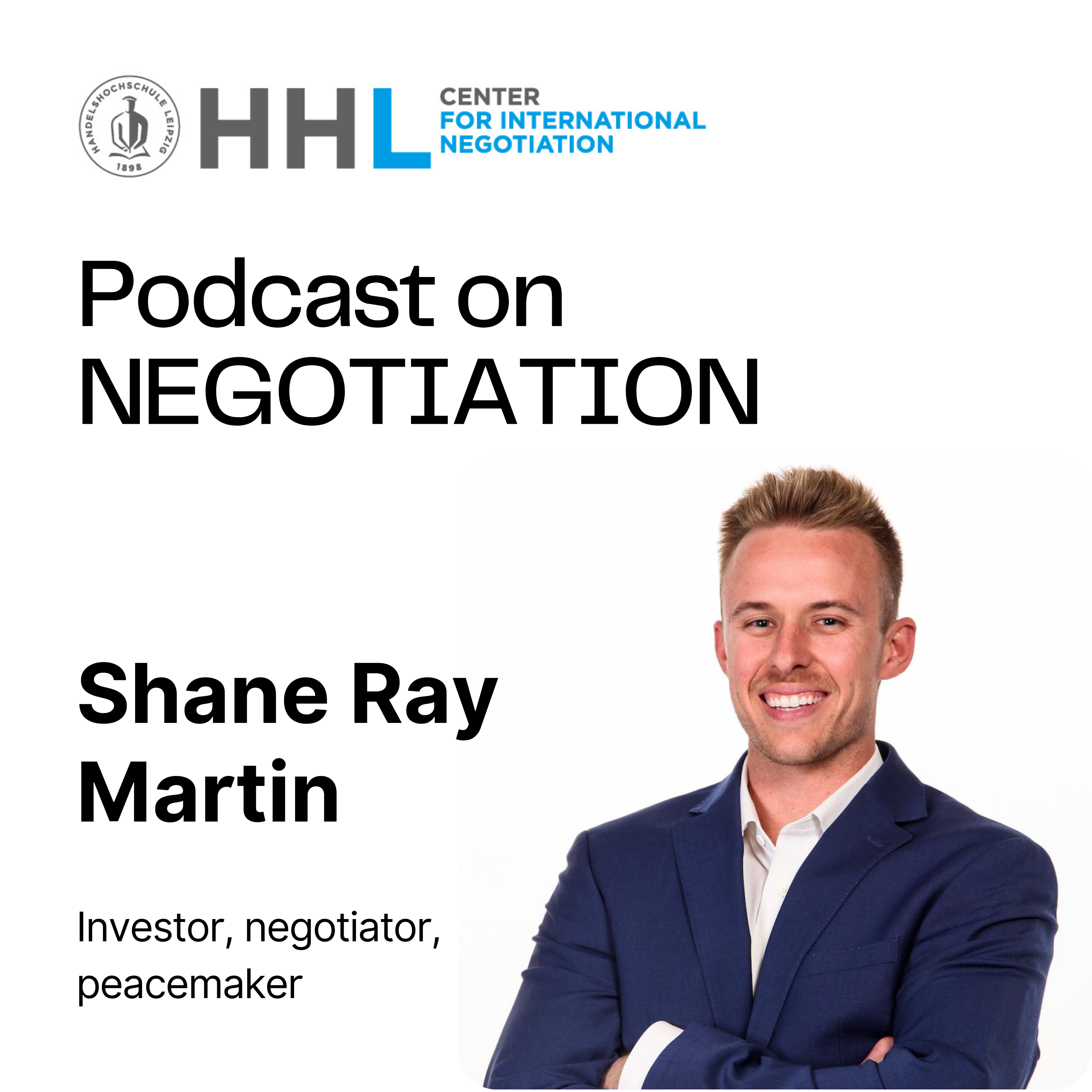 On AI negotiations with Shane Ray Martin 01.10.2024 43λShane Ray Martin is on a mission to create a new generation of peaceful and tech-savvy negotiators. As an investor at B Ventures, the first-ever PeaceTech venture capital fund, Shane is driving innovation at the intersection of technology and negotiation. With a passion for empowering others, he is currently writing a book on 'AI Negotiations' aimed at inspiring the next wave of negotiation experts. Shane also shares his knowledge through a free monthly newsletter, offering practical negotiation tactics to a growing community of subscribers. Beyond his writing and investment work, Shane is the host of a popular podcast, in which he explores the latest trends in negotiation, drawing from his experience closing over $4 million in deals, interviewing 80+ experts, and coaching more than 185 professionals. Shane is a living proof to the power of combining peace, technology, and negotiation skills. In this episode of the Podcast on Negotiation, we discuss the role of artificial intelligence in the world of negotiations and deal-making. Whether you’re a seasoned negotiator, a tech enthusiast, or simply curious about the future of business, this podcast is your gateway to understanding how AI is reshaping the landscape of negotiation.We bring in experts from various fields—business leaders, AI researchers, and negotiation specialists—to discuss the practical applications, ethical considerations, and the future implications of AI-driven negotiations. Shane shares insights on the truths and misconceptions about AI's involvement in negotiation processes and recounts personal experiences of using AI in real-world scenarios. We explore practical applications of AI in negotiations today and discuss the skills and strategies human negotiators should develop to effectively collaborate with AI tools. Looking ahead, we examine the future of AI in negotiation and address concerns about over-reliance on technology. The conversation also touches on historical and contemporary figures renowned for their negotiation prowess, reflecting on how AI might redefine the role of human negotiators entirely. Finally, we explore specific AI tools and algorithms currently available that assist in the negotiation process, offering listeners a comprehensive look at the intersection of AI and human negotiation.
 -
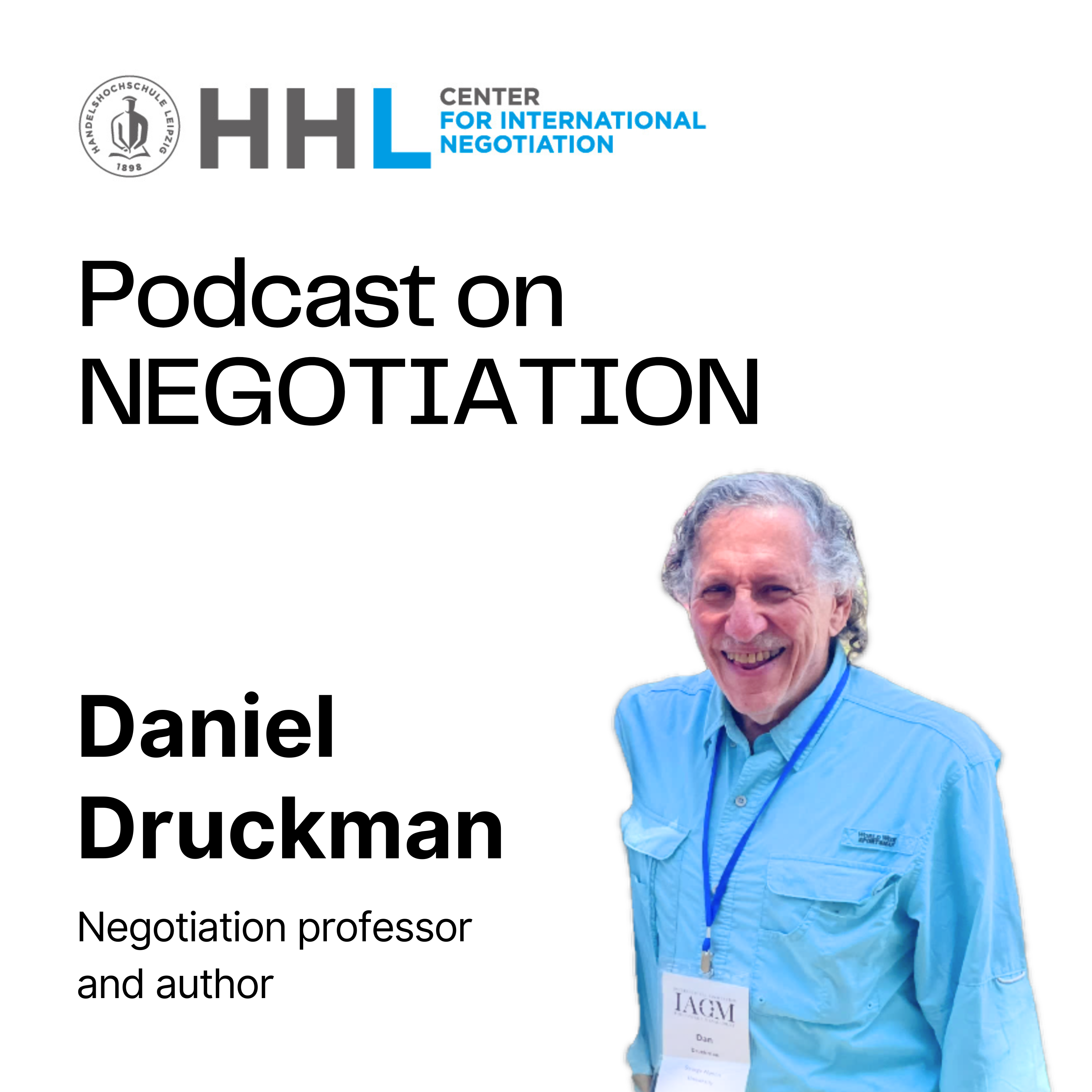 On Negotiation, Identity and Justice with Daniel Druckman 27.08.2024 1ώ 16λDr. Daniel Druckman, a distinguished scholar and practitioner in the fields of negotiation, conflict resolution, and international relations. Dan has an extensive and impactful body of work, having published widely on topics such as negotiating behavior, nationalism and group identity, human performance, peacekeeping, political stability, nonverbal communication, and research methodology. Dan's contributions to the field have been recognized with numerous prestigious awards, including the Otto Klineberg Award for his work on nationalism, the International Association for Conflict Management’s Outstanding Article and Outstanding Book awards, and a Lifetime Achievement Award from the same organization. His excellence in teaching was also acknowledged with a Teaching Excellence Award from George Mason University. In addition to his prolific writing and research, Dan has served in various academic and leadership roles. He was the Vernon M. and Minnie I. Lynch Professor of Conflict Resolution at George Mason University, where he coordinated the doctoral program at the Institute for Conflict Analysis and Resolution. He is currently a professor at The University of Queensland in Australia and holds academic positions at Sabanci University in Istanbul, National Yunlin University of Science and Technology in Taiwan, and the University of Melbourne in Australia. With a PhD from Northwestern University, where he was awarded a best-in-field prize for his doctoral dissertation, Dan has also held senior positions at several consulting firms and at the U.S. National Academy of Sciences. In this episode, we discuss Dan's latest book, a comprehensive volume that encapsulates his remarkable contributions to the fields of negotiation, national identity, and justice. This book, a culmination of over half a century of research, is organized into seven thematic parts that reflect the multifaceted nature of Dan's career. The volume covers a wide array of topics, from flexibility in negotiation and turning points in conflict to national identity and justice in both process and outcomes. Each section begins with an introduction that sets the stage for the empirical, theoretical, and state-of-the-art articles that follow. Dan's work spans diverse research methodologies, including experiments, simulations, and case studies, addressing subjects as varied as boundary roles in negotiation, nationalism and war, and the application of research in diplomatic training and policy development. In addition to the academic rigor, the book offers rare personal insights into the networks, sponsors, and events that have shaped Dan's career. It concludes with a reflective look back at how his career connects to classical ideas and the importance of an evidence-based approach to both scholarship and practice, while also charting future directions for research.
Παρόμοια podcasts


Δημοφιλές σε
Αυτό το podcast εμφανίζεται και στις λίστες podcasts αυτών των χωρών.
