
DataFramed
DataCamp
0
DataFramed is a weekly podcast that explores how artificial intelligence and data are transforming the world. Hosts Adel Nehme and Richie Cotton interview data and AI leaders about their insights and experiences. The show covers topics from career advice to the latest tools and trends, aiming to inform both beginners and experienced practitioners.
Επεισόδια
-
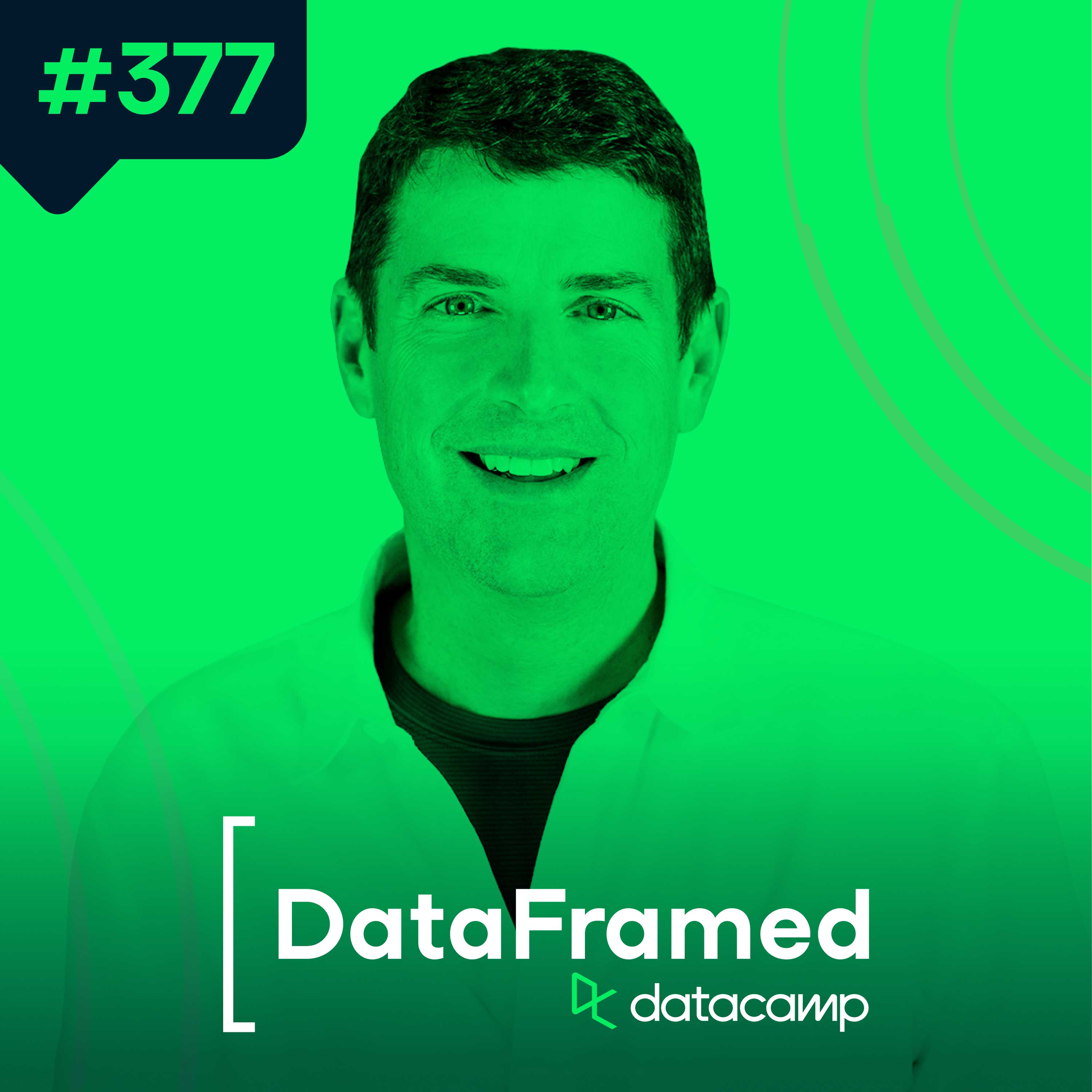 #377 The Algorithm for Hypergrowth with Jon McNeill, CEO at DVx Ventures & Former President at Tesla 14.09.2026 38λHypergrowth companies rarely scale on strategy alone — they scale on how fast decisions get made and how much risk employees feel safe taking. A recurring idea in high-growth environments is treating decisions differently depending on whether they're reversible, and rewarding people for making an impact rather than simply avoiding mistakes. For managers and individual contributors alike, that shift changes what "good work" looks like day to day. Which of your team's decisions actually need a leader's sign-off, and which ones would move faster if people just tried something and adjusted?Jon McNeill is CEO and co-founder of DVx Ventures, a venture studio that has launched 12 companies. He previously served as President at Tesla, where revenue grew from $2B to $20B in 30 months, and as COO at Lyft through its IPO. A serial entrepreneur, he's founded and sold six companies, sits on the boards of Lululemon and Asurion, and wrote The Algorithm: The Hypergrowth Formula that Transformed Tesla, Lululemon, General Motors and SpaceX.In the episode, Richie and Jon explore the algorithm behind Tesla's 10X hypergrowth, why automation should always come last, how to find and delete unnecessary process steps, building a culture of curiosity and urgency, one-way vs. two-way door decisions, small-team organizational design, changing the currency of promotion, and running effective meetings, and much more.Links Mentioned in the Show:• The Algorithm: The Hypergrowth Formula that Transformed Tesla, Lululemon, General Motors and SpaceX by Jon McNeill• Incorruptible by Eric Ries• Unreasonable Hospitality by Will Guidara• Eleven Madison Park• Jensen Huang on LinkedIn• Karim Bousta on LinkedIn• Connect with Jon• AI-Native Course: Intro to AI for Work• Related Episode: How to Thrive in a World of Continuous TransformationNew to DataCamp?Learn on the go using the DataCamp mobile appEmpower your business with world-class data and AI skills with DataCamp for business
 -
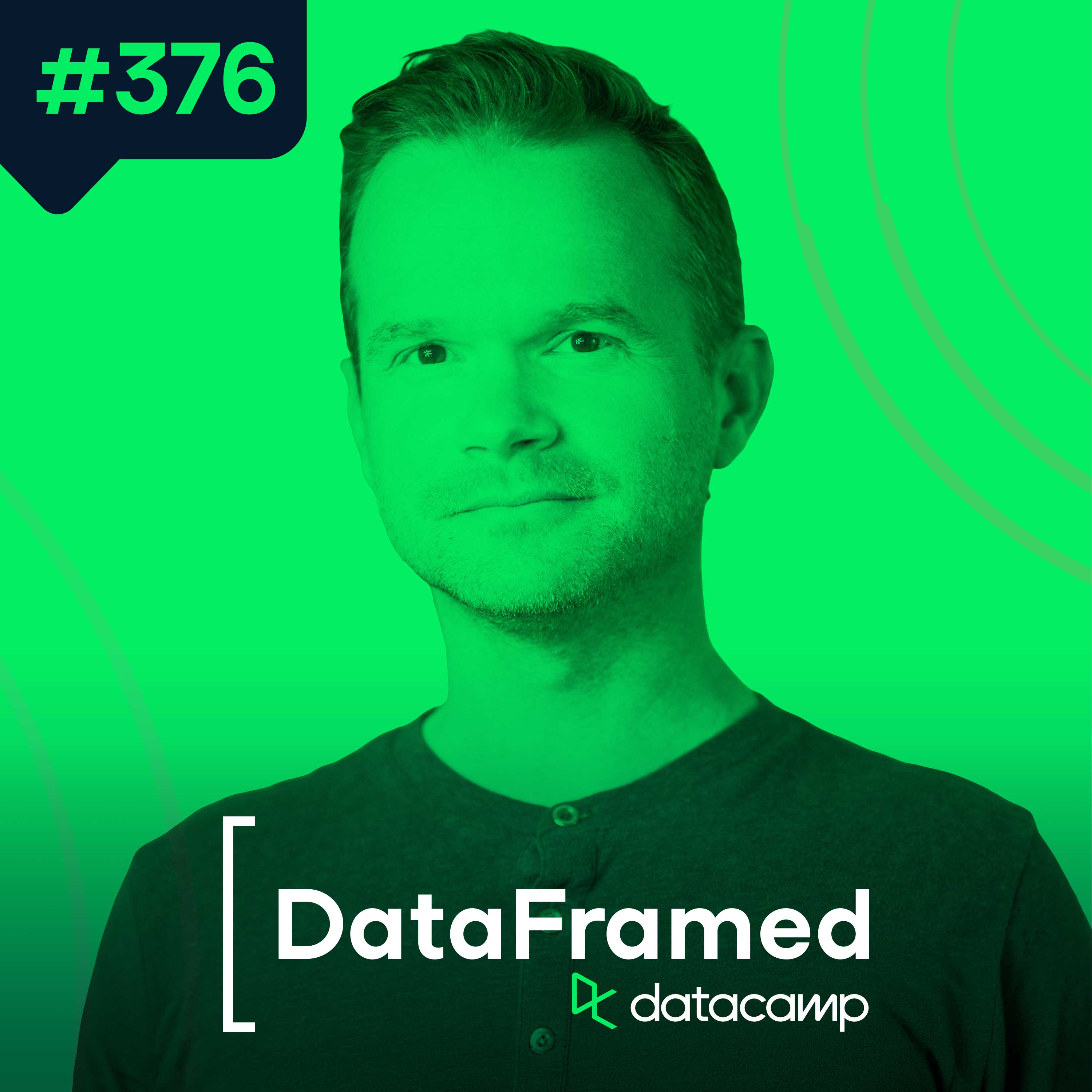 #376 Rethinking the Data Stack in the age of AI with Tristan Handy, President of Fivetran + dbt Labs 07.09.2026 42λAcross the data and AI industry, infrastructure that once served dashboards and human analysts is being rebuilt to serve autonomous agents instead. That shift changes what "AI-ready data" actually means, pushing teams to rethink documentation, governance, and the semantic layer so agents pull consistent, trusted definitions rather than guessing. Day to day, this shows up as pressure to clean up gold-layer tables, eliminate duplicate metrics, and formalize business logic that used to live only in someone's head. It raises real questions: how clean does data need to be before agents can safely act on it, and who ends up owning that definition?Tristan Handy is President and Co-Founder of Fivetran + dbt Labs, the company formed by the June 2026 merger of Fivetran and dbt Labs. He founded dbt Labs in 2016 (originally as Fishtown Analytics) and spent a decade as its CEO before leading the company through the merger, and has worked in data for 23 years.In the episode, Richie and Tristan explore the dbt and Fivetran merger, building an open and modular data stack, using data to power trustworthy AI agents, the growing importance of semantic layers, how data team structures are evolving, career advice for data practitioners, context engineering for AI-driven research, and much more.Links Mentioned in the Show:• Simon Willison's blog• dbt MCP server• Apache Iceberg• Apache Polaris• LookML / Looker's semantic layer• The Vaccine Education Center (CHOP)• Connect with Tristan• AI-Native Course: Intro to AI for WorkRelated Episodes:The Data Team's Agentic Future, with Ketan Karkhanis, CEO at ThoughtSpotTowards Self-Service Data Engineering with Taylor Brown, Co-Founder and COO at FivetranNew to DataCamp?Learn on the go using the DataCamp mobile appEmpower your business with world-class data and AI skills with DataCamp for business
 -
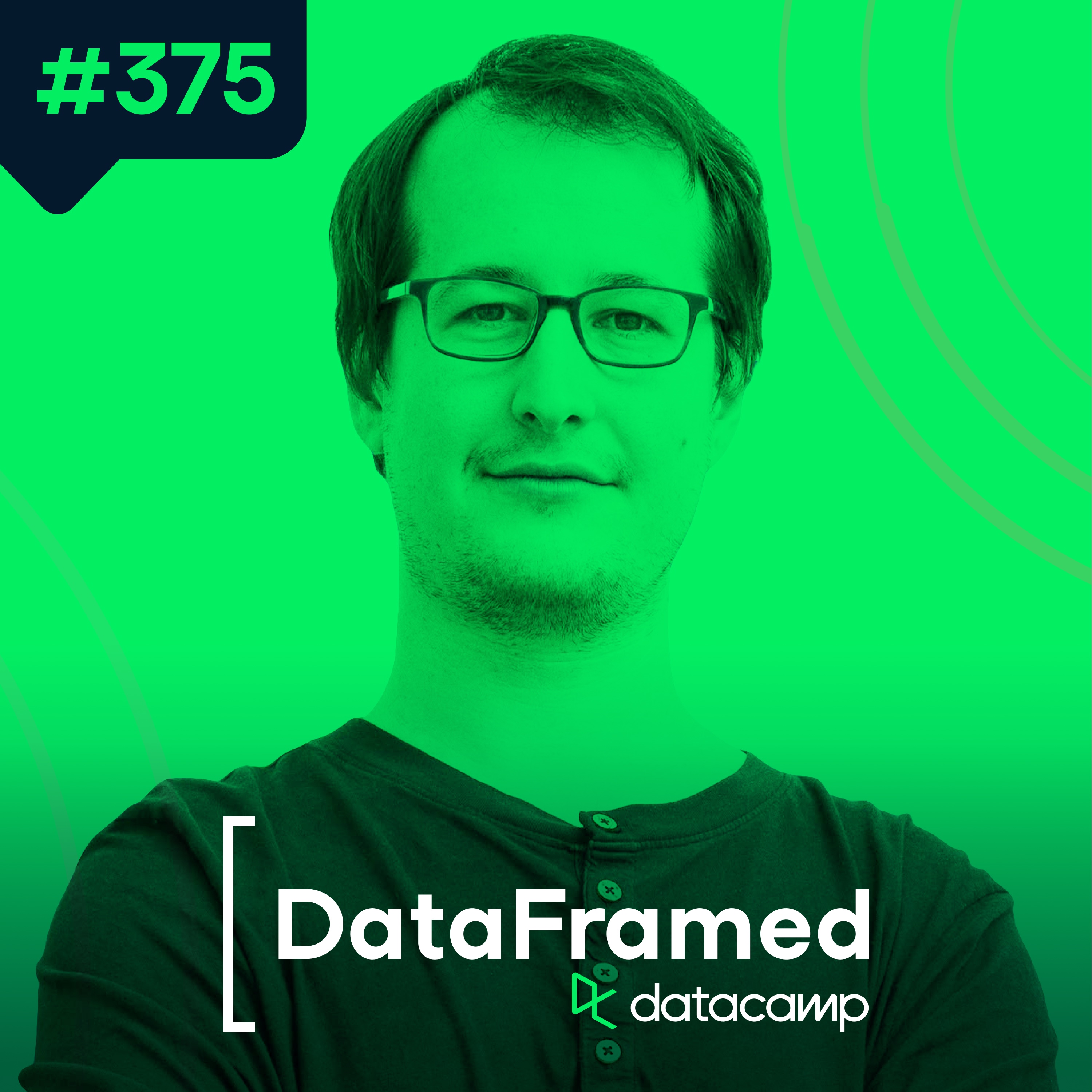 #375 Is Math The Key to Better Coding AI? With Tudor Achim, CEO at Harmonic 31.08.2026 47λAI capability in mathematics jumped before most people noticed, tackling Olympiad-level problems and unsolved research questions that had resisted attack for years. But the pattern of where AI succeeds and where it stalls is uneven and worth understanding. It's much better at grinding through cases to disprove something than at constructing an elegant, original proof. Anyone working with AI in a technical field runs into this same asymmetry. Where exactly is the boundary between tasks AI can already do reliably and ones that still need human judgment and creativity?Tudor Achim is the co-founder and CEO of Harmonic, an AI company building toward mathematical superintelligence. He previously led the machine learning team at Quora and co-founded and served as CTO of the autonomous driving company Helm.ai. Under Tudor, Harmonic's Aristotle system achieved gold-medal performance at the 2025 International Math Olympiad alongside systems from OpenAI and Google DeepMind — with every proof formally verified.In the episode, Richie and Tudor explore why AI is starting to outperform humans at advanced mathematics, the shift toward formally verified proofs using the Lean language, where AI already beats humans (finding counterexamples) versus where it still falls short (building elegant proofs), how human mathematicians' roles will change, why math capability gains spill over into better AI reasoning generally, and much more.Links Mentioned in the Show:• Tudor's TED Talk: "The Path to Mathematical Superintelligence"• Aristotle, Harmonic's reasoning system• Harmonic• The Erdős Problems• American Institute of Mathematics• Rich Sutton, "The Bitter Lesson"• Connect with Tudor: LinkedIn• AI-Native Course: Intro to AI for Work• Related Episode: Why AI Agents Haven't Taken Over Knowledge Work Yet, with Jennifer Smith, CEO of Scribe (exact URL pending — episode published Aug 17, 2026, too recent to be indexed yet; confirm link on datacamp.com/podcast before publishing)New to DataCamp? Learn on the go using the DataCamp mobile appEmpower your business with world-class data and AI skills with DataCamp for business
 -
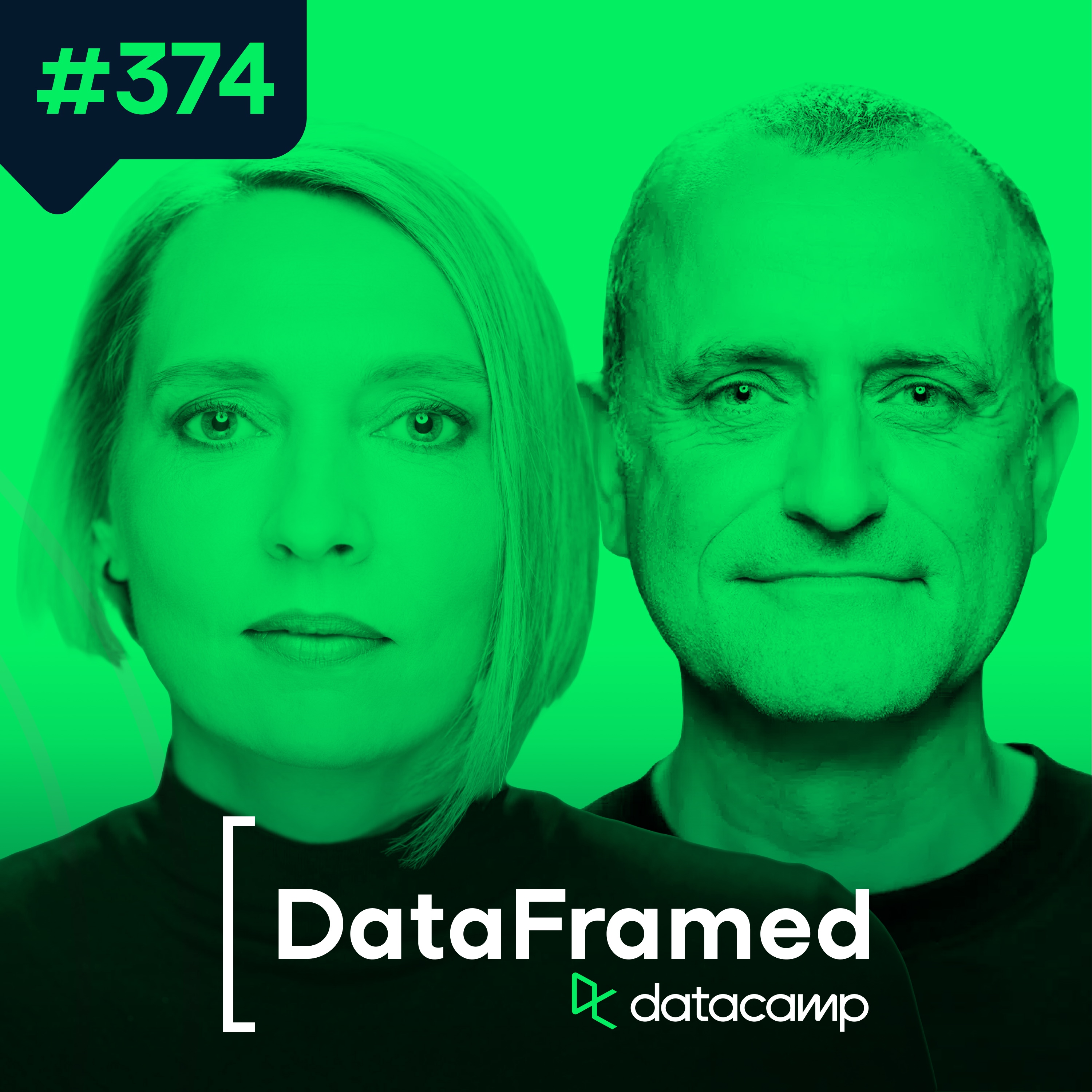 #374 How to Thrive in a World of Continuous Transformation | Phil Le Brun and Jana Werner, Executives in Residence at AWS 24.08.2026 45λTechnology is now moving faster than the organizations trying to adopt it. A model can be tested in an afternoon, but the approval to test it can take half a year, and that gap is where most transformation budgets quietly disappear. The structures that made companies safe and predictable — layers of sign-off, centralized control, standardized processes — were built for a world where getting things wrong was expensive. That world is gone. So what actually has to change inside a company for AI to deliver value? Which habits are holding things up? And where do you start when everything needs fixing at once?Phil Le Brun is an Executive in Residence at AWS and previously spent over 25 years at McDonald's Corporation, where he was VP of Global Technology Development and International CIO. Jana Werner is an Executive in Residence at AWS, where she leads the Financial Services Practice in EMEA and advises Fortune 500 executive teams on transformation, having previously scaled a tech start-up to acquisition by HP, led digital transformation at Tesco Bank, and advised DHL on global change. Together they are the authors of The Octopus Organization: A Guide to Thriving in a World of Continuous Transformation (Harvard Business Review Press).In the episode, Richie, Phil and Jana explore why AI transformations stall, the Tin Man organization and its anti-patterns, the octopus as a model for adaptive companies, why AI adoption metrics mislead, being data informed rather than data driven, making fast reversible decisions, hiring and onboarding, embedding learning into daily work, and much more.Links Mentioned in the Show:• The Octopus Organization (book)• Through the Looking-Glass — Lewis Carroll (the Red Queen)• Goodhart's law• Annie Duke on "resulting"• Linda Hill, Harvard Business School• A Seat at the Table — Mark Schwartz• Connect with Phil• Connect with Jana• AI-Native Course: Intro to AI for Work• Related Episode: Your 90 Day Blueprint for AI Success with Charlene Li• Explore AI-Native Learning on DataCampNew to DataCamp?• Learn on the go using the DataCamp mobile app• Empower your business with world-class data and AI skills with DataCamp for business
 -
 #373 What Do Your Colleagues Do All Day? (The Value of Institutional Knowledge & AI for Process Reengineering) | Jennifer Smith, CEO at Scribe 17.08.2026 52λFour years into the AI boom, headlines still promise agents that will run entire departments, yet most companies can't point to the transformation they were sold. The gap isn't intelligence — today's models are remarkably capable — it's context: no model arrives knowing how your company actually gets things done. For anyone tasked with deploying AI at work, this raises pressing questions. What does it take to turn generic intelligence into something that understands your specific operations? And why do so many well-funded AI initiatives stall before they ever reach production?Jennifer Smith is Co-Founder and CEO of Scribe, the Workflow AI platform used by more than 6 million people and 94% of the Fortune 500. Under her leadership, Scribe has surpassed $100M in ARR and raised $75M at a $1.3B valuation. Before founding Scribe, Jennifer spent three years at Greylock Partners interviewing 1,200 C-suite executives about the problems they were trying to solve, and previously worked at Coatue Management and McKinsey & Company. She holds an MBA from Harvard and a BA from Princeton.In the episode, Richie and Jennifer explore why AI agents haven't taken over knowledge work yet, harnessing institutional knowledge as "specialized intelligence," mapping enterprise workflows with LLMs, building the business case and ROI for AI transformation, balancing top-down and bottom-up change management, and the agency-driven skills that matter most in an AI-native workplace, and much more.Links Mentioned in the Show:Scribe (Jennifer's company)McKinsey & CompanyAaron Levie, CEO of Box, followed by Jennifer on XJaya Gupta, Partner at Foundation CapitalConnect with Jennifer: LinkedInAI-Native Course: Intro to AI for WorkRelated Episode: AI Agents at Work: What Actually Breaks (and How to Fix It) with Danielle Crop, EVP at WNSNew to DataCamp? Learn on the go using the DataCamp mobile app.Empower your business with world-class data and AI skills with DataCamp for business.
 -
 #372 Bulletproof Large Scale Data Science with Srini Raghavan, Chief Product Officer at Freshworks 10.08.2026 48λSoftware buying decisions used to be made once, by someone far removed from the people actually using the tool. That model is breaking down. Teams now expect software to work out of the box, without weeks of setup, integration, and configuration before anyone sees value. At the same time, a growing share of "users" aren't people at all — they're AI agents calling the same systems through APIs and chat interfaces. That raises a set of questions worth sitting with: what happens to user experience when the user isn't human? Can personalization and simplicity coexist, or is one always traded for the other? And as building software gets cheaper, what actually separates a good product from a cluttered one?Srini Raghavan is Chief Product Officer at Freshworks, where he leads product strategy for the company's AI-powered customer and employee experience software. He previously served as Chief Product Officer at RingCentral and SVP of Product at Five9, and holds an MBA from the University of Chicago Booth School of Business.In the episode, Richie and Srini explore the SaaS consolidation trend and why the "SaaSpocalypse" prediction missed the point, building software that works for both humans and AI agents, how MCP and modular architecture are reshaping product design, the rise of the "product builder" role replacing specialized titles, customer feedback loops and cohort-based A/B testing, judgment as the most important AI-era career skill, and much more.Links Mentioned in the Show:• Fresh Service — https://www.freshworks.com/freshservice/• Jaya Gupta's Webinar at RADAR - https://app.datacamp.com/learn/webinars/whats-next-rethinking-analytics-for-the-ai-human-era• Freddy AI Agent Studio — https://www.freshworks.com/freshservice/ai-agent-studio/• Figma Make — https://www.figma.com/make/• Cursor — https://cursor.com• NotebookLM — https://notebooklm.google/• Marc Andreessen's "Mexican standoff" comment — https://officechai.com/ai/programmer-product-manager-and-designer-roles-are-merging-into-a-single-builder-role-marc-andreessen/• Connect with Srini: https://www.linkedin.com/in/srinivasan28/• AI Tutor Course: Intro to AI for Work — https://www.datacamp.com/courses/introduction-to-ai-for-work• Related Episode: Vibe Coding and the Rise of the Non-Developer Builder with Matt Palmer, Developer Relations at ReplitNew to DataCamp? Learn on the go using the DataCamp mobile app.Empower your business with world-class data and AI skills with DataCamp for business.
 -
 #371 The Real Reason Your Product Team Needs a Feedback Loop with Todd Olson, CEO at Pendo 03.08.2026 39λSoftware teams are shipping faster than ever, but speed hasn't solved the oldest problem in the industry: most software still isn't very good. AI coding tools have lowered the barrier to building something, yet they haven't lowered the barrier to building something worth using. As more people who aren't trained software creators start shipping products, a new question is forming across product, design, and engineering teams: if AI can build almost anything, how do you make sure it builds the right thing, and builds it well?Todd Olson is co-founder and CEO of Pendo, the product experience platform he started in 2013. Before that, he held product and engineering roles at Rally Software, Red Hat, Cisco, and Google. He's the author of The Product-Led Organization and has led Pendo through raising over $356M in venture funding while growing to 2,300+ customers.In the episode, Richie and Todd explore why bad software still gets built, how much context AI coding agents need before they can be trusted, using behavioral data and "rage prompts" to catch what's actually frustrating users, the shift toward headless and agentic software design, how product, design, and engineering roles are splitting apart, managing one-way-door risk during AI transformation, and much more.Links Mentioned in the Show:Jeff Bezos’s one-way door / two-way door decision framework: 2015 Amazon shareholder letterHubSpot’s 2024 terms-of-service backlashRampStripeFin (Intercom’s AI agent), recently announced to be acquired by SalesforceAnthropic / Claude CodeConnect with ToddAI-Native Course: Intro to AI for WorkRelated Episode: The Data Team’s Agentic Future with Ketan Karkhanis, CEO at ThoughtSpotNew to DataCamp?Learn on the go using the DataCamp mobile app - https://www.datacamp.com/mobileEmpower your business with world-class data and AI skills with DataCamp for business - https://www.datacamp.com/business
 -
 #370 Failure is Data (and Other Career Advice) | Todd Dewett, Leadership Author & Speaker 27.07.2026 44λAs AI takes over more technical and routine work, the skills that set data and AI professionals apart are shifting. Raw technical ability and a high IQ still matter, but they are becoming table stakes as tools get more capable and teams get smarter. What increasingly separates people is harder to automate: communication, self-awareness, authenticity, and the ability to keep learning through failure. For anyone building a career in this space, that raises real questions. Which skills are actually worth investing in now? What holds up as AI advances? And how do you keep growing once you have already had some success?Dr. Todd Dewett is one of the world's most-watched leadership voices — an authenticity expert, bestselling author, and top LinkedIn Learning instructor whose courses have reached more than 25 million people across 100+ countries. After beginning his career at Andersen Consulting and Ernst & Young, he earned a PhD in organizational behavior at Texas A&M and spent a decade as an award-winning professor before going solo. He is a five-time TEDx speaker and the author of Show Your Ink.In the episode, Richie and Todd explore why fear quietly limits careers, treating failure as data rather than a verdict, the people skills that outlast raw IQ, learnable self-awareness, authenticity at work, using AI without losing your voice, getting better at speaking and writing, building habits, escaping the success trap, and much more.Links Mentioned in the Show:• Todd's LinkedIn newsletter (writing + his "Creswall" comic) — https://www.linkedin.com/in/drdewett/• Todd Dewett on LinkedIn Learning — https://www.linkedin.com/learning/instructors/todd-dewett• Free LinkedIn Learning access via your public library — https://www.linkedin.com/learning• Gemma Leigh Roberts, chartered psychologist — https://www.linkedin.com/in/gemmaleighroberts/• Erin Shrimpton, chartered organisational psychologist — https://ie.linkedin.com/in/erinshrimpton• Connect with Todd: https://www.linkedin.com/in/drdewett/• AI-Native Course: Intro to AI for Work• Related Episode: How to Have a Machine Learning Career in 2026 with Marina WyssNew to DataCamp?Learn on the go using the DataCamp mobile app
 -
 #369 How to Become a Top Business Intelligence Analyst | Helen Wall, Founder at Helen Data Design & Microsoft Influencer 20.07.2026 49λBusiness intelligence has never been only about building charts and writing queries. Most of the work that makes a report trustworthy happens below the surface — in the data models, documentation, and stakeholder conversations that users never see. For analysts, technical skill is just the starting point; understanding what the business actually needs, and why a number exists, matters just as much. So what really separates a competent analyst from a great one? How do you build something that answers the right question, not just any question? And which skills are worth investing in first?Helen Wall is the founder of Helen Data Design and a Microsoft-recognized business intelligence expert and LinkedIn Learning instructor. A former actuary, she has worked across financial reporting, weather data, and consulting projects, and has maintained a running list of monthly Power BI updates for close to five years. She studied math and economics at the University of Washington, and focuses on where data analytics meets design.In the episode, Richie and Helen explore what separates a great business intelligence analyst from an average one, the iceberg model of analytics work, building and using semantic layers, taking over messy legacy projects, documenting for both humans and AI agents, how Power BI has changed over five years, keeping AI outputs consistent and cost-effective, accountability in the age of agents, and much more.Links Mentioned in the Show:• Connect with Helen• Microsoft AI for Good Lab• Power BI monthly feature updates• SQL Server Analysis Services• Power BI Q&A visual• DAX (Data Analysis Expressions)• AI-Native Course: Intro to AI for Work• Related Episode: The Data Team's Agentic Future with Ketan Karkhanis, CEO at ThoughtSpotNew to DataCamp?• Learn on the go using the DataCamp mobile app• Empower your business with world-class data and AI skills with DataCamp for business
 -
 #368 AI Agents Are Now Your Database's Main User | Reynold Xin, Co-Founder at Databricks 13.07.2026 50λFor forty years, the rule held that transactional and analytical databases had to be separate systems, connected by fragile pipelines that move data from one to the other. That assumption is now being questioned. As AI agents start generating the majority of database activity, the old architecture is being redesigned around speed, scale, and a single copy of governed data. For anyone who works with data day to day, this raises practical questions. Do you still need separate systems for live and historical data? What happens to the pipelines you maintain? And how does your stack change when agents, not people, write most of the queries?Reynold Xin is co-founder and Chief Architect of Databricks. He is one of the original creators of Apache Spark, where he led the design of GraphX, Project Tungsten, and Structured Streaming, co-designed DataFrames, and served as release manager for Spark 2.0. He holds a PhD in Computer Science from UC Berkeley's AMPLab and a degree in Engineering Science from the University of Toronto.In the episode, Richie and Reynold explore self-service analytics with Genie, the ontology layer that grounds AI in enterprise data, handling hallucinations, governance and permissions for AI agents, merging transactional and analytical databases with Lakebase and LTAP, real-time analytics, controlling cost through autoscaling, the future of Spark and classic machine learning, and much more.Links Mentioned in the Show:• Connect with Reynold: https://www.linkedin.com/in/rxin• Genie (Databricks data agent): https://www.databricks.com/product/genie• Genie Ontology / Genie One: https://www.databricks.com/blog/introducing-genie-one-genie-ontology-and-genie-agents• LTAP (Lake Transactional/Analytical Processing): https://www.databricks.com/company/newsroom/press-releases/databricks-launches-ltap-first-lake-transactionalanalytical• Lakehouse//RT: https://www.databricks.com/blog/introducing-lakehousert-real-time-performance-unified-lakehouse• Lakebase: https://www.databricks.com/product/lakebase• Apache Spark: https://spark.apache.org• AI-Native Course: Intro to AI for Work - https://www.datacamp.com/courses/introduction-to-ai-for-work• Related Episode: AI's Impact on Databases - https://www.datacamp.com/podcast/ais-impact-on-databasesNew to DataCamp? Learn on the go using the DataCamp mobile app - https://www.datacamp.com/mobileEmpower your business with world-class data and AI skills with DataCamp for business - https://www.datacamp.com/business
 -
 #367 Don't Build on Jell-O: How to Make Agentic AI Reliable with Dan Klein, CTO at Scaled Cognition 06.07.2026 51λAcross the AI industry, capability has exploded while trustworthiness has lagged badly behind. The same technology that writes fluent prose can invent a refund policy that was never real, and most of those errors are subtle enough that no one notices. As more teams hand high-stakes work to AI — in banking, healthcare, customer service — the cost of confident mistakes adds up fast. So how common are hallucinations, really? Can chaining models together or adding humans to the loop fix it? And is reliability something you can design into a system from the start?Dan Klein is the CTO and co-founder of Scaled Cognition and a professor of computer science at UC Berkeley, where he leads the Berkeley NLP Group within the Berkeley AI Research (BAIR) Lab. He previously co-founded Semantic Machines, a conversational AI company acquired by Microsoft in 2018. At Scaled Cognition he built APT (Agentic Pretrained Transformer), a frontier model designed from the ground up for reliable, policy-adherent agentic AI.In the episode, Richie and Dan explore why AI reliability has lagged behind capability, how hallucinations hide in plain sight, the limits of humans-in-the-loop and LLM-as-judge, building reliability into model architecture, agentic systems and verifiable actions, test-driven agent development, the skills that stay valuable, digital literacy, and much more.Links Mentioned in the Show:• Connect with Dan: https://www.linkedin.com/in/dan-klein/• Scaled Cognition: https://www.scaledcognition.com/• Berkeley NLP Group: https://nlp.cs.berkeley.edu/• Code smells (Martin Fowler): https://martinfowler.com/bliki/CodeSmell.html• Refactoring, by Martin Fowler: https://martinfowler.com/books/refactoring.html• "Now you have two problems" (Jamie Zawinski quote): https://regex.info/blog/2006-09-15/247• Lean theorem prover: https://lean-lang.org/• AI-Native Course: Intro to AI for Work - https://www.datacamp.com/courses/introduction-to-ai-for-work• Related Episode: How to Build AI Your Users Can Trust with David Colwell, VP of AI & ML at Tricentis - https://www.datacamp.com/podcast/how-to-build-ai-your-users-can-trustNew to DataCamp? Learn on the go using the DataCamp mobile app - https://www.datacamp.com/mobileEmpower your business with world-class data and AI skills with DataCamp for business - https://www.datacamp.com/business
 -
 #366 Can AI Agents Outperform a Data Scientist? | James Zou, Professor at Stanford University 29.06.2026 48λAI agents are no longer limited to automating routine tasks like customer support or report generation. Research labs and pharmaceutical companies are beginning to deploy teams of specialist AI agents capable of designing experiments, analyzing data, and proposing new hypotheses — in some cases producing results that outperform human experts. For data scientists and researchers, this raises urgent questions: Where do AI agents excel in scientific workflows today, and where do they fall short? How do you build an agent that can genuinely innovate rather than just replicate what's already been done? And what does it take to scale a single model into a fully functioning virtual research team?James Zou is an Associate Professor of Biomedical Data Science, and by courtesy of Computer Science and Electrical Engineering, at Stanford University. He leads the Stanford AI for Science Lab and is affiliated with Together AI. His research focuses on building AI agents for scientific discovery and data science, making AI more reliable and statistically rigorous. He has received a Sloan Fellowship, NSF CAREER Award, two Chan-Zuckerberg Investigator Awards, and faculty awards from Google, Amazon, and Adobe.In the episode, Richie and James explore how AI scientist agents are already outperforming human experts in scientific discovery, the Virtual Lab framework for building teams of specialist AI agents that conduct real research, teaching models to innovate not just imitate through a new training paradigm called "learning to discover," DS Gym for self-improving data science agents, scaling agentic systems from a single model to a Virtual Biotech with tens of thousands of agents, Einstein Arena as the first competition platform built exclusively for AI agents, converting scientific papers into agent-native MCPs through Paper to Agent, and much more.Links Mentioned in the Show:• Virtual Lab (Nature paper)• Einstein Arena• DS Gym• Paper2Agent• Together AI• AlphaFold 2 / Nobel Prize 2024• Connect with James• AI-Native Course: Intro to AI for Work• Related Episode: #358 How AI Agents Will Work While You Sleep | Ruslan SalakhutdinovNew to DataCamp?• Learn on the go using the DataCamp mobile app• Empower your business with world-class data and AI skills with DataCamp for business
 -
 #365 Your 90 Day Blueprint for AI Success with Charlene Li, Author of Winning with AI 22.06.2026 53λMost organizations know AI matters, but few have turned that conviction into a written plan. Ambition and hope are everywhere; a clear roadmap tied to business strategy is rare. For teams on the ground, this gap shows up as scattered initiatives, tools nobody fully uses, and a lot of activity that never adds up to real value. So where do you actually start? How do you move from a long list of use cases to a focused plan you can execute? And who in the organization should own the job of turning AI into business results?Charlene Li is a New York Times bestselling author and strategic advisor who has spent more than two decades helping leaders navigate disruptive change. She founded Altimeter Group, has advised 49 of the Fortune 100, and is the co-author of Winning with AI: The 90-Day Blueprint for Success (with Dr. Katia Walsh).In the episode, Richie and Charlene explore how to get your organization AI-ready in 90 days, why you don't need a separate AI strategy, appointing an AI value owner, creating value beyond efficiency, building AI fluency, Goldilocks governance, why you should kill your AI pilots, and much more.Links Mentioned in the Show:Winning with AI: The 90-Day Blueprint for SuccessDr. Katia Walsh (co-author)ModernaKonectaIKEAAndrej Karpathy's LLM WikiConnect with Charlene: LinkedInAI-Native Course: Intro to AI for WorkRelated Episode: Our Data Trends & Predictions for 2026 with Jonathan Cornelissen & Martijn TheuwissenNew to DataCamp? Learn on the go using the DataCamp mobile app - https://www.datacamp.com/mobileEmpower your business with world-class data and AI skills with DataCamp for business - https://www.datacamp.com/business
 -
 #364 How to Enable Agentic Commerce with Nell Thomas, VP of Data at Shopify 15.06.2026 43λAI agents are starting to handle parts of the shopping journey that used to require human judgment — discovery, comparison, checkout. But behind every agent recommendation is a massive, invisible layer of data infrastructure. Product catalogs need to be structured, inventory synced in real time, pricing accurate, and quality signals clear. For data engineers and teams building at companies like Shopify, this shift means rethinking how data flows through systems and what "good enough" quality actually means. How do you ensure data is ready for AI? And how is this reshaping what data teams actually do?Nell Thomas is the VP of Data at Shopify, where she leads a team of approximately 400–500 people across data infrastructure, ML platforms, data engineering, and data science. Her career spans multiple industries including social media (Facebook), e-commerce (Etsy), politics (Hillary for America, Democratic National Committee), and now commerce. She holds an A.B. in Psychology from Harvard University and an M.A. in History & Sociology of Science from the University of Pennsylvania.In the episode, Richie and Nell explore agentic commerce and how AI agents are transforming shopping, the role of data in enabling AI-driven commerce, Shopify's Catalog and Universal Commerce Protocol, data quality requirements for agentic systems, how the data team function is evolving at Shopify, changing skill requirements for data professionals, and Nell's unconventional career path from politics to tech.Links Mentioned in the Show:- Agentic Commerce on Shopify- Universal Commerce Protocol (UCP) vs Agentic Commerce Protocol (ACP)- Shopify Catalog Documentation- Agentic Storefronts — Shopify Sales Channel- ChatGPT — OpenAI's Conversational AI- How Shopify Built Data Infrastructure at ScaleRelated Scaling Data Quality in the Age of Generative AINew to DataCamp? Learn on the go using the DataCamp mobile app - https://www.datacamp.com/mobileEmpower your business with world-class data and AI skills with DataCamp for business - https://www.datacamp.com/business
 -
 #363 Build Your Personal Brand at Work | Dorie Clark, Executive Education Faculty at Columbia Business School 08.06.2026 53λTechnical skills are being commoditized faster than ever. As AI takes on more of the work that used to define a junior knowledge worker, the things that once made someone valuable are becoming table stakes. What compounds in this environment is reputation — what colleagues, clients, and decision-makers think about you when your name comes up.That puts new pressure on visibility. People doing great work in silence are increasingly the ones getting passed over for promotions and external opportunities. So how do you build a reputation without becoming an influencer? What does AI-era credibility actually look like? And how do you start small?Dorie Clark teaches Executive Education at Columbia Business School and is the Wall Street Journal and USA Today bestselling author of The Long Game, Entrepreneurial You, Reinventing You, and Stand Out. She has been named four times as one of the Top 50 business thinkers in the world by Thinkers50, recognized as the #1 Communication Coach in the world by the Marshall Goldsmith Leading Global Coaches Awards, and is a frequent contributor to the Harvard Business Review.In the episode, Richie and Dorie explore why AI fluency is the new Excel skill, tinkering with AI's jagged frontier, the security risks of agentic AI, what personal branding really means in an AI-disrupted job market, the recognized expert formula, the ladder strategy for credibility, networking with "no asks for a year," running better meetings, and much more.Links Mentioned in the Show:• The Jagged Frontier (HBS Working Paper)• Agentic Misalignment: How LLMs could be insider threats (Anthropic)• AI-powered coding tool wiped out a software company's database (Fortune)• Reinventing You by Dorie Clark• The Long Game by Dorie Clark• Superteams by Ron Friedman• Connect with Dorie on LinkedIn• AI-Native Course: Intro to AI for Work• Related Episode: #341 Our Data Trends & Predictions for 2026New to DataCamp?Learn on the go using the DataCamp mobile app.Empower your business with world-class data and AI skills with DataCamp for business.
 -
 #362 How to Have a Machine Learning Career in 2026 | Marina Wyss, Senior Applied Scientist at Twitch 01.06.2026 47λThe role of the machine learning engineer is being rewritten in real time. AI coding assistants are absorbing parts of the day-to-day, planning and evaluation are eating up more of the week, and the lines between machine learning engineer, AI engineer, and data scientist are blurrier than ever. For anyone working in data and AI — or trying to break in — this shift changes what skills are worth investing in, what employers actually screen for, and how interviews are run. What's still worth learning? What does a competitive portfolio look like? And how do you stand out when a thousand applicants are using bots to apply?Marina Wyss is a Senior Applied Scientist at Twitch (an Amazon company), where she builds production AI and machine learning systems across content understanding, recommendations, and forecasting. She came into the field from a non-traditional background — a political science undergrad and a Master's in social data science in Berlin — and has held machine learning roles at Coursera and a Berlin-based statistical consultancy along the way. Outside her day job, Marina runs a popular AI/ML YouTube channel and weekly newsletter, and coaches people transitioning into machine learning from non-traditional careers.In this episode, Richie and Marina explore how AI is reshaping the machine learning engineer role, the shifting balance between coding and planning, why evaluation matters more than ever, the differences between ML engineer, AI engineer, and data scientist roles, how to break into the field from a non-technical background, what makes a strong portfolio project, the hiring process at big tech, how to prepare for technical interviews, networking strategies that actually work, what success looks like in your first few months on the job, and much more.Links Mentioned in the Show• Chip Huyen — AI Engineering (book)• Andrew Codesmith on YouTube• Phillip Choi on YouTube• A Life Engineered on YouTube• Keras• LeetCode• Connect with Marina: LinkedIn• AI-Native Course: Intro to AI for Work• Related Episode: How to Have a Career in Data Science in 2025 with Dawn ChooNew to DataCamp?Learn on the go using the DataCamp mobile app - https://www.datacamp.com/mobileEmpower your business with world-class data and AI skills with DataCamp for business - https://www.datacamp.com/business
 -
 #361 If You Want AI to Work, Fix This Boring Thing First with Veronika Durgin, VP of Data at Saks 25.05.2026 48λEvery conversation about AI in data eventually arrives at the same question: which roles survive, and which ones get automated away? Generative AI can already draft SQL, build dashboards, and run exploratory analysis — but it still can't sit with a business stakeholder and untangle what "customer" actually means across five teams. For data professionals, that shifts the day-to-day from production work toward translation, modeling, and judgment. So which skills are worth doubling down on? Which roles are becoming central, and which are quietly disappearing? And what should anyone hiring — or being hired — be paying attention to right now?Veronika Durgin is the VP of Data at Saks Global, where she leads data strategy across the luxury retail group. A full-stack data executive with more than two decades of experience spanning database administration, data engineering, platform architecture, data modeling, and analytics, Veronika is a Snowflake Data Superhero and a member of CDO Magazine's Global Editorial Board. She writes about data modeling, data culture, and data leadership on her Substack and Medium.In the episode, Richie and Veronika explore the future of data careers under AI, why analytics engineering becomes the catch-all role, the skills and hiring shifts data leaders are making, centralized data with decentralized analytics, keeping enterprise data teams agile, conceptual data modeling as the unglamorous prerequisite to AI, semantic layers, agentic commerce, and much more.Links Mentioned in the Show:Connect with Veronika: LinkedInVeronika's Substack: Think. Solve. Repeat.dbt — referenced as the origin of "analytics engineering"Open Data Science Conference (ODSC) — Veronika's recent talk on data and company politicsAmazon "two-way door" decisions — Bezos shareholder letterJessica Talisman — Veronika's recommendation for knowledge graphs and ontologiesJuan Sequeda — referenced on semantic layers and knowledge graphsCatalog & Cocktails podcast (hosted by Juan Sequeda)AI-Native Course: Intro to AI for WorkRelated Episode: Creating an AI-First Data Team with Bilal Zia, Head of Data Science & Analytics at DuolingoNew to DataCamp?Learn on the go using the DataCamp mobile appEmpower your business with world-class data and AI skills with DataCamp for business
 -
 #360 What's Your Biggest AI Ethical Nightmare? | Reid Blackman, CEO at Virtue Consultants 18.05.2026 57λMost AI ethics conversations sound the same: be fair, be transparent, be accountable. The values are right, but in practice they don't get teams out of bed in the morning. Executives nod along, employees take the compliance training, and meanwhile real risks like hallucinations, cascading failures, and autonomous agents acting at scale slip through. So what shifts when teams stop chasing an ethical ideal and start naming the specific disasters they want to avoid? Who needs to be in the room to spot them? And what kind of training actually changes how people use AI day to day?Reid Blackman is the founder and CEO of Virtue, an AI ethical risk consultancy, and the author of The Ethical Nightmare Challenge: How to Avoid the Worst of AI (2026) and Ethical Machines (HBR Press, 2022). A former philosophy professor at Colgate with a PhD from the University of Texas at Austin, he has designed responsible AI programs for organizations including Amazon, Etsy, Kraft Heinz, Merck, US Bank, and Nationwide, and has advised the FBI, NASA, the World Economic Forum, and the Canadian government on federal AI regulations. He also hosts the Ethical Machines podcast.In the episode, Richie and Reid explore why responsible AI fails to motivate organizations, the biggest AI ethical nightmares facing companies today, the unique risks of agentic AI including cascading failures and emergent risks, the Ethical Nightmare Challenge framework, cross-functional ENC teams, training employees in plain language, scaling AI governance, measuring success by what you avoid, and much more.Links Mentioned in the Show:• The Ethical Nightmare Challenge by Reid Blackman• Ethical Machines by Reid Blackman• Ethical Machines podcast• Claude Code• Connect with Reid: LinkedIn• AI-Native Course: Intro to AI for Work• Related Episode: #350 How to Make Hard Choices in AI with Atay KozlovskiNew to DataCamp? Learn on the go using the DataCamp mobile app.Empower your business with world-class data and AI skills with DataCamp for business.
 -
 #359 My Best Friend is AI with Valerie Tiberius, Professor of Philosophy at University of Minnesota 12.05.2026 43λValerie Tiberius is the Paul W. Frenzel Chair in Liberal Arts and Professor of Philosophy at the University of Minnesota. She is an expert in ethics, moral psychology, and well-being, and the author of five books including What Do You Want Out of Life? and the forthcoming Artificially Yours: Real Friendship in a World of Chatbots (Princeton University Press, May 2026). She previously served as President of the Central Division of the American Philosophical Association.In the episode, Richie and Valerie explore the purpose of friendship and whether AI can replicate it, the benefits and risks of chatbot companions for loneliness, how sycophantic AI responses distort advice and self-perception, the dangers of companion chatbots for children's social development, designing ethical AI companions that promote human flourishing, the zone of proximal development as a framework for better AI tools, and much more.Links Mentioned in the Show:Artificial Intimacy by Sherry Turkle Being You: A New Science of Consciousness by Anil SethLiberation Day: Stories by George SaundersHard Fork podcast (NYT)Connect with ValerieAI-Native Course: Intro to AI for WorkRelated Episode: #342 — "The Secrets to High AI Adoption" with Stefano Puntoni, Professor at WhartonNew to DataCamp?Learn on the go using the DataCamp mobile appEmpower your business with world-class data and AI skills with DataCamp for business
 -
 #358 How AI Agents Will Work While You Sleep | Ruslan Salakhutdinov, Professor at Carnegie Mellon 04.05.2026 58λAlmost every AI agent demo lands in roughly the same place: it works most of the time, looks remarkable, and then fails in a way no one anticipated. Self-driving cars hit this wall a decade ago, and agents are running into it now. For data and AI teams, the question is no longer whether agents can complete a task — it's whether they can complete it reliably enough to remove the human reviewer. Which categories of work tolerate a 90% success rate? Which absolutely don't? And where should the next layer of guardrails sit?Ruslan Salakhutdinov is a UPMC Professor of Computer Science at Carnegie Mellon University and one of Geoffrey Hinton's former PhD students. He has previously served as Director of AI Research at Apple and VP of Research in Generative AI at Meta. His research focuses on deep learning, reasoning, and AI agents.In the episode, Richie and Russ explore the most exciting use cases of AI agents today, long horizon tasks, the credit assignment problem, multi-agent systems, designing reliable human-in-the-loop workflows, agent safety and guardrails, embodied and physical AI, lessons from self-driving cars, the difference between academia and industry, and much more.Links Mentioned in the Show:• Claude Code (Anthropic)• Yutori• Waymo• Apple Project Titan• DeepSeek-V3 Technical Report• Kimi K2 Technical Report• Connect with Ruslan: LinkedIn• AI-Native Course: Intro to AI for Work• Related Episode: AI Agents at Work: What Actually Breaks (and How to Fix It) with Danielle CropNew to DataCamp?Learn on the go using the DataCamp mobile appEmpower your business with world-class data and AI skills with DataCamp for business
Παρόμοια podcasts


Δημοφιλές σε
Αυτό το podcast εμφανίζεται και στις λίστες podcasts αυτών των χωρών.


