
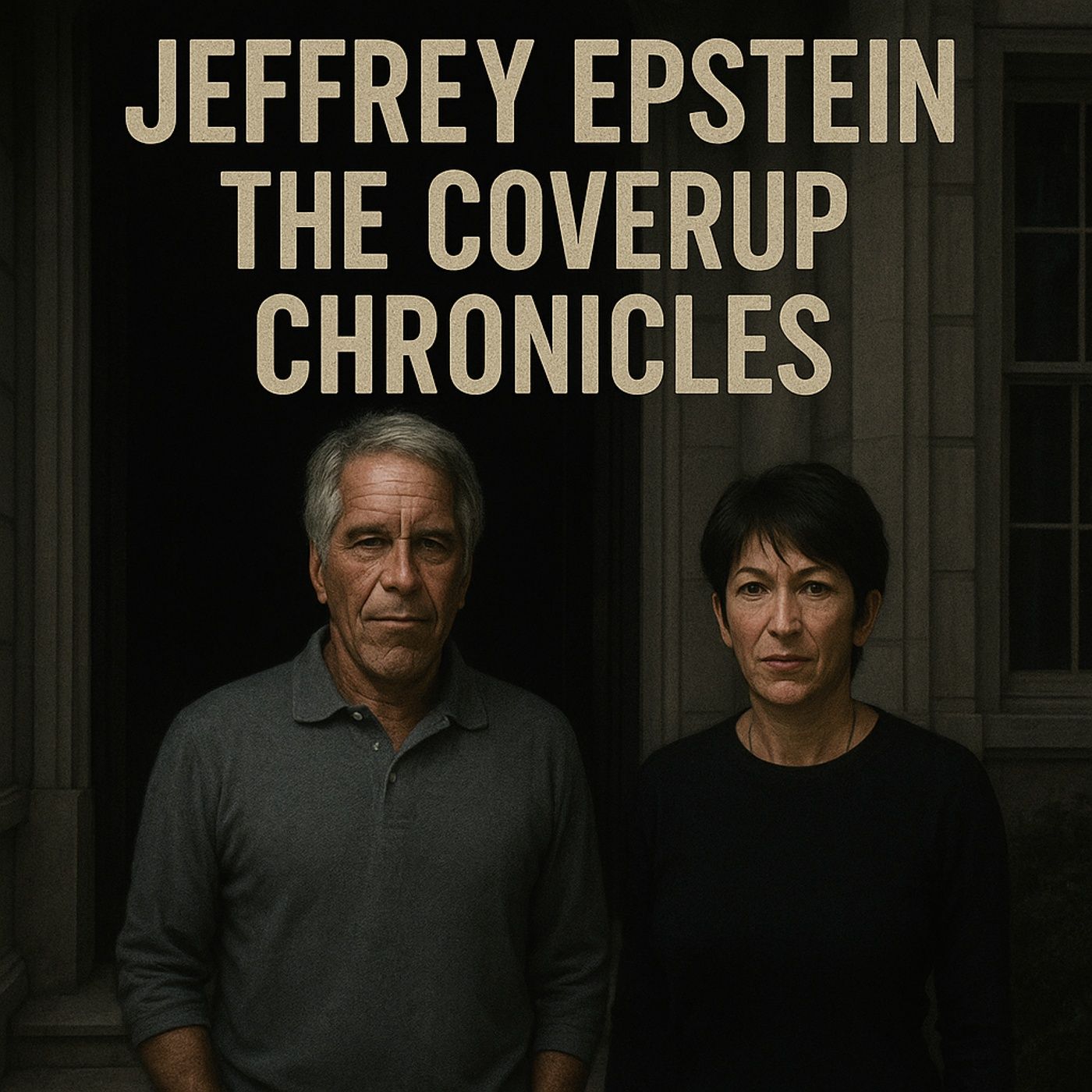
Jeffrey Epstein: The Coverup Chronicles
Jeffrey Epstein: The Coverup Chronicles is a podcast dedicated to examining not just who Epstein was and what he did, but how so many people and institutions worked—then and now—to keep it all hidden. This series cuts past the headlines and digs into the documentation: court filings, deposition transcripts, plea deals, sealed exhibits, and the bureaucratic paper trail that still tells the real story. Our focus isn’t on speculation or recycled outrage. It’s on facts—and the deliberate efforts to keep those facts out of public view. Each episode will feature in-depth analysis of newly surfaced records and underreported legal developments, alongside expert commentary that connects them to the broader machinery of power that shielded Epstein for decades.
Episodios
-
 The Clinton Epstein Depositions and the Failure of Congressional Oversight (Part 1) (9/16/26) 16.09.2026 11mThe congressional depositions of Bill and Hillary Clinton expose a broader problem with the House investigation into Jeffrey Epstein: lawmakers appear to apply different levels of scrutiny depending on the political identity of the witness. Democratic members repeatedly characterize the Clinton depositions as political theater and spend significant portions of their public messaging attacking Republican motives rather than aggressively testing the Clintons’ answers against the documentary record. Bill Clinton’s documented relationship with Epstein, including travel aboard Epstein’s aircraft and years of social contact, provides ample ground for detailed questioning, yet the deposition often lacks the kind of sustained follow-up that would normally accompany discrepancies, failures of memory, or assertions that conflict with other known evidence. Hillary Clinton’s testimony receives similar defensive treatment, with Democratic members appearing more interested in challenging the legitimacy of the proceeding than independently examining what she knew about Epstein and Ghislaine Maxwell. Republicans contribute to the dysfunction with irrelevant and theatrical questioning of their own, but that does not excuse Democratic members from their responsibility to conduct serious oversight. The result is an investigation that too often resembles competing political defense teams rather than a disciplined effort to establish facts.The Clinton depositions also highlight a larger credibility problem for Congress, which spends months demanding testimony and threatening contempt proceedings only to allow partisan loyalty to dominate the questioning once witnesses finally appear. The committee releases hours of Clinton deposition video while providing searchable written transcripts for numerous other Epstein-related witnesses, making independent examination of the Clinton testimony more difficult and leaving the public increasingly dependent on selectively edited clips and partisan summaries. Instead of methodically comparing testimony with flight records, photographs, calendars, communications, financial records, and other evidence, lawmakers repeatedly turn the investigation into another battle between Democrats and Republicans. That approach does little for survivors and even less to explain how Epstein maintained access to powerful people and institutions for so long. Bill and Hillary Clinton should not receive harsher treatment because of who they are, but neither should political allies shield them from the same level of scrutiny applied to other witnesses. Congress claims that nobody is above investigation, yet the Clinton depositions raise an uncomfortable question about whether lawmakers are willing to apply that principle when the witness belongs to their own political camp.to contact me:[email protected]
 -
Mega Edition: How Have The Dubin Family Dodged Real Epstein Scrutiny? (9/15/26) 16.09.2026 59mJeffrey Epstein’s relationship with the Dubin family remains one of the more difficult relationships in his orbit to fully explain because it was unusually deep, long-running and resilient even after his crimes were publicly known. Eva Andersson-Dubin had dated Epstein years before marrying hedge-fund billionaire Glenn Dubin, but Epstein remained close to the family long afterward. Flight records showed Glenn and Eva traveling on Epstein’s aircraft, court filings documented frequent calls and communications with both Epstein and Ghislaine Maxwell, and Eva later testified that Epstein had been so close to the family that her children called him “Uncle F.” Most strikingly, Glenn and Eva wrote to Epstein’s probation officer after his 2008 conviction and said they were comfortable having him around their children. The relationship was not merely social, either. Epstein had financial dealings with Glenn, including connections to Highbridge Capital, and the U.S. Virgin Islands later subpoenaed Dubin for records involving travel, money, Little St. James, women in Epstein’s orbit and communications with Epstein associates.What remains unresolved is why the relationship endured so strongly despite everything the Dubins knew or should have known about Epstein by that point. Virginia Giuffre alleged that Maxwell directed her to have sex with Glenn Dubin, an allegation Dubin has repeatedly and categorically denied, and no criminal charges were brought against him. At the same time, Epstein was woven deeply enough into the family’s life that investigators later wanted records concerning not only Glenn and Eva but also Epstein’s interactions with their children. Eva even appeared as a defense witness for Maxwell in 2021 and said she had never seen Epstein behave inappropriately with teenage girls. The contradiction is hard to ignore: Epstein had already been convicted of soliciting a minor, yet the Dubins continued treating him as a trusted family intimate. That does not by itself prove criminal conduct by the Dubins, but it leaves a central question hanging over the entire relationship: why did a family this close to Epstein continue embracing him after the rest of the world had every reason to know exactly what kind of man he was?to contact me:[email protected]
-
Mega Edition: Bill Gates And The Transformation Of His Epstein Story Over The Years (9/16/26) 16.09.2026 42mIn his August 2021 interview with CNN’s Anderson Cooper, Bill Gates described his association with Jeffrey Epstein as a serious mistake and said the relationship grew out of Epstein’s claims that he could help raise enormous sums of money for global-health philanthropy. Gates said he had “several dinners” with Epstein after first meeting him in 2011, despite Epstein already having been convicted of soliciting a minor. Gates told Cooper that once it became clear Epstein’s promised philanthropic connections were not producing anything, he ended the relationship. He acknowledged that simply spending time with Epstein had given the convicted sex offender credibility and called that decision a “huge mistake.” Cooper raised the issue in the context of reports that Melinda French Gates had been deeply troubled by her husband’s dealings with Epstein and that the relationship had become one of several issues surrounding the Gates marriage. Gates did not offer a detailed explanation for why repeated meetings were necessary beyond the proposed philanthropy and instead emphasized regret over having associated with Epstein at all.Gates gave a similar but noticeably terse account during a September 2021 PBS NewsHour interview with Judy Woodruff. When Woodruff asked what Gates knew about Epstein’s criminal background while meeting with him, Gates said Epstein claimed to know wealthy people who might contribute to global health initiatives and again characterized the meetings as a mistake that produced nothing. Woodruff pressed him on reports that the relationship involved multiple meetings over several years and specifically asked what Gates did after learning about Epstein’s background. Gates largely repeated that he regretted the dinners and said there was “absolutely nothing new” to add. When Woodruff asked what lesson he took from the experience, Gates responded that Epstein was dead and said people generally had to be careful before pivoting back to the accomplishments of the Gates Foundation. Taken together, the Cooper and PBS interviews presented the same basic explanation: Gates said Epstein was useful to him only as a potential conduit to philanthropic money, admitted that associating with him was a major error, but offered relatively little detail about why the relationship continued as long as it did after Epstein’s sex-offense conviction was already public.to contact me:[email protected]
-
Mega Edition: Ghislaine Maxwell's Motion To Compel Attorney Work Product From Virginia Roberts (9/15/26) 16.09.2026 1h 10mGhislaine Maxwell’s motion for attorney–client and work product protection in her lawsuit with Virginia Roberts Giuffre sought to shield a wide range of documents and communications from disclosure during discovery. Maxwell argued that certain materials requested by Giuffre were protected because they reflected legal strategy, attorney communications, or preparations made in anticipation of litigation. Her filing emphasized that forcing disclosure would unfairly expose her defense strategy and violate long-standing legal privileges designed to protect confidential legal consultation. Maxwell’s attorneys framed the motion as a necessary safeguard against what they characterized as overbroad and invasive discovery demands. They contended that without these protections, defendants in high-profile civil litigation would be placed at a systemic disadvantage. The motion leaned heavily on precedent affirming the sanctity of attorney–client privilege and work product doctrine. Maxwell’s team positioned the issue as procedural rather than substantive, arguing it was about legal fairness, not hiding facts. The filing attempted to narrow what Giuffre could access while preserving Maxwell’s litigation posture.In response, the dispute highlighted broader tensions in the case over transparency versus privilege. Giuffre’s side argued that Maxwell was using privilege claims too expansively to block relevant evidence, particularly materials that could shed light on Epstein’s operations and Maxwell’s role within them. The motion became part of a recurring pattern in the litigation, where Maxwell sought to limit discovery that could expose damaging details under the guise of legal protection. Courts were asked to balance legitimate privilege against the need for factual development in a case involving serious allegations of sexual abuse and trafficking. The issue underscored how privilege claims can function as both a shield for legal strategy and a barrier to accountability. Ultimately, the motion reflected Maxwell’s broader legal strategy of tightly controlling information flow. It also reinforced the adversarial nature of the lawsuit, where discovery itself became a central battleground. The fight over work product was less about isolated documents and more about how much of Maxwell’s conduct would be subject to scrutiny.to contact me:[email protected]
-
Prince Andrew's High Powered Lawyer Andrew Brettler 16.09.2026 17mAndrew Brettler built a reputation as one of Hollywood’s go-to attorneys for famous men facing explosive allegations, representing clients including Armie Hammer, Chris Noth, Danny Masterson, Bryan Singer and Prince Andrew. Brettler told Variety that he strongly believed in due process and the principle that everyone was entitled to legal representation, regardless of how badly a client had already been judged in public. His work frequently involved allegations of sexual assault or misconduct that generated enormous media attention before any courtroom resolution, and he described the practice as challenging but enjoyable because of the combination of high stakes, aggressive litigation and public-relations pressure. Rather than distancing himself from controversial clients, Brettler argued that defending unpopular people was precisely when the right to counsel mattered most.Prince Andrew was one of Brettler’s most prominent clients. He represented Andrew against Virginia Giuffre’s civil sexual-assault lawsuit, in which Giuffre alleged that Jeffrey Epstein and Ghislaine Maxwell trafficked her to Andrew when she was 17, allegations Andrew denied. Brettler aggressively tried to defeat the case before trial, first challenging procedural issues surrounding service and later arguing that Giuffre’s 2009 settlement with Epstein released Andrew as a “potential defendant.” Judge Lewis Kaplan rejected the effort to dismiss the lawsuit, leaving Andrew facing discovery and the prospect of giving sworn testimony. Brettler ultimately helped negotiate the February 2022 settlement that ended Giuffre’s case without Andrew admitting liability, preventing the dispute from reaching a public trial. The Andrew representation illustrated exactly the kind of work for which Brettler had become known: stepping into cases involving internationally famous clients, devastating allegations and intense public scrutiny, then using every available procedural and substantive defense to keep the client out of a courtroom showdown.to contact me:[email protected]
-
Jeffrey Epstein’s Catwalk to Hell: How Jean-Luc Brunel Used MC2 to Feed the Monster (Part 5) 16.09.2026 18mMaritza Vazquez, who worked as a bookkeeper for MC2 Model Management, provided critical testimony placing Jean‑Luc Brunel and Jeffrey Epstein at the center of a carefully managed system of underage recruitment and abuse. In her deposition, she identified Brunel as a regular passenger on Epstein’s private jet and noted that Epstein often traveled with girls recruited through MC2—some as young as 14. Vazquez testified that flight logs deliberately omitted the names of some female passengers, suggesting efforts to conceal underage trafficking. She recounted Brunel’s active role in sourcing vulnerable girls from abroad and introducing them into Epstein’s orbit, effectively operating as a global trafficking coordinator.Vazquez further corroborated that Epstein frequently displayed controlling behavior: he referred to Brunel’s recruits as inventory rather than people, casually discussing having “slept with over a thousand of Brunel’s girls,” according to court documents. Her detailed bookkeeping records and firsthand accounts of scheduling, money flow, and logistics provided prosecutors with evidence of a pipeline feeding Epstein’s sex ring. The deposition exposed how MC2 transactions and Brunel’s agency served as the administrative and logistical backbone for Epstein’s exploitation operation.to contact me:[email protected]:Maritza Vasquez Deposition - Discussing Jeffrey Epstein, Jean-Luc Brunel, Donald Trump | DocumentCloud
-
Tyler Robinson Preliminary Hearing Transcripts (Day 1 Part 18) (9/15/26) 15.09.2026 13mDay one of Tyler Robinson’s preliminary hearing on July 6, 2026, largely centered on prosecutors beginning to construct a timeline of Charlie Kirk’s killing at Utah Valley University and establishing the authenticity of the surveillance footage and investigative records they intended to use against Robinson. Former UVU police officer Chris Bagley described the moment the gunshot rang out during Kirk’s September 10, 2025 event and the chaos that followed, while Utah State Bureau of Investigation agent David Hull walked the court through the enormous video-review effort undertaken after the shooting. Hull testified that investigators examined hundreds of hours of surveillance footage and ultimately tracked a person they believed was Robinson moving around the UVU campus at several different points that day. Prosecutors introduced surveillance recordings from multiple locations as they attempted to connect the person seen approaching the campus, moving toward the area surrounding the Losee Center, and later leaving the area to Robinson. Three separate videos depicting Kirk being shot were admitted, although Judge Tony Graf determined that their graphic nature warranted restricting their display to the attorneys’ and judge’s monitors rather than broadcasting them throughout the courtroom. Kirk’s widow, Erika, and his parents left the courtroom while the videos were reviewed. Prosecutors also introduced Kirk’s autopsy report through Hull, which listed his cause of death as a gunshot wound to the neck and the manner of death as homicideThe defense spent much of the first day attacking the manner in which the prosecution was getting its evidence into the record rather than attempting to disprove the entire prosecution theory at that stage. Kathryn Nester and Robinson’s attorneys repeatedly raised hearsay, foundation and authentication objections, arguing that investigators were being permitted to introduce reports, statements and records created by other people without those individuals appearing personally to testify. Judge Graf overruled most of those objections, reflecting the substantially lower evidentiary threshold governing a Utah preliminary hearing, whose purpose was only to determine whether probable cause existed to send Robinson to trial rather than whether prosecutors could prove guilt beyond a reasonable doubt. One significant exception involved an edited compilation of surveillance footage, which Graf declined to admit in that form and required prosecutors to replace with the underlying unedited material. Hull’s testimony also revealed the scope of the prosecution’s surveillance theory: investigators claimed Robinson had appeared on or around the UVU campus multiple times on September 10 and that they were attempting to stitch those appearances together into a continuous identification of the alleged shooter. By the end of day one, prosecutors had established the killing itself, the medical cause of Kirk’s death, the existence and authenticity of substantial video evidence and the beginnings of their effort to identify Robinson as the person captured in that footage. They had not yet presented many of the pieces expected to become more consequential later in the hearing, including the rifle and DNA evidence, Robinson’s alleged communications and admissions, and testimony concerning his roommate Lance Twiggs.to contact me:[email protected]
-
Tyler Robinson Preliminary Hearing Transcripts (Day 1 Part 17) (9/15/26) 15.09.2026 13mDay one of Tyler Robinson’s preliminary hearing on July 6, 2026, largely centered on prosecutors beginning to construct a timeline of Charlie Kirk’s killing at Utah Valley University and establishing the authenticity of the surveillance footage and investigative records they intended to use against Robinson. Former UVU police officer Chris Bagley described the moment the gunshot rang out during Kirk’s September 10, 2025 event and the chaos that followed, while Utah State Bureau of Investigation agent David Hull walked the court through the enormous video-review effort undertaken after the shooting. Hull testified that investigators examined hundreds of hours of surveillance footage and ultimately tracked a person they believed was Robinson moving around the UVU campus at several different points that day. Prosecutors introduced surveillance recordings from multiple locations as they attempted to connect the person seen approaching the campus, moving toward the area surrounding the Losee Center, and later leaving the area to Robinson. Three separate videos depicting Kirk being shot were admitted, although Judge Tony Graf determined that their graphic nature warranted restricting their display to the attorneys’ and judge’s monitors rather than broadcasting them throughout the courtroom. Kirk’s widow, Erika, and his parents left the courtroom while the videos were reviewed. Prosecutors also introduced Kirk’s autopsy report through Hull, which listed his cause of death as a gunshot wound to the neck and the manner of death as homicideThe defense spent much of the first day attacking the manner in which the prosecution was getting its evidence into the record rather than attempting to disprove the entire prosecution theory at that stage. Kathryn Nester and Robinson’s attorneys repeatedly raised hearsay, foundation and authentication objections, arguing that investigators were being permitted to introduce reports, statements and records created by other people without those individuals appearing personally to testify. Judge Graf overruled most of those objections, reflecting the substantially lower evidentiary threshold governing a Utah preliminary hearing, whose purpose was only to determine whether probable cause existed to send Robinson to trial rather than whether prosecutors could prove guilt beyond a reasonable doubt. One significant exception involved an edited compilation of surveillance footage, which Graf declined to admit in that form and required prosecutors to replace with the underlying unedited material. Hull’s testimony also revealed the scope of the prosecution’s surveillance theory: investigators claimed Robinson had appeared on or around the UVU campus multiple times on September 10 and that they were attempting to stitch those appearances together into a continuous identification of the alleged shooter. By the end of day one, prosecutors had established the killing itself, the medical cause of Kirk’s death, the existence and authenticity of substantial video evidence and the beginnings of their effort to identify Robinson as the person captured in that footage. They had not yet presented many of the pieces expected to become more consequential later in the hearing, including the rifle and DNA evidence, Robinson’s alleged communications and admissions, and testimony concerning his roommate Lance Twiggs.to contact me:[email protected]
-
Hillary Clinton And The Transcript From Her Epstein Related Talk With Congress (Part 7) (9/15/26) 15.09.2026 11mHillary Clinton’s February 26, 2026 deposition before the House Oversight Committee centered on how much she knew about Jeffrey Epstein, Ghislaine Maxwell and Bill Clinton’s relationship with them. Clinton repeatedly testified that she had never met Epstein, never flew on his plane, never visited Little St. James and knew nothing about his crimes before they became public. She described Maxwell as no more than a “casual acquaintance,” said she did not consider her a friend and attributed Maxwell’s presence around the Clinton family largely to her relationship with longtime Clinton friend Ted Waitt. Clinton acknowledged that Maxwell attended Chelsea Clinton’s 2010 wedding, but said she had no specific recollection of speaking with her there and believed Maxwell attended as Waitt’s guest. She also said she did not remember Maxwell visiting the Clintons’ Chappaqua home, despite Maxwell later saying she had been there several times, and said she had no knowledge of Epstein having connections to American or foreign intelligence services.The questioning became much more contentious when lawmakers turned to Bill Clinton’s documented relationship with Epstein. Hillary characterized her husband’s relationship with Epstein as “limited” and primarily connected to his use of Epstein’s airplane, said she had no knowledge of Bill visiting Little St. James and maintained there was no evidence connecting him to Epstein’s crimes. When lawmakers pressed her about photographs showing Bill Clinton with Epstein, Maxwell and young women during trips, Clinton acknowledged seeing some of those photographs but said she had not become curious enough to investigate the circumstances herself, calling it simply “unfortunate” that her husband ever had dealings with Epstein. She also denied personally soliciting money from Epstein and said she was unaware of anyone doing so on her behalf, while acknowledging she knew little about whether Epstein played any role around Clinton Foundation or Clinton Global Initiative activities. The transcript therefore presented a consistent Clinton defense: she said she personally had essentially no relationship with Epstein and only a peripheral relationship with Maxwell, while repeatedly separating herself from questions about Bill Clinton by telling lawmakers that he would have to answer for his own conduct.to contact me:[email protected]
-
Hillary Clinton And The Transcript From Her Epstein Related Talk With Congress (Part 6) (9/15/26) 15.09.2026 12mHillary Clinton’s February 26, 2026 deposition before the House Oversight Committee centered on how much she knew about Jeffrey Epstein, Ghislaine Maxwell and Bill Clinton’s relationship with them. Clinton repeatedly testified that she had never met Epstein, never flew on his plane, never visited Little St. James and knew nothing about his crimes before they became public. She described Maxwell as no more than a “casual acquaintance,” said she did not consider her a friend and attributed Maxwell’s presence around the Clinton family largely to her relationship with longtime Clinton friend Ted Waitt. Clinton acknowledged that Maxwell attended Chelsea Clinton’s 2010 wedding, but said she had no specific recollection of speaking with her there and believed Maxwell attended as Waitt’s guest. She also said she did not remember Maxwell visiting the Clintons’ Chappaqua home, despite Maxwell later saying she had been there several times, and said she had no knowledge of Epstein having connections to American or foreign intelligence services.The questioning became much more contentious when lawmakers turned to Bill Clinton’s documented relationship with Epstein. Hillary characterized her husband’s relationship with Epstein as “limited” and primarily connected to his use of Epstein’s airplane, said she had no knowledge of Bill visiting Little St. James and maintained there was no evidence connecting him to Epstein’s crimes. When lawmakers pressed her about photographs showing Bill Clinton with Epstein, Maxwell and young women during trips, Clinton acknowledged seeing some of those photographs but said she had not become curious enough to investigate the circumstances herself, calling it simply “unfortunate” that her husband ever had dealings with Epstein. She also denied personally soliciting money from Epstein and said she was unaware of anyone doing so on her behalf, while acknowledging she knew little about whether Epstein played any role around Clinton Foundation or Clinton Global Initiative activities. The transcript therefore presented a consistent Clinton defense: she said she personally had essentially no relationship with Epstein and only a peripheral relationship with Maxwell, while repeatedly separating herself from questions about Bill Clinton by telling lawmakers that he would have to answer for his own conduct.to contact me:[email protected]
-
Jeffrey Epstein’s Fellow Inmate Says He Believes Epstein Killed Himself (9/16/26) 15.09.2026 11mA former inmate who spent hours with Jeffrey Epstein while Epstein was under suicide watch at Manhattan’s Metropolitan Correctional Center said he believed Epstein killed himself and rejected the idea that he was murdered. William “Dollar Bill” Mersey had volunteered as an inmate companion, a program that placed prisoners near inmates on suicide watch, and said he spoke with Epstein for at least 15 to 20 hours. Mersey recalled watching Epstein’s mood deteriorate, describing him as increasingly defeated and withdrawn. In one of their final encounters, Epstein was sitting on the floor of his cell eating chicken from a Styrofoam container and offered to put money on Mersey’s commissary account. Mersey later interpreted that offer as a possible goodbye and said Epstein’s demeanor convinced him that he had reached a point of hopelessness.Mersey also said another inmate housed nearby told him he heard Epstein tearing up sheets during the night and believed Epstein had killed himself, not been attacked. Mersey argued that a murder conspiracy inside the jail would have required too many people to coordinate and remain silent, and said he was nearly certain the official suicide finding was correct. His account is significant because he was one of the relatively few inmates who had sustained direct contact with Epstein in the weeks before his death, but it does not erase the extraordinary failures documented at MCC. Guards failed to perform required checks for hours, Epstein was left without a cellmate, records were falsified, and surveillance problems continued to fuel suspicion about what happened. Mersey’s testimony therefore adds firsthand support for the suicide explanation while sitting alongside the institutional failures and unresolved questions that have kept Epstein’s death controversial years later.to contact me:[email protected]:Jeffrey Epstein's suicide watch 'companion' insists paedophile financier DID kill himself after becoming 'defeated' in his final days | Daily Mail Online
-
Epstein and the Blurred Line Between Government and Influence (Part 2) (9/16/26) 15.09.2026 14mRecent disclosures have raised new questions about how the federal government and politically aligned online influencers respond to damaging developments involving Jeffrey Epstein. Released messages show FBI Director Kash Patel pressing bureau communications officials to counter Epstein-related criticism on social media, demonstrating that senior federal officials are actively monitoring and attempting to shape the online conversation. At the same time, it became public that Jennica Pounds, the operator of the influential DataRepublican account, was serving as a special government employee with the Department of Defense. There is no public evidence proving that DataRepublican was directed or funded by the government to promote Epstein-related messaging, but the overlap between federal employment and a major political influence operation raises legitimate questions about disclosure, independence, and whether other prominent accounts have similar undisclosed government relationships.Those questions have become more urgent following the removal of journalist Tara Palmeri and three Epstein survivors from a Republican political convention after Palmeri questioned a congressional candidate about the Epstein files. The episode was followed by another familiar wave of social-media attacks and pro-administration messaging, adding to a recurring pattern in which Epstein controversies are quickly met by large political accounts defending the government, attacking critics, or diminishing survivors. None of that, by itself, proves a coordinated propaganda network, but the Patel messages and the DataRepublican revelation provide enough documented evidence to justify a deeper investigation into who these influencers work for, who pays them, whether they communicate with federal officials, and whether taxpayer-funded government personnel are helping shape supposedly independent political messaging surrounding Epstein.to contact me:[email protected]
-
Epstein and the Blurred Line Between Government and Influence (Part 1) (9/16/26) 15.09.2026 11mRecent disclosures have raised new questions about how the federal government and politically aligned online influencers respond to damaging developments involving Jeffrey Epstein. Released messages show FBI Director Kash Patel pressing bureau communications officials to counter Epstein-related criticism on social media, demonstrating that senior federal officials are actively monitoring and attempting to shape the online conversation. At the same time, it became public that Jennica Pounds, the operator of the influential DataRepublican account, was serving as a special government employee with the Department of Defense. There is no public evidence proving that DataRepublican was directed or funded by the government to promote Epstein-related messaging, but the overlap between federal employment and a major political influence operation raises legitimate questions about disclosure, independence, and whether other prominent accounts have similar undisclosed government relationships.Those questions have become more urgent following the removal of journalist Tara Palmeri and three Epstein survivors from a Republican political convention after Palmeri questioned a congressional candidate about the Epstein files. The episode was followed by another familiar wave of social-media attacks and pro-administration messaging, adding to a recurring pattern in which Epstein controversies are quickly met by large political accounts defending the government, attacking critics, or diminishing survivors. None of that, by itself, proves a coordinated propaganda network, but the Patel messages and the DataRepublican revelation provide enough documented evidence to justify a deeper investigation into who these influencers work for, who pays them, whether they communicate with federal officials, and whether taxpayer-funded government personnel are helping shape supposedly independent political messaging surrounding Epstein.to contact me:[email protected]
-
Mega Edition: How Ghislaine Maxwell Planned On Dealing With Government Experts At Her Trial (9/15/26) 15.09.2026 1h 2mGhislaine Maxwell’s defense planned to deal with the prosecution’s expert witnesses by attacking both their admissibility and the assumptions behind their opinions, while bringing in its own experts to give jurors competing explanations. The government’s most important expert was psychologist Dr. Lisa Rocchio, who was prepared to explain grooming, delayed disclosure, secrecy, trauma and the way another adult could help facilitate the sexual abuse of minors. Maxwell’s lawyers first tried to keep Rocchio’s testimony out under the federal rules governing expert evidence, arguing that concepts such as grooming risked turning ordinary behavior into proof of criminal intent and could effectively tell jurors how to interpret the accusers’ testimony. When Judge Alison Nathan allowed much of Rocchio’s testimony, the defense planned to counter her with forensic psychiatrist Dr. Park Dietz, who argued that “grooming” lacked a settled scientific definition and could be applied retrospectively in a way that transformed innocent conduct into evidence of predatory intent. Nathan allowed Dietz to criticize those limitations but barred him from simply telling the jury that there was insufficient evidence Maxwell herself intended to groom anyone.The defense also intended to use renowned memory expert Dr. Elizabeth Loftus to challenge the reliability of decades-old recollections, including how memory can be altered by suggestion, repeated interviews and the passage of time. More broadly, Maxwell noticed eight experts for trial, covering subjects ranging from memory and psychology to other specialized areas, while simultaneously moving to prevent law-enforcement witnesses from slipping expert opinions into the case under the label of ordinary factual testimony. Her strategy was therefore twofold: keep as much prosecution expert testimony away from the jury as possible, and where exclusion failed, surround it with competing experts who could undermine the government’s interpretation of grooming, trauma and memory. It fit neatly with Maxwell’s larger defense theory that prosecutors were asking jurors to reinterpret decades-old interactions through the lens of Epstein’s later-established crimes, while the defense wanted jurors to see ambiguity, memory problems and innocent explanations where the government saw grooming and facilitation.to contact me:[email protected]
-
Mega Edition: Epstein’s Operation Wasn’t Wholesale — It Was Targeted (9/15/26) 15.09.2026 40mJeffrey Epstein’s trafficking operation was not built like a traditional street-level sex-trafficking ring focused on volume and direct profit. It was a targeted exploitation network designed around access, influence, leverage, and elite protection. Epstein allegedly used vulnerable girls and young women as currency inside a world of wealthy and powerful people, where secrecy and proximity mattered more than ordinary commercial gain. Jean-Luc Brunel and MC2 mattered because the modeling industry allegedly provided the perfect cover: promises of opportunity, travel, housing, introductions, and career advancement that could be used to lure young women into Epstein’s orbit while making the arrangement appear legitimate from the outside.Immigration fraud was central to that machinery because foreign girls and young women could allegedly be brought into the United States under false pretenses, then controlled through fear, dependency, paperwork, and threats tied to their legal status. Once inside the system, the promise of modeling work could turn into coercion, isolation, abuse, and silence, with immigration vulnerability functioning like an invisible leash. The larger indictment is that Epstein’s operation required more than one predator; it required recruiters, facilitators, professional covers, institutional failure, and powerful people willing to look away. Epstein may be dead, and Brunel may be dead, but the machinery they used did not run on ghosts, and until the visa fraud, modeling pipeline, money trail, and protected associates are fully exposed, the coverup remains alive.to contact me:[email protected]
-
Mega Editon: Roza Gilles And Brazilian Models And The Epstein trap They Fell Into (9/15/26) 15.09.2026 58mRoza Gilles was an 18-year-old aspiring model from Uzbekistan when she came to the United States in 2009 and became financially indebted to MC2 Model Management for her visa and housing. She was offered weekend administrative work at Jeffrey Epstein’s Florida Science Foundation office in West Palm Beach while Epstein was supposedly serving his jail sentence under an extraordinarily permissive work-release arrangement. Gilles said that during one of her first encounters with Epstein, he ordered her to undress, and when she froze, another woman removed her blouse and bra. She later realized that the device on Epstein’s ankle was a monitoring bracelet and that the man abusing her was technically still an inmate.Gilles’s account offers a disturbing illustration of how Epstein’s 2008 plea agreement and work-release privileges allowed him to continue operating in an environment filled with employees, vulnerable young women and even uniformed law-enforcement officers. She recalled seeing a sheriff at Epstein’s Palm Beach residence and concluding that Epstein was so protected that nothing she did could stop him. After eventually leaving his orbit, moving to New York and becoming financially independent, Gilles married, settled in the Midwest and became a fitness trainer. She is now speaking publicly in the hope that greater transparency will expose the people and institutions that enabled Epstein and finally deliver meaningful accountability for survivors.Several Brazilian women have come forward describing how a modeling recruiter connected to Jeffrey Epstein allegedly attempted to recruit them while they were teenagers pursuing careers in the fashion industry. According to accounts gathered by journalists, French modeling agent Jean-Luc Brunel, a longtime associate of Epstein, approached young women in Brazil and other parts of South America with offers of modeling opportunities abroad. One Brazilian woman said Brunel visited her family home when she was 16 to persuade her mother to allow her to travel for a modeling contest in Ecuador. At the time, the family believed the opportunity was legitimate, unaware of Brunel’s connections to Epstein. Investigators later found evidence that modeling agencies tied to Brunel were used to identify and recruit young women from South America and help arrange visas for them to travel to the United States.The accounts form part of a broader picture of how Epstein’s network allegedly used the international modeling industry as a recruitment channel. Several women said they were approached with promises of fashion work, travel, or contests that could launch their careers, only later realizing they had been targeted by people linked to Epstein’s circle. Brunel, who worked closely with Epstein and received financial backing from him for the agency MC2 Model Management, was later arrested in France on accusations including rape of a minor and trafficking-related offenses. He denied wrongdoing but died in a Paris prison in 2022 before standing trial, leaving many of the allegations about his role in recruiting young women for Epstein unresolved in court.to contact me:[email protected]
-
Jeffrey Epstein’s Catwalk to Hell: How Jean-Luc Brunel Used MC2 to Feed the Monster (Part 4) 15.09.2026 15mMaritza Vazquez, who worked as a bookkeeper for MC2 Model Management, provided critical testimony placing Jean‑Luc Brunel and Jeffrey Epstein at the center of a carefully managed system of underage recruitment and abuse. In her deposition, she identified Brunel as a regular passenger on Epstein’s private jet and noted that Epstein often traveled with girls recruited through MC2—some as young as 14. Vazquez testified that flight logs deliberately omitted the names of some female passengers, suggesting efforts to conceal underage trafficking. She recounted Brunel’s active role in sourcing vulnerable girls from abroad and introducing them into Epstein’s orbit, effectively operating as a global trafficking coordinator.Vazquez further corroborated that Epstein frequently displayed controlling behavior: he referred to Brunel’s recruits as inventory rather than people, casually discussing having “slept with over a thousand of Brunel’s girls,” according to court documents. Her detailed bookkeeping records and firsthand accounts of scheduling, money flow, and logistics provided prosecutors with evidence of a pipeline feeding Epstein’s sex ring. The deposition exposed how MC2 transactions and Brunel’s agency served as the administrative and logistical backbone for Epstein’s exploitation operation.to contact me:[email protected]:Maritza Vasquez Deposition - Discussing Jeffrey Epstein, Jean-Luc Brunel, Donald Trump | DocumentCloud
-
Jeffrey Epstein’s Catwalk to Hell: How Jean-Luc Brunel Used MC2 to Feed the Monster (Part 3) 15.09.2026 13mMaritza Vazquez, who worked as a bookkeeper for MC2 Model Management, provided critical testimony placing Jean‑Luc Brunel and Jeffrey Epstein at the center of a carefully managed system of underage recruitment and abuse. In her deposition, she identified Brunel as a regular passenger on Epstein’s private jet and noted that Epstein often traveled with girls recruited through MC2—some as young as 14. Vazquez testified that flight logs deliberately omitted the names of some female passengers, suggesting efforts to conceal underage trafficking. She recounted Brunel’s active role in sourcing vulnerable girls from abroad and introducing them into Epstein’s orbit, effectively operating as a global trafficking coordinator.Vazquez further corroborated that Epstein frequently displayed controlling behavior: he referred to Brunel’s recruits as inventory rather than people, casually discussing having “slept with over a thousand of Brunel’s girls,” according to court documents. Her detailed bookkeeping records and firsthand accounts of scheduling, money flow, and logistics provided prosecutors with evidence of a pipeline feeding Epstein’s sex ring. The deposition exposed how MC2 transactions and Brunel’s agency served as the administrative and logistical backbone for Epstein’s exploitation operation.to contact me:[email protected]:Maritza Vasquez Deposition - Discussing Jeffrey Epstein, Jean-Luc Brunel, Donald Trump | DocumentCloud
-
Tyler Robinson Preliminary Hearing Transcripts (Day 1 Part 16) (9/14/26) 14.09.2026 13mDay one of Tyler Robinson’s preliminary hearing on July 6, 2026, largely centered on prosecutors beginning to construct a timeline of Charlie Kirk’s killing at Utah Valley University and establishing the authenticity of the surveillance footage and investigative records they intended to use against Robinson. Former UVU police officer Chris Bagley described the moment the gunshot rang out during Kirk’s September 10, 2025 event and the chaos that followed, while Utah State Bureau of Investigation agent David Hull walked the court through the enormous video-review effort undertaken after the shooting. Hull testified that investigators examined hundreds of hours of surveillance footage and ultimately tracked a person they believed was Robinson moving around the UVU campus at several different points that day. Prosecutors introduced surveillance recordings from multiple locations as they attempted to connect the person seen approaching the campus, moving toward the area surrounding the Losee Center, and later leaving the area to Robinson. Three separate videos depicting Kirk being shot were admitted, although Judge Tony Graf determined that their graphic nature warranted restricting their display to the attorneys’ and judge’s monitors rather than broadcasting them throughout the courtroom. Kirk’s widow, Erika, and his parents left the courtroom while the videos were reviewed. Prosecutors also introduced Kirk’s autopsy report through Hull, which listed his cause of death as a gunshot wound to the neck and the manner of death as homicideThe defense spent much of the first day attacking the manner in which the prosecution was getting its evidence into the record rather than attempting to disprove the entire prosecution theory at that stage. Kathryn Nester and Robinson’s attorneys repeatedly raised hearsay, foundation and authentication objections, arguing that investigators were being permitted to introduce reports, statements and records created by other people without those individuals appearing personally to testify. Judge Graf overruled most of those objections, reflecting the substantially lower evidentiary threshold governing a Utah preliminary hearing, whose purpose was only to determine whether probable cause existed to send Robinson to trial rather than whether prosecutors could prove guilt beyond a reasonable doubt. One significant exception involved an edited compilation of surveillance footage, which Graf declined to admit in that form and required prosecutors to replace with the underlying unedited material. Hull’s testimony also revealed the scope of the prosecution’s surveillance theory: investigators claimed Robinson had appeared on or around the UVU campus multiple times on September 10 and that they were attempting to stitch those appearances together into a continuous identification of the alleged shooter. By the end of day one, prosecutors had established the killing itself, the medical cause of Kirk’s death, the existence and authenticity of substantial video evidence and the beginnings of their effort to identify Robinson as the person captured in that footage. They had not yet presented many of the pieces expected to become more consequential later in the hearing, including the rifle and DNA evidence, Robinson’s alleged communications and admissions, and testimony concerning his roommate Lance Twiggs.to contact me:[email protected]
-
Tyler Robinson Preliminary Hearing Transcripts (Day 1 Part 15) (9/14/26) 14.09.2026 12mDay one of Tyler Robinson’s preliminary hearing on July 6, 2026, largely centered on prosecutors beginning to construct a timeline of Charlie Kirk’s killing at Utah Valley University and establishing the authenticity of the surveillance footage and investigative records they intended to use against Robinson. Former UVU police officer Chris Bagley described the moment the gunshot rang out during Kirk’s September 10, 2025 event and the chaos that followed, while Utah State Bureau of Investigation agent David Hull walked the court through the enormous video-review effort undertaken after the shooting. Hull testified that investigators examined hundreds of hours of surveillance footage and ultimately tracked a person they believed was Robinson moving around the UVU campus at several different points that day. Prosecutors introduced surveillance recordings from multiple locations as they attempted to connect the person seen approaching the campus, moving toward the area surrounding the Losee Center, and later leaving the area to Robinson. Three separate videos depicting Kirk being shot were admitted, although Judge Tony Graf determined that their graphic nature warranted restricting their display to the attorneys’ and judge’s monitors rather than broadcasting them throughout the courtroom. Kirk’s widow, Erika, and his parents left the courtroom while the videos were reviewed. Prosecutors also introduced Kirk’s autopsy report through Hull, which listed his cause of death as a gunshot wound to the neck and the manner of death as homicideThe defense spent much of the first day attacking the manner in which the prosecution was getting its evidence into the record rather than attempting to disprove the entire prosecution theory at that stage. Kathryn Nester and Robinson’s attorneys repeatedly raised hearsay, foundation and authentication objections, arguing that investigators were being permitted to introduce reports, statements and records created by other people without those individuals appearing personally to testify. Judge Graf overruled most of those objections, reflecting the substantially lower evidentiary threshold governing a Utah preliminary hearing, whose purpose was only to determine whether probable cause existed to send Robinson to trial rather than whether prosecutors could prove guilt beyond a reasonable doubt. One significant exception involved an edited compilation of surveillance footage, which Graf declined to admit in that form and required prosecutors to replace with the underlying unedited material. Hull’s testimony also revealed the scope of the prosecution’s surveillance theory: investigators claimed Robinson had appeared on or around the UVU campus multiple times on September 10 and that they were attempting to stitch those appearances together into a continuous identification of the alleged shooter. By the end of day one, prosecutors had established the killing itself, the medical cause of Kirk’s death, the existence and authenticity of substantial video evidence and the beginnings of their effort to identify Robinson as the person captured in that footage. They had not yet presented many of the pieces expected to become more consequential later in the hearing, including the rifle and DNA evidence, Robinson’s alleged communications and admissions, and testimony concerning his roommate Lance Twiggs.to contact me:[email protected]
Podcasts similares


Popular en
Este podcast también aparece en las listas de podcasts de estos países.

