
Diverse Thinking Different Learning
Dr. Karen Wilson
0
Diverse Thinking · Different Learning is hosted by pediatric neuropsychologist Dr. Karen Wilson. Each week, she shares expert insights and science-based strategies to help parents and educators understand ADHD, dyslexia, autism, executive functioning challenges, learning differences, and youth mental health. Through engaging interviews and practical guidance, the podcast translates research into real-world tools for supporting neurodivergent children and struggling learners. It is a trusted resource for families and professionals seeking reliable information and actionable strategies.
Episodios
-
 Ep. 268: Teaching Kids to Manage Big Emotions: DBT Skills for Elementary Schools with Dr. Elizabeth Dexter-Mazza 15.09.2026 40mWe are happy to warmly welcome Dr. Elizabeth Dexter-Mazza to the show for this episode. Dr. Dexter-Mazza is a licensed clinical psychologist and certified DBT therapist with more than 25 years of experience in clinical practice, training, and consultation. She co-authored DBT-based social-emotional learning curricula for elementary and secondary students and co-owns Mazza Consulting & Psychological Services and DBT in Schools with her husband, Jim Mazza. She also provides DBT treatment and professional training internationally, working with adolescents, adults, families, mental health providers, and schools, and her work is centered on promoting mental wellness and resilience through culturally responsive DBT practices and her mission to make DBT skills accessible to children through general education. Throughout our conversation, we touch upon an important question - what if we stopped expecting children to just pay attention, manage their emotions, make good decisions, and get along with others and instead explicitly taught them the skills they need to do those things? Dr. Dexter-Mazza discusses why emotional regulation and other life skills belong alongside reading, writing, and math, and what can change when educators teach those skills instead of simply expecting students to already have them. Elizabeth also explains what DBT actually means and how school-based DBT differs from comprehensive DBT therapy. Rather than asking teachers to become therapists, DBT Steps E gives educators developmentally appropriate ways to teach mindfulness, emotion regulation, distress tolerance, interpersonal effectiveness, and problem-solving as everyday skills. We explore how these skills can help students become more effective learners, particularly when frustration or strong emotions make it especially challenging to access the cognitive resources that are needed for learning. We also discuss the importance of breaking seemingly simple expectations down into teachable behaviors. Elizabeth shares some examples of helping students recognize when their attention has wandered, notice an urge before acting on it, and use that brief pause as a "choice point." Dr. Dexter-Mazza explains how this approach can be especially useful for neurodivergent learners, including students with ADHD, by replacing vague instructions such as "Pay attention!" with concrete skills that can actually be practiced. Finally, we look at what it takes to make these skills part of a school's culture rather than another curriculum that appears once a week. Dr. Dexter-Mazza shares some strategies for getting started, building teacher buy-in, and allowing successful practices to grow throughout a school or district. This conversation offers a practical look at what it means to teach children not only how to learn, but how to manage the experiences that can sometimes get in the way of learning, so we hope that you enjoy this conversation with Dr. Elizabeth Dexter-Mazza! Show Notes: [0:43] - Dr. Elizabeth Dexter-Mazza joins us to discuss teaching emotional regulation and problem-solving skills in elementary schools! [2:55] - The goal is ultimately teaching students the skills that they need to become effective learners, especially in kindergarten through grade 2. [4:10] - DBT skills developed for high-risk behaviors can benefit everyone, so they have been adapted for general education. [7:19] - Dr. Dexter-Mazza explains how DBT teaches mindfulness and emotional skills and not just the kind of treatment provided in outpatient settings. [10:34] - Technology leaves students little time to process emotions, making early preparation for impulsive reactions even more important! [12:08] - Elizabeth's elementary curriculum adapts lessons to students' cognitive development and different learning needs. [14:25] - Elizabeth believes that understanding emotions as thoughts, sensations, urges, and behaviors helps students recognize choices and respond more effectively. [17:58] - Teachers who understand emotional dysregulation can approach their students differently and help them more effectively access learning. [18:41] - Dr. Dexter-Mazza argues that when the emotional mind takes over, validation and other skills help students get their prefrontal cortex back online. [20:57] - Starting DBT skills as early as kindergarten allows students to build on skills throughout their lives. [22:01] - Teaching skills early can build more skillful communities and prevent struggles from becoming more extreme. [24:39] - Breaking mindfulness into small, practiced behaviors helps neurodivergent learners manage distractions and focus their attention. [27:37] - Mindfulness exercises become more effective when teachers link them to the specific skills students are practicing. [29:50] - "Both sides" thinking helps students understand different perspectives and build stronger connections with others. [32:15] - Hear how some simple on-task and off-task check-ins help students practice noticing where their attention is and bringing it back. [34:18] - Ultimately, classroom teachers can build skills into everyday learning, starting wherever their school's capacity allows. [38:17] - Find out how Elizabeth can be contacted. Links and Related Resources: Episode 72: Prioritizing Co-Regulation and Self-Regulation in Communication with Danielle G. Kent. M.S., CCC-SLP Episode 79: How to Develop Social Thinking Skills with Michelle Garcia Winner, MA, CCC-SLP Episode 251: Sensory Processing & Regulation: How Play Rewires the Brain with Dr. Allie Ticktin, MA, OTD, OTR/L Episode 266: The Myth of the Resilient Child: When "Pushing Through" Becomes Harmful More Podcast Episodes Join Our Community: Substack Connect with Lizz: DBT in Schools DBT in Schools - Open Enrollment Training Opportunities DBT in Schools - Facebook DBT in Schools - Instagram
 -
 Ep. 267: When School Accommodations Aren't Enough: Why Neurodivergent Students Need Skill-Building Too 01.09.2026 15mDr. Wilson brings us another solo episode this time, opening up about how accommodations can make an enormous difference for students who learn and process information differently. Extended time, audiobooks, speech-to-text, movement breaks, preferential seating, and other means of support can truly reduce barriers and help students participate more successfully in school, but what happens when those supports improve performance but do very little to address the underlying skills a student still needs to develop? Dr. Wilson touches upon the distinction between accommodations, interventions, and modifications, focusing on what can happen when skill building is missing from a student's educational plan, and she explains why helping a child complete an assignment, produce more writing, or finish a test does not necessarily mean that the child is becoming a stronger reader, writer, or independent learner. Using examples involving dyslexia, dysgraphia, ADHD, and sensory differences, Dr. Wilson examines the problems with relying solely on accommodations and discusses several examples: audiobooks can provide access to grade-level material, but they don't teach decoding; typing and speech-to-text can make it easier to express ideas, but they don't automatically strengthen written organization or language formulation; extra time and assignment chunking can reduce pressure for students with ADHD, but they don't inherently teach planning, organization, or self-monitoring. The conversation also considers what happens as students get older. Dr. Wilson discusses the importance of pairing accommodations with evidence-based intervention and explicitly teaching skills which can gradually increase independence over time without treating support as something that should simply be removed or using skill development as an excuse to force neurodivergent students to mask. Technology adds another interesting layer to Dr. Wilson's lecture, particularly as calculators, speech-to-text, and AI can help compensate for difficulties almost instantly. Dr. Wilson asks listeners to consider an important distinction: Are we helping students perform better right now, or helping them become more capable over time? Show Notes: [0:48] - This episode covers how accommodations provide essential access but cannot replace interventions that actually build underlying skills. [3:30] - Without targeted intervention, accommodations may improve performance while still leaving the underlying difficulties without improvement. [5:54] - Hear how effective support pairs accommodations with skill building, particularly for students struggling with reading and written expression. [8:04] - Dr. Wilson points out that students with ADHD need explicit instruction in executive functioning skills and also accommodations that reduce those barriers. [11:23] - Accommodations should support growth rather than lower expectations. [14:11] - In closing, the ultimate goal is more independence, confidence, and long-term success, not just completing the next assignment. Links and Related Resources: Episode 237: Beyond Accommodations: How Neurodivergent Students Can Thrive in College with Eric Endlich, Ph.D Episode 246: Accommodations, Modifications, or Remediation? How to Know What Your Child Really Needs with Amy Cushner Episode 248: The Power of Early Intervention: How Neuroplasticity Shapes Young Brains with Dr. Viannae Nelkin Episode 261: When Helping Becomes Overhelping: Helping Neurodivergent Kids Build Independence with Dr. Tara Williams More Podcast Episodes Join Our Community: Substack
 -
 Ep. 266: The Myth of the Resilient Child: When "Pushing Through" Becomes Harmful 18.08.2026 12mThis week, Dr. Karen Wilson is touching upon resilience and how our definition of it can sometimes be part of the problem. She challenges the idea that resilience means pushing through stress, staying quiet, or succeeding no matter the emotional cost. After all, a child who appears to be thriving on the outside may actually be running on empty. After a recent conversation with a parent, Dr. Wilson felt inspired to explain why good grades, athletic success, and responsible behavior don't always reflect a child's well-being, and she explores the important difference between coping and genuinely thriving, especially for children with learning and thinking differences who may work far harder than their peers while hiding their struggles. In this episode, Dr. Wilson shares six practical ways that parents can encourage resilience without fueling burnout. She discusses why it's important to recognize effort instead of focusing solely on outcomes, make room for genuine recovery, reduce pressure to be perfect, encourage emotional honesty, recognize early warning signs of burnout, and help children understand their worth extends far beyond achievement. Whether your child is entering a new school, adjusting to new routines, or facing the everyday demands of growing up, this conversation offers thoughtful reminders about what healthy resilience really looks like. Rather than teaching children to suppress their needs, Dr. Wilson makes the case for helping them recognize stress, seek support, recover from setbacks, and build confidence in ways that protect their mental health for years to come. Show Notes: [1:13] - Dr. Wilson reminds us that just because a child seems to be coping well doesn't necessarily mean that they are thriving. [4:09] - Dr. Wilson recommends paying attention to a child's effort, not just their outcomes. [5:00] - It's important to build rest and recovery time into a child's week. [6:11] - Perfectionism is not necessary, so don't add pressure by encouraging it. [7:33] - We should encourage emotional honesty. [8:29] - Instead of waiting for a burnout crisis, look for early signs of it. [9:35] - We are encouraged to help children and teens see that their worth goes beyond just academic achievement. [10:51] - In closing, Dr. Wilson reminds us that healthy resilience means facing challenges while recognizing stress and protecting mental well-being. Links and Related Resources: Episode 253: When Motivation Disappears: How to Help Tweens and Teens Reconnect with Dr. Ellen Braaten Episode 258: Dyscalculia, Dyslexia, and ADHD: Why Math Feels So Overwhelming for Some Kids with Adrianne Meldrum & Heather Brand Episode 259: Autism and ADHD Masking: The Signs & Hidden Costs with Dr. Deanna Dow Episode 261: When Helping Becomes Overhelping: Helping Neurodivergent Kids Build Independence with Dr. Tara Williams More Podcast Episodes Connect with Us: Join Our Substack Community Email Dr. Wilson: [email protected]
 -
 Ep. 265: Back-to-School Anxiety in Neurodivergent Kids: Why the Transition Is So Hard and How to Help 04.08.2026 19mTransitioning back to school after summer vacation can be challenging for many children, especially those who are neurodivergent. Continuing the Summer Solo Series, Dr. Karen Wilson shares seven practical, actionable strategies to help make the transition smoother. Dr. Wilson explains why even children who are genuinely excited to return to school may still experience significant anxiety. Changes in routine, increased cognitive and sensory demands, unfamiliar environments, and shifting social expectations can create overwhelming stress before classes even begin. Understanding these challenges helps parents replace frustration with compassion and provide more effective support. In this episode, you'll learn why gradually reintroducing routines, using visual supports, and building in decompression time can ease the transition back to school. Dr. Wilson also shares practical strategies for preparing for social and sensory challenges and partnering with educators before problems arise. Throughout the conversation, Dr. Wilson highlights that these approaches aren't about eliminating every obstacle (as much as we would love to do that for our kids, it simply isn't possible); they're about giving children the tools and support that they need to meet those challenges with greater confidence, so whether your child is entering a new school, moving up to a new grade, or simply finding transitions in general difficult, this episode offers some practical ideas to help make the transition smoother both for kids and their caregivers! Show Notes: [0:50] - Today's Summer Solo Series episode covers seven practical ways to help neurodivergent children transition back to school at the end of summer. [3:43] - Hear how preparation eases school-transition anxiety by reducing uncertainty for neurodivergent children. [5:26] - Remember to gradually establish routines before school begins to reduce stress and support emotional regulation. [6:34] - Dr. Wilson describes how to avoid unnecessary surprises. [8:12] - Dr. Wilson explains how visual tools and structured routines can help reduce executive functioning overload during the back-to-school transition. [10:00] - Remember to build decompression time into the day. [12:20] - Hear how to prepare proactively for social stress. [14:08] - Proactive sensory support helps children manage overstimulation before it becomes too overwhelming. [15:21] - It's important to collaborate with schools before problems even arise. [17:07] - Dr. Wilson reminds listeners that transitions are challenging because so is growth, even when it's positive. Links and Related Resources: Episode 235: Why Stress Sabotages Learning and How Parents and Educators Can Help with Jerome Schultz, PhD Episode 251: Sensory Processing & Regulation: How Play Rewires the Brain with Dr. Allie Ticktin, MA, OTD, OTR/L Episode 252: How to Make the School System Work for Your Child with Stacey Shubitz Episode 260: How Dyslexia Impacts Mental Health (Episode 212 Re-Air) More Podcast Episodes Connect with Us: Join Our Substack Community Email Dr. Wilson: [email protected]
 -
 Ep. 264: What an Assessment Can and Cannot Tell You 21.07.2026 18mDr. Karen Wilson continues the Summer Solo Series to address assessments and how they can be informative yet also have their fair share of shortcomings. They can be life-changing but are often misunderstood, and Dr. Wilson unpacks what psychological and educational evaluations can actually tell us, where their limitations lie, and why they should be viewed as tools for understanding rather than crystal balls that predict a child's future. Dr. Wilson explores why so many mental health and neurodevelopmental diagnoses rely on behavioral patterns instead of definitive medical tests and how factors such as environment, development, stress, culture, and masking can influence what an assessment does or doesn't tell us. Along the way, she also shares why some children, particularly girls, gifted students, twice-exceptional learners, and others who compensate well, can appear to be thriving while masking their challenges. The episode also examines why assessment results are not fixed for life. Children grow, demands change, coping strategies evolve, and new challenges or strengths can emerge over time. Dr. Wilson talks about why not meeting full diagnostic criteria doesn't necessarily mean everything is fine, how early signs can still guide meaningful support, and why effective interventions can affect a child's profile in positive ways. Perhaps most importantly, Dr. Wilson talks about why a thoughtful evaluation should never reduce a child to a diagnosis, test score, or a list of weaknesses. A comprehensive assessment recognizes not only challenges but also strengths, helping families, educators, and clinicians better understand how a child learns, copes, and experiences the world. Labels can open doors to support, but they should never define a child's potential or worth. Whether you're considering an evaluation, making sense of a recent diagnosis, or simply curious about how assessments work, this episode of the show offers practical context, reassurance, and a reminder that every child is far more complex and far more capable than any assessment could ever fully capture! Show Notes: [1:01] - Today's Summer Solo Series episode covers assessments. [4:03] - Some children mask significant struggles, making assessments less likely to be accurate. [6:37] - Strong coping skills can delay diagnoses until life's demands outgrow a child's strategies. [9:29] - Assessment results evolve as children develop, circumstances shift, and support changes outcomes. [11:52] - Effective evaluations identify strengths as well as vulnerabilities. [14:03] - Rather than defining limitations, assessments provide a fuller picture of a child's unique profile. [16:16] - Ultimately, thoughtful assessments can lead to understanding without reducing children to diagnoses or numbers. Links and Related Resources: Episode 205: Understanding ADHD Assessments Episode 214: Private Neuropsychological Evaluation vs. School Evaluation Episode 226: Is It Autism? Recognizing, Assessing & Support Children and Teens with Dr. Chandni Singh Episode 259: Autism and ADHD: Masking the Signs & Hidden Costs with Dr. Deanna Dow Child & Adolescent Assessments in Los Angeles Child & Adolescent Assessments in Ontario, Canada: [email protected] More Podcast Episodes Connect with Us: Join Our Substack Community Email Dr. Wilson: [email protected]
 -
 Ep. 263: Summer, Screens, and Sanity: Helping Kids Find Balance When School's Out 07.07.2026 20mDr. Karen Wilson takes on an important topic solo this episode - screen use during the summertime when kids are out of school. With routines loosened and independence increased, many tweens and teens drift toward longer, more frequent device use, and what often begins as "just a little YouTube" can quietly stretch into hours of electronic usage, whether it be gaming, scrolling, and/or late-night screen time, often negatively impacting sleep, mood, and motivation along the way. This podcast, however, isn't here to frame screens as a simple matter of discipline or "too much time online." Dr. Wilson reframes the conversation around context, breaking down how modern digital environments (built with infinite scroll, autoplay, streaks, and algorithm-driven feeds) are intentionally designed to capture attention. For adolescents whose brains are still developing, these features can be especially effective. Plus, again, summer creates a perfect storm: less structure, more boredom, and fewer offline demands can make screens an easy default for stimulation and emotional regulation. Dr. Wilson highlights that boredom itself isn't the enemy but is often the starting point for creativity, independence, and problem-solving skills that children need to learn to build. Importantly, she also resists overly simplistic narratives about "screen time causing everything," instead explaining how screens can worsen existing challenges such as anxiety, sleep disruption, and attention difficulties, while acknowledging some benefits of digital spaces for learning and connection for neurodivergent learners. Come away from this episode with practical, actionable strategies for summer: building predictable daily anchors, separating active vs. passive screen use, expecting and preparing for pushback, modeling healthier tech habits, and intentionally replacing screen time with meaningful offline experiences. This isn't about perfection or fear but rather about helping kids build a balanced, developmentally supportive relationship with technology in a digital world that isn't slowing down anytime soon. Show Notes: [0:44] - The Summer Solo Series returns with research-based episodes on children's screen use. [3:56] - Screen use is less about hours and more about context, content, and purpose. [5:52] - Hear how adolescents' developing brains make them especially vulnerable to highly stimulating digital environments. [8:43] - Dr. Wilson explains how screens amplify existing mental health challenges but are not the sole cause. [10:51] - Even schools are rethinking technology use as attention and learning concerns grow. [13:21] - Learn how effective screen management requires routines, balanced use, and acceptance of initial pushback. [15:29] - It's so important for adults to model mindful device usage themselves. [17:04] - The effects of screen usage vary widely, requiring individualized attention to each child's needs. [18:28] - In closing, remember that healthy tech relationships balance screen use with essential developmental experiences. Links and Related Resources: Episode 142: How to Help Neurodivergent Kids Manage Social Media Episode 177: How Understanding the Adolescent Brain Helps Us Better Understand Teens Episode 241: How to Be a 'Screen-Smart' Parent with Jodi Gold, MD More Podcast Episodes Connect with Us: Join Our Substack Community Email Dr. Wilson: [email protected]
 -
 Ep. 262: Balancing Summer Rest and Learning Support for Diverse Learners with Ashley Harding 16.06.2026 43mFor this episode, we are replaying another episode of Diverse Thinking, Different Learning, this time episode 239, in which we sat down with Ashley Harding to discuss why it's so important to allow students time for rest, rejuvenation, and exploration of their interests outside of academics, especially during the summer months. As a reminder, Ashley is a fourth-generation educator and is deeply committed to educational equity. She holds degrees from USC and Tufts University in Child Development, and her career spans more than a decade, during which she has supported students and families in private and independent schools and contributed to global education initiatives in South Africa and Belize. Formerly the Director of External Engagement for a national school network, she has co-authored research on disparities affecting Black and Latino males and has been featured in The Wall Street Journal. Through her organization, North Star Academics, and her roles with BEAN and CHADD, Ashley empowers students with evidence-based strategies and advocates for those with learning differences. With summer right around the corner, this seems like the perfect time to re-air this episode, and Ashley touches upon the fact that even though academic progress remains valuable throughout the school year, summer offers a really important opportunity for students to strengthen their sense of identity, independence, and executive functioning, so, rather than filling the break with demanding academic programs, she encourages parents to instead prioritize experiences that help build confidence, self-awareness, and connection. Our conversation stresses the importance of families (both parents and students, that is) using the summer to rest, recharge, and reconnect. Ashley recommends a gradual approach, beginning with more unstructured time in June before introducing increasingly intentional activities in July and August, such as exploring upcoming coursework, reinforcing some core skills, and establishing goals for the new school year. We also explore the value of real-world learning opportunities such as cooking, managing money, and traveling, all of which can reinforce academic skills in meaningful ways while also supporting executive function development. Ashley emphasizes the importance of giving students, especially older ones, the space to pursue their interests and uncover new passions during the summer. Show Notes: [3:58] - Ashley stresses that summer should prioritize rest, integration, and well-being after a year of growth.[6:52] - Colleges value students' identities, interests, and independence beyond just academics.[9:08] - Ashley points out how post-pandemic families often need recovery, balance, and time to reset.[11:36] - Ashley explains how growth involves perseverance, reflection, and preparing for new goals and identities.[14:09] - Intensive summer programs can cause burnout, making balance and rest especially important.[15:15] - Rest can help children develop balance, self-awareness, and healthy decision-making skills.[17:58] - Summer creates opportunities for family reconnection, rest, and improving mental health.[19:09] - Parents should model balance and create space for unstructured experiences.[21:47] - Dr. Wilson provides some information about a ChildNEXUS school partner, Frostig School.[23:12] - Ashley touches upon how everyday activities can help reinforce academic skills without pressure or strict expectations.[25:14] - Hear how real-world learning and flexible routines can help maintain engagement and executive functioning.[28:36] - Ashley emphasizes that extra sleep and rest are important, but consistent routines should still remain.[30:19] - Summer offers some valuable opportunities for self-reflection, confidence-building, and personal growth.[32:59] - Independence develops via practicing time management, organization, and learning from mistakes.[35:42] - Dr. Wilson asserts that families can foster confidence by celebrating growth and collaborating on summer plans.[37:43] - Summer helps families discover evolving interests and strengthen belonging via connection.[40:21] - Dr. Wilson highlights summer as a chance to reconnect and better understand children.[42:05] - Beyond a school break, summer can lead to confidence, independence, and personal growth. Links and Related Resources: Episode 92: Executive Functioning Skills Over the Summer with Michelle Porjes Episode 154: Why Self-Efficacy and Self-Advocacy are Important for Diverse Learners with Ashley Harding Episode 239: Balancing Summer Rest and Learning Support for Diverse Learners with Ashley Harding Tricia Hersey - Rest Is Resistance: A Manifesto Frostig School - Website More Podcast Episodes Connect with Us: Join Our Substack Community Email Dr. Wilson: [email protected] Connect with Ashley: North Star Academics - Website North Star Academics - LinkedIn North Star Academics - Facebook North Star Academics - Instagram Phone number: 310-853-3208
 -
 Ep. 261: When Helping Becomes Overhelping: Helping Neurodivergent Kids Build Independence 02.06.2026 35mThis week on Diverse Thinking Different Learning, we are discussing the crucial challenge of supporting neurodivergent children without doing so in a way that hinders them from independence. Joining us to take on this topic is Dr. Tara Williams, founder of Innovative Collegiate Consultants. Dr. William is also a tenured Chemistry professor at College of the Canyons in California, and has spent more than ten years supporting neurodivergent students as they transition from K-12 systems, helping them build confidence and independence in academic settings. Dr. Williams helps us understand why "helicopter parenting" is not a simple label but is actually a nuanced balance between necessary support and modeling independence, highlighting that parents often act as organizers, advocates, and reminders long before students are ready to fully take over those roles themselves. Through practical, relatable examples, we unpack how independence is gradually built through small, intentional steps rather than sudden, jarring changes. Our conversation highlights how self-advocacy is not just about speaking up but is also about learning how to ask for help when needed, breaking down tasks, regulating emotions, and more. Dr. Williams shares helpful strategies such as "body doubling," shared study routines, and reward systems that help students stay engaged without removing responsibility from them. She also discusses how parents can begin transferring responsibility in middle school through minor, manageable tasks such as ordering food, emailing teachers, and planning assignments, gradually and gently increasing independence through high school and into college preparation. A major focus of this episode is how executive functioning skills like time management, organization, planning, and follow-through can be strengthened with early, consistent practice, with Dr. Williams also stressing the importance of building peer support networks so that students learn to rely on classmates and study partners rather than depending solely on adults. We stress that mistakes and failure are part of the learning process and that early structure paired with increasing autonomy can really help students develop confidence and resilience. Show Notes: [2:21] - Dr. Williams explains how advocacy develops via gradual support, not full independence all at once. [4:57] - Hear how middle school is the key starting point for transferring responsibility from parents to students. [7:13] - Learn how gradual independence with structured, low-stakes practice can help families shift from management to support. [9:43] - Dr. Williams argues that working alongside others and practicing small help-seeking steps builds confidence and self-advocacy over time. [12:46] - Hear how respectful communication and accountability are essential skills for navigating school and real-world expectations. [13:48] - We discuss how executive functioning and self-advocacy require self-awareness, emotional regulation, and structured support. [15:59] - Dr. Williams discusses how students build lifelong independence by starting small and learning from failure. [18:16] - Structured shared work time with breaks and rewards supports focus while also preserving independence. [20:34] - Dr. Williams explains how using routines, rewards, and modeling can help students balance motivation and effort. [22:08] - We discuss how gradual independence, peer support, and early self-advocacy can improve academic success. [25:37] - Discover how early, individualized planning builds organization skills and reduces overload. [28:47] - Students should gradually take ownership of organization and time management using tools like calendars and reminders. [30:26] - Ultimately, gradual responsibility for daily tasks helps students build self-advocacy across home, school, and scheduling. [32:39] - Visual, personalized organization systems improve memory, prioritization, and overall task management. [34:02] - How can listeners reach Dr. Tara Williams? Links and Related Resources: More Podcast Episodes Connect with Us: Join Our Substack Community Email Dr. Wilson: [email protected] Connect with Dr. Williams: Innovative Collegiate Consultants - Website Innovative Collegiate Consultants - Meet Tara Williams Innovative Collegiate Consultants - Summer Programs
 -
 Ep. 260: How Dyslexia Impacts Mental Health (Episode 212 Re-Air) 19.05.2026 11mThis month, we are replaying episode 212 of Diverse Thinking, Different Learning, in which Dr. Karen Wilson discusses the ways in which dyslexia can affect a child's mental wellbeing. Even though dyslexia is commonly associated with reading and language difficulties, the emotional implications are far too often overlooked, and Dr. Wilson unpacks some of the harmful myths that have shaped the public understanding of dyslexia for decades, including the assumption that reading struggles are tied to intelligence. She explains how those misconceptions can affect self-esteem, delay diagnosis, and leave children feeling isolated or incapable. Drawing from research and real-world examples, Dr. Wilson explores the connection between dyslexia, anxiety, depression, and social withdrawal, especially during critical school years when children are forming their sense of self. She also highlights how exhausting reading can feel for students with dyslexia, both mentally and emotionally, and why that exhausting effort is so often misunderstood. Dr. Wilson goes into the additional challenges that many children face when dyslexia overlaps with ADHD or anxiety disorders, along with the unfortunate stigma that can come from being pulled out for specialized instruction. At the same time, however, this episode offers hope. Dr. Wilson stresses the importance of early identification, evidence-based support, and environments that help children recognize their strengths. She also shares encouraging research on resilience and self-advocacy, reminding listeners that dyslexia is only one part of a person's story, so whether you're a parent, educator, advocate, or someone living with dyslexia yourself, this episode is sure to offer research-backed insight, compassion, and a broader understanding of what support truly looks like! Show Notes: [0:00] - May is Mental Health Awareness Month, and Dr. Wilson is re-airing an episode about children with dyslexia. [1:43] - Dr. Wilson explores dyslexia myths and their damaging effects on self-esteem and mental health. [3:56] - Hear how reading struggles, stigma, and other coexisting disorders can heighten anxiety, depression, and feelings of inadequacy. [6:39] - There is hope - early intervention, emotional support, and resilience-building help children with dyslexia thrive beyond academics. [8:58] - It's important to remember that compassionate support and evidence-based interventions can help people with dyslexia succeed emotionally and socially. Links and Related Resources: Episode 115: A Family Approach to Dyslexia with Dr, Lauren Episode 183: Unlocking Potential: A Dyslexia Journey with Rosalin Abigail Kyere-Nartey Episode 208: Overcoming Dyslexia and Addressing The Reading Crisis with Sally Shaywitz, MD Episode 209: How the Science of Reading Can Close Literacy Gaps with Dr. Benjamin Powers YouTube - What Is Dyslexia More Podcast Episodes Connect with Us: Join Our Substack Community Email Dr. Wilson: [email protected]
 -
 Ep. 259: Autism and ADHD Masking: The Signs & Hidden Costs with Dr. Deanna Dow 05.05.2026 37mWe warmly welcome Dr. Deanna Dow to the podcast. Dr. Dow is a licensed clinical psychologist with over two decades of experience supporting neurodivergent individuals and families. She is the founder and CEO of Spectrum Psych LA, a multidisciplinary clinic that provides assessment, therapy, occupational therapy, medication management, and community-based support, and she has trained and worked in autism clinics and research centers at major institutions including the University of Michigan, the University of North Carolina, Florida State University, and UCLA where her research has focused on early autism identification, parent-led intervention models, and co-occurring mental health concerns such as anxiety, depression, and suicidal ideation. Dr. Dow also serves as President of the Spectrum Psych Foundation for Inclusion and Empowerment, promoting access, advocacy, and inclusive mental health care and continues to provide psychotherapy and assessment services using a strengths-based, neurodiversity-affirming approach. In this episode, Dr. Dow helps us unpack the far too often unseen work that neurodivergent individuals put into "blending in" via masking and camouflaging. We explore how strategies such as suppressing natural behaviors, imitating peers, and adhering to social expectations can quietly shape a child's and/or adult's life. We discuss the toll that this effort can take, from drained energy and heightened anxiety to delayed or missed diagnoses, and why it's especially prevalent among girls, high-achieving students, and those with strong cognitive or verbal abilities. Dr. Dow shares with us some concrete examples of how masking shows up in classrooms, recess, and everyday social situations, highlighting subtle behaviors that often go unnoticed but signal that a child or teen could be struggling on the inside. We talk about the impact of masking on emotional well-being, academic performance, and social connections, while also addressing additional conditions such as ADHD and how overlapping symptoms can further complicate diagnoses and support systems. We also explore the relief and empowerment that can come with later diagnoses and reframe neurodivergence as a difference rather than a deficit. This conversation is a close look at the hidden effort behind "fitting in" and what it takes to help neurodivergent individuals thrive on their own terms. Show Notes: [3:15] - Dr. Dow explains how masking helps allow neurodivergent individuals to fit in, but the effort can often cause exhaustion and anxiety. [6:02] - Hear how children with autism or ADHD may mask behaviors, causing hidden stress and internalized anxiety. [9:14] - Dr. Dow argues that social control can drain energy, creating crashes if breaks and regulation opportunities aren't provided. [12:30] - Many kids appear fine at school but release built-up tension at home from masking effort. [13:04] - For a lot of kids, home can provide a safe space where they can unload, even if external masking still persists. [15:45] - Early assessments can help prevent anxiety, build self-understanding, and teach when masking or authenticity is beneficial. [18:12] - Dr. Dow points out how social withdrawal may reflect beyond negative feedback, not lack of motivation, and that masking can often delay diagnosis. [21:08] - Many subtle autism signs go unnoticed, so early observation and education are incredibly important for support. [24:30] - Hear how parents often feel relief after evaluation, realizing that cognitive strengths previously masked signs of autism. [25:54] - Assessment has the potential to empower youth by explaining that struggles stem from brainwiring, not personal shortcomings. [26:41] - Hear Dr. Dow explain how neurodivergence openly helps children understand their strengths and challenges. [28:43] - Dr. Deanna Dow believes that reassuring parents too much can delay recognition of differences and necessary support for kids. [30:20] - Dr. Dow explains how validating diverse behaviors can help build safety and acceptance. [33:14] - Dr. Dow argues that educators who understand neurodivergence can help students regulate, feel authentic, and promote more inclusive classrooms. [35:32] - Hear how you can get in touch with Dr. Dow. Links and Related Resources: Episode 38: Understanding the Gifted and Twice Exceptional Child with Dr. Nicole Tetreault Episode 119: Autistic Girls – Overlooked and Underrecognized with Megan Beardmore, PhD, NCSP Episode 196: Gifted and/or Autistic with Megan Helmen, Psy.D., L.P. Episode 226: Is It Autism? Recognizing, Assessing & Supporting Children and Teens with Dr. Chandni Singh Episode 197: Five Best Practices for Math Instruction – Dr. Sarah Powell More Podcast Episodes Connect with Dr. Deanna Dow: Spectrum Psych Join Our Diverse Thinking Different Learning Community: Substack
 -
 Ep. 258: Dyscalculia, Dyslexia, and ADHD: Why Math Feels So Overwhelming for Some Kids with Adrianne Meldrum & Heather Brand 21.04.2026 42mWe are so thrilled to have not just one guest this episode but two - Adrianne Meldrum and Heather Brand! Adrianne Meldrum founded and owns Made for Math, a fully online math center that supports students with dyslexia, dyscalculia, and other math-related learning challenges. She is a certified Multisensory Math Instructor and holds a master's degree from Bridges Graduate School of Cognitive Diversity. Adrianne lives in Arizona with her husband and three sons, where she enjoys the beautiful sunsets. Heather Brand, M.Ed., is a licensed educator with two decades of experience teaching students from Kindergarten through 12th grade. She currently works at Made for Math, supporting learners with dyslexia, dyscalculia, and other learning differences, and holds certifications in multisensory math instruction and reading intervention. Heather is passionate about sharing practical, structured strategies that help teachers confidently support all students while making math engaging and enjoyable. In this episode of the show, we unpack why dyscalculia is so hard to identify and why it often overlaps with conditions such as dyslexia and ADHD/ADD. In fact, Adrianne and Heather talk about how many of the students whom they see arrive with multiple diagnoses, and that raises a truly important question: when a child struggles with math, what's really causing the difficulty? Throughout our conversation, we take a look at how professionals sort through those overlapping factors, and Adrianne and Heather explain how assessments can reveal specific types of math struggles, whether they involve language, memory, sequencing, or foundational number sense, and they explain why understanding the root cause is so important. We also talk through some real classroom scenarios and case studies that showcase how these challenges actually take place in everyday learning. From students who can perform calculations but freeze when faced with word problems, to those who mix up the direction of their work or struggle to recall math facts, all of these examples help clarify what educators and parents should watch out for. In addition, we discuss practical strategies that can help students succeed! Adrianne and Heather share some approaches that build on understanding, strengthen math fact retrieval, and reduce the working memory load that can often overwhelm students, especially those with ADHD. They also touch upon how simple environmental changes, such as minimizing distractions and organizing information more clearly, can dramatically improve learning. Perhaps most importantly, however, we discuss how the right kind of instruction doesn't just improve math performance. It can actually rebuild confidence and reduce the anxiety that often accompanies math struggles! Enjoy our conversation with Adrianne Meldrum and Heather Brand! Show Notes: [3:56] - Dyscalculia is often diagnosed late and overlaps with other conditions, further complicating diagnosis. [6:44] - Early math struggles so often go unnoticed, yet they affect multiple areas alongside reading or attention difficulties. [9:50] - Students may calculate correctly but fail at word problems because of language or vocabulary challenges. [10:37] - Heather reflects on multi-diagnosed students who often show math difficulties that overlap with dyslexia, ADHD, or dysgraphia symptoms. [12:47] - When Heather assesses, she assesses whether math struggles stem from dyscalculia or other diagnoses. [15:30] - Observing students' problem-solving can help reveal specific issues such as directionality, that are separate from place value understanding. [16:49] - We hear how conceptual understanding uses visuals, while fact retrieval relies on memorization and fluency practice. [19:50] - Heather discusses how she uses cues and repetition before timed exercises, helping students get things right before they start doing them automatically. [23:47] - We hear how schema-based strategies teach students to analyze story problems, rather than linking words directly to operations. [26:23] - Heather explains and breaks down the ROMANS strategy. [29:34] - ADHD increases cognitive demands in math, making working memory and flexible problem-solving even more difficult. [30:15] - Adrianne reflects on how minimizing task switching and using visual support helps students with ADHD maintain attention and limit mistakes. [33:33] - Multiple sources for instructions can sometimes confuse students, so limiting transitions and providing frequent feedback is so important! [35:49] - Adrianne explains how reducing visual and language clutter helps protect working memory and boosts student confidence and learning ability. [37:42] - Matching instruction to a child's learning profile can drastically help increase engagement, understanding, and self-confidence! [38:19] - Adrianne highlights how evidence-based strategies benefit all students, not just those with diagnoses. [40:16] - How can listeners connect with Adrianne and Heather? Links and Related Resources: Episode 59: What is Dyscalculia (AKA Math Disorder)? with Monica Grillo Episode 60: A Multisensory Intervention for Kids Who Struggle with Math with Adrianne Meldrum Episode 122: Accommodations for Students Who Struggle with Math with Adrianne Meldrum Episode 197: Five Best Practices for Math Instruction – Dr. Sarah Powell More Podcast Episodes Connect with Adrianne & Heather: Made for Math Join Our Community: Substack
 -
 Ep. 257: Helping Kids with Dyslexia and ADHD Build Confidence Through Stories with Lynn Greenberg 07.04.2026 27mWe are so excited to have Lynn Greenberg join us for this edition of the show. Lynn has devoted her life to being an advocate for children as a trained attorney specializing in family law and pro bono work. When her youngest son, Jonathan, was diagnosed with dyslexia and ADHD, she stepped into the role of being his advocate, using her expertise to help carve a path toward his success. The experience inspired her to support neurodivergent children more broadly, and she discusses how co-writing the children's book Robby the Dyslexic Taxi and the Airport Adventure with Jonathan became a natural next step, allowing her to create characters in whom neurodivergent children can see themselves. We talk about how storytelling can help children recognize that learning differences are not flaws but are meaningful parts of who they are, one of Lynn's goals in writing two books with her son, and she reflects on her journey into advocacy. She discusses how teachers struggled to understand why a bright, curious kid like her son Jonathan, a boy who could memorize them in their entirety, had trouble reading stories. Eventually, he was diagnosed with dyslexia and ADHD, diagnoses that answered some questions while also opening doors to new challenges such as finding the right educational environment, understanding how Jonathan's brain processed language, and helping him see his differences as strengths rather than weaknesses. Lynn reflects on what those early years were like for her family, including the frustration of encountering teachers who lacked training in dyslexia and the relief of discovering a specialized school that finally taught Jonathan in a way that worked for him. That experience reshaped how Lynn viewed education, advocacy, and the importance of listening closely to what children actually need. In our conversation, Lynn talks about why storytelling can reach children in ways that traditional educational resources often can't and how thoughtful design choices (such as dyslexia-friendly fonts) make books more accessible. She also discusses why representation matters so deeply for kids who rarely see themselves reflected in stories, and she offers some encouragement for parents who are beginning their own journeys after a diagnosis. Show Notes: [2:50] - Lynn reflects on how Jonathan's delayed milestones led to dyslexia and ADHD diagnoses. [5:39] - Hear how, after inadequate school support, a specialized program truly transformed Jonathan's confidence and reading ability. [8:31] - Lynn explains how listening to children's needs and celebrating differences helped inspire creating a dyslexia-centered children's book. [11:09] - Hear why storytelling was chosen - to help neurodivergent children feel seen, understood, and represented. [14:02] - Stories and accessible design can help kids embrace differences with understanding, empathy, and pride. [15:08] - Lynn asserts that accessible design and engaging characters help readers embrace differences as strengths and superpowers! [18:32] - Hear how classroom readings spark meaningful conversations, helping children feel seen and hopeful about their differences. [21:12] - Parents should embrace their child's individuality and seek community support. [23:25] - Lynn asserts that progress requires patience, but support and perseverance lead to growth, success, and brighter futures! [25:10] - Hear how Lynn can be reached! Links and Related Resources: More Podcast Episodes Lynn & Jonathan Greenberg - Robby the Dyslexic Taxi and the Airport Adventure Lynn & Jonathan Greenberg - Suzy the ADHD Taxi and the Sightseeing Adventure Connect with Lynn: Creative Cab Company's Website Creative Cab Company's Instagram Page Creative Cab Company's YouTube Page Join Our Diverse Thinking Different Learning Community: Substack
 -
 Ep. 256: How to Help Neurodivergent Teens and Young Adults Navigate Dating with Dr. Elina Veytsman 17.03.2026 41mWe are so happy to have Dr. Elina Veytsman join us for this episode of the show! Dr. Elina Veytsman is a licensed psychologist and the Director of Training at the UCLA PEERS® Clinic, where she leads groups for neurodivergent youth and their caregivers while also training interns, postdocs, and professionals. She earned her Psychology degrees at UCLA and UC Riverside, researching developmental disabilities and transition experiences for youth and parents, and completed her doctoral internship providing therapy, parent training, and diagnostic assessment services. Since joining the UCLA PEERS® Clinic in 2014, she has delivered the PEERS® program in multiple settings and also provides individualized PEERS services through a private practice in Los Angeles. Dr. Elina Veytsman joins us to discuss how we help neurodivergent teens and young adults explore dating in ways that are both safe and authentic to who they are. We unpack the importance of supporting relationship development for neurodivergent youth without removing their agency or individuality, and we start off by unpacking a common misconception - that autistic or neurodivergent youth are not interested in romantic relationships. In reality, many deeply want connection but may not have been given clear, explicit guidance about the social patterns that others often learn more informally. Our conversation in this episode explores how dating skills are teachable rather than innate, and Dr. Veytsman explains that social skills such as reciprocal conversation, recognizing romantic interest, understanding boundaries, and processing rejection can be broken into concrete, observable steps. Much of the work that she discusses is grounded in research and sociological observation, with more than 75 scientific papers supporting PEERS® programming. This episode of the podcast also touches upon how social cognition, perspective-taking, and communication differences can affect dating experiences. Safety and vulnerability are also major themes that we talk about, and we discuss risks such as online exploitation, misreading friendliness as romantic interest, and the challenge of recognizing subtle social cues. Dr. Veytsman highlights that vulnerability often comes from inexperience rather than neurodivergence itself and that education about red flags, consent, and online behavior can be very protective! Our discussion also highlights the strengths-based philosophy behind PEERS®. Rather than changing identity or forcing conformity, the program focuses on expanding communication tools, building confidence, and supporting young people as they pursue relationships that feel meaningful to them. If you are a parent, clinician, or someone interested in how neurodivergent youth can approach dating with confidence and safety, then this episode is not one that you will want to miss! Show Notes: [2:44] - Dr. Veytsman explains how romantic skills often begin in adolescence, starting with friendship and learning conversation, boundaries, and recognizing shared interests. [5:24] - Dating challenges could include one-sided conversations, so the program first teaches reciprocal communication before introducing relationship-specific skills. [7:10] - Dr. Veytsman discusses how limited peer learning and social cue misunderstanding can increase vulnerability to online exploitation. [10:23] - Hear how perspective-taking and social cognition can be strengthened like a muscle with structured practice of social thinking and empathy skills. [12:20] - Early training in communication, risk awareness, and perception helps build meaningful relationships by improving social understanding and behavior awareness. [13:42] - Vulnerability often arises from limited experience; explicit education helps youth recognize manipulation, red flags, and online safety risks. [16:41] - The PEERS® program is a strengths-based, neurodiversity-respecting, and skill-building dating / social development program for neurodivergent youth! [17:11] - Preparation, coaching, and education help autistic youth build healthy relationships via learning consent, rejection, safety, and partner recognition. [19:21] - We learn that approximately 70% of participants involve parents learning to coach social skills while respecting individuals' goals. [22:52] - Hear how the program truly promotes neurodiversity, teaches social tools for connection, and encourages personal choice rather than masking. [25:16] - Dating education covers rejection, boundaries, consent, and flirting as observable, research-grounded behaviors. [27:59] - We further learn how flirting and interest are taught via low-risk signals such as eye contact, smiles, and reciprocal conversation exchanges. [30:44] - Hear why online profiles should present clear, positive, authentic information and use profile-specific messages to initiate meaningful contact. [33:13] - Caregivers can help reinforce skills with praise-based feedback, homework practice, and shared interest activities. [36:57] - Evidence shows that PEERS® improves dating behavior, confidence, social participation, and relationship skill use across research studies! [40:08] - How can Dr. Veytsman be contacted? Links and Related Resources: More Podcast Episodes Episode 43: Building Social Competence and Enhancing Social Skills with Dr. Elizabeth Laugeson Jane and Terry Semel Institute for Neuroscience and Human Behavior - UCLA PEERS® Clinic Connect with Dr. Elina Veytsman: Center for Pediatric Neuropsychology Email: [email protected] Join Our Community: Substack
 -
 Ep. 255: How to Talk to Siblings About Neurodiversity with Liz Angoff, Ph.D. 03.03.2026 36mJoin us for this episode of Diverse Thinking, Different Learning as we welcome Liz Angoff Ph.D. to the podcast. Dr. Angoff is a Licensed Educational Psychologist and Diplomate in School Neuropsychology who offers assessment and consultation services for children and families in the Bay Area, California. She wrote the Brain Building Books series and Our Brains, which help neurodivergent children better understand, appreciate, and advocate for their unique minds. Learn more about Dr. Liz and her work at her Explaining Brains website. Throughout our conversation, we talk about how when one child in a family is identified as neurodivergent, the focus understandably shifts to evaluations, therapies, and advocacy, but what about the sibling who is watching it all unfold, quietly forming their own explanations about meltdowns, extra appointments, and uneven attention? We discuss why children are natural "meaning makers" and what can happen when adults leave gaps in the story. Dr. Angoff explains her approach to sharing diagnoses - starting with asking the neurodivergent child for permission before telling a sibling. Dr. Angoff also walks us through how to translate assessment results into language that kids can actually use, including her "highways and construction projects" metaphor for strengths and challenges. Hear how this shared framework reduces blame, increases empathy, and helps siblings see both themselves and each other more clearly. We also address the real questions siblings ask: Why does my brother get more attention than I do? Is this my fault? Does that mean I have it too? Dr. Angoff offers some practical scripts for validating those feelings while reinforcing a powerful message: attention may shift, but love is absolutely not divided. The conversation also covers privacy and how to treat a diagnosis as the child's story to share, as well as how to equip siblings with the language to explain differences to friends without making them responsible for managing everything. Perhaps most importantly, this episode of the show really reframes these talks as an ongoing process rather than a one-time thing. As children grow, their questions change, and so should the conversation. If you're raising neurodivergent kids and want every child in your family to feel informed, valued, and included, this discussion with Dr. Liz Angoff will surely give you the language, perspective, and practical tools to start! Show Notes: [2:40] - Dr. Angoff talks about how inviting kids into diagnostic conversations naturally raises questions about siblings. [3:00] - Without clear explanations, siblings often invent their own stories regarding what's happening. [3:43] - Early conversations can help reshape harmful narratives and prevent siblings from forming inaccurate roles. [6:00] - Dr. Angoff reflects on how families work best when kids own their story and guide what others learn. [9:36] - Dr. Angoff asserts that concrete, age-appropriate examples can help siblings grasp complicated diagnoses. [10:54] - Dr. Angoff discusses how using shared brain metaphors leads to empathy and mutual understanding between siblings. [13:08] - Highlighting strengths and "construction projects" can help siblings respond with empathy. [16:04] - Dr. Angoff explains how shared brain language reduces blame while ensuring that every child's needs matter. [19:04] - Dr. Angoff explains how openness and reassurance can help siblings feel valued despite unequal attention. [22:03] - Even when attention shifts, love remains constant and intentional! [23:23] - Dr. Angoff asserts that honest conversations can help prevent siblings from believing that they matter less. [25:30] - Families protect diagnostic privacy while equipping siblings to respond confidently! [28:54] - Descriptive explanations of behaviors can help siblings understand and support each other! [29:19] - Dr. Angoff believes that siblings should share responsibility for advocacy while also seeking adult help when overwhelmed. [30:58] - Conversations around diagnosis should happen gradually, focusing on practical and present needs. [33:04] - Hear how stories, visuals, and resources can help families explain neurodiversity in accessible ways. [34:00] - Dr. Angoff believes that empowering language around neurodivergence helps support positive family narratives and understanding. Links and Related Resources: More Podcast Episodes Episode 137: Helping Kids Understand Their Amazing Brains with Dr. Liz Angoff Connect with Dr. Angoff: Explaining Brains Dr. Angoff's Books Join Our Community: Substack
 -
 Ep. 254: Why Handwriting Is So Hard for Neurodivergent Kids (and Why Practice Isn't the Answer) with Leslie Catlett 17.02.2026 21mPlease join us in welcoming Leslie Catlett, MS, OTR/L to the podcast! Leslie is the founder of The Penmanship Lab, where she helps children develop confident, functional handwriting skills that support real learning. As a pediatric occupational therapist and mom of two, she approaches handwriting challenges by looking beyond neatness to understand the deeper factors affecting each child. Leslie specializes in working with children with ADHD, dysgraphia, dyslexia, and autism, creating individualized, engaging strategies that make writing more accessible and meaningful. She holds a Master's degree in Occupational Therapy from the University of Wisconsin–Madison and is deeply committed to inclusive, strengths-based learning environments. In our conversation, we discuss the complexity of handwriting and why it's so often misunderstood, with Leslie explaining that handwriting isn't just a fine motor task but a full-body, brain-heavy activity that involves posture, attention, memory, sensory processing, and emotional regulation all at the same time. For neurodivergent learners, including children with ADHD, dysgraphia, dyslexia, or autism, handwriting can be truly exhausting, frustrating, and even overwhelming, and it's rarely a matter of laziness or lack of effort. We discuss the misconceptions that slow progress signals a lack of motivation or that kids will simply "grow out of it," and why traditional practice alone often makes matters even worse. Leslie highlights how occupational therapy addresses handwriting differently by building foundational skills first, from posture and core strength to visual motor coordination and sensory regulation, before layering on handwriting itself. Progress isn't just about neater writing; it shows up first as reduced frustration, more confidence, and increased endurance. In our conversation, we also talk about practical ways parents and educators can support handwriting and fine motor development at home, with Leslie highlighting the importance of short, successful practice sessions, movement breaks, and incorporating skills into play via crafts, cooking, outdoor activities, or even Lego building. Leslie also discusses when it's time to seek professional help, pointing out that handwriting struggles often impact self-esteem, school performance, and emotional regulation. We explore the purpose behind the Penmanship Lab itself, with Leslie having created it to provide one-on-one support for children who aren't getting enough guidance in school and to help parents feel empowered rather than guilty when their child struggles. She shares how addressing handwriting early can support not only academic success but also everyday independence, from buttoning shirts to tying shoes. Our conversation offers a practical guide for anyone wanting to understand, support, and celebrate children's unique learning needs! Show Notes: [2:30] - Handwriting is complex - requiring motor, sensory, attention, memory, and endurance skills simultaneously. [5:19] - Hear how dysgraphia stems from neurological differences, so practice alone doesn't improve handwriting without foundational support. [8:42] - Leslie discusses how handwriting engages the brain differently than typing, often improving confidence and emotional regulation first. [10:56] - Leslie explains how short, playful activities and motor work strengthen handwriting skills and maintain student engagement. [13:19] - Hear how early intervention can help prevent frustration. [16:16] - Short, daily handwriting practice improves skills, confidence, and behavior without causing parental blame. [18:32] - Leslie reveals how The Penmanship Lab fills gaps schools leave, providing one-on-one handwriting support for literacy development. [20:10] - Daily self-care tasks rely on fine motor skills, linking handwriting to broader functional independence. Links and Related Resources: Episode 39: Why Fine Motor Skills Matter with Jennifer Morgan Episode 219: Understanding Dysgraphia: Signs, Strategies, and Support for Struggling Writers Connect with Leslie: The Penmanship Lab's Website Email: [email protected]
 -
 Ep. 253: When Motivation Disappears: How to Help Tweens and Teens Reconnect with Dr. Ellen Braaten 03.02.2026 27mI am so happy to welcome Dr. Ellen Braaten back for her third time on the show! In case you missed those episodes and/or need a refresher, Dr. Ellen Braaten is the founding director of the Learning and Emotional Assessment Program at Massachusetts General Hospital and an associate professor at Harvard Medical School. She is a prolific researcher and author whose work focuses on ADHD, learning disorders, child psychopathology, processing speed, intelligence, and children's motivation, including bestselling books for parents and professionals. Deeply committed to public education, she frequently speaks on child mental health topics and contributes to both local and national media. In our conversation, we talk about why unmotivated kids rarely fit neatly into a single category, with Dr. Braaten explaining that children may struggle with motivation for a variety of reasons, such as cognitive overload, emotional fatigue, repeated failure, or even a lack of clear identity. She also explains why framing these challenges as brain-based skills, rather than personal failings, can help change the way parents and clinicians respond. We also discuss the narrowing of opportunities in schools today, why kids need space to discover their own strengths beyond academics and athletics, and how uncomfortable emotions such as shame, anxiety, or regret can silently block motivation. Dr. Braaten's workbook is designed not just for children but for the adults supporting them, and she shares how parents, teachers, and therapists can use its activities to spark meaningful conversations, assess where a child gets stuck, and offer guidance without shame. It's about collaboration, not enforcement, and about helping kids take ownership of their growth while navigating setbacks safely. This episode of the show will surely resonate with anyone supporting tweens and teens, whether you're a parent, educator, or clinician, and offers strategies to help young people (and even adults) rediscover what matters to them, reclaim their motivation, and move forward with confidence! Show Notes: [2:09] - Hear how Dr. Ellen Braaten realized poor motivation affects everyone, especially during stressful, sleep-deprived times. [5:40] - Motivation consists of initiation, persistence, and desire, and can be treated as a learnable skill. [7:56] - Dr. Braaten discusses how kids today struggle to find identity due to overwhelming choices and early specialization pressures. [9:52] - Dr. Braaten argues that strengths extend beyond academics and sports, yet schools rarely provide opportunities to explore diverse talents. [11:51] - Hear how setbacks, injuries, or missed guidance can lead to regret. [13:44] - Breaking motivation into initiation, intensity, and persistence can help kids, parents, and clinicians clarify obstacles. [16:28] - Dr. Braaten points out how even small changes, like better sleep, improve motivation. [18:04] - Parents should balance support and independence, empowering children while preventing guilt or overwhelming hovering. [21:18] - Anxiety and post-pandemic habits have reduced face-to-face engagement, creating cycles that undermine motivation. [23:04] - Dr. Braaten's workbook is best used with adults as guides, sparking conversations about identity and priorities. [26:05] - Hear how to contact Dr. Braaten. Links and Related Resources: Episode 61: Slow Processing Speed with Dr. Ellen Braaten Episode 107: How to Motivate Kids Who Couldn't Care Less with Dr. Ellen Braaten Dr. Ellen Braaten & Hillary Bush - The Motivation Mindset Workbook: Helping Teens and Tweens Discover What They Love to Do Connect with Dr. Ellen Braaten: Dr. Ellen Braaten's Website
 -
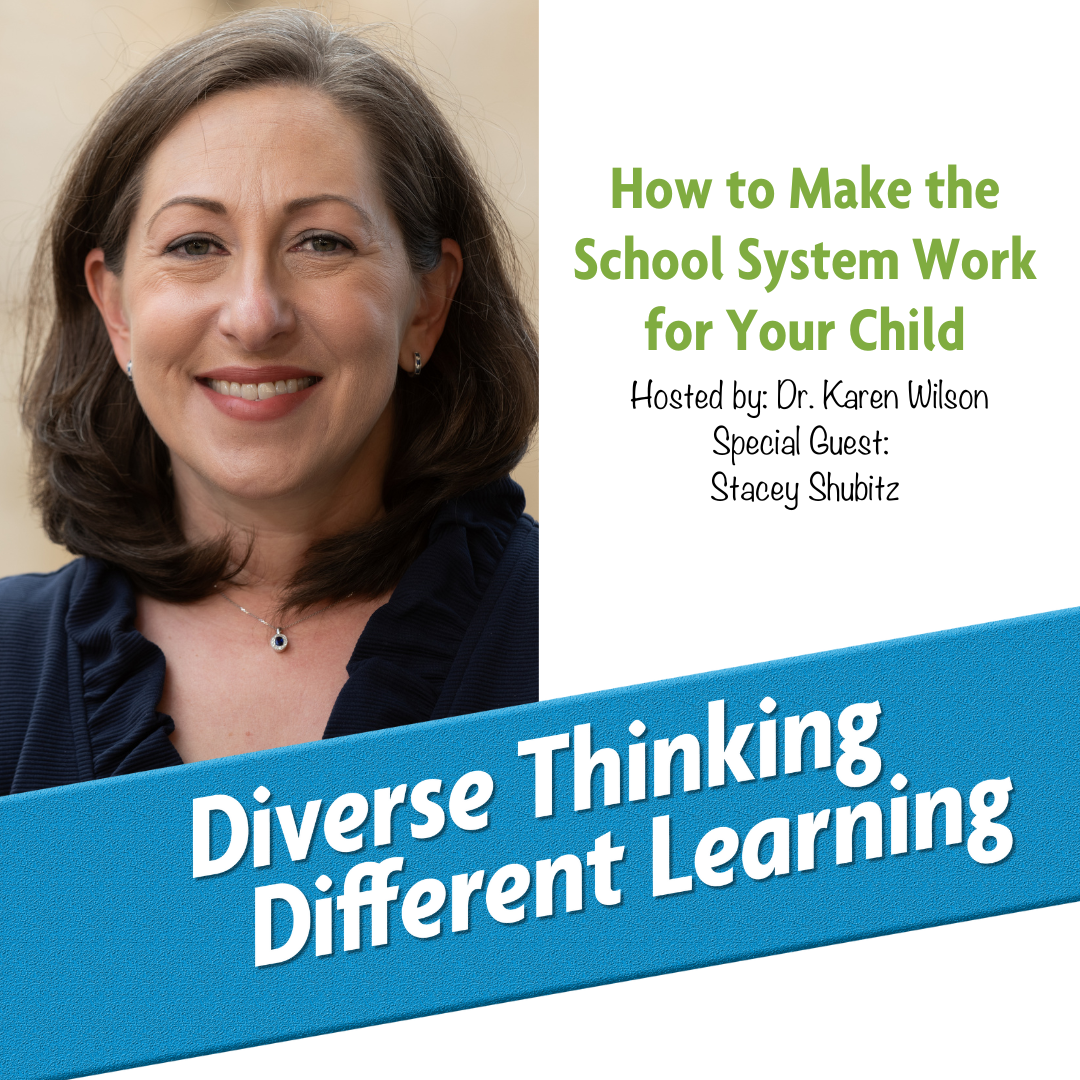 Ep. 252: How to Make the School System Work for Your Child with Stacey Shubitz 20.01.2026 39mWe are joined in this episode by Stacey Shubitz, K-6 literacy consultant, a former elementary school teacher, and the co-founder of the Two Writing Teachers blog and podcast. Her forthcoming book, Make the School System Work for Your Child with Disabilities: Empowering Kids for the Future, empowers parents to navigate the special education system. In this episode, we talk openly about what it really takes to support a child with learning challenges in today's school system. Drawing from decades of experience on both sides of the table, Stacey shares why she wrote Make the School System Work for Your Child with Disabilities and what she wishes someone had told her when she was first trying to make sense of evaluations, IEP meetings, and endless paperwork. Our conversation centers on some of the practical mindset shifts that can help change everything for families, with Stacey explaining why leading with a child's strengths and not just their needs is so important for confidence and motivation. She also addresses disability language head-on, discussing why it is that naming disability isn't limiting but instead opens doors to services, legal protections, and access that families often don't realize they're entitled to. Throughout the episode, we highlight how knowledge of data, timelines, rights, and documentation can shift the power dynamic and help parents advocate more effectively. We offer some concrete guidance on when to push for evaluations, why waiting too long can do a lot of harm, and how to ask for progress data without feeling confrontational. Stacey also shares what makes IEP meetings feel collaborative instead of adversarial, from simple preparation strategies to small human touches that ease tension. Communication comes up again and again: how approaching teachers with curiosity, clarity, and respect can lead to better outcomes for kids! Stacey also speaks candidly about burnout, emotional exhaustion, and why joy isn't optional but protective. This conversation offers reassurance, realism, and a clear-eyed look at how parents can show up informed, empowered, and grounded while advocating for their children. Show Notes: [2:32] - Hear how Stacey's experiences with IEPs inspired her to help other parents. [4:04] - Stacey describes leading with strengths, not just challenges or disabilities. [6:03] - Highlighting positives alongside challenges helps children see themselves as capable. [9:42] - Stacey argues that children should know their rights and services so that they can advocate for themselves. [12:49] - It's so important for parents to monitor progress, request data, and push for evaluations when their child isn't advancing. [14:58] - Stacey adds that it's also essential to advocate firmly and request evaluations when interventions aren't producing results. [16:20] - Preparing for meetings with clarity, human touches, and understanding who's present can help make discussions more productive. [19:44] - Coming to meetings prepared with documents in advance helps balance power and supports advocacy. [23:04] - Stacey discusses how reviewing IEPs in advance can help ensure more effective teacher interactions. [25:00] - Approaching teachers with curiosity and gathering accurate information helps promote calm, productive conversations around school. [28:18] - Stacey gives an example of how being open about personal struggles allows teachers to provide better support for children. [30:33] - Stacey asserts that assuming positive intentions about teachers helps lead to collaboration and avoids unnecessary conflict. [32:07] - Stacey wishes that she had known sooner how important it is to read the procedural safeguards book to understand parental rights and timelines. [34:12] - Stacey expresses that she has learned that intentionally curating joy and connection can help prevent burnout. [37:05] - Joy is a legitimate form of intervention. Links and Related Resources: Stacey Shubitz - Make the School System Work for Your Child with Disabilities: Empowering Kids for the Future Episode 164: 5 Keys to Productive IEPs with April Rehrig Episode 238: Dismantling DEI and the Department of Education: How Changes Impact Your Child with Vickie Brett & Amanda Selogie Episode 246: Accommodations, Modifications, or Remediation? How to Know What Your Child Really Needs with Amy Cushner Connect with Stacey Shubitz: Stacey's Website Email: [email protected] Stacey's Substack Two Writing Teachers Website
 -
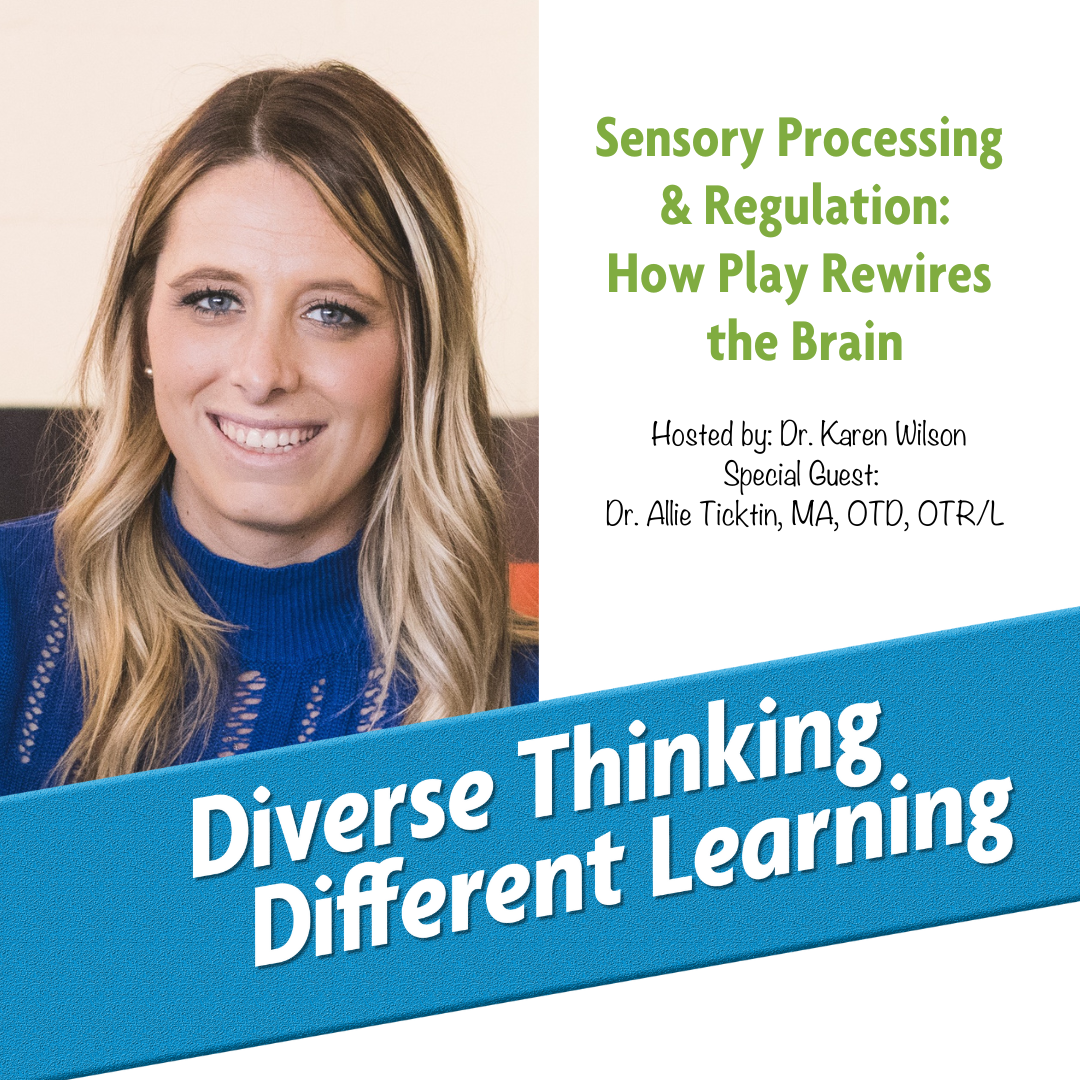 Ep. 251: Sensory Processing & Regulation: How Play Rewires the Brain with Dr. Allie Ticktin, MA, OTD, OTR/L 06.01.2026 38mWe happily welcome Dr. Allie Ticktin to Diverse Thinking Different Learning! Dr. Ticktin is dedicated to helping children and their families thrive through sensory-based play, having founded Play 2 Progress and writing Play to Progress, introducing parents to all eight senses and offering practical ways to support them at home. Blending child development science with playful learning, Dr. Ticktin focuses on building kids' confidence and supporting their growth across emotional, social, physical, and academic areas. At the core of her philosophy is the belief that empowering parents from the very beginning is the best way to set children up for lifelong success! Throughout our conversation, we explore the topic of sensory processing and sensory motor integration - often misunderstood but nevertheless foundational to how children learn, regulate, and thrive. Dr. Ticktin, an occupational therapist and author, explains that sensory processing involves more than just the five basic senses, that there are actually eight senses that children need to effectively process, including the "hidden" senses of vestibular, proprioceptive, and interoceptive! Dr. Ticktin highlights the fact that sensory issues are not simply behavioral problems but are rather neurological differences in how a child's brain processes sensory information. This can manifest in various ways, from being overly sensitive to certain textures to having trouble regulating emotions and attention. She stresses the importance of reframing these challenges as differences in sensory processing, rather than just automatically resorting to labeling them as "bad behavior." As we discuss, an especially important part of supporting children with sensory needs is teaching them to recognize and communicate their needs, and Allie discusses "body tools" - often referred to as fidget spinners or sensory toys - and how empowering children to identify and use whatever tools help them self-regulate can dramatically improve their ability to focus, learn, and interact socially. Our discussion also covers how sensory integration therapy can positively affect not just motor skills but also social-emotional functioning, with Dr. Ticktin reflecting on how she has seen children learn to self-regulate and even start advocating for their sensory needs and those of their peers. Our discussion provides you with a comprehensive overview of sensory processing, its importance in child development, and effective strategies for supporting children with sensory needs via a collaborative approach based on children's strengths! Show Notes: [2:29] - Sensory processing involves eight senses, not just tactile experiences such as messy play. [5:10] - Dr. Ticktin argues that a child's sensory system forms the unseen "roots" supporting all higher developmental skills. [7:05] - Some kids struggle to filter irrelevant sensory input, resulting in classrooms feeling overwhelming. [9:08] - Dr. Ticktin points out that many "bad behaviors" actually stem from unsatisfied sensory needs. [11:28] - Dr. Ticktin explains how "body tools" can help children self-regulate, reducing behavioral issues via sensory support. [13:30] - Sensory inputs can raise or lower excitement depending on how the child processes them. [17:38] - Misread behaviors in daily tasks might signal underlying sensory-motor challenges. [18:22] - Hear how sensory issues can appear as rough play, clumsiness, withdrawal, or shutdowns. [21:09] - Dr. Ticktin argues that self-regulation often crosses over with sensory needs. [24:49] - Young kids may tantrum from sensory overwhelm because they lack the language to explain their feelings. [25:12] - Dr. Ticktin explains how teaching kids to "empty their bucket" prevents overload, very similar to adults managing stress. [28:33] - Learn how play-based therapy strengthens sensory foundations with purposeful activities appearing as simple play. [31:54] - Excessive screen time limits ideation, rendering open-ended, unscheduled play especially important for development. [33:25] - Consistent family involvement is so important, since progress relies on using tools beyond therapy sessions. [36:14] - Dr. Ticktin encourages listeners to buy her book. Links and Related Resources: Episode 42: Understanding Sensory Processing Disorder with Courtney Duckworth-Harris, MA, OTR/L Episode 72: Prioritizing Co-Regulation and Self-Regulation in Communication with Danielle G. Kent M.S., CCC-SLP Episode 221: Would a Behavioral Aide/Shadow Help My Child? Episode 233: Body-Based Interventions for Neurodivergent Students with Megan Beardmore, PhD, NCSP Allie Ticktin - Play to Progress: Lead Your Child to Success Using the Power of Sensory Play Connect with Dr. Allie Ticktin: Play2Progress Website Phone: (323) 782-3331
 -
 Ep. 250: Reimagining Learning: The Evolving Power of 1:1 Learning in 2025 with Jaime Porras 16.12.2025 41mWe are happy to welcome back Jaime Porras for this episode! Jaime Porras is the District Vice President for Fusion Academy, overseeing nine campuses across Los Angeles and Santa Barbara. With more than two decades in education (including fourteen years at Fusion), he has held roles from teacher to Head of School and is passionate about fostering student-centered, relationship-driven learning environments. He holds an MA in Education with a focus on Social Justice from Antioch University Los Angeles and a BA in English from Ohio State University. A proud Buckeye and Culver City resident, Jaime enjoys sports, travel, literature, and discovering the best tacos in L.A., where he lives with his wife and daughter. Jaime joins us for this episode to discuss how the 1:1 learning model at Fusion Academy has become increasingly important in recent years as students have faced growing challenges with anxiety and depression, and disengagement. He explains that the pandemic drastically worsened many students' struggles with executive functioning and social anxiety but how, in a 1:1 setting, Fusion is able to provide a safe, supportive space where students can rebuild their confidence and reconnect with learning. By removing the pressure and comparison of a traditional classroom, students feel safer to take risks, make mistakes, and grow. Jaime highlights the importance of building a strong mentor-student relationship in which the teacher can truly understand and cater to each individual's unique needs, interests, and learning style, a personalized approach that also helps address issues around executive functioning, as Fusion teachers break down assignments into manageable steps while also explicitly modeling positive behaviors and social-emotional skills. Jaime notes that the 1:1 environment allows students the space to process feelings of failure in a healthy way without judgment from their peers. At the same time, Fusion works to build a sense of community and belonging via shared social spaces and activities, although the focus remains on creating an environment customized for each student's needs. Jaime believes that this model will only become more important in the years ahead as schools grapple with the lasting impacts of the pandemic on student mental health and engagement. Our conversation highlights how the 1:1 approach at Fusion Academy empowers students to rebuild their confidence and reconnect with their strengths even in the face of significant challenges. As the education landscape continues to evolve, this model may serve as an important blueprint for supporting the diverse needs of today's learners! Show Notes: [2:27] - Jaime describes how post-pandemic isolation worsened student anxiety and depression while boosting demand for 1:1 learning. [5:59] - 1:1 environments reduce social pressure and allow teachers to address each student's unique needs. [9:00] - Jaime stresses that individualized settings can lead to belonging, safety, and feelings of mattering. [12:08] - Learning begins with love and rapport, creating trust before taking on executive functioning challenges. [14:01] - Jaime explains how executive functioning develops with maturity, so Fusion Academy celebrates incremental progress. [17:11] - Jaime notes how 1:1 settings allow students to process failure safely and quickly recover. [19:41] - Fusion removes traditional school obstacles, focusing on individualized support without judgment. [22:37] - 1:1 learning suits kids who need safety, personalization, and emotional comfort. [23:08] - Jaime highlights Fusion's flexibility to adjust instantly for each student's needs. [25:21] - Jaime compares Fusion's structure to private lessons that separate focused learning from broader social experiences. [27:46] - Small-group environments let students more easily build real friendships and resolve conflicts. [29:48] - Jaime criticizes traditional schools for pressuring kids into activities that adults rarely pursue. [31:53] - Hear Jaime share a student's gradual growth from isolation to leadership, proving that patience and personalization can lead to confidence. [35:19] - Jaime predicts that 1:1 education will shape all schooling by highlighting growth over conformity. [38:30] - Where can Jaime be reached? Links and Related Resources: Episode 52: How a 1:1 Instruction Model Helps Students with Jaime Porras and Vailet Yarijanian Episode 154: Why Self-Efficacy and Self-Advocacy are Important for Diverse Learners with Ashley Harding Episode 189: The Private School Option for Kids with Learning Differences with Collette Bowers Zinn Episode 243: From Inclusion to Belonging: Creating Neurodiversity-Affirming Schools with Amanda Morin Connect with Jaime Porras: Fusion Academy Website
 -
 Ep. 249: Using Technology to Support Neurodivergent Students with Joan Green 02.12.2025 31mFor this edition of the show, we warmly welcome Joan Green! Joan Green, M.A., CCC-SLP, is a speech-language pathologist, assistive technology specialist, and founder of Innovative Speech Therapy in the Washington, DC area. For nearly 40 years, she has helped people of all ages (especially neurodiverse learners) use technology to enhance communication, learning, and independence. Passionate about accessibility and innovation, Joan also educates families and professionals on how everyday tech and AI can change our daily lives. Our conversation explores how technology, including AI-powered tools, can be used to help support neurodivergent students in learning, communicating, and thriving, with Joan explaining that her passion for this work began in the 1980s when she saw how early computer software could dramatically improve outcomes for her adult patients with neurological conditions. She then expanded her focus to helping families and students, motivated in part by her own experiences as a parent. We highlight how many accessibility features and free tools built into common devices and platforms can provide incredibly crucial support for students who struggle with reading, writing, organization, or focus, with Joan stressing the importance of tailoring solutions, whether it's adjusting text-to-speech settings or finding the proper app or extension. She cautions against oversimplifying the process, as each student's needs are unique. Our discussion also touches upon the complex role of AI and advanced technology in education. Joan sees tremendous potential for AI to personalize learning and free up teachers to focus on higher-level instruction. She also voices some concerns about overreliance on it. Her approach is to position AI as a "thought partner" that can enhance and augment human learning rather than replace it. Throughout the conversation, Joan also shares some practical tips and resources, including her free 15-minute consultations and her ongoing Tech Life Inner Circle program, which provides weekly training and collaborative problem-solving sessions. Our conversation in this episode truly highlights the power of technology to bridge gaps and amplify the voices of neurodivergent students - but only when used with intention and mindfulness! Show Notes: [2:31] - Hear how Joan began using early computer software with stroke patients and saw technology speed up recovery. [5:11] - Joan stresses the importance of beginning with free, built-in assistive tools such speech-to-text, read-aloud, and captions. [7:45] - Hear how Joan helps people choose the right reading and speech tools and offers free tech consultations. [11:17] - Joan believes that AI can aid in learning when used thoughtfully, but worries about shortcuts and privacy concerns. [13:32] - While Joan values AI as a creative learning tool, she also stresses the importance of actual understanding and critical thinking. [15:02] - AI can be a great way to personalize learning. [17:04] - Hear how Joan uses AI to personalize lessons around students' interests while still thinking critically herself. [18:55] - Joan explains how she offers collaborative one-on-one tech sessions, which identify struggles. [20:47] - Joan runs the very affordable Tech Life Inner Circle, providing weekly tutorials, recordings, and live tech brainstorming. [23:53] - Tech Possibility Academy teaches essential, easy-to-implement tools for parents, educators, and lifelong learners. [26:42] - Joan stresses technology's necessity for independence while also acknowledging its downsides. [29:39] - Where can Joan be reached? Links and Related Resources: Episode 142: How to Help Neurodivergent Kids Manage Social Media Episode 177: How Understanding the Adolescent Brain Helps Us Better Support Teens Episode 241: How to Be a 'Screen-Smart Parent with Jodi Gold, MD Connect with Joan Green, M.A., CCC-SLP: Innovative Speech Therapy Main Website Tech Life Inner Circle IST Tech Savvy Solutions Facebook Group
Podcasts similares


Popular en
Este podcast también aparece en las listas de podcasts de estos países.
