
AI for Founders with Ryan Estes
aiforfounders.co
0
AI for Founders is a podcast where over 47,000 founders learn to build and scale their businesses with artificial intelligence. Hosted by Ryan Estes, a Denver-based investor, creator, and founder, the show features real strategies from top operators and AI visionaries. Topics include AI-ready data, zero-dependency workflows, founder-led distribution, and tools driving revenue for fast-growing companies. The podcast is aimed at both technical and non-technical founders who want to work smarter and stay competitive.
Episodios
-
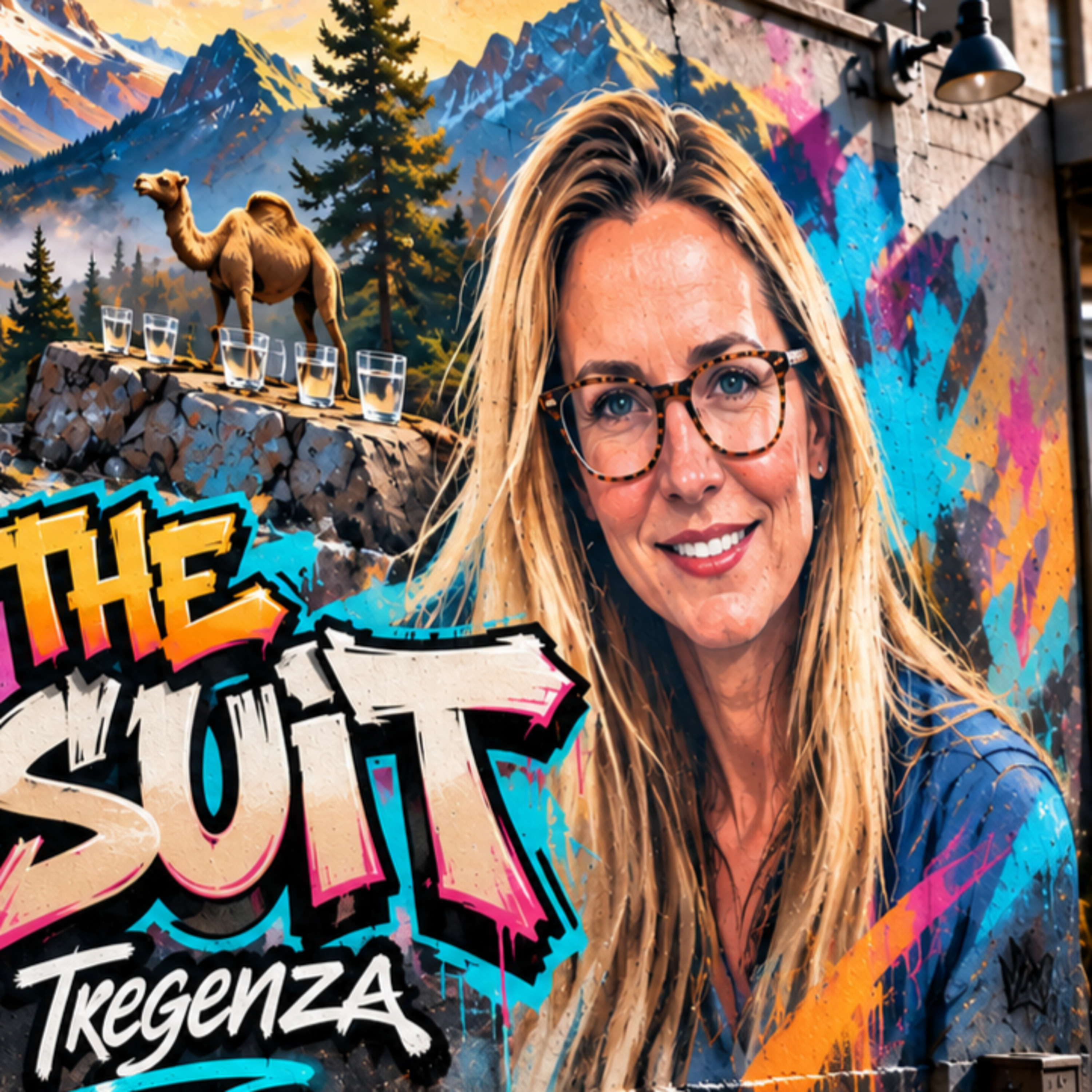 97% of lawsuits never see a courtroom: Mo Tregenza's AI workflows for settling founder disputes fast 16.09.2026 1h 3mDid you know that winning a lawsuit can be a worse bet than a Vegas table? Morgan "Mo" Duffy Tregenza thinks so, and she has the courtroom miles to back it up.Mo grew up in Telluride, Colorado, the daughter of a zoologist, back when mining and ranching families still shaped the town. She's an attorney by training. Her grandfather spent 30 years as a judge, then became a mediator in retirement. He taught her that people stand behind outcomes they help build.Mo figured out early that she had no interest in tearing the other side apart. So she stood in Denver County courts asking judges to hand her cases to mediate. Today she's the founder and CEO of Levelheaded, a Denver company pairing certified mediators with Keel, its AI resolution engine, on a mission to make the world less litigious.Ryan Estes and Mo dig into why the US legal system runs like the world's priciest group therapy. By Mo's count, about 97% of cases never reach trial, and winners collect only about one time in five. That's why she tells friends to skip the lawsuit and take the vacation.The heart of the conversation is how great mediators work. Rapport comes before anything else. People get space to vent. Then comes looping: repeating back what you heard, in neutral words, until you see someone put down the sword.Mo covers the practical side of settling, too:Why the fight is rarely about the broken contract.Why the first offer is almost always the best one.Why both sides have to walk in knowing what they'll give up.She also shares the story of two rural Colorado neighbors whose decades-long feud ended with an annual Christmas tree, plus the glass of water lesson every founder should tape to their monitor.Then the conversation turns to AI agents. Ryan is building an autonomous agent and obsessing over her personality. Mo breaks down the mediator traits that belong in agent design:Honesty without cruelty.Process discipline.Curiosity.The humility to admit a mistake the moment it's caught.They also explore why AI org charts will need an AI mediator, and why agents built by different companies will need a referee. Mo describes a Zoom plugin idea that drafts the agreement before the call ends.If you're scaling a startup with AI, or quietly dreading a co-founder conversation, this one will help you put the glass down.Levelheaded: AI-accelerated mediationhttps://belevelheaded.comEmail Mo [email protected]% for the Planethttps://www.onepercentfortheplanet.orgRyan Estes on LinkedInhttps://www.linkedin.com/in/estesryan/#1 AI Founder Newsletter!https://aiforfounders.coBuild your audience for life!https://inboxalchemy.co/Free Competitor Analysis from CEOfriend.ai!https://bit.ly/3SrjgL1If you're not AI native, you're not getting the job!https://ainativestudent.com/Get 35% off any supplement subscription with Momentous!https://crrnt.app/MOME/8RDrnXDdUse code RYAN30 to save $30 on your AI men's fashion stylist!https://taelor.style/Your podcast's autonomous AI sponsorship agent!https://gethowdi.com/
 -
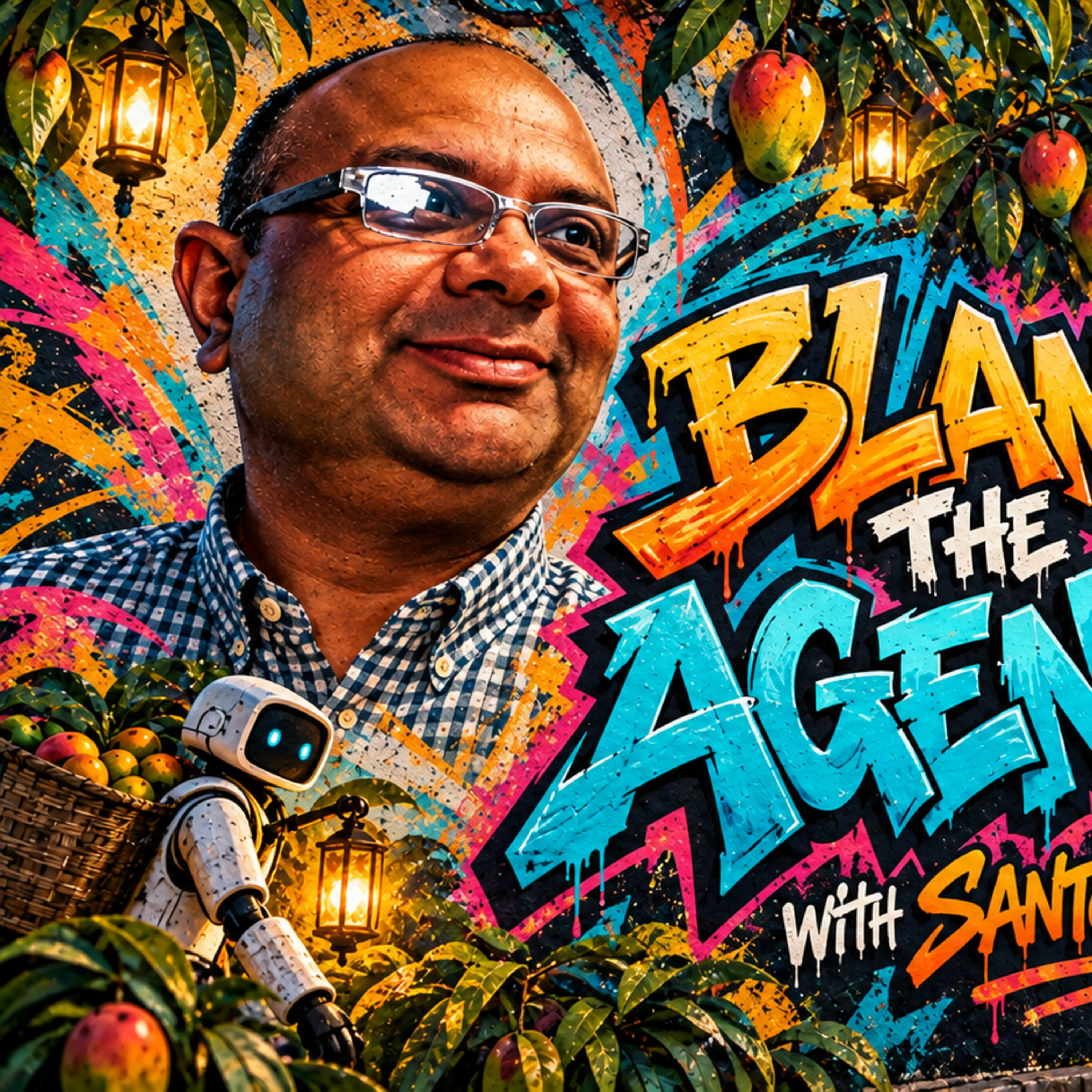 "The agent did it" won't hold up in court: Santosh Kaveti on AI agent accountability for founders 16.09.2026 52mCongress wants a roll call of your AI agents. Could you produce one by Friday?In early September, Reps. Josh Gottheimer and Mike Lawler introduced the Stop Rogue AI Act. The bill would have NIST write standards for tracking and logging AI agents, including a live, machine-readable inventory of every agent on a network. Meanwhile, carriers like Berkshire Hathaway, Chubb, Travelers and AIG have been writing AI exclusions into standard commercial policies. The era of "give everyone a Claude seat and see what happens" is getting expensive.Santosh Kaveti has a sharper take on that roll call. He is the founder and CEO of ProArch, the Atlanta firm he built over two decades to bring cloud, data, security and AI into a single conversation. In his view, a list of agents tells you very little. The question that matters is whether you can trace any AI decision back to why it happened. "The agent did it" will not survive a courtroom or a customer call.His fix sounds almost old-fashioned: treat agents like people. Give each one an ID, onboard it, monitor it, and put a named human on the hook for what it does. Then baseline your risk across infrastructure, applications, data and AI. That includes the agents your ERP vendor quietly shipped last quarter that nobody on your team evaluated.Santosh and Ryan also get into why the "AI will kill coding" story keeps missing. Santosh is watching great programmers turn into 100X AI workflow engineers. Teams without checks and balances, on the other hand, are piling up AI slop that costs millions to unwind. He explains why a services firm pours money into R&D, pointing out that end of life is written on every MSP and MSSP. He also shares why ProArch hires for curiosity and for people who solve problems beyond their own silo.Then it gets personal. Santosh protects six to seven hours of sleep and treats tonight's crisis as tomorrow's problem. He grew up around entrepreneurs on both sides of his family, who taught him to build conviction, do the work and stop waiting on results. He grows turmeric on his farm in India and bought a farmhouse in Ellijay, Georgia last year. His next dream is mountain land in Costa Rica planted with coffee and mangoes.If one of your systems made a bad call tomorrow, could you explain it? Press play before someone asks.Mentioned in the episodeProArch: https://www.proarch.comSantosh Kaveti on LinkedIn: https://www.linkedin.com/in/santoshkaveti/Loftie smart alarm clock: https://byloftie.comRyan Estes on LinkedInhttps://www.linkedin.com/in/estesryan/#1 AI Founder Newsletter!https://aiforfounders.coBuild your audience for life!https://inboxalchemy.co/Free Competitor Analysis from CEOfriend.ai!https://bit.ly/3SrjgL1If you're not AI native, you're not getting the job!https://ainativestudent.com/Get 35% off any supplement subscription with Momentous!https://crrnt.app/MOME/8RDrnXDdUse code RYAN30 to save $30 on your AI men's fashion stylist!https://taelor.style/Your podcast's autonomous AI sponsorship agent!https://gethowdi.com/
 -
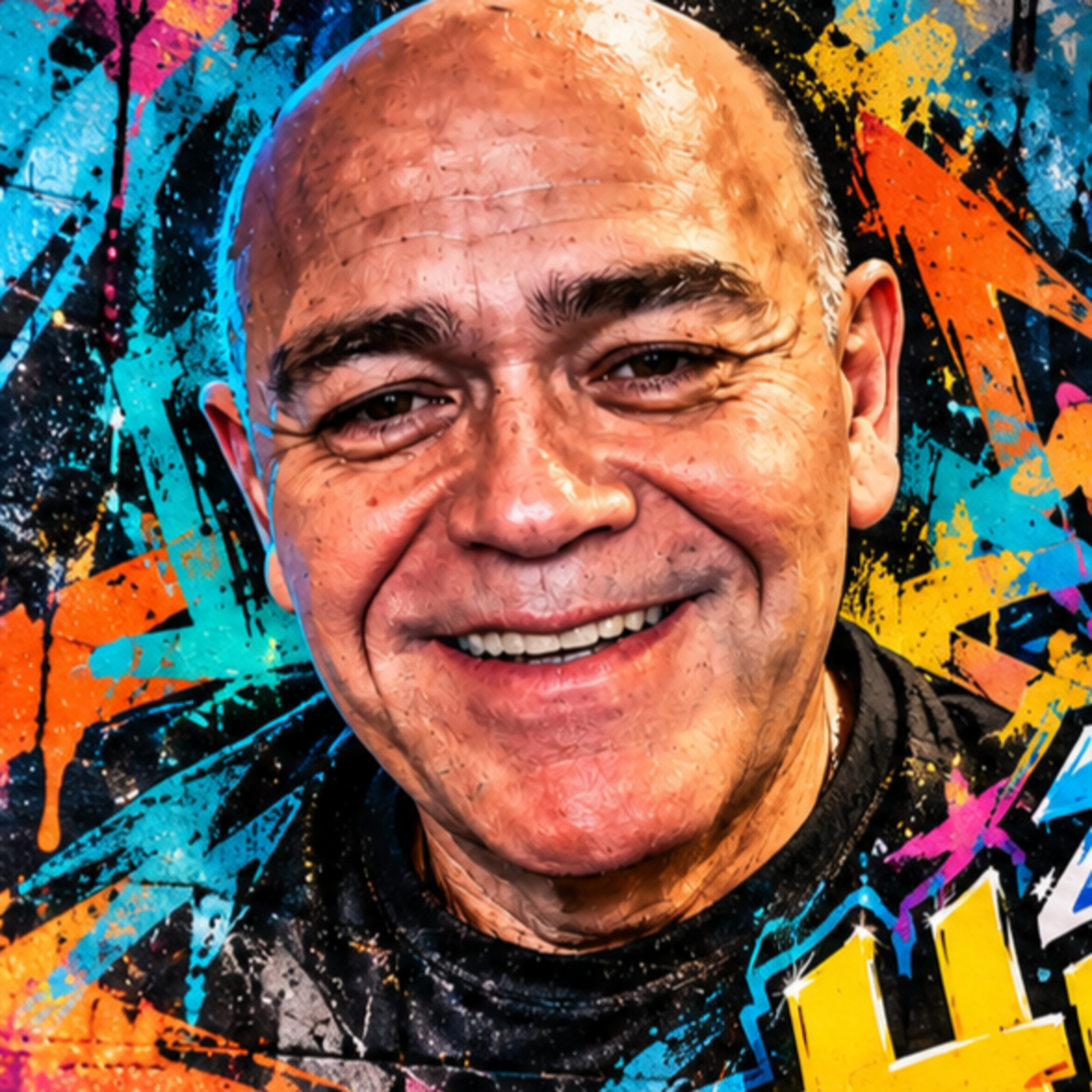 Hiring is an operations problem, not an HR problem: Shar Broumand on automating recruitment 15.09.2026 58mRyan Estes has a confession. He is terrible at hiring.Not incompetent. Worse. He is charmed. Put him in a room with a candidate and forty-five minutes later he is quietly in love with a person's mind, their weird hobbies, the way they think about problems that have nothing to do with the job. Then a colleague walks in and says the thing nobody wants to hear: they were not qualified.So Ryan took himself out of the process entirely.Shar Broumand thinks that was the wrong fix. Not because Ryan is wrong about himself, but because Ryan misdiagnosed the problem. "You have a process problem, my friend." In Shar's world, the founder who falls in love with people is the single most valuable interviewer on the panel. He is just being asked the wrong question. Put him in the culture seat, take him out of the competence seat, and suddenly the bug becomes the feature.That one reframe is the spine of this episode.Shar is CEO of Zero Hiring, one of eight AI-native companies built inside Infinity Constellation, the holdco spun out of Invisible Technologies. He is also, by his own count, on his eleventh company. He is not a recruiter and has never been one. He was, for most of his career, loudly critical of the entire recruiting industry, which is roughly the profile you want in someone trying to rebuild it.His conviction traces back to a room in Pittsburgh. Thirty years after FreeMarkets was founded, around 300 alumni came back for the reunion. Shar stood in the middle of it and did the math on the people around him: dozens of CEOs, a sitting US senator, an absurd density of operators who went on to build serious things. FreeMarkets was a struggling startup with no money when it hired most of them. It also put every candidate through eight hour-long interviews, each with one assigned purpose, ending in a round table where you either championed a hire or said "over my dead body." Inefficient beyond belief. Also the reason that room existed.The question Shar carries out of that memory is not "how do we interview more." It is: what if we built the reusable rocket version of that?Zero Hiring's answer is an AI recruiter running an end-to-end process with humans holding the judgment. You tell it you want to hire a marketing manager. It interviews you, drafts the job description, waits for a human to approve it, then pushes the role across the network. Thirty applicants can land in ten minutes. It scores and ranks them. It does not eliminate anyone. Qualified candidates get a link, 48 hours, and a fifteen-minute AI screen that a human recruiter can go back and grade. Then real people decide who moves.The pricing is where founders sit up. No monthly fee, no tools to buy, no ATS to license. 6% of the cash component of the role or less, split in half: half when the role opens, half when someone accepts. Shar calls it electricity. Always wired into your company, only billed when you turn the lights on.Mentioned in the episodeZero Hiring: https://zerohiring.com/Zero Hiring contact: [email protected] Broumand on LinkedIn: https://www.linkedin.com/in/sbroumand/Infinity Constellation: https://www.infinityconstellation.comLinksRyan Estes on LinkedInhttps://www.linkedin.com/in/estesryan/#1 AI Founder Newsletter!https://aiforfounders.coBuild your audience for life!https://inboxalchemy.co/Free Competitor Analysis from CEOfriend.ai!https://bit.ly/3SrjgL1If you're not AI native; you're not getting the job!https://ainativestudent.com/Get 35% off any supplement subscription with Momentous!https://crrnt.app/MOME/8RDrnXDdUse code RYAN30 to save $30 on your AI men's fashion stylist!https://taelor.style/Your podcast's autonomous AI sponsorship agent!https://gethowdi.com/
 -
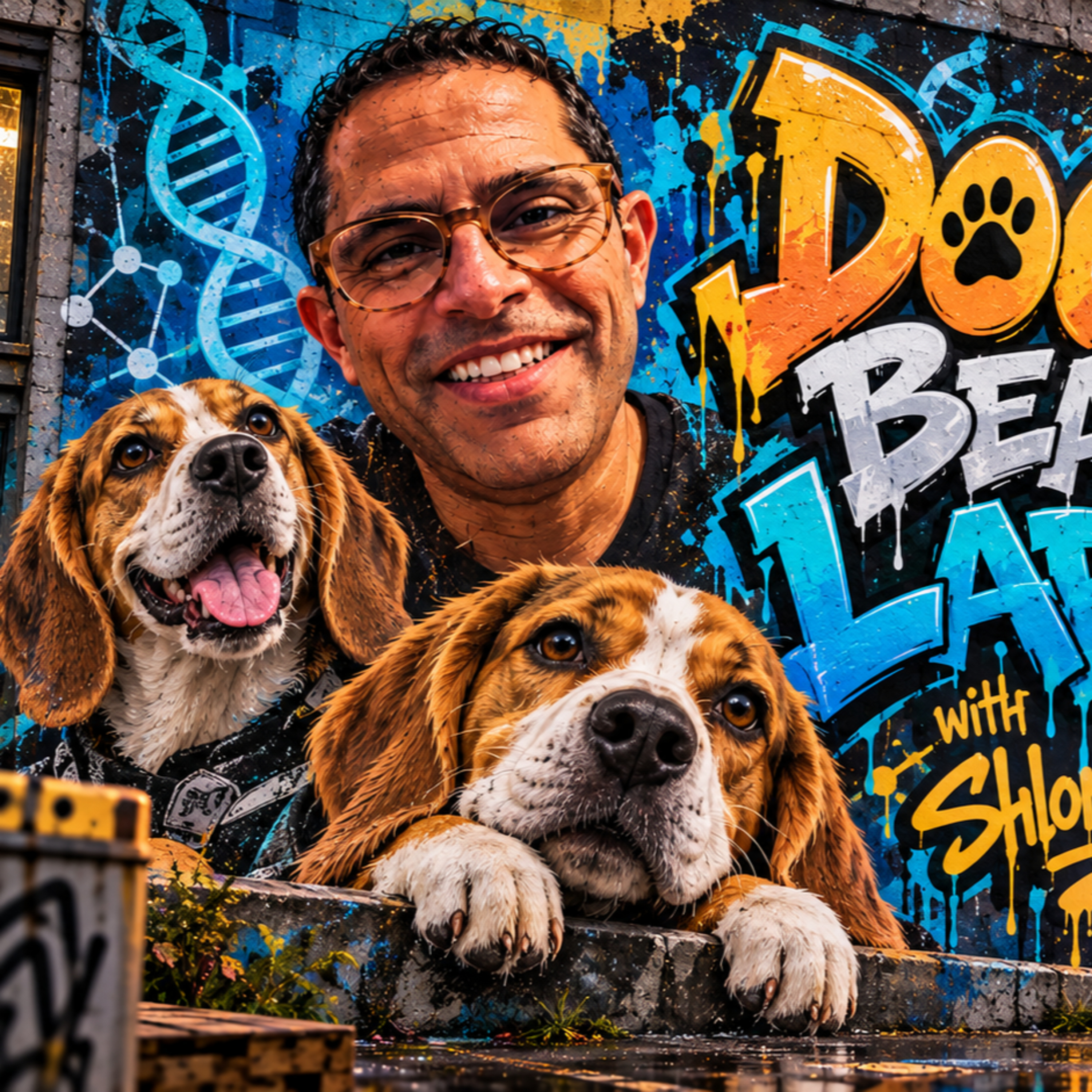 15 beagles, 4 cancers, 94% accuracy: my favorite AI workflow in health tech 11.09.2026 1h 8mThirteen days from now, the FDA convenes a panel that has never convened before.On September 23, 2026, the Molecular and Clinical Genetics Panel sits down to vote on Grail's Galleri test, the first multi-cancer early detection test ever to reach an FDA advisory committee. Every founder building in early detection is watching. Shlomi Madar is watching too. He just is not building the same thing.Madar is the CEO of SpotitEarly, an Englewood, New Jersey company founded in 2020 that screens for four cancers from a single breath sample collected at your kitchen table. Grail reads methylation patterns in cell-free DNA. SpotitEarly reads a mask you breathed into for a few minutes. And the sensor at the front of its pipeline is not a machine. It is a beagle.This is the part where most people assume it is a gimmick. It is not. Madar has a PhD in cancer research from the Weizmann Institute of Science, and the reason the company landed on dogs is boring and rigorous: nothing built by humans comes close. The entire field of electronic noses, mass spectrometry included, keeps running into the same wall, which is sensitivity threshold. A dog detects at parts per trillion. Madar's favorite way to explain it: fill two Olympic swimming pools, stir half a teaspoon of sugar into one, and a dog will tell you which pool you tried to trick him with.The problem with a dog is not the nose. It is that a dog cannot fill out a lab report. That is the entire engineering problem SpotitEarly set out to solve, and it is the reason this episode belongs on a founder podcast rather than a science one. Madar's team spent five and a half years turning an animal's opinion into a reproducible, scalable, auditable data output.Here is how the machine actually works. You breathe into a surgical mask, seal it, and mail it. At the lab, the mask goes into a sniffing port, a cone shaped device where the dogs interact with the scent. A camera watches from above. A second small camera inside the port captures facial gestures. A microphone captures breathing patterns. The dogs wear vests with accelerometers tracking velocity. Each sensor feeds its own trained machine learning model. Video gets broken into frames, frames into pixels, and the models hunt for deviation from a database that already associates canine behavior with positive and negative samples. Multiple dogs sniff each sample. Each dog sniffs more than once. Thousands of data points per sample, and the AI layer throws out anything that deviates from the norm.The company calls the platform LUCID. The Rainbow Study, run with medical centers in Israel including Sourasky, Hadassah, and Rambam, put 1,386 participants through it under double-blind conditions and reported 93.9% sensitivity and 94.3% specificity. Per cancer sensitivity came in at 97% for lung, 97% for prostate, 94% for breast, and 86% for colorectal. At stages zero to two, the earliest ones, performance held. The paper ran in Scientific Reports.Madar is careful, repeatedly and unprompted, about what the test is. It is a triage layer. A positive signal does not mean skip the mammogram. It means go do the whole standard of care gamut, and now you have two orthogonal methods pointing at the same thing, which is exactly what you want in screening.SpotitEarly: https://www.spotitearly.comShlomi Madar on LinkedIn: https://www.linkedin.com/in/shlomimadar/Connect and support the showhttps://www.linkedin.com/in/estesryan/#1 AI Founder Newsletter!https://aiforfounders.coBuild your audience for life!https://inboxalchemy.co/Free Competitor Analysis from CEOfriend.ai!https://bit.ly/3SrjgL1If you're not AI native; you're not getting the job!https://ainativestudent.com/Get 35% off any supplement subscription with Momentous!https://crrnt.app/MOME/8RDrnXDdUse code RYAN30 to save $30 on your AI men's fashion stylist!https://taelor.style/Your podcast's autonomous AI sponsorship agent!https://gethowdi.com/
 -
 How to automate a board of advisors for $29 a month 10.09.2026 54mNobody warns you that traction is the lonely part.Broke and scared has company. Everybody has been broke and scared. What nobody prepares you for is the 11 PM decision, three years in, revenue real, team growing, and not a single person left who understands the shape of the problem. Your friends stopped relating around round two. Your family cannot parse the question. Your team needs you to already know.Steve Phillips solved that problem the hard way, six times.He is the founder of Zappi, the consumer insights platform he launched in 2012 as ZappiStore, which raised $170 million in growth capital from Sumeru Equity Partners in December 2022, employs more than 300 people across 13 countries, serves more than 350 enterprise customers, and is approaching $100 million in ARR by his own account. He handed the CEO seat to Aaron Kechley in October 2024 and moved into Executive Chair and Chief Innovation Officer.Then he did the thing almost no exited founder does. Instead of collecting non-executive director seats and giving advice people were free to ignore, he automated the role.CEOfriend.ai gives founders a working advisory team: a CFO agent modeled on the conservative finance people Steve has worked with for two decades, an entrepreneur agent that gets genuinely excited about your bad idea, an investor agent that keeps asking where the enterprise value is, plus marketing and sales and AI readiness advisors. Seven days free, then $29 per user per month on an introductory offer. The mission Steve states out loud: make every small business 20% better.This episode goes deep on the mechanics of that build, the psychology of stepping down from your own company, why the pre-launch phase feels so good and is so dangerous, and a morning ritual involving bare feet, wet grass, and a cup of coffee in a Camden garden.CEOfriend, free competitor analysis and 7 day trial: https://www.ceofriend.aiSteve Phillips on LinkedIn: https://www.linkedin.com/in/steve-phillips-2121ab/https://www.linkedin.com/in/estesryan/#1 AI Founder Newsletter!https://aiforfounders.coBuild your audience for life!https://inboxalchemy.co/Free Competitor Analysis from CEOfriend.ai!https://bit.ly/3SrjgL1If you're not AI native; you're not getting the job!https://ainativestudent.com/Get 35% off any supplement subscription with Momentous!https://crrnt.app/MOME/8RDrnXDdUse code RYAN30 to save $30 on your AI men's fashion stylist!https://taelor.style/Your podcast's autonomous AI sponsorship agent!https://gethowdi.com/
 -
 Why your AI-designed brand is invisible, and the 3-step fix 08.09.2026 1h 1mEveryone got the same tools. Almost nobody got taste.Jacqueline Schmidt grew up two subway stops from tigers.The Bronx Zoo was her backyard. Her favorite exhibit was the sloth, which she went back to visit twenty-five years later and found out had died. She spent summers collecting salamanders in the woods and carrying them home in her Smurf boots, fifty at a time, to the ongoing horror of her grandparents. She drew animals constantly. Then she sold the drawings. Then the drawings became a company.Today she is CEO of Radiance, an AI-powered design agency backed through Infinity Constellation's $24M Series A, running a proprietary Creative OS called The Source®, with clients including Coca-Cola, MoMA, CBS, NBC, Guess, Crate & Barrel, Barnes & Noble, Anthropologie, West Elm, and Siggi's.The through-line from salamanders to Series A is the thing this episode is actually about: what survives when the tools stop being the advantage.Because right now, they have stopped. Jack's Instagram feed is wall-to-wall ads promising a design agency can go from $10K a month to $100K a month by plugging in one AI tool. Then she takes real meetings and gets handed real decks. Same fonts. Same colors. Same soulless template with a different logo on top. "The originality is kind of lost," she says. The tools got more powerful and taste got more rare, so everyone is swinging the same hammer and almost nobody is building anything memorable.She has a name for what happens next. Digital Darwinism. It is the title of the TEDx talk she gives at TEDxSouthlake on November 8, 2026, and the argument is blunt. In a landscape where every founder has the same generative tools, the selection pressure is no longer access. It is memorability. Who evolves. Who is sticky. Who is left. She frames it as a question you should be able to answer in one word: Warby Parker does not need its logo for you to remember that blue. Do you have a color, a feeling, a fingerprint that survives without your name attached?Which is not an argument against AI. Jack is more bullish than most people making that argument. She rebranded her entire company in a single weekend because she could not stop working. She calls the tools a playground and says she cannot put them down. What she wants back is the distinction between the work that deserves a human and the work that does not. "Was I put on this planet to left-align data?"The business she has built is the answer to that question, and it is stranger than a normal agency. Radiance is an agency plus an intelligence layer. Where most shops pull freelancers in as needed and let the institutional knowledge leave with whoever quits, Radiance is building the memory layer underneath. Her framing of the problem is the sharpest thing in the episode: your logo came from one vendor, your marketing strategy from another, and then Bob decides he wants to become a surfer and walks out with all the mind share. Who was collating, organizing, and storing the brand? Nobody. That gap is the product.Radiance: https://www.withradiance.com/The Source®: https://www.withradiance.com/the-sourceLinkedIn: https://www.linkedin.com/in/jacqueline-schmidt-92a3734b/https://www.linkedin.com/in/estesryan/#1 AI Founder Newsletter!https://aiforfounders.coBuild your audience for life!https://inboxalchemy.co/Free Competitor Analysis from CEOfriend.ai!https://bit.ly/3SrjgL1If you're not AI native; you're not getting the job!https://ainativestudent.com/Get 35% off any supplement subscription with Momentous!https://crrnt.app/MOME/8RDrnXDdUse code RYAN30 to save $30 on your AI men's fashion stylist!https://taelor.style/Your podcast's autonomous AI sponsorship agent!https://gethowdi.com/
 -
 The 10-minute morning routine that replaced an entire project management stack 07.09.2026 29mFive days. Twelve-hour build sessions. One founder describing himself as delirious.Jason Katz opens this one by announcing he has AI psychosis, and he is only half joking. Five straight days inside Claude Code, shipping, prototyping, handing off to his dev team, and coming back for more. It is the kind of week that either produces a business or produces a burnout, and the whole episode is really about the difference between those two outcomes.Ryan is in the same trench from the opposite direction. He shipped Howdi to 36 people after roughly six months of building, and the thing that got him unstuck was not a new tool. It was a hypnotherapist. One session, mostly just saying the problem out loud to another human, and the week broke open.What makes this one useful is the gap between those stories and the systems underneath them. Jason walks through why a vibe-coded prototype and a production-ready system are separated by a canyon most founders never see coming. He lays out how Kindling decides what to build and what to walk away from. Then he opens up Chief of Staff, an app he has in testing with executives, and describes something genuinely strange: you start with a blank slate, talk to it every morning for ten minutes, and 30 to 45 days later you have a complete operations plan you never sat down to write.The back half turns into a conversation about avoidance. Not the failure kind. The ordinary kind, where you know exactly what the most important task is and you find four other things to do first. Jason's take is that AI killed one of the biggest reasons for it, because the scope of an unfamiliar project is no longer unknowable. You brain-dump the whole mess by voice and get a map back in minutes.Then Ryan drops the first item from a list of twelve things he believes supercharge execution, and it is not a tool, an app, or a supplement. It is: build a family. Become a person a partner can thrive with. Learn to relish domestic life as an engine for getting things done. Jason, who says he avoided that exact thing for most of his life, backs it hard.Two operators, mid-build, saying the quiet stuff out loud. This is what it do.https://kindlingsolutions.comhttps://www.linkedin.com/in/jasonkatz99/https://www.linkedin.com/in/estesryan/Free Competitor Analysis from CEOfriend.ai!https://bit.ly/3SrjgL1#1 AI Founder Newsletter!https://aiforfounders.coBuild your audience for life!https://inboxalchemy.co/If you're not AI native; you're not getting the job!https://ainativestudent.com/Get 35% off any supplement subscription with Momentous!https://crrnt.app/MOME/8RDrnXDdUse code RYAN30 to save $30 on your AI men's fashion stylist!https://taelor.style/Your podcast's autonomous AI sponsorship agent!https://gethowdi.com/
 -
 8.3 billion faces, zero infrastructure: the AI likeness market nobody is serving 07.09.2026 59mSixty percent of the faces training AI were never askedKatrien Grobler woke up on the 29th of December and saw a word written above her bed. Not metaphorically. She describes seeing the name in her mind's eye, getting up, and telling her team they were pivoting that day.The word was Twinnin.She had spent the previous year running AI KAT, making AI-generated video ads for clients like Capital.com and Reckitt's Dettol brand. On one project she needed a trader character. Rather than generate a synthetic face, she pulled photos of an investor she knew, ran them through Nano Banana, and built the character. The client's first reaction was the whole business model in one sentence: is this a real person?It was. He hadn't been asked. She called him afterward, apologised, and made him sign a licence. That awkward phone call is now a company.Her argument runs on arithmetic she calls the math of human likeness. There are 8.3 billion people on the planet. Frontier labs have already consumed images of humans at a scale in the tens of billions apiece, and by 2030 she projects the training requirement climbing into the trillions. Models cannot reuse the same face indefinitely. They need novelty, and novelty means new humans. Meanwhile the legal ground is moving under everyone: the EU AI Act's obligations landed, Denmark is rewriting its copyright law to treat likeness as property, and the NO FAKES Act cleared the Senate Judiciary Committee unanimously in June 2026. Demand is accelerating. Supply is becoming illegal. There is no clearing house in between.That gap is the company. Twinnin verifies a human with government ID and a liveness check, lets them set granular terms for how their face can be used, hashes the consent record so it is auditable, and routes payment when a brand or lab licenses it. Seventy-five percent goes to the human, always, agent or no agent.Then there is the half of the market that wants nothing to do with any of it. When Deadline clipped her panel and posted it, the comments were not friendly. One person told her she looked like an Incredibles villain, which she thought was fantastic. Most of the rest were worse. She did not dismiss them. She built for them. The Defend product exists because she concluded that people who want to opt out have nowhere to formally do so, and that a documented, timestamped "no" is the only evidence that holds up when a deepfake surfaces.The other half of this episode is about how she operates. She has been to a contrast therapy club in Canary Wharf more than three hundred times since April 2025. Sauna, then a three minute plunge at one degree, then sauna again, sometimes three cycles before a call. She does not describe it as recovery. She describes it as a forced thinking environment. You cannot leave, you cannot distract yourself, so the problem you brought in gets solved. Most of her best product decisions happened underwater at one degree.Twinnin: https://www.twinnin.aiKatrien Grobler on LinkedIn: https://www.linkedin.com/in/katriengroblerRyan Estes on LinkedIn:https://www.linkedin.com/in/estesryan/#1 AI Founder Newsletter!https://aiforfounders.coBuild your audience for life!https://inboxalchemy.co/Free Competitor Analysis from CEOfriend.ai!https://bit.ly/3SrjgL1If you're not AI native; you're not getting the job!https://ainativestudent.com/Get 35% off any supplement subscription with Momentous!https://crrnt.app/MOME/8RDrnXDdUse code RYAN30 to save $30 on your AI men's fashion stylist!https://taelor.style/Your podcast's autonomous AI sponsorship agent!https://gethowdi.com/
 -
 Insure Your AI Agent. This PhD Built the Policy 02.09.2026 55mInsurance for AI agents: what happens when the machine screws upIn January 2026, something happened that almost nobody in tech noticed and everybody in tech should have.The biggest names in commercial insurance walked into statehouses across America and asked permission to stop covering artificial intelligence. Berkshire Hathaway. Chubb. Travelers. AIG and WR Berkley followed. Regulators approved more than 80% of the requests. Florida, Connecticut, and Maryland moved fastest. Three ISO endorsements went live on January 1st, and the silent AI coverage era ended without a single press release.Meanwhile, you spun up four more agents this quarter.Dr. Charles Higgins saw the gap coming before the paperwork landed. He and Dr. Sophia Kalanovska met inside the UKRI Safe and Trusted AI programme, both doing PhDs in AI at King's College London. Halfway through, they built Tromero, a GPU aggregation platform that turned crypto mining rigs into cheap machine learning compute. BlueYard Capital led a £1.5 million seed in 2023. They sold the platform to a cloud infrastructure company and went back to consulting.And then the same conversation kept happening. Every enterprise they talked to was moving from chatbots to agents. Agents that book things. Agents that route trucks. Agents that pay invoices. And every single conversation collapsed into the same word: risk. Not "will it work." Not "what does it cost." Risk. Higgins describes projects dying over a 0.001% chance of catastrophe, because a rounding error on a probability is still a career-ending headline for whoever signed off.They were doing risk assessment for free. Then they realized they were describing a product that already exists everywhere else in the economy. Somebody hands you a piece of paper. If it goes wrong, they pay. That product is insurance.Neither of them knew anything about insurance. A data scientist and a software engineer walking into one of the most closed, credential-obsessed industries on earth. They gave themselves six months to figure out who was writing AI cover and why. The answer: nobody, because there was no data.Insurance runs on history. Actuaries price the future by counting the past. There is no past here. The failure modes for agentic AI are, in Higgins's framing, close to inconceivable right up until the moment they happen. So Redberry Labs built an underwriting engine that uses AI itself as the simulation layer, running an agent against thousands of scenarios to estimate how likely it is to fail and how expensive that failure gets. He argues this style of underwriting was impossible before large models were flexible enough to play out the scenarios.Redberry is now a managing general agent. They write the policy, assess the risk, find the client, and sell it. They just do it on a reinsurer's checkbook.The part of the conversation founders need to sit with is the murky middle. Pure AI failure is easy: the agent did it, the policy pays. Pure human failure is easy: your general liability handles it. But your inbox agent drafts an email that's 90% right, you change three words, you hit send, and it triggers a lawsuit. Who caused that? Your D&O? Your tech E&O? Your cyber? Higgins spends most of his time in that gap, and he's honest that there is no clean answer yet.Redberry Labs: https://www.redberrylabs.comCharles Higgins on LinkedIn: https://www.linkedin.com/in/charles-higgins-70a996170/Ryan Estes on LinkedIn:https://www.linkedin.com/in/estesryan/#1 AI Founder Newsletter!https://aiforfounders.coBuild your audience for life!https://inboxalchemy.co/If you're not AI native; you're not getting the job!https://ainativestudent.com/Get 35% off any supplement subscription with Momentous!https://crrnt.app/MOME/8RDrnXDdUse code RYAN30 to save $30 on your AI men's fashion stylist!https://taelor.style/Your podcast's autonomous AI sponsorship agent!https://gethowdi.com/
 -
 Chronic Insomnia. Almost None Get Treated. Colin Lawlor On The Sleep Data Gap 31.08.2026 1hEverything you believe about hustle culture is quietly destroying your brainColin Lawlor called in from Berlin at nine at night, three days after leaving San Diego, wearing the accumulated fatigue of a Heathrow layover. He runs a sleep company. He was tired. He knew exactly why, down to the hormone.That is the whole thesis of this episode. Sleep is not a soft topic. It is a measurement problem, a data problem, and now a business model, and Colin has spent a decade turning it into all three. Sleep.ai started life in 2016 as SleepScore Labs, spun out of ResMed with backing from Dr. Mehmet Oz and Pegasus Capital. It rebranded in 2025. Along the way it collected something close to a billion hours of real-world sleep data, ran more than 250 intervention studies, and became the first sleep technology in the world to be reimbursed by health insurers.The founder relevance arrives fast. Colin describes landing at Heathrow exhausted and craving sugar and fat, then explains that this was not weakness. The hormones that govern appetite are produced during deep sleep. Short the sleep, short the hormones, and your body starts negotiating with you at the vending machine. Every founder who has ever eaten a gas station dinner at 11pm after a bad night has felt this mechanism without naming it.Then he goes after the thing every one of your listeners is wearing. Put four wearables on one wrist and you will get four different answers about the same night. Sleep.ai's answer is to normalize all of them against polysomnography, the hospital sleep lab standard where a technician scores every thirty seconds of your night. That is expensive, slow, and almost nobody else has funded it at scale, which is precisely why it became a moat.The line that will stick with you is the one about action. There is a decade of aggregated wearable data on this planet and the population is not sleeping better. Data without intervention is a graph you feel bad about. Sleep.ai sells the intervention layer to companies that already own the customer relationship, priced per monthly active user, integrated in about a day.Colin also drops something most founders never see coming. Germany passed a prevention law requiring insurers to reimburse proven prevention tools, and Sleep.ai walked through that door first with Dein Schlaf. Regulation as a distribution channel. Not a phrase you hear at demo day.There is a harder passage in here too, about his mother's cancer treatment and the stress he was carrying in the wrong direction. And a lovely detour where Ryan brings up Turiya, the fourth state of consciousness in Vedic philosophy, and Colin, running a company built entirely on quantifying sleep stages, says he has no problem believing the brain is doing something in all of them that we have not measured yet.Every founder in your audience is making a trade they have not priced. This episode prices it.Sleep.ai: https://www.sleep.aiSleeping Children Around the World: https://www.scaw.orghttps://www.linkedin.com/in/colinjlawlor/Ryan's links:https://www.linkedin.com/in/estesryan/#1 AI Founder Newsletter!https://aiforfounders.coBuild your audience for life!https://inboxalchemy.co/If you're not AI native; you're not getting the job!https://ainativestudent.com/Get 35% off any supplement subscription with Momentous!https://crrnt.app/MOME/8RDrnXDdUse code RYAN30 to save $30 on your AI men's fashion stylist!https://taelor.style/Your podcast's autonomous AI sponsorship agent!https://gethowdi.com/
 -
 The consent economy 26.08.2026 1h 2mEvery time you unlock your phone, somebody makes money. It just isn't you.Forty to sixty hours a week. That is what the average person spends on a smartphone, which works out to somewhere between a third and half of your waking life. Big tech built trillion dollar fortunes on that time. You signed up for exactly none of it.Dan Novaes wants to change the math.He is the co-founder and CEO of Mode.Inc, the company behind Mode Mobile, the EarnPhone, and EarnOS. He has raised over $110 million, all of it from retail investors, not a single traditional venture round in the mix. He has 65,000 shareholders who own a piece of the thing they use. He built a physical smartphone, got it into Walmart and Best Buy, then looked at the P&L and walked away from hardware entirely. He now buys "dead" consumer apps that nobody else wants and turns them into first-party data assets for AI labs.Oh, and he lost 35 pounds and ran a marathon while doing it. The best ideas, he says, come in the float tank.This conversation moves fast. Ryan and Dan get into the Anthropic settlement, the Cloudflare crawler wall going up September 15, why hedge funds are buying your Amazon receipts, why the 55-plus demographic funded a company built for budget-conscious app users, and why a QR code reader was one of the smartest acquisitions Dan ever made.Mode.Inc: https://mode.incYoungstown Community Food Center: https://www.ycfoodcenter.orgDan Novaes on LinkedIn: https://www.linkedin.com/in/danielnovaes/Ryan Estes on LinkedIn:https://www.linkedin.com/in/estesryan/#1 AI Founder Newsletter!https://aiforfounders.coBuild your audience for life!https://inboxalchemy.co/If you're not AI native; you're not getting the job!https://ainativestudent.com/Get 35% off any supplement subscription with Momentous!https://crrnt.app/MOME/8RDrnXDdUse code RYAN30 to save $30 on your AI men's fashion stylist!https://taelor.style/Your podcast's autonomous AI sponsorship agent!https://gethowdi.com/
 -
 From Apple to Animals: The Pivot That Built a 6 Continent AI Company in 30 Months 24.08.2026 54mEverybody says the problem with veterinary medicine is burnout. Yannick Bloem thinks the problem is paperwork.A veterinarian finishes a full day of consults. The animals have been seen. The owners have gone home. And then the second shift starts: SOAP notes, discharge summaries, referral letters, records that have to exist by law whether or not anyone has the energy left to write them. Two hours, most nights. That is the part of the job nobody signed up for, and it is the part that quietly pushes people out of a profession they love.Yannick Bloem spent five years as a senior software engineer at Apple building productivity software for hundreds of millions of people. Before that he built a consumer startup in Switzerland that reached over 100,000 users. When GPT landed in late 2022 and he was living in San Francisco watching doors open in real time, the obvious move for a person with that resume was to chase the frontier. He did the opposite. He called a friend from Toronto whose mother is a veterinarian, and they went hunting in the least fashionable corner of healthcare they could find.That friend is Mike Parent, now CoVet's COO. Mike had grown up filling out paperwork alongside his mom during school holidays and had already built a company in the space. When Yannick brought him a list of AI ideas seeded by his sister's stories from human hospitals, Mike pointed at vet med and said it was the better industry to build for. They got a rough, ugly, half working product into the hands of about 20 beta vets through Mike's network. The vets loved it anyway. That gap between how bad the product was and how excited the users were is the entire founding signal.Two and a half years later CoVet is used daily across North America, Europe, and Australia, in 20 languages, by groups including Mars Veterinary Health, IVC Evidensia, CVS Group, VetPartners, Petfolk, and Small Door Veterinary. The company grew user volume 550% in 2025 alone. It employs over 30 DVMs and RVTs in house, and Yannick says the team is approaching 130 people. It has raised remarkably little to get there.The episode goes deep on three things founders keep getting wrong. First, that the newest frontier model is automatically the right model. Yannick's medical team evaluates models constantly and routes tasks based on speed, cost, and quality, and the newest release frequently loses. Second, that regulatory burden is a tax. CoVet built to human healthcare standards in an industry where HIPAA does not strictly apply, and that decision became the reason enterprise groups across Europe and Australasia could say yes. Third, that you need a mega round. CoVet grew on customer cash flow, took angel money from veterinarians who had sold clinics, and raised later from a position where nobody was desperate.There is also a section on the domain, which Yannick correctly describes as drip. And a section on why horses need so much more paperwork than cats.CoVet: https://co.vetNot One More Vet: https://nomv.orgYannick Bloem on LinkedIn: https://www.linkedin.com/in/yannick-bloem/CoVet for students: https://co.vet/students__Ryan Estes on LinkedIn:https://www.linkedin.com/in/estesryan/#1 AI Founder Newsletter!https://aiforfounders.coBuild your audience for life!https://inboxalchemy.co/If you're not AI native; you're not getting the job!https://ainativestudent.com/Get 35% off any supplement subscription with Momentous!https://crrnt.app/MOME/8RDrnXDdUse code RYAN30 to save $30 on your AI men's fashion stylist!https://taelor.style/Your podcast's autonomous AI sponsorship agent!https://gethowdi.com/
 -
 Psychedelics Might Be The Most Important Founder Technology Of This Decade 19.08.2026 1hNiko Skievaski has been raising venture money since 2013. He co-founded Redox, the healthcare interoperability company that became one of the largest data networks in American health tech, and he watched AI arrive and compress the parts of the job that used to force him to slow down. Research, analysis, first drafts, scaffolding. All of it collapsed toward zero.What he found on the other side of that compression was not free time. It was concentration. "It doesn't actually reduce the psychological load of being a founder. It actually concentrates it." When you can go from unknowns to three viable options in an afternoon, the entire weight of the job lands on the one thing that did not get faster: your judgment. Your ability to know which bias you brought into the room. Your ability to find signal in noise you generated yourself.Those are not technical skills. AI cannot build them for you.Niko's answer, and now his company, is Althea, a public benefit corporation building the infrastructure layer for legal, supervised psychedelic therapy in Colorado and Oregon. It started as compliance software for licensed facilitators. It has become a marketplace where a person can find a screened, licensed, reviewed psilocybin experience the way you would book anything else you actually intend to show up for. Althea is formed in partnership with the University of Colorado School of Medicine's Department of Psychiatry, and in January 2026 it acquired Tricycle Day, the psychedelic education newsletter founded by Henry Winslow, now Althea's President.The origin is not a market thesis. Niko sat with his father a month before he died, with psilocybin, and watched a man who had spent his life arguing about his own addictions stop arguing. "He chose to move into death courageously, in a way that aligned with who he was." They spent the last days on a beach with beers and Pink Floyd. Niko left Redox in 2022 and went looking for how to point a fifteen-year healthcare technology career at that.This conversation is not a sales pitch for mushrooms. It is a working founder describing, in specifics, what happens to a person whose identity was built on cognitive output when the cognitive output gets commoditized. It includes the parts that do not fit on a thumbnail: the hero's dose four days before recording that he described as a really challenging experience, the pacing in a hallway, the exhaustion, the gratitude on the other side. It includes who should not do this and why. And it includes a genuinely useful working practice that has nothing to do with psychedelics at all, which is what to do with the ninety seconds while your agent finishes running.Two-thirds of the people going through Althea's system are not there for mental health. They are there to get unstuck. If you have ever felt like productivity quietly became your entire personality, that number will land.Althea: https://withalthea.comBrowse legal experiences: https://be.withalthea.com/experiencesThe Forward Fund: https://withalthea.com/forward-fund/Tricycle Day newsletter: https://www.tricycleday.com/Niko on LinkedIn: https://www.linkedin.com/in/skievaski/Ryan Estes on LinkedIn:https://www.linkedin.com/in/estesryan/#1 AI Founder Newsletter!https://aiforfounders.coBuild your audience for life!https://inboxalchemy.co/If you're not AI native; you're not getting the job!https://ainativestudent.com/Get 35% off any supplement subscription with Momentous!https://crrnt.app/MOME/8RDrnXDdUse code RYAN30 to save $30 on your AI men's fashion stylist!https://taelor.style/Your podcast's autonomous AI sponsorship agent!https://gethowdi.com/
 -
 Two Purple Belts on Scaling Startups With AI, Stoicism, and Cold Plunges 17.08.2026 26mIn the beginning, the seeds are everywhere and nothing is talking to each other.That is the exact feeling Jason Katz describes at the top of this What It Do check-in, and if you have ever built anything from zero, your stomach just dropped a little. You are running six initiatives. None of them touch. You are shifting attention left and right and none of it compounds. It is disorienting. And then, if you hold the vision long enough and cultivate the right things, the seeds start to grow like vines, they connect, and suddenly you are not running six disparate projects anymore. You are running one organism. Jason calls the moment it clicks a symphony, and he is not being modest about it.This one is different from a standard What It Do. Ryan and Jason both showed up on the same wave: two purple belts in their forties, both coming off a break, both watching years of quiet groundwork finally pay out at the same time. Ryan floats renaming the show "Stoic Jiu-Jitsu Guys in Their 40s Celebrating Their Wins," and honestly, that is the episode.The tension underneath the celebration is the good part. Jason spends the first half telling younger founders not to try to prove themselves, and then spends the second half admitting that his entire career was built on doing exactly that. He raised his hand for roles he had no business taking. He put himself in pressure cookers where the only exit was to shine. It worked, he is batting 1000 on do or die, and he has been in what he calls PhD education mode for fifteen straight years. He also says plainly that there is a healthier way to do it, and he did not take it.What emerges instead is a calibration: not zero pressure, not crushing pressure, but permanent low-grade discomfort. Always carry something a little heavy. Live in the gray. That is the version he would sell to a 25-year-old.Then there is the relationship math. Jason is currently in conversations about strategic partnerships that trace directly back to people he met a decade ago. Not networking. Not a CRM sequence. Just being a decent, disciplined, curious person for ten years and then picking up the phone. Ryan brings in a gem from Jeremy Wrathall, founder of Cornish Lithium: be interested, and be interesting. Interested carries the relationship. Interesting earns you the right to be interesting to somebody else. Grinding alone does neither.The travel stretch in the middle earns its keep. Ryan went to the Yucatán, climbed Ek Balam, swam cenotes, and came back with a founder observation dressed up as an anthropology lesson: the ancient Maya city has a temple, a state building, side houses, and a ball court. Drive fifteen minutes to the modern village and you find a chapel, a state building, side houses, and a soccer court. Twelve hundred years later, humans are still laying out the same city. Jason counters with a cave dive story that is either a spiritual experience or an OSHA violation depending on your risk tolerance.Ryan closes with a launch. Howdi went live this week at gethowdi.com, built on the back of Wildcast, his host-read advertising platform. The pitch: an autonomous AI sponsorship agent named Casey Taylor that sources real partnership opportunities for independent creators, starting with podcasters. Alpha is open.--kindlingsolutions.comhttps://www.linkedin.com/in/jasonkatz99/https://www.linkedin.com/in/estesryan/#1 AI Founder Newsletter!https://aiforfounders.coBuild your audience for life!https://inboxalchemy.co/If you're not AI native; you're not getting the job!https://ainativestudent.com/Get 35% off any supplement subscription with Momentous!https://crrnt.app/MOME/8RDrnXDdUse code RYAN30 to save $30 on your AI men's fashion stylist!https://taelor.style/Your podcast's autonomous AI sponsorship agent!https://gethowdi.com/
 -
 The $9 Billion Warning Every Founder Scaling Past $1M Needs To Hear 16.08.2026 1h 1mBrett Hurt has sold companies to IBM, taken one public on NASDAQ, and watched ServiceNow absorb his last one. He is telling you, on the record, that none of it made him happy.That is not a humble brag. It is a warning shot, and it lands differently coming from a man who has spent forty seven years writing code, six times as a founder, and who now backs more than 150 startups alongside his wife Debra.The conversation starts where every founder conversation is starting in 2026: Elon Musk told The Economist in July that money won't matter by 2036. Ryan asks Brett to place himself on the doom to utopia scale. Brett does not hedge. He puts himself at ninety five percent confident that humanity reaches what he calls the Age of Abundance for All, and then spends the next hour explaining why that confidence is the opposite of complacency.The risk, in his framing, is not the Terminator. It is the amygdala. Homo sapiens spent 99.9% of our time on this planet without electricity, and the scarcity software is still running. The laziest way to make money, Brett argues, is to hijack human biology: the mind, the body, the wallet. Social algorithms tuned for fear. Media tuned for dystopia. Profit routed over people. He is blunt about the fact that he has been a beneficiary of the system he is critiquing, which is exactly what gives the critique teeth.Then it gets personal. Ryan brings the Bodhisattva vow. Brett brings Bhutan, Buddhism, Judaism, Christianity, and Stoicism, and argues they all sink into the same root: the kingdom is found within. He talks about the Lamborghini on his childhood wall, the Lamborghini he eventually owned for ten years, and the exact amount of lasting happiness it produced. Zero. Not any of it.What did work, according to Brett: being on a mission that is genuinely yours, breaking out of the comparison machine, and doing the internal work to identify the programs running in your head before they run your company.The practical spine of the episode is a set of tools. Reading Doty. Building a plank from two minutes to twenty four minutes over seven years, one increment at a time, because patience is a trainable muscle and almost no American trains it. Buddying up with someone who will ask you what you're reading and how you're actually doing. Meditation as a 300 baud modem to the divine, psychedelics as broadband, and integration as the part that actually matters. And AI as the greatest tool ever built for the eternally curious, if you point it at the right questions.Ryan brings his own anger, his own grappling, his own dinner table in Denver with a daughter home from college and a son back from football practice, and names it: this is heaven. That is the whole thesis in one sentence.If you are scaling past a million and quietly wondering whether the finish line moves every time you get close, this one is for you.Books referenced: Love Conquers Fear by Brett Alexander Hurt, Into the Magic Shop and Mind Magic by James Doty, Why Buddhism Is True by Robert Wright, The Gospel According to Jesus by Stephen Mitchell, Tao Te Ching, Bhagavad Gita, How to Change Your Mind by Michael Pollan.Brett's book : https://www.loveconquersfear.orgBrett on LinkedIn: https://www.linkedin.com/in/bretthurt/--https://www.linkedin.com/in/estesryan/#1 AI Founder Newsletter!https://aiforfounders.coBuild your audience for life!https://inboxalchemy.co/If you're not AI native; you're not getting the job!https://ainativestudent.com/Get 35% off any supplement subscription with Momentous!https://crrnt.app/MOME/8RDrnXDdUse code RYAN30 to save $30 on your AI men's fashion stylist!https://taelor.style/Your podcast's autonomous AI sponsorship agent!https://gethowdi.com/
 -
 From $80M To $1B: The Scaling Lesson That Now Applies To Every AI Workflow 16.08.2026 56mYour best people just got twice as fast. Congratulations. You have a problem.Ross Barnes has seen this movie from the projection booth. Twenty-five years in tech and advertising, ending as Global CTO of a WPP agency he helped scale from 15 people to more than 1,500 and from $80M to over $1B in revenue. Toyota. Lexus. EA Sports. British Airways. He sat on a global board and drove agile transformation across every function of a company growing faster than its own org chart could redraw itself.Then he left to build Galahad, and the tagline he chose tells you exactly what he learned on the way out: build the machine, protect the human.Here is the trap he watches companies walk into. A gaming client's engineering team was flying. Claude Enterprise across the org, shipping 10X features every week, genuinely at the frontier. And every one of those features needed legal sign-off, because gaming is a regulated business. Legal was not using AI. So the engineering team was not shipping faster. It was building a snowball and rolling it downhill into a team that had no way to catch it.That is the insight Ross has built a consultancy around. AI adoption is not man versus machine. It is your fastest team versus your slowest team. And if you only fund the fast ones, you have not created leverage. You have relocated your bottleneck to someone who never asked for it.His answer is almost aggressively unfashionable: raise the floor, not the roof. Get everyone to a baseline of capability before you go build a superhuman pocket of one department. The org that wins is not the one with the best AI users. It is the one with the fewest people who cannot keep up.Which is why his enablement sessions do not touch a tool for the first two sessions. In any leadership cohort, someone has been living in Claude for two years and someone has never opened it, and you cannot predict which is which from a job title. So you level set. Then, and only then, you ask the question almost nobody asks first: what do you actually want this to accomplish? Handing a team a seat and saying "crack on" does not produce adoption. It produces a room full of people quietly wondering whether they are training their own replacement.The conversation gets genuinely contentious in one place, and it is the best part of the episode. Ryan builds agents with personalities, accents, backstories, the full treatment, partly because a charming agent converts better. Ross builds agents with tone too, but draws a hard line at personification, and his reason is not squeamishness. It is accountability. The moment an agent feels human, you start grading it like a colleague, extending it the benefit of the doubt you would extend a person, and quietly outsourcing your own judgment to something that has none. It is a machine. Treat the inputs and outputs exactly like that. You are accountable for what you ask it and you are accountable for checking what comes back.Ryan pushes on the word "coercive." Ross pushes back, and the exchange surfaces the real question underneath consumer AI: where is the line between charming and manipulative, and who is responsible for drawing it? Ross's position is that the guardrails are the job. No overclaim. No false validation. Build them in before the agent meets a customer, not after.Galahad Group: https://galahadgroup.co.ukRoss Barnes on LinkedIn: https://www.linkedin.com/in/rossbarnesImNotOK: https://www.imnotok.ukHost and Showhttps://www.linkedin.com/in/estesryan/#1 AI Founder Newsletter! -https://aiforfounders.coBuild your audience for life! -https://inboxalchemy.co/If you're not AI native; you're not getting the job! -https://ainativestudent.com/Get 35% off any supplement subscription with Momentous! -https://crrnt.app/MOME/8RDrnXDdUse code RYAN30 to save $30 on your AI men's fashion stylist!https://taelor.style/Your podcast's autonomous AI sponsorship agent! - https://gethowdi.com/
 -
 He Sells Oxygen Systems Nationwide: The Zero-Funding Hardware Playbook 15.08.2026 1hNecessity Built the Company. Gratitude Kept It Alive.Brad Pitzele was collecting diagnoses faster than he could treat them.Autoimmune arthritis first. Then melanoma, caused by the very drugs prescribed to manage the arthritis. Then late-stage Lyme disease on top of both. He was in his late thirties and, in his words, he felt ninety-five years old. He could barely walk. Everything hurt. And every door in traditional medicine led to a version of the same trade: take the drug that might kill you, or live in the pain.So he went looking for a third road. He tried roughly two hundred things. None of them moved the needle.Then a doctor threw a Hail Mary and told him to look at oxygen. Hyperbaric was going to run $50,000 to $75,000, plus ninety minutes in a tube, seven days a week, for eight weeks. This was before remote work was normal. He could not afford the money or the hours. The alternative, exercise with oxygen therapy, was sold by a handful of companies at prices he described as high enough that he walked away from that too.Here is the moment the company was born, and it is not the moment you expect. Brad asked himself a single reframing question: "Well, if it didn't cost that much, would you do it?" Fifteen minutes a day he could do. So the recovering engineer, mechanical engineering degree, fifteen years in retail and e-commerce, went and built the thing himself. Sourcing parts at a volume of one is its own nightmare, and he did it anyway.A year later he was better. His doctor noticed, and asked if Brad would build systems for his patients. Brad said no. He was still recovering and did not want to set himself back. Six to nine months after that, he said yes, and One Thousand Roads was born.The name is the whole thesis. Everyone has their own road to walk back to health, and Brad refused to be the guy screaming that his was the only one. The other half of the name is a target: help one thousand people get out of the lonely, scary place he had been in.What follows in this episode is a founder story that is unusually clean of the normal startup noise. No round. No investors. No creditors breathing down his neck. He self-financed in increments so small they are almost funny. Ten masks. Sell the ten. Buy fifteen. Sell the fifteen. Buy twenty. He took nothing out of the business for four to five years. eBay first as a test, because standing up full e-commerce infrastructure before you have proof is how founders die. Then his own site once eBay's cut got annoying. Then SEO. Then paid ads. Then podcasts, YouTube, and a social presence his team had to drag him into.And the physiology underneath the product is genuinely the most interesting science on this show in a while. Your cells make energy two ways. With oxygen, they run the good engine. Without it, they fall back to a generator that produces a fraction of the output. Brad says your ability to use oxygen drops roughly 1% a year after age twenty-five, which means by fifty you have quietly lost about a quarter of your energy-making capacity. That shows up as brain fog, slower healing, more inflammation, and less life.One Thousand Roads: https://www.onethousandroads.comOne Thousand Roads on YouTube: https://www.youtube.com/@OneThousandRoadsHQBrad Pitzele on LinkedIn: https://www.linkedin.com/in/bradpitzele/The Dr Kumar Discovery, hosted by Dr. Ravi Kumar: https://drkumardiscovery.com/https://www.linkedin.com/in/estesryan/#1 AI Founder Newsletter!https://aiforfounders.coBuild your audience for life!https://inboxalchemy.co/If you're not AI native; you're not getting the job!https://ainativestudent.com/Get 35% off any supplement subscription with Momentous!https://crrnt.app/MOME/8RDrnXDdUse code RYAN30 to save $30 on your AI men's fashion stylist!https://taelor.style/Your podcast's autonomous AI sponsorship agent!https://gethowdi.com/
 -
 Your Doctor Gets 18 Minutes. Netflix Gets 1,095 Hours. This CEO Is Fixing The Gap 12.08.2026 52mThe Other 8,760 HoursYou see the person responsible for your health for somewhere between 10 and 20 minutes, once or twice a year. Netflix gets three hours a day. One of those two relationships has enough data to know you. It is not the one keeping you alive.That asymmetry is the entire business case for Lirio, and Marten den Haring has been building against it since 2019.He is not a healthcare lifer. He is an economist by training, MSc and PhD, who spent 25 years shipping AI products for financial services, law enforcement, and national security. Oracle. OpenText. Chief Product Officer at Digital Reasoning in Nashville. Then SVP Platform at Element AI in Montreal, the lab co-founded by Turing Award winner Yoshua Bengio. Six months into Canada, Nashville called him home, and Lirio was hiring.He joined as Chief Product Officer in May 2019 to turn a Series A business plan into an actual product. The MVP went live around January 15, 2020.Do that math. Six to eight weeks in the wild, and then the world closed.Lirio's product exists to drive people toward care. Care was shut. Then care reopened on 50 different state timetables into backlogs and staffing shortages, and nobody wanted more patient volume. Marten took the CEO chair in May 2021, in the middle of it. He describes 2021 through 2023 as a stretch where the team was openly asking whether product market fit simply was not there.What flipped it was not healthcare. It was everything else. Consumers spent three years learning that they could get anything from their couch, and then brought that expectation to their care. Suddenly a company built to communicate digitally, personally, at scale, was standing in exactly the right place.Today Lirio delivers more than 400 million nudges a year and reports outcomes that are hard to argue with: nudges 4x more effective than standard health messaging, a 60% reactivation rate on patients lost for three or more years, 50% HbA1c improvement in under six months, and $4.4 million in direct margin added through targeted interventions.The word "nudge" is doing a lot of work there, and Marten is careful about it. It has been called precision shoving. It has been called nagging. Ryan suggests it sounds like his wife on his fourth glass of wine. Marten's answer is the best line in the episode: if you want an automated version of your spouse, Lirio cannot help you.What Lirio actually does is treat every variable of a message as a decision. Not the content alone. The channel, the hour, the frequency, the framing, and whether the right recipient is even the patient at all. Sometimes the highest leverage nudge goes to the daughter who manages her father's medications.Liriohttps://lirio.com/Marten den Haring's team page at Liriohttps://lirio.com/our-team/marten-den-haring/Ryan Estes on LinkedInhttps://www.linkedin.com/in/estesryan/#1 AI Founder Newsletter!https://aiforfounders.coBuild your audience for life!https://inboxalchemy.co/If you're not AI native; you're not getting the job!https://ainativestudent.com/Get 35% off any supplement subscription with Momentous!https://crrnt.app/MOME/8RDrnXDdUse code RYAN30 to save $30 on your AI men's fashion stylist!https://taelor.style/Your podcast's autonomous AI sponsorship agent!https://gethowdi.com/
 -
 Vibe Coding Your MVP Is a Time Bomb: AI Workflows for Founders Who Want to Ship Twice 11.08.2026 41mThe Smartest Model on the Planet Will Still Build You a House With No FoundationMike Vitez has been shipping software since before the word "agentic" meant anything. Ten years leading projects. A computer science background. Fifty plus products across three continents, by his studio's count. And a few months ago, he did something most experienced technical leaders refuse to do.He went back to the drawing board. Literally the planning table. He picked the architect's pencil back up."I haven't been coding for a while," he says on this episode. "Like, I wasn't the one who was writing the code, but my people. I needed a mindset change as well and go back to the real architecture part stuff. Not just reviewing it, but planning it."That decision, made in a moment of frustration with routines that had gone stale, is the hinge this entire conversation swings on. Because Mike is now a member of the Claude Partner Network, running an in-house runtime environment where AI agents handle testing, development tasks, and product planning. He has automated quality control on every single commit. He has run forty-plus agents in parallel to build a product landscape in days instead of months. He is, by any reasonable measure, all the way in.And his central warning is this: AI can save you the cost of a low-level code developer. It cannot save you the cost of an architect."You can build a house without a foundation," Mike says, "but it won't be solid."That is not a caution against speed. Mike is aggressively pro-speed. His whole thesis is that MVPs are now trivially fast and you should rush to market, get users, and iterate. The caution is against speed without structure, which is a different animal entirely. It does not prevent collapse. It schedules it.Ryan pushes on the obvious founder question: if you use Claude and I use Claude, what exactly am I paying you for? Mike's answer is one of the cleanest articulations of the AI-era consulting value proposition we have had on the show. Go to Claude and say "build me something," and it will build you something. It might even work. But can you find the bugs? Can you make it scalable? Can you still add the fourteenth feature without the whole thing coming apart in your hands? "Most of the people cannot," he says, "because if you don't plan it out right, that's where the real engineering knowledge comes into the picture."Saturnia Design: https://www.saturniadesign.com/Mike Vitez on LinkedIn: https://www.linkedin.com/in/mikevitez/https://www.linkedin.com/in/estesryan/#1 AI Founder Newsletter!https://aiforfounders.coBuild your audience for life!https://inboxalchemy.co/If you're not AI native; you're not getting the job!https://ainativestudent.com/Get 35% off any supplement subscription with Momentous!https://crrnt.app/MOME/8RDrnXDdUse code RYAN30 to save $30 on your AI men's fashion stylist!https://taelor.style/Your podcast's autonomous AI sponsorship agent!https://gethowdi.com/
 -
 The $0 Fix That Makes Claude 10x Smarter For Your Business 10.08.2026 59mRob Collie spent 30 years inside the machine, and AI still scared himHe was there in 1996, a fresh Vanderbilt grad walking into Microsoft. He led the business intelligence work inside Excel. He was a founding engineer on what became Power BI. He wrote three books about it and, by his own account, sold more than 92,000 copies. If anybody had a right to shrug at the next wave, it was Rob Collie.Then ChatGPT landed, and the guy whose entire career was telling computers what to do realized he ran the exact kind of company AI eats first. A data and BI consultancy. Code, scripts, formulas. Easy mode for a language model.By late 2024 he calls it dread. Not curiosity. Dread. And here is the part that makes this episode worth your commute: he did not fight the fear, he followed it. What he found on the other side was almost insultingly simple. AI success is not an AI problem. It is a data problem and a traditional software problem. The thing you already know how to do.That discovery became Fair Game, his fourth book, out now, and it is aimed squarely at the person who is not getting briefed. Because that is the real divide Rob names on this episode. If you run a Fortune 500, the hyperscalers are in your office with slide decks because they want to keep you. Everyone from mid-market down is left to guess while the labs sprint past them, too busy racing each other to slow down and teach anybody anything.Meanwhile the internet offers you two flavors of fear. The hype side needs you scared so you buy the course. The doom side needs you scared so you click the next video. Rob's read is blunt: both are engagement strategies, and neither one is running a business.What he offers instead is a diagnosis. When you sit down with vanilla Claude or vanilla ChatGPT and try to do real, repeated business work, you hit a wall, and you blame yourself. You should not. That model knows a staggering amount about the Roman Empire and nothing about your company. It is a PhD in everything and a brand new hire at your business. So you spend an hour explaining your world to it, get 80% of the way there, grind on the last 20%, and then the chat ends and all that context evaporates. Rob has a name for the feeling. Bot sitting.The fix is not a better prompt. It is grounding. Rob's own hello-world moment was connecting Claude Desktop through MCP to a Notion knowledge base holding nothing more exotic than his company's brand guidelines. Suddenly the model was not just more accurate. It felt more confident, more willing to take a creative swing. Same model. Different context. He describes it like the LLM got smarter, and functionally, it did.Ryan pushes on the entry point, and Rob's recommendation for anyone still on the sidelines is refreshingly unglamorous: open Claude Cowork, make a folder, and start letting a project accumulate its own memory. Motivation, history, guidelines, goals, all injected on hello. No engineering degree required.https://fairgamebook.ai/https://p3adaptive.com/https://www.linkedin.com/in/robcollie/https://www.linkedin.com/in/estesryan/#1 AI Founder Newsletter!https://aiforfounders.coBuild your audience for life!https://inboxalchemy.co/If you're not AI native; you're not getting the job!https://ainativestudent.com/Get 35% off any supplement subscription with Momentous!https://crrnt.app/MOME/8RDrnXDdUse code RYAN30 to save $30 on your AI men's fashion stylist!https://taelor.style/Your podcast's autonomous AI sponsorship agent!https://gethowdi.com/
Podcasts similares


Popular en
Este podcast también aparece en las listas de podcasts de estos países.
